



A bob on curly hair is never just a haircut. It’s a negotiation with shrinkage, density, and the exact place your curls decide to spring up when they dry. On Black women, that negotiation gets even more interesting because the same head of hair can go from sleek-looking in the chair to full, cloudlike, and beautifully different an hour later.
Volume bobs for Black women with curly hair work because they let the hair keep its body instead of trying to pin it flat. The best versions don’t fight the curl pattern; they shape it. A jaw-skimming cut on 4A coils and the same cut on loose 3B curls can live in two different worlds, and that’s the fun of it. One can read neat and polished. Another can feel soft and airy. Both can be right.
The bob is especially useful when you want shape without giving up fullness at the sides or crown. A good one can look sharp on wash day, soft on day three, and still feel like hair rather than architecture. The trick is choosing the version that respects where your curls are thickest, where they collapse, and how much shrinkage you’re willing to live with. That’s why these styles aren’t just “short hair ideas.” They’re shape strategies.
Why These Bobs Hold Their Bounce
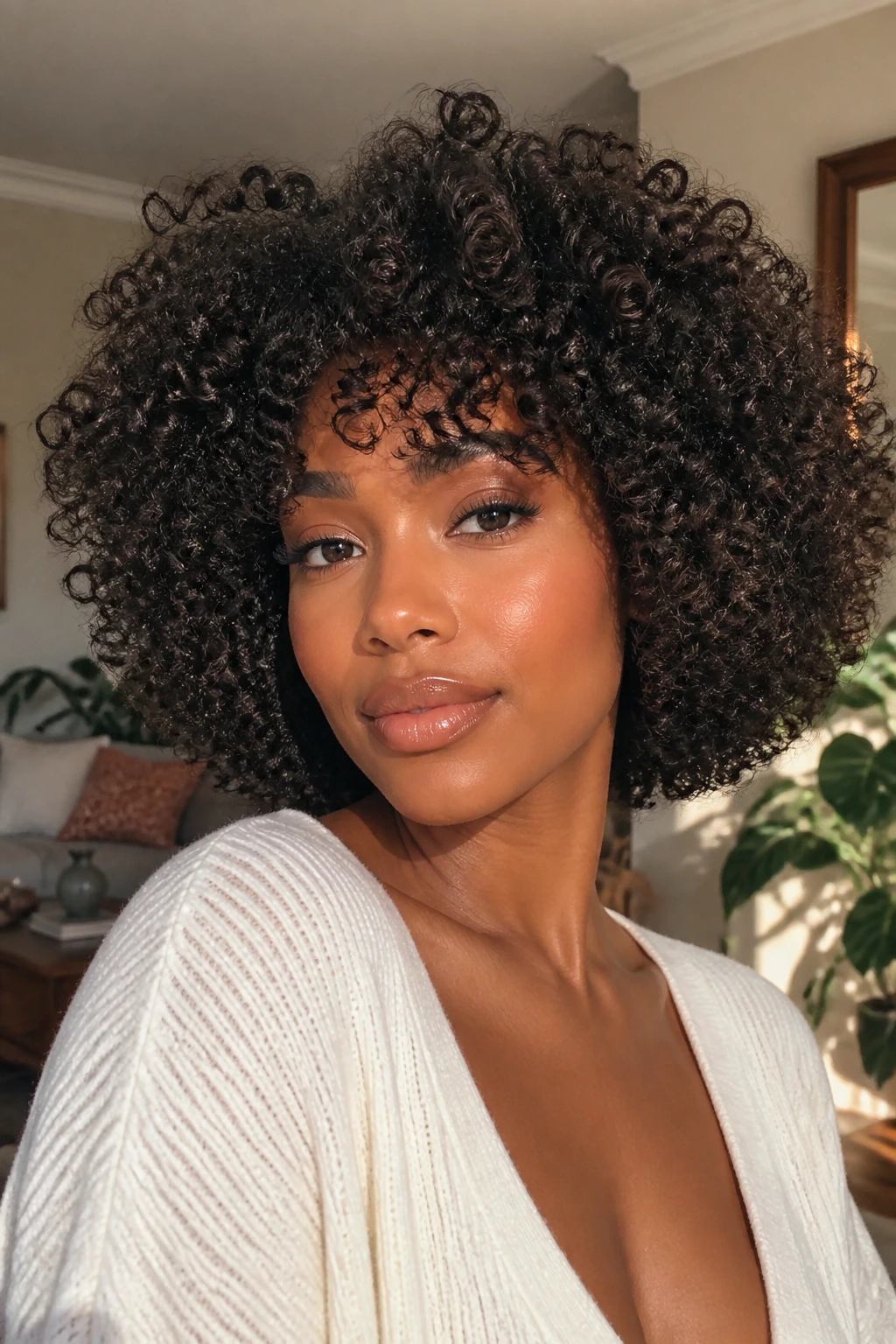
Shrinkage is part of the design. On curly hair, the visible length can change by a couple of inches when the hair dries, so a bob has to be cut for the shape you get after the water leaves. If you ignore that, you end up with a cut that looks like one thing in the chair and another thing in daylight.
Volume comes from structure, not teasing. The best curly bobs use the perimeter, interior layers, and crown placement to create lift. That matters on denser hair, where a little weight removed in the wrong place can turn a full shape into a puffed triangle. A little weight removed in the right place keeps the bob round.
Lobs buy you breathing room. If your hair shrinks hard or your texture varies from front to back, a collarbone-length lob gives you room to experiment. You can tuck it, diffuse it, twist it, or wear it stretched, and it still reads like a deliberate cut. Shorter bobs can be stunning too. They just demand a more exact plan.
- Round shape: Softens the jaw and keeps the silhouette from looking boxy.
- Lift at the crown: Stops dense curls from sitting flat at the roots.
- Full ends: Helps coils and curls clump instead of fray.
- Dry-state planning: Keeps shrinkage from stealing your length.
- Parting flexibility: Lets one cut read polished, fluffy, or dramatic.
1. Rounded Chin-Length Curl Bob with Soft Edge Volume
A chin-length curly bob is one of the cleanest ways to show off dense curls without losing the softness around the face. The rounded version is my favorite because it lands with a little curve instead of stopping in a hard line at the jaw. That small change makes a huge difference once the curls dry and start to expand.
Best for: 3B to 4A curls that hold a clump well and tend to grow outward at the sides. Ask for the interior to be lightly layered and the perimeter to stay full; too much thinning at the bottom makes the ends look ragged by day two. If you diffuse, point the airflow upward at the roots for 5 to 8 minutes, then stop touching the curls once they begin to set.
Salon note: leave the front pieces about half an inch longer than you think you need. Shrinkage is rude. It will take that half inch with no apology.
2. Deep Side-Part Stacked Bob with a Lifted Crown
Why does a side part change a bob so much? Because it moves the weight off center and makes the crown sit higher. On curly hair, that extra lift can turn a simple cut into something with movement before you even touch a diffuser. The stacked back keeps the neckline neat while the side part gives the top room to rise.
What makes it work: a slightly shorter nape and a fuller crown create a built-in push-up effect. If your hair has a lot of density at the back, this cut removes bulk where it can go bulky fast. Ask for the stack to be subtle, though. You want shape, not a pyramid.
Who it suits: round faces, fuller cheeks, and anyone who likes one side to fall a little longer over the cheekbone. A root clip at the heavier side while drying can help the part stay open. Small move. Big payoff.
3. Collarbone Lob with Invisible Interior Layers

A collarbone lob is the move when you want volume but refuse to commit to very short hair. Curls brushing the collarbone have room to move, which means the whole shape looks looser and more expensive-looking than a cut that stops at the jaw. The trick is hidden layering inside the mass, not on the surface.
That’s the part most stylists get wrong when they’re not used to curly hair. If the layers are too visible, the lob starts to look choppy once it dries. If they’re tucked into the interior, you get lift without losing the clean outline. It’s the kind of cut that can go from office-ready to weekend-soft just by shaking out the roots.
Best for: medium-to-high density hair that needs length for balance but not so much length that it drags the curls down. A middle part gives it a calmer look. A deep side part gives it swagger. Same cut. Different mood.
4. Curly Bob with Curtain Bangs That Skim the Cheekbones
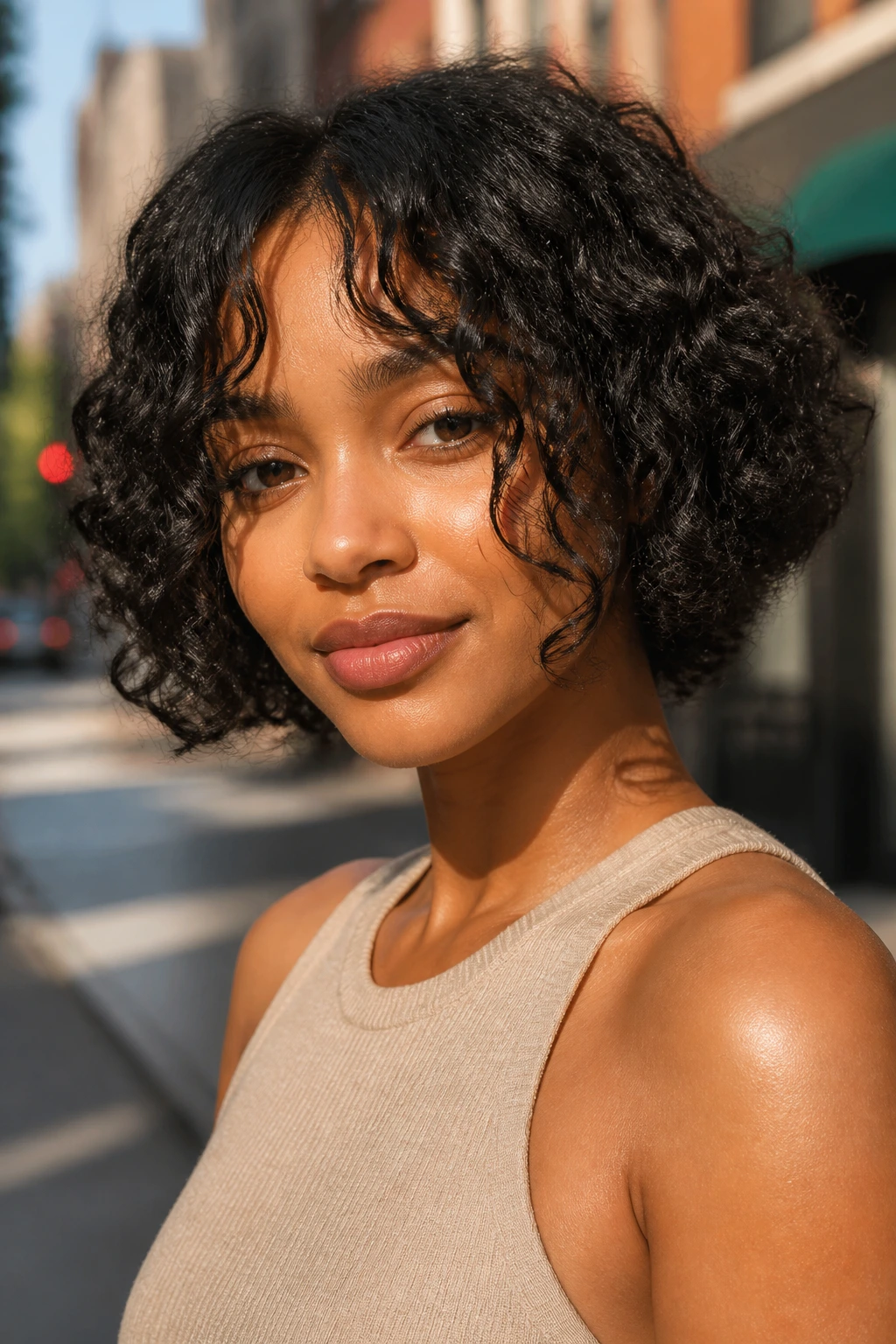
Blunt bangs are not required. Curtain bangs often make more sense on curly hair because they split the face without boxing it in. When they’re cut to skim the cheekbones, they turn into a soft frame that moves when you walk, which sounds dramatic until you see how little effort it takes.
The important detail is length. Curly fringe needs to be longer than straight fringe because it springs up as it dries. If your curls have a lot of spring, ask for the shortest pieces to land near the nose or upper lip when wet, then check the dry shape before anyone cuts more. That extra caution saves you from baby bangs you never asked for.
A light twist or finger-coil on the bang section helps the fringe separate instead of clumping into one heavy curl curtain. Nice when you want softness. Better when you want your forehead to have a little breathing room.
5. Asymmetrical Bob with One Tucked Side
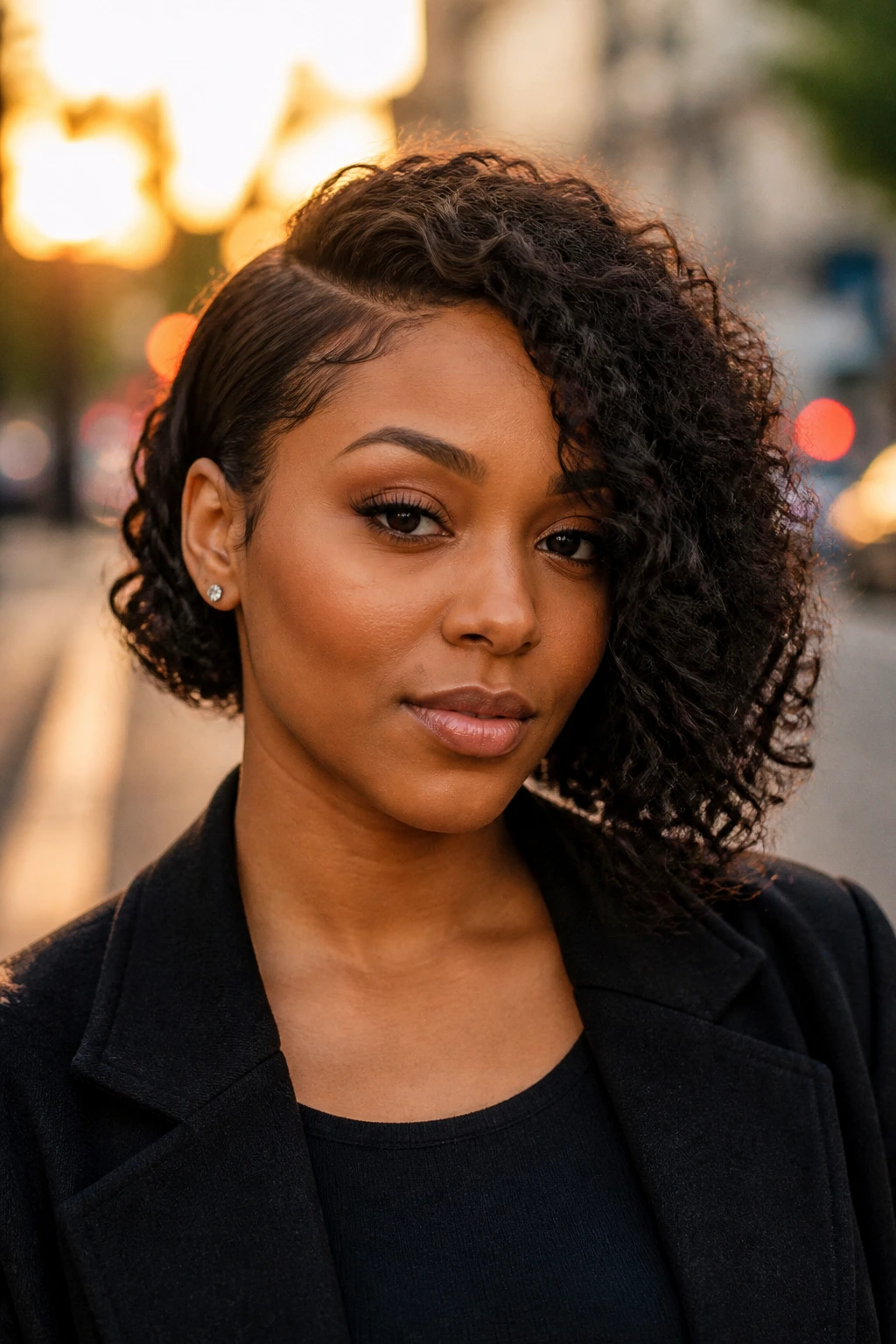
A bob that’s longer on one side has a built-in sense of movement, even when the hair itself is sitting still. The asymmetry doesn’t need to be dramatic; an inch or so is enough to change the whole read of the haircut. On curly hair, that difference shows up in the way one side hangs forward and the other side stays closer to the jaw.
Why it works: the eye follows the longer line, so the style feels intentional without looking stiff. Tuck the shorter side behind the ear and let the longer side sit free, especially if you like earrings or a visible neck line. The bob suddenly stops feeling standard.
This shape is good for Black women who want a little edge without cutting one side into an undercut. Keep the layers subtle and the ends full. If the asymmetry gets too extreme, the curl pattern can start to fight the shape instead of cooperating with it.
6. Tapered Nape Bob with a Clean Neckline
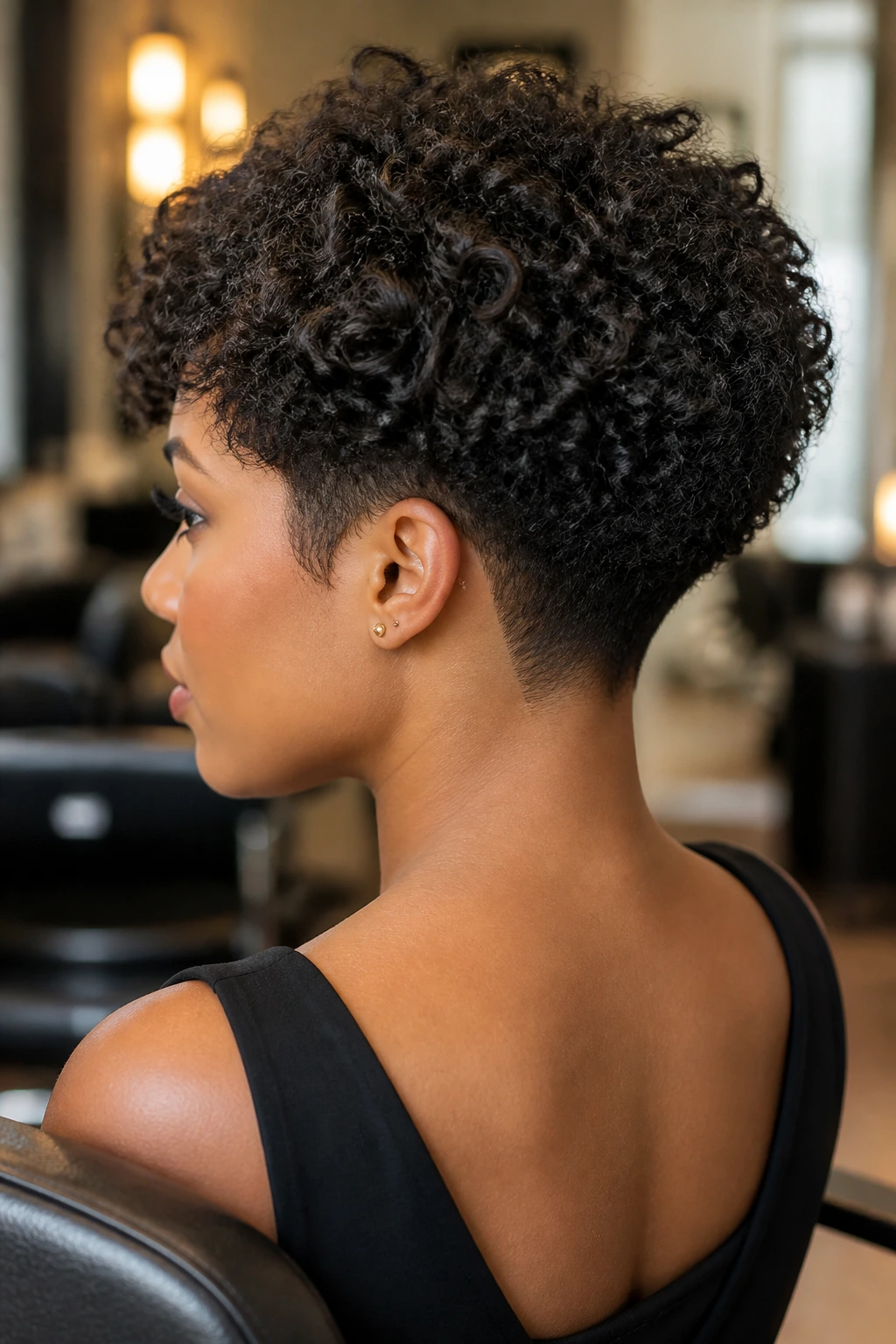
The back of the neck changes everything. A tapered nape bob keeps that area close and neat while letting the crown stay fuller and rounder, which is handy if your hair gets bulky at the back faster than it gets bulky anywhere else. It also feels cooler against the neck. Small detail. Real comfort.
Ask for a gradual taper, not a shaved-undercut unless you actually want that look. The line should feel tidy, not severe. On curly hair, the nape grows out fast, so this one benefits from regular cleanup every 4 to 6 weeks if you like the silhouette sharp. Miss the trims, and the shape starts to puff in the wrong place.
This cut is especially good for dense 4A to 4C textures that want height on top and less fuss at the neckline. It’s one of the few bob styles that can look polished and practical at the same time.
7. Fluffy Halo Bob with a Rounded Afro Finish
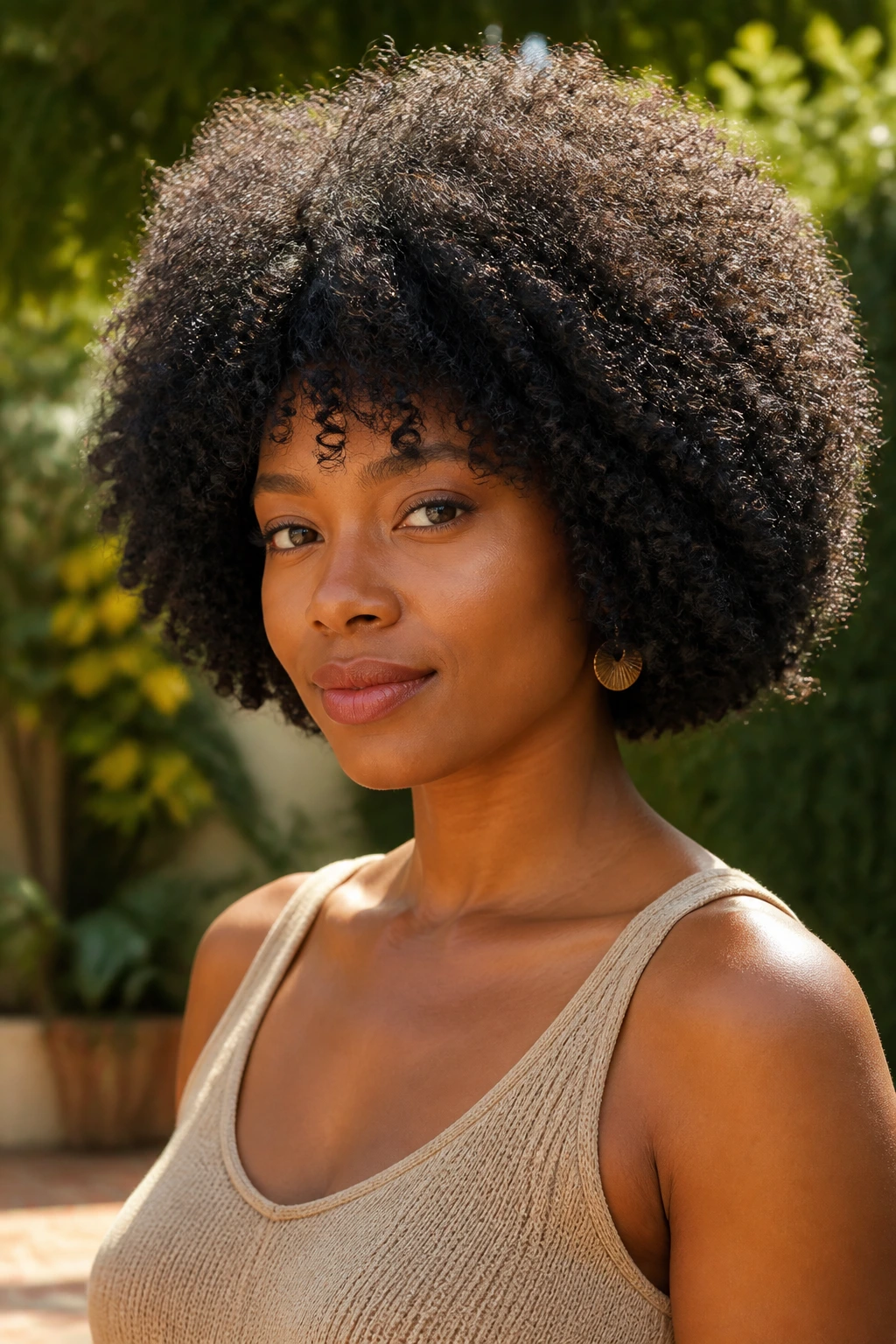
Some bobs are about curl definition. This one is about atmosphere. The fluffy halo bob keeps the outline round and airy, with enough shape to read as a bob but enough softness to feel like a small cloud around the face. If your hair likes to swell into a full silhouette, this is where that habit becomes a feature.
Use a pick at the roots only after the hair is dry. Only at the roots. If you drag the pick through the curl lengths, you lose the roundness and get a halo that looks uneven instead of full. A little leave-in and a soft-hold cream are usually enough. Heavy gel can make this style look too carved up.
Best for: 4A to 4C curls and coils that look better lifted than forced into ringlets. If you want the bob to read fuller, keep the ends intact and let the top do the talking.
8. Wet-Look Defined Coil Bob
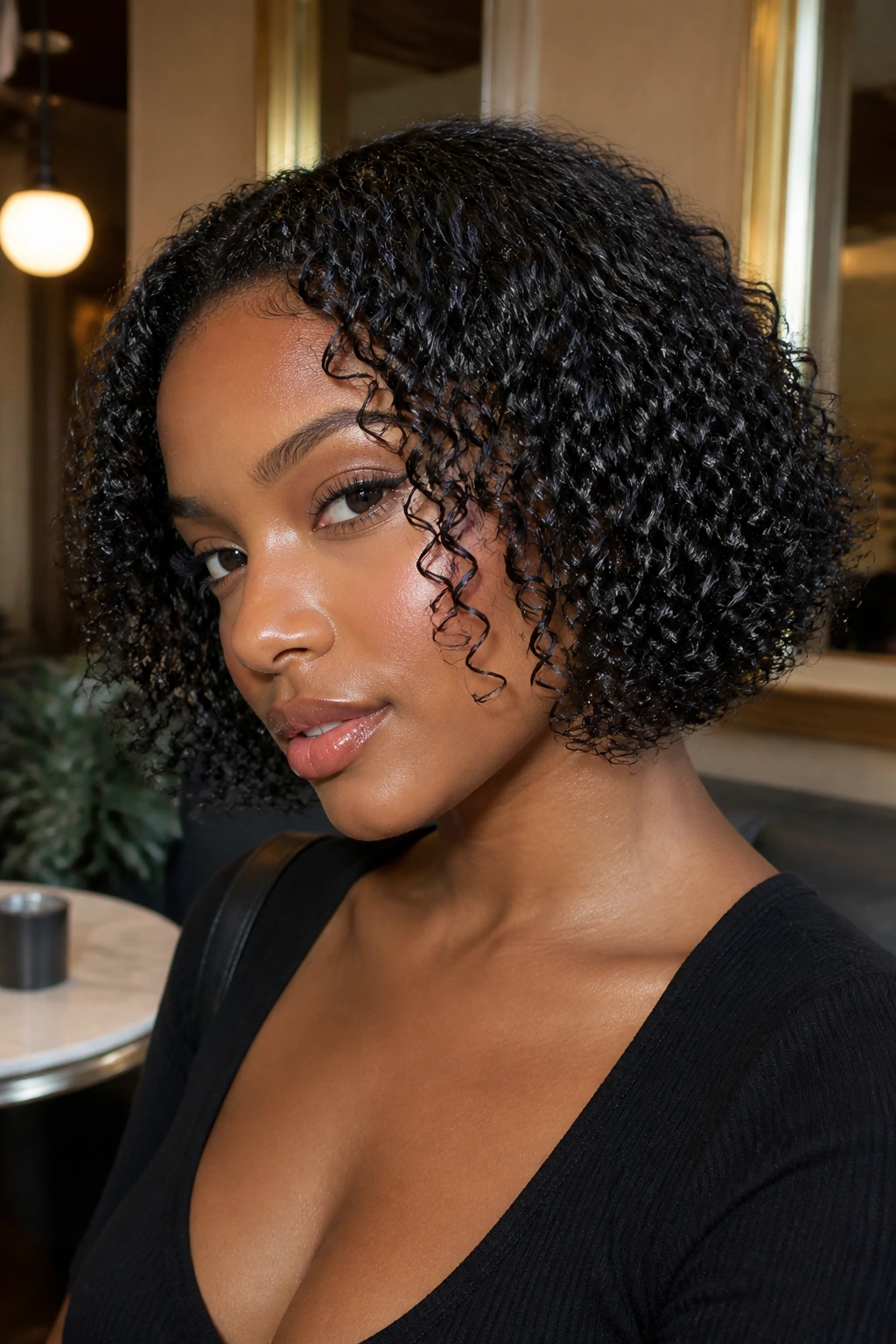
There’s a place for gloss, and this is it. A wet-look coil bob uses gel or setting foam to make each curl cluster look intentional, shiny, and sharply separated. It’s the style I’d reach for when the outfit is doing one job and the hair needs to do another.
The key is restraint. Apply your product in small sections, maybe 1 inch wide, and leave the curls alone while they dry. If you keep separating them before the cast sets, the definition turns fuzzy and the roots flatten. Once dry, you can break the cast lightly with a drop of oil on your fingertips, but don’t overdo it.
This works especially well for events, dinners, or any day when you want the bob to look controlled without looking stiff. It’s not the fluffiest option on the list. It is one of the sharpest.
9. Twist-Out Bob with Stretched Roots
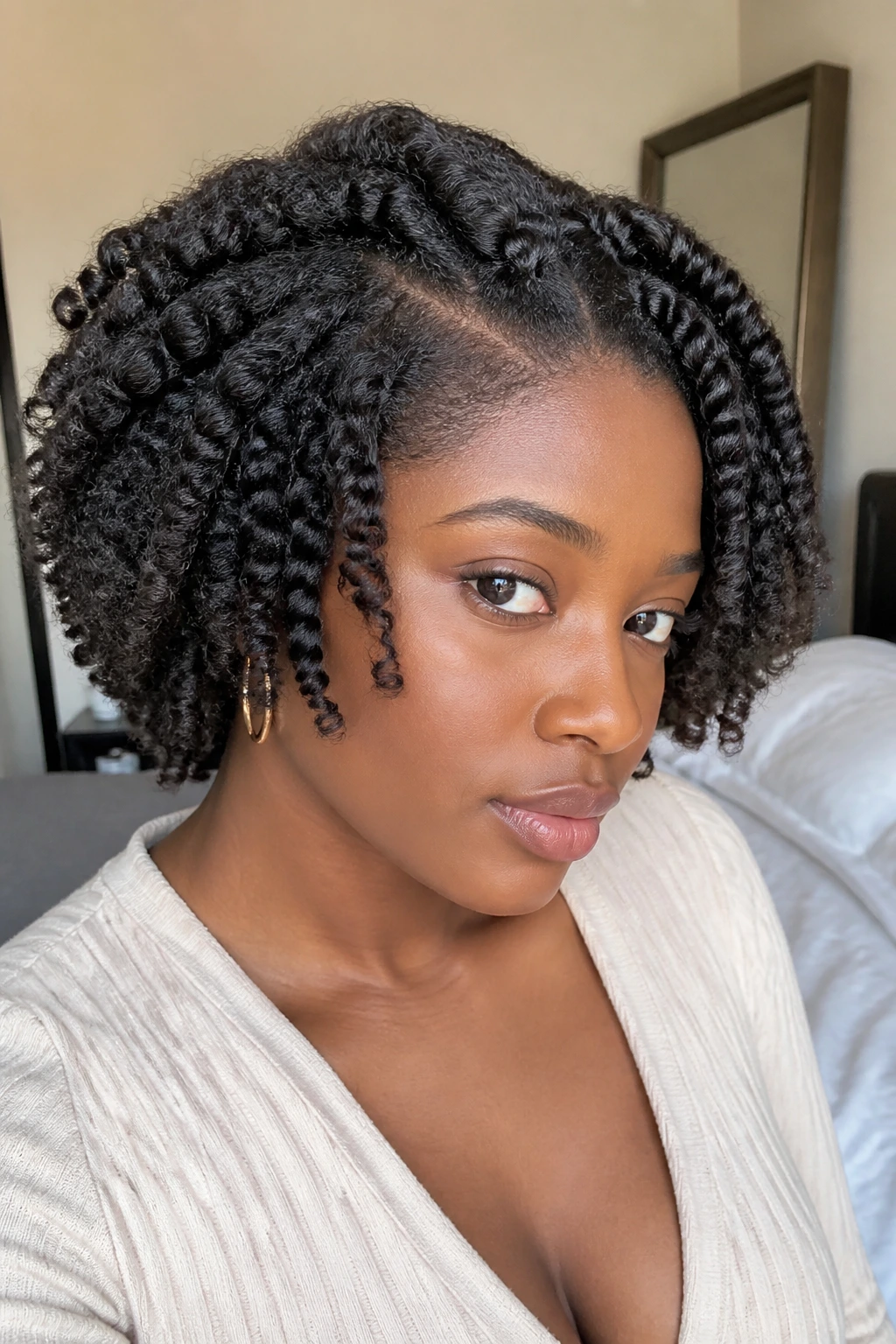
A twist-out bob gives you volume and length at the same time, which is why so many curly-haired women keep coming back to it. Twist the hair in medium sections—usually 8 to 12 twists for a short bob, a few more if the hair is thick—and let the set dry fully before you take it down. Rushing the unraveling phase is how you end up with frizz and a sad, flat crown.
What makes this version different from a plain twist-out is root stretch. Keep the roots a little elongated with clips, banding, or a gentle blow-dry on low before you twist. The finished cut looks longer and fuller, and the bob sits closer to collarbone length instead of bouncing up too high.
This is a good option when you want a style that lasts several days and still looks soft on day two. Separate the twists once. Maybe twice. Then stop. Over-pulling kills the shape.
10. Bantu Knot-Out Bob with Piecey Ends
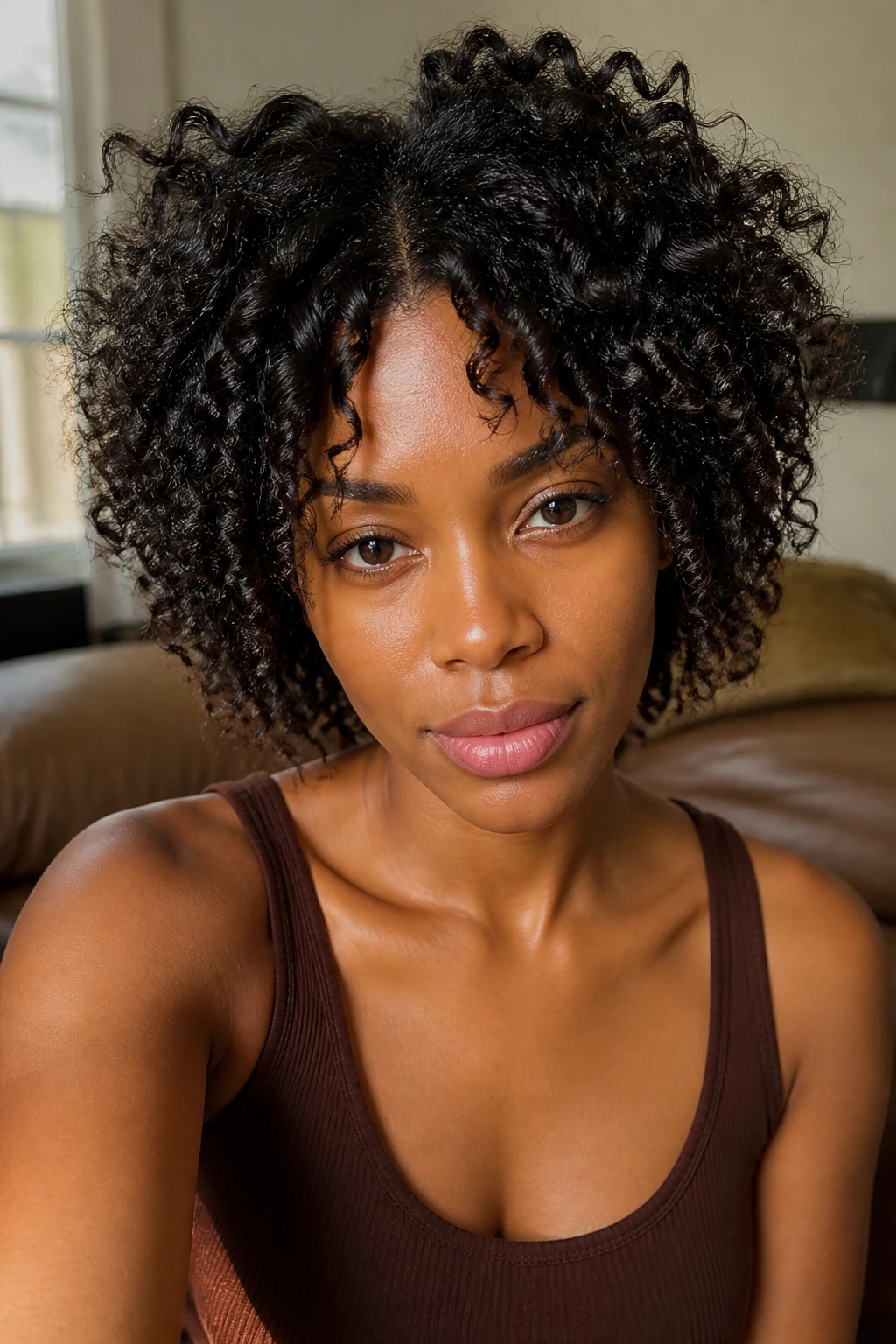
Bantu knots bring a springy, almost sculpted texture that reads differently from a twist-out. The curls open in a way that gives the bob tiny pockets of lift, especially around the crown and the sides. When the knot-out is done right, the ends have a piecey, dimensional feel that makes the whole shape look fuller.
The size of the knots matters. Smaller knots make tighter curls; medium knots create looser, rounder movement. For a bob, medium sections usually look best because they keep the shape from becoming too busy. Set the knots on damp hair, let them dry completely, and take them down only when the inside is dry too. Damp knots are where frizz is born.
This style is a strong pick if your hair needs body more than polish. It gives the bob personality. It also hides a slightly uneven cut better than some sleeker styles do.
11. Flexi-Rod Ringlet Bob with a Polished Finish
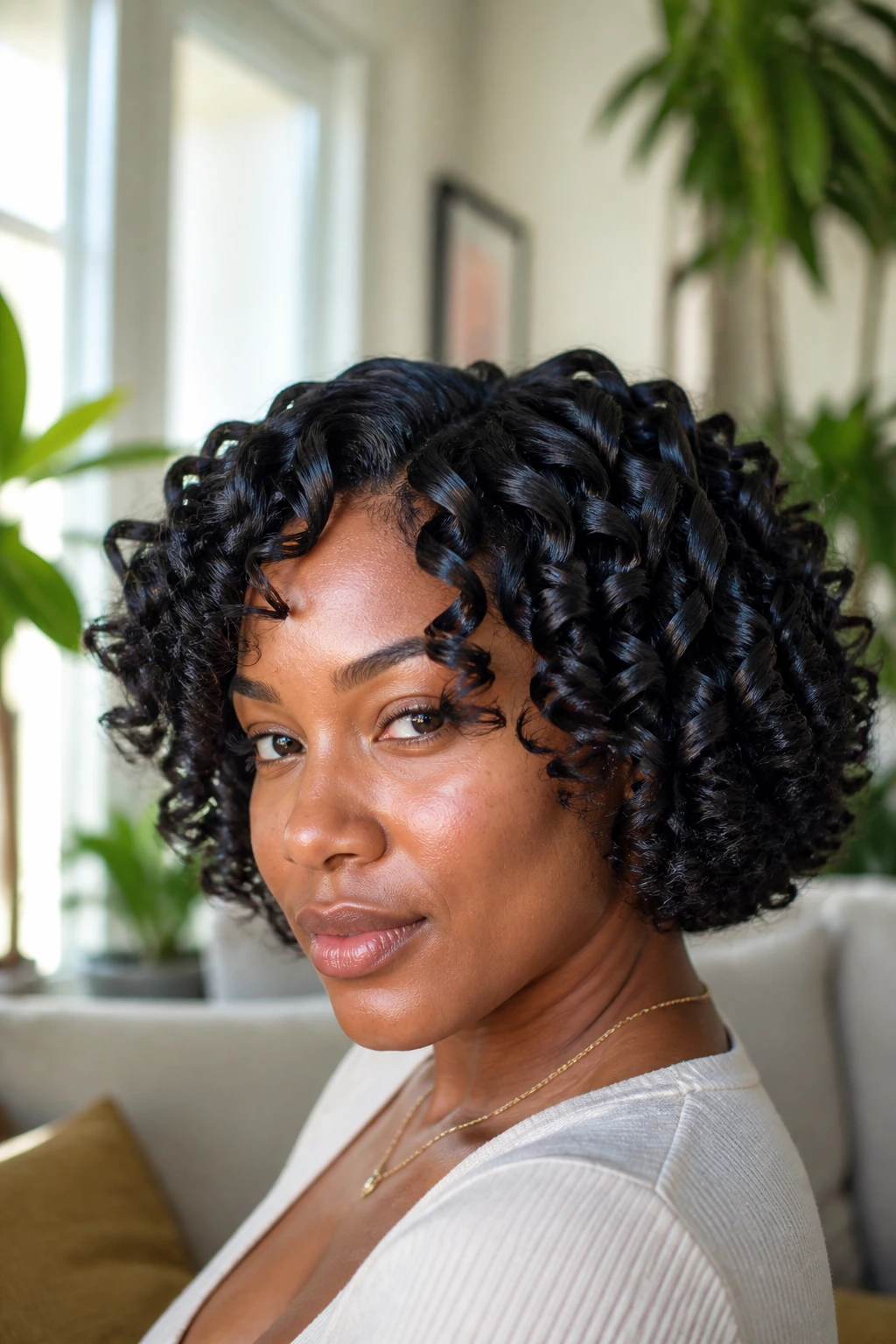
Flexi rods are the quiet overachiever of curly styling. They give the bob a tidy, springy ringlet that keeps its shape longer than you might expect, especially if you choose the rod size carefully. A smaller rod gives you tighter curls and a fuller silhouette; a larger one gives you a longer-looking bob with a little swing.
Use setting foam or a light mousse on each section before rolling. Not a heavy cream. Heavy cream makes the rod set collapse at the roots while the ends stay nice and damp. If you’re aiming for that polished finish, let the hair dry completely under a hooded dryer or overnight, then separate the curls gently with oiled fingers.
This is a good choice when you want the bob to look styled without reading stiff. It’s neat, but not hard. And if you’ve ever had a curl set turn into a frizzy puff by afternoon, you’ll appreciate how stable rods can be.
12. Wash-and-Go Gel Cast Bob for Crisp Curl Clumps
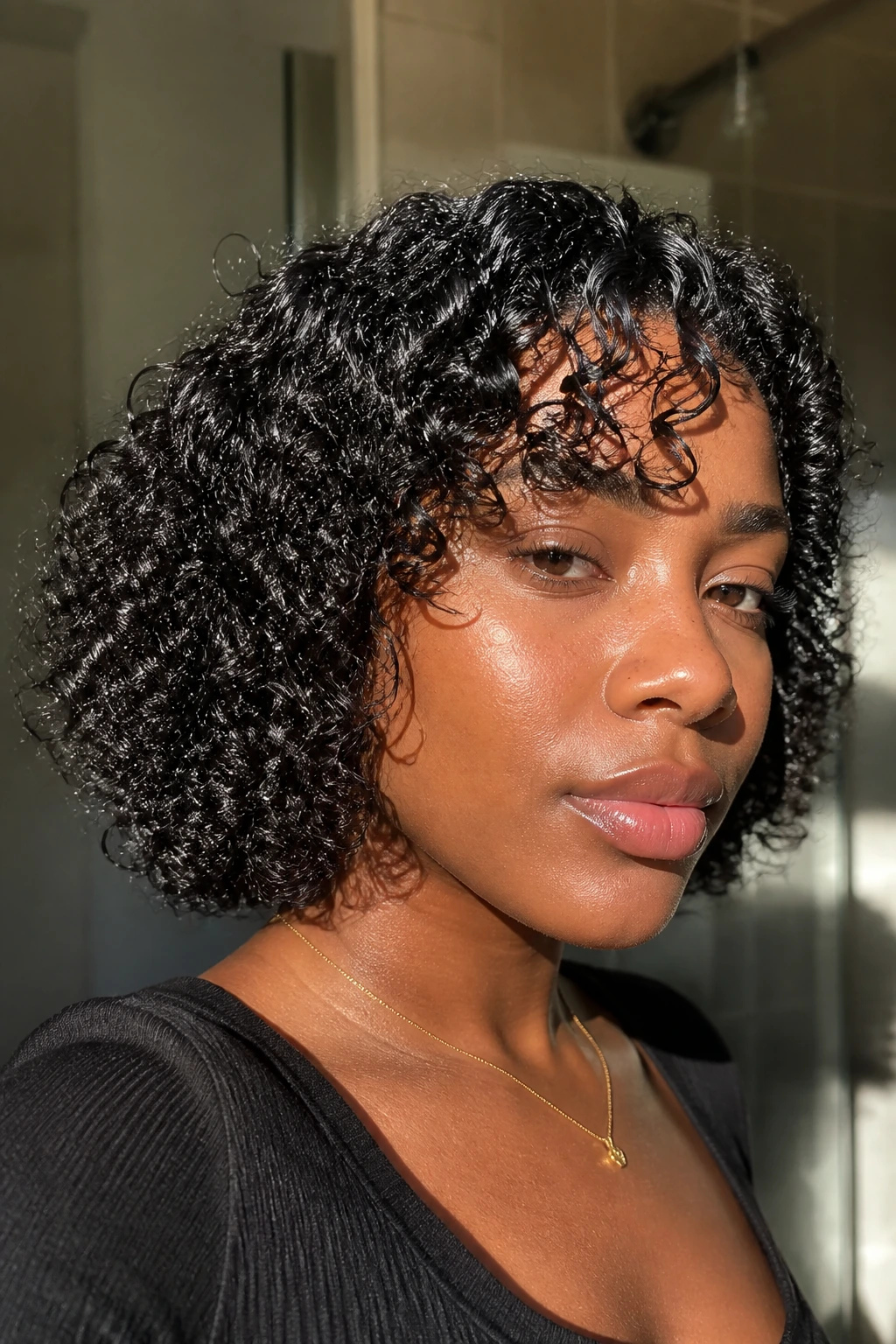
A wash-and-go bob has no interest in pretending it’s anything else. The curls clump together, set into a cast, and then break into soft volume once they’re dry. On Black women with curly hair, that combination of definition at the front and fullness at the sides can look incredibly clean, especially when the cut is shaped well underneath.
The process is simple, but not lazy. You need enough gel to coat the section and enough patience to let the cast form before fluffing. If the hair is still warm and damp when you start scrunching, the top loses height and the ends fray. Diffuse to about 70 to 80 percent dry if you’re short on time, then air-dry the rest.
This style works because the bob’s structure does the work. The product just helps the curls hold the line. If the cut is good, you don’t need much else.
13. Curly Shag Bob with Soft Layers at the Crown
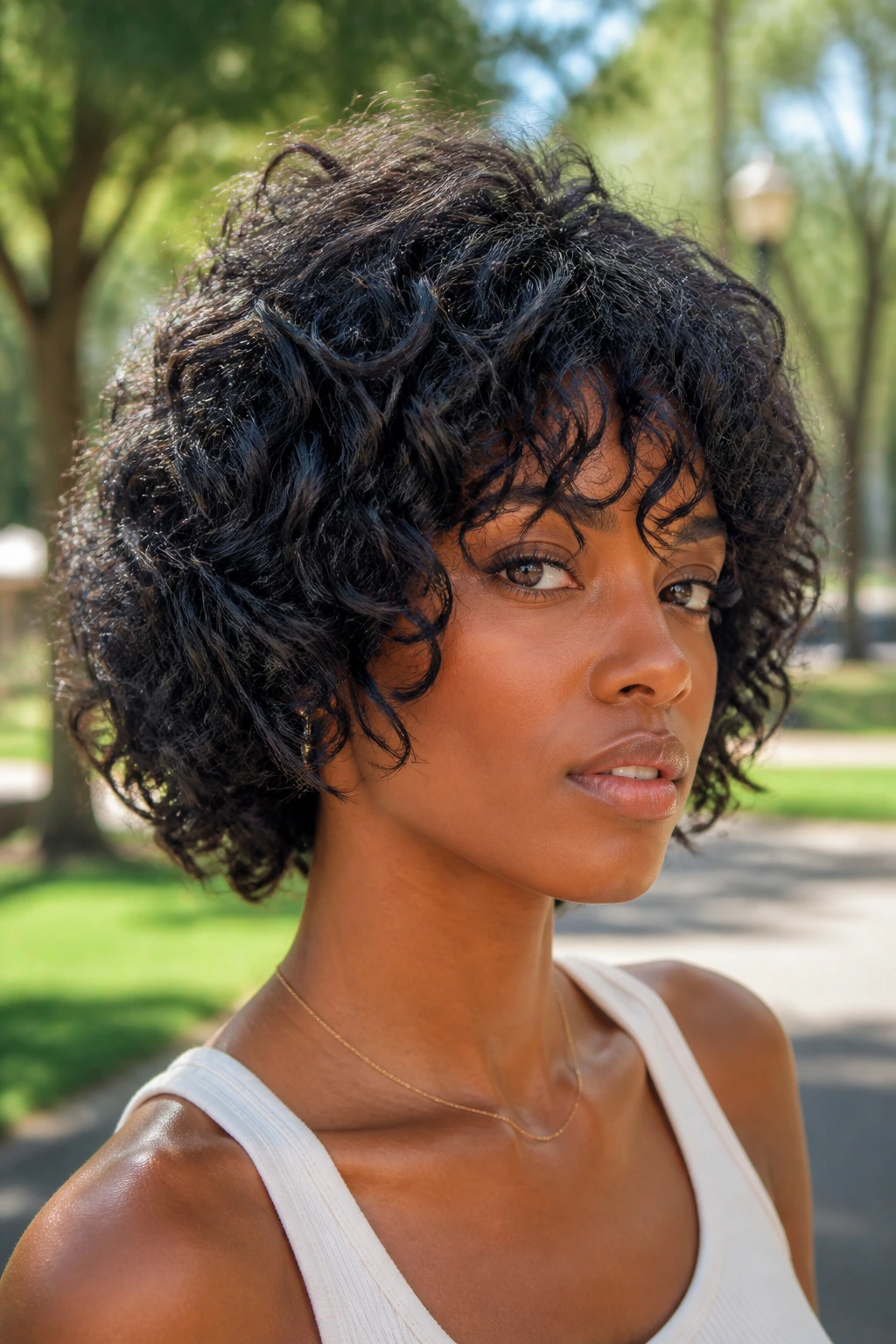
A shag and a bob can get along better than people think. The curly shag bob uses soft layers at the crown and cheekbones to take some of the weight out of dense hair, which means the curls can spring outward instead of stacking up in one heavy block. It’s a cleaner answer to “my hair is too much” than thinning shears ever are.
The risk, obviously, is over-layering. If the ends get too airy, the bob stops looking full and starts looking picked apart. Keep the bottom line strong. Let the top and middle layers carry the movement. That gives you lift without losing the shape.
Best for: women with thick, springy curls who want a little edge and a lot of movement. If your hair grows out wide before it grows down, this cut will probably behave better than a blunt line.
14. Blunt-Cut Dense Coil Bob with a Sharp Perimeter
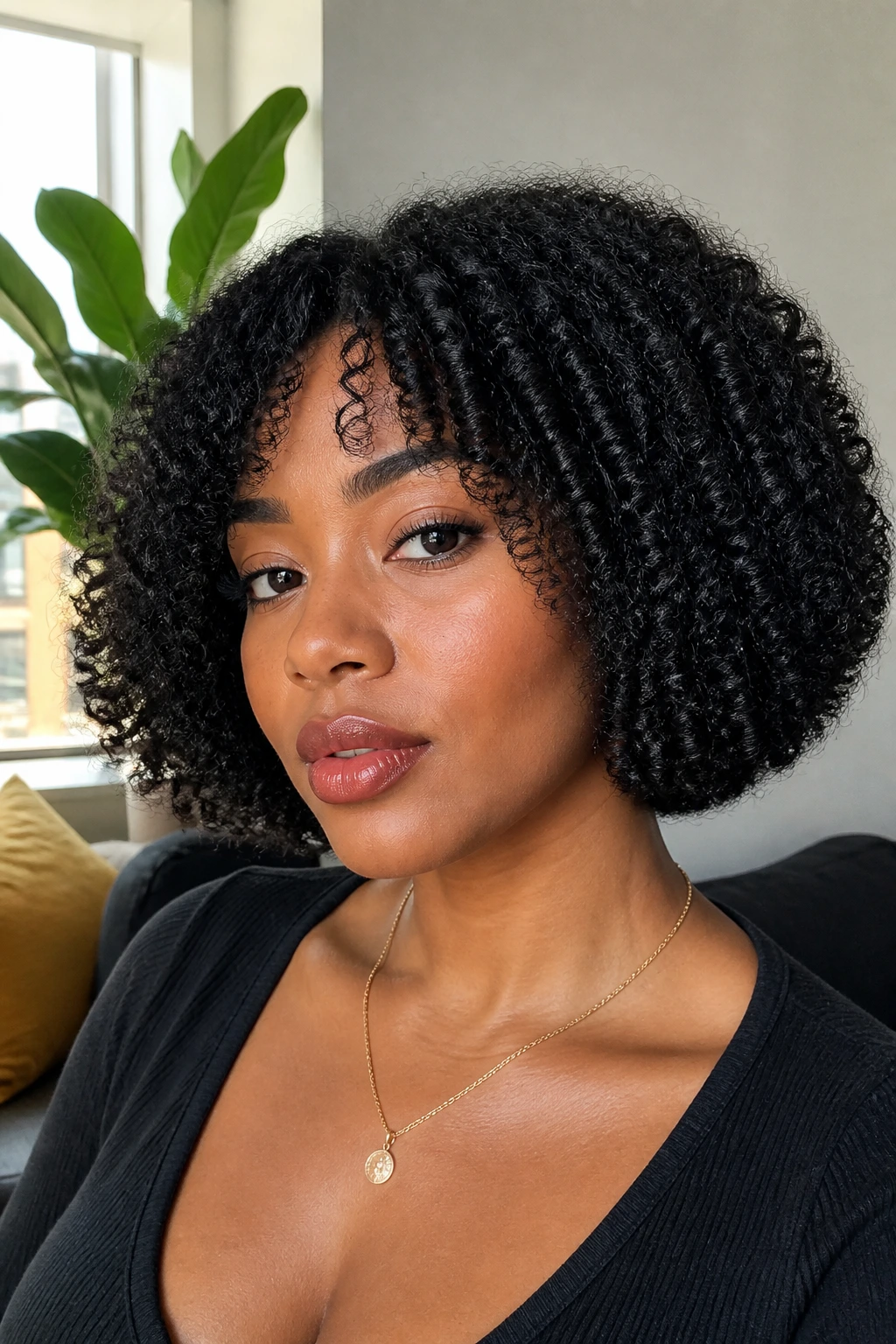
Can a blunt bob work on curly hair? Absolutely—if the hair is dense enough to carry the shape. A blunt perimeter gives coils a heavy edge to sit on, which makes the whole bob look full and deliberate instead of wispy. When the curl pattern is tight and the density is high, that line can be gorgeous.
The trick is in the interior. You still need some bulk removed inside the shape so the bob doesn’t swell into a helmet. But the ends should stay strong. Not chopped to bits. Not overly feathered. Just full enough to hold a clean line after the curls spring up.
This cut is best when you want the bob to feel structured. It asks for maintenance, though. Skip the trims for too long and the edge loses its sharpness fast. On a blunt curly bob, the bottom line is the whole point.
15. Face-Framing Lob with Cheekbone Pieces
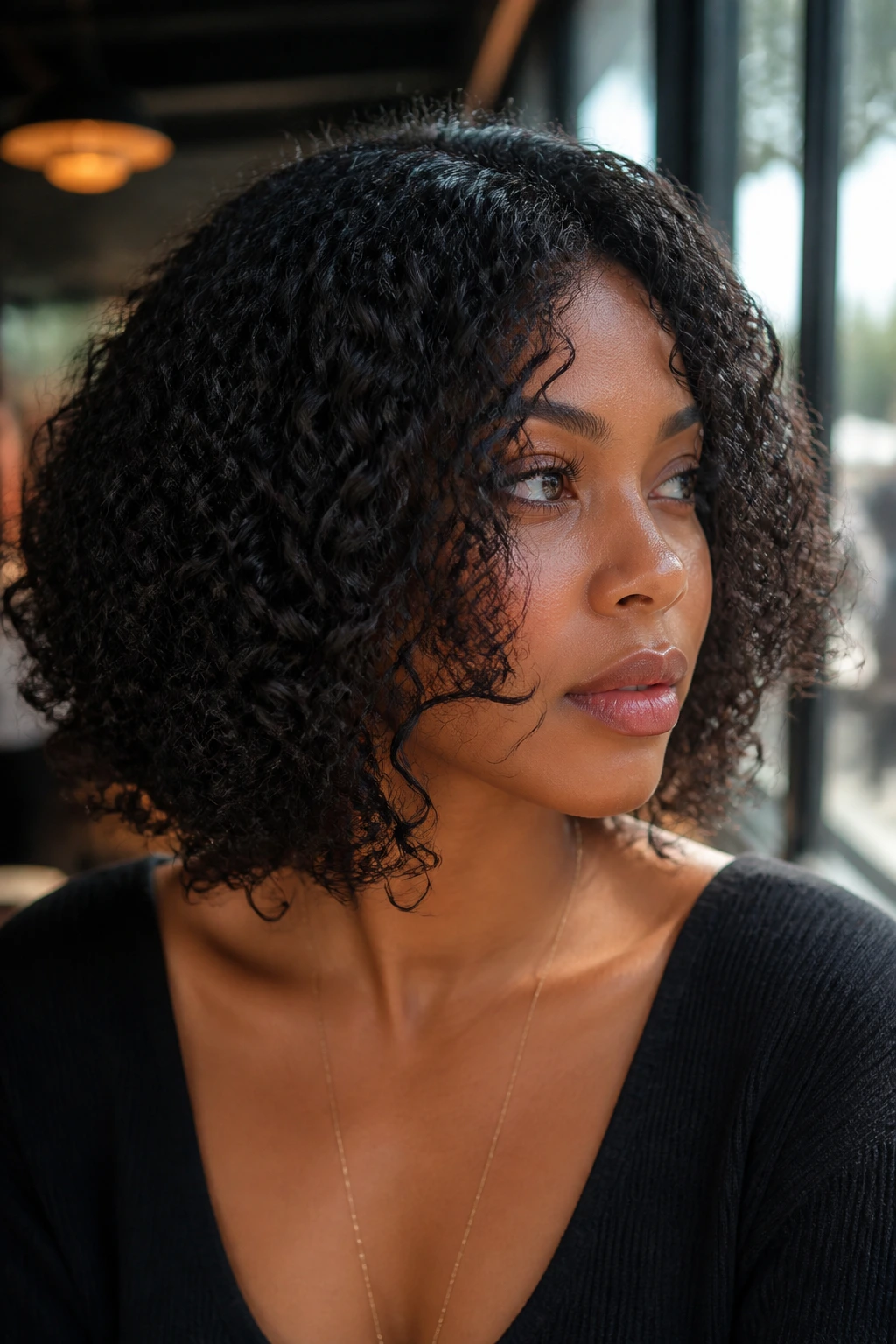
A face-framing lob is the easiest way to soften a longer face or balance a round one without making the cut feel too styled. The front pieces sit a bit longer than the back and curve toward the cheekbones, which gives the hair a kind of quiet swing when you move. It’s subtle until you see it in profile.
Keep the longest front pieces only 1 to 2 inches ahead of the back. More than that and the lob can start to feel like two separate haircuts fighting each other. A middle part makes the shape calm. A side part makes it more flirtatious. Same structure, different energy.
This one is especially nice if you like to tuck one side behind the ear and let the front pieces fall forward. It’s one of the few cuts that can feel grown-up and playful at the same time.
16. Crochet Curly Bob as a Protective Style
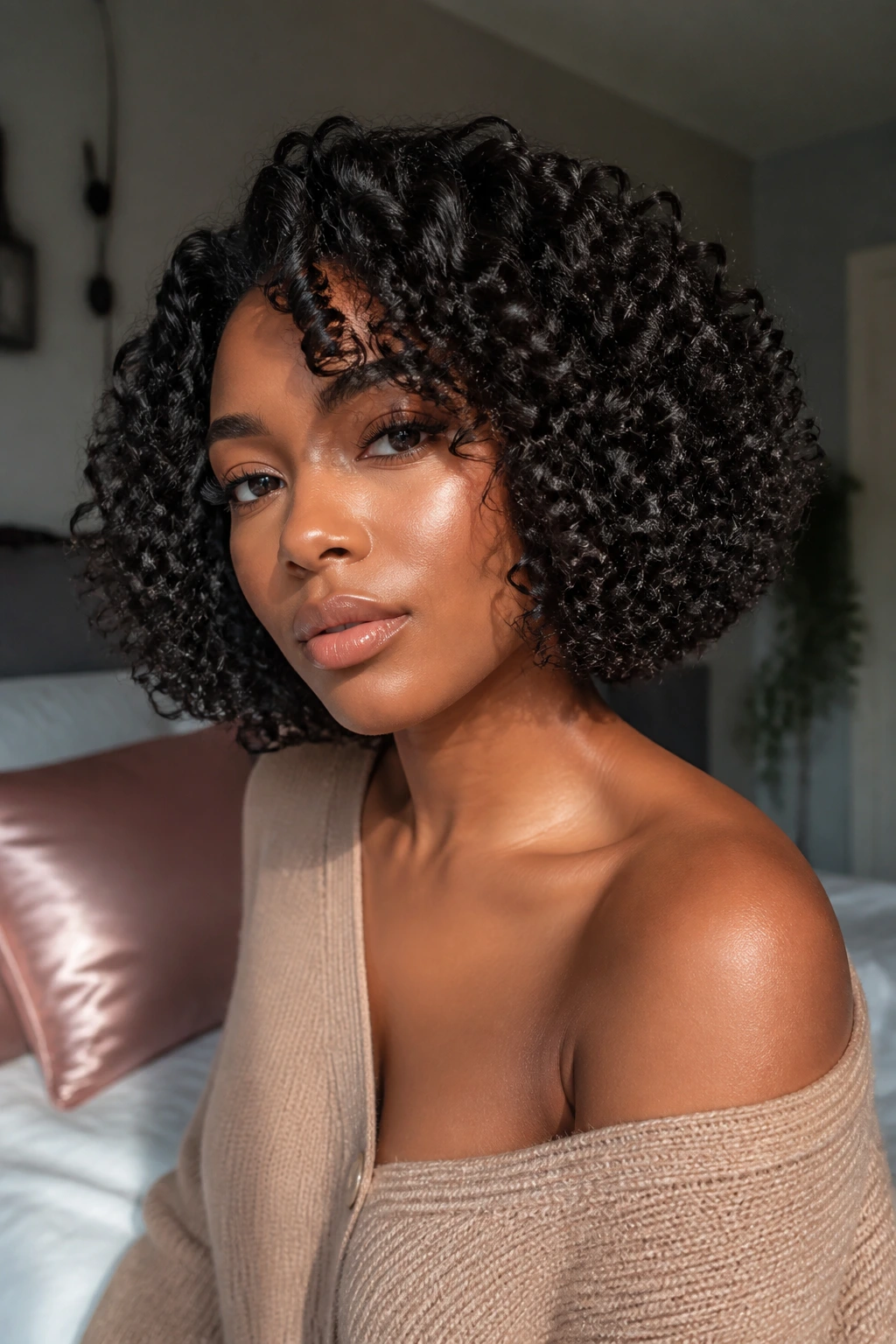
Sometimes the smartest bob is the one that gives your own strands a break. A crochet curly bob creates fullness, length, and shape without daily manipulation, which is useful if your hair needs a rest from twisting, diffusing, or combing every morning. The look can be surprisingly natural when the curl size matches your own texture.
The install matters more than the hair bundle. Keep the tension light around the hairline and nape, because a tight bob-sized protective style can start tugging in places you don’t notice until later. Ask for a shape that sits near the chin or just below it, and make sure the curls don’t all point in the same direction. That’s how you avoid the doll-hair effect.
This style works best when you want volume on day one and low effort after that. It still needs scalp care, though. Protective doesn’t mean invisible. A little oil at the parting and a satin bonnet at night go a long way.
17. Side-Bang Volume Bob with Lift at the Part
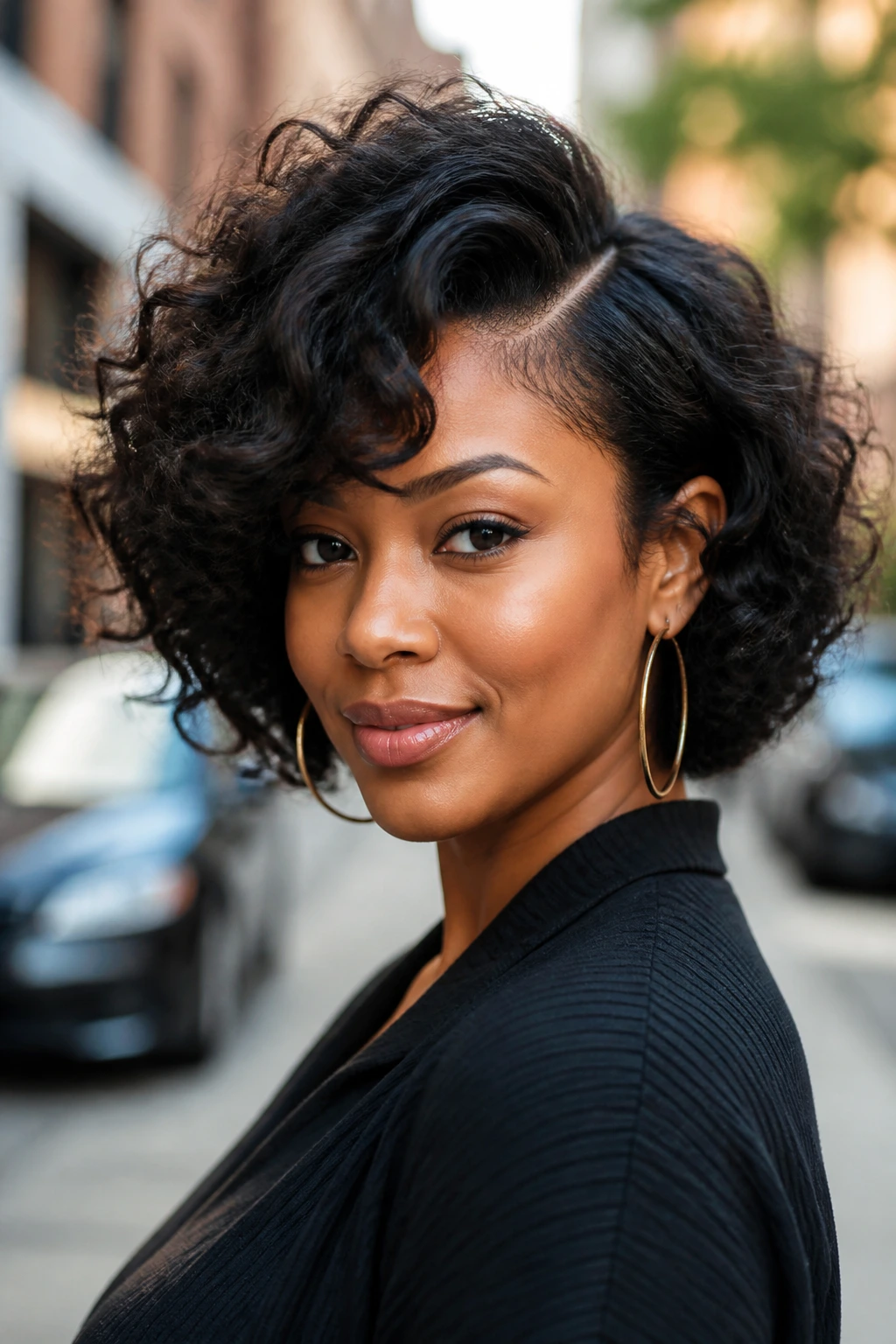
A side bang does more for a curly bob than people give it credit for. It breaks up the forehead area, pulls the eye diagonally across the face, and gives the crown room to rise without looking overstyled. On Black women with curly hair, that sweep can make the whole cut feel softer and more dimensional.
The bang should be cut longer than straight bangs, and the part should be encouraged to sit open with a clip or two while drying. If the roots collapse, the fringe loses that sweep and starts falling into the face. A light mousse at the bang section can help it hold direction without getting crunchy.
This is a smart choice if you like a bob that feels feminine but not fussy. The side bang also plays nicely with earrings and glasses. Tiny details, but they matter.
18. Flipped-End Lob with a Rounded Under Curve
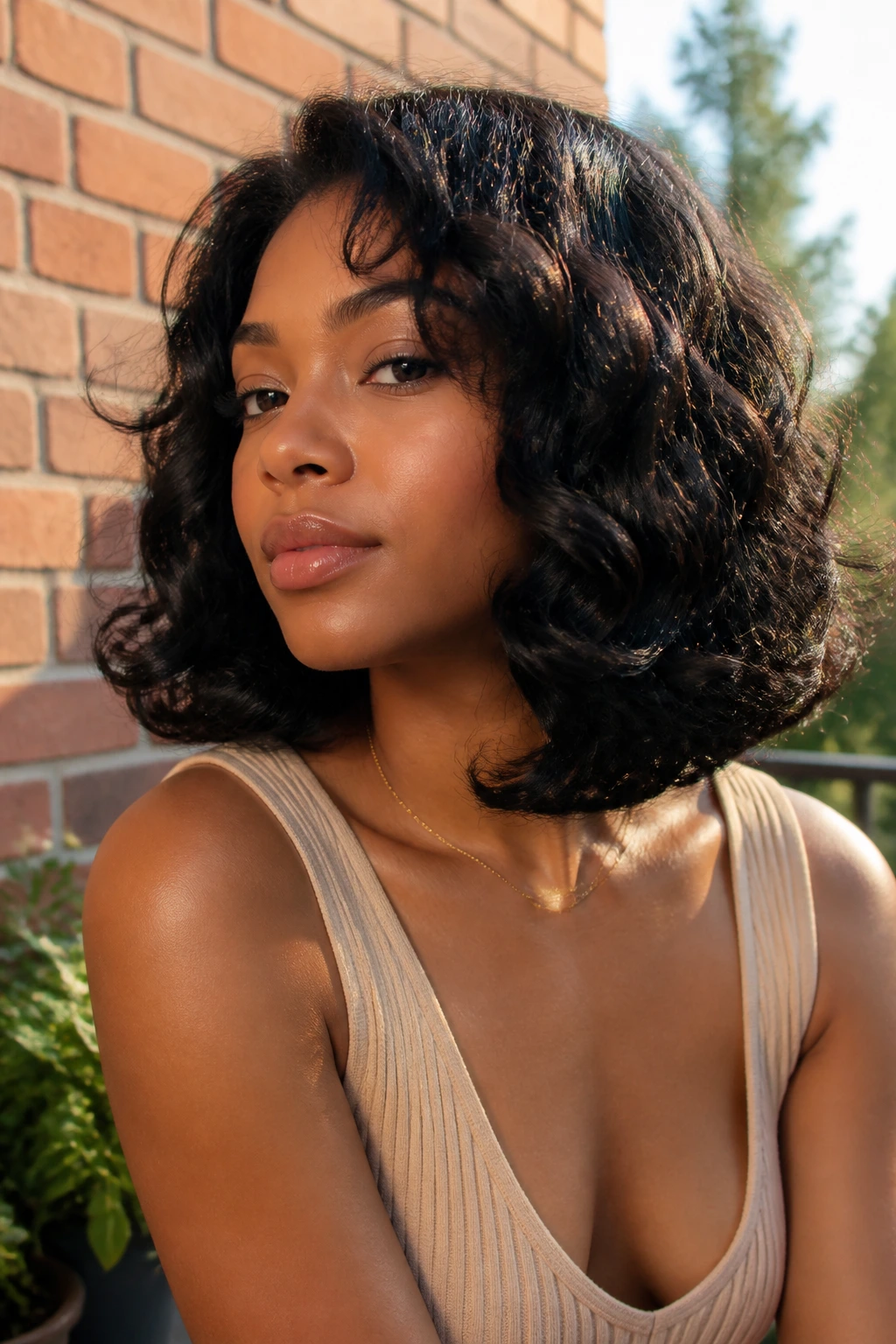
A lob with flipped ends has a little retro energy without looking costume-y. The shape lengthens the neck, then turns the ends under or outward so the final line feels soft instead of flat. It’s especially nice on curly hair that has been stretched a bit with twists, rods, or a careful blow-dry on low.
The curve matters. If the ends kick out too hard, the look can turn messy in a way that doesn’t read intentional. If they’re too tucked under, the lob loses movement. Aim for a gentle bend, like the hair decided to change its mind halfway down. That’s the sweet spot.
This style is good when you want length to show but don’t want the whole look to hang straight. It gives the bob a little swing every time you turn your head.
19. A-Line Curly Bob with a Longer Front Sweep
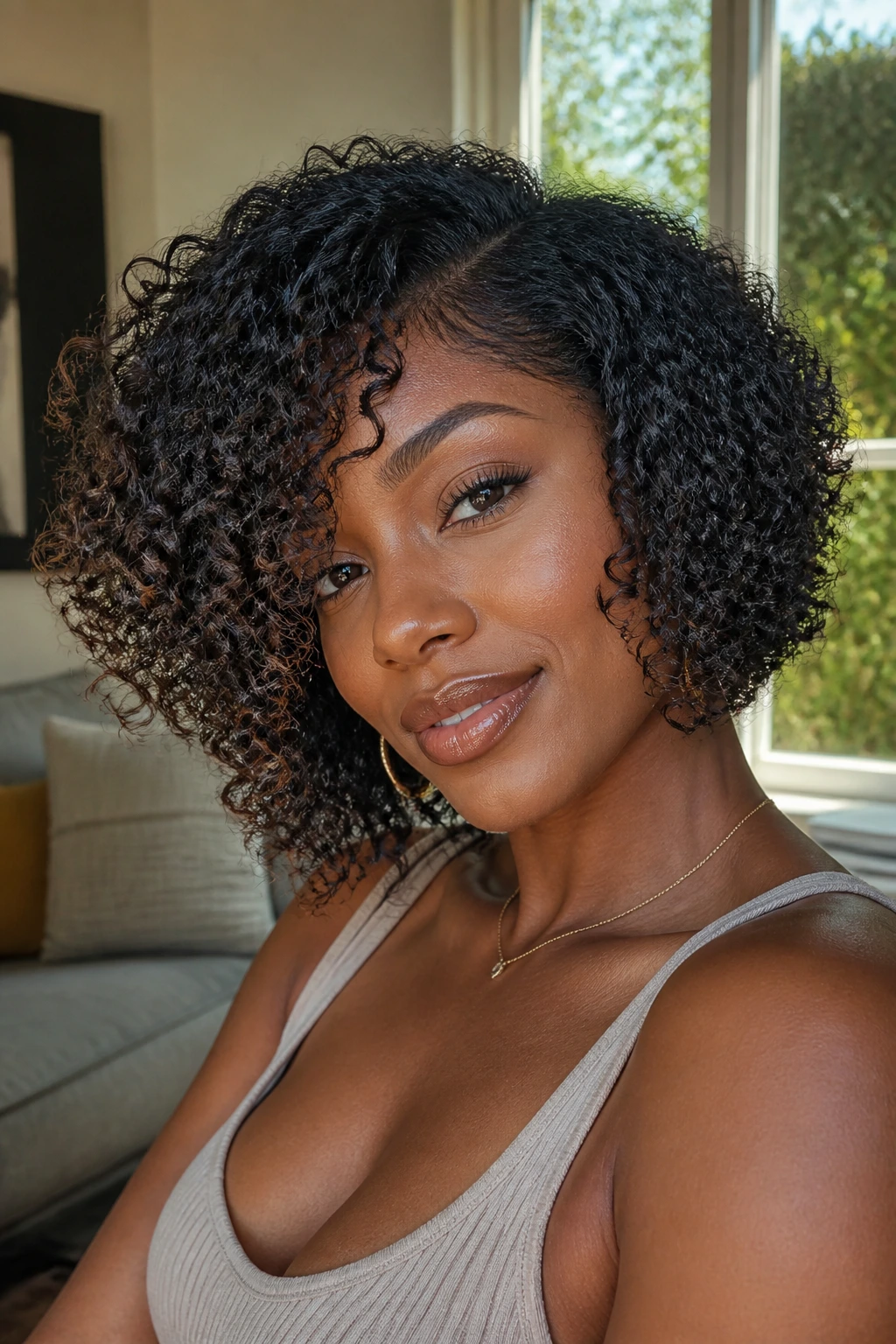
An A-line bob is short in the back and longer in the front, and that angle can do a lot for curly hair. It opens the neck, keeps the back neat, and gives the front curls space to frame the face. On denser textures, that angle also helps the bob avoid the wide, square look that can happen when the cut is the same length all the way around.
Keep the angle moderate. A steep A-line can be dramatic, but it can also make curly hair behave oddly at the front if the difference between back and front is too big. One to three inches of difference is often enough. More if the hair is very springy. Less if the curl pattern is loose.
This is one of those cuts that looks polished even when it’s a little imperfect. The shape does most of the talking.
20. Finger-Coiled Sculpted Bob
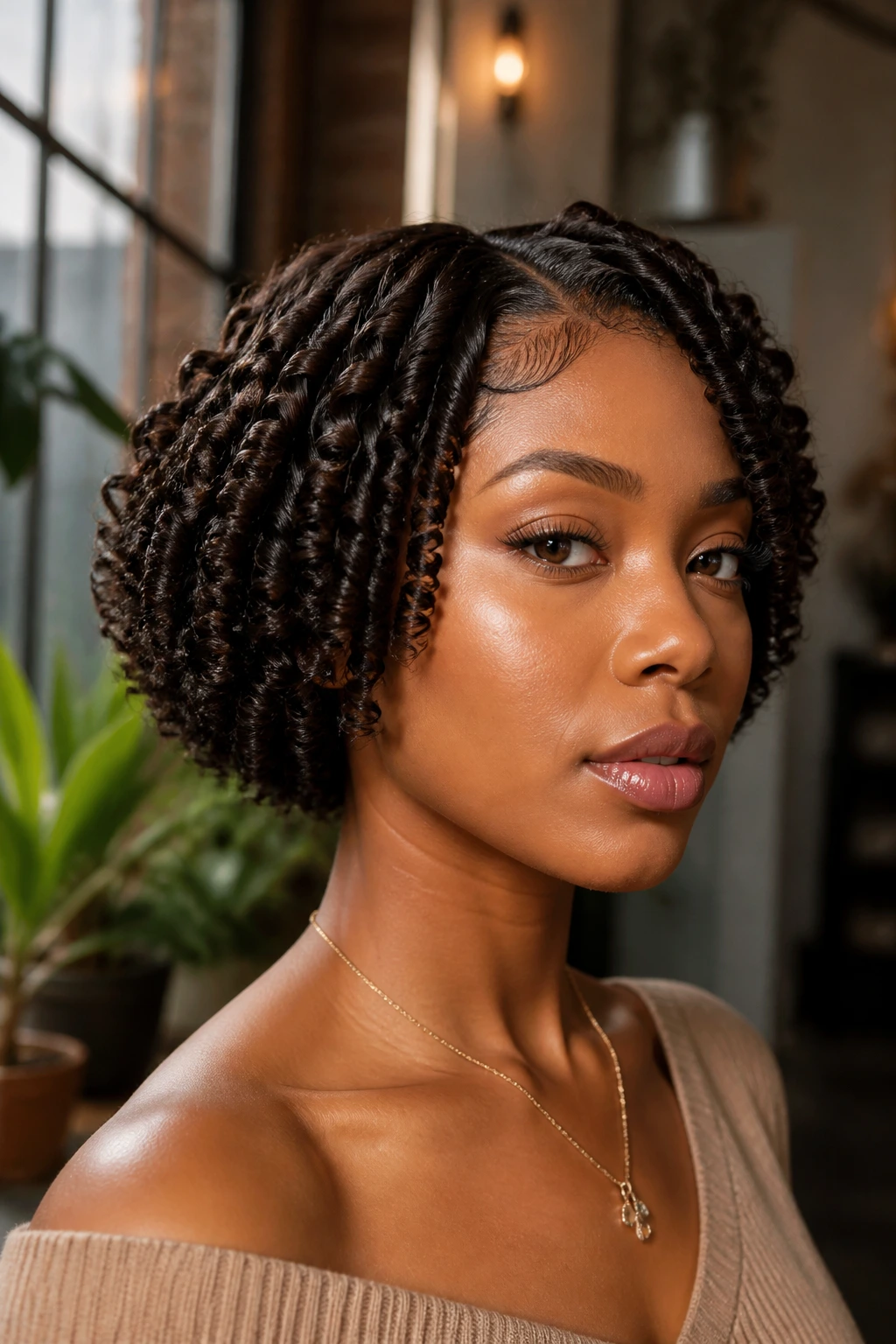
Finger coils are for the days when you want precision. Each coil gets placed where you want it, which means the bob can be shaped more intentionally than a loose wash-and-go. On shorter curly hair, that gives the style a crisp outline and a nice, almost architectural finish.
This takes time. Not the cute kind of time, either. But if you’re after a bob with clean parting and defined curl groups, it’s worth the effort. The biggest payoff is control: you can guide the front pieces, keep the crown lifted, and leave the ends full without relying on a lot of product.
This style works especially well on tighter curl patterns and shorter lengths that need a bit of help showing their shape. If your hair tends to blur into one mass, finger coils will pull the silhouette back into focus.
21. Deep Side-Part Drama Bob with One-Side Volume
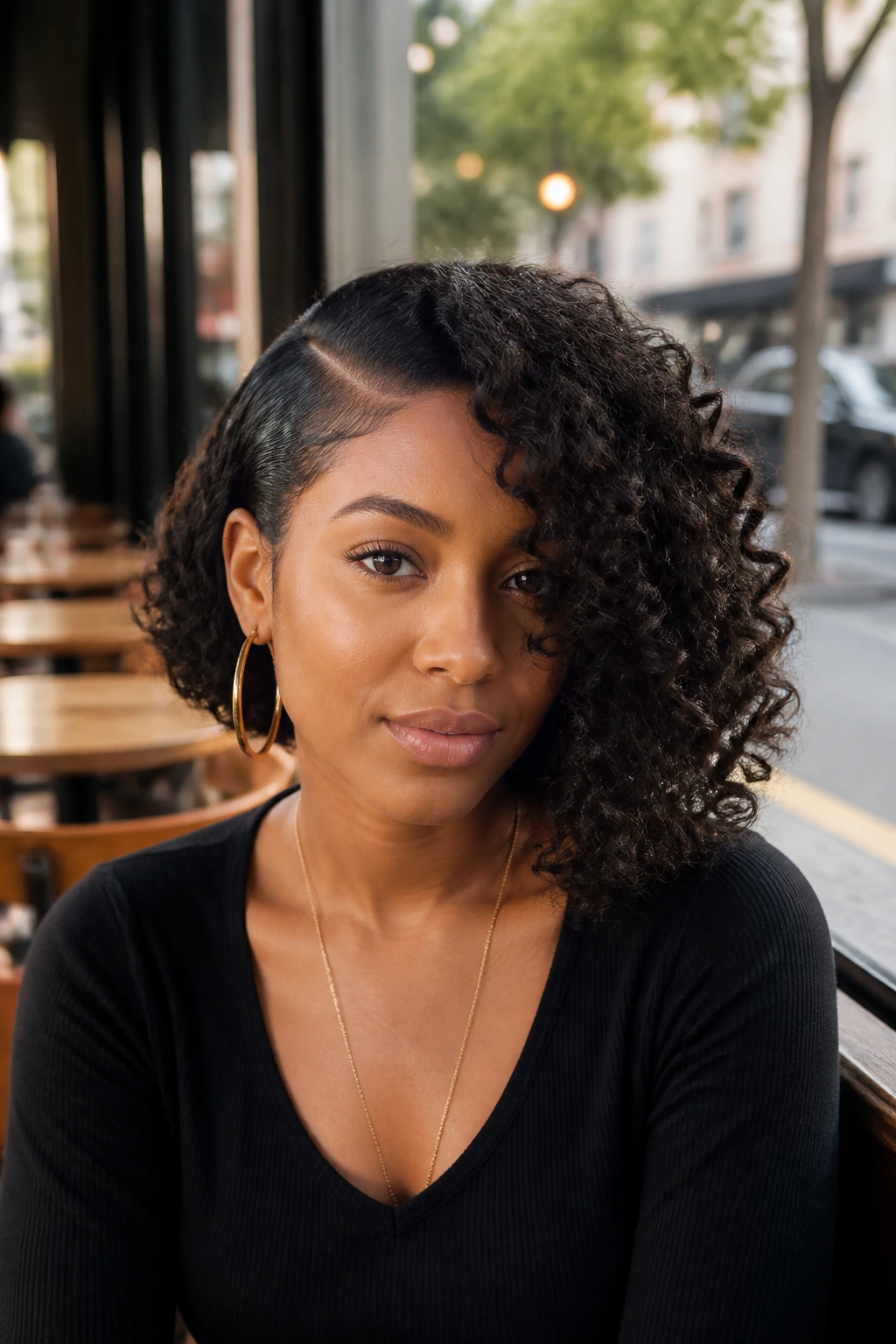
A deep side part can make a curly bob look expensive without making it look stiff. The heavy side creates a curtain of curls while the lighter side sits closer to the head, and that contrast is what gives the style its drama. You don’t need a major cut for this—just a strong part and a little root work.
Clip the flatter side at the roots while it dries, or lift it with a diffuser attachment once the style is mostly set. That one move keeps the part from sliding shut. If the face is round or full, this shape draws the eye upward and outward. If the face is long, it adds width where you might want it.
This is one of the easiest ways to make a bob feel special on a regular day. No extra length. No wild color. Just a better angle.
22. Mini Afro Bob with a Soft Round Perimeter
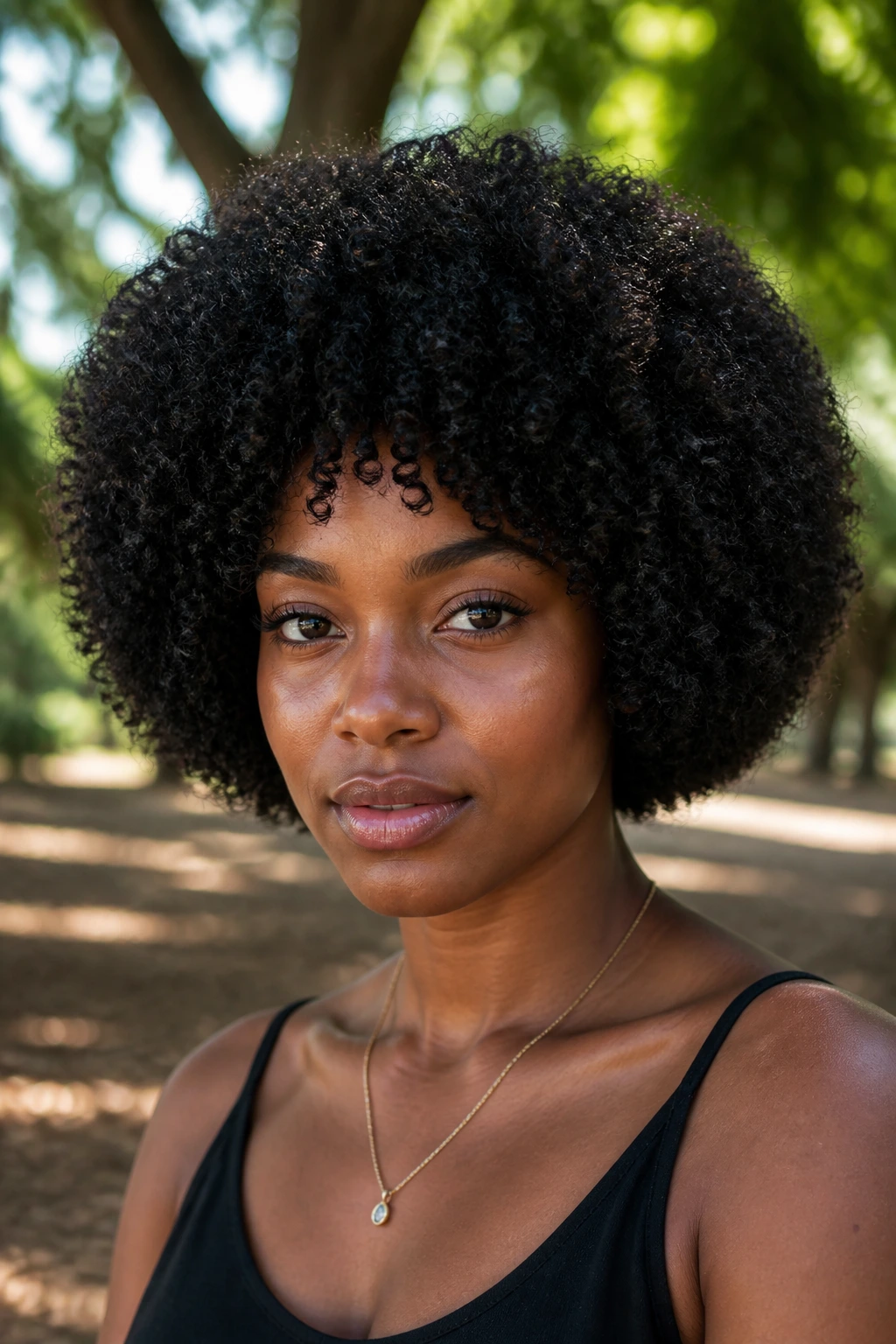
A mini afro bob is basically a shaped fro with a bob outline, and it has a presence that photos never quite capture. The cut sits round around the face, with the perimeter shaped just enough to say “bob” without forcing the curls into a rigid line. It’s especially beautiful when the hair has density and a little spring.
The shape needs clean edges and a hand that knows how much bulk to leave alone. Too much trimming and the fro loses its body. Too little and the silhouette starts to drift wider than you want. A small pick at the root can help lift the shape after it dries, but keep your hands out of the lengths unless you want more volume than definition.
This one suits women who want short hair to look full, soft, and natural. It doesn’t ask for compliance. It asks for shape.
23. Tucked-Under Bob with a Sleek Perimeter and Full Top
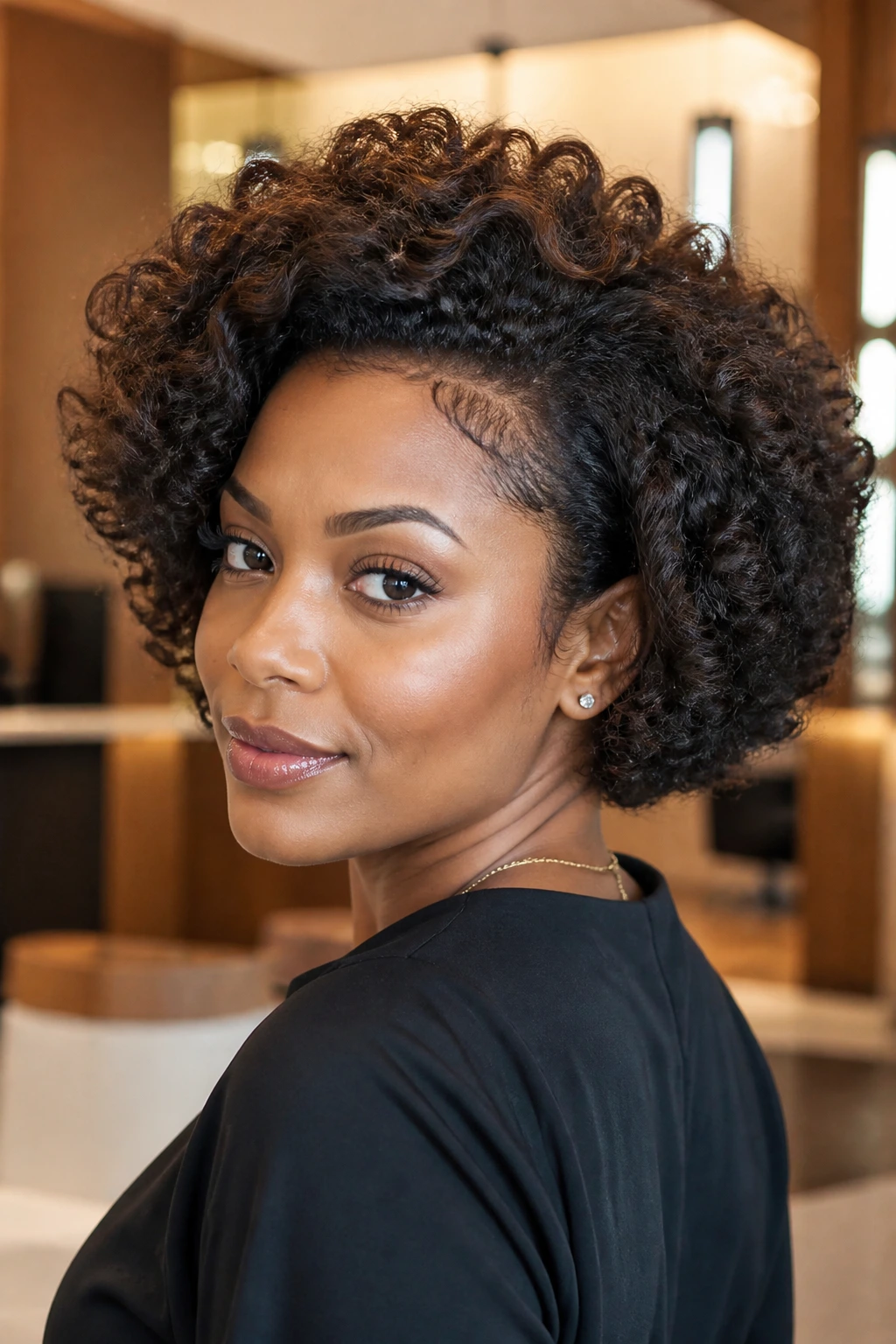
A tucked-under bob has a neat little bend at the ends that makes the whole haircut look finished. On curly hair, that bend can be created with rollers, a round brush on stretched hair, or a careful diffuse that nudges the perimeter inward instead of out. The top stays full, so the style doesn’t flatten into a helmet.
That contrast—soft volume above, controlled curve below—is what makes it interesting. You get the feeling of a polished bob without losing the texture that makes curly hair worth wearing in the first place. If the perimeter sticks out too much, the style reads messy. If it’s too smooth, the curls lose their life. A gentle tuck is enough.
This works well for office days, formal events, and any time you want the bob to behave a little more politely.
24. Chunky Two-Strand Twist Bob
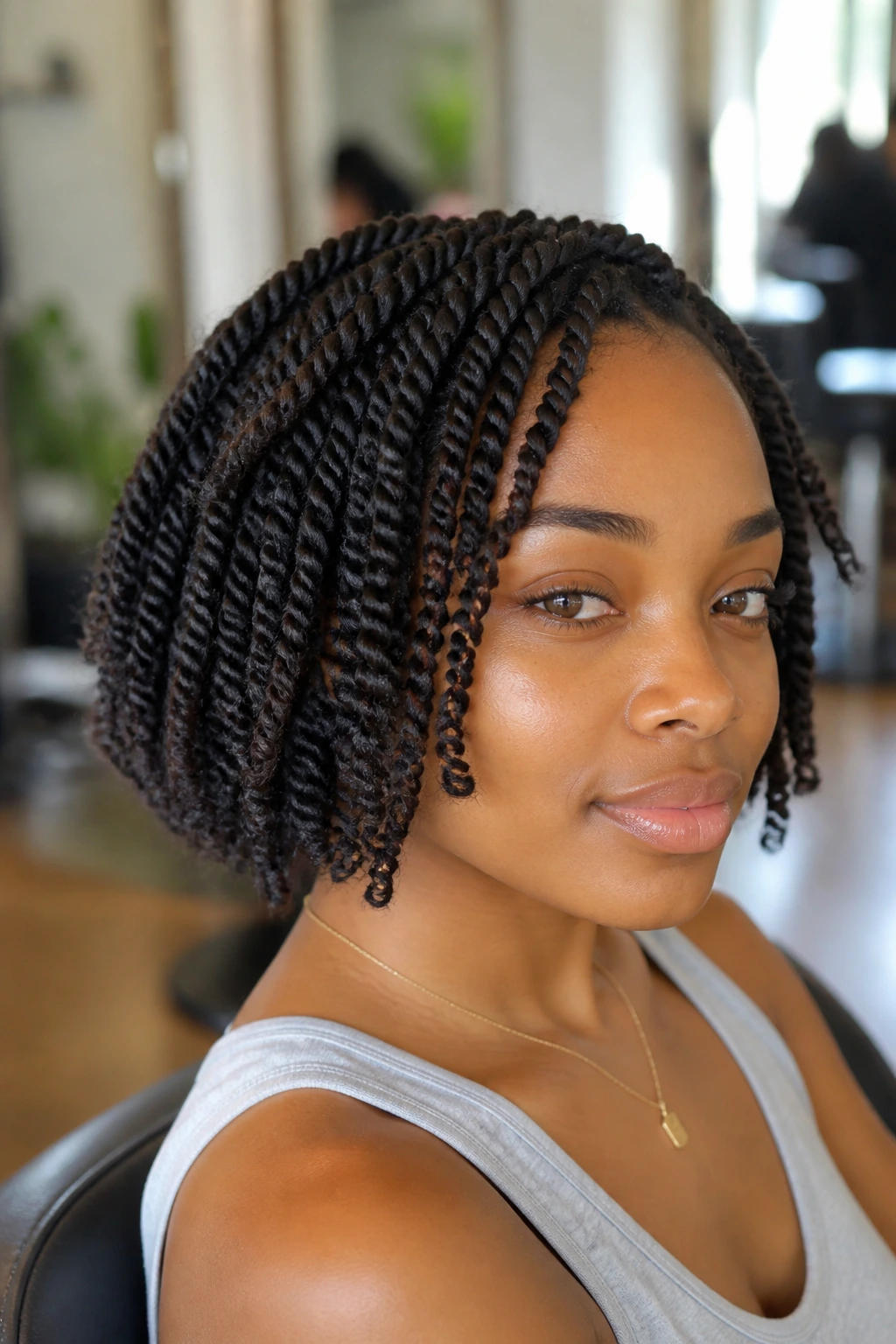
Chunky twists give a bob more texture than a twist-out and less commitment than a fully defined coil set. They sit in space on their own, which means the haircut feels fuller even before you unravel them. That makes this style a good choice when you want a low-manipulation look with some shape still visible.
Bigger twists tend to keep the bob looking round instead of stringy. Eight to twelve medium twists is enough for a shorter cut; longer bobs may need more sections to keep the shape balanced. You can wear the twists for several days, then take them down for a twist-out when you want a different finish. Two styles. One haircut.
It’s not the sleekest option. It doesn’t try to be. But it does give you flexibility, and flexibility matters when you’re dealing with curls that change mood by the hour.
25. Stretch-and-Revert Volume Bob for Maximum Shape
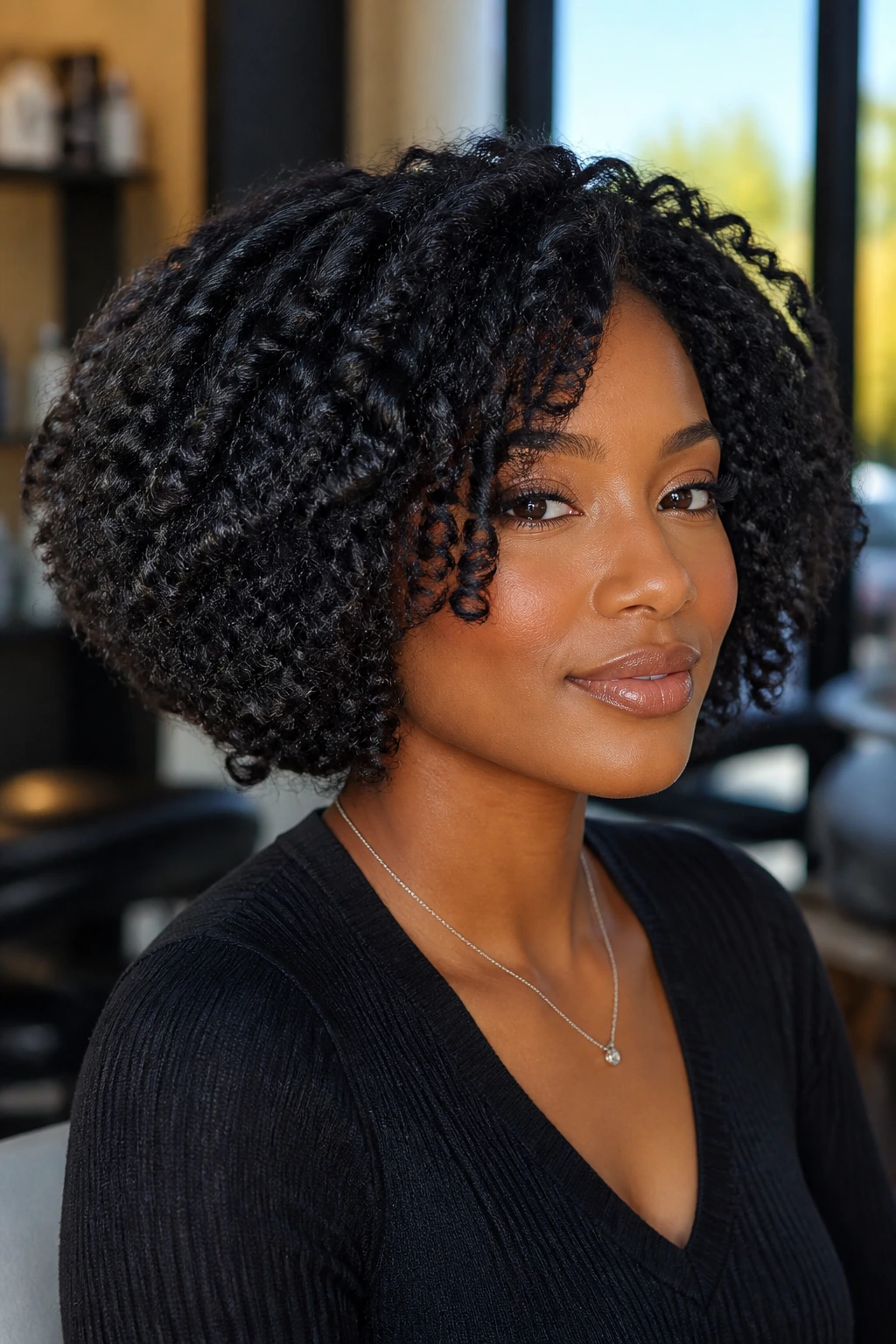
If your curls shrink so hard that a bob disappears, this is the answer that usually saves the day. Stretch the hair a little with banding, a low-heat blow-dry, or a loose twist set, then let it revert just enough to keep the body. The goal isn’t length for length’s sake. It’s controlled bounce.
This works best when the cut itself already has a strong shape underneath. If the bob is uneven, stretching it won’t hide that. But if the trim is solid, the extra length makes the style look bigger, rounder, and a bit more visible from every angle. That’s why people with 4C coils reach for this trick so often.
It’s also the most forgiving choice when you want a bob but not a super-short one. A little stretch can make the difference between “cute” and “I can actually see my length.”
Why Curly Bobs Keep Their Shape Better Than Straight Cuts
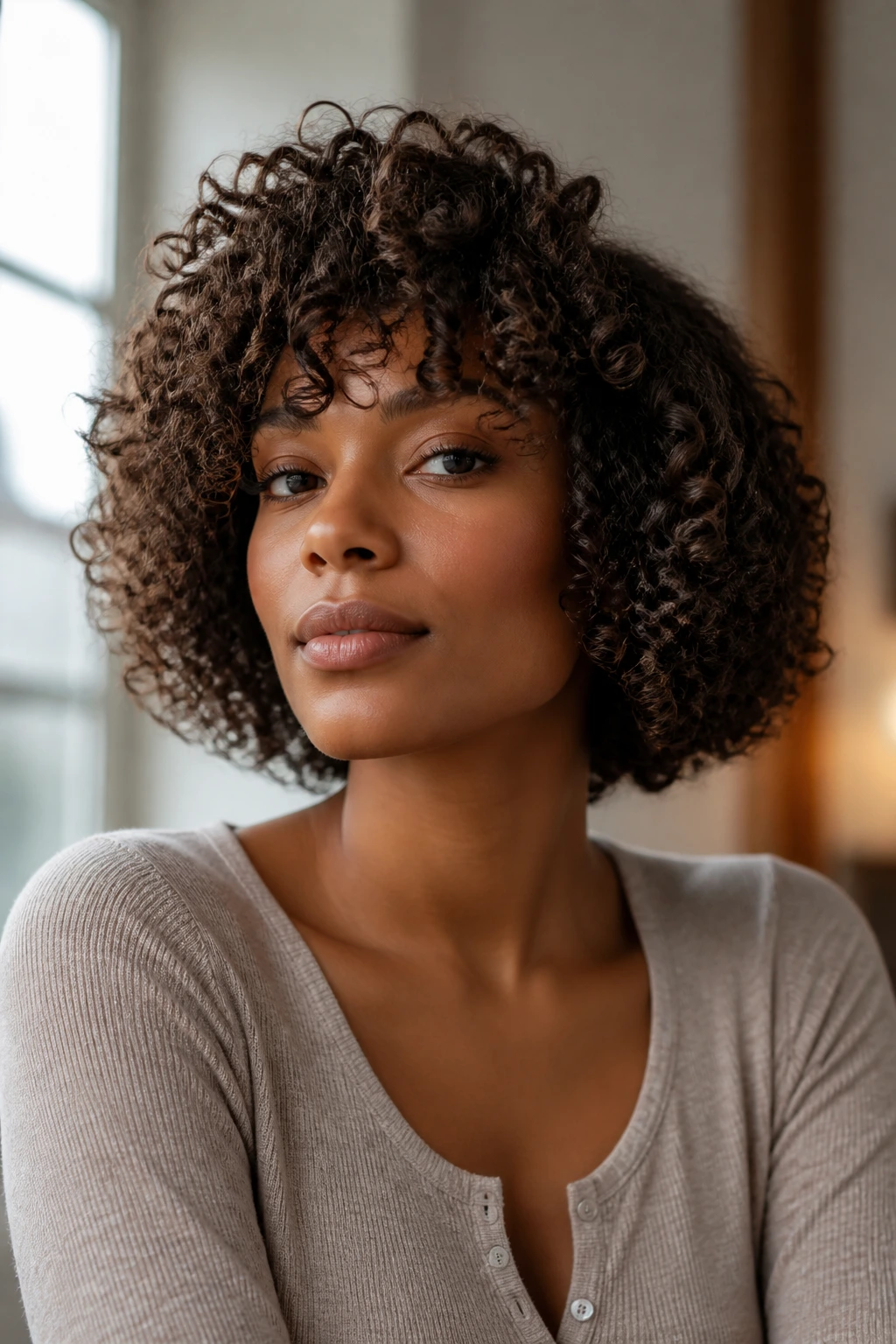
Curly hair changes a bob’s geometry. That’s the whole story, and it’s why these cuts work so well. On straight hair, a bob lives or dies by the line at the bottom. On curly hair, the perimeter, crown, and interior weight all matter at once, because the curl pattern turns a small haircut into a bigger shape once it dries.
The perimeter does the heavy lifting. When the ends are kept full, the bob holds onto its outline even after a night of sleeping or a humid day outside. Thin ends don’t behave that way. They go wispy fast, and wispy is not the same as airy.
Density gives the bob its body. Black hair often has enough density at the roots to support roundness, but that density needs smart shaping. A little removal through the interior can stop the style from ballooning out at the sides. Too much removal, though, and the bob loses its backbone. That’s the line every good cut walks.
Lobs are safer when you’re unsure. If you’re nervous about going too short, a lob buys you room to see how your curls settle. You can always trim more later. You can’t uncut a bob that rides too high once the shrinkage kicks in.
How to Pick the Right Bob for Your Curl Pattern and Density
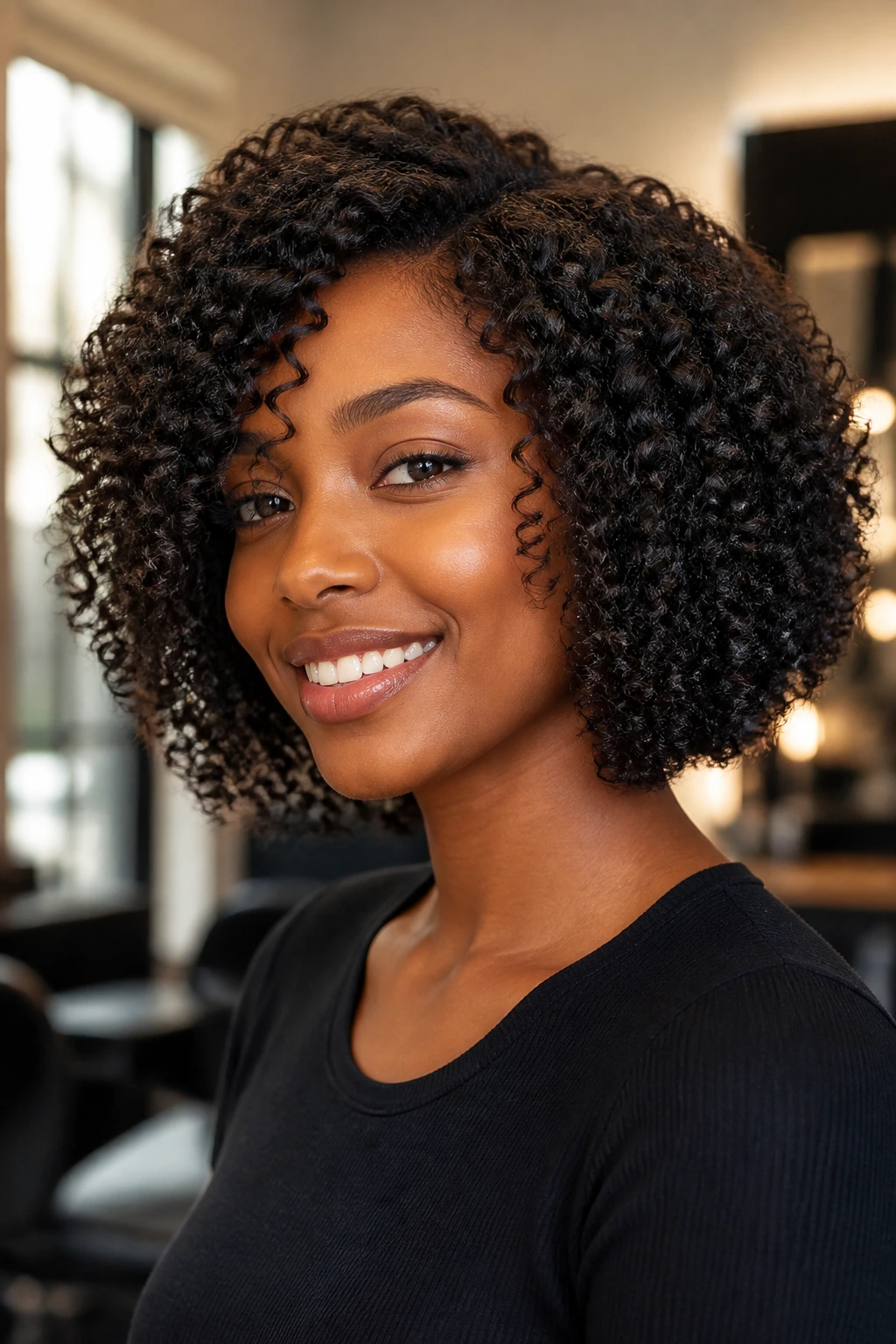
Loose curls, tight coils, and mixed textures do not behave the same way in a bob. That sounds obvious until you watch the same cut land differently on two heads sitting next to each other in the salon chair. One head gets round and buoyant. Another gets wide. Same scissors. Different outcome.
If your curls are loose and springy
A rounded chin-length bob or collarbone lob usually works well because the curls elongate enough to show the line. You can keep the layers subtle and let the shape sit softly around the face. A side part adds movement without needing extra cutting.
If your curls shrink hard
Go longer than you think. A lob, a tapered bob, or an A-line shape gives the hair room to spring up while still looking intentional. The front should usually be a little longer than the back so the shape doesn’t vanish when dry.
If your density is high
Choose cuts that remove bulk from the interior, not from the ends. That’s how you keep the bob from puffing into a triangle. A stacked nape, a shag with restraint, or a blunt shape with careful debulking can all work.
If your strands are fine but your hair is plentiful
You need weight, not fluff. Skip overly aggressive layering. A blunt or softly rounded bob usually holds up better because the ends have enough substance to support the silhouette.
What to Say at the Salon Before the Shears Come Out
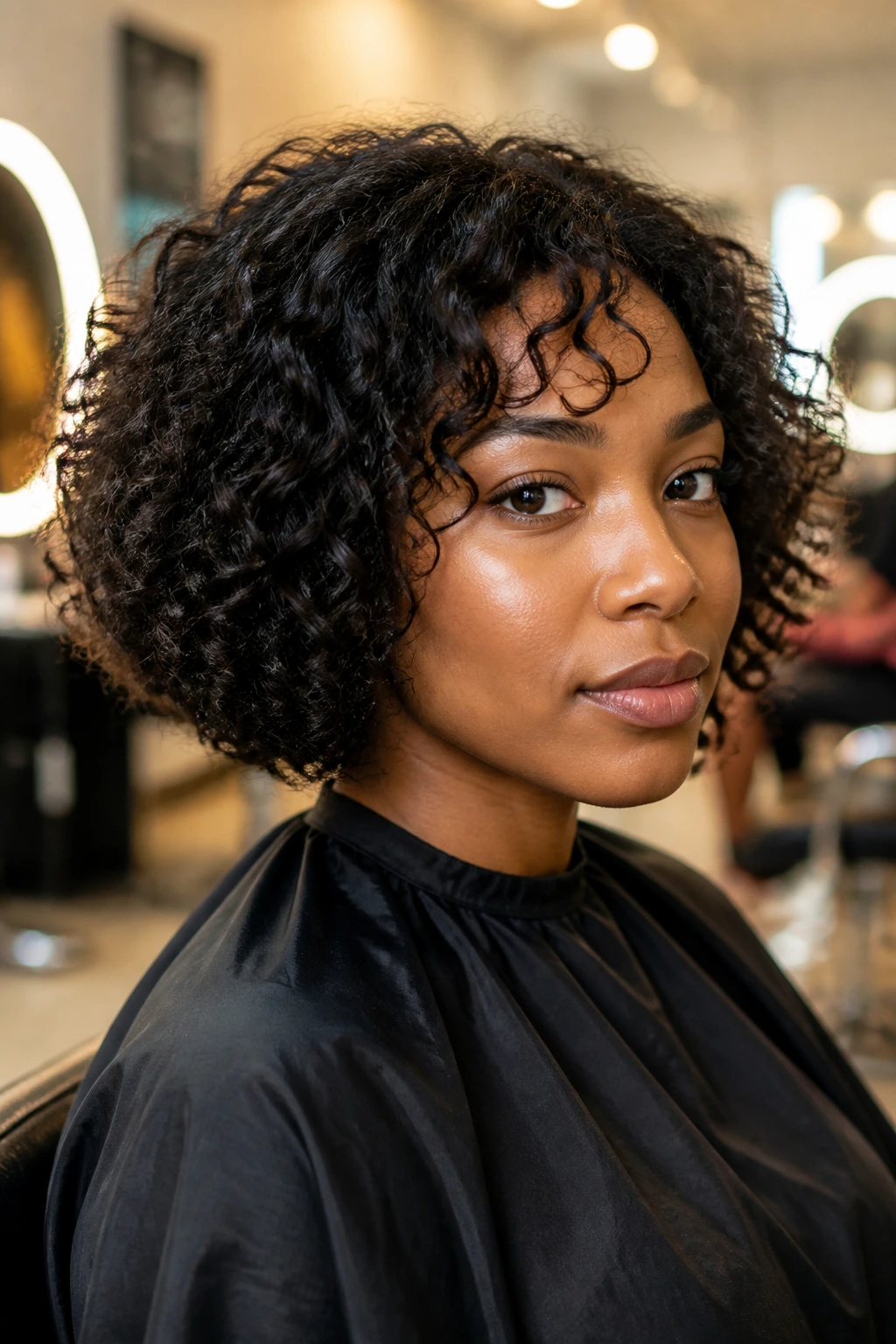
A good curly bob starts with a clear conversation. Bring photos, yes, but bring the right photos. Straight hair inspiration can help with vibe, not with shape. You want images of people whose curls, density, and shrinkage look closer to yours.
- Cut it in the dry state, or check the dry shape before you finish. Wet curls hide too much.
- Keep the ends full. Ask for interior weight removal if the hair is bulky.
- Leave the front pieces a touch longer. Half an inch to an inch can save the shape once it shrinks.
- Tell the stylist how you part your hair most days. A middle part and a side part change the bob more than people expect.
- Mention your styling routine. If you diffuse, twist, rod-set, or wear wash-and-go styles, the cut should fit that habit.
Say one more thing if you have high shrinkage: “Please check the silhouette after it dries.” That sentence prevents a lot of regret.
Essential Tools for Styling and Maintenance
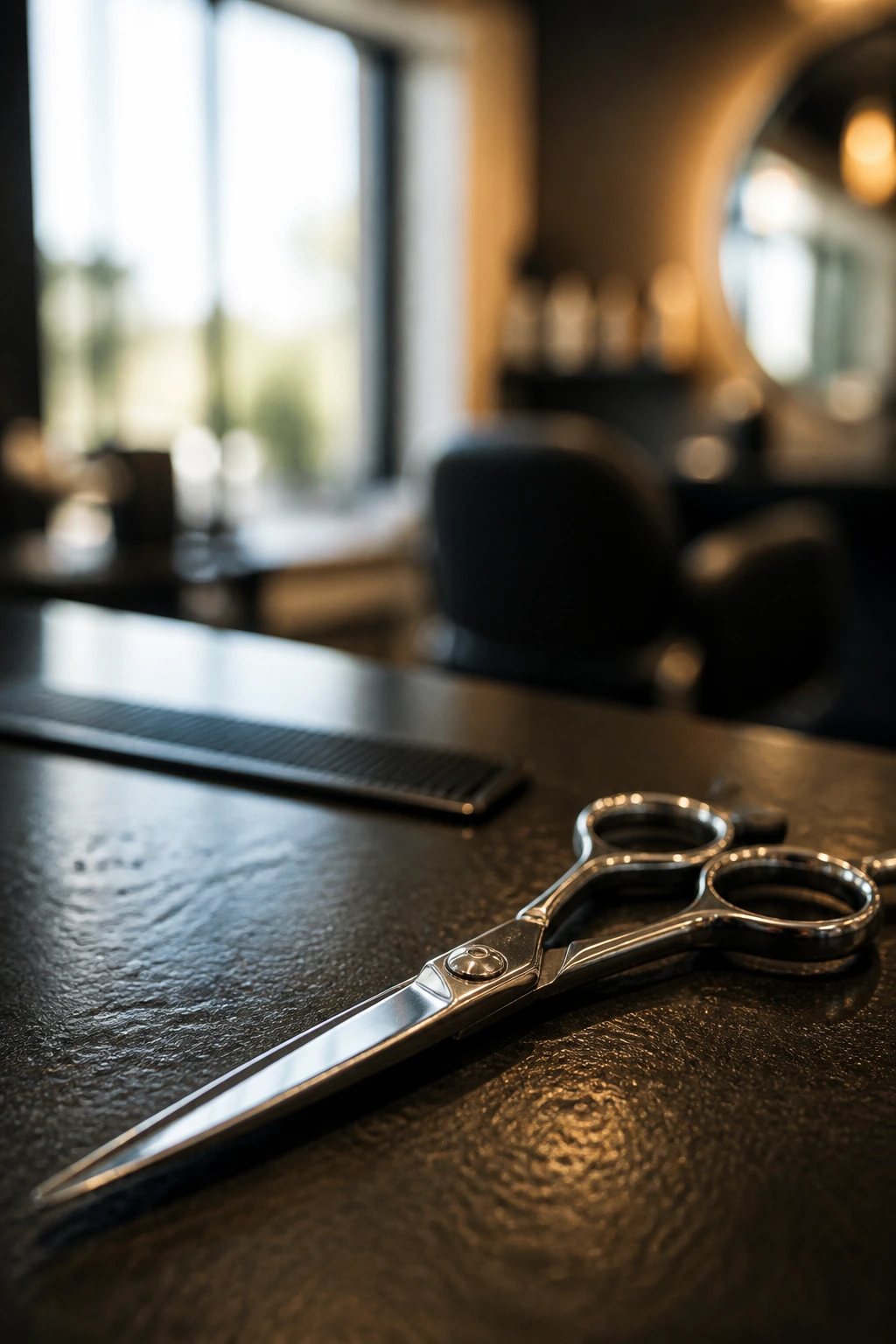
- Sharp haircutting shears — Dull blades chew the ends and make a curly bob fray faster.
- Wide-tooth comb — Good for detangling in sections without breaking up curl clumps too early.
- Sectioning clips — Useful for side parts, crown lift, and keeping the back from collapsing while drying.
- Diffuser attachment — The easiest way to keep volume at the roots without blasting the curl pattern apart.
- Spray bottle — Handy for refreshing day-two curls without soaking the whole head.
- Microfiber towel or cotton T-shirt — Cuts down on rough frizz after washing.
- Root clips or duckbill clips — Great for keeping the crown lifted while the hair dries.
- Satin bonnet or scarf — Keeps the bob from getting crushed overnight.
- Hair pick — Best used at the roots only when you want more height on a fluffy bob or mini afro bob.
- Hooded dryer or soft bonnet dryer — Especially useful for twist-outs, rod sets, and Bantu knot-outs that need full drying time.
How to Keep the Shape Full Between Wash Days
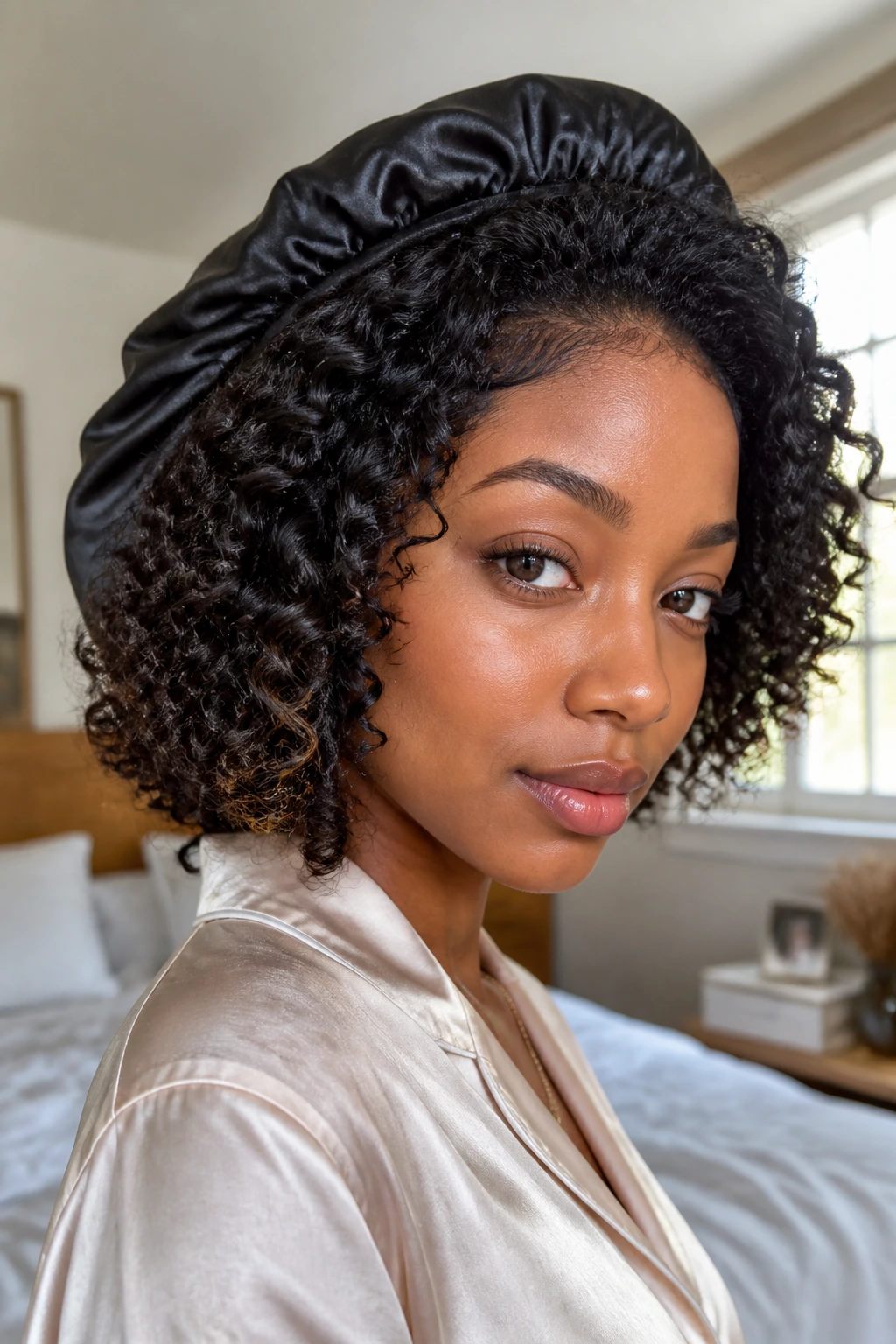
A curly bob can stay sharp for several days, but only if you treat the crown and ends differently. The crown usually needs lift; the ends need protection. Cramming the whole style into one routine is how people end up with flat roots and fuzzy edges.
Start at night. A satin bonnet works well for shorter bobs, though a loose scarf wrap can be better if your shape is taller at the crown. If the lob is long enough, a very loose pineapple can work, but short chin-length bobs usually do better with a scarf or bonnet than with a high pile of hair.
Morning refresh should be light. Mist the frizzy areas with water or a water-and-leave-in mix, then reshape with your fingers. If the roots have lost their lift, clip them up for 10 to 15 minutes while the hair dries. That tiny reset often matters more than adding more product.
For twist-outs, rod sets, and wash-and-go styles, the rule is the same: protect the set first, then rework only what has gone soft. Over-handling is the fastest way to flatten the bob and rough up the ends.
Common Mistakes That Flatten a Curly Bob
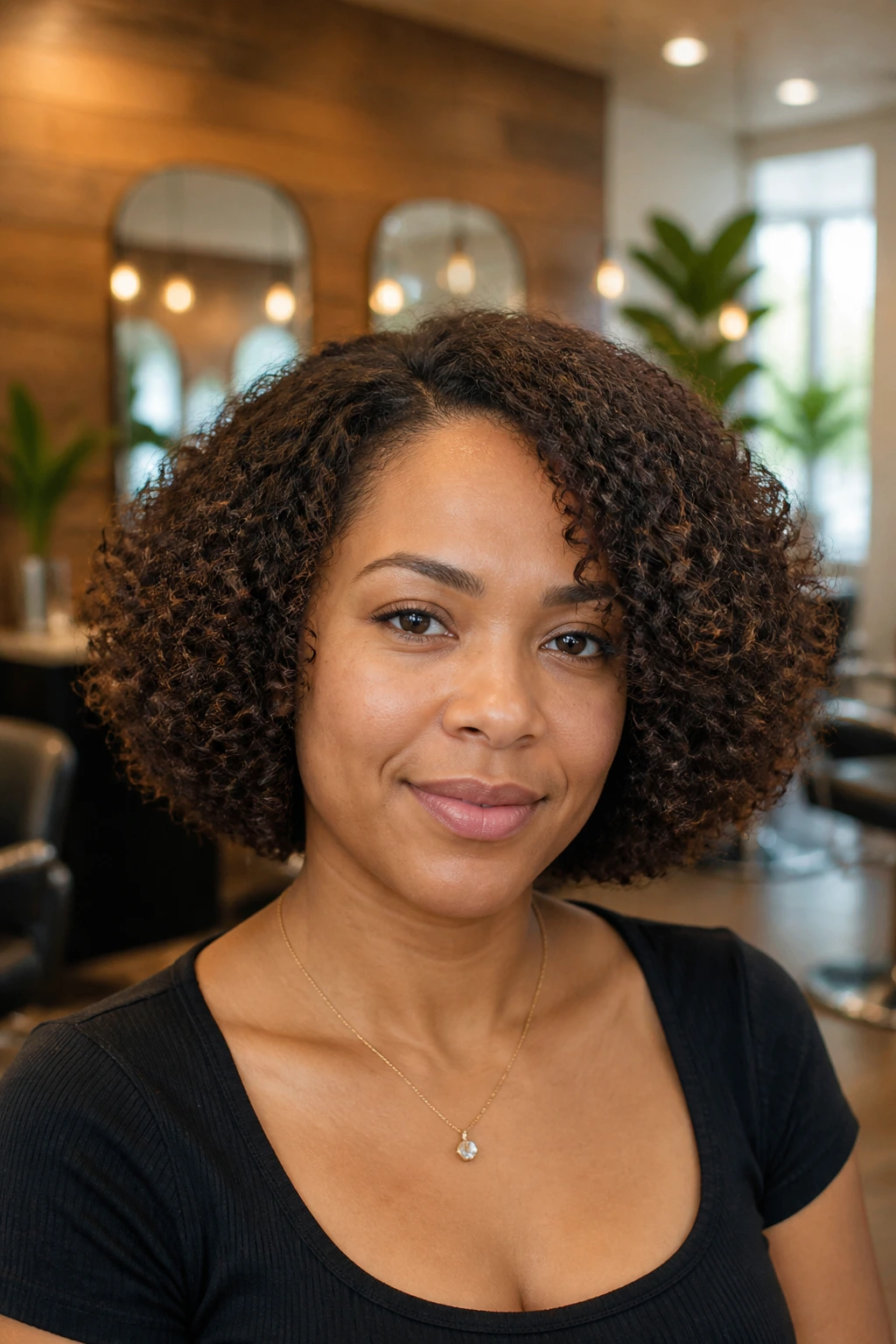
Cutting to the wet shape. Wet curls lie. Dry curls tell the truth. If the bob is cut too short while saturated, it often jumps upward after washing and ends up looking tighter than expected. The fix is simple: dry-check the perimeter before removing more length.
Loading product at the roots. Heavy cream at the crown sinks the lift and makes the top feel greasy before the ends feel fed. Keep heavier product closer to the mid-lengths and ends, then use lighter foam or gel near the top.
Over-layering the bottom line. If the ends are too thinned out, the bob starts to look ragged instead of full. Ask for internal shaping and leave the perimeter strong.
Ignoring the nape. The back of the neck grows out fast, and a messy nape changes the whole look. Clean it up on a schedule if the style depends on a crisp neckline.
Sleeping on cotton. Cotton strips moisture and roughs up the curl clumps overnight. Satin or silk is not extra. It’s the difference between “still shaped” and “what happened here?”
Variations and Adaptations to Try
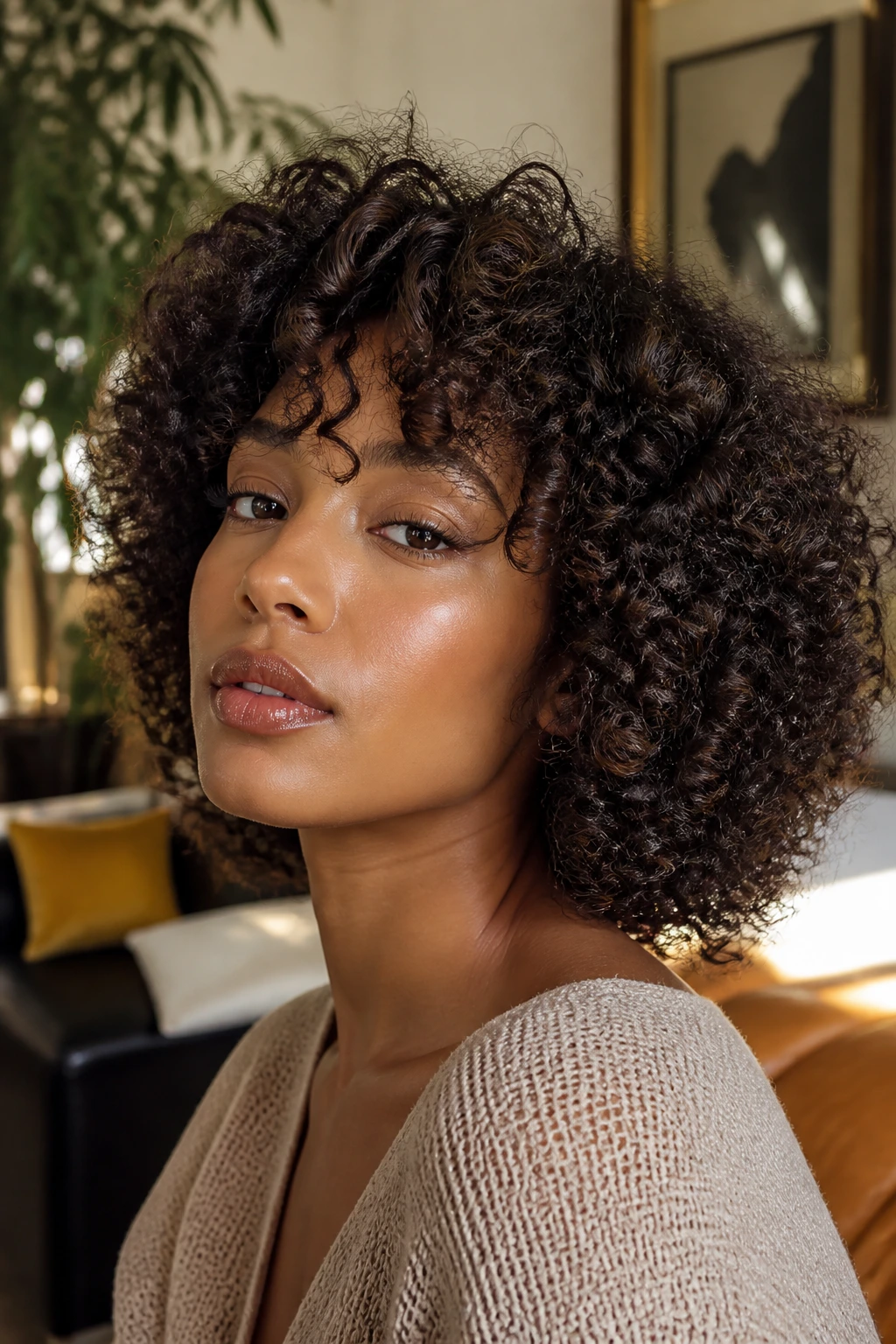
More Defined, Less Fluffy: Use a stronger hold gel or mousse, then diffuse until a cast forms. Scrunch it out only when the hair is fully dry. This version works best when you want the bob to look tidy and polished rather than airy.
Stretch-It-Out Lob: Band the hair, do loose twists, or use low heat so the curl pattern lengthens a bit before it springs back. That extra stretch helps dense curls sit below the jaw instead of bouncing right back to cheek level. Good if your shrinkage is intense.
Protective-Style Break: Switch the look to a crochet curly bob or a chunky two-strand twist bob when your own strands need less daily handling. You still get volume and shape, but the upkeep drops way down. Useful during long work weeks or busy stretches.
Add a Curly Fringe: Curtain bangs, a side bang, or a cheekbone-skimming front piece can change the whole mood of a bob without changing the rest of the cut. Just keep the fringe longer than straight-hair bangs would be. Curly bangs need room to spring.
Bring in Color Dimension: Honey, caramel, copper, or burgundy accents can make the layers and coil groups show up better in a full bob. Dimension helps the shape read from across the room, especially on tightly packed curls.
Frequently Asked Questions
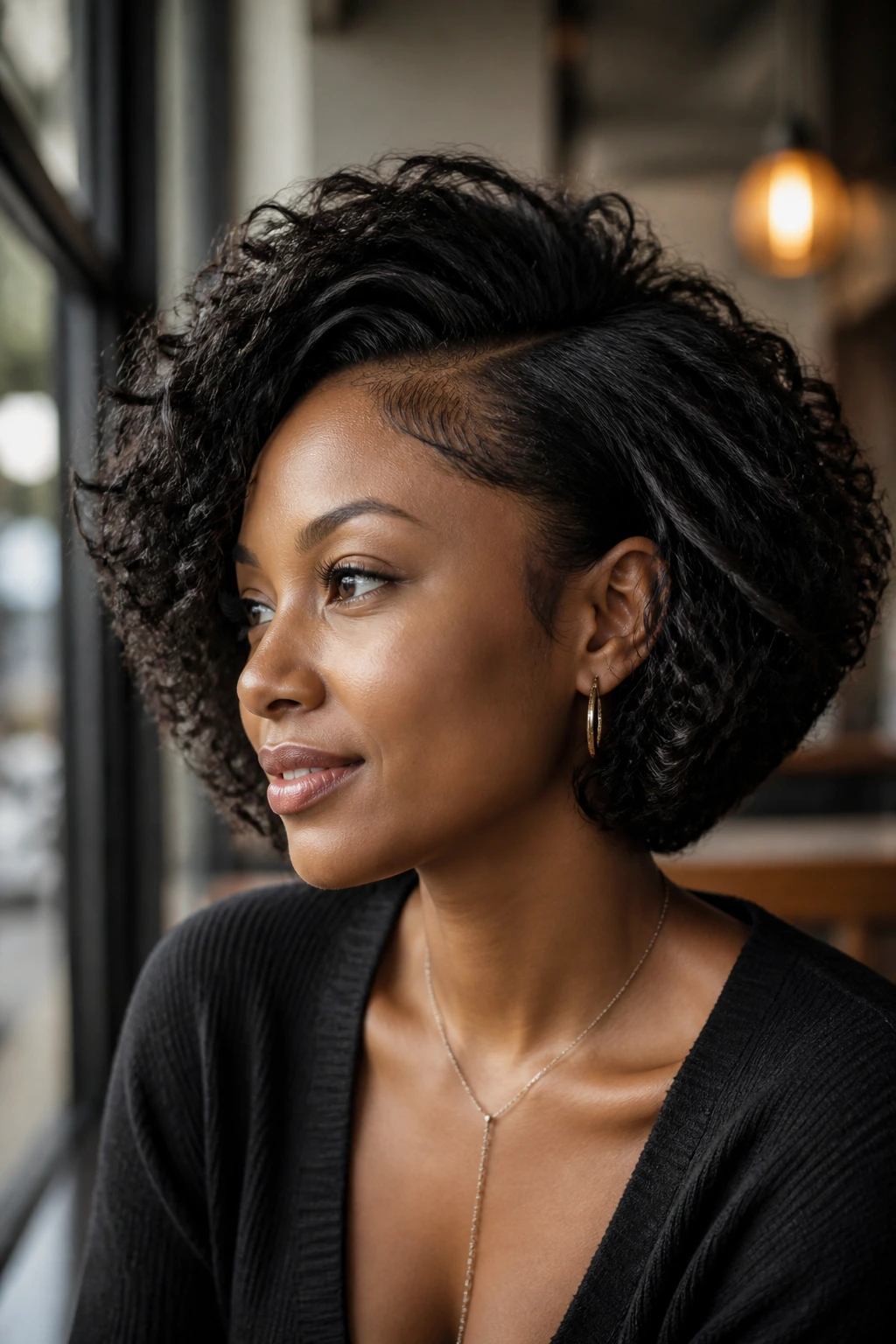
Is a bob better for 3C curls or 4C curls?
Both can work, but the shape changes. 3C curls often show more length in a chin-length bob, while 4C curls may need a lob, a tapered back, or a stretch-and-revert method so the style doesn’t shrink too high.
Should a curly bob be cut wet or dry?
Dry checking is safer. Wet cutting can still be useful for smoothing out the initial shape, but the final decision should happen when the hair is dry enough to show shrinkage and real volume.
How do I stop my bob from turning into a triangle?
Keep the bottom perimeter full and remove bulk from inside the shape instead of thinning the ends. A little lift at the crown and a cleaner nape also help the silhouette stay round.
Can I wear bangs with a volume bob if my curls shrink a lot?
Yes, but cut them longer than you think you need. Curly fringe should usually start lower than straight fringe because it will spring up as it dries. Cheekbone or nose length when wet is often a safer starting point.
What if one side of my bob is always flatter?
Use clips at the roots on that side while drying, and switch your part once in a while so the same area doesn’t get crushed every day. A side-part bob can also help hide a flatter side by building the shape into the cut.
Do I need heat to get these looks?
No. Twist-outs, Bantu knot-outs, flexi rods, wash-and-go styling, and finger coils can all create volume without heat. Heat just changes the shape of the curl for a while; it isn’t required for a good bob.
How often should a curly bob be trimmed?
Short bob shapes usually need shape work every 6 to 10 weeks, especially if the neckline or perimeter starts to blur. Longer lobs can stretch that a little, but once the outline looks vague, the haircut loses its point.
Can fine curly hair wear a volume bob without looking sparse?
Yes, but the cut needs to keep weight at the ends. Fine curls usually do better with softer layers and less aggressive thinning. A rounded lob often behaves better than a heavily layered bob.
The Shape That Keeps Its Bounce
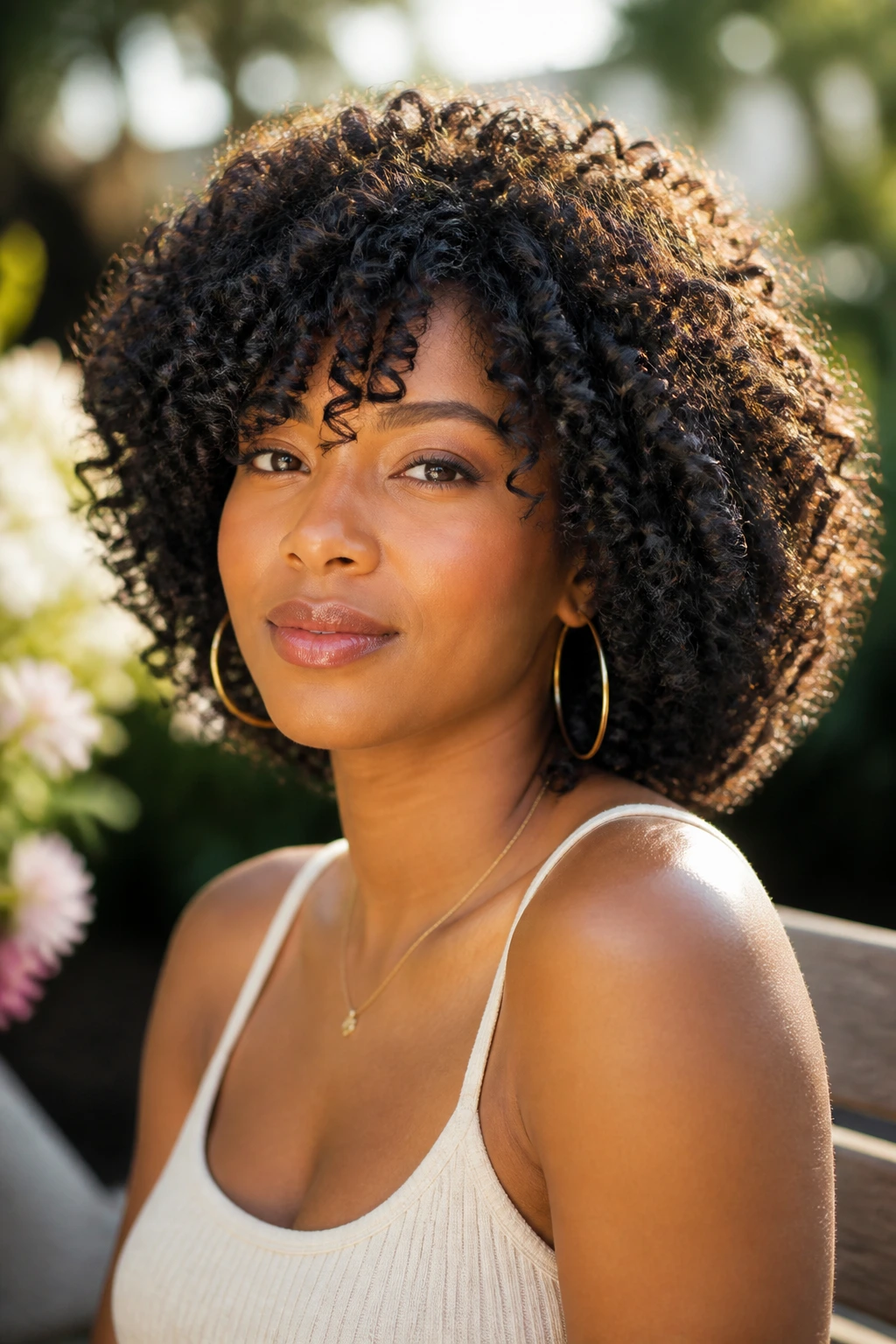
A good curly bob does more than take off length. It gives the hair a shape that can survive humidity, day-two frizz, and the weird little changes that happen when curls dry down and wake back up. That’s why these cuts keep showing up again and again: they respect the hair instead of trying to flatten it into something else.
If your curls are dense, springy, or high-shrinkage, there’s probably a version here that will make the silhouette feel easier to live with. Try the one that matches how your hair already moves. The best volume bob is the one that still looks like your hair when you’ve stopped fussing with it.