



Curly hair can make an inverted bob look crisp and expensive, or it can turn the whole shape into a puffed-up triangle that has no business sitting that close to your jawline. The difference is almost never “good curls” versus “bad curls.” It’s the cut. A well-built inverted bob with layers for curly hair gives the back enough lift to avoid drag, then keeps the front long enough to show off the curl pattern instead of crowding it.
That’s why this haircut has such a strong following among curl people who are tired of blunt one-length bobs doing odd things at the sides. Curls shrink. They also expand. And they do both in the same afternoon, which is rude but true. The best inverted bob shapes work with that motion instead of trying to pin it down.
I’m especially fond of the versions that use layers with a light hand. Too many layers, and you get frizzed-out ends that look busy from the wrong angle. Too few, and the back gets boxy fast. The sweet spot is a cut that removes weight where the curl clumps are too heavy, then preserves enough perimeter to keep the silhouette clean once the hair dries.
Why These Curly Inverted Bobs Earn a Spot on the Save List
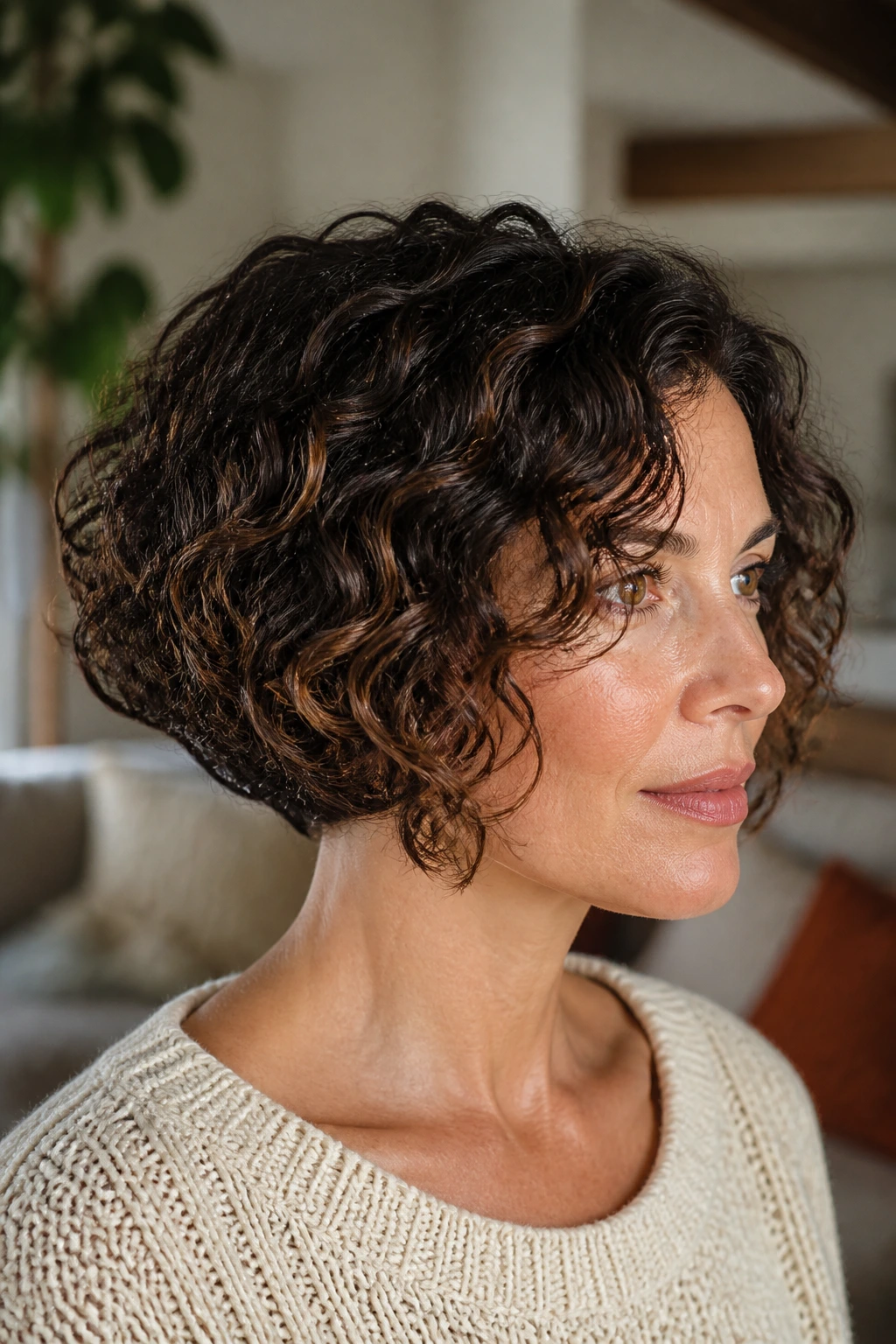
- They respect shrinkage: A good curly inverted bob is planned with the dried shape in mind, so the front does not jump up two inches and land above the chin.
- They keep the back from ballooning: The shorter stacked section at the nape gives curls a place to sit instead of fanning straight out.
- They work with different curl types: Loose waves, springy ringlets, and tighter coils all need a slightly different layer pattern, and these cuts cover that range.
- They can be sharp or soft: You can keep the outline polished, or let the front pieces drift a little for a less formal finish.
- They grow out better than people expect: Several of these shapes still look intentional at 8 to 12 weeks, which matters when you do not want a cut that screams for attention every month.
1. Soft Stacked Inverted Bob for Loose Ringlets
Loose ringlets are a sweet spot for this shape because they show the cut without fighting it. The back sits a little higher, the front lands somewhere around the jaw, and the layers give the curls enough room to spring without turning into a puffball. This version is one of my favorites when the hair has a soft bend and a little natural shine.
Why it works
The stack at the nape gives the cut its shape, but the layers are kept soft enough that the curls still clump. That matters. If you slice too aggressively into loose curls, the ends go wispy and the whole bob loses its line. A clean dry cut or curl-by-curl approach usually beats guessing on wet hair, because loose ringlets can jump more than you expect once they set.
What to ask for at the salon
- Keep the back stacked, but not razor short.
- Leave the front between jaw and chin length.
- Use light internal layers instead of big, choppy ones.
- Avoid over-thinning the ends.
Styling cue
A small amount of curl cream, then a light mousse at the roots, keeps this version springy instead of flat. Diffuse on low heat until the roots are about 80% dry, then leave the rest alone. That last bit matters. Touching loose ringlets too early makes them frizz before they’ve had a chance to set.
2. Chin-Length Curly Inverted Bob with Side Sweep
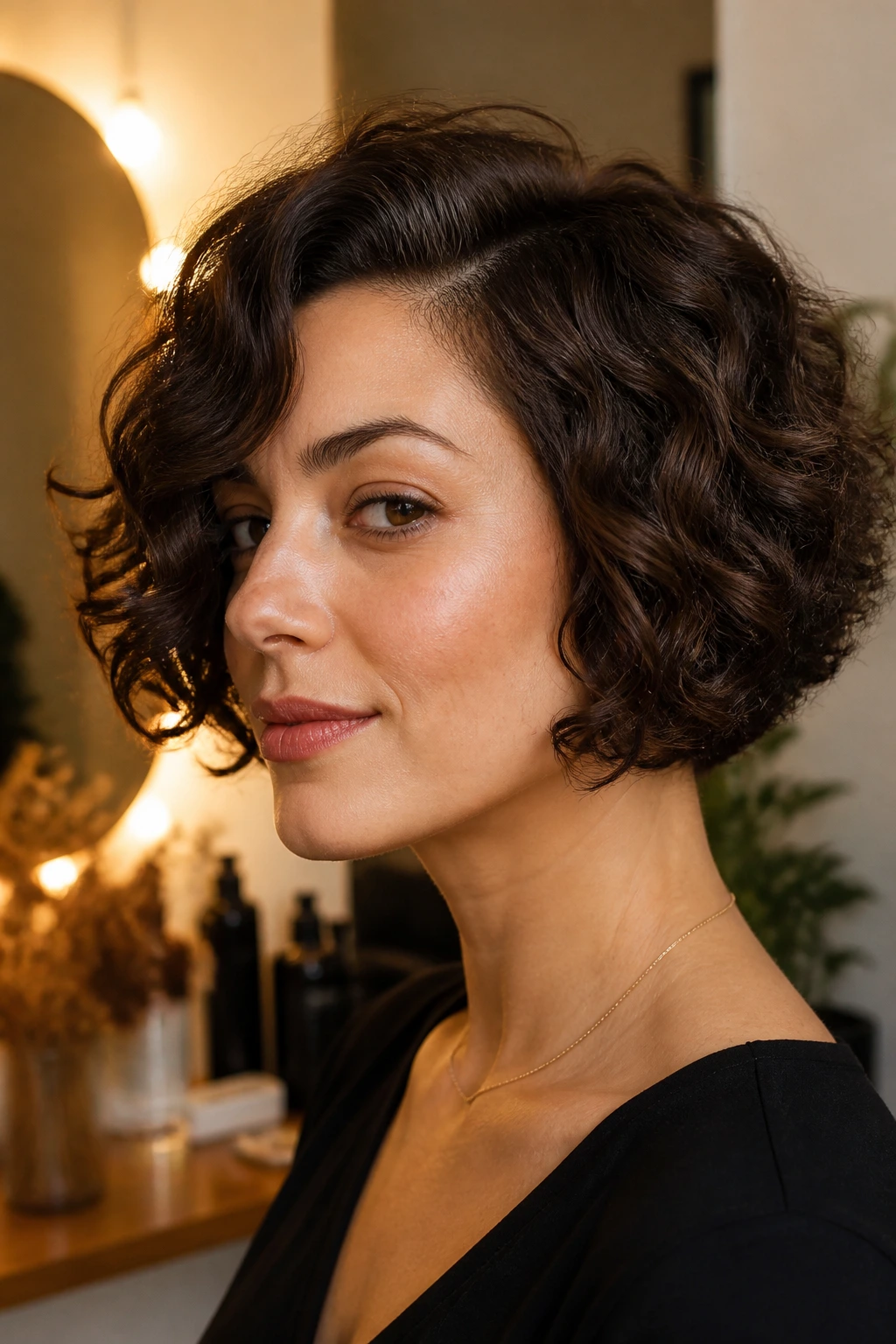
This is the one that looks polished before you even touch it with product. A side sweep moves the eye diagonally across the face, which makes the shorter back feel deliberate rather than severe. On curly hair, that diagonal line does a lot of work.
The chin-length front keeps the cut from shrinking into a mini helmet, and the side part creates a little lift at the crown. I like it for round and heart-shaped faces, especially when the curls are medium in density. The line lands cleanly at the jaw, then the side sweep softens the front so it doesn’t sit like a shelf.
A tiny root clip at the heavier side while diffusing helps the part hold. So does setting the part while the hair is still damp, not after it’s half-dried and already choosing its own direction.
3. Long Inverted Bob with Face-Framing Layers
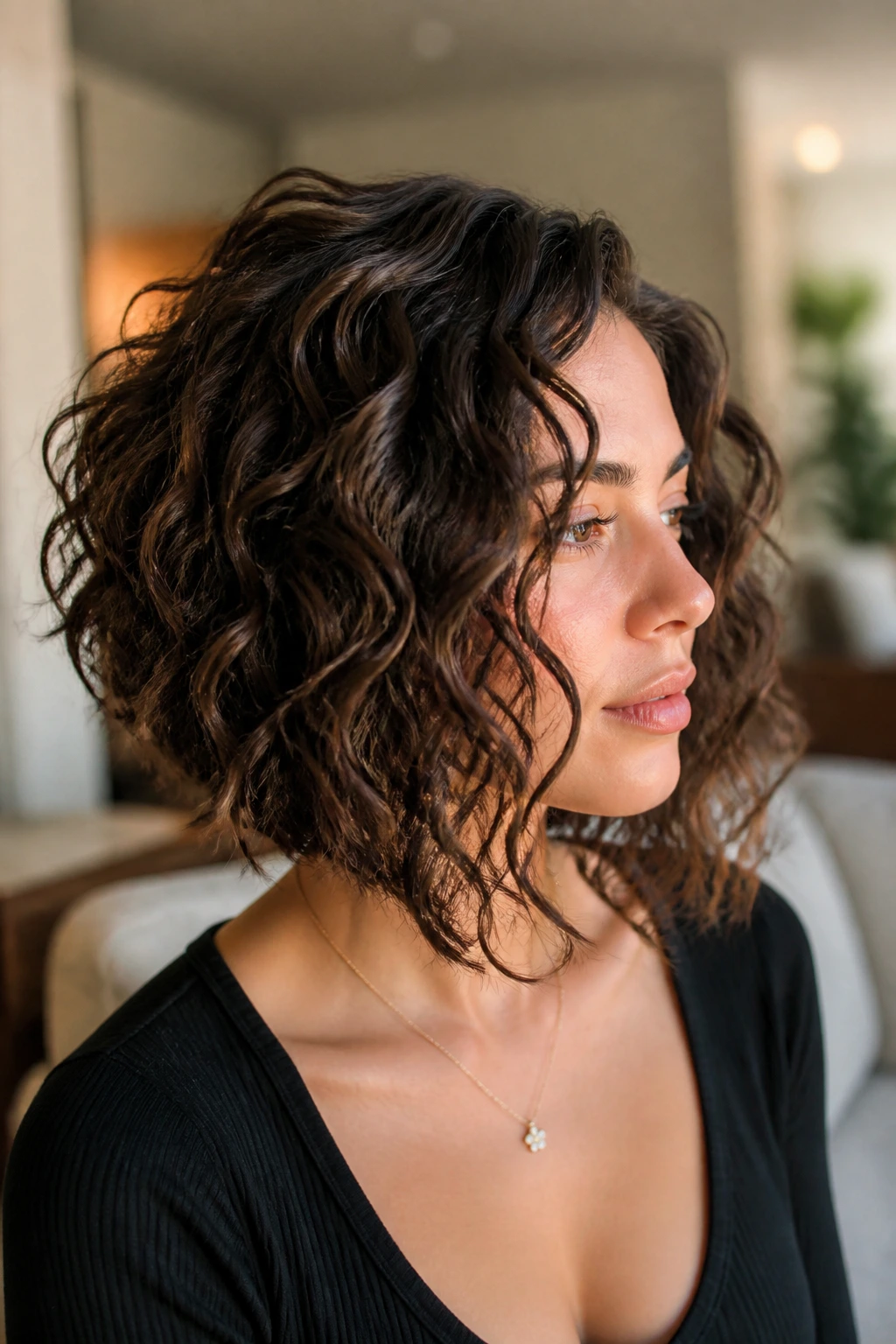
Do you want the shape of a bob without giving up the swing of a lob? This is the version I’d hand you first. The back is shorter and lightly stacked, but the front stays long enough to brush the collarbone, which keeps curly hair from feeling boxed in.
Face-framing layers are the whole point here. They break up bulk around the cheekbones and keep the front from hanging like two heavy curtains. That’s especially useful if your curls are dense or if your face needs a little length through the sides. The shape looks relaxed, but it still has structure.
Styling note
Ask your stylist to set the longest pieces where they hit comfortably when dry, not where they land wet. That single detail prevents the classic “my curls are suddenly too short” problem. A medium-hold gel on the front pieces helps them curl into the angle instead of puffing outward.
4. Deeply Graduated Bob for Thick Spirals
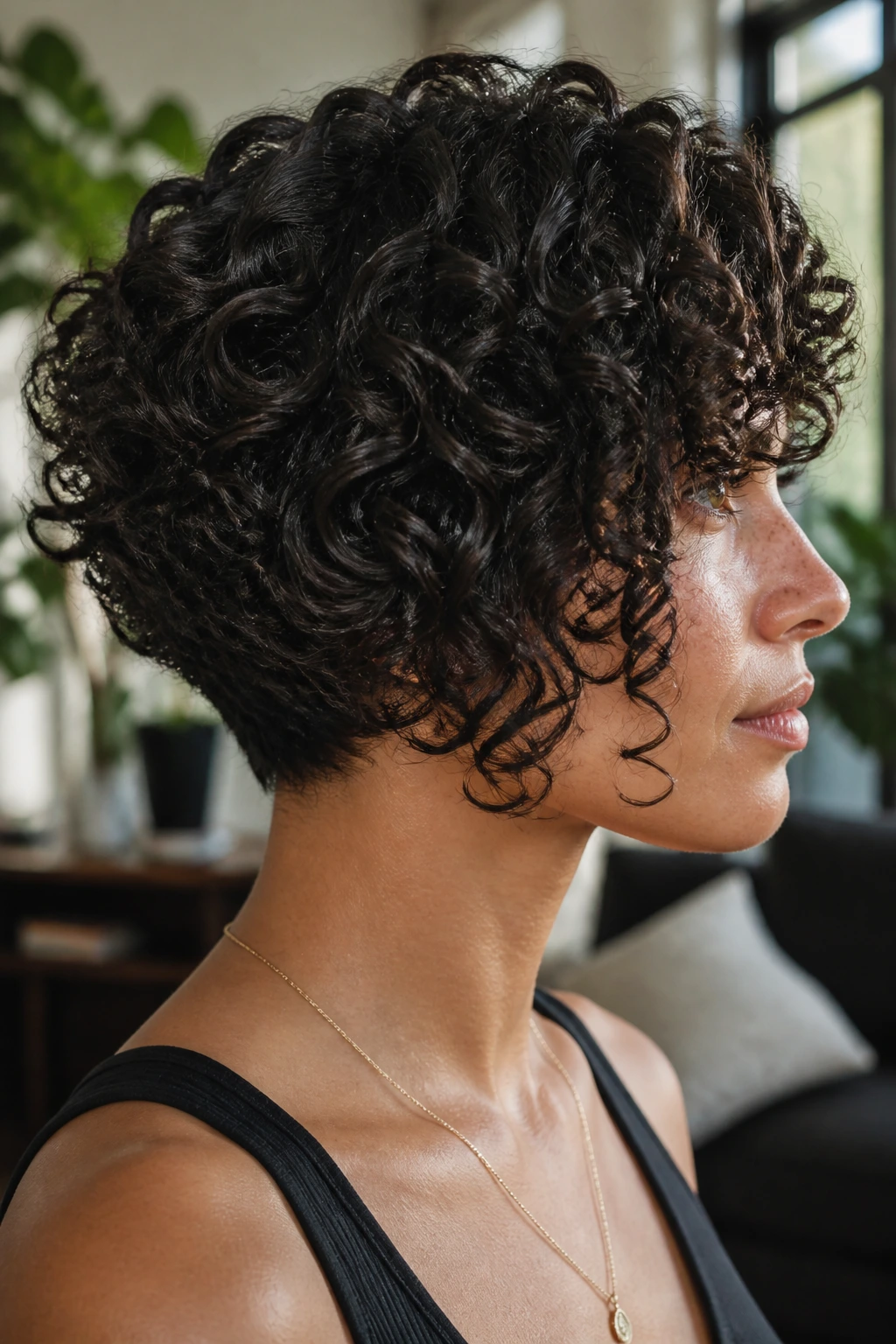
Thick spirals have opinions. If you leave them to their own devices, they’ll build a rounded wall around the head and make the bob feel heavier than it should. A deeply graduated inverted bob takes some of that weight out of the back so the shape can breathe.
This cut works best when the stylist removes bulk from the interior rather than hacking at the outer perimeter. That keeps the outline looking full while the nape stays compact. It’s a smarter move than random thinning shears, which often leave thick curls frizzy in the exact spots you wanted to calm down.
- Best for 3A to 3C curls with real density.
- Looks strongest when the front falls near the chin.
- Needs a clean neckline every 6 to 8 weeks if you want the stack to stay visible.
A little discipline goes a long way here. Too much volume at the crown and the graduation disappears. Too little and the whole thing feels flat. Thick spirals usually need a stronger cut than people expect, and this is one of the few curly bobs that can carry it.
5. Curly Inverted Bob with Curtain Bangs

Curtain bangs change the mood fast. Instead of a hard edge around the forehead, the hair splits softly down the center and opens the face. On a curly inverted bob, that extra movement can make the whole cut feel lighter, even when the back is still nicely stacked.
I like this version for curls that have enough bend to settle around the cheekbones without sticking straight out. The bang pieces should start a little longer than people usually ask for. If they’re cut too short, they shrink and sit awkwardly above the brow line. That’s a fast route to daily frustration.
The best curtain bangs in curly hair are not perfect twins. One side can land a touch higher. That little irregularity keeps them from looking staged. Use a finger-dried finish or a diffuser, then separate the bangs gently once they’re dry. Don’t rake through them with a brush unless you’re ready for a big halo moment.
6. Asymmetrical Inverted Bob for a Sharp Silhouette
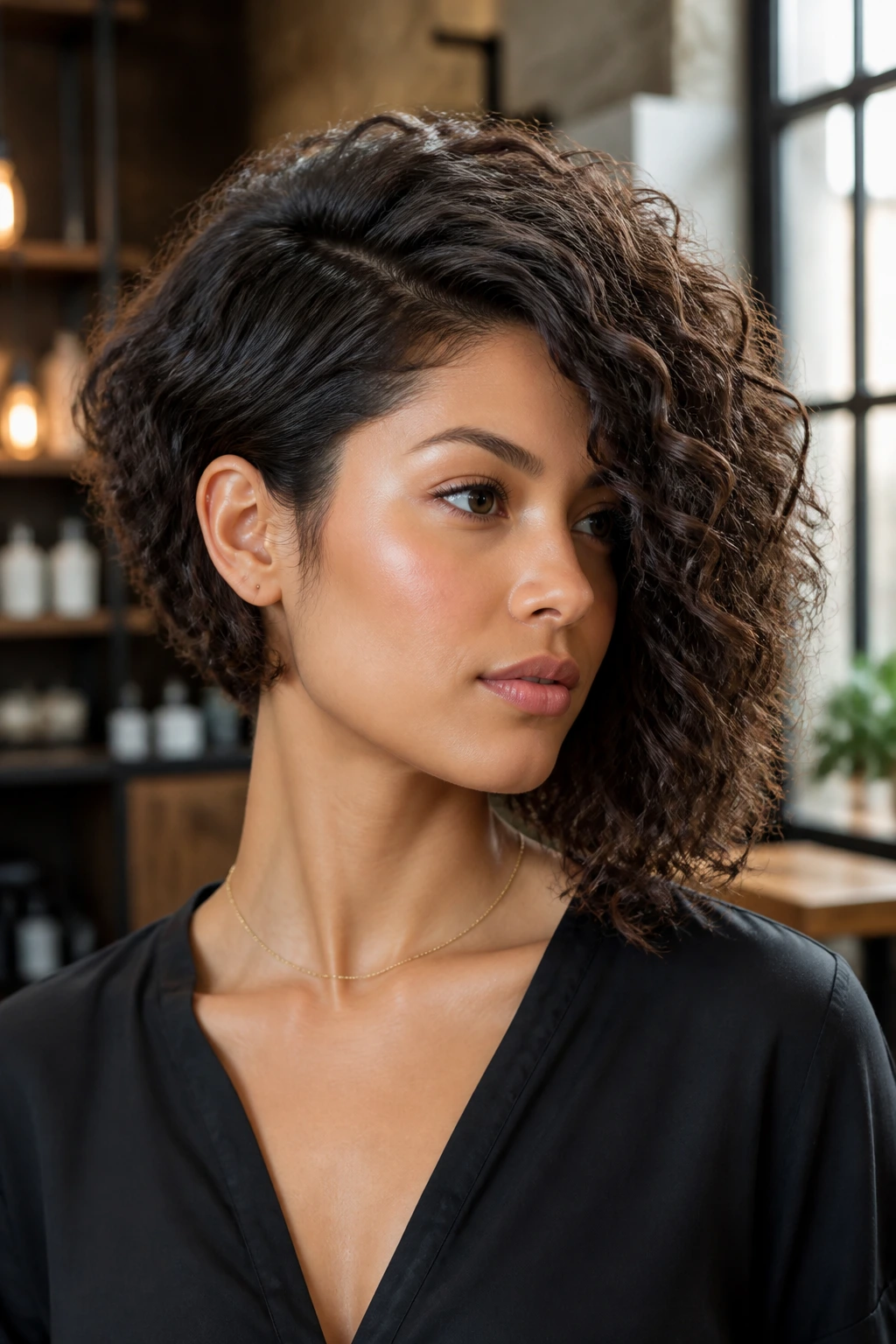
There’s something satisfying about an asymmetrical bob when curls are involved. One side carries a little more length, the other side lifts higher, and the whole cut feels less predictable than a standard inverted shape. If your hair grows with a slightly uneven pattern, this is a smart way to work with it instead of fighting it.
Unlike a symmetrical bob, which can expose every imbalance, asymmetry gives the eye a reason to move. The curl pattern reads as intentional motion. I’d keep the difference modest—usually around 1 to 1.5 inches—because too much contrast starts to look like two different haircuts sharing the same head.
This version is best when you want edge without a hard, geometric finish. It looks especially good when one side is tucked behind the ear and the longer side falls forward with a clean curl ribbon.
7. Micro-Layered Bob for Fine Curls
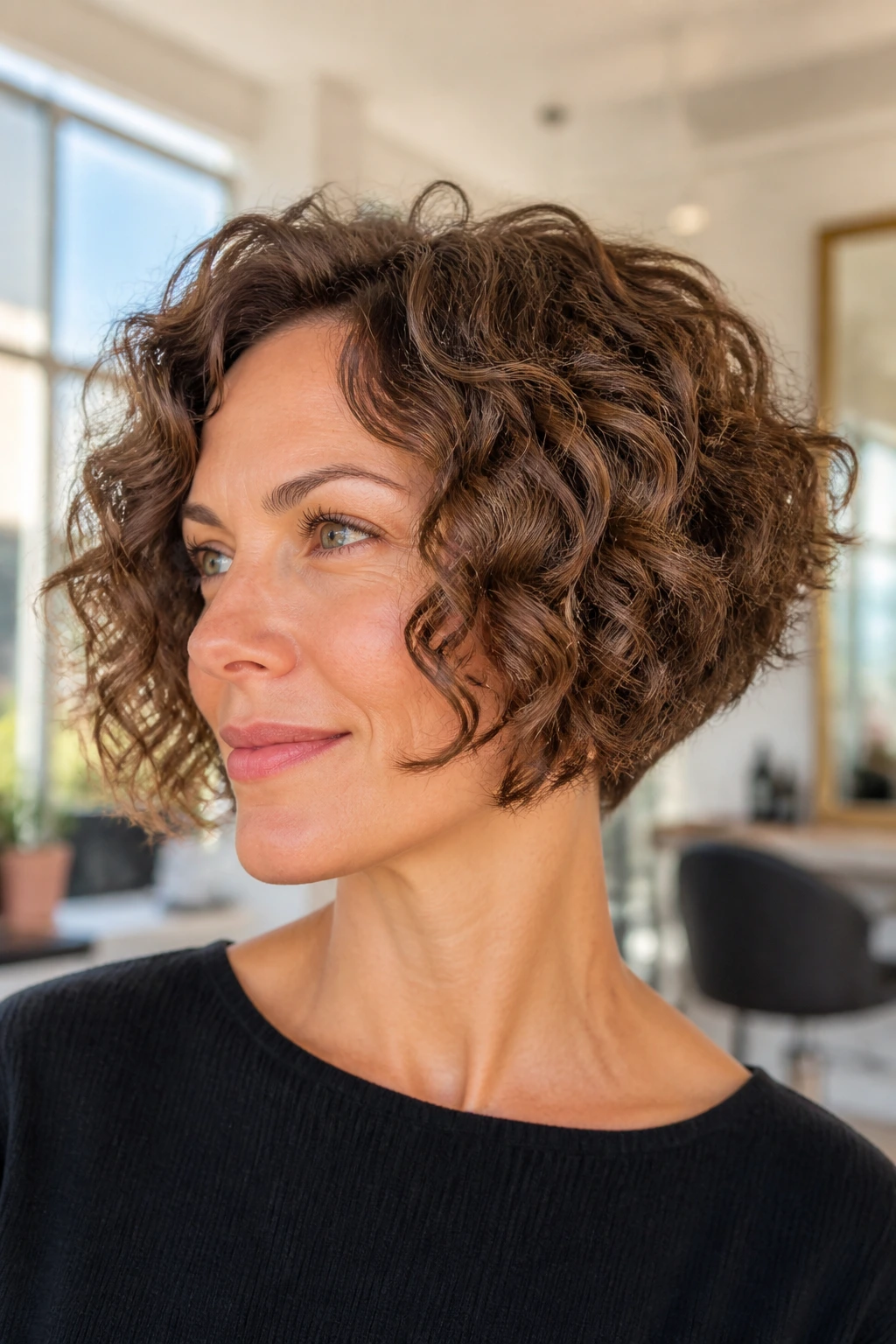
Fine curls do not need a mountain of layers. They need shape, a little lift, and a perimeter that still feels like hair. A micro-layered inverted bob keeps the outline full while taking just enough weight out of the interior so the curls can move.
The trick is restraint. A stylist who goes too high with the layers can leave fine curls looking sparse at the ends, which is a miserable trade. I’d rather see tiny, thoughtful interior layers and a longer front line than a heavily chopped crown that looks airy for all the wrong reasons.
How to keep it from going flat
Use mousse at the roots and a small amount of cream on the mids and ends. Skip heavy oils near the scalp. Fine curls collapse fast when they’re overloaded, and this cut depends on lift at the crown to keep the inverted shape visible.
8. Rounded Inverted Bob for Tight Coils
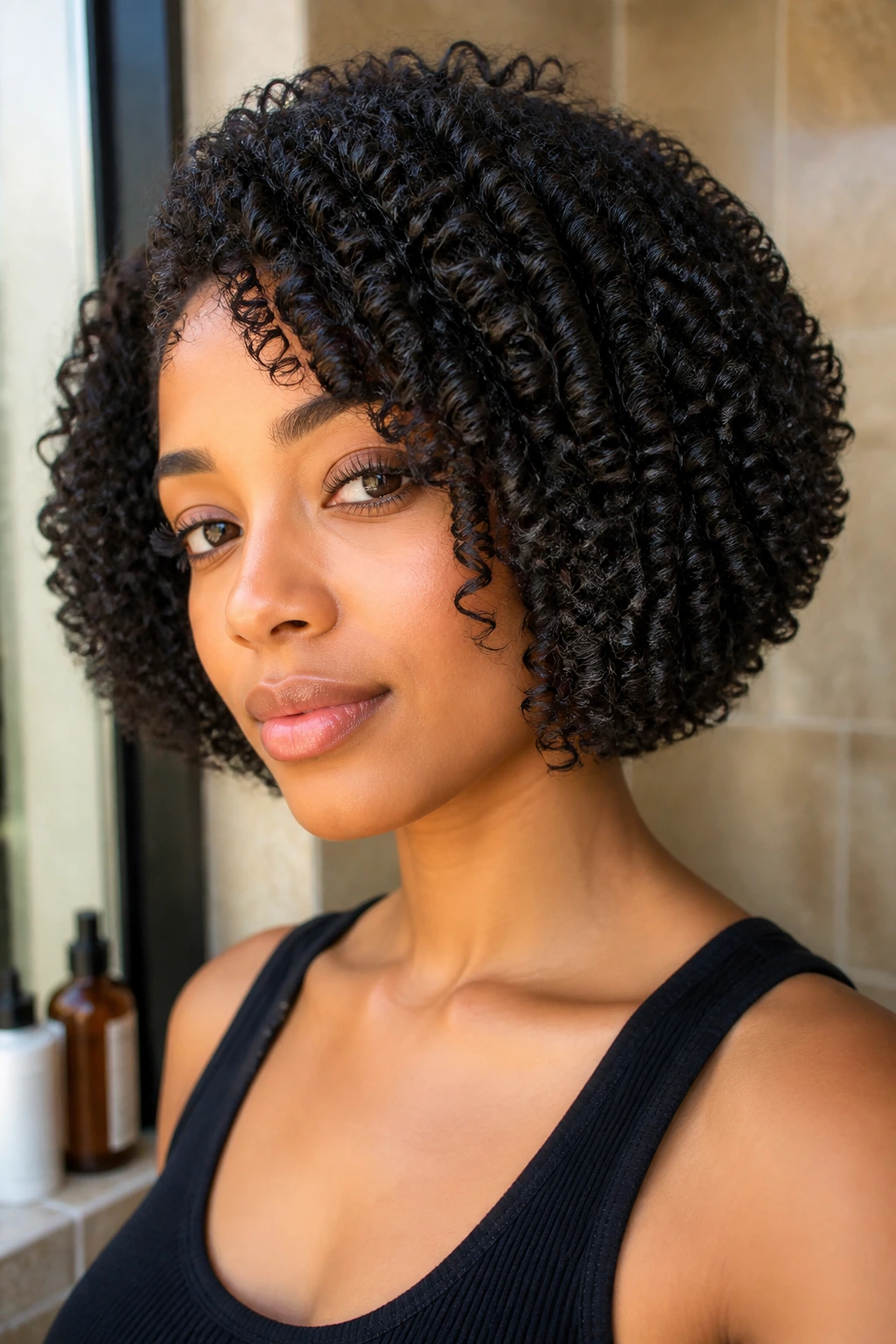
Tight coils usually look best when the silhouette is rounded rather than hacked into a sharp shelf. A rounded inverted bob gives the back enough structure to stay tidy, while the sides curve softly around the face instead of sticking out.
This shape is beautiful on coils because it follows the natural spring of the hair. The layers need to be placed carefully, with the shortest points supporting the crown and the longer front pieces keeping the face open. If the cut gets too angular, coils can make the outline look boxy. Rounded wins here.
Moisture matters more on this shape than on most. Coils shrink hard and can look dry at the ends if the cut exposes too much texture. A leave-in conditioner and a styling gel with decent hold help the curls stay grouped, which makes the round shape read as clean instead of fuzzy.
9. Choppy Curly Bob with Airy Ends
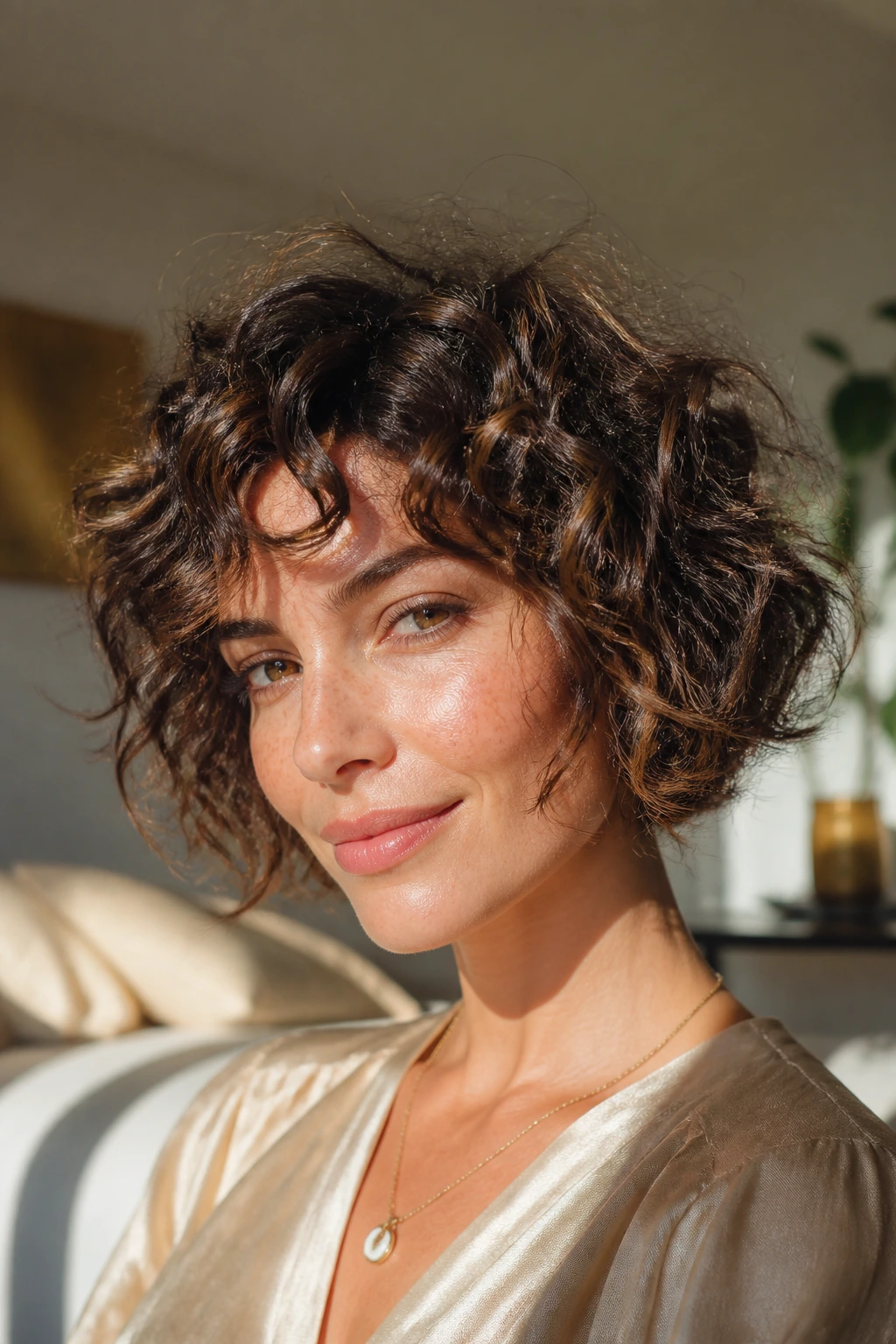
Some curly bobs need a little edge. Choppy ends can be a good thing when the curl pattern is springy enough to handle it. The point is not to shred the hair. It’s to keep the ends from feeling heavy and stubborn.
This version works best when the layers are visible but not chaotic. Think piecey movement, not a hacked-up outline. A point-cut finish around the front can keep the bob from looking too polished, which is nice if your style leans more relaxed than sleek.
The best use case is medium-density curls that already clump well. If the hair is dry or overly porous, choppy ends can turn frizzy fast. That’s the catch. Good choppiness still needs hydration and a firm enough product to hold the curl family together.
10. Tapered Nape Inverted Bob
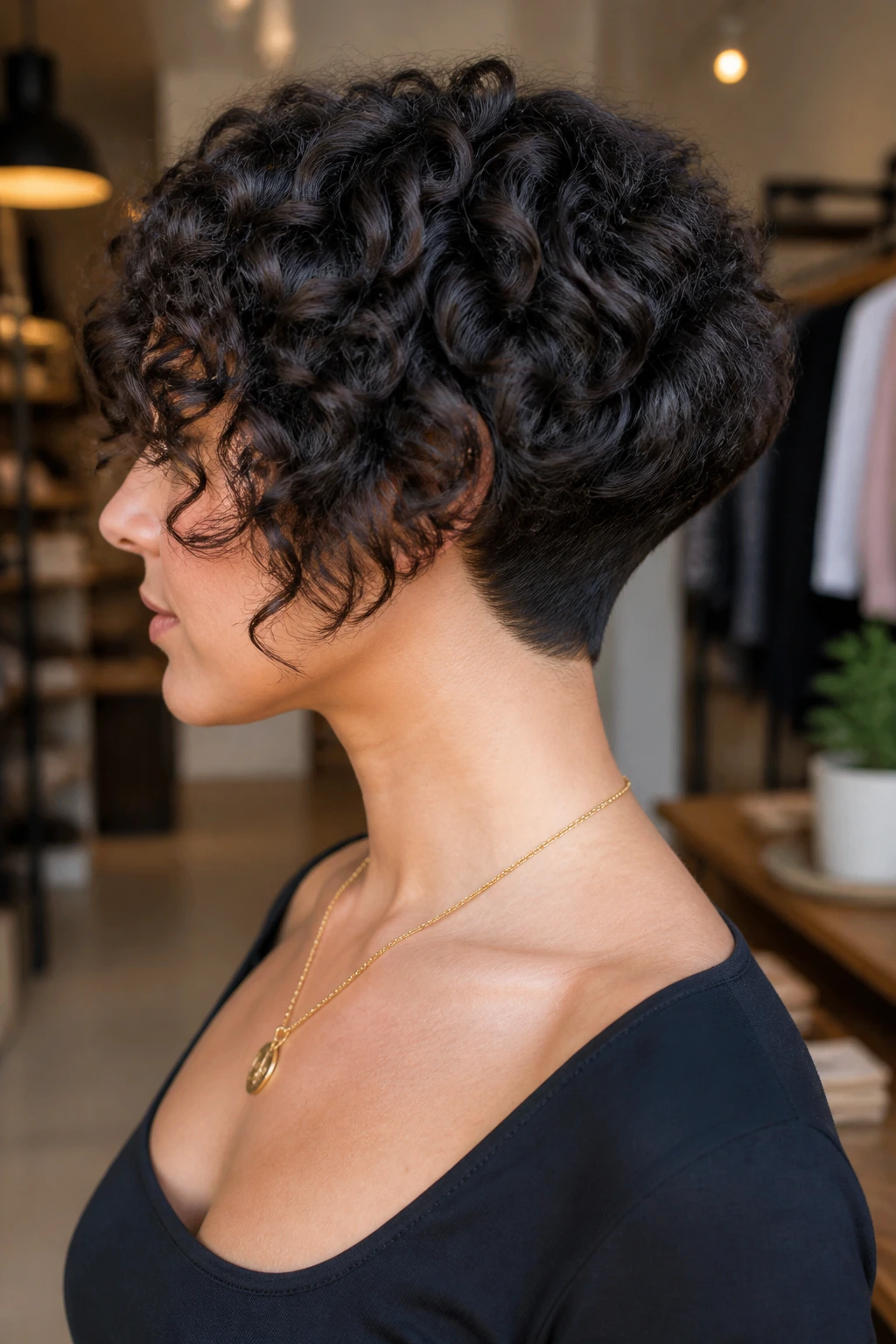
A tapered nape gives the cut a clean exit point at the back of the neck. That tiny detail makes the inverted shape look sharper, especially when curls are short enough to show the neckline. The back feels neat, the crown lifts, and the front keeps its softness.
I like this cut on people who wear earrings, collars, or structured necklines, because the short nape gives those details some breathing room. It’s also a solid choice for thick curls that tend to mushroom at the base of the skull. Tapering the nape pulls the whole silhouette inward.
It does need upkeep. Not a dramatic amount, but enough that you’ll notice when it grows out. Once the nape starts dropping, the shape loses some of its snap. If you like crisp edges, book trims on a tighter schedule.
11. French-Inspired Curly Bob with Fringe

A French-inspired bob has a little attitude baked into it. Add curls, and the result gets softer but not less interesting. The fringe is the key here. It can sit at the brow or skim the upper forehead, and it gives the inverted line something to play against.
Unlike a curtain bang, a fringe carries more weight across the forehead. That means you need curls with enough spring to keep the front from sitting limp. I’d choose this cut when the curl pattern is uniform and the hair dries into neat clumps. If the front tends to separate into odd pieces, the fringe will need more styling time than you probably want.
This is a pretty good cut for someone who likes a clean neckline and a face-framing front that feels a little Parisian without trying too hard. The charm is in the softness, not the polish.
12. Side-Part Curly Inverted Bob for Extra Lift
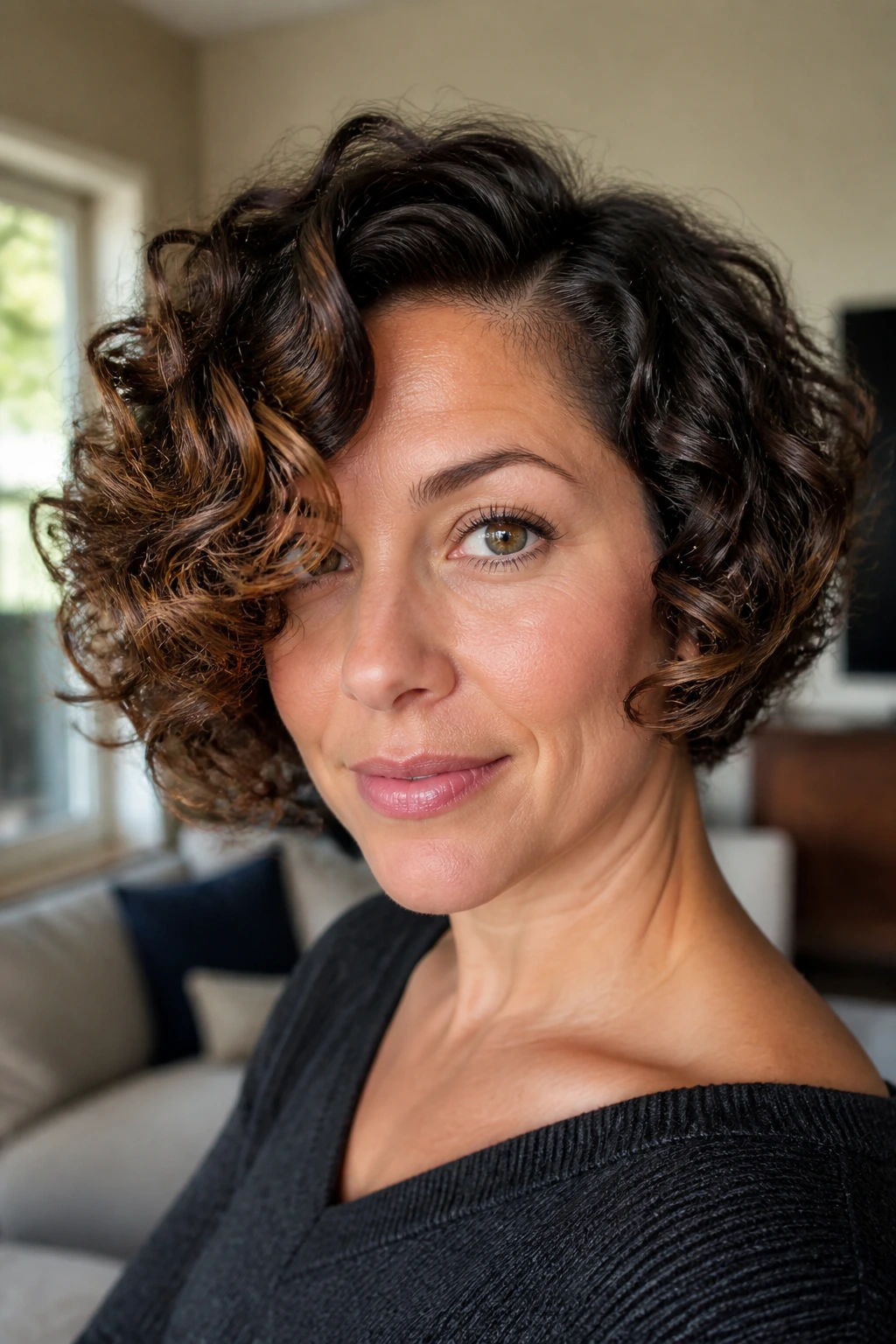
Can a side part change the whole haircut? Yes. On curly hair, it often does more than people expect. A side part shifts weight away from the center, which can wake up flat roots and make the inverted bob feel fuller at the crown.
The front pieces on the heavier side fall in a longer curve, while the lighter side opens up the face. That asymmetry helps the bob look lifted without requiring a huge amount of product. It’s especially useful if your curls sit low at the root or if one side of your hair tends to collapse faster than the other.
A root clip on the heavier side while the hair dries can help lock in the lift. So can a quick blast of cool air at the end of diffusing. Small move. Big difference.
13. Grown-Out Inverted Bob for Low Maintenance
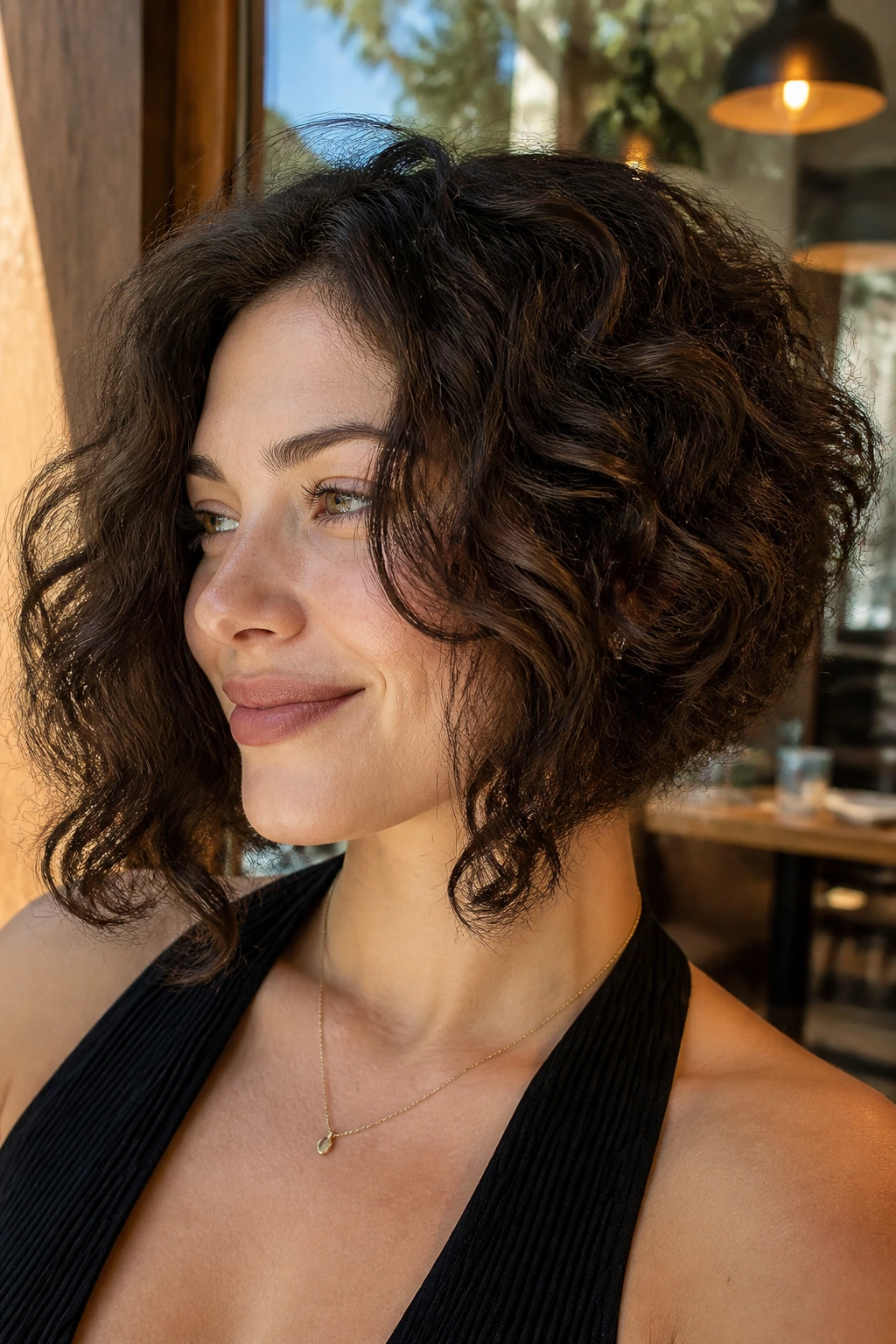
This is the version for people who don’t want their haircut to announce itself every three weeks. The front is left long enough that the grow-out stays graceful, and the stack in the back is soft rather than severe. It still reads as inverted, but it doesn’t punish you when life gets busy.
What I like about this shape is the way it hides the awkward stage. Some bobs go weird as soon as they lose a quarter inch. This one keeps its line longer because the front and back lengths are not fighting each other. The curls help too; they blur tiny changes in length better than straight hair does.
If your schedule is packed or you simply don’t love frequent salon visits, this cut gives you more breathing room. It’s tidy without being precious.
14. Wedge-Inspired Curly Bob with Clean Lines
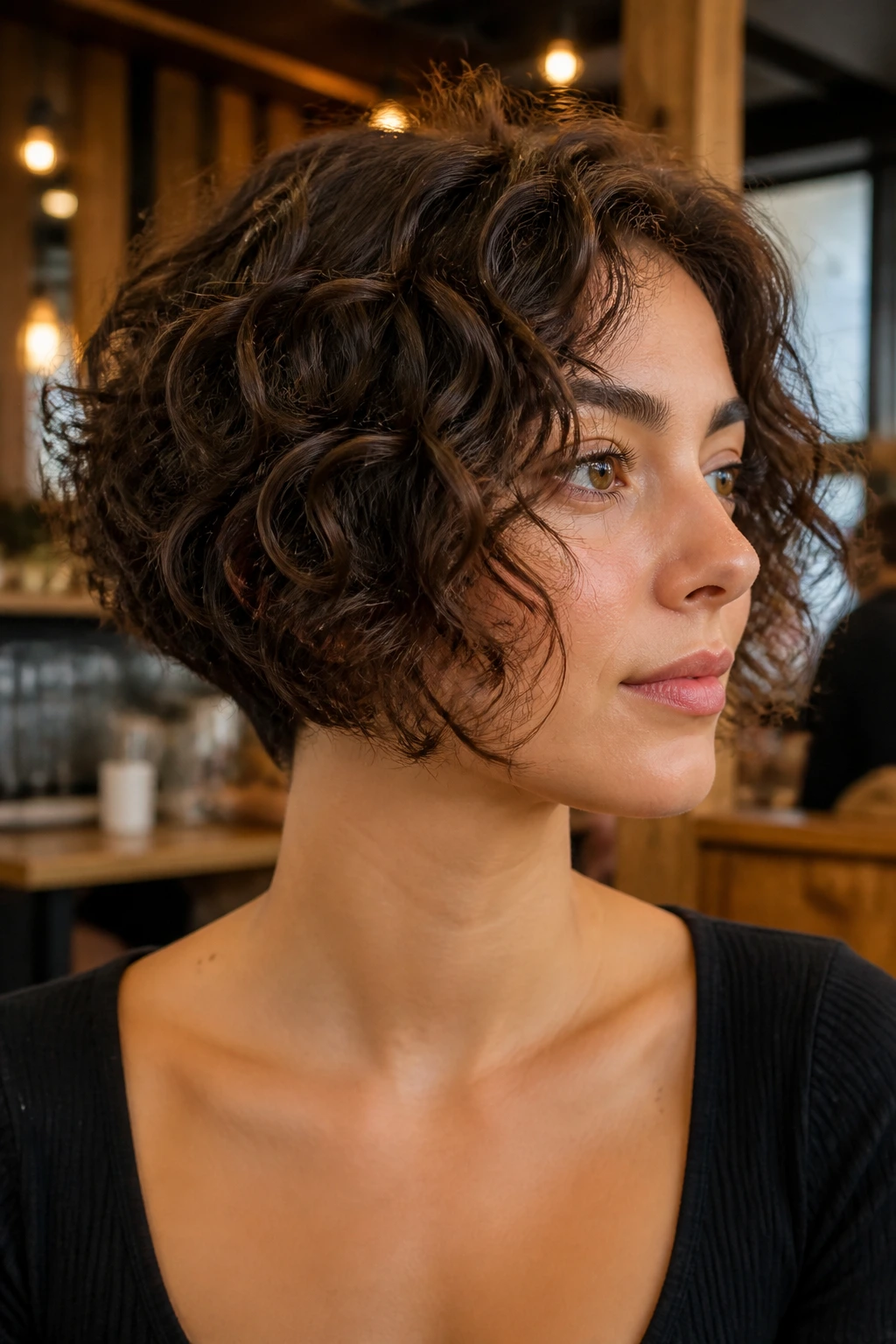
A wedge shape can look strict on straight hair, almost severe if the angle is too tight. Curly hair softens it. The result is a bob with a compact back, a little more visual weight at the crown, and a face-framing front that keeps everything from feeling boxy.
This version is best when the stylist understands graduation. The back needs to tuck in close without becoming a hard shelf. The sides should still move. If the cut gets too rigid, curls make the outline look bulky instead of sculpted.
I like this option for dense hair and anyone who wants the nape to sit close to the neck. It gives a strong line from profile view, which is where inverted bobs often look best anyway.
15. Curly Bob with Hidden Internal Layers
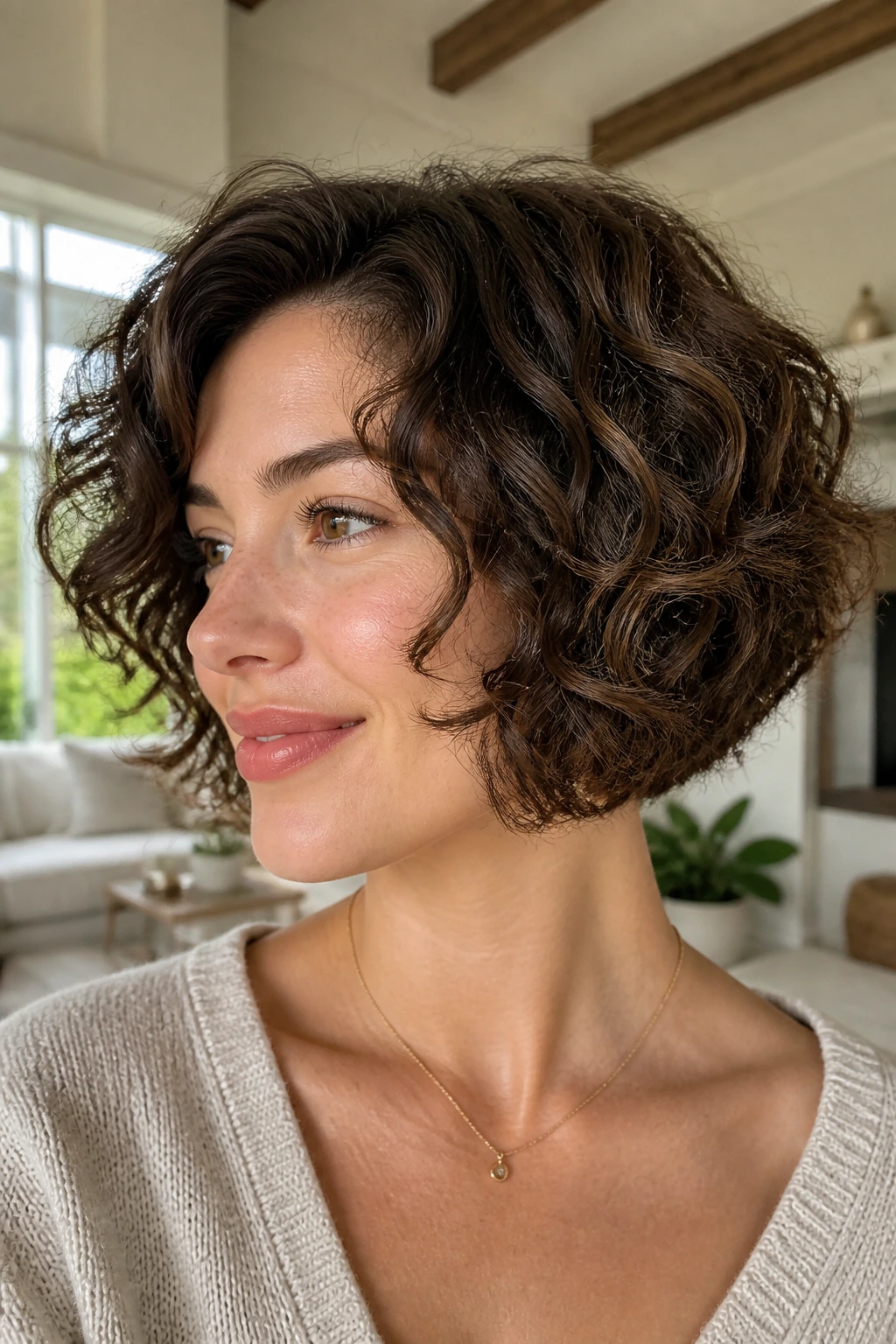
Some of the best curly cuts are the ones you cannot see at first glance. Hidden internal layers take weight out from underneath the shape while keeping the outer line full. That’s a gift if you want the bob to look plush, not chopped.
This approach suits curls that clump well but get heavy in the lower half. The surface stays smooth, the underneath stops pushing the whole shape outward, and the result feels balanced. It’s a calm haircut. No drama. Just good geometry.
Ask for the perimeter to stay intact if you like thickness at the edge. The layers should live beneath that surface, almost like support beams. When they’re placed right, the cut moves more than it shows, which is exactly the point.
16. Jaw-Grazing Bob for Springy Ringlets
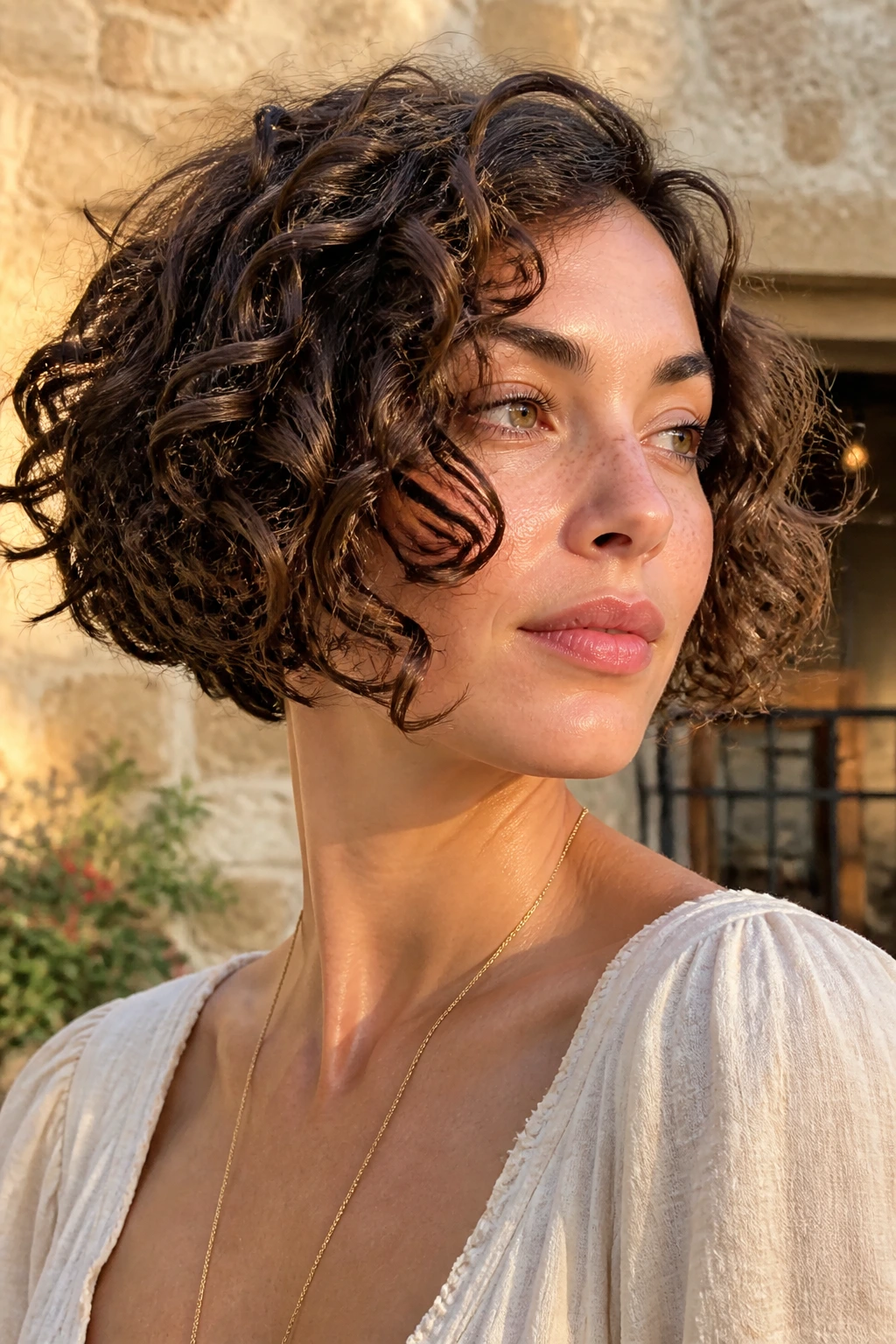
A jaw-grazing inverted bob gives ringlets a place to swing. The front pieces sit right around the jawline, which creates movement when you turn your head. It’s shorter than a lob, but it still feels generous enough for curls that need room to bounce.
Compared with a chin-length version, this one reads a little softer and less sharp. That makes it a good pick for narrower faces or anyone who wants the bob shape without a hard edge at the face. The graduation in the back can stay subtle; the real effect comes from the spring of the curls themselves.
This is also a practical haircut if you don’t want your hair brushing your shoulders every time you move. That detail matters more than people admit. Constant shoulder contact can pull curls apart and frizz the ends.
17. Soft A-Line Curly Bob for the First Short Cut
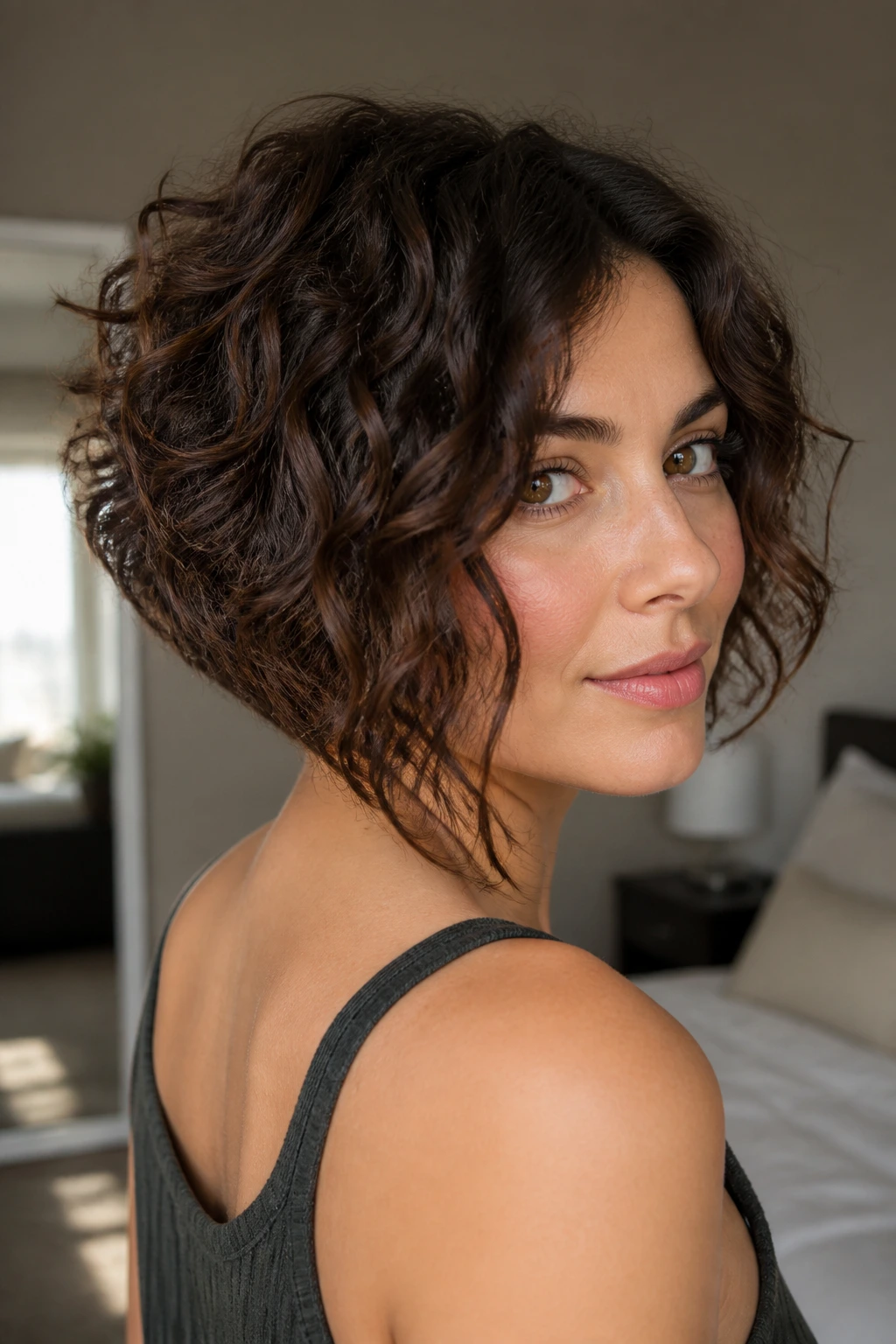
If you’re nervous about going short, start here. A soft A-line gives you the inverted feel without a severe drop from back to front. The front remains a little longer, the back stays neat, and the whole cut eases you into shorter hair instead of tossing you in headfirst.
I usually recommend this shape for first-timers because it’s forgiving. If you later want more stack in the back, a stylist can build it in during the next appointment. If you decide you want to grow it out, the longer front already gives you a head start.
Bring a side-profile photo to the salon. People often show front-facing inspiration and forget that the back angle is the whole point of an inverted bob. That back view is the part that saves the haircut from turning into an ordinary curly lob.
18. De-Bulked Curly Inverted Bob for Dense Hair
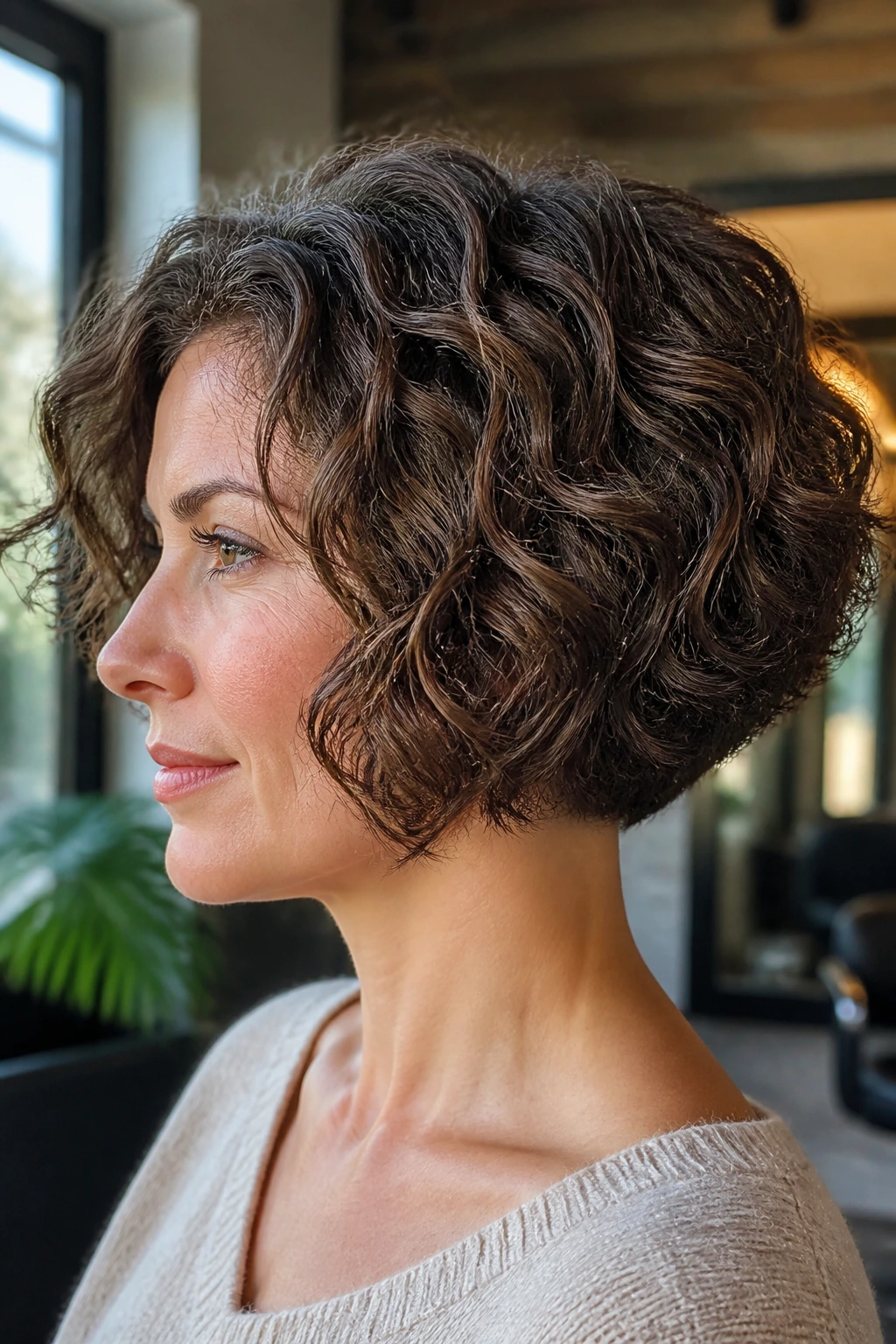
Dense hair often needs subtraction more than layering. That’s the mistake people keep making. They ask for “more layers” and end up with a halo of extra volume where they wanted shape. A de-bulked inverted bob removes weight from the interior so the cut sits closer to the head.
The perimeter should still look full. That’s the line you don’t want to cross. What needs taming is the underlayer and the crown area, where thickness can push the bob outward and make the back look square. When this is done well, the haircut feels lighter the second you air-dry it.
This version usually needs a stylist who is comfortable cutting curls section by section. It’s not the place for a rushed appointment. Dense curls reward patience, and they punish guesswork.
19. Shag-Influenced Inverted Bob with Movement
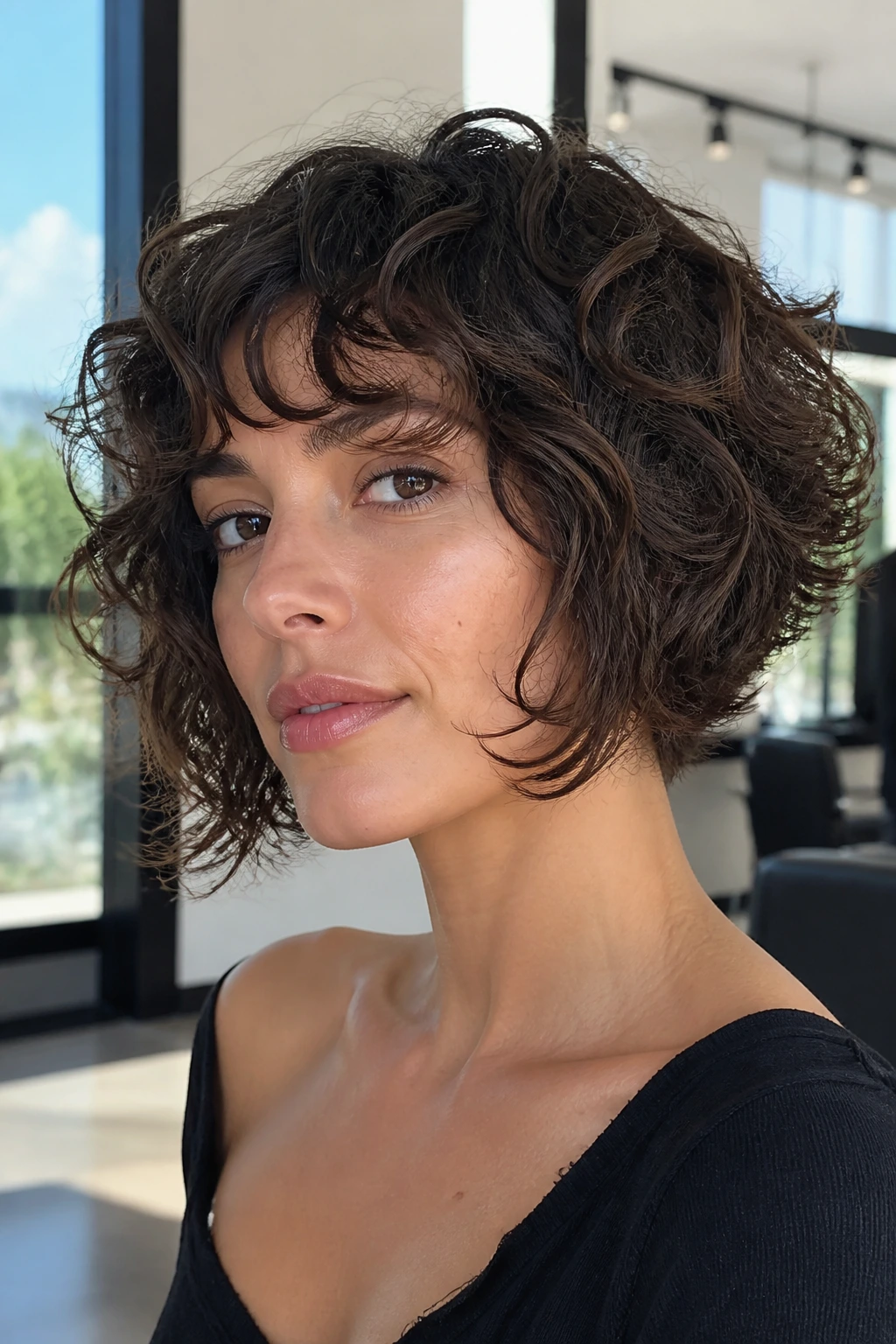
A shag influence loosens the whole mood of the inverted bob. Instead of a tidy, symmetrical finish, you get more movement at the crown and cheekbones. The outline still angles forward, but the inside of the shape has a little more life.
This works well if you like curl texture that looks touched by air rather than styled into place. The layers can start higher, but the front should keep enough length to avoid a mullet-ish drift. That’s the line to watch. Too much shag and the bob disappears. Too little and the layers don’t matter.
I like this hybrid for people whose curls are already a little wild in the best way. It feels less formal, more lived-in, and it grows out with a pretty forgiving shape.
20. Off-Center Part Curly Bob with Loose Volume
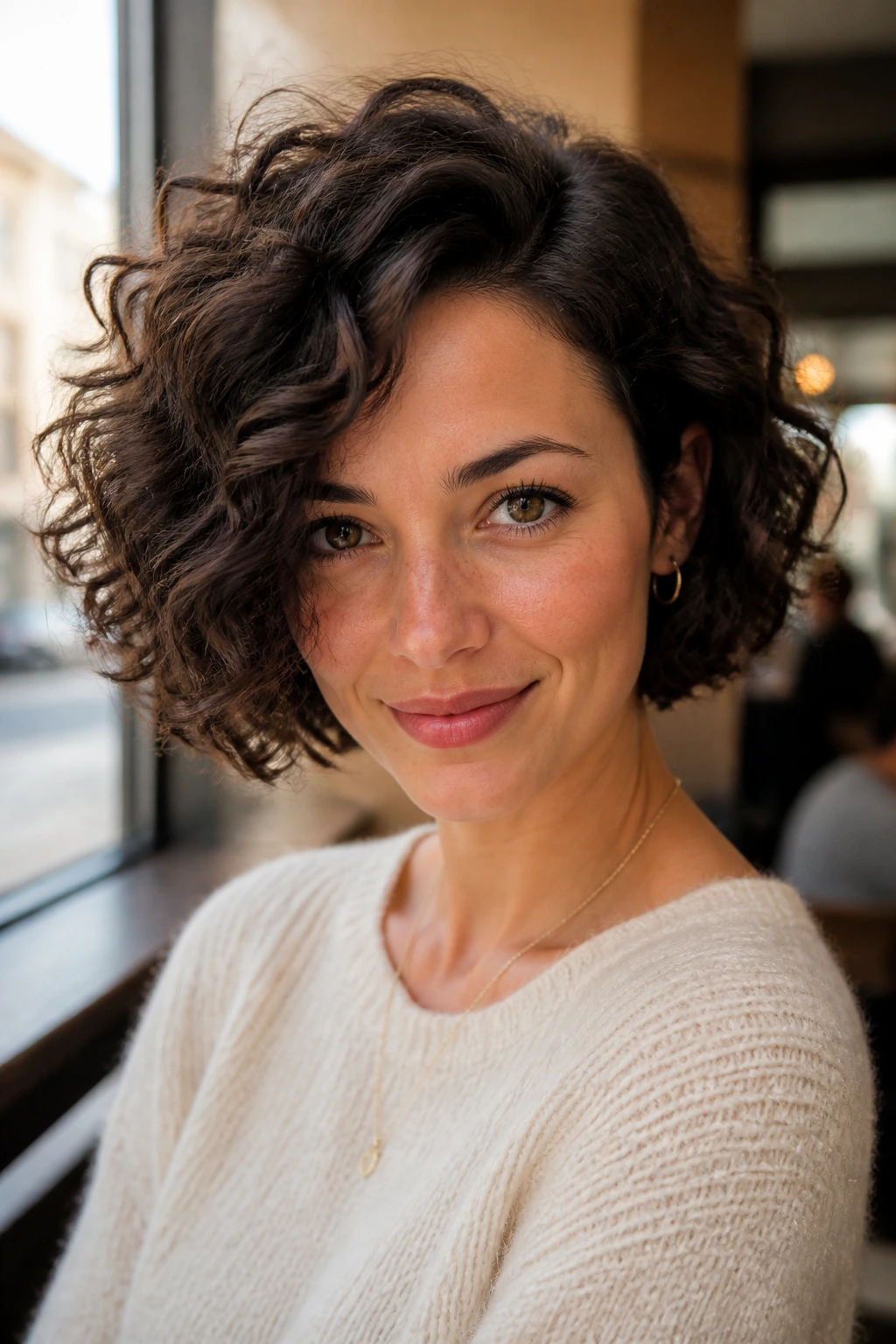
An off-center part is the quiet trick that changes the whole cut. It moves the weight off the middle of the face, makes the crown look fuller on one side, and gives the inverted shape a softer profile. On curly hair, that shift can make the front pieces fall in a way that feels more natural than a strict center part.
The bob itself doesn’t need to be dramatically angled to benefit. Even a mild inversion looks more dynamic when the part is a little off to one side. This is especially useful if you have a wider forehead or one front section that insists on flattening itself.
Set the part while the hair is damp, then clip the root on the flatter side for a few minutes. That short bit of training helps the style stay in place without overworking it.
21. Big-Volume Inverted Bob for Oval Faces
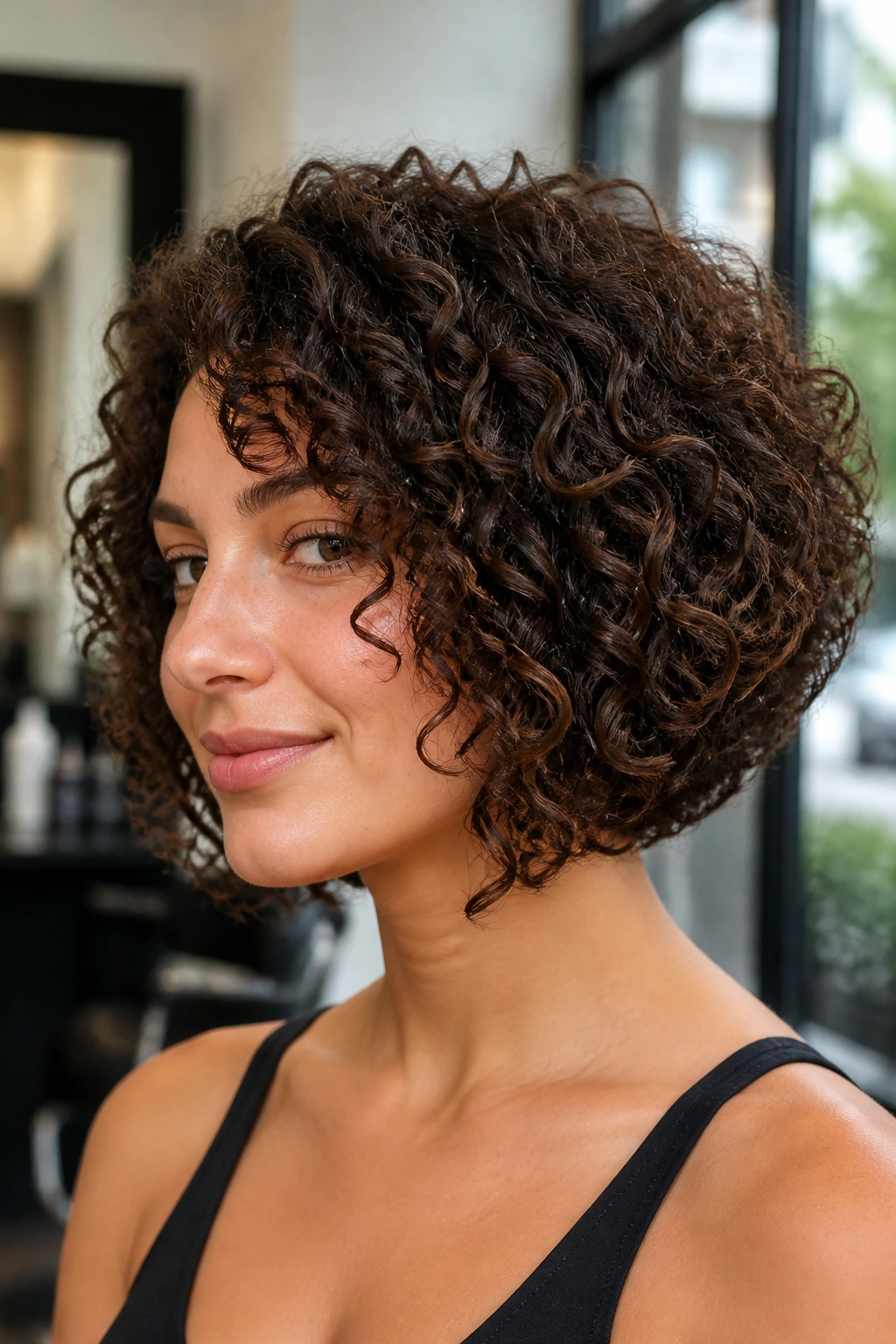
Oval faces can carry volume where other shapes would get overwhelmed, and that makes this cut fun. The front can be fuller, the crown can lift higher, and the back can still stay snug enough to hold the inverted line. If you like a bit of drama, this is one of the easiest places to spend it.
The trick is not to make the sides too narrow. Oval faces already have balance built in, so you can let the curls widen a little around the cheeks and still keep the silhouette flattering. This version is a good match for thicker curls that want to be seen, not flattened.
Wear it with bold earrings if you want the full effect. A strong bob line plus a clear neckline plus a bit of jewelry is an easy combination, and it never looks accidental.
22. Swept-Back Curly Bob with Sculpted Roots
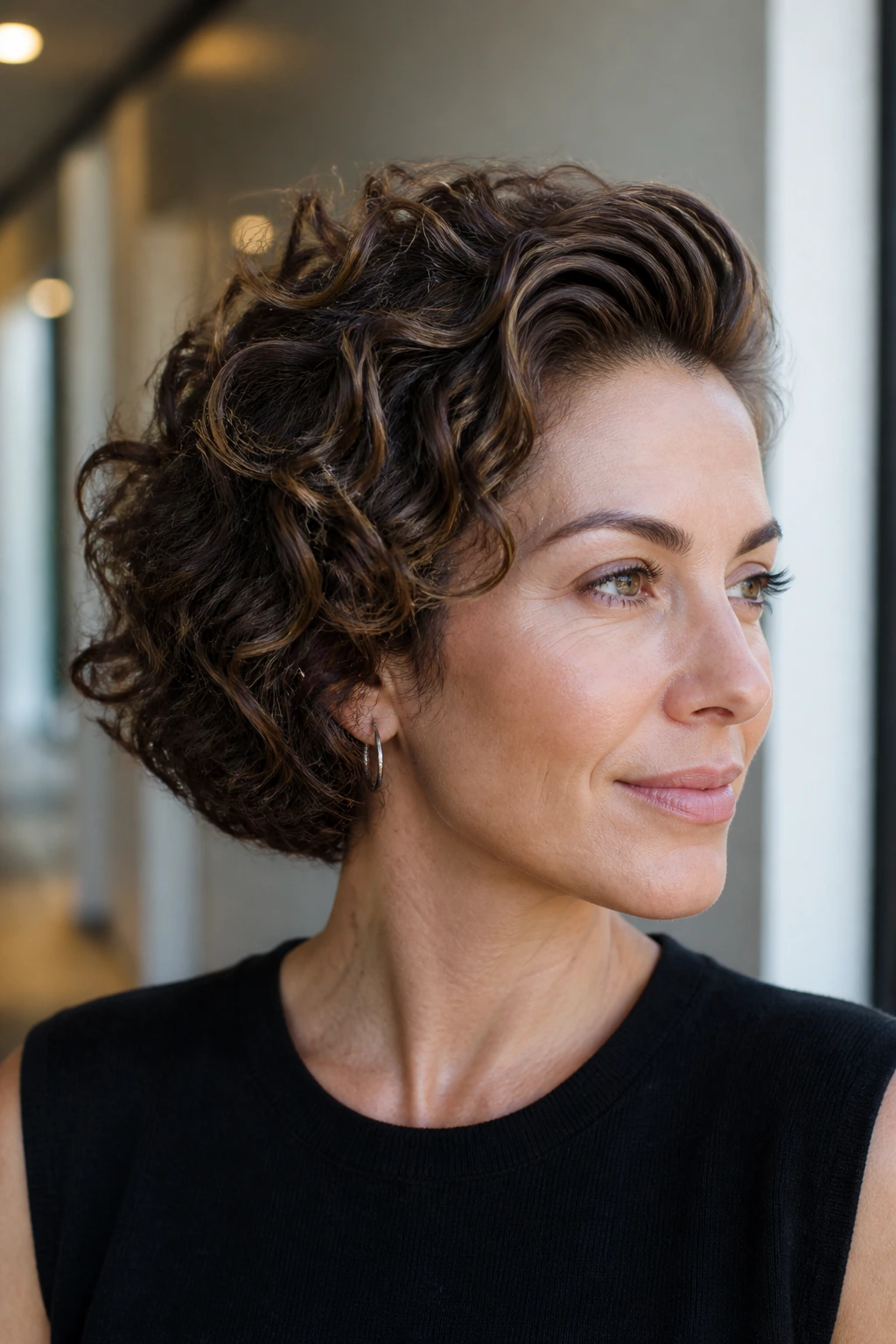
Can curls be swept back without looking slicked down? They can, if the roots are trained and the product is light. This version pulls the front away from the face, then lets the curl pattern reappear through the lengths. The result feels open, almost breezy.
The back still keeps the inverted shape, so you don’t lose the haircut’s architecture. What changes is the mood around the face. A few root clips, a little gel at the hairline, and a diffuser with low airflow are usually enough to create the effect without making the hair feel crunchy.
I like this version for days when you want your face visible, not draped in front pieces. It also holds up well in humidity because the hair is already set away from the cheeks and forehead.
23. Wet-Look Curly Bob with Strong Shape
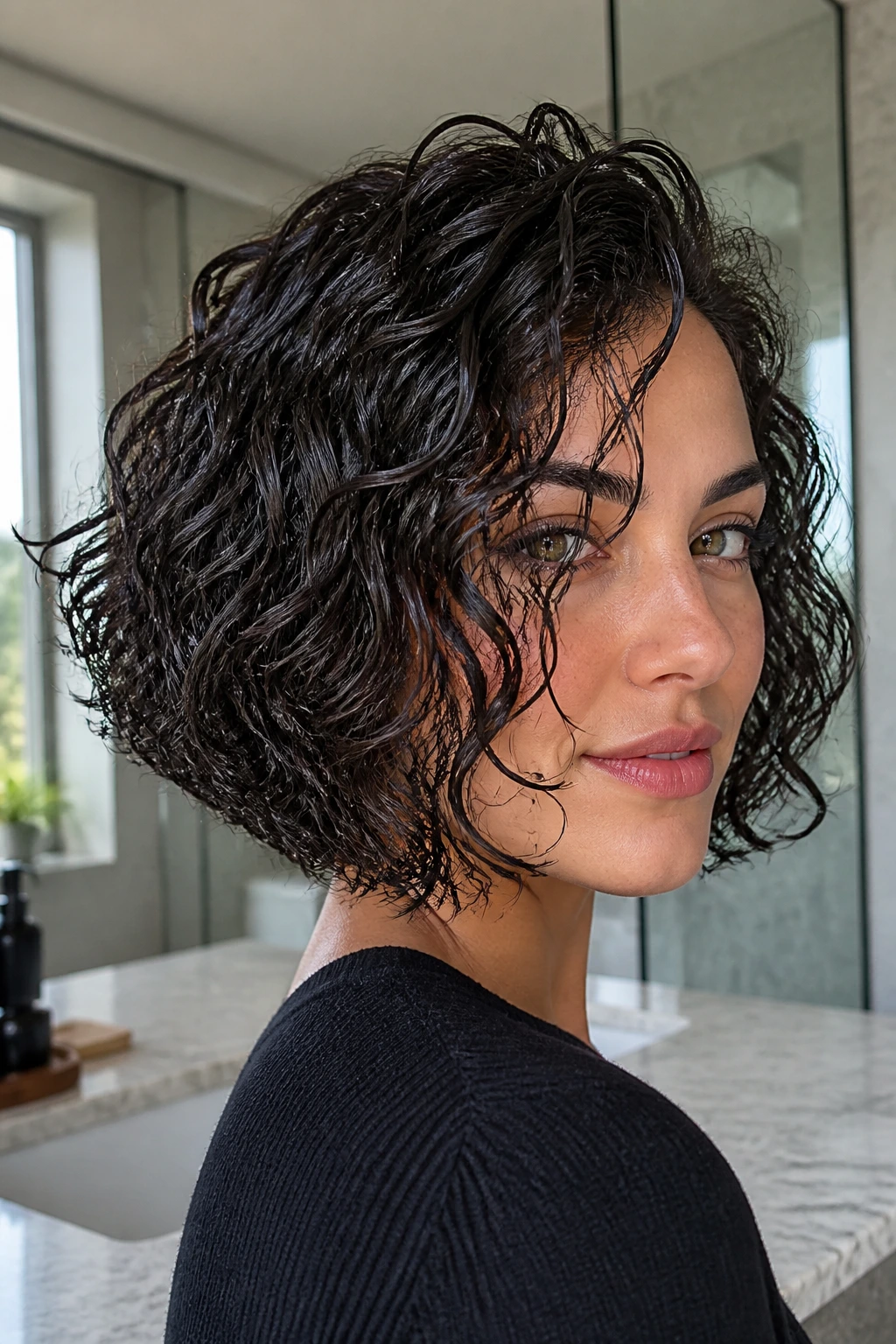
A wet-looking finish can make a curly inverted bob look cleaner than a dry fluffy finish, especially when the cut itself is sharp. The gloss shows off the angle, and the curls cluster into clear ribbons instead of expanding into a halo. On the right head of hair, it’s a strong look.
The key is control. Use a gel with enough hold to make a soft cast, then diffuse just until the surface sets. Don’t fuss with it while it’s drying. That’s when the curl groups get fuzzy and the shine disappears.
This version works best when the curl pattern is fairly even from root to tip. If your texture changes a lot across the head, the wet look can expose the difference. Still, when it lands, it lands hard.
24. Softly Framed Curly Bob with Longer Front Pieces
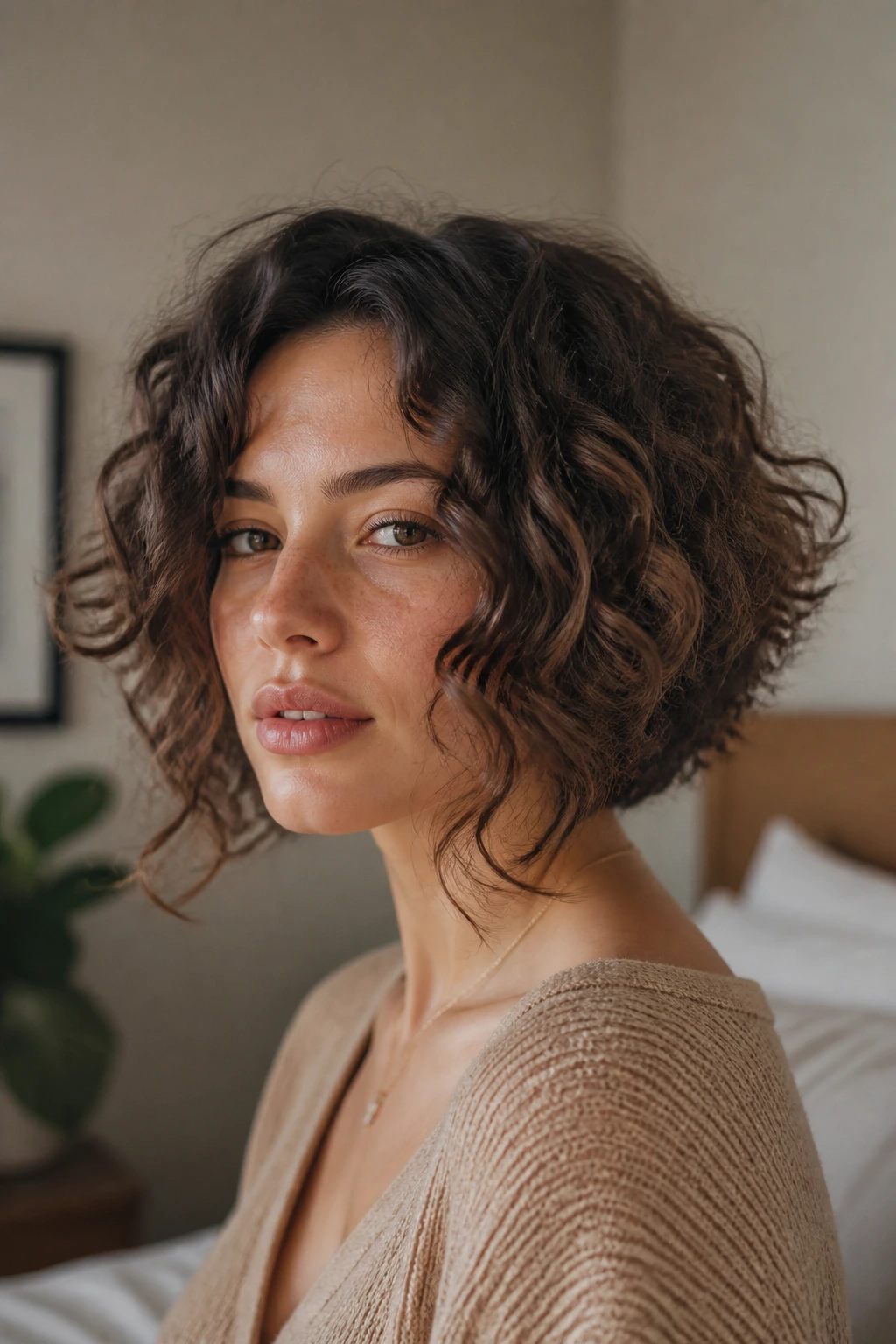
This is the version for people who want a curly bob but don’t want anything severe near the face. The front pieces stay longer, usually around lip to collarbone range, and the inverted angle is gentler than in a classic stacked bob. It keeps the silhouette interesting without making the haircut feel geometric.
The longer front is useful because curls often need a little extra length to sit where you want them. If they hit the face dry at the wrong point, they can spring up awkwardly. A softer frame gives them room to settle.
I’d pick this cut for square faces, new short-hair clients, or anyone who gets nervous when hair touches the jaw too hard. It has enough shape to feel styled, but not so much edge that it starts arguing with your mirror.
25. Curly Inverted Bob with Micro Fringe
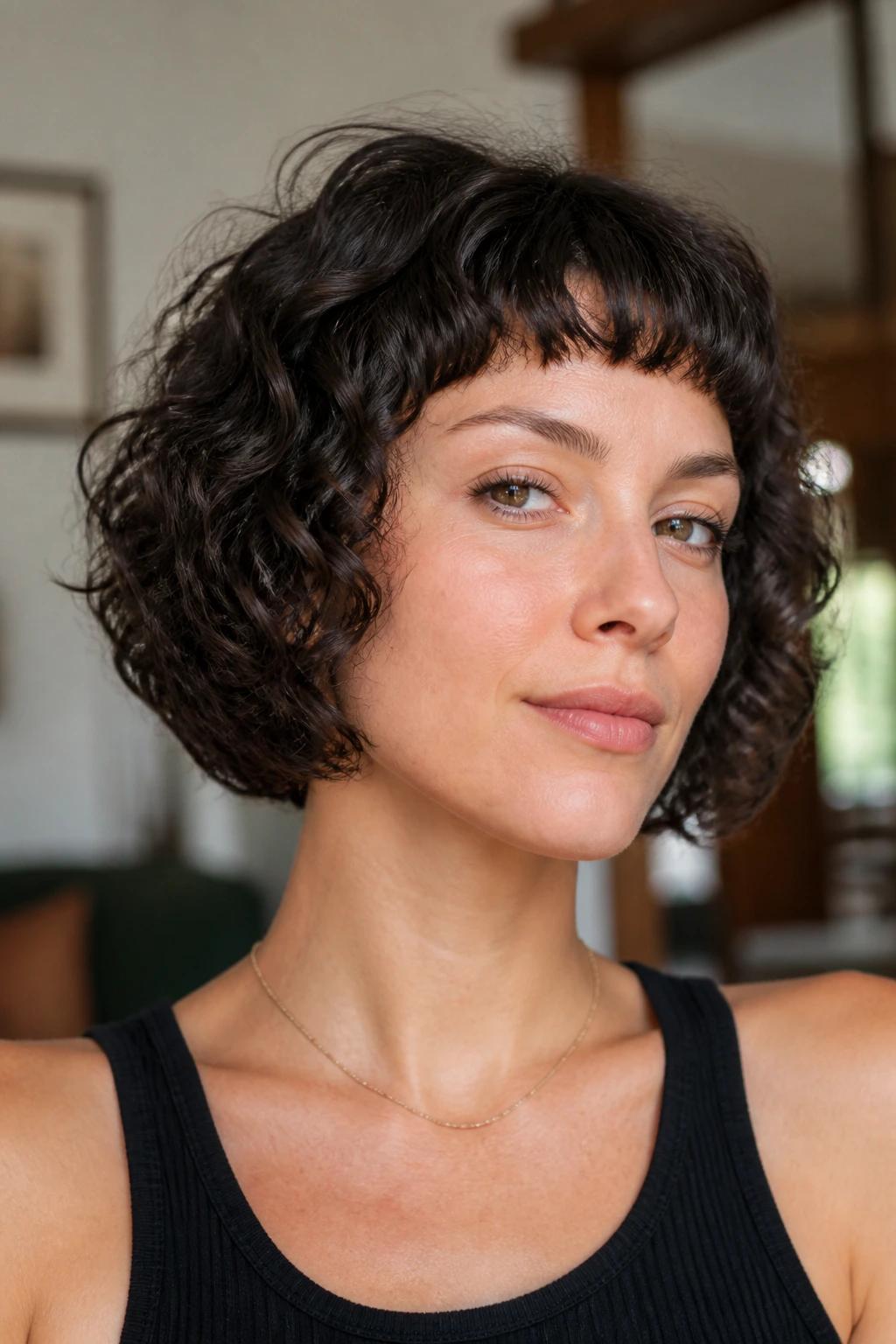
A micro fringe is not for everyone, and that’s part of its charm. It gives the haircut a graphic little wink at the forehead while the inverted shape keeps the rest of the cut grounded. On curly hair, the contrast can look sharp in a good way.
Unlike curtain bangs, a micro fringe is short and direct. That means the rest of the bob has to do the softening work. If the layers are too aggressive, the whole cut gets busy. If the bob is too plain, the fringe looks like an add-on. The balance matters more here than anywhere else in this roundup.
I’d recommend this only if you’re comfortable with maintenance. Micro fringe trims come fast. If that sounds annoying, skip it. If it sounds fun, it’s one of the boldest ways to wear a curly inverted bob.
What Makes the Inverted Shape Work on Curly Hair
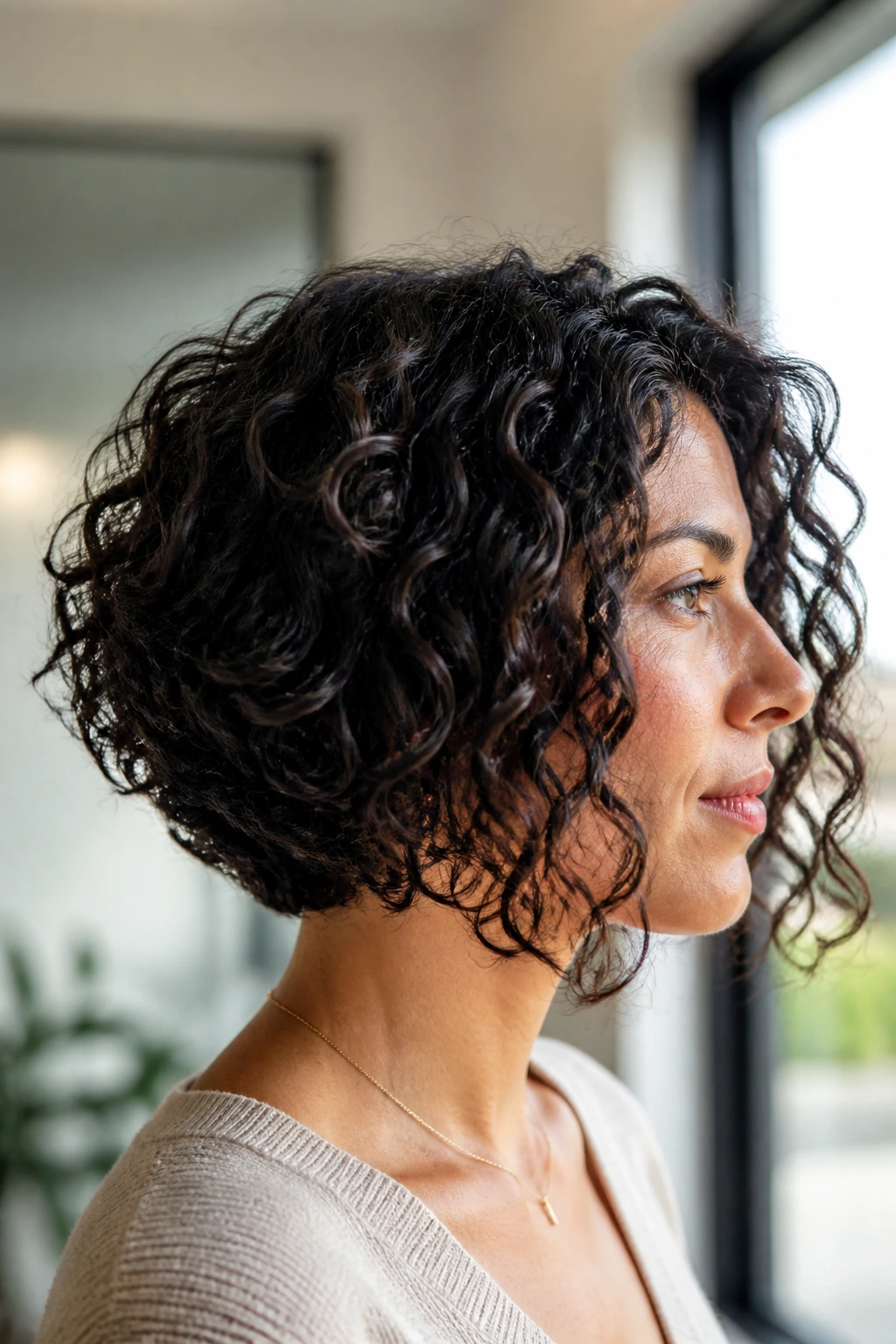
An inverted bob is all about weight distribution, and curly hair needs that more than straight hair does. The shorter back keeps the nape from dragging, while the longer front gives the curl pattern somewhere to land without squashing the face. That geometry is the whole trick.
The layers matter because curls don’t behave like flat fabric. They stack on top of each other, separate, and then regroup once the hair dries. If the layers are too blunt, the shape can feel boxy. If they’re too soft, the bob loses its line and starts to read as a generic curly crop. The point is controlled movement.
Dry cutting helps a lot here. Many curl stylists work with the hair in its natural state because wet curls lie and then spring up later. That spring can be half an inch or two inches, depending on texture and porosity. Guess wrong, and the front is suddenly too short while the back disappears into the head.
Tools That Make Styling Easier
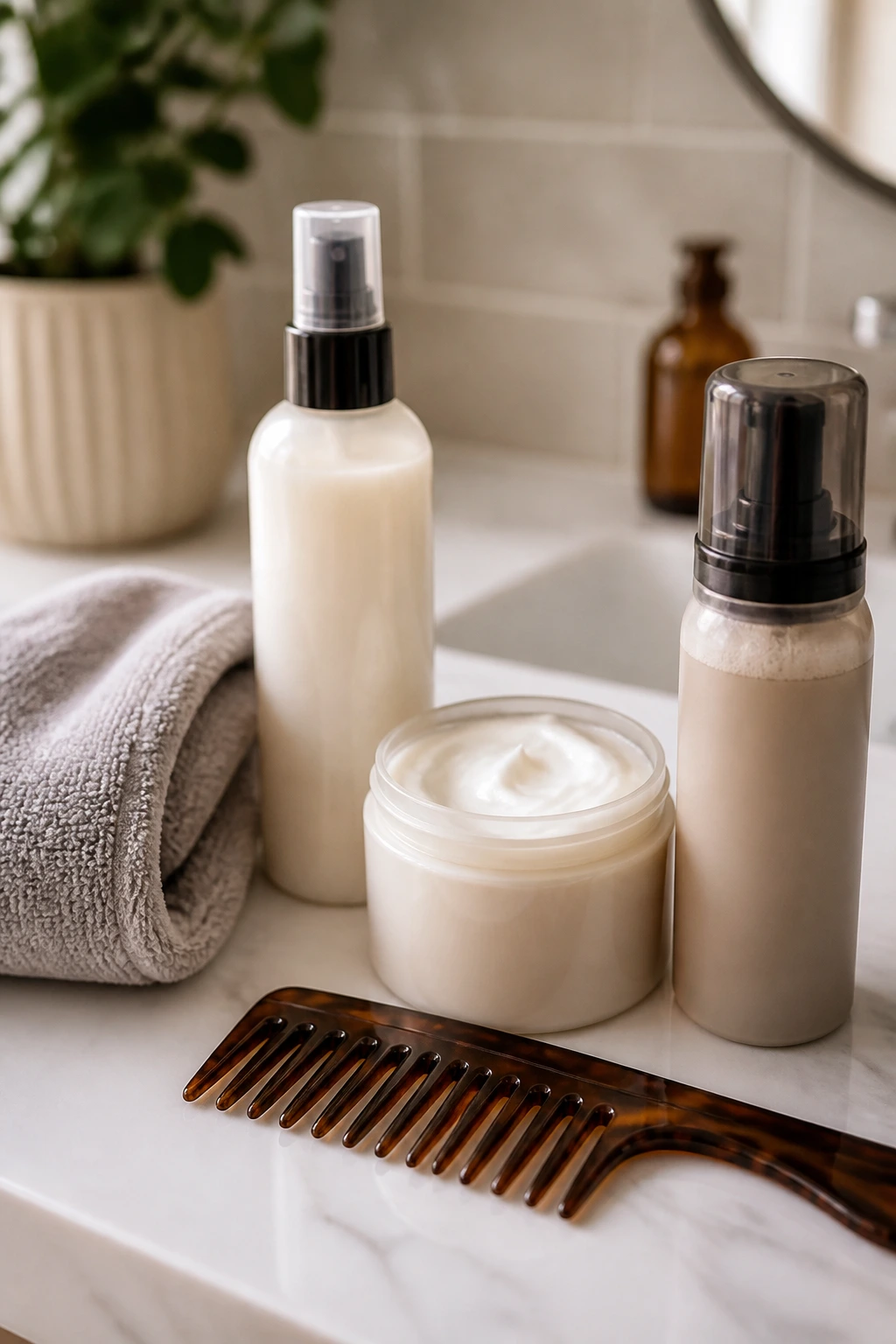
A curly inverted bob does not need a drawer full of gadgets. It does need the right few tools, used in the right order. Here’s the short list I’d keep near the mirror.
- Microfiber towel or cotton T-shirt: Cuts down rough friction after washing, which matters when the layers are already doing the work.
- Leave-in conditioner: Helps the shorter back and longer front dry with the same amount of softness.
- Curl cream: Good for loose to medium curls that need definition without a crunchy finish.
- Mousse or foam: Useful at the roots when you want lift under the stack.
- Medium-hold gel: Keeps the front pieces together and helps the shape hold through the day.
- Wide-tooth comb: Better than a fine brush for detangling without breaking curl clumps.
- Diffuser attachment: The easiest way to dry a stacked back without blasting it into a frizz cloud.
- Duckbill clips: Handy for root lift around the crown and part line.
- Satin pillowcase or bonnet: Keeps the back from getting wrecked overnight.
That’s enough. Most of the struggle comes from using too much product, too much heat, or too much touching.
How to Choose the Right Version for Your Curl Pattern
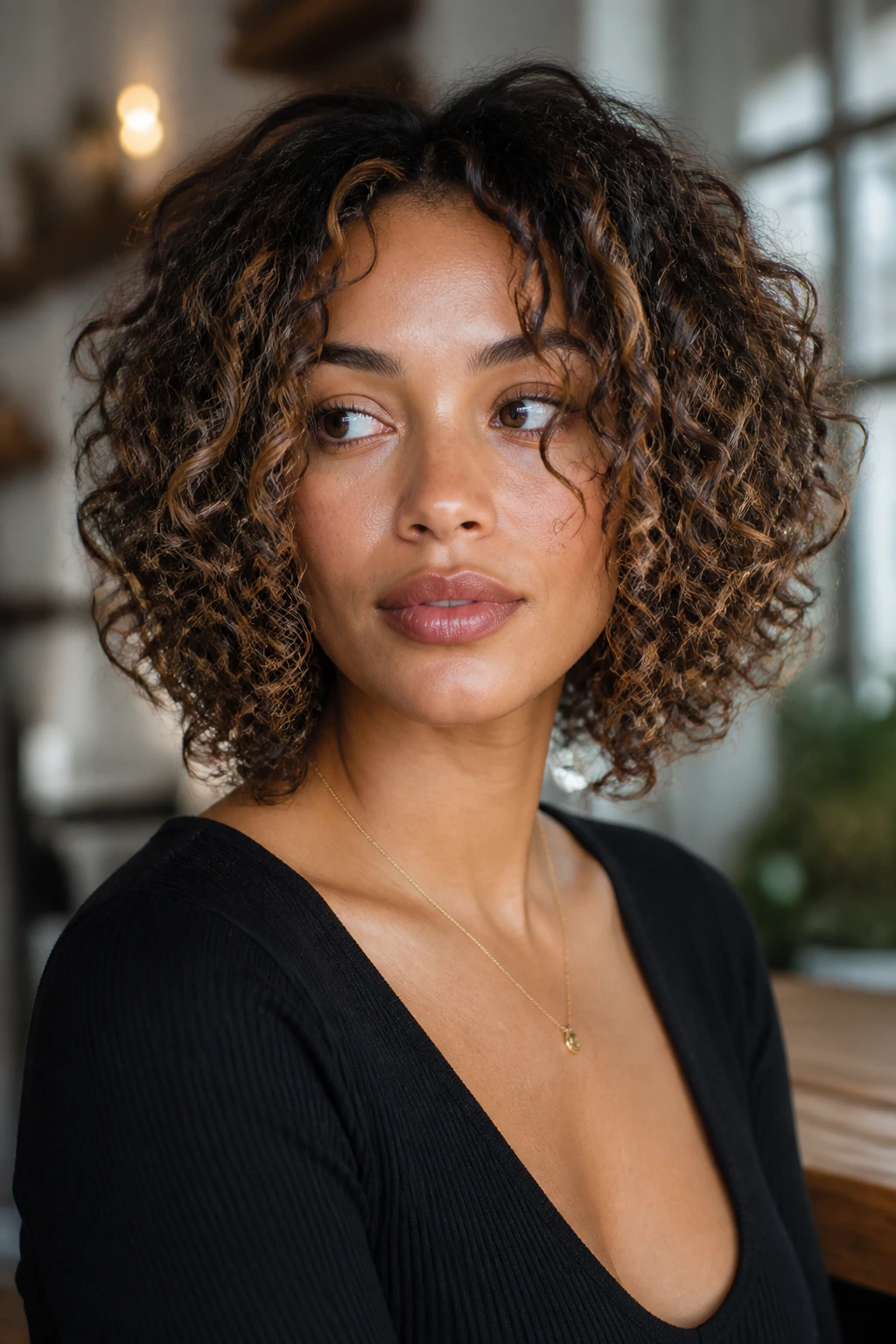
Pick the haircut for the curl you actually have, not the curl you wish you had on a good humidity day. Loose waves can take more visible stacking because they won’t shrink as hard. Tight coils usually need a gentler angle, more moisture, and a shape that keeps the ends from getting too exposed.
Density matters just as much. Fine curls need softness in the layers so they don’t look skimpy. Thick curls need the opposite problem solved: weight removal without shredding the outline. If you’re not sure where you land, bring photos of your hair on a good wash day and your hair on a lazy day. Both matter.
Face shape is the final piece. Round faces often like longer fronts and a little side sweep. Square faces tend to look softer with longer face-framing pieces. Oval faces can handle more volume. And if your hairline is uneven or your curls grow with a slight tilt, a mild asymmetry can save you a lot of fuss.
How to Style a Curly Inverted Bob Without Flattening the Back
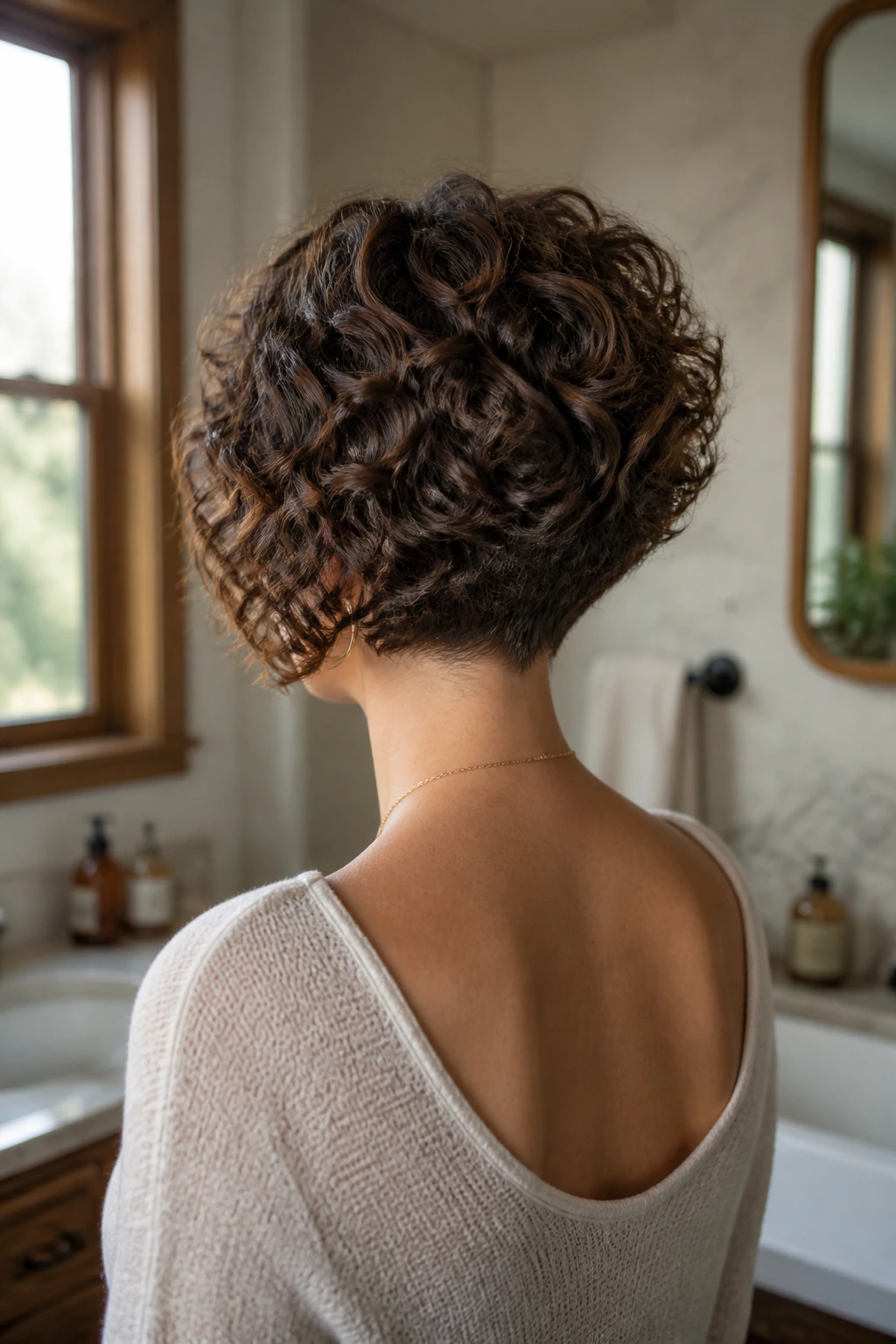
The back is where people sabotage this haircut. They either over-dry it and blow the stack apart, or they leave it soaking wet and wonder why it takes forever to settle. The middle path is the useful one. Apply product in sections, scrunch lightly, then diffuse just enough to set the roots.
Root lift: Clip the crown while the hair is damp and leave the clips in for 10 to 15 minutes before diffusing. That tiny lift helps the inverted line show up from the side.
Frizz control: Work product through with your hands, then stop fussing. The more you rake through the layers, the more the ends separate and the less crisp the shape looks.
Day-two refresh: Mist only the mids and ends with water mixed with a little leave-in. If you soak the roots, the back collapses and the stack goes soft.
Finish: Once dry, shake out the curls gently with your fingers. Do not comb them. A wide-tooth comb at this stage can turn a clean bob into a puffed cloud in about five seconds.
Common Mistakes That Make Curly Inverted Bobs Fall Apart

The biggest mistake is cutting the hair too wet and too short. Curly hair shrinks in ways that can be annoying even to people who cut it every day. If the front is set at chin length while wet, it may dry to cheekbone length. That’s a rude surprise. The fix is simple: cut with shrinkage in mind and check the shape as the hair dries.
Over-thinning is another classic problem. Thinning shears can make the ends look frayed, especially on dense curls. You want removed weight, not see-through edges. Ask for internal shaping instead of random debulking.
Cutting the nape too short can ruin the profile. A good inverted bob needs a back that supports the front. If the back gets shaved down too far, the sides flare and the silhouette turns strange. Leave enough length for the stack to hold.
Heavy product near the roots can flatten the crown and kill the angle. Use cream on the mids and ends, then put hold product only where it’s needed. The stack needs air.
And finally, ignoring your actual curl pattern. A tight coil and a loose wave do not want the same layer map. They never have.
Fresh Ways to Wear the Shape
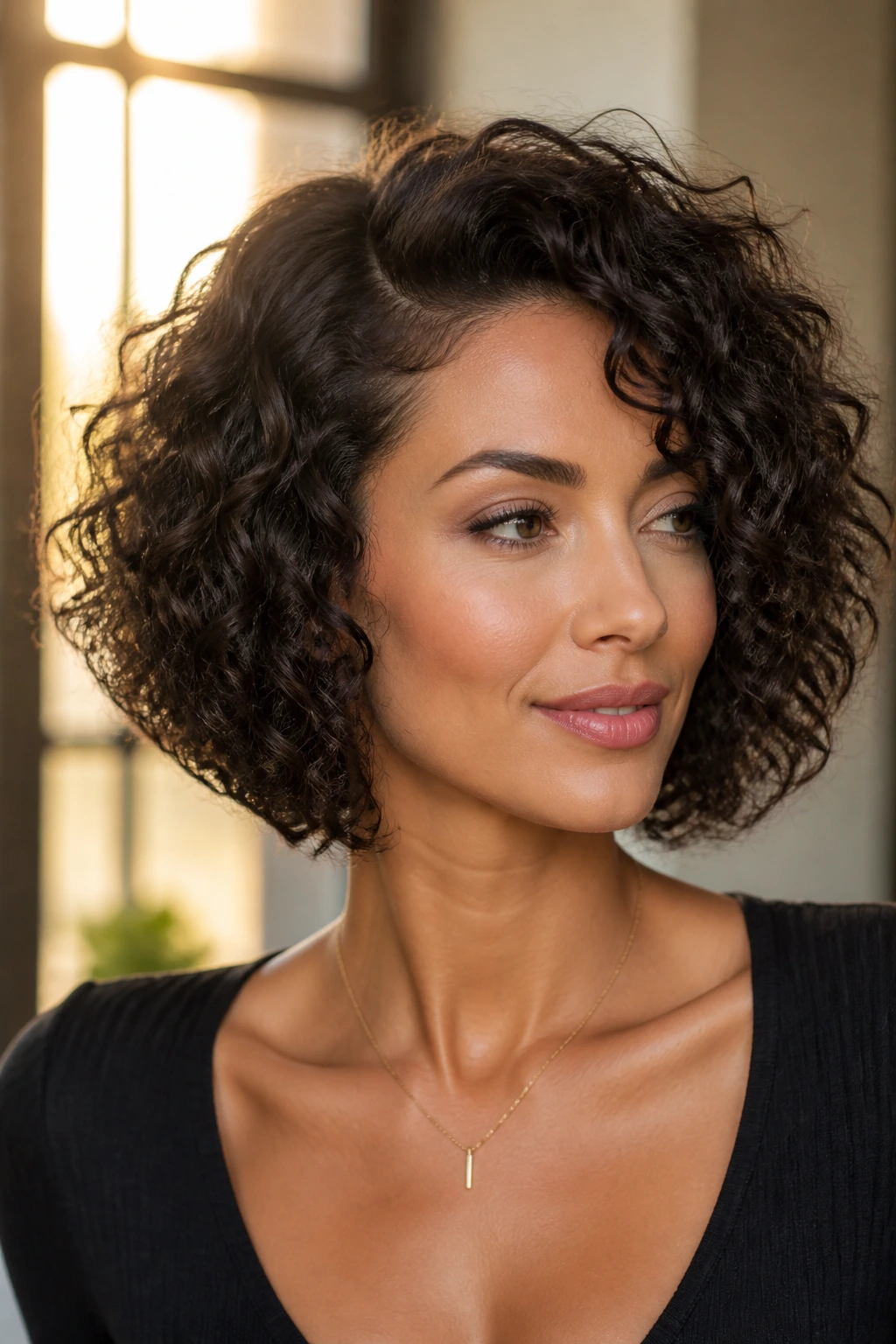
- Soft glam version: Pair a rounded bob with a deep side part and defined curls for a smoother finish that suits dressier outfits.
- Piecey daytime version: Separate a few front curls with a tiny bit of serum and keep the rest lightly clumped for an easy, lived-in look.
- Editorial version: Add a micro fringe or a sharp asymmetrical front when you want the haircut to feel bolder.
- Low-maintenance version: Keep the front longer and the stack soft, then let the curls air-dry with only a little gel.
- Big-volume version: Use a diffuser, root clips, and a light mousse if you want the bob to stand away from the head a bit more.
There’s no reason to wear the same finish every day. Curly bobs look different depending on how much separation you give them, and that flexibility is half the fun.
Keeping the Shape Between Salon Visits
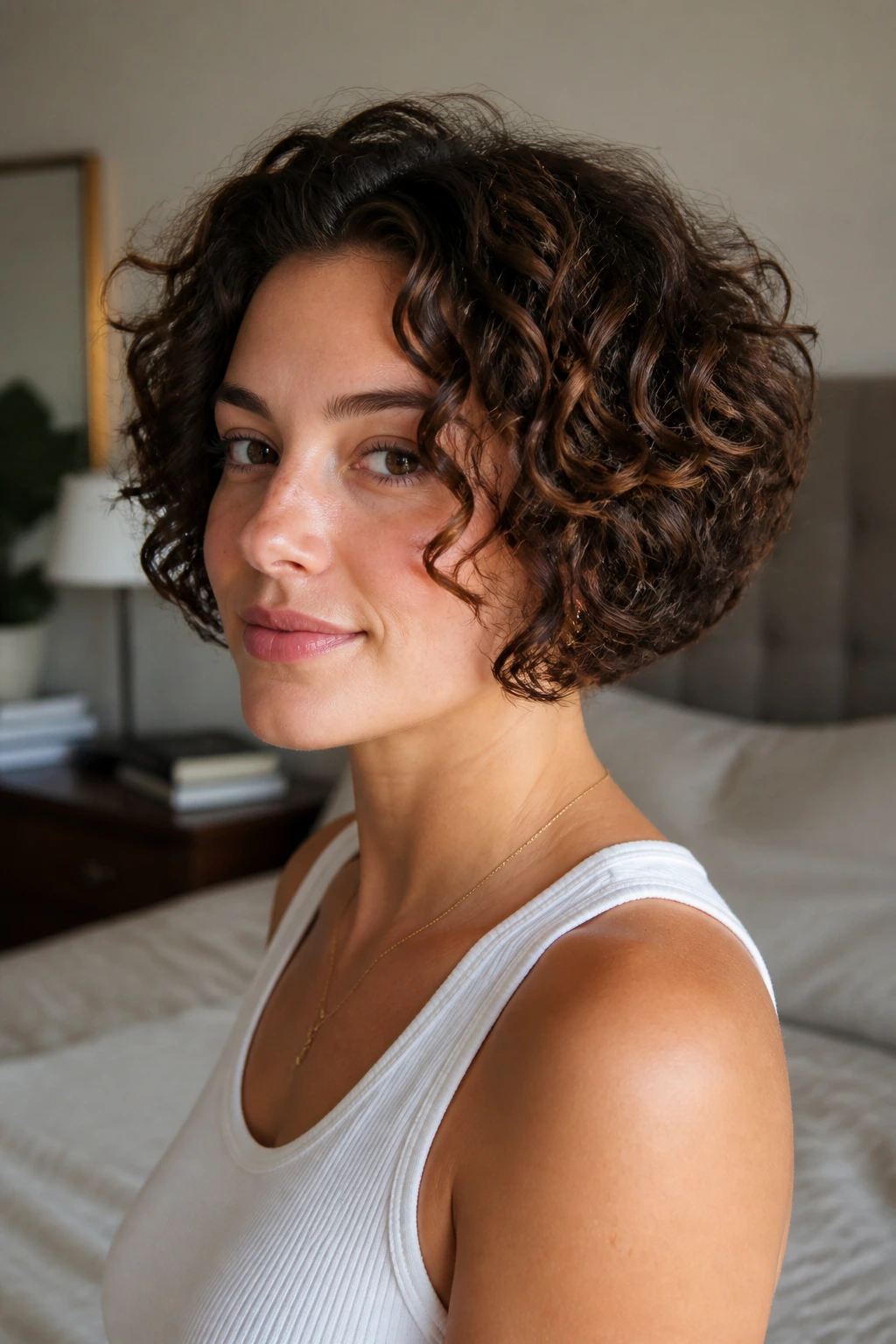
A curly inverted bob looks best when the neckline stays tidy and the front doesn’t keep marching upward. For most people, a trim every 8 to 10 weeks is enough to keep the angle clear. If you prefer a softer, grown-out version, you can stretch that a little longer, but the back will lose its lift first.
Night care matters more than most people think. Sleep on a satin pillowcase or wear a bonnet if your curls are prone to tangling at the nape. The shorter back rubs against collars and sheets all night, which is how the shape starts to blur. A quick pineapple or loose clip can help preserve the curl groupings.
On wash day, use a clarifying shampoo every 2 to 4 weeks if you rely on mousse, gel, or heavy cream. Buildup weighs curls down fast. After that, let the hair dry mostly untouched. The bob is a cut that likes structure, but it hates being handled to death.
If you heat style, keep the diffuser on low and stop once the roots are set. Full drying isn’t always necessary. Sometimes the shape looks better when the last 10 to 15 percent air-dries on its own.
Frequently Asked Questions
Will an inverted bob work on loose waves, or does it need tight curls?
Loose waves can wear this cut beautifully because they show the angle without shrinking too hard. The key is not to over-layer the ends, since waves can go stringy if the cut is too busy.
Should curly inverted bobs be cut dry?
Dry cutting is often the safer choice because it shows where the curl sits in its real shape. Some stylists combine dry and damp cutting, which can work too, but I’d be cautious about anyone who cuts curly hair as if it were straight.
How short can I go if my curls shrink a lot?
Usually not as short as you think. Many curl patterns jump one to two inches, so the chin line you see wet can become cheekbone length once dry. A test curl or consultation photo helps a lot.
What product keeps the back from puffing out?
A light mousse at the roots plus a medium-hold gel through the mids usually gives the back enough support. Heavy creams alone can make the stack slump and expand sideways.
What if the haircut starts looking triangular?
That usually means the interior has too much weight or the layers are too shallow. A stylist can remove bulk from underneath and keep the perimeter fuller, which pulls the shape back in.
Can I wear bangs with an inverted bob and curly hair?
Yes, but the bang type matters. Curtain bangs and longer fringe pieces are easier to live with than short blunt bangs, which can shrink and separate fast.
How often should I trim the neckline?
Every 6 to 8 weeks if you want the stack to stay crisp. If you’re fine with a softer grow-out, 10 to 12 weeks can work, though the inverted line will loosen.
Is this cut good for thick hair?
Very, as long as the stylist removes weight in the right places. Thick curly hair can support a strong inverted shape, but it needs internal shaping so the back doesn’t become a bulky shelf.
Why This Shape Keeps Working
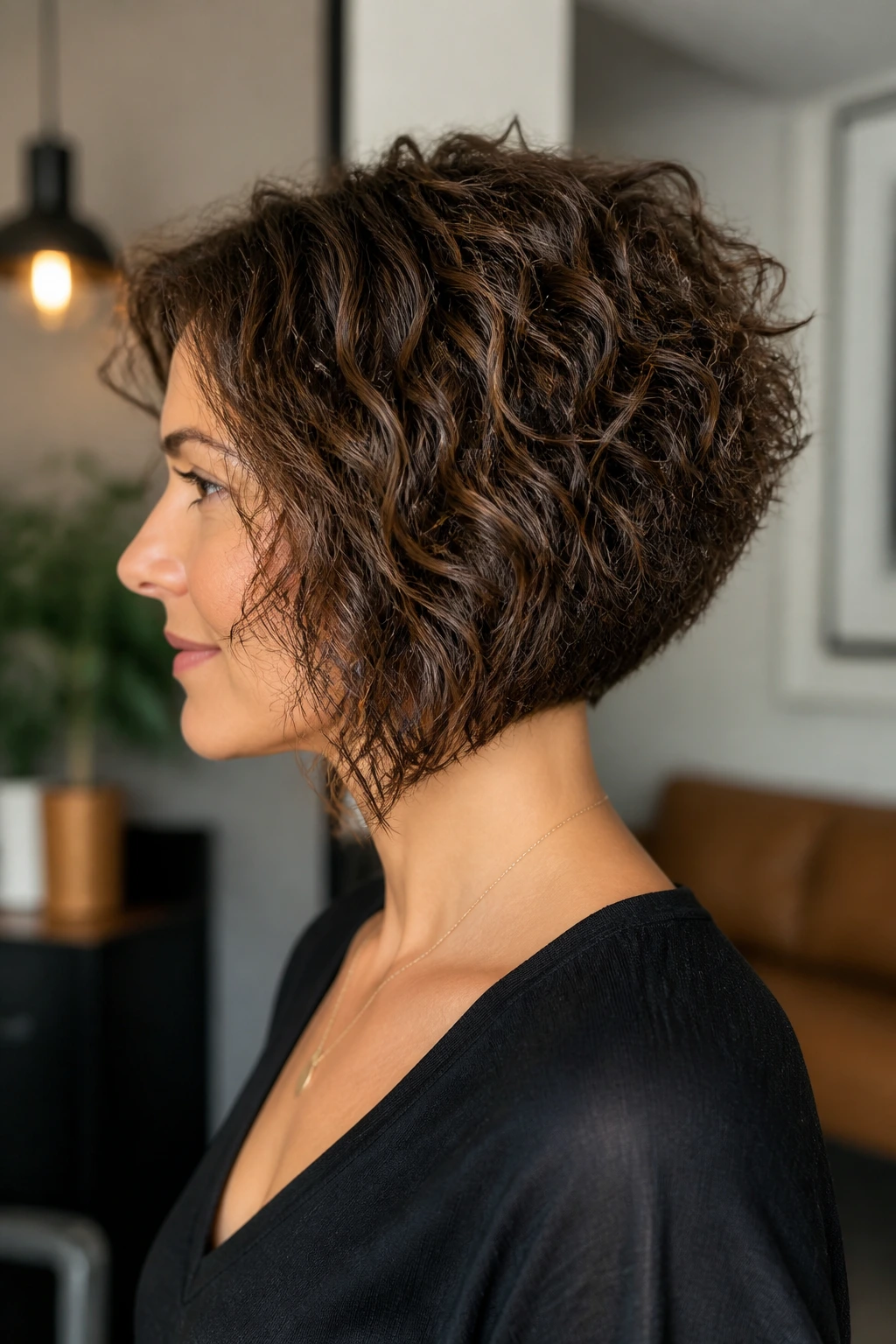
A curly inverted bob works because it solves a real problem: curly hair wants movement, but it also needs a boundary. The shorter back creates that boundary. The longer front gives the curl pattern room to breathe. When the layers are placed with care, the haircut looks like it was made for the way curls actually live.
The best part is how many directions you can take it. Soft, sharp, long, short, fringed, asymmetrical, tucked at the nape, or rounded at the edges—there’s a version here for almost every curl type and almost every tolerance for salon maintenance. Pick the one that matches your hair’s behavior, not the one that looks easiest on a board.
If you save one thing from this lineup, make it this: ask for the shape that works when the hair is dry, not the shape that looks neat for ten minutes in the chair. That one detail changes everything.