



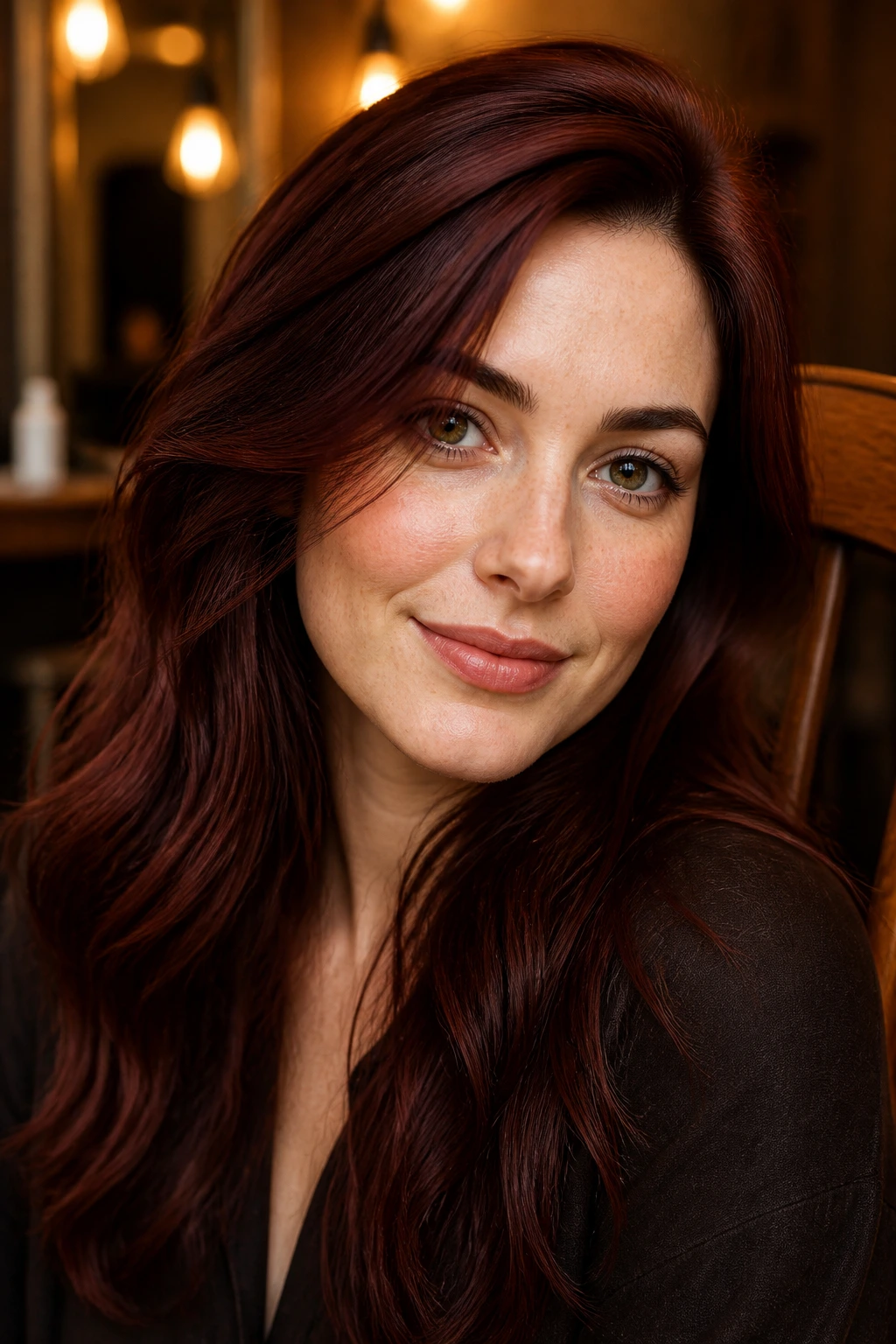
Mahogany brown highlights for fair skin can look sharp in the best possible way—if the mahogany stays red-brown, not fire-engine red. The shade has enough depth to carve out the face, but it still lets the skin look fresh instead of washed out. That balance is why it keeps pulling me back when the goal is dimension, not noise.
In daylight, a good mahogany ribbon reads like polished walnut with a wine tint at the edge. Too orange, and the whole head starts to fight the complexion. Too dark, and the color can flatten into one heavy block. The sweet spot sits right in the middle: brown first, red second, shine last.
What makes this color family so useful is the range. You can go whisper-soft with babylights, push into chunky editorial panels, or keep the whole thing tucked under the top layer for a low-key effect that only shows when the hair moves. Fair skin doesn’t need the same formula every time. It needs the right amount of contrast, placed in the right spots, with the undertone pulled in the right direction.
Why These Mahogany Looks Work So Well
-
Soft Contrast: Mahogany gives fair skin shape without the hard line that jet black or deep espresso can throw around the face.
-
Undertone Control: A violet-leaning mahogany flatters pink skin, while a chestnut-leaning version warms peach or golden skin without drifting copper.
-
Grow-Out Friendly: Balayage, lowlights, and shadow-root versions blur the regrowth line, so the color stays readable longer.
-
Cut-Friendly: The same shade looks different on a bob, a shag, a lob, or long curls, which makes it easier to match the placement to the haircut.
-
Easy to Tune: A gloss, a few foils, or a full panel placement can change the mood fast without leaving the mahogany family.
1. Soft Mahogany Ribbons at the Cheekbones
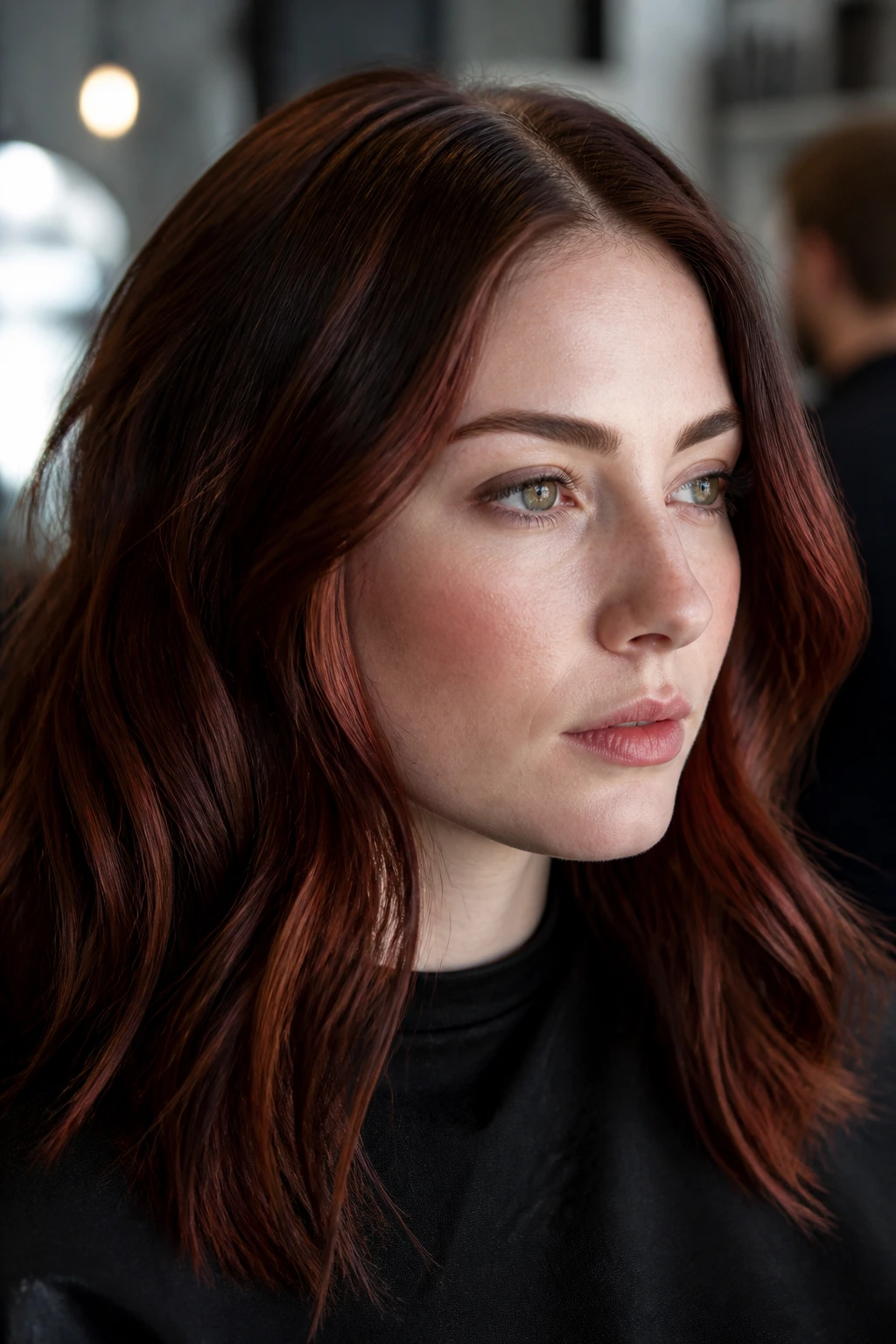
This is the look I reach for when someone wants mahogany brown highlights for fair skin but does not want a loud stripe near the hairline. The ribbons sit just in front of the ears and skim the cheekbones, which gives pale skin a little contour without making the color feel staged.
Why it works: Fair skin usually looks best when the brightest pieces sit close to the face, and mahogany does that job better than a flat brown. Keep the ribbons around 1/2 to 3/4 inch wide, and ask for a level 5 to 6 red-brown so the contrast stays soft instead of harsh.
- Best base: Dark blonde, light brown, or a brunette base that needs a little warmth.
- Ask for: Two to four face-framing ribbons with feathered starts.
- Styling note: A loose wave makes the red-brown bend show up; pin-straight hair hides most of it.
A middle part makes this placement feel cleaner. A side part makes it a little moodier. Both work.
2. Whisper-Fine Mahogany Babylights
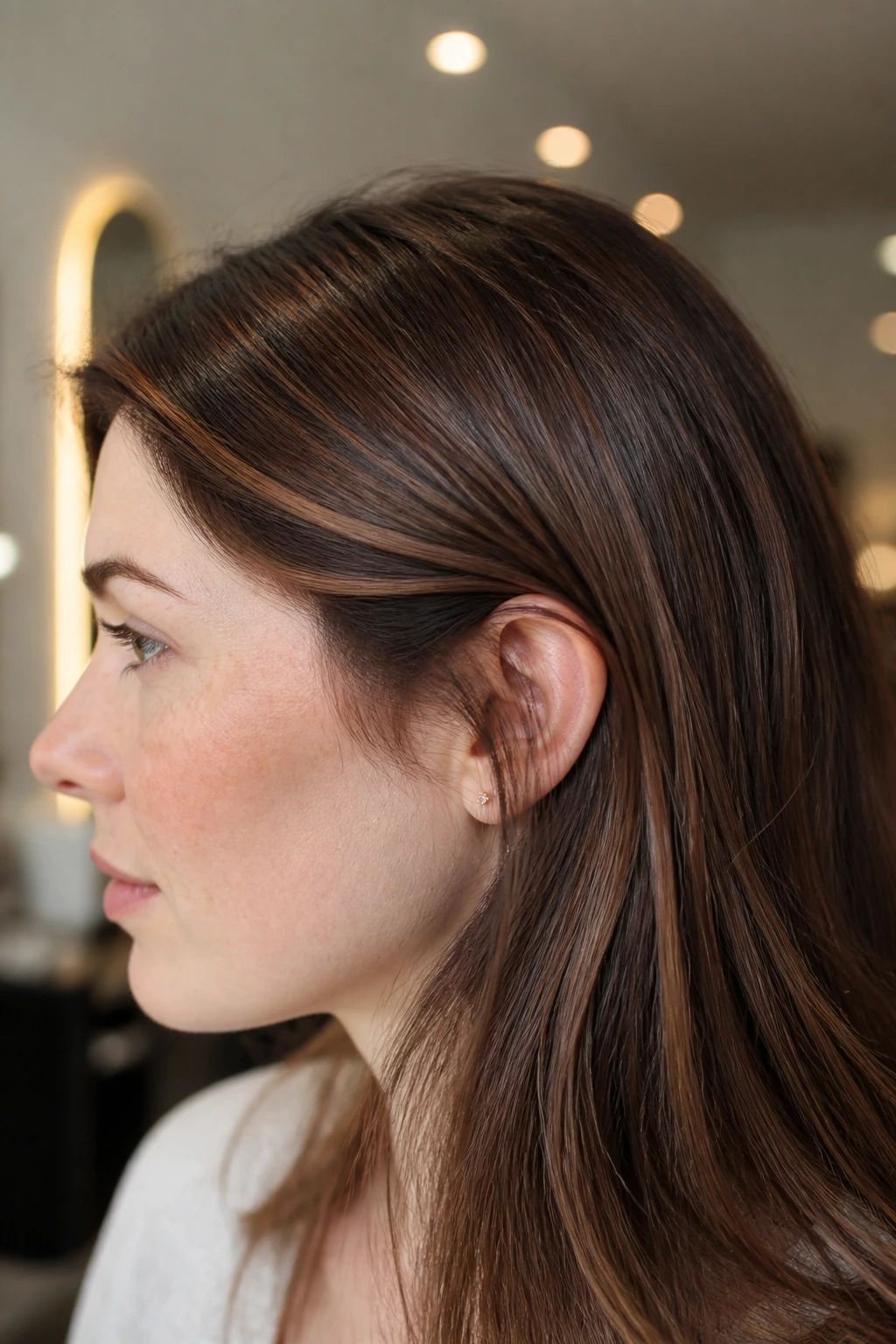
Whisper-fine babylights are the safest way to flirt with mahogany on a porcelain complexion. The pieces are so thin they look like the hair has been kissed by shade, not dyed in obvious streaks.
Why it works: On fair skin, tiny ribbons prevent the red-brown from taking over. You get movement first and color second, which is exactly what you want if your base is very light or you wear your hair straight most days.
This version shines when the hair is tucked behind the ear or worn in a low ponytail. The color catches in tiny flashes instead of broadcasting itself all at once, and that keeps the whole look elegant without turning precious.
Salon note: Ask for micro-foils or hand-painted babylights with a mahogany gloss over the top. If the base is already blonde, a demi-permanent formula is easier to live with because it fades into softer brown, not orange.
3. Chestnut-Mahogany Balayage on a Blonde Base
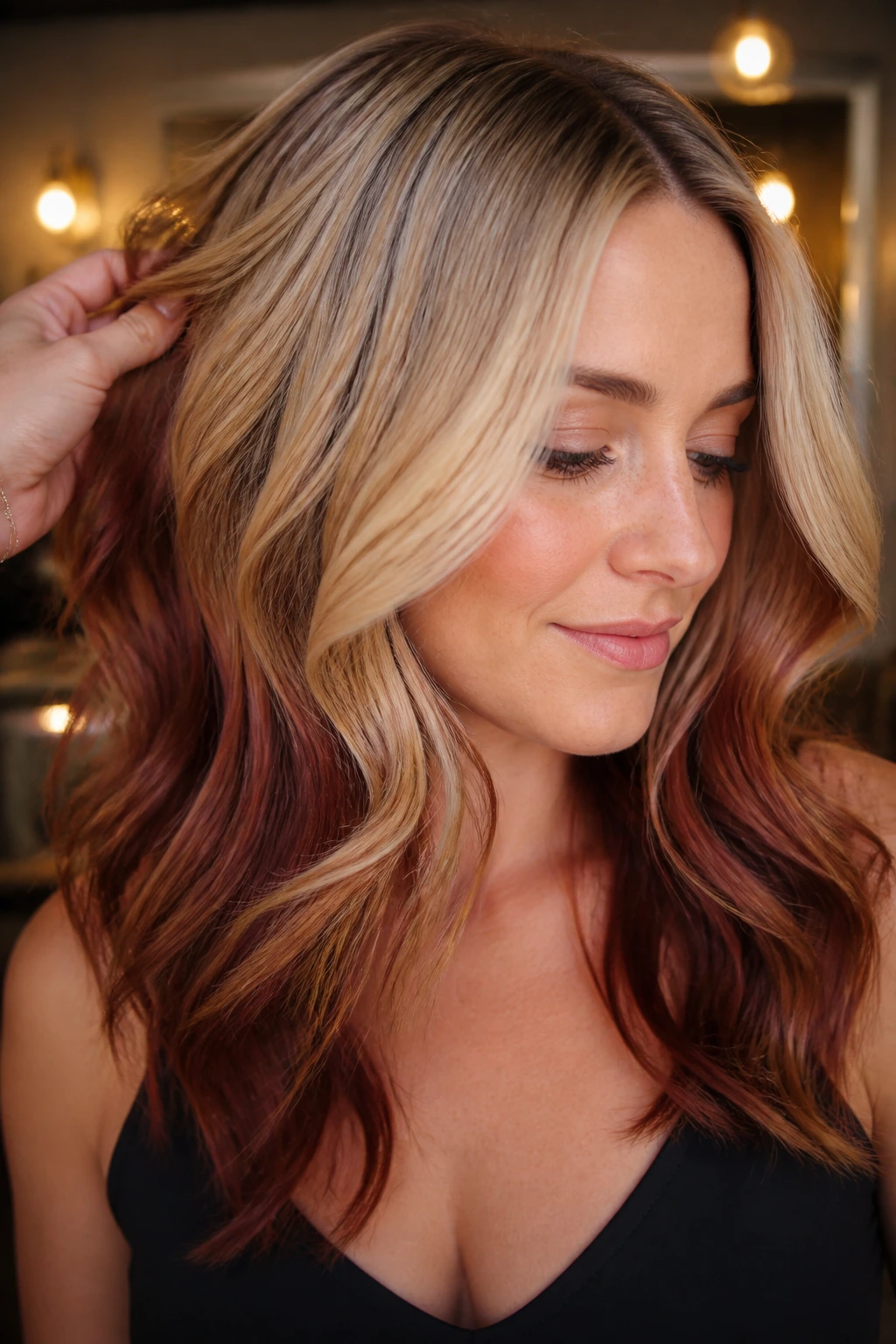
Why does balayage work so well here? Because the paint-on placement lets the mahogany sit where blonde hair actually needs depth. Instead of lining the whole head with one color, you get a brown-red sweep that starts softer near the top and deepens toward the ends.
Why it works: Fair skin often needs warmth near the face, but a full all-over darkening can feel heavy. Chestnut-mahogany balayage keeps the root area lighter and lets the color gather where it moves, which is especially nice on layered cuts.
What to ask for
- A soft root shadow no darker than two levels above the mahogany pieces.
- Mid-length and end placement with a feathered brush.
- A chestnut edge if your skin runs warm, or a cooler mahogany edge if you burn easily.
If your hair is already pale blonde, this is one of the easier ways to bring in richness without losing brightness. The grow-out is forgiving, too, because the paint fades in steps instead of leaving a hard line.
4. Mahogany Money Piece with Soft Ends
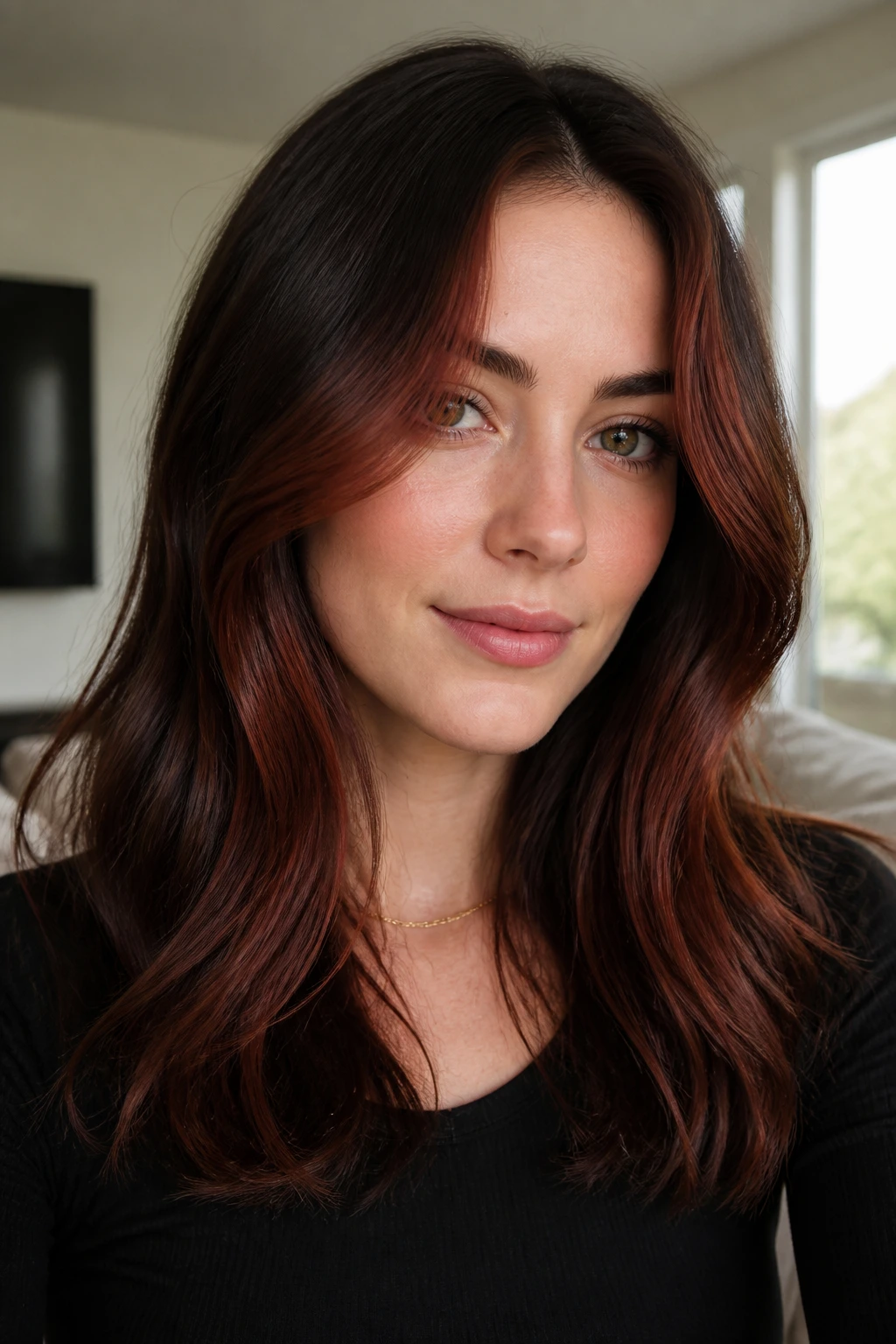
A money piece can look brash on fair skin if the color is too bright. Mahogany changes the equation. The front sections still pop, but the red-brown tone keeps the highlight grounded instead of screaming for attention.
Why it works: The face needs the most contrast, and the money piece puts it right there. Keep the front two sections slightly deeper at the root and lighter through the mid-lengths so the color does not look like a red stripe glued to the hairline.
This is a good choice if you wear your hair in a ponytail a lot. The front stays visible even when the rest of the hair is pulled back, and the softer ends keep it from feeling too hard around a fair complexion.
Styling note: Curl the front away from the face once, then leave the rest loose. It frames the skin without making the front pieces look overworked.
5. Velvet Mahogany Gloss on a Chin-Length Bob
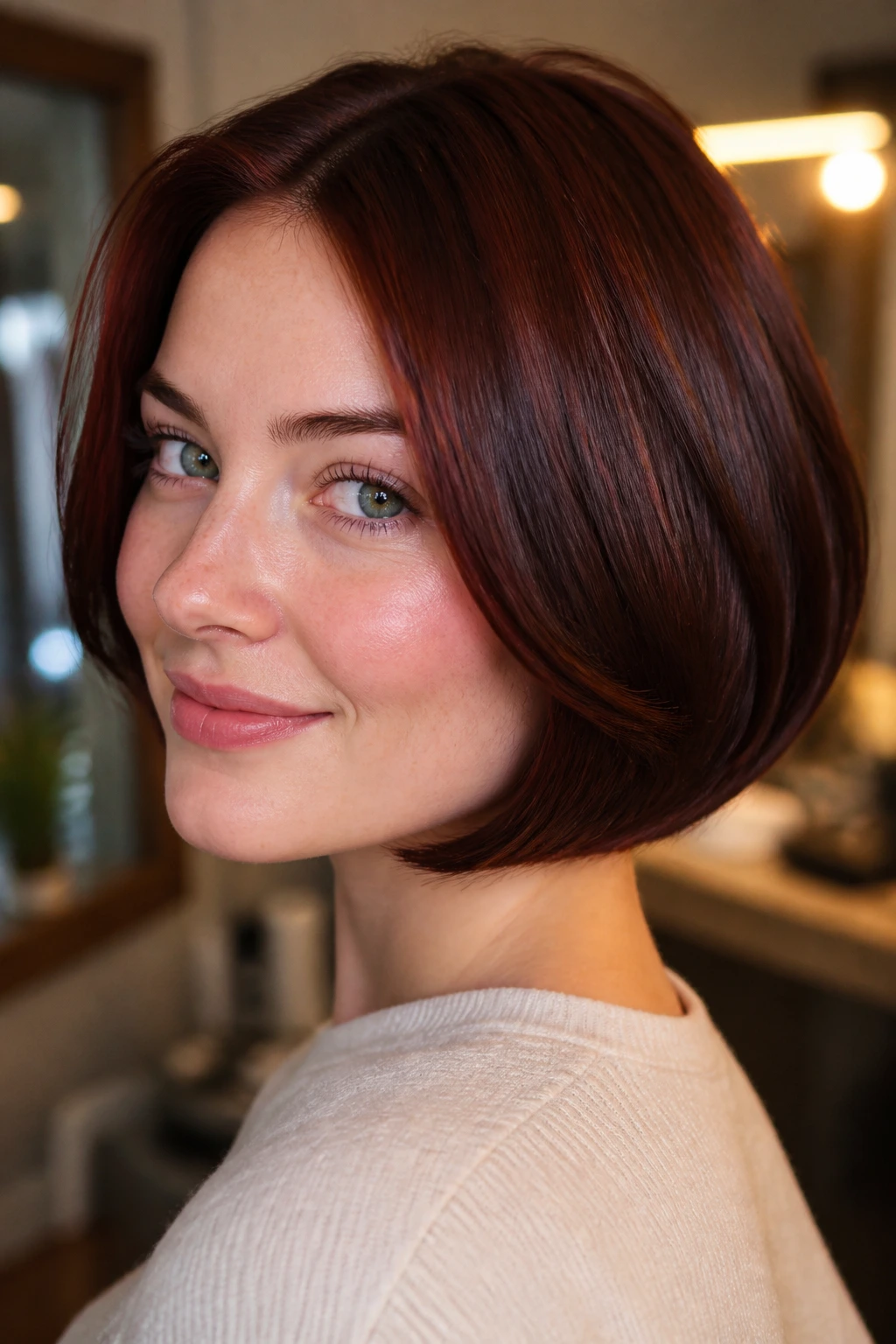
A chin-length bob is where mahogany gets to show off its shine. The shorter cut means the color sits closer to the face, so a glossy red-brown can make even very fair skin look more awake.
Why it works: A bob has less visual clutter than long hair, which means every shade change matters. A velvet mahogany gloss adds depth without relying on strong highlight stripes, and that keeps the whole haircut clean.
The best version is closer to a sheer deposit than a dramatic lift. Think brown hair with a red-wine reflection under lamps, not a cherry tone that shouts from across the room.
If your hair is fine, this is one of the better options because glossing can make the strands look fuller. Fine hair often shows color before it shows texture, and mahogany gives it both.
6. Smoky Mahogany Lowlights for Porcelain Skin
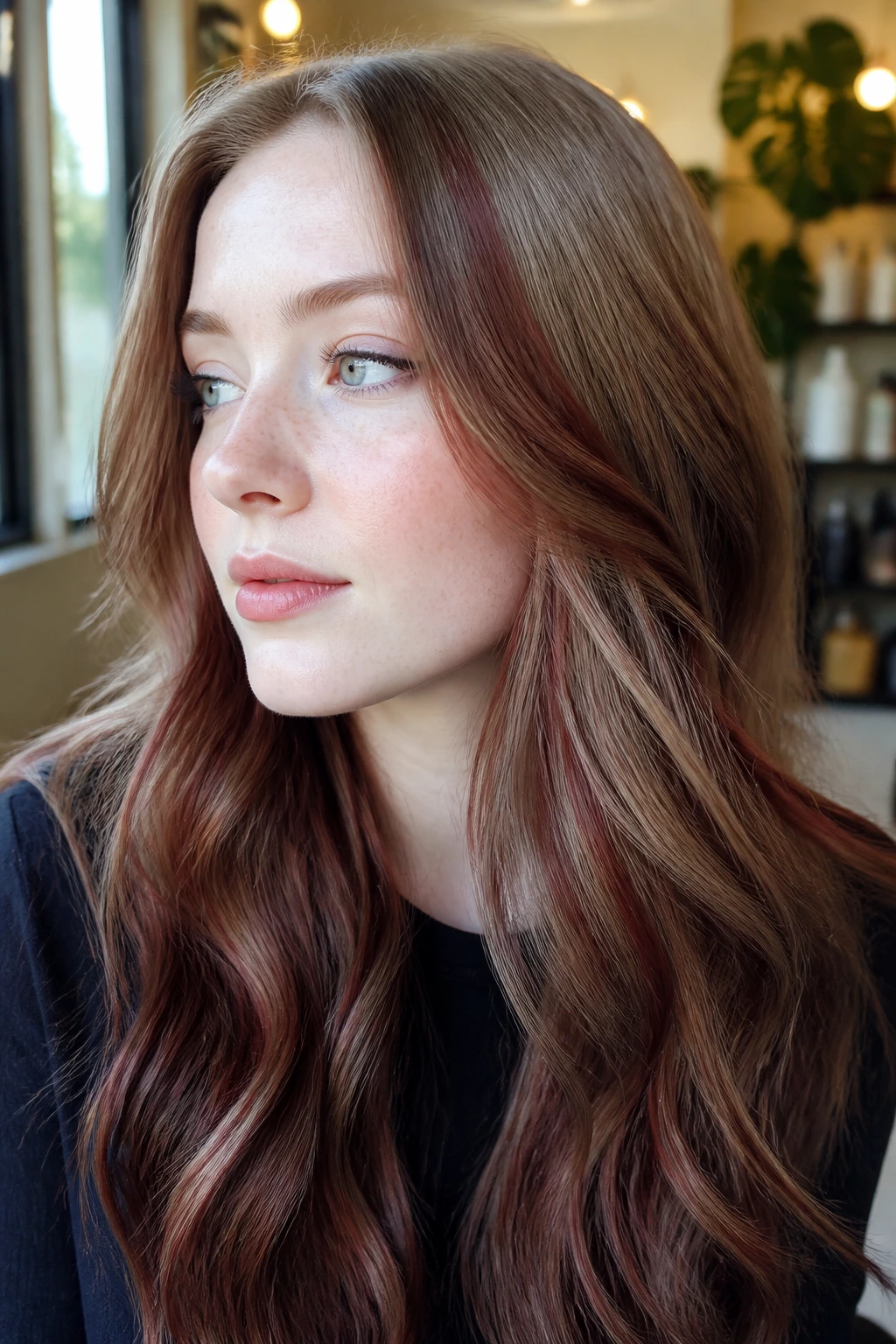
Lowlights are underrated. On very fair skin, they can do more for dimension than lightening ever will, especially if your natural color is light brown or dark blonde and you want something that reads richer, not brighter.
Why it works: Smoky mahogany lowlights create a lattice of depth under the top layer, which keeps the base from looking flat. Because the pieces are darker than the surrounding hair, they sharpen the haircut without dragging the whole look into darkness.
- Best base: Light blonde to medium brunette.
- Best cut: Shags, lobs, long layers, and airy bobs.
- Tone choice: Add a hint of violet if your skin flushes pink; keep it chestnut if your complexion runs peach.
This is a smart move if you don’t want visible regrowth every few weeks. The darker strands disappear into the natural root sooner, so the grow-out looks deliberate instead of sloppy.
7. Cool-Toned Mahogany for Pink Undertones
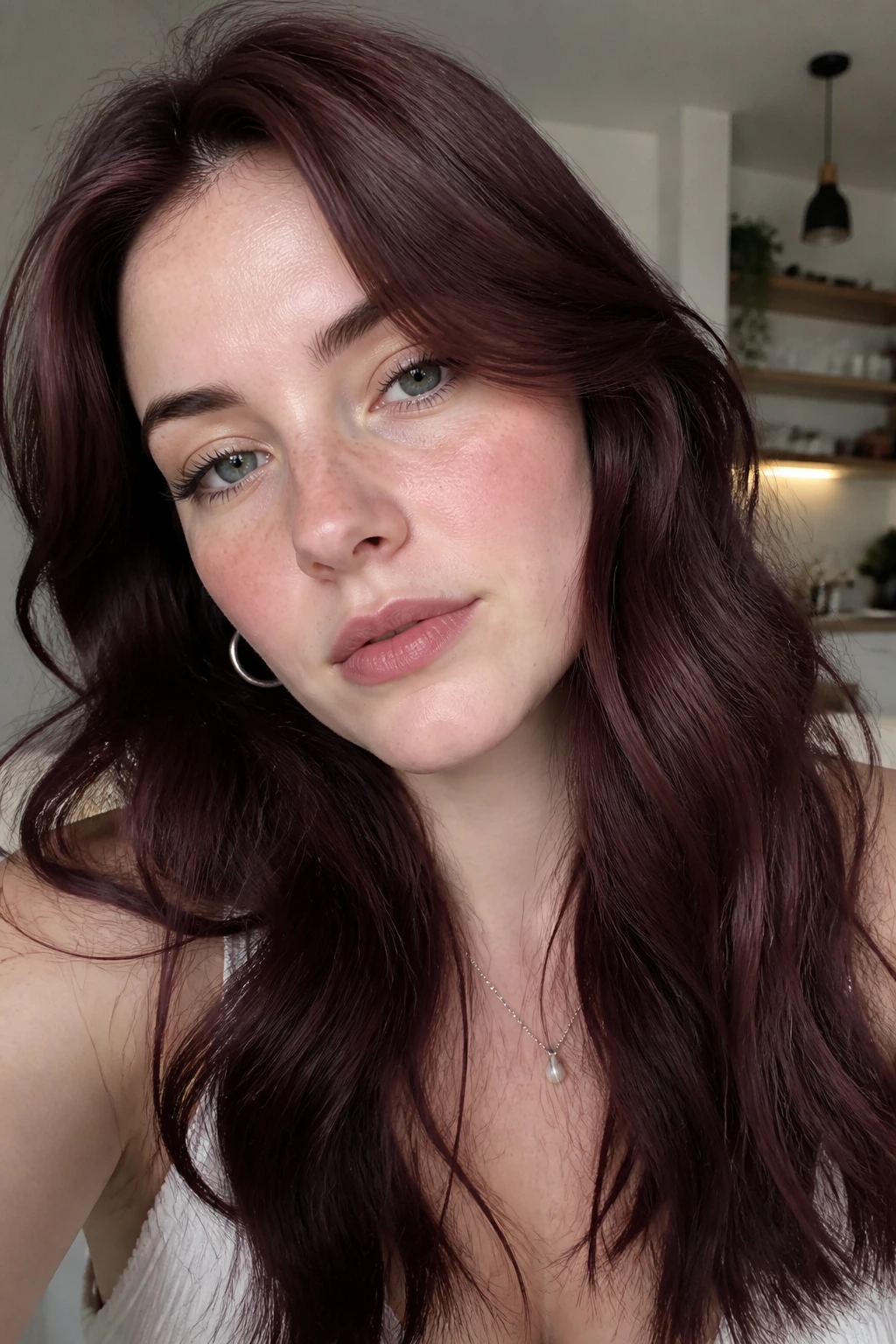
Cool fair skin can be tricky. Too much copper makes it red. Too much gold makes it tired. A cooler mahogany—one with violet and brown under it—tends to sit in the middle without turning the whole face blotchy.
Why it works: The cool version softens redness in the skin instead of echoing it. You want a brown that looks like dark cherry wood, not orange-spiced cinnamon. That one detail changes everything.
A cooler mahogany is especially good if you wear silver jewelry, cool-toned makeup, or a crisp wardrobe with black, white, and navy. The color lands neatly against those tones and doesn’t fight them.
Salon note: Ask for a red-violet brown glaze rather than a copper-based formula. If your stylist starts talking about warmth and “brightness,” steer the conversation back toward brown with a wine edge.
8. Warm Mahogany for Peach Undertones
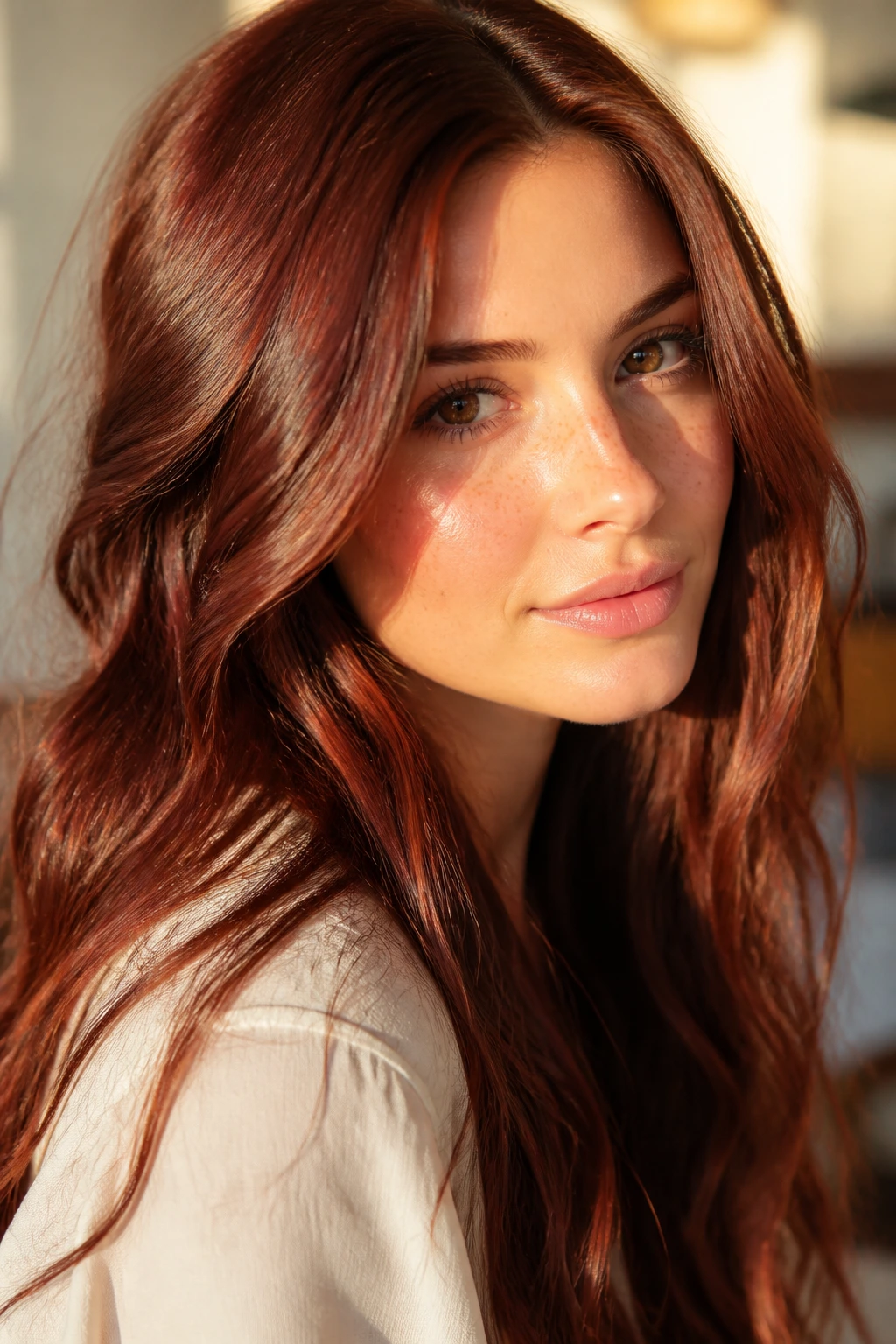
Warm fair skin needs a little heat, but not the kind that tips into brass. A warm mahogany with chestnut and soft cinnamon notes gives the complexion a healthier look without turning orange.
Why it works: Peach undertones can handle more warmth around the face, and chestnut-leaning mahogany acts like a softer version of auburn. It keeps the hair rich while still sitting in the brown family.
How to use it well
- Keep the warm pieces away from the roots if your natural base is very pale.
- Place the richer color in the mid-lengths and ends so it moves.
- Pair it with a soft bend or loose wave to show the warmth.
This shade is especially nice if your eyes are hazel, amber, or golden brown. It makes the skin and eyes read as one clean palette instead of three competing pieces.
9. Plum-Mahogany Around Curtain Bangs
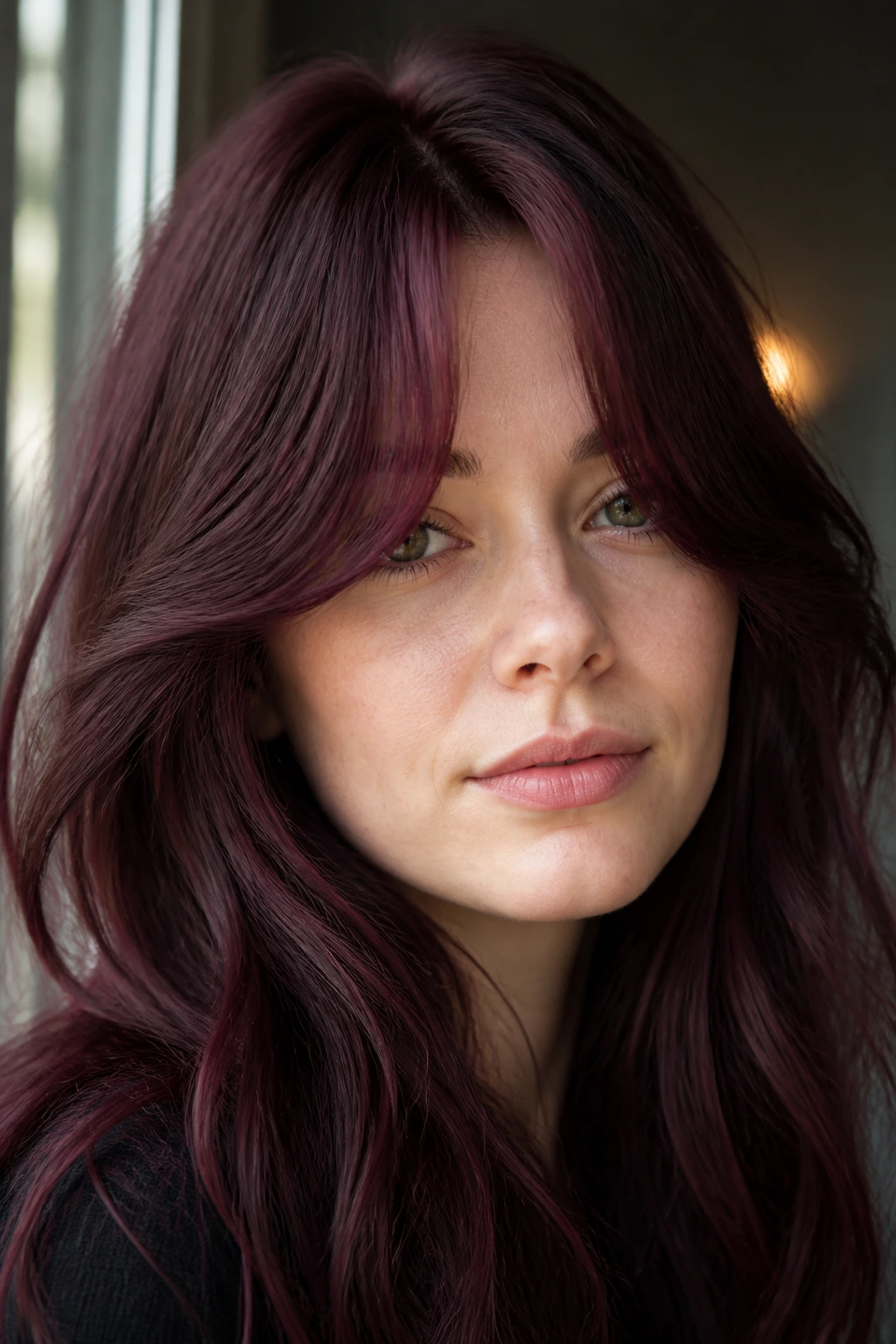
Curtain bangs can go flat fast if the color is too close to the base shade. A plum-mahogany edge gives the fringe a little air and keeps the front of the haircut from blending into the rest of the head.
Why it works: The bangs are the first thing people notice, so a muted red-violet tone there can pull the eye upward without looking loud. On fair skin, the plum note keeps the mahogany from getting too orange under indoor lights.
This look has a slightly editorial feel, but it is still wearable because the darker plum sits under the softer top layer. If you tuck the bangs to one side, the color shows in a narrow sweep instead of a block.
Color note: Keep the pieces fine and blended. Chunky bangs with plum undertones can look costume-y fast. Fine placement keeps the face soft.
10. Mahogany Ombré from Mid-Length to Ends
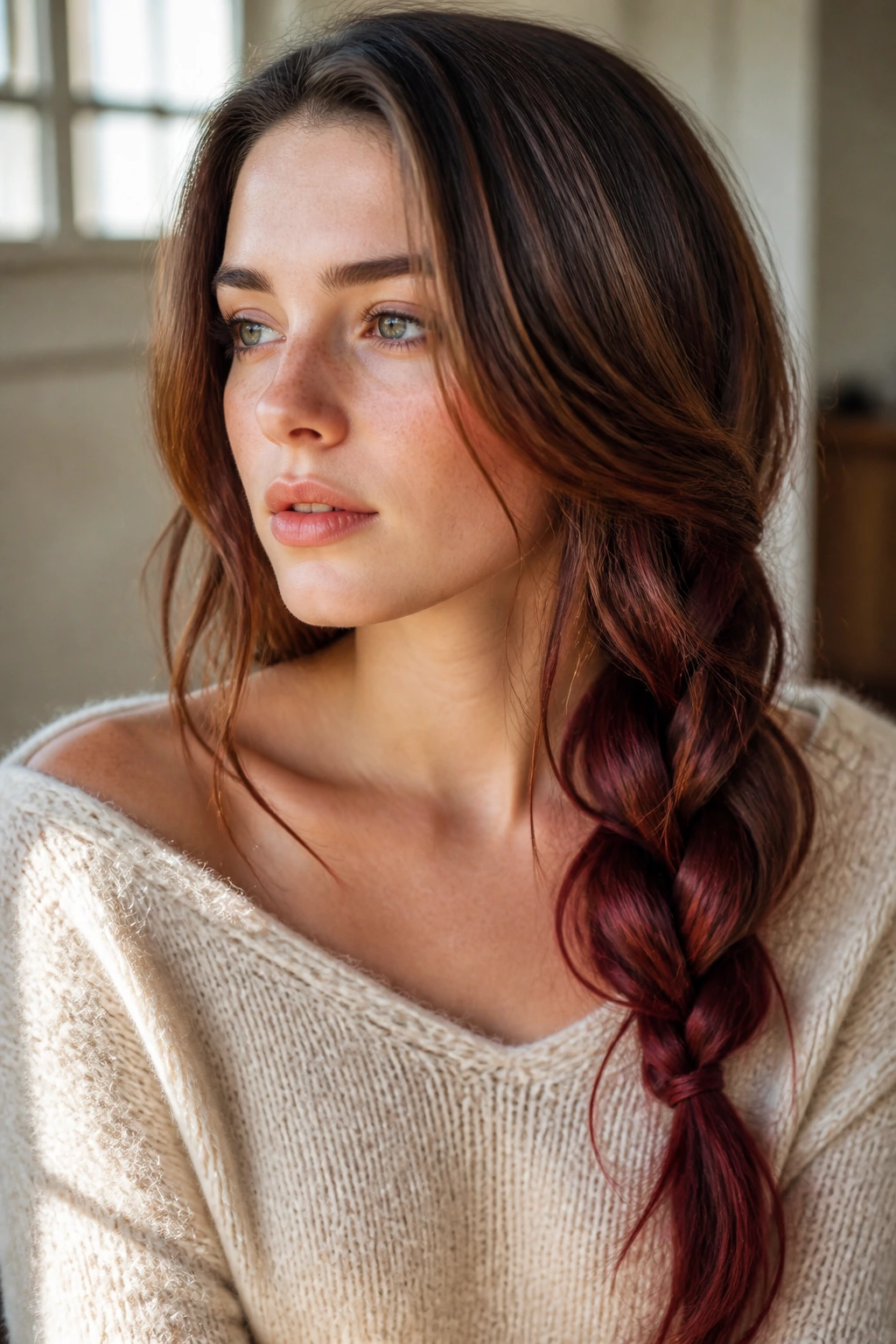
Ombré works when you want the deepest color away from the face and the richest payoff near the ends. On fair skin, that can be a nice trade: brightness around the crown, drama lower down.
Why it works: Mahogany ombré keeps the root area readable and lets the ends carry the color story. That means the face stays bright while the lower half of the hair picks up a wine-brown depth that looks good in motion.
If your hair is long and straight, this is one of the better ways to prevent the color from looking striped. The shift from natural root to mahogany end happens gradually, and the eye reads it as shape rather than separate pieces.
A loose braid shows it beautifully. So does a twisted half-up style. The color darkens enough to matter, but it never swallows the skin.
11. Ribboned Mahogany Waves on Long Layers
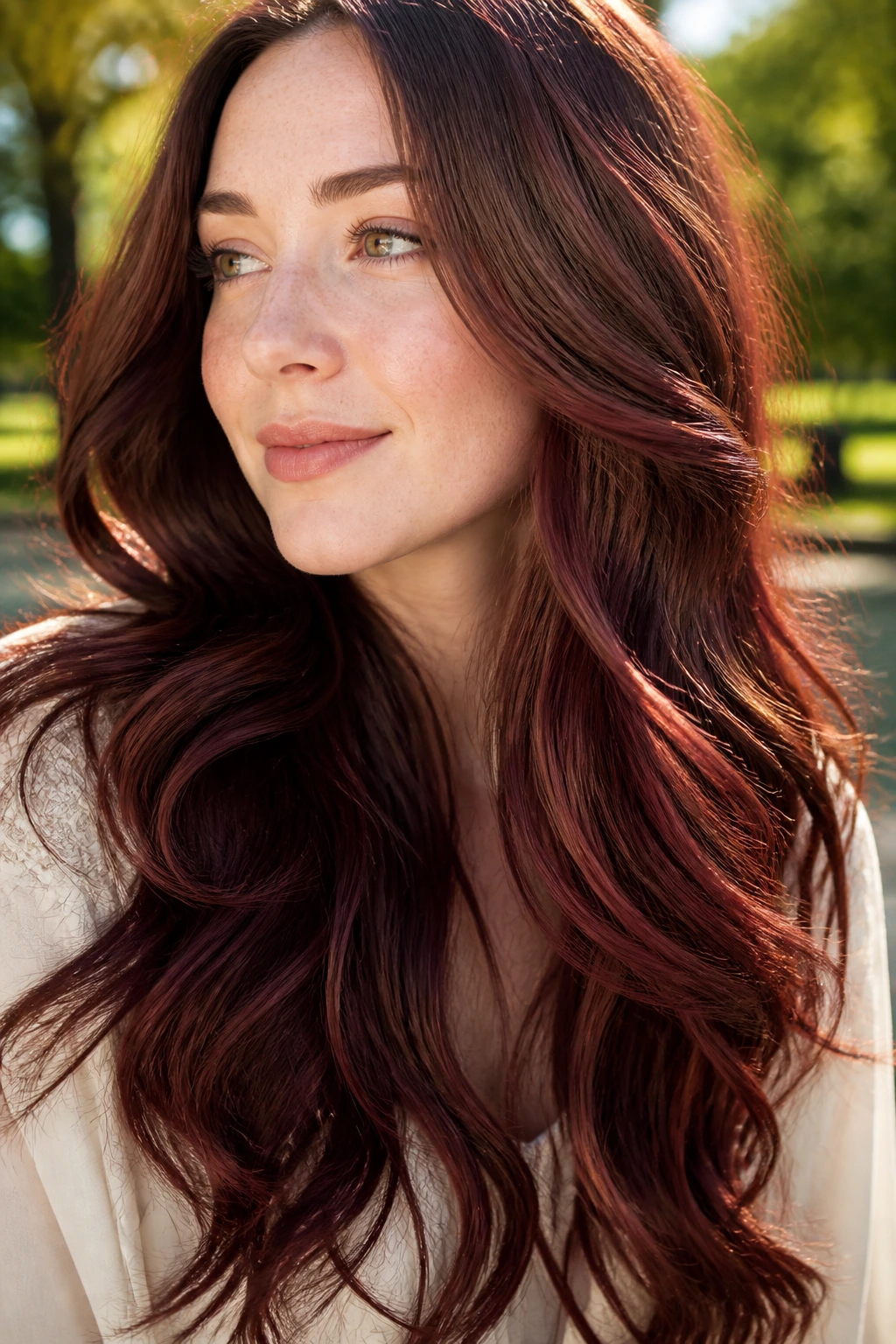
Long layers give mahogany something to do. Without movement, red-brown can sit heavy. With waves, the color breaks into ribbons and catches light in a way that feels far less static.
Why it works: Fair skin often needs dimension, not just darkness. Ribbon placement creates that dimension by alternating deeper mahogany and softer brown across the bends of the hair.
- Best for: Hair that already has a bit of natural wave.
- Placement tip: Put the strongest color on the underlayer and through the mid-lengths.
- Styling tip: Use a 1 to 1 1/4-inch iron and leave the ends a little straighter for a softer finish.
This is one of my favorite options for people who want the color to look expensive without looking obvious. It moves. That’s the whole point.
12. Peekaboo Mahogany Panels Beneath the Crown
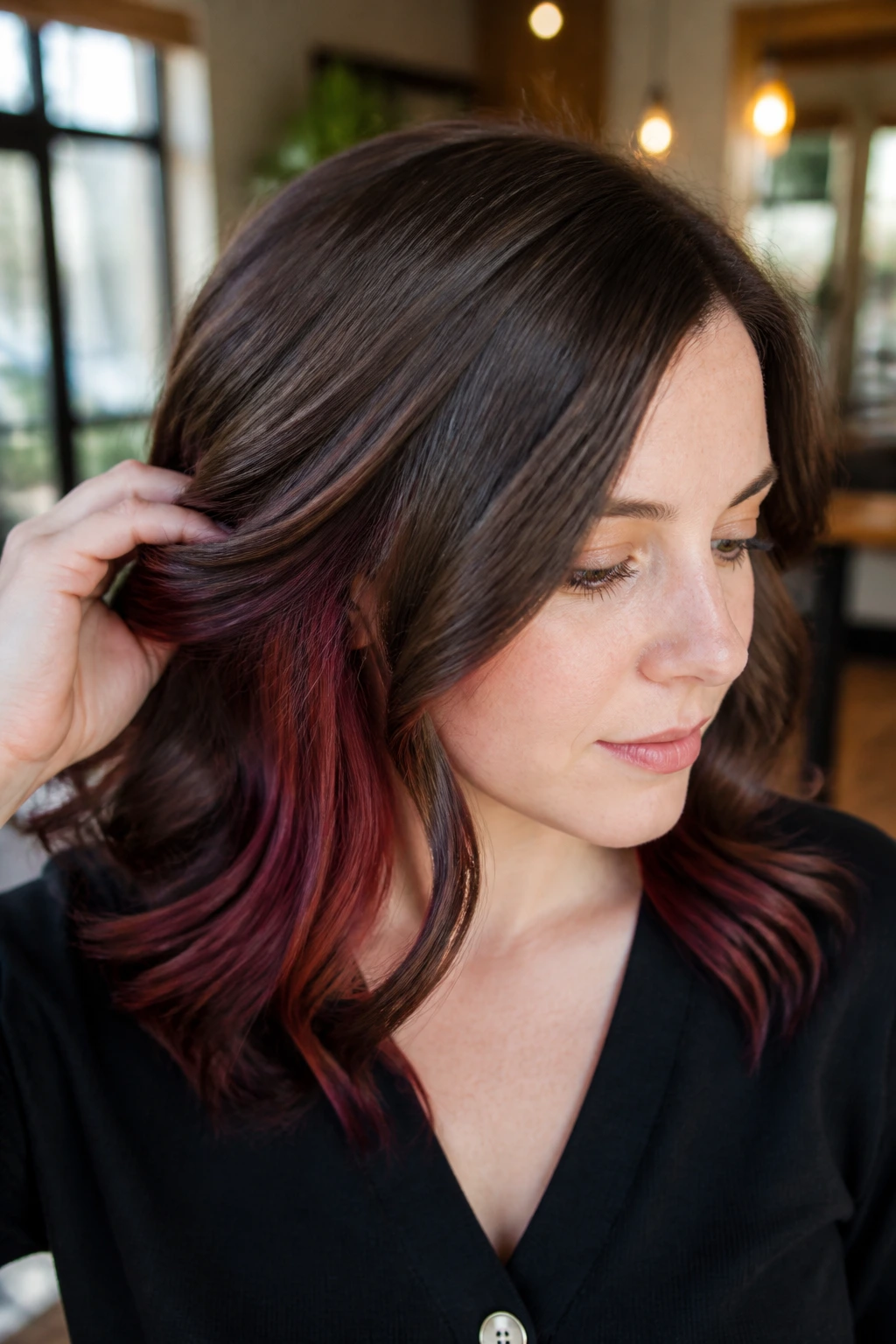
Peekaboo highlights are for the person who wants the fun part hidden until the hair flips. Beneath the crown, mahogany gives a flash of brown-red that shows up in motion, not in every mirror glance.
Why it works: Fair skin can handle strong color better when it is partially concealed. The top layer keeps the look calm, while the panels underneath add surprise and depth when the hair shifts.
This works especially well with straight styles, because the panels show at the ends and under the top section. If you wear your hair in a claw clip or half-up knot, the hidden color appears without needing a full reveal.
Salon note: Ask for narrow panels, not broad strips. Narrower pieces read richer and less streaky, which matters a lot when the tone is this deep.
13. Chunky Mahogany Panels with a 90s Feel
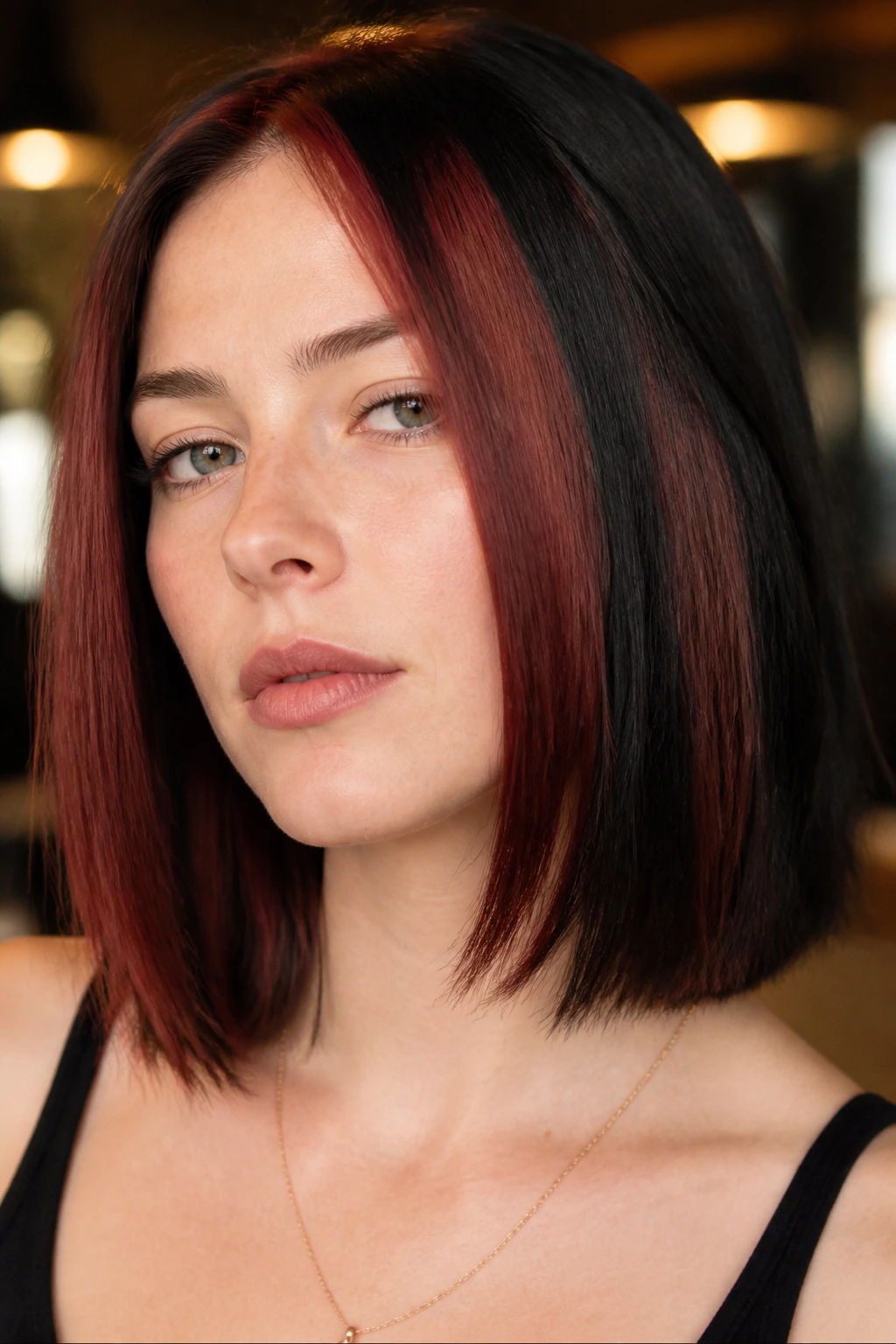
Can chunky highlights work on fair skin? Yes—if the mahogany is deep enough to feel expensive and the spacing is deliberate. Thin pieces would disappear. Chunky panels give the haircut a graphic edge.
Why it works: On a light complexion, strong contrast can look fresh rather than harsh when the shade sits in the brown-red lane. Mahogany is softer than black and less alarming than bright copper, so the old-school panel idea lands in a better place.
Keep it wearable
- Use fewer panels than you think you need.
- Leave some clean hair between the colored sections.
- Keep the toner brown-heavy so the pieces do not go ruby.
This look pairs best with blunt ends, a middle part, or a sleek blowout. It is not shy. That’s the appeal.
14. Mushroom Brown and Mahogany Blend
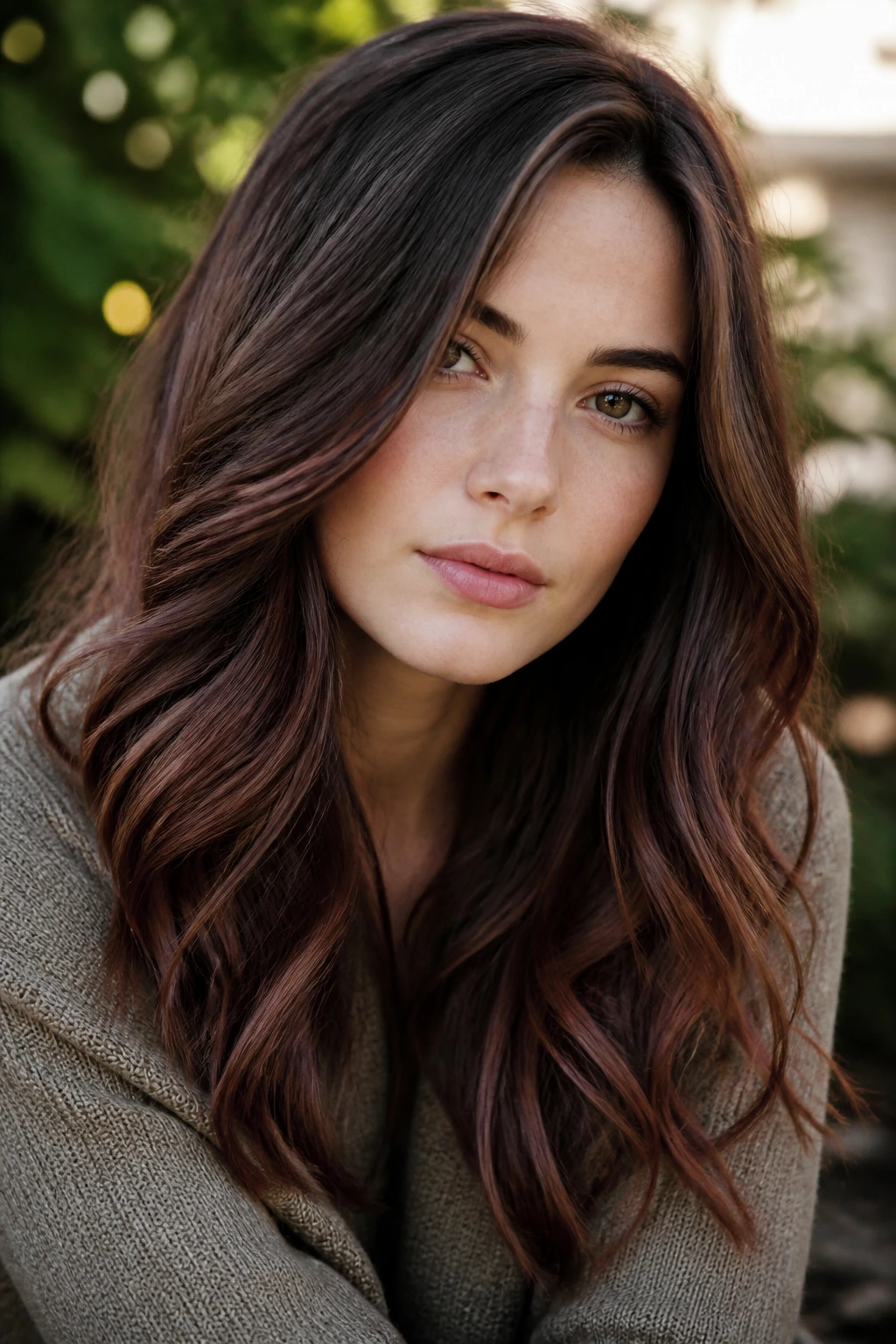
Mushroom brown can look flat on fair skin if it is too ash-heavy. Add a little mahogany, though, and the whole thing wakes up. You keep the smoky base, but the red-brown notes stop it from going muddy.
Why it works: The ash cools the warmth, and the mahogany warms the ash. That tug-of-war is exactly what keeps the color dimensional on pale skin. It feels grounded, not brassy.
This version is a good compromise if you hate bright red tones but still want color. It sits close to brunette, but the surface shifts in daylight and keeps the face from looking washed out.
Style it with: Soft bends, lived-in waves, or a loose chignon. The smoky parts need movement to show, otherwise the effect can fall a little flat.
15. Deep Wine-Mahogany for Brown Eyes
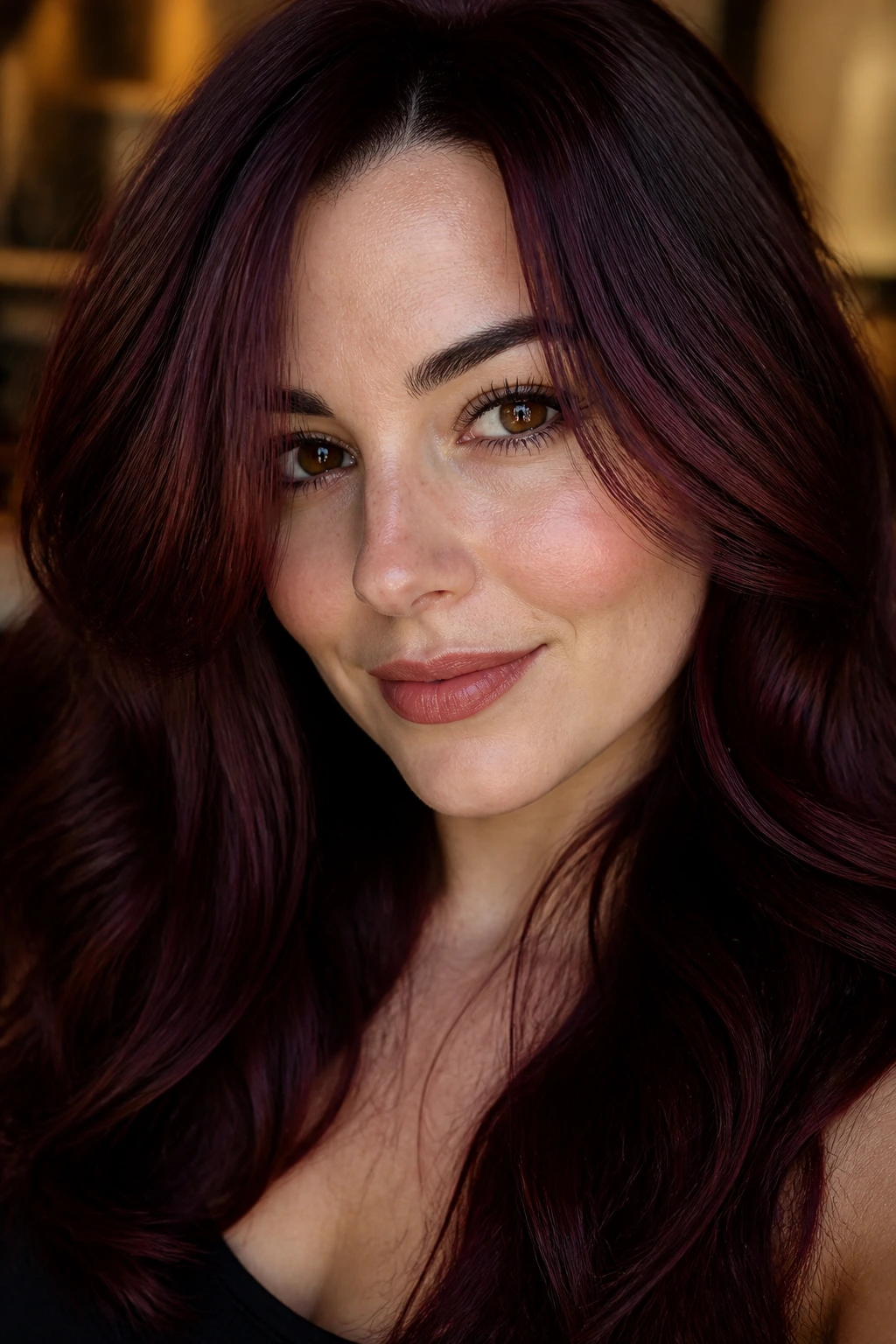
Brown eyes can handle a deeper mahogany better than most people think. In fact, a wine-brown tone near the face can make lighter skin look more awake because the eyes carry the color instead of fighting it.
Why it works: Deep wine-mahogany reads richer than a basic red-brown. On fair skin, it gives the eye area more presence, especially if your brows are dark or your lashes are strong.
This is one of the more dramatic choices in the set, but it still stays wearable because the brown base keeps the red from turning flashy. The color is strongest under indoor light, where it takes on a muted berry cast.
If you like dark lipstick, deep knitwear, or simple black clothes, this shade has an easy life. It does not need much help.
16. Mahogany Contour Highlights at the Jawline
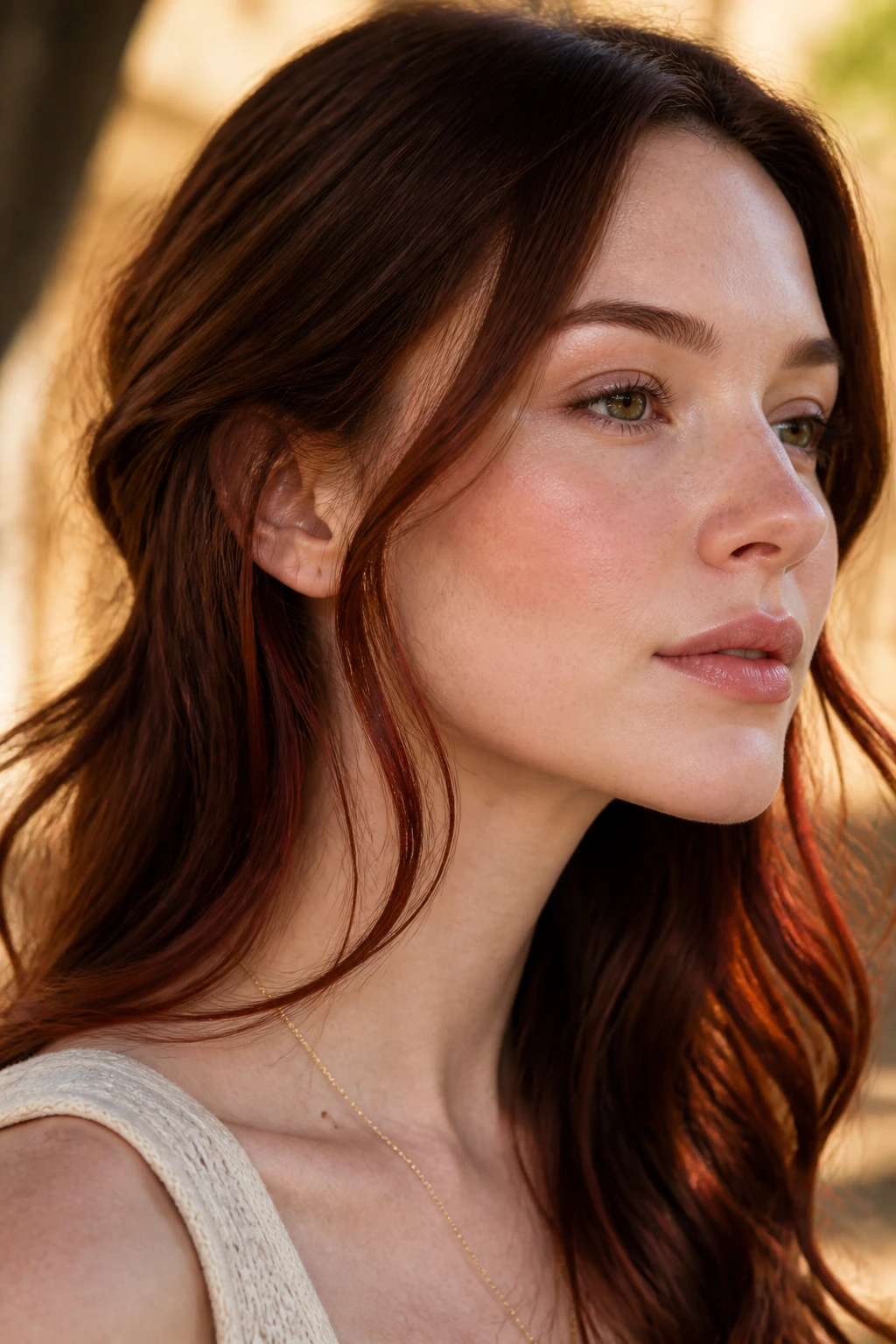
Think of this one as color contouring. Instead of spreading the mahogany all over, you place the strongest pieces at the jawline and lower cheek area, where the hair can sharpen the face shape.
Why it works: Fair skin often benefits from definition around the perimeter, especially if the haircut is soft or layered. Mahogany contour pieces create a frame without filling in the whole head with dark color.
The result is subtle in photographs and clearer in person. A few inches of well-placed brown-red can change how the face sits against the haircut, especially on shoulder-length styles.
Best on: Rounder faces, soft layers, and cuts that need a little edge. If your hair is very fine, this placement also helps the ends look denser.
17. Soft Mahogany Streaks on a Pixie Cut
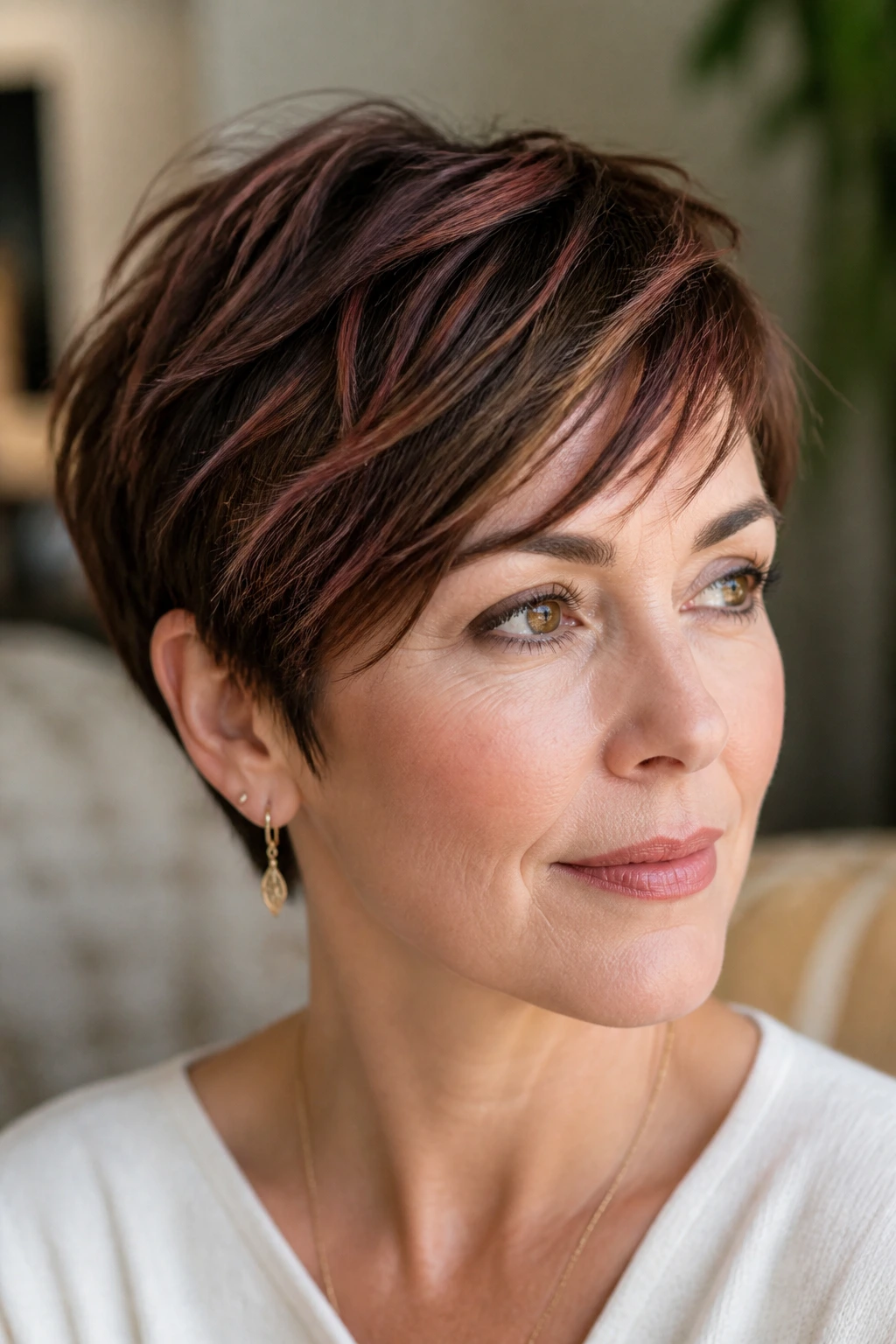
A pixie cut gives mahogany nowhere to hide, which is exactly why it works. A few soft streaks through the top and fringe can turn a short cut from plain brown into something with real shape.
Why it works: Short hair needs contrast in smaller doses. Mahogany streaks give the crown some lift and keep the sides from looking too severe against fair skin.
The trick is restraint. Too many pieces and the pixie starts to look busy. Two or three carefully placed streaks through the top, plus a whisper of color near the fringe, is usually enough.
This is one of the easiest looks to style in the morning. A pea-sized amount of matte paste and a quick lift at the roots can show the color in ten seconds flat.
18. Curly Hair Mahogany Ribbon Lights
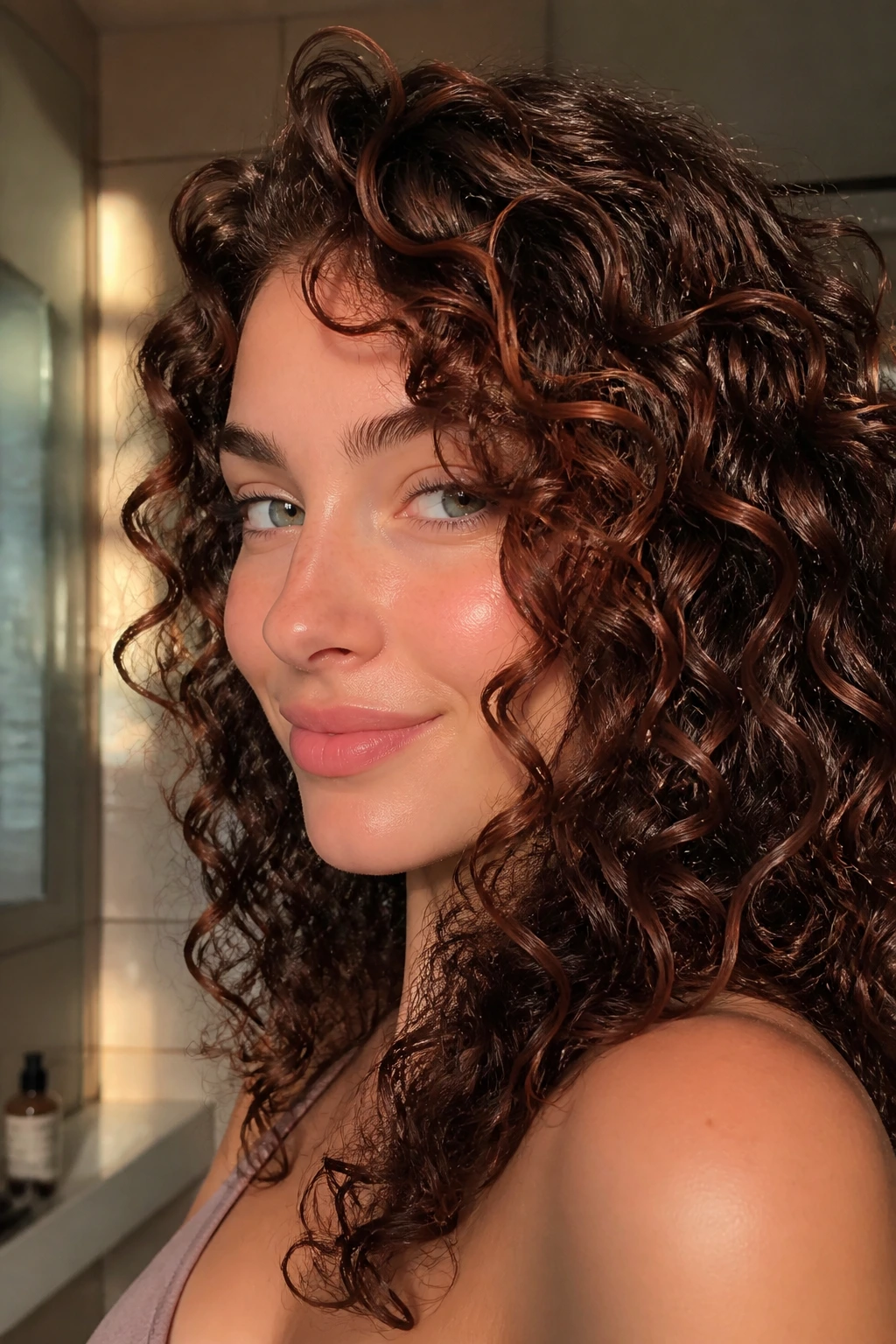
Why do curls love mahogany? Because the shade follows the spiral instead of fighting it. A ribbon light on curly hair shows the bend of each curl, which makes the whole style look fuller and more alive.
Why it works: Fair skin often needs depth around the face, and curls naturally scatter color in a way that softens contrast. Mahogany placed on the outer arc of the curl catches more light and avoids the stripe effect you get from blunt sections.
How to wear it
- Ask for color painted where the curl bends, not just on the surface.
- Keep the front pieces a touch lighter.
- Use a diffuser and stop scrunching when the curls are about 80% dry.
This is one of those looks that gets better as the hair moves. Still hair. Still simple. But the dimension is doing a lot.
19. Lived-In Mahogany on a Lob
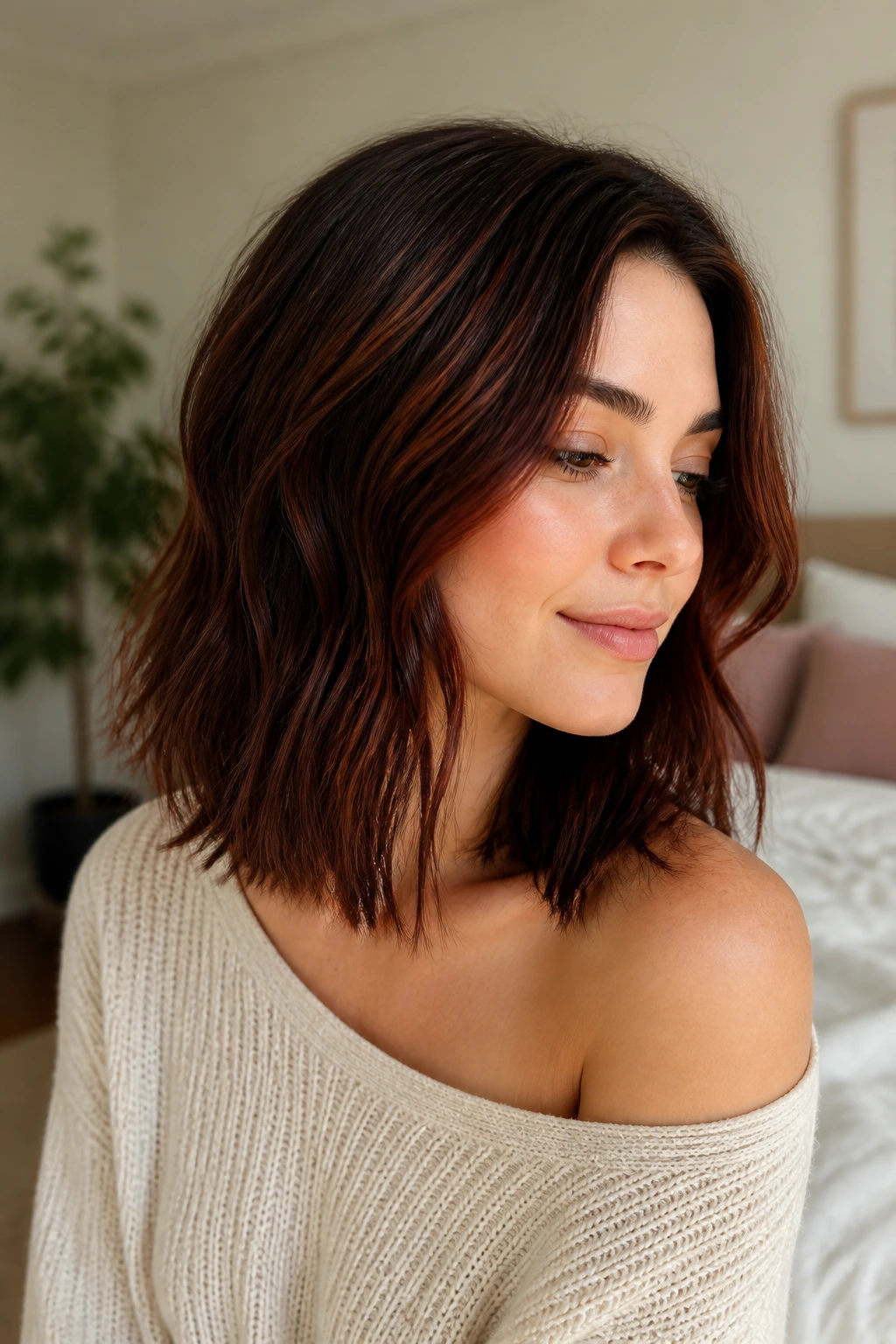
A lob can go flat if the color is too one-note, and that is where lived-in mahogany earns its place. The placement stays soft around the top and deepens through the ends, so the haircut looks intentional even when you air-dry it.
Why it works: A lob sits right at the shoulder, which means every color change gets noticed. Mahogany gives that blunt or slightly textured shape a little weight at the bottom without making fair skin look shadowed.
- Best look: Slight bend, side part, and a few face-framing pieces.
- Best tone: Brown-heavy mahogany with just enough red to show in sunlight.
- Maintenance note: This one grows out neatly if the root stays soft.
If you like low-effort styling, this is a strong pick. The color does the work for you.
20. Espresso Base with Mahogany Flashlights
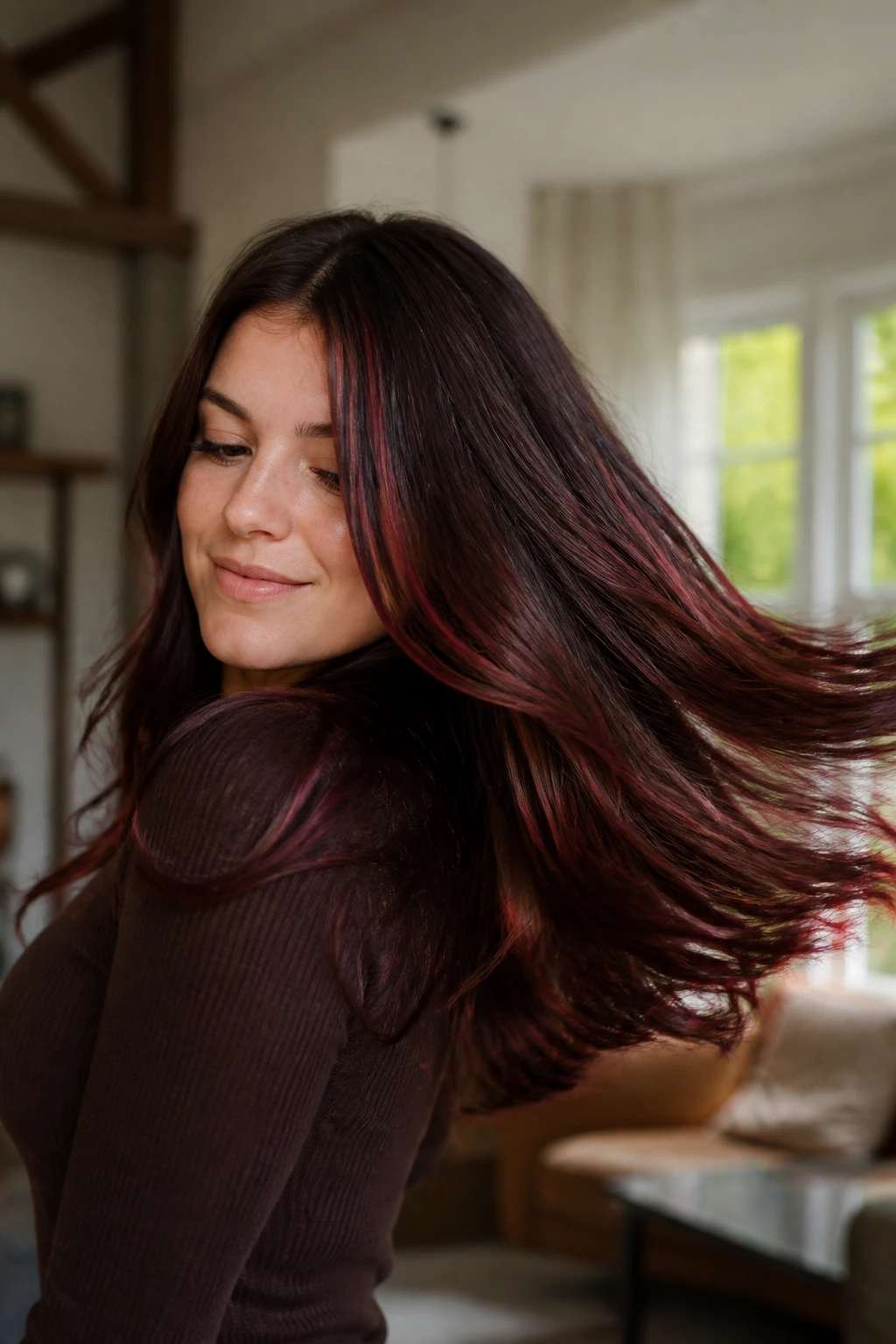
Flashlights are the little hidden streaks that appear when the hair swings. On an espresso base, mahogany flashlights give you movement without turning the whole head red-brown.
Why it works: Fair skin can take darker contrast better when the bright bits are limited to motion. The hidden mahogany flashes stop the base from looking dead flat and create a flicker effect through the mid-lengths and ends.
This is a good choice for people who want a brunette look with a small surprise. It stays conservative from the front and gets more interesting the moment the hair moves or is pinned back.
Salon note: Ask for the color to sit under the top layer and around the inner curves of the haircut. That placement matters more than the exact tone.
21. Cinnamon-Mahogany Glow on Layered Midlength Hair
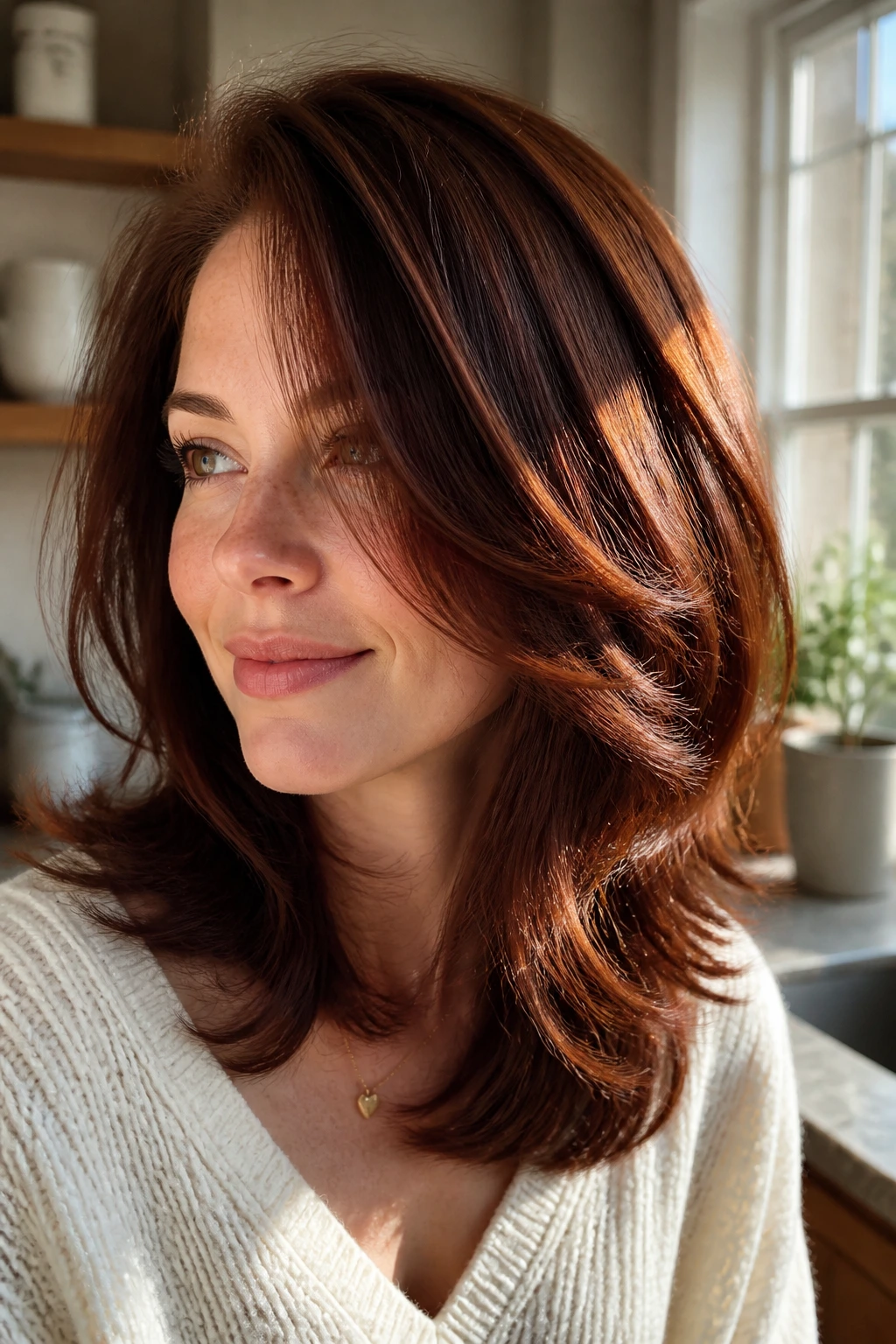
Cinnamon-mahogany sits warmer than the smoky versions, but it still lives in the brown family. On layered midlength hair, it can bring a dry, flat cut back to life without making fair skin look overly red.
Why it works: The layers need color variation to show off their shape, and the cinnamon edge gives the hair a soft glow in daylight. It is warmer than cool mahogany, but not so warm that it slides into copper.
If you already wear warm makeup, this shade is easy to match. Peach blush, bronze eyeshadow, and a neutral lip all sit nicely beside it. That makes the whole face feel connected, which is half the battle with light skin and deeper hair color.
22. Rooted Mahogany Balayage for Low Maintenance
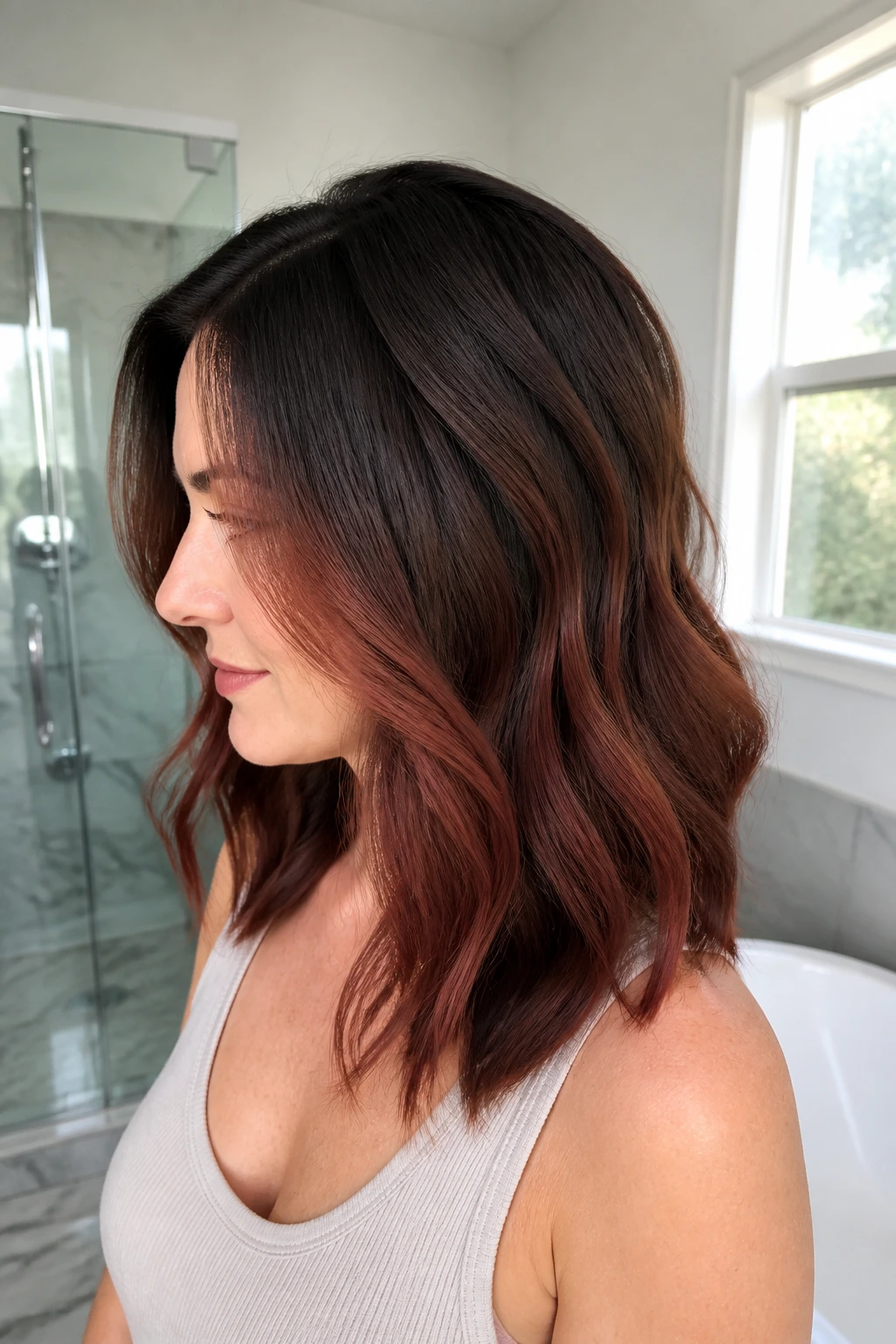
A rooted balayage is the calm version of this color story. The root stays deeper, the mahogany starts lower, and the grow-out line gets buried under softer pieces.
Why it works: Fair skin needs contrast, but not every inch of hair needs to carry it. A rooted version gives you shape near the face and through the ends while letting the regrowth disappear into the natural root.
This is the one I’d pick for anyone who hates salon maintenance. It does not demand constant touch-ups because the placement already anticipates the grow-out.
The result is polished without being high-drama. And if your natural hair is darker than your ends, even better—the transition is easier to hide.
23. Face-Brightening Mahogany Ends
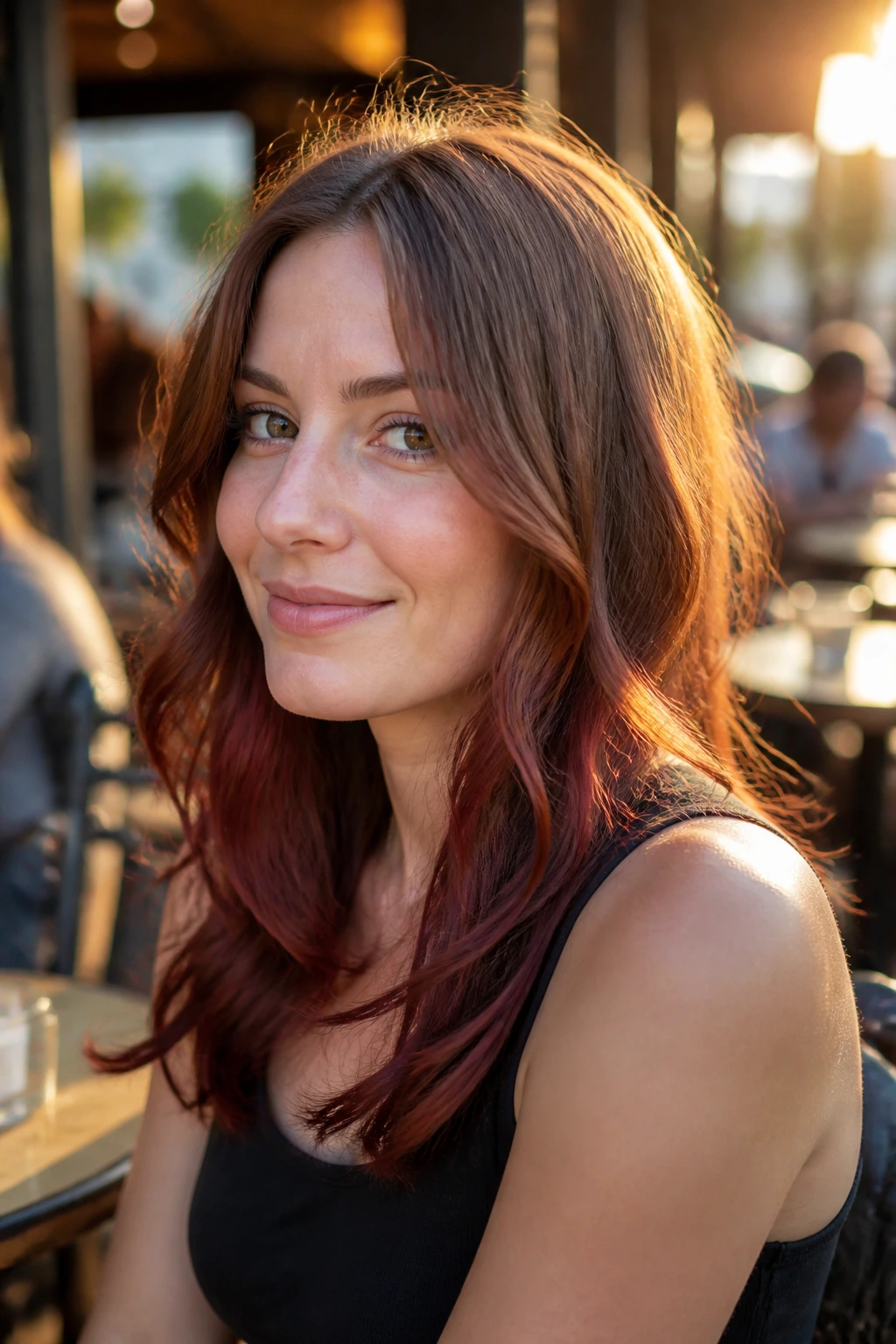
Can the ends brighten the face? They can, if the top stays soft and the lower sections carry the richer mahogany. It sounds backward, but it works because the eye tracks movement at the ends and sees fullness near the collarbone.
Why it works: On fair skin, darkening only the lower half of the hair can make the face look more open. The lighter crown keeps the complexion fresh, while the mahogany ends add weight and shape.
Ask for this if you want
- A subtle change without full-color saturation.
- A cut that looks better when it moves.
- A deeper finish that still keeps the roots bright.
This is a strong option for people who spend a lot of time with their hair tucked behind their shoulders. The ends do the showing off.
24. Sheer Mahogany Glaze for a Subtle Shift
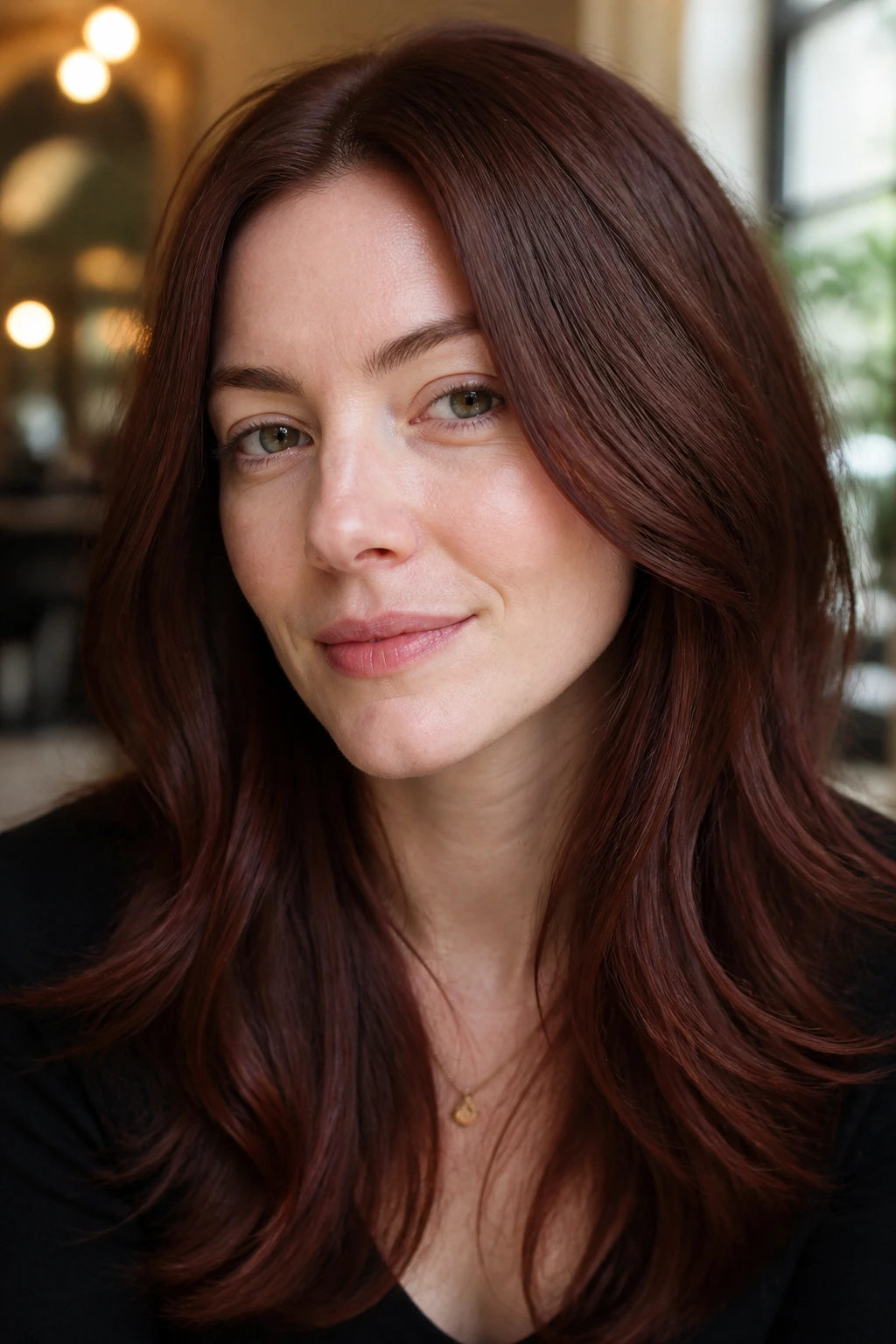
A sheer glaze is the quietest way to try the shade. No obvious streaks. No dramatic panels. Just a brown-red veil that deepens the base and adds shine across the whole head.
Why it works: Fair skin can sometimes look better with a small color shift than with a full highlight job. A glaze softens the hair’s tone, adds reflection, and gives the complexion a little more warmth without any harsh placement.
This is the version for someone who wants to test the waters before committing. It fades gently, and because the color is sheer, you can usually steer it warmer or cooler on the next visit without starting over.
Styling note: A gloss looks best on smooth hair. If your hair is coarse or frizzy, add a lightweight serum so the sheen doesn’t get lost in texture.
25. High-Contrast Mahogany Panels for Bold Fair Skin
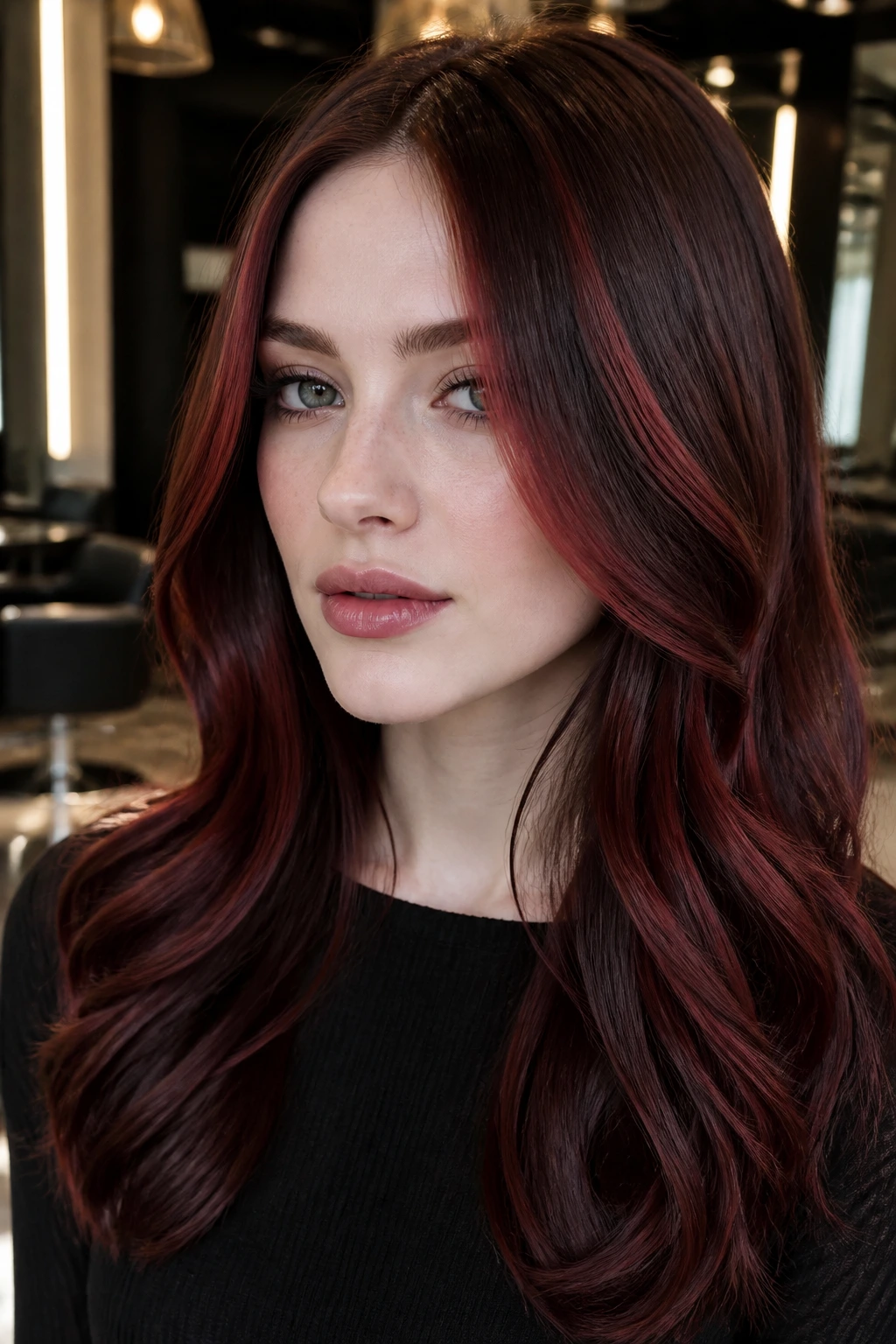
High-contrast panels are not shy, and they should not be. When the color is placed with purpose, fair skin can handle the drama beautifully because the red-brown stops short of looking cartoonish.
Why it works: The trick is to keep the panels clean and the mahogany deep enough to read like a luxury brown, not a bright red. On a pale complexion, that contrast can make the haircut look sharper and the features more defined.
This one suits sleek styling, strong parts, and a little attitude. If you wear minimal makeup, the color carries the face on its own. If you like a bold brow or a red lip, even better.
It’s the loudest choice in the set. Sometimes that’s the point.
Why Mahogany Brown Highlights Suit Fair Skin
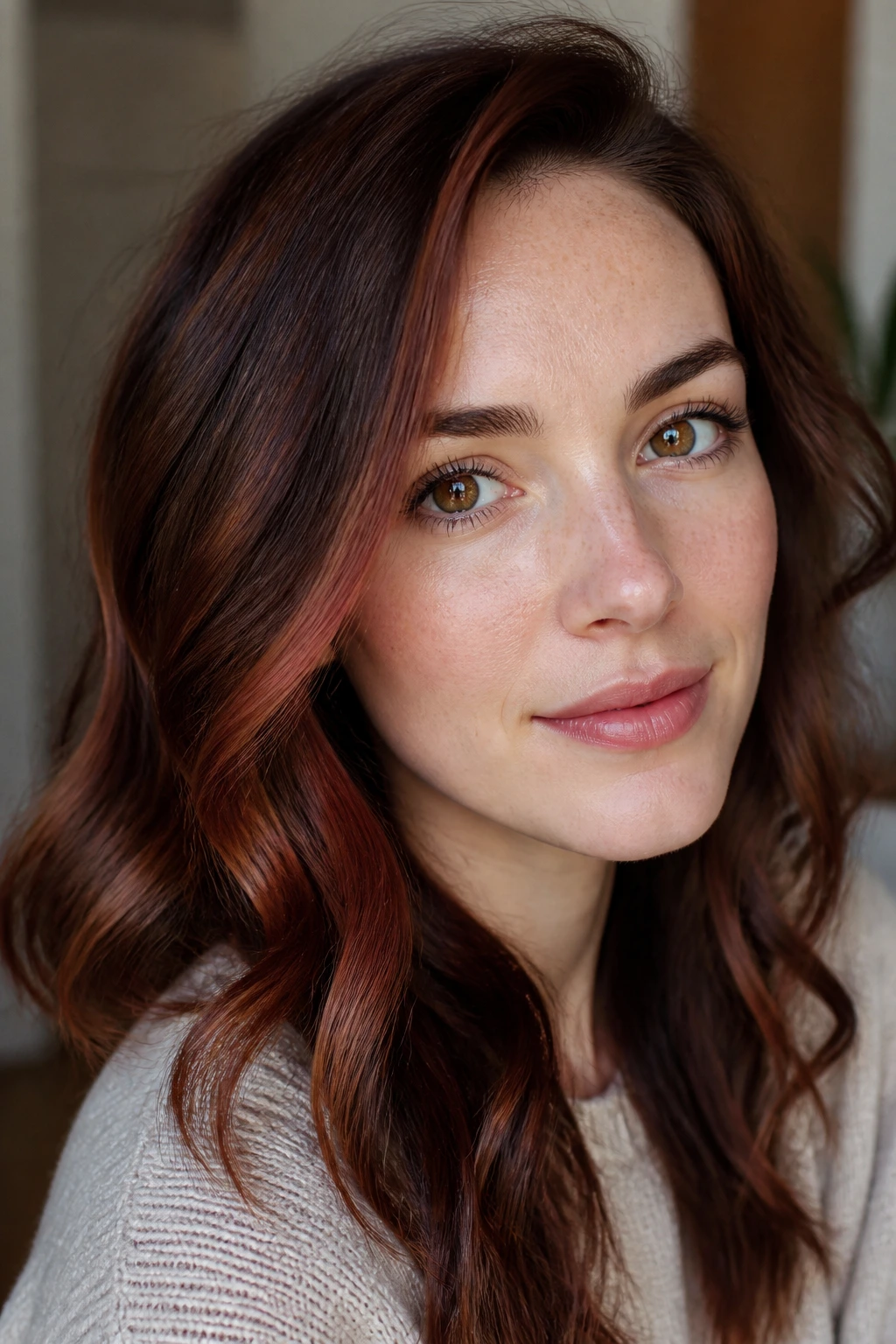
Mahogany works on fair skin because it sits in the middle of two worlds. Brown keeps it grounded. Red keeps it alive. That middle ground matters more than people think, especially on light complexions that can look washed out beside flat ash brown or overwhelmed by pure copper.
The shade also gives you control over temperature. A violet-heavy mahogany can cool down redness in the skin, while a chestnut-heavy version can warm a peach complexion without tipping into brass. That flexibility is why stylists reach for it when they want dimension rather than a single, solid color block.
Placement matters just as much as tone. Thin ribbons near the face brighten the skin. Deeper panels under the crown add shape. A rooted balayage makes the grow-out less fussy. Once you start thinking of mahogany as a placement tool, not just a color, the options open up fast.
Essential Tools for Clean Mahogany Placement

-
Tint brush and mixing bowl: These keep the color even, especially if you’re painting ribbons or lowlights by hand.
-
Foils or balayage board: Foils give cleaner saturation; a board helps with soft painted sections and feathered ends.
-
Sectioning clips: Hair this light shows mistakes fast, so clean parting saves time and keeps the panels from drifting.
-
Tail comb: Useful for slicing fine babylights, money pieces, and peekaboo panels without grabbing too much hair.
-
Color-safe shampoo and conditioner: Mahogany fades faster than neutral brown, so gentle cleansing matters.
-
Heat protectant: Flat irons and curling wands can pull the red-brown tone down if the hair is damaged and dry.
-
Shine serum or light oil: A small amount on the ends helps mahogany read glossy instead of dull.
-
Mirror with daylight access: Natural light shows whether the shade leans too orange, too red, or just right.
Smart Salon Notes and At-Home Color Shopping
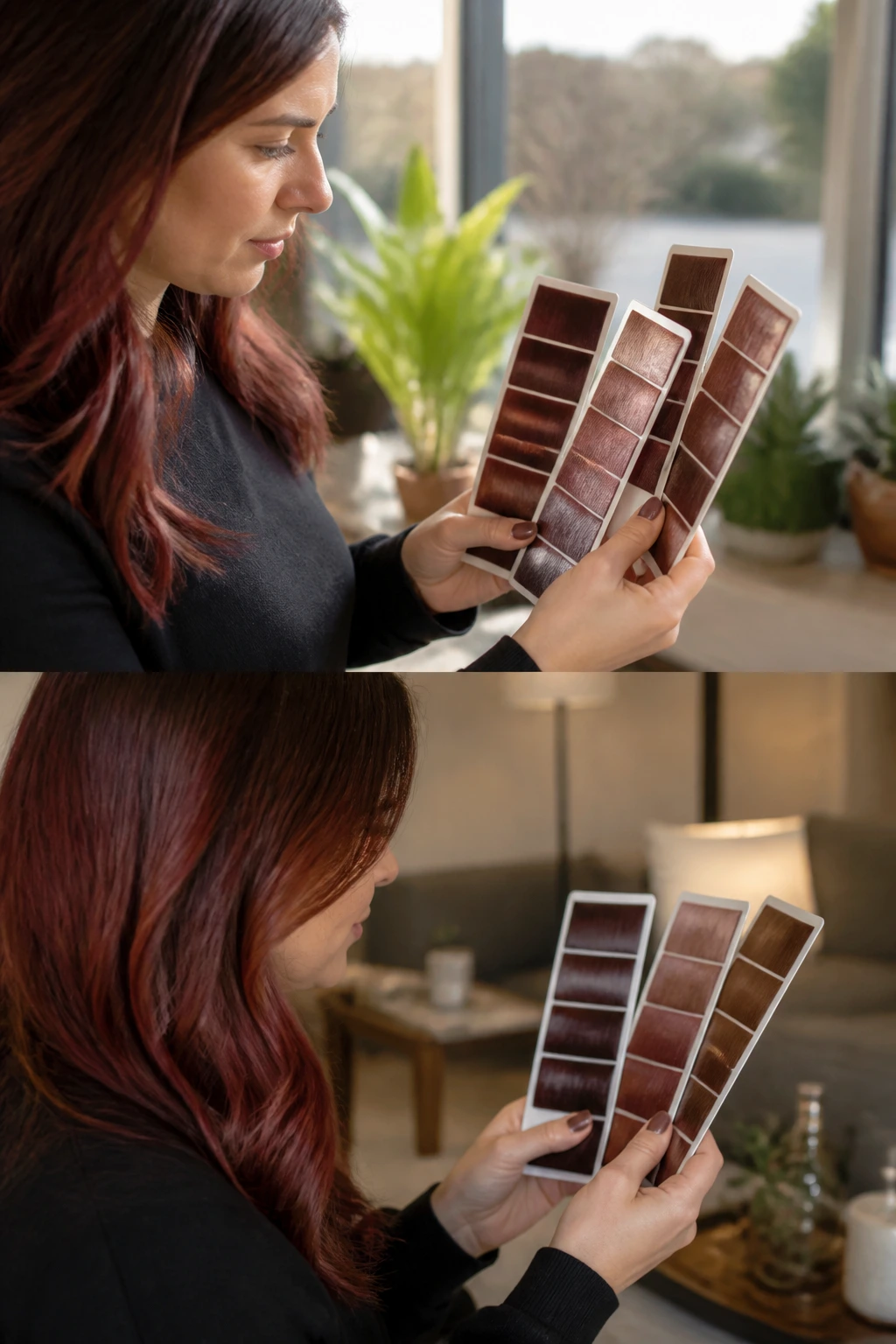
Bring photos, but bring the right photos. One image in daylight and one under indoor light tells a stylist far more than a perfect salon selfie with filters all over it. Mahogany can look wine-brown in one light and chestnut in another, and you want to know which version you actually like.
If you are coloring at home, look for formulas described as red-brown, violet-brown, or chestnut mahogany rather than bright auburn. The words matter. Auburn often leans lighter and more copper; mahogany usually stays darker and more brown. On fair skin, that difference can be the line between rich and brassy.
A demi-permanent formula is often the safer route if your base is already light enough to show the tone. It deposits color without a big commitment and tends to fade more softly over 4 to 8 weeks. Permanent color can be useful for gray coverage or deeper bases, but it demands more maintenance and more caution.
If your skin is pink, choose the cooler bottle. If your skin is peach, lean warmer. And if you are unsure, stay a shade deeper than you think you need; mahogany looks cleaner when it is rich enough to read brown first.
How to Wear Mahogany Brown with Different Cuts
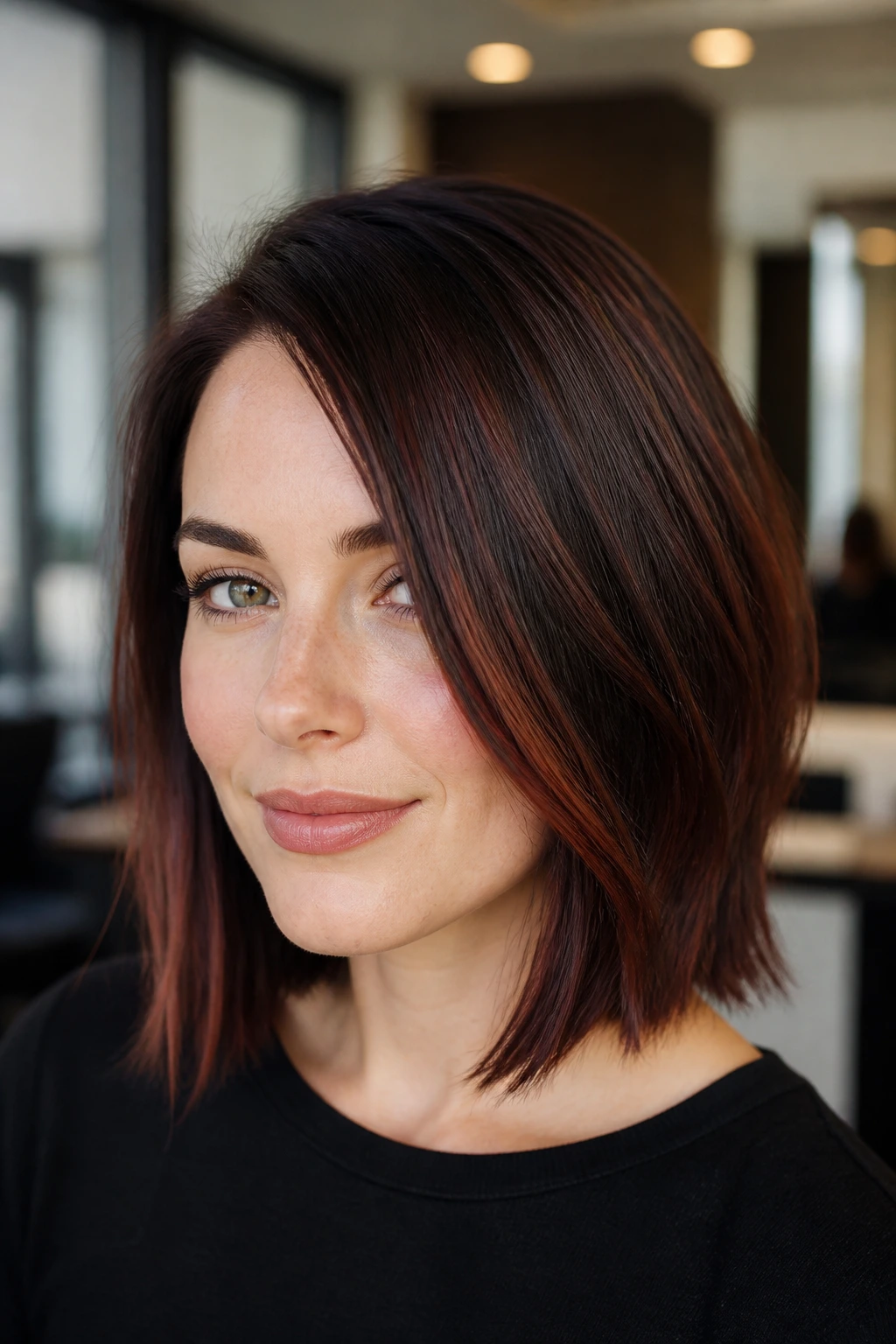
Lobs and bobs: Keep the mahogany lower and closer to the jawline so the color frames the face instead of sitting in one big block near the root.
Long layers: Ribbon placement works best here. Let the color bend through the mid-lengths so the hair moves instead of hanging like a curtain.
Curls and waves: Paint the outer curves of the curl pattern. That’s where the highlight catches and where fair skin gets the most soft contrast.
Pixies and short crops: Keep the top slightly deeper and let the fringe carry a few brighter mahogany pieces. Short hair needs a light hand.
Curtain bangs: Use a soft red-violet edge near the front and keep the rest calmer. The fringe should frame, not dominate.
Additional Tips and Tone Boosters
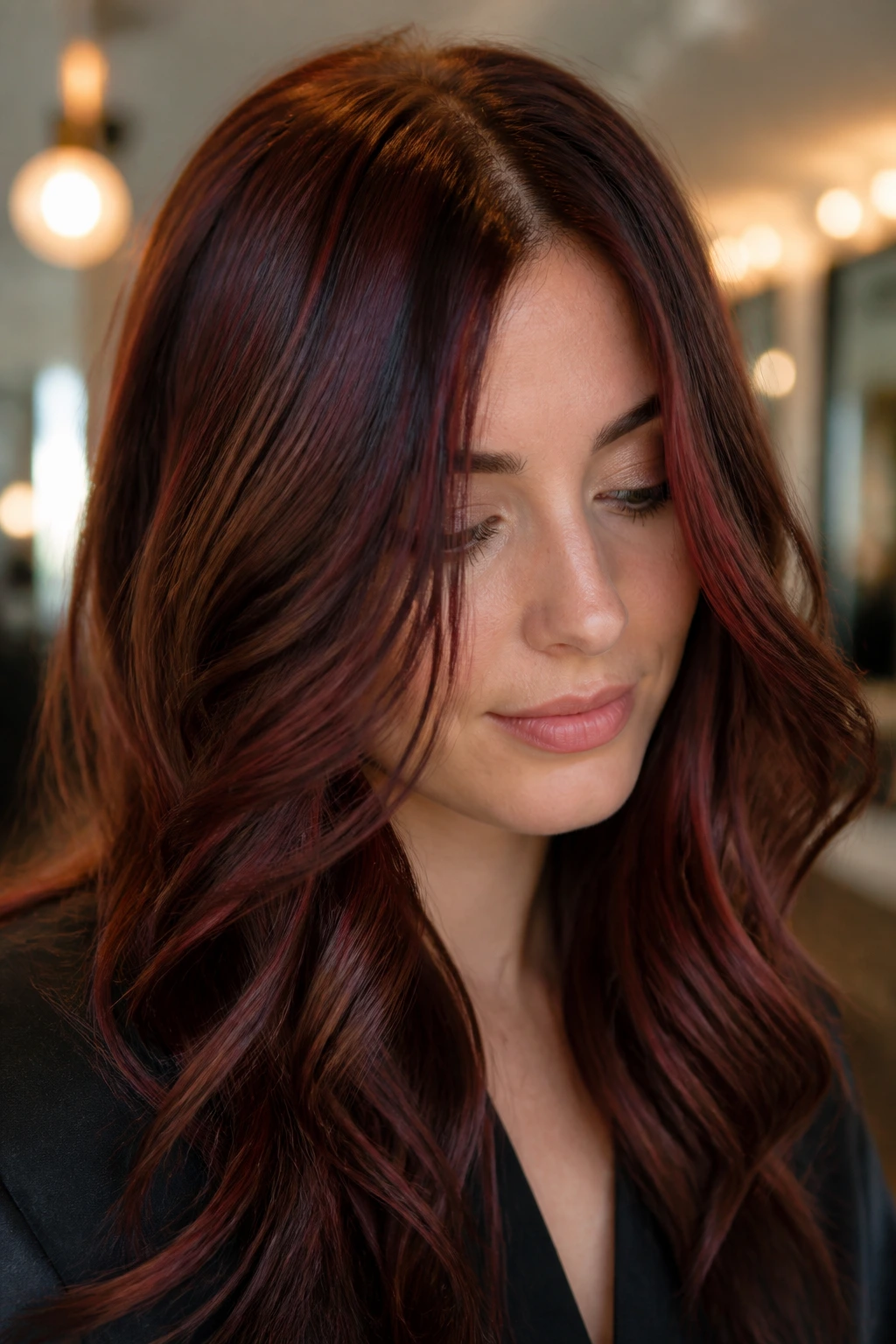
Color Boost: A clear gloss every 4 to 6 weeks keeps mahogany from drying out into a flat brown. If the red edge starts fading first, that gloss gives it back without another full color service.
Customization: If you wear cooler clothes and silver jewelry, ask for violet-mahogany. If you live in warm neutrals and gold tones, chestnut-mahogany will feel more natural.
Texture Trick: Soft waves make the red-brown swing in and out of view. Straight hair shows the line of the highlight. Neither is better, but they read differently.
Make-It-Yours: If you want less maintenance, keep the root soft and the color lower. If you want more drama, concentrate the mahogany around the face and through the underlayer.
Maintenance, Regrowth, and Gloss Timing
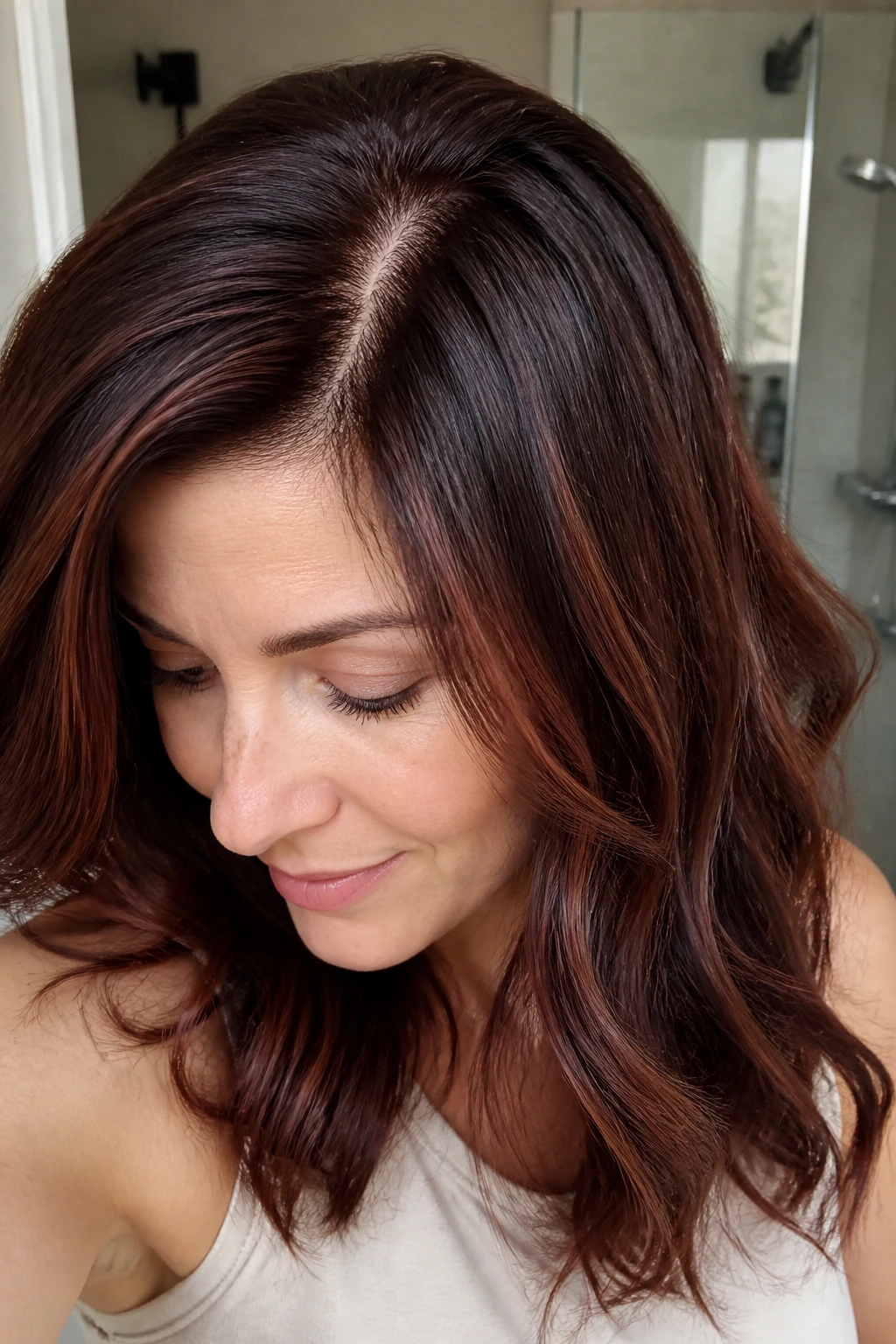
Mahogany fades more politely than bright copper, but it still needs care. Red pigments usually loosen faster than brown pigments, so a color-safe shampoo and cooler water help more than people expect. Wash 2 to 3 times a week if you can. If you wash daily, the red-brown will soften faster and you’ll need refreshes sooner.
A gloss or toner refresh every 4 to 6 weeks keeps the tone from drifting too orange or too dull. Root retouch timing depends on placement. Babylights and balayage can go 8 to 12 weeks between major appointments. Money pieces and chunky front highlights may need attention a little sooner because they show regrowth faster around the face.
Heat styling matters, too. Flat irons above high heat can pull color dry and lifeless. If you use a wand or iron often, keep the temperature moderate and finish with a light serum. And if you swim, rinse the hair before and after. Chlorine can tug red tones off faster than you’d like. Annoying? Yes. Real? Also yes.
Variations and Adaptations to Try
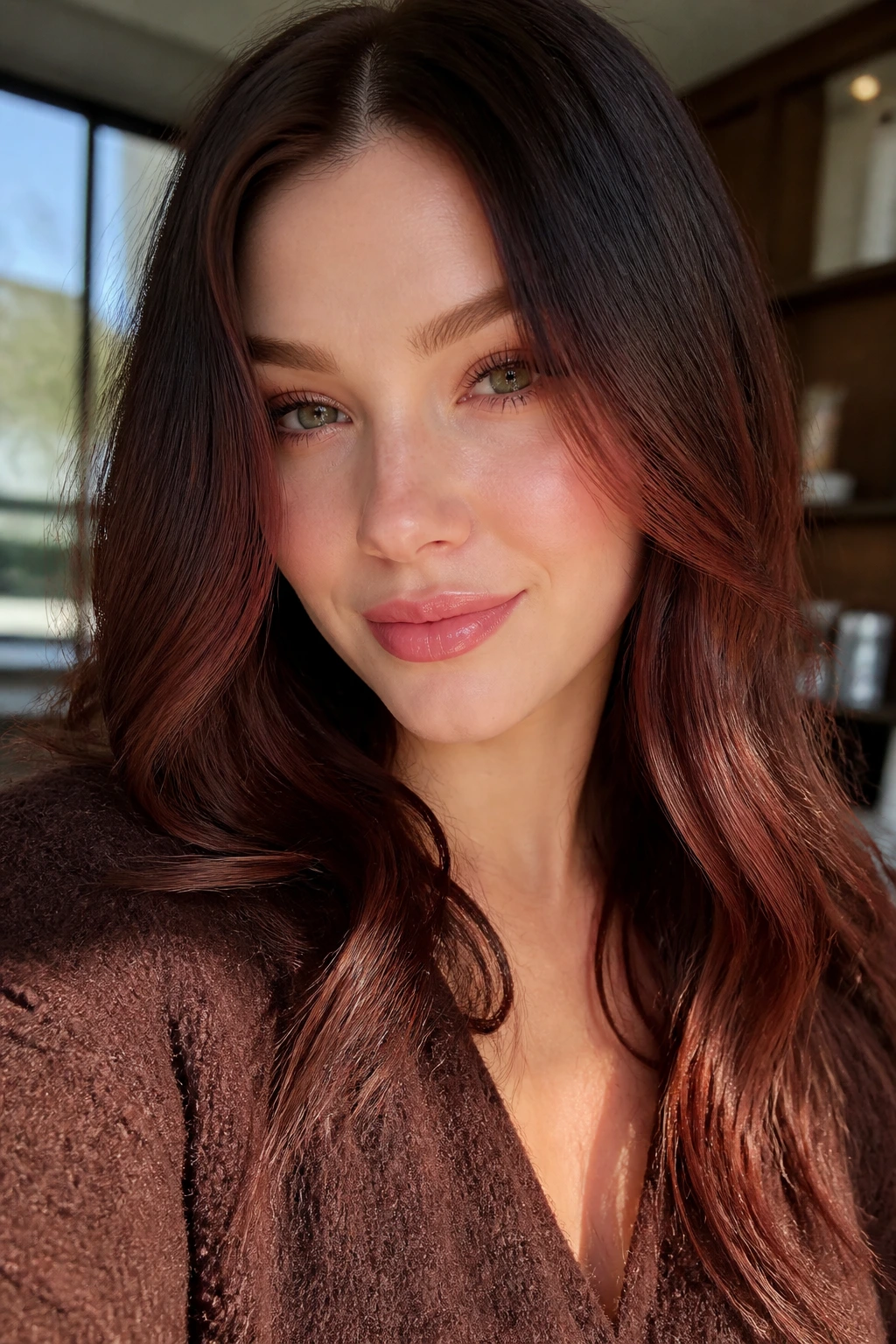
Rosy Mahogany Melt: This version adds a soft rose-brown note to the mahogany, which suits very fair skin with cool undertones. It feels a little softer than wine-brown and a little fresher than chestnut.
Smoky Espresso Ribbons: If you want less red, deepen the base and keep the mahogany faint. The final look is closer to brunette with a warm echo, which works well for people who want subtle movement.
Soft Copper-Mahogany Frame: This one warms the front pieces more than the rest of the head. Use it if your skin runs peach and you want the face-framing pieces to glow in daylight.
Rooted Brunette Melt: Keep the crown darker and let the mahogany appear only from mid-lengths down. It is a smart choice when you want longer wear and less obvious regrowth.
Editorial Paneling: Chunkier sections placed with clean partings create a stronger, fashion-forward look. It suits straight hair and blunt cuts better than soft layered styles.
Common Mistakes to Avoid
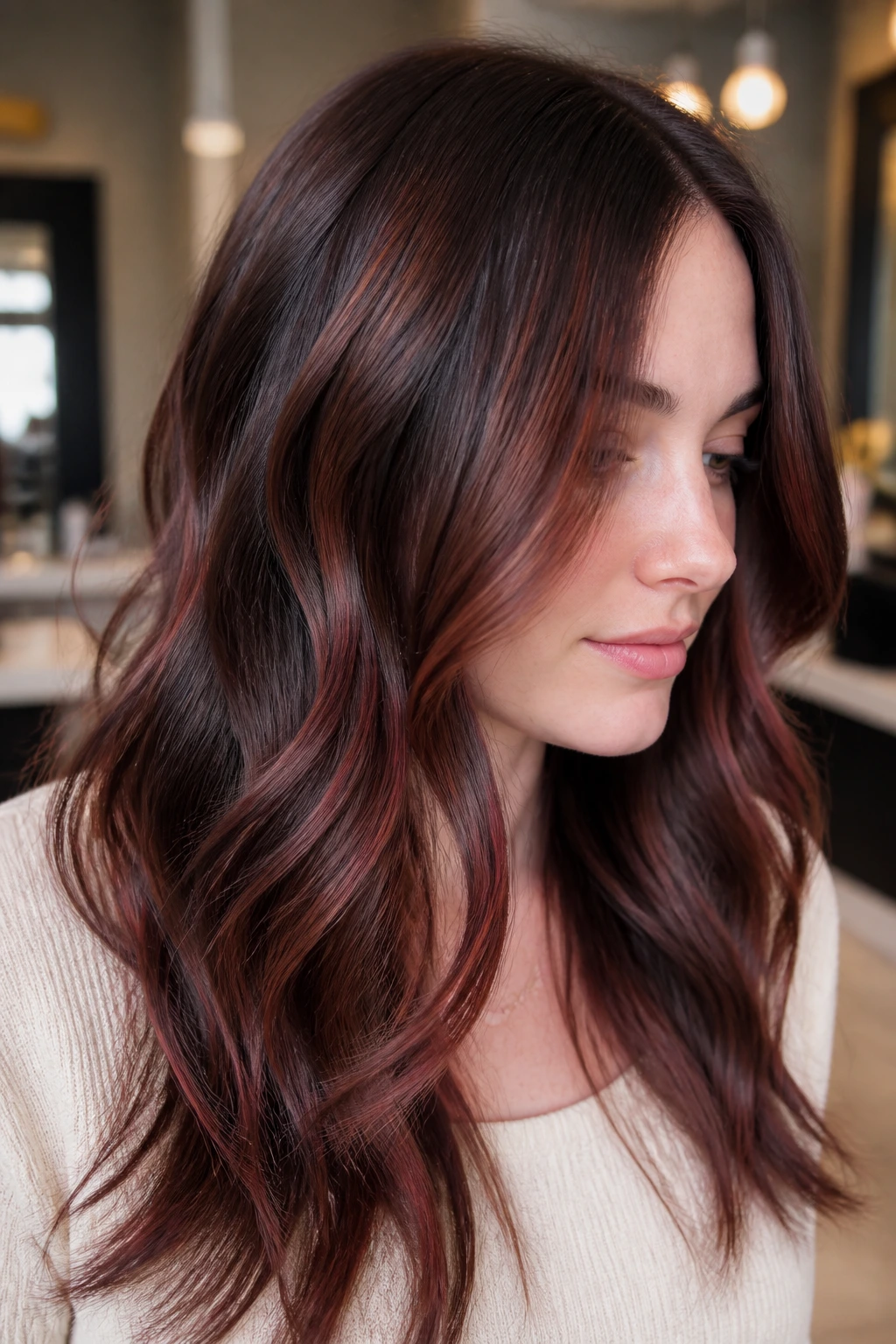
-
Choosing a mahogany that is too orange: On fair skin, orange reads fast and can make the complexion look blotchy. Ask for brown-first, red-second.
-
Putting the brightest pieces too close to the root: That creates a hard band around the scalp, which looks harsh on pale skin. Soften the root and brighten the mid-lengths instead.
-
Skipping the gloss: Fresh mahogany can look rich for a few weeks, then drift dull. A gloss keeps the color smooth and helps the red-brown stay balanced.
-
Over-lightening the base first: If the hair is lifted too high before the mahogany is added, the result can go flat or coppery. A controlled lift is safer than chasing blonde.
-
Ignoring undertone: Pink skin and peach skin do not want the same mahogany. One needs cooler red-violet notes; the other wants chestnut warmth.
-
Using clarifying shampoo too often: It strips tone faster than regular shampoo and makes the color fade patchy. Save it for buildup, not every wash.
Questions People Actually Ask About Mahogany Brown Highlights
Does mahogany brown work on very fair skin?
Yes, but placement matters. Thin ribbons, face-framing pieces, and soft balayage usually look better than all-over dark panels because they keep the skin bright.
Is mahogany better than auburn for pale complexions?
Usually, yes, if you want the color to stay brown-first. Auburn often leans brighter and copperier, while mahogany keeps more depth and looks softer beside fair skin.
Will mahogany highlights turn my hair red?
They can if the formula is too warm or if your hair is very porous. A cool red-brown or violet-brown formula keeps the result closer to brunette.
Can I do this on blonde hair?
You can, but the tone may look more pronounced than you expect. On very light blonde, even a soft mahogany glaze shows fast, so many colorists start with a demi-permanent formula.
How often do I need a touch-up?
Babylights and balayage can stretch to 8 to 12 weeks. Front pieces and high-contrast panels usually need a sooner refresh because they show regrowth faster.
What if the color fades too warm?
A cool-toned gloss can pull it back into brown territory. Use a color-depositing conditioner made for red-brown shades if you want to stretch the time between salon visits.
Do mahogany highlights cover gray hair well?
They can blur gray strands nicely, but they do not always cover them fully if the highlights are very fine. For stronger gray coverage, you may need a permanent base color plus mahogany accent pieces.
What’s the easiest version to maintain?
A rooted balayage or a sheer gloss is usually the least demanding. Both grow out softly and do not leave you with a sharp line around the hairline.
Soft Contrast That Still Feels Like You
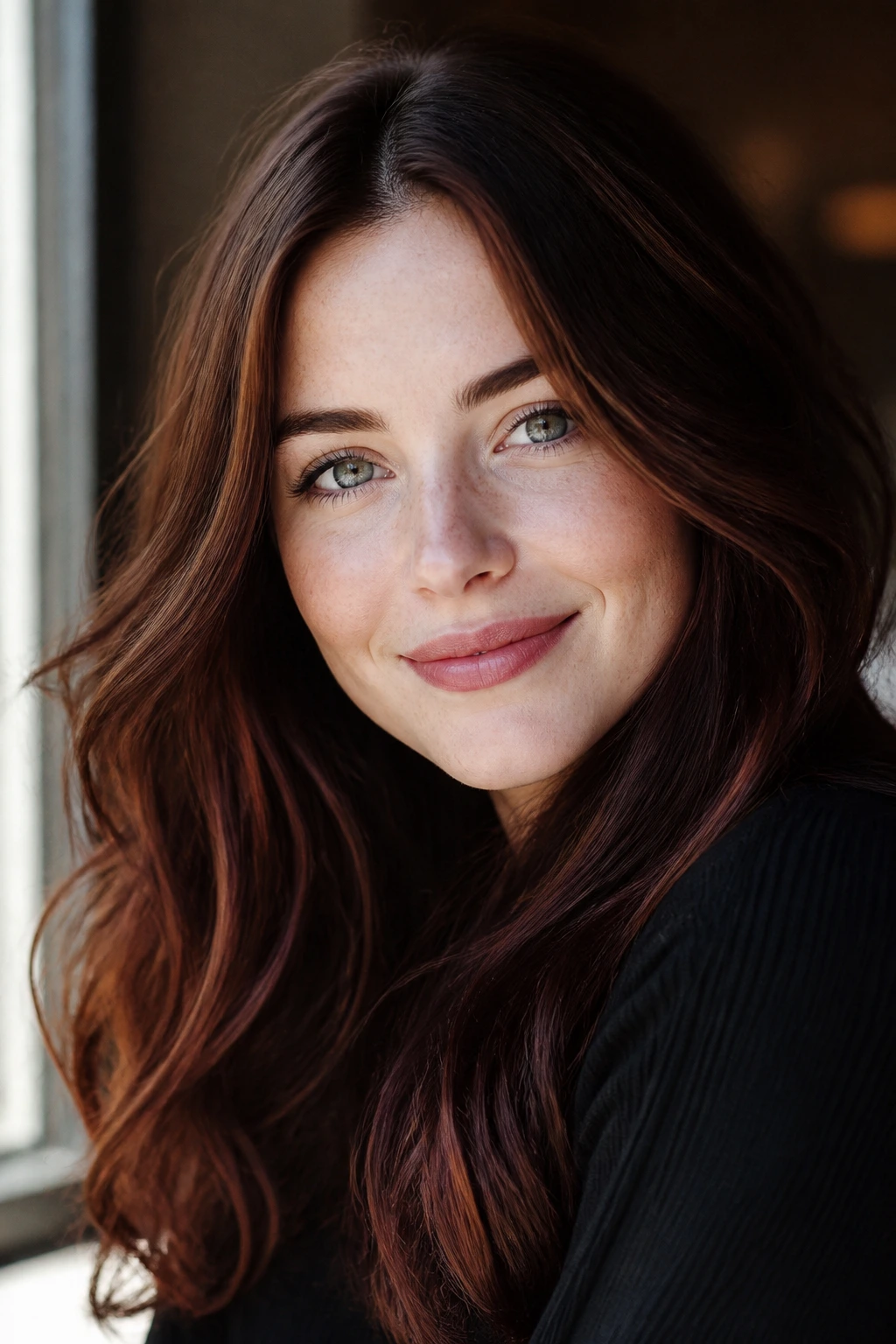
Mahogany brown highlights on fair skin work because they respect the face. They add depth without swallowing the complexion, and they can be tuned cooler, warmer, softer, or bolder depending on where the color sits and how much of it you show.
That is the part people underestimate. The shade itself matters, sure. But the best version is the one that lets your skin keep its brightness while the hair does the framing.
If you take one thing from the whole lineup, make it this: ask for the brown you want first, then the red you can live with. That small decision usually separates a rich mahogany result from a noisy one, and it is the difference you notice every time you pass a window.