



The smartest blonde moment on a brunette head is usually not all-over blonde. Partial highlights do the quieter work: they brighten the hairline, bend around the part, and leave enough depth underneath that the color still looks like hair, not a block of paint.
That balance matters more than people think. A brunette base already gives you contrast, so a few caramel foils or beige ribbons can make waves read thicker and shinier; spread that same lightness across the whole head and the result gets flatter, drier, and more expensive to maintain. The good versions look like daylight landed in the right places. The bad versions look like a zebra took over the crown.
If you’ve ever sat in a salon chair wondering whether to go warm, cool, chunky, or soft, the answer is usually hiding in your own base color and hair texture. Dark brown hair can hold honey, caramel, mushroom, champagne, and ash in different ways; the trick is knowing where the light belongs and how much of it you actually want to babysit every six weeks. The styles below stay focused on that sweet spot.
Why Partial Highlights Feel Softer on Brunettes
-
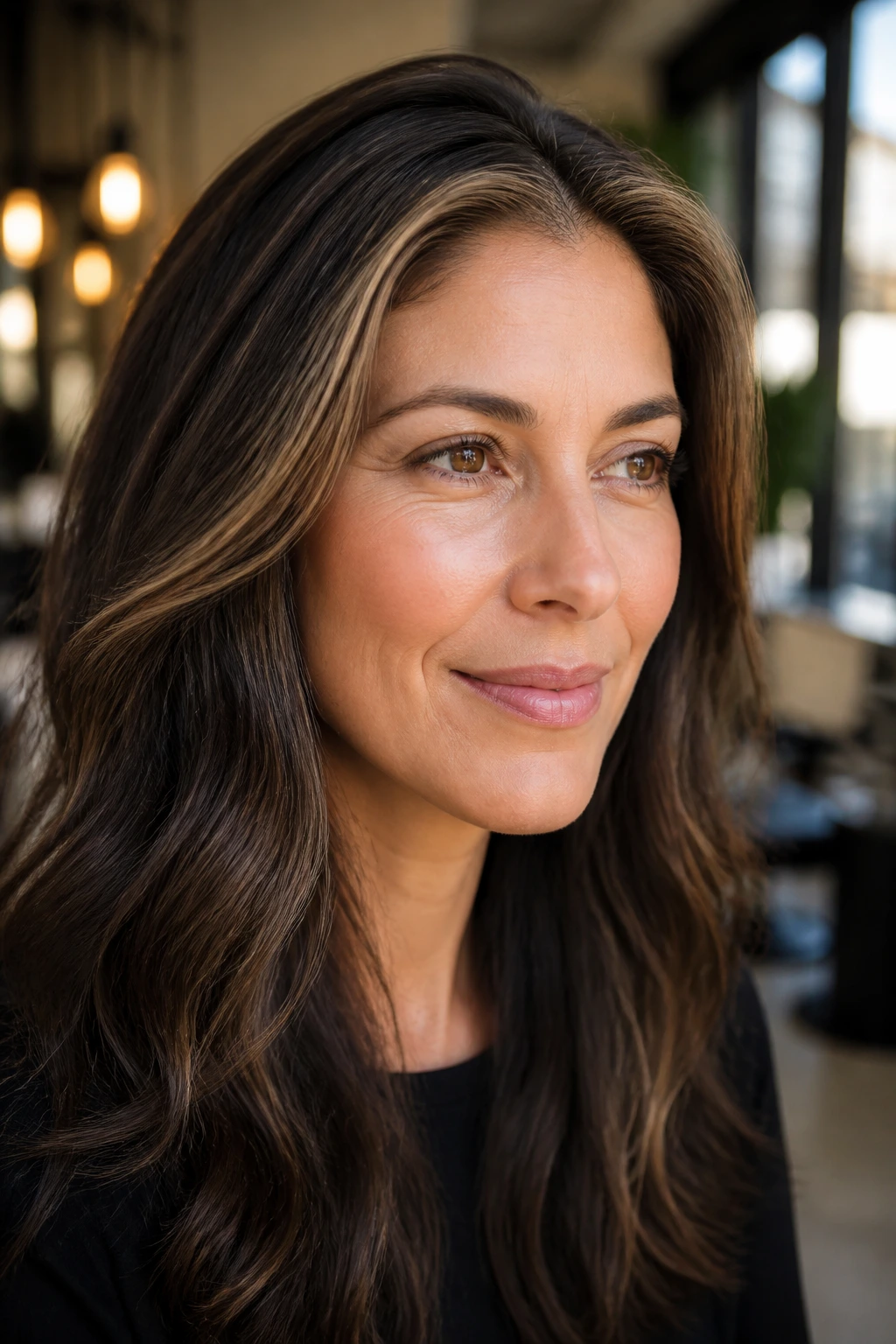
The grow-out is gentler: Leaving some brunette underneath means a 1/2-inch root doesn’t shout at you the way full blonde often does.
-
The shine reads better: A few lighter pieces against brown hair make the darker base look glossier, especially when the ends still have some depth.
-
The placement can do the contouring: Foils around the hairline, part, and crown can make the face look brighter without pushing the whole head lighter.
-
The color stays more believable: On brunettes, a mix of blonde and brown usually looks richer than a single flat tone from root to tip.
-
The upkeep is less punishing: Fewer lightened sections usually mean less toner fading, less brass showing through, and fewer sessions that leave the ends feeling fried.
Warm, Cool, and Beige: Picking the Right Tone Family
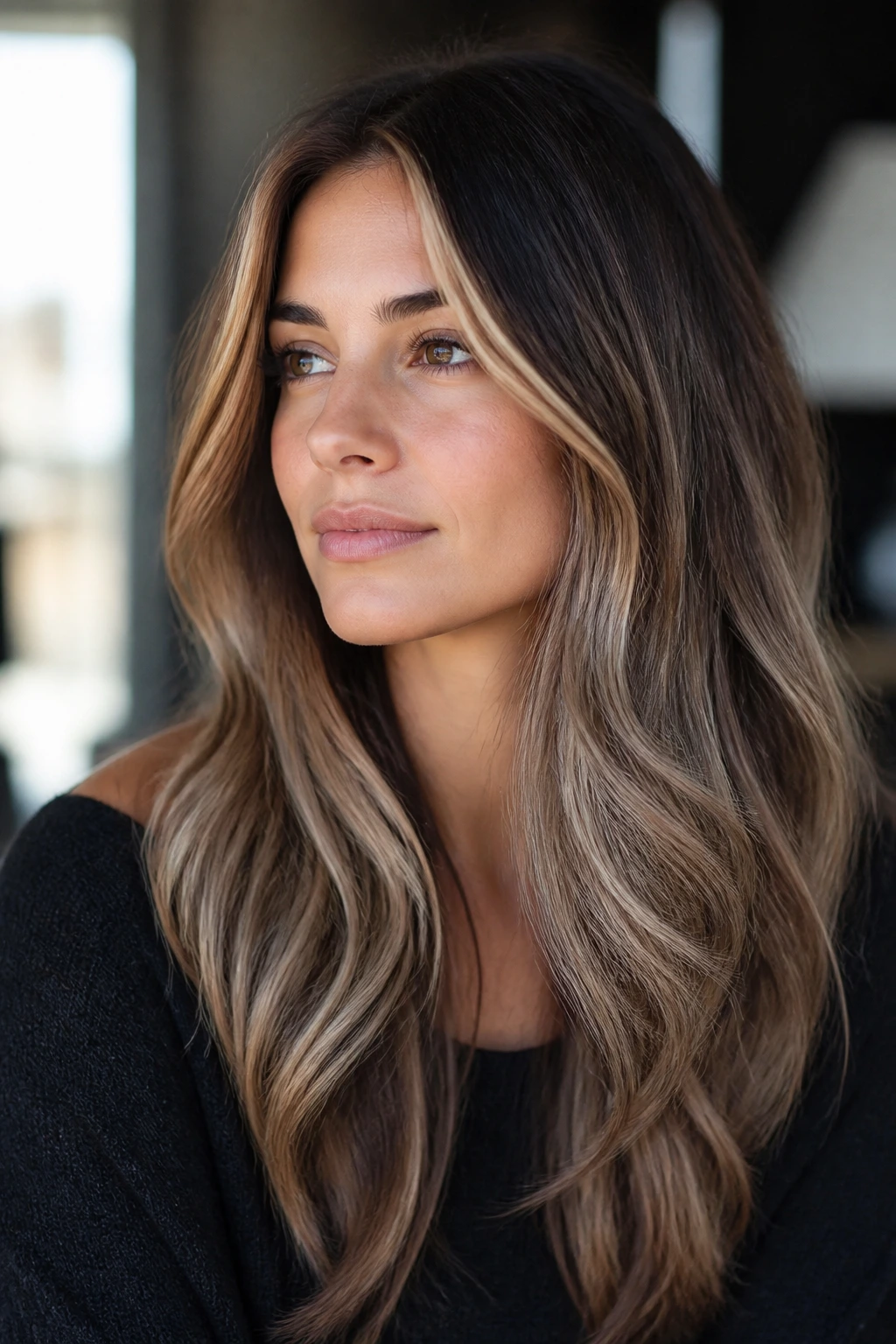
Brunette highlights fail when the tone fights the base. A deep espresso brown can hold caramel and honey with almost no effort, but ash blonde on the wrong canvas can go muddy fast if the lift isn’t clean enough. The better question is not “What’s trendy?” It’s “What tone looks like it belongs beside my natural brown?”
Warm tones — caramel, honey, toffee, apricot, golden beige — are the easiest to wear on medium and dark brunettes. They brighten the hair without creating a hard line, and they tend to flatter olive, peach, and golden skin tones because they echo the warmth already in the complexion.
Cool tones — mushroom brown, ash beige, smoky champagne — work best when the brunette base already leans neutral or cool. If your hair pulls red in sunlight, your stylist may need to neutralize some warmth before those cooler ribbons sit cleanly.
Beige tones sit in the middle, and that’s why I reach for them so often. Beige keeps blonde from looking too yellow and keeps brunette from looking too flat. If you want dimension that doesn’t feel shouty, beige is the safe middle lane.
1. Caramel Money Piece with Smoky Brunette Ends
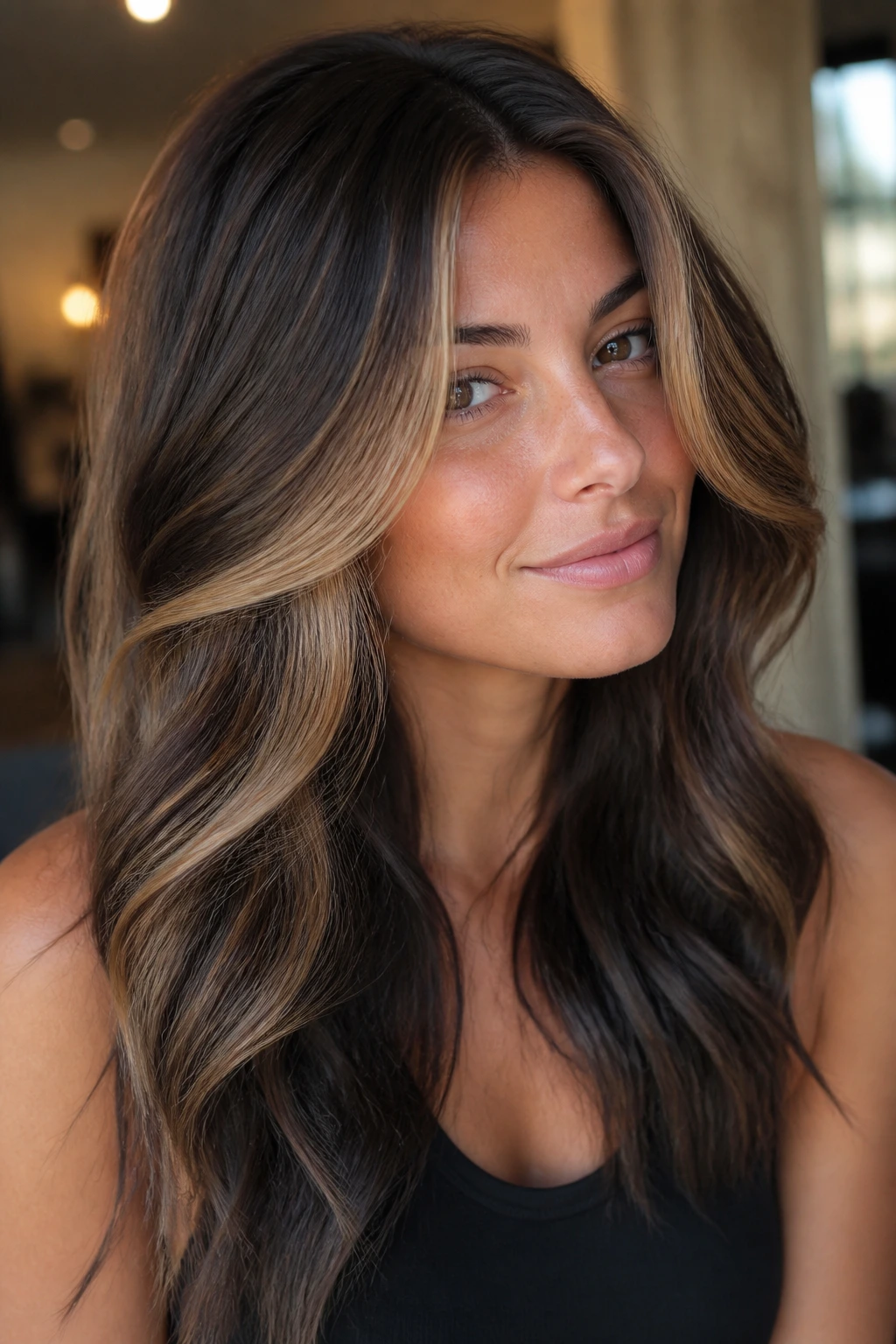
This one earns its keep fast. The front two foils are lighter and warmer, usually sitting a level or two above the rest of the head, while the ends stay smoky and grounded so the whole look doesn’t tip into brass.
Why It Works
The money piece does the heavy lifting around the face, which is where people actually notice color first. On a brunette base, caramel feels bright without turning the entire head into maintenance. The smoky ends keep the overall read expensive instead of stripey.
If your hair is medium brown or deeper, this is a smart first step into blonde-brown territory. It gives you visible brightness with only a small amount of lightening.
What to Ask For
- Two face-framing foils placed just behind the hairline
- Caramel lift through the front pieces
- A soft root shadow to blur the start of the blonde
- Smoky beige or neutral brown toner on the ends
Best for: straight hair that needs shape around the face, and wavy cuts that fall flat without a brighter front.
2. Honey Ribbon Highlights Through Long Layers
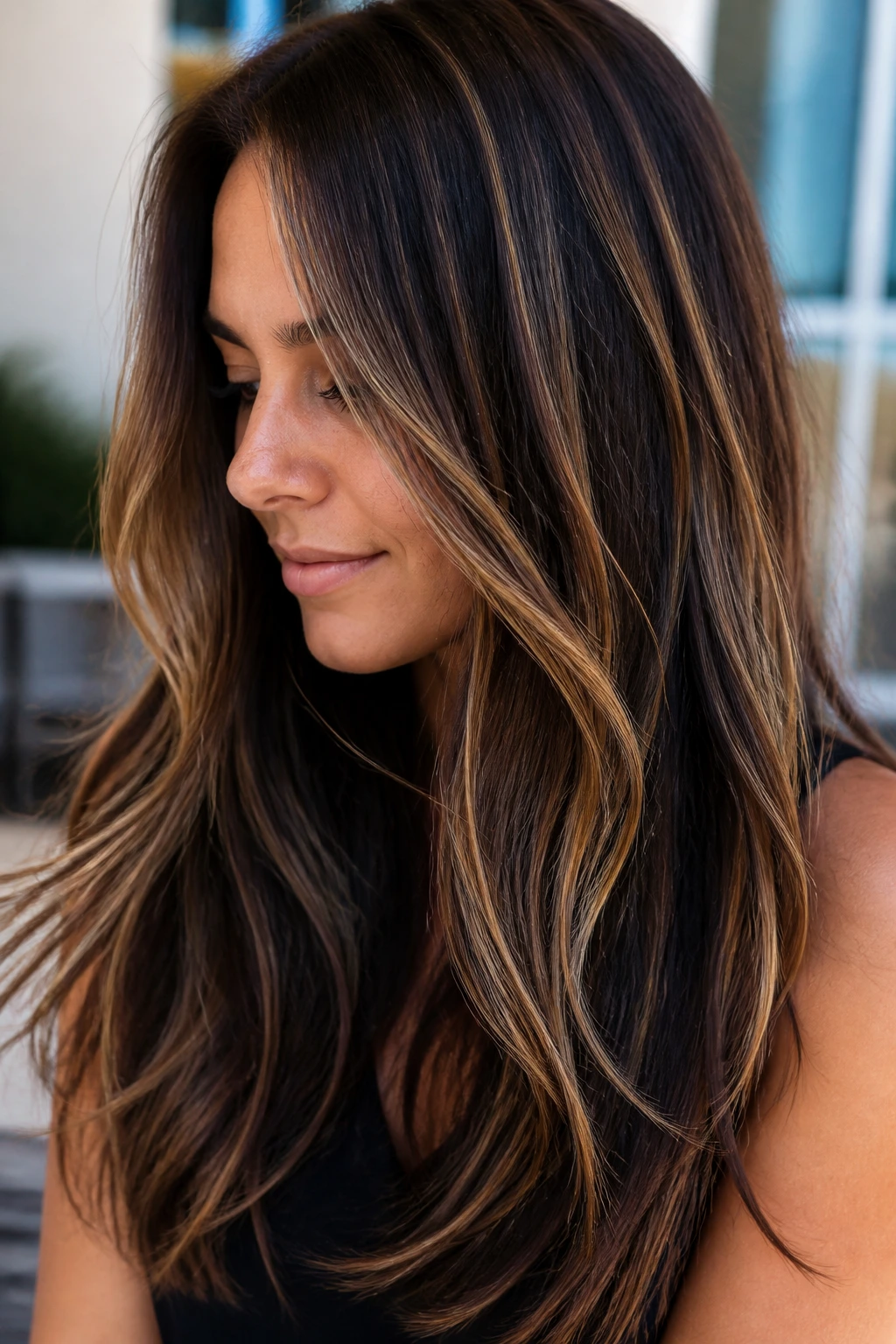
Honey ribbons look best when they follow the cut, not fight it. On long brunette layers, the color moves in thin vertical panels that catch light as the hair swings, which makes the whole style feel lighter without stripping the depth from underneath.
The trick here is spacing. Too many foils and the honey turns loud; too few and it disappears. I like this on chestnut and dark chocolate bases because the warm blonde pieces sit naturally against the brown and keep the ends from looking heavy.
This is the style I’d point to if someone wants softness more than drama. It’s sunshine, not spotlight.
3. Mushroom Brown Face Frame for Cool Brunettes
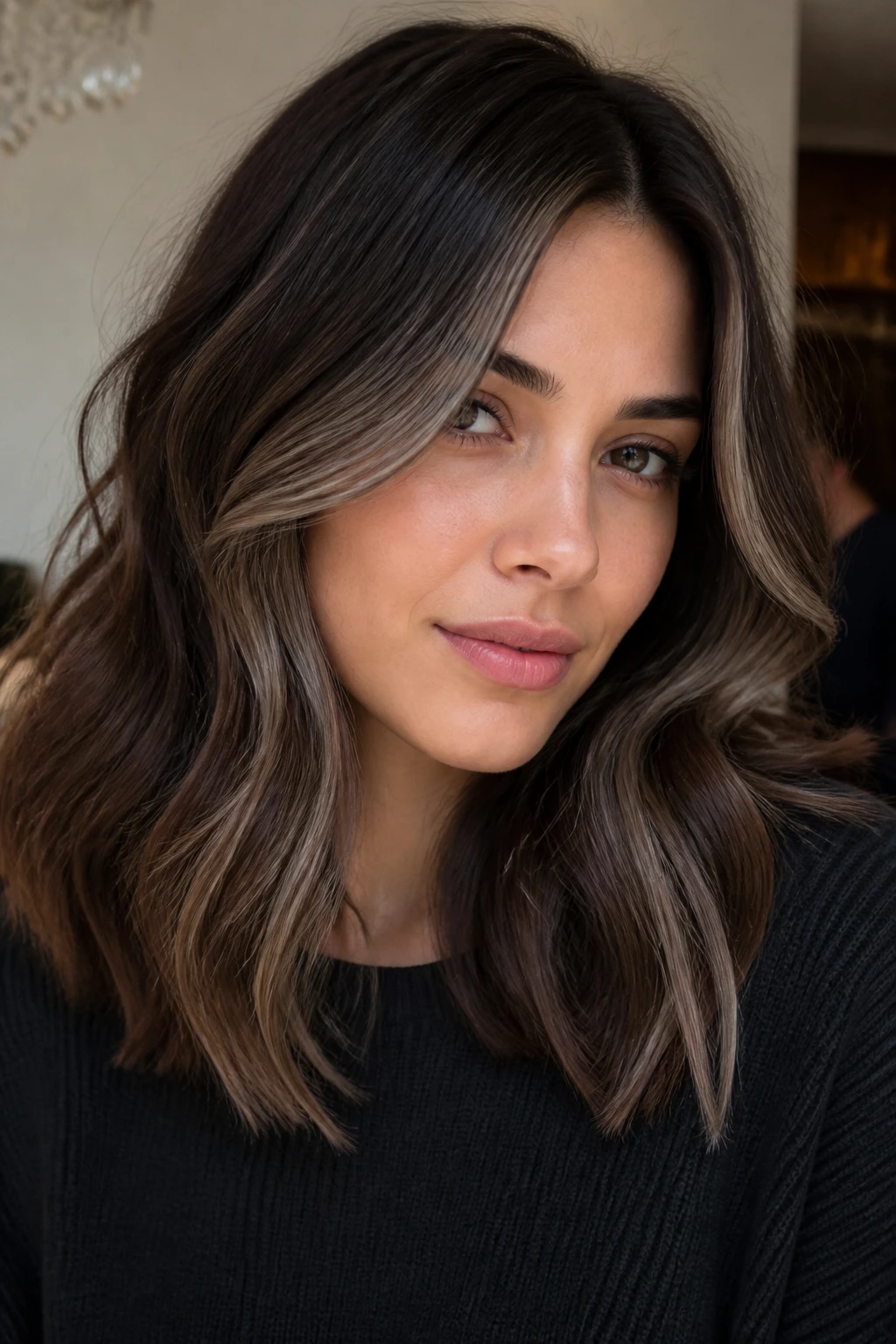
Mushroom brown is the quiet one in the room, and that’s exactly why it works. The face frame stays cool and creamy, with a beige-ash finish that doesn’t scream blonde from across the salon.
The brunette base stays visible, which matters if your hair has a natural cool cast or you hate orange tones. On shoulder-length hair, this placement looks especially good because the front pieces skim the cheekbones and soften the jaw without obvious striping.
What Makes It Different
Unlike warmer caramel pieces, mushroom tones don’t depend on golden skin or sunlit styling. They sit closer to taupe, which means they can make dark brown hair look polished with almost no warmth at all.
If you wear a lot of black, gray, navy, or denim, this is one of the easiest blends to live with.
4. Beige Babylights at the Crown
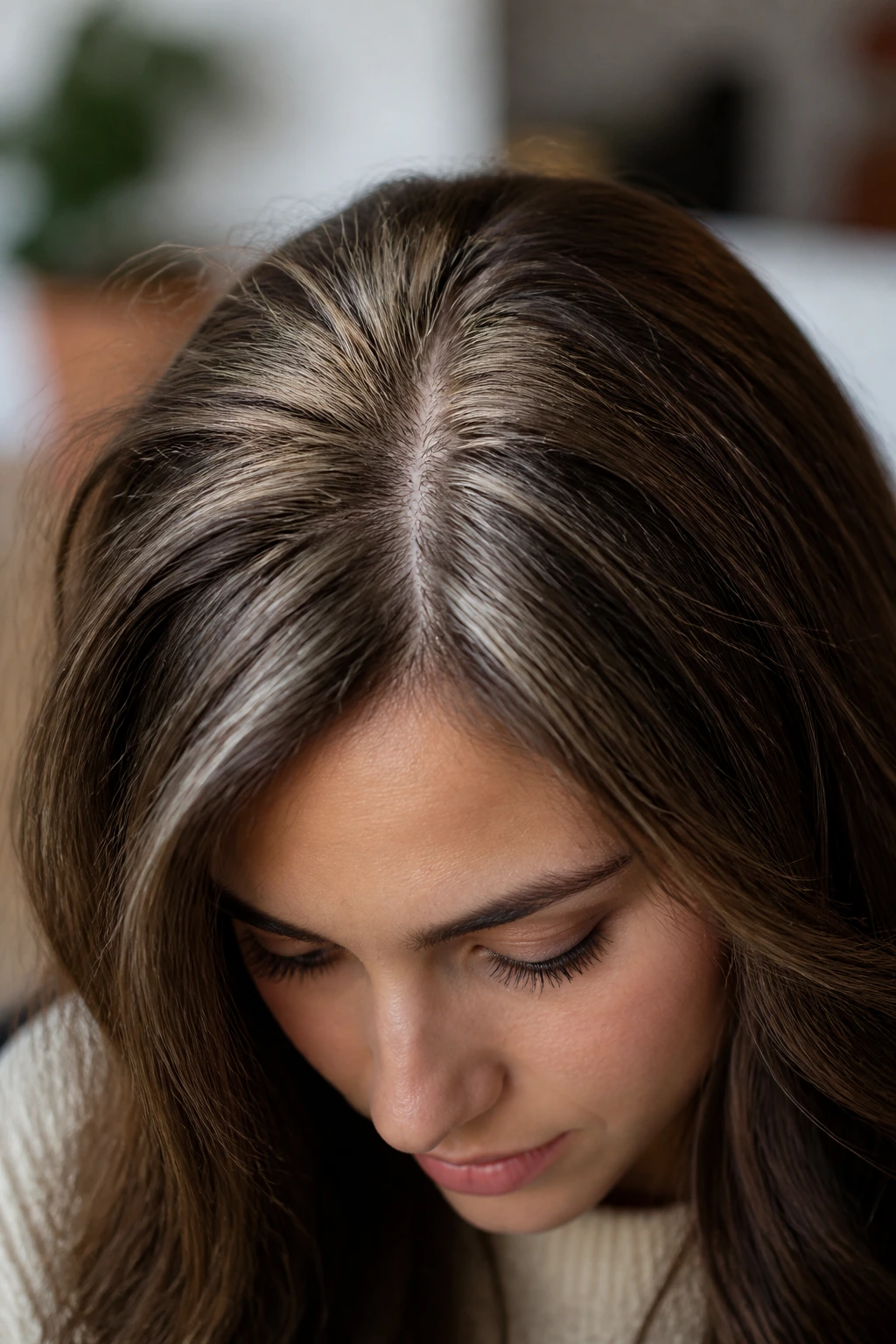
Babylights at the crown are tiny, and that’s the point. They create a soft dusting of brightness right where the part breaks and the light hits most often, which makes the top of the hair look fuller and less dense.
On brunettes, this is one of the best ways to get lift without obvious foils. The pieces are so fine that the brunette base still does the talking, but the crown stops looking like one solid block.
A lot of people ask for dimension and then place all the light in the lower half. That’s backwards. If the top stays flat, the style still reads dark, no matter how blonde the ends are.
5. Toffee Part-Line Foils on Dark Hair
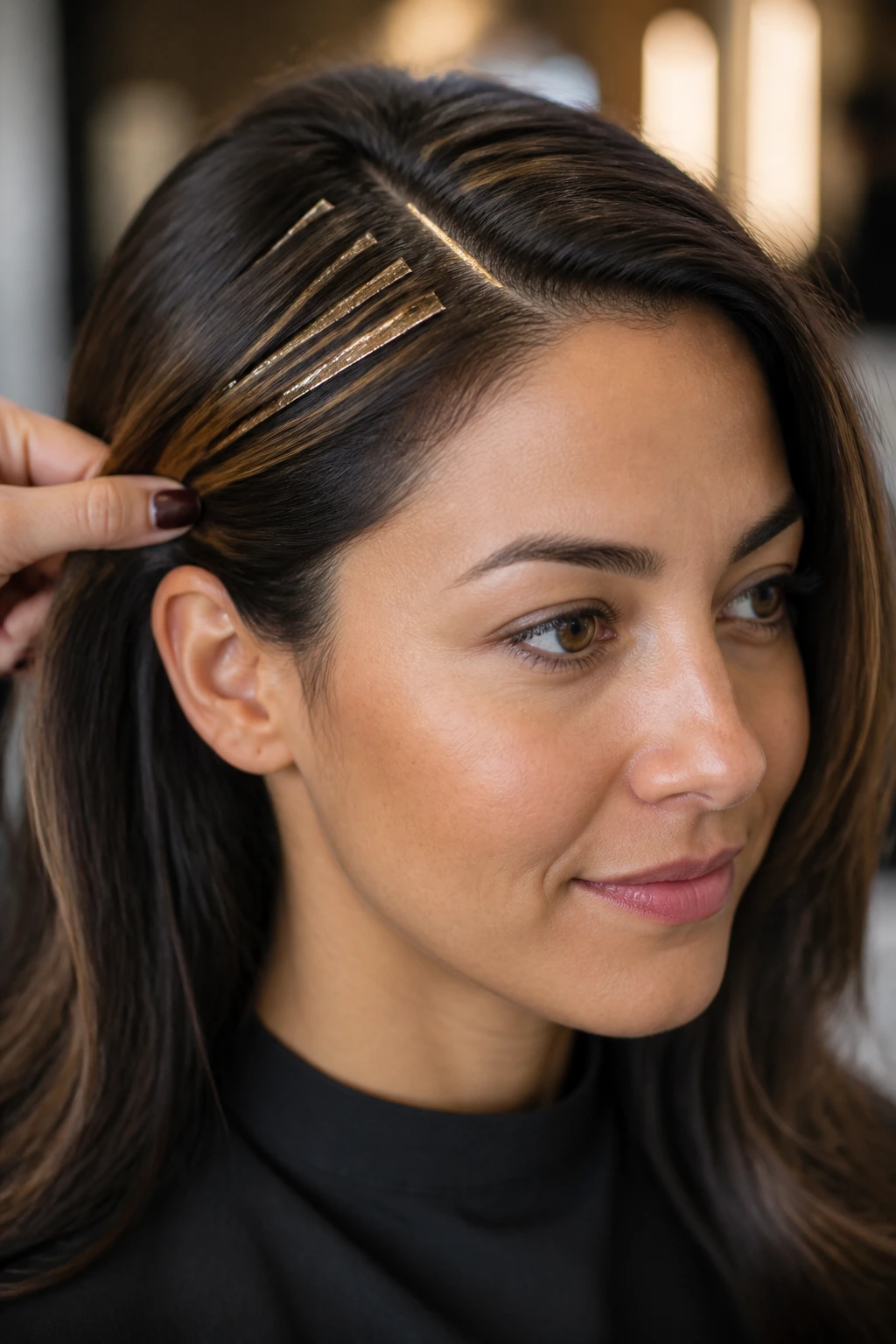
Part-line foils are a favorite when someone wants a visible change without turning the whole head into a project. The lightest pieces sit exactly where the part opens, so they peek through each time you move or tuck your hair behind an ear.
Toffee works here because it carries enough warmth to show up on dark brown hair without crossing into orange. Keep the foils narrow and the lift controlled; broad panels around the part can look chunky fast.
How to wear it: air-dried bends, a quick blowout, or loose waves with a center part. Pin-straight hair makes the placement more obvious, which can be a good thing if you like contrast.
6. Bronde Contour Highlights Around the Hairline
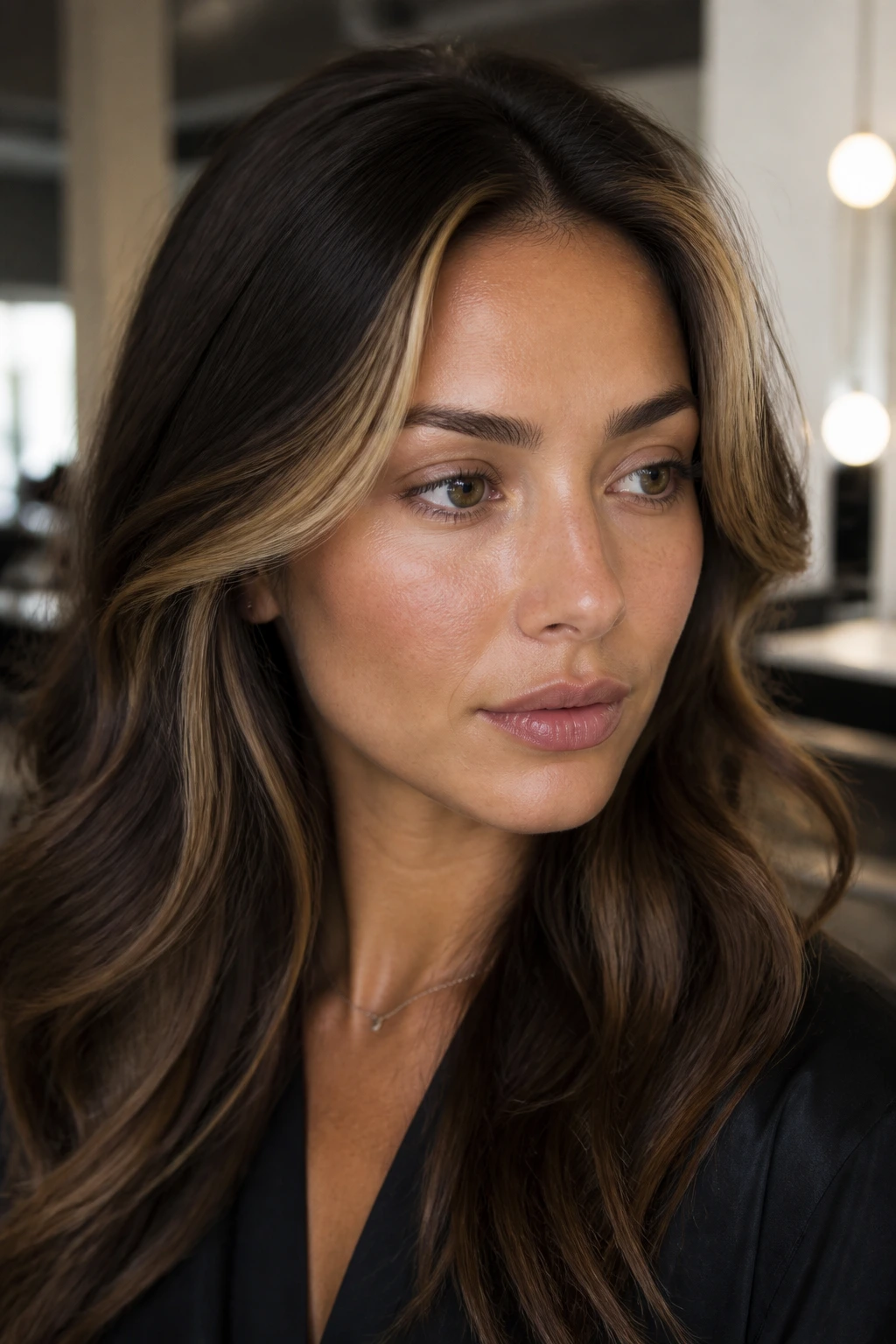
Bronde is the bridge color that saves a lot of brunettes from overcommitting. It blends brown and blonde so the transition feels gradual, and around the hairline it gives a face-softening frame that still looks rooted in the natural base.
I like this when the goal is dimension rather than a blonding overhaul. The contour is usually placed in a curved pattern that follows the temples and cheekbones, then faded back into darker sections near the ears and nape.
The result is practical, too. Grow-out stays calm because the lighter sections are concentrated where you see them most, not spread across every inch of hair.
7. Sandy Peekaboo Panels Under Waves
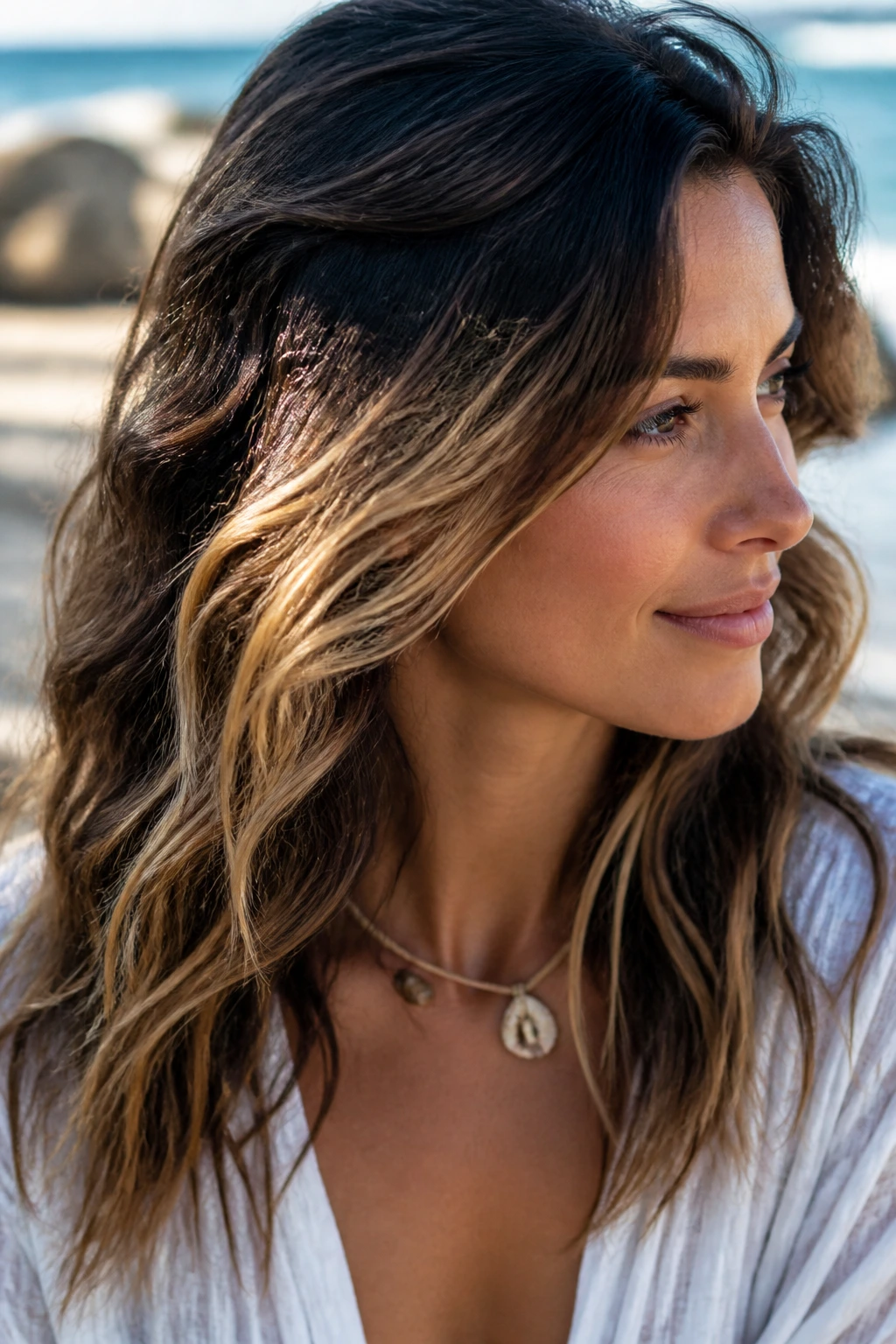
Peekaboo panels are for people who like a little surprise. The sandier blonde lives underneath the top layer, so the brightness shows through when the hair moves, bends, or gets tossed into a half-up style.
This works especially well on wavy brunettes because the texture reveals and hides the color in rhythm. The brunette top layer keeps things grounded; the sandy underlayer keeps the whole cut from feeling heavy.
If you’ve got fine hair, this is one of my favorite tricks. Lighter hidden panels can make the hair look denser in motion, not thinner, because the contrast creates visual depth.
8. Icy Beige Panels for Deep Brunettes
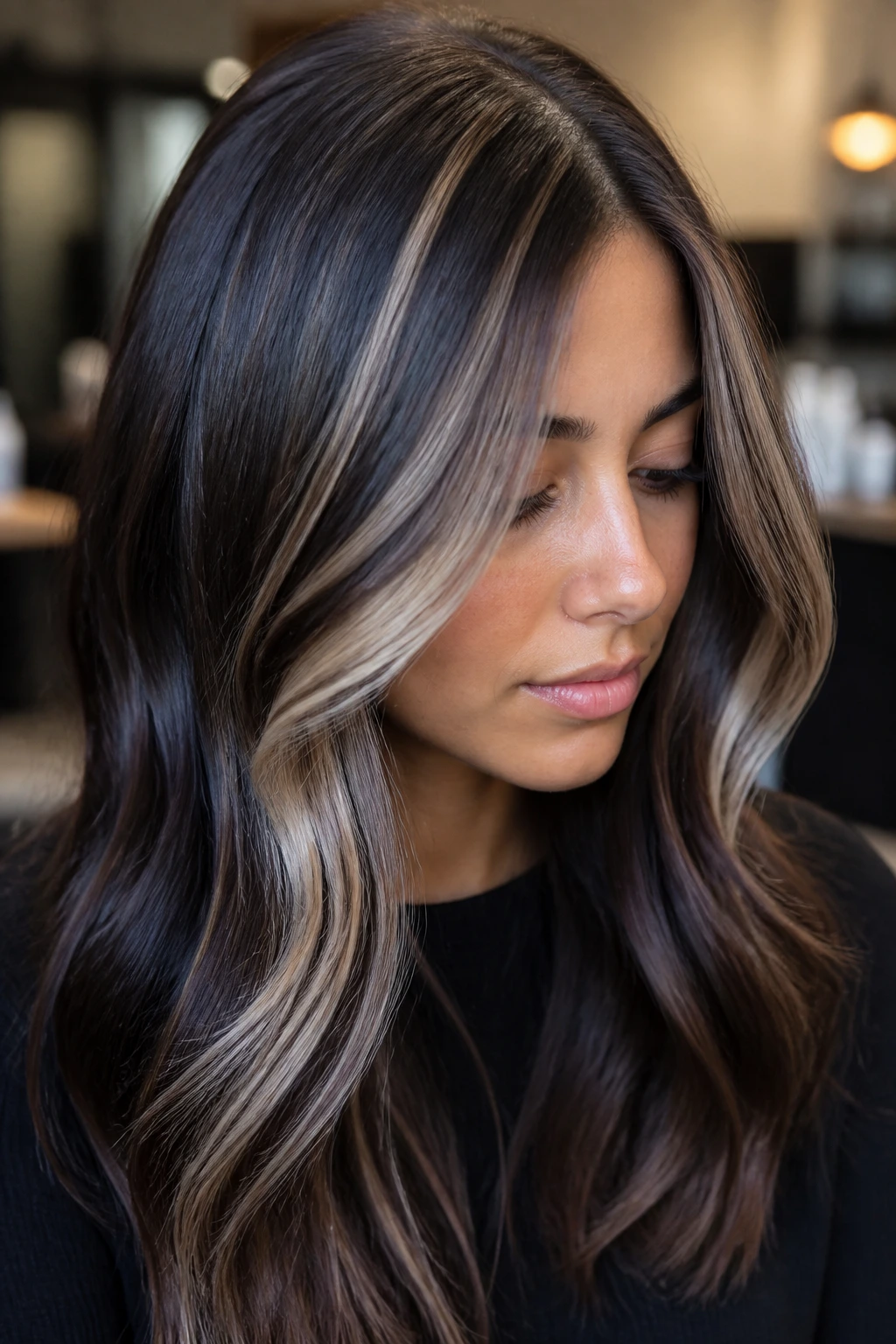
Deep brunettes can wear icy beige, but only if the lift is clean. The blonde pieces need enough pale yellow removed before toning, or the whole thing slides straight into brassy territory.
When it’s done well, the result is sharp in a good way. The cool beige panels make dark hair look modern and deliberate, especially when placed through the top layer and around the money pieces. There’s a crispness to it that warm caramel can’t match.
What to Watch For
- The blonde must be lifted evenly first
- Toner usually needs more upkeep here than on warmer shades
- Porous ends can grab the cool pigment too hard
- Purple shampoo should be used sparingly, not like laundry detergent
9. Cinnamon Balayage with Blonde Ribbons
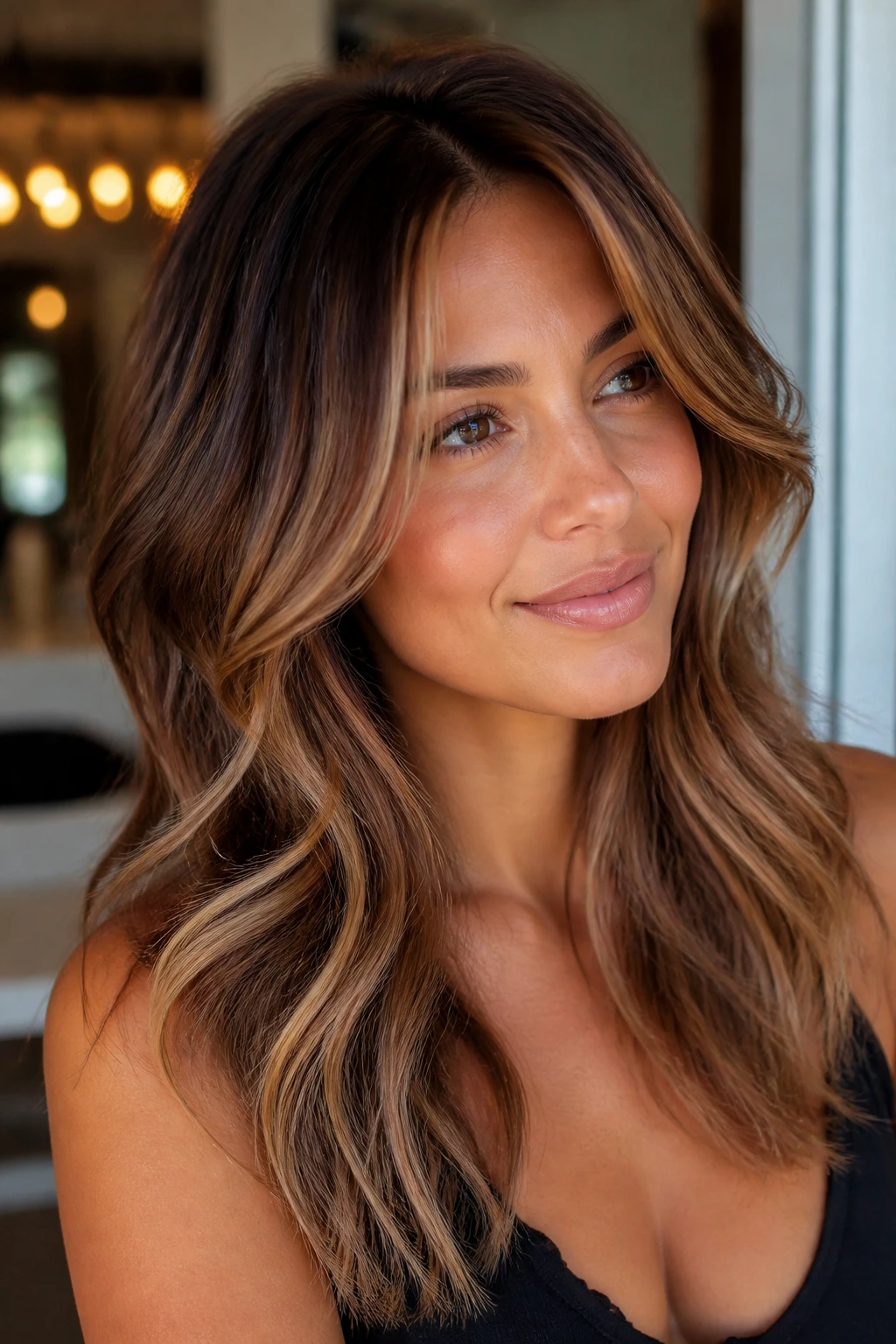
Cinnamon balayage isn’t flat red and it isn’t plain brown. It’s a warm, spiced brunette base with a few blonde ribbons painted through the mid-lengths and ends so the hair looks sunkissed without losing its brown backbone.
Balayage placement matters here because the light should melt, not stripe. Think of the lighter pieces as brushstrokes that start softer near the root and become more obvious toward the bottom third of the hair.
This style plays beautifully on layered cuts. The cinnamon base gives richness; the blonde ribbons keep the shape from disappearing in a single color wash.
10. Vanilla-Chip Ribbon Lights on a Lob
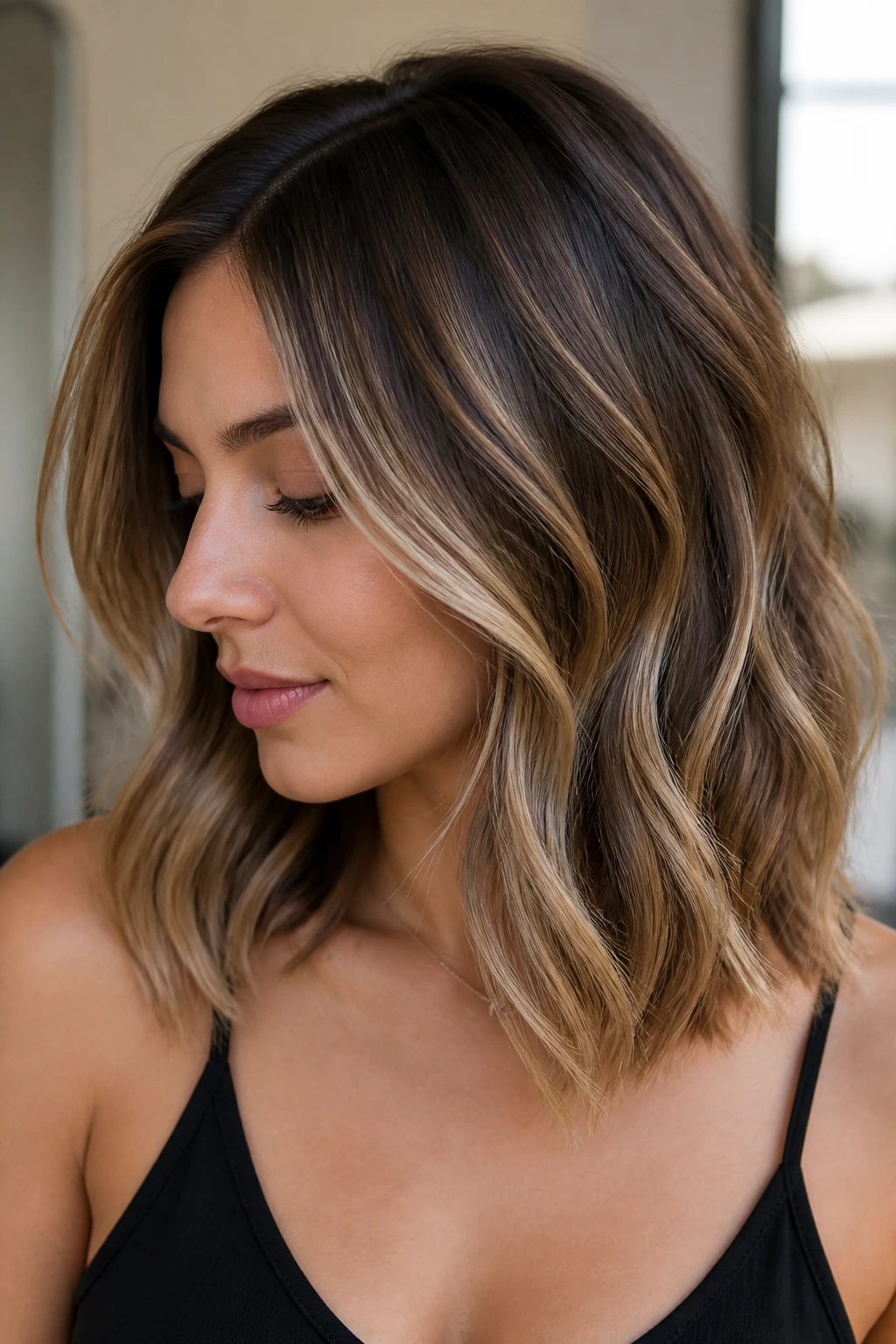
A lob can look boxy if the color is too even. Vanilla-chip ribbons fix that by threading soft blonde through the surface layer, usually from temple to collarbone, so the cut has movement instead of a helmet shape.
The vanilla tone should stay creamy, not yellow. That tiny distinction changes the whole look. On medium brown hair, the ribbons brighten the line of the cut and make the ends feel cleaner.
I like this on straight or slightly bent lobs. The highlight pattern can look busy on very curly hair if the sections are too wide, so a finer weave usually works better there.
11. Chestnut Root Smudge with Soft Blonde Ends
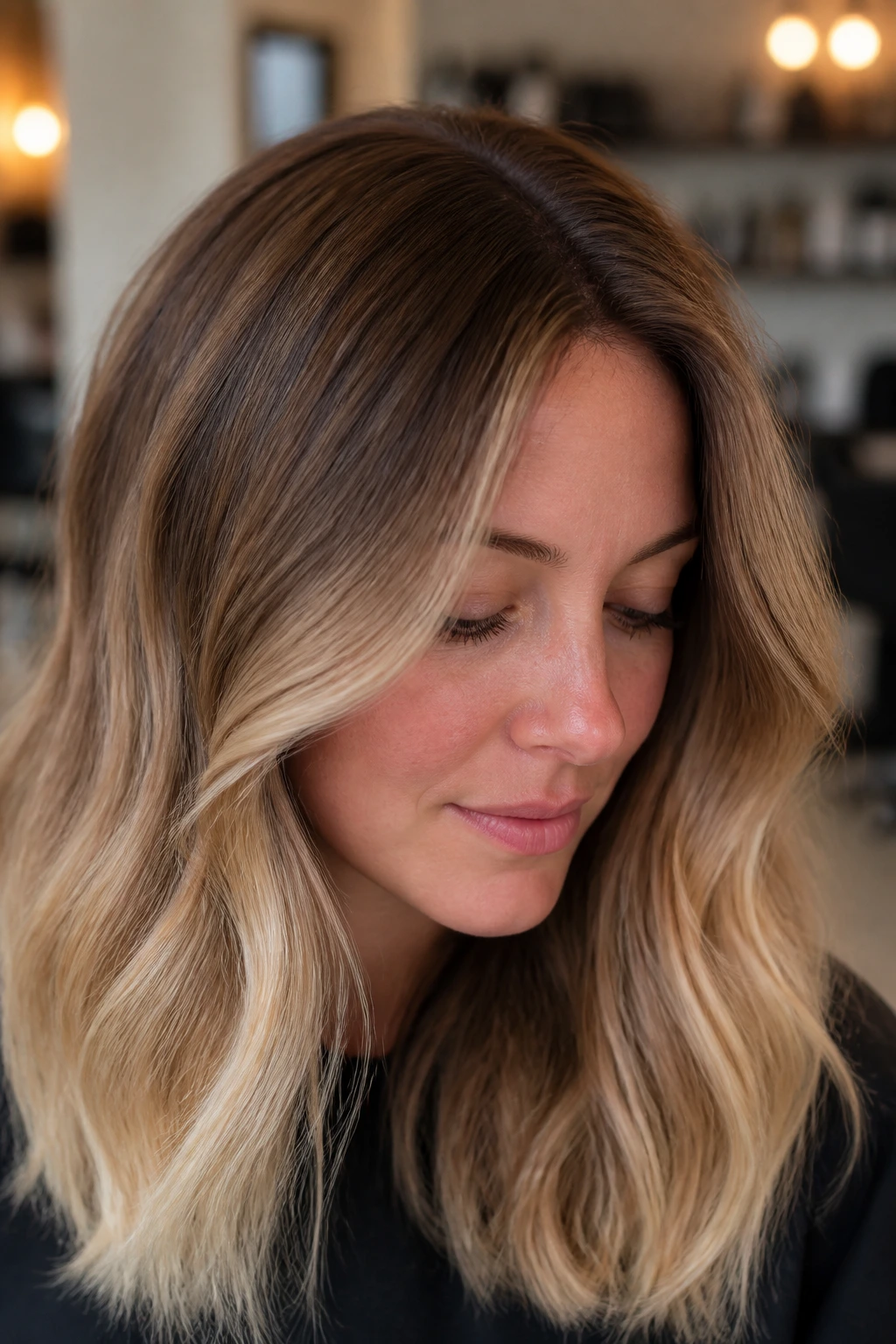
A root smudge is one of the best tools in a colorist’s bag, and chestnut keeps it grounded. The root stays softly shadowed for a natural start, while the blonde at the ends does the brighter work down below.
This style is useful if your hair grows fast or your natural root color is deeper than the rest of the shaft. The smudge buys you time. It also keeps the blonde from looking pasted on, which is a common problem on brunette hair that’s gone too light too quickly.
No hard line. That’s the whole point.
12. Ash Brown Veils with Champagne Glints
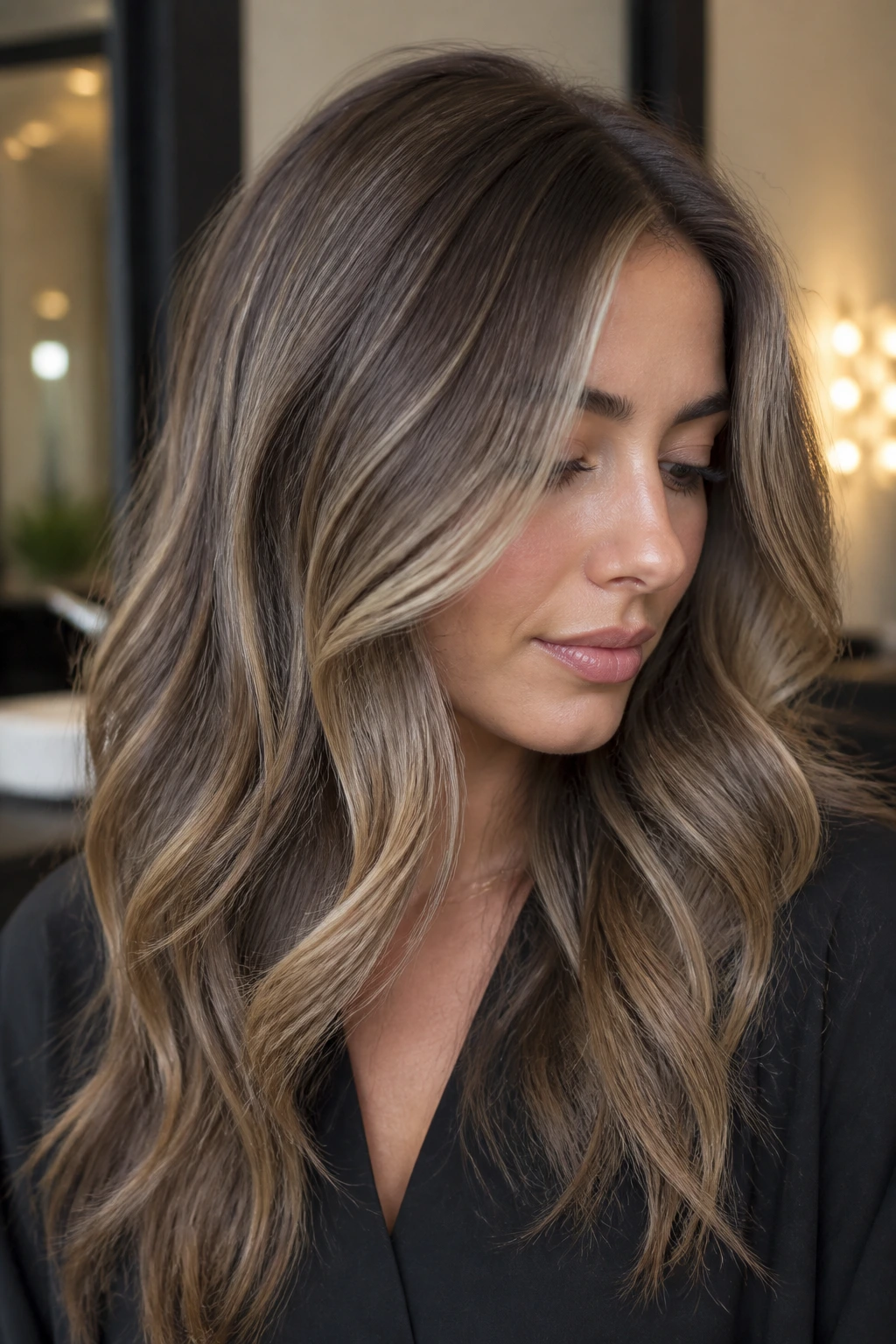
Ash brown veils are for the brunette who wants brightness but doesn’t want warmth to take over. The champagne glints sit lightly over a cool brown base, so the final look is soft, smoky, and a little luxe without being showy.
This is a better choice than warm blonde when your skin has pink or neutral undertones. Warm highlights can make the face look ruddy in certain light; cool veils avoid that problem.
The placement should feel airy. If the champagne pieces are too thick, they stop looking like a veil and start looking like stripes, which defeats the entire point.
13. Face-Framing Foils with Dark Interior Layers
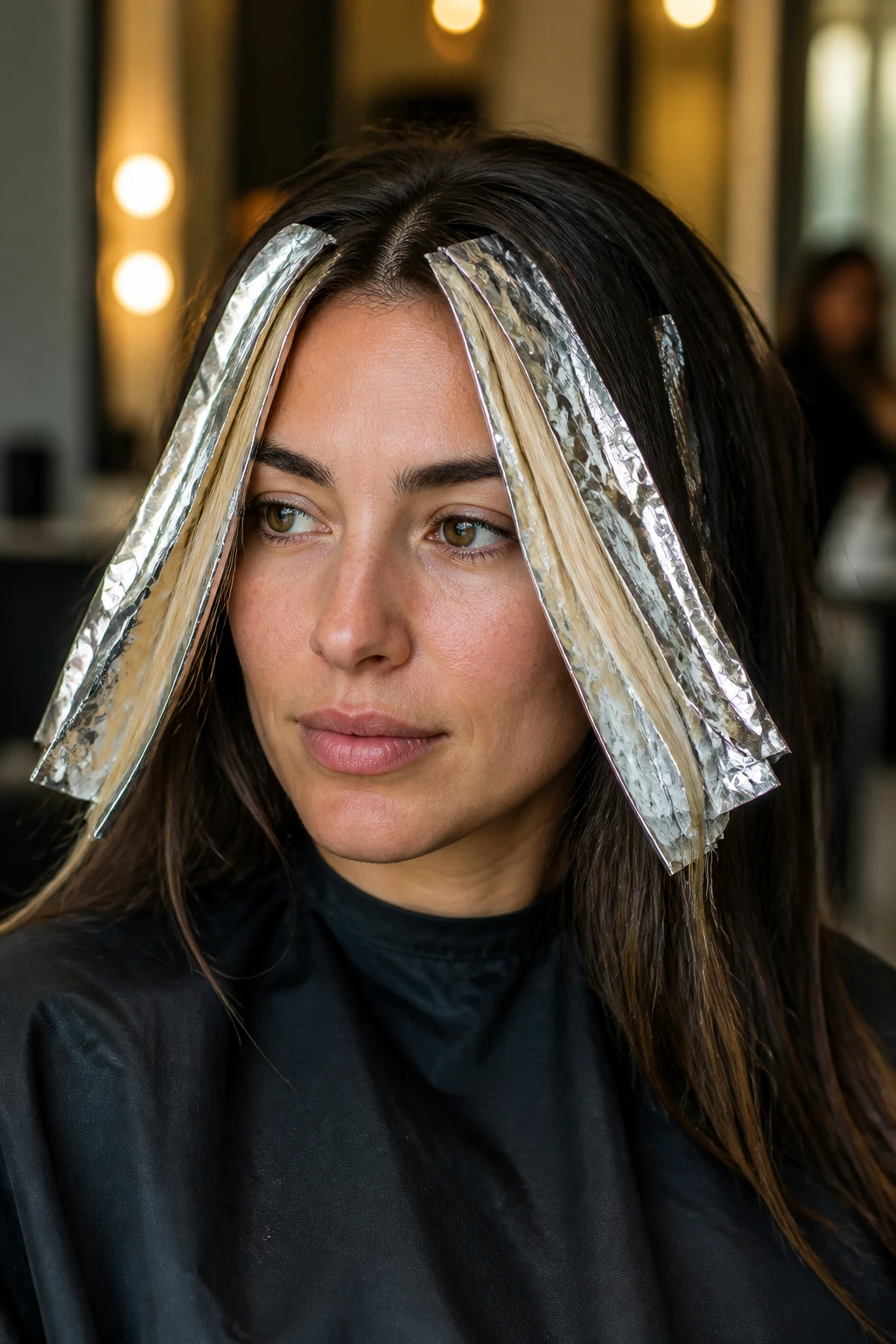
Here’s the move when you want people to say “your hair looks good” instead of “what did you do?” Two brighter front foils, darker interior layers, and a little blonde along the temples give you brightness where the eye lands first, while the inside of the hair keeps the brunette density intact.
That dark interior is doing more work than people realize. It adds shadow, and shadow makes light look brighter. A single-color blonde doesn’t have that contrast, which is why partial highlights often feel richer.
If your hair is thick, this is especially smart. The dark inside keeps the cut from looking puffed out or overprocessed.
14. Ribbon Lights That Follow a Wavy Lob
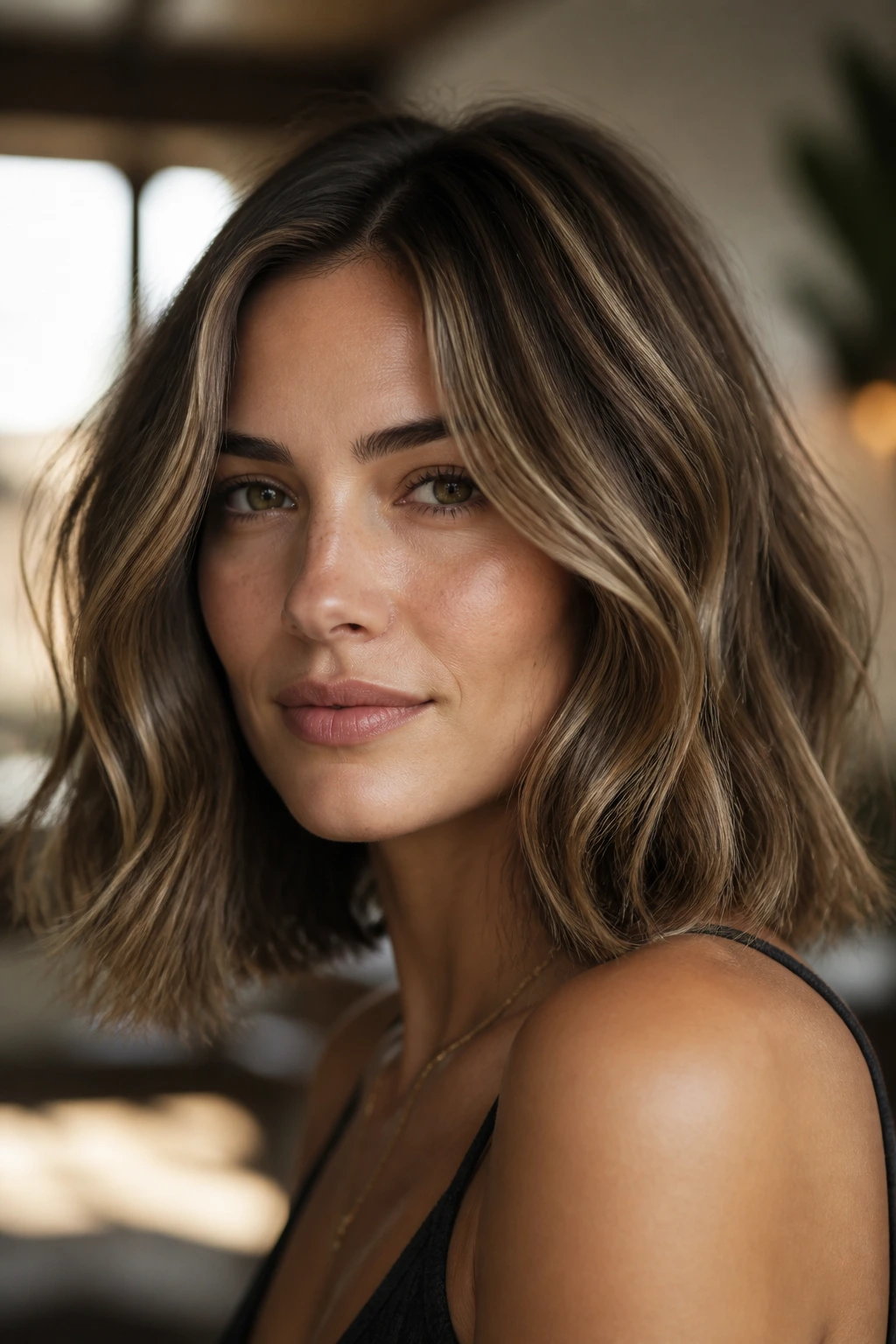
Waves and ribbon lights have a nice little agreement. The bend of the hair throws different parts forward and back, so thin blonde strands catch light at different moments instead of all at once.
A wavy lob can handle more contrast than a long blunt cut, because the bend keeps the color from looking blocky. I’d keep the ribbons narrow near the top and a little bolder near the ends, where the wave pattern loosens.
This style reads casual in the best way. It doesn’t need much styling beyond a diffuser or a quick pass with a 1-inch iron.
15. Sunlit Ends with Kept-Dark Underlayers

This is one of those styles that looks like the hair spent a month near a window, which is usually the goal. The ends are lighter, but the underlayers stay dark enough to anchor the whole head.
That dark base underneath prevents the blonde from swallowing the brunette color. It also gives you a little relief when the hair moves, because the color isn’t the same from every angle.
Best for: layered cuts, long hair, and anyone who wants brightness without changing their root story. It’s especially good if you like ponytails, because the hidden depth still shows when the hair gets pulled back.
16. Cool Beige Half-Head Highlights
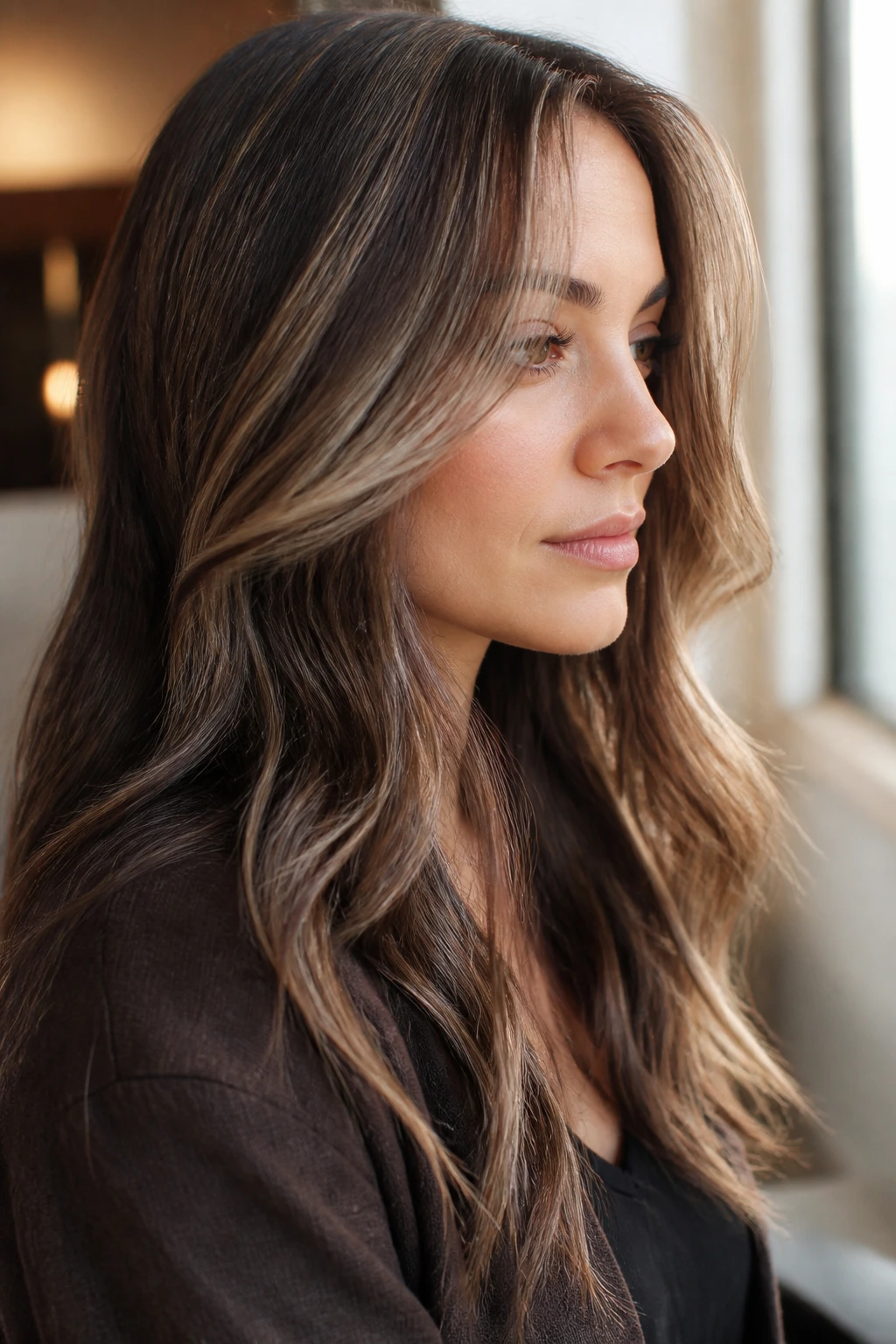
Half-head highlights are for the brunette who wants to see the color from the front and the sides, but not from every direction. The cool beige tone keeps the brightness understated, and the placement around the upper half of the head lets the lower sections stay darker and healthier-looking.
I like this choice when someone says, “I want change, not maintenance.” That is usually code for partial highlights, and this one delivers.
The cool beige must be deliberate. If it skews too yellow, the whole style gets louder than it should. Clean toning matters here more than almost anywhere else on this list.
17. Melted Bronde for Shoulder-Length Hair
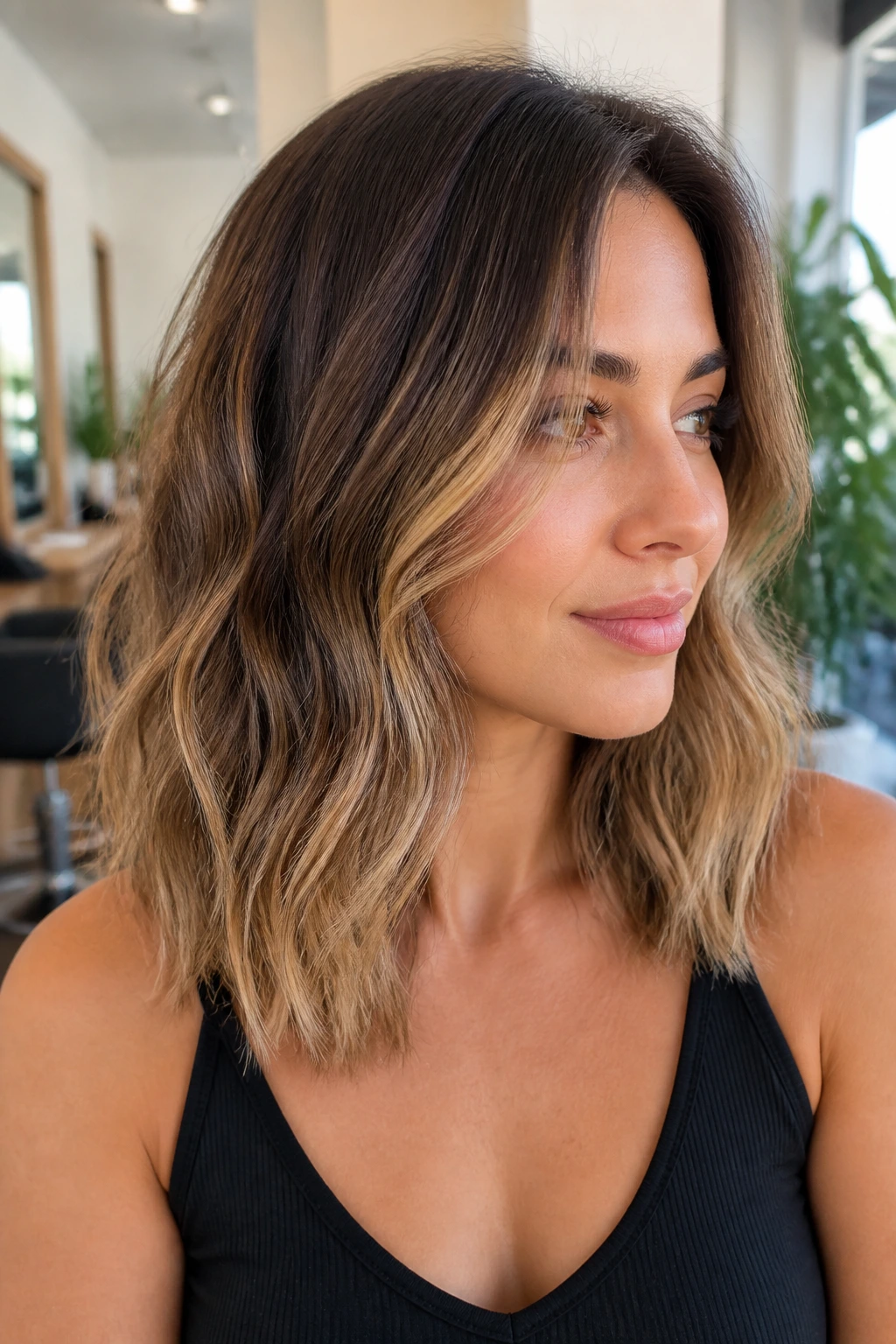
Shoulder-length hair can carry a lot of color without looking overloaded, and melted bronde makes that easier. The transition from brunette to blonde stays soft, with no obvious stopping point, so the color looks like it belongs to the haircut instead of sitting on top of it.
This is a strong option for people who hate obvious grow-out lines. The root shadow and mid-length blend do most of the visual smoothing, which keeps the highlights wearable for months instead of weeks.
It’s also flattering on blunt cuts. The softness of the color takes the edge off the shape.
18. Golden Apricot Partial Highlights
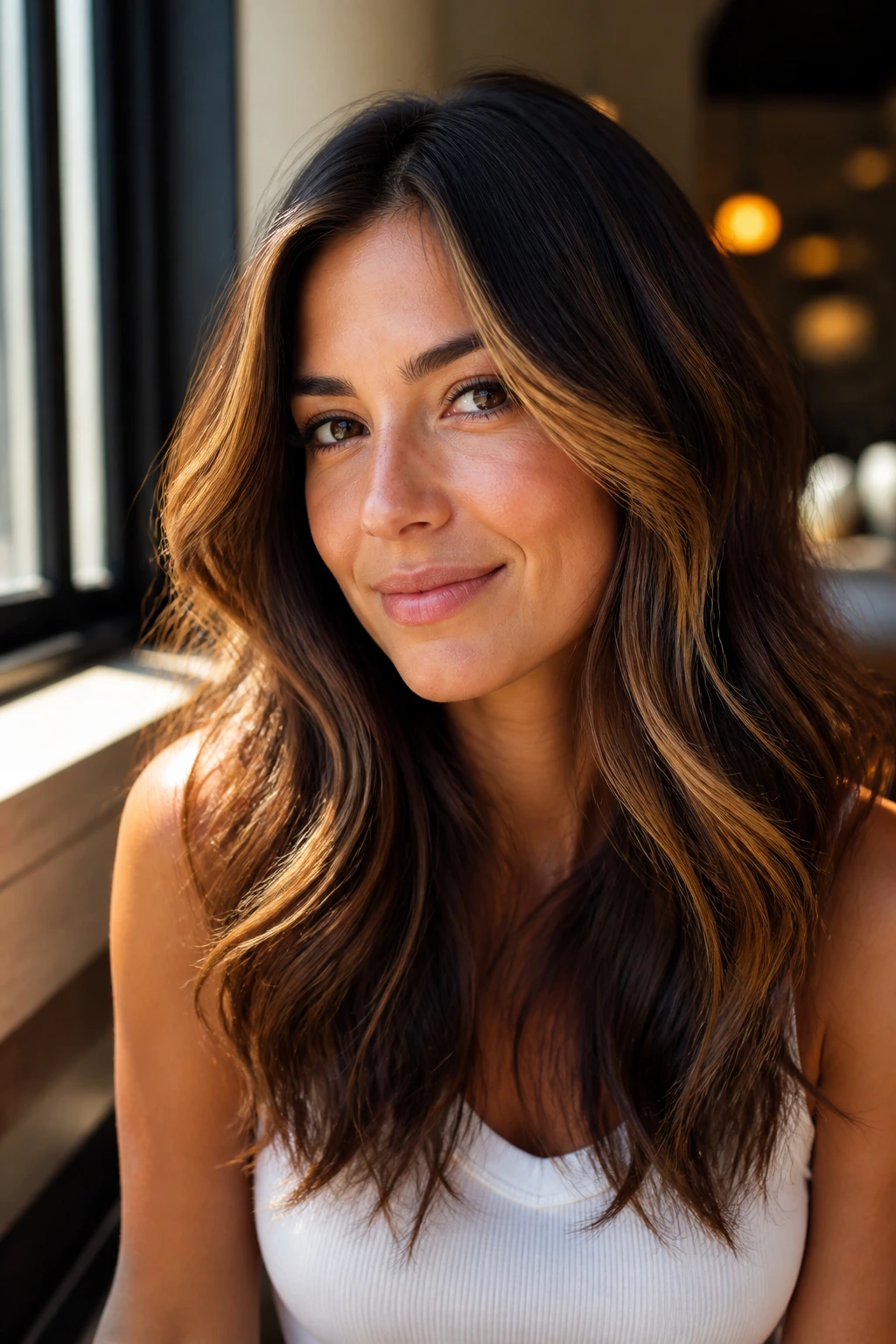
Golden apricot is warmer than beige and softer than copper, which makes it a nice middle road for brunettes who want a little glow. It brightens dark hair in a way that feels warm to the eye without going full orange.
I like it on medium brunettes and chestnut bases, where the apricot can show its warmth without getting muddy. On very dark hair, it needs a stronger lift to stay visible, so it isn’t the easiest place to start if your base is almost black.
The payoff is worth it. Under indoor light, apricot can look subtle; in sunlight, it wakes up fast.
19. Coffee-and-Cream Contrast with Lowlights
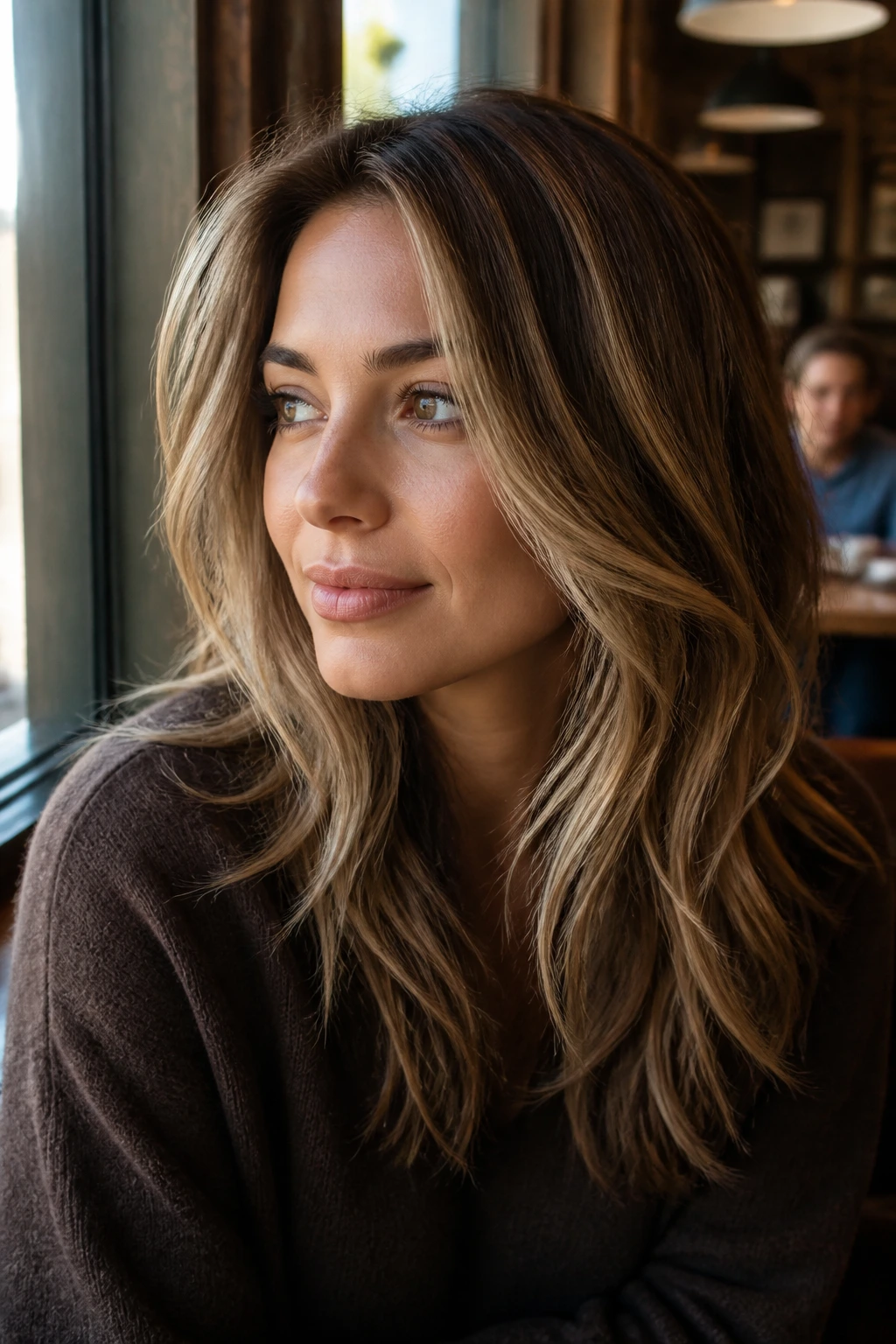
This one works because it doesn’t pretend hair should be one note. The blonde pieces are softened with lowlights in a brown that almost matches coffee foam, which keeps the whole finish dimensional instead of streaky.
Lowlights are underrated. They stop blonde from floating too high on the head and make the brighter pieces feel embedded in the brunette base, not placed over it. On layered brunettes, that contrast can make the cut look thicker and more expensive.
If you’ve had highlights that felt too wide or too pale, this is a smarter reset.
20. Smoky Balayage with Beige Tips
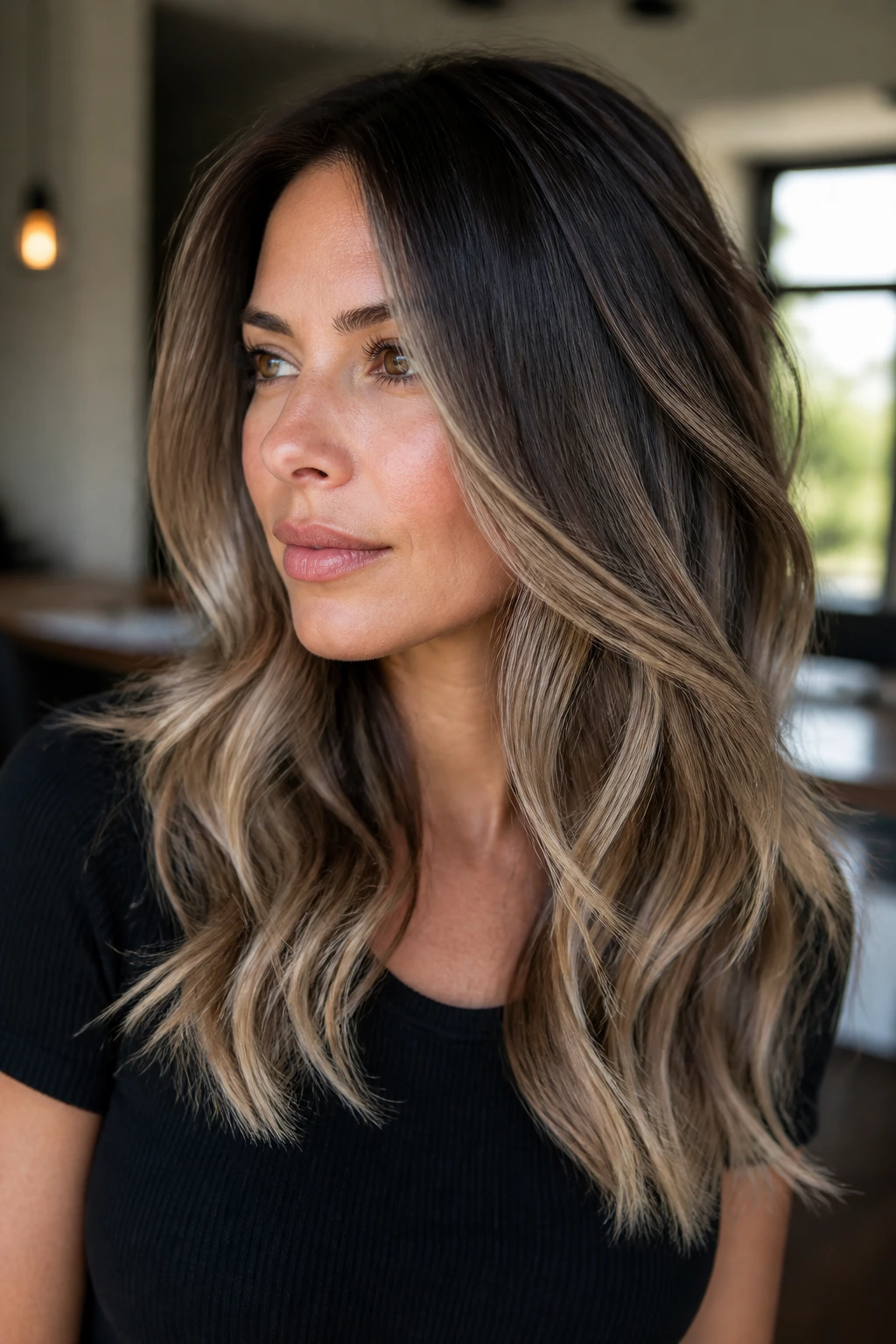
Smoky balayage is for the person who wants the ends to look lighter, but not sun-bleached. Beige tips soften the finish and keep the brunette from disappearing, which matters if you still want your base to look like a feature instead of a leftover.
The lighter ends should be soft enough to blur, not hard enough to read as a dip-dye. That means careful hand-painting and a toner that doesn’t pull yellow.
This style shines on longer layers and loose curls. The beige pieces separate just enough to show the movement in the hair.
21. Peekaboo Honey Panels Under the Top Layer
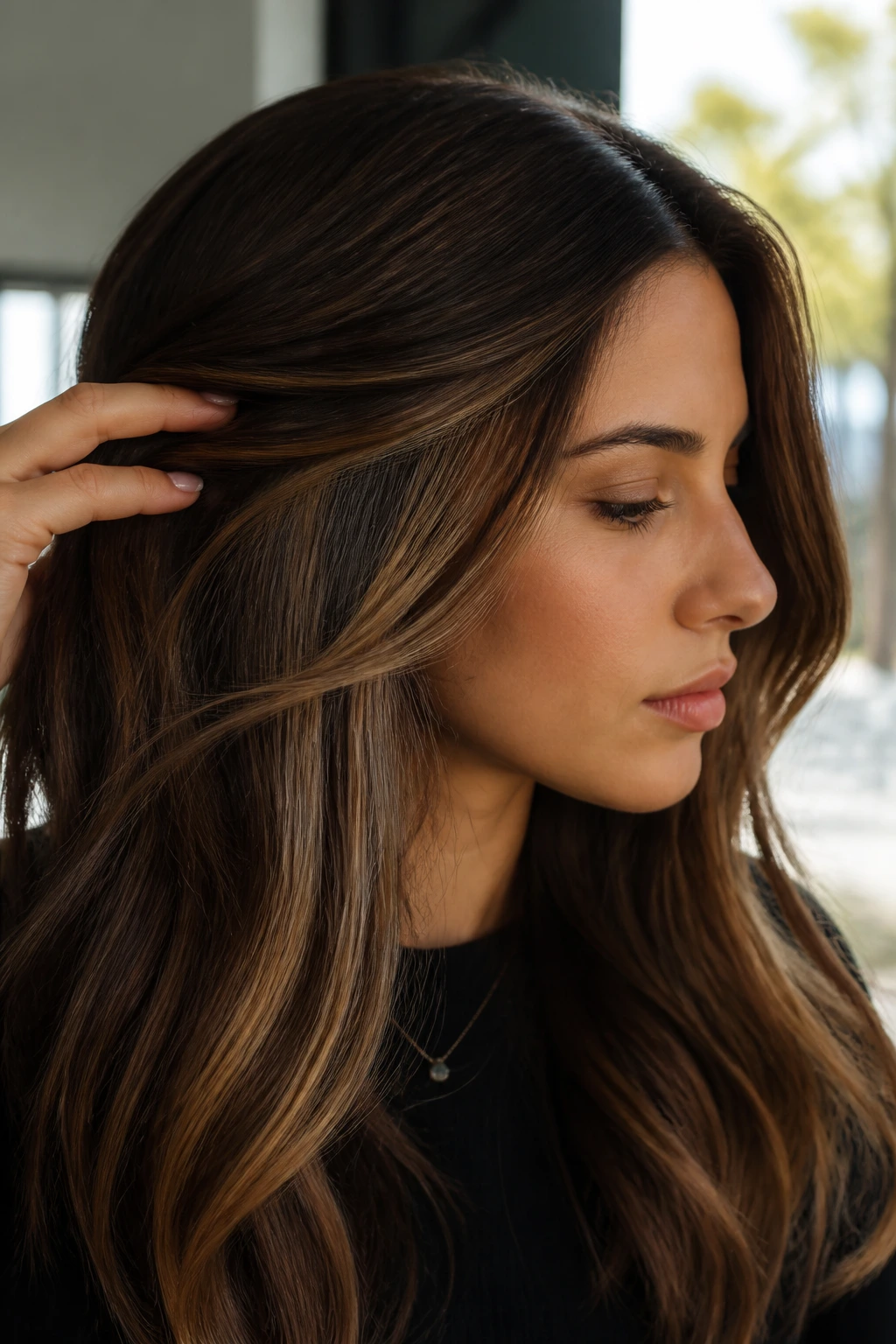
Peekaboo honey panels are the brunette version of a secret. The top layer stays mostly brown, while warm honey runs beneath it and flashes out when the hair lifts, flips, or gets tucked behind the ears.
I love this on people who wear their hair down most of the time but still want to notice the color in motion. It’s playful without turning loud. And because the brightest pieces aren’t exposed all day, they usually stay looking richer a little longer than surface foils.
For curly and coily textures, this can be gorgeous if the panels are placed where the curl pattern opens naturally. Hidden color and texture get along better than people assume.
22. Sandy Money Piece with Raked-Through Lowlights
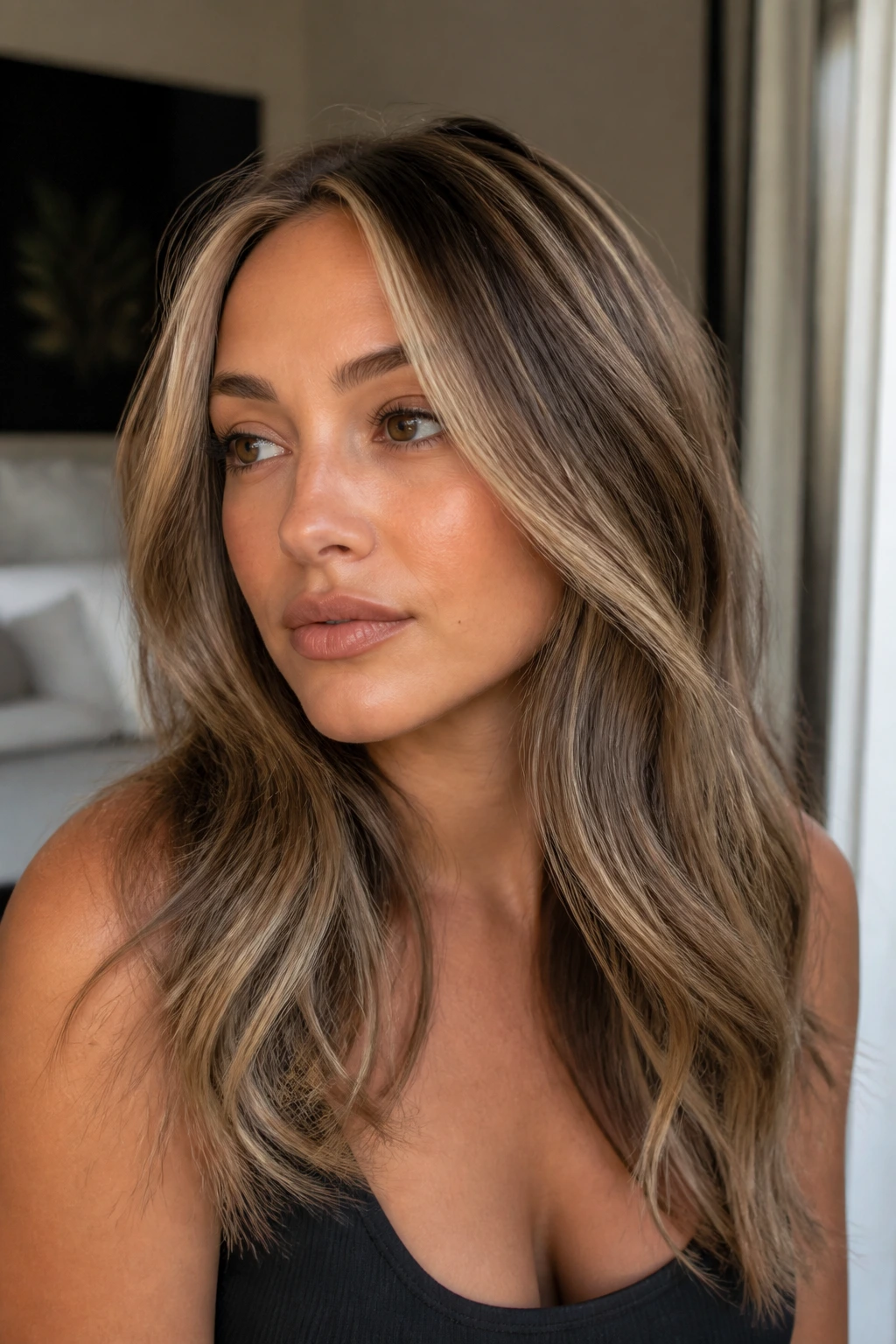
The sandy money piece gives you the brightness up front, but the raked-through lowlights keep the rest from feeling thin or washed out. On brunettes, that balance is the difference between “expensive dimension” and “too much bleach.”
This style is especially good if your hairline is where you want the color to read first. The sandy tone is softer than gold and less cool than ash, so it sits in that easy, wearable middle ground.
When the lowlights are woven through the top layer, the blonde doesn’t sit on the surface. It settles in.
23. Mushroom Bronde Curtain Highlights
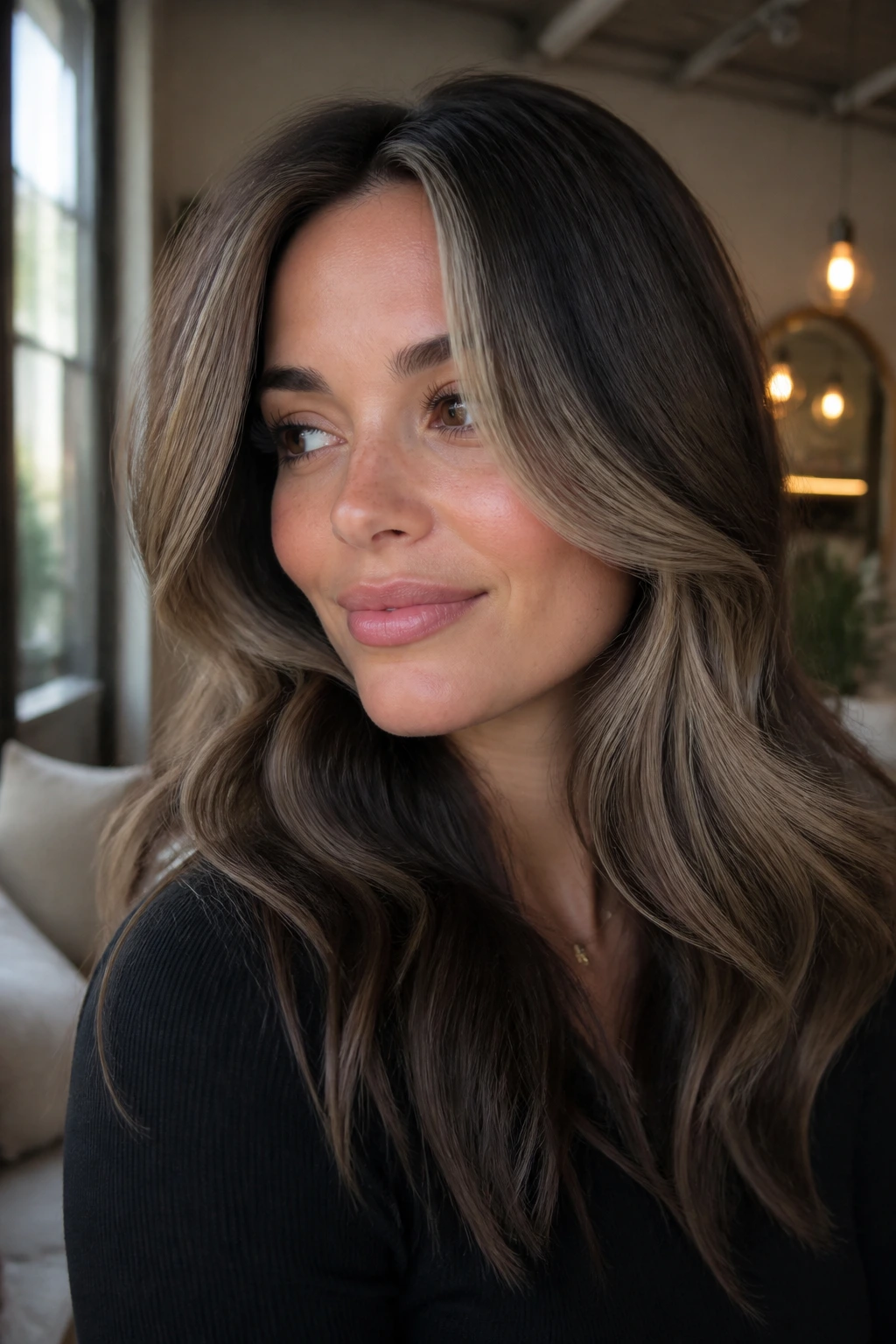
Curtain highlights follow the part and drift down toward the cheekbones, which makes them a natural fit for face-framing layers. Mushroom bronde keeps the tone muted enough that the style stays soft, even when the light catches it hard.
This is one of the prettiest options for straightened hair with curtain bangs or long fringe. The color opens around the face, then fades back into richer brunette sections through the ends, so the haircut keeps its shape.
If your stylist likes to over-light the front, ask for a muted root and a creamy beige finish instead. You want depth around the eyes, not a bright patch that screams before it flatters.
24. Champagne Halo Around the Hairline
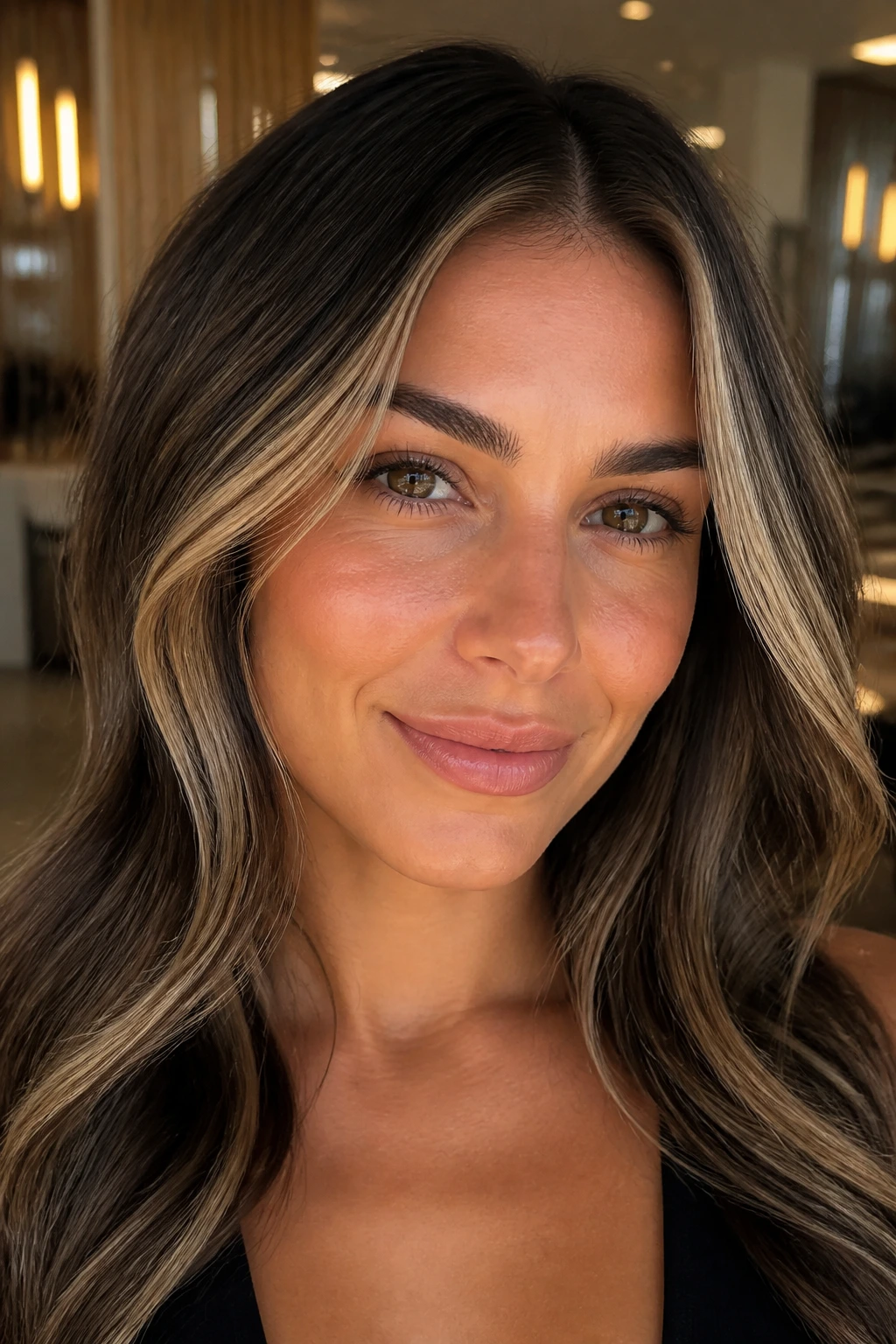
A halo highlight circles the perimeter of the face, which means the brightest pieces show first when you move, smile, or tuck your hair behind one ear. Champagne works here because it brings light without the loudness of yellow blonde.
This placement is a lifesaver for brunettes who want instant brightness but don’t want a full crown of foils. The halo can be kept fine and airy, or built a little thicker if the hair is dense and needs more visual lift.
It’s a clean, tidy look. Very little fuss. Lots of payoff.
25. Soft Caramel Halo Highlights
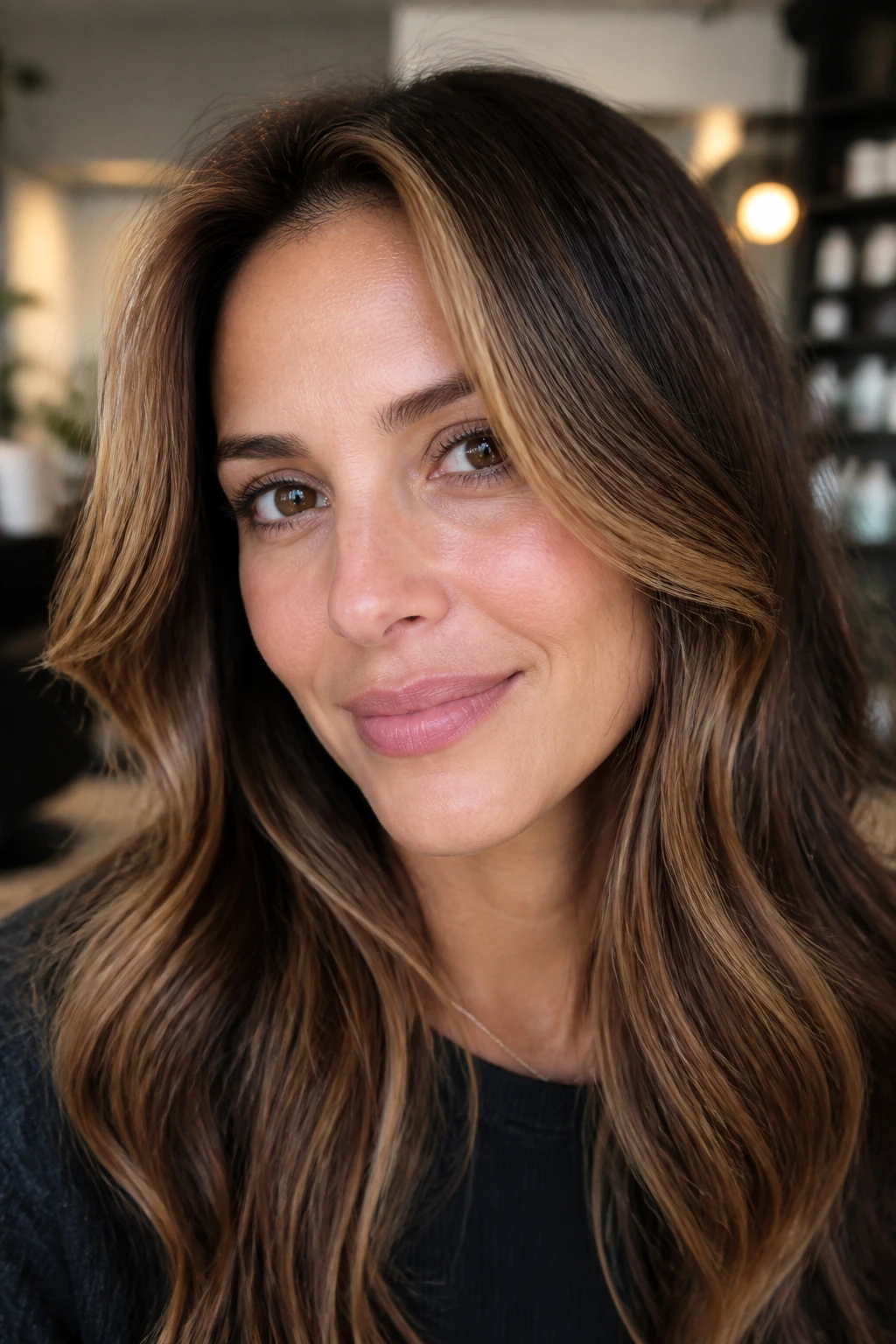
Caramel halo highlights are the warmer cousin of the champagne version, and on brunettes they tend to be the safest bet of the whole set. The halo wraps the hairline, cheekbones, and upper part of the crown, which makes the face look brighter without touching every inch of the head.
What I like here is the balance between warmth and restraint. The caramel is visible, but the brunette base still wins. That means the style holds up better when the light changes, and it doesn’t collapse into a single flat shade once the toner softens a little.
If you want one style to take to a stylist and say, “Start here,” this is probably it.
How to Ask for the Right Placement Without Getting Stripey Results
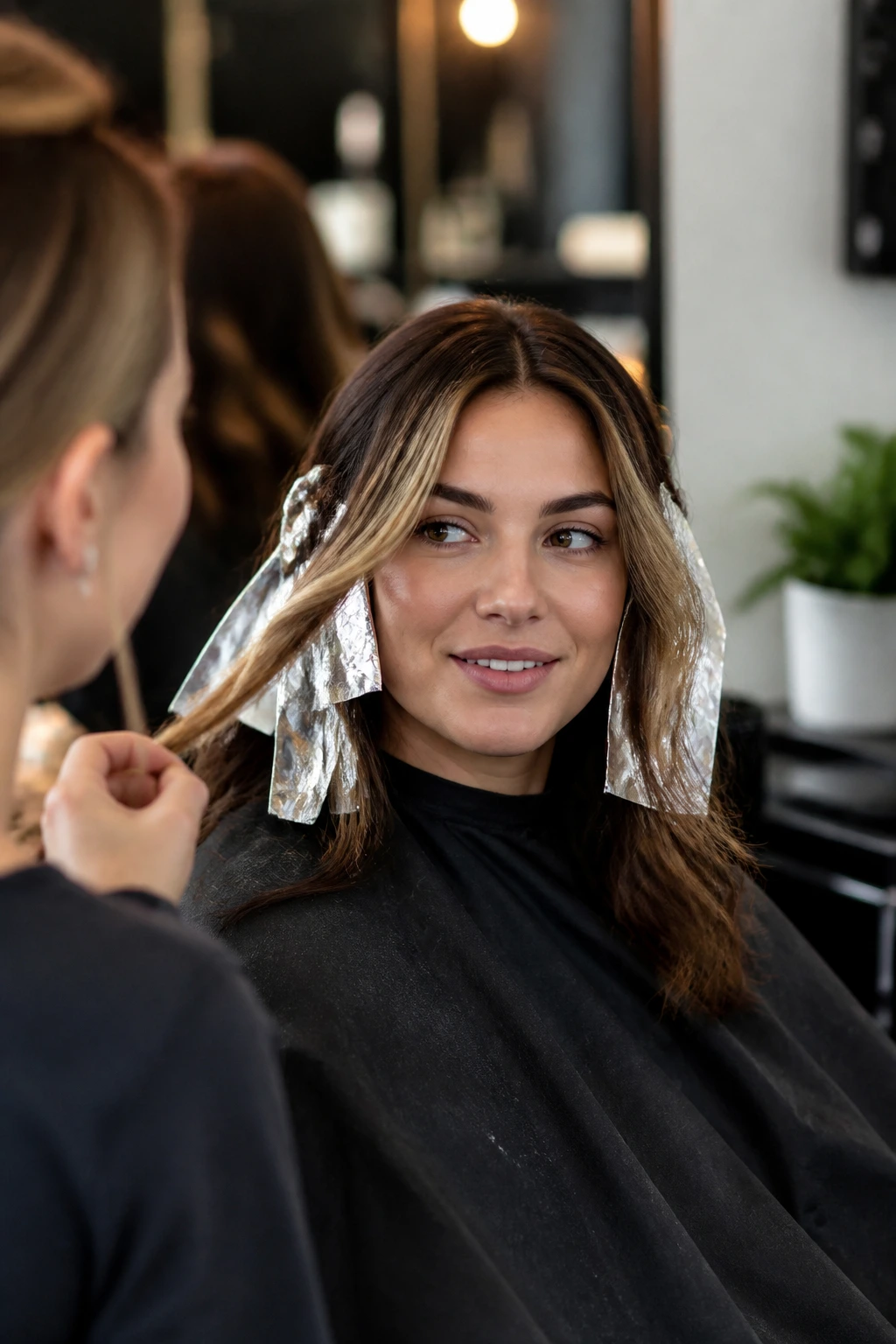
Placement is the whole job. Tone matters, sure, but the difference between a soft brunette highlight and a chunky one usually comes down to where the foils sit and how thick they are. If the light pieces are too evenly spaced, the hair starts looking like a color chart instead of a living head of hair.
Ask for partial highlights focused on the top and face frame, not a full-head blonding service. Say where you want brightness: hairline, part line, crown, or just through the surface layers. That one detail changes the whole result. A stylist who hears “I want the front brighter and the interior darker” has a much better target than one who only hears “make me blonde.”
Bring a photo that shows the part and the side view, not just a back shot. Color placement hides in the angles.
Small Tweaks That Change the Whole Look
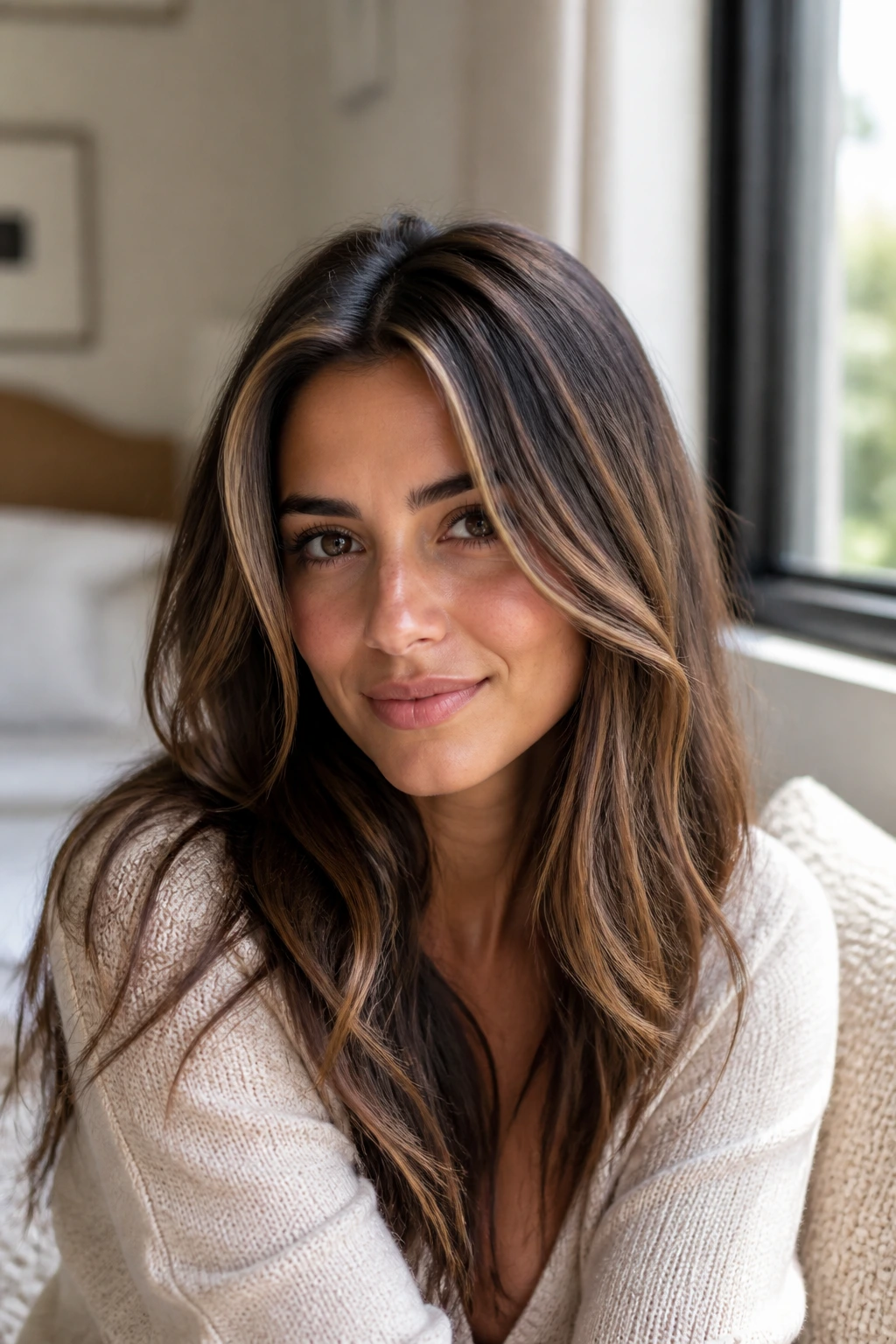
Gloss It Down: A clear or beige gloss after highlighting keeps blonde pieces from reading dry. On brunette hair, that small shine boost makes the brown base and the lighter ribbons look connected instead of pasted together.
Keep a Root Shadow: A soft shadow at the scalp softens grow-out and makes the blonde feel more expensive. I prefer this on darker brunettes because it stops the front pieces from looking disconnected.
Add 3 to 5 Lowlights: If the hair feels too bright after lifting, weave in a few deeper brown lowlights. That little bit of dark interrupts the blonde enough to add depth back in.
Choose the Part Before You Color: Center parts and side parts place light in different spots. Decide which one you wear most often, or the money piece may land in the wrong place.
The Mistakes That Turn Brunette Highlights Brass or Chunky
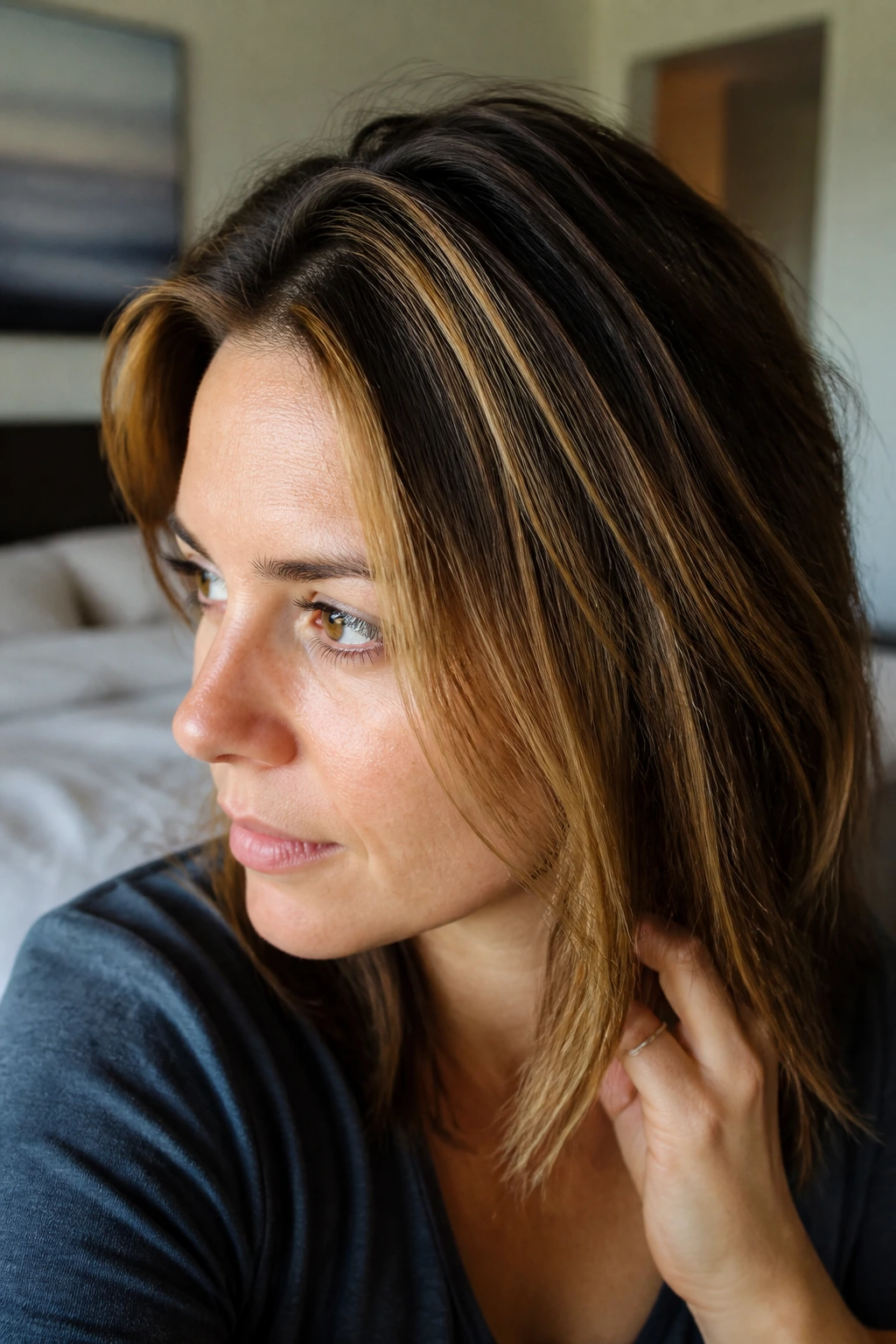
The biggest mistake is trying to go too light in one appointment. Dark brown hair usually needs controlled lift, not a giant leap to pale blonde. If the stylist pushes too hard, the hair can pull orange at the mid-lengths and still feel dull at the ends.
Another common problem is using wide foils when the haircut calls for fine weaving. Thick slices look obvious on brunette hair, especially around the crown and temples. The fix is simple: ask for finer pieces, more diffusion, and fewer hard edges.
Skipping toner is another trap. Lifted hair on brunettes often lands yellow or gold before toning, and that warmth can look harsh. A beige, ash, or caramel gloss is what makes the color feel finished.
And please, don’t drown fresh highlights in purple shampoo every wash. It can leave porous blonde pieces dull and weirdly gray. Use it once a week, maybe twice if your hair goes brassy fast, and keep the rest of your routine gentle.
Variations Worth Trying if You Want More Softness or More Contrast
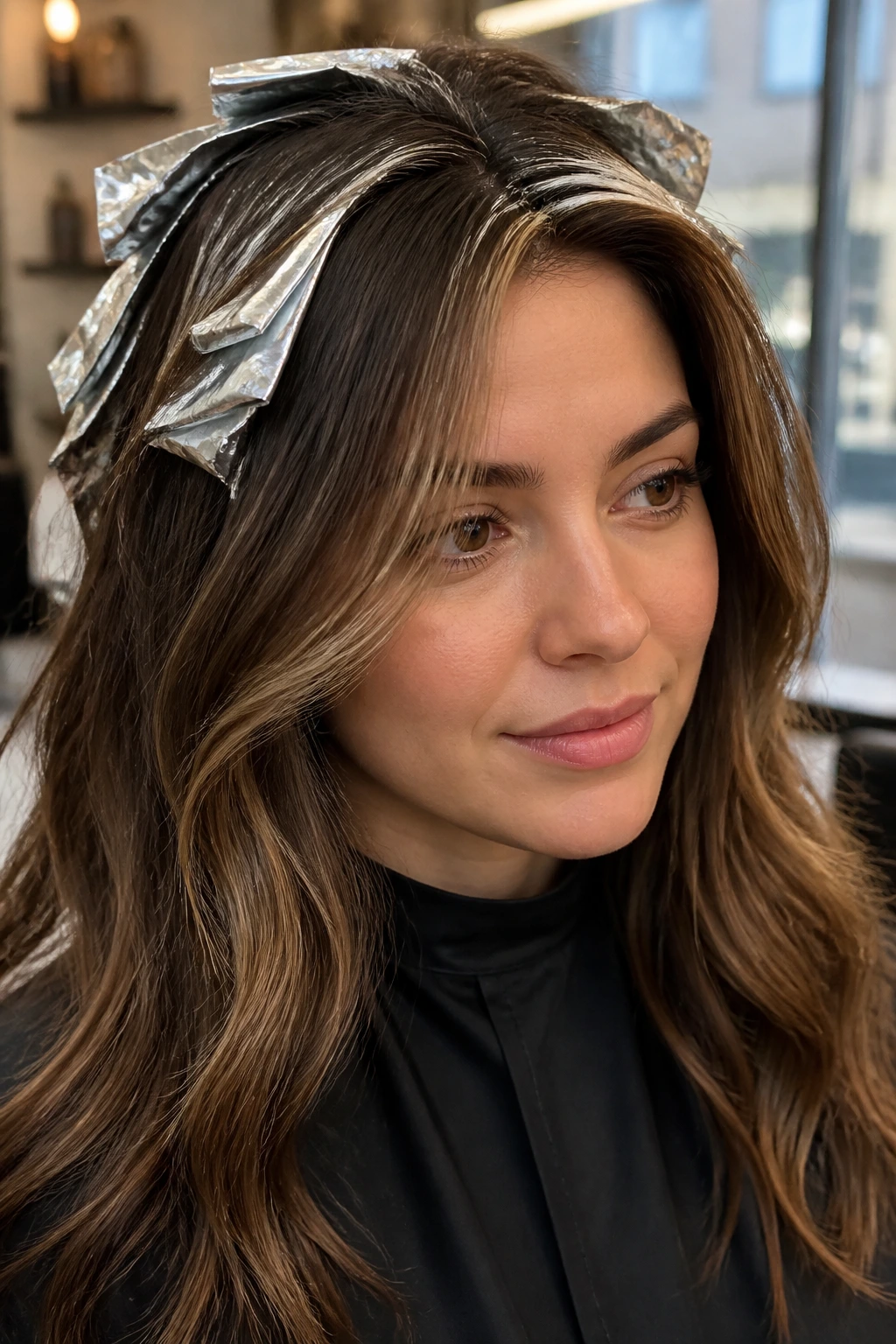
Soft Office Beige: Keep the foils fine, the placement high around the crown, and the tone close to beige. This is the version I’d recommend if you need the color to look neat in a ponytail and calm under fluorescent light.
High-Contrast Halo: Push the front pieces lighter and leave the interior deeply brunette. The result is bolder and more visible in selfies, though it takes a little more toner maintenance.
Curly-Ringlet Blend: On curls, place the light where the curl opens instead of in straight vertical lines. This keeps the highlight from disappearing inside the texture.
Warm Honey Melt: Use honey and caramel tones with a soft root shadow. It’s the easiest version to wear if your natural brown has red or gold undertones.
Smoky Cool Blend: Use mushroom, ash beige, and a neutral lowlight to keep things soft and cool. This version flatters people who want the color to stay understated rather than sunlit.
Tools, Products, and Salon References That Matter
-
Color-safe shampoo: Pick one that cleans without stripping the toner out in two washes. Sulfate-free formulas usually help here.
-
Moisture conditioner: Lightened pieces need slip. If the ends feel rough after washing, the color will look drier too.
-
Weekly mask: A 10-minute mask once a week keeps porous blonde ribbons from going fuzzy at the cuticle.
-
Heat protectant spray: Use it before blow-drying or ironing. Chemically lightened strands burn faster than untouched brunette hair.
-
Wide-tooth comb: Helpful on wet hair when the highlighted pieces tangle faster than the darker base.
-
Microfiber towel or soft T-shirt: Less friction, less frizz, less breakage along the lighter sections.
-
Shower filter: Optional, but worth it if your water leaves mineral buildup that turns beige highlights dull and flat.
-
Salon photos with part and side view visible: Not a product, but maybe the most useful tool in the room. Bring examples that show placement, not just color.
How to Keep Partial Highlights Fresh Between Appointments
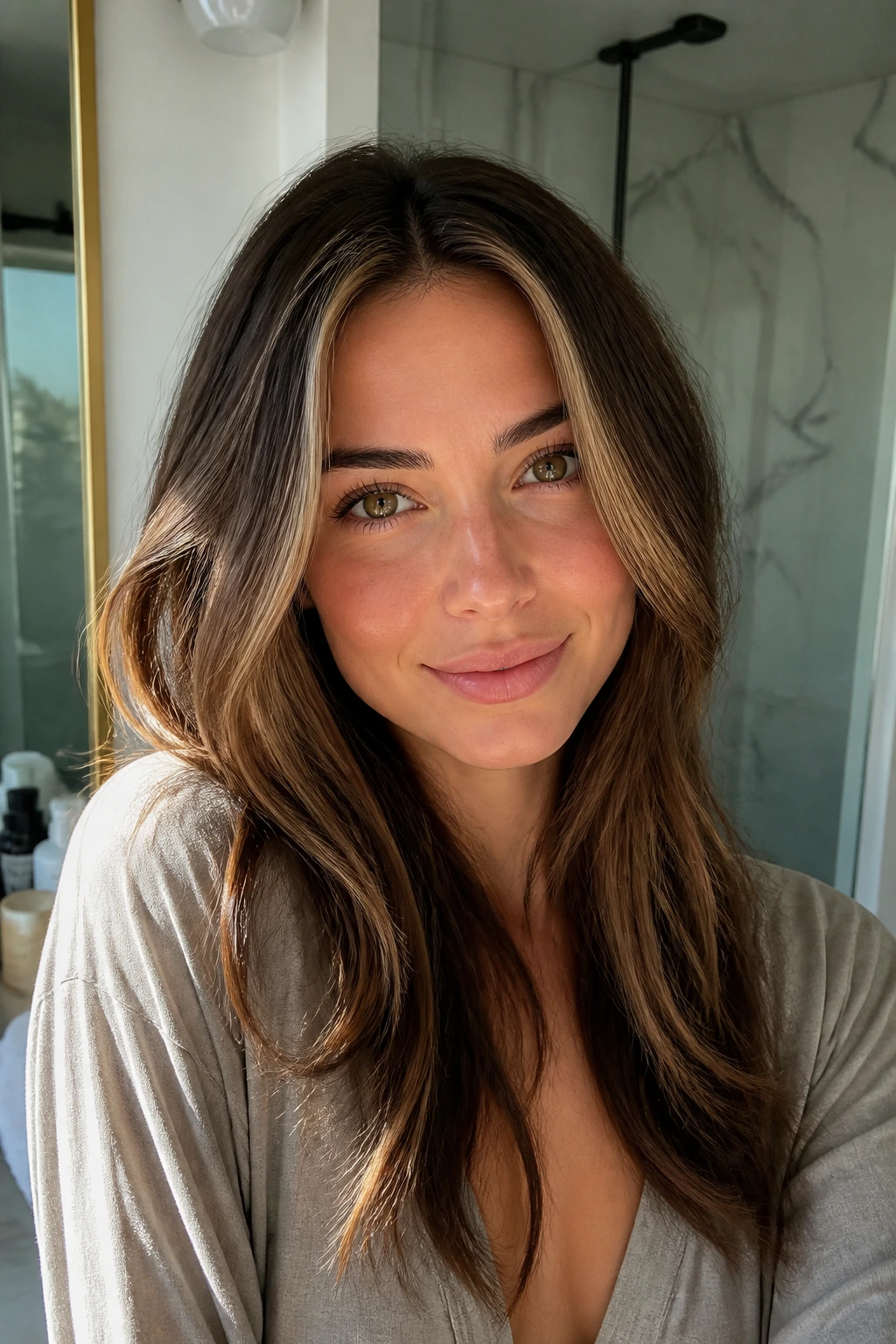
Partial highlights usually hold their shape well, but the bright pieces are still the first to show dryness and tone shift. Wash no more than 2 to 4 times a week if your scalp allows it; every shampoo pulls a little pigment and moisture away from the lighter sections, especially around the hairline.
Toner refreshes often happen every 4 to 8 weeks, depending on how porous the hair is and how warm your water runs. If the blonde starts going yellow, don’t panic and pile on purple products. Start with a salon gloss or a soft toning conditioner, then use the stronger stuff only when needed.
Heat is the other culprit. A 375°F flat iron on already lightened hair is asking for rough ends, so keep tools on the lower side and use heat protectant every time. The American Academy of Dermatology has long cautioned that chemically treated hair loses moisture more easily, and that warning matters even more when only part of the head is lightened because those ribbons show damage first.
If you want these highlights to stay calm, keep the routine calm too. Gentle washing, regular conditioning, and a gloss when the beige starts looking tired will do more than any miracle product ever could.
Questions Brunettes Ask Before Booking Partial Highlights
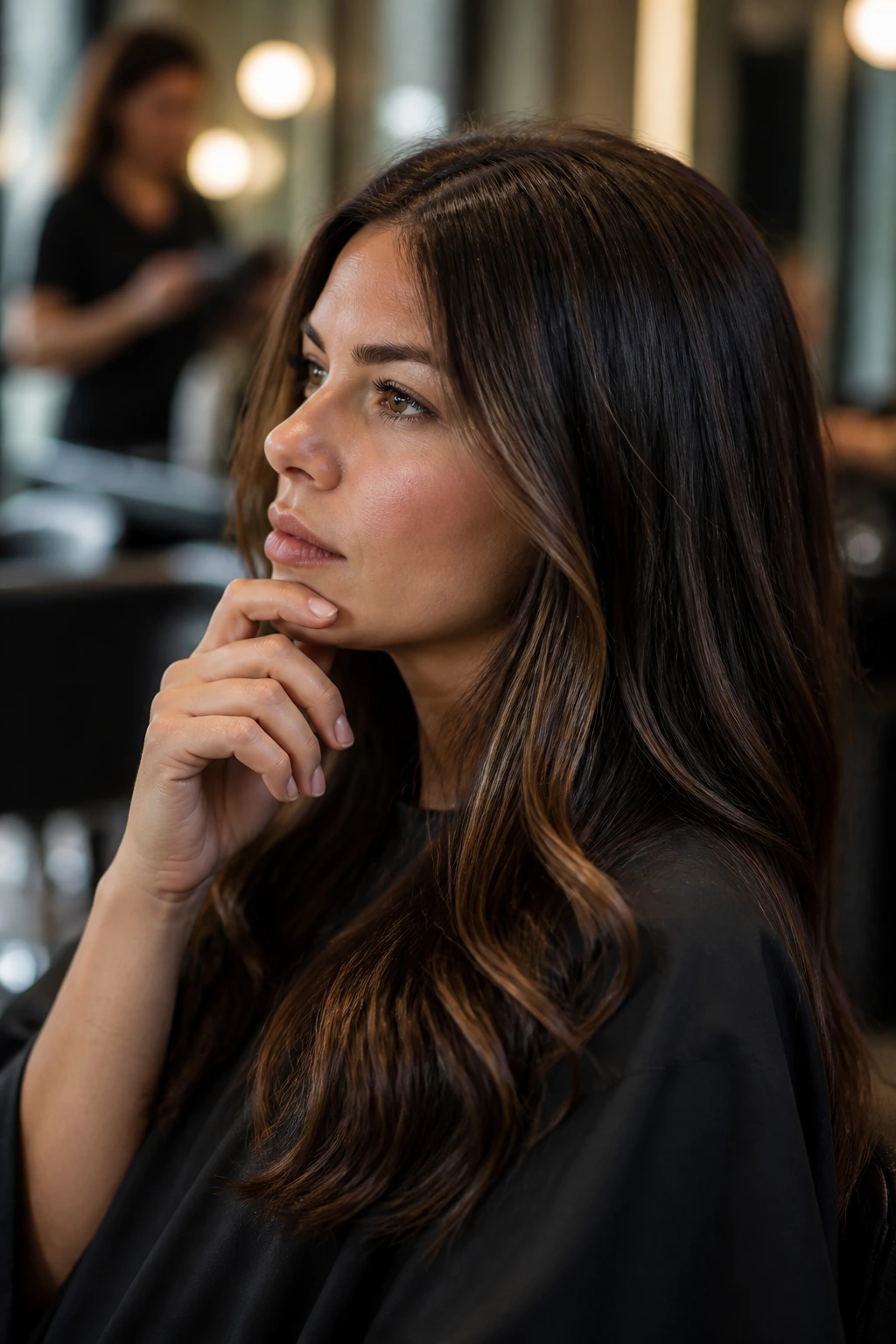
How are partial highlights different from full highlights?
Partial highlights focus on the top half, hairline, and visible surface layers, while full highlights cover more of the head, including the underneath sections. On brunettes, that smaller placement usually means less upkeep and a softer grow-out.
Do partial highlights damage hair less?
Usually, yes, because fewer strands are lifted and toned. The hair still goes through chemical lightening, though, so dryness and breakage are still possible if the ends are already stressed or the lifting is pushed too far.
Which shades look best on dark brown hair?
Caramel, honey, beige, mushroom brown, and champagne usually work best because they sit close enough to brunette depth to look intentional. Pure platinum can work, but it takes more sessions and more maintenance.
Can curly hair wear partial highlights well?
Absolutely, and in some cases it looks better than on straight hair because curls break up the color naturally. The key is placement: the lighter pieces should follow the curl pattern instead of fighting it in straight stripes.
How often do partial highlights need touch-ups?
Most brunettes can stretch them around 8 to 12 weeks, especially if the root shadow is soft. Bright face-framing pieces may need a toner refresh sooner if you wash often or use hot tools a lot.
What if the blonde turns orange or yellow?
That usually means the lift stopped too soon or the toner faded. A beige or ash gloss can calm some warmth, but if the hair didn’t lift evenly in the first place, the fix may need a salon visit rather than a purple shampoo.
Can I ask for partial highlights without going blonde?
Yes. You can ask for lighter brown ribbons, caramel contouring, or a soft bronde effect. The hair does not need to become pale to look brighter.
Are money pieces the same as partial highlights?
A money piece is one part of a partial-highlight service, usually the front framing section. Partial highlights can include the money piece plus crown foils, part-line ribbons, or surface balayage.
The Brunette Sweet Spot
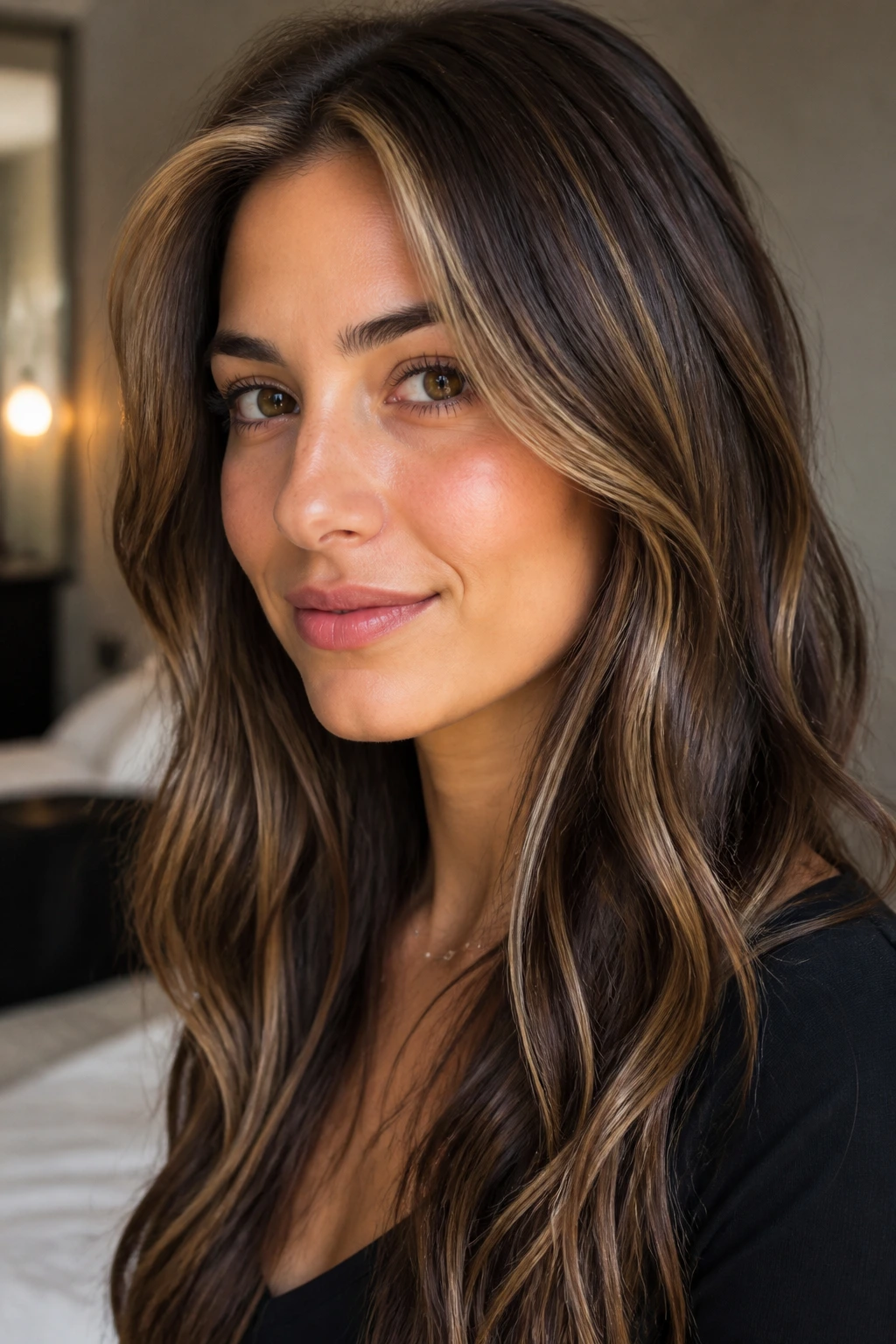
Partial highlights on brunettes work because they respect the base instead of bulldozing it. A little caramel at the hairline, a few beige foils through the crown, a mushroom gloss over the front — those are small moves, but they change how the whole haircut reads.
The safest choice is not always the dullest one. Done well, blonde-brown partial highlights give you movement, shine, and a grow-out that doesn’t punish you for having a life.
Pick the tone family that matches your base, keep the placement where the eye naturally lands, and don’t let anyone talk you into more light than your hair can wear gracefully.