



Thick hair has a funny habit of making the simplest plan look like a project. A tidy ponytail turns into a heavy swing of hair that eats elastics. A bun that should take ninety seconds becomes a tug-of-war with your own scalp. That’s exactly why low maintenance hairstyles for thick hair matter: they work with the weight, the fullness, and the grip of dense hair instead of trying to flatten it into something it isn’t.
The best ones are not the styles that look fancy on a salon poster. They’re the ones that still look decent after a commute, a scarf, a humid hallway, and a couple of hours of being ignored. Some are cuts that make thick hair easier to live with every day. Some are braids and twists that take five minutes and hold their shape all day because the hair itself does half the work. A few look polished enough for dinner but still count as lazy-girl hair in the best possible sense.
And that’s the point. Thick hair does not need more fighting. It needs shape, weight distribution, and a few tricks that keep it from puffing up into a giant halo the second you step outside. The styles below lean on that logic, from blunt lobs and long layers to claw-clip twists and braids that can survive a full day without a rescue mission.
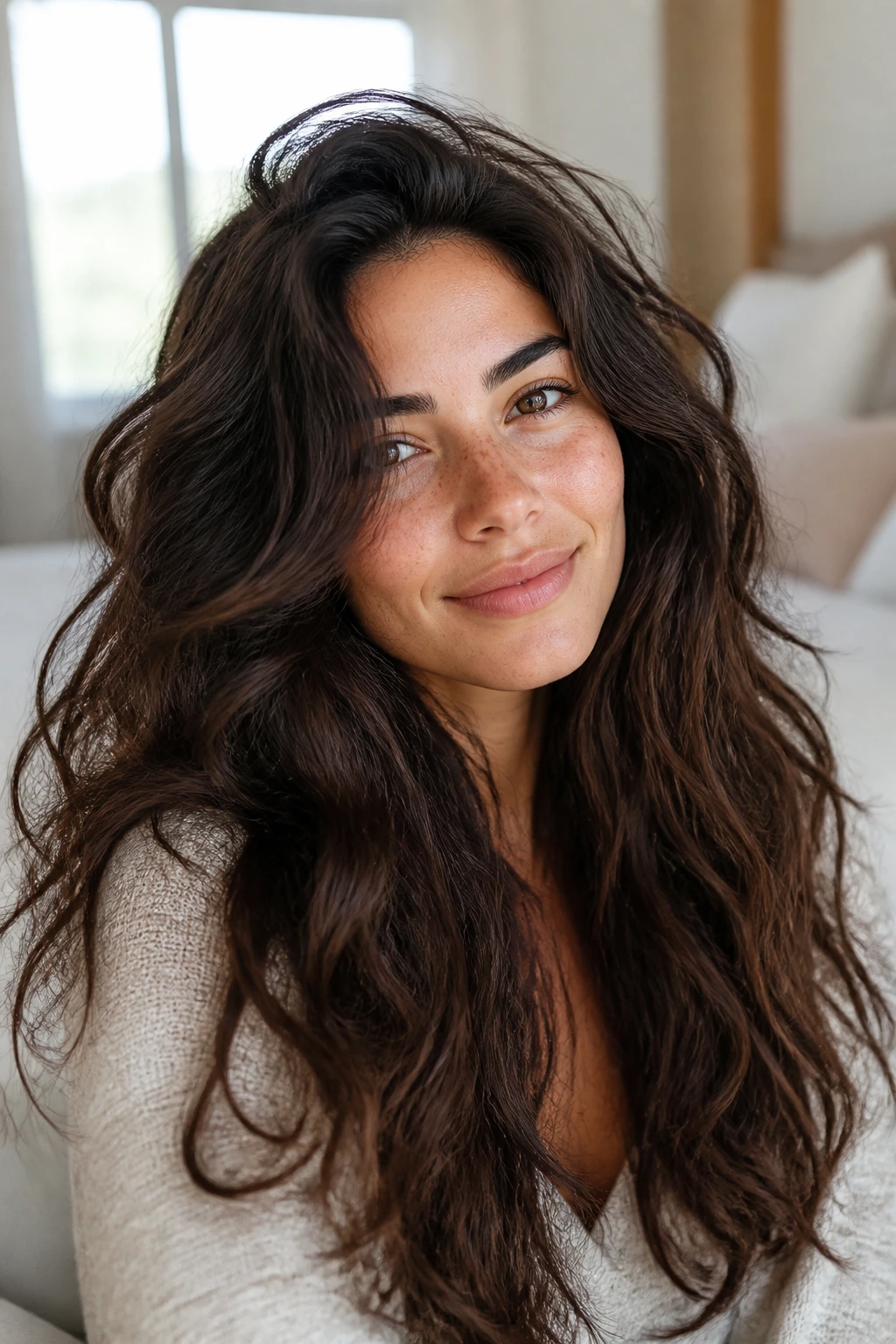
Why These Styles Work So Well on Dense Hair
-
The bulk does the holding: Thick hair has enough mass to stay in buns, braids, and clips without five layers of spray, which means the style lasts longer with less fuss.
-
Texture is your friend: A little bend, wave, or bendy layer keeps dense hair from looking like one heavy sheet. That’s why air-dried and slightly undone styles often beat over-smoothed ones.
-
Day-two hair helps: Hair that is 12 to 24 hours away from wash day usually has more grip, and grip is gold when you want a braid, claw clip, or twist to stay put.
-
You don’t need to hide the volume: Thick hair looks better when it keeps some width. The best styles shape the silhouette instead of trying to cram it into something tiny.
-
Heat is optional, not required: Most of these looks can be done with damp hair, a brush, a clip, or a tie. A blowout is nice. It is not the price of admission.
-
They age well during the day: A style that starts slightly loose on thick hair often settles into place instead of collapsing. That’s a good trade.
1. Long Layers That Let Thick Hair Fall Instead of Piling Up
Long layers are the cleanest answer when thick hair starts feeling heavy around the shoulders and ends. The shape takes some of the weight out of the bottom half without stripping away the fullness that makes thick hair look rich in the first place. If you’ve ever had your hair sit like a curtain, this is the fix.
Why it works on thick hair
Long layers keep the hair moving. They stop the ends from turning into a blunt, puffy shelf, and they give air-dried hair a little bend instead of that stiff, blocky shape dense hair can get when it’s all one length.
Best for: waist-length through collarbone-length hair that feels bulky at the ends.
Styling time: 3 to 5 minutes with leave-in cream and fingers.
Ask for this: long internal layers plus face-framing pieces that start around the cheekbone or jaw, not a choppy layer stack that removes too much weight.
Pro tip: If your hair is very thick, keep the bottom perimeter slightly heavier. Too many short layers can make thick hair spring outward in all the wrong places.
2. Collarbone Blunt Lob With Clean Ends
A blunt lob is a blunt instrument in the best way. The ends sit at collarbone or just above it, and the even hemline makes thick hair look intentional instead of overgrown. You get the feeling of shorter hair without the weird triangle that sometimes shows up when thick hair is cut too aggressively.
The reason this cut is so useful is simple: the blunt edge gives the hair a strong shape, so you do not need to style every strand. A quick bend from a flat iron, a rough dry, or a soft wave from sleeping in a loose braid is enough. It’s especially good if you’re tired of spending 20 minutes wrestling with a round brush.
A collarbone lob also behaves nicely on day two. The roots keep a little lift, the length doesn’t tangle as fast, and you can tuck one side behind your ear or clip it back and still look put together. That’s low maintenance in the real sense, not the marketing sense.
3. Shoulder-Grazing Shag That Air-Drys Well
Why do shags work so well on dense hair? Because the cut expects movement. Thick hair that’s cut into a shag doesn’t have to fake texture. It already has enough. The shorter pieces inside the shape keep the top from feeling helmet-heavy, and the longer ends stop the whole thing from puffing into one giant block.
This is a strong choice if you like hair that looks better a little imperfect. Air-dry it with a light cream, scrunch the ends once or twice, and leave it alone. That’s usually enough. If you blast it with too much brushing, you erase the whole point.
A shoulder-grazing shag also saves time on grow-out. The layered pieces blend as they grow, so you’re not stuck with a hard line every six weeks. If you want a cut that looks casual but still has shape when you put it in a clip or half-up twist, this is one of the better bets.
4. Claw-Clip French Twist for Fast Mornings
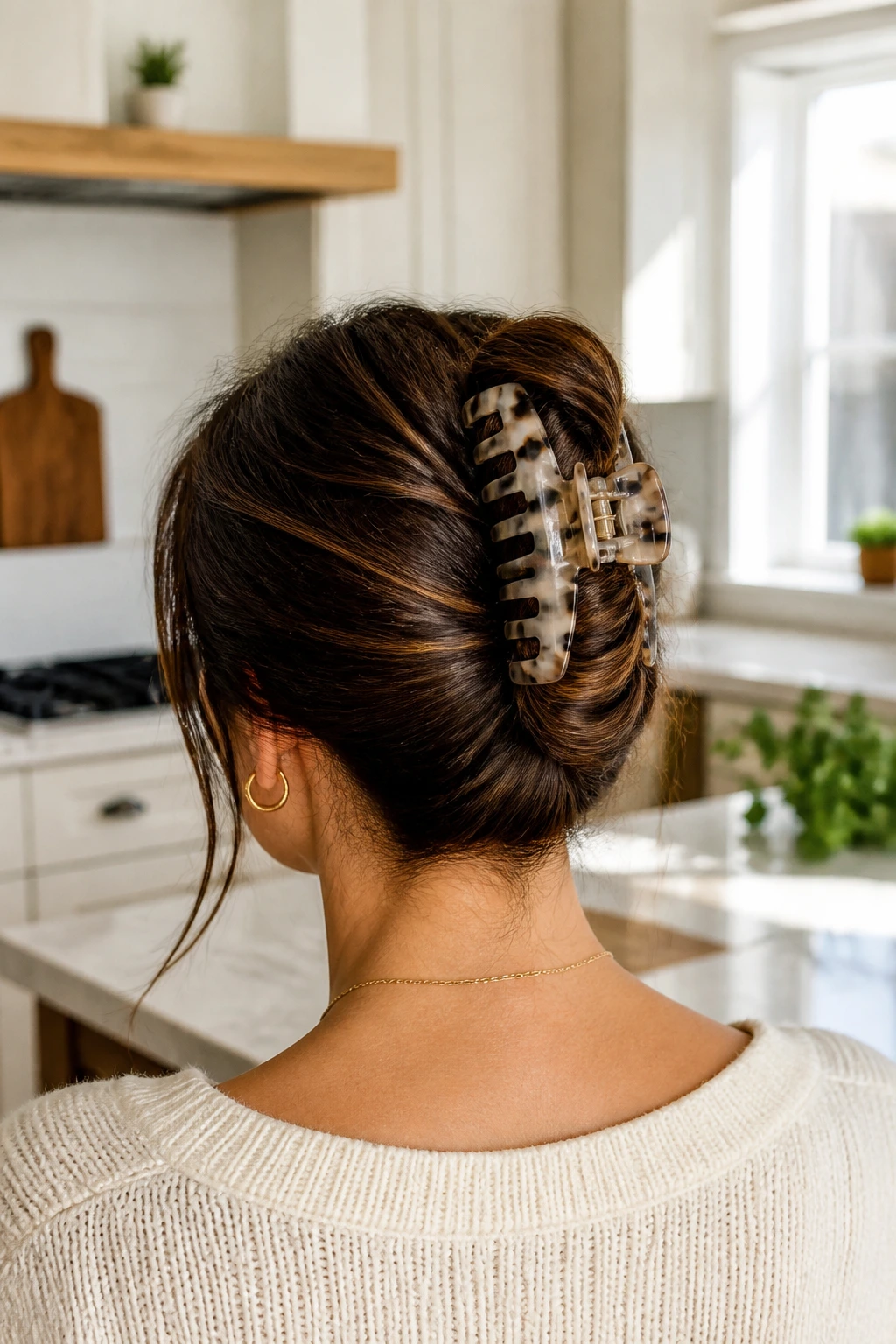
You know those mornings when your hair wants to be everywhere at once? That’s a claw-clip French twist day. Twist the length upward, fold the ends down, and pin the whole thing with a 4- to 5-inch clip that actually has the grip for thick hair. Tiny clips are decorative. Big clips do the work.
This style lives on tension and shape, which thick hair has in abundance. You do not need perfect slickness. A little volume at the crown is fine, even better sometimes, because it keeps the twist from looking flat against the head. Leave a few shorter pieces out around the hairline if your layers are stubborn.
The cleanest version takes about 2 minutes. The best version takes 30 seconds and still holds. If the twist feels too bulky, split the hair into two sections, twist each section separately, and stack them before clipping. That keeps the weight distributed instead of creating one giant lump at the back of your head.
5. Low Messy Bun With a Soft, Loose Crown
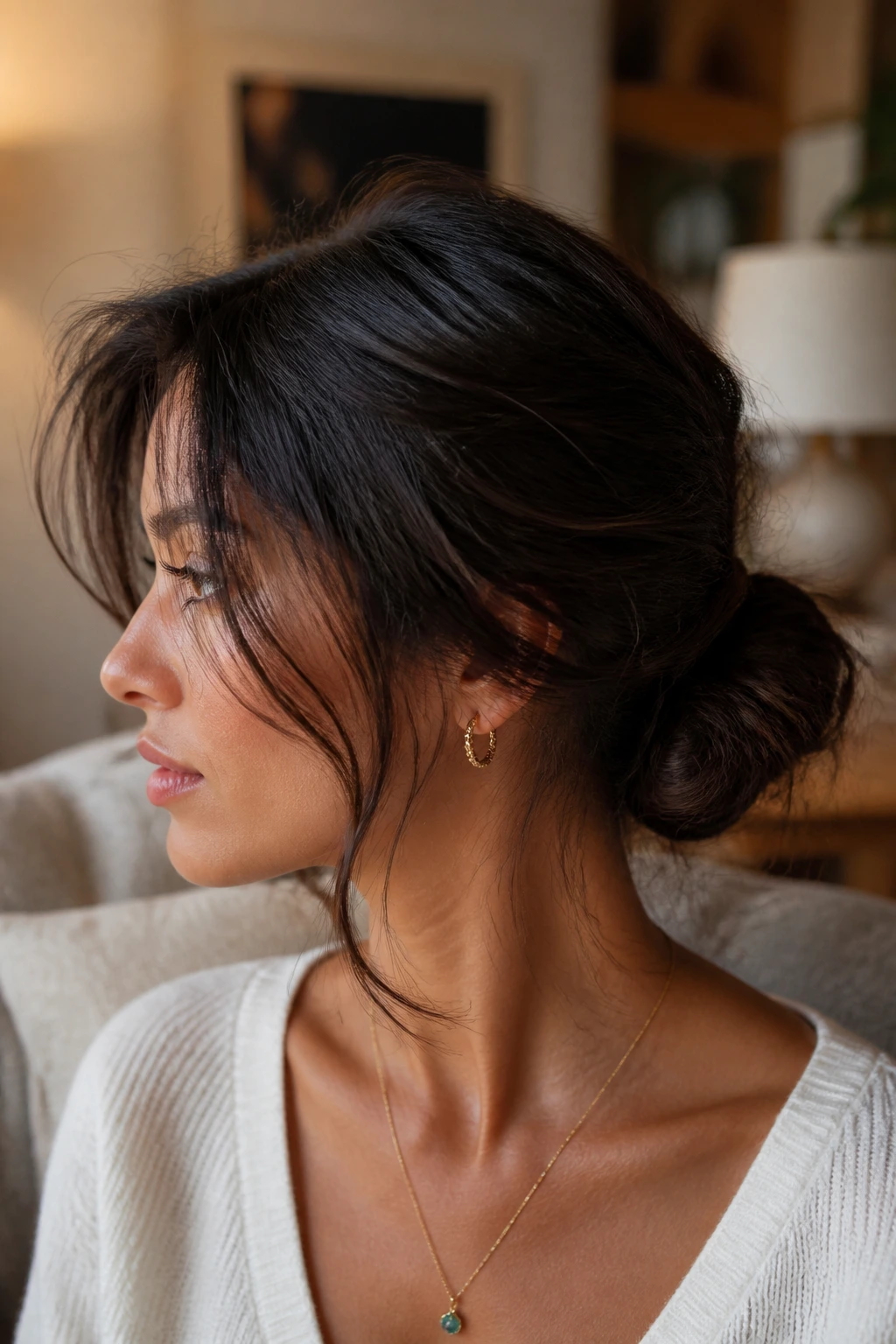
A low messy bun is the easiest place to put thick hair when you do not want to think about it. The trick is to keep it low and slightly loose, not smashed into a tiny knot that gives you a headache by lunch. Thick hair makes a better bun when the shape is allowed to breathe.
Start with a low ponytail, twist once or twice, wrap it around itself, and secure it with a coil tie or two bobby pins. Then pull a little at the crown and the sides so the bun sits softly instead of looking tight and severe. The whole thing should feel secure but not lacquered down.
This is one of the few styles that gets better if you are not too precious with it. A bit of texture, a few loose ends, and a little volume around the face make it look deliberate. Thick hair gives you that built-in richness, so use it.
6. High Ponytail With a Wrapped Base
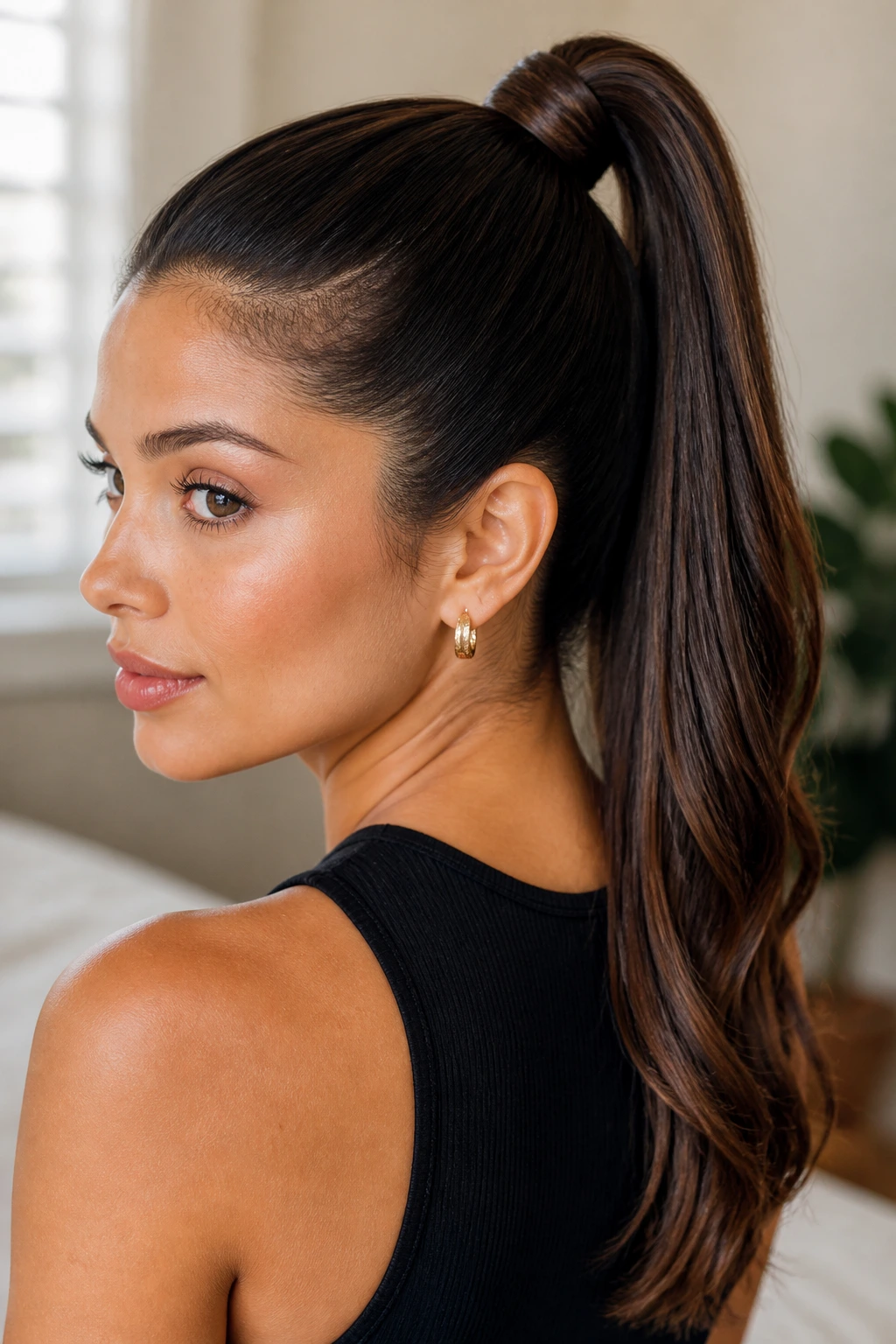
A high ponytail on thick hair can look sleek, athletic, and surprisingly polished if the base is wrapped properly. The wrapped section hides the elastic, and the higher placement keeps all that weight off your neck. On warm days, that alone is worth the effort.
Brush the hair up with a boar-bristle or mixed-bristle brush, secure it with a strong elastic, then take a thin strand from underneath and wrap it around the base. Pin the wrap under the ponytail with a bobby pin. That tiny step makes the whole thing feel finished instead of rushed.
If your hair is very dense, don’t yank the ponytail straight up and call it done. Smooth it in sections so the sides stay neat and the crown doesn’t bulge in odd places. A little smoothing cream or a dime-size amount of serum on the outer layer is enough. More than that and the pony starts slipping.
7. Half-Up Claw Clip Style
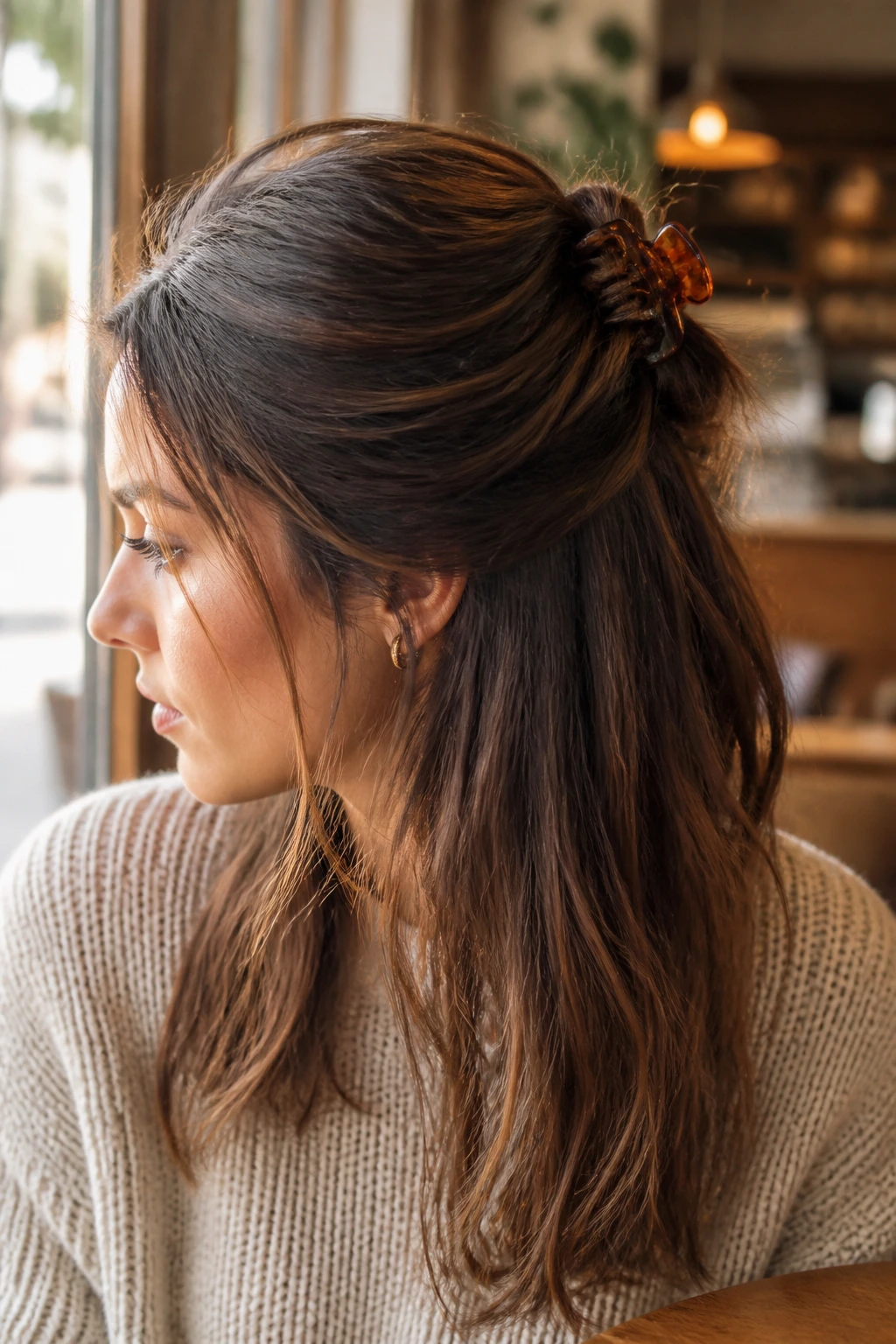
Half-up hair is one of the best low-maintenance moves for thick hair because it gives you the control of an updo without sacrificing all the volume. The top section stays out of your face, the bottom half keeps its weight and movement, and the overall effect looks more deliberate than it actually is.
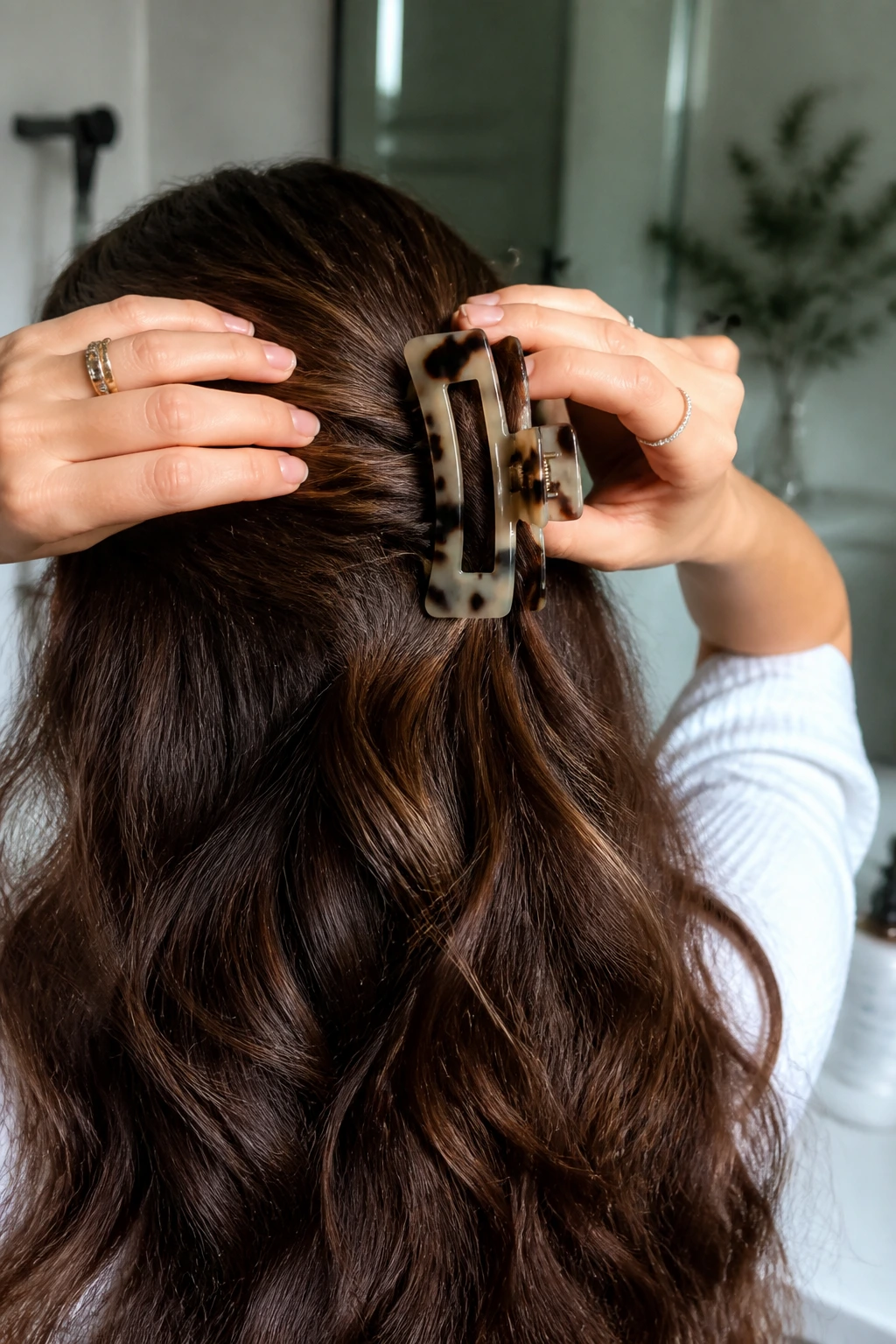
The claw clip version works especially well when your hair is too dense for a tiny half-up knot. Gather the top third of the hair from temple to temple, twist it once, and clip it. Let the ends fan out or tuck them under depending on how much length you’re working with. Both look fine.
This style is good for hair that’s clean, second-day, or somewhere in between. If the top is too slick, add a little dry shampoo at the roots. If the clip keeps sliding, rough up the section first with your fingers instead of trying to force it into place with a brush.
8. Bubble Braid Down the Back
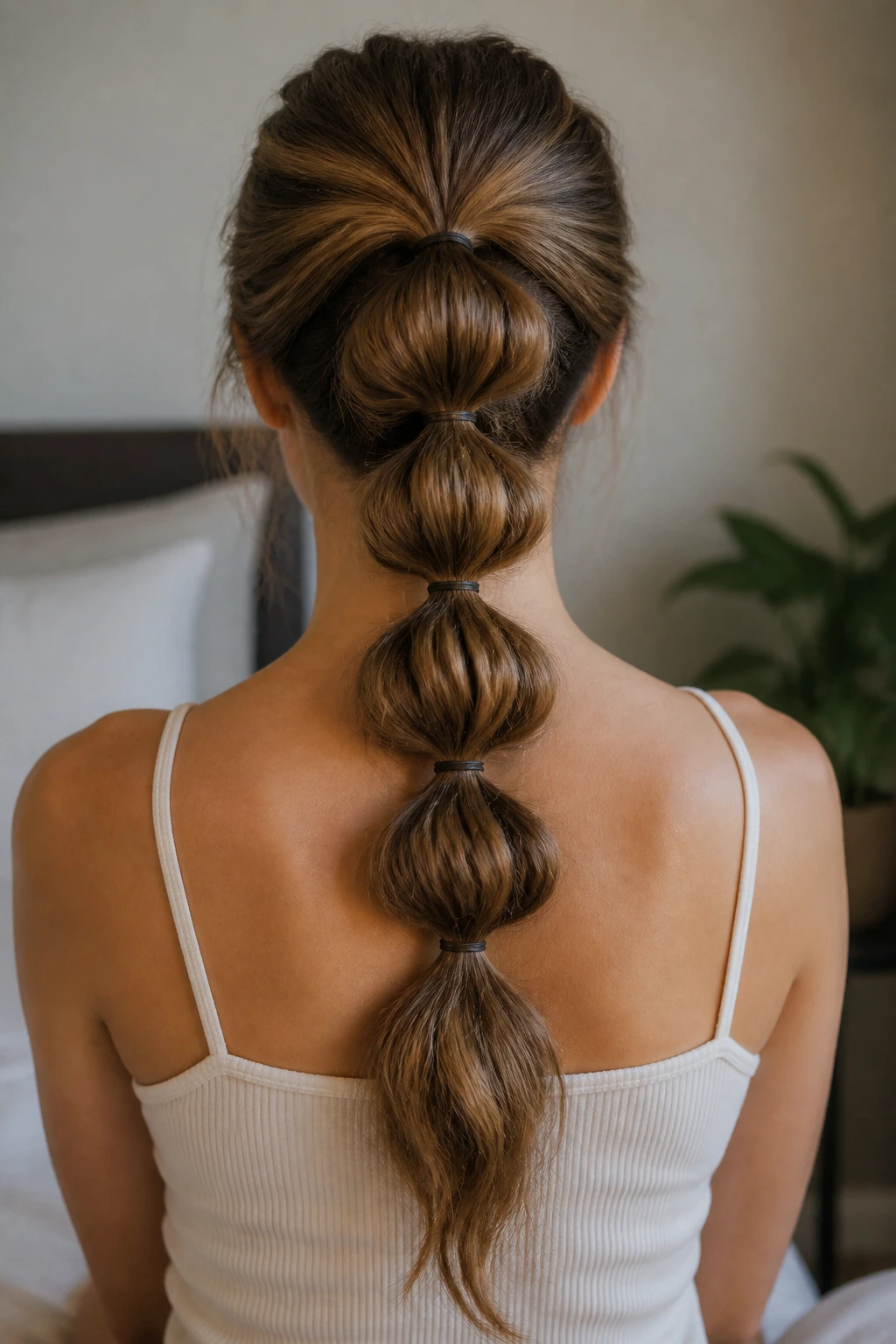
A bubble braid looks fancier than it is, which is one of my favorite things a hairstyle can do. You make a single ponytail, add elastics every 2 to 3 inches, then gently pull each section outward so it forms rounded “bubbles.” Thick hair gives those bubbles structure, so they don’t collapse into skinny little puffs.
Why this one earns a spot: it contains a lot of hair without needing the precision of a traditional braid. If your hands are not in the mood for fishtail patience, this is the easier route.
What you need:
- 4 to 6 clear elastics
- a smoothing brush
- one extra elastic for the base ponytail
What to watch for: If your hair is layered, some shorter pieces may poke out. That’s fine. A tiny mist of water or styling spray on the outer layer keeps the braid from frizzing apart before lunch.
Best use: school runs, workouts, long travel days, or any time you want a style that can get tossed around and still look interesting.
9. Loose Dutch Braid That Holds All Day
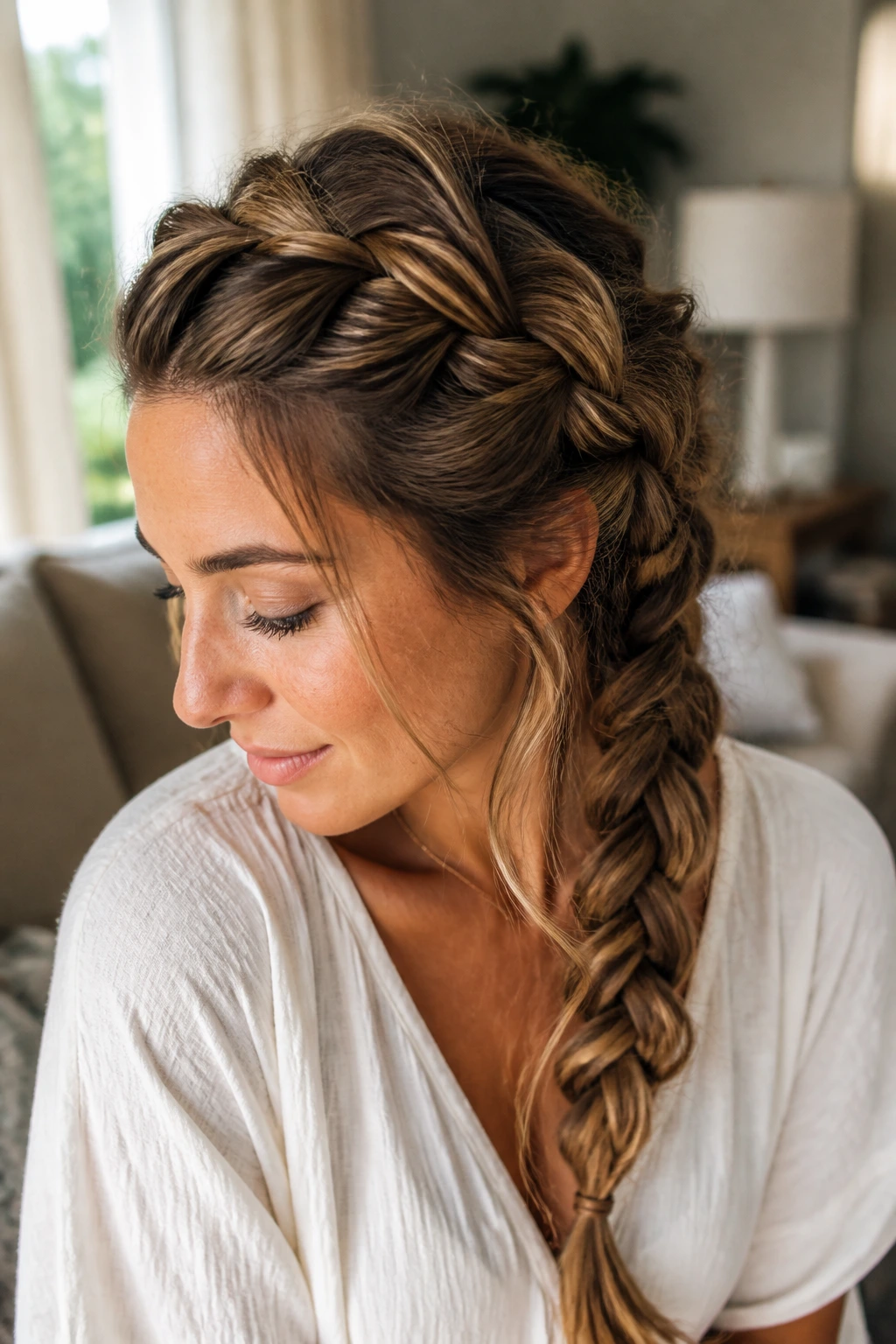
A loose Dutch braid is basically thick hair with a seatbelt. It keeps everything in place, but it also leaves enough volume at the braid edges to look full instead of tight and skimpy. Because the braid sits on top of the hair rather than sinking into it, the shape shows up nicely on dense strands.
Start at the crown, take three sections, and braid under rather than over. Keep the grip firm at the top and relaxed as you move down. Once the braid is secured, pinch the outer edges a little to widen it. That “pancaking” step makes thick hair look plush instead of compressed.
If you want a braid that survives a full day without redoing it, this is one of the safest bets. It’s also a decent sleep style if you braid it low and keep the tension soft. Just do not braid it so tightly that the scalp feels pulled. Thick hair already has weight; the braid doesn’t need to add pain.
10. Sleek Low Ponytail at the Nape
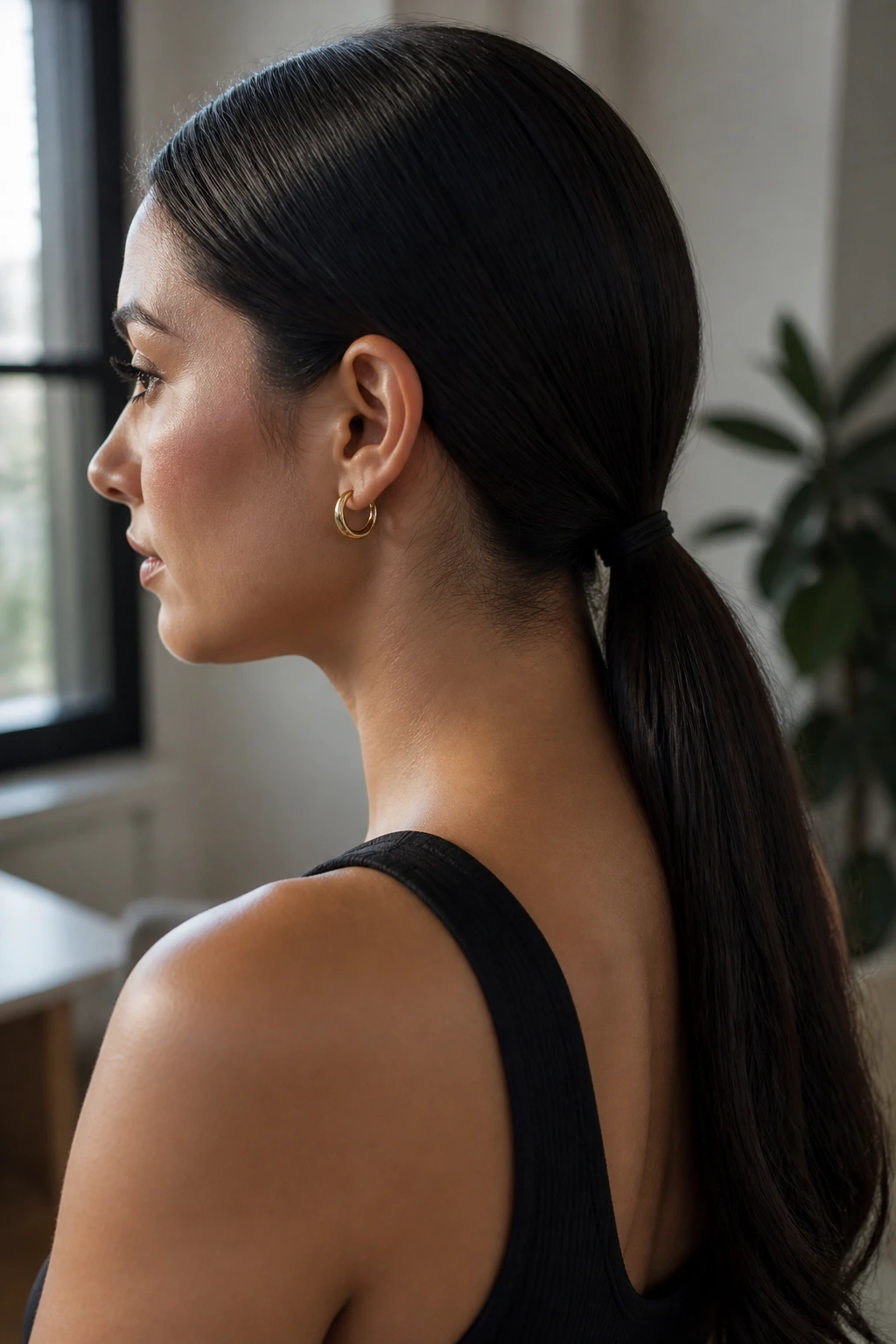
Sometimes thick hair is loud enough. A sleek low ponytail gives it a clean frame without trying to tame every inch of volume. The pony sits at the nape, the hair falls in one heavy line, and the whole style reads calm instead of fussy.
The key is prep. Smooth the top with a brush, use a pea-size amount of cream or serum on the outer layer, and gather the hair low and centered. If your hair has a lot of layers, you may need to secure the pony with one elastic, then add a second elastic just below it so the weight doesn’t pull the first one loose.
This style works best when the ends are healthy and the shape is blunt enough to fall well. It’s not the style for ragged ends or uneven trims. But when it’s done right, it looks polished with almost no visible effort, which is the whole appeal.
11. Air-Dried Wavy Layers With a Bit of Cream
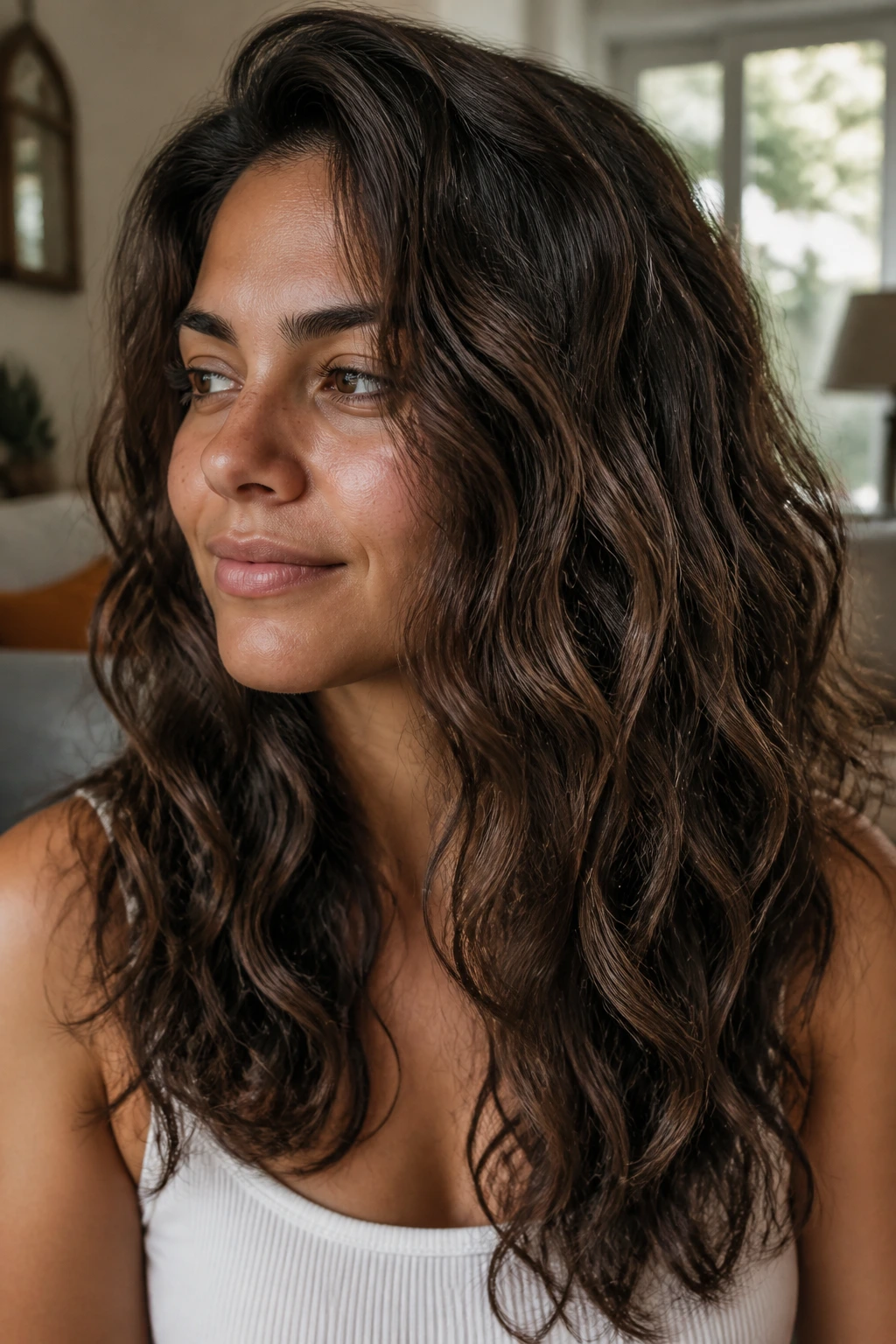
If your thick hair already wants to bend and wave, don’t bully it straight every time. Air-dried layers can be one of the easiest looks in the whole bunch, especially when the cut is doing the shape work and the product is only there to keep frizz in check. A small amount of leave-in cream or mousse is enough.
The trick is to scrunch once, maybe twice, and stop touching it. Thick waves get bulky when they are overhandled. If you want more definition, twist two front sections away from the face while the hair is damp and let them fall on their own. That gives you softer framing without heat.
This style is strongest on hair that lands somewhere between wavy and loose curly. Straight thick hair can wear it too, but it needs more help from a bendy cut or overnight braids. Either way, the point is the same: let the hair dry into its own pattern instead of trying to force a uniform look.
12. Curtain Bangs With Long, Thick Length
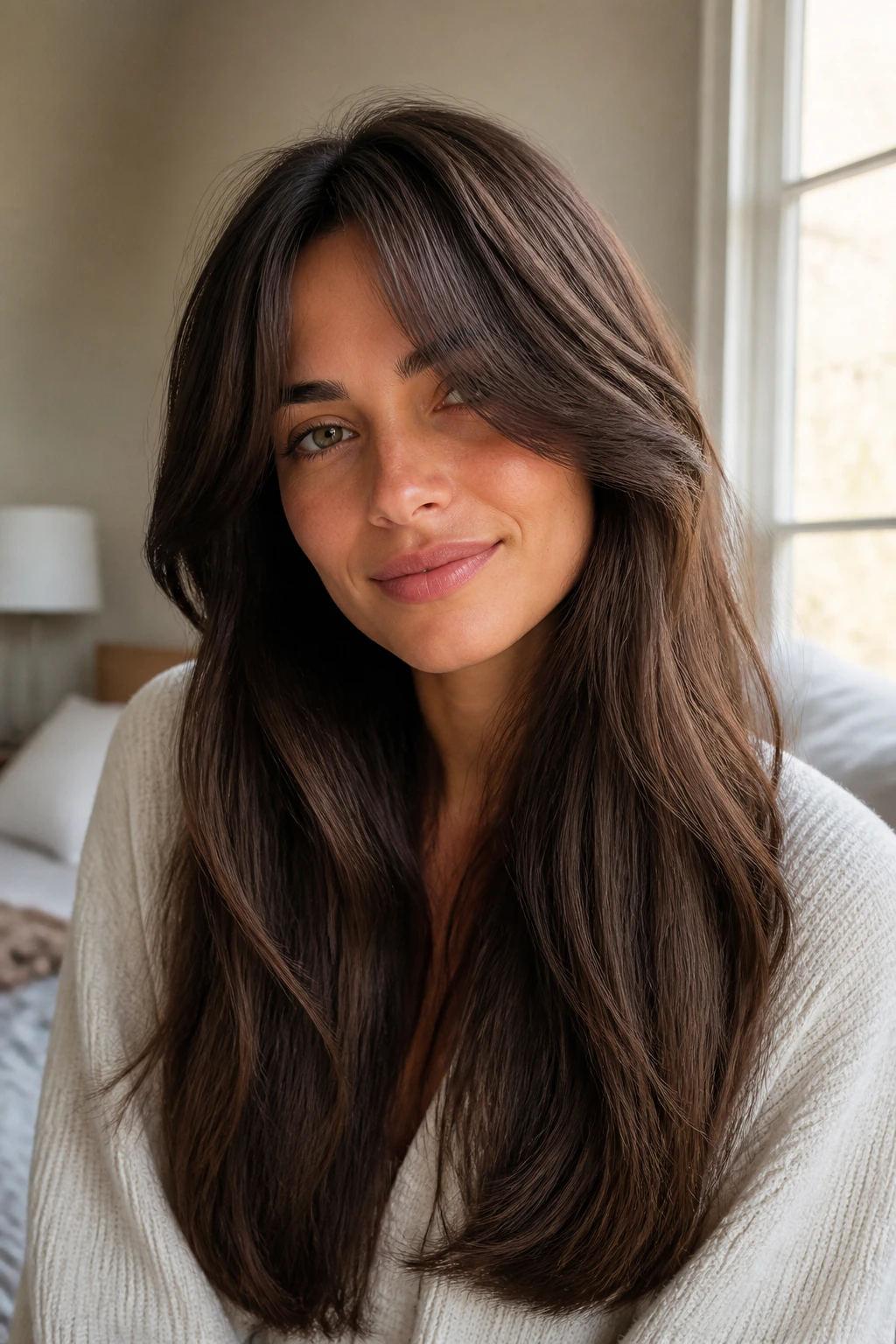
Curtain bangs are one of the few fringe styles that make thick hair feel lighter without demanding a full styling routine every morning. They split down the middle, curve away from the face, and blend into the rest of the length instead of sitting there like a separate project. That matters.
The best version on thick hair is a soft one. You want enough length to sweep back with fingers, not such a short fringe that you have to round-brush it every single day. A quick blow-dry with a round brush or even a velcro roller for a few minutes is usually enough to set the shape.
They do need trimming more often than the rest of the hair. Bangs grow fast on thick hair because there’s so much of it, and once they start hitting the eyelashes awkwardly, the whole front falls apart. Still, if you like the feeling of having a face frame without styling the whole head, these are worth the upkeep.
13. Twisted Half-Up Crown
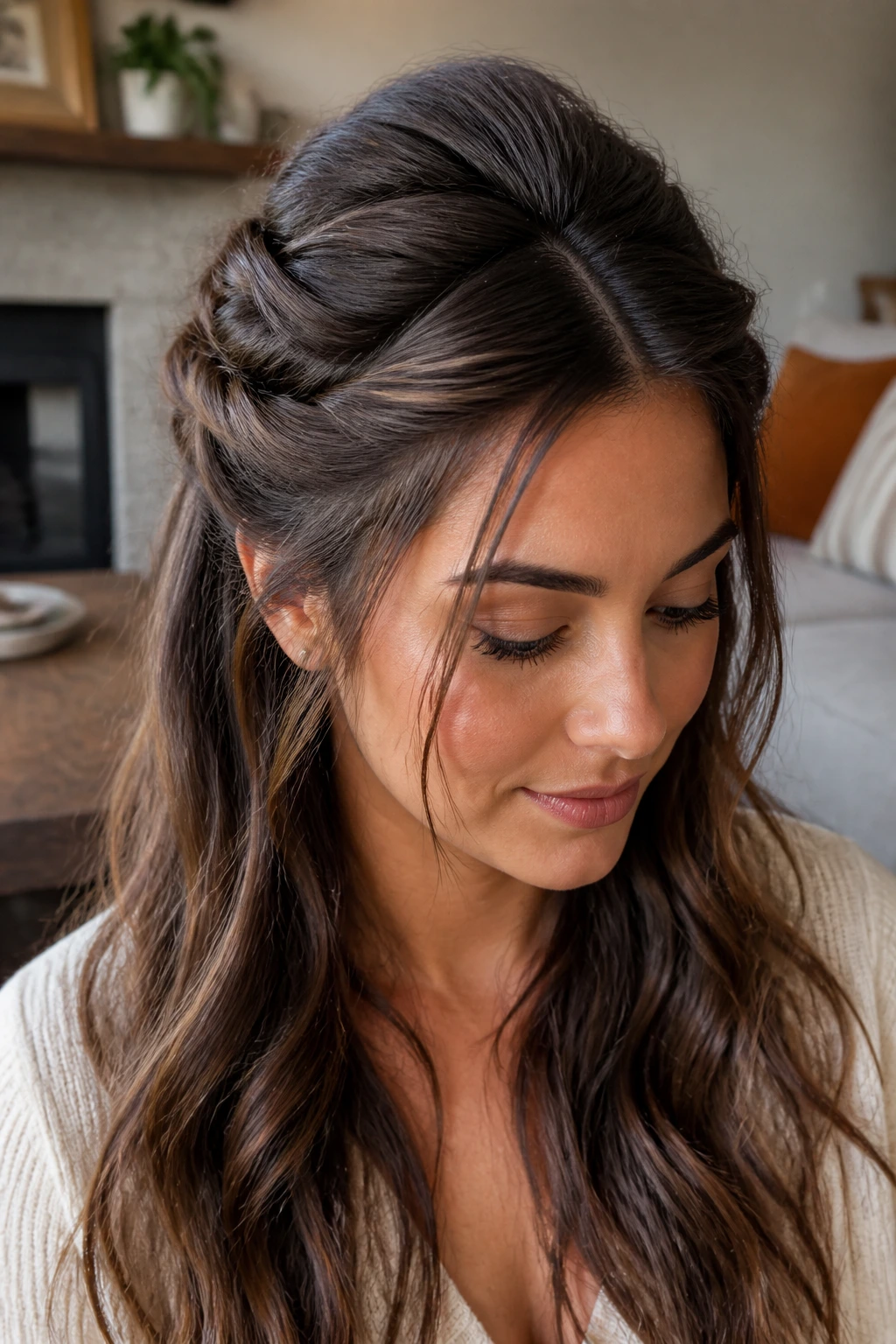
This is the hairstyle you do when you want the front of your thick hair out of your face but do not want the commitment of a full updo. Take one section from each side, twist them back, and pin them together at the crown. That’s the whole idea, and it works because the twists anchor the volume without crushing it.
It’s especially useful for hair with shorter layers around the face. Those pieces tend to escape braids and clips, but a twist catches them more naturally. You can leave the rest of the hair straight, wavy, or air-dried. The top does the polite thing, and the bottom keeps its weight.
For a softer finish, tug the twists a little after pinning. That widens them and hides the pins. If your hair is slippery, cross two bobby pins in an X rather than using one. Thick hair can yank a single pin loose faster than you’d think.
14. Crown Braid That Keeps Hair Off Your Face
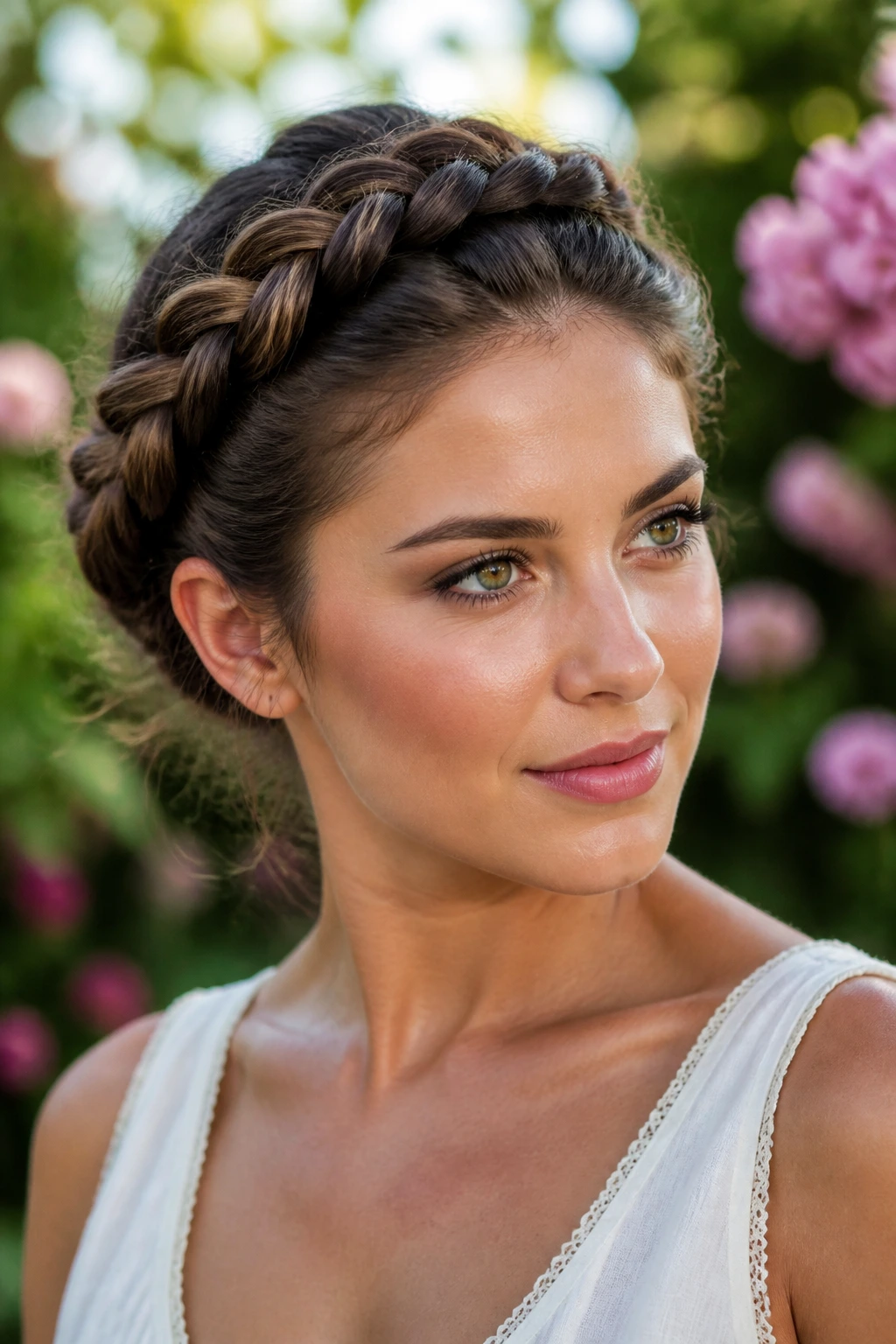
A crown braid is one of those styles that looks way more complex than it feels once you know the rhythm. Thick hair actually helps here because the braid has enough substance to trace around the head without collapsing into a skinny rope. It stays put, and it keeps the sides controlled.
The braid can wrap all the way around or start from one temple and travel to the other side like a headband. Either way, use your fingers to loosen the braid after you finish so it sits fuller and softer against the head. That little pull makes a huge difference on dense hair.
This is a good option when you want a style that can survive wind, movement, and a long day. It also keeps face-framing layers in line without needing spray everywhere. If the braid gets messy at the nape, tuck the ends under with a couple of pins and stop fussing. The less you touch it, the better it usually looks.
15. Deep Side Part With One Side Tucked
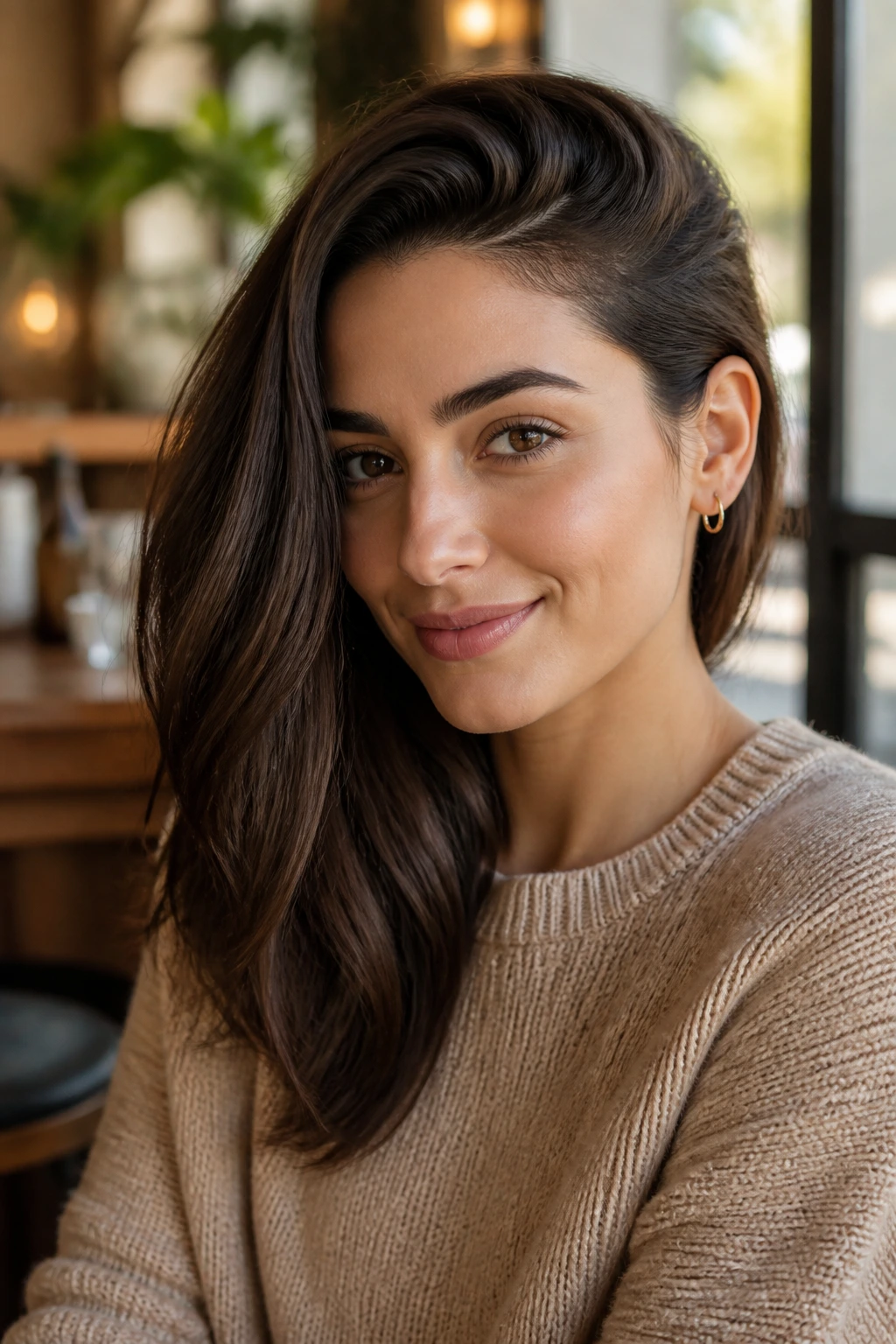
A deep side part is the lowest-effort style in the bunch, and it earns its spot because thick hair usually looks good with a little asymmetry. Shift the part several inches over, let the hair fall with its natural body, and tuck one side behind the ear or pin it back with a small clip.
That simple move changes the whole shape of the face. It can soften a square jaw, open up the forehead, and make heavy hair feel less like one wall of volume. On straight thick hair, it looks sleek. On wavy thick hair, it looks relaxed and a little old-school in a good way.
If your hair fights a deep part, set it while the roots are damp and let it dry that way. A flat brush at the roots and a tiny bit of spray can help. But honestly, this is the style that proves you do not always need a full restyle. Sometimes a part change is enough.
16. Textured Top Knot With a Soft Finish
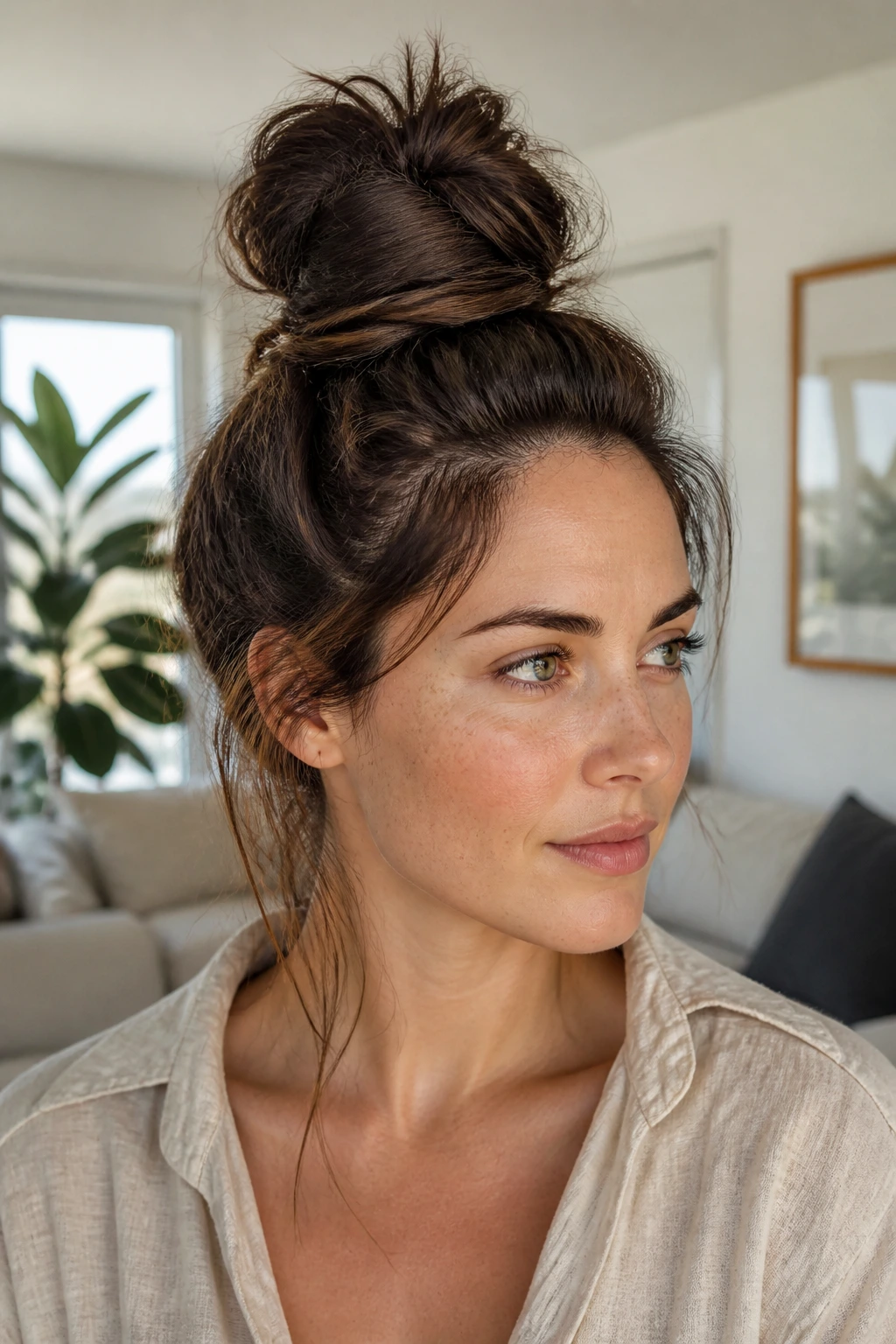
A top knot can either look like a rushed afterthought or like the smartest thing you did all day. On thick hair, the textured version is the better one. Pull the hair to the crown, twist it into a knot, and leave a little looseness so the bun has shape instead of sitting like a tight knob.
The reason it works is the same reason thick hair can be annoying in the first place: there’s enough of it to create height and hold. You can get away with a bigger knot and a softer base. If you need extra security, use a second elastic around the bun or a couple of pins hidden underneath.
Do not smooth it so much that every line disappears. A bit of lift at the crown and a few stray pieces around the temples make the style look lived-in rather than overworked. That’s the sweet spot. It should feel thrown together, but not by accident.
17. Low Chignon With a Clean Twist
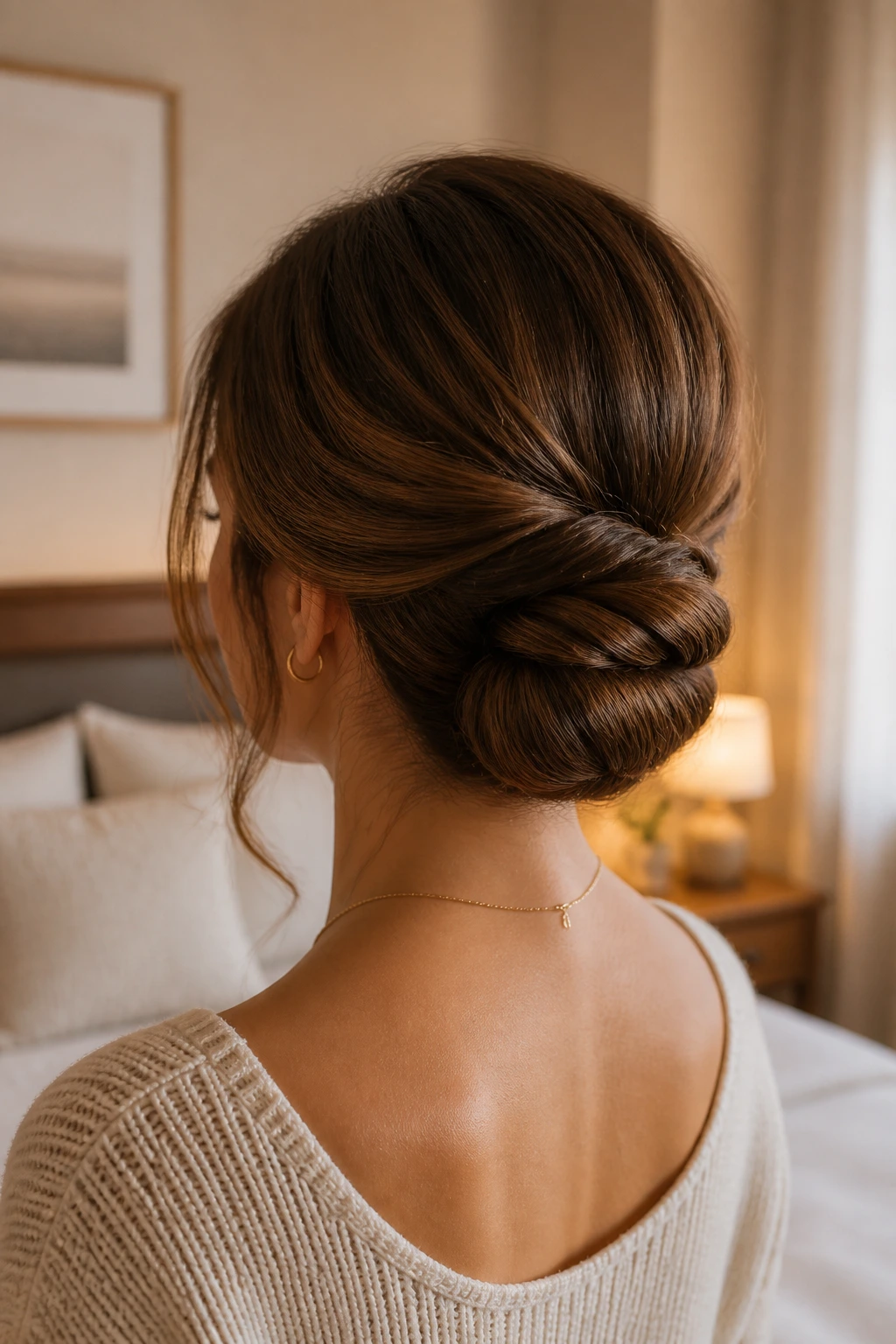
The low chignon is the version of a bun that looks calm and almost formal without asking for much beyond a few pins. Thick hair gives it body, so it does not need padding or a complicated base. Wrap the hair into a low knot at the nape, tuck the ends underneath, and pin the shape until it feels solid.
This is one of the best styles for long, dense hair that tends to escape from higher buns. Keeping it low spreads the weight more comfortably, and the nape placement makes the shape look neat. If your hair is layered, section the ends into two coils before tucking them. That prevents the bun from getting lumpy.
A chignon does not need to be glassy or perfect. In fact, a few soft edges make it better. If the hair is freshly washed and too slippery, sprinkle a little dry shampoo at the roots first. The grip helps the pins stay where you put them.
18. Rope-Braid Ponytail
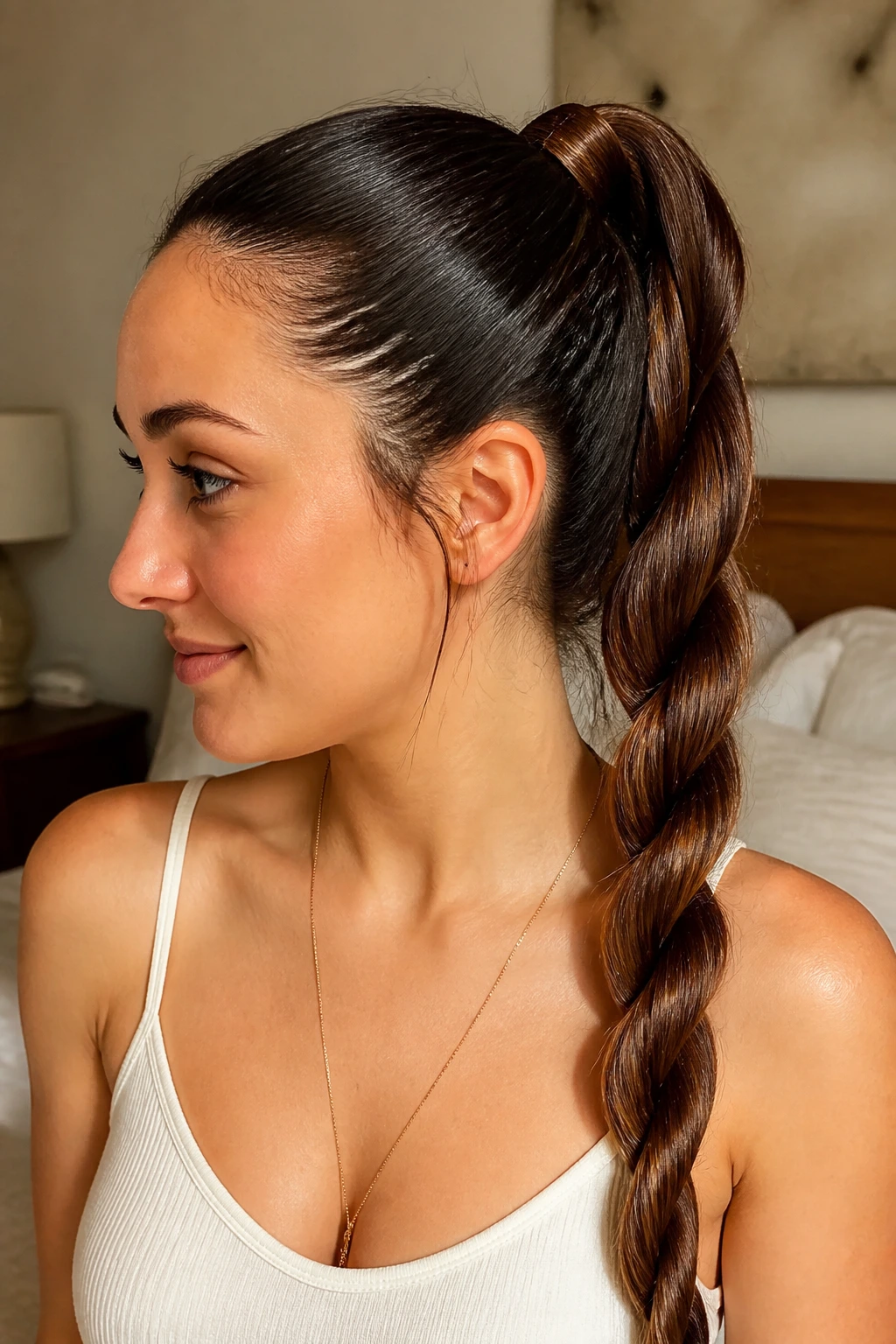
A rope braid is what happens when you want a braid look but do not want to think like a braider for ten minutes. Pull the hair into a ponytail, split it into two sections, twist each section in the same direction, then twist them around each other in the opposite direction. Secure the end. Done.
Thick hair makes this style look fuller than a standard three-strand braid with less effort. The rope twist has clean lines, and because it’s based on twist tension rather than repeated weaving, it goes fast. It’s a nice choice when your hands are clumsy in the morning but you still want something that looks structured.
A dab of smoothing cream on the ponytail before twisting helps the strands cooperate. If the rope starts unraveling at the bottom, your sections were probably too loose or twisted in the same direction too weakly. Keep the twists tight and even. That’s the whole game.
19. Braided Crown Into a Bun
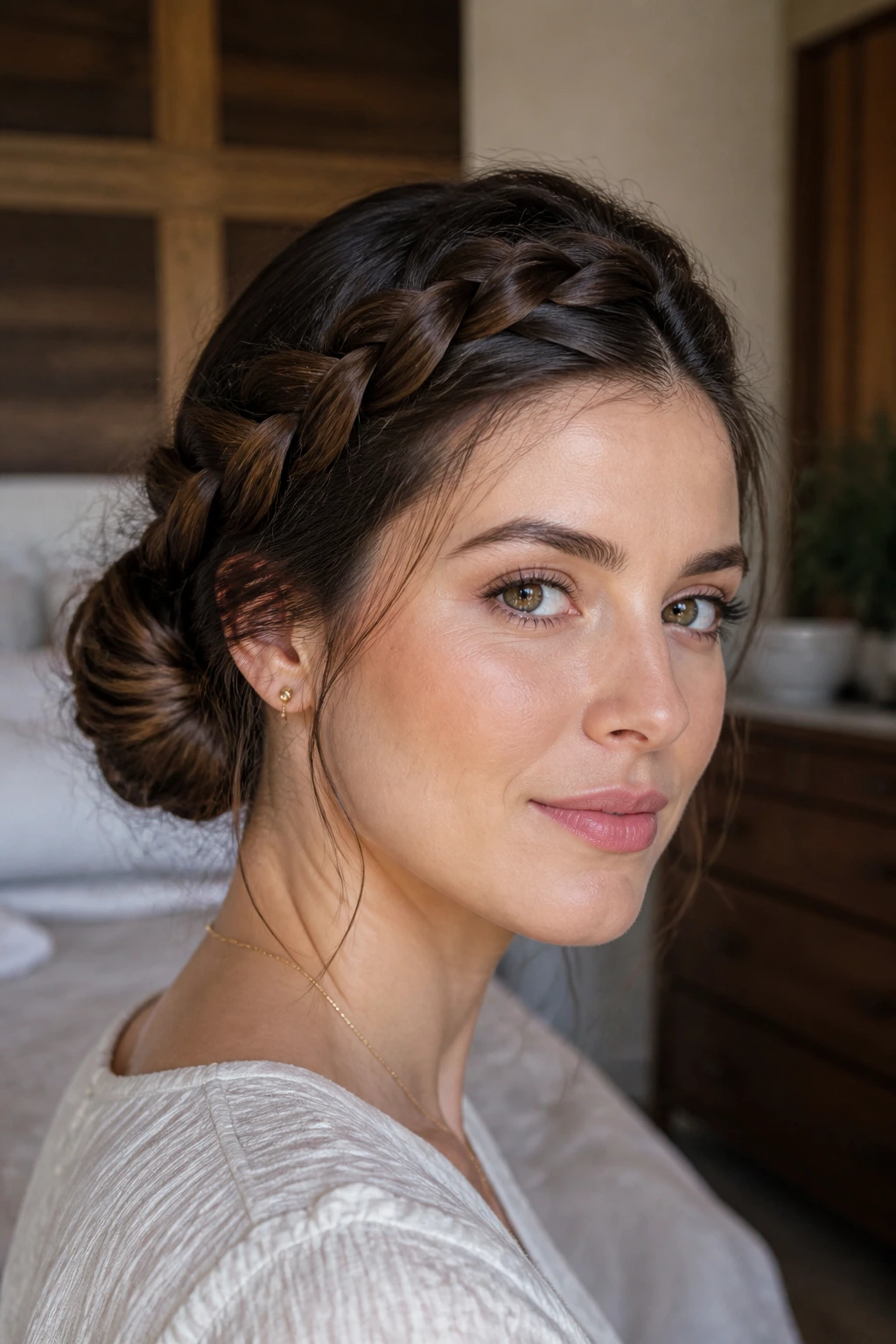
This style is for the days when you want the hair completely out of your face but still want a little shape around the head. Start with a braid along the hairline or temple, carry it across like a crown, then gather the remaining length into a low bun. Thick hair gives both parts enough body to look deliberate.
It takes more time than a claw clip, but not much more if you keep the braid simple and the bun low. The braid frames the face, the bun keeps the weight controlled, and the whole thing holds well because thick hair has enough friction to grip itself.
If your hair is layered, do not panic when short pieces pop out near the braid. That is normal. Pin them down or let a few fall; both work. A style like this looks best when it is not too precious. It should feel secure enough for a full day, not polished enough to fear wind.
20. Double Low Braids
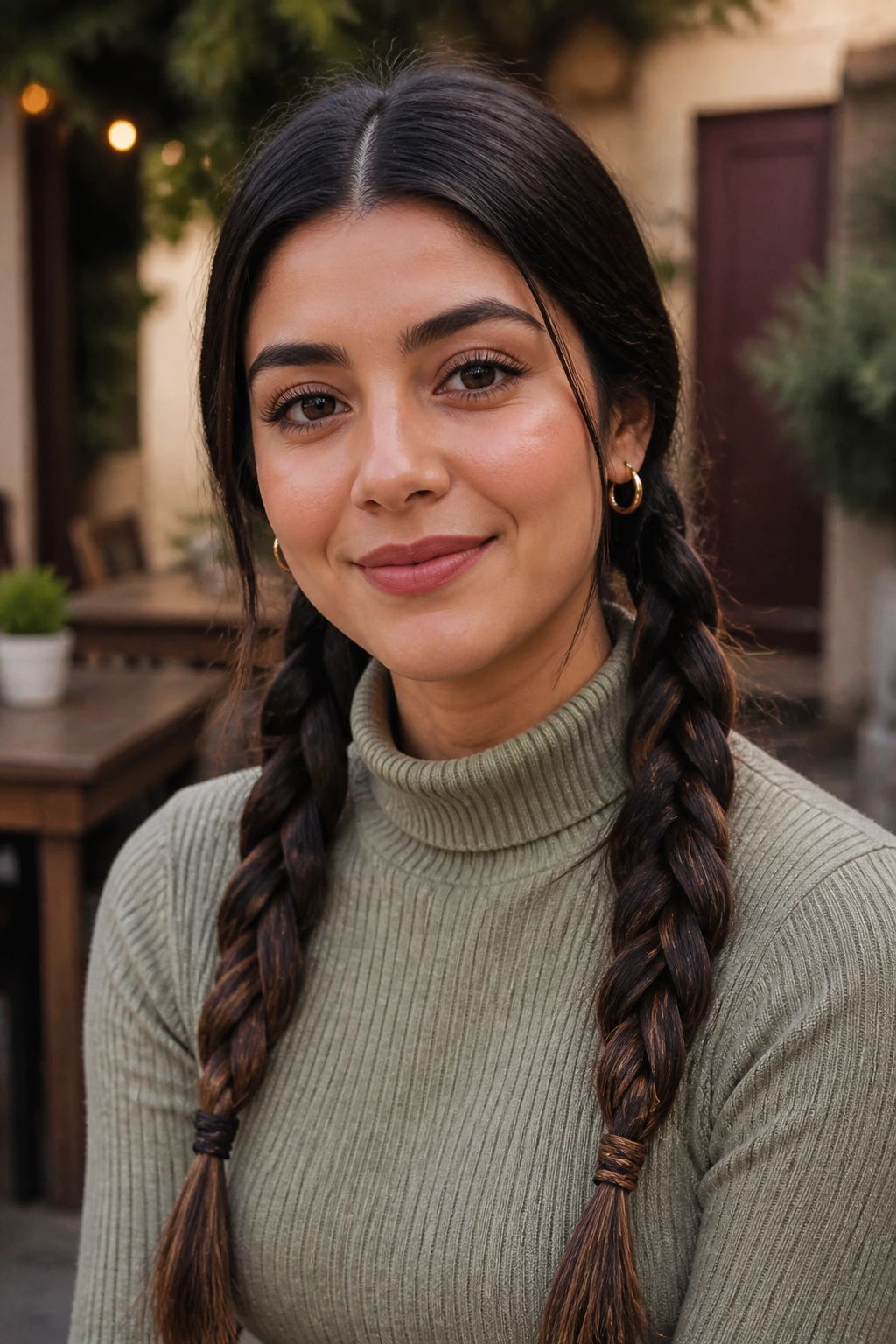
Two low braids are one of the most underrated low-maintenance styles for thick hair. They spread the weight out evenly, keep the ends contained, and stop the hair from turning into a huge tangle at the nape. If you have dense hair that feels heavy in a single braid, splitting it in half can be a relief.
The style can be as neat or as loose as you like. Tight braids read more sporty and stay tidier. Looser braids give a softer look and let the thickness show through. Both are useful, which is why this style hangs around instead of being a childhood-only thing.
A middle part usually looks best, but a side part can soften the whole thing. If your layers are short, anchor the top with a tiny bit of hairspray or clip the shorter bits before braiding. You want the braids to hold without having to rebuild them three times.
21. Face-Framing Pins With Loose Length
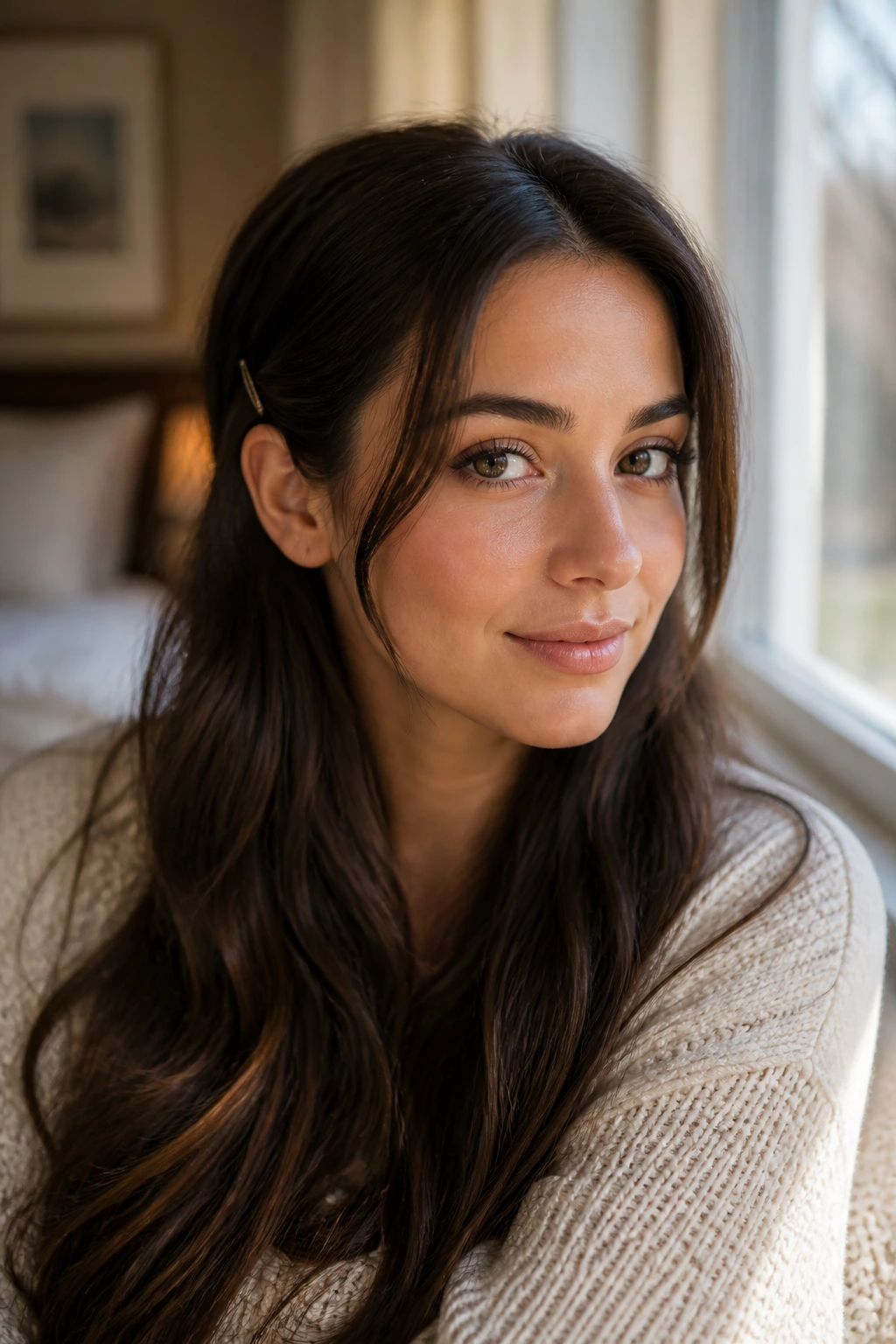
Not every low-maintenance style needs to gather all your hair. Sometimes the smartest move is to leave the length alone and just pin back the front pieces. Thick hair can look very full around the face, and two small clips or bobby pins at the temples can make it feel lighter without changing the whole shape.
This works best when you want a “I made an effort” look in under two minutes. Pull back the front sections, twist them slightly if you want a little texture, and pin them just behind the ear or at the crown. The rest of the hair stays loose and gets to do its own thing.
It is also a nice bridge style between wash day and a full updo. If the front is oily but the lengths still look good, this keeps the style usable. A touch of dry shampoo at the roots helps, but you do not need much. Thick hair already brings enough presence to the frame.
22. Heatless Overnight Waves
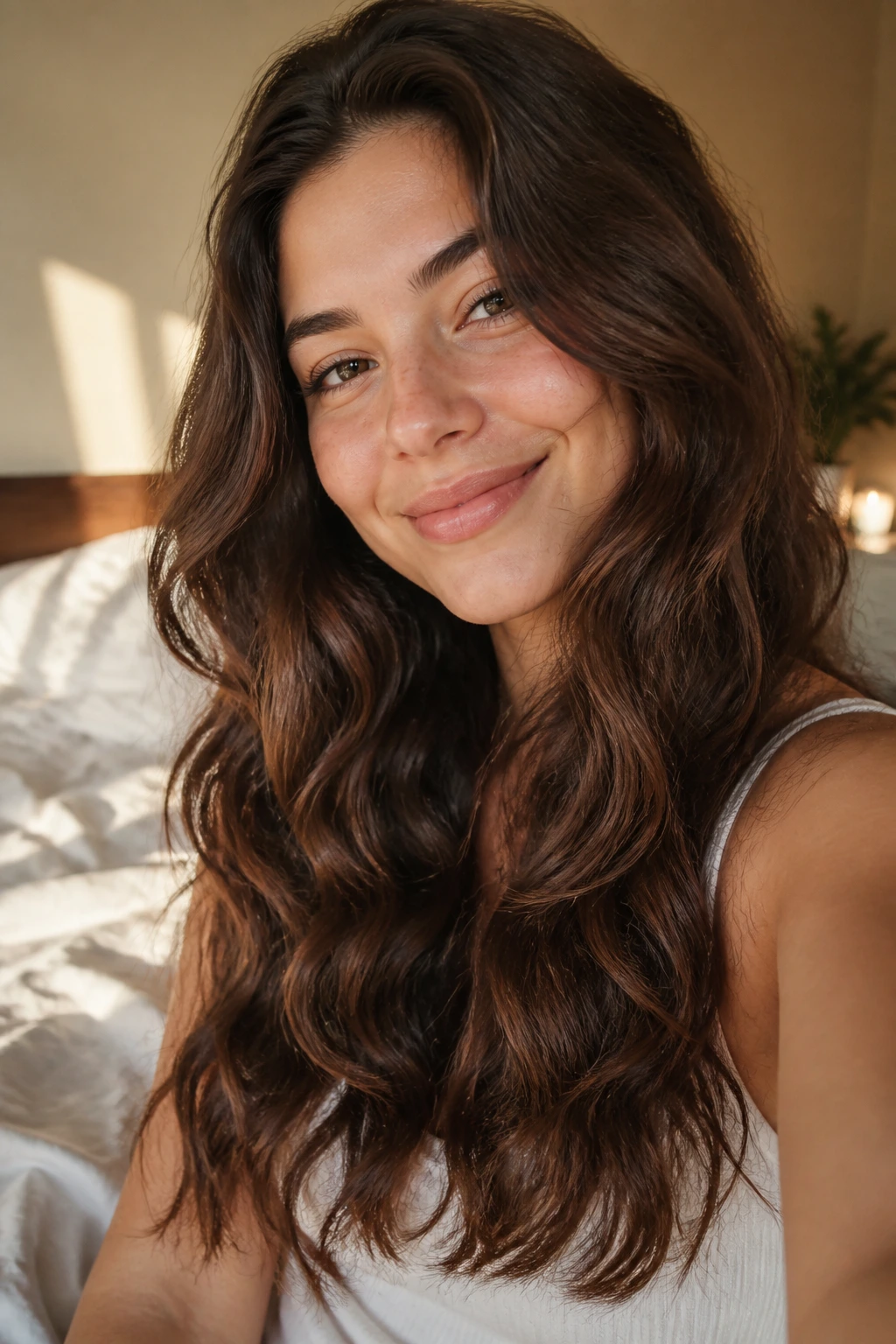
Heatless waves are one of the few styles that actually save time instead of borrowing it from tomorrow. Braid damp hair, twist it into sections, or wrap it around a robe tie before bed. In the morning, take it down, shake it out, and let the hair fall into a shape that already has movement.
Thick hair often holds this style better than finer hair because there’s more mass to keep the pattern intact. The trick is to start with hair that is damp, not dripping. If it’s too wet, you’ll still be waiting for it to dry when the alarm goes off. If it’s too dry, the waves barely set.
A light cream or leave-in is enough. Heavy oil makes the waves collapse into limp bends. If you want more separation, run fingers through the ends only, not from roots to tips. That keeps the top from puffing up.
23. Silk Scarf Tie-Back
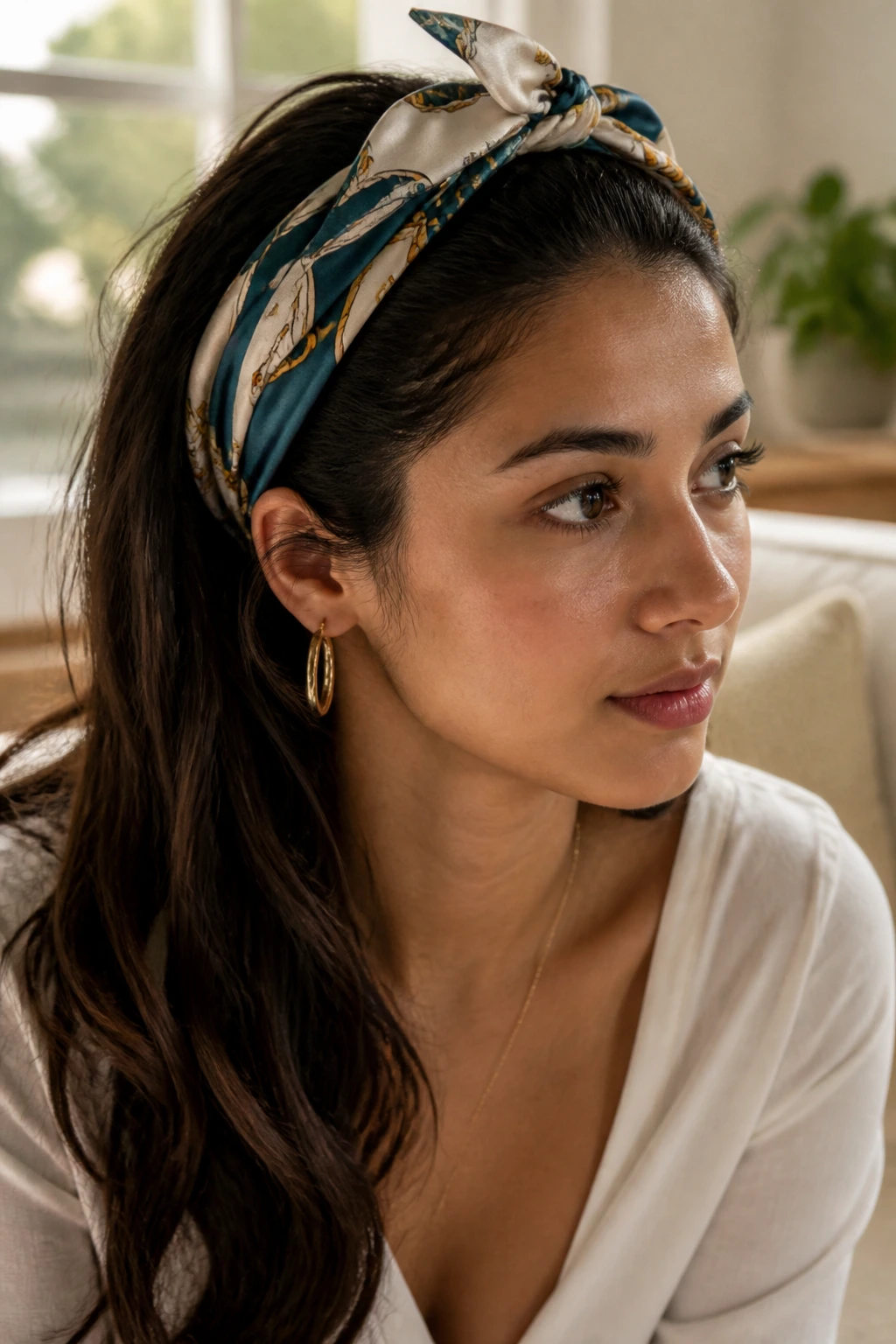
A silk scarf is not a magic wand, but it does make thick hair behave better around the front and sides. Tie it over a loose ponytail, a low bun, or simply around the crown to hold back the pieces that always escape. It’s useful when you want the hair controlled without making the whole style stiff.
This one is especially nice on humid or frizzy days. The scarf smooths the top and gives the style a visible finish, which means you can keep the rest of the hair loose and not worry so much about perfection. You can tie it under the hairline, wrap it as a band, or knot it around the base of a ponytail.
Choose a scarf with enough width to stay put. Tiny, slippery strips slip. A square silk scarf with a little structure holds better and looks more intentional. Thick hair does the heavy lifting underneath; the scarf just keeps the front honest.
24. Pineapple Puff for Curly or Coily Thick Hair
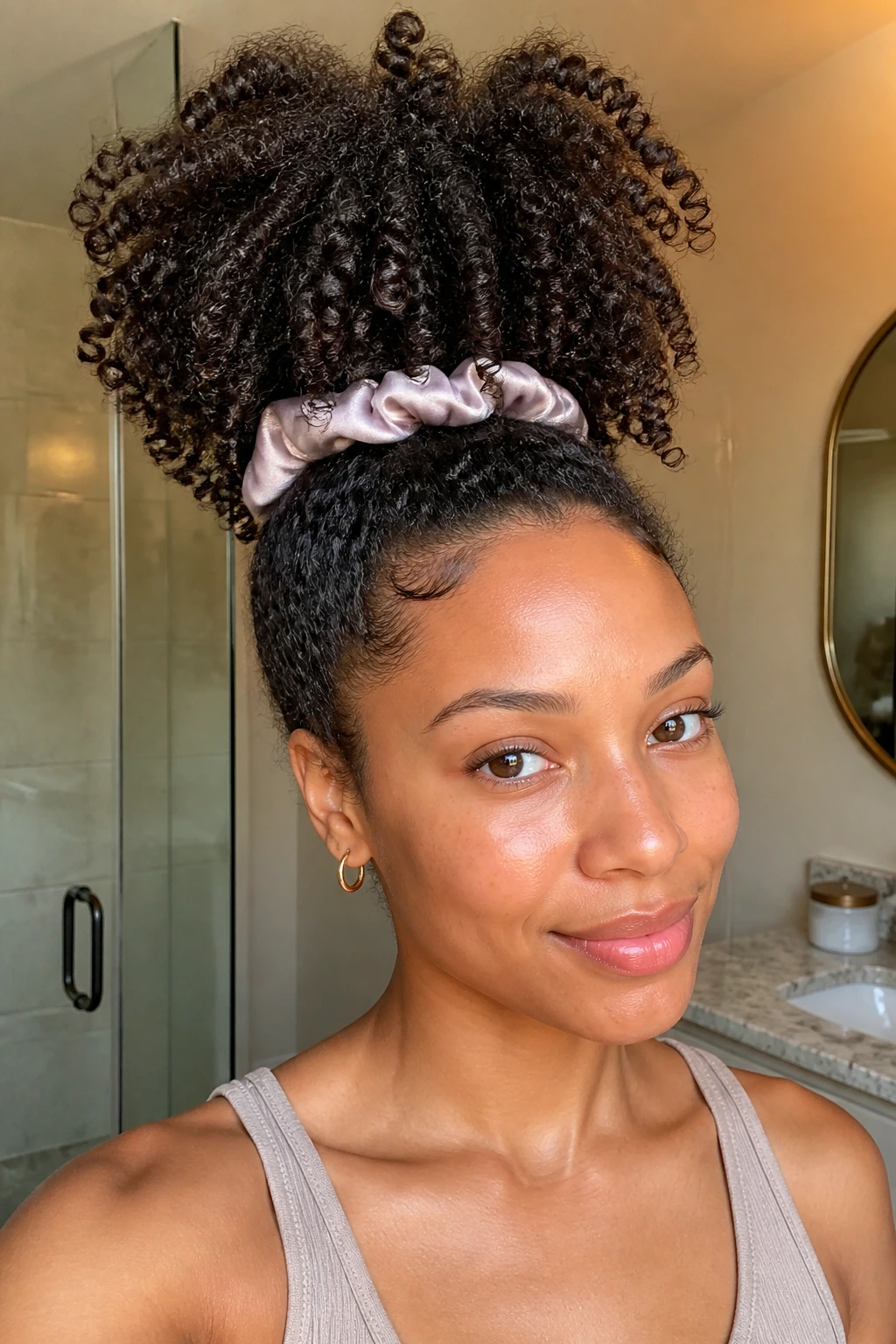
For curly and coily thick hair, the pineapple puff is one of the easiest protective styles around. Gather the hair loosely at the crown with a satin scrunchie or soft tie, let the curls spill upward, and leave the sides and back free. It keeps the shape from getting crushed while still getting the hair up and away from the neck.
This style works because it respects curl pattern. It does not drag the roots flat or force the length into a tight bundle. The higher placement also helps preserve volume overnight if you sleep on a satin pillowcase or in a bonnet. That means less reworking in the morning.
If your hair is very long, you may need two loose sections instead of one to avoid tension at the scalp. Keep the tie soft. The point is lift, not tension. Thick curly hair usually responds better when it’s allowed to float a little.
25. Single Fishtail Braid Down the Back
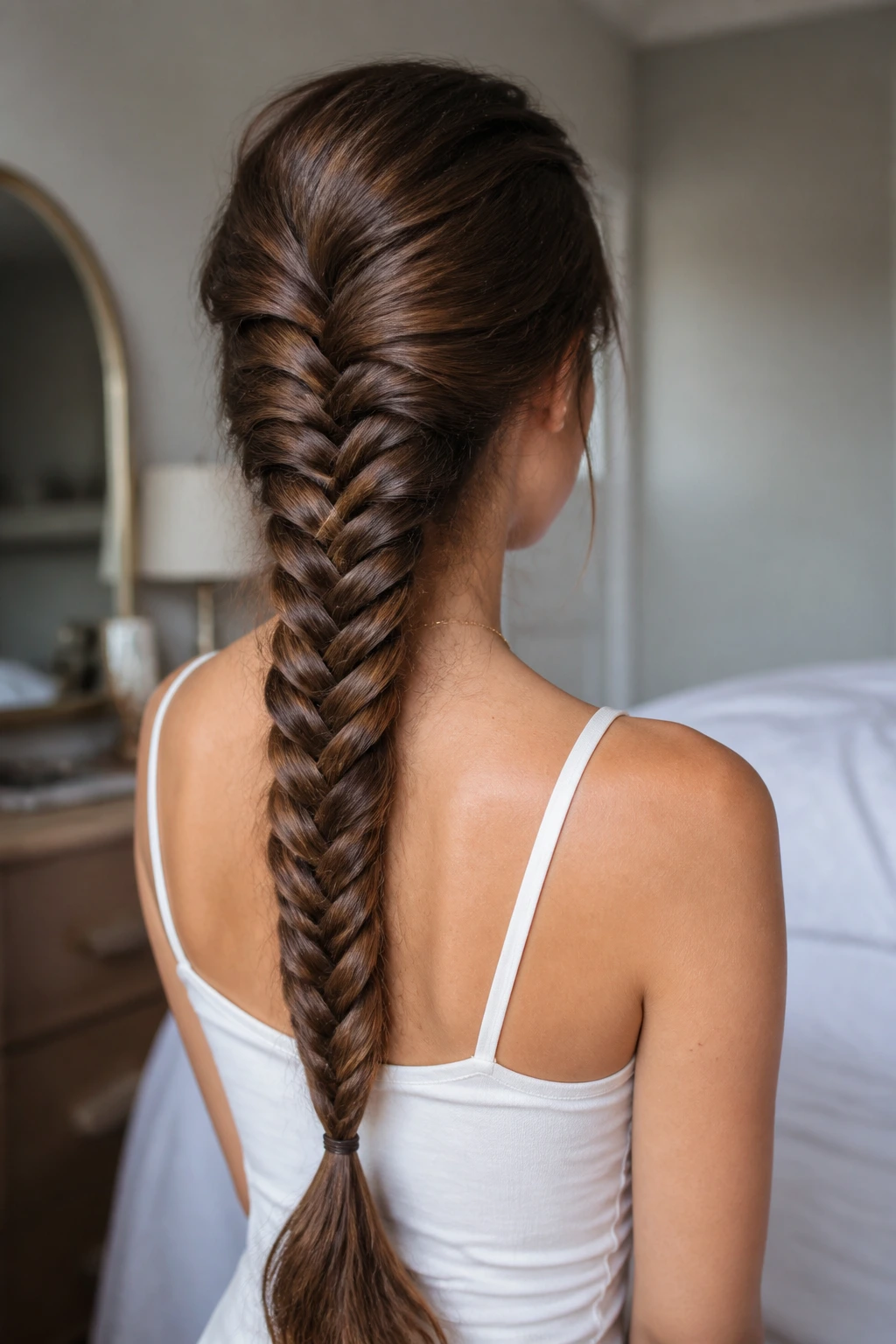
A fishtail braid looks intricate, but it is mostly patience and a steady grip. On thick hair, that matters because the braid ends up with enough volume to show the pattern clearly. You do not need to make the sections tiny unless you want a very narrow braid. A looser fishtail reads softer and takes less time.
Start with two sections, move small outer pieces from one side to the other, and keep going until you reach the end. Once it’s tied off, gently pull the braid wider at the edges. That step makes the braid look fuller and more relaxed, which thick hair handles beautifully.
This is a nice option when you want a style that can go from day to night without a touch-up. It also behaves well on hair that’s slightly gritty from dry shampoo or a day away from wash day. Clean hair can be too slippery. Thick hair with a little texture is usually the better starting point.
Why Thick Hair Loves a Little Structure
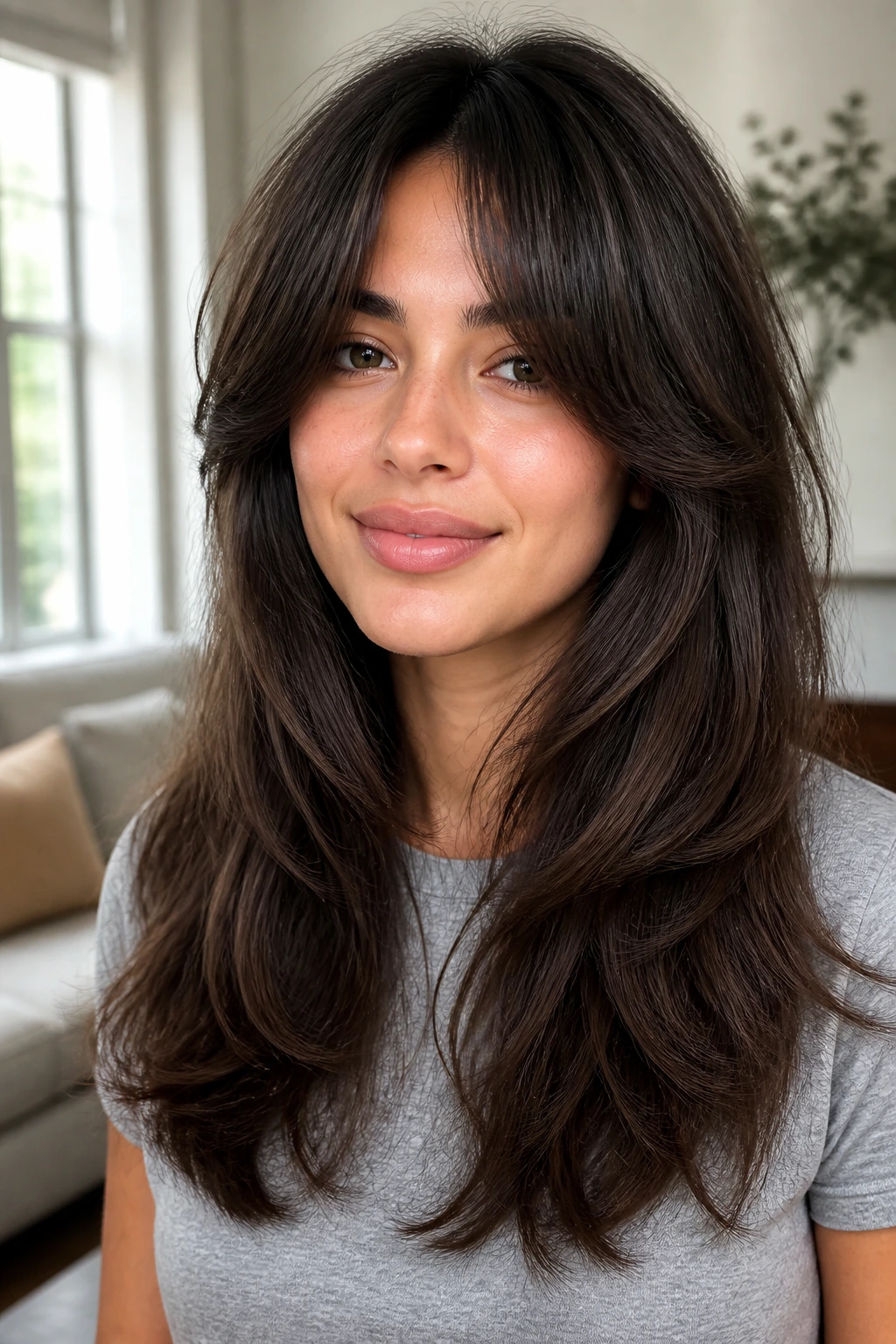
Thick hair is often treated like a problem to solve. That’s lazy thinking. The density is the asset. It gives braids more body, clips more grip, buns more shape, and air-dried styles a finish that finer hair sometimes has to fake with product.
The cut matters just as much as the style. Long layers keep heavy hair from feeling like a blanket. A blunt lob keeps the ends solid. Curtain bangs, shags, and soft face-framing pieces all give thick hair a place to move so it does not sit there like one solid mass. And once the shape is working, the daily styling gets easier fast.
The sweet spot is a hairstyle that can be a little imperfect and still look done. Thick hair is unusually good at that. When you stop demanding flatness from it, mornings get simpler.
Essential Tools for Thick Hair Styling
-
4- to 5-inch claw clip: Small clips usually fail on thick hair; a larger jaw gives you actual hold for twists, half-up styles, and French twists.
-
Snag-free elastics: Seamless ties or spiral elastics reduce breakage and are less likely to snap under the weight of dense hair.
-
U-shaped pins and strong bobby pins: These are the difference between a chignon that lasts and one that collapses by lunchtime.
-
Wide-tooth comb: It detangles without blowing out wave pattern or turning thick hair into a puffball.
-
Boar-bristle or mixed-bristle brush: Best for smoothing ponytails and low buns because it pulls surface strands into place without over-polishing everything.
-
Satin scrunchies: Gentler than thin rubber bands and better for overnight braids, puffs, and low ponytails.
-
Dry shampoo: Helps with grip at the roots and gives day-two hair the texture that braids and clips like.
-
Leave-in cream or light mousse: Enough to calm frizz and define shape without making thick hair heavy.
-
Microfiber towel or soft T-shirt: Cuts down on rough drying, which matters if your hair gets puffy fast.
-
Small sectioning clips: Handy if you’re working with bangs, layers, or a braid that needs a clean part.
Why Low-Maintenance Hairstyles for Thick Hair Need Different Rules
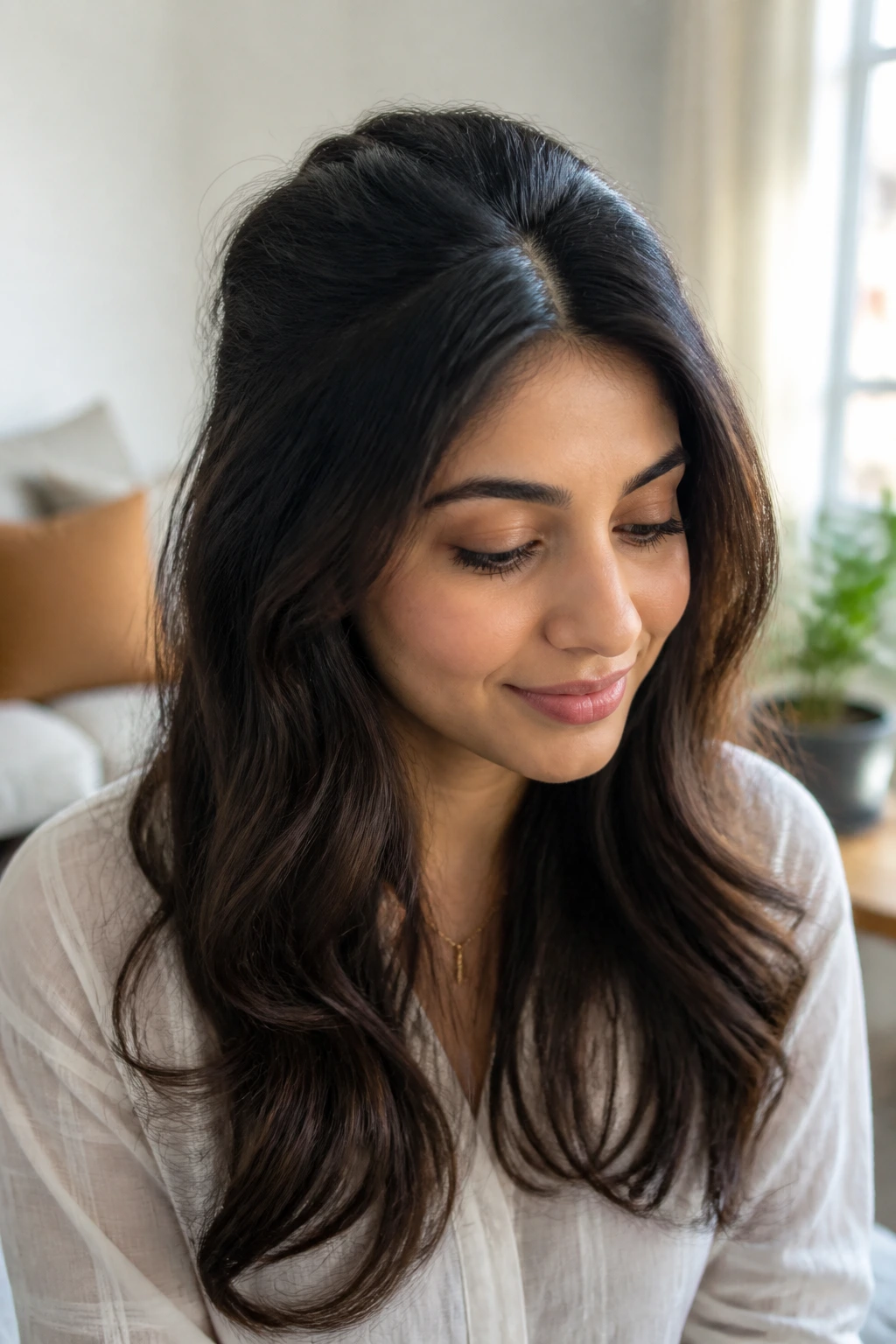
Dense hair can carry a style longer, but it also punishes lazy technique faster. If the base is wrong, the whole thing goes sideways. That’s why these hairstyles tend to rely on a good part, a secure anchor point, and a shape that matches the amount of hair sitting underneath it.
A style that works on fine hair can fall apart on thick hair because there is too much weight pulling on the elastic or clip. The fix is not more product. Usually it is better placement, a larger tool, or a small change in section size. A low ponytail at the nape often lasts longer than a high one. A 5-inch clip often holds where a cute smaller one just slides.
The other thing thick hair likes is a little looseness. Tight styles can puff oddly at the edges because the hair pushes back. Give the crown a touch of room. Let braids breathe. Use shape, not force. That approach saves time, and it also keeps your scalp from feeling like it has spent the day in a vise.
How to Keep These Styles Looking Fresh Between Washes
The easiest way to stretch a style is to set it up before the hair dries in every direction. A part made on damp hair usually stays better than one made on dry, frizzy roots. If you want a braid, twist, or clipped style to last, give the hair a direction while it still has a little moisture and then leave it alone long enough to settle.
At night, a satin pillowcase or bonnet helps thick hair keep its shape instead of roughing up against cotton. Loose braids, a pineapple puff, or a low silk-tied ponytail can preserve the style overnight without causing dents. If you sleep with thick hair loose, expect more tangles and more rework in the morning. That is just the trade.
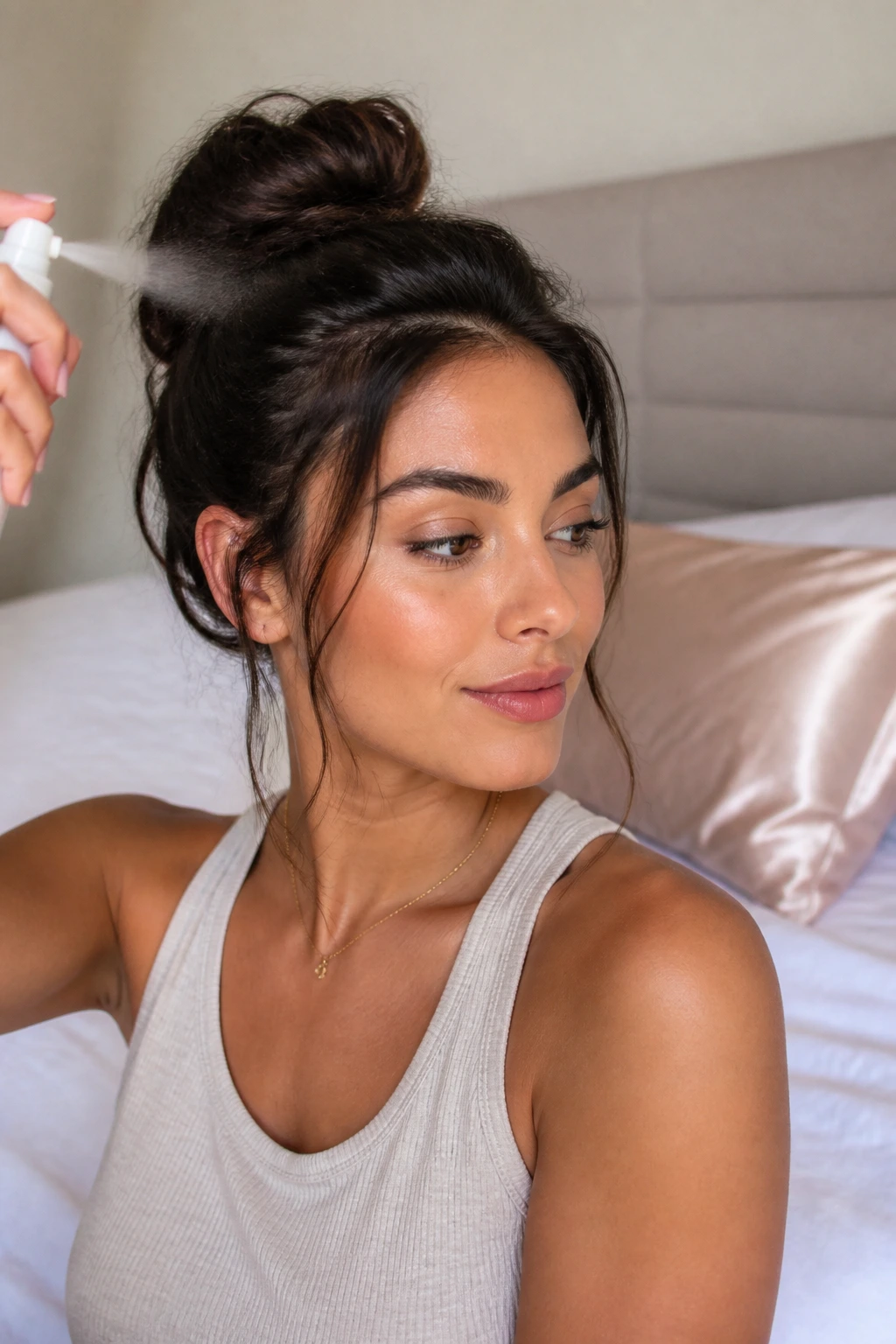
For day-two refreshes, use less product than you think. A light mist of water at the front, a pea-size amount of leave-in on the ends, and a quick finger-comb at the roots is often enough. If the scalp needs help, dry shampoo should go on the roots and sit for a minute before you brush it through. Heavy oil on day-two hair usually makes thick hair look flatter, not better.
Clarify every couple of weeks if you use a lot of dry shampoo or cream. Product buildup makes thick hair feel coated and harder to re-style, especially around the crown. Once the roots start behaving like they have their own weather system, it is time to wash. The refresh step is supposed to buy you time, not bury the problem.
Small Tricks That Save Time on Busy Mornings
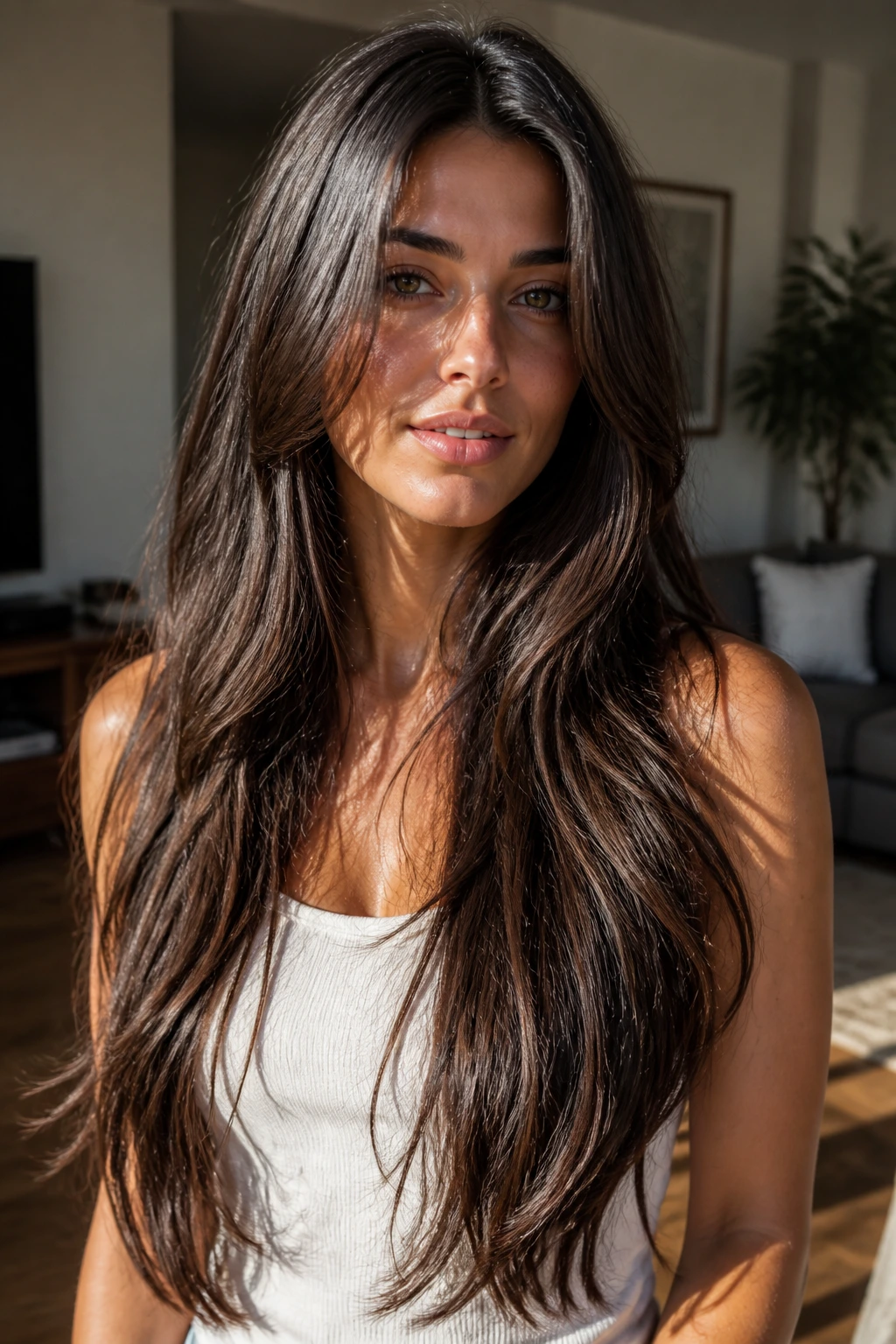
Start from the style you already have. Thick hair often looks best on day two or three, so don’t reset it from scratch if you don’t have to. A braid taken out at night can become a loose wave, and a bun from yesterday can become a half-up twist this morning.
Keep the first section clean and the rest rough. That sounds backwards, but it works. If the front part and crown are neat, the rest of the style can be looser and still look intentional. It takes less brushing and fewer products, which is half the battle.
Use the right size tool the first time. Reaching for a small clip or thin tie and then having it fail means you’ve already wasted time. Thick hair wants larger clips, stronger elastics, and pins that do not bend after one use.
Leave yourself a “bad hair emergency” option. That could be a claw clip, a satin scrunchie, and two bobby pins in the bathroom drawer. If the style falls apart, you can switch to a low twist or messy bun in under a minute. No drama.
Don’t chase perfect smoothness. Thick hair rarely looks best when every surface is flattened. A little texture hides more sins than a mirror-finish ponytail ever will.
Common Mistakes That Make Thick Hair Harder to Style
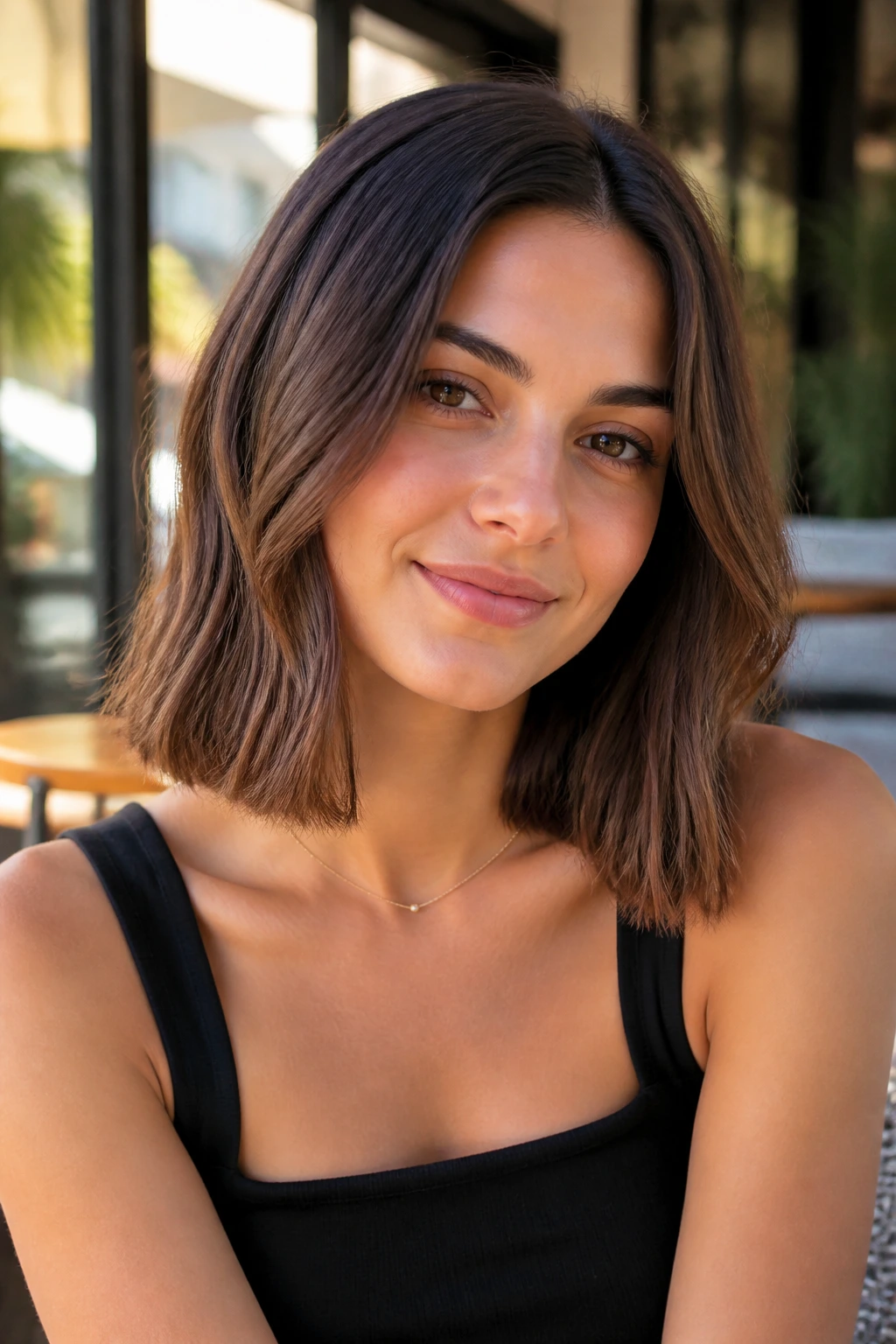
The first mistake is using tools that are too small. Tiny elastics and narrow clips may look neat in the package, then fail the second thick hair gets involved. The symptom is obvious: slipping, popping, or a headache from over-tightening. The fix is to buy fewer but larger tools that match the weight you’re actually dealing with.
Another one is loading up on product to force the style into place. Thick hair can take product, sure, but too much cream or oil makes the surface greasy and the braid slippery. Start with a dime-size amount on medium-length hair or a quarter-size amount on longer lengths, then add only if you need it.
A third mistake is brushing curly or wavy thick hair dry when you want a soft, controlled shape. That usually creates puff and frizz instead of polish. Use a wide-tooth comb or fingers on damp hair, then let the texture settle.
People also over-tighten buns and ponytails because they think thick hair needs more tension. It doesn’t. It needs better sectioning. If the scalp aches or the crown looks bumped up in strange places, loosen the style and redistribute the hair instead of pulling harder.
Different Ways to Wear These Styles When Your Hair Changes
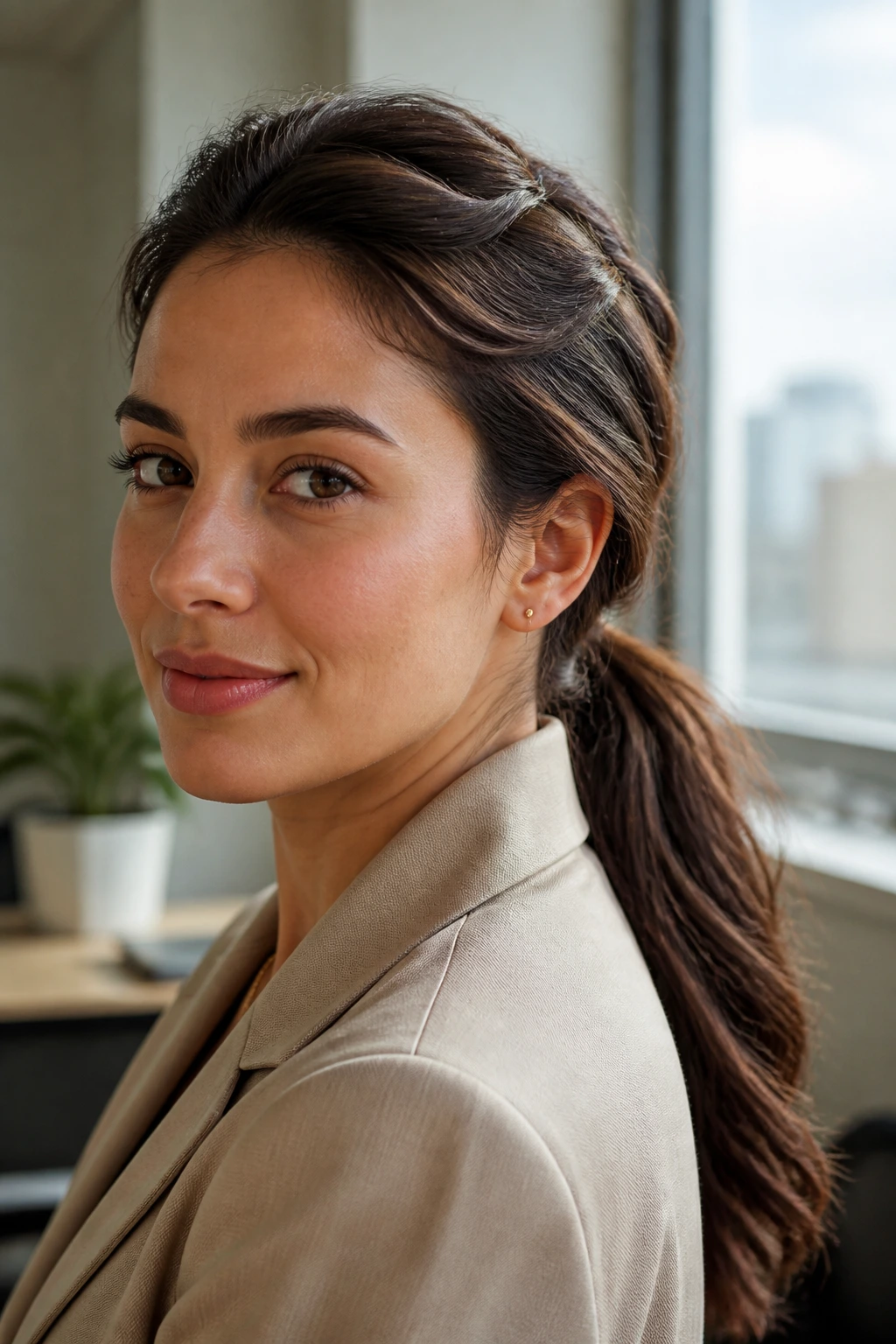
Humidity Shield: On sticky days, lean on braids, low buns, and twists with a touch more hold cream at the crown. The goal is containment, not a glassy finish that disappears in ten minutes.
Gym-Ready Hold: High ponytails, double braids, and claw-clip twists are the winners when you need hair off your neck and out of the way. Use strong elastics and skip soft face-framing pieces if you want the style to stay put through movement.
Office Sleek: Low ponytails, low chignons, and deep side parts look more polished without asking for much more time. A small amount of smoothing cream at the top and clean parting does most of the work.
Heat-Free Texture: Heatless waves, air-dried layers, and loose shags are for the days when you want the hair to do its own thing. They’re easier to live with if your hair already has wave or bend in it.
Shorter-Length Fix: If your thick hair sits above the shoulders, use half-up styles, mini twists, and smaller braids rather than trying to force a full bun. The proportions matter more than the label.
Frequently Asked Questions

What is the easiest low-maintenance hairstyle for thick hair?
A low messy bun or claw-clip French twist usually wins because both styles can be done fast and adjusted on the fly. Thick hair gives them enough body to stay secure without needing perfect parting or a lot of product.
Do layers really make thick hair easier to style?
Yes, if they’re cut with restraint. Long layers and soft face-framing pieces remove bulk where thick hair tends to feel heavy, but too many short layers can create puff and make daily styling harder.
What size claw clip works best for thick hair?
A clip with a jaw length of about 4 to 5 inches is usually the sweet spot. Smaller clips can work for half-up sections, but they often slip if you try to hold a full twist or a dense ponytail.
Can thick curly hair wear these styles too?
Absolutely. The pineapple puff, crown braid, low bun, and half-up clip styles are especially good on curly and coily thick hair because they respect volume instead of crushing it.
How do I keep braids from getting frizzy?
Start with hair that has a little grip, not freshly washed slickness, and smooth a small amount of leave-in or cream over the outer layer before braiding. Sleeping on satin also helps the braid stay cleaner-looking overnight.
Is it better to air-dry thick hair or blow-dry it?
Air-drying wins when you want texture and lower effort. Blow-drying is useful when you need a cleaner base for ponytails, lob styles, or curtain bangs, but it is not required for most of these looks.
What if my thick hair is too heavy for bobby pins?
Use stronger pins, cross them in an X, and anchor them into a section that already has tension, like a twist or braid. If the style still slips, it usually means the section is too big or the pin is too short.
How often should thick hair be trimmed to keep these styles looking good?
For long layers and face-framing pieces, around every 8 to 12 weeks keeps the shape tidy. If you wear bangs or a blunt lob, you may want a slightly tighter schedule so the front does not lose its line.
Do I need heat styling for these hairstyles to work?
No. Heat can help with polish, but most of these styles are designed to work with damp, air-dried, or day-two hair. The best results often come from using the hair’s natural texture and just guiding it a little.
A Better Kind of Easy
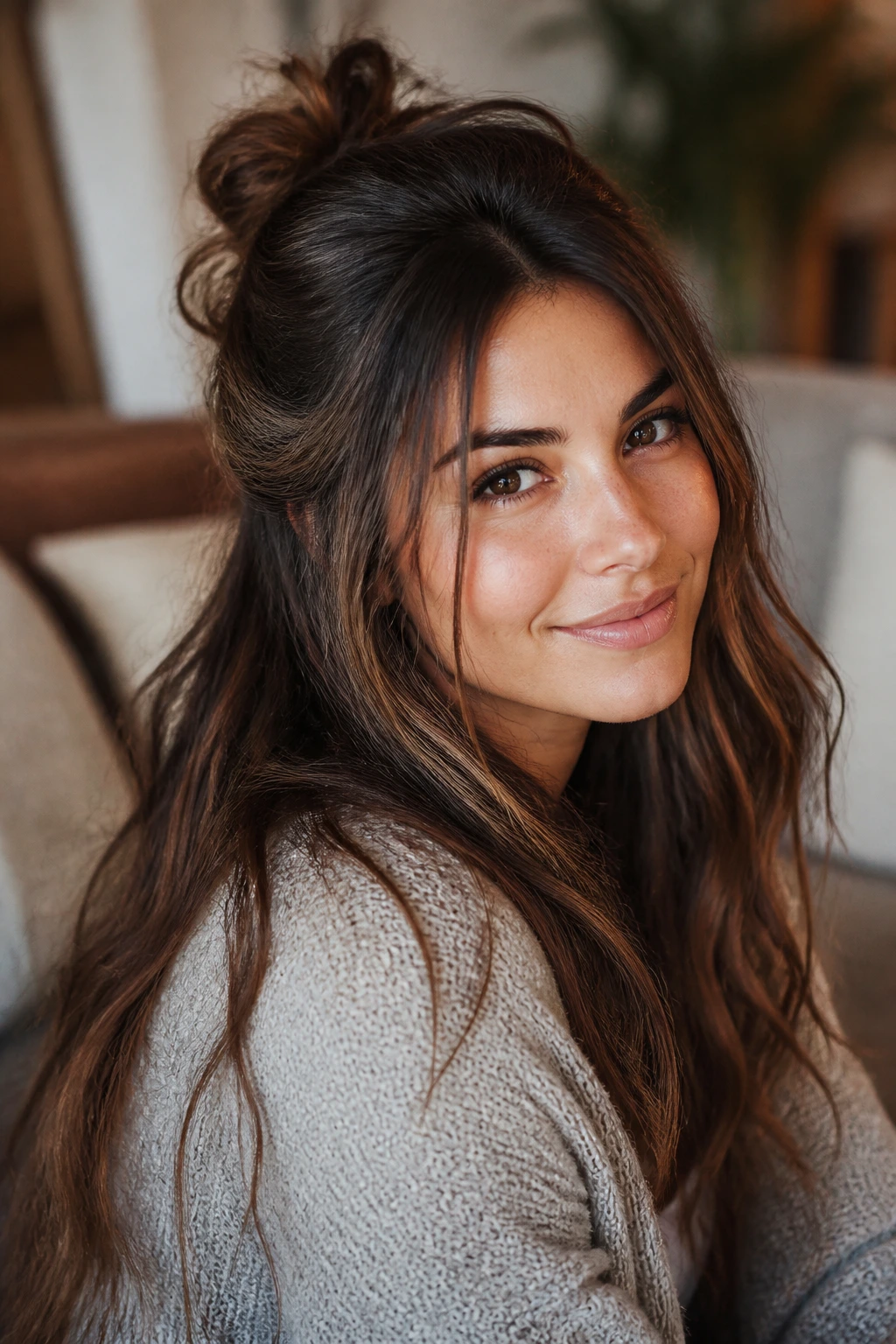
Thick hair gets mislabeled as difficult because people keep trying to style it like it should be smaller, flatter, and more obedient. That’s not the game. The smarter move is to pick shapes that respect the bulk, use the weight where it helps, and stop asking every morning to feel like a styling session.
A good low-maintenance style for thick hair should do three things: stay put, look decent when it loosens a little, and spare you from reaching for a hot tool unless you actually want to. Long layers, braids, buns, clipped twists, and soft air-dried shapes all fit that brief in different ways. Pick the ones that match your texture and your patience, and the rest gets easier.