



Thin hair has a funny way of telling on your morning routine. Spend ten minutes fighting it, and it may still look flat by the time you find your keys. Rush through it with the right shape, though, and it suddenly looks deliberate — not overworked, not stiff, just finished.
That’s the whole trick with hairstyles for busy mornings with thin hair. You don’t need more volume in the abstract. You need lift in the right place, a little grip at the roots, and styles that don’t depend on a mountain of hair to look full. Thin hair usually behaves better when you stop asking it to do giant curls or heavy knots and start using structure: parts, twists, clips, small braids, and a little controlled mess.
I’ve always found that thin hair looks best when the style has some asymmetry or a visible anchor point. A tucked side, a wrapped elastic, a braid that sits close to the head, a claw clip that holds only half the length — those little decisions matter more than most people think. And once you get a handful of styles in rotation, the mirror stops feeling like a negotiation.
Why These Styles Work Better on Thin Hair
-
They build shape where thin hair actually needs it. A lifted crown, a side part, or a tucked section does more than a giant loose curl ever will on sparse density.
-
They rely on texture, not weight. Thin hair usually slips when it’s overloaded with cream or oil; these styles lean on dry shampoo, light spray, and small pins instead.
-
They look intentional before they look polished. That matters on rushed mornings. A clean twist or braid reads as styled even when the rest of the hair stays simple.
-
They survive day-two hair better. Thin hair often gets easier after one day because the roots have a little grit. These styles take advantage of that instead of fighting it.
-
They work with small tools. Mini elastics, bobby pins, and one decent clip can do more for thin hair than a drawer full of heavy accessories.
-
They scale up or down fast. If your hair is chin-length, shoulder-length, or somewhere between, you can usually adapt the same basic shape without starting over.
1. Deep Side Part with an Ear Tuck
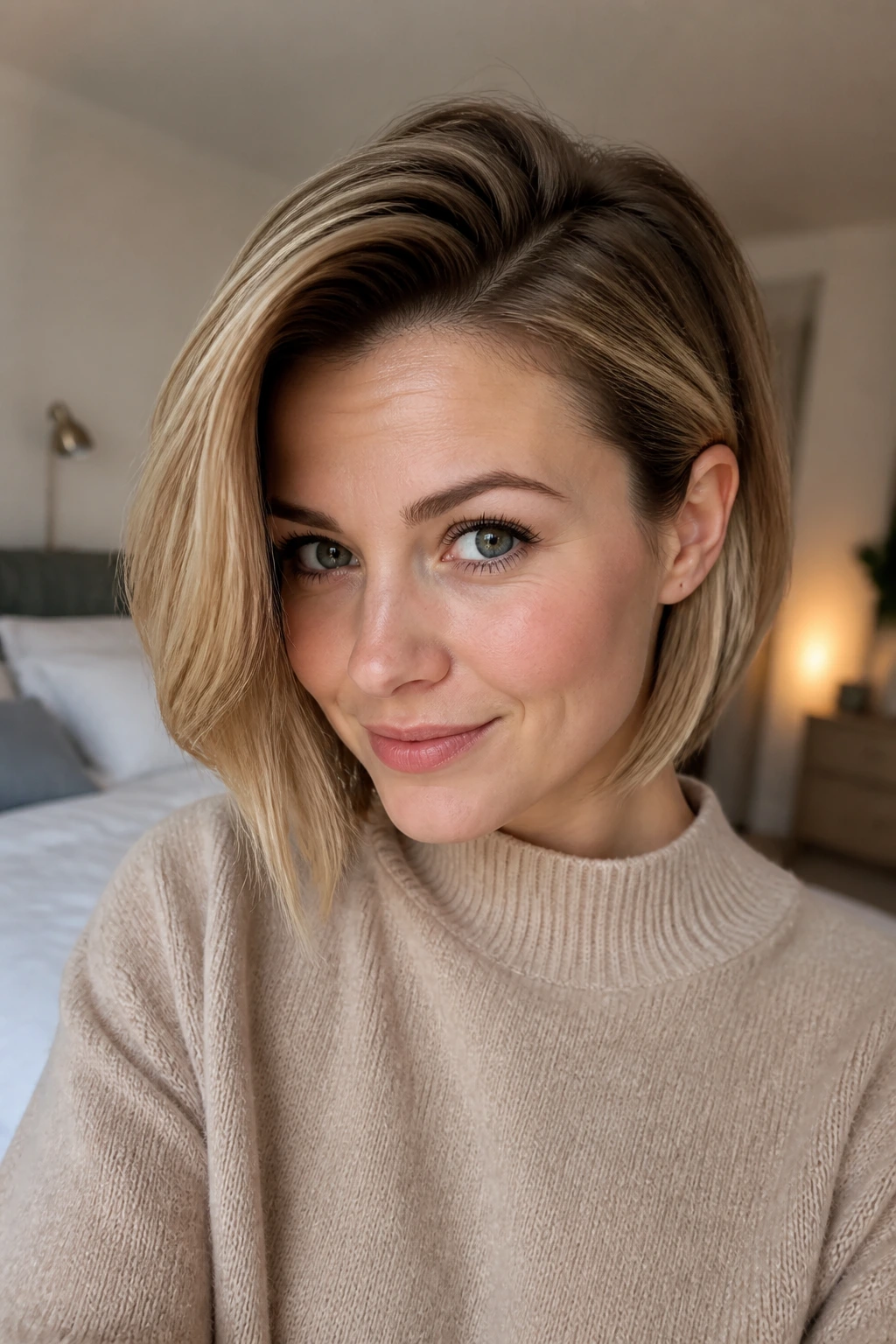
A deep side part is the fastest way to make thin hair look like it has more lift at the scalp. The shift in direction creates instant height, and the tucked side keeps the shape from floating away into nothing. It’s plain, sure, but plain in the useful way.
Start with the part a little farther than you think you need. Then tuck one side behind the ear and let the front section fall softly over the cheekbone on the other side. If your hair is slippery, mist the roots with dry shampoo first and rough it up with your fingertips. That little bit of friction keeps the part from collapsing.
Why it works for thin hair
The part line creates visible separation, which gives the illusion of more density near the root. The ear tuck also removes bulk from one side, so the hair that stays out looks thicker by comparison. Clean, fast, done.
If you wear earrings, this one quietly does double duty. It puts the focus on your face and makes the hair around it feel styled without needing much else.
2. Sleek Low Ponytail with a Wrapped Base
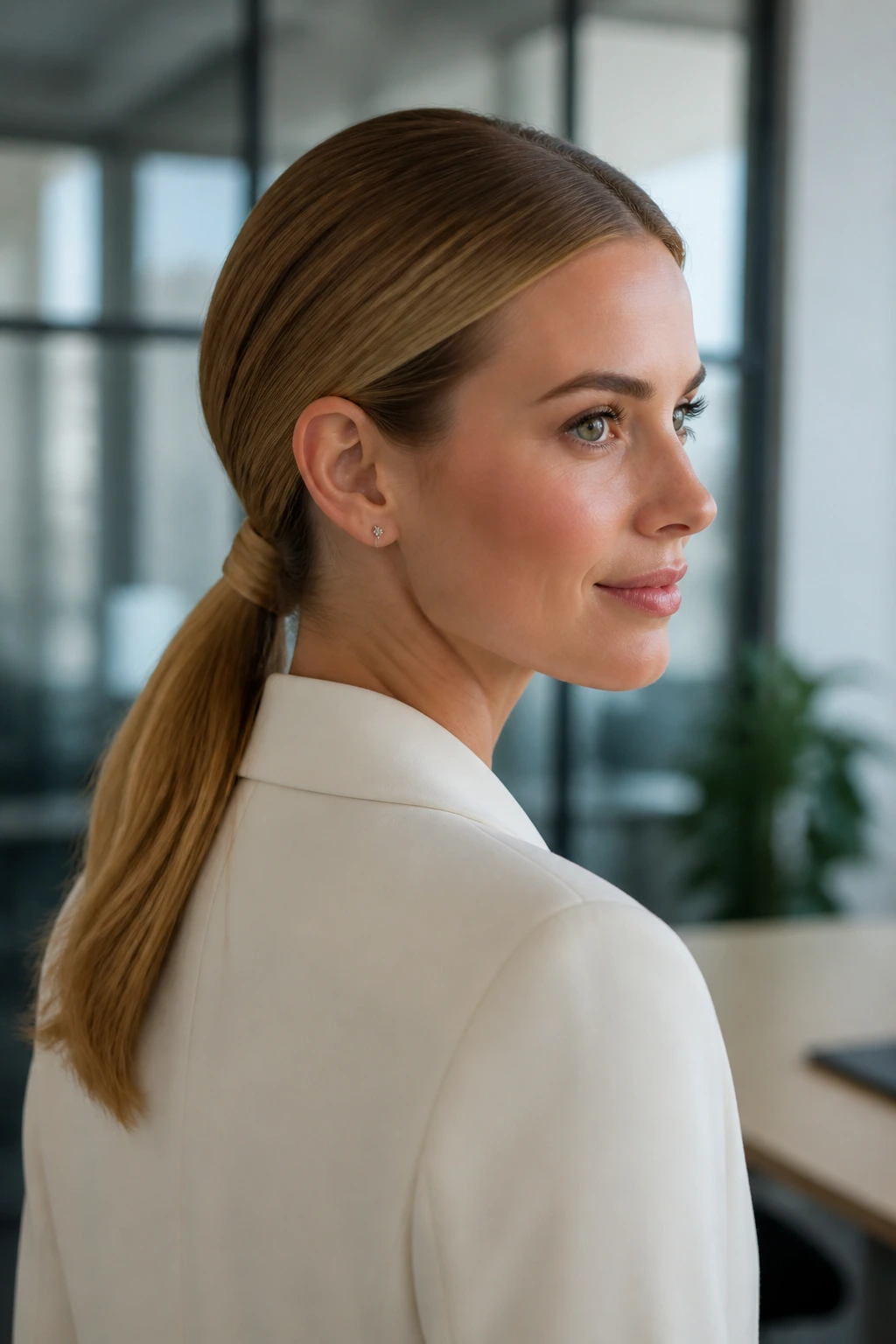
This one looks sharper than it is. A low ponytail can fall flat on thin hair if you just yank it back and hope for the best, but a wrapped base changes the whole thing. Suddenly it looks like you meant to be minimal, not rushed.
Brush the hair back with a light hand and leave a tiny bit of lift at the crown instead of pinning it straight to the skull. Secure the ponytail at the nape, then take a narrow strand from underneath and wrap it around the elastic. Pin the end under the ponytail with one bobby pin.
What makes it work
The wrapped base hides the elastic, which removes that thin little giveaway where the ponytail starts to look skimpy. The small crown lift keeps the head shape from going flat. And if you finish with a mist of flexible-hold spray, the front stays clean without turning crunchy.
This style is best when you want your hair to look organized in a way that doesn’t ask for much time. It’s also one of the better choices for interviews, office days, or any morning when your hair needs to behave and the rest of life is already noisy.
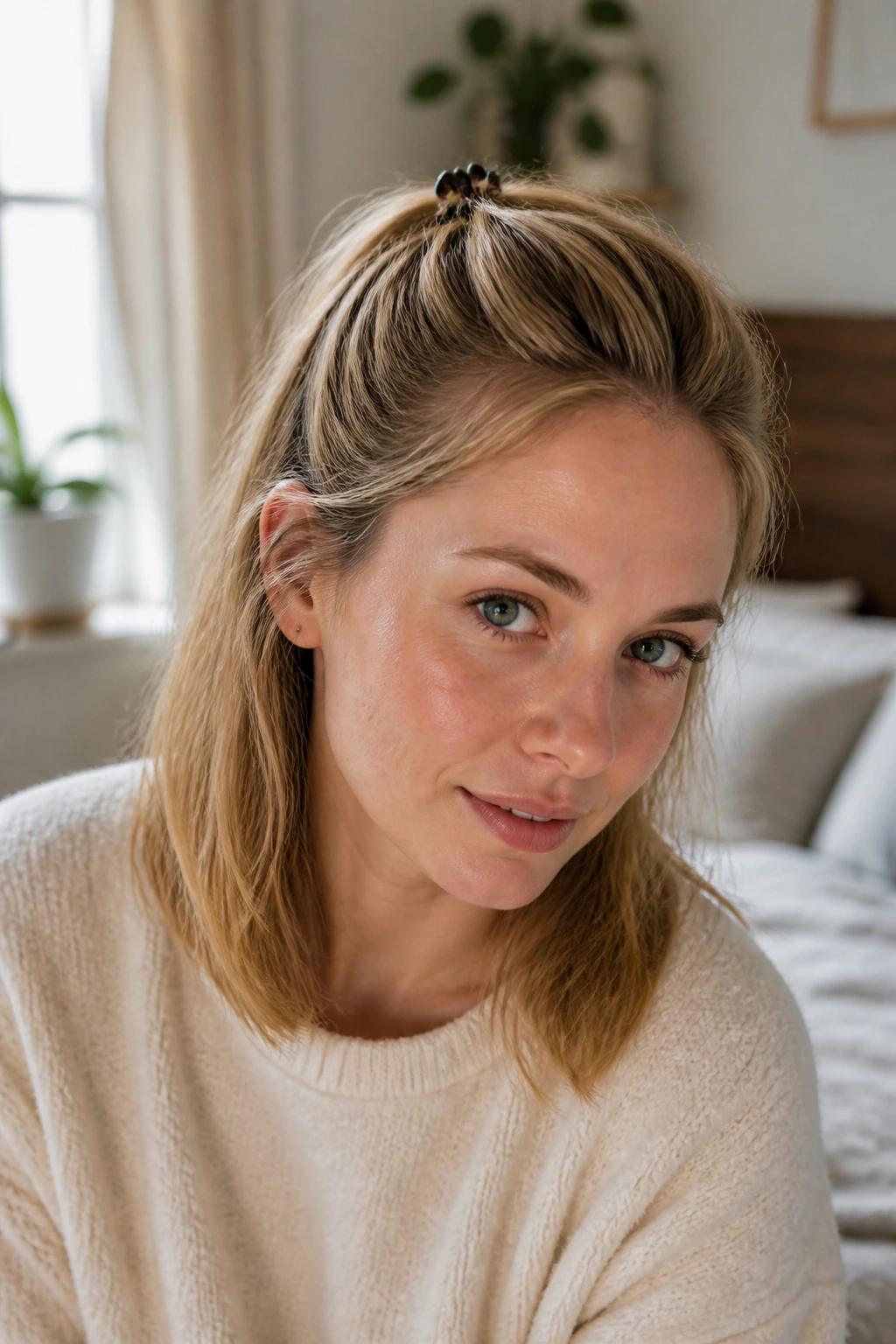
3. Half-Up Twist Held by a Mini Claw Clip
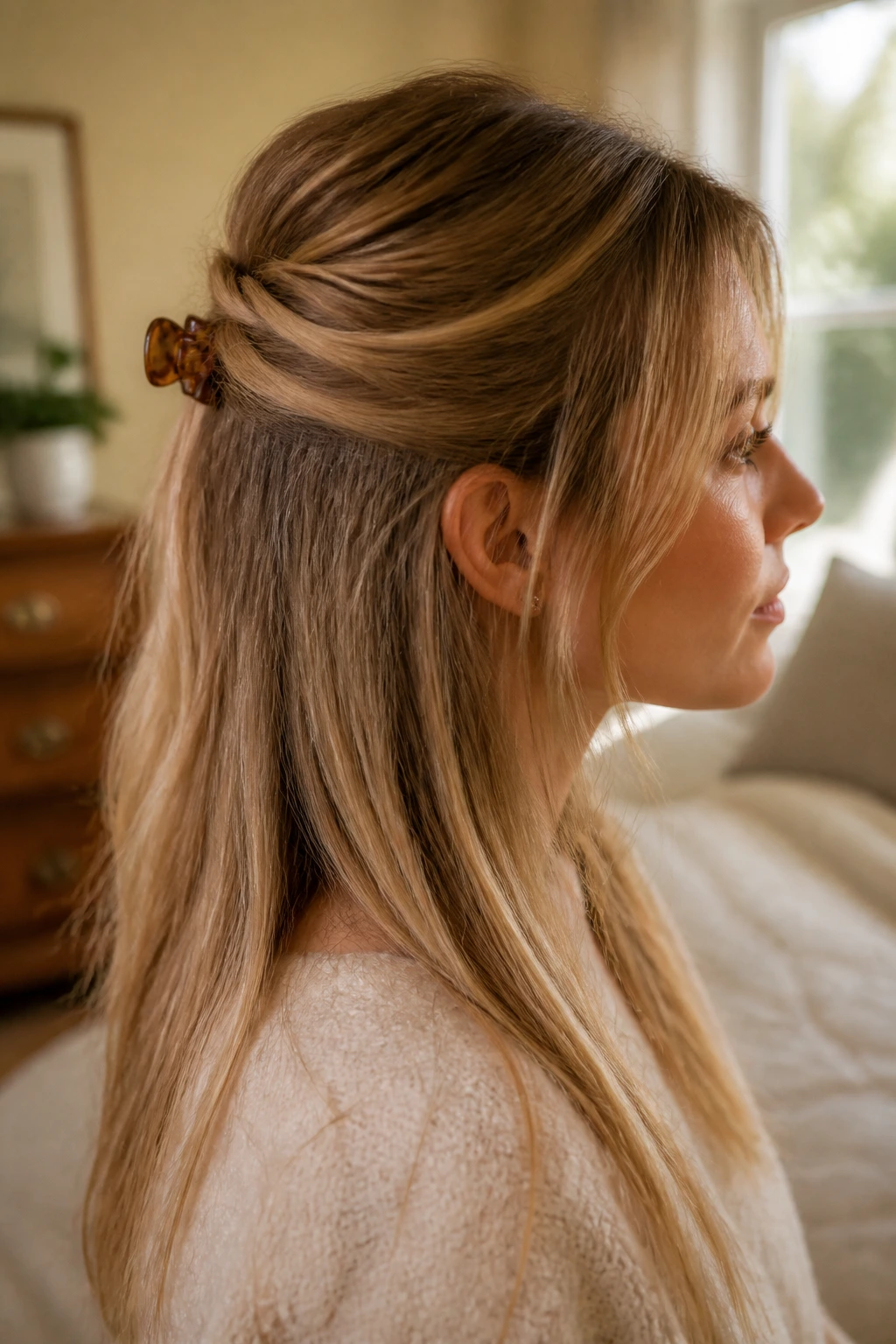
A half-up twist is a quiet fix for thin hair that needs a little lift but not a full updo. You gather just enough hair from each temple, twist it back, and let a small claw clip hold the center. The ends stay down, which keeps the style from looking overbuilt.
Here’s the part I like: the twist creates a small ridge at the back of the head. On thin hair, that ridge matters. It gives the eye something to read as fullness, even if the total amount of hair isn’t changing at all.
Quick way to do it
- Take two sections from above the ears.
- Twist each section backward once or twice.
- Join them at the back of the head.
- Clip them together with a mini claw clip or secure with two crossed bobby pins.
If your hair is very fine, add a light mist of texturizing spray before you twist. That gives the clip something to grab.
4. Bubble Ponytail with Tiny Elastics
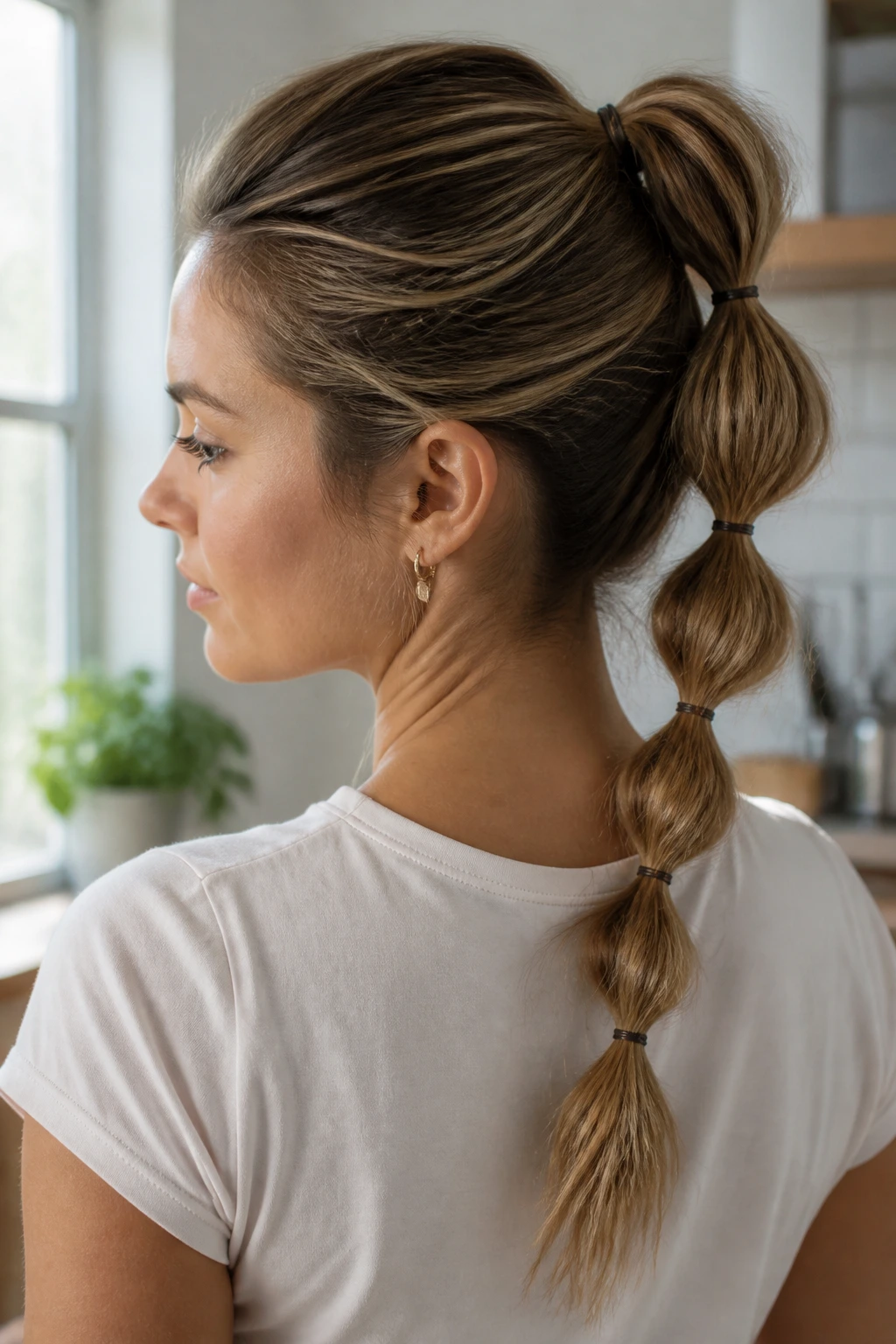
Bubble ponytails look more complicated than they are, which is half the appeal on a busy morning. You make one ponytail, then add small elastics every two to three inches down the length. After that, you gently puff each section with your fingers so each “bubble” looks round instead of stringy.
Thin hair often benefits from a style that breaks up the length. A single long ponytail can look narrow all the way down, but bubbles add visual thickness at several points. The style also works well when your ends are a little uneven or freshly trimmed and not cooperating.
No need to tease the entire ponytail into a nest. That’s a waste of time. Just pinch each bubble from the sides until it fills out.
This one looks best when the elastics are clear or close to your hair color. Bright bands can be fun, but they change the whole mood. The clear ones let the shape do the work.
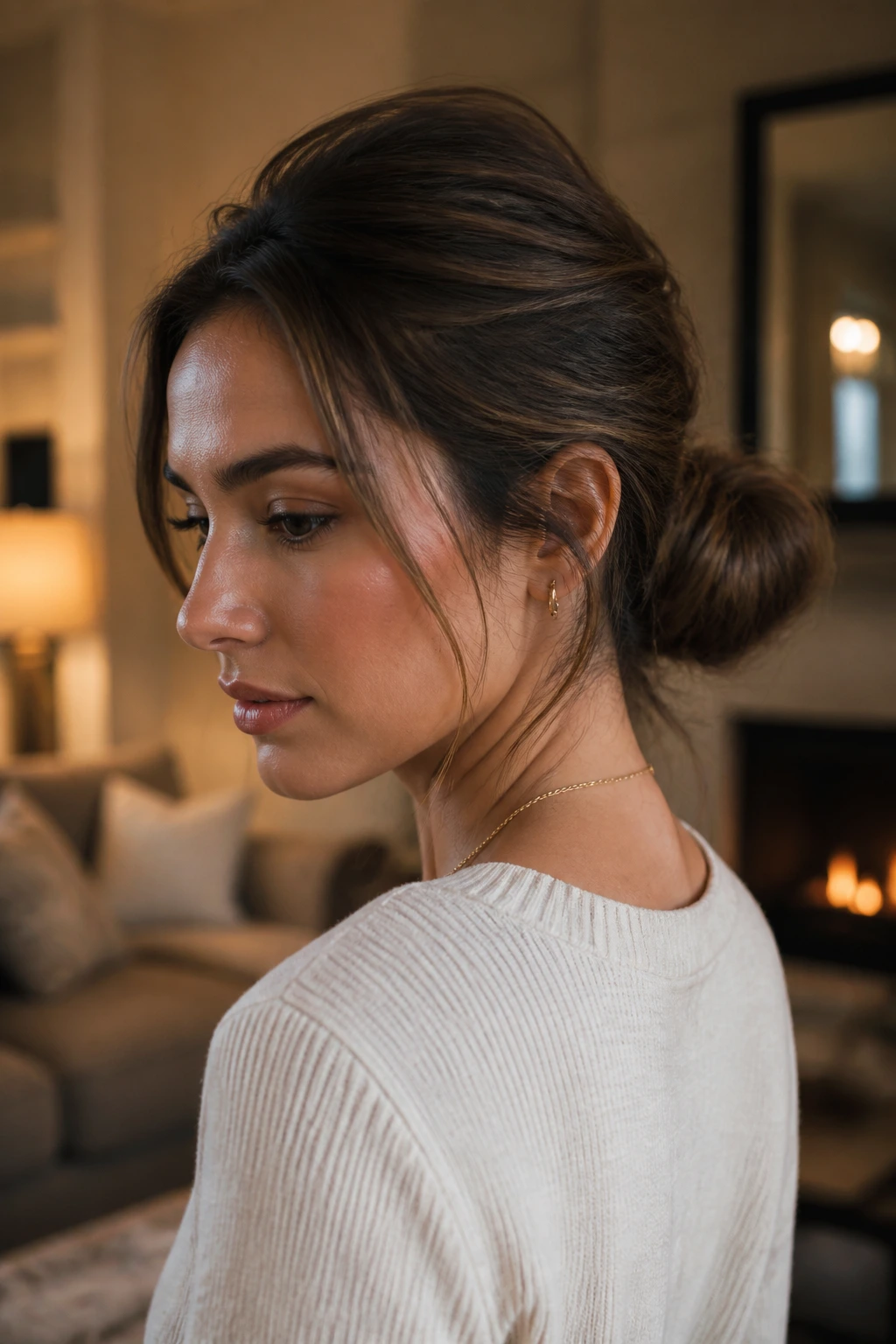
5. Low Bun with Lift at the Crown
A low bun can look elegant or sleepy, and the difference is usually the crown. Thin hair needs a touch of lift up top so the bun doesn’t feel glued to the scalp. A little looseness is your friend here.
Gather the hair low, but don’t smooth it so hard that every strand lies flat. Leave a small cushion at the crown, twist the length into a bun, and pin it in place with bobby pins crossed in an X. If you want more shape, pull a few tiny pieces loose around the hairline after the bun is secure.
The part that matters
The bun itself can be modest. It doesn’t need to be a giant knot. On thin hair, a smaller bun often looks cleaner and more believable than a huge one that seems to defy physics.
Use a little dry shampoo or texture spray at the roots before you start. Otherwise the bun can slip, and the whole style ends up looking like it was built on polished glass.
6. Topsy-Tail Half-Up
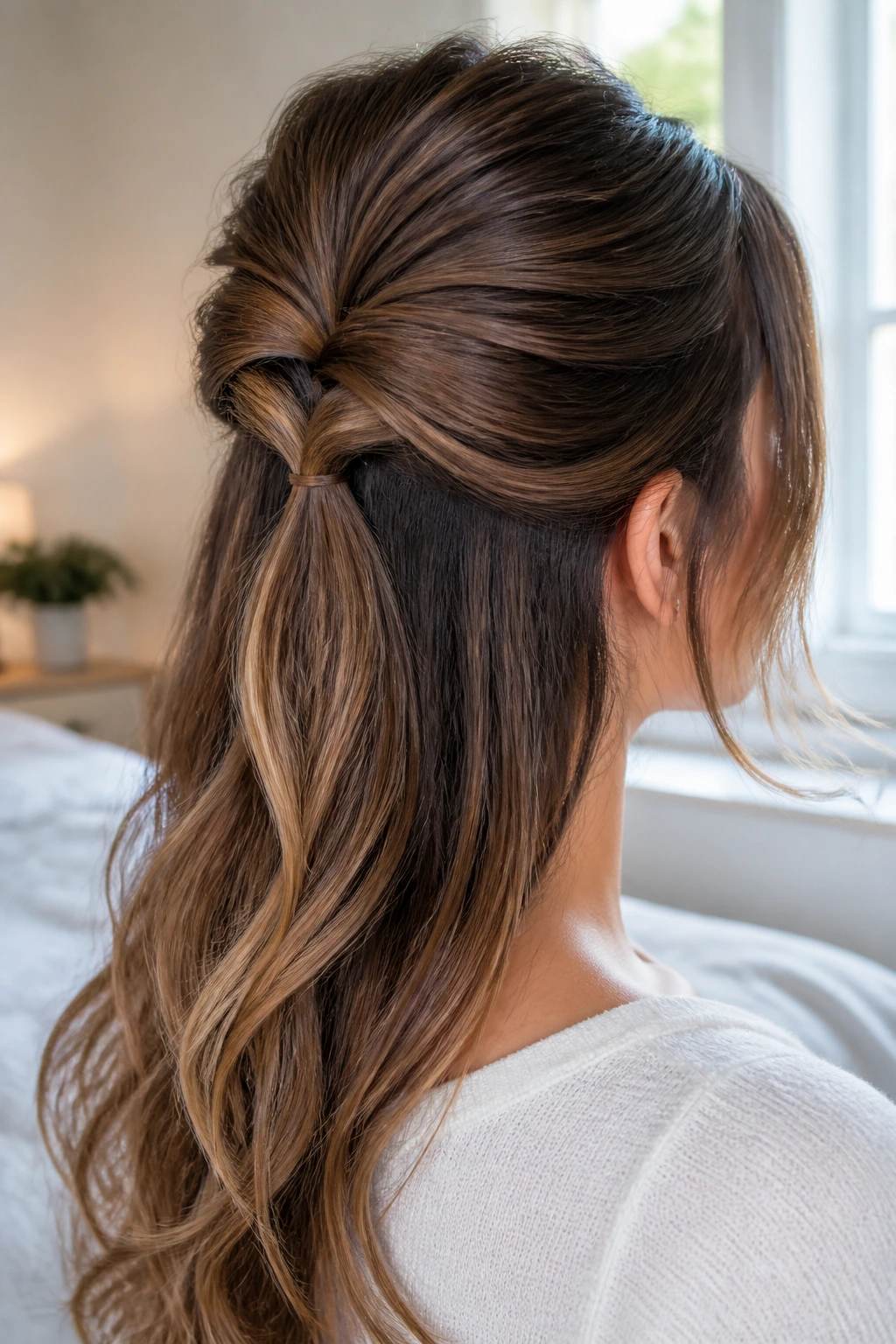
This is one of those old tricks that never really stopped being useful. You make a half ponytail, split the hair just above the elastic, and flip the tail through the opening. If you repeat it once, you get a slightly more sculpted version that still takes less than two minutes.
For thin hair, the topsy-tail gives the illusion of depth. It looks like there’s more structure than there actually is, because the twist creates a bend and a pocket of shadow. That little shadow helps.
Why I reach for it
It works when braiding feels too fiddly. It also holds better than a plain half pony on hair that slips out of elastics by lunchtime. And because the rest of the hair stays down, you still keep the fullness you have at the ends.
If you want it softer, tug the top section very gently after flipping. Not hard. Just enough to widen the shape a little.
7. Rope Braid Over One Shoulder
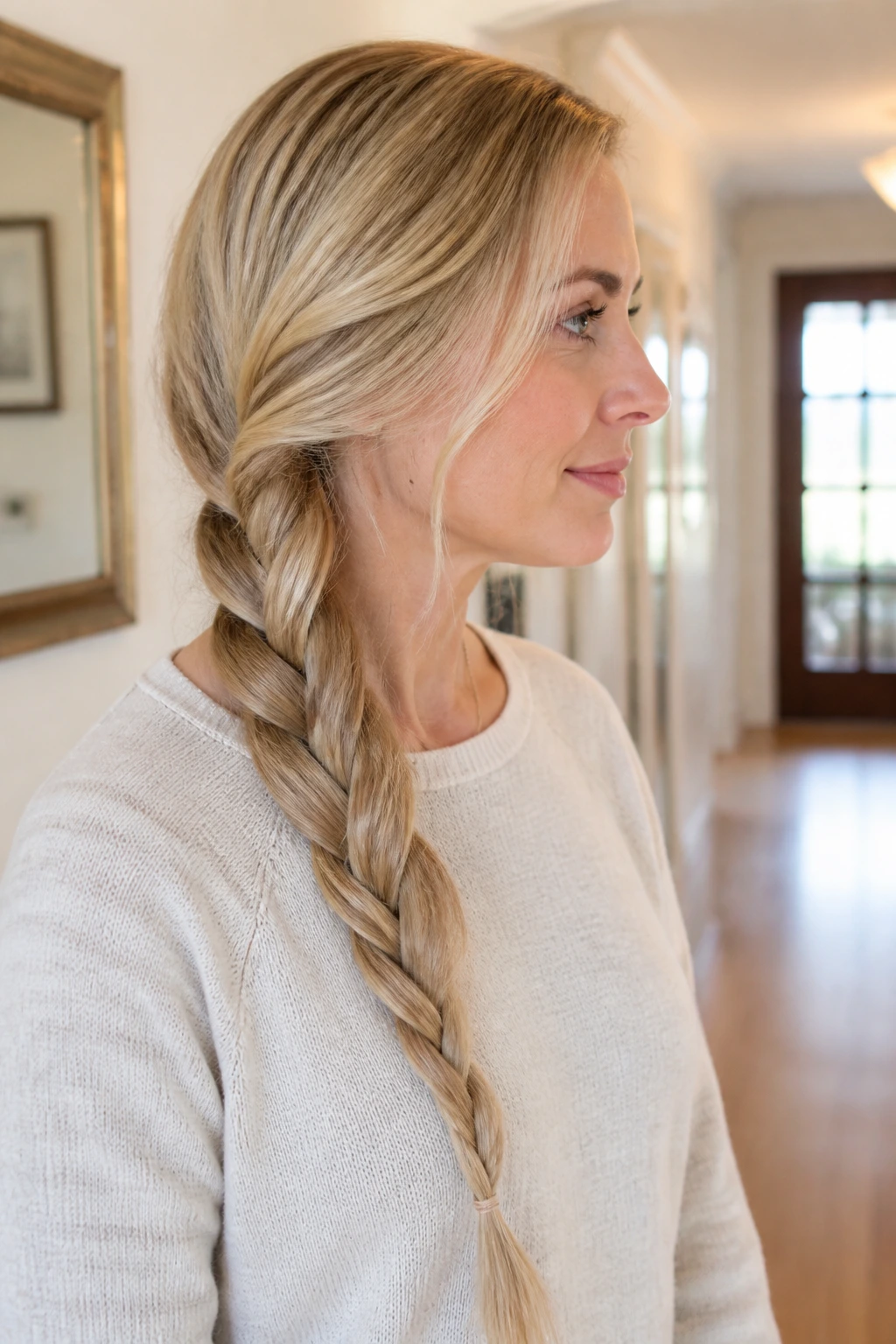
Rope braids are underrated for thin hair because they don’t depend on lots of strands to look good. You divide the ponytail into two pieces, twist each piece in the same direction, then wrap them around each other in the opposite direction. The braid tightens into a neat rope that sits cleanly over one shoulder.
I prefer this style when hair is a little gritty from the day before. Freshly washed thin hair can be too silky for it. If that’s what you’re starting with, use a little texture spray first and tie the ponytail lower so the braid has less chance to slide.
Why it earns a spot on rushed mornings
It stays looking intentional even when the twists aren’t perfect. Actually, a slightly loose rope braid often looks better than a tight one because it reads as fuller. Pull at the outer edges once the braid is done, and the whole thing opens up a bit.
A ribbon tied around the end can help if your hair is very thin at the bottom. It gives the braid a stronger finish and hides the skimpy ends.
8. Front Crown Braid
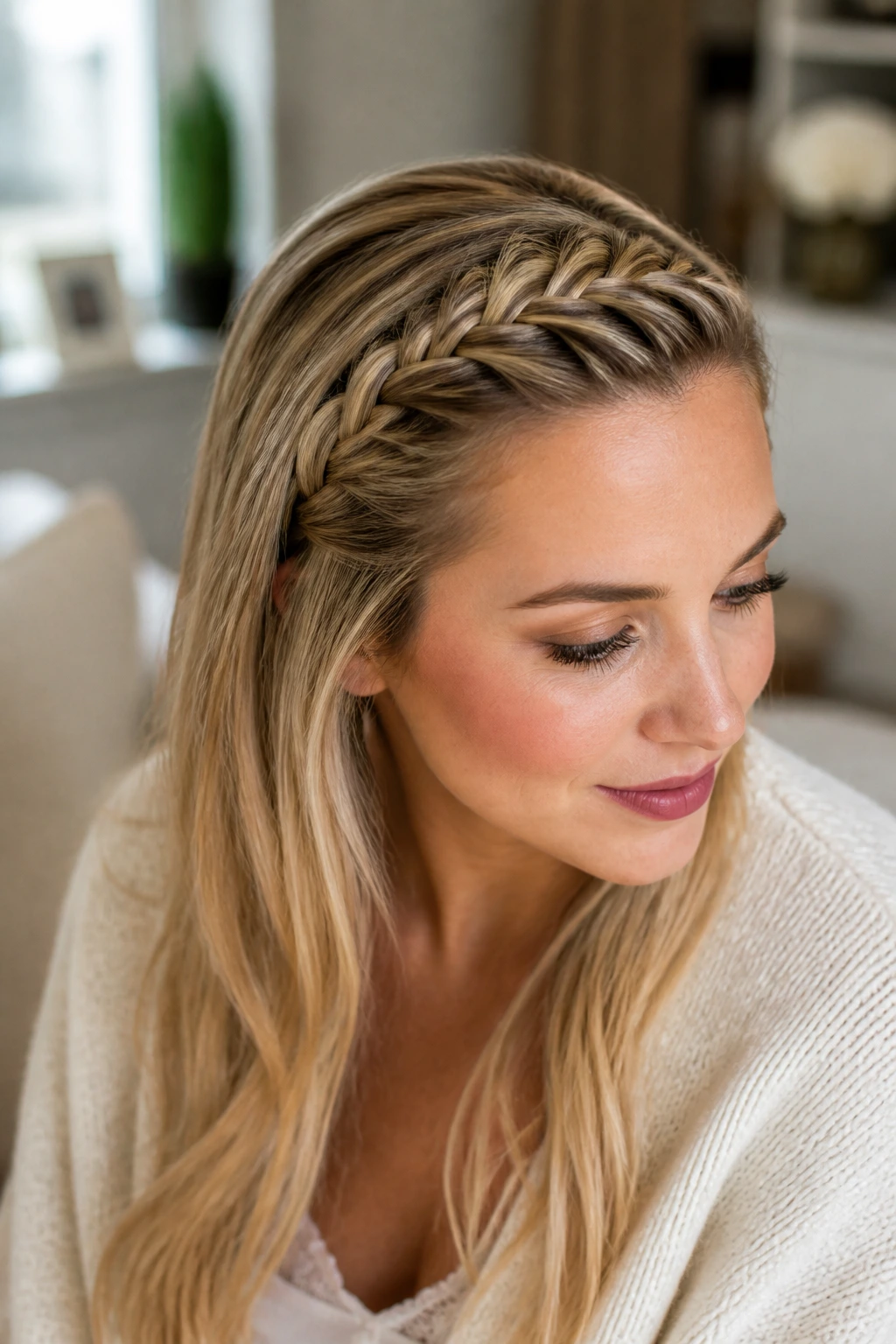
A front crown braid is the kind of style that saves you when the front pieces are doing their own thing. Braid only the section along your hairline from one temple across the front, then pin it behind the opposite ear. The rest of the hair can stay loose, in a low bun, or in a ponytail.
Thin hair often looks fuller when the front is controlled and the back is left simple. That contrast gives the eye enough to work with. You don’t need to braid the whole head to get the effect.
A small detail that helps
After braiding, pinch the braid gently from both sides to widen it. People call that “pancaking,” which is a silly word, but the result is real. The braid becomes softer and sits a little broader against the head.
This style is excellent if your bangs or front layers tend to fall into your face by 9 a.m. It keeps them in line without making the whole look severe.
9. Faux Bob with Hidden Pins
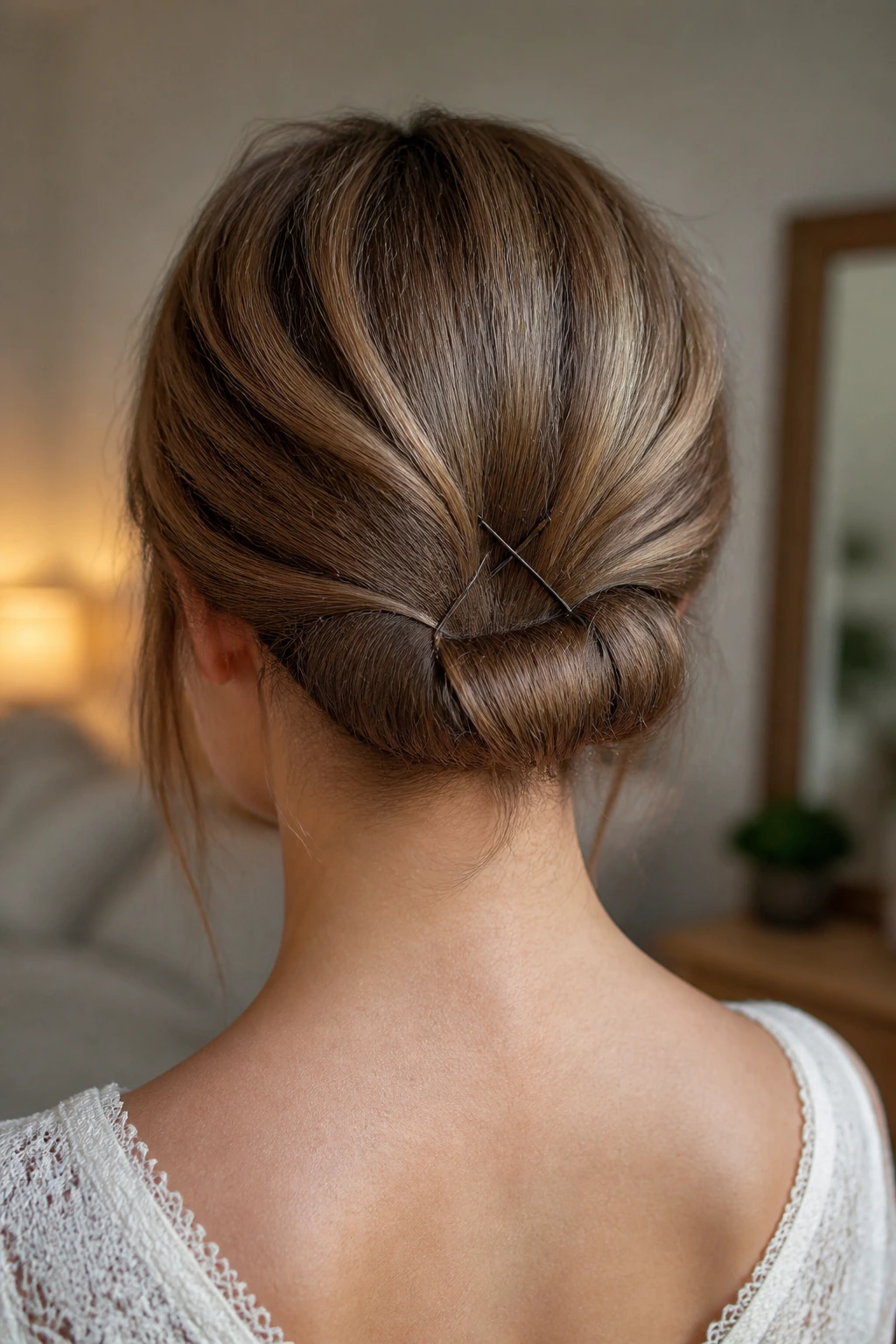
The faux bob is a cheat, and I mean that in the nicest possible way. You tuck the ends under the hair and pin them at the nape so the length appears shorter. On thin hair, the illusion can be especially convincing because there’s less bulk to hide.
It works best on shoulder-length or longer hair. Pull the top sections back loosely first, then fold the ends up and under, securing them with several bobby pins. Don’t try to hide every pin perfectly. A few discreet pins placed in a crossing pattern hold better than one lonely pin doing all the work.
The top should stay a little loose so the style doesn’t flatten your head. That’s the whole point. A fake bob with some lift at the crown looks far more believable than one that’s been pressed down into a helmet shape.
10. Mini Space Buns
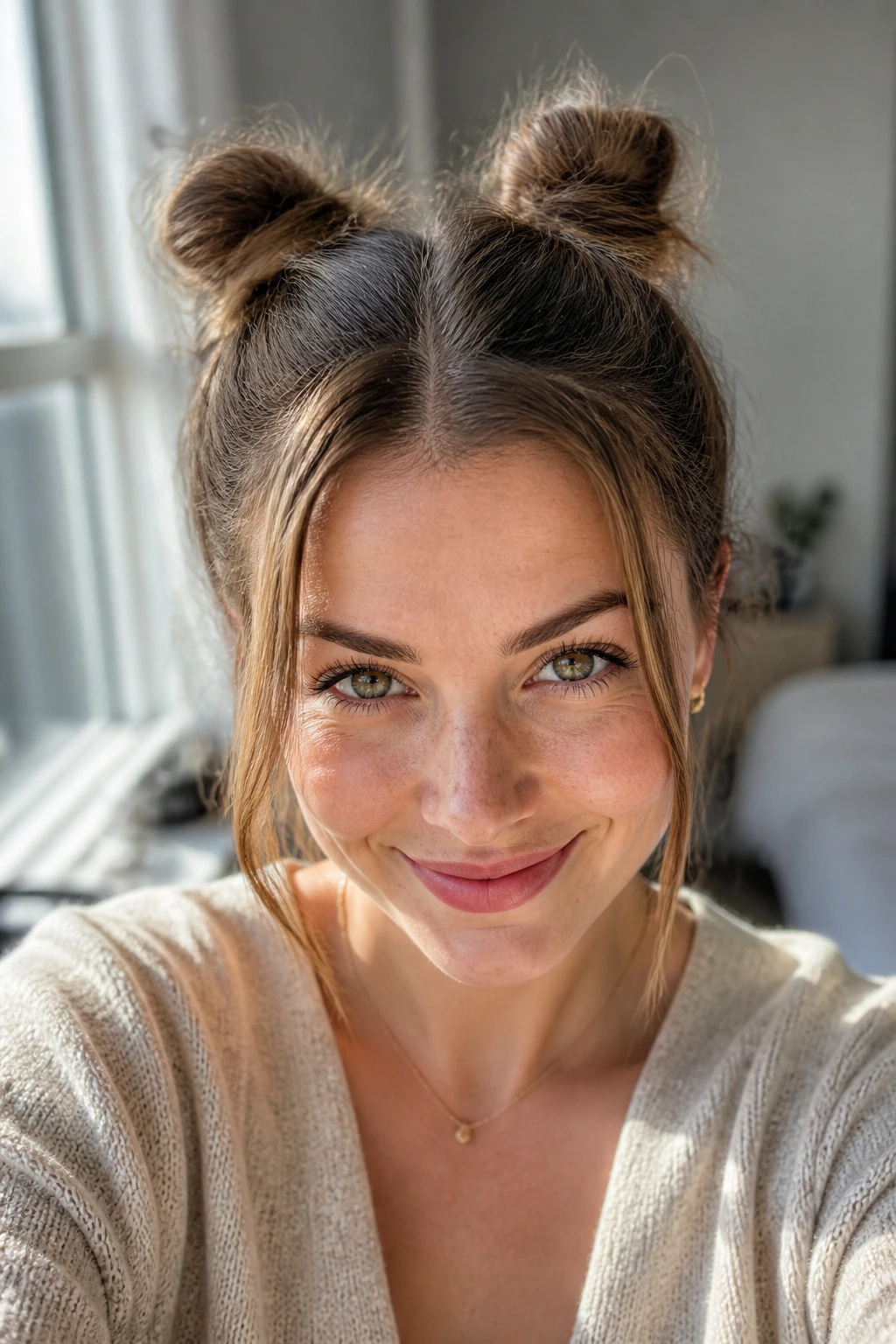
Mini space buns are better on thin hair than the giant version people often copy from photos. Small buns have more control, less sag, and a sharper outline. That’s the point. If you try to make them too big on low-density hair, they can start to look wispy at the edges.
Part the hair down the middle, gather two small pigtails, twist each one into a bun, and pin or tie them in place. You can keep them high for a playful look or set them lower for something softer. Leave the ends tucked or let a tiny tail poke out if your hair is short.
Best part of the style
It gives the scalp a little breathing room without making you look unfinished. Thin hair around the face can stay neat while the rest of the style has enough shape to feel deliberate. If your hair is slippery, a little dry shampoo at the roots makes all the difference.
This is one of the few styles that can look good even when it’s not perfect. In fact, a slightly uneven pair of buns often looks better.
11. French Pin Chignon
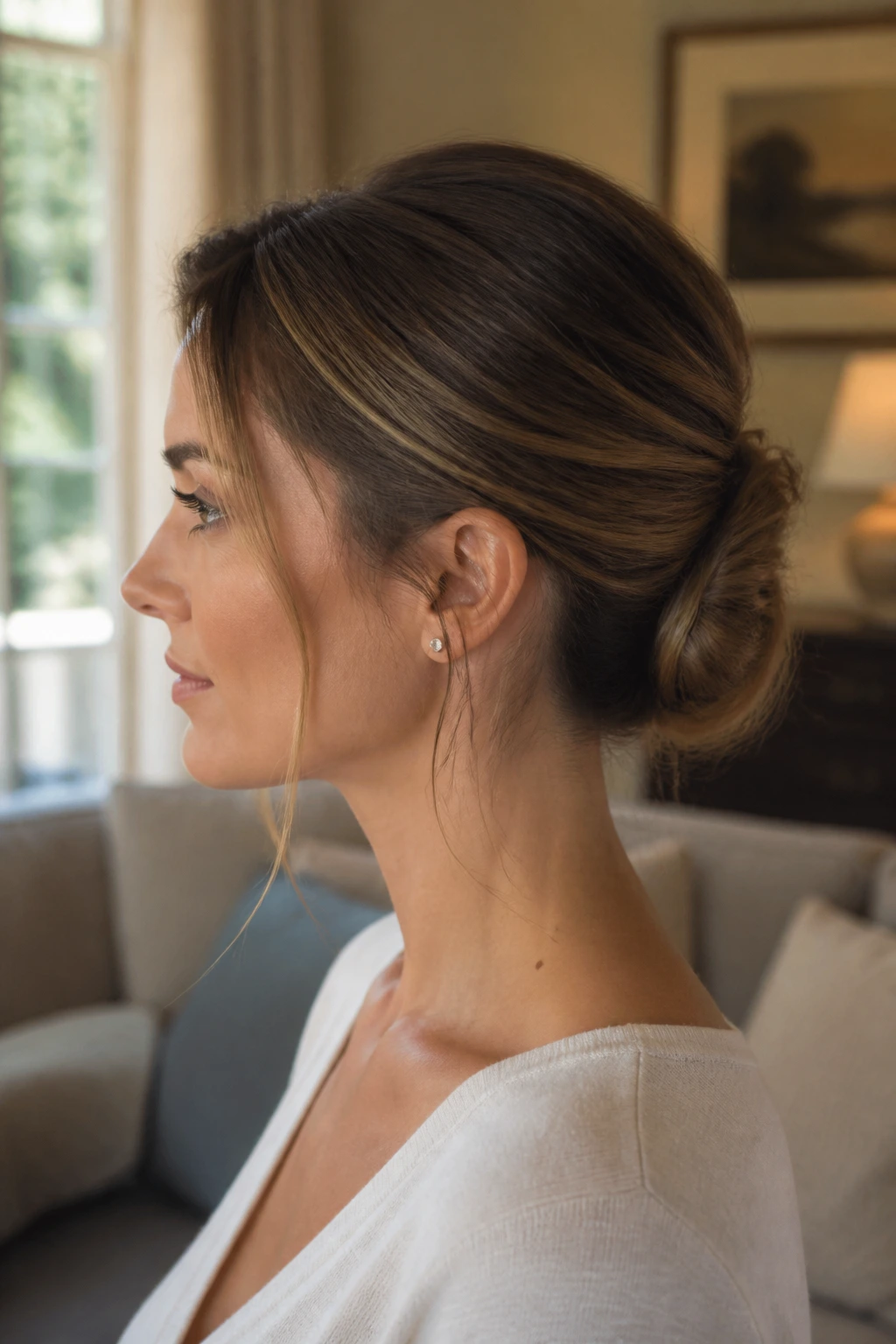
A French pin chignon looks more complicated than it is, which is useful when you don’t have much time but still need your hair to look elevated. The twist is simple: gather the hair low, roll or fold it upward, and slide a French pin through the center to lock it in place.
Thin hair actually behaves nicely with a French pin because there isn’t too much mass to overpower the hold. If your hair is very slick, rough up the roots with a bit of texture spray before you start. That gives the twist some bite.
What to expect in practice
The chignon does not have to be perfect. A few loose ends or a tiny bit of separation in the twist keeps it from looking too rigid. If one side feels flatter than the other, tuck a small bobby pin just under the surface instead of rebuilding the whole thing.
This style is one of my favorites for mornings when I want the effect of effort without spending the time. It looks better than a rushed bun and takes less fuss than a braid.
12. Textured High Ponytail
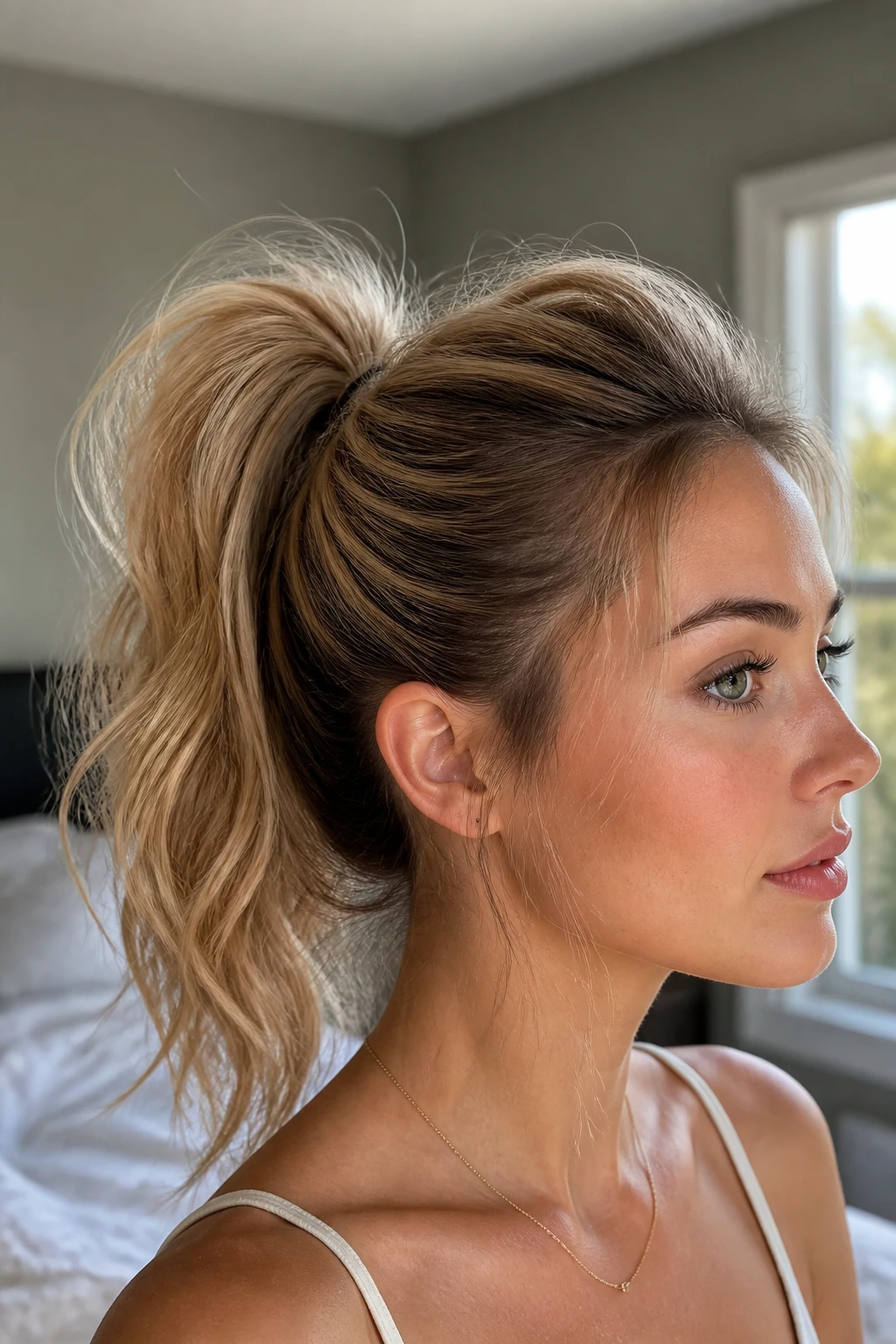
A high ponytail on thin hair works only when the crown gets a little lift first. Without that, it can look too severe and too narrow. With the right prep, though, it turns into one of the quickest styles in the whole bunch.
Tease the crown lightly from underneath, or better yet, mist the roots, blow-dry them upward for 20 to 30 seconds, and then gather the ponytail high. Wrap a small strand around the elastic if you want the base to look cleaner. If the tail itself is limp, add a few soft bends with a flat iron or a quick twist of a curling wand.
The ponytail should swing, not hang like a cord. That’s the visual test. If it still looks too thin, pull the ponytail forward slightly before securing it; that tiny angle adds lift at the root and makes the style feel fuller.
13. Scarf-Wrapped Ponytail
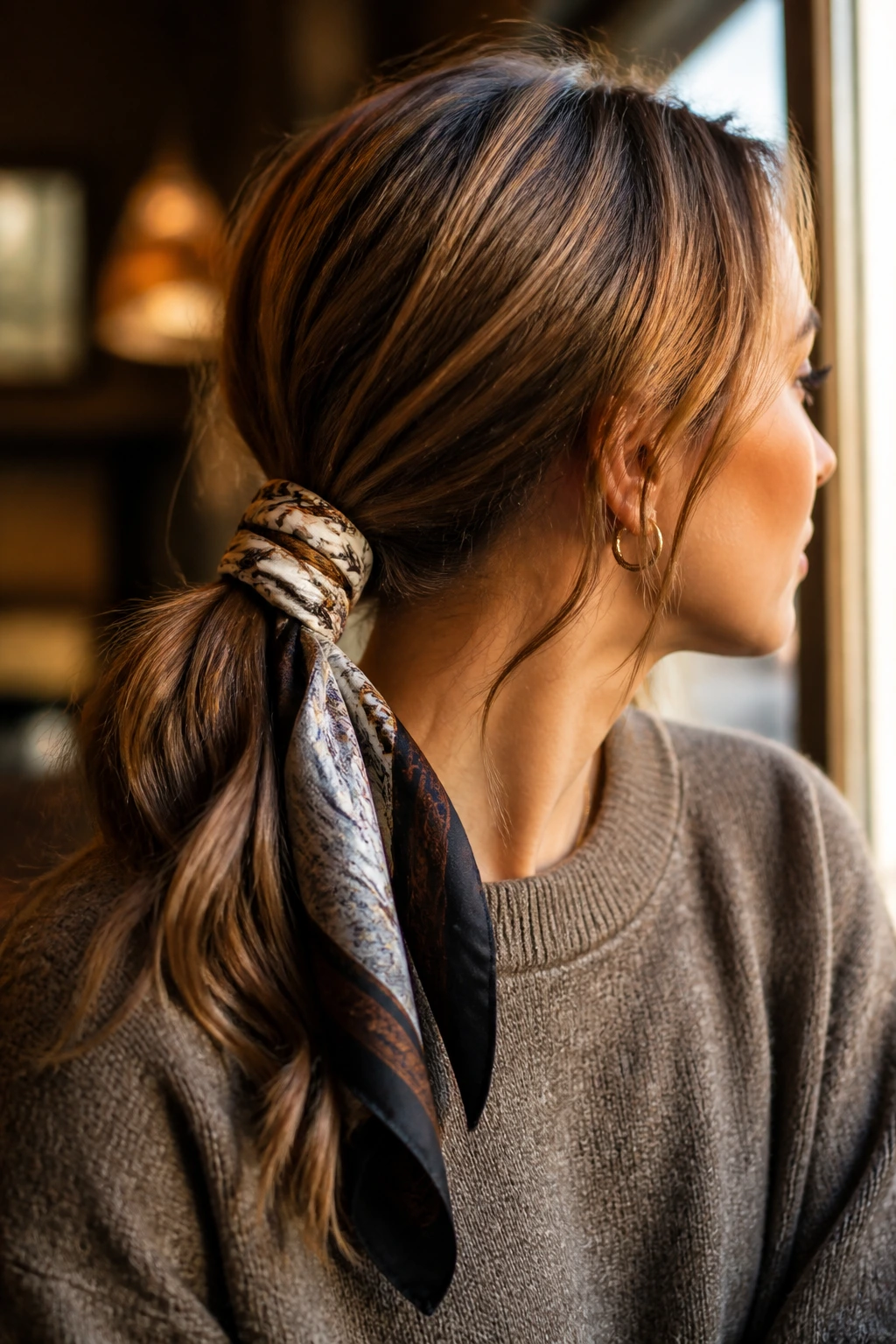
A scarf does a lot of work on thin hair. It hides the elastic, adds color, and gives the ponytail a fuller base without asking the hair to be something it isn’t. The trick is to keep the scarf narrow enough that it doesn’t overwhelm the style.
Tie the hair into a low or mid ponytail, then knot a scarf or ribbon around the base. Let the tails hang long for a loose look, or wrap them tightly around the elastic before tying them off. Either way, the scarf becomes part of the shape, not just decoration.
When this one shines
This is especially useful if your hair is freshly washed and a little too soft to hold a more complicated style. The scarf gives visual weight where the ponytail needs it most. It also works well on days when you want the style to look finished with almost no heat.
Choose a fabric with a little structure. Silk is pretty, but a slightly thicker cotton or satin-backed scarf often stays put better.
14. Side-Swept Twisted Bun
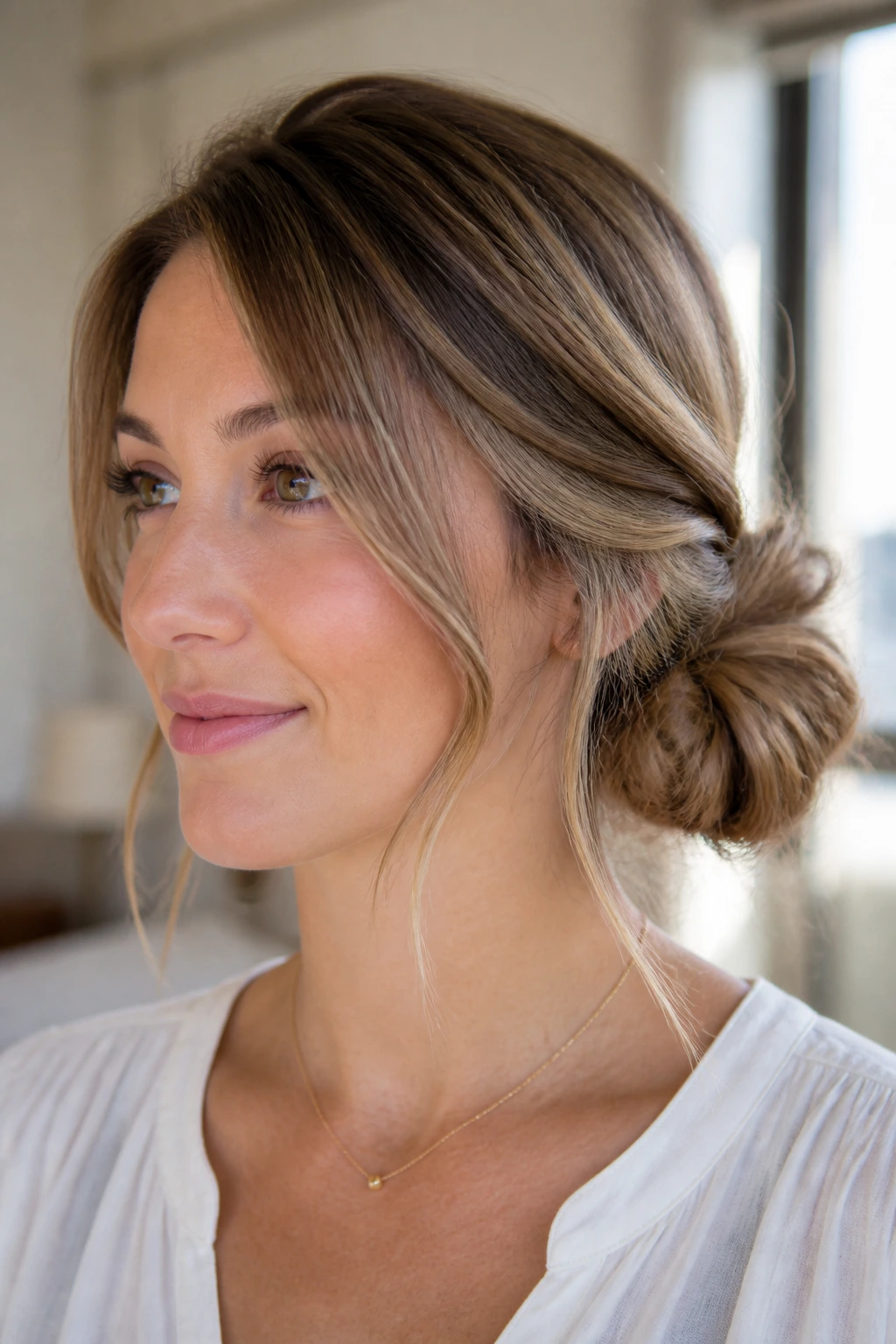
A side-swept bun softens the whole face and hides the fact that thin hair can look flat when pulled straight back. Sweep all the hair to one side, twist it low near the ear or at the nape, and pin it into a bun that sits off-center rather than dead middle.
That slight asymmetry is doing a lot of the visual work here. The eye reads more fullness when the shape isn’t perfectly symmetrical. Thin hair also tends to look better when one side has a touch more volume than the other.
Small styling note
Let the front be a little loose. Not messy. Just a little loose. A few softer strands around the face make the bun look more lived-in and less severe, which is useful if your hair is naturally fine and can look too sharp when smoothed back.
This one feels right for dinners, workdays, or any morning when you want something that looks intentional but not precious. It’s not fussy. That’s the appeal.
15. Pull-Through Braid
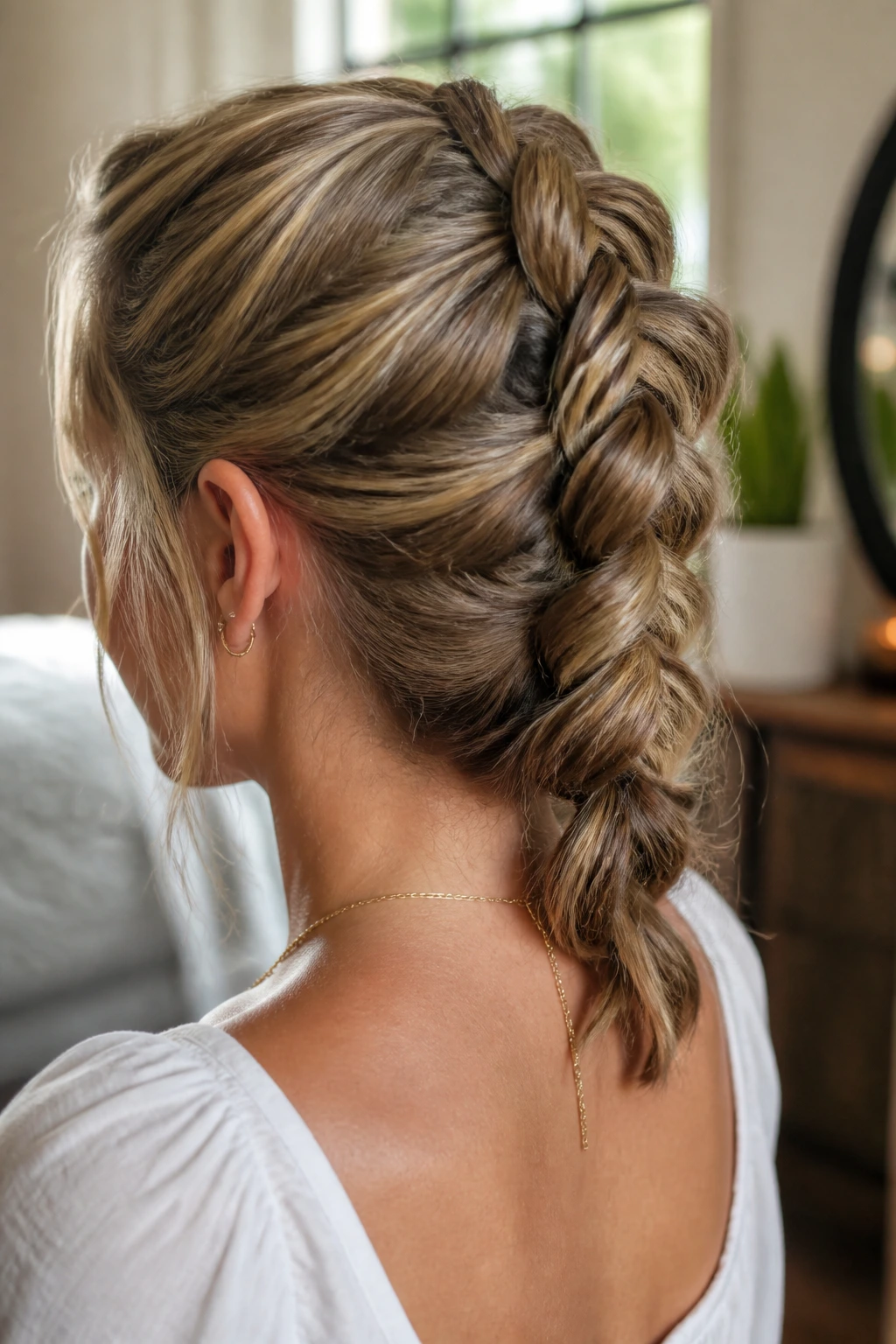
Pull-through braids are brilliant for thin hair because they fake thickness instead of demanding it. You build the braid from a series of small ponytails, splitting and looping each one so the finished shape looks fuller than a regular braid could ever look on its own.
Start with a small top ponytail, secure another beneath it, split the first, and pull the second through. Keep going down the length. Once it’s done, tug each section outward a little so the braid spreads. That broadens the silhouette fast.
It’s one of the few styles where thin hair gets an advantage. The sections stack on themselves, so the braid looks dense from the outside even if the actual hair count is modest. If you’re short on time, stop halfway and leave the bottom loose. It still looks intentional.
16. Half-Up Knot with Loose Ends
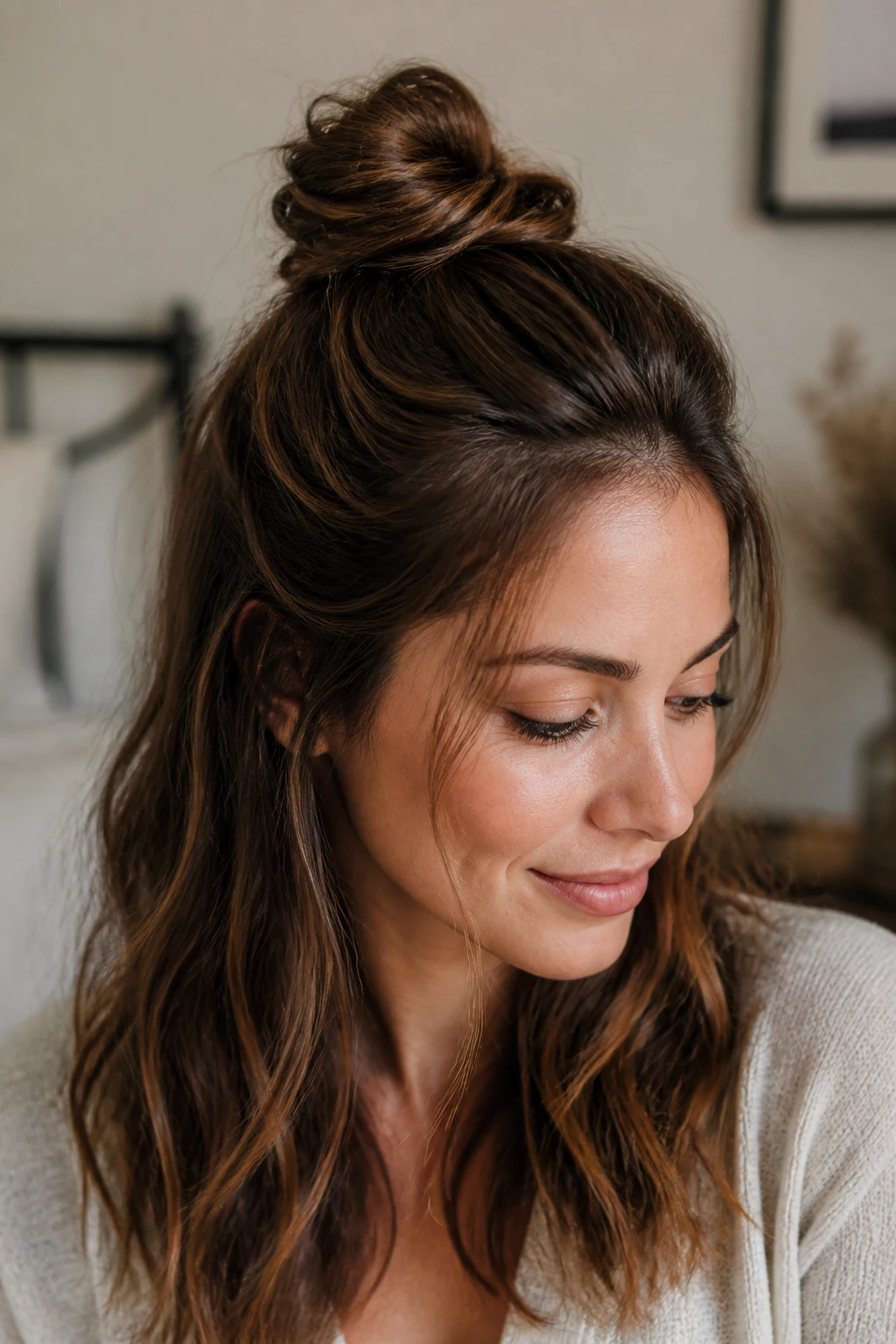
This is the style I reach for when I want hair off my face but I do not want a full updo. Gather the top half of the hair, twist it once or twice, and knot it at the back of the crown. Leave the rest hanging down so the ends carry the visual weight.
Thin hair often looks better when the top is controlled and the bottom stays free. A full bun can expose too much scalp, but a half-up knot keeps the crown tidy without stealing all the volume from the length. That’s the sweet spot.
Why it works so fast
You don’t need a mirror-perfect knot. A loose twist pinned in place with two bobby pins usually holds just fine. If the knot feels too small, pull the sides of the knot slightly outward before pinning. That tiny move gives it more width and makes the shape read from across the room.
17. Twisted Headband
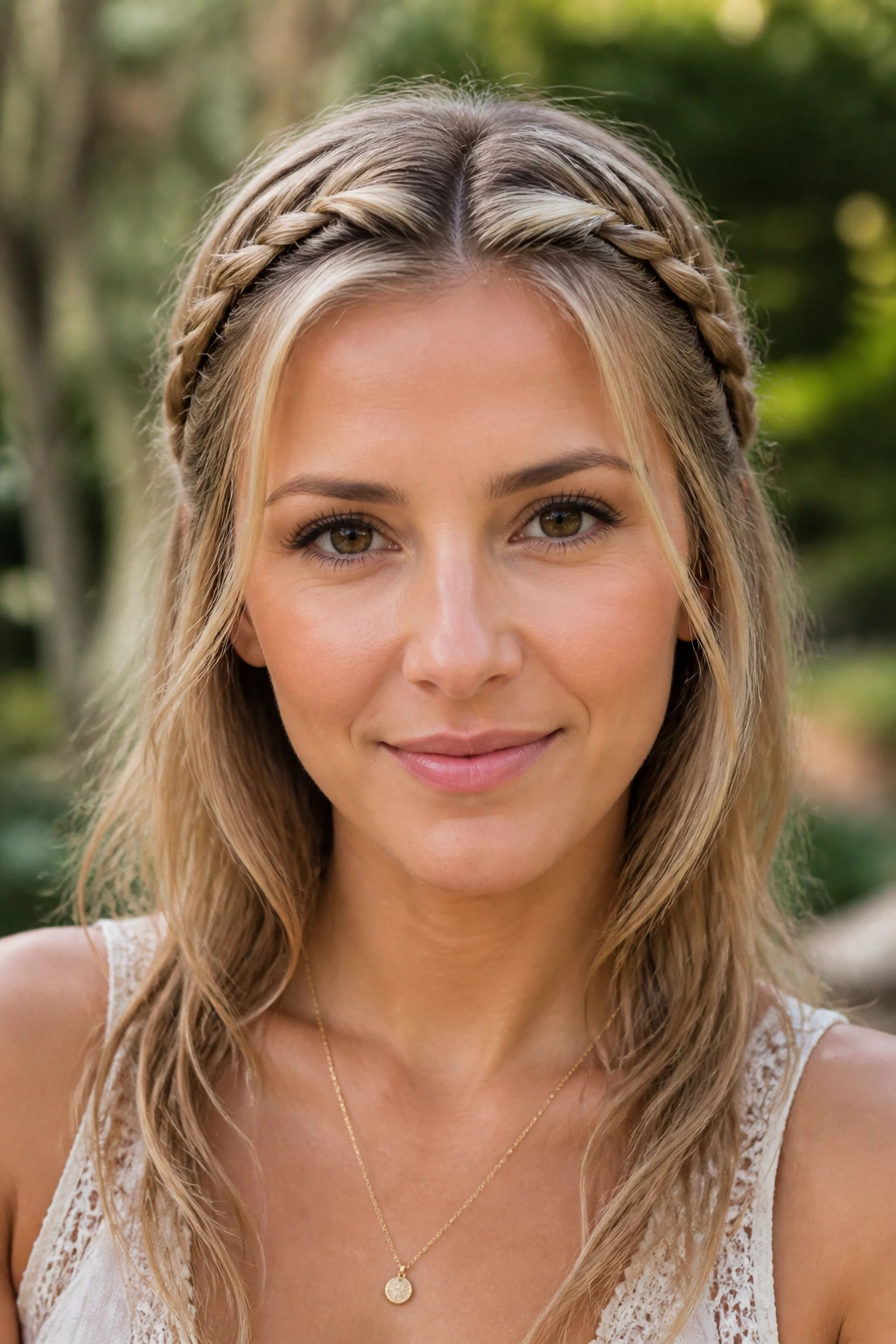
A twisted headband style is what I suggest when the front pieces are a mess and you don’t want to fight them. Take a section from one temple, twist it along the hairline, pin it behind the ear, and repeat on the other side if you want a fuller band effect. The result looks like an accessory, even though it’s just your own hair.
This is especially good on shorter lengths. Bobs and lobs can do this without much trouble, and thin hair loves the way the twist keeps the face open. If you want more control, mist the front section lightly before twisting so the strands don’t separate too much.
The shape is simple, but it changes the whole mood. Suddenly the front looks considered, even if the rest of the hair stays plain. That’s a very good trade on a rushed morning.
18. Clipped-Back Volume Pouf
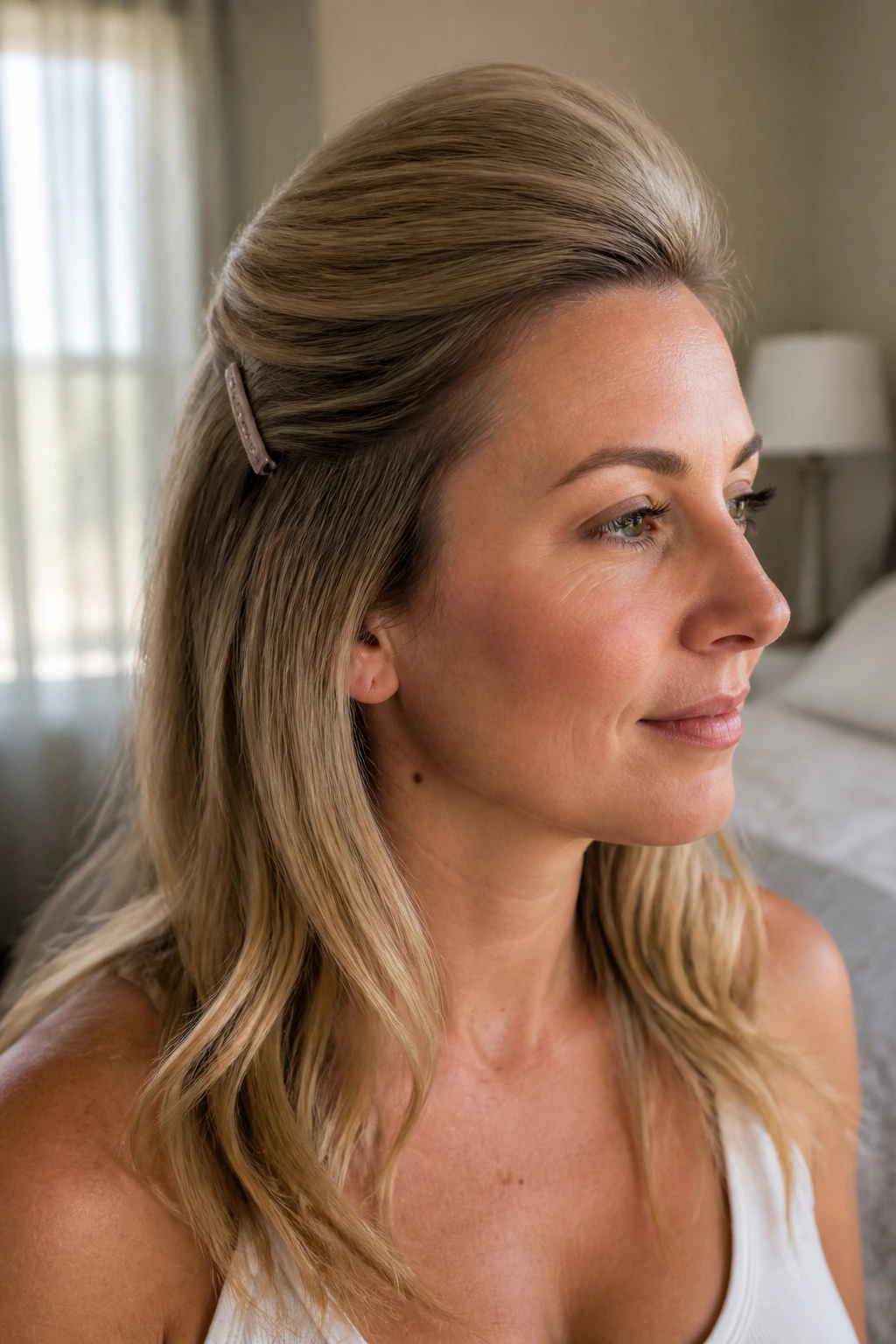
This one leans into the front section and gives it a little lift instead of hiding it. Lift the top front pieces, tease the underside very lightly, smooth the top layer over, and clip the section back with a barrette or small claw clip. It’s a tiny pouf, not a cartoon one.
Thin hair can look skimpy when everything lies flat from forehead to crown. A slight puff at the front solves that fast. You’re creating a shape that catches the eye before it notices the rest of the head.
Keep it soft
The best version of this style is not stiff. Leave the sides relaxed and keep the clip a little above the ears so the lift stays visible. If the clip is too heavy, the whole section collapses. That’s one of those annoying little truths that matters more than any fancy product.
This style is a solid choice when you need a face-framing lift without touching the length. It buys you five minutes of dignity before coffee.
19. Low Loop Bun
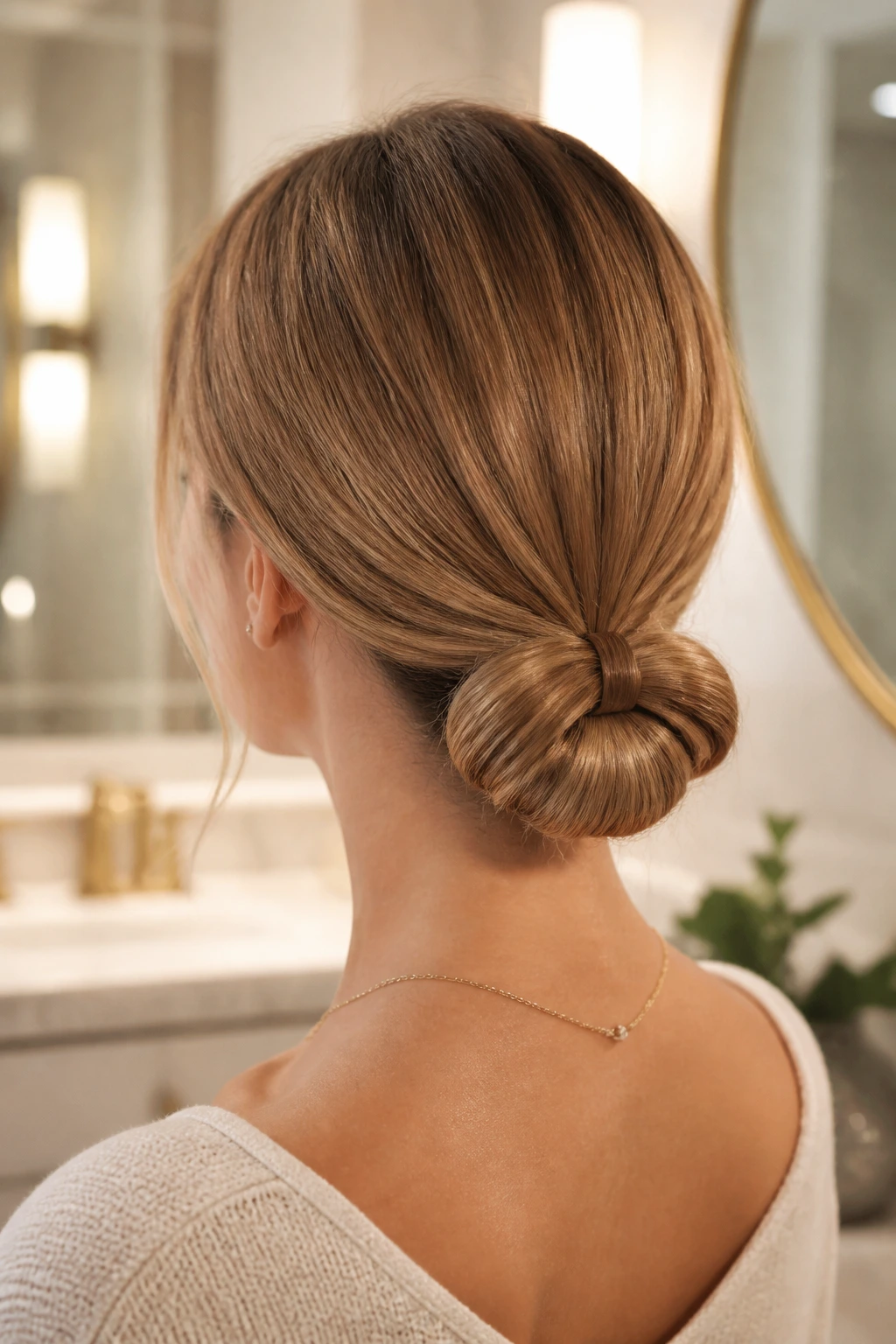
A low loop bun is one of those styles that looks polished because the shape is clean, not because the hair is thick. Tie a low ponytail, pull the hair halfway through the elastic so it forms a loop, then spread the loop out gently. The ends can stick out a little or be tucked under, depending on the finish you want.
For thin hair, the loop gives the bun more visual surface area. A tight little knot can look small and sad. A looped bun, by contrast, has a fuller outline.
Try to keep the loop centered at the nape. If it sits too high, the shape can start to look like a half-done topknot. Add a pin on each side if the loop wants to sag.
20. Flat Twist Crown
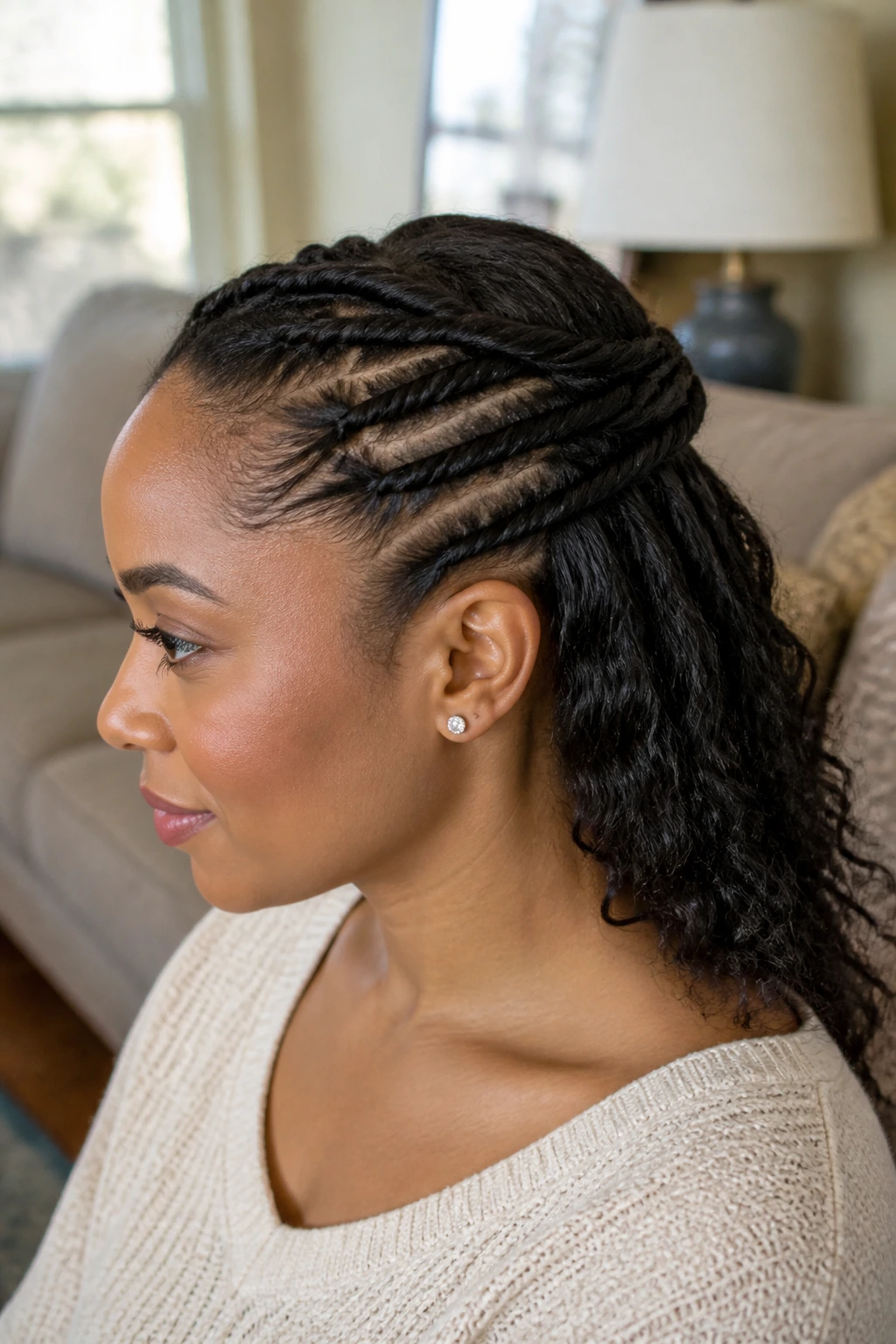
A flat twist crown keeps hair off the face while making thin hair look more styled than it really is. Take one section from each side near the temples, twist them back close to the head, and pin them together at the back. If your hair is short, you can stop there. If it’s longer, leave the rest down or gather it into a low ponytail.
This is one of the better styles for days when your hair needs to behave but you don’t want to commit to a full braid. The twist sits flatter than a braid, which makes it easier to manage on thin hair. It also creates a subtle line across the head that reads as structure.
If you want the crown to look broader, gently loosen the twist before pinning. Not too much. Just enough to widen it by a few millimeters.
21. Flipped-End Half Pony
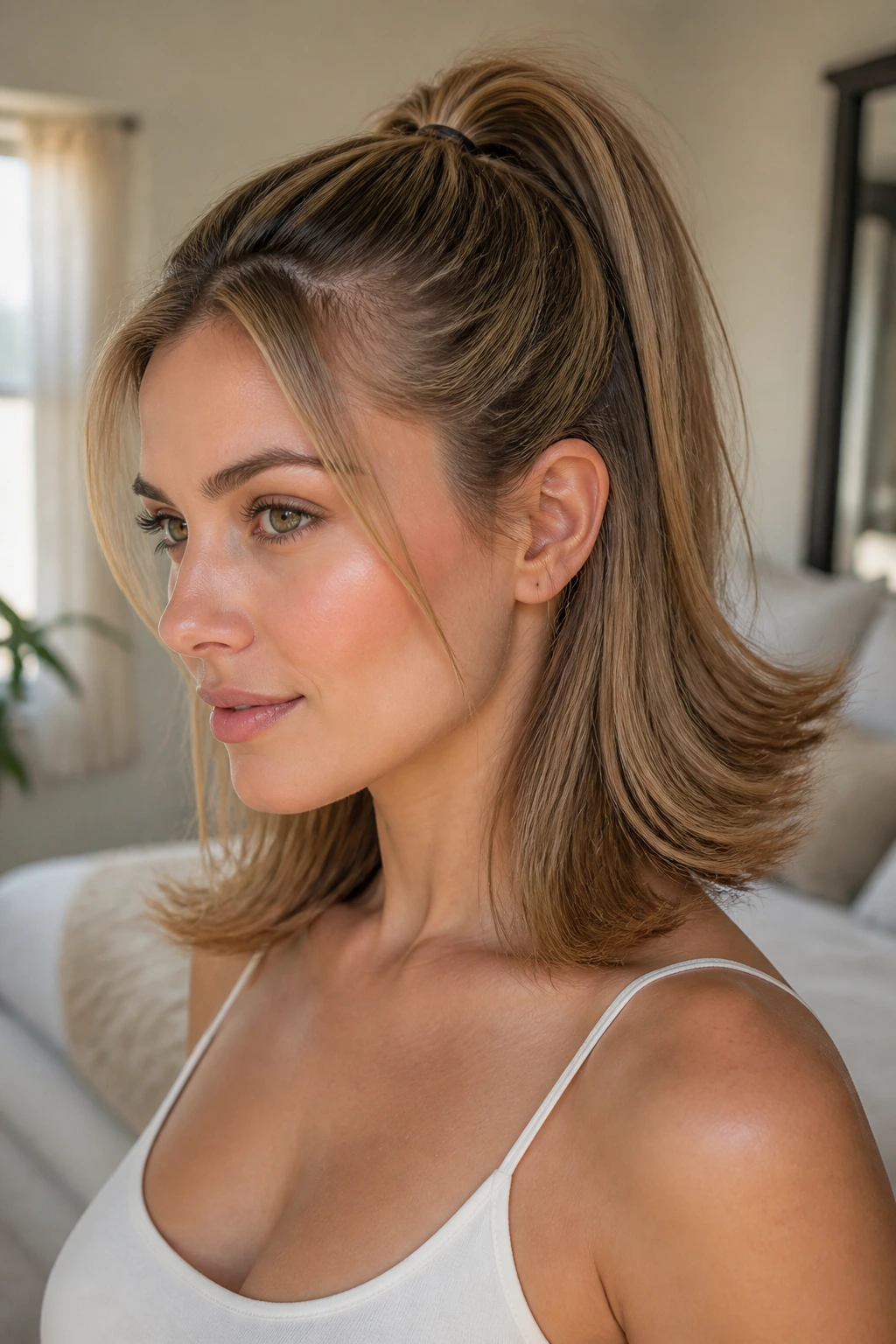
There’s something useful about a little bend at the ends. A half ponytail with flipped ends gives thin hair a touch of bounce where it usually lacks it. You gather the top half, secure it loosely, and either flip the ends under with a flat iron or let the natural bend of the hair do the work.
The top stays lifted while the ends get to be expressive. That balance matters on thin hair, because flat roots and stringy ends together can look tired fast. A half pony keeps the shape light and lets the rest of the hair move.
What to watch for
Don’t tie the half pony too tightly. If the elastic bites into the hair, the section below it can look even thinner. A softer hold and a small bit of crown lift go a long way here.
This style is especially good if your hair already has a slight wave. You’re not forcing it into something else. You’re giving it a frame.
22. Jaw-Clip Twist with Ends Out
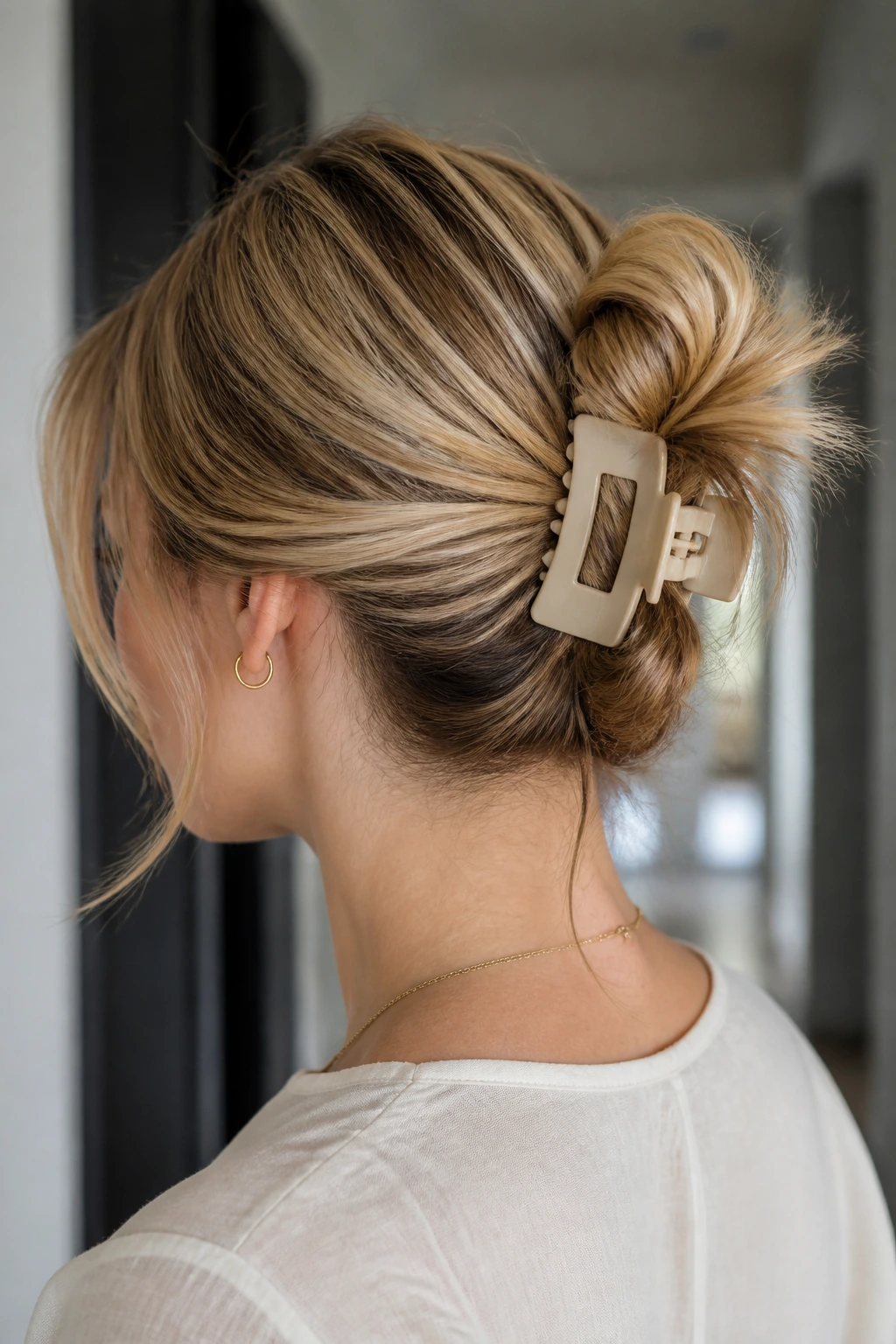
A jaw clip is one of the few accessories that can make thin hair look fuller rather than smaller. Gather the hair low, twist it upward, clamp it with the clip, and let the ends fan out or fall through the opening. The visible clip gives the style height; the loose ends keep it from looking packed down.
This works well when you need your hands back in a hurry. No pin hunt. No elastic drama. Just twist, clip, and go. If the hair is too slick, a little dry shampoo or texture spray at the roots keeps the clip from sliding.
I like this one because it doesn’t pretend thin hair is thick. It uses the clip as part of the shape. That honesty is why it looks better than a lot of fussy styles that try too hard.
Why These Morning Styles Work So Well on Thin Hair
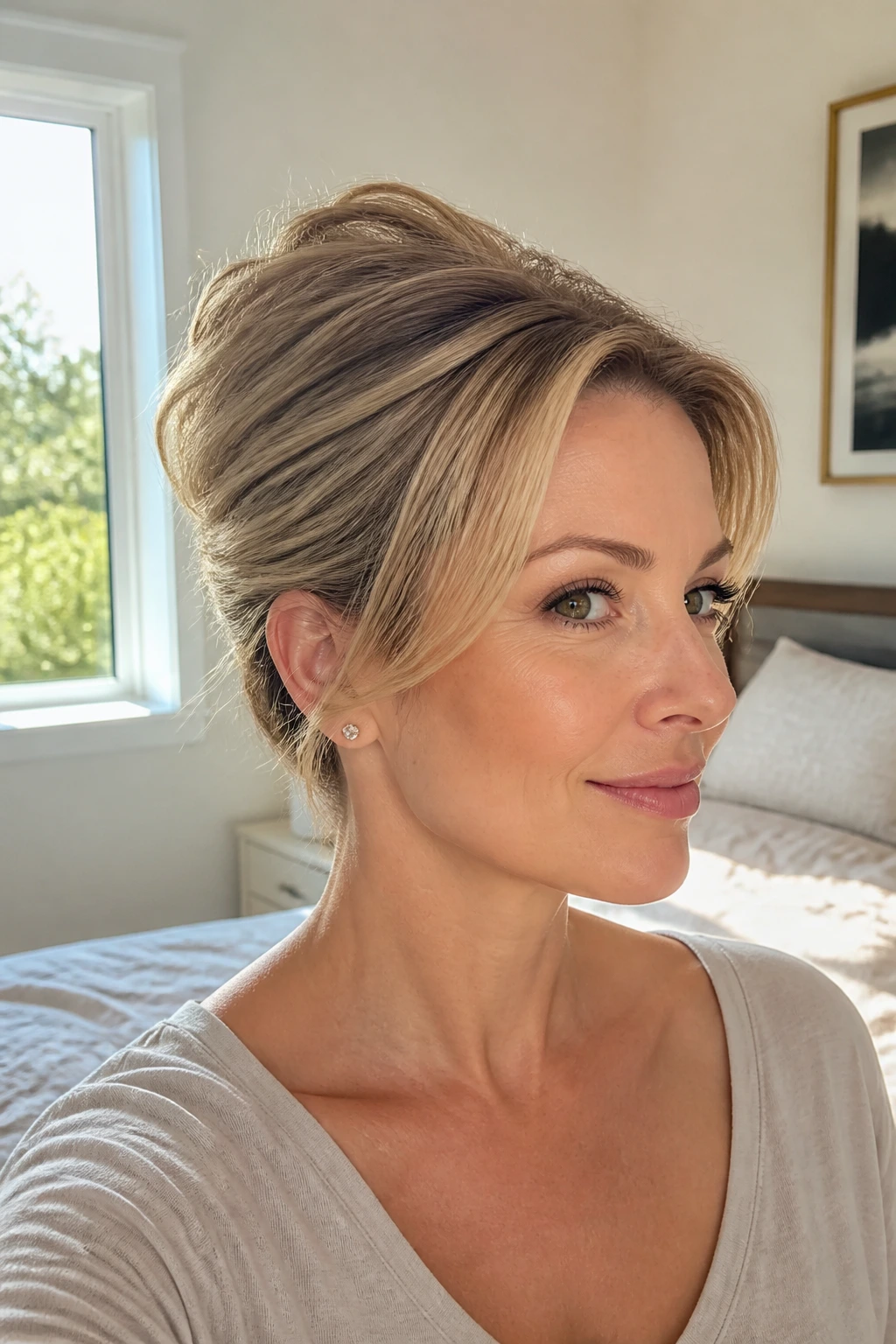
Thin hair tends to reward styles that create shape before they create size. That’s the part most people miss. A lifted crown, a tucked section, a braid that sits close to the head, or a wrapped elastic gives the eye more to read than a plain loose style ever will.
You also save time by leaning into grip. Day-old hair, dry shampoo, a light mist of texture spray, and small pins all give thin hair something to hold onto. Heavy cream and too much serum do the opposite. They make the hair collapse faster, and then you’re back in the mirror with the same problem you started with.
I’m a fan of styles that look better after a quick finger-tousle. Thin hair often doesn’t need precision; it needs a shape that can survive a coat, a commute, and a few head turns.
Smart Prep That Saves Five Minutes
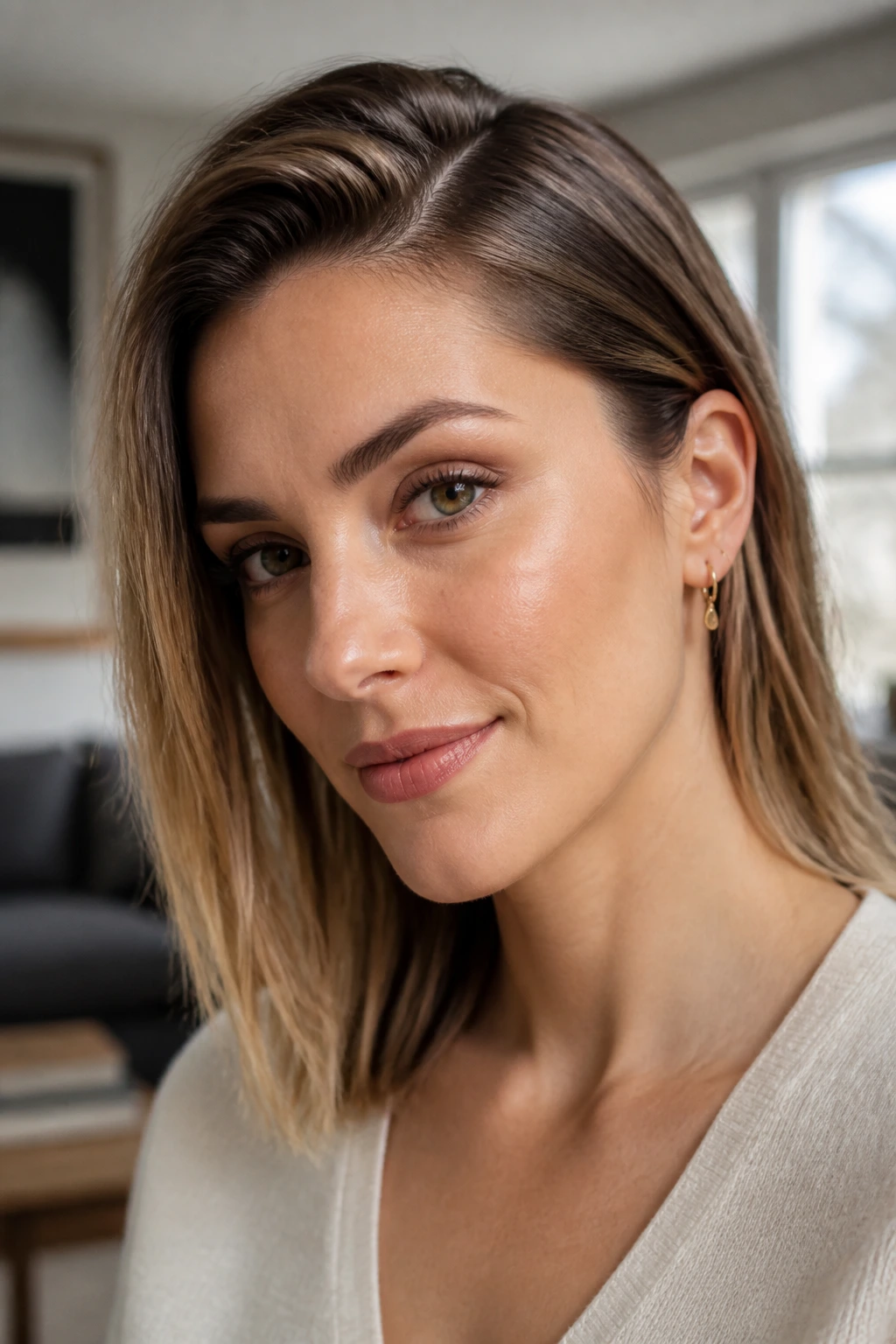
The fastest thin-hair styles are easier when the base is right. If your hair is freshly washed and slippery, you’ll spend more time fighting it. If it has a little texture, the whole process goes smoother. That’s why I usually start with the roots, not the ends.
A few seconds of dry shampoo at the crown can make a major difference. Let it sit for half a minute before you touch it. If you move too soon, it won’t grab as well. On damp hair, a lightweight mousse at the roots and a quick rough-dry upside down can give you the kind of lift that stays put longer than teasing alone.
Be picky about conditioner, too. Keep it off the scalp unless your hair is dry all the way through. Thin hair does not need help becoming flatter. It gets enough of that on its own.
One more thing: don’t chase perfection on the first pass. Thin hair often looks better after you loosen a twist, widen a braid, or tug the crown a little. Tiny adjustments matter more than one big attempt.
Essential Tools for These Hairstyles
-
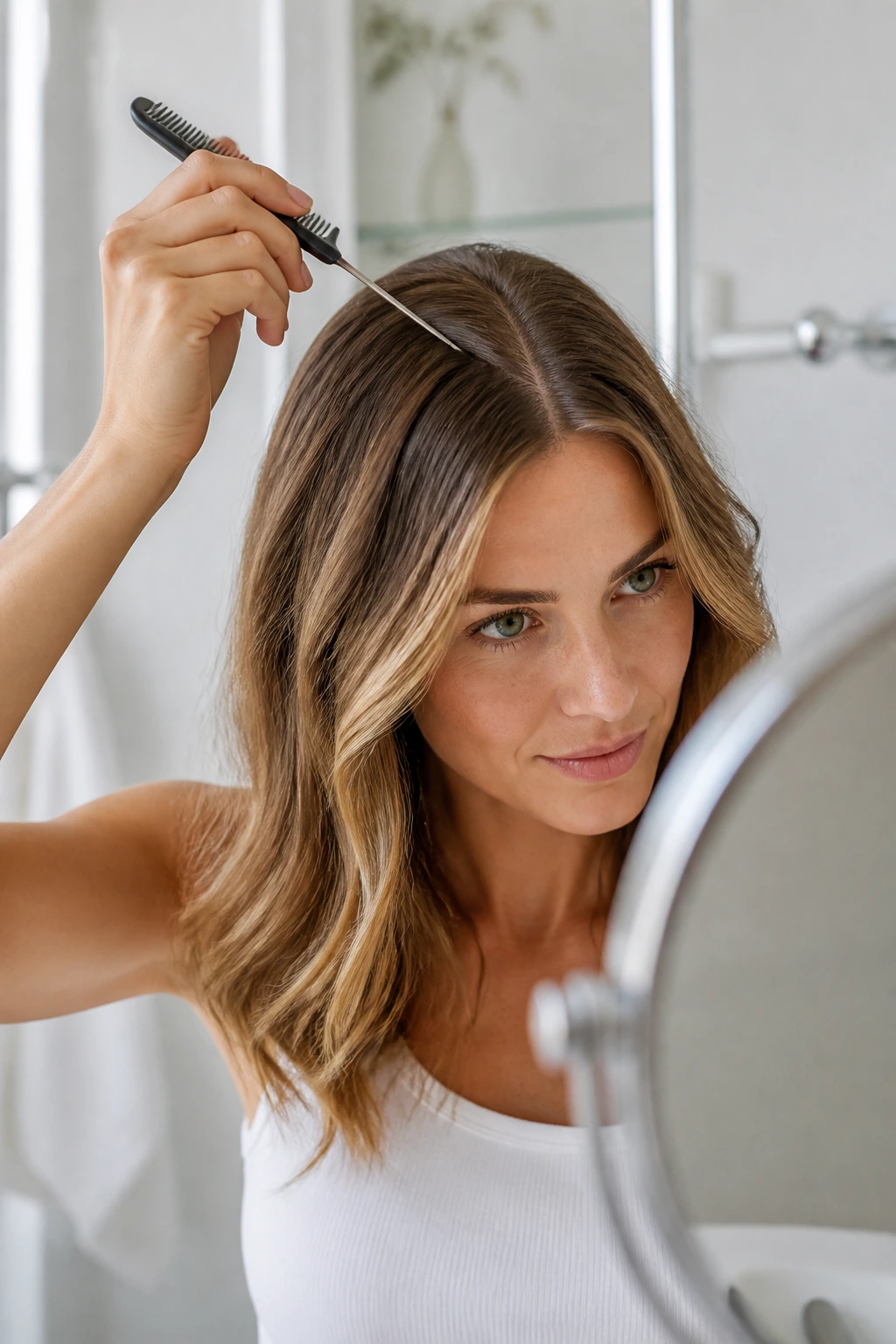
Rat-tail comb: Useful for clean parts and for lifting small sections without disturbing the rest of the hair.
-
Dry shampoo: Helps thin hair grip, especially at the crown and near the part line.
-
Texture spray: Gives braid, twist, and clip styles something to hold onto without making the hair stiff.
-
Lightweight mousse: Best on damp roots when you want a little volume before styling.
-
Mini elastics: Better than thick bands for bubble ponytails, pull-through braids, and half-up knots.
-
Bobby pins: Cross two pins in an X for stronger hold; thin hair often needs that extra anchor.
-
U-pins or a French pin: Handy for buns and chignons because they slide through the twist instead of crushing it.
-
Mini claw clip: Ideal for half-up twists, jaw-clip styles, and quick back-section holds.
-
Flexible-hold hairspray: Keeps flyaways down without turning the hair into a shell.
-
Boar-bristle brush or soft paddle brush: Good for smoothing the surface without stripping away all the texture.
Common Mistakes That Flatten Thin Hair
-
Using heavy cream at the roots.
The hair looks smooth for five minutes, then it sinks. Keep richer products from the scalp and use them only on the ends if you need them. -
Pulling everything too tight.
A slick, tight style exposes the scalp and makes thin hair look thinner. Leave a little lift at the crown or a few soft pieces near the face. -
Choosing oversized accessories.
Huge clips and heavy barrettes can slide or overwhelm the shape. Small to medium pieces usually hold better and look more natural. -
Trying to build volume on clean, slippery hair without prep.
The style won’t grip. A little dry shampoo or texture spray gives the hair the friction it needs. -
Over-teasing and then brushing it smooth again.
That just creates fluff that disappears fast. Tease lightly, pin smartly, and stop there. -
Forgetting that shape beats size.
Thin hair doesn’t need to mimic thick hair. It needs a clear outline, a good part, and a place to stop.
Variations for Different Cuts and Hair Types
The Short-Cut Switch:
If your hair is chin-length or shorter, lean toward the twisted headband, clipped-back volume pouf, or front crown braid. Those styles work with the length you have instead of asking for a ponytail that won’t exist.
The Shoulder-Length Sweet Spot:
This is where low buns, half-up knots, faux bobs, and loop buns really shine. The hair is long enough to gather, but not so long that the style gets heavy and droopy by noon.
The Fine-and-Straight Fix:
Use more texture spray and smaller sections. Straight, fine hair slips fast, so rope braids, bubble ponytails, and jaw-clip twists usually hold better than silky, smooth styles.
The Wavy-Hair Shortcut:
If your hair has a bend already, don’t fight it with too much smoothing. Rope braids, side-swept buns, and half-up styles often look fuller when you leave the natural wave in place.
The No-Heat Route:
Skip the curling iron and keep a dry shampoo, a clip, and a few pins nearby. Topsy-tails, claw-clip twists, and bubble ponytails give you shape with almost no heat at all.
Keeping the Style Looking Fresh Until Tonight
Thin hair often loses its shape faster than thick hair, so the trick is not to start over every time. Instead, refresh the base. Lift the crown with your fingertips, add a little dry shampoo where the part starts to shine, and pinch the twist or braid back into place.
If you’re wearing a ponytail or bun, swap the elastic if it starts to slide. That tiny fix can save the whole style. For clipped styles, keep one or two spare bobby pins in your bag. They weigh nothing, and they solve the exact kind of problem thin hair likes to create halfway through the day.
At night, remove pins and clips before bed. Thin hair bends easily, and sleeping in a twist can leave a hard crease that’s annoying to fix in the morning. If you want to preserve some shape, sleep on a silk pillowcase or loosely braid the hair before bed. No need to make it a project.
Questions People Ask About Thin-Hair Morning Styles
What hairstyle makes thin hair look the fullest fast?
A high ponytail with crown lift, a pull-through braid, or a low loop bun usually gives the strongest fullness illusion. They create shape at more than one point, which makes the hair look broader overall.
Is second-day hair better for these styles?
Usually, yes. Thin hair often gets better grip after one day because the roots aren’t as slippery. If the roots look oily, dry shampoo helps more than a full wash does.
Do I need to tease my hair every morning?
No. Light teasing can help, but it should stay small and hidden under the top layer. Texture spray, part changes, and the right clip will often do the job with less damage.
Why do my clips keep sliding out?
Most likely the hair is too clean, too silky, or the clip is too large for the section. Spray a little texture product at the roots, twist the section once before clipping, and try a smaller grip.
Can these styles work on very short hair?
Some can, especially the twisted headband, clipped-back volume pouf, and front crown braid. Faux bobs and full ponytail styles need more length, but the shorter options still give shape without demanding it.
How do I make a ponytail look thicker?
Use two elastics instead of one if the base feels fragile, then wrap a small section of hair around the holder. A little lift at the crown and a gentle tug on the ponytail itself also help the shape read fuller.
Should I use thickening products every day?
Not necessarily. A light mousse or dry shampoo is often enough. Heavy thickening creams can weigh thin hair down, so keep the formula light unless your strands are very dry.
What if my hair is too soft to hold braids?
Start with texture spray and braid on hair that isn’t freshly washed. Rope braids and pull-through braids usually hold better than loose three-strand braids on soft, slippery hair.
The Fastest Way to Make Thin Hair Behave
Thin hair doesn’t need a dramatic makeover before breakfast. It needs one or two shapes you can do with half-open eyes, a comb, and maybe a clip you keep reaching for anyway. The styles here work because they respect the hair instead of bullying it into something bigger than it wants to be.
Pick three. Practice them once when you’re not late. Then let the mirror routine get easier, which is the whole point. The best morning style is the one you can do before the kettle boils.