



Thick hair can look immaculate at 8:15 and a little… ambitious by 11:00. One strong meeting, one humid elevator ride, one collar rubbing at the nape, and the whole thing starts to swell where you least want it to. That’s why polished hairstyles for the office with thick hair need more than a neat shape. They need a clean base, a smart anchor, and a finish that won’t puff apart the second you sit under fluorescent lights.
The upside is that dense hair gives you something fine hair often can’t fake: structure. A low knot sits with presence. A braid has actual body. A ponytail doesn’t look sad and thin at the end of the day. You just have to stop treating thick hair like it wants the same tricks as everything else. It doesn’t. It wants tension in the right places, a little smoothing at the hairline, and a style that uses its weight instead of fighting it.
And if you’ve ever looked in a bathroom mirror at lunch and thought, Why does my hair look bigger than it did this morning? — yes, that’s the exact problem these styles solve. Some are fast, some are more polished, and a few are the kind of workday hair that still looks decent after a scarf, a headset, and a coat collar.
Why You’ll Love This Collection
-
Built for density: These looks use thick hair’s own weight to hold buns, twists, and ponytails in place instead of asking tiny pins to do all the work.
-
Office-appropriate without looking stiff: Each style keeps the face, neckline, or crown neat enough for meetings, while still looking like hair and not a helmet.
-
Good on real mornings: Most of these can be done with a brush, a comb, a few pins, and one styling product, which is about as realistic as office hair gets.
-
Friendly to day-two hair: A little grit actually helps several of these styles hold better, so you do not need freshly washed hair for all of them.
-
Works with layers and length: Whether your thick hair falls at the shoulders or hangs past the ribs, there’s a version here that won’t collapse by noon.
-
Easy to refresh: A smooth crown, one wrapped elastic, and two spare pins can rescue most of these styles before your next call.
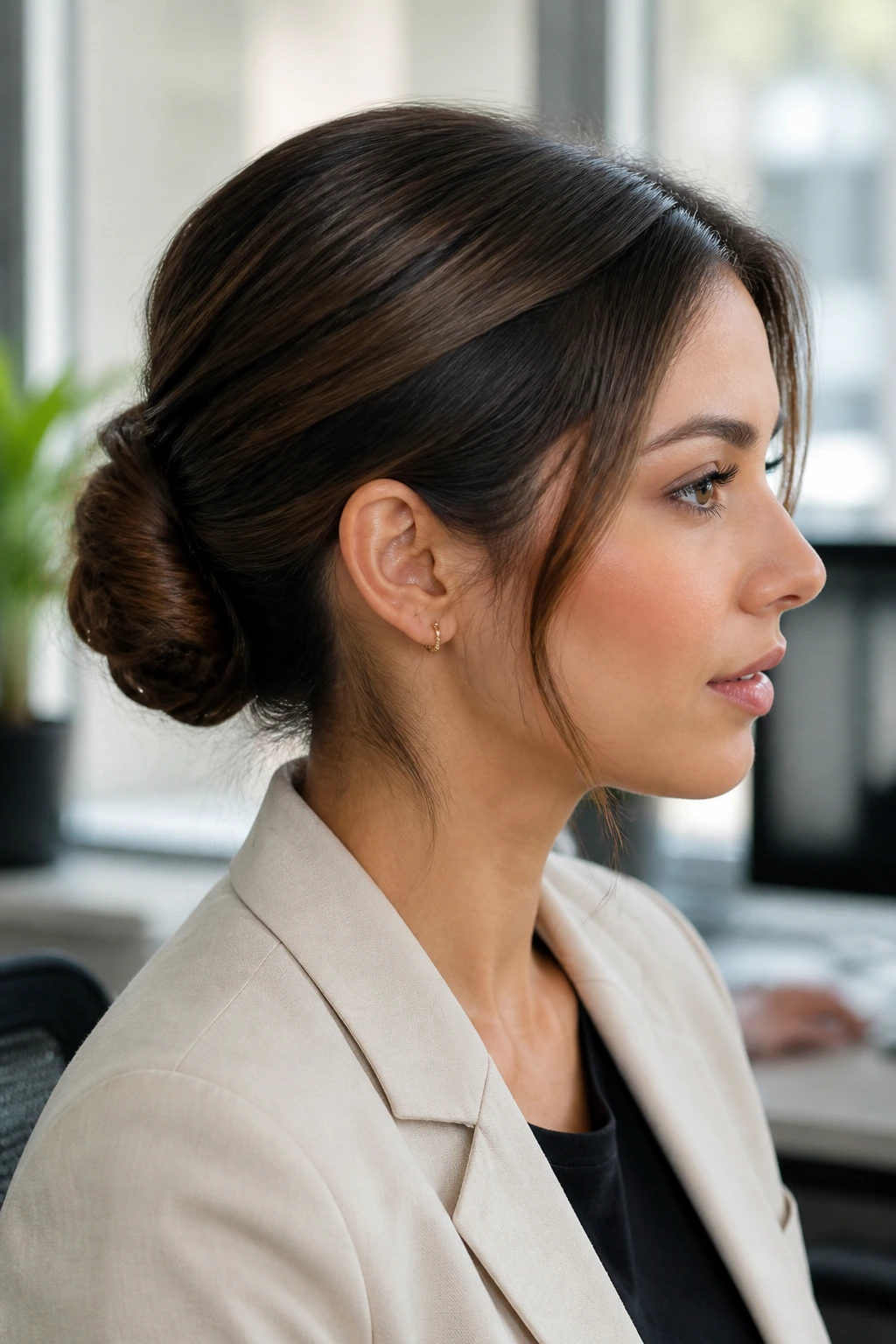
1. Sleek Low Chignon
A low chignon is one of those office hairstyles that looks calm on purpose. On thick hair, that matters. A loose bun on dense hair can start to look bulky fast, but a chignon sits at the nape, hugs the head, and gives you that clean line under a blazer collar.
What makes it work is the base. Smooth the top with a boar-bristle brush and a pea-sized amount of cream, then gather the hair just above the nape. Twist the ponytail once, wrap it into a compact coil, and pin the bun from the underside with long bobby pins or U-pins. Thick hair usually needs four to six pins, not two. Skimping here is how buns shift by lunch.
The pinning pattern matters
Put two pins through the bun in an X shape, then add one or two more at the top edge where the coil wants to spring open. That’s the part most guides gloss over. The top edge is where thick hair pulls back first.
If you want it extra neat, leave a clean center part or deep side part before you start. Both look sharp. The center part feels a bit more formal; the side part softens the whole thing and keeps the crown from puffing.
2. Side-Parted Low Ponytail With a Wrapped Base
This is the style I’d choose if I had ten minutes and needed to look deliberate. A low ponytail on thick hair can read plain, but a deep side part and a wrapped base change the whole thing. Suddenly it looks intentional instead of rushed.
Start by drawing the part with the tail of a comb, then smooth the heavier side over the crown so the roots lie flat. Gather the ponytail just behind the ear or slightly lower, depending on your collar height. Once the elastic is in place, take a narrow 1/2-inch strand from underneath and wrap it tightly around the band. Pin the end under the ponytail with a single bobby pin.
If your ends are very full, run a flat iron over the last 2 to 3 inches before tying the ponytail. Not the whole head. Just the ends. That little bit of polish makes the tail look cleaner and keeps the bottom from fanning out like a broom.
3. French Twist With Soft Ends
A French twist can look severe if you overdo it. On thick hair, though, it gets better when you stop trying to make it tiny. The fullness gives the twist a shape that fine hair can’t fake, and that’s why it works so well for interviews, presentations, and days when you want your hair off your neck but not flattened into the head.
The trick is to leave a little softness at the edges. Smooth the sides back with a light cream, gather the hair low, and roll it upward rather than twisting it into a tight tube. Thick hair should look folded, not crammed. Secure the roll with pins along the spine of the twist, then tuck the ends in loosely so the silhouette stays clean but not rigid.
How to keep it from bulking up
If your hair is layered, pin the shorter pieces first. That stops the twist from splitting open near the top. A small claw clip can help hold the middle while you place the pins, but the real work should come from the pins themselves.
Choose a matte pin or a clip in black, brown, or gold. Shiny novelty clips can make the whole style look less office-ready in a hurry.
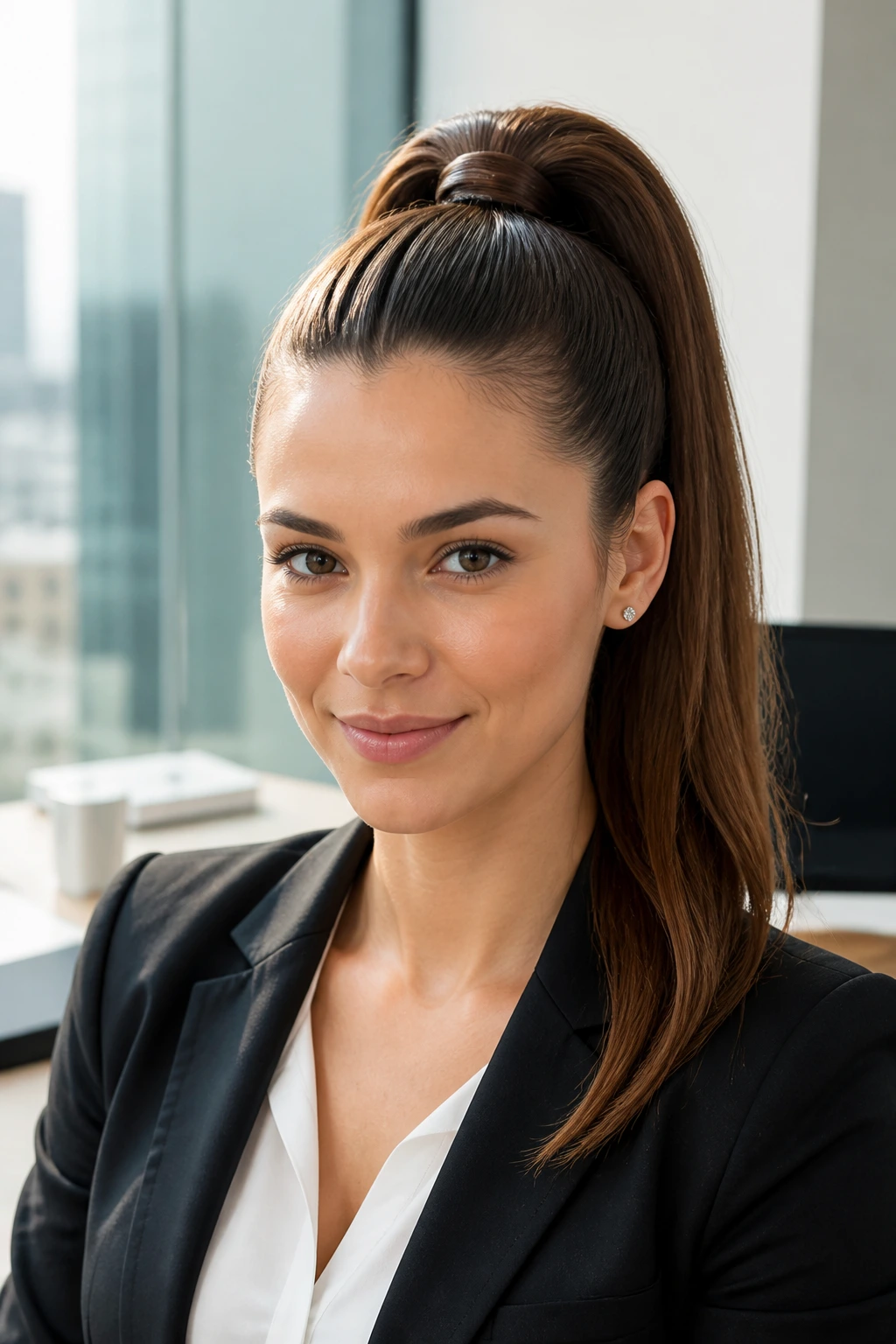
4. High Polished Ponytail
A high ponytail sounds sporty until you smooth it properly. On thick hair, it becomes sleek and sharp, especially if you position it at the crown rather than too far forward. That slight lift opens the face and keeps the hair from dragging at the neck.
Use a brush to pull the hair up while the roots are still a little damp or lightly misted. A tiny amount of gel or edge control at the hairline helps, but don’t drown the roots. Too much product on thick hair creates a greasy ring fast. Once the ponytail is secure, wrap a strand around the elastic or hide it with a small braid if you want a more finished look.
This style is best when the top is flat and the tail is full. That contrast looks polished. If the pony is pulling too hard, split the base into two stacked elastics instead of one. Thick hair has weight, and one elastic can sometimes give up before the afternoon does.
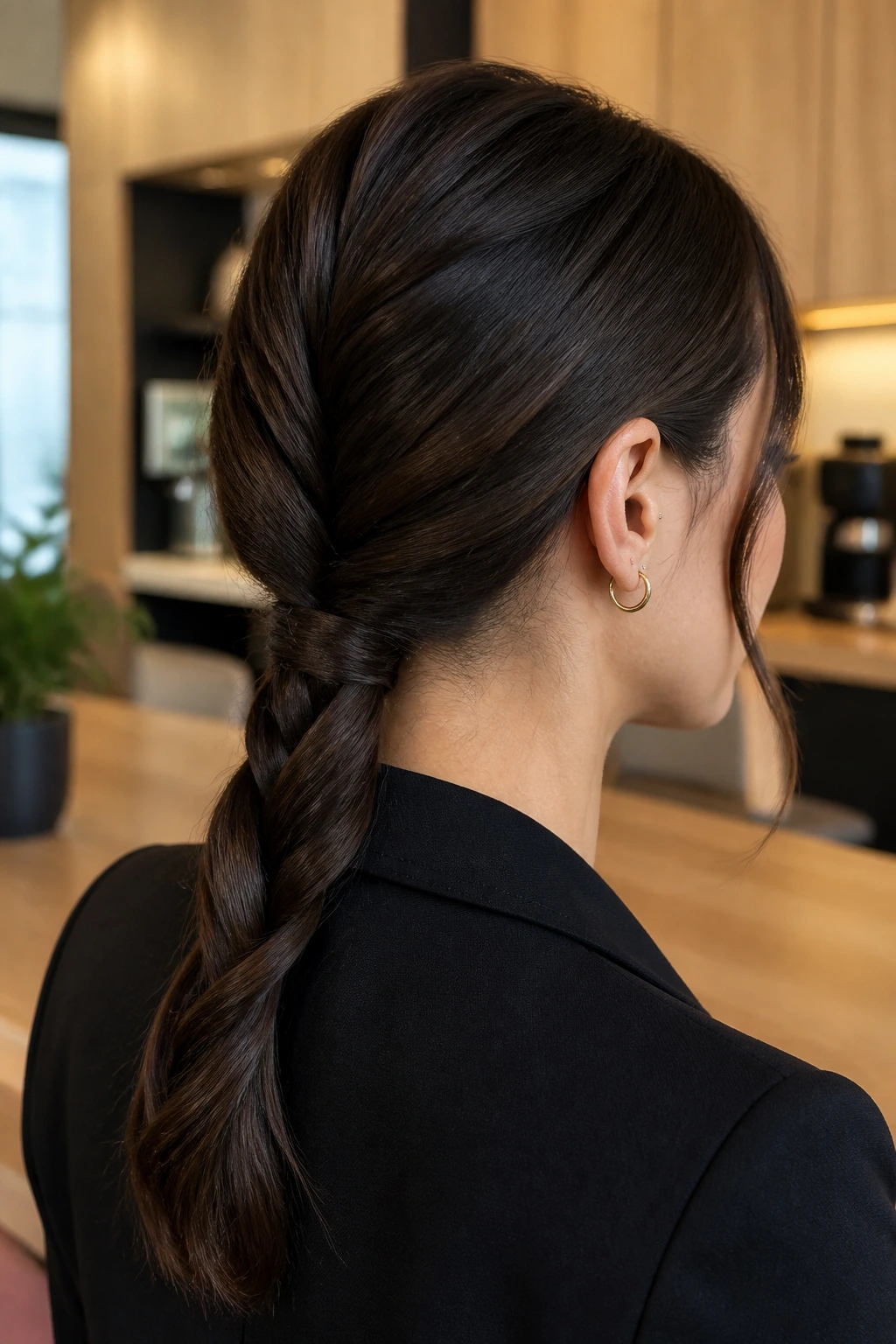
5. Rope-Braid Low Ponytail
Rope braids are underrated for office hair because they look tidy without being fussy. Thick hair is especially good at them. The braid reads clearly, the twist holds its shape, and the finished style doesn’t rely on perfect weather or a perfect blowout.
Gather the hair into a low ponytail and split it into two sections. Twist each section in the same direction — always the same direction, or the braid starts to loosen — then wrap them around each other in the opposite direction. Secure the end with a small elastic. If your hair is layered, mist the lengths with a little texturizing spray before you start so the twist grips better.
This is one of those styles that gets better the more hair you have. On thick hair, the rope braid looks deliberate, not skimpy. And because it stays close to the back, it won’t fight with the back of a chair.
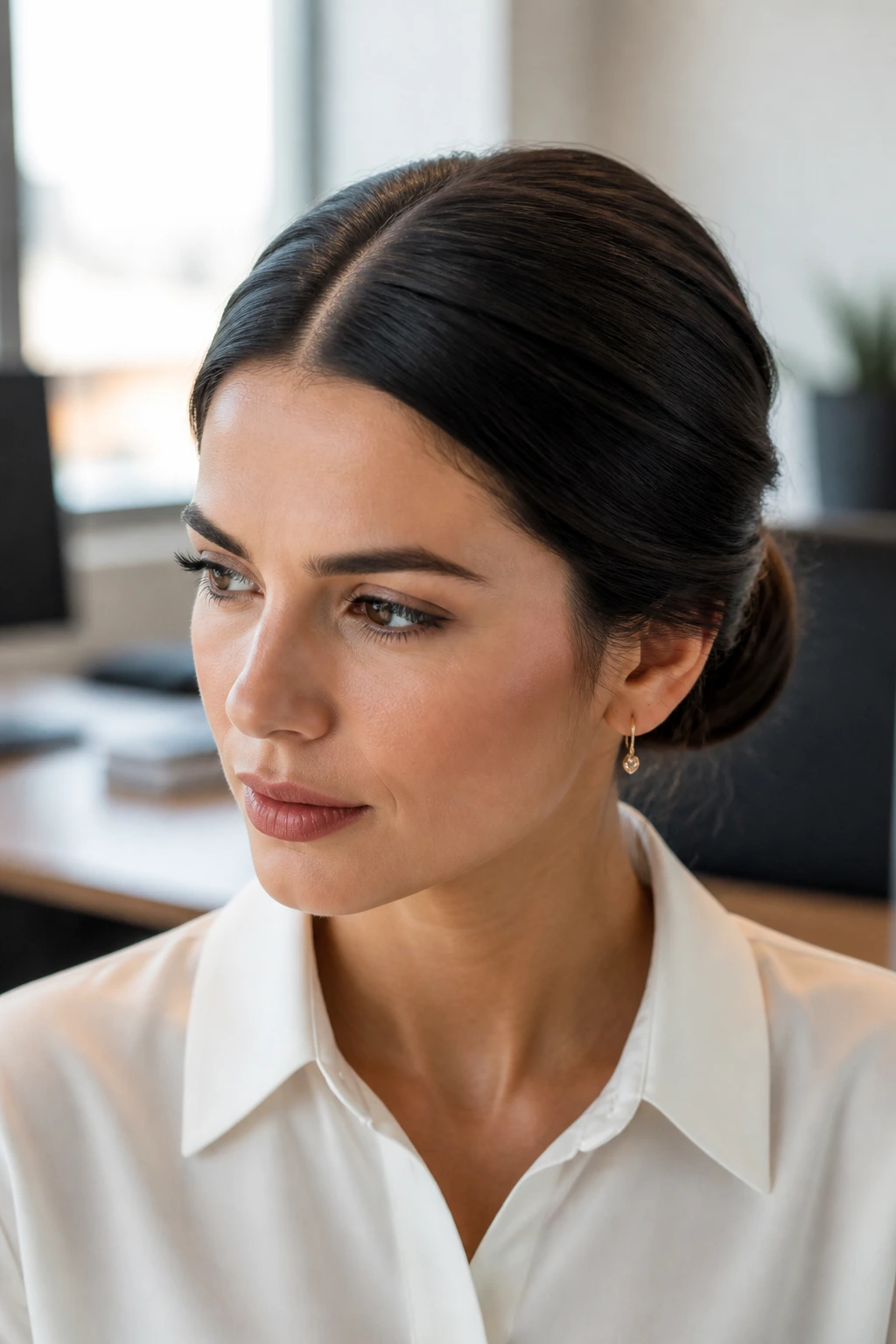
6. Center-Parted Bun With a Smooth Crown
The center part is the cleanest line thick hair can wear. It makes the head look balanced and keeps the crown from puffing toward one side, which is a subtle but real problem when your hair has a lot of body. Put that part into a low bun, and you get a very tidy office look without a lot of extra effort.
Brush the hair straight back from the part, smooth the top with a touch of cream, and gather it at the nape. Twist it into a bun that sits flat against the head, not raised high. Pin the sides first, then secure the top and bottom of the bun. If one side wants to balloon, flatten that spot with your palm before you pin it.
A center-parted bun looks sharp with a crewneck, a button-up shirt, or anything with a structured collar. It’s the kind of style that makes earrings and glasses stand out a little more, which I happen to like. Clean lines, no drama.
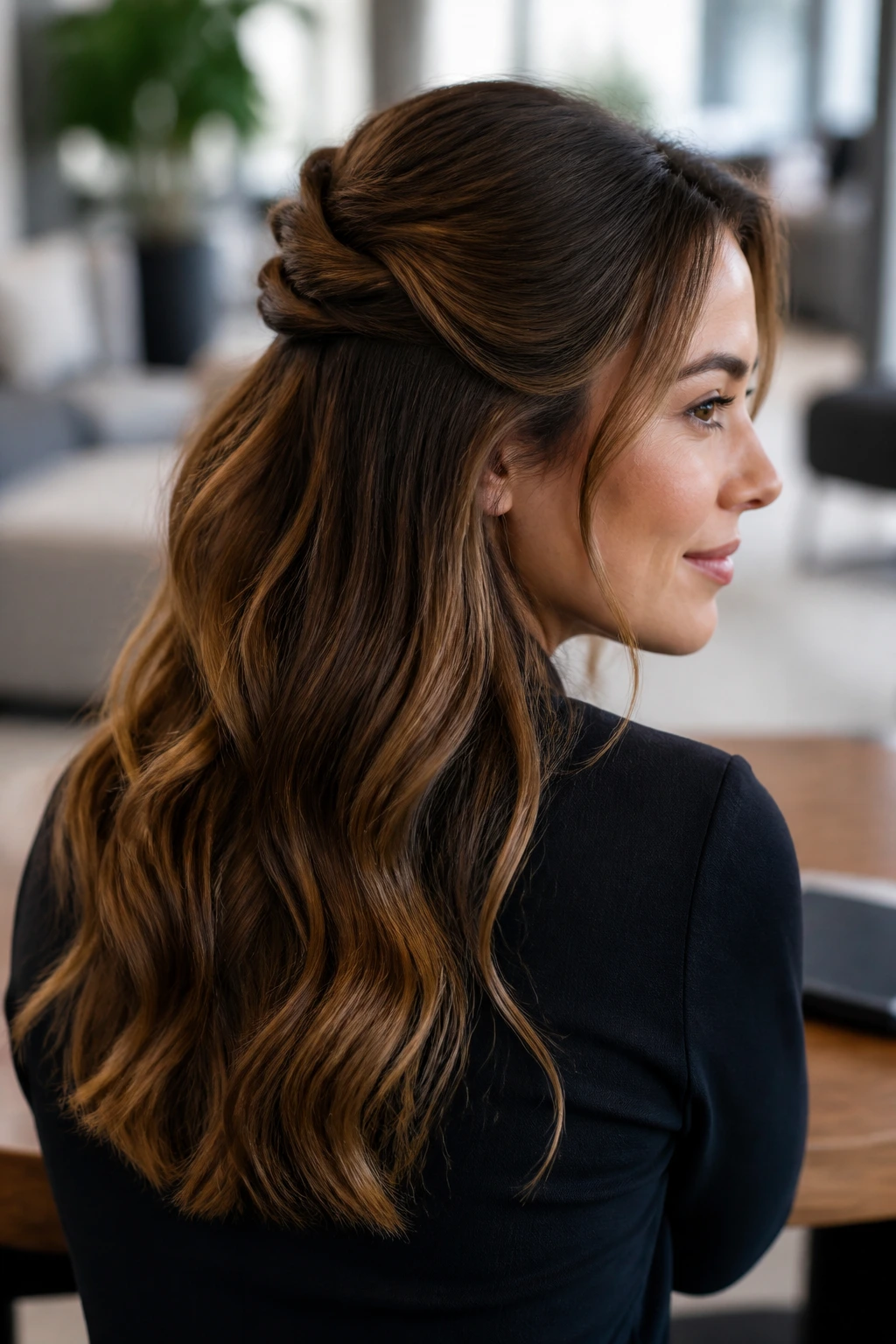
7. Half-Up Twist With Loose Waves
Need hair off your face but don’t want everything pulled back? This is the answer. A half-up twist gives thick hair a little control at the crown while leaving the lower lengths loose, which keeps the style from feeling too severe for creative offices or long desk days.
Take a section from each temple, twist them back, and meet them at the crown or just below it. Secure with two pins or a small elastic hidden under the twist. Leave the rest of the hair in soft waves, brushed-out curls, or even a naturally wavy texture if that’s what you’ve got. Thick hair tends to make the twist itself look fuller, so you don’t need much.
The balance matters. If the twist sits too high, it can start to look like a school recital. Too low, and it won’t keep the front pieces away from your eyes. Aim for the line where the top of the head starts to curve backward.
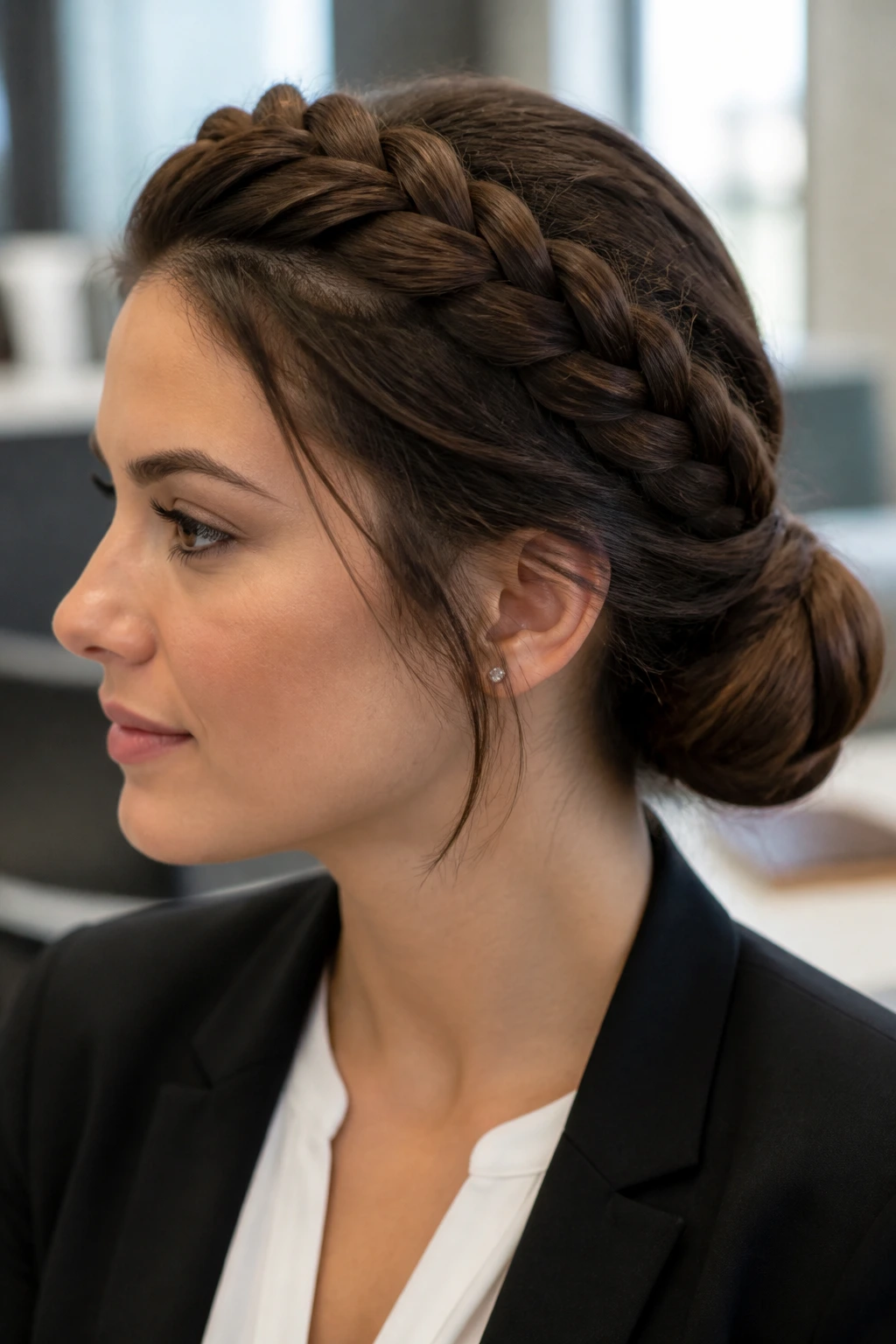
8. Braided Crown Into a Low Bun
This style solves the layer problem better than most. If your thick hair has face-framing pieces that refuse to stay tucked, braiding the crown first gives them a place to go. The braid acts like a built-in border, and the bun at the nape keeps everything stable.
You can braid from one temple across the top of the head, or braid both sides and meet them at the back. Either way, keep the tension firm enough that the braid lies flat. Thick hair gives the braid a wide, substantial look, which is exactly what makes it work for office wear. Once the braid reaches the back, gather the remaining hair into a low bun and pin it close to the head.
This one is good on days when you need a style that survives a commute. It handles wind better than a soft bun and looks neater than loose layers. Not bad for a style that looks more complicated than it is.
9. Claw-Clip French Twist
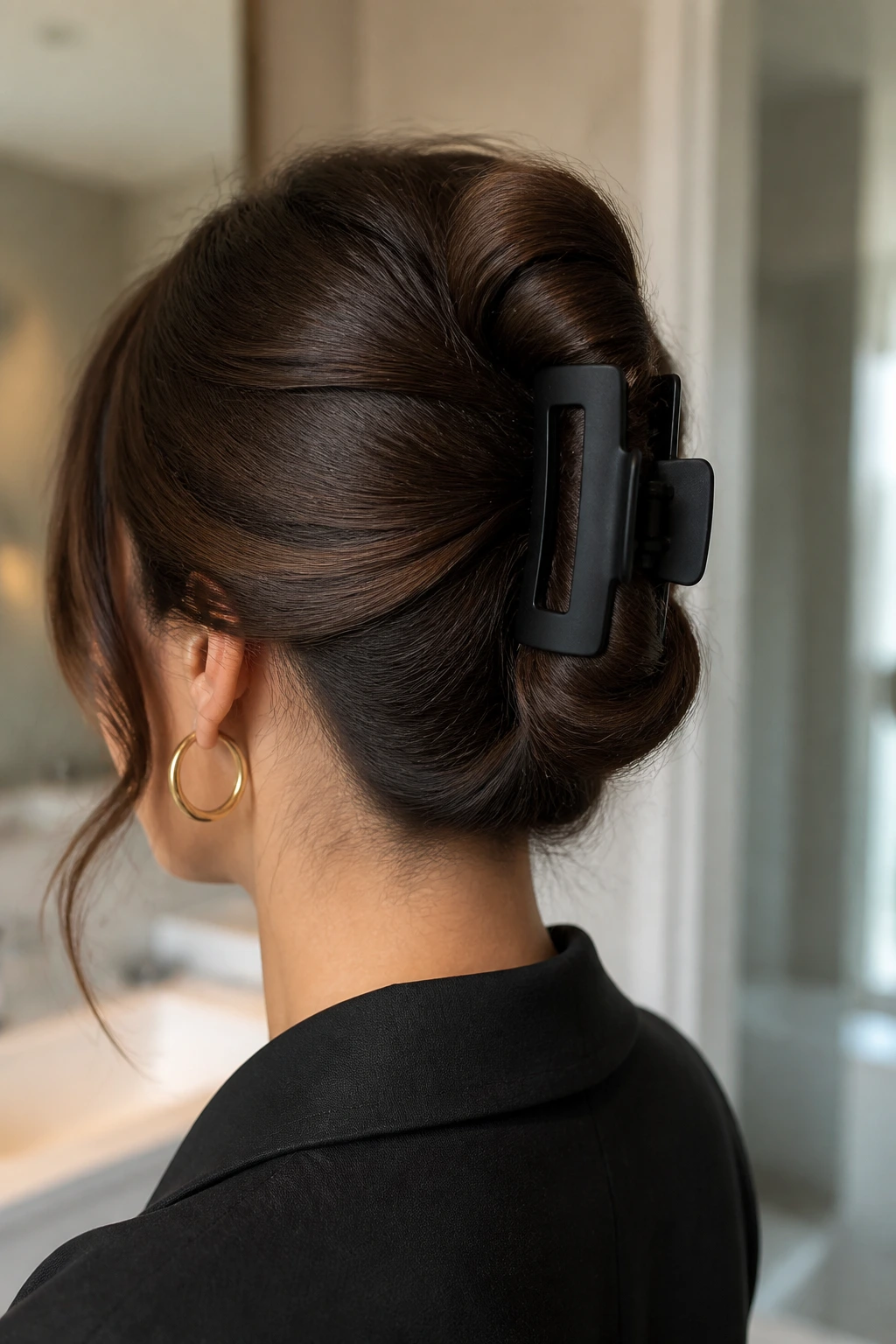
A claw clip earns its place when the clip is strong enough for the hair you actually have. Thick hair snaps weak clips in half, slides out of flimsy ones, or makes them sit awkwardly like a joke. A good large claw clip, though, can hold a rolled twist all day.
Gather the hair at the back, twist it upward, tuck the ends in, and clamp the clip vertically over the twist. If the hair is especially heavy, add one hidden elastic at the base first, then clip over that. That extra anchor keeps the twist from sagging by midmorning.
Choose a matte clip with teeth that actually grip. The tiny decorative kind is fine for fine hair. For thick hair, it’s often decorative failure. You want spring tension and enough width to cover the mass of the twist.
10. Tucked-In Nape Roll
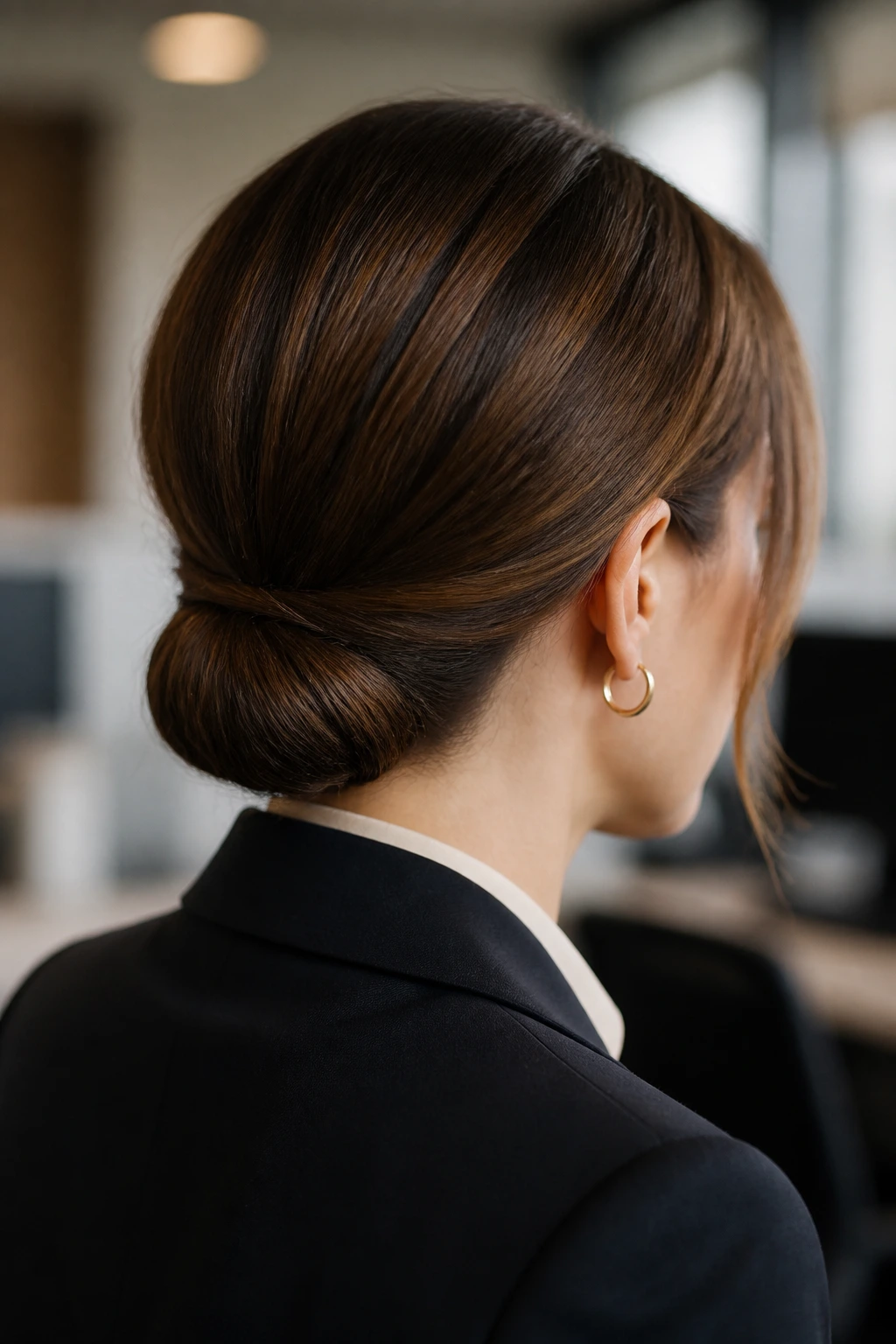
A tucked-in nape roll sits low, stays close to the neck, and works beautifully under collared shirts. On thick hair, it gives you shape without bulk. That’s the charm. It looks neat from the front and tidy from the side, which is harder to pull off than people think.
Brush the hair into a low ponytail, but don’t cinch the elastic too tightly. Leave a little looseness so the ends can tuck upward. Roll the ponytail inward toward the nape, then slide pins along the fold to keep the roll in place. If your hair is layered, tuck the shortest pieces first so they don’t escape.
This style is especially useful if your desk sits under a drafty vent or if you wear high-neck tops. It keeps the ends hidden and the neckline clean. There’s a reason old-school office hair came back around in modern form. Some of it was practical, and this is one of the practical ones.
11. Smooth Blowout With Pinned Sides
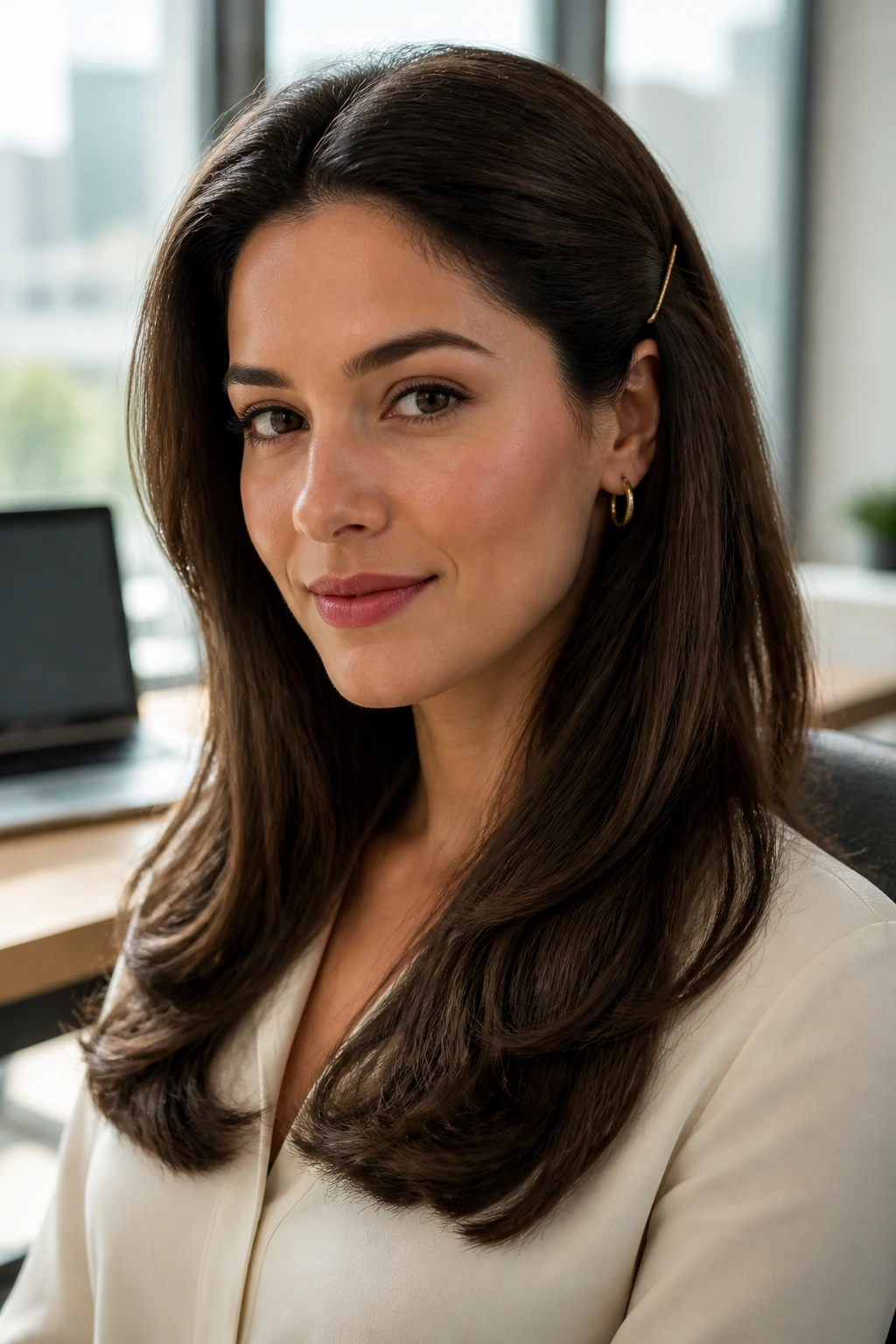
Not every polished office hairstyle has to be pinned up. Sometimes you need hair down, but controlled. A smooth blowout with pinned sides keeps the length visible and the face open, which is a nice middle ground if you like your hair down but don’t want it falling into your work.
Section the hair and blow-dry with a nozzle attachment and round brush, working from the nape up. Thick hair needs smaller sections than people expect. If you rush it, the top stays puffy while the ends go flat, and that’s a bad trade. Once the blowout is set, pin one or both sides behind the ears with a narrow barrette or a pair of crossed bobby pins.
The part that matters most
The crown should be smooth but not flattened to the scalp. You want movement in the mids and ends, not helmet shine. A cool shot at the roots before you touch the hair is what keeps the shape from collapsing once you leave the bathroom.
A tiny amount of serum on the ends gives the style a finished look. Keep it away from the roots. Thick hair can handle a little product; it cannot handle a greasy top.
12. Bubble Ponytail
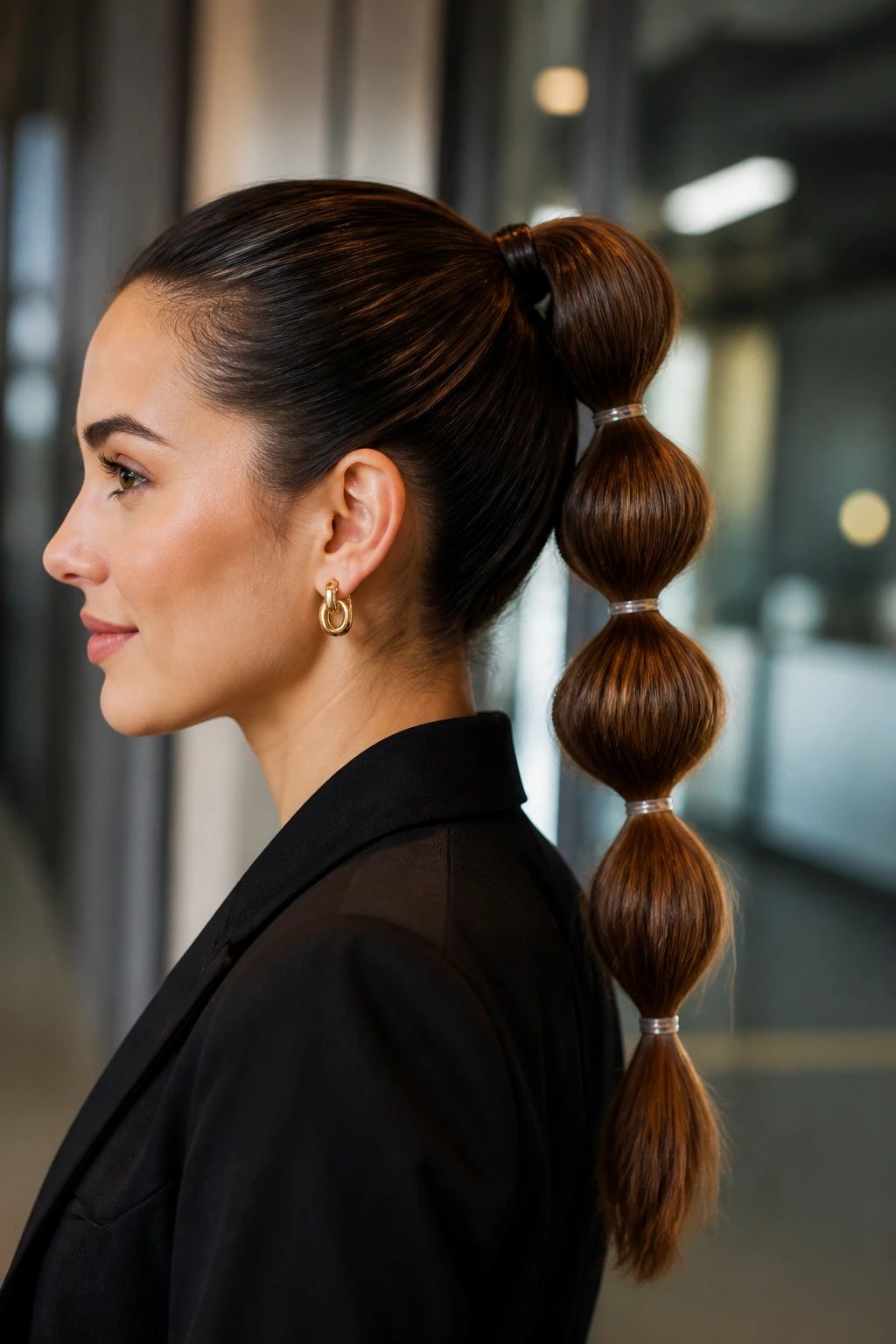
Bubble ponytails work because thick hair already has the volume the style wants. You’re not trying to fake fullness here. You already have it. That makes the office version feel polished rather than playful, as long as the bubbles are spaced evenly and not blown out too far.
Start with a smooth ponytail, high or low. Add clear elastics every 2 to 3 inches down the tail, then gently pull each section outward just enough to form a rounded bubble. Don’t yank. Thick hair responds fast, and a small tug can turn a neat bubble into a lopsided puff. If you want the base cleaner, wrap the first elastic with a strand of hair.
The bubble ponytail is one of the easiest ways to make long dense hair look intentional without braiding every inch. It’s tidy, fast, and better than leaving thick hair loose when you know the day will be long.
13. Double Braids Into a Low Knot
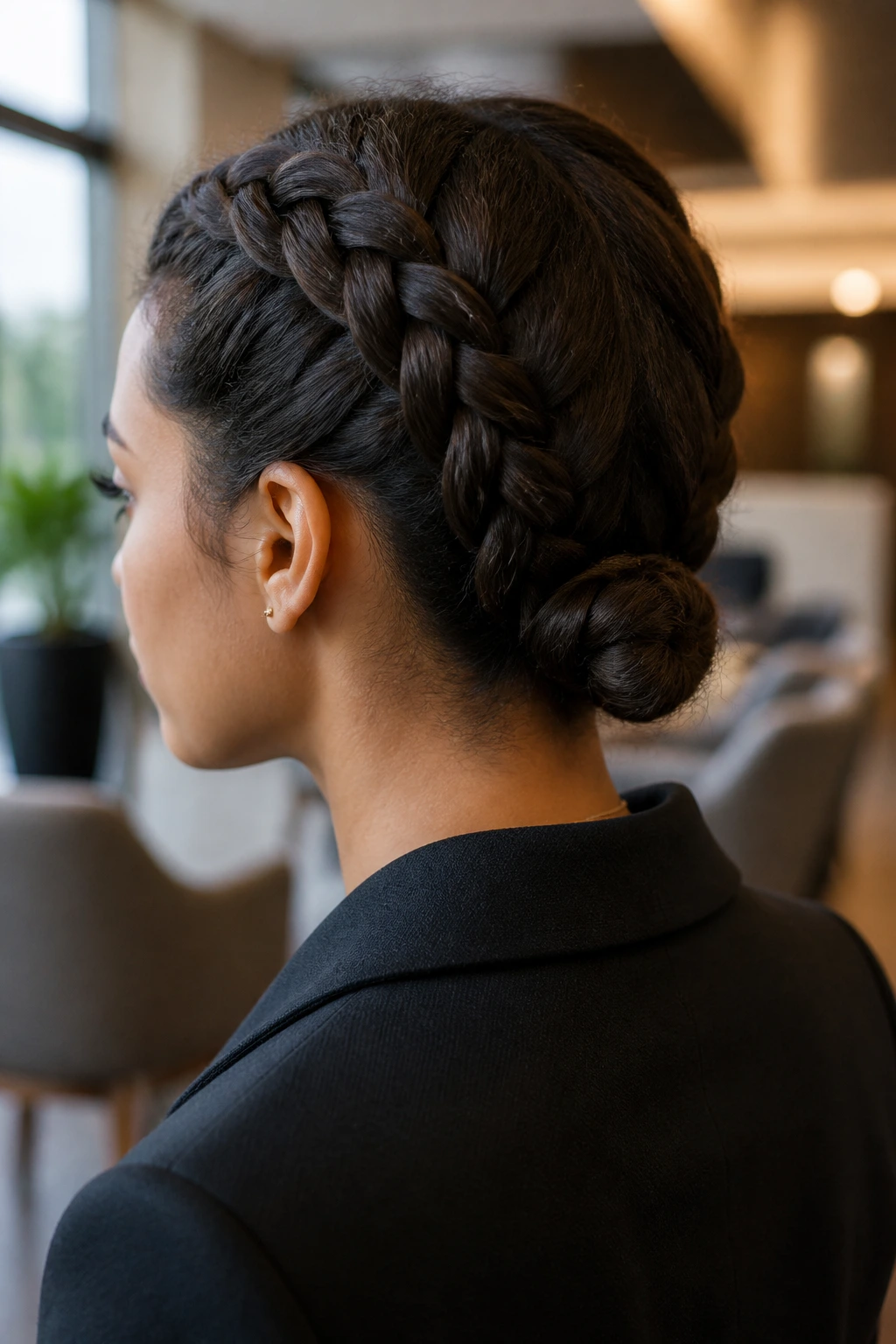
On humid days, two braids beat one loose braid every time. That’s especially true for thick hair, which can swell and frizz faster than you’d like once the air gets damp. Two braids create structure and divide the bulk so the final knot sits flatter at the nape.
Part the hair down the middle or slightly off-center, braid each side, then bring both braids together at the back and twist them into a low knot. Pin through the center first, then secure the sides. If the braids are very full, they’ll already give the bun enough body, so you don’t need to puff them out.
This style has a little more edge than a plain bun, but it still reads work-appropriate. It’s especially good if you’re moving between indoors and outdoors or if your office has a habit of being too warm by noon. Hair likes structure. Humidity hates it.
14. Satin-Smooth Topknot
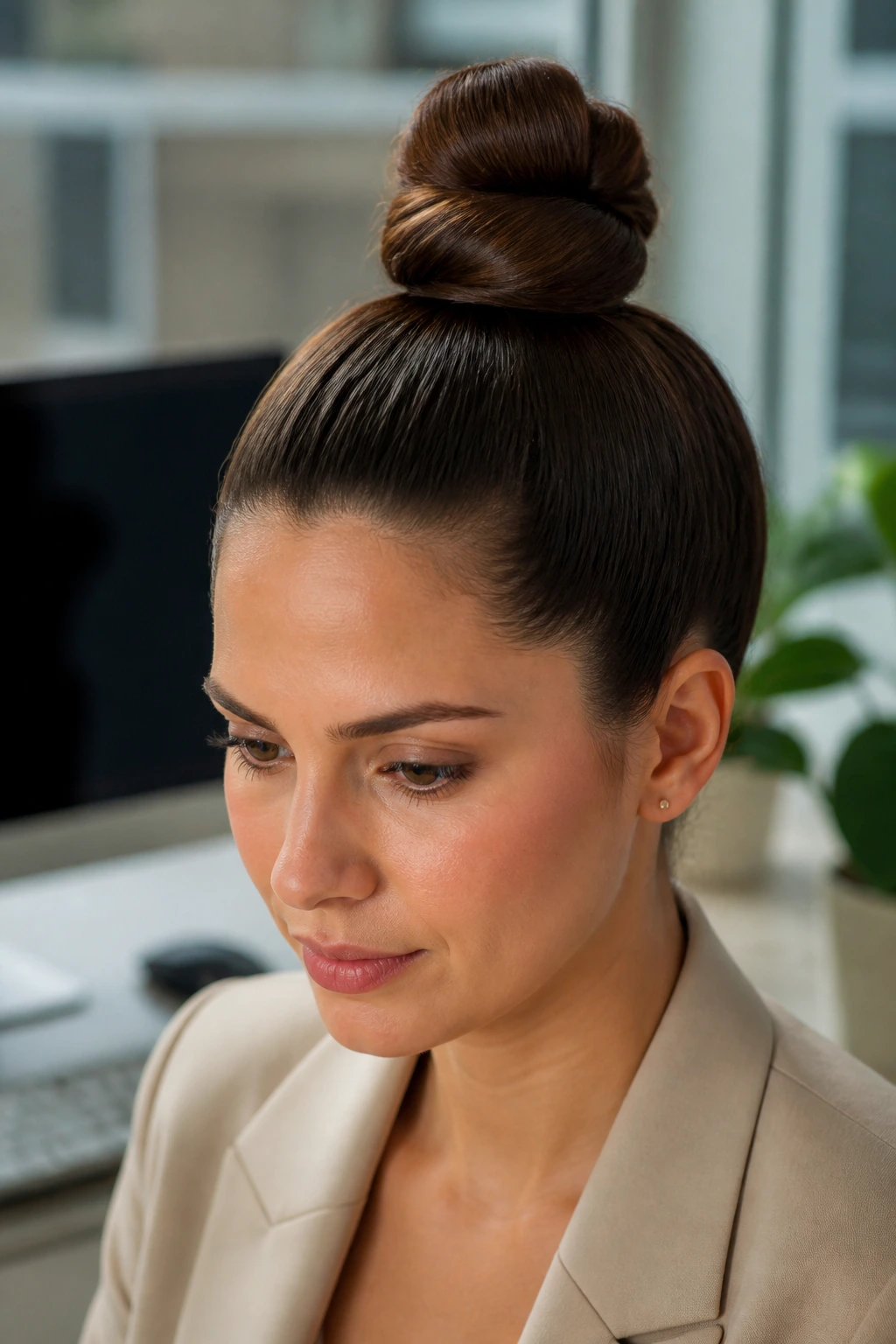
A topknot isn’t automatically casual. The difference is in the base. When the crown is smooth, the bun is centered, and the edges are tucked, the style looks deliberate. Thick hair gives the knot heft, which keeps it from looking tiny or accidental.
Brush the hair into a high ponytail, secure it tightly, then twist the length around the base. If your hair is long and heavy, a second elastic around the bun helps it hold. Pin the loose ends under the knot so nothing sticks out. A dab of wax stick on the fingertips can tame the flyaways at the hairline without turning the whole style shiny.
This works well on days when you need the neck clear. It also gives the face a more lifted shape, which is why people reach for it before big meetings. Keep the bun neat, though. A messy topknot can look like you gave up. This one should look chosen.
15. Face-Framing Low Bun
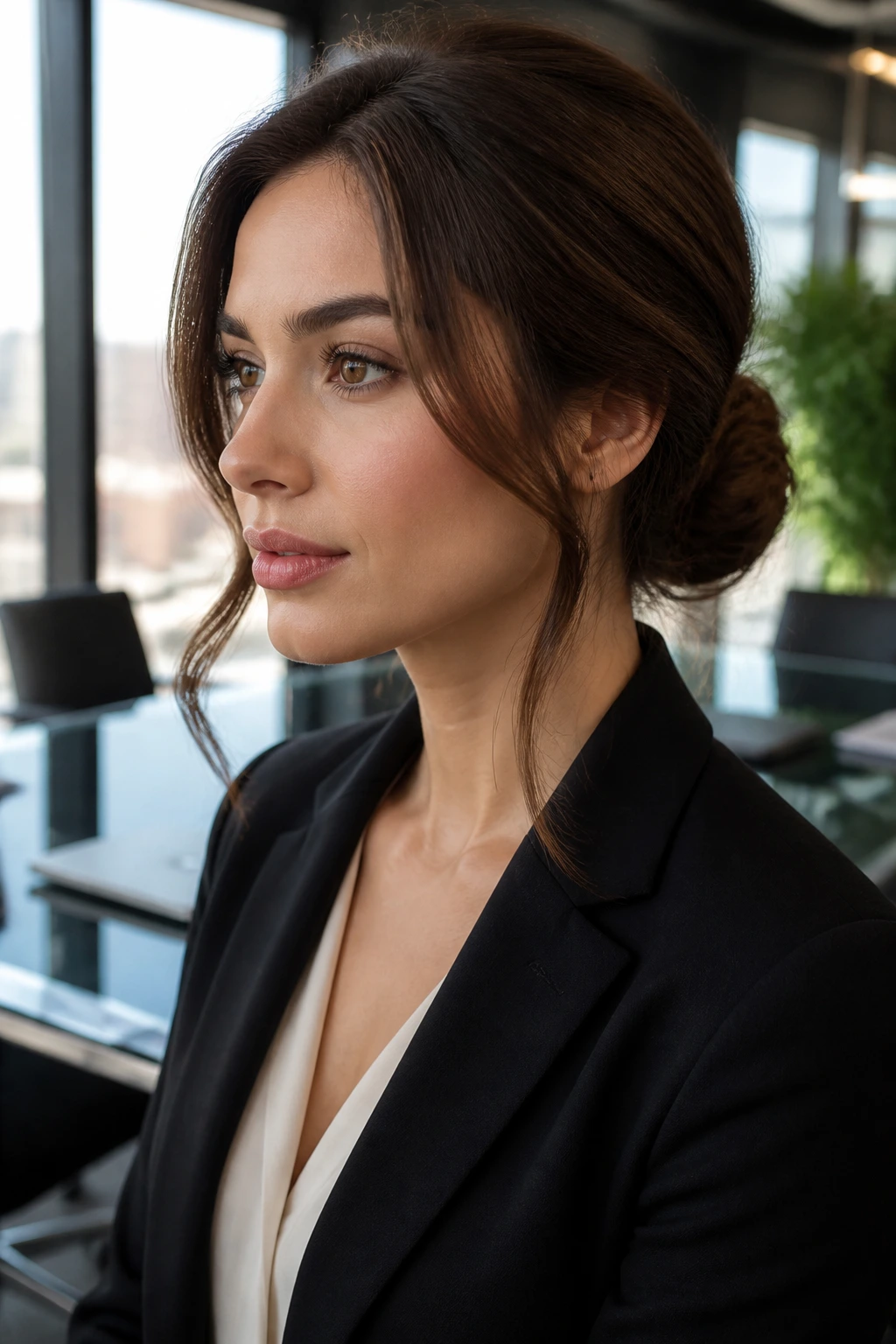
If a plain bun feels too severe, add two slim face-framing pieces and the whole thing softens. Thick hair is ideal for this because the bun still holds its shape even when you leave a little movement around the face. It keeps the look from sliding into stiff territory.
Create a low bun the same way you would for a chignon, then release two small front sections, about 1/2 inch wide each. If the hair is straight, bend the pieces slightly inward with a flat iron. If it’s wavy, leave them alone. The point is to give a soft edge, not a curled ringlet situation.
This style is good with glasses, earrings, and collared tops because it keeps the face open without exposing every line of the hairline. The bun does the formal work. The front pieces do the softening.
16. Fishtail Ponytail
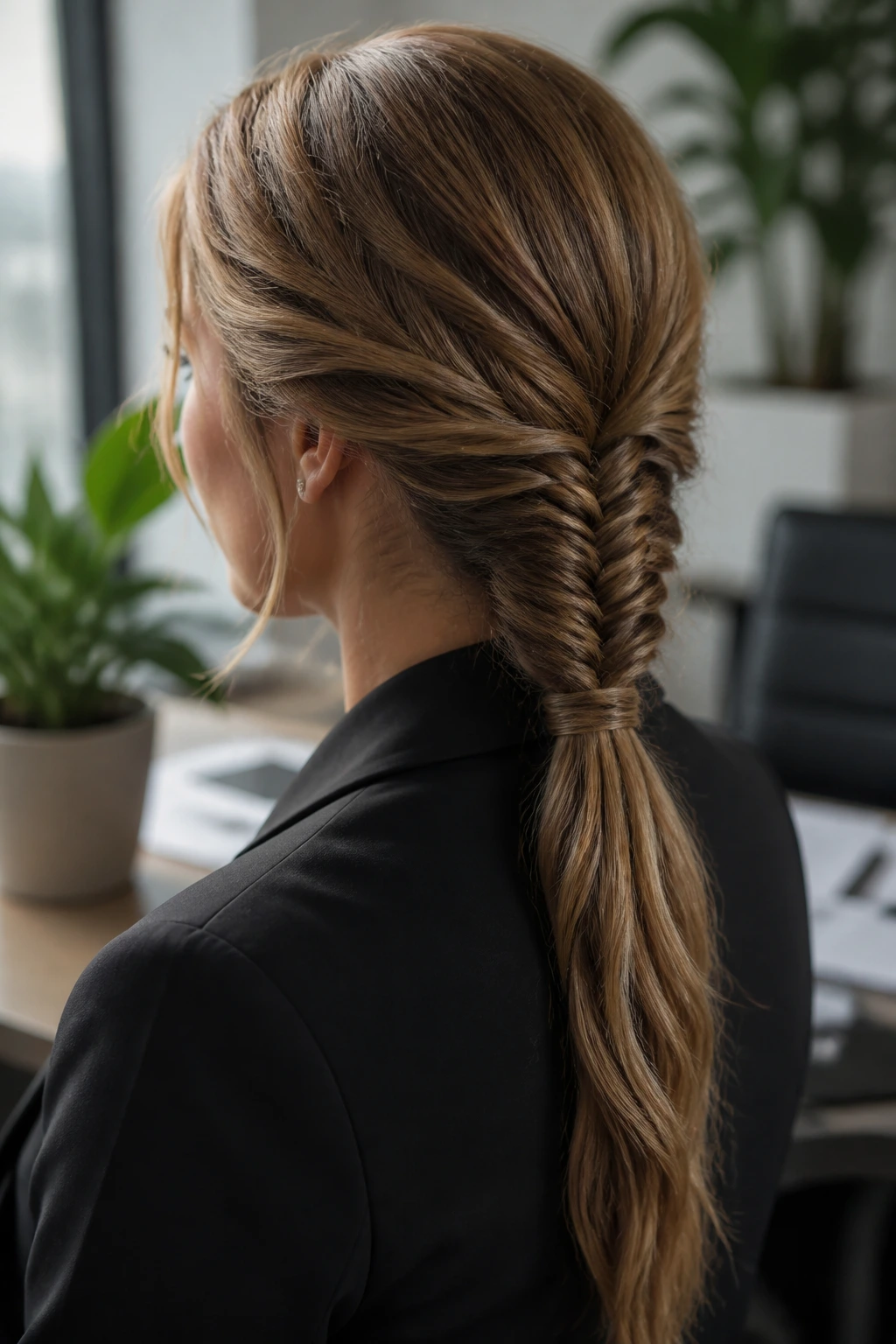
Want a braid that looks more detailed than a three-strand braid without demanding a whole evening? The fishtail ponytail sits right in that sweet spot. Thick hair makes the pattern obvious, which is half the reason it works so well in a work setting.
Pull the hair into a low or mid ponytail, split it into two sections, and cross tiny pieces from the outer edge of one side to the other. Keep the sections narrow. Thick hair makes the braid chunky fast, and chunky is the point — but it still needs to look tidy, not sloppy. Finish with a clear elastic or wrap a piece of hair around the base.
This style is especially good when the hair has a little grip from dry shampoo. Fresh, slippery hair can make the fishtail loosen too fast. A bit of texture helps it hold shape and keeps the braid from sliding apart.
17. Side Sweep With a Barrette Stack
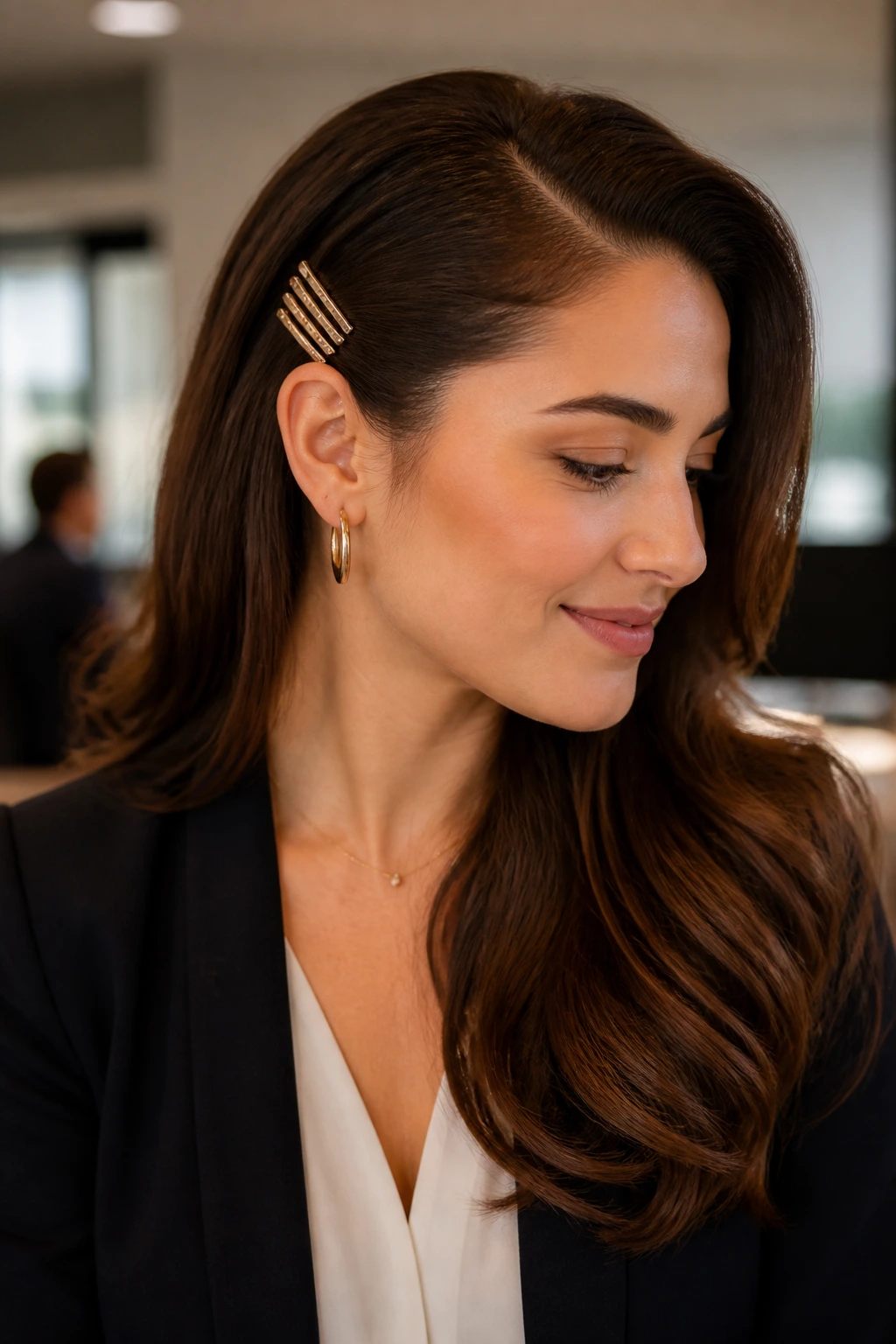
A side sweep gives thick hair a place to go. Instead of pushing all that density straight back, you sweep it over one shoulder or pin it behind one ear and stack a few barrettes where the hair wants to spring open. It looks clean, but not severe.
Start with a deep side part. Smooth the heavier side back with a brush, then secure it with two or three matching barrettes or a strong snap clip. If the hair is layered, tuck a small section underneath before pinning so the front doesn’t split apart. The result is simple, sharp, and easier than a full updo on a busy morning.
This is one of the best styles for short-to-medium thick hair that refuses to stay in a ponytail. It keeps the length visible, but it also keeps the front out of your eyes. Small detail. Big difference.
18. Braided Headband With Loose Length
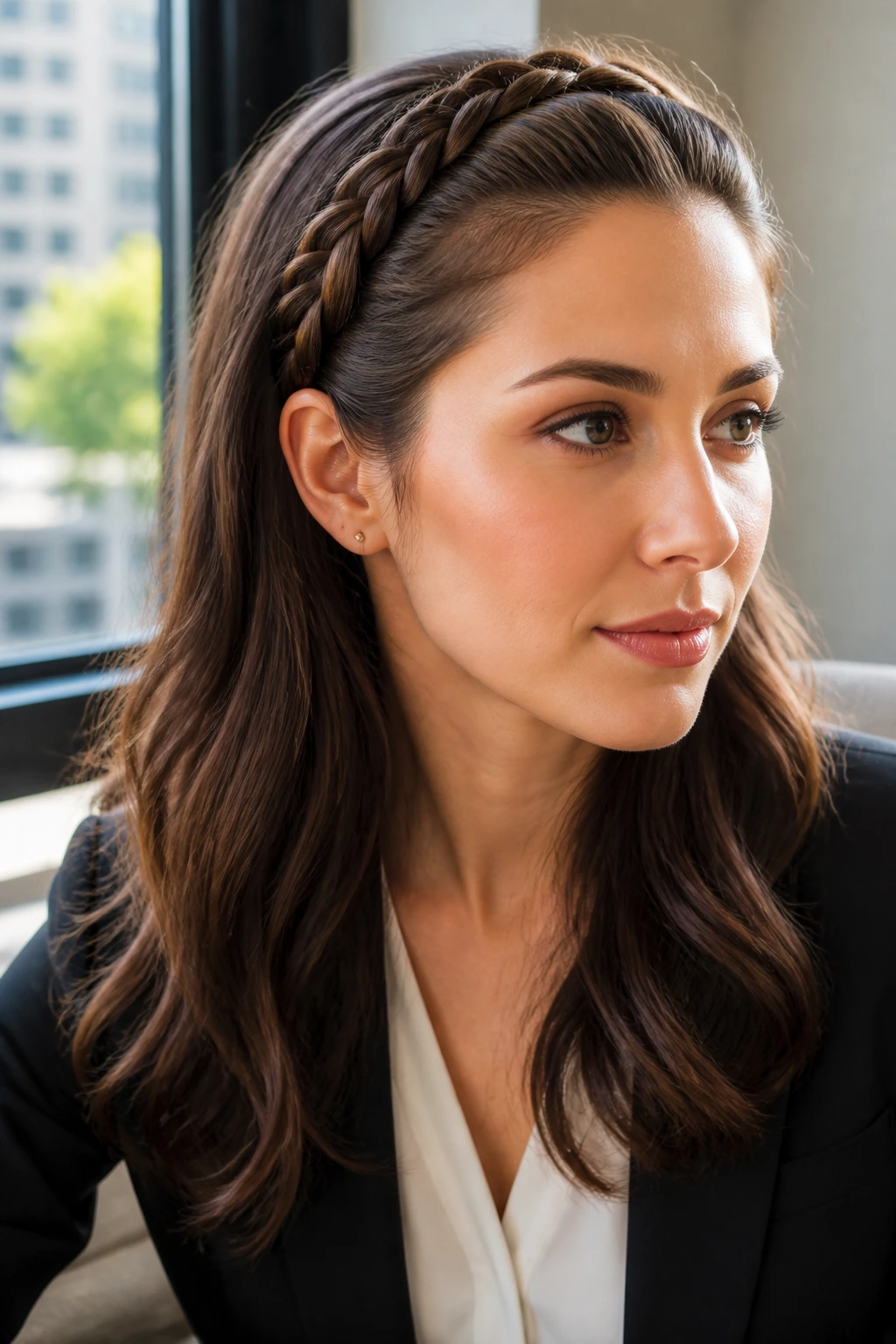
A braided headband works like an accessory that came with your hair. It clears the forehead, keeps fringe off your face, and still lets the rest of the length stay down. Thick hair makes the braid wide enough to stay put, which is half the battle.
Take a section from near one temple, braid it across the front hairline, and pin it behind the opposite ear. You can also twist the section if a braid feels too thick. Leave the rest of the hair smooth or softly waved. If the lower lengths are textured, the front should still be neat enough that the whole style reads polished.
I like this one for days when you need hair out of the way but don’t want the full commitment of a bun. It gives the face a cleaner frame and keeps the crown from puffing up. Subtle, but not boring.
19. Twisted Half-Up Crown
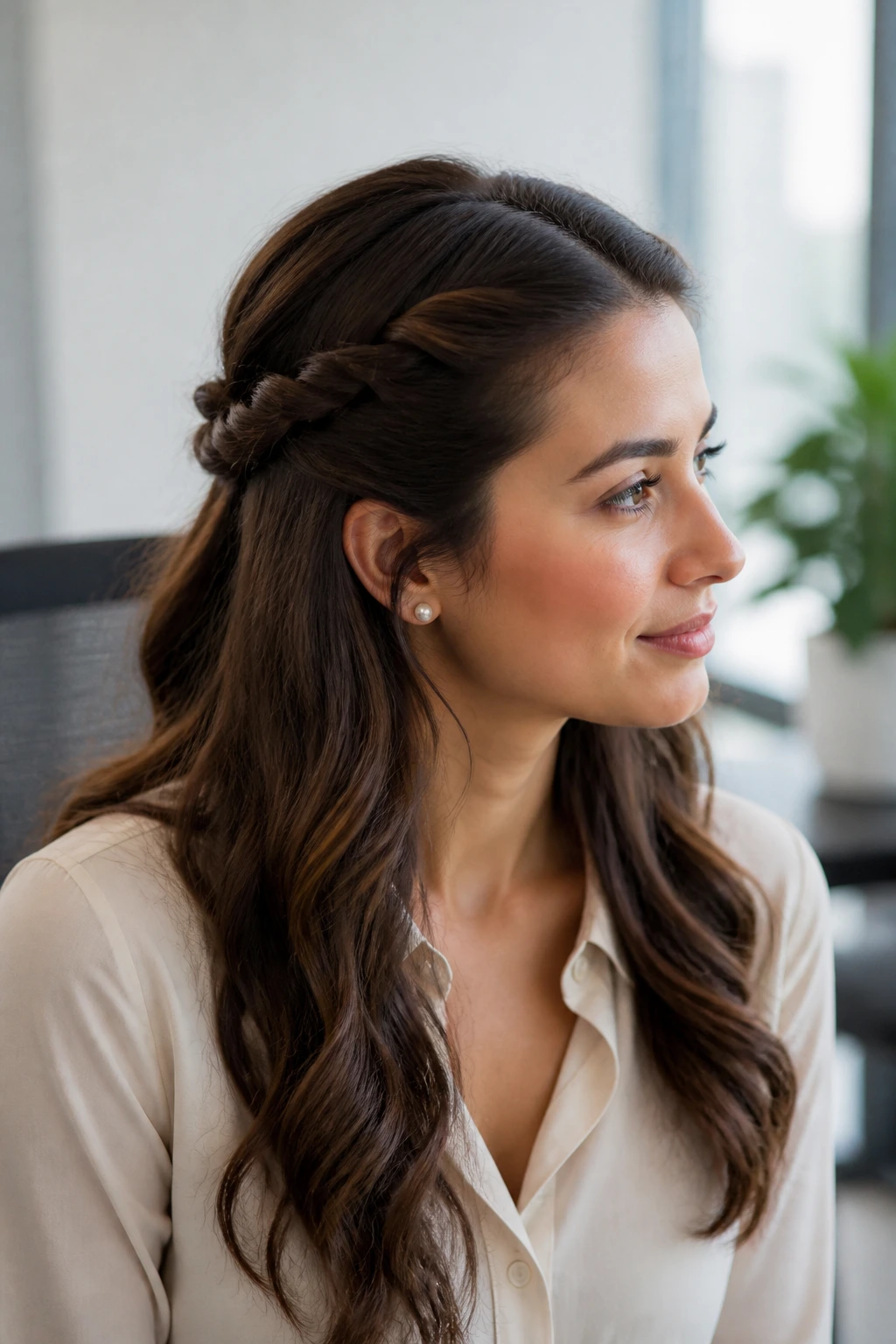
This is the style for days when you want shape at the crown and movement below. Two thick twists from the temples meet at the back, and the lower length stays loose. Thick hair makes the twists visible, which is why this version looks more polished than the same style on fine hair.
Smooth the front sections with a small amount of cream, twist them back, and pin them where they meet. Use hidden pins that cross inside the twist for better hold. If the roots are fluffy, brush the crown lightly before twisting so the top sits flat. A tiny clip can sit over the meeting point if you want a more finished look.
Pin map for a cleaner finish
Put one pin through each twist from top to bottom, then add a second pin underneath to anchor the crossing. That keeps the style from rotating when you move your head.
It’s a nice compromise style. You get the polish of an updo and the movement of hair down. Some days that’s exactly what the office asks for.
20. Soft Roll-Up Chignon
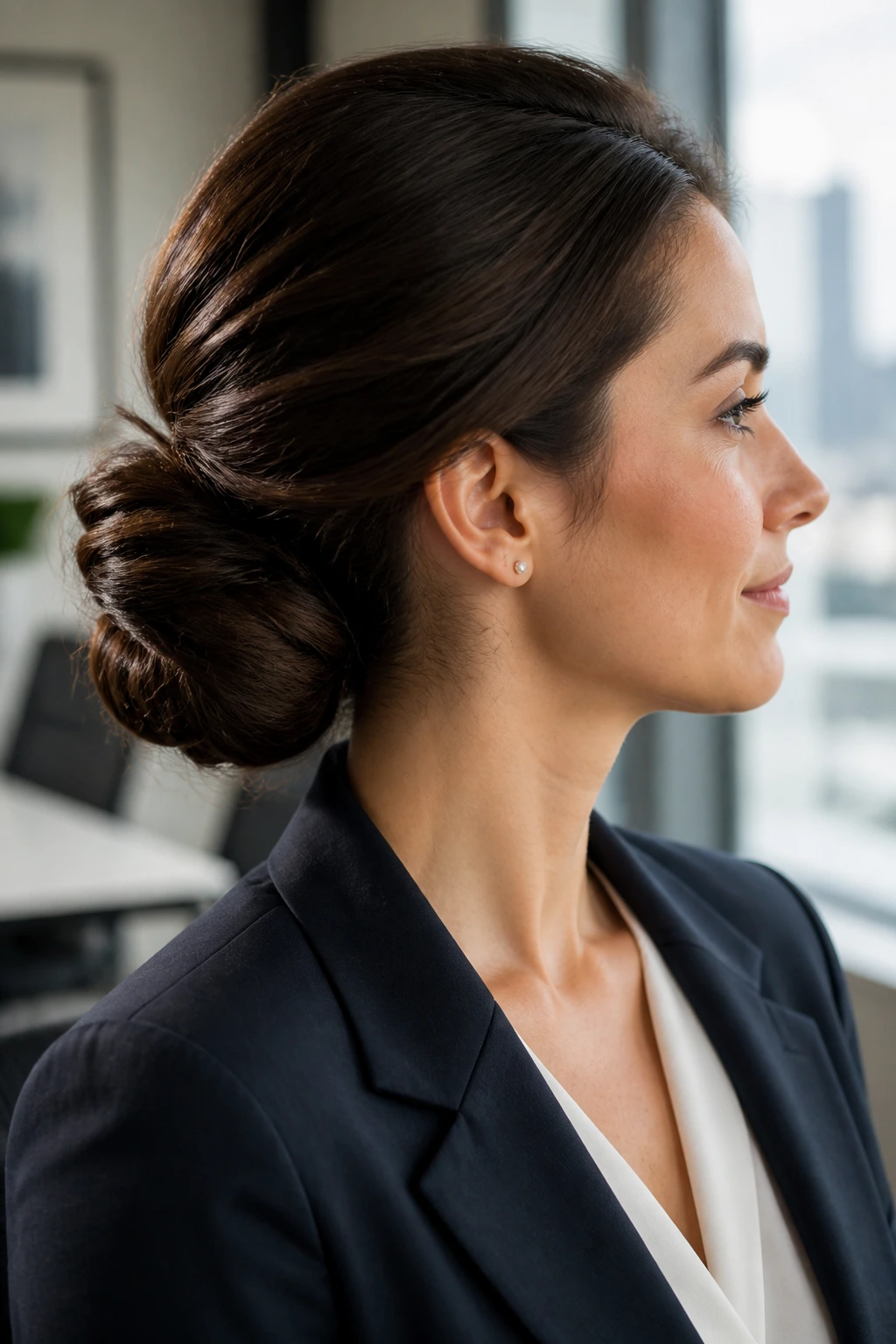
A soft roll-up chignon has the neatness of a tucked style and the shape of a low knot, but it feels a little more relaxed. Thick hair is good at this one because the roll has enough material to look full without getting puffy. It works especially well for presentation days or meetings where you want your hair to sit back quietly and do its job.
Gather the hair into a low ponytail, split a small opening above the elastic, and roll the length upward through it. Tuck the ends inward and pin along the roll. Keep the top smooth, but don’t crush it flat. The best version of this style has a slightly rounded back, not a tight shell.
If you’ve got a long workday ahead, this one holds better when the hair has a bit of texture in it. Too-silky hair slips. A light mist of dry shampoo or texturizing spray gives the roll something to grip.
Why Thick Hair Needs a Different Styling Strategy
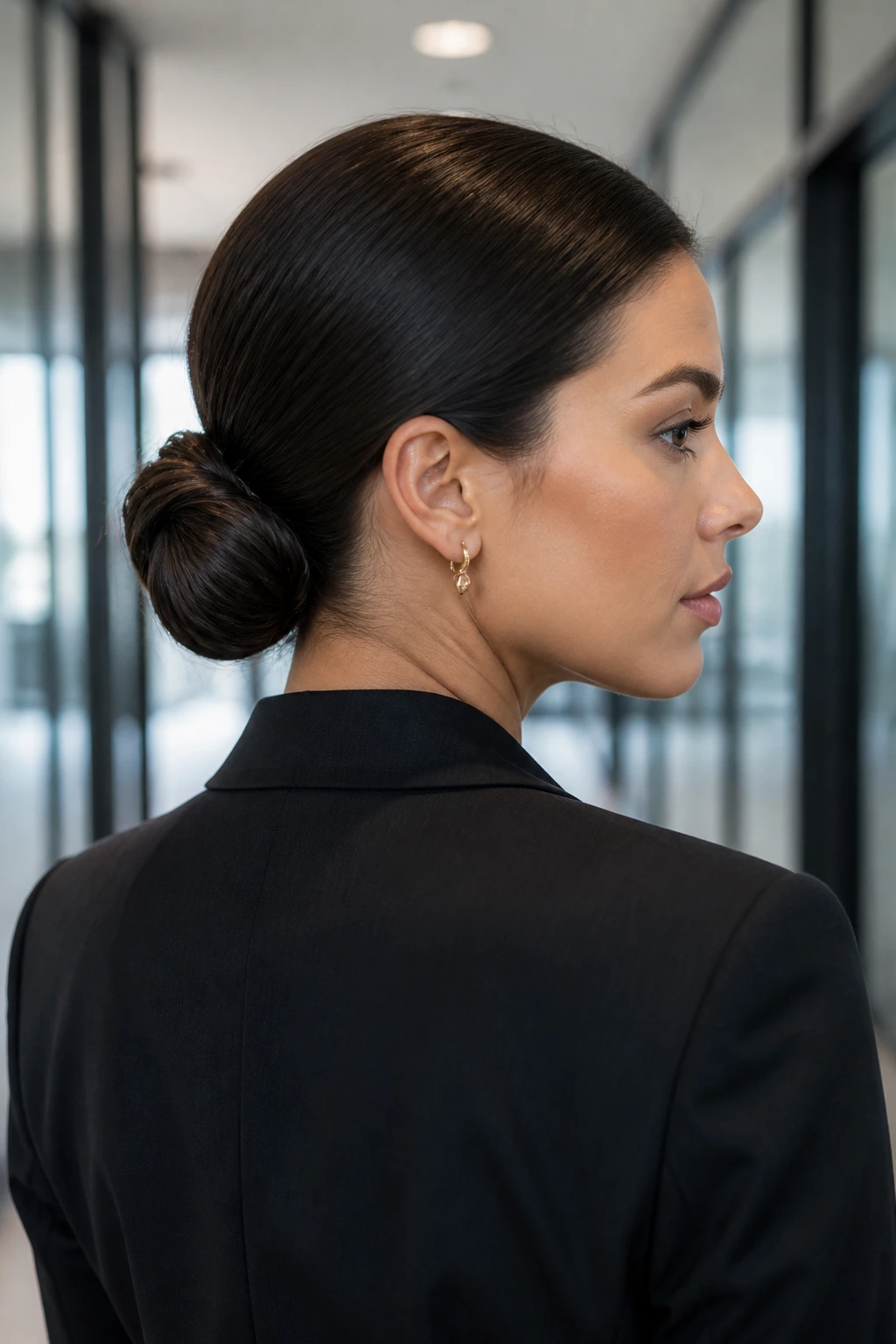
Thick hair is not hard to style. It’s heavy. That’s the real issue, and it changes everything from how you part it to how many pins you need. A ponytail elastic that works on smaller hair can dig, slide, or snap under a denser load. A clip that looks sturdy can still give up if the spring is weak.
There’s also the crown problem. Dense hair wants to expand at the roots, especially after brushing, sweating, or a long commute. If you pull too tightly, you flatten the top and create a headache. If you pull too loosely, the shape grows by lunch. The sweet spot sits in the middle: smooth where the hairline shows, secure where the weight gathers.
- Weight: Thick lengths pull styles downward, so low buns and ponytails often stay in place better than tall, loose shapes.
- Bulk: The top can puff before the ends look messy, which is why the crown usually needs the most smoothing.
- Texture memory: Thick hair keeps bends, clips, and elastic marks longer, so clean sectioning matters.
- Comfort: A style that feels fine for 20 minutes can start to ache after a few hours if the tension is all in one spot.
And that’s why office hair for thick hair should feel engineered a little. Not fussy. Just planned.
Essential Tools for These Hairstyles
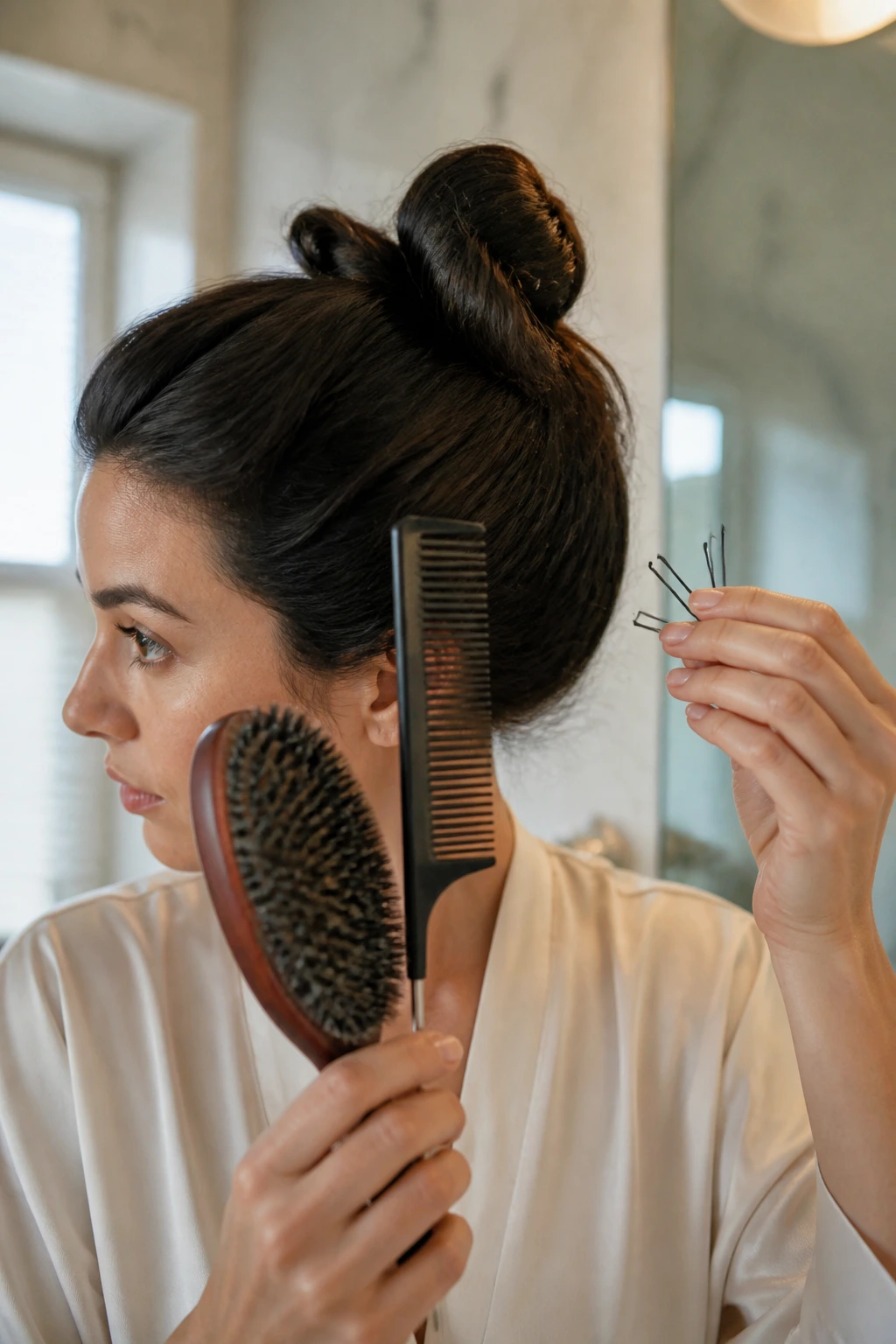
You do not need a drawer full of gadgets, but a few good tools make dense hair behave.
- Boar-bristle brush: Great for smoothing the outer layer and pulling the crown flat without making the hair explode with static.
- Tail comb: Use this for crisp parts, sectioning twists, and lifting out the exact amount of hair you need around an elastic.
- Snag-free elastics: Clear, black, or matching hair ties with a strong grip keep ponytails from sagging.
- Long bobby pins and U-pins: Thick hair needs length and tension; tiny pins tend to pop loose.
- Large claw clip with a strong spring: Handy for quick twists and French roll styles, as long as the clip is wide enough.
- Lightweight smoothing cream or gel: Keep this for the hairline and crown, not the roots of the whole head.
- Fine-mist hairspray: You want a light veil, not a shell.
- Flat iron or round brush, optional: Useful for polishing the front pieces or ends when you want a cleaner finish.
If one thing deserves spending a little more money, it’s the brush and the pins. Cheap pins bend. Cheap clips slip. Thick hair notices.
Prep Products That Keep the Crown Smooth
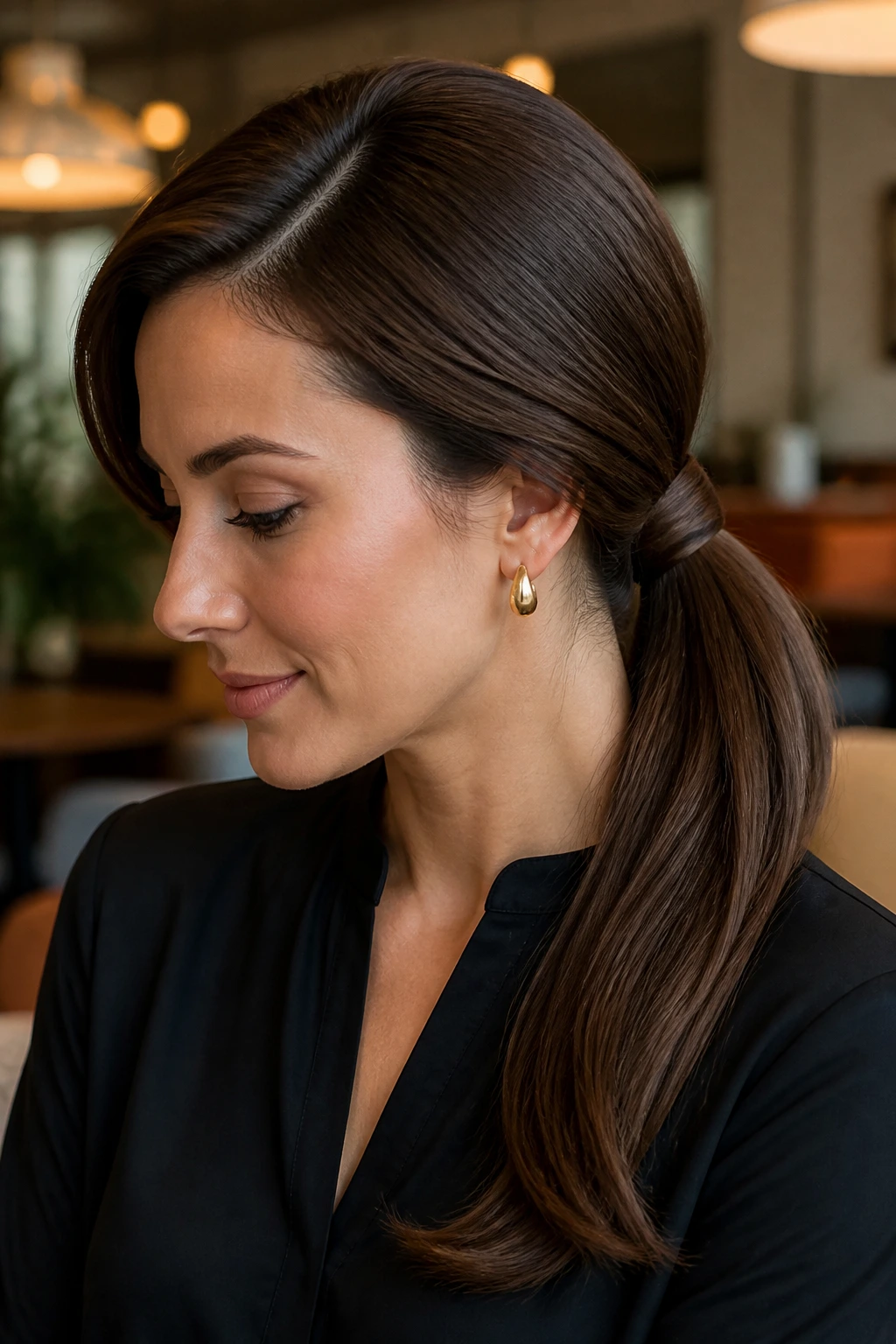
Product choice matters more than people admit. Thick hair can absorb a fair amount of product, but the wrong kind in the wrong spot makes a workday style fall apart fast. Heavy oil near the roots usually backfires. It weighs down the crown, flattens the top, and gives you a greasy patch by lunch.
For most dense hair, start with a golf-ball-sized amount of mousse or a light styling cream distributed through damp mids and ends. If your hair is coarse, a cream gives more control. If it’s thick but not coarse, mousse often adds better grip. Keep serum to the last 2 to 3 inches of hair. That is where shine belongs.
A little heat protection helps if you’re blow-drying the front or smoothing the ends with a flat iron. Use enough to coat the surface, not enough to wet the hair. If the roots are fluffy, blow-dry them in the direction you want them to sit and let them cool before you touch them. Cool hair holds shape better. That tiny wait matters.
Day-two hair often works better for braids, buns, and bubble ponytails than freshly washed hair. A light dusting of dry shampoo at the roots gives dense hair some bite. Too much, though, and you’ll get a chalky crown. Two short sprays, not a cloud.
How to Wear These Styles to the Office
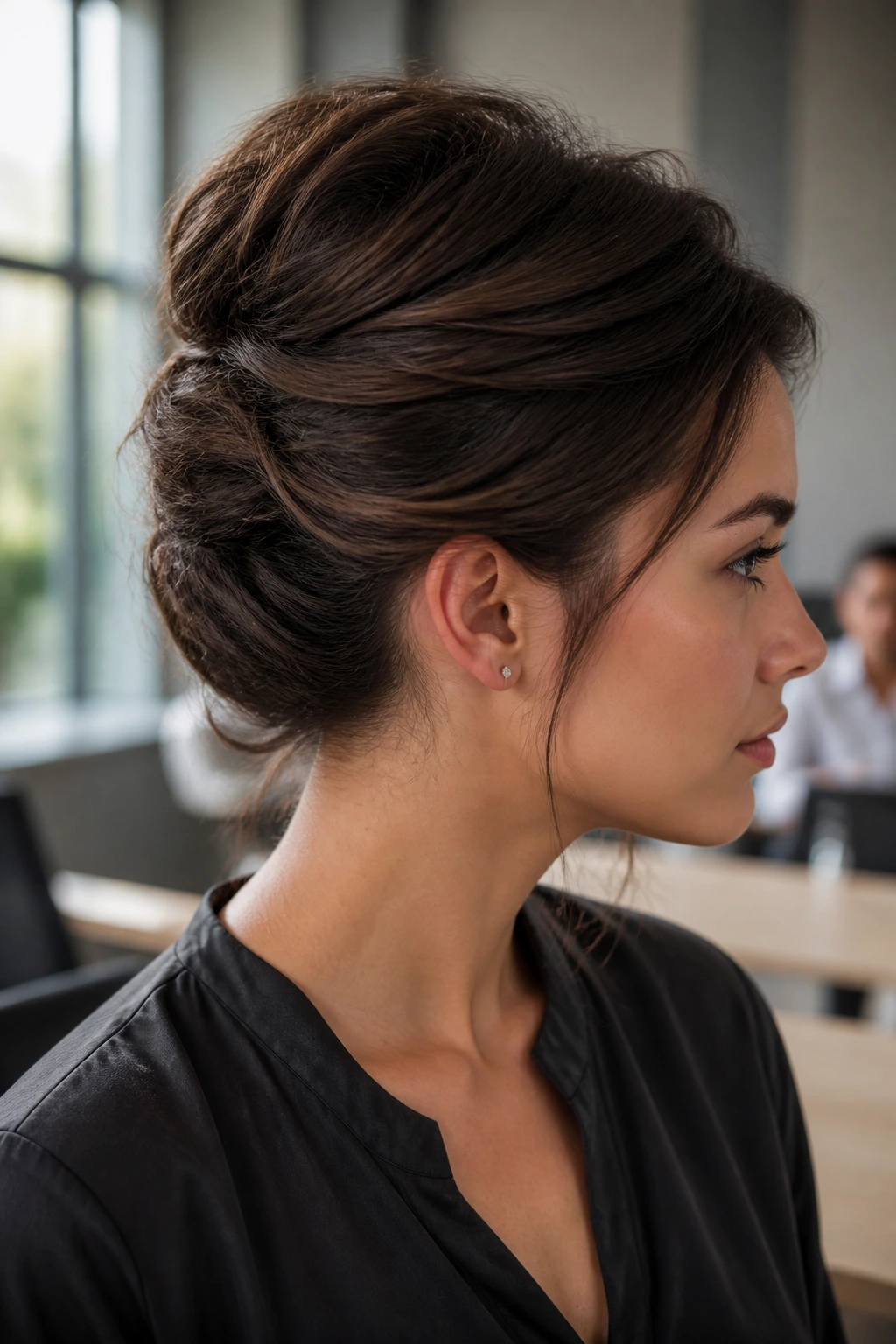
Presentation: Keep the base neat and the silhouette simple. A smooth crown, a wrapped elastic, or a clean part reads more polished than a style that’s trying too hard to be big.
Accessories: Tortoiseshell barrettes, matte clips, narrow metal pins, and satin scrunchies tend to look more intentional than oversized novelty pieces. For a more formal office, black or brown wins almost every time.
Comfort: If the style tugs at your temples, it’s too tight. Thick hair can hide tension, but your scalp won’t enjoy it. You should be able to turn your head, lean back, and type without the bun shifting into your neck.
Best Pairings: Low buns work well with collared shirts and blazers. Pinned sides and half-up styles pair nicely with sweaters, crewnecks, and glasses. A high ponytail or topknot looks sharper with simple earrings and a structured neckline.
Office Mood: Go sleeker for interviews, client-facing days, and presentations. Choose braids, soft twists, or barrette styles when the setting is more relaxed and you want the hair to look finished without feeling formal.
Small Upgrades and Personalizations
Finish: A tiny smear of wax stick on your fingertips can smooth the hairline, the crown, or the flyaways at the nape without making the style greasy. Use less than you think you need. Thick hair holds onto product.
Customization: A side part changes the feel of nearly every style here. So does a wrapped elastic, a thin braid at the hairline, or one tucked face-framing piece near the temple. Small changes, big effect.
Accessories: One strong barrette can turn a plain ponytail into an office hairstyle that looks planned. The same is true for a narrow scarf tied around a bun or a clean metal clip placed at the twist.
For different hair textures: If your thick hair is curly or wavy, keep the front and crown smoother and let the lengths keep a little texture. If it’s straight and dense, you’ll usually need more grip from dry shampoo or a light texturizing spray.
For longer hair: Anchor the base first, then worry about the shape. Long thick hair gets heavy quickly, so a second hidden elastic or a few extra pins often matter more than more hairspray.
Keeping These Styles Fresh Through a Long Workday
Most office hairstyles fail in the same places: the crown lifts, the nape loosens, or the front pieces separate. Thick hair can usually survive a decent stretch of the day, but it needs a quick reset if you want it to look good at 5:30 instead of merely still being on your head.
If you wear a smooth style, keep a travel-size hairspray or a wax stick in your desk. A 10-second touch-up at the hairline is often enough. For ponytails and buns, check the elastic after lunch. If it starts to slide, tighten the base before the style sags farther. It’s easier to fix early than to rebuild the whole thing.
For day-two wear, don’t pile more product onto the same spot every time. That’s how hair gets dull and sticky. Brush the roots lightly, add a small burst of dry shampoo if needed, then re-smooth with clean hands. If a braid or twist gets fuzzy, mist a little water on your fingertips and press the surface down instead of spraying the whole head.
Overnight care matters too. If you want to reuse a blowout, sleep on a satin pillowcase. If you want to reuse a bun or twist, take it down before bed, brush it gently, and start fresh the next morning. Thick hair usually responds better to a full reset than to sleeping in the exact same pin pattern two nights in a row.
Common Mistakes to Avoid
-
Pulling the crown too tight: You’ll get a headache, visible tension lines, and a style that looks strained. Smooth the roots with a brush instead of yanking harder.
-
Using too much serum or oil at the top: Thick hair can handle some product, but not at the roots. Keep shine products on the ends or the last inch of the hairline.
-
Choosing weak clips or flimsy elastics: If the hardware can’t hold the weight, the hairstyle will slip. Strong spring clips and snag-free elastics are worth it.
-
Leaving the base unfinished: A ponytail with a raw elastic looks rushed. Wrap it, braid it, or hide it with pins whenever you can.
-
Forgetting the collar line: Thick hair rubbing against a jacket collar or a high neckline gets fuzzy fast. Place buns a little higher, or choose a tucked style that sits cleanly above the fabric.
-
Over-spraying hairspray: Too much spray can make the surface crunchy and flaky. Use a light mist, wait a few seconds, then press stray hairs down with your palm.
Variations and Adaptations to Try
The Five-Minute Version: Choose the low ponytail, side sweep, or claw-clip twist. These need the least prep and still look neat with a clean part and one good accessory.
The Presentation-Day Version: Go for the French twist, center-parted bun, or soft roll-up chignon. These styles sit close to the head and read the most formal under structured clothing.
The Natural Texture Edit: Keep the lengths wavy or curly and smooth only the crown, edges, and part. This keeps thick hair looking intentional without forcing it into a fake-sleek shape.
The Humidity Shield: Braids, bubble ponytails, and double braids into a knot hold up better when the air is damp. Add a little texturizing spray before you start so the hair has grip.
The Heatless Version: Use twists, buns, braids, and clips on damp or second-day hair. Let the style set while you get dressed, then release and smooth only what needs it.
The Glasses-Friendly Version: Pick low buns, side parts, or face-framing styles. They keep the temples clean so the frames don’t fight the hair by noon.
Frequently Asked Questions
What is the easiest polished office hairstyle for thick hair?
A low ponytail with a wrapped base or a low chignon is usually the fastest route. Both styles control the bulk without needing a lot of sectioning, and they hold better than loose styles when your hair has weight.
How do I keep thick hair from puffing up at the crown?
Work the crown flat with a boar-bristle brush and a small amount of cream or gel before you secure the style. Let the roots cool in place for a minute or two before you touch them again; that cooling time helps the shape stay put.
Are buns or ponytails better for thick hair at work?
Buns usually last longer and feel more controlled, especially low buns and tucked styles. Ponytails are faster and can look sharper if you wrap the elastic or add a braid, but they’re more likely to swing and loosen if the hair is very heavy.
Can I wear these styles on curly or wavy thick hair?
Yes, but keep the front and crown smoother so the style reads polished. You can let the lengths keep some texture, which often looks better than forcing every strand into a flat finish.
How many bobby pins do I usually need?
More than you think. For thick hair, four to six pins is normal for a bun or twist, and a large French roll may need even more if the hair is layered. If the pin slides, try crossing two pins in an X.
What if my claw clip keeps slipping out?
The clip is probably too small or too weak for the amount of hair you’re holding. Use a larger spring clip, twist the hair more tightly first, and add a hidden elastic underneath if needed.
Can I do these without heat?
Absolutely. Braids, buns, half-up twists, claw-clip styles, and ponytails all work well without heat if the crown is smoothed and the hair has a little grip from day two or a touch of dry shampoo.
How do I keep a style neat after commuting?
Carry a tiny spray, two spare pins, and a slim comb. A 15-second reset at the office bathroom mirror usually fixes whatever the commute disturbed — usually the crown or the nape.
What if my hair is layered and won’t stay tucked?
Pin the shorter layers first, before you shape the rest of the style. A little texture spray on the ends also helps the layers grip instead of slipping out.
Which styles look the most formal?
French twists, center-parted low buns, and soft roll-up chignons tend to read the most polished. They sit close to the head, keep the neckline clean, and look especially good with blazers or collared shirts.
The Styles That Hold Their Own
Thick hair does not need to be tamed into something smaller. It needs a shape that respects the amount of hair on your head and gives it a place to go. That’s the whole trick. Once the crown is smooth, the base is anchored, and the ends are contained in a clean line, dense hair looks expensive in the best sense of the word — cared for, deliberate, and solid.
The styles above give you options for different moods and different mornings. Some are fast, some are more formal, and some sit in that useful middle ground where you look put together without looking overdone. Pick the one that matches your office, your length, and how much patience you have before coffee.
And if one style fails, do not assume thick hair is the problem. Usually the clip was too weak, the crown needed more smoothing, or the pins were too short. Fix those three things, and the whole routine gets easier the next time around.