



Some haircuts look polished only when the hair is blown flat. Wavy hair after 47 has no interest in that performance. Give it the wrong cut and it will puff at the sides, collapse at the crown, and flip at the collar in a way that feels accidental instead of styled.
The better move is a shape that works with the bend already in your hair. Haircuts for women over 47 with wavy hair usually need three things at once: enough structure to keep the outline clean, enough softness to let the wave move, and enough room around the face so the whole thing does not turn into a triangle. That balance is the whole game.
A lot changes in this stretch of life, and hair is no exception. Temples can thin a little, ends can feel drier, grays can come in wirier, and a wave pattern that once sat neatly may start doing its own thing by midafternoon. None of that means you need to go short or hide the texture. It means the cut has to do a smarter job.
Why These Haircuts Are Worth a Look
- They work with the bend already in your hair: These cuts keep the wave from fighting a blunt line or a badly placed layer.
- They give shape where the eye goes first: Cheekbones, jawline, and collarbone all get a little more definition from the right perimeter.
- They can make finer areas look fuller: A good cut creates the illusion of density without piling on product.
- They grow out more cleanly than a fussy shape: A softer outline buys you a few extra weeks before the cut starts looking tired.
- They fit air-drying and diffusing: If your mornings are not built around a blowout, these shapes still hold together.
Why Haircuts for Women Over 47 with Wavy Hair Need Weight in the Right Places
Weight is the whole story here. Not length. Not trend. Weight.
A one-length cut can look plush on straight hair, but on a wave it can hang in the wrong spots and flare out in others. The trick is to decide where the hair should sit heavy and where it should move. On wavy texture, those two things are not enemies. They have to cooperate.
The ends matter more than most people think
If the bottom edge is too bulky, wavy hair can take on a bell shape. If it is too thinned out, the ends start to look ragged and the wave loses its clean finish. The sweet spot is usually a perimeter that is neat enough to read as a shape, but soft enough that the wave can bend through it without puffing.
The face frame should solve a problem, not create one
A lot of cuts go wrong because the shorter pieces start too high. That can make the sides explode outward, especially if the hair has some gray in it or if the wave is strong near the cheek. A better face frame usually lands around the cheekbone, mouth, or collarbone, depending on length. It opens the face without turning the sides into a halo.
The grow-out plan is part of the cut
Hair grows about half an inch a month, and that matters more with wavy hair than with straight hair. A shape that looks great on day one can lose its balance fast if the layers are too short or the fringe is too blunt. Softer layers and cleaner perimeters tend to grow out with less drama. That is why the best cuts in this list are not only flattering in the chair; they still look like a haircut six weeks later.
1. Soft Collarbone Lob with Invisible Layers
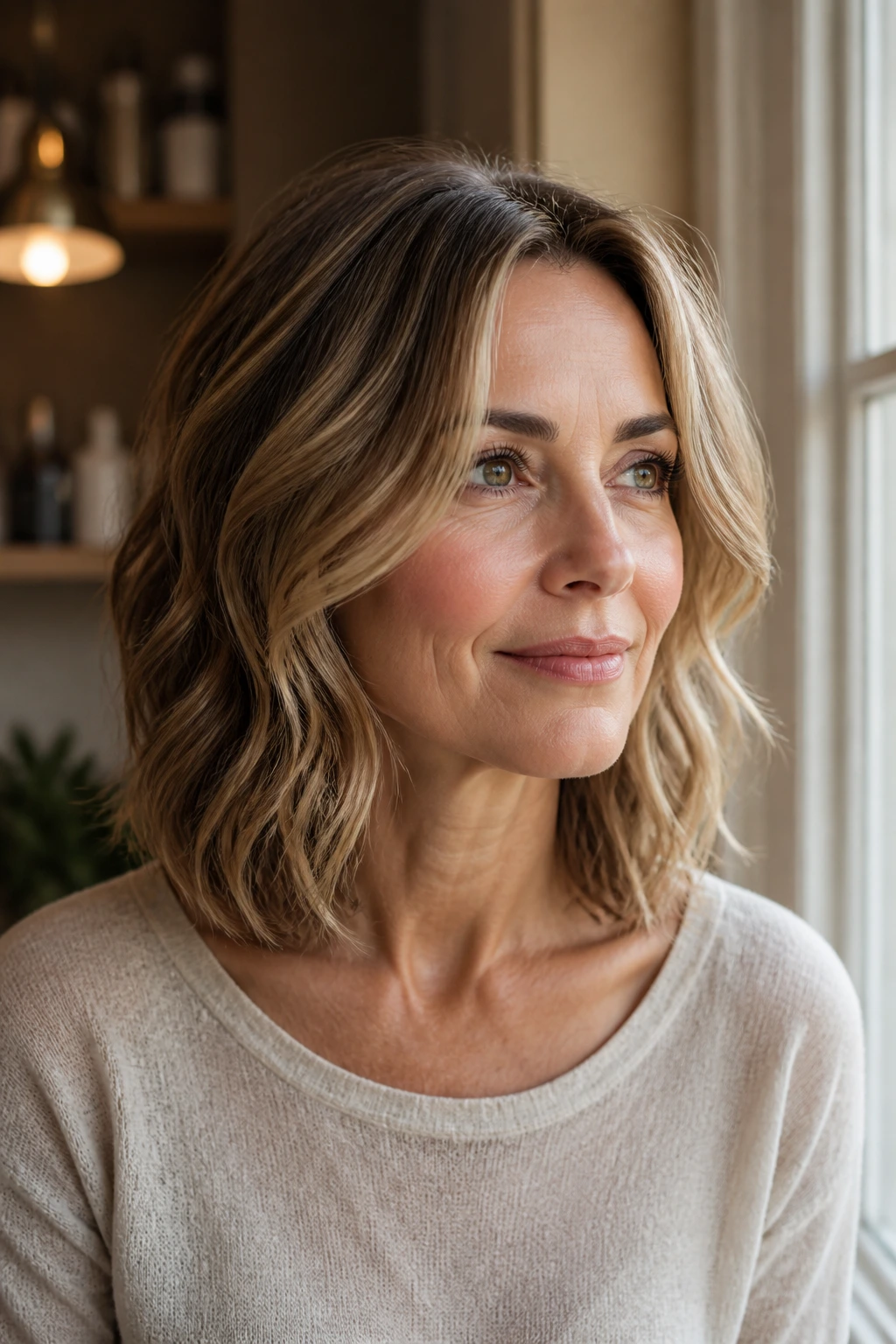
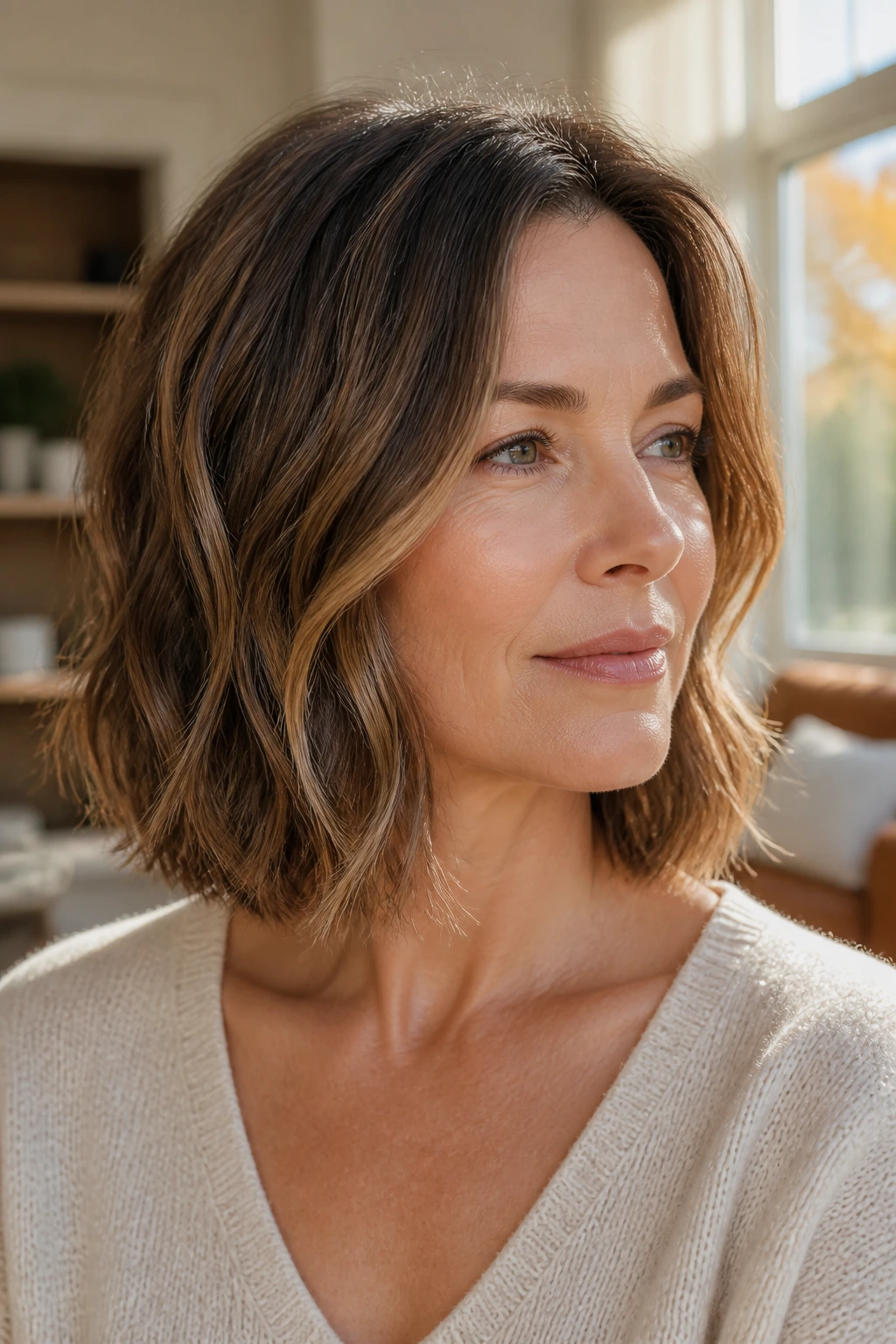
A collarbone lob is one of those cuts that makes wavy hair look deliberate without looking overworked. The length sits right where the neck and shoulders begin to move, which means the wave gets room to bend without flaring into a triangle. It is a safe choice if you want shape but do not want to lose the option to tuck hair behind one ear.
Why the collarbone line works
A collarbone line catches enough movement to feel relaxed, but not so much that the hair starts to mushroom at the sides. The invisible layers matter here. They are tucked inside the shape, so you get motion without seeing a bunch of obvious steps in the outline.
- Ask for the longest pieces to land at the collarbone.
- Keep the front a touch shorter if your hair flips outward near the shoulders.
- Start layers below the cheekbone if the wave is loose.
- Air-dry with a light mousse if you want the wave to stay soft instead of puffed.
Best tip: avoid aggressive thinning shears at the ends. On wavy hair, they can make the perimeter look frayed by the second day.
2. Chin-Length French Bob
A chin-length French bob is not timid, and that is exactly why it works. The cut lands high enough to wake up the face, but low enough to let the wave move without getting trapped in the nape. On women with silver or salt-and-pepper texture, it can look especially sharp because the clean outline gives the color a place to show off.
The key is not to make it too blunt at the bottom. A little softness through the edges keeps the bob from feeling like a helmet, which is a real risk with wavy texture. Let the line skim the jaw rather than clamp to it.
This shape suits hair that has a loose-to-medium wave and enough density to support a compact outline. If your hair is fine, it can still work, but the cut has to be precise and the styling product light. A small amount of foam at the roots and a quick rough-dry with fingers can be enough.
It is a confident cut. Short, clean, and a little cheeky.
3. Shoulder-Skimming Shag
Why does a shag behave so well on wavy hair? Because it gives the wave several places to land instead of forcing it into one long sheet. The top layers create lift, the middle layers keep movement going, and the shoulders do not get the last word.
The shoulder-skimming length matters. It keeps the cut from feeling too severe, and it gives the wave enough weight to settle. Too short and the layers can fly out. Too long and the whole shape starts to sag. Right around the shoulder line, the texture can breathe.
How to wear it without overstyling
Scrunch in a foam or light curl cream on damp hair, then diffuse for a few minutes or let it air-dry if your wave is cooperative. A bit of texture spray at the ends can help, but do not drown the roots in product. That is how a shag goes from lively to sticky.
This is a strong choice if you like hair that looks a little undone in a good way. Not messy. Not neglected. Just lived-in enough that the texture reads clearly.
4. Long Layers with Face-Framing Pieces
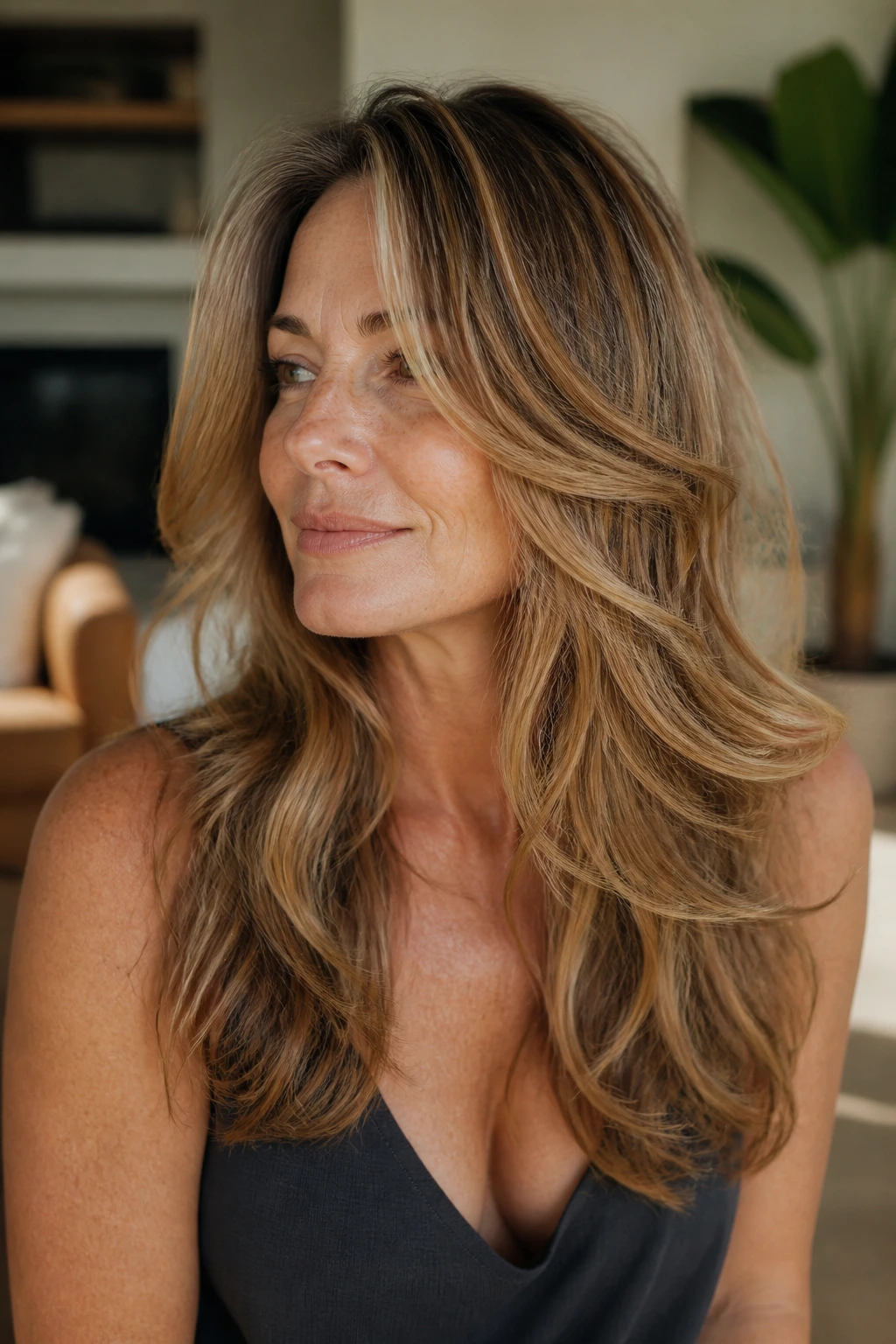
If you are not ready to give up length, this is the haircut to pay attention to. Long layers keep the overall outline feminine and familiar, but the face-framing pieces stop the hair from hanging like a curtain. That matters a lot when waves start to lose energy in the lower half.
The trick is where the face frame begins. Too high, and the front can puff around the temples. Too low, and the haircut does not do enough. A good starting point is usually the chin or collarbone, depending on face shape and wave strength.
- Ask for internal layers, not a chopped-up surface.
- Keep the perimeter long enough to gather in a low ponytail.
- Let the front pieces soften around the jaw or cheekbone.
- Use a wide-tooth comb after washing so the wave keeps its pattern.
This cut works especially well if your hair is thick in the mid-lengths but needs lightness at the front. It gives you movement without the constant urge to trim it shorter every six weeks.
5. Blunt Midi Cut with Soft Ends
A blunt midi cut can make wavy hair look denser than it is. That sounds simple, but it is a useful trick, especially if your ends have become finer over time. The strong line gives the eye a clear edge to follow, so the hair reads as fuller even when the individual strands are not doing much.
The soft ends are what keep the cut from feeling rigid. I do not mean wispy, over-thinned ends. I mean a neat line with a little point-cut softness so the waves can move through it. If the outline gets too shaved down, the mid-lengths can flare and the whole thing loses the clean effect.
This is a good choice if your waves are loose and you prefer a more polished look. It can sit beautifully with a center part, but a side part adds volume at the crown if that area goes flat. A quick bend with a blow-dry brush around the front pieces is often enough.
Sometimes the simplest silhouette is the smartest one.
6. Tapered Wavy Pixie with Longer Crown
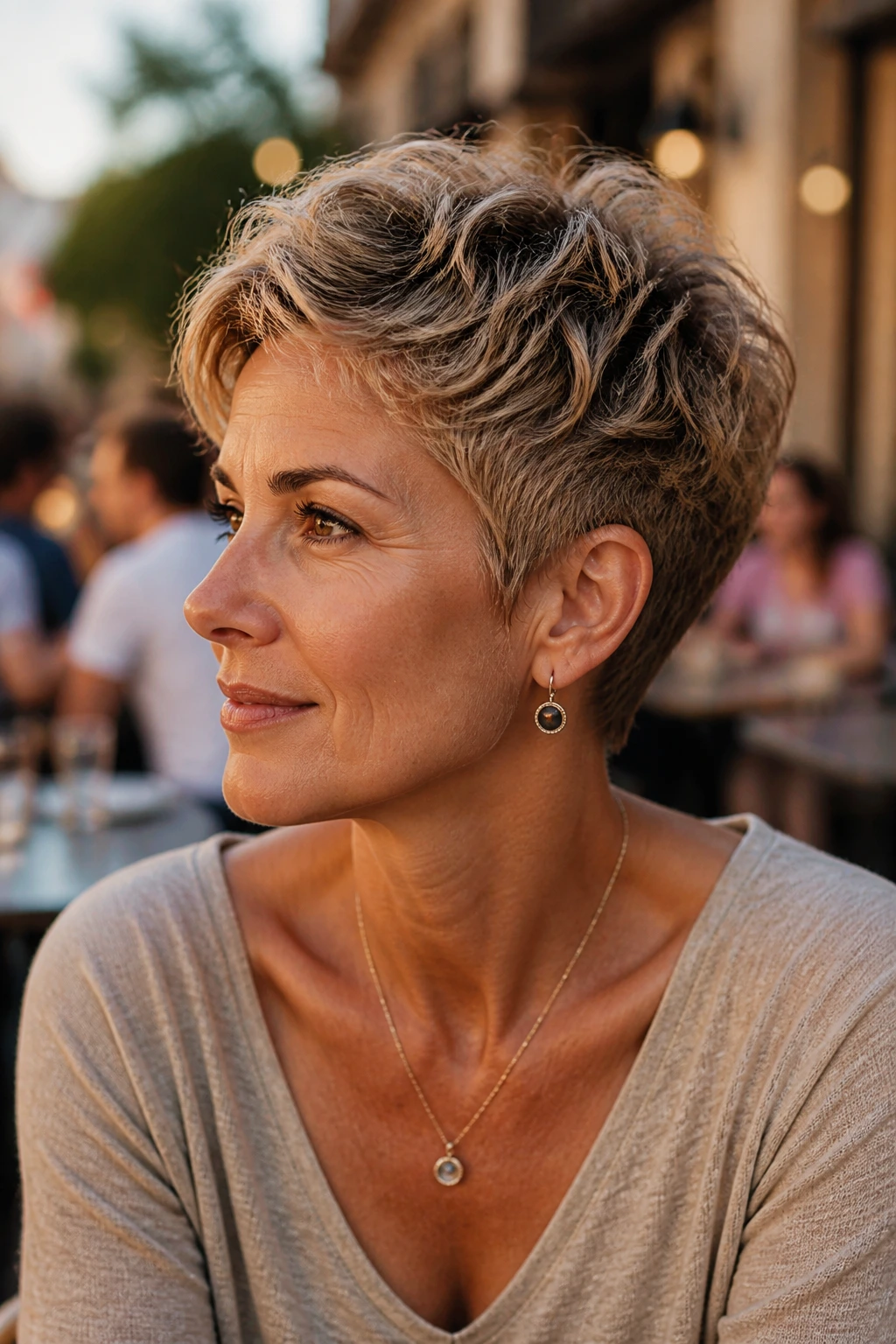
A short cut does not have to mean a severe crop. A tapered pixie with a longer crown keeps the sides and nape close while leaving enough length on top for the wave to show up. That length on the crown is the difference between “short hair” and “hair with personality.”
This version works best when the top is left long enough to scrunch, bend, or sweep to one side. If the top gets cut too short, wavy hair can stand in odd directions and the whole cut starts feeling busy. The taper at the nape and around the ears keeps the shape neat.
It is a smart option if you wear glasses, because the sides can be shaped to sit cleanly around the frames instead of crowding them. It also dries fast. That matters more than people admit.
If you like low-fuss mornings and do not want to spend fifteen minutes persuading a blow-dryer to behave, this cut earns its keep quickly.
7. Rounded Bob with a Side Part
A rounded bob gives wavy hair a softer outline than a square one. That roundness matters if your jawline is strong or if you want the haircut to feel a little more lifted at the crown. The side part adds that lift without needing a ton of styling.
The cut should curve gently under at the ends, not flip hard. That little curve keeps the bob from looking boxy, especially when the hair has a medium wave that wants to swell outward. If your hair is thick, the inner layers need to be handled carefully so the shape does not expand like a pyramid.
Where this bob shines
- It gives the face a cleaner frame.
- It makes the crown feel taller without teasing.
- It works well with a tucked-behind-the-ear moment on one side.
- It keeps the nape neat, which helps if collars or scarves make your hair catch.
This is one of those bobs that looks especially good in silver or highlighted hair because the curve catches the light and shows off the movement.
8. Butterfly Cut for Wavy Length
A butterfly cut is a clever answer for anyone who wants movement up top and length down below. The shorter layers around the face and crown create lift, while the longer lower layer keeps the overall length intact. On wavy hair, that split matters because it prevents the top from going flat while the bottom stays heavy.
It is especially useful if your hair feels thick near the ends but limp at the scalp. The shorter top pieces bring the wave forward around the face, and the long lower length keeps the cut from feeling chopped up. That balance can be hard to find in a single salon visit, which is why this cut deserves more attention than it gets.
Styling usually takes a little more effort than a blunt lob. A diffuser or round brush around the front sections helps the shorter pieces fold away from the face. The payoff is movement that looks intentional rather than accidental.
If you like your hair long but want the front to do something interesting, this is the cut.
9. Layered Lob with Curtain Bangs

Can curtain bangs work on wavy hair after 47? Yes, if the bangs are cut with enough length and enough softness. The trick is letting them start near the cheekbones or upper lip so they can split naturally and fall away from the face instead of sticking straight across it.
The layered lob gives those bangs somewhere to land. Without the right base length, the fringe can look disconnected. With a shoulder-grazing lob underneath, the curtain pieces blend into the rest of the shape and the whole cut feels easier to wear.
Curtain bangs that behave
Ask for them longer than you think. Seriously. Wavy hair shrinks as it dries, and bangs cut too short can bounce above the brows in a way that is hard to ignore. If you wear glasses, leave enough space so the bangs do not sit on the frames.
A quick blow-dry with a round brush or even a twist-dry with fingers can help the fringe split neatly. The rest of the hair can stay softer and looser.
This cut has a nice built-in advantage: when the bangs grow out, they still look like part of the haircut for weeks.
10. Modern Pageboy with Curved Ends

A modern pageboy gives wavy hair a shape without making it stiff. Think of a clean outline that curves under softly at the ends, with enough internal movement that it does not read as dated or rigid. The old-school version could feel severe. This one keeps the tidy line but loosens the attitude.
It works especially well if you want the hair to sit neatly around the jaw and neck. The curved ends help the wave settle instead of kicking out at the sides, which can be a problem with shorter bobs. A subtle side part can keep the top from looking too flat.
This cut is a good match for silver hair because the smooth contour makes the color look deliberate. It also does a nice job with glasses, since the sides can be shaped to avoid bulk around the temples.
If you like a haircut that looks put together with very little argument from the mirror, the pageboy deserves a serious look.
11. Slightly Asymmetrical Bob

A slight asymmetry can do more for wavy hair than a dramatic angle ever will. One side sits just a little longer than the other, and that tiny difference can help the hair fall more naturally if your wave pattern is stronger on one side or if one temple grows flatter than the other.
The important word is slight. You do not need a loud, sharp angle. Half an inch to an inch is enough to keep the line interesting and help the cut feel custom. Too much asymmetry starts to look like the haircut is correcting a mistake. A small shift looks intentional.
This shape works well with waves that flip outward on one side because the longer side can calm the flip. It also pairs nicely with a side part and tucked-behind-ear styling. If you want a little edge without turning the whole haircut into a statement piece, this is the safer bet.
Small adjustments can change the whole mood.
12. U-Shaped Shoulder Cut
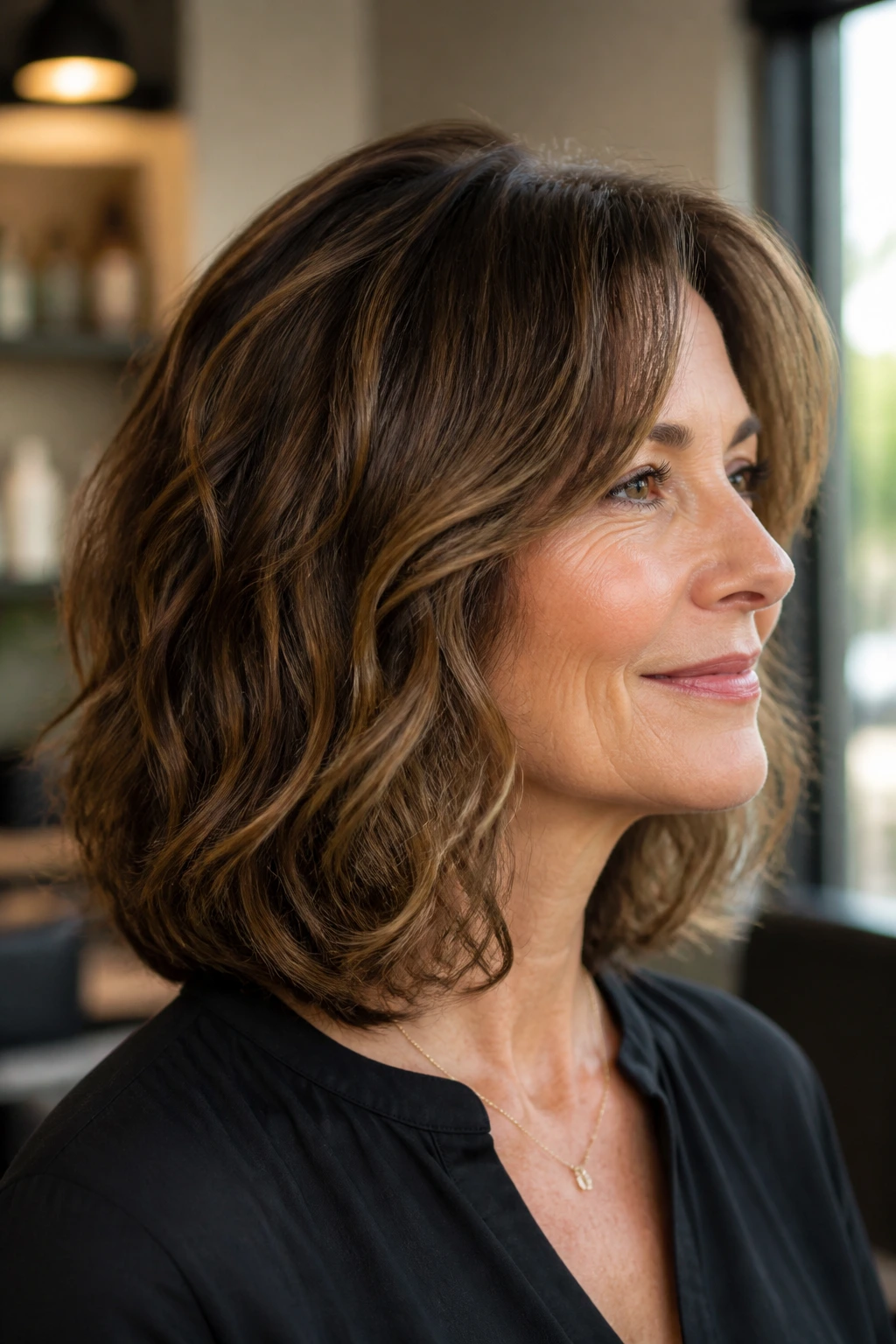
Unlike a blunt straight cut, a U-shaped shoulder cut keeps the back fuller and the sides slightly lighter. That matters if your hair is thick or coarse, because a straight line can create a shelf at the ends. The U-shape lets the wave fall in a gentler curtain.
The shape is easy to miss in a mirror, which is part of why it works. It does not scream for attention. It quietly solves the problem of too much bulk at the sides while still keeping a sense of length and softness.
This is a strong choice if your waves are heavy and tend to expand when the weather is damp. A U-shaped perimeter gives the hair a place to gather instead of fanning out. Ask for internal layering only where needed; too much razoring can make the ends look thirsty.
If you want medium-length hair that feels balanced from the front and back, this cut has real staying power.
13. Wispy Fringe with Soft Layers

A wispy fringe can be a good way to change the feel of your hair without chopping off much length. The fringe should be light, broken up, and a touch longer than blunt bangs. On wavy hair, that softness matters because a heavy bang can shrink and split in awkward spots.
What keeps the fringe soft
- Keep the center longer than the outer edges.
- Cut it dry, or at least check it dry before the final trim.
- Leave enough length to brush to the side on lazy days.
- Blend the sides into the layers so the fringe does not sit alone.
The rest of the cut should stay soft too. If the layers are too sharp, the fringe can look disconnected. A little movement through the cheeks and temples helps the whole shape read as one idea.
This is a good option if you want something that brushes up against your eyebrows without taking over the face. It feels lighter than full bangs and gives you the option to pin it back on humid days.
14. Natural-Wave Dry Cut

Some wave patterns need to be cut where they actually live, not where they look neat when wet. A dry cut lets the stylist see how the hair bends, where it swells, and which pieces tuck under or kick out. That matters a lot with uneven waves, cowlicks, or hair that has different textures from front to back.
A dry cut is not magic. It is a method. It works best when the stylist knows how to read the hair in motion and resist the urge to overcorrect. The goal is not symmetry for its own sake. The goal is a shape that behaves in your real life, not in the salon chair.
This approach is especially useful if you have spent years wondering why your hair looks one way when wet and another way once it dries. That gap is where bad cuts live. Seeing the wave in its natural state closes the gap fast.
If you can find a stylist who is comfortable cutting that way, it can be a very good use of an appointment.
15. Tapered Crop with Soft Crown
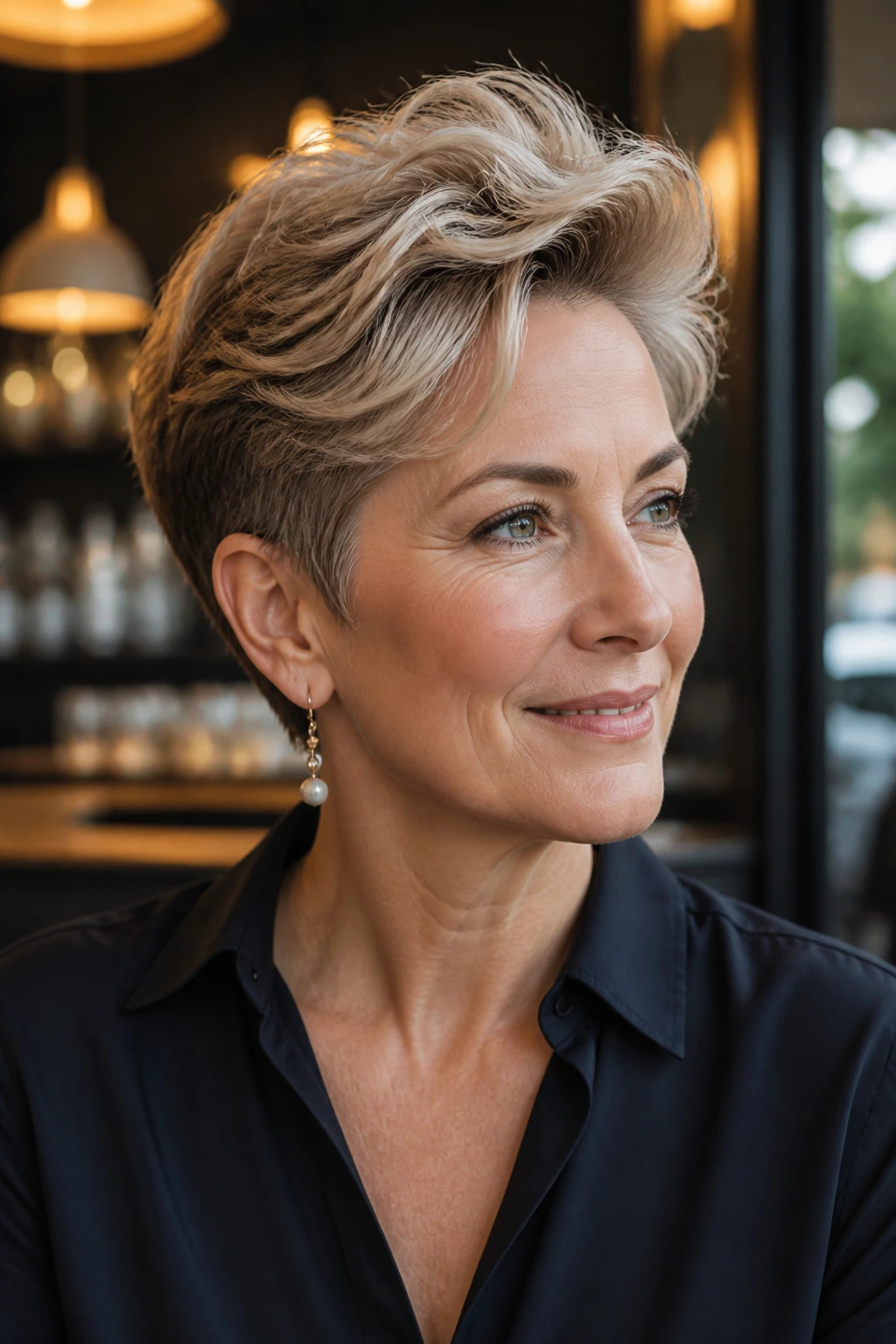
Short hair can still have movement, but only if the crown is left with enough length to bend. A tapered crop keeps the nape and sides neat while preserving lift on top, which is what keeps the cut from looking flat or harsh. The softness at the crown is the whole point.
This style is a fine choice if your hair has gotten finer and you want something that feels lighter on the head. It also works if you are tired of the daily detangling that longer waves demand. The cut dries quickly, and a small amount of styling paste or foam can help the top pieces separate a little.
The taper should be gradual, not severe. The more abrupt the sides, the more the top has to do on its own. Leave enough length at the crown for the wave to show a bend, not just a puff.
It is a neat, honest haircut. No fuss, but not flat.
16. Razor Bob with Piecey Ends

A razor bob can give dense wavy hair some breathing room, but it needs to be handled carefully. The razor removes weight and breaks up the edges, which can be useful if your ends feel too thick or your hair swells at the bottom. Done well, the result is piecey and light.
Done badly, it looks frayed.
That is why this cut works best on healthy hair with some natural shine and a stylist who knows where to stop. If your ends are dry or fragile, a razor can make them look thinner than they are. In that case, a point-cut bob is usually the safer answer.
The best version of this cut keeps the interior soft and the perimeter slightly uneven in a controlled way. It gives the wave room to bend without puffing. If you like a little edge and do not mind a more textured finish, this is one of the better ways to get it.
17. Deep-Side-Part Lob
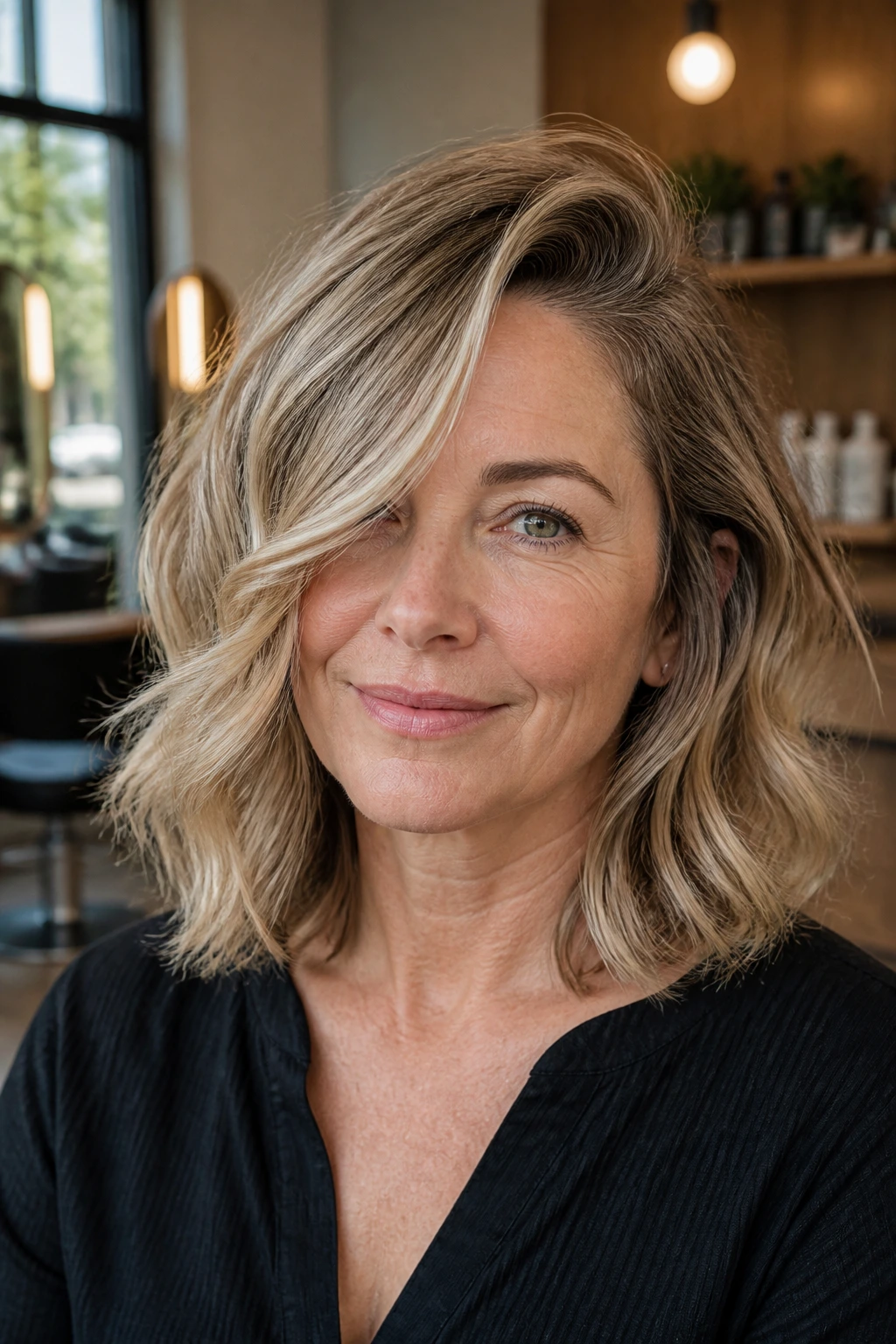
A deep side part can change the whole face of a lob in about five seconds. It lifts the crown, shifts the balance of the haircut, and gives wavy hair a little more drama without changing the length. That makes it a smart option if the top tends to go flat but the ends still look good.
The part also helps if one side of your wave pattern is stronger than the other. Moving the part can release some of that imbalance. The hair falls differently, and sometimes that is all it needs.
This cut works best when the lob stays clean through the ends. If the perimeter is too wispy, the side part can make the shape look lopsided instead of chic. Keep the base strong and let the part do the lifting.
It is a small change with a big payoff. Sometimes that is exactly what the mirror asks for.
18. Soft Wolf Cut for Wavy Hair

A soft wolf cut is not the same thing as a heavy shag or a dramatic mullet. The better version keeps the crown airy, the mid-lengths moving, and the bottom soft enough to feel wearable. On wavy hair, that combination can look very good because the natural bend fills in the layers.
It suits women who want a little edge without giving up softness around the face and neck. The layers can be adjusted so the cut feels playful rather than sharp. If the top gets too short or the bottom too sparse, the whole thing can tip into costume territory. That is not the goal.
The best wolf cuts on wavy texture have a clear shape when the hair is tucked behind the ears, and enough movement that the layers do something when the hair is loose. A bit of mousse, a bit of finger-drying, and a light finishing spray are usually enough.
If you want your waves to look a little more lived-in and a little less polite, this is the cut with the most attitude.
What to Tell Your Stylist Before the Cape Comes Off

Bring photos, yes. But bring a sentence too. The sentence should name the problem you actually want solved: flat crown, bulky sides, ends that flip out, fringe that gets in the eyes, or a shape that disappears by day two. That is more useful than saying you want volume and movement, which every haircut brochure says anyway.
Say where your hair parts when it is wet and where it falls when it is dry. Those are not always the same thing, and the difference can change the whole cut. If your wave pattern is strongest at the front and weaker in the back, say that out loud. Stylists can work with that, but only if they know it.
Ask whether the final shape will be checked dry. A lot of wavy hair needs that final look-over because wet hair lies. It lies with conviction. And if you wear glasses, mention the frames before the bangs are cut. That one tiny detail can save you from a week of hair constantly sitting on your lenses.
The Haircut Errors That Flatten Wavy Texture
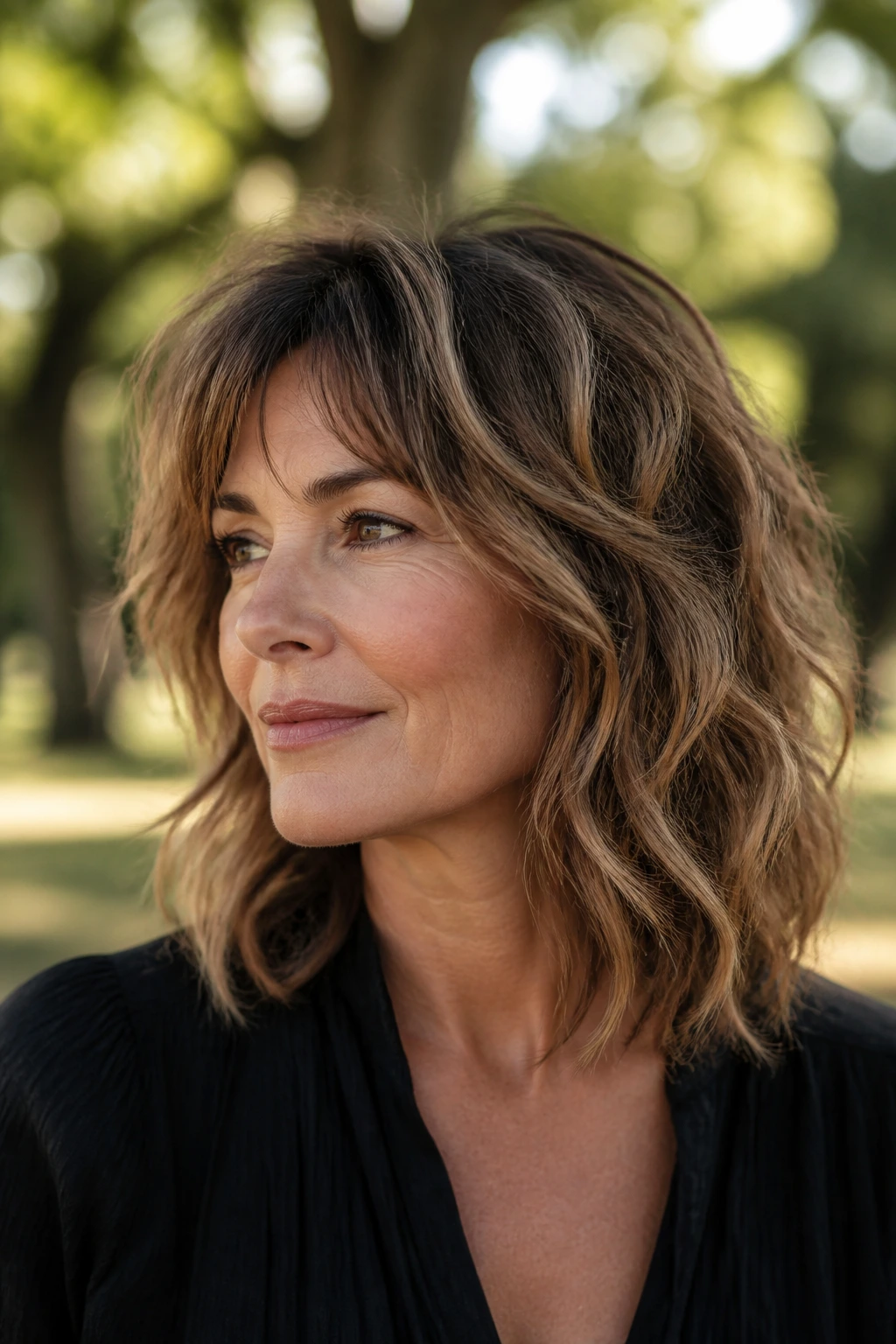
One of the biggest mistakes is taking too much weight out of the ends. The hair may feel light in the chair, but once it dries, the lower half can look stringy and unsettled. A better fix is to remove bulk inside the shape while keeping the perimeter clean.
Another common problem is cutting bangs like the hair is straight. Wavy fringe shrinks and splits. If the stylist cuts it too short wet, you may end up with brows that never get to rest. Leave length. Check it dry. Repeat if needed.
Heavy creams are another trap. Too much product can make waves clump into damp-looking sections, especially around the face. Start with a small amount, rake it through the mids and ends, then stop. If the hair still feels thirsty, add a pea-sized bit more. Do not dump in a palmful and hope for the best.
Skipping the dry check is how many perfectly decent cuts become frustrating cuts. The line can look good wet and still behave badly once the wave springs up. That last look matters more than the mirror in the shampoo bowl.
Five Easy Ways to Change the Shape Without Starting Over

The Softer Face Frame
Keep the length, but shift the front pieces so they begin lower, around the mouth or collarbone. This keeps the face open without making the sides too wide. It is a useful tweak if you like your current haircut but want a little more movement.
The Fuller Crown Version
Ask for slightly more length at the top and a cleaner taper at the sides. That helps fine or flat waves lift without needing a lot of teasing or root spray. It is a good fix when the shape feels heavy on top.
The Glasses-Friendly Version
Leave the fringe longer and keep the temple area light. Hair that is cut too close to the frames tends to bunch up and stick out. A little room around the glasses makes the whole haircut easier to wear.
The Silver-Showing Version
Choose a cleaner perimeter and fewer broken-up layers. Silver hair often looks best when the shape is crisp enough to show the color shifts. Too much texture can hide the pattern in the hair.
The Humidity-Safe Version
Keep the layers a touch longer than usual and use a firmer finishing spray. Longer layers settle better when the air is damp, and they do not spring out as fast. That little bit of extra length can save a lot of daily fuss.
Tools That Help These Cuts Look Their Best
- Tail comb: Useful for setting a clean part and sectioning bangs or crown pieces before drying.
- Duckbill clips: Keep the top, sides, and fringe separate while you work the shape into place.
- Microfiber towel or cotton T-shirt: Reduces rough frizz after washing and keeps the wave pattern intact.
- Wide-tooth comb: Best for detangling without stretching the wave flat.
- Diffuser attachment: Gives curl and wave support without blasting the hair into a puff.
- Light mousse or foam: Adds lift near the roots and keeps lobs and shags from going limp.
- Flexible-hold spray: Helps fringe and face-framing pieces stay in place without feeling stiff.
- Heat protectant: Necessary if you use a brush, flat iron, or blow-dryer on the front sections.
- Round brush or vent brush: Helpful for a polished bend at the face or under the ends.
- Reference photos on your phone: Bring 2 or 3 images, not 20. The best ones show the silhouette from the front and side.
Keeping the Shape Between Salon Visits
Shorter cuts need faster trim cycles. A tapered pixie or a tight bob usually holds best with trims every 4 to 6 weeks, especially if the fringe touches your glasses or the nape starts to blur. Let it go much longer and the shape loses its clean outline.
Medium-length cuts like lobs and shags can usually go 6 to 10 weeks before they need the scissors again. The exact timing depends on how fast your wave drops and whether the face frame starts getting in your mouth. If the front pieces begin to hang heavy while the back still looks good, that is your cue.
Product buildup changes everything. A clarifying shampoo every 2 to 4 weeks can keep mousse, cream, and texture spray from weighing the wave down. Use a light leave-in only on the mids and ends if the crown goes flat. On the flip side, if the ends feel dry and fuzzy, a tiny bit of serum on damp hair can make the outline look cleaner.
At night, a loose clip, a soft scrunchie, or a satin pillowcase can keep the wave from getting crushed. In the morning, mist the hair lightly, scrunch the shape back into place, and dry only the parts that need help. That is usually faster than starting over with a full wash.
Frequently Asked Questions

Which haircut makes wavy hair look fullest after 47?
A blunt midi cut, a rounded bob, or a collarbone lob with invisible layers can all create the look of more density. The real trick is keeping the perimeter strong enough that the ends do not look see-through.
Are bangs a bad idea with wavy hair?
Not if they are cut with the wave in mind. Curtain bangs, wispy fringe, and longer side-swept pieces usually behave better than a blunt straight-across bang because they can shrink and split without looking broken.
How often should a wavy bob be trimmed?
Most wavy bobs look best with a trim every 6 to 8 weeks. If the ends start kicking out or the nape feels bulky sooner, shorten that window a little.
Is a dry cut better than a wet cut for waves?
It can be, especially if your wave pattern changes from side to side or your hair has cowlicks. A dry cut lets the stylist see how the hair actually sits, while a wet cut can hide problems that show up later.
What if my waves are fine at the top and thick at the ends?
Choose a cut that removes some weight from the lower half without chopping the crown too much. A butterfly cut, a shag, or long layers with a stronger interior shape can help balance that mismatch.
Can these cuts work if my hair is gray or mostly silver?
Yes, and in many cases the shape looks sharper because silver strands catch light differently. Clean outlines, soft layers, and a bit of movement around the face usually flatter gray texture well.
What should I ask for if I wear glasses?
Tell the stylist where the frames sit and how much hair usually touches them. That helps them leave enough space at the temples and around the fringe so the cut does not collide with the glasses every time you move.
How do I stop my waves from puffing out at the jawline?
The answer is usually in the layer placement. Keep the heaviest layers below the jaw and avoid too much thinning on the sides; then use a light product rather than a heavy cream.
The Shape That Lets Waves Move
The most flattering haircut is not the loudest one. It is the one that lets your wave settle into a shape you do not have to argue with every morning. That is why these cuts work: they respect the bend, keep the outline clean, and leave enough softness for the hair to move.
If you are choosing between two options, start with the one that solves your biggest annoyance. Flat crown? Bulky sides? Frizz at the ends? Fringe that sits in your glasses? Pick the cut that fixes the problem first, then worry about the style second.
Hair that waves wants room, not punishment. Give it the right cut and it stops acting like a daily project.