



Wavy hair in kids sits in a funny little sweet spot. It isn’t flat, but it isn’t curly enough to follow the same rules as curls, either. One minute it lies smooth and cooperative; the next, a stiff brush, a dry morning, or a backpack strap can turn those bends into a puffball at the crown and a tangle at the nape. The best hairstyles for kids with wavy hair work with that texture instead of trying to smooth it into something it isn’t.
That’s why the nicest styles here have a soft edge to them. They leave enough movement for the wave to show, but they still pull hair out of eyes, off cheeks, and away from lunch trays, playground swings, and math worksheets with pencil eraser crumbs all over them. I like styles that can survive a school drop-off and still look decent by pickup. That’s the real test.
A good kid hairstyle also has to pass a very practical exam: is it fast, is it comfortable, and will the child actually keep it on? Tight braids and heavy gels can look neat for five minutes, then start getting scratched at by noon. Loose control, a clean part, and the right clip do more work than most people think.
Why These Styles Work So Well on Wavy Hair
- They let the wave do half the styling: A small twist, braid, or clip keeps the shape clean while the hair’s own bend gives the style body.
- They need less product than straight-hair looks: Wavy hair already has texture, so a damp mist and a little leave-in usually beat layers of cream or gel.
- They stay softer as they wear on: When a few strands loosen, the style still looks intentional instead of falling apart.
- They’re kinder to little heads: Soft elastics, satin scrunchies, and loose tension avoid the sore spots that make kids yank styles out.
- They work at different lengths: Shoulder-length waves, a longer bob, and mid-back hair can all be pulled into versions of the same look.
- They photograph well without looking stiff: That’s a fancy way of saying the hair still moves. It should. Kids should look like kids.
1. Soft Half-Up Twist Crown
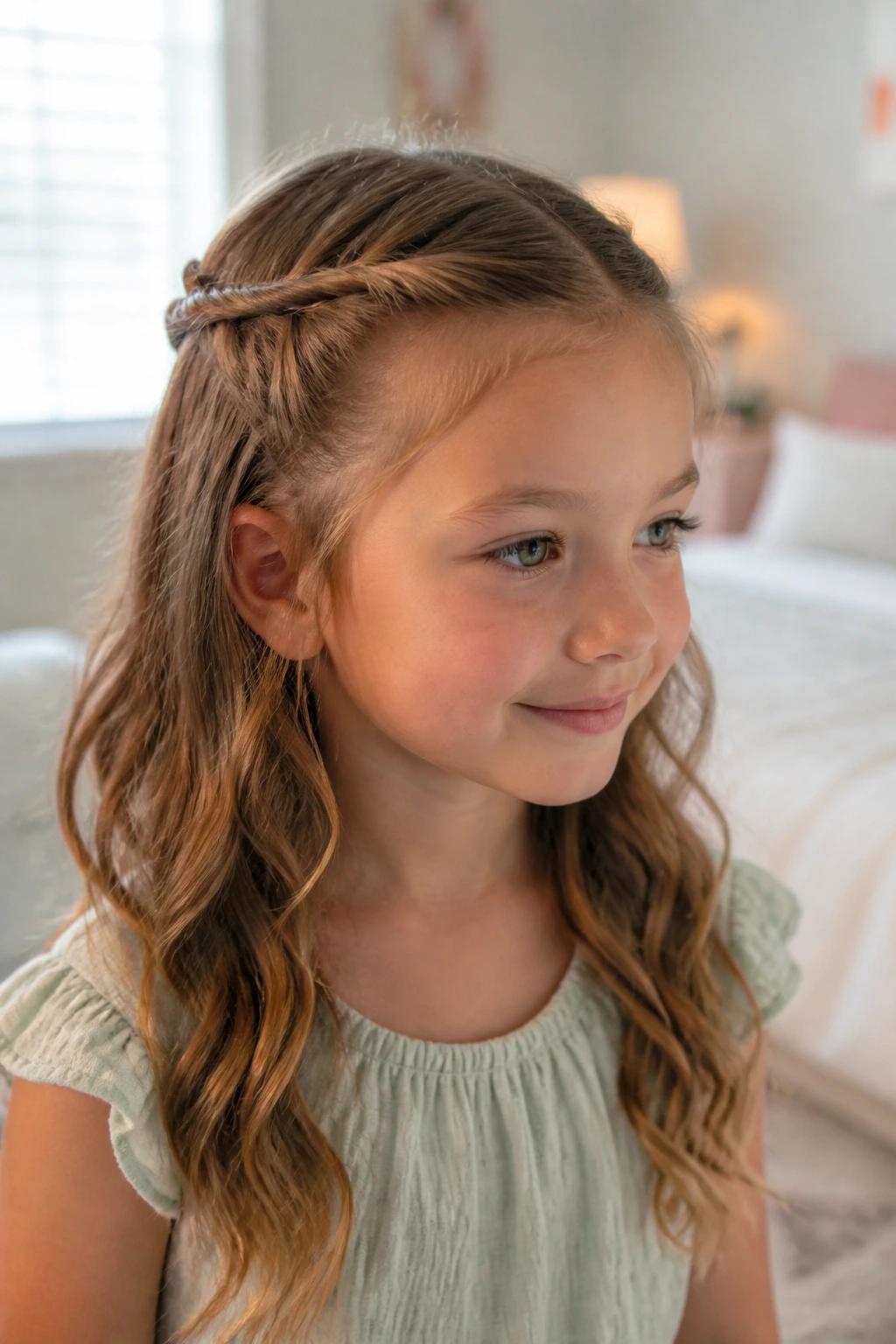
This is the style I reach for when a child wants hair out of the face but still wants to see the waves. The top section gets split into two thin pieces near the temples, twisted back, and pinned together at the crown. The rest hangs loose, so the ends keep their bend and the whole thing still looks light.
Best for a clean front with soft movement
The trick is keeping the twists small. If you grab too much hair, the top goes bulky and the twists start sliding. Use your fingers first, comb second, and keep the sections about 1 inch wide so the shape stays close to the head.
A pair of crossed bobby pins holds better than one lonely pin. That matters more than people think.
2. Bubble Ponytail With Soft Ends
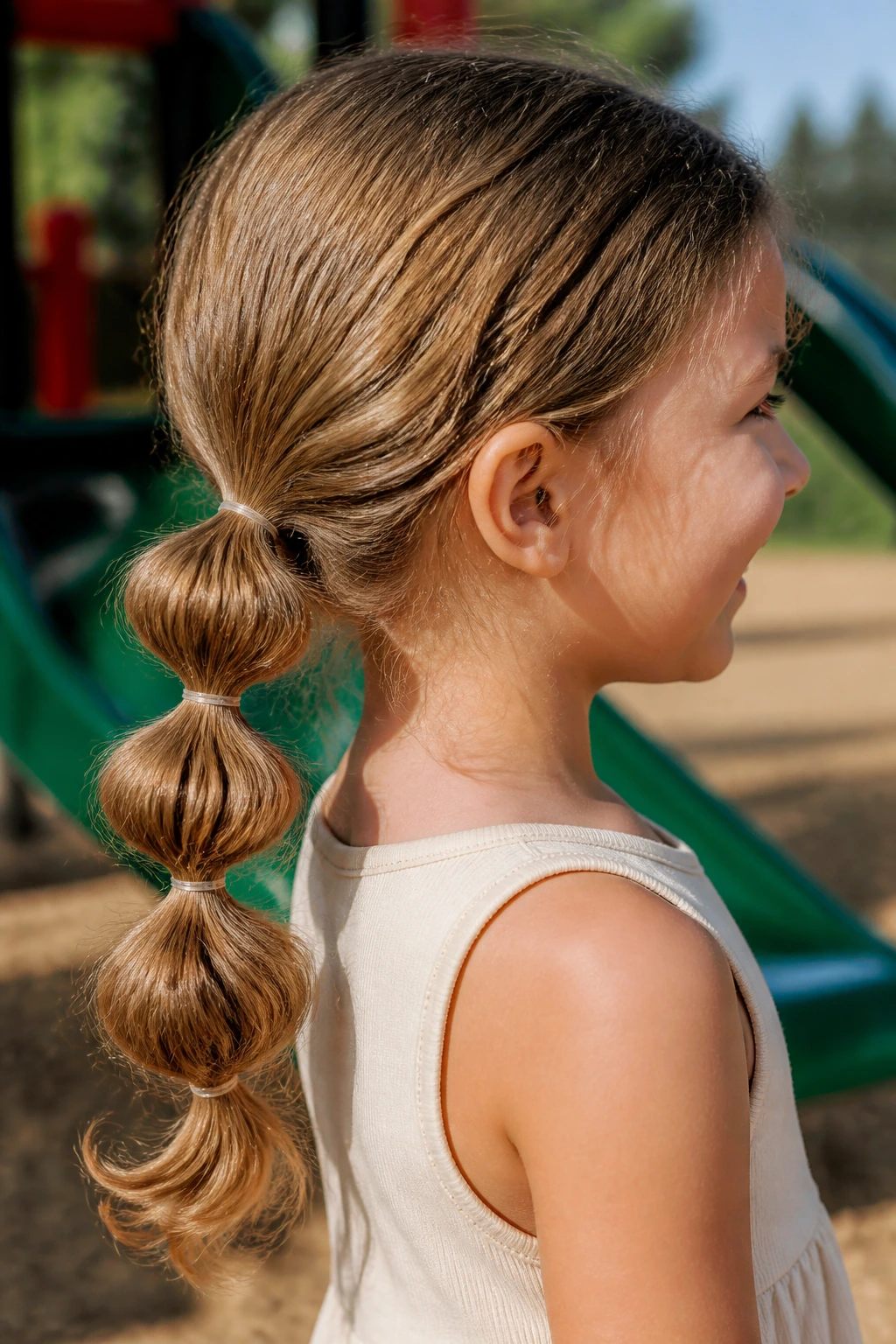
A bubble ponytail looks polished fast, and it’s one of those styles that makes kids feel a little dressed up without asking for much effort. Start with a low or mid ponytail, then add small clear elastics every 1½ to 2 inches down the length. Gently tug each section between elastics so the bubbles puff out.
The key is not to over-tighten the first elastic. If the base is too snug, the whole style starts looking rigid, and wavy hair can lose its shape. Leave the tail a little loose and let the texture do the rest.
It’s especially good on medium-to-long waves because the bubbles frame the wave instead of crushing it. A ribbon tied around the first elastic can soften the look in about ten seconds flat.
3. Side Braid With a Fluffy Tail
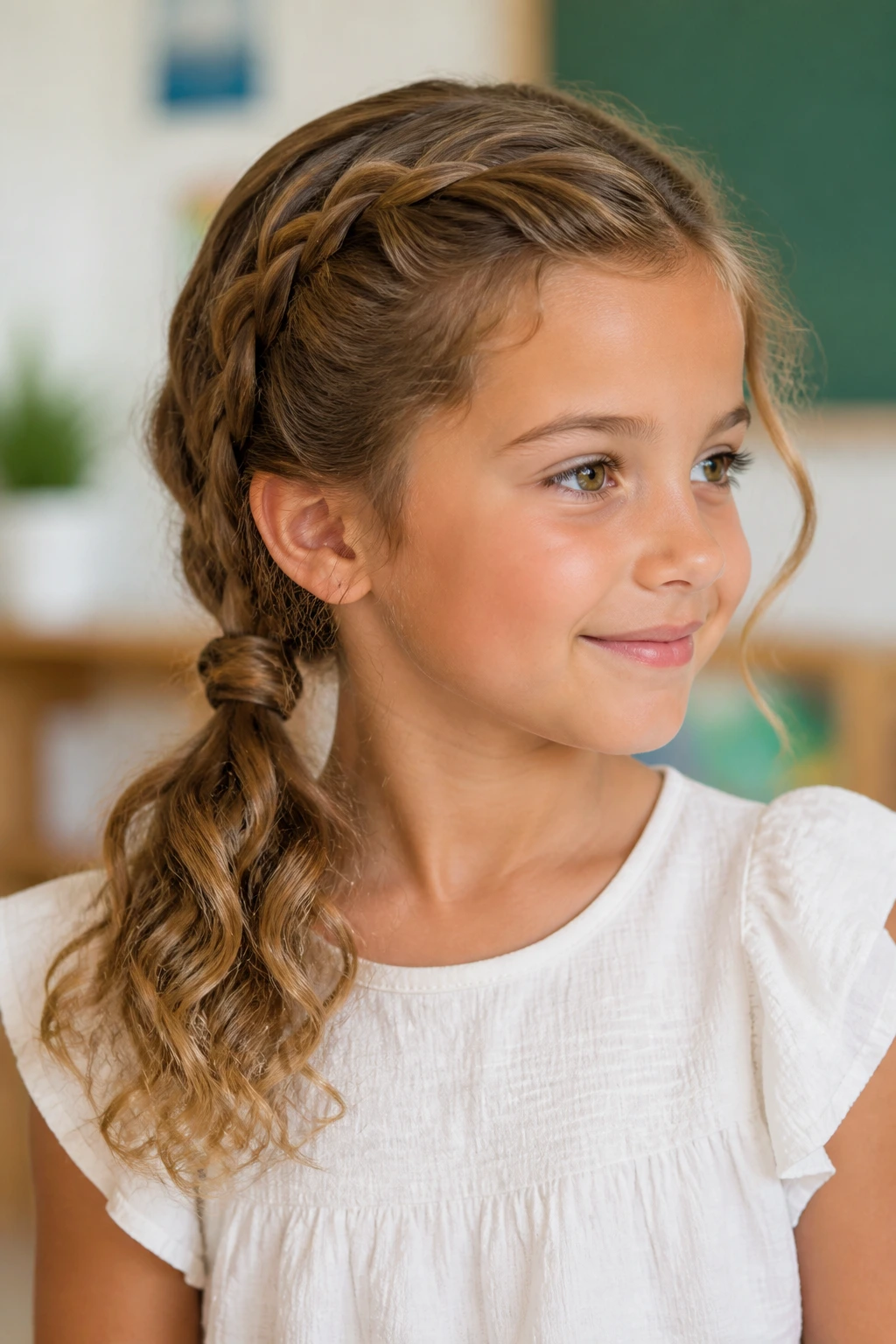
Want the hair off one side of the face but not flattened into a severe braid? A side braid with a fluffy tail handles that well. Sweep the hair to one side, braid from the temple or just behind the ear, and stop when you reach the nape or collarbone. Leave the last few inches loose so the wave pattern stays visible.
How to keep it from looking too tight
Pull the braid edges out a little after tying it off. Not a lot. Just enough to make the braid look wider and less like it came from a ski trip brochure.
This one works for school, picture day, or any day when the part keeps falling into the eyes. It’s neat without being stiff, and that’s the balance kids with wavy hair usually need.
4. Double Dutch Braids Into Loose Ends
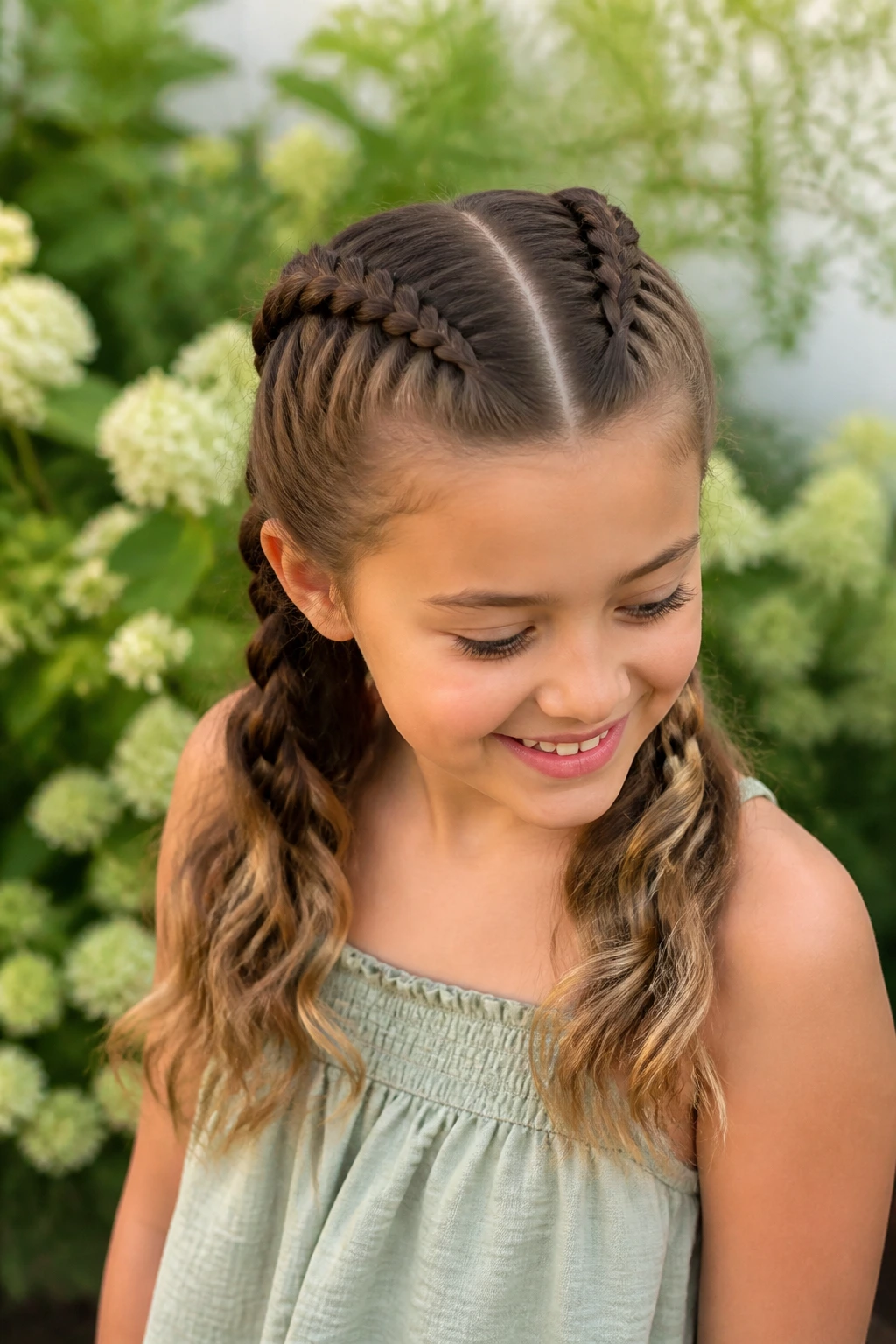
Double Dutch braids give strong hold on busy days, but the smartest version for wavy hair leaves the ends loose. Braid from the hairline back along each side, keeping the braid flat and secure through the top half. Then stop around the shoulders and let the rest fall naturally.
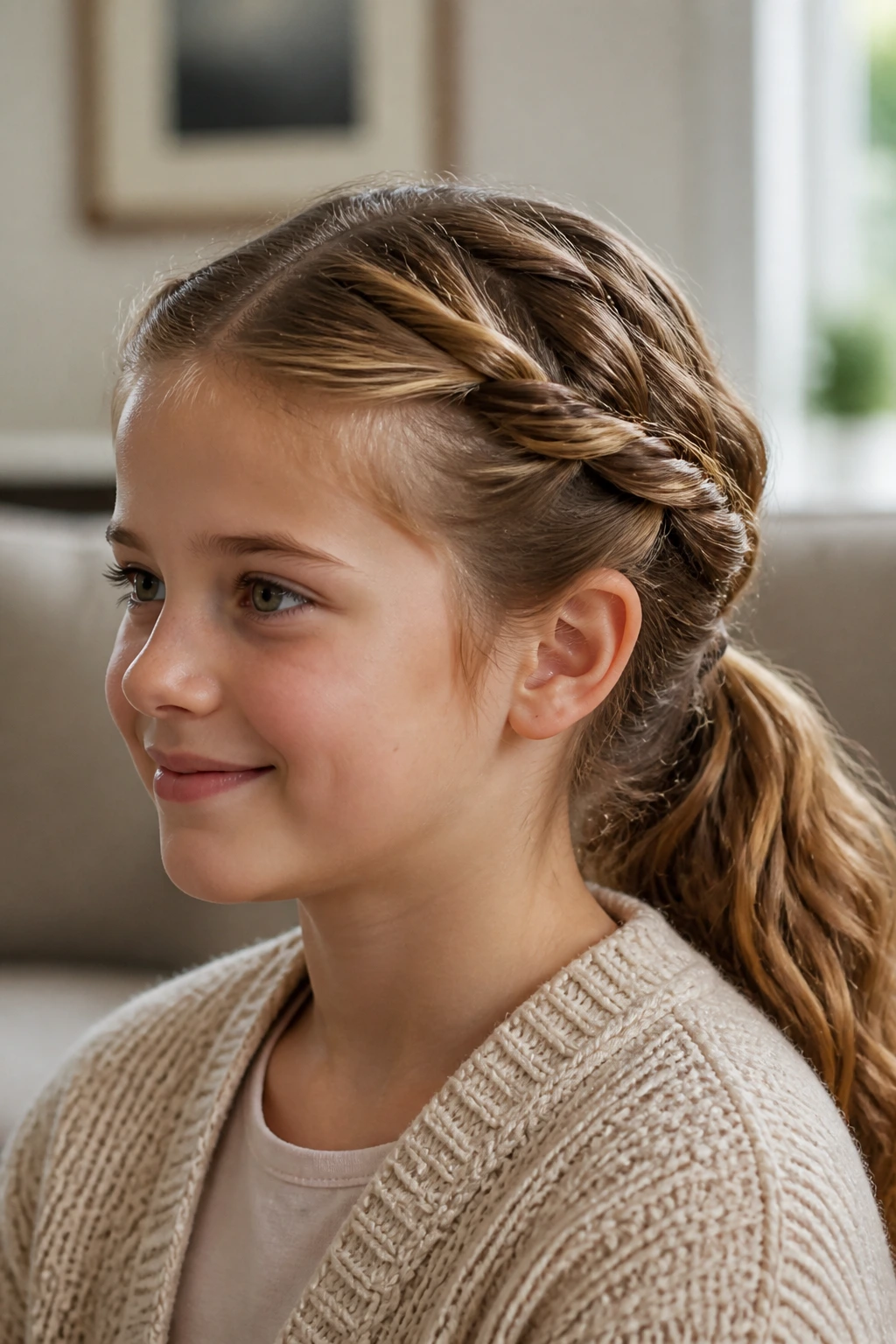
That loose ending is the difference between “controlled” and “overdone.” The braid keeps the front tidy through recess and lunch, while the waves in the tail keep the style from looking too serious. I prefer this on kids with thicker waves, because the braids sit close to the scalp and don’t puff out as easily.
If the part gets fuzzy, smooth it with a damp fingertip instead of more product. Less is better here.
5. Twisted Pigtails With Ribbon Ends
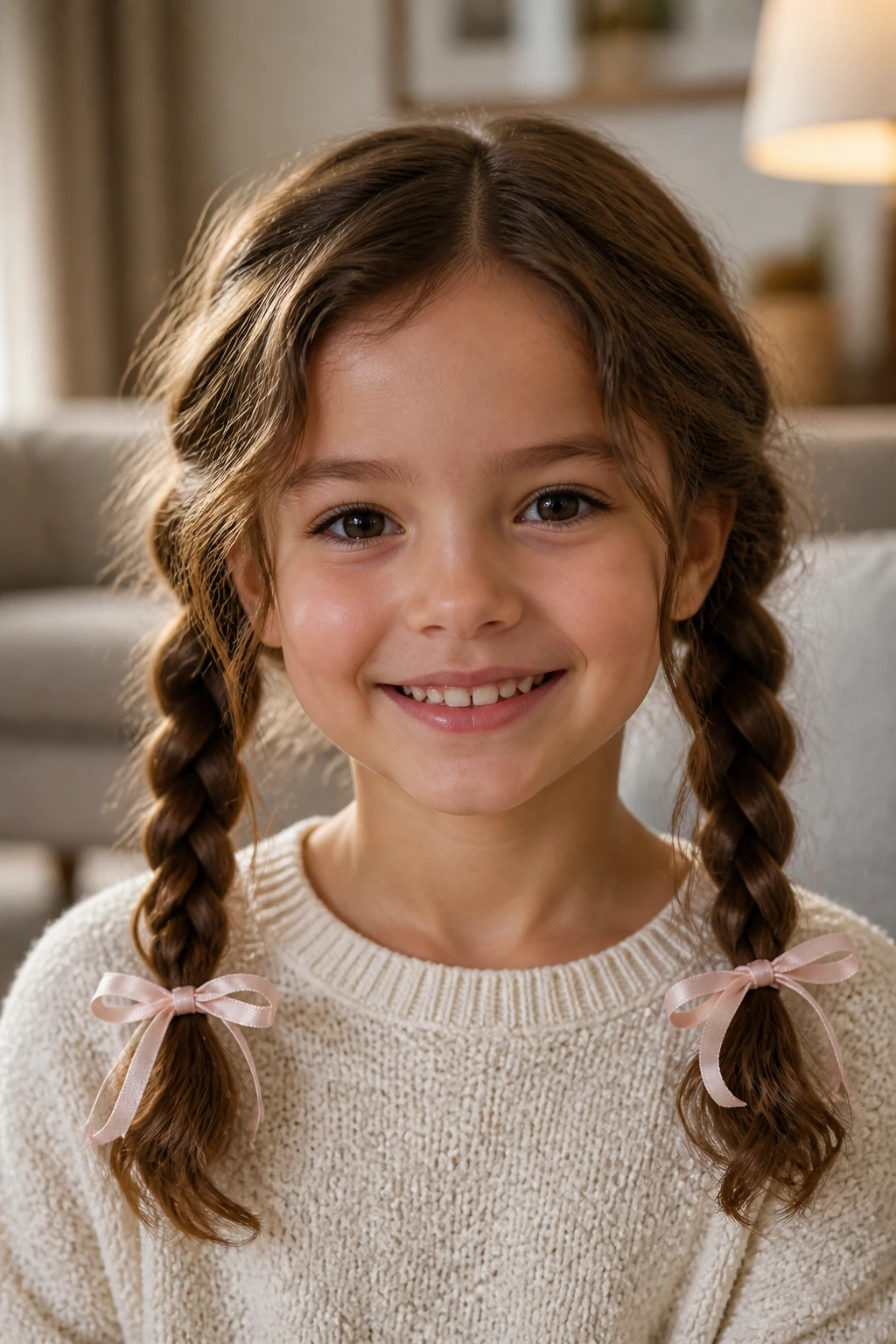
Twisted pigtails are one of those styles that look more thoughtful than they are. Make a center part, gather two low sections, and split each one into two strands. Twist the strands around each other until you reach the ends, then tie each side with a small elastic or a narrow ribbon.
The finish is soft and tidy, but not strict. Wavy hair tends to show the twist pattern nicely, especially if the hair has a little length past the shoulders. If the ends look puffy, that’s fine. It keeps the style from feeling too polished for a kid’s head.
A ribbon at the end adds color without adding weight. That matters more than it sounds.
6. Mini Claw-Clip Half-Up
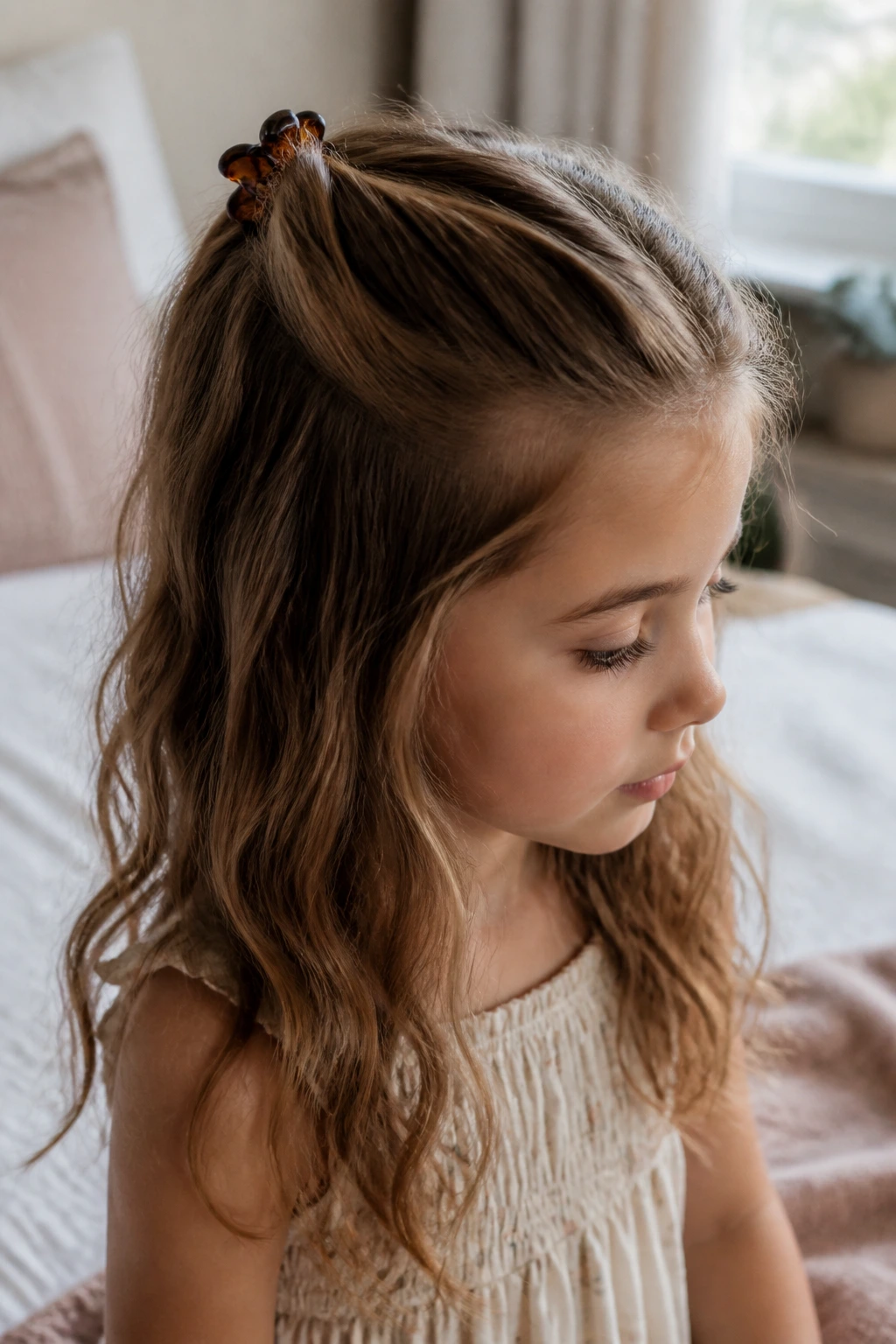
If elastics leave dents or the child hates feeling hair pulled back, a mini claw-clip half-up can be a lifesaver. Gather the top third of the hair, twist it once or twice, and clip it at the back of the crown with a small, rounded claw clip. Leave the lower waves untouched.
This is the style I’d call quietly useful. It keeps hair out of the eyes, but it doesn’t create the hard line a ponytail can leave behind. On shoulder-length wavy hair, it also gives a nice little lift at the top, which keeps the head from looking too flat.
Choose a clip with smooth teeth. Sharp edges and tiny kids do not mix.
7. Low Braided Bun
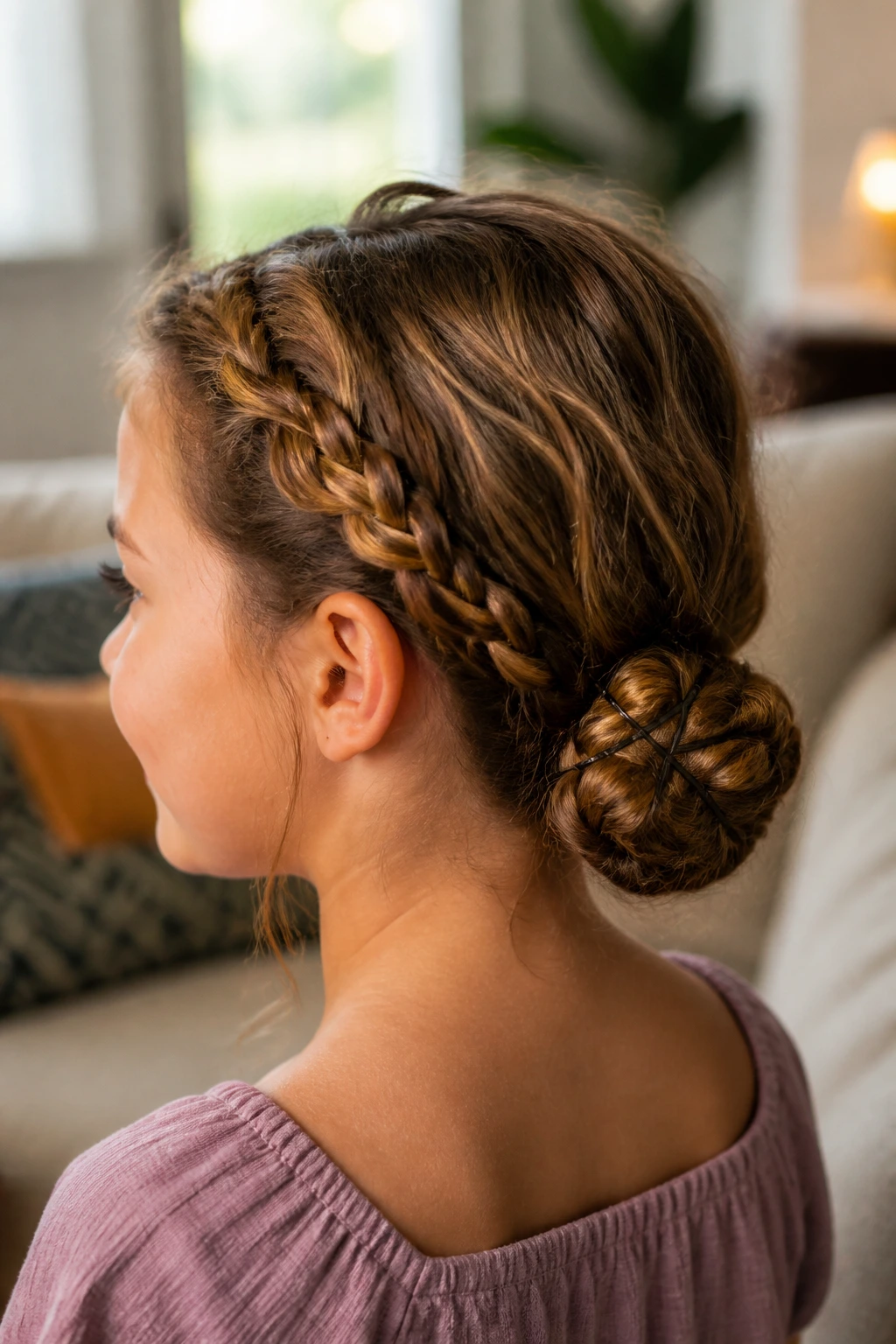
A low braided bun works well when you want the hair gathered but not scraped back. Start with a low ponytail, braid the tail, then wrap it into a bun and pin it in place. Four bobby pins crossed around the bun usually hold better than one large clip trying to do everything.
The braid gives the bun enough texture to look intentional even if a few waves slip loose. That’s the charm of it. It’s tidy enough for family photos and sturdy enough for a long afternoon in the car.
Keep the bun low, near the nape. High buns on kids can feel wobbly, and wavy hair can get puffy if the crown is pulled too tightly.
8. Space Buns With Free-Flowing Ends
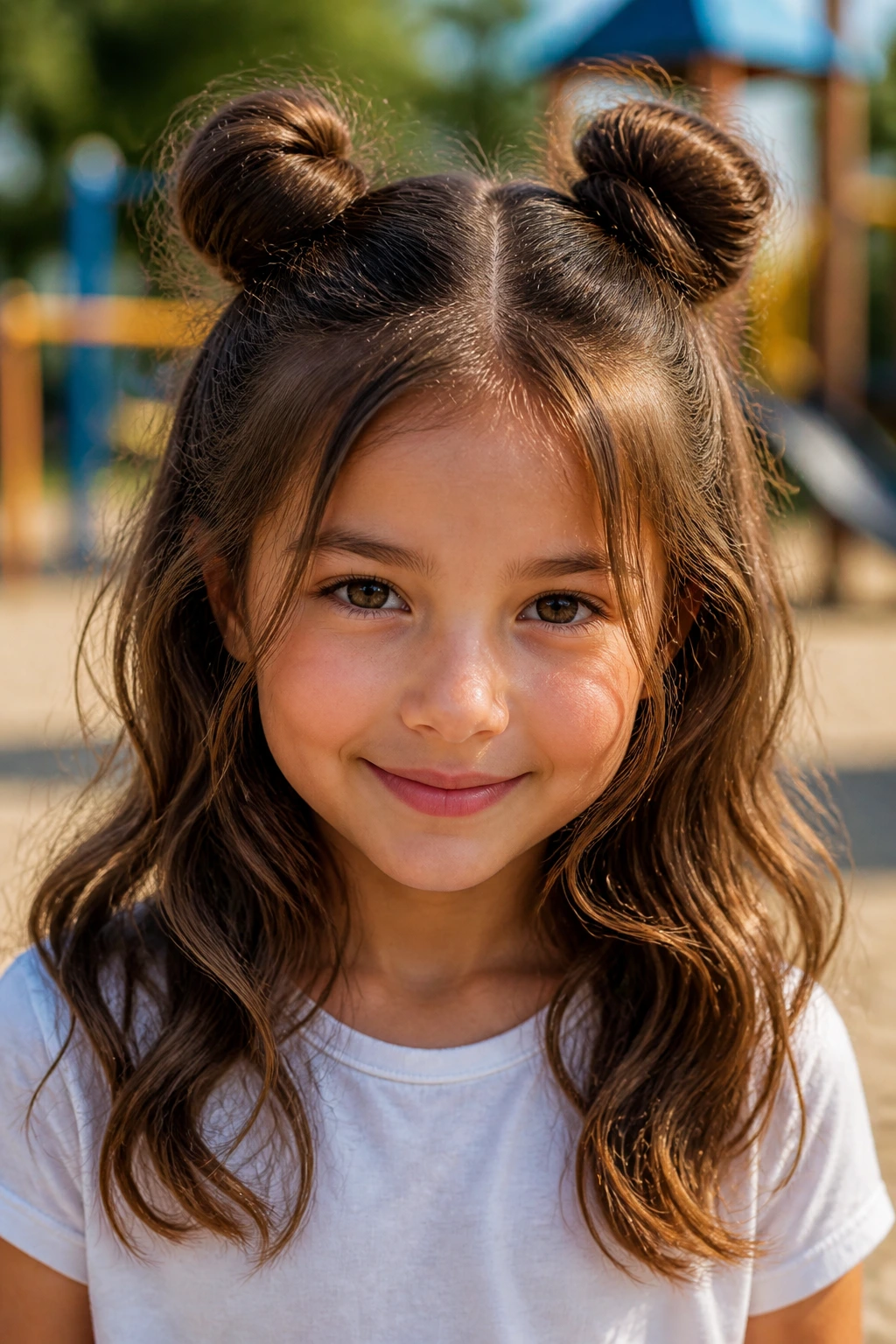
Space buns are playful, but they work best on kids with wavy hair when the buns stay small and the ends are left a little loose. Part the hair down the center, make two high pigtails, twist each one into a bun, and let a few face-framing strands fall naturally.
This style is fun because the hair around the buns doesn’t need to be perfect. Wavy texture gives the buns some grip, so they hold shape better than sleek straight hair usually does. If the ends are long enough, you can leave them peeking out for a softer finish.
Use soft elastics underneath the buns, not rubber bands. Little heads feel those things fast.
9. Headband Tuck-Back
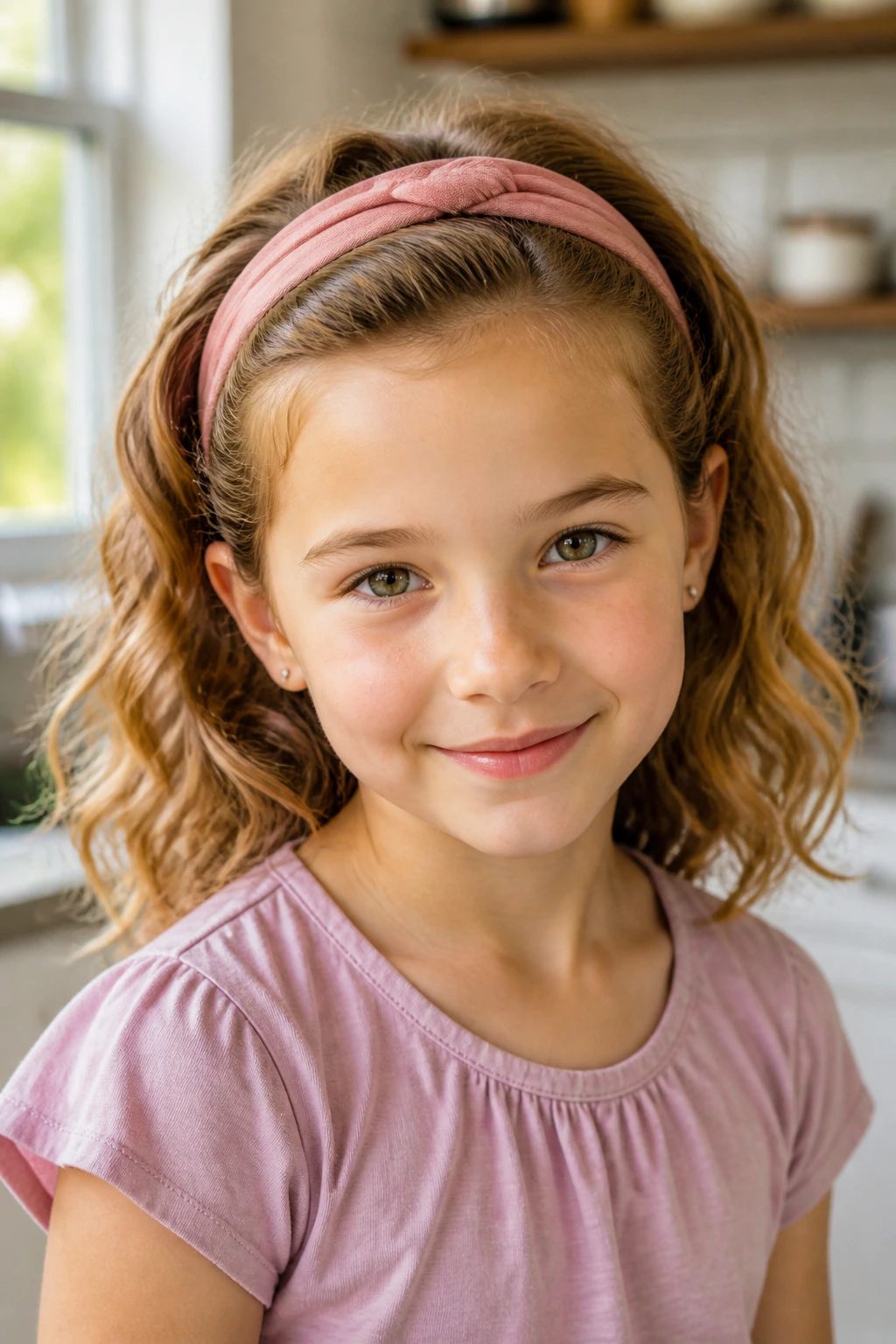
What do you do when the front keeps falling into the eyes and you do not want a full-up style? A headband tuck-back handles that problem without much fuss. Slide a stretchy headband on, then tuck the front sections behind the band so the waves stay visible around the sides and back.
This one is especially nice for younger kids or for mornings when time is ugly. It takes less than two minutes if the hair is already brushed and slightly damp. The look lands somewhere between “done” and “easy,” which is exactly where a lot of kid hair should live.
Pick a band that stays put behind the ears. If it slides, the whole style feels fussy.
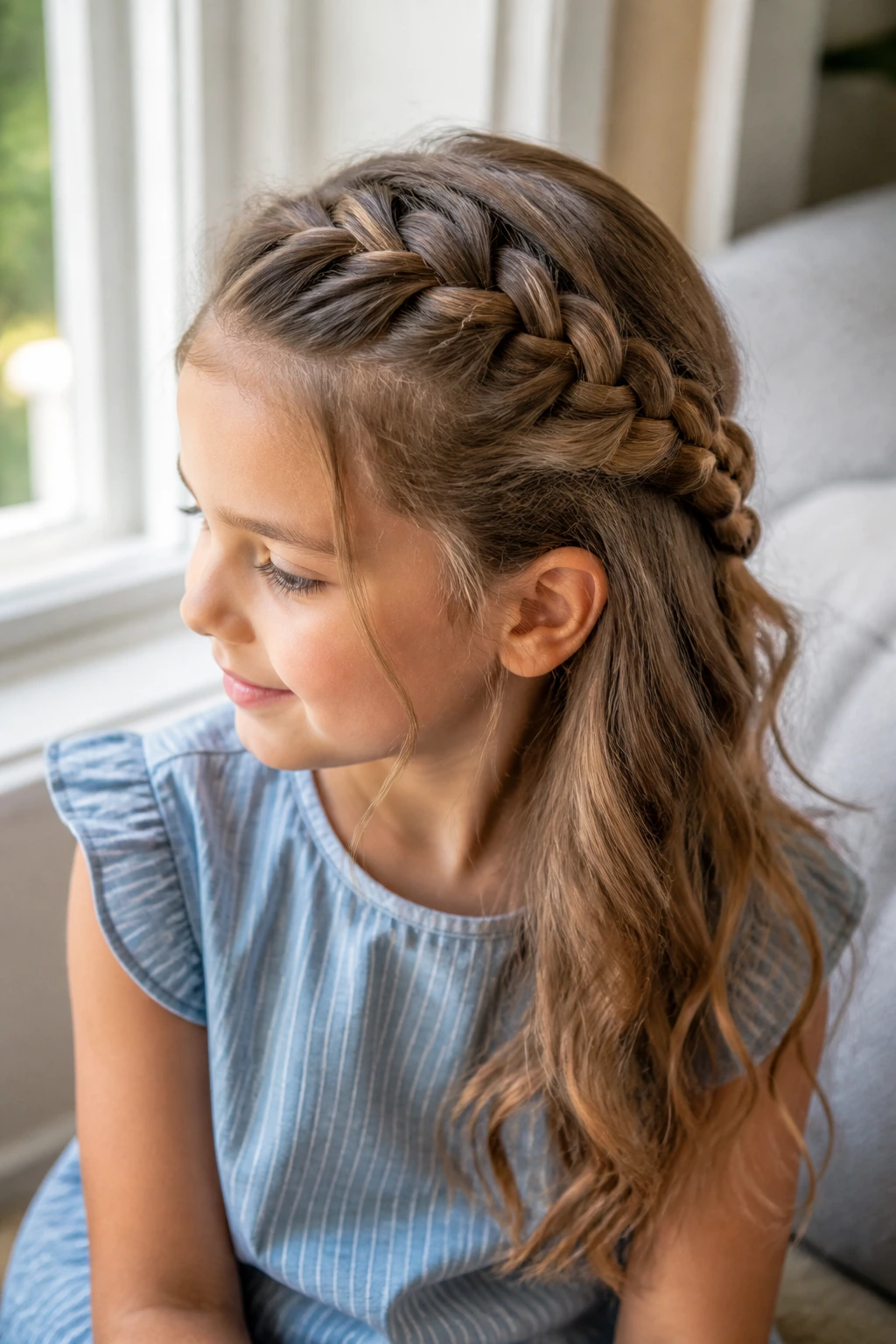
10. Crown Braid With Open Back
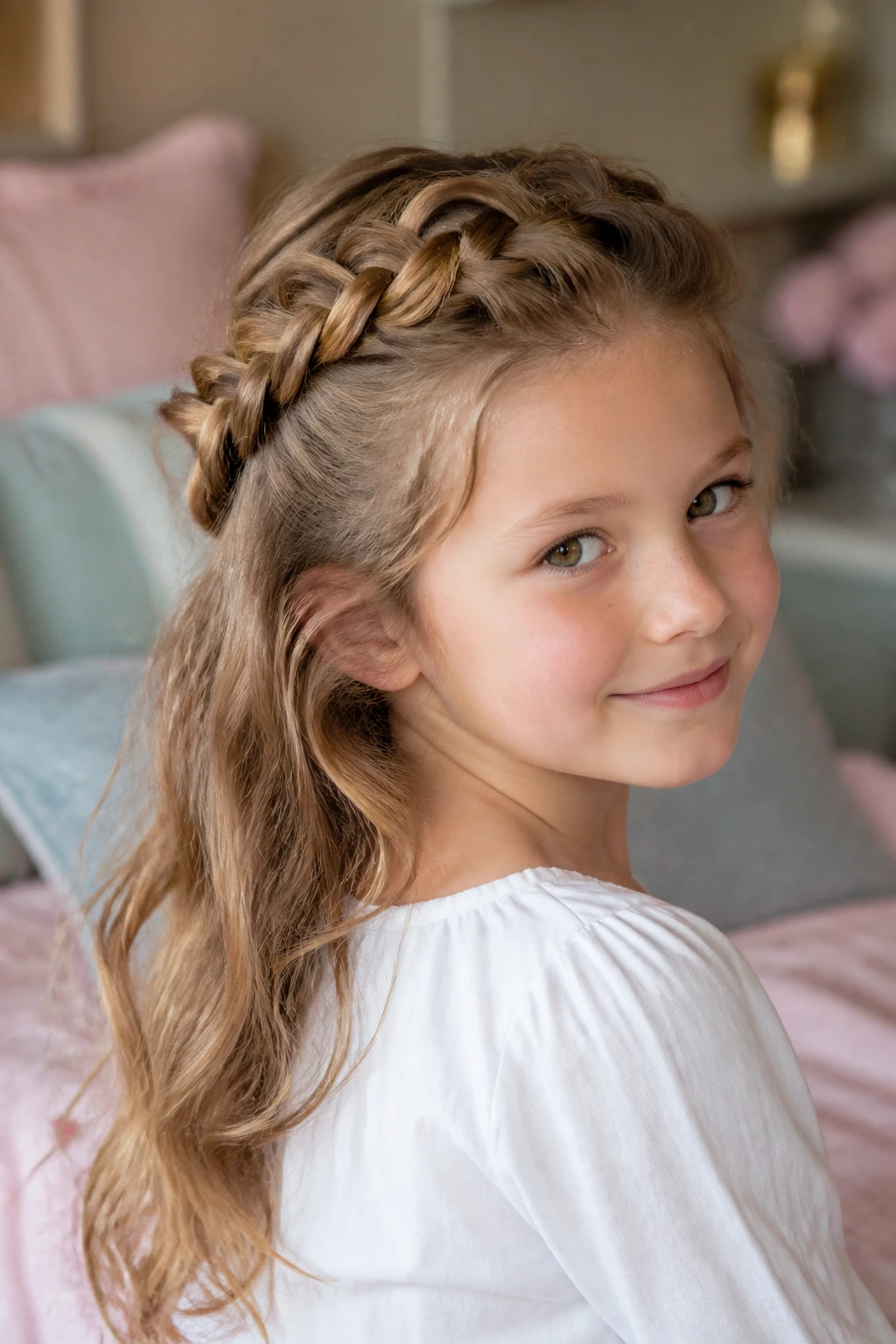
A crown braid gives a dressed-up feel without forcing all the hair into one place. Braid along the hairline from one side of the head to the other, then pin the braid so it sits like a half halo. Leave the back loose so the waves can move.
This is one of the prettiest styles for wavy hair because the braid and the loose length balance each other. Too much braid on wavy hair can feel heavy. Too little and the front falls apart. The crown braid sits in the middle, which is where this texture often looks best.
If the hair is slippery, lightly mist the front sections before braiding. Damp hair grips better and parts less grudgingly.
11. Rope-Braid Pigtails
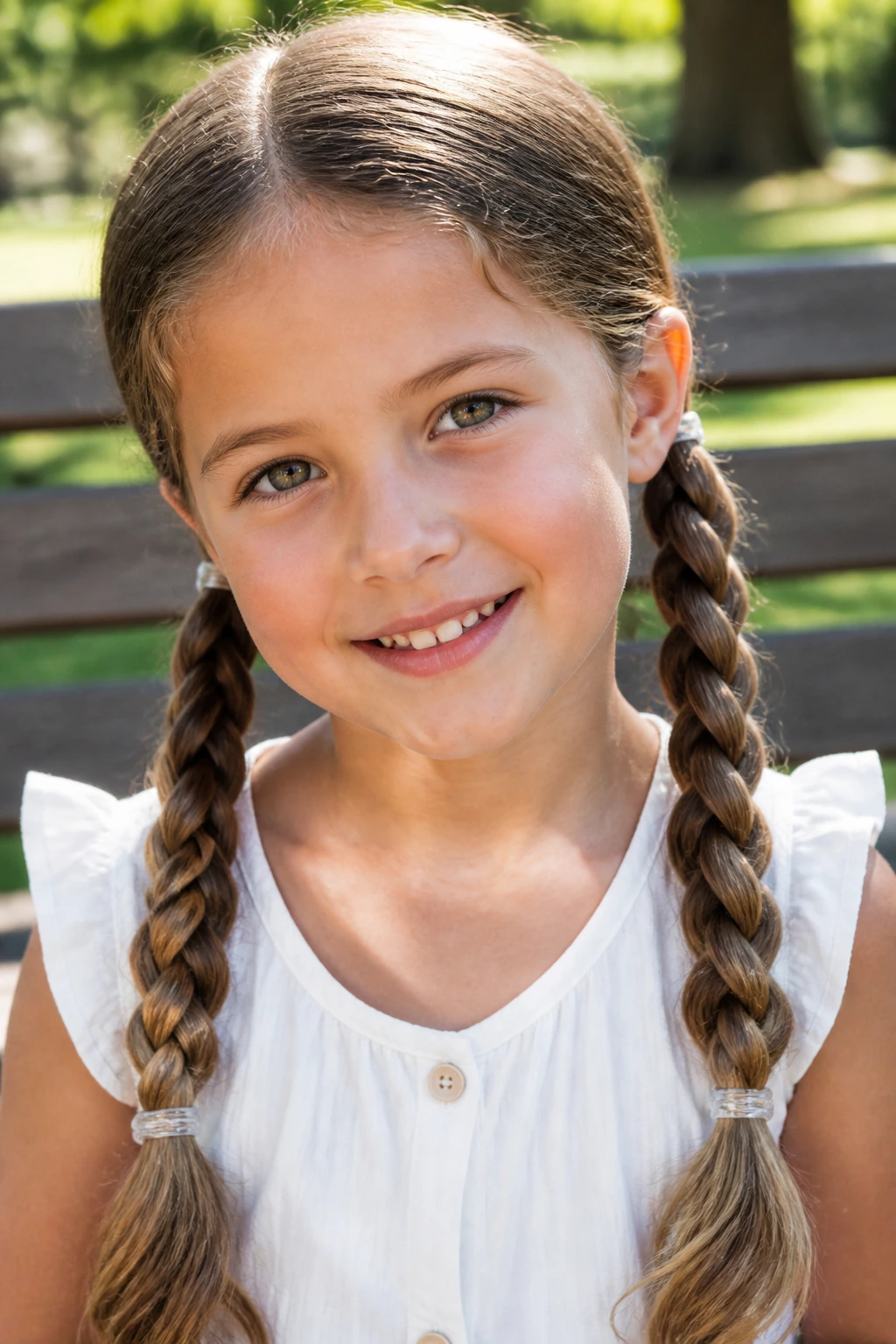
Rope braids are underrated. They’re just two sections twisted around each other, but on wavy hair they look neater than plain twists and hold up better than loose pigtails. Make two low ponytails, split each into two sections, twist them in the same direction, then wrap them around each other in the opposite direction.
That twist-against-twist method creates a rope that stays together better through the day. Kids like them because they move when they walk. Parents like them because they don’t unravel instantly.
Use clear elastics at the base and at the ends if the hair is very slippery. One tiny clear band can save a lot of redoing later.
12. Wrapped Low Ponytail
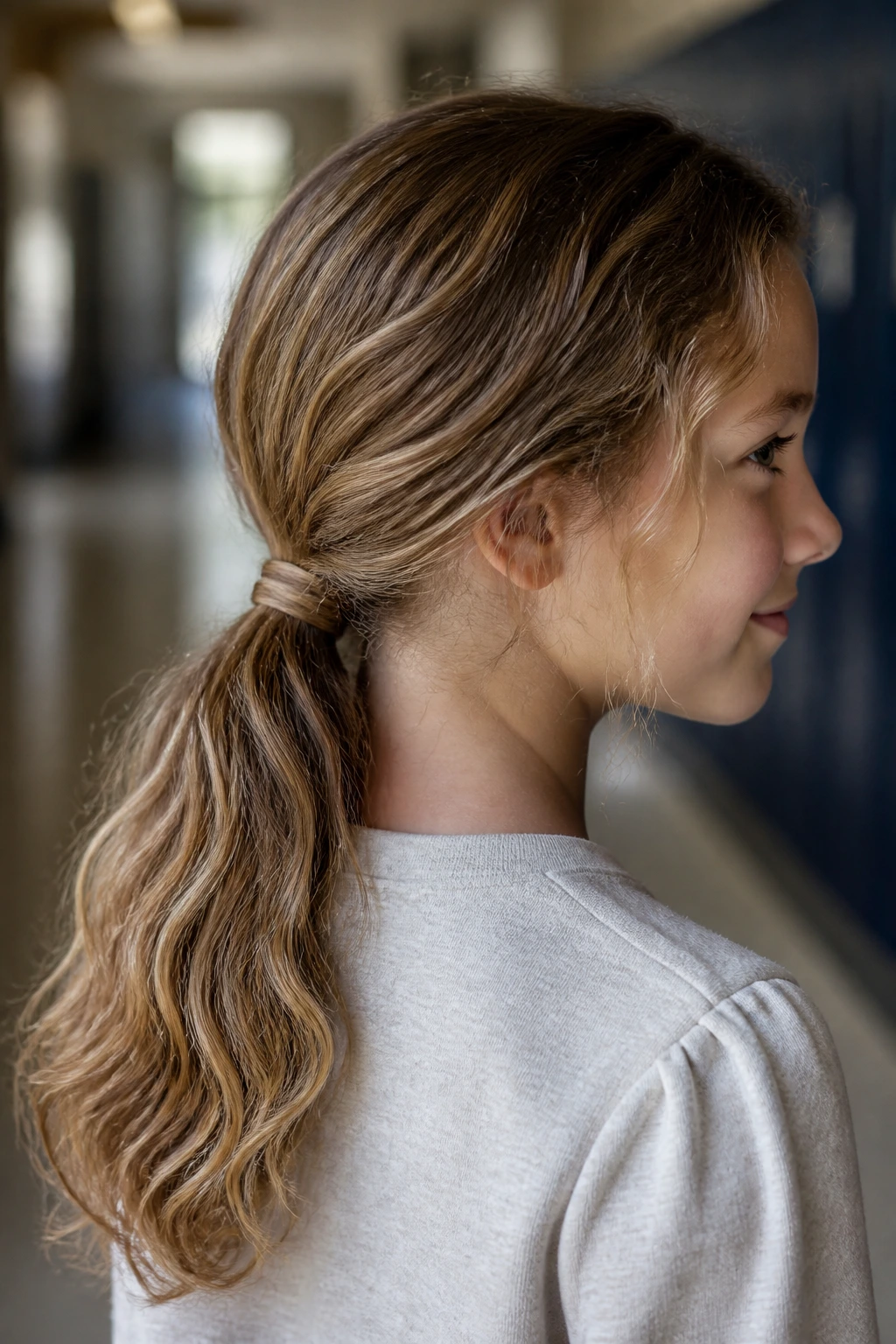
A wrapped low ponytail is the kind of style that looks more refined than the effort it takes. Pull the hair into a low ponytail at the nape, then take a small strand from underneath and wrap it around the elastic until the band disappears. Pin the end underneath with a bobby pin.
The wave stays visible in the ponytail, but the wrapped base makes the style look finished. That’s the whole point. Wavy hair in a ponytail can look a little plain if the base is obvious, and this fixes that in one small move.
I like this for older kids who want something neat but not babyish. It’s simple, clean, and not at all fussy.
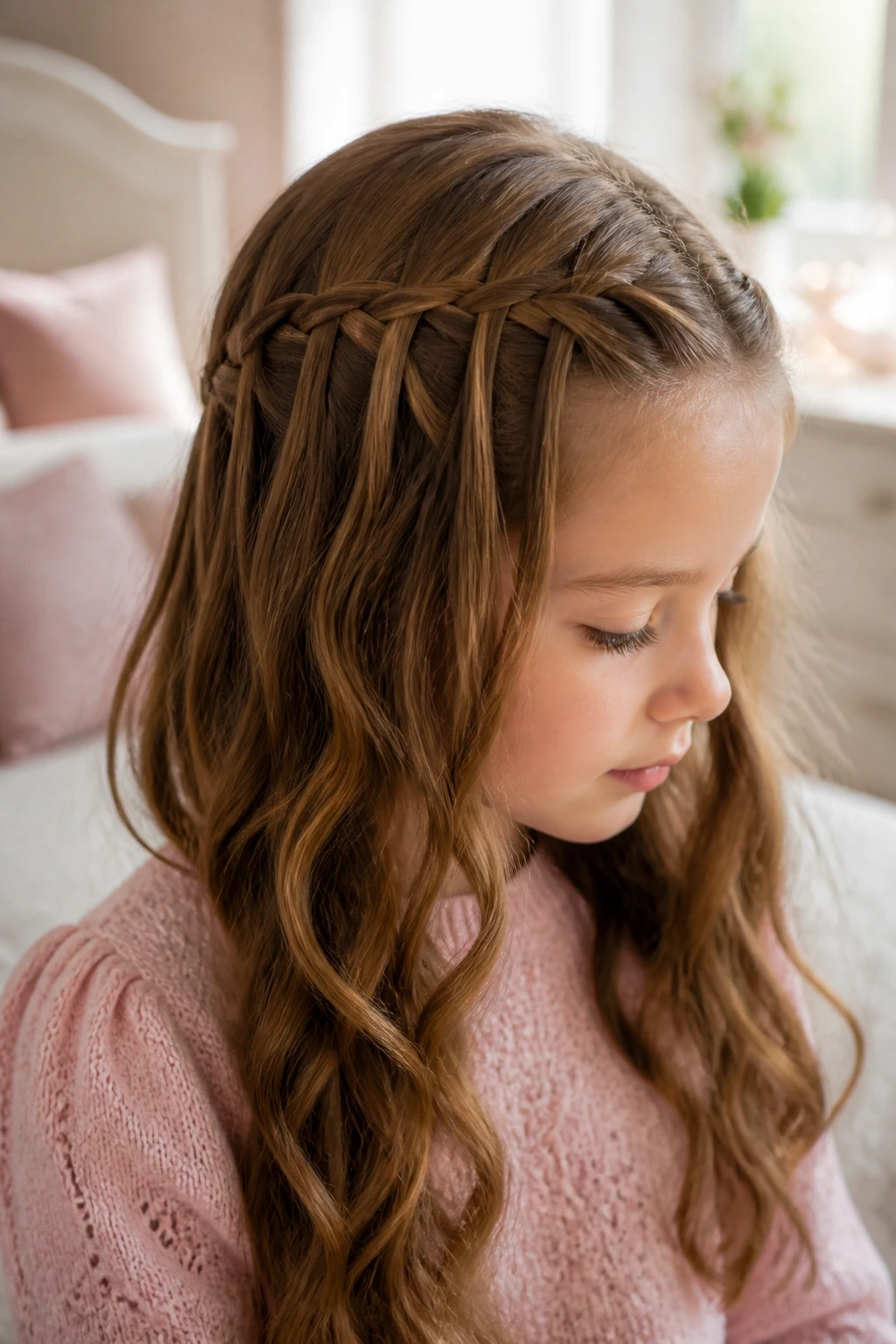
13. Waterfall Braid
A waterfall braid is a good choice when you want the top controlled and the length showing off. As you braid across the head, let one strand drop out each time and replace it with a new section from above. The loose pieces fall through the braid like little waves of their own.
It sounds more complicated than it is. Once the rhythm clicks, the braid becomes almost automatic. On wavy hair, the dropped strands blend in beautifully because they already have texture, so the style doesn’t need to be perfect to look finished.
This one suits longer waves best. Shorter hair can still do it, but the loose pieces need enough length to stay in place.
14. Side-Swept French Braid
A side-swept French braid gives you control without making the head look centered and severe. Start the braid above one temple and guide it diagonally toward the opposite nape. Stop there, tie it off, and let the tail hang loose or twist it into a mini bun.
The diagonal line is what makes it feel chic. Straight-back braids can flatten the face; side-swept ones keep the volume where it looks nicest. On wavy hair, this style also keeps the top neat while leaving enough movement in the lower half to stop the whole thing from looking stiff.
If the part tends to shift, use the tail of a comb to redraw it and lightly damp the roots first.
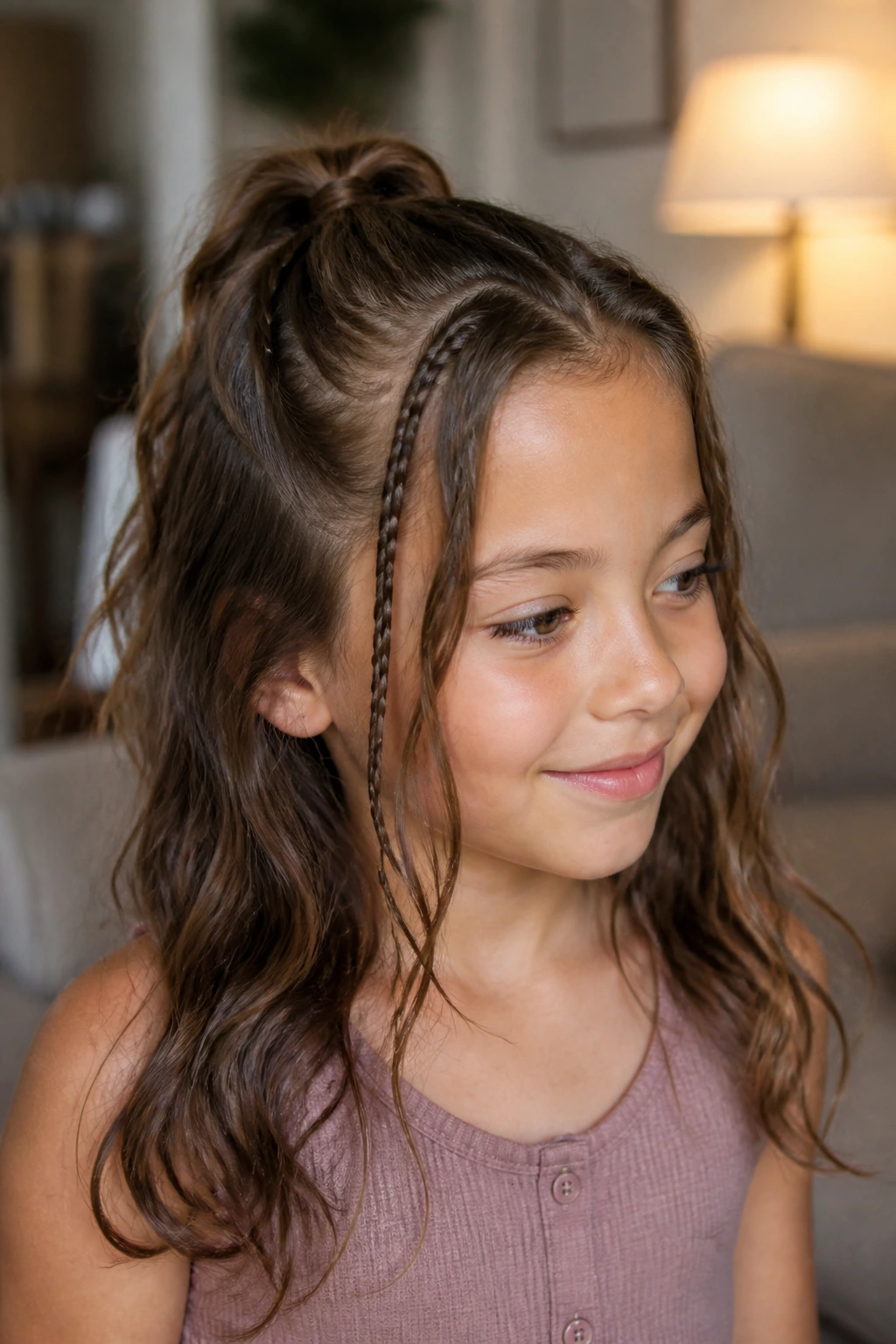
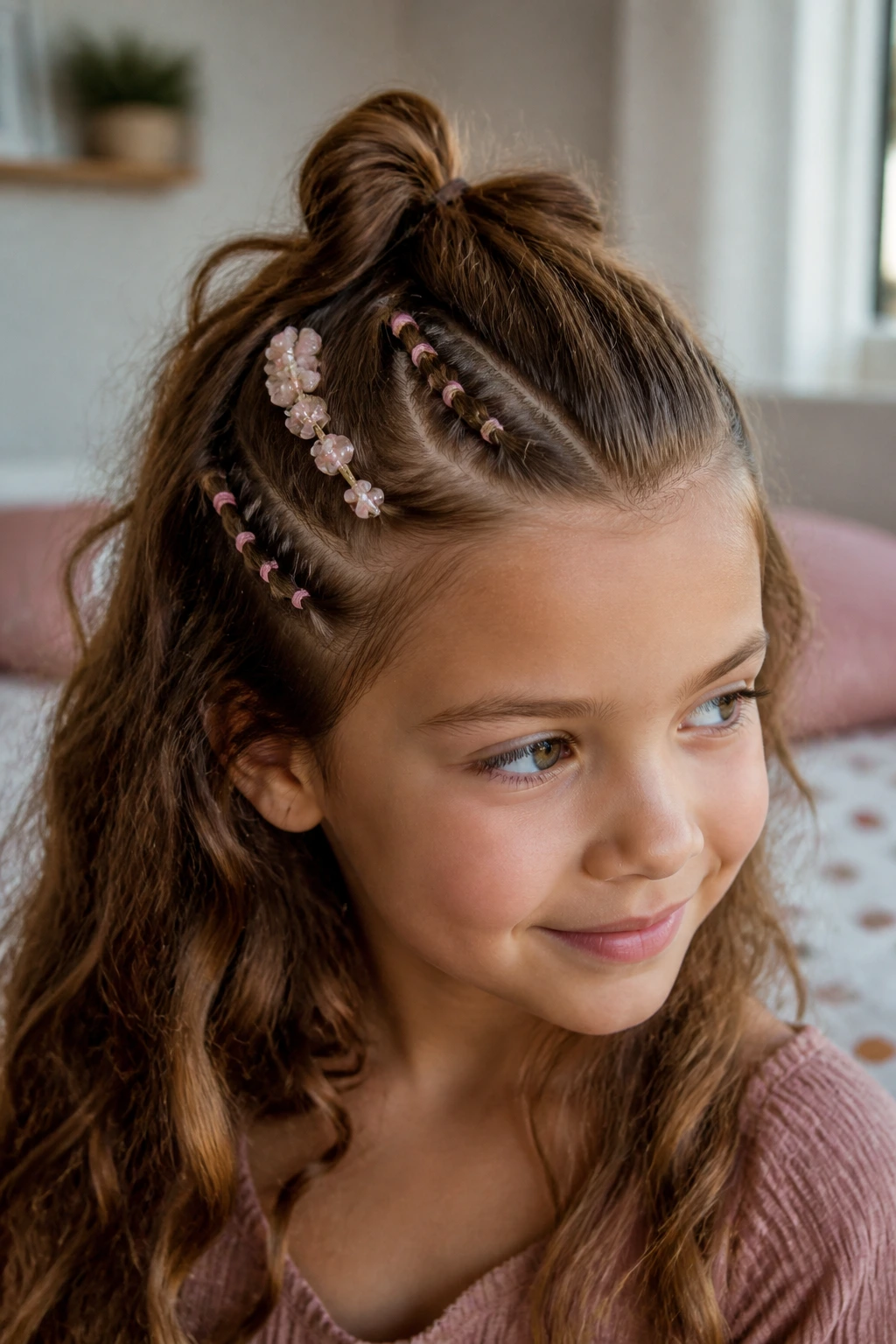
15. Mini Accent Braids
Mini braids are the easiest way to make a simple style feel special. Add two or three tiny braids near the face, tuck them into a half-up style, or scatter them through the crown before tying the rest back. They don’t need to be symmetrical to work.
Where to place them
- At the temples: softens the front and keeps hair off the cheeks.
- Behind one ear: adds a tiny detail without changing the whole style.
- Under a ponytail base: hides the elastic and gives the style a little texture.
This is one of my favorites for kids who want “something cool” but do not want a lot of pulling or pinning. Tiny braids give the look a bit of personality and still leave most of the wave alone.
16. Front Twists Into a Low Ponytail
Need a five-minute fix that still looks planned? Front twists into a low ponytail are hard to beat. Take the front sections on each side, twist them back toward the ears, then gather everything into a low ponytail at the nape. The twists keep the face clear, and the ponytail keeps the rest of the hair easy.
The style works especially well on wavy hair because the twists blend into the texture instead of fighting it. You do not need heavy smoothing cream. Just a little water on the front sections and a soft elastic at the base.
If the child has layers around the face, leave a thin piece out on each side. That little bit of movement softens the whole thing.
17. Half-Up Bun With Loose Face Pieces
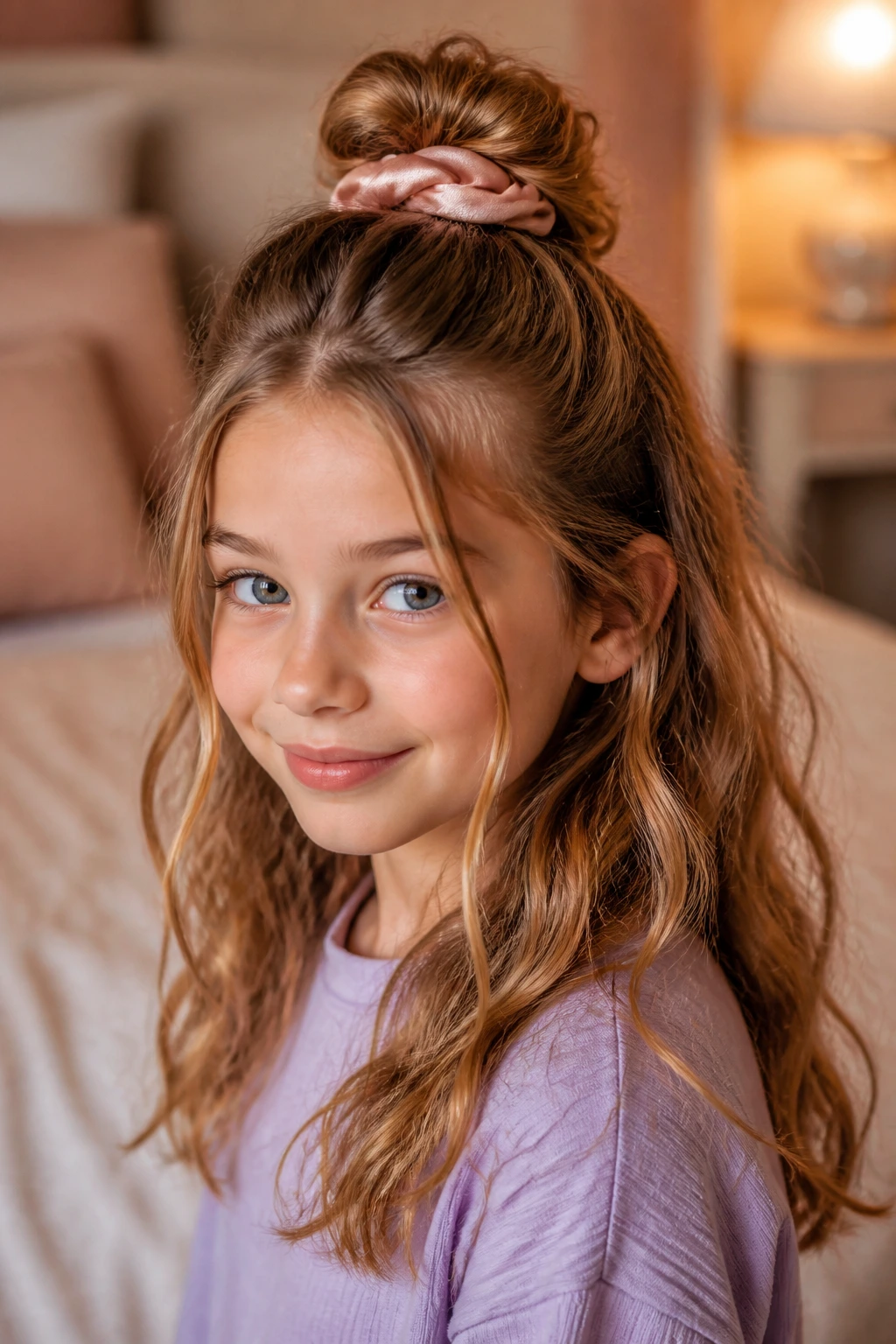
This is the style for kids who want a little attitude in the hair without losing the wave. Gather the top half into a small bun at the crown, leave two slim face-framing pieces loose, and let the rest fall naturally. The bun should be small enough to sit flat, not puff into a top-heavy knot.
Wavy hair makes this look easy because the loose bottom section already has shape. You’re not trying to create volume from nothing. You’re just arranging what’s there. The face pieces make the style feel softer and stop it from looking too severe.
A tiny satin scrunchie helps the bun stay put without denting the hairline.
18. Loose Waves With a Barrette Line
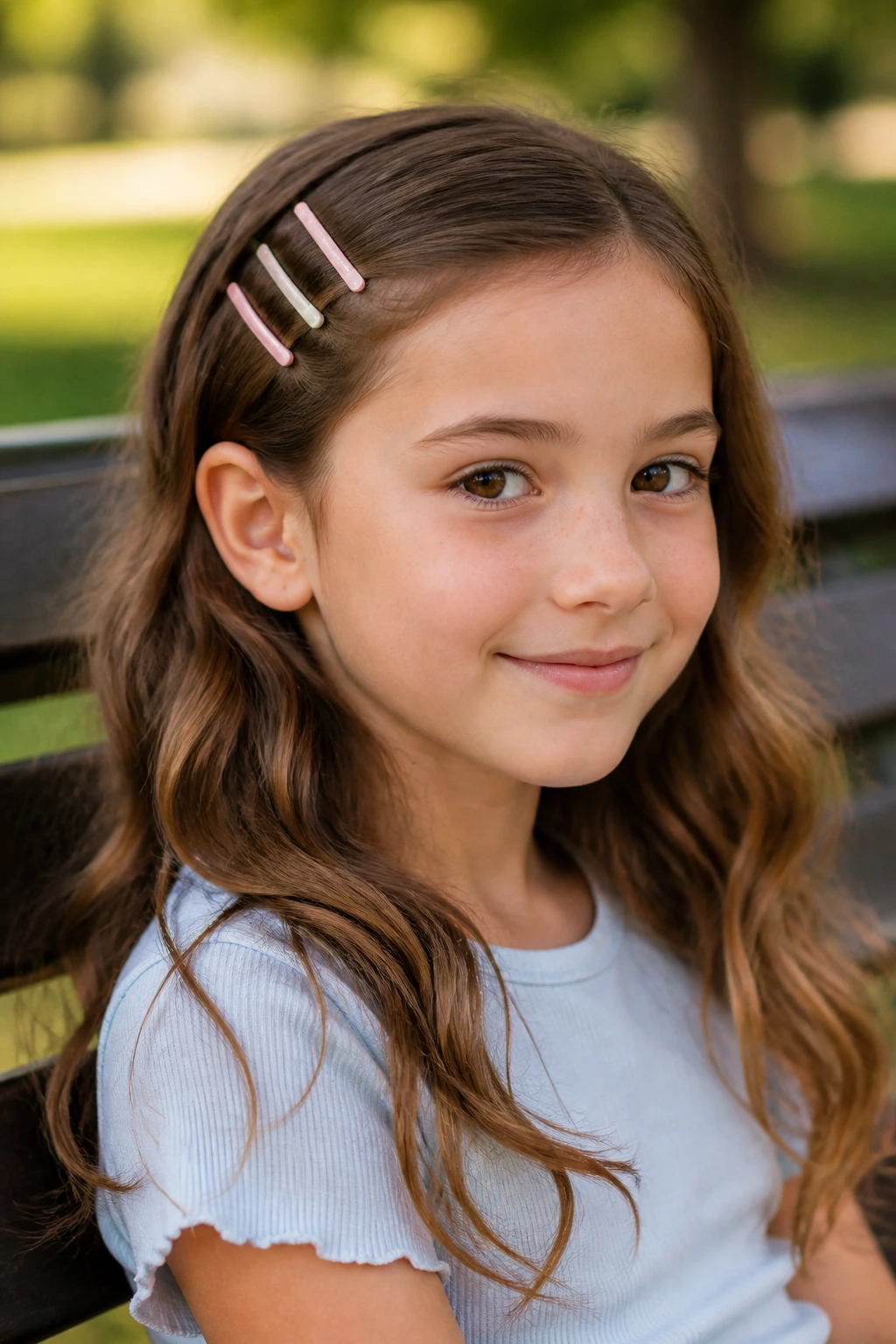
Sometimes the chicest move is barely a move at all. A clean side part, brushed wave, and a line of two or three barrettes above one ear can look more polished than a style that took twenty minutes and three arguments. The key is placement: the clips should sit in a neat diagonal or stacked line, not scattered like they fell out of a craft box.
This works especially well on second-day waves or hair that already has a soft bend from drying. The clips hold the front pieces back, and the rest of the hair keeps its natural texture. That’s the whole appeal. It looks intentional, but it doesn’t look overworked.
Choose barrettes with smooth backs and rounded edges. Small heads do not need sharp metal poking around near the temple.
Why Wavy Hair Likes Soft Structure
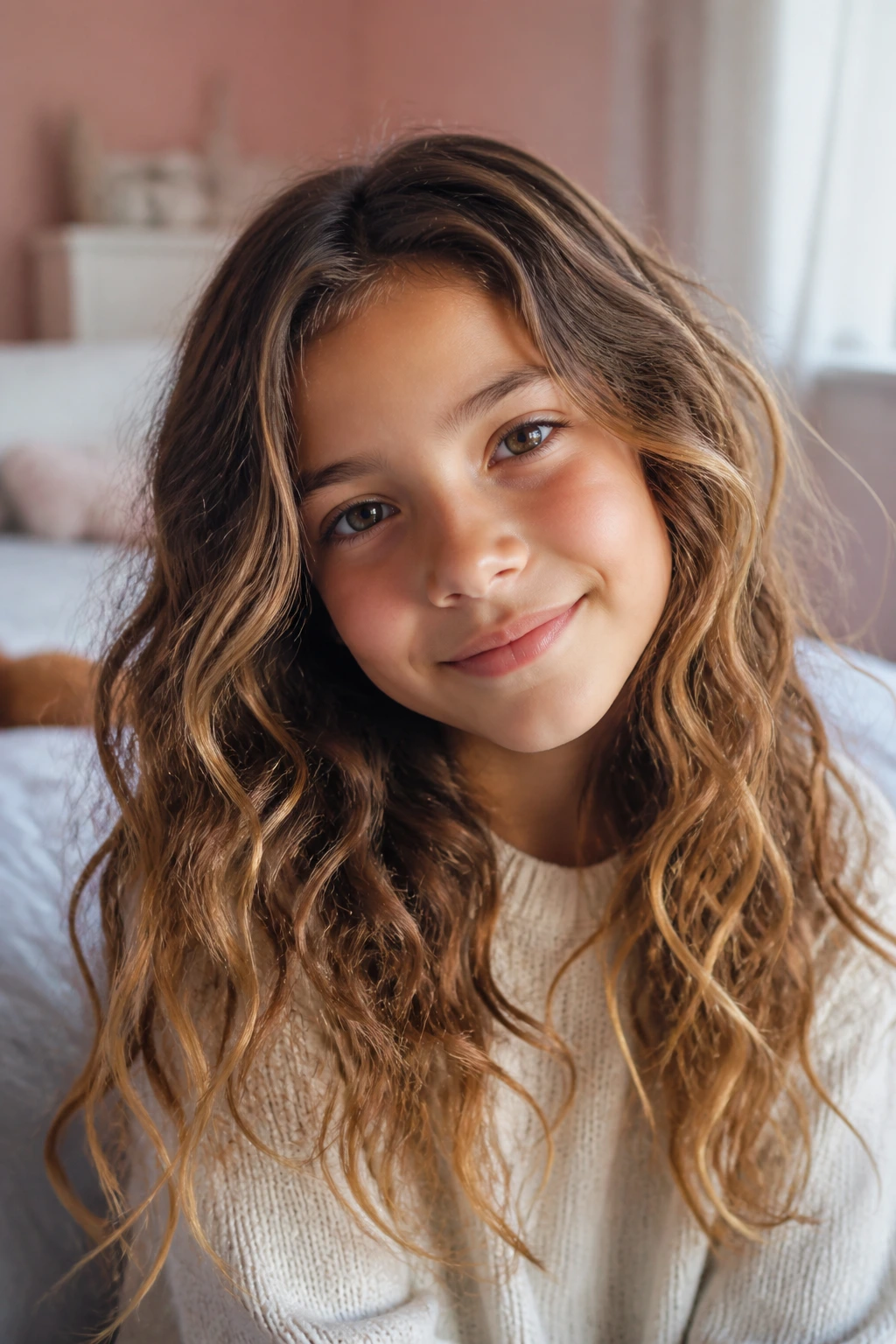
Wavy hair is one of those textures that rewards restraint. It bends on its own, so the job is usually to shape the bend rather than force it into something else. A style with a loose braid, a twist, or a clipped-back front lets the wave keep its spring. A style that is pulled tight from roots to ends tends to flatten, then frizz, then leave little dents where the elastic sat.
The other thing wavy hair tends to do is change its mind. A style that looks perfect while wet may widen and poof as it dries. A style that seems too soft at first can settle into exactly the right shape later. That’s why I prefer styles with a little slack in them. They age better through the day.
There’s also the comfort piece. Kids notice tension before adults do. If the scalp feels tight at the temples or the nape, they’ll touch it, scratch it, or simply refuse the style next time. Loose structure holds better because it gets worn better.
Essential Tools for Kids’ Wavy Hair
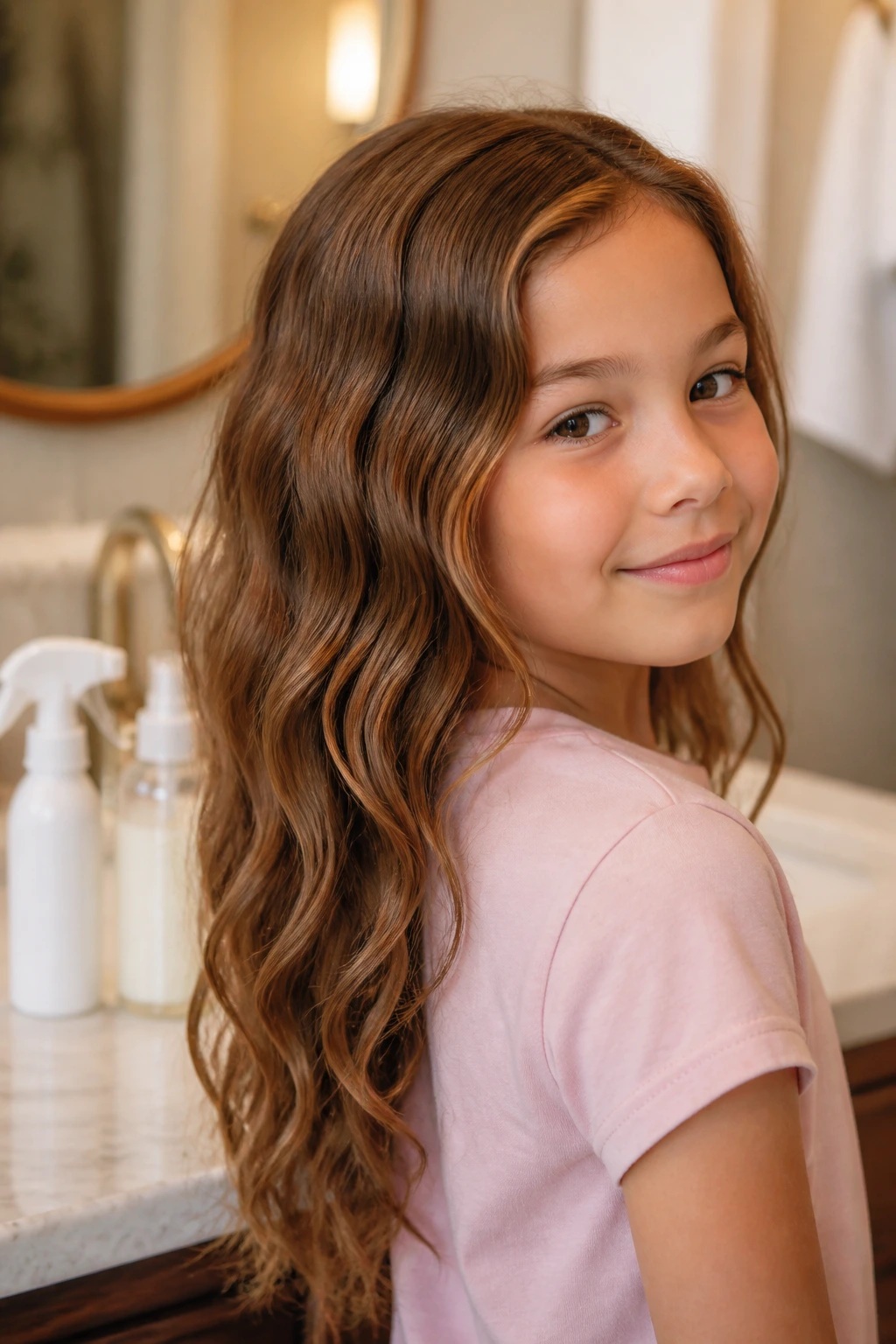
A small, sensible kit makes styling quicker. You do not need a drawer full of gadgets.
- Spray bottle with plain water: Helps reset bends and smooth parts without soaking the hair.
- Leave-in conditioner or detangling mist: Keeps waves soft and makes braiding less crunchy.
- Wide-tooth comb: Good for detangling wet or damp hair without pulling the wave apart.
- Rat-tail comb: Handy for clean parts, sectioning, and little braid separations.
- Snag-free elastics: The tiny clear ones or soft-coated bands hold better and pull less.
- Satin scrunchies: Great for ponytails and buns when you want less denting.
- Bobby pins and snap clips: Use these for twists, buns, and barrette-style looks.
- Mini claw clips: Useful for quick half-ups on kids who hate elastics.
- Soft bristle brush: Best for smoothing the surface, not for rough detangling.
- Satin pillowcase or bonnet: Keeps styles from getting crushed overnight if the hair is being worn again.
Smart Product Picks for Wavy Hair
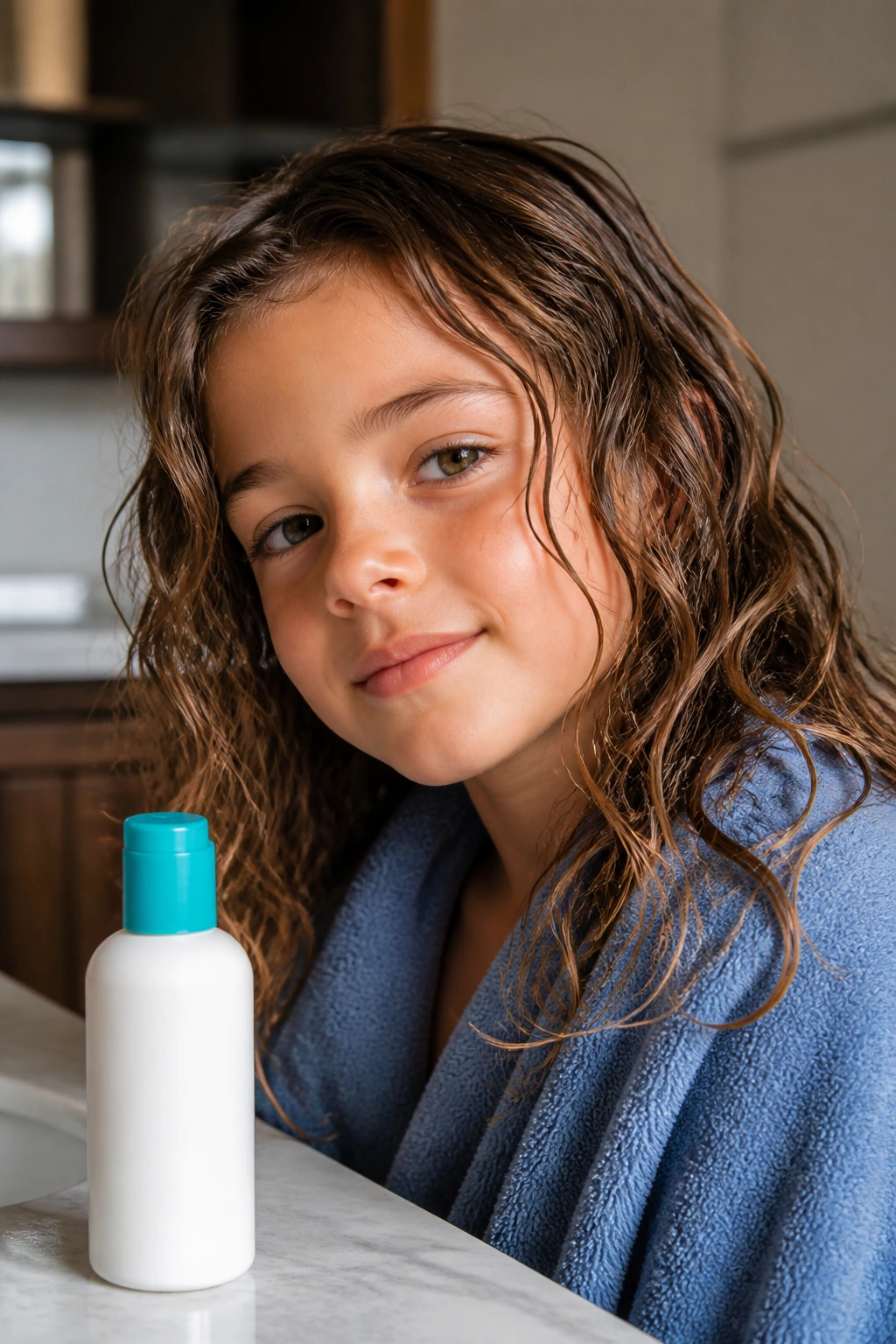
Pick products that respect the texture instead of burying it. For most kids, that means a light leave-in, a bit of mousse or styling cream, and not much else. Heavy oils can make the roots look greasy fast, especially on finer waves. Thick gels can turn soft movement into a stiff shell that flakes when the hair dries.
If the hair is fine, look for foam or mousse with light hold. If it’s thick and frizz-prone, a cream with a little slip usually works better. Both can be used sparingly on damp hair, mostly from mid-lengths to ends. The roots usually need less than you think.
Accessories matter too. Choose elastics without metal seams, clips with rounded edges, and bands that stretch back without snapping. If a product feels sticky in your hands, it will probably feel sticky in the child’s hair.
How to Pick the Right Style for the Day
School mornings: Go for styles that stay low on the head and out of the face: half-up twists, side braids, wrapped ponytails, or a headband tuck-back. They’re quick, and they don’t need perfect parting.
Playground and sports: Choose styles that keep the neck clear and the ends contained. Low braids, rope-braid pigtails, double Dutch braids, or a low braided bun usually survive movement better than loose clips.
Photo days and parties: Crown braids, waterfall braids, ribbon-tied pigtails, and barrette lines feel a little more dressed up without looking stiff. Leave some movement in the ends so the style still feels like a child’s hair, not a salon helmet.
Hot or humid weather: Keep things off the neck and avoid too much product. Braids and buns hold up better than loose ponytails when the air feels damp and sticky.
Additional Tips and Style Boosters
Shape Boost: A style usually looks better when the top is smoothed with damp fingers instead of a full brush pass. That keeps the wave from getting frayed at the crown.
Parting Trick: Draw the part with a rat-tail comb, then press it down with the flat side of your fingers. The clean line holds longer than one made with a quick swipe.
Clip Strategy: If a style keeps slipping, add one hidden bobby pin underneath the visible clip. Two small points of hold beat one big accessory every time.
Finish: A tiny bit of water mist on the loose ends helps wavy hair settle instead of puffing up. You are aiming for bend, not wetness.
Common Mistakes to Avoid
The first mistake is brushing wavy hair dry like it’s straight. That usually breaks the wave apart and creates a halo of frizz. Detangle with a wide-tooth comb on damp hair, then smooth the surface with fingers or a soft brush if needed.
Another one is making every style too tight. Tight elastics leave dents, hurt little scalps, and make kids touch the hair all day. If the style needs a second tug to “feel secure,” it’s probably too tight already.
Too much product is a sneaky problem. Heavy cream or gel can weigh down the crown and make the lower waves stringy. Use the smallest amount that gets the job done, then add a touch more only if the hair is still flying apart.
Skipping sectioning causes messier parts and uneven braids. A neat half-up style starts with clean sections, even if the style itself looks loose.
And yes, using the wrong accessories matters. Rubber bands and rough clips chew through fine strands fast. Smooth elastics and rounded clips save a lot of frustration.
Variations and Adaptations to Try
Fine-Wave Fix: Use smaller sections and lighter accessories. Fine hair often looks best in half-ups, mini braids, and barrette lines because big buns can collapse before lunch.
Thick-Hair Control: Work in bigger sections and use stronger pins. Thick waves can handle double braids, low buns, and wrapped ponytails that need a little more holding power.
Short-Hair Version: Swap braids for twists and clips. A chin-length wavy bob can still do a twist crown, a headband tuck-back, or a side barrette line without forcing a ponytail.
Sensory-Friendly Style: Use soft scrunchies, no tight parts, and minimal pulling at the hairline. A low braid, loose half-up, or headband tuck-back often feels better than a style that needs a lot of tension.
Special-Occasion Upgrade: Add ribbon, a velvet bow, pearl clips, or two matching barrettes. Keep the accessory scale small enough that it supports the hair instead of taking over the whole head.
Make-Ahead, Overnight Care, and Next-Day Refresh
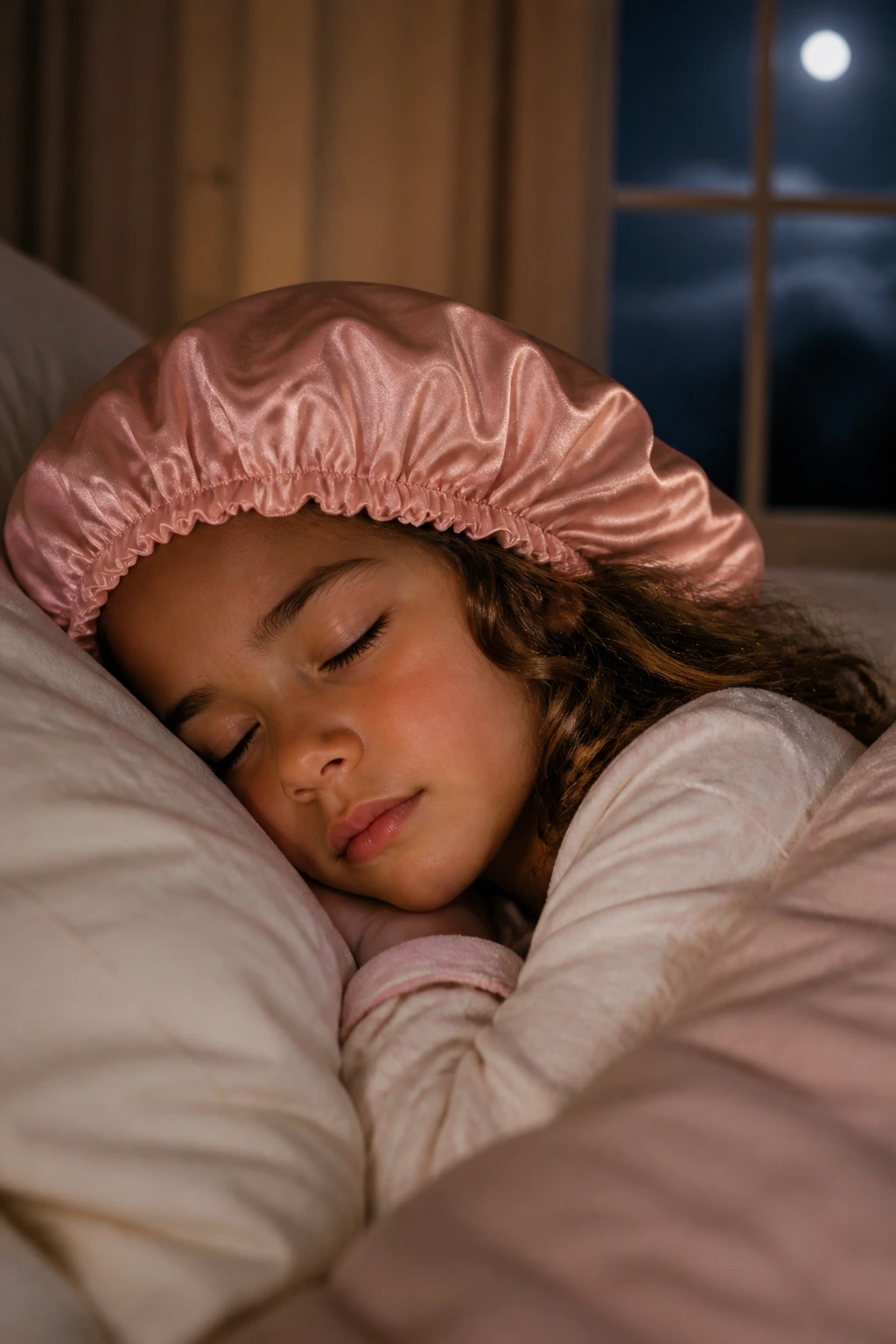
Some of these styles hold better than others, and that’s worth planning around. Braids, wrapped ponytails, and low buns can usually last into the next day if they’re protected with a satin pillowcase or bonnet. Loose half-up styles and barrette lines tend to look best the same day, then get refreshed in the morning.
If the waves are being worn again the next day, mist the hair lightly before bed and loosely re-braid or re-twist any sections that have fallen flat. Do not soak the hair. Damp is enough. If you hear dripping, you went too far.
For a morning refresh, smooth the roots with damp fingers, loosen any elastic dents with a bit of water, and replace only the accessories that shifted. Often you do not need to redo the whole style. You just need to wake it back up.
Frequently Asked Questions
What hairstyle lasts longest on kids with wavy hair?
Double Dutch braids, low braided buns, and rope-braid pigtails usually hold the longest because they keep the hair anchored in more than one place. If the child moves a lot, styles that start close to the scalp tend to stay neater than loose half-ups.
How do I keep wavy hair from frizzing while styling?
Work on damp hair, use a little leave-in conditioner, and avoid rough brushing once the hair has started to dry. Frizz usually shows up when the wave pattern gets disturbed too much or when the hair dries in too many directions.
Can these styles work on short wavy hair?
Yes, but you’ll lean more on twists, clips, and headbands than on full braids or buns. A chin-length cut may not have enough length for pigtails, but it can still do a half-up twist crown or a side-swept barrette line.
What’s the best style for school mornings?
A headband tuck-back, front twists into a low ponytail, or a half-up twist crown usually wins on speed. They take under five minutes once the parts are familiar, and they keep hair away from the face through class.
How do I stop clips from sliding out of wavy hair?
Use clips on slightly damp hair, and open a small pocket of hair before sliding the clip in. If the clip sits on the surface only, it will slide. If it grips a little underneath, it stays put much better.
Should I use gel on my child’s wavy hair?
Only if you need extra hold, and then use a tiny amount. For most kid styles, a light cream or mousse gives enough control without making the hair crunchy or stiff.
What if the braid keeps coming loose?
The sections are probably too big, or the hair is too slippery. Make the braid a little tighter at the start, use smaller sections, or mist the hair lightly before braiding so it grips better.
How do I protect a style overnight?
Use a satin pillowcase or bonnet, and avoid sleeping with the hair stretched tight under elastic. Braids and low ponytails usually survive the night best, while loose clips are better removed before bed.
Keeping the Wave Happy
The prettiest hairstyles for kids with wavy hair don’t squeeze the texture out of the hair. They leave room for movement, use small points of control, and look better when a strand or two comes loose. That’s not a flaw. That’s the whole charm.
If you keep a spray bottle, a couple of soft elastics, and one or two decent clips nearby, you can build a whole rotation from these looks without much fuss. Pick the style that fits the day, not the one that asks the most of the hair. Wavy hair tends to reward that kind of common sense.