



The best low-maintenance haircuts for women over 50 do one quiet thing very well: they stop fighting your hair. That matters more than it sounds. Once hair starts changing texture — flatter at the crown, a little drier at the ends, sometimes wirier if the gray is coming in strong — a cut that used to behave can suddenly need blow-drying, rounding, and a whole lot of patience before breakfast.
A smart cut doesn’t pretend those changes aren’t happening. It works with them. A chin-length bob can make fine hair look thicker because the ends stay solid. A cropped pixie can make silver hair look crisp instead of puffy. A shoulder-length cut with the right internal shape can still go into a low ponytail, but it won’t hang there like wet rope when you let it down.
I think that’s why so many women land on the wrong haircut the first time around. They ask for “easy,” and get something that only looks easy on the salon chair floor. The better question is this: what shape still looks deliberate when you’ve slept on it, brushed it fast, and walked outside into whatever the weather is doing? The cuts below are built for that reality.
Why These Cuts Earn Their Keep

- Less Morning Negotiation: These shapes are built to fall back into place with finger-drying, a quick round-brush pass, or no styling at all.
- Better Grow-Out: The strongest low-maintenance cuts still look tidy at week six, not just on day one.
- Texture-Friendly: Fine, thick, wavy, curly, and silver hair all behave better when the cut respects the pattern already in the hair.
- Face-Smart, Not Fussy: The right length around the jaw, cheekbones, or collarbone does more shaping than a cabinet full of styling tools.
- Salon Budget Friendly: When the cut grows out cleanly, you can stretch appointments without drifting into “fix it later” territory.
- Made for Real Life: Glasses, earrings, cowlicks, humidity, and a busy neck morning all get factored in here.
1. Soft Pixie with Side-Swept Fringe
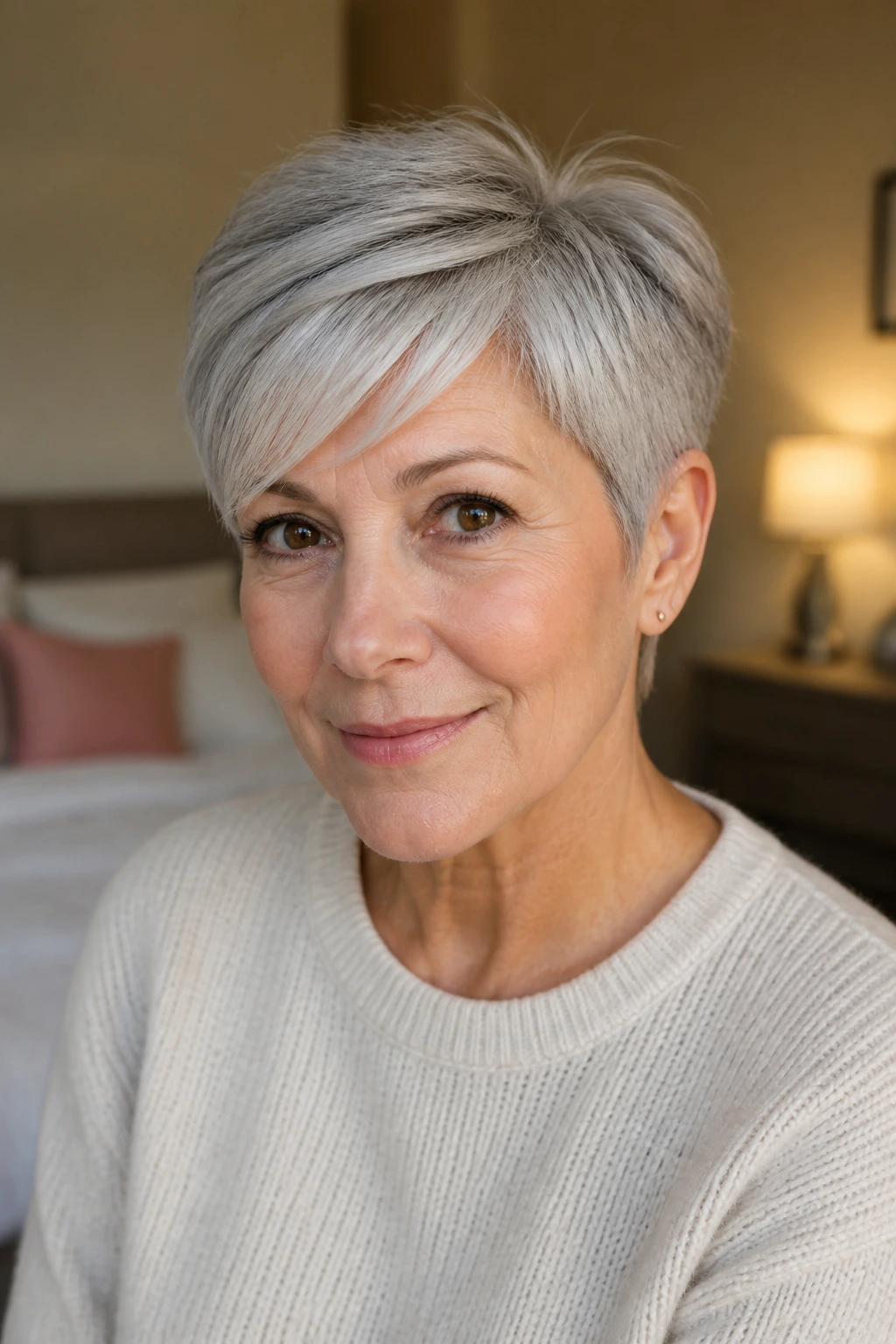
A soft pixie is the cut I hand to people who want the most payoff for the least daily fuss. Keep the top around 2 to 3 inches, taper the sides close, and leave the fringe long enough to skim the eyebrow or cheekbone. That little sweep in front matters. It keeps the cut from looking severe, and it gives you a quick styling option when the crown needs a bit of direction.
Why It Stays Easy
A short pixie can turn high-maintenance fast if the top is cut too choppy or the fringe is too short. This version avoids both problems. The side-swept front softens grow-out, and the close nape keeps the back neat even when you skip a styling session.
The real trick is restraint. Ask for texture, not thinning. Fine hair needs lift, not razored gaps. Coarser silver hair usually needs a clean outline more than extra slicing, or it starts to stick out in the wrong places.
Best for: fine to medium hair, strong cheekbones, and anyone who likes to be done in five minutes.
Ask for: a tapered nape, slightly longer crown, and fringe that can move in one clean direction.
Watch out for: taking the sides too tight if you have a broad forehead or a swirl at the front hairline.
Pro tip: work a pea-sized amount of matte paste through dry hair, then push the fringe forward and over. That gives the cut shape without making it look helmet-stiff.
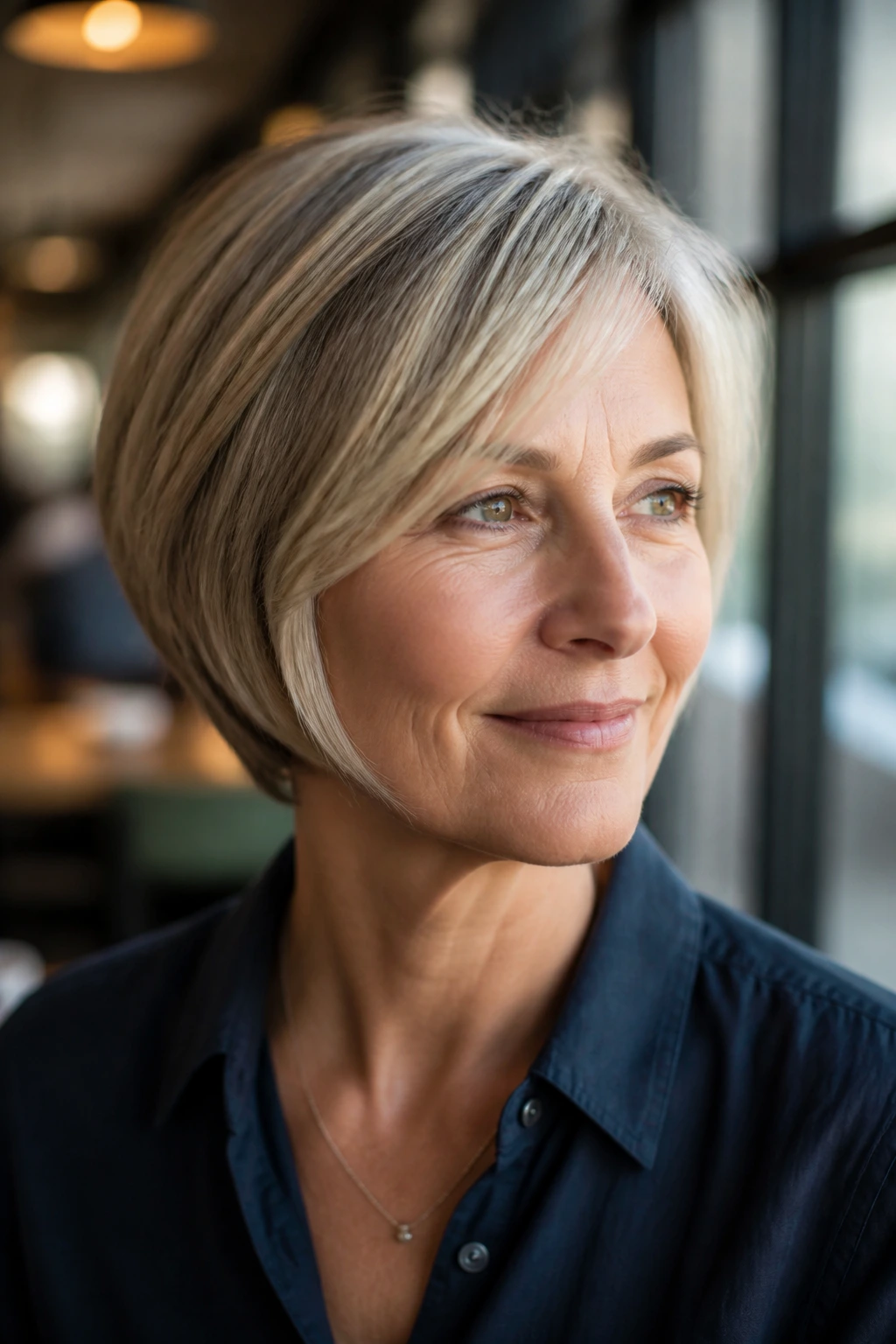
2. Chin-Length Bob with a Clean Edge
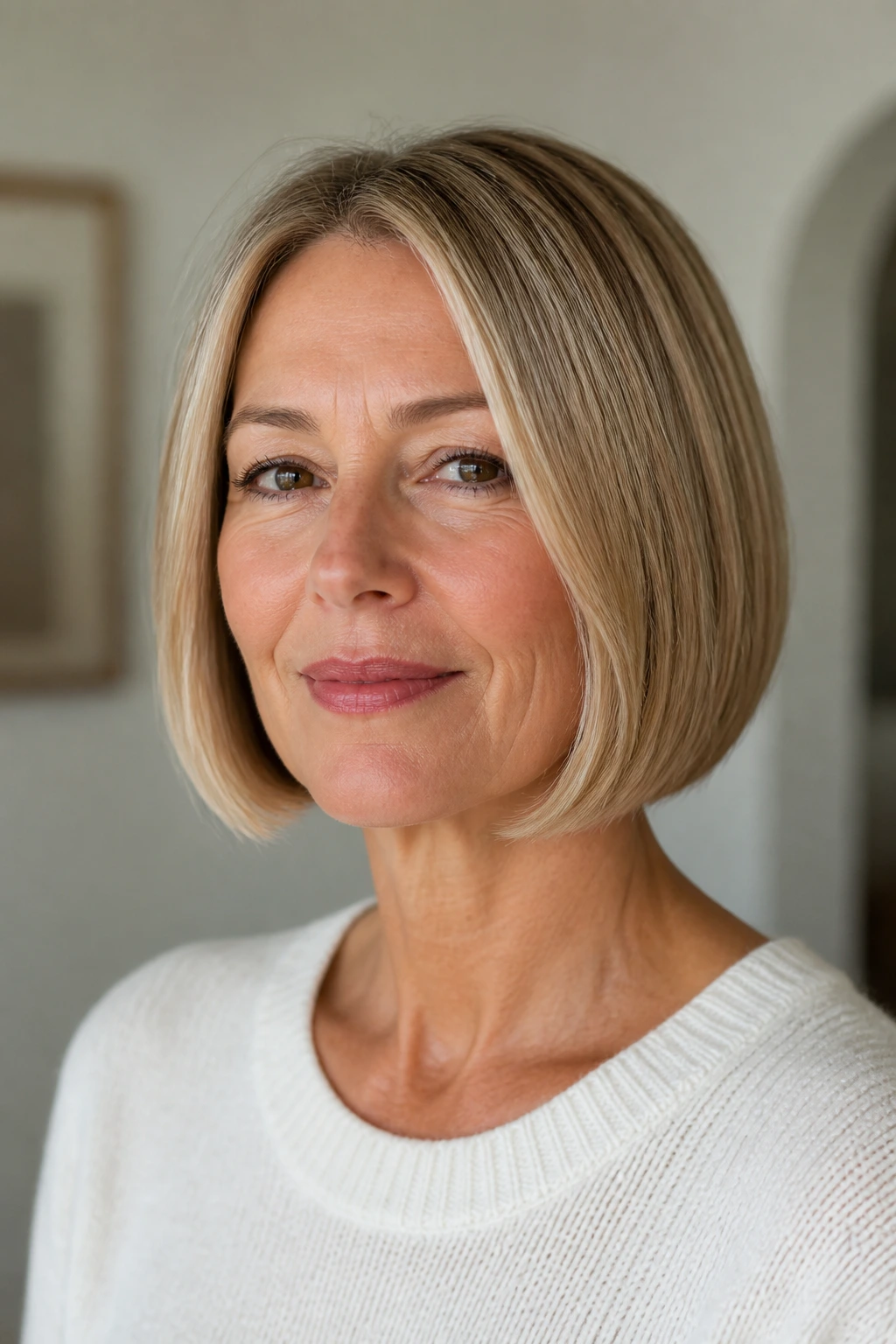
There’s a reason the chin-length bob keeps showing up in salon chairs. It gives hair a line. That line makes even fine strands look fuller because the ends all land in one place instead of scattering into wisps. When the bob is cut with a slight bevel — not a hard curl under, just a tiny bend — it air-dries into something neat without much effort.
This is one of the few cuts that can look polished when you do almost nothing to it. A side part, a quick tuck behind one ear, and you’re done. If your hair falls straight, even better. If it bends a little at the ends, that’s fine too. The shape can hold it.
The only thing I’d avoid is over-layering. A chin bob with too much texture starts to fray at the perimeter, and then the whole point is gone.
3. Layered Lob That Skims the Collarbone

If you want length but refuse to babysit it, the layered lob is hard to beat. The cut lands somewhere between the chin and the shoulders, usually right at the collarbone, with long layers that begin below the cheekbones. That keeps the front from drooping while the back stays thick enough to look intentional.
The collarbone length is the part I like most. It works with ponytail days, clip-up days, and the inevitable “I have ten minutes” mornings. Hair at this length also tends to swing better than hair that hits the top of the shoulders and catches every bit of friction from coats, scarves, and seat belts. Annoying. Easy to fix, though.
Ask your stylist to keep the layers long. If they start too high, the cut can puff out and lose that clean, grown-up shape. A lob should move. It should not look attacked.
4. Tapered Crop with a Close Nape
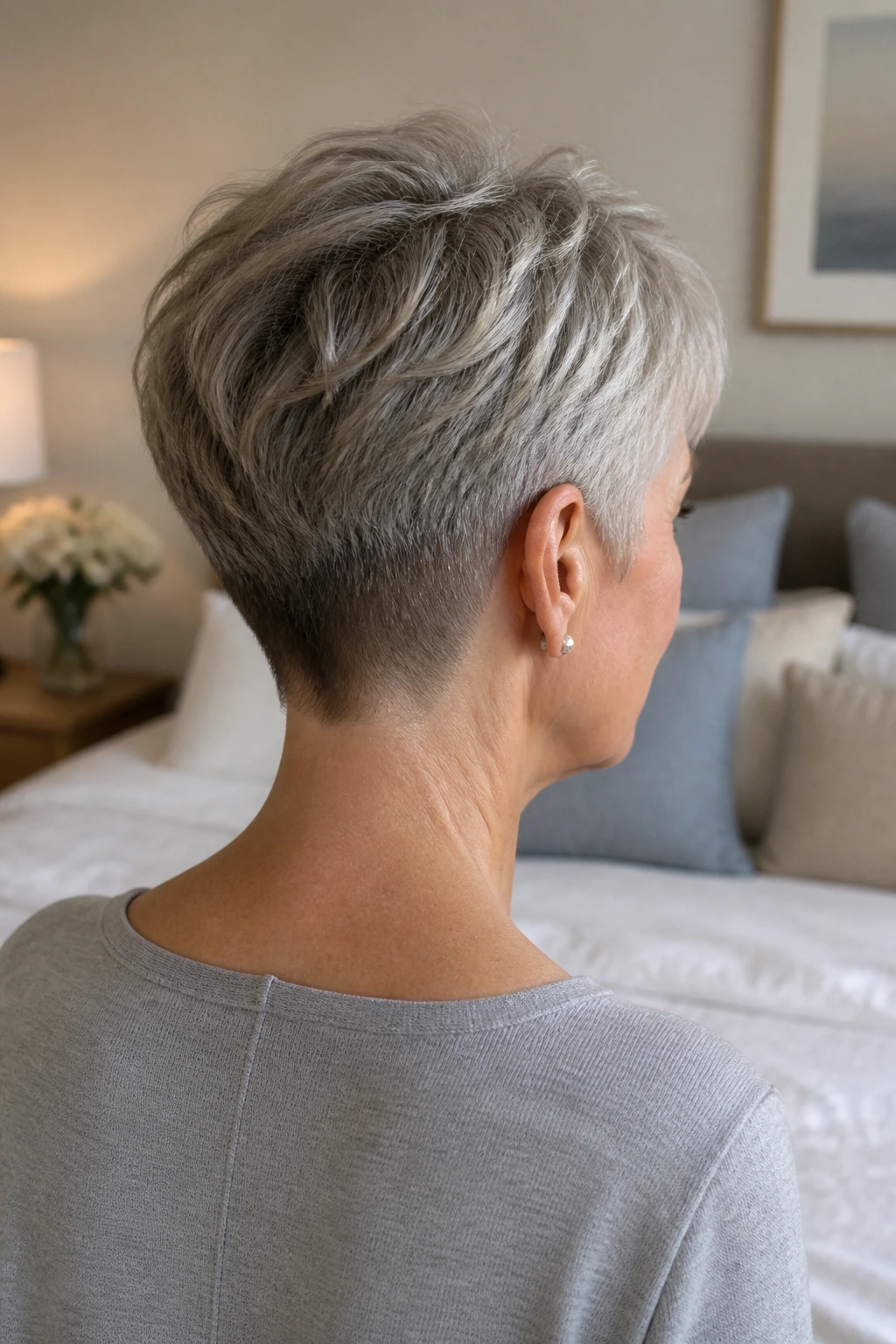
This is the cut for someone who wants the back of the head to behave. A tapered crop is short at the nape and sides, a little fuller on top, and usually cut so the neckline stays clean for weeks rather than days. Gray hair, especially when it’s a bit coarse, looks sharp in this shape because the taper stops the sides from bulking out like a mushroom.
What Makes It Work
The crop earns its place by removing the part of the haircut that usually needs the most fuss: the back. That means fewer mirrors, less brushing, and no waiting around for longer pieces to dry. I like it especially for people who swim, walk, or just hate feeling hair on the neck.
It does ask for regular trims. Not because it’s difficult, but because the shape is so clear that growth shows fast. If you’re happy visiting the salon every 5 to 6 weeks, it’s a satisfying cut. If you want to forget about the back for months, this is not your cut.
Styling note: a dab of paste or cream on dry hair is usually enough. Work it through the top, then leave the sides alone.
5. Shoulder-Length Cut with Face-Framing Pieces

Not everyone wants to go short. Good. You don’t have to. A shoulder-length cut can be one of the easiest options if the perimeter stays blunt and the face-framing pieces start low enough to avoid daily blow-dry drama. I like this length when someone wants to tuck hair behind the ears, pull it into a low clip, or wear it loose without it turning into a project.
The key is where the framing begins. If the layers start at the cheekbones and keep climbing, you’ll spend time fixing them every morning. If they start closer to the jaw or just below it, they soften the face without stealing density from the ends.
This cut also grows out gracefully. That matters. A lot. You can let it wander a little and it still looks like a haircut, not a mistake.
6. French Bob with a Soft Jawline Bend
A French bob sounds fancy, but the low-maintenance version is really just a short bob with a little attitude. It lands around the jawline or just above it, often with a soft fringe or a side sweep, and the ends have a tiny bend instead of a hard curl. That bend gives it shape without begging for a round brush every morning.
What I like here is the clean outline. It makes the face look awake. The cut is short enough to feel modern, but not so short that it turns into a daily styling contest. If you wear glasses, this length can be excellent because it sits cleanly above the frames instead of collapsing into them.
The catch is obvious: a blunt short bob will show every inch of growth. If you love the shape but hate appointments, stretch it with a slightly longer version at the collarbone instead.
7. Curly Shag That Keeps the Ends Light
Curly hair after 50 can get heavy fast if the layers are wrong. A curly shag fixes that by removing bulk where curls stack and leaving enough length for the curl pattern to show. The shape should be rounded, not triangular, and the shortest layers need to be placed with the curl shrinkage in mind.
Why It Works on Real Curls
The cut lets curls spring instead of dragging them down. That matters when you’re dealing with moisture, gray texture, or curls that flatten at the roots and puff out at the sides. A good shag gives you movement at the crown and air around the cheeks without turning the whole head into a frizz cloud.
If your curls are tight or mixed in pattern, ask for a dry cut or a cut done mostly dry. Wet curls lie. They always do. They look longer on the cape and then spring up in the mirror later, which is how people end up with bangs they never ordered.
Best with: curl cream, a diffuser, and a hands-off drying habit.
Skip if: you want a sleek blowout every day. That’s a different haircut.
8. Angled Bob with a Longer Front
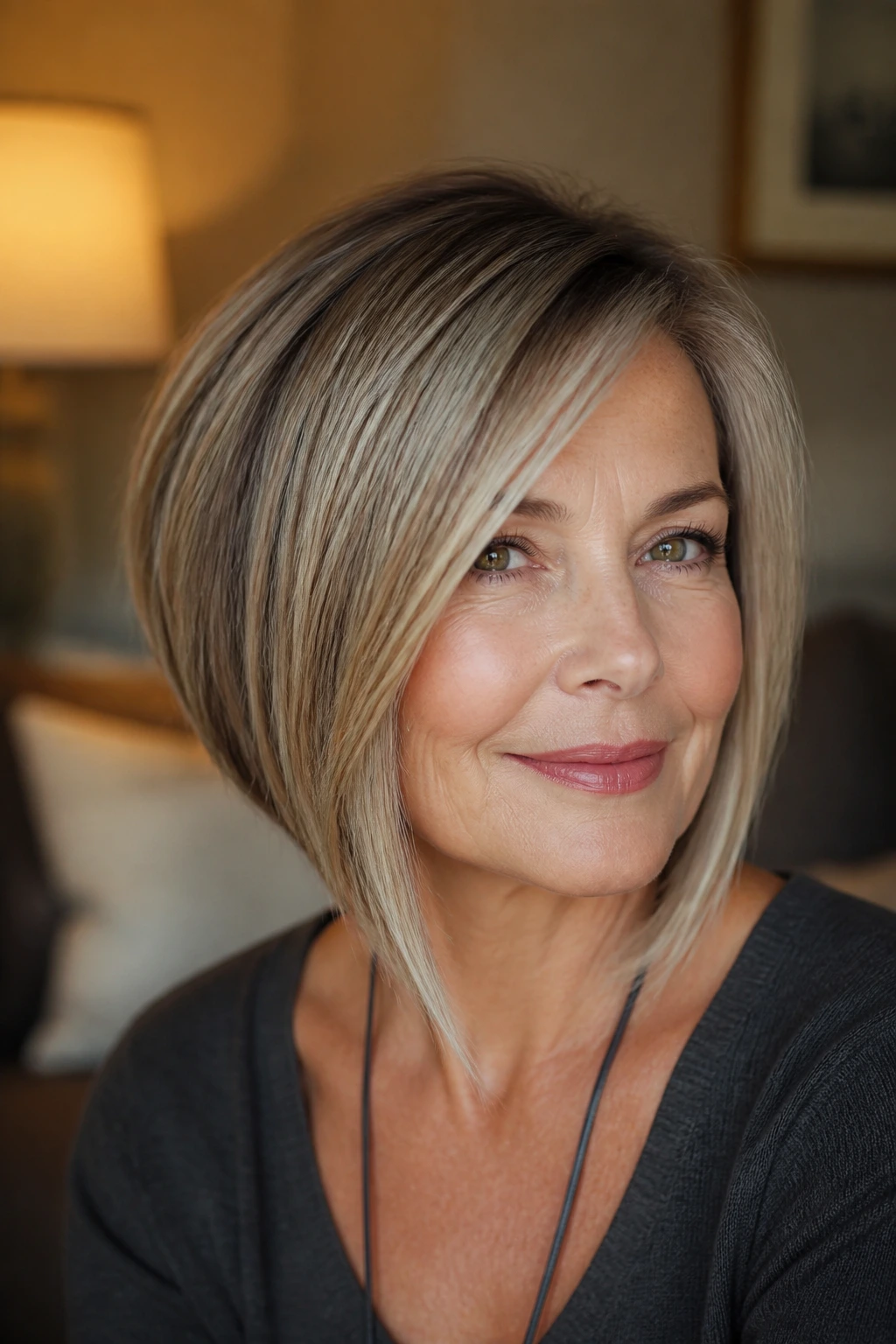
The angled bob is the clean cousin of the classic bob. It’s shorter in the back and a little longer in front, usually by one to two inches, which gives the face a longer line and makes the neck look lighter. It’s especially useful if hair at the back tends to grow into a bulky shape.
I like this cut for straight and slightly wavy hair because the line shows up clearly. The shape reads as intentional even when you just smooth it with your hands and go. If you’re someone who tucks one side behind the ear or wears one statement earring, this cut does the work for you.
Don’t make the angle dramatic unless you enjoy styling. A subtle angle grows out better. The more extreme the slant, the more often you’ll be reaching for a flat iron or a round brush.
9. Bixie Cut for a Short Shape with Movement
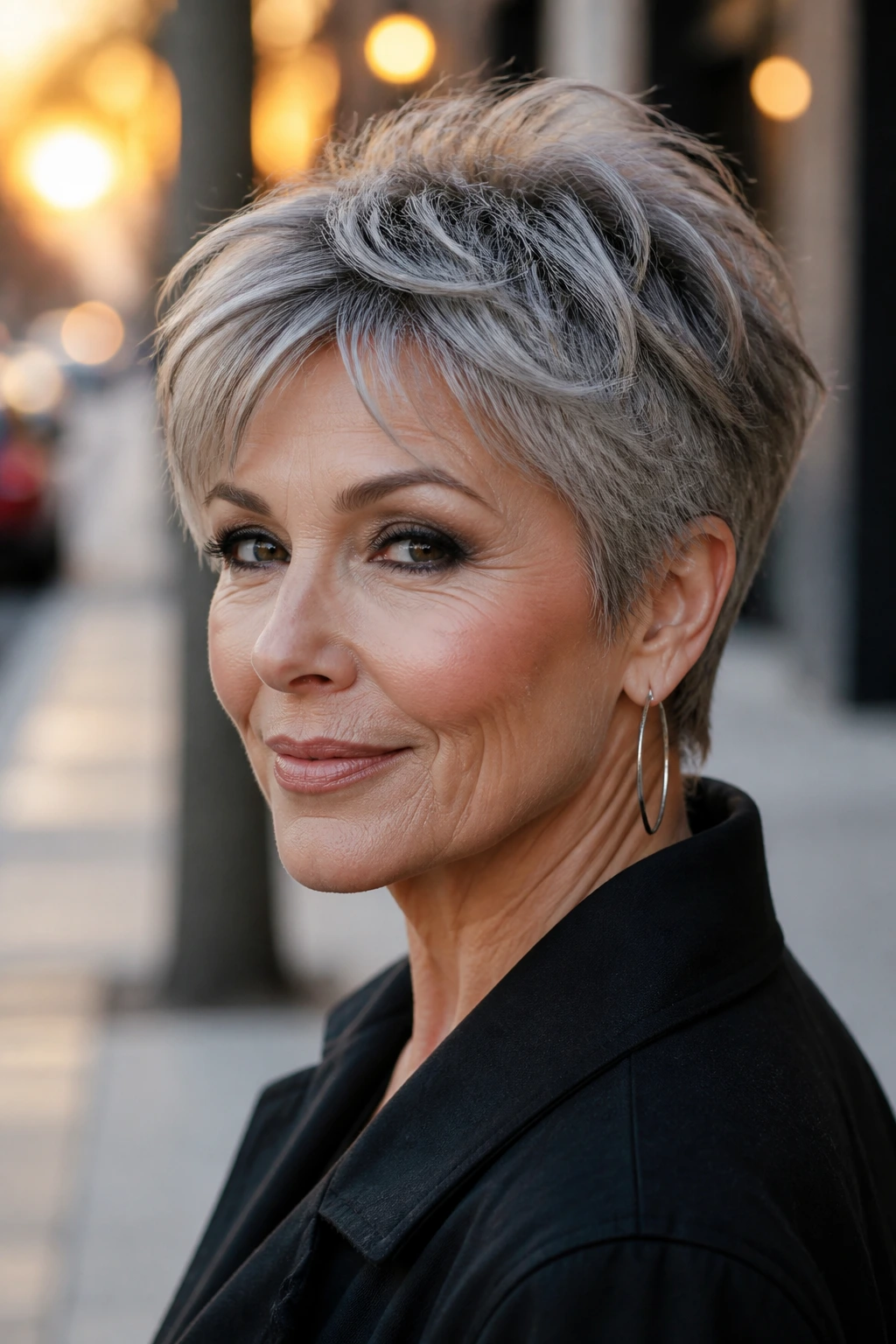
The bixie sits between a bob and a pixie, which is why so many people land on it after trying both extremes. It keeps enough length on top to move, enough softness around the ears to avoid a helmet look, and enough taper at the nape to keep the back neat. If a full pixie feels too exposed and a bob feels too heavy, this is the middle lane.
A bixie works best when the top is textured but not shredded. Think piecey, not choppy. A small amount of mousse or lightweight cream can give it a tousled finish, but the shape itself should do most of the work. That’s the low-maintenance part.
I’d recommend it most for fine to medium hair that wants a little lift. Thick hair can wear it too, but the stylist has to remove bulk carefully or the cut starts sticking out in odd directions.
10. Long Layers with Soft Ends

Long hair after 50 is not the problem. Heavy, unshaped long hair is the problem. Long layers with soft ends keep the length while taking away the dead weight that makes hair hang flat or drag the face downward. The trick is to start the shortest layers low — usually below the chin — so the cut keeps its body.
This is the cut for someone who wants to tie their hair back, wear it down, and still have a little movement around the face. The ends should look soft, not wispy. If the perimeter gets thinned too much, the whole thing can look tired.
I like this option for hair that is naturally straight or softly wavy. On very fine hair, keep the layers conservative. On thick hair, the stylist can remove interior weight without shaving the perimeter into nothing.
11. Stacked Bob for Crown Lift
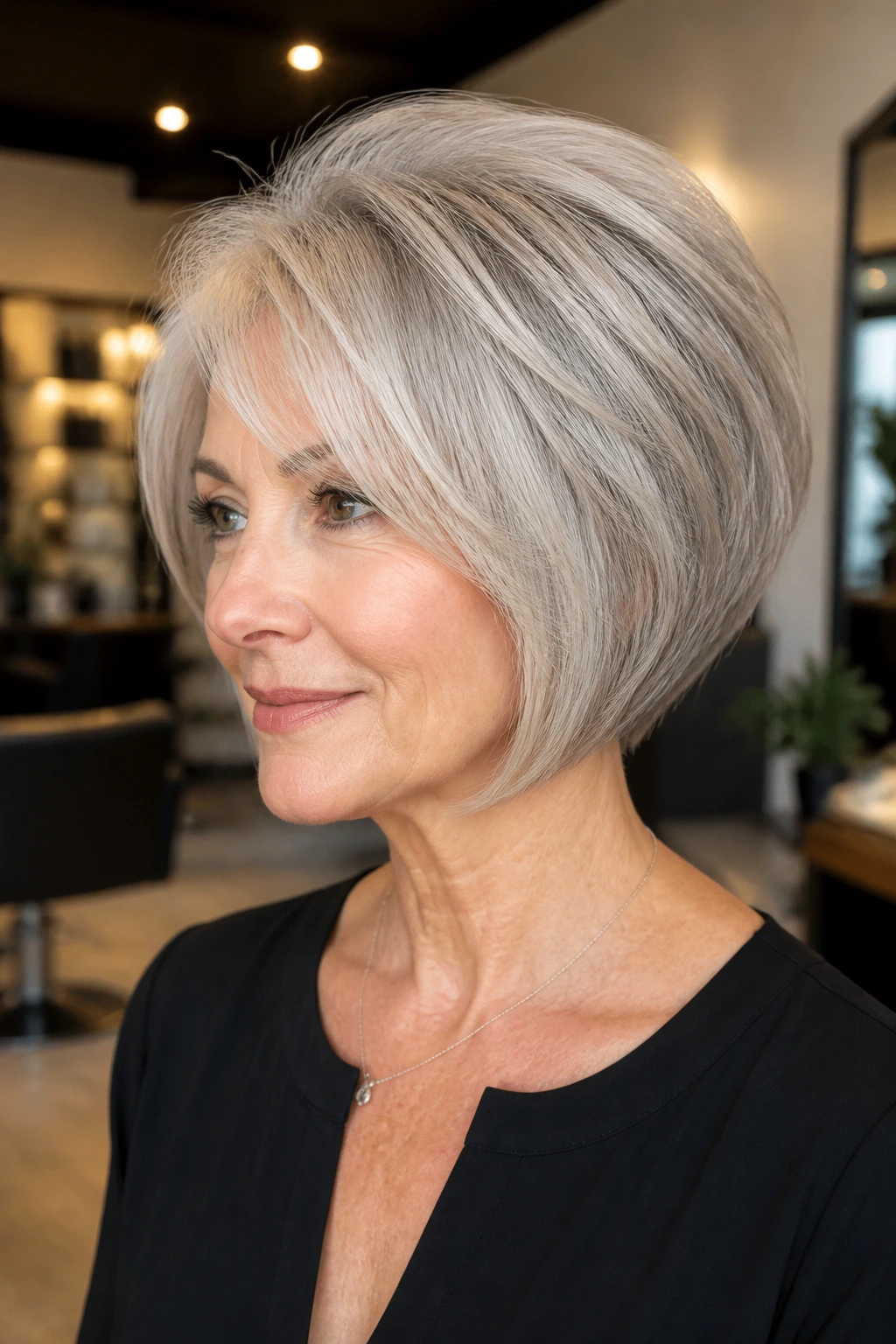
A stacked bob is the answer when the crown goes flat no matter what you do. The back is graduated so it builds lift right where the head starts to collapse, while the front stays a bit longer and cleaner. That gives the haircut shape from the side and a little height from the back, which can be a small miracle on fine or straight hair.
What makes this version low-maintenance is precision. If the stack is done well, you get volume without daily teasing. If it’s done too aggressively, it starts to look like a shelf, and nobody wants that. The line should be soft enough to move but structured enough to hold.
This is one of those cuts that benefits from a quick round-brush pass at the crown. Not the whole head. Just the top 2 inches. That tiny bit of work is often enough.
12. Classic Wedge Cut with a Modern Finish
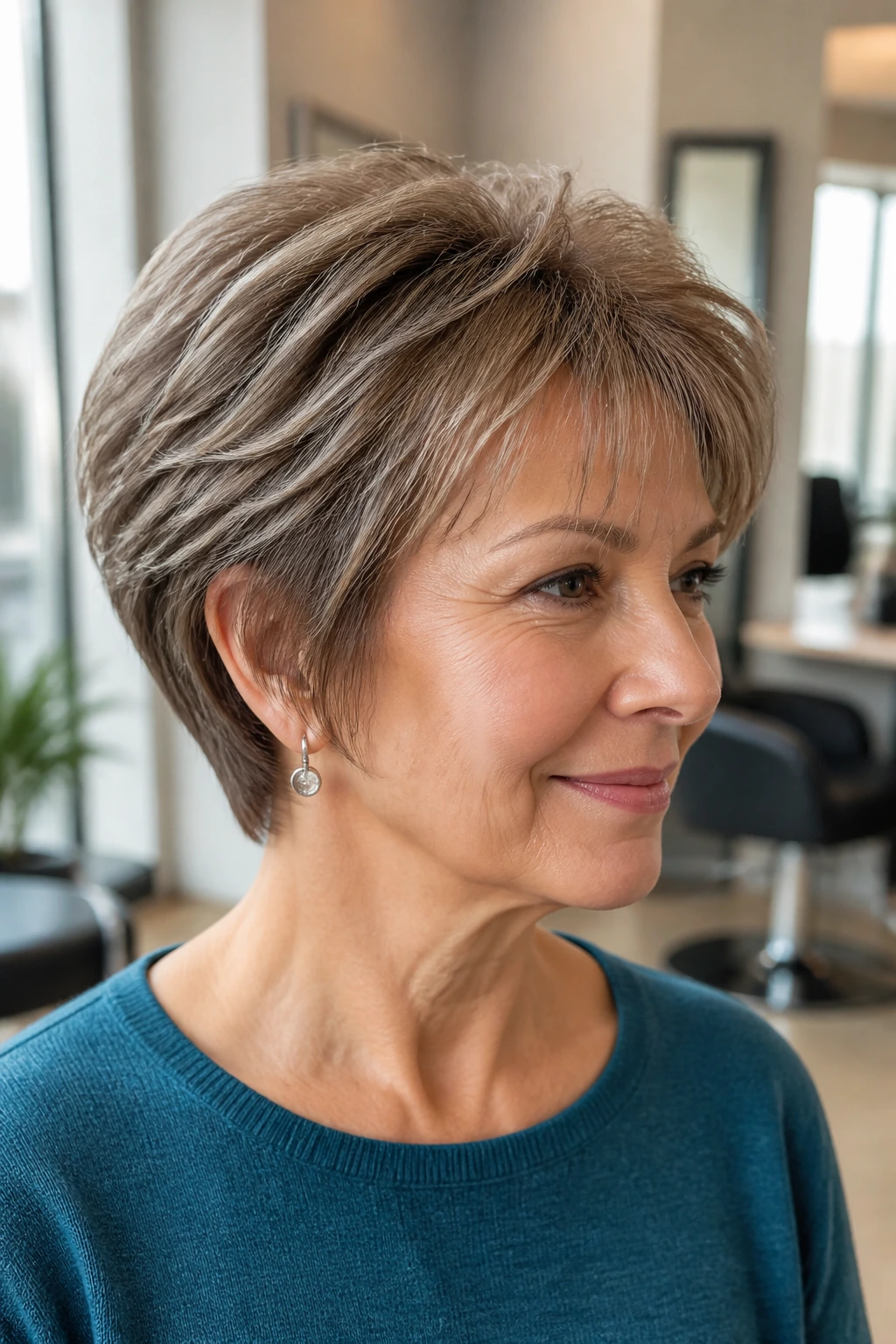
The wedge cut has a shape people either remember from old salon photos or rediscover with a little surprise. Done well, it’s not dated at all. The modern version keeps the nape close, the crown lifted, and the edges softer than the severe version some people picture.
I like it for women whose hair grows fast at the back and who want a haircut that stays disciplined. It’s especially useful if your neckline gets fuzzy within a week. The wedge keeps the silhouette tidy, and the angled profile makes the head look lighter from the side.
The trade-off is maintenance. It’s not a wash-and-forget cut. It’s a wash-and-go cut with frequent trims. There’s a difference. If you like shape more than length, it earns its place. If you hate the salon, move on.
13. Collarbone Cut with Curtain Bangs

Curtain bangs can be the friendliest fringe in the room. They split down the middle or slightly off center, skim the cheekbones, and grow out better than blunt bangs, which is why they work so well with a collarbone-length cut. The length gives you options, and the bangs soften the forehead without demanding a daily battle.
The Part That Makes It Easy
The bangs should be long enough to tuck away if needed. That’s the whole point. A curtain fringe that lands around the cheekbone can be blown out in two minutes or air-dried with a little shaping cream. Shorter fringe tends to need more attention, and attention is exactly what we’re trying to cut down on.
This shape suits people who want softness around the face but don’t want to commit to short hair. It also works well with glasses because the fringe can move around the frames instead of sitting hard against them.
14. Textured Crop with a Piecey Crown
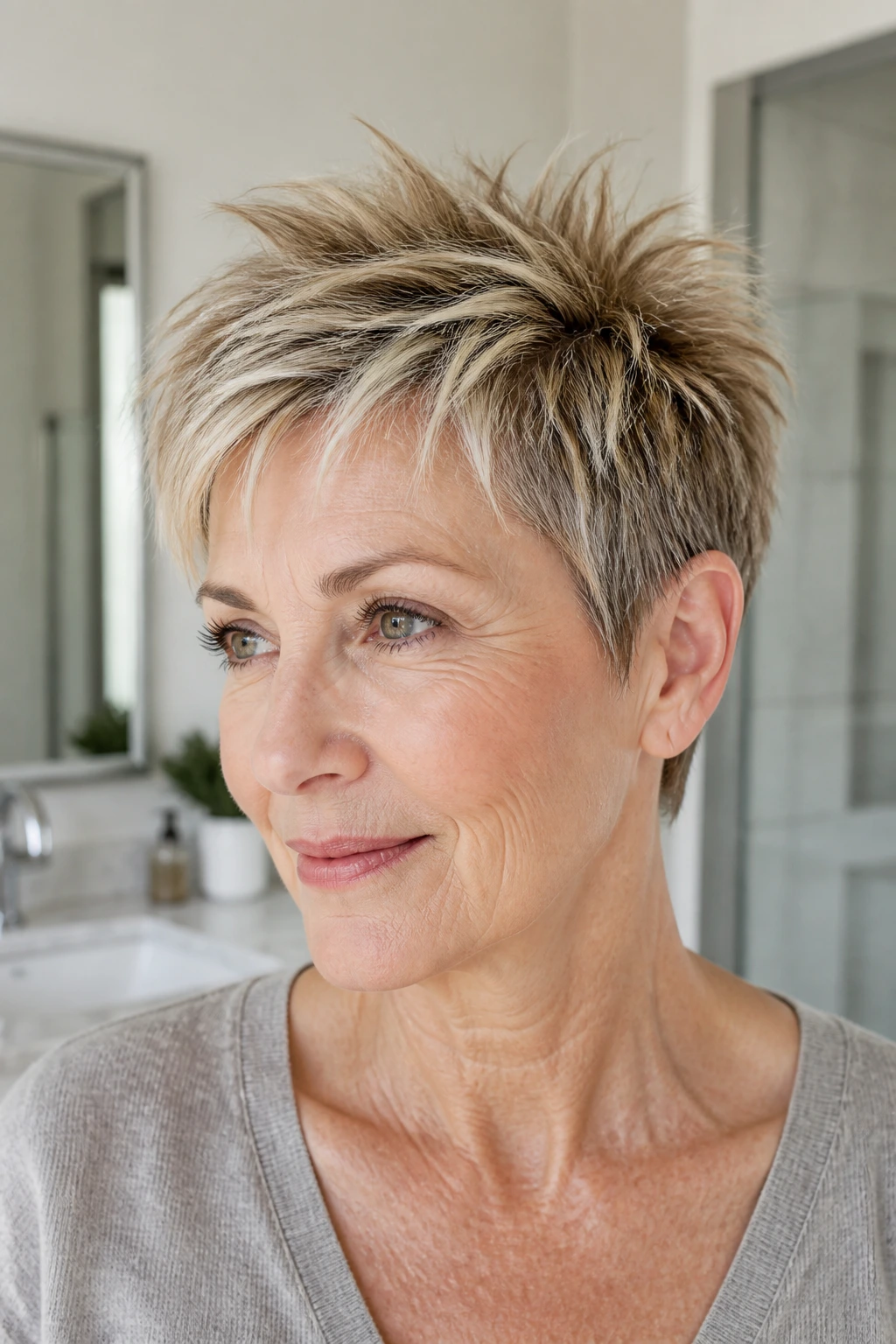
A textured crop has a little more attitude than a pixie and a little less maintenance than a shag. The top is kept light and piecey, the crown gets some lift, and the sides stay close enough to keep the head shape neat. If your hair is fine, this can be a savior — provided the stylist doesn’t over-thin it.
The best part is how little you need to do in the morning. A bit of root spray, a finger through the top, maybe a touch of paste at the ends. Done. The haircut itself creates the movement, so you’re not manufacturing volume from scratch.
I’d use this cut for someone who likes a short style but wants it to feel a little less polished and a little more lived-in. That balance matters. Too polished and you’re back to work. Too shredded and the hair starts behaving like lint.
15. Blunt Bob with Invisible Internal Layers
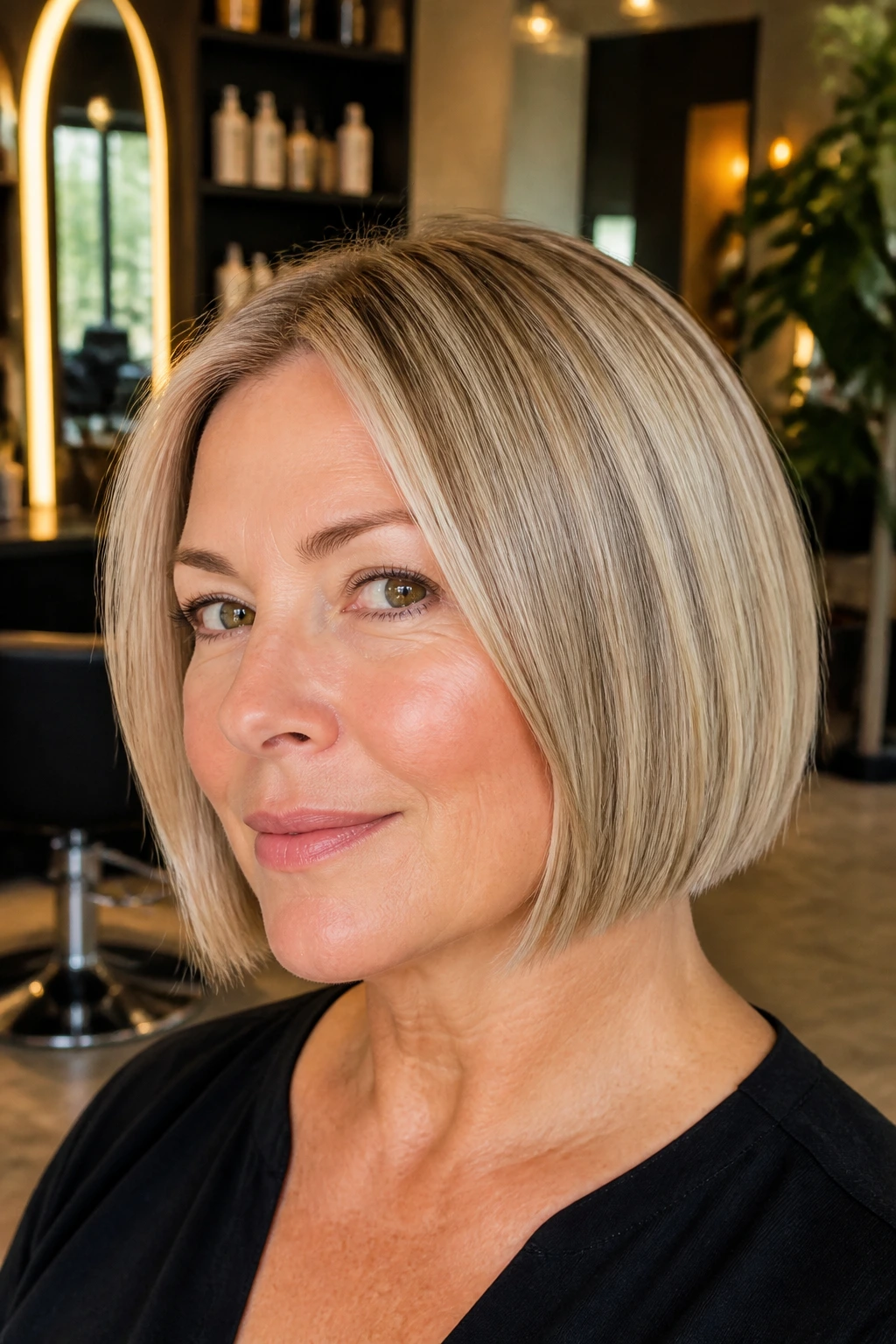
A blunt bob looks simple because it is. The line lands cleanly around the jaw or just below it, and the perimeter stays solid. What makes it low-maintenance is the internal work you don’t see: a bit of weight removal hidden underneath so thick hair doesn’t puff outward or turn into a triangle by noon.
That hidden structure is the difference between a bob that sits and a bob that argues with your head. It’s especially good for dense hair that feels heavy when it’s all one length. The outside still looks sharp. The inside carries less baggage.
If you have fine hair, don’t overdo the internal layers. You want the ends to stay full. If you have thick hair, ask for hidden debulking under the surface, not a jagged top layer that shows up every time the wind hits.
16. Feathered Mid-Length Cut

Feathering gets a bad reputation because people remember the overly flipped versions from old salon magazines. The modern feathered cut is gentler. It uses soft, directional layers to keep mid-length hair moving around the face and shoulders without breaking up the ends too much.
This is a good cut when you want softness without losing length. It works especially well on hair that has become a little drier or less bouncy, because the feathering stops the whole shape from hanging straight down. A small bend at the front is often enough.
I’d reach for this if you’re tired of blunt hair but don’t want a shag. There’s less styling involved, and the cut still gives you a sense of shape even if you air-dry it and walk away.
17. Silver Pixie with a Clean Side Taper
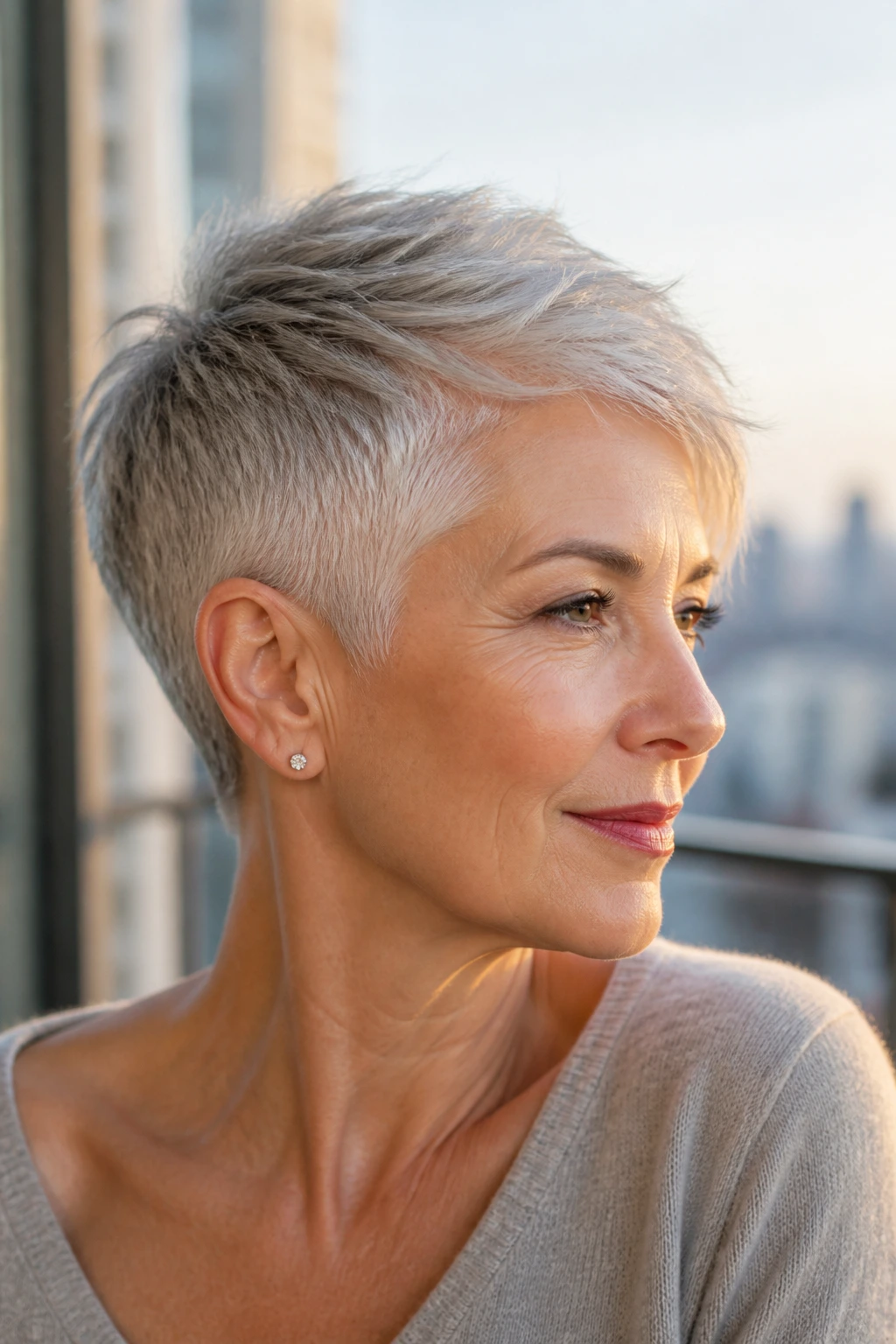
Gray hair can be glorious, and it can also be stubborn. A silver pixie handles both. The sides and nape are tapered neatly, the top is left with enough length to move, and the overall silhouette stays crisp even when the gray strands decide to stick up a little. They do that. Often.
The point of this cut is control without stiffness. Silver hair tends to show shape and texture more clearly than dyed hair, so a tidy taper matters. It keeps the cut from reading as puffed-out or fuzzy at the edges. That’s especially useful if your gray is coarse or your hair grows in multiple directions.
A small amount of styling cream can calm the top, but don’t drown it. Silver hair can go dull fast if you overdo heavy product. Let the shine come from the clean line and the natural color.
18. Side-Part Lob with a Gentle Sweep

A side part changes the whole mood of a lob. It adds lift where the hair wants to fall flat, and it creates a softer sweep across the forehead that can be especially useful if your face feels a little longer or your hairline has changed shape over time. The lob itself should sit around the collarbone or just below.
The beauty here is in the small adjustment. You don’t need a dramatic haircut to make the style feel fresh. You need a good part, a clean perimeter, and enough length that the hair can move instead of clinging to the neck.
This is one of the easiest cuts for second-day hair. Dry shampoo at the roots, a quick shake, and maybe a bend through the front pieces if you want them to frame the cheeks. That’s enough.
19. Soft Shag with Wispy Fringe

A soft shag is what happens when you want movement but not chaos. The layers are placed to keep hair from sitting flat, and the fringe is wispy enough to move without shouting. It works best when the stylist keeps the shape rounded and avoids overcutting the crown, which is where many shags go wrong.
Why It Feels So Easy
Because the cut is meant to look a little undone, it forgives air-drying. That’s a gift. You can scrunch in a bit of curl cream or spray, then leave it alone while you make coffee and answer one email you wish had never been sent. The hair still looks styled because the shape carries the interest.
This cut suits natural wave, bendy straight hair, and loose curls. If your hair is very fine, the stylist needs to be careful with the layers. Too much removal and you’ll end up with flyaways instead of shape.
20. Jaw-Length Crop That Tucks Behind the Ear
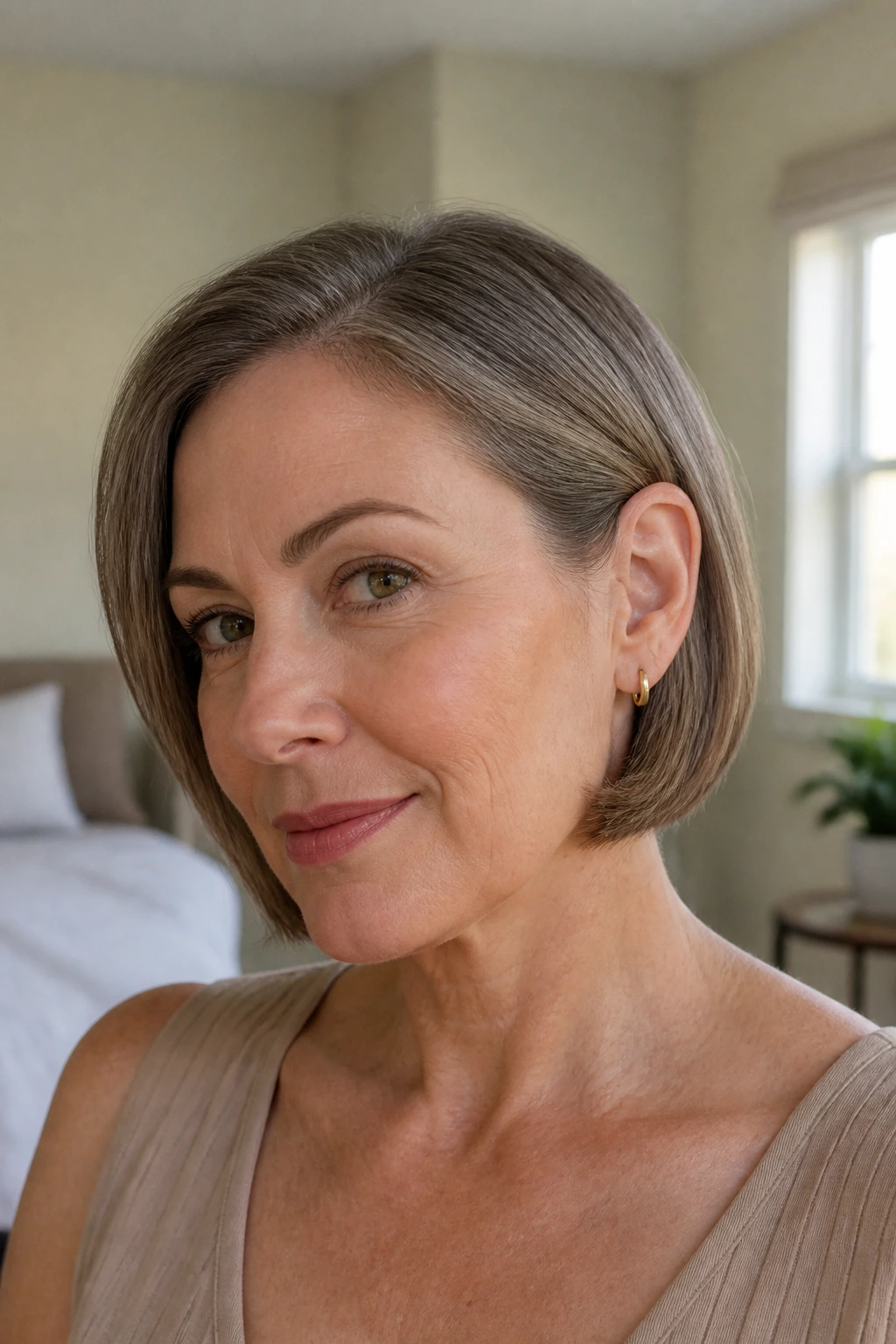
This is one of my favorite “small haircut, big result” shapes. The hair lands right at the jaw, which gives the face definition, but there’s enough length to tuck one side behind the ear or let it skim a glasses arm. That little tuck makes the style look intentional in a way that longer cuts sometimes don’t.
A jaw-length crop works because the line is clear. It doesn’t have to be styled into a perfect curve. If the ends are clean and the part is placed well, the cut does half the work for you. It’s also excellent if you like earrings, because it keeps the neck and jawline open.
Be careful with cowlicks at the nape. If the hair grows up hard there, ask for a touch more length in back so it doesn’t flip.
21. Clavicle-Length Cut for Thick Hair
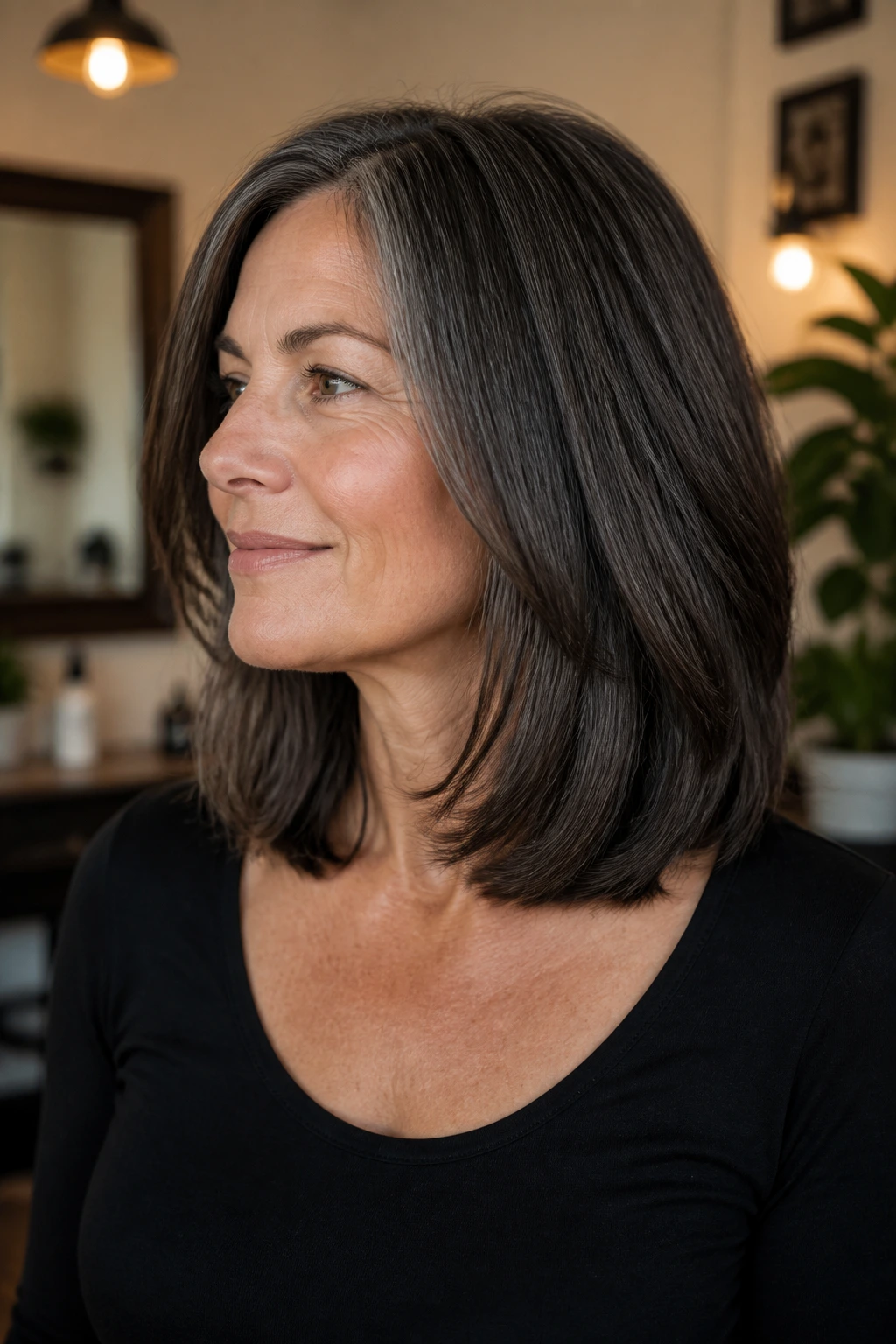
Thick hair needs respect, not punishment. A clavicle-length cut gives it room to move while keeping enough weight at the perimeter so the ends don’t go fuzzy. The real secret is hidden weight removal inside the shape, not choppy layers that expose every strand and make the hair look wider than it is.
I like this cut because it handles a lot of hair without asking for a lot of styling. You can wear it down, twist it up, or tuck it behind the shoulders and it still looks deliberate. If your hair gets warm and bulky around the neck, this length also takes some of the load off.
Ask the stylist to keep the outside line solid. When thick hair is thinned too much on the surface, it frays. When the interior is shaped carefully, it sits.
22. Rounded Curly Bob
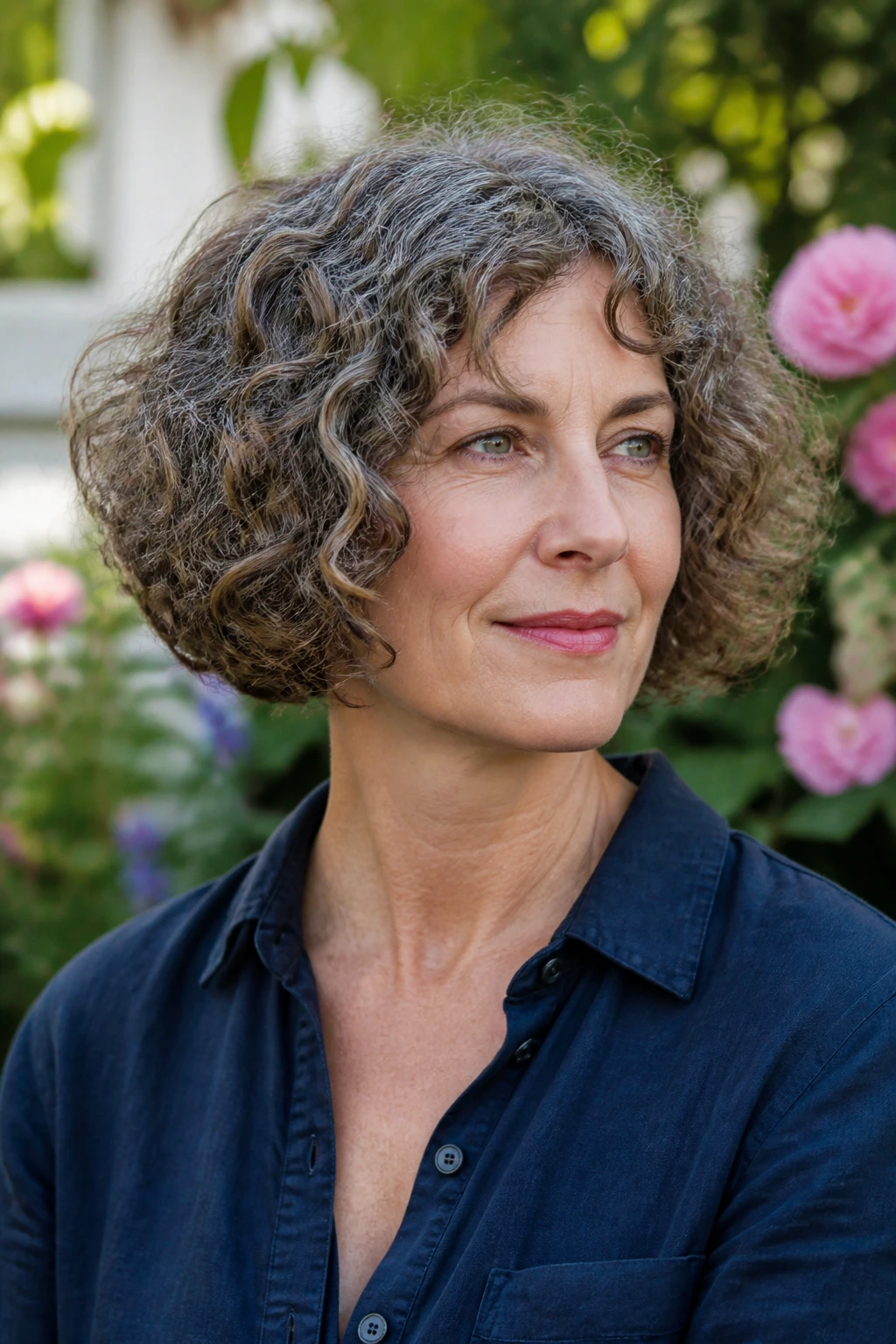
A rounded curly bob is the cleanest answer for curls that want to spread sideways. The shape follows the curl pattern so the hair reads as balanced rather than triangular. It usually sits between the jaw and the shoulders, depending on shrinkage, and it’s best cut with the curls in their natural state.
That matters more than people think. A wet curl lies about length, weight, and shape. A dry or mostly dry cut lets the stylist see exactly where the curl falls and how it springs back. That’s how you avoid a bob that ends up too short once it dries.
This shape is low-maintenance because it relies on the curls doing the work. You’ll need a good curl cream or gel and, if you like, a diffuser. But you won’t be trying to force the hair into a shape it never wanted.
23. Asymmetrical Bob with a Subtle Angle
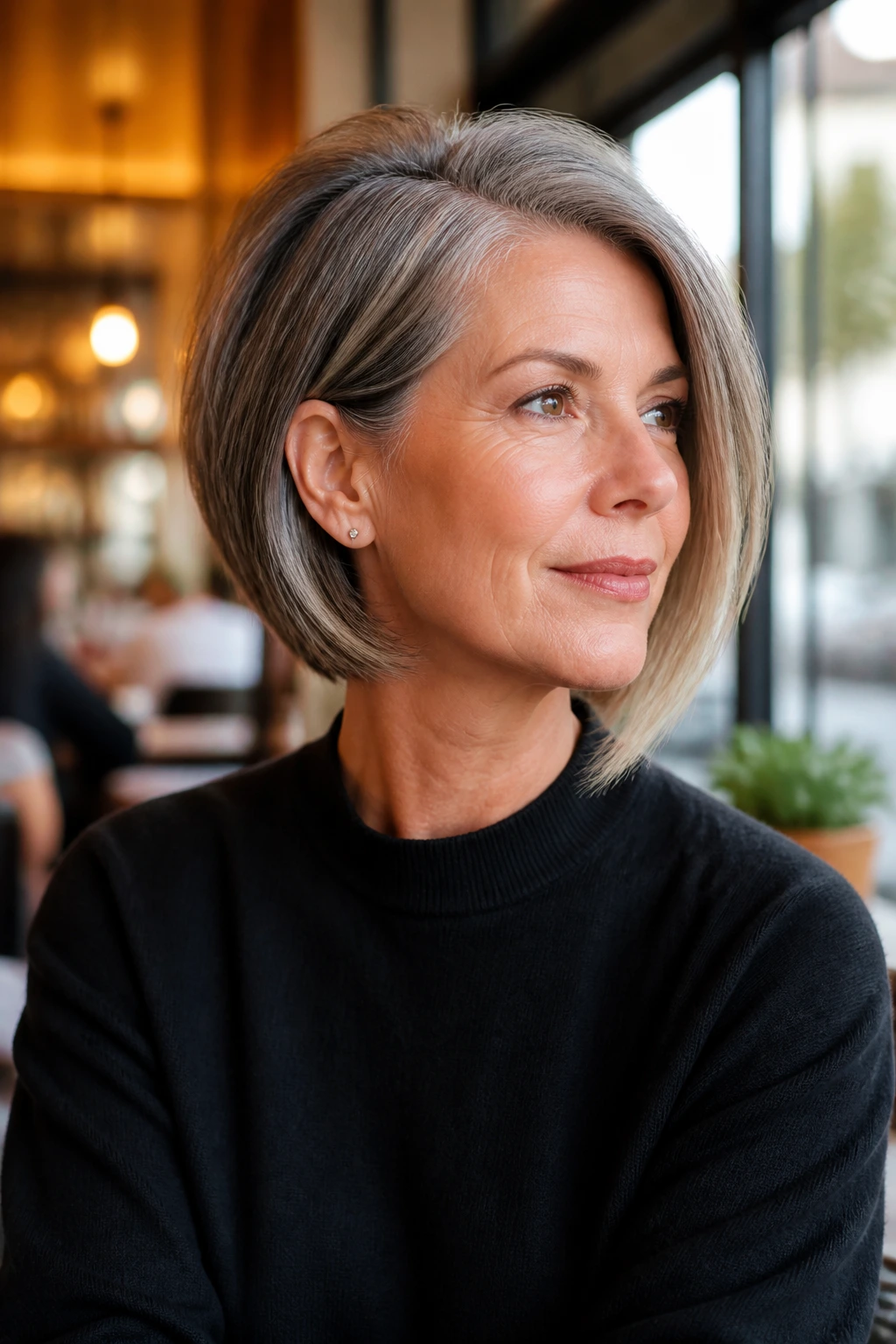
A subtle asymmetrical bob can wake up straight or wavy hair without adding much maintenance. One side is slightly longer than the other — usually by an inch or two — which creates movement even if you don’t curl, bend, or round-brush a thing. It’s the kind of detail people notice without immediately knowing why.
The asymmetry should be gentle. If the difference is dramatic, the style starts asking for deliberate styling every morning. Keep it subtle and it reads as modern, not dramatic. A side part often helps the shape settle.
This cut is especially good if you’re bored with symmetry but not interested in a fussy, layered style. It looks like you meant it. That’s enough.
24. Mixie Cut with a Longer Top and Shorter Nape
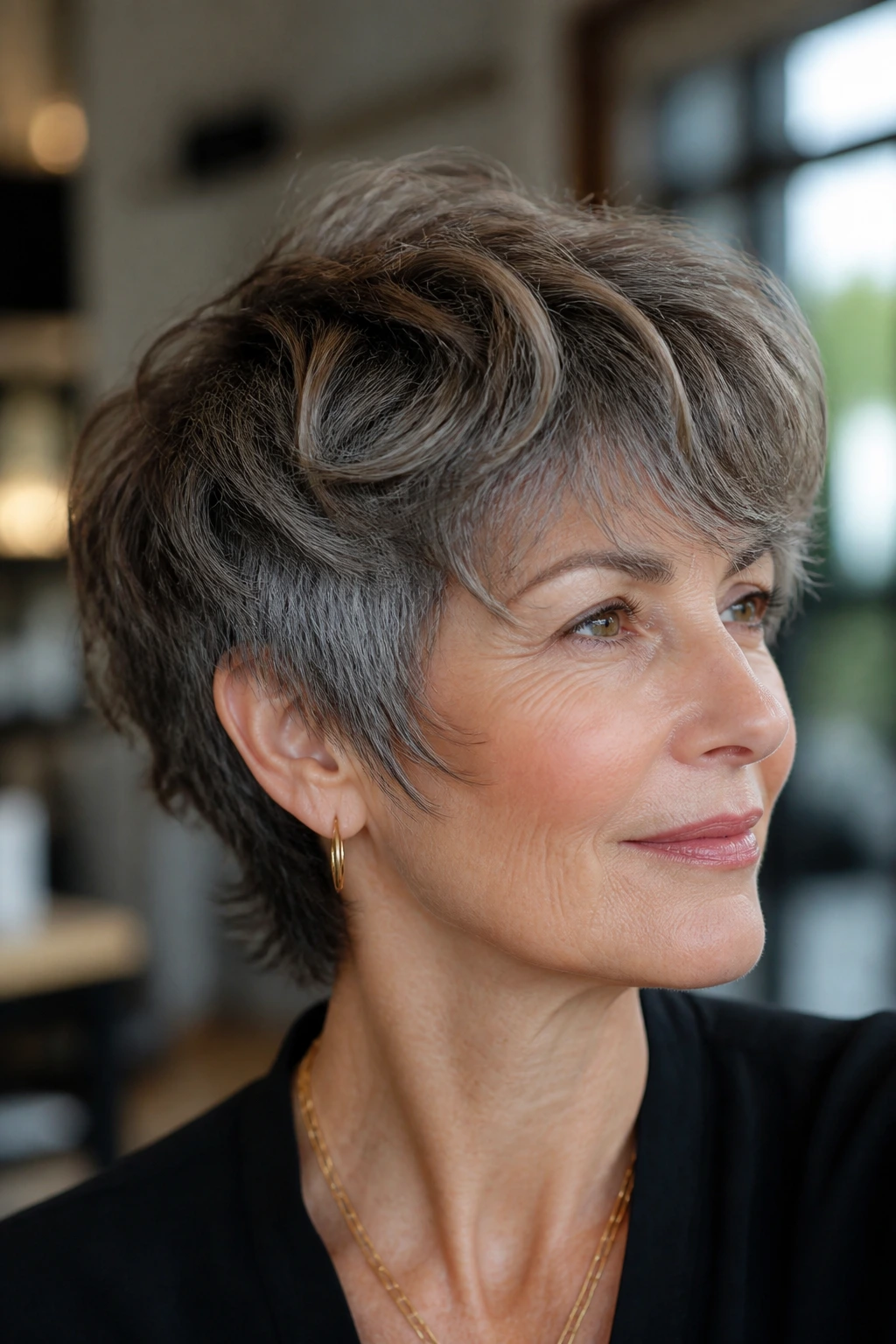
The mixie sits between a pixie and a mullet, which sounds strange until you see a softened version on the right hair type. The top is left longer, the nape is shorter, and the transition between the two is blended so it feels airy rather than harsh. It’s a good option for women who want something modern and don’t mind a little edge.
I’d call this a texture haircut. It works best on hair with natural wave or bend. The whole point is to let the top move while keeping the neck area light. If the top is too flat or the edges are too blunt, the shape loses its charm fast.
This is not the safest choice on the list. It’s the most personality-heavy one. But when it’s right, you can finger-style it in minutes and still look like you made a decision.
25. Long Bob with Hidden Layers for Fine Hair
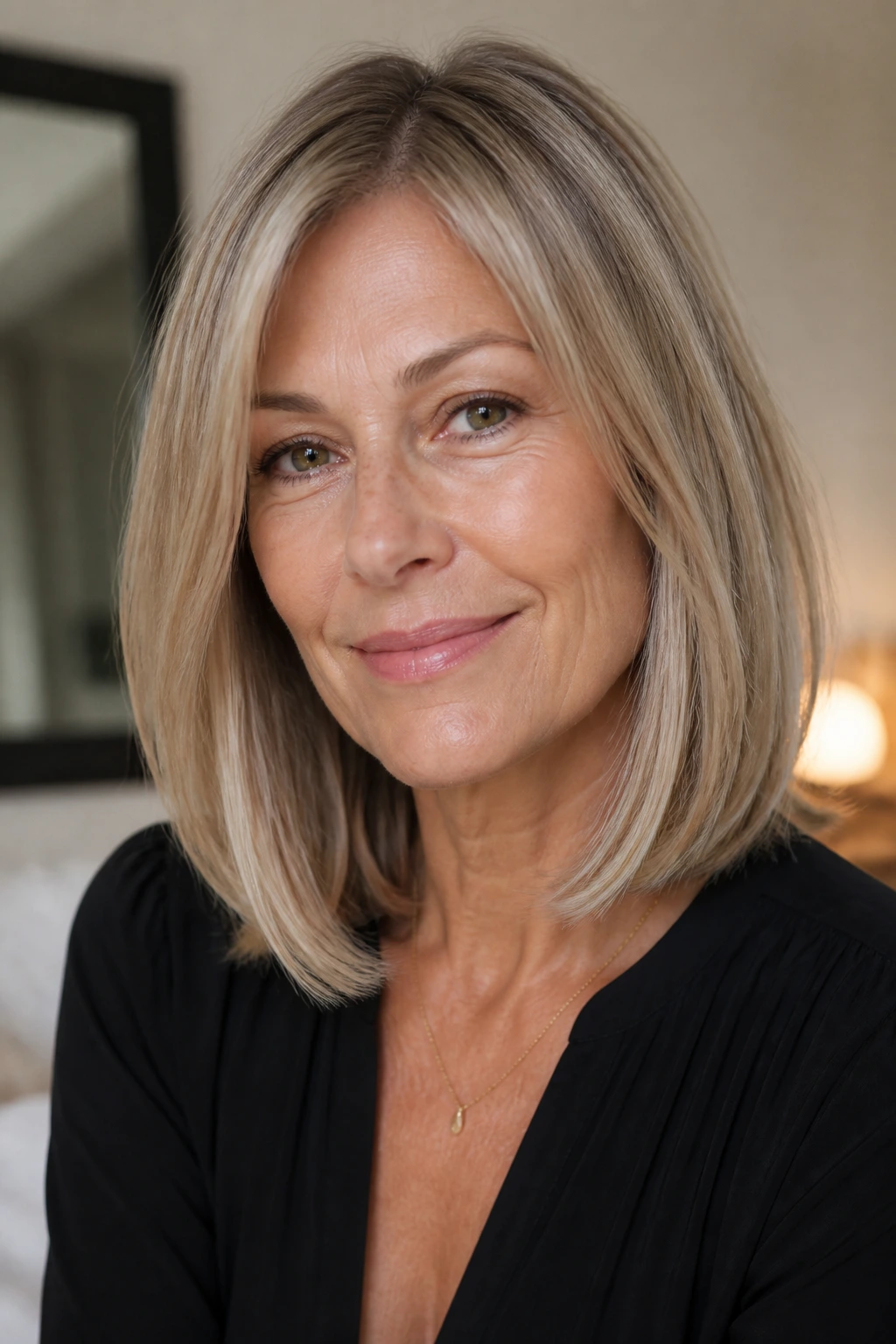
Fine hair often gets over-layered because people think more layers equal more volume. Usually the opposite happens. A long bob with hidden layers keeps the perimeter full while taking a little weight out underneath so the shape doesn’t drag. The hair sits at the collarbone or just below, where it can swing without getting swallowed by the shoulders.
The Detail That Matters
Ask for internal layers, not a bunch of surface layers. That keeps the ends looking thick, which is what fine hair needs most. A small bend through the front pieces can add movement, but the bottom line should stay clean.
This is one of the easiest cuts to live with if your hair is straight to softly wavy. It grows out quietly, tucks behind the ears, and still gives you enough length for a clip or low knot when the day goes sideways.
What Makes Low-Maintenance Haircuts for Women Over 50 Work So Well

A haircut earns the word low-maintenance when it still looks like a haircut after you’ve done almost nothing to it. That sounds obvious. It isn’t. Plenty of styles look neat only because the salon blowout is still holding the shape together. Once you wash them at home, the truth arrives.
The best cuts respect the way hair changes after 50. A little less density at the crown? Give it lift with a stacked shape or side part. Coarse gray strands that puff out? Keep the nape and sides clean. Fine hair that gets wispy at the ends? Hold the perimeter blunt and leave the layers hidden. Thick hair that feels like a blanket? Remove weight from the inside, not the outline.
I also think maintenance should mean something practical, not romantic. If a cut needs hot tools every morning, it is not low-maintenance. If it survives a pillow crease, a fast shower, and one swipe of product, that’s the real thing.
The Tools That Make Styling Faster
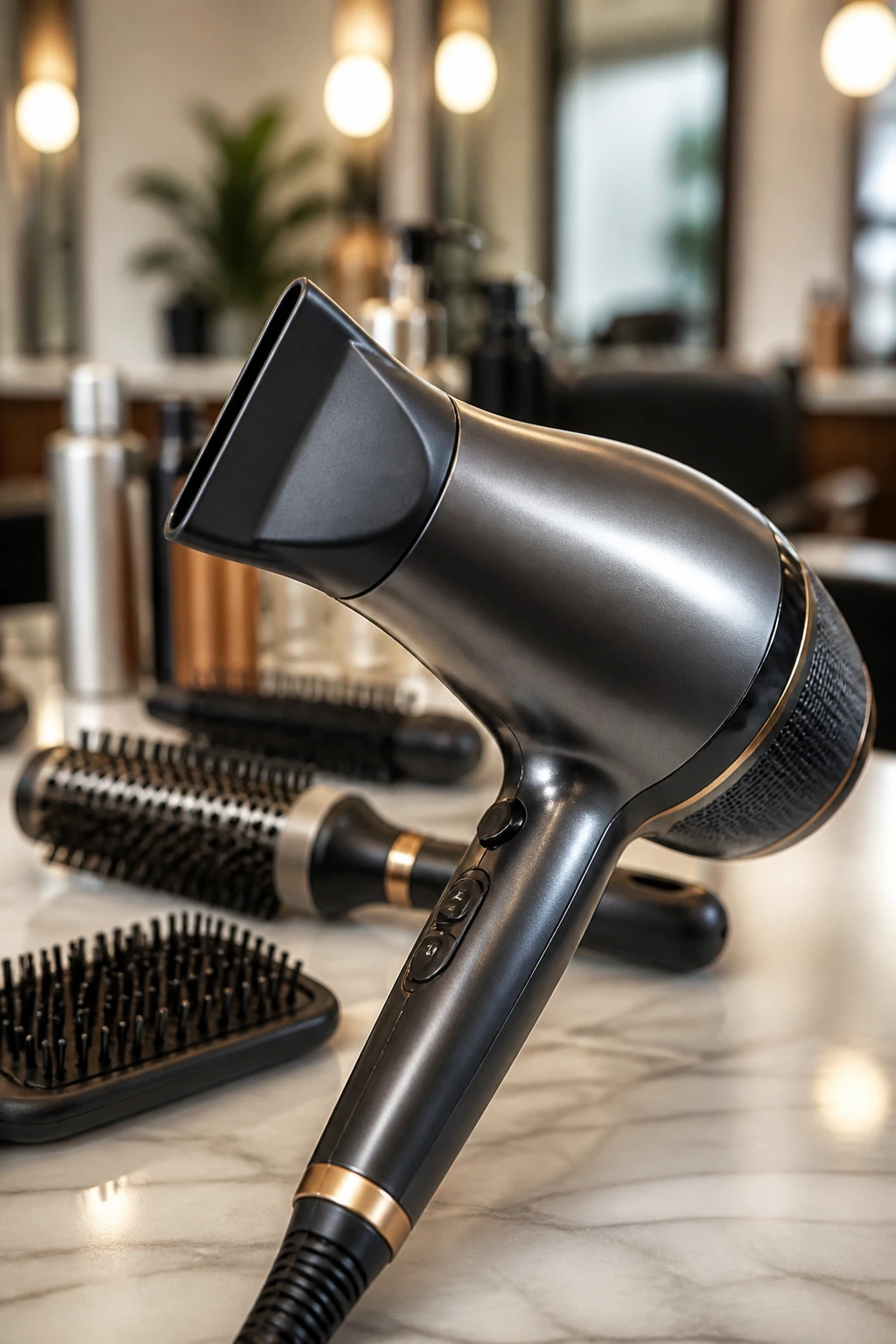
- A good blow dryer with a nozzle: The nozzle matters because it directs air at the roots instead of scattering it everywhere.
- A 1- to 1.5-inch round brush: Small enough to shape bangs, face-framing pieces, and bob ends without overworking them.
- A paddle brush: Better for smoothing longer cuts and keeping the whole head from getting frizzy.
- A wide-tooth comb: Useful for curls, waves, and detangling without tearing up the shape.
- A microfiber towel or old T-shirt: Rough bath towels create frizz, especially on gray or wavy hair.
- Root-lift spray or mousse: Fine hair usually needs a little support at the scalp, not heavy cream.
- Lightweight leave-in conditioner: Good for dry, coarse, or curly hair ends.
- Heat protectant: If you use an iron even once a week, don’t skip this.
- Texturizing paste or cream: Best for pixies, crops, and bixies where you want separation without crunch.
- Dry shampoo: Not a cure for dirty hair. A useful tool for restoring lift on day two.
Smart Product Picks and Salon Notes
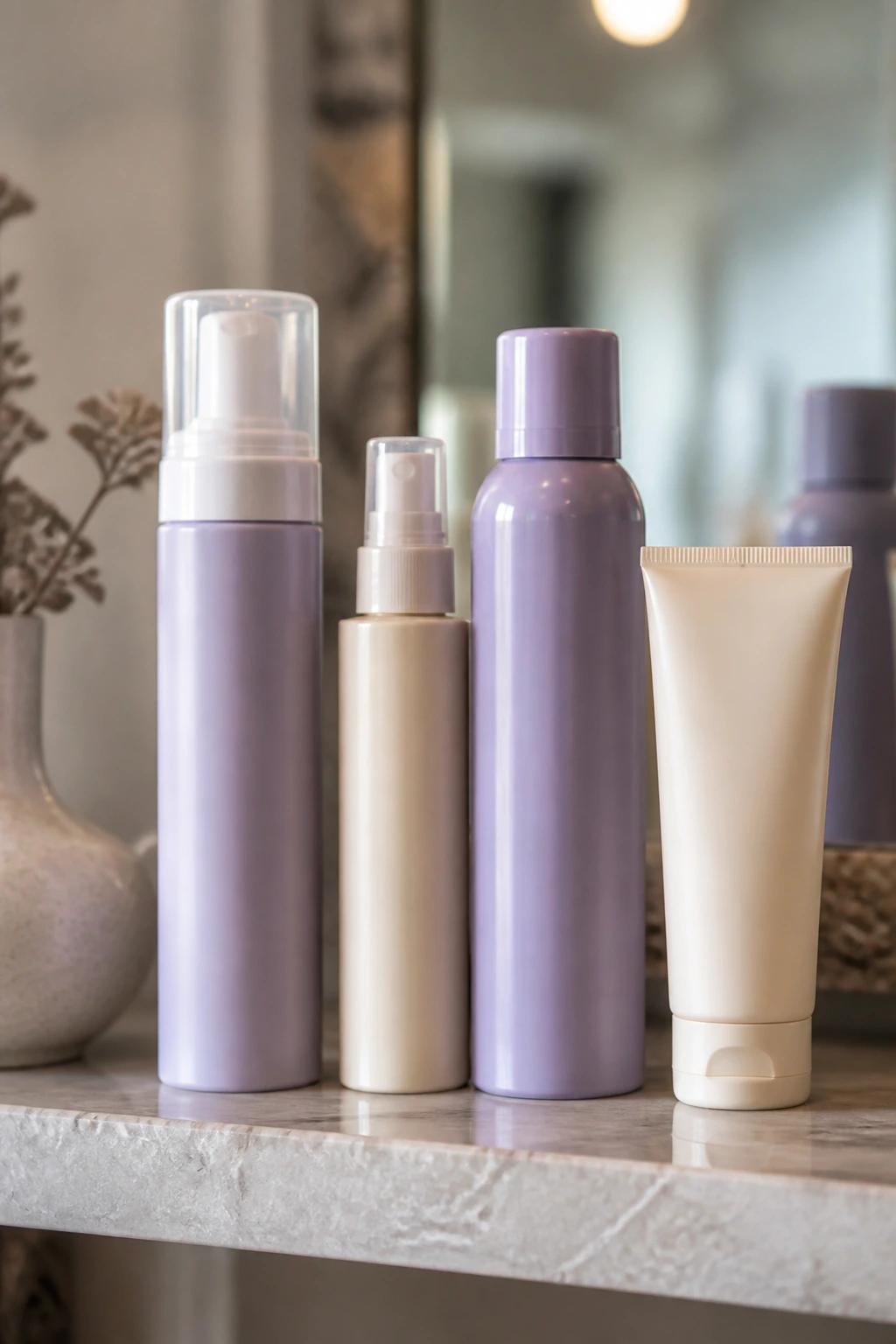
A low-maintenance haircut gets easier when the products match the texture. Fine hair usually does better with mousse, root spray, or a very light cream. Heavy oils and rich masks can flatten the crown in a hurry. Thick hair usually needs the opposite: a leave-in that calms the ends and keeps the shape from ballooning when it dries. Curly hair tends to want moisture plus hold — cream alone can make it too soft, while gel alone can make it brittle.
Gray hair deserves its own mention. It often drinks up moisture fast and can look dull if coated with too much product. A light cream, a shine serum used sparingly on the ends, and the occasional purple shampoo if brass shows up can keep silver hair from going yellow or flat. Use the purple stuff carefully. Too much and the hair can look chalky.
At the salon, the most useful sentence is also the simplest: “I want a cut I can air-dry most days.” Say it out loud. Then add how much styling you’ll actually do, whether you wear glasses, and whether you tuck your hair behind the ears. Those three details change the cut more than people expect.
How to Style These Haircuts in Ten Minutes or Less
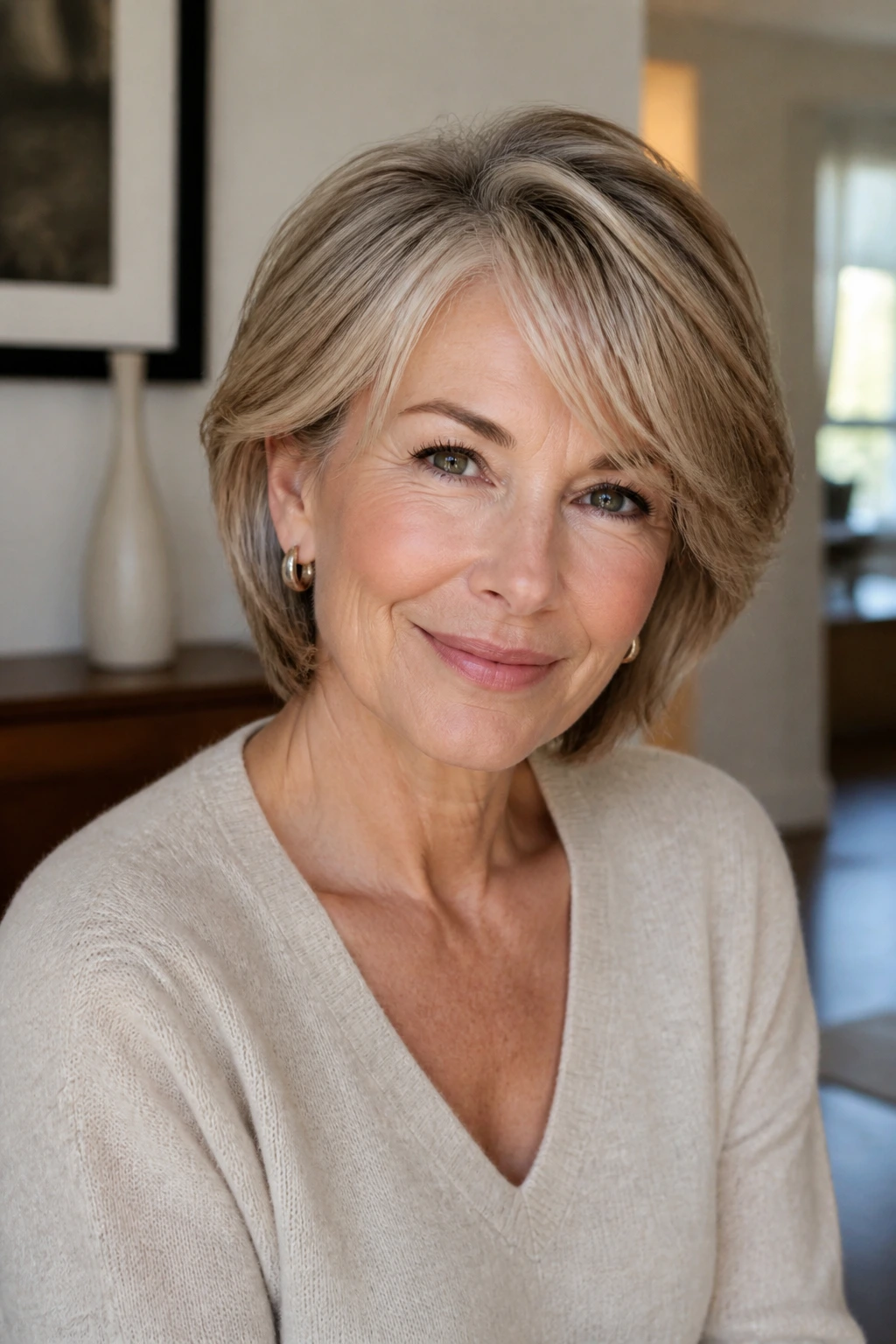
Air-Dry Routine: Blot the hair until it’s damp, not dripping, then put product only where the texture needs help — mousse at the roots for fine hair, cream through the mids and ends for curly or coarse hair. Don’t keep touching it while it dries. That’s how the shape falls apart.
Quick Blow-Dry Routine: Rough-dry the roots first until the hair is about 80 percent dry, then use a round brush only on the pieces that frame the face or need lift at the crown. You do not need to round-brush the whole head unless you’re chasing a salon finish.
Second-Day Reset: Mist the roots lightly with water or dry shampoo, flip the part if the hair is going flat, and use your fingers to separate the ends. A tiny bit of paste on the tips of a pixie or crop can bring it back fast.
When You Want More Polish: Use a flat iron or curling iron only on the front sections. The rest of the hair can stay a little imperfect. That contrast looks better than over-styling every strand.
Extra Polish Without Extra Work

Shape Boost: Changing the part by even half an inch can give the whole haircut more lift. A side part helps fine hair, while a center part can sharpen a lob or bob if the hair falls evenly.
Color Lift: Subtle highlights around the face or a clean silver blend can make the haircut read as sharper because the shape shows up more clearly against the color. This is especially useful on bob and pixie cuts.
Texture Play: If your hair is straight and a little sleepy, bend just the front 2 to 3 inches with a flat iron. If it’s wavy, scrunch a little leave-in and leave the rest alone. No one needs a full styling routine for a haircut to look finished.
Make It Yours: Glasses wearers often look better with a little length at the temples or fringe that can move away from the frame. If you love earrings, keep the nape clean. If you like clips, make sure the crown has enough length to hold one without slipping.
Trim Schedules, Grow-Out, and Between-Appointment Care
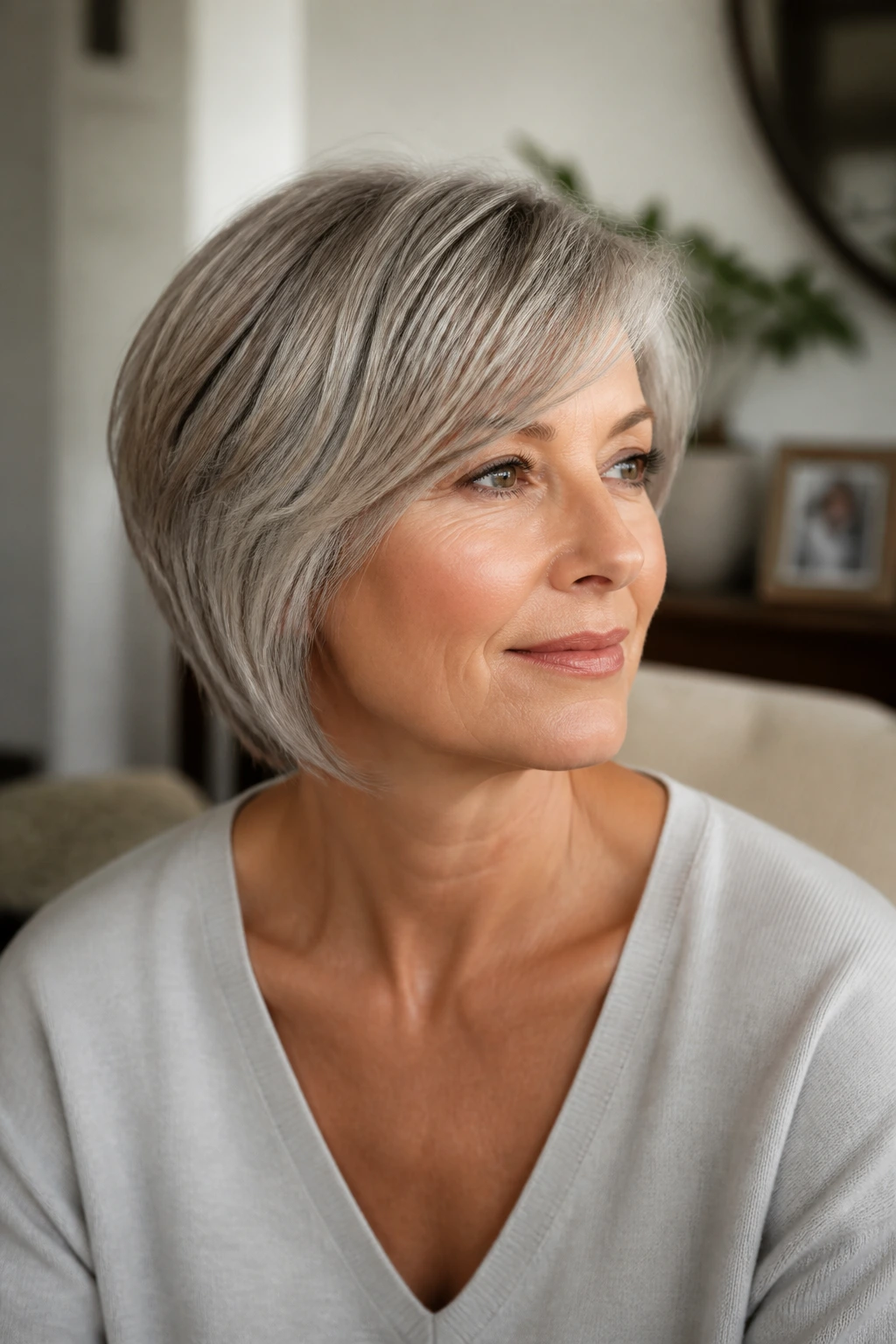
Pixies and crops usually need a trim every 4 to 6 weeks if you want them to keep the shape you paid for. Bobs can often go 6 to 8 weeks. Lobs and shoulder-length cuts are the most forgiving and may stretch to 8 to 12 weeks, depending on how quickly your hair grows and how precise the cut is at the start.
Between appointments, the goal is not perfection. The goal is controlled wear. A silk or satin pillowcase can help reduce bedhead, especially for short cuts that get mashed on one side. On longer styles, a loose clip or a low bun at night can keep the mid-lengths from snagging. If your crown goes flat, a little dry shampoo at the roots in the morning brings the shape back faster than re-wetting the whole head.
One more thing. If your hair starts feeling brittle, don’t wait until the next salon visit to change the routine. Use less heat, cut back on heavy clarifying washes, and add a leave-in to the ends. Hair often tells you it needs a smaller correction long before it needs a full haircut.
Variations and Adaptations to Try

The Fine-Hair Lift Version: Choose a blunt perimeter, keep layers low, and use mousse at the roots instead of heavy cream. Fine hair tends to look fuller when the line is clean and the ends are all at one length.
The Thick-Hair Weightless Version: Ask for internal weight removal under the surface, not choppy exterior layers. Thick hair behaves better when the perimeter stays solid and the bulk is reduced where it hides.
The Curly-Hair Shape Version: Have the cut shaped around the curl pattern, preferably dry or mostly dry. That keeps shrinkage honest and prevents the bob-or-shag surprise that shows up after the first wash.
The Glasses-Friendly Version: Keep fringe or face-framing pieces long enough to move around the frame. Jaw-length crops, French bobs, and collarbone cuts usually work well when the edges are clean.
The Gray-Hair Silver Version: Lean into crisp shapes — tapered pixies, blunt bobs, and neat lobs — because silver hair often shows cut lines beautifully. Avoid over-thinning, which can make the texture frizzier than it needs to be.
The Low-Heat Version: If you hate tools, choose styles with strong lines and minimal layering. Bobs, crops, and well-placed lobs dry better on their own than heavily layered cuts that need coaxing.
Common Mistakes That Make Easy Haircuts Harder

- Over-layering fine hair: The symptom is see-through ends and flat roots. The fix is a cleaner perimeter with only light internal texture.
- Cutting bangs too short for a cowlick: The fringe sticks up, splits apart, or needs a flat iron every morning. Ask for longer curtain pieces or side-swept fringe instead.
- Choosing a crop without a trim schedule: Short hair grows fast at the neckline. If you can’t book trims every 4 to 6 weeks, pick a longer shape.
- Using heavy product on fine or straight hair: The hair looks dirty by noon, especially at the crown. Use mousse or a light spray, not rich cream everywhere.
- Leaving thick hair one-length with no internal shaping: The silhouette turns into a triangle or a helmet. Ask for weight removal inside the cut so the ends can sit.
- Going too dramatic with an angle or asymmetry: Big angles look stylish in photos and needy in real life. Subtle shape lasts longer and asks for less work.
Frequently Asked Questions

Which haircut is easiest if I mostly air-dry my hair?
A chin-length bob, layered lob, or shoulder-length cut with low face-framing pieces usually gives the best air-dry results. If your hair is curly, the rounded curly bob or soft shag can also air-dry well, as long as the layers follow the natural pattern.
Is a pixie high maintenance after 50?
A pixie can be very easy day to day, but it does need frequent trims to keep the shape crisp. If you’re fine with salon visits every 4 to 6 weeks, it can be one of the least fussy styles to wear each morning.
Do layers make fine hair look thinner?
They can if the layers start too high or if the stylist removes too much weight from the ends. Fine hair usually does better with a blunt perimeter and only subtle internal layers or face framing placed low.
What should I ask for if I wear glasses?
Ask for lengths that clear the frames at the temples and don’t drop straight into the lenses. Jaw-length crops, French bobs, lobs, and curtain bangs that can move away from the face tend to work better than blunt fringe that sits hard against the glasses.
How often should I trim a bob or lob?
Most bobs look best every 6 to 8 weeks, while lobs can often stretch to 8 to 12. If the perimeter is blunt and you like a sharp shape, stay closer to the shorter end of that range.
Can gray hair handle a blunt cut, or does it need lots of layers?
Gray hair can look excellent in a blunt bob, lob, or pixie. It usually needs a clean outline more than lots of layers, especially if the texture is coarse or wiry.
What if my hair is thick and frizzy?
Choose a cut with interior weight removal, not a heavily layered surface. A clavicle-length cut, blunt bob with hidden layers, or controlled shag tends to sit better than a shape that’s thinned all over.
If I want to grow my hair out later, which cut is safest?
A layered lob or shoulder-length cut is the easiest starting point. Both can grow into longer shapes without looking awkward for weeks on end, which is where many short cuts start to feel trapped.
The Shape That Saves Time
The easiest haircut is not the shortest one. It’s the one that respects the way your hair actually behaves and still looks like it meant to be there after a rough night’s sleep. That’s the whole game. Shape first, fuss later — or better yet, no fuss at all.
If you’re deciding between cuts, think about what you’re willing to do on an ordinary morning. Not your best morning. The ordinary one. If the answer is “finger-comb and leave,” lean toward a bob, lob, crop, or pixie with a clean outline and a soft grow-out. If the answer is “I’ll spend five minutes with a brush,” you have even more room to play.
Bring that honesty to the chair. It usually gets you a much better haircut.