



Fine hair can make a bowl cut look either crisp and expensive or flat in all the wrong places. Round faces complicate it one step further: put the curve at the cheekbones and you get width; place it with a little vertical thought, and the same shape can make the face look longer, slimmer, and sharper around the jaw.
That’s the part most people miss. A bowl haircut on fine hair does not need more bulk. It needs better geometry. The blunt edge is useful because it fakes density, but the cut has to be handled like a frame, not a helmet. A softened nape, a side part, a bit of internal texture — those small choices change everything.
I have a soft spot for bowl cuts when they’re cut with restraint. The old mushroom shape is the wrong idea entirely. These 22 versions keep the clean line, then adjust the curve so it flatters round faces instead of amplifying them. Some are polished. Some are shaggy. A few are almost pixie-short. All of them are built to make fine strands look fuller without asking the hair to become something it isn’t.
Why These 22 Bowl Haircuts Earn Their Keep

-
They add the illusion of density: A blunt perimeter makes fine hair look thicker at the edge, which is where the eye reads fullness first.
-
They keep width away from the cheeks: The best versions steer the curve above the cheekbone or below the jaw, not straight across the face’s widest point.
-
They don’t demand endless styling: Shorter, shape-driven cuts usually dry faster and recover better after sleep, which matters when your hair collapses easily.
-
They can look soft instead of severe: Small changes — a side part, feathered fringe, a tapered nape — turn a retro shape into something modern.
-
They grow out in useful stages: A good bowl cut can slide into a bob, a pixie, or a rounded crop without looking like a mistake halfway through.
1. Soft Micro Bowl
The soft micro bowl is the gentlest place to start. The fringe sits short, usually somewhere between the brow and a half-inch above it, while the sides curve just enough to suggest the classic shape without making the head look boxed in. On fine hair, that shorter perimeter creates the impression of density fast. On a round face, the trick is keeping the curve high enough that it doesn’t settle into the cheeks.
Why It Works on Fine Hair
The cut looks fuller because the eye sees one clean line instead of wispy ends. That bluntness is doing real work here. If the hair falls flat at the roots by lunch, a micro bowl gives it a built-in outline that still reads intentional.
Ask for softness around the ears and a little lift through the crown. That tiny bit of height matters more than people think. It keeps the shape from sitting like a cap.
- Keep the fringe narrow, not wide.
- Leave the temples a touch longer than the center.
- Avoid heavy thinning at the perimeter.
- Use a pea-sized amount of lightweight cream, not oily serum.
Best move: blow-dry the roots forward, then brush the front slightly to the side so the cut doesn’t land too square.
2. Tapered French Bowl
This is the bowl cut for someone who likes a neat line but hates looking over-edited. The French version keeps the arc, then tapers the nape and softens the side panels so the shape feels light rather than blocky. On fine hair, that taper matters because it removes the visual heaviness that can make thin ends look stringy.
Round faces usually benefit from the slightly longer temple pieces. They create a narrow vertical frame and keep attention moving down the face instead of across it. I like this version because it looks deliberate even when it’s a little mussed.
The key is restraint. Don’t let the fringe get too wide, and don’t let the curve sit exactly at cheek level. That’s the trap.
Stylist note: ask for a clean outline with internal softness, not a feathered mess. Those are two very different things.
3. Chin-Skimming Textured Bowl
Why does chin length matter so much here? Because it gives the face a longer edge to follow. A chin-skimming bowl takes the classic rounded silhouette and stretches it down just enough to keep roundness from taking over. On fine hair, that extra length also helps the ends look less sparse.
The texture should live inside the cut, not all over it. I mean that literally. You want enough movement to stop the style from feeling stiff, but not so much that the perimeter disappears. The best version has a smooth outer line with a little air underneath.
How to Style It
Work a lightweight mousse into damp roots, then blow-dry with a small round brush. Direct the front pieces slightly under, not curled in hard. If the ends flip out, the face reads wider. If they bend softly inward, the cut looks cleaner and more vertical.
A narrow flat iron pass at the fringe can help too, but keep it subtle. This is a shape cut first. Styling should support that, not fight it.
4. Asymmetrical Bowl
The asymmetrical bowl solves one of the oldest bowl-cut problems: perfect symmetry can look too round on a round face. A slight imbalance — one side a half-inch to an inch longer, or one side tucked while the other falls forward — breaks the circle and gives the eye somewhere to go.
That tiny offset is especially useful for fine hair because it makes the cut feel less like a single block. It reads more like a designed shape. More personality, less pudding-bowl.
I’d keep the asymmetry controlled, not dramatic. A wild angle can look chic in photos and annoying in daily life. A quiet difference in length usually does the job better.
- Choose a side part that sits off-center by about 1 to 1.5 inches.
- Keep the shorter side close to the ear, not clipped away.
- Leave the longer side grazing the jaw or just below it.
- Use a light mist of texturizing spray to keep the longer side from clumping.
5. Curved Side-Swept Bowl
This version works because the fringe doesn’t sit straight across the forehead. It sweeps. That shift changes the whole mood. Instead of a hard ring around the face, you get a soft curve that opens one side and narrows the other, which is exactly what round faces tend to need.
Fine hair benefits from the sweep because it keeps the front from looking too heavy. The side-swept motion gives the illusion of movement, even when the hair itself is straight and slippery. I like this cut on people whose hair lies flat at the crown but still has a little bend in the front.
The best styling move is simple: blow-dry the front in the opposite direction first, then guide it back across with a brush. That creates a bend without a crease. Harsh part lines are the enemy here.
This one looks better a bit soft around the edges. Too polished, and it loses the charm.
6. Shaggy Bowl with Choppy Ends

A shaggy bowl is what happens when the classic shape decides to loosen its tie. The base line stays rounded, but the bottom inch or so gets broken up with choppy ends. That’s helpful for fine hair because those ends move instead of hanging like a single flat sheet.
Compared with a traditional blunt bowl, this version feels less severe and less dated. It also gives round faces a little more vertical energy. The movement pulls the eye downward, which is what you want when the cheeks already do a lot of talking.
The danger is over-texturizing. Too much choppiness and the cut turns skinny at the edges. You still need weight at the perimeter. The chop should add air, not erase the shape.
Who it suits: fine hair with a slight wave, and anyone who wants the bowl idea without the graphic finish.
7. Layered Mushroom Cut
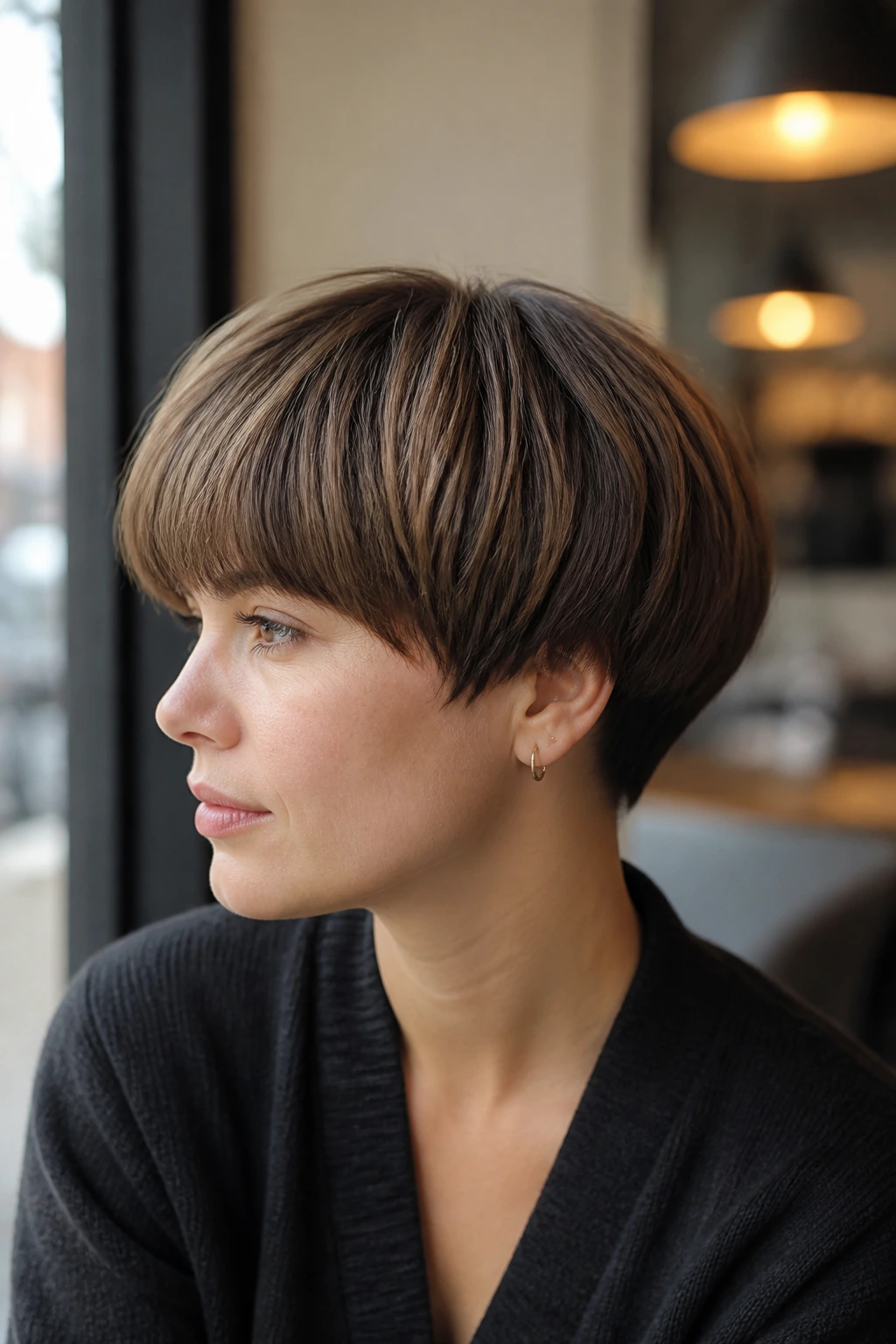
The word “mushroom” can scare people off, but the updated version is smarter than the old one. The outer line remains rounded, yet the inside is layered just enough to remove bulk from the crown and upper sides. That’s a good trade for fine hair because it prevents the top from looking like a single dense helmet.
At the Chair
Tell the stylist you want a visible outline with hidden movement. That sentence matters. If they layer the outside too much, the silhouette collapses and the hair starts looking patchy.
Why It Flattens Roundness
The internal layers stop the cut from pushing outward at the cheeks. The shape still reads soft, but it doesn’t spread. That’s the whole game with round faces. You want curve, not width.
A little root lift spray at the crown helps too. Without it, the top can sink and the side curve becomes too round. With it, the shape stands up enough to feel current.
8. Pixie Bowl Hybrid
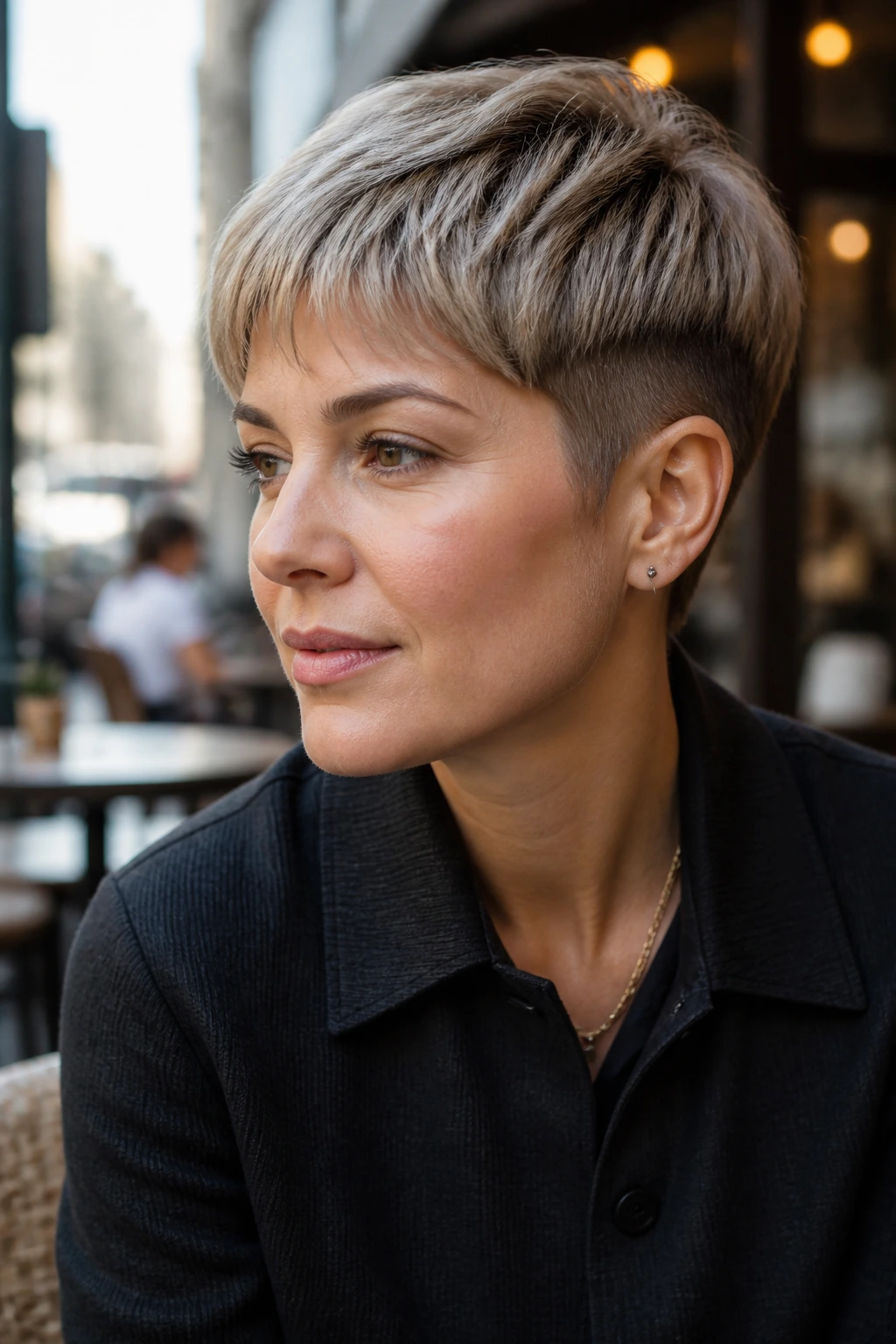
This is the shortest version on the list, and that’s exactly why it works. A pixie bowl hybrid keeps the bowl outline up top but trims the sides and back much closer, so the face opens up and the hair feels denser where it matters. Fine hair usually looks better short when it’s cut with clean lines instead of scattered layers.
Round faces get a benefit from the extra lift at the crown. Even half an inch of height can change the whole read of the face. The shape becomes more about vertical line than fullness around the cheeks.
I’d call this a confident cut. It asks for maintenance, and it shows every missed trim. But when it’s fresh, it’s sharp in a way that feels modern, not costume-like.
If you want a low-effort shape, skip it. If you like clear edges and quick styling, it earns its place fast.
9. Undercut Bowl
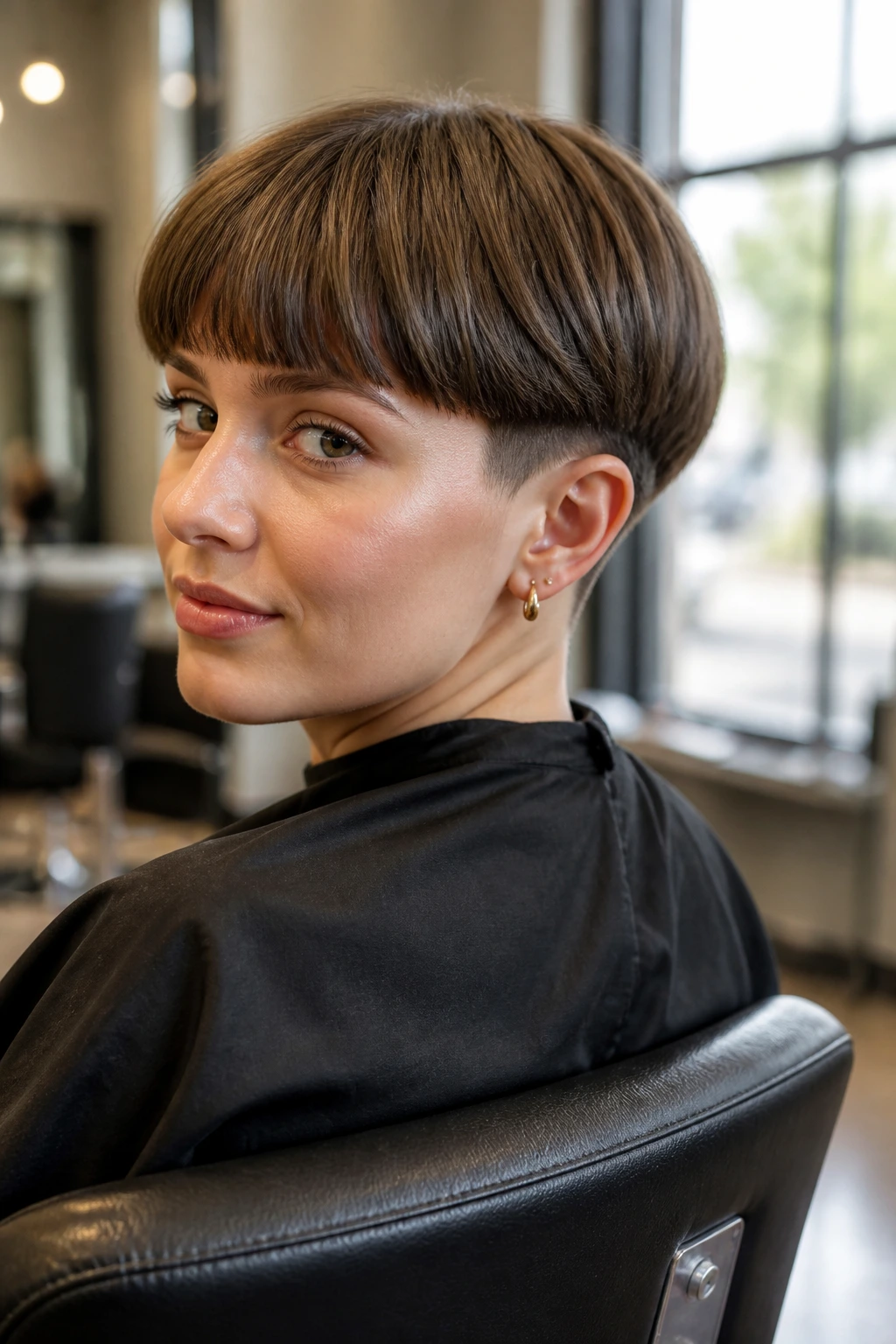
Can an undercut help fine hair? Yes — but only in the right dose. A narrow undercut at the nape or lower sides removes bulk that would otherwise make the top puff or splay out. On fine hair that still has a lot of density, that can make the bowl line sit cleaner and keep the shape from widening at the jaw.
What to Tell the Stylist
Ask for the undercut to stay hidden unless you wear the hair up. That keeps the shape soft from the outside. If the shaved area is too broad, fine hair can start looking thin in motion, especially at the back.
Round faces usually do better when the top keeps some length over the ears and at the temples. That little curtain of hair acts like a frame. Without it, the cut can feel too exposed.
This is the version for someone who wants contrast. Smooth top, cleaner sides, more edge.
10. Sleek Glass Bowl
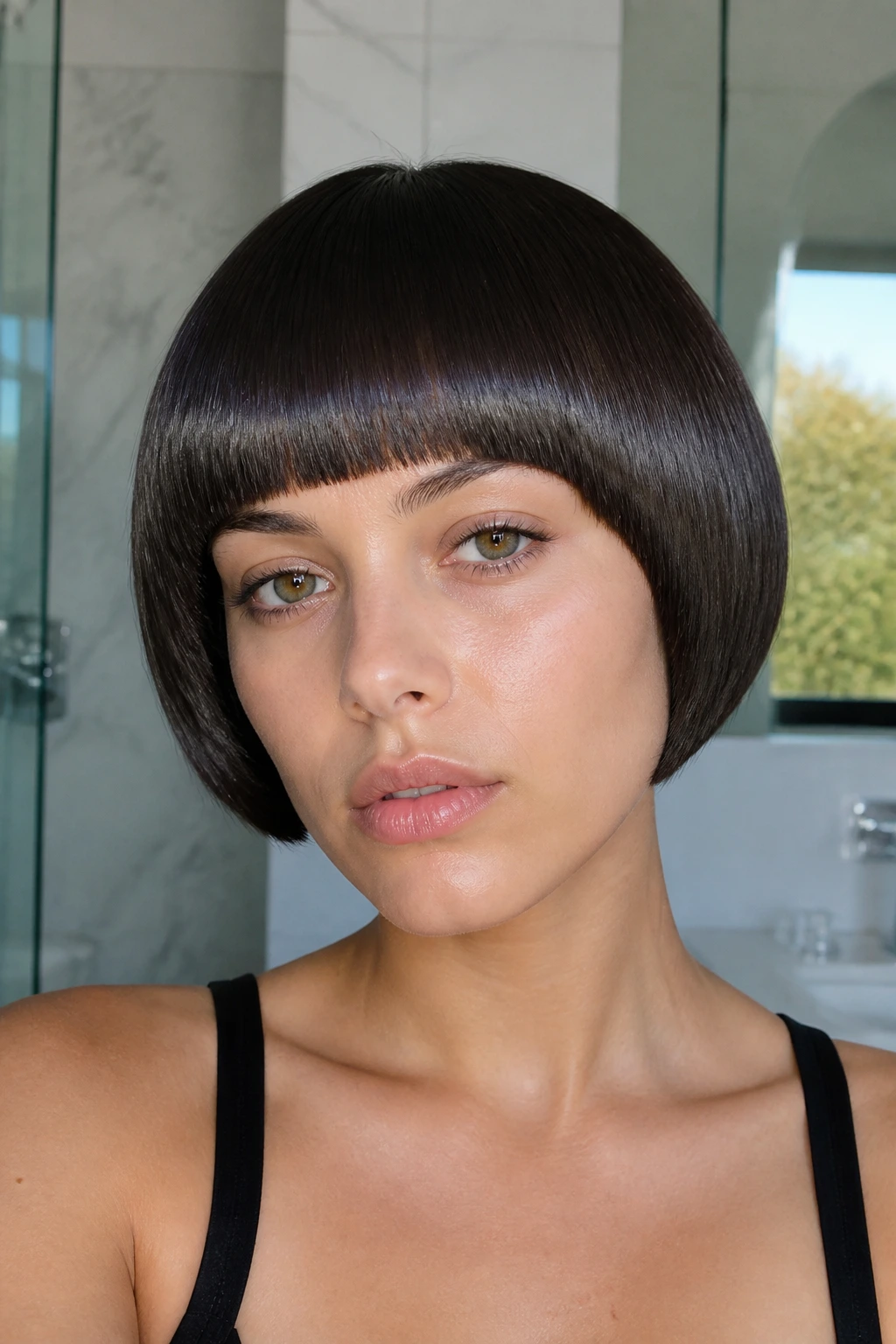
When fine hair is naturally straight, the sleek bowl is a strong move. The shine does some of the visual lifting, and the crisp outline gives the hair a denser read than a soft, air-dried shape would. The key is not to overdo the shine. You want glassy, not greasy.
Round faces need the front line to be placed with care. If the fringe sits too high, the face opens wider than it should. If it drops a little lower, around the brow or just below, the cut gives the face a better vertical edge.
- Use a concentrator nozzle on the dryer.
- Finish with a flat brush, not a big round one.
- Keep serum only on the mids and ends.
- Avoid heavy oils near the roots.
A sleeker finish is best when the cut itself is precise. Messy styling muddies the line, and this is one of the few bowl versions that really depends on clean geometry.
11. Feathered Fringe Bowl

The feathered fringe bowl softens the front without losing the bowl shape behind it. That matters for round faces, because a blunt line from temple to temple can be too much. Feathering the fringe at the edges gives the forehead room to breathe while still holding a defined perimeter.
Fine hair likes this version because the fringe doesn’t need to be thick to work. It only needs to be narrow and lightly broken at the ends. A few softer pieces at the temples help the whole cut feel less heavy on the face.
I prefer feathering only the fringe zone and not the whole outline. Once the perimeter gets too broken up, you lose the thickness trick that makes fine hair look fuller. The bowl cut stops being a bowl cut at that point.
This one is especially good if you wear glasses. The softer front keeps the frames from fighting the hairline.
12. Center-Part Bowl with Long Sides
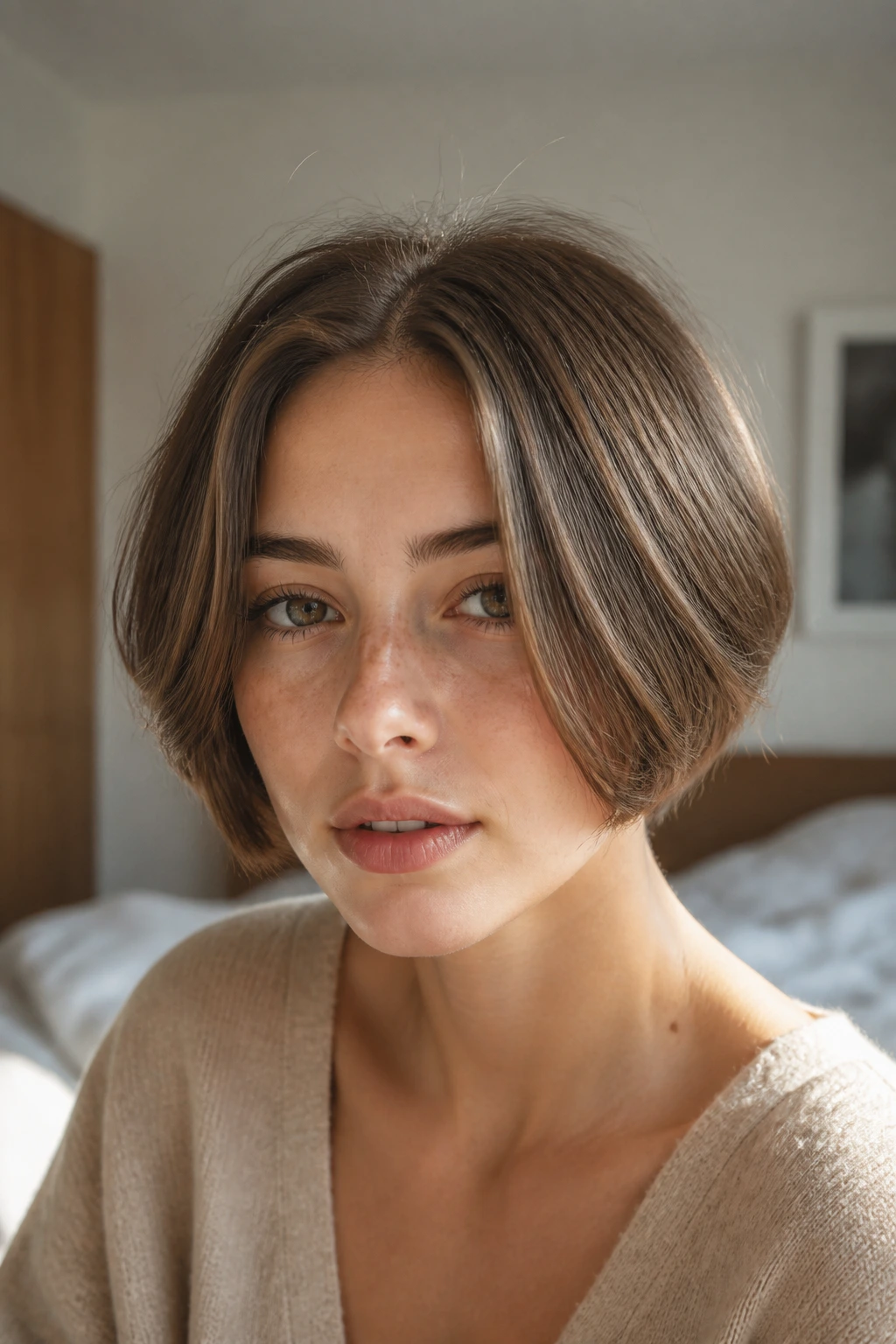
A center part is not the enemy here. It becomes a problem only when the sides are too short and the part exposes the widest part of the face. Keep the front pieces long enough to fall past the cheekbone, and the center part can actually help a round face look longer and calmer.
Fine hair needs a little more density at the front for this to work. If the hairline is sparse, the center part can show scalp faster than you’d like. But when the ends are clean and the shape is blunt, it’s a strong, tidy look.
I’d choose this over a side-part version if your face already has symmetry and you want a more balanced line. It feels modern in a quiet way. Not flashy. Just clean.
The long sides are doing the real job. The part is only the frame.
13. Rounded Bob-Bowl
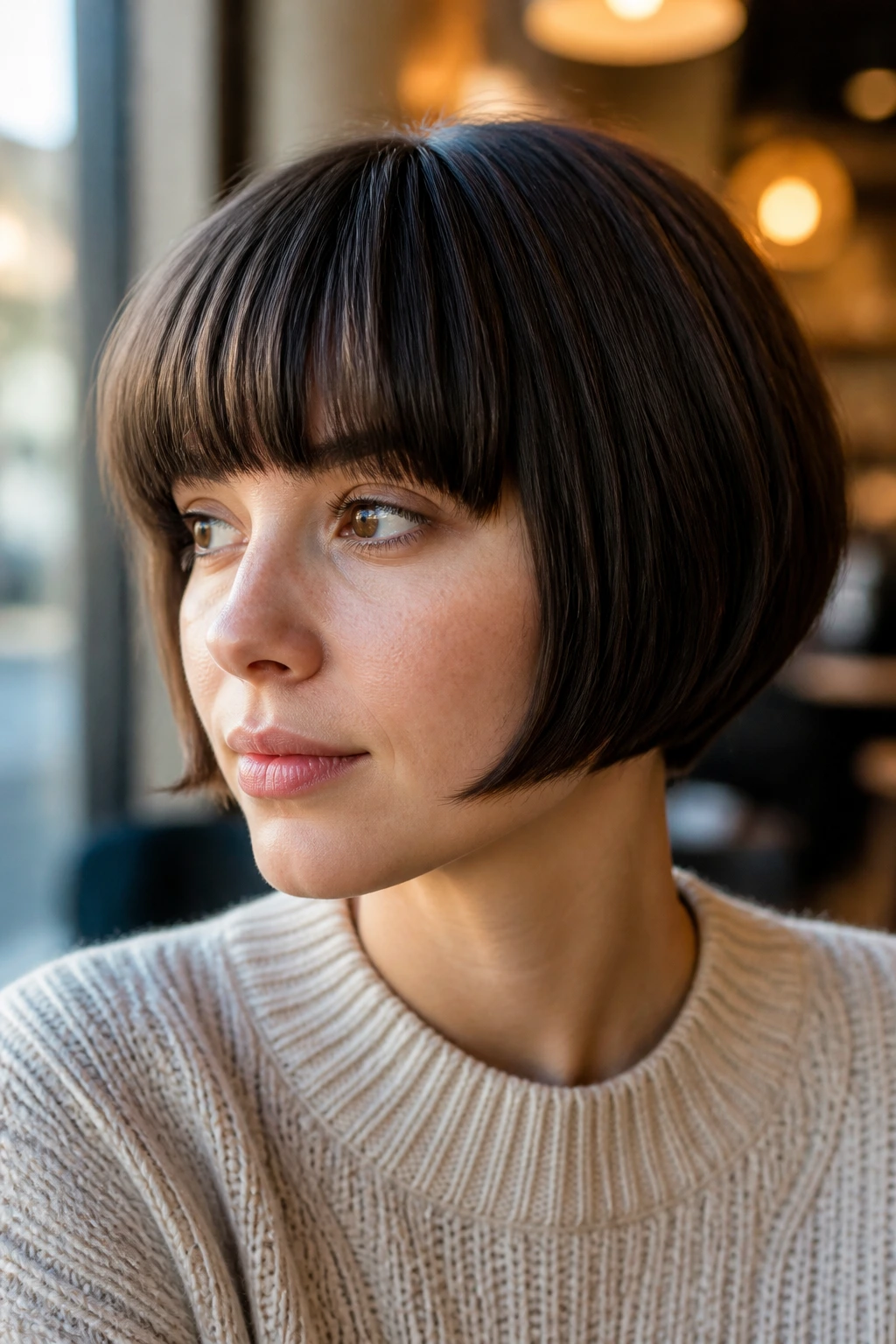
Is it a bob or a bowl? Yes. That’s the whole appeal. The rounded bob-bowl sits in the space between a classic bob and a more graphic bowl cut, which makes it easier to wear if you’re cautious about going too short or too severe.
For fine hair, the bob-like length creates enough weight to keep the outline stable. For round faces, the slightly longer front pieces help drag the eye downward. The result is less theatrical than a pure bowl and easier to grow out if you change your mind.
Best Request at the Salon
Ask for a blunt baseline with a soft arc and a little extra length at the front. That gives the shape room to breathe. If the stylist makes it too even all the way around, the cut can mushroom out at the cheeks.
This is the bowl cut for someone who wants the idea, not the drama.
14. Wavy Bowl

Wavy fine hair needs room. If the cut is too short or too tight, the wave can kick out at odd angles and make the sides look wider. Give the shape a little length, and the wave starts working for you instead of against you. The curve becomes softer, and the hair gets a bit of built-in lift.
This version looks best when the wave pattern is respected. Don’t iron it into submission. A light mousse, a diffuser, or even a finger-dry finish will keep the bend alive without puffing the shape into a triangle.
- Cut it a touch longer than you think.
- Keep the front pieces below the cheekbone.
- Avoid heavy layers that split the wave.
- Let the hair dry halfway before touching it.
A wavy bowl has a little attitude, but it’s the relaxed kind. The shape still reads as a bowl; it just doesn’t shout about it.
15. Airy Bowl with Internal Layers
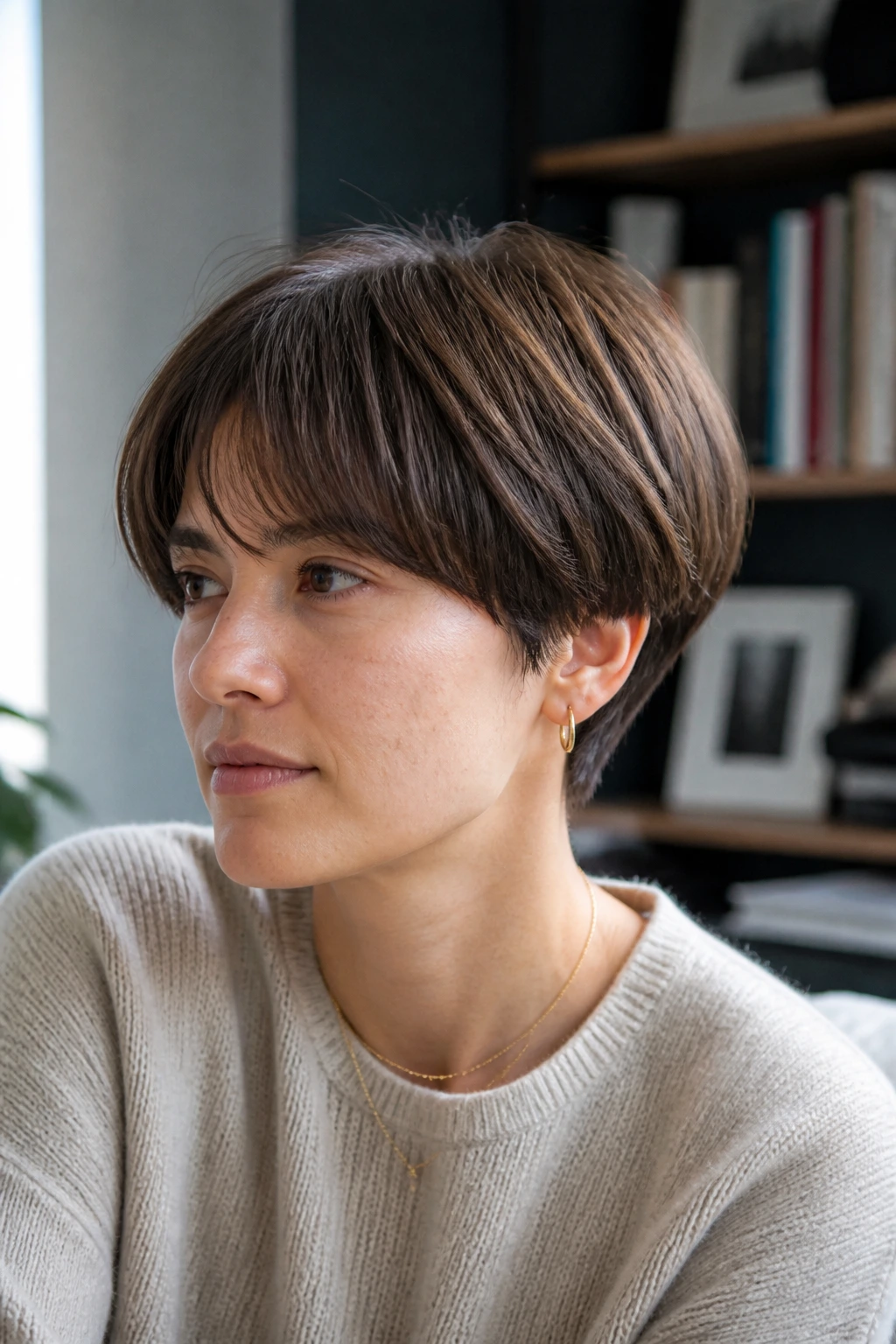
The airy bowl is one of my favorites for fine hair because it solves the density problem without cheating the outline. The outside shape stays clean and curved, but the inside gets lightly layered so the crown doesn’t flatten into a single sheet. That hidden movement makes a big difference.
The Trick
Keep the outer edge blunt enough to read as a bowl. Then ask for invisible layering through the interior, especially near the crown and upper sides. That gives the hair room to lift at the root while the perimeter still looks full.
When to Choose It
Pick this if your hair collapses by lunch but you don’t want a short pixie. The cut keeps some softness around the face, which helps round faces stay balanced. The longer you can keep the curve away from the cheeks, the better it reads.
This one is quietly smart. Not flashy, just well thought out.
16. Blunt Ear-Length Bowl
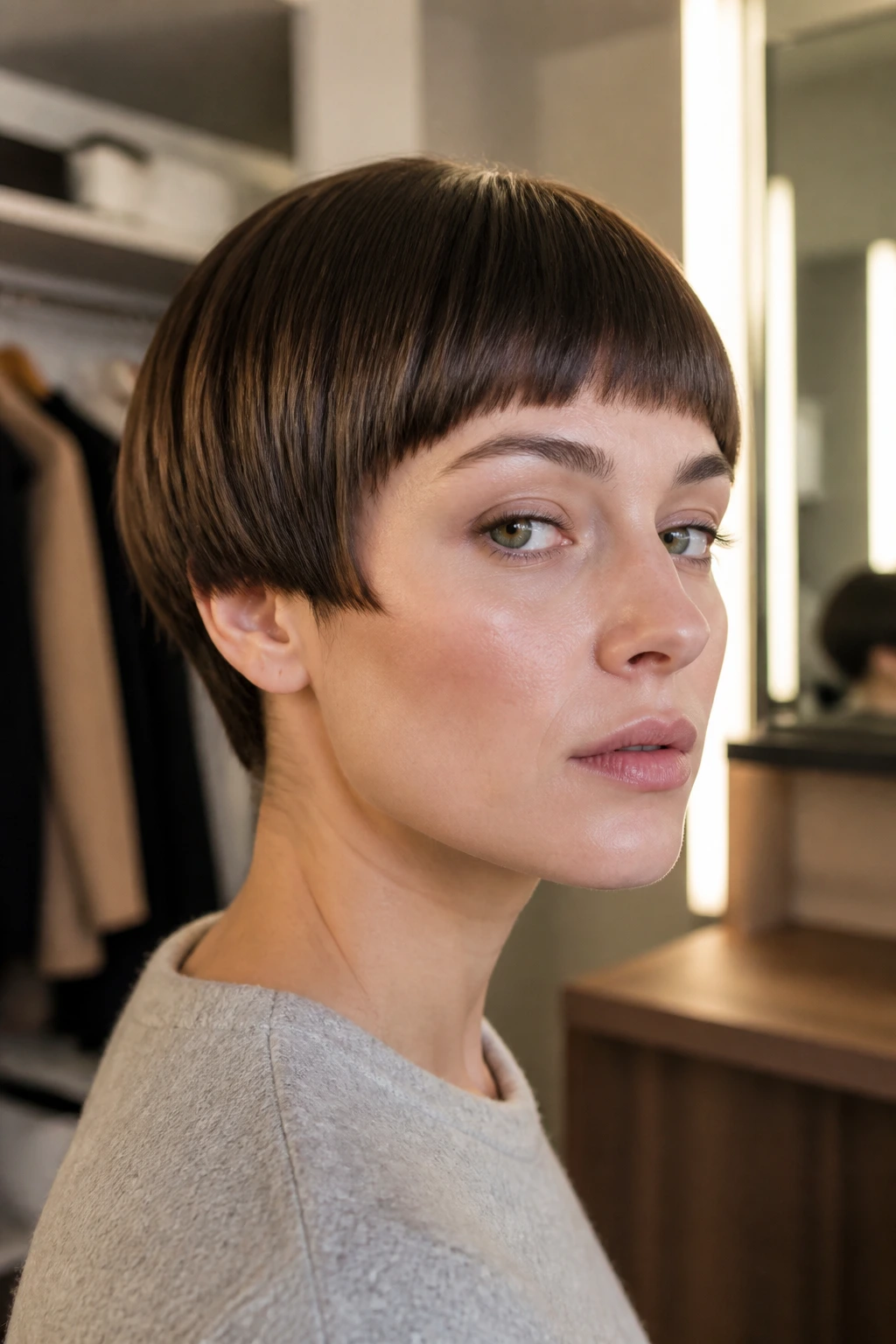
Short bowls can be brilliant on fine hair, and this version proves it. The ear-length perimeter makes the ends look dense, and the blunt line gives the cut a strong outline even if the hair itself is lightweight. There’s nowhere for the shape to hide, which is exactly why it works.
Round faces do need caution here. Keep the fringe narrow and avoid a broad, round shell across the cheeks. The best ear-length bowl has a little lift at the crown and a tighter taper around the nape so it doesn’t balloon outward.
This is not a forgiving haircut if you ignore the trim schedule. It grows out fast and shows every extra millimeter. But when you want definition, it’s hard to beat.
I’d choose this if you like crisp edges and don’t mind staying on top of upkeep.
17. Jaw-Grazing Bowl with Tapered Nape
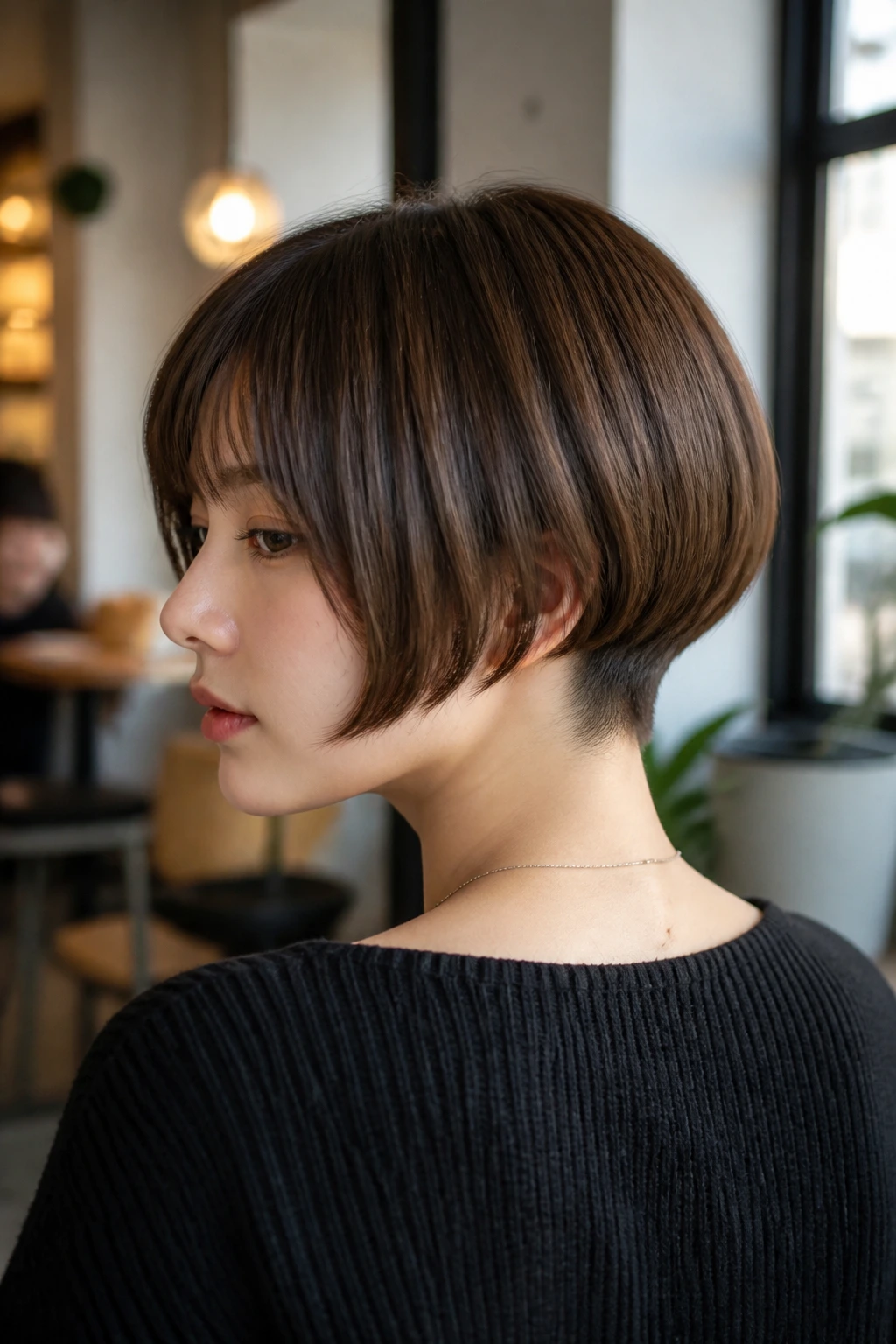
Why does jaw length flatter round faces so often? Because the line lands below the widest part of the cheeks and gives the face a longer frame. A jaw-grazing bowl uses that idea and adds a tapered nape so the back doesn’t push out underneath the line.
Fine hair benefits from the extra length too. You get enough hair in the perimeter to make the ends look thicker, but not so much that the cut starts to feel heavy. The nape taper keeps the whole shape from fanning out when you turn your head.
If your hair is very fine at the temples, ask for the sides to stay slightly longer there than at the back. That tiny adjustment keeps the face from feeling boxed in.
This version is a good middle ground. Strong shape, less drama.
18. Side-Part Sculpted Bowl
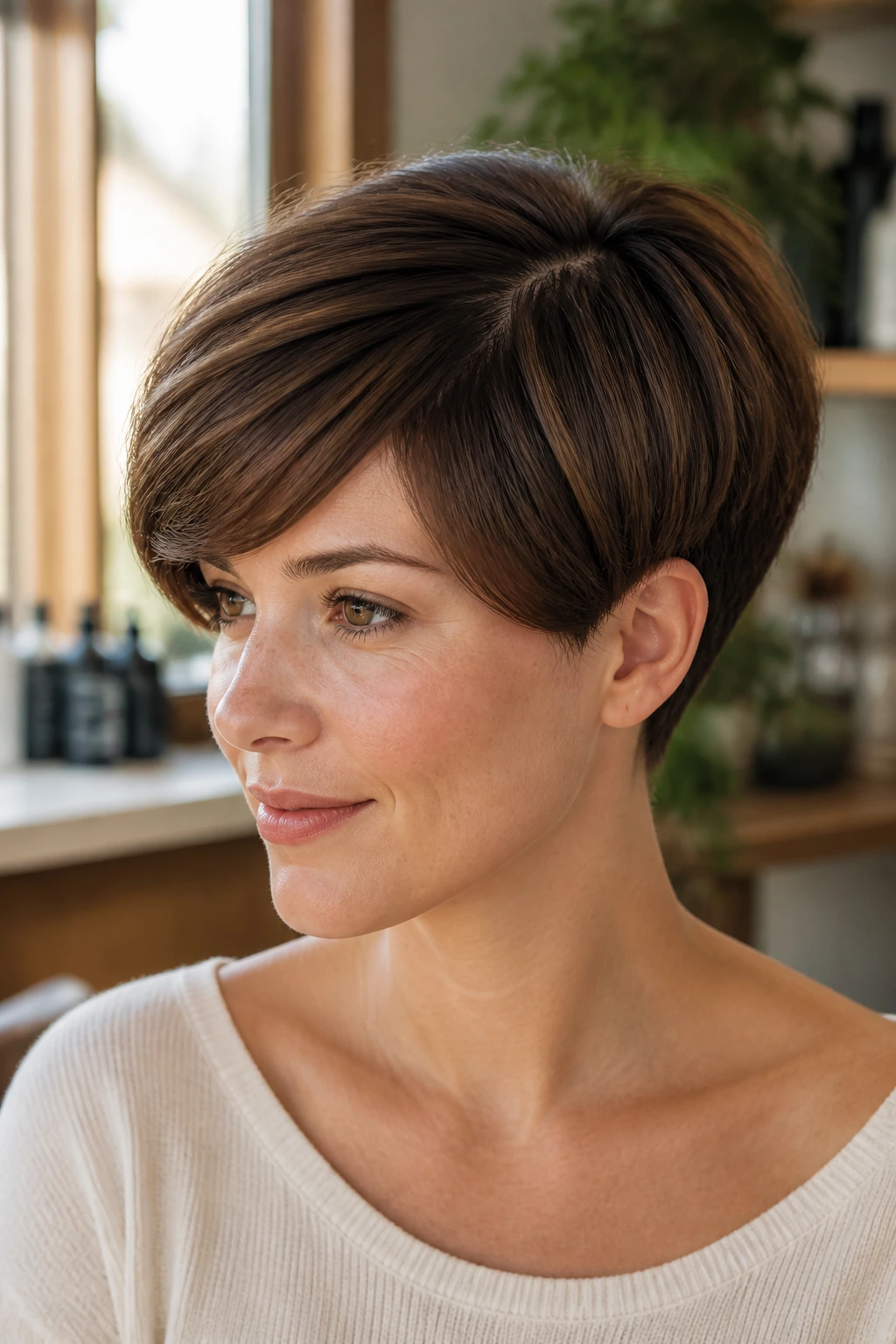
If your crown is flat, a side part can do more than a product ever will. The sculpted side-part bowl uses that lift to break the roundness of the face and create a diagonal line across the front. Diagonals are your friend here. They pull the eye up and away.
What Makes It Work
The side part should sit deliberate, not accidental. About 1 to 1.5 inches off center is usually enough. Then the front is guided across the forehead with a soft bend rather than a stiff sweep.
- Lift the roots at the part with mousse or root spray.
- Blow-dry the top in the opposite direction first.
- Smooth the front with a brush, not a flat iron if you can avoid it.
- Keep the sides close enough to the face to frame, not widen.
The sculpted version looks best when it still feels touchable. Too much product and the hair starts acting like a helmet. Too little and the part collapses. There’s a middle ground, and it’s worth finding.
19. Soft Curved Bowl with Tucked Sides

The tucked-side version has a neat, polished feel that works better than you’d expect on round faces. One side can sit behind the ear while the other curves forward, which opens the cheekbone and gives the face more shape. It’s a small move, but haircuts live on small moves.
Fine hair tends to behave well in this shape because the tuck creates a visible shift without needing extra layers. The cut still looks full because the perimeter stays clean. It just stops trying to hug the face equally on both sides.
I like this one for people who want something wearable in a work setting. It doesn’t scream fashion-y, but it still has shape. The line around the cheek is soft enough to flatter, not flatten.
A little bend at the ends helps. Straight and tucked can look severe. Soft and tucked looks chosen.
20. Chin-Length Bowl with Face-Framing Pieces
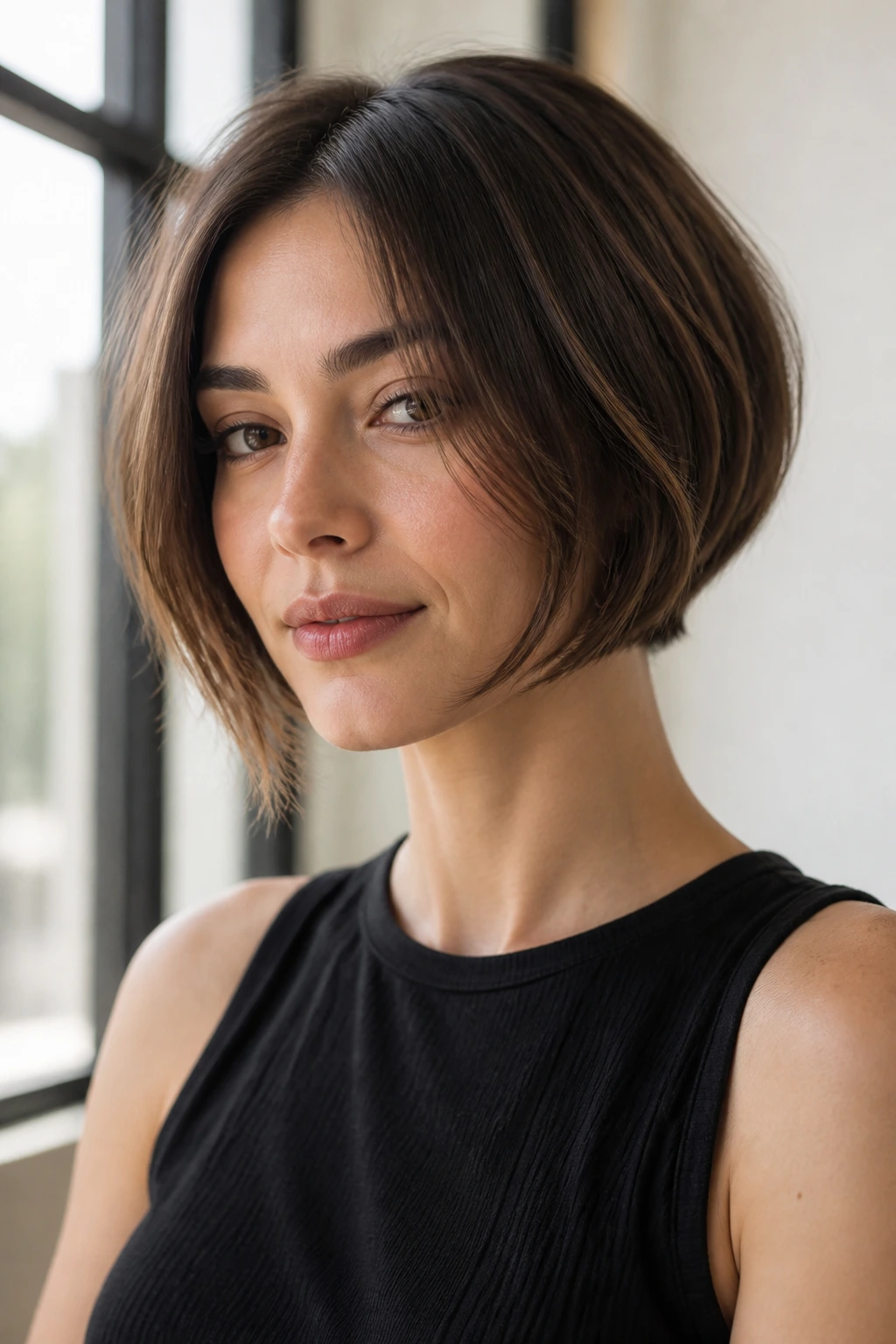
A chin-length bowl with face-framing pieces is one of the safest options if you’re nervous about going too short. The front lands around the chin, which is long enough to stretch a round face and still short enough to keep the shape crisp. The face-framing bits break up the bowl edge so it doesn’t feel like a hard ring.
This version works especially well on fine hair because the chin length carries more visual weight than an ear-length cut. The ends look fuller. The face-framing pieces give motion without sacrificing outline.
I’d pick this over a blunt all-around bowl if your forehead is short or if you hate the look of heavy bangs. The front can be softer while the back keeps the shape grounded.
It’s the kind of cut that grows into a useful bob instead of an awkward halfway point.
21. Wispy Bowl with Micro Bangs
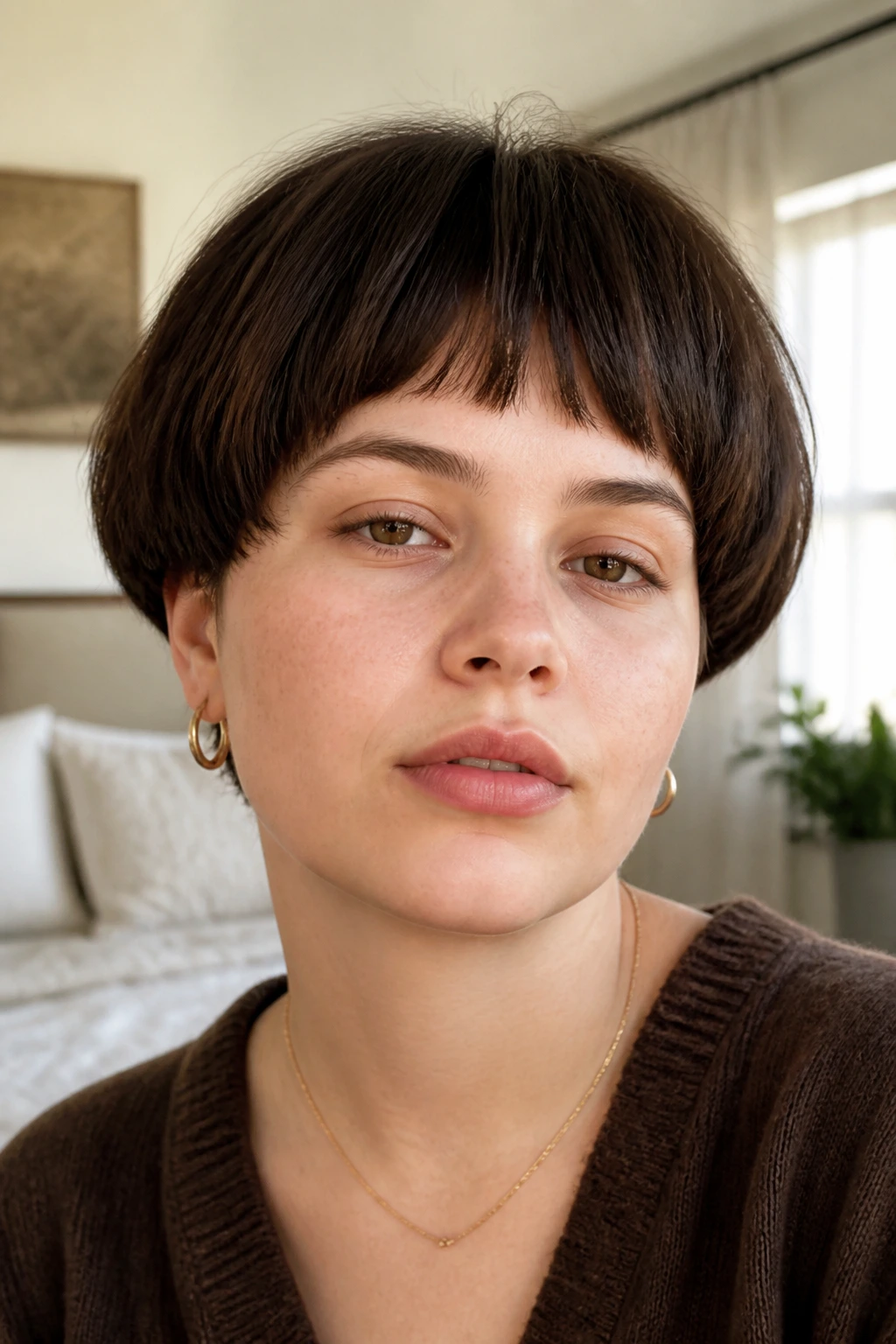
Can micro bangs work on fine hair? They can, if the line is narrow enough. The wispy bowl keeps the fringe short and airy, then softens the edge so it doesn’t feel like a hard strip across the forehead. For round faces, the width of the fringe matters more than the length. Keep it narrow, and the face stays open.
Fine hair can actually help this version because wispy bangs don’t need much density to look intentional. But they do need control. A broad, thin fringe can make the top look sparse and the face look wider at once. That’s a bad deal.
What to Watch For
Cowlicks at the hairline can push the fringe apart, so ask about that before the cut starts. If the stylist ignores the growth pattern, you’ll spend a lot of time fighting it with a blow-dryer. Better to shape around it from the start.
This is a strong choice if you like a bit of edge without a heavy block of hair on your forehead.
22. Grown-Out Bowl with Soft Volume

The best version of a bowl cut is sometimes the one that’s been worn for a few weeks and softened by life. A grown-out bowl with soft volume keeps the outline visible, but the edges relax just enough that the shape stops feeling graphic. For fine hair and round faces, that softness can be a blessing. It removes the hard circle at the cheeks and lets the cut sit more like a rounded crop or a short bob.
The trick is not to let it grow so far that it loses all structure. You still want the outline, just not the fresh-from-the-salon severity. A little root lift, a little tuck behind the ears, and a soft side part can keep it looking deliberate.
This is the bowl cut for people who like a shape that changes gracefully. Not every haircut does that. This one can.
Why Bowl Shapes Behave Differently on Fine Hair and Round Faces
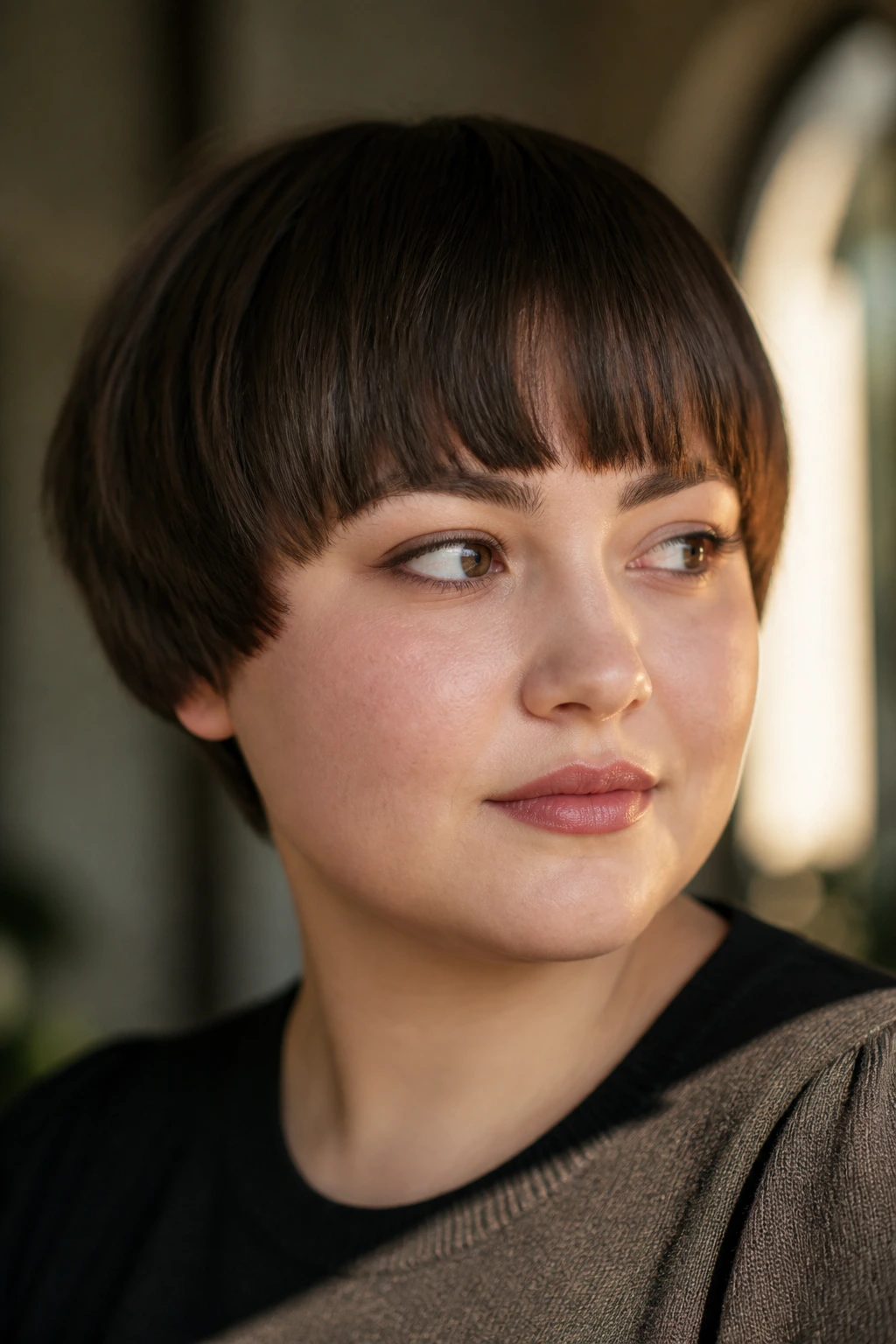
Fine hair and round faces ask for opposite kinds of help, which is why bowl cuts can go wrong so quickly. Fine strands need an outline that makes them look thicker. Round faces need lines that lengthen rather than spread. Put those two needs together, and the job becomes one of placement, not just length.
The best bowl cuts solve the problem by moving the curve. Above the cheekbone works. Below the jaw works. Sitting right on the widest part of the face usually does not. That middle zone is where the shape swells visually, and the roundness starts to win.
Where the Curve Should Sit
If you want more softness, keep the curve slightly above the cheeks and let the front taper toward the temples. If you want more length, take the front lower so it brushes the chin or jaw. The worst place for a blunt bowl line is the exact cheek level. It’s too easy for the face and hair to repeat the same circle.
Why the Perimeter Matters
Fine hair can look wispy when the ends are thinned too much. A blunt perimeter gives it body back. That’s why so many of these cuts hold onto a clean outline even when they add softness elsewhere. The shape does the volume work for you.
How to Ask for the Cut So the Curves Land in the Right Place
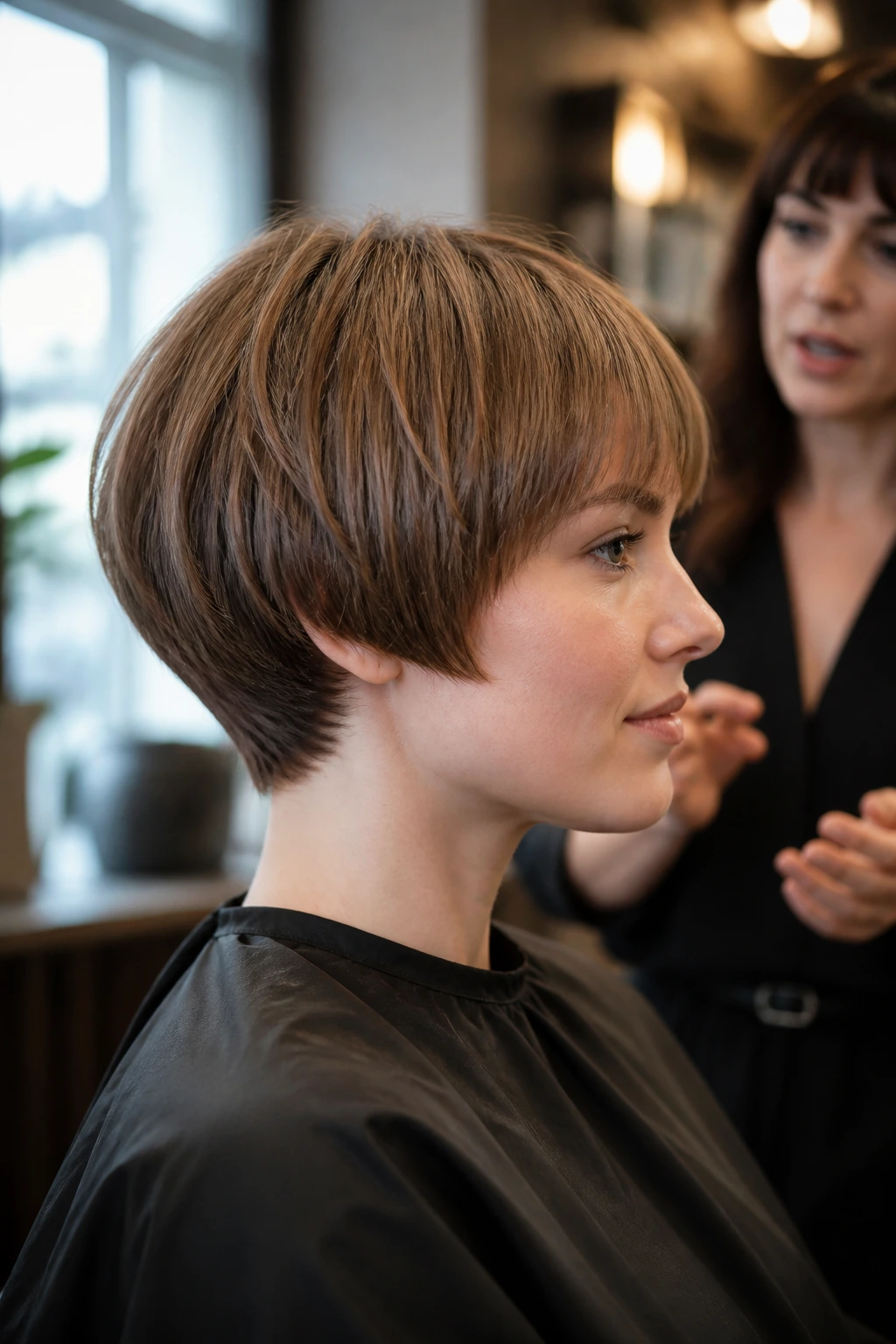
Most bad bowl cuts start in the chair, not in the mirror at home. The fix is to be annoyingly specific. Tell the stylist you want the outline kept blunt, but the interior softened so the hair doesn’t puff at the sides. That one sentence already gets you closer.
Bring photos from the front and side. The side view matters more than people think because that’s where the cheek width either gets controlled or exaggerated. If the photo only shows the front, the most important angle is missing.
- Ask for the front to hit above, at, or below the cheekbone on purpose.
- Request a slightly longer temple area if your face is very round.
- Keep the nape tapered if the back tends to fan out.
- Mention any cowlicks at the forehead or crown before cutting starts.
- Ask for minimal thinning at the perimeter; fine hair often needs that weight.
A good bowl cut is a conversation about placement. Not just shape. Placement.
Tools and Products That Keep the Shape Clean
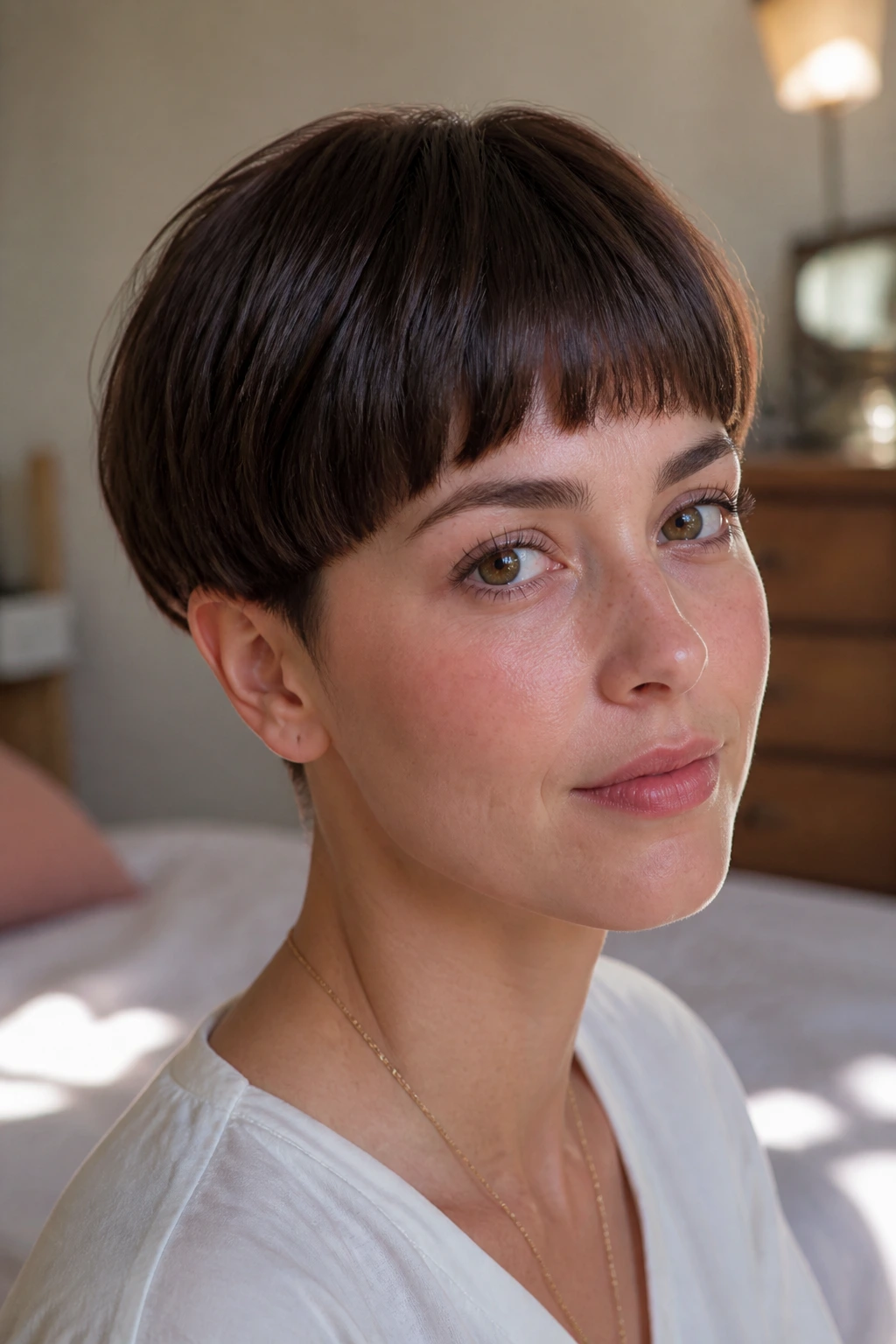
You do not need a bathroom full of products. You need the right few, used with some restraint.
- Blow-dryer with concentrator nozzle: Directs air where you need lift and keeps the curve from frizzing out.
- Small round brush, 1 to 1.5 inches: Good for shaping the front and giving the fringe a slight bend.
- Vent brush or paddle brush: Useful for quick smoothing on days when you don’t want a polished finish.
- Lightweight mousse: Adds root support without making fine hair sticky or stiff.
- Root-lift spray: Best at the crown and part line, where flatness shows first.
- Heat protectant spray: Non-negotiable if you use a dryer or flat iron on the fringe.
- Texturizing spray: Helps choppy or shaggy versions keep movement without collapsing.
- Fine-tooth comb: Good for clean parts and neat fringe direction.
- Satin pillowcase or bonnet: Helps the front pieces and bangs keep their shape overnight.
How to Style Bowl Haircuts on Round Faces Without Letting Them Puff Out
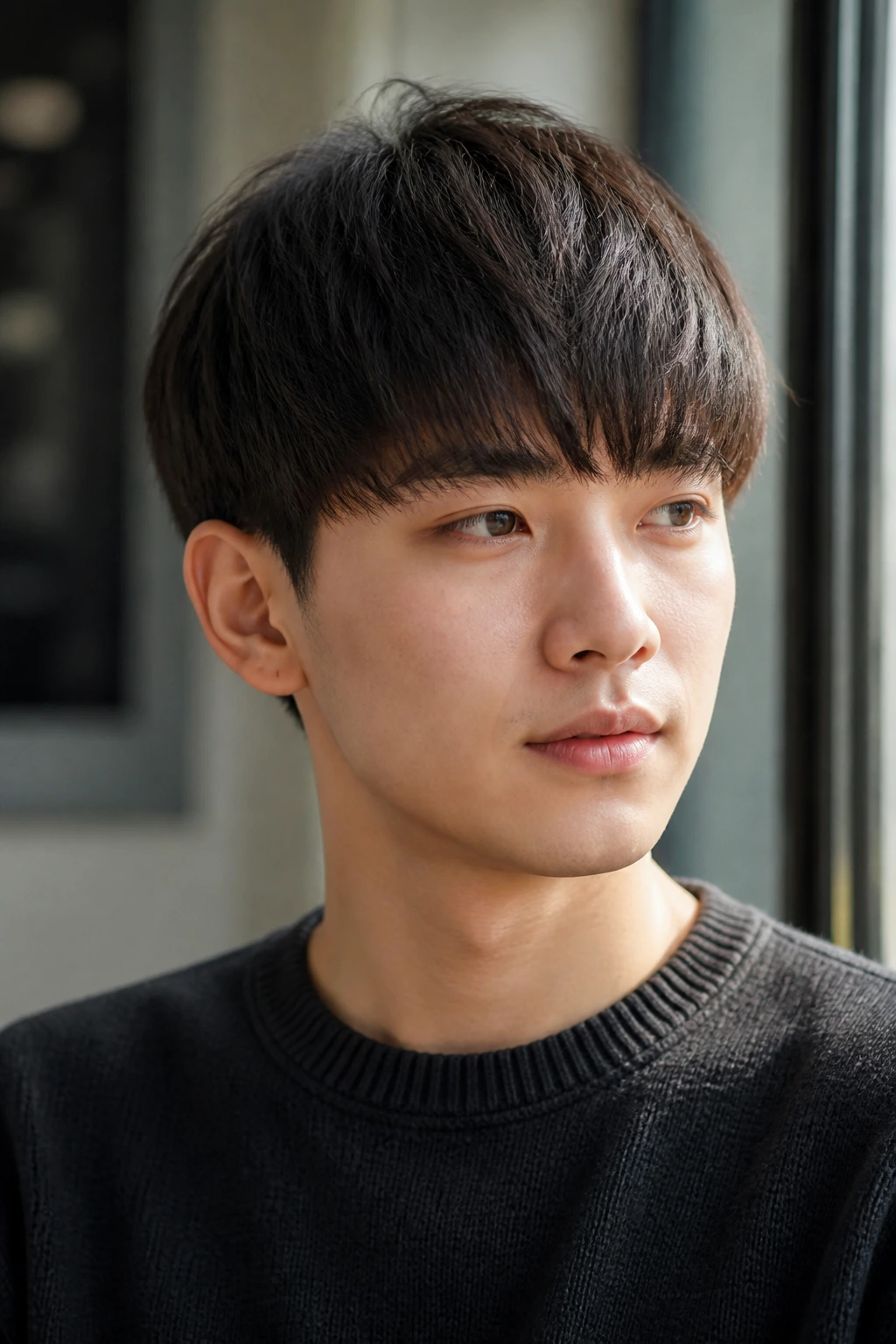
The styling goal is simple: build height where the eye should travel upward, and avoid width where the face is already fullest. That usually means starting at the roots, not the ends. If the crown is flat, the whole cut droops into the cheeks. If the crown stands up a little, the face looks longer.
Root Lift: Apply mousse or root spray to damp hair at the crown and along the part. Work it in with your fingers, not a heavy comb, so you don’t flatten it before the dryer even starts.
Direction: Blow-dry the roots in the opposite direction of the part first. That gives lift without teasing. Then sweep the front back into place with a brush or your hand.
Curve: Shape the ends under just enough to keep the outline neat. If you curl them too hard, the cut turns rounder and wider. A soft bend is the sweet spot.
Finish: Use a tiny amount of cream or serum only on the mids and ends. If it touches the roots, the style can collapse by noon. Fine hair shows product overload fast. Very fast.
Common Mistakes That Make a Bowl Cut Widen the Face
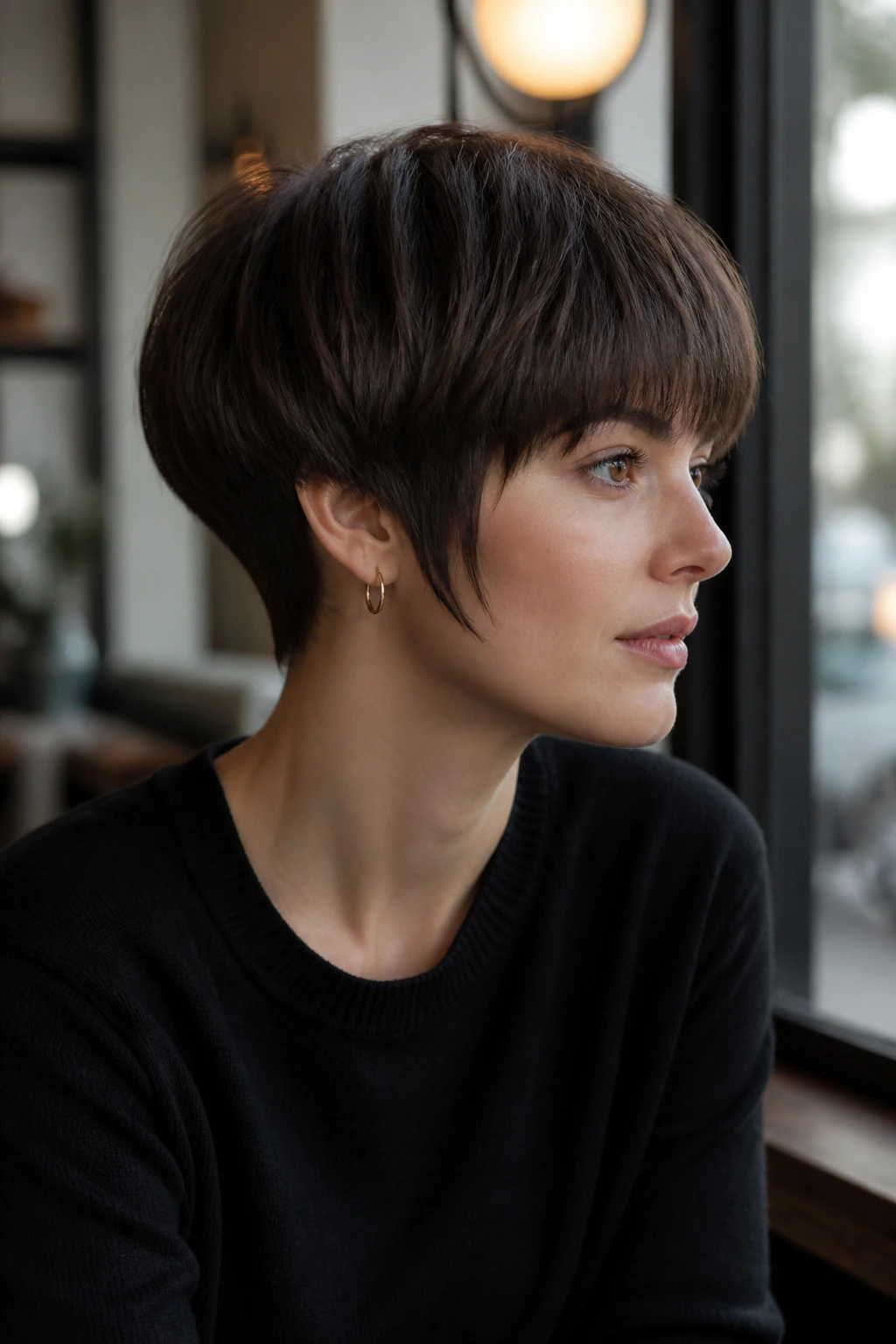
The most common mistake is placing the curve at cheek level. That’s the fastest route to a wider-looking face because the hair repeats the same shape as the face. Move the curve higher or lower, and the effect changes immediately.
Another problem is over-thinning the perimeter. Fine hair needs weight at the edge. When that edge gets razor-thin, the ends start looking see-through and the cut loses its density trick. The fix is to thin the interior, if needed, and leave the outline strong.
- Mistake: Too-wide fringe. Symptom: the forehead-to-cheek line feels like one big circle. Fix: keep the fringe narrower and let the temples soften.
- Mistake: No root lift. Symptom: the top collapses and the sides puff. Fix: dry the roots first and use a lightweight mousse.
- Mistake: Over-rounded ends. Symptom: the face looks fuller instead of longer. Fix: keep the bend subtle.
- Mistake: Letting the nape flare. Symptom: the back widens under the ears. Fix: ask for a cleaner taper.
Variations and Alternatives to Try
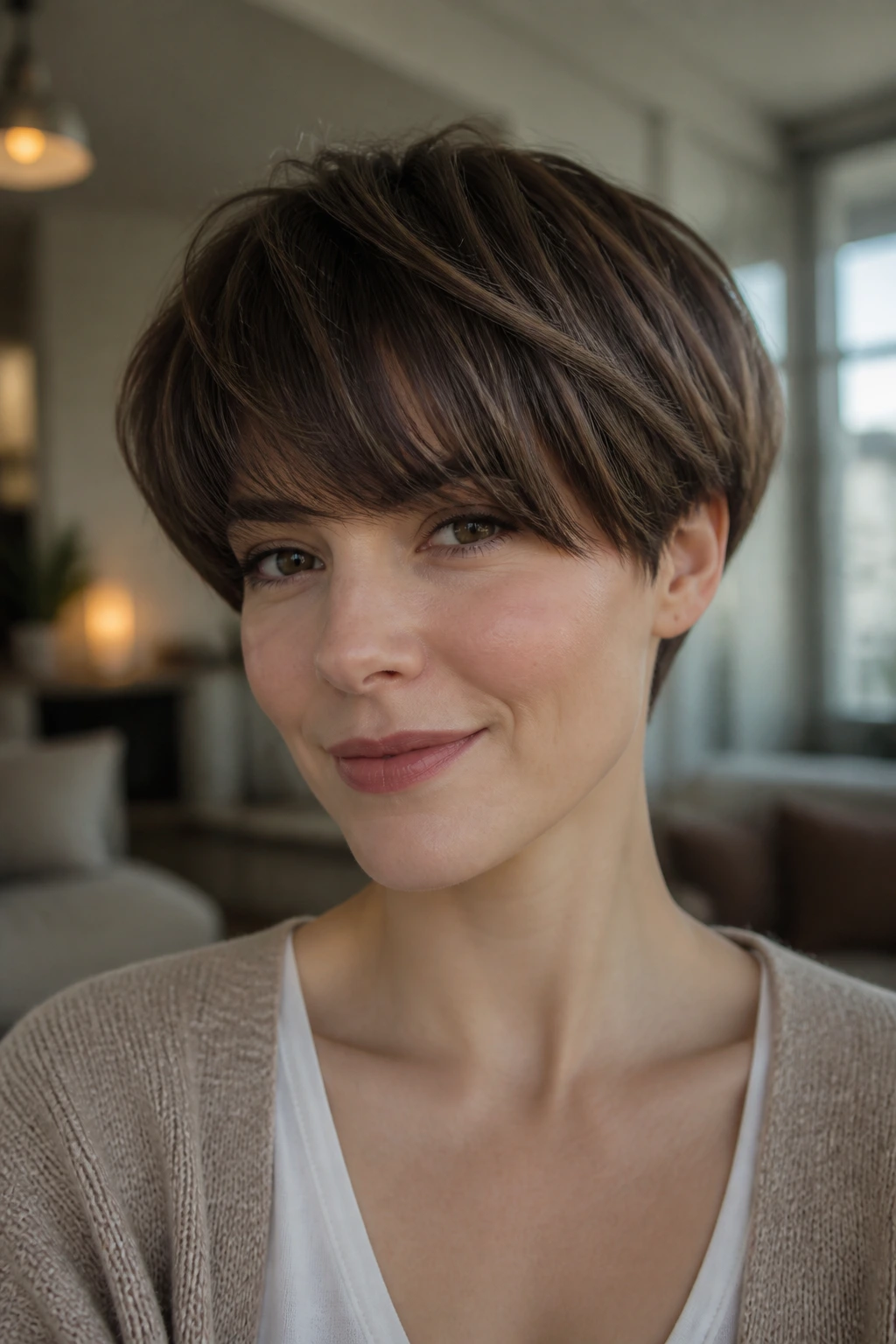
The Bixie Bowl: This blends bowl shape with pixie length, so the outline stays visible but the sides stay lighter. It’s a good option if you want less maintenance and more lift at the crown. On round faces, the shorter back keeps the profile clean.
The Curtain Bowl: Instead of a blunt front, this version opens the fringe in the middle or just off center. It suits fine hair that needs a softer frame and faces that do better with a little forehead showing. It feels less rigid, more wearable.
The Razor-Soft Bowl: A stylist can soften the interior with a razor while keeping the perimeter strong. That gives movement to otherwise slippery fine hair. The key is to leave the outline intact; otherwise the cut loses its density advantage.
The Lengthened Bowl Bob: This is the safest alternative if you like the bowl idea but want more room around the jaw. It lands between the chin and collarbone, with a visible curve and a stronger vertical line. Round faces usually like the extra length.
The Worn-Soft Crop: This version starts as a bowl and grows into a rounded crop with soft volume. It’s good if you prefer a cut that gets better as it loosens up. The shape stays friendly even after a few weeks.
Keeping the Shape Between Salon Visits

Bowl cuts are honest. They show growth quickly, which is fine when you know the schedule. For sharper versions like the micro bowl or ear-length bowl, plan on a trim every 3 to 4 weeks. Softer, grown-out shapes can stretch to 6 or even 8 weeks before the line starts to lose its logic.
Fringe trims matter too. If the bangs brush your eyes or split apart at the center, that’s your sign. A small trim every 2 to 3 weeks can keep the front from swallowing the rest of the cut.
At home, wash frequency matters less than drying direction. Fine hair that air-dries in the wrong position can set too flat or too wide. Blow-dry the roots into shape, then let the ends settle. Sleeping on a satin pillowcase helps the fringe from kicking into odd bends overnight. It’s a small thing. It saves a lot of annoyance.
Questions People Ask Before They Book the Cut

Will a bowl haircut make my round face look wider?
It can, if the curve sits at the cheeks and the fringe is too broad. The safer versions keep the line above the cheekbone or below the jaw, where they stretch the face instead of echoing its width.
Is fine hair too thin for a bowl cut?
Not at all, but it needs the perimeter left blunt and the interior handled lightly. Too many layers make fine hair look sparse. A strong outline usually helps more than extra texture.
Should I choose a side part or center part?
A side part is usually easier on round faces because it adds a diagonal line. A center part can work if the front pieces are long enough to fall past the cheekbone.
Can I wear a bowl cut with wavy hair?
Yes, but the cut needs a little length so the wave has room to bend. If it’s cut too short, the wave can push the sides outward and widen the face.
How do I stop the fringe from looking heavy?
Keep the fringe narrow and let the temples soften. A broad fringe on fine hair can swallow the face line and make the cut look denser than it really is.
What if my hair has a cowlick at the front?
Tell the stylist before the cut begins. Cowlicks can split bangs and ruin the line, so the fringe often needs to be shaped around the growth pattern, not against it.
Can this grow into something else later?
Yes. Many bowl cuts soften into bobs or rounded crops, especially if the perimeter stays clean. That’s part of the appeal. They don’t all have to stay sharp forever.
The Shape Worth Revisiting
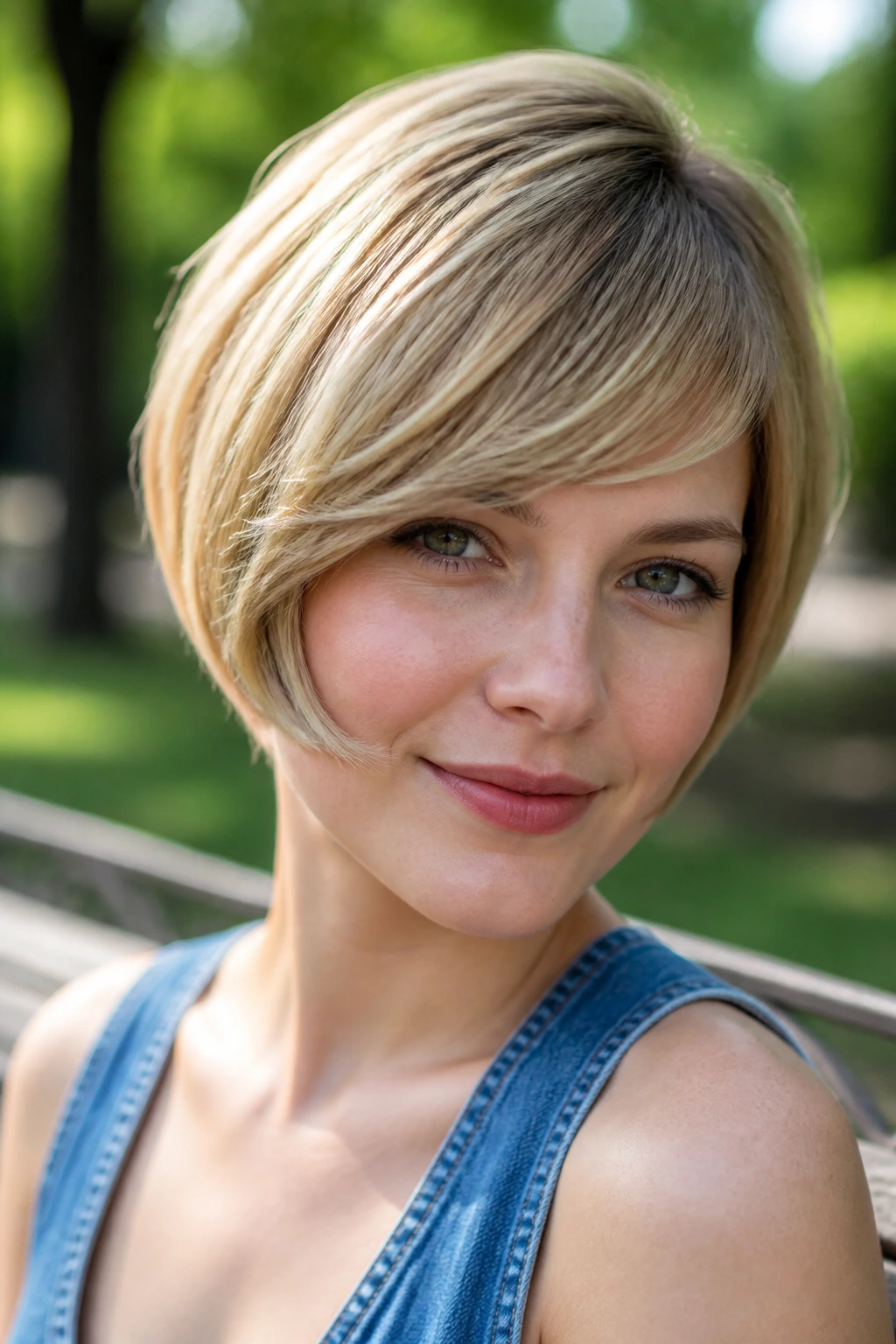
The bowl cut stopped being interesting only when it was cut lazily. On fine hair, a good bowl shape gives back what the hair doesn’t naturally have: edge, density, and a clear outline. On round faces, the right version does something else too. It creates a line that pulls the eye up or down, instead of letting everything sit in the middle of the face.
The smartest versions are not loud. They’re controlled. A tapered nape, a quieter fringe, a little asymmetry, a chin-length front — those are the details that make the cut feel modern and wearable instead of costume-like. And once you see how much those small choices matter, the whole shape starts making sense again.
Bring photos. Talk in inches, not vague ideas. The right bowl cut can be sharper than a bob and kinder than a pixie, and on the right face it has a way of looking more intentional than almost anything else.