



A good haircut after 50 should do one very specific job: make your face look rested before you touch mascara. The wrong cut can drag the eye straight to the jaw, the neck, or a flat crown; the right one changes the whole proportion of the face in a single glance.
That’s why face shape still matters. Hair changes, and not in one neat direction. The crown gets a little flatter, the ends get a little finer, silver strands can feel coarser than the hair you remember, and the face itself softens in places that used to hold a haircut up with almost no help. A style that once looked airy may suddenly sit like a helmet. Another one that used to feel severe can start looking expensive and clean.
Face shape isn’t a prison. It’s a map. If you know where your width sits — forehead, cheekbones, jaw, or length — you can pick a cut that works with that structure instead of fighting it every morning. That’s the whole game, really. Some cuts add lift where the face needs it. Some soften a strong jaw. Some pull attention up toward the eyes. And some simply make fine hair look like it has something to say.
Why These Cuts Earn Their Keep
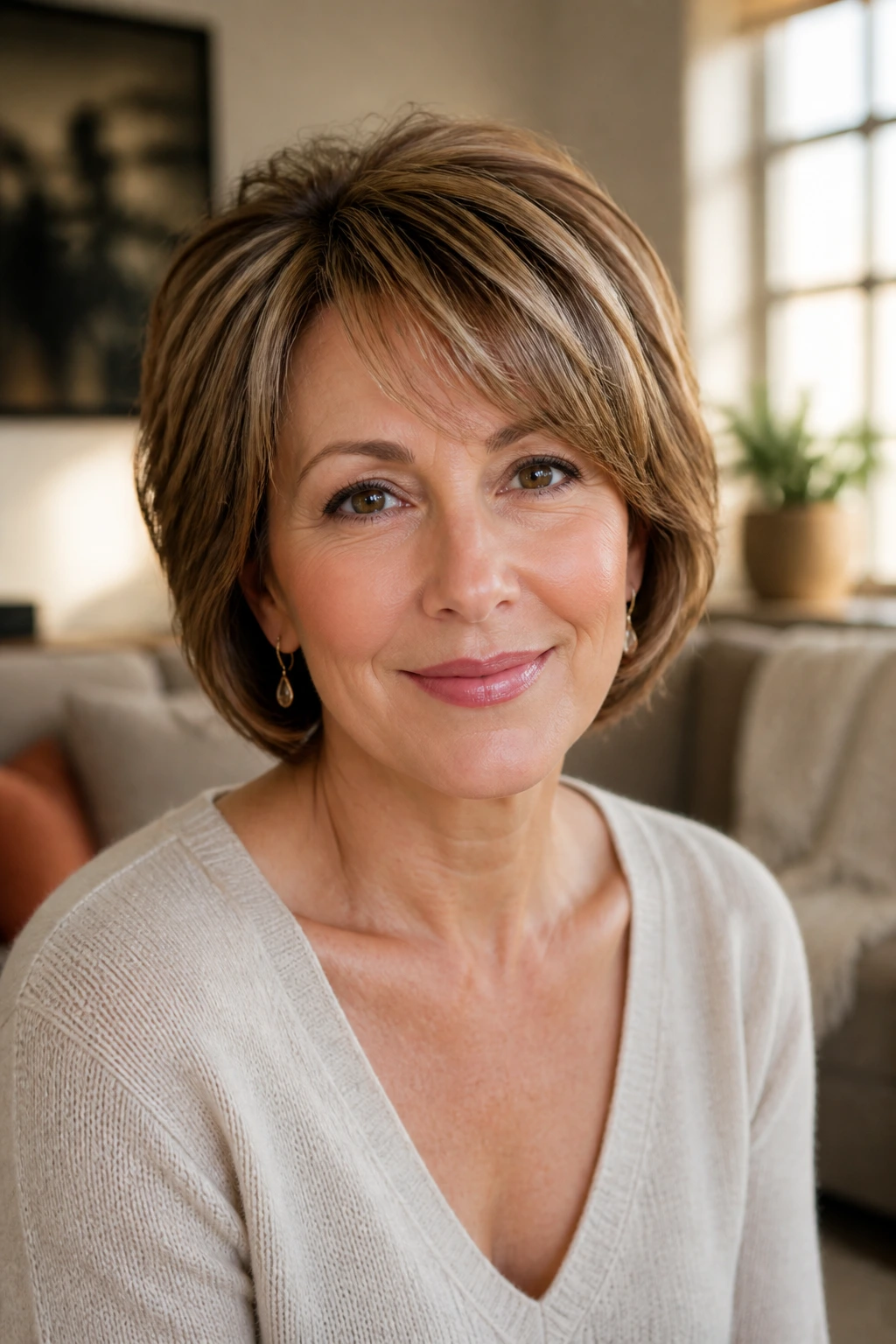
- They use proportion, not gimmicks: Each style changes the eye line in a specific way, so you get balance instead of a haircut that just looks “done.”
- They respect changing texture: Finer ends, flatter roots, and wirier silver strands all behave differently, and these cuts account for that instead of pretending hair stays the same forever.
- They work with real styling time: A lot of these shapes still look intentional after a rough blow-dry, a quick bend with a 1-inch iron, or a little mousse and a diffuser.
- They leave room for glasses and earrings: That matters more than people admit. The right fringe or side part can make frames look deliberate instead of crowded.
- They give you options at different lengths: Short crop, bob, lob, shoulder length, longer layers — there’s no one “correct” length after 50.
- They aim for polished, not fussy: A haircut should make your face look framed, not overworked.
1. Side-Swept Pixie for a Strong Jawline
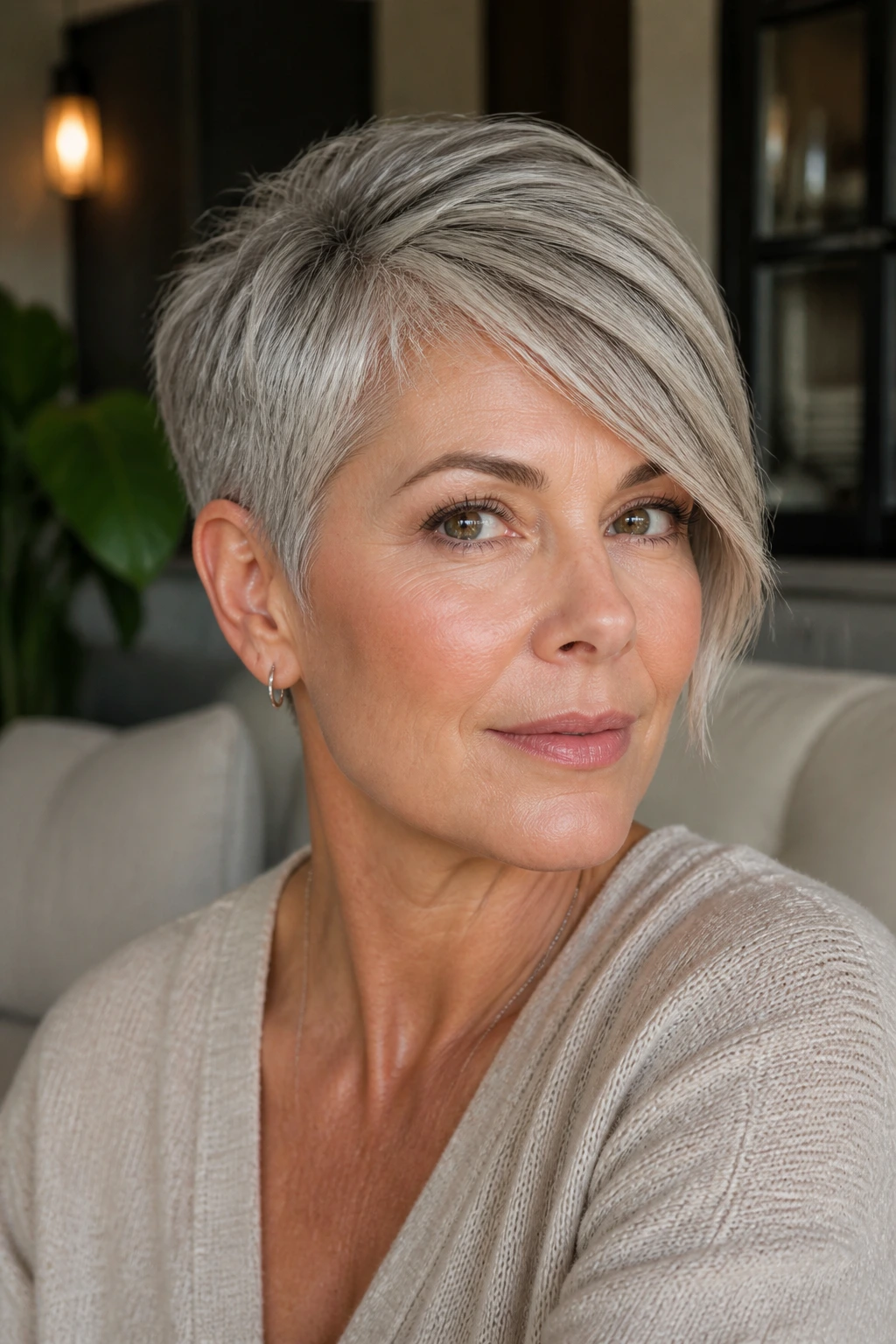
A side-swept pixie can do more for a square jaw than a whole drawer of smoothing creams. The trick is not to make the cut fluffy; it’s to break up the edges. A little height at the crown, longer pieces over one forehead corner, and soft tapering at the nape keep the whole shape from feeling blocky.
Ask for longer length at the temples and a fringe that sweeps diagonally, not straight down. That diagonal line pulls the eye upward and away from a jaw that already has a lot of structure. On silver hair, the cut looks crisp. On fine hair, it gives you shape without needing much product.
This is one of those styles that looks best when it isn’t overstyled. Blow it dry with a small round brush or just use your fingers and a dab of paste through the front. If the fringe is too short, the cut loses its softness. If the top is too bulky, it starts to look boxy. Keep the sides close, keep the front loose, and let the line do the work.
2. Chin-Length French Bob for Oval Faces
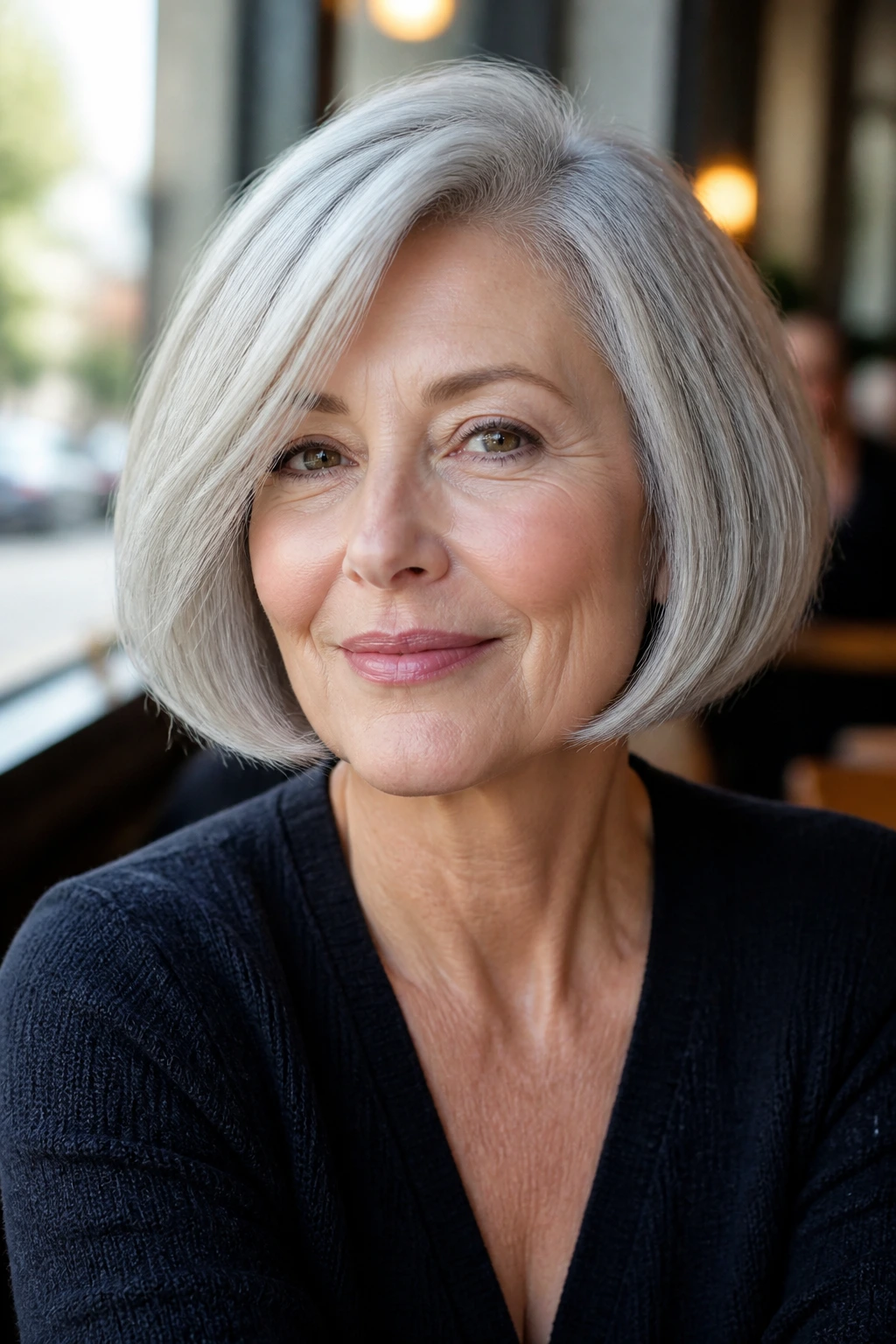
Can a chin-length bob still feel fresh on an oval face? Absolutely — if the line is clean and the ends aren’t thinned into wisps. The French bob works because it sits right at the jaw and shows off the face’s natural balance instead of stretching it or hiding it. On women over 50, that makes the style look crisp rather than severe.
The best version has a slight bend under at the ends and enough fullness to make the hair look intentional even when it air-dries. A soft side part keeps it from feeling too strict. If your hair is fine, keep the perimeter blunt; if it’s thicker, ask for a little internal weight removal so the shape doesn’t puff out at the sides.
This cut is especially good if you want something that looks good with lipstick and earrings without trying too hard. It has presence. It also gives silver hair a sharp outline, which can be gorgeous when the cut is kept neat every six to eight weeks.
3. Collarbone Lob with Curtain Bangs for Heart Faces
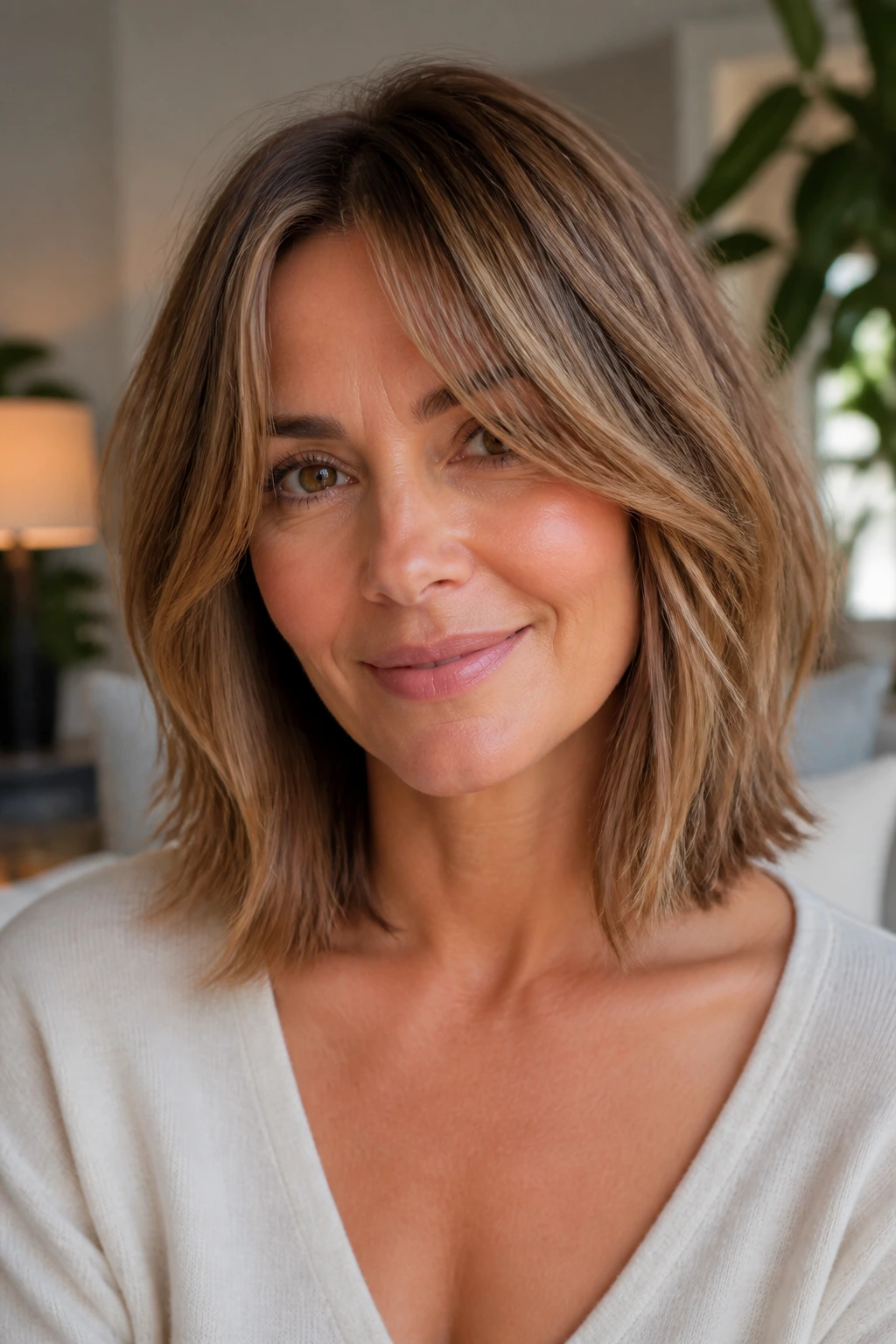
When the forehead feels wider than the chin, curtain bangs and collarbone length start pulling their weight. This cut softens the upper half of the face while keeping enough length below the chin to keep the proportions steady. It’s a very good answer for heart-shaped faces, especially when the hair has a little wave.
Curtain bangs should open around the cheekbone, not sit like a curtain rod across the forehead. That placement matters. If they start too high, they can make the forehead look bigger. If they start too low, they can feel heavy and limp. The collarbone length keeps the look relaxed, and the front pieces can be bent away from the face with a round brush or flat iron.
This is a cut that likes movement. A little mousse at the roots and a twist of the front pieces after drying is often enough. If you want something that can be worn smooth one day and a bit tousled the next, this one stays in the right lane without turning into a high-maintenance project.
4. Angled Bob That Slims a Round Face
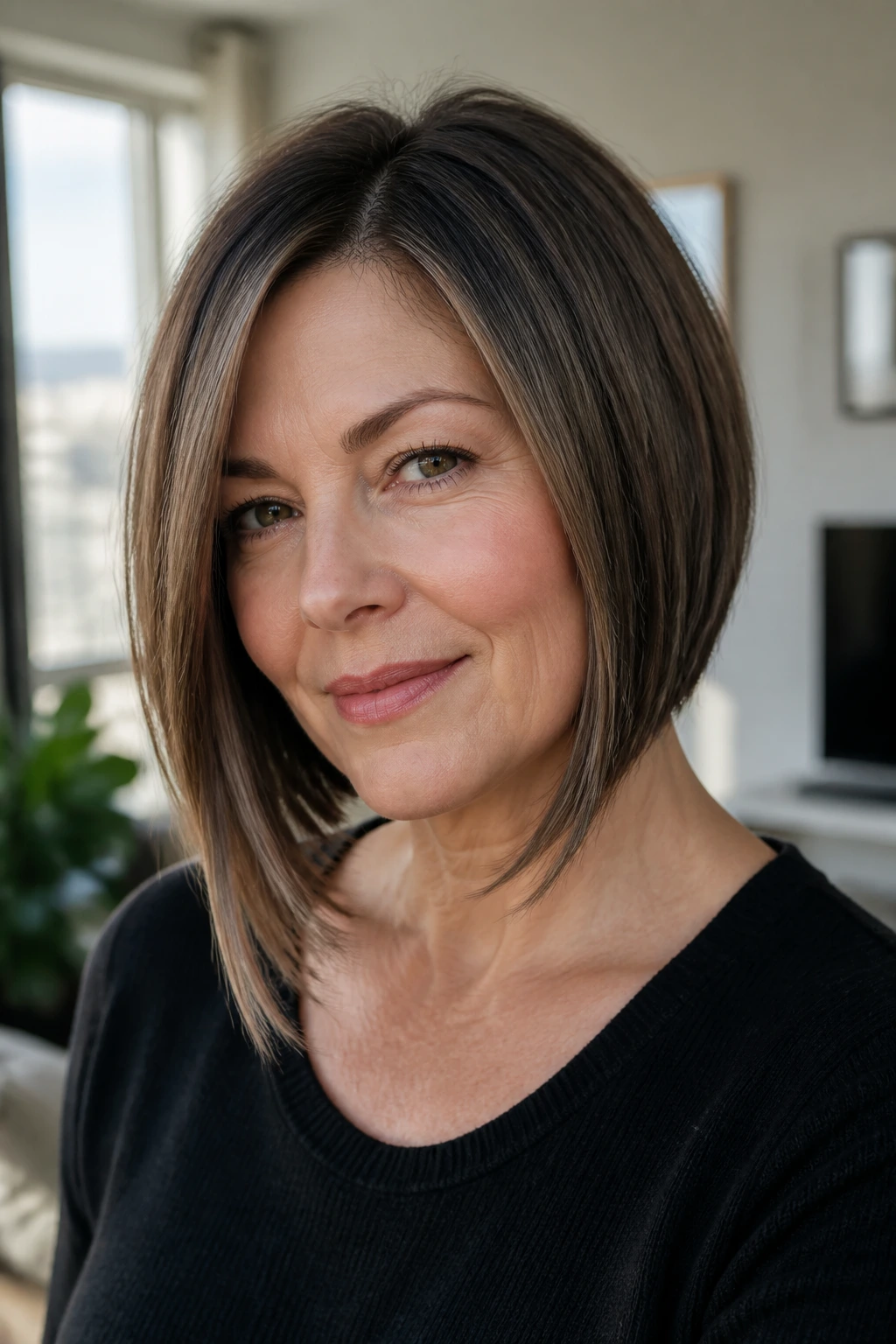
A round face usually needs vertical lines, and an angled bob gives them without making the haircut feel severe. The front pieces should land below the chin — not at it — so the eye has somewhere to travel downward. The back can be shorter, but not stacked so high that it makes the crown feel crowded.
The best angled bobs have clean weight at the bottom and just enough curve to skim the face. That long front line is the thing that matters most. It creates the illusion of length, which is why this cut is so useful when the cheeks are fuller or the jawline is softer. Ask your stylist to keep the front longer than you think you need. People often go too short here and lose the effect.
If your hair is thick, the cut needs internal shaping so it doesn’t flare out. If your hair is fine, the angle can stay a little softer. Either way, avoid over-layering around the cheeks. That’s the part that widens the face when you wanted the opposite.
5. Feathered Shoulder Cut for Long Faces
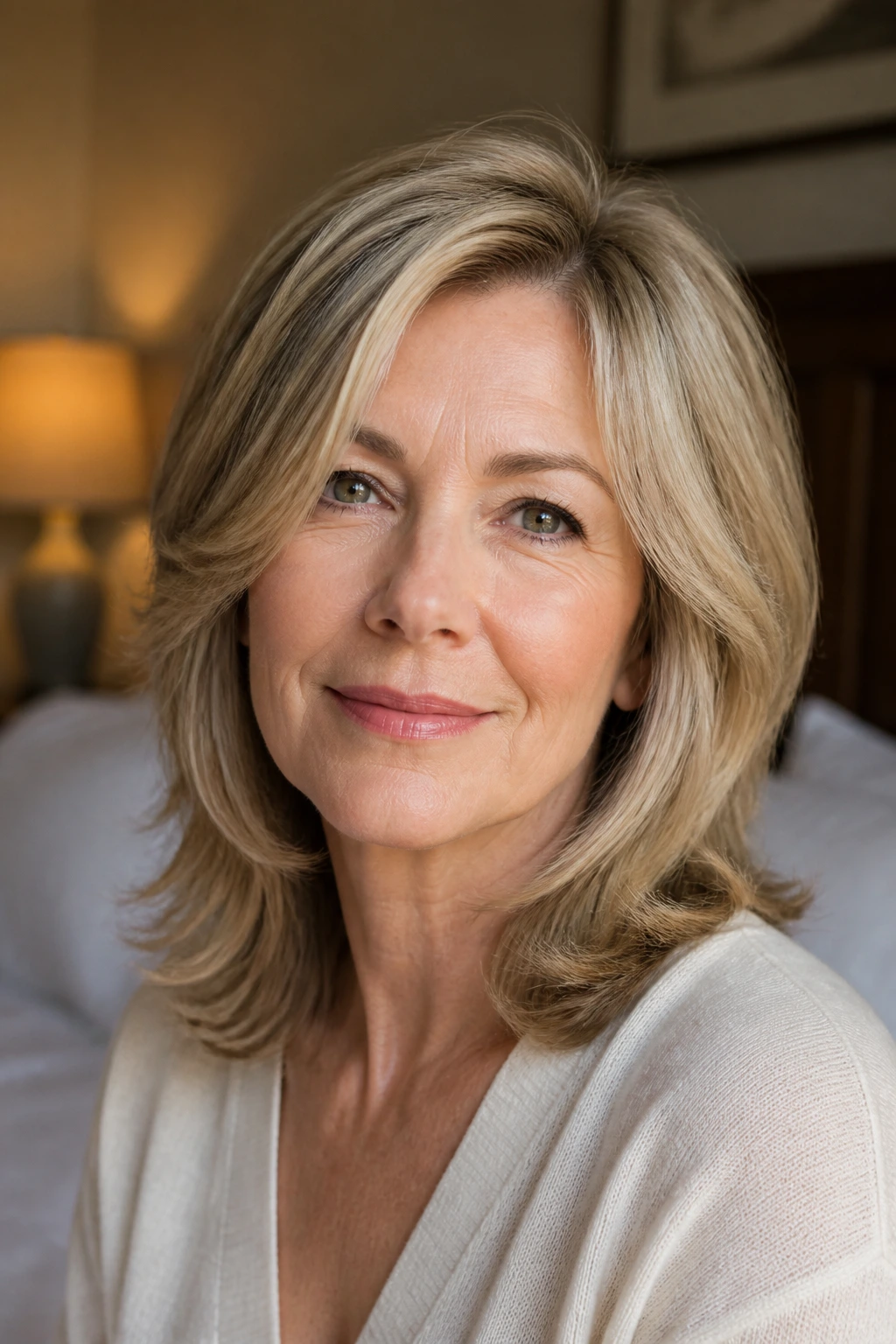
A long face needs width, not extra height, and feathered shoulders are where that balance starts. This cut gives the hair enough movement around the jaw and cheek without stacking volume on top, which is the mistake that can make a long face look even longer. The shoulder length matters because it interrupts the vertical line in a useful way.
The feathering should start below the cheekbone and fan out gently around the sides. Not at the roots. Not all the way through the crown. If the layers begin too high, the hair can go fluffy in exactly the wrong place. A side part helps, too, because it softens the forehead and gives the style a less symmetrical, more lived-in shape.
This is one of my favorite cuts for women who still want enough length to tuck behind an ear or sweep up into a clip. It plays nicely with blowouts, but it also survives a rougher air-dry. A 2-inch round brush, a little heat at the ends, and you’re done.
6. Soft Shag for Thick or Wavy Hair
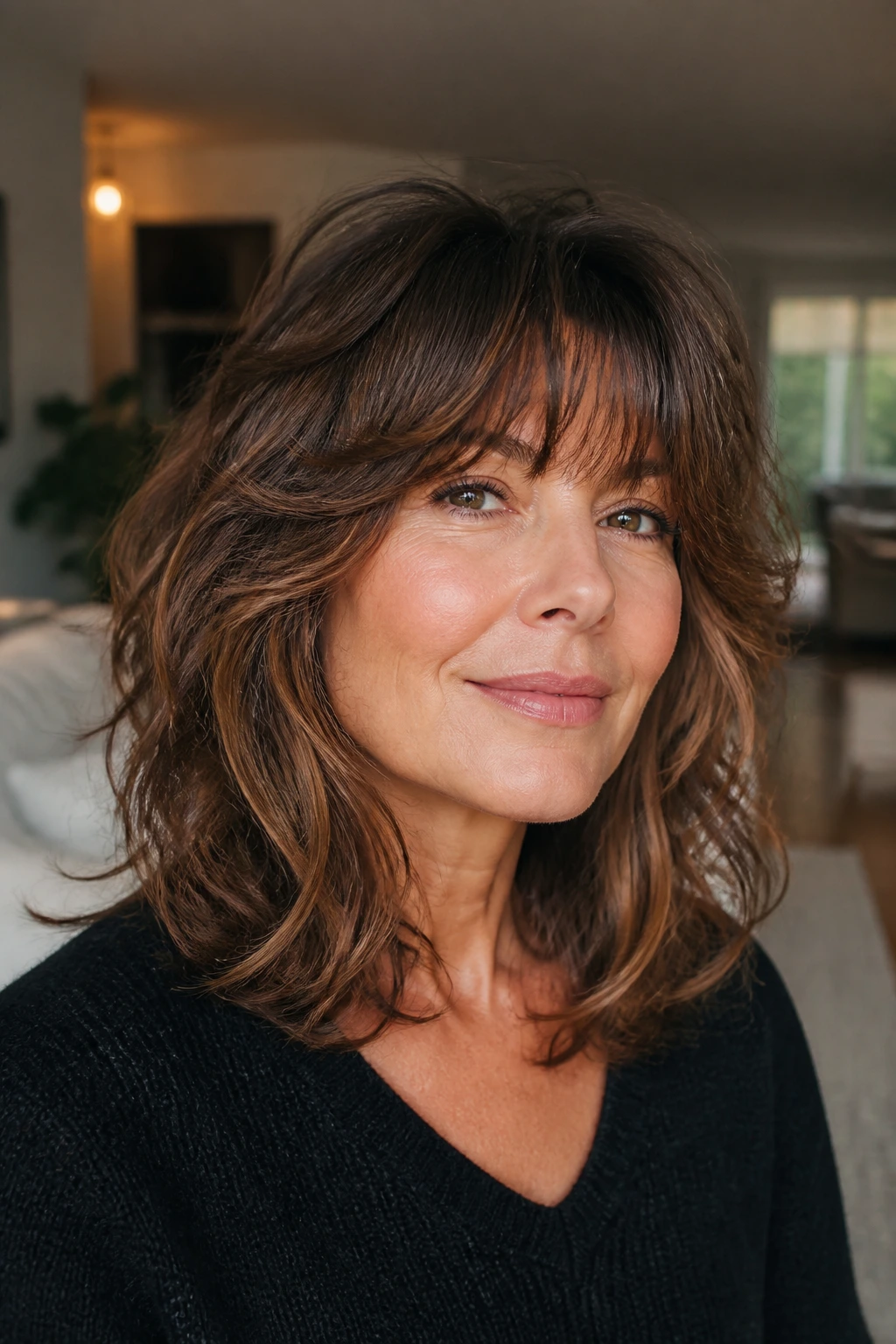
Thick, wavy hair is where a soft shag earns its keep. Not the wild version with choppy ends flying everywhere. The soft version. The useful version. It takes weight out of the right spots, gives the face some movement, and keeps the whole cut from settling into a triangle by lunchtime.
Ask for layers that start around the cheekbone and taper down through the shoulders. That keeps the top from getting too puffy and the ends from turning into a curtain. A bit of fringe — even just a broken, airy bang — helps the cut feel modern without taking over the face. Wavy hair likes this shape because the layers can sit on top of the natural pattern instead of being forced into something flat.
Drying matters here. Scrunch in mousse, diffuse until the hair is about 80 percent dry, then let the rest air-dry if you can. If you brush it aggressively, you’ll get halo volume where you wanted shape. Keep it loose. That’s the point.
7. Curly Bob with Sculpted Layers for Natural Curls
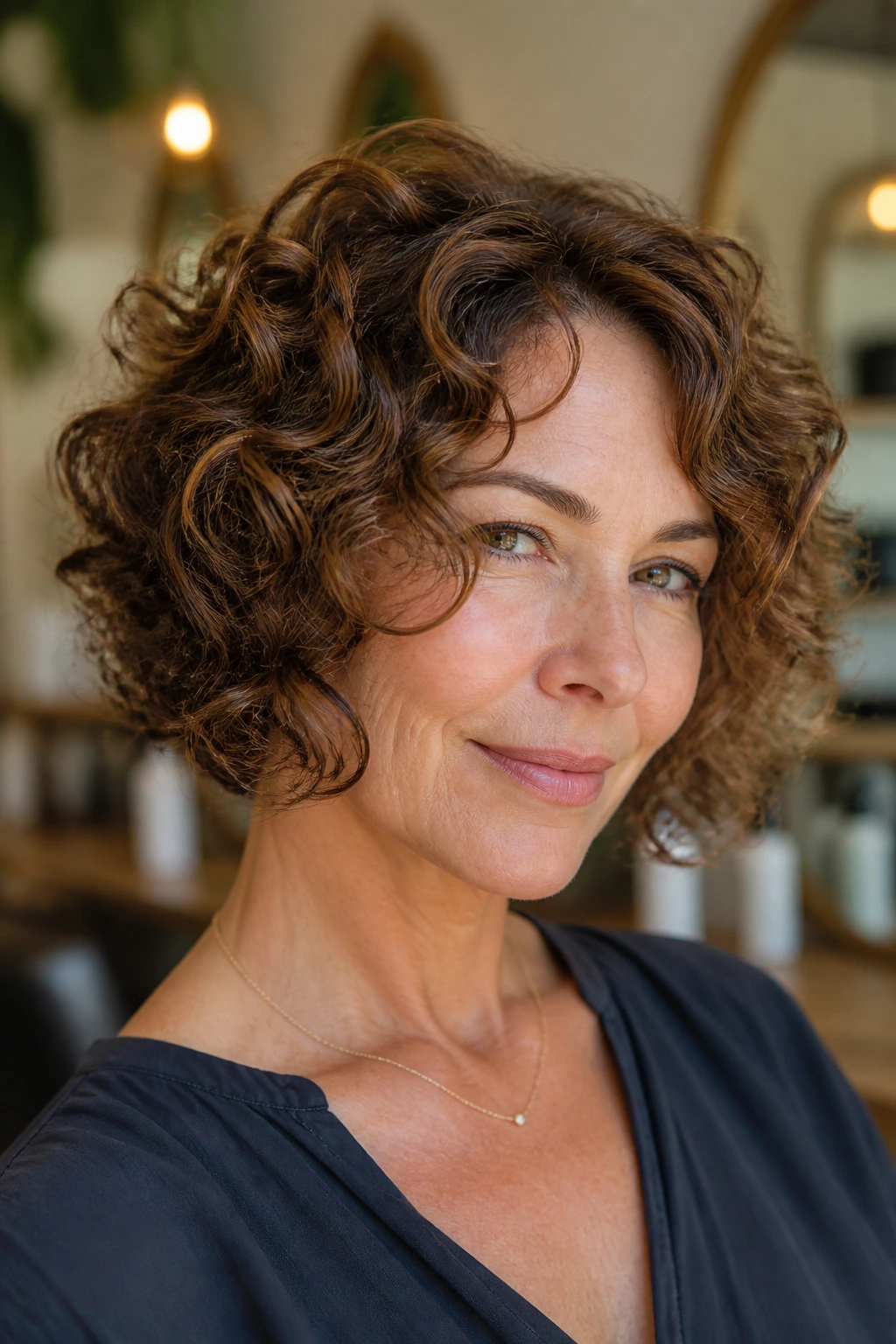
Curly hair after 50 usually behaves better when the cut follows the curl, not when the cut fights it. A sculpted bob does that job neatly. It keeps enough length for bounce, but the layers are placed to support the curl clumps so you don’t get a triangle or a puffball.
The sweet spot is usually chin to just below the jaw, though tighter curls may want a touch more length. The front should frame the cheeks, not jam up near the temples. If the curl pattern is looser, a few layers can help the curls spring up without dragging the shape flat. If the pattern is tight, too many layers can create frizz and bite back.
A good curl bob looks best when it’s cut dry or nearly dry. That way the stylist sees where the curls actually live. At home, work in cream while the hair is dripping, then diffuse with your head tipped a little to one side so the curls don’t collapse at the root. The cut should do the shaping; your hands should not have to perform magic.
8. Blunt Lob for Fine Hair and Soft Jawlines

A blunt lob is the haircut I reach for when fine hair needs density more than it needs layers. The solid edge makes the hair look thicker because the eye reads a clean line as fullness. Around the collarbone, it also gives the face a tidy frame without cutting too sharply into the neck.
This cut is especially useful if your jaw is soft and you want the face to look a little firmer without going short. A center part can work, but a slight off-center part is often kinder because it keeps the hair from splitting flat at the crown. Keep the ends blunt. Too much texturizing at the bottom turns a good lob into scraps.
The styling is plain and that’s a good thing. Rough-dry the roots, then bend the ends under once with a straightener or round brush. Fine hair usually behaves better when you stop before it gets too “perfect.” A little texture spray at the mids can help, but the shape itself does most of the lifting.
9. Wedge Cut with Crown Lift for Round or Pear Faces
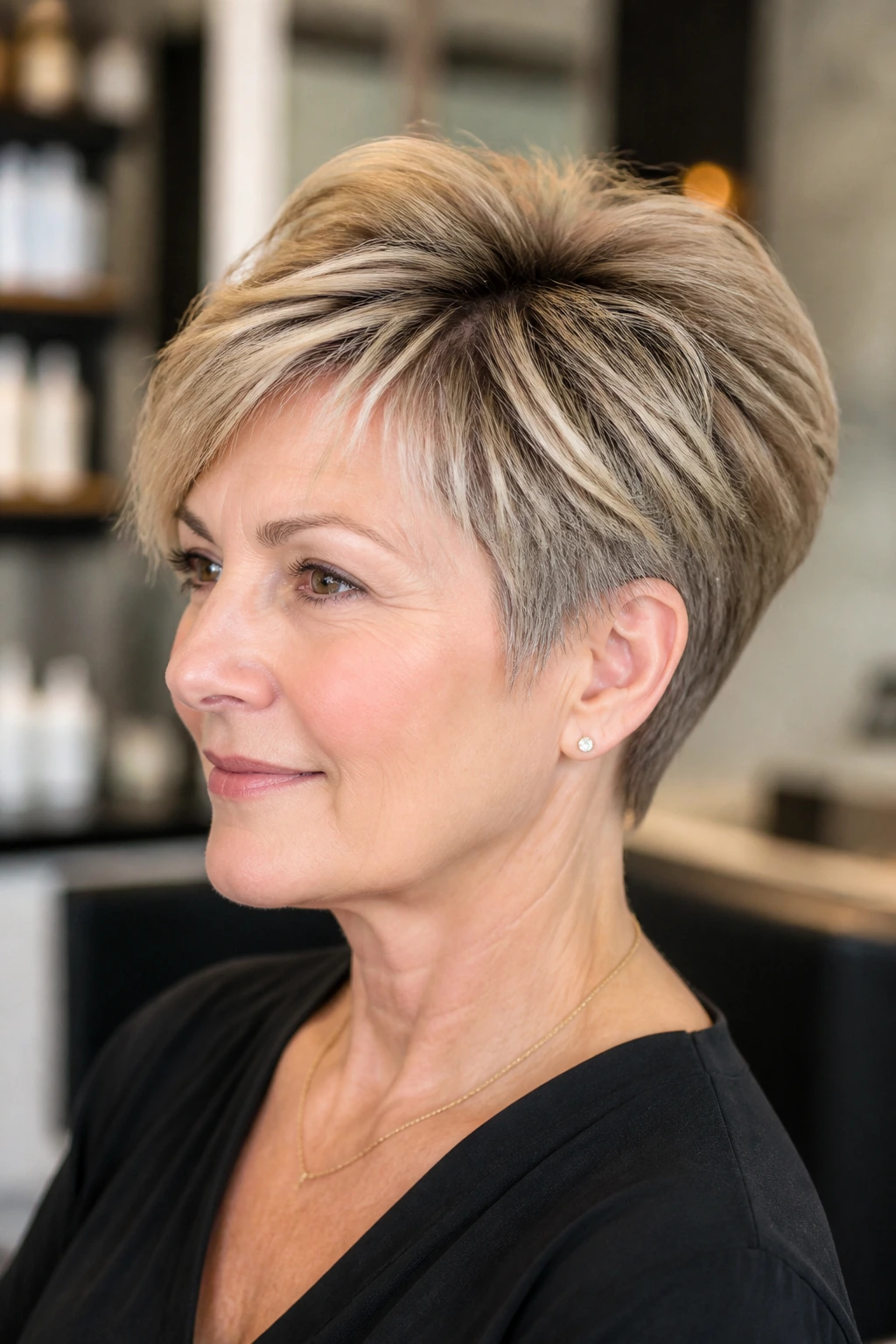
The wedge cut has a reputation problem. People remember the stiff versions, the ones that felt like a helmet with sideburns. A modern wedge is lighter, cleaner, and much better at giving a round or pear-shaped face some height where it helps most: through the crown and upper head.
The back is shorter, the sides are tapered, and the top has enough lift to lengthen the silhouette without making the hair look teased. That lift matters for women over 50 because it gives the face a little vertical support when the cheeks are fuller or the jaw is softer. The shape should not balloon out at the sides. That’s where the cut goes from useful to dated.
If your hair grows flat at the crown, this is one of the smartest choices in the list. It works with a round brush, a bit of root spray, and a quick blast at the roots while the head is tipped forward. Not glamorous. Effective. There’s a difference.
10. Side-Parted Crop for Glasses Wearers
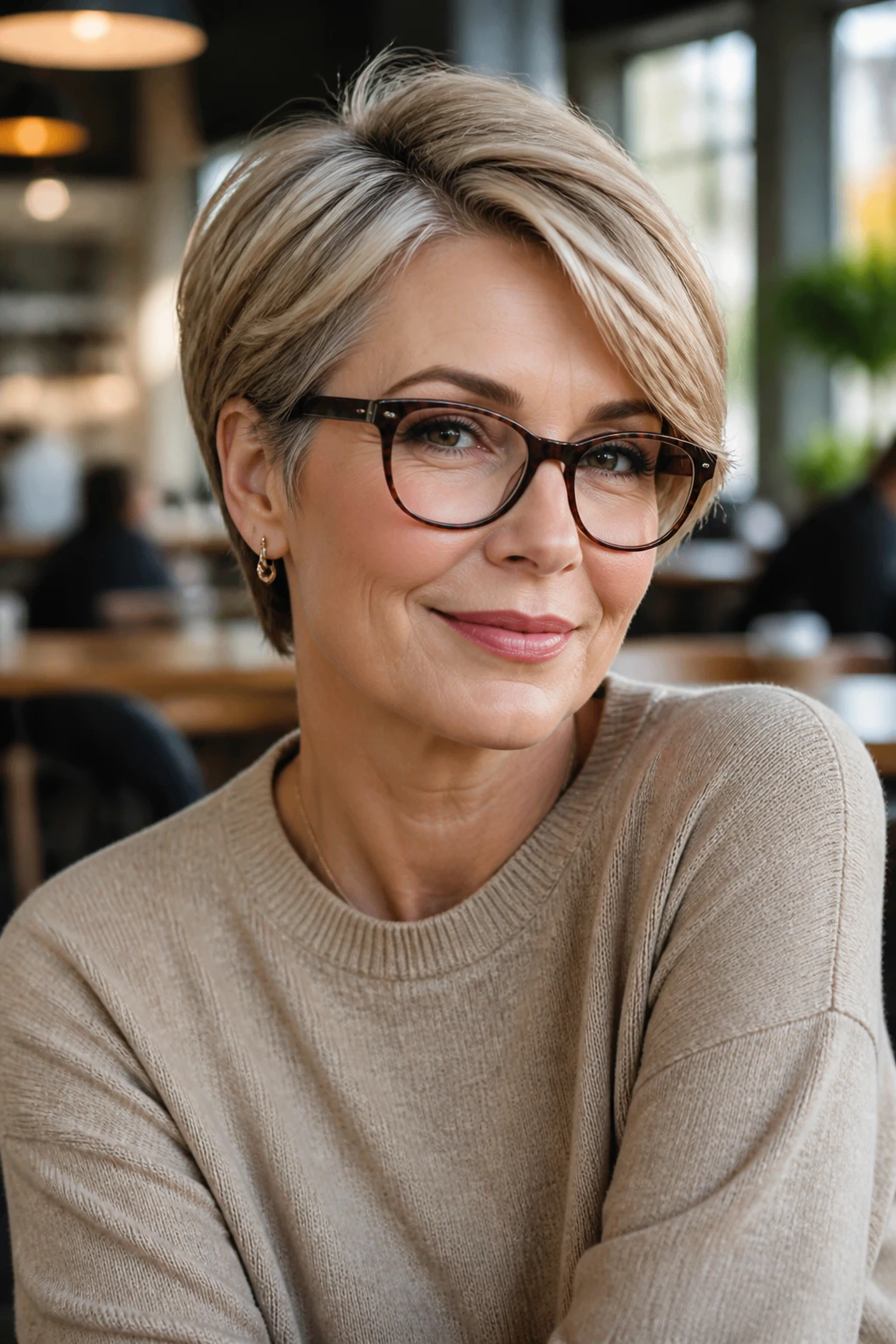
If you wear glasses, your bangs have a job. They shouldn’t hit the frames, hide the eyes, or get trapped in the lenses every time you blink. A side-parted crop solves that by keeping the fringe short enough to stay above the frame line and long enough to soften the forehead.
This cut works especially well on square and round faces because the diagonal part draws the eye across the face instead of straight down the middle. The crop itself can be soft and piecey, or slightly sleeker if you like a cleaner look. The important part is the balance around the temples. You want movement there, not bulk.
What I like about this shape is that it respects the fact that glasses are part of the haircut. They’re not a nuisance to work around. They become part of the design. Ask your stylist to check the front while you’re wearing your glasses, not just after you take them off. That tiny detail saves a lot of annoyance later.
11. Bixie with Longer Top for Thinning Hair
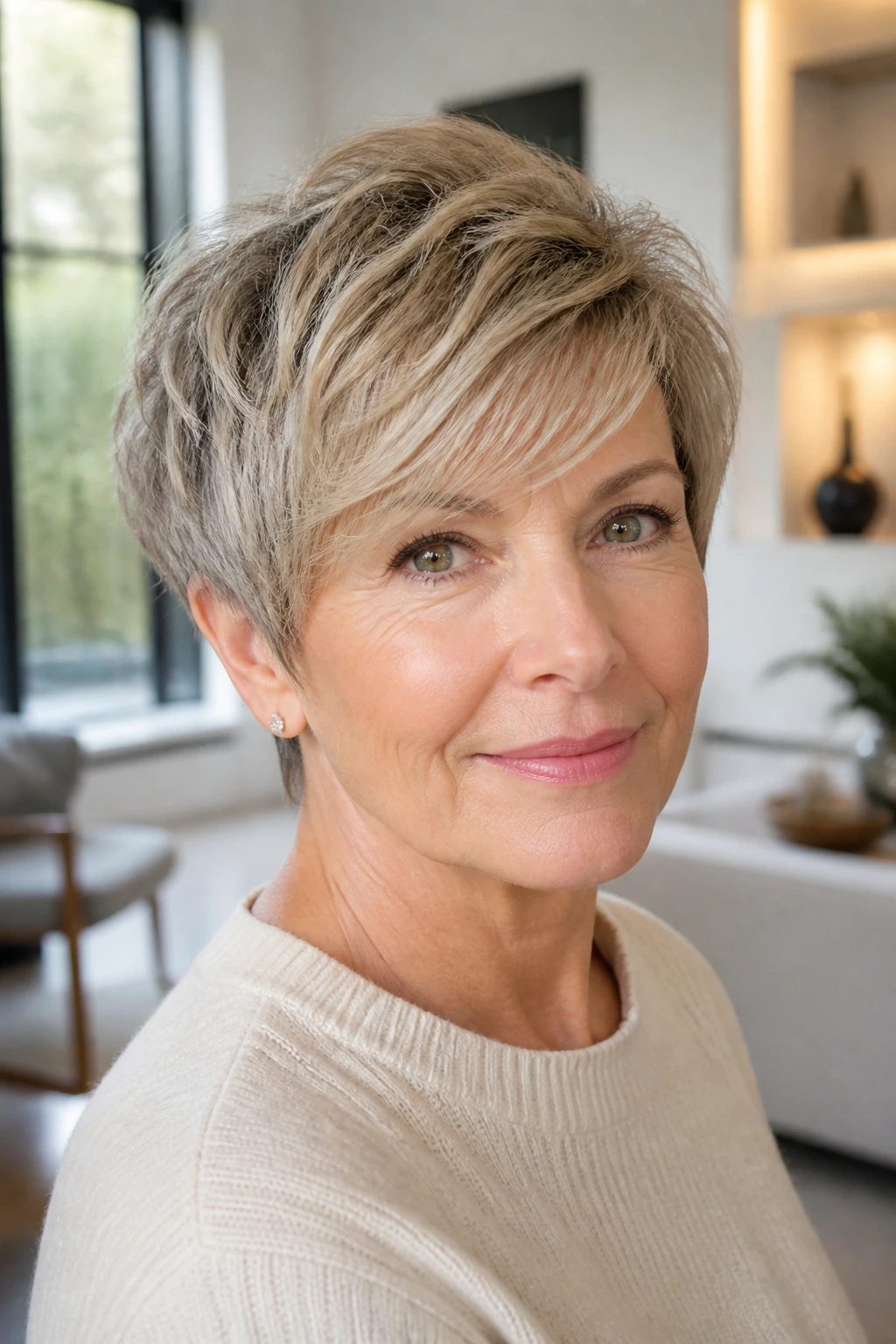
A bixie is what happens when a pixie needs a little more body and a bob needs to lose some weight. The longer top gives the hair a chance to lift, while the shorter sides keep the shape neat. For thinning hair, that’s a useful combination because it creates texture without asking the hair to hold a heavy shape it can’t support.
This cut flatters a lot of faces, but it’s especially useful for oval, heart, and diamond shapes. The extra length on top can be brushed forward for softness or pushed back for a slightly sharper line. Keep the nape close so the cut doesn’t spread out and look flat. The point is controlled movement, not fluff.
A root-lift spray and a small round brush make a big difference here. So does leaving some length at the fringe area. When the front is too short, the scalp can show more than you want. A bixie works best when it looks intentional from every angle — front, side, and back.
12. Long Layers with Cheekbone Fringe for Rectangular Faces

Long faces can wear long hair, but the layers have to start in the right place. That’s the difference between a flattering shape and hair that just hangs there. Cheekbone-starting fringe pieces interrupt the vertical line and bring the eye back toward the middle of the face, where you usually want it.
The best version keeps the length below the shoulders and adds soft movement through the mids, not the crown. Too much crown lift can stretch the face further. The front pieces should land near the cheekbone or a touch below it so they soften the upper half without swallowing the face. This is a good cut for women who like ponytails too; the face-framing pieces still do something when the rest is pulled back.
If your hair is straight, a slight bend through the ends helps keep the shape from looking too flat. If it’s wavy, a light styling cream may be enough. I’d avoid sharp, disconnected layers here. They can make the face look longer by exposing too much space around it.
13. A-Line Bob with Tucked-Under Ends for Square Faces
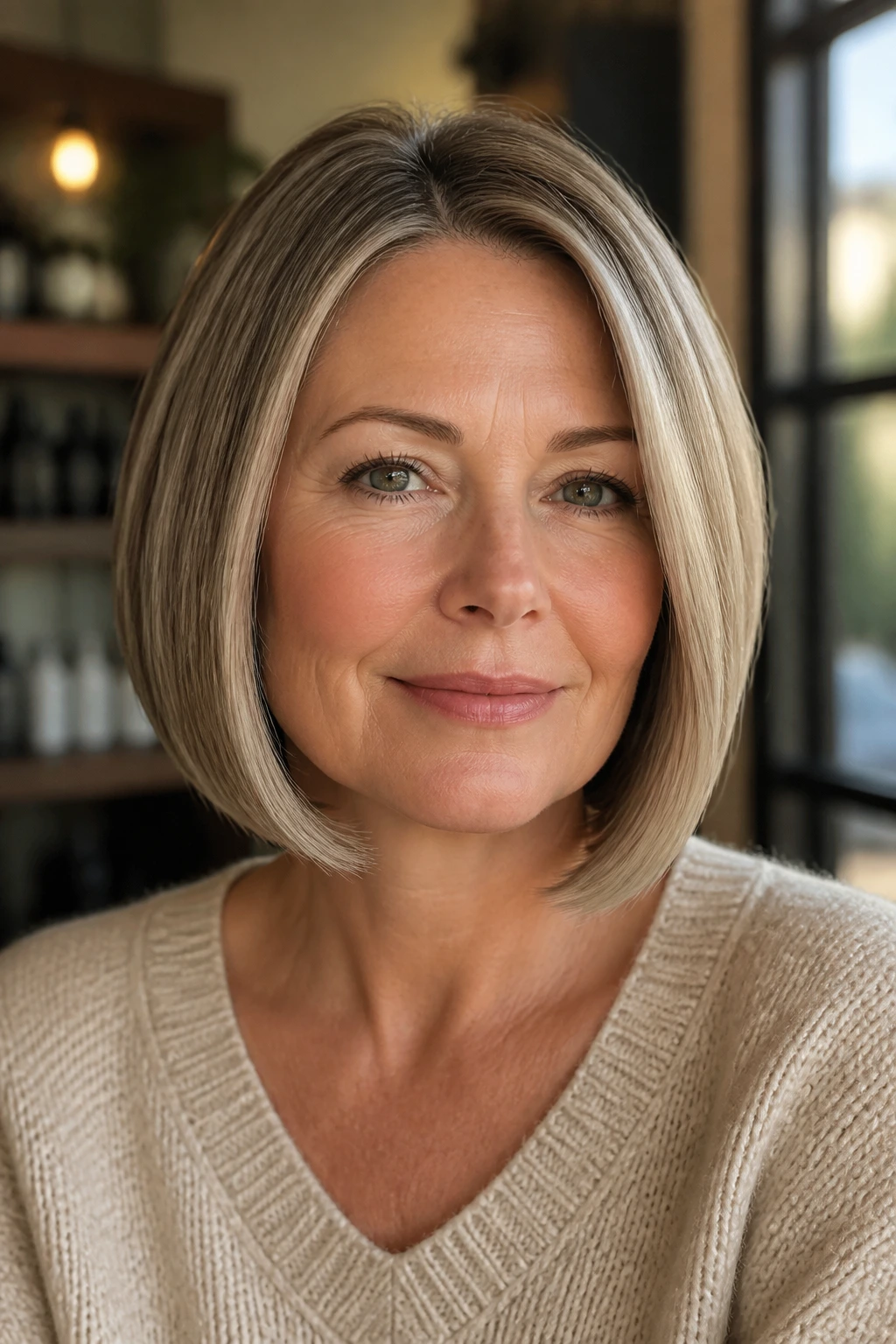
Square faces look sharper when a bob ends with a gentle tuck instead of a blunt stop. That’s where the A-line bob earns its place. The front is a little longer, the back sits shorter, and the ends curve under just enough to break the edge of the jaw.
The cut is good for women who want something tidy but not rigid. A center part can work if the front is long enough, though a soft side part often gives the whole style a more forgiving line. Keep the length at or just below the jaw, not right on top of it, or you’ll underline the shape you were trying to soften.
The styling cue is simple: bend the ends under, not out. If your hair wants to flip, that’s fine in small amounts, but the overall line should still feel deliberate. A pea-sized amount of smoothing cream on the mids can help the curve sit cleanly, especially on coarse or silver strands.
14. Bottleneck Bang Cut for Foreheads That Feel Too Open
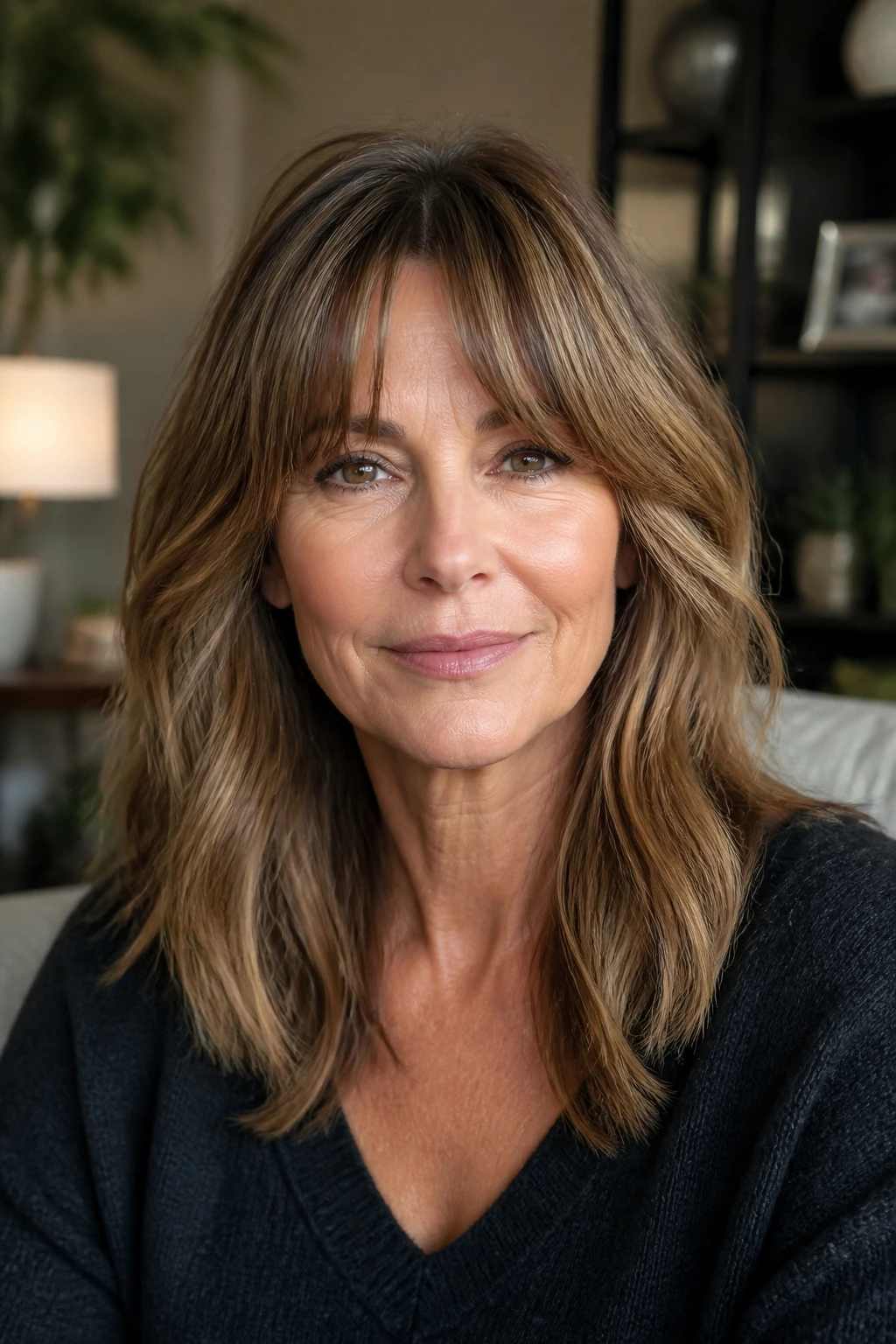
A fringe that opens in the center and fans out at the cheeks solves a lot of forehead frustration. Bottleneck bangs are narrower at the top, wider at the bottom, and they frame the face in a way that feels softer than a blunt fringe. For women over 50, that softness matters because it keeps the bang from looking heavy or childish.
This cut works with long, medium, and even some shorter lengths, but it shines around the collarbone or shoulders. The fringe takes pressure off a tall forehead without hiding the face completely. It’s a smart choice for heart and long faces, though it can also make an oval face look a little more sculpted.
The one thing to watch is density. If the fringe is cut too thick, it can sit like a wall. If it’s too sparse, it turns stringy. Ask for a soft middle gap and sides that taper toward the cheekbone. Then keep the trim schedule tight. Bangs grow out fast, and this shape loses its point when the line gets ragged.
15. Rounded Bob with Internal Layers for Thick Hair
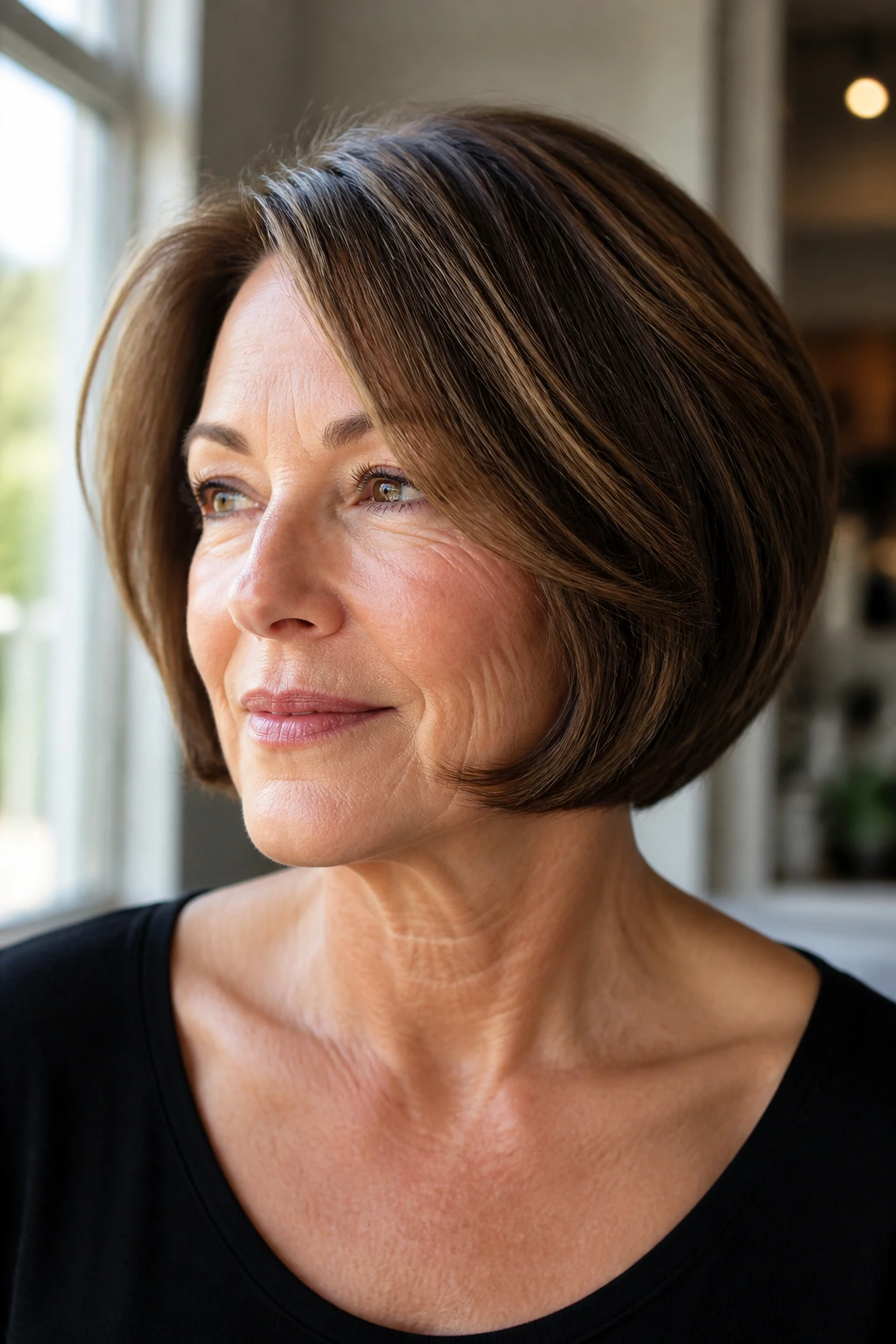
Thick hair needs shape, not surrender. A rounded bob with internal layers removes bulk without stealing the body that makes thick hair useful in the first place. The silhouette stays smooth at the outside, while the inside of the cut gets enough space to move.
This style is especially nice on square and round faces because the curved outline softens the edges. If the bob ends right at the cheek or jaw, it can feel too busy. Aim for a line that curves in slightly beneath the face. That shape frames the features without adding more width than necessary.
Ask for internal layers, not chopped-up ends. That’s a different thing. Internal layers let the outside look polished while the inside loses some of the weight that makes thick hair feel hot and bulky. The result is a bob that sits down instead of exploding out.
16. Tousled Lob with Deep Side Part for Asymmetry
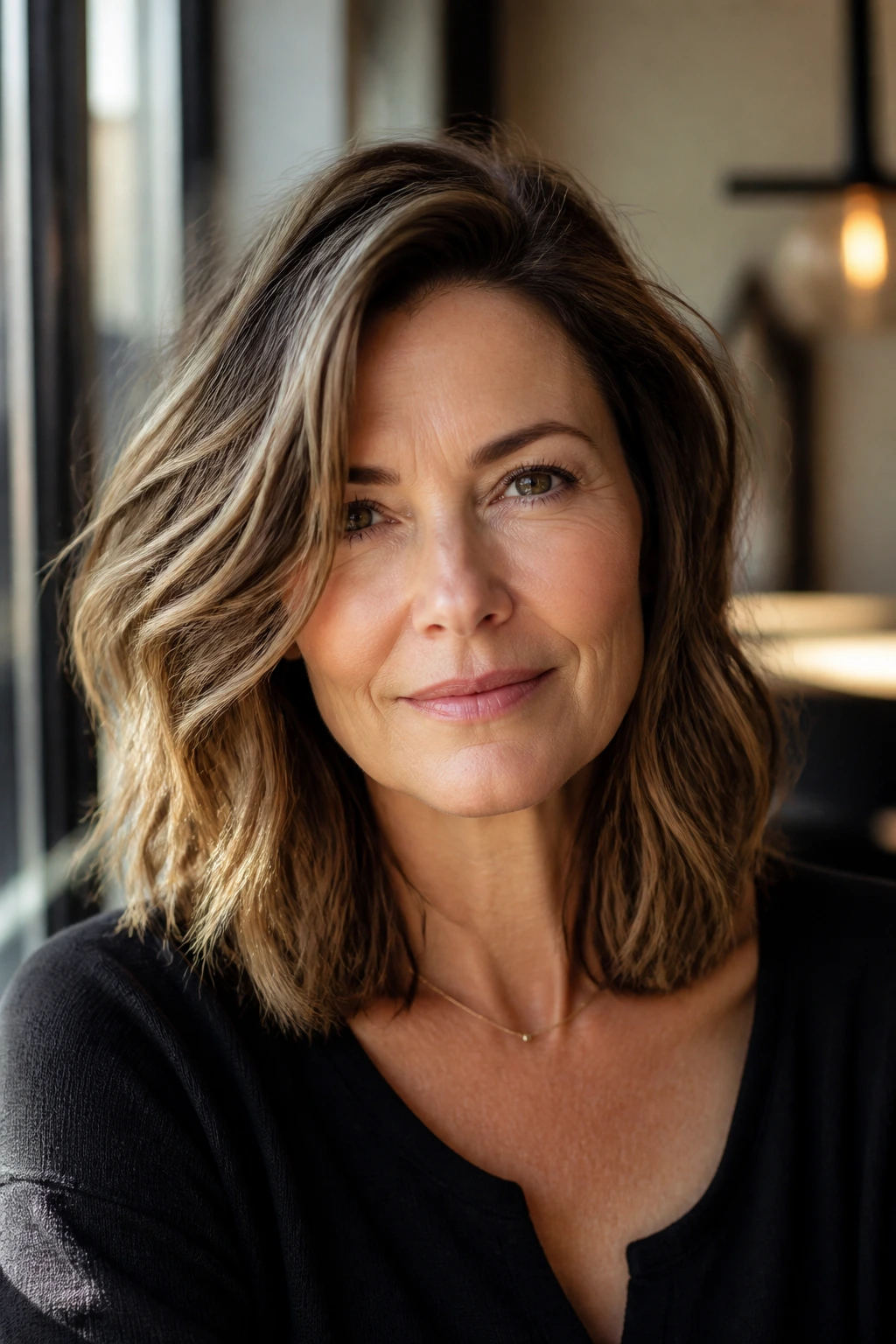
A deep side part can change the whole mood of a lob in about ten seconds. It creates asymmetry, breaks up a very balanced face, and gives the hair a little sweep that feels easier than a strict center part. For women with uneven density or mild facial asymmetry, that’s a gift.
The lob itself should hit somewhere between the collarbone and the top of the chest. Long enough to tuck. Short enough to move. Add soft waves or bends through the mids, then let one side sit a little fuller than the other. That unevenness is the charm. It keeps the cut from feeling too symmetrical, which can be a little unforgiving on certain face shapes after 50.
I like this shape on heart and round faces especially, because it lets one side of the hair drape toward the cheek while the other side opens the face. A small iron bend is enough. Don’t curl every piece the same way. That’s how a lob turns into a prom hairstyle by mistake.
17. Grown-Out Pixie with Height at the Crown
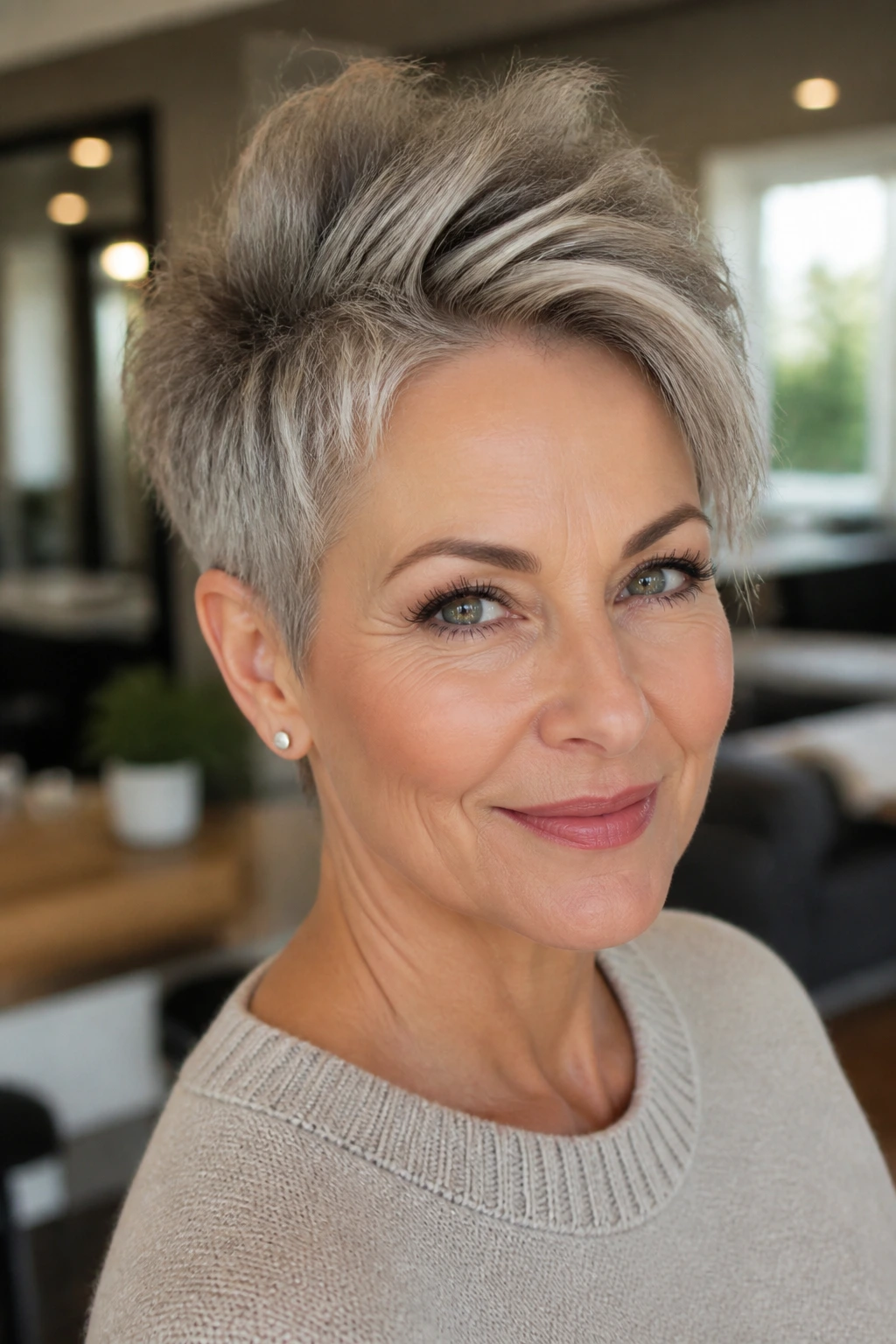
A grown-out pixie only looks accidental if nobody trims the nape. The good version is deliberate: length on top, a soft side sweep, close sides, and enough crown height to elongate the face just a bit. That tiny bit of lift can be a useful thing for diamond and oval faces.
This cut is popular for women who want less daily styling but still want a shape with edge. It also suits silver and white hair beautifully because the short silhouette shows off the sheen. The trick is to keep the top long enough to brush forward or sideways, so it doesn’t collapse into a flat cap. That top length also gives you some room to play with texture cream or a touch of paste.
If you’re growing out a shorter cut, this is often the stage where people panic and overtrim. Don’t. Let the top keep its line while the sides are tidied. That’s what keeps the grow-out from looking like a halfway haircut.
18. Soft Wolf Cut for Wavy Hair and Long Faces

Soft wolf cuts work because they keep the silhouette loose while taking weight off the right spots. The “soft” part matters. You do not want the aggressive, over-chopped version that can make mature hair look frayed. You want a shag-adjacent shape with movement through the mids and enough fringe or face framing to break the length of the face.
Long faces benefit from width around the cheek and jaw, so the layers should open out there instead of climbing too high. Wavy hair loves this cut because the texture fills the layers naturally. Straight hair can wear it too, but it needs a bit more styling to keep the ends from lying flat and sharp.
This is a good option if you want a cut that doesn’t look overly polished every day. A little texture spray, a little rough drying, and you’re in business. It’s not lazy. It just doesn’t demand perfect lines. That’s a useful distinction.
19. Collarbone Cut with Face-Framing Ribbons for Diamond Faces
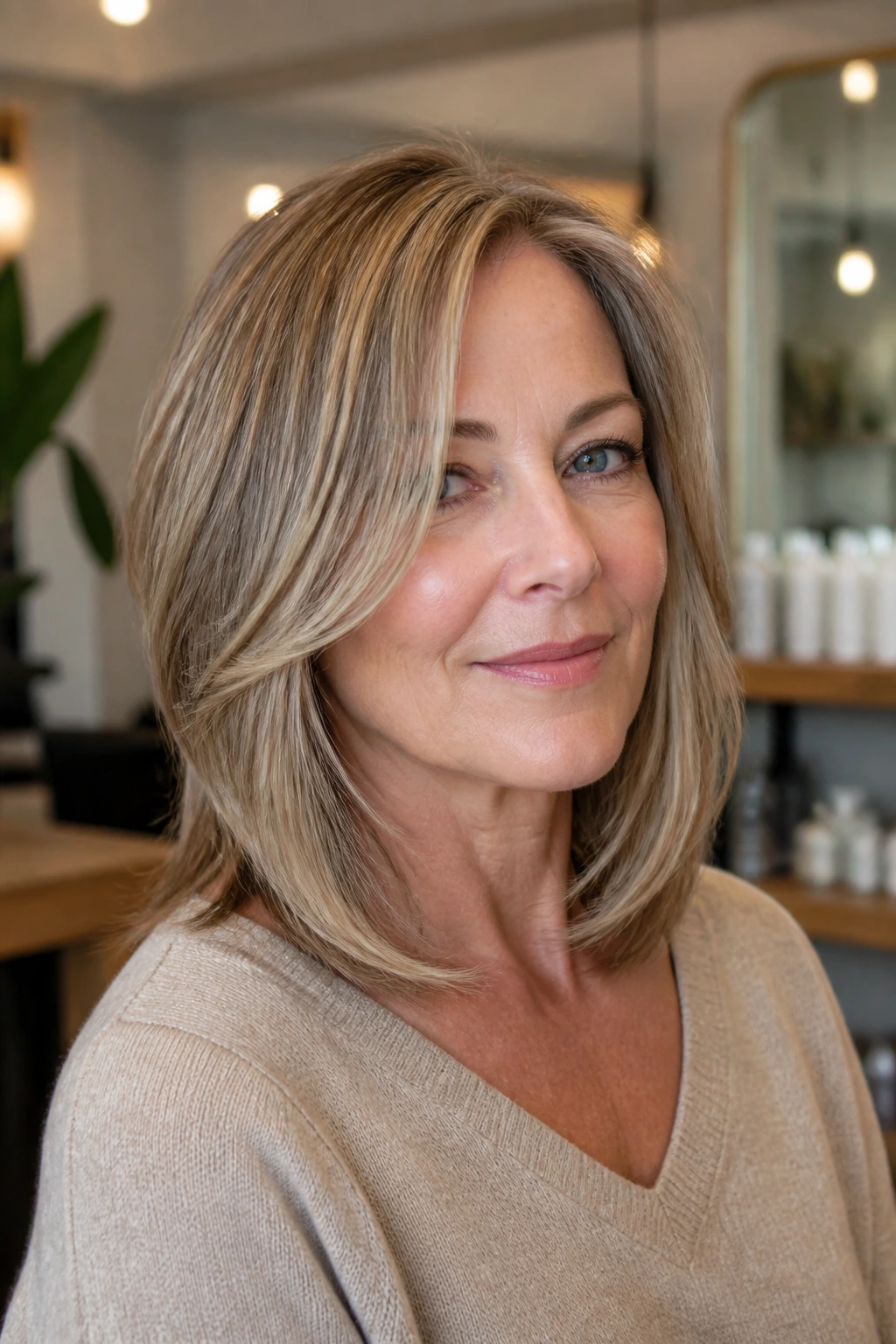
Diamond faces can take more softness at the cheekbone than people usually give them. That’s why a collarbone cut with long face-framing ribbons works so well. It opens space at the forehead and jaw while easing the width at the cheeks, which are the widest point on a diamond face.
The face-framing pieces should start near the cheekbone and taper down to the collarbone. Not shorter. Shorter pieces can emphasize the width you’re trying to soften. The back can stay clean and uncomplicated, because the front is doing the visual work. This is one of those styles where the shape looks simple, but the placement is doing a lot of heavy lifting.
If your hair is straight, a smooth bend around the front pieces gives the style polish. If your hair is wavy, let the ribbons fall a little looser. The goal is to keep the center of the face from looking squeezed. A good cut does that without making the hair look overworked.
20. Tucked-Behind-the-Ears Bob for Clean Necklines
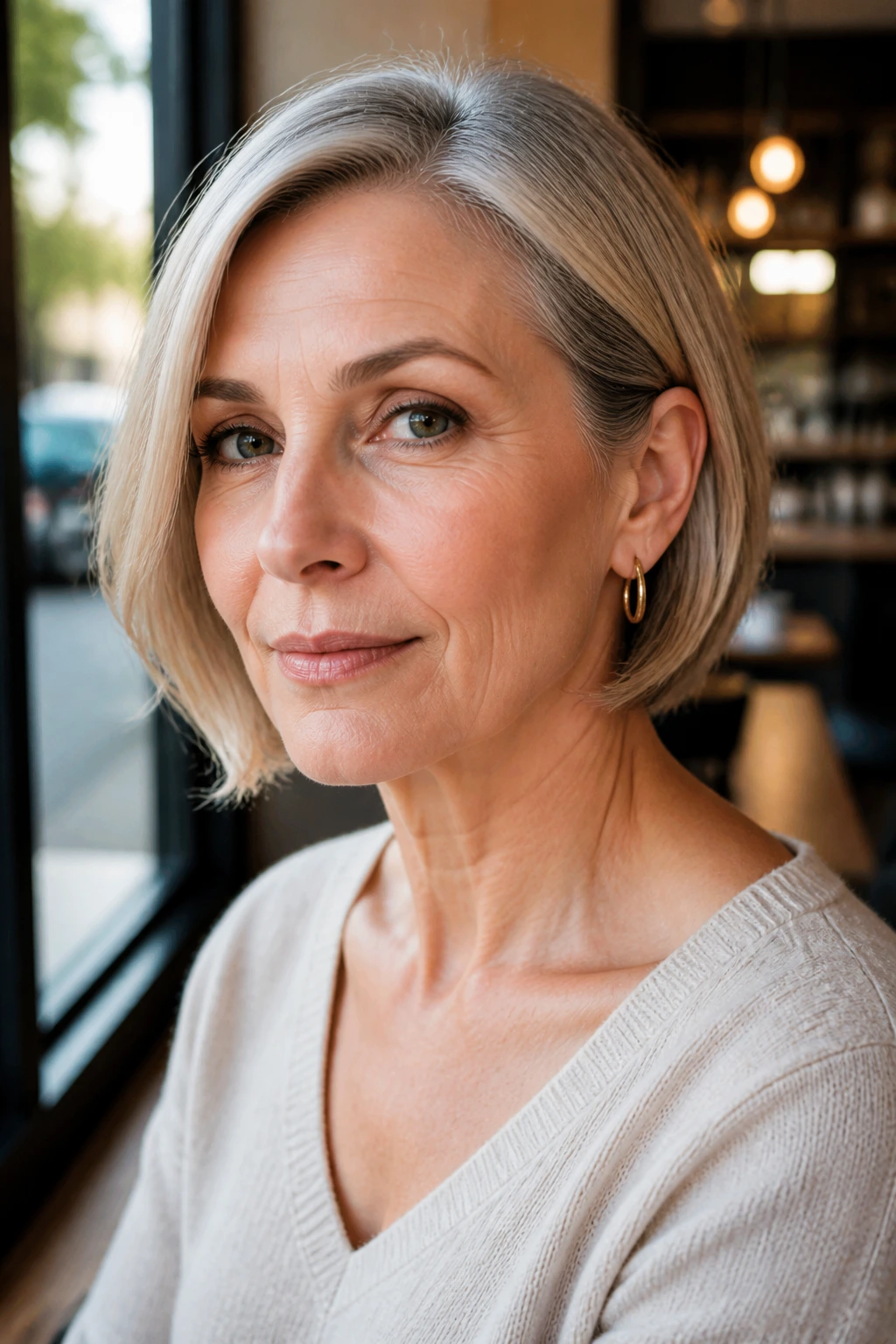
Some bobs look best when one side is tucked back and the other side stays loose. That little asymmetry is what keeps this cut from feeling stiff. The tucked-behind-the-ear bob is especially nice for women who like to show their neck, cheeks, or earrings without going fully short.
This cut usually lands just below the jaw, which helps it work on oval, heart, and square faces. The perimeter should stay neat so the tuck looks purposeful. A little bend at the ends keeps the shape from looking too blunt. If your hair is thick, keep the inside weight under control so the ears don’t feel buried. If it’s fine, the compact shape can make the hair look denser.
There’s a quiet confidence to this cut when it’s worn with a good earring. Not flashy. Just clean. It lets the face do more talking, which is exactly what a lot of women want from a haircut after 50.
21. Choppy Crop with Wispy Nape for Petite Faces
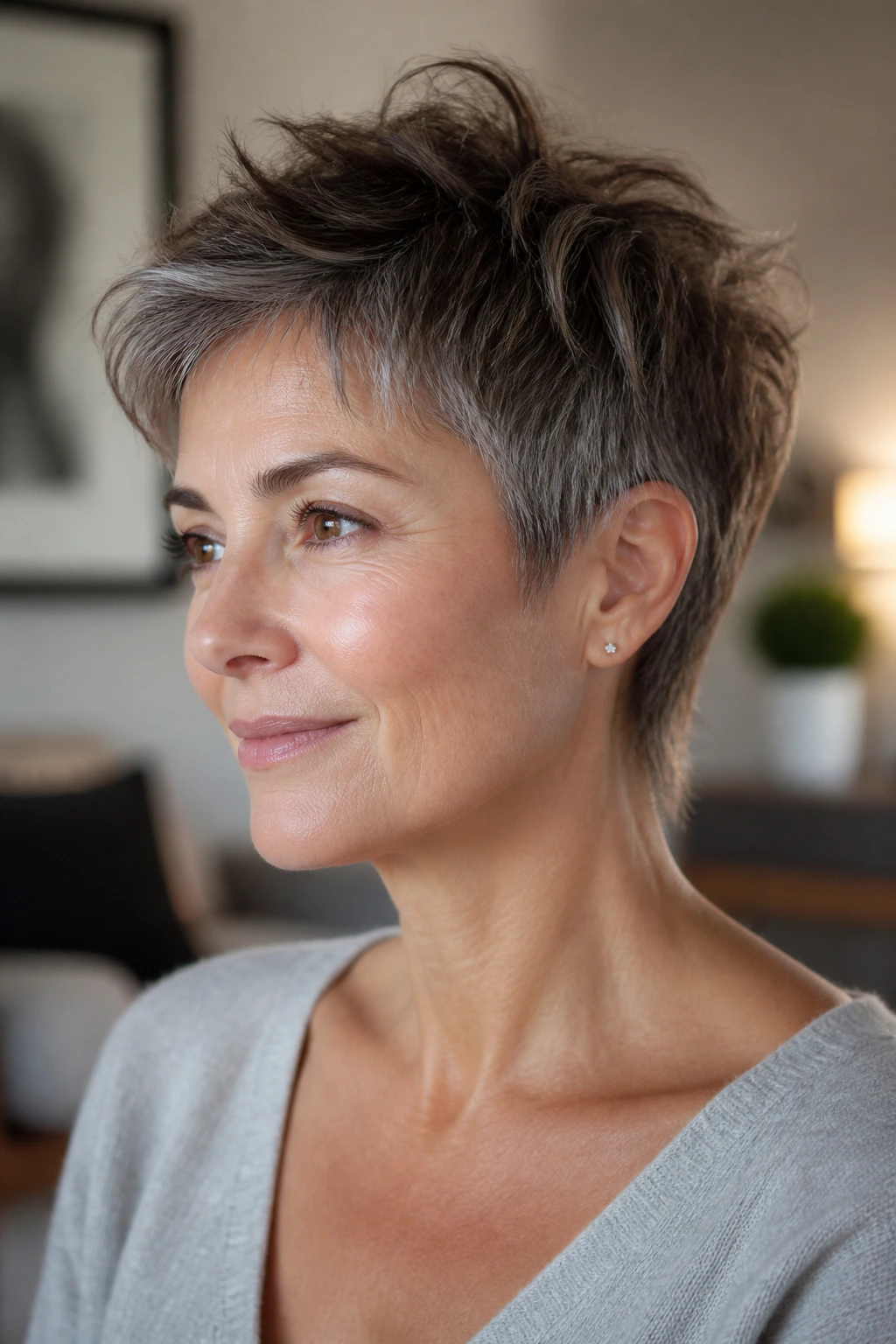
Petite faces need the cut to stay small enough to match the features. A choppy crop does that by keeping the proportions tight while still adding texture at the top. The wispy nape stops the style from feeling too heavy around the neck, and the shorter sides keep the face from getting swallowed.
This cut is useful for round and heart-shaped faces too, especially when the top is a little piecey and not puffed out. You want movement, not height for the sake of height. A small amount of wax or paste can separate the pieces without making them look crunchy. Keep the fringe light if you use one. Thick fringe on a petite face can overpower the whole look fast.
The beauty of this style is how little it asks of you in the morning. Fingers, a bit of product, maybe a quick blast from the dryer. Done. But the shape has to be maintained. If the nape grows out too much, the whole cut loses its neatness.
22. Side-Swept Lob for Pear Faces
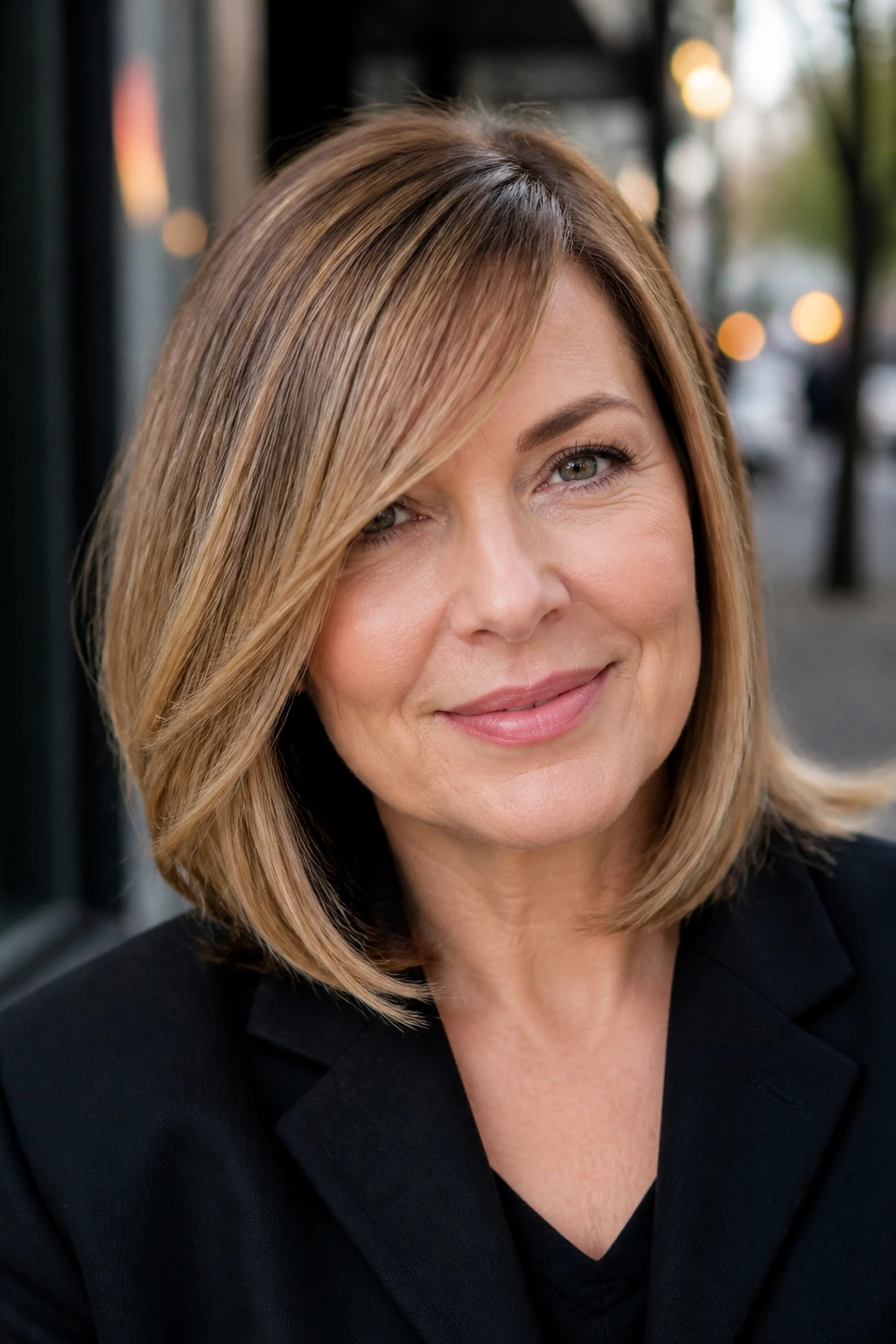
Pear-shaped faces usually want more attention drawn upward, and a side-swept lob does that quietly. The longer side fringe creates motion near the eyes and cheekbones, while the lob length keeps enough weight around the lower half of the face to balance a fuller jaw.
The front pieces should be long enough to skim the chin or just below it. That length softens the lower face without hanging in a straight, boring curtain. The side part helps break up the width at the jaw, and a little bend through the ends keeps the cut from feeling too flat. This is a nice choice if you want something that works at work, at dinner, and on days when you barely touch it.
If the face feels top-heavy, avoid blunt bangs here. The side sweep does a better job because it gives width where you want it and no extra bulk where you don’t. It’s a neat fix, and it doesn’t shout about itself.
23. Flip-Out Layered Cut for Fine or Straight Hair

Straight hair often needs movement at the ends more than a forest of layers through the middle. A flip-out layered cut gives you that. The ends kick outward just enough to lift the silhouette, which helps fine hair look lively instead of limp.
This shape works well at shoulder length or a touch below, especially on oval and round faces. The layered pieces should stay light around the bottom third of the cut, where the flip happens. Too many layers up top can make the crown flat, and too much texturizing at the ends can make the hair look frayed. The sweet spot is clean enough to hold a bend, soft enough to move.
A round brush or a flat iron bend at the very ends is usually enough. You don’t need a full blowout every time. The point is to create that little outward kick that makes the style feel intentional. It’s a small detail, but small details are what keep straight hair from looking limp.
24. Airy Mid-Length Cut with Invisible Layers

Flat hair has a habit of collapsing at the crown, which is exactly why invisible layers matter. They let the hair move without leaving obvious steps through the cut. That’s a useful trick for women who want body but not the choppy look of heavily layered hair.
This cut usually sits between the chin and the shoulders, and it suits a lot of face shapes because the silhouette is soft rather than rigid. The layers are hidden inside the shape, so the outer line still looks clean. That matters if your hair is fine, silver, or prone to static. You get lift without losing the outline.
If you air-dry, this is one of the friendliest cuts in the whole list. The shape does not rely on perfect styling. A little mousse at the roots and a bit of scrunching at the mids are often enough. It’s the kind of haircut that looks better when it moves.
25. Full-Fringe Mid-Length Cut for Long or High-Forehead Faces
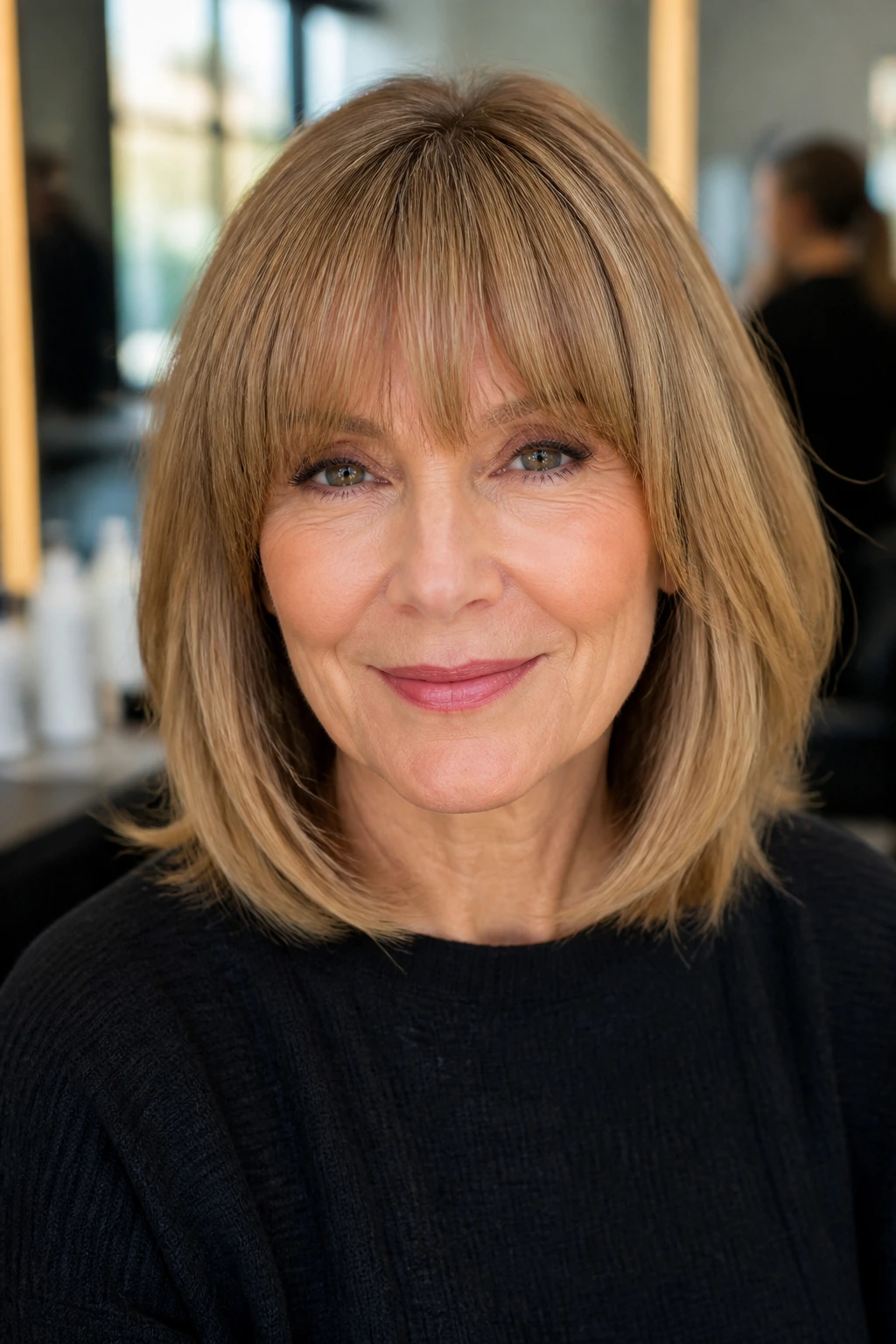
A full fringe can be a gift on a long face, but only if the rest of the cut stays soft. The fringe covers some forehead length, while the mid-length hair keeps the face from looking boxed in. You need both pieces working together. One without the other can feel off.
The bang should sit at or just above the brow, with a little texture so it doesn’t form a hard wall. The length around the shoulders should stay light enough to balance the fringe. If the hair is thick, remove bulk from the inside. If it’s fine, keep the fringe a touch airy so it doesn’t separate into strings.
This is a strong look on women with clear eyes and good brow shape, and it does fine work with silver hair. The fringe makes the face feel framed. The mid-length keeps it wearable. Just keep the trim schedule regular, because a full fringe grows out with a vengeance and starts doing its own thing fast.
How Face Shape, Texture, and Density Work Together
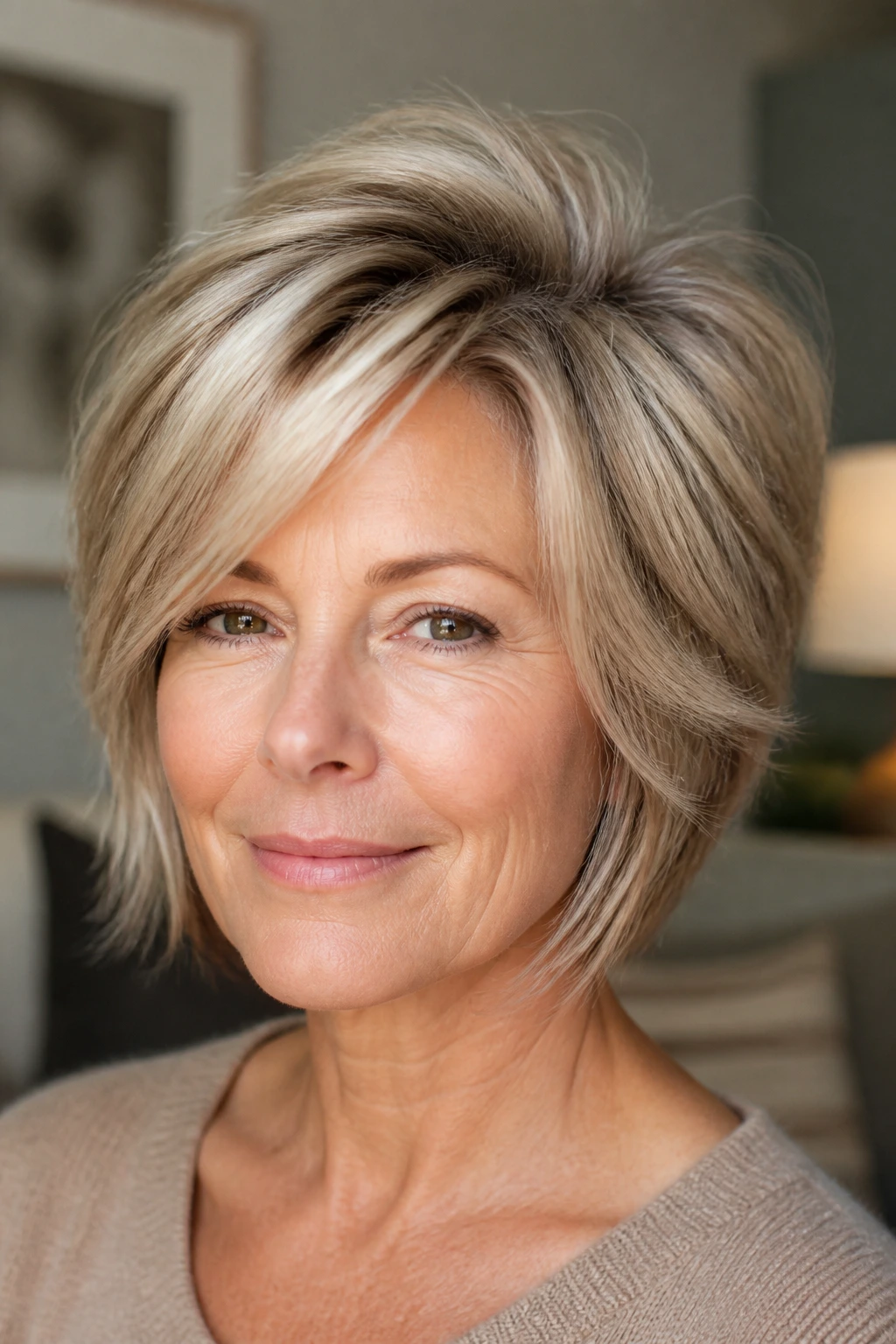
Face shape is only one piece of the haircut puzzle. A style that flatters the jaw can still fail if the crown goes flat, the ends puff out, or the texture fights the shape. That’s why I never treat face shape like a one-step answer. It’s the starting point, then hair texture and density decide how the cut actually behaves.
A round face usually benefits from length below the chin, but if the hair is very fine, too much length can drag the whole look downward. A square face often likes softness around the jaw, but if the hair is very thick, that softness can turn into bulk unless the inside is thinned with care. And a long face may need width at the sides, though on curly hair that width can happen naturally with almost no help at all.
How to read your own shape without getting lost
Pull your hair back and look at where the widest part of your face sits.
If the forehead and jaw are close in width, you’re probably looking at an oval or oblong pattern. If the cheeks are widest, you may be round or diamond. If the jaw is strong and the forehead is similar in width, square is likely. That’s enough information to make a smarter choice. You do not need a geometry lesson.
Why density changes the haircut
Fine hair usually looks better with clean edges and fewer layers. Thick hair often needs internal removal of weight so it can move. Curly hair needs room for spring, which means the same face-shape cut has to be adjusted to the curl pattern. That’s why the same bob can look airy on one woman and puffy on another. The difference is often not the idea. It’s the density.
How to Ask for the Right Cut in the Salon Chair
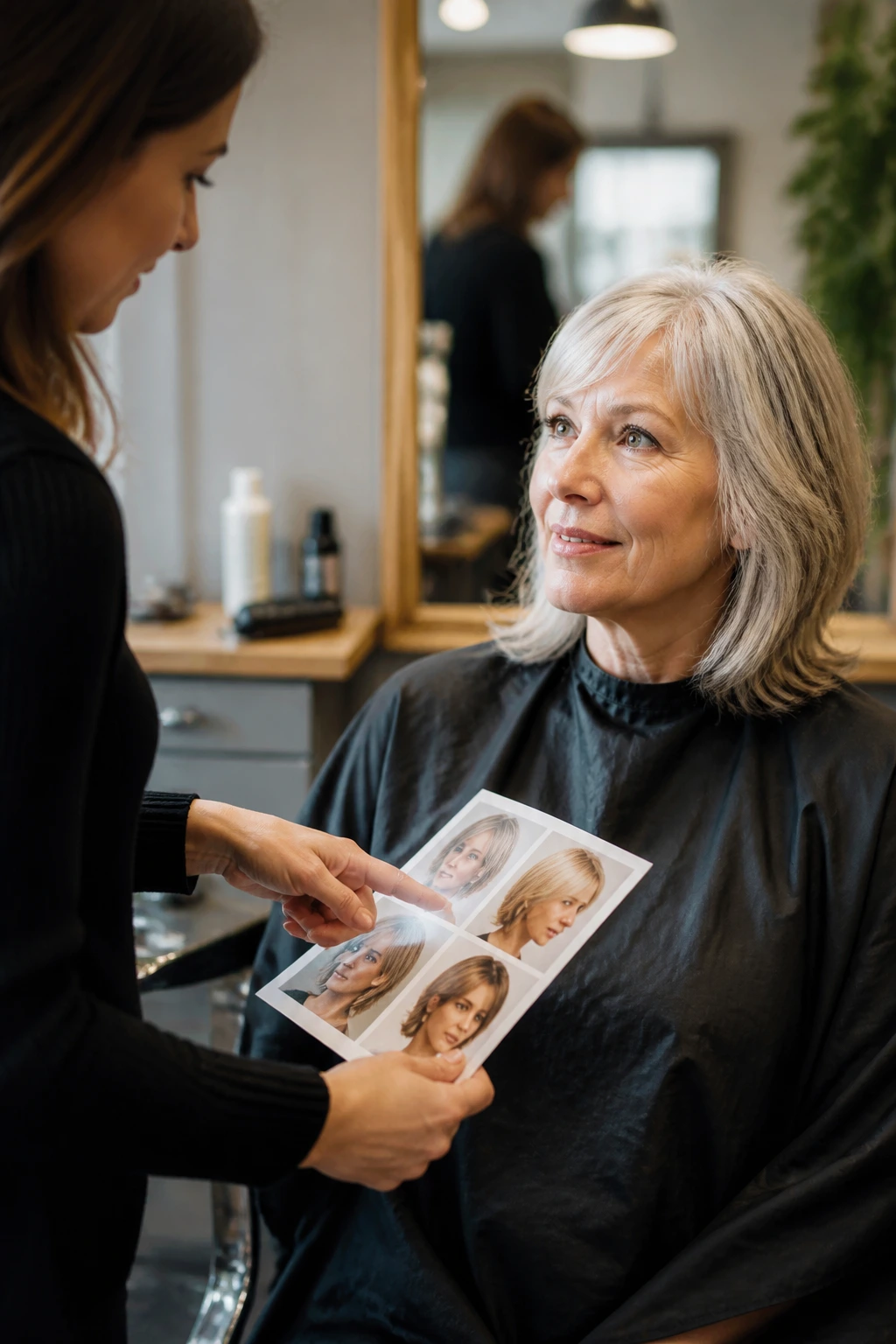
The best haircut consultations are not about buzzwords. They’re about landmarks. Tell the stylist where you want the hair to hit, which part of your face you want softened, and how much time you’re willing to spend styling it. That’s much more useful than saying you want something “flattering.”
Bring two or three photos, but use them as a starting point, not a command. The good conversation starts with the parts of each photo you like: the fringe, the nape, the way the front pieces sit near the cheekbone. Then ask how those details would change for your face shape and hair texture. A good stylist will adjust the cut, not copy the picture like a tracing.
A few useful phrases sound plain, and that’s the point:
- “I want the front to stop below my jaw.”
- “My crown goes flat, so I need lift there, not at the sides.”
- “Please keep the fringe soft enough for my glasses.”
- “My hair is fine and needs a blunt edge.”
- “I need this to air-dry without looking unfinished.”
Say those things early. Not after the cut is half finished.
Essential Styling Tools That Make These Cuts Easier to Wear
You do not need a bathroom full of gadgets, but a few tools make a big difference when you’re trying to keep a haircut looking intentional.
- Blow dryer with a nozzle: Directs airflow so the roots go where you want instead of frizzing in every direction.
- 1-inch round brush: Best for short to mid-length cuts that need a bend at the ends or a little lift at the crown.
- Vent brush: Faster for rough-drying pixies, bixies, and shorter bobs without creating too much polish.
- Flat iron with narrow plates: Useful for bending front pieces, flipping ends under, or smoothing a fringe without flattening everything.
- Diffuser: A must for curls and waves if you want shape without blowing the pattern apart.
- Light mousse or root-lift spray: Gives fine or flat hair some memory at the root before styling.
- Texture spray or styling paste: Good for pixies, crops, and layered cuts that need separation.
- Smoothing cream or serum: Helpful on coarse, silver, or frizz-prone hair where the outer line matters.
A curling iron is optional, not required. Plenty of these cuts look better with a bend than with a full curl.
How to Wear These Cuts With Glasses, Earrings, and Necklines
Glasses: Keep the fringe above the frame line or sweep it aside so the lenses don’t feel crowded. Crops, side parts, and shorter bobs tend to behave better around frames than blunt bangs that sit right in the lenses.
Earrings: Short cuts and tucked bobs pair well with hoops, drops, and studs because they leave the ears visible when you want them. If your haircut already has a strong line around the jaw, a big earring can compete with it, so pick one focal point and let the other stay quieter.
Necklines: A collarbone cut looks clean with crew necks, open collars, and V-necks. Shorter pixies and bixies can handle higher necklines because the haircut keeps the visual shape up near the face. If the neckline and the haircut are both heavy, the whole look can feel crowded.
Texture: Sleeker cuts tend to suit sharper necklines. Looser, layered cuts sit better with softer knits and open shirts. That little pairing changes how balanced the whole look feels, even when you haven’t touched the cut itself.
Additional Styling Tips That Make a Big Difference
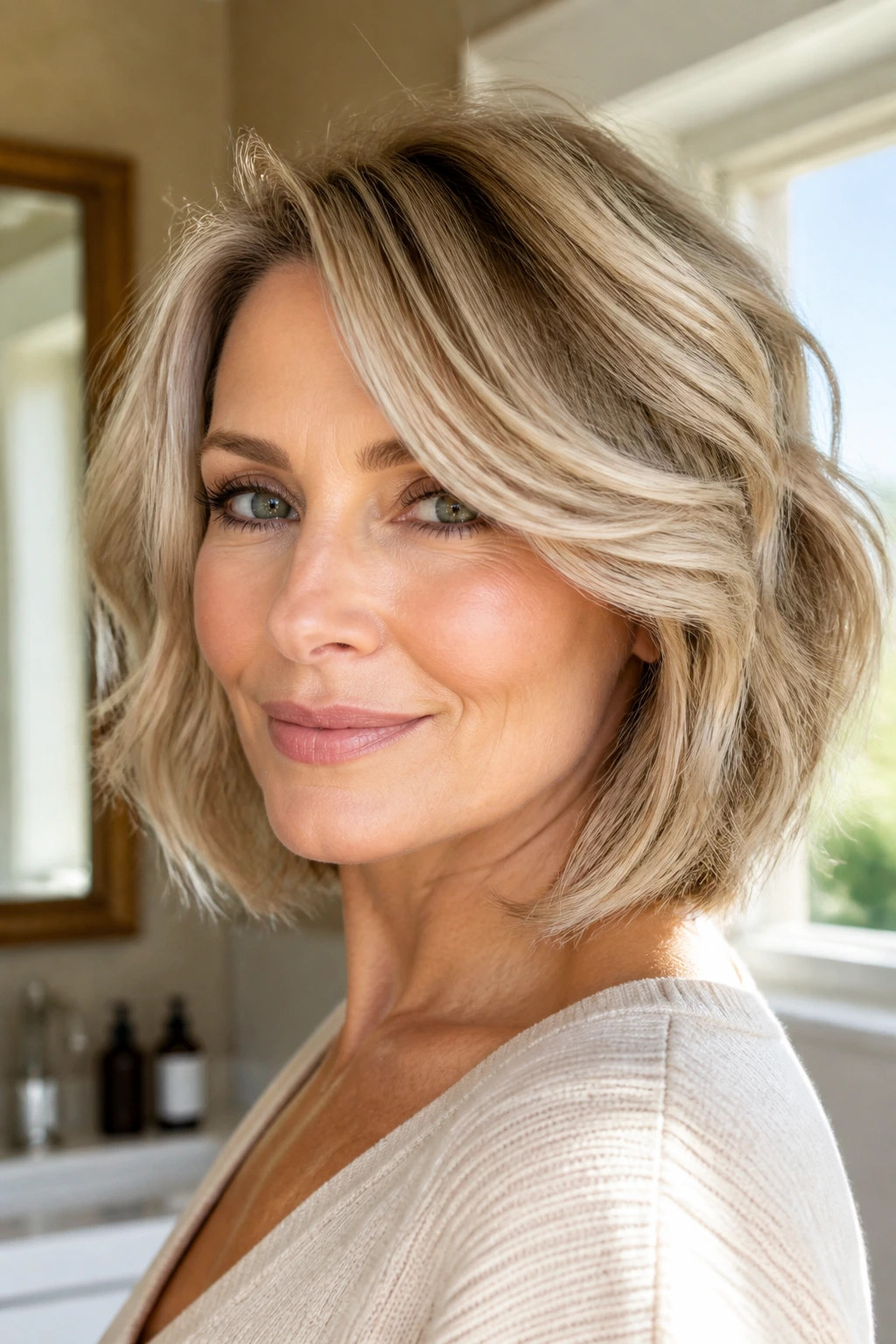
Shape Saver: Take one photo of your haircut on a good day and keep it on your phone. Show it at the next trim. Hairdressers understand reference photos better when they show the shape actually living on your head.
Fast Finish: If the front pieces are doing the heavy lifting, style only those. A quick bend around the face can rescue a plain blow-dry faster than redoing the whole head.
Silver Hair Bonus: Silver and white hair look especially sharp with clean perimeters, blunt ends, and a little glossing serum at the mids. The shine reads better when the cut line is clear.
For Thin Hair: Use product close to the roots, not halfway down the length. Mid-length mousse or spray creates drag. Roots need lift first.
For Curly Hair: Cut and style for curl clumps, not individual frizz. If you chase every loose piece, you’ll lose the shape fast.
For Busy Mornings: Choose cuts that still look okay after sleeping on them. Pixies, bixies, tucked bobs, and looser lobs usually recover faster than highly sculpted fringe cuts.
Common Mistakes That Age a Cut Faster Than It Should
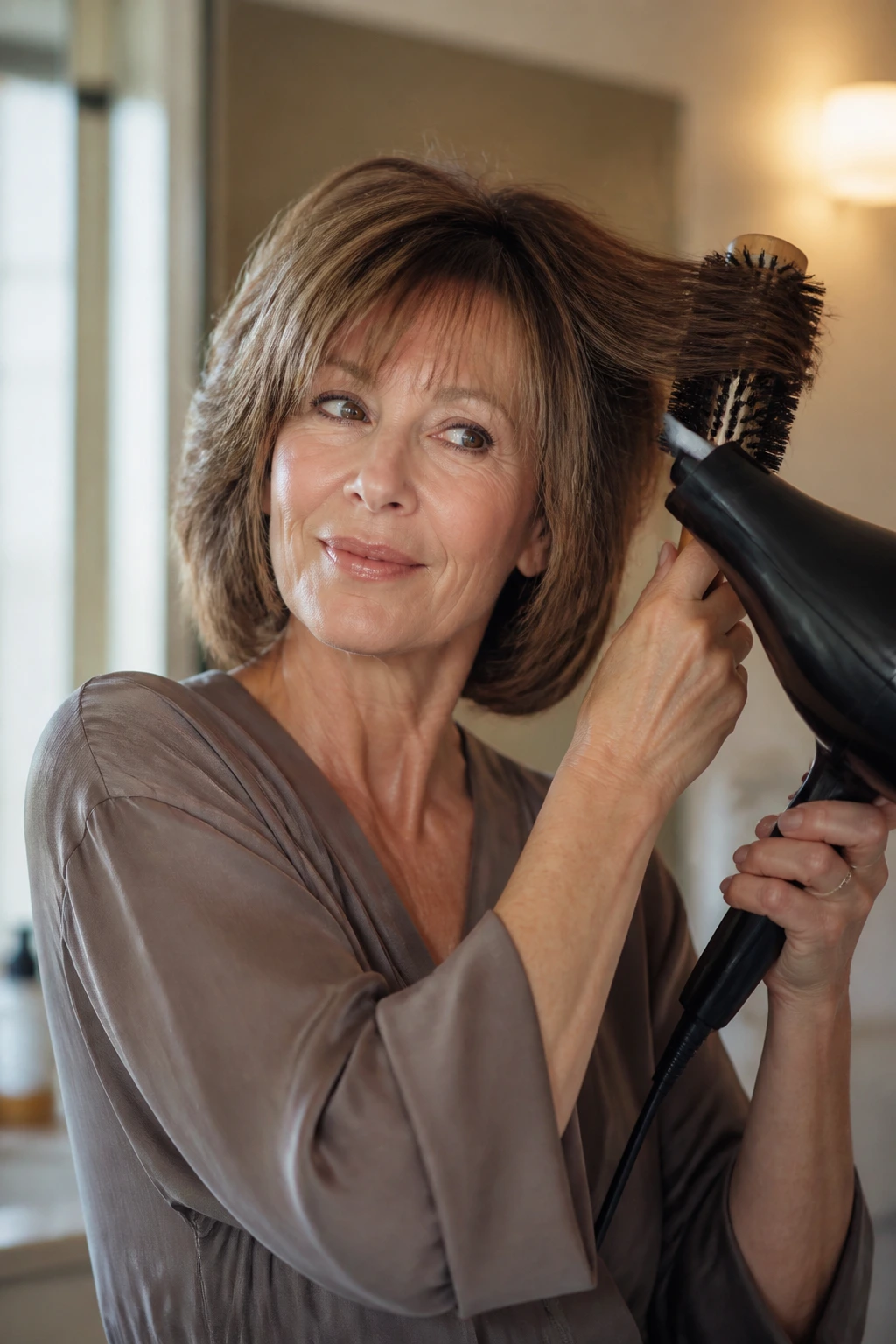
The biggest mistake is too much softness in the wrong place. A round face with too many side layers can look wider, not slimmer. A square face with too much volume at the jaw can look heavier. The fix is simple: move softness to the front or the ends, not everywhere at once.
Another common problem is crown lift without side balance. A lot of women are told they need volume on top, and that advice is only half right. If the sides stay flat and the top keeps growing upward, the face can look taller in a harsh way. You want lift that travels, not a little mound at the crown.
Bangs cut too short cause their own trouble. On mature hair, short fringe can spring up, separate, or land directly on glasses. Leave more length than you think you need, especially if your hair has a cowlick or a strong front wave.
Over-thinning thick hair is another one. It can look airy for two days, then frizz and lose shape at the ends. Ask for weight removal inside the cut, not a shredded perimeter.
And then there’s ignoring how the cut grows out. Pixies need more frequent clean-up. Bobs need length checkpoints. Fringe needs regular trimming. A haircut should look good on day one, but it should also survive week four without turning into a completely different animal.
Variations and Adaptations to Try

The Air-Dry Version: Ask for softer edges, a little more length around the front, and fewer sharp layer breaks. This version suits waves and curls that you’d rather not blow-dry every morning.
The Fine-Hair Version: Keep the perimeter blunt and the interior light. Fine hair usually looks fuller when the outer line stays clean and the layers stay minimal.
The Curly Version: Have the cut shaped in its natural dry state or at least mostly dry. Curls need to be cut where they actually sit, not where they behave after being stretched wet.
The Glasses-Friendly Version: Keep fringe pieces longer at the temples and avoid bangs that sit right on the frame line. A soft side part is often the easiest fix.
The Low-Maintenance Version: Choose cuts that can be reshaped with fingers and a bit of paste or mousse. Bixies, lived-in lobs, and soft crops are strong here.
The More Polished Version: Add a clean edge, a smoother blow-dry, and a little curve at the ends. Same cut, sharper finish. That shift changes the mood more than people expect.
Keeping the Shape Between Salon Visits

Shorter cuts usually need cleanup every 4 to 5 weeks. Pixies and bixies lose their shape quickly because the nape and sides grow first. If you let them go too long, the style stops reading as deliberate and starts looking postponed.
Bobs and lobs tend to hold for 6 to 8 weeks, though the fringe may need attention sooner. A full fringe often wants a touch-up every 2 to 3 weeks, especially if it sits near the eyebrows or frames glasses. If you’re trimming bangs at home, take off less than you think and cut vertically into the ends so you don’t get a blunt shelf.
At home, reset the roots with a little water, mousse, or dry shampoo rather than soaking the whole head. You’re trying to revive the shape, not restart the entire styling process. A satin pillowcase helps with frizz and flattening, especially on silver or porous hair. Curly cuts like a loose pineapple clip or bonnet at night. Bobs usually do better with the ends tucked loosely under a soft wrap or simply brushed into place the next morning.
Frequently Asked Questions

How do I know my face shape without guessing wildly?
Pull your hair back, look straight into a mirror, and notice the widest area of the face. Forehead width, cheekbone width, and jaw width give you the clues you need. You don’t need exact measurements to make a useful haircut choice.
Can women over 50 still wear bangs?
Yes, and the right bangs can be better than no bangs at all. The key is choosing the right kind: curtain bangs, bottleneck bangs, side-swept fringe, or a soft full fringe that moves instead of sitting like a shelf.
What haircut makes fine hair look fuller?
A blunt bob, blunt lob, bixie, or clean crop usually gives the best density illusion. Fine hair tends to look fuller when the perimeter stays solid and the layers stay controlled.
Do middle parts work after 50?
They can, especially on oval or balanced face shapes. The part matters less than the cut around it. If the front pieces are long enough to soften the cheeks or jaw, a center part can look clean and modern.
What if I wear glasses every day?
Choose fringe and side pieces with the frame line in mind. You want the hair to stop above the lens, sweep away from it, or sit cleanly around the temples. Bring your glasses to the appointment if you can.
Are short haircuts harder to keep styled?
They’re faster to style, but they need more frequent trims. A pixie can be done in minutes, yet it loses shape faster than a lob. Short does not mean low-maintenance forever; it means lower daily time and higher trim discipline.
Can curly hair be cut into a bob without turning into a triangle?
Yes, if the layers are placed to support the curl pattern and the bulk is removed where it actually needs to leave. A dry or mostly dry cut is often the safest way to get the shape right.
What if my hair keeps going flat at the crown?
Ask for root lift through the top without overbuilding the sides. A little mousse at the roots, a directional blow-dry, and a cut with internal movement usually help more than piling on product after the fact.
A Cut That Knows Your Face
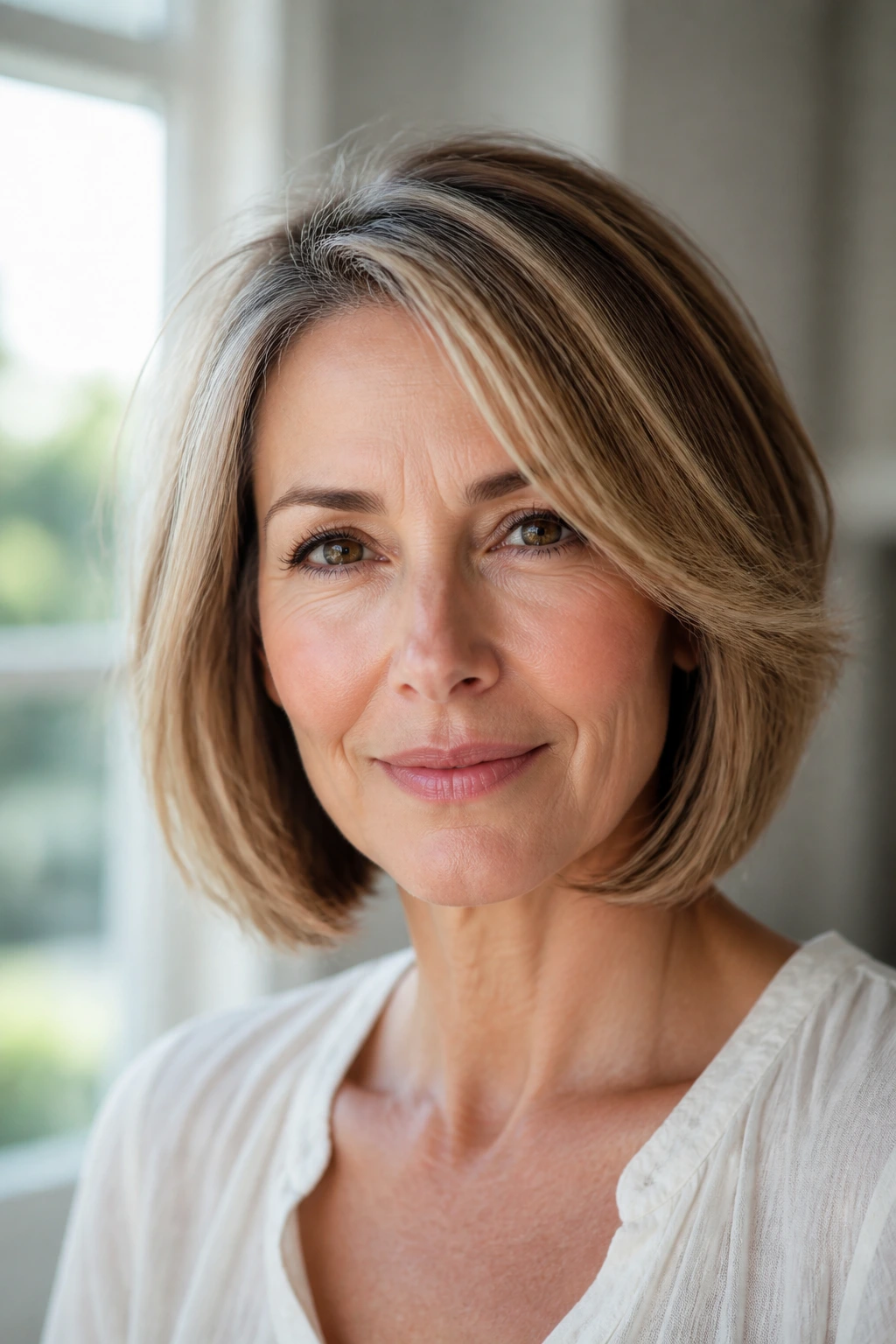
The best hairstyles after 50 do not hide the face. They frame it with a little more judgment and a little less noise. A good cut knows where your cheekbone sits, where your jaw needs softening, and where your hair wants to fall if nobody argues with it.
That’s why face shape matters so much here. Not because there’s one perfect rule. Because the right line, at the right length, makes everyday hair behave like it was planned. And that’s what people notice — not a trendy label, not a dramatic change, just the quiet feeling that the shape is working with you.
If you’re heading to the salon, bring one or two photos, a clear idea of your maintenance level, and a blunt opinion about what your hair does on its worst day. That combination tells a stylist far more than “make it flattering,” and it usually gets you a cut you can live with instead of a cut you keep apologizing for.