



Fine thinning hairstyles for women over 50 are not about pretending the hair is something it isn’t. They’re about giving the strands you do have a shape that behaves. When density starts to slip at the temples, along the part, or at the crown, the wrong cut spreads the problem out. The right one gathers the hair back together, puts the weight in the right place, and makes the whole head look cleaner, sharper, and fuller without a wrestling match with the blow-dryer.
Hair can change in sneaky ways after 50. A style that used to sit neatly can start separating at the roots, falling flat at lunch, or showing too much scalp under bright light. That doesn’t mean the hair has “gone bad.” It means the haircut needs to do a different job now. A blunt edge can make fine hair look denser. A lifted crown can fake more body than another inch of length ever will. A side part can be more flattering than years of loyalty to the middle.
I keep coming back to one simple truth: fine hair hates being overworked. Too many wispy layers, too much feathering, too much product, or a heavy routine can make it look smaller than it is. The styles below lean on structure, balance, and a little common sense. Some are short. Some keep length. Some need a round brush, and some look best with almost no fuss at all. The useful part is that each one does a different kind of rescue work.
Why These Styles Earn Their Keep
-
Blunt edges: A clean perimeter at the bob or lob line makes fine hair read as denser because the eye sees one solid shape instead of frayed ends.
-
Crown lift: Styles with height at the top, even a small one, stop the hair from collapsing into the scalp by midday.
-
Smart length: Cuts that stop at the jaw, collarbone, or just below keep the hair from getting dragged flat by its own weight.
-
Controlled texture: The right amount of bend or piecey movement adds life; too much shredding just makes ends look tired.
-
Easy styling: These cuts are built to work with a quick blow-dry, a velcro roller set, or a little air-dry help, not a 40-minute daily battle.
-
Face framing: Bangs, side sweeps, and front pieces can soften thinning around the temples without making the whole cut look heavy.
What Fine Thinning Hair Needs From a Cut
Fine, thinning hair does not need a dramatic personality transplant. It needs a haircut that respects how little fiber is actually there. That means keeping the outline strong enough to hold its own, especially through the sides and ends. If the perimeter gets too shredded, the whole shape starts looking like it’s fraying at the edges. Not a good look. Not even close.
A good cut also puts the volume where people can see it. The crown matters more than the nape. The sides matter more than the wispy back that only you notice in the mirror. A little lift up top can change the whole silhouette, while long layers cut too high can leave the lower half looking see-through. That’s the part most home hair advice gets backward.
Where the Weight Should Live
For fine hair, weight is not the enemy. Badly placed weight is the enemy. A bob that sits at the jaw with a blunt end carries its shape better than one that has been sliced into soft little feathers all the way around. If the hair is very straight, that blunt line does a lot of the work on its own.
Why Parting Matters More Than People Think
A center part can be a nice clean look, but if the scalp shows through strongly at the crown, shifting the part just an inch off center often helps more than buying another styling spray. The change is tiny. The effect is not. That little shift gives one side room to lift and keeps the whole top from lying like a helmet.
When Less Texture Wins
Too much texture can make fine hair look busy in the wrong way. Soft movement is useful. Ragged ends are not. If you remember one thing before picking a style, let it be this: shape first, decoration second. The haircut has to hold its own before any mousse, brush work, or hot tool gets involved.
1. Chin-Length Blunt Bob
A chin-length blunt bob is the haircut I trust when fine hair needs to look fuller fast. The line sits right where the jaw gives it a natural frame, and that clean edge makes the ends look thicker than they are. It’s a blunt cut, not a fluffy one, and that’s the point.
Why It Works
The jawline gives the bob a strong stopping place, so the eye sees one solid shape instead of long, wispy length that fades out at the bottom. If the hair is straight or only slightly wavy, this cut can look almost architectural. That sounds fancier than it is. It just means the shape does the heavy lifting.
Ask for minimal layering, especially through the perimeter. A tiny bit of softness near the face is fine, but the ends should stay clean. If your hair is very fine, a round brush and a root-lift mousse at the crown are enough. You do not need a pile of sticky product.
Best for: straight hair, soft waves, and anyone whose ends have started looking see-through.
Styling note: Blow-dry with the brush aimed slightly under the ends so the bob hugs the jaw instead of flipping out in odd directions.
2. Soft French Bob with an Airy Fringe
Why does a French bob look fuller even when the hair itself isn’t? Because it cheats in all the right places. The length is short enough to keep the ends from sagging, and the fringe adds a little visual weight around the face without swallowing it whole.
The trick is keeping the bangs light. Not dense. Not helmet-like. Just enough to soften the forehead and blur the part line a touch. On fine thinning hair, a heavy fringe can split and cling to the forehead by noon, which defeats the whole purpose. A whisper of movement works better than a chunk of hair that tries too hard.
The part matters more than the fringe
A side part with a French bob gives the top a little lift and keeps the shape from looking flat. Air-drying this cut can work if your hair has a slight wave, but a quick bend with a round brush makes it sit better. I’d skip thick creams here. A light mousse or foam is usually enough.
This cut is especially good if you want something that looks deliberate even when the styling is loose. It does not need to be perfect to look finished. That’s one of the reasons it stays so flattering.
3. Feathered Pixie with Crown Lift
If your temples are starting to look sparse and the crown has lost some body, a feathered pixie can be a small miracle. Not the choppy, over-thinned version. The better version. The one with lift through the top and tapered sides that clean up the outline.
The crown is where this cut earns its keep. Keep the top a little longer so it can be directed upward or slightly forward, then leave the nape snug and neat. That gives the hair a shape instead of a cloud. Fine hair does much better when the head shape is visible and intentional.
What to ask for
- Tapered sides that hug the head.
- Length left at the crown for lift.
- Soft texture on top, not razor-shredded ends.
- Enough fringe to sweep across the forehead if needed.
Styling is quick. A pea-sized amount of styling cream or paste, worked through damp hair, is enough. Blow-dry in the direction you want the top to stand, then pinch a few pieces at the end. Done.
4. Tapered Crop with Side-Swept Bangs
This is the cut for someone who wants short hair but not a hard, masculine line. The tapered crop keeps the neck area clean, while the side-swept bangs soften the front and hide any thinning that’s happening at the temple. It’s tidy. Sharp. Not fussy.
The side fringe matters because it breaks up the forehead and gives the front of the style some movement without needing bulk. If the bangs are cut too short or too thick, they can sit like a lid. A longer sweep is easier to live with and easier to grow out. That matters more than people like to admit.
I like this cut for women who wear glasses, because the side sweep sits well around frames and doesn’t crowd the face. The effect is polished without looking stiff. If your hair has a cowlick at the front, this style can work with it instead of fighting it every morning.
5. Collarbone Lob with Invisible Layers
A collarbone lob is the safe bet that is not boring. That’s the difference. It keeps enough length to feel feminine and versatile, but it stops before the weight starts dragging everything flat. The best version uses invisible layers—shaping you can feel more than you can see.
The reason this works on fine thinning hair is simple: the length still gives softness, but the ends are close enough together that the perimeter reads as full. A shoulder-grazing cut can sometimes look stringy if the hair is sparse, especially when it’s one solid curtain. A collarbone lob has more air in it, less drag.
Good signs you’ve got the right version
- The ends touch the collarbone, not the ribs.
- The layers are hidden inside the cut.
- The front pieces skim the jaw or cheekbone.
- The blow-dry can bend slightly inward or outward without looking chopped up.
This is one of the easiest cuts to dress up or leave alone. It handles a quick wave, a sleek finish, or a clipped-back side. Good haircuts should behave like that.
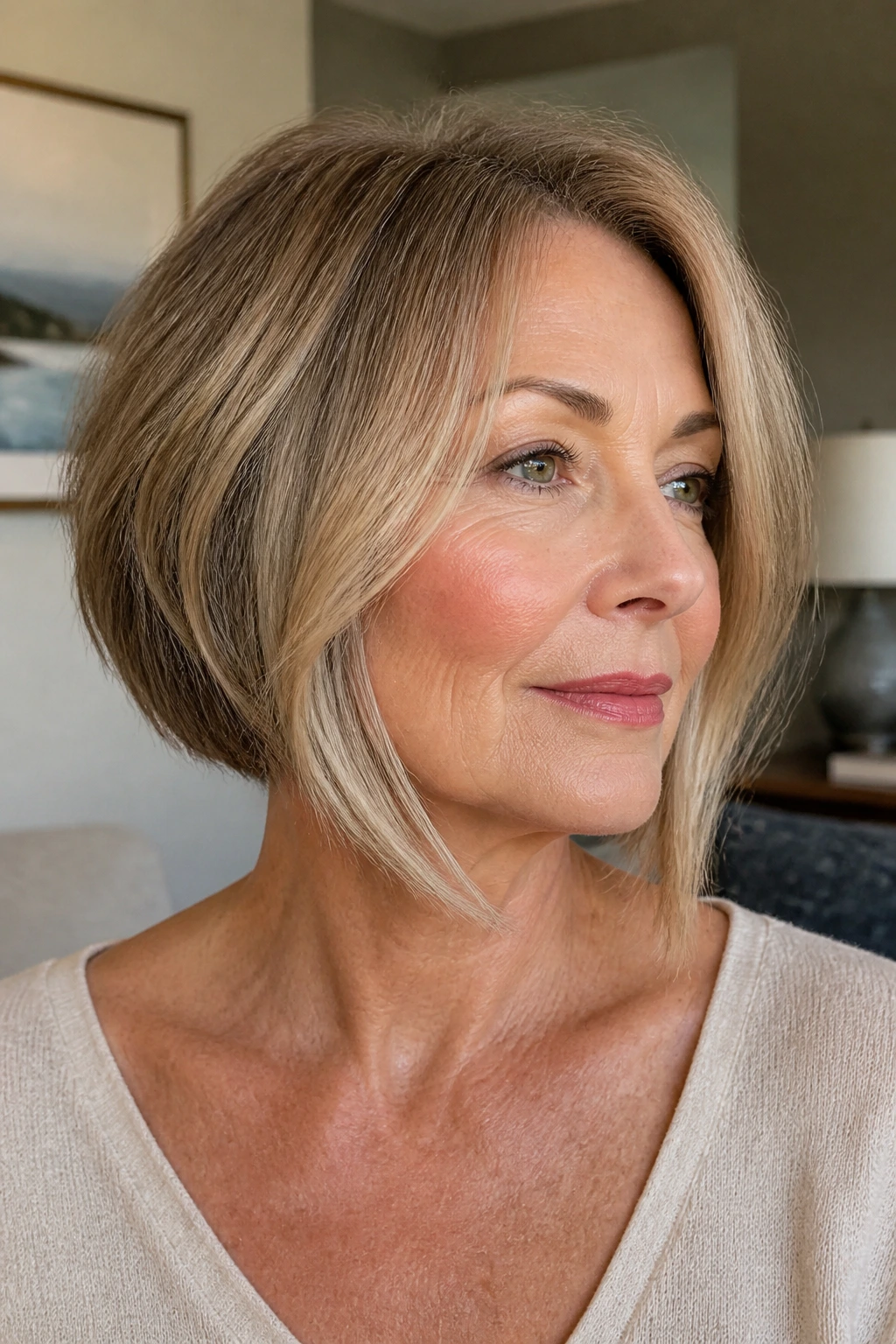
6. Angled Bob with Longer Front Pieces
An angled bob is a little more assertive than a classic bob, and that can be useful. The shorter back creates lift where the hair tends to collapse, while the longer front pieces stretch the face visually and give the style some swing. That angle does real work.
For fine hair, the angle should be gentle. Too steep, and the cut can look over-edged. Too much length in the front, and the back loses its support. The sweet spot is usually a modest slope from the nape to the jaw, with the front just brushing the chin or a touch below. That keeps movement without creating a thin tail at the front.
This style is especially flattering if you like tucking one side behind the ear. It gives the haircut a bit of asymmetry and lets the front pieces frame the face rather than hang like curtains. A flat iron bend at the ends can help, but don’t overcurve them. The line should still feel clean.
7. Textured Shag Lob
A textured shag lob can work beautifully on fine hair—if “textured” means controlled movement, not over-razored ends that look nervous. That’s the line I draw. Soft shagging around the crown and cheeks can add life, while the longer lob length keeps the hair from floating away into nothing.
This cut loves a little wave. If your hair naturally bends, the shag lob can make it look fuller by breaking up big flat zones. A center part can work here if the crown has enough lift, but a soft off-center part usually keeps it more flattering. You want the hair to move, not fuzz out.
What makes this version different
- The longest pieces still graze the collarbone.
- Layers begin around the cheekbone, not halfway up the head.
- The crown gets lift, but the ends stay solid.
- Texture spray beats heavy cream here, every time.
This is a good choice if you want edge without going short. It has some attitude. Just enough.
8. Rounded Pageboy
The rounded pageboy has a shape that feels almost old-school, but the right version looks fresh, not dated. The curved line hugs the jaw and nape, creating a smooth, full-looking silhouette that fine hair often needs. It’s especially good when the back feels sparse and you want the shape to look even all the way around.
What makes the pageboy work is the curve. The ends are guided under so the style holds together instead of splitting into bits. That rounded outline creates the illusion of density, and on straight hair it can look very crisp. Wavy hair can wear it too, but the styling takes a little more discipline.
If you’re someone who likes a polished finish, this cut is worth a hard look. It is not as casual as a shag or as trendy as a bixie. It’s a shape haircut. That’s the appeal. The hair sits where it’s told and keeps its line.
9. Bixie Cut with Piecey Texture
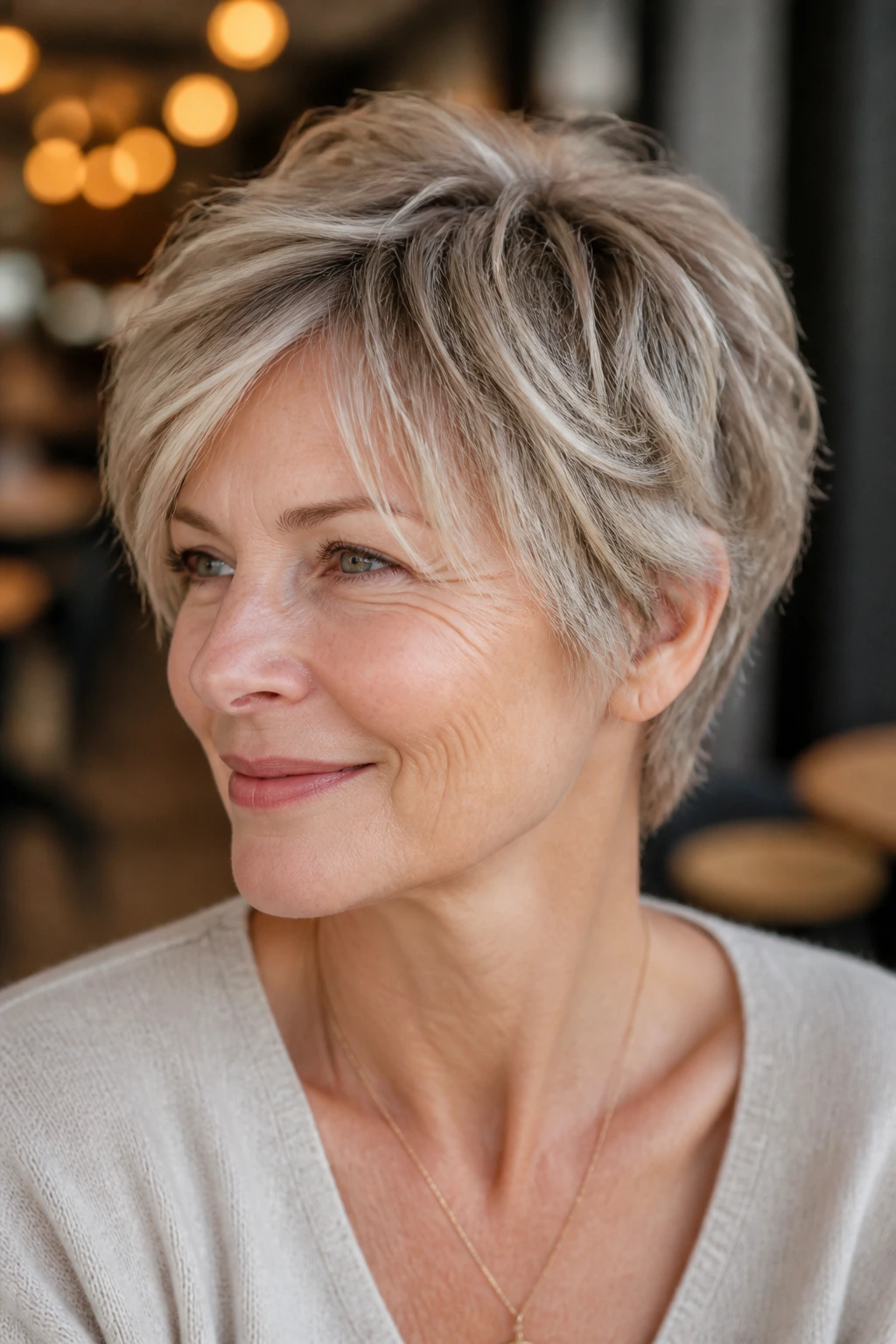
The bixie sits between a pixie and a bob, which is exactly why it helps with fine thinning hair. It gives you short-hair lift at the crown, but it leaves enough length around the ears and nape to avoid that ultra-short, scalp-hugging look some pixies can have. The result feels lighter without looking sparse.
The trick is keeping the texture piecey, not chopped to bits. Fine hair does better with a few defined sections than with a whole head of shredded ends. A little wax on the fingertips can separate the top after blow-drying, but too much product makes the hair stick together and show the scalp more clearly. Tiny amount. Really tiny.
This cut works best if you want a style with personality but not a lot of daily maintenance. It air-dries decently if your hair has a bit of wave, and it can be sleeked down for a cleaner finish. That range is the reason so many people keep coming back to it.
10. Curly Bob with a Soft Halo Shape
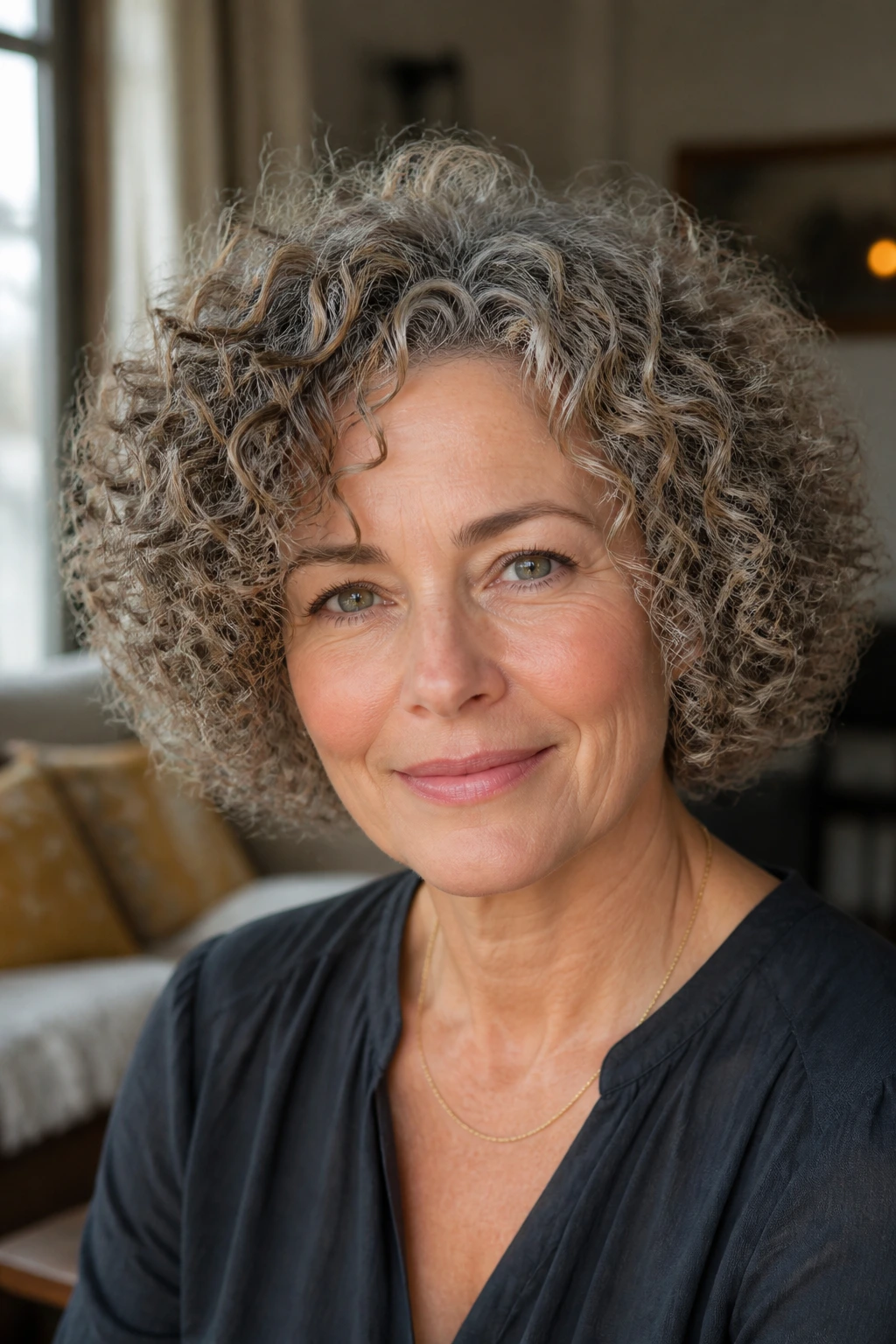
Curly hair can be fine, too. People forget that part. A curly bob with a soft halo shape is one of the best ways to let natural curl do the work of volume without stretching the hair into a long shape that goes flat at the sides. The round outline helps the curls stack up instead of hanging down.
The cut should respect shrinkage and density. If the hair is cut too wet and too aggressively, the ends can puff in the wrong way or leave the top looking thin. Dry cutting or careful curl-by-curl shaping is often the safer route. The aim is a balanced halo, not a triangle.
How to style it
- Use a light curl cream or gel.
- Scrunch with a microfiber towel.
- Diffuse on low heat.
- Stop touching it once it starts to set.
That last part matters. Fine curls get frizzy fast if you keep fussing. Let the shape lock in, then go about your day.
11. Shoulder-Length Cut with Curtain Bangs
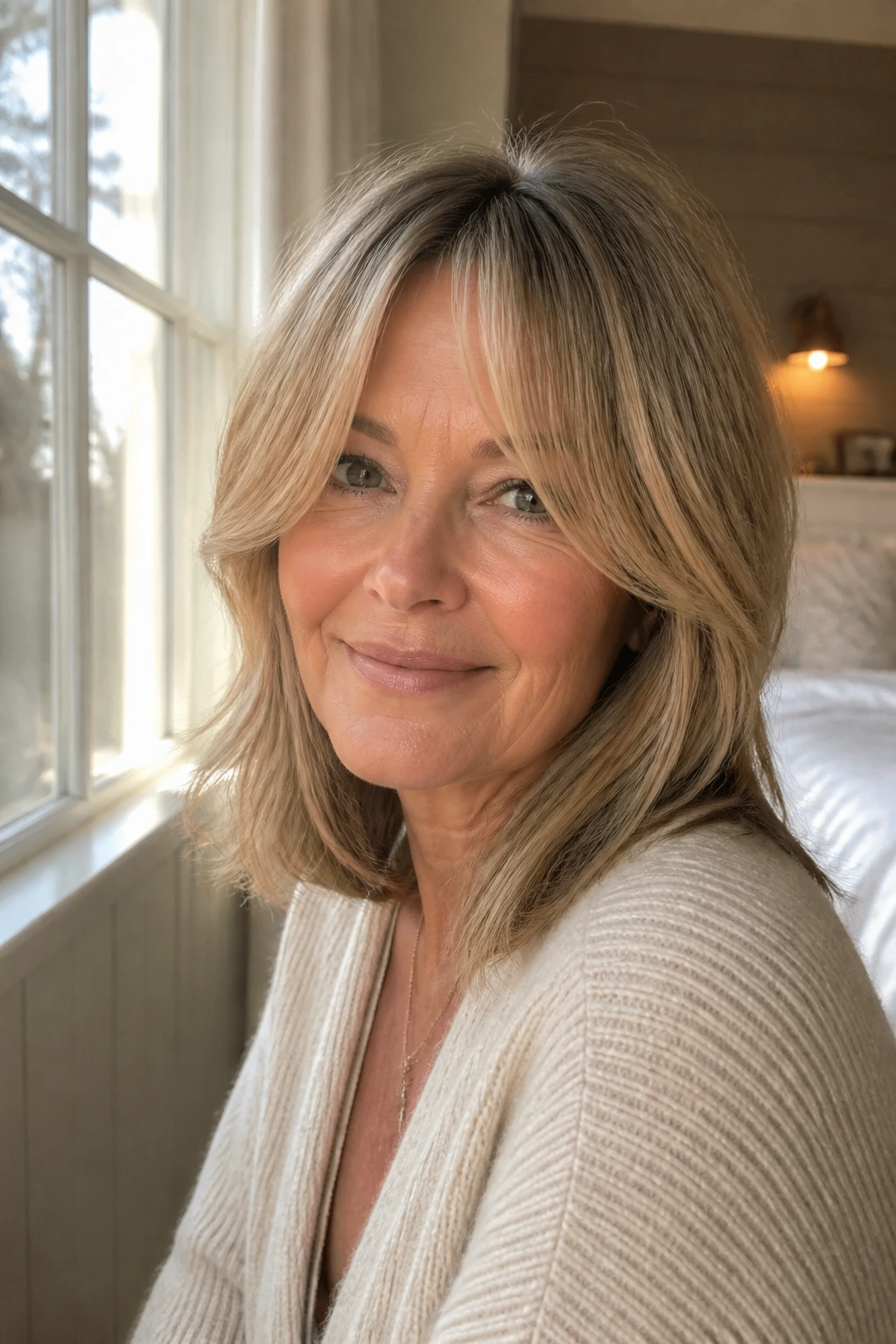
A shoulder-length cut with curtain bangs is a good bridge for anyone who isn’t ready to go shorter. The length still feels familiar, but the front pieces are doing a lot of the visual work. Curtain bangs can soften the forehead, cover thinning at the temples, and break up a too-straight hairline.
The bangs should start long enough to brush the cheekbones, not sit in a heavy block across the brow. That’s what keeps them from splitting strangely. A little bend away from the face makes the whole cut look softer and fuller. I’d be careful with very heavy layers underneath. They can make the bottom half look like it’s been trimmed too hard.
This style is friendly to both straight and wavy hair, which is part of why it shows up so often in real life instead of just photos. It has room to move, but it still keeps enough weight to look like a finished haircut.
12. Long Layers with Face-Framing Pieces
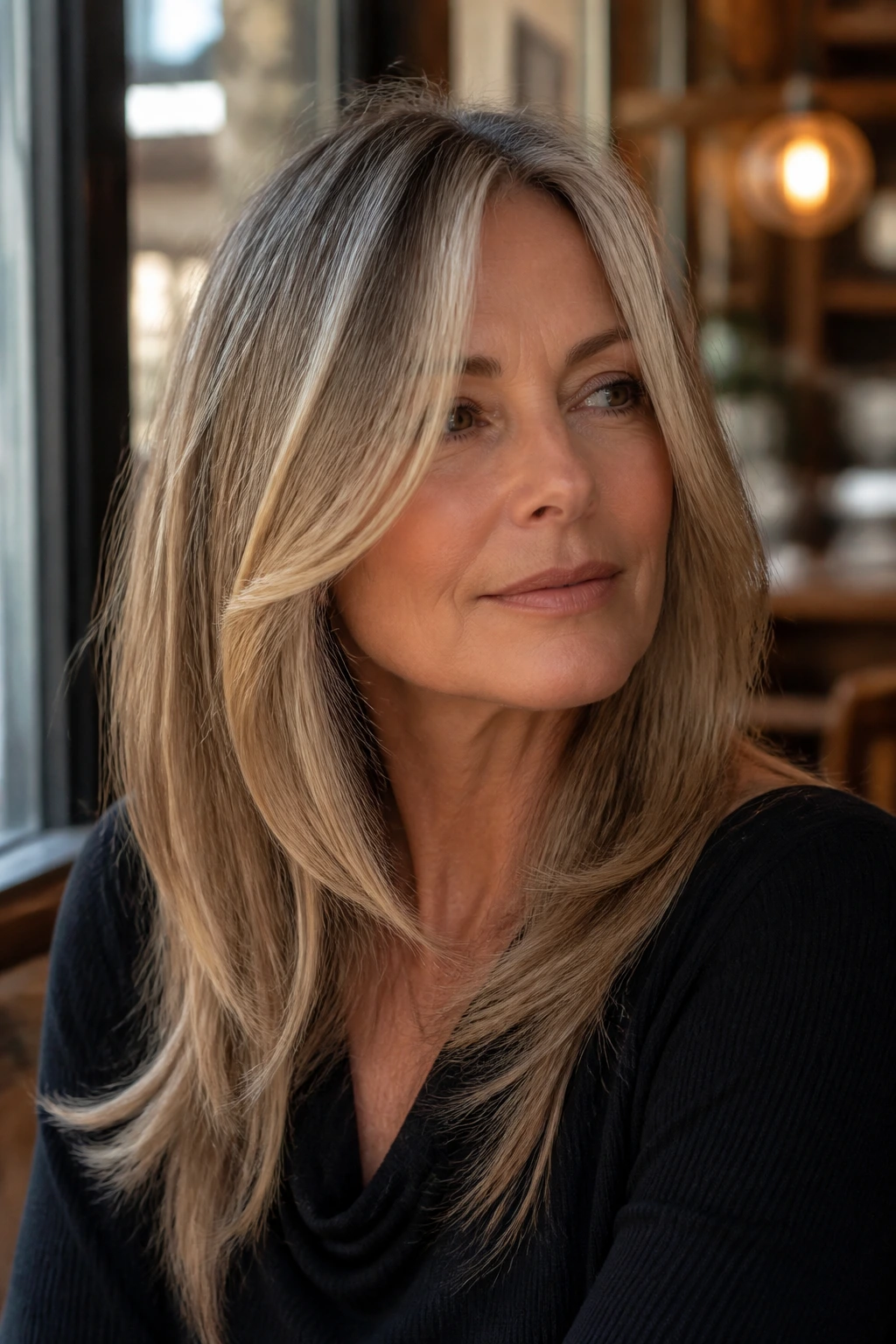
Long hair can work on fine thinning hair, but only if the layers are chosen with restraint. Long layers with face-framing pieces keep the length you want while stopping the hair from looking like a flat curtain. The front pieces should start around the chin or collarbone, not too high, or the whole shape gets thin through the mid-lengths.
The key is leaving enough density at the ends. I do not love the old habit of carving the hair into a dozen feathered pieces. Fine hair usually needs a cleaner line than that. The face frame can lighten the front and soften the jaw, while the back stays fuller and more solid.
This cut is for someone who wants to keep tying the hair back, wearing it down, and still having some movement around the face. If you heat-style it, use loose bends rather than tight curls. Tight curls can look overdone on fine strands. A smoother wave reads richer.
13. Sleek Bob Tucked Behind the Ears
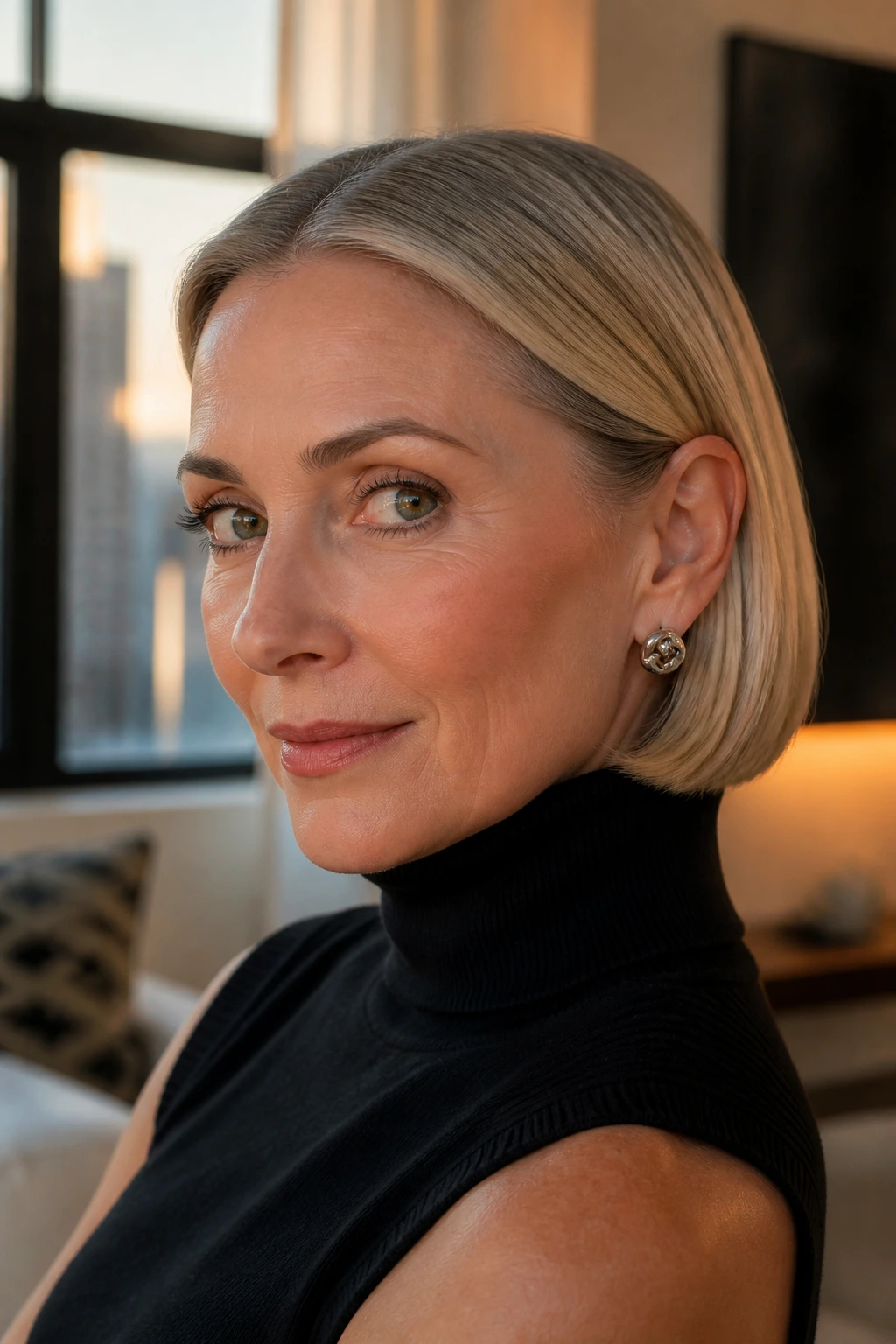
A sleek bob tucked behind the ears can look far denser than a more layered cut because it uses shine and line instead of texture. That may sound almost too simple, but simple works when the hair is fine. Clean sides, a blunt edge, and a precise tuck can make the whole style look deliberate and full.
The tuck also opens the face. Earrings show. The jawline shows. The hair stops competing with your features and starts framing them. If the cut hits somewhere between the jaw and chin, the tucked look gives it a little lift on the sides. That helps a lot when the hair at the temples is less robust than it used to be.
Use a light smoothing serum only on the ends. Not the roots. Roots need air, not weight. A deep side part can make this cut even stronger, especially if the hairline is a little uneven.
14. Velcro-Roller Blowout
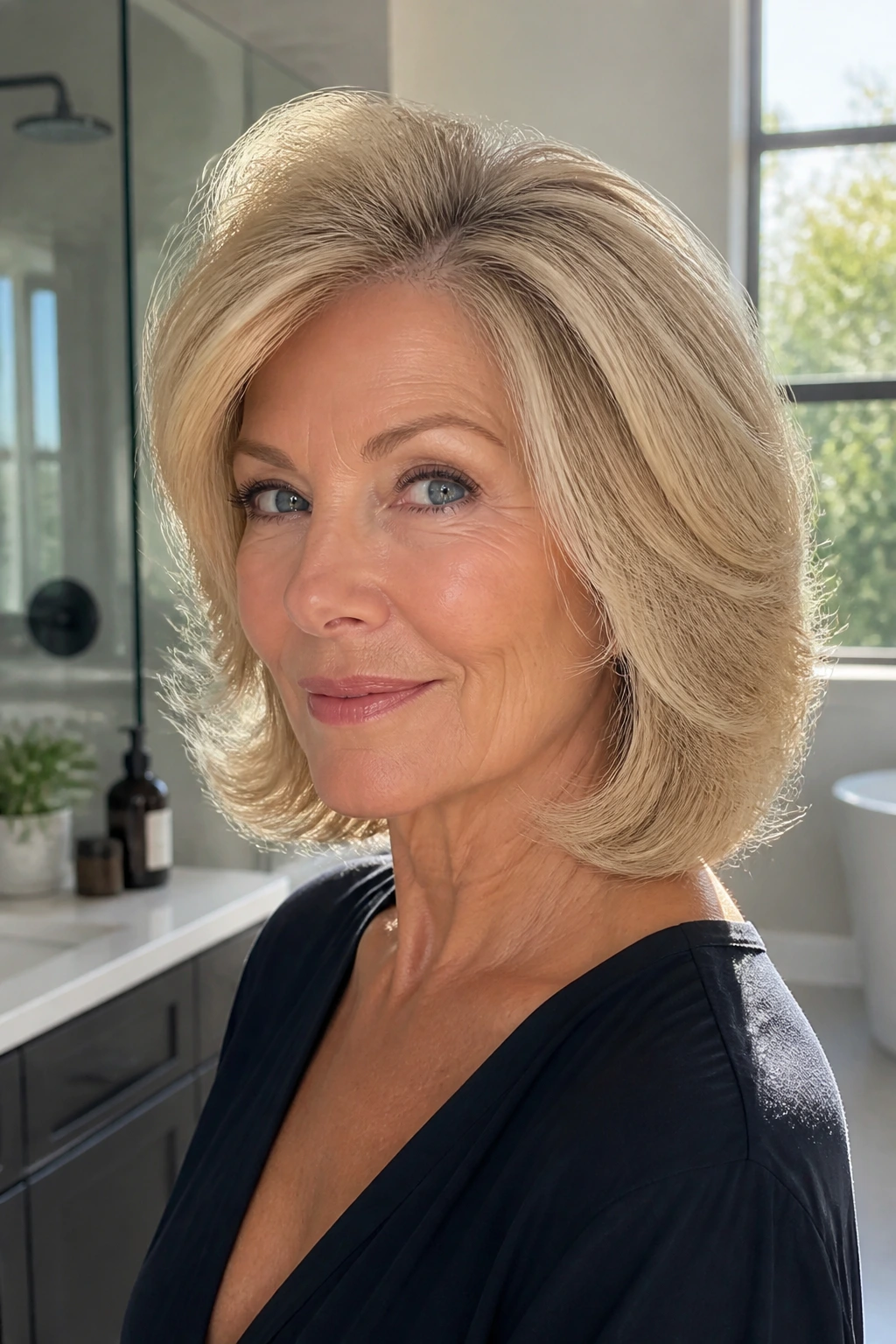
Not every winning style has to be a haircut. Sometimes it’s the setting pattern. A velcro-roller blowout can rescue fine hair in a way that no amount of finger fluffing ever will. The crown gets height, the ends get a clean bend, and the whole head looks more awake.
Here’s the part people skip: the hair has to cool in the rollers. Warm hair falls flat again if you pull the rollers too soon. Set the top section first, roll the front away from the face, and let the shape sit until it’s fully cool. That’s where the body comes from.
Best use case
- Second-day hair that has gone limp.
- Bobs and lobs that need lift at the root.
- Special events when the hair needs to look more finished.
- Fine hair that won’t hold a curling iron curl for long.
A little root spray before the blow-dry helps, but too much product will make the rollers slip. Keep it light.
15. Half-Up Crown Lift
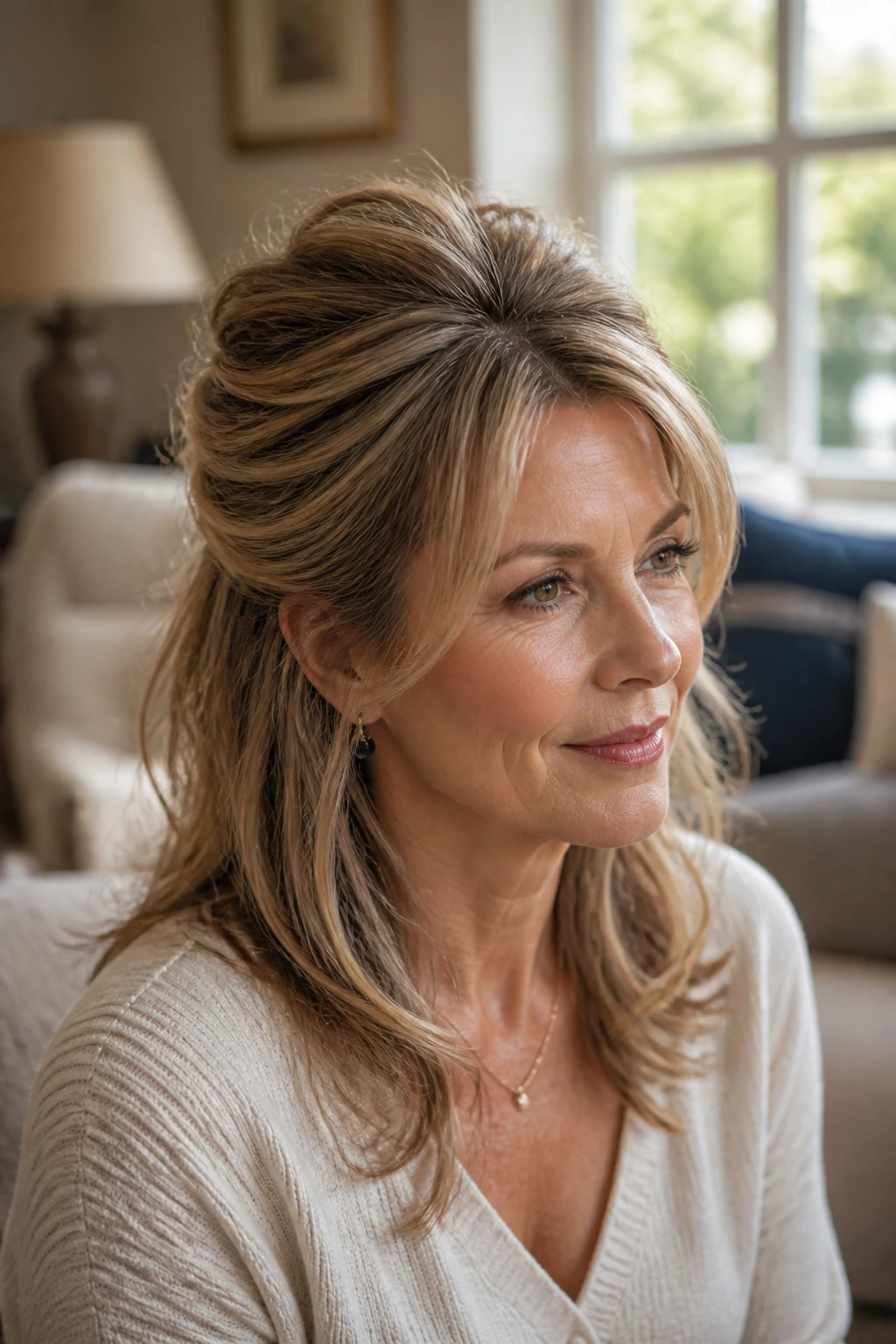
A half-up style with a bit of lift at the crown is one of the easiest ways to make fine hair look fuller without trying to fake a giant ponytail. The trick is leaving enough hair down to cover the back while pulling just the top section up and away from the scalp. That creates a soft bump of height without looking teased.
I like this style for hair that has some length but loses shape when worn completely down. You can twist the top back, clip it, or use a small elastic and hide it under a wrapped strand. The goal is not a formal updo. It’s a lift. Just enough to break the flat line across the head.
If the part is too severe, soften it first. A little finger-combing at the crown before pinning makes the top look fuller. Do not yank the top section too tight. Tightness shows thinning faster than looseness does.
16. Low Chignon with Soft Volume
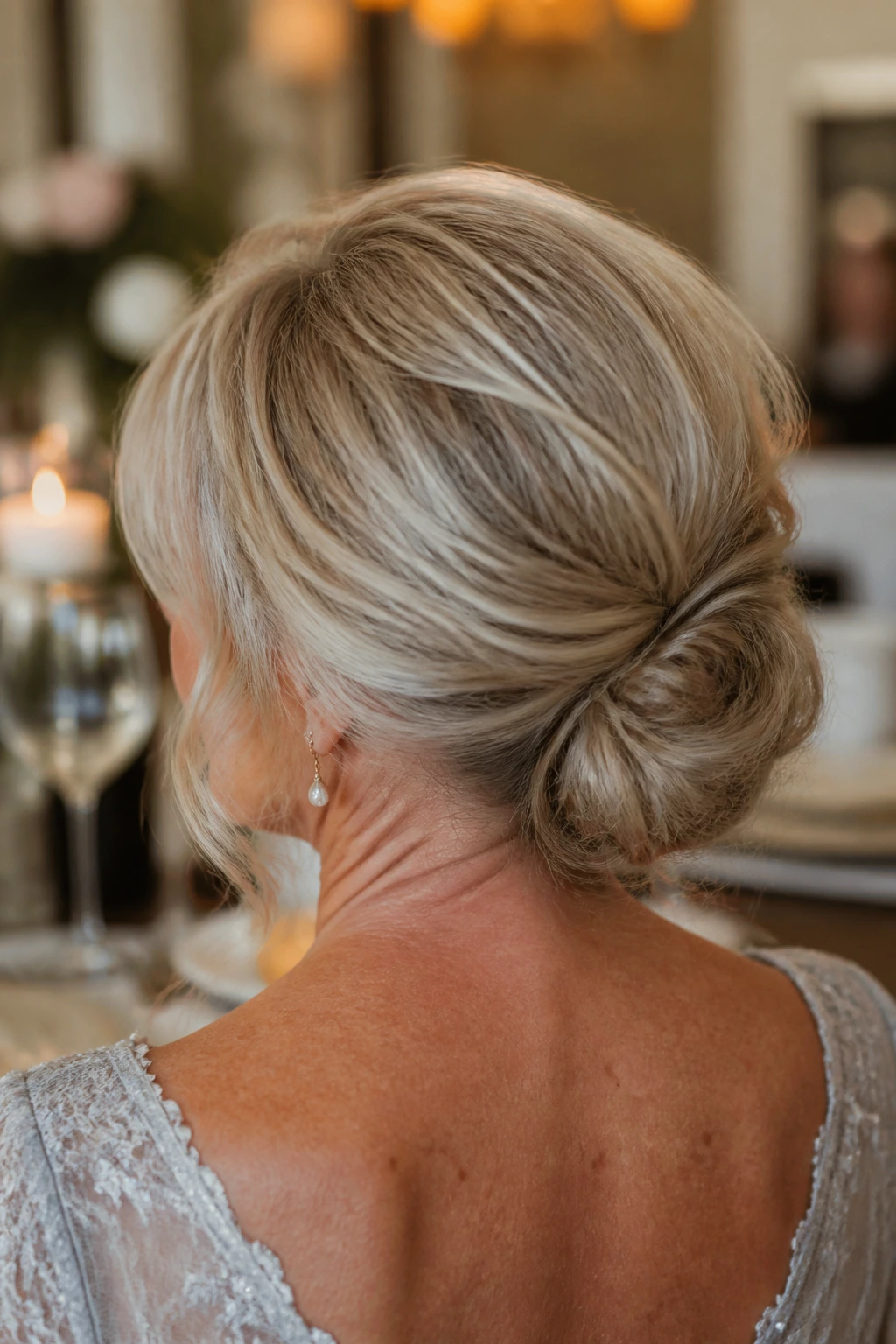
A low chignon can be kind to fine hair because it keeps the weight low and controlled. The mistake people make is twisting the hair so tightly that every sparse patch shows. A softer chignon, with a little lift at the crown and some looseness around the face, looks far better on delicate hair.
The best version starts with a gentle side part or soft center part, a bit of root lift at the top, and a loose gather at the nape. Instead of wrapping the bun into a tight knot, pin it into a soft coil. The structure should feel secure but not stiff. Stiffness tends to expose the problem areas.
This is a good style for dinners, weddings, or any day when you want the neck to look clean and the hair to look intentional. A few face-framing pieces help, especially if the hairline is thinner at the temples. I’d avoid too much smoothing cream, though. It can make the hair slide apart.
17. Asymmetrical Crop
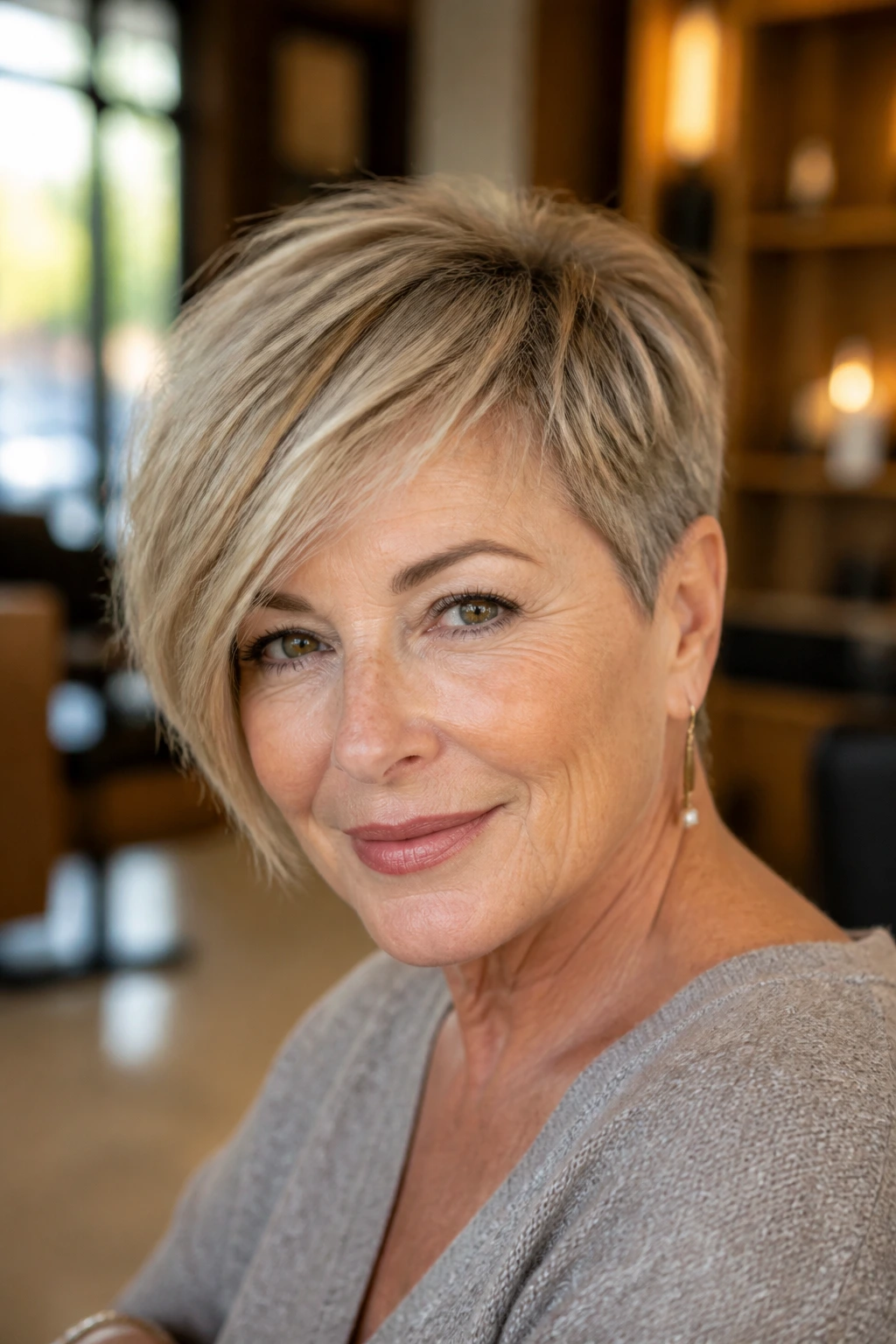
An asymmetrical crop brings shape to hair that has started behaving unevenly. One side is slightly longer, the other side sits a touch shorter, and the diagonal line gives the eye something interesting to follow. That can be useful if the hairline is a bit irregular or if the top has less density than the sides.
The beauty of this cut is that it feels modern without needing a lot of styling volume. A side part, a little root lift, and a smooth finish are enough. If you like glasses, this cut can work especially well because the asymmetry keeps the face from feeling boxed in. It also hides a cowlick better than a dead-center part.
This is not the place for extreme angles. Fine hair does better with subtle shape than with a loud design. Keep the asymmetry soft enough to grow out gracefully. That saves you from a weird middle stage later.
18. Choppy Mid-Length with Side Fringe

A choppy mid-length cut can work on fine thinning hair if the choppiness stays controlled. I’m talking about pieces that move, not ends that look sawed off. The side fringe softens the forehead and keeps the front from looking too heavy, while the mid-length keeps enough hair for ponytails and clips.
The charm here is the balance between structure and looseness. If the layers start too high or get too thin, the ends can look weak. If the cut stays too one-length, it can lie flat. The side fringe gives the shape a little personality and keeps attention up toward the eyes instead of down at the scalp.
This is a nice middle ground for women who want a style that still works when they toss it into a clip on busy mornings. It can be polished, but it doesn’t demand perfection.
19. Soft Wolf Cut
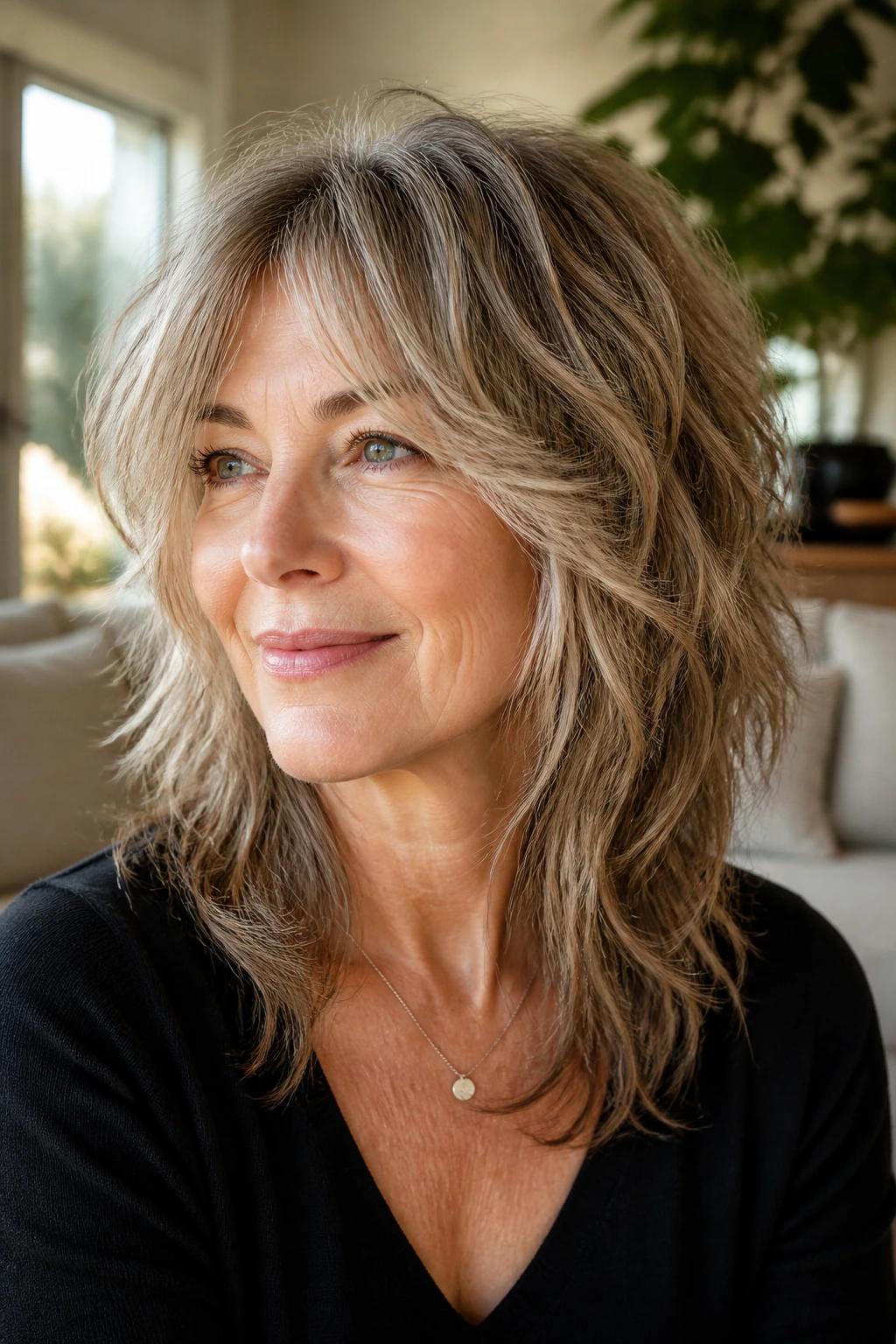
I’m going to be blunt: the hard-edged wolf cut is too much for most fine thinning hair. But the softened version, with longer layers and less separation, can work if the hair has natural wave and enough overall density. The style gets its energy from movement at the crown and around the face, not from shredded ends.
The key is restraint. Keep the top layers soft, leave the bottom length intact, and skip the aggressive razoring that makes the ends look thin in daylight. A little bend with a diffuser or a round brush creates the right amount of texture. You want lift, not frizz.
This cut is for someone who likes a little edge and does not mind a more lived-in finish. It looks best when the hair is not overpolished. In a weird way, that’s part of the appeal.
20. Short Curly Pixie
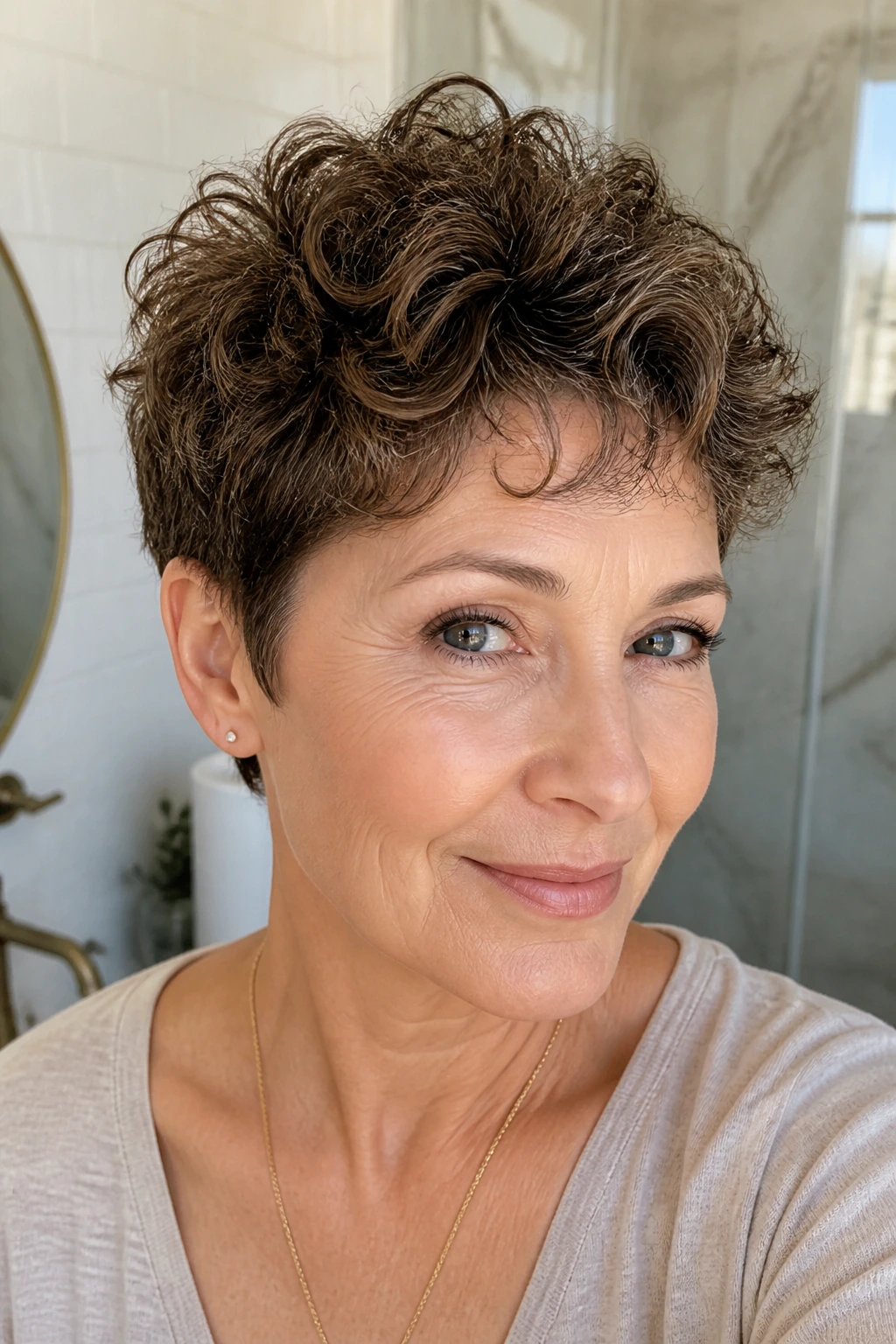
Curly hair in a pixie shape can look richer than straight hair at the same length because the curl itself adds body. For fine thinning hair, the short curly pixie works best when the top is left a little longer and the sides are shaped in a way that follows the curl pattern. If the cut ignores the curl, it can balloon in all the wrong places.
Dry cutting is often the smarter choice here, or at least a cut that respects how much the curls spring up. That keeps the shape from becoming too short at the top and too big at the sides. A diffuser with a light gel gives the curl enough hold to stay separated without turning crunchy.
What I like about this style is how little it asks of the hair once it’s cut well. It’s lively. It has movement without needing a lot of heat. And for fine curls, that can be a relief.
21. Wavy Collarbone Flip

A collarbone cut with a soft flip at the ends gives fine hair a little swagger. The flip can be inward, outward, or a mix of the two, but the main idea is that the ends don’t hang straight and tired. They move. That movement keeps the style from sitting flat against the face.
This is a nice choice if your hair naturally bends a little but doesn’t hold a full curl. A round brush or a flat iron bend through the last two inches is enough. You do not need barrel curls all over the head. Too much curl on fine hair can make the ends look smaller, not fuller.
The shoulder area is where a lot of fine hair loses interest. The flip brings it back. It’s a small trick, but it changes the mood of the cut.
22. Side-Part Lob with Root Volume
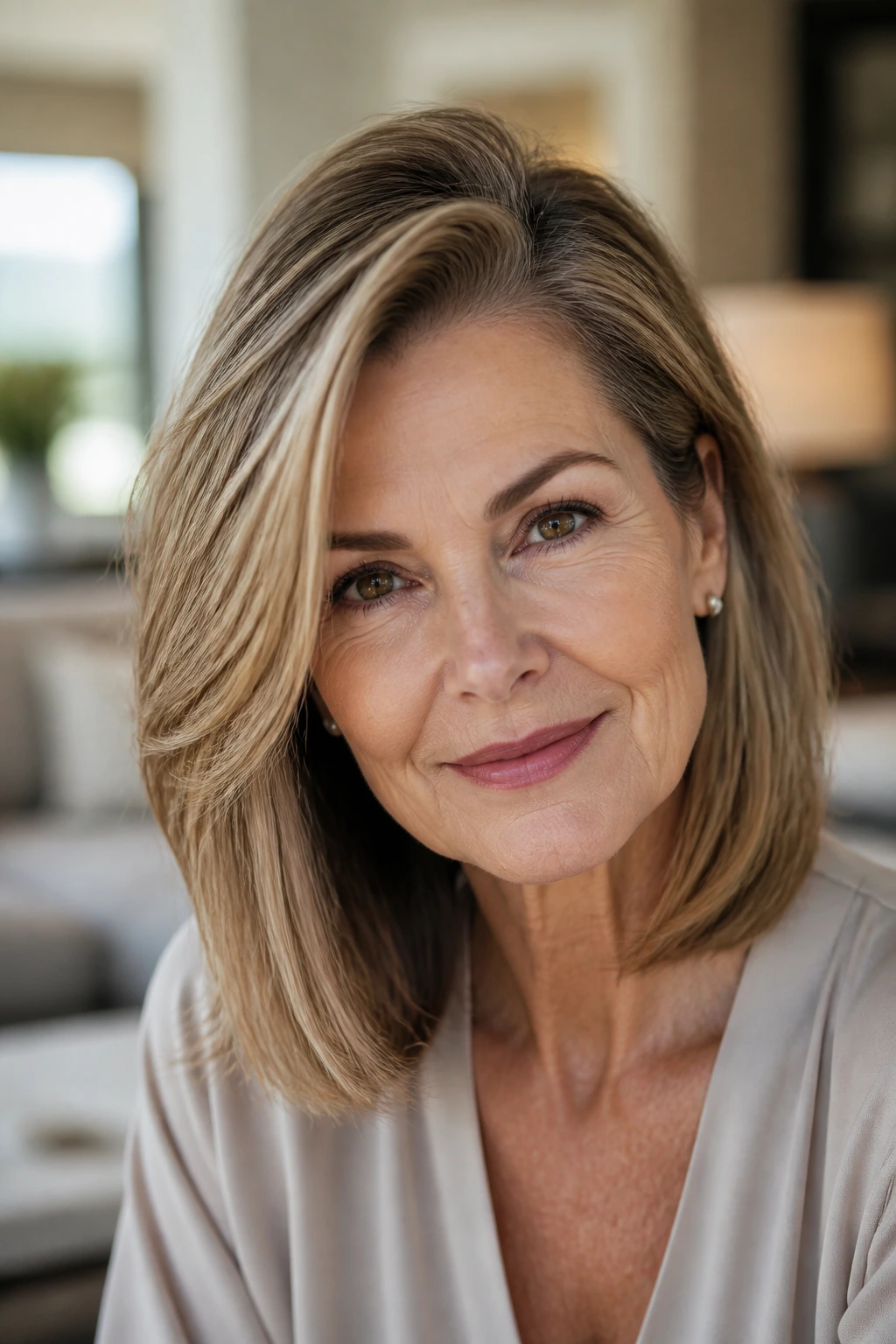
A side-part lob with root volume might be the most forgiving style in the whole group. It keeps enough length to feel familiar, but the side part and lifted roots give it a shape that doesn’t collapse the minute you leave the mirror. If your hair is fine, that matters more than trendiness.
Start the part slightly off center. Not dramatic. Just enough to let one side rise and the other side settle. Blow-dry the roots in the opposite direction first, then flip the hair back into place. That small maneuver gives the top body without a pile of teasing. The lob length keeps the ends solid, so the style still looks full even if the styling is quick.
This is one of those cuts that grows out well if the perimeter stays blunt. It also plays nicely with natural gray, highlights, or a single-process color because the shape stays strong on its own. That’s a good sign. A haircut should not panic the second you stop working on it.
How to Pick the Cut That Makes the Most Sense
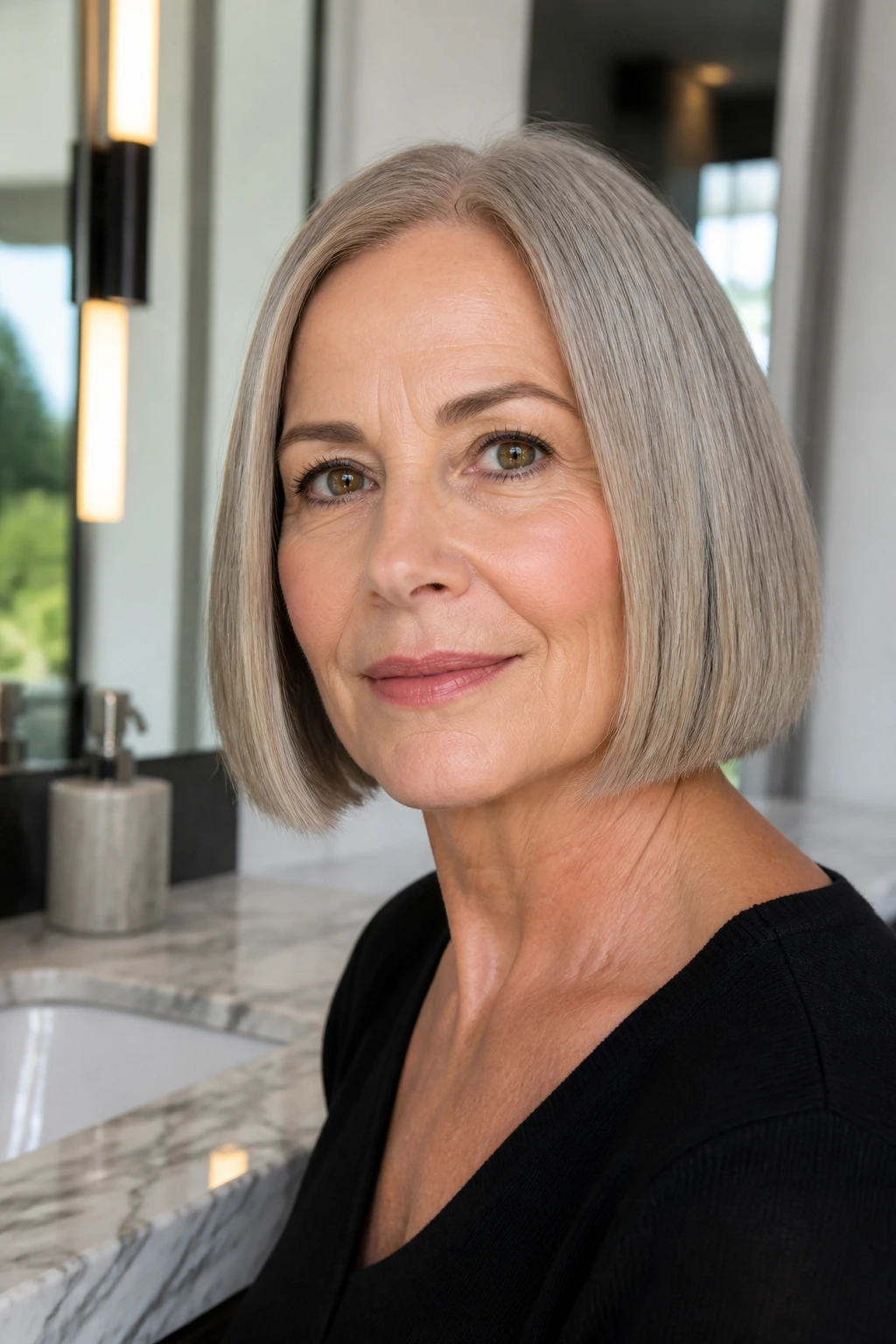
The style that looks best on a model or a younger friend may not be the style that works best on your hairline, your texture, or your morning routine. Fine thinning hair over 50 usually behaves better when the cut respects three things at once: density, face shape, and effort. Ignore one of those, and the haircut starts fighting back.
If your hair is very straight and falls flat fast, I’d lean toward blunt lines, angled bobs, and side parts. If you’ve got soft waves, the French bob, shag lob, or wavy collarbone flip can give you movement without needing constant heat. And if your hair has more curl than people assume, a rounded pixie or curl-friendly bob can feel like taking the training wheels off in a good way.
The length question comes up a lot. Shorter is not automatically better. Long hair is not automatically better. The real question is whether the ends still hold enough weight to look like a shape. Once the hair gets so long that the lower half looks transparent, the whole style starts working against you. That’s when a smarter cut beats a sentimental one.
Practical Moves That Make Every Style Look Fuller
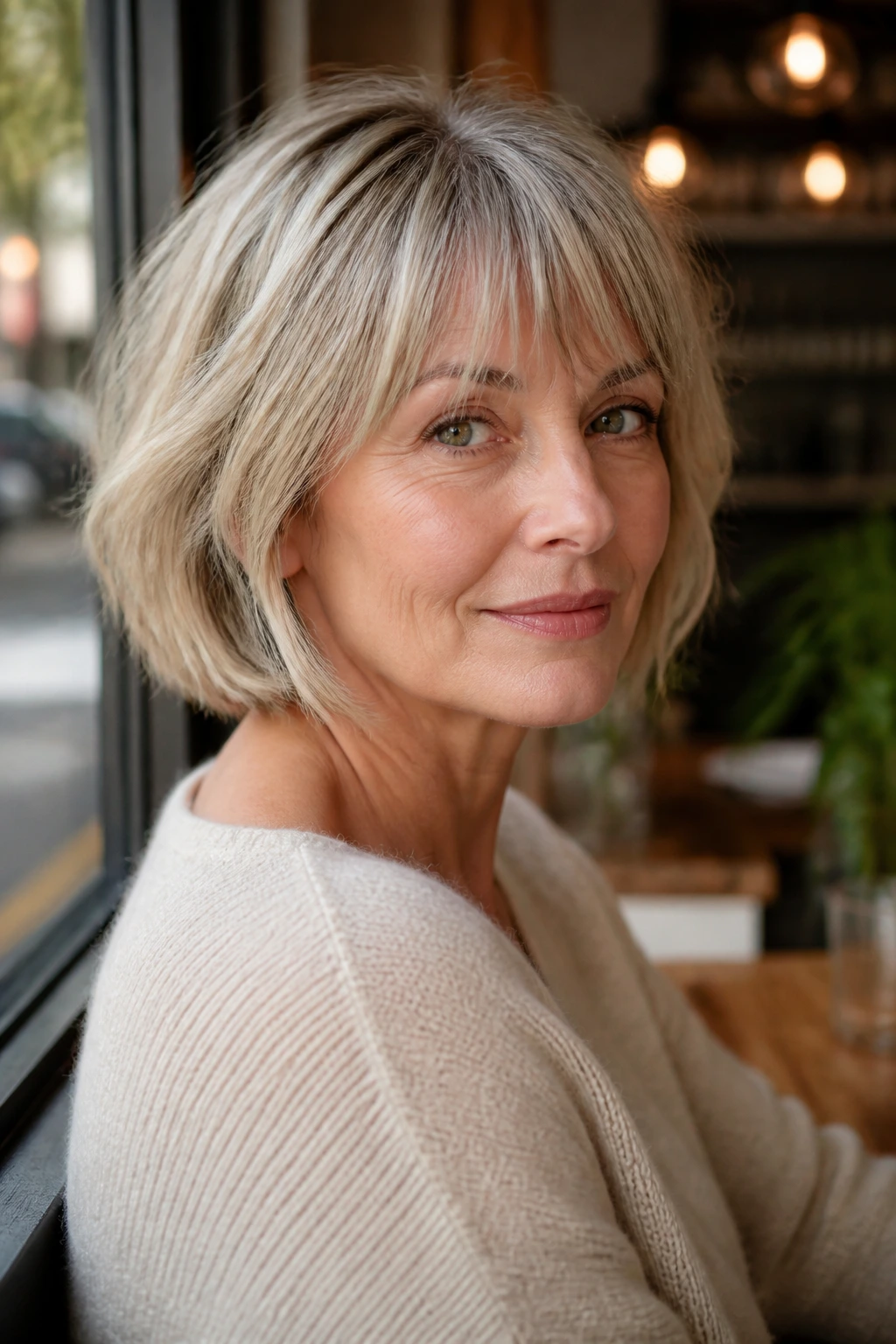
A good haircut helps, but the styling around it is where the trick actually lands. Root lift is the first thing I’d spend time on. A light mousse, a volumizing spray at the roots, or even a small round brush at the crown can stop hair from clinging to the scalp. Heat the roots, lift them, and let them cool in place. That cooling step matters more than people think.
Parting tricks are free and underrated. If your scalp shows strongly at a center part, move it just a finger-width to the side and see what happens. Sometimes the difference is tiny on paper and obvious in the mirror. Also, don’t lock the part into one place every day. Hair gets lazy.
Product load is where most people go wrong. A pea-size amount of styling cream is usually enough for fine hair. A palmful tends to sink the roots and kill volume before the day starts. Dry shampoo is useful, but only if you use it at the roots and brush it through after it sits for a minute or two.
Pro move: set the front sections away from the face for a few minutes with clips or velcro rollers while you finish makeup. That little bit of cooling time gives the shape staying power.
Mistakes That Flatten Fine Hair Fast
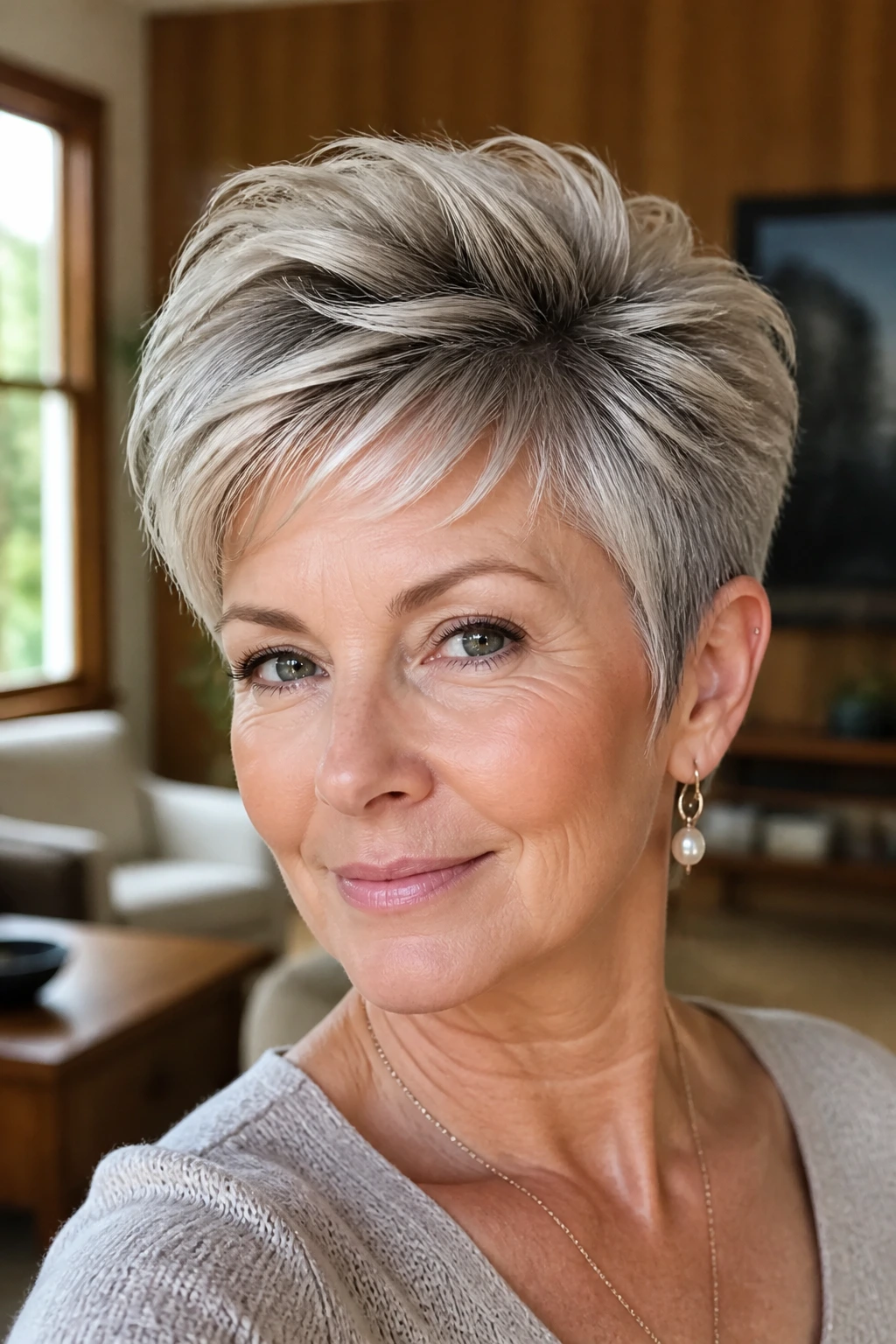
The biggest mistake is over-layering. Fine hair does not need to be carved into wisps from crown to ends. The symptom is obvious: the top looks okay for half a day, then the ends start looking see-through and thin. The fix is a stronger perimeter with fewer, smarter layers.
Another common one is using too much heavy product. Creams, oils, and thick leave-ins can make fine hair collapse at the roots and separate at the ends. If the hair feels sticky or looks darker at the scalp after styling, that’s usually too much weight. Switch to mousse, foam, or a light mist.
A third mistake is clinging to the same part every day. That can leave a permanent flat spot where the root gets trained to lie down. Change the part a little, even if only every few washes. The crown needs a chance to stand up.
Teasing can backfire too. A little lift at the root is fine. A nest of backcombing is not. It can make the top look puffy while the ends stay thin, which is the opposite of what you want. The better fix is shape, not pile.
And yes, going too long between trims can wreck the whole look. Fine hair shows split ends fast. Once the edge frays, the style looks smaller.
Easy Swaps and Style Twists
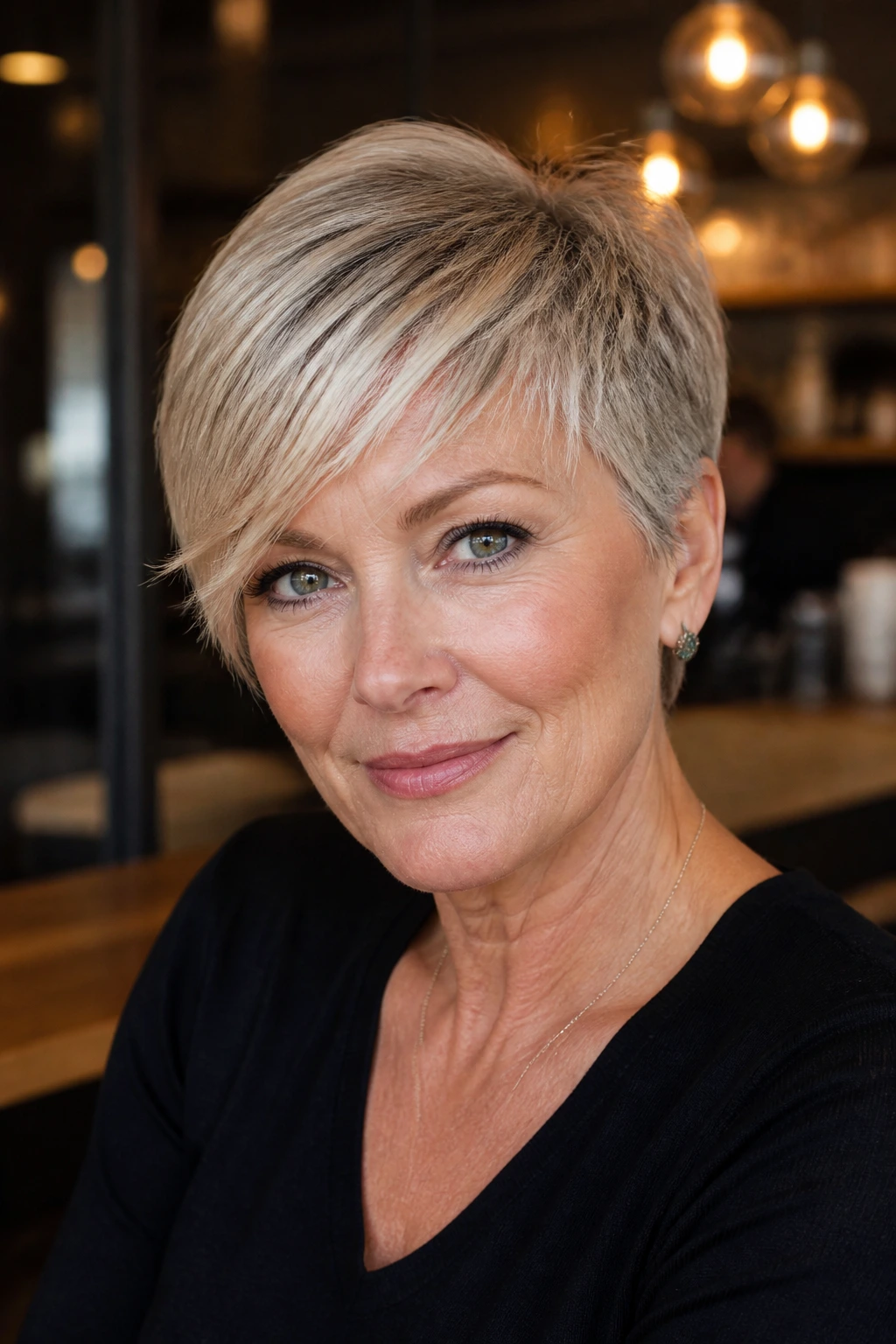
Curl-Friendly Version: If your hair bends naturally, keep the same cut but swap in a diffuser and a light gel instead of a blowout brush. The shape stays fuller when the curl pattern is allowed to do its work.
Gray-Hair Dimension: Fine gray hair often looks brighter but can also look flatter under hard light. A little lowlight, a root shadow, or a gloss treatment can create the kind of depth that makes the cut read thicker without changing the shape.
Heat-Free Weekday Version: On busy days, set the top in velcro rollers or clip the crown up while it dries. You can wear the same bob, lob, or pixie and still get lift without reaching for a hot tool every morning.
Softer Fringe Swap: If full bangs feel risky, trade them for a side sweep or curtain fringe. The face still gets framing, but the grow-out is easier and the forehead doesn’t disappear under hair.
Polished Event Version: Add a smooth tuck, a low chignon, or a side-pinned front section. Same haircut. Different mood. That’s the nice part.
Tools That Actually Help Fine Hair
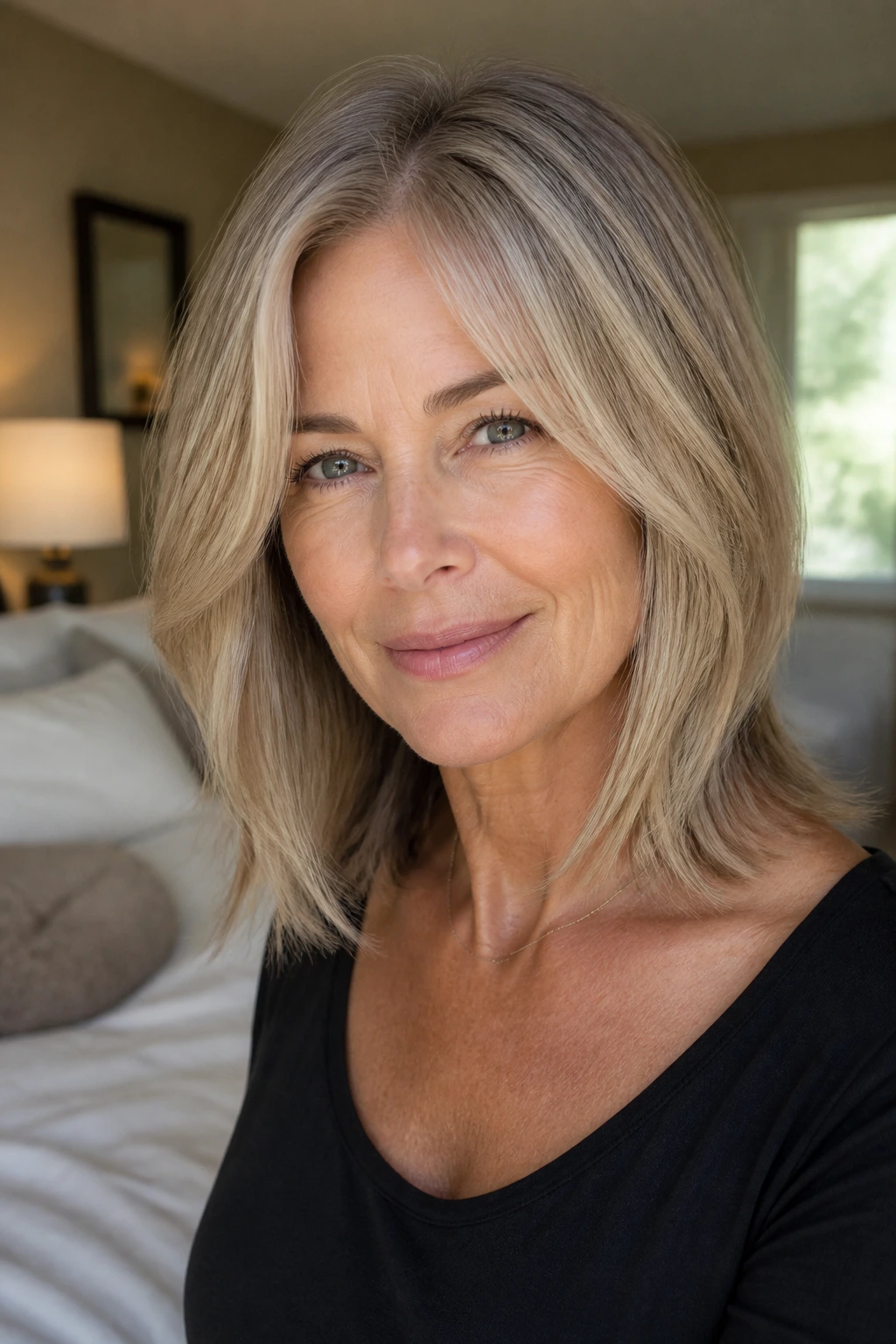
-
Round brush, 1 to 1½ inches: Good for lifting the crown and shaping bob ends under without a huge curl.
-
Velcro rollers: Handy for setting volume at the top and around the face while hair cools.
-
Fine-tooth tail comb: Useful for clean parts and precise sectioning; a messy part can flatten fine hair faster than you expect.
-
Blow-dryer with a concentrator nozzle: Directs air where you want it and helps the roots dry with more shape.
-
Light mousse or root-lift spray: Gives grip at the base without leaving a heavy film.
-
Texture spray or dry shampoo: Best for second-day lift and a little piecey movement, especially on bobs and lobs.
-
Lightweight hairspray: Holds the shape without turning the hair into a helmet.
-
Small clips: Great for lifting the crown while you cool the hair or pinning back a soft half-up style.
Keeping the Shape Looking Intentional Between Appointments
Short styles need more frequent clean-up than longer ones. A pixie or bixie usually wants a trim every 4 to 6 weeks, because even a half-inch can throw off the outline. Bobs and French bobs can often go 6 to 8 weeks if the edges stay crisp. Lobs and shoulder-length shapes can stretch a bit longer, but once the ends start looking thin, the haircut loses its structure fast.
Between cuts, the hair needs low-drama care. Wash only as often as your scalp needs it, but do not pile on conditioner near the roots. Fine hair gets dragged down by heavy residue. Keep conditioner from the mid-lengths down, and rinse well. If the scalp feels coated, the volume is usually gone.
At night, a loose clip or soft silk scrunchie can keep the crown from getting crushed. That matters more for bobs, pixies, and any style with lift at the top. The next morning, a quick blast of dry shampoo or a few seconds with a round brush can wake the shape back up.
Frequently Asked Questions
Which haircut makes fine thinning hair look thickest?
A blunt bob or a well-cut lob usually gives the strongest density illusion because the perimeter holds a clean line. If the hair is very fine, the solid edge matters more than chasing lots of layers or length.
Is short hair always better for thinning hair over 50?
No. Short hair can help, but the real issue is whether the shape matches the density. A collarbone lob with a strong edge can look fuller than a badly layered pixie that has been thinned too much.
Can I still wear bangs if my hair is fine?
Yes, but keep them light. Side-swept bangs, curtain bangs, or a soft fringe usually work better than a heavy straight-across bang that can separate and cling.
Do layers make fine hair look thinner?
They can, if they’re cut too high or too aggressively. Subtle layers that support the shape are useful; shredded layers that remove too much bulk are not.
What if my hair has a cowlick at the front?
Choose a cut that works with the growth pattern, like a side-part bob, a tapered crop, or a fringe that can be swept instead of forced flat. Fighting a strong cowlick every morning usually ends badly.
How often should I trim these styles?
Pixies and bixies usually need attention every 4 to 6 weeks. Bobs and lobs can often go 6 to 8 weeks, but once the ends start getting wispy, it’s time to clean them up.
What’s the best styling product for fine thinning hair?
Light mousse, root-lift spray, and a touch of dry shampoo are usually safer bets than heavy creams or oils. The goal is lift and grip, not slickness.
What if my thinning is sudden or patchy?
A haircut can improve the look of the hair, but sudden shedding or patchy loss deserves a medical check. That’s not a styling issue, and it’s worth getting looked at.
The Shape That Holds

The best fine thinning hairstyles for women over 50 do one thing well: they give the hair a shape that doesn’t collapse when the day gets busy. Some do it with a blunt edge. Some do it with lift at the crown. Some work because they keep the length honest instead of letting it drag the whole head flat.
That’s the thread running through all 22 styles. Not age. Not trends. Shape. Once the haircut starts working with your density instead of against it, the rest gets easier: styling takes less time, the part stops fighting you, and the mirror feels a little less fussy in the morning.
If you’ve been hanging onto a cut that needs too much coaxing, that’s the place to start changing. Pick the line that keeps its shape, and the hair tends to follow.