



Short fine wavy haircuts for women over 50 work best when they stop fighting the hair and start giving it a shape that behaves. Fine waves don’t need extra bulk shoved into the wrong places; they need a clean outline, a little lift at the crown, and ends that still look solid when the day gets long and the weather gets humid.
A bad cut on this hair type has a familiar look. The top sits flat, the ends turn wispy, and the wave pattern loses its rhythm somewhere around the ears. A better cut changes the whole mood of the head. It makes the wave read as intentional instead of accidental. That difference matters.
Age changes the way hair behaves, too. Density can drop, strands often get finer, and wave patterns can loosen or get frizzier depending on texture and care. So the sweetest spot is usually a cut that uses shape, not weight, to create the illusion of fullness. That’s the game here.
Why These Cuts Earn Their Keep
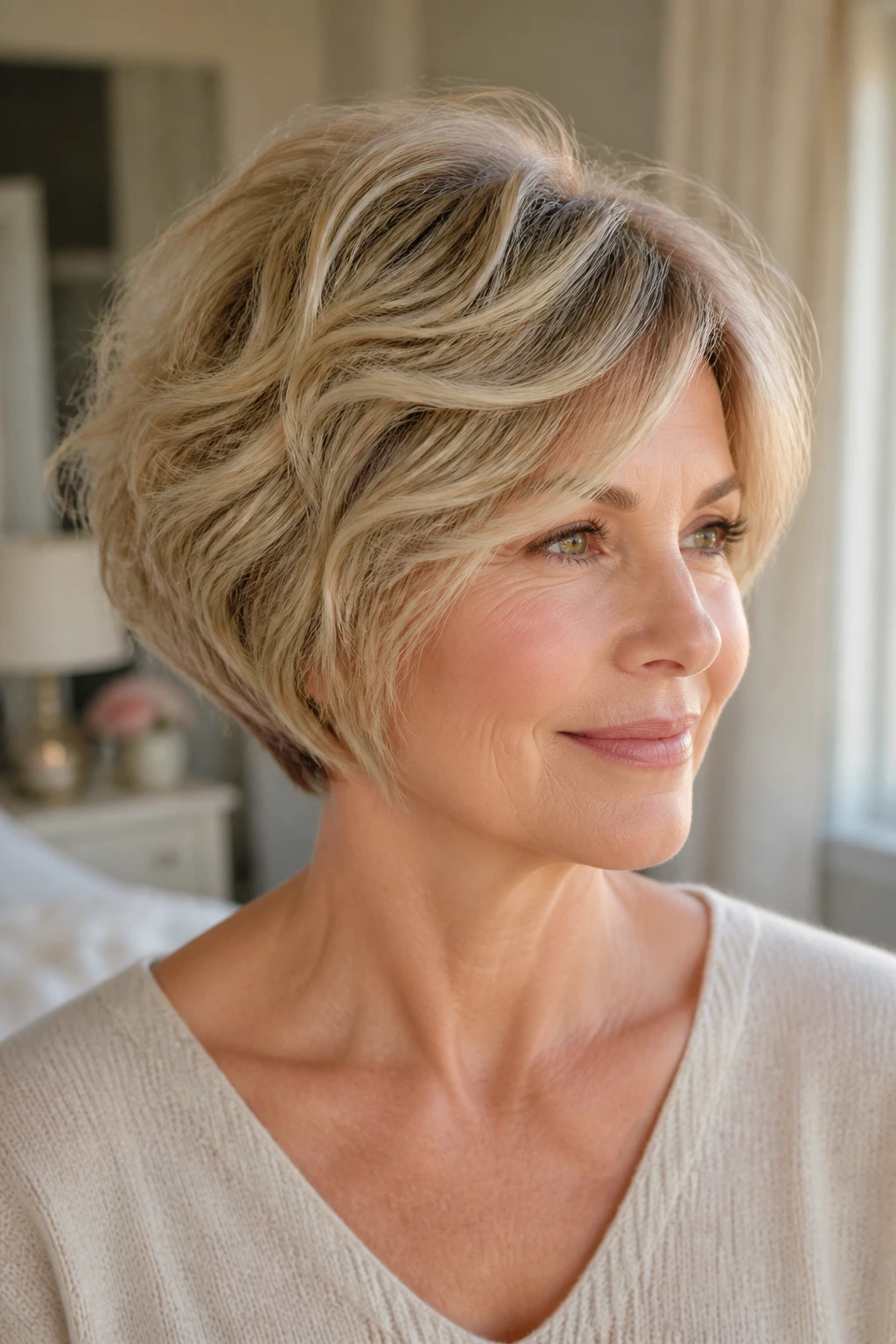
- They build lift where fine hair collapses: A shorter top with a little internal texture keeps the crown from lying flat against the scalp.
- They protect the ends from looking see-through: A strong perimeter line makes thin ends look deliberate instead of scraggly.
- They work with wave, not against it: These cuts leave enough length for a bend to form, then remove just enough weight to keep it moving.
- They play nicely with glasses and earrings: Shorter sides, face-framing pieces, and clean napes keep the whole look balanced instead of crowded.
- They’re easier to refresh between washes: Fine wavy hair usually responds well to a mist of water, a dab of mousse, and five minutes with your fingers.
1. Choppy Pixie With Crown Lift
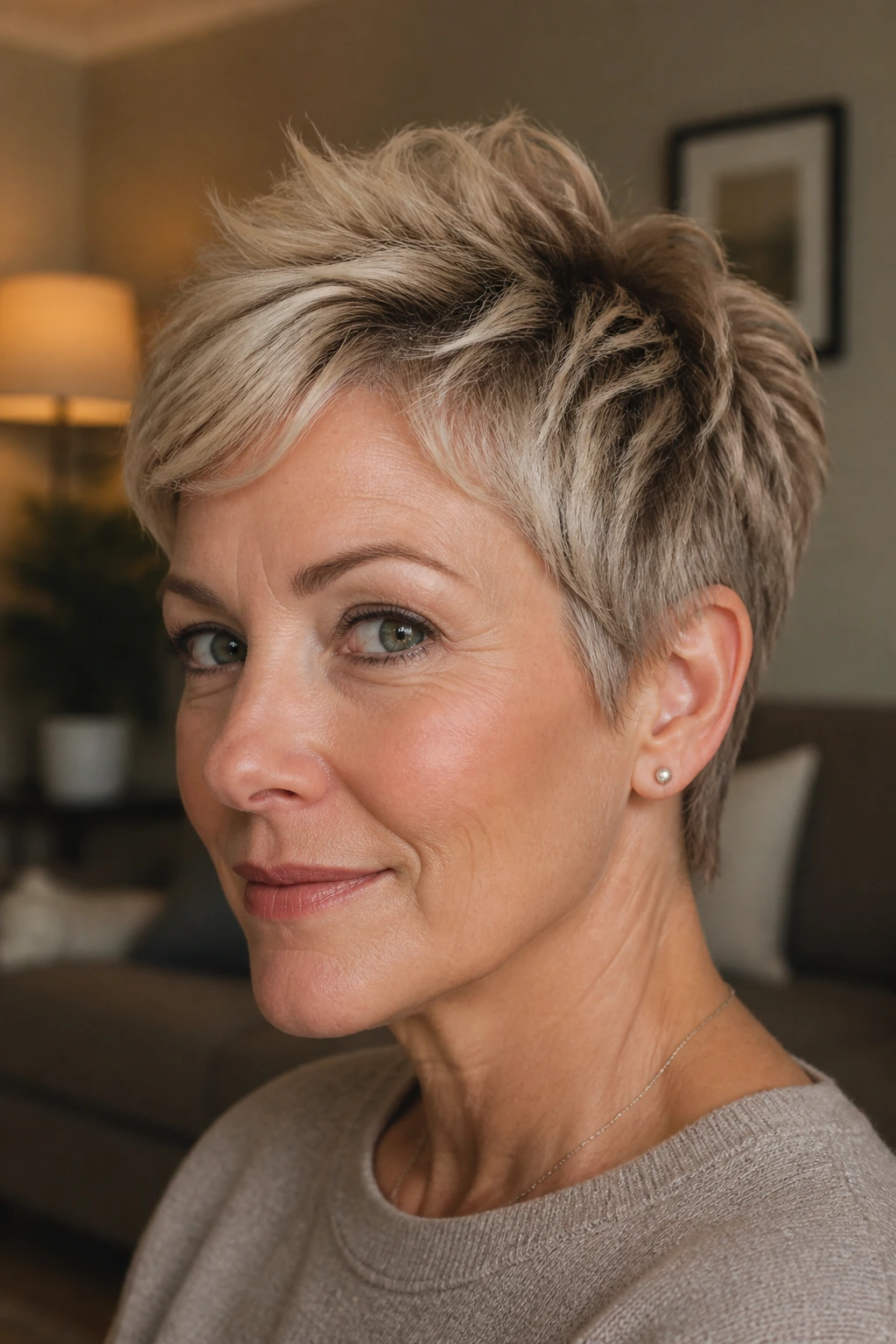
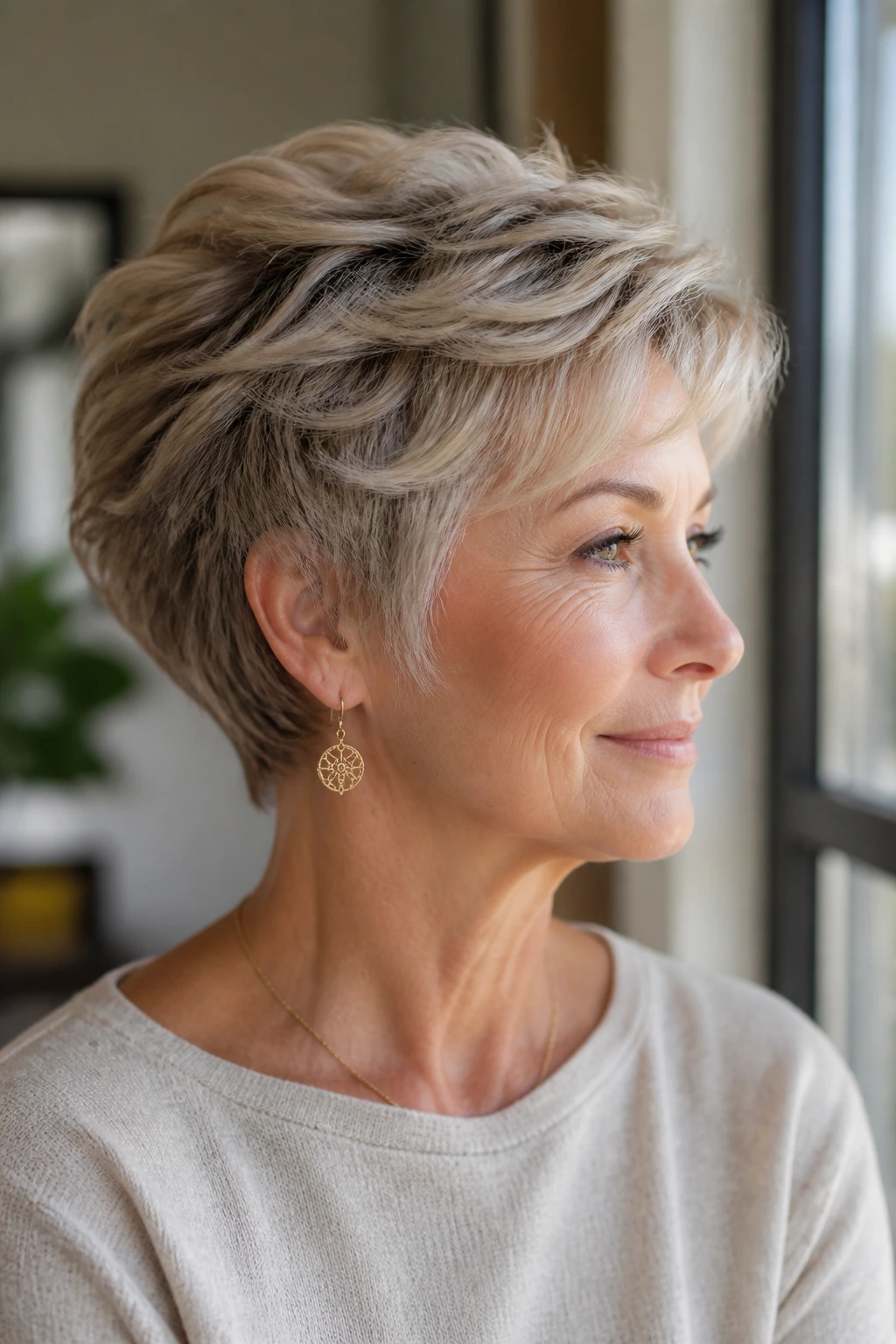
This is the cut I reach for when the hair is fine, the wave is soft, and the crown has started acting like it’s on vacation. A choppy pixie keeps the sides neat and the top piecey, which gives you height without making the head look overstyled. The trick is in the crown: a little extra length there, lightly point-cut, lets the wave push up instead of collapsing down.
Ask for short, tapered sides and a top that stays around 1.5 to 2.5 inches, depending on your hair density. The cut should feel airy, not shredded. If the stylist reaches for thinning shears all over, I’d push back. Fine hair needs shape, not a hole punched through it.
Styling note: Work a pea-sized amount of mousse into damp roots, then rough-dry with your fingertips until the top is about 90 percent dry. A tiny round brush at the crown can finish the lift in under two minutes.
This one suits women who want less fuss at the nape and a little personality up top. It’s especially kind to straight-across brows, strong cheekbones, and anyone who wears bold glasses. The profile looks sharp from the side. Clean. Confident. Easy to live with.
2. Layered Bixie With Side-Swept Fringe
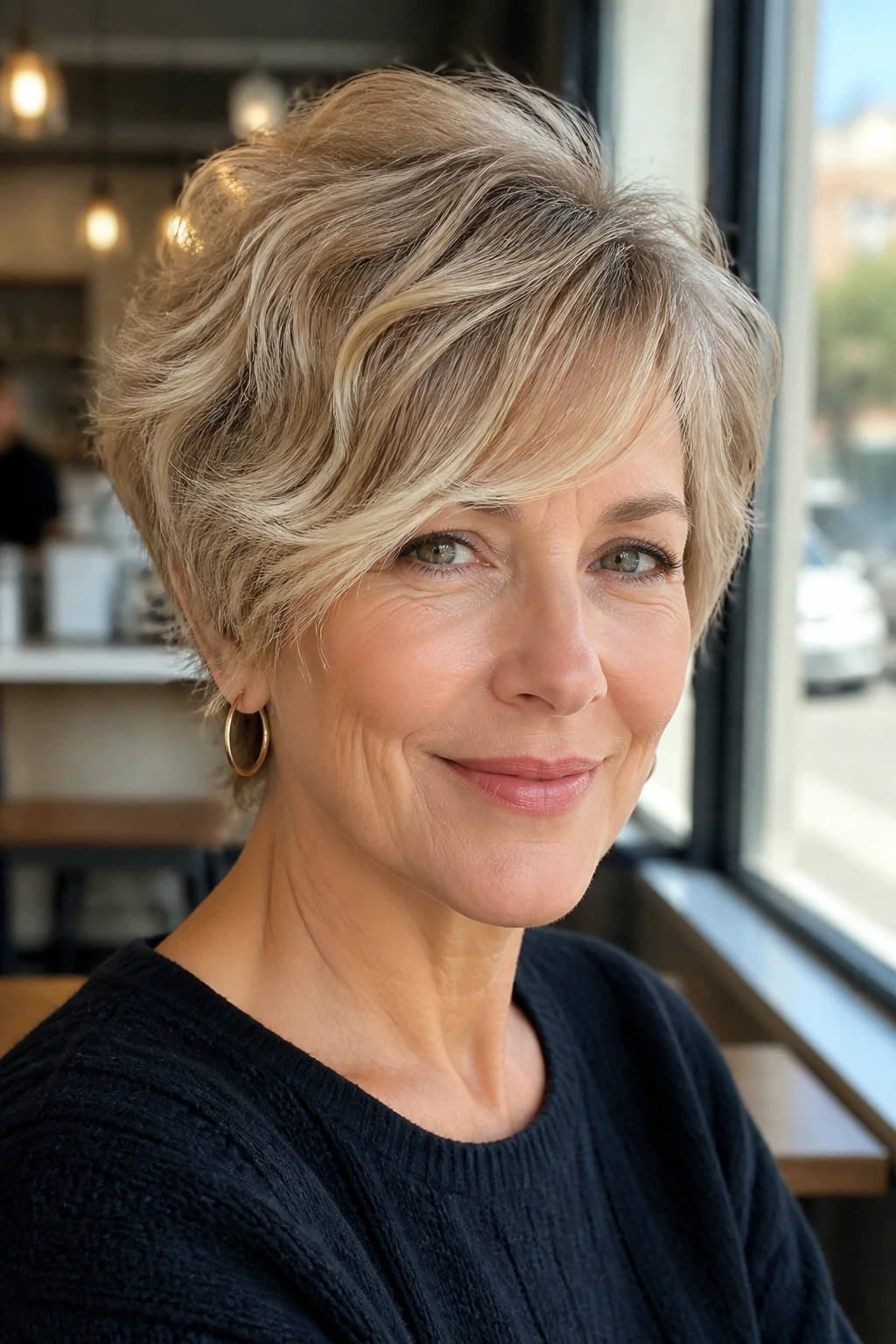
The bixie sits between a bob and a pixie, and that middle ground is useful when you want softness without a lot of length. On fine wavy hair, the side-swept fringe does half the work. It breaks up the forehead area, gives the front some motion, and stops the haircut from feeling too strict.
What to ask for
Tell your stylist you want a bixie that skims the nape but leaves enough length around the temples to tuck behind the ear. The layers should be soft and staggered, not choppy to the point of fraying. I’d also ask for the fringe to start somewhere near the high point of the eyebrow and blend into the side layers.
This cut has a nice trick: it makes fine hair look busier than it is, without turning it into a puffball. The waves stack over each other a little, and that overlap gives the eye more to read. If the hair is silver or salt-and-pepper, even better. The texture shows up.
A quick blow-dry with a small brush at the fringe is enough. Let the rest air-dry if you want. A mist of texture spray at the crown will bring back the separation the next morning.
3. Rounded French Bob

A rounded French bob has a clean, almost cheekbone-hugging curve that makes fine wavy hair look fuller than it is. The outline matters here. Instead of hanging straight, the cut bends gently inward, so the ends sit together and read as denser. It’s one of those cuts that looks simple until you notice how much shape is doing behind the scenes.
The best version for wavy hair keeps the length around the jaw or just below it. Anything too long loses the curve; anything too short can kick out at the sides. I like a soft side part with this shape because it keeps the top from going flat in a single sheet.
One nice thing about this bob is how well it handles a little imperfection. The wave can dry with a slight bend, the fringe can separate a bit, and the whole thing still looks polished. That’s useful. Perfection on fine hair is fragile.
If you want an even better finish, tuck one side behind the ear and leave the other loose. The asymmetry wakes up the whole cut and keeps it from looking too tidy.
4. Jaw-Length Shag Bob

A jaw-length shag bob gives fine waves somewhere to go. The layers are the point. They let the hair kick around the face instead of hanging like damp ribbon, which is exactly what a lot of fine wavy hair needs once it gets past a certain length.
The danger with shag cuts is overdoing the texture. Too many short layers and the ends start to look sparse. I prefer a softer shag on this hair type: crown layers that add lift, face-framing pieces that start near the cheekbone, and a perimeter that still holds its line at the jaw.
Best for: women whose waves bend better when the hair is slightly shorter and who don’t want to spend ten minutes fighting flat roots every morning.
Styling cue: scrunch in a lightweight foam, diffuse on low heat, and stop before the hair is fully dry. Let the last bit air-dry so the wave doesn’t puff.
This cut has edge, but not the kind that looks like it’s trying too hard. It’s good with black-rimmed glasses, silver strands, and a little eyebrow lift. The haircut carries the movement. You don’t have to manufacture it.
5. Softly Stacked Bob
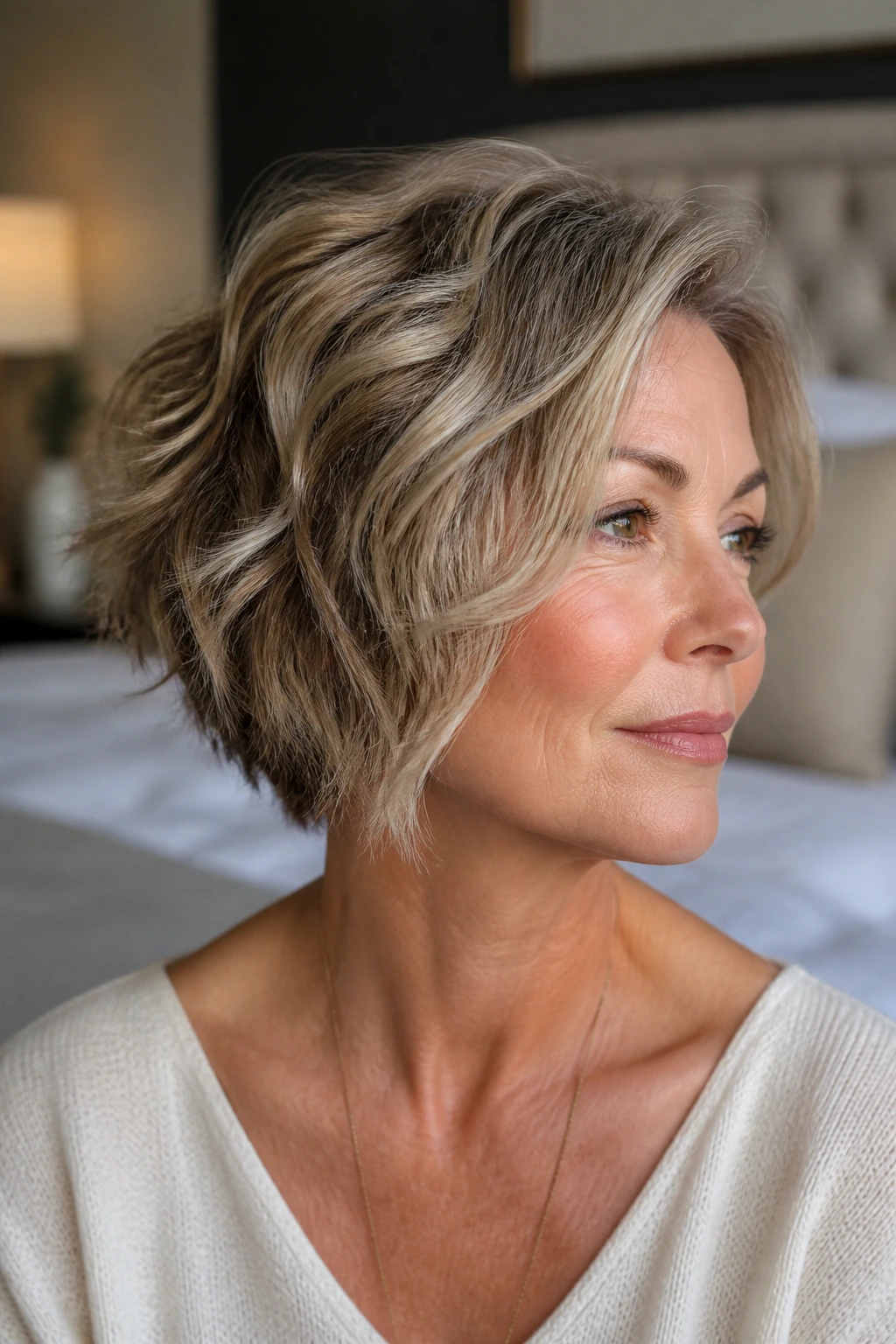
A softly stacked bob is one of the best answers to a flat crown. The back is cut slightly shorter and gradually lifted, which creates a subtle shelf of volume without going full helmet. That little stack matters on fine hair because it keeps the shape from collapsing toward the nape.
The key word is softly. Fine wavy hair does not need a dramatic graduation unless it’s very dense. Ask for a gentle angle from the nape toward the occipital bone, with the front staying around chin length. The result should feel rounded, not boxy.
- Why it helps: the shorter back supports the crown.
- Why it stays wearable: the front keeps enough length to show off the wave.
- Why it’s practical: it dries faster than a longer bob and needs less fuss at the ends.
I like this cut with a side part because it breaks the shape just enough to keep it modern. If your hair tends to kick out at the nape, a touch of smoothing cream under the back layers can tame it without flattening the whole style.
6. Tapered Crop With Wispy Nape
A tapered crop is a good answer when you want the neck area clean and the top a little longer. The short nape keeps the cut neat, while the wispy edges stop it from looking severe. On fine wavy hair, that taper gives the illusion of thickness up top because the eye isn’t distracted by bulky weight at the bottom.
This cut suits anyone who dislikes hair brushing the collar or collecting at the neckline. It also shows off earrings and collars in a way longer short cuts don’t always manage. Small detail. Big difference.
The top should stay long enough to bend with your wave pattern, usually around 2 to 3 inches. Too short and the wave stands up in a way that feels stiff. Too long and you lose the lift that makes the crop useful in the first place.
A fingertip-sized dab of matte paste at the ends is enough. I’d avoid heavy oils here; they drag fine hair down fast. If your natural wave is loose, scrunch the front while drying so it doesn’t fall straight over the forehead.
7. Neck-Grazing Wavy Lob
Not every short haircut has to be ultra-short. A neck-grazing lob gives fine waves enough length to form a loose S-shape while still getting rid of the dead weight that can make longer hair look thin. This one is for the woman who wants movement more than drama.
The cut should sit just above the shoulders or right at the base of the neck, depending on how much density you have. Keep the layers minimal. Fine hair often looks thicker when the ends stay blunt and the wave is allowed to do the styling. A little face frame around the cheekbone is plenty.
If your hair flips out at the ends, this length can either solve the problem or make it louder. The answer is in the cut angle. Ask for a slight forward lean so the front pieces fall toward the face rather than kicking away from it.
A one-inch curling iron can help on stubborn sections, but I’d rather see this cut air-dried with a tiny bit of mousse. The less you force it, the more natural the wave looks.
8. Piecey Crop With Micro Layers
This one has attitude, but it needs a careful hand. A piecey crop with micro layers builds movement into very short hair without turning it into a frizz cloud. On fine waves, the texture reads best when the layers are tiny and controlled, not aggressively razored.
The crop sits above the ear or just at it, and the top is carved into separated pieces that can be pushed forward, up, or slightly to the side. That flexibility helps if your wave pattern is uneven. You can redirect it instead of fighting it every morning.
A good stylist will leave enough perimeter to keep the shape intact. That’s the part people often miss. Fine hair can’t afford to lose too much at once, or the ends start to look sparse. The crop should feel light but not brittle.
Use a small amount of cream on the fingertips and pinch the top into place. That’s it. If you want more texture, add a puff of dry shampoo at the roots the next day and rough it up with your hands. It holds better than you’d think.
9. Side-Parted Chin-Length Bob
A chin-length bob with a deep side part is one of the simplest ways to make fine wavy hair look fuller right away. The part gives instant lift at the roots, and the chin length keeps enough weight at the ends to hold the line. It’s not flashy. It just works.
This cut is a smart choice if your face shape changes a little with age and you want something that doesn’t fight it. The side part softens the forehead and gives the style a bend that feels relaxed rather than rigid. If your wave pattern is loose, the bob will still look good when it dries straight in sections. That matters on busy mornings.
The shape to request
Ask for a clean baseline at the chin with a few internal layers only if your hair is dense enough to need them. If it’s very fine, a blunt edge with soft point-cutting on the surface is usually better. The ends need to look full from every angle.
This haircut is especially nice with a tucked side and one loose front piece. That tiny bit of asymmetry keeps the bob from looking too severe, and it’s easy to do with one hand and no mirror panic.
10. Feathered Short Cut With Long Top
A feathered short cut with a longer top is a useful middle path when you want softness around the face and lift through the crown. The feathering keeps the edges light, while the longer top gives your wave room to form. The cut has motion even before you touch it.
I like this shape on hair that grows flatter at the sides but still has a little bend in the front. The long top can be swept back, parted slightly off-center, or pushed forward in a textured fringe. That flexibility makes the cut less fussy than it sounds.
The sides should stay close enough to the head to avoid bulk, especially near the ears. But they should not be clipped so tight that the cut loses its softness. That balance is the whole story here.
A small round brush and a quick blast of heat at the root area are usually enough. After that, let the rest do what it wants. Fine wavy hair often looks better when it’s nudged than when it’s forced.
11. Asymmetrical Wavy Bob
An asymmetrical bob gives fine wavy hair a little edge without asking for a dramatic makeover. One side stays slightly longer than the other, and that difference changes how the eye reads the whole head. It creates movement even when the wave is lazy.
This cut is useful if your hair falls flat on one side or if you have a stronger part on one side of the head. Instead of trying to make the hair behave the same everywhere, the shape uses that natural imbalance. I like that. It feels honest.
The asymmetry should be subtle, usually no more than an inch or so of difference between sides. Anything stronger starts to fight fine hair instead of helping it. The overall line still needs to look intentional, especially if the hair is gray or highlighted, because uneven tone can exaggerate a choppy cut.
Wear one side tucked and the other loose, or let the longer side skim the jaw. Either way, the cut gives you a little movement without requiring daily hot tools.
12. Tousled Mixie
The mixie lives between a pixie and a mullet, which sounds more rebellious than it usually looks. On fine wavy hair, a softened mixie can be surprisingly flattering because it builds texture at the crown and keeps a little length through the back and sides. That gives the wave more places to land.
The important part is restraint. Too much mullet energy, and the cut gets lank or too directional. Too much pixie, and you lose the relaxed softness that makes the mixie work. The best version stays short around the ears, a touch longer in the back, and piecey through the top.
This is a strong choice if you like visible texture and don’t mind a haircut with some personality. It works especially well with silver hair, where the layers show up in light and shadow. The shape looks deliberate even on a day when you don’t style it much.
A little mousse, a few scrunches, and air-drying usually do the job. If you want more definition, twist a few crown pieces while the hair is damp and let them set on their own.
13. Graduated Bob With Airy Ends
A graduated bob gives you a stronger back shape than a standard bob, but the airy version keeps the ends from feeling too heavy. That matters on fine hair. You want lift, yes, but you do not want the ends chopped so thin that they disappear under bright light.
This cut works best when the graduation is concentrated in the back and the front stays a bit longer, brushing the jaw or just below it. The front pieces keep the cut wearable. The back supports the crown. It’s a practical arrangement.
Ask for point-cutting at the ends rather than aggressive thinning through the body of the hair. The goal is to break up the line just enough so the wave can move, not to remove the visual density that fine hair needs. That’s the line people often cross.
A rounded brush through the back at the roots can make the shape pop. The rest can dry naturally. If your hair has a loose wave, this bob tends to show it in a clean, polished way.
14. Curtain Fringe Crop
Curtain fringe changes the whole haircut. On a short crop, it softens the forehead, adds width where fine hair often looks narrow, and gives the front some movement without a heavy bang sitting straight across the face. That last part matters. Heavy fringes can crush fine waves fast.
The fringe should start around the cheekbone and fall away from the center, not from the middle of the forehead. That creates the curtain effect and leaves space around the eyes. The crop underneath can be short and tidy, or a little shaggy if you want more texture.
This is a nice cut for women who like to wear glasses because the fringe frames the frames instead of fighting them. It also helps if your forehead feels more prominent than it used to. The soft split makes the face look less rigid.
Dry the fringe first, using a small brush or your fingers to sweep each side outward. If you leave it until the end, it usually sets in the wrong direction and you’ll be annoyed for the next three hours. Been there.
15. Sliced Bob With Clean Perimeter
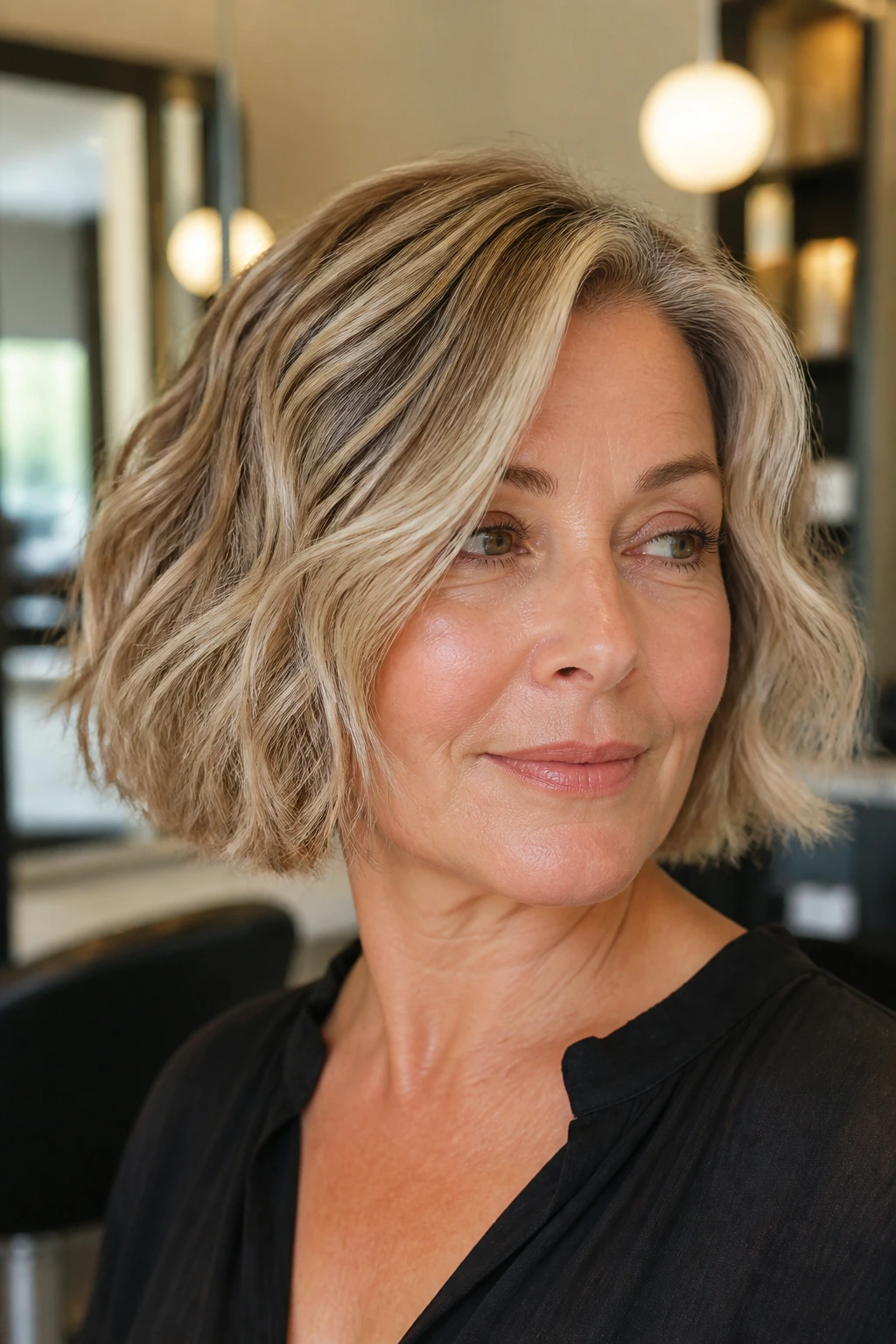
A sliced bob keeps the outline clean and the inside lightly carved, which is a smart move when the hair is fine and wavy. The straight perimeter makes the ends look thicker. The internal slicing stops the shape from feeling too heavy or blocky. It’s a tidy balance.
This is one of my favorite choices for women who want a bob that looks neat even when the texture gets a little wild. The wave gives the haircut life; the perimeter keeps it anchored. That combination can be more flattering than a heavily layered cut that loses its edge by week two.
Ask for this
Tell the stylist you want the shape to stay blunt around the bottom, with only light internal movement. If they use a razor, it should be with caution. Fine hair can fray if it’s razor-cut too aggressively, especially at the ends.
The best finish is a side part and a quick bend at the front pieces. That’s enough. The cut already does most of the work.
16. Modern Wedge Bob
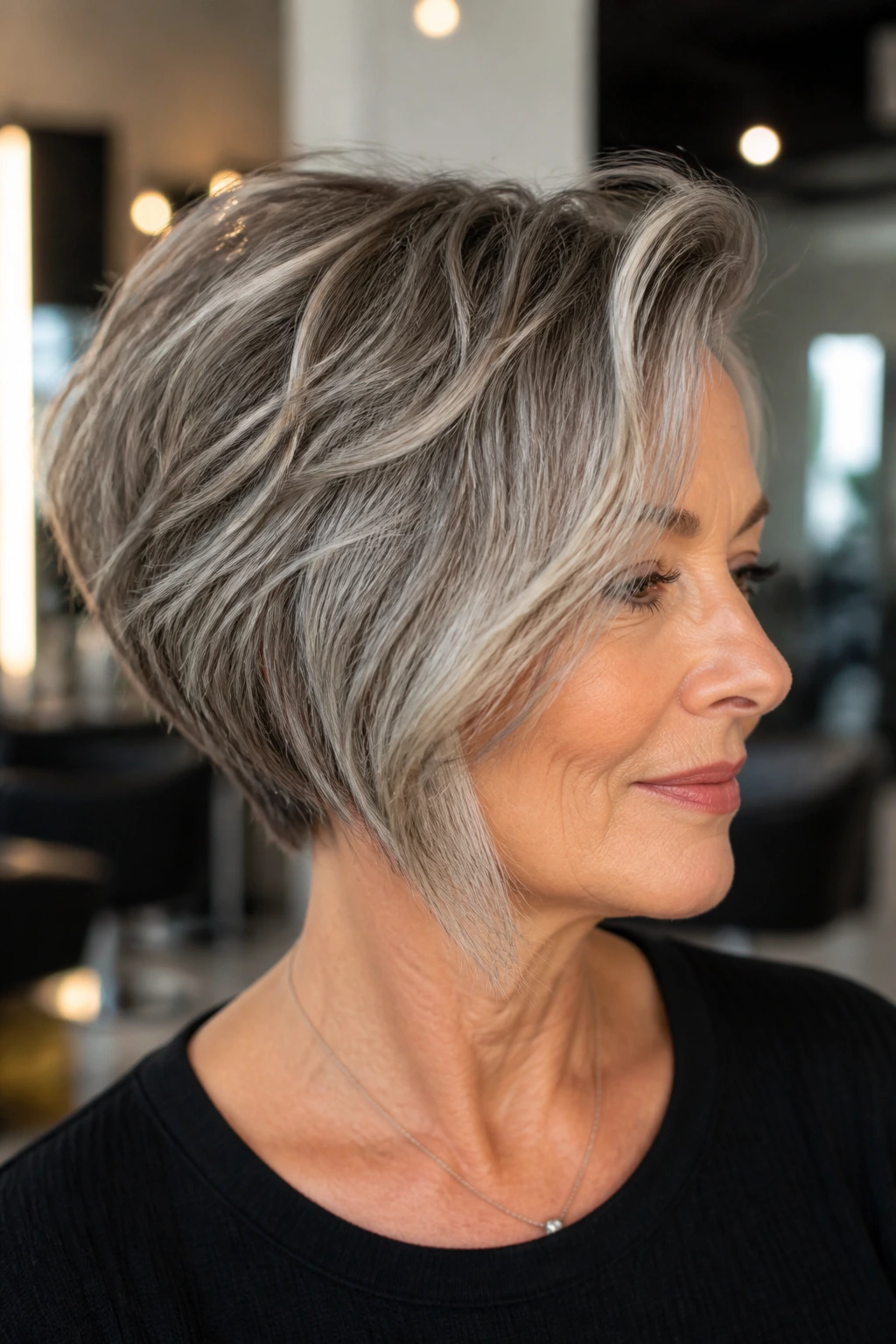
The wedge bob has come and gone in many forms, but the modern version is softer and much easier to wear. The back is shorter, the front angles forward, and the crown has enough lift to keep fine hair from lying like a cap. That shape is useful. It builds fullness without asking the hair to be thick.
I prefer this cut when the nape needs a little control and the face benefits from a bit of forward motion. The angle can sharpen a jawline or soften a neck, depending on how it’s drawn. A good stylist will adjust the steepness to fit your head shape, not the other way around.
This cut looks best when the top isn’t over-layered. The front should fall in a smooth curve, and the crown should have enough room to bend. If it gets too chopped up, the wedge loses its clean line.
A blow-dry with the nozzle pointed upward at the roots helps the crown keep its lift. Then let the ends settle naturally. It’s a classic shape for a reason.
17. Ear-Length Pixie Bob
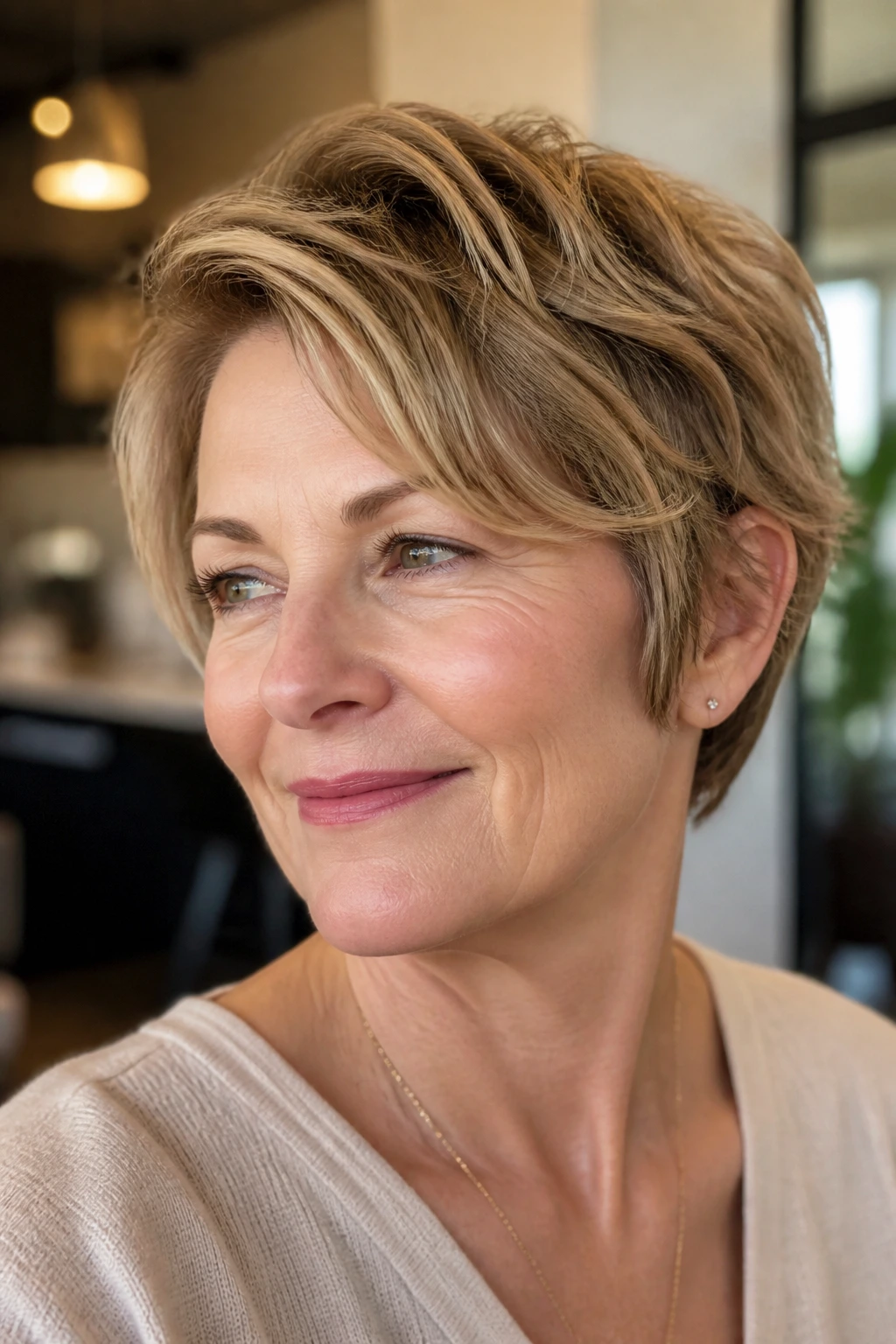
An ear-length pixie bob sits right in that sweet spot between cropped and bobbed. It gives you the neatness of a pixie through the back and a little more softness around the face. Fine wavy hair often likes this length because it keeps enough body to bend without dragging itself flat.
The side layers should brush the tops of the ears, not swallow them. That keeps the shape open. Around the face, leave a bit more length so the haircut doesn’t look too tight. The wave can then soften the line just enough to keep it interesting.
I like this cut for women who don’t want much hair on the neck but still want the feel of a bob. It’s also easy to tuck behind the ear on one side, which gives you a quick styling option that takes ten seconds and no patience.
A light styling cream on damp hair is enough. If the waves separate too much, a fingertip trace of pomade at the ends will pull the pieces back together without turning them stiff.
18. Layered Crop With Long Sideburns
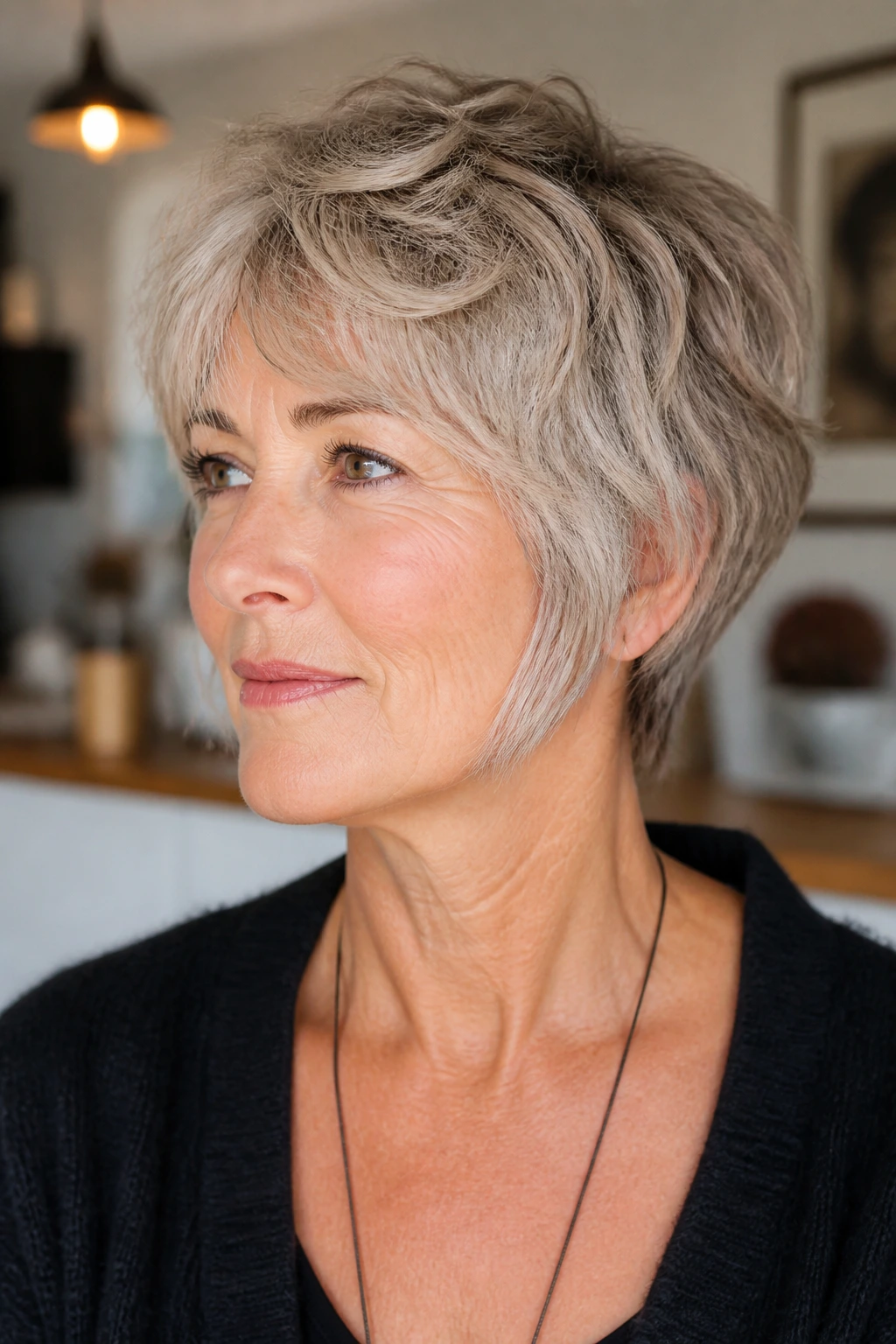
Long sideburns are underrated. On a layered crop, they frame the face, soften the jaw, and give fine waves a little vertical line to hang from. That matters if your hair is thin around the temples or if you wear glasses and want the cut to feel connected rather than clipped off.
The crop itself should stay short enough to be easy, but not so short that it loses shape at the sides. Ask for the sideburns to remain a real design element, not just a forgotten afterthought. They can be soft and feathery, but they should still exist.
Best for: faces that need a little narrowing near the jaw, and for women who like hair to move when they turn their head.
The sideburns can be tucked behind the glasses arms or left free to skim the cheek. Either way, they keep the cut from feeling harsh. That small detail changes the entire balance of the style.
19. Soft Undercut Bob
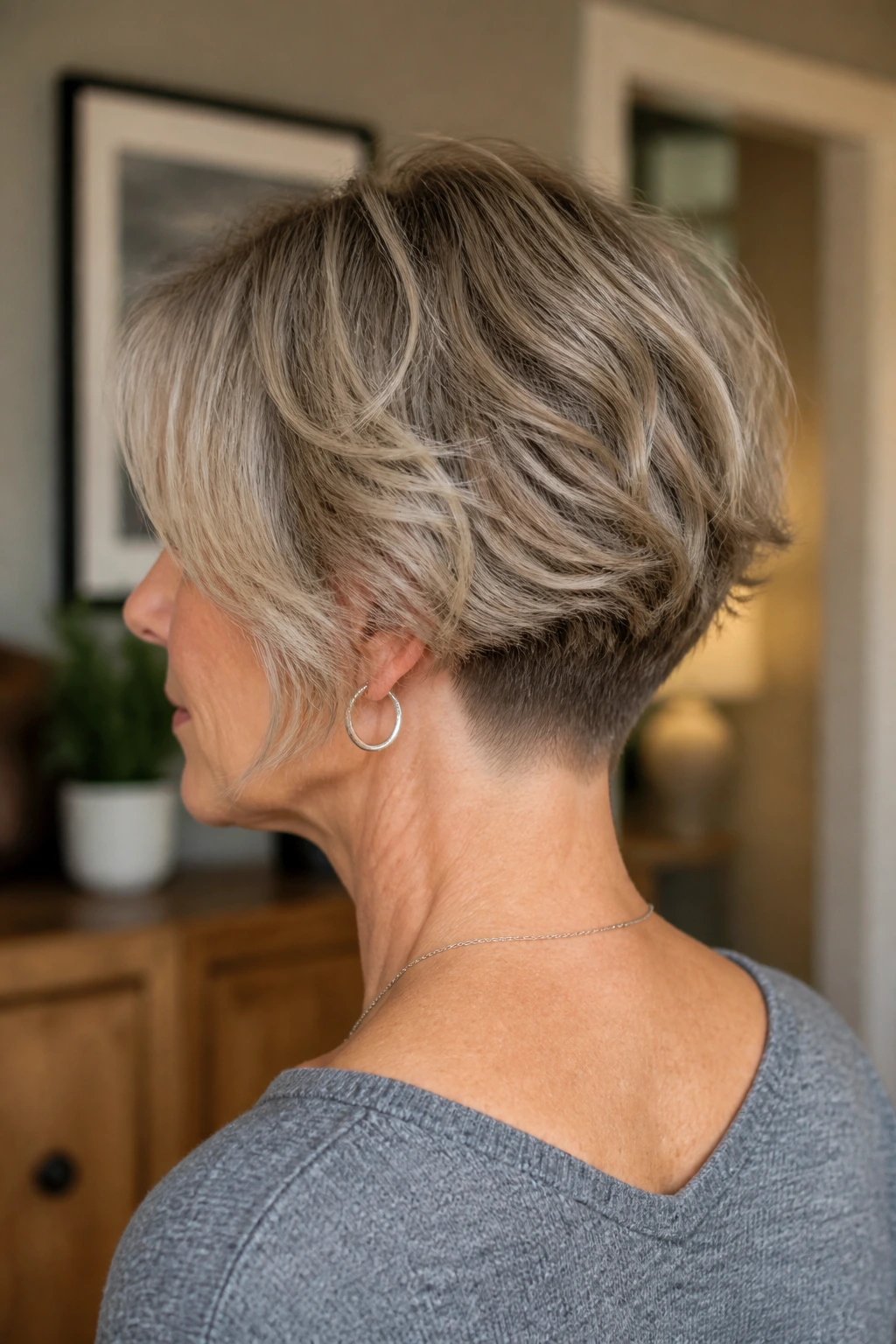
A soft undercut bob removes bulk from underneath without making the haircut look aggressive from the outside. It’s a smart option when fine wavy hair puffs at the nape or around the lower back of the head. The hidden reduction changes how the whole bob sits.
The key is “soft.” This is not the place for a sharp shaved line unless that’s your style. The undercut should simply take out a thin section at the nape or just behind the ears so the top layers can settle more cleanly. You feel the difference more than you see it.
This cut is useful if your hair grows thick in one area and flat in another. It lets the top layers move while preventing the bottom from sticking out like a shelf. That can be a lifesaver on windy days, frankly.
If you’ve never had one before, ask for a hidden undercut that can grow out gracefully. It’s easier to manage and less likely to surprise you six weeks later.
20. Curved Bubble Bob
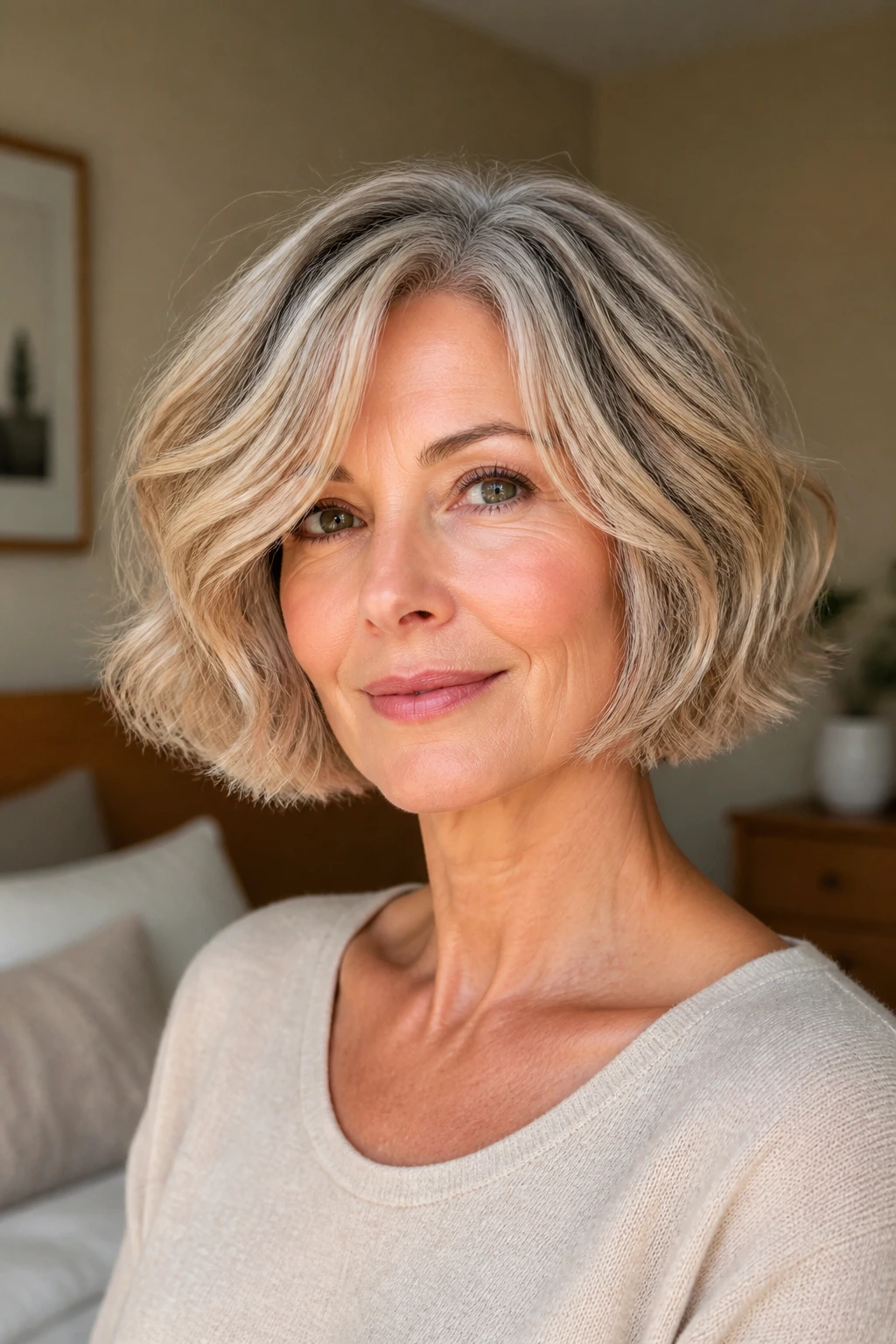
A curved bubble bob sounds cute because it is. The shape bends softly around the head, with the ends tucked just enough to create fullness. Fine wavy hair can look unexpectedly plush in this cut because the curve works with the wave instead of flattening it.
The best version keeps the length around the chin or slightly below, with a rounded line that doesn’t break abruptly at the jaw. Think smooth shape, not stiff helmet. That distinction matters. A hard bubble can look dated fast. A soft one feels current and wearable.
I like this cut when the hair has a loose bend but not much density. The curve creates a visual frame that makes the whole head look fuller. It’s a clever bit of optical work, which is really what a good haircut is anyway.
Use a round brush only at the very ends if you want a little extra curve. More than that, and you’ll iron out the wave you paid for.
21. Razor-Shaped Mini Shag
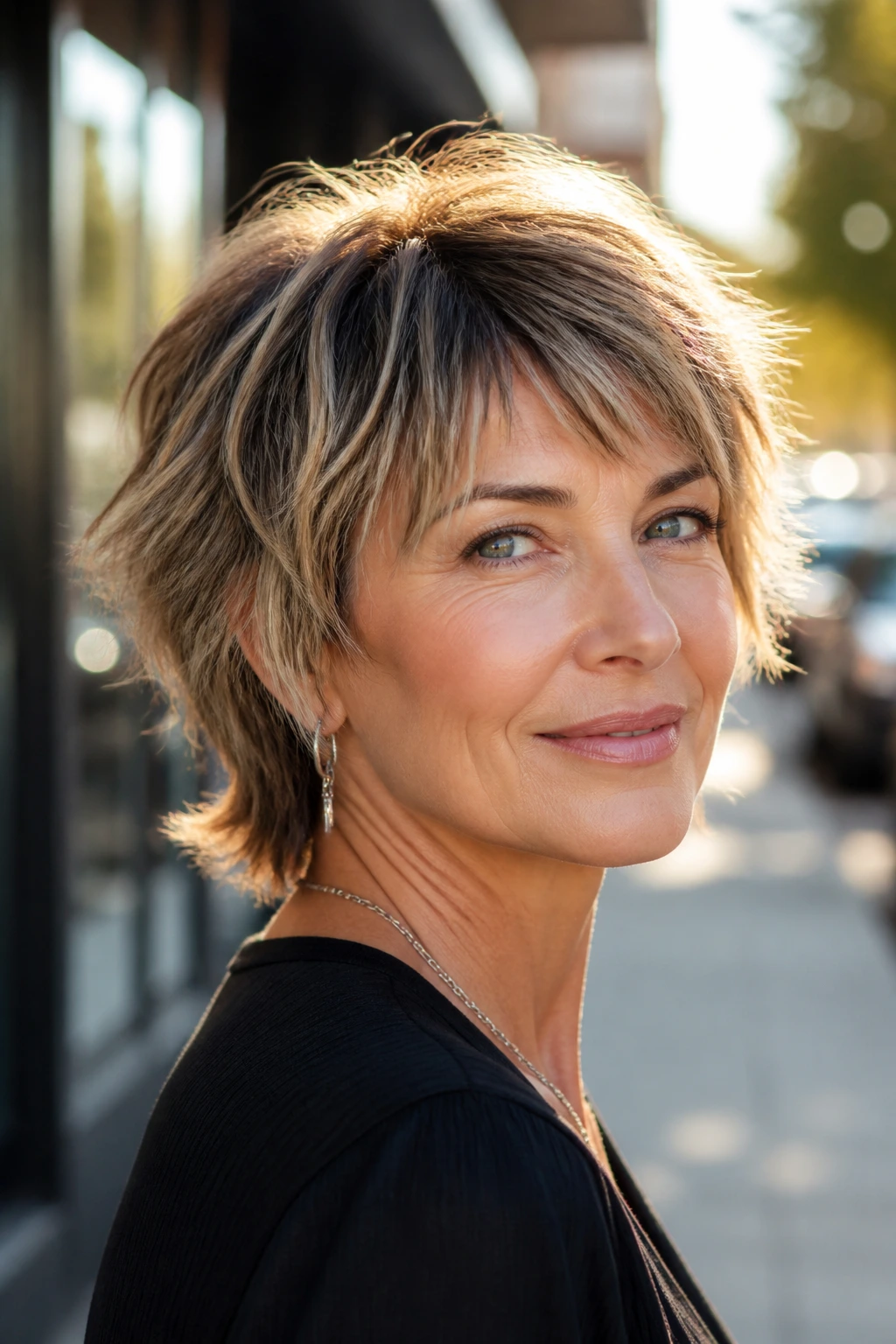
A mini shag gives you the spirit of a shag without the full commitment. The layers stay short, the texture stays visible, and the overall length stays compact enough to feel light. On fine wavy hair, the smaller version is often better because it avoids over-thinning the shape.
The razor can help here, but only in the hands of someone who knows where to stop. A light razor finish at the ends can keep the haircut from looking blunt and boxy. Too much razor work, and the strands start to feather apart in the wrong way.
This cut is for women who want movement first and polish second. It looks best a little imperfect, with pieces falling where they want. That’s part of the charm. The wave creates the finish, not the blow-dryer.
A texture cream or lightweight foam gives the hair enough grip to hold separation. If you overdo shine products, the mini shag can collapse into clumps. Keep it dry-ish and touchable.
22. Deep Side-Parted Cropped Bob

A deep side-parted cropped bob is the practical classic of the group. It doesn’t rely on gimmicks. It simply puts the weight in the right place, lifts the crown, and lets the wave gather on one side for instant body. Fine hair loves that kind of simple structure.
The crop should sit somewhere between ear and chin length, depending on how much wave you have. The deeper part creates height at the root and a little drama at the front, which keeps the haircut from feeling plain. If you’re wearing gray or silver hair, the part line can look especially crisp.
This is the cut for women who want a style that works with minimal effort and doesn’t need a salon visit every two weeks. It’s tidy enough for work, relaxed enough for weekends, and flexible enough to tuck, pin, or smooth depending on mood.
A touch of mousse at the roots and a side-swept dry are enough. Sometimes simple is the best place to land. Not boring. Just smart.
What Fine Waves Need From a Short Cut
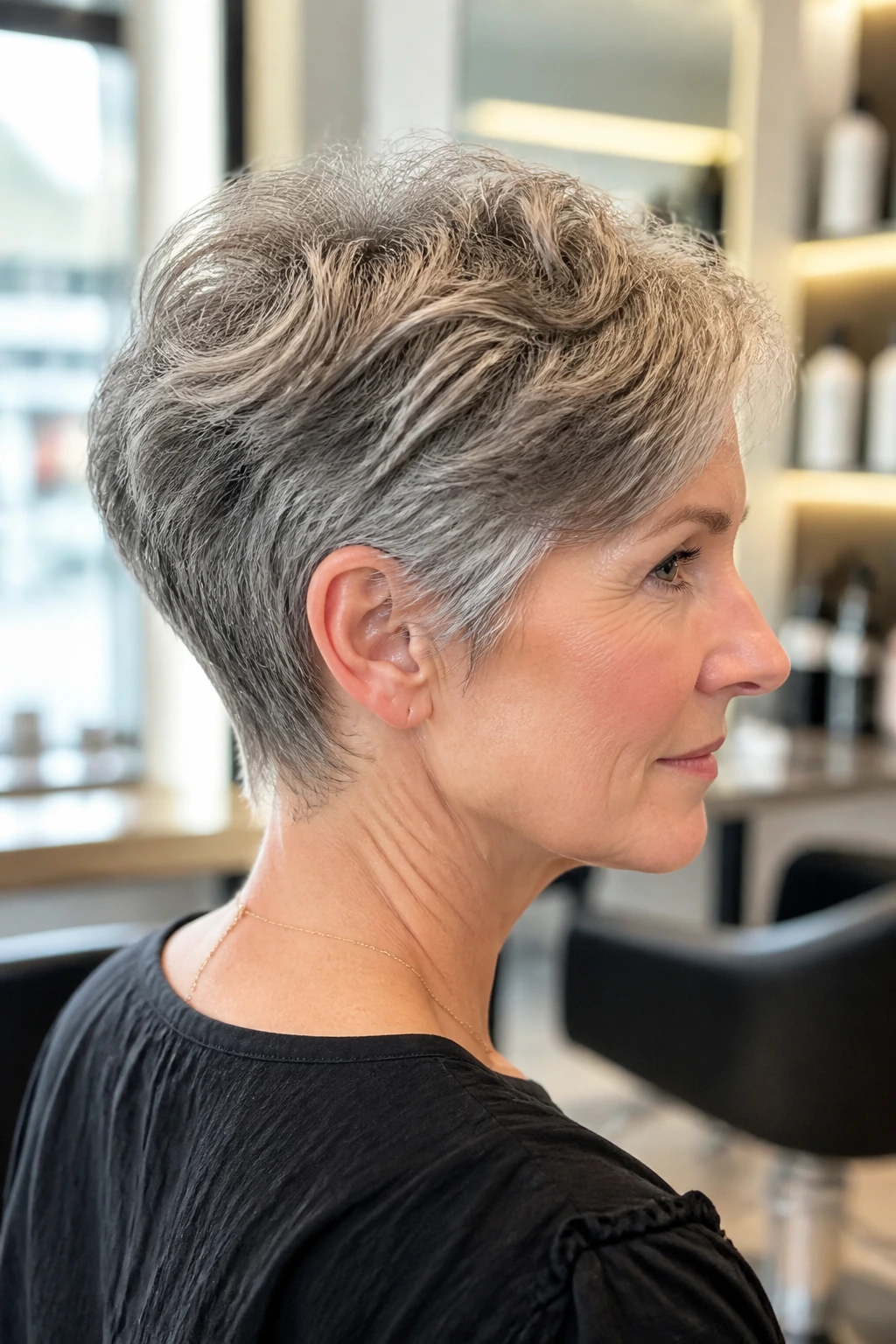
Fine wavy hair has a funny habit: it can look full in one mirror and nearly disappear in another. That’s not your imagination. Light strands show shape and gaps faster than thicker hair, and waves can either help or expose that difference depending on where the cut removes weight. A short cut for this texture has to do two jobs at once. It needs to preserve density at the edge, and it needs to free enough movement inside the shape so the wave can show up.
The biggest mistake is removing volume everywhere in the name of “texture.” Texture is not the same thing as thinning. On fine hair, too much thinning leaves transparent ends and frizz at the perimeter, which is a terrible trade. A better cut usually keeps a strong outline and uses selective point-cutting or very light layering to keep the inside from feeling blocky.
Face shape matters too, but not in a stiff, rulebook way. A short cut that fits the way your hair falls, where it parts, and how your glasses sit on your face will beat a trendy shape that ignores all of that. Fine wavy hair often looks best when the back is controlled, the crown gets a little lift, and the front carries enough length to frame the face instead of exposing every angle at once.
What to Tell Your Stylist Before the First Snip

Bring pictures. Not one. Three at most. And make sure they all show the same general length and texture, because a photo of a heavily styled bob can lie badly about the actual cut. A good stylist will want to know how you wear your hair on a Tuesday morning, not just how it looked under salon lights.
Say whether you air-dry, diffuse, or blow-dry smooth. That changes the cut. Say where your cowlicks live, whether your hair flips out at the nape, and if your wave pattern gets looser as the day goes on. Those details tell the stylist where to leave weight and where to remove it. They matter more than most people realize.
Good things to mention at the chair
- Your part line: if it always falls to one side, the cut should respect that.
- Your styling budget: if you want five-minute hair, don’t ask for a cut that only works with a round brush and a curling iron.
- Your maintenance comfort: some shapes need trims every 5 to 6 weeks; others can stretch a bit longer.
- Your face-framing preferences: glasses, cheekbones, forehead softening, jawline balance — say the thing you care about.
One more thing. If you’re nervous, ask for a little less length than you think you need, not a lot less. Fine hair can always be refined. It cannot be glued back on.
Tools and Products That Help the Shape Hold
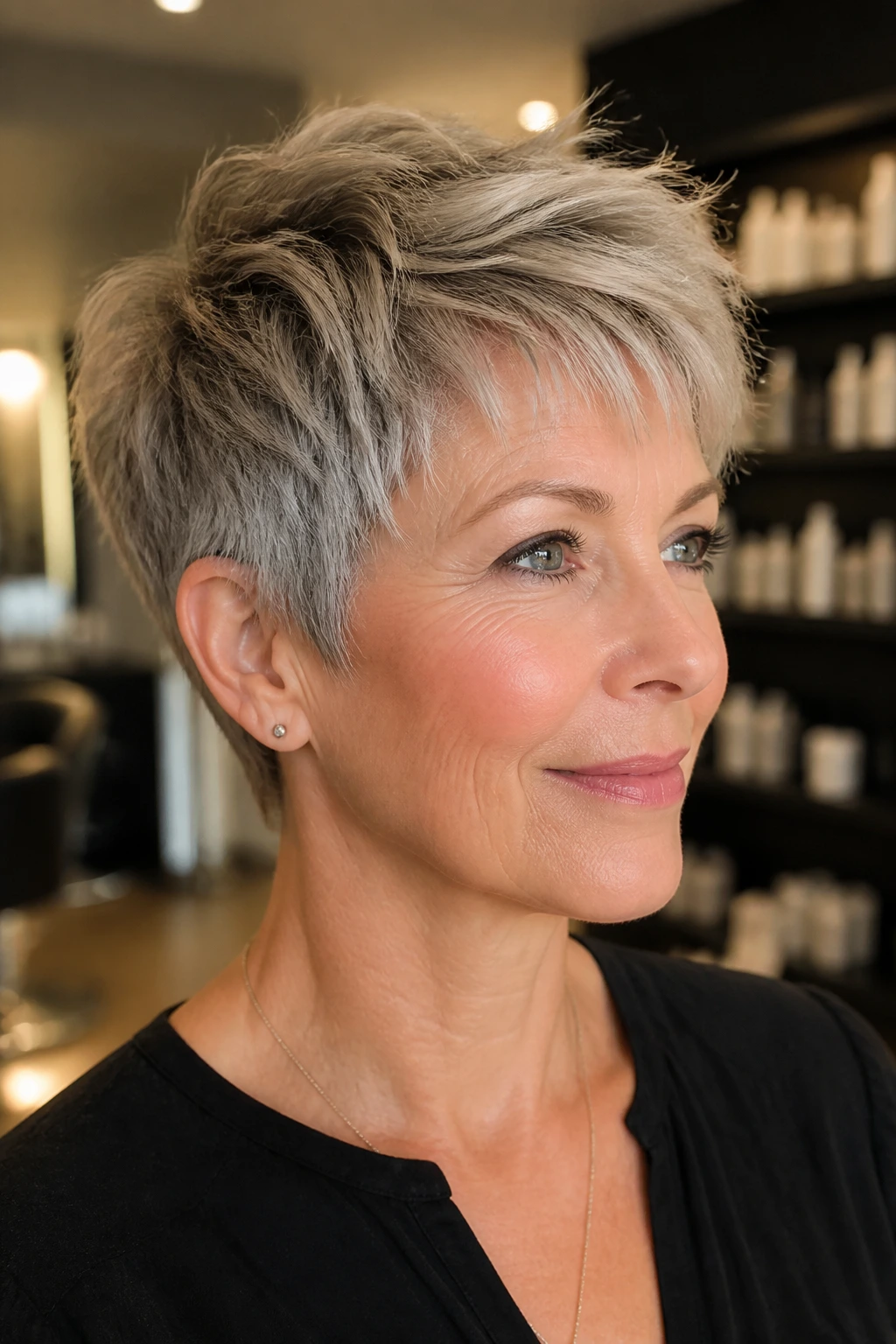
The right tools don’t need to be fancy. They need to be specific.
- Blow dryer with a narrow nozzle: directs the air at the roots instead of blasting the whole head into frizz.
- 1-inch or 1.25-inch round brush: small enough to lift the crown and bend the front pieces without stretching the wave flat.
- Wide-tooth comb: useful for distributing conditioner and separating curls or waves before styling.
- Microfiber towel or T-shirt: cuts down on rough-up frizz after washing.
- Light mousse or foam: gives fine waves grip at the root without the sticky feel of heavy gel.
- Texture spray: helps piece out layers on day two, especially in crop and shag cuts.
- Lightweight leave-in conditioner: good for softening ends that feel dry, but use sparingly.
- Dry shampoo: useful at the root, not the ends; too much makes fine hair dusty.
- Small clips: handy for setting a fringe or pinning the top while it cools.
Products matter less than dosage. Fine hair goes from “soft support” to “heavy helmet” fast. A dime-size amount is often plenty. A little goes a long way here, and I’d rather see someone underuse product than smother the wave out of existence.
How to Style the Cut So It Keeps Its Shape

Short fine wavy hair usually behaves best when styling starts at the roots and ends with the hands. That’s the order. Not the other way around. If you pile product onto dry ends first, the hair often looks separated in the wrong place and limp where you actually need lift.
Root lift: Put mousse or foam into damp roots, then blow-dry the crown in the direction opposite your part for the first minute. Flip it back and set the part once the roots have a little memory. That tiny detour adds height without teasing.
Wave definition: Use a diffuser only if your wave needs help holding its bend. Keep the heat low and stop before the hair is bone dry. Fine hair can frizz if you over-diffuse it. Air-drying the last 20 percent is often better.
Fringe and face frame: These pieces usually need more direction than the rest. A small brush or just your fingers can sweep them into place while they’re still warm. Once they cool, they tend to stay put.
Second-day refresh: Mist the hair lightly with water, pinch a pea-sized amount of foam through the top, and scrunch the ends. If the shape is a little messy, that’s fine. Too much polish on day two tends to flatten the lift you were trying to save.
Common Mistakes That Flatten Fine Waves
The first mistake is going too short in the wrong places. Fine hair can absolutely be short, but if the crown, sides, and nape are all cut aggressively, the result is a see-through outline with no anchor. The fix is simple: keep one area as the visual weight holder. Usually that’s the perimeter or the front fringe.
The second mistake is over-layering. People hear “texture” and think “more layers.” Not here. Too many layers on fine wavy hair strip away the very density that makes the cut look healthy. If the ends are already wispy, the answer is often a cleaner line, not more internal slicing.
Another one: using heavy creams or oils. They can make the hair feel nice for ten minutes and then sit there like wet wool. Fine waves need light hold, not a glossy coating. Use mousse, foam, or a very small amount of leave-in cream, then stop.
Cutting only when the hair is soaked can also hide trouble. Wet fine hair stretches, and waves look longer and straighter than they really are. A stylist who checks the shape dry, or at least partially dry, is doing you a favor.
And don’t ignore the part. A part that keeps hopping around can make a good cut look uneven. If your wave lives on one side, let it live there and shape around it.
Ways to Adapt These Cuts for Face Shape, Glasses, and Gray Hair

Glasses-Friendly Fringe: Keep the fringe soft and slightly split so it doesn’t land straight on the frames. A side-swept or curtain fringe keeps the top of the face open and stops the haircut from feeling crowded.
Silver-Soft Texture: Gray hair often behaves a little coarser and a little drier, which means it can hold shape nicely but frizz at the surface. A short cut with clean edges and gentle layering shows off the silver without making it look frayed.
Round-Face Lift: Ask for more height at the crown and a little length at the front, especially near the cheekbones. That gives the face a longer line without making the haircut severe.
Square-Jaw Softener: Choose rounded shapes, side-swept pieces, or a curved bob that bends around the jaw instead of stopping on it. The line should skim, not chop.
Low-Maintenance Air-Dry Version: If you hate styling, keep the perimeter strong, the layers light, and the fringe long enough to fall on its own. A cut that air-dries well usually has fewer short bits around the crown.
Neck-Length Comfort Cut: For women who dislike hair on the collar, a tapered nape or soft undercut can keep the back neat while the top still has enough wave to look alive.
Maintenance Between Salon Visits
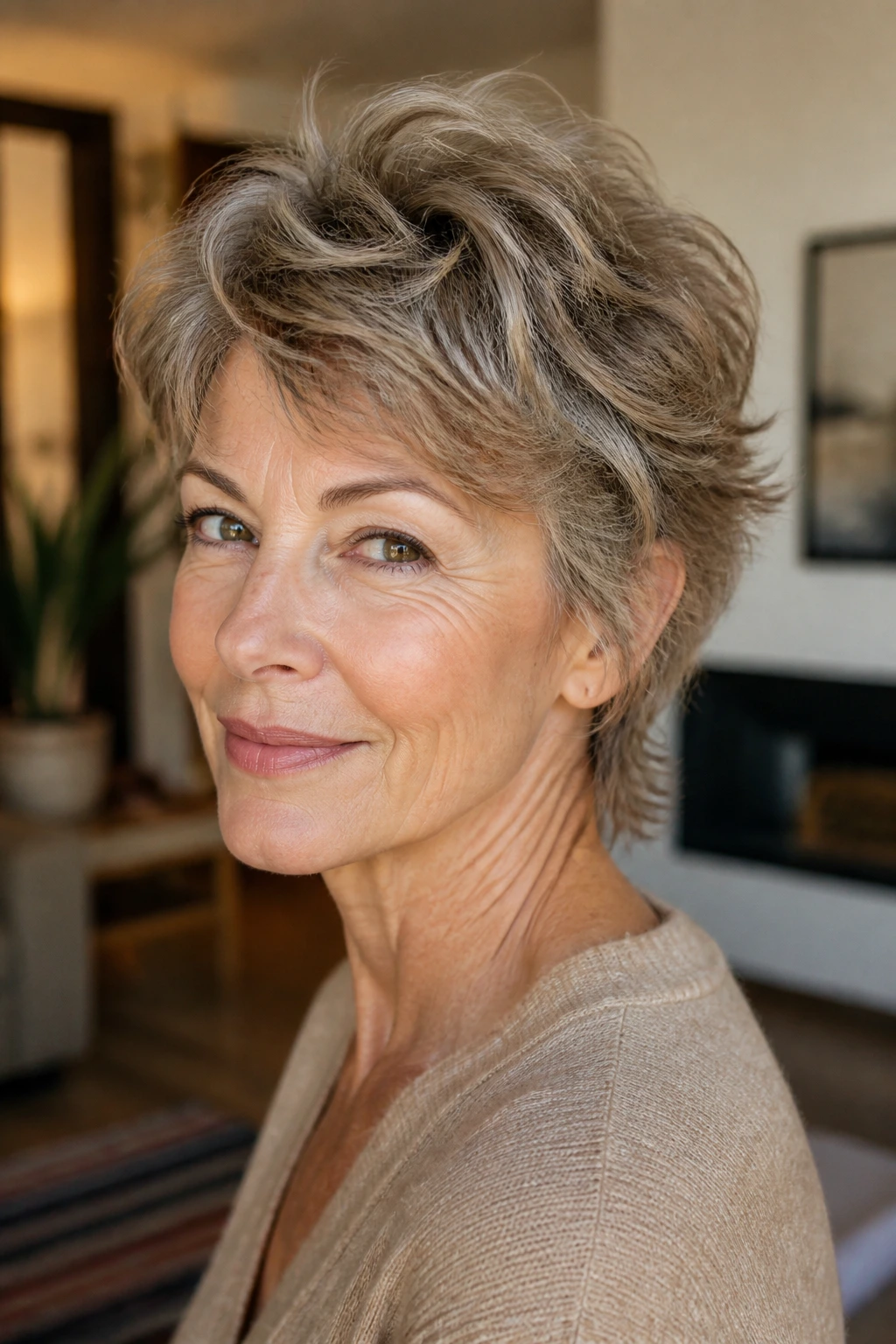
Short fine wavy hair tells on itself fast. Split ends show sooner. Flat roots show sooner. A line that was crisp at the salon can start looking fuzzy after six or seven weeks, especially if the cut relies on a strong outline. That’s not a failure. It’s just how this hair type behaves.
Plan on trims every 5 to 8 weeks, depending on how short the cut is. Pixies and crops usually need the shorter end of that range. Bobs can stretch a little longer if the shape still reads clean. If the nape starts to puff out or the fringe lands in your eyes, you’re already there.
Use a gentle shampoo that doesn’t leave a heavy coat behind, and avoid loading conditioner onto the crown. Keep it on the mid-lengths and ends. Fine wavy hair does not like product buildup near the roots; it steals lift fast.
At night, a silk or satin pillowcase can help the wave keep its shape, and it costs less than most salon fixes. If the ends get dry, a tiny amount of lightweight cream on damp hair before bed can help, but don’t treat the whole head like it needs moisturizing. Usually it doesn’t.
Frequently Asked Questions
Is a pixie too short for fine wavy hair?
Not if the top keeps enough length to bend. A pixie with crown lift or a soft bixie can make fine waves look fuller than a longer cut that drags the shape down.
Should fine wavy hair be layered?
Yes, but carefully. Light, strategic layering helps the wave move, while too many short layers can make the ends look transparent and stringy.
Can I keep my gray hair and still wear these cuts?
Absolutely. Gray and silver strands often show texture well, and short shapes can make the color look intentional instead of grown-out. A clean outline matters even more with gray hair, because the tonal contrast can expose a messy cut fast.
What if my waves are uneven on each side?
That’s common, and it’s not a reason to force symmetry. A side part, an asymmetrical bob, or a cut that leaves a little extra length on the weaker side can balance the shape without making it obvious.
How do I keep a short cut from puffing out at the sides?
Ask for weight removal in the right places, not all over. A soft undercut, tapered nape, or slightly graduated back can stop the sides from kicking outward.
What’s better for fine hair: blunt or layered?
Usually blunt at the perimeter with light interior movement. That gives the ends a fuller look while still letting the wave show up inside the shape.
Do I need hot tools to make these cuts work?
No. A lot of these styles are meant to air-dry with a little help from mousse or texture spray. Hot tools are useful for the fringe, crown, or one stubborn bend, not for rebuilding the whole head every day.
How short is too short?
When the cut removes so much length that the wave cannot form and the ends look sparse, it’s too short for this texture. If you like short hair, keep one area with enough length to hold the outline.
The Shape That Keeps Its Lift

The best short cut for fine wavy hair is rarely the loudest one in the room. It’s the one that makes the hair look thicker, the face look softer, and the morning routine a little less annoying. That’s the quiet win. You notice it when the crown still has lift at lunch and the ends still look clean at dinner.
The real trick is choosing a shape that respects the texture you already have. Not the texture you wish you had. Not the one in a photo with a ring light and a stylist holding a diffuser like a prop. The hair on your head. That’s the one that counts.
A good cut gives fine waves room to move without losing their edge. Once you find that balance, everything else gets easier.