



Hairstyles for women over 50 with fine hair live or die by one thing: whether the cut keeps its shape after you leave the salon chair. Fine hair doesn’t forgive lazy lines. It softens fast at the ends, collapses at the crown if the weight is wrong, and turns into a see-through veil the minute too much length gets dragged into the equation.
That does not mean you need to keep your hair short out of fear. It means the haircut has to do more of the work. Blunt edges, smart layering, a lifted part, a little structure around the face — those details matter more than chasing some abstract idea of “volume.” They’re the difference between hair that looks airy and hair that looks like it gave up halfway through the day.
There’s another wrinkle once hair has lived a few decades: the texture often changes. Temples may be a touch softer, the crown may flatten faster, and gray strands can feel drier or more wiry than the rest. A good style works with that reality instead of trying to bully the hair into behaving like it did at 28.
Some of the cuts below are crisp and polished. Some are softer and a little undone. A few are designed for the woman who wants to wash, rough-dry, and go. All of them are built around the same idea: give fine hair a shape it can actually hold.
Why This Collection Is Worth Your Time
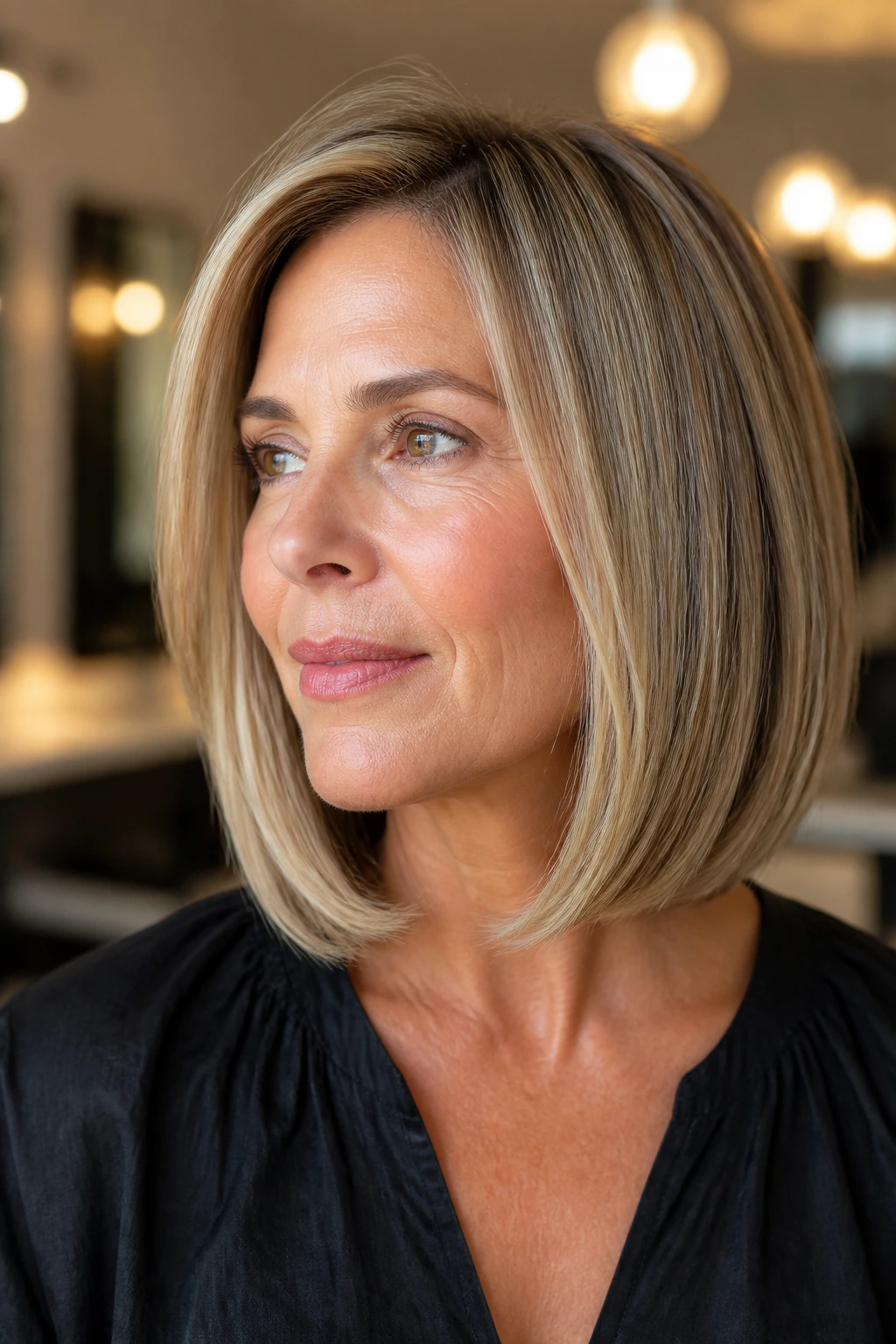
- Built for smaller strand diameter: Fine hair has less visual weight, so these cuts use blunt edges, lift, and controlled layering instead of letting the ends go wispy.
- Works with real morning routines: Several of these styles look finished after a quick blow-dry, a round brush, or a bit of air-drying with the right product.
- Gives you range without chaos: There are short crops, jawline bobs, shoulder-length cuts, and in-between shapes, so you do not have to jump straight to a pixie.
- Plays well with gray hair: Silver and white strands often show texture and shine beautifully when the cut has clean lines and a little shape near the face.
- Easy to explain at the salon: You can ask for blunt, stacked, feathered, lifted, or face-framing without needing a secret code.
1. The Collarbone Blunt Lob
A blunt lob that lands right at the collarbone is one of the safest bets for fine hair, and I mean that in the best way. The line gives the eye a stopping point, which makes the ends look denser instead of frayed. Keep the perimeter clean and the layers subtle. If the cut is too shaggy, the bottom starts to disappear.
Why It Works for Fine Hair
The collarbone is the sweet spot because it gives you movement without stretching the hair so far that the ends look transparent. Fine hair usually looks strongest when it has a solid outline, and this cut gives you exactly that.
Blow it smooth with a round brush and bend the last inch under or out, depending on your face shape. That tiny bit of finish matters more than people think. Straight and flat can look thin; controlled movement looks intentional.
- Ask for a blunt edge with only light internal layering.
- Keep the front just a touch longer if you want a softer line around the jaw.
- Use mousse at the crown, not heavy cream on the lengths.
Best for: women who want length they can still tuck behind the ears without losing shape.
2. The Airy French Bob
Why does a French bob flatter fine hair so often? Because it stops the hair before the ends have a chance to go limp. The shape sits around the jawline, sometimes a little above it, and the whole point is crispness. Not helmet hair. Crispness.
The trick is to keep it airy near the top and tidy through the bottom. A little bend in the front pieces helps, but the body of the cut should stay compact. If your hair has a natural wave, this bob can look especially good with a rough dry and a fingertip twist at the ends.
If your face is narrow, leave a touch more length in front. If your hairline is soft or the temples have thinned, a side part and a little fringe can keep the cut from feeling too severe. It’s a small adjustment, but it changes everything.
Styling note: a pea-sized amount of texture spray at the roots gives this bob the lived-in feel it needs without making the hair sticky.
3. The Long-Crown Pixie
A pixie is not automatically severe. If the crown stays long enough to lift and the nape is kept close, it can look soft, modern, and surprisingly feminine. The long-crown version is especially kind to fine hair because it keeps the top from lying flat like a cap.
What Makes It Work
The extra length on top gives you room to push the hair forward, lift it up, or sweep it across the forehead. That flexibility is the real gift. Fine hair rarely needs more bulk on the sides; it needs height where the eye naturally looks first.
Keep the sides neat and the back tapered so the top has somewhere to live. If the ends are too soft or too feathered, the style loses shape fast. A little mousse at the roots and a quick blast from a dryer usually does the job.
- Long enough at the crown to move in several directions.
- Tapered at the nape so the silhouette stays clean.
- Easy to dress up with a side-swept fringe.
Pro tip: if your hair whorls strongly at the crown, ask for the top to be cut to work with that swirl, not against it.
4. The Side-Parted Stack Bob
A stacked bob is the haircut I reach for when the back of the head needs a little extra lift. The graduated shape at the nape builds a shelf of support, and the side part keeps the top from looking flat and middle-heavy.
This cut is sharper than a lob and more structured than a soft bob. That’s a good thing for fine hair. You want the shape to carry some of the visual weight so the strands themselves don’t have to do all the work.
If your hair grows in flatter at the back, this one earns its keep. Ask for stacking that is visible but not puffy, because too much graduation can look dated fast. You want lift, not a helmet.
Quick styling cue: blow-dry the nape first, lifting the roots with the nozzle, then smooth the top over the round of the head. It makes the whole cut sit better.
5. The Curtain-Bang Shag
People hear “shag” and imagine a mess of chopped layers. Fine hair doesn’t need that. It needs a softer version — one with movement around the face and a little lift through the crown, but not so many disconnected layers that the bottom disappears.
Curtain bangs help because they break up the forehead area without creating a hard line. They also grow out more gracefully than blunt bangs, which matters if you don’t want to be at the salon every three weeks. The longer face-framing pieces can slide into a lob or shoulder cut without looking awkward.
This version works best when the ends are lightly razored or point-cut, not shredded. The hair should move, yes. It should still look like a haircut.
A little texturizing spray at the roots and a round brush through the fringe are usually enough. No need to overdo the styling. The best part of this cut is that it can look slightly undone and still feel polished.
6. The Tucked-In Jawline Bob
This is the cut I like for women who want something neat without looking stiff. The bob sits right at the jawline, then curves under just enough to follow the shape of the face. Fine hair tends to behave better when the line is clear, and this one gives it a clear line.
The magic is in the tuck. When the ends curl inward slightly, the cut looks fuller than a flat, straight bob. It also plays nicely with earrings, glasses, and the habit of tucking one side behind the ear. Those small gestures matter more than people admit.
If your jaw is strong, leave a whisper of softness around the front. If your face is round, keep the length a bit longer in front so the shape doesn’t bunch up at the cheeks. The haircut should frame the face, not pin it in place.
Best styling move: a low-heat blow-dry with a round brush, finishing only the bottom inch. That’s enough.
7. The Feathered Crop
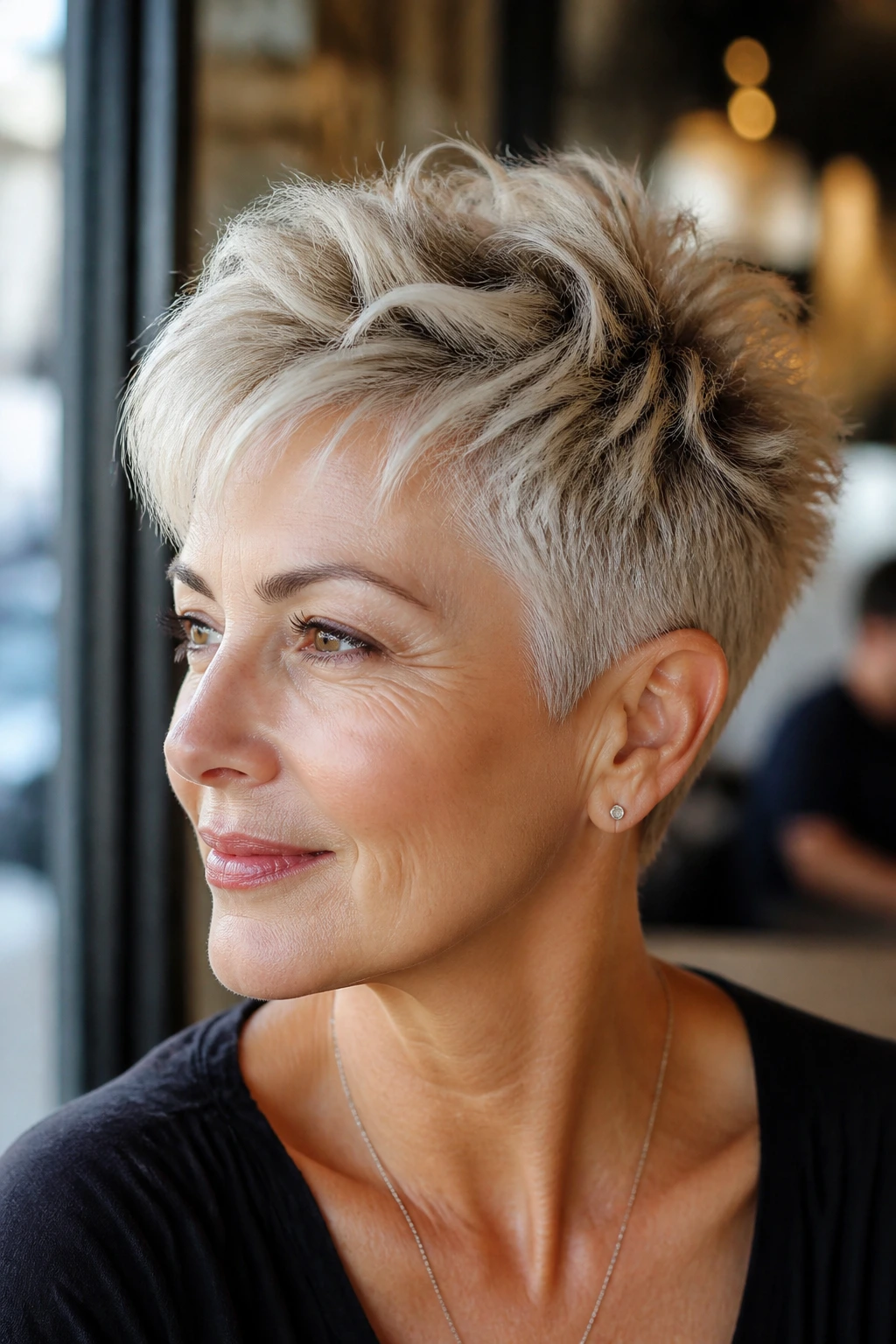
Can a short haircut still feel light and flattering? Absolutely, if the feathering stays at the top and the sides are kept under control. A feathered crop gives fine hair movement where it needs it most — near the crown and fringe — without removing so much weight that the cut turns wispy.
This style works especially well for women who like their neck exposed and their mornings short. The silhouette is compact, but the top can be brushed forward, swept sideways, or tousled with fingers and a little paste. It’s a practical cut, which is not the same thing as a boring one.
The important part is restraint. Too much feathering through the sides makes the head look wider and the hair look thinner. Keep the airiness on top and around the front. That’s where the lift belongs.
If you wear glasses, this cut can be especially good. It keeps the face open and puts the visual interest above the frames instead of fighting them.
8. The Invisible-Layer Shoulder Cut
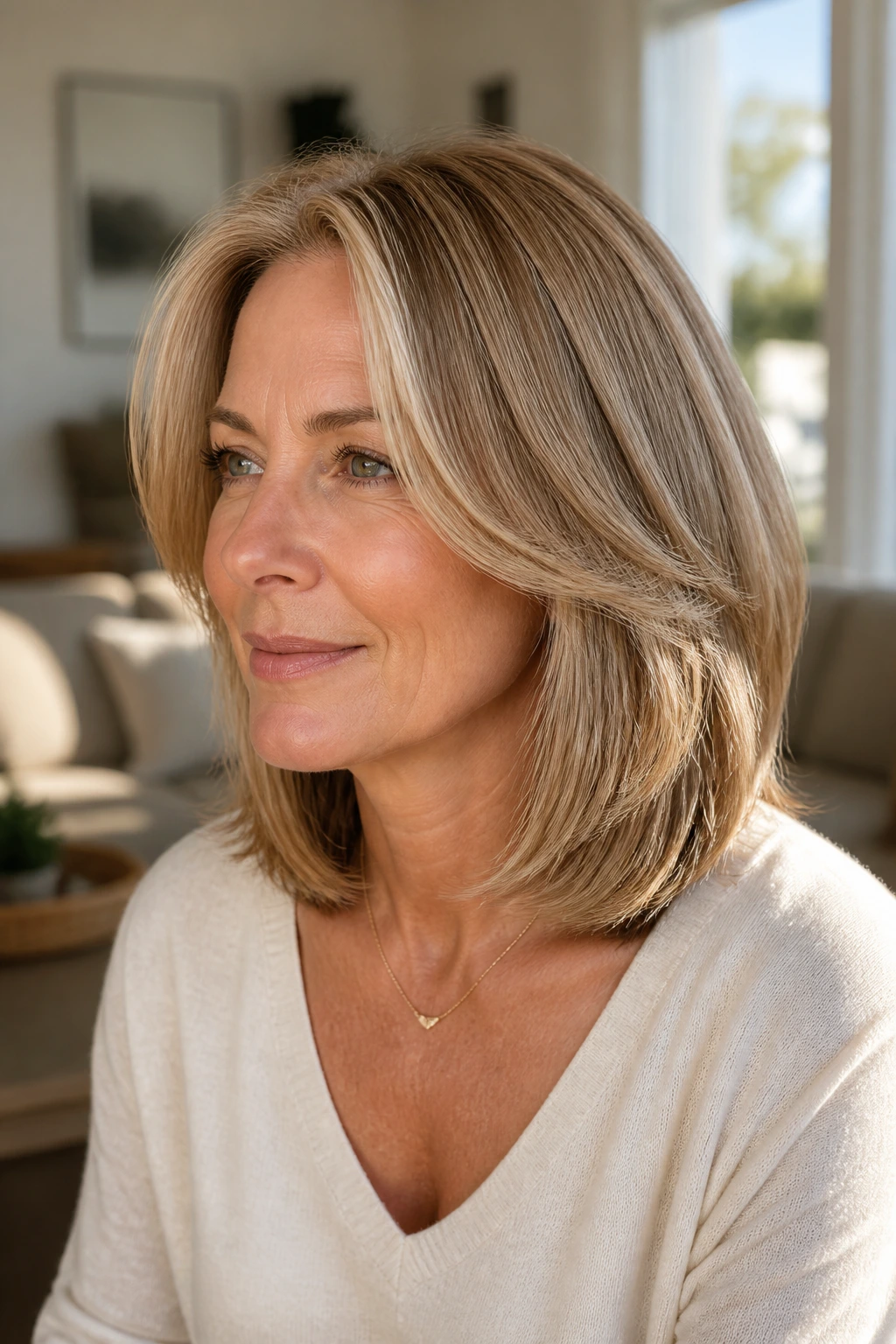
If you want shoulder length but hate the limp, triangle-shaped look that fine hair can fall into, invisible layers are your friend. These are soft internal layers that build movement without announcing themselves every time you turn your head. The outside line still looks full.
That’s the whole point. Fine hair often needs support inside the cut, not just slicing off the perimeter. With invisible layers, the surface stays smooth and the understructure keeps the hair from hanging like a curtain.
This cut is one of the better choices if you air-dry often. A little cream from mid-length to ends, a twist or two, and the layers fall into place without showing off every separate section. You get swing without obvious choppiness.
Leave the ends blunt enough to hold weight. If the layers are too eager, the shoulders start to look sparse. A little movement is nice. A frayed edge is not.
9. The Bixie
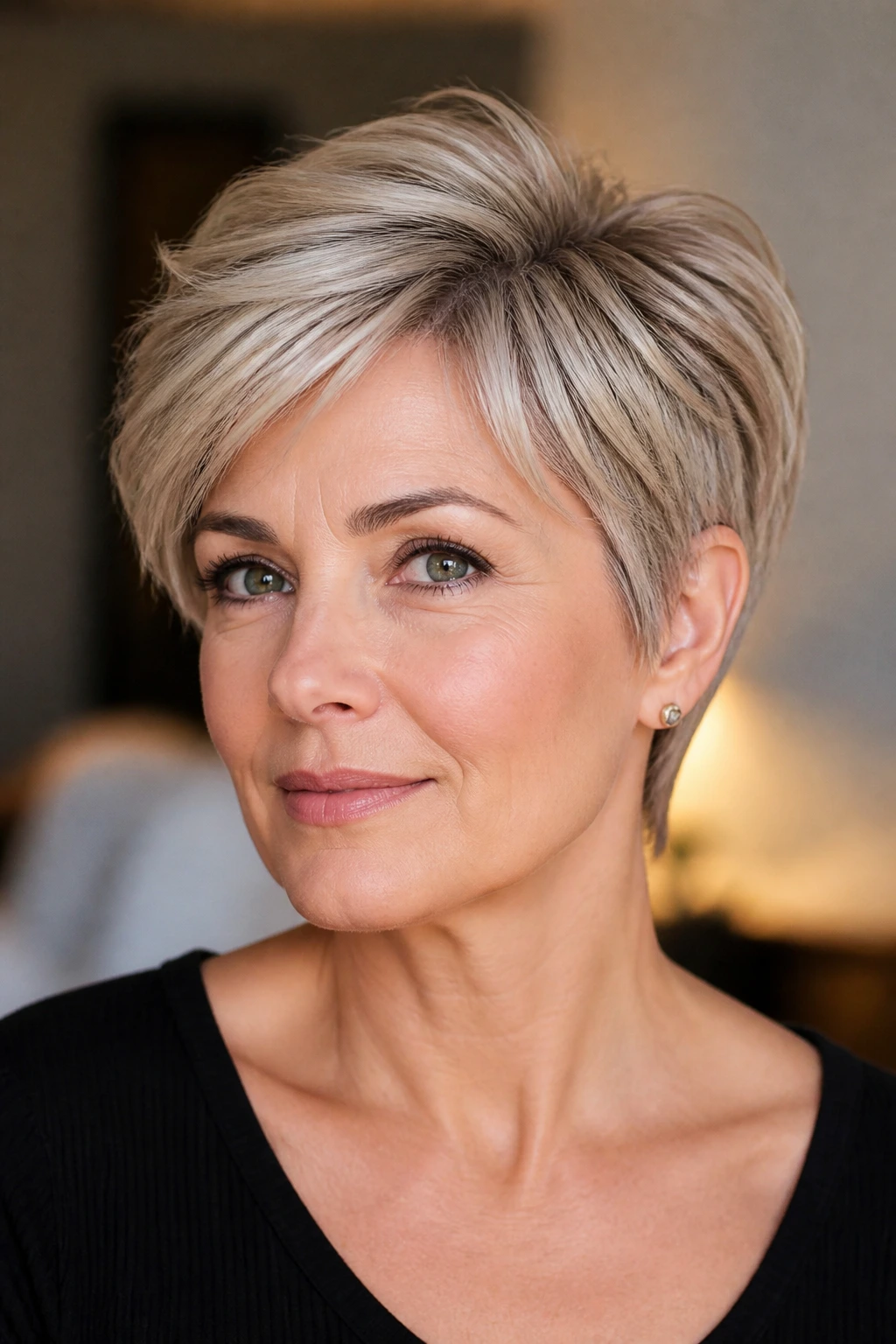
A bixie sits between a bob and a pixie, which is exactly why it can work so well on fine hair. You get the openness of a short cut with enough length around the ears and nape to soften the profile. It’s a smart middle ground for women who are curious about shorter hair but not ready for a full crop.
The best bixies keep the top slightly longer so the crown can be lifted with fingers or a small brush. The sides stay close enough to keep the shape tidy. Fine hair needs that contrast: a little height where you want it, less bulk where you don’t.
This cut also grows out more gracefully than many short styles. That matters. There’s nothing charming about a six-week-old pixie if it loses all structure by week four. The bixie buys you a little breathing room.
Styling note: use a lightweight mousse on damp roots, then rough-dry the top first. The direction of the part decides a lot of the final shape.
10. The Asymmetrical Sweep Bob
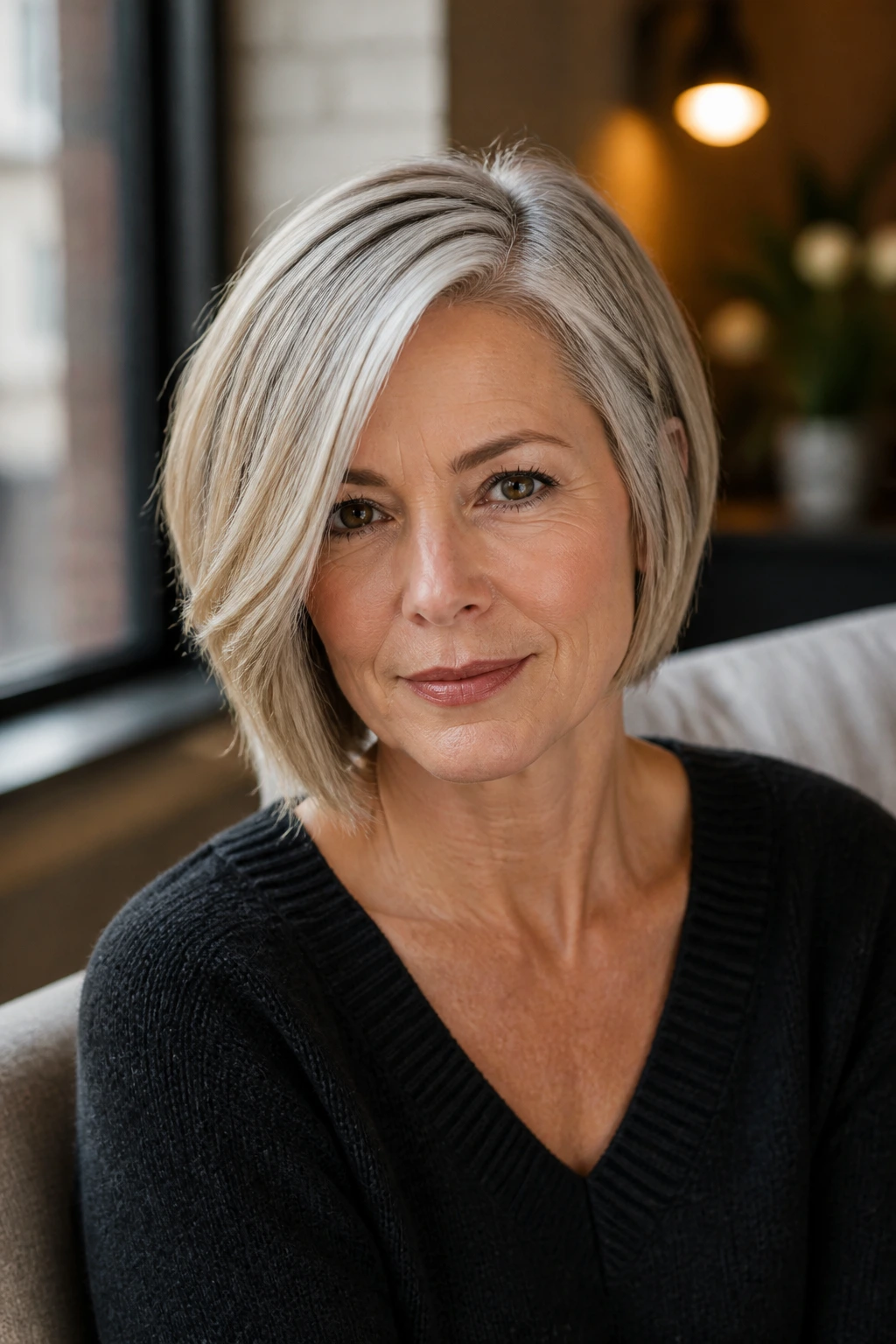
A slightly asymmetrical bob — one side a touch longer than the other — can give fine hair a sense of movement it doesn’t always get on its own. The off-balance line tricks the eye into seeing more body. It also helps if one side of your hair tends to sit flatter than the other.
This isn’t about a dramatic, red-carpet angle. That version can look fussy fast. The better version is subtle: maybe half an inch to an inch longer on one side, with a side part that lets the hair fall naturally into the longer sweep.
For women over 50, the asymmetry can soften a strong jaw or a very square haircut shape. It creates a little motion around the face without relying on heavy layering. Fine hair likes that kind of controlled drama.
If you want this cut to feel modern, keep the ends clean. The sweep does the talking. The rest should stay quiet.
11. The Piecey Micro-Fringe Crop
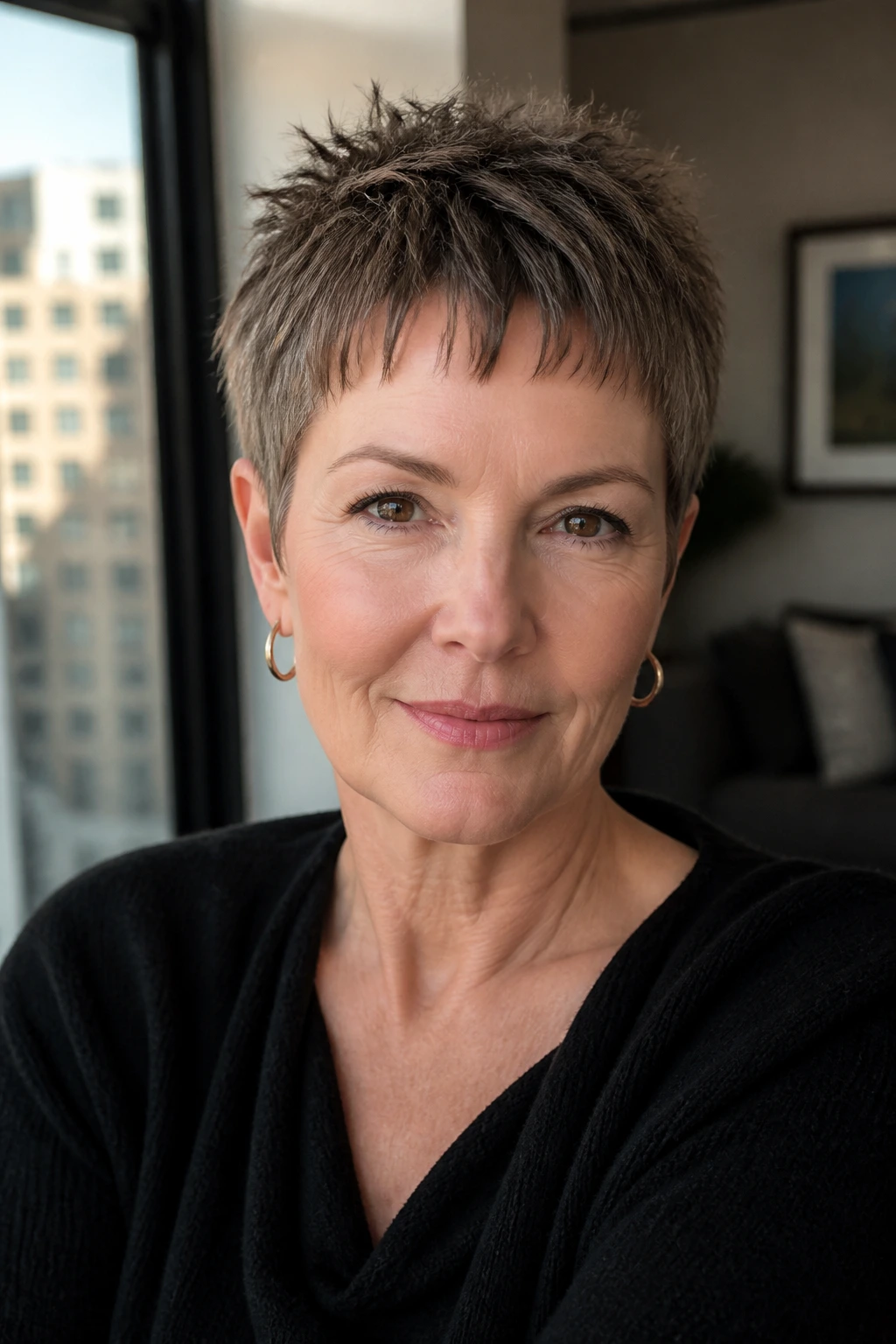
A micro-fringe can be a risk, and I would never call it universally flattering. But on the right woman, with enough density at the front hairline, it brings a sharp, fresh edge to a fine-hair crop. The rest of the cut stays short and piecey so the fringe can stand out.
The trick is balance. The bangs should be light enough to expose some forehead, not so heavy that they crush the face. Fine hair usually does better with a broken, airy fringe than a dense curtain across the whole forehead.
This cut has attitude. It also has a practical side: the shorter length keeps the hair from collapsing, and the fringe can be styled with almost nothing more than a finger-dry and a dab of paste. If your hair grows fast, though, be honest with yourself. Bang trims are not optional here.
It’s a bold shape, but not a difficult one if you like short hair and you want something with a little edge.
12. The Curly Tapered Crop
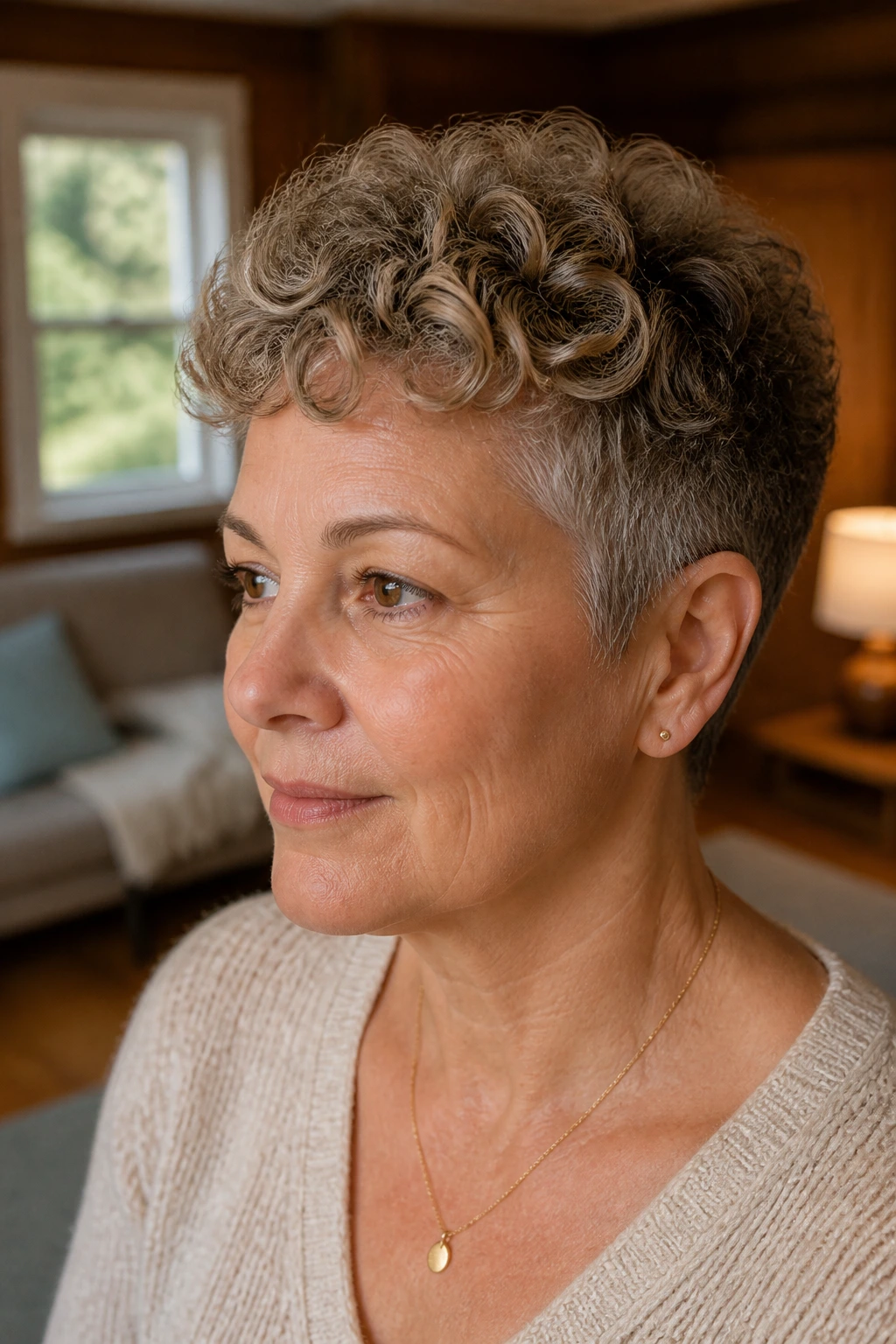
Fine curls and waves need a different strategy than straight fine hair. A tapered crop keeps the sides and nape neat while leaving enough length on top for the curl pattern to show. That way, the style gains shape without turning into a halo of fuzz.
The important bit is not to overcut the ends. Fine curls can spring up more than you expect, and a crop that looks modest when wet can shrink into something far shorter once it dries. Ask for the top to be shaped in a way that respects the curl’s bounce.
Diffuse it gently or air-dry with curl cream and a small amount of gel. Once it’s dry, break the cast if you used one. That gives the hair a softer finish and keeps the curls from clumping too hard.
This cut looks best when it’s allowed a little movement. A rigid curl pattern can feel dated. A soft, tapered outline feels intentional.
13. The Flipped-End Lob
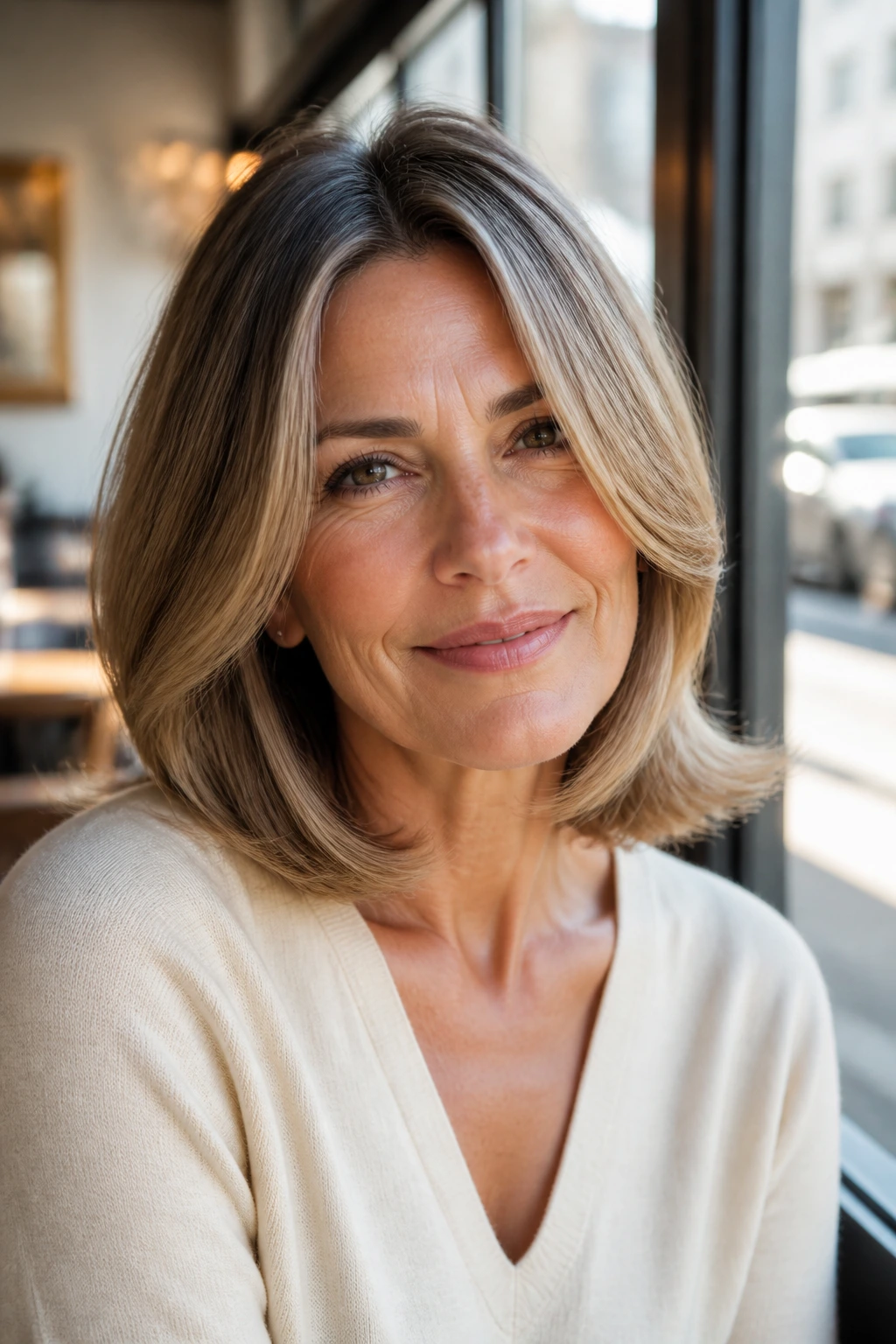
This cut has a bit of retro charm, and I’m fine with that. Flipped ends create the illusion of width at the bottom of the hair, which is useful when fine strands are inclined to lie flat and narrow. The collarbone length keeps the style versatile, while the outward bend gives it some life.
The flip should not be cartoonish. You want a soft outward curve, not a hard 1960s helmet. A round brush or a flat iron with rounded edges can create that bend at the bottom inch or so.
This style is especially nice if you wear simple clothes and want the hair to do a little more visual work. A crisp necklace, a clean neckline, a small flip at the ends — it all reads as tidy without being severe.
If your hair is very straight, a little texturizing spray before the final pass helps the bend hold. Fine hair needs a touch of grip to keep a shape like this from sliding away.
14. The Side-Fringe Long Pixie
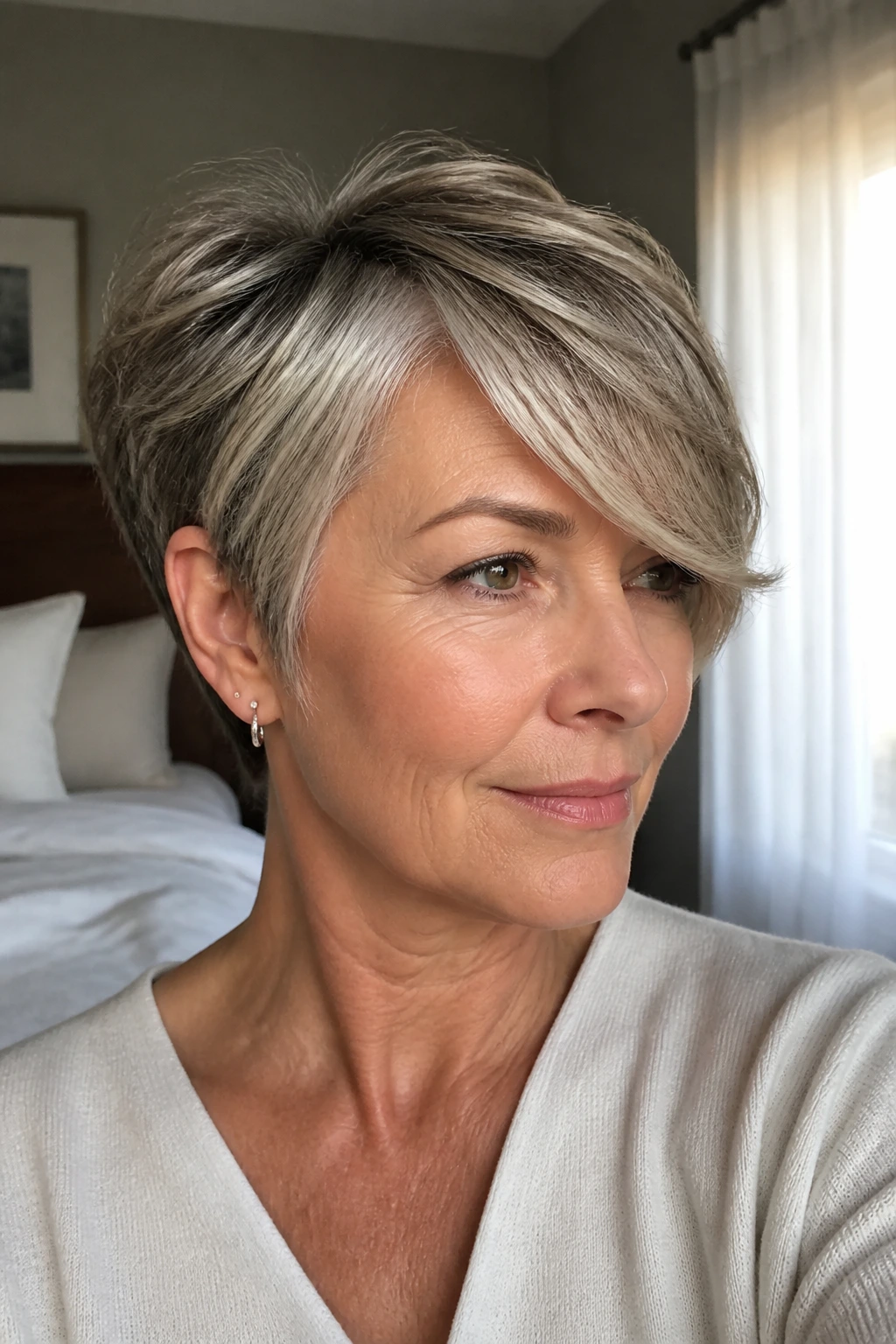
A long pixie with a side fringe is a quiet hero. It gives the neck and ears some breathing room, but the fringe softens the forehead and keeps the cut from feeling too exposed. For fine hair, that front sweep can make all the difference.
The side fringe is better than a heavy straight bang for most women with fine hair because it uses less hair to cover the face. That leaves more of the top free to lift. It also grows out more gently, which matters if you don’t love a strict maintenance schedule.
Keep the sides trimmed close enough that the top doesn’t mushroom. The shape should angle forward and slightly down over one eye or cheekbone. That diagonal line is flattering, and it gives fine hair a little movement without needing much styling.
A small round brush or even just your fingers can set this style. It doesn’t ask for much. That’s part of the charm.
15. The Razor-Lite Midi
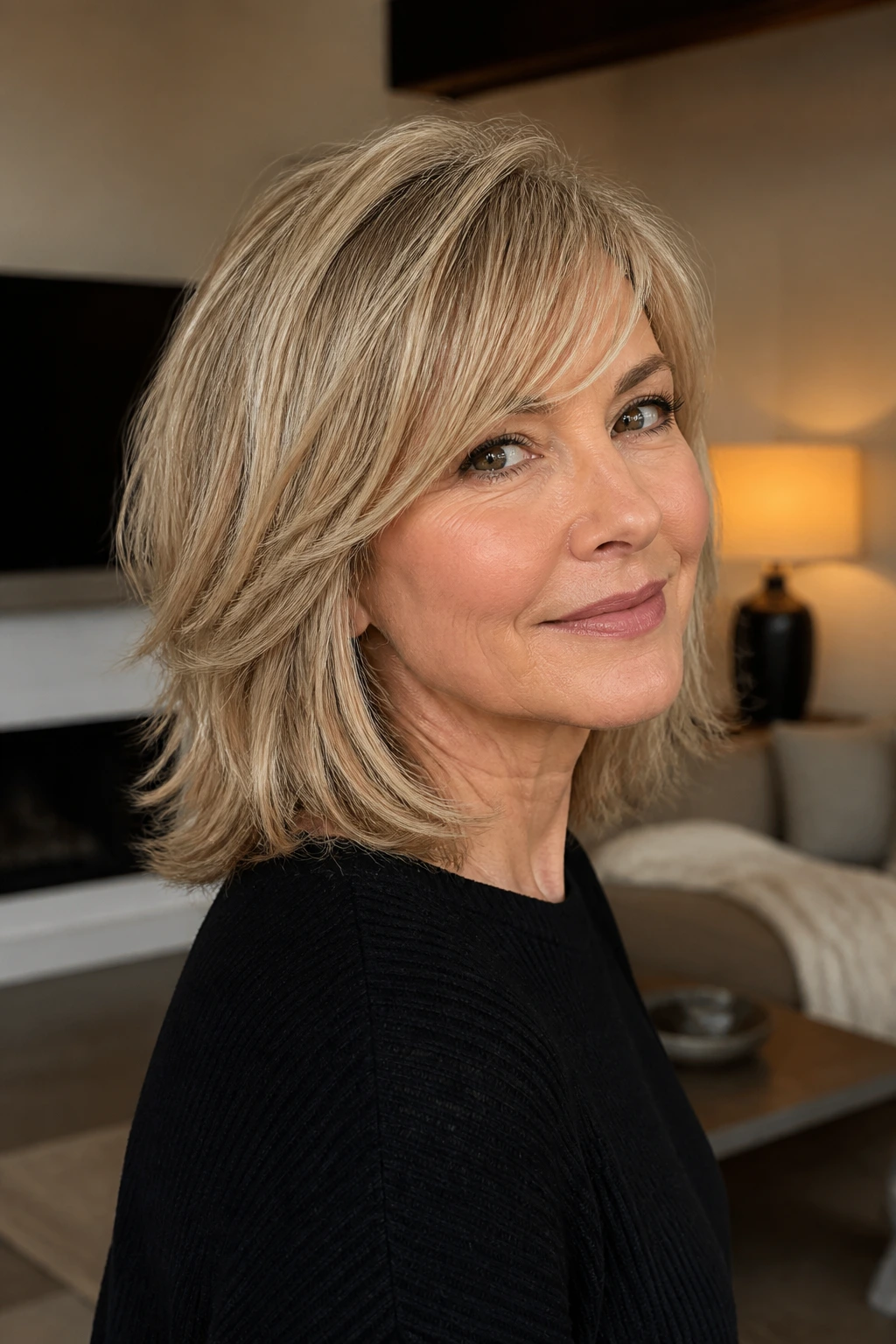
A shoulder-grazing midi cut with lightly razor-softened ends can look lovely on fine hair, but only if the razor work stays under control. Too much slicing and the ends start looking thin in bad light. Keep the softness where it helps movement and the perimeter where it preserves fullness.
This cut is for women who want a bit of swing without going full lob. It sits in that middle territory where the hair can be worn down, half-up, clipped back, or tucked into a scarf. Fine hair benefits from options like that because one shape does not have to do all the work.
The face frame should stay subtle. If the layers are too excited, the bottom loses density fast. A light bend with a blow-dryer brush or a wide-barrel round brush is usually enough to give the cut shape.
If your hair has a natural wave, this length can be especially forgiving. It lets the pattern show without swallowing the face.
16. The Graduated Bob
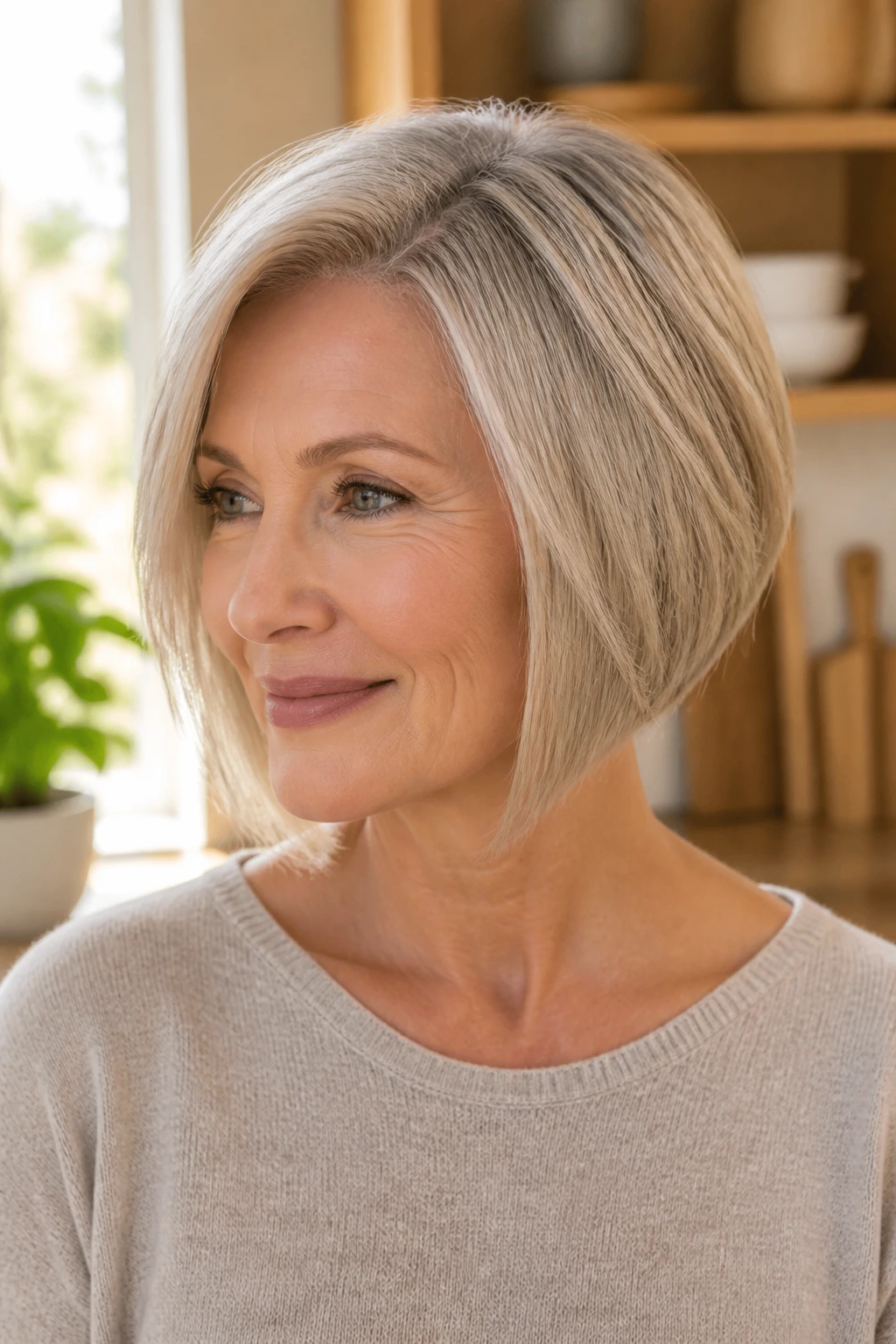
A graduated bob — shorter in the back, longer toward the front — is one of the cleanest ways to build lift into fine hair. The stacked shape at the nape creates support, and the front length keeps the cut from feeling too severe. The silhouette reads fuller because the cut is doing the scaffolding.
This style is a good choice when your hair collapses at the crown or the back of the head sits flat no matter what you do. The graduation gives the shape some backbone. That means less daily fighting with the brush.
The key is moderation. If the back is stacked too aggressively, the cut can look dated or bulky. If it’s too soft, you lose the lift that makes the style worth wearing. There’s a narrow sweet spot here, and a good stylist will know where it lives.
It also pairs well with a side part. The part adds height, the graduation adds structure, and together they can make fine hair look more deliberate.
17. The Deep-Side-Crown Lift Cut
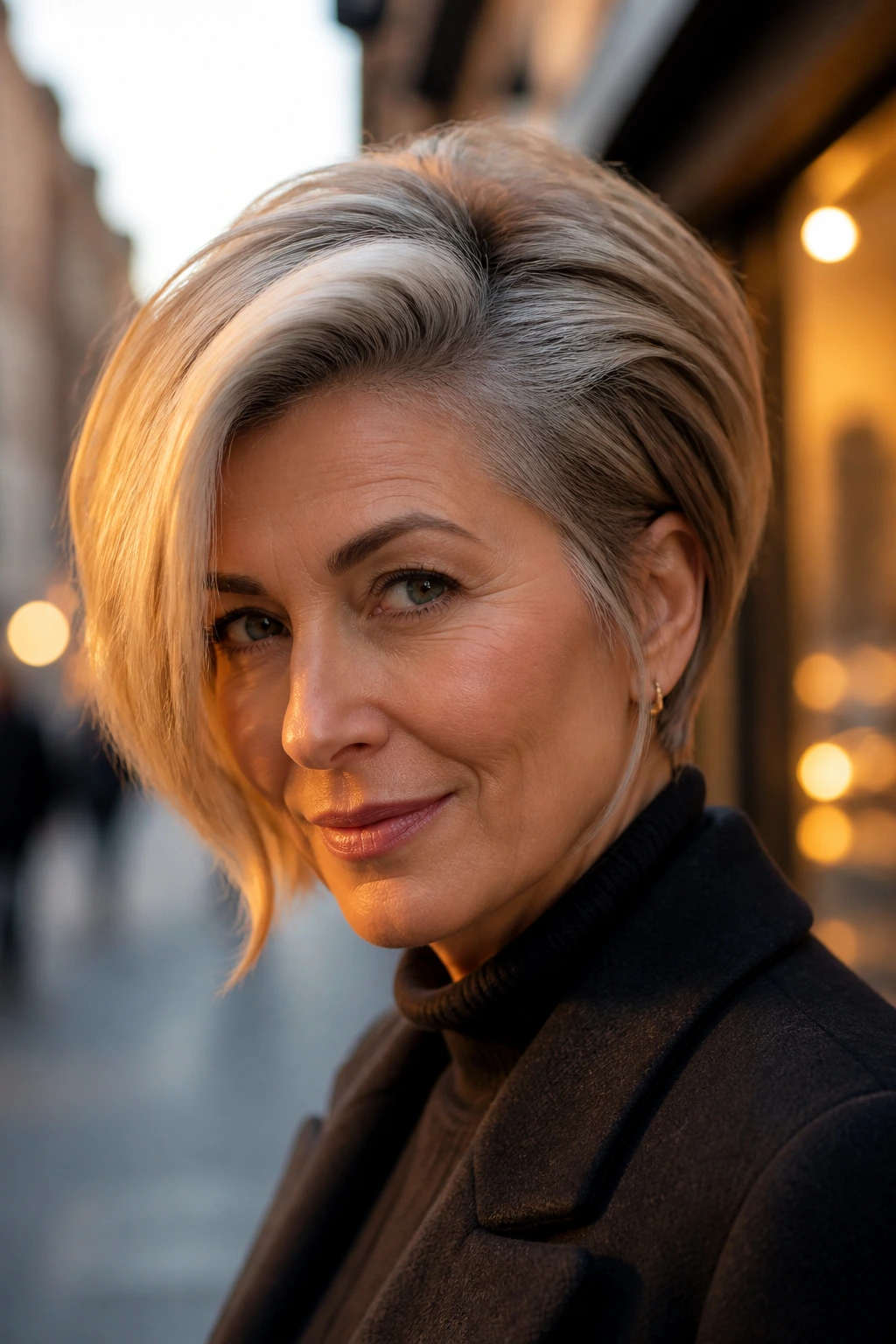
This one is less about a single shape and more about the way the cut is designed to be worn. A deep side part with crown layers can turn ordinary fine hair into something that looks fuller at the roots. The side part shifts the weight; the layers encourage the top to rise instead of lying flat.
The best version usually starts with a bob or a lob that has light internal shaping. Then the crown is cut or styled so it can be lifted in one direction. It’s a small trick, but it changes the whole silhouette.
This cut is useful if one side of your hairline is stronger than the other, or if your crown has always been a little stubborn. Fine hair likes a bit of asymmetry because it creates the illusion of density where you need it most.
Use a root-lift spray and blow-dry in the opposite direction first. Then flip it back. That old move still works, and it works fast.
18. The Gray-Blend Soft Layer Cut
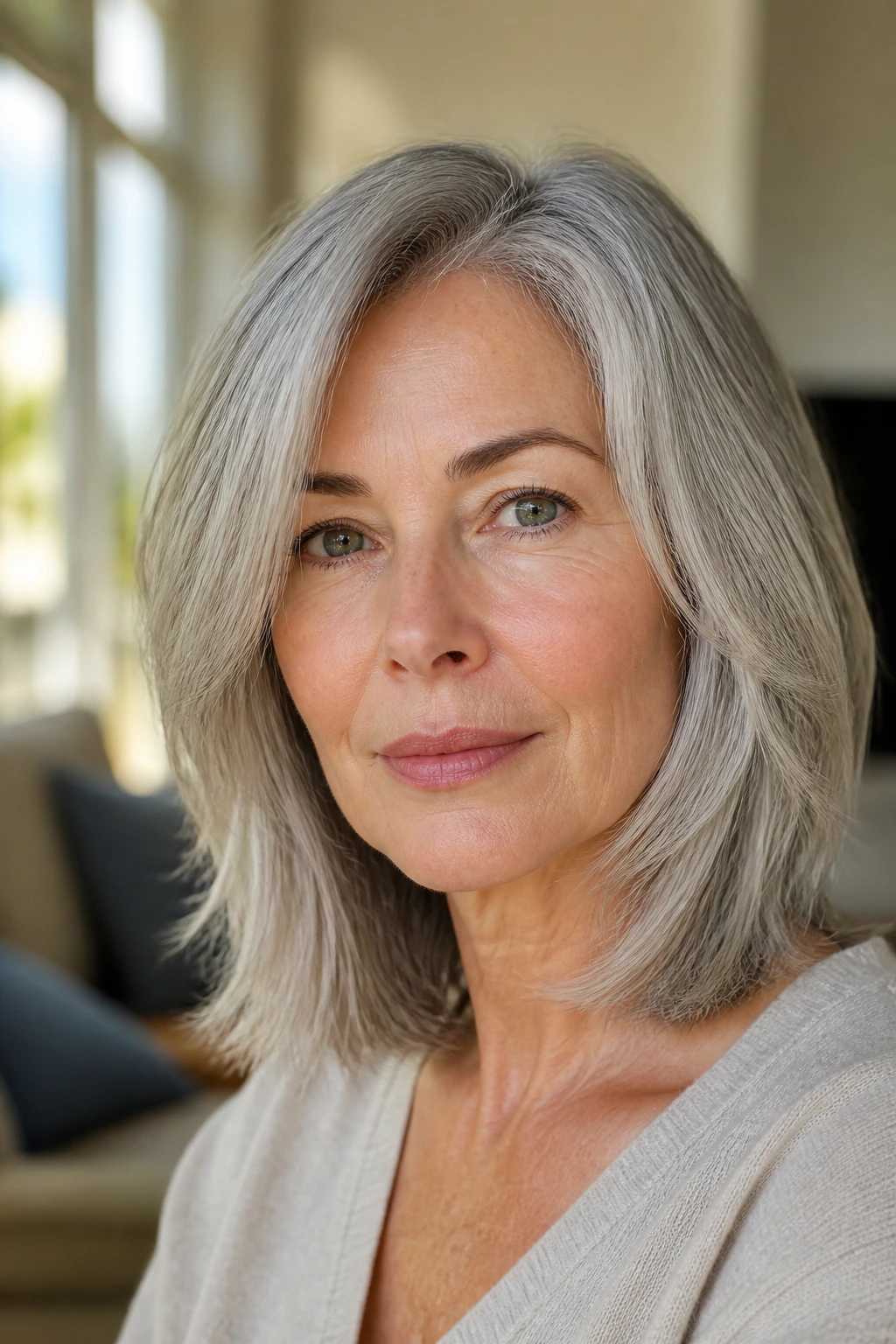
Gray hair often gets treated as if the color alone needs all the attention. The cut matters just as much. Fine gray hair can look chic when the layers are soft, the perimeter stays visible, and the face frame is gentle rather than chopped up.
This cut is not about hiding anything. It’s about letting the silver strands reflect light while giving them a shape that doesn’t break apart at the ends. A shoulder-length or lob-length cut with soft internal layers is usually enough to do that.
Gray hair can feel drier, so avoid over-texturizing. Too much roughness makes the ends look frayed, which fine gray hair does not need. Instead, keep the cut polished and let the texture come from subtle movement, not from aggressive thinning.
A gloss or shine spray can help, but lightly. The goal is to show off the strands you have, not coat them into submission.
19. The Shag-Bob Hybrid
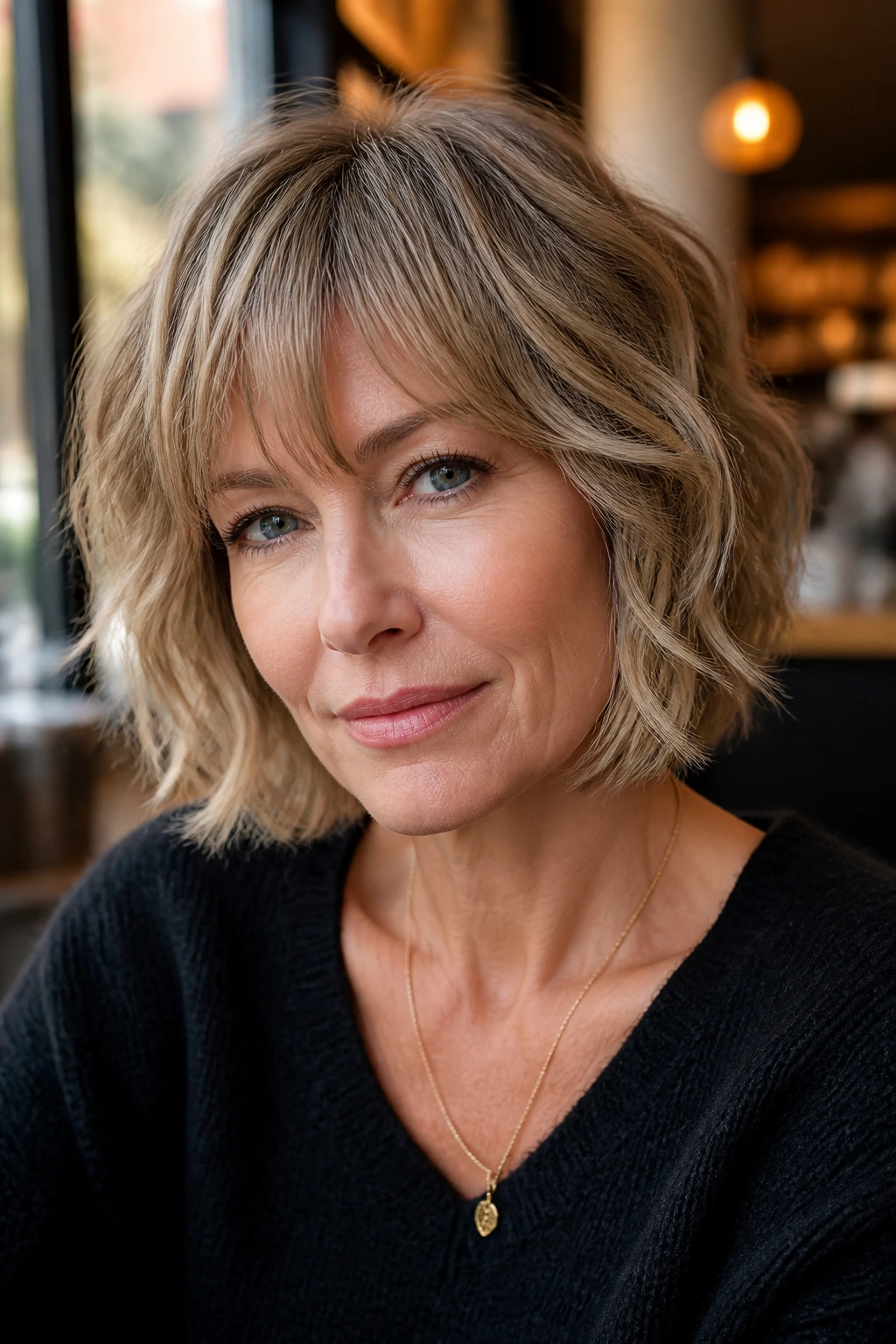
This is the cut for women who like the shape of a bob but want more motion than a blunt line alone can give. The shag-bob hybrid keeps the perimeter fairly solid, then adds soft layers around the crown and cheekbones. For fine hair, that balance is everything.
Too much shag and the hair can look sparse. Too much bob and it can feel stiff. This middle path gives you a bit of edge without leaving the ends empty. It’s especially useful if your hair has a slight bend or if you like to scrunch it a little after drying.
The fringe, if you wear one, should stay loose and movable. Curtain bangs work well here. Straight, heavy bangs can drag the style down. The best versions of this cut have a little swing and a little grit.
Best for: women who want a cut that still looks good when it’s not freshly blown out.
20. The Wavy Collarbone Sweep
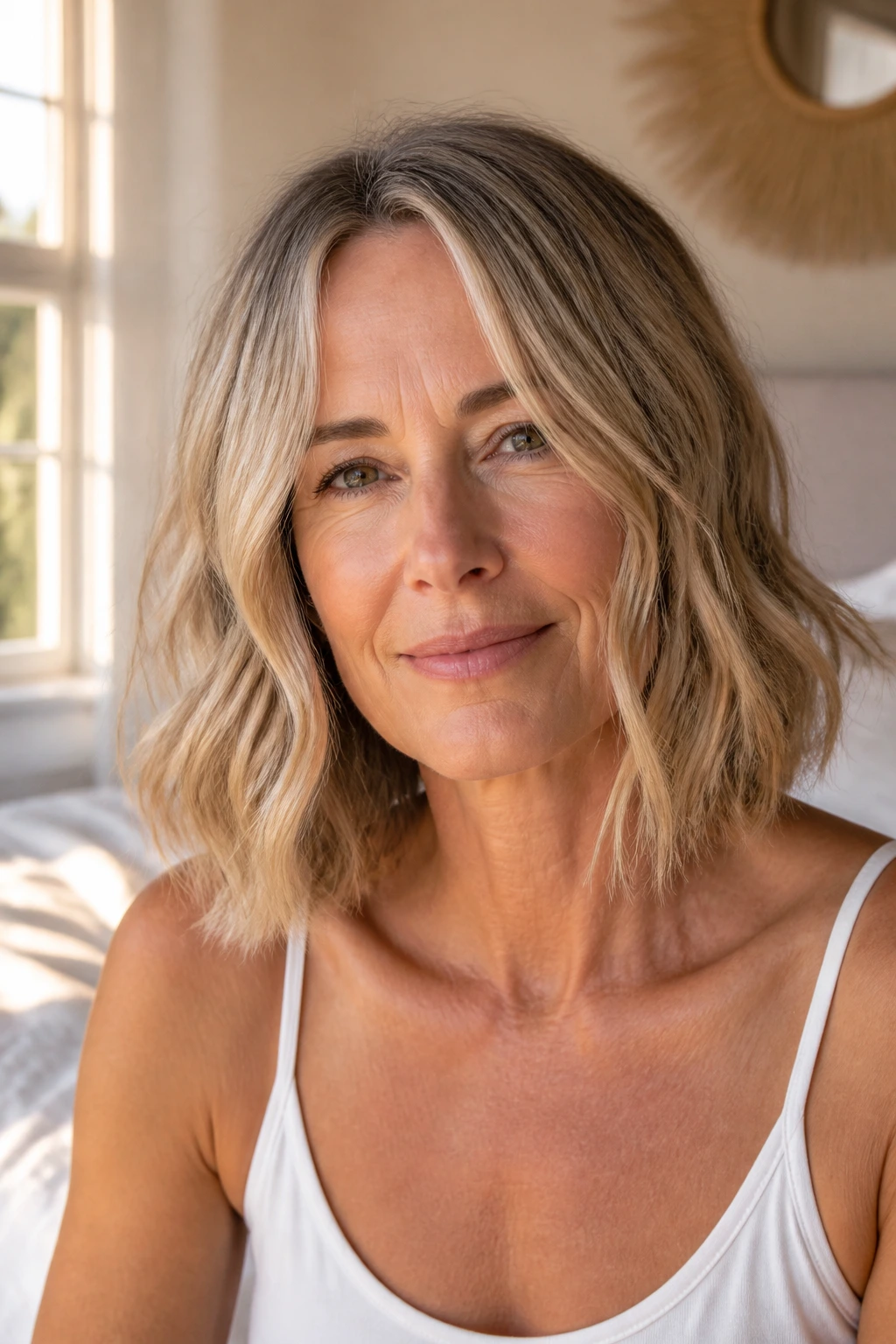
A collarbone cut with natural waves is one of the easiest styles to live with when your hair is fine and you don’t want a lot of styling drama. The length keeps enough weight for the waves to fall in shape, and the collarbone gives the hair a clean stopping point.
The important thing is not to overload the cut with layers. Waves already create movement. Too many snips and the ends start to fray. Keep the shape mostly intact and let the wave pattern do the decoration.
This style is especially good with a middle or slightly off-center part. It feels soft around the face and doesn’t fight the hair’s natural bend. A little sea-salt spray or lightweight mousse can help, but if your hair is dry, use more mousse than salt. Salt can rough up fine strands fast.
Air-dried, it looks relaxed. Blow-dried, it looks tidy. That flexibility is what makes it worth considering.
21. The Soft Pageboy Bob
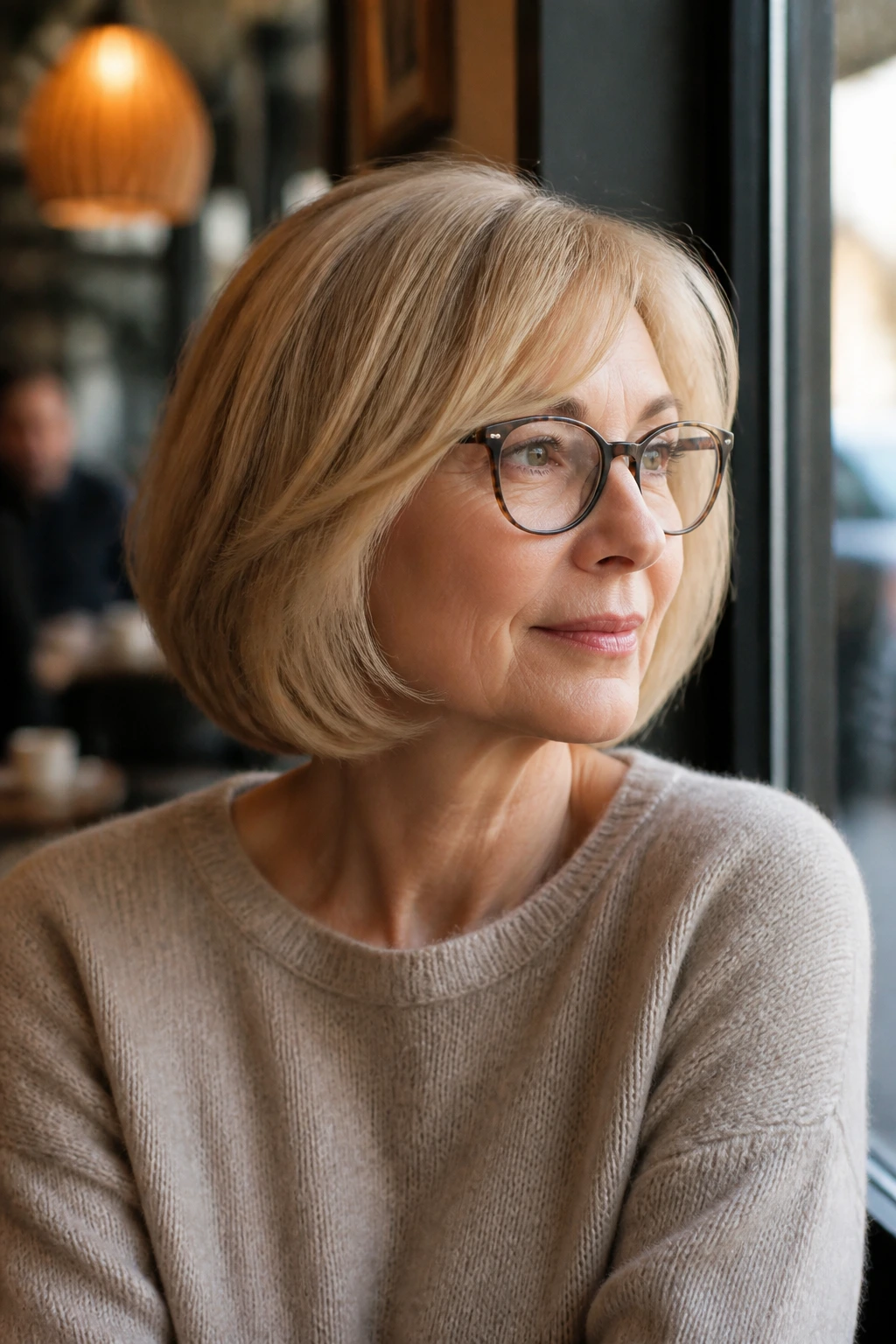
A pageboy-inspired bob is more modern than the old-school version sounds, especially when it’s kept soft and lightly rounded under the chin or just above the shoulders. Fine hair benefits from the curved outline because the shape itself creates the look of fullness.
This cut is useful if you want something polished and slightly retro without going rigid. The ends are turned under, the line stays clean, and the crown can be lifted just enough to avoid a helmet effect. No one wants helmet effect.
It works well on straight hair and on hair that only needs a little smoothing. If you wear glasses, this shape can be especially nice because it keeps the whole look compact and balanced. The frame of the glasses and the frame of the cut sit together neatly.
A round brush and a quick under-bend at the ends are usually enough. That’s the charm: the cut does the heavy lifting.
22. The Nape-Length Layered Crop
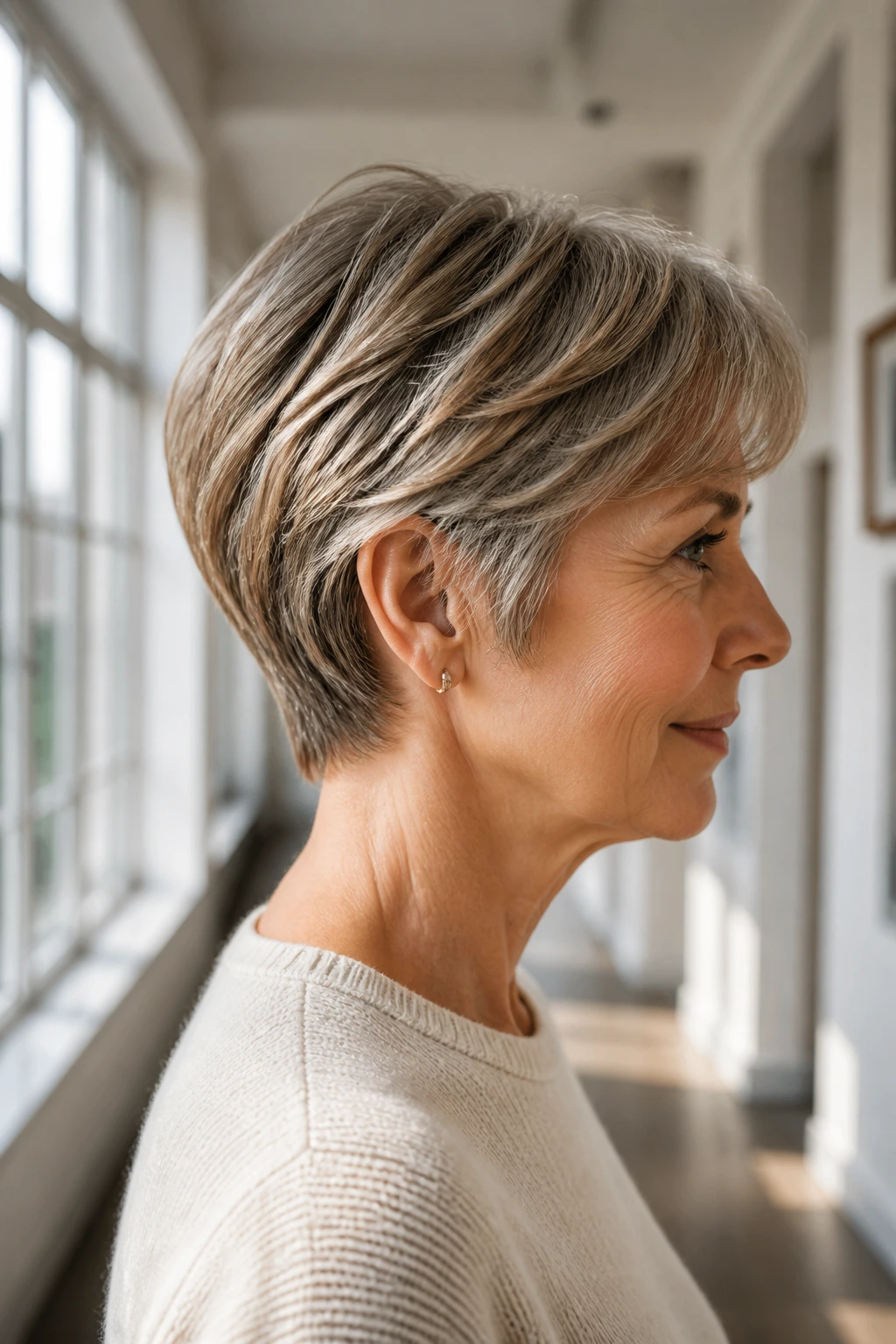
A crop that keeps a little length at the nape while layering the top and sides can be a good compromise for women who want short hair without going severe. The nape stays tidy, the top keeps some lift, and the layers allow the hair to move instead of sitting like a flat cap.
Fine hair does well with this shape when the layers are controlled. The crop should feel airy, not shredded. The outline at the back is what keeps it from looking too wispy, so don’t let that disappear.
This is a smart choice if you’re active, if you wear a lot of collars and scarves, or if you just don’t want hair brushing your neck all day. It is practical in a way that still feels feminine.
The styling routine is short. A little root lift, a quick finger dry, maybe a bit of paste at the ends. That’s enough.
Why Fine Hair After 50 Needs a Different Kind of Cut
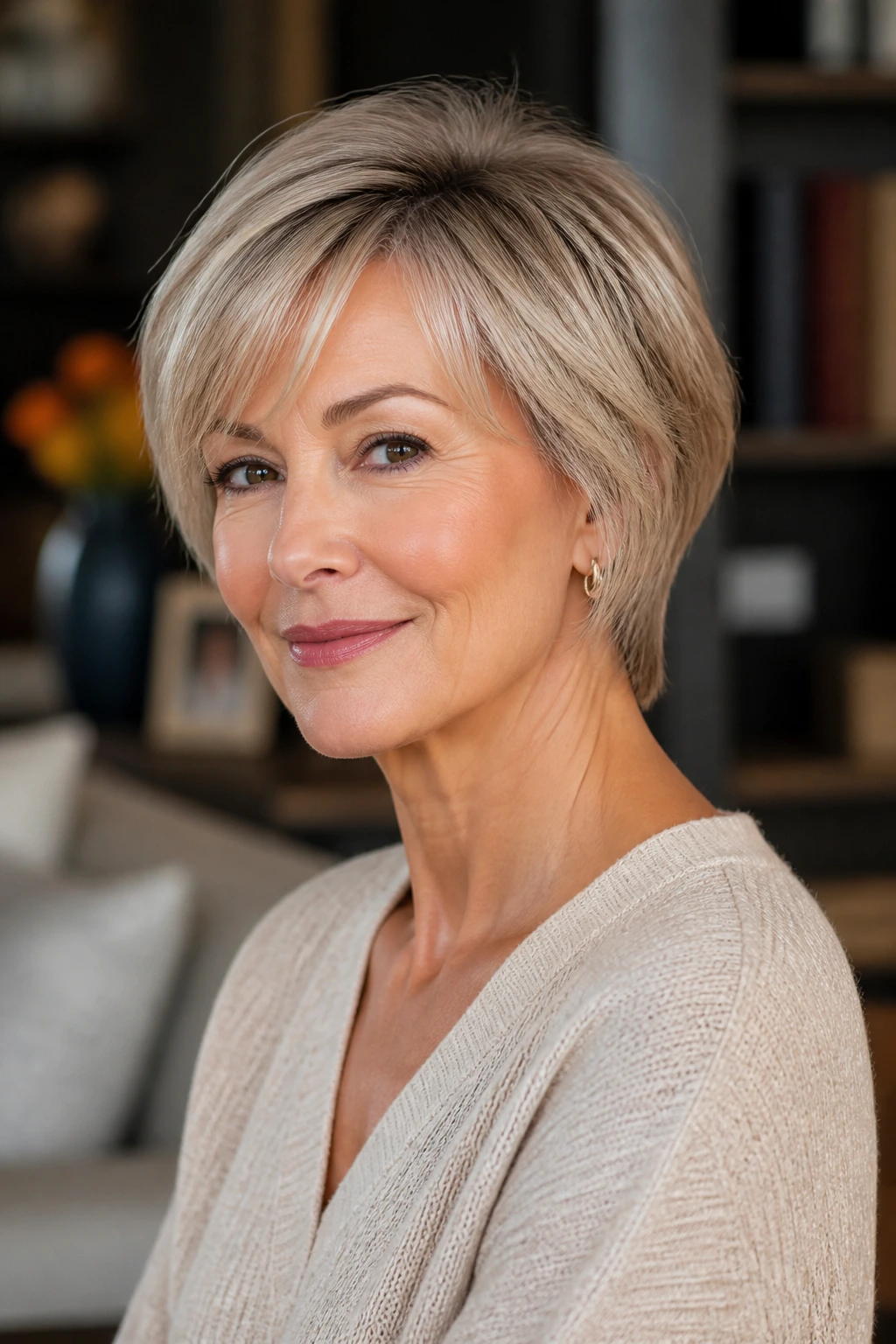
Fine hair and thin hair are not the same thing, and that confusion causes a lot of bad haircut decisions. Fine hair refers to strand diameter. Thin hair refers to density, or how many hairs are on the head. You can have fine hair that’s very full, and you can have coarse hair that’s sparse. The haircut should respond to both.
Over 50, the crown often needs more help than people expect. Temple areas can soften, the part may widen, and the ends can look thinner simply because the hair has been worn and handled for years. A cut that ignores those changes usually ends up fighting gravity instead of working with it.
The best hairstyles for women over 50 with fine hair usually do three things well: they keep a visible perimeter, they build lift where the head is naturally flatter, and they avoid stripping out too much weight. That last one matters. Fine hair can look fabulous with movement, but it usually looks worse when it’s over-thinned. Choppy does not automatically mean fuller.
A blunt line, a soft stack, or a controlled layer can all do the job. What fails is random texture with no shape underneath. Hair needs a reason to sit where it sits.
Essential Tools for These Styles
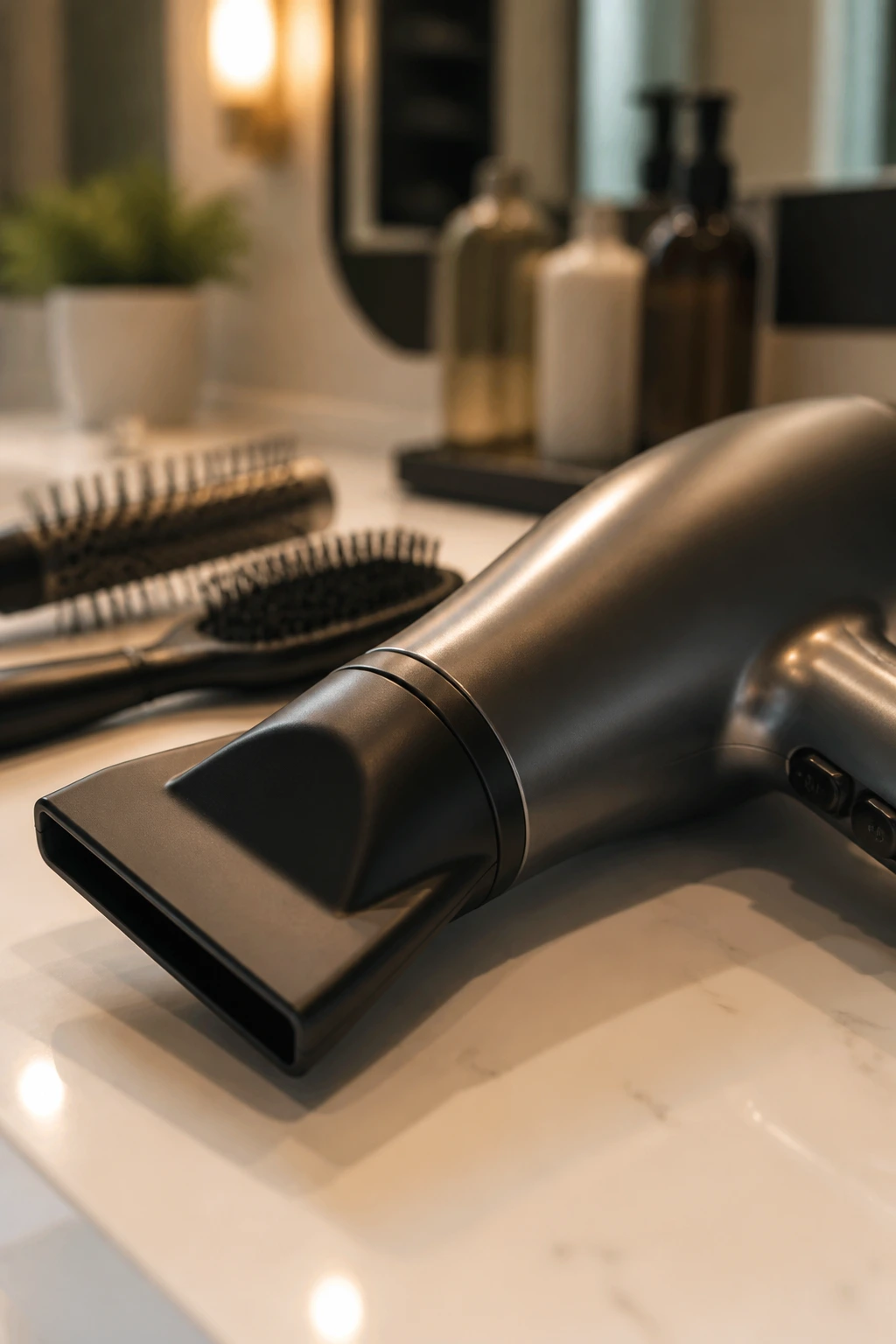
- Blow-dryer with a concentrator nozzle: Directs airflow to the roots so you can build lift instead of blasting the hair everywhere.
- 1-inch or 1.25-inch round brush: Best for bob, lob, and fringe shaping; larger brushes can be too big for fine hair.
- Vent brush: Useful for rough-drying fast without flattening the crown.
- Sectioning clips: Keep the top, sides, and back separate so you can build shape in layers.
- Lightweight mousse or foam: Gives fine hair memory and support without the sticky feel of heavy gels.
- Root-lift spray: Helps the crown stay up for a few hours longer, which is often the difference between “finished” and “flat.”
- Heat protectant spray: Non-negotiable if you use a dryer, brush, or iron more than once a week.
- Texturizing spray: Good for piecey crops, bixies, and layered bobs when you need a little grit.
- Dry shampoo: Useful on day two and day three, not just as a rescue plan.
- Fine-tooth tail comb: Handy for clean parts, crown lift, and sectioning the fringe.
Smart Product Picks for Lightweight Volume
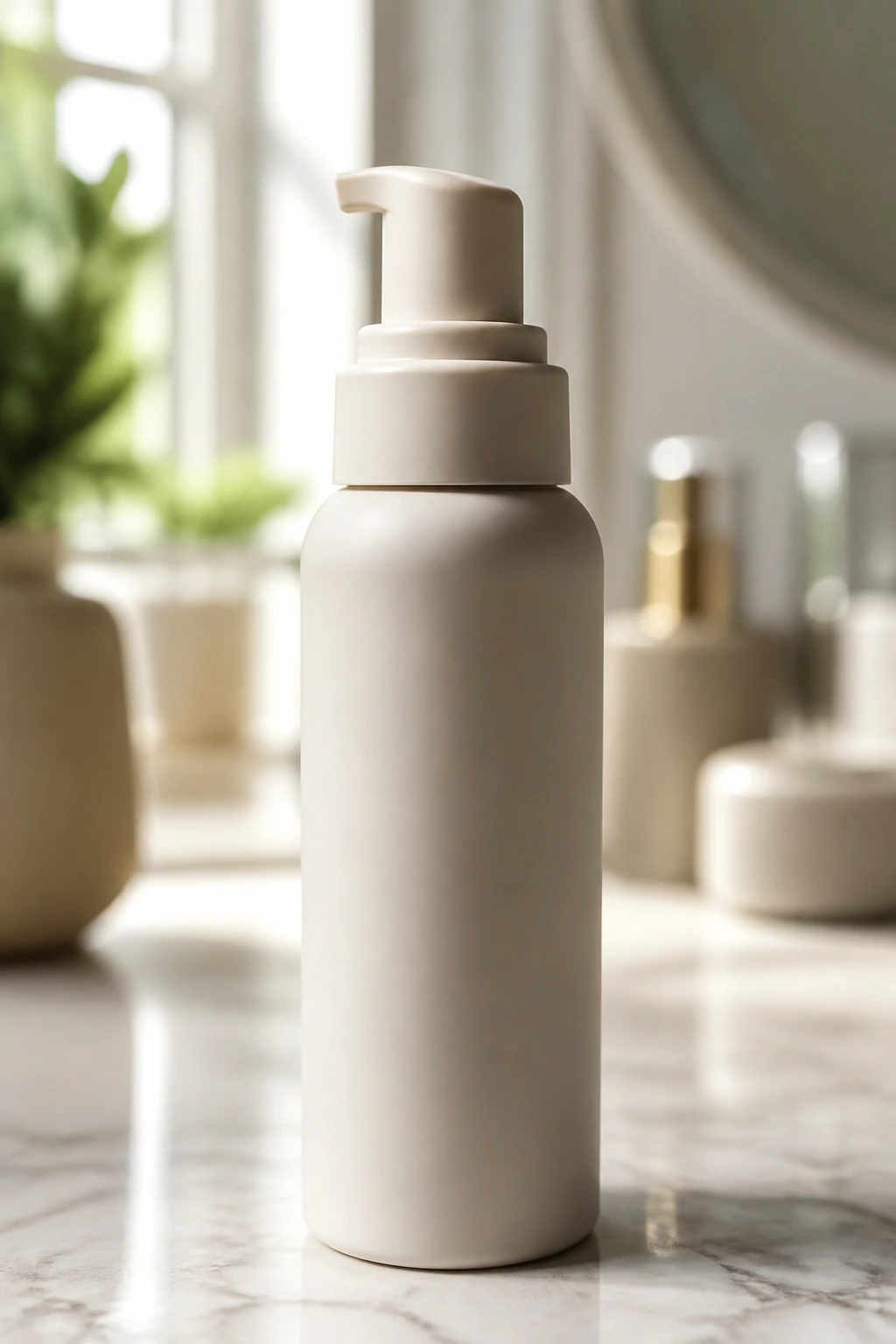
Shampoo: Choose a lightweight cleansing shampoo if your scalp gets oily fast, or a mild volumizing formula if you wash every few days. Heavy smoothing shampoos can leave a film that makes fine hair lie down by lunchtime.
Conditioner: Use less than you think. Put it from the ears down and keep it off the roots unless the ends are truly dry. Fine hair likes slip, not slop.
Styling base: Mousse is usually the best friend here. It gives a little shape to the root without making the hair feel coated. If your hair is very dry, a small amount of leave-in cream on the ends can help, but don’t drag it through the whole head.
Finish: A light-hold hairspray or texturizing mist usually works better than a sticky, hard shell of spray. Fine hair needs support, not armor.
Gray hair note: If your hair is silver or white and it yellows easily, a purple shampoo every week or two can help. Keep it short on the hair, though. Too much and it can feel rough.
How to Ask Your Stylist for the Right Shape
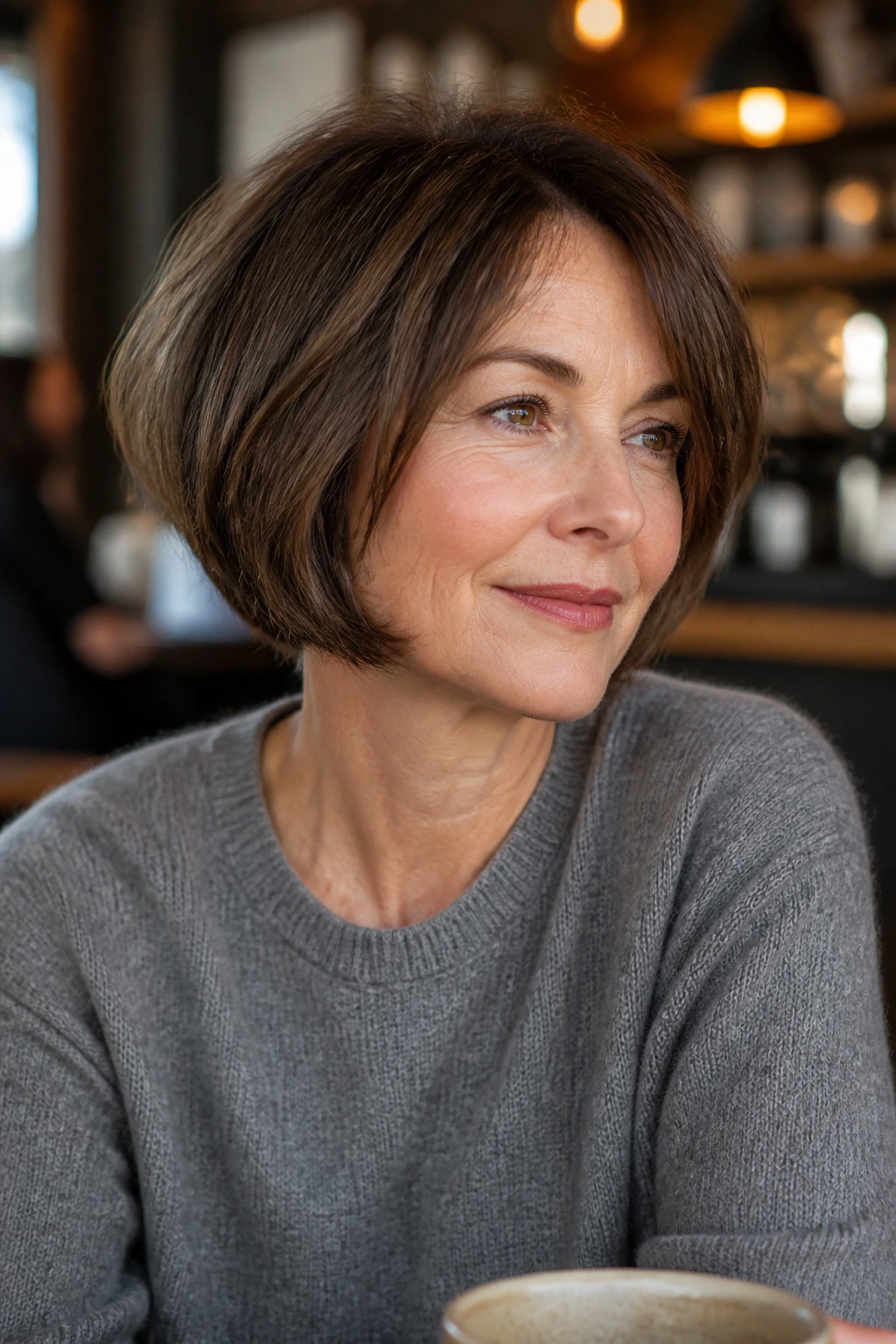
Bring photos, but bring the right photos. The front of a haircut can lie. The side and back show you where the weight sits, and fine hair is all about weight placement.
Use plain language. Say things like “I want the ends to keep some thickness,” or “Please don’t thin the top so much that it goes see-through.” That is better than asking for “lots of layers,” because that phrase means different things to different stylists, and fine hair pays the price when the meaning gets fuzzy.
Tell them how you style your hair at home. If you air-dry, that matters. If you never use a round brush, that matters too. A beautiful cut that only works after a 30-minute blowout is not a useful cut.
Mention cowlicks, a widening part, temple softness, or any spot where the hair behaves strangely. Those details are not annoying. They are the map.
How to Wear These Styles on Real Mornings
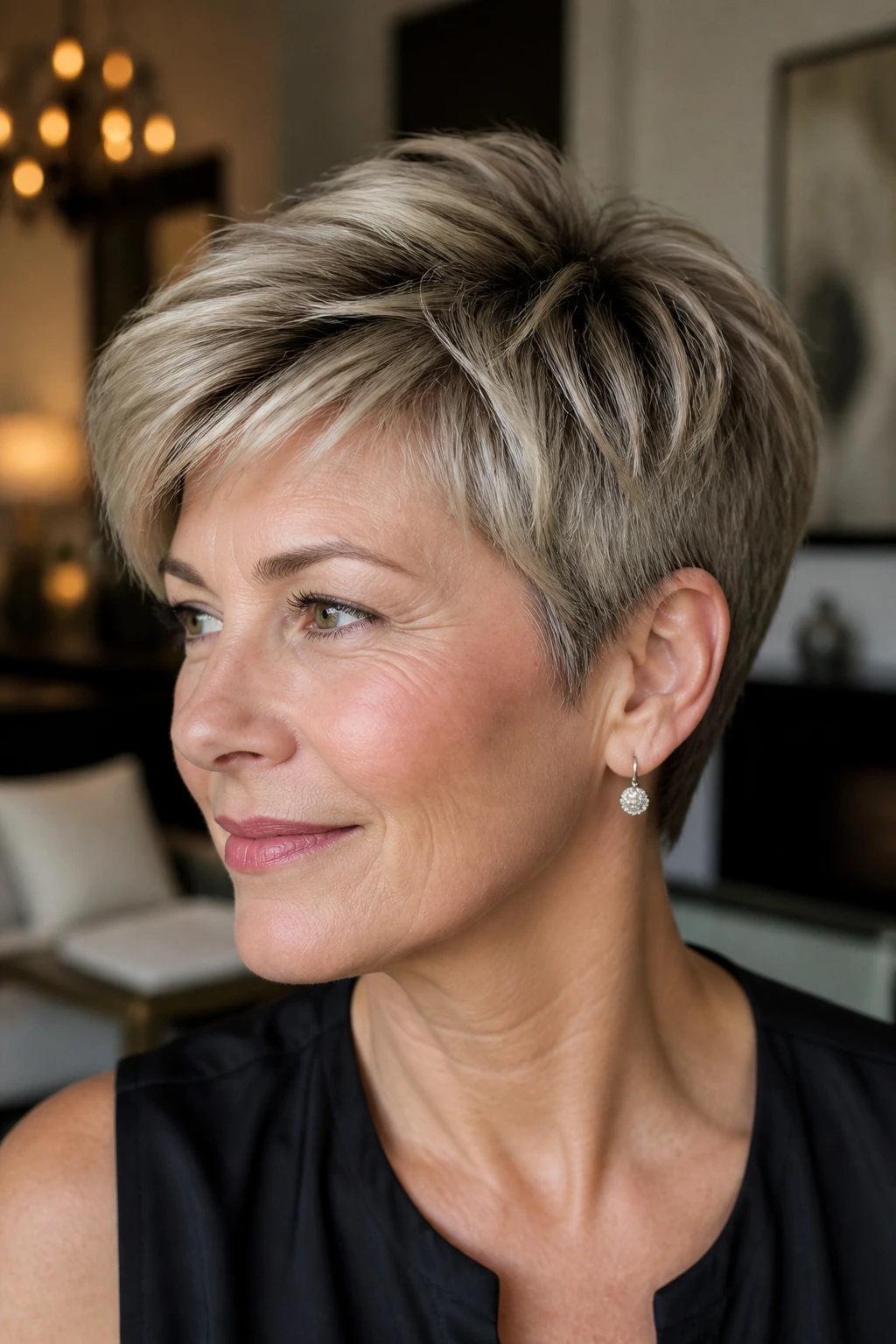
Parting: A deep side part can create instant lift, but don’t force it if your hair wants to sit elsewhere. Sometimes a soft off-center part gives more height with less effort.
Drying: Rough-dry the roots first, then shape the top and front. If you try to smooth the whole head from wet to dry in one pass, fine hair often ends up too soft and too flat.
Second-day hair: A little dry shampoo at the crown, then a quick bend through the front pieces, can revive most of these cuts. Don’t drown the hair in product. That’s how it gets dull and heavy.
Accessories: Small clips, slim headbands, and a tucked-behind-the-ear finish all work well. Bulky accessories can squash the crown and flatten the very areas you’re trying to lift.
Additional Tips and Volume Boosters
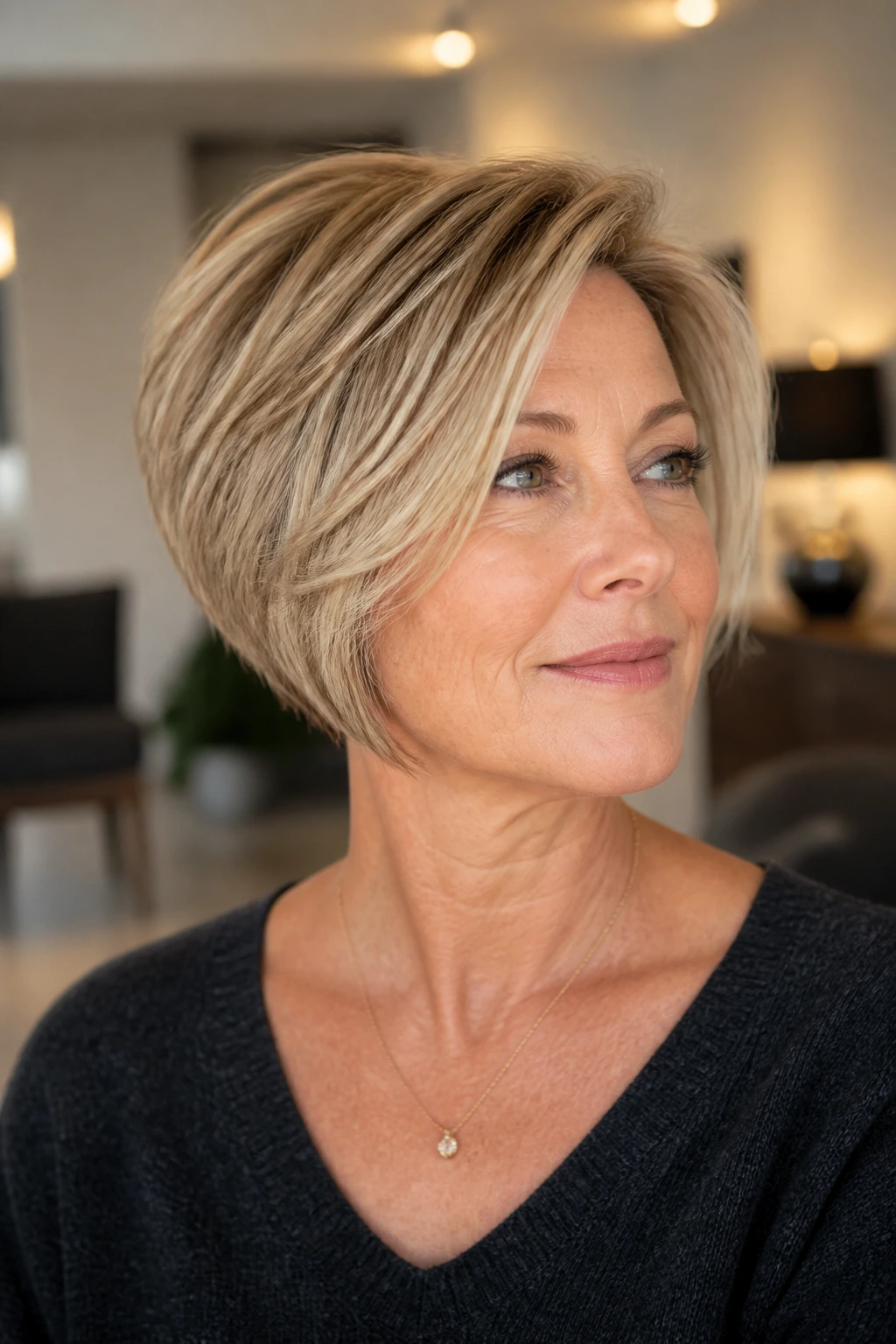
Root Lift: Apply mousse at the roots on damp hair, then clip the crown up in two or four sections for 5 to 10 minutes while you do something else. That little pause helps the root set in a lifted position.
Texture at the Ends: Use texture spray or a tiny bit of paste only on the last inch or two. Fine hair tends to look better when the roots are light and the ends are controlled.
Color and Depth: A few subtle highlights or lowlights can make fine hair look denser because they create shadow and dimension. Keep the placement soft around the crown and front, where the eye lands first.
Face-Opening Finish: One tucked side, one loose side, or a small bend around the cheekbone can make the whole cut feel more intentional. It doesn’t take much.
Sleep Prep: A satin pillowcase cuts down on friction. That matters more than people think, especially if your hair is fine and prone to morning flatness.
How to Keep the Shape Between Salon Visits
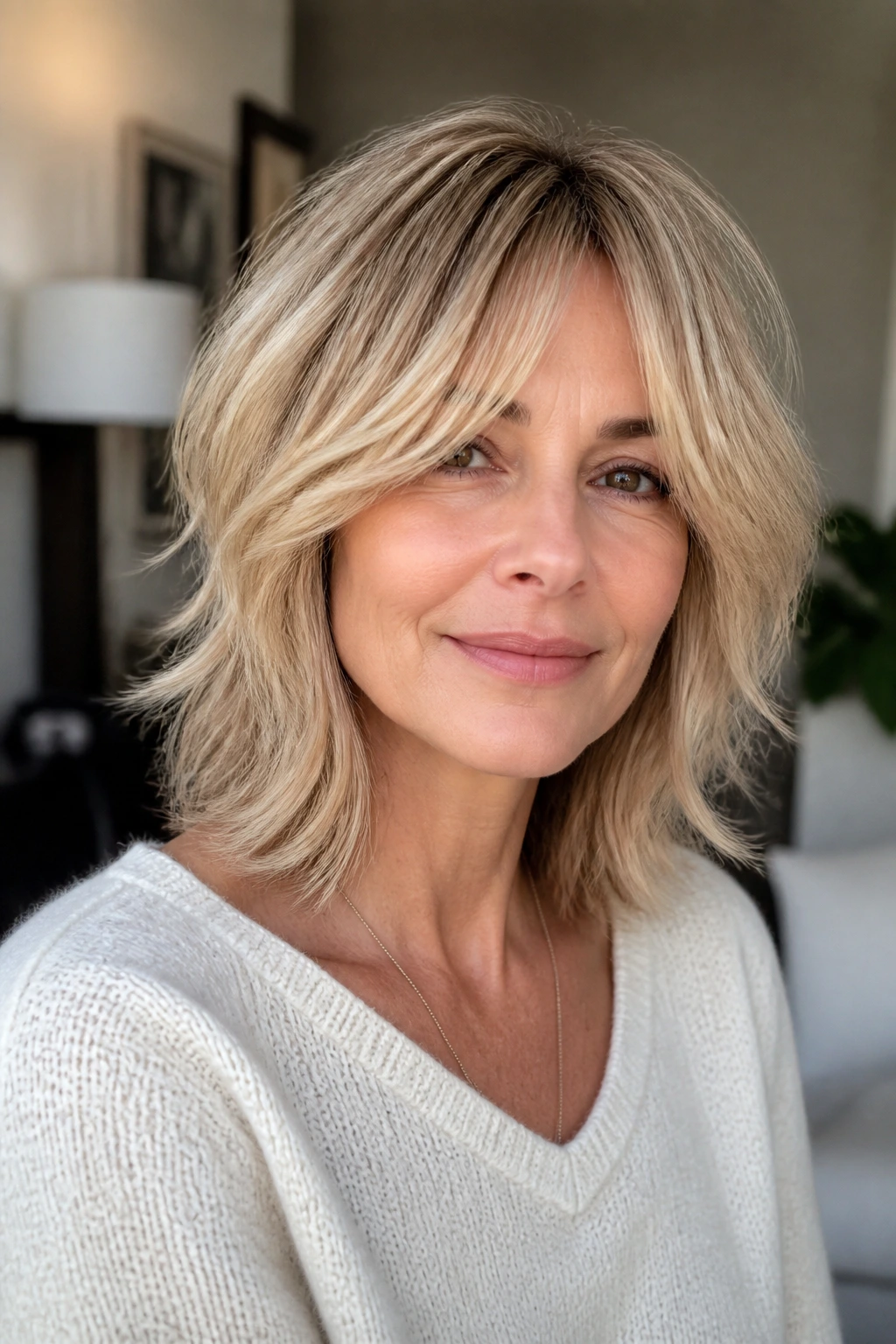
Shorter cuts need more regular cleanup. Pixies and bixies usually want a trim every 4 to 6 weeks. Bobs and graduated cuts tend to last 6 to 8 weeks before the outline starts slipping. Lobs and softer shoulder-length styles can stretch closer to 8 to 10 weeks if the layers are controlled.
The trick is not waiting until the cut is obviously grown out. Fine hair shows a drooping shape before it shows obvious split ends. If the crown falls flat or the nape starts to puff, the cut has already gone past its best phase.
If you’re growing a short cut into a bob, ask for small cleanup trims around the ears and neckline rather than letting everything grow wildly at once. That keeps the shape from turning shaggy in the wrong way. A few tiny trims can save you from a full reset later.
For daily upkeep, dry shampoo helps on the roots, but don’t pile it on three days in a row without washing. Fine hair can start to feel dusty and heavy. A clean scalp and a light product load go further than people expect.
Common Mistakes That Make Fine Hair Fall Flat
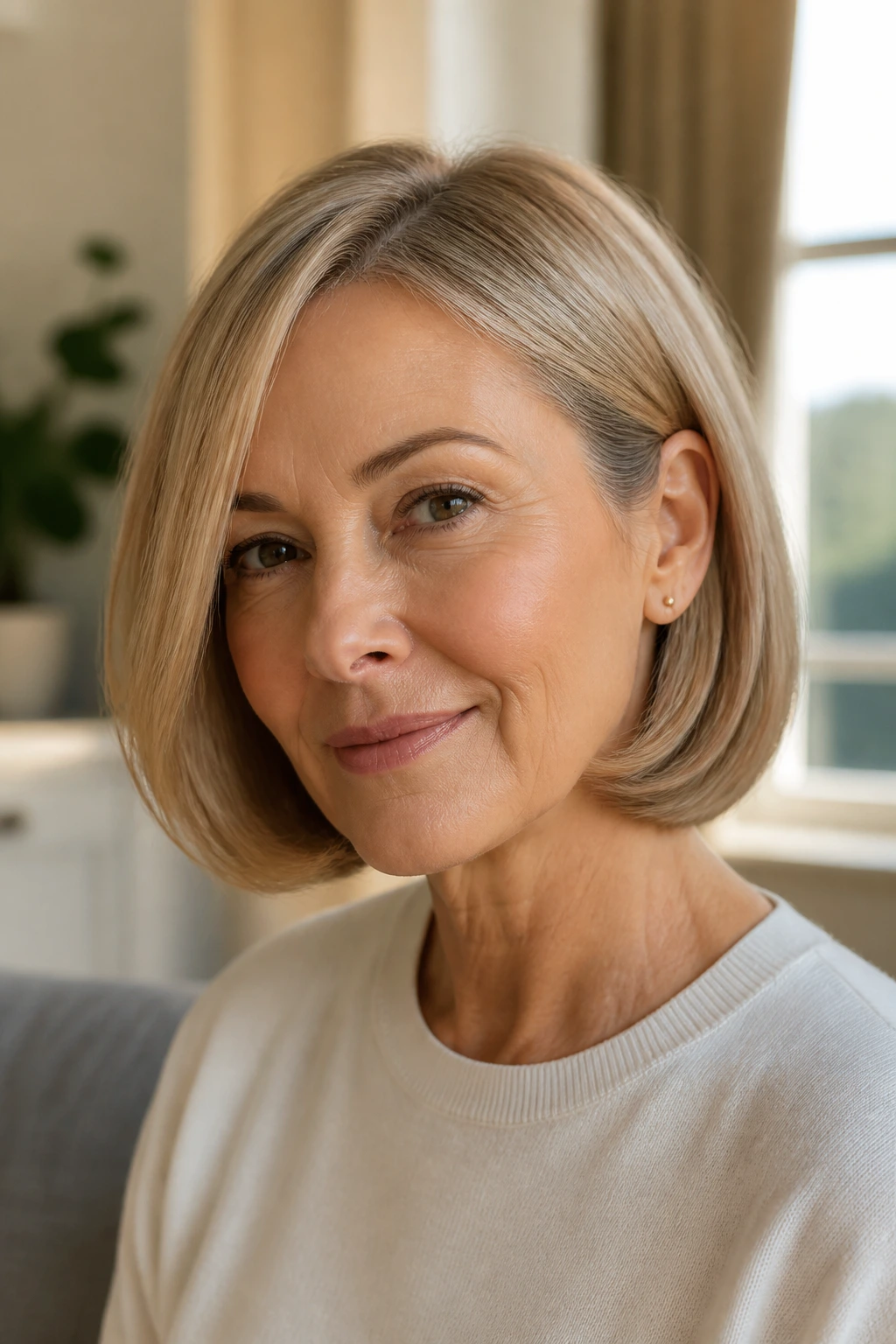
- Too much thinning through the ends: If the bottom starts looking see-through or scraggly, the cut lost its support. Ask for a stronger perimeter and less aggressive texturizing.
- Heavy conditioner at the roots: The symptom is instant collapse and a greasy crown by afternoon. Keep conditioner off the scalp and use less than you think you need.
- Layers that are too short or too many: This often creates a fluffier top with weak ends. Fine hair usually needs fewer, smarter layers, not more of them.
- Ignoring the part line: A flat, fixed part can make the hair lie in the same place every day. Switching the part, even by an inch, can wake the root up.
- Overly dense bangs: Thick bangs can swallow the face and flatten the front of the haircut. Side-swept or airy fringe usually works better for fine hair.
- Waiting too long between trims: The shape drops out first, then the hair starts looking tired. By the time you notice split ends, the style has usually already lost its lift.
Variations and Adaptations to Try
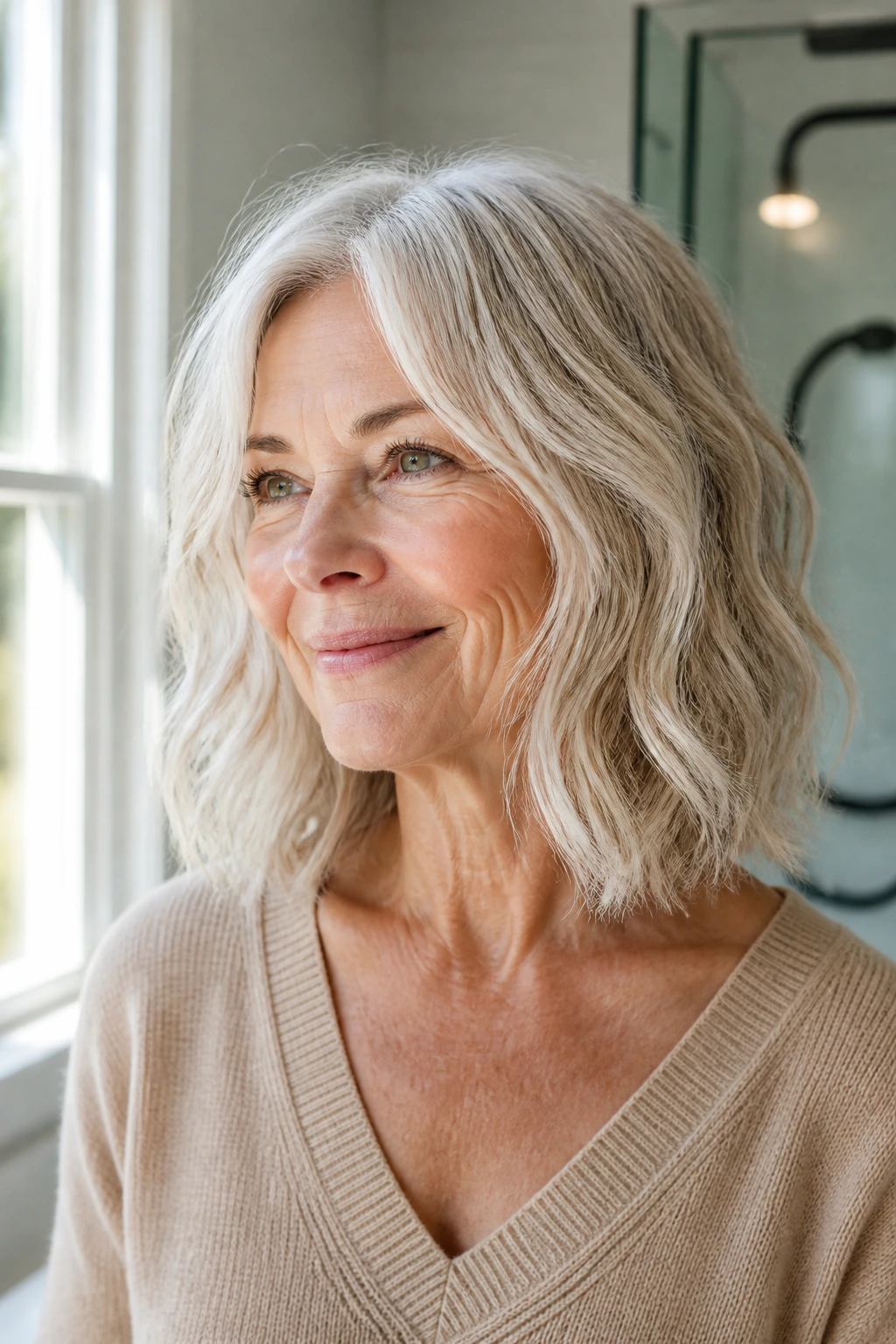
The Air-Dry Edit: Best for wavy fine hair. Keep the perimeter blunt, use a light mousse, and let the hair set with a soft wave instead of forcing it smooth. This works well when you want a low-fuss morning and don’t care if the finish is a little imperfect.
The Gray-Glow Version: Ask for softer face-framing and a cleaner outline around the ends. Gray hair often shines best when the cut is neat and the finish is lightly polished, not roughened up with too much spray.
The Low-Maintenance Crop: Choose the bixie or the feathered crop if you want a cut that stays tidy with minimal styling. These shapes are short enough to dry fast but not so severe that they need constant attention.
The Bold Frame Swap: Go for an asymmetrical bob or a deep side-part cut if you want more lift and a little attitude. The off-balance line can make fine hair look fuller where it matters most.
The Grow-Out Plan: Start with a collarbone lob if you’re nervous about going short. You can always add shape later. It is much easier to trim more hair off than to pretend a cut that’s too short will magically get longer.
Frequently Asked Questions
What haircut makes fine hair look thicker after 50?
Blunt bobs, collarbone lobs, and stacked shapes usually make the strongest case for thickness because they keep a visible edge. The cut matters more than trying to pile on volume products that disappear after an hour.
Is long hair still okay for fine hair over 50?
Yes, if the hair still holds enough density at the ends to support the length. Once the bottom starts looking see-through, shoulder length or collarbone length usually looks better than hair that hangs past the point of fullness.
Should fine hair have layers?
A little, yes. Too many, no. Fine hair usually benefits from controlled internal layers or face-framing pieces, but heavy layering can leave the ends weak and the whole head looking thinner.
Are bangs a bad idea for fine hair?
Not at all. The wrong bangs are the problem. Dense, short bangs can flatten the front, while side-swept or curtain bangs usually soften the face without stealing too much hair from the rest of the cut.
What if my hair is gray and gets frizzy at the ends?
Use less heat, less heavy cream, and a cleaner cut. Gray fine hair often behaves better when the shape is tidy and the finishing product is light. A small amount of shine spray on the ends can help without weighing them down.
How often should I trim these styles?
Short crops often need attention every 4 to 6 weeks. Bobs and lobs can go a little longer, but once the outline starts sagging, the style loses the fullness that made it work in the first place.
Can I wear a center part with fine hair?
You can, if the cut has enough shape and your crown doesn’t collapse. A slight off-center part is often more forgiving, but a center part can look clean and modern on the right bob or lob.
What should I do if my fine hair falls flat by noon?
Start with less conditioner, more root lift, and a cut that keeps some weight at the bottom. If the hair is still dropping, refresh the roots with dry shampoo and re-bend the front pieces instead of redoing the whole head.
Shapes That Still Hold
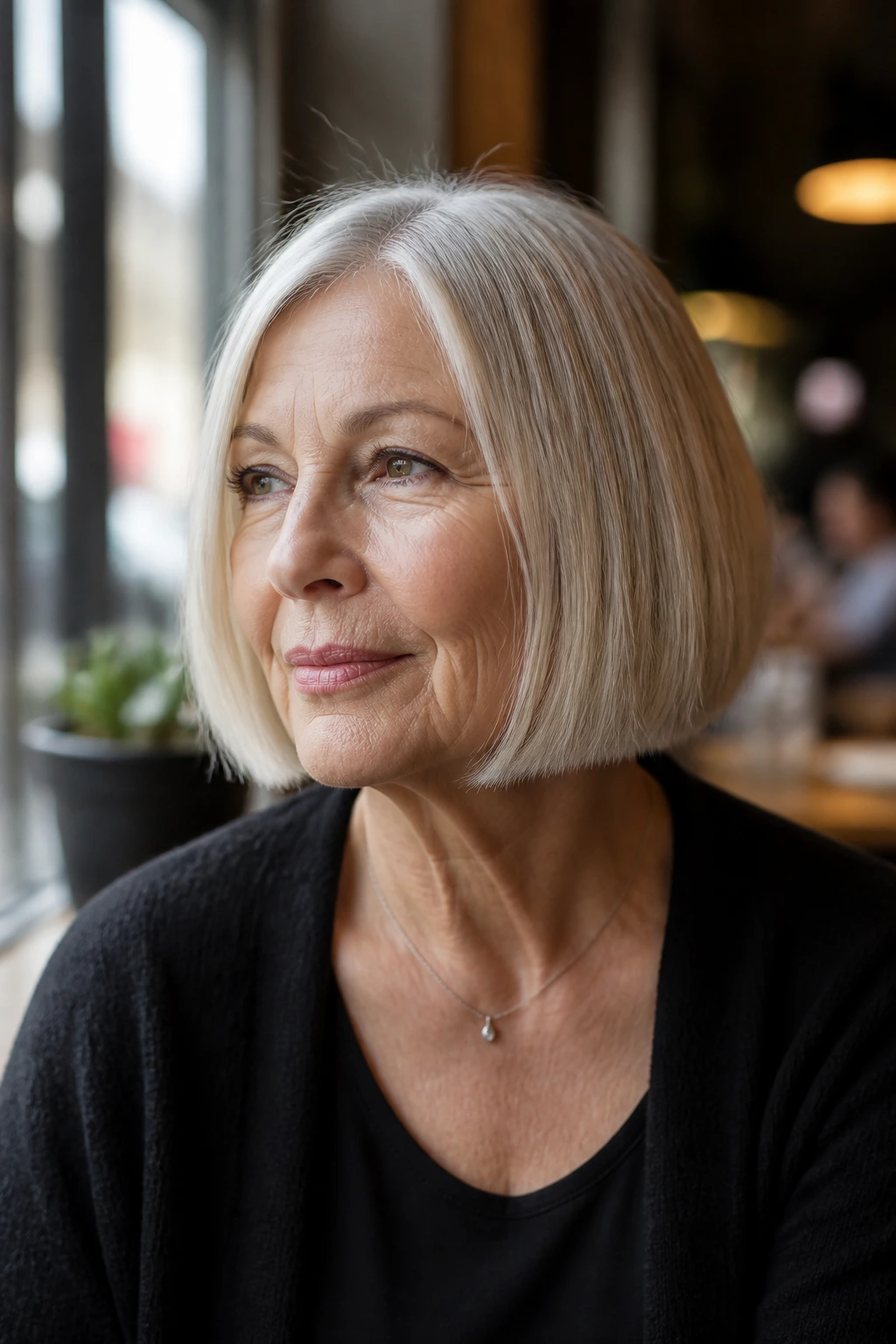
The best hairstyles for women over 50 with fine hair do not fight the hair into pretending it is thicker than it is. They give it structure, a clear edge, and enough movement to look alive. That’s a better bargain than chasing big, airy volume that disappears as soon as the weather changes or the day gets busy.
What I keep coming back to, honestly, is this: fine hair looks best when the cut respects its limits and uses them well. A blunt line can feel luxurious. A soft layer can keep the face open. A short crop can look elegant rather than severe if the neckline is clean and the top has lift.
Bring one or two of these ideas to a stylist, talk plainly about how your hair behaves, and pay attention to the silhouette more than the trend name. The right haircut should make your hair easier to live with on a Tuesday morning, not only prettier in a salon mirror.