



A long wavy bob can do a surprising amount of repair work around the face. The right version lands somewhere between the collarbone and the top of the shoulder, with front pieces that start at the cheekbone or lip so the cut bends instead of stopping hard at the jaw.
After 50, hair often changes the rules. The crown can lose a little lift, the ends can look thinner, and a blunt edge that once felt sharp can start to read as severe. A shoulder-grazing bob with waves and face-framing layers fixes that by keeping the shape open at the front while leaving enough length for a clip, a tucked-behind-the-ear moment, or a quick bend with a 1¼-inch iron.
The worst version of this haircut is a triangle with curls. The best version has swing. It moves when you turn your head, it doesn’t fight your glasses, and it gives gray or silver strands a place to shine without turning the whole head into a helmet. That’s the version worth chasing, and the cuts below keep the same idea but tune it for different face shapes, textures, and styling habits.
Why These Cuts Deserve a Close Look
-
They soften the lower face. Face-framing layers that start at the cheekbone or lip break up a hard line around the jaw, which matters if your hair has a dense perimeter or your face reads more square than oval.
-
They still feel long enough to live with. A collarbone-length bob can be tucked, clipped, or gathered into a low twist, so you are not trapped in a style that needs a full blowout to behave.
-
They work with real wave, not pageant curls. A loose bend from a wand, a flat iron, or even an air-dried twist is enough; the cut should do the heavy lifting, not a barrel set to ringlet mode.
-
They make silver hair look intentional. Gray strands show texture fast, and a layered bob keeps that texture crisp instead of puffy.
-
They give you room to vary the mood. One week it can look polished and curved under. The next week it can look piecey and relaxed. Same haircut, different finish.
-
They are friendly to glasses and earrings. Longer front pieces can sit around frame arms and keep the cheek area open, which is a small thing until you wear the wrong cut every day.
1. Collarbone Swing with Cheekbone Layers
The collarbone is an underrated landing spot. Hair that stops there still moves, still tucks, and still feels long enough to pull back on a rough morning, but it’s short enough for the front layers to do real work around the face.
What makes this version sing is where the shortest front piece sits. Start it at the cheekbone or just below the eye if you want lift without a choppy edge. On wavy hair, that length keeps enough weight at the perimeter to hold a bend, so the ends swing instead of puffing out. Ask for the front to angle down toward the collarbone, not hit the jaw like a shelf.
Why it works so well
The face-framing layers pull the eye upward, then the longer perimeter keeps the style from feeling thin at the bottom. That combination is especially kind to hair that has lost a little fullness at the temples. The cut still looks polished even when the wave isn’t perfect.
2. Deep Side-Part Wave Bob
A deep side part changes the whole haircut before the scissors even leave the stylist’s hand. It lifts one side of the crown, lets the front pieces sweep across the cheekbone, and gives the waves a little more swing on days when the roots want to lie flat.
Compared with a center part, this shape is kinder to hair that has lost density on top. The heavier side can keep the longest face-framing layer just under the lip, while the shorter side opens the eye area. If your hair looks widest at the cheeks, this cut breaks up that line fast.
The styling trick is simple: blow-dry the roots in the opposite direction first, then flip the part back. That tiny bit of resistance gives the whole bob more lift than another round of curling ever will.
3. Curtain Fringe Lob with Soft Ends
Can a fringe make a long wavy bob easier to wear? Yes, if the bangs open at the center and taper into the face-framing pieces instead of sitting as one blunt strip.
Curtain fringe works best when the shortest point lands around the eyebrow or cheekbone and then melts into the rest of the lob. The result is softer around the forehead and more forgiving on mornings when your wave pattern is doing its own thing. This is the version to choose if you want coverage without feeling locked into a heavy bang.
Keep the ends lightly beveled, not curled under too hard. A soft bend at the bottom keeps the fringe from fighting the rest of the haircut.
4. Feathered Jawline Bob
A feathered bob around the jaw is one of my favorite fixes for a strong lower face. The layers are sliced and released enough to move, but not so short that they flare out around the cheeks.
This cut works especially well if your hair has body and likes to hold shape. The face-framing layers should begin near the lip, then skim down to the collarbone so the waves travel, not stack. The effect is lighter around the jaw without turning the whole cut into a shag. If your jawline feels a little square in blunt cuts, this is the softer answer.
Blow it with a round brush only at the front, not all over. That keeps the shape from getting too round on the sides.
5. Angled Wavy Lob with a Clean Nape
There’s a reason angled bobs keep coming back. The back stays tidy, the front keeps its length, and the angle gives the haircut a built-in line that reads clean even when the waves loosen up.
For women over 50, this shape is useful because it creates motion without relying on heavy layering. The nape is kept neat, while the front pieces can graze the collarbone and frame the mouth. That gives the face some softness without taking away the sense of structure.
If you like a haircut that looks deliberate on a Tuesday and a little dressier on a Friday night, this is the one. The angle does half the styling for you.
6. Silver Sweep Lob with Airy Texture
Gray and silver hair can go one of two ways: crisp and luminous, or bulky and dry. This cut aims hard for the first one.
The face-framing layers are kept long enough to avoid frizzing out at the temples, while the ends are texturized just enough to move. On silver hair, that airy finish catches the eye because the color shift already gives you dimension. A soft side part and a light gloss finish can make this shape look expensive without making it stiff.
I’d avoid over-layering here. Silver hair shows overcutting fast, and a lob with too many short pieces can read fluffy instead of sleek.
7. Rounded Volume Bob with Lift at the Crown
Fine hair often needs a little architecture. Not a lot. Just enough.
This rounded lob keeps the perimeter blunt enough to make the ends look fuller, then uses subtle face-framing layers to stop the haircut from turning boxy. The crown gets a bit of lift, which is useful if your hair lies flat around the top after a wash. The sweet spot is a gentle curve, not a helmet shape.
Ask for the shortest front layer to hit around the cheekbone, then let the rest taper softly toward the shoulders. That keeps the silhouette round and full without making the sides too puffy.
8. C-Shaped Lob with Curved Ends
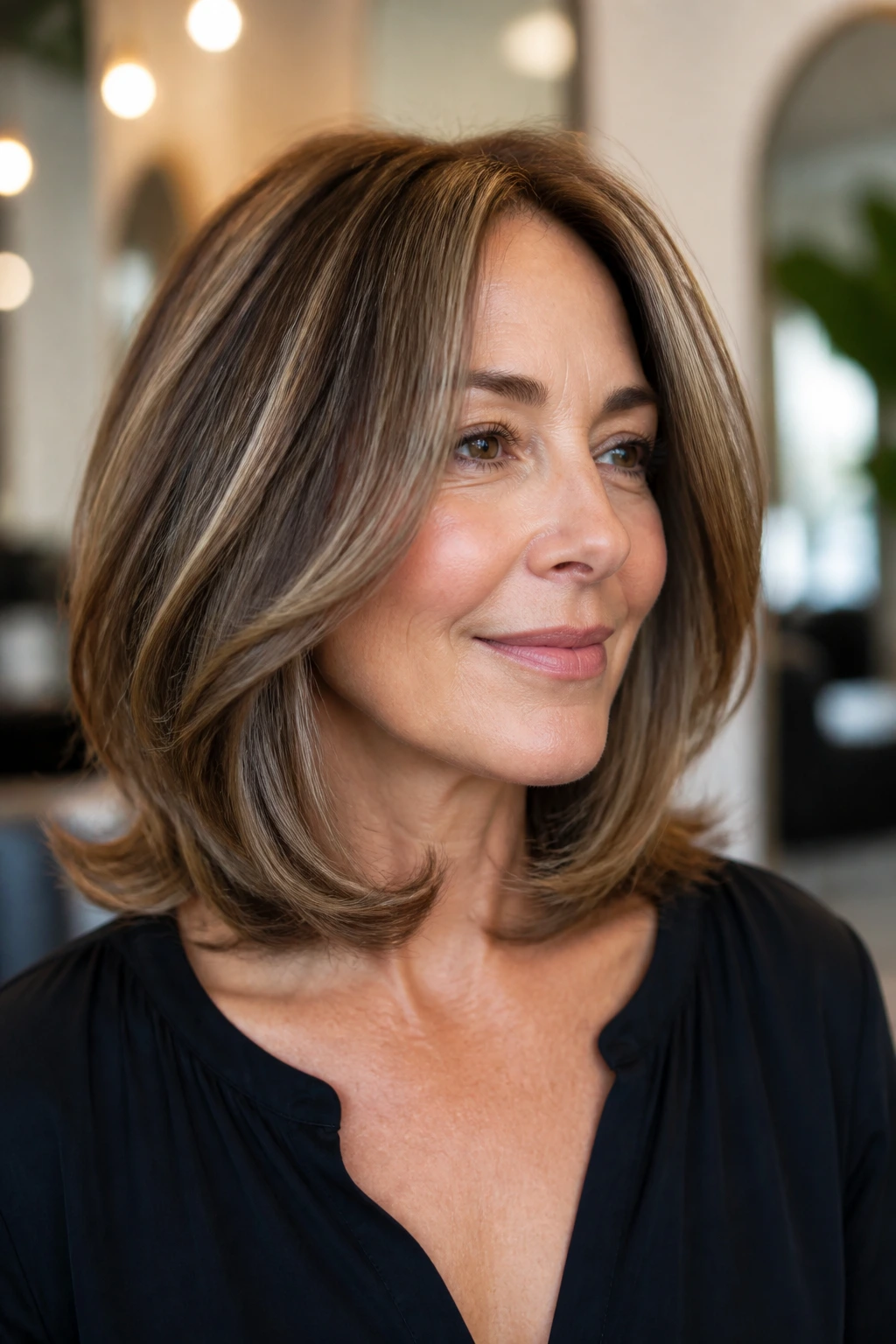
A C-shaped bob is what happens when the blowout and the haircut agree with each other. The ends curve under just enough to make a soft letter C, and the face-framing layers help that bend flow into the front.
This version is polished without looking overdone. It suits medium-density hair especially well, because the curve gives the illusion of more body at the ends. The front pieces should be long enough to move past the chin, then tuck inward toward the collarbone.
What makes it different
Unlike a straight-across lob, this shape doesn’t sit still. It has a visible line, but the line never feels harsh. If you like a neat finish and hate strands that flick outward at the shoulders, this is a smart pick.
9. Beachy Gray Bob with Mid-Length Layers

The word “beachy” gets used too loosely, so let’s be plain about it: this is a loose, irregular wave, not a crimped curl and not a polished curl set.
On gray hair, that softness reads beautifully because the color gives the motion definition. Keep the mid-length layers long and the face frame gentle, then let a few front pieces sweep just below the cheekbone. The whole point is movement with a little mess in it.
This cut works best if you air-dry most of the way and only touch up a few pieces with a wand. If every section is curled the same way, the haircut loses the relaxed feel that makes it work.
10. Piecey Bob with Long Front Panels
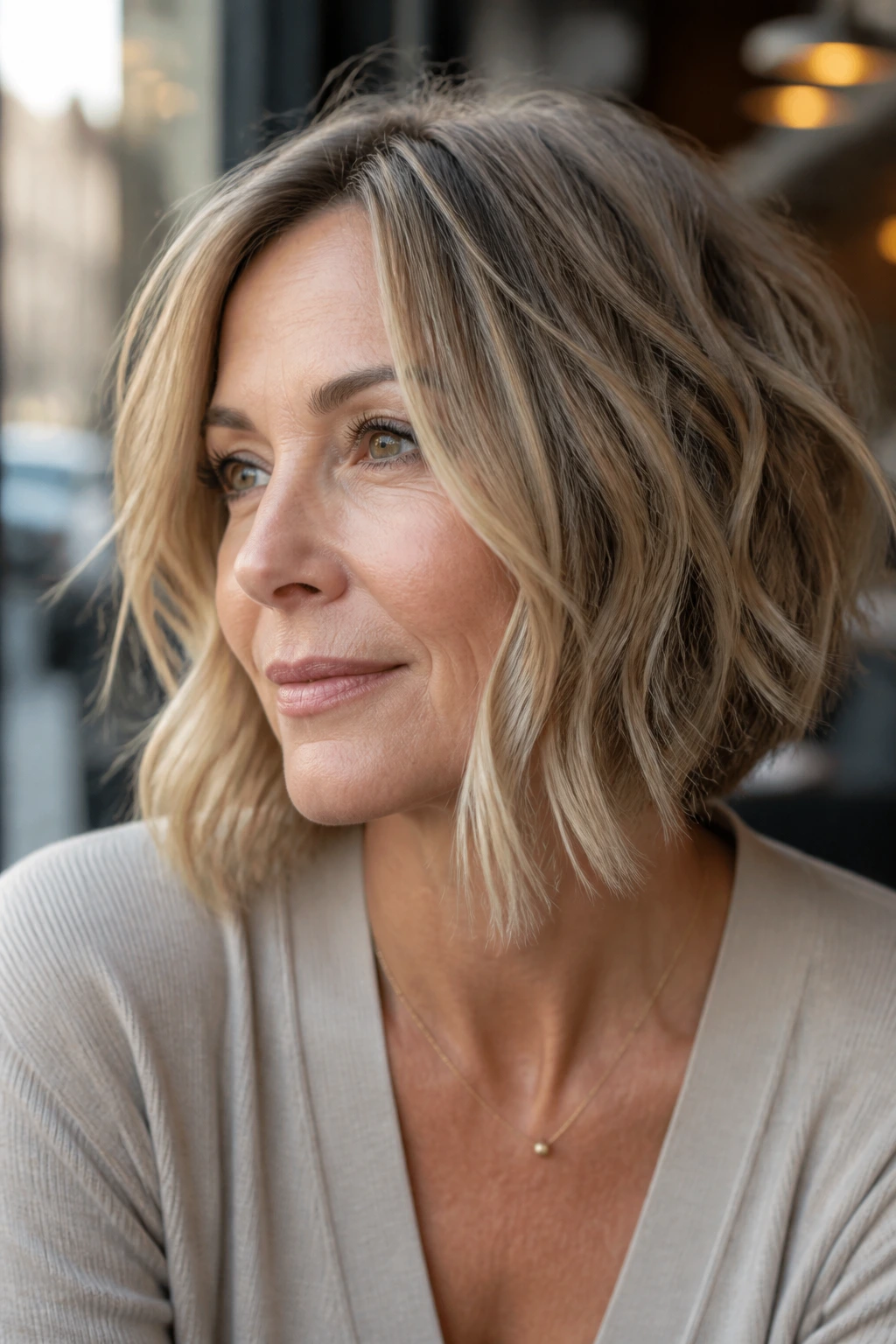
Some haircuts rely on a dozen small layers. This one doesn’t.
A piecey bob with long front panels uses just enough layering to keep the hair from collapsing, then leaves the face-framing sections long and visible. That makes it easier to tuck one side behind the ear while the other side sweeps across the cheek. It’s a good choice when you want movement without obvious layering.
I like this cut on women who wear earrings often. The long front panel shows off the jaw and neck, while the waves keep the shape from feeling plain.
11. Bottleneck-Bang Lob
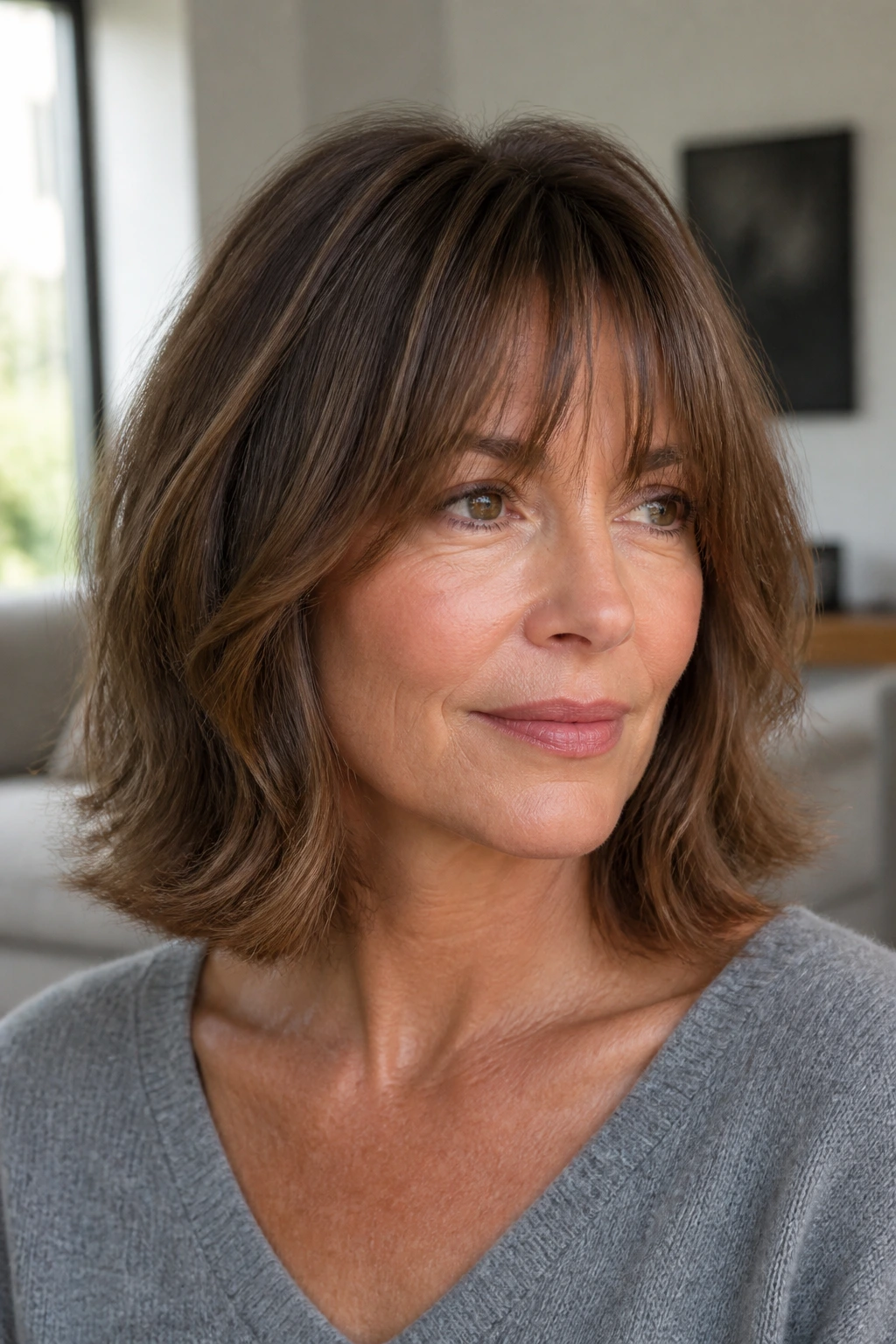
A bottleneck bang is narrower at the center and wider as it drops toward the temples. On a long wavy bob, that shape gives you forehead coverage without the heavy block of a full fringe.
The trick is blending the bang into the face-framing layers so the front doesn’t look chopped into separate parts. Keep the wave loose through the bangs and a little fuller through the sides. If you want softness around the eyes but not a straight line across the forehead, this is the sweet spot.
It looks especially good when the ends are flipped under just slightly. That tiny curve keeps the whole style from feeling too edgy.
12. Air-Dried Lob for Fine Hair

Fine hair can look better air-dried than overworked. That surprises people, but I’ve seen it enough to say it plainly.
The key is a longer face frame and fewer short layers. Too many layers on fine strands make the bob look wispy at the ends and flat at the roots. A better move is to keep the perimeter blunt-ish, then add a gentle bend with your fingers while the hair dries. The front pieces should still land below the chin so they don’t disappear.
Use a light mousse or curl cream, not a heavy butter. Fine hair gets mushy fast, and once that happens, the shape is gone.
13. Thick-Hair Lob with Weight Removal
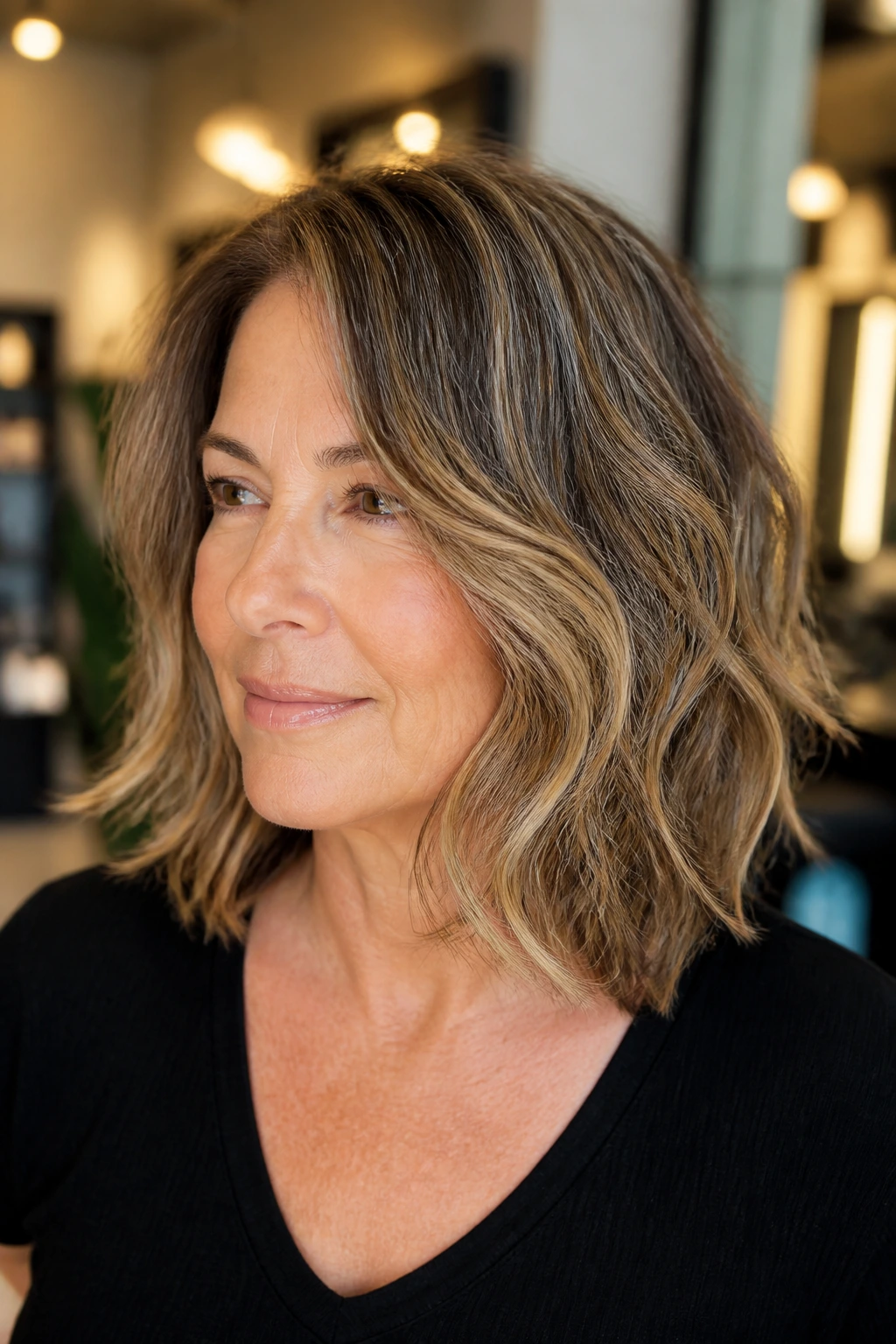
Thick hair needs a different kind of mercy. Not less shape. Less bulk.
This version keeps the outside line strong while removing weight inside the haircut so the sides don’t balloon. The face-framing layers should be long and controlled, starting around the mouth or chin, then blending into the rest of the lob. If your hair spreads out when it dries, this is the cut that reins it in without making it flat.
Ask for internal weight removal rather than aggressive short layers on top. The wrong kind of thinning can create frizz and make thick hair feel broader, which is exactly what you do not want.
14. Round-Face Lifting Lob

Round faces do well with a little vertical pull. Not drama. Just enough length to stretch the visual line.
This bob keeps the front pieces longer than the widest part of the cheeks, then uses waves to break up the softness of the face. A side part helps, and so do layers that begin around the lip or below. The goal is to let the front fall downward, not flare outward.
A tucked side can help too. One ear tucked, one side loose, and the whole cut feels lighter around the cheeks without losing its shape.
15. Square-Face Softening Wave Bob

If your jaw has a clean angle, the wrong bob can feel too sharp. The right one can be lovely.
This style uses loose waves and face-framing layers to blur the hard edge of the jaw. Keep the shortest pieces around the cheekbone, then let the waves bend softly under and away from the face. That gives the lower half of the cut some movement without drawing a hard line across the jaw. The difference is usually in the ends: soft ends beat blunt ends here.
I’d stay away from a super-straight finish on this one. The wave is doing the softening, and straight hair can bring the square shape right back to the surface.
16. Glasses-Friendly Lob with Tucked Sides
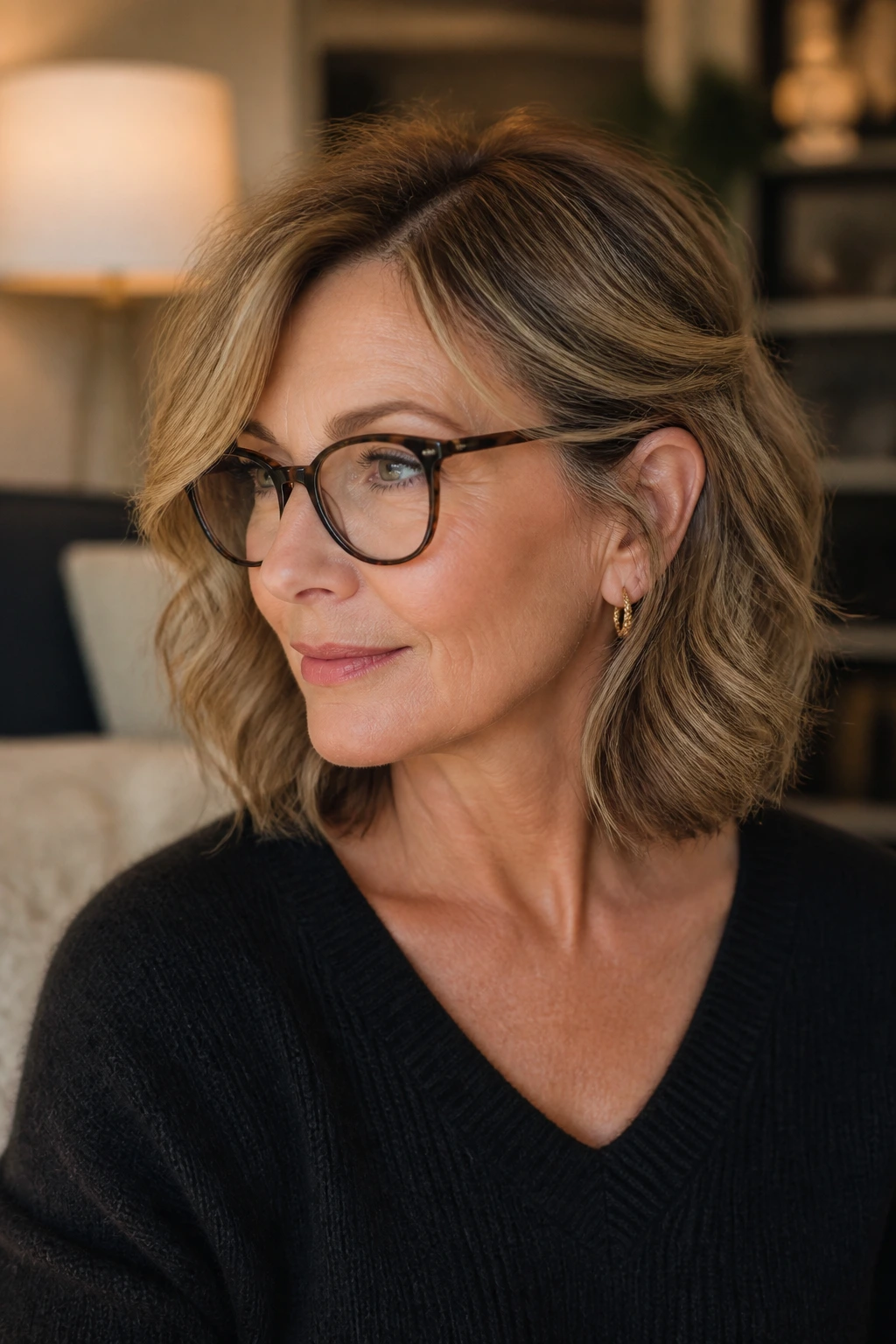
Hair and glasses can either work together or spend the whole day fighting. This cut is for the first camp.
The front pieces are kept long enough to sit around the frame arms, and the face-framing layers are angled so they don’t land right on the temples. That keeps the hair from puffing where the glasses already create pressure. If you wear specs daily, ask the stylist to check the cut with your glasses on.
A little tuck behind the ear changes everything. It opens the cheek, shows the frame, and stops the bob from swallowing your face.
17. Evening-Ready Side-Sweep Bob

Not every bob has to look casual. Some should look like you planned the outfit.
This one relies on a deep side sweep, a smooth bend through the mids, and face-framing layers that curve near the cheekbone. It has enough polish for dinner, but it still works on a normal day if you rough it up a little. A large-barrel wave and a touch of shine spray are all it usually needs.
The front should never sit stiffly on the face. Let it skim and move. That’s what keeps the style from feeling dated.
18. Invisible-Layer Lob
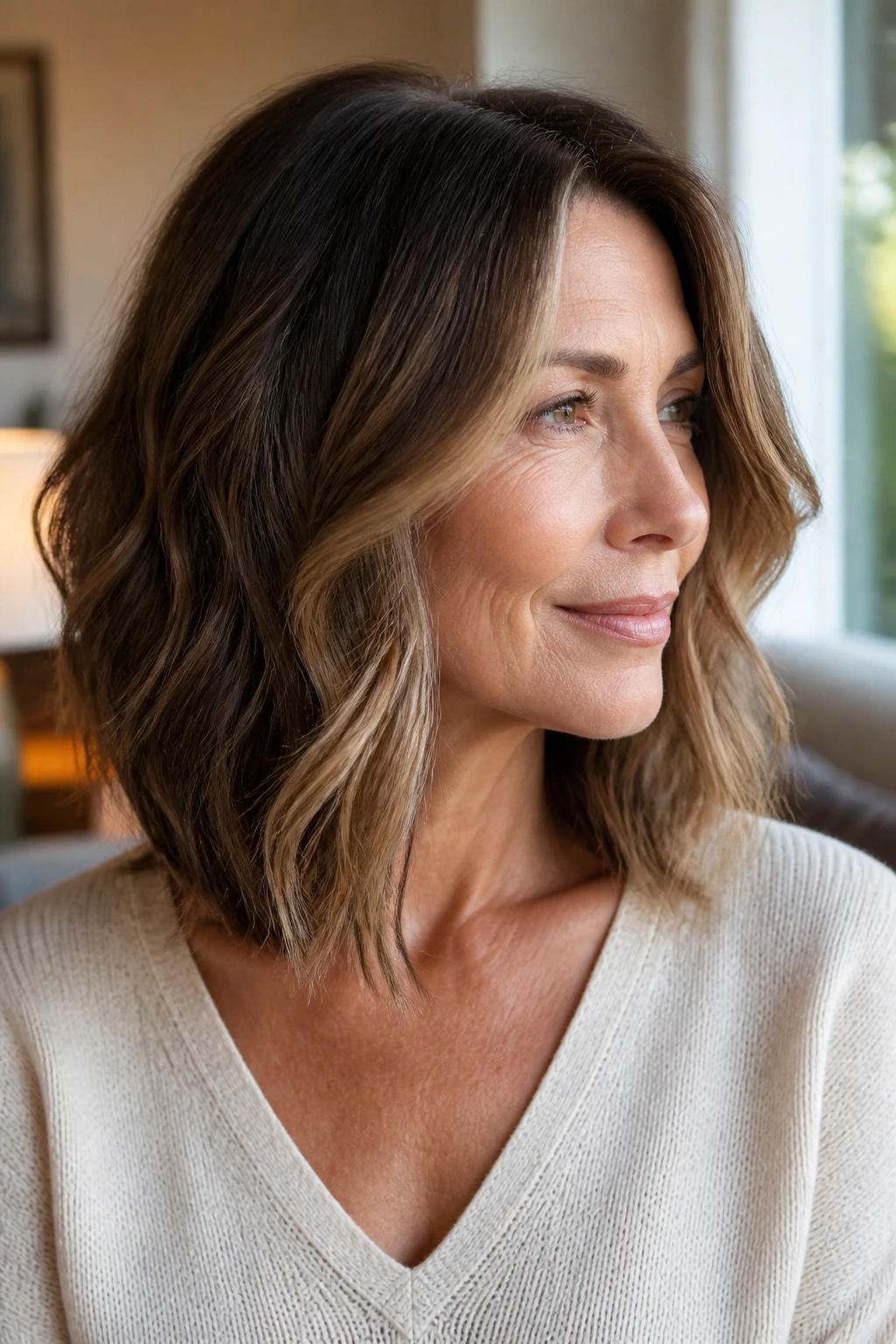
Invisible layers are the best kind when you want movement but hate obvious choppiness. They hide inside the haircut, so the outer line stays calm and the wave does the talking.
This is a strong choice if your hair is medium to thick and you want softness without that “layered to death” look. The face-framing sections should still be visible, but the rest of the shape should read clean from the front. The cut feels easy because nothing shouts for attention.
It’s also a good option for people who like to air-dry part of the week and blow-dry the other part. The shape shifts without falling apart.
19. Paris-Leaning Wave Bob

There’s a reason a slightly undone bob keeps showing up in good salons. It doesn’t look forced.
This version leans on a center or near-center part, loose waves, and face-framing layers that fall naturally around the cheekbones. The finish should look touched, not fussed over. A little bend near the ends and a soft tuck on one side is usually enough.
What I like here is the balance. It feels modern without needing a hard edge, which is often the problem with sharper bobs on grown-out texture.
20. Razor-Textured Lob
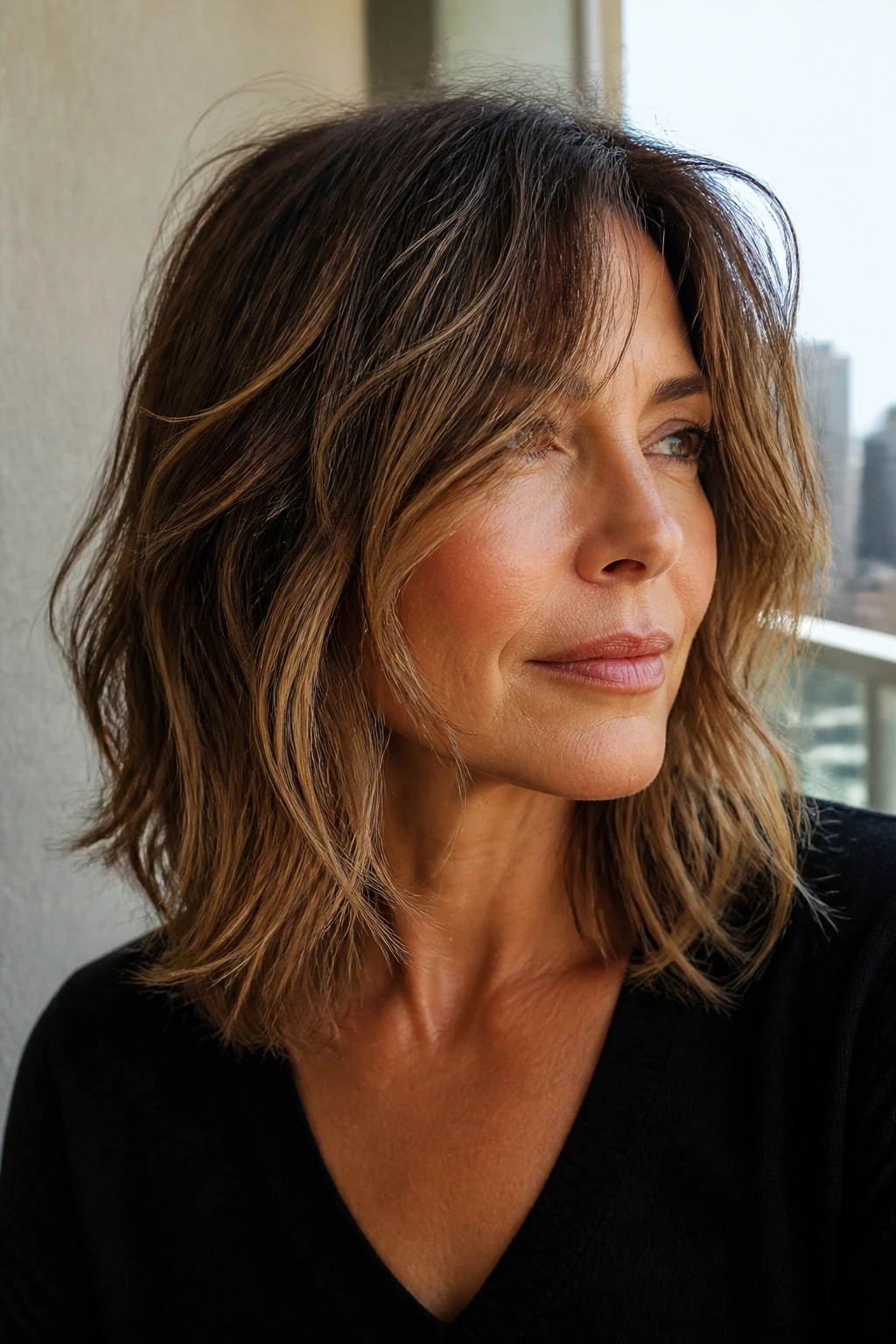
Razor work can be lovely when it’s used with a light hand. Too much, and the ends fray.
On a long wavy bob, razor texturing works best if the hair is medium or thick and has some natural body. The face-framing layers get a wispy finish, which helps the cut move around the cheeks instead of sitting in one flat sheet. If your hair is already frizzy or brittle, this is not the place to go hard with the razor.
The payoff is a softer edge and more airy motion through the front. It’s a good answer when you want the bob to feel lighter without sacrificing the length.
21. Balayage Ribbon Bob
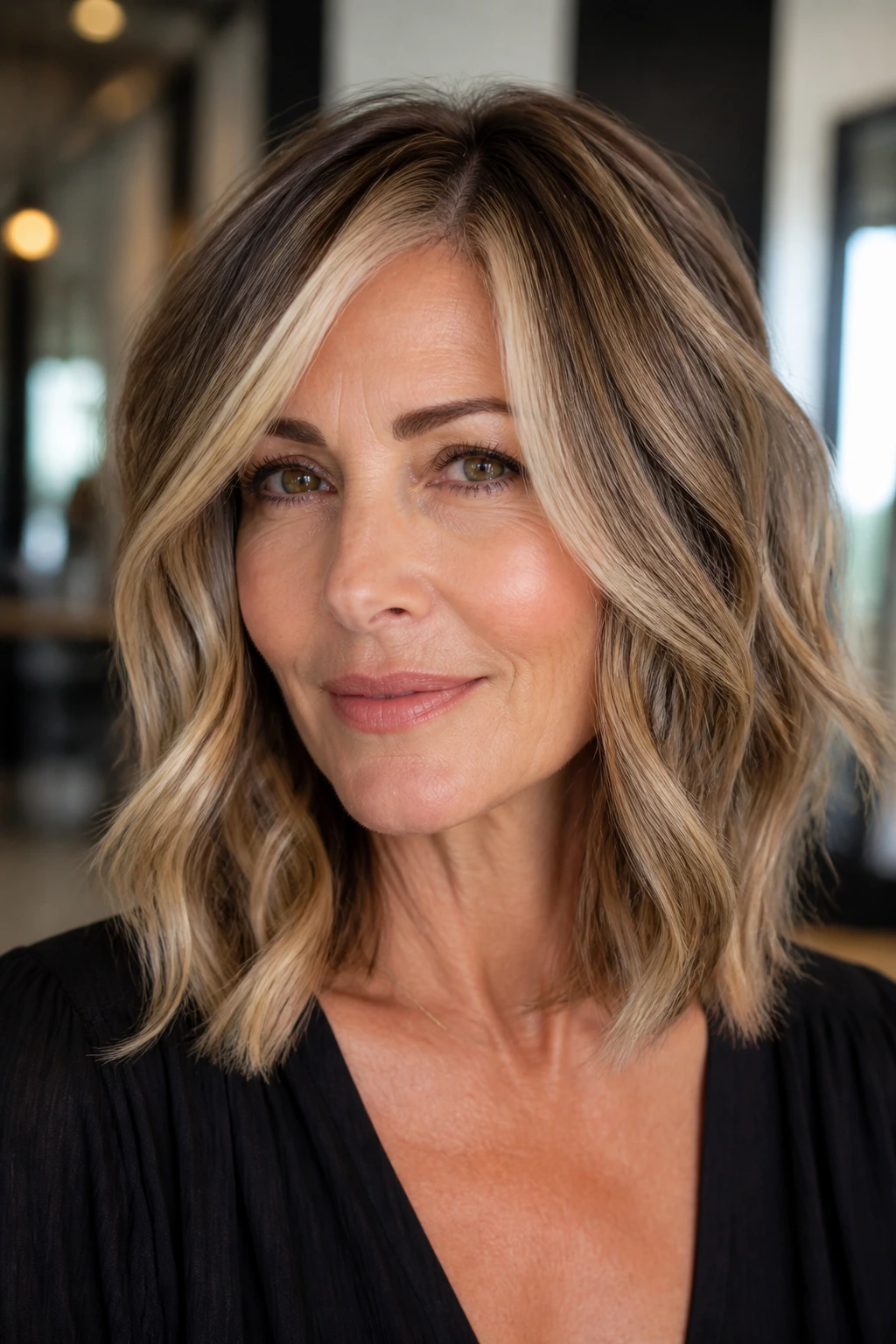
Color and cut should talk to each other, not compete. Balayage ribbons around the face make the layering easier to read, especially on wavy hair.
This bob works because the lighter pieces land where the front frame bends, usually from cheekbone to collarbone. That means the movement shows up even when the wave is loose or second-day hair. The style looks fuller because the eye reads both the shape and the color.
If you already color your hair, this is one of the easiest ways to make a long bob feel fresh without changing the actual haircut. Keep the highlights soft and blended, not stripey.
22. Glossy Blowout Bob
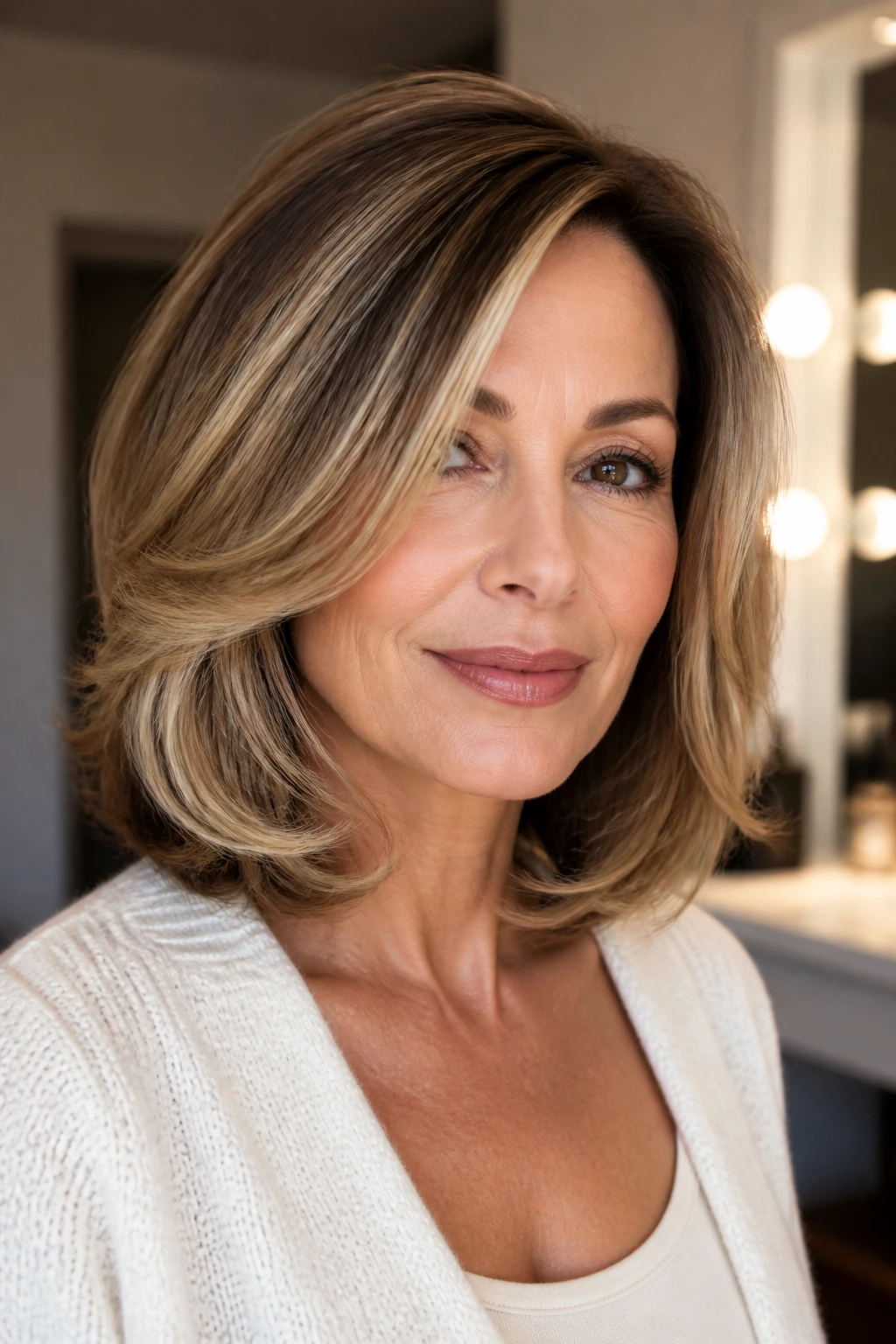
A glossy blowout bob is the dressed-up cousin in the group. The waves are smooth, the ends curve, and the face-framing layers sit neatly instead of scattering.
This version shines when the hair has been blown out with a round brush and finished with a 1.25-inch iron on the front pieces only. That keeps the whole shape from looking too curled. The goal is bend and shine, not stiffness.
I like this cut for events, but it’s also a nice daily style if you don’t mind spending ten extra minutes with a brush. The payoff is a bob that looks controlled in a good way.
23. Grow-Out Bob with Long Curtain Pieces

If you’re moving out of a shorter bob, this is the kinder path. The front stays long enough to bridge the awkward stage, and the curtain pieces give the grow-out a shape.
The key is not cutting the front too short just because the back needs tidying. Long curtain pieces can camouflage a lot, especially when they fall around the lip and cheekbone. It’s a smart transitional cut because it still looks deliberate while it grows.
Keep the ends soft and the layers blended. That prevents the haircut from turning into a shapeless shoulder drape halfway between appointments.
24. Shag-Lite Wavy Bob

A full shag can be too much if you like clean lines. A shag-lite bob gives you the motion without the wildness.
The layers are feathered enough to let the wave move, but the perimeter stays long and visible. Face-framing layers should begin low enough to soften the cheek and jaw, not create a halo around the head. This is the version for natural wave that wants freedom, not control.
If your hair tends to frizz when over-layered, keep the top sections heavier and let the texture live in the mids and ends.
25. Quietly Elegant Undone Lob

This is the cut for people who want to look finished without looking styled to death. The wave is loose, the front is softly framed, and nothing feels pushed into place.
The best part is how little it asks of you. A side tuck, a bend at the ends, and a light smoothing cream are enough on most days. The long front pieces should touch the face, not cling to it. That small difference keeps the whole look from turning flat.
If you like hair that works with a blazer, a T-shirt, and a dinner out, this is the one I’d keep in my back pocket.
Why Face-Framing Layers Change Long Wavy Bobs
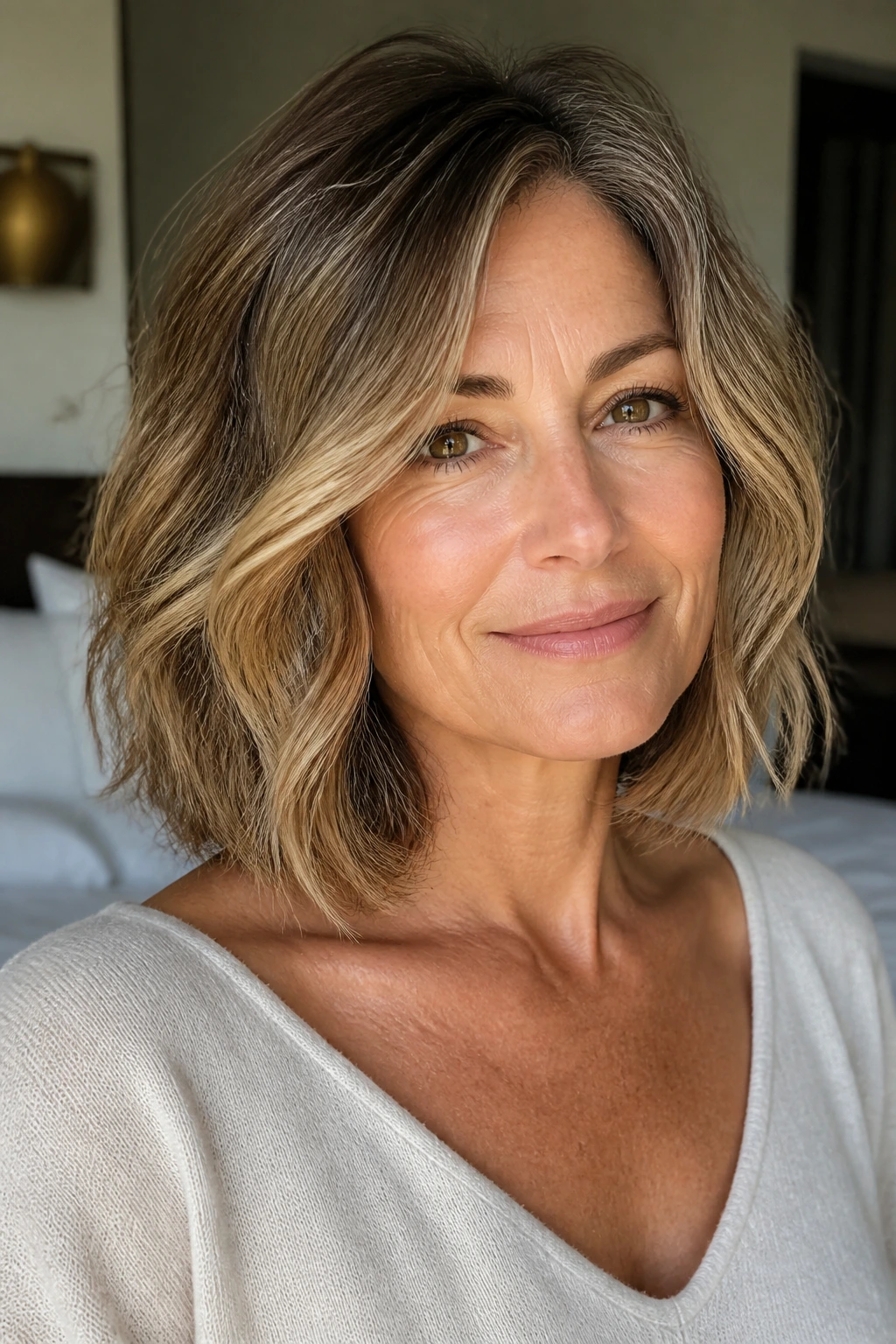
Face-framing layers are not just decoration. They decide where the eye goes first.
On a long wavy bob, those front pieces can soften a jaw, open the cheek area, or stretch the face a little depending on where they start. Layers that begin at the cheekbone give lift. Layers that begin at the lip create movement. When they start too high, the haircut can get frizzy and overtextured fast, especially on dense or wavy hair.
The nice thing about this cut family is that the same basic length can behave very differently with a small adjustment at the front. That is why a good bob for women over 50 rarely hangs on a blunt edge alone. It needs a front that does something.
What to Ask for at the Salon
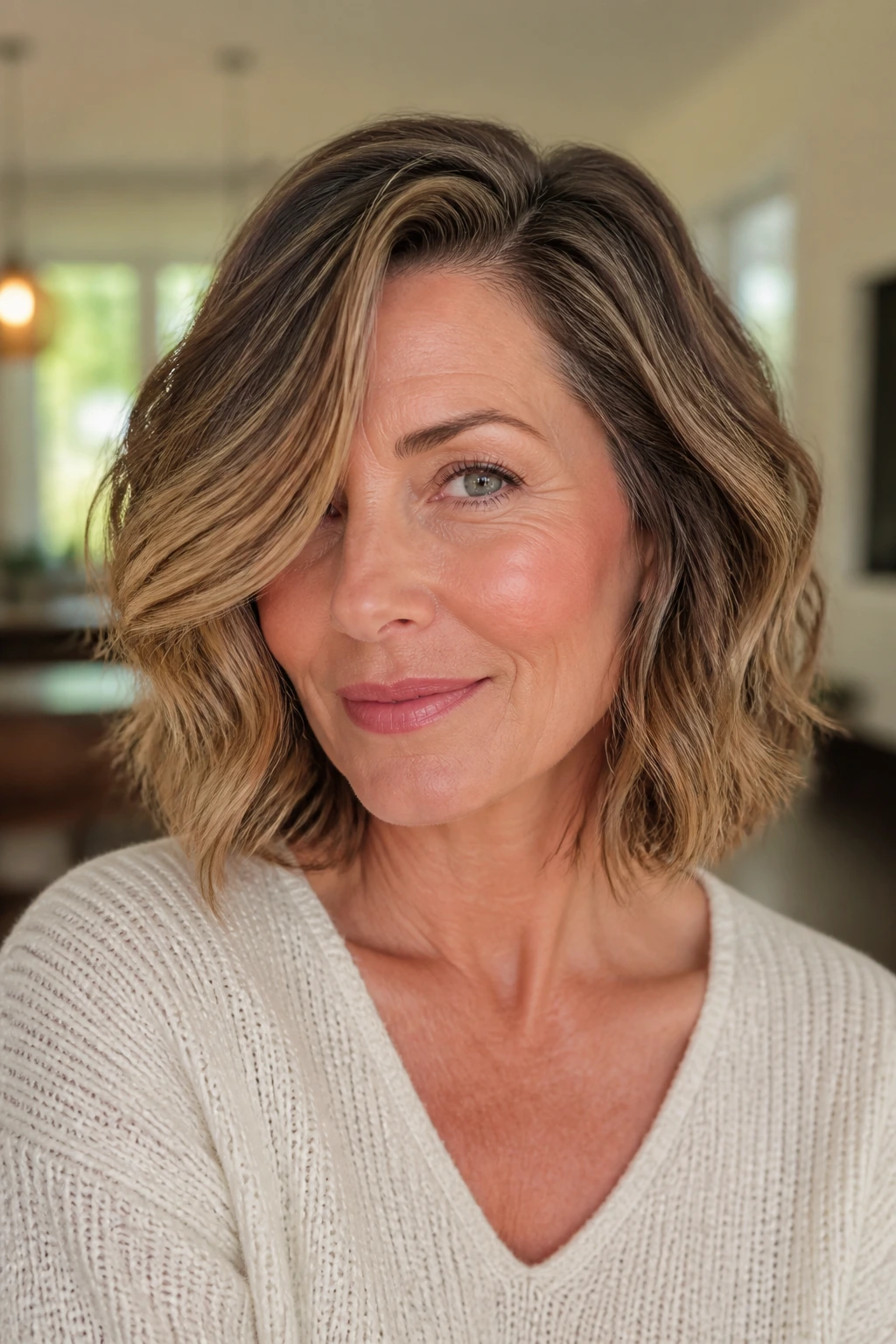
Bring photos, yes, but bring the right kind. One photo should show the length you want; another should show the front pieces or fringe you want. Trying to use a single picture for both can confuse the conversation, and you end up getting the wrong front with the right back, or vice versa.
Say where you want the shortest face-framing layer to land. Cheekbone, lip, chin, collarbone. Those landmarks matter more than salon words like “soft” or “piecey,” which mean different things to different stylists. If you wear glasses, say so. If you air-dry three days a week, say that too. Your cut has to live in your real routine, not in a mirror only.
Talk about your texture
Wavy hair often behaves better when the stylist sees it mostly dry, or at least understands how it dries. A wet cut can be fine, but it should not hide a wave pattern that springs up once the hair is dry. Dense hair, fine hair, and gray hair all need slightly different layering, and the best stylist will adjust the face frame rather than copying one formula.
Be clear about the amount of styling you actually do
If you use a wand once a week, the layers can be a little more shaped. If you do not heat-style at all, the front needs to fall well on its own. That difference decides whether the haircut looks easy or just unfinished.
The Styling Tools That Earn Their Spot

-
1-inch or 1¼-inch curling iron or wand — best for loose bends and front pieces that curve instead of forming tight curls.
-
Round brush, about 2 to 2½ inches — useful for rounding the ends under and lifting the crown without turning the bob into a bubble.
-
Heat protectant spray — non-negotiable if you touch the hair with hot tools; mist it through the mids and ends before drying or waving.
-
Volumizing mousse — a golf-ball size at the roots can keep fine hair from collapsing after it dries.
-
Lightweight leave-in cream — helps wavy or coarse hair stay smooth through the face-framing sections without looking greasy.
-
Sectioning clips — keep the front pieces separate while you work on the rest of the head, which saves you from overcurling everything.
-
Texture spray or dry finishing spray — use it on the mid-lengths only when you want the wave to look piecey rather than freshly blown out.
-
Dry shampoo — especially helpful on day two at the crown and behind the ears, where bob shapes tend to fall flat first.
-
Fine-tooth comb or tail comb — useful for setting a clean side part or lifting the roots before drying.
Smart Product Picks for Waves and Shine
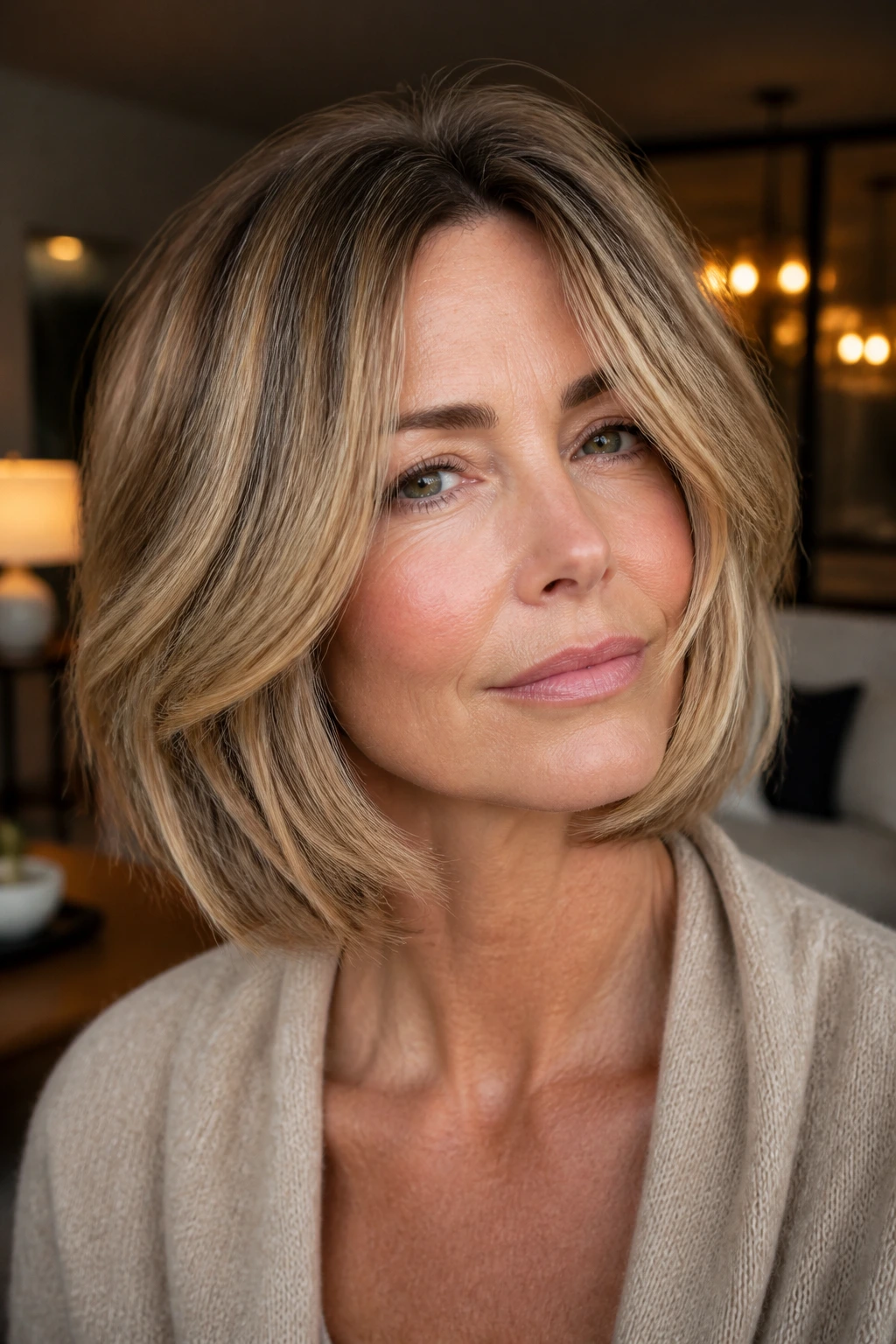
A long wavy bob needs restraint more than it needs a pile of products. Start with a heat protectant if you use hot tools, then choose one main styling product based on your hair type. Fine hair usually likes mousse or a root-lift foam. Thick or coarse hair usually wants a light cream or smoothing lotion from mid-lengths to ends.
Texture spray is useful, but only when it touches the right places. A couple of spritzes through the mid-lengths can give the waves bite. Too much at the roots, and the style goes dull and dry-looking fast. For silver or salt-and-pepper hair, a light shine spray on the surface can make the layers read cleaner without flattening them.
If your hair color is warm or highlighted, a weekly gloss or toning mask can keep the front pieces from looking brassy. If your hair is natural gray, a purple shampoo once every week or two is enough for most heads. Leave it on too long, and the hair starts to take on a bluish cast nobody asked for.
How to Style Long Wavy Bobs Without Overworking Them

Air-dry path: Work a small amount of mousse or curl cream through damp hair, then twist the front two sections away from the face while they dry. Don’t touch them every five minutes. That’s how you get frizz where the cheekbone layer should live.
Blowout path: Rough-dry the hair about 70 percent, then use a round brush only on the crown, the face frame, and the last two inches of the ends. If you want a bend, wrap the front pieces around a wand for 5 to 8 seconds per section and leave the ends slightly straighter so the cut looks modern, not curled to the tips.
Second-day rescue: Mist the front with water, add a pea-sized dab of cream to the ends, and re-bend just the face-framing layers. Skip the full restart. A little reset is usually enough.
If your hair is gray or coarse: keep serum off the roots and press it only onto the surface and ends. That gives shine without turning the bob greasy by noon.
Common Mistakes That Make the Cut Look Heavier
-
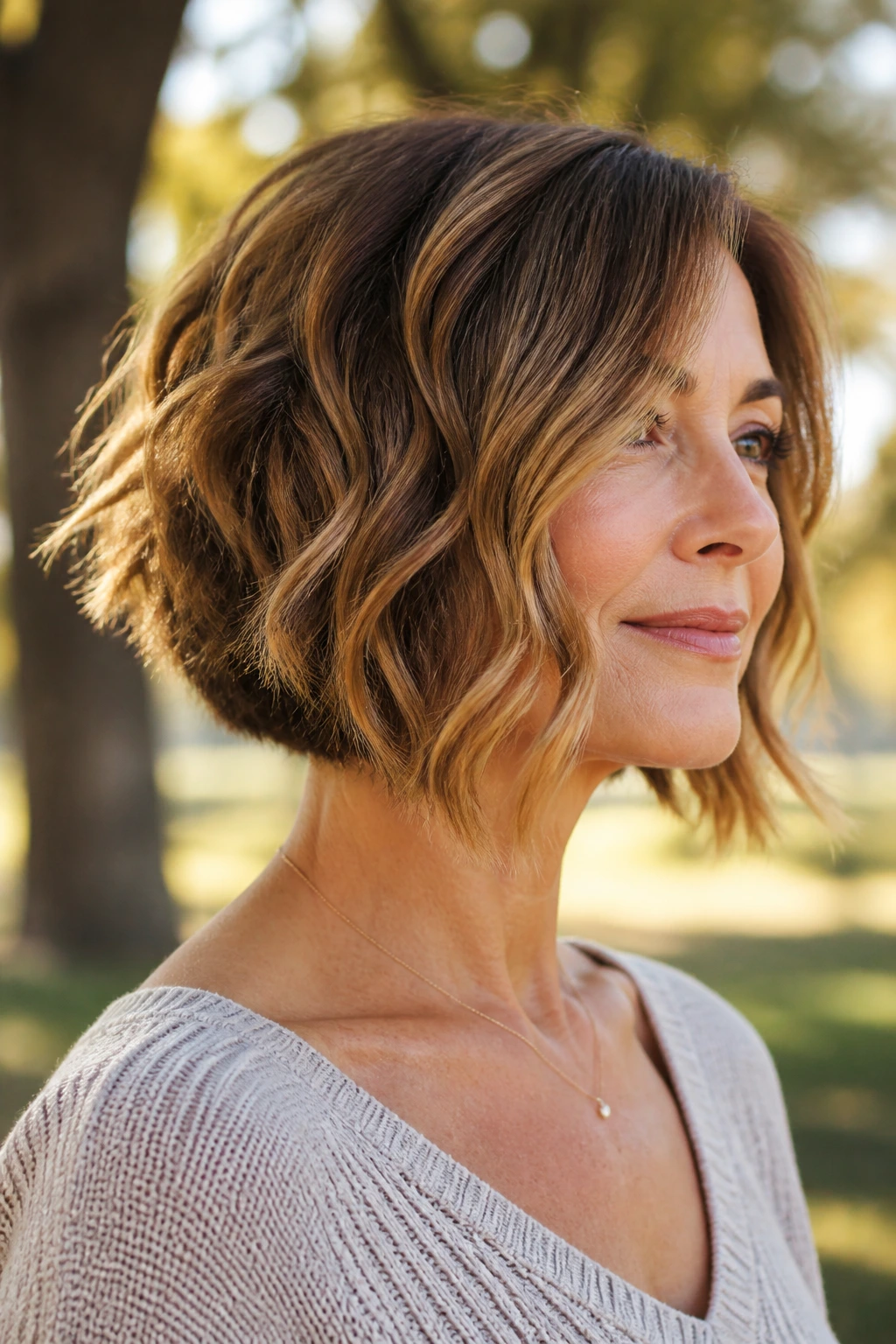
Starting the face frame too high — the symptom is a puffy halo or a choppy outline around the temples. The fix is to keep the shortest pieces lower, usually at cheekbone or lip level.
-
Curling every section the same way — the wave turns stiff and pageant-like. Alternate directions, leave the last inch straighter, and break the curls up with your fingers once the hair cools.
-
Using heavy oil at the roots — the bob falls flat and the crown loses lift. Put the oil from mid-lengths down, then use a separate shine spray if the top needs polish.
-
Letting the cut grow too long between trims — the ends start to bend inward in a bulky way, especially on thick hair. Trim every 8 to 10 weeks if you want the shape to stay clean.
-
Over-layering fine hair — the sides can look thin and stringy. Fine strands usually need a stronger perimeter and less carving through the interior.
Variations and Adaptations to Try
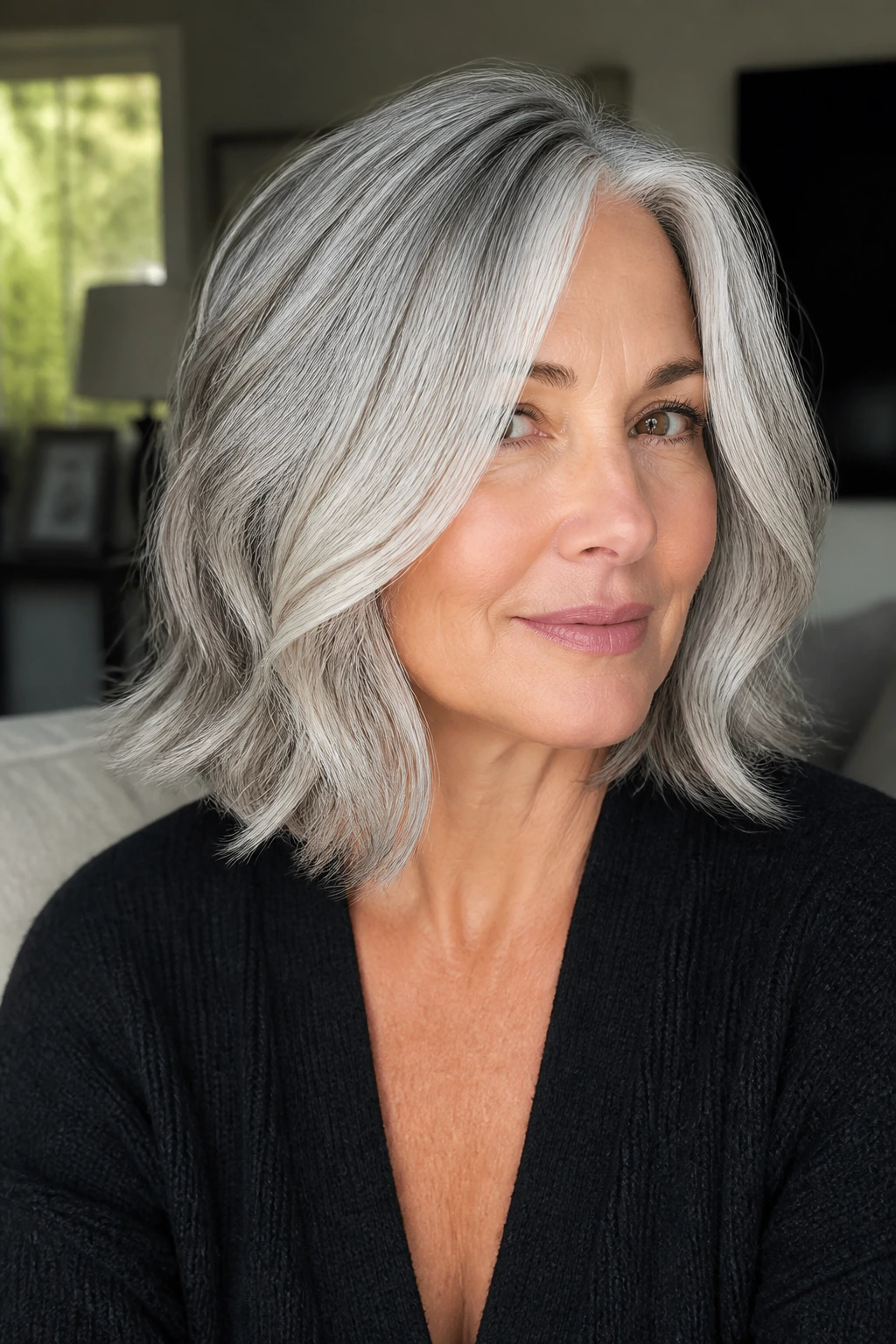
The Silver Sweep: Let the gray grow in and keep the front layers long. A clear gloss or toner every few weeks keeps the silver from looking dull, and the longer face frame helps the hair move instead of puffing out.
The Fine-Hair Float: Keep the perimeter blunt and the layers minimal. This version uses mousse at the roots and a light bend through the front so fine hair gets body without losing density.
The Thick-Hair Release: Ask for internal weight removal and a clean outline. The front pieces should fall in a soft diagonal so the bob doesn’t expand around the cheeks.
The Glasses-Ready Curve: Keep the shortest face-framing pieces above the frame arms and the sides slightly tucked. That keeps the cut from fighting your glasses every time you turn your head.
The Grow-Out Wave: If you’re moving out of a shorter bob, leave the front long and let the sides soften gradually. The haircut keeps its shape while the ends catch up, which saves you from that awkward in-between stage.
Keeping the Shape Between Salon Visits
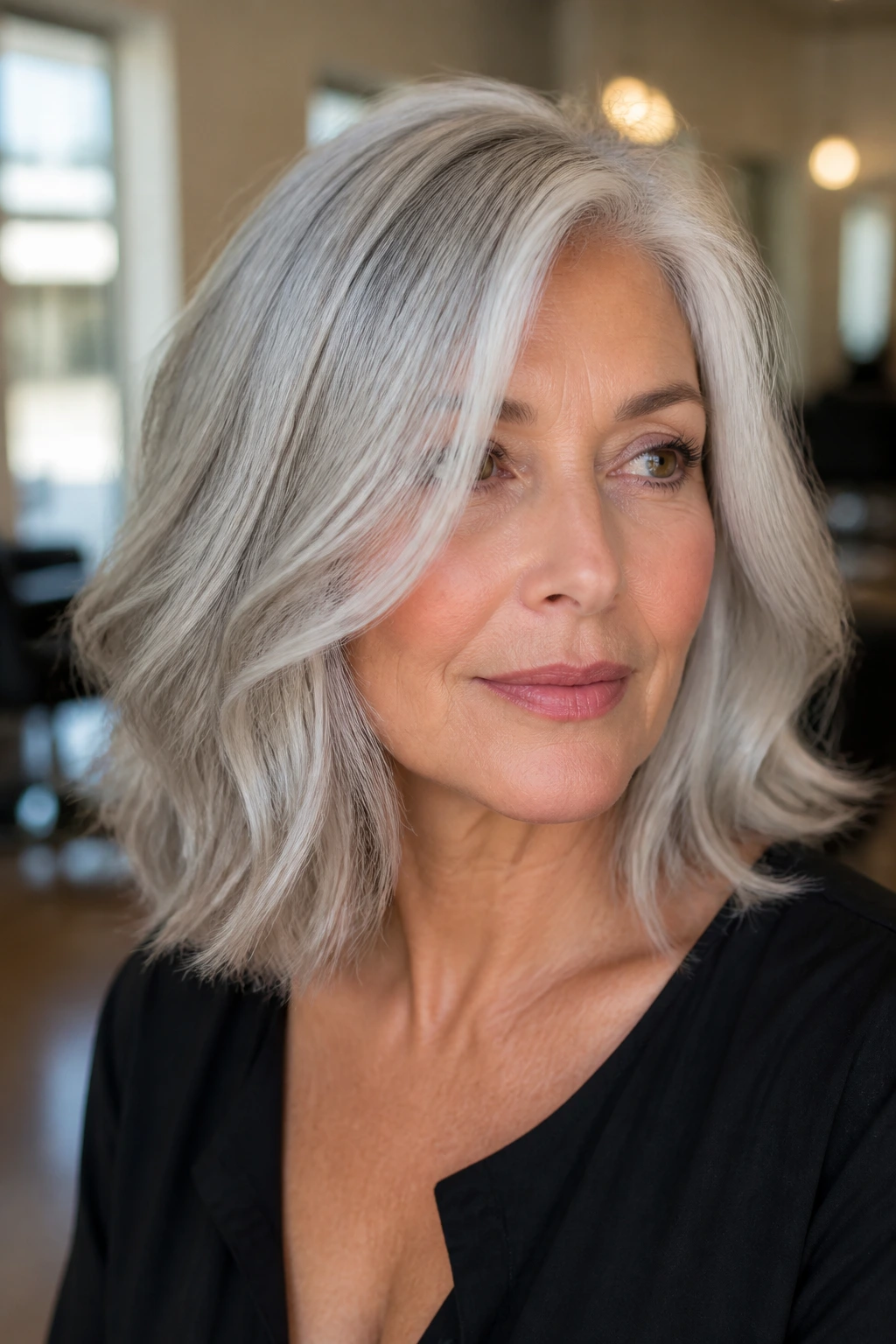
A long wavy bob usually needs trims every 8 to 10 weeks if you want the face-framing layers to stay visible. If your hair grows slowly or you’re happy with a little extra length, you can stretch that a bit, but the front tends to lose its shape before the back does.
Wash rhythm matters too. Most people do best somewhere around every 2 to 4 days, depending on scalp oil and product use. A dry shampoo at the roots on day two can keep the crown from sinking. If your hair is highlighted or gray, a clarifying wash once every 2 to 4 weeks helps keep buildup from dulling the shine.
At night, a silk pillowcase or satin bonnet cuts down on the bend flattening at the face. If you wake up with one side kinked, mist that section, twist it once around your finger, and let it dry for a few minutes. The shape comes back faster than people expect.
Frequently Asked Questions
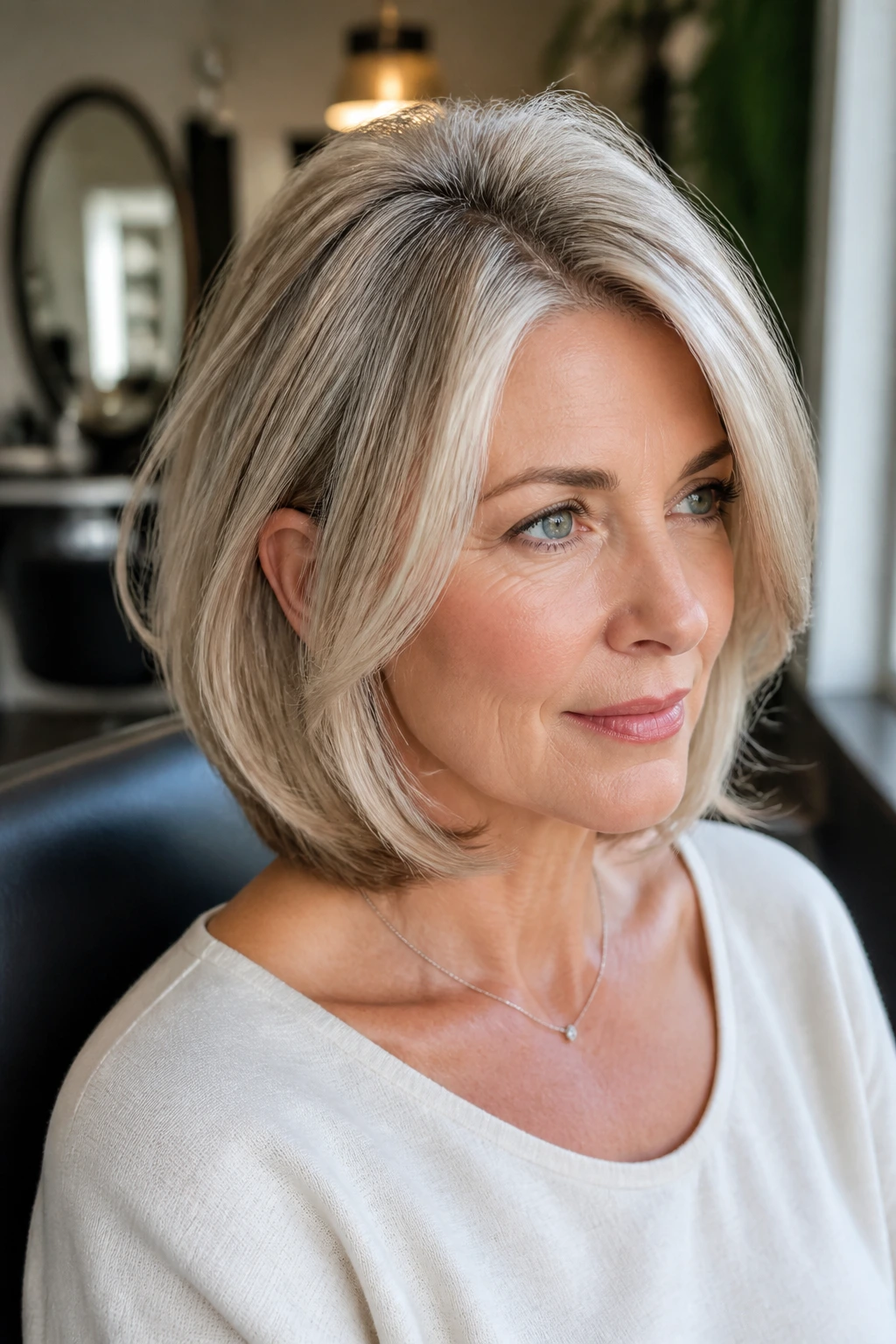
Will a long wavy bob make my face look wider?
Not if the front layers are placed well. Layers that start around the cheekbone or lip usually break up width rather than adding to it, especially with a side part or a soft bend away from the face.
Are face-framing layers a bad idea for fine hair?
Only if they’re cut too high or too aggressively. Fine hair usually does better with long, gentle face-framing pieces and a stronger perimeter so the ends still look full.
How short should the front pieces be?
For most faces, cheekbone to lip length is the safest range. Shorter than that can work, but it needs careful styling and usually a more specific reason, like opening the face around glasses.
Can I wear this cut with glasses?
Yes, and it often looks better with them than a blunt bob does. Keep the side pieces slightly longer than the frame arms and ask the stylist to check the balance while your glasses are on.
What if my hair is thick and puffy?
Ask for weight removal inside the haircut, not short layers everywhere. Thick hair needs room to move, but it still needs a solid outer line so the shape doesn’t balloon at the sides.
Can I air-dry a long wavy bob?
Absolutely. Use a light cream or mousse, twist the front pieces away from the face, and leave the hair alone until it’s mostly dry. Touching it too much while it dries is what creates frizz.
How often should I trim it?
Every 8 to 10 weeks is a good target if you want the bob to keep its clean outline. If you’re growing it out, you can stretch a little longer, but the face-framing layers will lose their shape first.
Does gray hair work with this style?
Very well. Gray and silver hair show movement quickly, and the long bob keeps that movement looking clean instead of bulky. A little shine spray on the surface helps the layers stand out.
A Bob That Keeps Its Movement

The nice thing about this haircut family is that it doesn’t ask for one fixed mood. It can be soft, sharp, airy, polished, or a little undone, and the face-framing layers decide which direction it leans.
That matters after 50, when hair often changes texture, density, and patience level all at once. A long wavy bob gives you shape without trapping you in a high-maintenance routine, and the front layers keep the whole thing from settling into one flat line.
Bring one clear photo to the salon, point to the front pieces you want, and let the rest of the cut stay a little longer than your instinct might say. That extra inch or two is usually what keeps the style moving.