



A good bob on a round face has one job: create lines where the face mostly gives you curve. With wavy hair, that gets easier and trickier at the same time. Easier, because the wave adds movement for free. Trickier, because the wrong cut can puff right out at the cheeks and stop the eye exactly where you don’t want it to stop.
That’s why cute bobs for round faces and wavy hair are never just “short hair.” The best ones skim the jaw, fall below the chin, angle forward, or break up the perimeter so the cut reads longer and lighter. A clean, blunt line can work too, but only when the length and texture are doing real work. Otherwise the result is a little too square in the wrong places and a little too round in the others.
Get the shape right, though, and the whole thing changes. Air-dried waves sit in soft bends instead of frizzing into a triangle. A side part gives lift at the crown. A little length in front keeps the face from looking wider. And suddenly the bob looks intentional, not like a compromise between “short” and “safe.”
Why Cute Bobs for Round Faces and Wavy Hair Work So Well

-
They build vertical lines: A bob that lands below the chin or angles forward pulls the eye down, which helps balance the width of a round face.
-
They let waves do the shaping: Wavy hair already has bend and body, so a good cut only has to guide the movement instead of forcing it.
-
They can soften the cheeks: Face-framing pieces that start near the mouth or collarbone keep the eye moving past the cheeks instead of parking there.
-
They air-dry with less fuss: A smart bob doesn’t need a round brush marathon; a scrunch, a diffuser, or a quick bend with a wand is often enough.
-
They can wear bangs without heaviness: Curtain bangs, side-swept fringe, and wispy front pieces give structure without building a thick shelf across the forehead.
The real trick is placement. On a round face, the widest point of the haircut should usually sit below the cheekbone, not right on it. On wavy hair, the bulk should be removed inside the shape, not carved away from the outside until the ends look thin and stringy.
I keep coming back to that because it matters. A bob isn’t a single silhouette. It’s a line, a weight distribution, and a way of letting the wave fall.
How to Pick the Right Length Before You Cut Anything
The safest starting point for a round face is usually the space between the jaw and the collarbone. That doesn’t mean you need a long bob every time. It means the cut should have somewhere to go. If your waves spring up an inch or two when they dry, the finished length will be shorter than it looks in the chair.
A chin-length bob can work, but only when the front pieces are softened or lengthened. If the ends stop right at the fullest part of your cheeks, the cut can feel boxy fast. Longer fronts, a side part, or a gentle angle usually fixes that.
Loose waves, dense waves, and everything between
Loose S-waves can handle a cleaner outline. Dense waves usually need more internal movement so the cut doesn’t puff out. Fine waves often want a blunt edge with a little texture inside, because too many layers can leave the ends wispy and flat.
The simplest salon rule
Ask yourself one question: does the haircut create a downward line from cheek to jaw, or does it stop and spread out? If it spreads out, keep adjusting. If it falls through the face, you’re on the right track.
What to Tell Your Stylist in the Chair

Bring photos, yes, but bring the right photos. One front view tells almost nothing. You need a front shot, a side shot, and one image taken with the hair dry or at least air-dried, because wavy hair can look 2 inches longer when it’s wet and combed straight.
Say where your waves swell. Say whether the widest part of your face is at the cheeks or lower at the jaw. And if you’ve had a bob before, tell them what bothered you most: too round, too poufy, too triangle-shaped, too flat at the crown. That shorthand saves a lot of guessing.
Be specific about the finish too. Do you want the ends blunt and polished, or broken up with point-cutting? Do you part your hair on one side because your natural part does a weird lift on the other side? That’s not a small detail. It changes the whole read of the haircut.
1. Soft Chin-Length Bob with a Deep Side Part
A deep side part changes the mood of this cut fast. Instead of sitting flat and symmetrical, the bob gets a little lift at the crown and a soft diagonal across the face. On a round face, that diagonal matters more than people think.
Why it flatters
The length should hit just below the chin, not right on it. That small drop keeps the jaw line open and gives the wave room to bend inward instead of puffing out at the cheeks. I’d keep the ends lightly beveled, not razor-thin.
- Best for loose to medium waves
- Works well when you want easy styling
- Ask for a side part that lands off the arch of your brow
Best move: tuck one side behind the ear and let the other side fall. That tiny asymmetry does a lot.
2. French Bob with Curtain Fringe
A French bob can be gorgeous on a round face when the fringe is light and the length stays a touch below the cheekbone. The cut should feel airy, not packed with weight. Heavy blunt bangs can pin the face wider. Light curtain fringe? Different story.
The middle split in the fringe creates two narrow vertical lines, which helps open up the forehead and keeps the eye moving. On wavy hair, the fringe should be cut a bit longer than you think, because waves spring up and tuck themselves into the brow line.
How to wear it
Let the fringe dry with a bend, not a perfect swoop. A little grit spray at the roots keeps it from lying like a helmet. The rest of the bob can stay soft and piecey.
3. Collarbone Lob with Invisible Layers
If you want the easiest answer in the room, start here. A collarbone lob gives round faces the length they usually need, and wavy hair has enough room to move without ballooning at the cheeks. It’s the least fussy option in the bunch.
Invisible layers are the point. You want movement inside the shape, not obvious steps that break up the outline. That keeps the lob full at the ends, which is where wavy hair can look a little stringy if the cut gets too thin.
This is the one I recommend when someone says they want a bob but isn’t ready to lose the safety net of length. It still reads as a bob. It just doesn’t behave like one that’s trying too hard.
4. Angled Bob with Longer Front Pieces
This cut does a lot of face-shaping without much drama. Shorter in the back, longer in the front, and the line moves diagonally instead of horizontally. On a round face, that diagonal gives the illusion of length without needing bangs or severe layering.
The front pieces should land somewhere between the mouth and the collarbone, depending on how strong your wave pattern is. If your waves spring up hard, leave more length. If they fall looser, you can go a little shorter.
What to ask for
- A soft angle, not a sharp slash
- Length that falls past the cheekbones
- Interior weight removal so the back doesn’t stack too heavily
5. Tousled Italian Bob
The Italian bob has a fuller, richer shape, and that’s why it works when the ends are kept soft and the length is controlled. It should feel plush, not puffy. On a round face, the magic is in keeping the bulk low and the movement loose.
Waves look especially good in this cut because they create that expensive-looking bend through the mids without needing much heat. The danger is over-styling it into a giant curve at the cheeks. Keep the crown a little lifted and the ends a little broken up.
If you like hair that looks finished after 10 minutes instead of 45, this is a strong pick.
6. Stacked Bob with Soft Graduation
A stacked bob can turn ugly fast on a round face if the graduation is too steep. But soften the nape and keep the top layers longer, and you get lift without a mushroom shape. That’s the difference between a tailored bob and a helmet.
The back should hug the neck instead of flaring. The front should still come forward enough to narrow the face visually. If your stylist starts pushing for a very short crown, slow the conversation down. That’s the part that can get too round, too quickly.
7. Choppy Lob with Piecey Ends
This one is for people who want movement to do the heavy lifting. Choppy ends stop the cut from drawing a hard line across the face, and the extra length keeps the silhouette from widening at the cheeks. Wavy hair loves a piecey edge because it already wants separation.
A point-cut finish helps here. So does a little internal debulking near the mids, especially if your waves clump thickly. Keep the layers scattered, not stacked. The whole point is to make the wave look lived-in, not overworked.
8. Asymmetrical Bob

One side longer than the other sounds bold, but on a round face it can be a useful little trick. The longer side creates a diagonal line that breaks up the face’s symmetry in a good way. Even a subtle asymmetry can do the job.
I like this cut best when the shorter side still clears the jaw and the longer side falls closer to the collarbone. Too much difference can feel gimmicky. Too little and you lose the shape altogether.
Small detail, big payoff
Keep the part slightly off-center. That gives the cut a cleaner fall and keeps the waves from collapsing into a perfect round curve.
9. Jaw-Skimming Bob with Tapered Ends
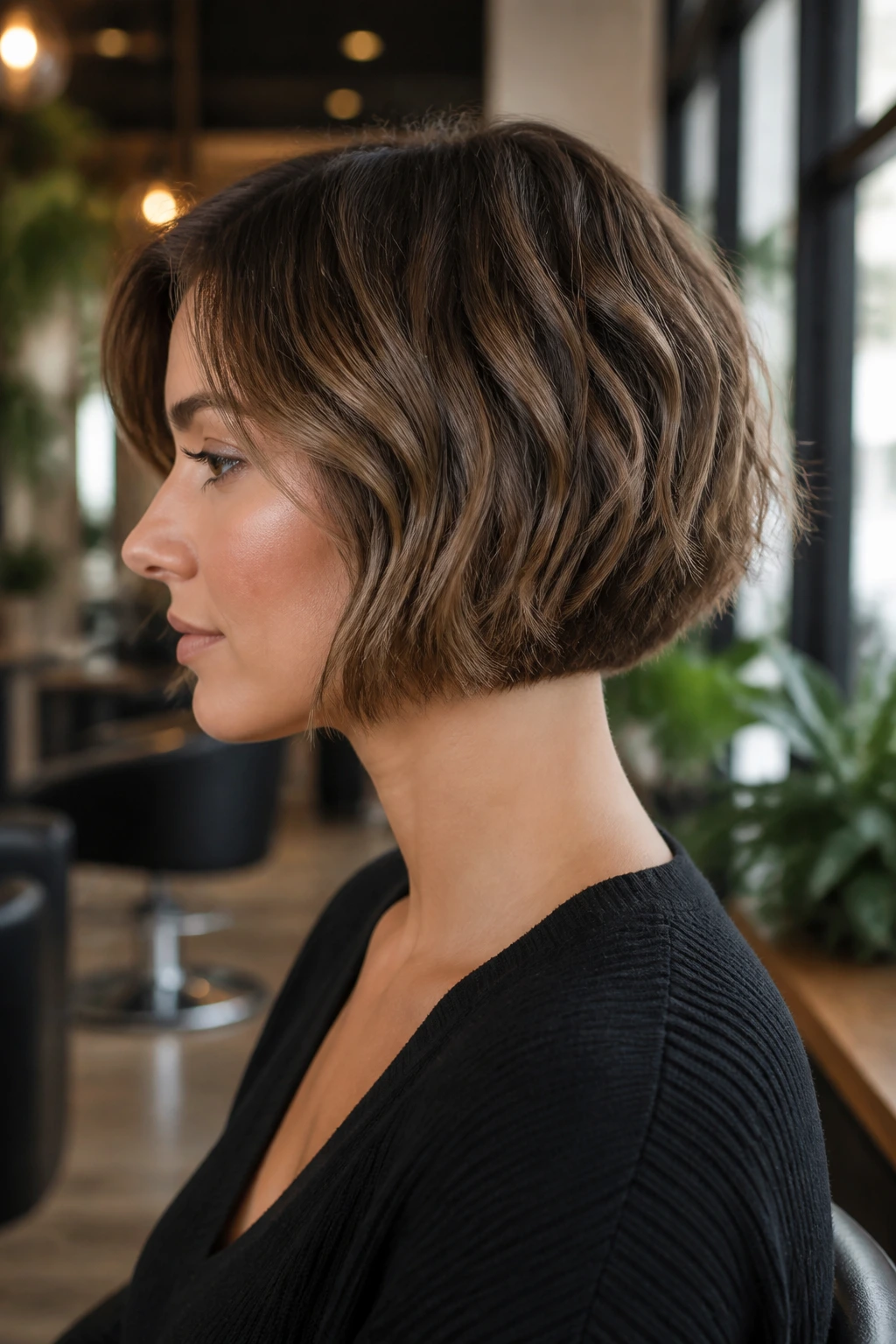
There’s a narrow window where this cut works, and when it lands, it looks sharp. The hem should skim the jaw, then taper away from the cheeks so the face doesn’t box in. If the cut lands right on the fullest part of the jaw and stays heavy, it widens the face instead of lengthening it.
This style needs a careful hand. The tapering should happen through the last 1 to 2 inches, not through the whole haircut. That way the bob still has shape when your waves dry and spread out a little.
10. Side-Swept Fringe Bob
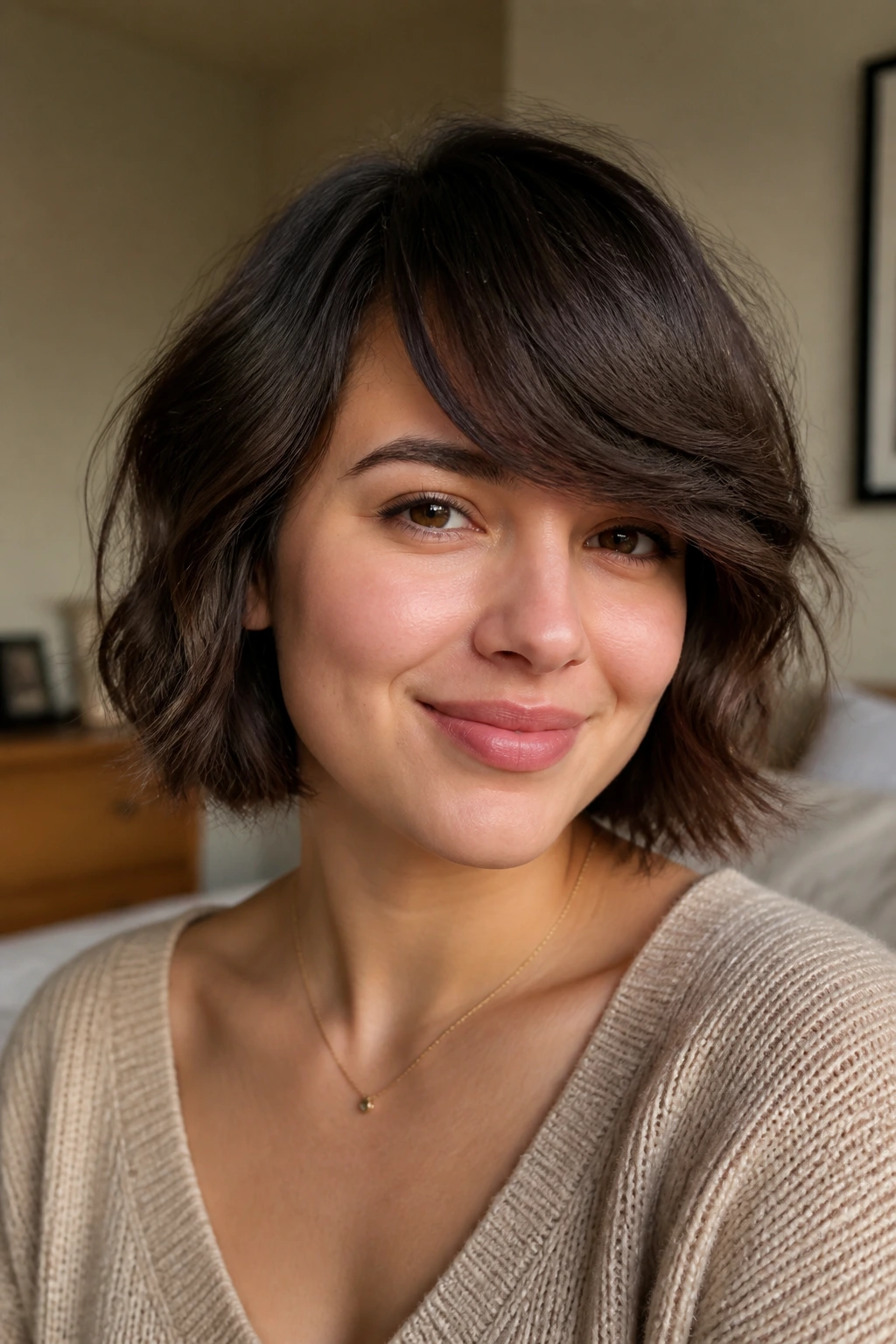
A side-swept fringe gives the face a diagonal break without committing to full bangs. On wavy hair, that fringe can live somewhere between soft and dramatic, which is a useful place to be. It also keeps the forehead from looking too open if you like a little softness around the eyes.
The rest of the bob should stay simple. If the fringe is busy and the bob is busy, the whole thing starts to feel heavy. Keep the line underneath controlled and let the fringe do one job only: pull the eye across, not straight out.
11. Rounded Bob with Internal Layers
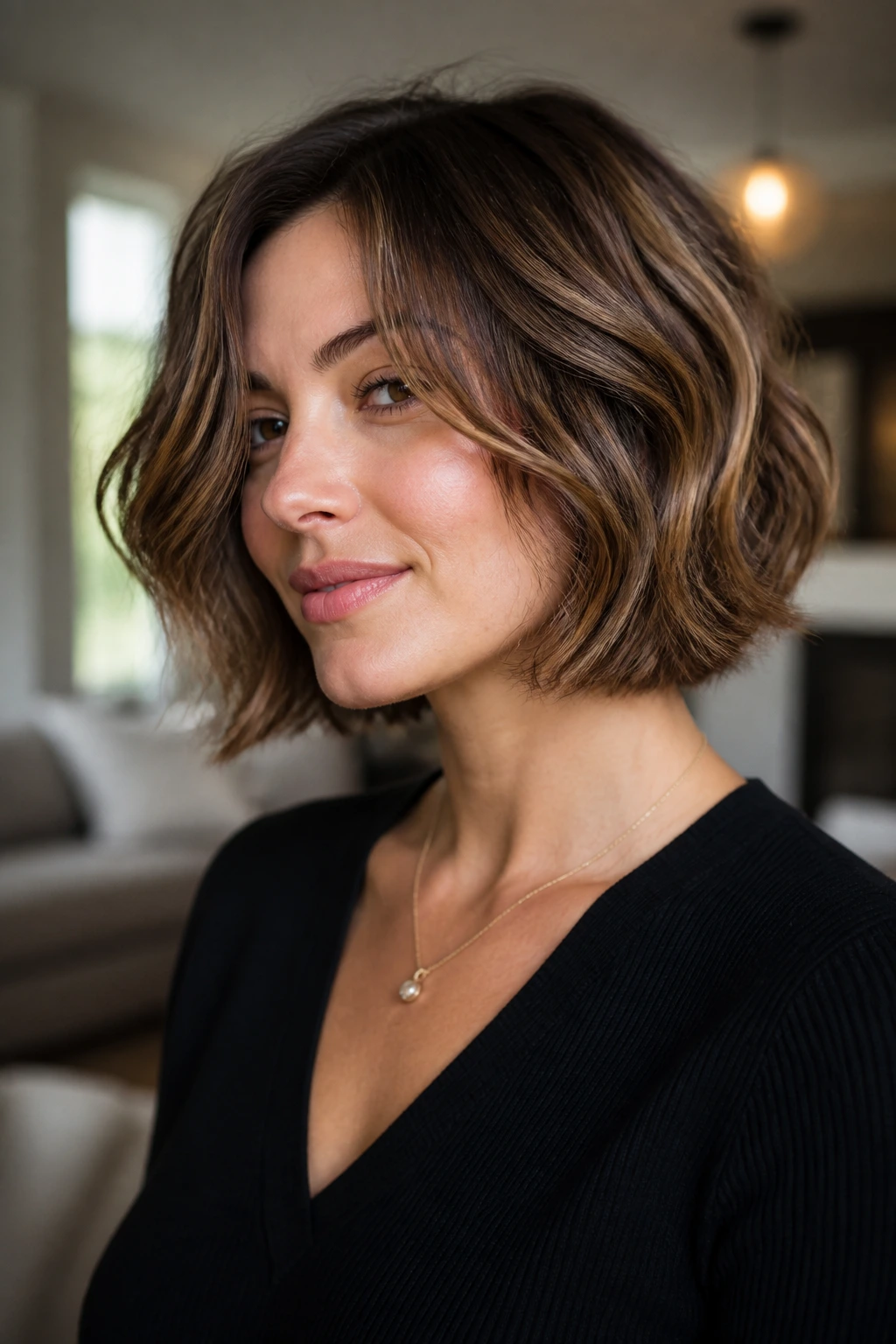
This sounds counterintuitive, because round face plus round bob feels like a bad math problem. But a rounded bob can flatter if the roundness lives inside the cut, not at the cheeks. Internal layers let the wave bend in a soft arc without creating width at the perimeter.
Think of it as structure under the surface. You want the outside line to stay clean while the inside moves. That gives the hair a little cushion and keeps the style from turning into a flat sheet or a puffball.
12. Airy Blunt Bob with Texture

A blunt bob is not off limits. It just needs texture inside the shape so the ends don’t land like a ruler across the widest part of the face. On wavy hair, a blunt perimeter with light texture underneath can look crisp without feeling severe.
This works especially well if your waves are fine and tend to lose body at the ends. The blunt line gives the hair some visual weight, while the texture keeps it from reading heavy. Use a diffuser or a bend from a flat iron, not both at once. Too much styling muddies the shape.
13. Razor-Cut Bob with Cheekbone Pieces

Razor-cut edges soften quickly, which can be helpful on round faces when the hair has a lot of natural body. The cheekbone pieces should fall just under the widest part of the face, then drift toward the jaw. That tiny shift changes the whole outline.
Good for hair that gets bulky fast
- Thick, wavy hair that swells at the sides
- Cuts that need movement without stacked layers
- People who like a slightly undone finish
Use a light styling cream, not a heavy oil. Razor-cut ends can collapse if you drown them.
14. Inverted Lob with Soft Nape Lift
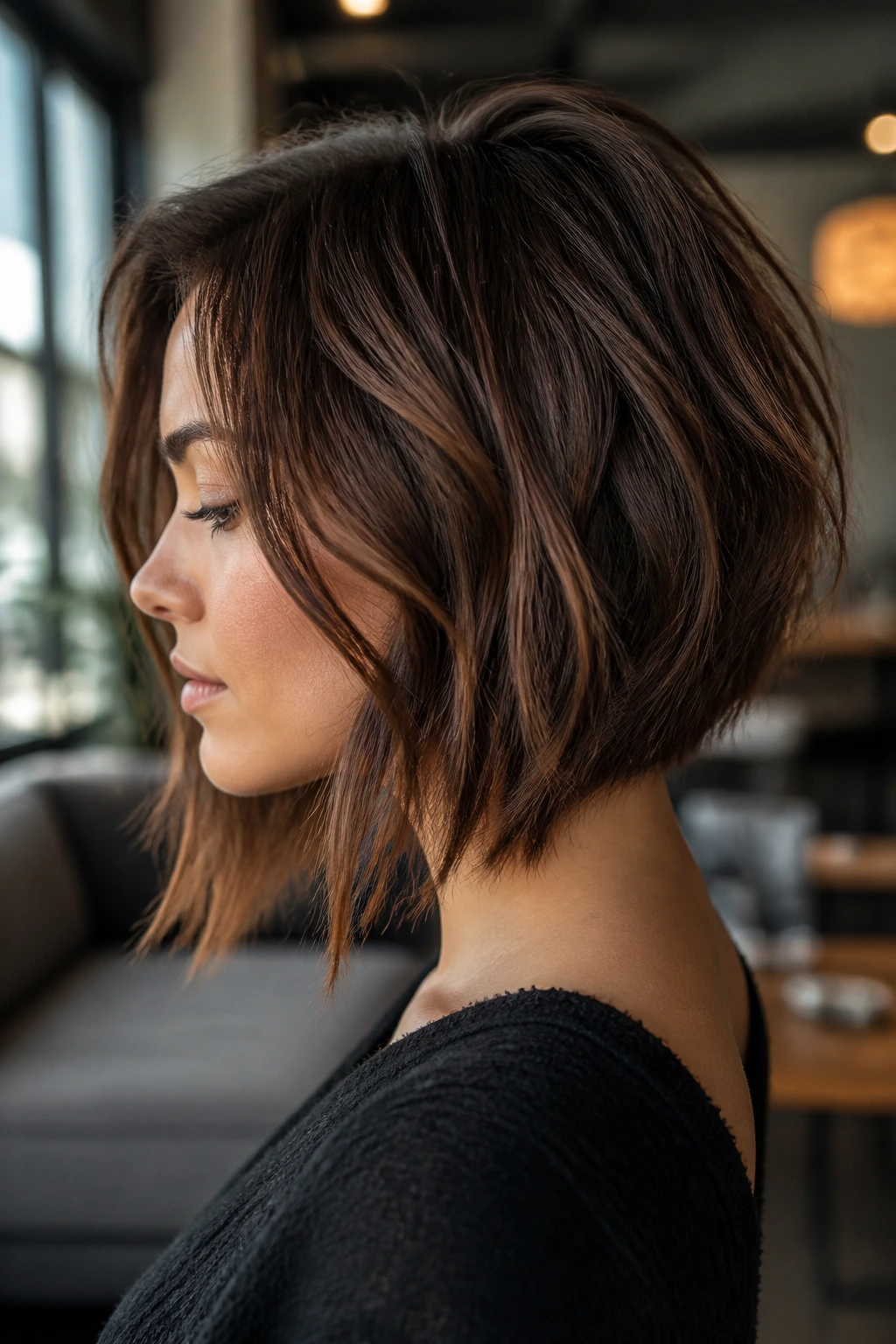
An inverted lob is basically the angled bob’s calmer cousin. The back lifts a little at the nape, the front stays longer, and the whole thing creates a forward line that helps lengthen a round face. The key is softness. Not every inverted cut needs to look dramatic.
This is one of my favorites for wavy hair that wants shape but not too much layering. The hair moves, the nape stays neat, and the front does the slimming work. If you want something polished enough for work but not stiff, this sits in a nice middle zone.
15. Shaggy Bob with Feathered Bangs

A shaggy bob is the answer when your waves have a mind of their own. Feathered bangs keep the front from looking heavy, and the textured layers prevent the haircut from puffing out at the cheeks. It’s casual, but not careless.
The line can be a little messy. That’s the point. On a round face, the broken-up texture keeps the eye from locking onto one wide shape. If your hair is dense or frizz-prone, this cut gives you room to live in the hair instead of fighting it.
16. Long Bob with Tucked-Under Ends

The tucked-under end shape is a quiet little cheat code. It narrows the silhouette without cutting the hair too short, and it gives round faces a bit of taper near the jaw. Wavy hair often bends inward there on its own, which makes the finish easier to hold.
This is also one of the better choices if you like tucking one side behind the ear. The length gives you enough slack to do that without exposing the whole face. It’s a practical cut. No drama. Just shape.
17. Curved Bob with a Center Part

A center part can work on a round face if the bob is long enough and the sides don’t puff out. The curve of the bob should narrow slightly toward the jaw, then open again just enough to keep movement through the ends. That gives the face a longer read without making the cut severe.
If your waves are loose, this looks clean and modern. If your waves are tight and springy, you may want a little longer length so the part doesn’t split the face too hard. Center parts are unforgiving when the rest of the haircut is too short. Be honest about that.
18. Micro-Layered Wave Bob

Micro-layers are tiny, quiet layers placed inside the shape so the hair can move without losing density. They work especially well on fine waves that need motion but can’t afford to have the ends thinned to death. The bob still looks full.
This cut is less about showy shape and more about balance. The face stays open, the wave pattern stays soft, and the outline doesn’t spread wide at the cheeks. It’s a smart choice if you want your hair to look better when it air-dries, not only when it’s freshly styled.
19. Soft Wedge Bob with Elongated Front
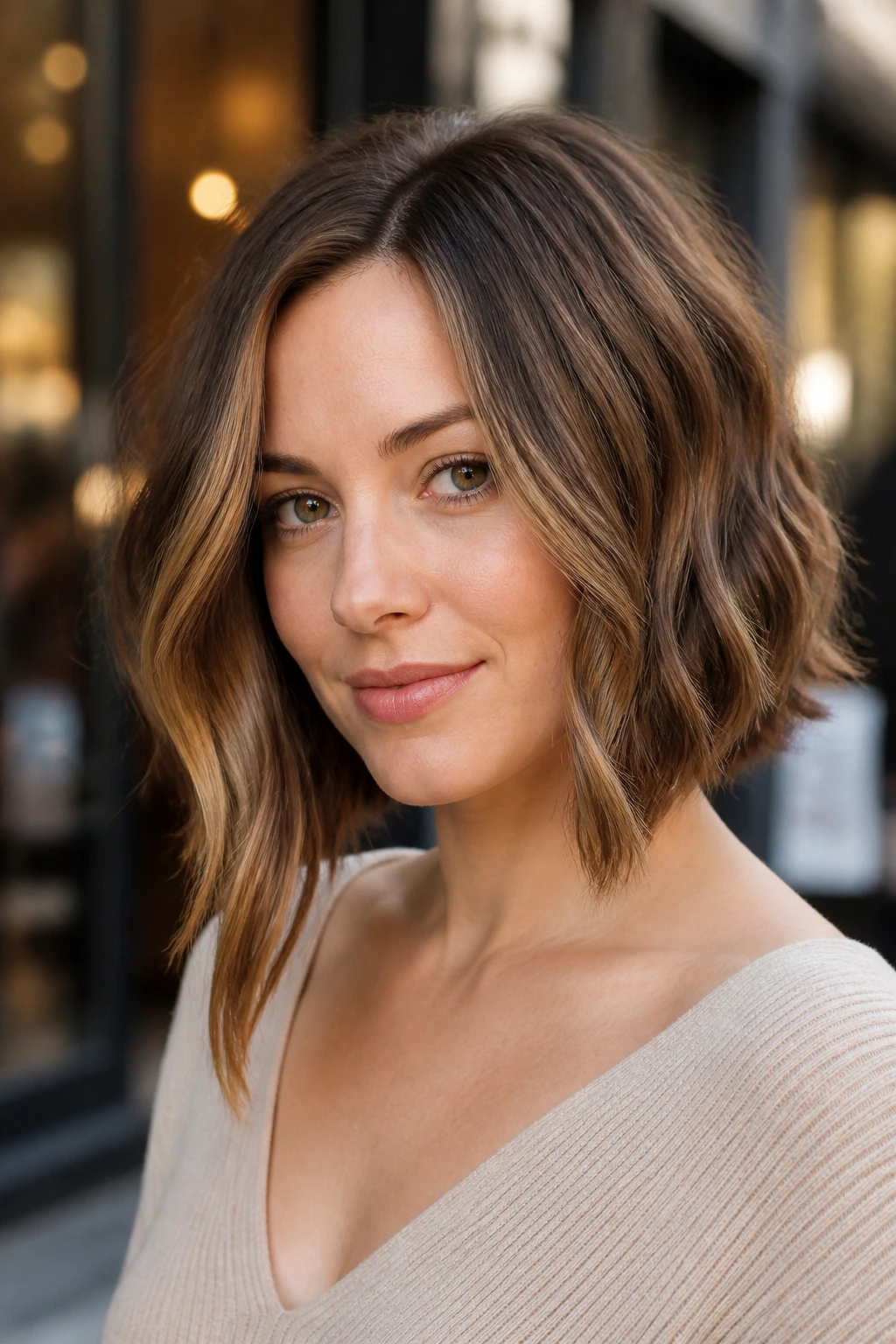
A wedge bob can read too sharp if you let it, but the elongated front changes the game. You still get the tidy back and the controlled lift, but the front stretches the face instead of boxing it in. That long front panel is doing most of the flattering work.
This is a good cut if you like a little edge. The silhouette feels modern without being severe. Keep the back soft around the nape and avoid over-compressing the sides. The wedges that go wrong usually go wrong because they get too round at the widest point.
20. Neck-Length Bob with Curtain Bangs

Neck-length gives the haircut a clean drop, and curtain bangs bring the eye up and out. Together, that creates the vertical movement a round face usually needs. The bangs should be longer in the outer corners so they can fold into the rest of the bob instead of sitting like a separate piece.
Best when you want softness at the front
- Curtain bangs can disguise forehead height or balance fuller cheeks
- The neck-length cut keeps the outline from puffing at the jaw
- Air-drying works well if you twist the fringe lightly while damp
21. Boho Bob with Broken Ends

A boho bob is all about controlled mess. The ends look broken up, the waves stay loose, and the whole haircut feels softer than a structured bob. That looseness helps round faces because the eye doesn’t stop at one hard line.
The trick is restraint. Too much texture and the ends fray. Too little and the cut loses its relaxed feel. I’d keep the perimeter visible but not perfect, with just enough separation to make the waves read as movement instead of bulk.
22. Sleek Lob with Soft Waves

This is the answer for people who want a cleaner finish but still have wavy hair. You smooth the roots a little, leave the mids and ends soft, and let the length do the face-lengthening. It’s polished without turning flat.
A sleek lob works well when the hairline around the cheeks needs calm more than texture. It also gives a round face a long vertical frame, especially if the ends sit near the collarbone. If you hate big styling sessions, this one can be air-dried halfway and finished with a quick bend at the ends.
23. Flipped-End Bob

A tiny flip at the ends can keep a bob from looking heavy. On wavy hair, that flip can happen naturally if the cut has enough movement through the lower half. The result feels playful, but the length still helps the face.
Keep the flip small. You want a soft turn, not a vintage curl unless that’s the whole point. If the sides start to puff, the style loses its balance fast. One clean bend is enough.
24. Face-Framing Lob with Money Pieces
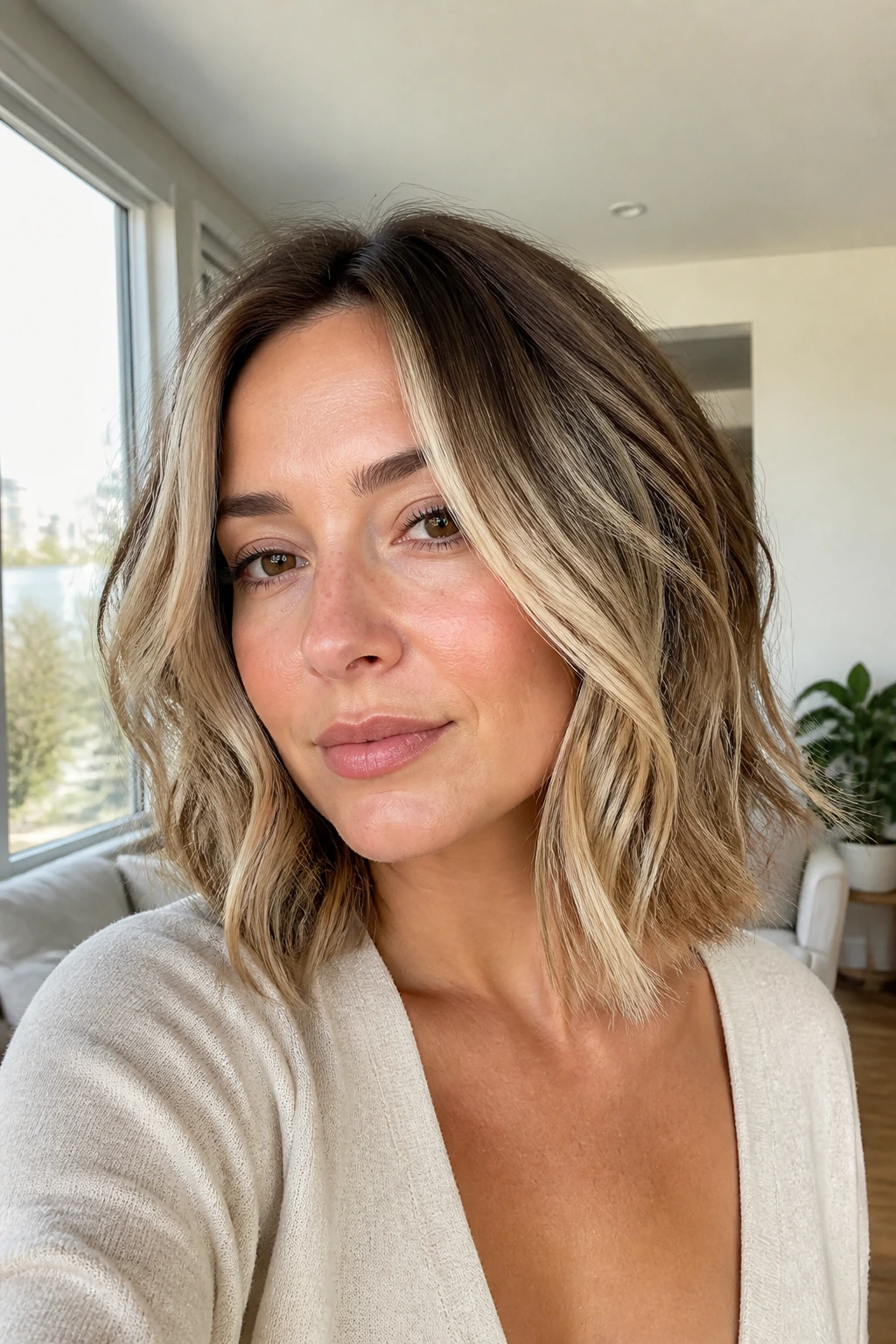
The cut does the main work here, but the face-framing pieces matter because they create a brighter outline around the face. Those pieces should start around the cheekbone and fall toward the collarbone so they don’t land at the widest part of the face. If you add a little lighter color there, the line becomes even clearer.
This is a good choice if you like dimension and don’t want the whole haircut to depend on bangs. Keep the interior light and the front pieces long enough to drape, not flare. The shape should feel open, not busy.
25. Textured Bob with Wispy Baby Bangs

This one is the boldest option in the group, and I’d only do it if the fringe stays narrow and the texture stays airy. Baby bangs can look sharp on a round face when they’re too thick, because they stop the eye high up and make the lower face feel wider by comparison. Wispy bangs avoid that problem.
The bob underneath should be broken up and slightly longer at the front so the fringe has somewhere to land. Think of this as a cut with attitude, not a cut with weight. If the bangs start looking like a shelf, they’re too heavy.
Essential Tools for a Wavy Bob That Behaves
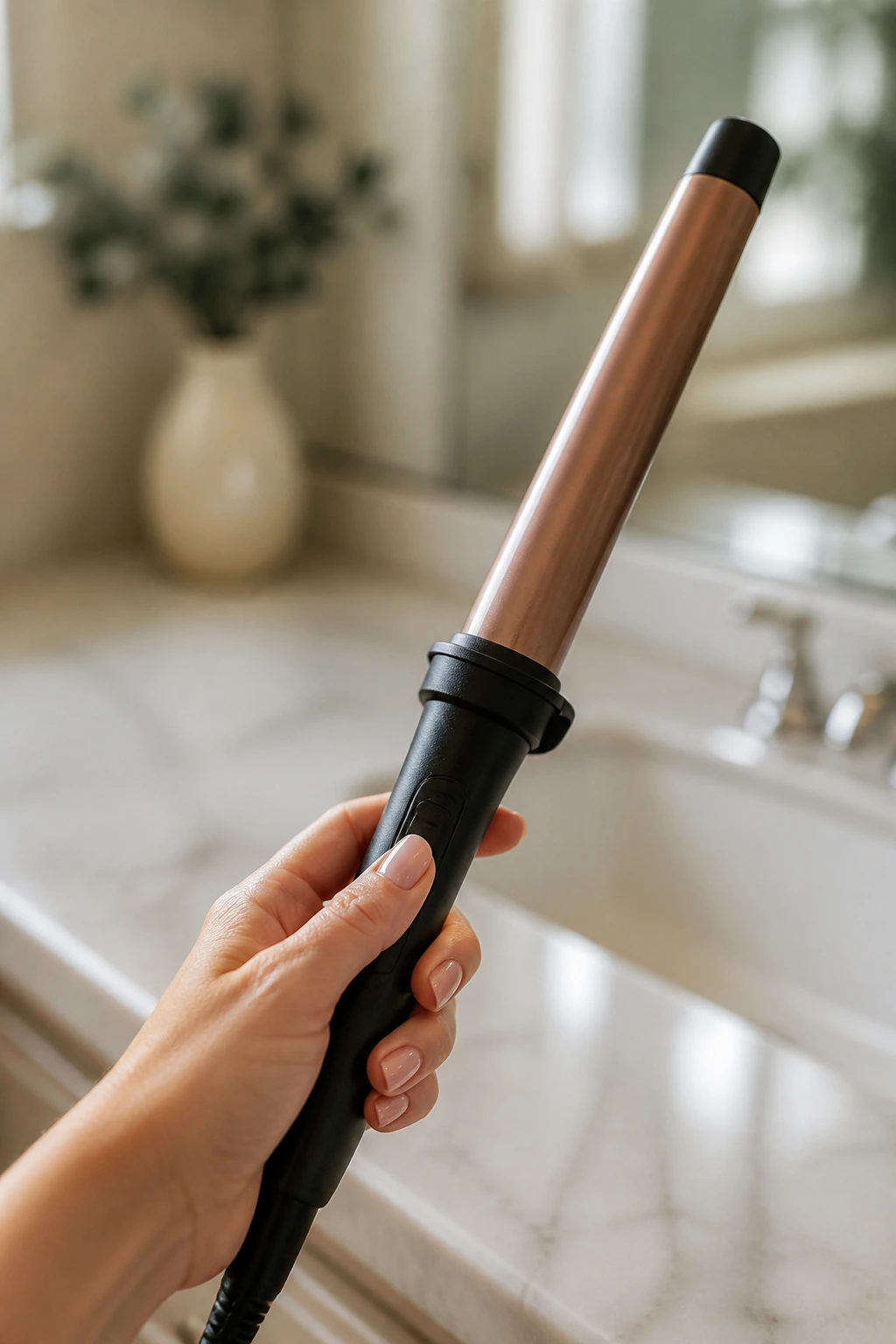
-
A 1 to 1.25-inch curling wand: Useful for refreshing a few front pieces or fixing one side that dried flat.
-
A diffuser attachment: Worth using if your waves get frizzy when air-dried and you want the shape to keep some lift.
-
A wide-tooth comb: Better than a brush on wet waves because it separates tangles without stretching the curl pattern too much.
-
Heat protectant spray: Non-negotiable if you use a flat iron or wand, even if you only touch a few pieces.
-
Texturizing spray or light mousse: Helps hold a piecey bob without making the ends greasy.
-
Duckbill clips: Handy for setting a side part or clipping the fringe while it cools.
-
Microfiber towel or old T-shirt: Keeps the wave clumps intact and cuts down on frizz after washing.
How to Style These Bobs Without Flattening the Wave

The best styling routine for a wavy bob starts before the hair is dry. Squeeze out water with a microfiber towel, add a light mousse or curl cream from mids to ends, and resist the urge to rake through it too much. Too much combing stretches the wave and makes the bob look wider.
If you diffuse, keep the airflow low and tip your head only enough to encourage lift at the roots. Stop when the hair is about 80 percent dry and let the rest finish on its own. That keeps the ends from puffing into a triangle.
Three ways to finish the shape
- Air-dry: Best for loose, naturally cooperative waves. Scrunch once or twice, then leave it alone.
- Diffuse: Best when you need root lift or live in humidity.
- Spot-style: Best when only the front or crown needs help. Fix the problem pieces, not the whole head.
A small amount of serum on the ends can calm frizz, but don’t put it near the cheeks. That’s where the bob can start to look too heavy.
Shape-Savers: Small Tricks That Change the Whole Cut

A side part is the easiest shape-saver in the book. It doesn’t need to be dramatic. Even an inch off center can add height at the crown and keep the haircut from sitting flat against the face.
Face-framing pieces are the second trick, and they matter more than people think. If they start too short, they can widen the face. If they start around the mouth or lower, they pull the eye downward and make the whole bob feel slimmer.
One more thing
If your waves puff at the sides, ask for weight removal inside the shape, not on the perimeter. That keeps the line strong. Weak ends on wavy hair look unfinished fast.
Common Mistakes That Make a Bob Look Wider
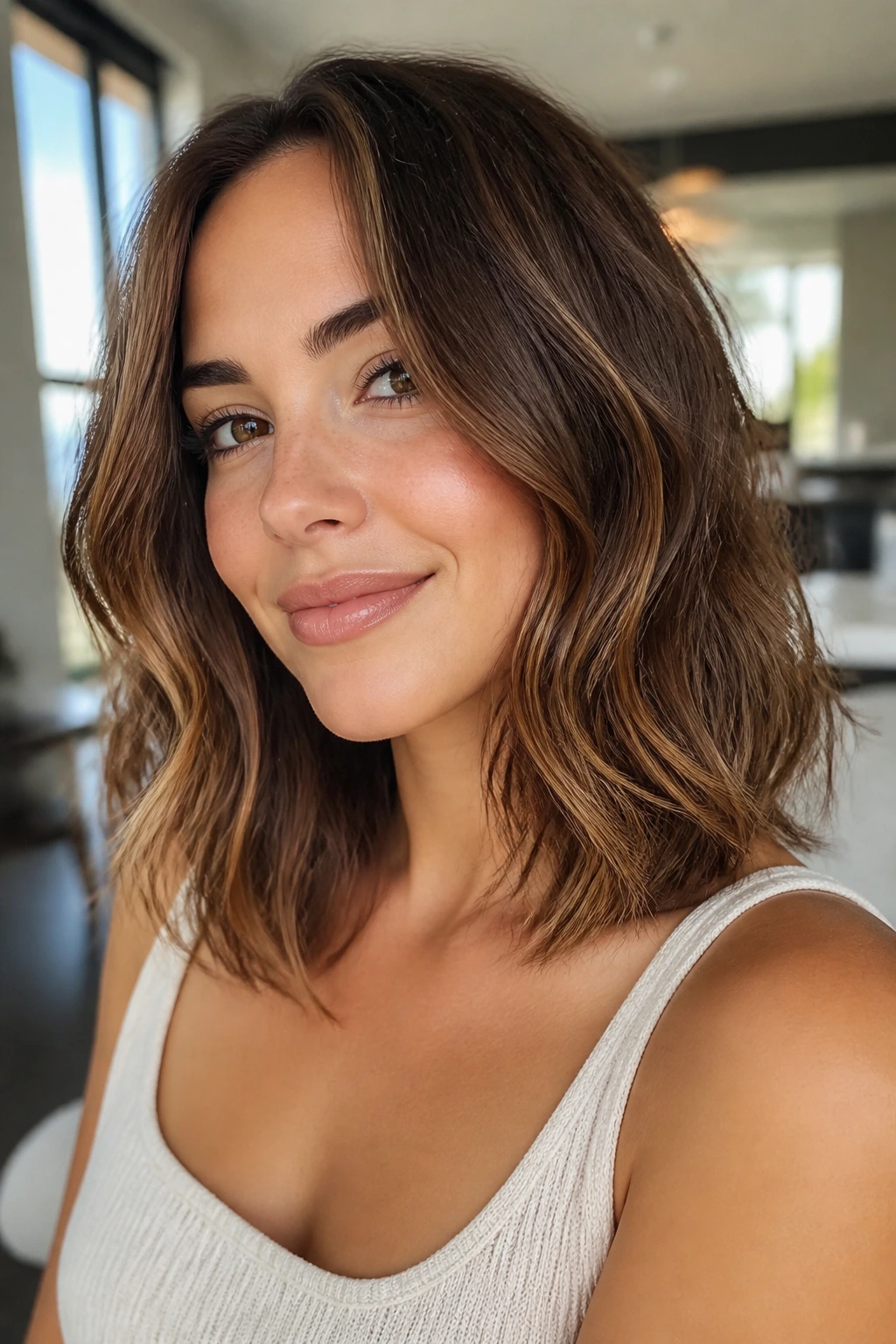
-
Cutting the length right at the cheekbone: The eye stops there, and the face reads wider. Move the hem below the chin or create a forward angle.
-
Too much stacking at the back: A high, steep nape can create a mushroom effect. Keep the graduation soft and the crown balanced.
-
Thinning the ends too hard: Over-thinned wavy ends look scraggly and spread apart. Ask for internal movement instead.
-
Heavy bangs that hit the brows straight across: That adds width across the face. Curtain, side-swept, or wispy fringe works better.
-
Ignoring the natural part: Fighting your part often creates a lopsided puff. Work with the side that gives you lift where you want it.
-
Styling every piece to the same curve: Uniform curls can make the whole bob read rounder. Leave some variation in the bend.
Variations and Adaptations to Try
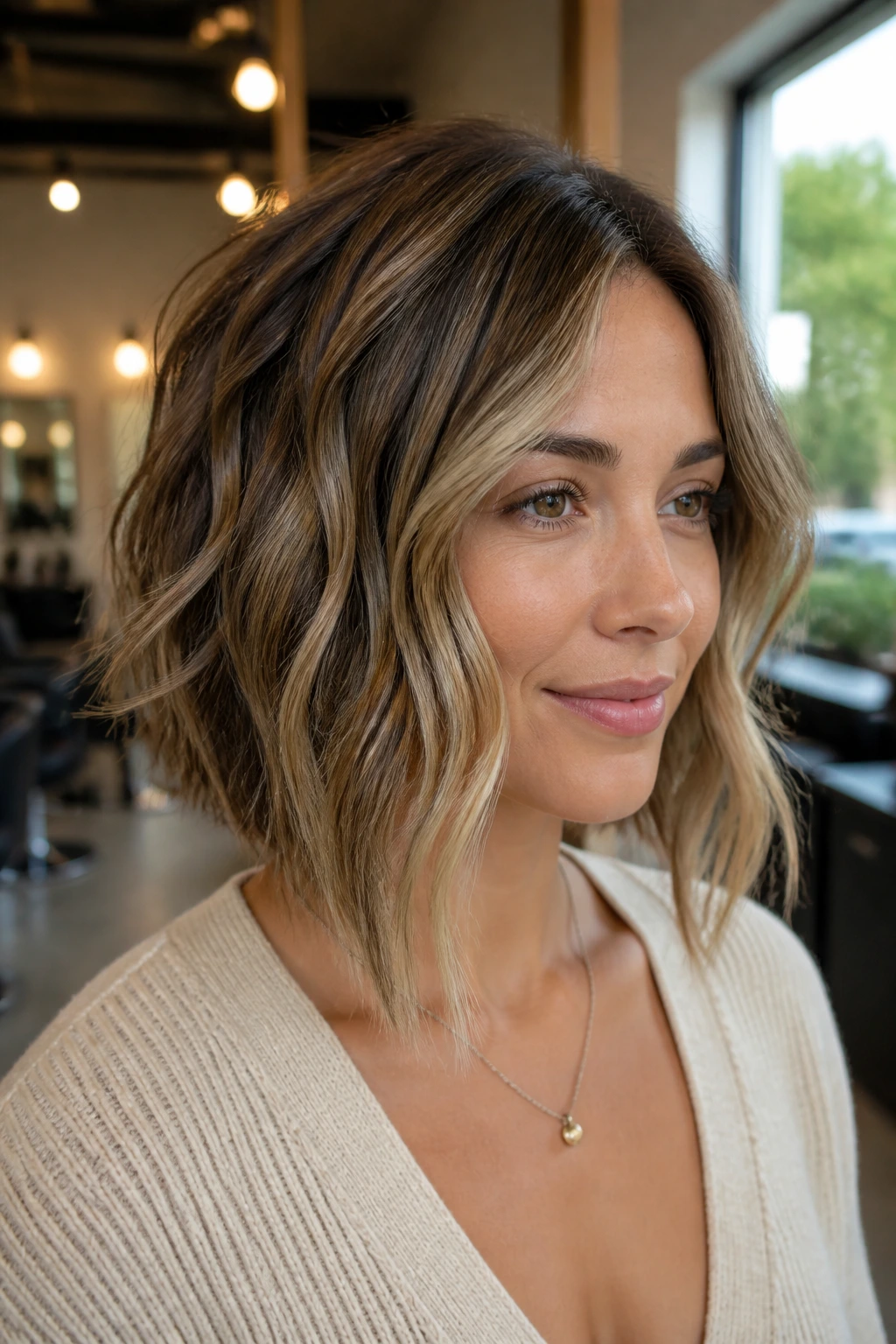
The Low-Maintenance Air-Dry Bob: Keep the layers soft, the length below the chin, and the texture light. This version works when you want your waves to do the shaping without much heat.
The Thick-Wave Debulked Lob: Best for dense hair that tends to spread wide. Ask for internal removal near the mids and keep the perimeter full so the cut doesn’t go wispy.
The Fringe-Forward Bob: Add curtain bangs, side-swept fringe, or wispy baby bangs, but keep the front longer at the temples. That gives you face framing without a heavy shelf.
The Sleek-Then-Wave Version: Smooth the roots, then bend only the ends and front pieces with a wand. This gives the bob a cleaner outline while keeping the wave pattern alive.
The Grow-Out-Friendly Shape: Choose a collarbone lob with soft layers and no hard angle. It grows out neatly, which matters if you don’t want a trim every few weeks.
The Bold Short Version: If you want a chin-length bob, insist on length that passes the chin in front, plus a side part or curtain fringe. That keeps the cut from reading boxy.
Keeping the Shape Between Salon Visits

A wavy bob usually needs a trim every 6 to 8 weeks if you want the line to stay crisp. Fringe may need attention sooner, especially curtain bangs or baby bangs, which can start sliding into your eyes after 3 to 4 weeks. The rest of the cut can often grow a little longer, but once the front stops framing and starts flaring, the whole silhouette changes.
At home, sleep on a satin pillowcase or clip the top layer loosely before bed. That reduces the flat side and the frizz halo that can make a bob look wider than it is. If the next morning looks rough, mist the midlengths lightly with water and scrunch. Don’t soak it.
Dry shampoo works best at the roots, not through the ends. That’s one of those small things that sounds obvious until you see someone spraying the lower half of a bob and wondering why it looks dusty.
Frequently Asked Questions
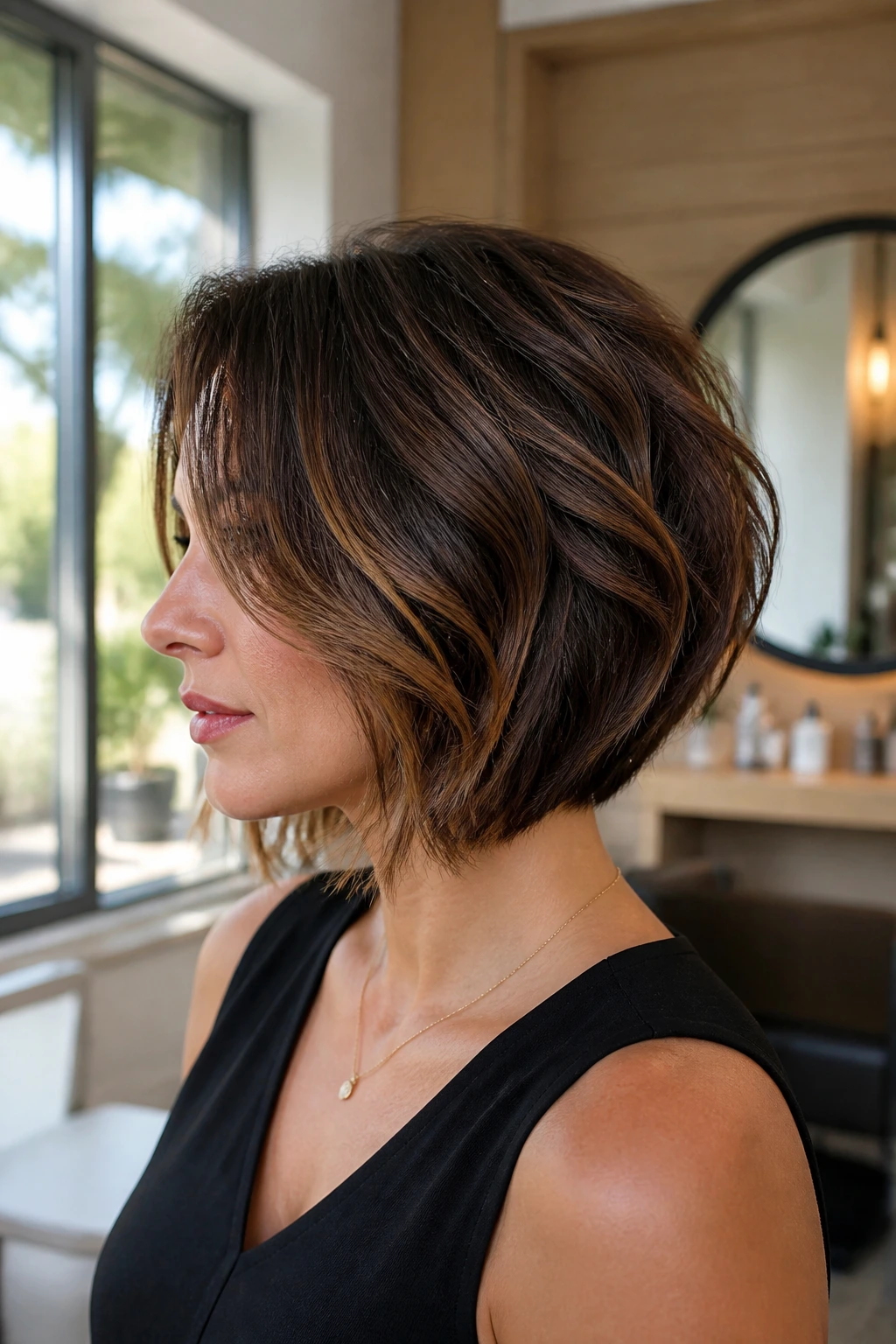
What bob length is most flattering for a round face?
Most round faces look best when the bob lands below the chin or angles forward past the jaw. That gives the eye a longer path to follow. Chin-length can still work, but it needs soft layering, side parting, or longer front pieces so it doesn’t stop right at the widest part of the face.
Should round faces avoid blunt bobs?
No, but blunt bobs need help. On wavy hair, a blunt edge works best when the length sits lower than the cheeks and the interior has enough texture to keep it from puffing out. If the perimeter is blunt and the length is too short, the shape can feel boxy fast.
Are curtain bangs good with wavy hair?
Yes, if they’re cut a little longer than straight-hair bangs and blended into the sides. Wavy curtain bangs soften a round face without building a hard line across the forehead. They do need a bit of styling, though. If you want zero effort, side-swept fringe is easier.
How do I stop my bob from puffing at the sides?
Ask for internal weight removal, not a heavy layer job on the outside. Then style with a light mousse and dry with the airflow aimed downward through the mids and ends. If the sides still puff, your cut may be ending too high on the cheek.
Can I wear a center part with a round face?
You can, as long as the cut has enough length and the sides don’t widen near the cheeks. A collarbone lob, an angled bob, or a long bob with soft waves usually handles a center part better than a short chin-length cut.
What if my wavy hair is thick and bulky?
Choose a cut with controlled debulking inside the shape. That keeps the bob from becoming too wide while preserving enough weight at the ends. Thick waves usually do better with a longer front and a softer back than with a high stack.
How often should I trim a wavy bob?
Every 6 to 8 weeks is a good rhythm for keeping the line clean. If you have bangs, expect to trim those more often — usually around 3 to 4 weeks if you want them to sit where they’re supposed to. Let the shape drift too long and the bob turns into an undefined mid-length cut.
Is a lob easier than a chin-length bob for round faces?
Usually, yes. A lob gives you more room to work with wave pattern, parting, and face-framing. Chin-length bobs can look fantastic, but they ask for more precision. One inch in the wrong place can change the whole haircut.
The Shape That Does the Heavy Lifting

The best bob for a round face is the one that creates movement without adding width where the face is already full. That sounds simple. It isn’t always simple in the chair, especially when wavy hair has a habit of expanding in places a straight-hair photo never warned you about.
But once the length, part, and texture line up, the cut does the work for you. It softens the cheeks. It gives the crown a little lift. It turns waves into shape instead of noise.
And that’s the part worth chasing: a bob that behaves when it air-dries, grows out without embarrassment, and still looks like it meant what it said on day one.