



Longer angled bobs for women over 50 with fine hair work because they cheat a little, in the best possible way. The back comes up just enough to wake the roots, the front stays long enough to soften the face, and the whole shape stops fine hair from hanging there like it’s waiting for instructions.
Get the angle wrong and the ends start to look see-through. Go too blunt and the cut can sit flat, like a sheet with a nice part. The sweet spot is somewhere in the middle: enough structure to build a line, enough length to keep the style from feeling severe.
What I like about this family of cuts is how well it handles real life. A quick blow-dry, a lazy air-dry, a bend with a flat iron, silver strands, highlights, glasses, earrings, scarves — none of it gets in the way if the cut is built properly. The 25 looks below are the versions I’d actually hand to someone who wants more shape without sacrificing the feel of length.
Why These Angled Bobs Make Sense on Fine Hair
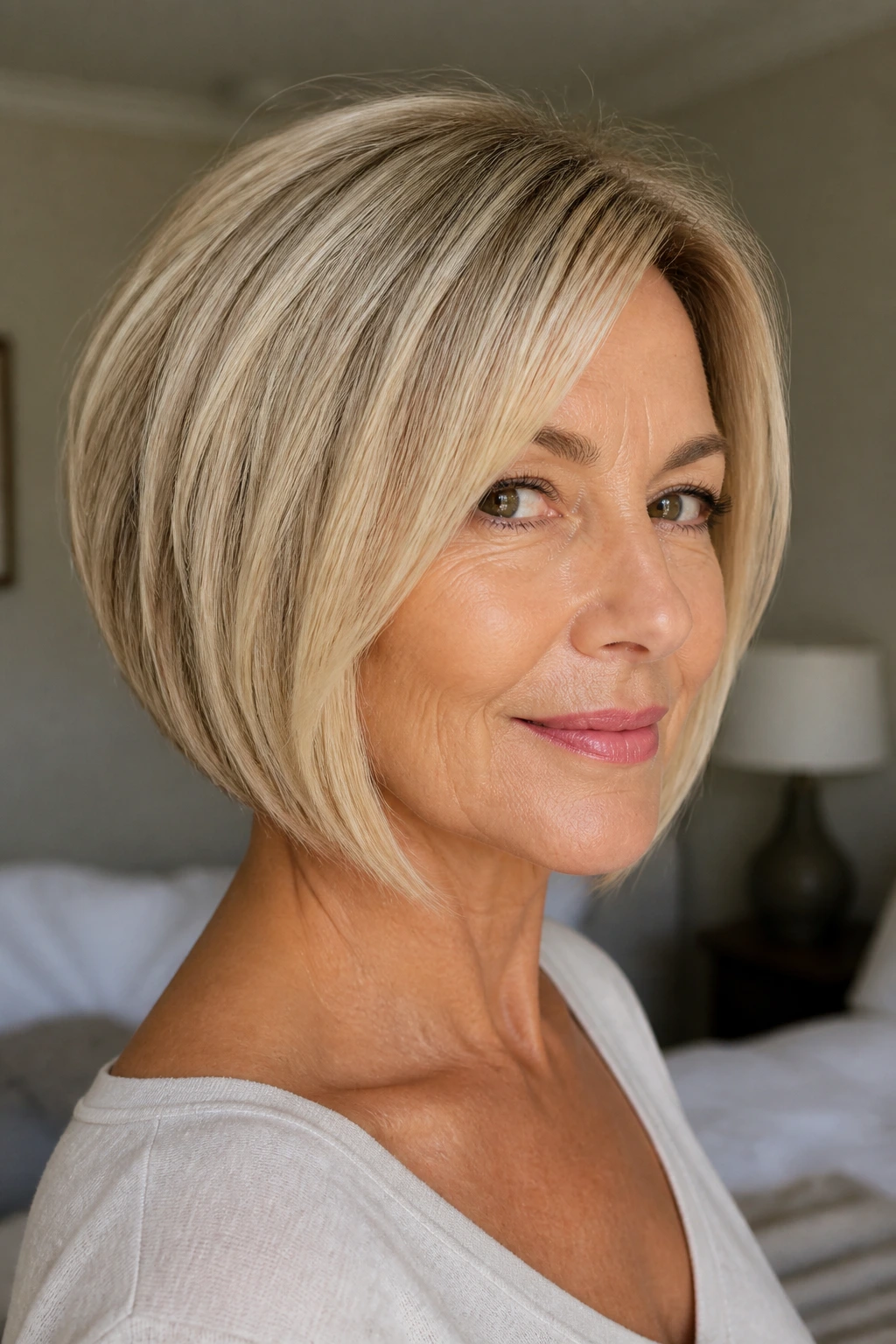
- They keep the outline full: A slightly shorter back and a longer front create a denser edge, which matters when each strand is fine and light.
- They give the crown somewhere to sit: The angle takes some drag off the back so the roots don’t collapse as fast.
- They work with simple styling: A round brush, a flat iron bend, or even a clean air-dry can all fit the same cut.
- They make color look more intentional: Gray, silver, lowlights, and soft highlights read better when the cut has a clear line.
- They grow out with less drama: A little length in front buys you a few extra weeks before the shape starts to feel shaggy.
- They don’t force you short: If you want movement and a lighter neck line without going pixie-short, this is the lane.
1. Soft Collarbone Angled Bob
The soft collarbone version is the haircut equivalent of a good jacket. It fits cleanly, doesn’t pinch, and leaves room to move. The back brushes the nape while the front lands right at, or just below, the collarbone, which gives fine hair a useful endpoint instead of letting it dissolve at the shoulders.
Why It Works
The collarbone gives the eye a place to stop, and that alone helps the cut look fuller. Keep the angle gentle — roughly 1 to 1½ inches shorter in the back — so you get shape without a sharp drop that can make thin ends look straggly. This is one of the safest versions if you want softness first and attitude second.
How to Style It
A medium round brush and a little root-lift spray at the crown are enough most days. I’d keep the front pieces tucked under with a slight bend, not a curl, because tight curls on fine hair can make the ends look smaller than they are.
- Best for: Straight to softly wavy fine hair that needs a little swing.
- Skip it if: You want a dramatic, high-contrast angle.
- Quiet trick: Ask for the ends to stay blunt, not shredded; that tiny choice makes the line look thicker.
One-line tip: If the front feels too long, trim in quarter-inch steps. Fine hair gives you less room to guess.
2. Lifted Stacked Nape Lob
A little stack in the back changes the posture of the whole haircut. The nape comes up, the crown gets a small boost, and the longer front pieces keep the shape from looking like an old-school stacked bob that got overworked. Used lightly, it gives fine hair a backbone.
The trick is restraint. A strong stack can look airy for a week and then turn wispy when the hair lies down. A soft stack, on the other hand, keeps the head shape neat and gives the top section something to stand on. If the hair tends to flatten at the back of the crown, this one earns its keep fast.
3. Deep Side-Part Sweep
Why does a side part change the whole haircut? Because it shifts weight off the center line and gives the roots a place to rise. On fine hair, that can be the difference between “nicely shaped” and “why does this look tired by noon?”
The long front panel creates a diagonal line across the cheek, which softens the face and makes the cut feel intentional. I like this version for anyone who hates fuss but still wants a little polish. Blow-dry the roots opposite the part for 30 seconds before setting them back down, and the lift tends to last longer than you’d expect.
4. Blunt-Edged Angled Lob
This is the one I reach for when someone says, “My hair is fine, and I do not want it thinned out.” Good answer. A blunt edge keeps the perimeter solid, which is exactly what fine hair needs when you’re trying to fake density.
The angle still matters, but the line is the star here, not the layering. Keep the back just a touch shorter and let the front skim the collarbone. No feathering at the ends. No overtexturizing. Just a clean shape that looks like it has more fiber in it than it really does.
5. Piecey Razor Bob
This cut has attitude, but it needs a careful hand. A razor can soften the movement and give the front pieces a bit of air, which is useful when the hair feels too compact or helmet-like. The danger is obvious: too much razor work and the ends start to look frayed.
I like this look on fine hair that has some natural bend or a little density at the roots. Keep the blunt perimeter in place and ask for only the front and topmost pieces to be softened. That way the bob still looks clean when the style settles.
What to ask for
- A strong perimeter line
- Light razor work around the face
- No aggressive thinning through the crown
- Enough length in front to keep the cut from looking choppy
6. Curved-Under Blowout Bob
This is the polished version, the one that behaves like it was brushed with purpose. The hair is blown under just enough that the ends roll in at the collarbone and the crown stays smooth. On fine hair, that curve makes the cut look controlled instead of flat.
It’s especially useful if your hair has a habit of kicking out at the shoulders. A medium round brush, a nozzle on the dryer, and a patient wrist solve most of that. Let the brush do the bend; don’t try to force a curl. The cleaner the movement, the thicker the cut tends to read.
7. Asymmetrical Long Bob
One side a touch longer than the other can do a lot of work. A small asymmetry, maybe half an inch to an inch, gives the cut personality without making it look like you’re trying to be clever. The eye notices the difference, then reads the line as fuller and more modern.
This is not the place for a dramatic geometry lesson. Fine hair looks best when the asymmetry is subtle and the ends stay dense. A deep side part often helps this style, because the longer side gets a little more swing and the shorter side keeps the neckline neat.
8. Curtain-Fringe Angled Bob

Curtain fringe belongs in this conversation because it spreads weight in a nice, forgiving way. Instead of chopping a solid block across the forehead, the fringe opens in the middle and falls into the front panels. That gives the haircut a softer top line, which suits fine hair that can get wispy fast.
The best part is how the fringe connects to the angle. The bob keeps the lower outline full while the curtain pieces draw attention upward and inward around the eyes. Keep the fringe longer than you think — somewhere around eyebrow length when dry — so it doesn’t shrink and sit too high.
9. Tucked-Behind-Ear Lob
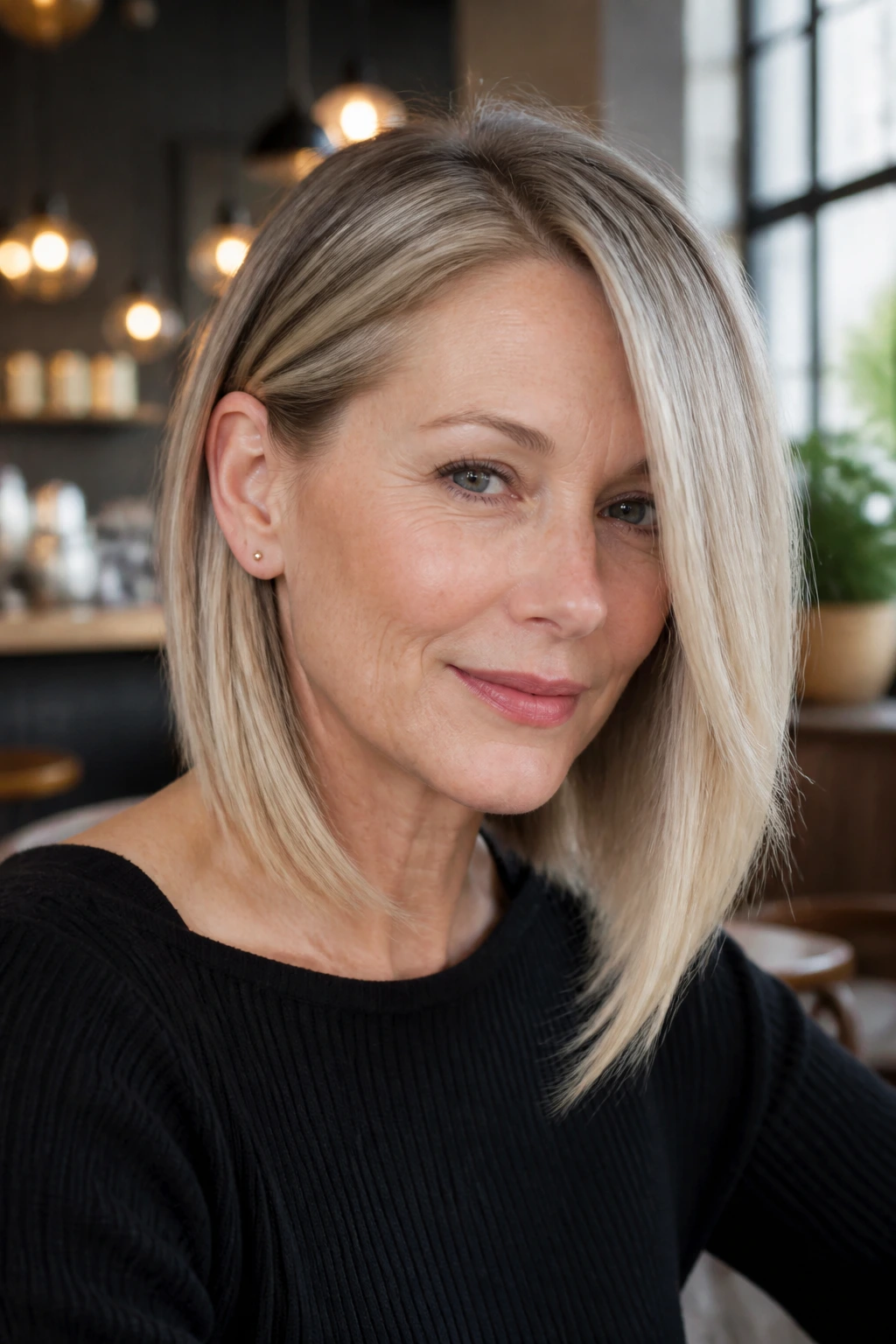
This is for the woman who likes one side of her hair to look intentional and the other side to feel loose. Tucking one side behind the ear opens the face, shows off earrings, and keeps the longer front pieces from swallowing the jawline.
It also solves a common problem with fine hair: the front can separate and look stringy when it hangs around the cheeks. Tuck it, smooth it, and let the angle do the talking. A tiny bit of lightweight cream on the tucked side helps, but skip anything heavy. Fine hair gets greasy fast, and everyone can see it.
10. Soft Wave Angled Lob
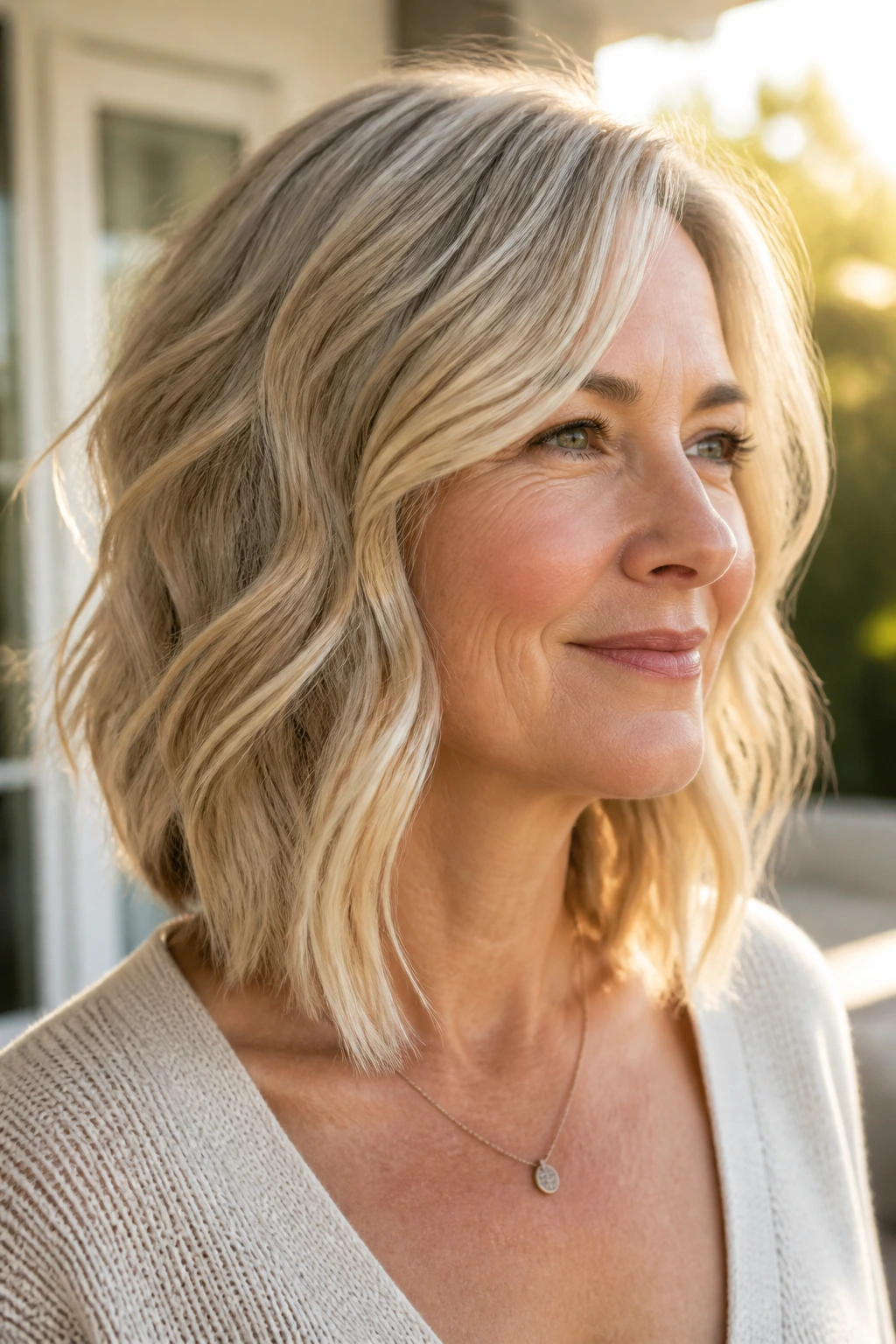
Why do loose waves work so well here? Because they widen the silhouette without turning the hair into a puffball. The angle gives the cut structure, and the wave makes the perimeter look a little thicker than it is.
Keep the waves soft, not tight. A 1-inch curling iron or wand is plenty, and the ends should stay a little straighter so the whole shape does not collapse into a curl pattern that’s too cute for its own good. Alternate directions if you want movement, then brush lightly with fingers or a soft paddle brush once the hair cools.
11. Glassy Sleek Bob
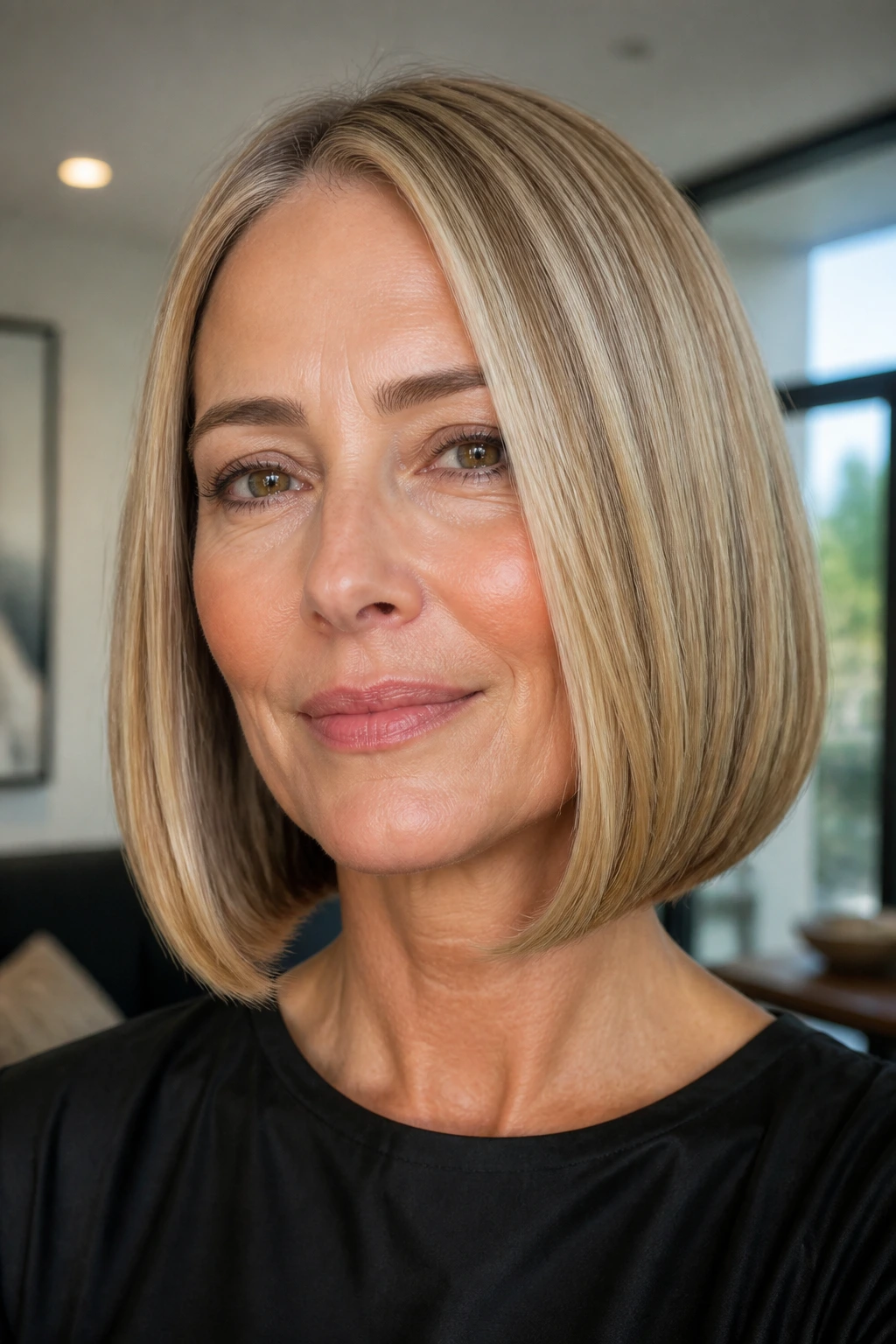
This is the straight-shooting version. Clean, smooth, and blunt enough to make the ends look expensive — though honestly, that word gets thrown around too much. What matters is the line. The line does the work.
Fine hair often looks best when it’s not overloaded with styling product, and this cut proves it. A heat protectant, a flat iron, and a tiny drop of serum on the ends are usually enough. Keep the back a shade shorter than the front and bend the ends inward just a little. Too much straightness at the very tips can make them look unfinished.
12. Root-Lift Volume Bob
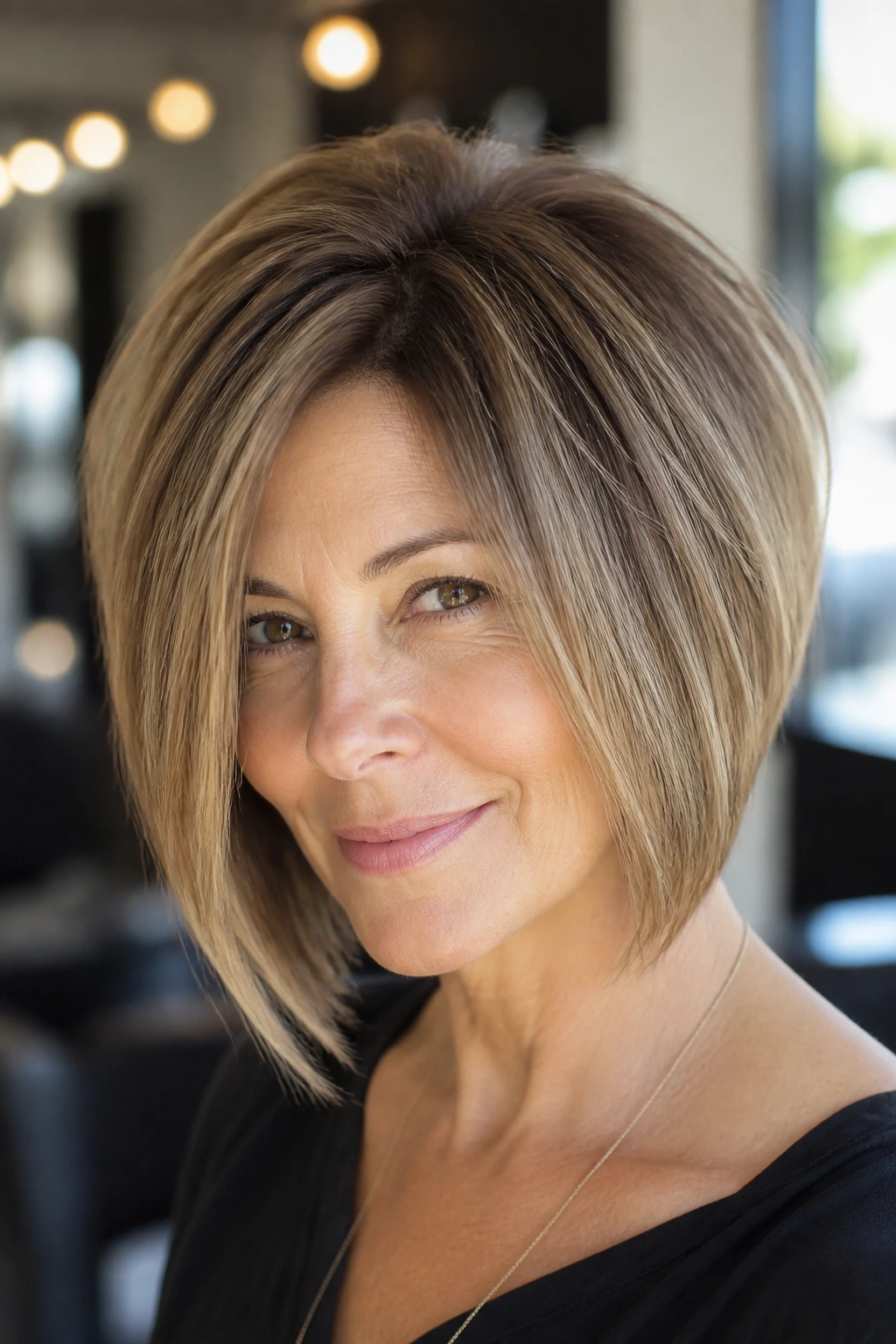
This one is about the crown, not the curl. Fine hair can sit close to the scalp by default, so the cut has to help. A modest stack in the back, paired with root lift at the top, gives the style a little body where it counts.
I like mousse here more than heavy spray. Work it into damp roots, lift with a round brush, and pin the crown for a few minutes while it cools if you have time. That small set at the top makes the whole bob look fuller without making the ends puffy.
A small but useful detail
If your hair is very fine, blow-dry the roots first and the ends second. Wet roots stay limp longer than people expect.
13. Silver-Blend Angled Lob
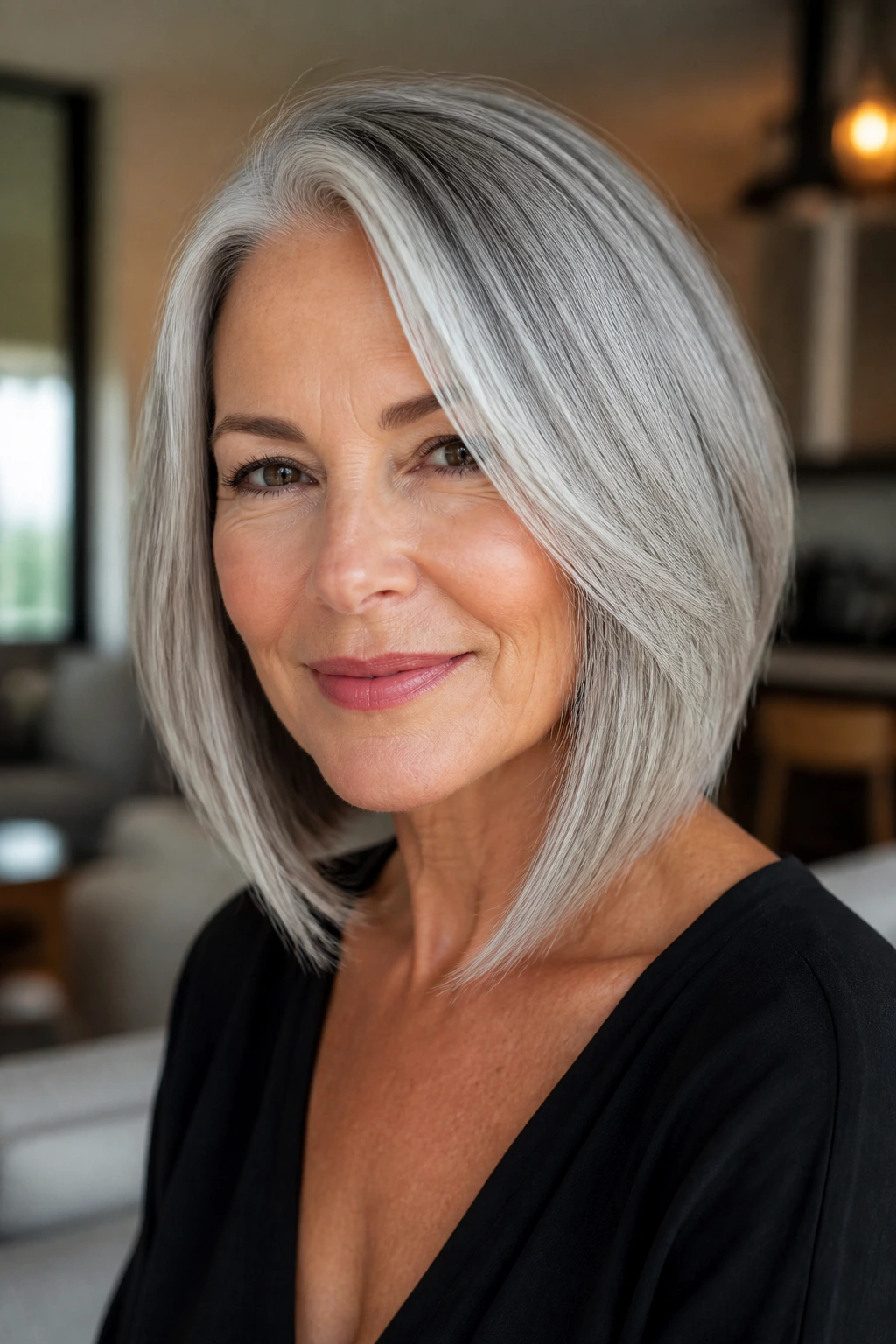
Silver hair and an angled bob are a good match because the shape gives the color something to do. Gray, white, and darker peppered strands read as movement when the line is clean. Without that structure, the color can look scattered; with it, the whole cut feels deliberate.
A light gloss or toner helps keep the silver from turning dull, but don’t drown the hair in product. Fine strands show buildup fast. If your silver has a yellow cast, use a purple shampoo sparingly — maybe once every few washes — so it stays cool without going flat or overly violet.
14. Warm Highlighted Lob
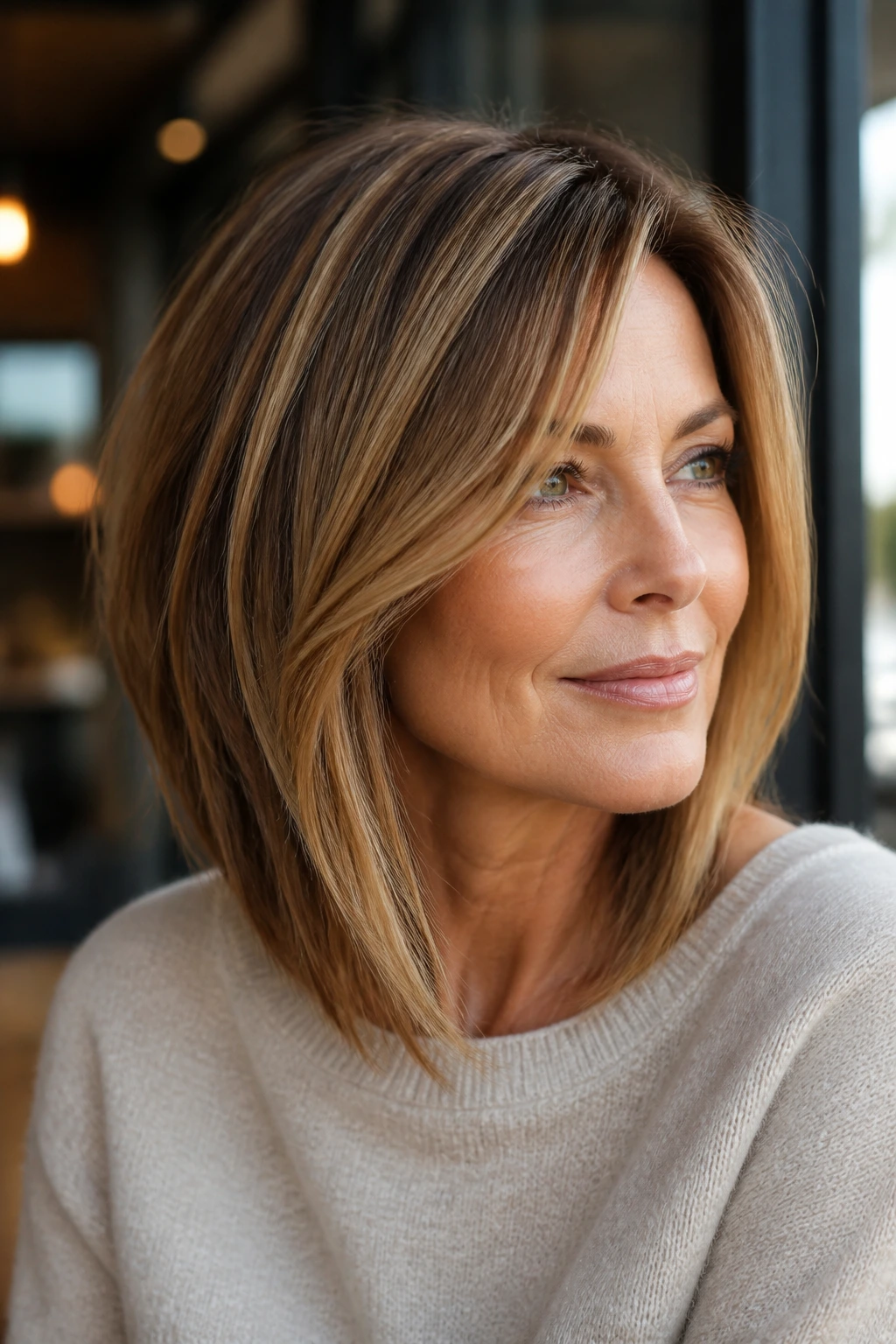
A few warm ribbons can make fine hair look thicker because the eye starts reading depth instead of a single flat tone. Think caramel, honey, beige, or soft champagne, placed around the face and through the upper layers. Chunky stripes are too much. They can make the cut look busy instead of full.
The angle gives those lighter pieces a place to catch and fall. Ask for a root shadow if you want the grow-out to stay gentle, especially if you do not want to live in the salon. A little contrast at the crown can make the top section look denser, which is a neat trick when the hair is light and the scalp shows through easily.
15. Chin-Skimming Forward Angled Bob
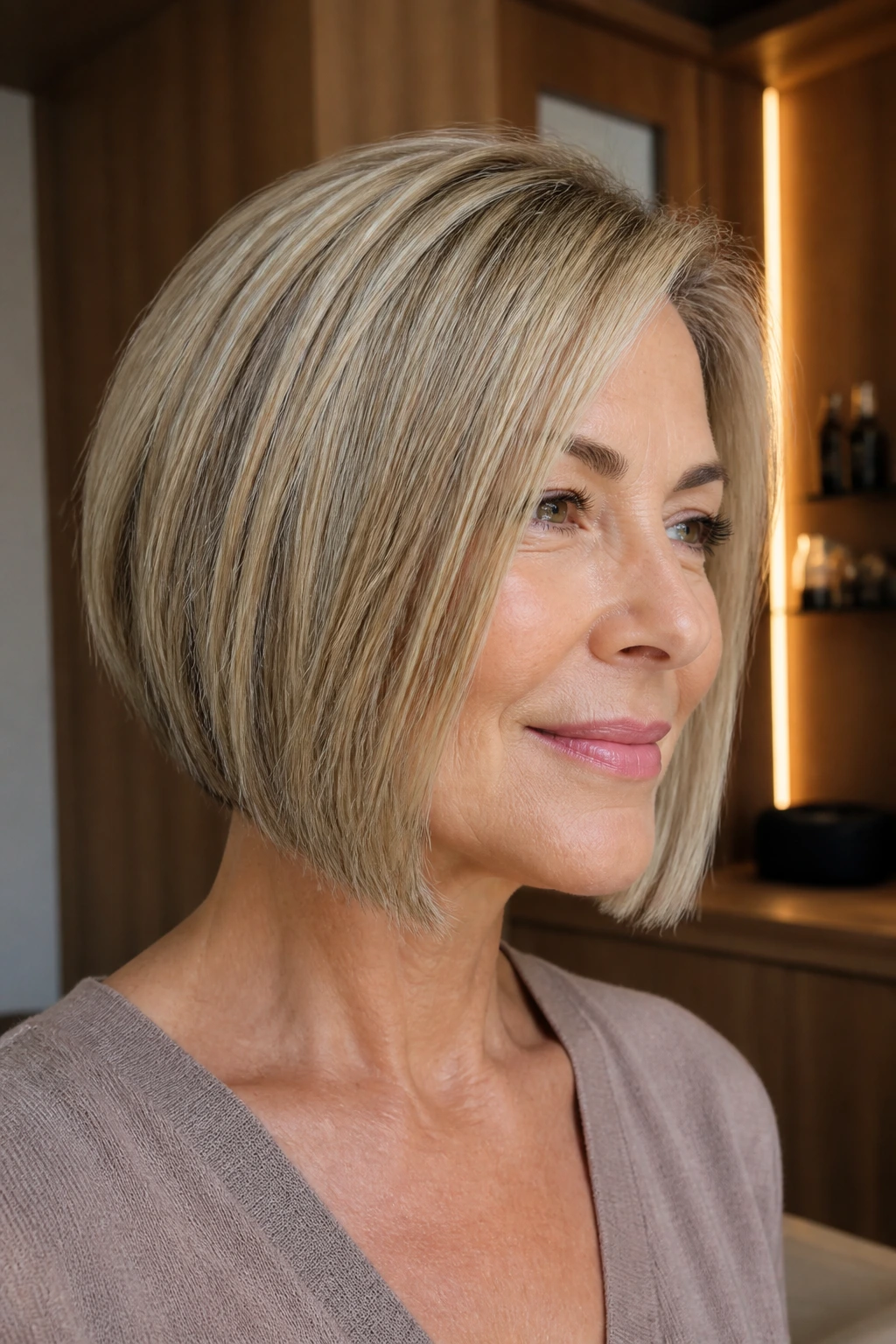
This cut sits a little more assertively around the face. The front pieces graze the chin, the back is shorter, and the whole line points forward in a way that gives the jaw some definition. It’s a smart move when you want length but still want the haircut to feel shaped.
The chin level matters. If the front lands too high, the ends can turn awkward and make the face look wider. Too low, and the angle disappears. The sweet spot is just below the chin on the longer side, with a clean nape that stays neat under a sweater collar or scarf.
16. Flip-Out Angled Lob
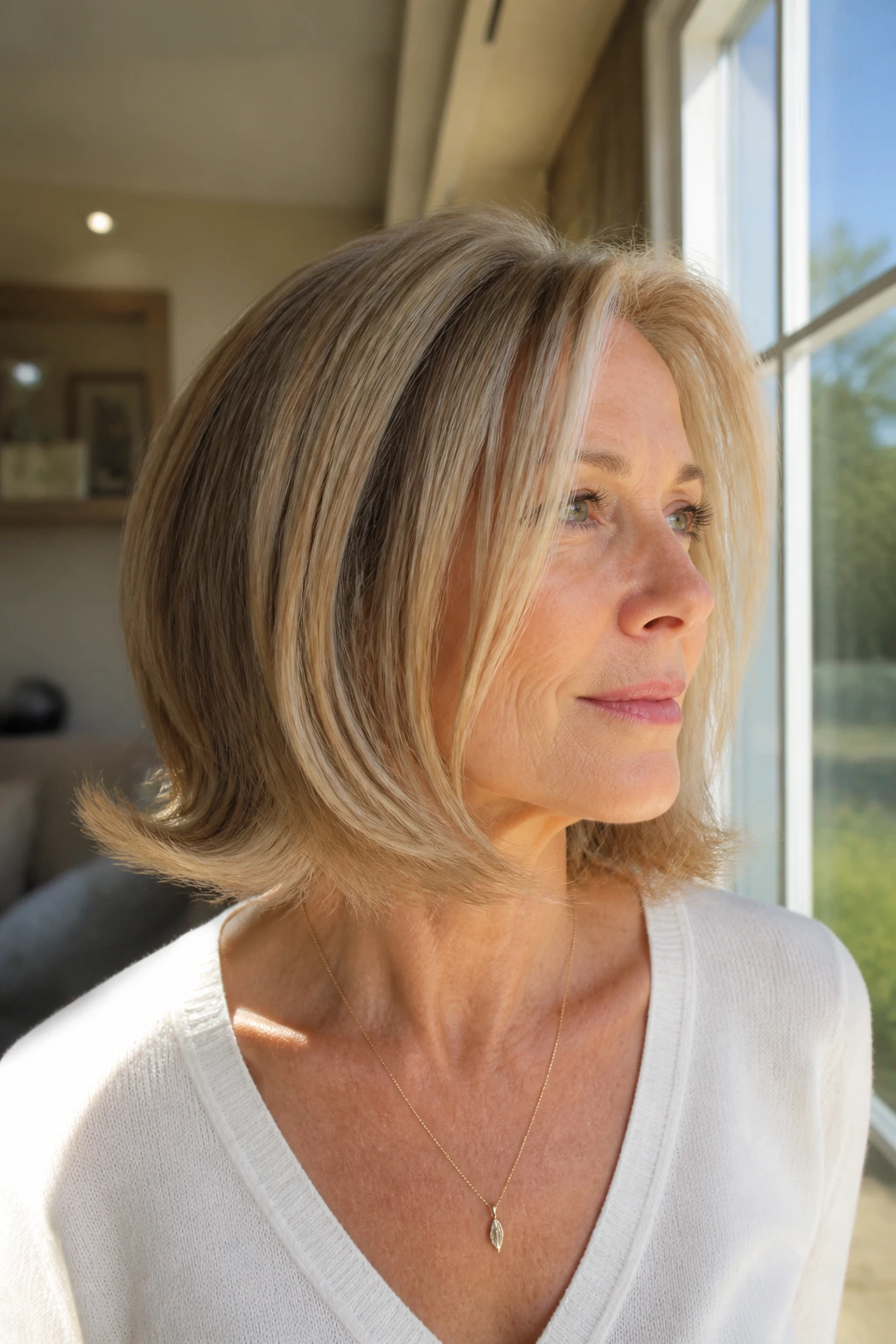
This is the cousin of the blowout bob, but with a lighter, breezier finish. Instead of curving under, the ends kick out a little. That tiny flip gives the cut energy and a bit of width, which can be useful if your hair tends to lie too close to the head.
I prefer this version when the hair has a natural bend and does not want to stay smooth for long. Use a round brush or the corners of a flat iron to turn the last inch of the hair outward. Keep the flip soft. If it turns into a retro curl, the shape starts to fight the fine texture instead of helping it.
17. Wispy-Bang Angled Bob
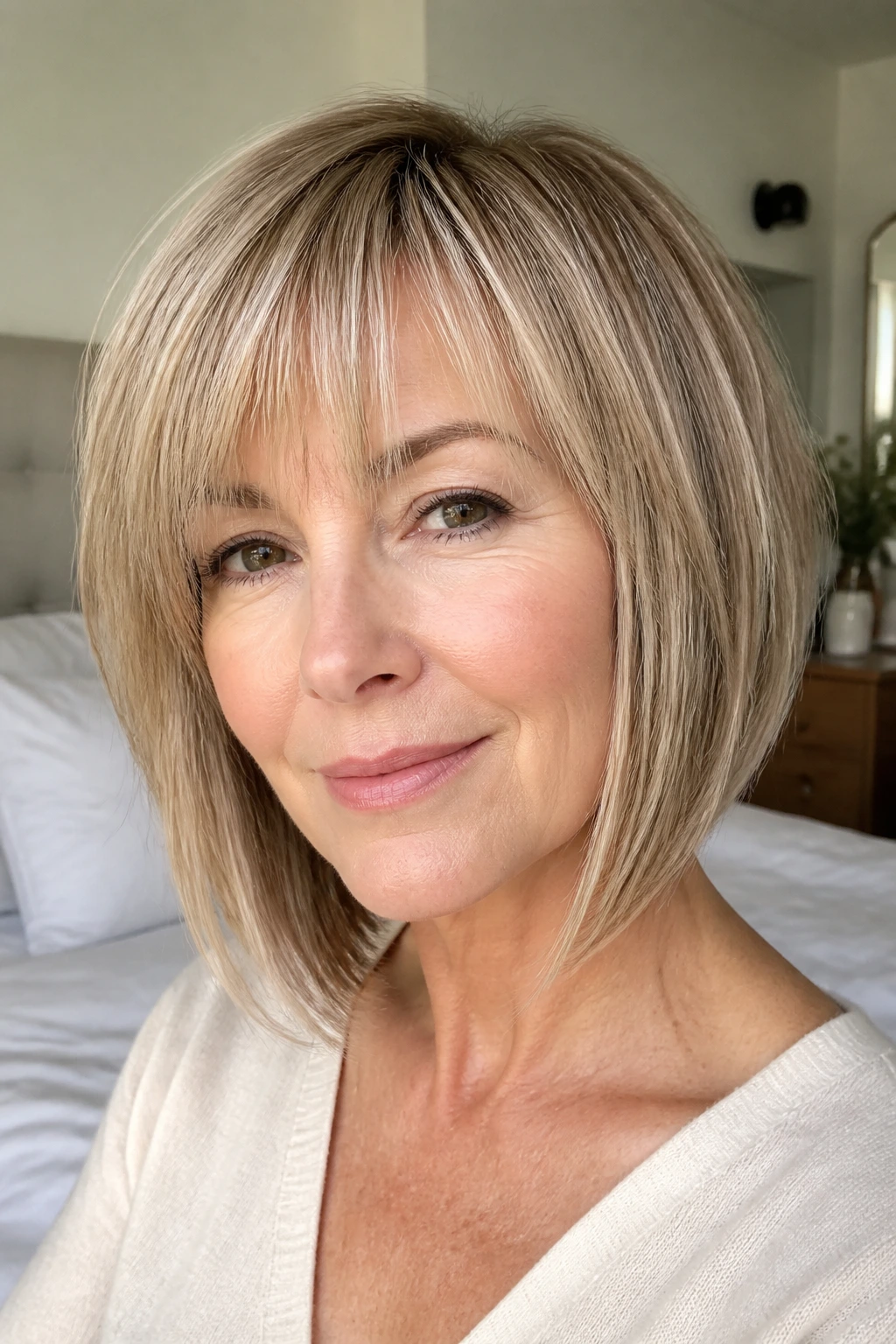
A wispy bang can save a bob that feels too open around the forehead. The fringe breaks up the front line, softens the face, and adds a little movement near the eyes without swallowing the whole haircut. That’s a nice balance for fine hair, which often looks better with pieces than with dense blocks.
Keep the bangs longer and lighter than a traditional fringe. They should fall in separated strands, not one heavy curtain. A tiny bit of dry texture spray at the roots of the fringe helps them stay lifted, especially if your forehead area gets oily by lunch. No need to overdo it. Bangs are charming until they become a maintenance project.
18. Shag-Inspired Angled Bob
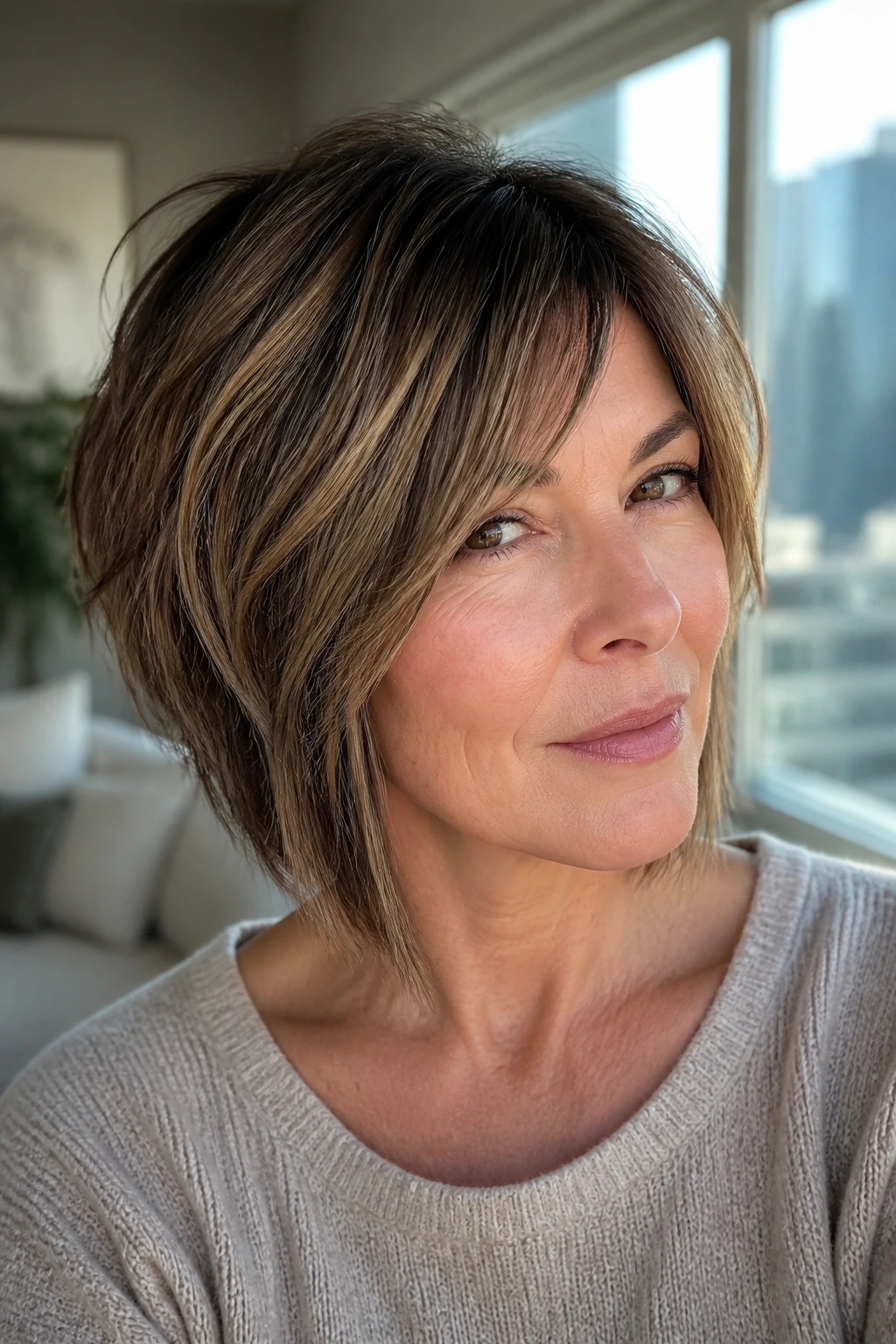
A shag-inspired angle can work if the hair has enough density to support it. The perimeter still stays visible, but the inside gets a little broken up so the haircut moves when you turn your head. Fine hair with some natural texture can handle this well.
The thing to watch is balance. Too many layers and the cut starts looking airy in the wrong places, especially at the ends. Keep the lowest line solid and let the texture live mostly through the mid-lengths and face frame. A little texturizing spray on dry hair is enough to wake it up.
19. Air-Dry Angled Lob
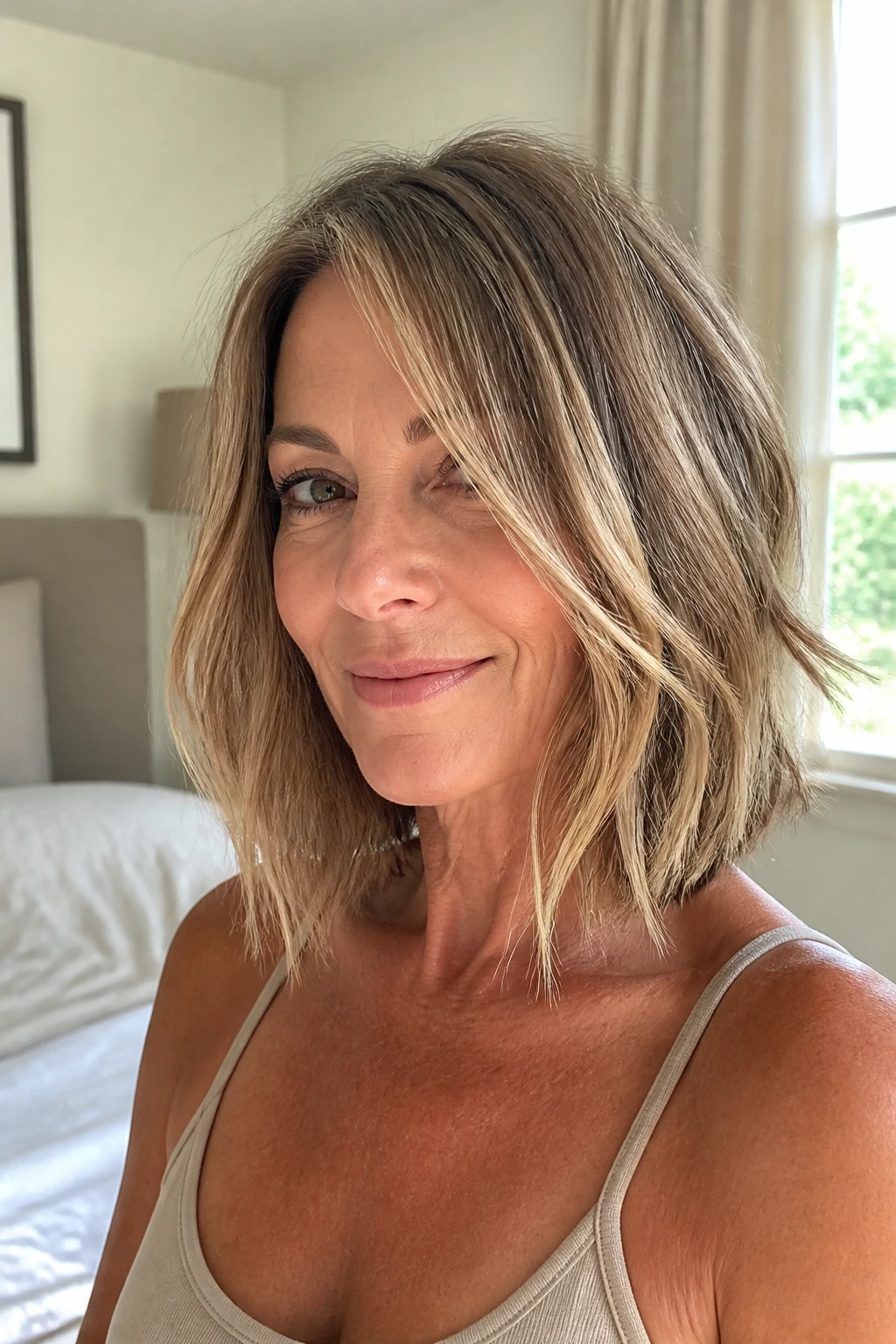
This is the haircut for people who would rather not spend 20 minutes fighting a blow-dryer. The shape should be built to dry well on its own: enough angle to keep the front moving, enough weight at the edge to avoid frizzing out, and not so many layers that the hair scatters into separate pieces.
A leave-in conditioner and a light mousse are often enough. Scrunch the ends slightly, clip the crown for a few minutes if you need lift, and let the hair settle. Fine hair that air-dries nicely usually has some soft wave, not pin-straight texture. If yours is poker straight, you may still want a quick bend with a flat iron on the front panels.
20. Round-Face Elongating Angled Bob
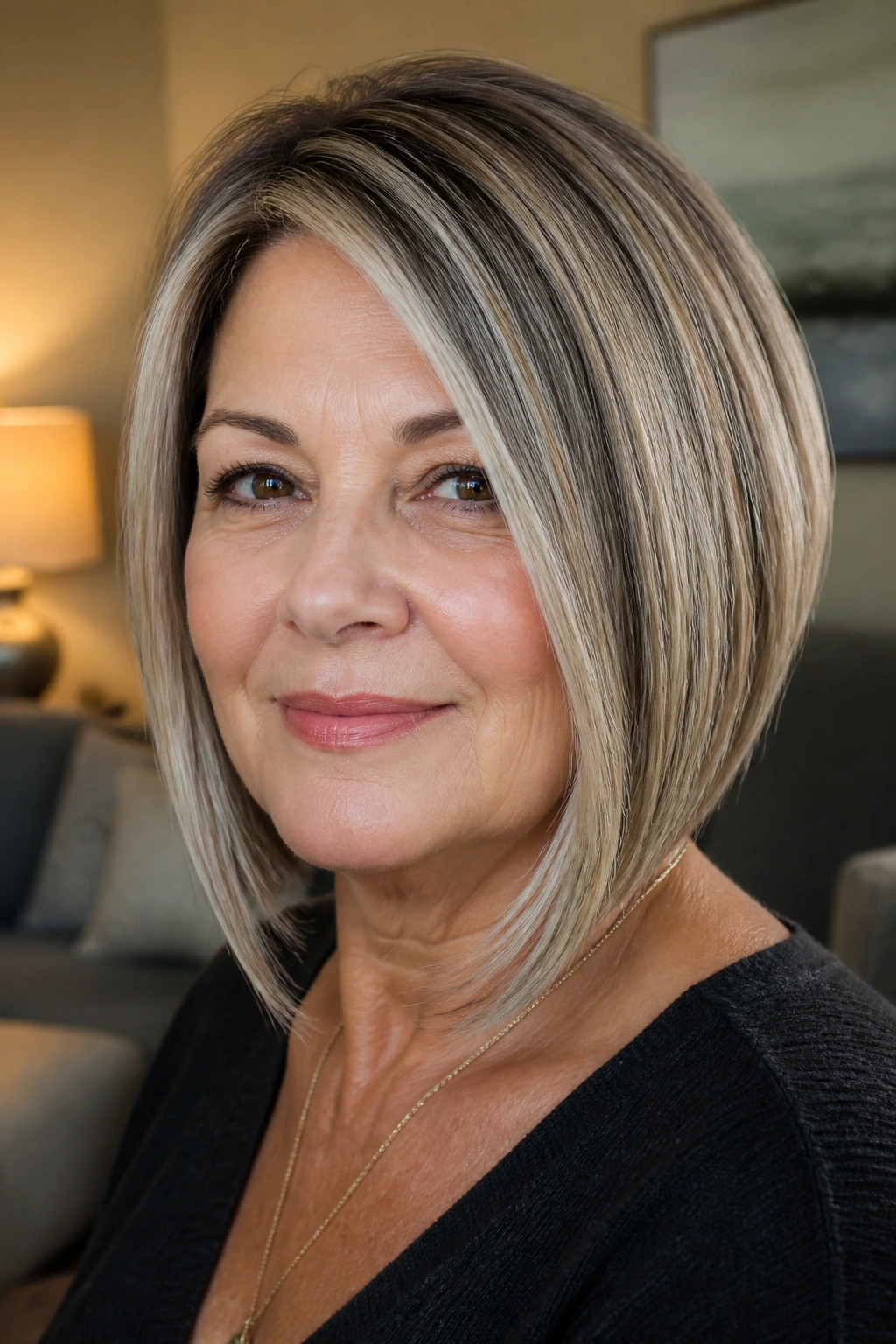
If your face is round, the angle can do a lot of quiet work. Longer front pieces create vertical lines, and a shorter back keeps the shape from widening across the cheeks. The goal is not to hide the face. It’s to lengthen the line around it.
A side part usually helps here, especially if the hair tends to split down the middle and show too much width. Keep the longest pieces below the chin, and avoid chin-level fullness that stops right at the widest point of the face. That one detail matters more than most people think.
21. Square-Jaw Softening Angled Lob
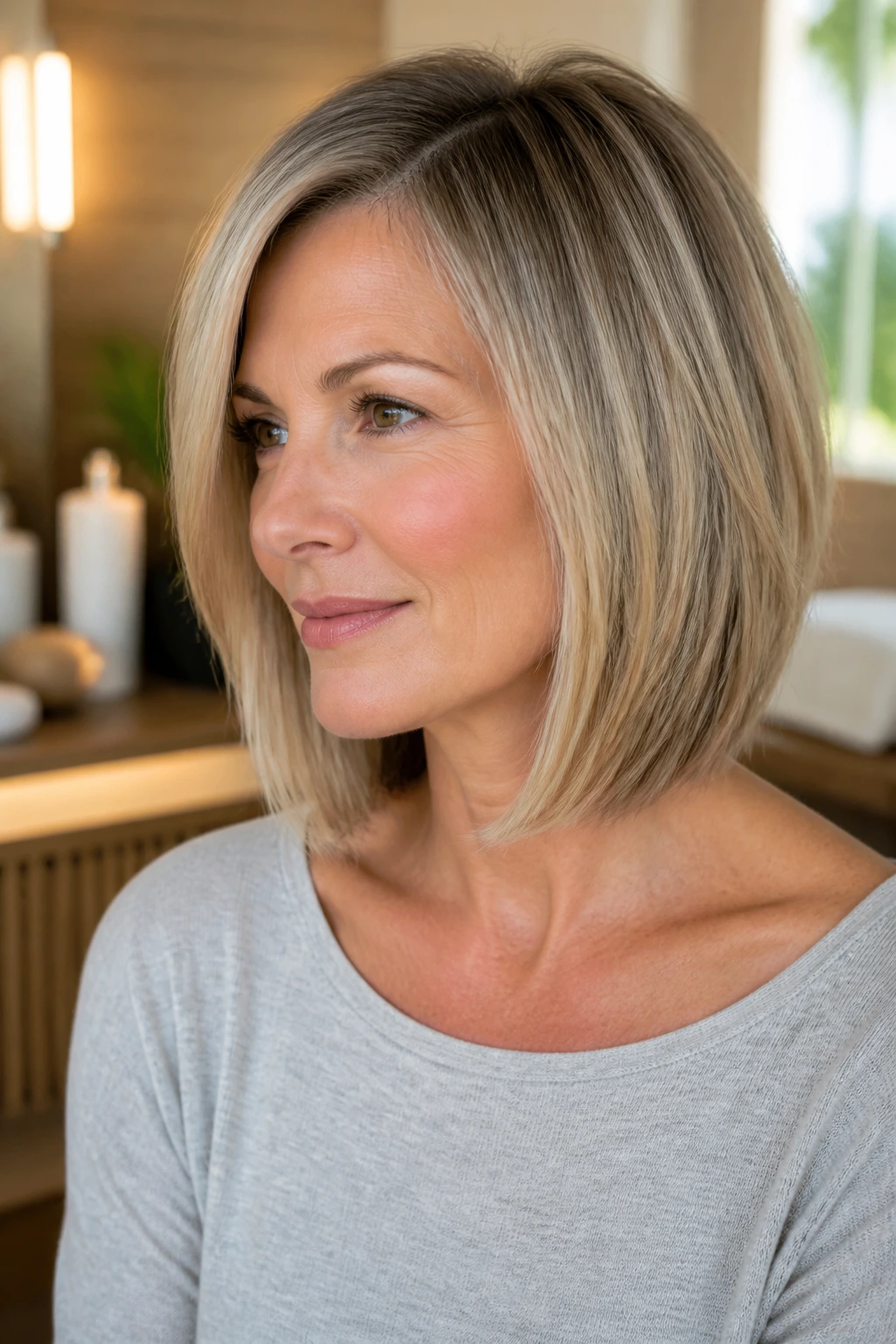
Strong jaws and fine hair can be a tricky pair if the cut gets too sharp. A soft angled lob helps by letting the front pieces fall past the jawline instead of sitting right on the corners of the face. That blurs the line a little and keeps the haircut from feeling boxy.
I like gentle movement around the cheekbones here. Curtain pieces, a slight bend at the ends, or a side part can all soften the effect. Avoid a super straight, hard edge at jaw level unless you want the geometry to stay front and center.
22. Oval-Balanced Angled Bob

Oval faces get a lot of freedom with this cut, which is a blessing and a curse. You can wear the angle softly, wear it sleeker, or add a little wave and still keep the whole thing in proportion. That means the main job is not correction. It is restraint.
Keep the shape balanced rather than overly dramatic. A collarbone-to-chin angle is usually enough. If the hair is fine, a moderate perimeter with a little root lift often looks better than layers everywhere. This is one of those cuts where the styling decides the mood: smooth for polish, bendy for ease, tucked for structure.
23. Salt-and-Pepper Angled Bob
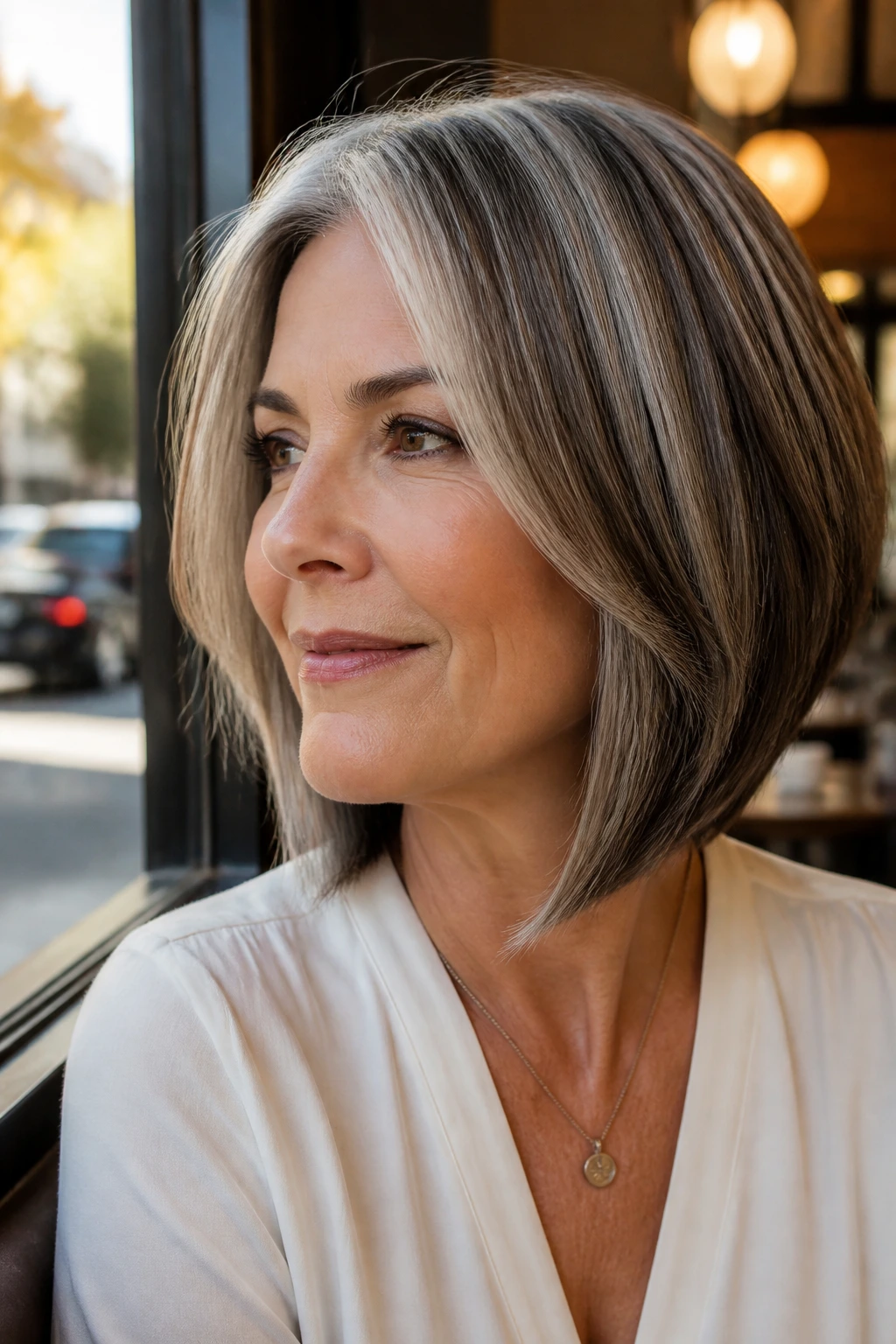
Salt-and-pepper hair has its own texture story, and the angled bob gives it a better stage. The darker strands add shadow, the silver catches light, and the angle keeps the color shift from reading as random. That matters. A good cut can make a natural blend look intentional instead of patchy.
A gloss treatment can keep the tone shiny, but go easy on anything that leaves buildup. Fine gray strands are often drier at the ends and coarser at the root, which means product choice matters more than people expect. Use a lightweight serum at the tips, not all over the head.
24. Invisible-Layer Blunt Lob
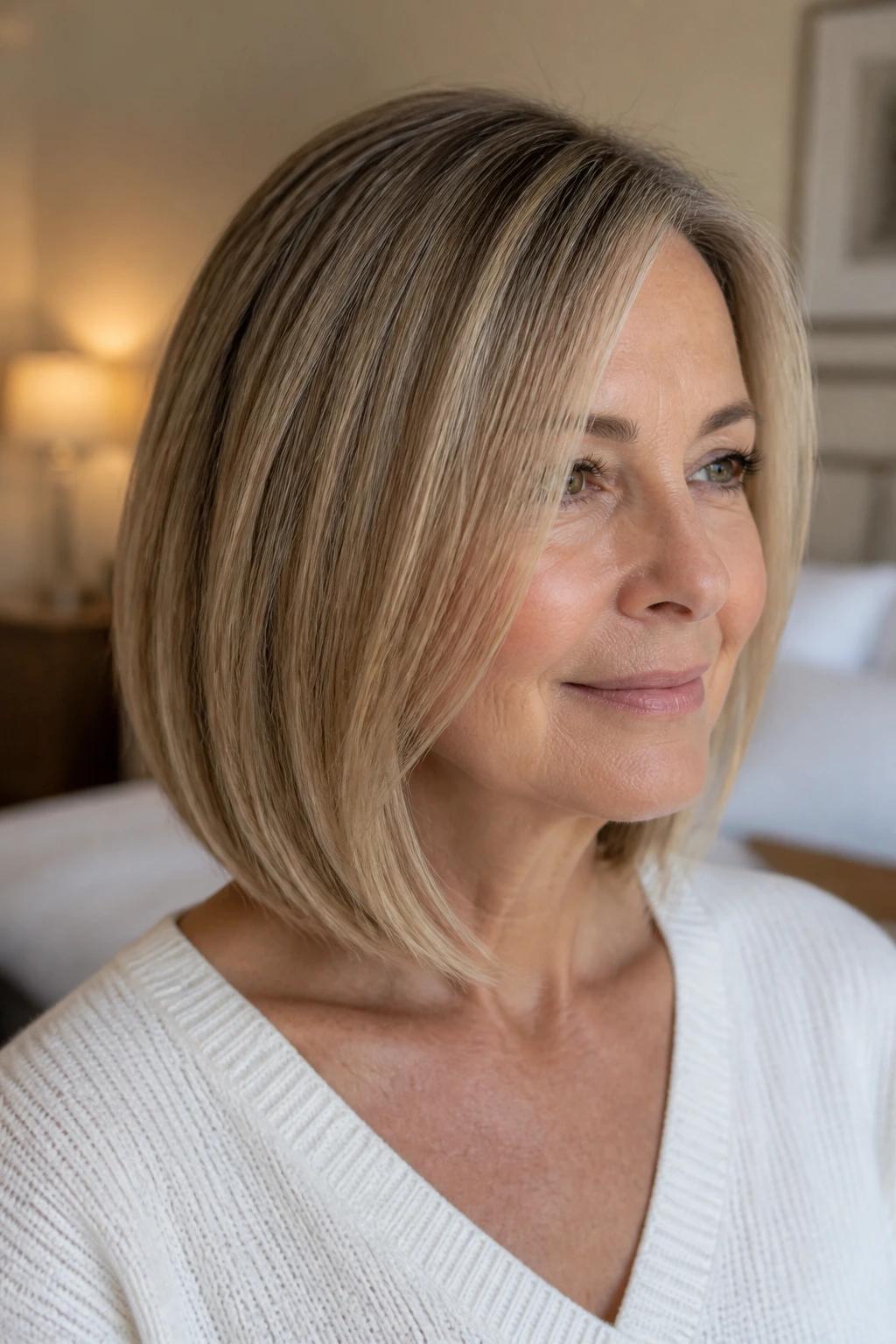
How do you get movement without losing thickness? You hide the layers. That’s the whole trick here. The perimeter stays blunt and full, while subtle internal shaping gives the hair enough bend to move when you style it.
This is one of my favorite compromises for fine hair. The haircut looks solid from the outside, but it still behaves nicely when you round-brush it or put a soft wave through the front. Ask your stylist for internal point-cutting rather than obvious chopping. The difference is huge once the hair dries.
25. Shoulder-Skimming Grow-Out Bob

If you hate the awkward in-between stage, this version is the friendliest. The front lands at the shoulders or just above them, the back stays slightly shorter, and the angle softens the grow-out so the shape keeps its purpose even when it gets a little shaggy.
It’s the one I’d pick for someone who wants a haircut that can miss a trim without turning into a mess. The line still reads as neat, but there’s enough length to tuck, twist, pin, or let air-dry on a quiet morning. That extra inch or two in front buys you breathing room, and fine hair usually appreciates that more than drama.
Why the Diagonal Line Helps Fine Hair Hold Its Shape
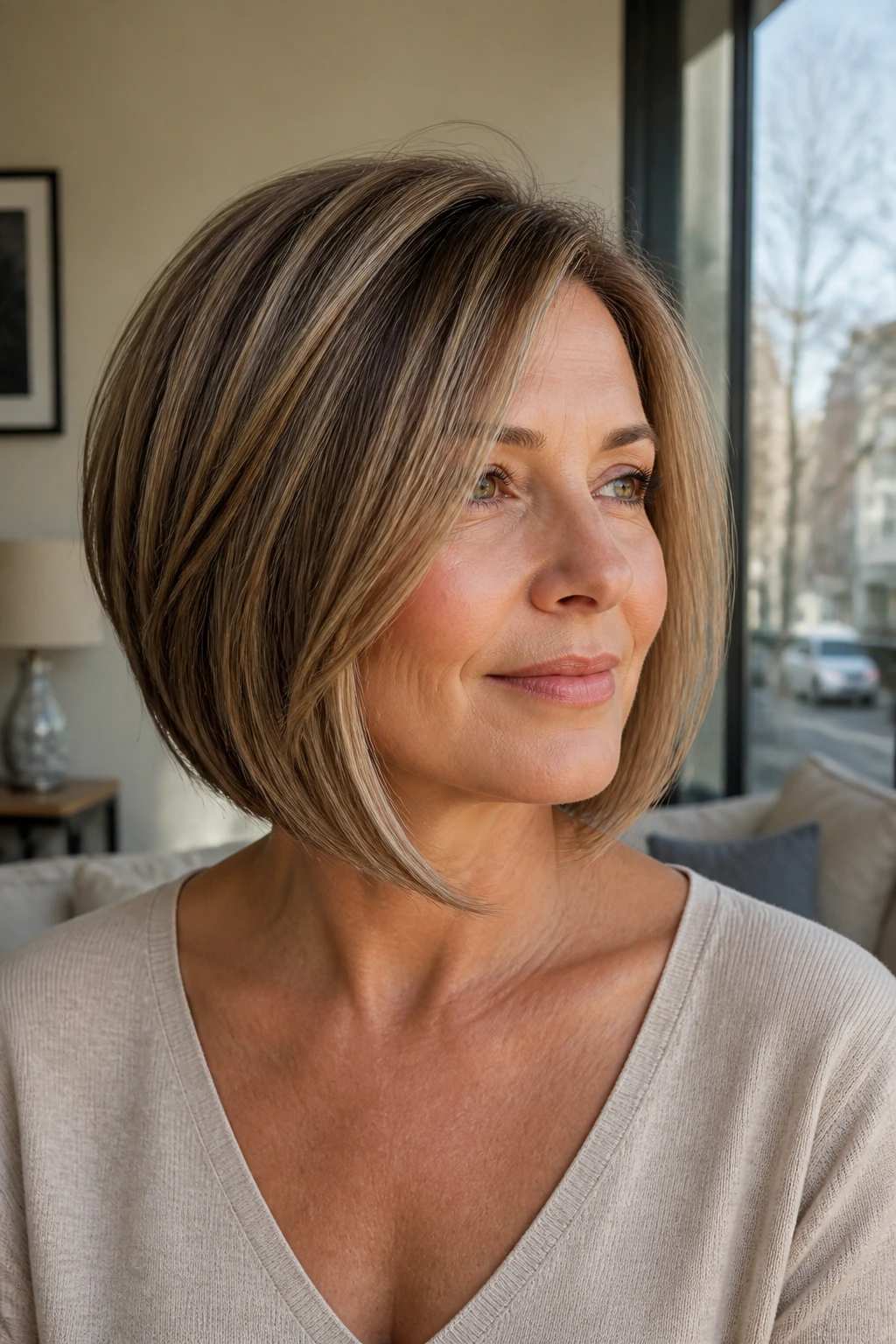
The diagonal line in an angled bob is doing more than looking pretty. It’s redistributing visual weight. Shorter at the back, longer at the front — that shift helps the eye read fullness along the perimeter instead of noticing thin ends hanging all over the place.
Fine hair tends to lose its shape when too much weight pulls it down at the bottom. By trimming the back a little shorter, you remove drag. By keeping the front longer, you preserve softness around the face. That combination is what keeps these cuts from looking blocky or stringy.
There’s another benefit people miss: an angled line works with movement. Turn your head, tuck one side, let a scarf brush the collar — the cut still has a shape to return to. That’s a big deal if you do not want to restyle your hair every time you touch it.
What to Tell Your Stylist Before the Shears Come Out

Bring pictures, yes, but bring your actual habits too. A photo of a sleek bob means little if you air-dry, sleep on one side, and hate heat styling. Tell your stylist how much time you really spend on your hair, and be honest about whether you want a polished bend or a wash-and-go shape.
Use plain language. Say you want a longer front, a shorter nape, and enough weight at the ends to keep fine hair from looking wispy. If your hair is sparse, ask for soft internal shaping instead of heavy thinning. If you wear glasses, mention that too; the longest front pieces should not fight the frames every time you turn your head.
A useful script sounds like this: “I want a longer angled bob that still looks full. Keep the back a little shorter for lift, but don’t shred the ends. I’d like it to work with a round brush or an air-dry.” That sentence does a lot of heavy lifting.
Tools and Products That Keep Fine Hair from Going Limp

- A blow dryer with a nozzle: The nozzle directs air to the roots so they lift instead of flying everywhere.
- A 1¼-inch round brush: Big enough for a smooth bend, not so big that it stretches the hair flat.
- Root-lifting mousse: Use it on damp roots; a small amount goes farther than people think.
- Lightweight heat protectant spray: Fine hair burns and frizzes faster than dense hair, so this matters every time.
- Dry shampoo: Useful on day two or three, especially at the crown where oil shows first.
- Texturizing spray: Best on the mid-lengths and ends, where it gives grip without a sticky cast.
- Flat iron with smooth plates: For a soft bend or inward turn on the front pieces.
- Duckbill clips: Helpful for setting the crown while it cools after blow-drying.
Skip thick oils and heavy creams unless your ends are truly dry. Those products can crush the cut in a single application.
Styling Moves That Keep the Crown Up
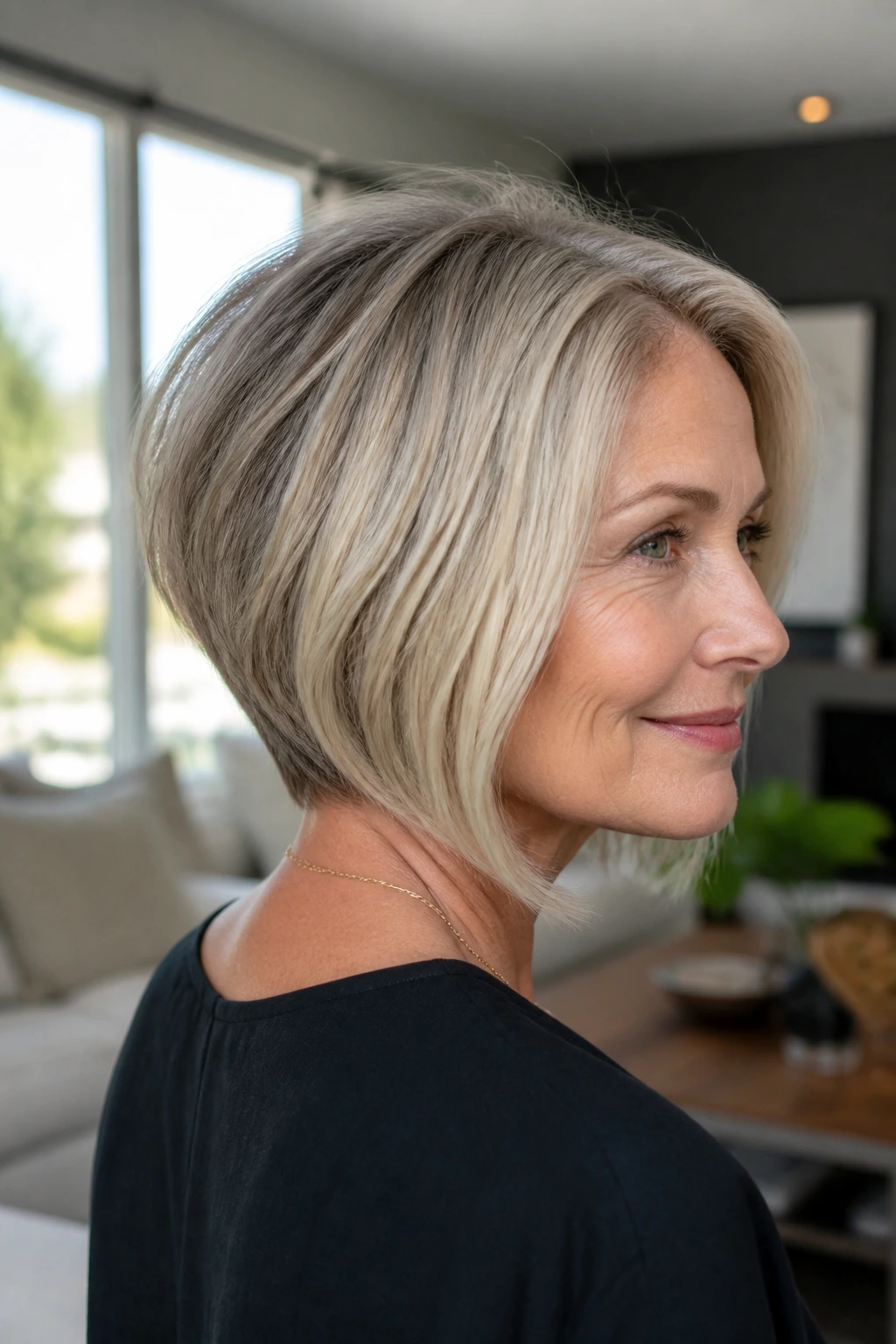
Fine hair usually fails at the crown first, so start there. If you wait until the ends are dry and pretty, you’ve already missed the part that gives the haircut shape. Put your root product in at the damp stage, lift the hair at the scalp with your fingers or a brush, and dry the crown before you fuss with the front.
A round brush gives the best control for most of these cuts. Wrap the hair just once, pull the brush forward and slightly up, and let the dryer follow the brush line. Don’t over-roll the ends. A tiny inward bend is enough. Too much curl makes the hair look shorter and smaller, which is the opposite of what you want.
If you prefer air-drying, clip the top for a few minutes or twist the front pieces away from the face while they dry. That keeps the front from hanging flat and separating at the ends. Then, when the hair is about 90 percent dry, add a touch of texturizing spray. Not a cloud. A little.
Common Mistakes That Make Longer Angled Bobs Fall Flat
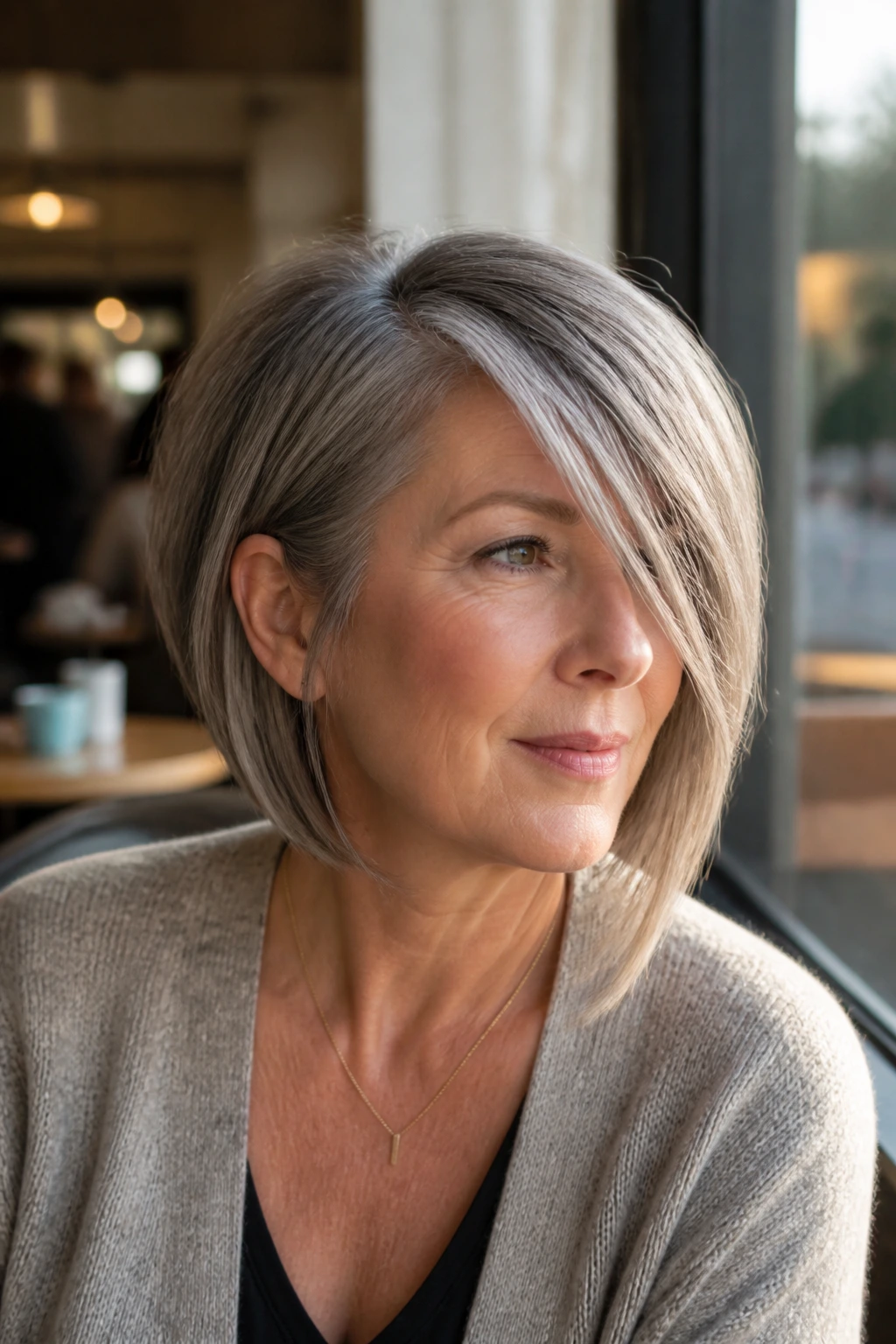
The first mistake is cutting too many layers into the crown. It sounds logical — fine hair, more layers, more movement — but the result is often thin top sections and ends that look tired. The fix is simple: keep the perimeter solid and hide the shaping inside the haircut.
The second mistake is trimming the front too short. Once the longest pieces sit above the jaw, the angle gets harder to read and the cut can feel boxy. If you want softness, keep the front grazing the chin or collarbone and let the nape do the lifting.
Heavy product is another classic problem. A pea-sized amount can turn into a limp afternoon if it lands on fine hair in the wrong place. Keep the rich stuff off the roots. Use lightweight spray formulas and apply them in short bursts.
And then there’s the urge to over-smooth everything. A perfectly pressed bob sounds nice, but on fine hair it can erase all the life from the cut. Leave a little bend. Leave a little texture. The hair needs somewhere to move.
Variations for Face Shape, Texture, and Gray Hair
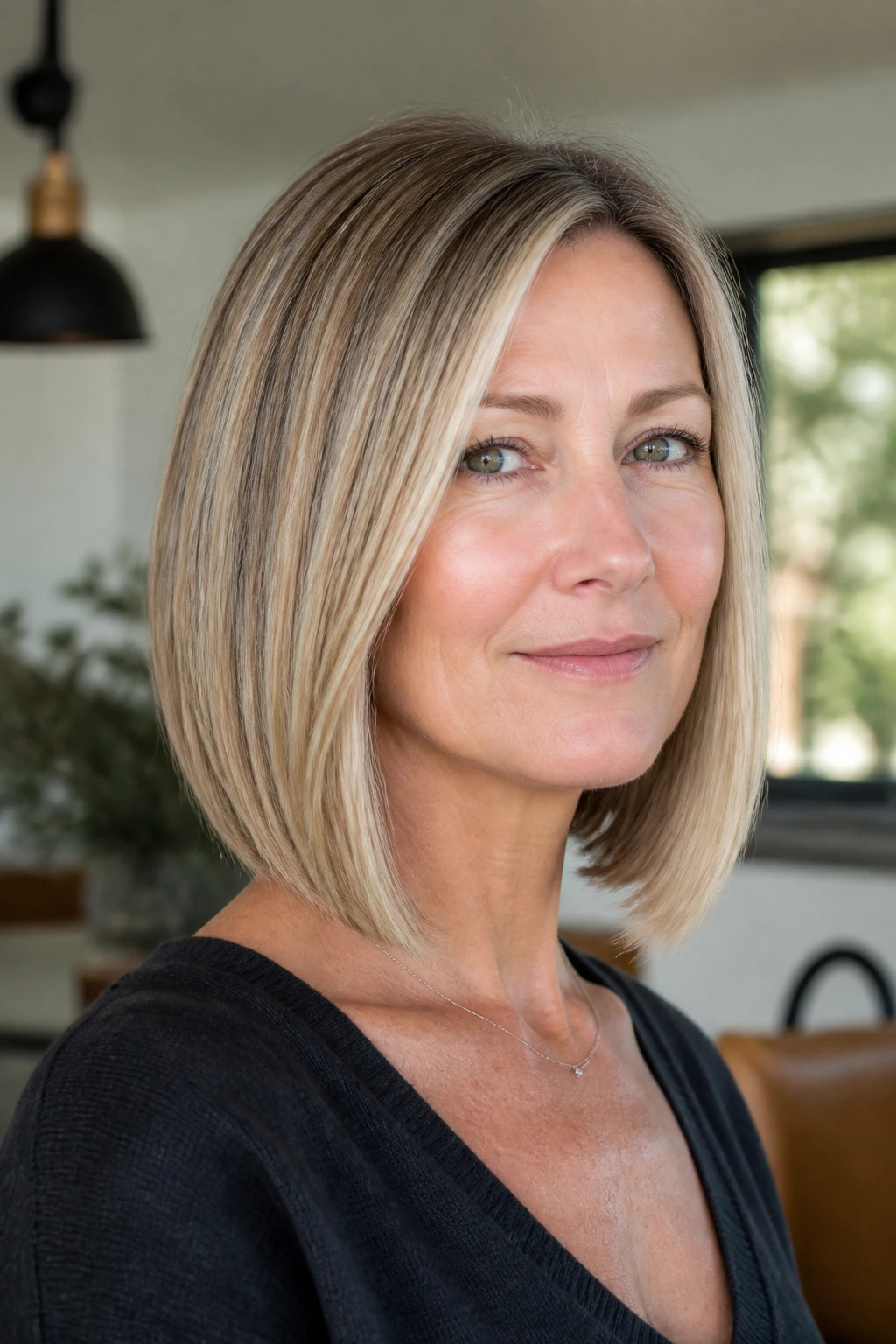
Round-Face Sweep: Keep the longest front pieces below the chin and add a side part. The vertical line helps the cut feel longer, not wider.
Square-Jaw Softener: Ask for curtain pieces or a softer front edge that slides past the jawline. The goal is to blur the corner, not hide it.
Silver-First Glow Line: Use the angled bob as a frame for gray or white hair, then keep the tone glossy with a lightweight shine product. The shape makes the color look deliberate.
Wavy Air-Dry Version: Let the front pieces stay long enough to wave, but keep the back slightly shorter so the shape does not balloon. This works well if your hair already has a little bend.
Low-Heat Office Bob: Keep the angle subtle, the ends blunt, and the styling smooth. You can wear this one with glasses, earrings, or a collared shirt without fighting the neckline.
Keeping the Shape Between Appointments
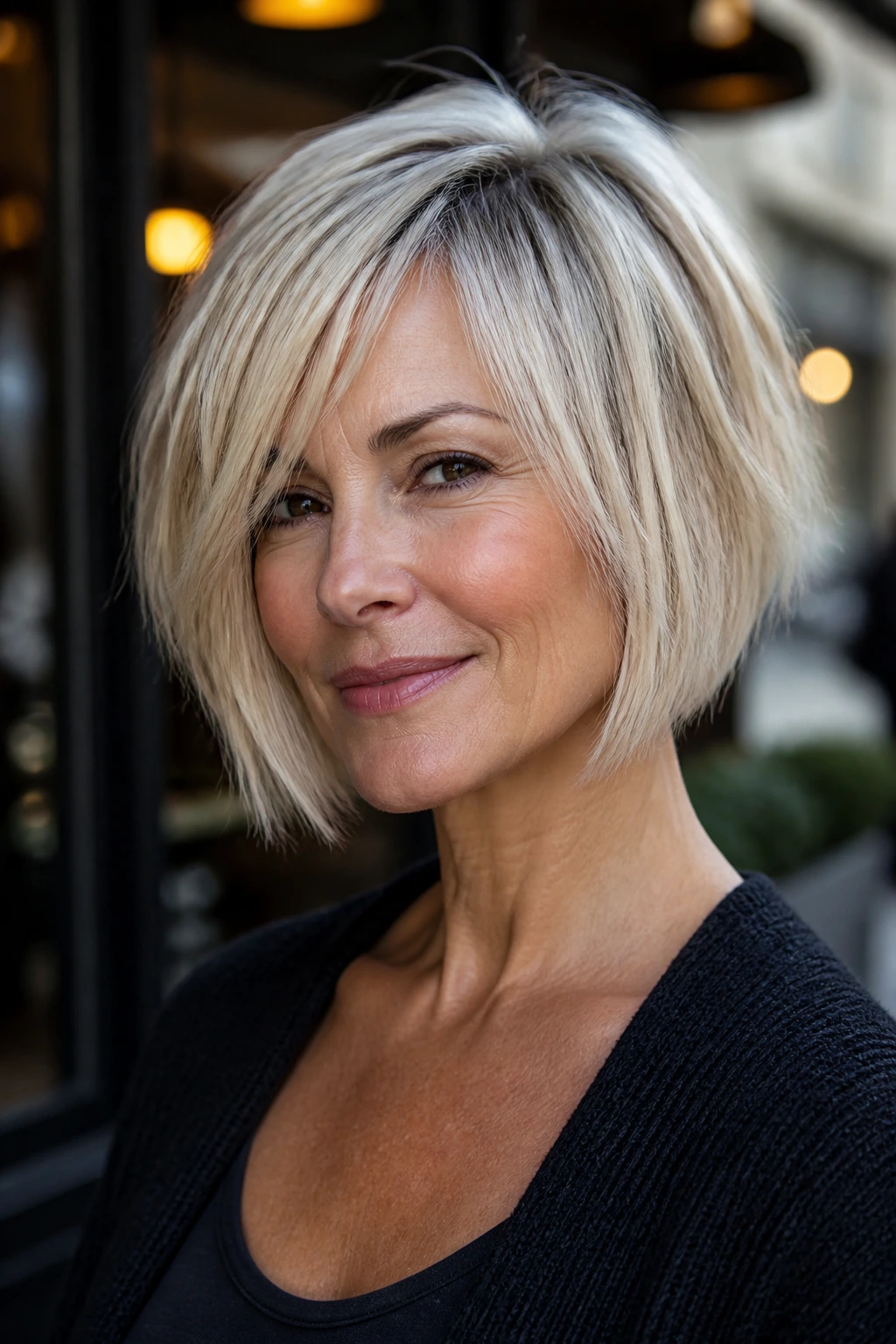
Fine hair tells on you when it grows out. The outline stops looking sharp, the front starts to separate, and the back loses its lift first. For most angled bobs, a trim every 6 to 8 weeks keeps the line tidy. If your hair grows quickly or the ends split easily, 5 to 6 weeks can be worth it.
Sleep matters too. A silk or satin pillowcase reduces the friction that roughs up the ends overnight. If one side always flips the wrong way in the morning, clip it loosely before bed or tuck the longer front pieces behind your ears for a few minutes after styling so they remember the direction.
Dry shampoo is useful, but don’t bury the roots in it. A light mist at the crown, then a fingertip massage, is enough. If the ends start to look dry before the next trim, use a tiny amount of serum only on the last inch or two. Fine hair rarely needs more than that.
Frequently Asked Questions

Which angled bob makes fine hair look the fullest?
The blunt-edged angled lob is usually the strongest choice for fullness because the perimeter stays solid. If you want a little lift as well, a softly stacked nape can help, but the ends should stay clean, not shredded.
Should women over 50 avoid layers in an angled bob?
Not at all, but the layers need to be hidden and controlled. Too many obvious layers can make fine hair look sparse, while subtle internal shaping keeps the outline full and the movement soft.
Can a longer angled bob work on naturally wavy fine hair?
Yes, and it often looks better than a super-short cut because the front length gives the wave room to form. Keep the back lighter and the perimeter smooth so the waves do not puff out at the sides.
Is a side part better than a middle part for fine hair?
A side part usually gives more lift at the roots and helps the front stay off the face. A middle part can work if your hair has enough density, but it tends to expose the crown more easily.
How short should the back be compared with the front?
A subtle difference is usually enough — often 1 to 2 inches from nape to front, depending on your starting length. If the angle gets too steep, fine hair can look stringy instead of shaped.
What if my hair is fine but also very dense?
You can handle a little more internal texture. The key is not to remove the perimeter weight, because dense fine hair can still look dry and frizzy at the ends if it’s over-thinned.
How do I keep the cut from flipping out at the shoulders?
Use a round brush or flat iron to guide the ends inward when you style it, and keep the collarbone pieces long enough to rest rather than kick. If the flip keeps happening, a small adjustment at the ends usually fixes it.
Can I wear glasses with a longer angled bob?
Absolutely. In fact, the longer front pieces can frame glasses nicely. Just make sure the front does not stop exactly where the frames hit, or the hair and glasses can compete for the same space.
A Shape That Holds Its Own
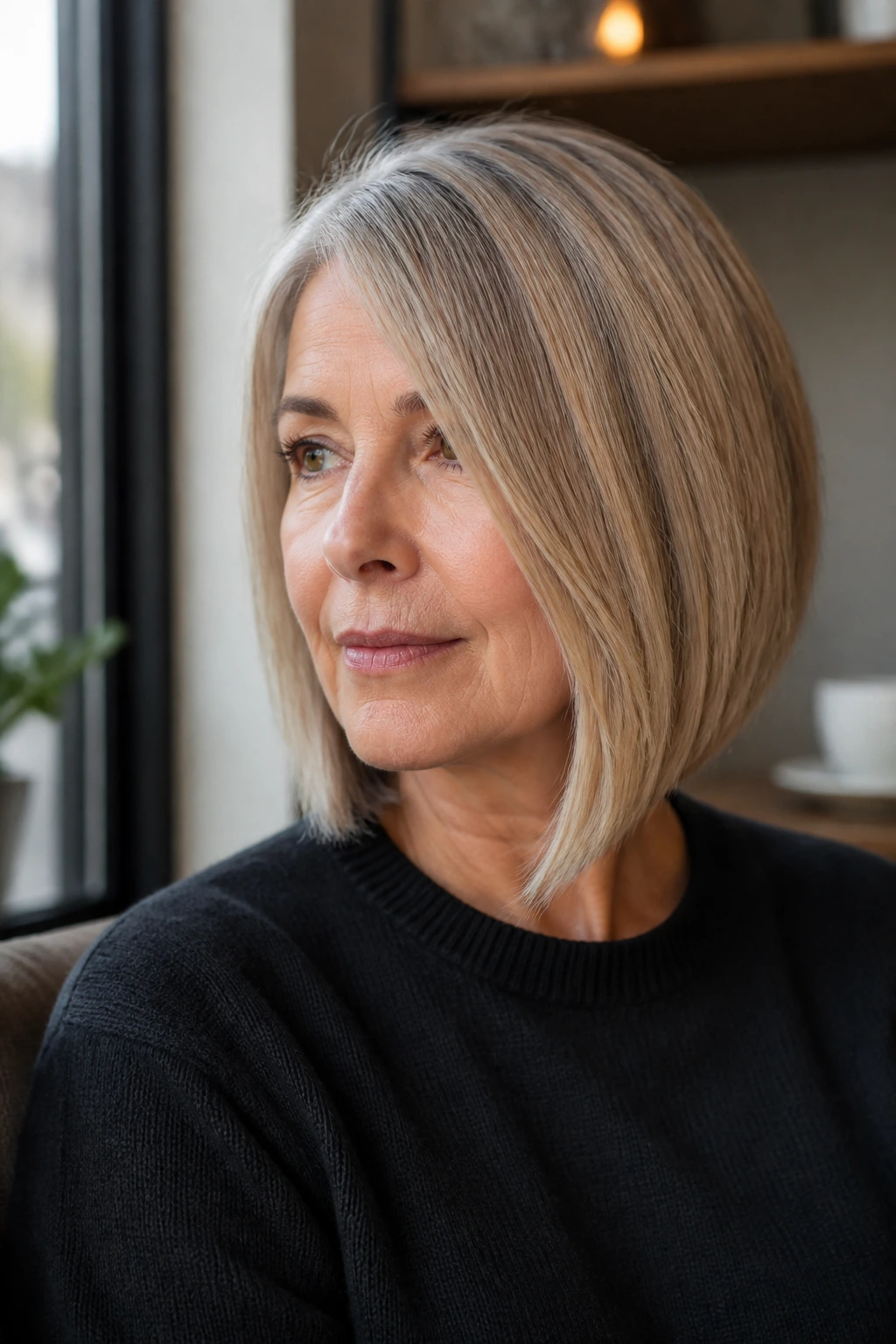
A good angled bob does not try to be everything. It gives fine hair a firmer edge, keeps the front soft, and leaves enough length to feel graceful instead of abrupt. That mix matters more than trends, and it matters more than trying to force volume where the hair does not naturally want it.
If you’re choosing one of these looks, think about the part you actually want to live with: tucked, waved, sleek, silver, or lightly stacked. That choice will tell you more than a dozen vague style words ever could. Bring the version that fits your mornings, your glasses, your neckline, your patience.
And if you want the simplest rule of all, it’s this: keep the perimeter clean, keep the crown lifted, and keep the front long enough to move. The rest is just taste.