



Curtain bangs earn their keep on the second day, not the first. The front pieces fall back into place with a little bend, the long layers keep moving, and the whole haircut still looks like it was meant to be there after you tuck one side behind your ear or shove it into a clip before leaving the house.
That’s the real appeal of long layers with bangs. They can look put together with a round brush and a few minutes of heat, but they don’t fall apart if you let them air-dry and live your life. The best versions have enough length to keep the perimeter full, enough face-framing to soften the cheeks and jaw, and enough loose structure that you aren’t trapped in a high-maintenance fringe routine.
The phrase sounds awkward. The haircut isn’t. Think of it as a soft frame that takes long hair from heavy and static to something with movement around the face, around the crown, and down through the ends. Some versions are airy and light, some are fuller and more dramatic, and some are built for hair that needs a little discipline without losing length. That range is the point.
Why This Collection Works in Real Life
-
Low-fuss grow-out: The curtain fringe splits down the middle, so a trim that’s a little overdue still looks intentional instead of blunt and boxy.
-
Face-framing without a hard line: Long front pieces can skim the cheekbones, jaw, or collarbone, which softens long hair without chopping off the length you’ve been growing.
-
Works with more than one styling mood: The same cut can be blown out smooth, bent with a curling iron, or left with natural texture and still hold its shape.
-
Easier to tuck, clip, or pin: Because the front pieces are longer, you can move them out of the way without the haircut looking unfinished.
-
Useful for different hair densities: Fine hair can keep a soft, wispy shape, while thick hair can carry more weight and still avoid that heavy triangle at the bottom.
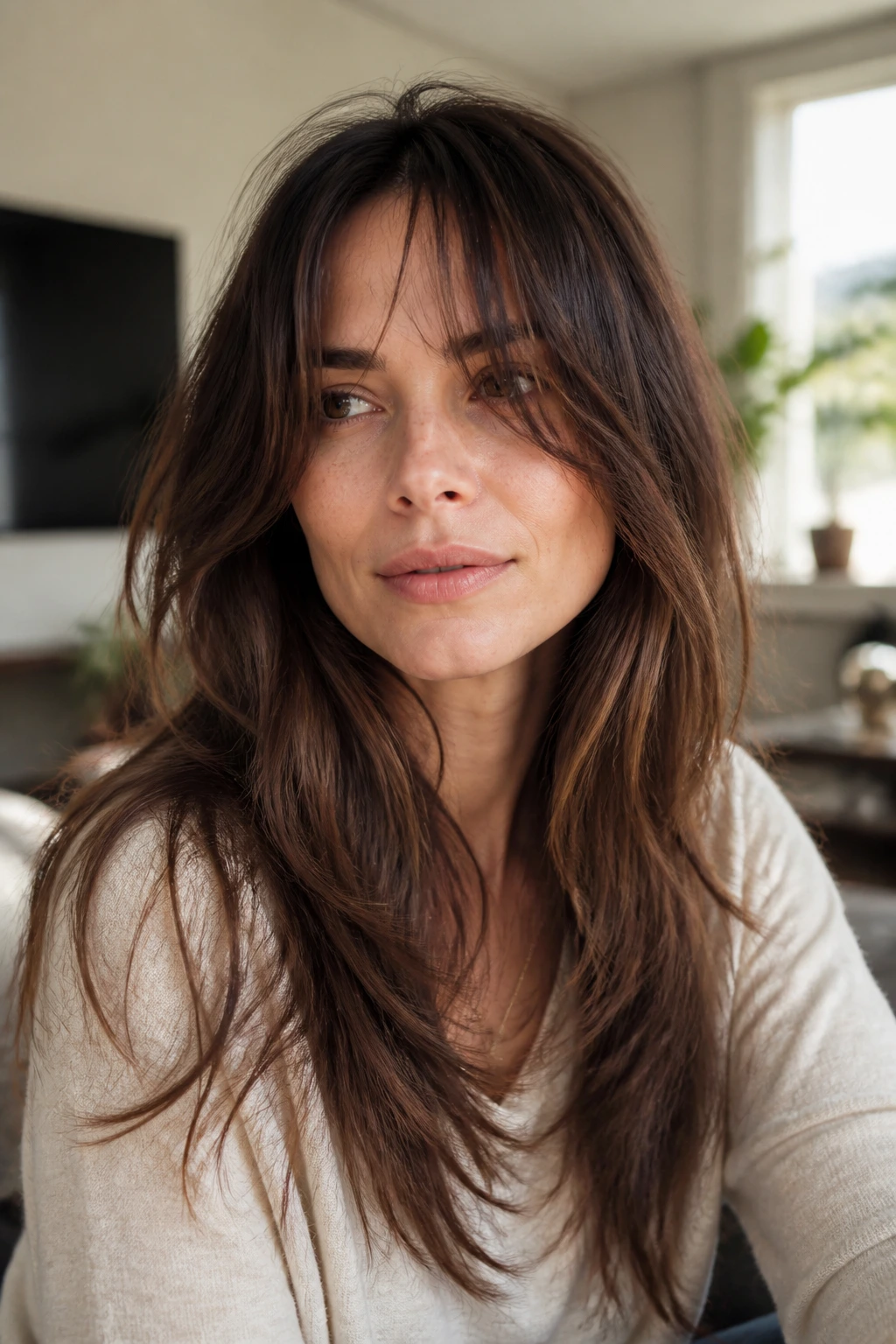
1. Soft Center-Part Curtain Layers with Brow-Skimming Bangs
This is the version I’d hand to someone trying curtain bangs for the first time. The shortest pieces sit right around the brow line, the front layers sweep down past the cheekbones, and the rest of the haircut keeps its length so the shape feels calm instead of choppy. It looks tidy after a quick blow-dry, but it also settles nicely if you let it dry with a little natural bend.
The trick is restraint. Ask for the layers to start around the chin, not halfway up the cheek, so the front doesn’t kick out in a weird little flip every time the wind hits. That keeps the shape soft around the face and makes the fringe easier to live with on a random Tuesday.
A clean middle part matters here. If your part keeps shifting, this cut still works, but the shape reads best when the bang pieces fall in an even curtain from the center. It’s the least fussy version of the whole family.
2. Air-Dried Waves with Loose Curtain Fringe
Can a haircut look polished without a blowout? Absolutely, and this is the one that proves it. The fringe stays loose enough to split on its own, while the long layers give wave pattern room to move instead of turning into a fuzzy block at the sides.
Best on hair that already bends a little
-
Fine-to-medium waves usually fall into this shape fast.
-
A small amount of mousse at the roots gives the top some lift.
-
Twist the front pieces away from the face while they’re damp, then let them dry without touching them.
The result is not ringlet perfect. That’s the point. You get soft bends, a little separation through the ends, and bangs that look like they belong to the rest of the haircut instead of sitting on top of it. If your hair frizzes at the ends, a pea-sized amount of cream on the final 2 inches is usually enough. More than that and the fringe gets sticky, which nobody needs.
3. Polished Blowout Layers with Feathered Bangs
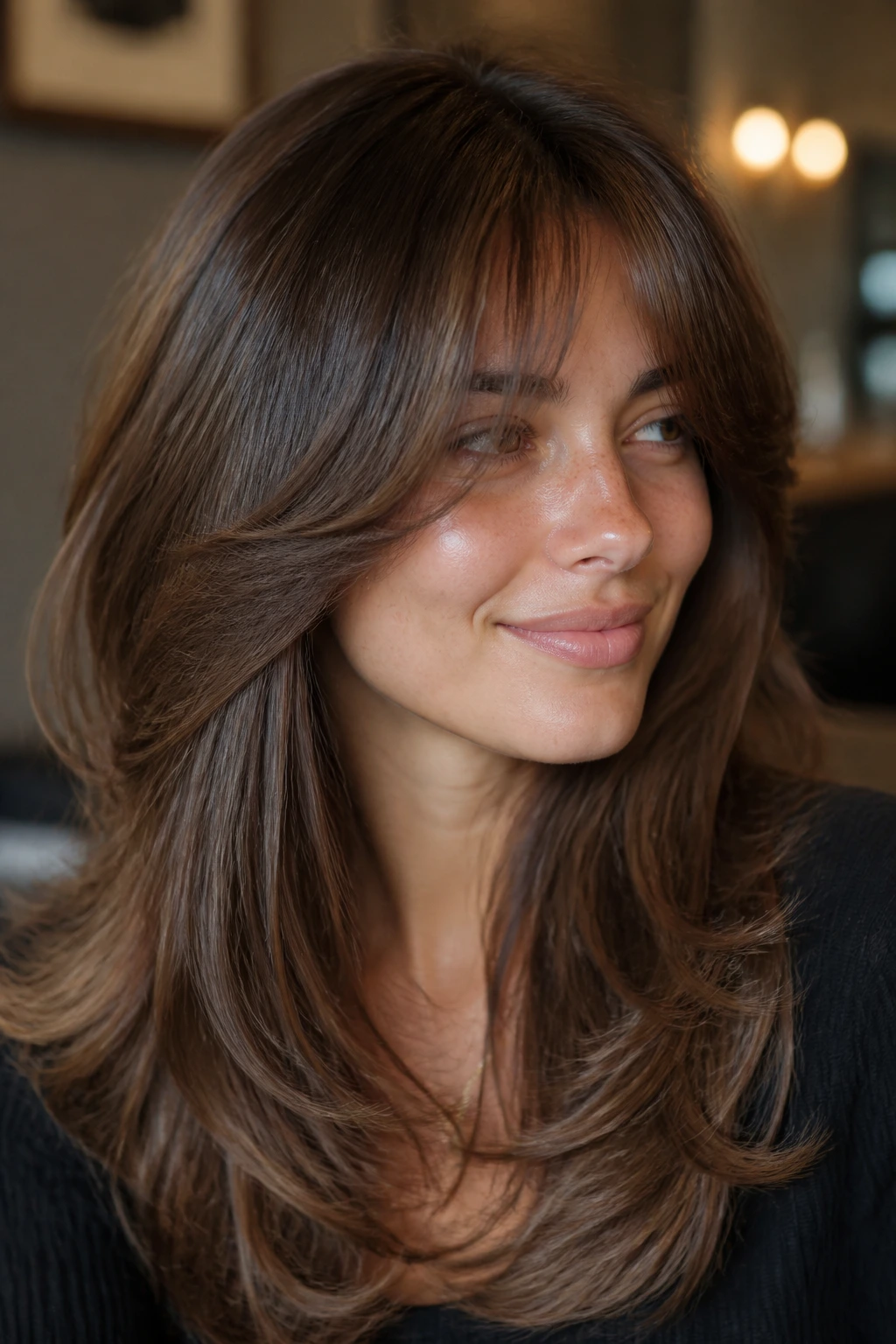
Some cuts are built for speed. This one is built for a blow-dryer and a round brush, and honestly, that’s not a bad thing. The layers fall in a smooth curve from cheekbone to collarbone, the fringe feathers away from the center part, and the ends bounce instead of hanging straight down.
If you like hair that still looks finished at 3 p.m., this is your lane. The shortest front pieces should land around the brow or upper cheek, not the lashes, because those tiny millimeters change whether the bang flips open or gets stuck in your eyes. A 1.25-inch round brush is enough for most lengths; bigger brushes can flatten the curve if your hair is fine.
One pass of the dryer over each front section is not enough. Pull the brush through, roll the ends under for a second, and let the hair cool before you move on. Cooling is what holds the bend.
4. Long U-Cut Layers with Rounded Face-Framing Fringe
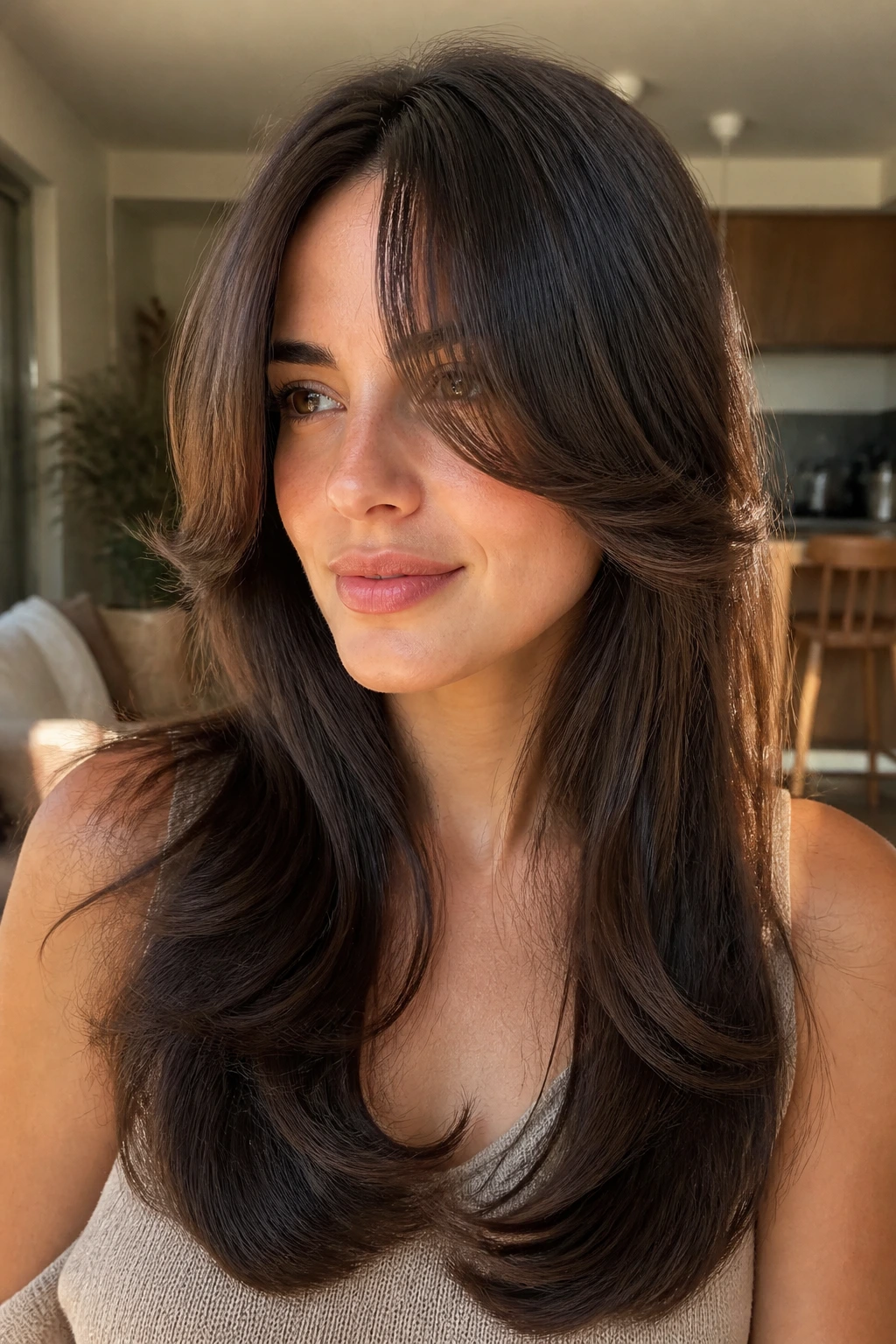
If your hair goes flat at the back but bulky at the bottom, a U-cut shape fixes a lot of that without making the perimeter look thin. The center of the length sits a little lower than the sides, which gives the whole haircut a soft, rounded finish. Add curtain fringe that curves from the cheeks down toward the chin, and the result is full without looking heavy.
This version is especially useful for thick hair that needs structure. Ask for the layers to be carved with enough distance between them so the shape doesn’t puff up at the sides. Too many short pieces near the face can make thick hair look wider instead of lighter.
The nice part is how it grows out. A U-shape keeps the bottom line soft for months, so you don’t get that sudden shelf effect that happens when a blunt cut starts slipping downward.
5. Butterfly Layers with a Full Curtain Sweep
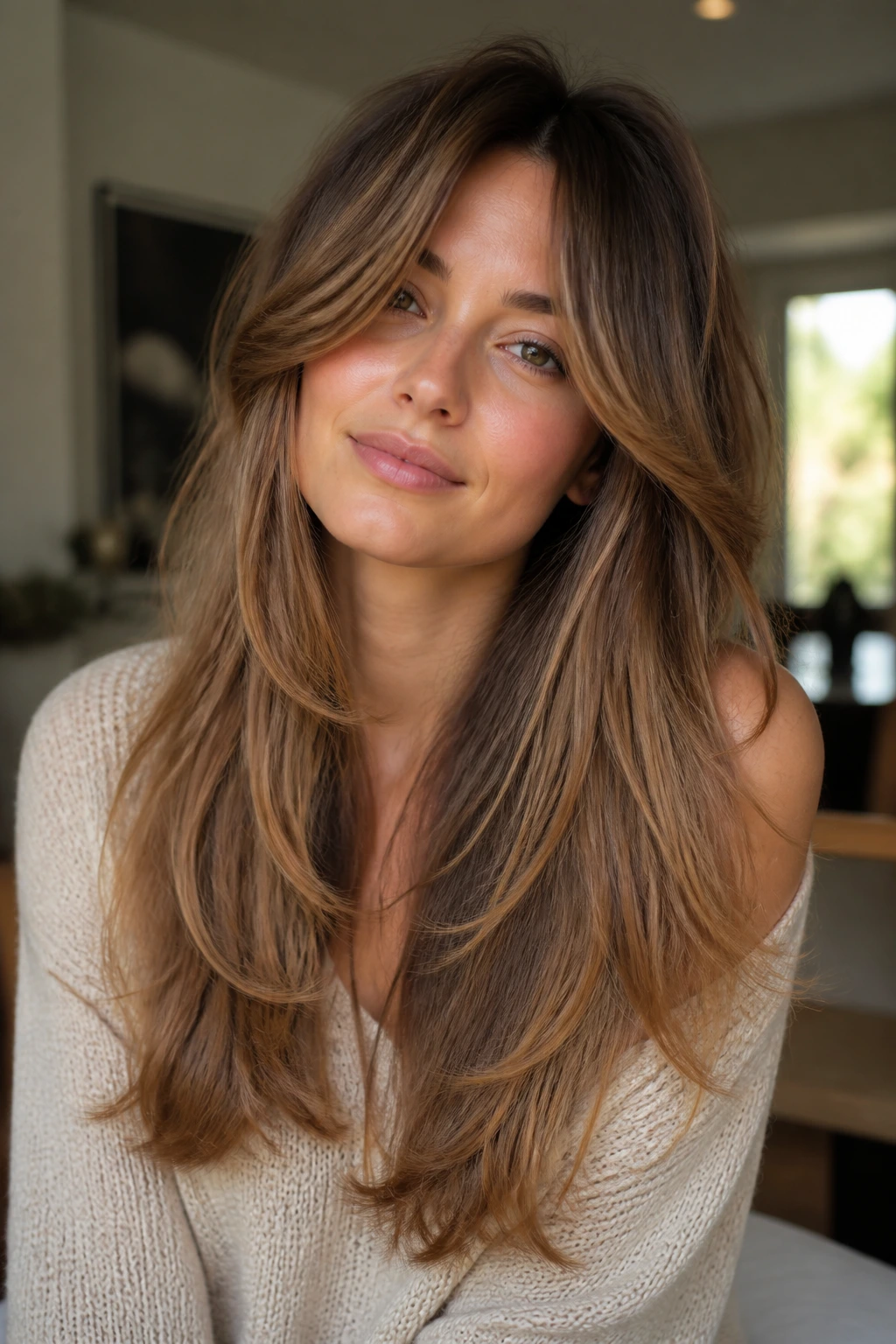
This is the cut that gives you lift around the crown and length everywhere else. The shortest face-framing layers sit high enough to make the hair around your face feel lively, while the rest of the length stays long and swingy. It’s a little more dramatic than the soft center-part version, but still easy enough to wear to work, class, or an ordinary dinner.
The fringe needs a bit of direction on wash day. Blow it forward first, then sweep it away from the face with a round brush or a large roller while the roots are still warm. If you skip that step, the front pieces can separate in a tired-looking way that makes the whole cut seem flat.
This shape does one useful thing better than most: it makes long hair feel lighter without making the ends look sparse. That matters more than people admit. Heavy length can drag the face down. A butterfly cut lifts the eye back up.
6. Long Shag Layers with Softer, Swept Bangs
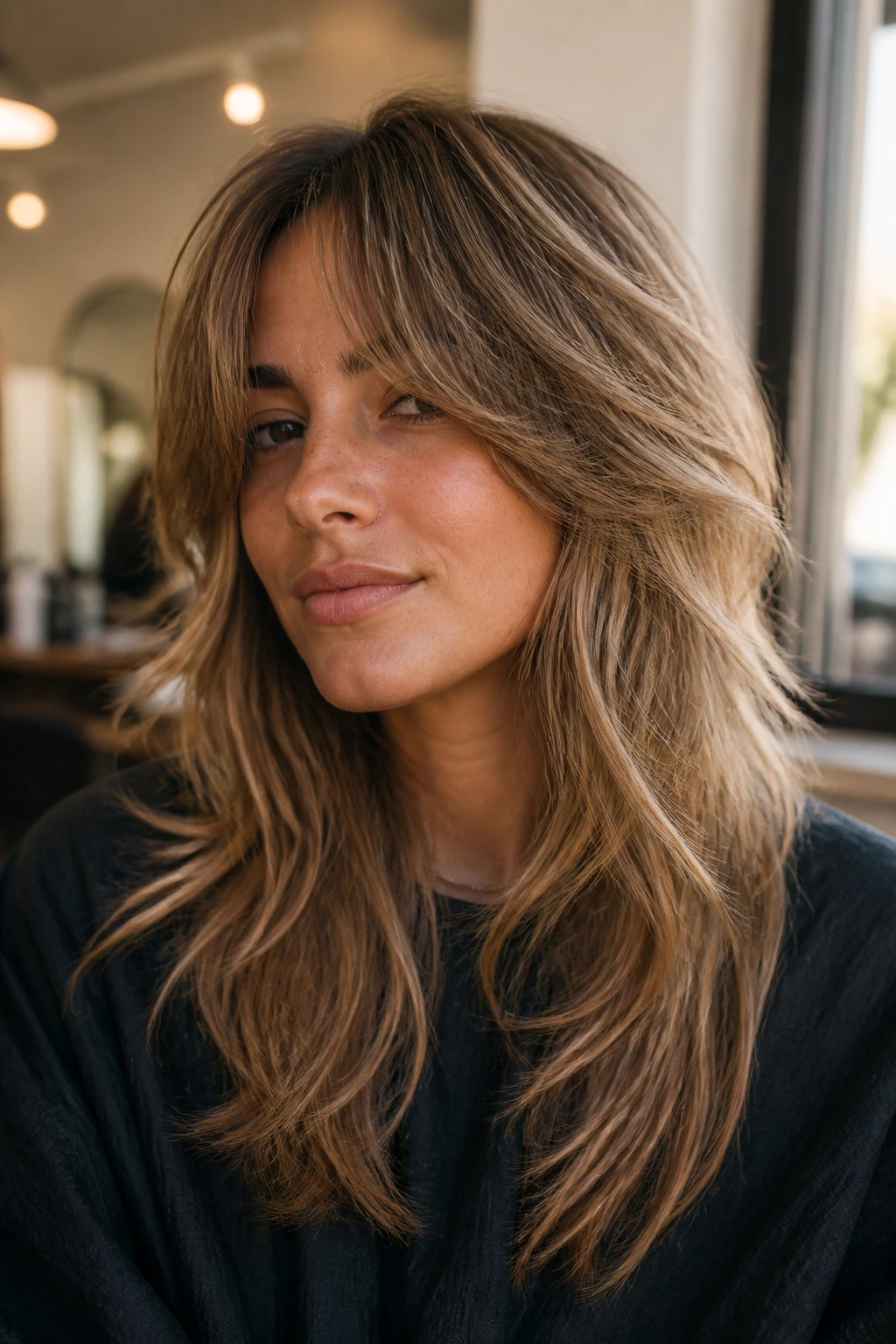
Want a little more attitude without falling into full-on shag territory? Start here. The layers are longer and softer than a classic shag, the fringe sweeps open instead of sitting as a blunt curtain, and the whole cut keeps a little bend and grit through the ends.
What makes it different
-
The crown gets some lift, but not a huge stack of short pieces.
-
The bangs blend into the layers instead of stopping abruptly.
-
A texturizing spray works better than a heavy cream here.
This cut is happiest when it’s not over-styled. Rough-dry the roots, bend the front with your fingers, then leave a few pieces imperfect on purpose. If every strand sits in the same place, the shape loses the charm that makes it useful in the first place. And yes, a small amount of frizz is fine. The haircut can take it.
7. Sleek Straight Layers with Tapered Curtain Ends
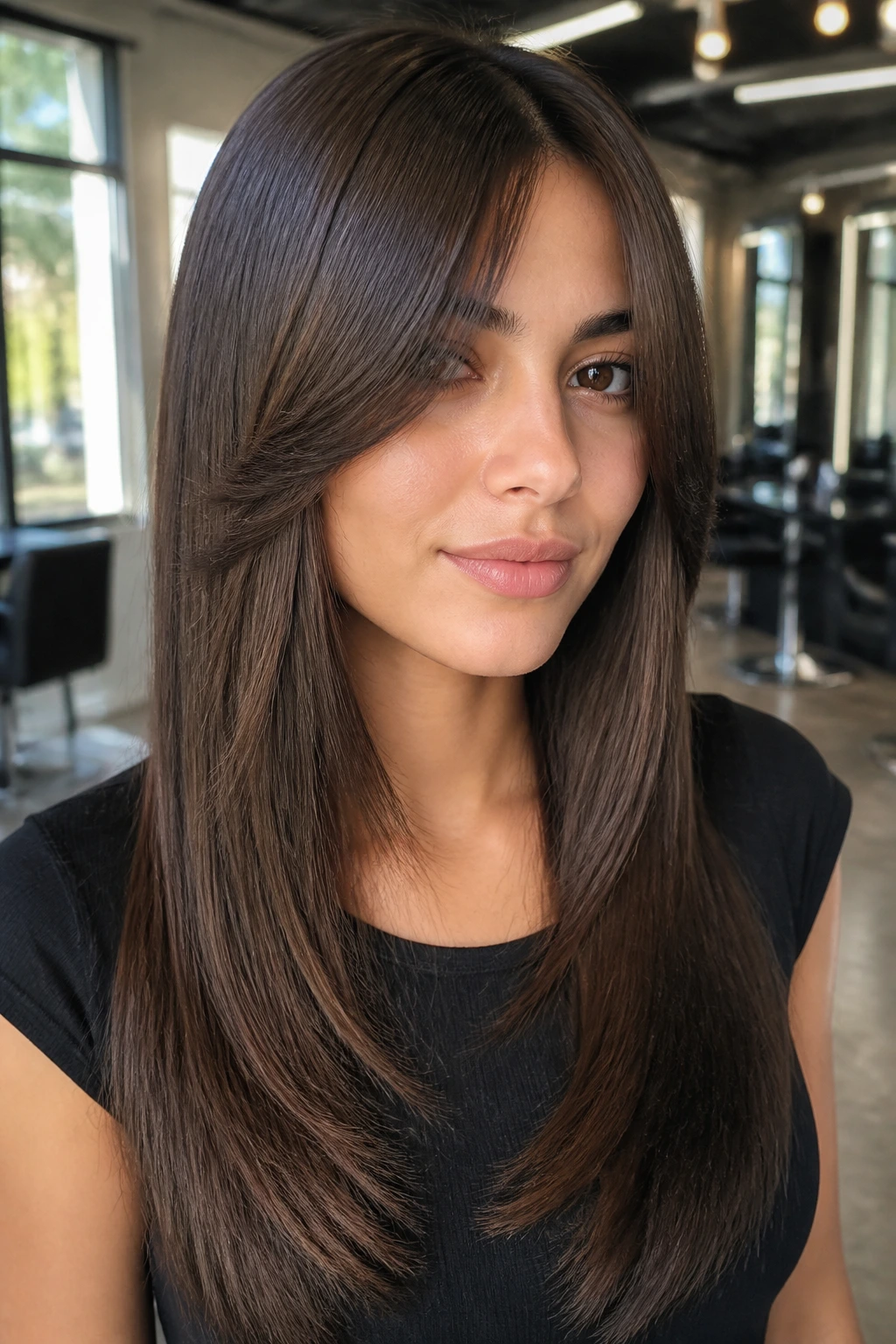
What if your hair likes to stay straight? Then stop fighting it and build the cut around that. This version keeps the length glossy and smooth, with tapered front pieces that narrow from the cheekbone down to the chin. The result is clean, sharp, and still soft enough around the face to avoid looking severe.
The layers should be subtle. Too much slicing makes straight hair look stringy, especially at the ends. Ask for long internal layers rather than obvious steps, then set the front with a flat iron in a slow C-shape, not a hard bend. One pass is usually enough if the hair is already dry and smooth.
This is the cut I’d choose for someone who tucks hair behind one ear a lot. The curtain pieces fall forward when you want them, then move back without leaving a kink.
8. Beachy Mid-Bend Layers and Barely-There Bangs
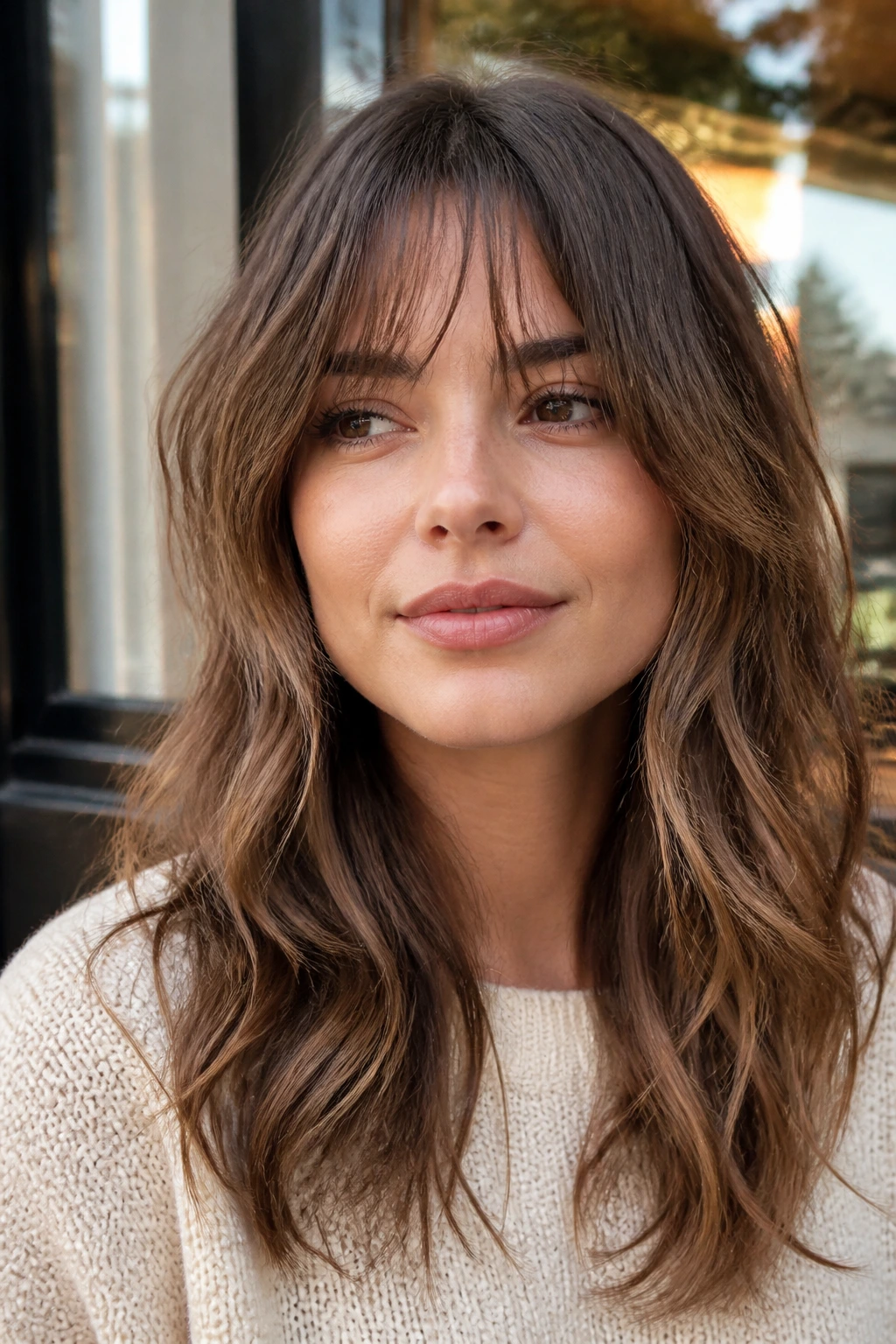
Picture a haircut that looks like you slept on it in a nice way. That’s this one. The layers land in loose, mid-length bends, the curtain fringe sits lighter and more open, and the ends never look too done. It works especially well on shoulder-to-mid-back lengths where the hair has enough weight to hold a bend but not so much that it droops.
A 1-inch iron is usually plenty if you need a little help. Wrap the front sections away from the face, leave the last inch out, and brush them through once they cool. That gives you a softer line than a tight curl. The fringe should not sit like a helmet across the forehead; it needs air between the pieces.
This cut also hides a rough second-day texture better than most. If the bends get loose overnight, a quick mist of water, a touch of mousse, and a one-minute twist at the front brings it back.
9. Thick-Hair Curtain Layers with Heavier Fringe
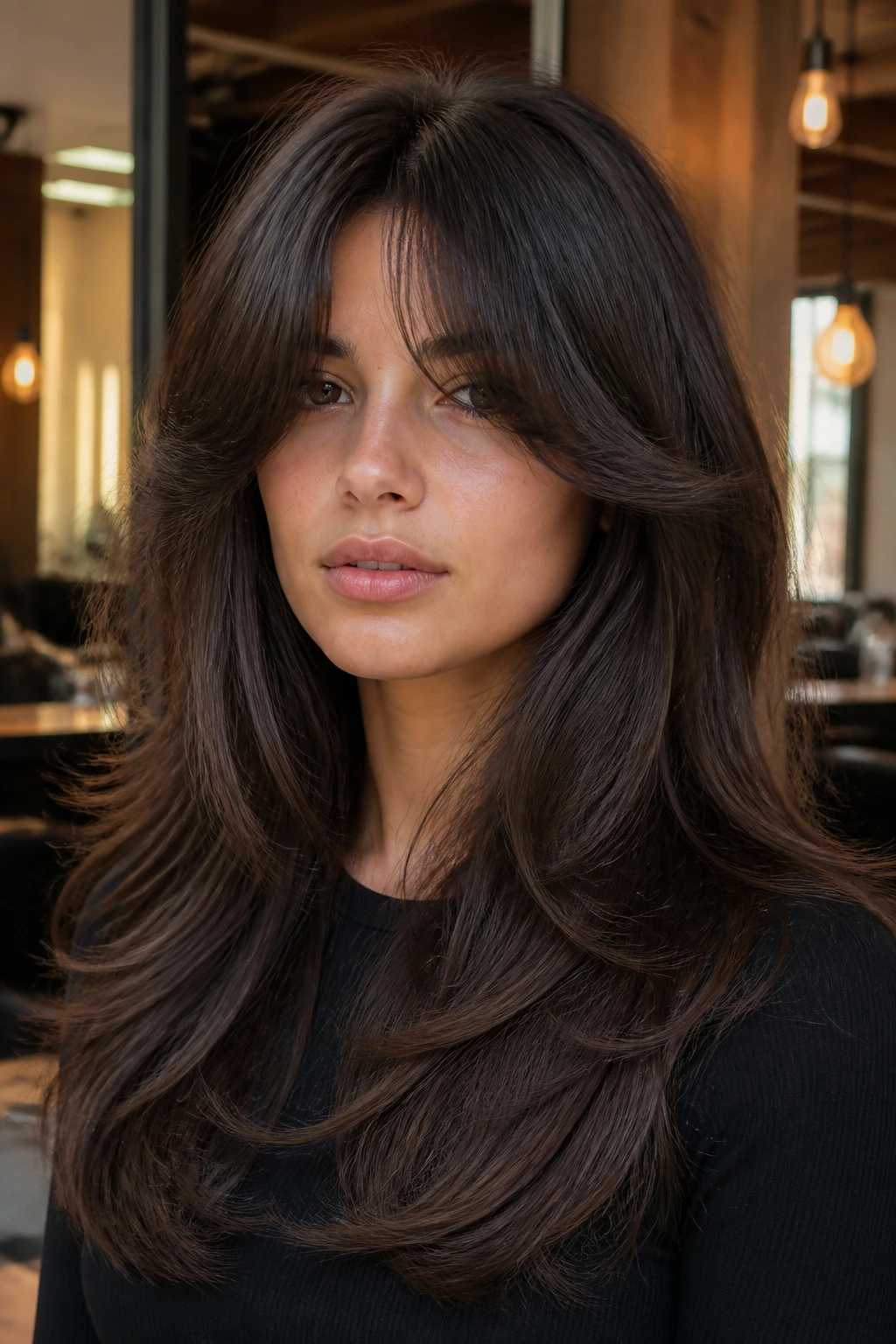
Thick hair needs a different kind of control. If the front pieces are too wispy, the haircut can look split and thin at the face while the back stays bulky. A heavier curtain fringe solves that. The bangs should still part in the middle, but they need enough weight to fall with purpose, not float away from the forehead.
Ask your stylist for internal weight removal instead of aggressive razor thinning. On thick hair, too much razoring can make the ends frizz out and lose shape by lunchtime. A cleaner scissor finish through the bottom gives you more control, especially if your hair has a coarse texture.
The daily routine is straightforward. Use a smoothing cream at the mid-lengths, a round brush at the front, and a touch of dry shampoo at the roots if the fringe starts collapsing. It’s a little more work than airy bangs, sure. But it pays off by keeping the shape from ballooning outward.
10. Fine-Hair Layers with Light, Separated Bangs
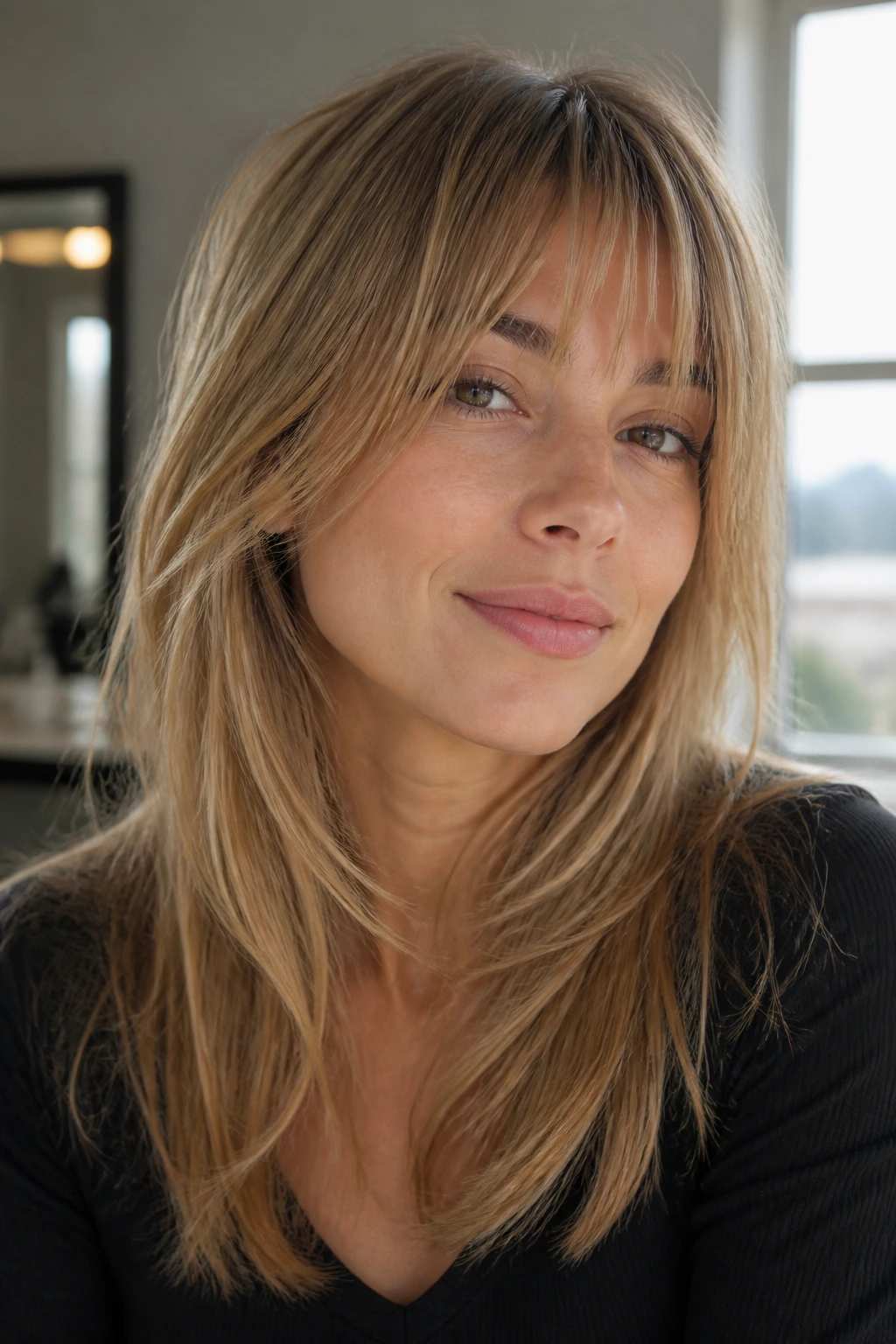
Fine hair needs movement, not too much cutting. That’s the whole game. Keep the perimeter long, add only enough layering to stop the hair from hanging like one flat sheet, and ask for curtain bangs that are light and separated rather than thick and blunt.
The shortest pieces should start lower than you might think — often around the nose bridge or cheekbone — so the fringe doesn’t eat up too much density at the front. If you cut the bangs too short and too full, the rest of the hair can look even thinner by comparison. That contrast is the trap.
What helps most
-
A root-lifting mousse on damp hair.
-
Blow-drying the fringe forward first, then away from the face.
-
A small dry shampoo mist at the crown, not just the roots near the part.
This cut looks best when it moves a little. Too much oil or serum drags it down fast. Keep the finish light, and the whole style stays softer and fuller.
11. Curly Long Layers with Curved Curtain Bangs
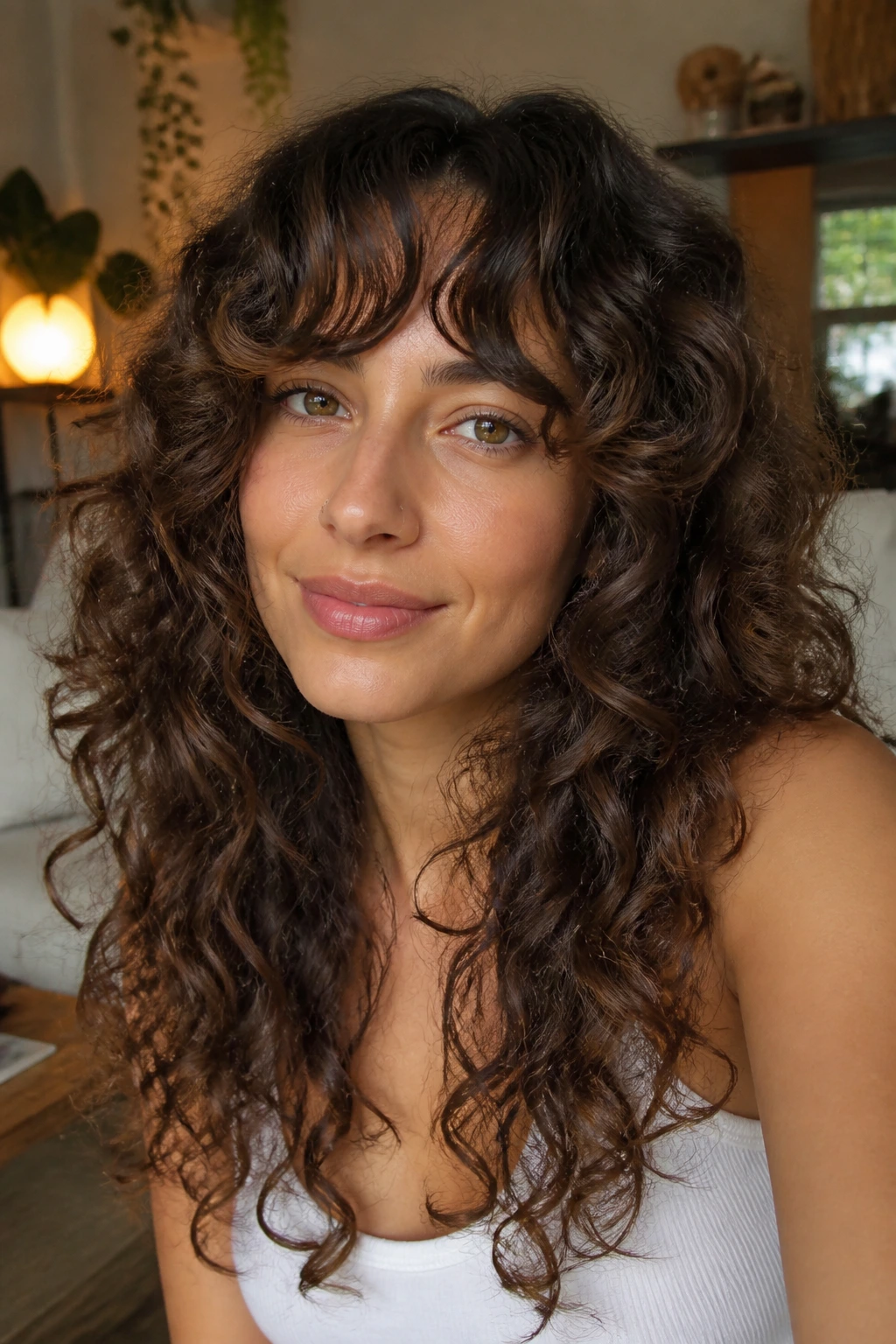
Curly hair and curtain bangs can absolutely work together, but they need a cut that respects the curl pattern. The front pieces should be shaped so they curve with the curl, not against it, and the long layers should follow the natural spring of the hair instead of trying to force every strand into the same line.
Ask for a dry cut if your stylist offers one. That lets them see where the curls land when they’re fully expanded, which matters a lot around the fringe. If the bang is cut too short on curly hair, it can spring up to the wrong place and stay there until the next trim.
The everyday version of this style is simple: cream, diffuser, hands off. Let the curl form around the cheekbones and jaw, then separate only the pieces that cling together. The shape should frame the face, not sit on top of it like a decoration.
12. Wavy Grow-Out Layers with Bottleneck Bangs
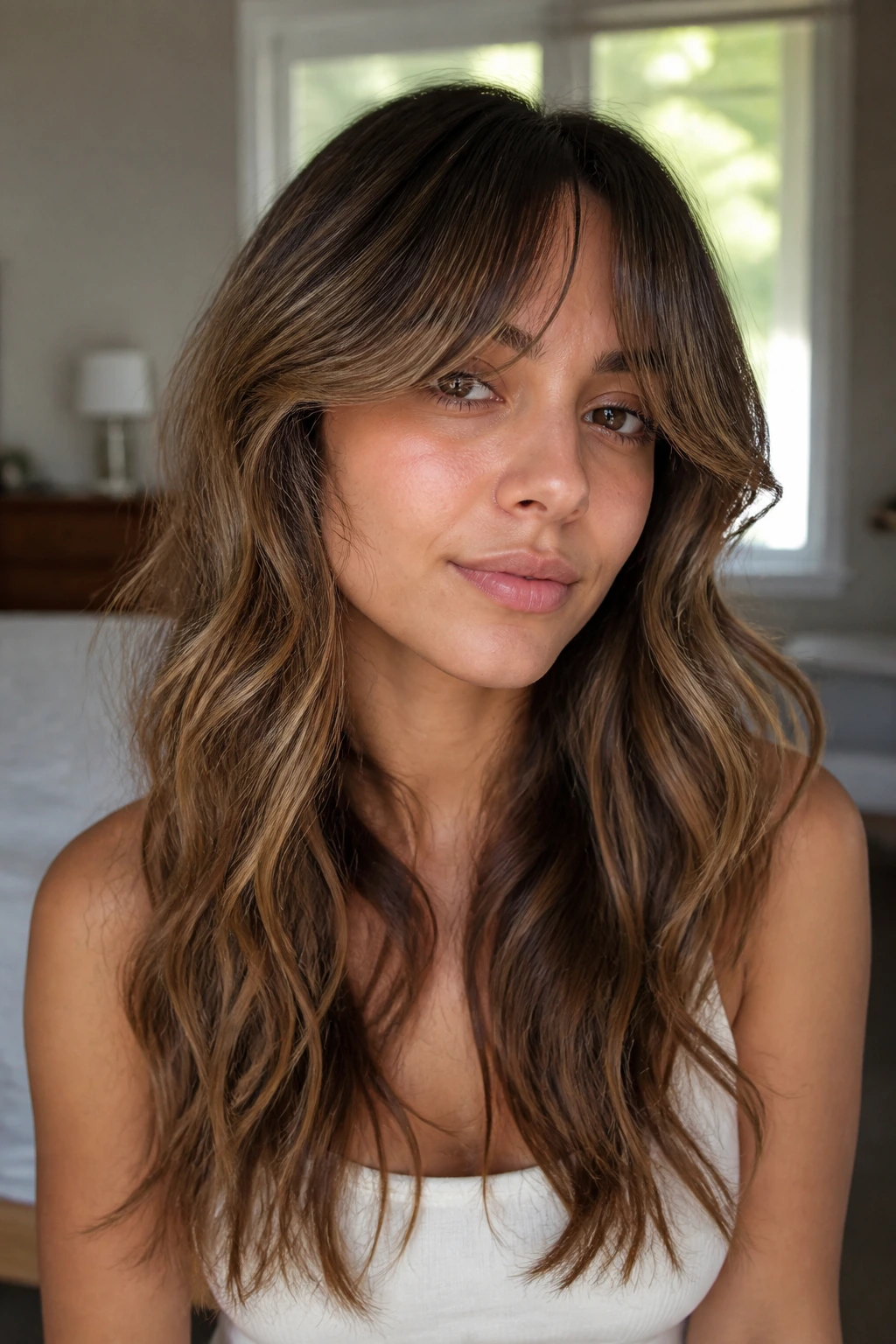
Bottleneck bangs sit narrower at the top and open wider near the cheekbones, which gives them a gentler transition into long layers. On wavy hair, that shape grows out with less drama than a blunt fringe. The whole cut feels soft around the eyes and fuller through the ends.
This is a smart choice if you know you won’t get back to the salon on a strict schedule. The front pieces can stretch from brow to cheekbone and still look deliberate. There’s less of that awkward in-between stage where the bangs start poking the lashes and the rest of the haircut looks too long.
A quick bend with a curling iron or even a large velcro roller is enough to keep the front open. You do not need a perfect set. The appeal is the loose shape, the little split at the center, and the way the layers melt into the rest of the hair.
13. Round-Face Softening Layers with Longer Front Pieces
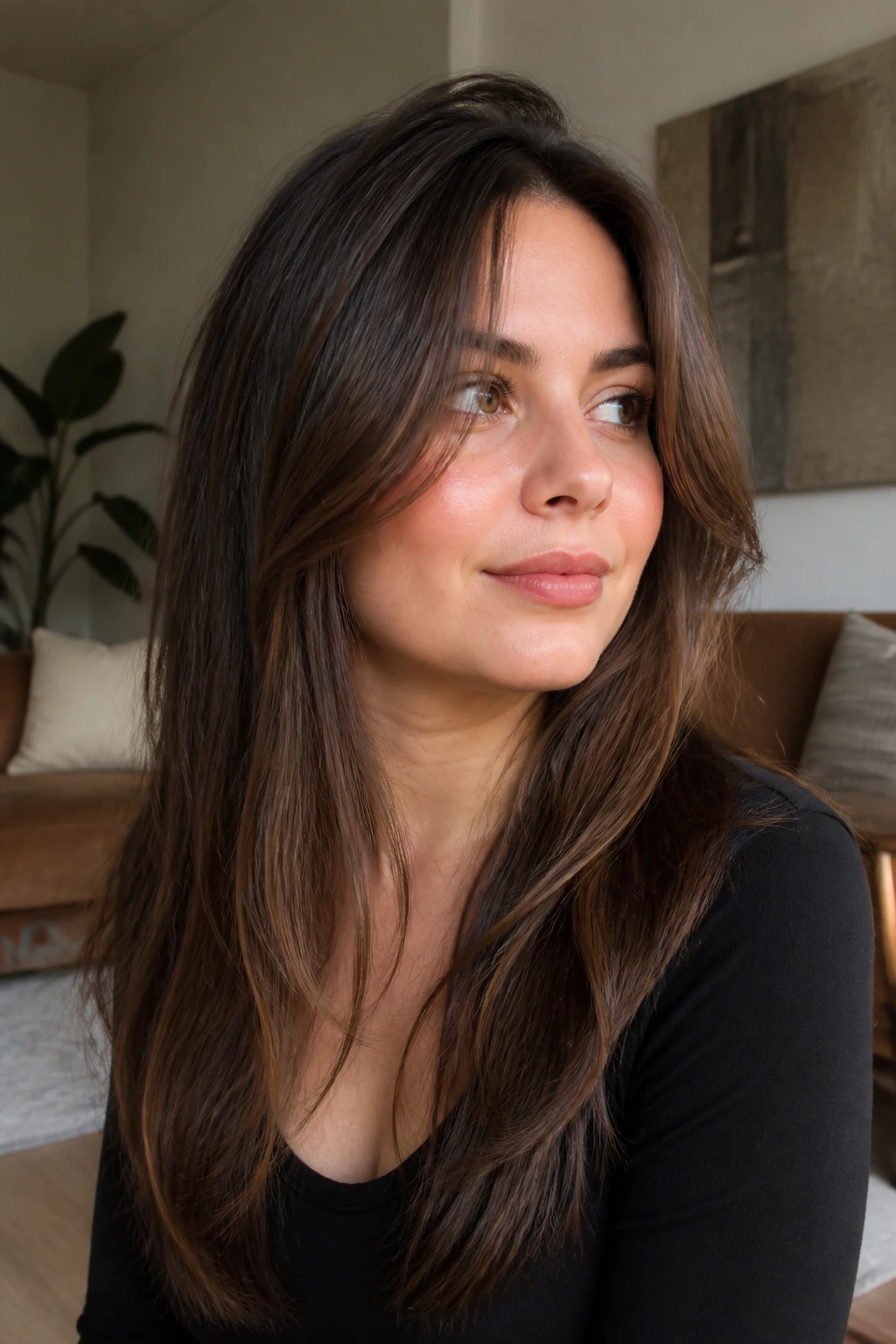
If your face reads round and you want a little more length visually, the front pieces matter more than the back. Keep the shortest curtain sections a touch lower — usually around the cheekbone or just below — and let the longest face-framing pieces hit near the jaw or collarbone. That vertical line helps the haircut fall in a more slimming shape without making it severe.
The parting matters here
-
A slightly off-center part softens the symmetry.
-
The front layers should angle down, not out.
-
A round brush bend should curve inward at the ends.
I’d avoid a fringe that ends too high on the face. It can stop the eye too soon and make the hair feel shorter than it is. Longer front pieces keep the shape moving downward, which is the whole trick.
14. Square-Face Softening Layers with Cheekbone Bangs
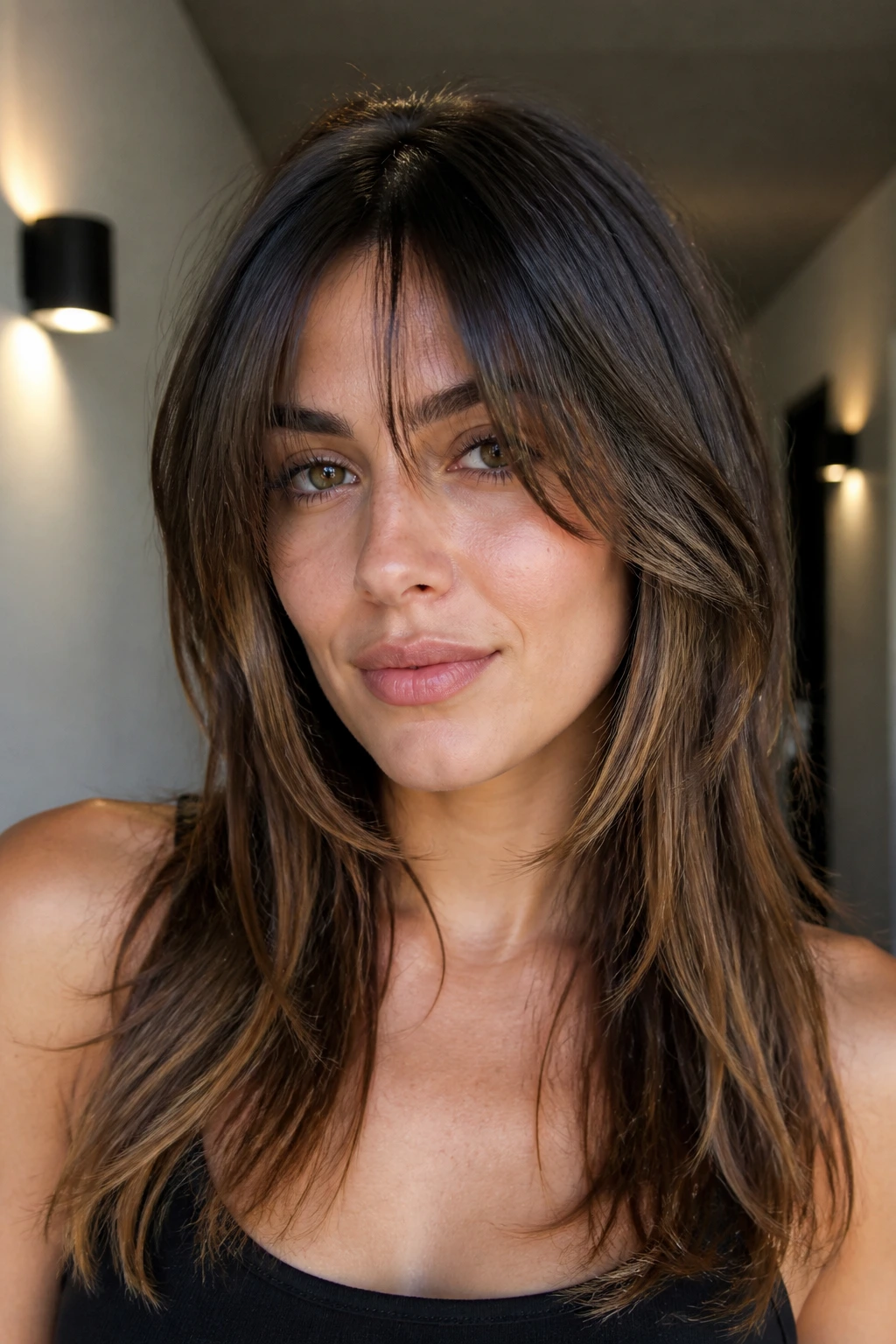
Square faces tend to look great with movement that breaks up the jawline, and cheekbone-length curtain bangs do exactly that. The front pieces should land where the cheek starts to turn inward, then fall softly toward the jaw so the lines around the face don’t feel boxy.
This is one of those cuts where the smallest adjustment changes the whole read. If the front is too blunt, the shape can feel rigid. If it’s too short, the face framing loses the softness that makes it useful. A little taper through the ends keeps the piece from sitting like a hard curtain.
When styling, curve the front away from the face first, then let it settle. You want a bend, not a flip. The rest of the length can stay long and smooth, which makes the face-framing pieces do the actual work.
15. Side-Biased Curtain Bangs for Cowlicks
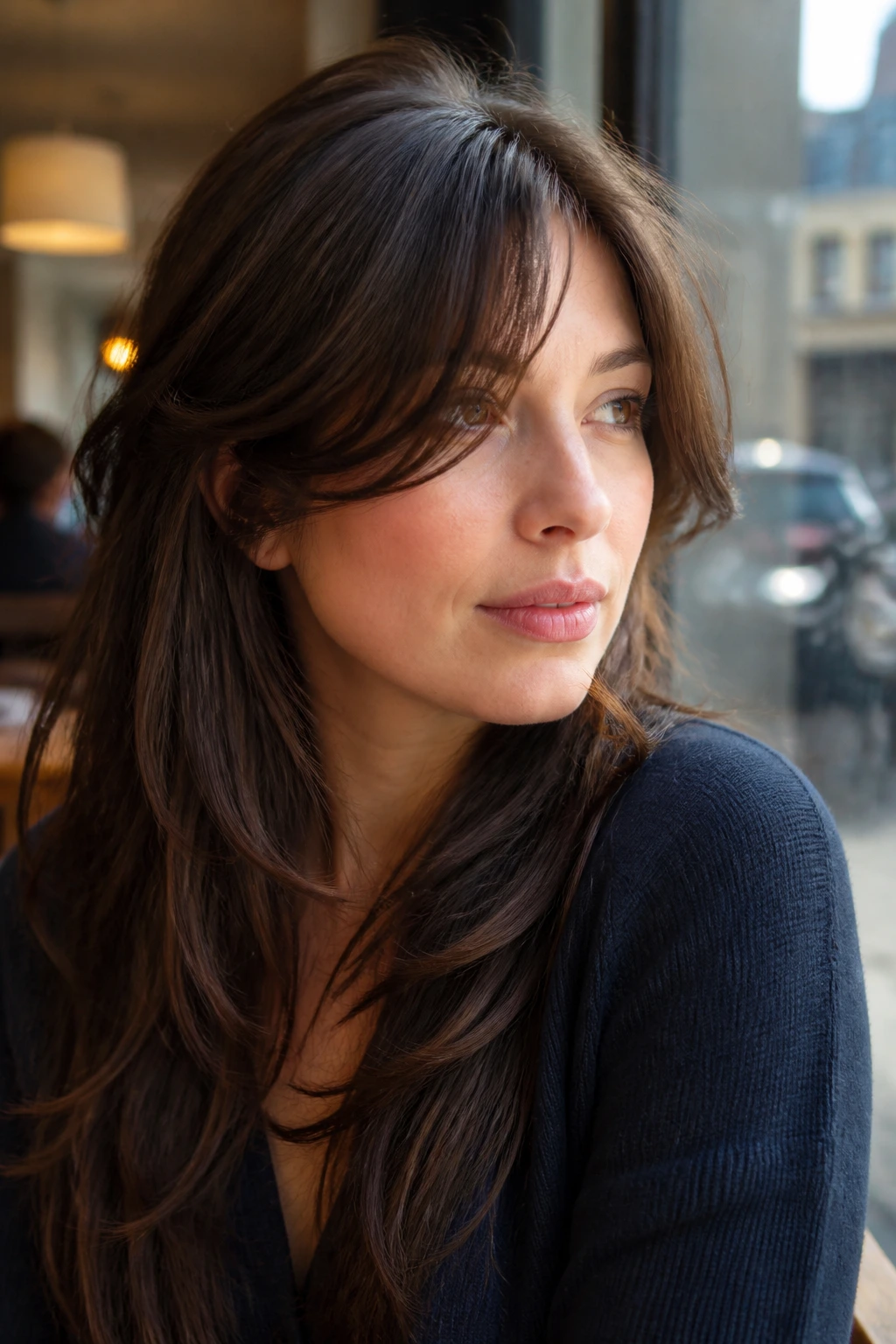
A center part is lovely until a cowlick laughs at it. If one side of your hair insists on pushing harder than the other, a slightly side-biased curtain bang can save you a lot of frustration. The split still exists, but it sits a touch deeper on the stronger side so the fringe falls in a more believable way.
This isn’t cheating. It’s reading the hair that’s already there.
Why it helps
-
The bangs stop fighting the scalp pattern.
-
The front stays in place longer after drying.
-
The shape still reads as curtain fringe, just less rigid.
Ask for the shortest pieces to be cut with the cowlick in mind, then style the front in the direction it wants to go first. Once it cools, you can bring the balance back with your fingers or a comb. That tiny compromise can turn a daily battle into a cut you stop thinking about.
16. Invisible Layers with Floating Fringe
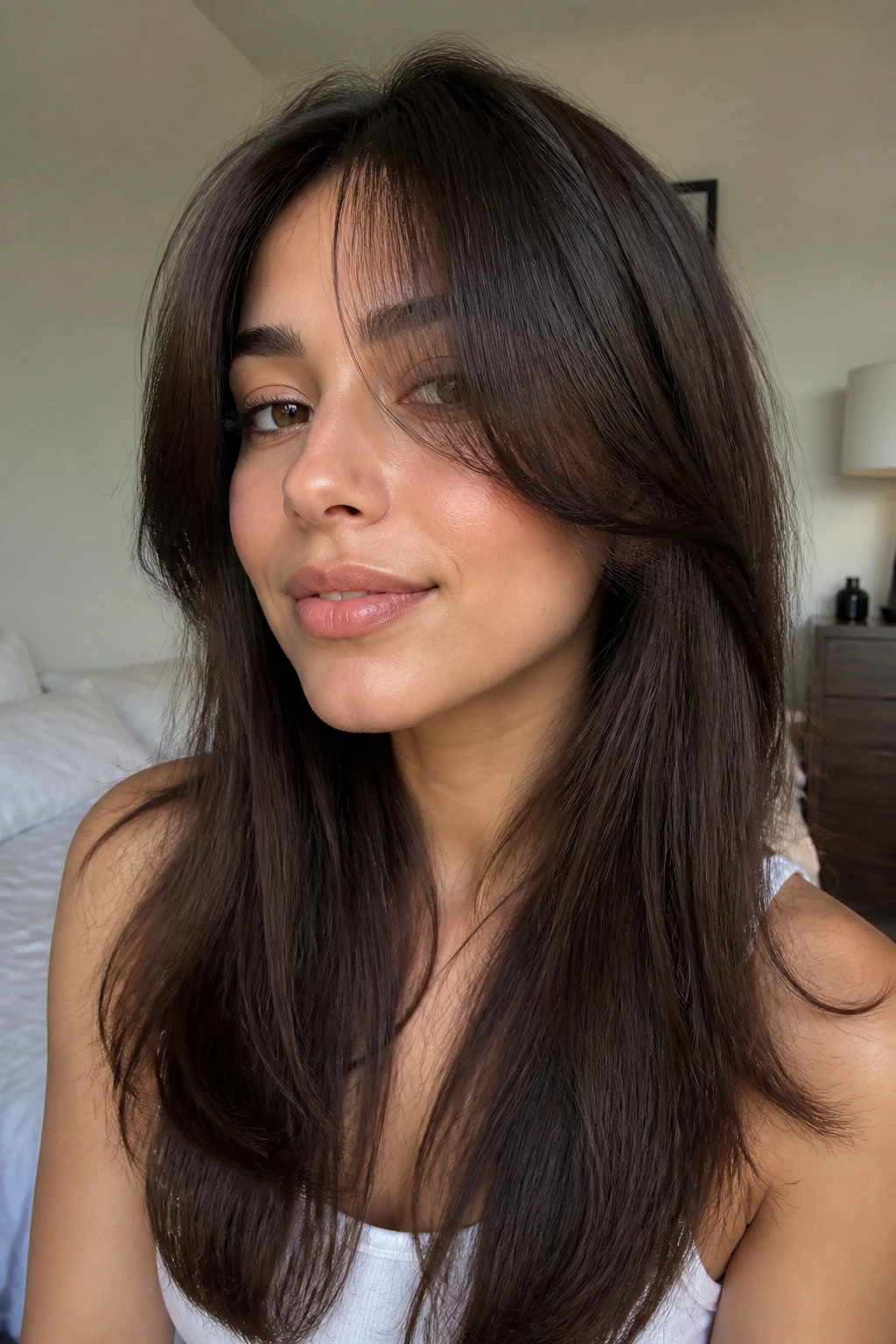
Some people want movement without obvious layer steps. This is that haircut. The layers are hidden deeper inside the shape, so the perimeter still looks full, while the fringe floats softly at the front instead of announcing itself with a hard line.
It’s a strong choice for straight or slightly wavy hair that gets frizzy when over-cut. Too many visible layers can leave the ends looking ragged. Invisible layers give the hair lift at the crown and shape around the face without losing that smooth outer line.
The fringe should be long enough to brush the cheekbones and tuck back easily. If the front is too short, the whole cut starts looking like a different haircut on bad hair days. Keep it long, keep it soft, and let the movement live underneath.
17. Razored Ends with Piecey Curtain Bangs
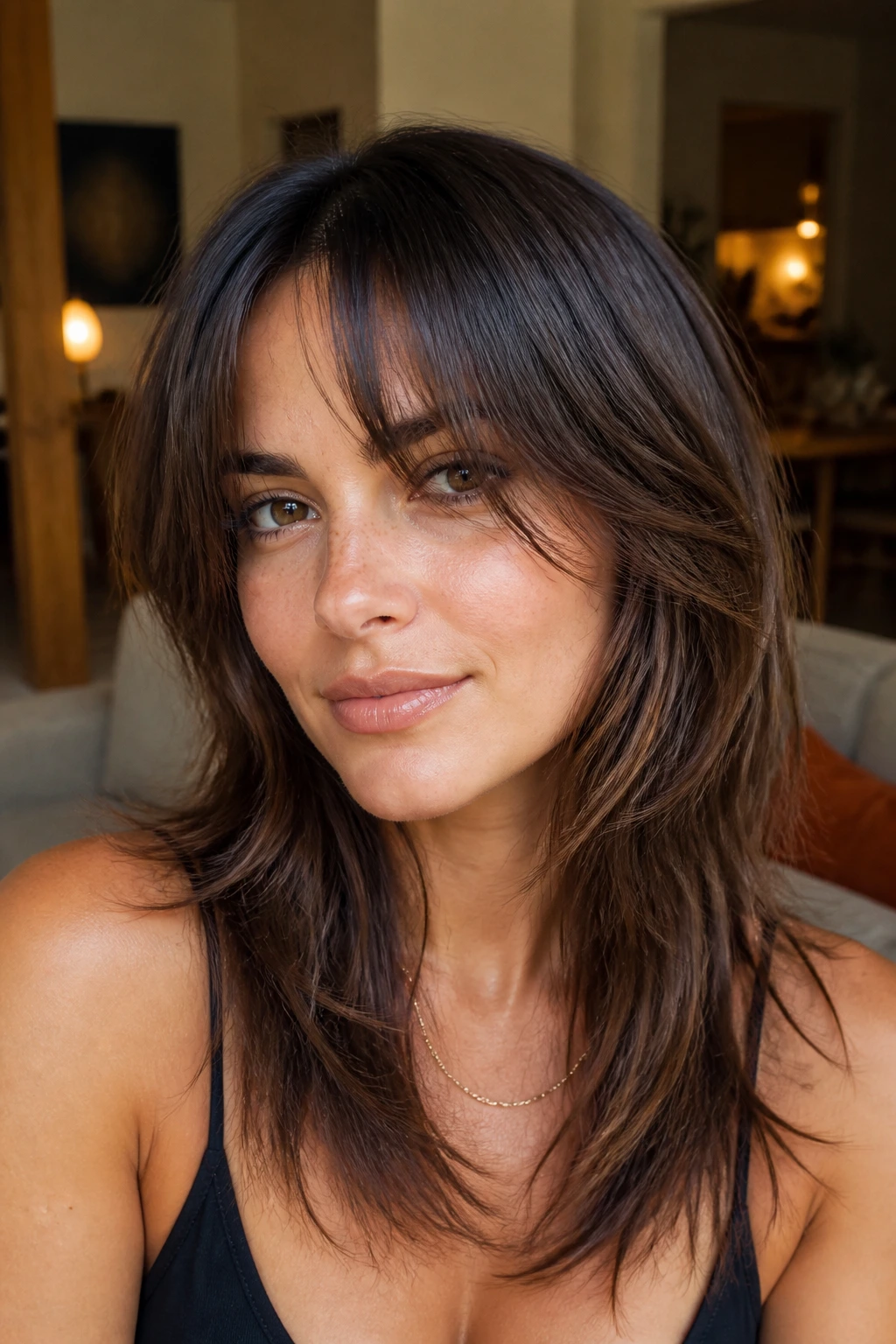
This one has more texture and a little less polish, and that’s exactly why some people love it. The ends are lightly razored or point-cut so the hair breaks into piecey sections instead of staying in one heavy block. Add curtain bangs with a separated finish, and the whole shape feels a bit more lived-in.
It works best on medium to thick hair that can handle the loss of weight. Fine hair can lose too much density with this approach, especially if the ends are already thin. On denser hair, though, the movement is immediate. The ends stop sitting like a shelf.
A texture spray or a tiny bit of styling paste on the very ends helps the fringe stay separated. Go light. This is not a hair helmet cut, and it gets ugly fast if the product weighs it down.
18. Glossy One-Length Lengths with Soft Front Layers
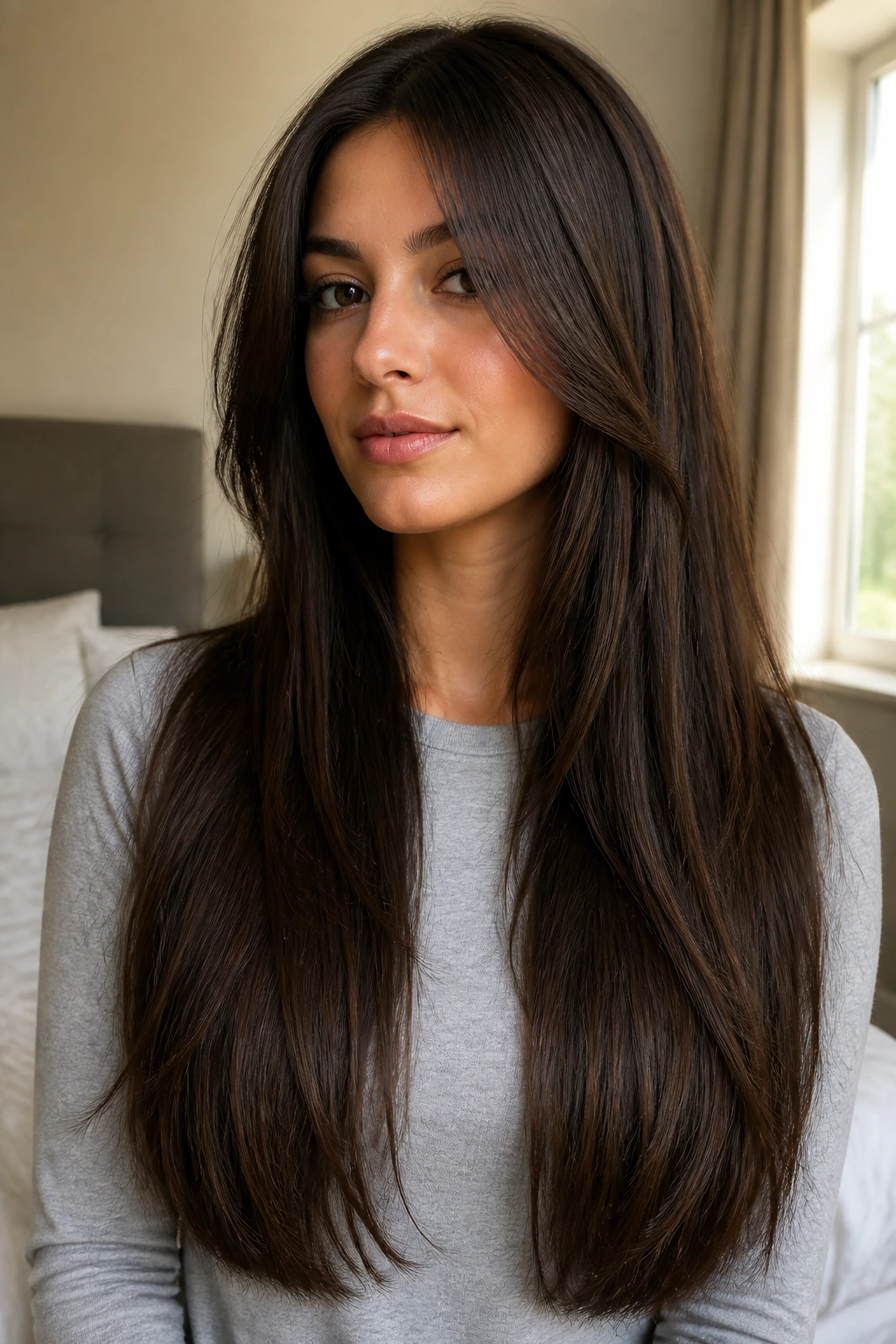
Not everyone wants obvious layering. Fair. This version keeps the bottom line long and clean, then adds soft front pieces that begin around the lip or chin and blend into the rest of the length. The effect is smooth, minimal, and easy to wear with a middle part.
It’s a good fit if you like sleek hair but still want some shape around the face. The front layers can move when you walk, tuck behind your ears, or bend slightly with heat, but they don’t announce themselves every time the wind shifts.
Best for a neat finish
-
Straight and wavy textures handle this well.
-
A flat iron bend on the front pieces keeps the line soft.
-
A light shine serum on the ends keeps the perimeter clean.
This is the haircut for someone who likes things calm. No big shag energy. No obvious chop. Just enough shape to keep the long hair from feeling heavy.
19. Low-Maintenance Grow-Out Layers and Long Bangs
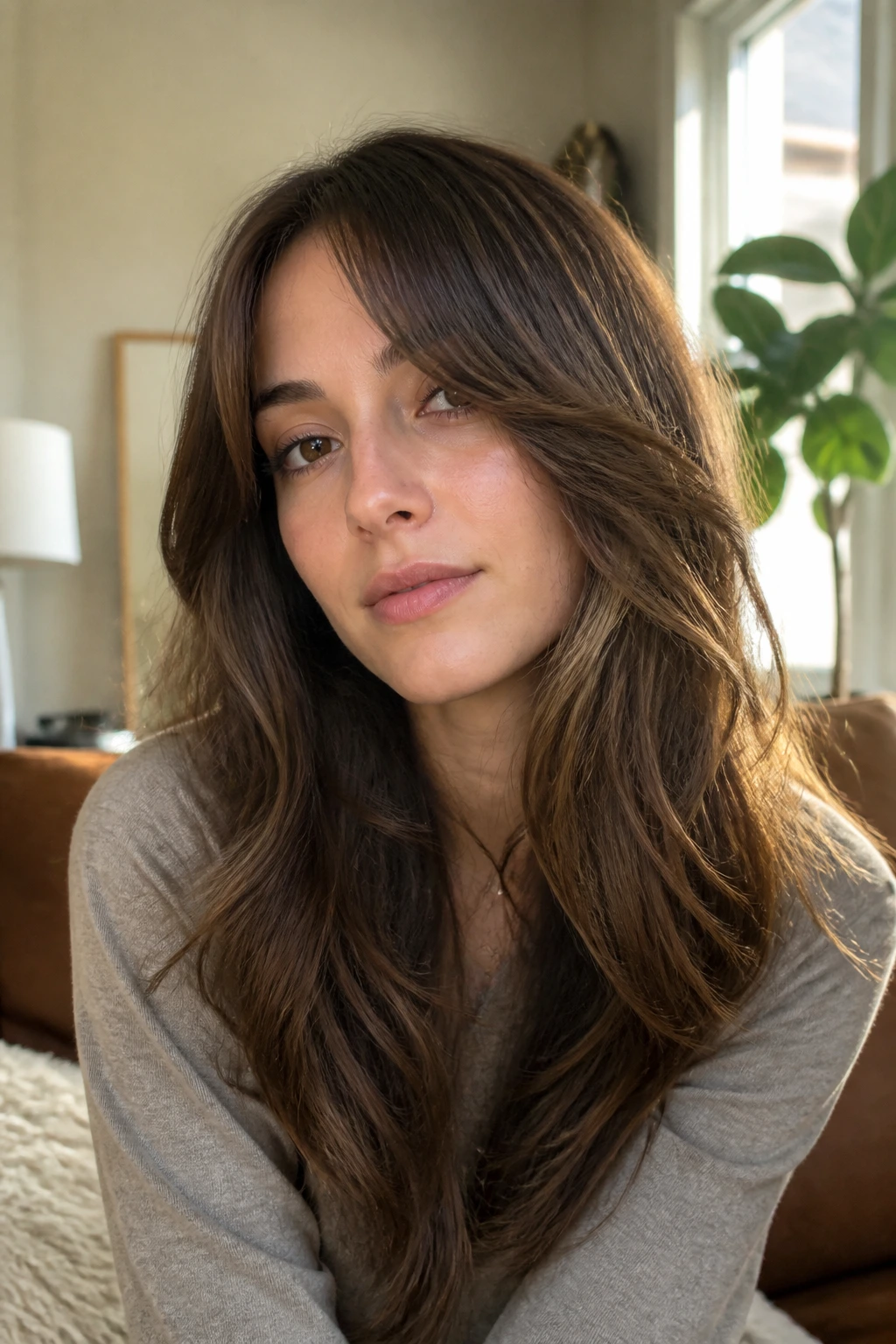
If you hate the feeling of being scheduled around your hair, ask for this. The layers start lower, the bang length stays long enough to wear tucked or split, and the overall cut still looks intentional when it grows out a little. That matters. A lot.
The shortest pieces should not be so short that they become a weekly problem. Think chin to cheekbone, depending on your face and how much styling you want to do. The further the front sits from the lashes, the less often you’re standing in the mirror trying to make it cooperate.
This is also a solid answer for people who wear their hair up more than they let on. Long bangs can fall loose around a clip or ponytail and still make the style look finished. Small detail. Huge payoff.
20. Big-Volume Blowout Layers with Lifted Fringe
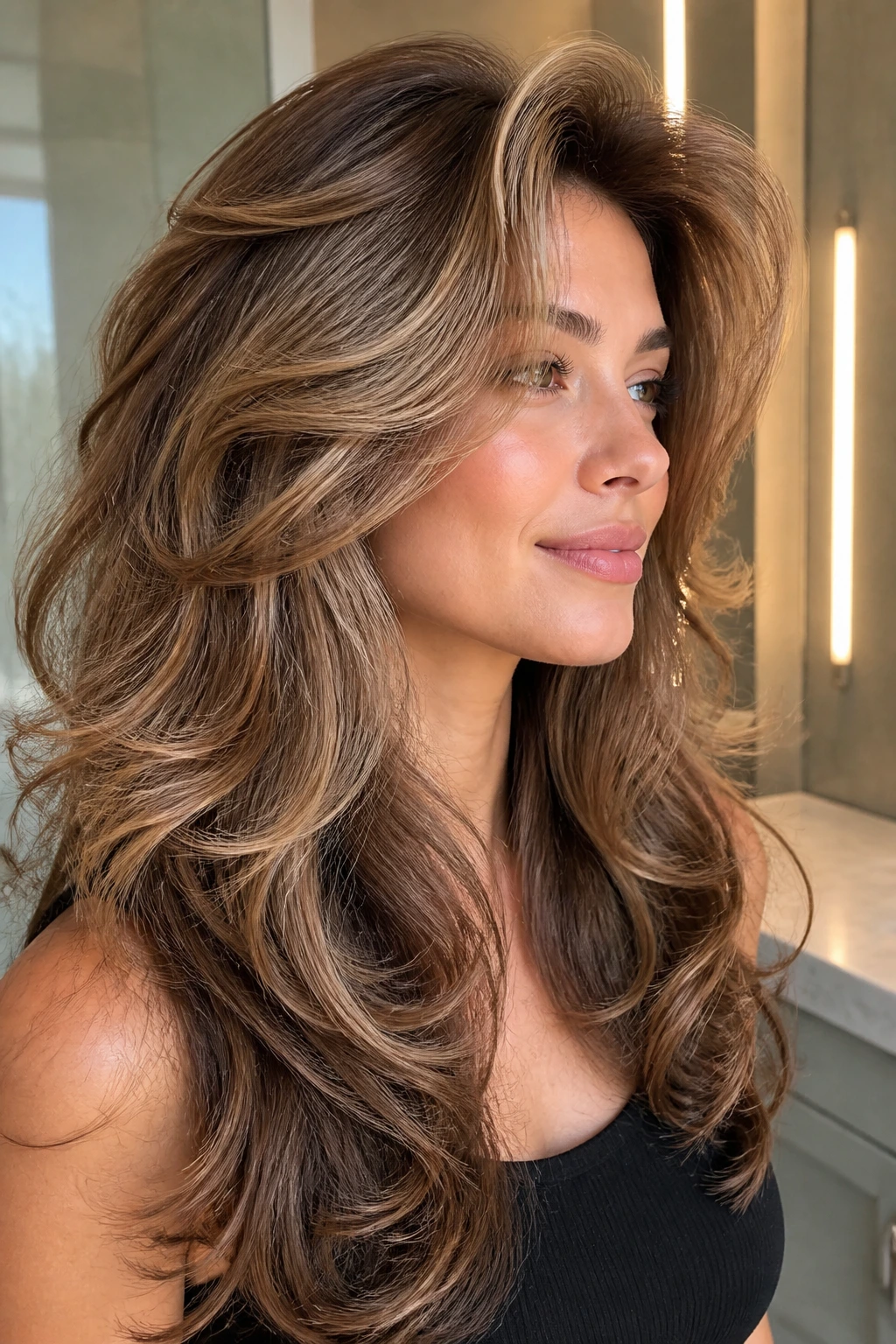
This is the dramatic cousin in the family. The crown gets lift, the front pieces sweep back with a bend, and the ends bounce instead of sitting flat. It’s the one you choose when you want hair with presence, but still want the softness of curtain bangs rather than a blunt fringe.
A large round brush or set of Velcro rollers does the heavy lifting. Roll the crown first, then the front pieces, and let them cool before you shake them out. That cooling time is what keeps the volume from collapsing the second you step outside.
The cut works especially well on medium-to-thick hair. Fine hair can wear it too, but you’ll need a bit more root product and a lighter hand with oil. Too much moisture at the roots and the shape falls silent.
21. Long Straight Hair with Soft Internal Layers
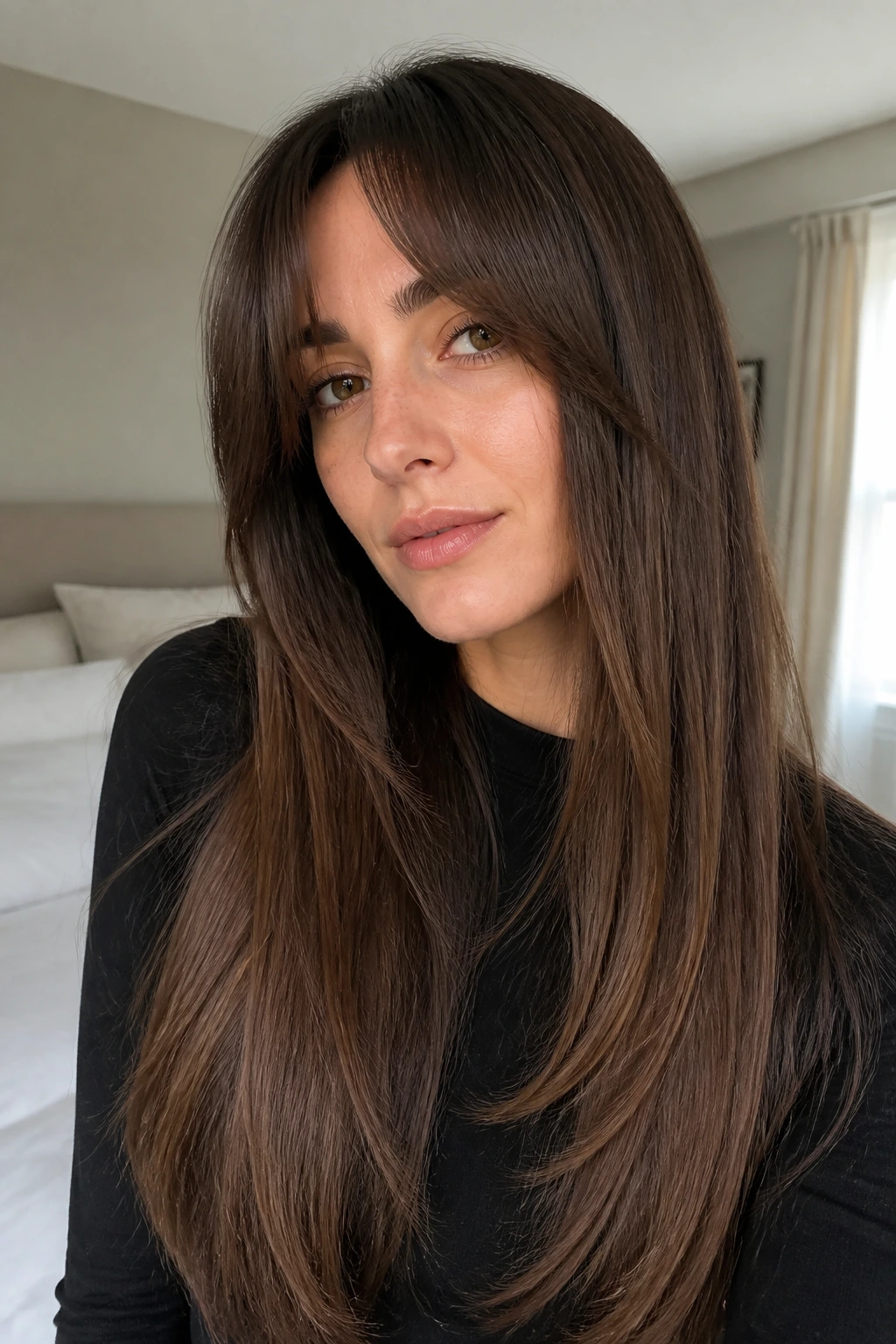
Long straight hair can get stringy if you over-layer it, so keep the changes subtle. Internal layers add a little movement under the surface, while the outer line stays smooth and long. The curtain fringe should be soft, split, and long enough to sit around the cheekbones without breaking the line of the haircut.
This is a nice option if you like a clean look and don’t want to spend half the morning styling. A quick pass with a dryer or flat iron is often enough. The haircut itself does most of the visual work.
What I like about this shape is that it doesn’t force straight hair into fake waves. It respects the texture, then gives it a small lift at the front so the whole style doesn’t read as flat.
22. Choppy, Airy Movement Cut
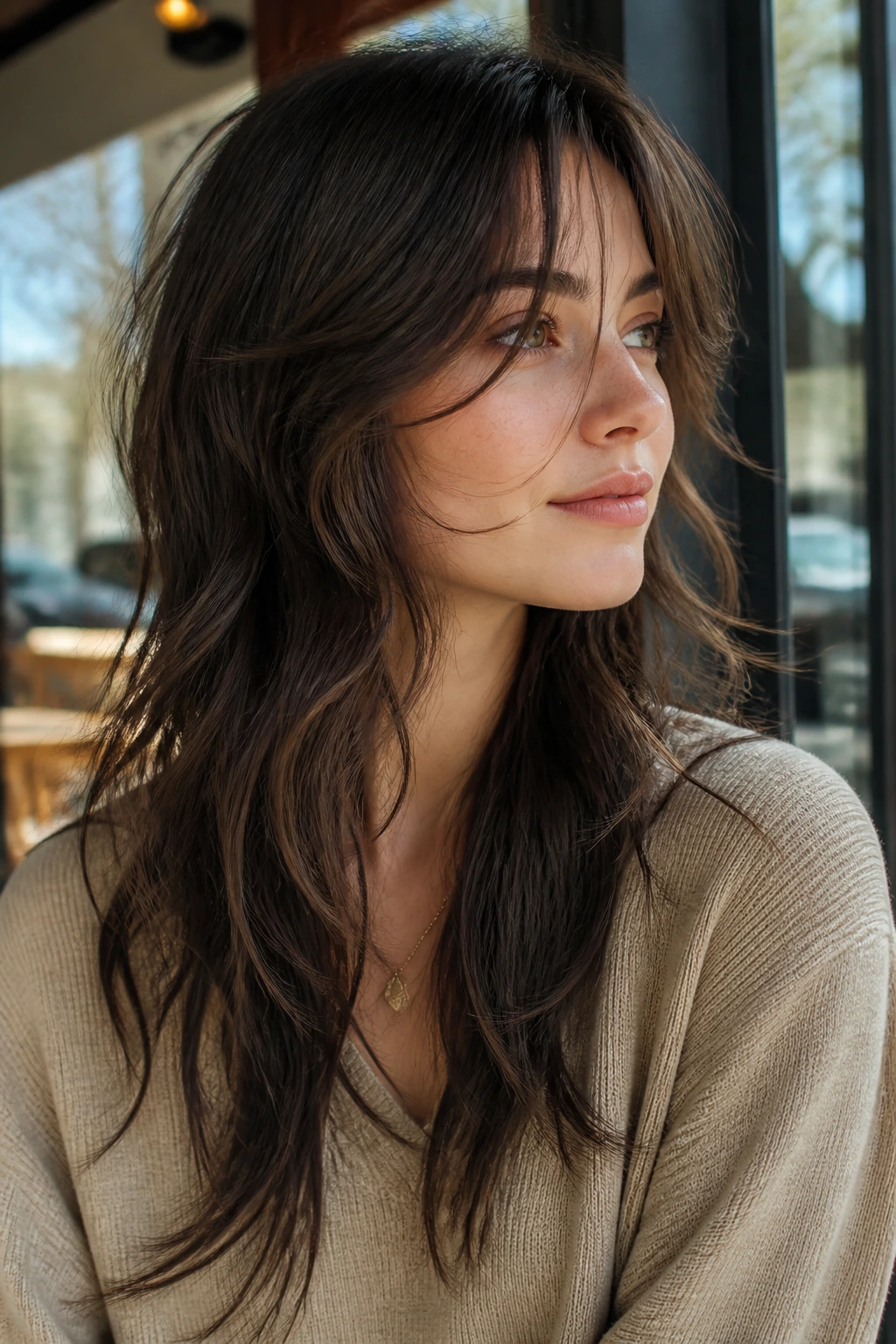
This one lives somewhere between a soft shag and a long layered cut. The ends are broken up enough to move, the curtain fringe is airy instead of thick, and the overall shape feels lighter through the sides. It’s a good choice if your hair gets puffy when it’s too blunt.
The texture is the point
-
Use a texturizing spray after drying.
-
Don’t brush every bend out of the front.
-
Let the ends sit a little uneven.
That airy finish keeps the haircut from feeling overworked. It also means second-day hair can look better than first-day hair, which is a nice little bonus when you’re in a hurry and don’t want to start over.
23. Romantic Loose Curls with Cheekbone Sweep
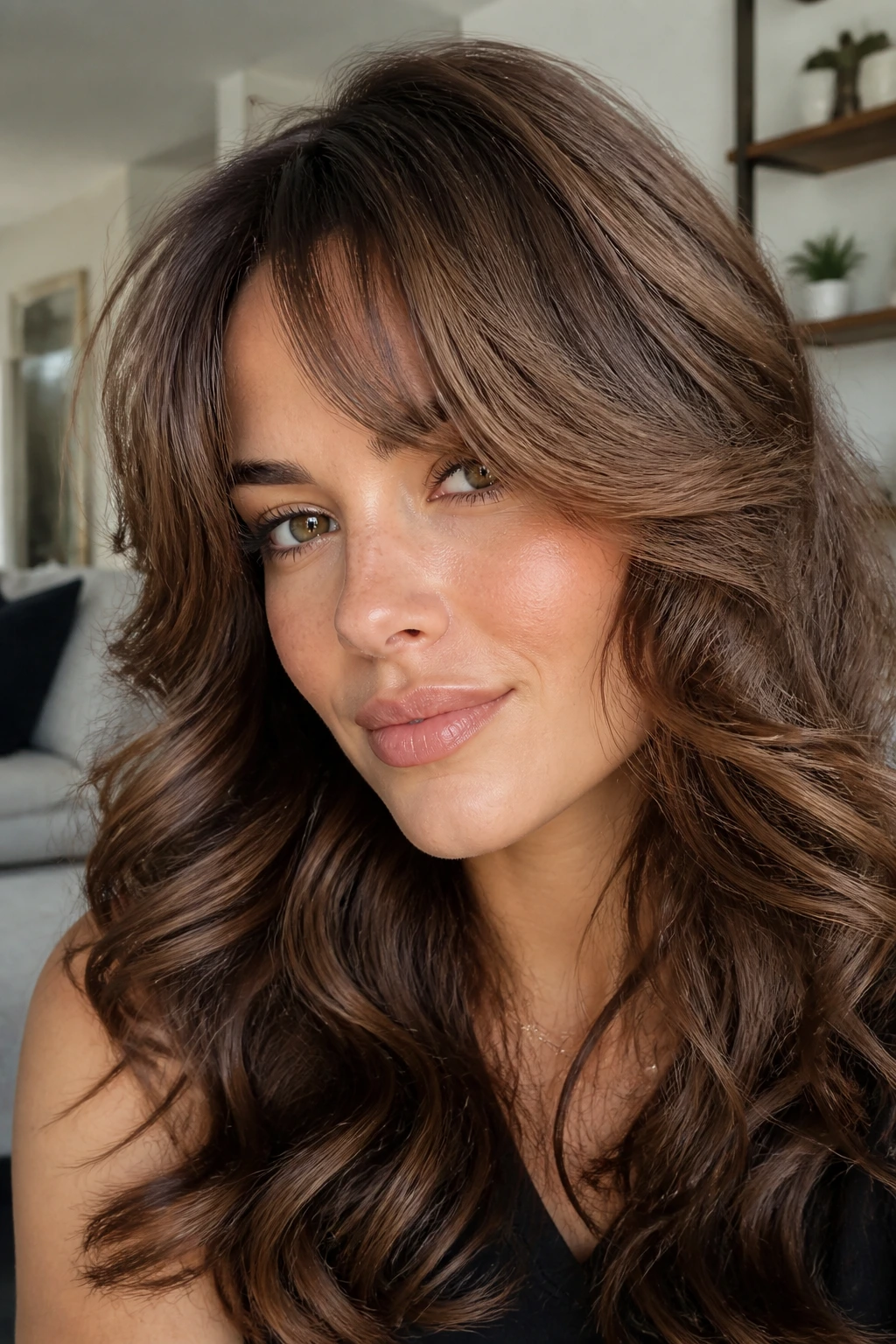
If you like a softer, more polished wave, this one leans into it. The layers are long enough to hold a loose curl, and the curtain bangs sweep from the cheekbones rather than sitting heavy across the forehead. It’s polished without looking stiff, which is harder to pull off than it sounds.
Use a curling iron away from the face on the front sections, then brush them out once they cool. That gives you a broad curve instead of a tight curl. The ends of the length should still move freely, or the style starts reading formal in a way that doesn’t suit everyday wear.
This cut works well when the hair is a touch more styled than casual. Not full glam. Just enough shape that the face-framing pieces look deliberate.
24. Tuck-Friendly Layers with Long Curtain Bangs
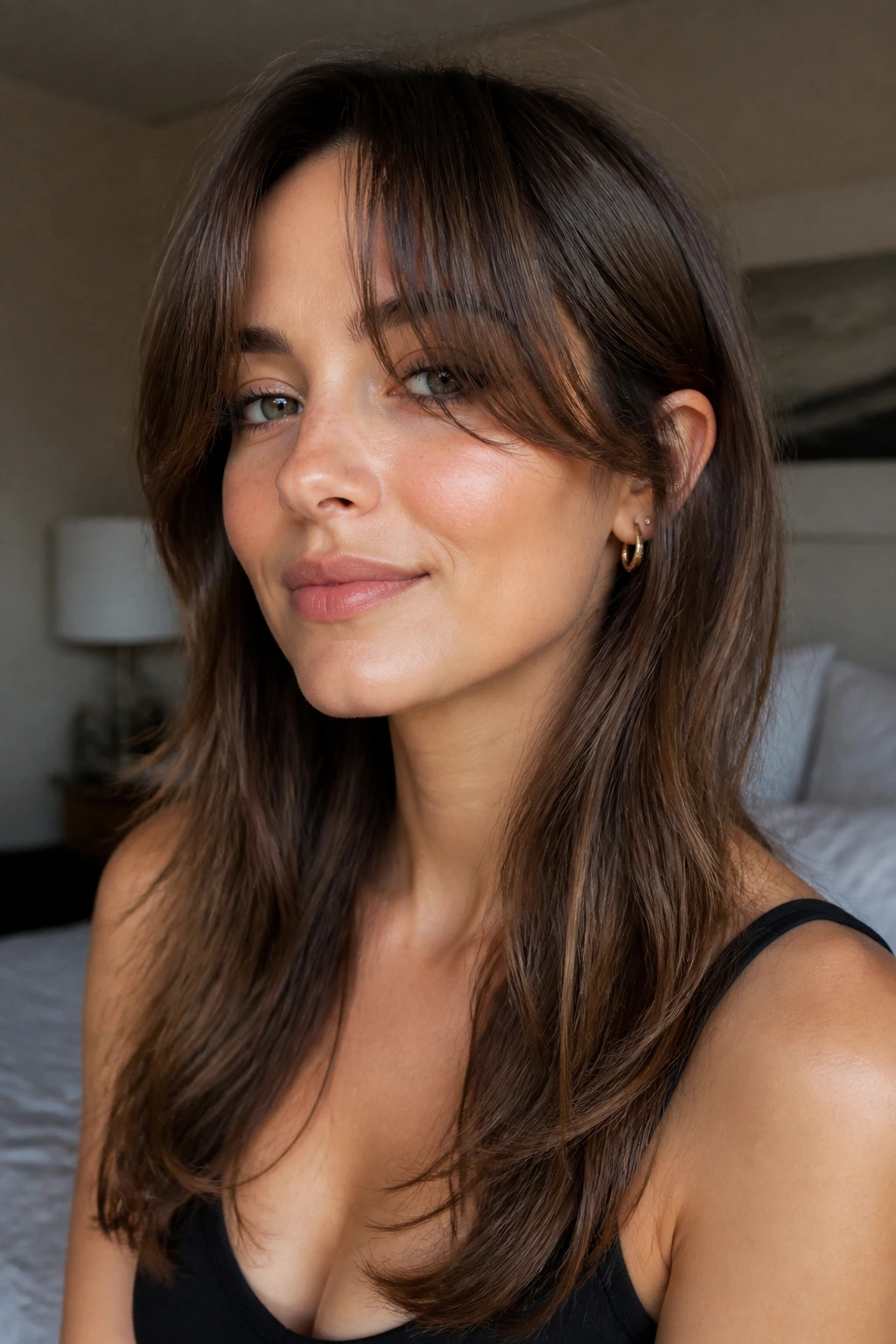
This is the everyday version for people who tuck hair behind their ears, wear glasses, or keep reaching for clips. The layers are long enough to move out of the way and fall back neatly, while the curtain bangs stay soft even when they’re pinned or tucked. The haircut never looks like it’s missing pieces.
A small bend at the ends helps here. Ask for the front to be cut so the shortest points sit around the cheekbone, then angle longer pieces toward the jaw. That way, the tuck doesn’t create a weird shelf above the ear.
It sounds tiny, but it changes how the haircut behaves in real life. Wind, scarves, headphones, and glasses all stop being problems when the front has enough length to cooperate.
25. Softly Textured Layers with a Long, Split Fringe
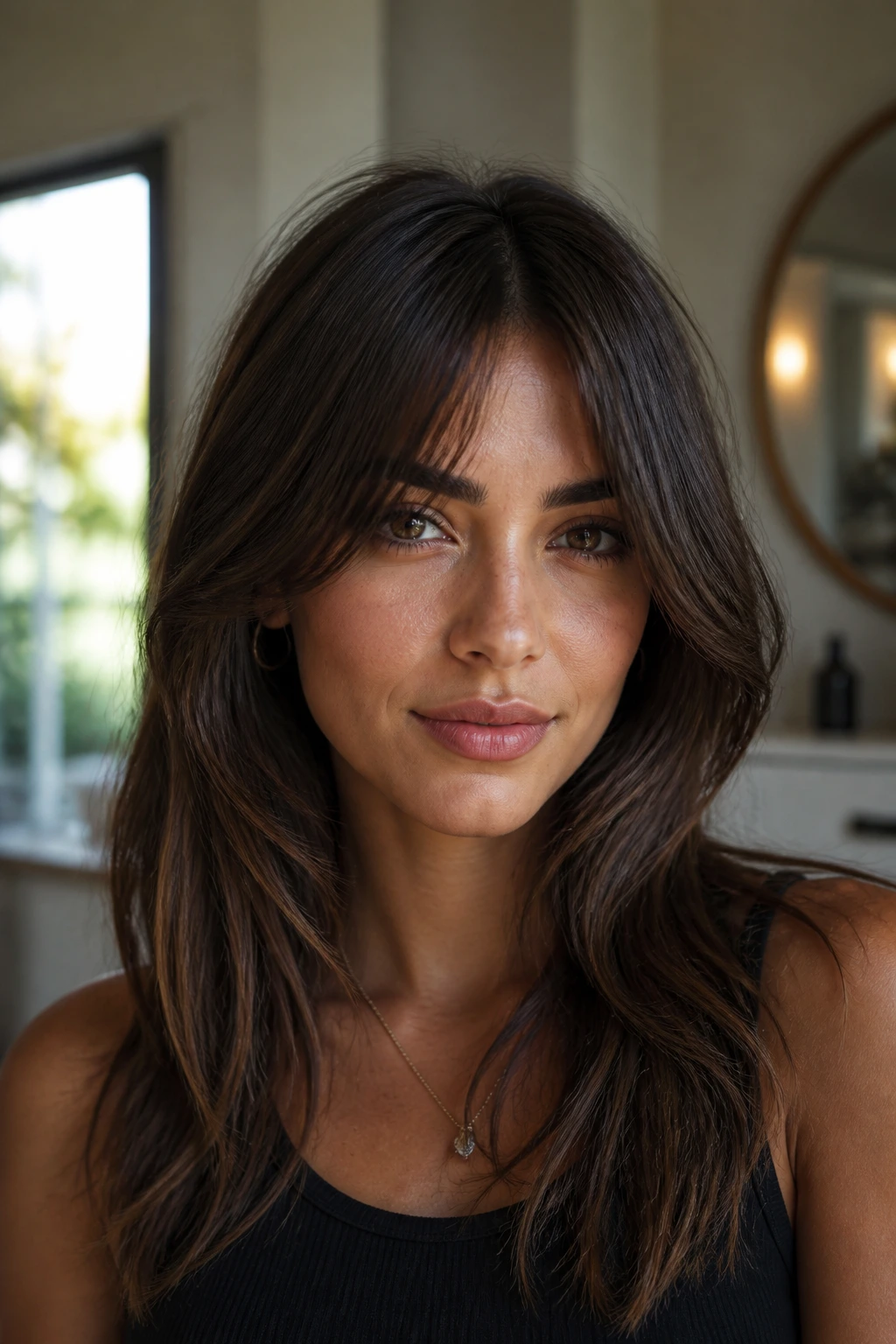
This is the version that quietly does everything. The layers are soft enough to move, the fringe splits cleanly down the center, and the ends keep a little texture without turning choppy. It looks like hair that has a shape, not hair that has been wrestled into one.
If you want one cut that can sit straight one day and waved the next, this is the safest bet in the bunch. The layers are long enough to survive a grow-out phase, and the fringe stays useful whether you air-dry or use heat. Nothing here is so short that it becomes a chore.
That’s what makes it such a strong everyday option. It isn’t flashy. It just keeps working.
Why Long Curtain Layers Feel Easier on Busy Mornings
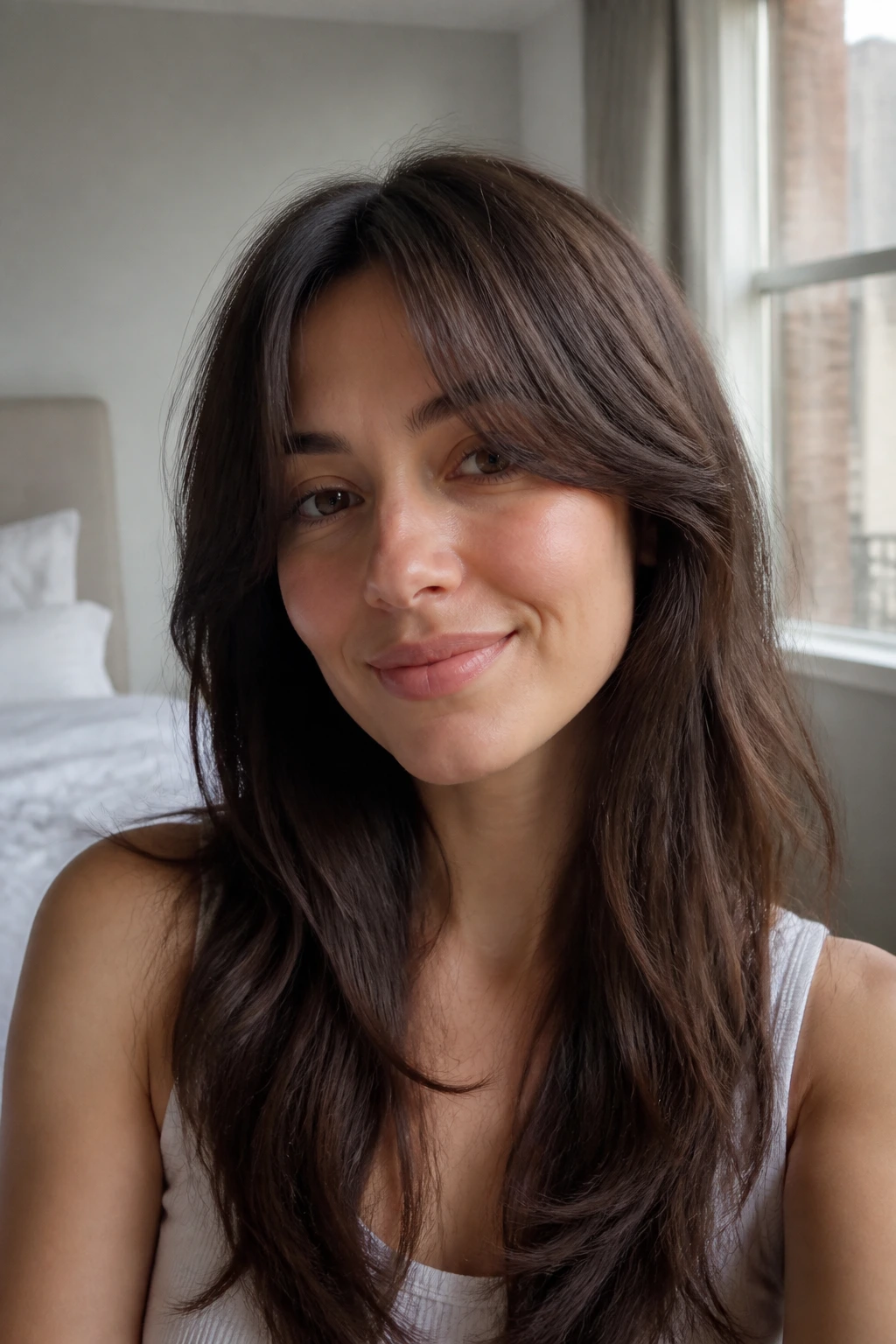
The reason this haircut keeps coming back is simple: it behaves. Long layers remove weight where long hair usually gets stuck — around the sides of the face, under the jaw, and at the ends — while curtain bangs soften the front without boxing it in. That gives you shape even when the hair is a little rough around the edges.
The other quiet win is grow-out. A blunt fringe announces itself the second it gets too long. Curtain bangs just get softer. They blur into the rest of the haircut, which means you can push a trim a little farther without ending up in awkward territory.
That flexibility matters. You can wear the same cut with a round brush, a curling iron, a diffuser, or nothing but a towel and some patience. The haircut keeps its outline either way, and that is why it earns a spot in a real-life routine instead of living only in photos.
Tools That Make Styling Long Layers and Curtain Bangs Easier
-
Blow dryer with a concentrator nozzle: This keeps air directed at the root and front pieces, which helps the fringe sit where you want instead of flying around.
-
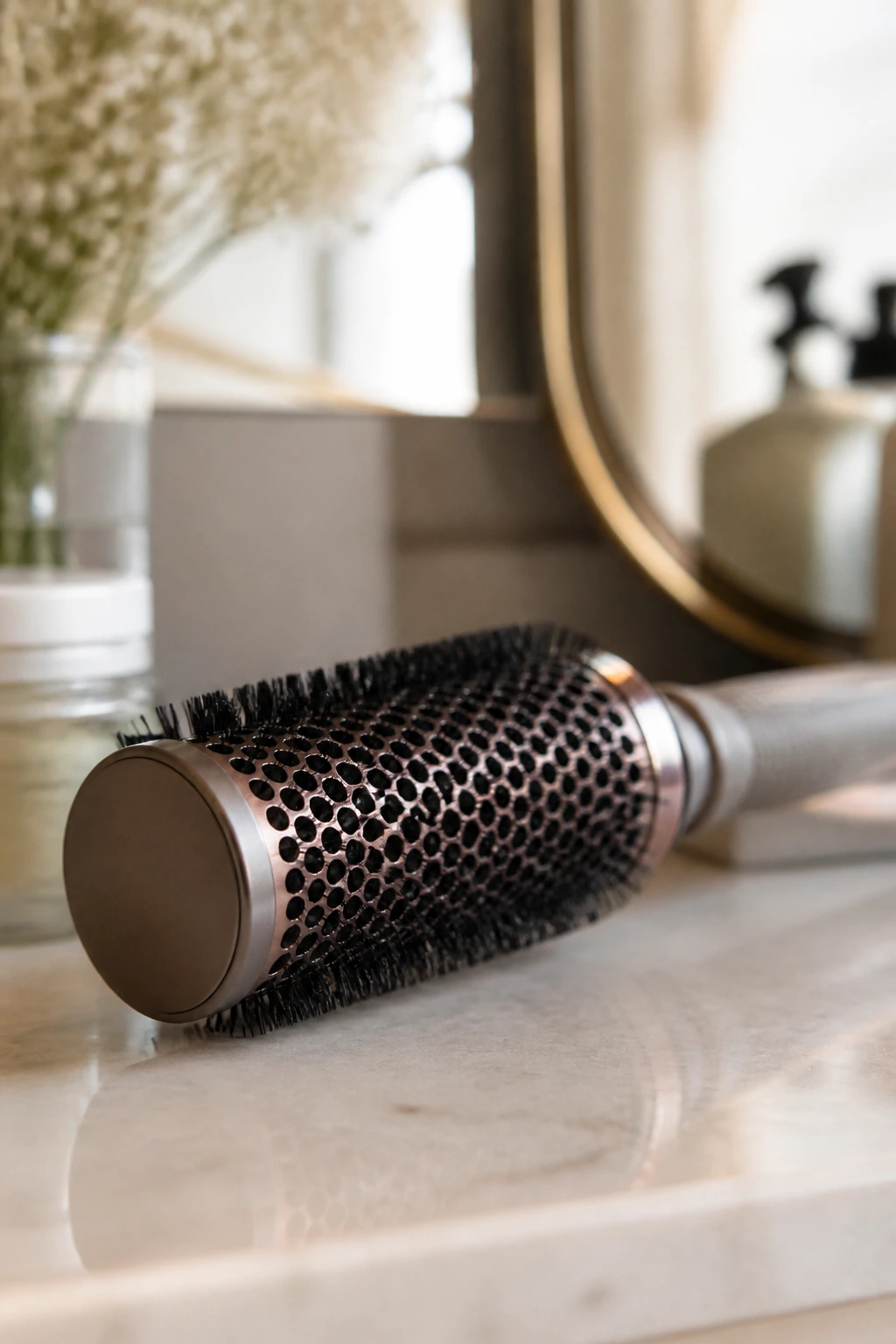
1.25-inch round brush: Big enough to create a soft bend, not so small that the bangs turn into curls.
-
Velcro rollers or clip rollers: Useful for cooling the front while you finish makeup or get dressed. Cool hair holds shape better than hot hair.
-
Heat protectant spray: Non-negotiable if you use a dryer, flat iron, or curling iron on the fringe and face-framing layers.
-
Light mousse: Good for air-dried waves and fine hair that needs a little lift at the crown.
-
Texturizing spray: Helps the ends of shaggier or piecey layers stay separated without feeling crunchy.
-
Small flat iron: Best for one quick bend at the front or a quiet turn under the ends.
-
Dry shampoo: Saves the fringe on day two, especially if your forehead tends to get oily.
-
Sectioning clips: Not glamorous, but they keep the front pieces out of the way while you work on the rest.
What to Tell Your Stylist Before the First Snip
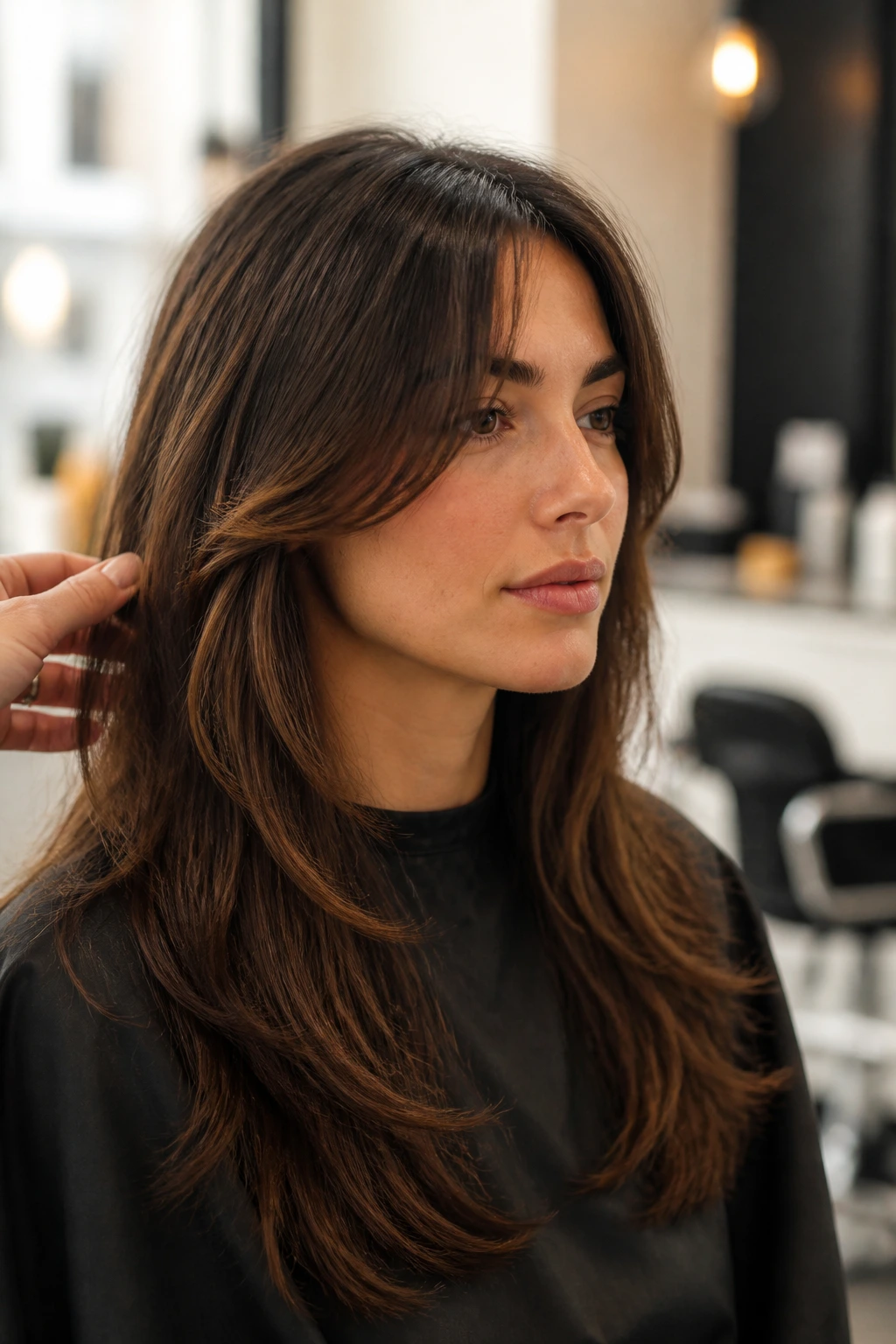
Bring photos, yes, but don’t stop there. Photos show shape. They do not show how much styling the model needed, how thick the hair was, or whether the front pieces were cut to sit at the cheekbone or the jaw. Say where you part your hair, how often you wash it, and whether you usually tuck one side back. That gives the cut a better chance of behaving the way you want.
If you want low upkeep, say it plainly. Ask for the shortest curtain pieces to land at a point you can live with on a rushed morning — cheekbone, lip, or chin depending on your hair and face. Shorter bangs can look cute in the chair and annoying by the third week if you never heat-style them.
Thick hair usually needs internal weight removal. Fine hair usually needs the opposite: keep the perimeter fuller and use long, subtle layers so the ends don’t disappear. Curly hair needs the curl pattern respected, which means cutting for shrinkage and shape, not just for straight hair photos. Those are not small details. They decide whether the haircut cooperates.
How to Style Long Curtain Layers on a Busy Morning
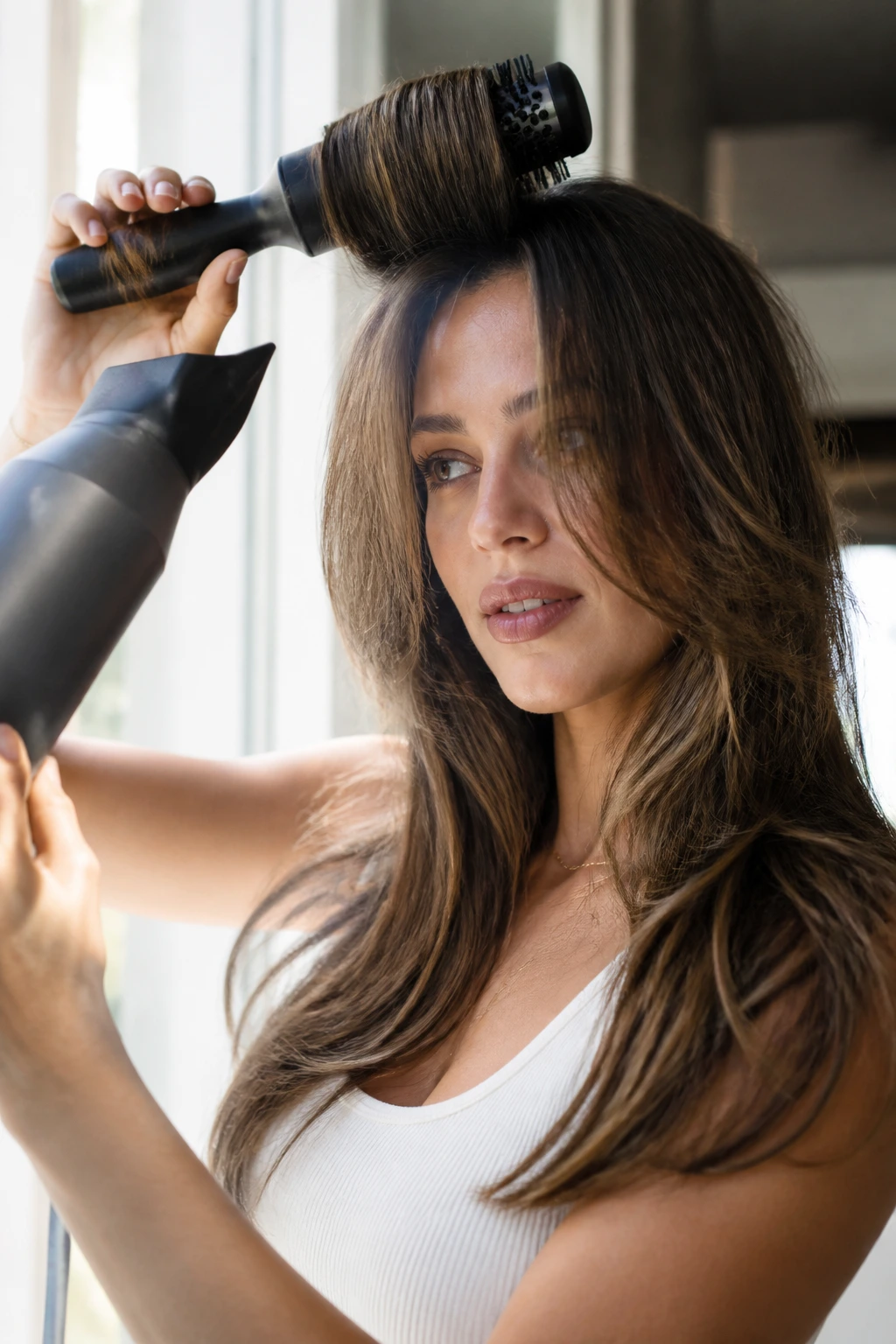
Two-minute blowout: Dry the fringe first, using a round brush to sweep each side away from the face. Then hit the crown with warm air and lift the roots for 10 to 15 seconds. That alone can make the haircut look finished enough for a normal day.
Air-dry route: Work mousse through damp hair, twist the front pieces away from the face, and leave the ends alone until they’re mostly dry. Once the hair is about 80 percent dry, scrunch the mid-lengths and stop touching it. The more you fuss, the frizzier the fringe gets.
Second-day refresh: Mist the bangs lightly with water or dry shampoo at the roots, then re-bend the front with a small round brush, a roller, or your fingers. You do not need to wash the whole head just because the fringe lost its shape.
Flat-iron fix: Take one-inch sections at the face and give them a slight C-bend away from the cheek. Keep the iron moving. A hard crease at the front makes the whole cut look older than it is.
The Common Mistakes That Make Curtain Layers Hard to Wear

-
Cutting the fringe too short: The front pieces end up sitting in your eyes or flipping awkwardly. Ask for a length you can tuck behind your ears on bad days.
-
Thinning thick hair too aggressively: Razor removal in the wrong spots can leave the ends frizzy and puffed out. Weight should come out where it helps shape, not everywhere at once.
-
Using too much oil near the bangs: A shiny fringe is one thing. Greasy front pieces are another. Keep heavier serum off the roots and the first inch around the forehead.
-
Styling every piece the same way: If the whole cut gets the same curl, it can look dated and overdone. Leave some pieces straighter so the shape breathes.
-
Ignoring your part and cowlicks: Hair has opinions. Fight them too hard, and the fringe falls apart by lunch. Working with the natural split usually gives better results.
Variations and Alternatives to Ask For
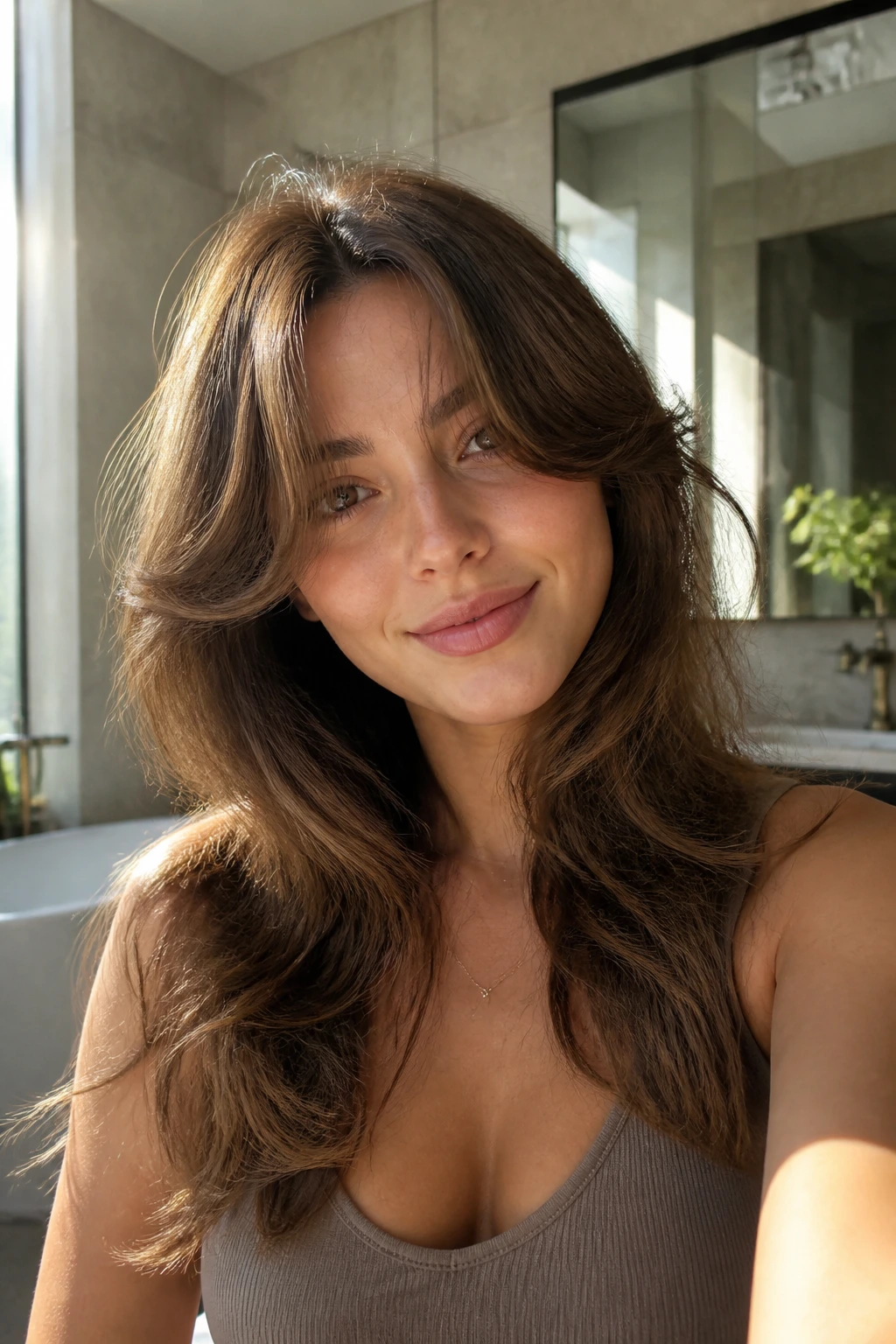
The Airy Office Version: Ask for longer curtain pieces, light layers around the cheekbone, and a smooth finish through the ends. It reads neat without looking stiff, which is handy if you wear your hair down most days.
The Thick-Hair Version: Keep the perimeter full and ask for internal weight removal rather than choppy ends. This keeps the shape from ballooning and gives the front enough softness to split instead of sitting in one block.
The Curly Version: Let the stylist cut for the curl pattern, not a straight blowout photo. The front should fall where the curls land naturally, with extra length built in for shrinkage.
The Grow-Out Version: Ask for longer bangs that start around the cheekbone and long layers that begin lower on the head. This buys you time between trims and keeps the cut looking deliberate longer.
The No-Heat Version: Ask for soft face-framing pieces and a texture that works with air-drying. This version should still have shape when you skip tools, not just after a full styling routine.
Trimming, Washing, and Keeping the Shape Between Appointments

Curtain bangs usually need a trim every 4 to 6 weeks if you want them to stay in the sweet spot around the cheeks and eyes. The full length can go longer — often 8 to 12 weeks — before the layers start losing their outline. If your hair grows fast or your fringe sits low on your face, you may want that bang trim sooner.
Wash rhythm depends on texture, not rules. Fine hair often needs a wash every 1 to 2 days because the bangs show oil first. Thicker or curlier hair can go longer, especially if you reset the front with water, a roller, or a diffuser.
At night, keep the fringe from mashing flat against your forehead. A loose clip, a soft Velcro roller, or simply sweeping the pieces apart before bed can help. On morning two or three, dry shampoo at the roots buys you another day without turning the bangs chalky.
If you’re growing the style out, don’t let everything happen at once. Keep the front length moving slowly, trim the ends for shape, and ask for micro-adjustments instead of waiting until the haircut feels like a new problem.
Questions People Actually Ask About Long Curtain Layers and Bangs
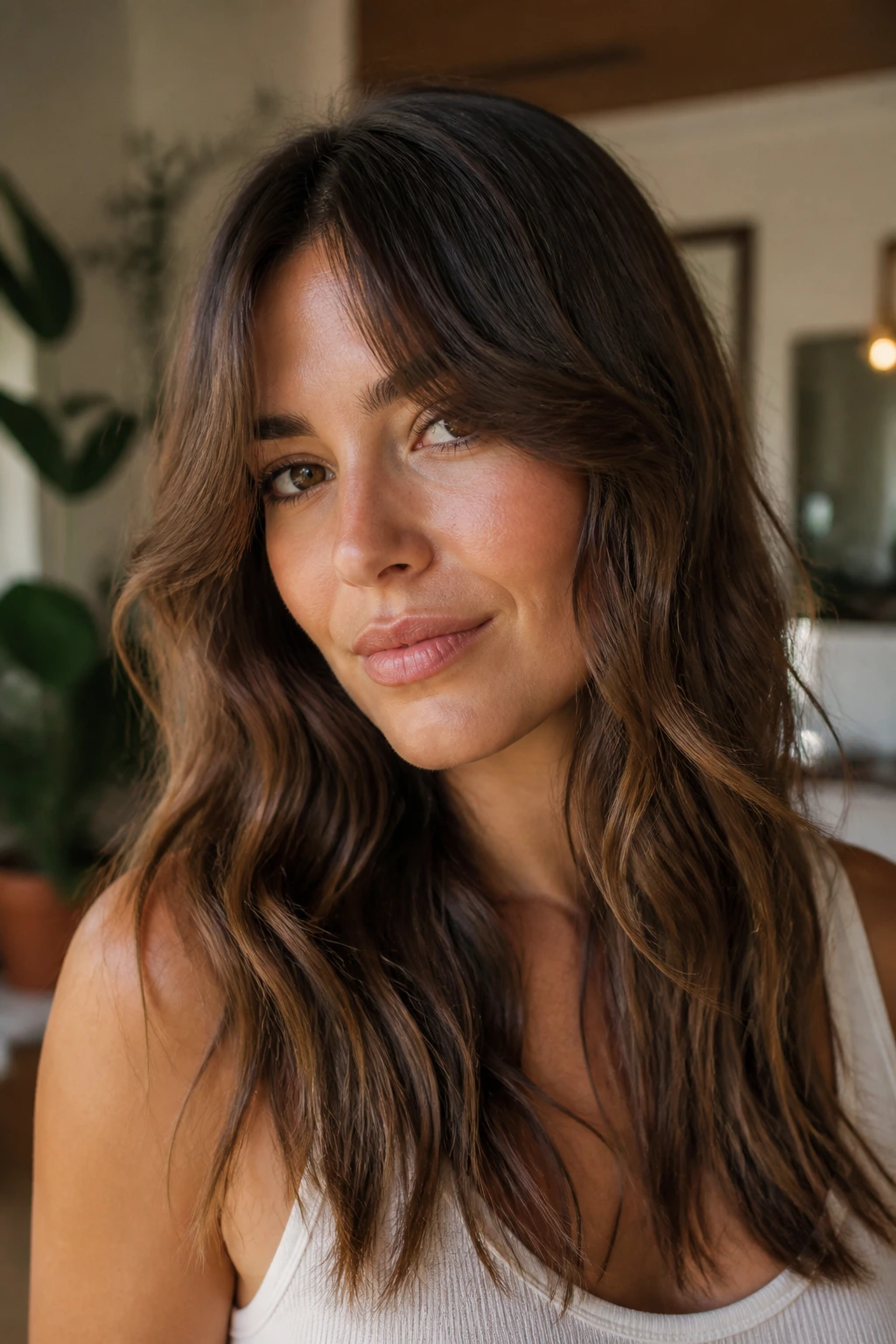
How short should curtain bangs be for everyday wear?
For most people, the safest starting point is somewhere between the brow and the cheekbone, with the longest pieces falling lower toward the jaw. Shorter than that can be stylish, but it usually asks for more morning work and more frequent trims.
Do curtain layers work on fine hair?
Yes, as long as the layers stay soft and the perimeter keeps enough weight. Too much thinning makes the ends look sparse, so fine hair usually does better with subtle movement and a light fringe rather than big, chopped-up sections.
What if my hair has a stubborn cowlick at the front?
Don’t force a strict center part if the scalp disagrees. A slightly off-center split or side-biased curtain fringe often behaves better and still gives you the same soft frame around the face.
Can I wear this cut without heat styling?
You can, especially if your hair already has some wave. Air-dried texture looks best with light mousse or cream and a little front twisting while the hair is damp.
How do I keep the bangs from getting greasy first?
Dry shampoo at the roots helps, but don’t spray it too close or the front gets chalky. A tiny mist at the roots, followed by a quick brush-through, works better than piling on product.
Is this a good cut if I always tie my hair back?
Yes, and that’s one of its better qualities. Long curtain layers fall softly around a ponytail or clip, so the haircut still looks finished even when the length is up.
Should curly hair get curtain bangs cut wet or dry?
Dry is safer when the curls have a lot of spring. That lets the stylist see where the fringe lands after shrinkage, which matters more than the cut line itself.
How do I grow out curtain bangs without hating the process?
Keep trimming the face frame so it stays blended, and nudge the shortest pieces a little longer each time. A split fringe that can tuck behind the ears usually makes the grow-out feel less awkward than a blunt line.
The Shape That Keeps Paying Off
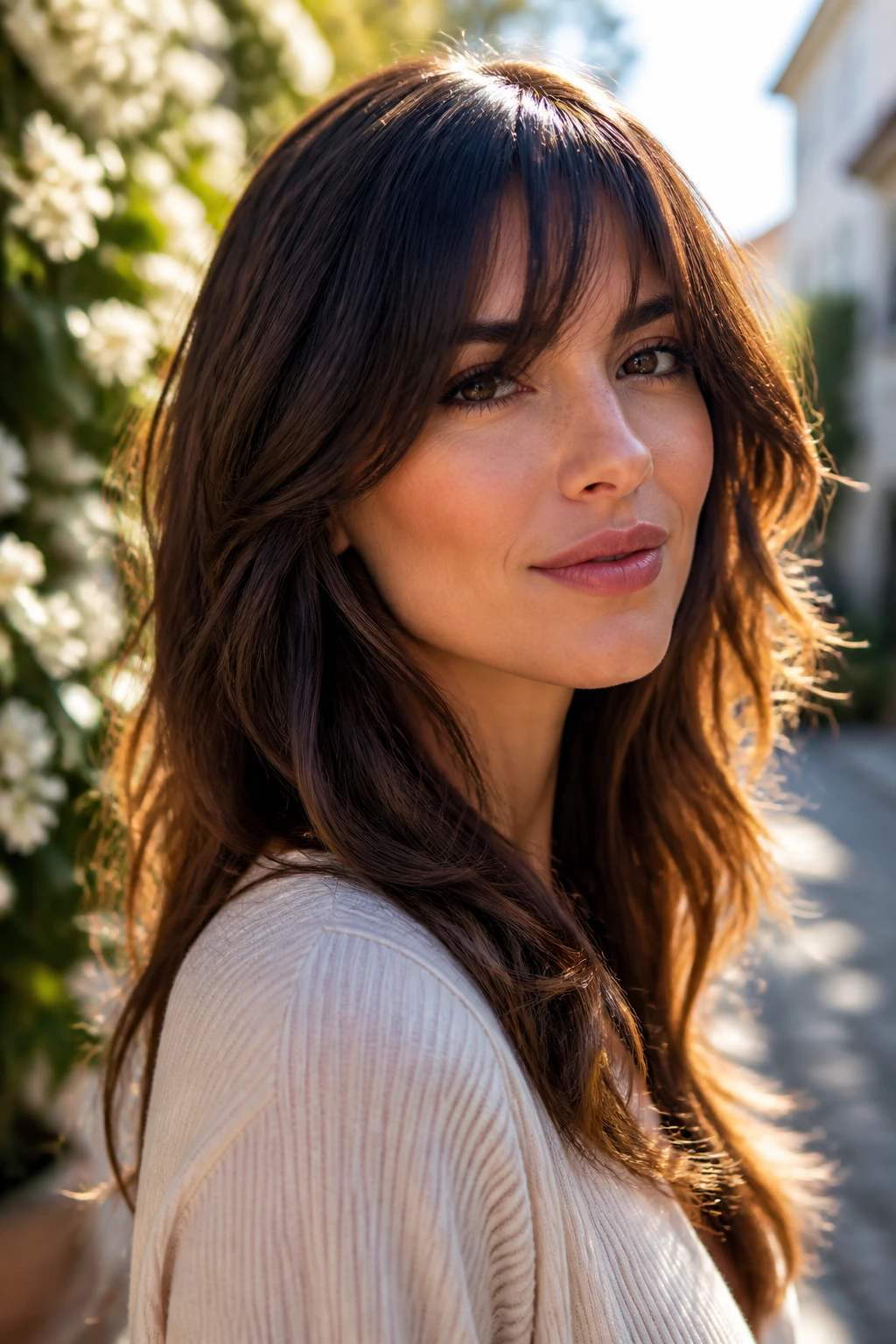
Long layers with curtain bangs work because they do a small job in a lot of places. They soften the face, keep long hair from sitting too heavy, and give you enough movement that a quick style still looks intentional. That’s not glamorous language. It’s just useful hair.
The best version for you is the one that respects how your hair already behaves. Straight hair wants different layering than curly hair. Thick hair needs different weight removal than fine hair. A smart cut takes those facts seriously instead of pretending every face-framing photo is built the same way.
Bring a clear photo, say how much styling you’ll actually do, and be honest about how often you’ll trim. That single conversation saves a lot of frustration later, and it makes the haircut easier to live with from the first week to the awkward in-between stage and beyond.