



Long side-swept bangs are one of the few fringe styles that can make thick hair feel lighter without making the haircut feel precious. Dense hair has weight to spare, and that weight is the whole trick: it lets the fringe drape instead of floating apart, so you get movement instead of a puffed-up curtain that keeps trying to reclaim your forehead.
The catch is that thick hair punishes lazy cutting. Chop it blunt and too short, and the bangs sit like a shelf. Thin them too aggressively, and the ends go wispy while the roots still carry too much bulk. The sweet spot lives in that diagonal line from brow to cheekbone, where the fringe can sweep aside, blend into long layers, and still hold enough shape to look deliberate.
That’s why some side bangs on thick hair look soft and easy, while others look like they need a battalion of bobby pins and a prayer. The difference is usually the cut, the part, and the amount of bulk removed around the face. Get those three things right and the fringe starts working with the rest of your hair instead of fighting it.
Why These Fringe Ideas Are Worth Saving
-
Built for density: Every look here keeps enough weight to sit cleanly on thick hair, so the fringe bends instead of exploding outward at the temples.
-
Easy to grow out: A longer side sweep can slide into face-framing layers later, which is a relief if you get bored halfway through the grow-out.
-
Works with real texture: Straight, wavy, and curly thick hair all have options here, because the cut shape changes the result more than a random styling product ever will.
-
Salon-friendly: These are the kinds of shapes you can describe with simple words at a consultation: longer at the cheek, softer at the root, heavier through the center, lighter at the edge.
-
Low-drama maintenance: A 1.5- to 2-inch round brush, a blow dryer, and a decent heat protectant can handle most of the daily styling. No circus act required.
-
Better than a blunt fringe: Thick hair usually behaves better when the line is angled and softened, not chopped straight across like a ruler mark.
Why Long Side-Swept Bangs Work So Well on Thick Hair
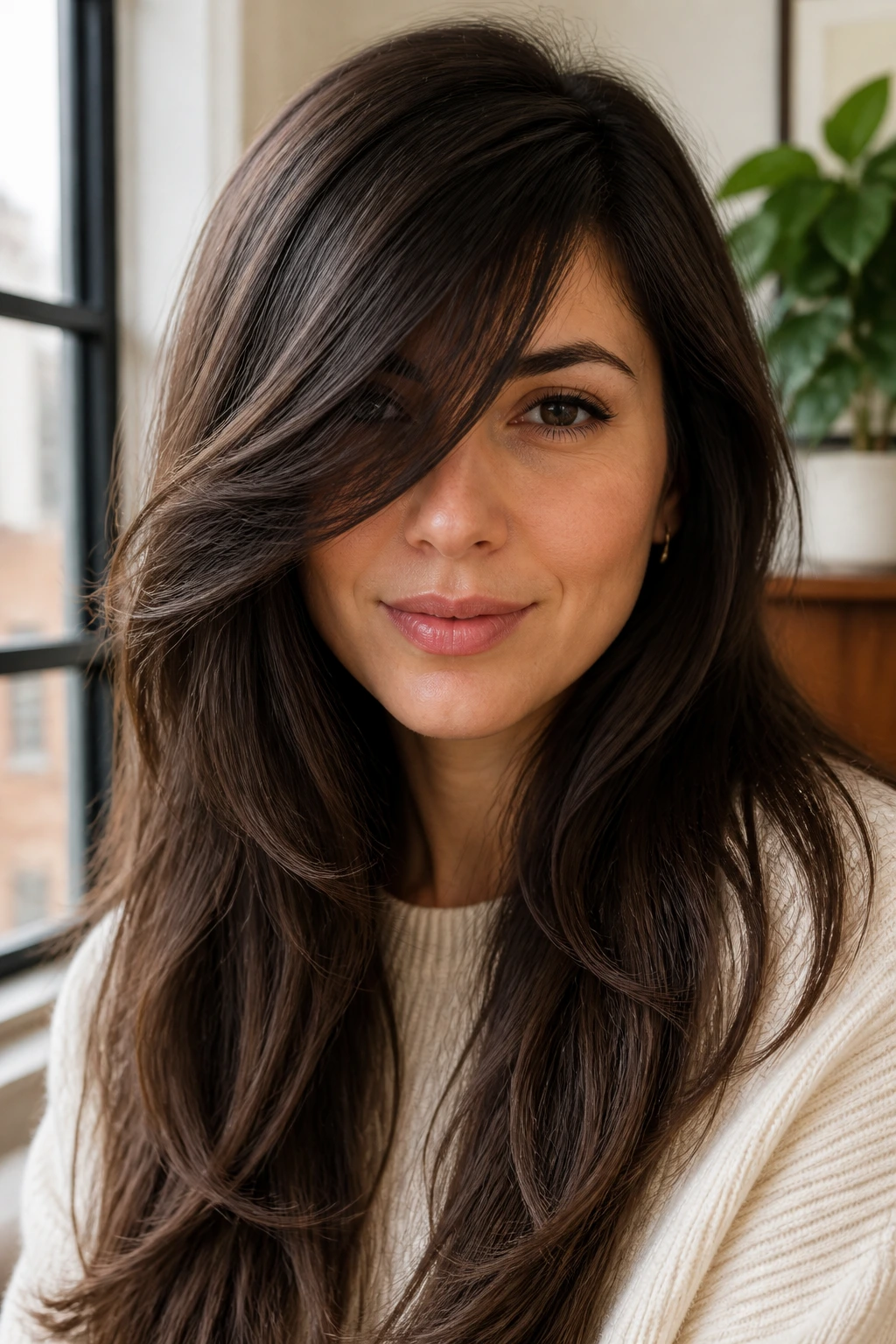
Dense hair is a weight problem more than a hair problem. The fringe needs somewhere to fall, and a side sweep gives it direction. Instead of sitting flat against the forehead or poofing up in humidity, the hair can follow a diagonal path that uses its own weight to stay put.
That diagonal line also gives your stylist room to remove bulk without making the ends look sparse. On thick hair, the best fringe is usually cut a touch longer than people expect, because thick strands spring back after drying. If you cut to the exact place you want when the hair is wet, the finished shape often lands shorter and stiffer than planned.
Weight, Direction, and the Part
A side part does more than move the hair over. It tells the roots which way to lie, and thick hair responds better when it has a clear path. A tiny off-center part can be enough for some heads; others need a deeper side part that starts near the arch of the brow or even at the temple.
Why the Ends Matter More Than You Think
The ends of the fringe are where thick hair either softens or turns clunky. Point-cutting, slide-cutting, or a careful razor finish can keep the edge from looking like a shelf. Used badly, though, thinning shears can leave frizzy little spikes that misbehave the second the air gets damp. I’d rather see a clean, controlled edge than a shredded one any day.
The Grow-Out Advantage
Long side-swept bangs buy you options. If you get tired of them, they can tuck behind one ear, split into a soft curtain, or disappear into face-framing layers without looking like a chopped mistake. That is a lot kinder than a short fringe that leaves you staring at your eyebrows for six weeks while it grows.
1. Feathered Brow Sweep
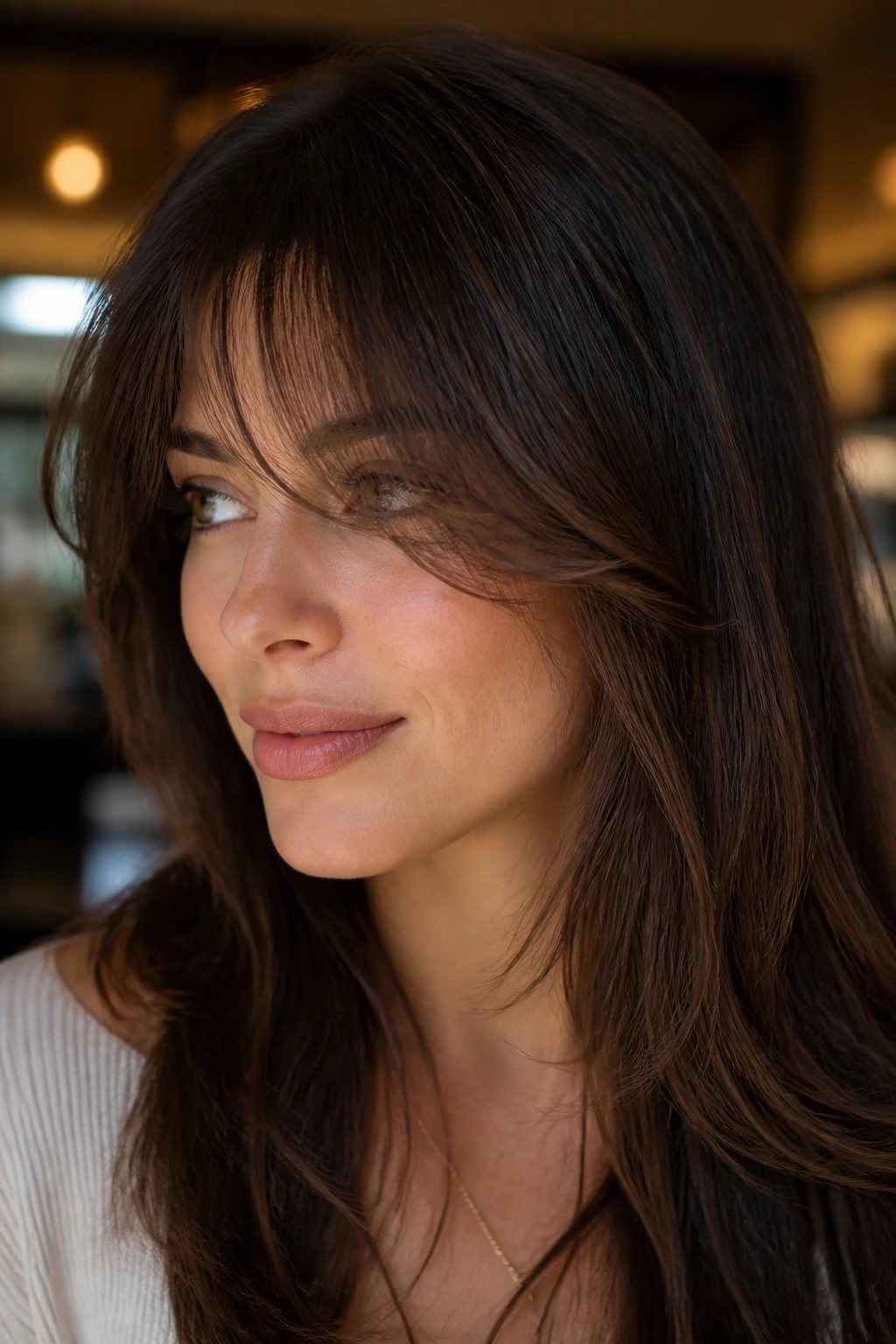
A feathered brow sweep is the safest first step if you want movement without committing to a heavy bang. The shortest point can sit near the outer brow, while the longest piece slides toward the cheekbone, and the whole shape stays soft enough that thick hair doesn’t turn into a block. The finish should look brushed-through, not feathered to the point of disappearing.
Ask for point-cut ends and a little internal removal near the center of the bang zone. That keeps the top from puffing up while the outer edge still hangs with enough weight. When you style it, pull the front section forward with a round brush, then sweep it away from the face and let it cool in that direction. Cooling is not optional. Warm hair lies. Cool hair commits.
This version works well if you want the fringe to feel present but not loud. It looks especially good when the rest of your hair has long layers, because the bang can echo that softness instead of competing with it.
2. Deep Part Long Side-Swept Bangs
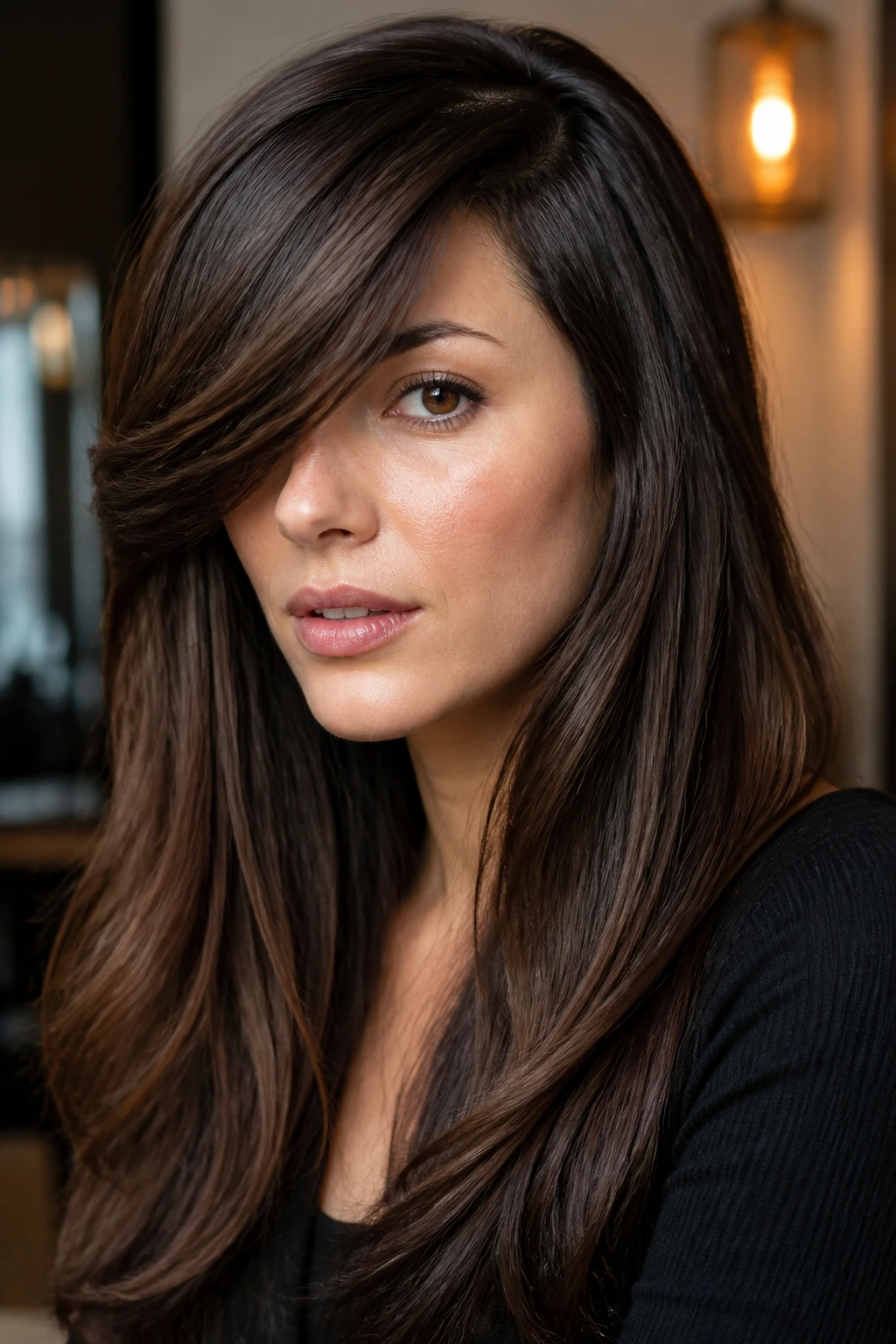
A deep part changes everything. It gives thick hair a longer line to fall across, which means the fringe can read dramatic without needing to be short or ultra-textured. If your face feels wider at the forehead, this shape draws the eye diagonally and keeps the front from looking boxed in.
What to Ask For
- Parting point: Start the part about an inch or two farther over than your usual side part.
- Length: Keep the shortest section at or just below the brow line.
- Edge: Ask for soft point-cutting rather than a blunt fringe line.
- Blend: The bang should melt into the front layers rather than stop suddenly at the temple.
Styling is easier than people think. Blow-dry the root section across the forehead first, then bend the ends outward with a medium brush. If the front collapses by noon, a small clip at the root for five minutes while you finish your makeup can reset the direction. That tiny pause often matters more than another layer of serum.
3. Invisible Weight-Removal Fringe
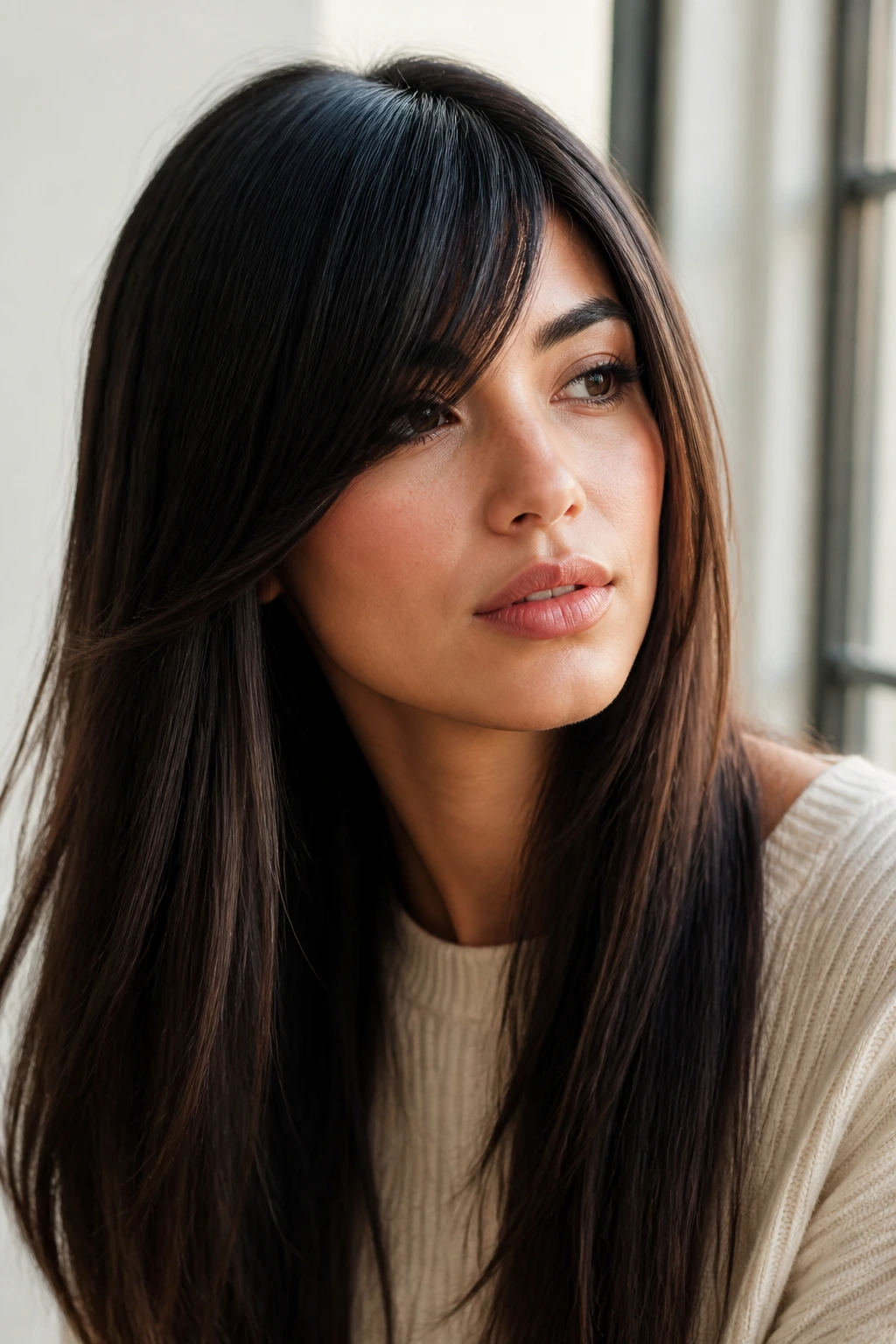
If your hair tends to swallow fringe styles whole, this is the one that stops the fight. The shape looks smooth on top, but the bulk has been removed from the inside, so the bangs can drape instead of ballooning outward. On thick hair, that hidden cleanup makes the difference between “nice idea” and “why is my forehead wearing a helmet?”
The best version is cut with restraint. Not every strand needs to be touched. A good stylist will remove weight where the bang zone is densest, then leave enough length on the outer edge to anchor the whole shape. That anchor is the secret. Without it, thick hair springs back and scatters.
This style is a smart pick if you like sleek hair but don’t want a stiff front section. It plays nicely with long, glossy lengths, and it also calms down coarse hair that puffs when brushed too hard.
4. Piecey Ribbon Fringe
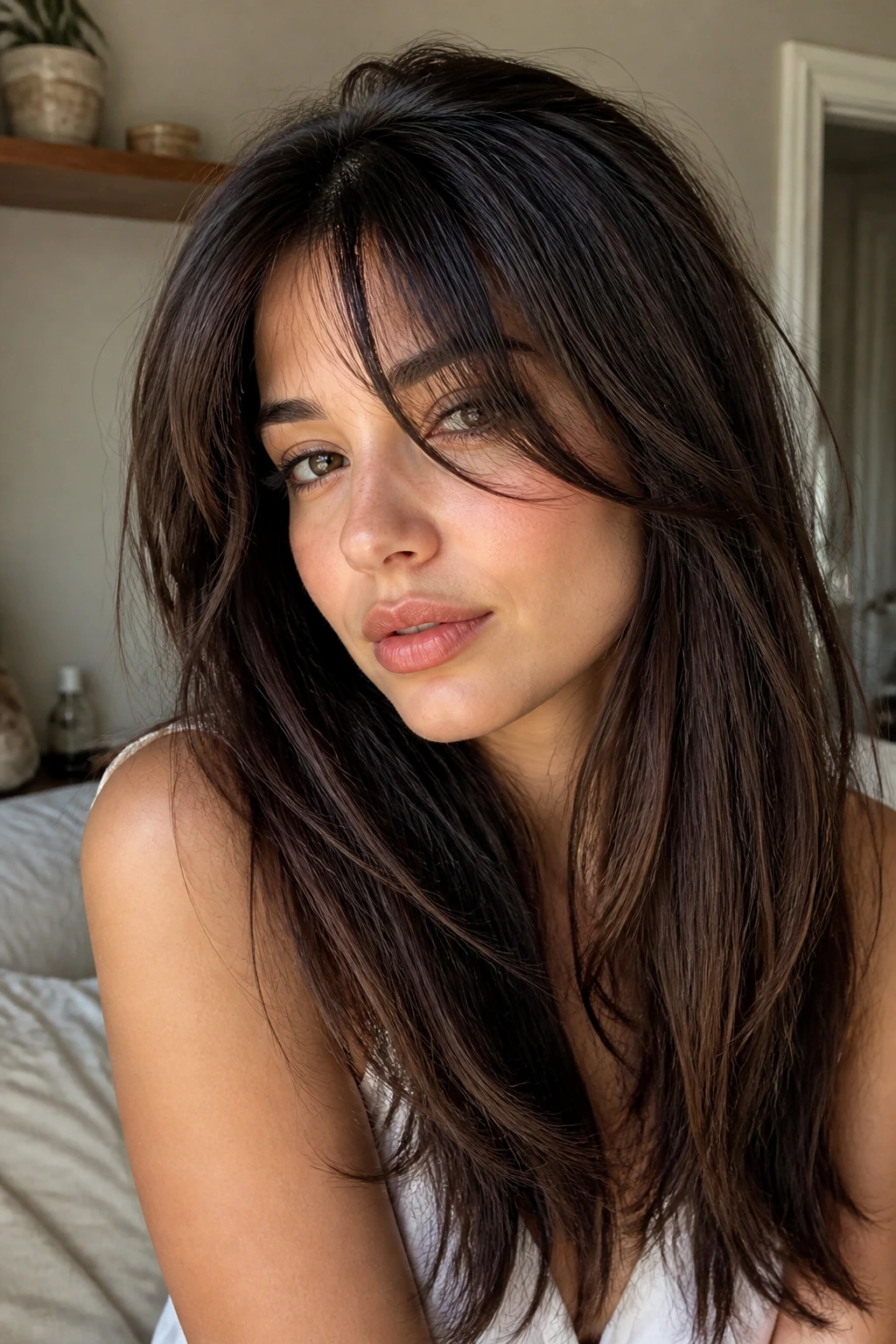
Piecey bangs are for people who want some texture in the front without turning the cut into a shag. Thick hair can hold these little separated ribbons beautifully, because the strands have enough body to keep the pieces visible. You end up with a front section that moves in layers instead of as one heavy curtain.
Best When You Want
- A fringe that looks softer after a day of wear
- A little separation near the cheekbone
- A shape that works with wave or loose curl
- Less root bulk than a solid heavy bang
The trick is not to over-style the pieces. Use a light cream or a pea-sized bit of paste on dry ends, then separate two or three front strands with your fingers. Too much product turns piecey into greasy. Too much brushing turns it back into one lump. Middle ground. Always middle ground.
5. Glossy Sidefall
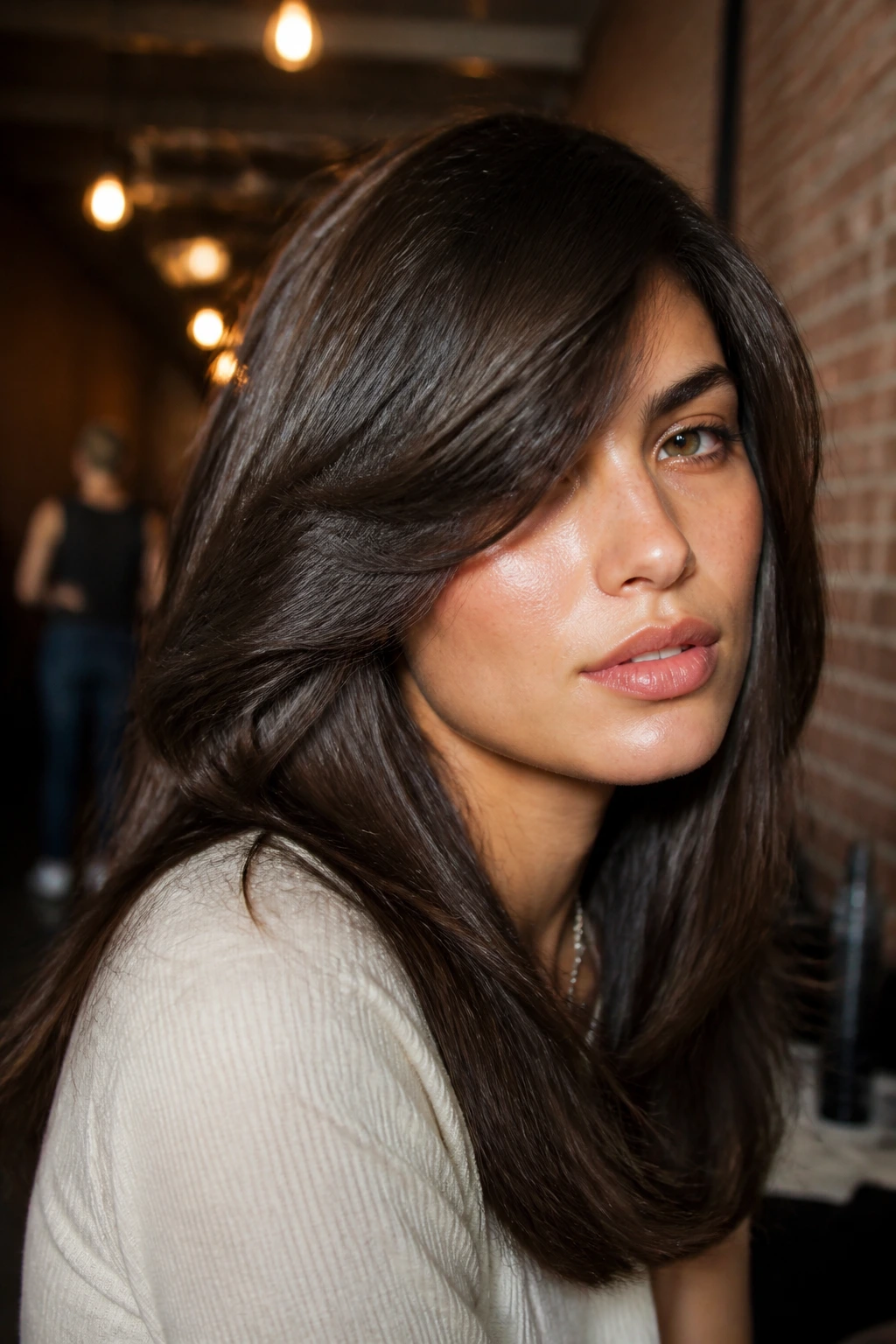
A glossy sidefall is the polished cousin in the group. Instead of chasing texture, it leans into shine and clean movement. Thick hair helps here, because the fringe has enough density to swing in one smooth line. If the edge is cut well, it can look almost liquid when it moves across the forehead.
This shape works best with a round brush or a flat iron set to a low-to-medium bend, not a curl. You want a soft arc, not a hook. The line should skim the cheekbone and keep going, which makes it excellent for long, straight hair that needs a front piece with more presence.
I like this one for evenings, interviews, or any day when you want the haircut to look deliberate before anyone has asked a question. It’s tidy. It’s grown-up. And it still leaves room for long hair to do its thing.
6. Bottleneck Sweep
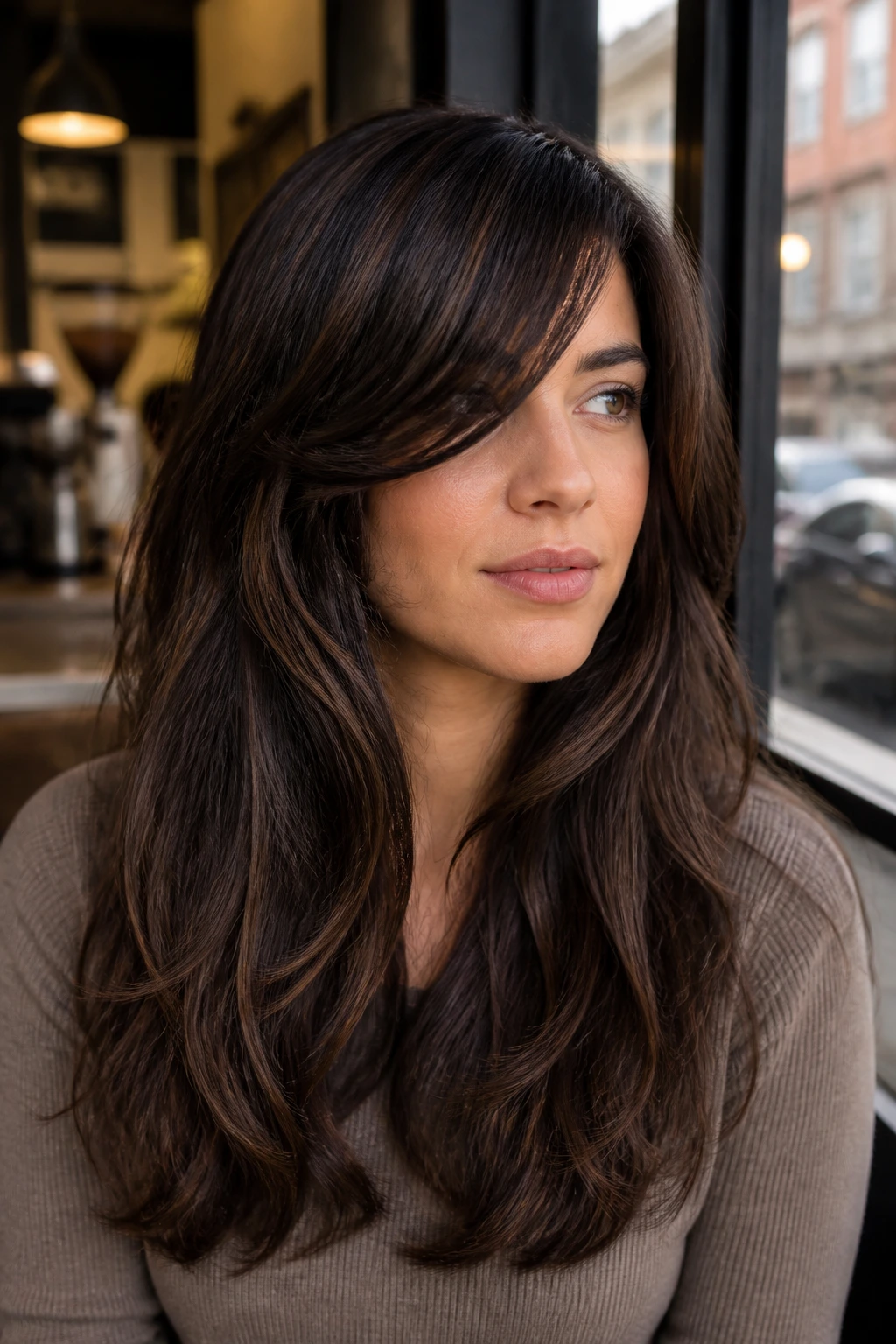
Bottleneck bangs are usually discussed in the curtain-bang conversation, but the side-swept version works very well on thick hair. Narrow at the root, a little wider through the middle, then softer at the edge — that shape keeps the front from feeling heavy at the center while still giving you coverage where you want it.
The best part is the transition. A bottleneck sweep can start almost whisper-thin near the part and then build into thicker face-framing pieces. Thick hair likes that gradual shift because there’s no single blunt edge trying to carry all the weight. The result feels balanced, not overcut.
If you have a strong jaw or a wider forehead, this shape helps move the eye down and out along the cheek instead of sitting directly across the brow. That makes it one of the sneakiest flattering options in the bunch.
7. Cheekbone Arc Fringe
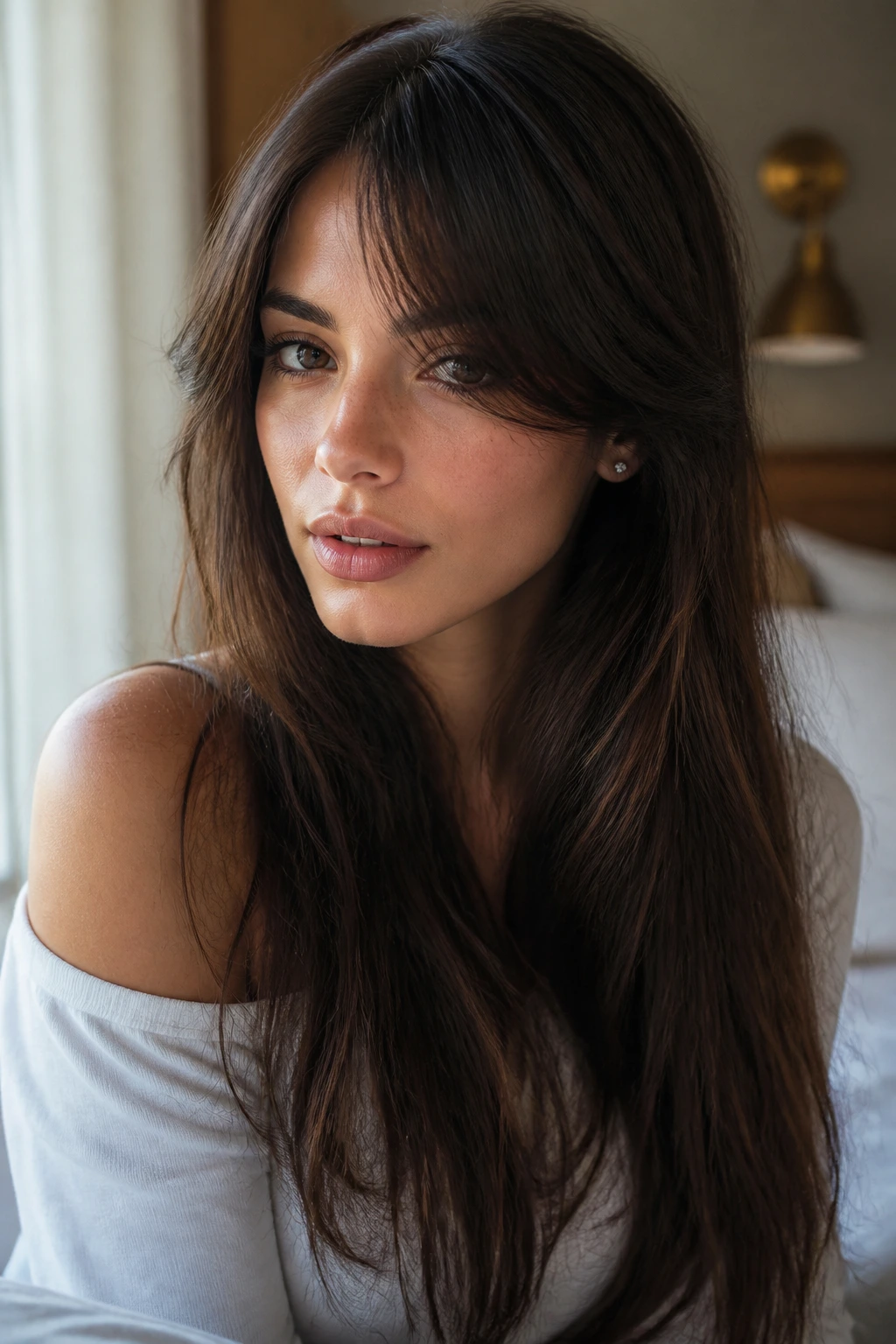
Why does this shape work so often? Because the line lands exactly where the face starts to change planes. The fringe doesn’t fight the forehead; it bends with it. On thick hair, that arc is easier to hold than a wispy side bang that never has enough weight to stay in place.
The Shape in Practice
- The shortest point can sit just above the outer brow.
- The longest point should graze the top of the cheekbone.
- The center of the bang needs enough density to hold the curve.
- A round brush with a 1.5-inch barrel helps the bend stay soft.
This is one of those cuts that looks casual when done right, which is deceptive. There’s a lot of control in that softness. If the arc is too high, the bang flips oddly. Too low, and it loses the face-framing effect. The sweet spot is the cheekbone. That’s where it starts doing useful work.
8. Temple-Melt Face Frame
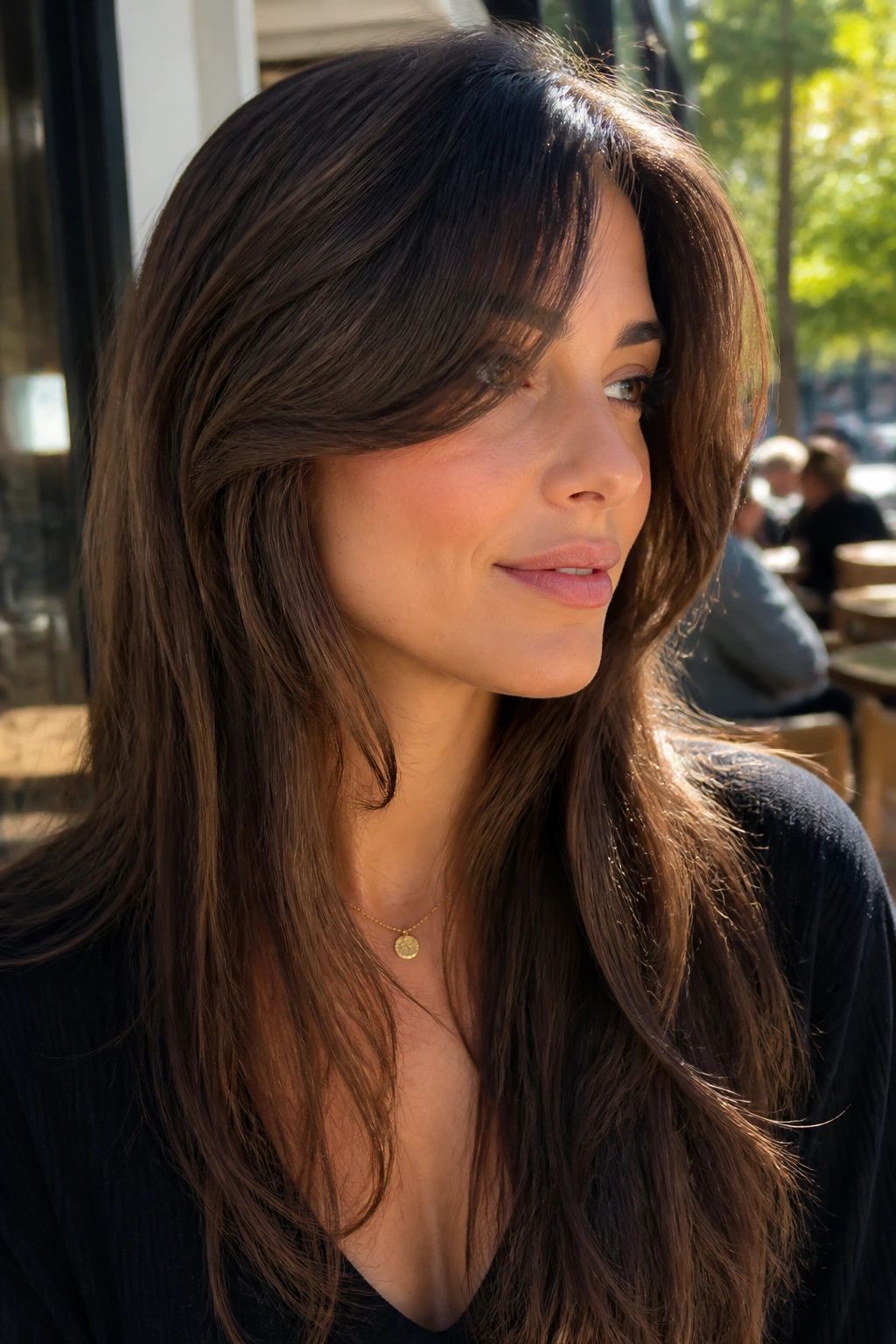
Temple-start bangs are a nice choice when you want the front to feel connected to the rest of the haircut. The line begins farther back, near the temple rather than right in the middle of the forehead, then blends into long layers around the jaw and cheek. Thick hair benefits from this because the weight is distributed instead of dumped in one thick patch.
This cut is one of the easiest to live with on a busy morning. If the front does not cooperate, you can redirect it with a quick blow-dry and tuck the longer side behind the ear. It still looks intentional, which is the whole point. A lot of people want bangs that are dramatic in the mirror and forgiving in real life. This is that.
It also grows out well. As the fringe gets longer, it becomes face-framing layers rather than an awkward middle stage. That is worth a lot.
9. Shaggy Side Fringe
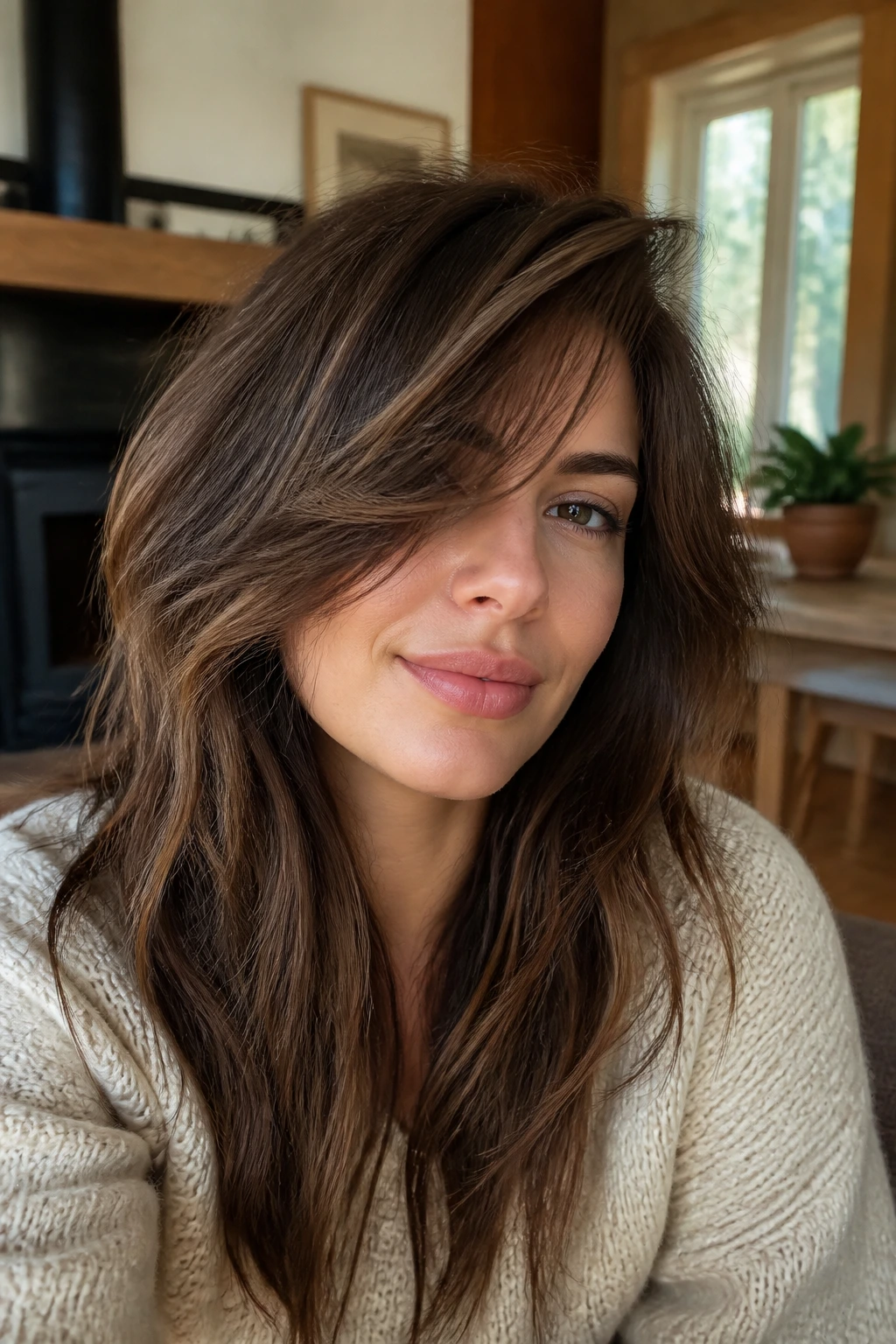
A shaggy side fringe has a little more attitude. The ends are choppier, the movement is looser, and the shape feels less polished than a glossy sidefall. Thick hair can carry that rougher texture without looking underdone, which is why this version works so well with layered cuts and lived-in waves.
When This One Makes Sense
If your long hair already has some roughness or bend, you don’t need to smooth it into obedience. Let the fringe echo that texture. Ask for soft layering around the face, then style the front with a diffuser or a rough dry and a dab of texture spray at the ends.
The danger is turning shaggy into sloppy. Keep enough length on the side so the bang still sweeps rather than sticking straight out. Thick hair gives you freedom, but not unlimited freedom. You still need shape.
10. Long Corners for Oval Faces
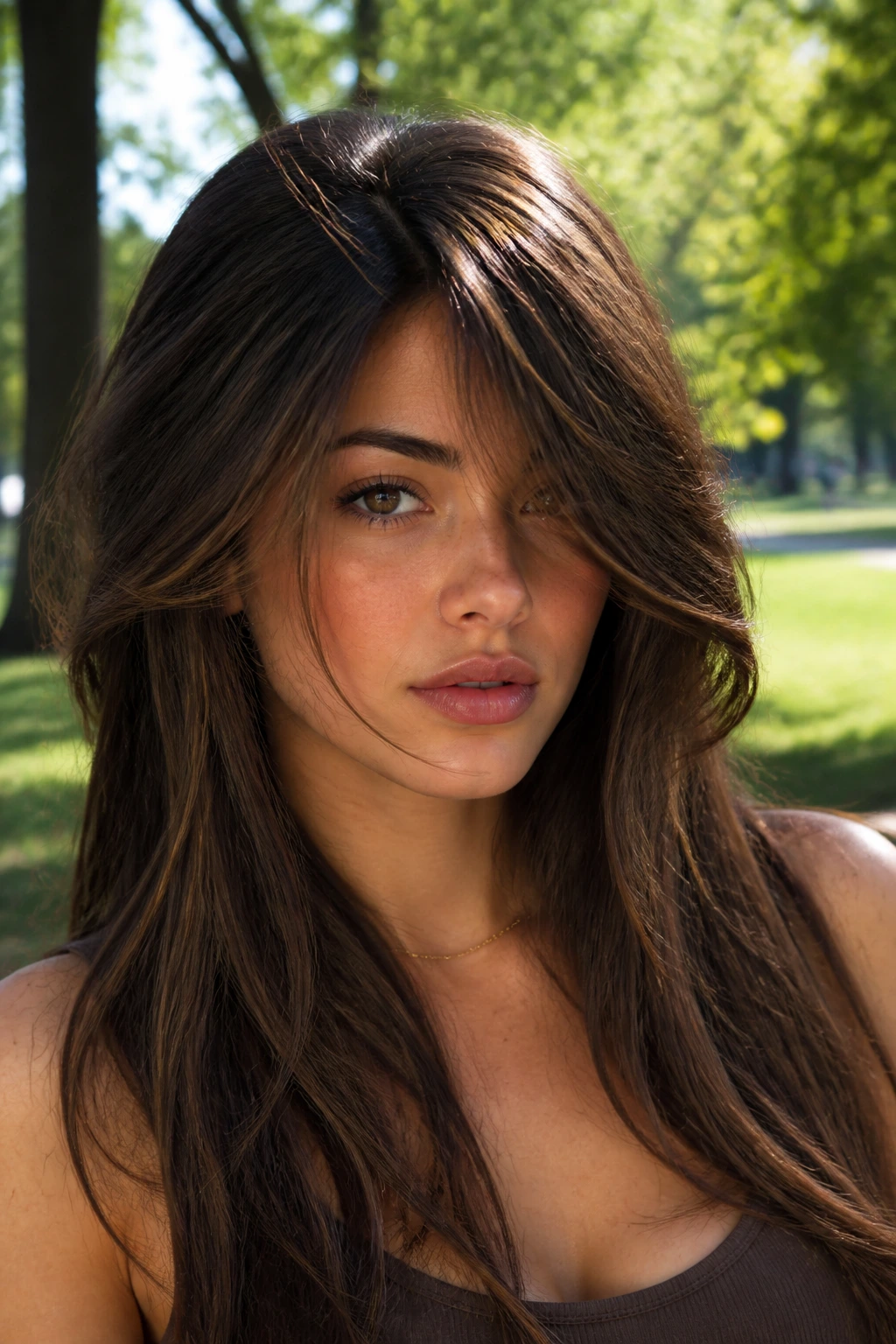
Long corners are the quiet little trick that make thick hair feel lighter around an oval face. The shortest point is still side-swept, but the outer edge stays long enough to fall into the rest of the haircut. That gives the face a soft frame without shortening the appearance of the length.
This version is especially good if you hate the feeling of bangs sitting high on the forehead. The longer corners make the front feel draped, not chopped. When the hair is styled with a slight bend, those corners move with the rest of the length and keep the whole shape calm.
It’s a subtle cut. Not boring. Subtle. There’s a difference.
11. Big Round-Brush Blowout Fringe
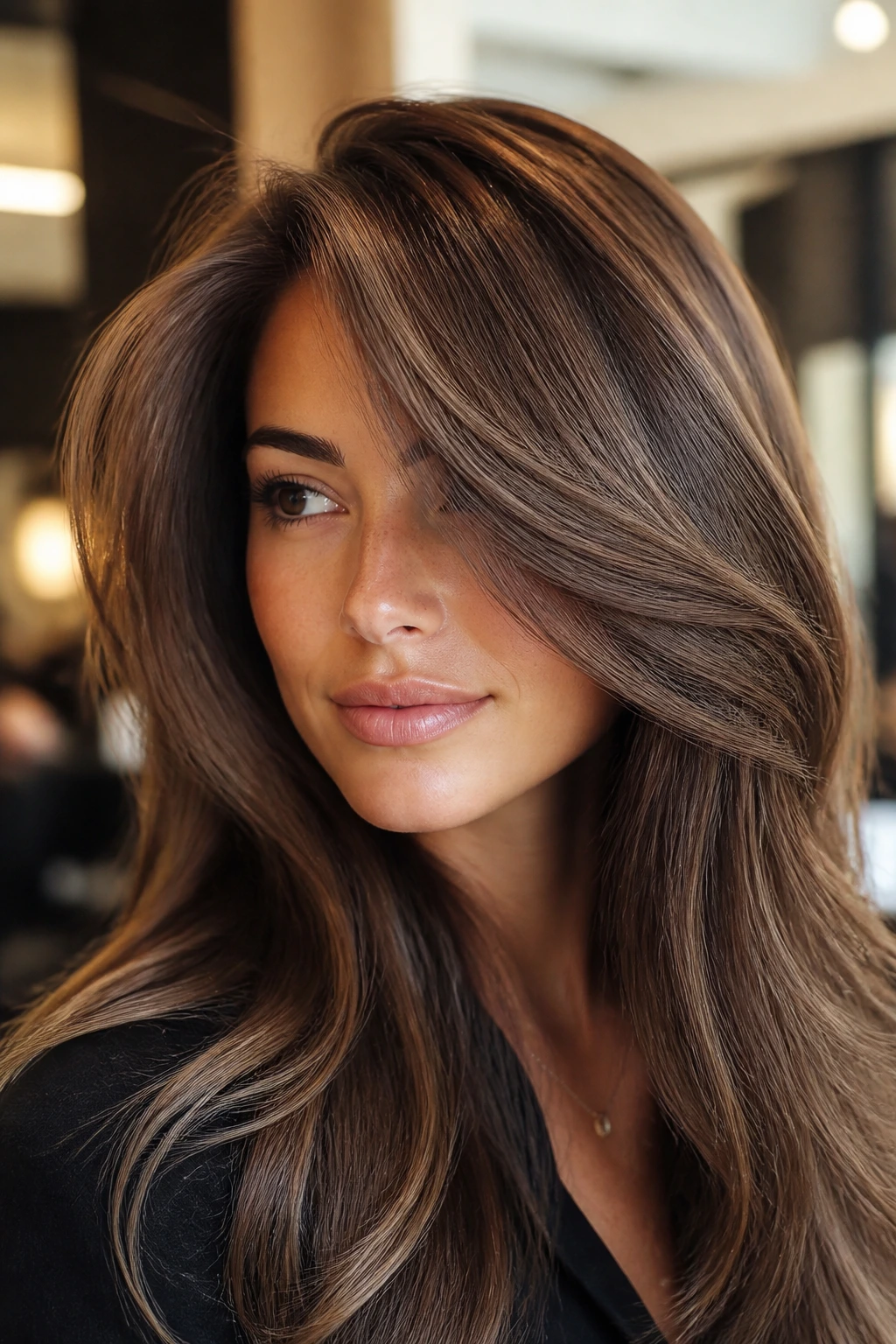
If you want volume, this is the one. Thick hair already has the body; the round-brush blowout just points it in the right direction. The front lifts off the roots, bends at the middle, and lands softly to the side with enough bounce to catch a little movement every time you turn your head.
Use a 2-inch round brush if your fringe is long enough. Smaller barrels create too much curve and can make thick hair look busy near the eyes. The dryer nozzle should aim down the hair shaft while the brush lifts the roots up and across. Then hit it with cool air before moving on. That cool shot is what keeps the front from collapsing into a lump.
This style is happiest when you like a fuller, salon-style finish and don’t mind spending five extra minutes at the mirror. It is not fussy. It is just specific.
12. Air-Dry Bend Sweep
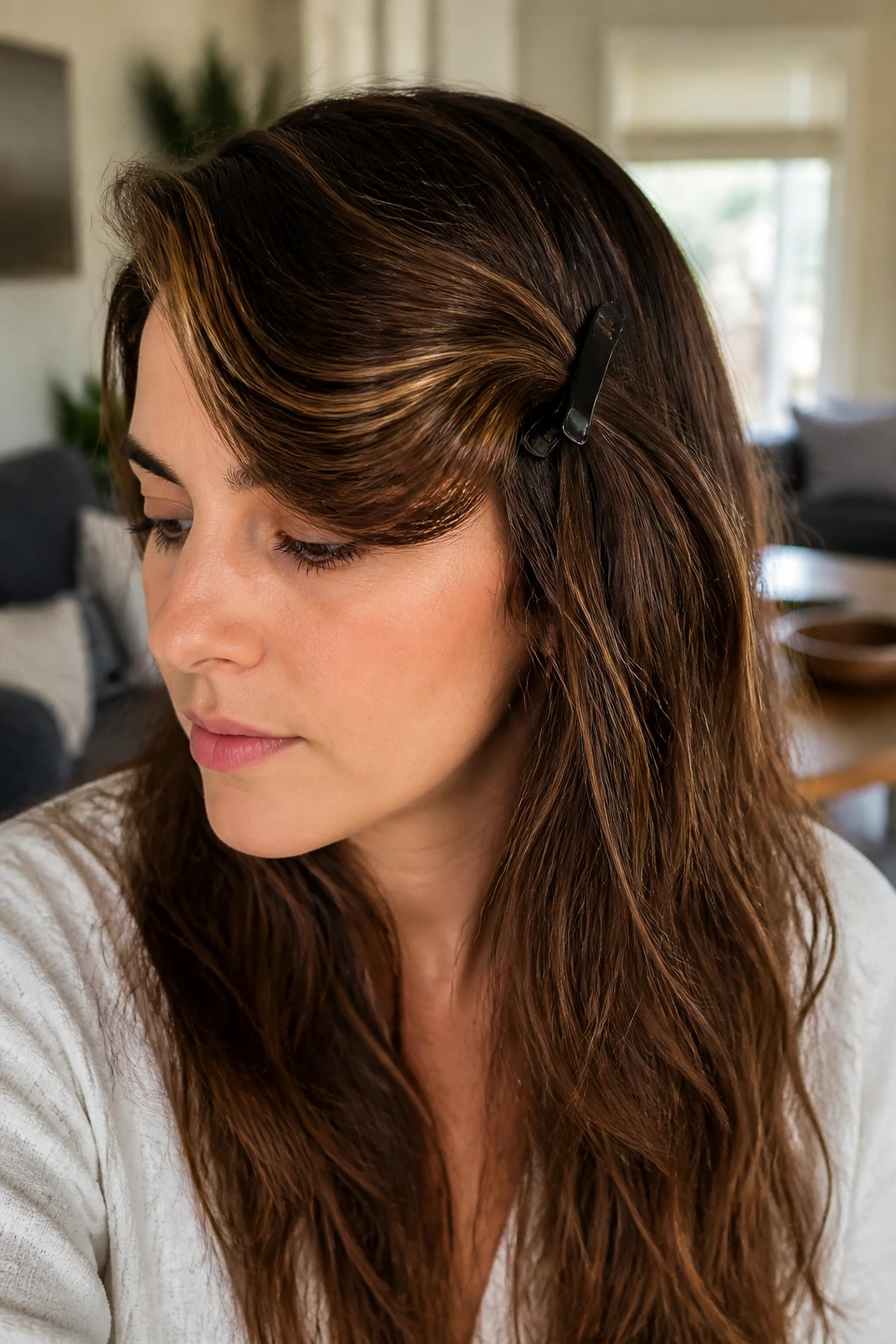
Some fringe styles demand a blowout. This one does not. A thick, slightly wavy front section can air-dry into a side sweep if you set the direction early while the hair is still damp. Clip it across the forehead, let it dry in that bend, and then break it up with your fingers once it’s fully dry.
A Simple Air-Dry Routine
- Mist the front section lightly with water.
- Work in a small amount of lightweight cream or mousse.
- Direct the bangs to the side and clip them in place.
- Let the hair dry fully before touching it again.
The point is not to create a perfect wave. The point is to train the root while the hair sets. Thick hair remembers direction better than people think, and a ten-minute clip can save you from a full heat-style later. This is a good option for anyone who likes movement but hates overworking the front every day.
13. Razor-Softened Edge
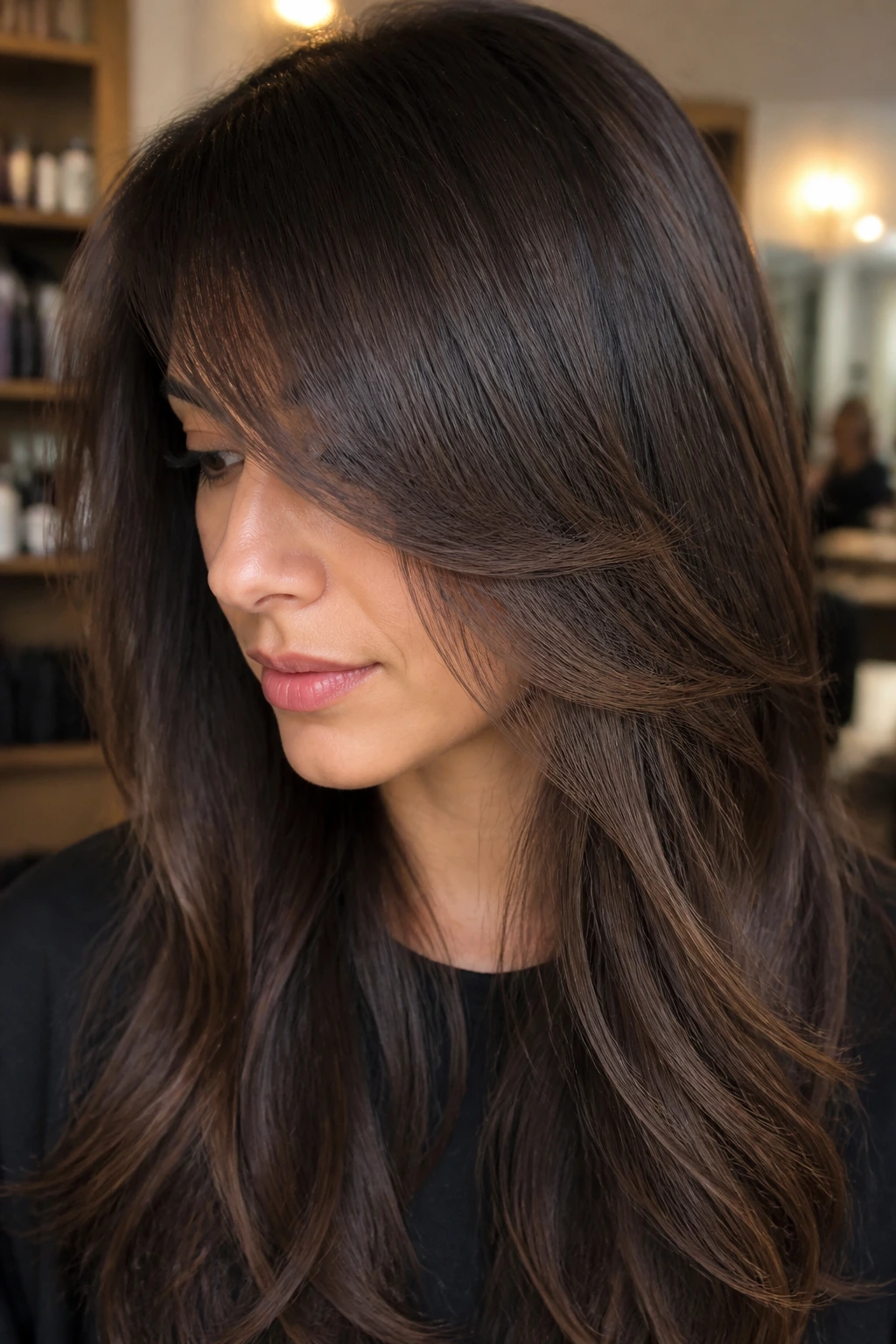
A razor-softened edge can be lovely on thick hair — when it is done by someone who knows where to stop. The goal is a gentle, airy border that removes some of the bluntness without leaving the ends frayed. When it works, the fringe falls in a smooth, almost brushed-off way that feels lighter than a scissor-cut line.
But this is one of the few styles here where the tool matters a lot. A heavy hand with a razor can make coarse hair look fuzzy, especially around the temples where the strands already want to spread. If your hair has a rough cuticle or a lot of frizz, ask whether point-cutting might give you the softer line you want without the fray.
I like this look on thick hair that feels dense but not glassy. It has enough softness for the edge to move, but enough body to keep the shape from disappearing.
14. Glam Side Fringe for Updos
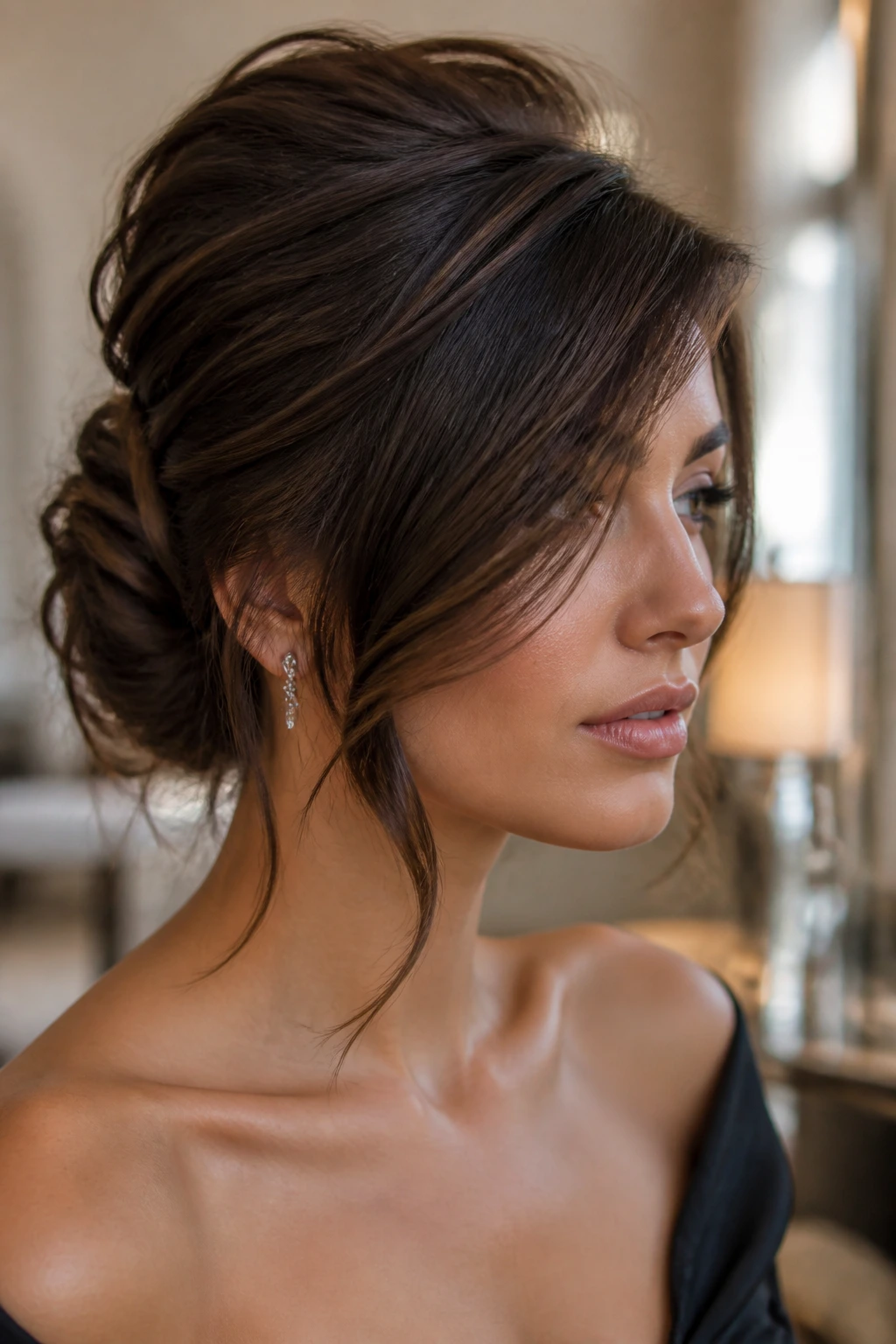
Long side bangs make updos look finished. A short fringe can fight a bun or ponytail; a longer sweep can bridge the gap between the face and the rest of the style. That is why this version shows up so often around formal styles. It does a small amount of work very well.
The ideal length usually skims the cheekbone on the short side and reaches toward the jaw on the long side. That gives you room to pin a tiny section back if you want a cleaner face line, or leave it loose if you want softness. Thick hair gives the fringe enough weight to hang nicely beside a twist or chignon without popping up in the wrong direction.
This is a strong choice if you need one haircut to work with polished hair and loose hair. Not every fringe can do that.
15. U-Shape Sweep
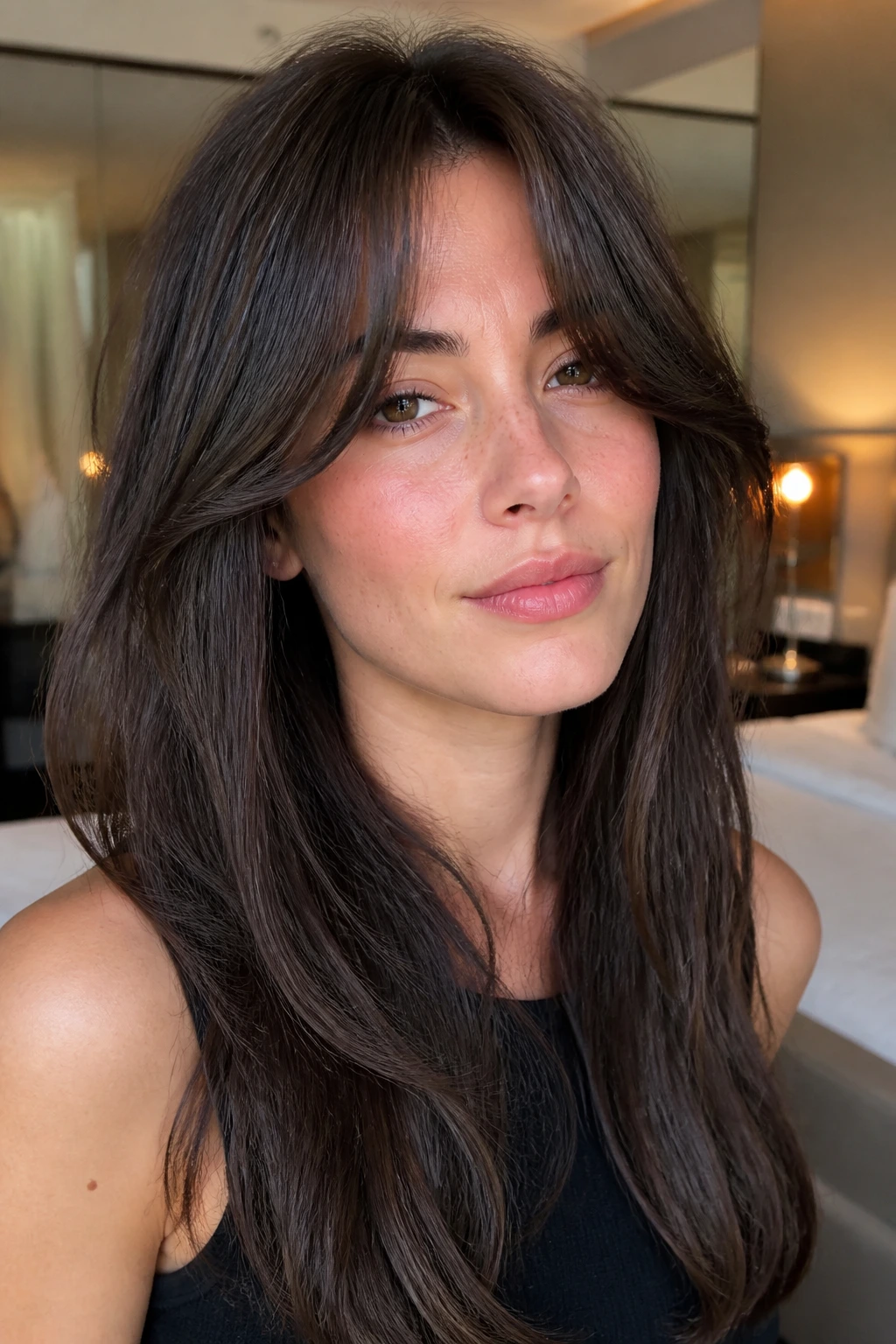
A U-shaped sweep has a little more curve through the middle and longer sides that arc down toward the face. Think of it as a side fringe with a built-in smile line. On thick hair, that shape keeps the center from feeling too heavy while the corners maintain enough length to blend into long layers.
Why It’s Useful
- It softens a broad forehead.
- It keeps the front from feeling boxy.
- It blends well into a long layered cut.
- It holds shape better than a skinny, over-thinned fringe.
Style it with a round brush or a large roller at the front while you finish the rest of your hair. Then brush it into the side part only after the root has cooled. If you brush it too early, the curve will flatten and the whole shape loses its point.
16. Beach-Wave Side Bangs
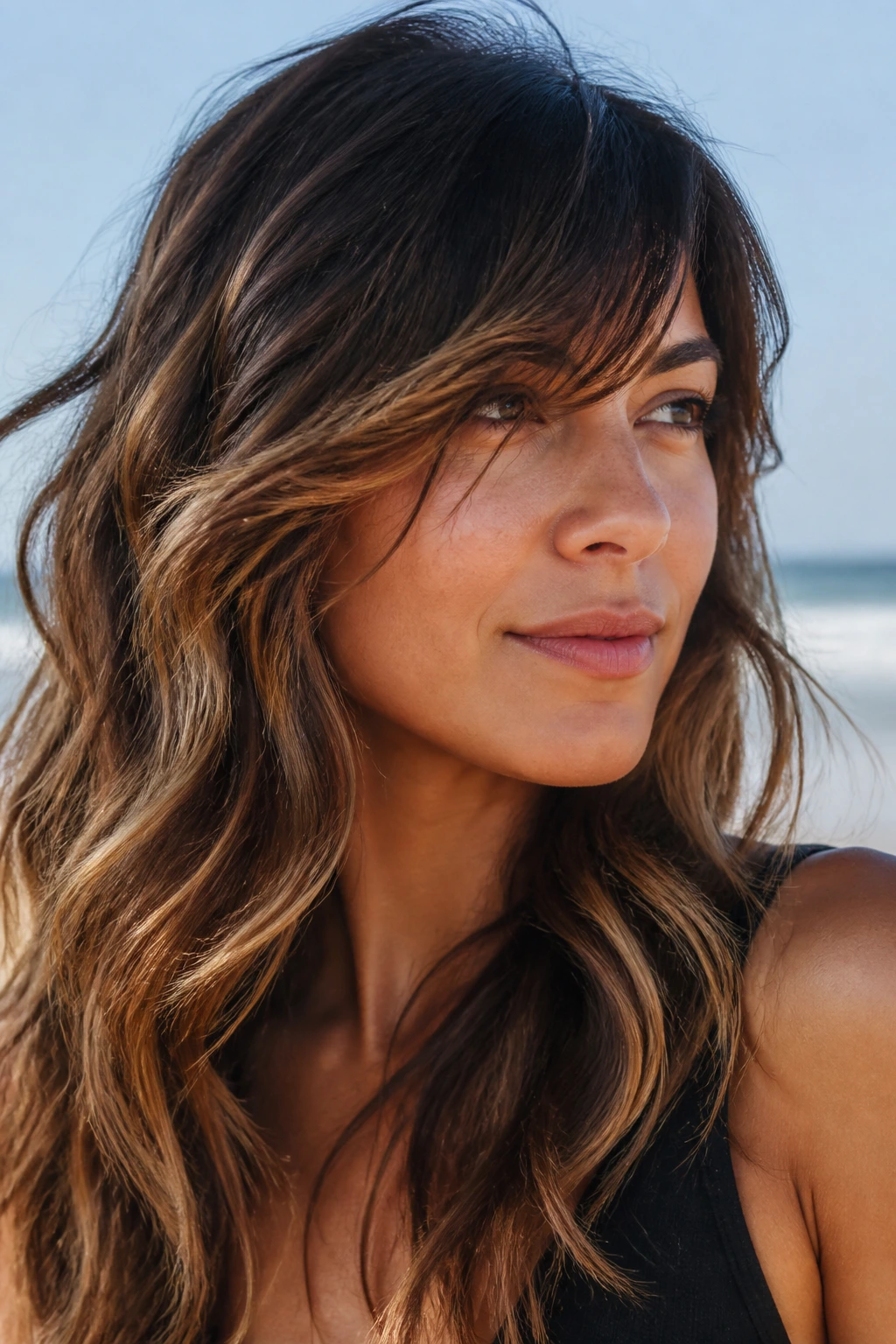
Beach-wave side bangs are a nice fit if your long hair already has bend and movement. The fringe is cut long enough to ride along with the wave, not against it. On thick hair, that means the front can feel light and loose without turning airy in the bad way.
A little mousse at the root and a tiny bit of cream on the ends go a long way here. You want separation, not crunch. When dry, twist the bang section once or twice around your fingers and let it fall across the forehead at an angle. That twist helps thick hair settle into a shape instead of spreading into a wide curtain.
This version looks good when it is not perfect. That’s the charm. It should feel a little wind-tilted.
17. Round-Face Diagonal Sweep
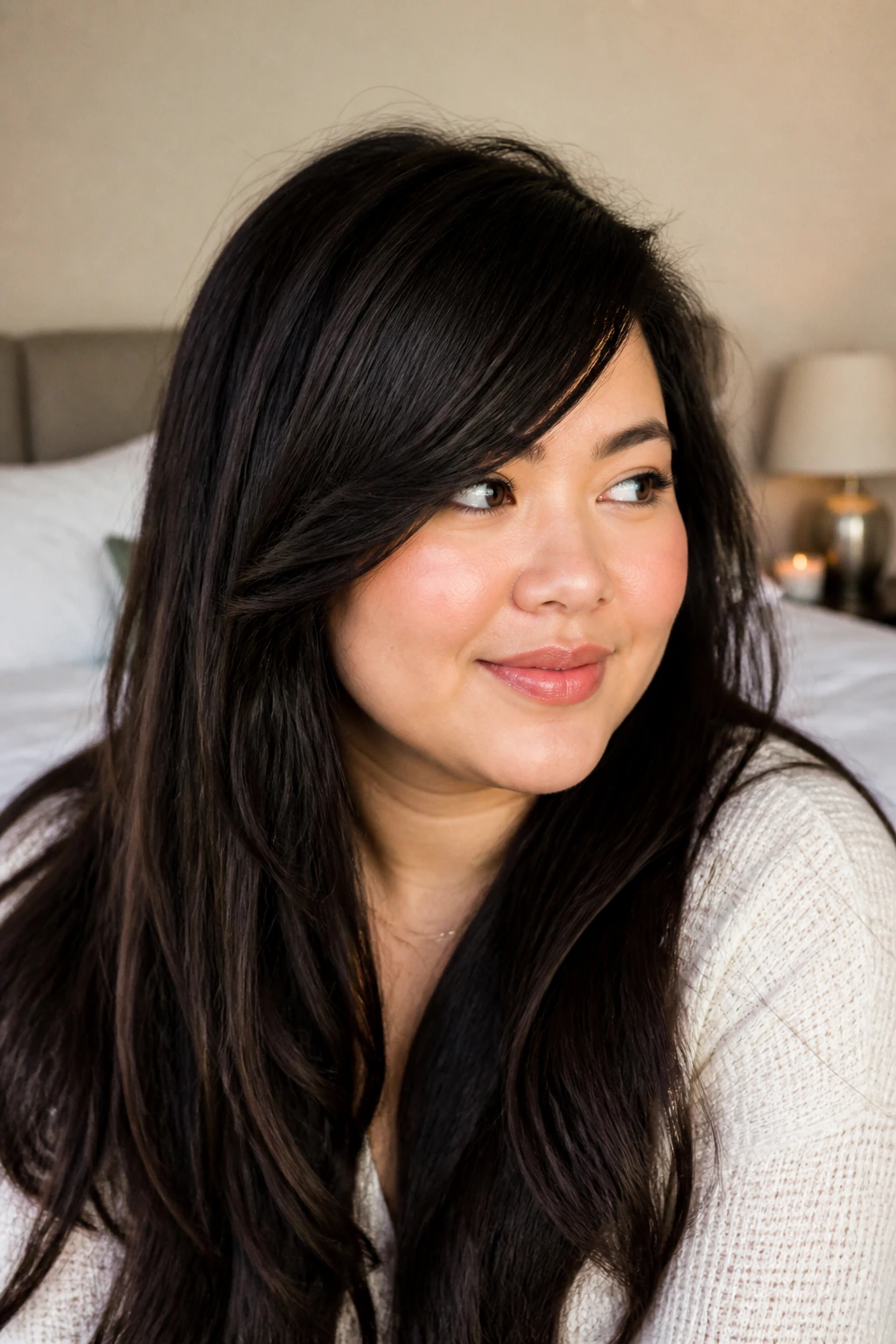
If your face is round, a diagonal sweep can change the whole balance of the haircut. The line draws the eye from the center outward and downward, which keeps the front from widening the face. Thick hair helps because there’s enough density to hold the diagonal without collapsing into a thin strand.
The shortest point should not land too high on the forehead. Keep it lower and longer, then let the sweep travel across the face toward the cheek. That creates a slim line without making the bangs look chopped. A side part with a little lift at the root usually makes this shape even cleaner.
I like this version because it feels directional. It tells the eye where to go. That sounds small, but it changes everything.
18. Layer-Merging Fringe
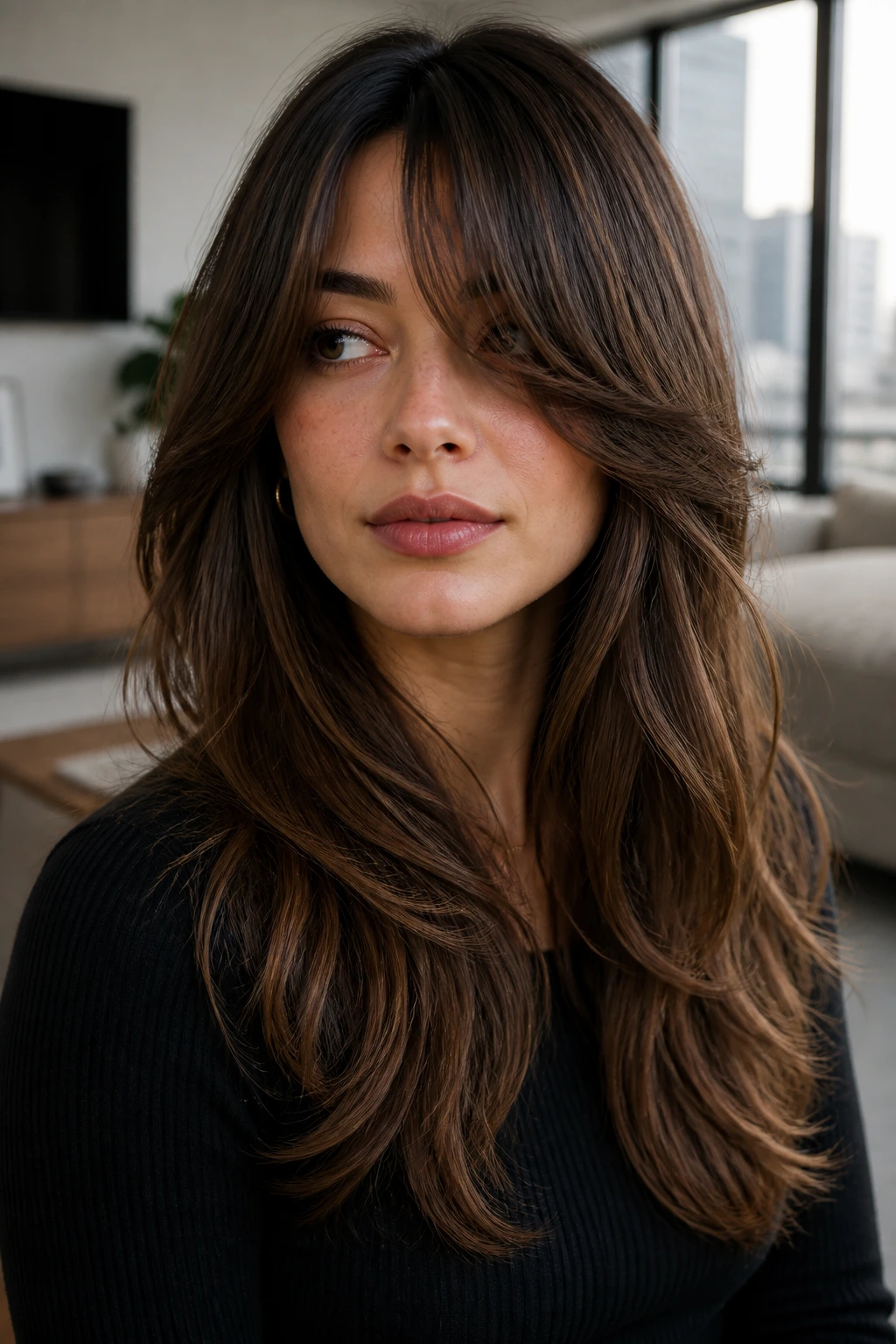
This is the shape for anyone who wants bangs but does not want “bangs” as a loud category. The front section is cut so it disappears into long layers, which is especially useful on thick hair because the fringe can otherwise become a separate dense block. Here, the front and sides behave like one haircut.
Ask for the shortest point to stay long enough to tuck if needed, then have the outer edge blended into the first face-framing layers. The result is softer and far less obvious at first glance. That can be a strength. Not every fringe needs to announce itself from across the room.
This is also a smart option if you’re cautious. It gives you fringe movement without closing the door on other styles later.
19. Lip-Grazing Drama Sweep
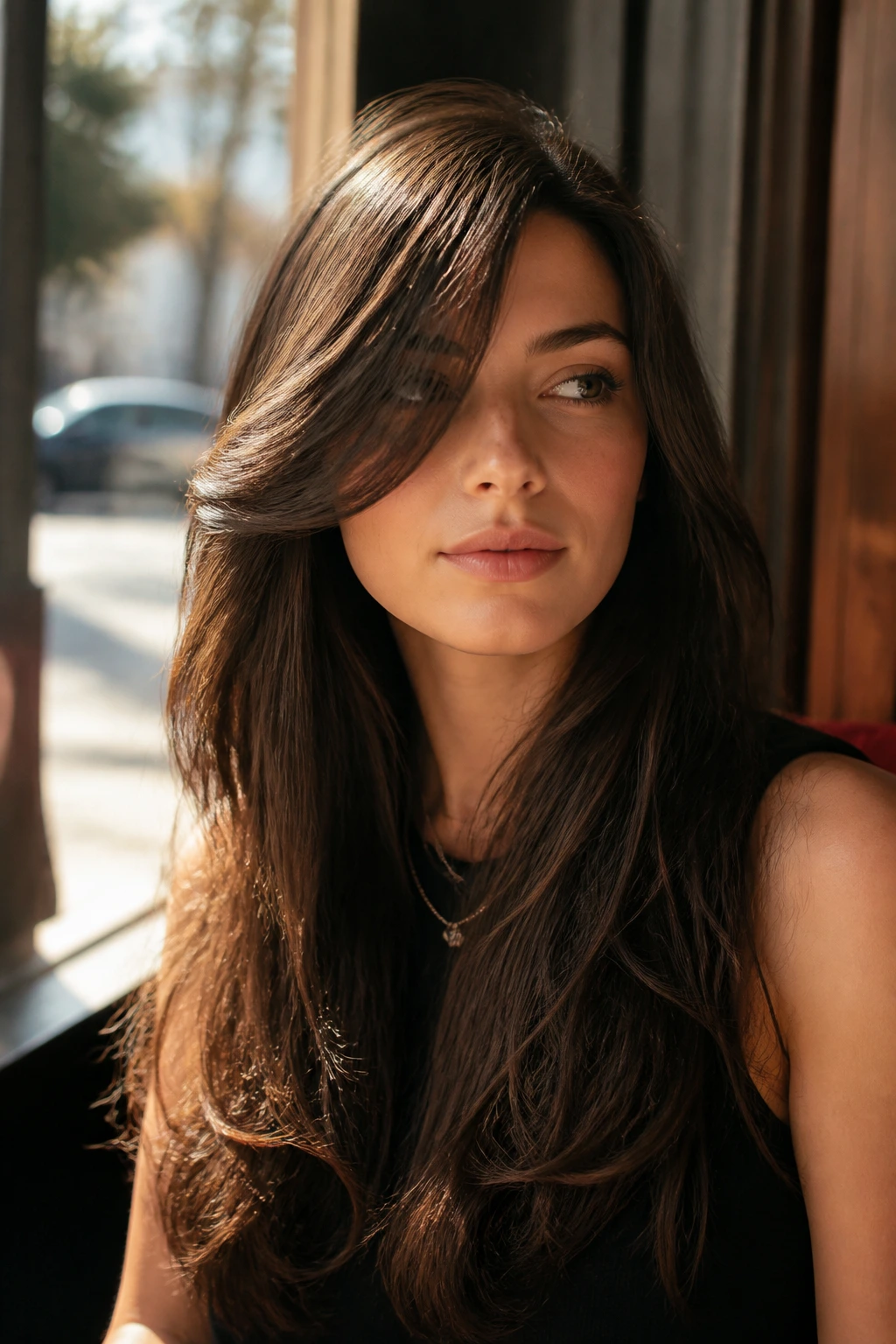
A lip-grazing sweep is the dramatic one in the bunch. The fringe sits low enough to make a statement, then arcs to the side so it doesn’t block the eyes. Thick hair makes this shape look expensive because the weight keeps the front from floating around in tiny, fussy pieces.
The cut needs discipline. Too much bulk near the root and the fringe will feel bulky around the nose and cheek. Too little and it loses the drama. The sweet spot is a clean diagonal that starts near the brow and lands near the mouth corner or upper lip on the long side. When blow-dried with a large brush, it makes the whole haircut look longer and more deliberate.
This is the one I’d pick if you want the front to carry some of the style all by itself.
20. Crisp Side-Part Fringe
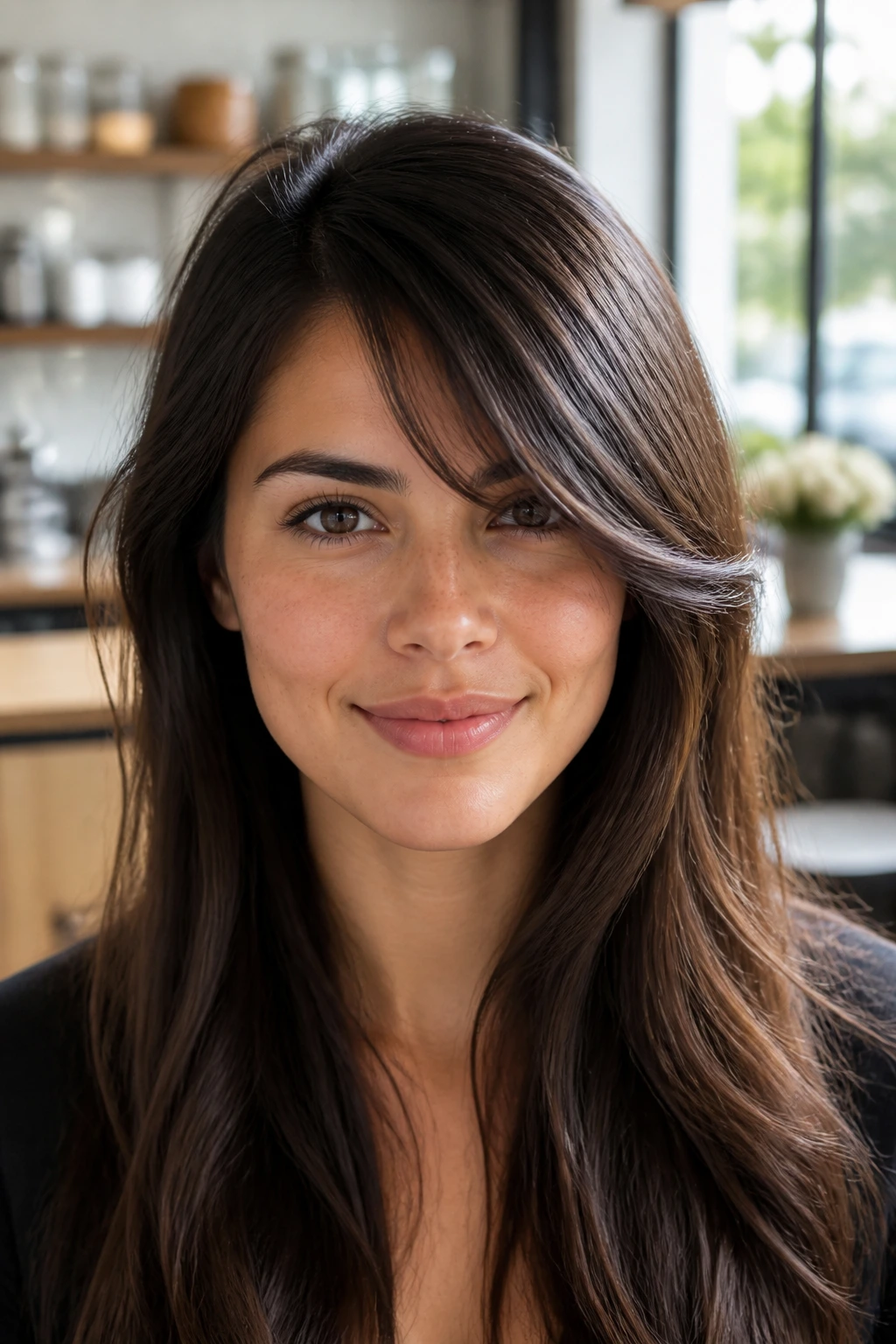
Crisp side-part bangs are for straight or slightly wavy thick hair that likes structure. The line is cleaner, the bend is more controlled, and the ends land with a sharper finish. If you hate fuzz around the forehead, this one gives you order without looking stiff.
The key is a dry finish and a careful hand at the edges. A small flat iron bend can refine the sweep, but don’t overflip it. Thick hair holds shape naturally, so the styling job is mostly about direction and polish. Keep the root lifted on the heavier side of the part and the front will sit neatly through the day.
This style also plays nicely with glasses because the line can be set to stay out of the frame path. That saves a lot of irritation.
21. S-Curve Bend Fringe
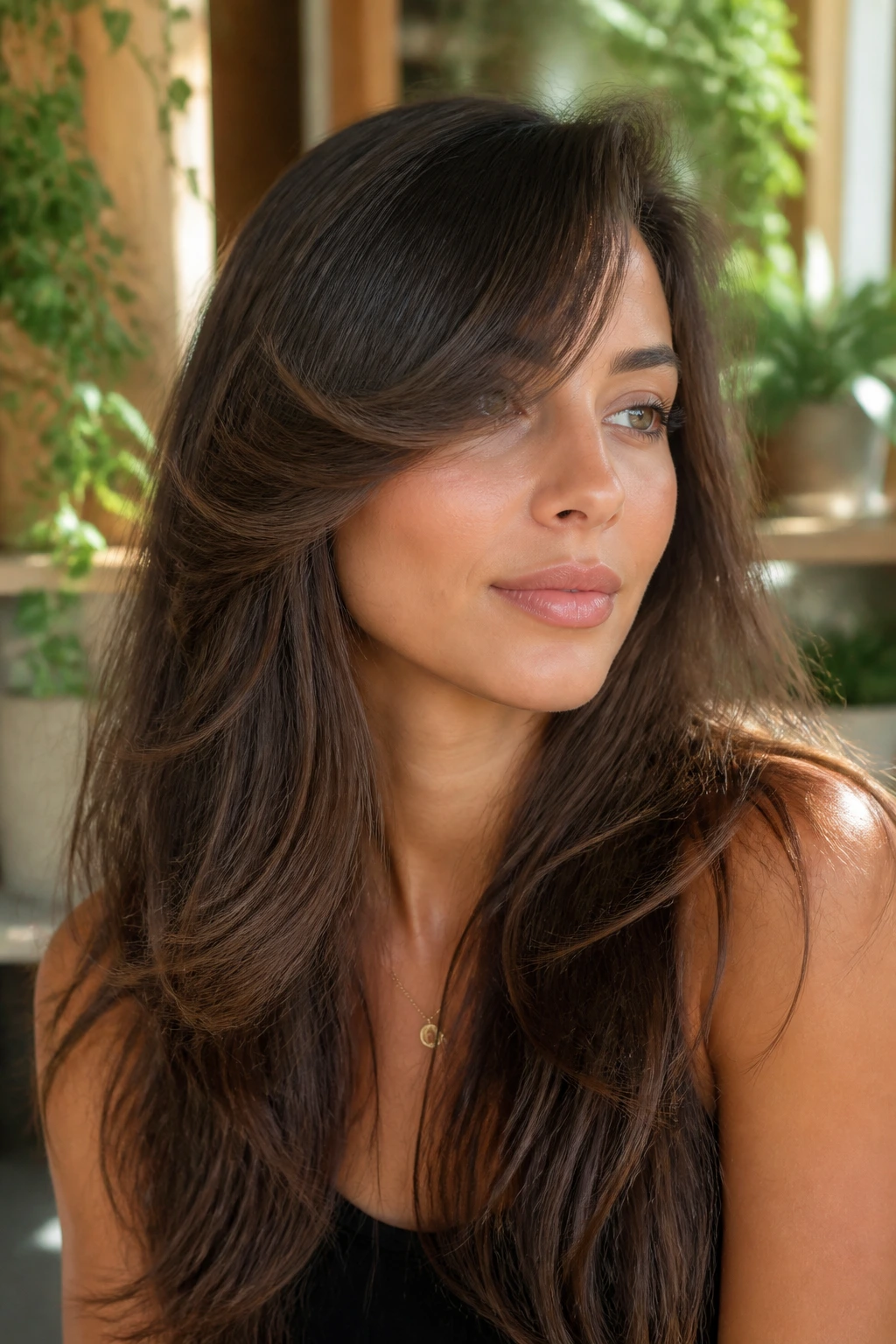
An S-curve fringe has a little more movement than a simple side sweep. The root moves one way, the middle bends back, and the ends settle to the side. On thick hair, that little curve keeps the front from feeling rigid, especially if you like a style that looks soft but still shaped.
How to Get the Bend
- Blow-dry the roots in the side-swept direction first.
- Wrap the middle of the fringe around a round brush or a flat iron.
- Flip the ends outward only slightly.
- Let the section cool before brushing it apart.
The shape looks especially good with long, layered hair because the S-curve echoes the movement in the rest of the cut. You get flow without losing structure. That is a nice place to be.
22. Airy Sweep for Coarse Hair
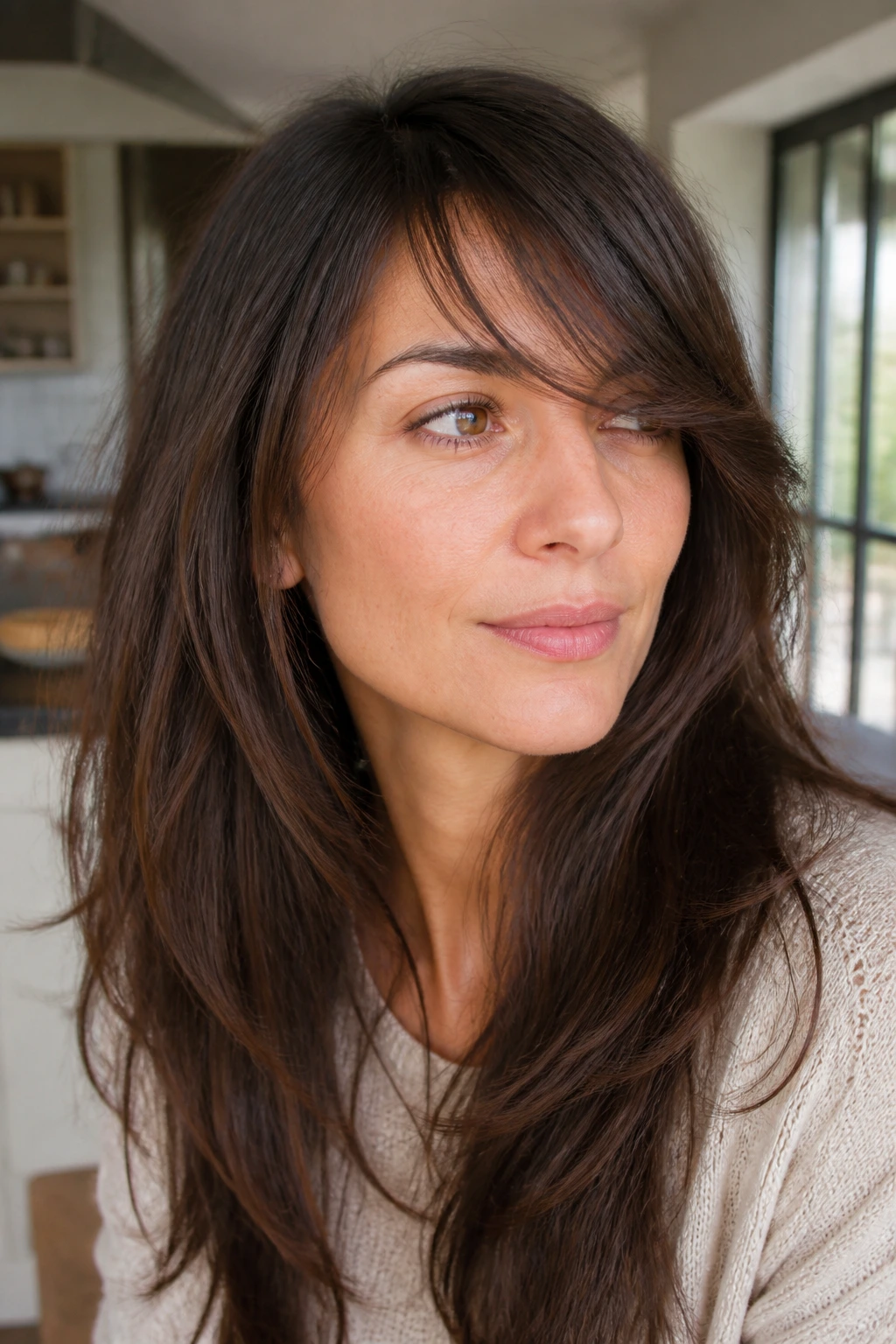
Coarse thick hair needs a different kind of softness. A fringe can look airy without being thin, which is an important distinction. The goal is to remove enough internal weight that the front stops pushing forward, but not so much that humidity turns the ends into fuzzy feathers.
This is where careful point-cutting and a very light hand with texture tools matter. You want the surface to move. You do not want it shredded. If the hair already has a rough finish, over-thinning is a mistake because the bangs can puff and split at the same time. That’s a miserable combination.
The best version of this shape sits longer than most people expect and uses a side sweep to keep the front from looking narrow. Thick coarse hair likes a little extra length. It pays rent by staying in place.
23. Hidden Bulk-Removal Fringe
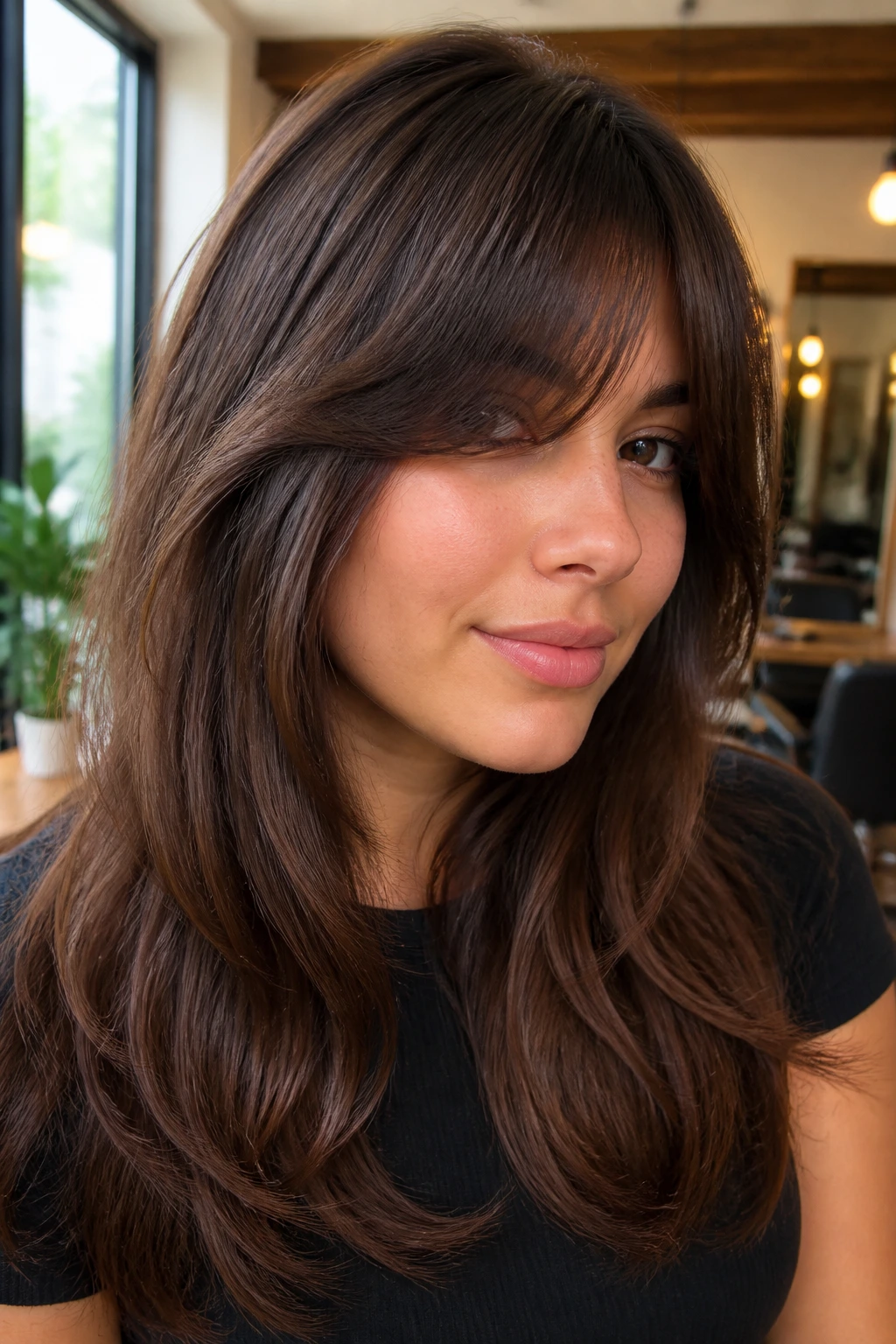
This is the technical one, and honestly, it can save a lot of thick-haired people from fringe regret. The shape looks fairly simple from the outside, but the bulk is removed inside the bang zone in a controlled way, so the front falls flatter without looking see-through. A good stylist will carve out density where the hair is heaviest, then leave the outer veil long enough to drape.
What Makes It Different
The outside line stays clean. The inside gets the cleanup. That means you keep the visual fullness you want near the face, while the root area stops pushing forward in a wide triangle. If you’ve had bangs that looked fine when wet and puffed like a mushroom as soon as they dried, this is the fix I’d ask about.
It’s not a style to over-request from someone who doesn’t cut thick hair often. The internal balance matters.
24. Glasses-Friendly Long Side-Swept Bangs

Glasses change the game. The fringe has to clear the top of the frame, stay away from the lens, and still look like part of the haircut instead of an afterthought. Long side-swept bangs do that well when the shortest point stays slightly above the frame line and the long side drifts past the cheek.
The trick is to keep the sweep directional, not heavy. Thick hair can crash into the frame if the root is overloaded, so the front should be light enough to move with a brush or a finger tuck. A side part with a small amount of root lift makes the whole thing behave better.
If you wear glasses every day, this is one of the smartest fringe shapes in the list. It can look polished without needing constant rescue from your fingers.
25. Grow-Out Friendly Long Side-Swept Bangs
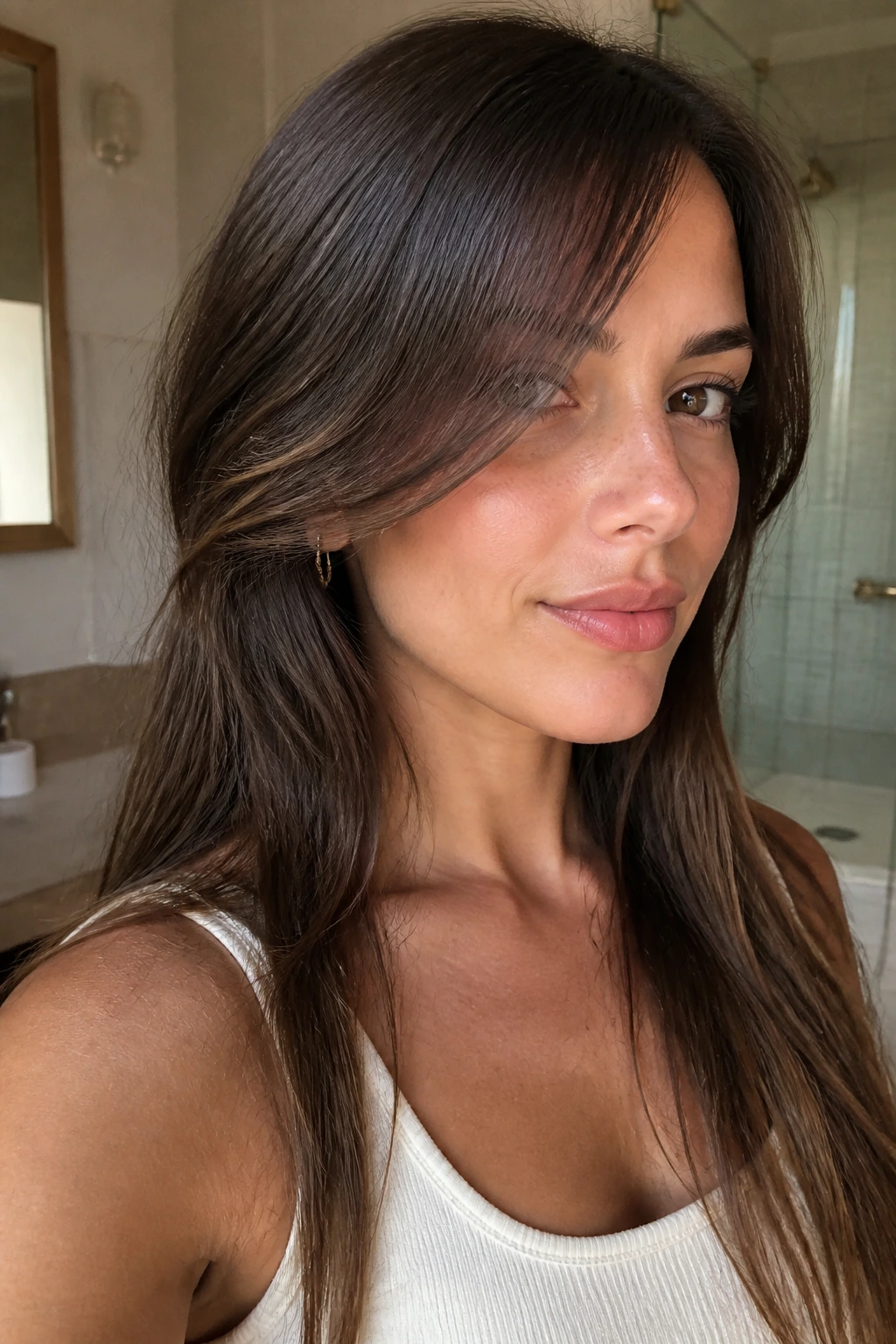
Some bangs are built for the photo. These are built for the next three months of your life. A grow-out friendly side sweep stays long enough to pin back, tuck behind an ear, or blend into face-framing layers once it starts moving past the initial shape. Thick hair helps because the fringe keeps enough weight to look intentional even when it’s no longer freshly cut.
The best version lands low enough to be useful but not so low that it swallows your eyes. Think cheekbone to jawline, with the shortest point still able to sweep across the forehead. That gives you room to shift your part a little as it grows. A tiny part change can buy you a surprising amount of time.
If you want a fringe but dread the awkward phase, start here. It’s the least annoying way to test the waters.
What Makes the Cut Hold Its Shape on Dense Hair
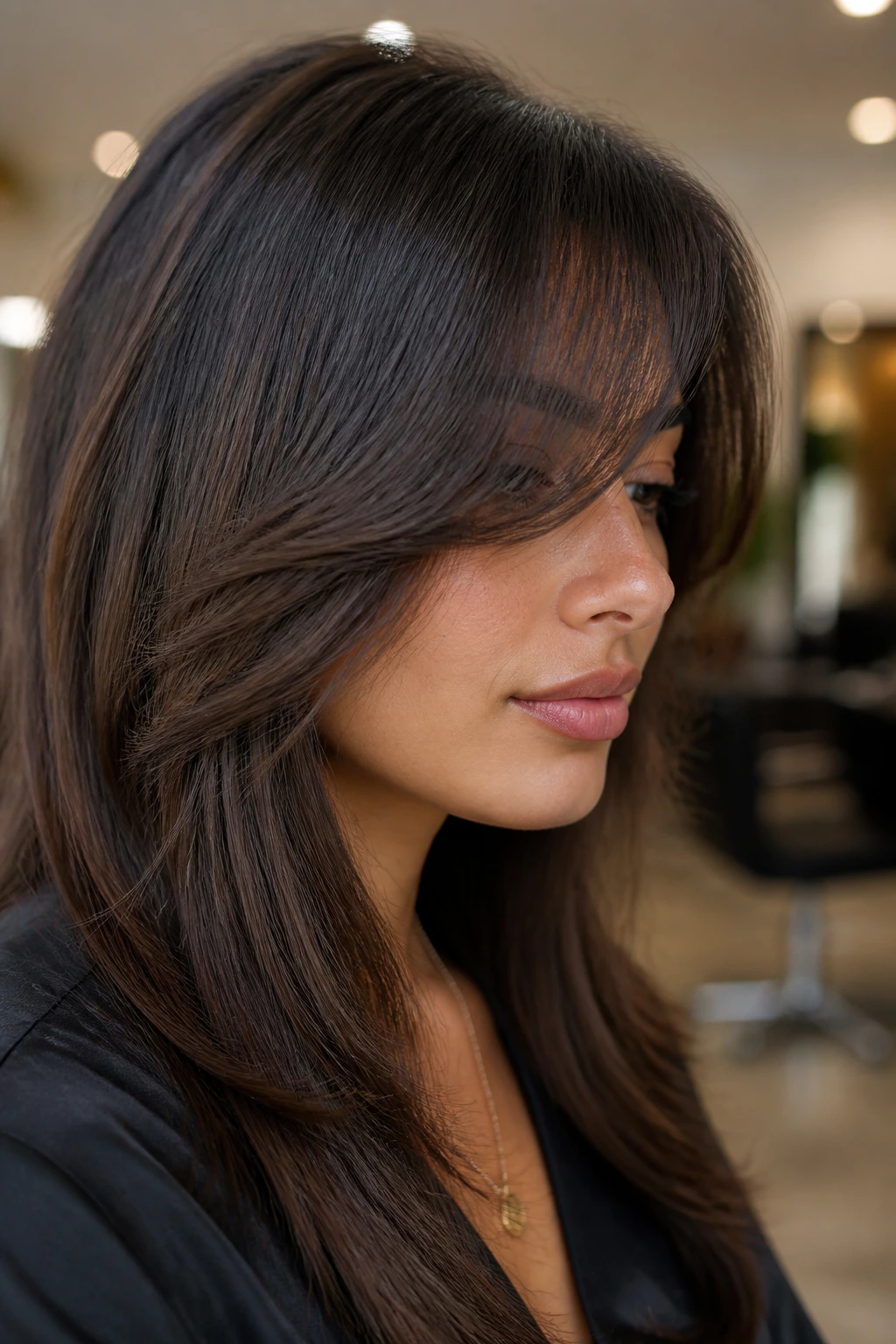
Thick hair has opinions. Strong ones. If the cut doesn’t respect its weight, the front will either swell outward or fall straight down like a damp towel. The whole game is controlling direction while removing only the amount of bulk the fringe actually needs.
Weight at the Root
A fringe that feels heavy right at the root will fight the part all day. That’s why many stylists work with thick hair dry or nearly dry, especially around the face. They need to see the spring before they decide how much to remove. Wet hair lies with much better manners than dry hair, and that’s a trap.
Direction at the Part
The part matters more than people like to admit. A deep or slightly off-center part gives the bang a route to follow, while a center-ish part on thick hair can create a split that refuses to stay put. If your cowlick pushes forward at the temple, tell your stylist. Don’t hide it. The cowlick will win later if you ignore it now.
Length at the Outer Edge
Longer outer corners are your friend. They keep the fringe anchored and make it easier to fold the bangs into long layers instead of sitting as a separate piece. That extra length also helps when your hair is brushed behind the ear or pinned back for part of the day. Short bangs are cute for ten minutes. Long bangs are useful.
Essential Equipment for These Looks
-
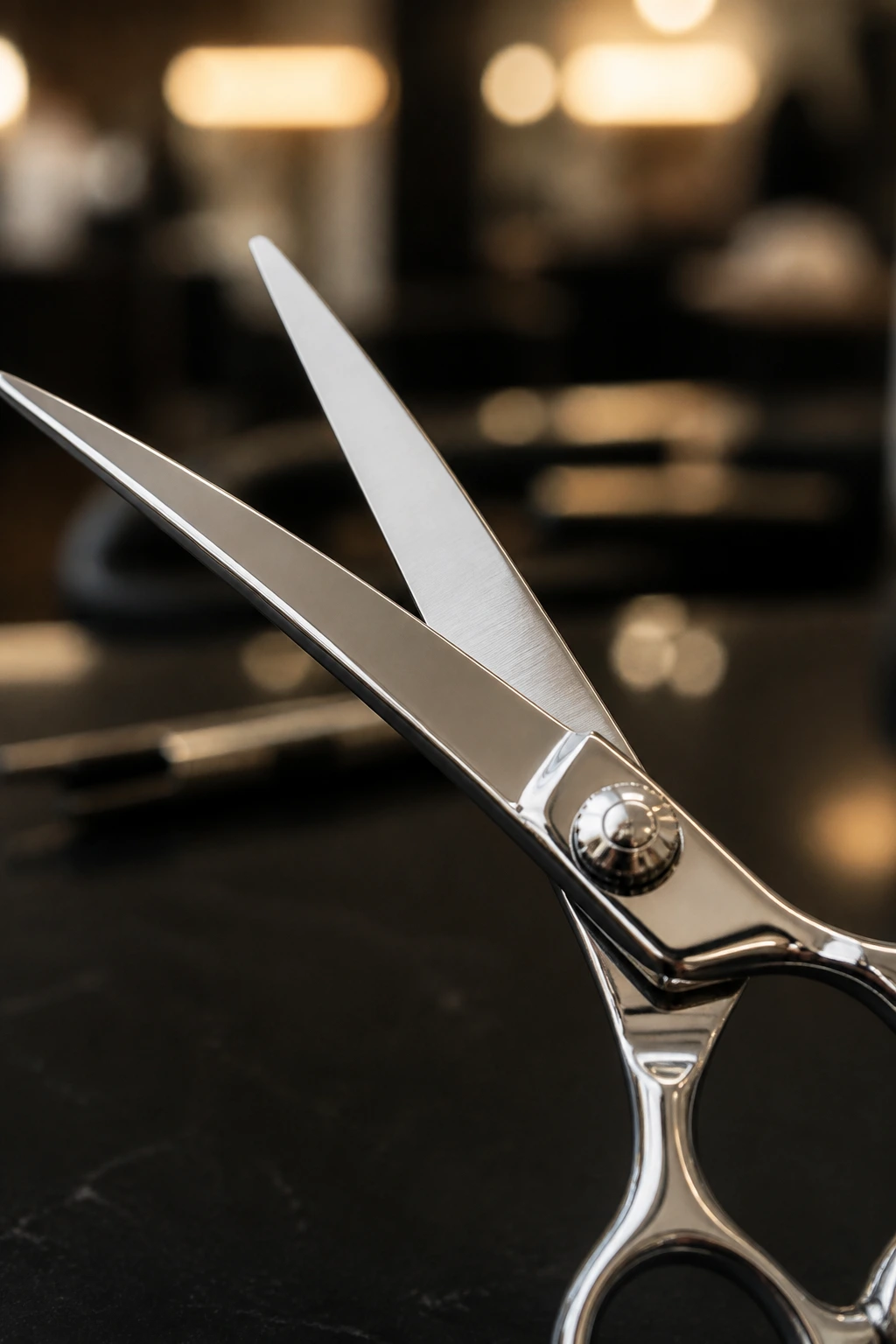
Sharp hair shears: Blunt scissors crush thick strands and leave the ends rough. Clean shears make cleaner movement.
-
Point-cutting or texturizing shears: Best used lightly, and only by someone who knows when to stop. Overdoing this is how thick hair turns frizzy.
-
1.5- to 2-inch round brush: The size matters. Smaller brushes create too much curve for longer side bangs.
-
Blow dryer with nozzle attachment: The nozzle directs airflow so the front goes where you want instead of blowing apart.
-
Duckbill clips or sectioning clips: Handy for holding the fringe in place while it cools or air-dries.
-
Rat-tail comb: Good for clean parting and for separating just the front section you want to style.
-
Heat protectant spray: Use it before any blow-dry or flat-iron pass. Thick hair can take heat, but it should still be protected.
-
Lightweight mousse or root-lift spray: A little at the root gives the fringe enough memory to hold its sweep.
-
Dry shampoo: Not only for dirty hair. It adds grip at the roots, which helps thick bangs stay put.
-
1-inch flat iron, optional: Useful for a small bend at the ends if your hair is straight and stubborn.
Smart Salon Prep and Product Picks
Bring pictures, but bring the right pictures. A photo of the color is almost useless if the density, texture, and parting pattern are nothing like yours. You want references with a similar amount of hair around the face, similar thickness, and a fringe length that lands near the same places on the face. That matters more than the model’s jawline.
Ask your stylist to show you where the shortest point will land when the hair is dry. That one conversation saves a lot of regret. On thick hair, the cut often needs to be a little longer than you think at the chair because the hair will spring up after styling. If your stylist is serious about thick hair, they’ll usually check the fall of the fringe before taking off the last half-inch.
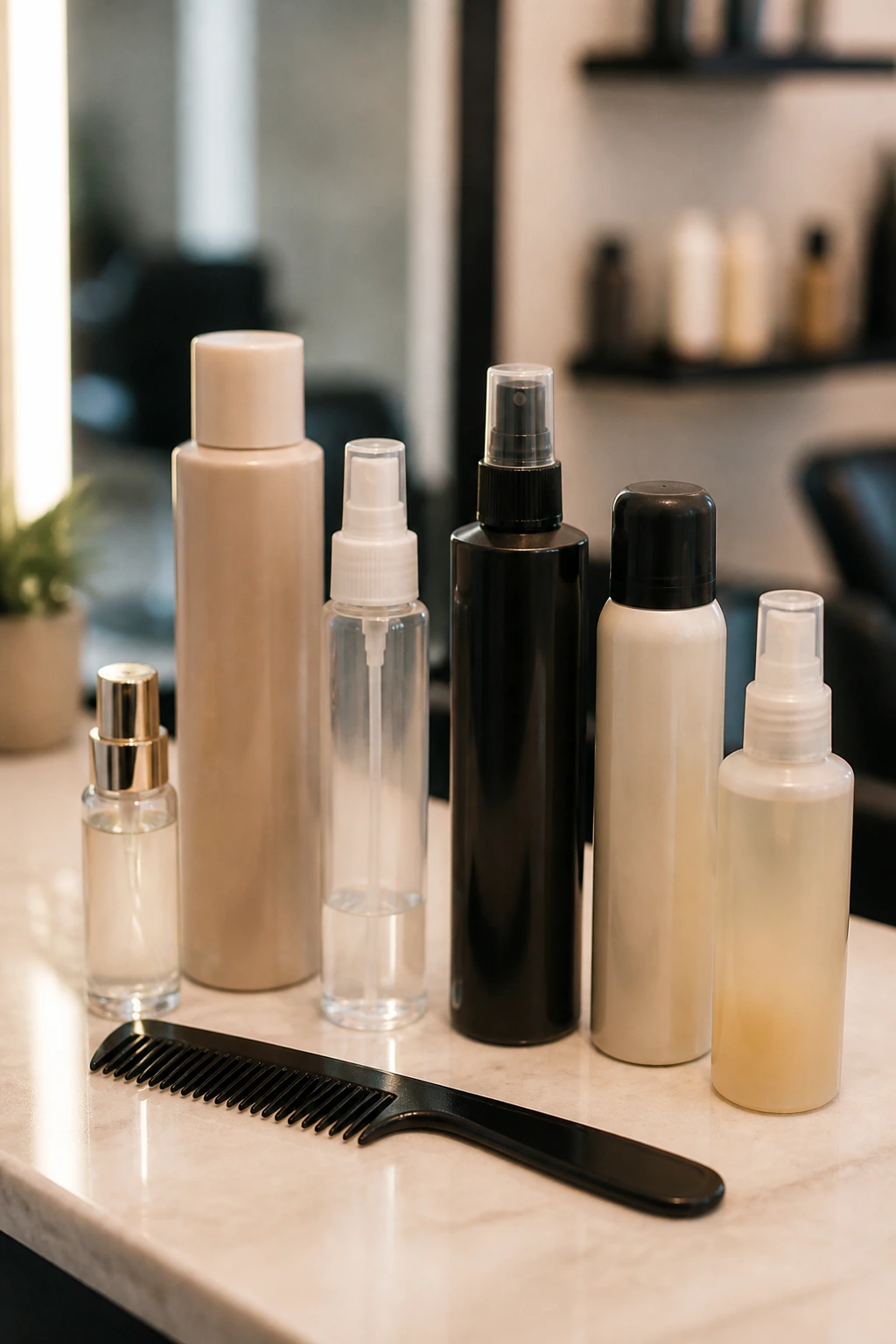
For products, keep it light. A creamy blowout lotion, a flexible mousse, or a root-lift spray usually beats a heavy oil at the front. Oils weigh down the root fast. They can make thick bangs separate into greasy strands by midmorning, which is not the look anyone is after. Save the richer serum for the ends of your length, not the bang zone.
And one more thing: if your hair grows forward at the temples, tell them. If your hairline is coarse, say that too. Stylists can work with almost anything, but only if they know what they’re fighting.
How to Wear These Bangs with the Rest of Your Hair
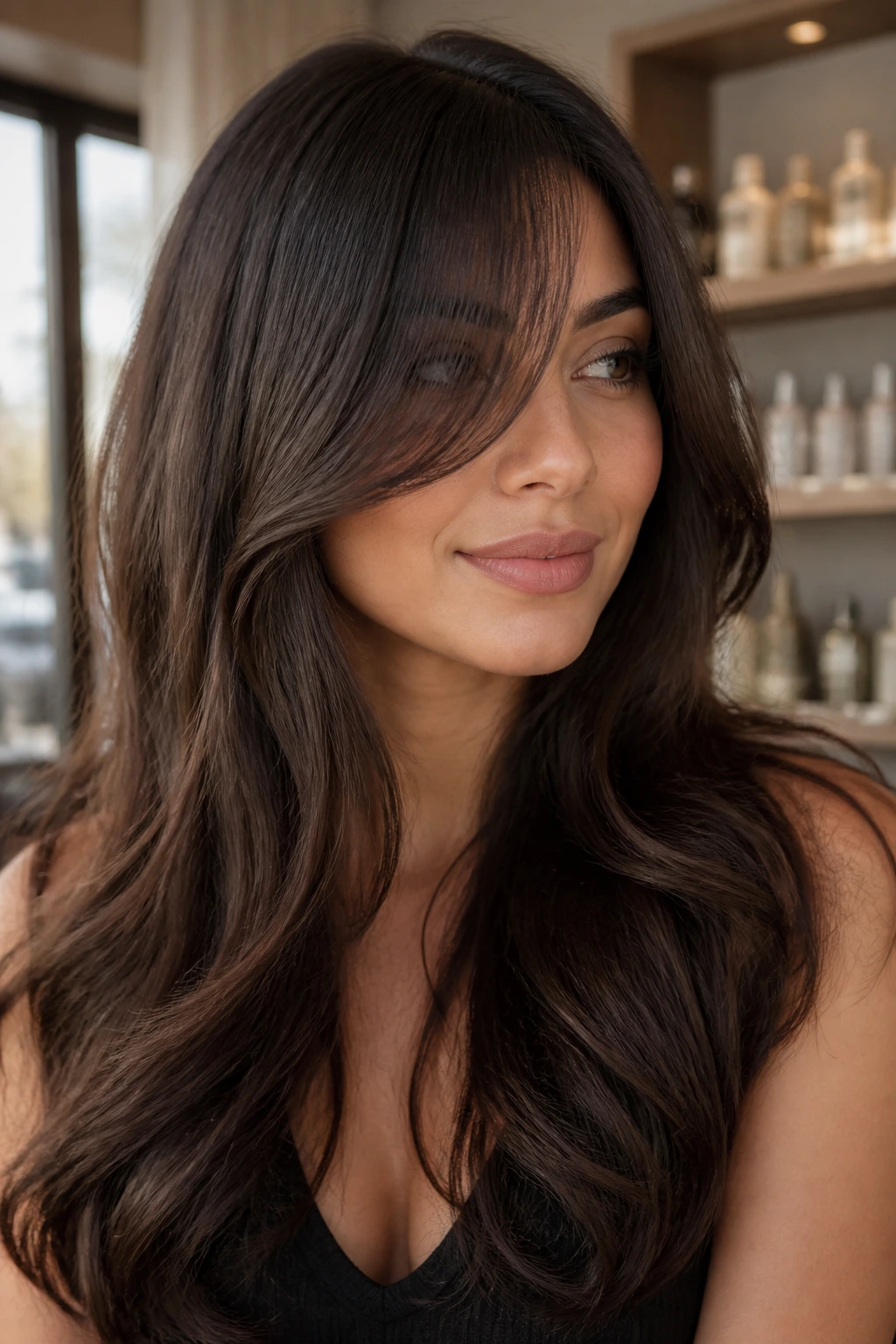
Presentation: Let the sweep land where it makes the most sense on your face: outer brow, cheekbone, or upper lip. The best long side-swept bangs don’t stop abruptly; they fold into the rest of the haircut so the front feels chosen, not dropped in.
Best Pairings: These bangs work especially well with long layers, butterfly cuts, soft face framing, and loose ends that move. A blunt one-length cut can still work, but the fringe needs enough shape around it so the front doesn’t look like a separate piece.
Length Balance: Thick hair usually looks better when the shortest point of the bang is not too short. Keep enough length to tuck, brush aside, or bend over the eye without constant correction. If the front keeps jumping into your lashes, the cut is too eager.
Best Setting: These styles can read polished for work, soft for casual days, or dressed up for an event, depending on the finish. A round-brush blowout gives you the cleanest line, but an air-dried side bend can look even better when the hair has natural wave.
Extra Styling Moves That Keep Them Light
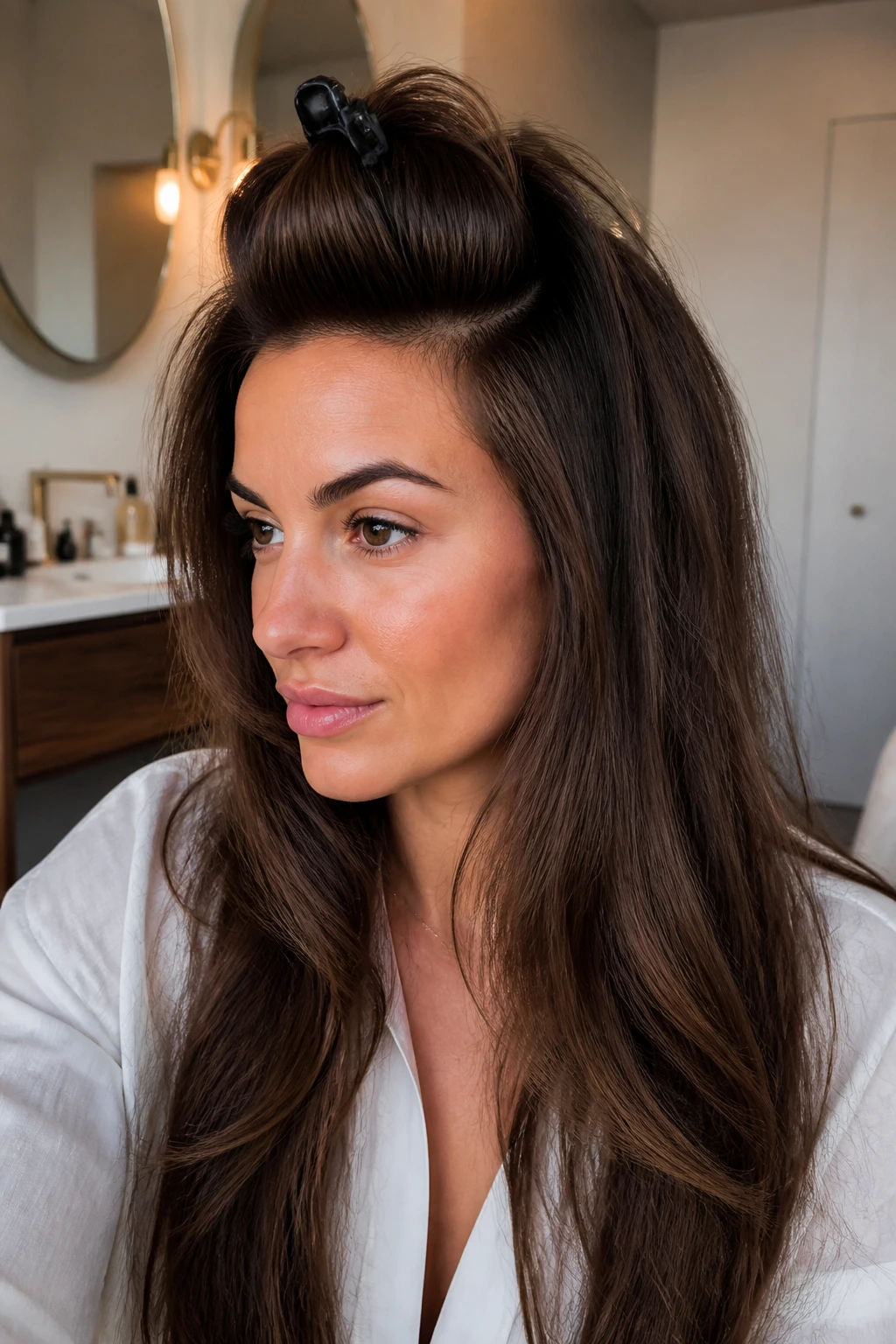
Root Lift: Clip the front section up for five to ten minutes after blow-drying and let it cool in the direction you want. That tiny cooling window locks in the sweep better than another round of product.
Smoothing: Use a pea-sized amount of cream or serum only on the ends. If you put it at the roots, the bang collapses and separates in a greasy little streak that refuses to behave.
Texture: Dry shampoo at the root is a useful trick on thick hair, even if the rest of your hair is clean. It gives the front some grip, which helps a side sweep stay in place instead of sliding flat.
Heat Control: If the front is stubborn, a single pass with a 1-inch flat iron can refine the bend. Keep the iron moving and let the hair cool before you touch it again.
Night Before: If you know the fringe kinks overnight, set it on a velcro roller for a few minutes in the morning while you get dressed. It’s a smaller fix than re-washing and much less annoying.
Common Cutting and Styling Mistakes to Avoid
-
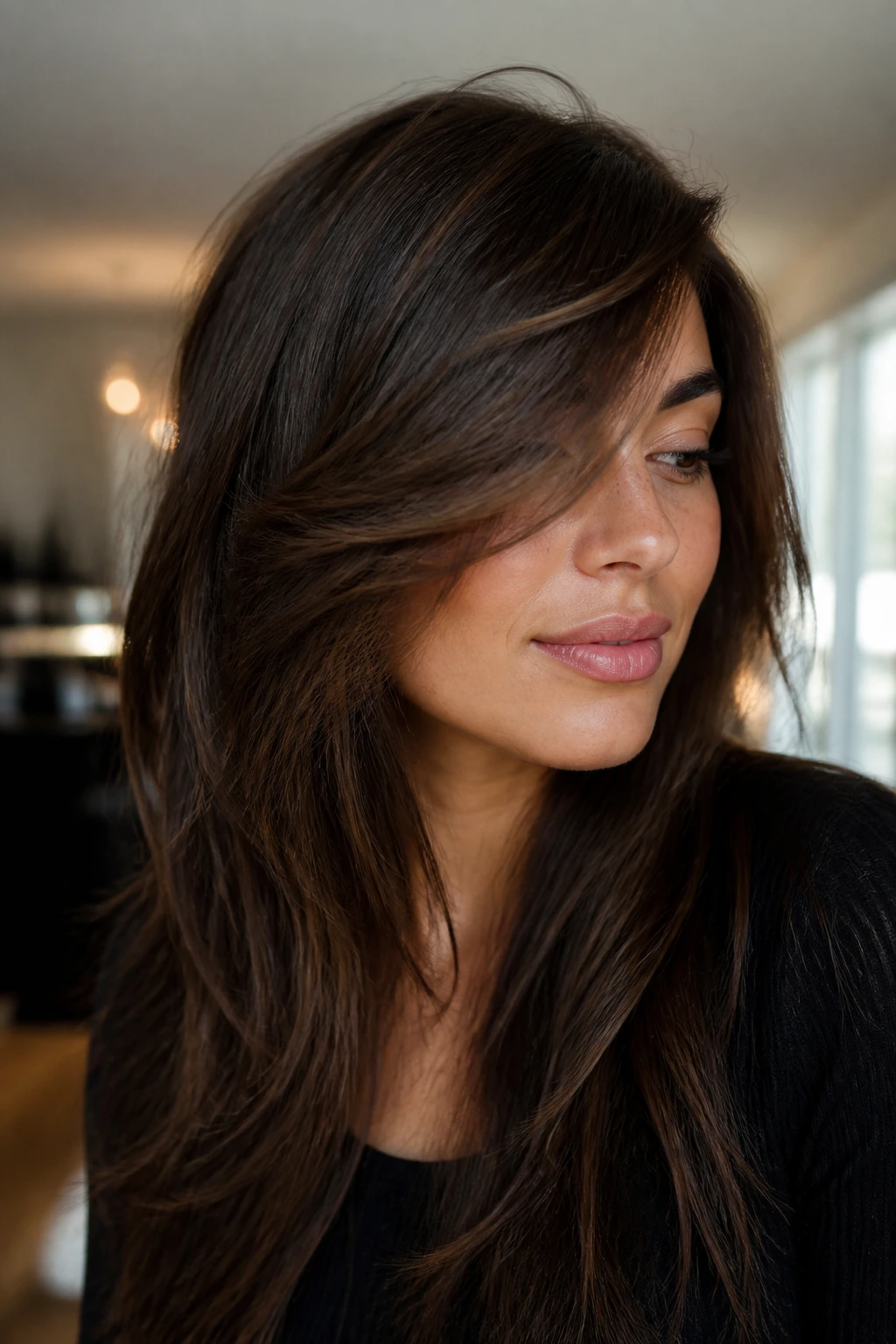
Cutting them too short: Thick hair springs up after drying, so a fringe that feels perfect when wet can land annoyingly high once it’s styled. Leave more length than you think.
-
Thinning the whole bang zone: If the stylist removes too much density, the fringe can look see-through at the roots and fuzzy at the edges. Ask for selective weight removal, not random shredding.
-
Ignoring the part and cowlick: A bang cut against the natural growth pattern will keep splitting at the worst spot. Work with the way your hair wants to move.
-
Using too much oil or cream at the front: Thick hair does not need help becoming flat and stringy. Keep rich products away from the root area.
-
Styling only the ends: If the root direction is wrong, the fringe will break apart no matter how pretty the ends look. Shape the root first, then refine the curve.
-
Waiting too long between trims: Once long side bangs drift past the cheek and stop sweeping cleanly, they start acting like loose front layers. That can work, but it usually means the original shape has gone soft.
Variations and Adaptations to Try
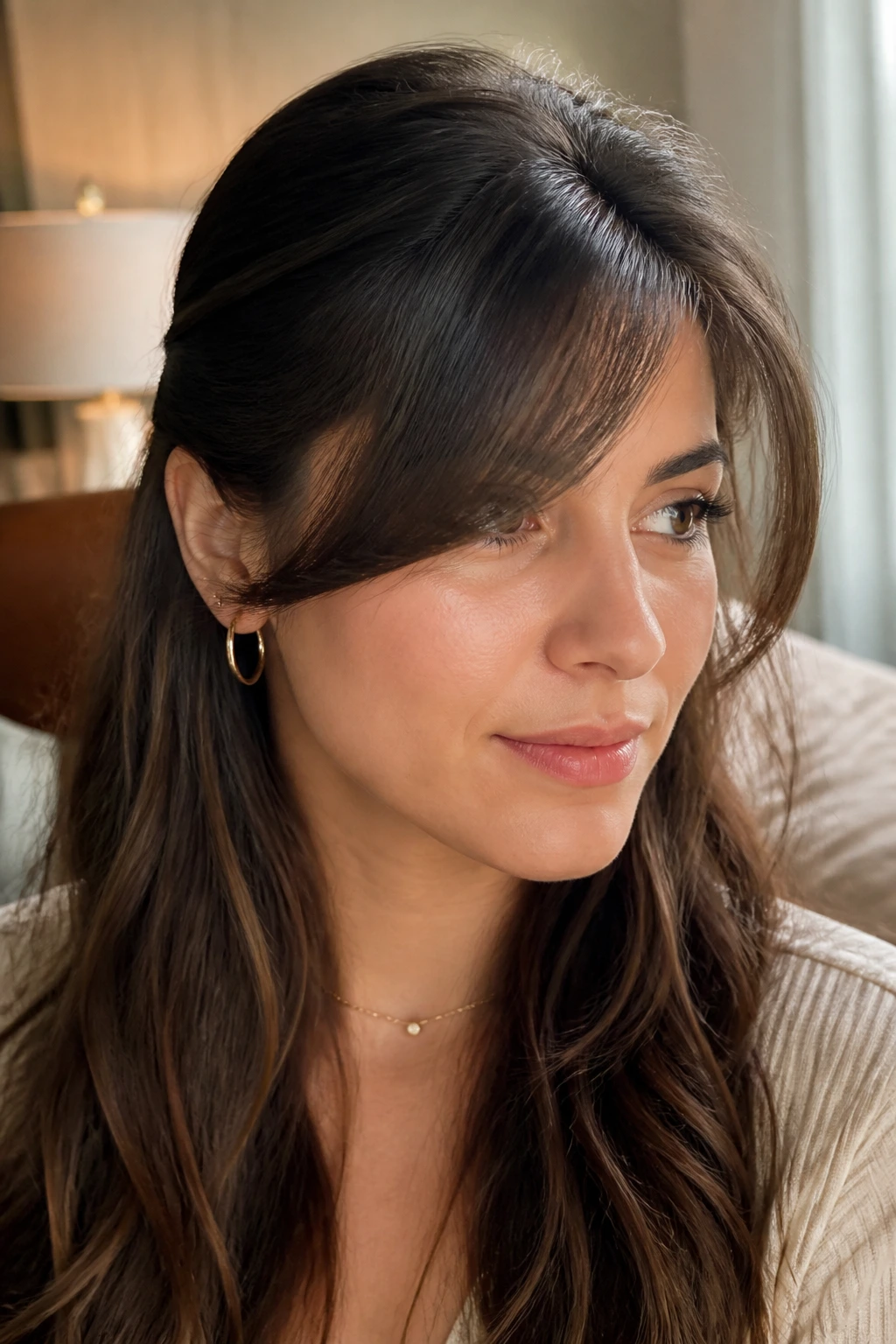
Butterfly Layer Sweep: If your long hair already has butterfly layers, let the fringe melt into the front pieces instead of standing alone. The cut feels airy, and the grow-out is painless.
Curly Side Sweep: For curly thick hair, keep the bangs longer and cut them dry so the curl pattern shows up honestly. A side-swept fringe on curls needs room to spring.
Glossy Blowout Version: If you like a smoother finish, keep the ends blunt enough to hold a clean curve and use a large round brush every time you style. This version looks especially sharp with long, polished lengths.
Humidity-Friendly Version: In damp weather, a slightly heavier fringe often behaves better than an airy one. Ask for a touch more weight through the center so the front does not puff the minute you leave the house.
Pinned-Back Grow-Out Version: Let the outer corners stay extra long so the fringe can tuck behind the ear or pin back without leaving a gap. This is the least stressful way to ride out a growing phase.
Daily Care, Grow-Out, and Trim Timing

Side-swept bangs on thick hair usually need a trim every four to six weeks if you want the shape to stay clean. If you like a looser, more grown-in look, you can stretch that longer, but the front will start acting like a face frame instead of a fringe. That can be fine. It just changes the job.
At night, a silk or satin pillowcase helps more than most people expect. Thick hair flattens in weird places when it sleeps against cotton, and the front section is usually the first piece to kink. If you wake up with a bend in the wrong direction, a quick mist of water and a few minutes with a round brush can reset it. You do not need to wash the whole head every time the fringe misbehaves.
If you want to keep the style longer between cuts, train the part a little farther over as the fringe grows. That keeps the line from dropping into your eyes while the shape softens into face-framing layers. And if you’re tempted to trim it at home, go slow. Thick hair makes over-cutting easy, because one snip removes more visual weight than you think.
Questions People Ask Before They Cut
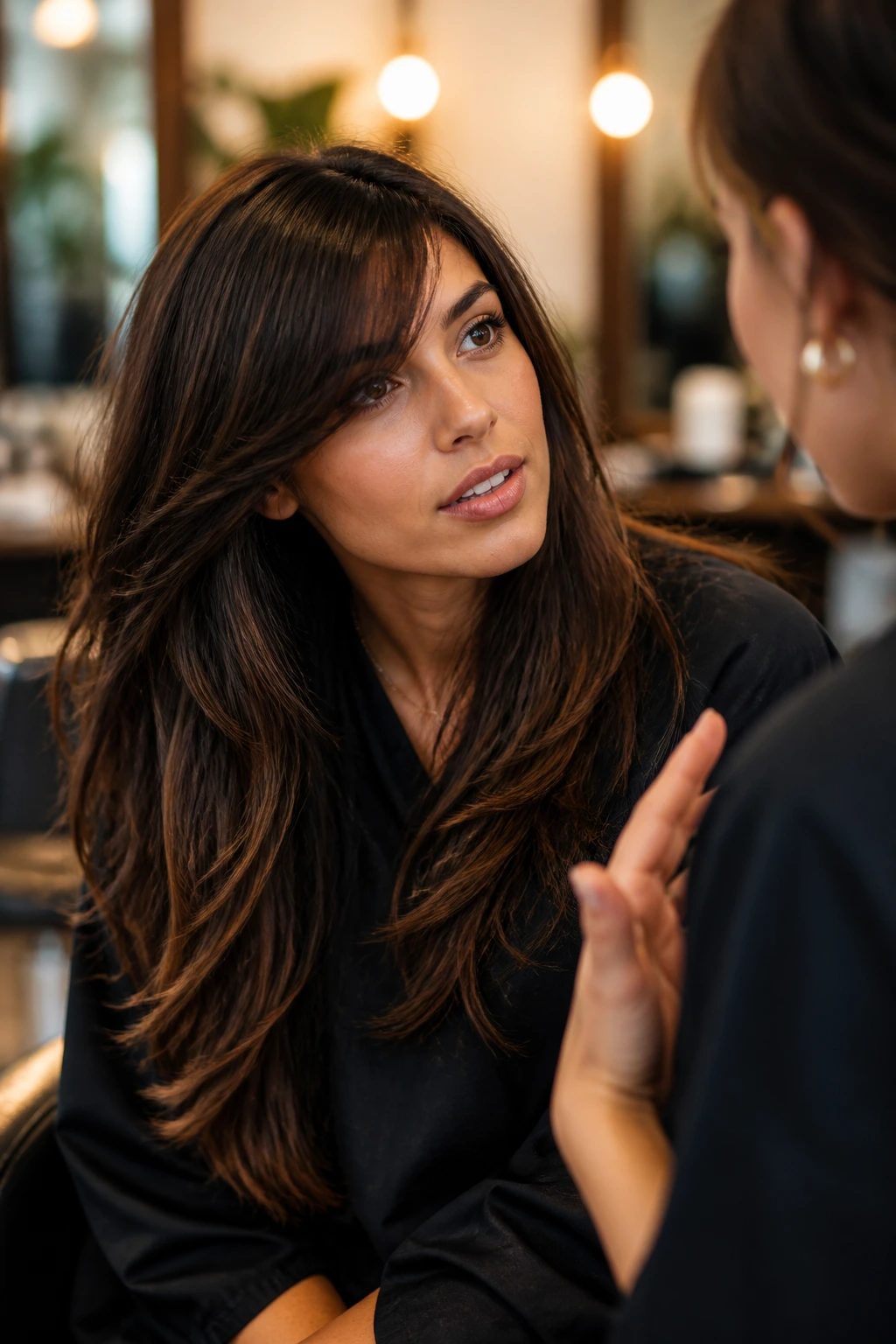
Are long side-swept bangs a good match for thick hair?
Yes, because thick hair gives the fringe enough weight to stay in place. The key is removing bulk in the right places so the front bends instead of puffing outward.
Should thick bangs be cut wet or dry?
Dry or nearly dry is safer for coarse, wavy, or cowlick-prone hair because the natural fall shows up honestly. Straight, predictable hair can be cut slightly damp, but the fringe still needs to be checked dry before the final snip.
How long should side-swept bangs be on thick hair?
Long enough to sweep past the brow and tuck if needed. A lot of thick-haired people do better with a shortest point that sits near the outer brow and a longest point that reaches the cheekbone or jaw.
What if my bangs keep splitting at the part?
That usually means the root direction is fighting the cut. Shift the part slightly, set the root with a blow-dryer nozzle, and if needed ask for a longer, heavier version that has more weight to hold the sweep.
Can side-swept bangs work with curly hair?
Yes, but the bangs need extra length and should be cut with curl spring in mind. A curl that looks shoulder-length when wet may bounce a lot shorter when dry, so the first cut has to respect that.
Do they work with glasses?
They can work very well, as long as the shortest point sits above the frame line and the sweep moves away from the lens. A crisp side part and controlled root lift help a lot.
How do I grow them out without looking awkward?
Let the outer corners stay long, shift the part a little farther over, and tuck the bangs behind one ear when needed. That turns the fringe into face-framing layers before the grow-out gets irritating.
What if my hair gets flat by noon?
Use a little dry shampoo or root-lift spray at the front and reset the direction with a quick warm blow-dry. Most flatness comes from the root losing shape, not from the ends failing.
A Fringe That Learns Your Hair
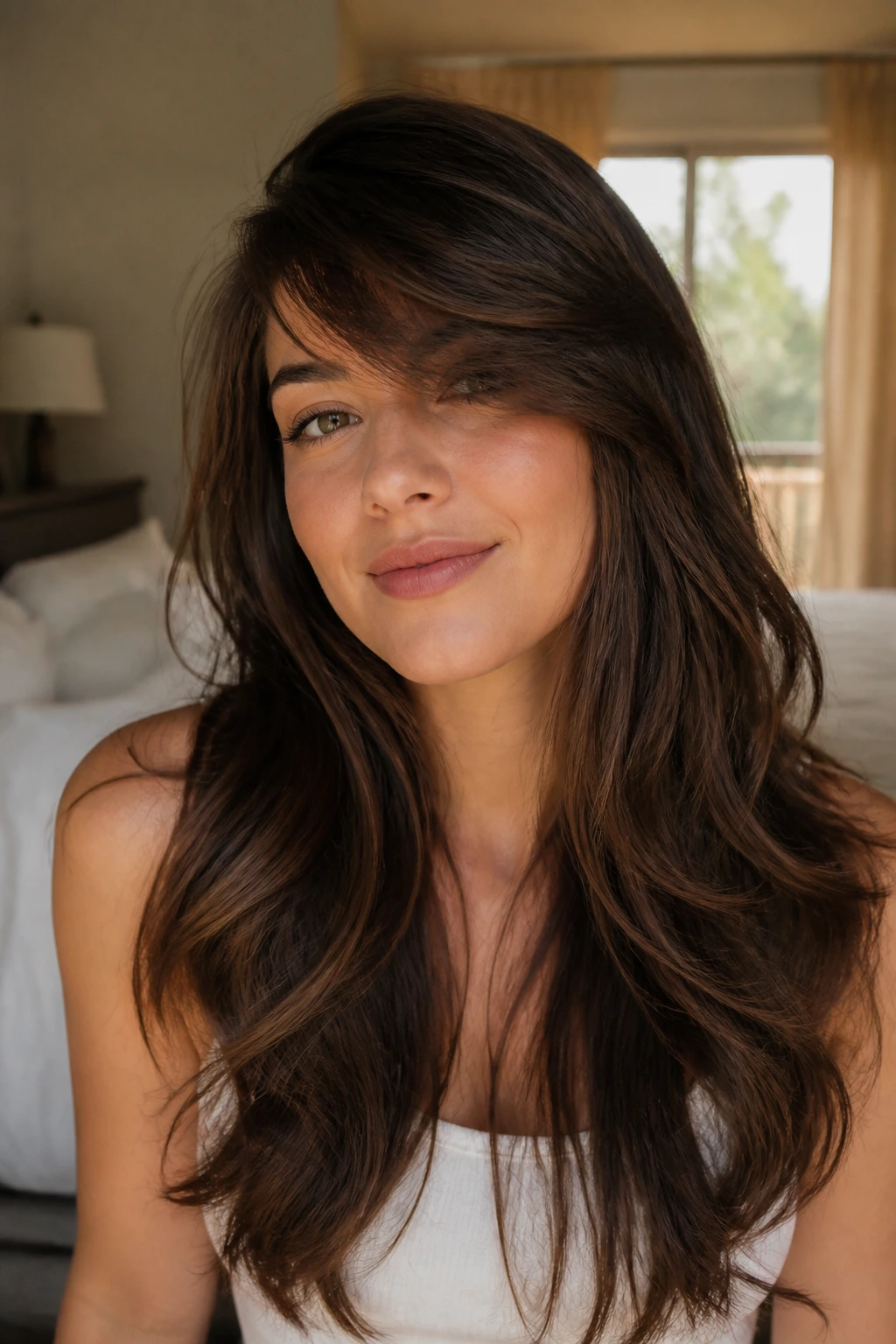
The best version of this haircut is not the one that erases your hair’s thickness. It’s the one that uses that thickness well. A diagonal line, a sensible amount of bulk removal, and a length that can bend instead of fighting back — that’s what makes the whole thing feel lived-in instead of high-maintenance.
If you’ve spent years assuming bangs and thick hair were a bad match, the styles above should change that a little. The trick is choosing a sweep that respects the weight you already have. Once the cut and direction are right, the fringe starts doing the work for you, and that’s the nicest kind of haircut there is.