



Long hair can go flat around the face in a hurry, and oval faces notice it more than most people think. The length keeps pulling the eye downward, the front goes heavy, and suddenly the whole cut feels like it’s sliding past your features instead of framing them. Layered bangs for long hair and oval faces fix that by breaking up the vertical line, giving the eyes and cheekbones some breathing room, and keeping the front soft instead of sealed shut.
Oval faces have a useful reputation in salons: they can wear a wide range of fringe shapes. True. But that doesn’t mean every bang idea earns its keep. The best layered bangs add motion where long hair tends to get sleepy. They should look like part of the haircut, not a bolt-on piece that sits there waiting to grow out.
A good layered fringe can also be kinder on the grow-out phase than a blunt line. That matters more than people admit. If you’ve ever had bangs that turned into a helmet by week three, you already know why softness beats a sharp cutoff here.
Why This Collection Feels Especially Right for Oval Faces
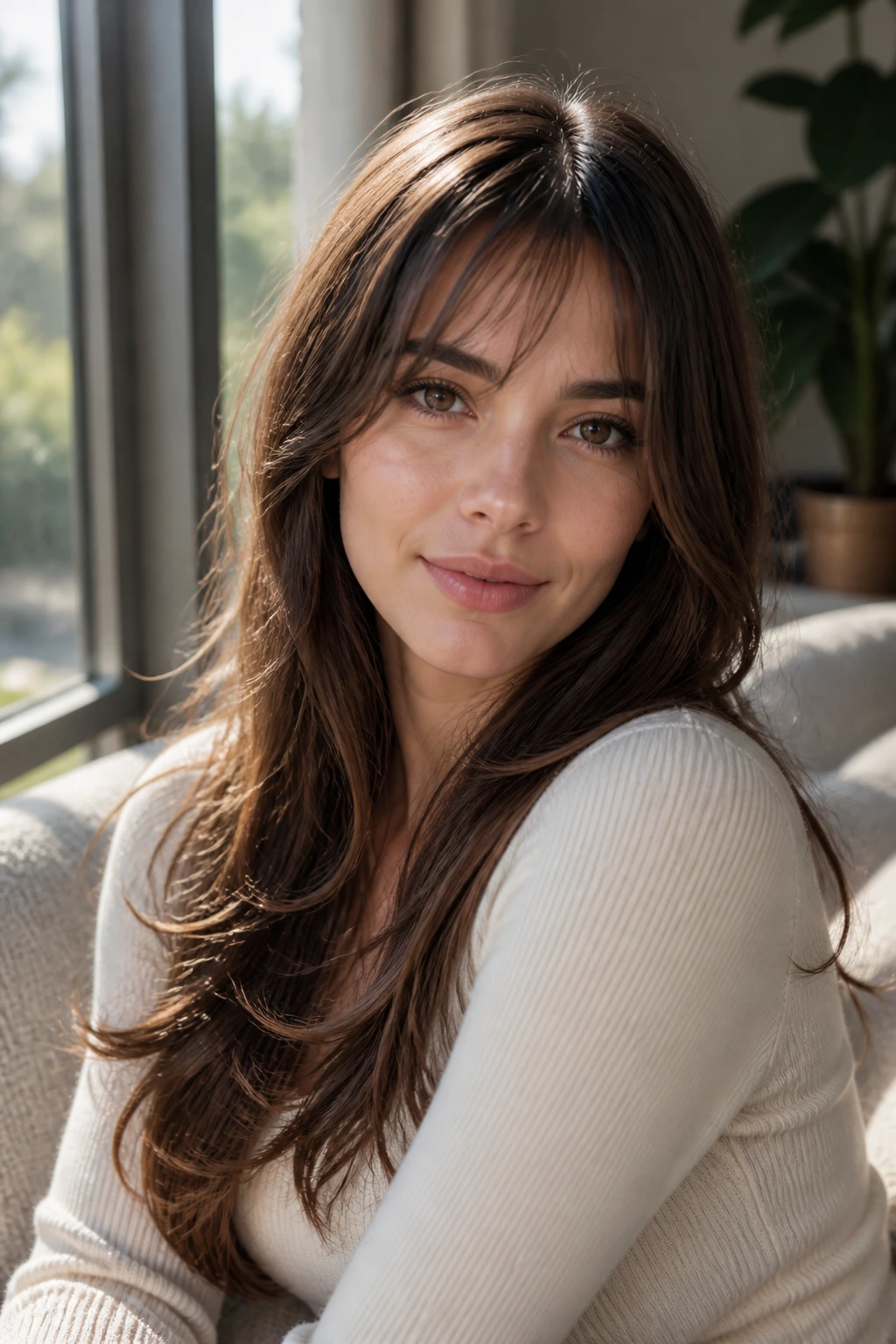
-
They interrupt the length without shrinking the face: Long hair can make an oval face look longer than it is; a layered fringe brings the eye back to the center without boxing the face in.
-
They let you choose your mood: You can go airy, shaggy, polished, or face-hugging, and an oval face usually has enough balance to carry all of it without looking crowded.
-
They grow out with less drama: A layered front softens into cheek pieces and side layers instead of turning into one blunt shelf.
-
They work with different styling habits: If you blow-dry every morning or let your hair air-dry most days, there’s a version here that won’t fight you.
-
They keep long hair from feeling heavy near the eyes: The right bang shape shifts attention upward, which is exactly where a lot of long cuts need help.
-
They make texture do useful work: Straight hair gets motion, wavy hair gets shape, and thicker hair loses some of that curtain-like weight around the face.
1. Center-Part Curtain Layers
Soft curtain bangs are the style I reach for when someone wants a change without the shock of a blunt chop. On long hair, they open down the middle and sweep out toward the cheekbones, which keeps an oval face looking balanced instead of crowded. The layered version is the sweeter one: less blocky, more movement, and a lot easier to grow out.
Why It Flatters an Oval Face
The center part gives the face a clean line, but the longer outer pieces stop that line from feeling severe. Ask for the shortest point to land somewhere between the brow and lash line, then let the sides taper toward the cheekbone or upper jaw. That shape keeps the eye moving outward instead of letting the front hang straight down.
I like this one on hair that already has a little bend. It does not need to be perfect. If the middle dries with a slight dip and the outer pieces flip away from the face, that’s the whole point.
What to Ask For
- Shortest point at the center, not a hard shelf
- Longer side pieces that blend into the first long layer
- Soft point-cutting at the ends so the fringe doesn’t look chopped
- A little extra length if your hairline has a strong cowlick
Best for: someone who wants the most forgiving layered bang shape in the bunch.
2. Bottleneck Bangs With Soft Ends
Bottleneck bangs are curtain bangs with better architecture. They sit a touch narrower in the middle, then open wider as they drop toward the temples, which gives long hair a cleaner frame without slamming the whole forehead shut. On an oval face, that narrowing at the center keeps the cut from feeling too wide at the top.
The soft-end version is the one I trust. Sharp ends can turn this look stiff fast. Ask for a rounded center section that kisses the brow area and longer outer pieces that brush the cheekbones. The result feels intentional, but not overworked.
This shape is especially good if your hair is dense and tends to puff at the front. It trims the visual bulk near the forehead while keeping enough body to look full in photos, mirrors, and under bad bathroom lighting. That last one matters more than people want to admit.
3. Cheekbone-Skimming Split Fringe
Do you want bangs, or do you want the face-framing effect of bangs without losing much forehead? This is the version for that exact indecision. The split lands slightly off the center, then falls in two long, layered panels that skim the cheekbones instead of hanging across the brows.
It’s a lovely choice for an oval face because the cheekbone area is already one of your strongest points. Letting the fringe end there makes the cut feel tailored instead of random. I’d pick this if you wear earrings often or tuck one side behind your ear a lot, because the line of the bang works well with a little asymmetry.
How to Wear It
Keep the roots lifted with a round brush or a hot brush, then bend the ends away from the face. You want motion, not a perfect curtain. A touch of light texture spray at the ends is enough.
4. Feathered Side-Sweep Fringe
A deep side-swept fringe has an old-school glamour to it, but the feathered version keeps it from feeling dated. One side carries the weight, the other side melts into long layers, and the whole thing makes an oval face look even softer through the temple area. It’s the kind of fringe that plays well with long, glossy hair because it gives the length somewhere to land.
I like this style when someone has a stubborn front section that refuses to cooperate with a center part. Side-sweeps are often more forgiving around cowlicks, and the feathered ends stop the bang from looking too helmet-like. If your hair is thick, ask for internal texture so the front doesn’t sit like a curtain panel.
This one also ages well through the grow-out phase. As it lengthens, it just becomes a more dramatic face layer. That’s a good trade.
5. Wispy Brow-Length Fringe
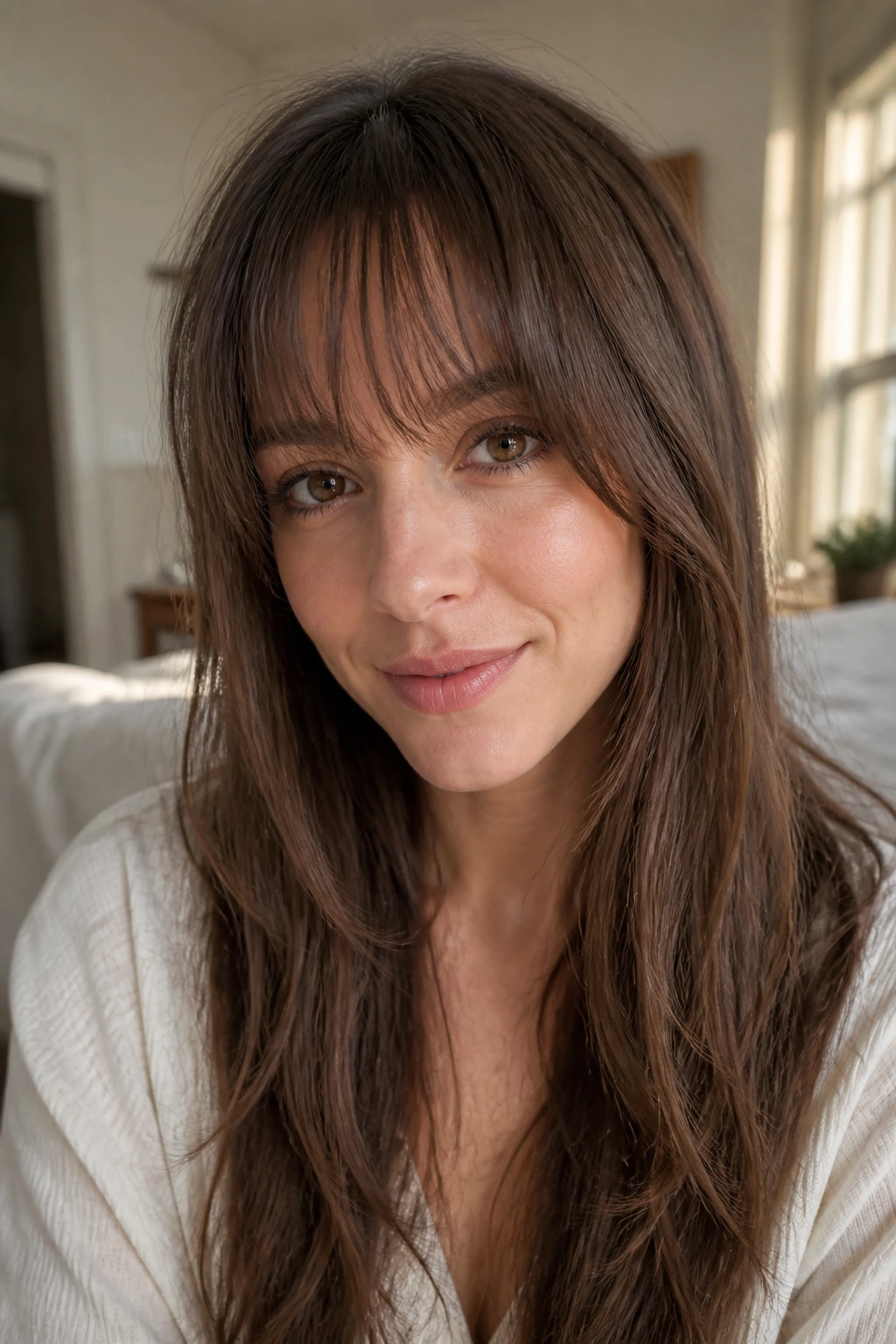
Thin, airy bangs can be a relief if you’ve been staring at your forehead and thinking, I want something, but not much. Wispy brow-length fringe gives you movement without taking over the face. On long hair, it keeps the front light enough that the length still reads as long and not overwhelmed.
Oval faces wear this well because the softness sits inside the face rather than fighting the shape. The best version is deliberately broken up at the ends, not stringy in a neglected way. Ask for tiny, uneven points through the bottom so the fringe separates naturally instead of forming one flat strip.
This style is better with fine to medium hair, though thick hair can wear it too if the stylist removes enough weight. It needs a little product discipline. Too much cream and it collapses. Too much oil and it looks greasy by lunchtime.
6. Choppy Shag Bangs
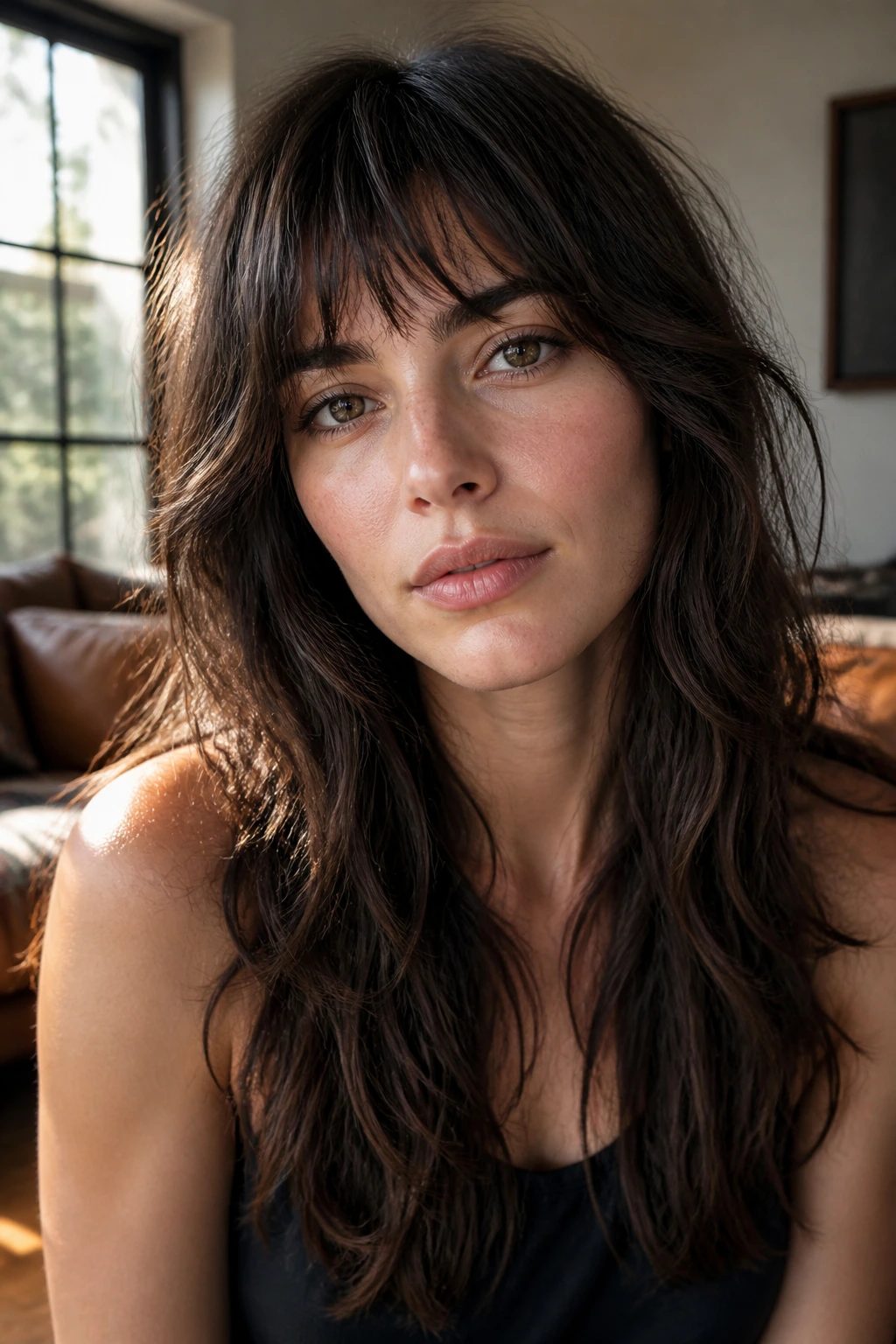
A shag fringe on long hair is not subtle, and that’s the fun of it. It’s built with choppy layers that move in different directions, which gives an oval face a little grit around the top without throwing off the balance. The cut works because the front doesn’t try to sit politely; it bends, separates, and lives a bit.
What Makes It Different
The shag version depends on texture. The bangs should be cut to sit slightly uneven, with shorter bits near the center and longer pieces that blend into the front layers. That keeps the shape from turning into a hard rectangle across the forehead.
I’d pick this if your long hair feels heavy and you want the front to look lighter without sacrificing the length. It’s especially good on wavy hair, because the natural bend helps the layers sit where they should. Straight hair can wear it too, but it usually needs more styling.
Style note: use a diffuser or a quick bend with a flat iron, then stop fussing. Overstyling kills the whole point.
7. Blended Face-Framing Fringe
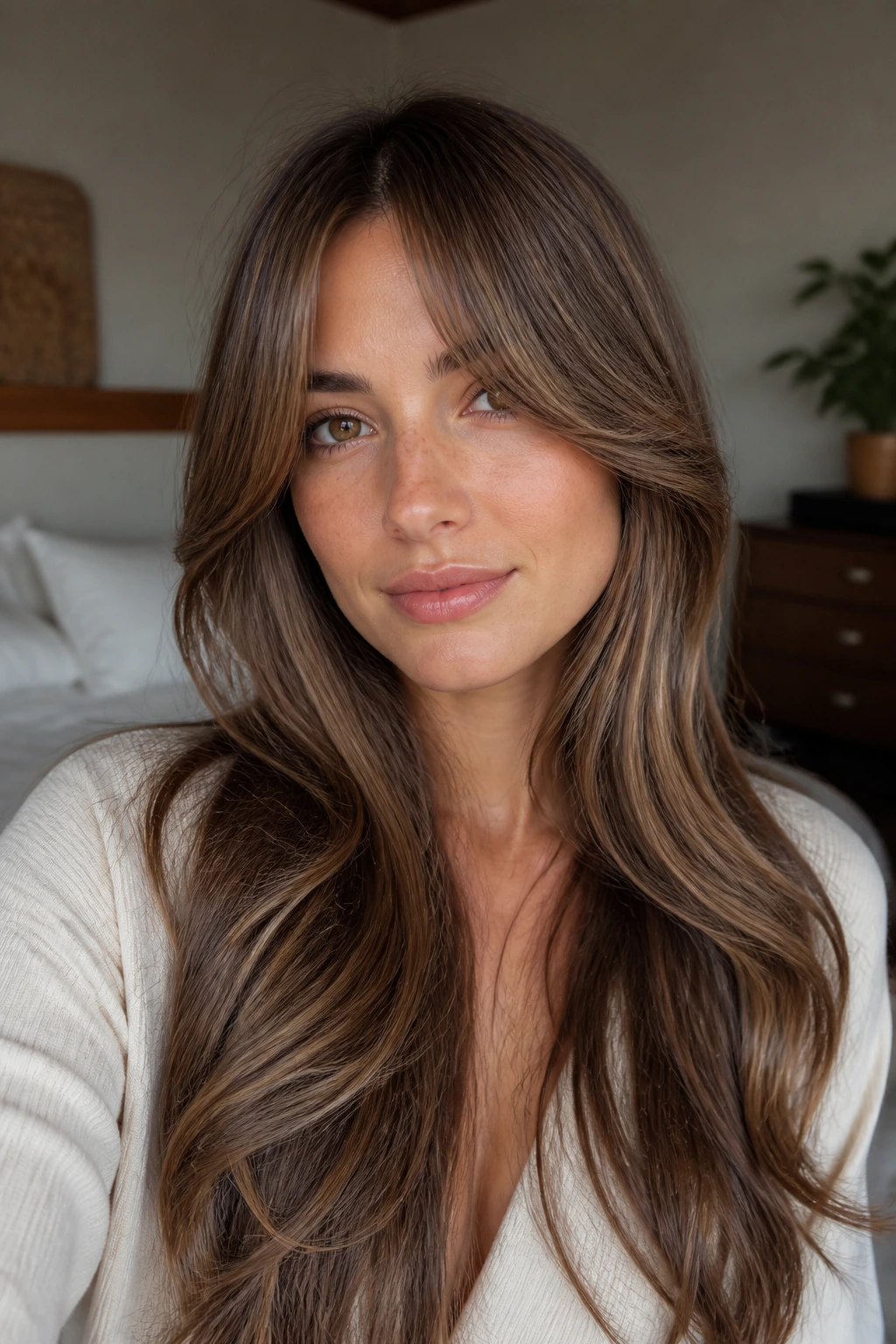
This is the quiet one. No sharp line, no obvious “bang moment,” just front pieces that disappear into the long layers like they were always there. On an oval face, that kind of blending is useful because it softens the outline without interrupting the harmony of the shape.
If you hate the feeling of your hair being “cut around your face,” this is the compromise. The shortest pieces usually start around the nose or upper lip, then slope into the rest of the haircut. The fringe is there, but it doesn’t announce itself every time you turn your head.
It’s also one of the easiest shapes to live with between trims. You can tuck it, pin it, part it differently, or let it fall. That flexibility matters when your hair is long enough that every extra inch at the front changes the whole mood.
8. French Fringe With Long Layers
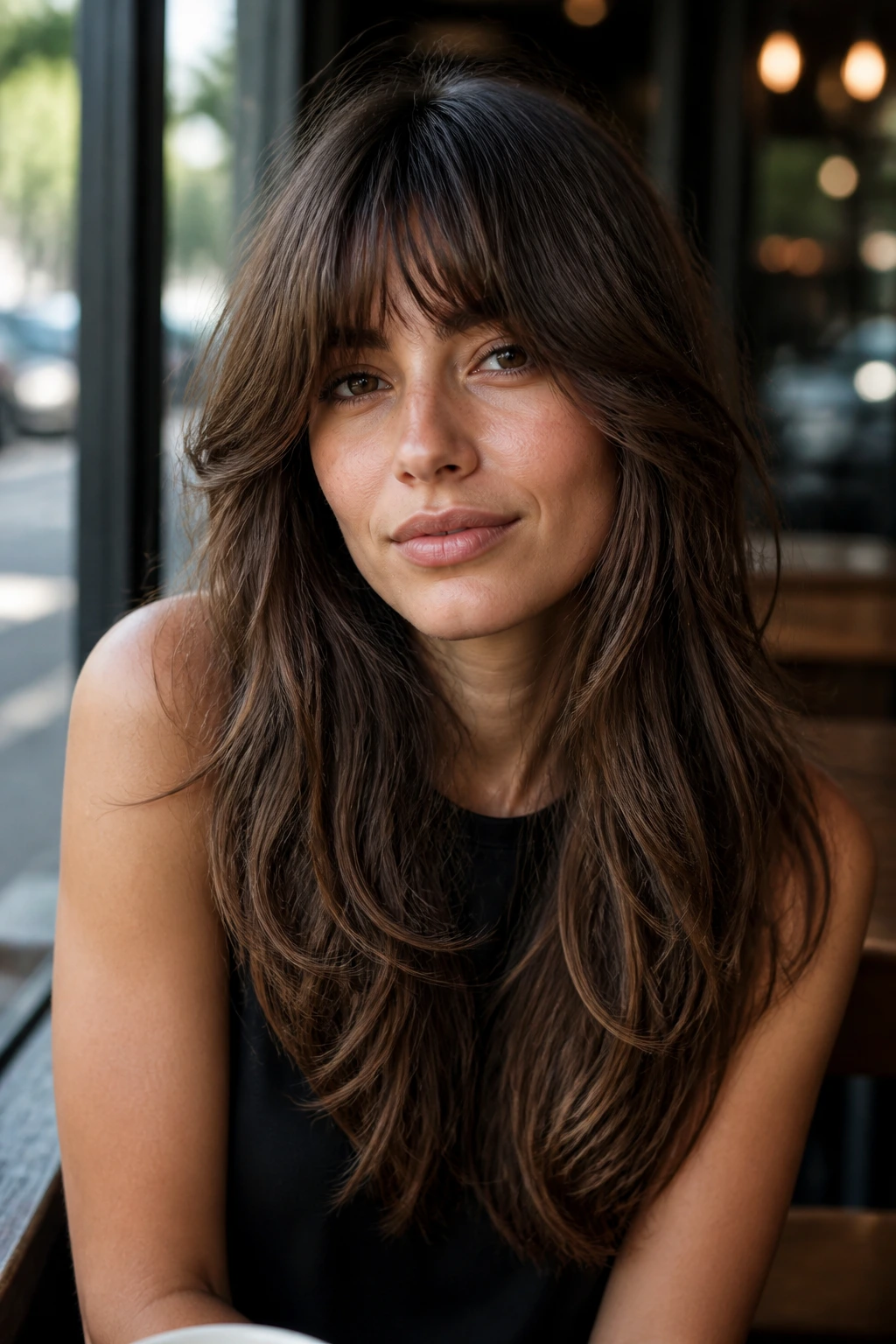
French fringe tends to run fuller through the center, a little softer at the edges, and just messy enough to look natural rather than engineered. On long hair and oval faces, that slight looseness is part of the appeal. The front gives shape, but the long layers keep the haircut from reading too formal.
I like this version when the hair has some density. Fine hair can wear it, too, but you’ll want to avoid over-thinning, or the fringe starts to look sparse around the temples. The better version has a chunky, lived-in texture that sits just above the brows and brushes downward in pieces.
This is one of those cuts that looks better when you don’t force symmetry. Let the front settle a little differently from side to side. That tiny imbalance makes the whole thing feel less staged.
9. Rounded Arc Bangs
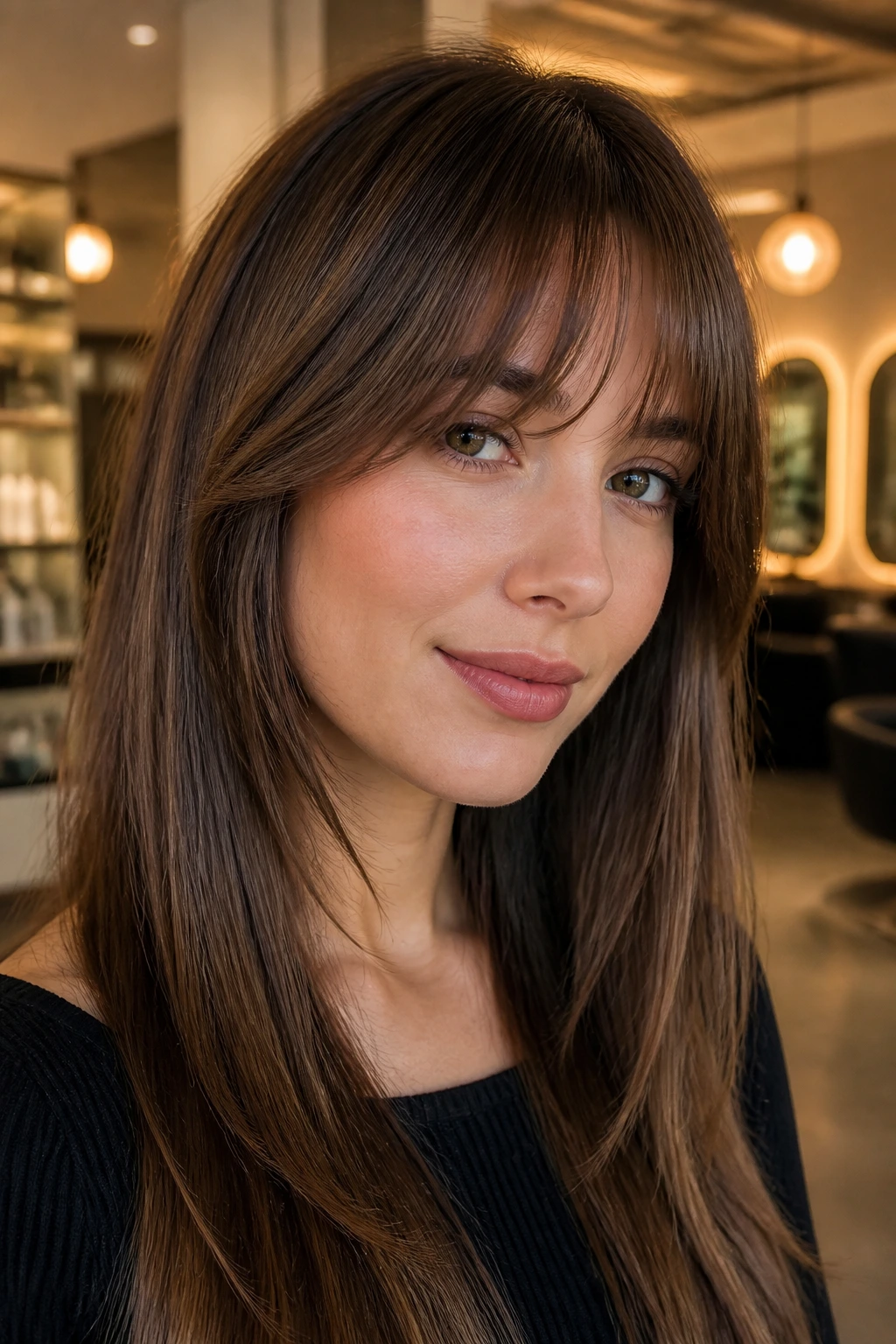
Rounded arc bangs are for people who like a gentler shape than a straight bar across the forehead. The curve follows the natural line of the brow and then lifts away at the sides, which works beautifully on an oval face because the shape already has a clean balance to begin with. You’re not correcting anything here. You’re refining.
The rounded arc is a smart choice if your long hair is sleek. Straight lengths can make a face look long and narrow, and a curved fringe gives the eye a place to rest. I especially like it when the ends are point-cut instead of chopped bluntly; that tiny softness keeps the arc from turning rigid.
This one needs a decent blow-dry. Not a fussy one. Just enough to round the front brush for 30 to 60 seconds and let the shape settle before you walk away.
10. Airy Birkin Bangs
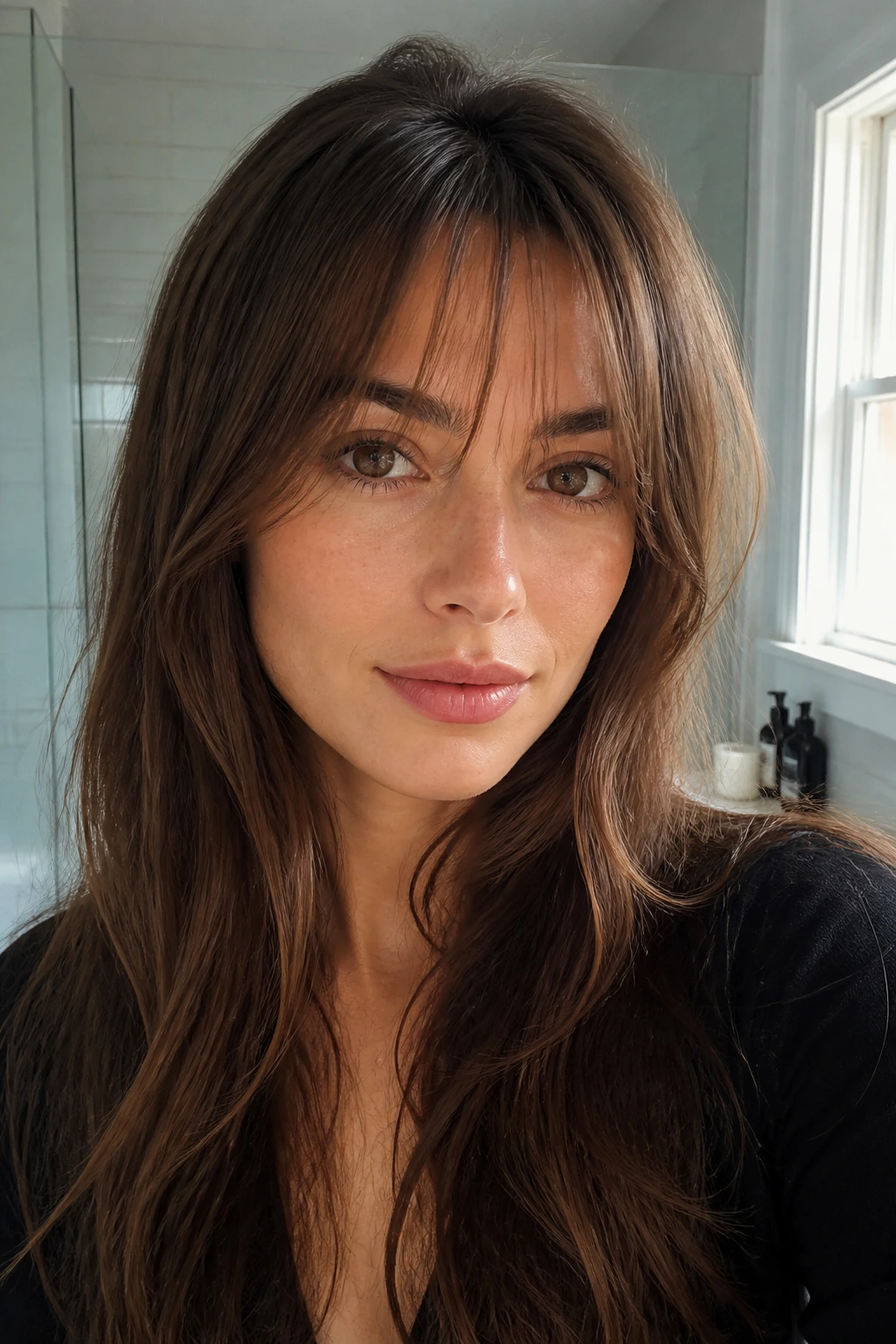
Birkin bangs carry a little French attitude, but the airy version is the wearable one. They skim the brows, separate into pieces, and leave enough forehead visible that the face still breathes. On long hair, that matters. Too much bang and the lengths start to feel like they’re fighting the front.
An oval face can handle this shape because the proportions stay open. The bang sits low enough to frame the eyes, but not so low that it chops the face in half. Ask for ends that are lightly textured and for the center to stay slightly longer than you think. That extra length is what keeps the fringe from becoming precious.
I’d choose this if you like the idea of bangs but don’t want a heavy styling routine. It looks best with a bit of natural separation. A soft blowout, a gentle bend, and a dab of dry shampoo are usually enough.
11. Grown-Out Fringe Turned Into Layers
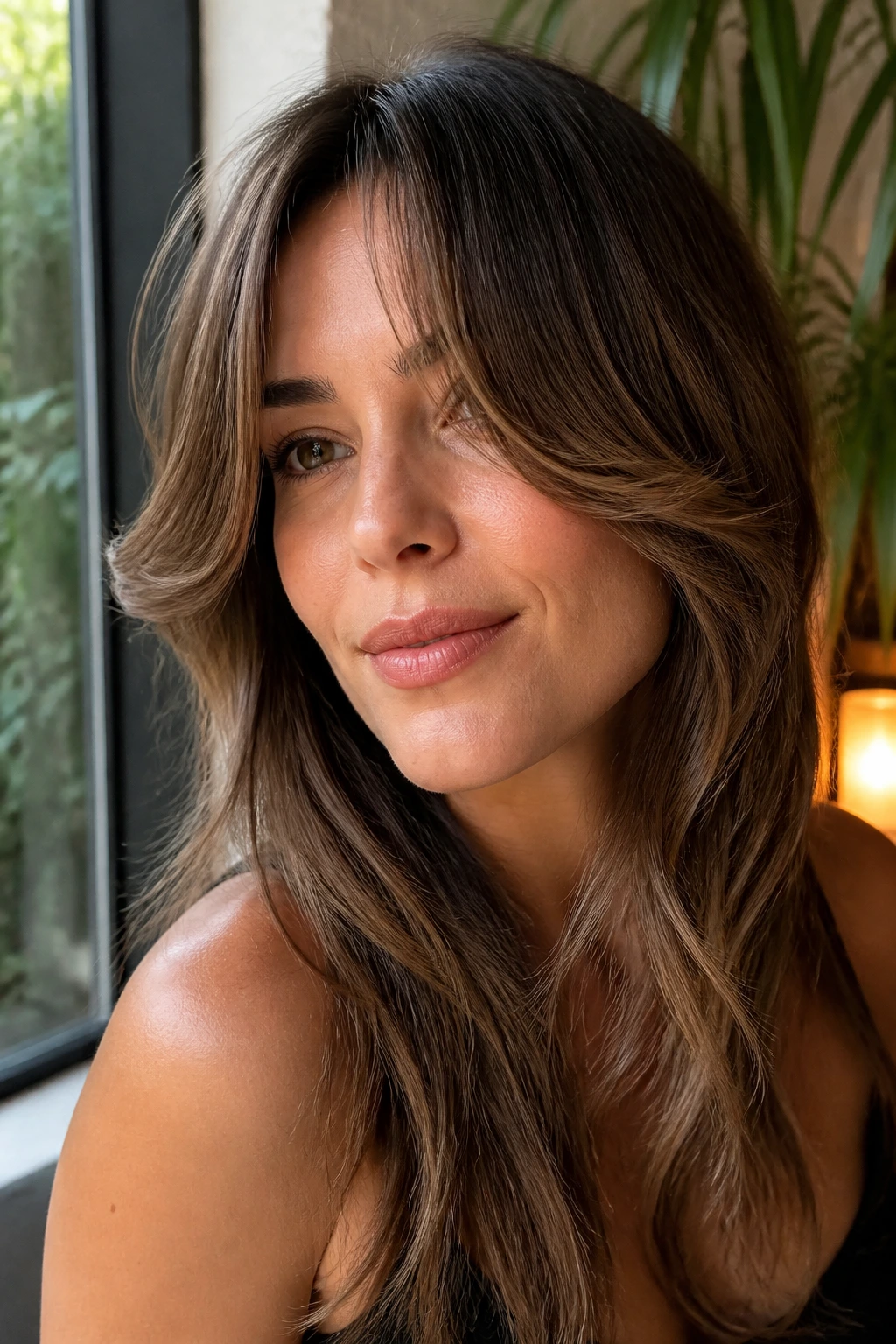
Not every good fringe starts as a fresh cut. Sometimes the best-looking layered bangs are the ones that began life as a grown-out set and got smartly reshaped on the way out. On long hair, that transition can be gorgeous, especially for an oval face that can carry a softer front without looking unfinished.
The trick is to cut the grown-out section into intentional face layers instead of letting it become an awkward mid-cheek curtain. The shortest pieces should still read as a bang, but the longest strands can blend into the front lengths around the jaw and collarbone. That keeps the haircut usable while it grows.
This is the style for someone who wants to avoid the “I need a bang trim every three weeks” trap. It lives in the middle ground. Not a full fringe. Not no fringe. That middle ground is often where real life happens.
12. Piecey Textured Bangs
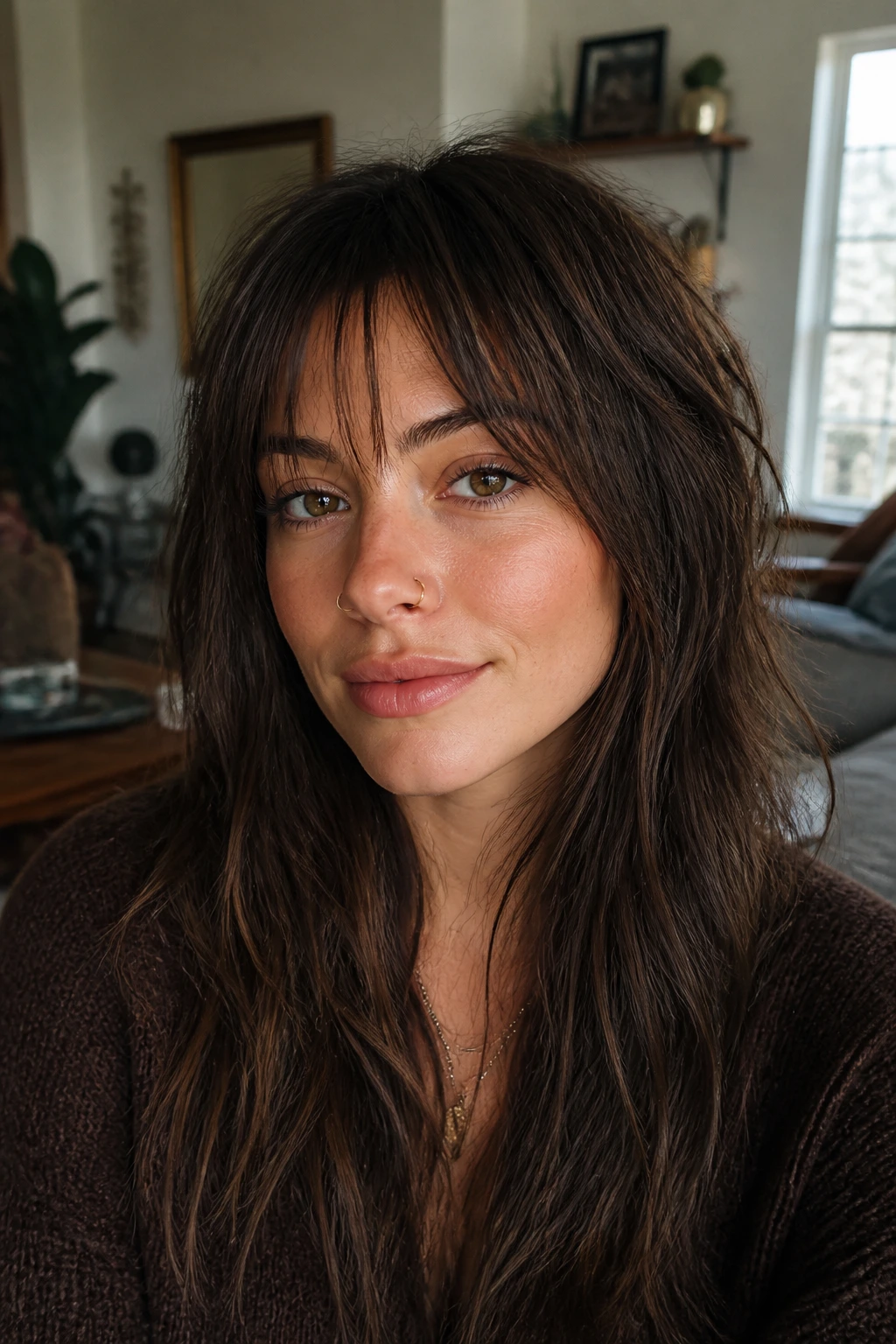
Piecey bangs are what happens when a fringe stops trying to be one solid sheet of hair. The pieces separate, the ends flick a little, and the whole front looks lighter. On an oval face, that kind of breakup keeps the hair from hiding the features you probably want to show off.
The style works especially well if your long hair has movement already. A few bends through the front are enough. Ask for the bang to be cut with texture, not over-thinned, and keep the shortest bits just above the brow line if you want a little peek of skin.
I’d use a matte texturizing spray instead of anything shiny or sticky. The goal is separation. If the pieces clump together, the fringe loses that airy, deliberate feel.
13. Deep Side-Part Bangs
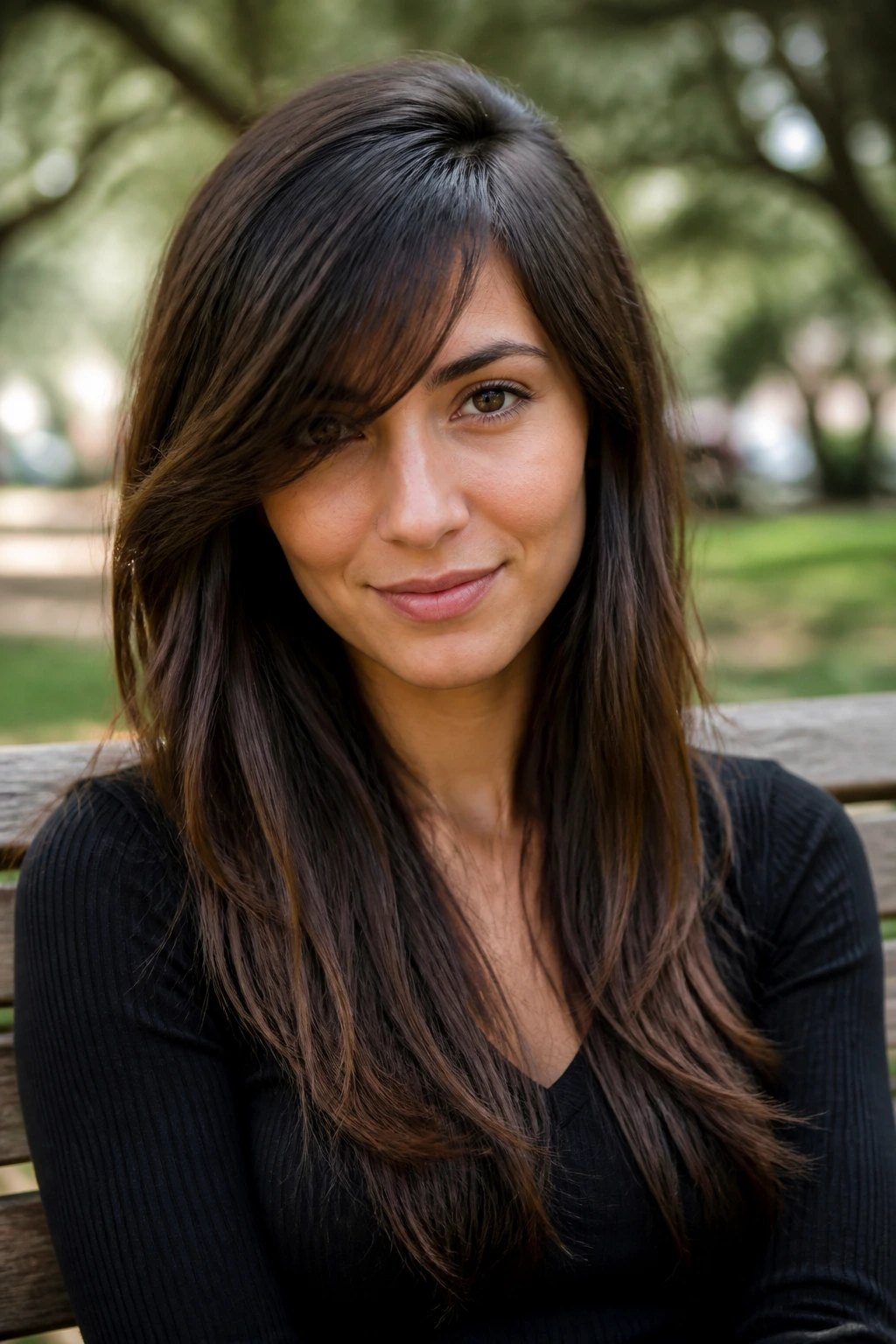
A deep side part changes everything. Really. Long hair can feel very severe when the front is split straight down the middle, and a deep side-part fringe breaks that line in a way that flatters an oval face without stealing the show. One side lifts, the other side falls, and the asymmetry keeps the cut alive.
This is a good answer if you have a strong forehead cowlick or if your hair naturally wants to fall to one side. Fighting that pattern is a waste of time. Work with it and cut the fringe so the longer side blends into the lengths near the cheek.
What to Ask Your Stylist
- Keep the heavier side soft, not blocky
- Angle the shortest point toward the outer brow
- Blend the back edge into the first front layer
- Leave enough length to sweep behind the ear when needed
That last part saves you on lazy days.
14. Butterfly Bangs Around the Face
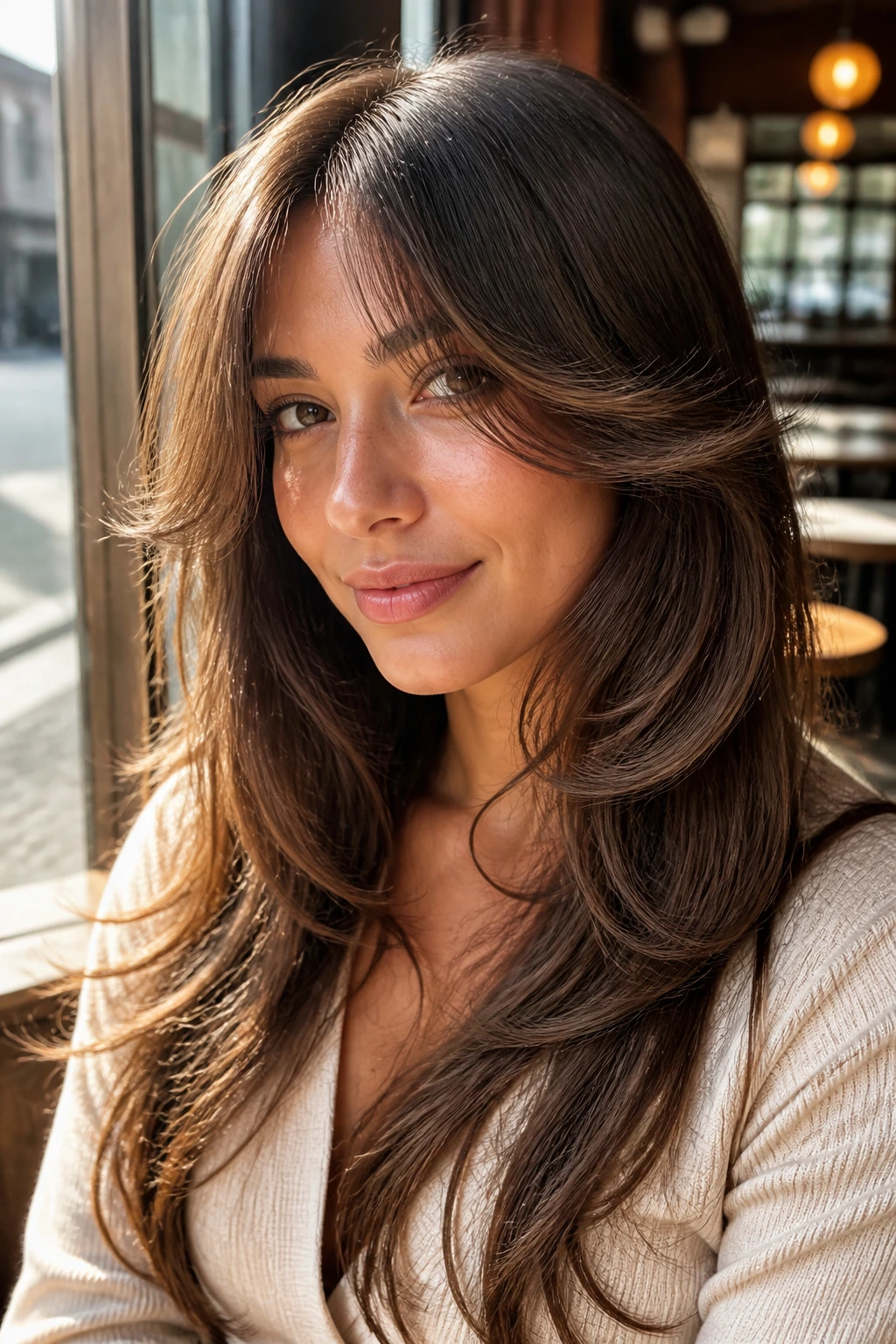
Butterfly bangs borrow the big, airy movement of butterfly layers and bring it to the front. The fringe opens around the face, then drops into longer wings that sit near the cheekbones or jaw. On long hair, this is a dramatic way to make the front feel lighter without giving up the length people came for in the first place.
Oval faces can wear this shape because it adds width where the face still benefits from it, especially around the eyes and upper cheeks. It also works well with a round-brush blowout, which makes the layers bounce instead of hanging flat. If you’ve got dense hair, this can be one of the most satisfying front shapes in the whole group.
This style does ask for some styling. Not a mountain of effort, but a proper pass with heat and a brush. If you skip that, it can lose the winged shape and turn into loose face pieces.
15. Eye-Line Curved Bangs
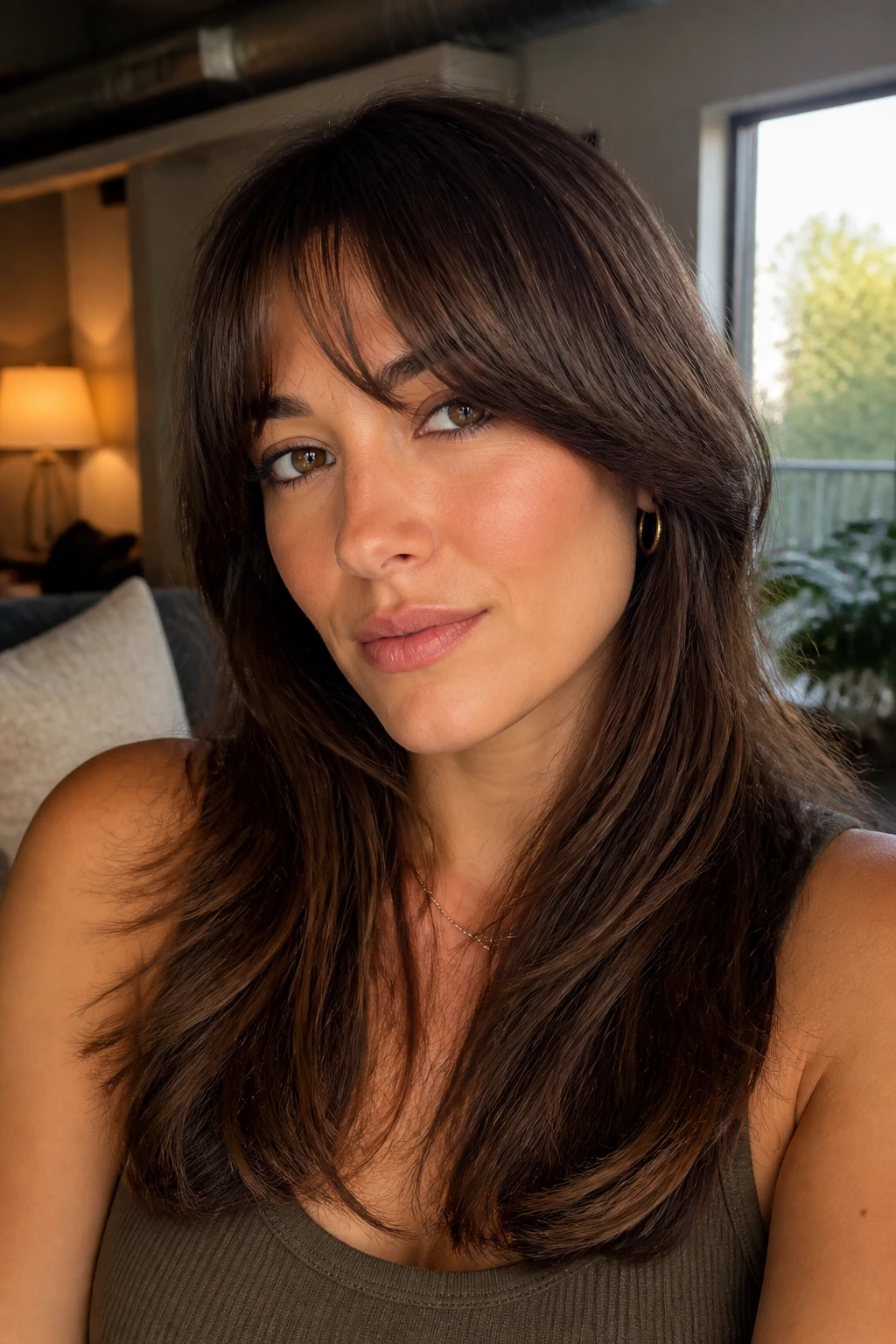
Eye-line curved bangs land in a sweet spot: low enough to frame the eyes, high enough to avoid feeling heavy. On an oval face, that placement is useful because it keeps the focus near the top half of the face while the long hair handles the rest of the drama.
The curve should be soft, not cartoonish. Think of a gentle bend that starts slightly shorter in the middle and gets longer as it moves out. That keeps the line from cutting the face across the widest point. I like this on hair that can hold a bend without much fight.
It’s one of those looks that gets better after it settles for a minute. Fresh from the cut, it can look almost too neat. After a little movement and a brush-through, it looks right.
16. Soft Micro Fringe With Long Layers
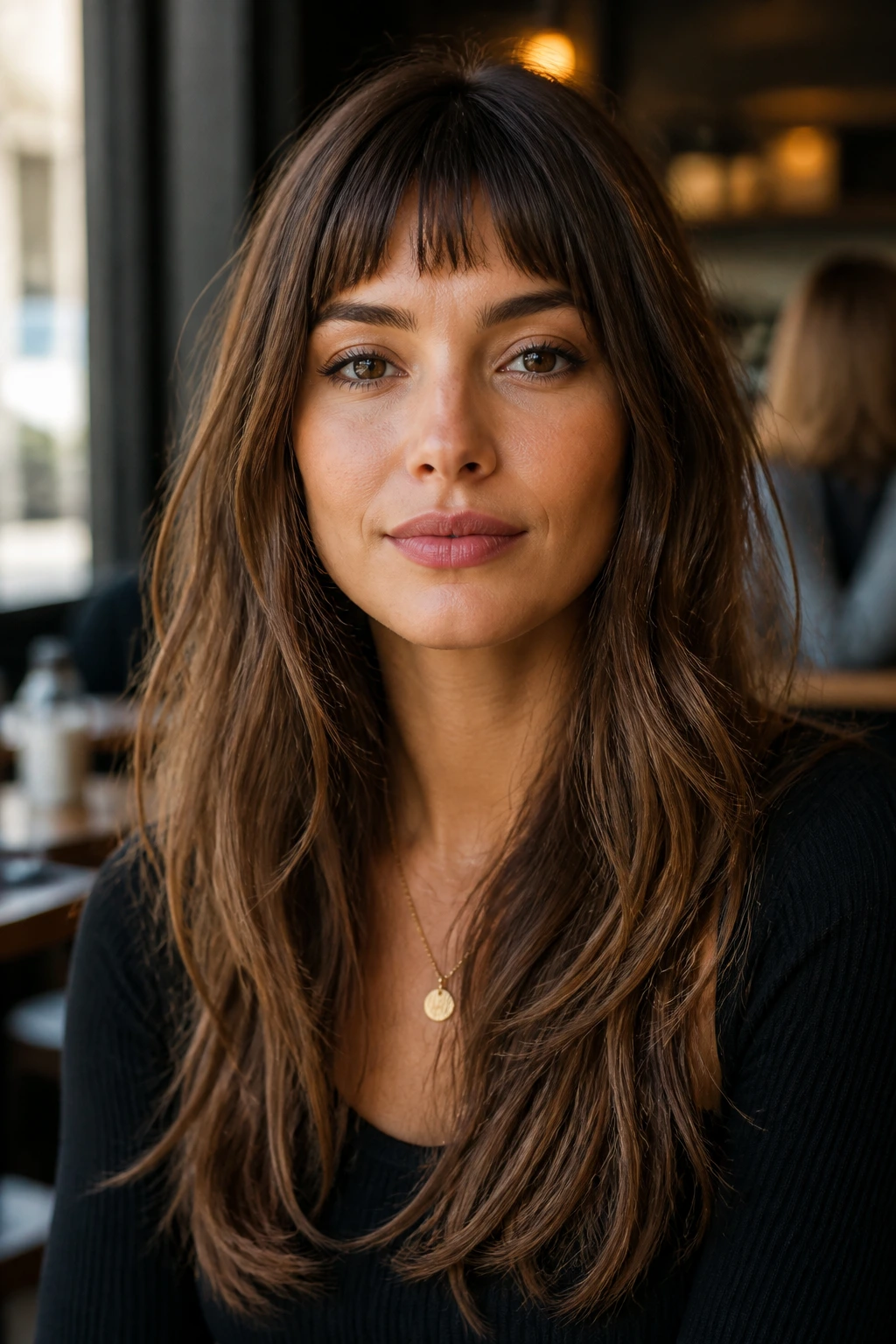
A micro fringe sounds bold, and it is. But on an oval face, a softened version can work because the proportions are already balanced enough to handle the short front. The layered hair around it keeps the style from feeling severe, and the contrast between short fringe and long length gives the whole cut real tension.
I’d be blunt here: this is not the safest option on the list. It’s the most opinionated. If you love a little edge and you don’t mind the bang sitting well above the brows, it can look sharp in a good way. Ask for softness at the ends so the fringe doesn’t read like a ruler had a bad day.
This one looks best when the rest of the hair has movement. Straight, flat lengths can make a micro fringe feel too hard. Soft wave or a little blowout bend changes everything.
17. Wavy Brow-Skimming Fringe
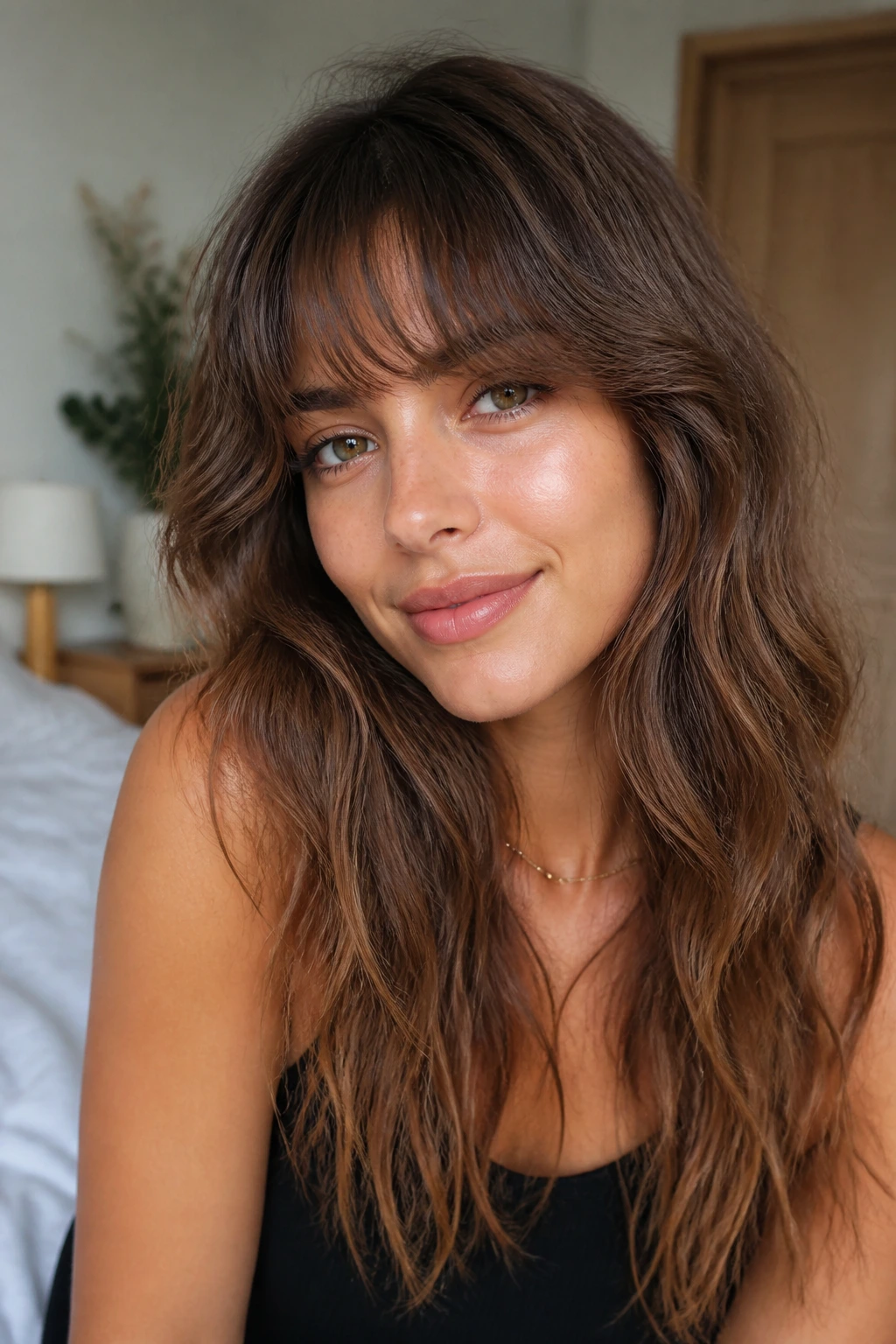
What happens when a fringe is cut for bend instead of control? You get a wavy brow-skimming shape that feels easy, not stiff. On long hair, that approach lets the front move with the rest of the hair instead of standing apart from it.
Oval faces do well with this because the fringe touches the brow line without forming a harsh stripe. The shape should be cut a bit longer than a straight style, since wavy hair lifts as it dries. If your hair shrinks at the front, leave yourself more length than you think you need.
Styling Note
Work a small amount of mousse through the roots, then dry the bangs in the direction you want them to fall. If you let them dry wild and try to tame them later, you’ll fight them all day. Better to guide them early.
18. Razored Choppy Fringe
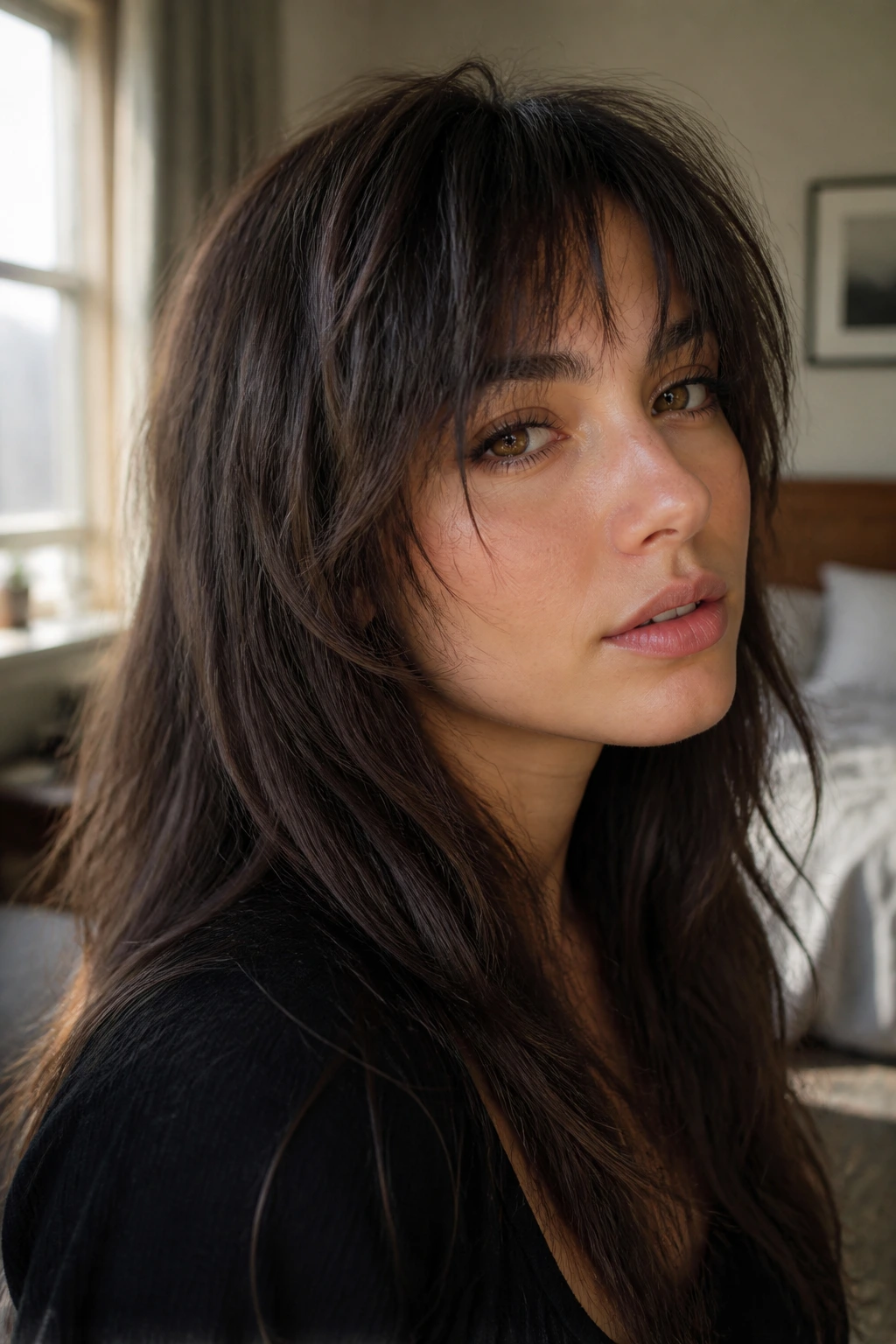
Razored fringe has edge, sure, but the real reason it works is weight removal. Thick hair often needs the front lightened so it does not sit in one big slab across the face. A razor cut breaks that mass into softer pieces, and long hair behind it keeps the whole look from turning too short and spiky.
I like this on hair with real density, especially if the ends of the long hair already have layers. The bangs can be choppy without looking random because the rest of the cut carries the same language. An oval face handles the slightly uneven texture well; there’s enough balance in the face shape that the fringe can be a little wild.
Just don’t ask for it too short. Razored bangs look best when the unevenness feels deliberate. A bad razor job just looks thin. That’s not the same thing at all.
19. Root-Lifted Glam Bangs
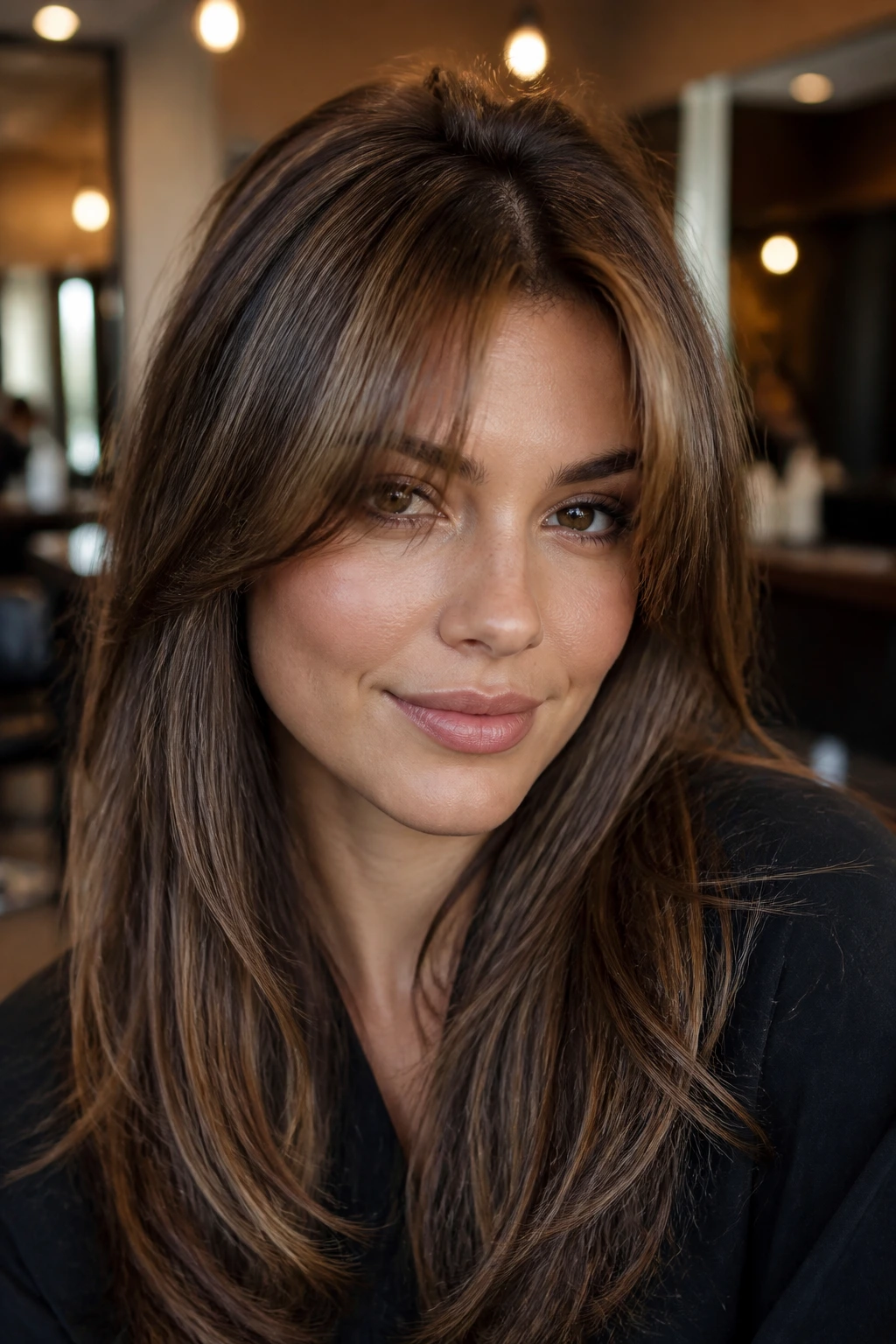
If you like a blowout that has a little lift at the root, this is your lane. The front is cut to sit with volume, not against it, which makes long hair look polished without going stiff. On an oval face, the lift adds presence around the eyes and forehead, then the long lengths keep the haircut from feeling overbuilt.
This style borrows from old-school salon blowouts, and I mean that in the best way. The root area gets lifted with a round brush or a hot brush, the ends curve softly, and the whole fringe sits with a bit of air under it. It’s a good choice if your hair tends to collapse after an hour.
You do need a little patience here. The cut can be right and still look wrong if the root is flat. Start with a volumizing spray at the front and dry the bangs before the rest of the hair if you want the lift to hold.
20. Mixed-Length Layered Bangs
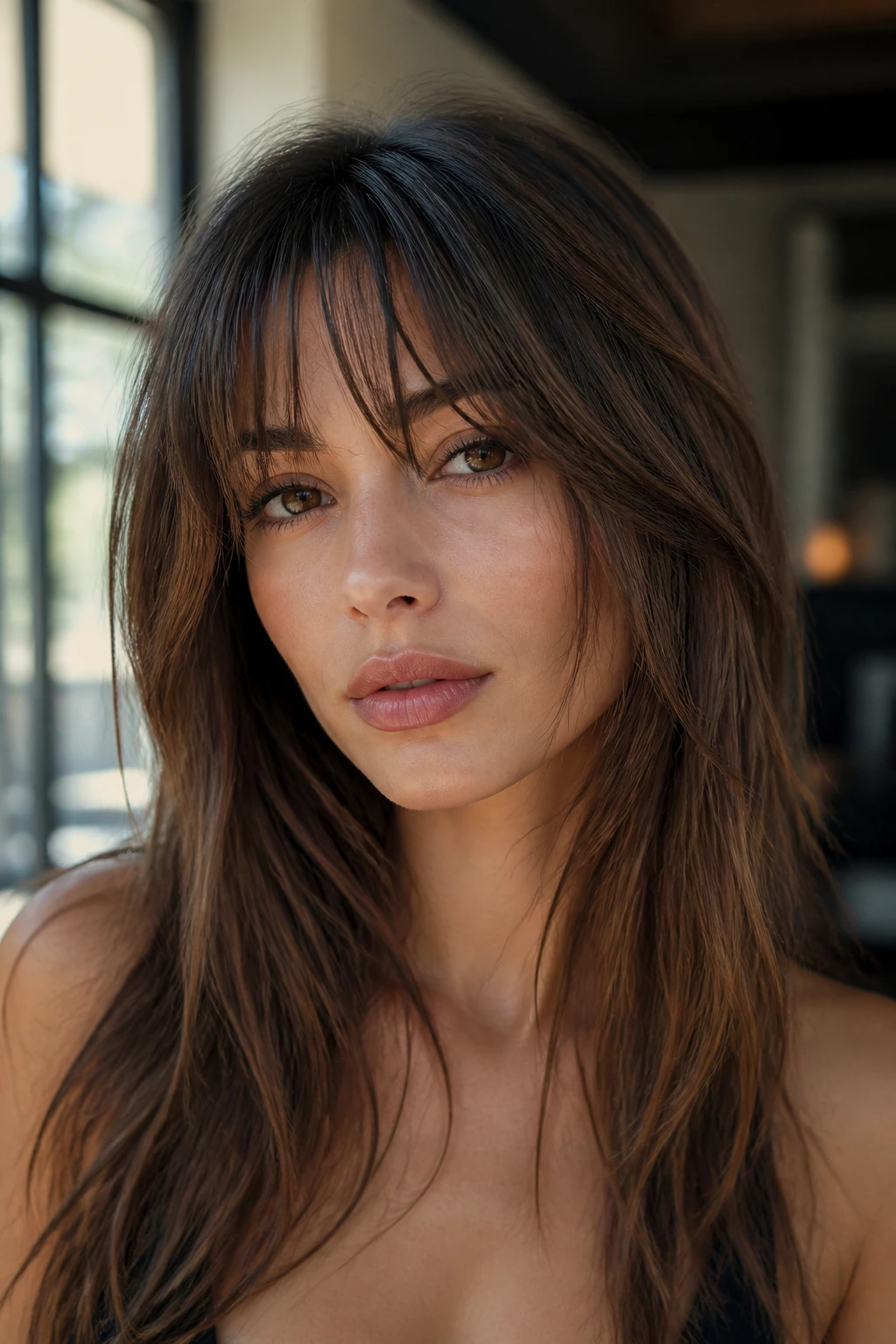
Mixed-length bangs are a smart answer for anyone who hates the look of one straight line. The pieces are deliberately staggered, so some sit near the brow, some slip down toward the cheekbone, and a few disappear into the front layers. On long hair, that unevenness stops the cut from feeling boxed in.
Oval faces can wear this because the face shape already offers a calm base. The varied lengths add movement without pulling the features out of proportion. I’d choose this if your hair is naturally layered and you want the fringe to feel like a continuation of the haircut, not a separate event.
This is also one of the easiest options to tweak over time. A tiny trim can keep the shape fresh, or you can let the shortest pieces grow and shift the balance toward the sides. That flexibility is worth a lot.
21. Long Face-Hugging Bangs
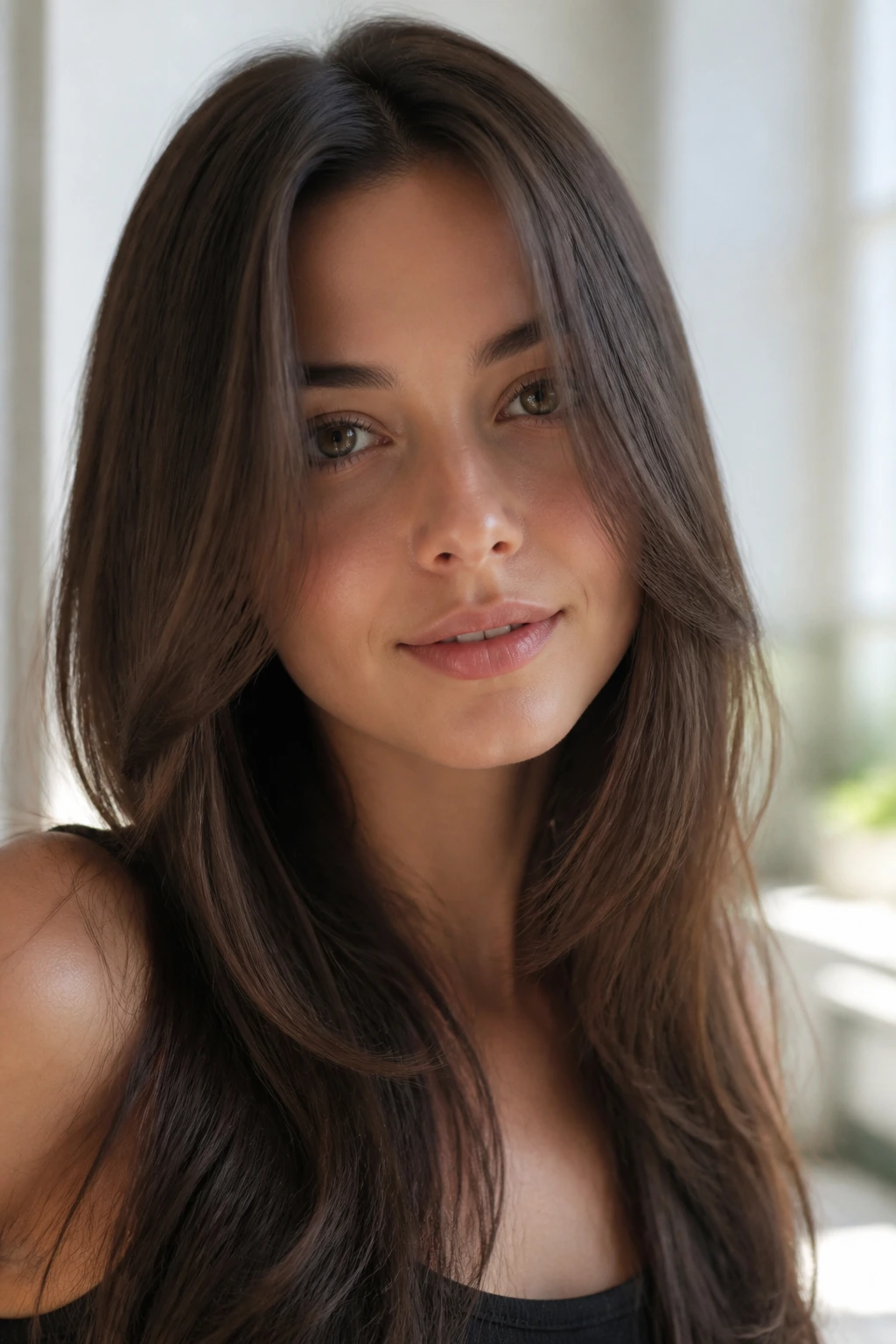
Some bangs are there to announce themselves. These aren’t. Long face-hugging bangs drape along the cheeks and jawline, then disappear into the rest of the cut with almost no hard break. They’re a quiet way to frame an oval face and give very long hair some shape near the front.
I like this for sleek hair, straight hair, and anyone who wears a center part but still wants softness around the eyes. The pieces should start high enough to make a difference but stay long enough to tuck back when needed. If you want low maintenance, this is a good place to land.
The key is avoiding a heavy bottom edge. The ends should taper, not sit like a curtain rod. A tiny bit of inward bend at the front makes the whole thing feel intentional.
22. Graduated Collarbone-Framing Fringe
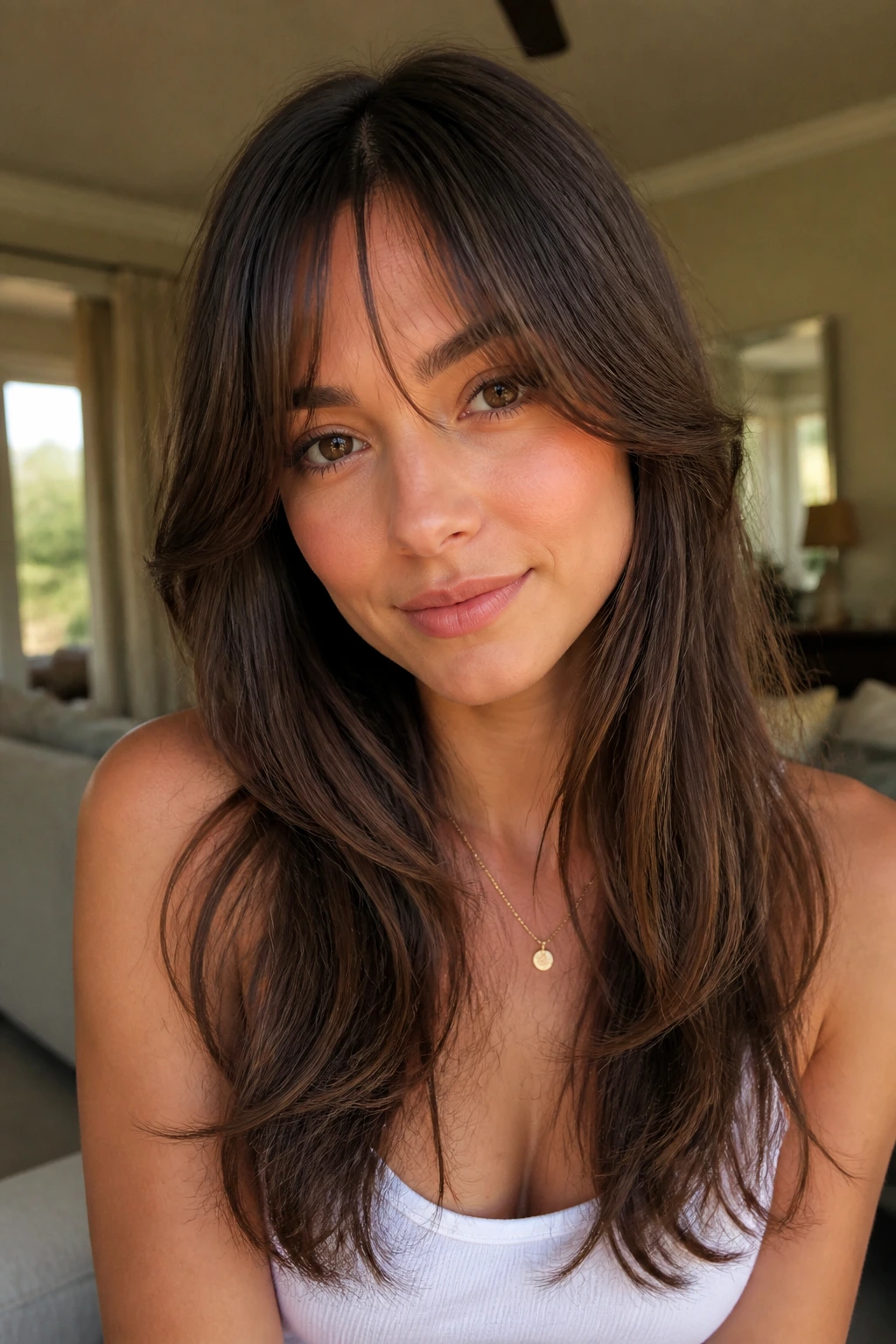
This is the longest and loosest option in the set, and that’s why it works. Instead of a conventional bang, the front starts as a short face frame and then steps down gradually until it hits the collarbone. On long hair, that keeps the whole silhouette flowing in one direction without leaving the front empty.
An oval face can carry this because the gradual shape respects the balance of the face instead of interrupting it. It’s a good choice if you like to wear your hair up sometimes, since the front pieces still do something when the rest is clipped back. The cut feels lived-in from day one.
I’d call this the “I want bangs, but I also want my hair to behave tomorrow morning” option. It’s practical, and a little prettier than practical usually gets credit for being.
How to Read the Shape Before You Sit in the Chair
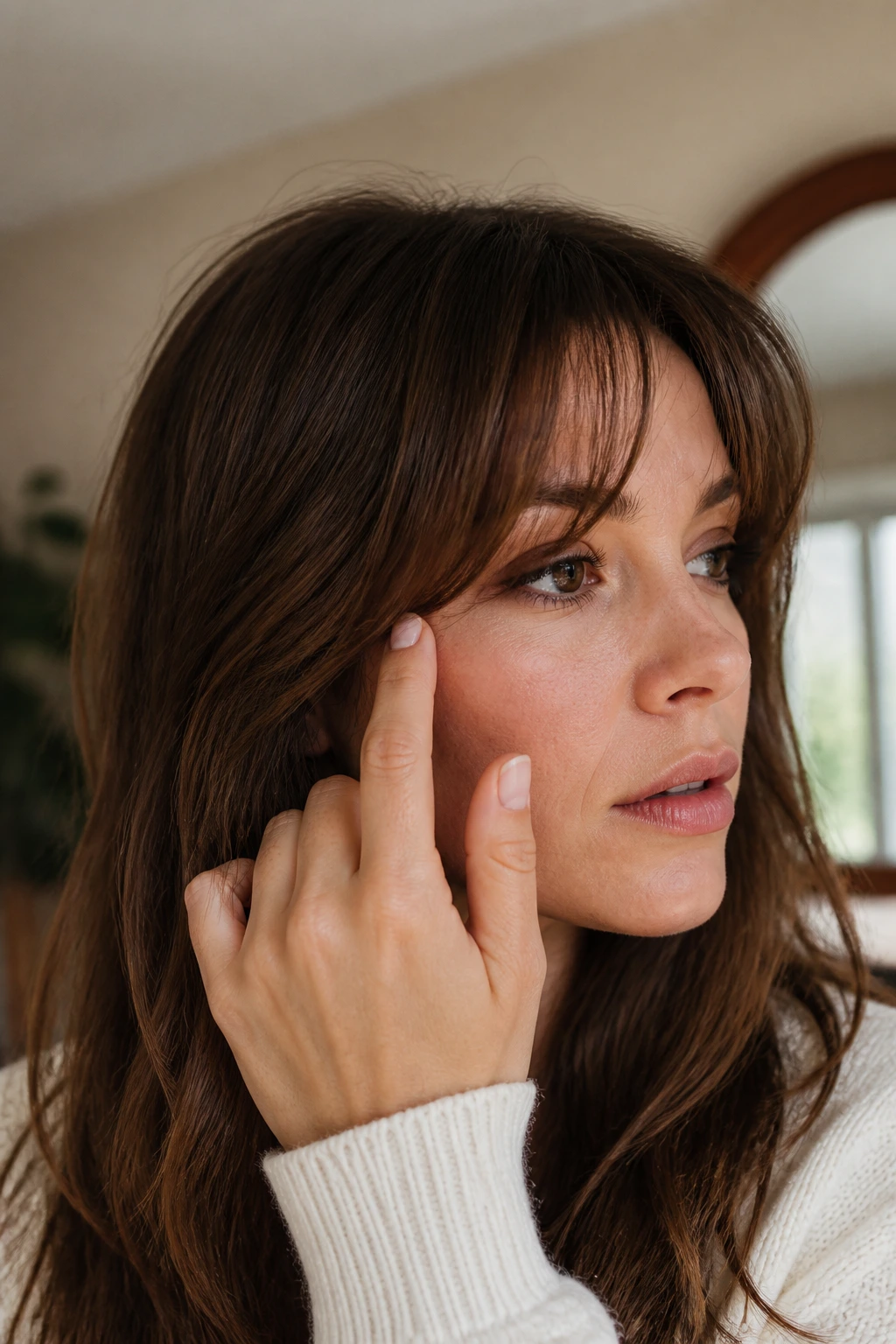
The shortest version: look at where the bang ends, not just whether it’s “curtain” or “side-swept.” On long hair and oval faces, the exit point matters more than the label. A fringe that ends at the brow does one thing. A fringe that exits at the cheekbone does another. That little difference changes how wide, soft, or lifted the face feels.
Ask yourself what part of your face you want the eye to land on first. Brows? Cheekbones? Eyes? That answer will narrow the list fast. If you want the cleanest framing effect, choose styles that taper into the front layers. If you want more polish, reach for the shapes with a stronger center or more root lift.
How to Brief Your Stylist Without Guesswork
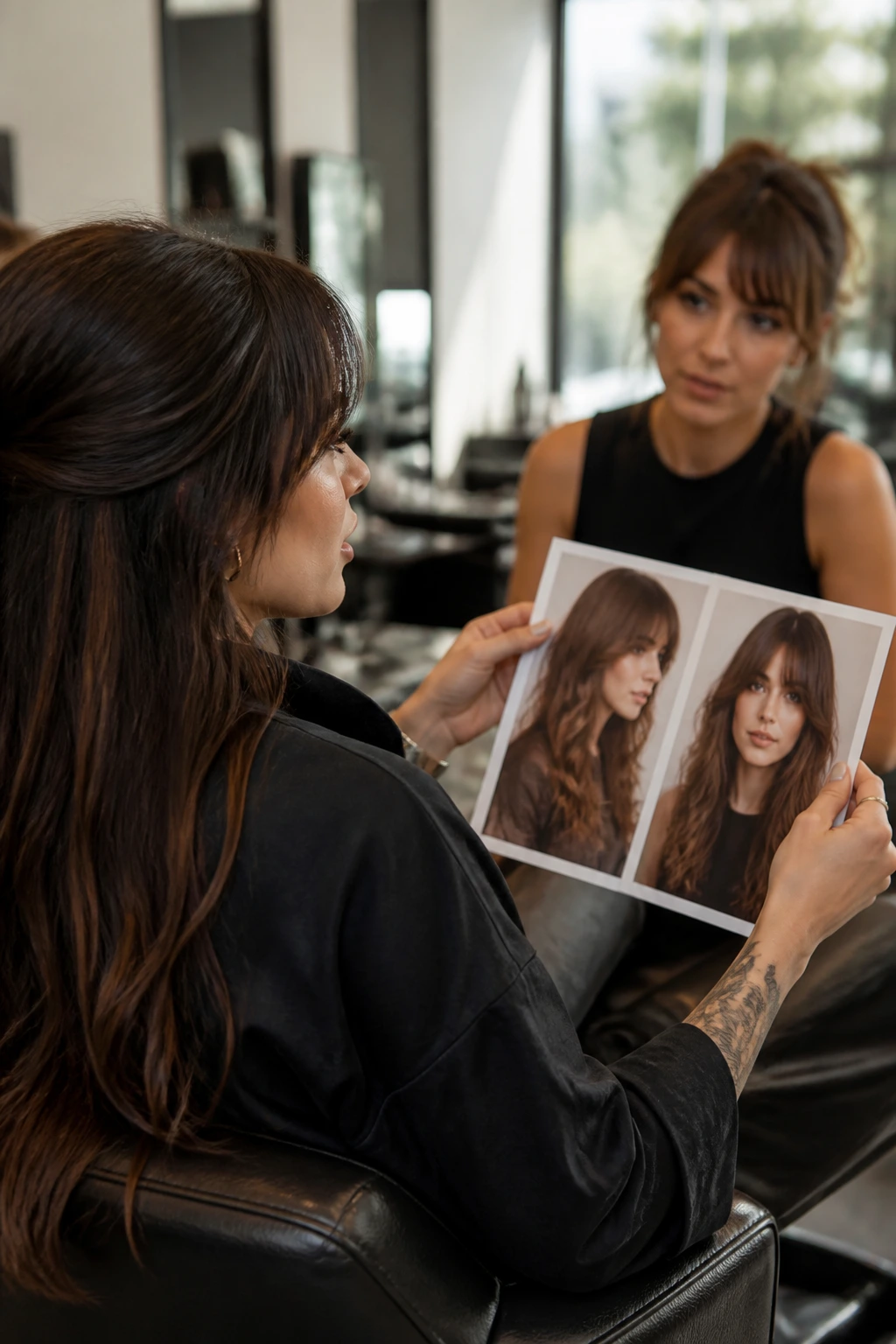
Bring two photos. One should show the bang length you want. The other should show the texture you want. People mix those up all the time, and that is how a nice haircut turns into confusion in the mirror.
Say where your hair parts by default. Say whether you air-dry, diffuse, or blow out. Say if your forehead gets oily, if your fringe splits fast, or if you’ve got a cowlick that fires in one direction no matter what you do. Those details change the cut more than a vague “something soft” ever will.
And if your hair is curly or very wavy, ask for the fringe to be planned for shrinkage. That single sentence saves a lot of regret.
Essential Tools for Styling Layered Bangs at Home
-
Blow dryer with a concentrator nozzle: Directs air at the roots so the fringe dries where you want it, not where the cowlick wants it.
-
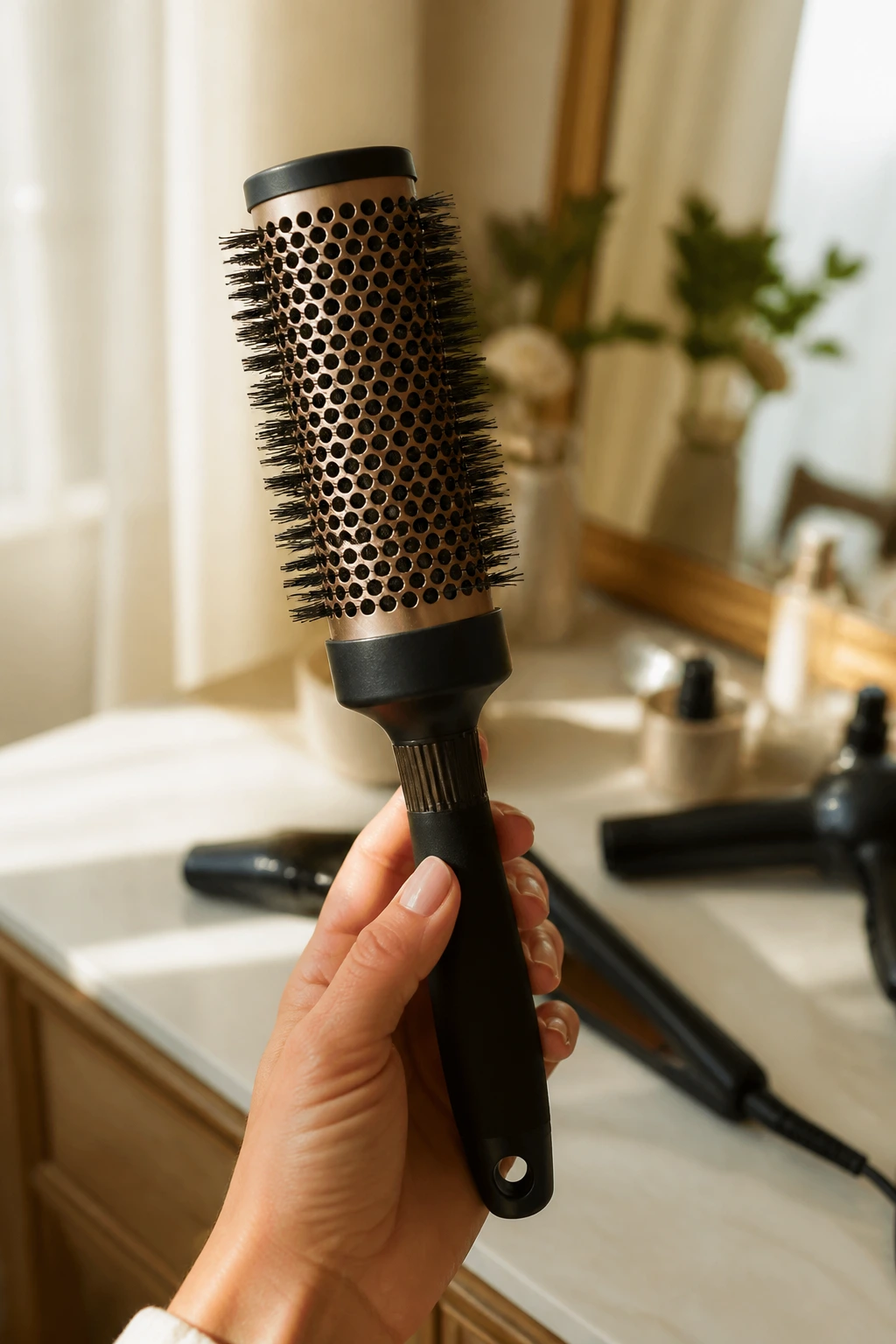
1-inch to 1.5-inch round brush: Best for curtain shapes, side-sweeps, and any bang that needs a little bend.
-
Tail comb: Good for clean parts and for lifting the fringe while you dry the roots.
-
Sectioning clips: Keep the long lengths out of the way so you can focus on the front first.
-
Heat protectant spray: Worth using every time you touch the fringe with heat, since bangs get styled more often than the rest of the hair.
-
Dry shampoo: Helps the front survive a second day, especially if your skin gets oily around the forehead.
-
Light mousse or root-lift spray: Useful for airy curtain shapes and blowout bangs that need a little hold.
-
Texturizing spray: Good for piecey, shaggy, or razored finishes; use a small amount or the fringe gets dusty.
-
Small Velcro rollers: Optional, but they make a rounded front hold its shape while the rest of the hair cools.
How to Keep the Front Soft, Not Stringy
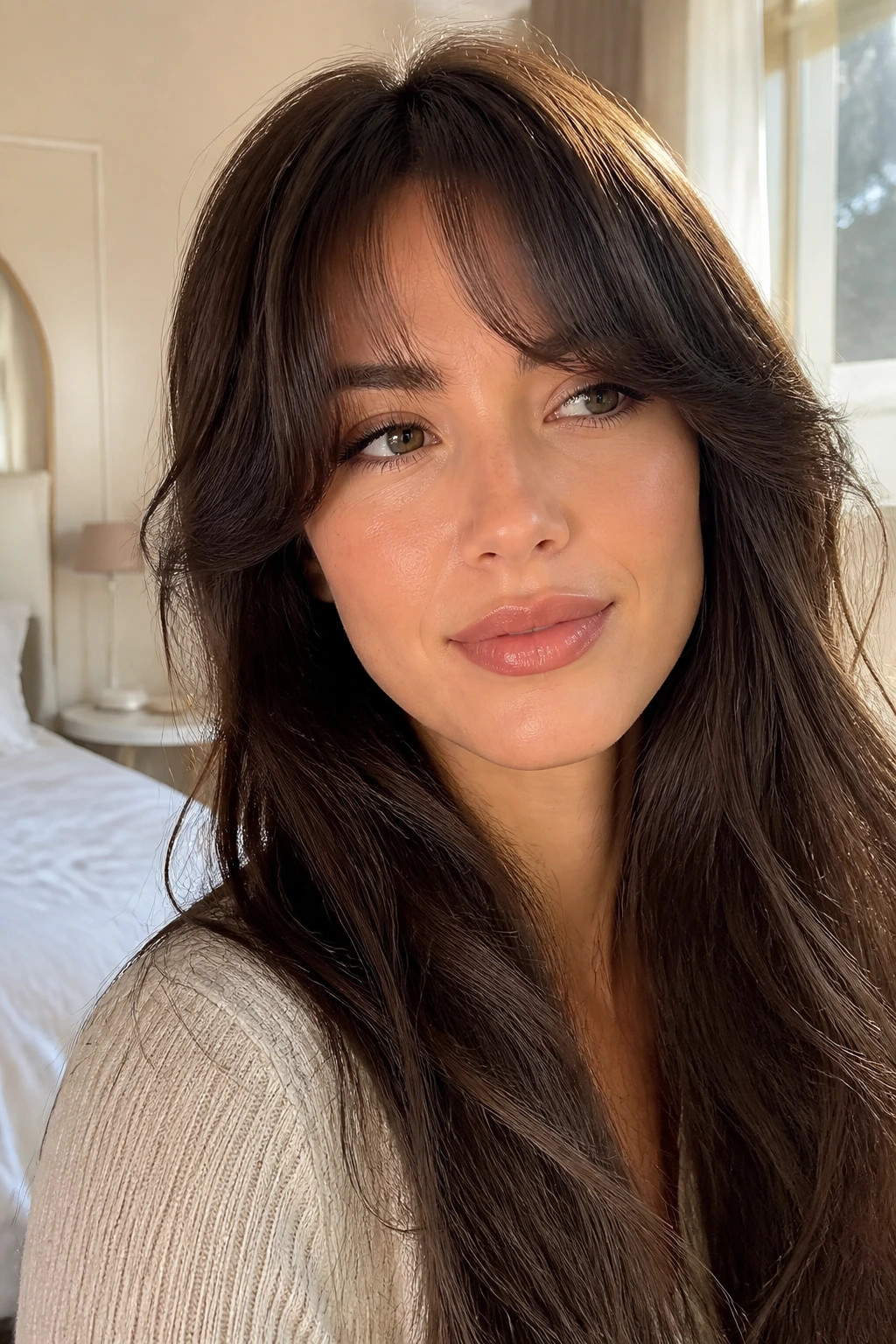
The front gets greasy faster than the rest of the cut. That is normal. Skin oils, makeup, and hand contact all hit the bangs first, which means a layered fringe needs a little more care than the back of your hair. I like to think of the front as the part that needs the most editing, not the most product.
Dry shampoo helps, but too much makes the bangs look chalky. A little at the roots, then a quick brush-out, usually does more than spraying half a can at the forehead. If the ends start to look wispy in a sad way, you’re probably using too much texture spray and not enough clean air from the dryer.
One more thing: let the bangs cool in place after you dry them. If you walk away while they’re still warm and floppy, they settle in the wrong direction. That’s a small thing. It changes the whole day.
Common Mistakes That Make Layered Bangs Fall Flat
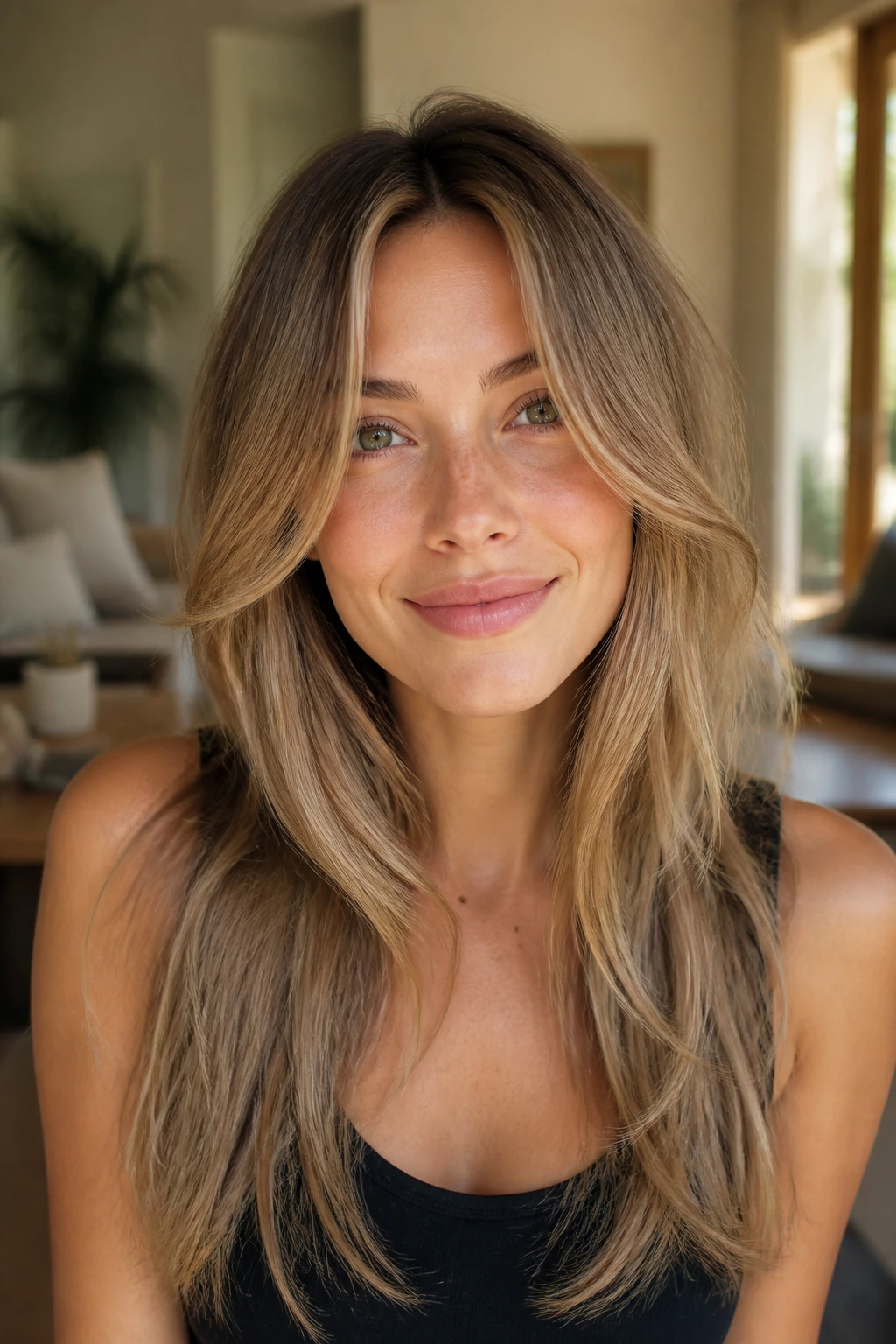
The biggest mistake is cutting the fringe too short in the center and too heavy at the sides. The result is a hard triangle shape that sits right on the face and makes long hair feel boxed in. Fix it by keeping the shortest point soft and letting the sides taper more gradually than you think you need.
Another problem is ignoring the growth pattern. Cowlicks are not a moral failing. They’re just stubborn. If your front lifts to one side, build that into the cut instead of fighting it every morning with a round brush and a bad mood.
Overloading the fringe with cream is another easy way to kill the shape. Bangs need less product than the rest of the hair because they sit against the skin and move all day. If they clump, go lighter next time.
And then there’s the too-long-wait-between-trims issue. Layered bangs can look intentionally soft for a while, but once the shortest pieces fall past the sweet spot, the shape disappears. Catch them before they get lazy.
Ways to Change the Mood Without Changing the Cut
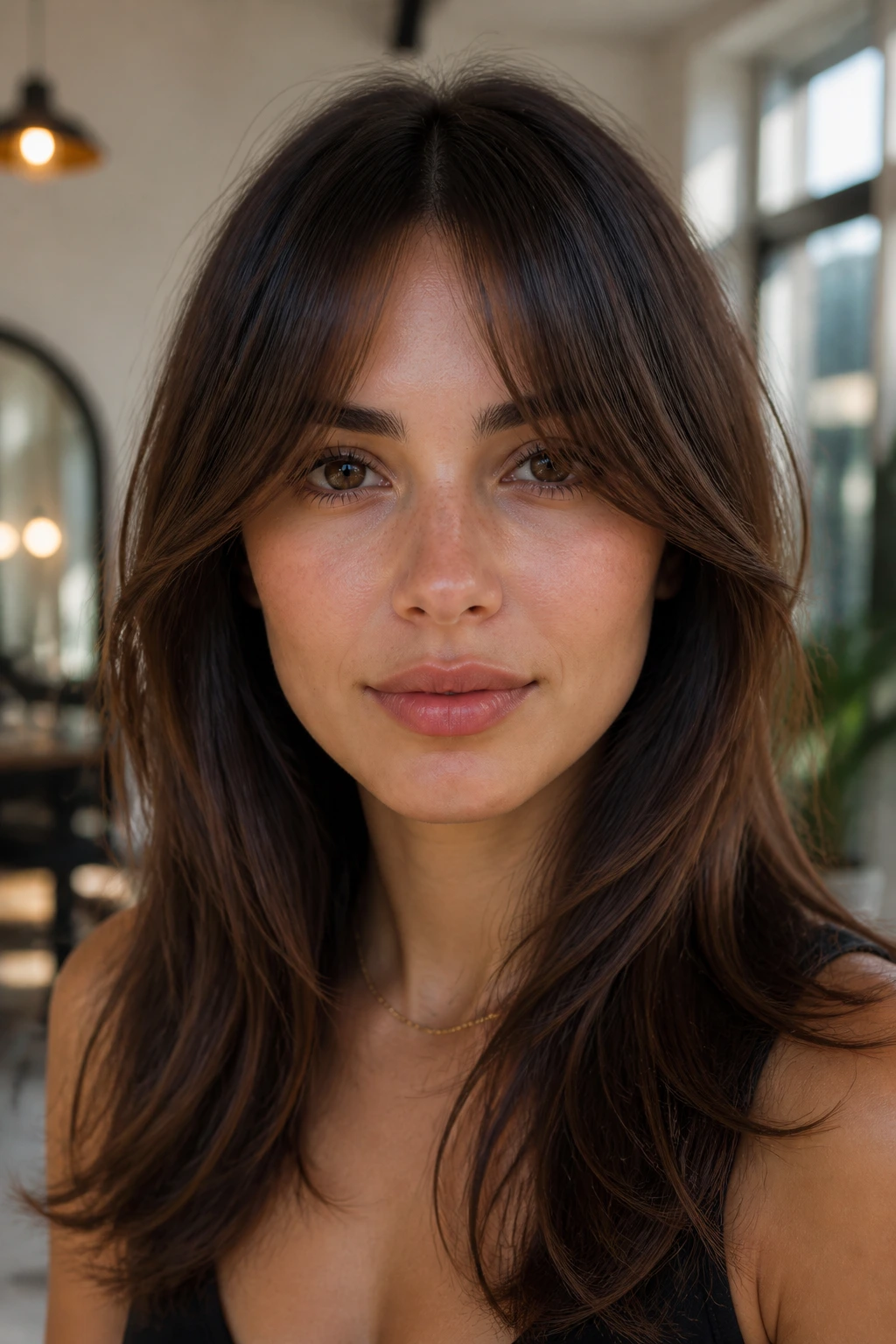
Air-Dry Curtain Layers: Keep the cut soft and split in the middle, then use a light mousse and finger-twist the front while it dries. This works for wavy hair or anyone who hates a blow-dry routine.
Polished Blowout Fringe: Use a round brush and a little root-lift spray to curve the front away from the face. This gives the haircut a smoother, dressier feel and makes the layers look more expensive than they probably were.
Curly Soft Split: On curly hair, cut the front longer and let the curls spring into a soft center split. The bang becomes part of the curl pattern instead of fighting it.
Thick-Hair Debulked Fringe: Ask for internal weight removal and slightly longer pieces around the temples. That keeps the front from puffing out like one big sheet.
Fine-Hair Feather Lift: Keep the fringe wispy and use a tiny amount of mousse at the root. Fine hair looks best when the layers feel airy, not overloaded.
How to Keep Layered Bangs in Shape Between Cuts
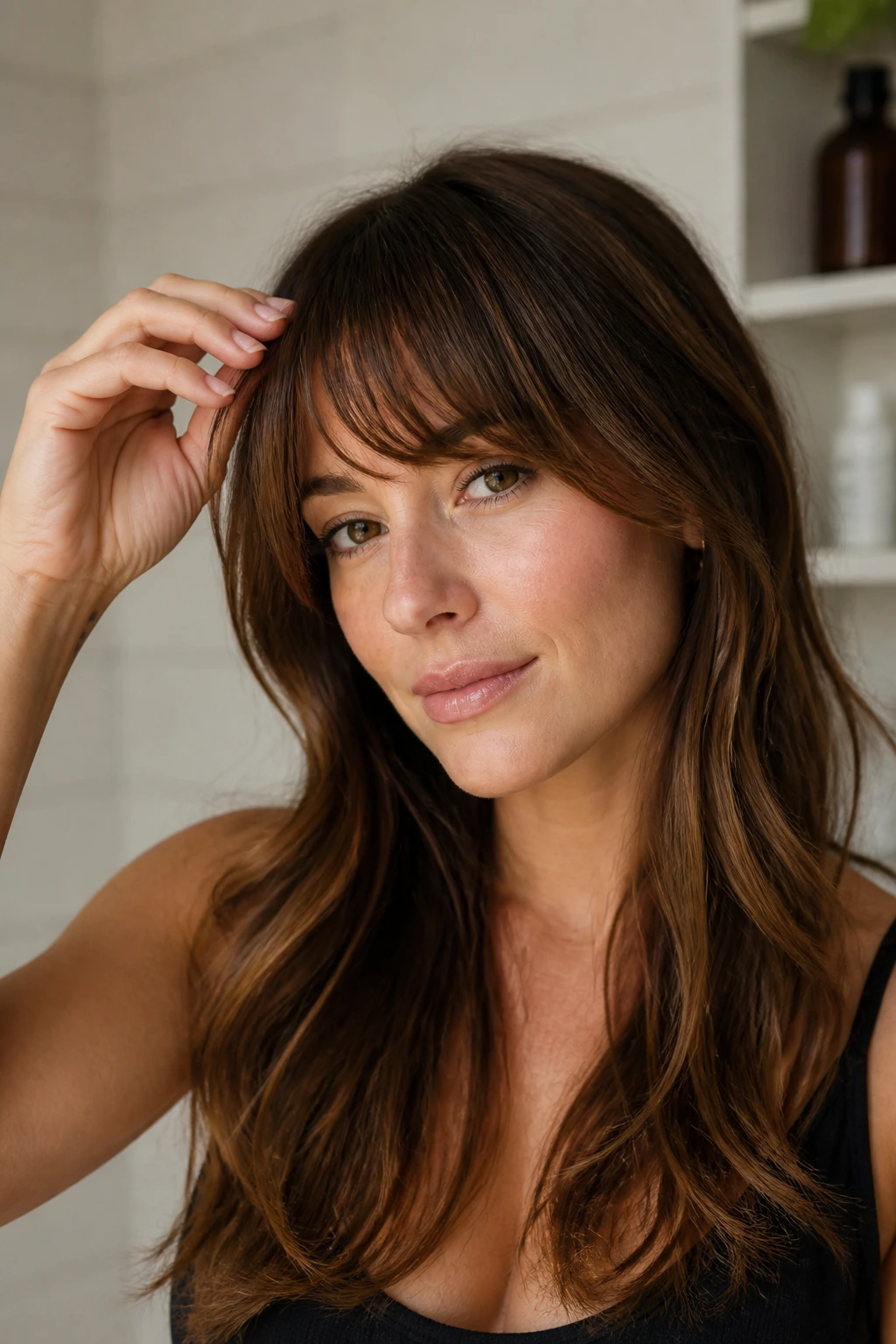
Bangs grow fast enough to annoy you and slow enough to tempt you into pretending you do not notice. Plan on a trim every 4 to 6 weeks if you want the front to stay intentional. The long layers behind them can usually wait longer, often 8 to 12 weeks depending on how fast your hair grows and how much shape you want to keep.
If you sweat at the forehead or use skin products near the hairline, wash or at least refresh the front more often than the rest of the hair. A quick rinse of the bangs over the sink, followed by a blow-dry, can reset the entire haircut. Strange how that works. It really does.
For heat styling, work from roots to ends and keep the brush moving so the front doesn’t get a dent. If the shape starts to flip the wrong way, mist the bangs lightly with water, re-dry the roots, and let them cool in the direction you want. That is usually enough. You do not need to start from scratch.
Frequently Asked Questions
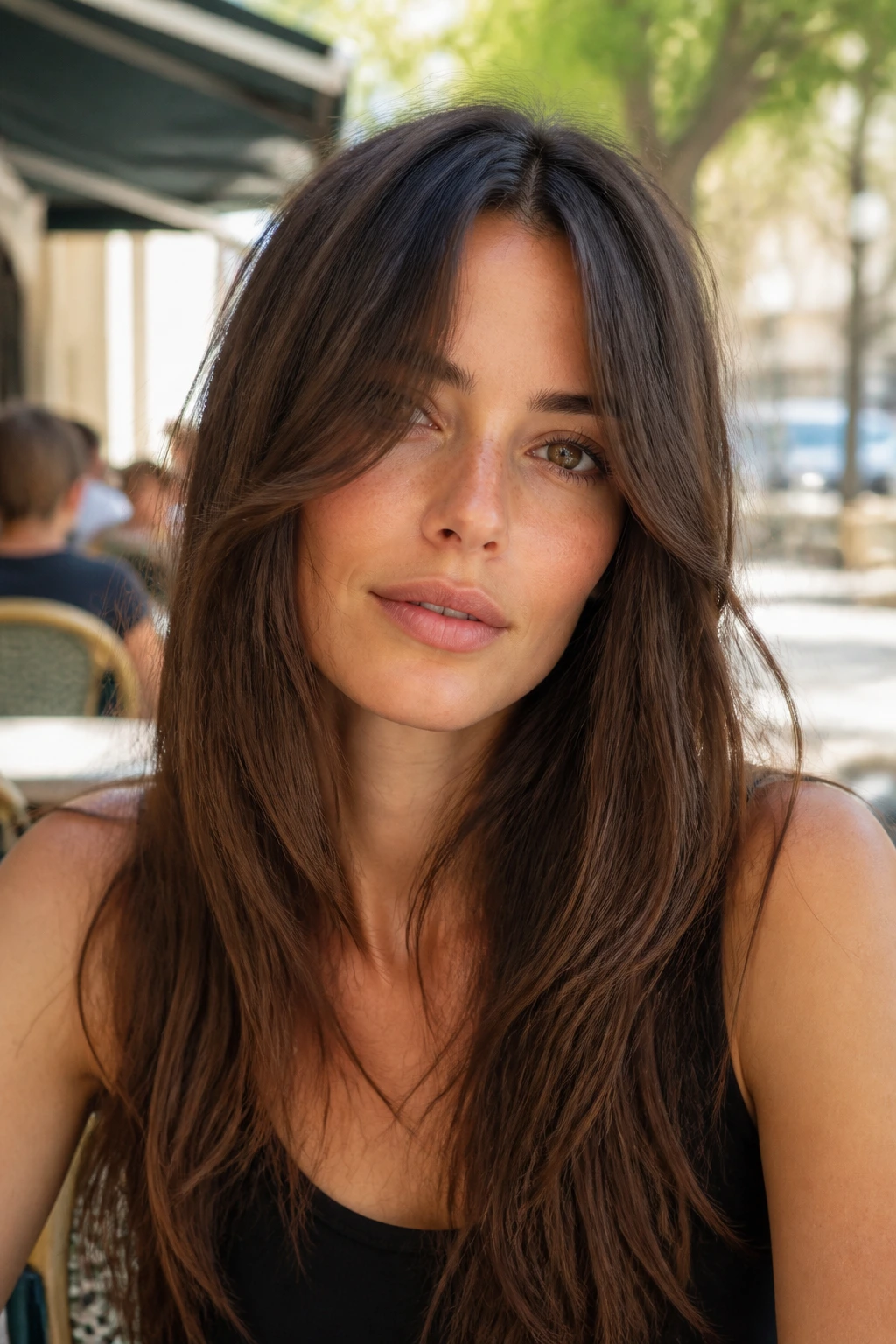
Which bang length is safest for an oval face?
The safest starting point is usually somewhere between the brow and the cheekbone. That range gives you room to style the fringe several ways without boxing the face in or making the forehead feel cut off.
Do layered bangs work on very long hair?
Yes, and that’s where they shine. Very long hair can look heavy around the face, and layered bangs break that weight up without taking away the length that makes the cut feel dramatic.
What if my hair has a strong cowlick at the front?
Choose a style with more sweep and less blunt center weight, like side-swept or bottleneck bangs. A good stylist will cut the fringe to work with the cowlick instead of forcing it flat.
Can I wear layered bangs if I wear glasses?
You can, but the length matters. Aim for a fringe that sits above the frame or blends into the sides so the bangs and glasses do not compete in the same space.
How often should I trim the bangs?
Most layered fringes need a touch-up every 4 to 6 weeks. If the style is softer and longer, you can often stretch that a little, but once the front covers your eyes or loses its shape, it’s time.
Are curtain bangs better than side bangs for oval faces?
Curtain bangs tend to be easier on long hair because they open the face and grow out smoothly. Side bangs are still useful if your part is strong or your hairline fights the middle.
Can I air-dry layered bangs?
Yes, though the cut needs to be planned for that. Ask for softer ends and a little extra length, then use a touch of mousse or leave-in spray so the front dries with shape instead of puff.
What if I hate the bangs after the cut?
Don’t panic and chop them shorter. Pin them to the side, part them differently, or ask for a small reshaping around the temples. Many bad bang days are really just bad styling days.
A Fringe That Keeps the Length Moving
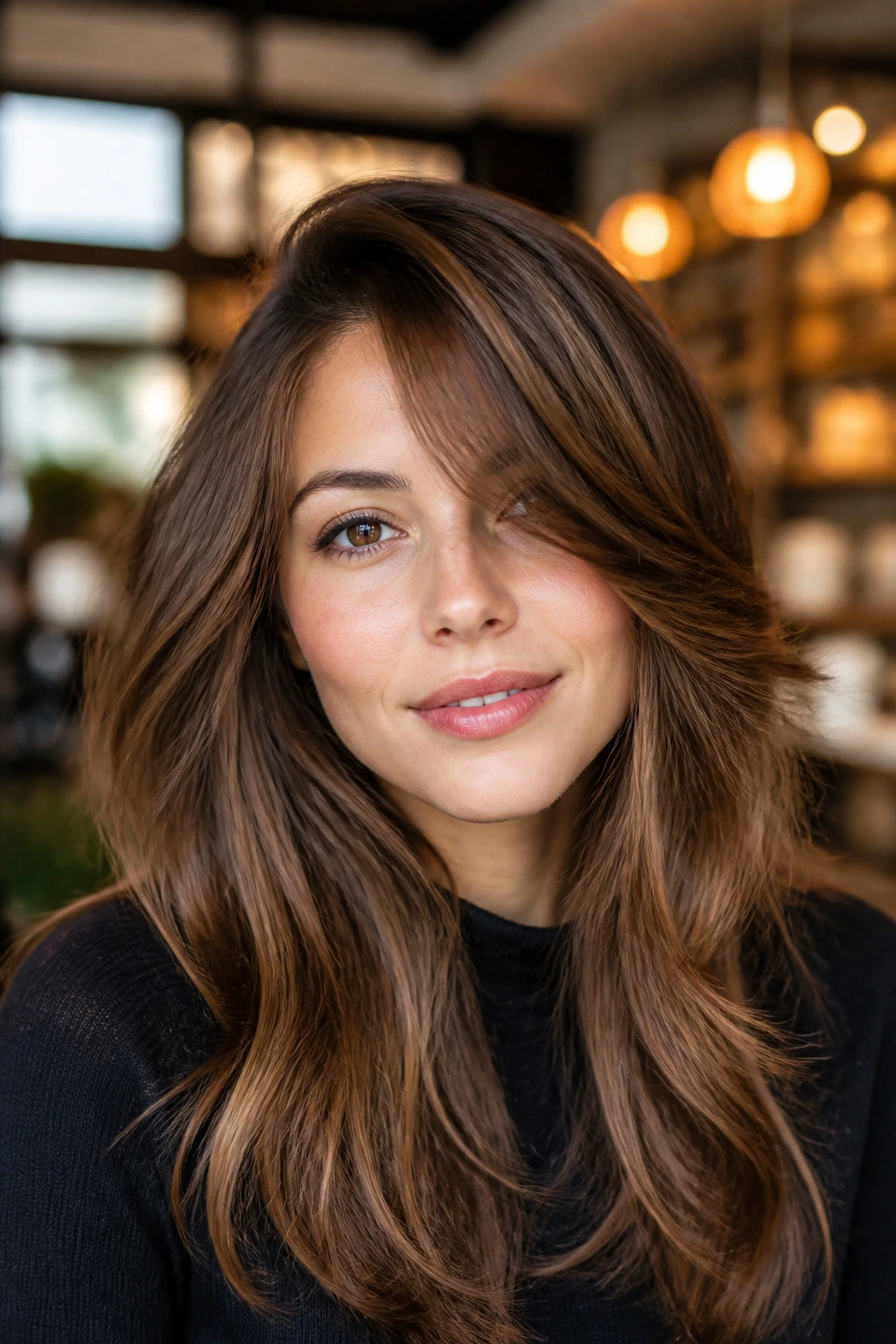
Long hair does not need a heavy front to feel finished. Sometimes the smartest move is a fringe that changes the shape quietly — a little lift here, a little taper there, enough softness to keep the face open and the length from dragging everything downward.
That is why layered bangs for long hair and oval faces work so well when they’re cut with some thought behind them. They change the outline, not the identity of the haircut. And if you choose the right one, you get a front that looks intentional on day one and still makes sense when it’s three weeks older.
Pick the version that fits how you wear your hair, not the one that looks best frozen in a photo. That’s where the good fringe lives.