



Long locs can feel lush and slightly unruly at the same time. They swing against your shoulders, snag on jacket collars, and start to pull at the hairline the moment you pile them too high. The best long locs hairstyles for a protective style solve that problem by moving the weight somewhere kinder — the nape, the crown, or two smaller anchor points instead of one stubborn knot.
That matters more than people admit. A style can look neat for an hour and still be a lousy choice if it tugs the temples, rubs the ends against denim, or asks you to sleep with your neck twisted up like a question mark. I care less about styles that look polished only in a mirror and more about the ones that survive a commute, a grocery run, and a pillowcase without turning into a mess.
Long locs give you options, but not every option is a good one. Some updos are too tight, some sit too high, and some put all the load in the exact spot that already feels sore by Thursday. The styles below lean toward low tension, smarter anchoring, and real-life wear — the kind that keeps your hair looking calm without asking the scalp to do extra work.
Why These Styles Earn Their Keep
-
Low-Tension by Design: These styles keep the heaviest part of the locs at the nape or split across two anchors, which is kinder than one high, tight tie.
-
Length Still Shows: They protect the ends without hiding the whole set, so you still get the swing and shape that make long locs worth wearing.
-
Easy to Refresh: Most of these looks can be reset with one or two pins, a scarf, or a soft band instead of a full take-down and rebuild.
-
Collar-Safe: Keeping ends off coat seams, hoodie zippers, and chair backs cuts down on the friction that frays long locs faster than people expect.
-
Accessory-Friendly: Scarves, cuffs, clips, and pins fit naturally here, which means you can change the feel of the style without changing the whole structure.
1. Low Tucked Bun
A low tucked bun earns its place because it puts the weight at the nape, where the hair can settle instead of fighting gravity all day. Fold the ends under once, then pin the bun from both sides so the hold comes from the shape, not a squeezed-tight elastic.
If your locs are dense, split them into two smaller loops and stack them low rather than forcing one overloaded knot. One overstuffed bun is where the soreness starts. Not the style itself.
- Best on: medium-to-waist-length locs that keep slipping out of looser updos.
- Hold it with: 4 to 6 U-pins or long bobby pins.
- Watch for: the bun creeping up toward the crown; that means it needs to sit lower, not tighter.
Pro move: Cross two pins in an X under the bun. It keeps the coil from sagging by lunchtime.
2. High Pineapple Ponytail
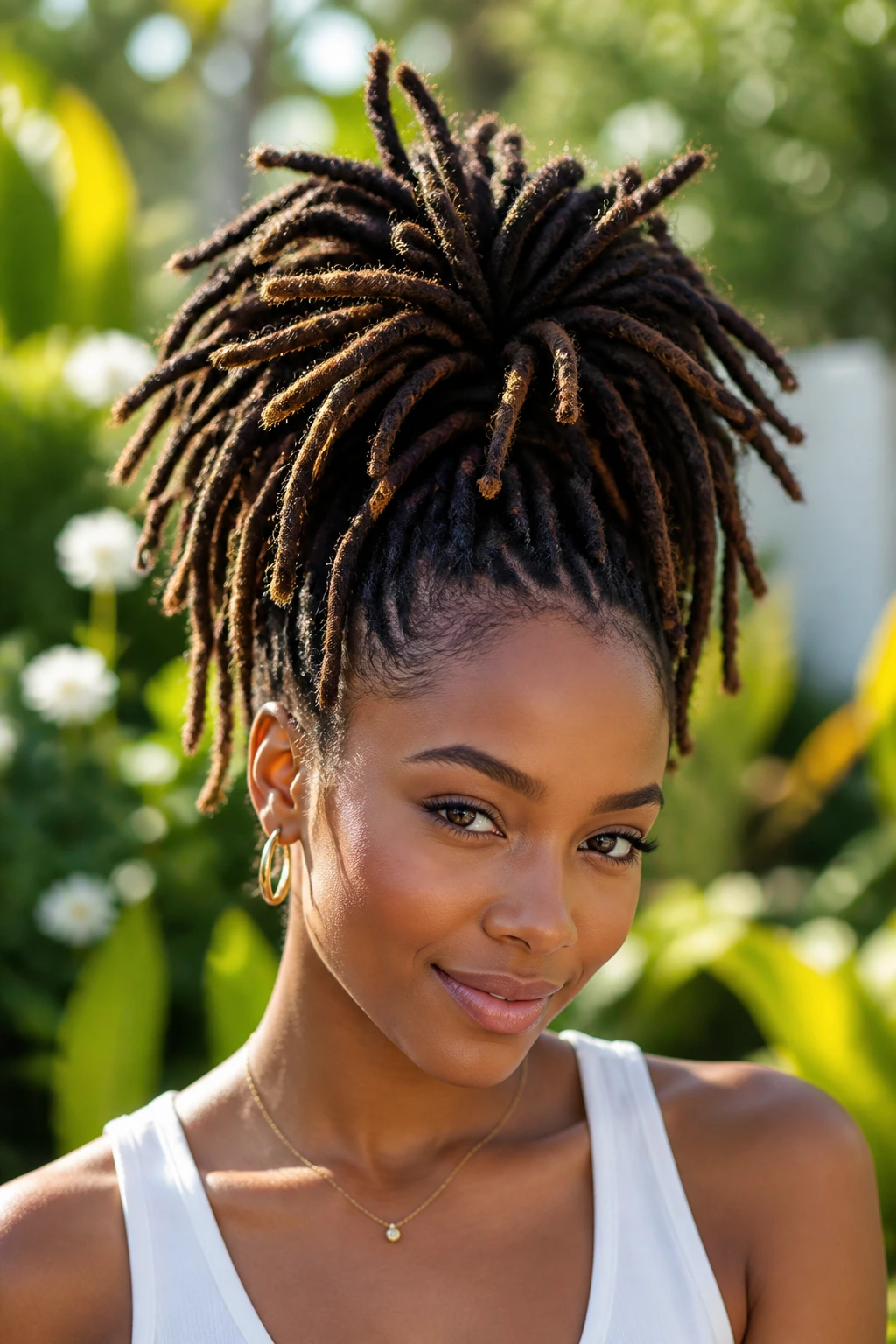
A loose pineapple is the fastest way to get long locs off your neck without flattening the whole set. Gather the locs high, but not yanked, so the roots stay calm and the ends can sit upward instead of rubbing your shoulders.
This one works best when you want lift and shape without a full updo. I like it on a day when the hair needs air and the neck needs a break. If the front line feels tender, skip it and pick a lower style instead.
What to watch for
A pineapple should feel snug, not like a mini headache. If you can feel the base pulsing after ten minutes, the band is too tight or the ponytail is sitting too high.
A satin scrunchie or wide coil tie matters here. Thin elastics dig in, and on long locs they leave a dent that takes longer to disappear than it should.
Best use: one or two days of wear, then a reset. It is a rotation style, not a week-long commitment.
3. Halo Crown Wrap
Can a halo style still count as protective? Yes, if the pins do the holding and the hairline stays soft. Sweep the locs around the perimeter of the head, then anchor them every few inches so the shape stays curved instead of collapsing into one heavy side.
The trick is to treat the style like a track, not a rope. Pin placement matters more than force. If one section starts lifting, add support at the back before you tighten the front.
Pin Placement Matters
Use long bobby pins or U-pins and slide them in where the locs naturally cross. That gives the style grip without making the scalp feel trapped.
This one is especially useful for formal days, because it keeps the face clear and the ends corralled. It also works when you want your hair to look deliberate without a giant knot sitting at the top of your head.
4. Side-Swept Low Ponytail
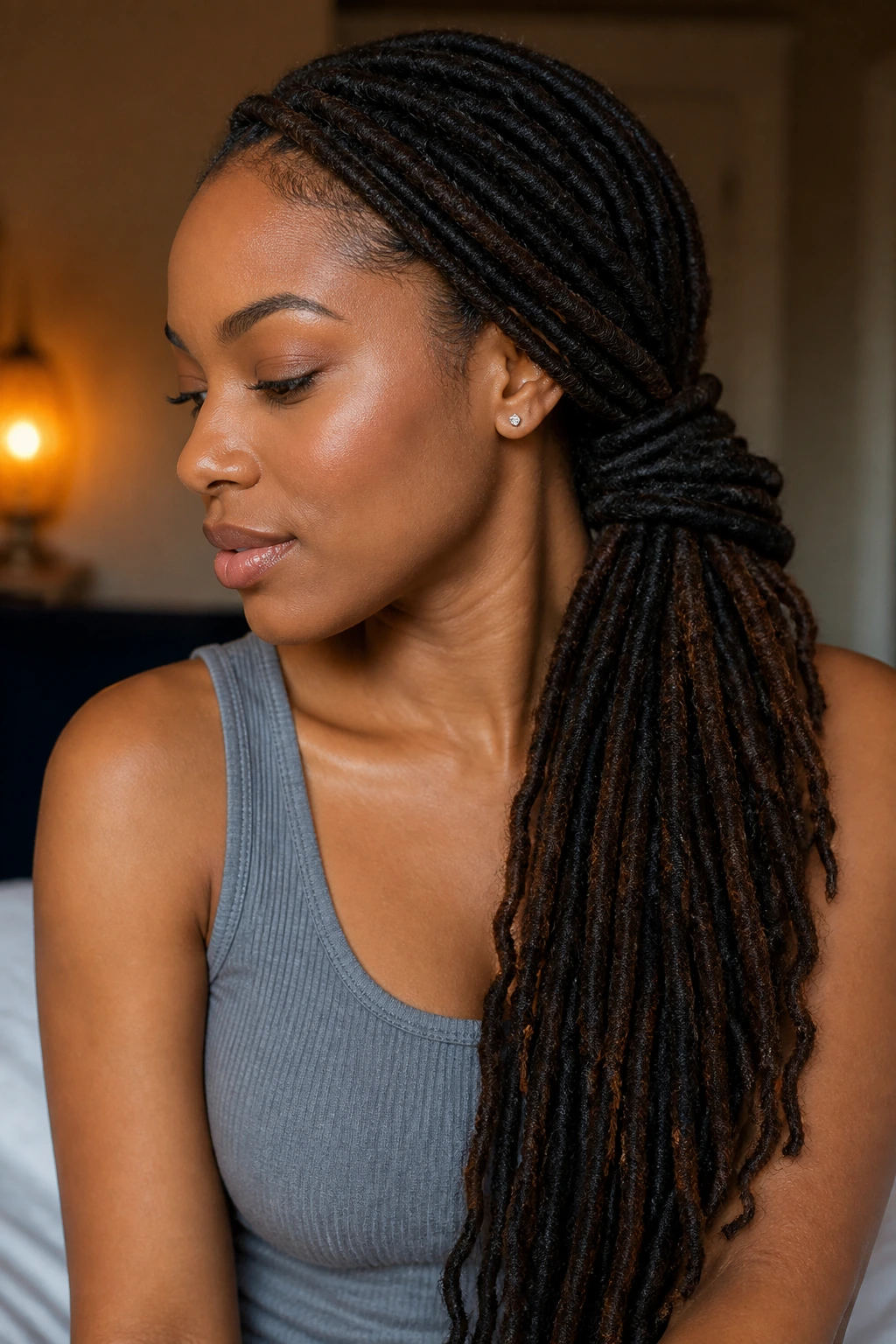
If your locs keep hitting the same shoulder, move the weight to the other side. A side-swept low ponytail lets the neck rest while still giving the length room to drape where it wants.
Unlike a straight-back ponytail, this version breaks the pull across the head instead of dragging straight down the center line. That small shift matters. It usually feels easier on the nape and a little less bossy around the temples.
- Best on: long, medium-density locs that need an easy reset.
- Secure it with: one wide band at the base, then wrap one loc around it if you want a cleaner finish.
- Good for: days when one side of the scalp feels tired and you do not want a full bun.
Quick tip: Keep the part deep enough to look intentional, but not so sharp that the front edge starts lifting by noon.
5. Half-Up Top Knot
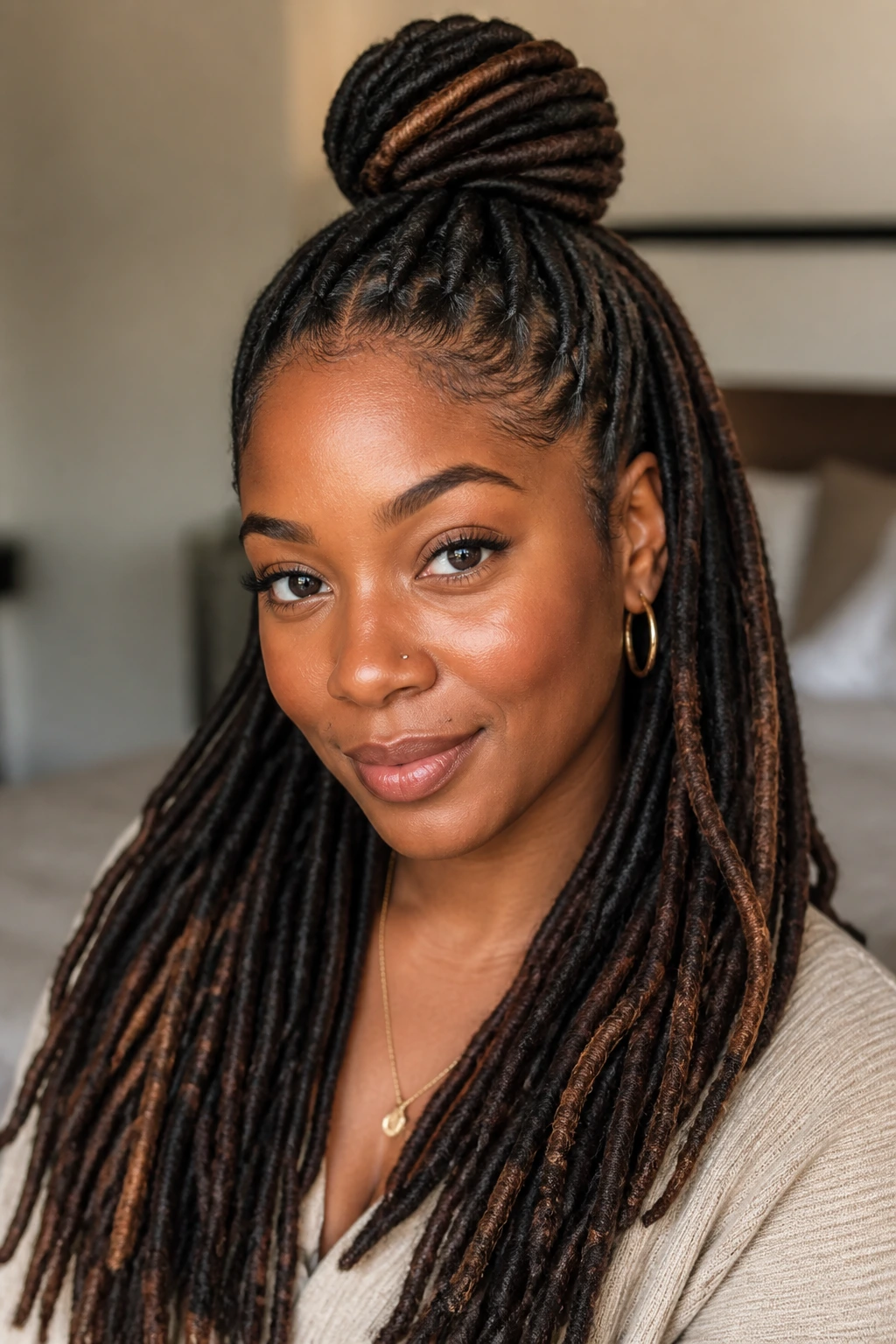
Half-up styles earn their keep because they split the load in half. On long locs, that means the top section gets out of the way while the bottom section still shows length and movement.
I like this style when I want shape without the heaviness of a full bun. The knot belongs just behind the hairline, not perched in the front where it starts tugging the temples like it has somewhere to be.
The lower half should stay loose enough to swing, but not so loose that it starts scraping your collar. That line is thin. Too loose and you lose the point; too tight and the scalp complains.
6. Space Buns
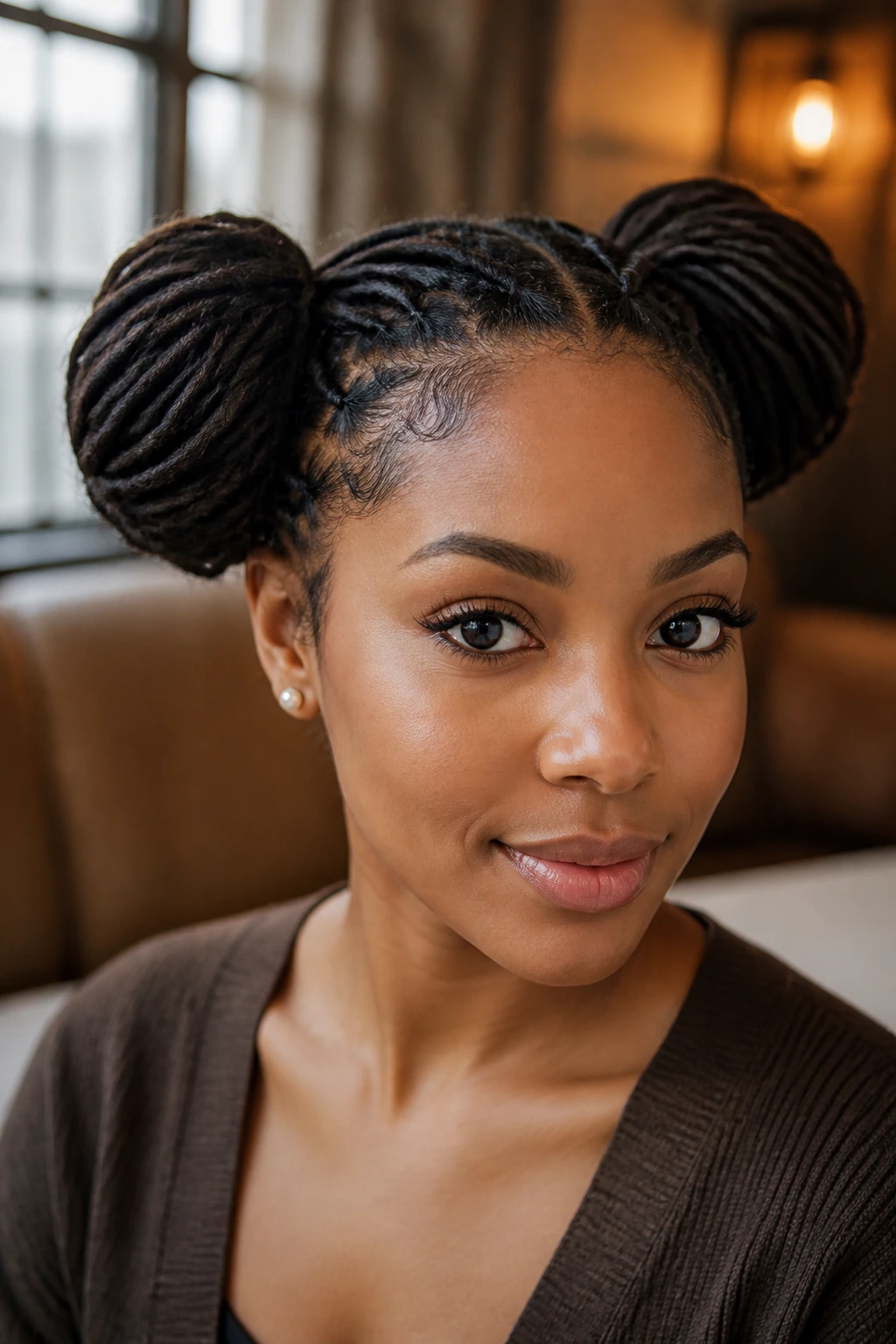
Two buns are kinder than one giant knot because the weight gets split across both sides. With dense locs, that can make the difference between a style that feels playful and one that feels like a helmet.
Keep the buns a touch lower and wider than the cartoon version. Think soft spheres, not tiny, tight knots shoved up near the part. A small base band plus one or two pins in each bun usually holds better than trying to cinch everything into submission.
This style works especially well when you want the neck clear and the profile a little bigger. It is not the quietest style in the list, but it does a good job of balancing volume.
7. Pinned Faux Hawk
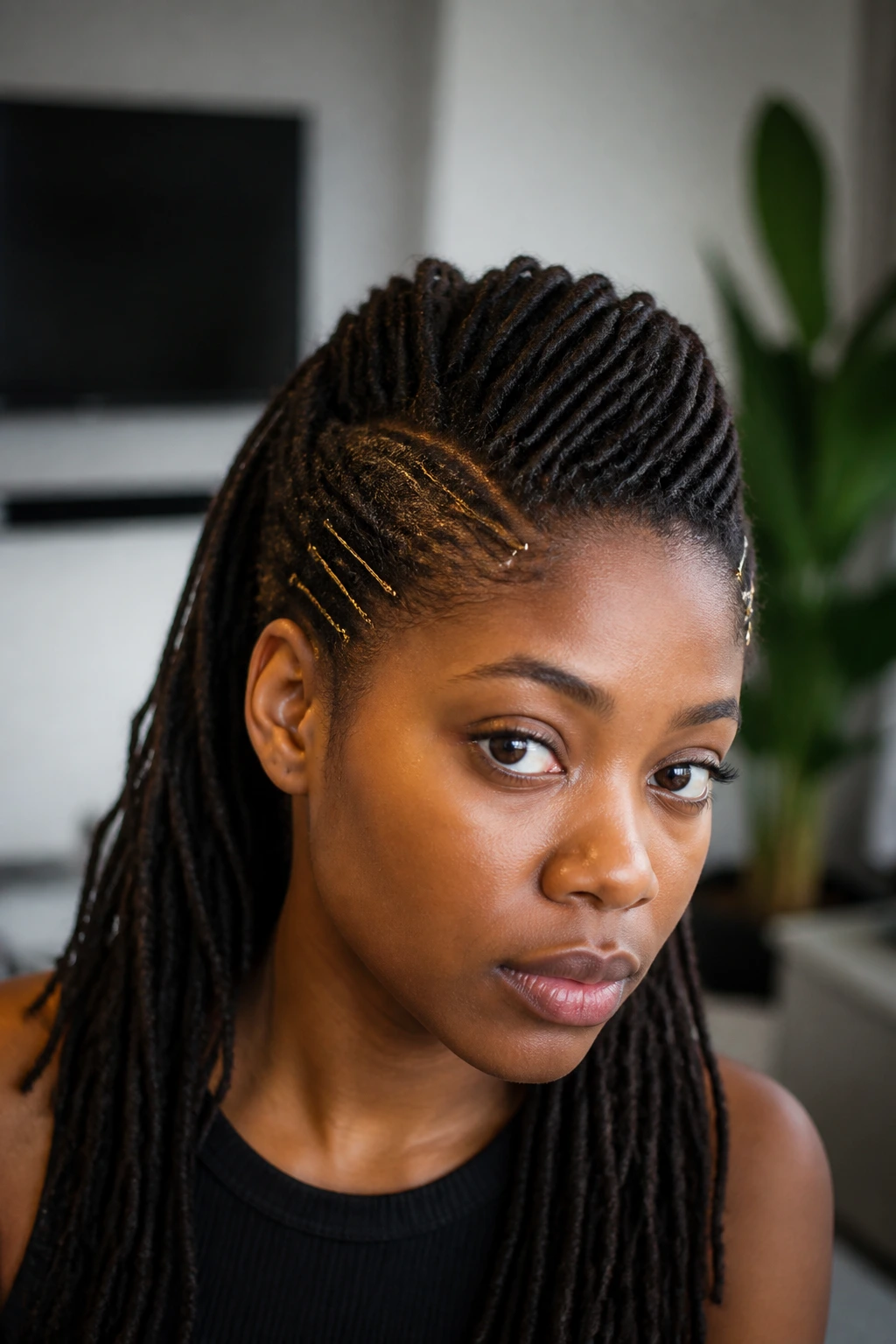
A pinned faux hawk gives long locs shape without forcing all the weight into one front tie. The sides lie flat, the center rises, and the whole thing feels more architectural than a plain bun.
Center Ridge, Not Center Clamp
The sides should be smooth, not plastered. Pin them down in two or three spots per side, then lift only the center section enough to create a ridge that holds its form.
If the sides bite into your scalp, the style is too tight. The point is shape, not pressure. On mature locs, this look can last nicely because the structure comes from the sectioning, not from over-tightening one spot.
It is a good option when you want something sharper than a ponytail but less bulky than a full updo.
8. French Twist
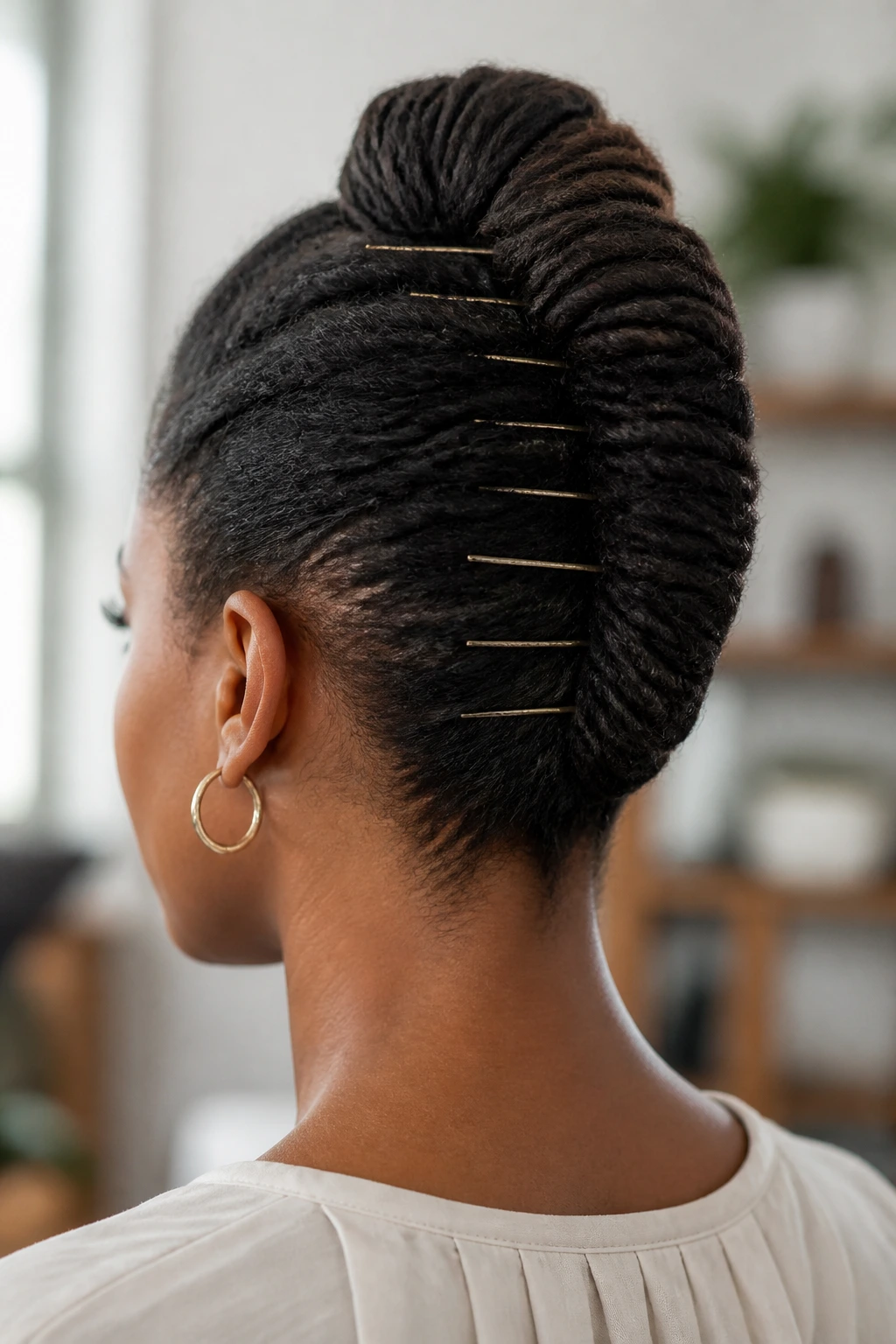
A French twist is one of the cleanest ways to hide long loc ends without flattening the front. The roll runs vertically along the back of the head, which keeps the bundle close to the neck and steadier than a high knot.
Use longer pins or U-pins here. Short bobby pins pop when the locs are dense, and I have watched enough of them slide out to stop trusting the tiny ones. A good twist should feel secure at the base and calm at the scalp.
This style fits office days, dinner plans, and any moment when you want the hair to look neat without appearing overworked. It also keeps the ends from crashing into your collar all day.
9. Folded Chignon
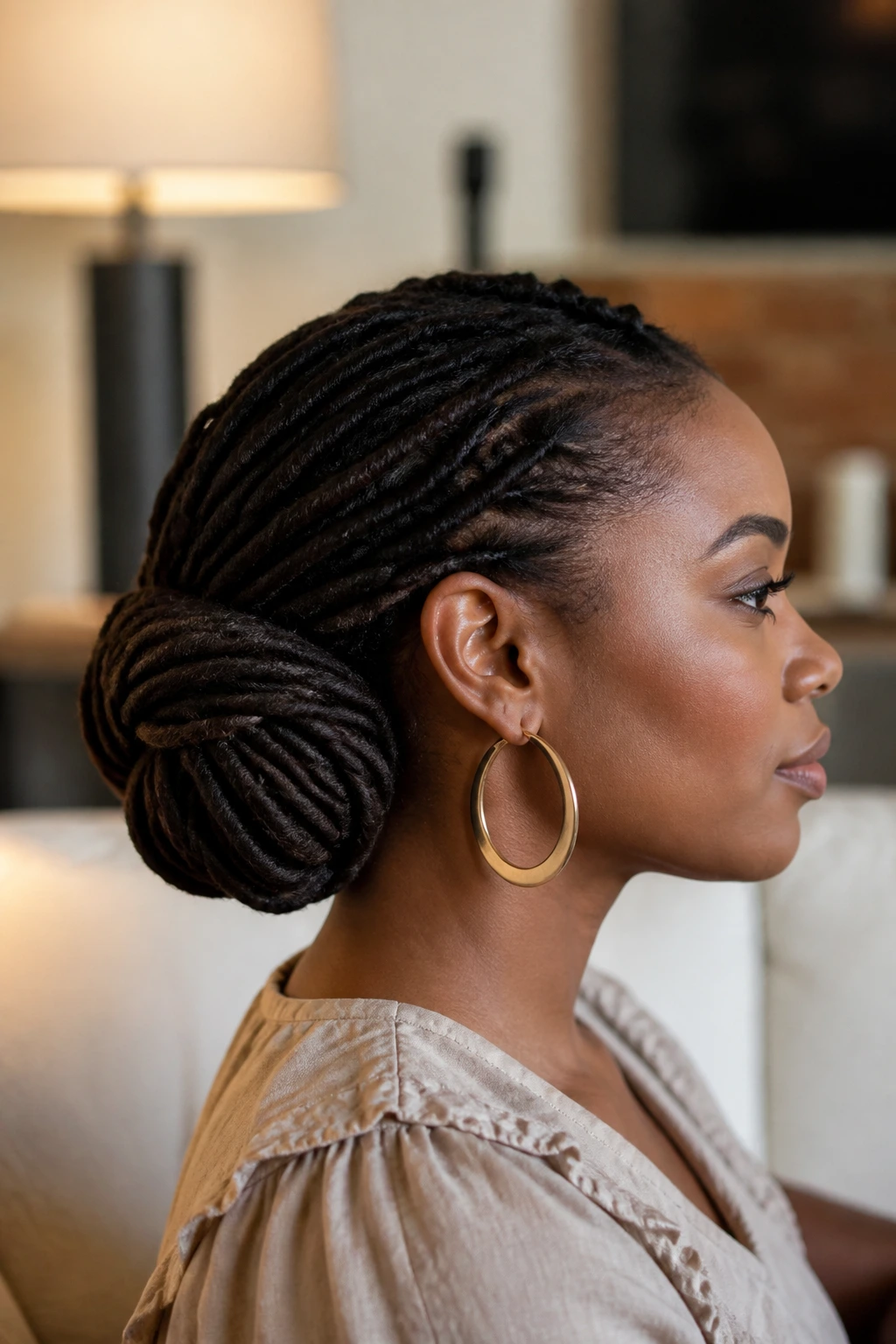
A folded chignon looks softer than a French twist and sits lower on the head. That lower placement makes it a nice choice for long locs that feel heavy when pinned too high.
Fold the length under, then tuck the ends into the center instead of wrapping them around and around. It creates a compact shape with less bulk at the sides. If the bun starts bulging, take out a pin and rebalance the fold rather than pushing more hair into the same spot.
This is one of those styles that looks calm in person and stays that way if you respect the base. It is not flashy. It just works.
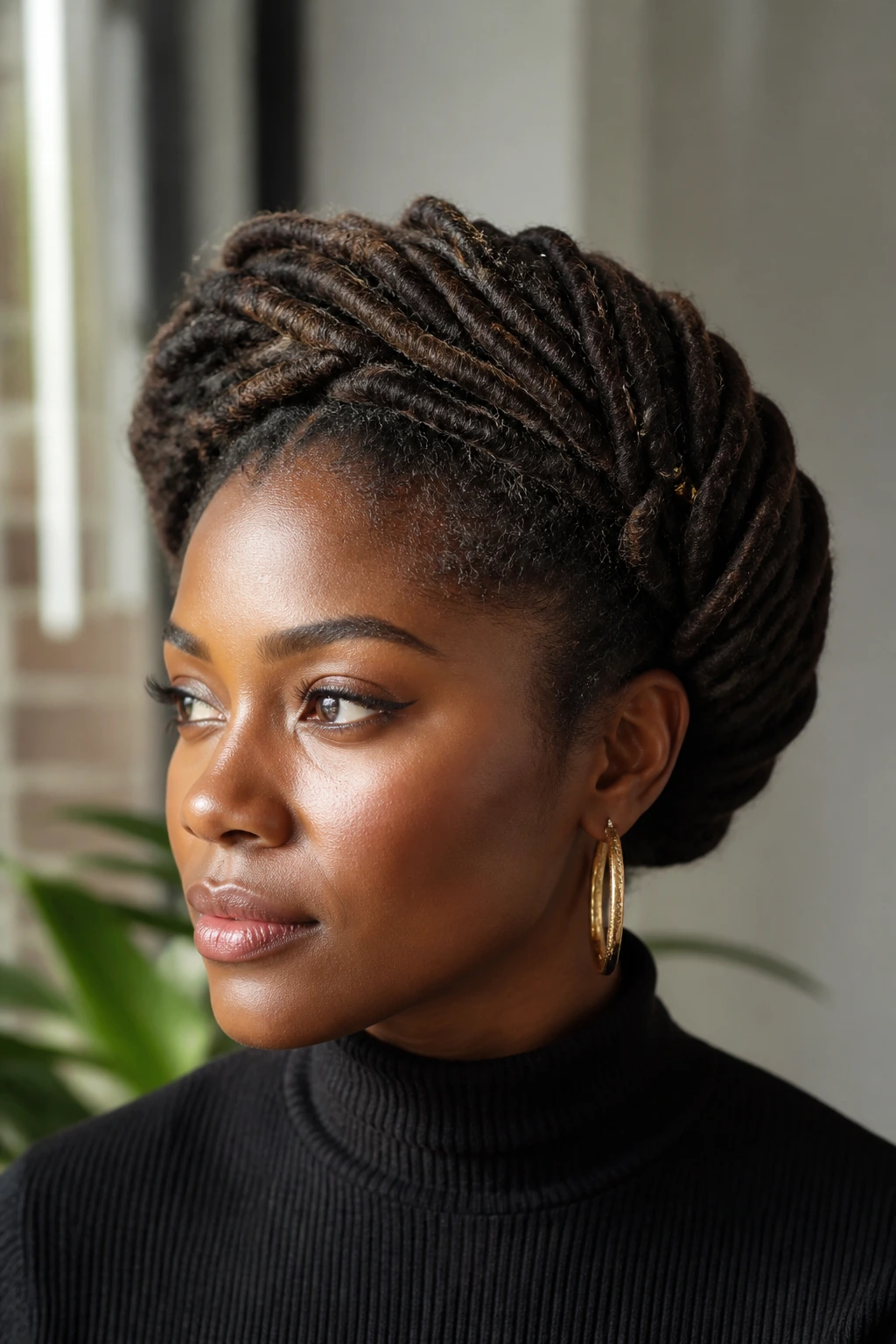
10. Rose Coil Bun
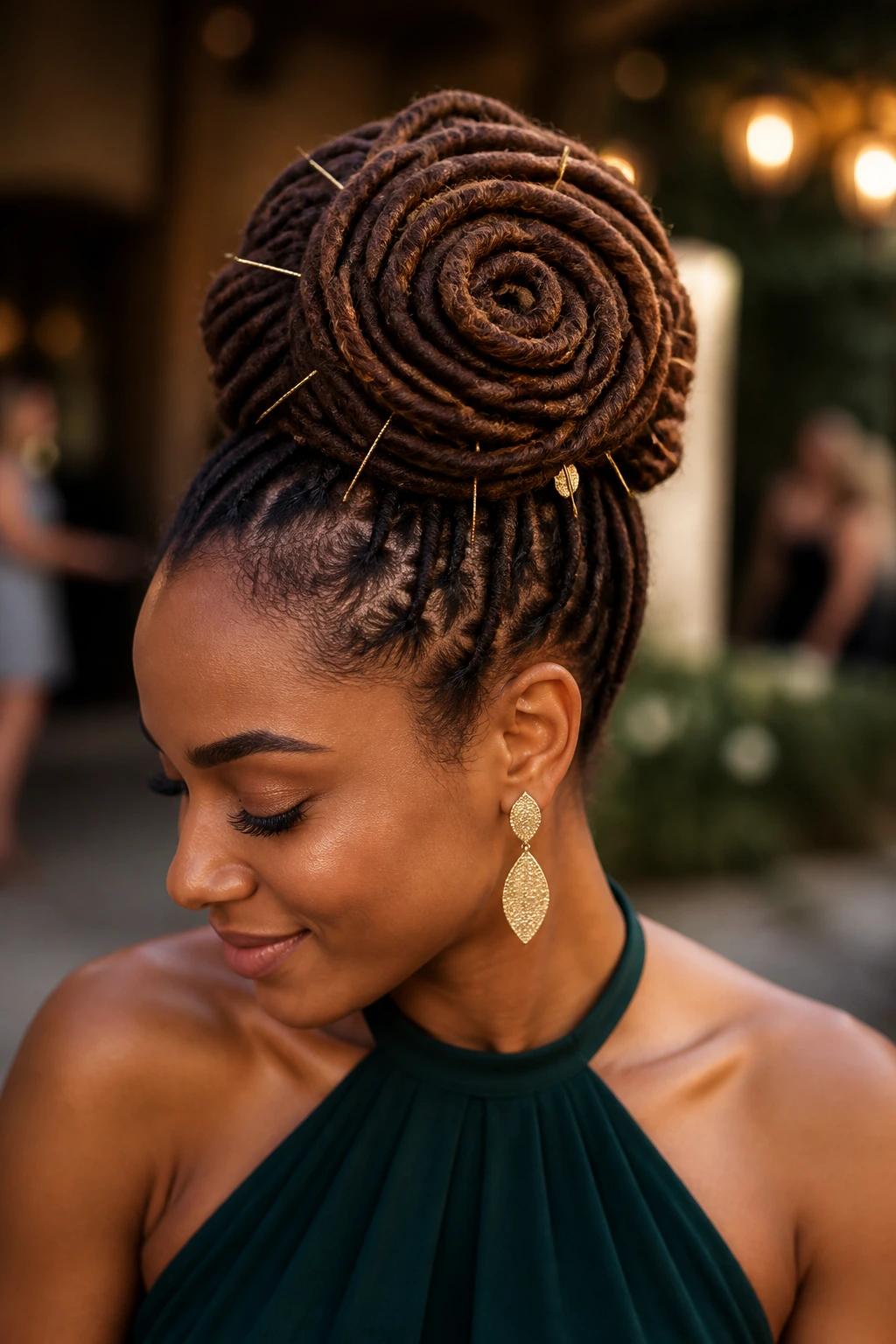
This is the style I pull out when I want a bun that looks shaped rather than shoved together. The locs spiral around a center point like petals, which makes the whole thing feel a little sculptural.
Use pins like spokes. One at the center, then a few around the outer coil, so the bun holds its round shape. If your locs are extra long, tuck the tail under the last turn instead of trying to wrap it too many times.
The rose coil bun is good for events, photos, or any day when a plain bun feels too plain. It protects well because the ends are tucked inward, not left to scrape around the outside.
11. Deep Side Roll
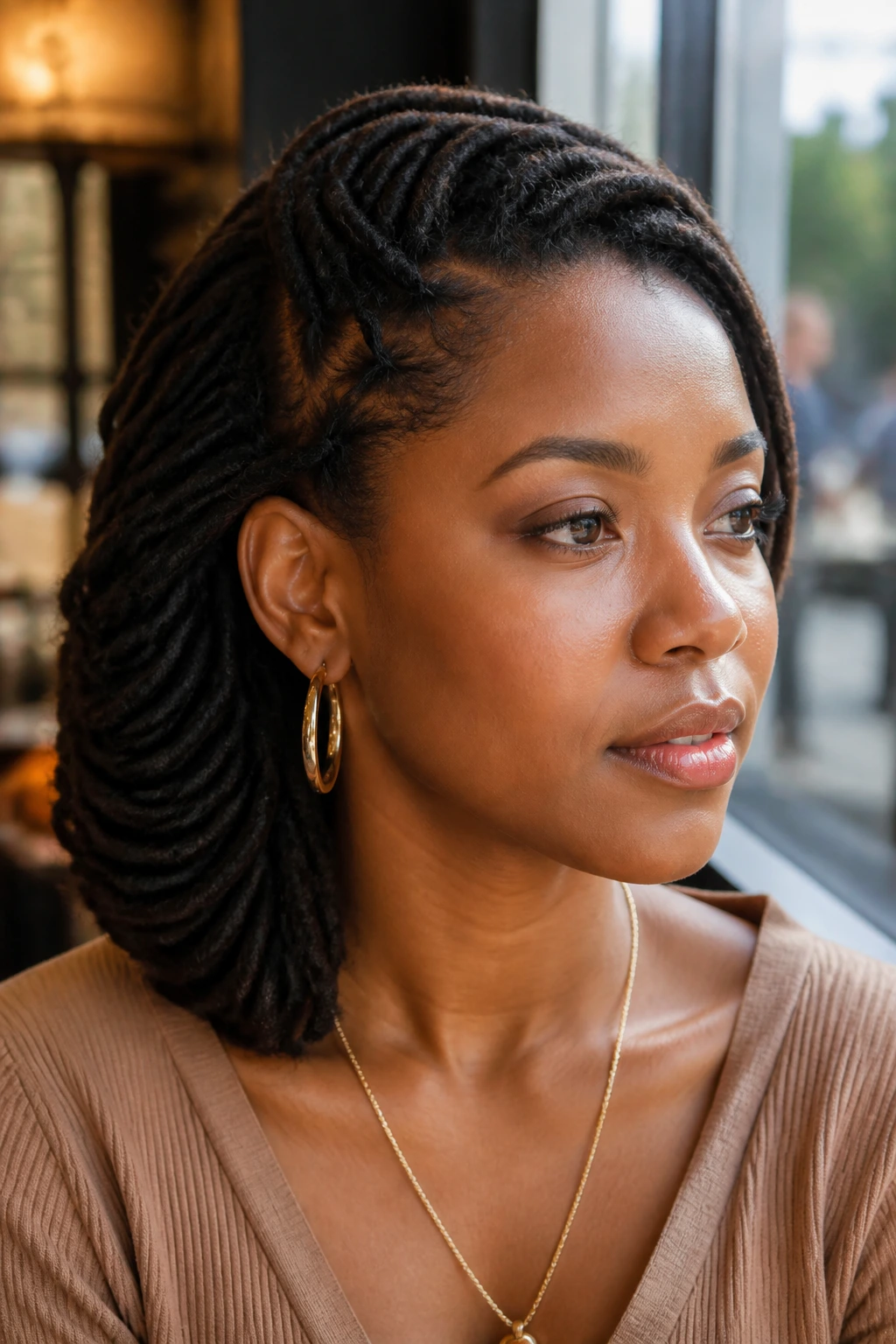
Why does a deep side roll work so well on long locs? Because it gives the front a clean line and shifts the weight off the center of the head. That tiny change can make a long set feel lighter right away.
Roll the front section back along a deep side part, then pin it low behind the ear. The rest of the locs can tuck behind that roll or swing into a low side shape, depending on how much length you want to show.
This one is especially good when you want one side of the face open and the other side to carry the drama. It feels less stiff than a full crown style.
12. Satin-Scarf Ponytail Wrap
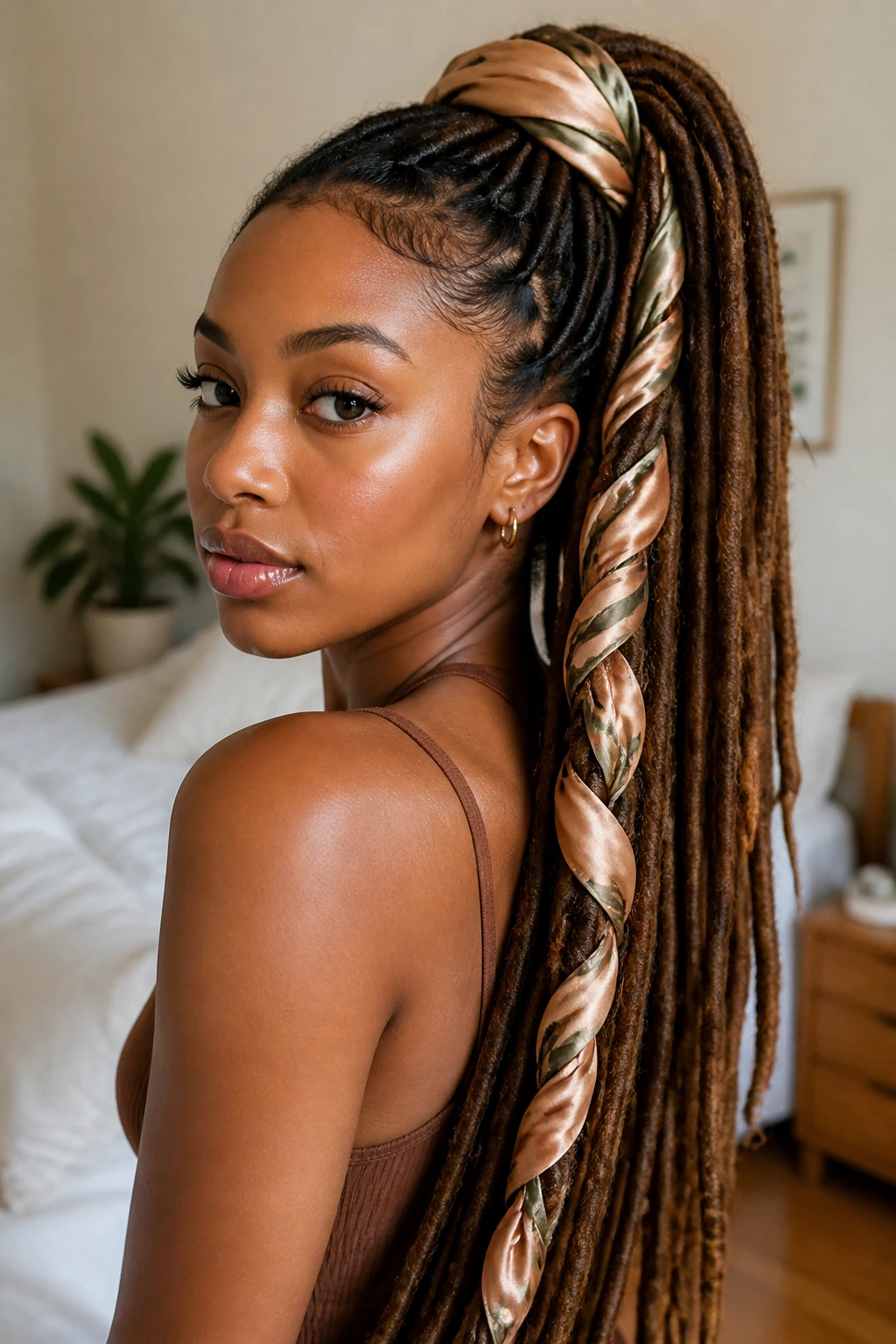
A scarf changes the whole mood of a ponytail. Wrap it around the base, weave it through the length, or tie it over the band so the friction point gets less direct rubbing from clothing and wind.
Choose satin or silk, not cotton. Cotton grabs at the fibers and makes the locs fuzzy faster. A 21- to 27-inch square scarf usually gives enough fabric to wrap securely without turning the style into a knot-fest.
This style is useful when the hair is a little older and you want to hide the frizz at the roots without starting over. It also lets you turn a simple ponytail into something that looks finished.
13. Bubble Ponytail
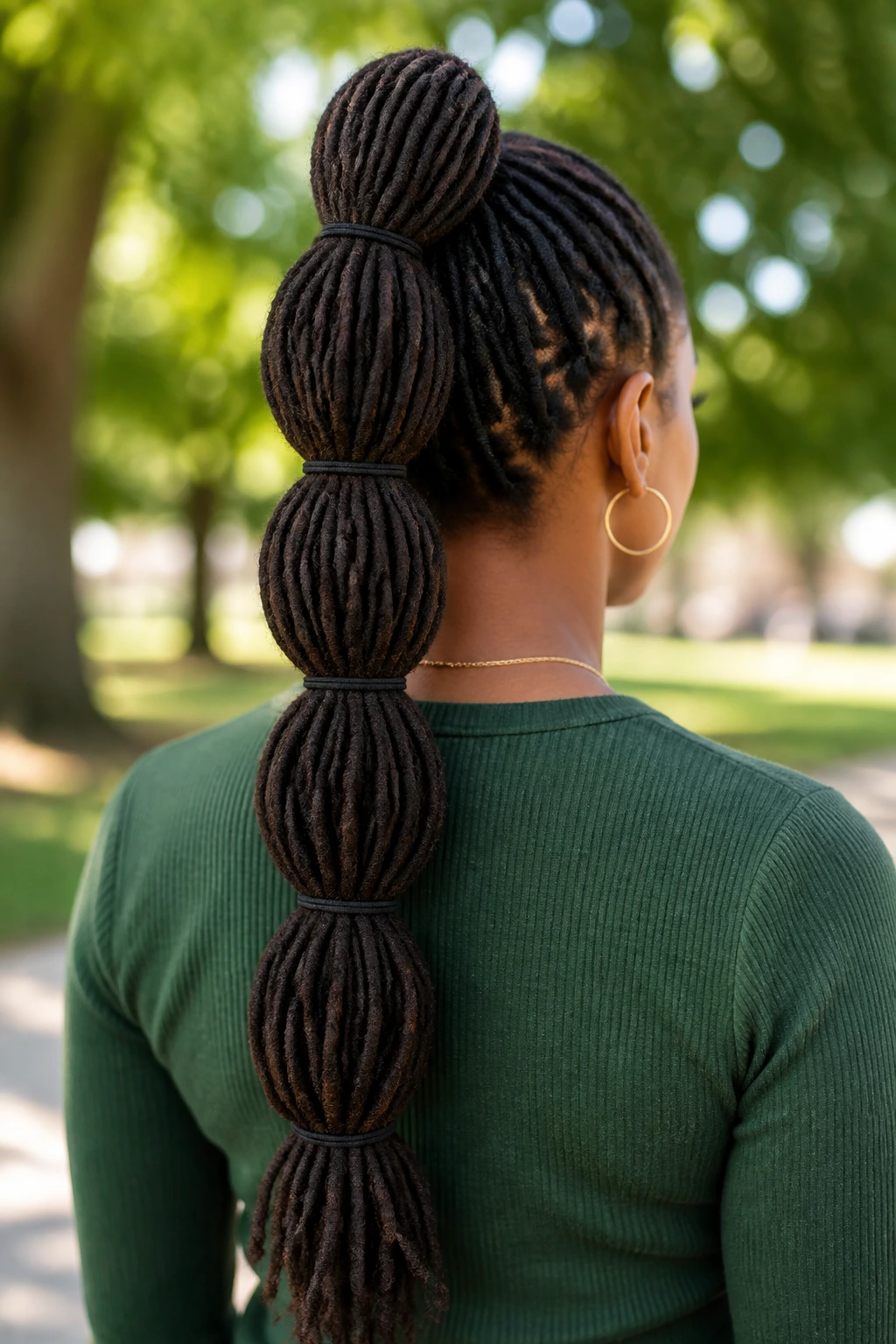
A bubble ponytail breaks long locs into sections, which makes the length look controlled instead of heavy. That matters when the bundle is thick and keeps swinging into your back.
Use snag-free bands every 2 to 3 inches, then gently widen each section with your fingers until the bubbles look even. Do not yank them outward like you are trying to fluff a pillow. The goal is shape, not stretch.
This is one of the better styles for showing off extra length while keeping the hair from swinging loose at every step. It is not the quietest look on the list, but it does a nice job of controlling movement.
14. Twisted Crown Half-Up
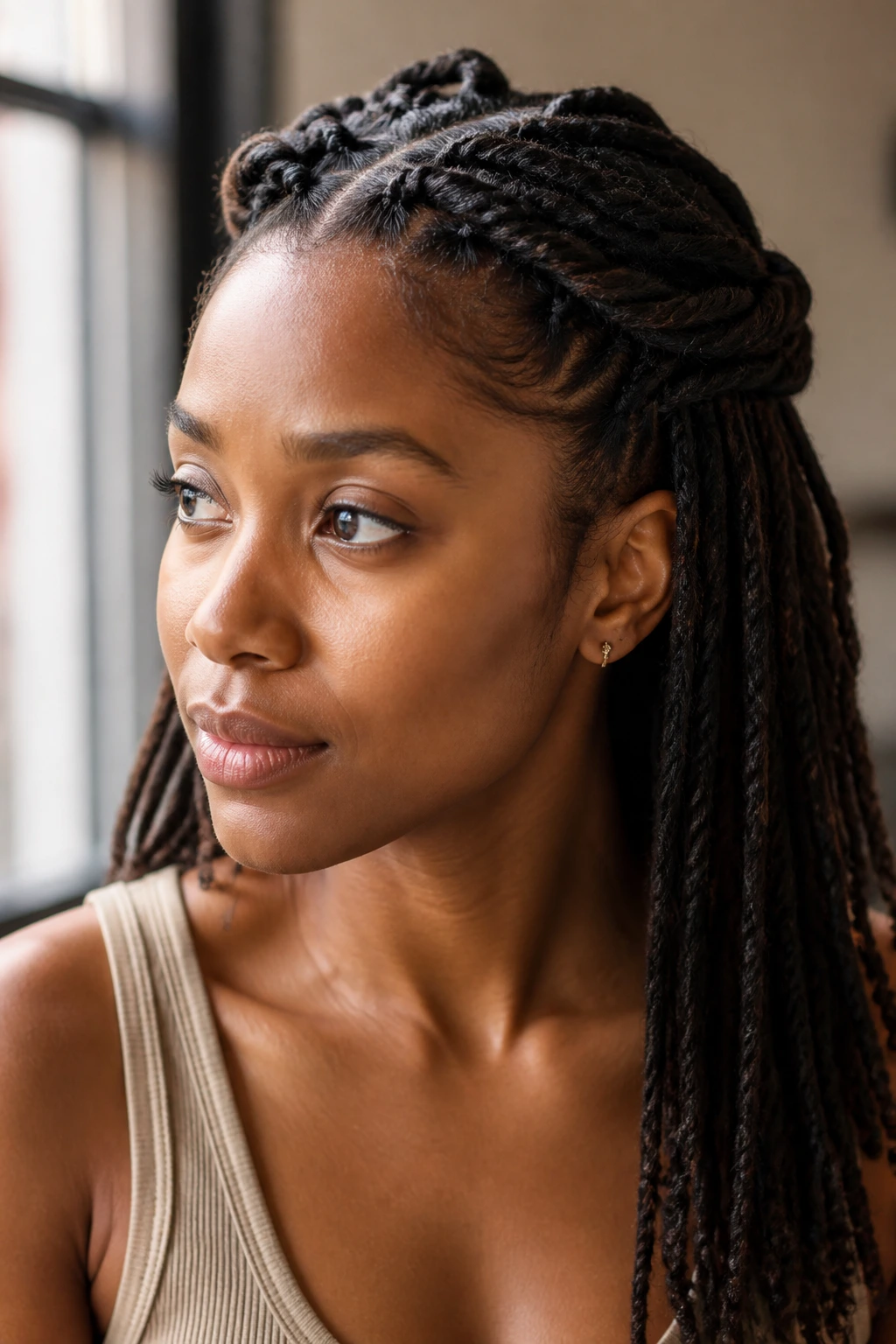
Two front twists pulled back from the temples give the face a soft frame without dragging the entire head upward. That makes this style easier on the roots than a full crown or top knot.
The Front Should Breathe
The twist should glide back, not clamp. If you can feel the skin pulling when you smile or raise your brows, loosen the section and let the front sit a little softer.
This style works well when you want the hair away from the eyes but still want the length to hang free behind it. It is also a neat choice for days when you do not want a heavy pin set.
15. Side Braid Into Low Bun
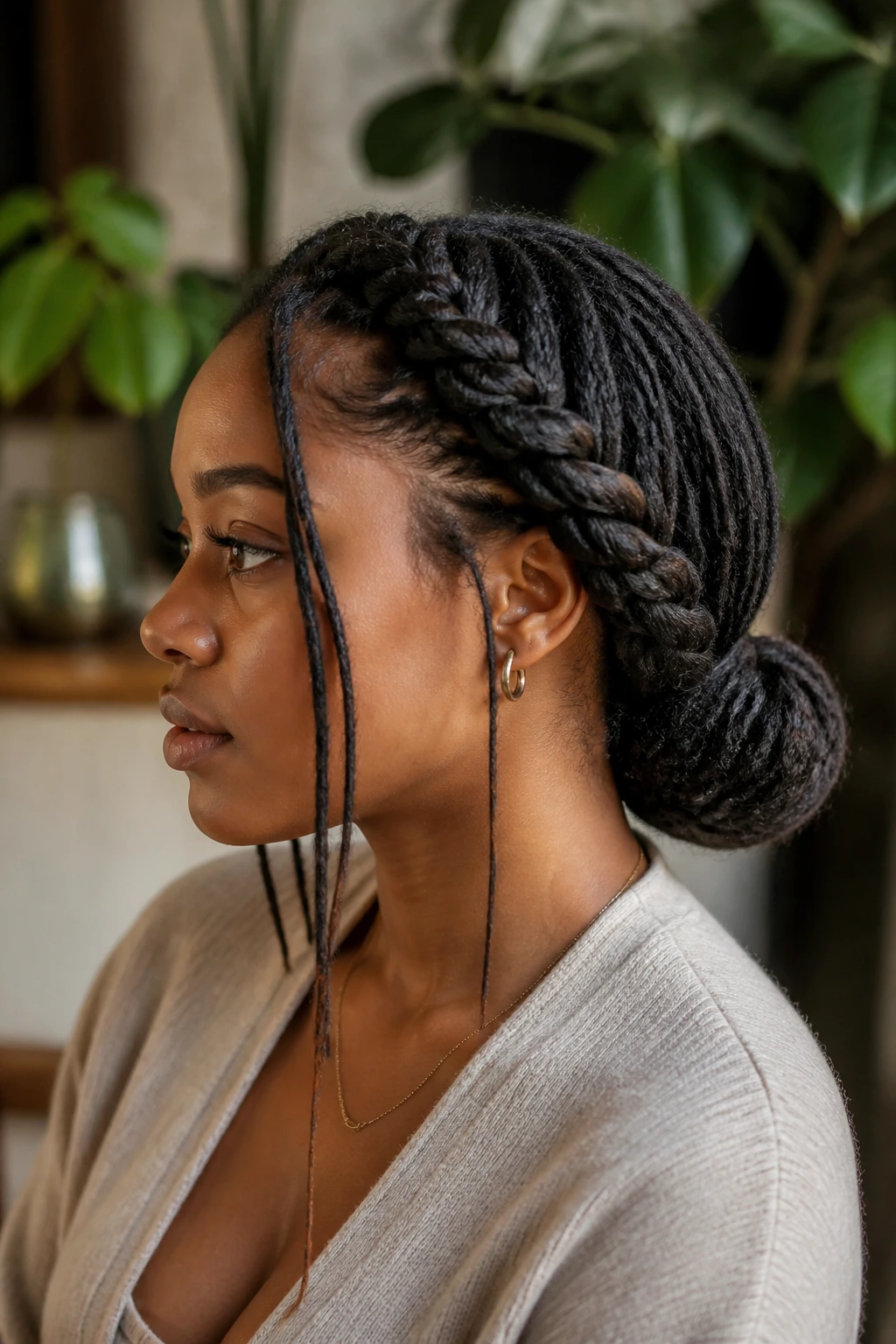
A side braid into a low bun keeps one side of the head calm and gives the style a clean line over the ear. It is one of the better choices when the front wants to fall into your face but you do not want a full updo.
The braid does not need to be tiny. In fact, with long locs, a chunky rope-like side braid usually looks better and holds more steadily. Once it reaches the nape, coil it into a bun and pin the base, not just the tail.
This one feels polished without needing a lot of extra accessories. If you want the look to stay quiet, use black pins and a matching band.
16. Banded Center Mohawk
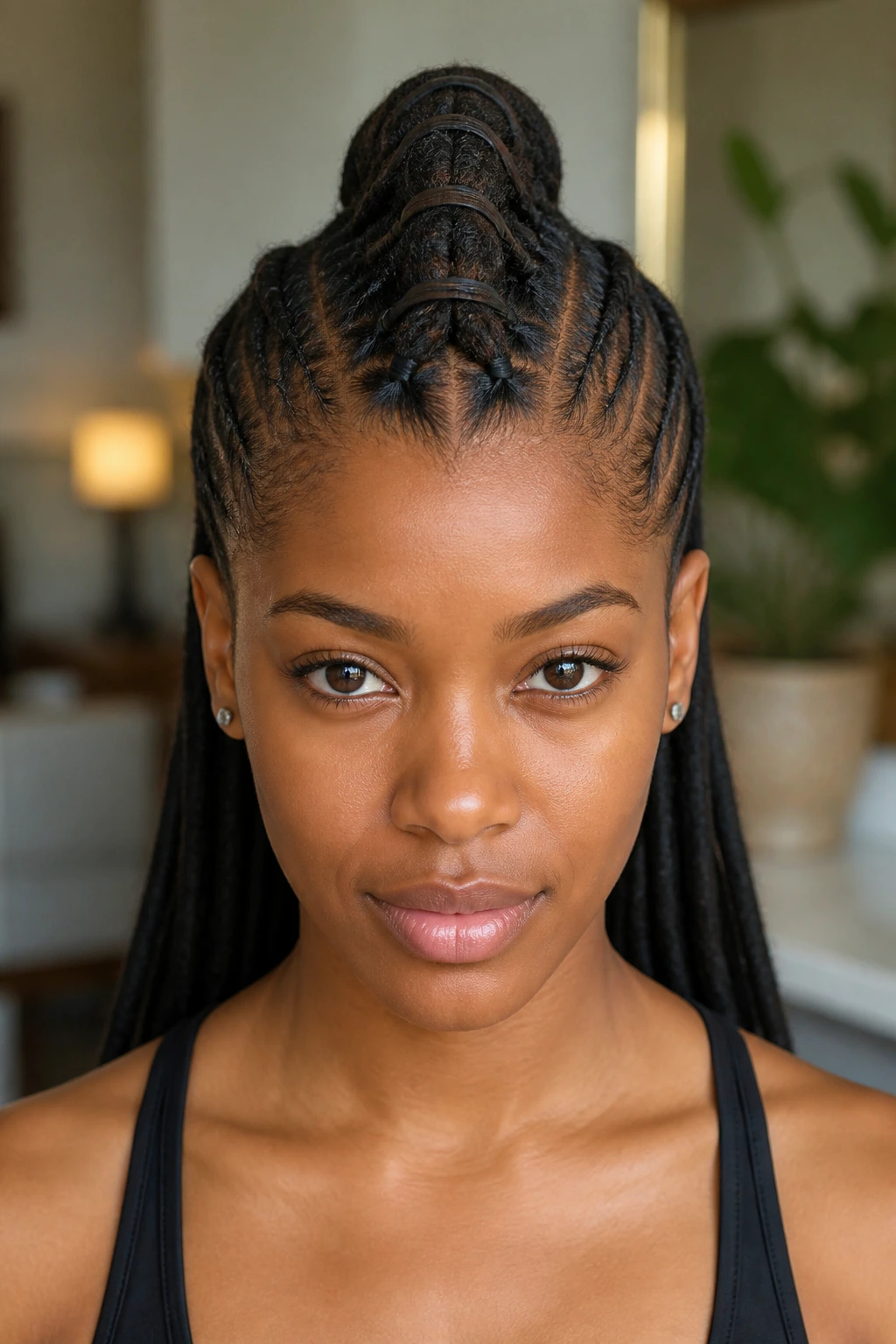
A banded center mohawk keeps the sides flat and lets the middle section carry the shape. That is useful when the locs are dense and one big knot starts to feel too heavy.
Split the center into 3 to 5 small sections, then secure each with a soft band or pin. The spacing breaks the load up so the style does not all sit on one spot. Keep the bands 1 to 2 inches apart if the locs are especially long.
This is one of the stronger options for active days. It stays off the neck, keeps the sides neat, and gives the hair a lifted shape without making the crown do all the work.
17. Triple-Loop Updo
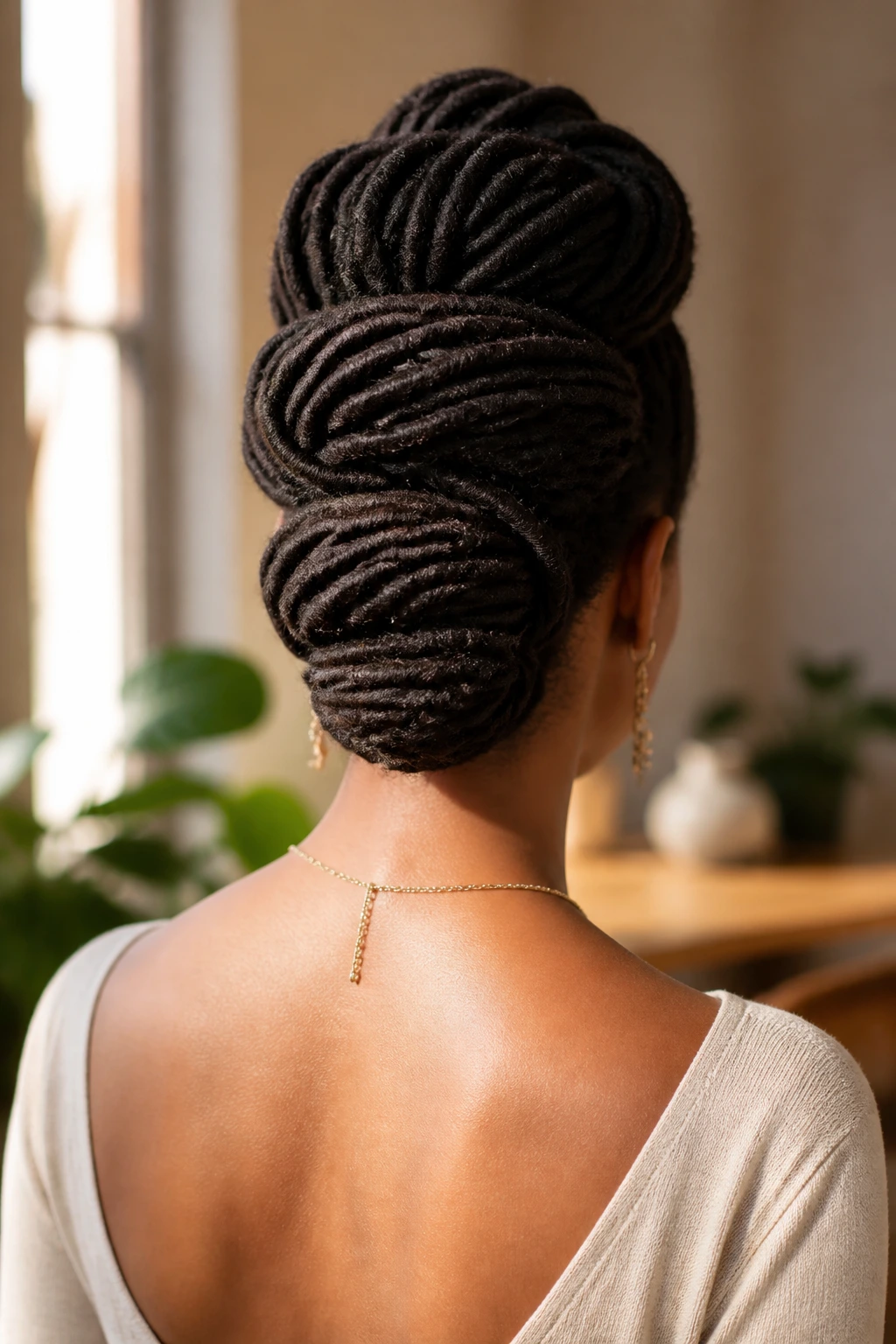
A triple-loop updo is what I reach for when one bun feels too flat and two buns feel too playful. Three overlapping loops stack the length in a way that hides the ends and keeps the silhouette compact.
The loops should sit one above the other, with the base anchored at the nape and the top loop a little lighter than the others. If the middle loop starts bulging, you probably shoved too much length into it. Spread the locs out across all three sections instead.
This is a good choice for very long locs because it uses the extra length instead of fighting it. It also gives a slightly dressier profile without requiring a lot of ornament.
18. Curved Side Ponytail
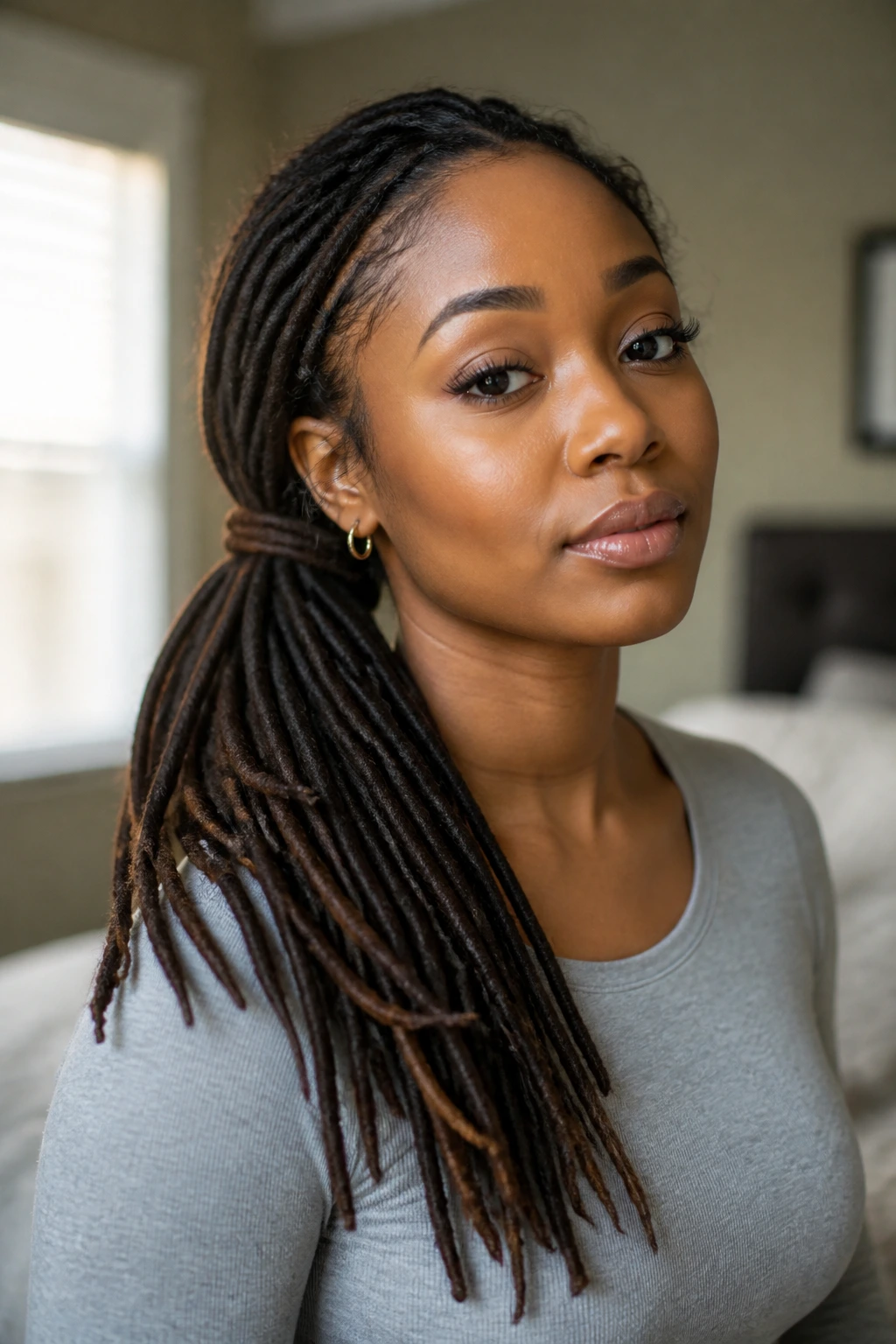
A curved side ponytail softens the whole head shape because the part arcs gently instead of cutting straight across. That curve makes the style feel deliberate, not thrown together.
Gather the locs low behind one ear and let the length rest over the shoulder. The main point is to keep the weight off the center of the back while still giving the hair room to move. A wide band at the base and one wrapped loc usually finishes it cleanly.
This style is one of the easier ones to wear all day because it sits low, stays out of the face, and avoids the extra pull of a tall anchor. It is simple, and that is the point.
19. Low Infinity Knot
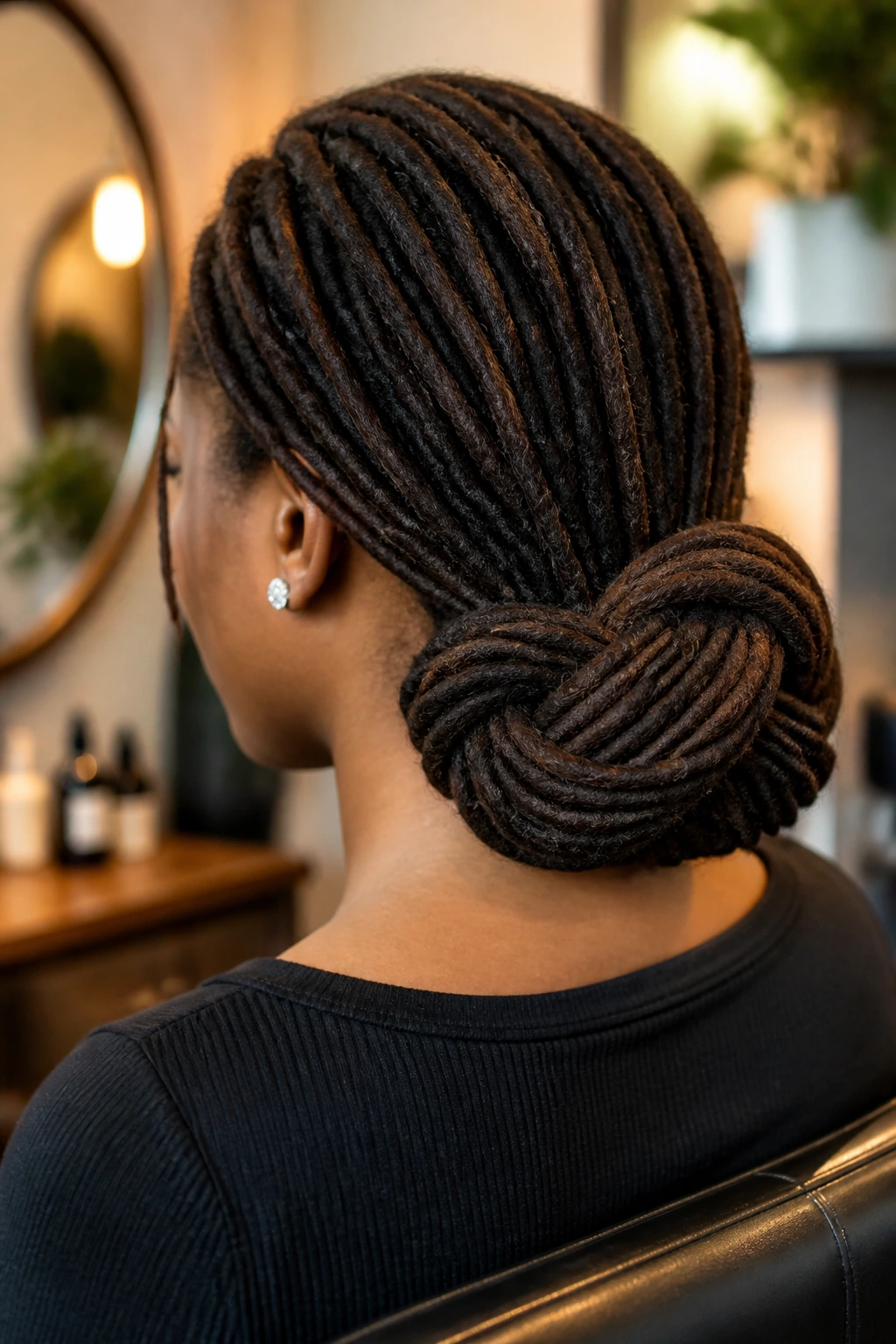
A low infinity knot solves the problem of a bun that feels too blocky. Instead of wrapping the locs into one round mound, the hair crosses over itself in a figure-eight shape and settles at the nape.
That crossing helps distribute weight in two directions instead of one. The base should stay broad and low, with pins at the crossover points so the knot does not unravel by late afternoon.
If your locs are long enough to feel bulky in a normal bun, this shape can make them feel more controlled. It looks a little more deliberate than a plain coil, which never hurts.
20. Wide Headband Tuck
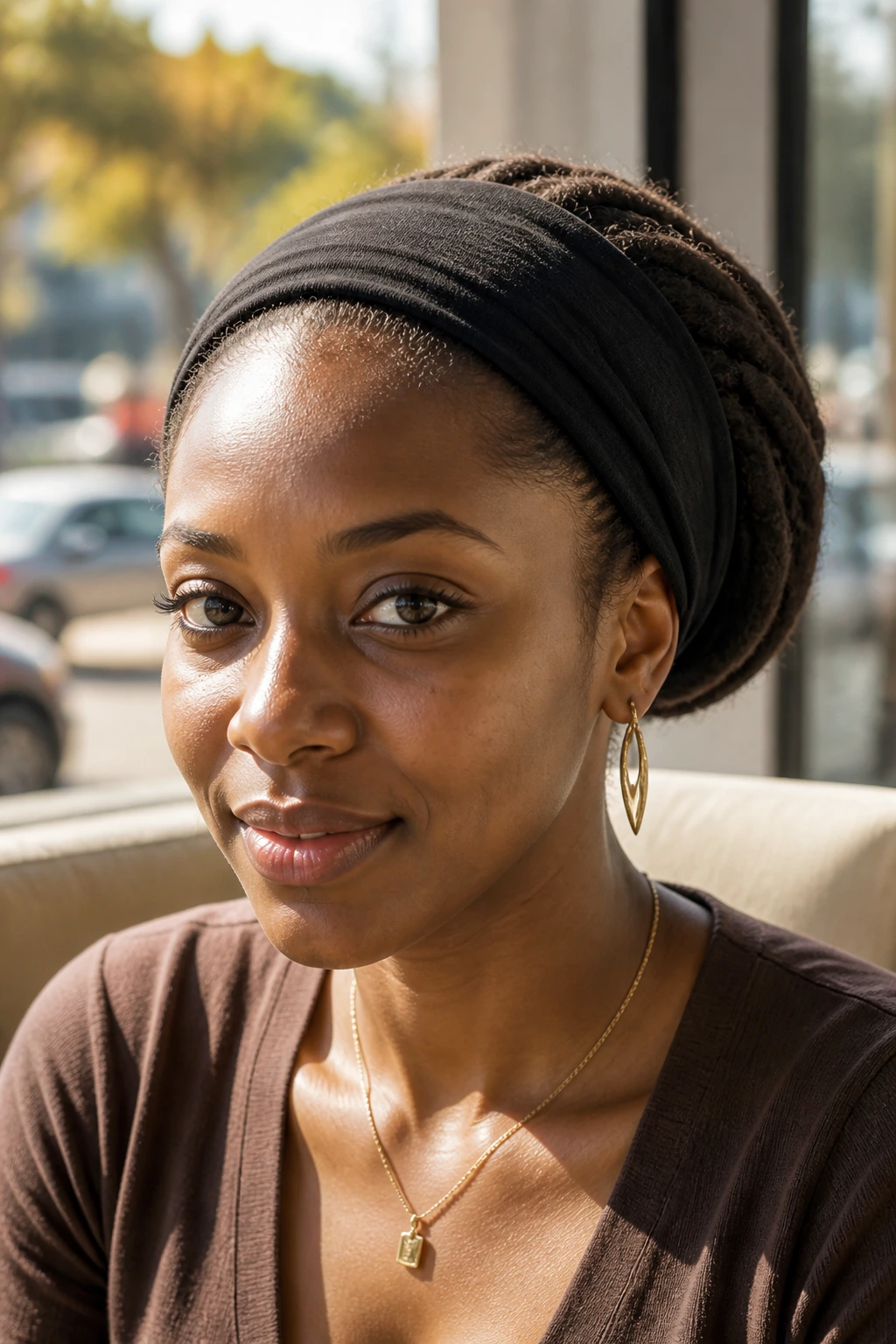
A wide headband tuck is the day-off style that still looks like a style. The band takes the pressure off the front, and the locs can be tucked low or left loosely gathered behind it.
Headband Choice Changes Everything
Pick a band that sits broad across the head, not a thin strip that cuts into the skin. A wider band spreads pressure better and stays put on thick locs without slipping every time you turn your head.
This one is excellent after a retwist, after a wash, or on any day when the scalp wants less attention. It is also a smart option when you need the hair off the face but do not want to build a whole updo.
21. Low Roll-and-Pin
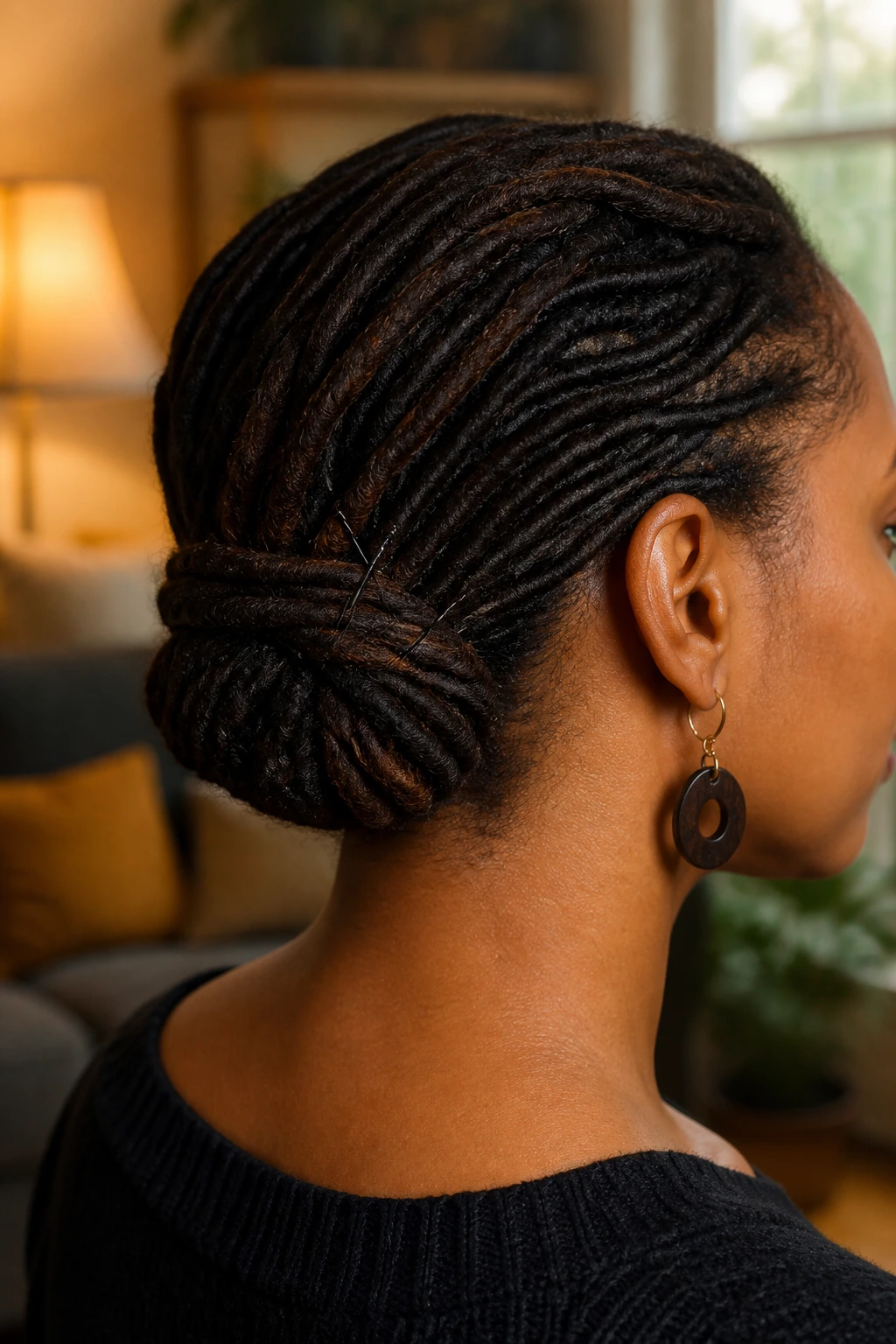
A low roll-and-pin sits flat enough for a collar, a hoodie, or a car seat, which is why I trust it more than taller styles when the day is going to be long. The roll starts at the nape and folds upward into a compact line.
Use 4 to 8 pins depending on density, and place them where the locs overlap instead of stabbing them randomly into the middle of the roll. That gives the style grip without making the scalp feel crowded.
This is one of the quietest protective looks in the set. It does not ask for much, and that is why it lasts.
22. Mini Bantu Knot Rows
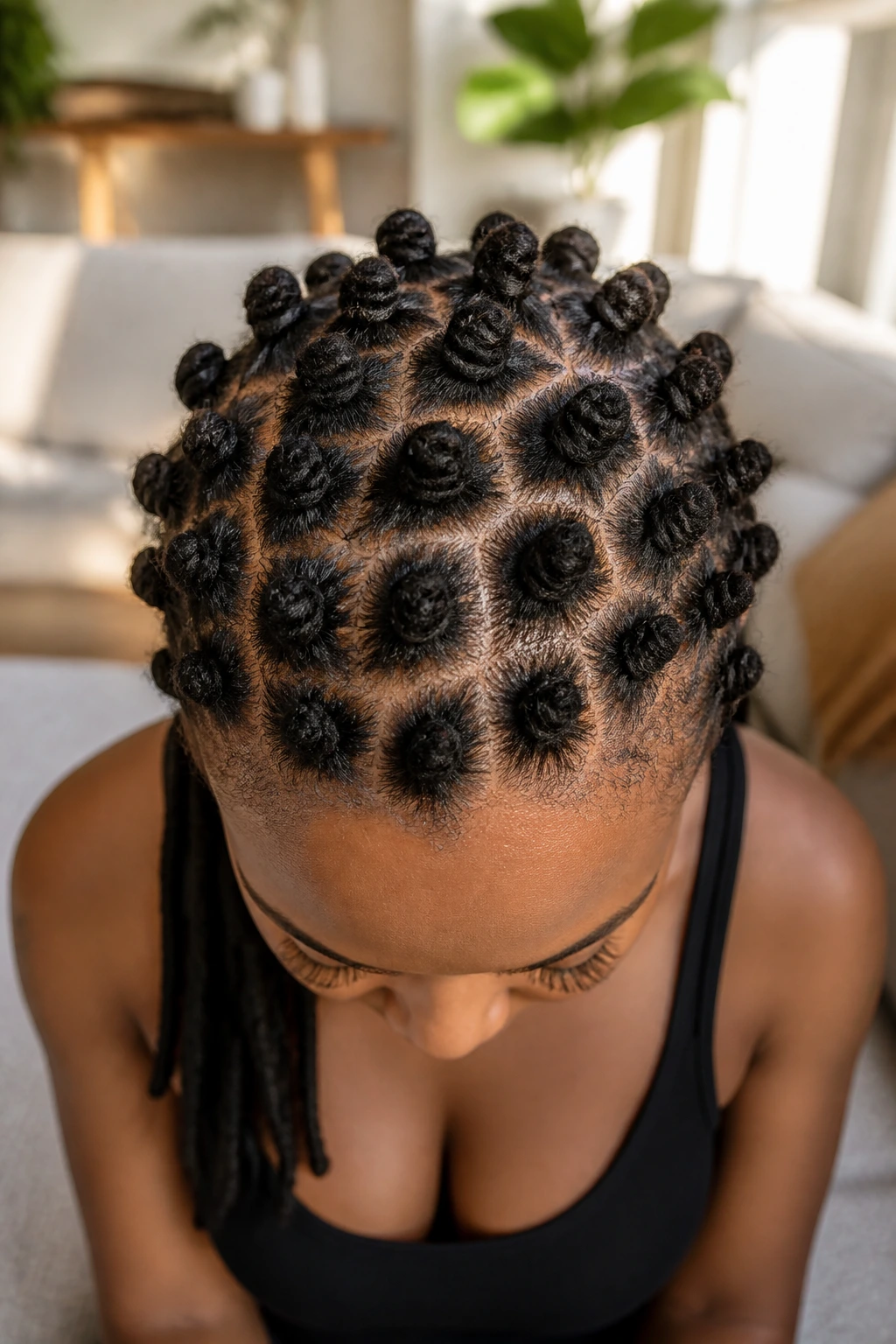
Mini Bantu knot rows give long locs a set shape without forcing them into a single heavy bundle. The knots can be placed in rows across the head or just along the crown, depending on how much you want to tuck away.
Keep each knot roughly walnut-sized or a little larger if the locs are thick. Tiny knots on heavy locs tend to pull. Bigger, more balanced knots sit better and are less likely to feel tight by the end of the day.
This style is a good fit when you want texture later, because it can be worn as is or taken down for a softer pattern. It is not the best choice for every scalp, but when it works, it really works.
23. Crossed Back Tuck
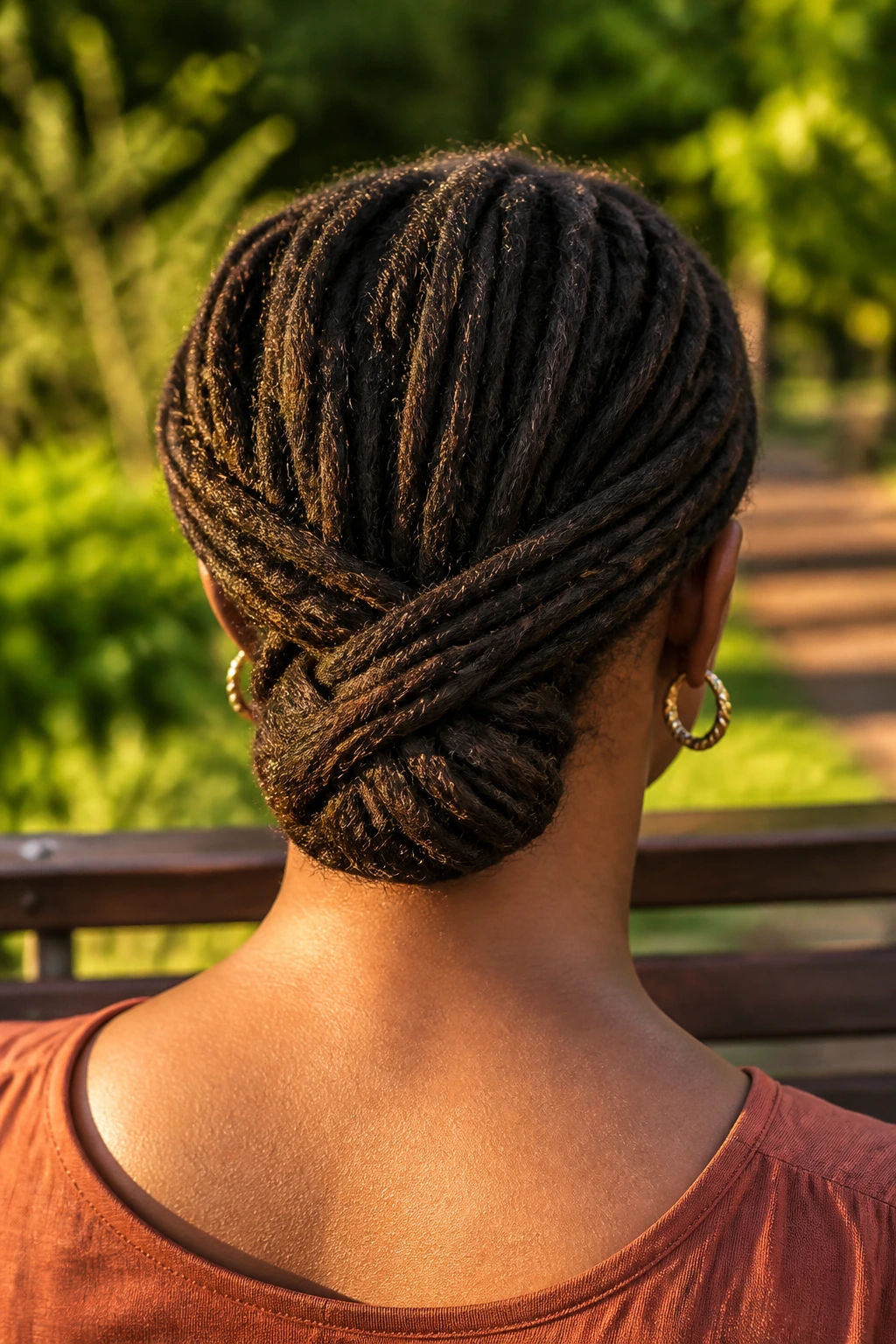
If you want the front neat without building a big bun, the crossed back tuck is a sharp option. Two side sections cross behind the head in an X, then the remaining length tucks low at the back.
The cross gives the style structure, and the low tuck keeps the ends from brushing against your shoulders all day. It is especially useful for long locs that tend to spread outward instead of staying close to the head.
One thing I like here: the style looks polished even when it is not perfectly symmetrical. That makes it easier to wear on real days, not just the ones where you have ten minutes to re-do everything.
24. Chunky Loc Coil
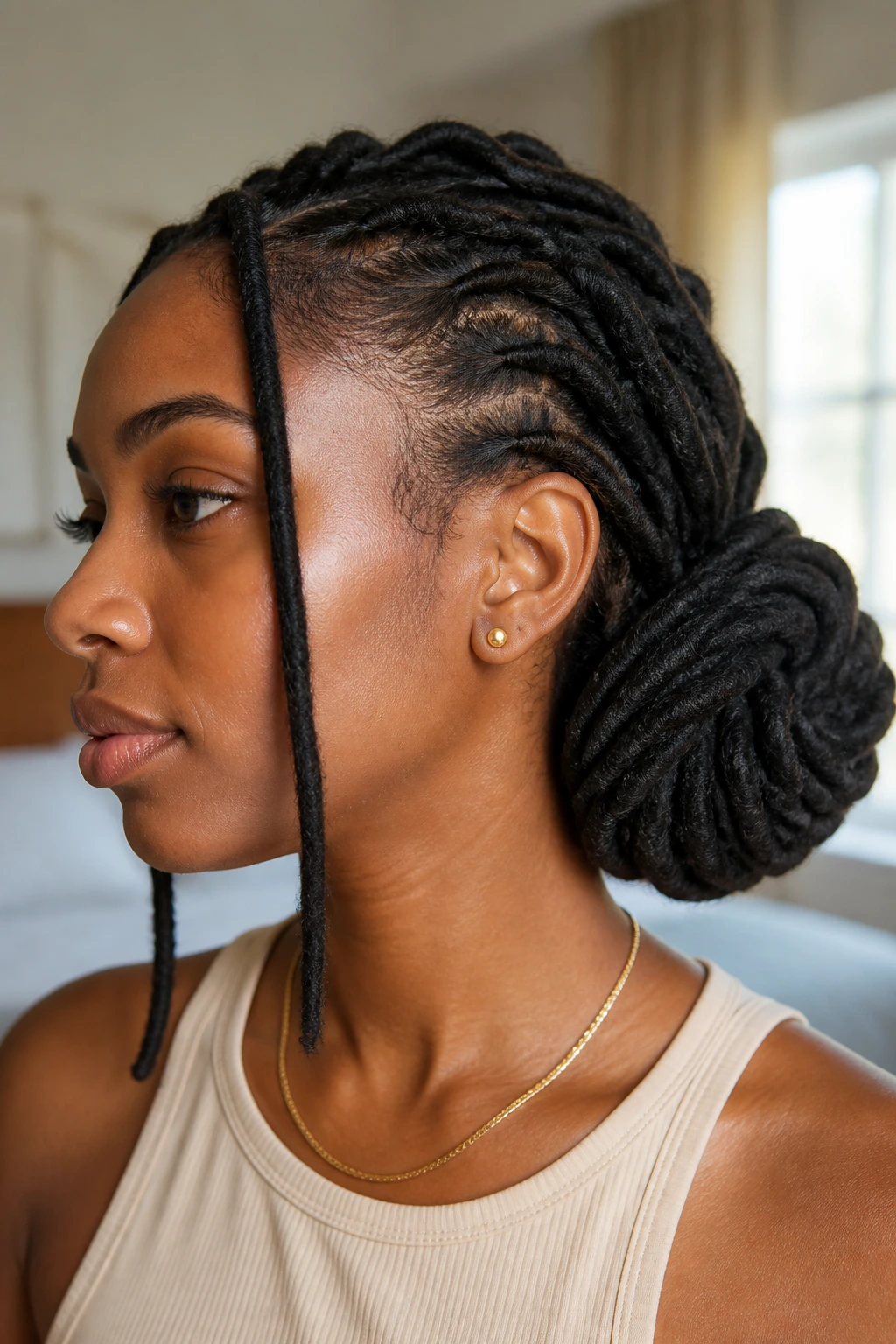
A chunky loc coil is the heavy-hitter version of a bun. One thick rope of locs wraps around itself into a bold coil, which is a good answer when the length is extra long and you want one solid shape.
Use strong pins or a sturdy clip, because this style needs more support than it first appears. The coil should sit low enough that the neck stays comfortable, and the ends need to tuck fully inside so they do not poke out like loose wires.
This is a good style for mature, dense locs that can hold their shape without a lot of help. It is not delicate. That is part of the appeal.
25. Flat-Twist-Inspired Nape Tuck
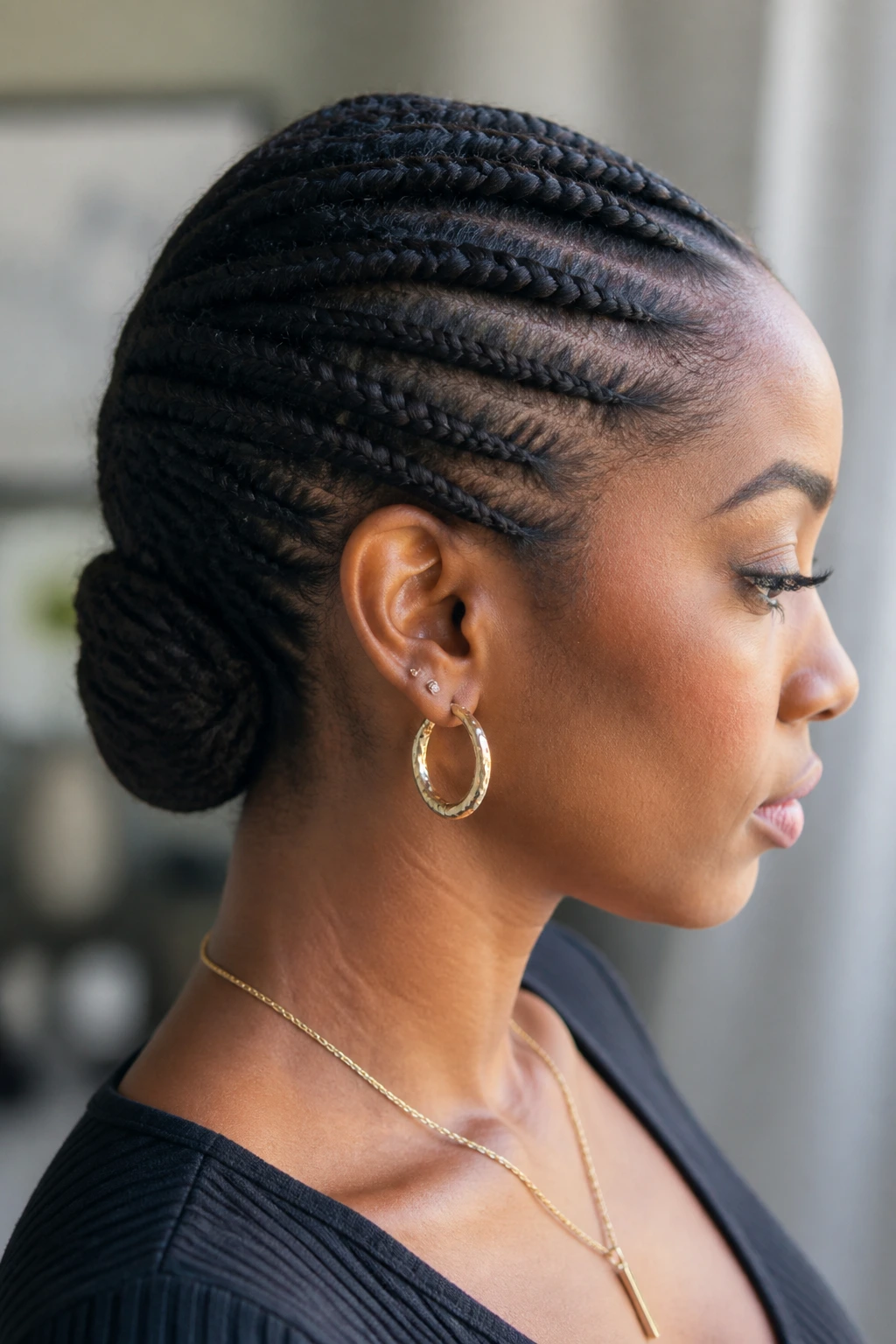
A flat-twist-inspired nape tuck is one of the calmest ways to wear long locs when the scalp needs a break. The sides are guided back in flat rows, then everything tucks low at the neck instead of rising into a high knot.
This is a quieter style than a bun and usually sits flatter under a hood, scarf, or jacket collar. It also gives the perimeter a break because the pull is spread across the head rather than gathered into one spot.
If I had to pick a style for a long, ordinary day — the kind with errands, a desk chair, and a little wind outside — this would be near the top of the list. It is steady, low-key, and easy on the roots.
Why Long Locs Need the Weight Spread Out
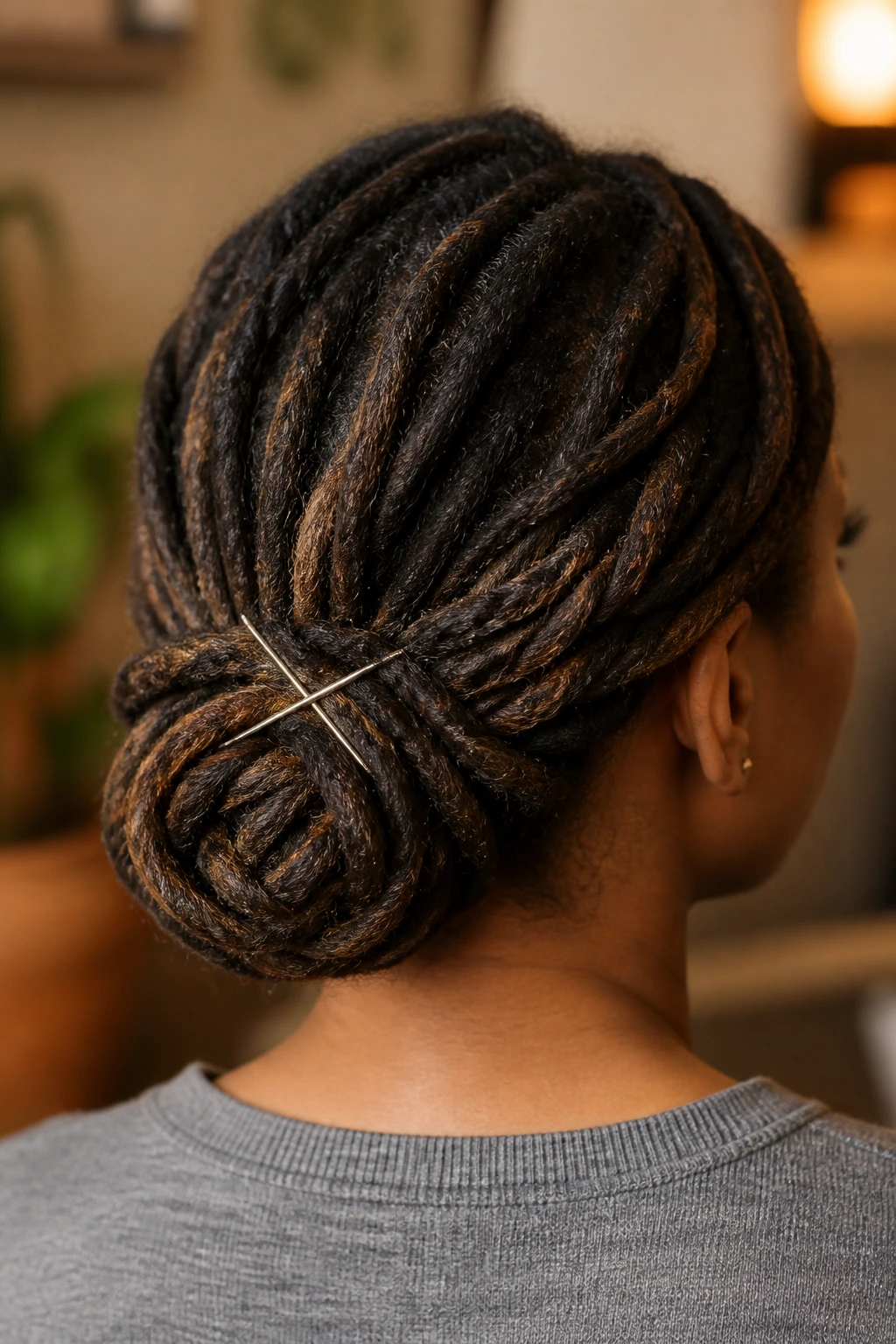
Long locs behave like ropes with a lot of leverage. The longer they get, the more every inch matters at the anchor point, which is why a style can feel fine for two hours and annoying by the end of the day.
The scalp usually speaks first at the temples and nape. Those are the spots that notice repeated pulling, tight bands, and the same exact pin placement over and over. A good protective style moves the pressure around instead of repeating it in one place.
Friction matters too. Coat collars, sweatshirt seams, seat belts, and even the back of a chair can chew on loose ends all day without leaving a dramatic mark right away. The damage shows up later as fuzz, strain, or a style that just looks tired sooner than it should.
That is the real reason these long locs hairstyles work. They let the length stay part of the look while keeping the roots out of the argument.
Essential Tools for These Styles
-
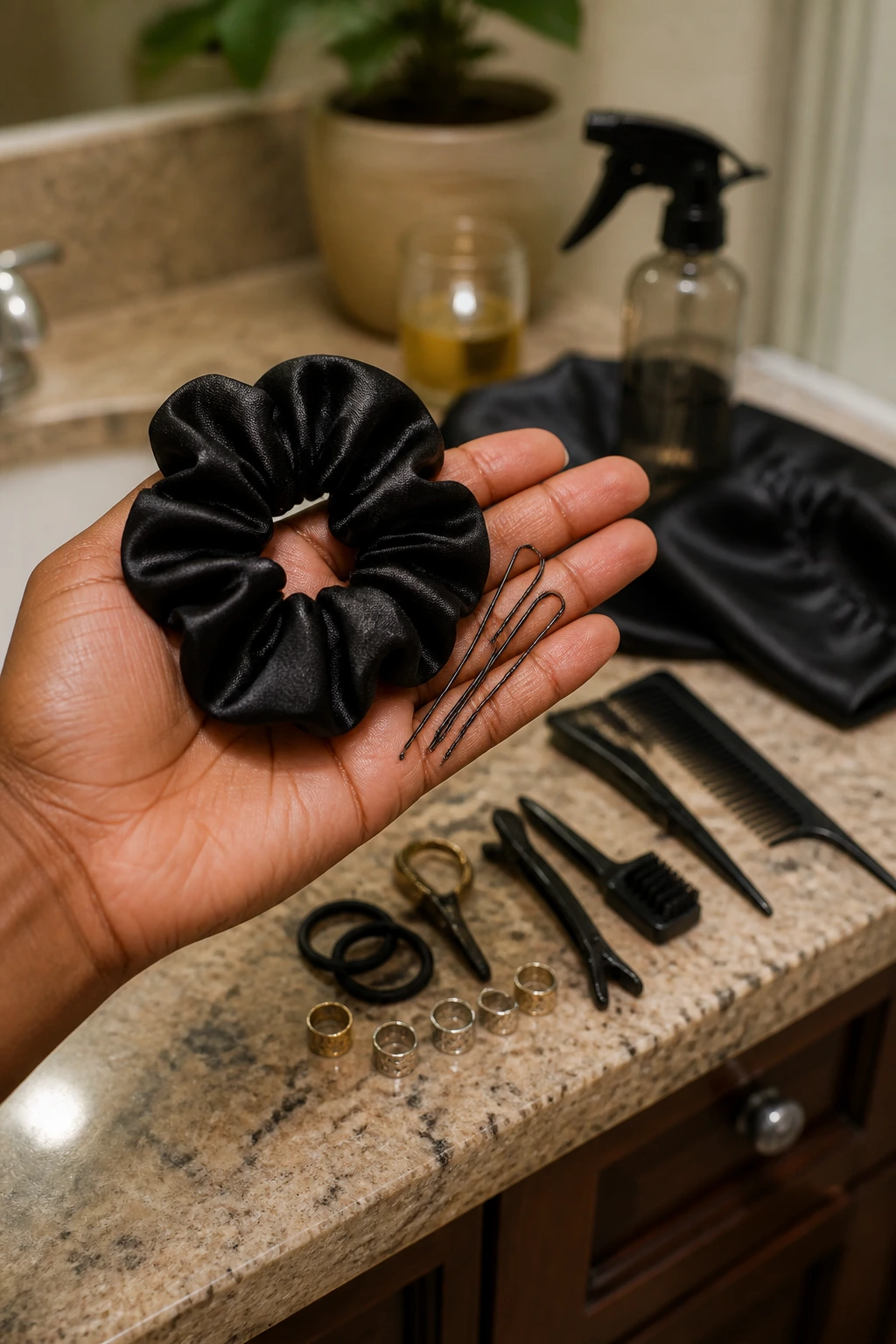
Satin scrunchies: Use the wide, soft kind; they grip without cutting into thick bundles.
-
U-pins: Better than tiny bobby pins for dense sets because they hold more hair and sit more quietly.
-
Long bobby pins: Handy for halos, twists, and crossed-back tucks where a little extra reach helps.
-
Duckbill clips: Great for sectioning while you build the style, especially on the crown or sides.
-
Rat-tail comb: Useful for clean parts and smooth side sweeps. The pointy end matters more than the teeth.
-
Edge brush: Keeps the perimeter neat with a light touch. No need to scrape the hairline.
-
Satin scarf or bonnet: Protects the style overnight and cuts down on friction from pillows and blankets.
-
Snag-free elastics: Reach for the seamless or coated kind when you need a ponytail anchor.
-
Loc jewelry or cuffs: Optional, but useful for dress-up styles like the rose coil bun or halo wrap.
-
Small mist bottle: Helpful for taming flyaways, but do not soak the locs. Light mist only.
If you only buy two things, buy good pins and a scarf. Cheap pins bend fast, and a bad scarf slides off when the style needs it most.
How to Match a Style to Your Long Loc Length and Density
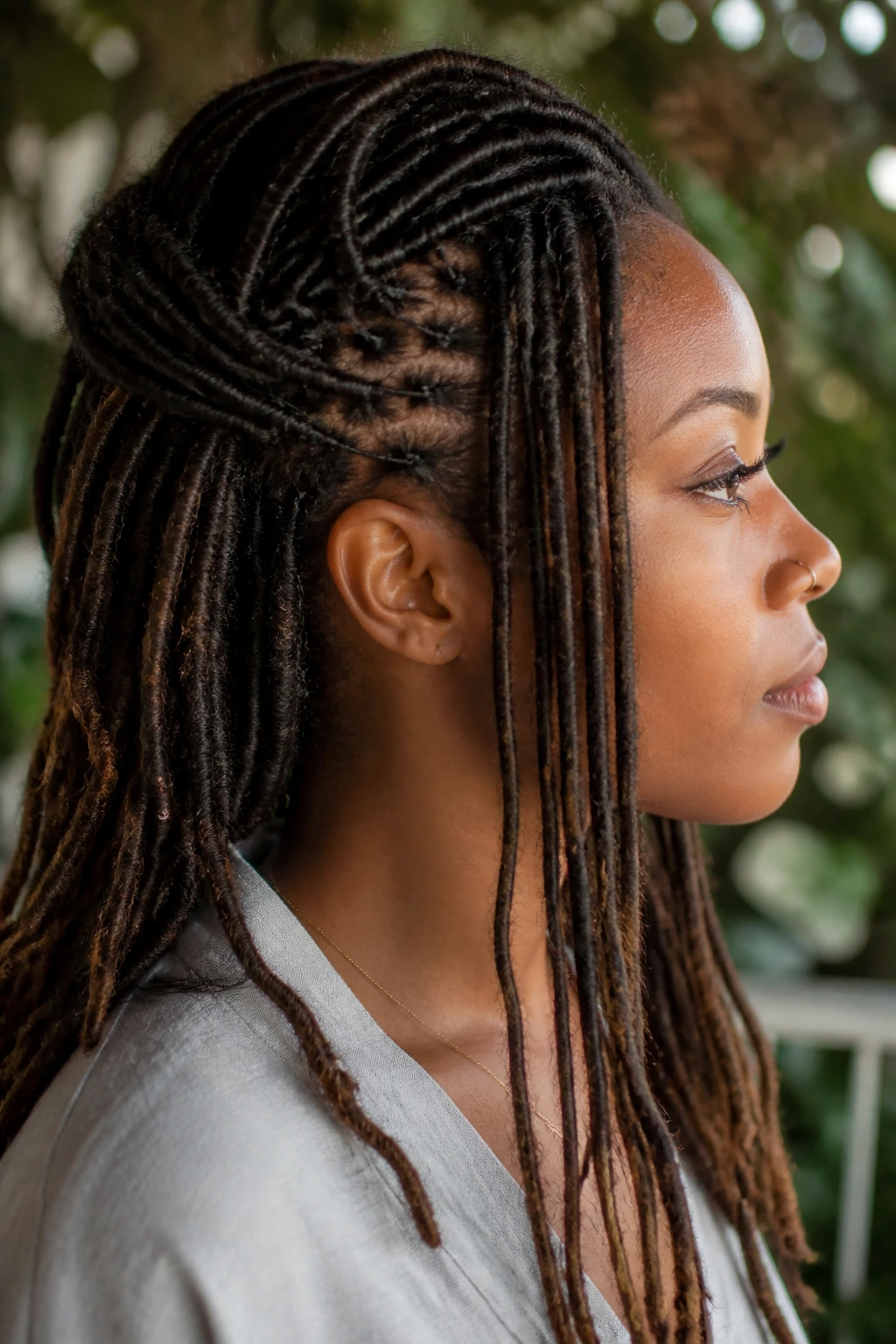
Long locs are not all the same. Length, density, and maturity change what actually works on the head, and the wrong style can feel like it was borrowed from somebody else’s hair entirely.
If your locs are shoulder-length to mid-back
Half-up top knots, side-swept ponytails, wide headband tucks, and crossed-back tucks usually behave well here. They give shape without asking the locs to fold over themselves too many times.
If your locs are waist-length or longer
Low tucked buns, French twists, folded chignons, low infinity knots, and triple-loop updos handle the extra reach better. The ends have room to fold in, and the anchor point sits low enough to feel steady.
If your set is dense or heavy
Split the load. Space buns, a banded center mohawk, and a chunky loc coil usually feel better than a single large knot. One thick elastic has a habit of becoming the problem.
If your scalp feels tender
Choose the quietest shape on the list: low roll-and-pin, wide headband tuck, side ponytail, or flat-twist-inspired nape tuck. Skip the high pineapple, top knot, and anything that asks the front line to hold the whole set.
One extra note: if you wear glasses or sunglasses often, keep the temples in mind. A halo or high twist can collide with the arms of the frames in a way you only notice after an hour.
Small Habits That Keep Long Loc Styles Comfortable
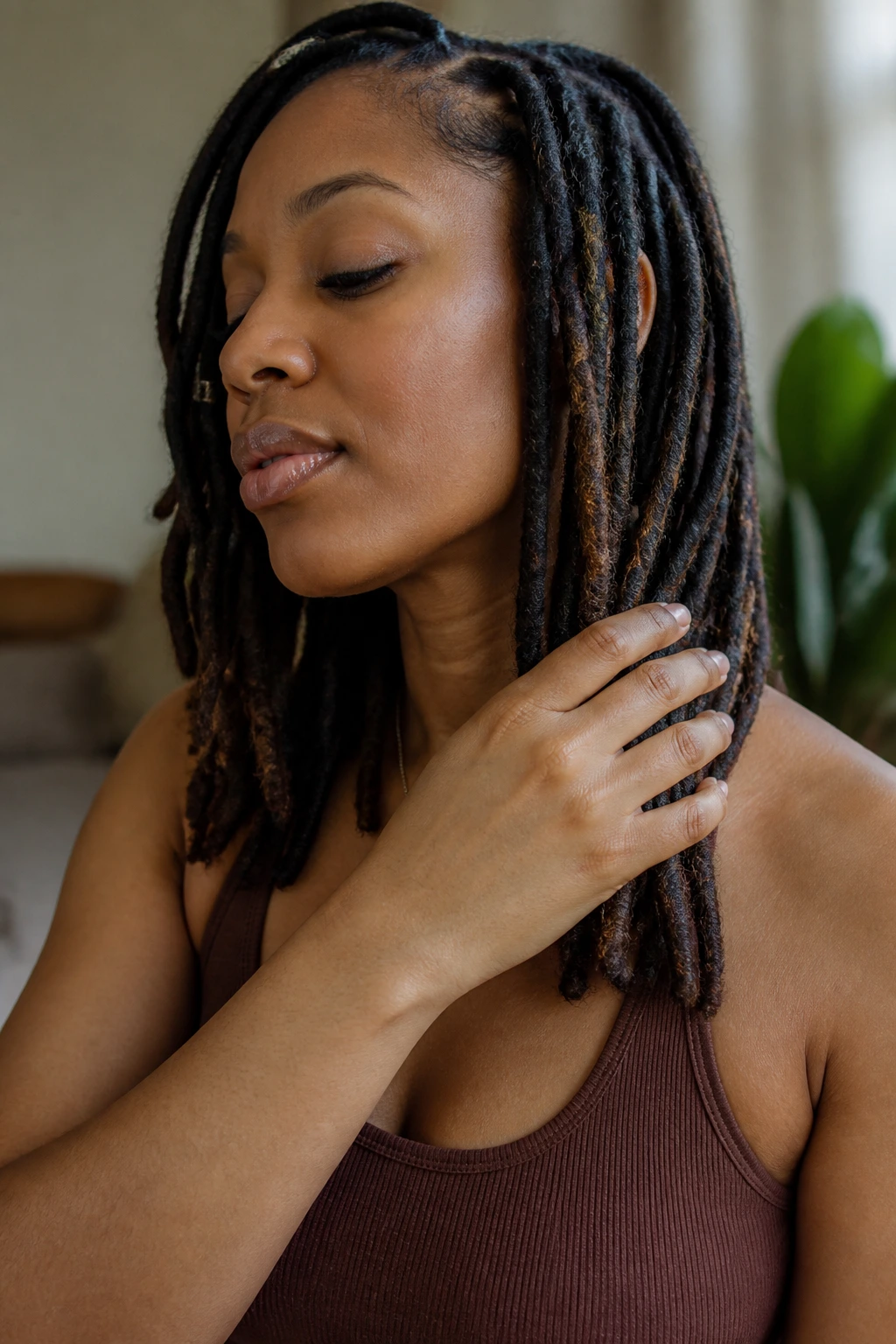
Anchor Low First: Build the style low on the head, then shape upward if you need height. Starting high almost always makes the front work harder than it should.
Split the Load: If a bun feels heavy, use two smaller anchors instead of one tight tie. Two points of support are usually kinder than one hard squeeze.
Pin the Shape, Not the Scalp: Pins should catch the locs, not jab into the hairline. If a pin hurts, move it; do not push through the discomfort.
Rotate the Pressure Spot: Wear one style low left, another low right, then switch to the center on another day. The same spot should not carry the full week.
Keep the Perimeter Soft: Smooth the edges without plastering them down. A little polish is fine. A crusty hairline is not.
Reset Before It Snags: If the style starts slipping, rebuild it before it becomes tight. Tightness is a bad fix. It usually makes the next problem worse.
Common Mistakes That Stress the Hairline
-
Pulling the first anchor too tight: The symptom is a sore front line or a band mark that stays visible for hours. Fix it by lowering the anchor and using a wider tie.
-
Styling damp locs: The symptom is a stale smell, a puffy base, or a shape that collapses overnight. Wait until the center of the locs is dry, not just the outside.
-
Using rubber bands with metal seams: The symptom is snagged ends and tiny breaks at the tie point. Switch to snag-free elastics or wrap the base with a loc.
-
Stacking too much weight at the crown: The symptom is a pulling headache by late day. Move the load lower or split it into two sections.
-
Sleeping on the style without a wrap: The symptom is fuzzy edges and pins that start disappearing into the pillow. Use a satin scarf, bonnet, or both.
-
Loading cuffs and beads at the roots: The symptom is extra drag on already heavy locs. Place decorations mid-length instead of near the scalp.
Variations and Adaptations to Try
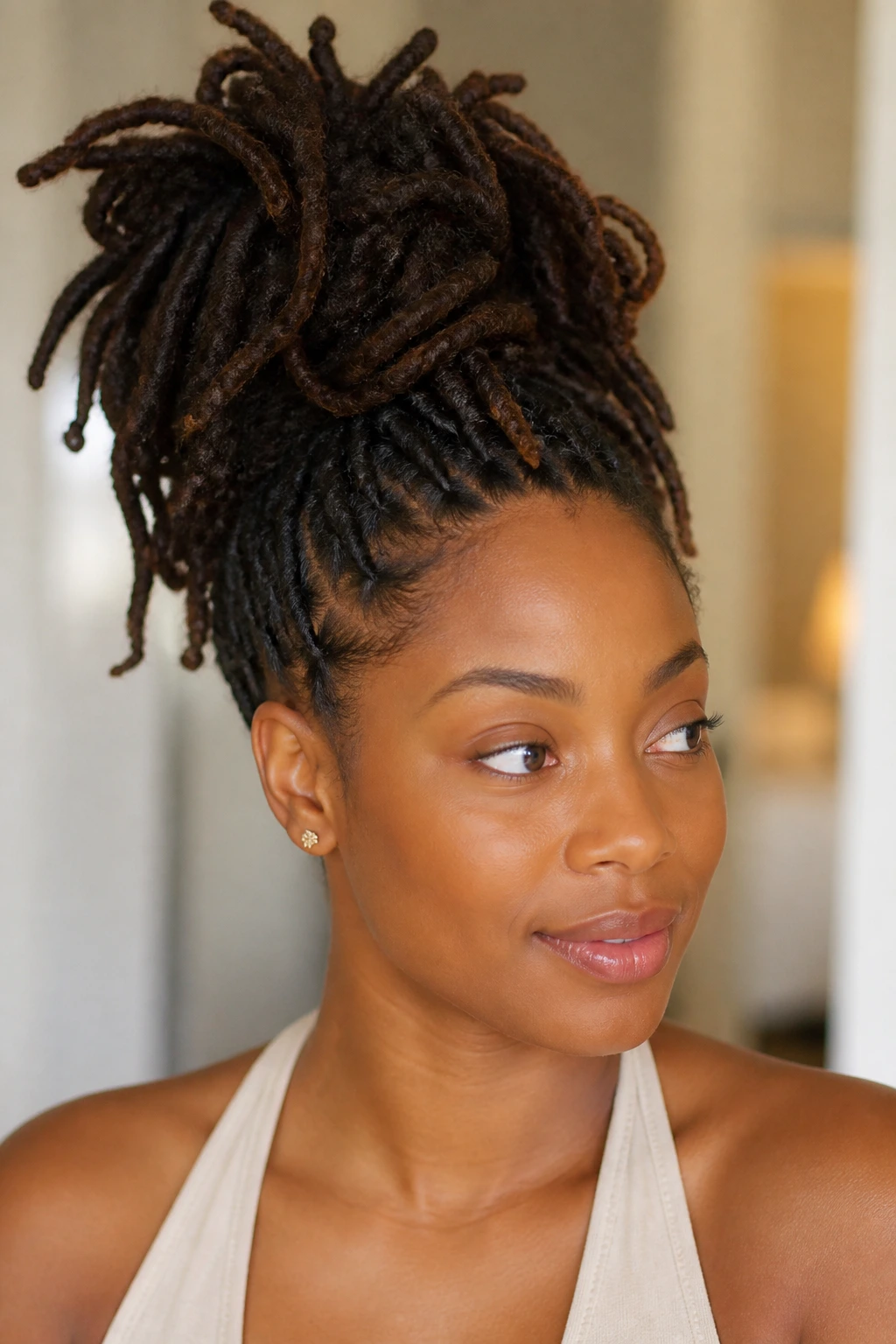
Office-Quiet Rotation: Low bun, French twist, and wide headband tuck all sit neatly under a work shirt collar and keep the line clean around the face.
Big-Length Showcase: High pineapple, bubble ponytail, and curved side ponytail let the locs move and swing while still keeping the ends from rubbing loose all day.
Tender-Scalp Week: Low roll-and-pin, crossed-back tuck, and flat-twist-inspired nape tuck give the roots a break and sit flatter than most high styles.
Full-Volume Split: Space buns, banded center mohawk, and triple-loop updo break the load into smaller pieces, which helps dense sets feel lighter.
Dress-Up With Texture: Halo crown wrap, rose coil bun, and satin-scarf ponytail wrap make it easy to switch the vibe without changing the whole anchor structure.
Night Care and Midweek Refreshes
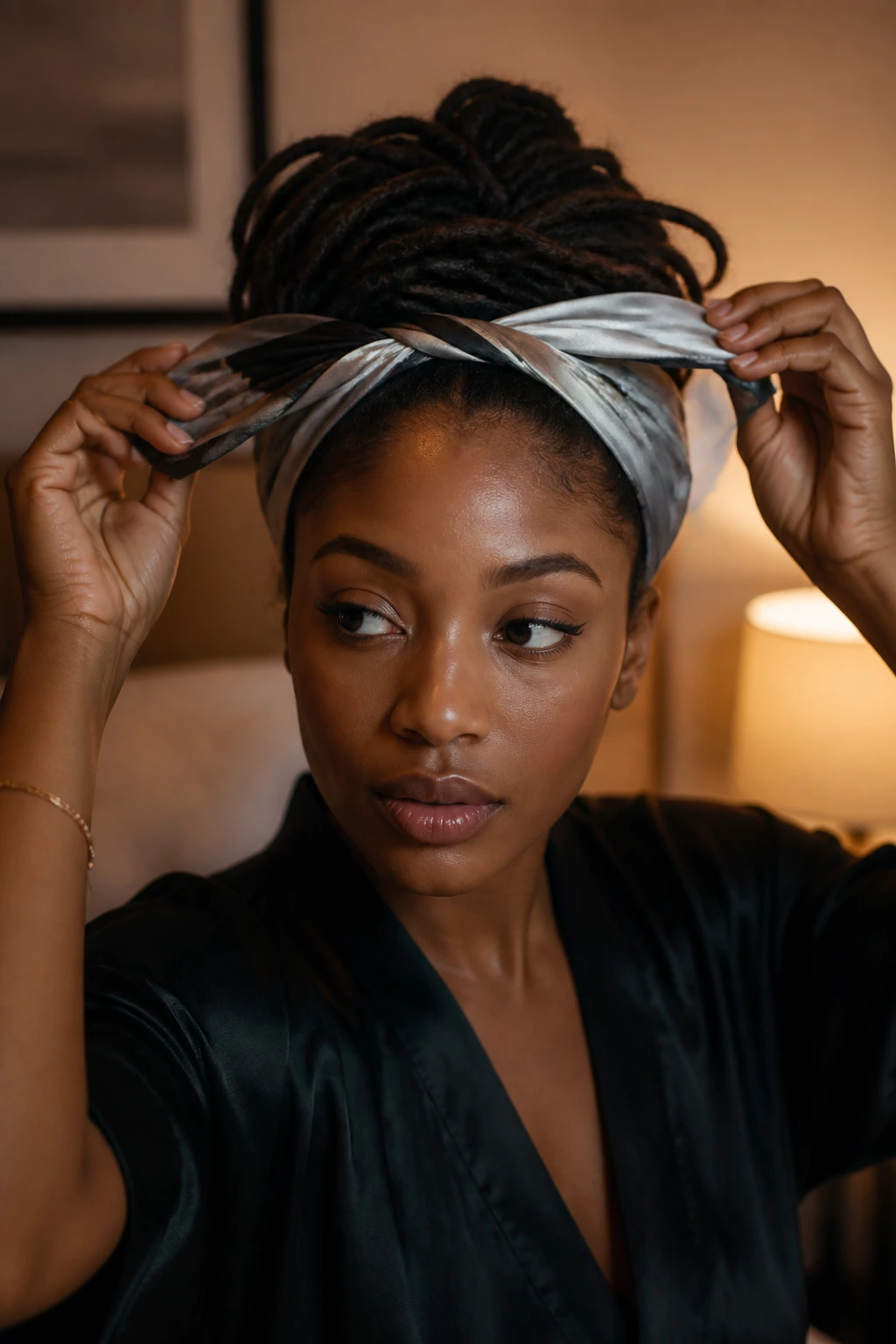
Most low styles can stay in place for 3 to 5 days if you wrap them at night and stop re-pulling the same anchor point every morning. High pineapples, top knots, and space buns usually need a refresh sooner — 1 to 2 nights before they start flattening or biting into the scalp.
Before bed, smooth the perimeter with your fingers, then wrap with a satin scarf or tuck into a bonnet. If the style is tall, use a bonnet with room; crushing a pineapple under a tight cap makes it collapse fast. A satin pillowcase helps too, especially if the wrap shifts overnight.
In the morning, fix the shape with one or two pins, not a full rebuild. If the style starts leaving a dent, a sore spot, or a weird fold that keeps returning, take it down. That is not a failure. It just means the style has done its job for a while.
Frequently Asked Questions
How tight should a protective style on long locs feel?
Snug enough to hold, never so tight that the scalp feels hot, sore, or pulsing. If you can feel the style tug when you smile or turn your head, loosen it and move the anchor lower.
Can starter locs wear these styles?
Yes, but keep the styles low and simple. Low buns, side ponies, wide headband tucks, and crossed-back tucks are friendlier than heavy top knots or big pin-heavy updos.
Which styles are kindest to the edges?
Low tucked buns, low roll-and-pin styles, wide headband tucks, and side-swept low ponytails usually put less pressure on the front line. High pineapples and tight top knots tend to ask for more from the temples.
How long can I keep one of these styles in?
Low styles often last 3 to 5 days if they are wrapped nightly. High styles, buns that sit on the crown, and styles with lots of pins usually feel better after 1 to 2 days.
Do I need gel or edge control for these looks?
Only a small amount at the perimeter if you want a cleaner finish. Heavy product near loc roots can leave flakes and a crusty line that is harder to clean out later.
What if the style keeps slipping?
Add a second anchor point or use a stronger pin, not a tighter first tie. Slippage usually means the hold is too narrow, not that the whole head needs more pressure.
Can I work out in these styles?
Yes. Low buns, crossed-back tucks, and side ponies tend to stay put better than tall buns or loose pineapples. If sweat is heavy, choose a flatter style and wrap it after the workout.
What style is best if I wear glasses?
Low styles are easier because the arms of the glasses do not fight the crown or temple sections. A low bun, headband tuck, or side ponytail usually feels less crowded around the ears.
Wearing the Length Without Fighting It
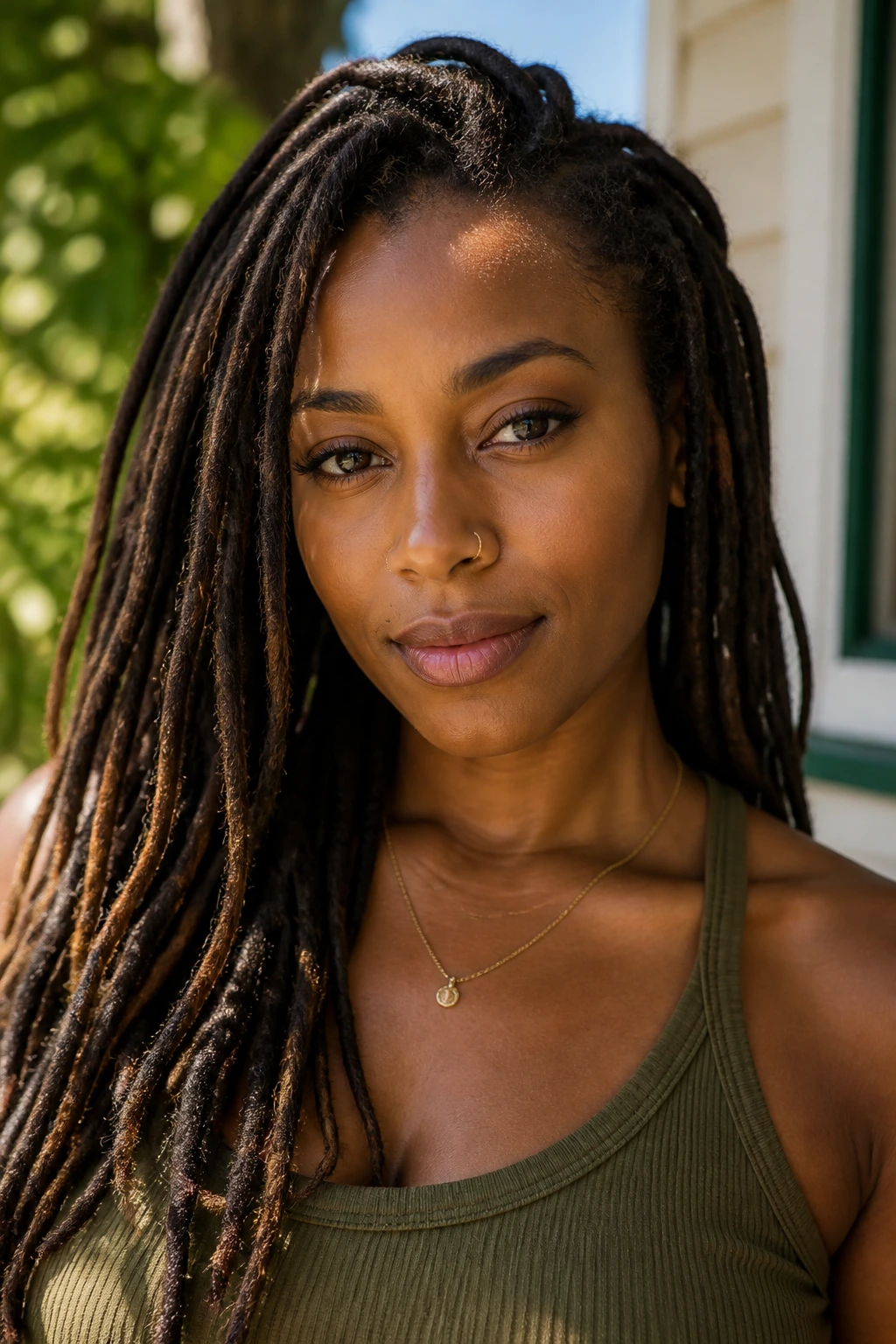
Long locs do not need to be squeezed into one dramatic shape to stay protected. They need places to rest. The styles that hold up longest are usually the ones that seem quiet at the hairline and smart at the nape, with enough structure to stay put and enough softness to avoid a tug-of-war.
Rotate the anchor point, keep the bands soft, and give the ends a break from rubbing every surface in sight. That is what keeps the length pleasant to wear, not just pleasant to look at.