



A long lob can do more for a round face than a shorter, cheek-hugging cut ever will. Long lobs with layers for round faces work because they give the eye a vertical path to follow: collarbone length, a little movement at the ends, and layers that soften the widest part without ballooning the sides.
I’m picky about where those layers start. Too high, and the cheeks look fuller. Too low, and you’re left with one heavy curtain of hair that sits there and does nothing. The sweet spot is somewhere more thoughtful: length below the chin, shape around the jaw or collarbone, and enough texture to keep the cut from feeling boxy.
The 25 looks below lean on that logic in different ways. Some use a side part to stretch the face. Some use curtain fringe, but only when it falls low enough to open the cheeks instead of sitting on top of them. Others are about texture — airy, waved, blown out, or cut with internal layers so the shape stays light. Straight, curly, thick, fine, low-maintenance, high-gloss, whatever the hair type, there’s a version here that doesn’t fight the face.
And the best part? These aren’t all one-note salon photos that collapse the second you step outside. A good lob should hold its outline after a coat comes off, after a few hours at a desk, after a tuck behind the ear. That’s the standard here.
What Makes These 25 Lobs Different on a Round Face

-
Length does the heavy lifting: The perimeter stays below the chin, which gives the face a longer line before the widest part comes into play.
-
Layers have a job: The best pieces start at the jaw, cheekbone, or lower, so they soften the silhouette without making the cheeks look wider.
-
Parts change everything: A side part, off-center part, or deep flip can stretch the face in a way blunt symmetry never will.
-
Texture is controlled, not random: Waves, bends, and feathered ends are used to break up the curve of the face, not puff it out.
-
Grow-out stays tidy: These cuts can hold their shape for weeks, which matters when you don’t want your hair to turn into a triangle between appointments.
-
They work with real life: You can tuck them, wave them, straighten them, or air-dry them, and the shape still makes sense.
1. The Collarbone Flip with Cheekbone Layers
A collarbone-length lob with soft cheekbone layers is the kind of cut that looks relaxed without losing shape. The ends flip just enough to keep the outline from hanging flat, and the longer front pieces create a slim, vertical frame around the face.
Why It Flatters Round Faces
The important bit is placement. Those cheekbone layers should skirt the face, not sit directly on the fullest part of the cheek. If they start too high, the whole look gets wider. If they land at or below the collarbone, they pull the eye downward and give the face more length.
- Best for: straight or softly wavy hair
- Ask for: a collarbone perimeter with light face-framing layers
- Styling note: bend the ends away from the cheeks, not toward them
Best detail: Keep the front pieces longer than you think you need. That extra inch matters.
2. The Center-Parted Lob with Floating Ends
A center part can work on a round face when the cut has enough length and the ends don’t sit in one heavy line. This version feels clean and calm, but the layers keep it from reading severe.
The trick is to leave the front pieces long enough to drop past the cheek line. If they stop right at the cheek, the face gets boxed in. If they fall lower and the ends are lightly texturized, the whole style feels easier on the eyes.
I like this one on medium-density hair because the center part gives balance while the floating ends keep the cut from looking stiff. It’s a quiet cut. Not boring. Just controlled.
3. The Side-Swept Curtain Lob with Jawline Bend
Can curtain layers work on a round face? Yes, but only if they’re long enough to sweep instead of perch. When the fringe starts low and opens from the brow toward the jaw, it creates a diagonal line that cuts through the roundness in a flattering way.
How to Wear It
The best version has a soft bend at the jaw, not a puff at the cheeks. Blow-dry the front away from the face with a round brush, then let the ends settle naturally. If you want to tuck one side behind the ear, even better — that little asymmetry keeps the cut from looking too symmetrical.
This is one of those styles that looks expensive when it’s actually just well-placed. Small difference. Big payoff.
4. The Razor-Textured Lob with Airy Movement
Razor texture can be a mess in the wrong hands, so I’m not cheering for aggressive slicing here. I mean a soft, controlled razor finish that removes bulk from thick hair and lets the layers move instead of stacking up like shelves.
On a round face, that airy movement matters. Heavy ends can make the hair look like a helmet. Lightly feathered ends keep the perimeter loose, and the face gets more space around it.
What Makes This One Work
- Use it on thick or medium-thick hair
- Keep the shortest layers low enough to miss the widest cheek point
- Style with a light cream, not a sticky paste
- Let the ends feel broken up, not shredded
A good razor lob has swing. A bad one just frizzes out and begs for a trim.
5. The Loose Wave Lob with S-Curves
Loose waves are a round face’s friend when they’re shaped with intention. You want soft S-curves that bend around the cheeks and then drift toward the collarbone. Not tight spirals. Not beach-crunch overload. Just enough movement to interrupt the circle of the face.
The easiest way to get there is to alternate curl direction and leave the last inch of each section out of the iron. That keeps the ends modern and stops the whole cut from puffing at the sides.
This style gives me the most mileage on hair that falls somewhere between straight and wavy. It has softness, but it still looks polished enough for work, dinner, or anything else that asks for a little effort.
6. The Sleek A-Line Lob with Longer Front Pieces
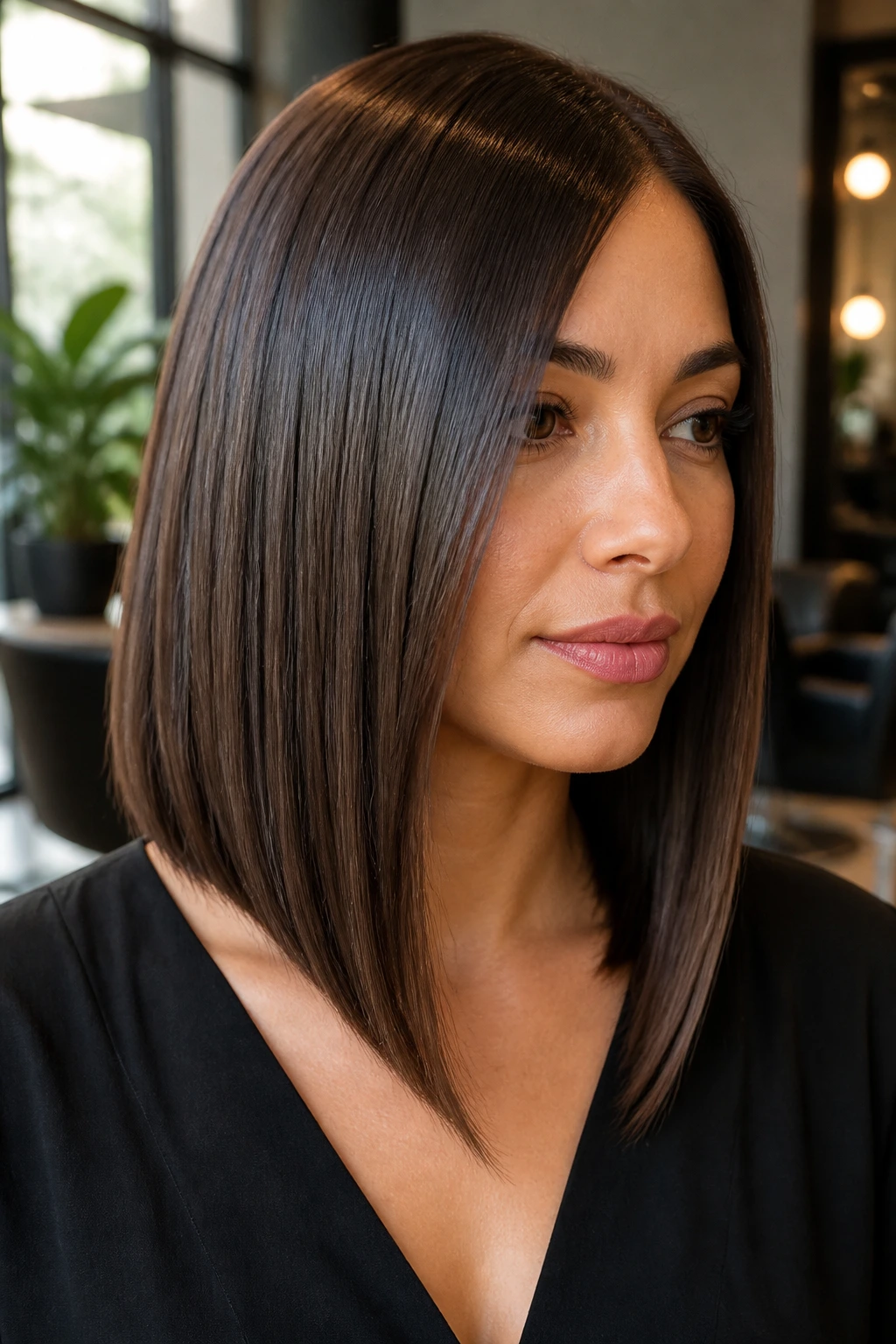
A sleek A-line lob is sharp in the best way. The back sits a little shorter, the front inches forward toward the collarbone, and the angle quietly stretches the face without shouting about it.
That diagonal line matters on a round face. Straight-across cuts can stop the eye too fast. An A-line shape keeps moving, which is exactly what you want when the goal is length rather than width.
This cut is especially good if you like wearing your hair straight. The lines show up clearly, the front pieces skim the jaw, and the whole thing feels deliberate. No extra fluff needed.
7. The Bottleneck Fringe Lob with Temple Layers
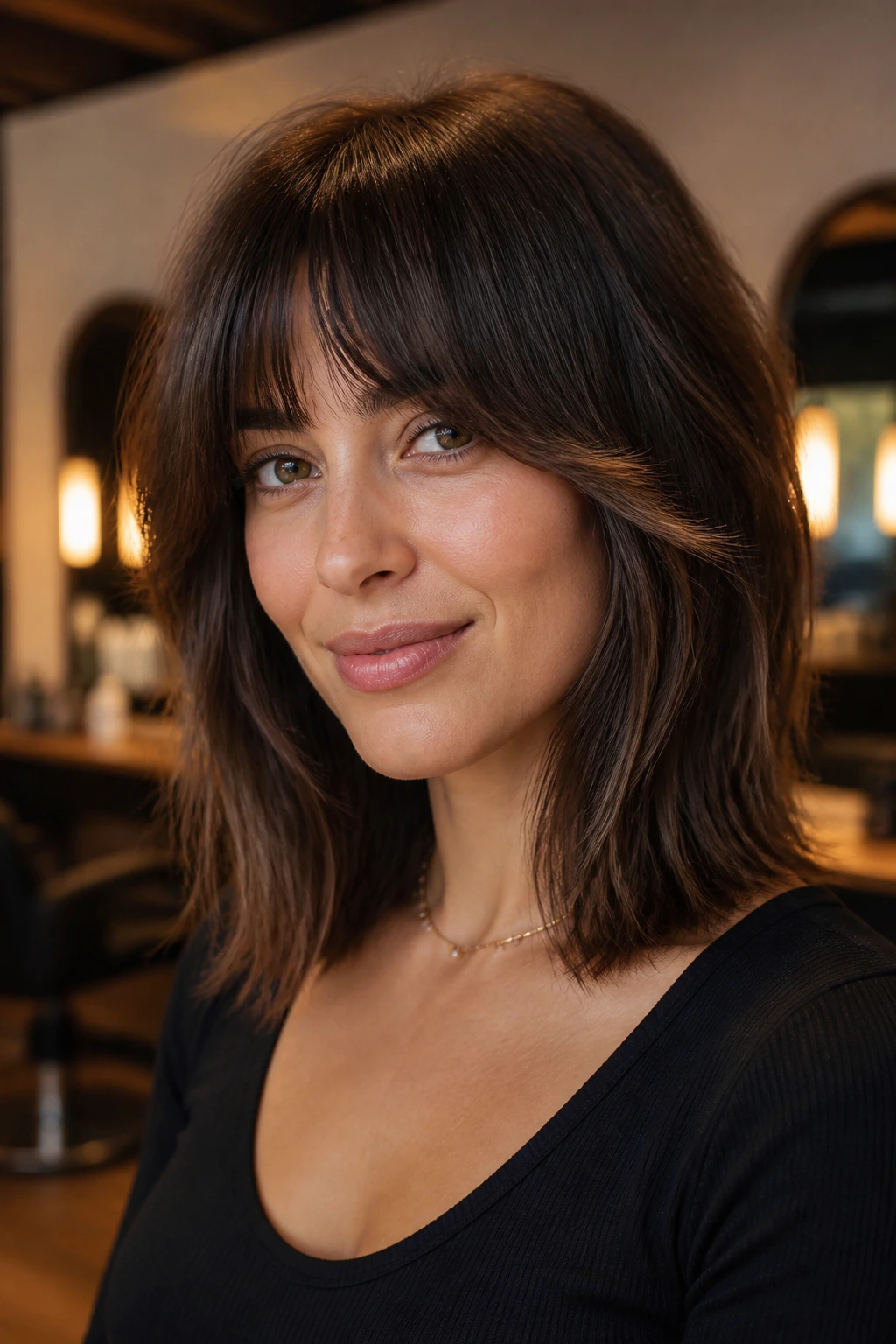
Bottleneck fringe can be a smart move on a round face because it narrows through the center and opens wider near the temples. That opening at the sides matters. It stops the fringe from sitting like a heavy bar across the widest part of the face.
Why It Works Better Than a Short Fringe
The fringe should flow into long temple layers, not stop dead at the cheek. That little connection creates a path from forehead to jaw, and the eyes follow it naturally. Keep the rest of the lob below the chin so the fringe has room to breathe.
This style has a little retro feel, but it doesn’t tip into costume. It’s soft, touchable, and easy to grow out if you decide you want less face-framing later.
8. The Deep Side-Part Lob with Root Lift
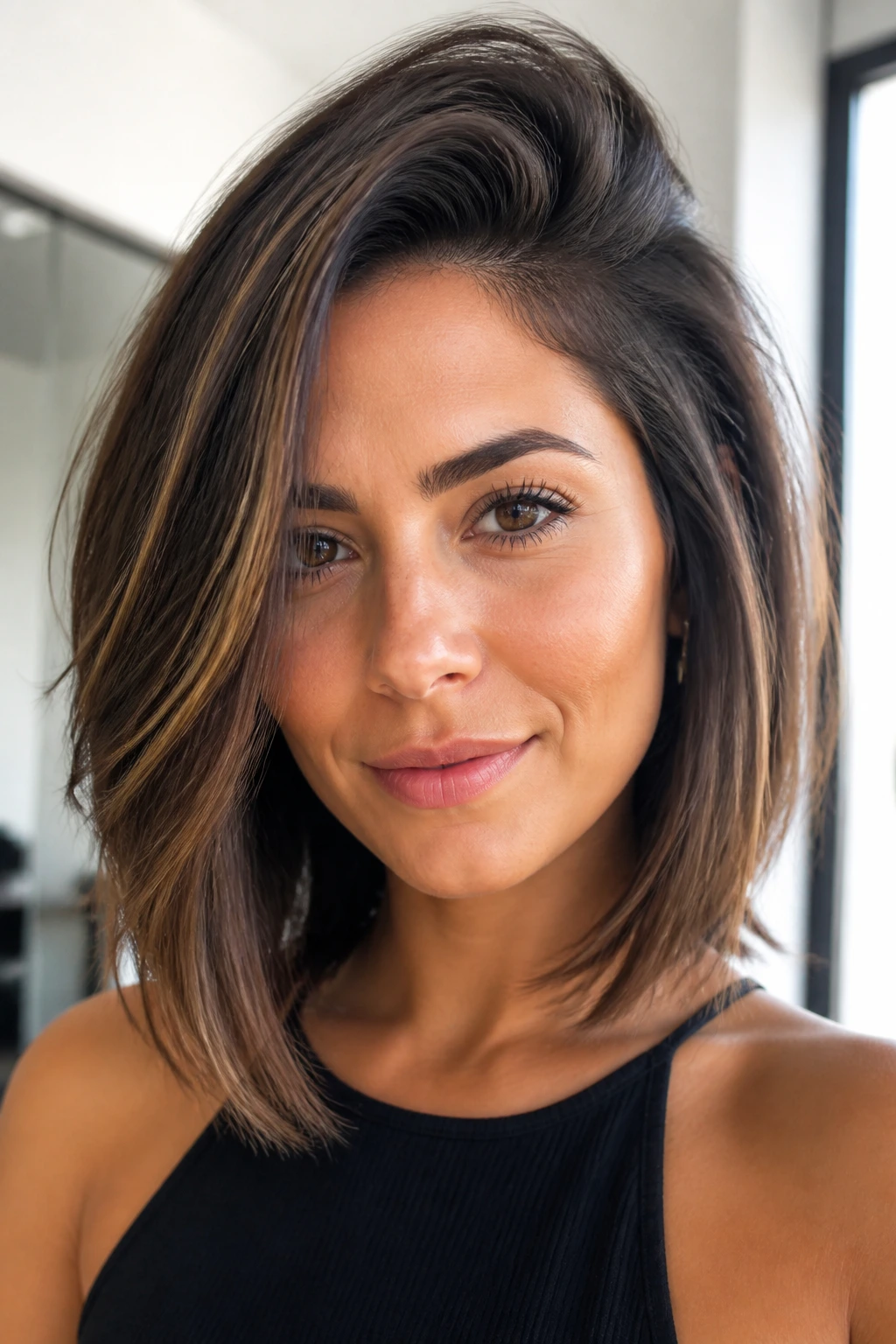
A deep side part can change a round face fast. It adds height at the crown, breaks the symmetry, and lets one side fall longer across the face. That longer fall is the part that does the slimming work.
The shape needs lift at the root, though. Flat roots and a deep part can drag the whole style down. A little mousse at the crown and a quick blow-dry with lift at the base keep it from collapsing by lunchtime.
How to Style It
Flip the part while the hair is still warm from the dryer. Let the larger side fall over the cheek a bit, then tuck the other side behind the ear. That contrast makes the face look longer without looking forced.
This one is especially good if your hair naturally wants volume. It lets that body work for you instead of against you.
9. The Choppy Shag-Lite Lob with Broken Ends

A full shag can get too wide on a round face if the layers are too high. A shag-lite lob keeps the edge and movement, but reins in the chaos. The ends are choppy, the layers are soft, and the overall length still sits low enough to help the face look longer.
This cut works because it breaks up the surface. The eye doesn’t get one smooth, circular outline. It gets motion. Small shifts. Pieces that land in different places.
That broken texture is especially kind to hair that tends to puff. Instead of fighting the hair’s natural bend, the cut uses it. I like that. It feels smarter than trying to force everything smooth.
10. The Hidden-Layer Lob for Fine Hair

Fine hair needs shape without too much stripping. Hidden layers give you movement inside the cut while keeping the outside line clean. That way the hair doesn’t look wispy at the bottom or thin through the perimeter.
A Good Fit When You Want Softness, Not Sparseness
Ask for internal layering rather than a lot of short pieces around the face. The outer line stays longer and stronger, which matters on a round face because the length is what helps elongate the shape.
Use a lightweight mousse at the roots and a touch of spray at the ends. Skip heavy oils. They flatten fine hair fast, and flat hair on a round face often makes the cheeks look wider.
11. The Glossy Blowout Lob with Rounded Ends
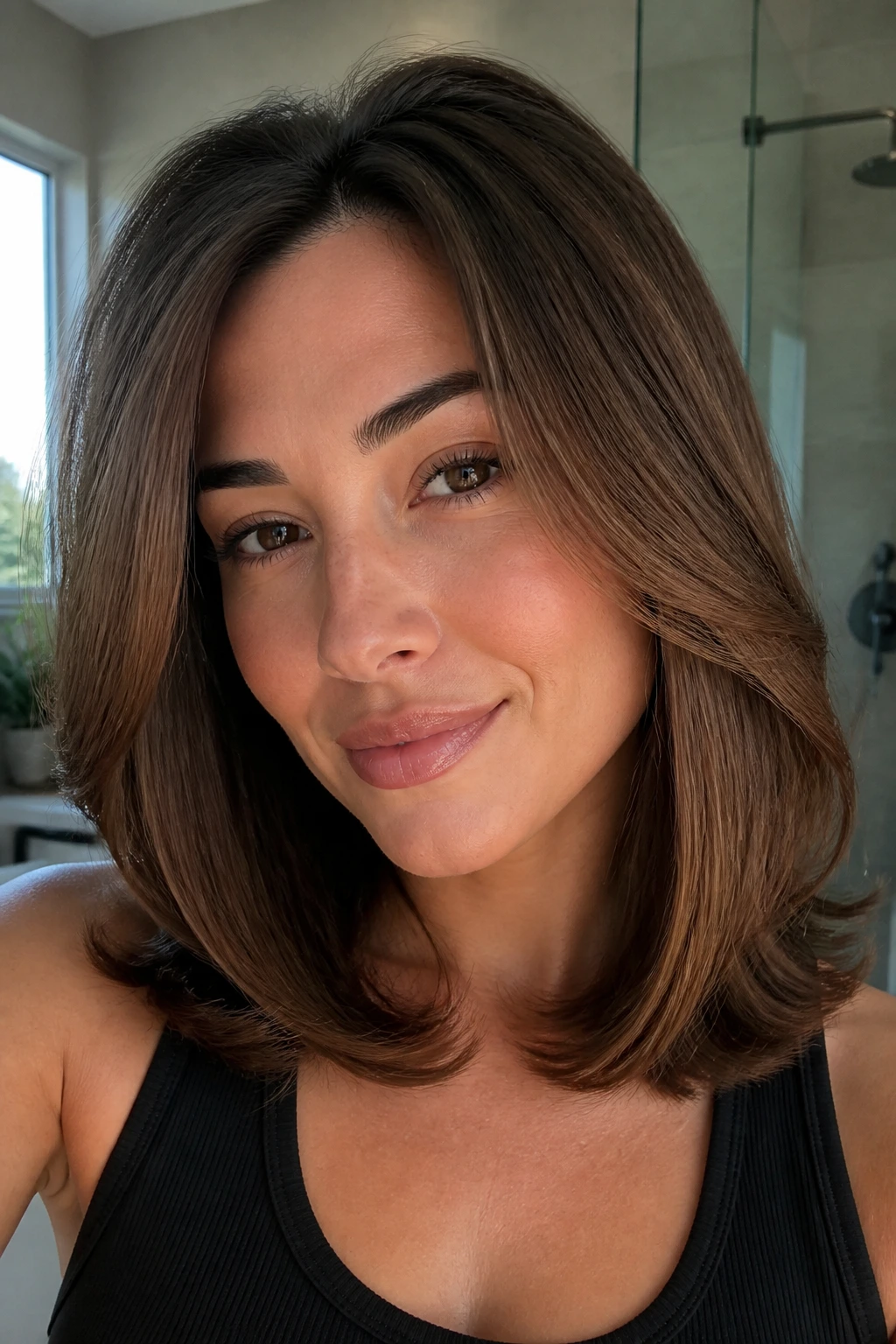
A big, smooth blowout on a lob can be very flattering on a round face, but only when the roundness lives in the ends, not the cheeks. The brush should turn the tips under slightly or softly outward while the top stays lifted and smooth.
The shape here is cleaner than a wave and less severe than pin-straight hair. It has polish. More important, it gives the face a tidy edge that starts lower than the widest point.
This is one of those cuts that rewards a good round brush and a little patience. Blow-dry the roots first, then shape the ends in sections. If the blowout puffs at cheek level, the whole look loses its line.
12. The Curly Lob with Cheek Shape
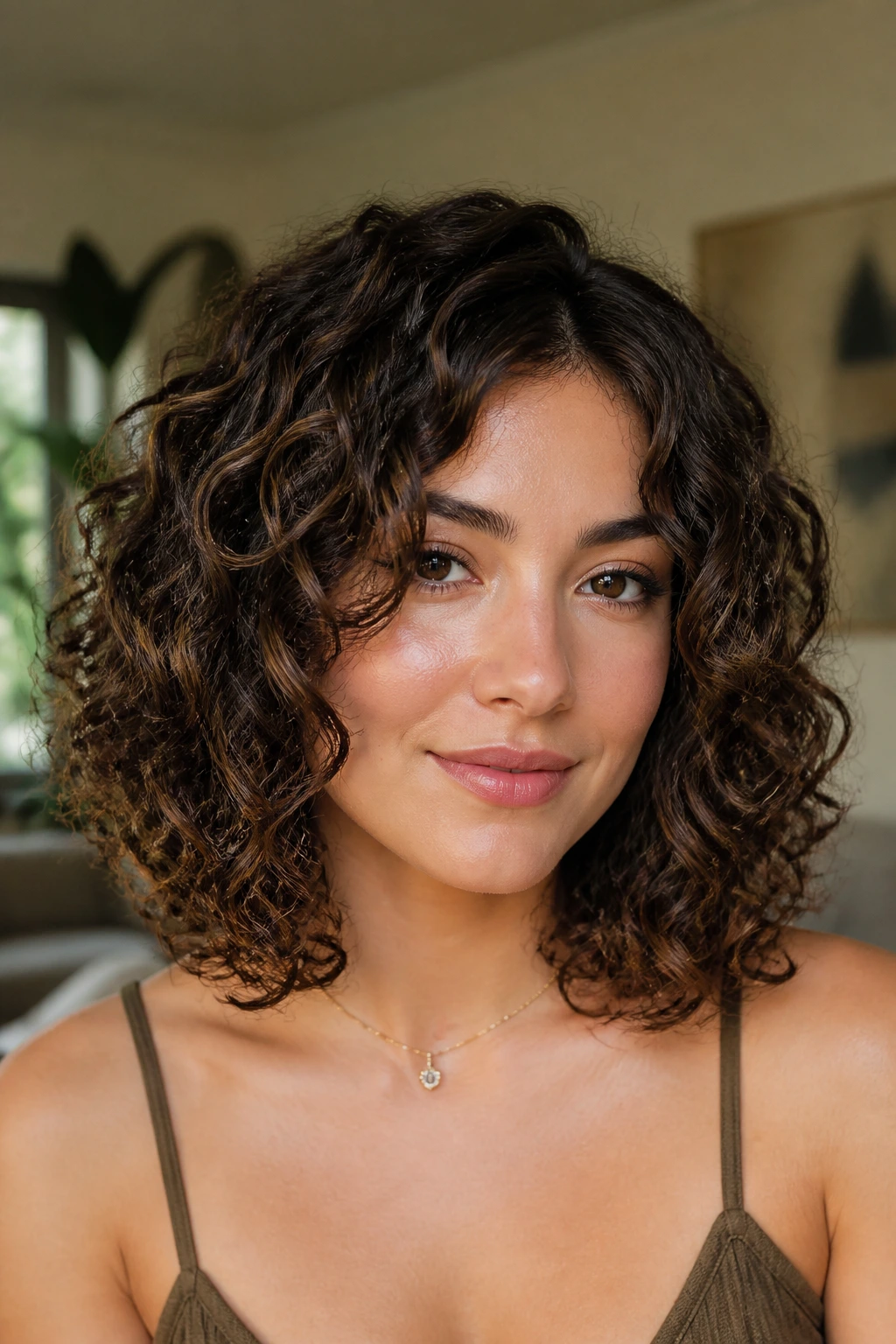
Curly hair changes the math because curl springs up when it dries. So a lob for a round face has to be cut with shrinkage in mind. A dry cut or curl-by-curl shaping usually gives the best result because the stylist can see where the curls actually land.
The goal is to keep the volume from spreading too wide at the cheeks. Long face-framing curls can start near the chin or lower, then fall toward the collarbone. That keeps the sides open and the profile clean.
How to Wear It
Use a diffuser on low heat and stop scrunching once the curl pattern sets. Too much handling makes the sides flare. A little gel cast, then a light scrunch-out, usually gives enough definition without turning the shape into a halo.
13. The Air-Dry Lob for Wavy Texture

Wavy hair can look best when you stop bossing it around. A long lob with layers is one of the easier cuts to air-dry because the layers encourage the wave to bend instead of fold awkwardly at the cheeks.
The important part is product order. Start with a light leave-in, add a mousse or wave cream through the mids, then scrunch just enough to encourage the bend. If you pile on too much cream, the waves clump and hang; too little, and the cut frizzes into a triangle.
I like this style because it feels lived in without looking accidental. There’s a difference.
14. The Piecey Lob with Cheekbone-Grazing Layers
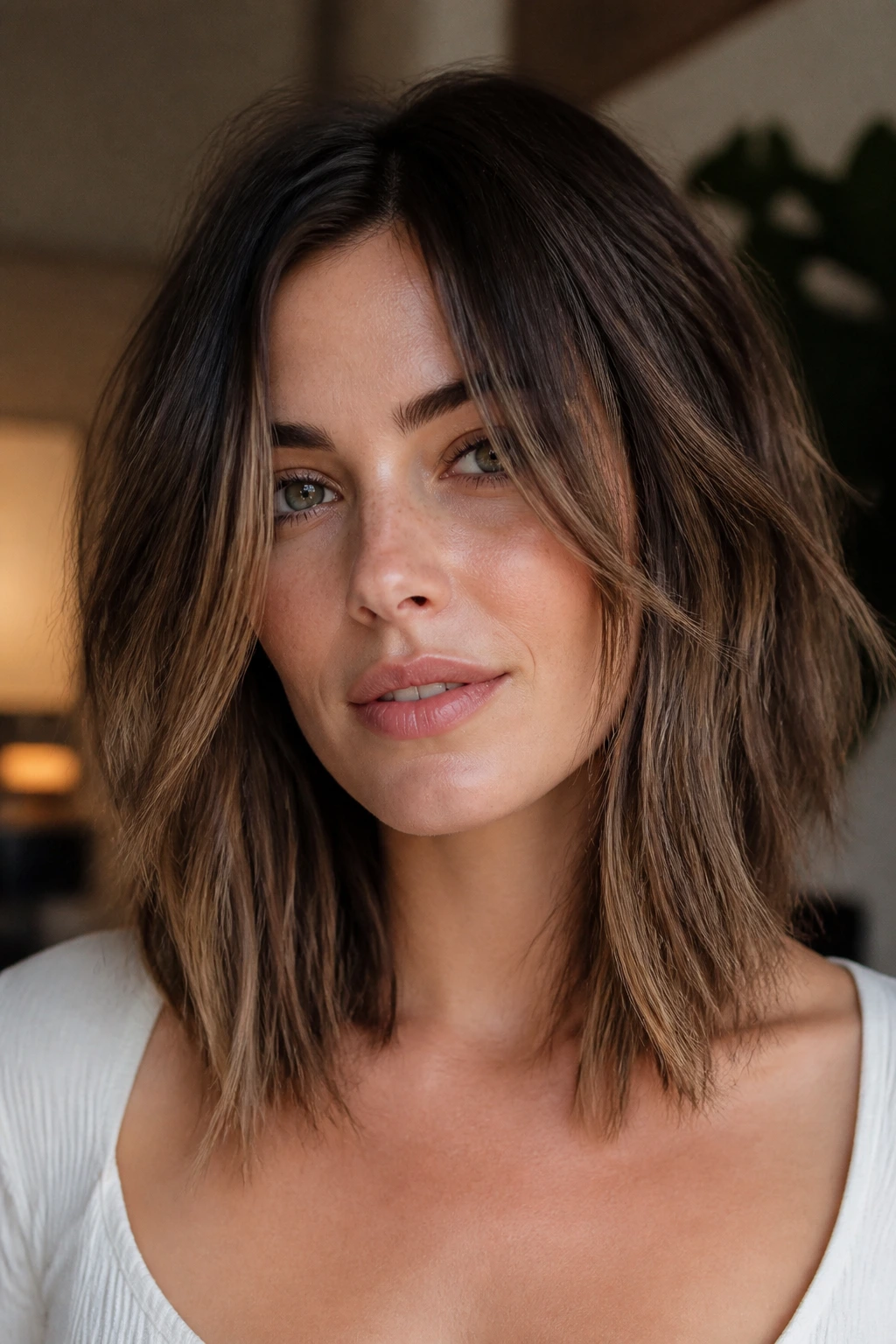
Piecey layers are about separation, not bulk. On a round face, that separation can make the cheeks look less dominant because the eye keeps moving from one section to another instead of reading one broad shape.
What to Ask For
Ask for long, cheekbone-grazing layers with minimal weight removal near the jaw. The pieces should look deliberate when they fall forward and just a little undone when tucked back.
This one looks best with a bit of product that gives grip — a texture spray or light pomade worked only through the mids and ends. If every piece is too smooth, you lose the point. If every piece is too rough, the style gets noisy. The sweet spot sits in the middle.
15. The Soft U-Shaped Lob with Movement at the Ends

A U-shaped lob keeps the center a touch longer than the sides, which creates a gentle curve that feels softer than a straight blunt edge. That curve can help a round face by pulling the eye down through the center instead of out across the cheeks.
The shape is subtle, and that’s why it works. Nobody needs a dramatic angle here. The style should look like it grew that way, only neater.
This is one of my favorites for people who want a cut that still looks full. The perimeter remains weighty enough to feel polished, but the layers keep it from becoming a block.
16. The Tucked-Behind-Ear Lob with Long Face Framing
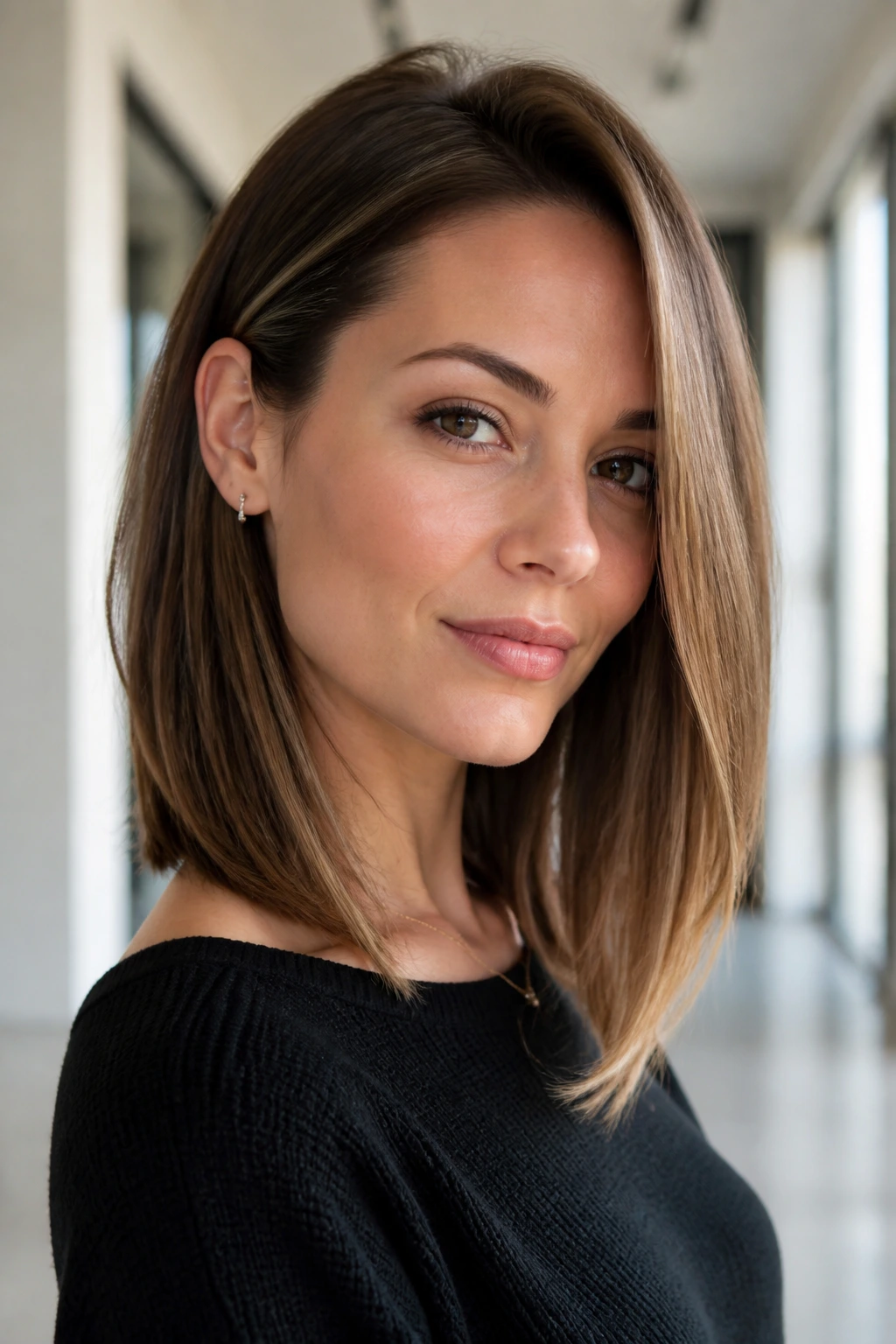
Tucking one side behind the ear is a small move with a big effect. It opens one side of the face, shows the jawline, and makes the whole cut feel less wide. On a round face, that asymmetry is useful.
The long face-framing pieces should still fall forward on the other side. You want contrast, not total exposure. One side tucked. One side loose. That’s enough to break the circle.
This version is especially good on days when you want the haircut to do the work without a lot of styling. A neat tuck, a little bend at the ends, and you’re done.
17. The Volume-at-the-Crown Lob with Slimmer Sides
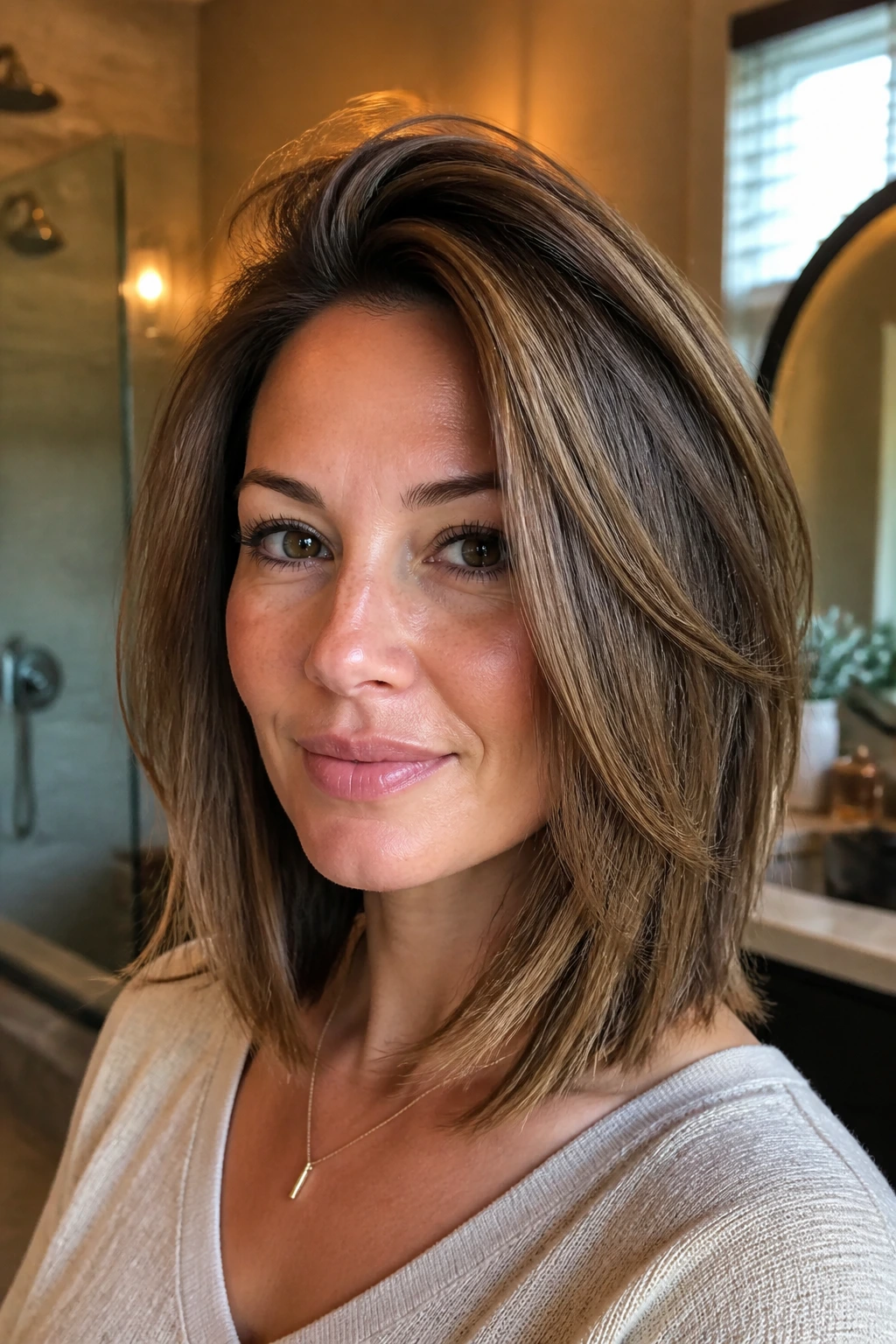
A little crown lift can do more for a round face than a whole pile of side volume. Lift at the top draws the eye upward, while the sides stay slimmer and closer to the head.
The easiest way to get there is with root spray at the crown and a blow-dry that lifts sections straight up before they fall. If you smooth the sides too flat against the cheeks, the cut can look severe. If you puff them out, the face gets wider. Keep the sides controlled and let the top carry the shape.
This cut is plain in the best sense. It works because it understands proportion.
18. The Low-Maintenance Layered Lob with Minimal Styling
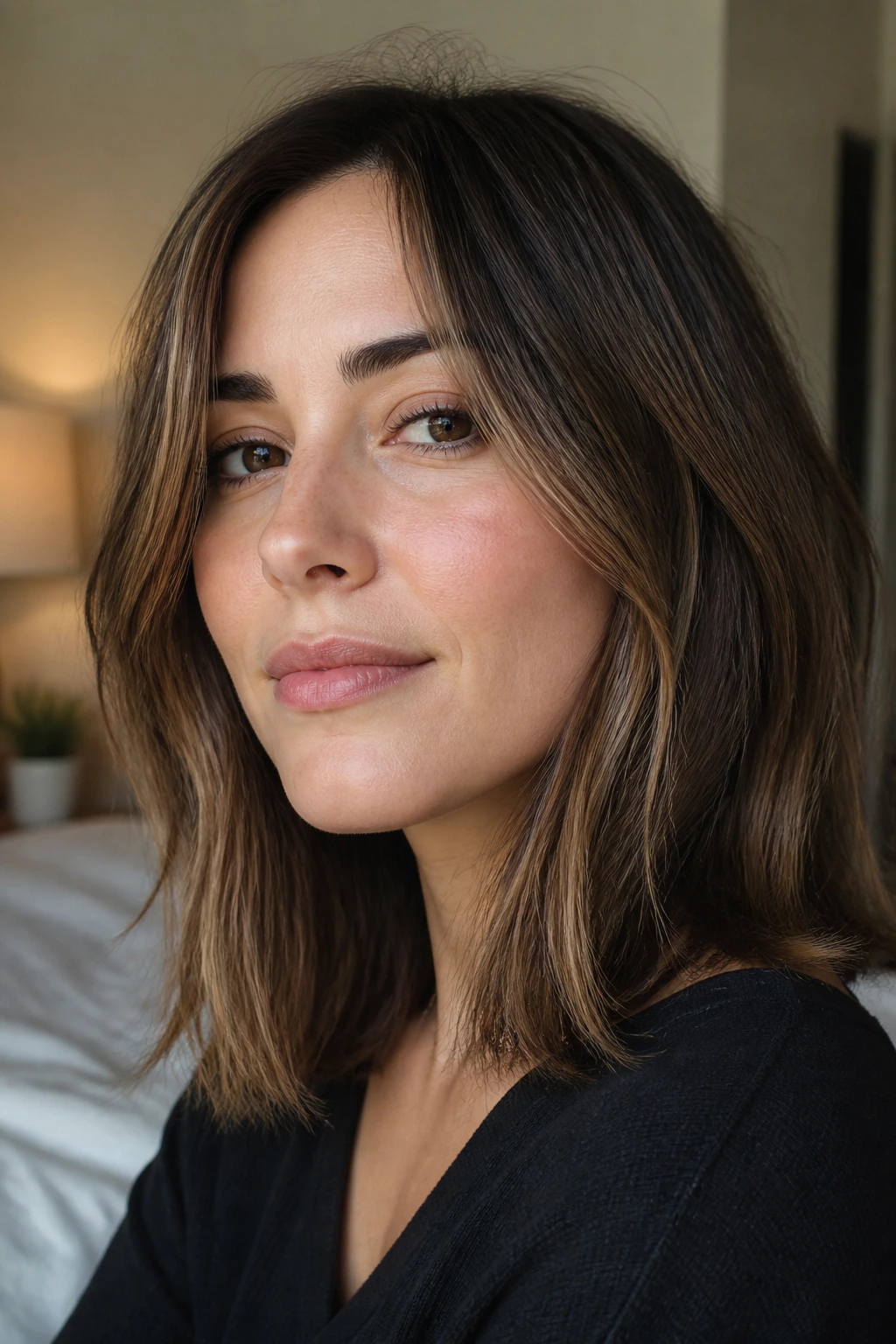
Not everyone wants to curl their hair every morning, and honestly, they shouldn’t have to. A low-maintenance layered lob keeps enough texture in the cut that it looks shaped even when you air-dry it or rough-dry it for five minutes.
The layers stay long and soft, usually starting below the cheekbone. That gives the hair movement without turning it thin at the ends. On a round face, the reward is simple: less styling time, better outline.
How It Behaves on Day Two
This cut tends to wake up well after sleeping in a loose bun or braid. A mist of water at the front pieces, a quick finger-twist, and the shape usually comes back fast. That’s the kind of cut I trust on real schedules.
19. The Angled Lob with Weighted Front Corners
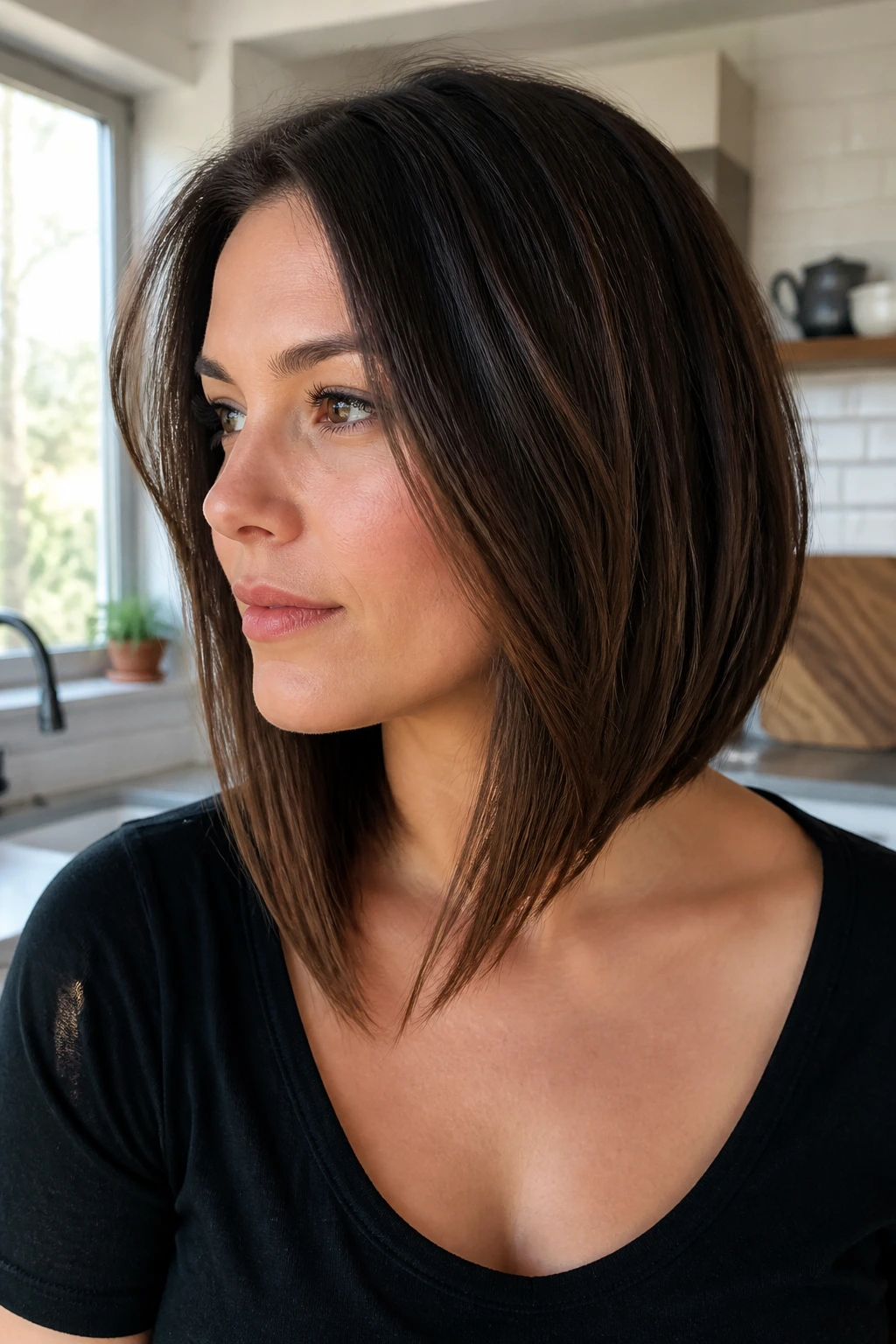
An angled lob gives you a little more visual length in the front, and that’s helpful when you want to stretch a round face. The back stays slightly shorter, while the front corners carry enough weight to feel intentional.
The key is not to make the angle too steep. That can feel dated fast. A softer angle keeps the style modern and wearable, and it still creates the diagonal line that helps lengthen the face.
This is a good cut if you like structure. It has shape on purpose.
20. The Tousled Lob with Internal Layers

Tousled doesn’t have to mean messy. With internal layers, the hair bends and shifts in a way that looks loose but still falls into a clear outline. That’s the part that matters for round faces: the movement should stay inside the shape, not puff out around it.
This version is especially good for medium-density hair that wants body. Add a texturizing spray, twist a few sections around your fingers, and leave the ends a little imperfect. Perfectly even waves can widen the face. A few broken pieces keep it leaner.
I like this one because it feels easy without looking lazy. That’s rare.
21. The Polished Straight Lob with Invisible Shape
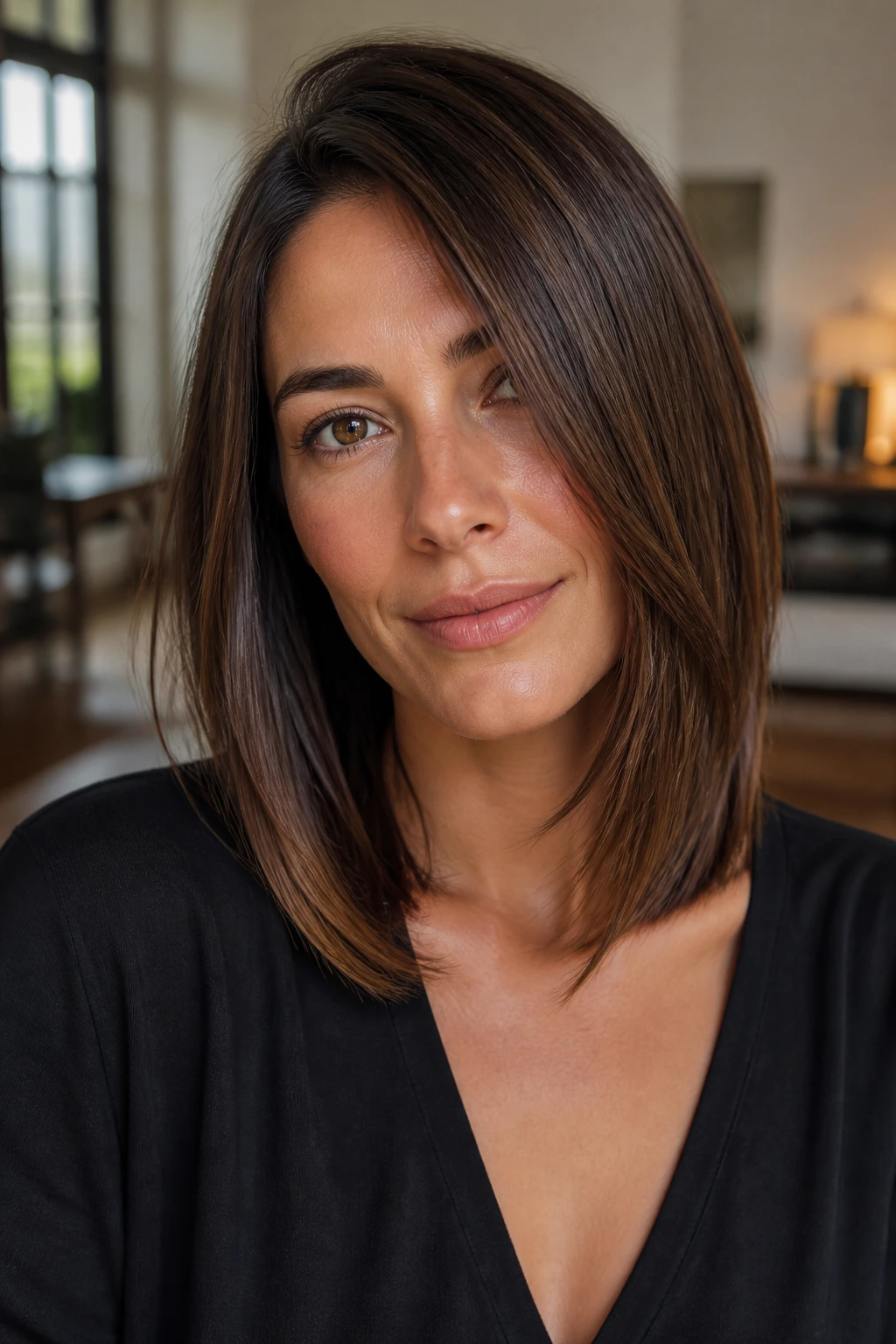
A straight lob can work on a round face if the cut has invisible structure underneath. You may not see the layers right away, but you can feel them in the way the hair falls around the cheeks and collarbone.
The danger with a one-length straight lob is the helmet effect. The fix is subtle internal layering, long face-framing edges, and a slight off-center part. That combination gives the style shape without advertising the work.
This is the version for people who like clean lines. It’s not flashy. It’s just smart.
22. The Dimensional Lob with Balayage and Movement

Color can change how a lob reads on a round face, especially when lighter pieces are placed around the front and through the mid-lengths. That contrast helps separate the layers and keeps the style from looking like one solid block.
Why Dimension Helps the Cut
Balayage around the face can pull attention downward and outward in a good way. The highlights catch the movement in the layers, which makes the shape easier to read. On darker hair, that added dimension keeps the cut from feeling heavy.
Use this if you want the lob to look more textured without adding more haircutting. Sometimes the color does half the job.
23. The Side-Flip Lob with Sweeping Bangs

Sweeping bangs are a better match for a round face when they stay long and move into the lob instead of sitting on top of it. The side flip gives the style direction, and direction is what stops the face from feeling too circular.
The bangs should skim, not stop. If they hit the middle of the forehead and end there, the look can feel cut off. Let them sweep into the longer front pieces, and the whole style gets softer.
This is a good choice if you want fringe without full commitment. It has a built-in escape route.
24. The Softly Disconnected Lob with Longer Perimeter
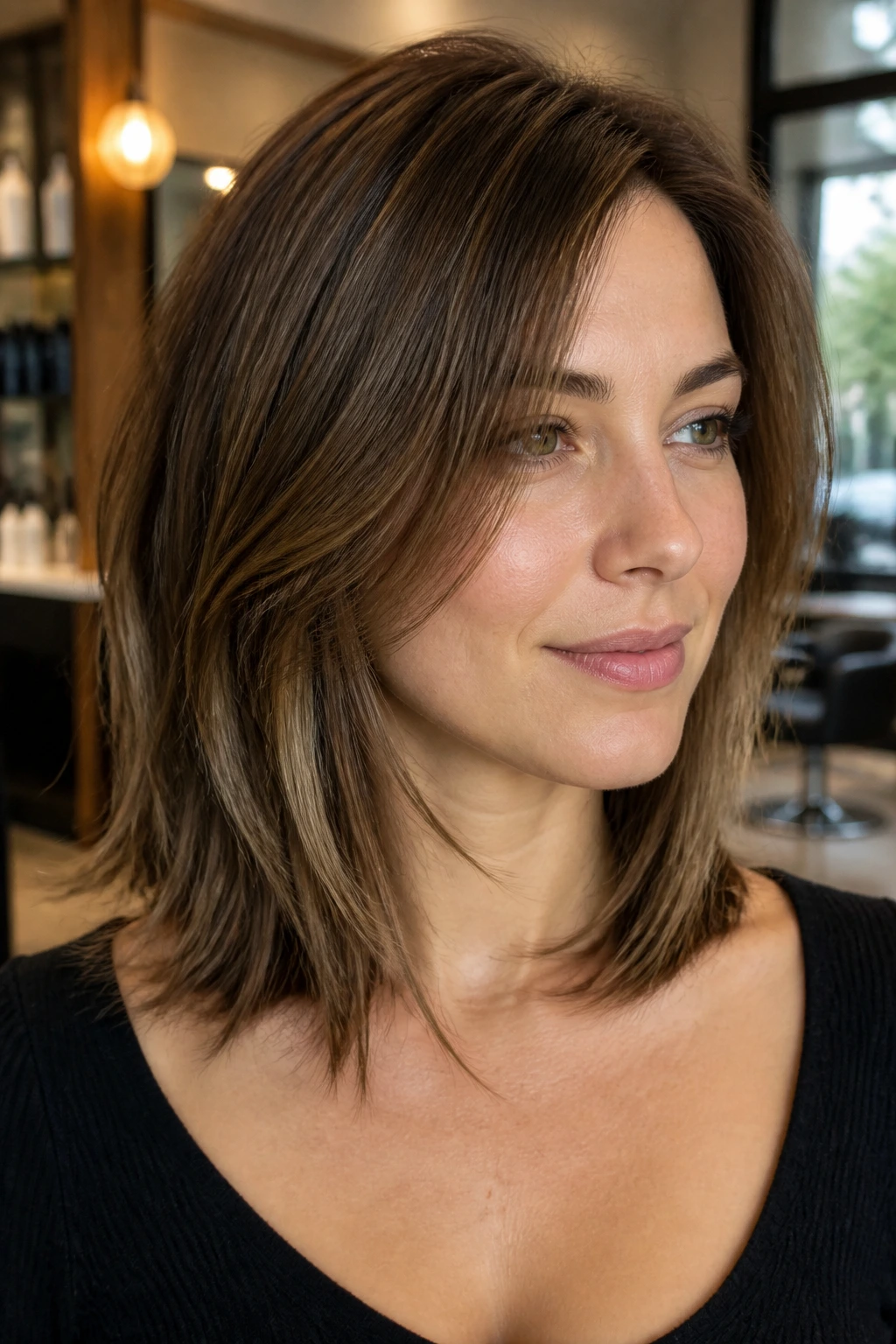
A softly disconnected lob uses separation between the layers and the perimeter to create interest without shrinking the length. That longer bottom line is useful on a round face because it keeps the eye moving down.
The disconnection should be gentle. You want a little contrast, not a choppy patchwork effect. A skilled stylist can remove some weight underneath while keeping the outside line smooth enough to flatter the face.
This cut works well if you like hair that has edge but still behaves. It feels a bit modern, a bit undone, and still easy to wear.
25. The Warm, Feathery Lob with Long Layers
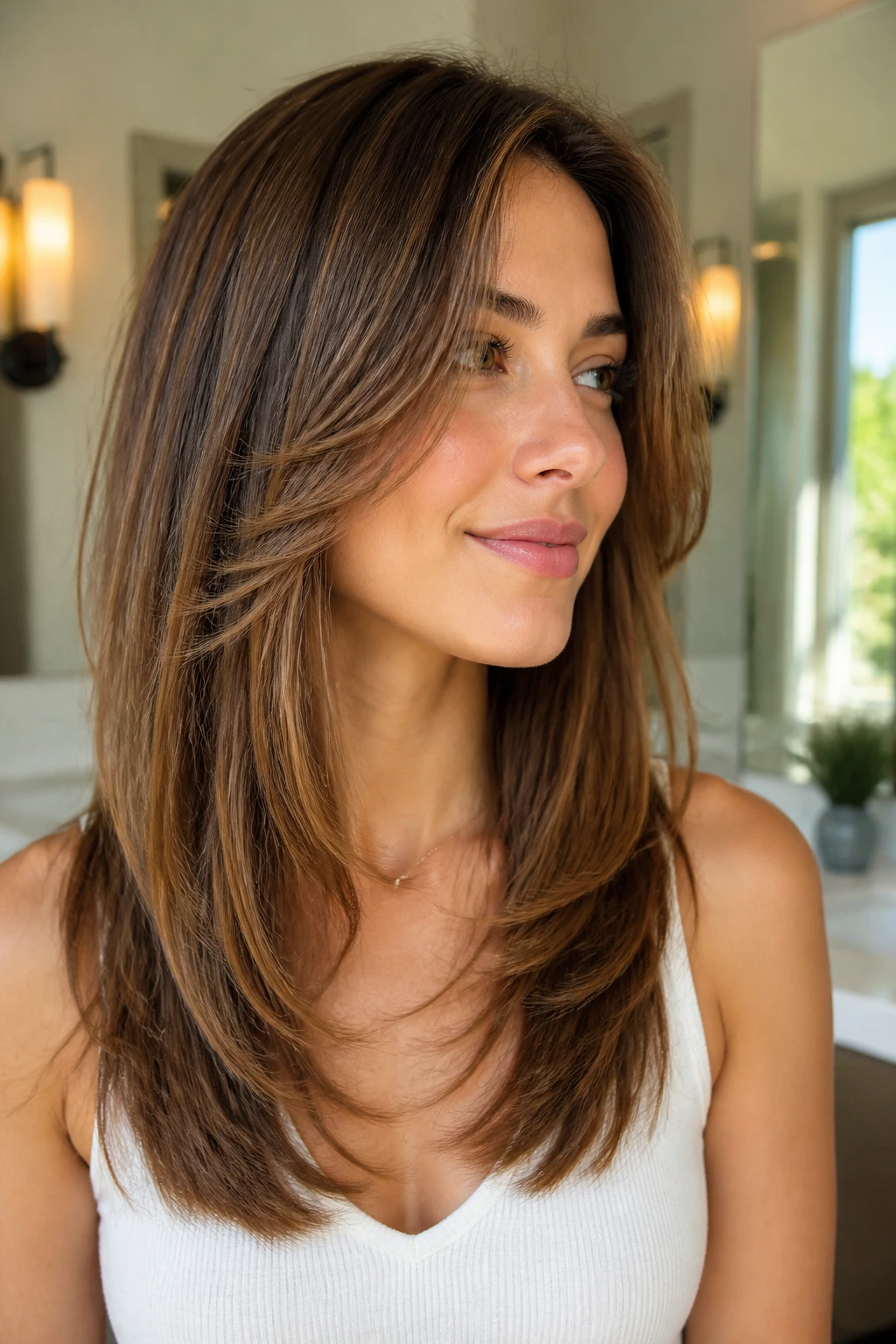
Feathered layers have a softness that suits round faces when they’re kept long. The ends taper, the sides stay light, and the cut opens around the cheeks instead of crowding them.
Why I Keep Coming Back to This One
It’s one of the most forgiving versions in the whole group. Straight hair gets movement. Wavy hair gets shape. Thick hair loses bulk without losing length. The cut almost never looks too hard, which is more useful than people think.
If you want one reference point for the salon chair, this is it: long, feathered layers, collarbone length, and no short pieces at the cheek. Simple. Clean. Hard to mess up if the stylist listens.
Why Long Lobs with Layers Change the Shape So Well

A round face doesn’t need to be hidden. It needs a haircut that gives it cleaner lines. That’s the real job here, and it’s why the long lob keeps showing up as a strong option.
The best versions do three things at once. They keep the perimeter below the chin so the eye travels downward. They place layers away from the widest part of the cheeks. And they leave enough movement at the ends that the hair doesn’t sit like a single block around the face.
There’s also a practical bonus people don’t talk about enough: a good lob is easier to live with than a very long cut. You still get ponytail length, braiding room, and enough weight to keep the style from exploding when humidity shows up. Yet the haircut feels lighter than longer lengths that drag the face down.
If your hair has a natural bend, even better. If it’s pin-straight, the cut can borrow shape from a round brush or a curling iron. If it’s curly, the layer placement matters more than almost anything else. Same principle. Different execution.
What to Tell Your Stylist Before the First Snip

The words you use at the chair matter. “Long lob” alone is too vague, and vague instructions are how people end up with a cut that’s either too blunt or too high around the cheeks.
Say the Length Out Loud
Ask for the longest point to fall at the collarbone or just below it. If you want the cut to look lighter, tell them the front can graze the top of the chest, while the back stays a little shorter. That gives the shape room to move without creeping up to the chin.
Be Specific About the Layers
Tell your stylist you want layers that start below the cheekbone or around the jaw, not at the widest part of the face. That one sentence does a lot of work. It keeps the cut from fanning out around the cheeks, which is the fastest way to make a round face look wider.
Bring the Right Photos
Bring photos of the front, side, and back if you can. One picture from the front can hide the fact that a cut has too much volume at the cheek line. A side view tells you where the length really sits. That matters.
Mention Your Hair’s Mood
If your hair is thick, say whether it puffs. If it’s fine, say whether it collapses. If it’s curly, say how much it shrinks. Stylists need that information to decide whether to remove bulk, leave more weight, or keep the layers longer than they first planned.
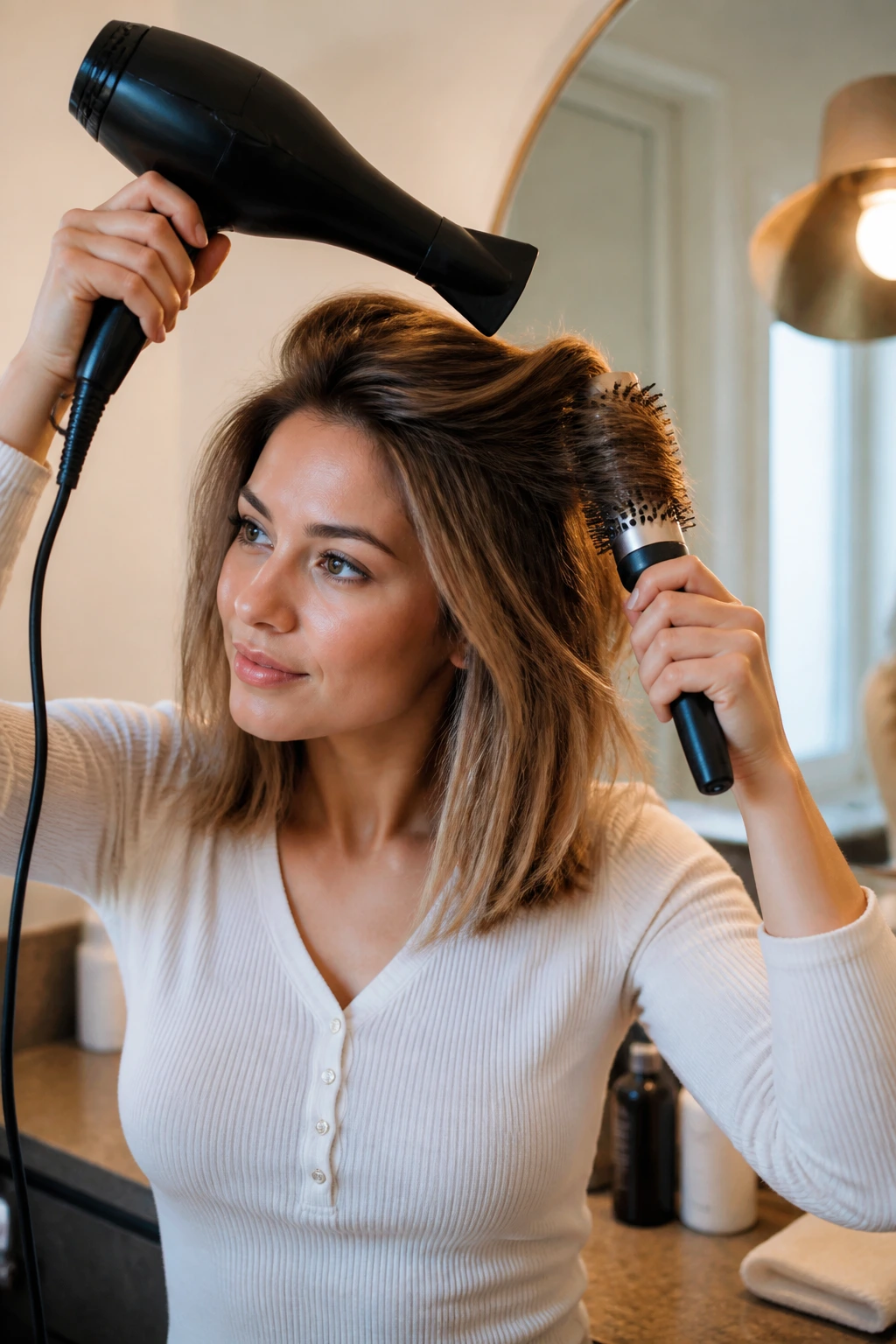
Tools That Make Styling Easier
-
A blow dryer with a nozzle: The nozzle helps aim air at the roots and keeps the ends from frizzing out too early.
-
A medium round brush: This gives the collarbone flip, the soft bend, and the lift at the crown without making the cut too round.
-
A 1-inch curling iron or wand: Small enough to shape face-framing bends, but not so small that the lob turns into a ringlet parade.
-
Heat protectant spray: Use it every time you apply heat. The ends of a lob are the first place to look fried.
-
Light mousse or root lift spray: Good for crown volume on round faces, especially if the hair tends to fall flat by noon.
-
Texturizing spray: Helpful on wavy, piecey, or shag-lite lobs when you want separation rather than shine.
-
Wide-tooth comb: Better than yanking a brush through damp layers and stretching them out in the wrong direction.
-
Clips for sectioning: Not glamorous. Very useful. They keep the layers clean while you style one piece at a time.
-
Silk or satin pillowcase: It cuts down on the weird bend you get after sleeping on a lob overnight.
Little Styling Moves That Change the Silhouette
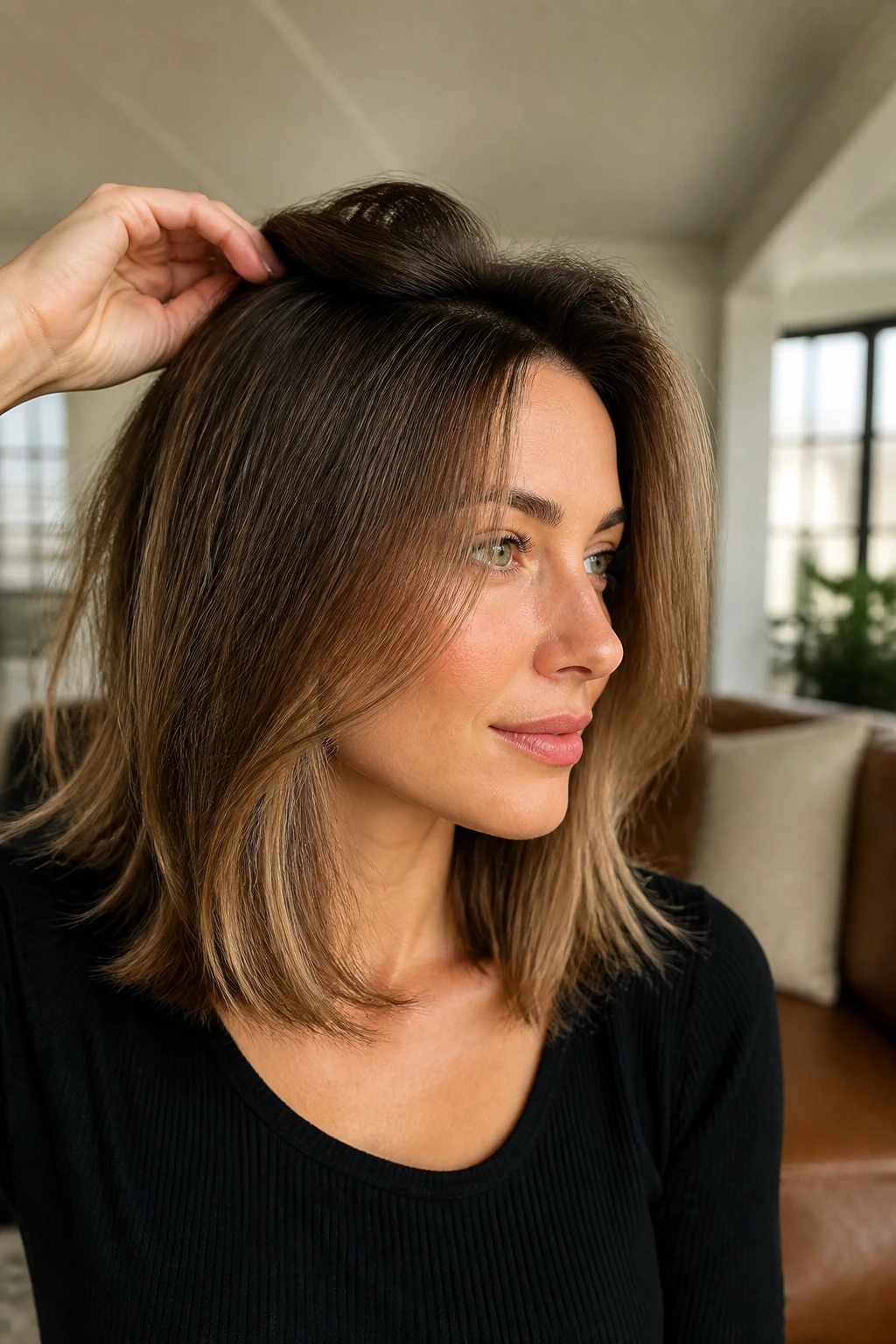
The shape of a lob lives or dies in the last 10 percent of styling. That’s the part people rush. Don’t.
Root Lift: Dry the crown first and flip the part while the hair is still warm. A little lift up top stretches a round face in a way that side volume never quite manages.
Bend Placement: Start waves and curls below the cheekbone, not right at it. If you place the bend directly on the widest part of the face, you add width where you’re trying to avoid it.
End Control: Leave the last half-inch to inch softer than the rest of the strand. Hard, curling ends can turn the lob into a dated flip. Soft ends keep it modern and lower the visual weight.
Texture Balance: If one side is tucked, keep the other side loose and slightly fuller. That asymmetry gives the face a little shape without looking stagey.
A quick final note. If the hair looks flat at the roots and puffy at the ends, the styling is backward. Fix the crown first, not the fringe.
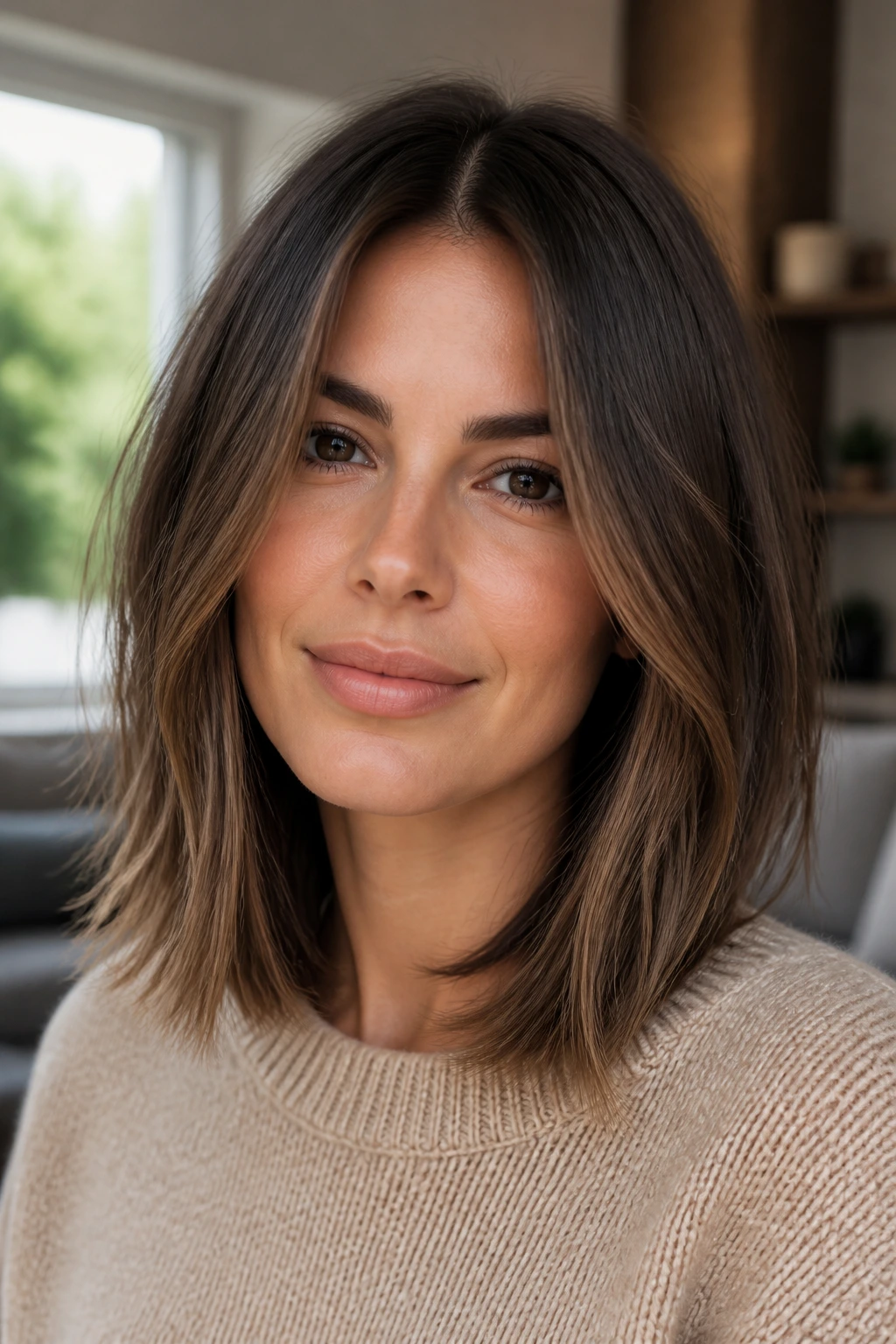
Common Cuts and Styling Mistakes That Work Against a Round Face
-
Layers that start at the cheeks: The symptom is simple — the face looks wider in photos. Move the shortest face-framing layer lower, toward the jaw or below.
-
A blunt line at chin length: This cut stops the eye right where you do not want it to stop. Go longer, or soften the perimeter with subtle layers.
-
Too much thinning on fine hair: The ends can look see-through and weak. Ask for internal movement, not aggressive texturizing.
-
Curls that expand at the sides: If the shape balloons near the cheeks, the style starts competing with the face. Use a bigger section size, a looser iron, or a diffuser on low airflow.
-
Styling everything in the same direction: That creates a flat curtain. Alternate bends or use a side flip so the hair doesn’t read as one wide block.
-
Ignoring the crown: Flat roots make the whole cut sink. A little lift up top changes the proportions more than a lot of product at the ends.
Variations and Adaptations to Try
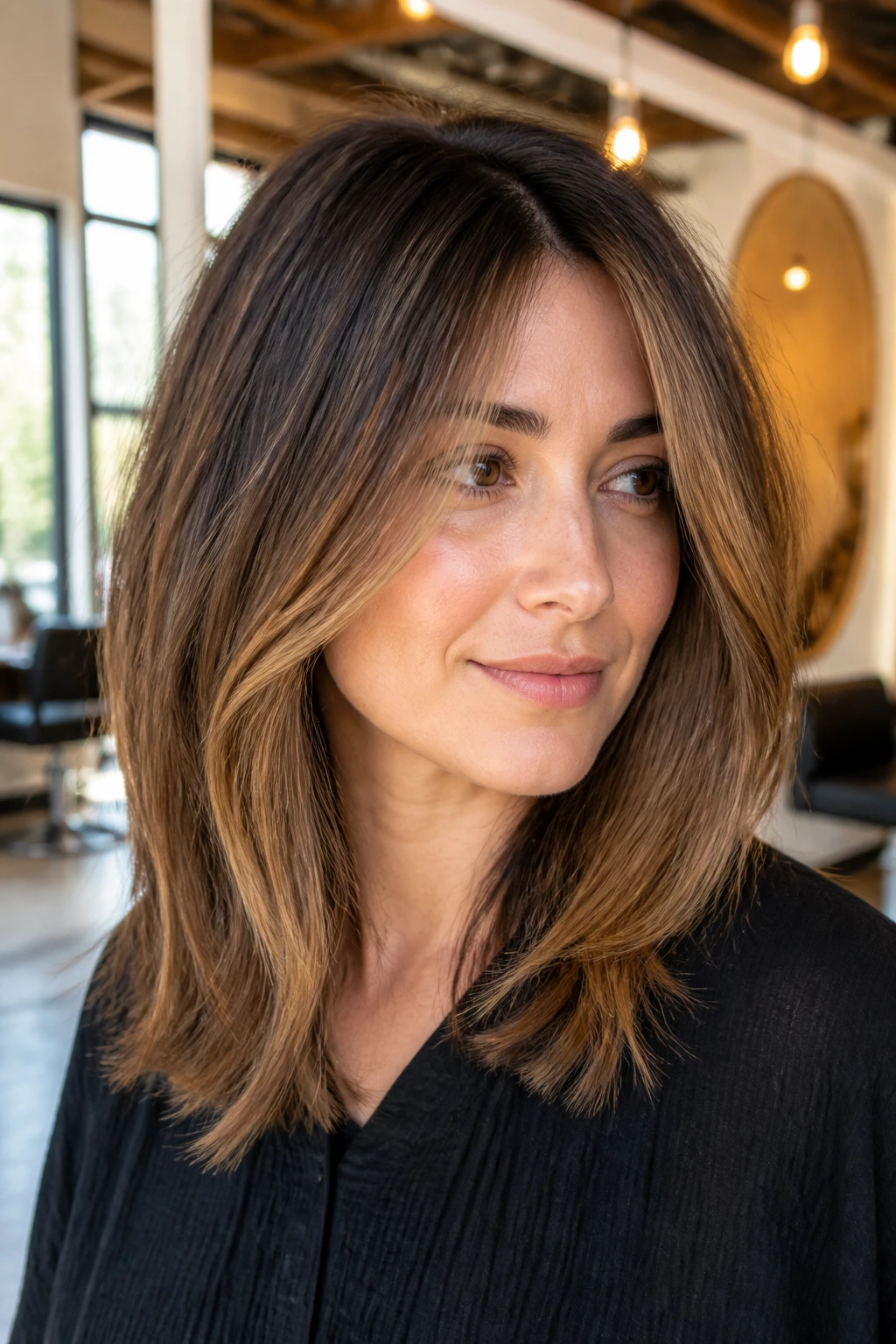
Fine-Hair Float Lob
Keep the perimeter strong and the layers long, then use mousse at the roots and a very light spray through the mids. The goal is fullness without exposing too much scalp through short layers.
Thick-Hair Weightless Lob
Ask for internal debulking and long face-framing pieces that start below the cheekbone. This removes the bulk that can widen the face while leaving enough density to keep the shape polished.
Curly Shape-Keeper Lob
Get the cut dry or curl-by-curl, then preserve length around the cheeks with longer front pieces. It’s the safest route when shrinkage is unpredictable.
Bang-Friendly Lob
If you like fringe, choose bottleneck or long curtain bangs that open at the temples. Short, blunt bangs tend to cut the face in half in a way that works against the length you want.
Low-Heat Air-Dry Lob
Leave the layers long, add a wave cream, and scrunch lightly. This version works best when the haircut itself does most of the shaping and you only need a little help from your hands.
Dimensional Color Lob
Add soft highlights around the front and lower layers so the cut shows depth. Color won’t replace structure, but it can make the layers read more clearly and keep the shape from going flat.
Keeping the Shape Between Appointments
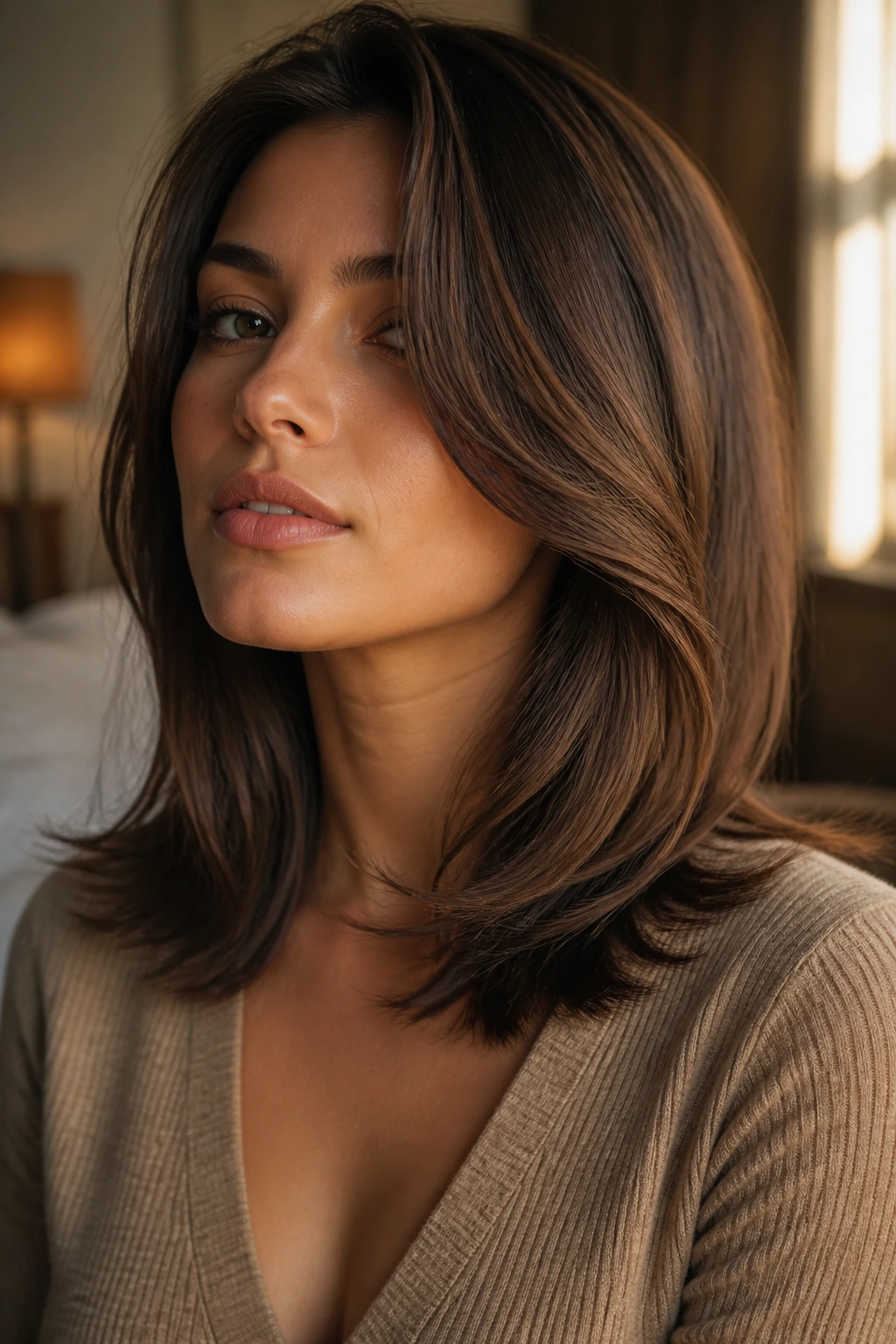
A lob like this holds up best when you don’t let the ends turn ragged. Most people need a trim every 8 to 10 weeks if they want the layers to keep their line. Push it longer, and the front pieces can drag the shape down instead of framing the face.
At home, don’t wash the style into submission. Use enough shampoo to clean the roots, then keep conditioner on the mids and ends only. If you coat the cheek-level pieces with heavy conditioner, they’ll sit flatter and wider the next day. That’s a small mistake with a visible result.
Night care matters more than people want to admit. A loose twist, a soft clip, or a silk pillowcase can save the front layers from turning into one weird bend. And if one side flips wrong in the morning, mist it lightly, wrap it around a brush or your fingers, and give it 30 seconds of warm air. No need to rewash the whole head.
Dry shampoo helps, but use it at the roots, not through the face-framing layers. The front pieces need movement, not grit.
FAQ
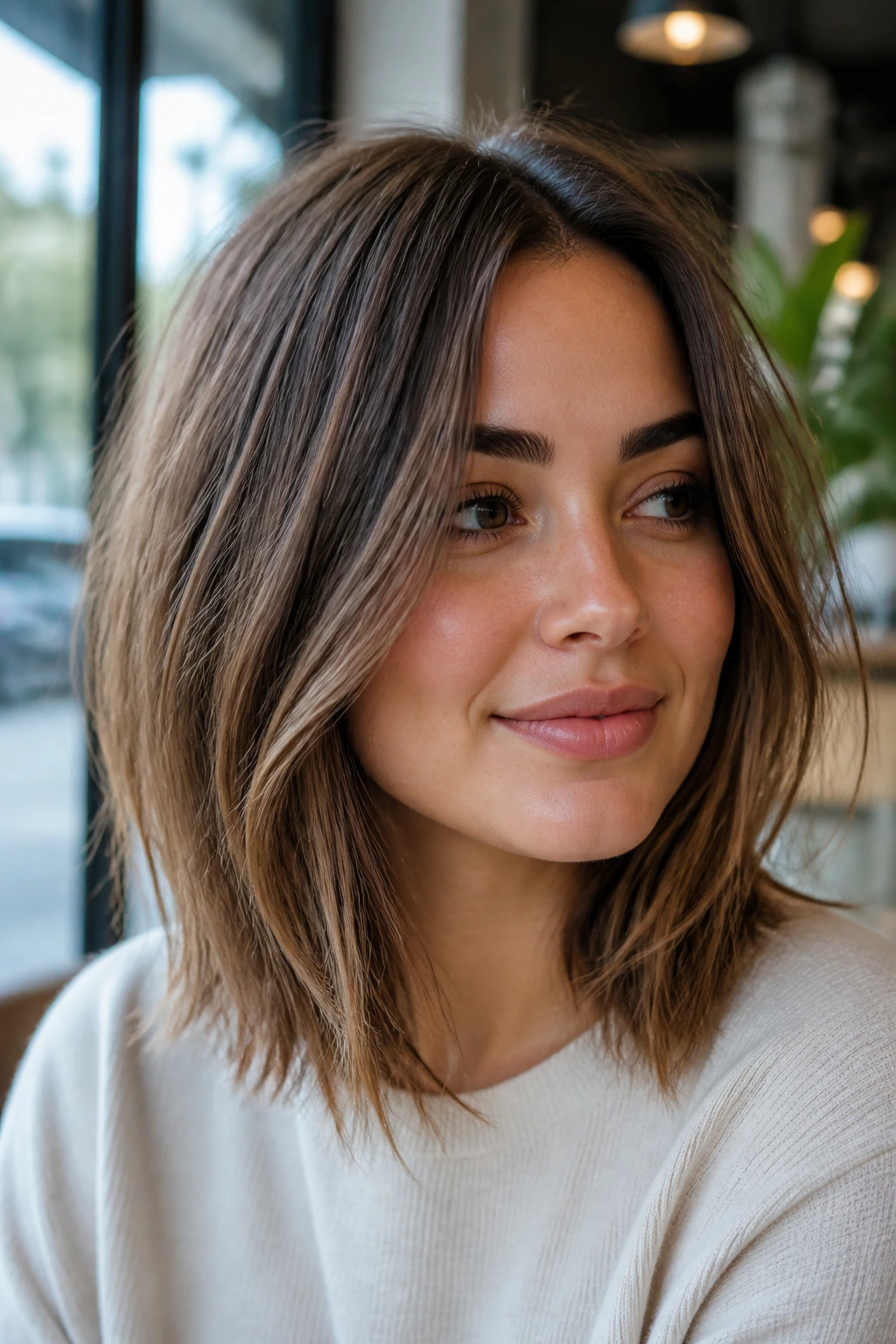
Can a long lob really flatter a round face?
Yes, if the cut sits below the chin and the layers are placed low enough to avoid the cheeks’ widest point. The length creates a vertical line, and the right layers keep the shape soft instead of boxy.
Should the longest pieces hit the collarbone or the chest?
Collarbone length is the sweet spot for most round faces because it gives visible length without dragging the style down. If your hair is very thick or curly, going slightly below the collarbone can help balance shrinkage and keep the shape visible.
Does a center part work on a round face?
It can, as long as the front pieces are long and the ends have some movement. A center part on a blunt, chin-length cut is a different story. That version can make the face look wider than it needs to.
What kind of layers should I ask for if my hair is fine?
Ask for long internal layers or very soft face-framing pieces, not a lot of short chopping around the head. Fine hair loses density fast, and a round face needs enough perimeter weight to keep the line clean.
What if my hair is thick and puffy?
Ask for bulk removal inside the cut, not just at the ends. The outer line should stay smooth enough to frame the face, while the inside carries less weight so the sides do not flare out.
Do bangs work with long lobs on round faces?
Yes, but long curtain bangs and bottleneck fringe tend to work better than blunt short bangs. The longer shapes open the face. Short, straight-across bangs can stop the eye too soon.
How often should I trim a layered lob?
Every 8 to 10 weeks is a good rhythm if you want the shape to stay crisp. If you let it go much longer, the front pieces can lose their angle and the layers start feeling heavy.
Can I air-dry this haircut and still keep the shape?
Absolutely, especially if your hair already has some wave. Use a light product, scrunch once or twice, and let the layers dry in place. If the ends dry too wide, a little finger-twisting around the front sections can bring them back in line.
What should I do if the layers make my face look wider?
The usual fix is moving the shortest pieces lower and softening the side volume. A quick styling shift can help too: lift the crown, keep the sides closer to the head, and avoid curls that land right on the cheekbones.
The Shape That Stays Put

A good lob on a round face doesn’t try to outsmart the face. It gives it structure. That’s the real difference between a cut that flatters for one photo and a cut that keeps working when the day gets messy.
The strongest versions here all share the same backbone: length below the chin, layers placed with restraint, and enough movement to keep the shape from looking blunt. Get those three things right, and the rest becomes preference — center part, side flip, waves, polish, air-dry, whatever suits your routine.
If you’re taking one idea to the salon, make it this: keep the front long enough to open the cheeks, not sit on them. That one detail does more than most people realize, and it’s the difference between a lob that merely fits and one that keeps its line all day.