



Blonde mid bobs for women over 50 with thick hair can look crisp, swingy, and fresh-cut—or they can balloon at the sides and sit there like a brick. The difference is usually not some grand styling mystery. It’s length, weight removal, and where the blonde is placed.
A mid bob gives thick hair a place to stop fighting itself. Too short, and the ends kick out. Too long, and the shape slumps into a heavy curtain. Right around the collarbone, jaw, or the space between the two, you get enough structure to keep the bulk under control and enough movement to keep the haircut from looking severe.
Blonde helps more than people think. Honey, beige, champagne, ash, and buttery tones break up dense hair the way shadow and sunlight break up a stone wall. You stop seeing one solid block and start seeing shape. That matters even more on thicker hair, because strong lines can go boxy fast if the color is flat.
Why These 22 Mid Bobs Work So Well on Thick Hair
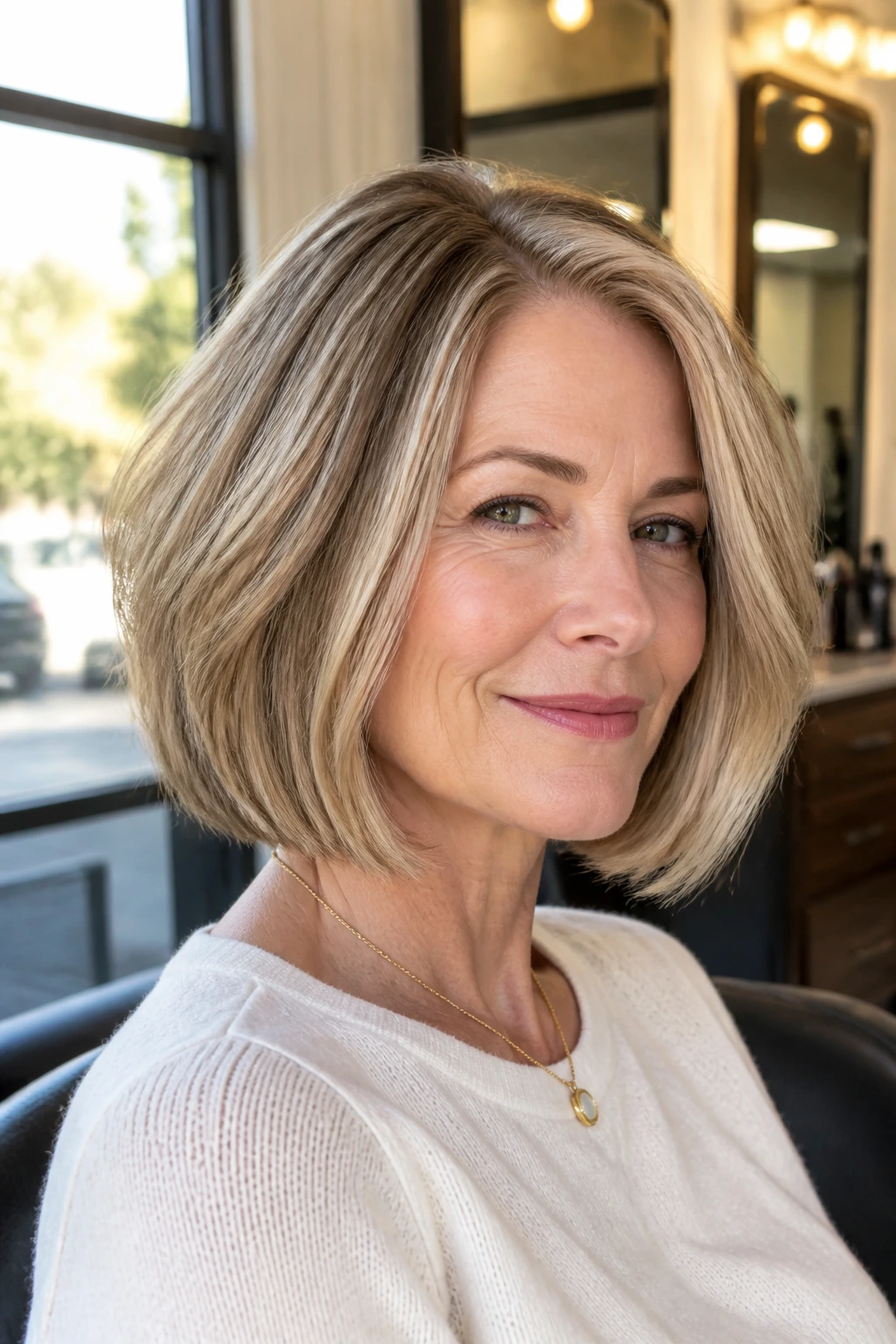
- Weight control: These cuts sit in the sweet spot where thick hair can still move, but it doesn’t swell outward at the jawline.
- Blonde dimension: Lighter ribbons and shadow roots keep dense hair from looking like one solid sheet.
- Soft grow-out: The better versions here don’t demand a perfect salon finish every morning; they keep their shape for weeks.
- Face framing: A few strategically placed pieces around the cheekbones do more than a whole lot of thinning.
- Age-smart polish: These styles work with glasses, natural silver, softer jawlines, and hair that’s gotten a little coarser over time.
- Style range: Straight, bent, waved, tucked, or brushed under—mid bobs like options, not rigid rules.
1. Honey-Rooted Mid Bob with Soft Layers
This is the cut I reach for when thick hair needs calm, not drama. The honey root keeps the top from looking stripey as it grows out, and the soft layers stop the sides from puffing into a triangle. On hair that has a little natural bend, this shape feels especially forgiving.
Why It Works
The root shadow gives the blonde depth right where thick hair usually looks flat. The layers should be internal, not choppy around the perimeter, so the outline stays clean while the middle of the haircut loses some bulk. Ask for collarbone length with just enough face-framing to skim the jaw.
What to Ask For
- Collarbone length, with the front about 1 inch longer than the back
- Honey blonde ribbons concentrated around the top layer and ends
- Soft internal layering, not a lot of visible chopping
- A rounded finish through the sides so the hair doesn’t kick outward
A quick round-brush bend at the ends is enough. No need to force it.
2. Champagne Blunt Lob with a Center Part
A blunt lob can look heavy on thick hair if the ends are too wide or the shape is too short. Done right, though, it’s one of the cleanest cuts you can wear. The champagne blonde keeps the line from feeling harsh, and the center part gives it a quiet, modern edge.
The trick is density control, not aggressive thinning. The perimeter should be blunt enough to look deliberate, but the inside needs enough removal so the hair sits flat. If your hair is naturally straight or only slightly wavy, this one lands beautifully after a simple blow-dry with a paddle brush.
This is the bob for someone who likes a sharper silhouette and doesn’t want a lot of fluff at the cheeks. It wears best when the color has a few brighter pieces around the face and a softer root underneath. Otherwise the line can feel too hard.
3. Feathered Butter Blonde Bob
Why do feathered ends work so well on dense hair? Because they take the edge off the haircut without making it look skimpy. The butter blonde tone softens the whole shape, and the feathering gives the ends a little swing instead of a blunt shelf.
How to Wear It
This cut likes movement. A medium round brush, a loose twist with a hot tool, or even a rough blow-dry with mousse will do the job. If your hair is coarse, keep the feathering mostly around the bottom third of the bob so the top still has enough body.
A little bit of lift at the crown helps too. Not 1990s volume. Just enough root air so the shape doesn’t collapse. This one is flattering when you want softness around the mouth and jaw but don’t want bangs getting in the way.
4. Sandy Angled Mid Bob
An angled bob is a clever fix for thick hair that grows sideways at the sides. Shorter in the back, longer in the front, it creates a clean diagonal line that keeps the bulk from building at the neckline. The sandy blonde tone makes the angle feel lighter and less severe.
The shape matters more than the color here. If the back is stacked too high, the cut turns fussy. If the front is too long, it loses the whole point. Ask for a subtle angle, not a dramatic swoop.
This cut flatters readers who wear their hair tucked behind one ear or who want a bob that still brushes the collarbone. It also works well with glasses, because the front pieces can sit just past the frames instead of fighting them.
5. Beige Blonde Collarbone Bob with Face Frame
This one has a lovely, low-drama elegance to it. Beige blonde is one of those shades that looks expensive without trying to be flashy, and on thick hair it reads as calm rather than busy. The collarbone length keeps the weight in check, while the face frame breaks up the density around the cheeks.
You want the front pieces to start below the cheekbone, not up by the eye. That’s the part many stylists get too enthusiastic about. Too-short framing can make thick hair explode outward. A longer frame keeps things soft and still gives the face a lift.
This cut is a smart choice if you wear a lot of neutral clothing, cream sweaters, or structured jackets. The blonde doesn’t need to do all the work. The haircut already has enough shape.
6. Creamy Side-Part Bob with Internal Layers
A side part changes everything. It creates instant lift at the root, which thick hair often needs because gravity is not exactly its friend. The creamy blonde tone keeps the shape light, and the hidden layers make the bob easier to dry without losing the outline.
Why It Works
A deep side part gives the front some asymmetry, which is a gift when your hair is dense and your face needs a little softness. Ask for internal layers only through the middle of the head, not the top surface. That keeps the bob from getting wispy or hollow near the crown.
This is one of those cuts that looks polished even when you’ve barely done much to it. A round brush on the front section, a dab of smoothing cream at the ends, and you’re done. If your hair flips outward at the nape, the side part helps direct it back into shape.
7. Caramel Balayage Mid Bob with Curved Ends
This is the bob for someone who wants dimension first and length second. Caramel balayage threads warmth through thick hair, and the curved ends keep the silhouette from feeling blunt or stiff. It’s a very good answer for hair that looks heavy when it’s all one color.
Why It Works
Balayage works especially well on dense hair because the painted ribbons don’t fight the haircut; they work with it. The contrast between caramel pieces and a deeper base gives the eye a place to move. That movement matters when the hair itself has a lot of mass.
A curved finish is the finishing move here. Blow the ends under with a round brush or use a flat iron to bend the last inch inward. The result is softer than a pin-straight bob and easier to wear if your hair has a little natural wave. If you like warmth around the face, this one is easy to live with.
8. Pearl Blonde Wavy Bob

Pearl blonde has a cool sheen that looks especially good when thick hair is worn in loose waves. The waves stop the shape from reading as heavy, and the pale tone keeps the bob from feeling too dark at the ends. This is one of the softer-looking options in the group.
The key is not to over-curl it. Thick hair can hold a wave forever, which is both a blessing and a curse. Use a 1 to 1.25-inch iron, bend the mid-lengths, and leave the ends a little straighter so the style doesn’t turn puffy.
This bob is flattering if your hair already has some body and you want to work with it rather than flatten it. It feels friendly, not fussy. And yes, it looks good with a little root shadow. Better, honestly.
9. Golden Blonde A-Line Bob
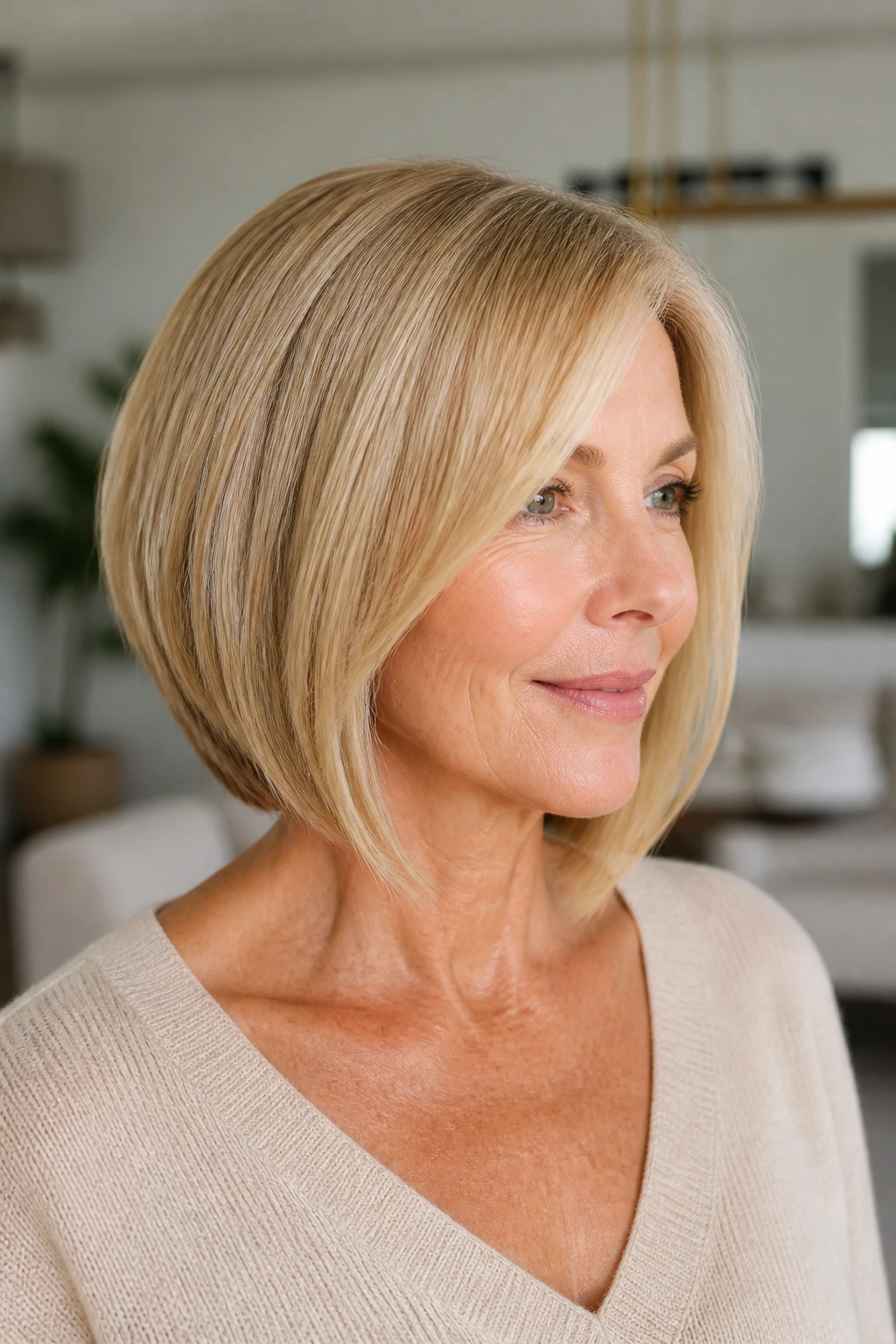
A-line bobs have a built-in advantage with thick hair: they remove a touch of width from the back while keeping the front long enough to feel graceful. Golden blonde makes the angle warmer and easier on the eye. It’s a cut with posture.
The front pieces should graze the collarbone, while the back sits a little shorter and neat. That line keeps the hair from hanging like a curtain. It also gives the neck some breathing room, which a lot of women appreciate after years of fuller, longer cuts.
This one works best when the ends are polished, not blasted into a dry, fuzzy finish. A blow-dry with a nozzle and a medium round brush will do more than a heavy styling routine. The point is a clean edge with enough softness to move.
10. Icy Beige Bob with Piecey Texture
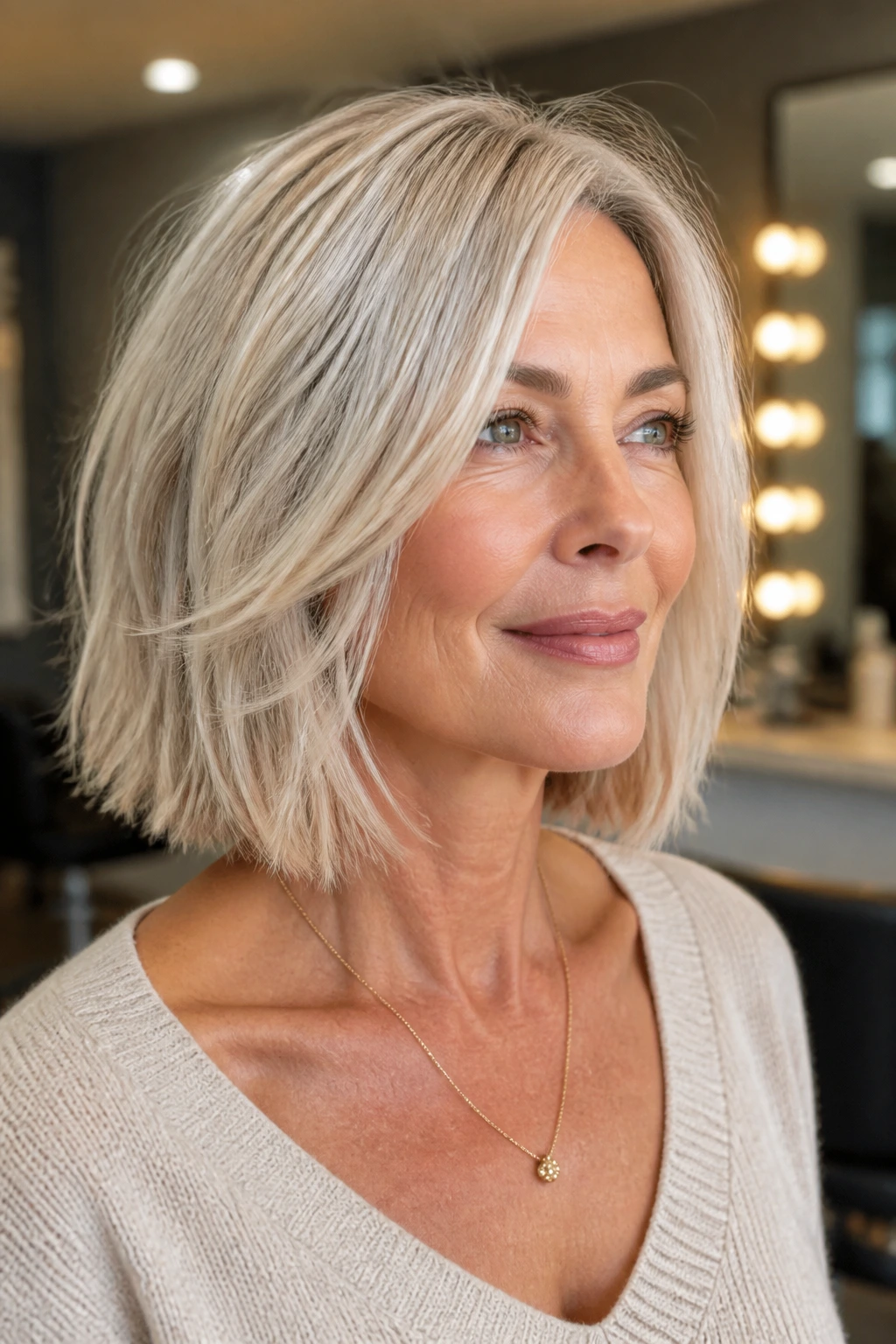
Icy beige can look sharp on thick hair, but only if the texture is controlled. The color is cooler, a little modern, and it needs that piecey separation so the haircut doesn’t become a solid block of pale hair. If you like a more fashion-forward look, this is a strong option.
How to Make It Work
Ask for a collarbone bob with light point-cut ends and a touch of separation near the front. Then style with a pea-sized amount of lightweight paste or cream on the very ends. Not the roots. The roots need lift, not product.
This is a better choice for straight or slightly wavy hair than for very coily textures. It also needs a decent toner schedule, because icy beige fades fast if you’re rough with it. Still, when it’s fresh, the finish is clean and cool in the best way.
11. Sunlit Shaggy Lob
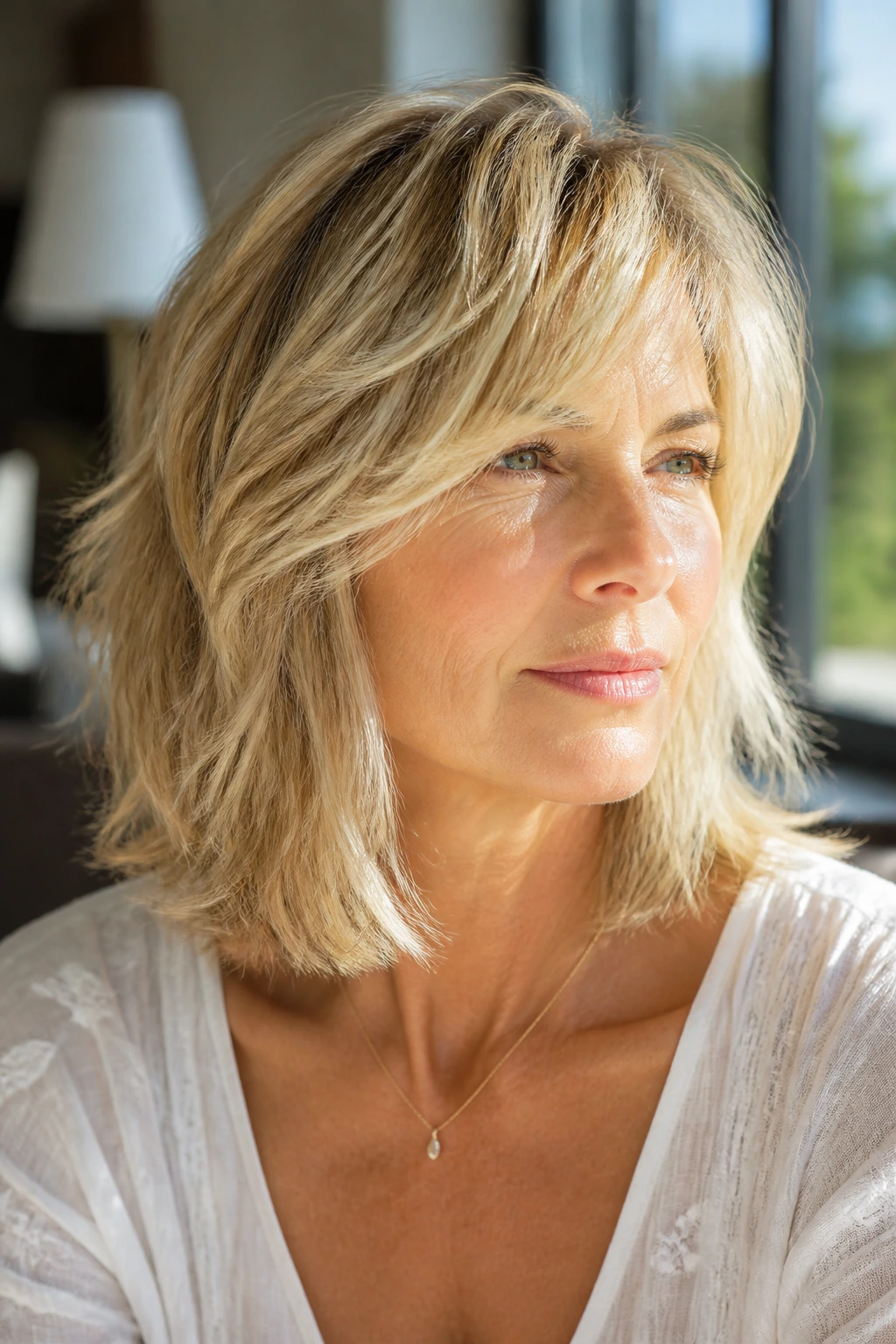
The shaggy lob is the least formal cut in the group, and that’s the point. Thick hair often wants to behave like a blanket; the shag loosens that up. The sunlit blonde pieces make the layers visible without turning the whole thing into a mullet situation.
What keeps this from going too wild is restraint. The layers should be long and feathered, not chopped into sharp steps. Think movement through the mid-lengths, not a lot of broken pieces at the crown. That lets the hair lift without frizzing into the air.
This suits women who like a lived-in finish and don’t want to blow out every strand straight. A diffuser, a scrunch of mousse, or a quick bend with the iron is enough. It’s a relaxed cut, but it still has shape.
12. Toasted Almond Bob with Invisible Layers
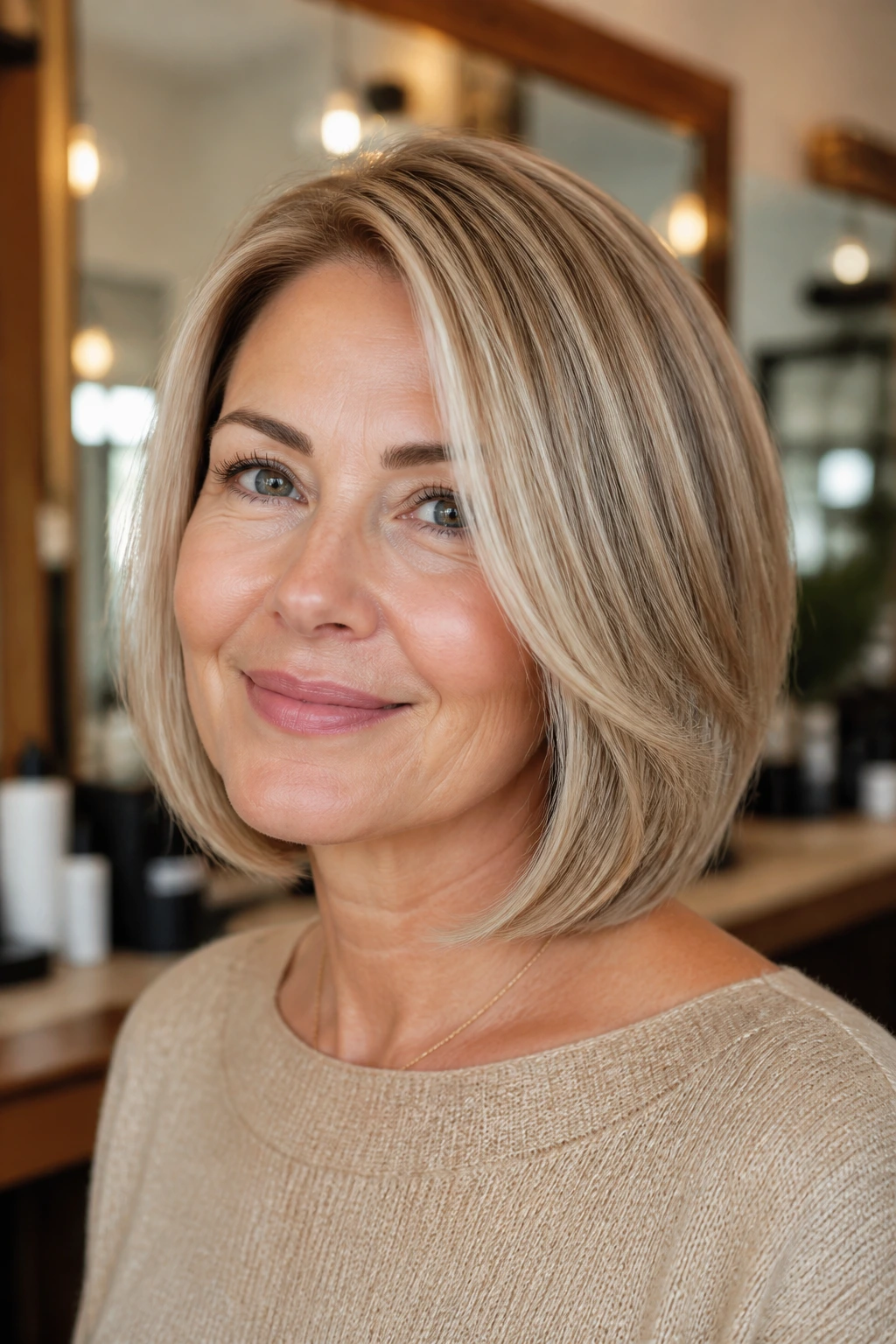
Invisible layers are exactly what they sound like: the haircut gets lighter inside without looking visibly shredded on the surface. That’s a smart move for thick hair. The toasted almond blonde is warm enough to soften features, but muted enough to keep the cut from looking bright and busy.
This is the bob for someone who wants polish without obvious styling tricks. The ends should sit just below the chin or at the top of the collarbone, depending on face shape. The outline stays neat, which makes it especially good for straight hair that tends to lie flat but still feels bulky.
A gloss or toner that leans soft beige-brown keeps the color from drifting brassy. I like this shape when a client wants a neat haircut that doesn’t look overworked.
13. Platinum Mid Bob with a Tapered Nape
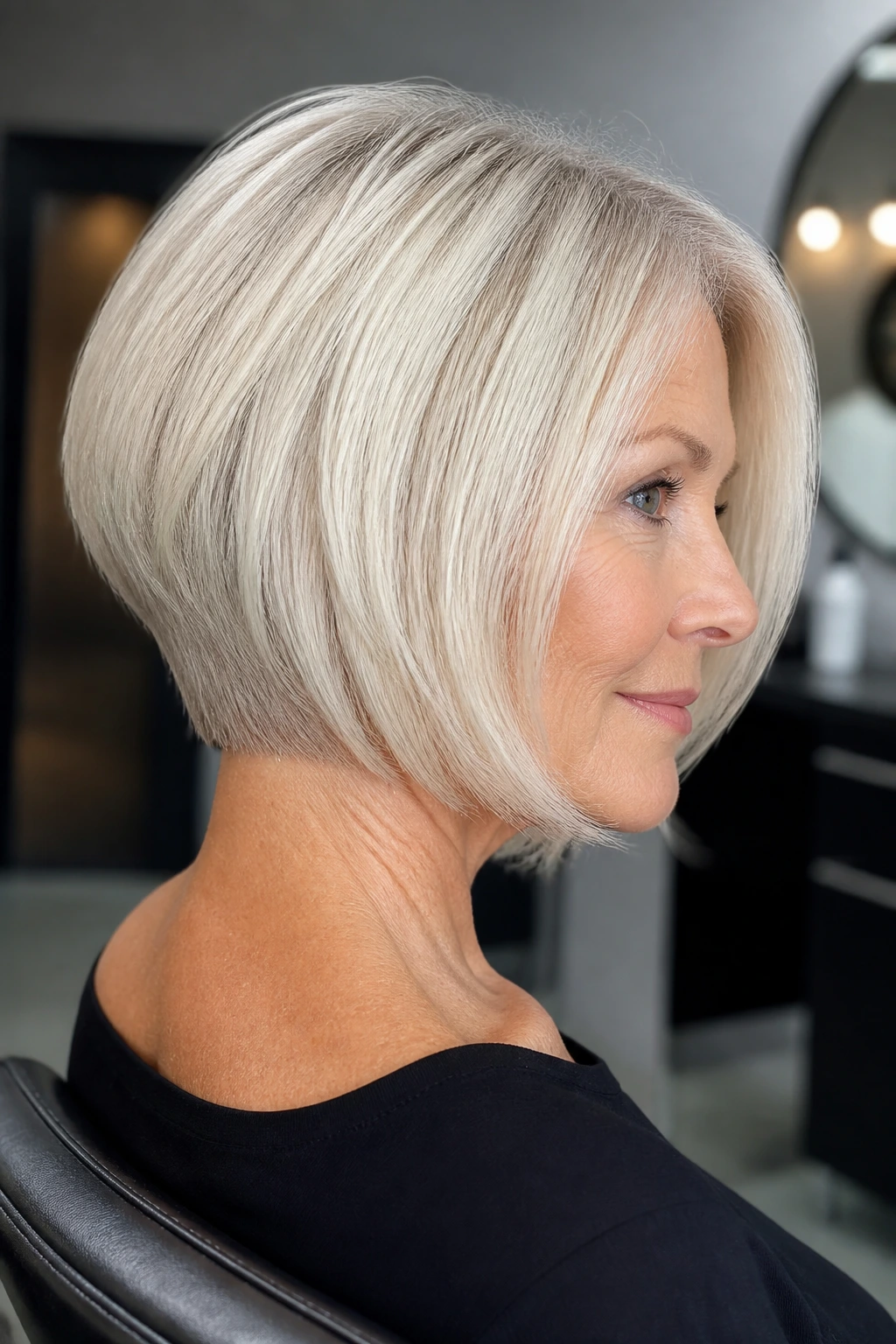
Platinum on thick hair is a commitment. It’s also gorgeous when the cut is right. The tapered nape keeps the bulk under control, and the platinum tone gives the whole shape a crisp, almost sculpted look. This one is not low-maintenance. It is, however, memorable.
What to Watch For
- The taper should be subtle enough that the back doesn’t collapse into a stack.
- The ends need to stay smooth, or the platinum reads frizzy fast.
- Toner upkeep matters more here than with warm blondes.
- Heat protection is non-negotiable, because platinum hair shows damage quickly.
This style is best for someone who likes a sharper look and is willing to keep up with salon glosses or a careful at-home routine. If you’re not interested in regular toning, skip it. The cut will still be nice, but the color will start to look tired.
14. Wheat Blonde Blunt Bob with Brow-Skimming Fringe
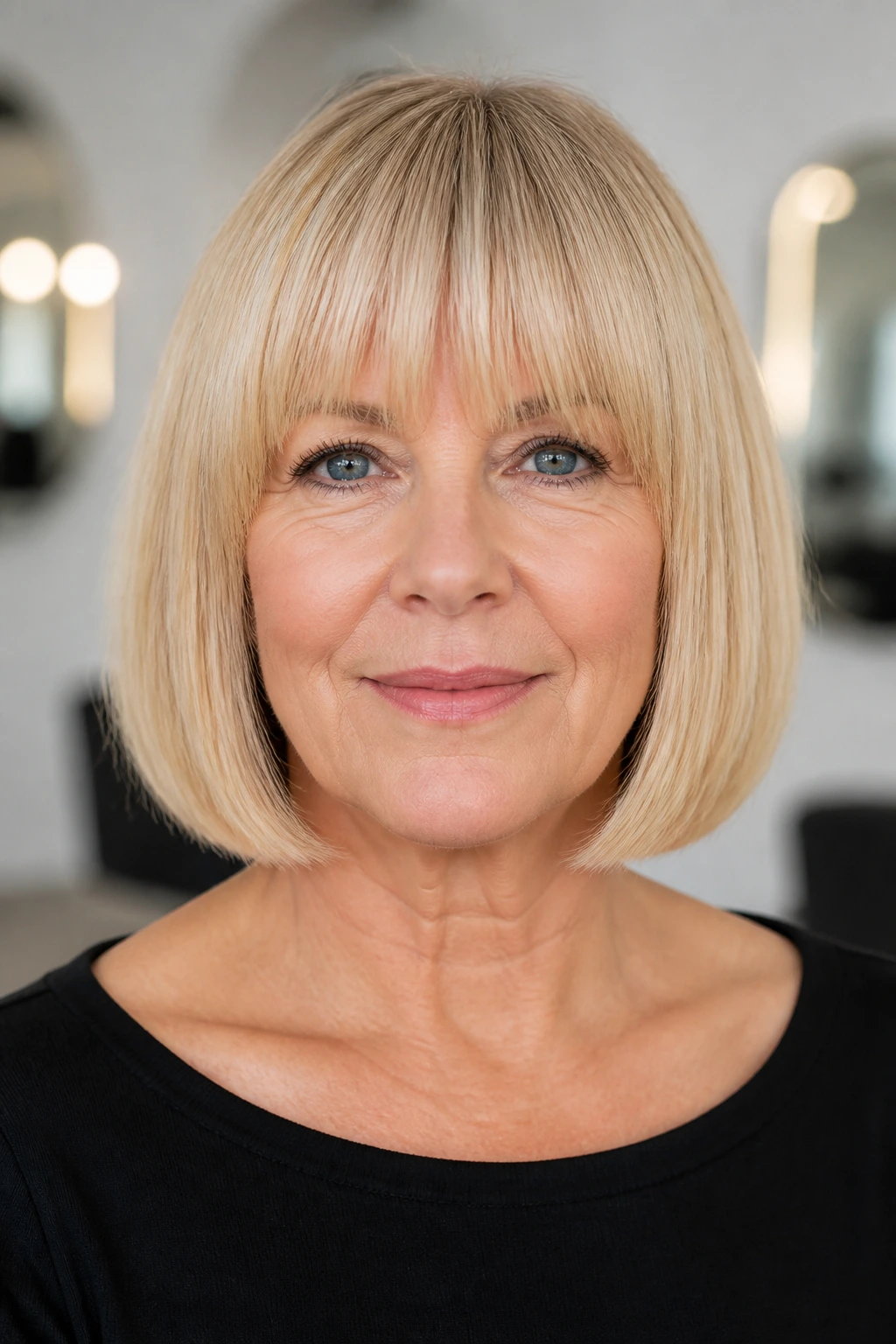
A blunt bob with fringe can be tricky on thick hair. Done badly, it’s all weight and no movement. Done well, it’s a strong, flattering line with a soft front that keeps the face open. The wheat blonde makes it feel lighter, and the brow-skimming fringe breaks up the forehead without swallowing it.
The fringe should be point-cut, not cut as a thick slab. That matters. Thick hair already brings enough density to the party. You want the bangs to skim and separate, not sit like a curtain. A quick dry with a round brush helps them bend and settle.
This cut works especially well for women who like structure and don’t mind a little styling up front. The rest of the hair can be blunt and clean, while the fringe brings the softness.
15. Soft Mushroom Blonde Bob
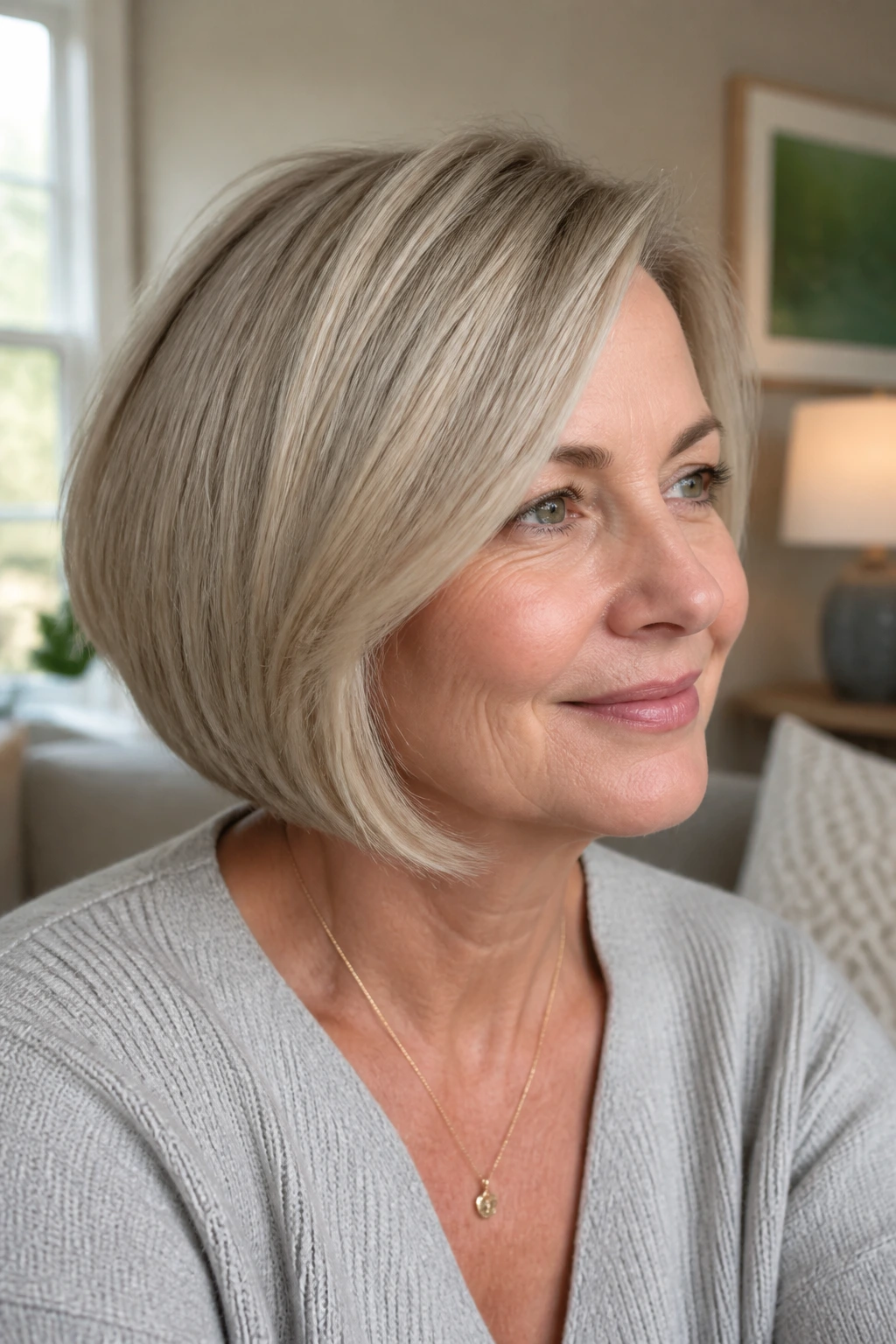
Mushroom blonde sounds odd until you see it on dense hair. Then it makes perfect sense. The cool, earthy tone creates a muted finish that doesn’t fight against gray regrowth, and the soft bob shape keeps the whole cut grounded.
This is one of the more understated looks here, and I mean that as praise. Thick hair doesn’t always need extra brightness. Sometimes it just needs a cool, creamy tone and a clean line that sits near the jaw. The effect is calm, modern, and easy to wear with minimal color contrast.
Ask for a rounded interior with a slightly longer front if your jawline needs softening. That little bit of length keeps the bob from feeling boxy.
16. Vanilla Blonde Rounded Bob
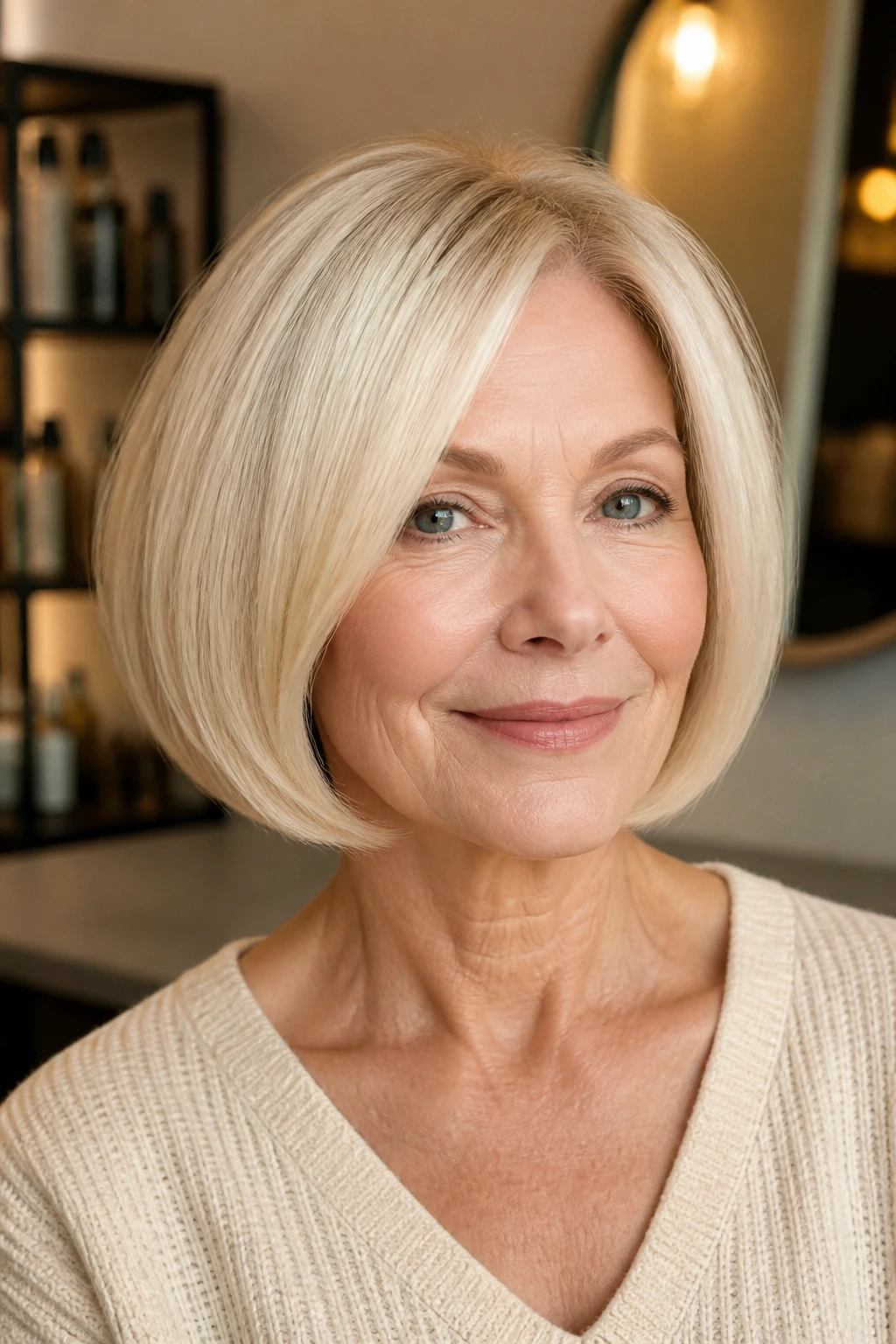
A rounded bob is beautiful on thick hair when the bulk is handled correctly. The vanilla blonde tone makes the curve feel light, and the shape hugs the jaw and neck in a way that looks tidy without feeling severe. It’s one of the best choices if you like a polished finish.
Styling Notes
Use a medium round brush and dry the hair section by section, directing the ends slightly under. You want the silhouette to curve, not balloon. A touch of smoothing serum on the final inch is enough.
This cut suits people who like their hair neat and don’t want a lot of tousled texture. It’s also a strong choice for straight hair that can hold a bend without needing heavy product. If your hair tends to expand in humidity, the rounded outline helps keep it in place longer.
17. Champagne Tousled Bob with Curtain Bangs
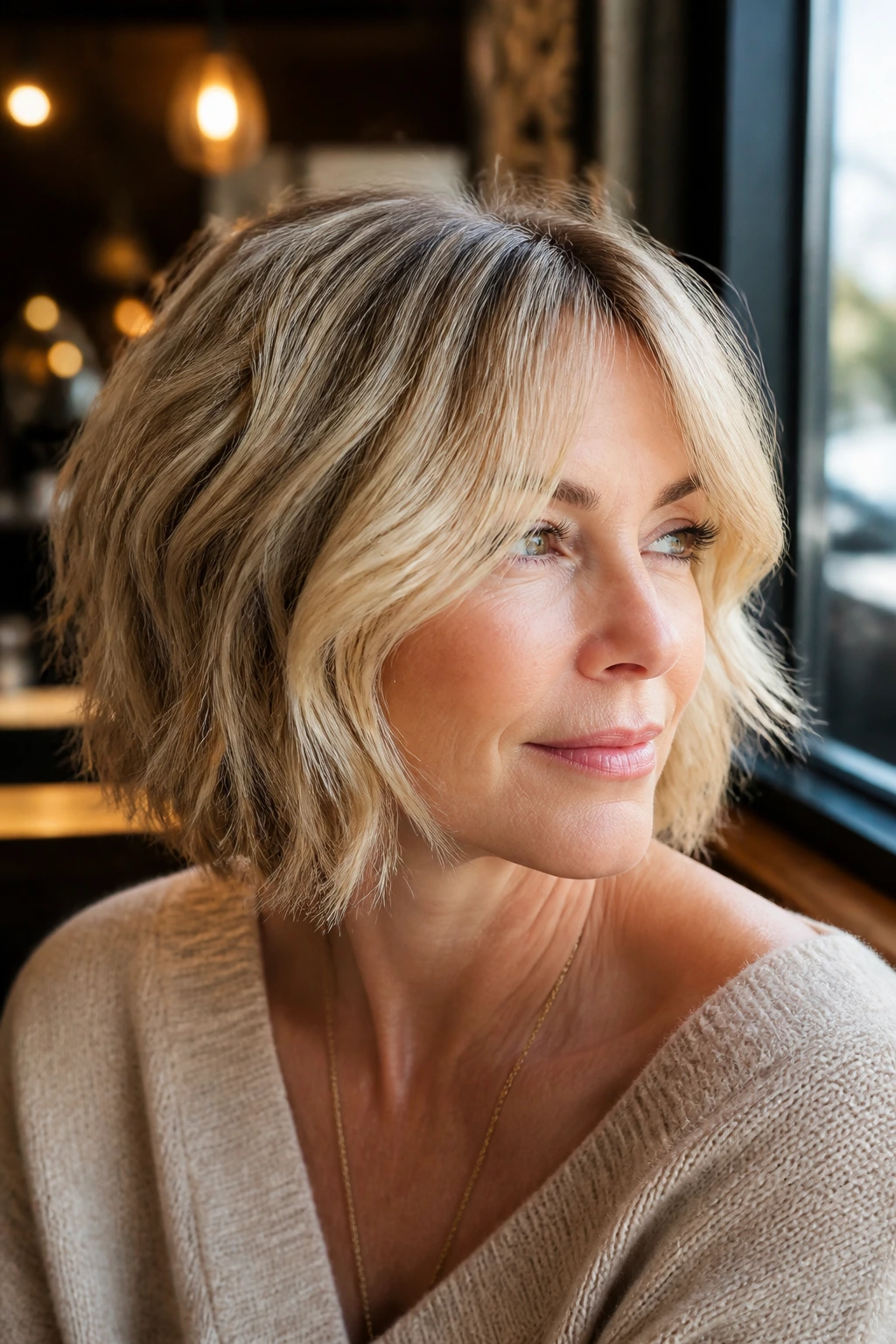
Curtain bangs can be a smart move on thick hair, provided they’re kept light enough to part cleanly. The champagne blonde brightens the face, and the tousled bob below gives the whole cut a relaxed feel. It’s a good mix of softness and shape.
The bangs should open from the center and blend into the front layers. If they’re too heavy, they’ll swallow the eyes and make the top feel thick. If they’re too short, they’ll fight the bob. The sweet spot is usually cheekbone length, with a soft bend away from the face.
This is the haircut for someone who wants a little motion around the eyes and a bob that doesn’t read too strict. It looks best with a bend through the mid-lengths rather than a super-smooth finish.
18. Bronde Mid Bob with Lived-In Highlights
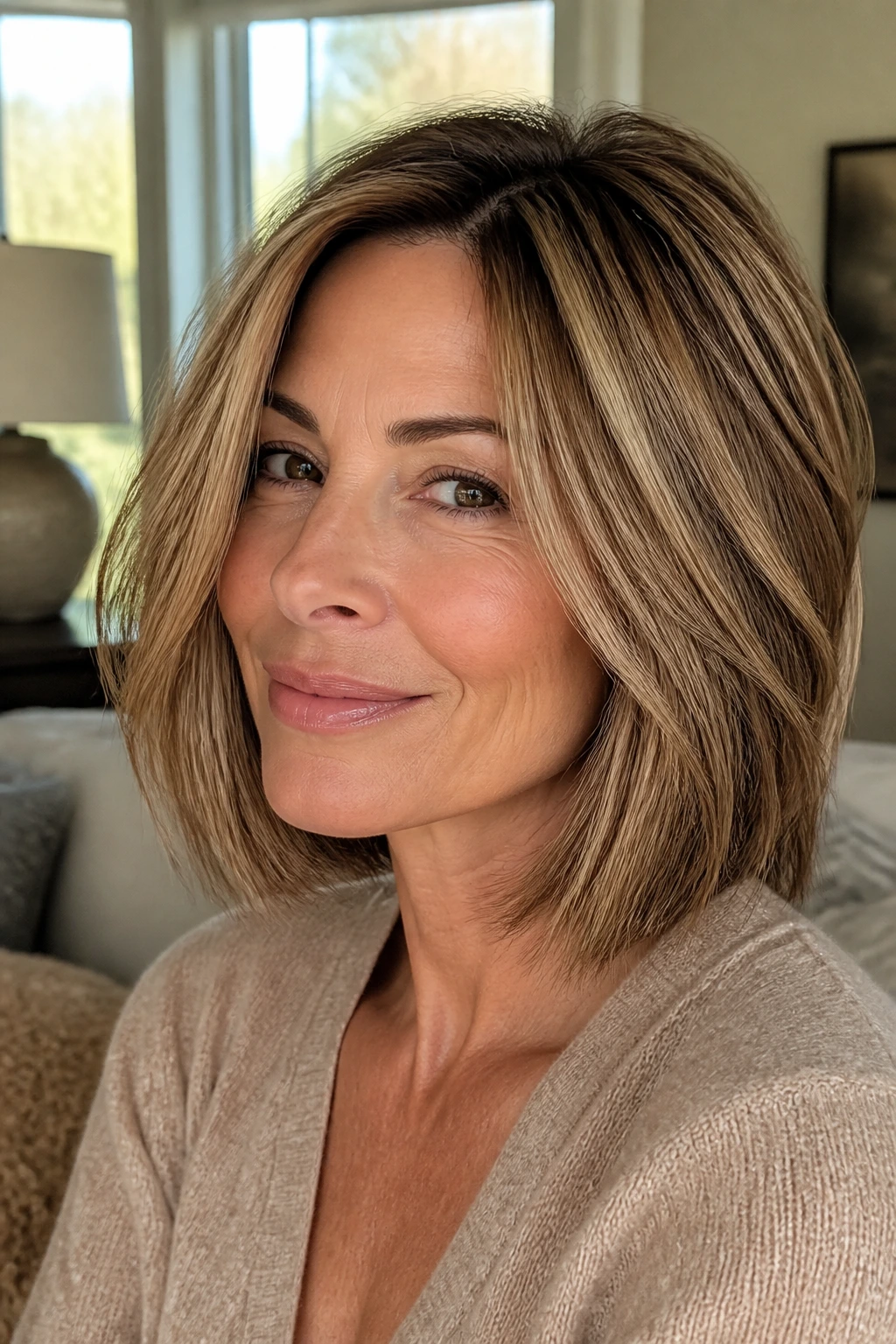
Bronde is one of the smartest choices for thick hair because it keeps the depth. You get enough blonde to brighten the face, but you don’t erase the natural shadow that gives dense hair shape. Lived-in highlights also mean the grow-out looks intentional, which is a gift if you dislike constant salon upkeep.
The cut itself should be mid-length with soft edges and enough movement to keep the outline from feeling square. If your hair has a gray streak or two, bronde can blend them into the pattern instead of fighting them.
I like this on women who want blonde, but not high-maintenance blonde. It’s easy to wear straight, waved, or pinned back behind the ears.
19. Warm Buttery Bob with Side-Swept Bangs
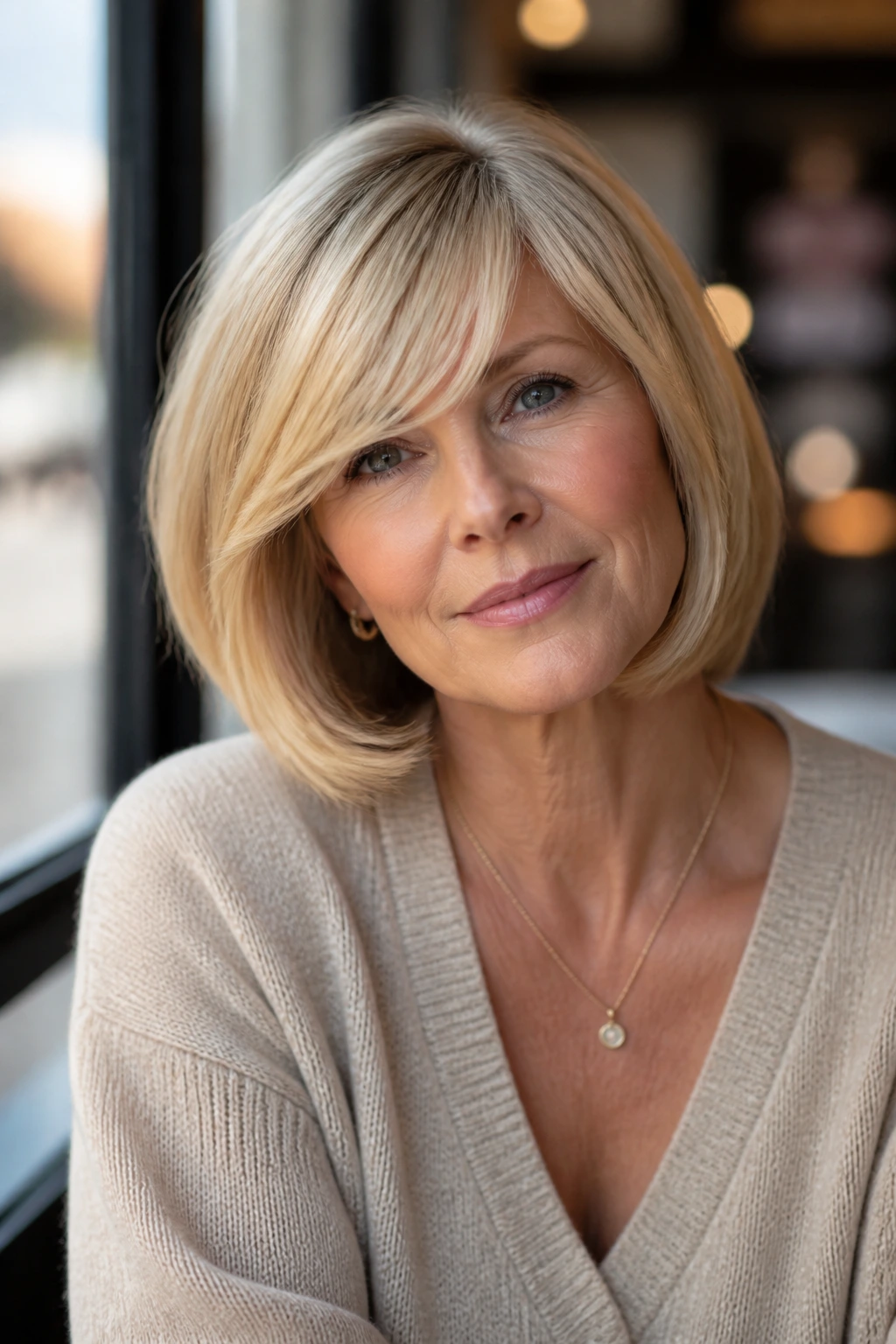
Side-swept bangs are one of the easiest ways to soften a thick bob without adding more bulk. The buttery tone keeps the whole haircut warm and friendly, and the sweep of the fringe draws the eye diagonally, which is flattering around the eyes and cheeks.
Why It Works
The bang should be long enough to tuck or blend if you get tired of it. That’s the mistake people make: they cut side bangs too short and then spend a month trying to grow them out. Keep them at or below the cheekbone, and they’ll behave.
This bob is good for women who want a little softness in front but still want a haircut with structure. It works well with round or heart-shaped faces, and it’s one of the better choices if you wear makeup lightly and want the hair to do some framing work.
20. Ash Blonde Sleek Lob with an Underbevel
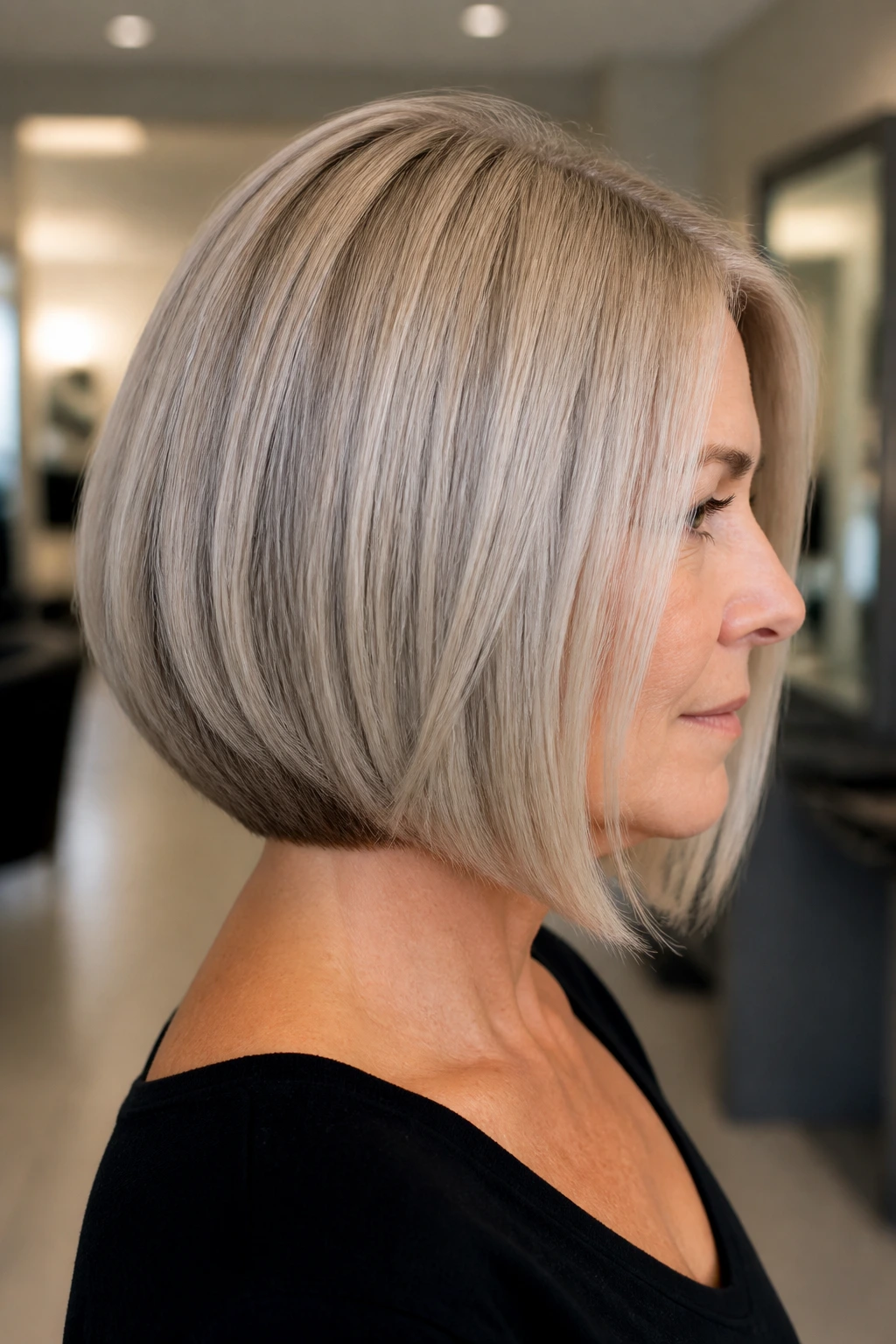
An underbevel is a quiet little trick that makes thick hair sit better. The ends are nudged inward, just enough to keep the outline smooth. Pair that with ash blonde and you get a lob that looks controlled, cool, and neat without feeling stiff.
This cut asks for a bit of discipline in styling, but not much. Blow-dry the hair with tension, then finish the ends with a flat iron if needed. The underbevel will do the rest. It’s a cleaner shape than a tousled lob and a better one if you want something that reads crisp from the side.
If your hair tends to frizz at the ends, this is one of the safer choices. The bevel hides a lot.
21. Honeyed Inverted Bob for Thick Hair
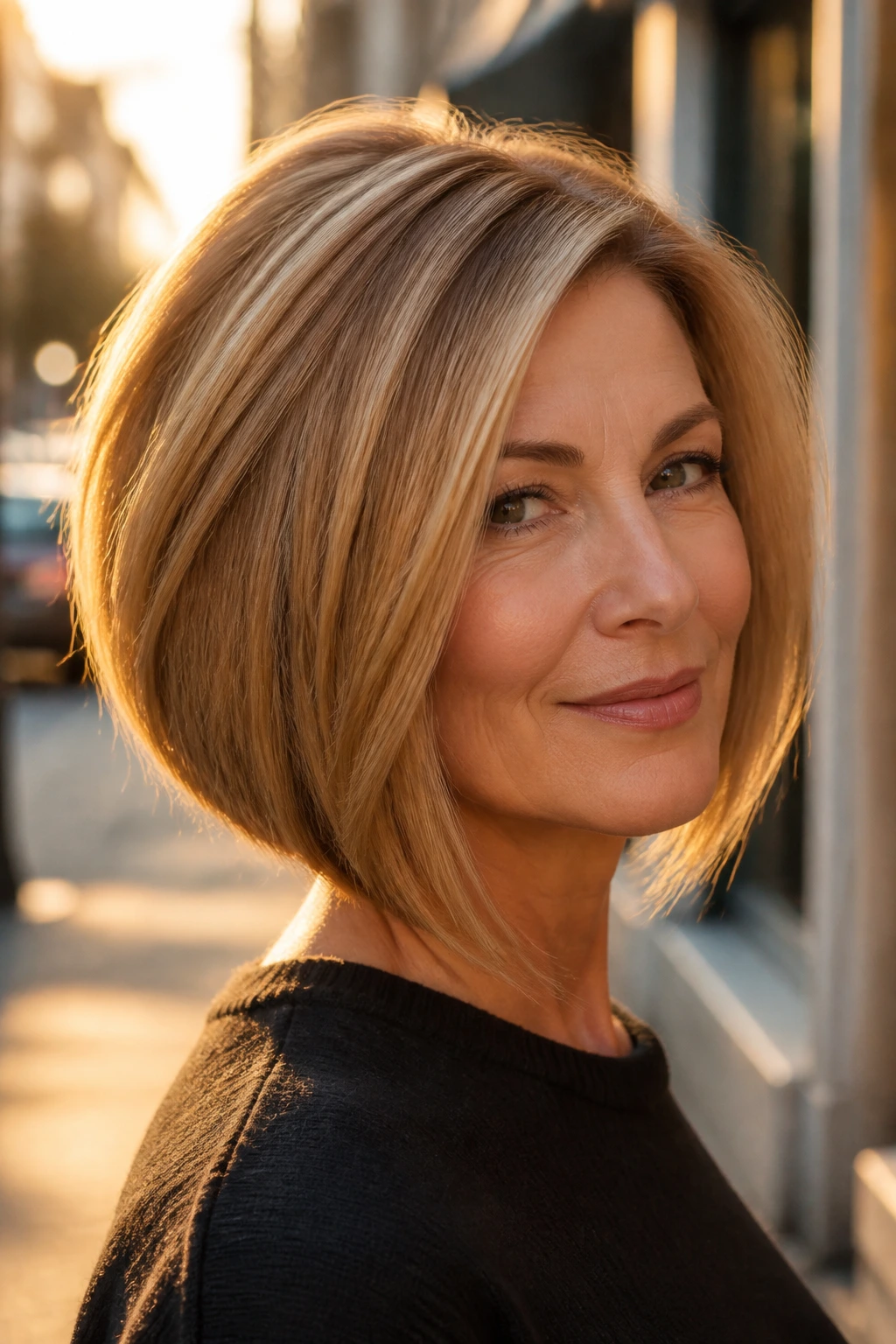
The inverted bob has a longer front and shorter back, which makes it useful when thick hair needs a little attitude and a little order. The honey tone softens the structure so it doesn’t look too severe. You get a shape with movement and a neckline that feels lighter.
This version should not be stacked high at the back. That’s where the cut goes wrong fast. Ask for a soft inversion, not a dramatic wedge. The line should flow, not shout.
It’s a strong choice if you like your hair to look lifted at the crown and a touch longer in front. The angle can make the neck look longer and the jaw a little sharper, which some people love.
22. Multi-Tonal Blonde Mid Bob with Airy Ends
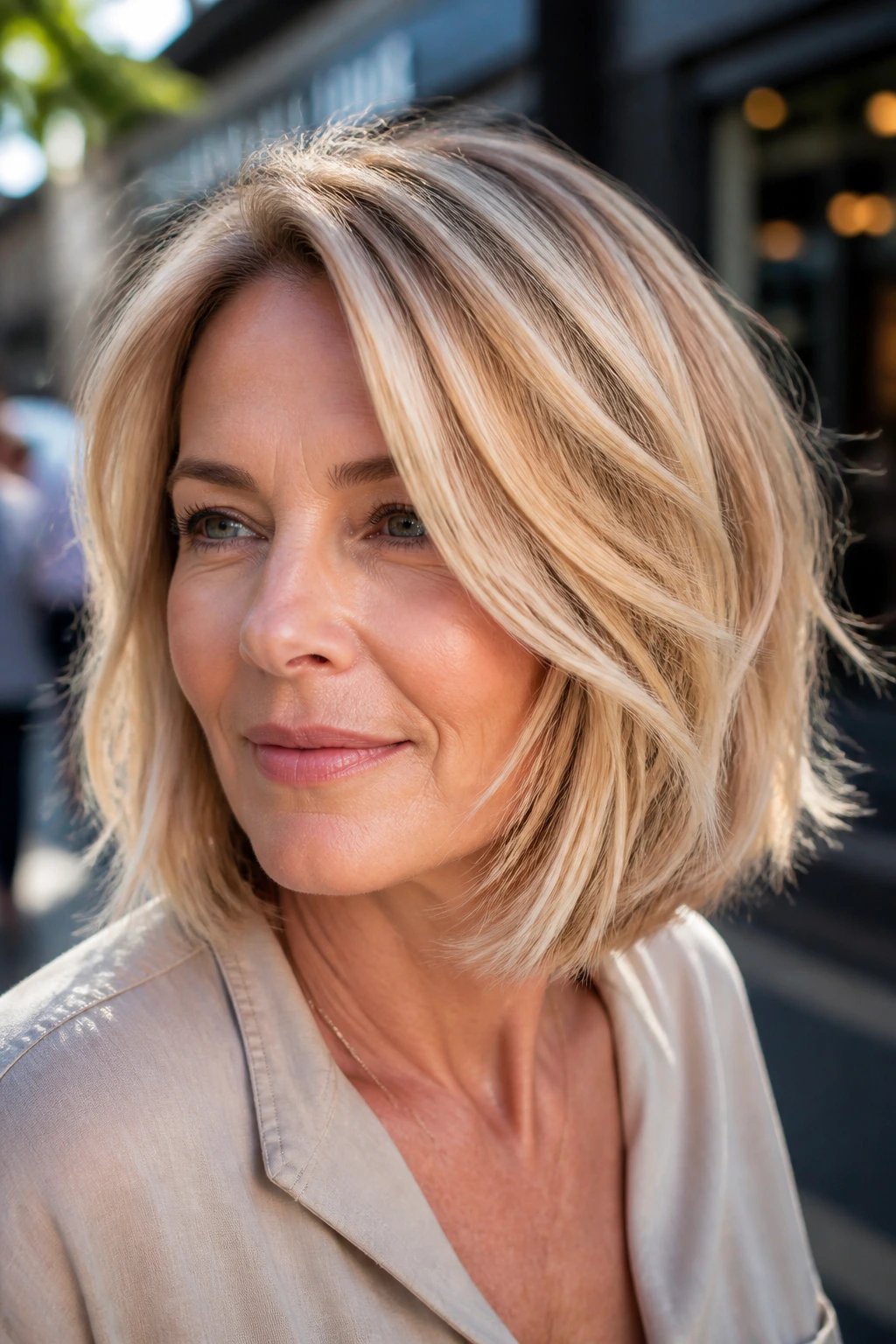
If you can’t decide on one blonde, use three. Multi-tonal color is one of the best ways to make thick hair look lighter without actually removing the density that gives the cut strength. The airy ends keep the shape from landing like a shelf.
What Makes It Different
This cut depends on contrast. Bright pieces around the face, a soft root, and a slightly warmer lowlight underneath give thick hair a sense of movement even when it’s worn straight. Ask for point-cut ends, not a blunt chop, so the finish stays soft.
I like this on women who want blonde that looks dimensional from every angle. It’s easy to tuck, curl, or rough-dry, and it doesn’t demand the same precision as a polished platinum bob. Good hair should be able to live a little. This one does.
Why a Mid Bob Keeps Thick Hair Honest
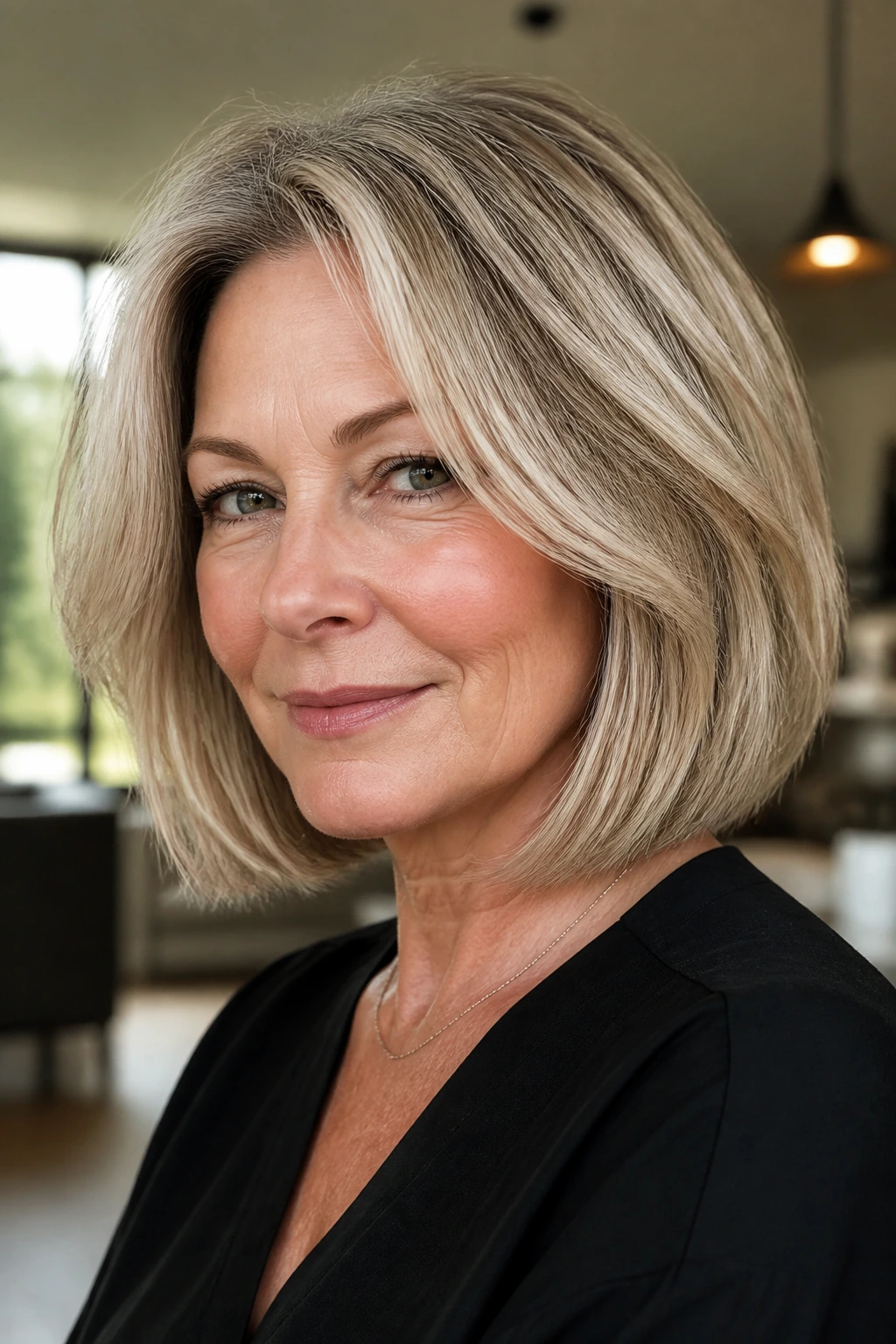
Thick hair is honest in the worst and best ways. It will show a bad cut in a hurry, and it will also show you when a cut has real structure. A mid bob works because it doesn’t ask thick hair to do something unnatural. It simply gives it a stopping point.
The length matters more than people think. Around the collarbone, hair still has enough weight to lie down, but not so much that it hangs like wet rope. A chin-length bob on dense hair can get puffy at the sides. Go much longer, and the volume drifts downward and starts to feel heavy. Mid-length keeps the balance.
The other part is where the bulk comes out. Internal layers, gentle point cutting, and a cleaner perimeter are usually better than chopping the top layer to pieces. Thick hair does not need to be shredded. It needs room to move.
What to Tell Your Stylist Before the First Snip
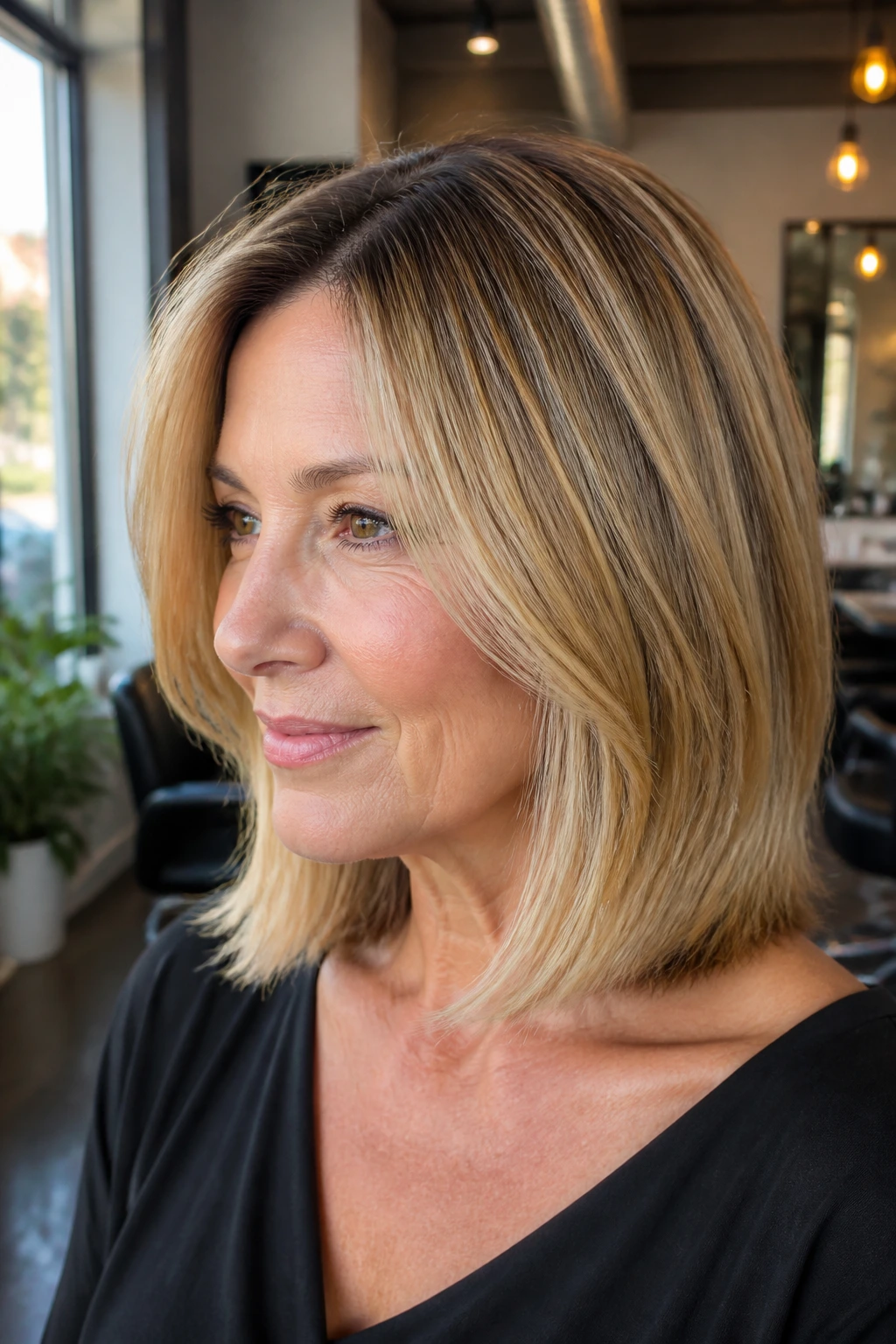
Walk in with one clear idea of the silhouette you want. Do you want blunt and polished? Soft and layered? Angled in front? Rounded under? Thick hair can wear all of those, but the wrong blend of them gets messy fast. Bring a photo, yes, but also say what you hate: puffiness at the sides, floppy ends, or too much maintenance.
The Three Things That Matter Most
- Perimeter: This is the outer line of the bob. Ask whether you want blunt, beveled, rounded, or angled.
- Weight removal: Ask for internal layering or light point cutting if your hair is dense. That keeps the shape from expanding.
- Color placement: Decide where the blonde should live. Face frame, ends, top layer, or all over? That changes the whole haircut.
A good stylist will talk about how your hair falls when dry, not just when wet. That part matters. Thick hair can look much shorter when it dries, and if the cut ignores that, you wind up with a bob that sits too high and too wide.
The Styling Tools Worth Keeping on the Vanity
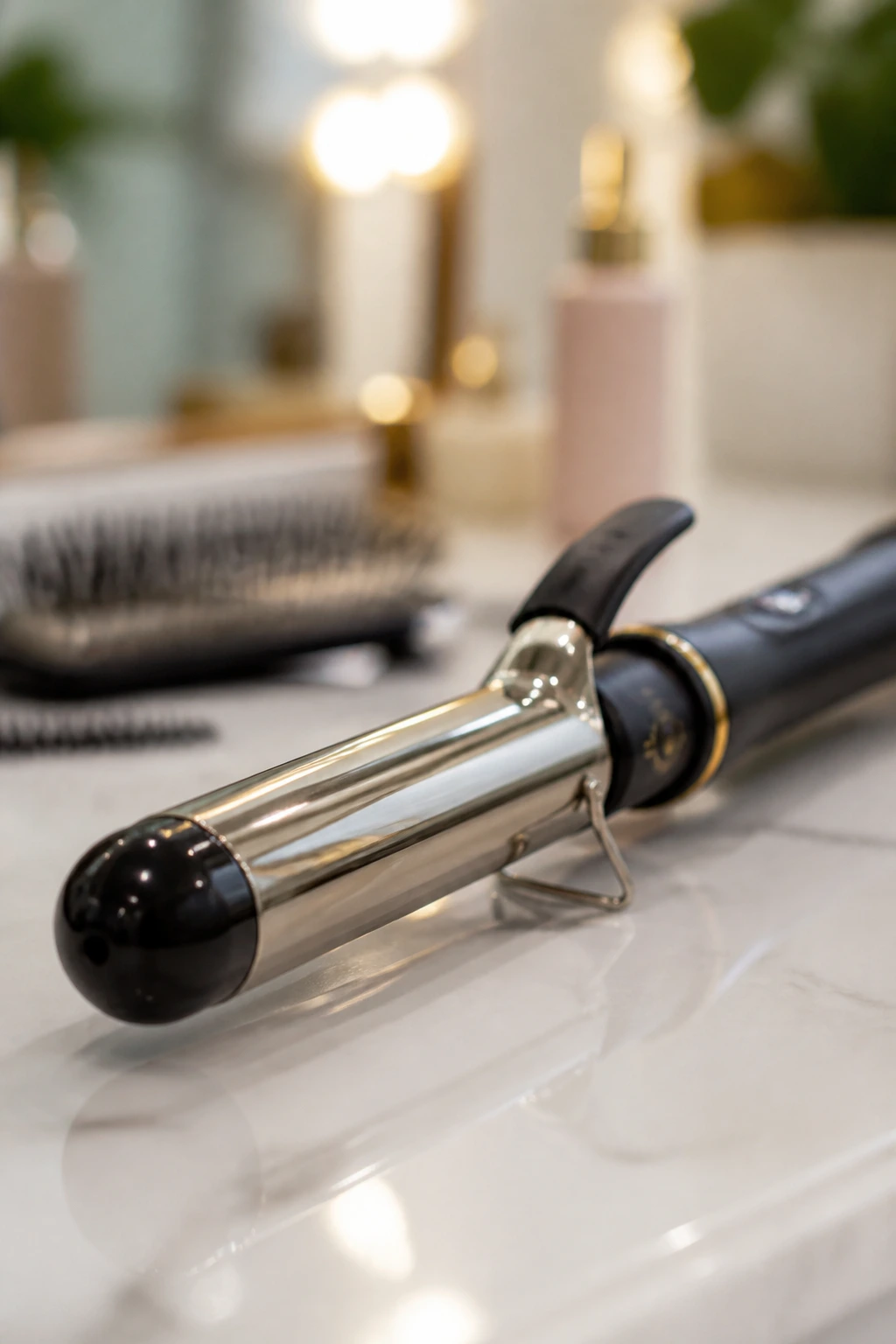
- A 1.25-inch curling iron or wand: Big enough for a soft bend, not so small that thick hair turns into ringlets.
- A medium round brush: The right size for smoothing the ends under without making the bob too puffy.
- A blow-dryer with a nozzle: The nozzle matters. It directs air and helps you control the shape.
- Heat protectant: Thick hair still burns. Sometimes more slowly, but it burns.
- Lightweight mousse: Gives roots lift without turning the mid-lengths sticky.
- Texturizing spray: Best for the shaggy or tousled versions, especially on day two.
- Purple or blue shampoo: Use it carefully if your blonde skews cool, so the color doesn’t turn flat or dull.
- Wide-tooth comb and sectioning clips: Thick hair behaves better in small sections. Always.
- Flat iron with smooth plates: Useful for bent ends or a clean bevel, not for ironing the life out of the hair.
Smart Blonde Choices for Dense Hair
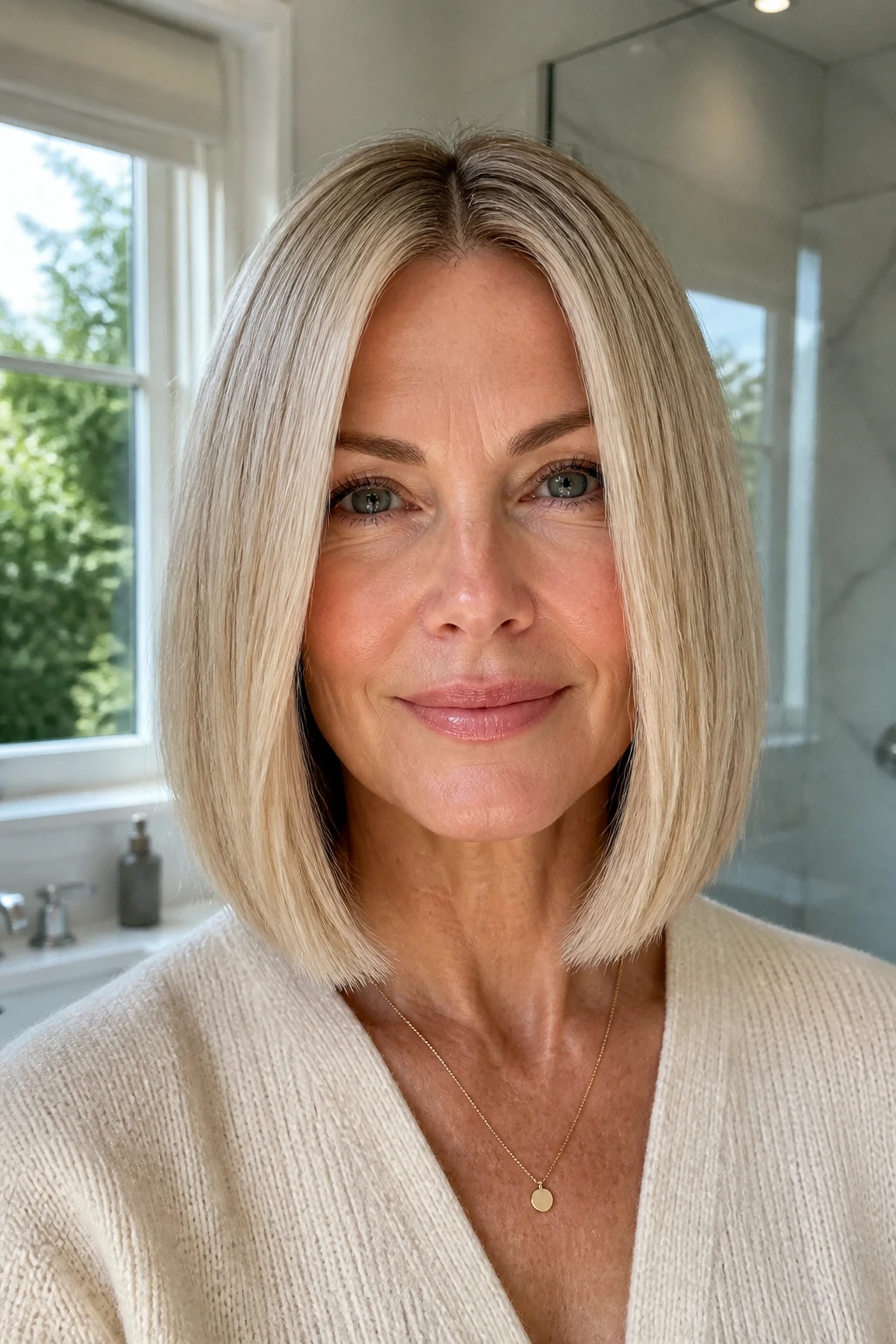
Warm blondes tend to be the easiest on thick hair because they soften the overall mass. Honey, butter, caramel, and beige shades let the eye move around the haircut. Cool blondes—ash, pearl, platinum, mushroom—can look sharper and more modern, but they need better upkeep or they go muddy fast.
Shadow roots are not a lazy choice. They’re practical. A slightly deeper root makes the regrowth less obvious and gives thick hair a place to transition from scalp to blonde without a hard line. If your base color is darker, the root shadow is usually kinder than trying to drag the blonde all the way to the scalp.
Placement matters too. Thick hair often looks best with brighter pieces around the face and the top layer, not a blanket of lightness everywhere. Too much uniform blonde can make the cut feel broader than it is. A little contrast trims the visual width.
How to Wear These Cuts From Morning to Night
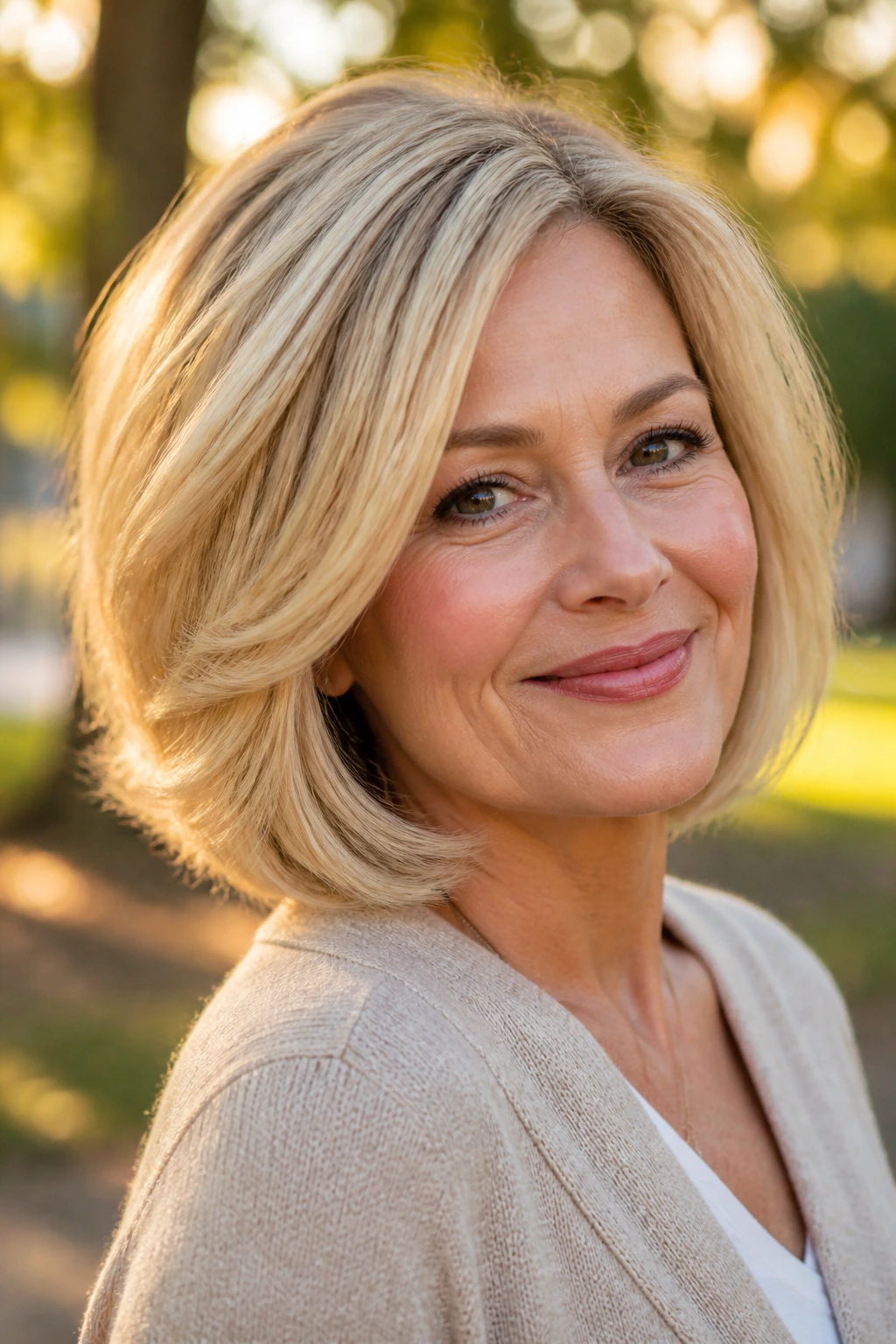
Everyday: Rough-dry the roots, then smooth only the top layer and ends. Thick hair usually looks better with a little texture than with every strand forced into place.
For polished days: Use a round brush or a large iron bend, then tuck one side behind the ear. That little asymmetry keeps the bob from looking too formal.
Best accessories: Hoops, medium studs, and glasses all sit well with these cuts, especially when the front pieces are cut to clear the jaw or cheekbone. A scarf or high collar can also look sharp with a mid bob, because the hair doesn’t disappear into the neckline.
Best if you want low fuss: Choose a shape with a shadow root and soft internal layers. Those grow out better than super-precise blunt shapes, especially on dense hair.
Extra Styling Moves That Keep the Shape Light
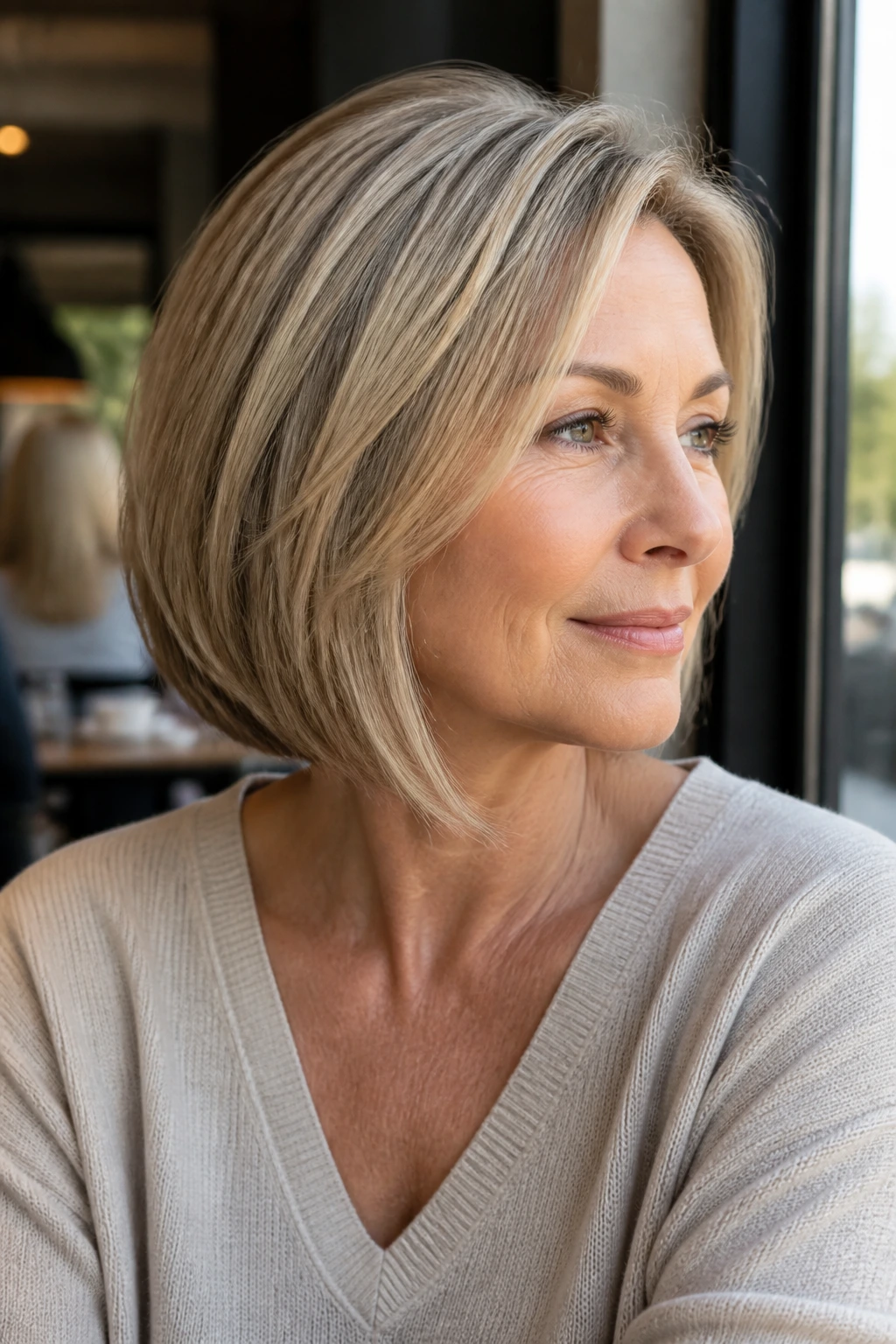
Color Lift: Ask for face-framing highlights that sit one to two levels lighter than the base. That gives the cut brightness without turning the whole head pale.
Texture Control: If thick hair expands in humidity, dry the roots first and leave the ends for last. It sounds small. It isn’t. That order helps the bob sit closer to the head.
Customization: Tuck one side behind the ear, leave the other loose, and you get instant shape without another salon visit. It works especially well with angled and side-parted cuts.
Make-It-Yours: For straight hair, go smoother and cleaner. For wavy hair, keep the layers longer. For curly hair, don’t force a blunt line; let the shape sit a little longer and use the curl pattern as part of the design.
Common Mistakes That Puff Up or Flatten Thick Hair
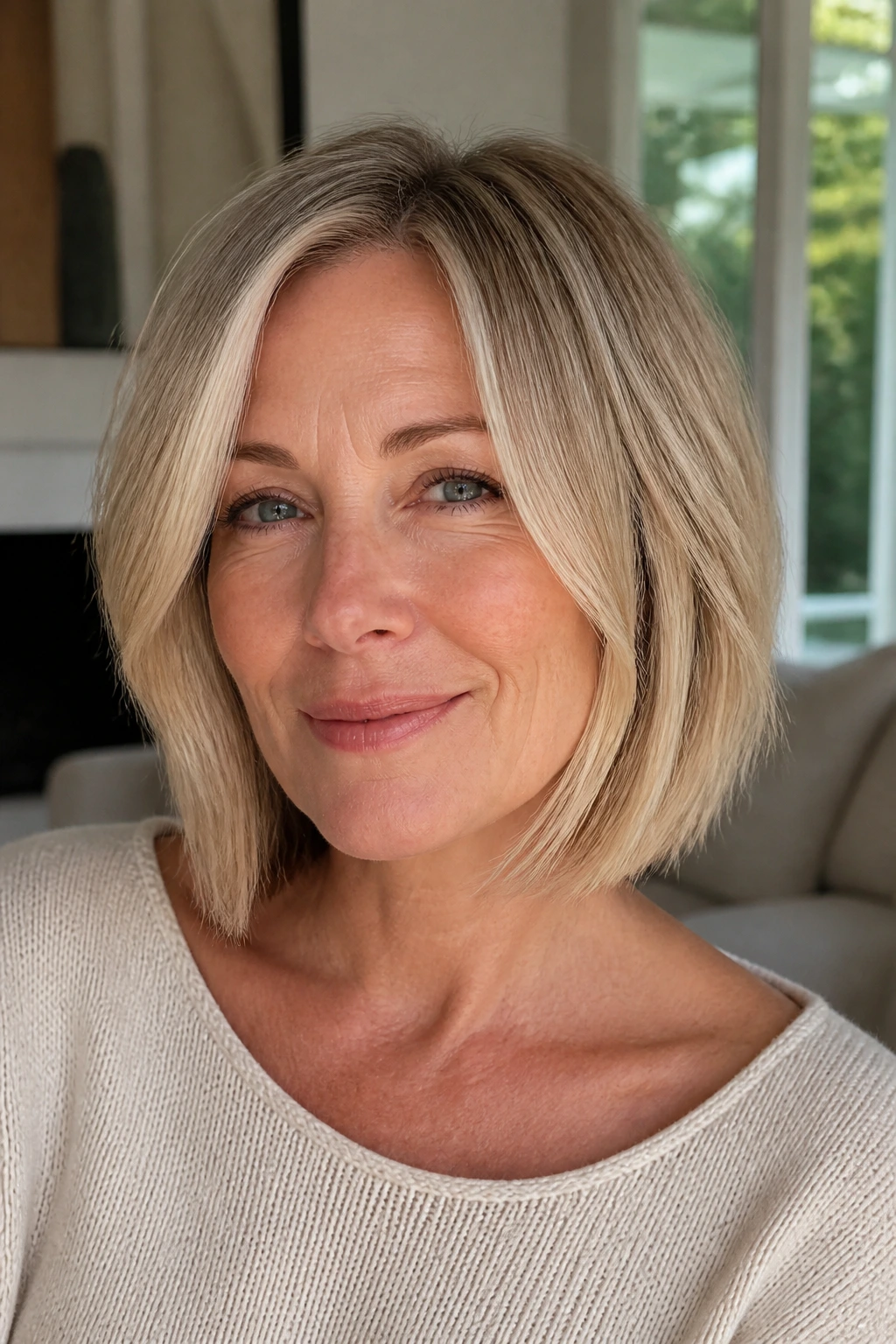
The biggest mistake is removing bulk in the wrong place. If a stylist thins too much near the top or around the ends, thick hair can frizz out and lose its body. The fix is internal removal and a perimeter that stays clean.
Another trap is cutting the back too short. A stacked nape sounds neat, but on dense hair it can mushroom at the sides. Ask for a softer bevel or a mild inversion instead of a sharp stack if your hair already has a lot of width.
Too much product is another culprit. Heavy cream, thick oils, and a full handful of smoothing serum can weigh the shape down and make the blonde look dull. Use less than you think, then add only where the ends need it.
And yes, over-toning is real. If your blonde starts looking flat, gray, or greenish, the toner is probably too strong or too frequent. Let warm blondes stay warm. They don’t need to be icy to be flattering.
Variations and Adaptations to Try
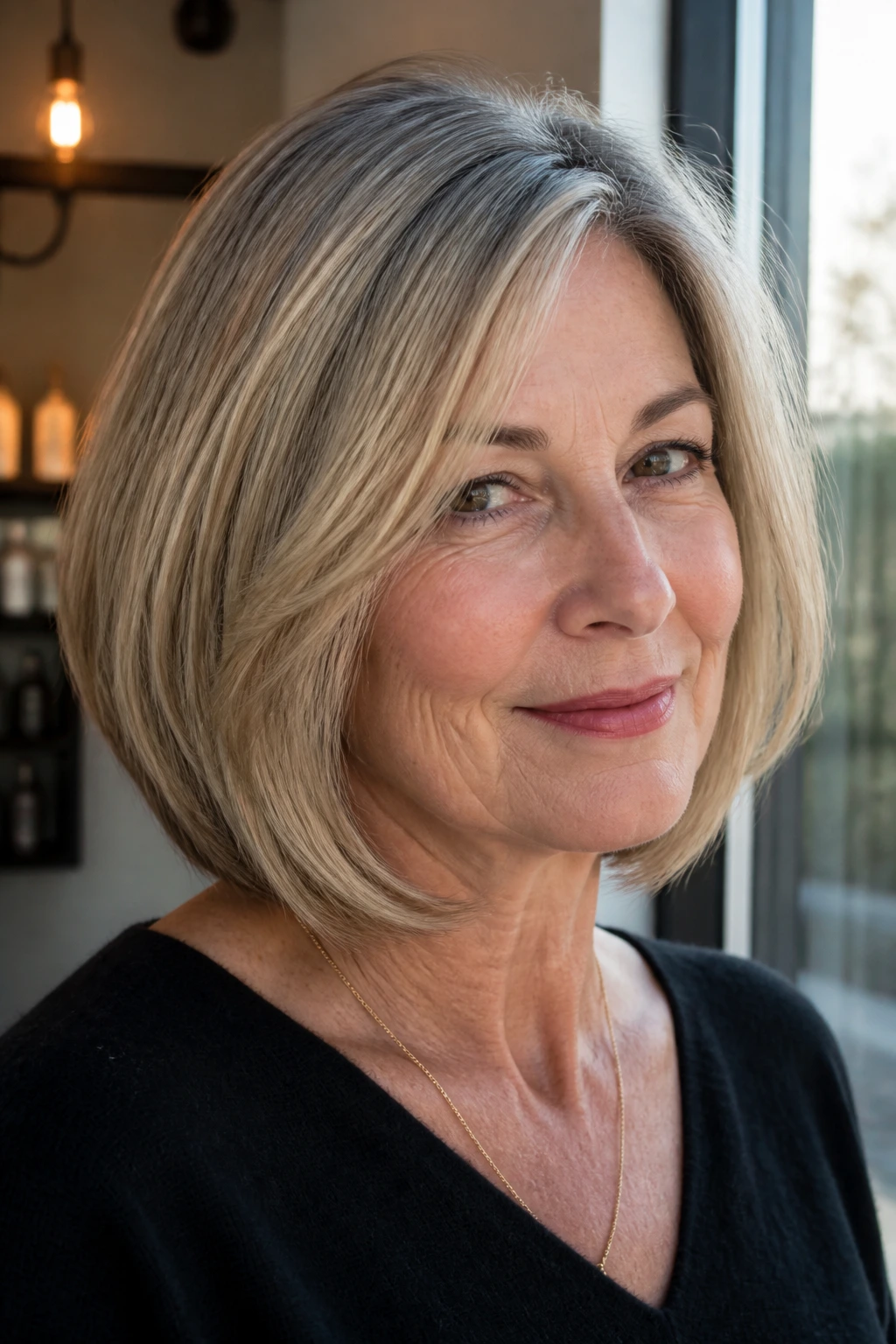
The Gray-Blending Bob: Mix blonde with soft lowlights so new gray growth disappears into the pattern instead of fighting it. This is one of the easiest ways to keep a mid bob looking fresh with fewer color appointments.
The Curly-Friendly Lob: Keep the length just past the collarbone and let the layers stay long. Thick curls need room to spring without turning into a pyramid, and the blonde should be placed where the curls catch light, not all over.
The Low-Maintenance Shadow-Root Bob: Leave a deeper root and concentrate the blonde through the middle and ends. This is the one to choose if you want a salon-friendly grow-out and don’t want to chase brass every few weeks.
The Soft Fringe Update: Add a light fringe or curtain bang without changing the rest of the cut. It refreshes the look fast, especially if your face needs a little softness around the eyes.
The Sleek Blowout Bob: Keep the cut blunt or beveled, then style it smooth with a round brush and a touch of shine spray. It’s a clean option for special occasions or for anyone who prefers a more finished look.
Trim Schedules, Toner Timing, and At-Home Care
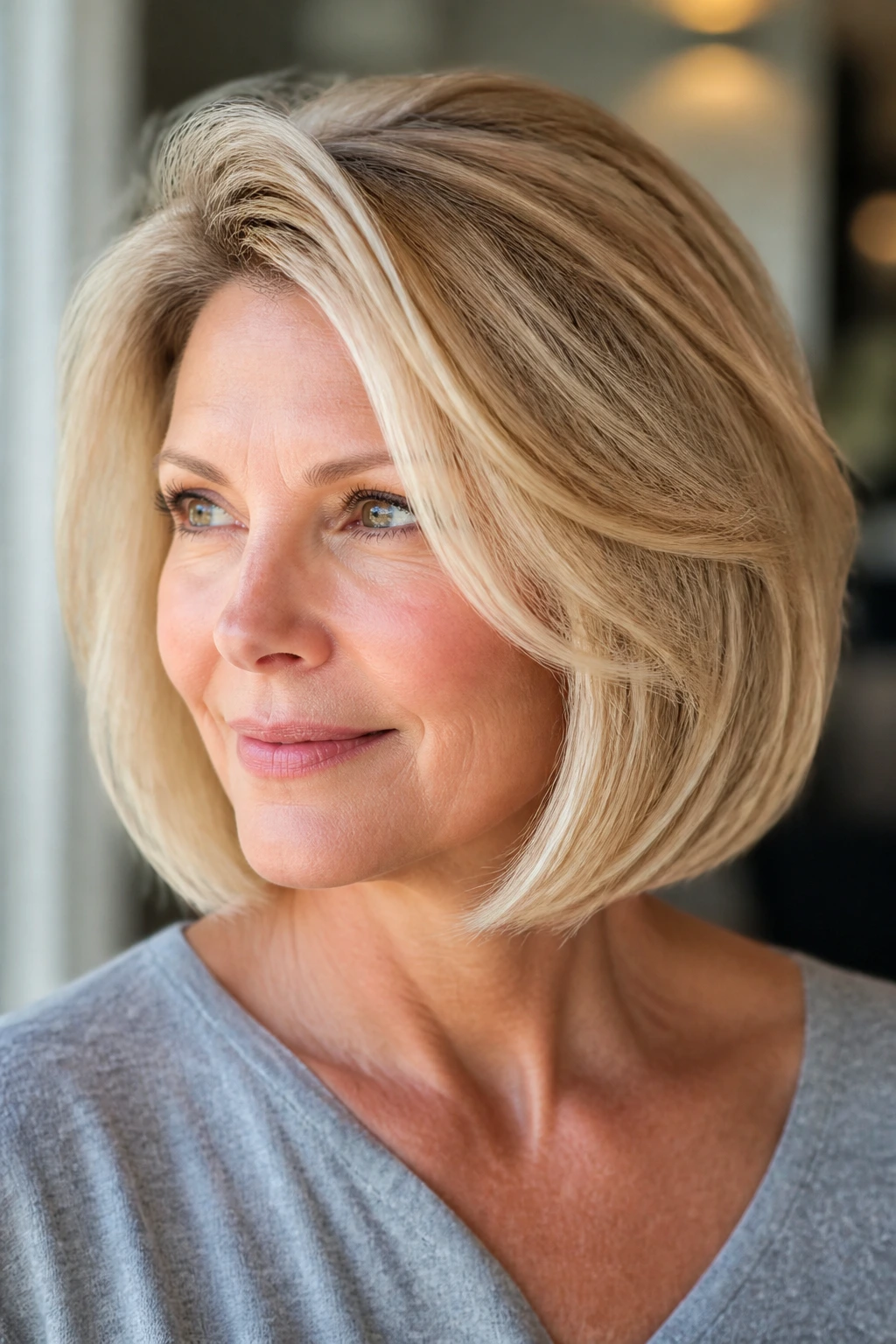
Mid bobs on thick hair hold their shape best with trims every 6 to 8 weeks if the outline is blunt, beveled, or angled. Layered versions can sometimes stretch to 8 to 10 weeks, but only if the ends stay tidy and not wispy. If your bob starts to flip out at odd angles, that’s usually your sign.
Blonde tone needs its own schedule. Cool blondes like ash, pearl, and platinum often need toning every 4 to 6 weeks. Warm blondes can go a little longer, usually 6 to 8 weeks, especially if there’s a shadow root. Purple shampoo once a week is enough for most cool blondes. More than that can make the color dull.
At home, use a moisturizing mask every 1 to 2 weeks if the hair feels dry at the ends. Thick hair can fool you into thinking it’s healthy because it has body, but blonde still dries out. A silk pillowcase or a loose clip at night helps the bob keep its bend instead of crumpling against the pillow.
Questions People Ask in the Salon Chair
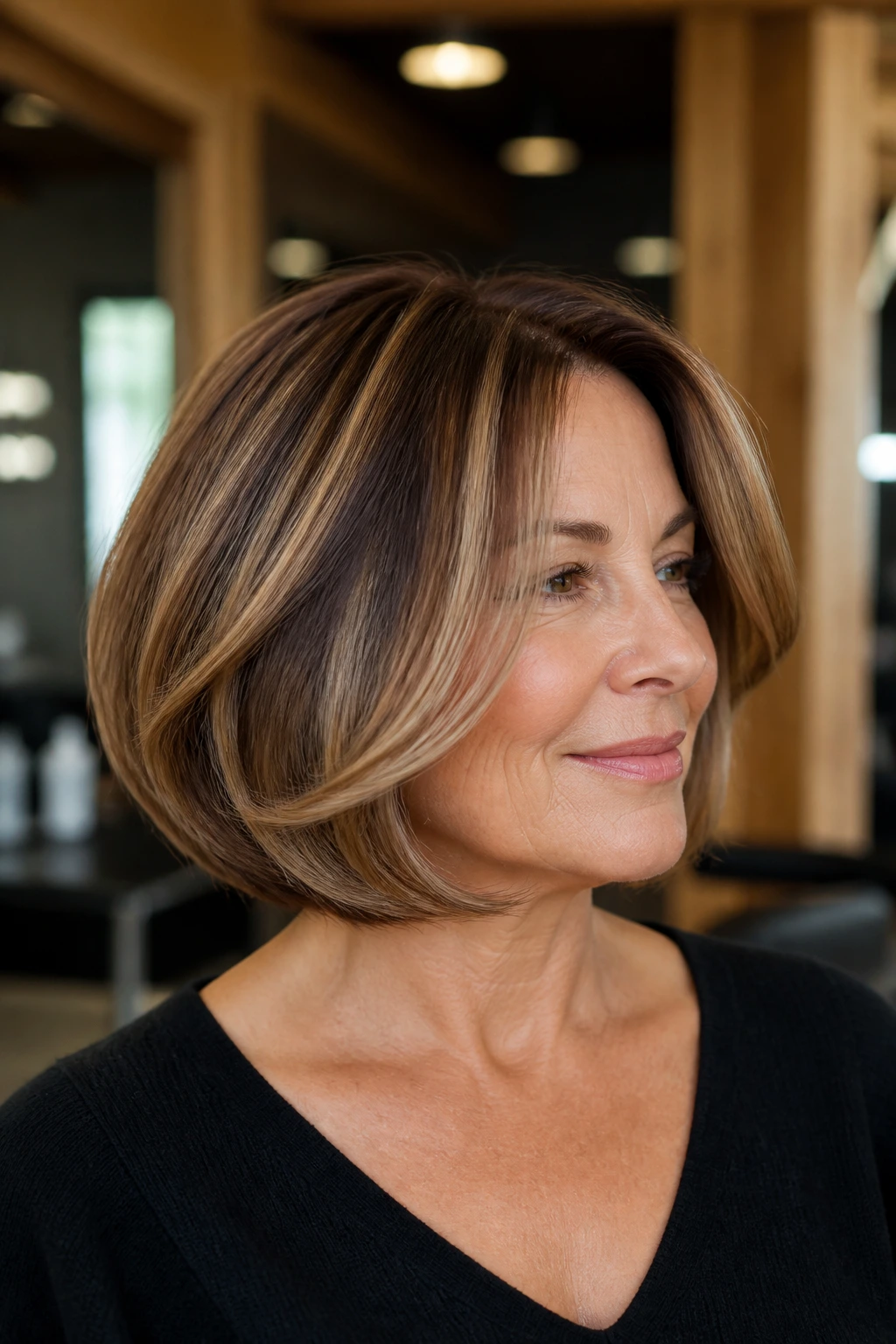
Will a mid bob make thick hair look too wide?
Only if the weight is left in the wrong place. A clean perimeter with internal layering keeps the sides under control and the silhouette closer to the head.
Is a blunt bob or layered bob better for thick hair?
Both can work. Blunt gives a sharper line, while light internal layering removes bulk. If your hair is very dense, a little layering inside the cut usually helps more than a totally blunt shape.
Can I wear a mid bob if my hair is wavy or curly?
Yes, but the cut should be adjusted for shrinkage and curl pattern. If the hair springs up a lot, keep the length longer than you think and avoid over-thinning the ends.
Which blonde shade hides grow-out best?
Shadow-rooted honey, beige, and bronde shades are the easiest to live with. Platinum and icy blondes look striking, but they show regrowth faster and need more toner upkeep.
What if my ends flip out no matter what I do?
That usually means the cut is too blunt in the wrong spot or the perimeter is too short for your hair’s texture. Ask for a slight bevel, then dry the ends under with a round brush instead of letting them air-dry wild.
Can I air-dry these styles?
Some of them, yes. The shaggy, wavy, and curtain-bang versions handle air-drying well. The blunt, bevelled, or sleek cuts usually look better with a bit of blow-drying at the ends.
Should women over 50 avoid bangs with thick hair?
No. The issue is not age; it’s density and balance. Light fringe, side-swept bangs, and curtain bangs can look excellent when they’re cut thin enough to move.
A Bob That Moves With You
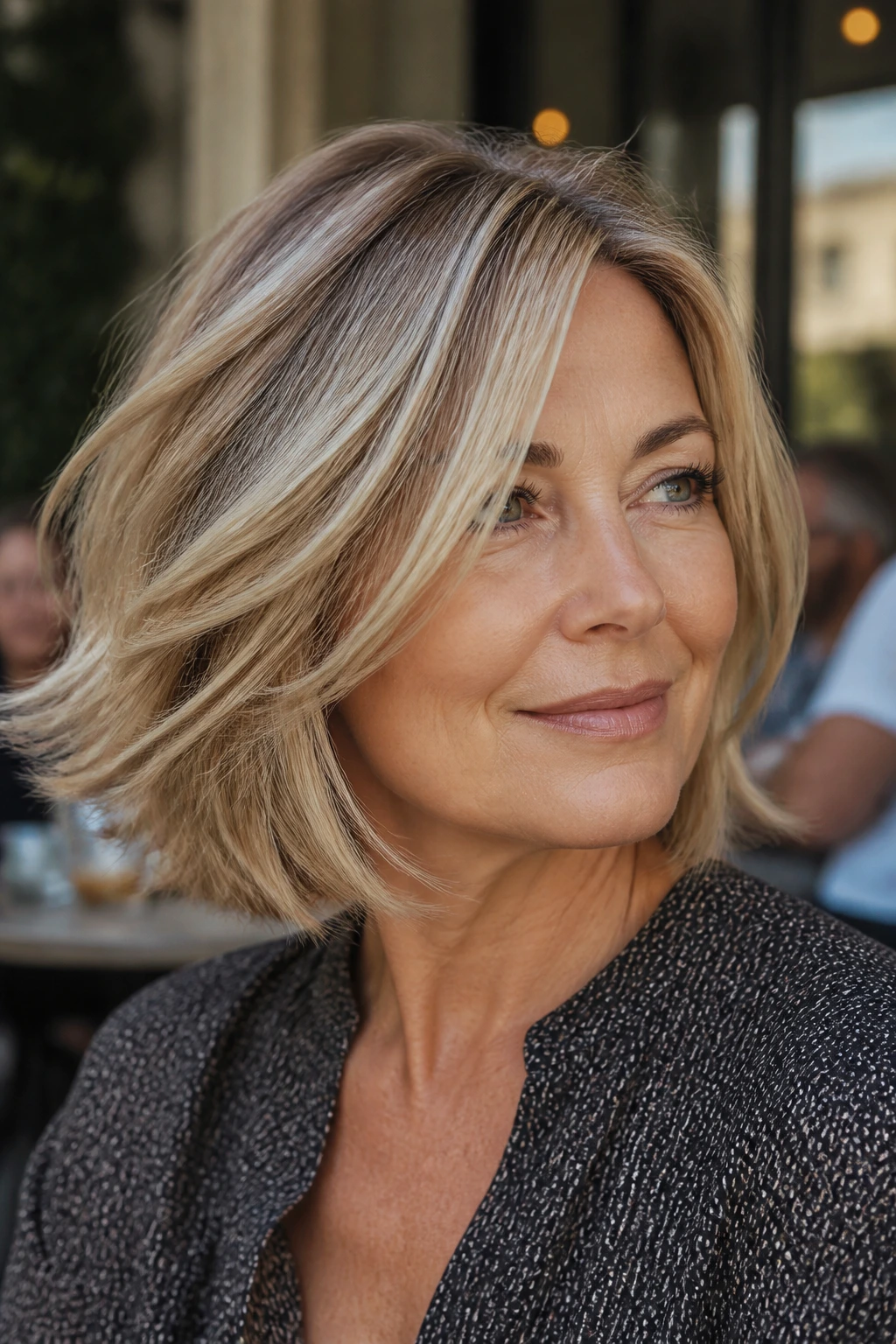
A good mid bob on thick hair should feel like a shape, not a shell. That’s the difference that matters. The best versions above don’t fight density; they steer it.
If you keep the length around the collarbone, choose blonde placement with some contrast, and stay honest about how much daily styling you’ll actually do, this cut does a lot of heavy lifting. It can look polished, a little soft, or neatly undone, and it doesn’t need to be dramatic to work.
The smartest thing about these cuts is that they let thick hair behave without making it boring. That’s a useful line to walk, and once you find the one that fits your texture, your jawline, and your routine, the rest gets easier in a hurry.