



Long bangs for wavy hair and oval faces can look effortless from a distance and annoyingly fussy up close. The catch is always the same: the cut has to respect the bend in the hair, the way it shrinks as it dries, and the fact that an oval face already has balanced proportions, so the fringe needs to add something instead of burying everything.
Oval faces give you a lot of room to play, which sounds generous until you sit in the chair and realize that “a little bit of everything” can turn into bangs that are too heavy, too thin, too straight, or too vague. Wavy hair makes that even trickier. It has a memory of its own.
The long-fringe versions worth keeping are the ones that move with the wave instead of flattening it into obedience. Some sit softly at the cheekbones. Some split early and drift wide at the temples. A few look better after you’ve done almost nothing to them, which is, honestly, my favorite kind of haircut.
Why This Combo Works So Well
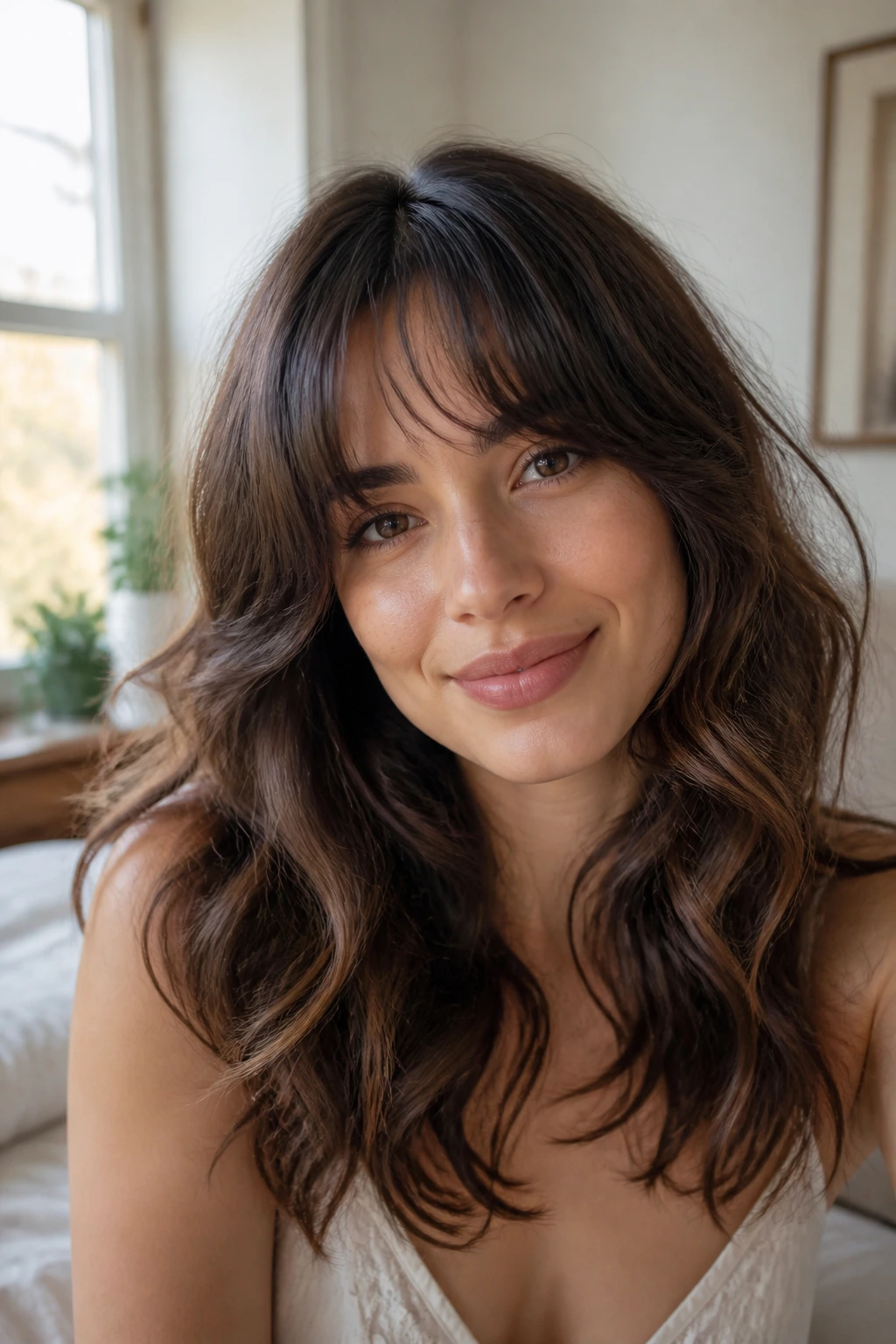
- Balance Without Blanketing: Long bangs let you frame an oval face without covering the whole forehead, which keeps the features open and the haircut breathable.
- Wave-Friendly Movement: Wavy hair gives long fringe a bend that straight hair has to fake with a brush and a hot tool, so the shape feels less forced.
- Grow-Out Grace: When the shortest pieces are already on the long side, a trim mistake or a grow-out phase is easier to live with.
- Cheekbone Focus: Most of these styles pull the eye toward the middle of the face and the cheekbones, which is where oval faces already carry a lot of visual strength.
- Styling Freedom: You can wear the same cut center-parted, side-parted, air-dried, or brushed smooth, and it still reads as intentional.
Oval faces are forgiving, but that does not mean every fringe works. The sweet spot is usually a little softness near the center and a little longer length near the outer edge, so the bang doesn’t sit like a straight line across the forehead. Wavy hair helps because it breaks up that line on its own.
The best long bangs here do one of two things: they either add width where the face can take it, usually at the temples, or they create a gentle diagonal that keeps the eye moving. That’s the whole trick. Not more hair. Better placement.
1. Curtain Bangs That Split at the Cheekbones
These are the safest place to start if you want movement without drama. The center opens cleanly, then the shorter pieces skim down toward the cheekbones and blend into the rest of the cut. On wavy hair, that split rarely looks stiff; it usually falls with a soft bend that reads lived-in, not overworked.
For oval faces, curtain bangs are almost annoyingly good because they frame the face without boxing it in. I prefer them when the shortest point sits around the bridge of the nose or just below the brow, then gets longer as it moves outward. Any shorter, and wavy hair can bounce them up too high.
2. Long Side-Swept Bangs
If your hair naturally falls to one side, don’t fight it. A long side sweep gives you that diagonal line across the forehead, which is useful when you want the face to feel a little less symmetrical and a little more styled. It also plays nicely with waves that tuck behind one ear and push forward on the other side.
This version is especially good for oval faces that feel a touch too long in photos. The sweep breaks up the vertical line without hiding the forehead completely. Ask for the fringe to be longest near the outer corner of the eye, then softly taper into the side layers so it doesn’t look like a chunk was dropped on one side of the head.
3. Bottleneck Bangs
Bottleneck bangs start narrow in the middle and open out around the eyes and cheeks, which is why they look so good with wavy texture. The center gives you a little coverage, but the outer pieces do the real framing work. It’s a clever shape, and I like that it doesn’t feel as precious as a full blunt fringe.
On oval faces, bottleneck bangs bring attention to the cheekbones without crowding the lower half of the face. They’re also forgiving if your waves separate a bit at the root, because the shape already expects some movement. Ask for a soft taper at the temples, not a heavy curtain that needs constant brushing back into place.
4. Feathered Fringe
Feathered fringe is the answer when you want bangs that feel light rather than loaded. The ends are point-cut or gently texturized so the hair breaks into soft wisps instead of holding one hard line. Wavy hair loves that treatment because the texture does half the work for you.
For oval faces, feathering is useful when you want a gentle frame rather than a bold statement. It keeps the forehead soft, but it doesn’t close the face down. I’d choose this version over anything dense if your waves are fine to medium and tend to puff up in humidity. Heavy bangs plus humidity is a bad little marriage.
5. Birkin-Inspired Long Fringe
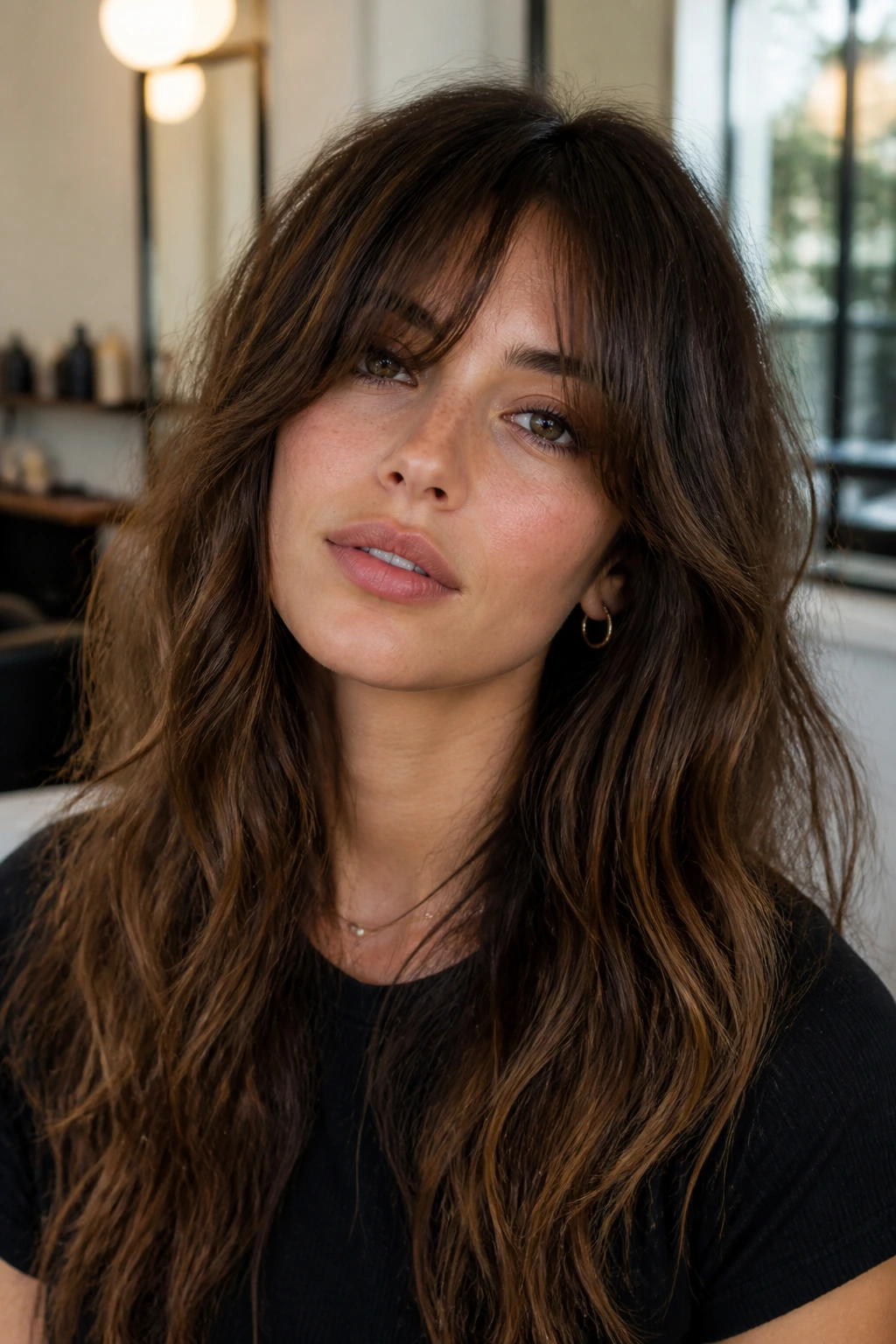
This one has a little more fullness through the center, which makes it a good choice if your hair density can handle it. The bang lands near the lashes or just below the brow, then softens at the edges so it doesn’t feel square. On wavy hair, that shape gets a nice bend without turning fluffy.
It suits oval faces because the fringe gives the front of the haircut more presence. If your forehead feels a touch broad, this is a smart way to add coverage without going full blunt. Blow-drying the center with a round brush for twenty or thirty seconds helps, but I wouldn’t overdo it. The point is softness, not a shellacked helmet.
6. Choppy Piecey Bangs
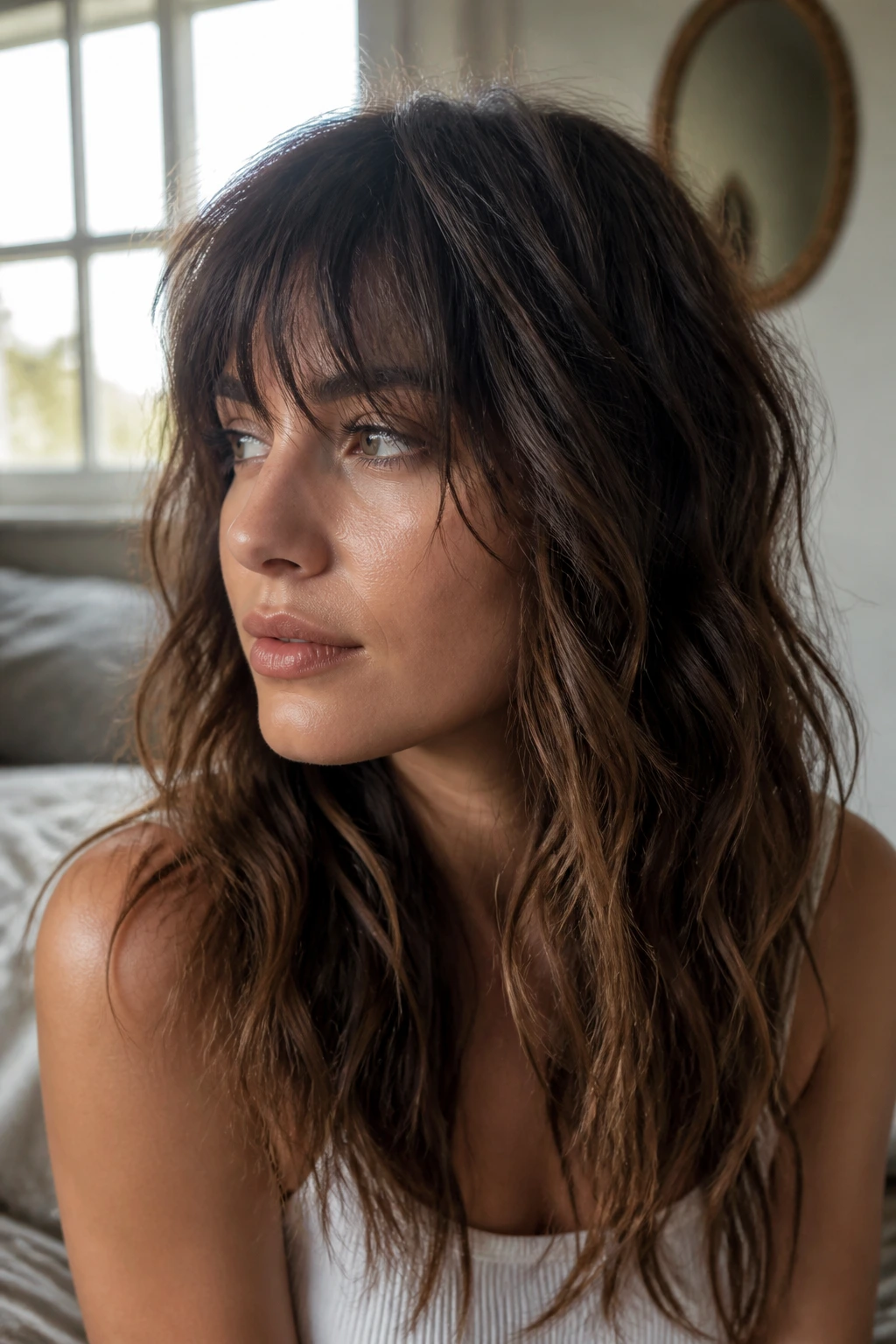
Choppy bangs are for people who like a bit of grit in the front of the haircut. The ends are broken up, the pieces separate easily, and the whole thing looks better when it’s not perfectly lined up. Wavy hair suits that mood because the natural bend already creates a few gaps and overlaps.
On an oval face, this style keeps the forehead from looking too polished or too full. It can be worn a little messy without looking lazy, which is a useful distinction. If you ask your stylist for this, mention point cutting rather than thinning shears everywhere; too much bulk removal can leave the ends ragged in a bad way.
7. Soft Crescent Fringe
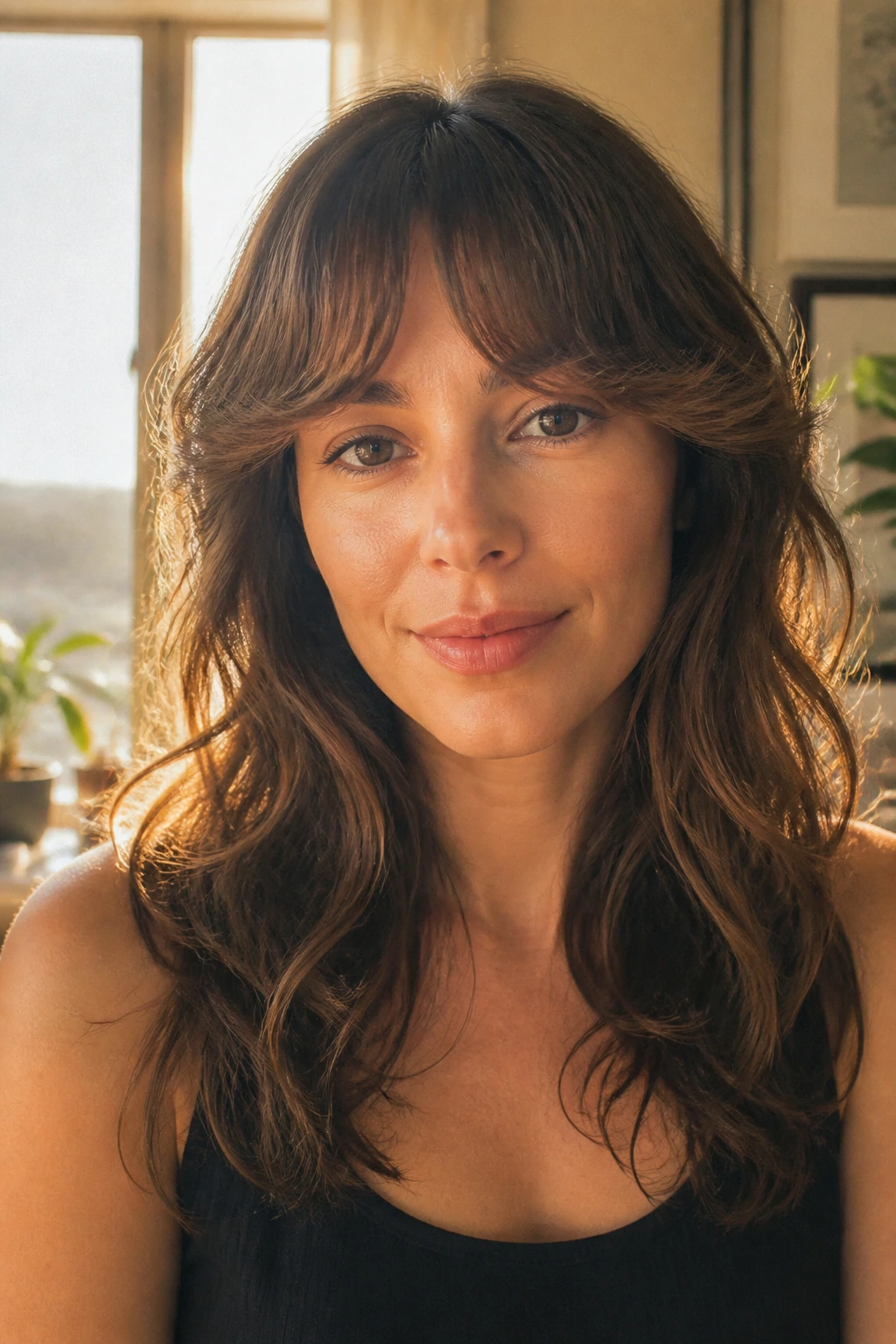
A soft crescent fringe curves gently upward at the sides and sits a bit fuller through the center. It is one of those shapes that looks subtle until you see it on the right face, then suddenly it makes perfect sense. Wavy hair gives the crescent a little movement at the edges, so the line feels warm instead of severe.
Oval faces benefit from the curve because it brings a little visual structure to the upper half of the face. The center still has enough coverage to feel like bangs, but the sides keep the style open. If your part is easy to move around, this is a nice middle ground between curtain bangs and a fuller fringe.
8. Cheekbone-Grazing Face-Framing Bangs
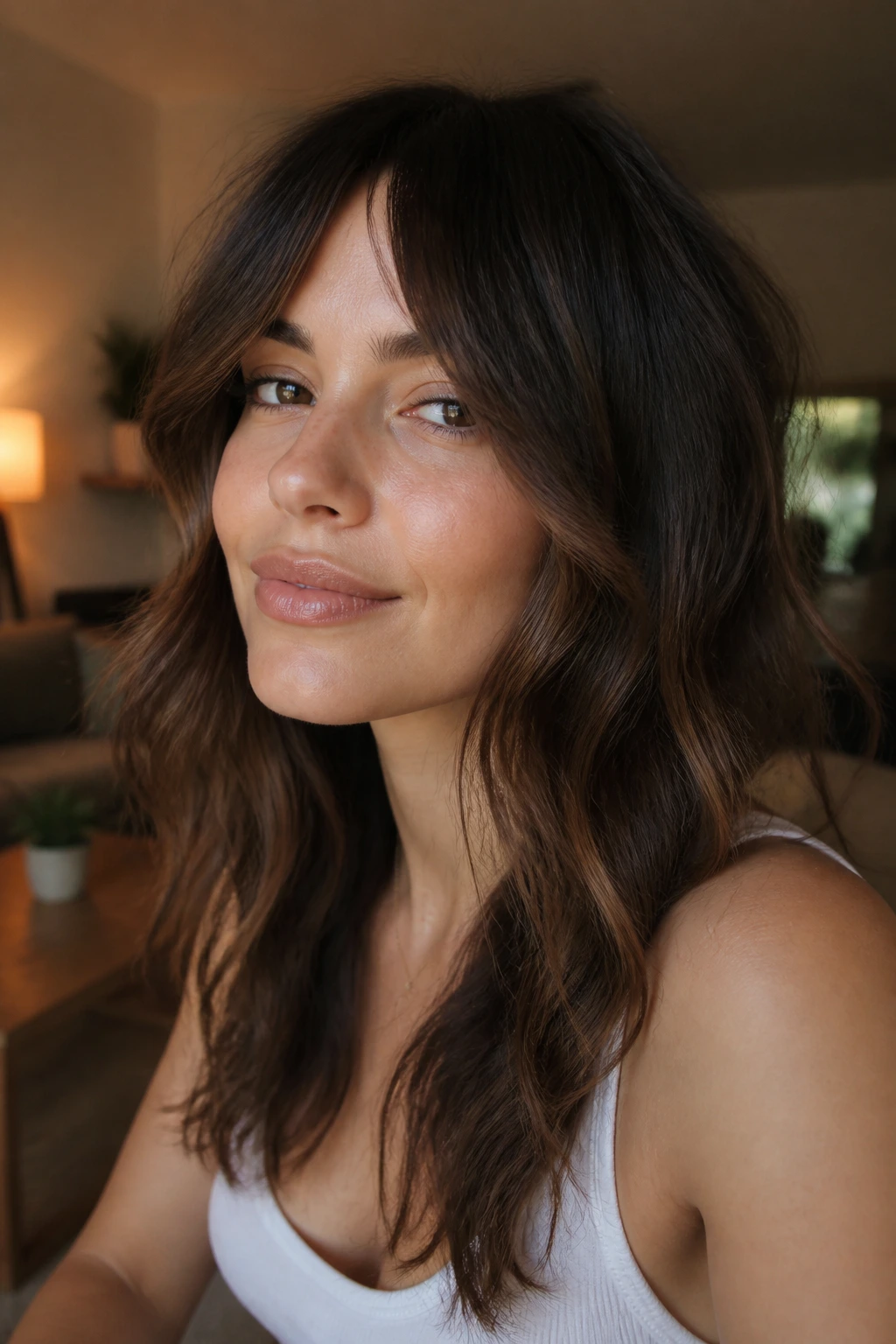
These barely read as bangs at first glance, which is exactly why some people love them. The shortest pieces sit around the cheekbones, then blend into longer front layers that can be tucked back, curled forward, or left to do their thing. On wavy hair, they move with the rest of the cut instead of sitting on top of it.
For oval faces, this is the low-commitment option with the biggest payoff. It adds shape without boxing in the forehead, and it grows out almost on purpose. If you’re nervous about a real fringe, start here. It’s a softer handshake with the idea of bangs.
9. Shag Bangs
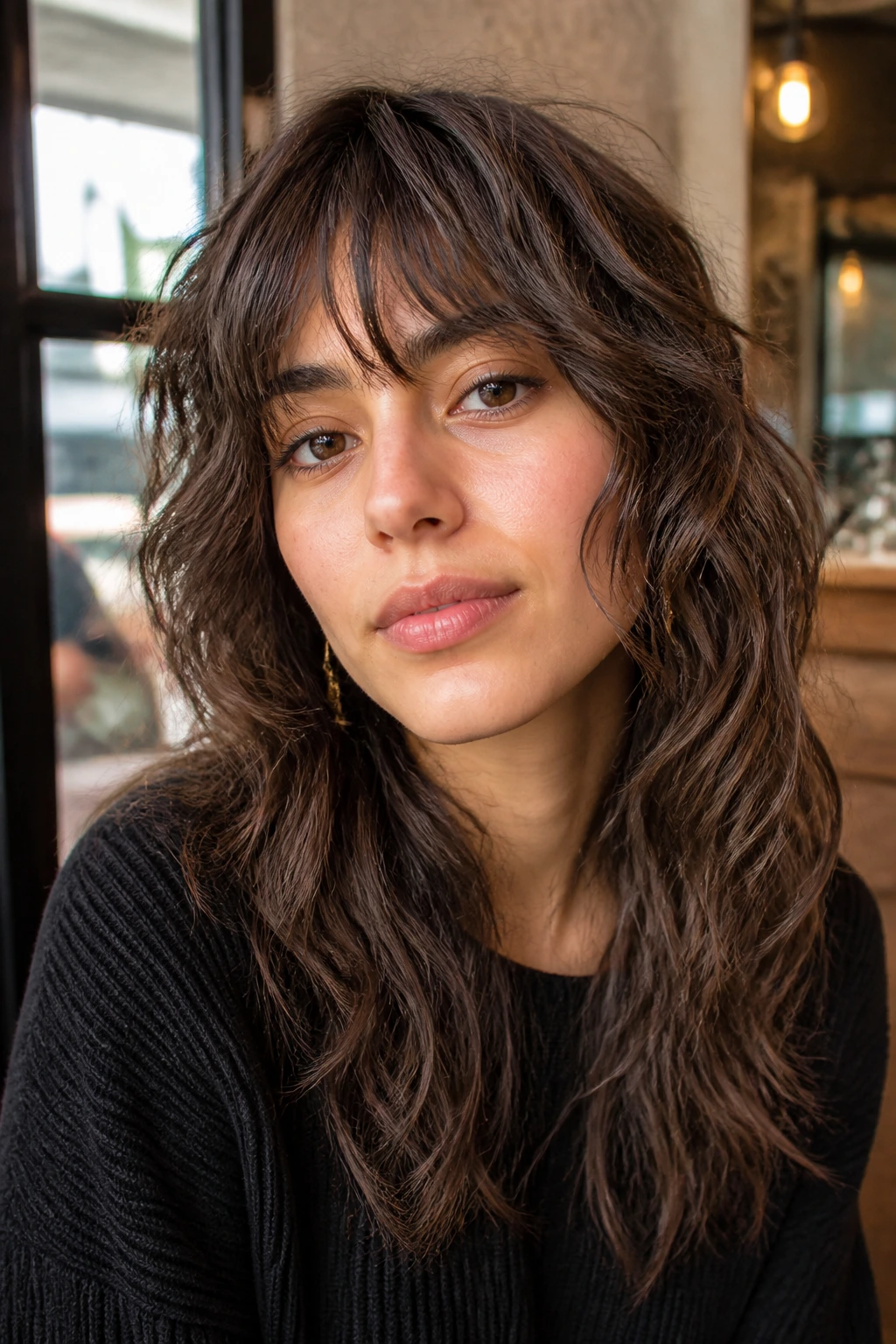
Shag bangs are the messy friend who somehow always looks right. They connect to the rest of a shag cut, so the front pieces are part of a bigger lived-in shape instead of a separate strip of hair glued to the forehead. Wavy hair makes this work because the wave pattern and the shag layer each other instead of arguing.
Oval faces can handle the extra texture at the top and sides, especially if the goal is to make the haircut feel less formal. The key is keeping the front light enough that it doesn’t collapse into your eyes by noon. Ask for internal layering, not a blunt front edge with a lot of soft talk around it. That usually ends badly.
10. Rounded Long Fringe
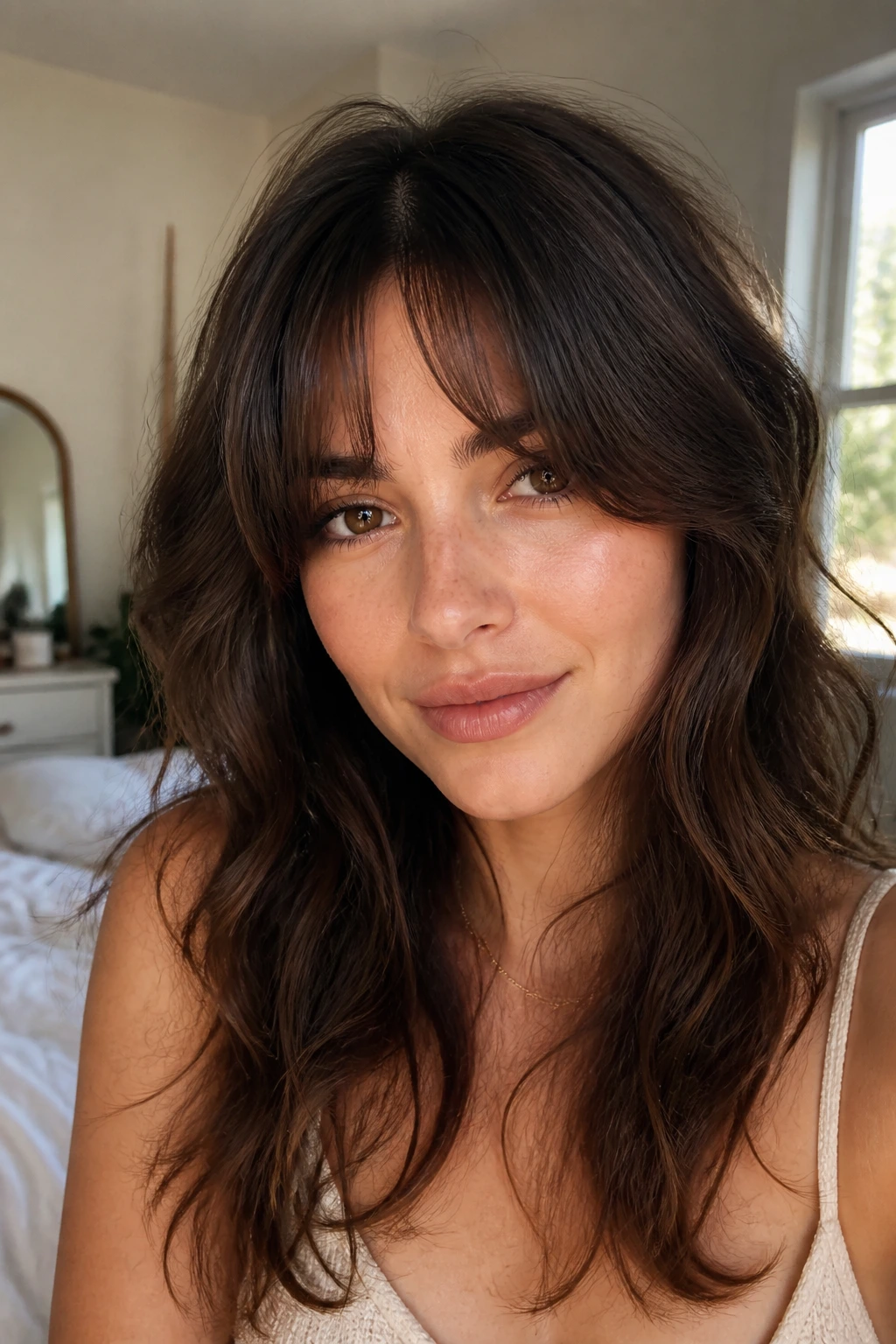
A rounded fringe curves around the forehead with a gentler arc than a blunt bang. The center can sit a touch shorter, but the sides still stay long enough to melt into the rest of the hair. Wavy texture gives the curve a little bend that makes the shape look hand-finished.
This works well on oval faces when you want to soften the vertical stretch of the face a bit. It puts some visual weight in the front without making the haircut feel heavy. A medium round brush or a large velcro roller can help set the bend, though I’m partial to letting the wave do most of the work and just fixing the roots.
11. Long U-Shaped Fringe
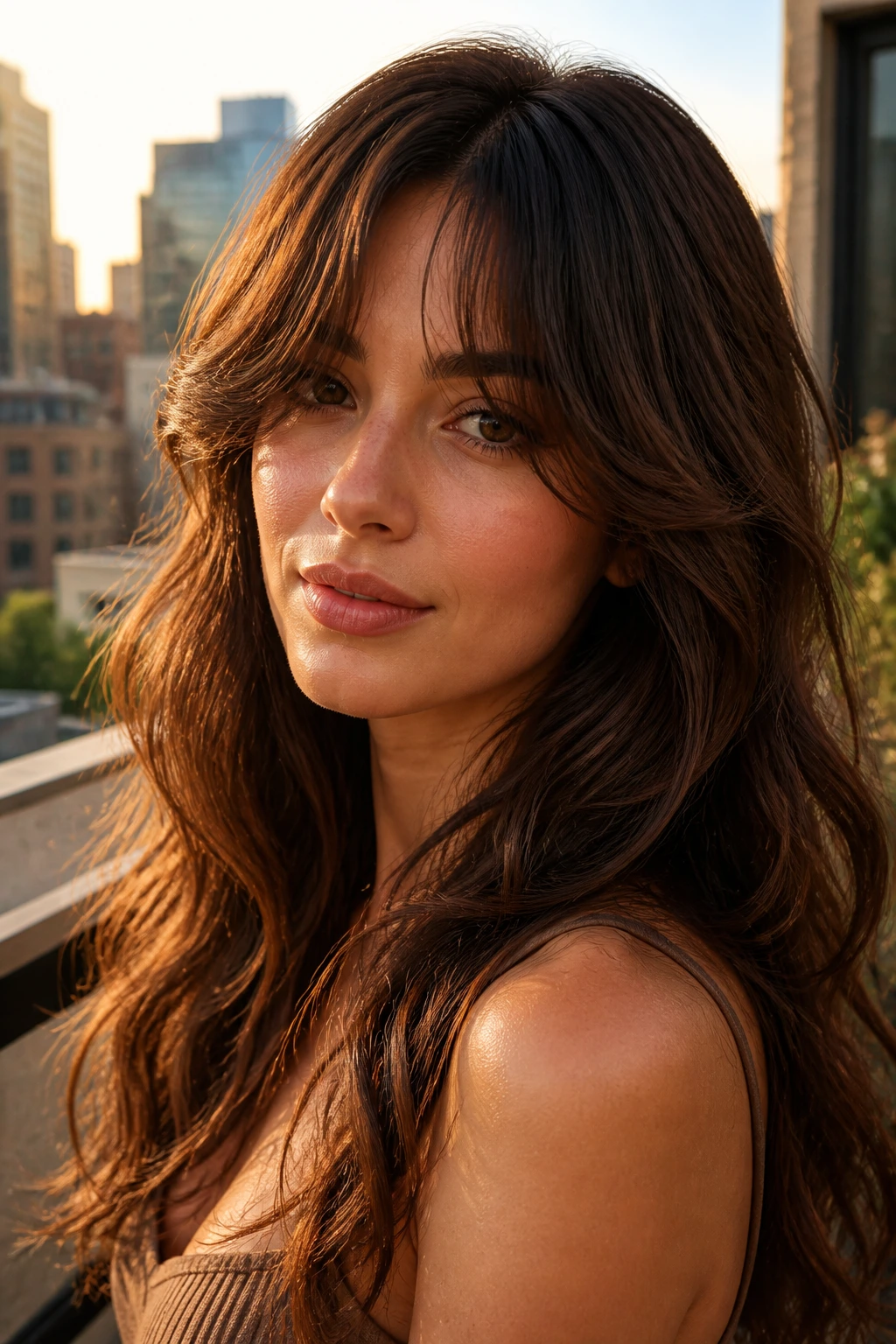
The U shape is a close cousin of the rounded fringe, but the center usually dips a little lower and the outer pieces stay longer. That slight difference matters. It creates a natural opening around the temples while keeping enough hair in the middle to feel like a real fringe.
Wavy hair makes this shape look easy because the bend in the strand softens the U line as it dries. Oval faces get the benefit of extra width at the sides, which can be nice if the face feels long through the center. If you wear your hair half-up often, this is one of the best choices on the list because it still looks deliberate when the front is pulled back.
12. Razor-Cut Long Bangs
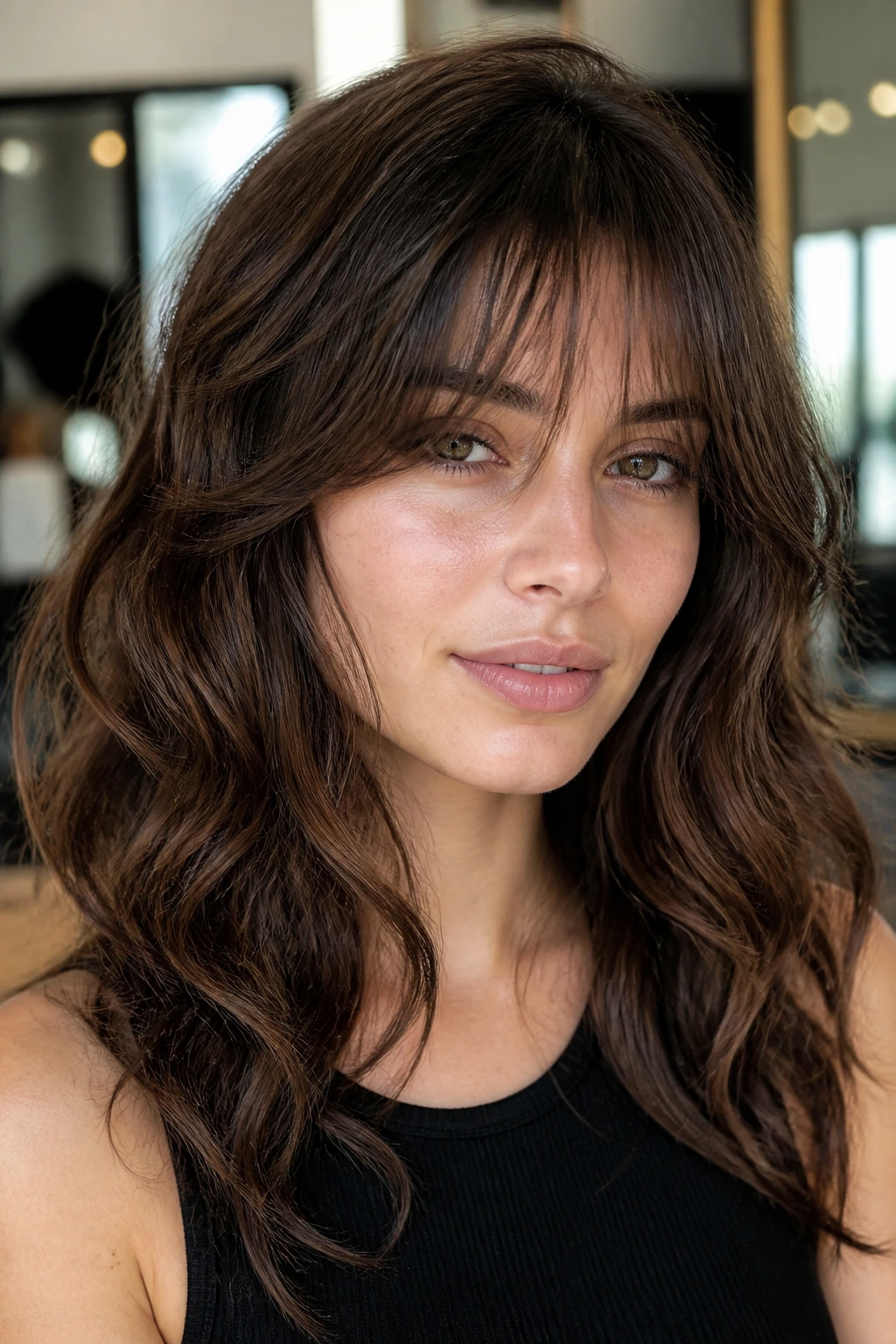
A razor-cut fringe is not about softness in the fluffy sense. It’s about removing bulk in a way that lets the ends move. On thick or coarse waves, a razor can keep the front from becoming a flat, heavy sheet that sticks to the forehead and refuses to cooperate.
I like this version when the wave pattern is strong and the hair needs air around it. On an oval face, the lighter ends keep the fringe from overwhelming the proportions. One caution: the razor matters. A stylist who uses it with too much enthusiasm can shred fine hair, and then you’re left with ends that look tired before they’ve even had a chance.
13. Deep Side-Part Bangs
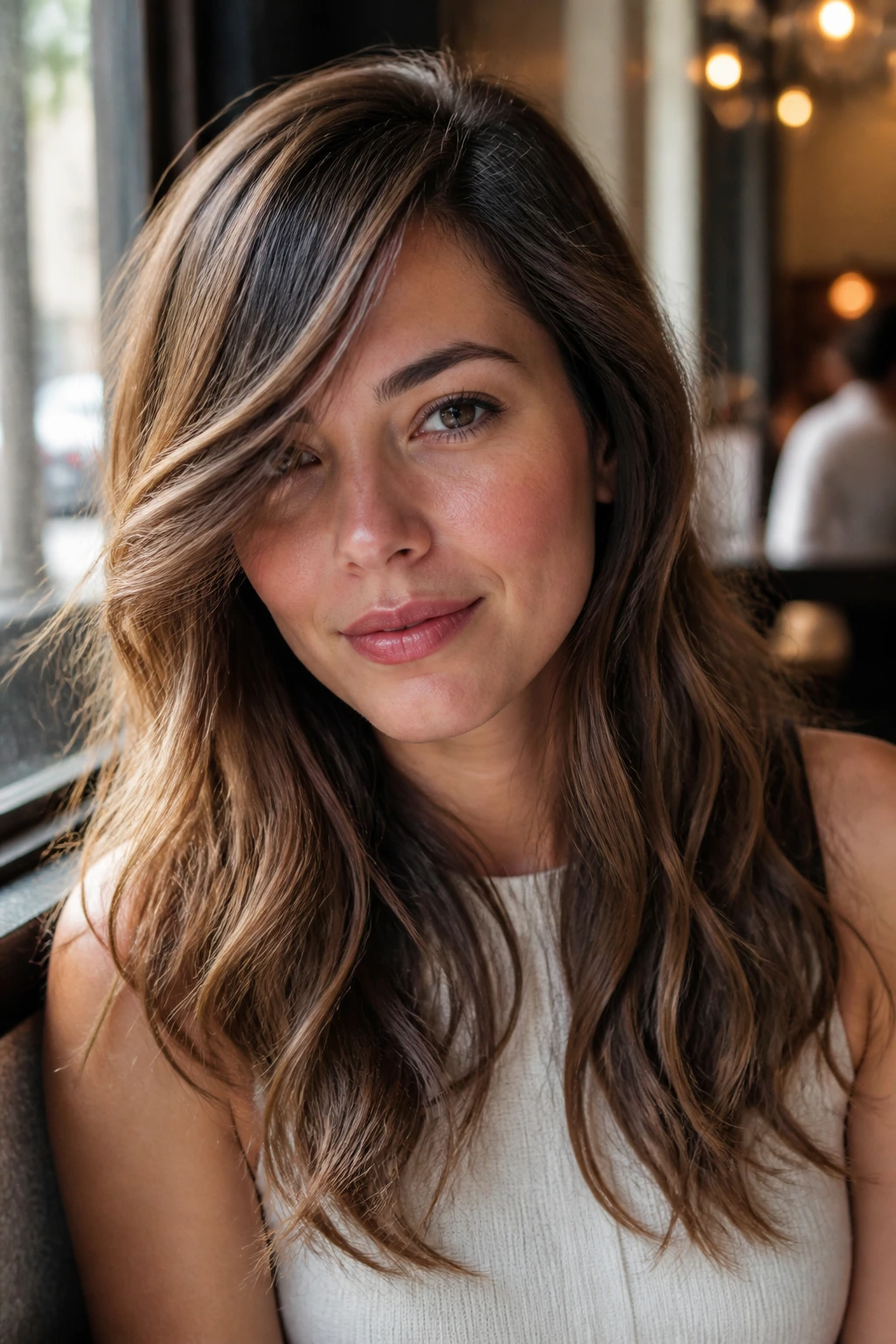
A deep side part changes the whole face line in about three seconds. The bangs sweep across the forehead, then fall away in a long diagonal that brings a little drama without chopping the front into a separate section. Wavy hair gives that sweep a soft bend that looks better than a perfectly brushed arc.
For oval faces, the diagonal is flattering because it keeps the eye moving instead of letting the face read too vertically. It’s a good choice if you don’t like symmetry or if your natural part sits off-center anyway. This style also makes grow-out easier, because the longest pieces can slide into the rest of the cut when you’re ready to move on.
14. Air-Dried Piecey Fringe
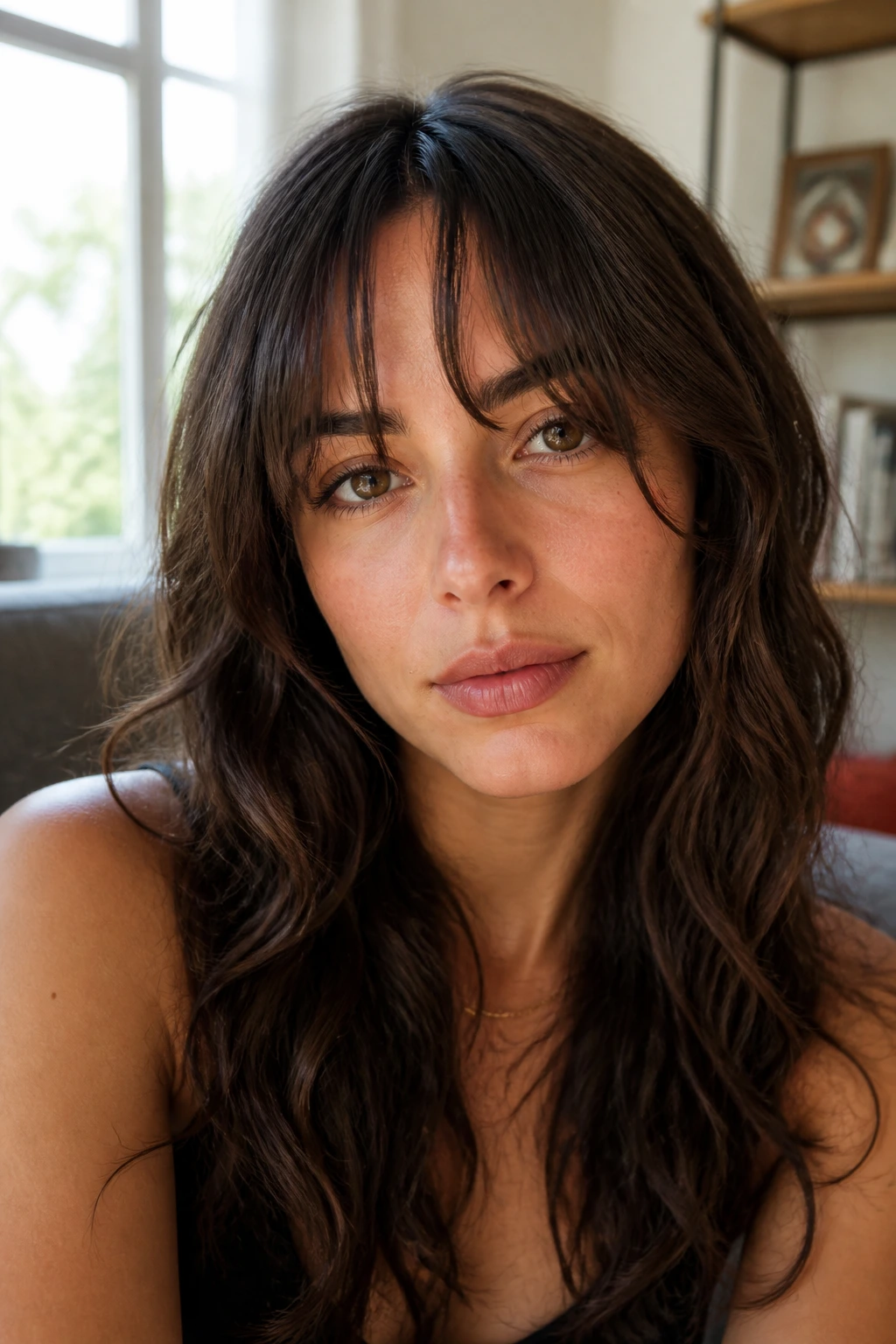
This is less a cut alone and more a promise that the cut will still look decent if you don’t feel like doing much. The bangs are long enough to dry into separate pieces, not one flat strip, and that means wavy hair can do its own little arrangement without much help. A touch of mousse and a quick finger-twist is usually enough.
On an oval face, piecey fringe keeps the forehead open while still giving you that sense of framing around the eyes. I think this is one of the smartest options for people who like their hair to look casual but not accidental. If the front tends to swell, ask for the shortest pieces to stay longer than you think. Wavy hair always shrinks back more than a mirror suggests.
15. Blended Layer Bangs
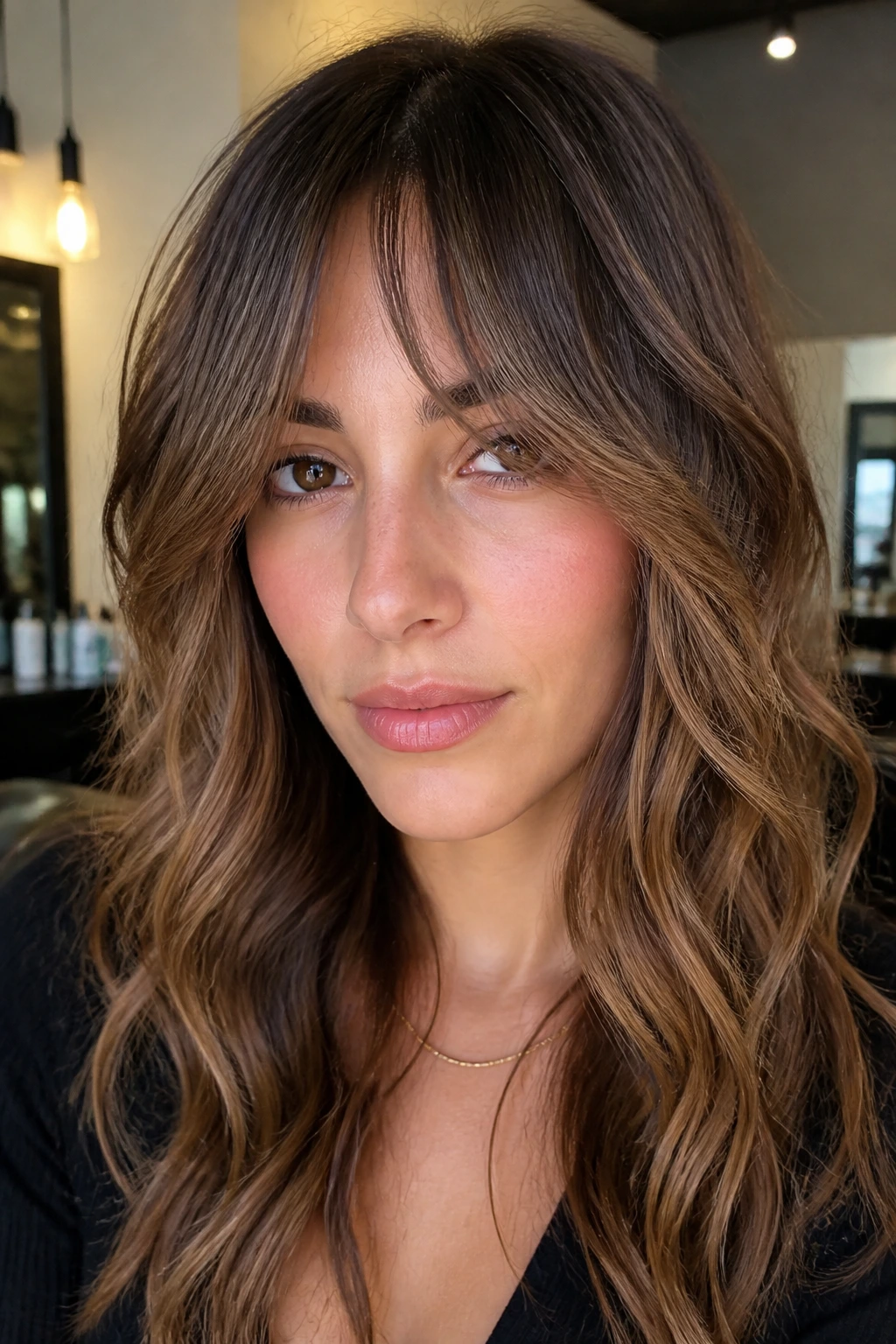
Blended layer bangs are for people who want the idea of bangs without a clean line announcing it. The front pieces merge into the first face-framing layers, so the haircut moves as one shape. On wavy hair, that blending can look especially rich because each bend falls into the next instead of forming a straight edge.
Oval faces do well with this because the shape gives softness around the forehead and cheekbones without creating a hard horizontal break. It’s a good fit if you wear your hair loose more often than pinned up. Ask your stylist to connect the front through the layers rather than cutting a separate fringe and hoping the two pieces become friends later.
16. Grown-Out Blunt Bangs
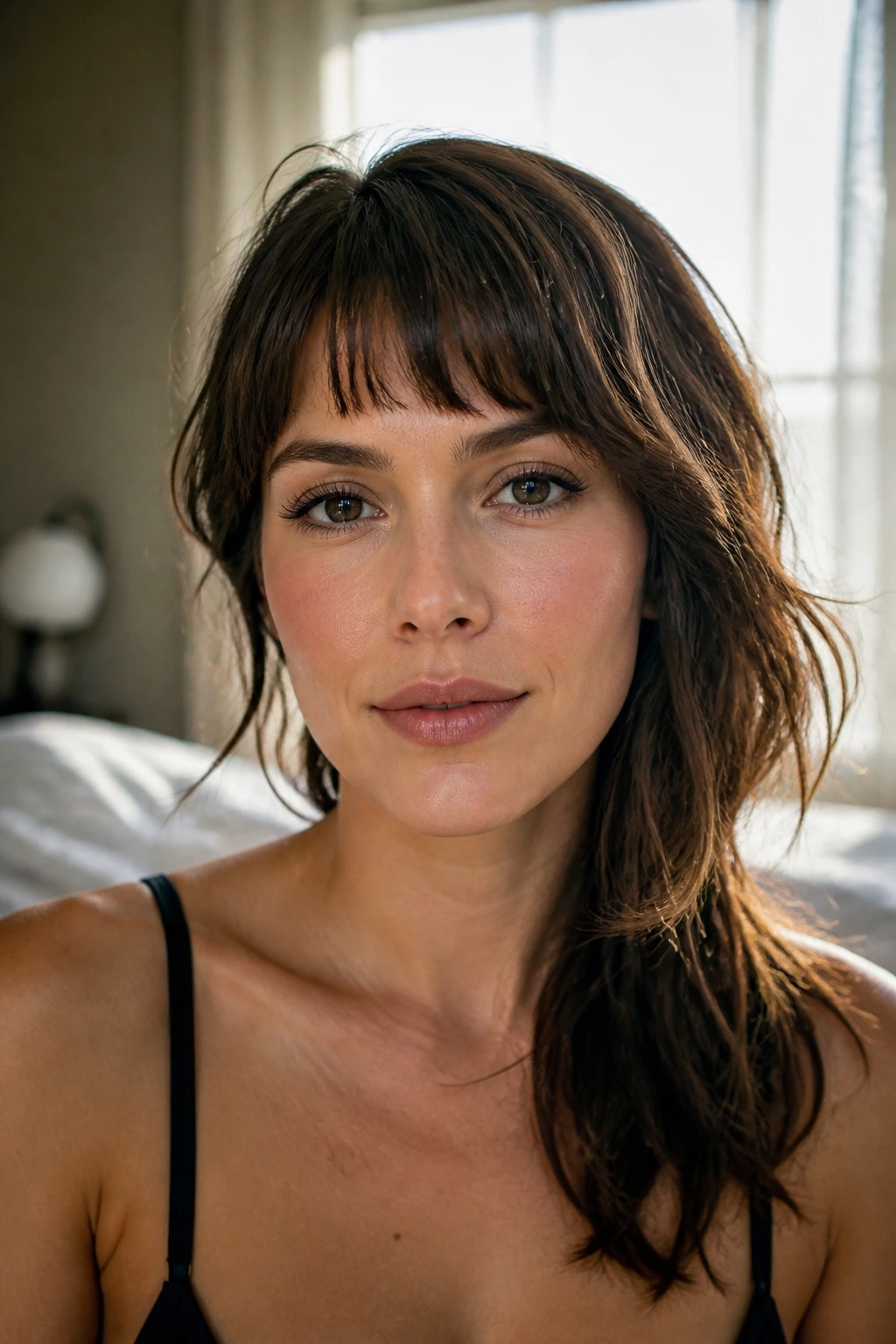
This is the most useful style on the list for anyone who is mid-transition. A grown-out blunt bang already has some weight, but the line has softened enough that it can be brushed to the side, split in the middle, or tucked into a curtain shape. Wavy hair helps hide the awkward stages, which is a small mercy.
For oval faces, this version adds presence near the eyes without locking you into one wear pattern. It’s also a practical choice if you’re not ready to cut a new fringe but want the front to look intentional. I’d ask for the ends to be cleaned up with point cutting rather than chopped back to a hard line. That keeps the grow-out from turning boxy again.
17. Glam Swoop Bangs
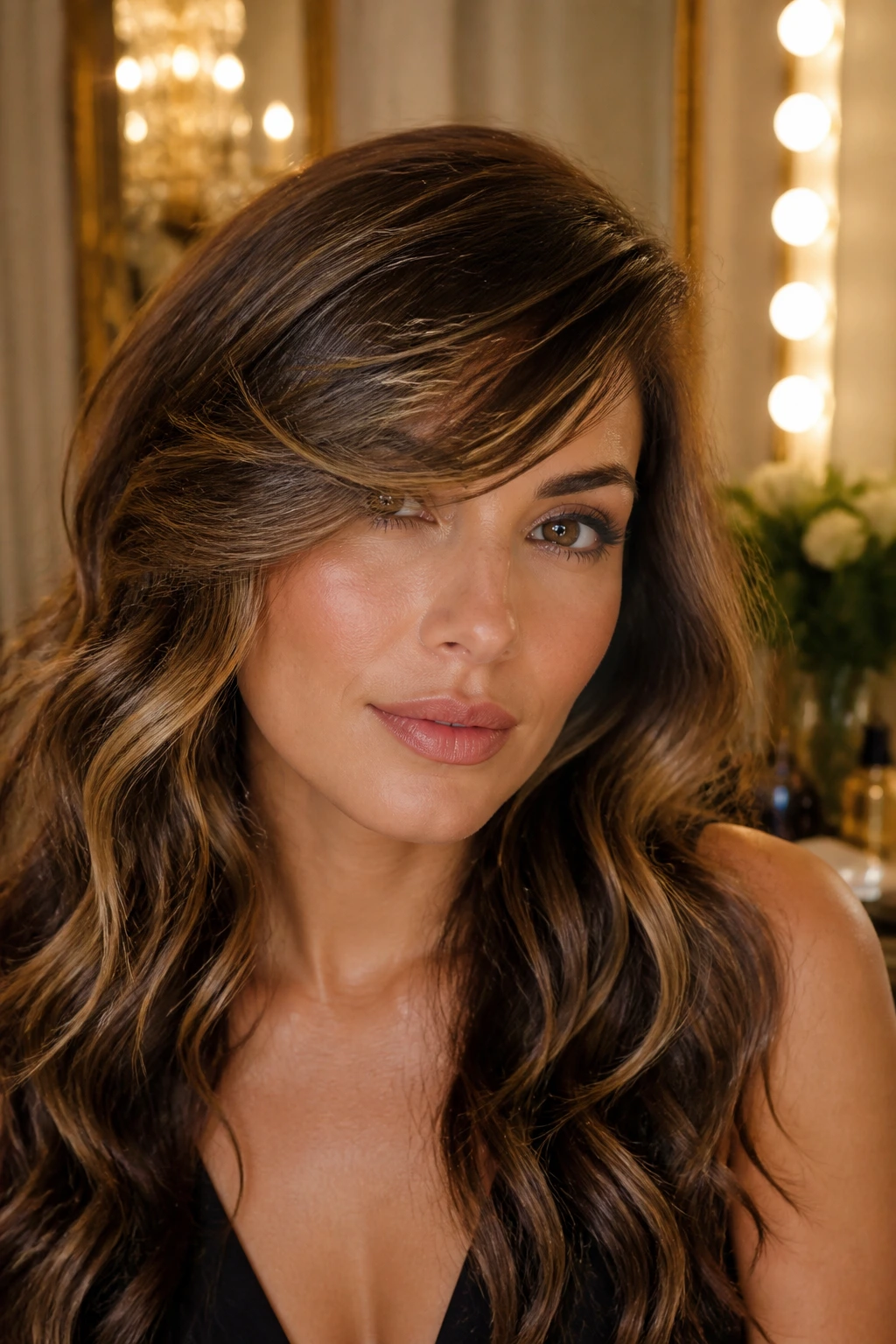
This is the one that gives you a little old-school polish. The fringe sweeps across the forehead in a smooth, lifted curve, and the outer edge blends into the side layers like it was meant to live there all along. Wavy hair can carry this shape nicely, especially if you give the roots a little lift first.
Oval faces can wear a swoop without losing balance, and the diagonal line adds just enough structure to feel dressed up. If you like a round brush and a blow dryer, this is your friend. If you do not, it will still work, but it won’t look quite as crisp. The cut should be long enough that the swoop lands below the brow line when dry.
18. Temple-Weighted Fringe
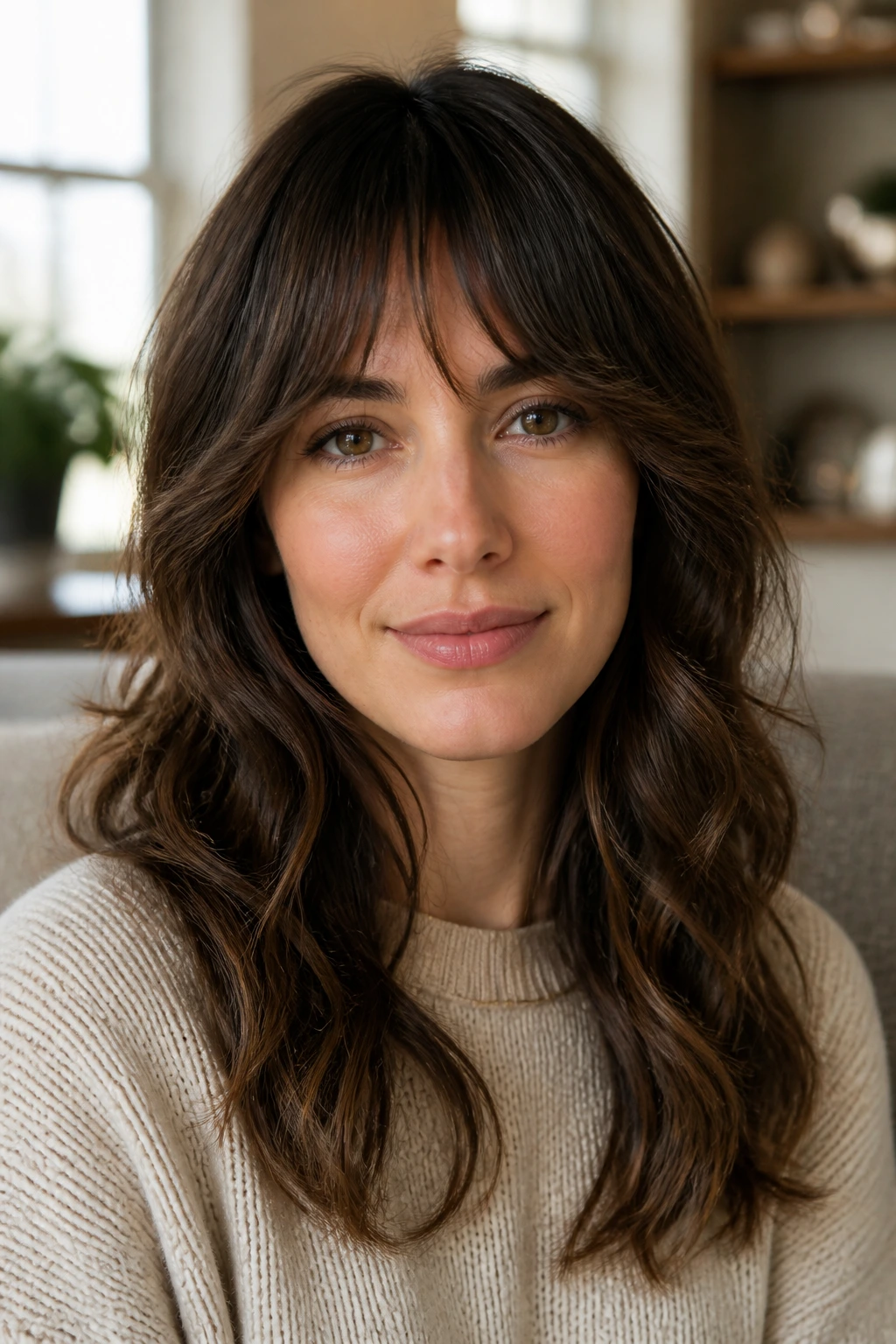
Temple-weighted fringe puts more visual presence near the sides of the face than in the center. That matters more than people think. On an oval face, adding a little width at the temples can make the whole look feel fuller and more balanced, especially if the forehead is naturally broad or the hair falls very flat at the crown.
Wavy hair gives the temple area some movement so it doesn’t look stacked or rigid. This is a quiet style, not a flashy one, but it works hard. If you’re talking to a stylist, point out exactly where you want the weight to live. “Long bangs” is not enough. The placement is the whole point.
19. Collarbone-Melting Fringe
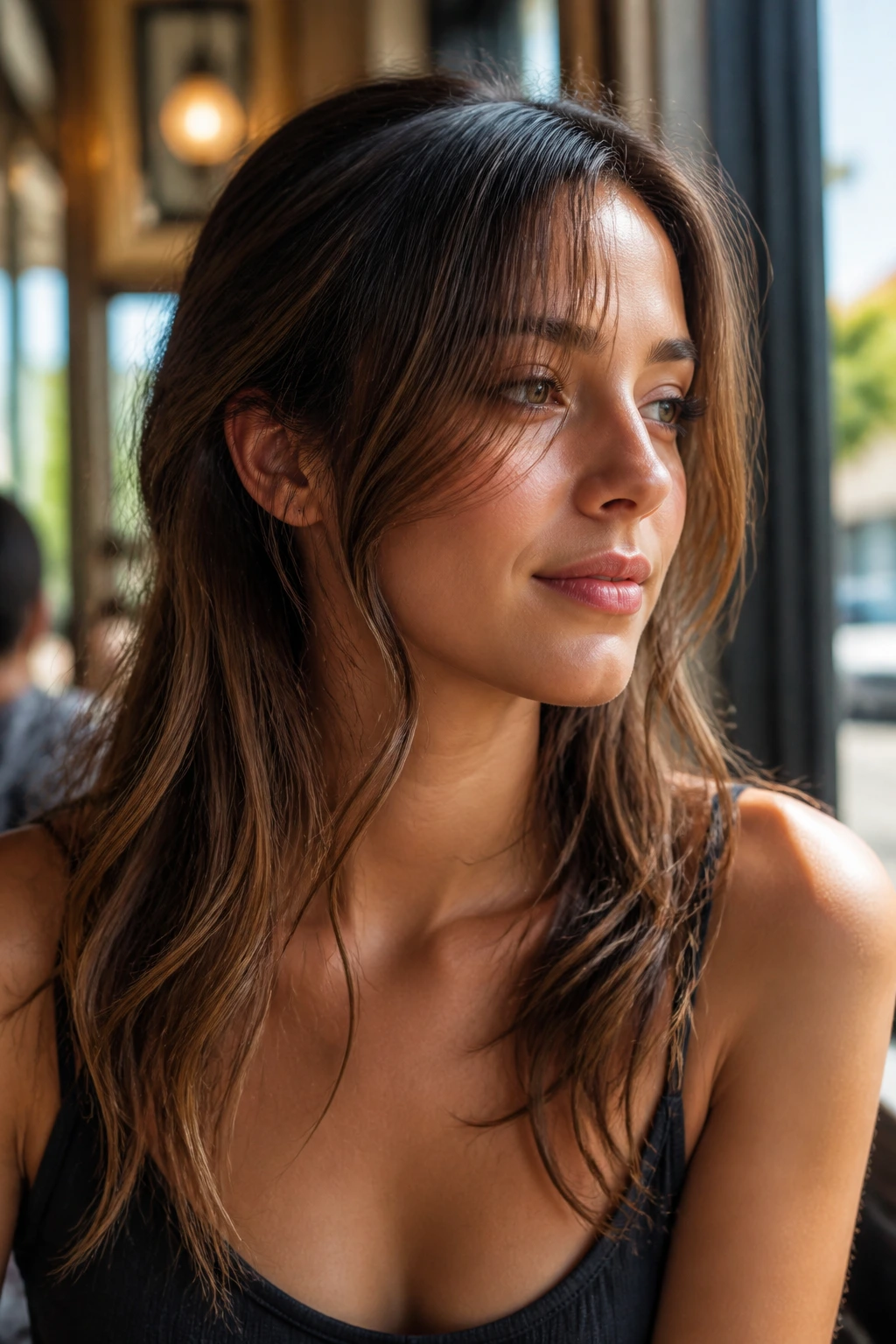
Here the outer pieces are so long they nearly behave like front layers. The fringe starts near the face, then drifts down until it seems to disappear into the rest of the cut around the jaw and collarbone. That long runway gives wavy hair a lot of room to bend.
For oval faces, this is useful when you want the effect of bangs without a hard front section at all. It opens the face while still giving you movement around the eyes and cheeks. It’s also one of the easiest options to tuck behind the ears or pin away on a rushed morning, which is a practical detail more styles should be honest about.
20. Wolf-Cut Bangs

Wolf-cut bangs are shaggy, irregular, and built for people who like texture that looks a little wild on purpose. The front tends to be broken into pieces that connect to shorter crown layers, so the fringe feels untamed in a deliberate way. Wavy hair is almost the ideal partner here because the wave pattern keeps the hair from lying too neatly.
Oval faces can handle the extra volume, especially if the rest of the haircut has some length to it. The trick is not to over-thin the front. If you do, the bangs can disappear into the hair instead of framing the face. Ask for choppy shaping, but keep enough density that the style still reads from across the room.
21. Wide Curtain Bangs
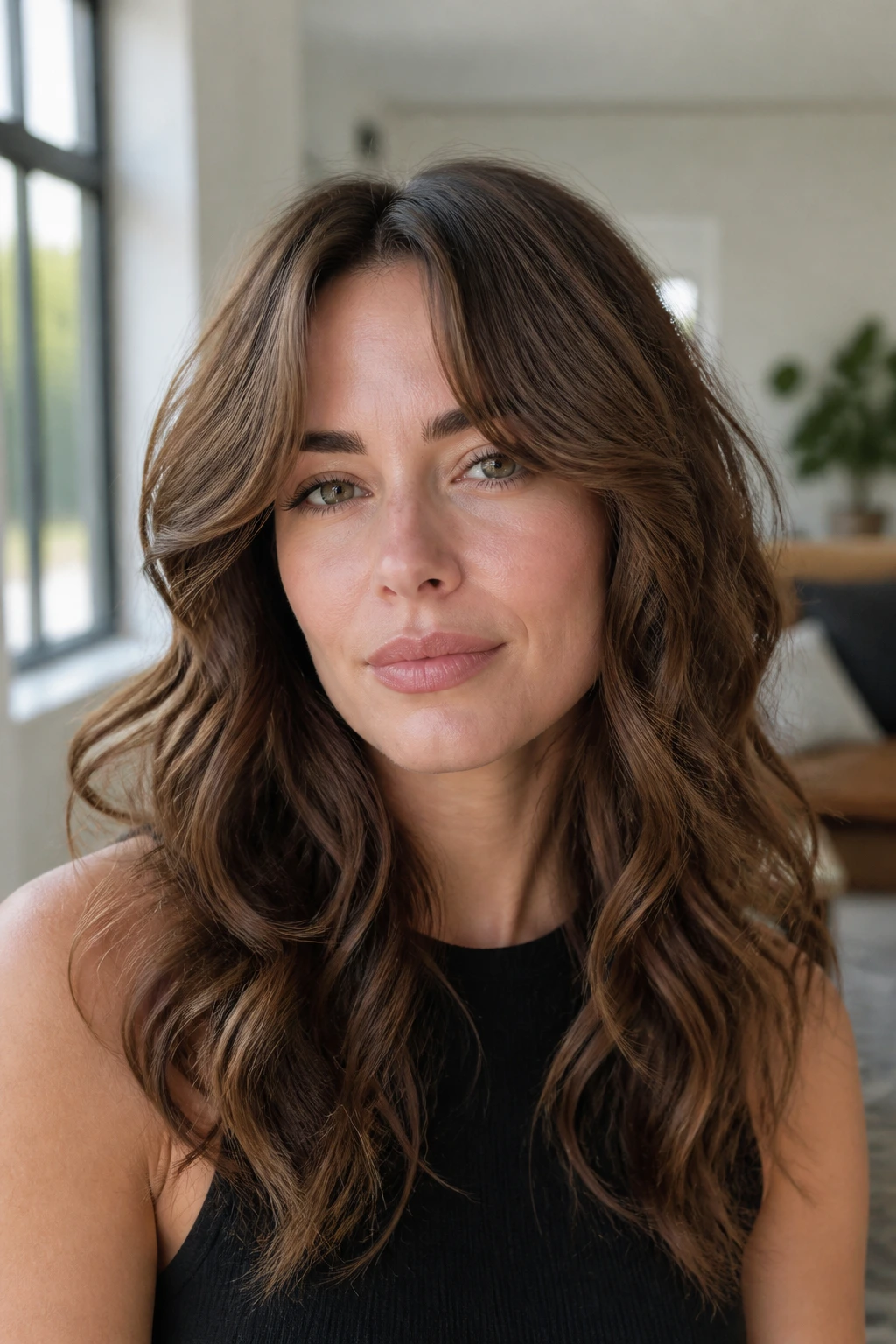
Wide curtain bangs open farther apart in the center and give you more space around the forehead. They’re a little less cozy than classic curtains, which sounds odd until you see how useful that openness can be on wavy hair. The wider split keeps the front from puffing into a heavy triangle.
Oval faces often look good with this because the width at the temples adds shape without crowding the center of the face. It also gives you more room to change your part day to day. If your hair has a strong wave or a stubborn cowlick, a wider curtain usually behaves better than a narrow one that insists on sitting exactly where it wants.
22. Soft Arched Fringe
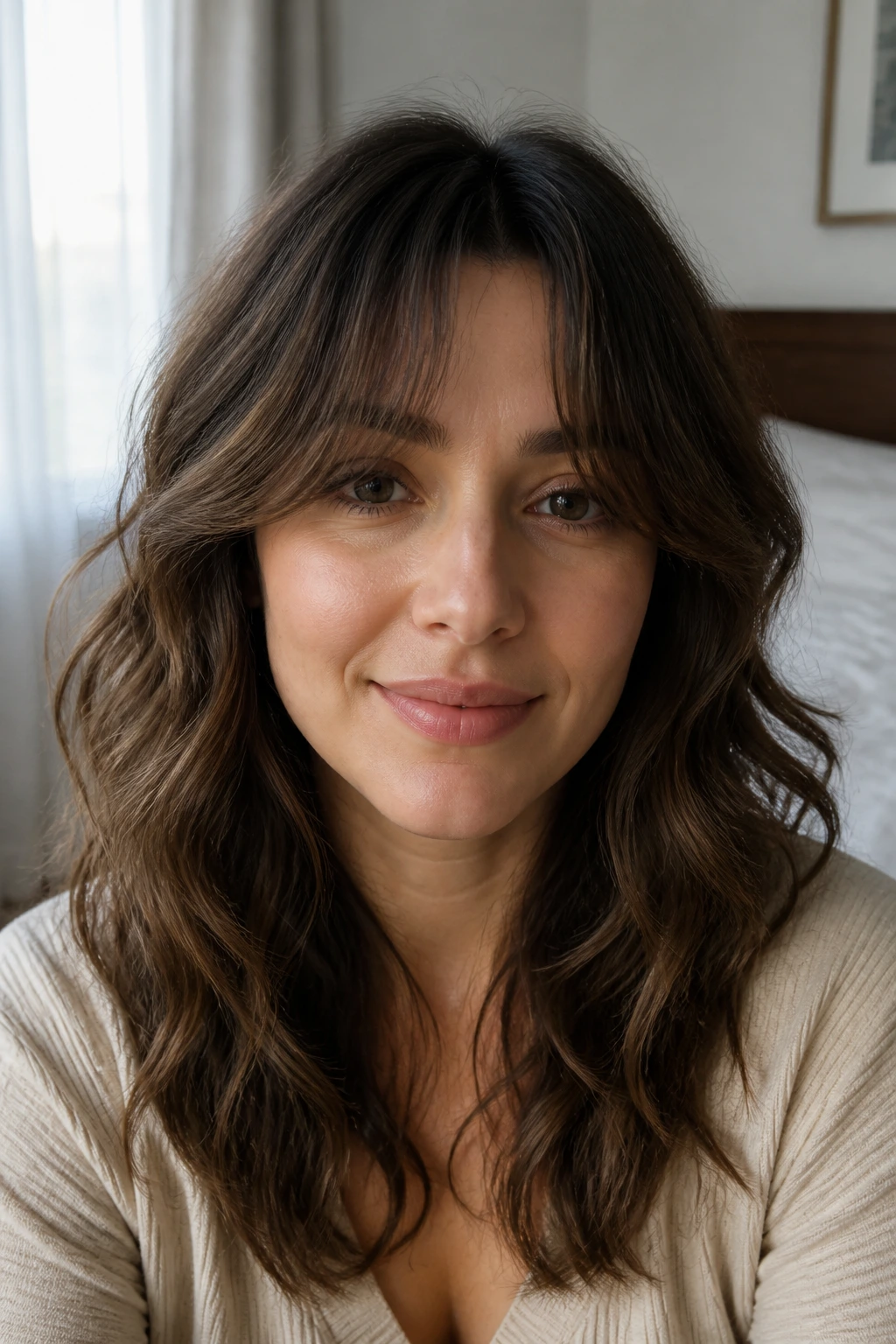
A soft arch is one of those cuts that seems simple until you notice what it does. The center lifts a bit, the sides fall longer, and the whole line feels shaped rather than straight. Wavy hair helps because the arch doesn’t need to be perfect to work; a little irregularity makes it better.
For oval faces, the slight lift in the center keeps the face from feeling too elongated through the forehead. It also gives the eyes a quiet frame. I like this version with a medium round brush and a very light hand. If you make it too neat, it loses the charm and starts looking like a school photo from a bad decade.
23. Split Fringe With Longer Outer Ends
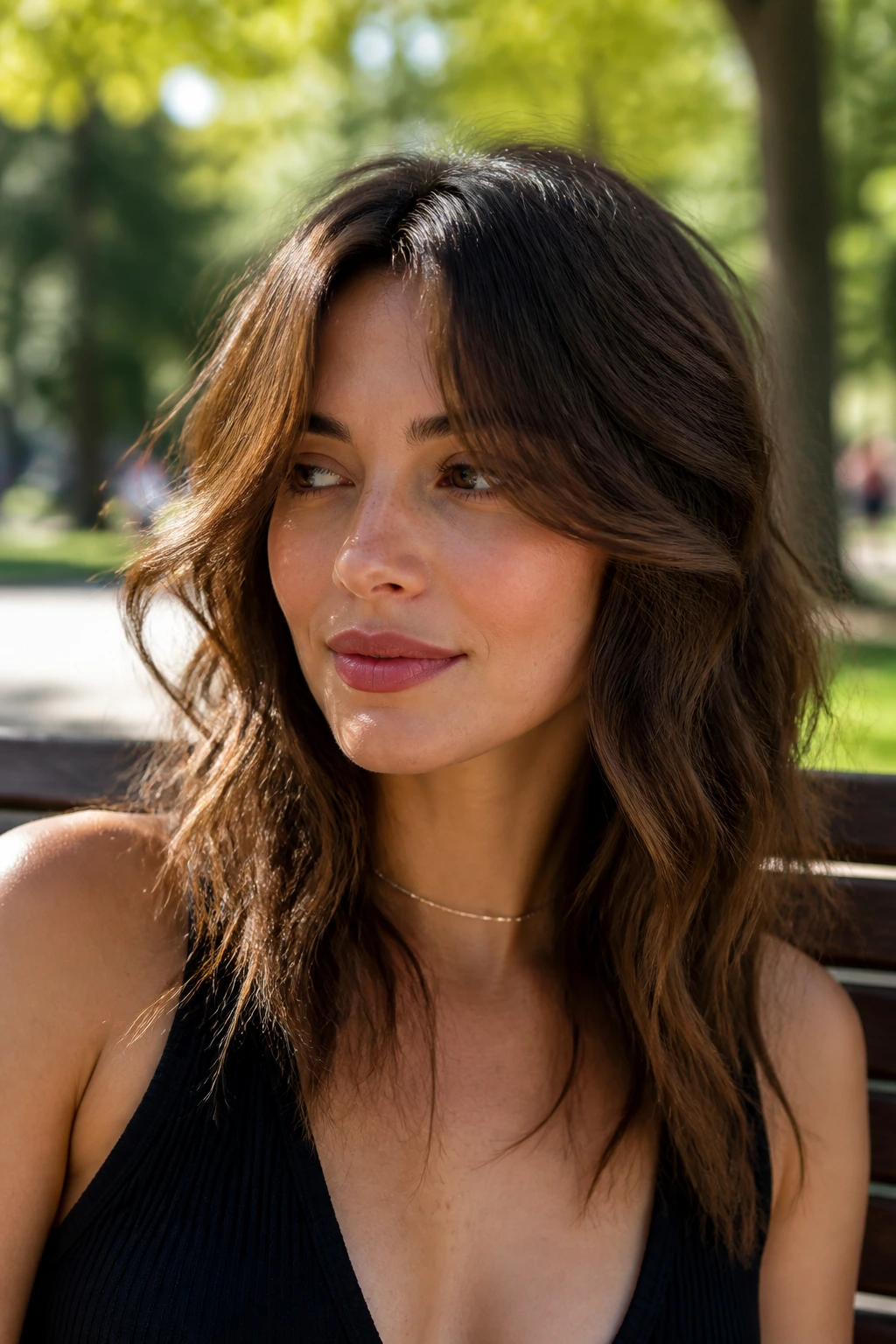
This is curtain bangs with the split taken seriously. The middle opens early, and the outer pieces stay long enough to brush the cheeks or slide into the rest of the hair. On wavy texture, the split feels natural because the wave already encourages separation.
Oval faces benefit from the stronger outer edges because they create a little width where the face can use it. The shape is also forgiving if one side dries slightly differently from the other, which happens all the time with waves. If your hair parts itself without asking, this cut will probably make peace with that habit instead of trying to erase it.
24. Wispy Low-Density Bangs
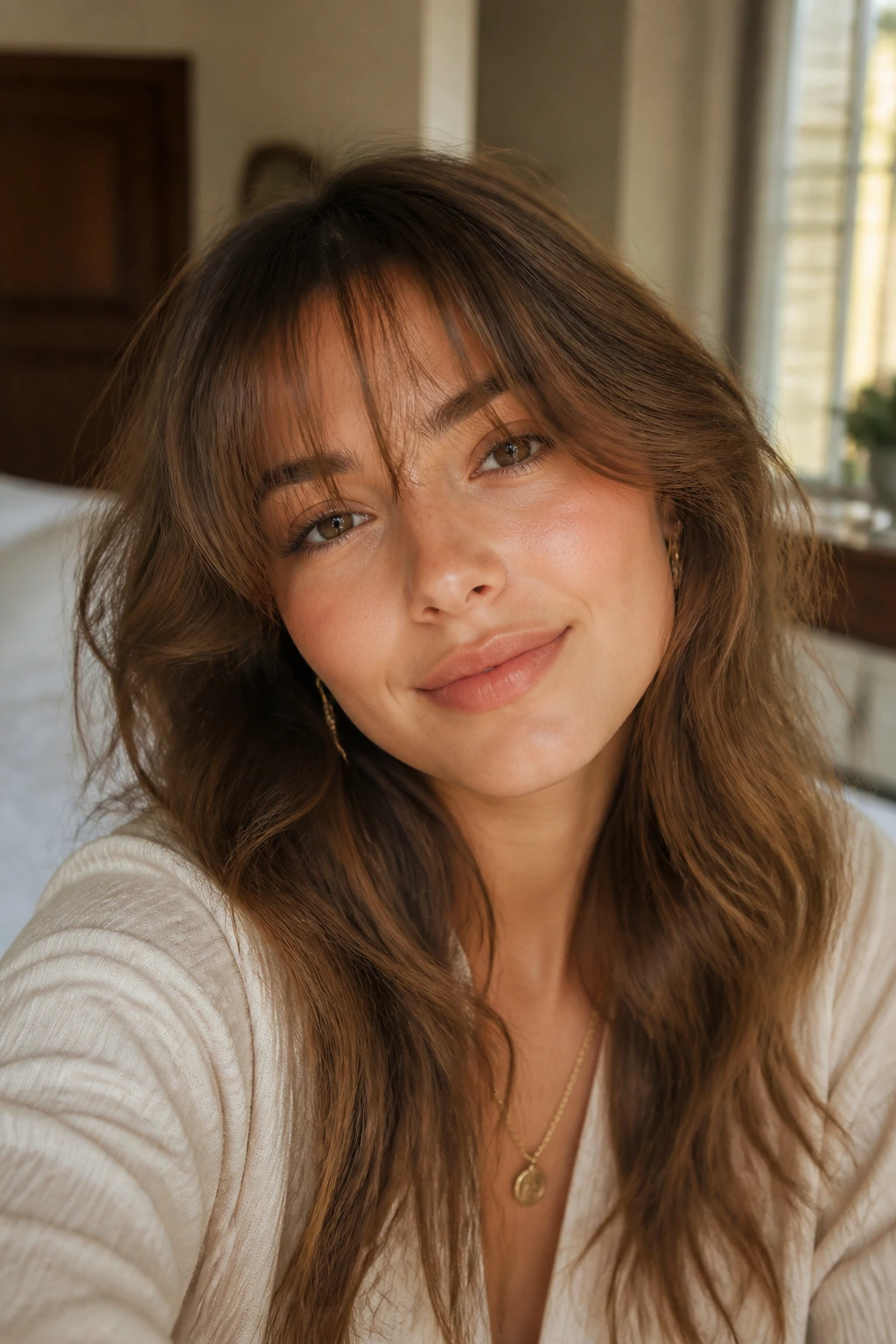
Fine hair needs a different conversation. A wispy fringe keeps the front light, airy, and see-through in a controlled way, so you’re not forcing a thick, heavy bang on hair that does not want to live that life. Wavy hair can make wispy pieces look delicate rather than sparse.
On an oval face, the soft density gives just enough frame without closing down the upper half of the face. The danger is overcutting. If the pieces are too thin or too short, they can look stringy instead of airy. The goal is softness with shape, not a bang that disappears every time the wind shifts.
25. Middle-Part Feather Fringe
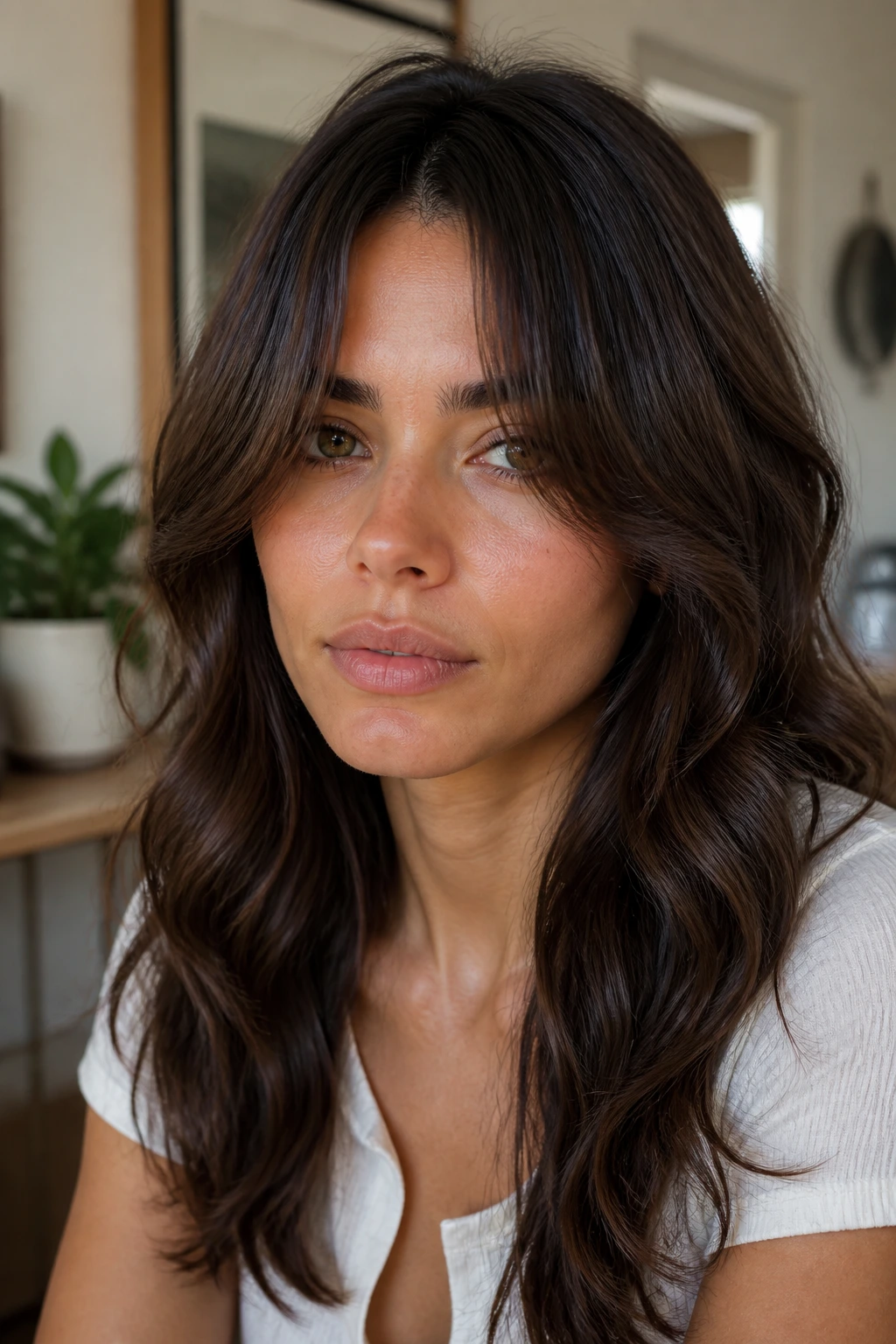
This one closes the loop nicely because it’s wearable, flexible, and easy to grow out. A middle-part feather fringe splits softly down the center, then falls in light, feathery pieces that blend into the rest of the haircut. Wavy hair makes the edges look less formal, which is the whole appeal.
For oval faces, the middle split keeps the face open while still giving you some front interest. It’s a good choice if you want the look of bangs but do not want to spend every morning thinking about them. That’s a fair standard, by the way. Hair should earn its keep.
Why Long Bangs for Wavy Hair and Oval Faces Work So Naturally Together
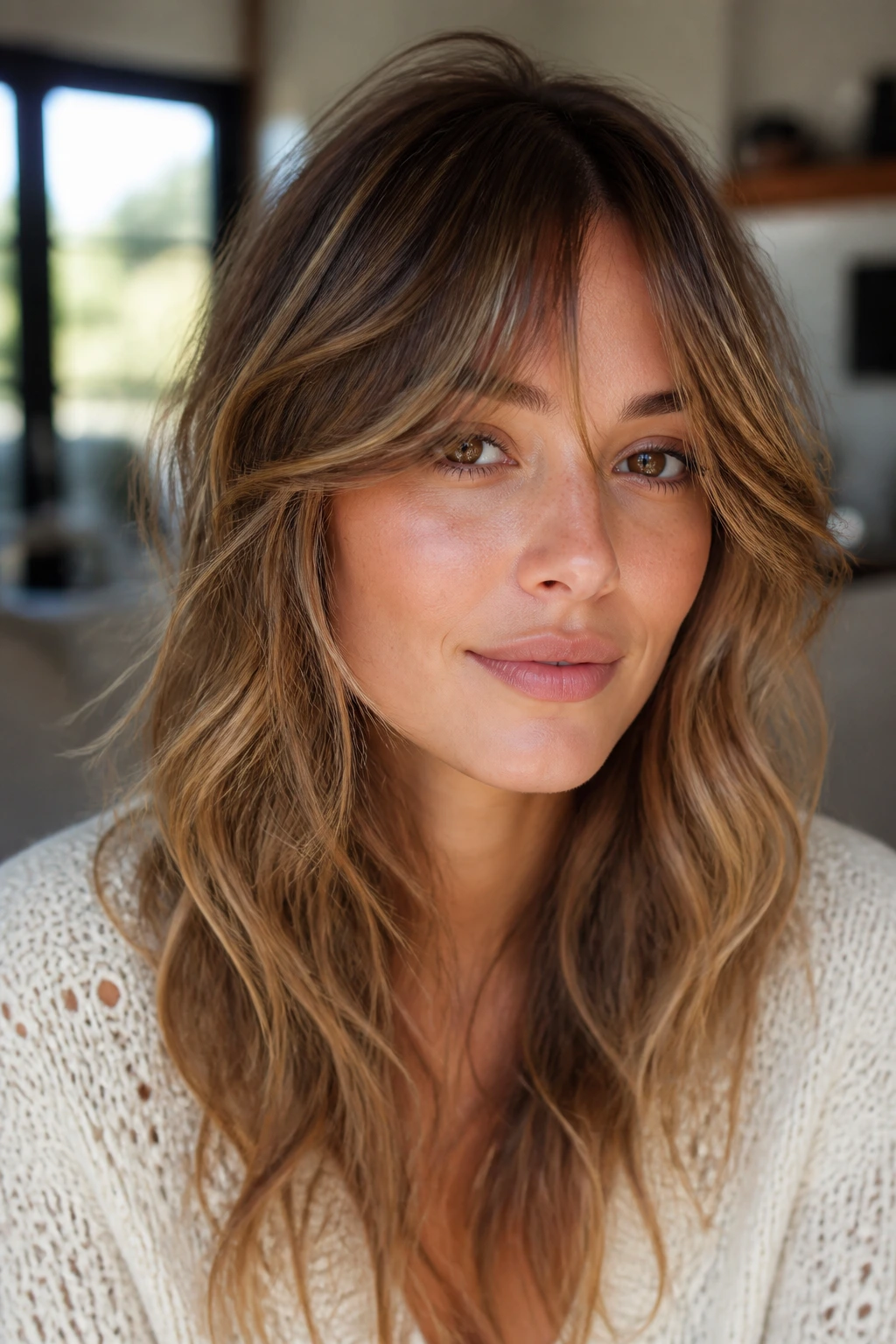
- They follow the hair’s bend instead of flattening it. A long fringe gives waves room to curve, so you see movement instead of a stiff shelf.
- They balance the face without boxing it in. Oval faces already carry symmetry well, so the bangs can add softness, width, or a diagonal line without fighting the shape.
- They survive second-day hair. A little wave plus a little oil at the root can actually make these bangs look better, as long as the front is not overloaded with product.
- They give you styling options. You can push them center, part them off-center, air-dry them piecey, or smooth them into a blowout shape.
- They grow out cleanly. Long bang lengths slide into layers more easily than short fringe, which matters when you miss a trim by a few weeks.
Wavy hair is not a problem to solve here. It is the material. The best long bangs respect that. When a stylist cuts with the wave in mind, the front keeps its shape longer, dries in a better place, and stops needing daily negotiations in front of the mirror.
Oval faces help too, because they give the fringe room to breathe. You can widen the temples, narrow the center, or sweep the front across the forehead without having to correct for a tricky jawline or a very short face. That freedom is the reason this combo has so many good variations.
How to Ask Your Stylist for the Cut You Actually Want
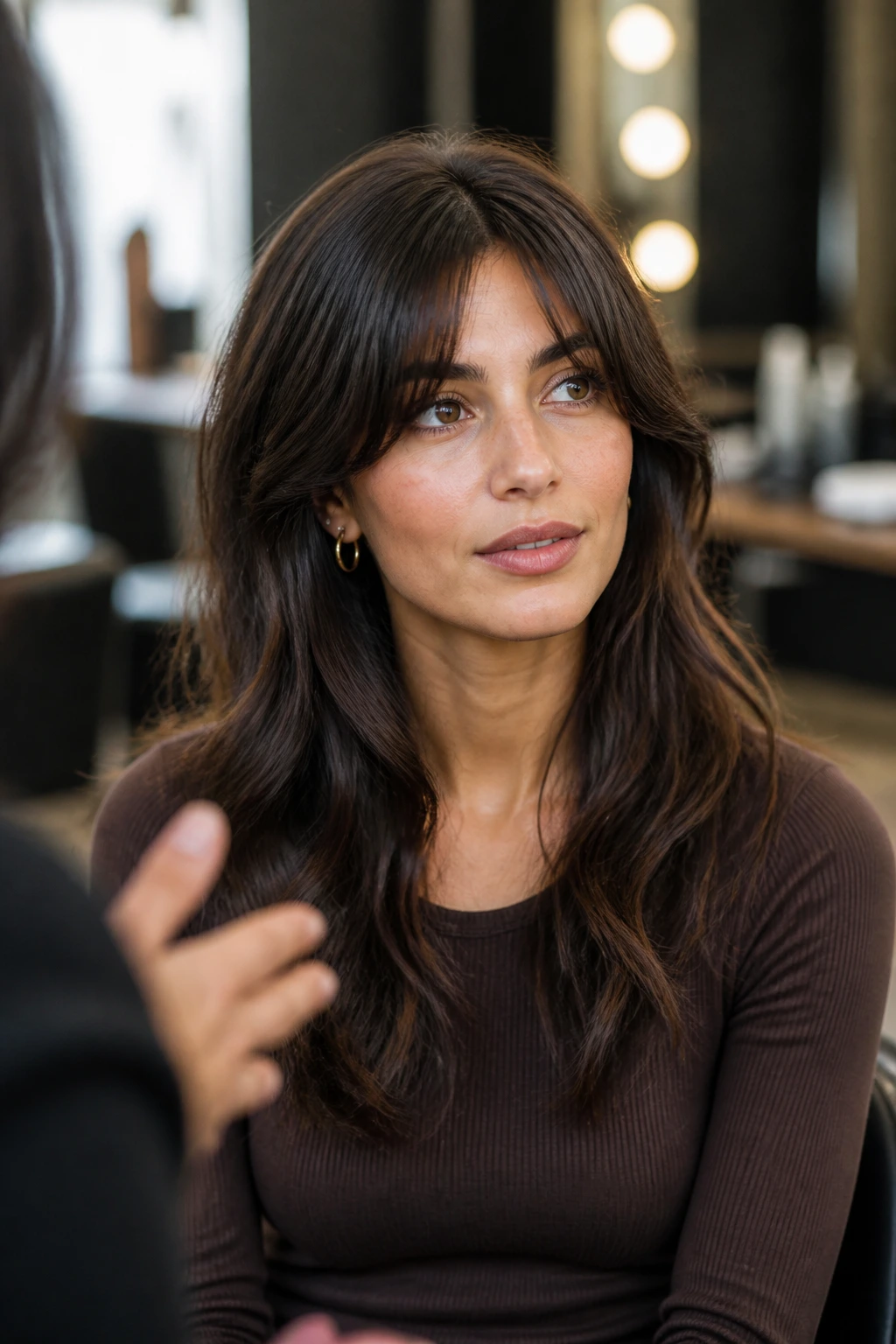
Bring Hair Photos That Match Your Texture
A photo of sleek, straight bangs on pin-straight hair is not helpful if your wave starts at the roots and bends into an S by noon. Bring examples with visible movement, frizz, and real-world parting. Stylists can work with that. A fantasy picture from a shiny feed, not so much.
Ask for the Length Checked Dry
This is the part people skip, then regret. Wavy hair almost always lifts as it dries, so the shortest point should be cut with shrinkage in mind. I like to tell people to ask for the fringe to be checked dry before any final shortening happens. It saves you from bangs that land four millimeters too high and spend the next month hovering above your eyebrows like they’re making a point.
Tell Them How You Wear Your Part
If you wear a center part nine days out of ten, say that. If your hair always slides into a deep side part by lunch, say that too. Bangs are not just about the front line; they’re about how the front behaves around the part, the crown, and the way your wave falls after the first hour.
A good stylist will also look at your cowlicks and temple density before they pick a shape. That’s the real conversation. Not “bangs or no bangs.” More like, “Where does your hair want to go, and how much can we make it cooperate without turning it into a project?”
Tools That Make the Styling Routine Easier
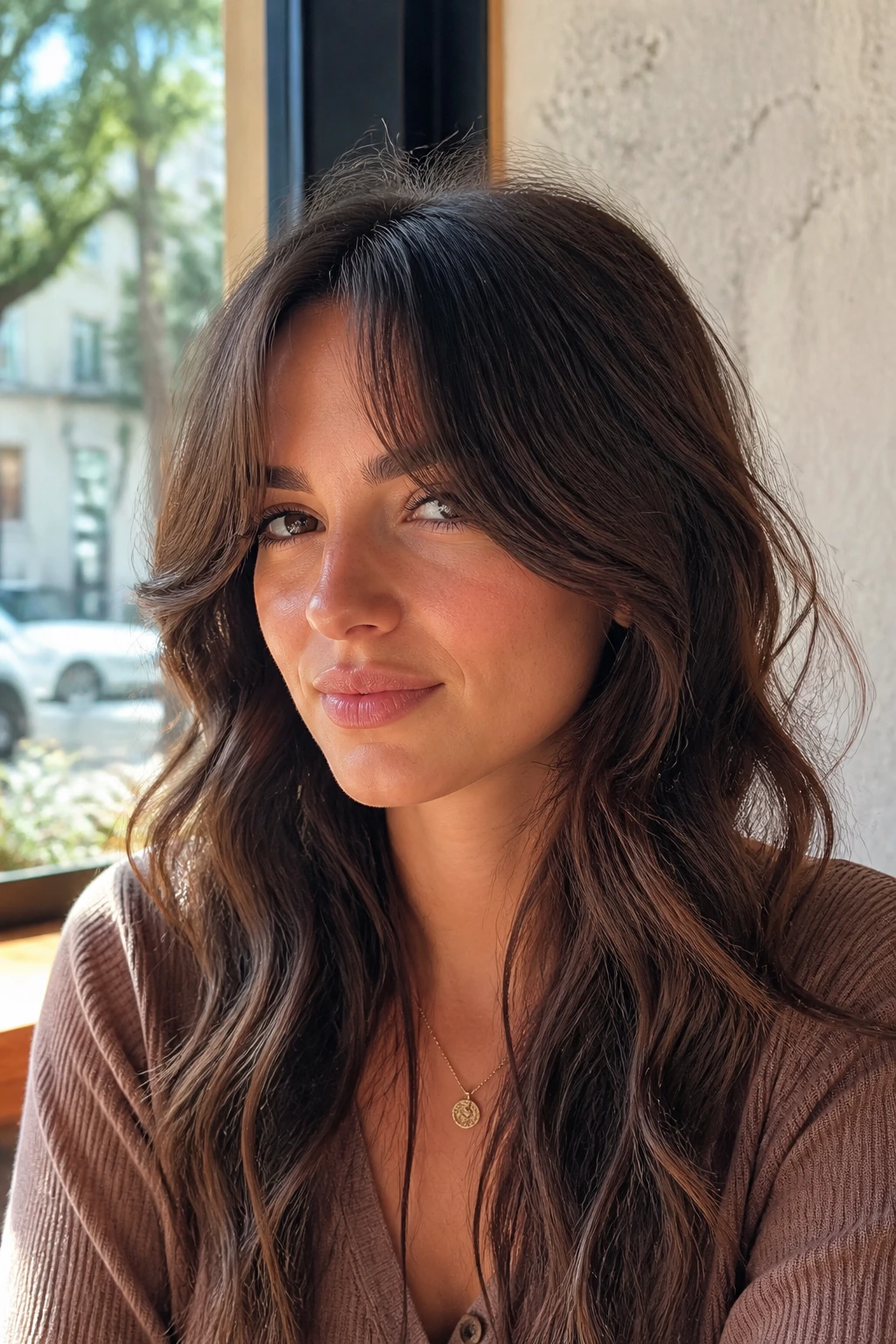
- Blow dryer with a concentrator nozzle: Directs airflow so you can bend the fringe without blasting the wave apart.
- 1- to 1.5-inch round brush: Best for giving the front a slight curve at the roots and ends.
- Diffuser attachment: Useful when you want to air-dry waves with less frizz and a little root lift.
- Duckbill or sectioning clips: Keep the rest of the hair out of the way while you shape just the fringe.
- Wide-tooth comb: Helps separate waves gently without stretching them straight.
- Heat protectant spray: Necessary if you touch the front with a dryer, brush, or iron.
- Lightweight mousse or foam: Gives the bang a little hold without that crunchy, old-school helmet feel.
- Dry shampoo: Useful when the forehead area gets shiny faster than the rest of the hair.
You do not need every tool every day. In fact, using all of them at once would probably make the fringe look overdone. The useful ones are the brush, the dryer, and the product that matches your wave pattern. The rest are there to make the front easier to manage on the days when it decides to have opinions.
Small Tweaks That Make Long Bangs Easier to Wear
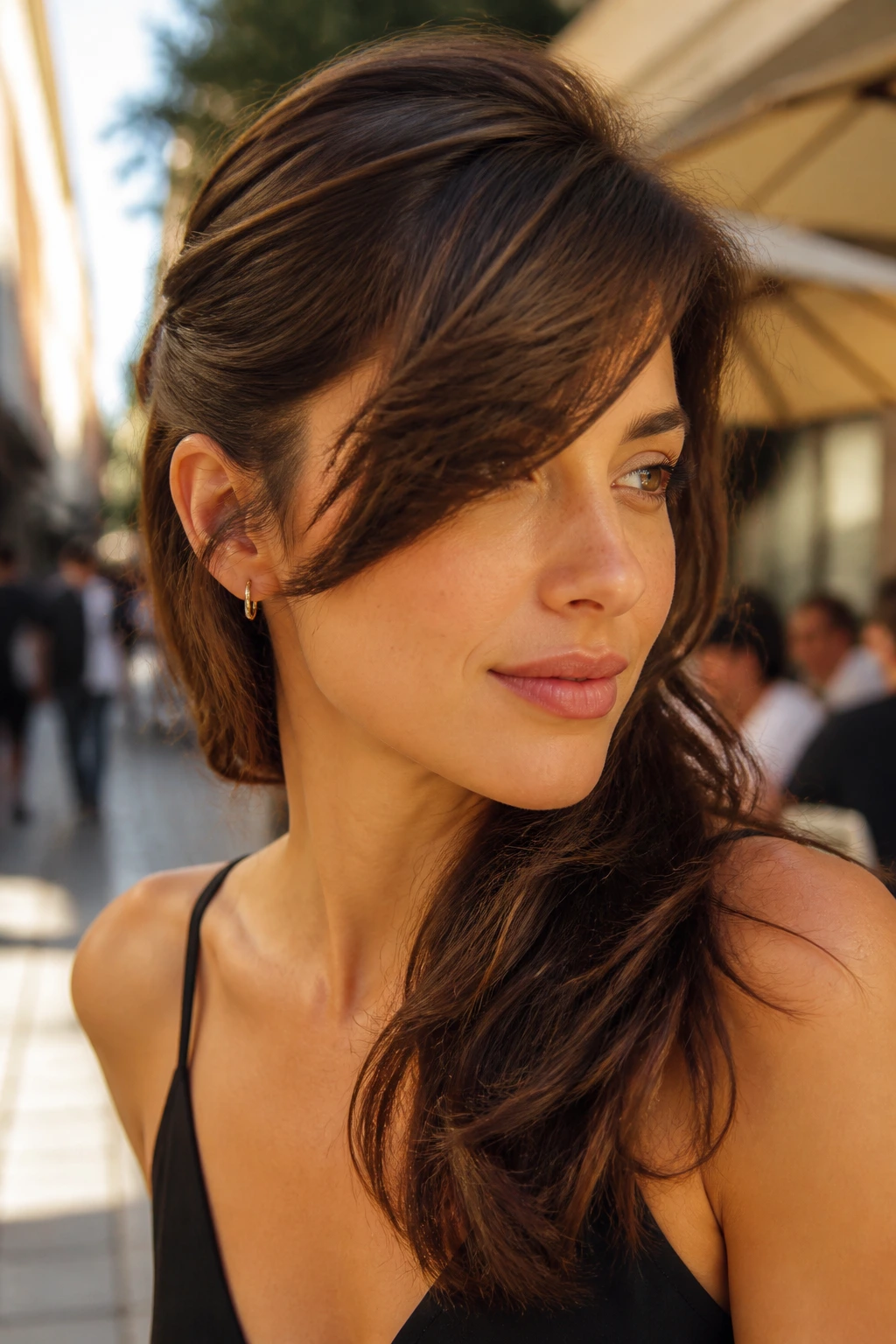
Texture Boost: A tiny amount of mousse through damp bangs does more than a pile of oil ever will. For waves, I’d rather see a little lift and separation than a glossy front that sticks to the forehead by midmorning.
Root Control: If your fringe keeps splitting in the middle, clip the center forward while it dries or use a small round brush to set the root direction for 20 to 30 seconds. That small bit of shaping can stop the bang from drifting apart the second you step outside.
Soft Finish: Point cutting at the ends keeps the line flexible. If the bang feels too blunt after a trim, ask your stylist to soften just the outer edge so the hair bends instead of sitting like a ruler.
Make-It-Yours: If you want more drama, add a deeper side part and sweep the fringe across the forehead. If you want less maintenance, go longer and lean into the pieces around the cheekbones. If your wave is coarse, leave more length than you think. If it’s fine, keep the density light so the front doesn’t slump.
I also like a tiny amount of dry shampoo at the root on day two, even if the rest of the hair is clean. The front picks up oil first. That’s just life.
Keeping the Fringe in Shape Between Washes
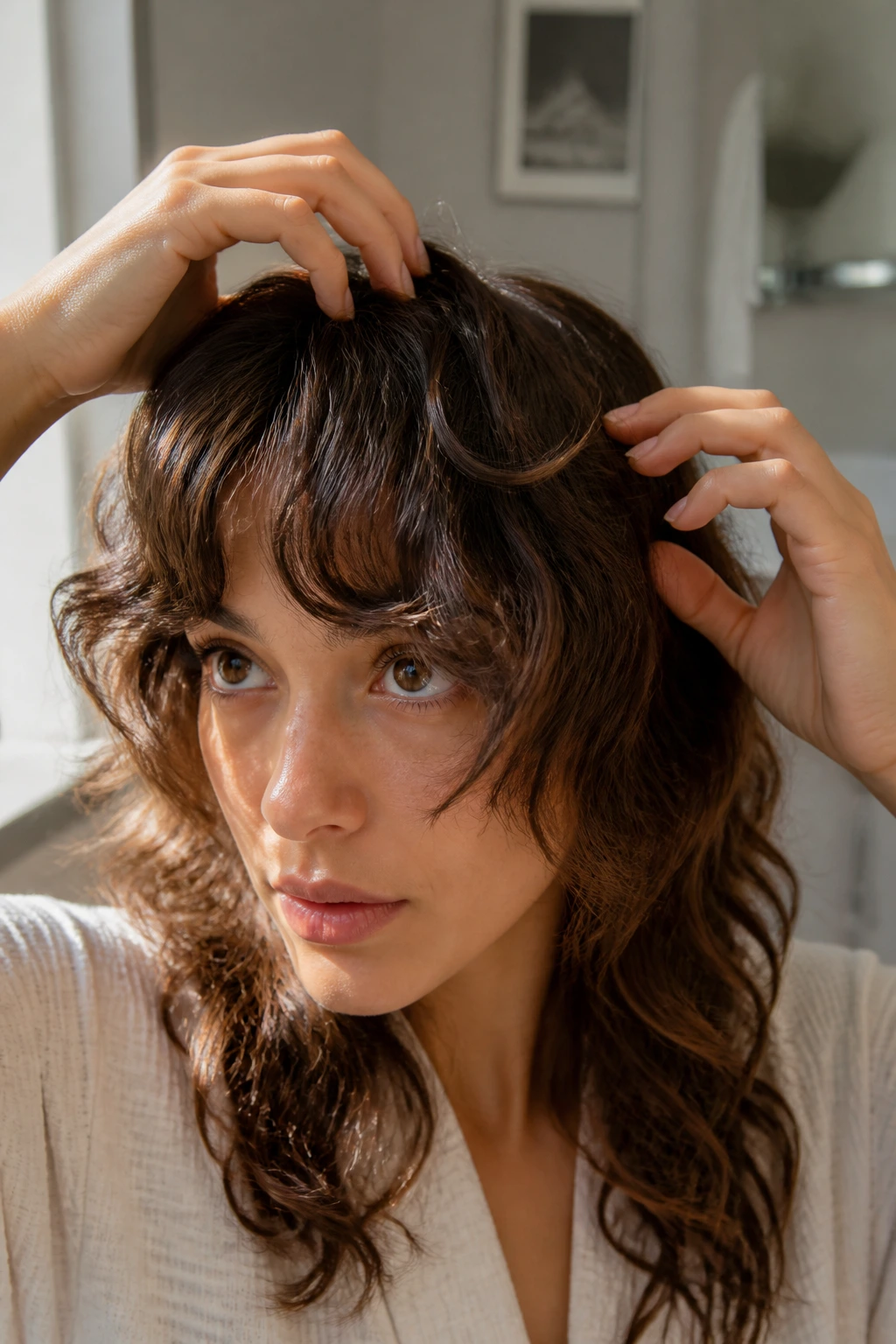
Morning Reset: Mist the bangs lightly with water or a leave-in spray, then bend them back into place with your fingers or a round brush. You do not need to soak them. A damp reset is enough to wake the wave back up without starting the whole wash routine again.
Midday Rescue: If the front separates or starts to string out, tap a little dry shampoo under the roots and wait a minute before rubbing it in. That pause matters. It gives the powder time to absorb oil instead of disappearing into the hair and leaving a chalky spot.
Night Care: Clip the bangs loosely out of the face before bed or sweep them into a soft roller if you know your wave gets bent in a strange direction overnight. I’ve seen more good fringe ruined by a pillow than by bad styling.
Trim Timing: Plan on a clean-up every 5 to 8 weeks if you want the shape to stay crisp. If you’re wearing a more blended, collarbone-length fringe, you can stretch that a bit longer. If the shortest pieces are hitting your eyes and you’re constantly blowing them away, it’s time.
Wavy bangs rarely need a full reset from scratch. They usually need a nudge, not a correction. That is the difference between a haircut that lives with you and one that demands a blowout every time you leave the house.
Common Mistakes That Flatten the Whole Look

- Cutting them too short while wet: Wavy hair shrinks, and a bang that looks ideal when damp can land far above the brows once dry. Ask for a dry check, or at least leave extra length on the first pass.
- Making the fringe too dense: Heavy bangs on wavy hair often puff, separate, or sit like a curtain that refuses to move. A softer interior keeps the front from turning bulky.
- Ignoring the part and the cowlicks: If the hair wants to split in one direction and the cut fights that every morning, the fringe will lose. Work with the natural fall, not against it.
- Using too much round-brush tension: Pulling the hair too tight while blow-drying can stretch out the wave and leave the ends bent in an awkward way. Use just enough tension to guide the shape.
- Stacking too much product near the forehead: Oils, heavy creams, and thick serums make bangs collapse faster than the rest of the hair. Keep products light and start farther back than the front hairline.
- Trimming with kitchen scissors at home: That usually leaves jagged ends and a shape that needs professional rescue. If you must maintain the length yourself, take off less than you think and use actual hair shears.
The biggest mistake is usually impatience. People want the front shorter on day one, then spend the next month trying to undo it. Leave the length. Wavy hair almost always asks for more room than you expected.
Different Ways to Wear the Same Cut
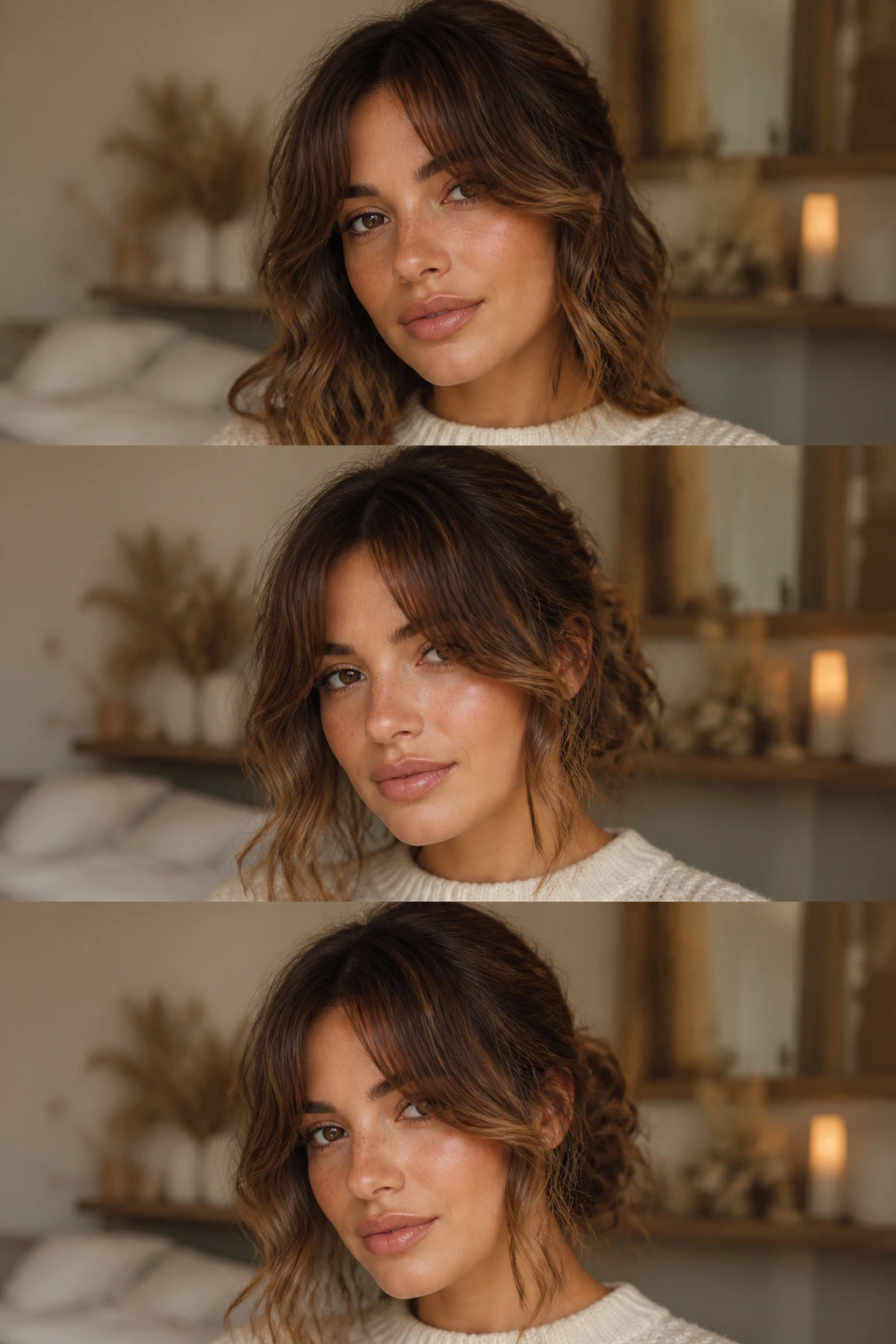
Soft Center Split: Wear the fringe parted down the middle and let the waves fall into two loose curtains. This is the easiest version for days when you want the face fully open.
Off-Center Sweep: Slide the part a few centimeters to one side and let the longer edge swing across the forehead. It changes the whole mood without changing the haircut.
Pinned-Back Root: Clip one side back at the root and leave the rest loose. This works when the front is in that in-between stage where it wants attention but not too much attention.
Air-Dried and Loose: Let the bangs dry with a little mousse and finger separation, then stop touching them. That version can look almost prettier than a brushed finish because the wave pattern stays visible.
Smooth and Polished: Use a round brush to create a soft bend and a little lift at the root. This is the dressier option, and it makes long bangs feel more deliberate for nights when you want the haircut to do some work.
Frequently Asked Questions
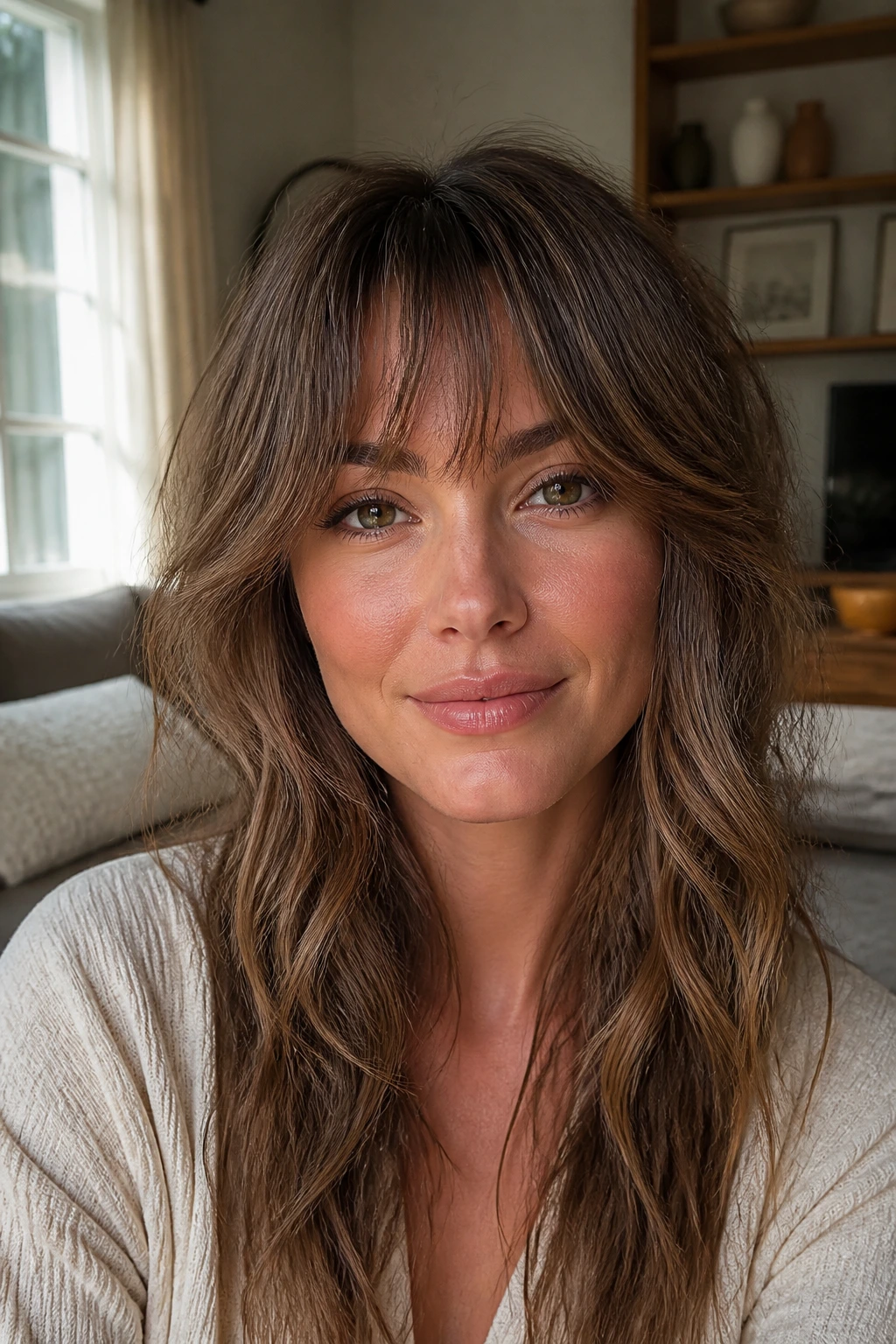
Will long bangs work if my waves are loose, not curly?
Yes, and loose waves are actually easier to shape because they bend without shrinking as aggressively. Ask for a softer fringe with a little more length at the center so the hair doesn’t land too high once dry.
Do long bangs make an oval face look longer?
They can if the center is too thin or too tall, but the right cut usually does the opposite. Wide curtains, cheekbone-length pieces, and side sweeps add enough width to keep the face balanced.
Should wavy bangs be cut wet or dry?
Dry, or at least checked dry before the final cut. Wet hair stretches and lies flatter than it will in real life, which is why so many bang disasters happen in the salon chair.
How often should I trim long bangs?
Most people need a cleanup every 5 to 8 weeks. If the bangs are blended deeply into layers, you can often stretch a little longer, but if they start poking into your eyes, the shape has already drifted.
Can I wear long bangs without heat styling them?
Absolutely. A little mousse, a finger twist, and a quick air-dry are enough for many wavy textures. The trick is getting the length right so the hair falls into place instead of bouncing off the forehead.
What if my bangs keep splitting in the middle?
That usually means the root wants to part there, or the hair has a cowlick that keeps pushing the front open. A wider curtain, bottleneck shape, or a small clip at the root while drying can help reset the pattern.
Are long bangs better than short bangs for wavy hair?
Most of the time, yes. Short bangs need more precision and more daily attention, while long bangs can absorb a little chaos and still look intentional.
How do I grow them out without the awkward stage?
Let the outer pieces get long first and keep the front blended into cheek layers. A side part or center split gives you two easy escape routes while the bangs slowly become face-framing layers instead of a separate section.
The Shape That Grows With You
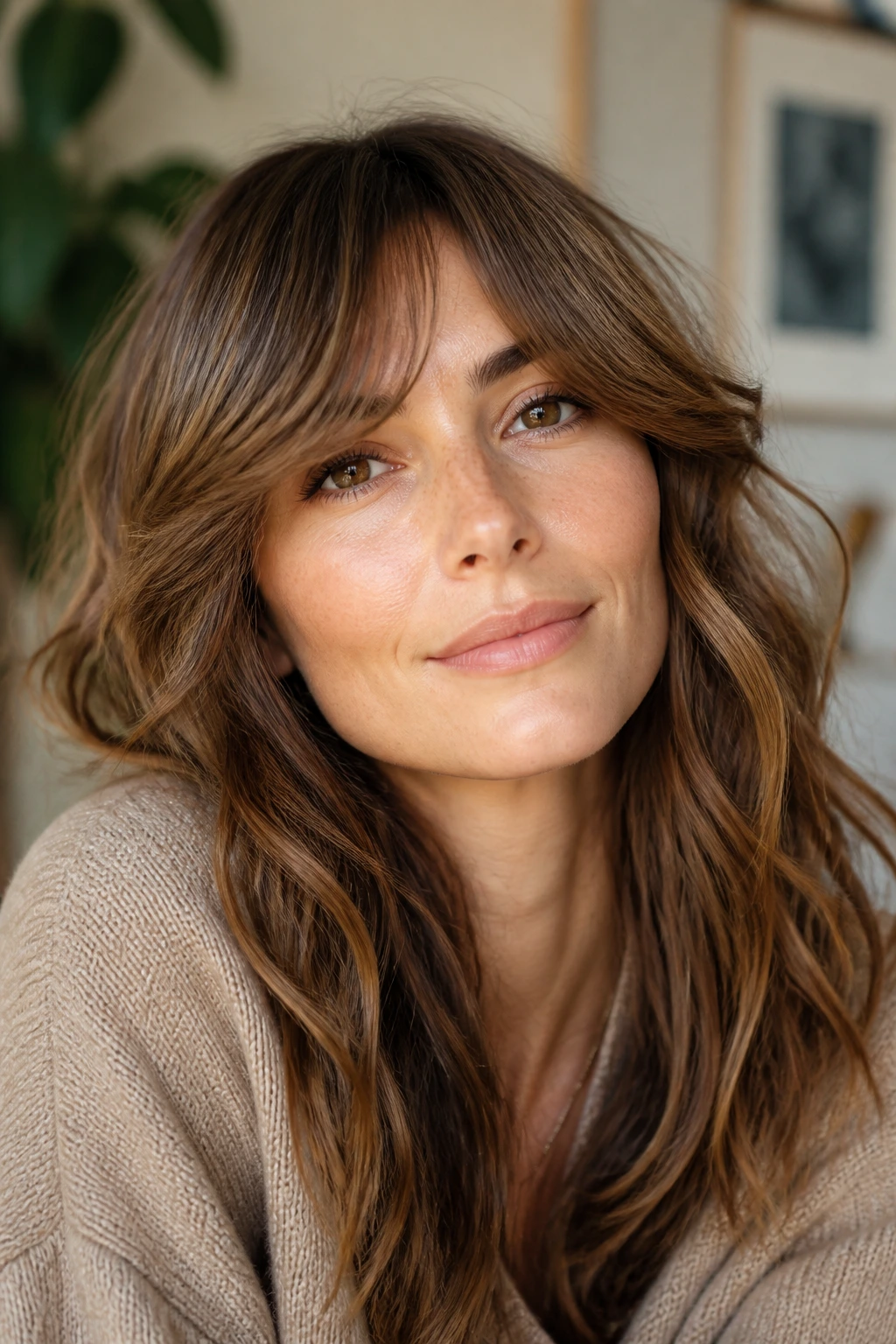
The nicest thing about long bangs is that they don’t force a permanent decision. A curtain today can become a side sweep later. A choppy fringe can soften into face-framing layers. A polished swoop can turn into something messier the minute your wave pattern gets involved, which is half the fun.
If you have wavy hair and an oval face, the cut does not need to be dramatic to matter. It just needs to sit in the right place, leave enough length for the wave to move, and respect the fact that your face already has balance. That’s a lot of freedom for one little fringe.
Choose the version that fits how you actually wear your hair, not the version that behaves best in a photo. The good ones will stay with you through air-drying, damp mornings, and the occasional bad weather day. And that’s the kind of bang worth keeping around.