



Some layered haircuts for women with wavy hair look gorgeous in the chair and then go oddly stiff, puffy, or lopsided once they’re back in real life. That usually means the cut was planned like straight hair was going to behave the same way. It doesn’t. Waves bend, swell, collapse, and kick out at the ends depending on length, density, and how much product you’re willing to use on a Tuesday morning.
The good layered haircut is the one that understands that chaos and works with it. You want movement without a halo of frizz, shape without the dreaded triangle, and face-framing pieces that still look intentional after you’ve slept on them. If your hair bends in loose S-shapes, the layer map should look different from someone whose waves are tighter, fuller, or more uneven on each side. That part matters more than the trendiest photo on your stylist’s wall.
And yes, there are a lot of ways to do it well. A collarbone cut with curtain pieces behaves differently from a shag, a butterfly cut, or a long U-shape with hidden layers. Some of these cuts sharpen the cheekbones. Some keep thick hair from turning into a curtain. Some make fine waves look like they actually took up space. The trick is picking the one that fits how your hair falls when you leave it alone.
Why These Cuts Earn Their Keep
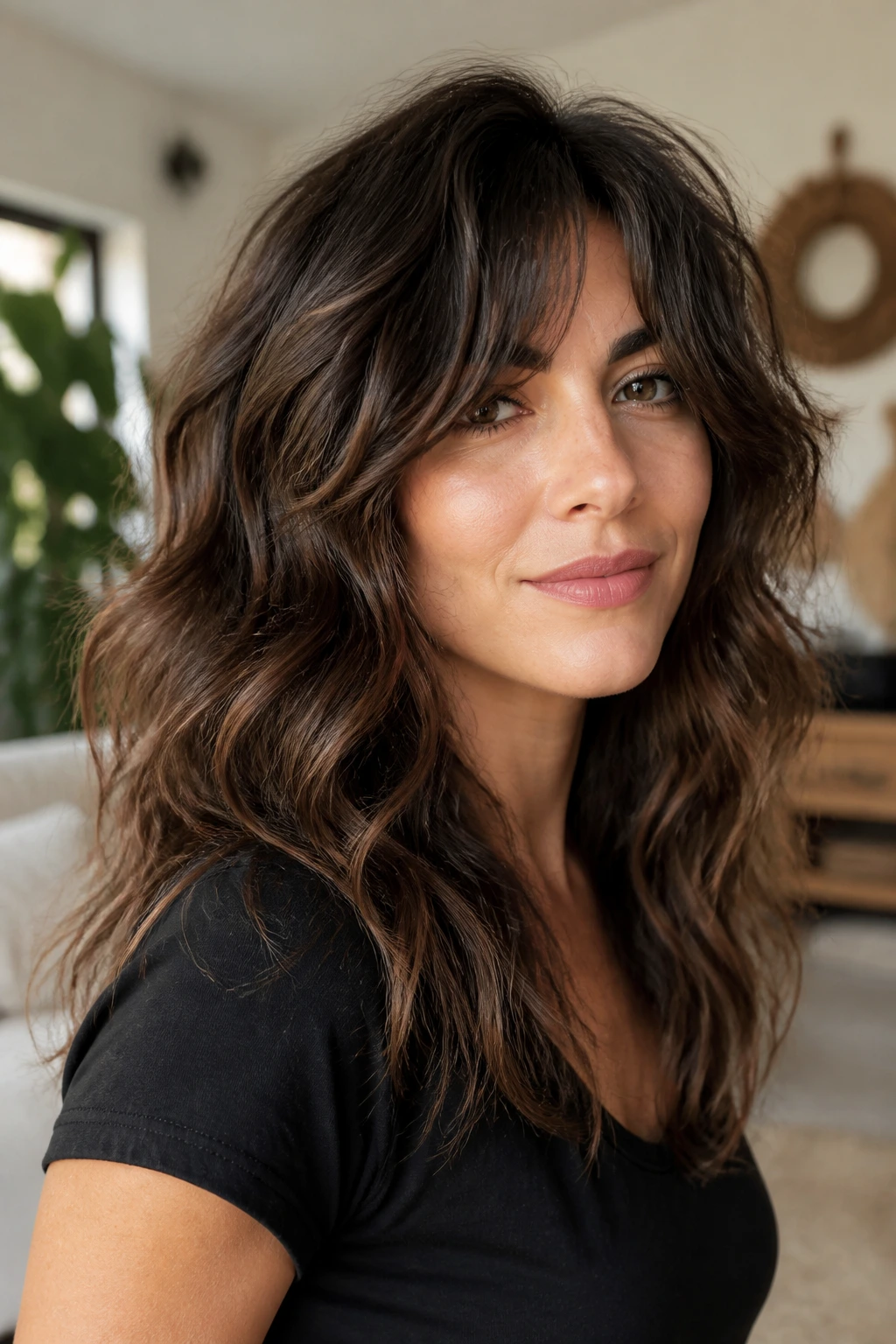
- They stop the triangle effect. The right layers remove bulk where waves expand, so the bottom edge doesn’t flare out like a bell.
- They give you movement without losing length. Long layers and hidden internal shaping keep the perimeter intact while still breaking up heaviness.
- They work with air-drying and diffusing. A good wave cut should still make sense if you rough-dry with a diffuser or let it dry on its own.
- They frame the face on purpose. A layer that starts at the cheekbone or jawline can change the whole feel of the haircut without a dramatic chop.
- They grow out more cleanly. A smart layer pattern softens the in-between stage, which matters more than people admit.
How Layered Haircuts for Women with Wavy Hair Change by Density and Wave Pattern
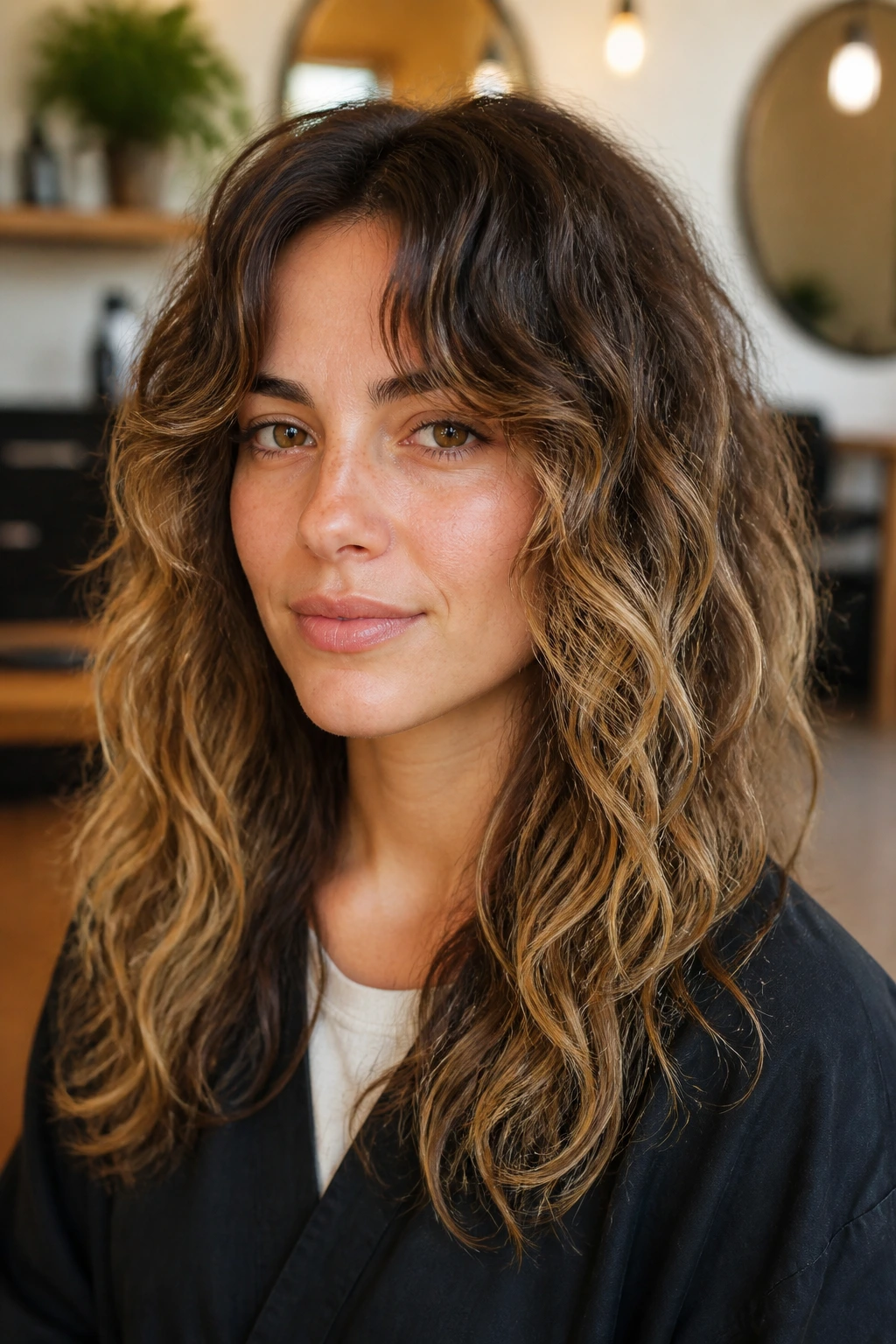
Wavy hair is not one thing. Loose bends around 2a hair can take a softer layer map, while fuller 2b or 2c waves usually need more weight removed from the inside so the shape doesn’t puff outward. That’s why the same haircut can look sleek on one person and bulky on another. The wave pattern is doing half the styling for you.
Drying behavior matters, too. Wavy hair often looks longer when wet and shorter when dry, and that shrinkage can shift a face frame by an inch or more. Fine waves need restraint. Thick waves usually need strategic de-bulking, not aggressive thinning shears. And if you’ve ever had a haircut that looked tidy on day one and chaotic by day three, there’s a good chance the layers were placed without respecting where your wave naturally bends.
The best layered haircuts for women with wavy hair usually do three things at once: they keep the outline readable, they remove bulk from the right zones, and they leave enough length in the ends so the wave pattern still has a clean finish. That’s the sweet spot. Too blunt, and the waves sit like a shelf. Too choppy, and the hair can look frayed before you even leave the parking lot.
I’m also a big fan of cuts that make room for your actual routine. If you air-dry, you need a different balance than someone who always blows out the roots. If you wear your hair up four days a week, you want face-framing pieces that still make sense when pulled back. Haircuts that ignore how you live usually end up feeling fussy.
1. Collarbone Curtain Layers
Collarbone curtain layers are one of the safest bets for wavy hair because the length lands where waves already want to bend. The front pieces open around the cheekbones and drift down toward the collarbone, which keeps the shape soft instead of boxy. You get movement without losing the line of the haircut.
This cut works especially well if your waves are loose to medium and you like wearing a middle part or a slightly off-center part. Ask for the shortest front pieces to hit around the cheekbone, then let them lengthen gradually so the rest of the hair stays full. If your hair is thick, keep the bottom edge a little heavier so the layers don’t create a floating effect.
2. Long Butterfly Layers
Long butterfly layers are for people who want lift at the top and length everywhere else. The upper layers are shorter and more mobile, so they bounce when you diffuse or round-brush them, while the lower layers keep the overall length feeling intact. It’s a strong choice if your hair collapses at the crown but you’re not ready for a major chop.
The only thing I’d watch is over-shortening the front. If the shortest face frame sits too high, the layers can flip up and take over the whole haircut. Better to keep the shortest pieces at or just below the cheekbone and let the rest taper down. The result feels airy, not choppy.
3. Chin-Grazing Shag
A chin-grazing shag has attitude, but the good kind—the sort that makes wavy hair look like it has its own rhythm. The shorter layers around the jaw bring the wave pattern closer to the face, and the fringe or bang area keeps the shape from looking too long and flat. It’s messy in a controlled way.
This cut shines on medium to thick waves that need more separation. If you air-dry with nothing in it, it can look piecey in a way that reads more “forgot to style” than “cool texture,” so a light mousse or gel helps. Ask your stylist not to overdo the razor work if your hair tends toward frizz. The shag should move. It should not fray.
4. Soft Wolf Cut

A soft wolf cut is the friendlier cousin of the full wolf cut. You still get the lifted crown, shorter top layers, and a bit of disconnect through the lengths, but the edges are smoother and the nape stays longer. That keeps the haircut from wandering into mullet territory unless you actually want that.
It’s a smart pick if your roots go flat fast and your ends feel heavy. The top gains air, the bottom loses weight, and the whole shape feels more alive. If you have fine waves, ask for a gentle version with longer internal layers rather than a high, chopped crown. Too much aggression at the top can make fine hair look sparse before it even dries.
5. Face-Framing Mid-Length Layers
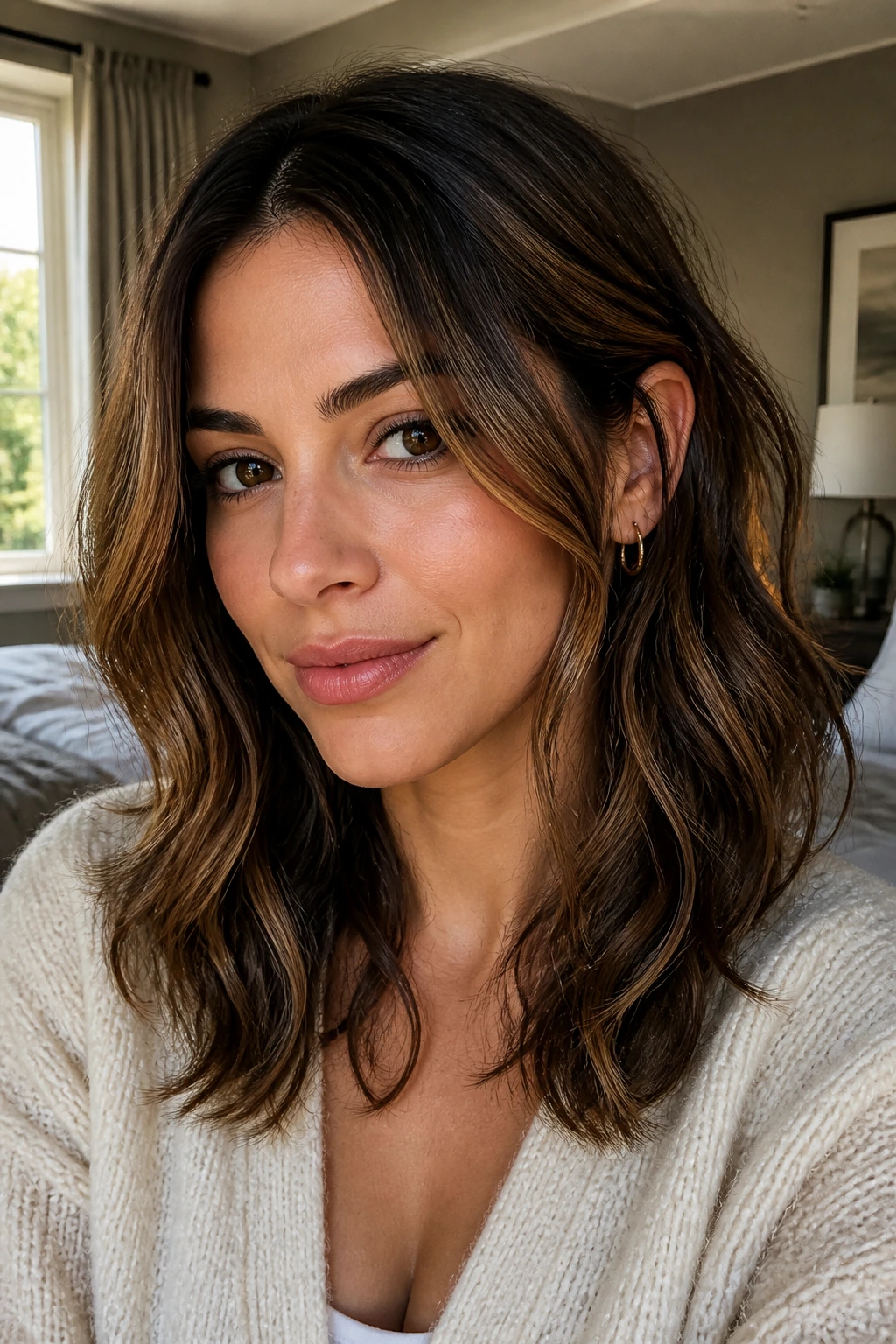
If you want something wearable and not too precious, face-framing mid-length layers are the haircut I keep circling back to. The length usually sits from the shoulders to the upper chest, with the front pieces angled around the chin and cheekbones. It’s the kind of cut that looks polished when styled and still makes sense when you just scrunch and leave.
This is the choice for people who like a little shape but don’t want to live in styling mode. The front pieces matter most here. Keep them soft enough to tuck behind the ear, but not so long that they disappear into the rest of the hair. If you wear glasses, this cut is especially nice because the layers can open around the frames instead of fighting them.
6. Long U-Shape with Internal Layers
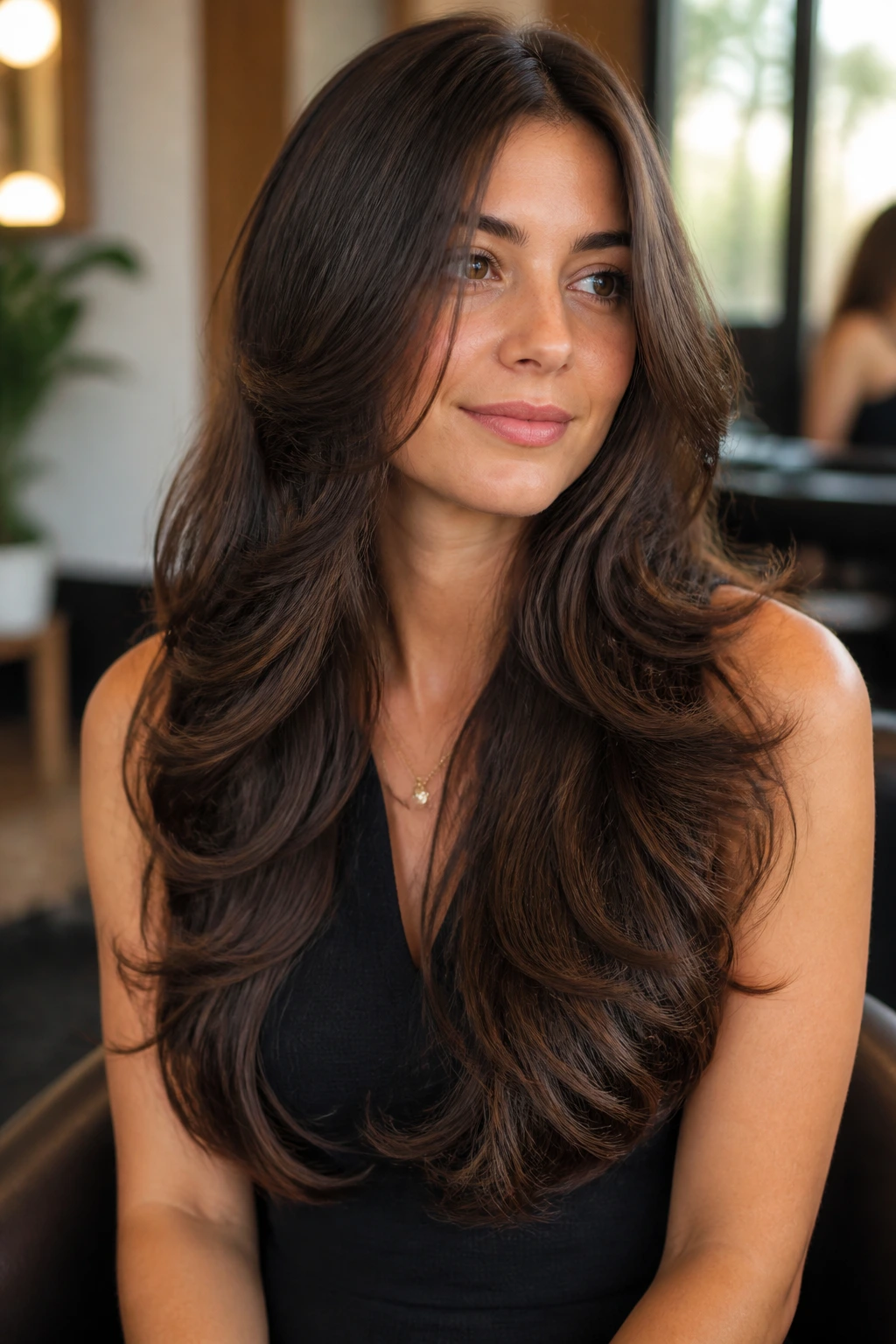
A long U-shape is one of the cleanest answers to heavy wavy hair. The outer line stays curved and full, while the interior layers take out the weight that makes waves hang like wet rope. From the front, it still looks long and glossy. From the side, it has shape instead of bulk.
This is the cut for people who want length but hate the triangle that can happen with one-length hair. Ask your stylist to keep the perimeter soft and visible, then remove weight from underneath rather than hacking into the top layers. I like this shape when the hair is thick at the bottom but still needs enough density to look expensive, not sparse.
7. Shoulder-Length Razored Layers

Shoulder-length razored layers bring out the texture in medium waves fast. The ends sit right at a bend point, which means the wave pattern has somewhere to land instead of hanging limp. A razor can make the finish feathered and soft, but that only works if the stylist knows where to stop.
This cut can turn frizzy in a hurry if it’s over-texturized, especially on dry or coarse hair. I’d only choose it if you like a more piecey finish and you’re willing to use a diffuser or a smoothing cream with a light hand. The payoff is movement. Lots of it. The downside is that bad razor work shows immediately.
8. Invisible-Layers Lob
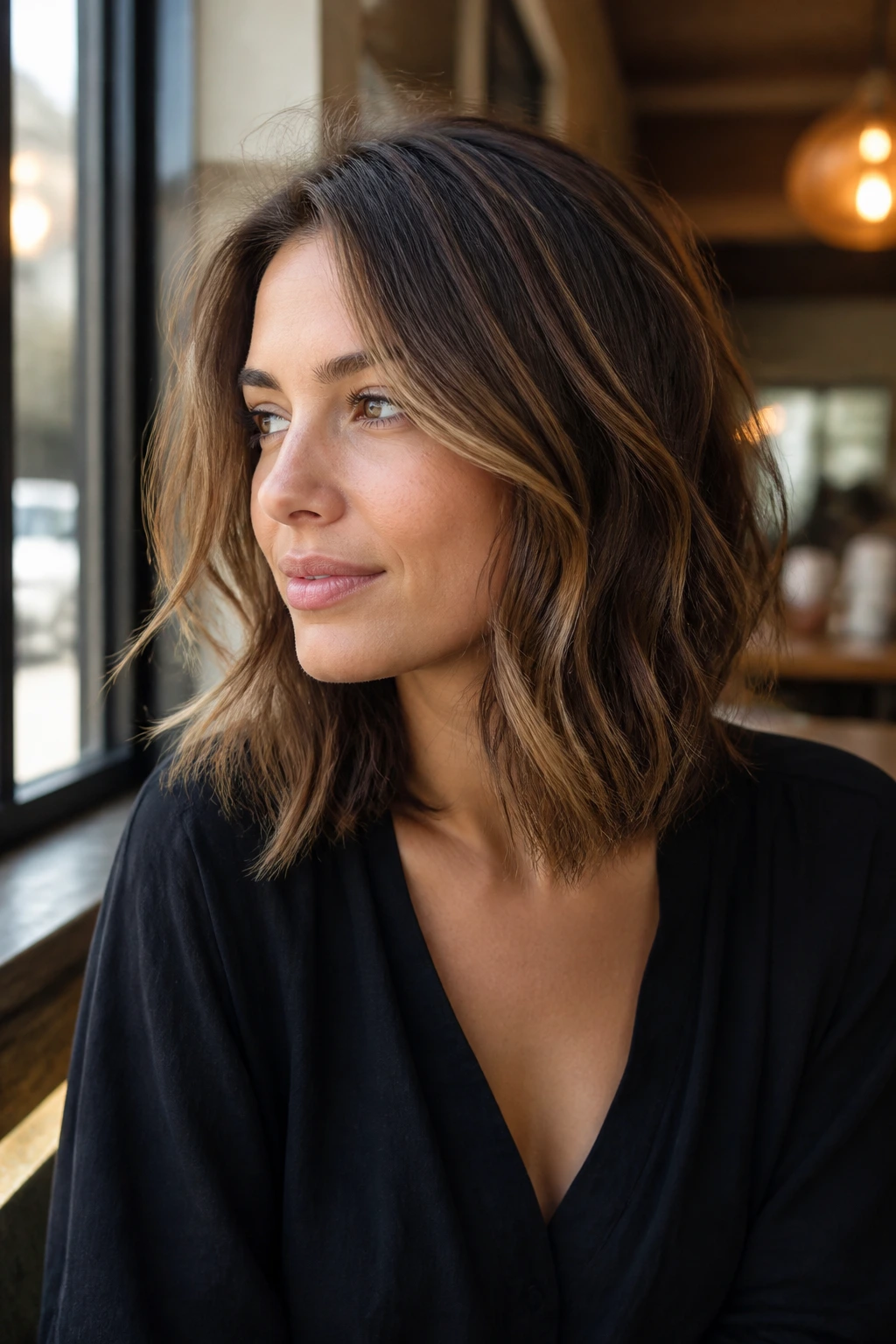
Invisible layers are exactly what they sound like: shaping hidden inside the cut, not obvious steps that announce themselves from across the room. On a lob, that means the perimeter stays clean and full while the inside loses just enough weight for the wave to spring. It’s tidy, modern, and less fussy than a shag.
If you dislike seeing every layer line, this is a strong choice. It also behaves well with air-drying because the shape is built into the cut rather than depending on perfect styling. I like this one for people who want their hair to look put together without looking heavily styled. That’s a useful distinction.
9. Bottleneck Bangs + Layers
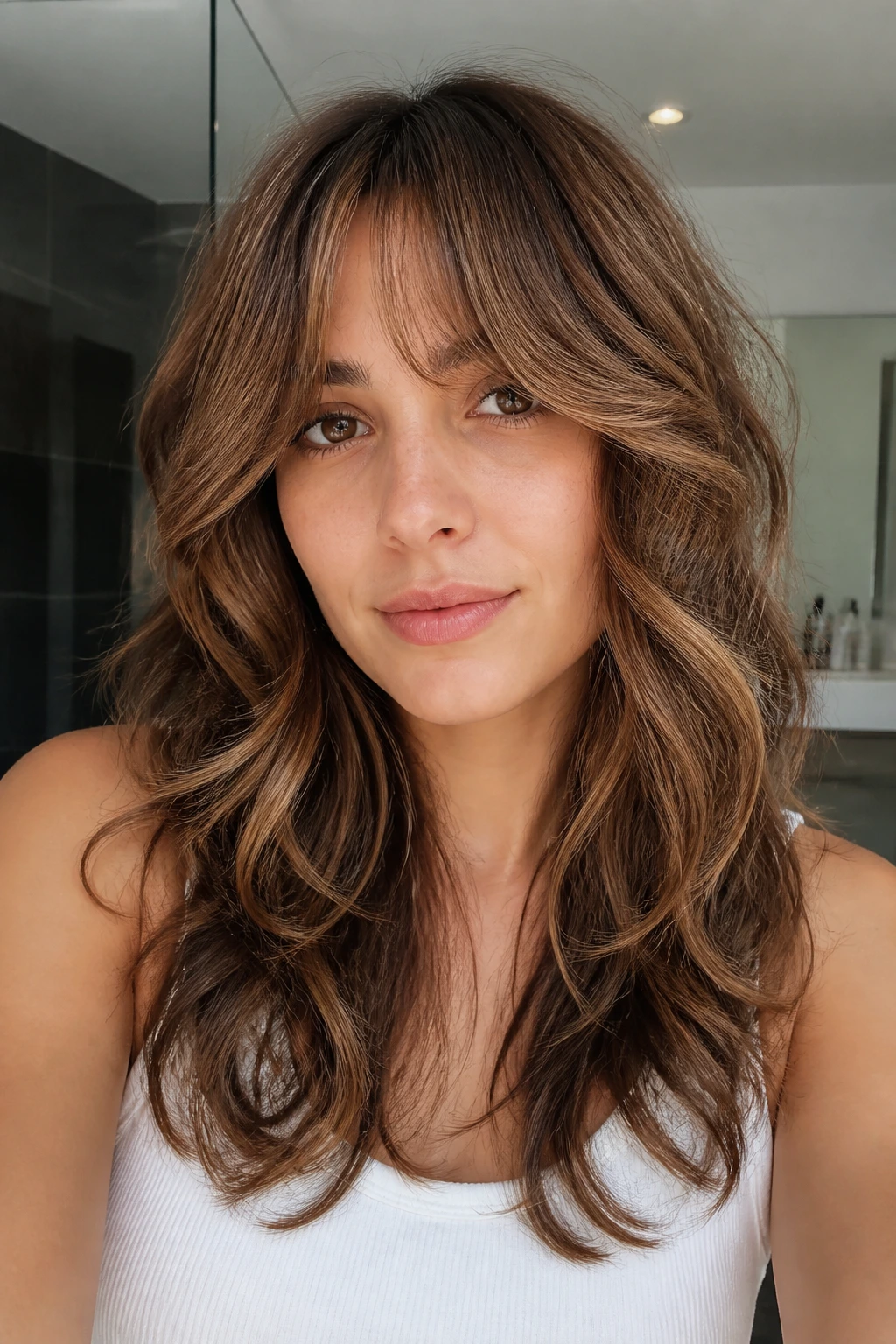
Bottleneck bangs are narrow in the center and open wider at the sides, so they slide into layered wavy hair without feeling like a heavy curtain glued to the forehead. The bang shape softens the top of the haircut, then the side pieces blend into the rest of the layers. It’s a nice way to add interest without taking a lot of length off the sides.
The one caution here is shrinkage. Wavy bangs can spring up more than people expect, especially if they’re cut wet and left too short. Ask for a dry check before anything gets cropped above the brow area. A little longer is safer. You can always trim more.
10. Rounded Layers for Thick Waves
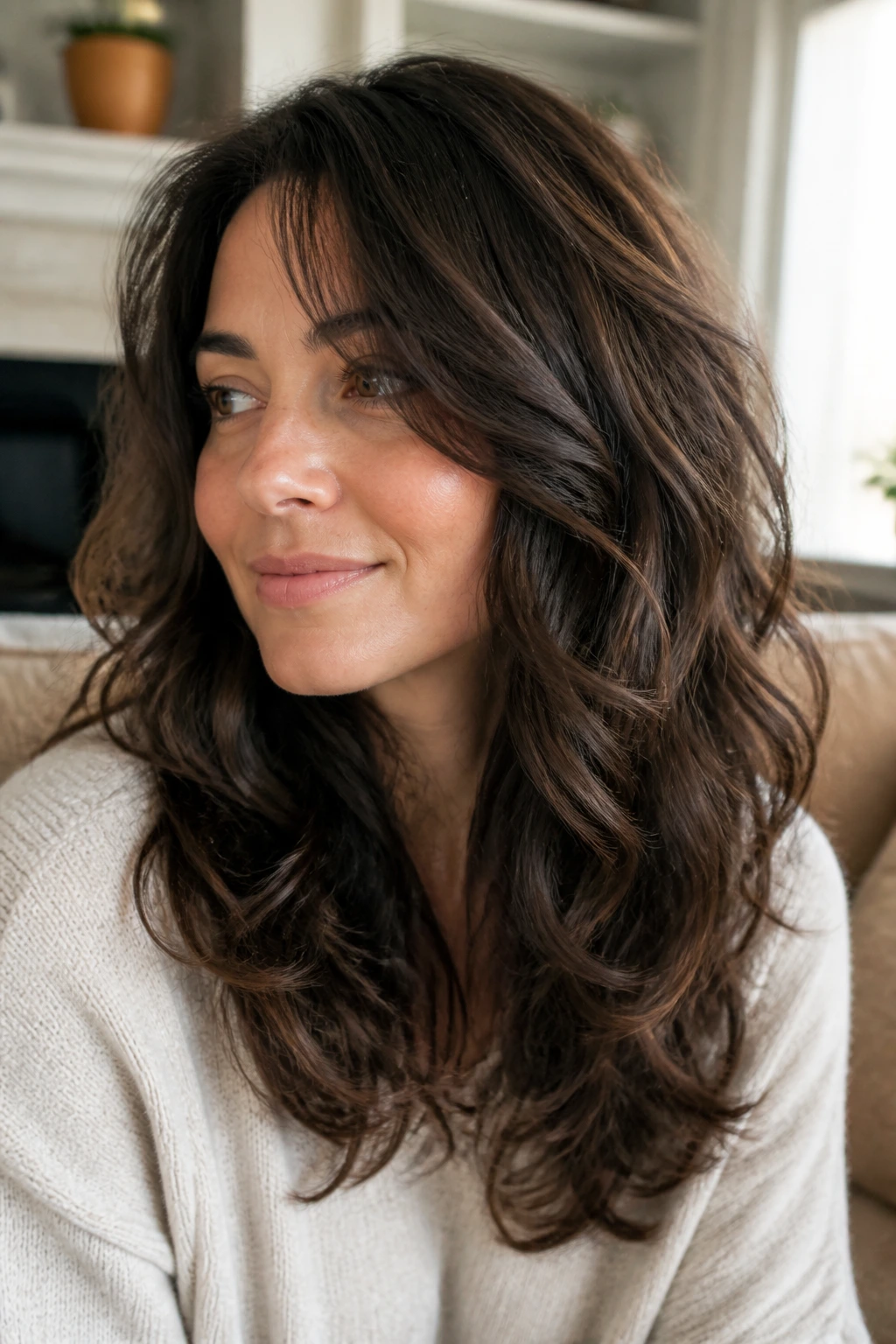
Rounded layers are a relief if your thick wavy hair turns square or puffy at the ends. The cut follows the curve of the head, so the silhouette feels softer from every angle. Instead of a hard shelf at the bottom, the layers stack in a way that supports the wave pattern.
This style is less about drama and more about control. It reduces bulk without making the hair look thin at the perimeter, which is the mistake a lot of thick-haired people get stuck with after a bad salon visit. If your hair is dense, ask for internal shaping and point cutting rather than aggressive thinning shears. The goal is movement, not holes.
11. Airy Layers for Fine Wavy Hair
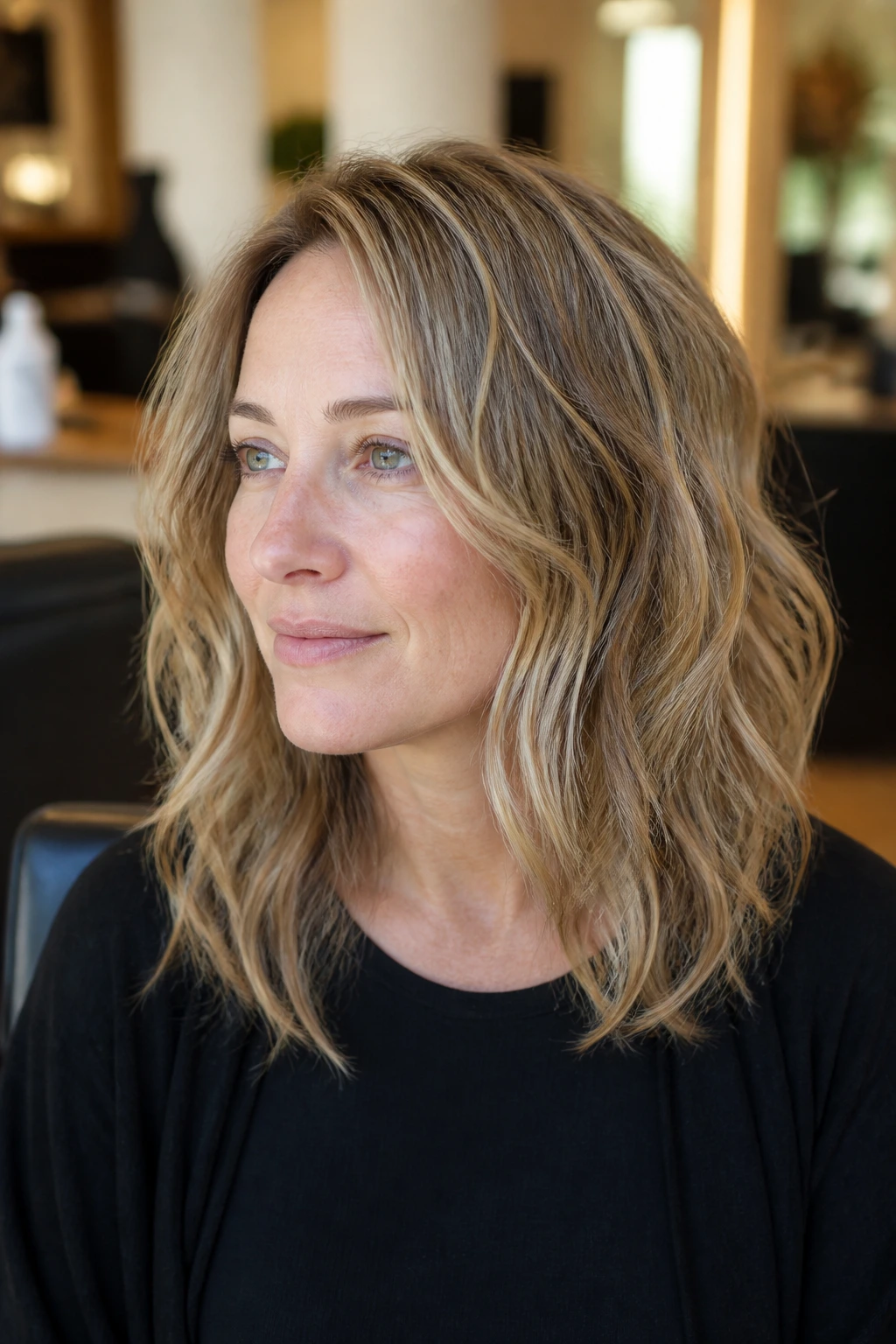
Fine wavy hair needs a light touch. Too many short layers and it starts to look see-through near the ends, which is a fast way to lose the whole point of having waves in the first place. Airy layers keep the longest length intact and use only a little internal shaping to give the wave somewhere to sit.
This cut is good when you want body, not fluff. Keep the ends blunt-ish and avoid over-thinning the crown. A small amount of mousse at the roots can make a much bigger difference than adding more layers ever will. Fine wavy hair usually needs support, not subtraction.
12. V-Cut Layers
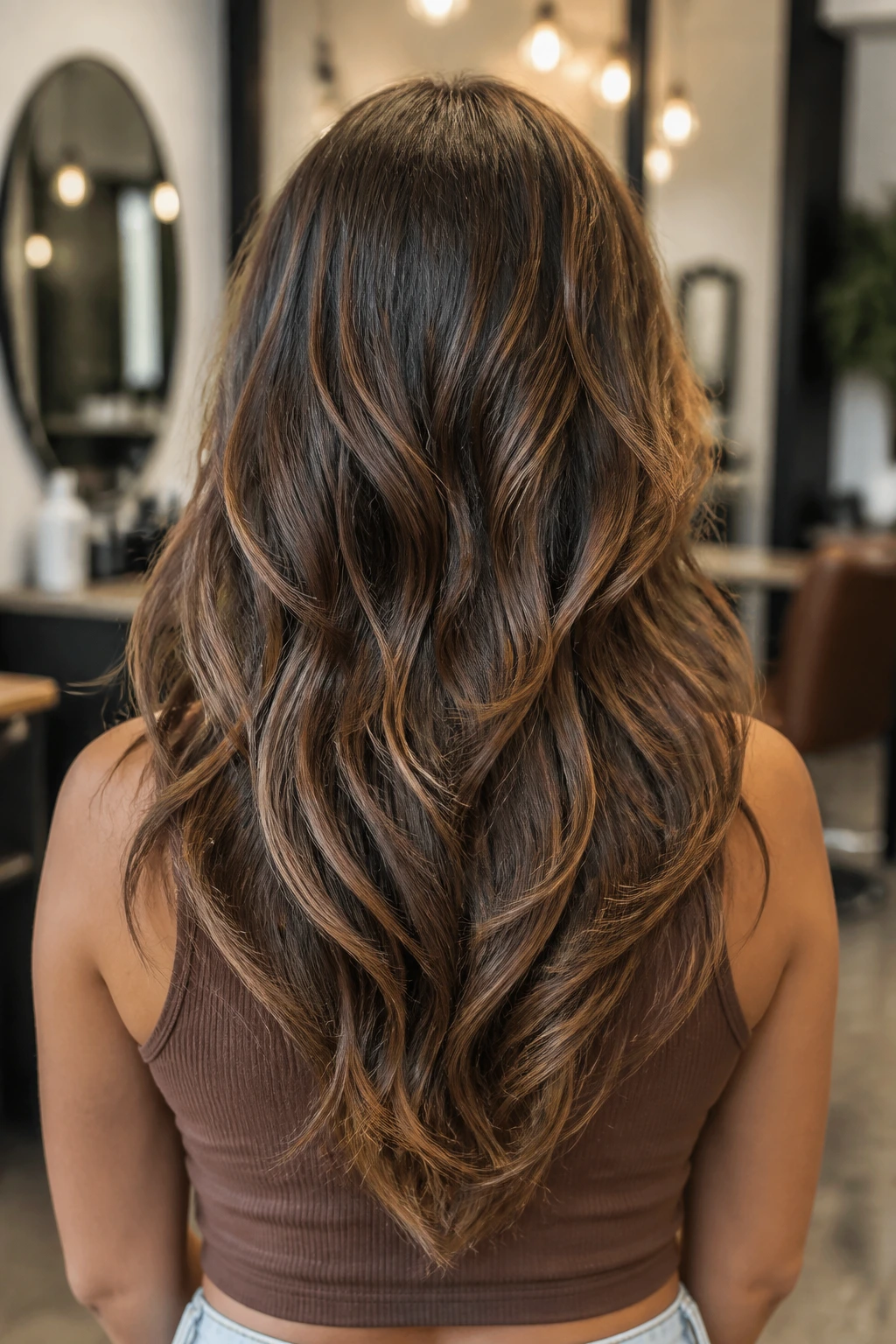
The V-cut is one of those shapes that reads dramatic even when the styling is simple. The back forms a soft point, which makes long waves look longer and gives the ends a bit of direction. The front still gets movement, but the strongest visual line lives in the back.
It’s a smart option if your hair is long enough for the shape to show—think mid-back and beyond. If you wear your hair in ponytails often, ask for a softened V rather than a sharp point, or the grow-out can get awkward fast. Loose waves love this cut because the bend in the hair helps the point look intentional instead of severe.
13. Dry-Cut Layers
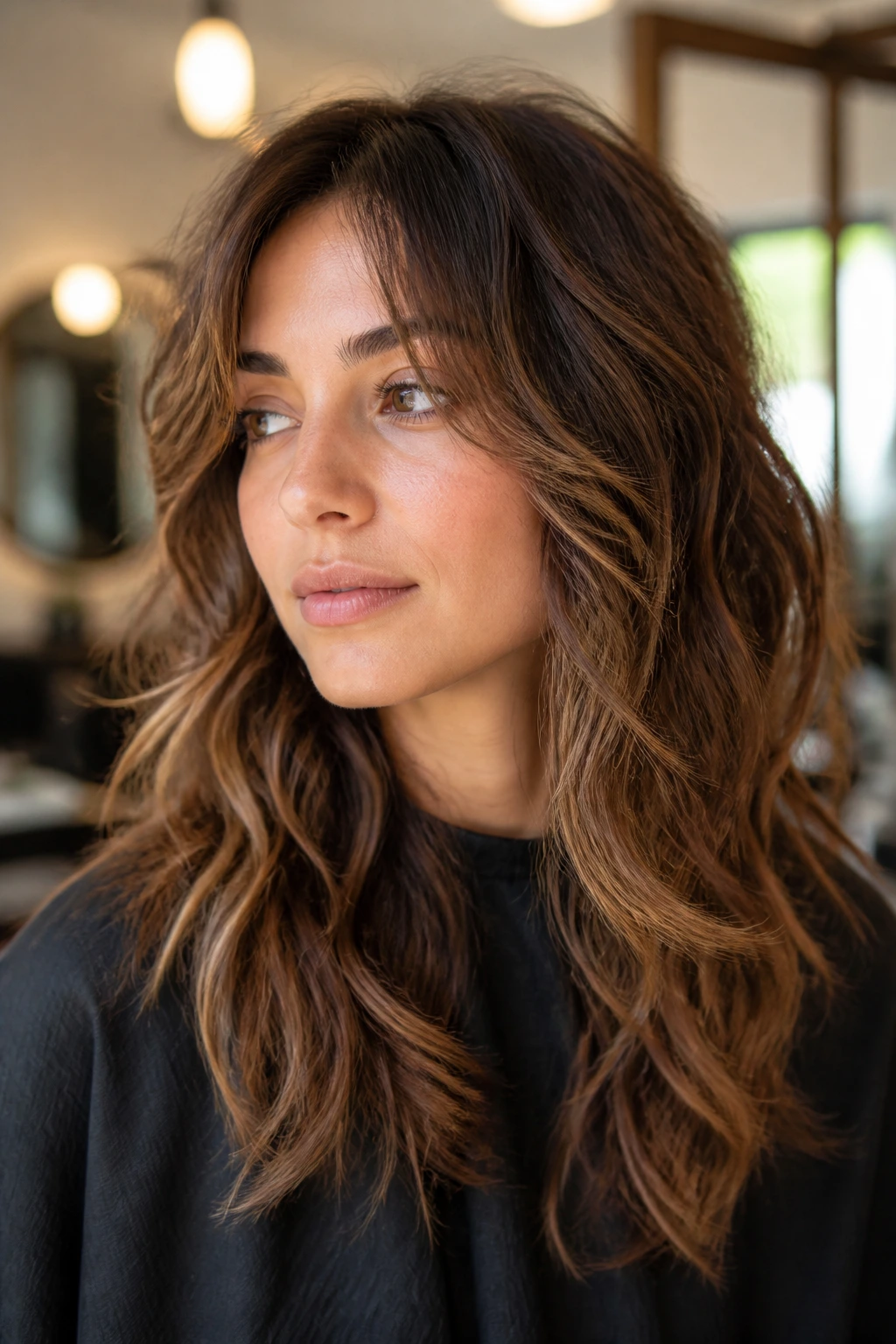
A dry-cut layer map can be a lifesaver for wavy hair that changes personality as it dries. The stylist sees where each bend falls in real time and places the layers where your hair actually lives, not where it pretends to live when wet. That matters a lot for people with uneven wave patterns from side to side.
This is especially useful if one section shrinks more than the rest or if your crown lies flatter than your ends. A good dry cut respects those differences instead of trying to force symmetry that won’t hold. It does take a stylist who knows how to cut texture while it’s dry. The technique matters more than the trend.
14. Soft C-Cut Face Frame
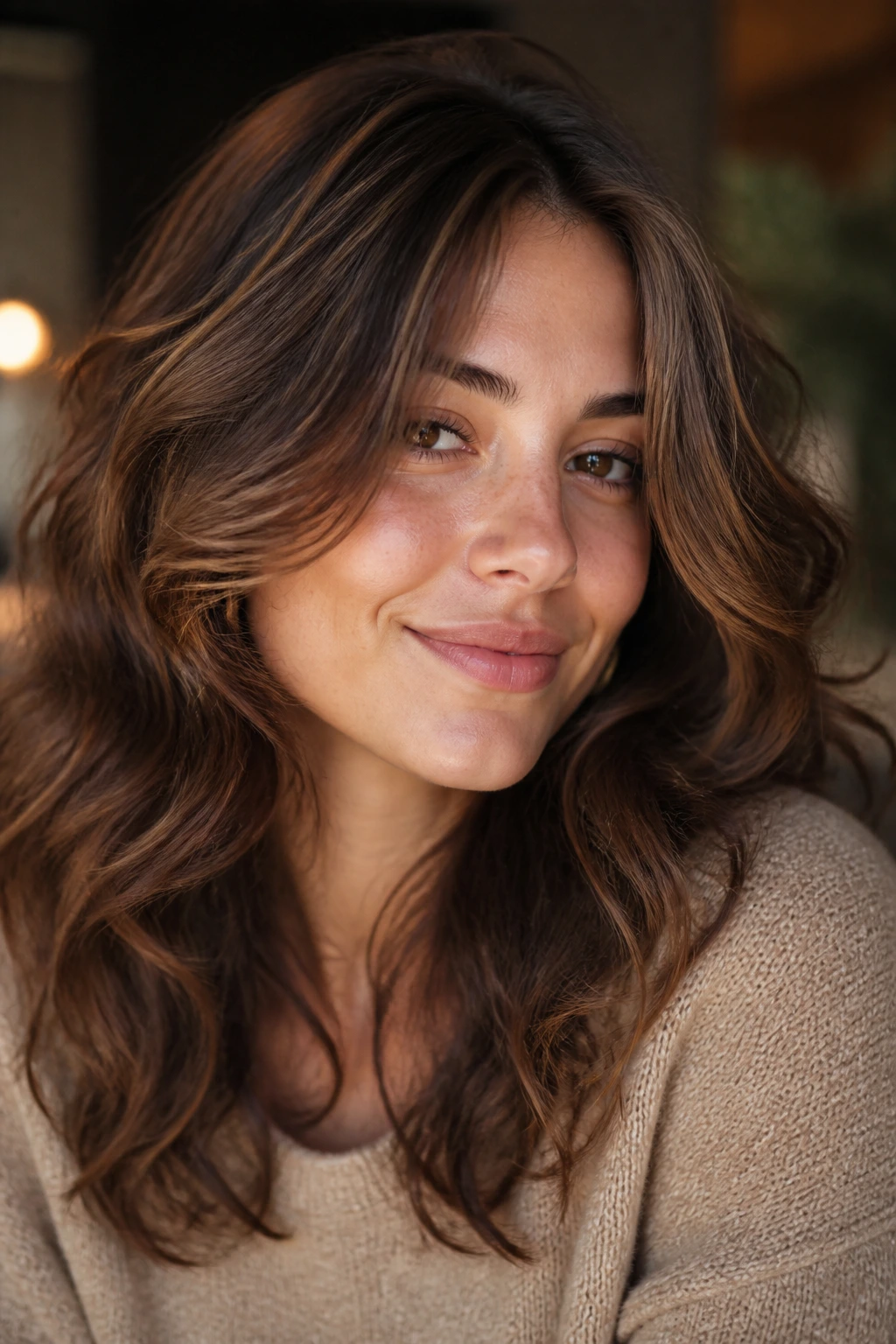
A soft C-cut face frame curves around the cheekbones and jaw in one continuous sweep. It’s less obvious than curtain bangs and gentler than a shag, which makes it a nice middle ground for people who want face framing without visible layers everywhere. The shape feels polished, almost architectural, but not stiff.
This cut works beautifully on wavy hair that needs a little front-end shape. It can soften a strong jaw, balance a long face, or simply make a plain middle part feel less severe. I like it because it behaves well in a ponytail, too. The face frame still does work when the rest of the hair is tied back.
15. Midi Shag with Fringe

A midi shag sits in that sweet spot between shoulder length and a longer bob, with enough room for fringe and layers to actually breathe. It’s one of the easiest ways to wear texture without going full rock-and-roll. The whole cut feels loose, light, and slightly undone in a good way.
The fringe is what gives this shape personality. Keep it soft enough to separate into pieces, not so blunt that it sits like a block across the forehead. If your hair is heavy, this cut can take a lot of bulk out without sacrificing movement. If your hair is fine, ask for a gentler version so the fringe doesn’t overtake the whole look.
16. Mixed-Length Mermaid Layers
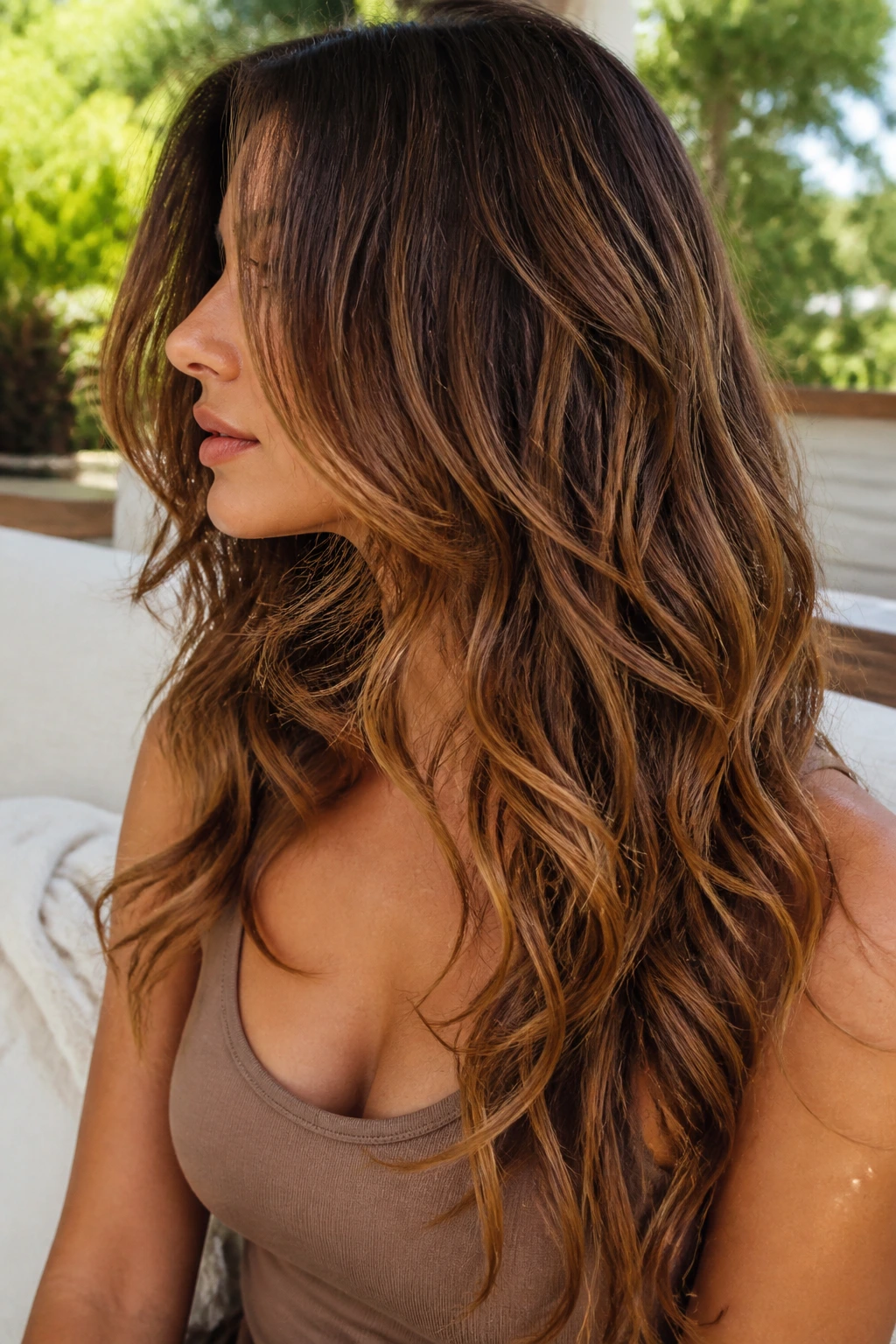
Long, mixed-length mermaid layers are for people who want the romance of long hair but hate the dead weight that can come with it. The lengths stagger through the interior, so the waves fall with more rhythm and less drag. It’s a nice choice when you still want your hair to swing.
The risk here is over-layering the ends. If the lower half gets too shredded, long waves can start to look wispy instead of lush. Keep the layers long and blended if your waves are loose, and use a trim schedule that protects the bottom edge. This style loves gloss and hates neglect.
17. Bouncy Layers with Side-Swept Bangs
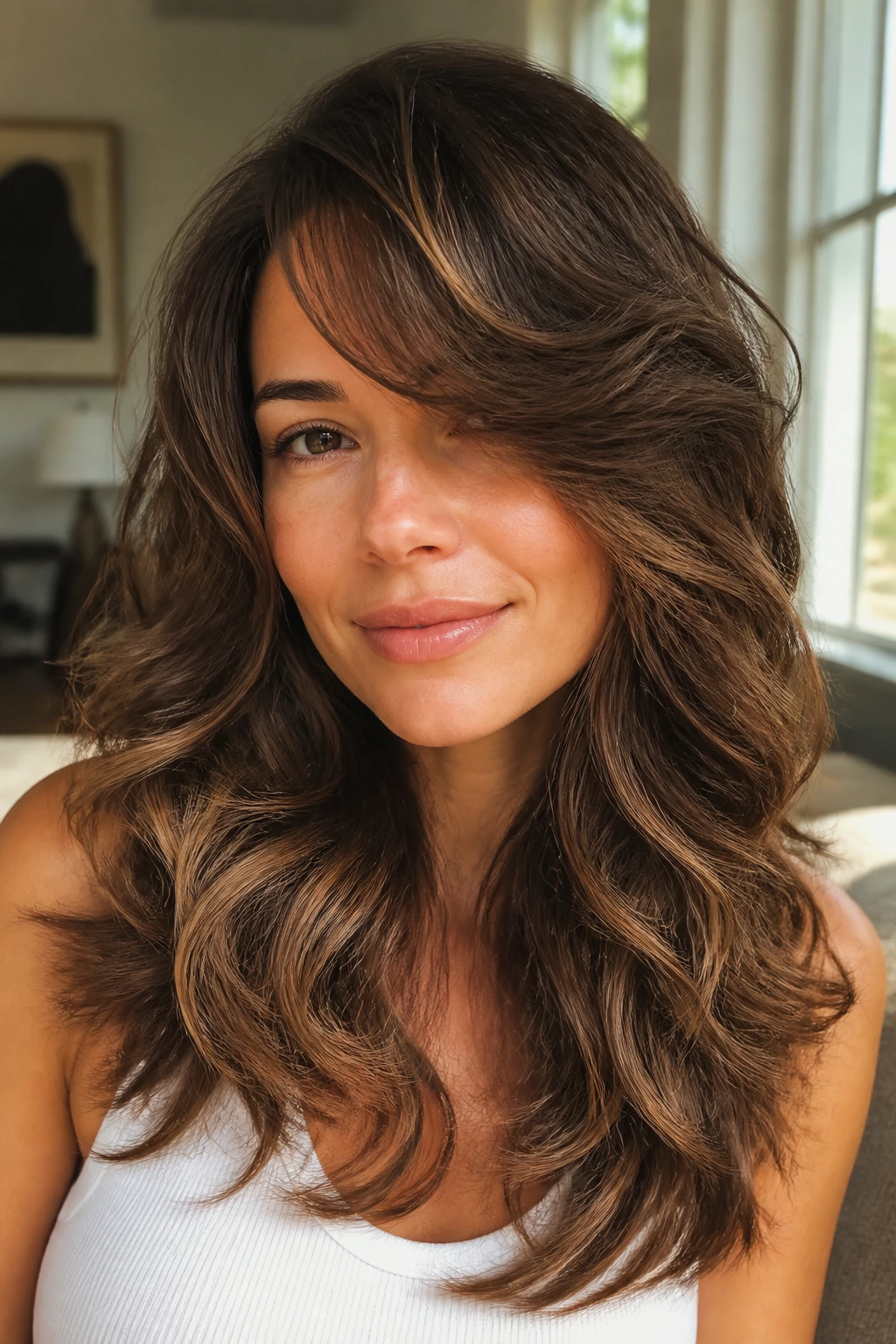
Side-swept bangs can be a very good compromise if curtain bangs feel like too much commitment. They feed into layered waves and give the front of the haircut a little motion without demanding constant center-part maintenance. The whole shape feels softer, especially if your hair naturally falls to one side anyway.
This is a good cut for people who tuck their hair behind one ear or wear sunglasses often. The side sweep creates a diagonal line that breaks up width around the cheeks. It’s also forgiving on grow-out. That matters more than people think when bangs are involved.
18. Textured Bob with Wavy Ends

A textured bob with wavy ends is short enough to feel fresh but long enough to keep the bend in your wave pattern visible. The cut usually lands around the jaw or a little below, and the interior texture keeps it from ballooning outward. Done well, it reads crisp, not helmet-like.
The shaping has to be precise. If the layers are too short, the bob can puff out at the sides and lose the clean line. If they’re too long, it can fall flat and miss the whole point. I like this cut on wavy hair that has enough body to support a bob without extra teasing or daily heat styling.
19. Heavy-Duty Layers for Dense Hair
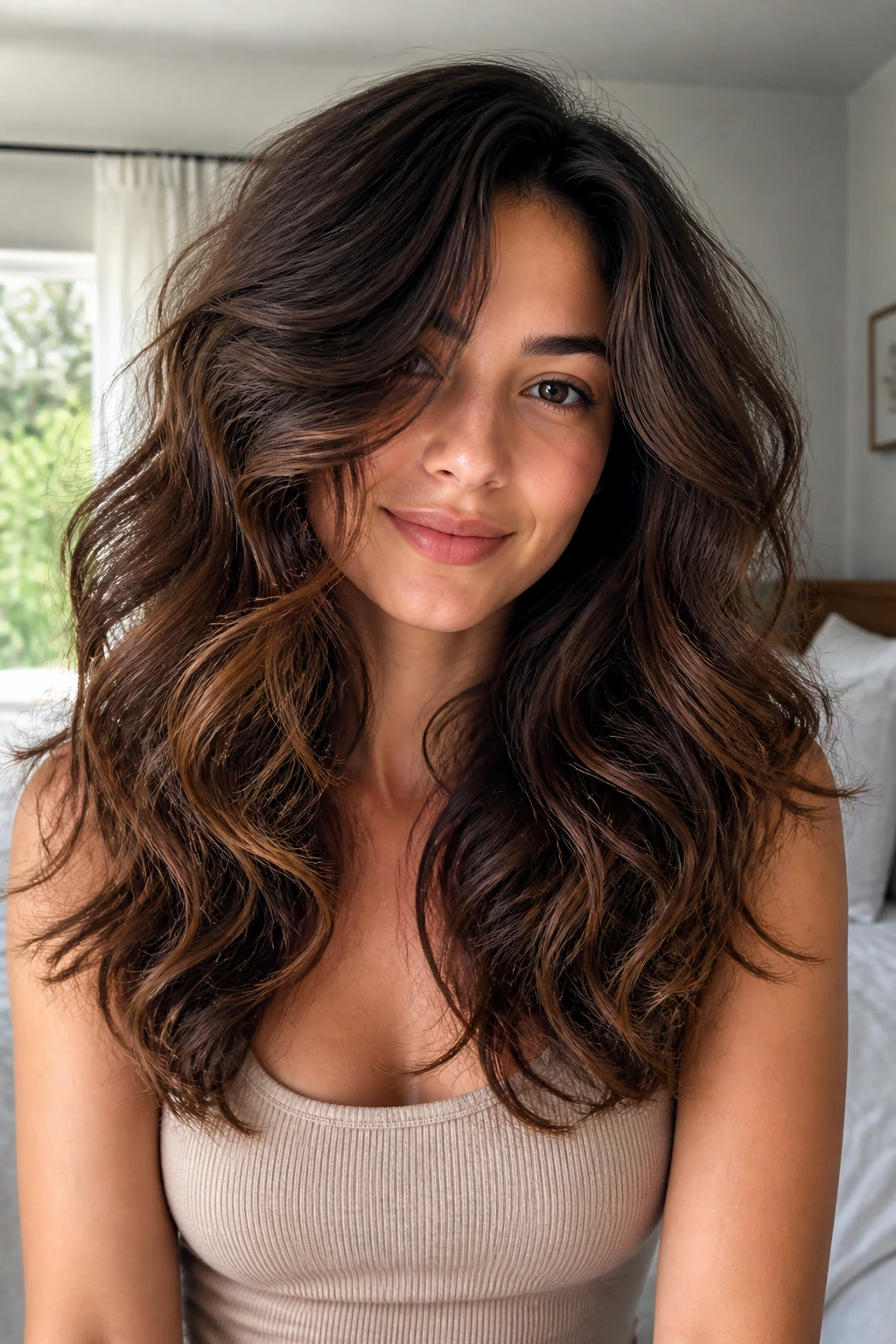
Dense wavy hair often needs more than a trim; it needs a redistribution of weight. Heavy-duty layers do that by removing bulk underneath and around the interior while keeping the outer silhouette balanced. The hair feels lighter, but it still looks full.
The key is restraint at the top. Too much thinning near the crown can make the hair frizzy and weirdly wide in humidity. Better to focus on the zones that puff out first—the mid-lengths and lower interior—and let the perimeter keep its shape. This is the haircut for people whose hair takes forever to dry and even longer to settle.
20. Softly Tapered Layers for Grow-Out
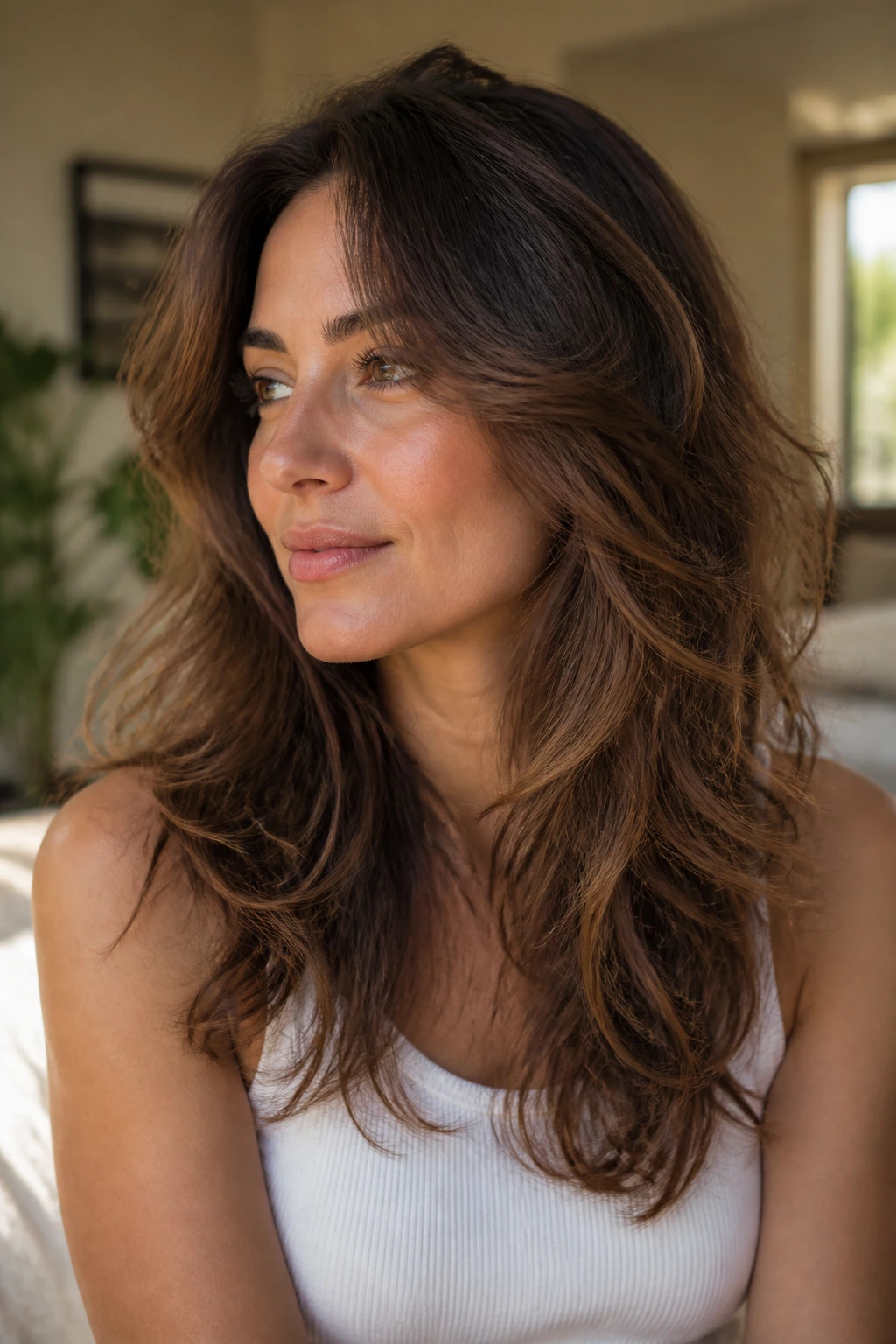
If you don’t want a haircut that turns into a mess after six weeks, softly tapered layers are a strong move. The front pieces are shorter, the back pieces stay longer, and the transitions are smooth enough that the shape still makes sense as it grows. That’s a bigger deal than it sounds.
This is one of the best choices for anyone who stretches salon visits. The taper keeps the face frame alive while avoiding a harsh shelf between the top and the bottom. It also plays well with waves that vary from day to day, because the shape doesn’t depend on every strand behaving the same way.
21. Beachy Layers with Long Bangs
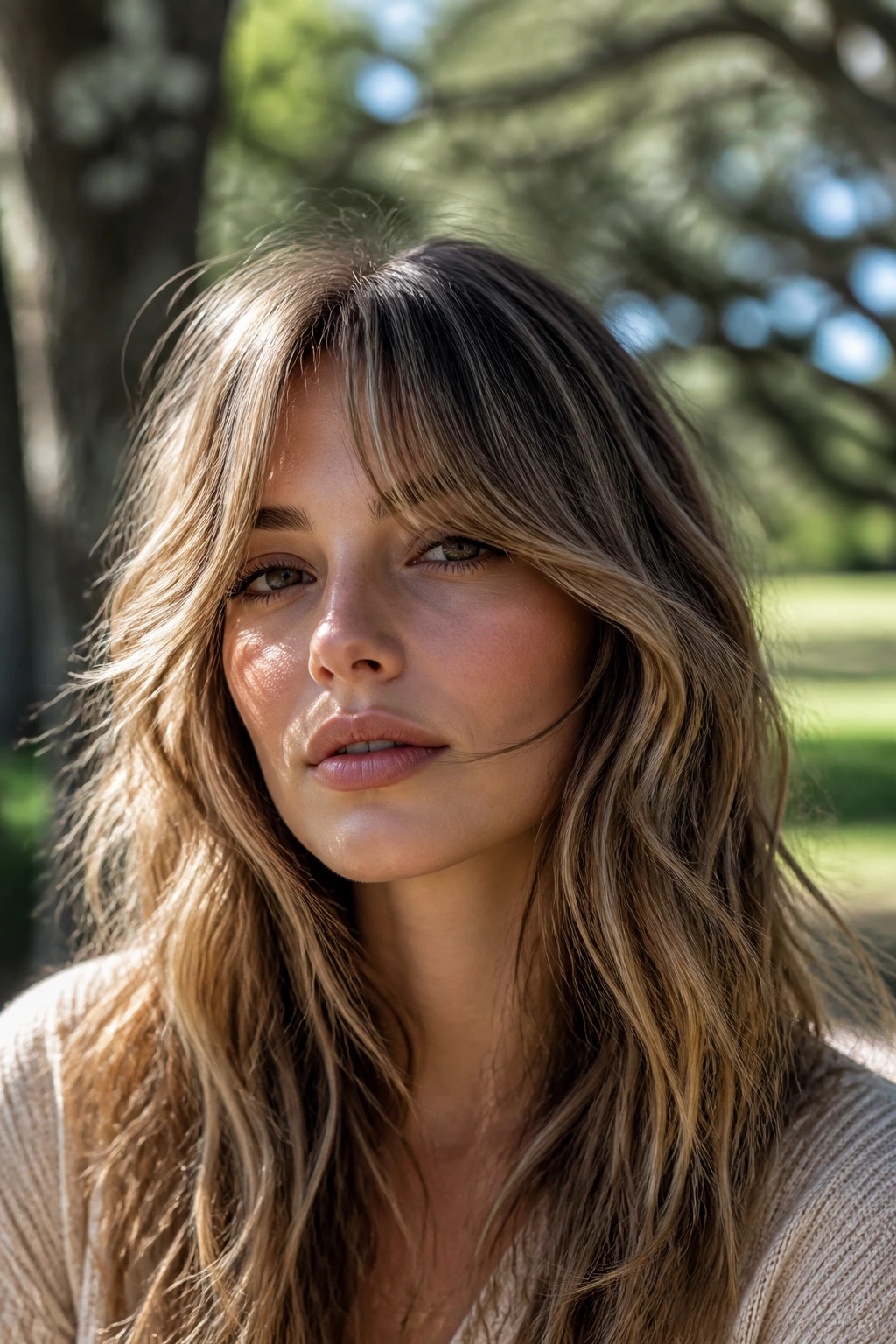
Beachy layers with long bangs are all about softness. The bangs sit long enough to blend into the rest of the haircut, and the layers follow the wave instead of forcing it into a tighter shape. The result looks relaxed but not lazy. There’s a difference.
I’d reach for this if you like hair that can go from loose and air-dried to slightly polished with the help of a curling wand on a few front pieces. Long bangs give you options. Short bangs do not always do that. This cut is easier to live with because it gives you room to change the part without feeling like you’re fighting the cut.
22. Disconnected Layers for Extra Movement

Disconnected layers create visible contrast between upper and lower sections, and that can be a very cool thing on wavy hair if you want the shape to look more editorial. The hair moves in sections instead of one smooth sheet, so the texture has room to show itself. It’s bold, and it knows it.
This is not the haircut I’d hand to someone who wants quiet, invisible grooming. It needs styling, a bit of product, and a willingness to let the shape stand out. But if your waves are strong and your style leans modern or slightly edgy, the extra separation can look excellent. It reads intentional when the cut is clean.
23. Luxe Blowout Layers on Wavy Hair
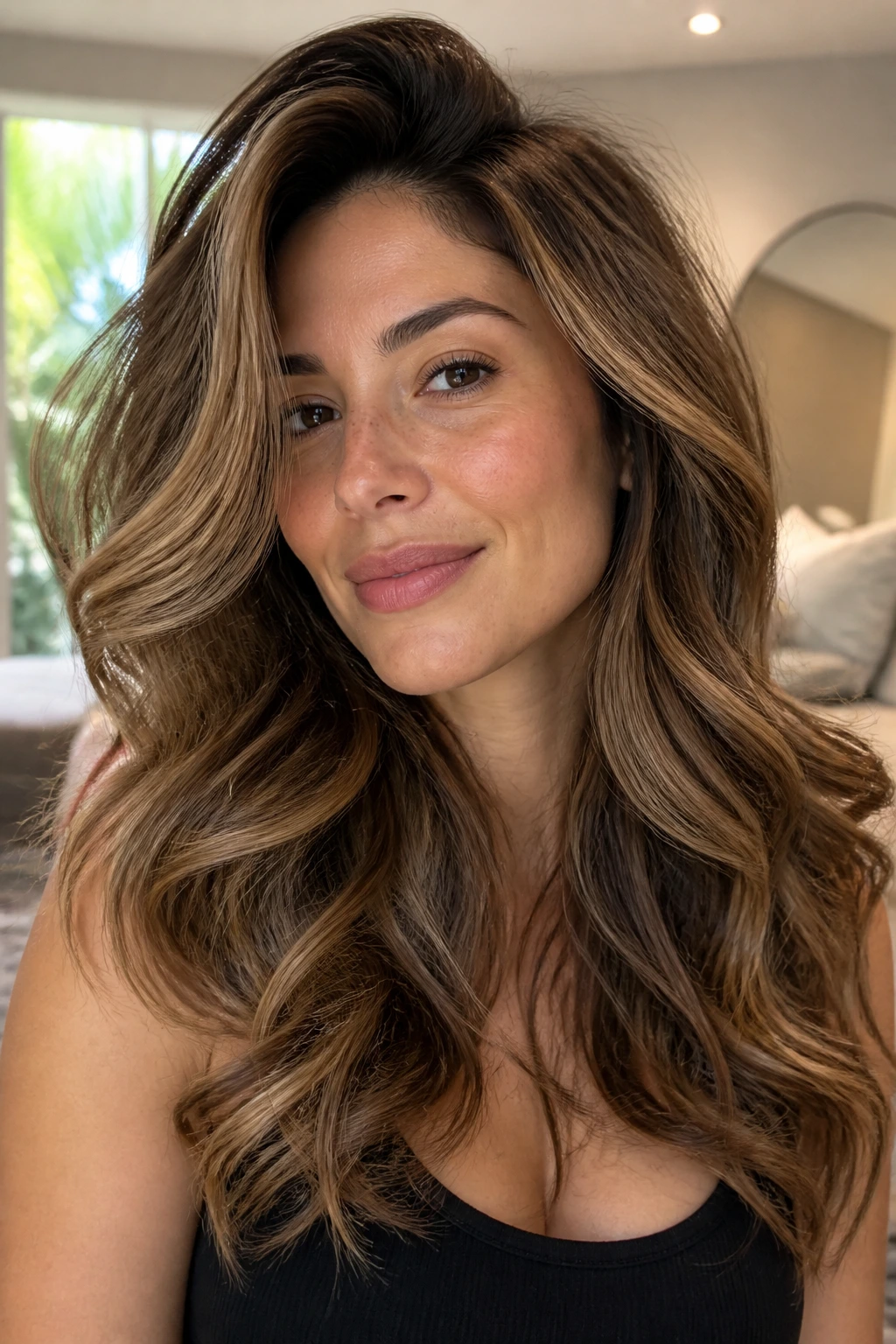
Some layered cuts are made to be air-dried. This one likes a brush. The shape is built so the roots can lift, the lengths can bend, and the whole thing can land in that soft blowout zone that still keeps a little wave through the ends. It’s polished without looking stiff.
A large round brush or a blow-dry brush helps here, especially if your wave pattern wants to puff at the sides. The layers should be long enough to swing, not so short that they flip out in weird directions. I like this cut when someone wants their wavy hair to look finished with minimal drama, not overly styled and sprayed into place.
24. Low-Maintenance Wash-and-Wear Layers
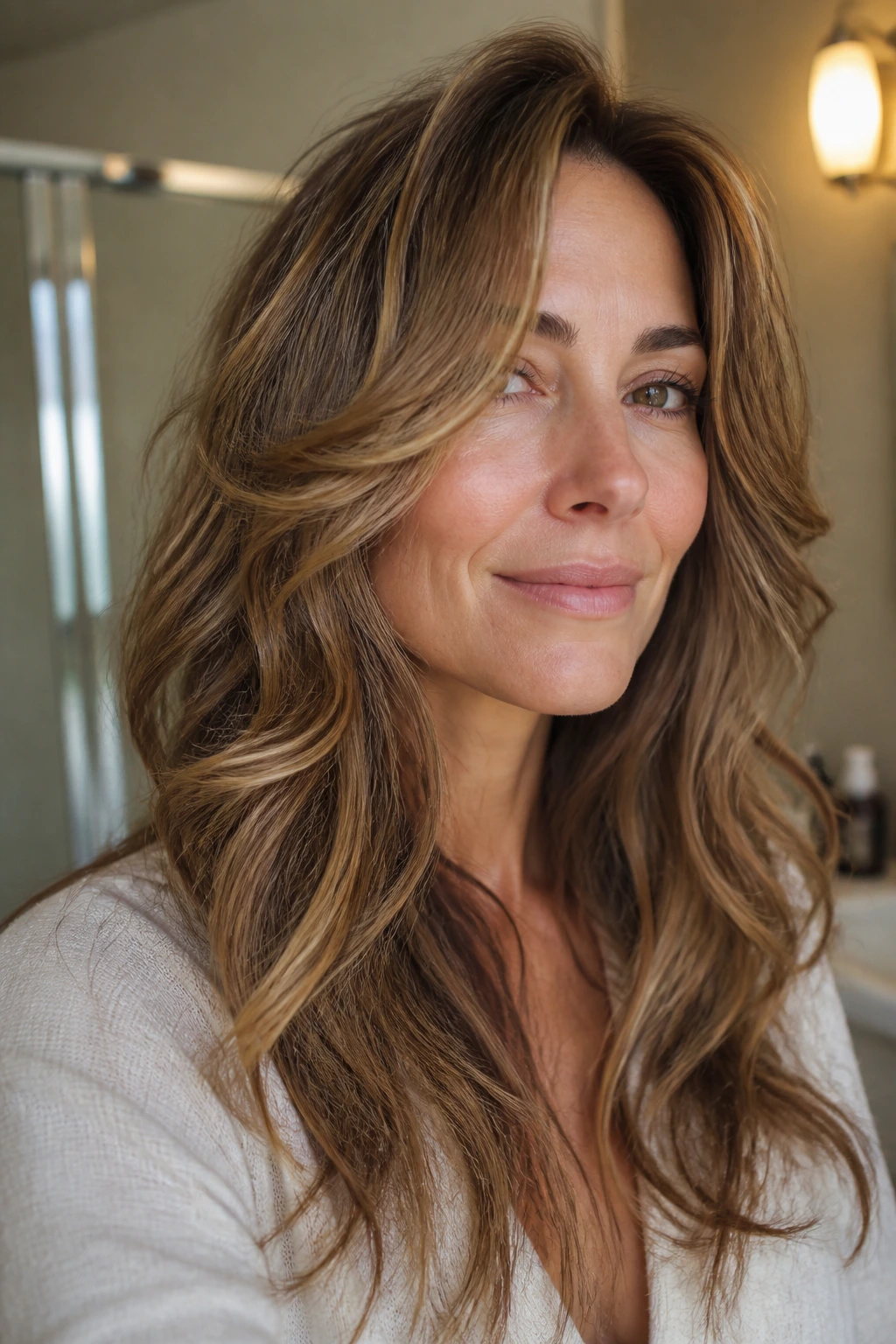
Wash-and-wear layers are for people who want the haircut to do most of the work. The layers are soft, the face frame is gentle, and the perimeter stays full enough that the hair still looks purposeful when air-dried. Nothing here is overdone.
This cut is especially useful if you don’t want to coax your hair with hot tools every day. It should still look decent after scrunching in a little leave-in and walking away. The secret is to keep the shortest pieces long enough that they don’t spring into little frizzy hooks. Easy does not have to mean shapeless.
25. Polished Mid-Back Layers with Face Frame
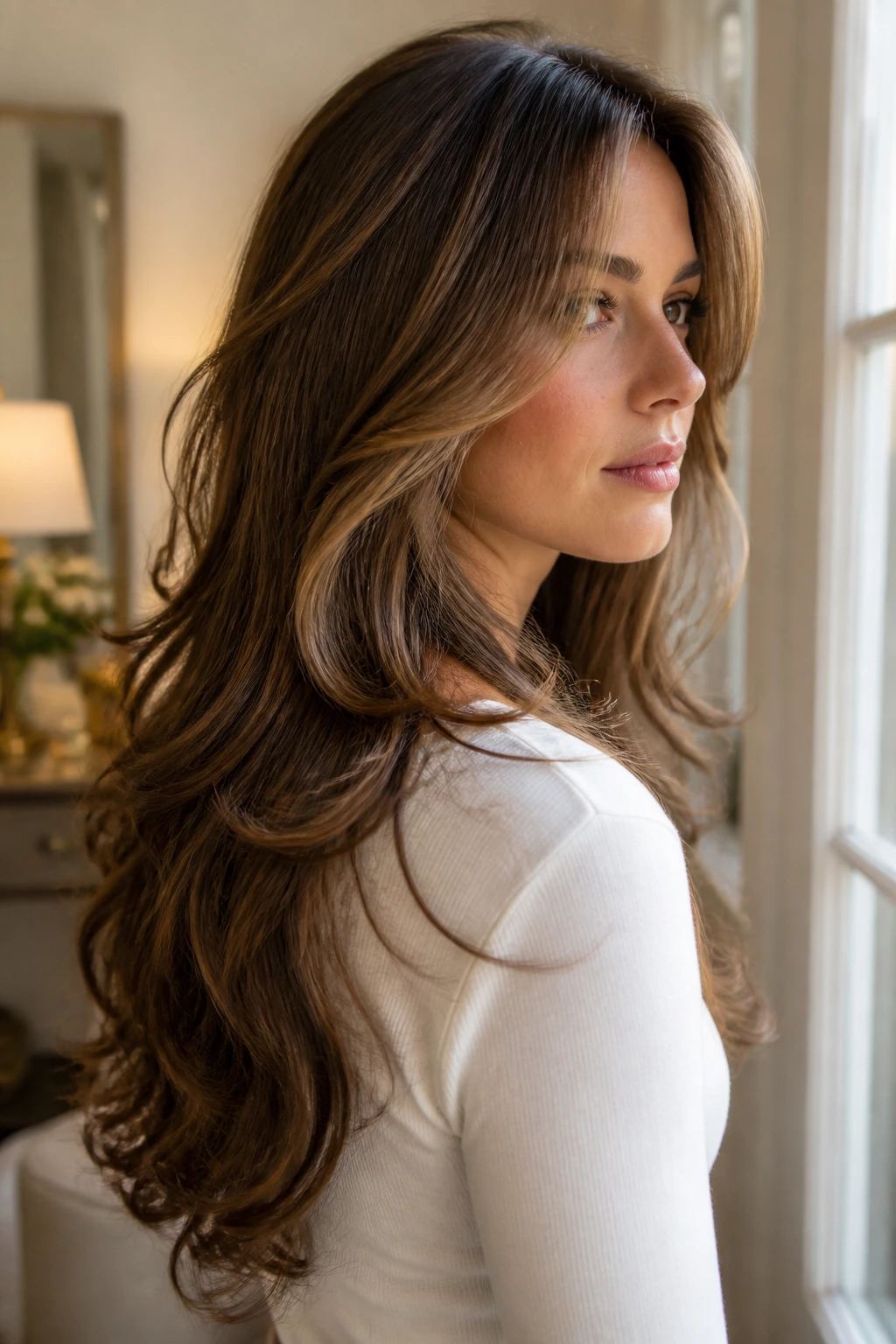
Polished mid-back layers are the long-hair answer for people who want movement without losing that swishy length. The layers usually stay long and fluid, while the face frame adds a little definition around the cheekbones and jaw. The whole cut feels classic, not trendy in a way that will annoy you six months later.
This is a smart choice if you wear your hair both down and up, because the face frame gives the style life even when the rest is clipped back. It also suits wavy hair that’s not especially thick, since the longer layers preserve density at the ends. If you keep the ends trimmed and the front pieces blended, this one ages gracefully.
Choosing the Right Layer Map for Your Waves
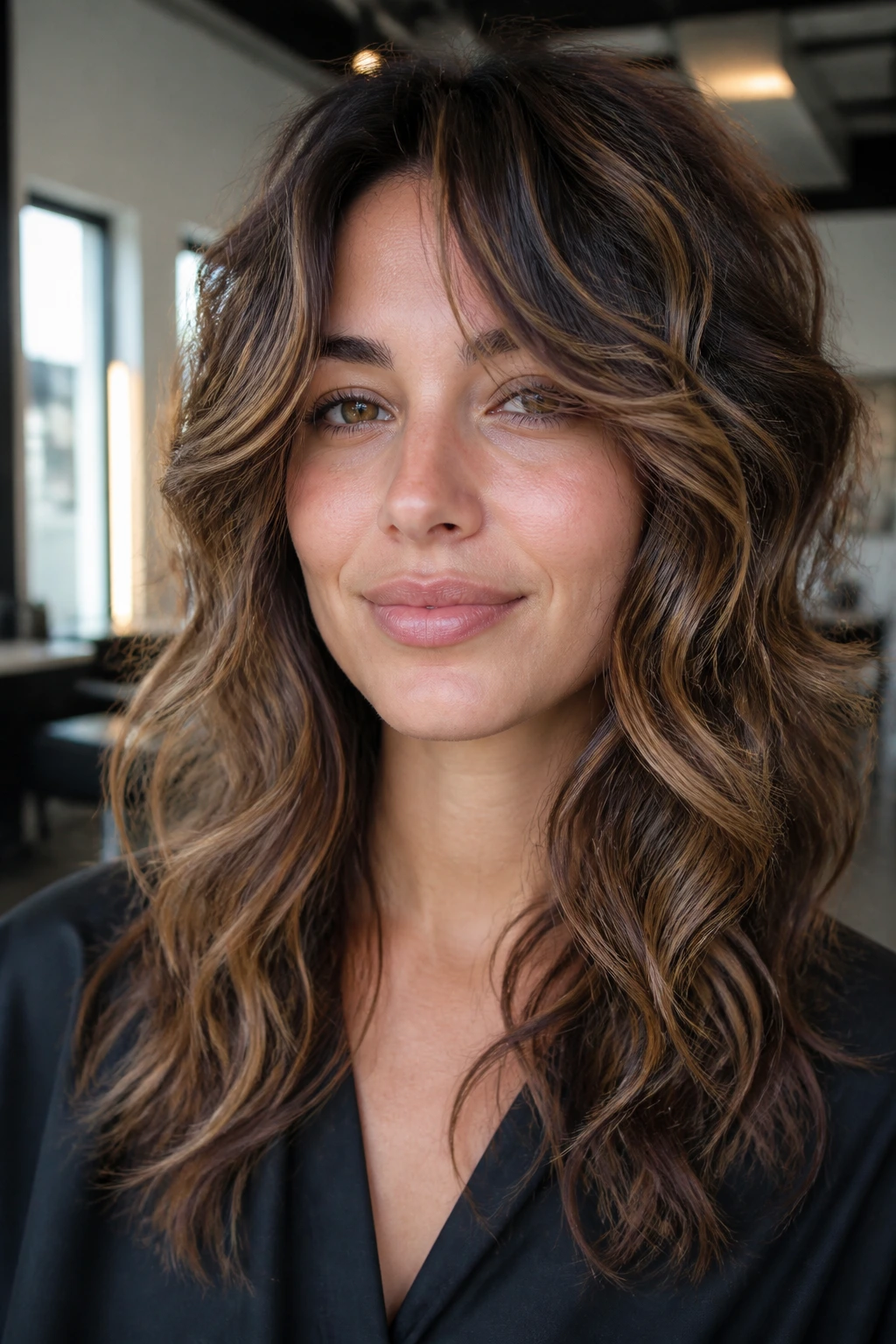
The easiest mistake is asking for a photo and forgetting that your wave pattern may not match the model’s at all. A cut that looks airy on dense 2c hair can look stringy on fine 2a hair, and a shape built for straight hair with a bend at the ends usually won’t land the same way once your own waves take over. That’s why the layer map matters more than the style name.
Loose waves usually do well with longer layers that start lower, around the cheekbone or collarbone. Stronger waves can handle more internal shaping and a little more lift at the crown. Thick hair usually needs weight removed from the middle and lower interior, not just the top. Fine hair, on the other hand, needs layers that are soft enough to keep the ends looking full.
Face shape plays a role, but not the one people think. A round face doesn’t automatically need super-long layers, and a long face doesn’t always need heavy bangs. What matters is where the eye lands first. If the front pieces open at the cheekbone, the haircut feels balanced. If they stop in a blunt, awkward place, the whole shape can feel off.
Tools That Make Wavy Layers Easier to Cut and Style
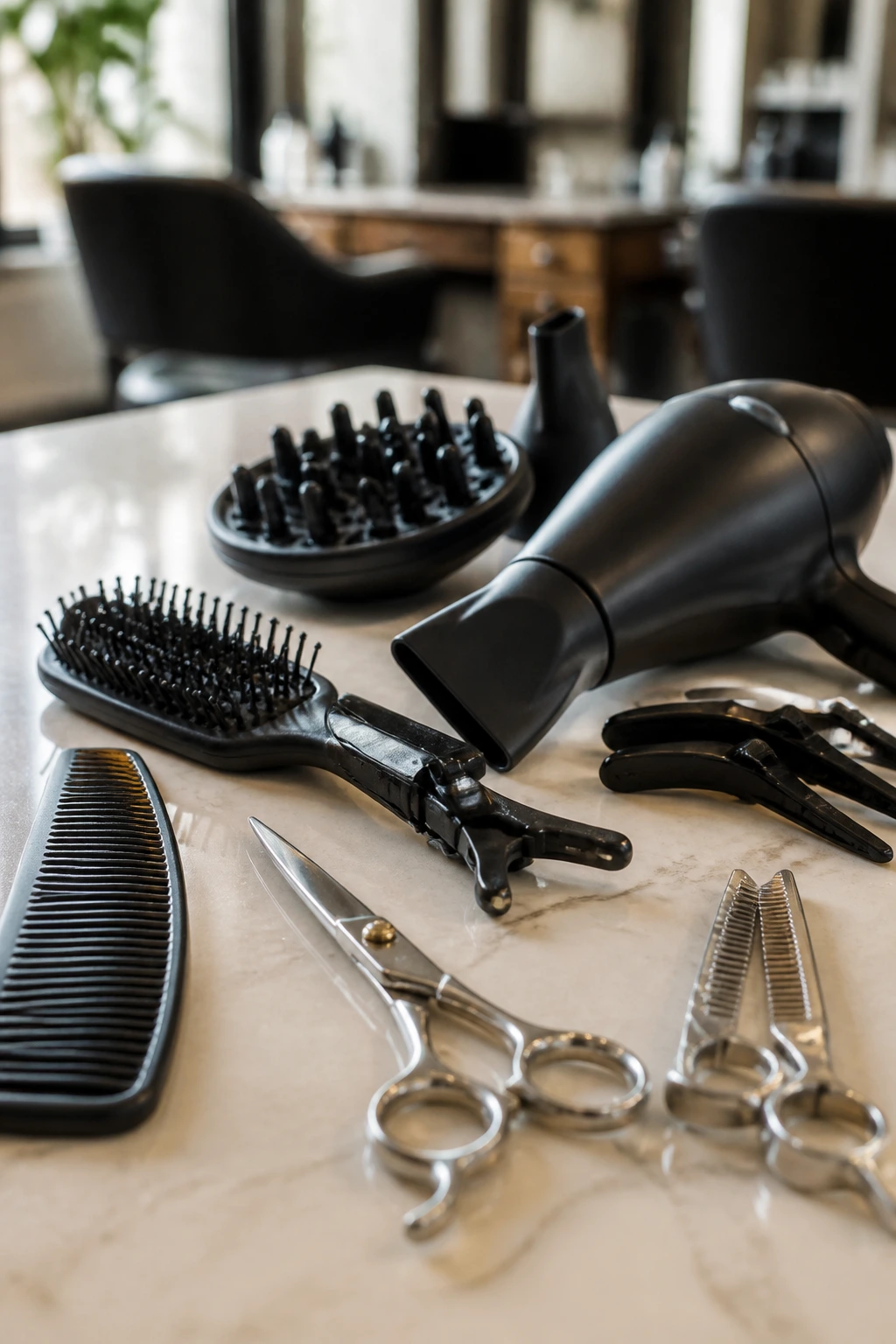
- Sharp haircutting shears: Dull blades chew the ends and make layered waves frizz faster.
- Sectioning clips: These keep the top from collapsing while you style or trim bangs.
- Wide-tooth comb: Better than a fine comb for detangling wave clumps without stretching them out.
- Diffuser attachment: Helps set the wave pattern with less blast and less frizz.
- Microfiber towel or cotton T-shirt: Cuts down on roughing up the cuticle right after washing.
- Round brush: Handy for blowout layers or face-framing pieces that need a little direction.
- Tail comb: Useful for clean parts and checking whether layers fall evenly.
- Hair scissors for maintenance snips: Keep these separate from kitchen scissors. Please.
- Heat protectant: Necessary if you plan to use a dryer, iron, or hot brush on the ends.
Styling Moves That Keep the Shape Visible
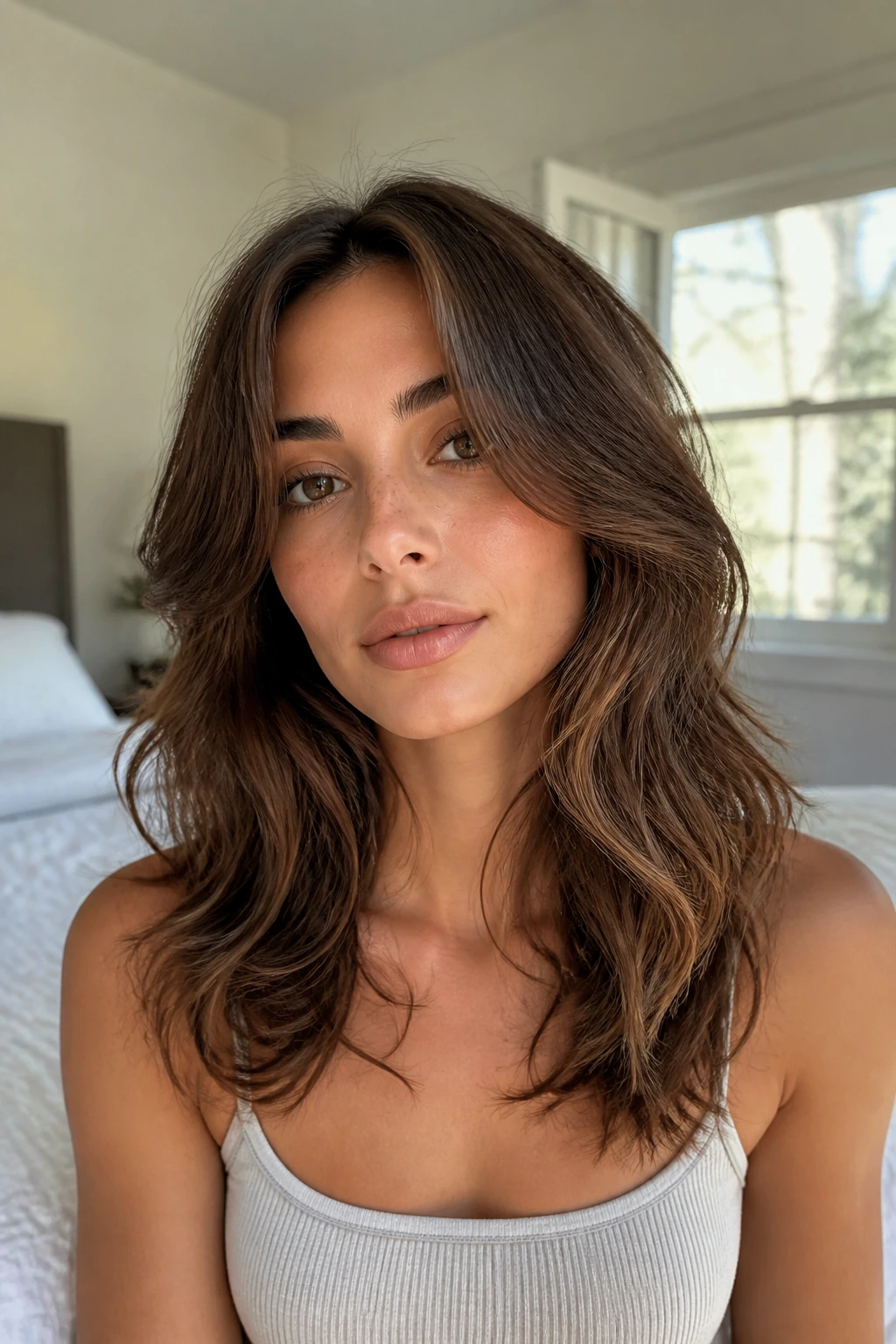
Wavy layers behave best when you don’t drown them in product. A medium-hold mousse at the roots and a small amount of cream or gel through the mid-lengths usually does more than a heavy curl butter ever will. Heavy products can flatten the crown and make the ends stringy. That’s a bad trade.
Diffusing: Keep the dryer on low or medium heat, tilt your head, and cup the waves from below rather than blasting them from the front. Stop when the hair is about 80 percent dry, then let the rest finish on its own. That last bit matters because over-drying is where a lot of frizz appears.
Air-drying: Scrunch once, then leave it alone. Touching it every five minutes breaks up the clumps and makes the layers look frayed. If one side dries flatter, clip the roots on that side for a little lift while it sets.
Night prep: A loose pineapple or a silk pillowcase helps preserve the face frame and the bend in the ends. No magic here. Just less friction. That’s usually enough.
Common Mistakes That Flatten or Frizz Out the Cut
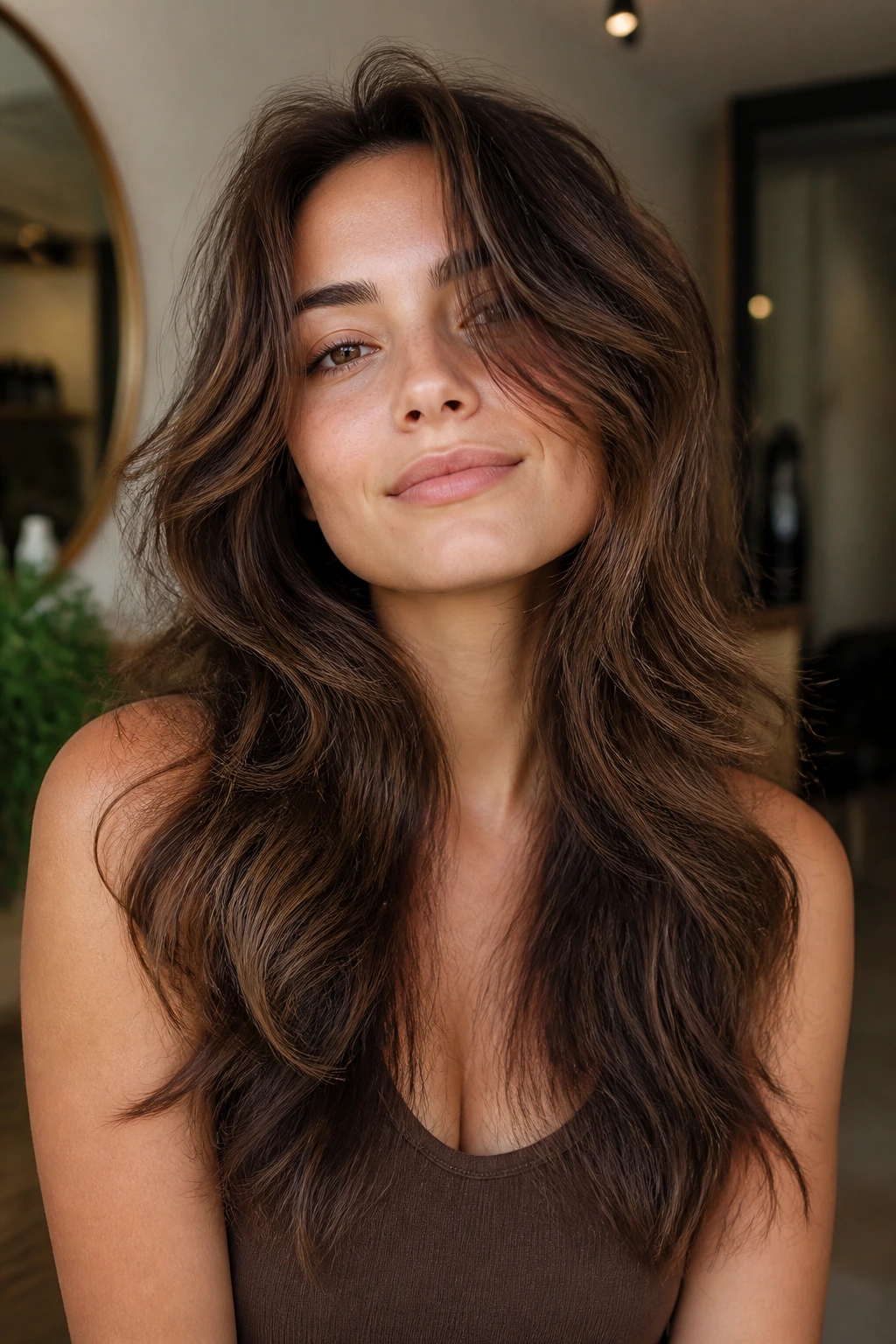
The first mistake is asking for too many short layers near the crown. On wavy hair, that often creates puff at the top and thinness at the bottom. The fix is to keep the shortest face-framing pieces where they can do visible work, then let the internal layers stay longer and softer.
Another problem is overusing thinning shears. They can help on dense hair in the right hands, but on wavy textures they can also leave ends that separate into fuzzy little wisps. If your hair already frizzes when it’s humid, you do not want random holes in the shape. Point cutting and internal weight removal are usually cleaner.
Cutting wavy hair like it’s straight is a classic salon miss. Wet hair stretches, and the wave pattern disguises where the true length will land once it dries. A good stylist should check the shape dry or at least cross-check sections as they settle. If that doesn’t happen, the front can shrink too high and the back can hang too low.
Heavy creams can also sabotage a layered cut. They weigh down the very movement you paid for. If the haircut looks great fresh out of the shower but dead by lunch, the product stack is probably too rich.
Variations and Alternatives If You Want More or Less Movement
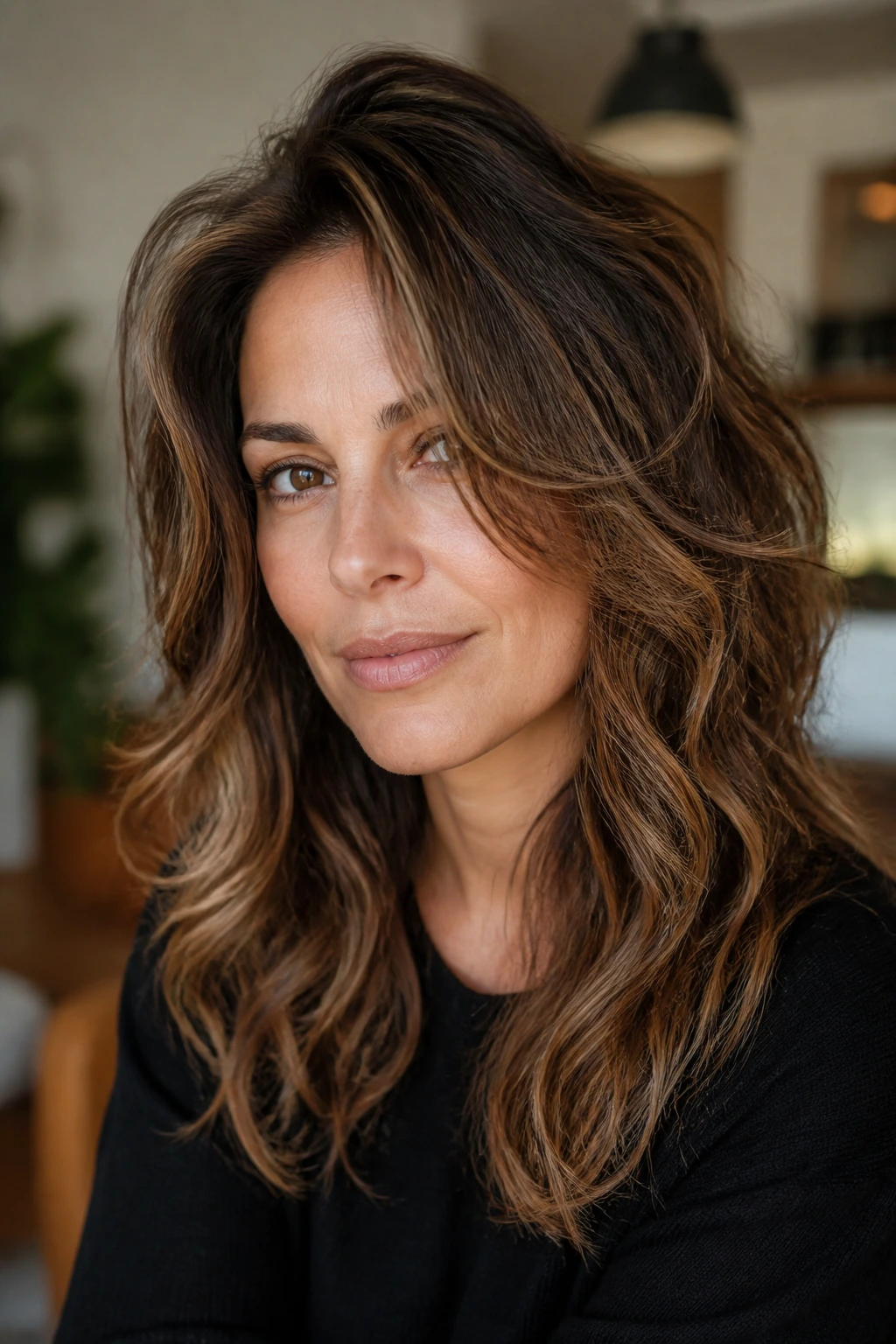
Softer Sweep: Keep the front layers longer and skip the fringe. This works if you like the idea of face framing but don’t want to commit to bangs or a shaggy finish.
More Crown Lift: Ask for a little extra internal layering at the top only. Good for flat roots, but keep the lower perimeter full so the haircut doesn’t look thinned out.
Blunt-End Hybrid: This keeps the bottom line heavier while still adding a touch of movement through the interior. It’s a smart compromise for fine waves that can’t afford too much layering.
Shorter Shag Lite: If you like the shag idea but want less edge, keep the layers softer and the fringe longer. It still gives texture, just with a calmer finish.
Long Grow-Out Shape: For people who hate frequent trims, keep the layers below the cheekbone and use a long face frame. The haircut will look intentional even as it softens.
Keeping the Cut in Shape Between Salon Visits
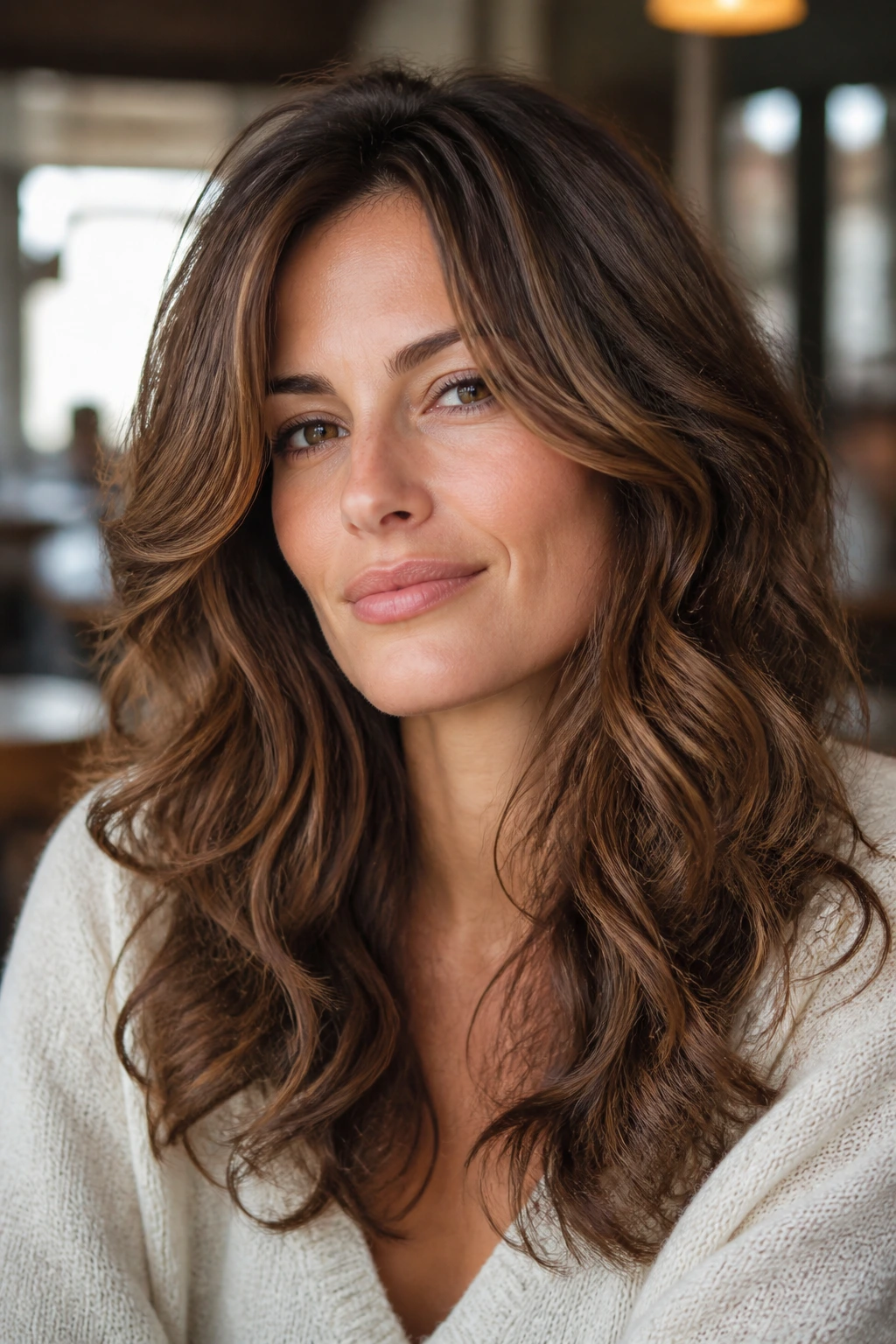
A layered wavy cut usually holds its best shape for about 8 to 12 weeks, depending on how fast your hair grows and how short the front pieces are. Bangs or shorter curtain pieces may need a touch-up sooner, sometimes around 4 to 6 weeks, because the eye notices that area first. The back can wait longer. The front never really gets away with anything.
If you style with heavier creams, use a clarifying shampoo about once every 2 to 4 weeks so the layers don’t get coated and flat. A light moisturizing shampoo and conditioner works better for most wavy cuts than anything ultra-heavy. Between washes, a mist of water mixed with a little leave-in can wake up the bend without soaking the shape into submission.
The other thing that helps is sleeping in a way that protects the front pieces. A loose pineapple, a satin pillowcase, or clipping the fringe away from the face can save you a day of re-styling. Small things. Annoyingly small, in fact. But they keep the cut looking like a haircut, not a fuzzy memory of one.
Frequently Asked Questions

How do I know if my wavy hair needs layers?
If your hair looks heavy at the bottom, falls flat at the crown, or makes a triangle when it air-dries, layers will usually help. If your ends already feel thin and wispy, you may only need face-framing pieces or very long internal layers.
Are layers bad for fine wavy hair?
Not if they’re done lightly. Fine waves usually need fewer, longer layers so the ends stay full. The wrong kind of layering can make the hair look sparse fast, so ask for soft shaping instead of lots of short pieces.
Should wavy hair be cut wet or dry?
Either can work, but dry cutting helps a stylist see shrinkage and wave placement more honestly. Wet cutting is fine when the stylist knows how your hair behaves and checks the shape as it dries. The technique matters less than the eye doing the cutting.
Do layers make wavy hair frizzier?
They can, if the cut is too aggressive or the ends are over-thinned. Smart layering removes bulk without shredding the outline, which usually reduces the “puffy triangle” look. Frizz is more often a cut-and-product problem together than a haircut problem alone.
What layers are best if I want to keep length?
Long U-shape layers, butterfly layers, and soft face-framing cuts are the safest bets. They keep most of the perimeter while still giving the wave room to move. If you love long hair, avoid asking for short layers all over the head.
Can I get layers if I wear my hair straight sometimes?
Yes, but choose a shape that still looks clean when blown straight. A long face frame, invisible layers, or softly tapered ends usually behave better than a choppy shag if you switch styles often.
How often should I trim layered wavy hair?
Most layered cuts stay tidy with a trim every 8 to 12 weeks. Short bangs or sharper shags may need quicker cleanups, while long blended layers can go a bit longer. The front tells on you first, so watch that area.
What if my layers make my hair puff out?
That usually means the layers are too short, too high, or too heavily thinned. The fix is to keep the next cut longer through the top and internal sections, then style with lighter products and less rough drying. Sometimes the haircut needs adjusting. Sometimes the mousse does.
A Shape That Lets the Waves Do the Work
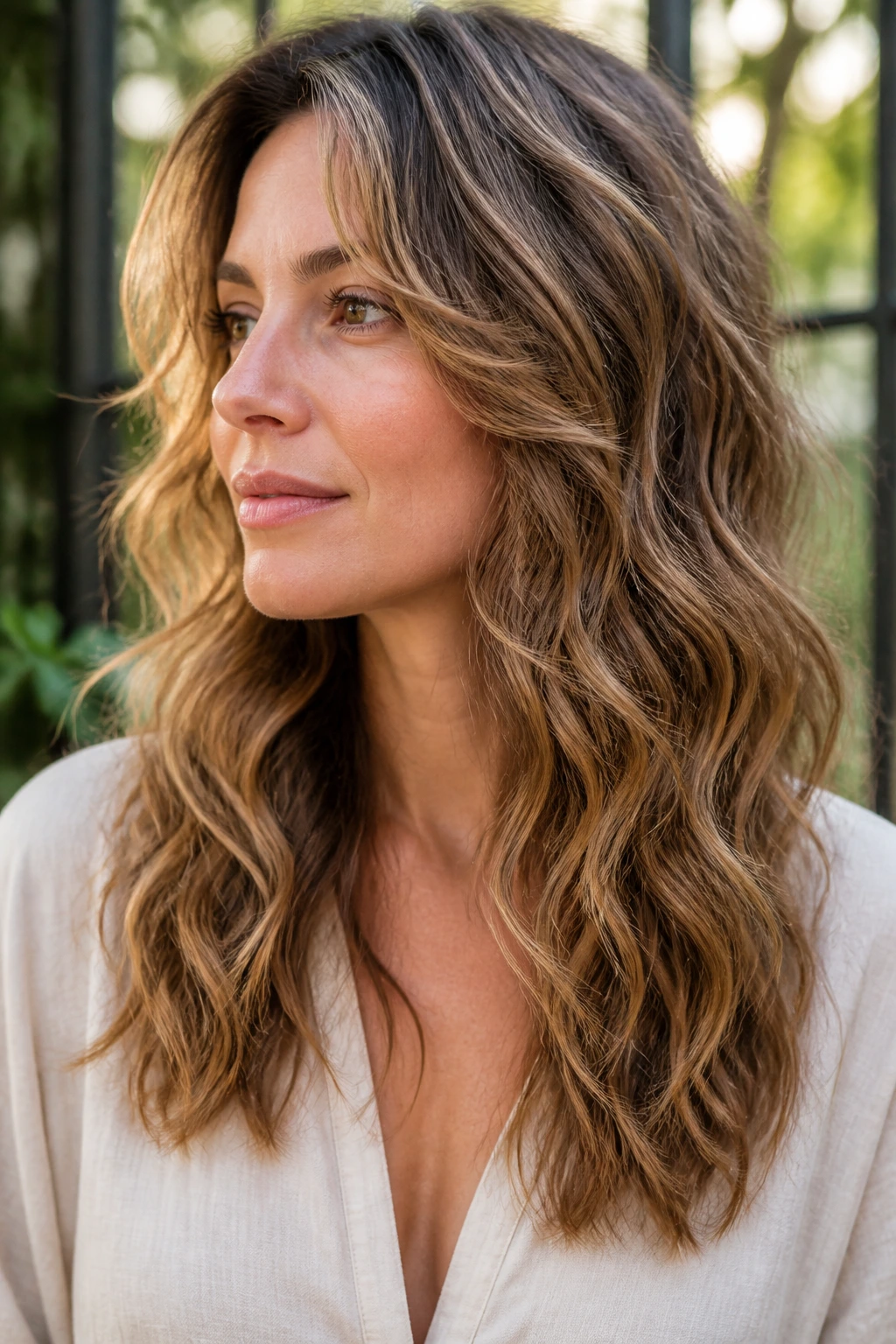
The best layered haircut for wavy hair is the one that looks better when the waves are doing their own thing. That sounds obvious, but plenty of cuts only look good when they’ve been coaxed, curled, or sprayed into obedience. I’d rather have a shape that still holds together after a bad sleep, a damp commute, or a quick scrunch with no mirror in sight.
If you keep one rule in mind, make it this: preserve the outline, then place the layers where the wave actually bends. That’s the difference between hair that feels fussy and hair that feels like it belongs to you. And once you get that balance right, the rest gets easier fast.