



A square face can take a lot of structure, but a fringe that stops dead at the brow often makes the whole haircut feel harder than it needs to be. Long length bangs, especially when they fall into soft layers, work because they change the direction of the eye: instead of one hard line across the forehead and another across the jaw, you get movement that slides down and out.
I like bangs on square faces when they do something — split softly at the center, sweep across the cheekbone, or land long enough to brush the mouth before they tuck into the rest of the cut. The wrong fringe makes the face look boxed in. The right one feels edited, not padded.
The 25 shapes below keep the edges softer without turning the haircut mushy. Some are airy and easy, some are polished, and a few have a little bite. All of them give square faces a better line to follow, which is really the whole trick. Start with the version that matches how you actually wear your hair, not the one that only behaves in a salon chair.
Why These Fringe Ideas Work So Well

- They break up the jawline: Long bangs that land at the cheekbone, mouth, or chin interrupt the strongest horizontal line on a square face.
- They keep the center open: A little forehead showing — even just a sliver — keeps the face from feeling boxed in.
- They make soft layers do the heavy lifting: The layers around the face can blur angles without hiding your bone structure.
- They grow out better: Longer fringe usually slips into the rest of the cut instead of turning into a weird shelf after three weeks.
- They work with texture: Straight, wavy, curly, thick, and fine hair all have a version here that makes sense.
1. Curtain Bangs That Start at the Cheekbone
Curtain bangs are the easiest entry point if you want long bangs for square faces without committing to anything fussy. The center opens up the forehead, while the sides fall forward and then drift back into soft layers near the cheekbone. That diagonal line matters. It keeps the haircut from sitting like a block on top of a strong jaw.
Why it softens a square face
The best version doesn’t sit too short. Ask for the shortest point to live somewhere between the eyebrow and upper cheekbone, then let the outer pieces stretch longer so they can fold into the rest of the cut. If the front is cut too bluntly, you lose the whole effect.
Quick notes:
- Best with medium-density hair
- Looks strongest with a middle part or slightly off-center part
- A 1.25-inch round brush keeps the bend loose
- Point-cut ends beat a straight, blunt snip
One rule: the bangs should float, not sit like a shelf.
2. Long Side-Swept Bangs with a Deep Side Part
If a middle part makes your face feel too squared-off, this is the escape hatch. Long side-swept bangs create a long diagonal across the forehead, which is a sneaky good move on a square face because it breaks the symmetry without looking dramatic. It’s old-school in the best way.
The deep side part gives you lift at the crown, and that extra height makes the face read a little longer. I prefer this version on hair that has at least a little bend, because pin-straight fringe can slide flat unless you blow it in the opposite direction first.
Tell your stylist to keep the fringe long enough to brush the outer corner of the eye and taper the side pieces into the cheek and jaw. Short side bangs can look abrupt on a square face. Long ones move.
3. Bottleneck Bangs with Soft Outer Wings
Why do bottleneck bangs flatter square faces so quickly? Because they’re narrow in the center and wider at the sides, which means they show some forehead without leaving the face bare. The shape feels gentle at the top and softened at the edges. That’s a nice fit for a jaw that already has a strong outline.
The center can sit around the brow or just above it, while the side pieces flare out around the cheekbone. That flare is the whole point. It gives the front of the haircut a little curve instead of a blunt cut across the face.
How to style them
Blow-dry the center straight down first, then brush the sides forward and away from the face. A little bend at the outer corners is enough. Don’t curl the wings under hard; that can make the whole thing feel too tidy and boxy.
4. Bardot Bangs with Crown Lift
A Bardot bang has a softer, more glamorous mood than a standard curtain fringe. The crown lifts first, then the front opens in a gentle split, and the side pieces sweep into soft layers that brush the cheekbones. On a square face, that lift matters because it pulls the eye up before it travels down the lengths.
This is the version I recommend when you want fringe but don’t want it to feel heavy. It works especially well if your hair already likes volume, because the shape needs a little air at the root. Flat roots make Bardot bangs look sleepy. A round brush and a bit of root spray wake them up fast.
A few useful details:
- The shortest point should stay at or just under the brow
- Keep density light enough to see a little skin through the fringe
- Blow-dry upward at the root, then sweep down and apart
- Soft layers around the temples keep the style from feeling severe
5. Piecey Shag Fringe with Soft Layers
This is the messier choice, and I mean that in a good way. Piecey shag fringe has broken-up ends, a little texture, and enough length to move with the rest of the haircut instead of sitting on top of it. On square faces, that broken texture works because it removes the hard edge that a blunt fringe would throw across the forehead.
The key is keeping the pieces long enough that they don’t look choppy for the sake of being choppy. You want separation, not random holes. Ask for internal texturing and soft layers around the cheek and jaw, so the fringe has somewhere to melt instead of ending in a line.
This one looks best when the hair has a bit of bend. A touch of mousse in damp hair, then a rough dry and a finger rake, usually beats a polished blowout here.
6. Chin-Grazing Curtain Bangs for a Strong Jawline
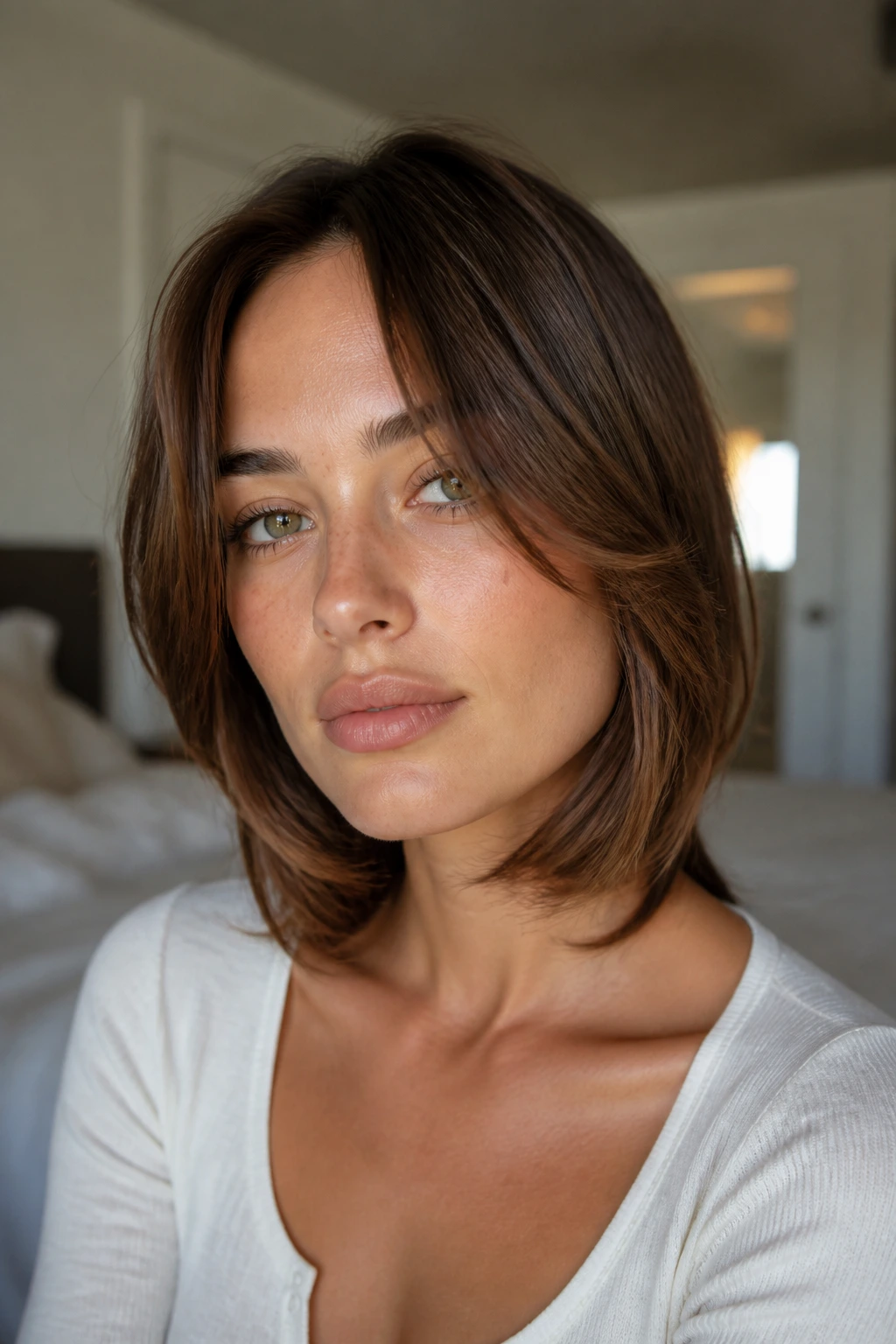
When the jawline is the most angular part of the face, I like bangs that reach down and meet it instead of stopping above it. Chin-grazing curtain bangs make the front of the haircut feel longer, which softens the horizontal feel of a square face. They also give you a little drama without crossing into heavy fringe.
Unlike shorter curtain bangs, these pieces keep going. They slide from the center part past the cheekbone and toward the chin, where they can merge with longer layers. That longer length creates a kind of visual taper, and taper is your friend here.
Best choice if you want:
- A softer jawline without losing structure
- A fringe that can tuck behind the ear
- A cut that still works after it grows out
- A cleaner shape on thick or medium-thick hair
7. Wispy Brow-Skimming Bangs for Fine Hair

Fine hair can wear bangs beautifully, but only if the fringe stays light enough to move. Wispy brow-skimming bangs give square faces a softer front without adding too much weight at the forehead. The ends are broken up, the density stays low, and the layers around the face do the rest.
Best length
Keep the center just at the brow or a hair lower, then let the sides taper into the cheek. If the fringe drops too far below the eyes, it can start to drag the face down. If it’s too short, it sharpens the forehead again. That middle zone is where the softness lives.
Best styling
A light mousse at the roots and a small round brush are enough. Don’t load fine bangs with heavy cream; they go limp fast. Dry shampoo at the root can buy you a full extra day between washes.
What to avoid
Skip deep thinning shears. They can leave fine hair looking frayed instead of airy.
8. Feathered Blowout Bangs with Rounded Ends
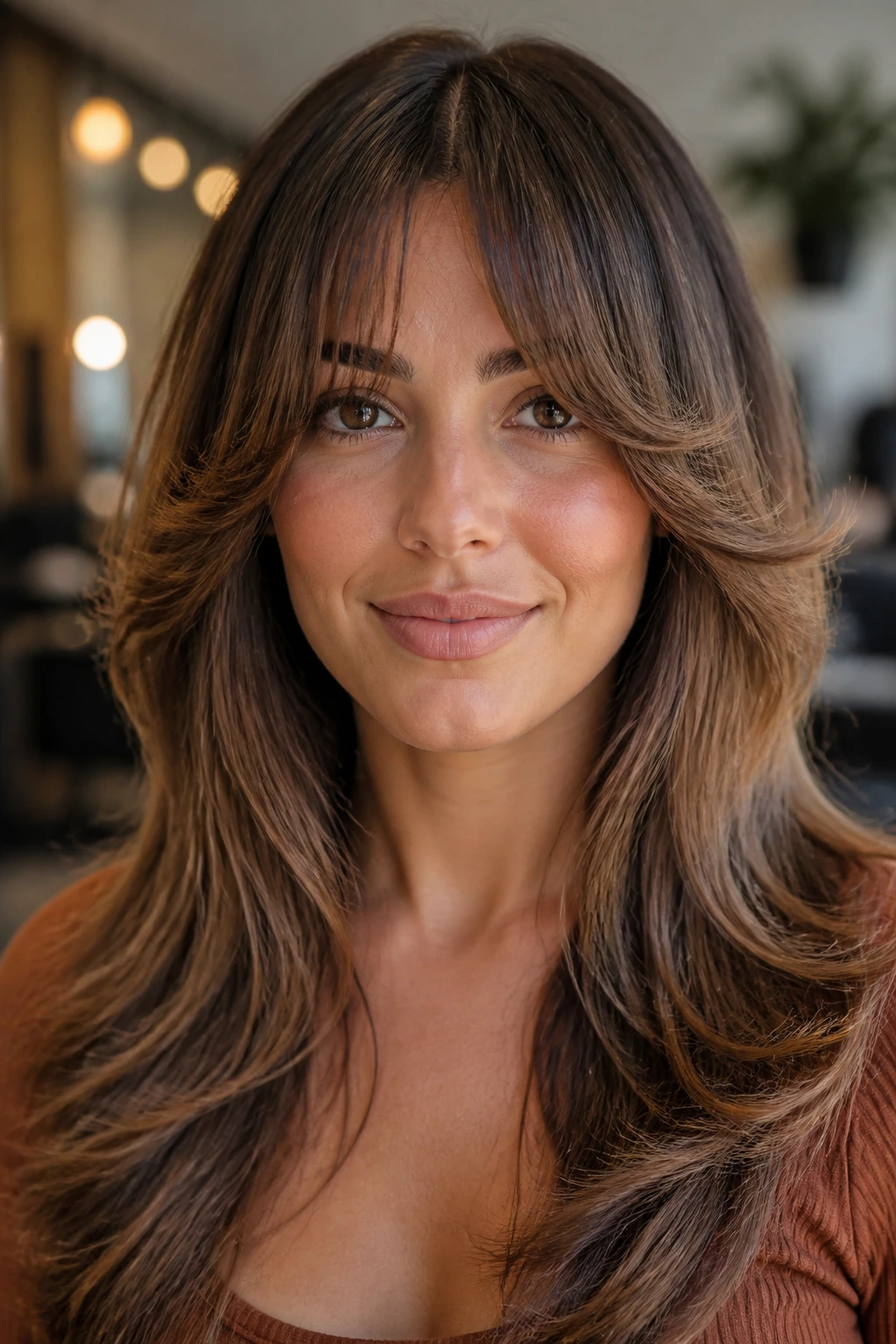
Feathered bangs are my favorite when someone wants fringe that looks finished, not fussy. The shape curves gently around the forehead, then the ends turn soft and outward instead of sitting as one solid strip. On a square face, that rounded movement matters because it interrupts all the straight lines.
The blowout is the whole show here. Use a medium round brush and wrap the fringe away from the face first, then let it cool in that shape for a second before brushing through. That keeps the bend from collapsing into the forehead.
This version works well if your hair naturally falls straight but can hold a curl for a day or two. It also behaves better than blunt bangs in humid weather, which is saying something. Humidity loves to punish a hard edge.
9. Curly Long Bangs That Follow the Wave Pattern

What if your curls refuse to behave like straight fringe? Good. They shouldn’t. Curly long bangs look better on square faces when the cut respects the curl pattern instead of fighting it. The front pieces should land long enough to shrink up and still hit near the brow or cheekbone once dry.
The shape is less about a perfect center split and more about a soft fan that opens around the forehead. That keeps the face from looking wide at the corners. A square face with curls can handle lots of personality, but the bangs need to stay light enough to move.
How to use it
Ask for the fringe to be cut dry or mostly dry, with the curls wearing their natural shape. Diffuse on low heat, lift at the root, and leave the ends a little undone. A curl cream with a light hold works better than a thick balm here.
10. Face-Framing Side Fringe with a Loose S-Bend
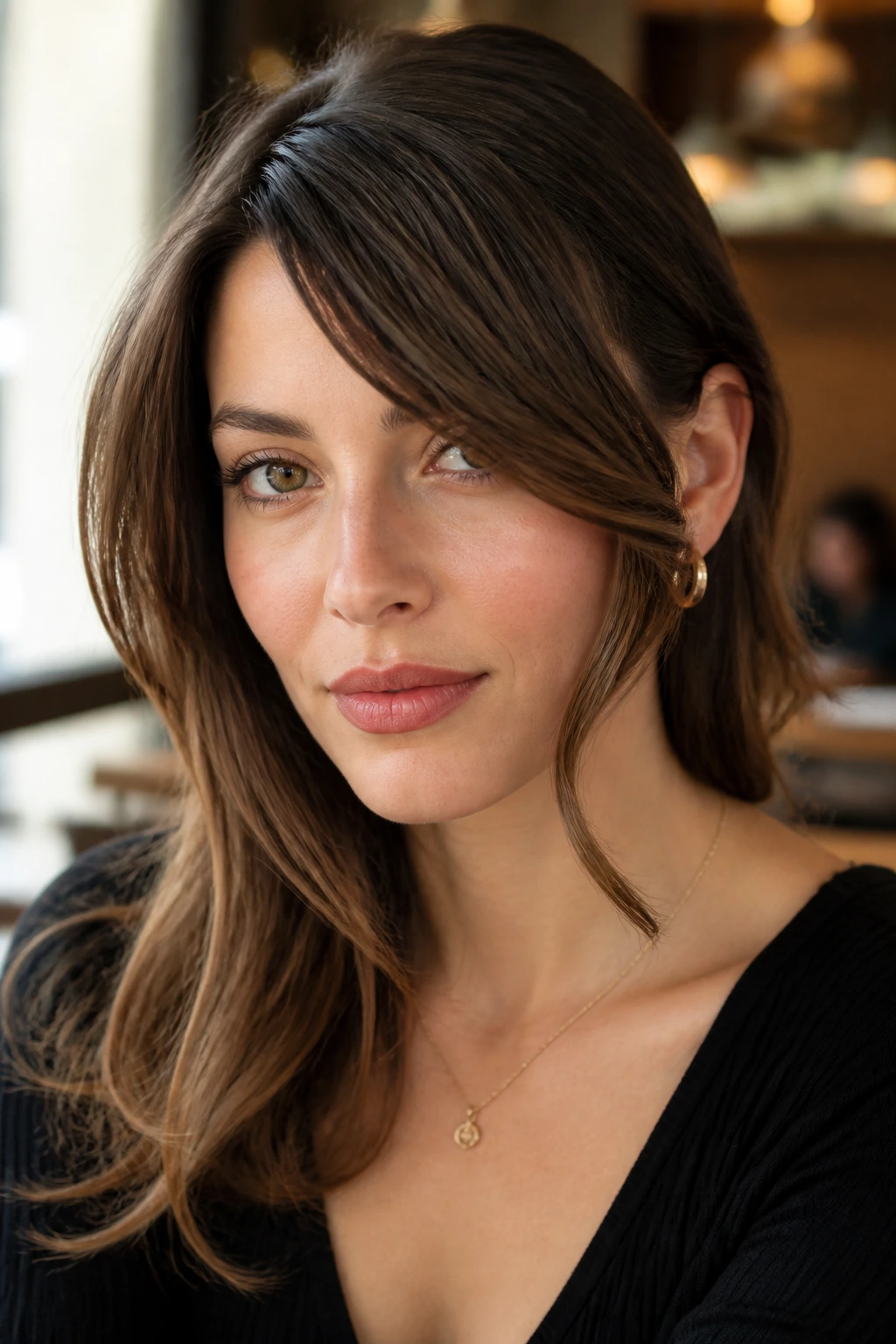
Picture hair tucked behind one ear on one side, with the front fringe sweeping across the forehead in a loose S-curve. That shape is soft, easy, and quietly flattering on a square face because it keeps the eye moving instead of letting it stop on one line. It also looks good when you want bangs that can disappear into the rest of the cut.
The loose S-bend gives you a little softness at the cheek without bringing all the weight to the jaw. That balance is what keeps the face from feeling too boxy. It’s a nice option if you wear glasses or if your fringe tends to split where it wants to split.
Good for:
- Straight hair that needs movement
- Side parts that already sit naturally
- A face shape that feels wider at the jaw than at the forehead
- People who like to tuck hair behind one ear
11. Sliced Bangs with a Soft Edge
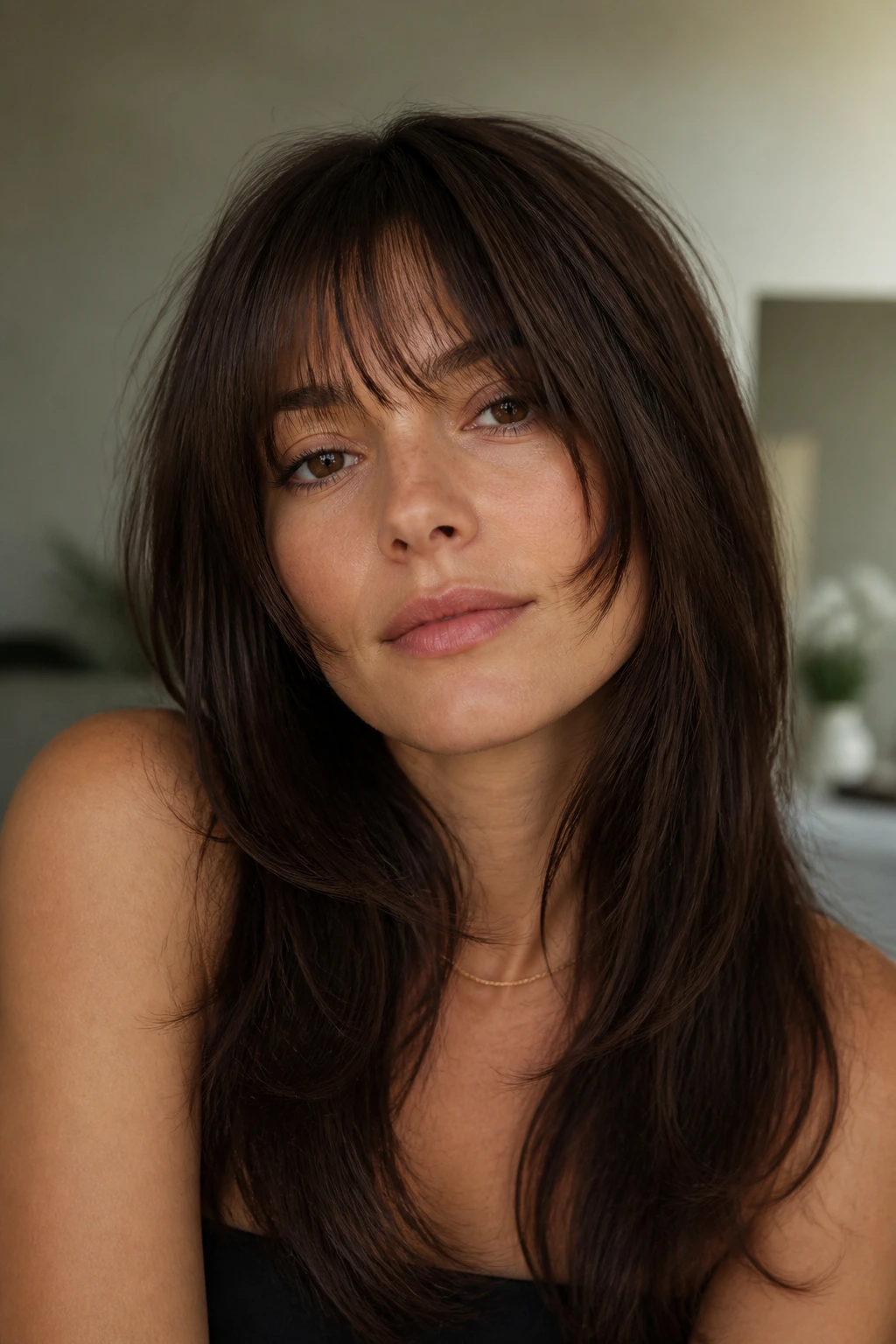
Sliced bangs are not the same thing as thin bangs. The difference matters. Slicing breaks the edge of the fringe so it doesn’t read as one solid strip, while still keeping enough hair there to matter on a square face. That softness is what keeps the cut from feeling hard.
This style works nicely if your hair tends to bulk up at the forehead. A dense, heavy fringe can make a square face feel more angular than it really is. Sliced bangs fix that by letting a little air through the front without going wispy.
I like this best with soft layers that start around the cheekbone, not the jaw. If the front layers hit too low, the hair can hang like curtains on top of a box. Keep the edges broken, keep the length long, and let the hair move.
12. Butterfly Cut Bangs with Floating Layers
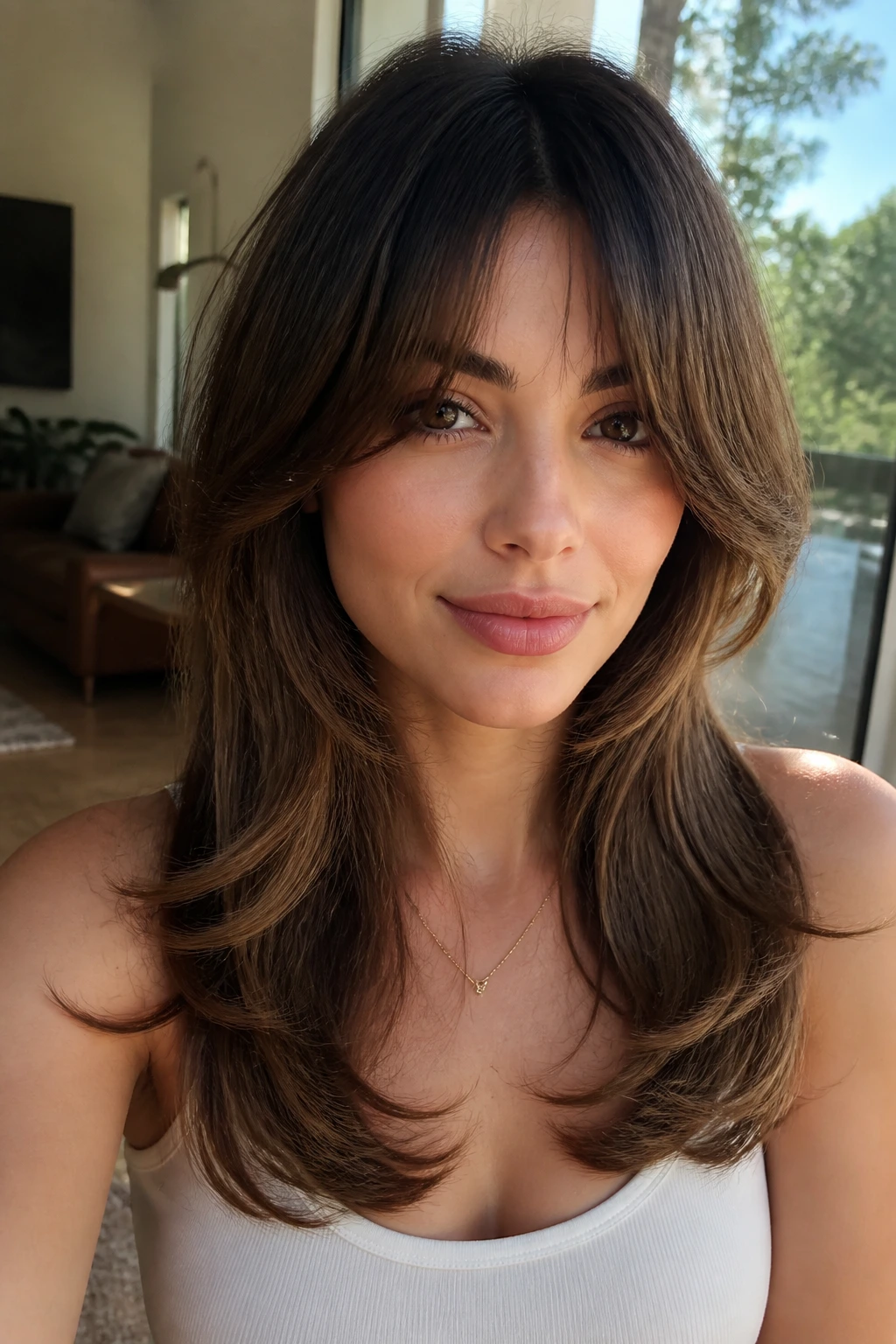
Butterfly bangs are what happens when fringe and face-framing layers start talking to each other. The shortest pieces sit near the forehead or cheekbone, while the longer layers drift into the collarbone area. On square faces, that floating shape softens the perimeter of the face without taking away length.
The biggest reason this works is simple: the eye keeps traveling. It doesn’t stop at the jaw. It starts at the front, slides down the cheeks, and then keeps going through the longer layers. That makes the haircut look longer and less boxy.
Ask for the shortest point to be light and the outer pieces to stay soft, not chunky. Heavy butterfly layers can feel too built-up around the face. Light ones move.
13. Blended Long Bangs That Melt into the Length
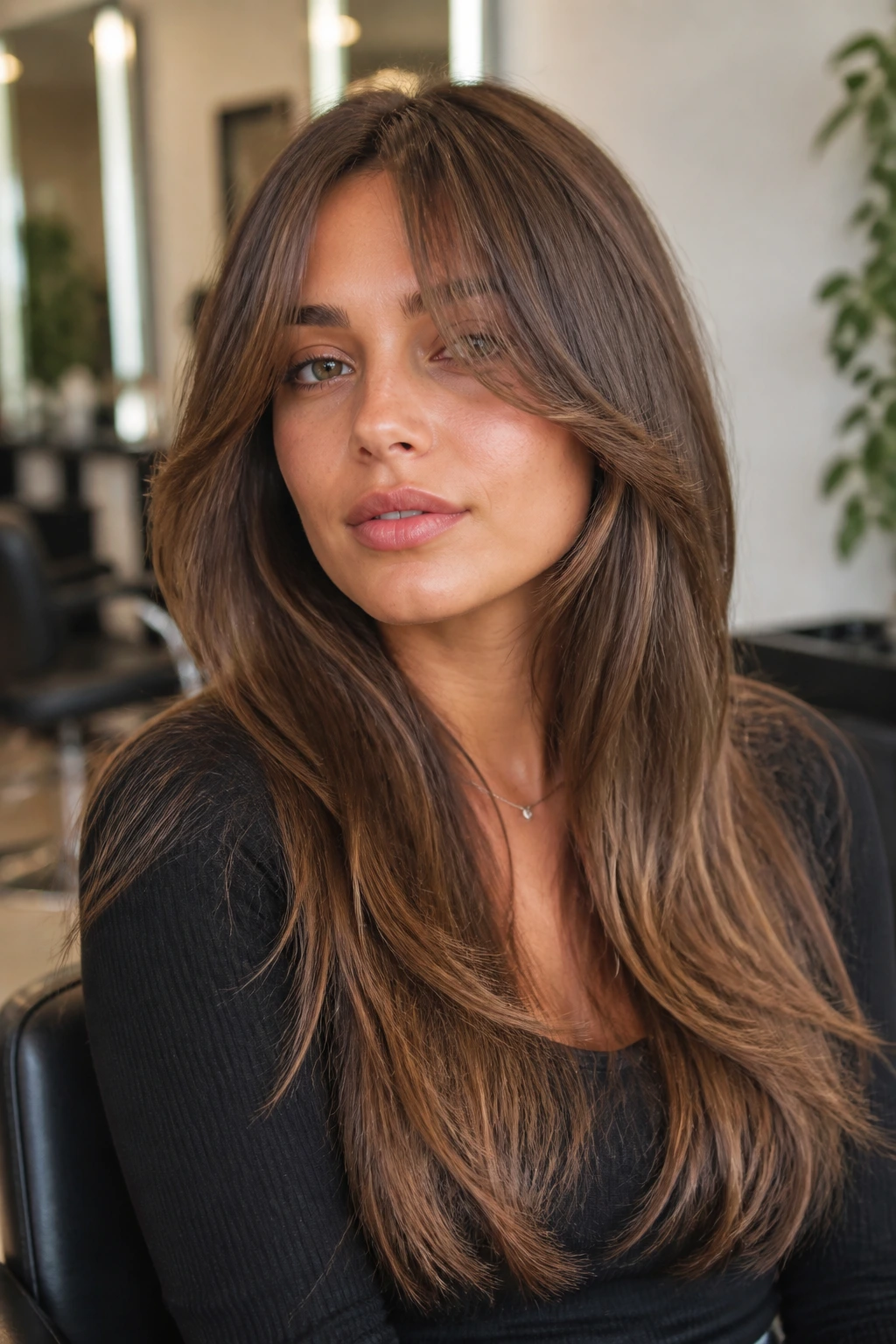
This is the low-commitment option, and honestly, it’s underrated. Blended long bangs are cut so the fringe almost disappears into the rest of the haircut. You still get a face-framing effect, but there’s no obvious line where the bangs end and the layers begin. On a square face, that blur is useful.
I like this version when someone wants softness but doesn’t want to announce the fringe every morning with a round brush. The front can fall from the brow toward the cheek, then taper into the first long layer. It looks especially good on straight to slightly wavy hair.
The main thing is density. Keep enough hair in the front that the bangs actually show up. If they’re too sparse, the face can start to look wider because the eye stops at the outer edges. Blending should soften the line, not erase the shape.
14. Soft Choppy Bangs with U-Shaped Layers

Soft choppy bangs bring a little edge, but the U-shaped layers around them keep the haircut from getting too sharp. The center sits a touch shorter, the sides get longer, and the line curves gently around the forehead instead of cutting straight across it. That curve is a good thing on square faces.
This cut works well if you like texture spray and finger styling. It’s not a “brush it perfectly into place” haircut. It looks better when the pieces separate a little and the ends stay soft.
What makes it work
The U-shape gives the front a rounded frame, which helps balance a strong jaw. The choppy texture keeps the fringe from looking heavy. And the longer side pieces can be tucked behind the ears or left loose, depending on how much face you want to show.
15. Rounded Fringe with a Gentle Arch

Why does a rounded fringe flatter a square face so cleanly? Because the arch softens the forehead without creating a blunt rectangle across it. The curve matters more than the density. Even a fuller fringe can work if the silhouette has a little lift in the middle and softer sides.
This style is best when the corners near the temples stay longer than the center. That lets the fringe bend around the face instead of stopping hard at the sides. It’s a nice choice if you want the haircut to feel neat but not strict.
Where the arch should sit
Aim for the curve to rise gently over the center of the brow, then taper down toward the temples. Too much height makes the fringe look dated. Too little makes it look flat. The sweet spot is subtle enough that you notice the shape only after you look twice.
16. Peekaboo Fringe with an Off-Center Part

Peekaboo fringe is for the person who likes the idea of bangs more than the maintenance of a full fringe. The off-center part lets a piece fall across the forehead while still showing skin and breaking up the jawline. On a square face, that partial coverage can be easier to wear than a dense block of hair.
This cut is also forgiving on days when your hair does whatever it wants. If the bang splits, it still looks intentional. If it’s tucked behind one ear, it still keeps the front soft. That kind of flexibility is rare, and I’ll take it.
Useful details:
- Works well with medium to thick hair
- Best when the part sits just off the center, not far to the side
- Can be air-dried or lightly bent with a flat iron
- Keeps the forehead from looking too closed in
17. Old-Hollywood Side Bangs with Glossy Waves
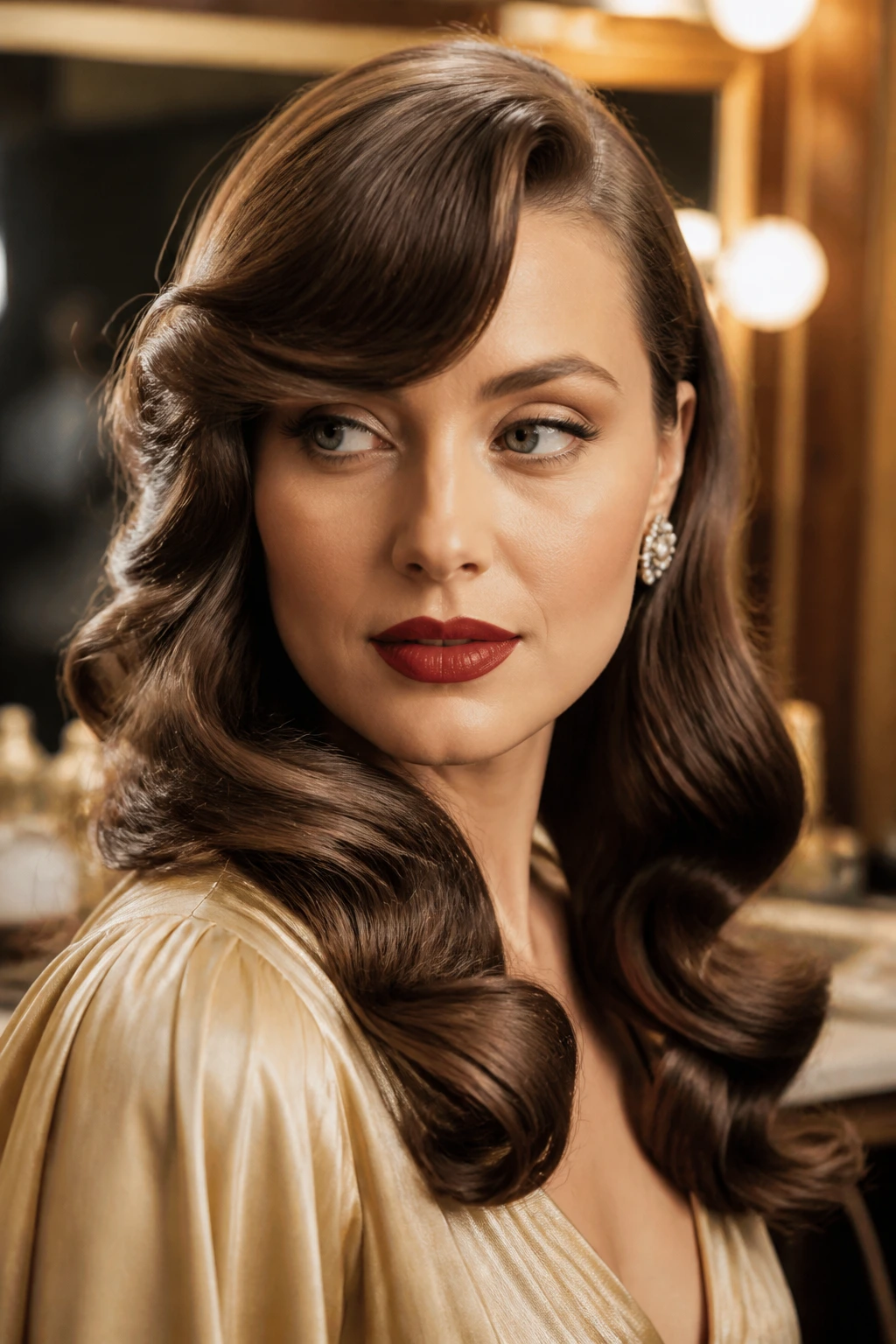
This is the polished version. The side bang sweeps across the forehead, the wave has a smooth bend, and the rest of the hair drops in soft layers that feel finished without feeling stiff. On square faces, the curved line of the wave is the whole payoff.
I love this when someone wants softness but doesn’t want anything wispy or broken up. The shape feels cleaner than a shag, but it still avoids a harsh edge. Use a medium-barrel iron, brush the curl out, and let the bang sit in a soft arc rather than a tight curl.
The side bang should stay long enough to skim the cheekbone. Anything shorter can look abrupt. Anything too long loses the lift at the forehead, and then the whole thing collapses into the face.
18. Airy Full Bangs with Tapered Temples
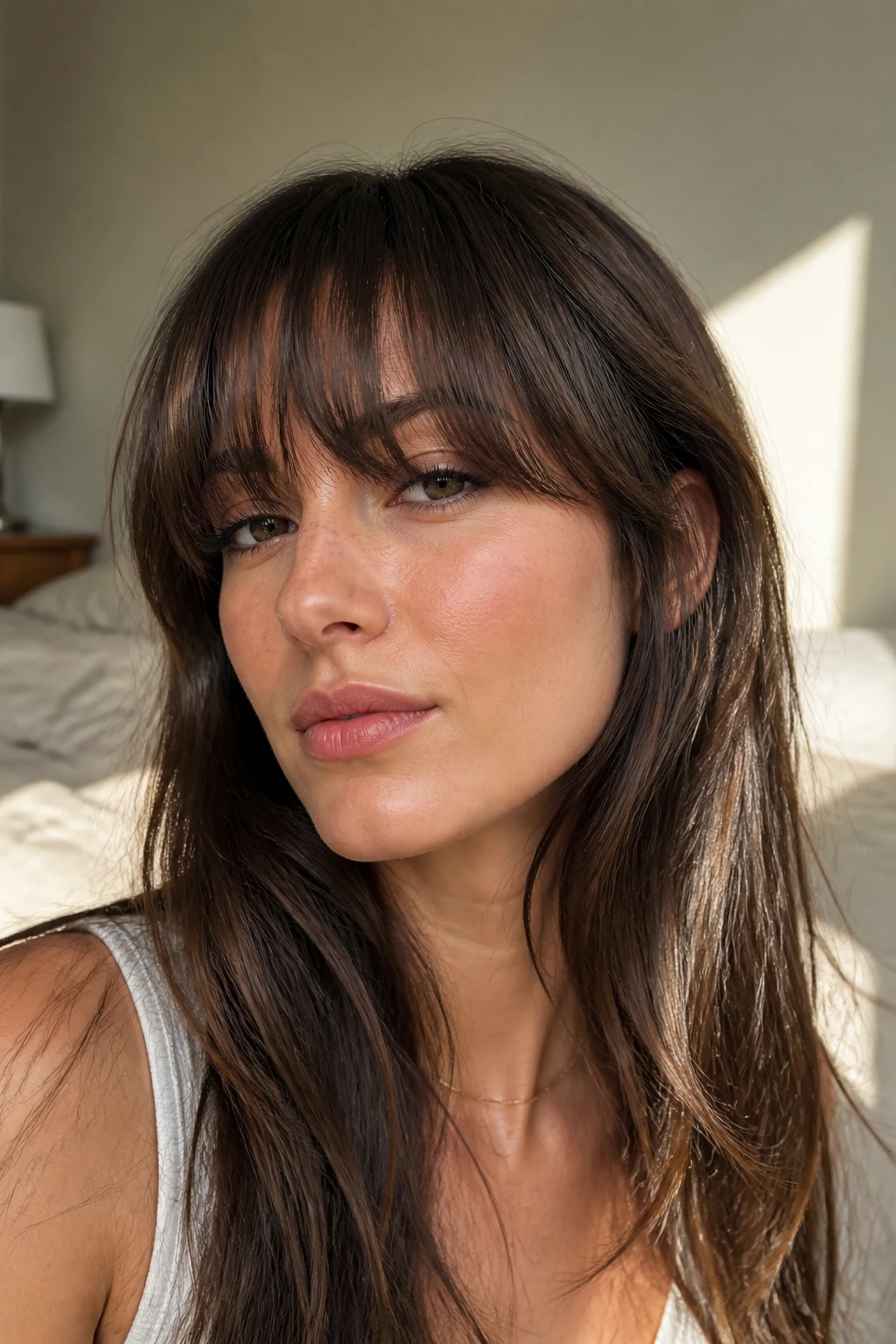
A fuller fringe can work on square faces if you keep the temples soft. That’s the part a lot of people miss. A heavy middle with hard corners at the sides can box the face in fast. Tapered temples solve that by thinning the edge where the fringe meets the longer layers.
This version is good if you want more coverage on the forehead but still want the haircut to feel light. It suits thicker hair best, because the density gives the fringe shape without having to force it. With fine hair, it can fall flat unless the root lift is done well.
The style should feel airy, not helmet-like. If the fringe sits across the entire forehead like a shelf, it’s too heavy. If it opens slightly at the temples, it starts to work.
19. Curved Curtain Bangs with Collarbone Layers
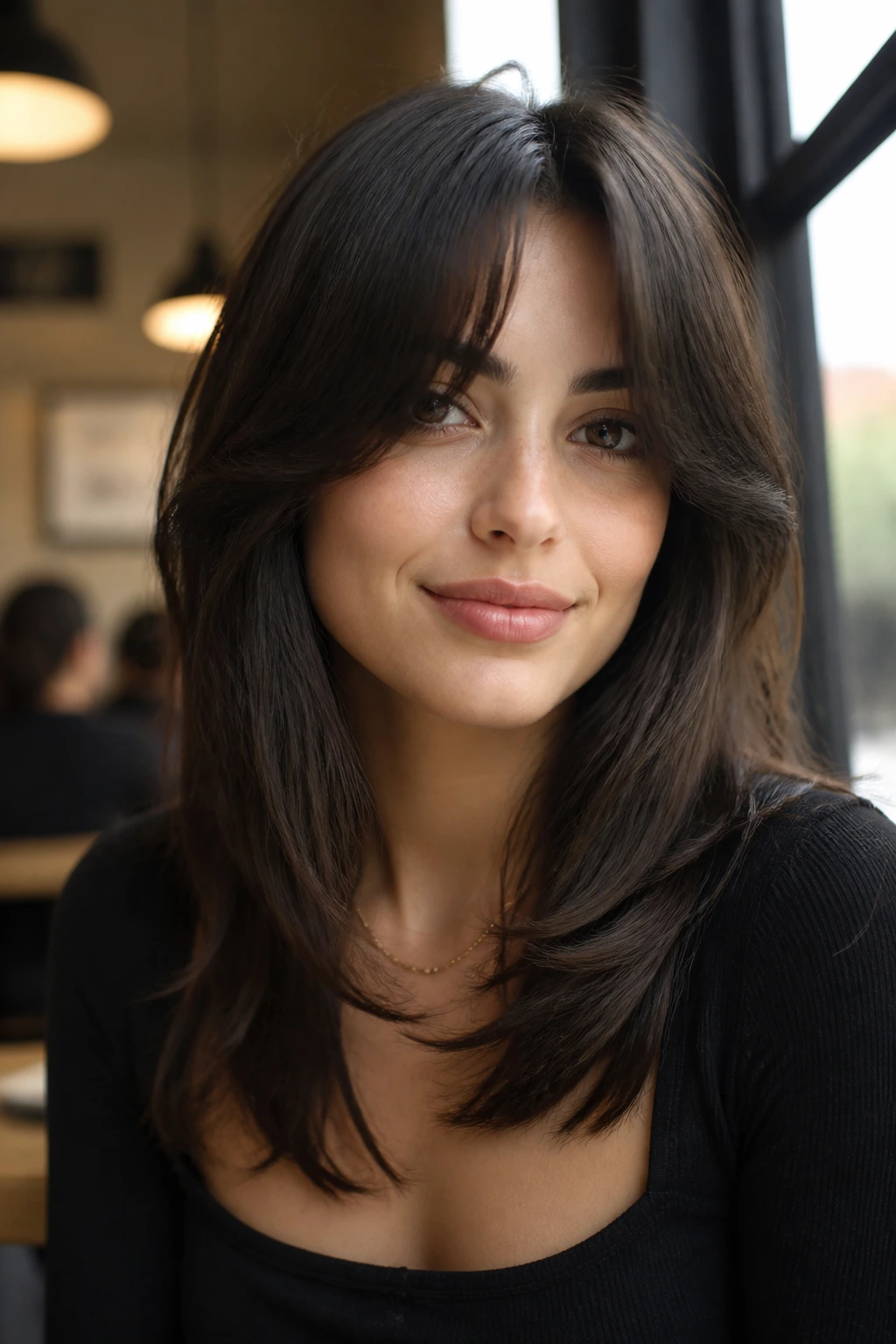
Curved curtain bangs are a softer, more elongated cousin of the classic split fringe. The center opens gently, the sides curve past the cheekbones, and the longer layers at the collarbone keep the whole look moving downward. That downward motion is exactly what a square face needs.
This cut is nice when you want something feminine without being fussy. It can be dressed up or left a little messy. The curve also means the hair doesn’t sit in one hard part line, which helps if your crown likes to split unevenly.
If you want the effect to last all day, wrap the fringe around a round brush in the same direction as the curve, then let it cool before touching it. Cooling matters. Everyone skips that step, then wonders why the fringe falls flat by lunch.
20. Soft Wolf Shag Bangs for a Square Face
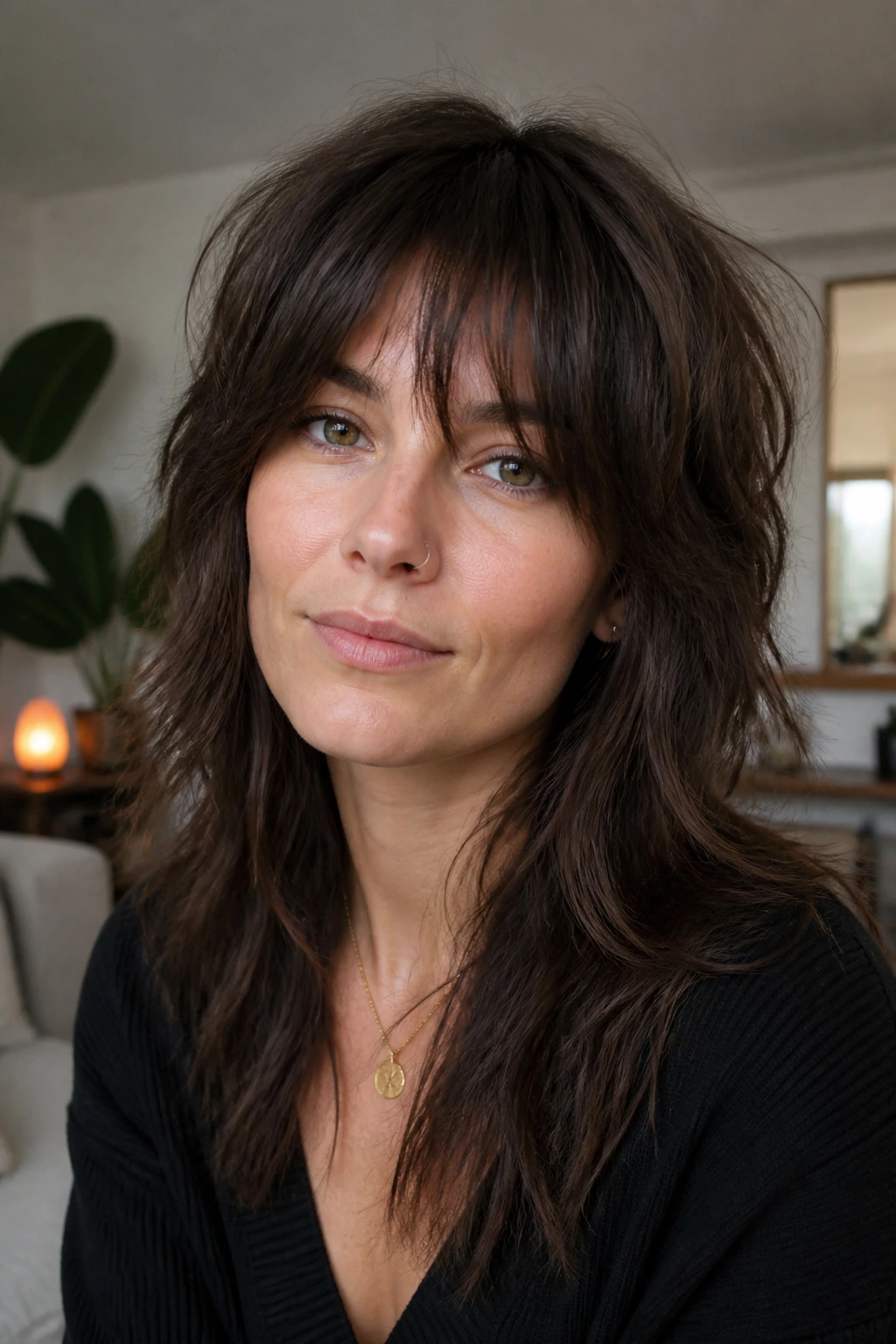
Can a wolf shag work on a square face? Absolutely, if the fringe stays soft and the layers don’t get too jagged. The problem with the wrong wolf cut is that it can pile too much texture right at the jaw and make the face look boxier. The fix is to keep the fringe long, broken up, and a little feathery.
This version is for someone who wants edge but still wants the face to read softly. Let the shortest pieces sit near the brows, then taper the sides so they join the longer shag layers around the cheek and neck. That keeps the shape from turning into one big square outline.
What to ask for
Ask for movement around the front, not a blunt perimeter. If the stylist reaches for too much density at the jaw, stop them. You want the texture on top, the softness around the sides, and a perimeter that doesn’t sit like a block.
21. Long Birkin Bangs with a Fuzzy Finish

Long Birkin bangs have a slightly undone, lived-in feel that works well when you want fringe without a sharp line. The front sits lower and softer than a classic brow-skimming bang, and the ends are never too crisp. On square faces, that fuzziness takes the edge off the forehead and keeps the front from looking too severe.
I like this style on straight or slightly wavy hair that can hold a little bend but doesn’t need a perfect blowout. It feels French in the best sense: relaxed, a bit imperfect, and not trying too hard. That’s a useful energy on a square face because it softens rather than frames too hard.
The bangs should not be thick enough to hide the forehead completely. A little see-through texture is part of the charm. Too much density turns them into a blunt fringe, and then you lose the shape.
22. Extra-Long Face-Framing Bangs for Thick Hair
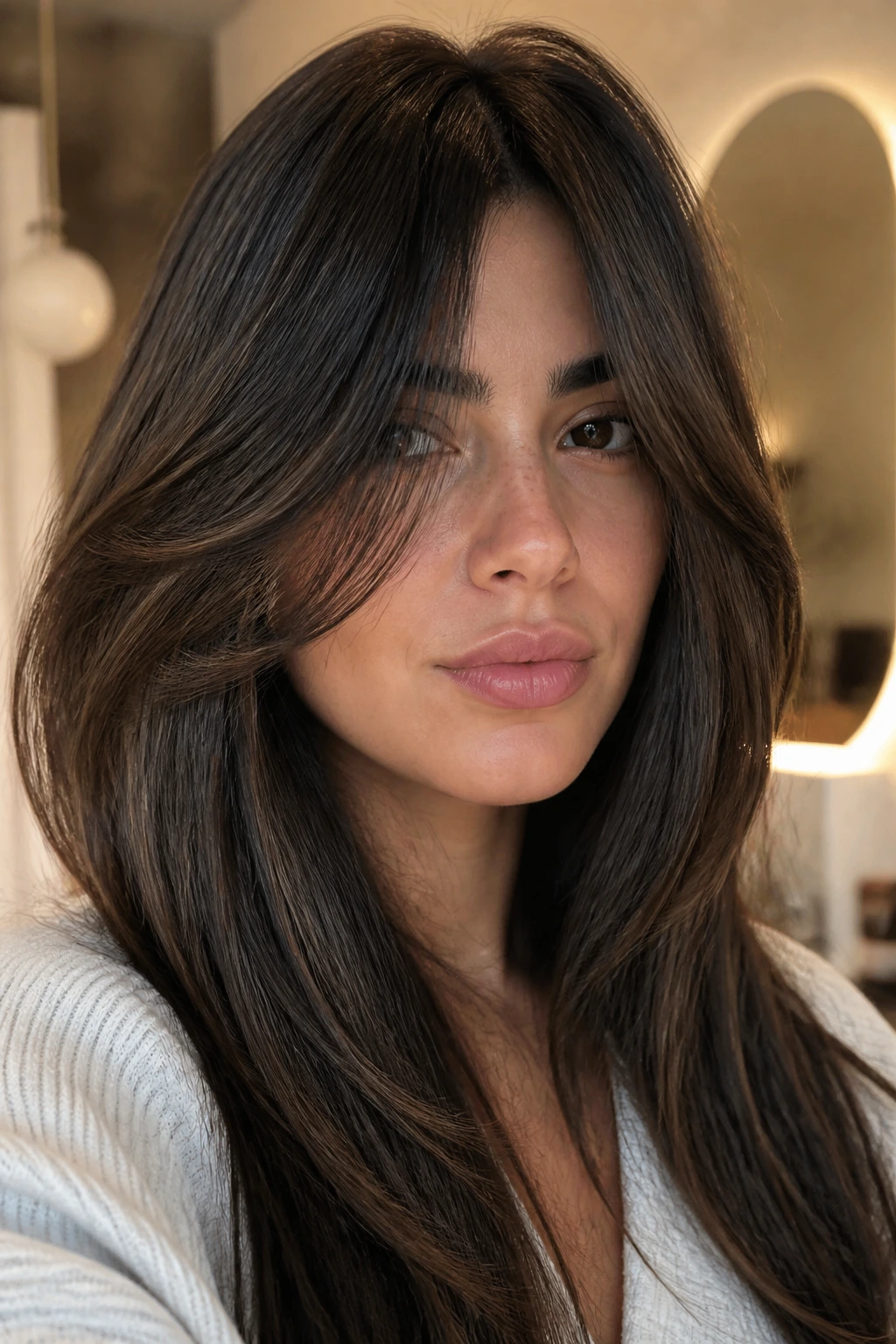
Thick hair needs room to move, and that means the front pieces should stay longer than you think. Extra-long face-framing bangs can start around the cheekbone and drop all the way toward the chin, which gives square faces a longer visual line and keeps the bulk away from the jaw.
This is one of my favorite options when the hair is dense and wants to sit heavy. Instead of fighting that weight, the cut uses it. The layers are carved so they remove bulk from the inside, but the outline stays soft and full.
Best for:
- Hair that holds shape but feels heavy at the front
- Square faces that need more vertical length
- People who like to tuck one side behind the ear
- Cuts that should grow out without a crash
23. Lightweight Long Bangs for Fine Hair
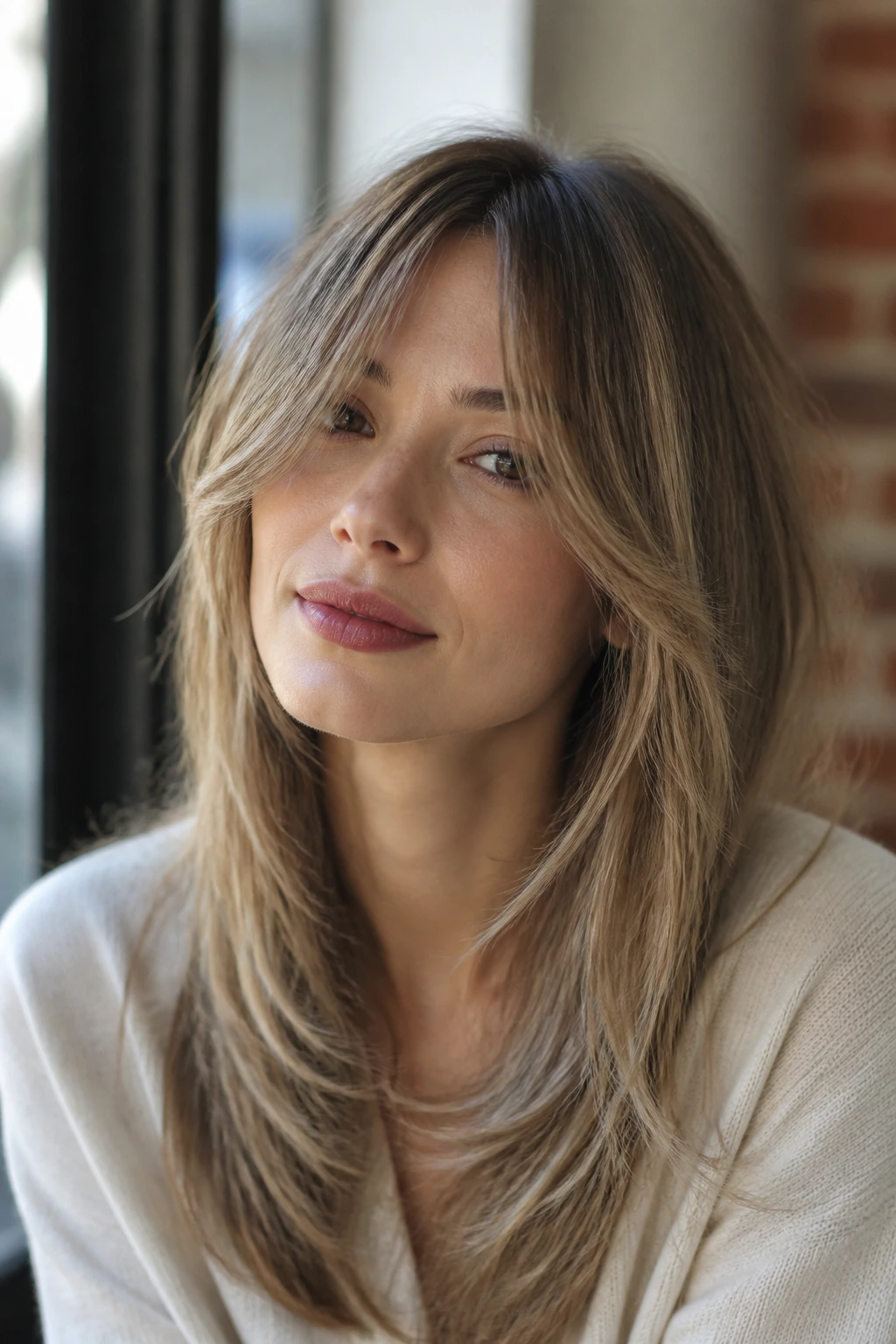
Fine hair needs a different kind of softness. If the fringe is too sparse, the square face starts to show more edge. If it’s too dense, the hair falls limp and clings to the forehead. The answer is a lightweight long bang with enough body in the center to register, plus soft layers that blend into the rest of the cut.
A little root lift goes a long way here. You don’t need a giant blowout; you need the bangs to leave the forehead instead of sticking to it. A small round brush, a light mousse, and a quick cool shot usually do the job.
Keep the ends soft, not wispy to the point of nothing. There’s a difference. Wispy can mean airy. It can also mean too thin. On fine hair, you want airy.
24. Grown-Out Fringe That Still Looks Intentional
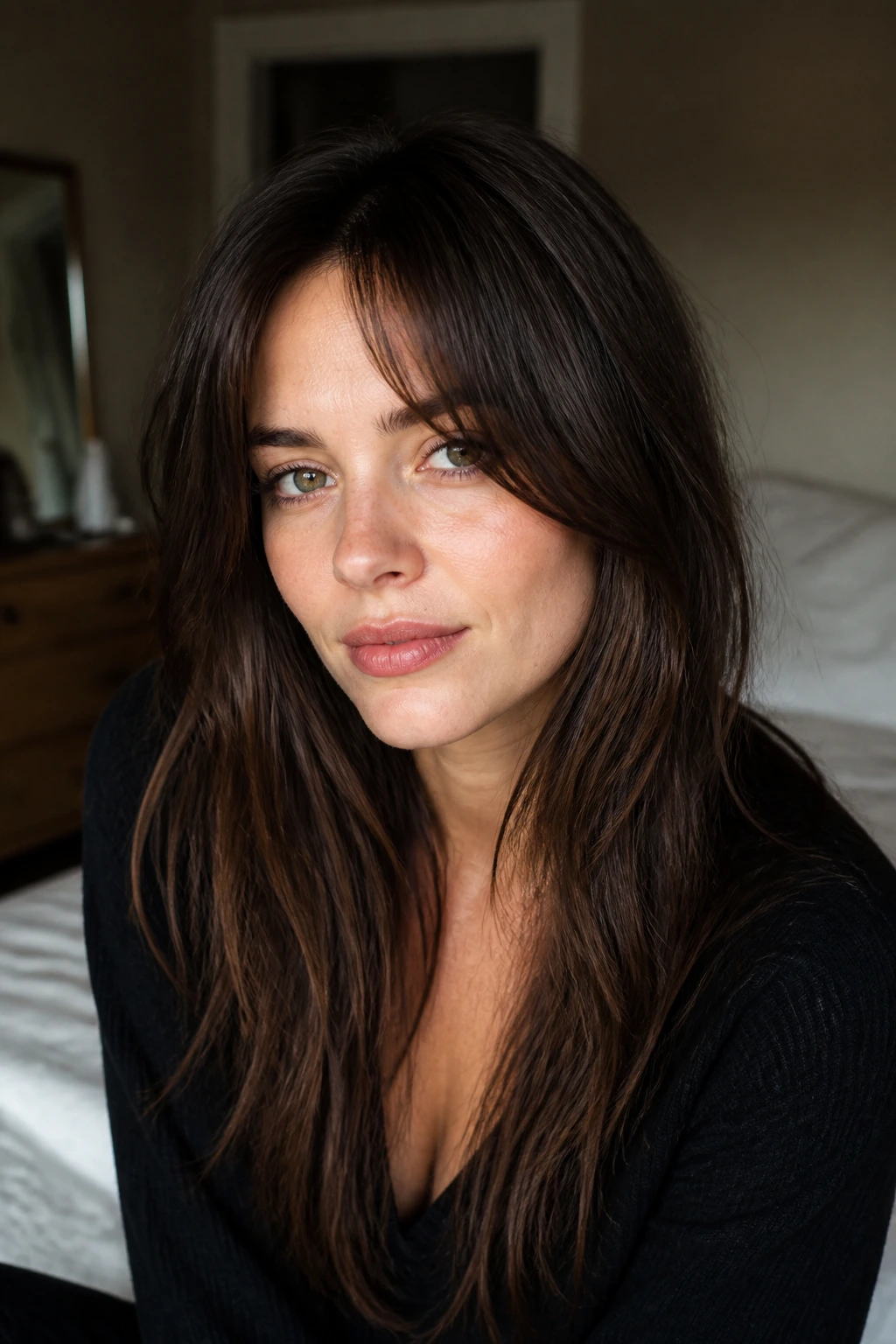
This is the style for the in-between stage, which is where a lot of people live whether they admit it or not. Grown-out fringe can still flatter a square face if the layers are cut so they split naturally around the cheekbone and brush into the length. The mistake is letting the bangs grow into a blunt curtain with no plan.
A good grow-out cut should tuck easily, fall forward without sticking straight down, and still frame the jaw a little. That means your stylist needs to leave the front long enough to move between parts. If you’ve ever had bangs that only looked good in one exact position, you know why this matters.
How to keep it intentional
Use a quick bend at the ends and a little dry shampoo at the root. Don’t fight every split. A grown-out fringe works because it looks relaxed, not because every strand is in line.
25. Polished Occasion Fringe with Soft Layers
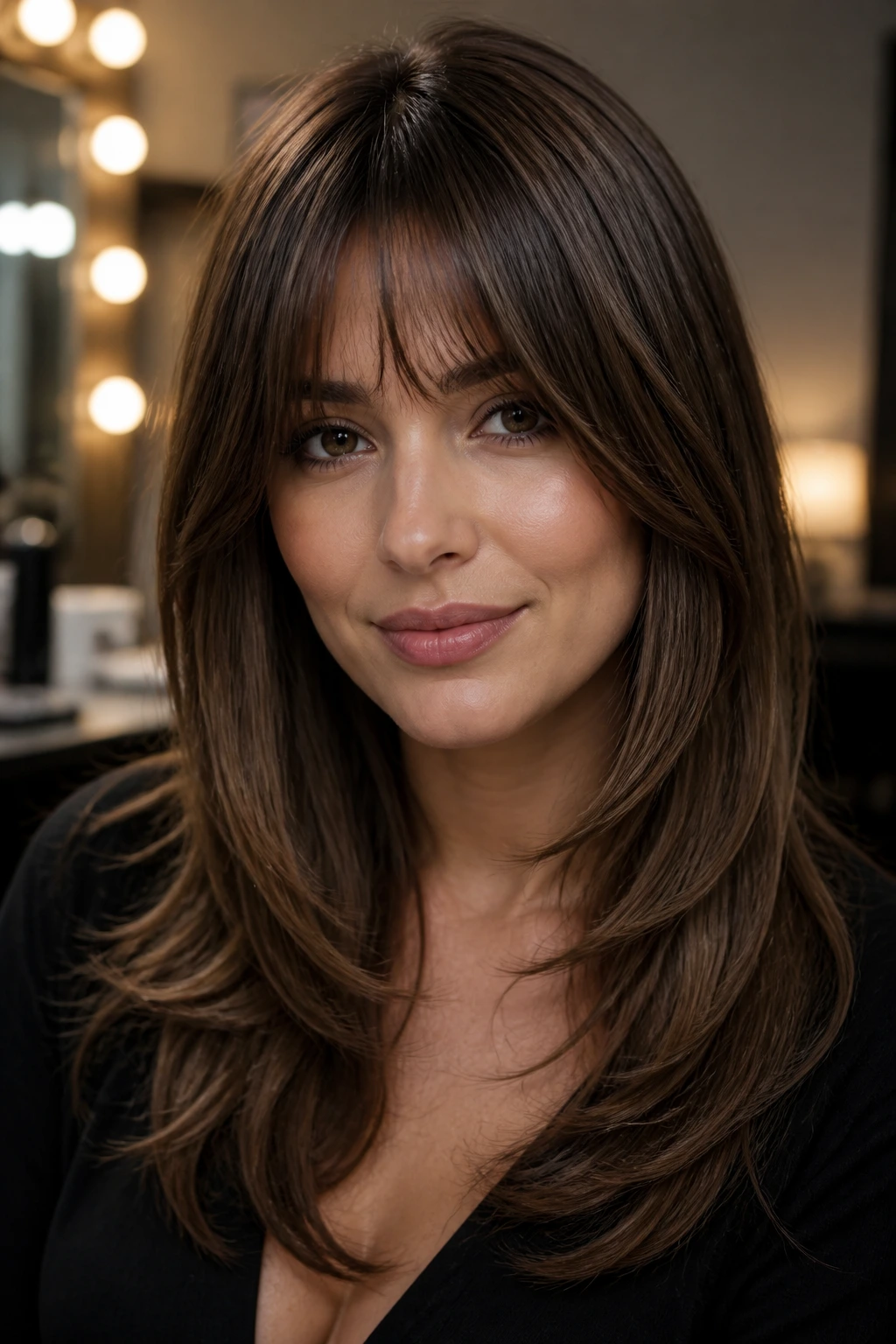
This is the version I reach for when I want the haircut to look finished from every angle. The fringe is long, smooth, and softly parted, with layers that curve around the face and settle into the collarbone. On a square face, that smooth curve gives you elegance without harshness.
The key here is polish, not stiffness. You want shine, movement, and a front that sits with control. A flat iron can help, but only if you give the ends a small bend instead of dragging them poker-straight. That little curve keeps the front from looking severe.
This is also the most forgiving version for formal dressing, because it doesn’t fight the neckline of a dress or blazer. The bangs frame the face, the layers soften the shoulders, and the whole cut feels balanced. No fuss. Just shape.
What Long Length Bangs and Soft Layers Do on a Square Face
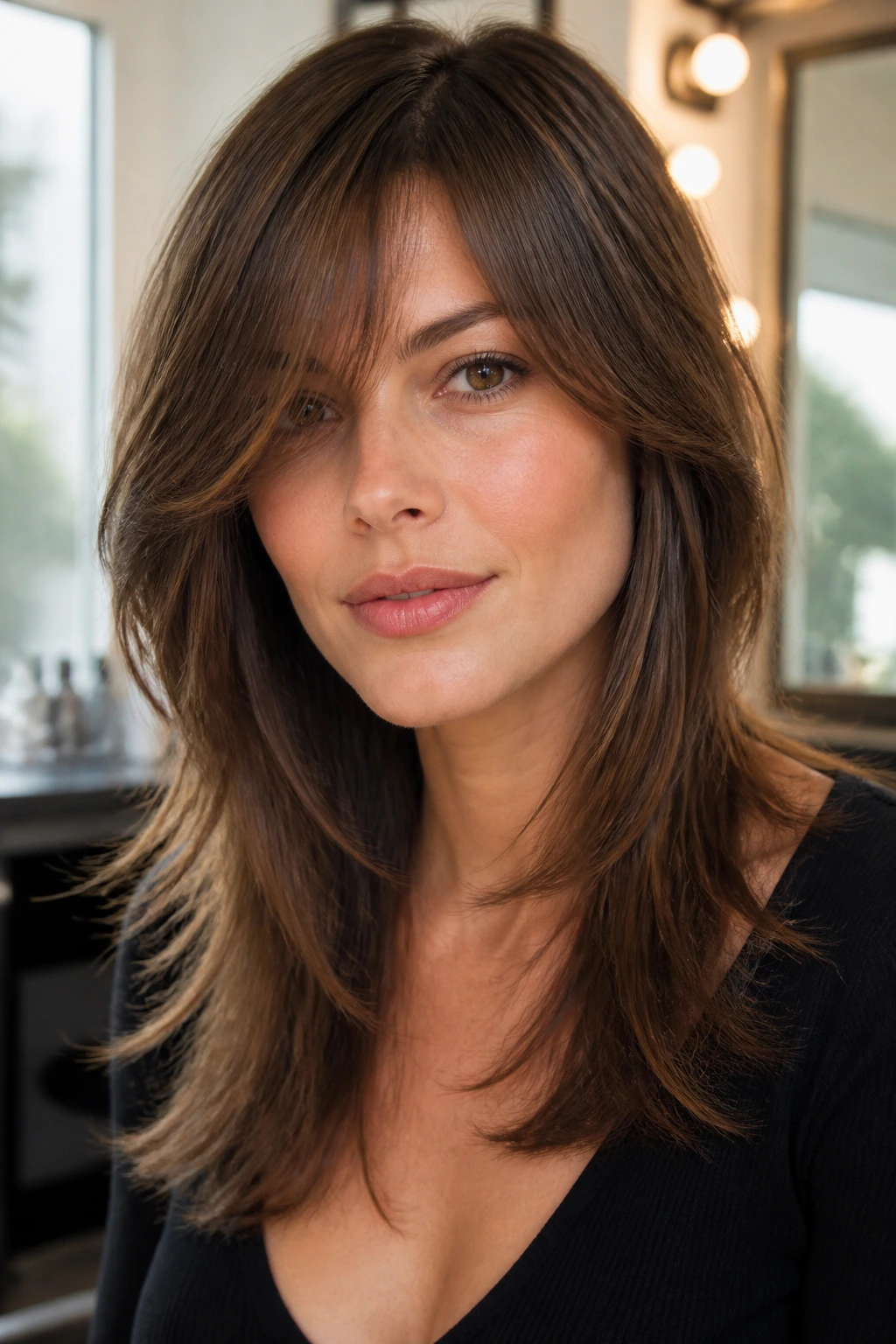
Square faces usually have a wider forehead, a strong jaw, and corners that can show up fast in a blunt haircut. That’s not a problem. It just means the haircut needs to give the eye a few softer paths to follow. Long length bangs do that by creating diagonal movement across the forehead, and soft layers continue the line down around the cheeks and neck.
The most useful thing to remember is this: the shortest point of the fringe should not sit like a wall across the face. It should open, taper, or curve. If the front is too heavy, the haircut starts fighting the face shape instead of working with it. If it’s too thin, the face can look wider because there isn’t enough hair in the front to redirect the eye.
A square face usually benefits from bangs that land around the cheekbone, mouth, or chin rather than stopping short above the brows. That extra length doesn’t drag the face down when it’s cut well. It actually creates a longer outline. And when the layers are soft, the jawline looks less abrupt, which is exactly what most people are after.
What to Tell Your Stylist Before the First Snip
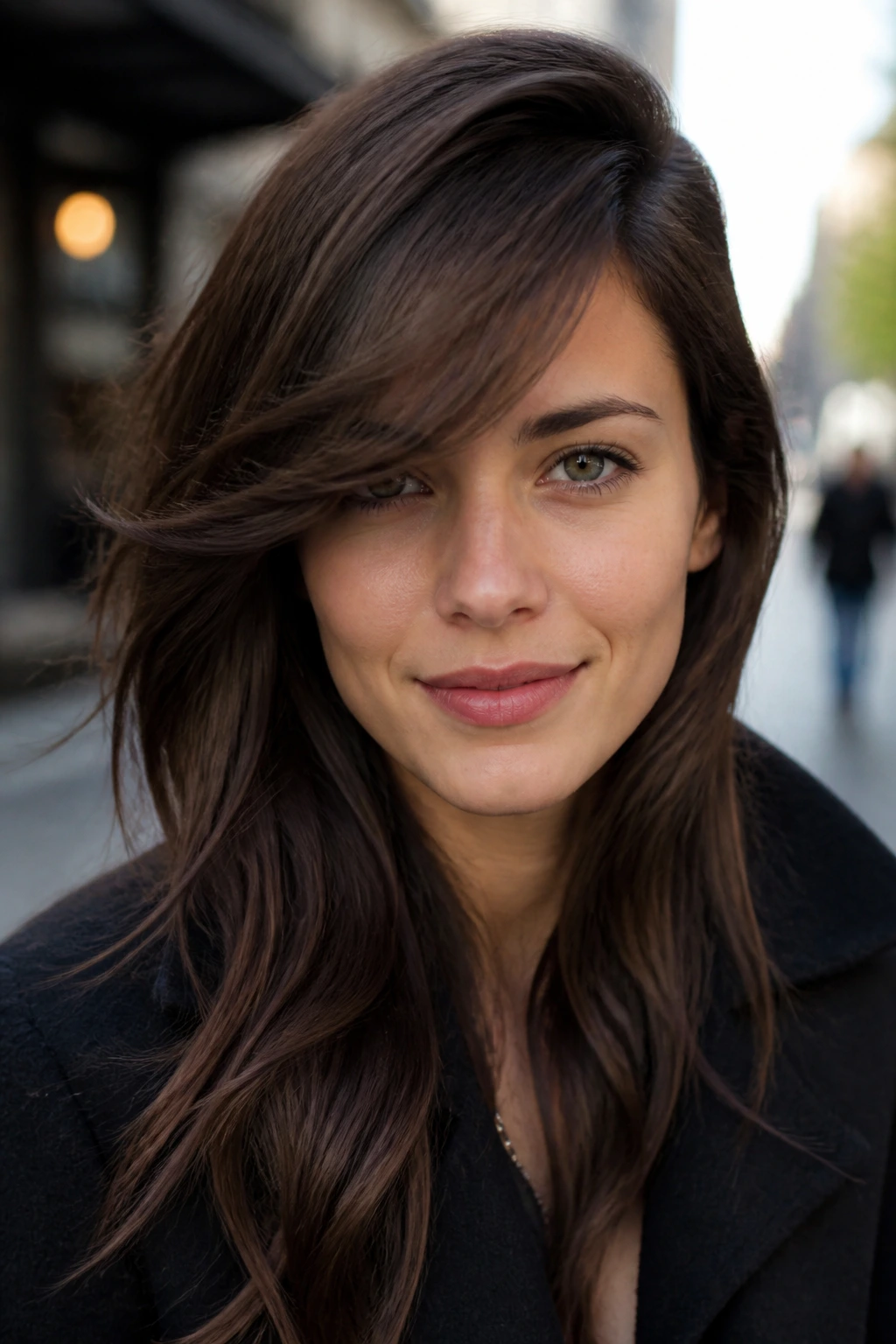
The fastest way to get a bad fringe is to say “something like curtain bangs” and hope for the best. Bring a photo, yes, but also bring a few concrete instructions. Tell your stylist where you want the shortest point to land — eyebrow, upper brow, or cheekbone — and where you want the sides to fall. That one detail changes everything.
Ask for soft face-framing layers that start around the cheekbone or lip, not a hard line near the jaw. On square faces, the first layer should usually slide into the front rather than sit flat at the chin. If your hair is thick, ask for internal removal of weight. If it’s fine, ask them to keep enough density that the fringe doesn’t disappear after you blow it dry.
Useful salon language
- “I want the bangs to stay long enough to brush the cheekbone.”
- “Please keep the edge soft, not blunt.”
- “The fringe needs to grow out cleanly.”
- “My hair splits here, so I need the part to respect that cowlick.”
- “I want the layers to soften the jaw, not sit on it.”
Bring two pictures if you can. One for the front fringe. One for the layer shape. Those are not the same thing.
The Tools That Make This Fringe Behave
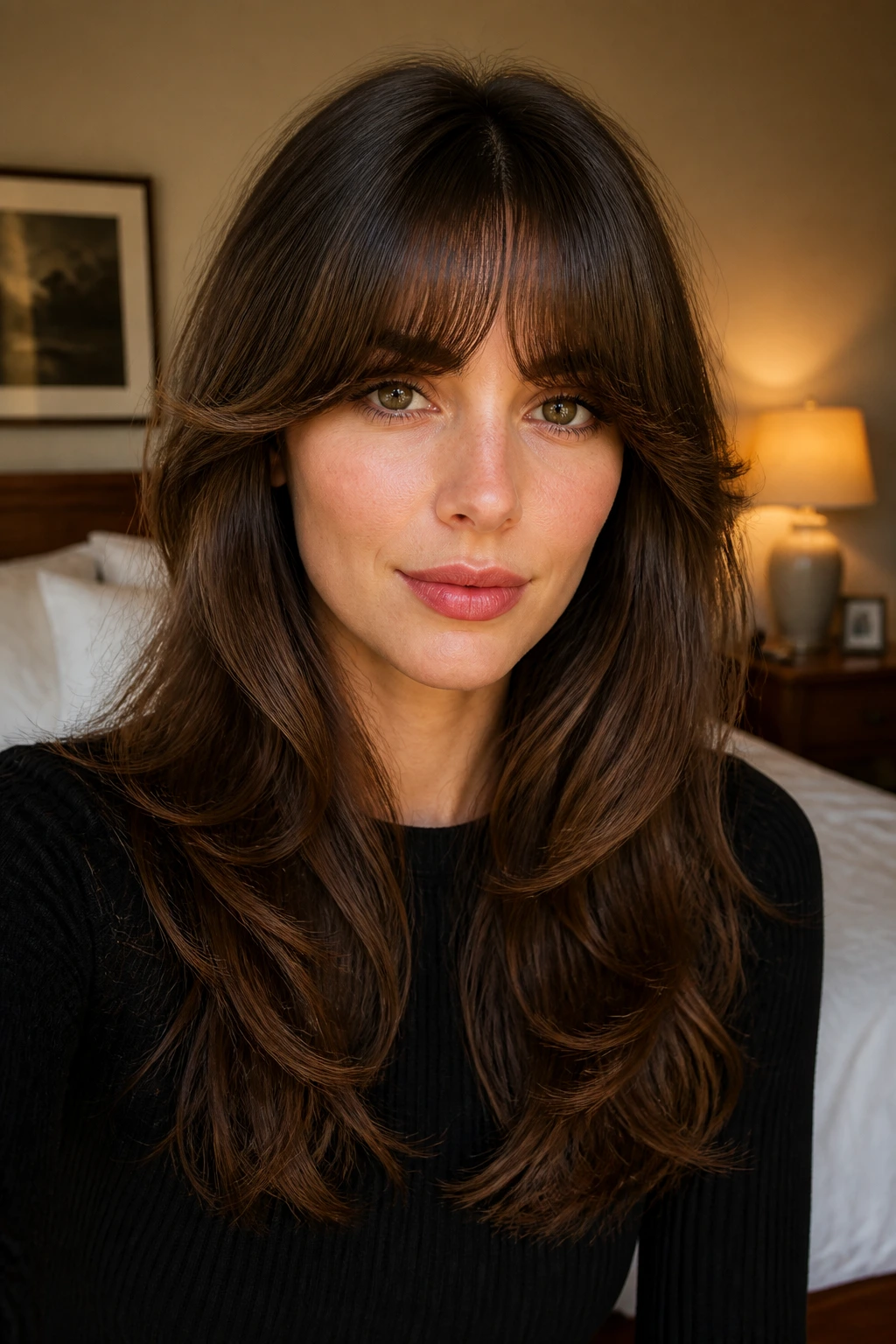
You do not need a shelf full of gadgets, but a few tools make long bangs much easier to manage. The good ones save time. The wrong ones just sit in a drawer and make you feel guilty.
- Blow-dryer with a concentrator nozzle: Directs airflow so the fringe doesn’t puff in all directions.
- 1- to 1.5-inch round brush: Best size for bending long bangs without making them look curled under too much.
- Tail comb: Useful for clean parts and for sectioning the fringe while drying.
- Duckbill or sectioning clips: Hold the rest of the hair out of the way so you can dry the front properly.
- Light heat protectant spray: Keeps the front from frying when you style it every morning.
- Light mousse or root-lift spray: Gives fine or slippery hair some grip.
- Dry shampoo: Helps on day two and three, especially if the bangs get oily faster than the rest of the hair.
- Flexible-hold hairspray: Sets the curve without turning the fringe into a helmet.
- 1-inch flat iron or small curling iron: Handy for quick bends and S-curves on days when the brush feels like too much work.
How to Style These Bangs on Real Mornings

Fast Blowout:
Rough-dry the roots first, then section off the bangs and point the nozzle downward. Use the round brush to lift at the root and bend the ends away from the face. A cool shot for five to ten seconds helps the shape last longer than you’d expect.
Air-Dry Version:
Work a pea-sized amount of light styling cream through damp fringe, then part it and clip it in the direction you want it to fall. Let it dry with a little movement, not pinned flat to the forehead. Once it’s dry, shake it loose and bend any stubborn ends with a flat iron.
Second-Day Reset:
Mist the bangs lightly with water, then re-dry the root only. Don’t soak the whole front. That usually makes the hair frizz before it settles. A quick pass of dry shampoo at the root is enough for most people.
If the fringe separates weirdly:
Use your fingers to redirect the part while the hair is still warm. Fringe has a memory, and sometimes you have to remind it who’s in charge.
Extra Styling Moves That Change the Finish
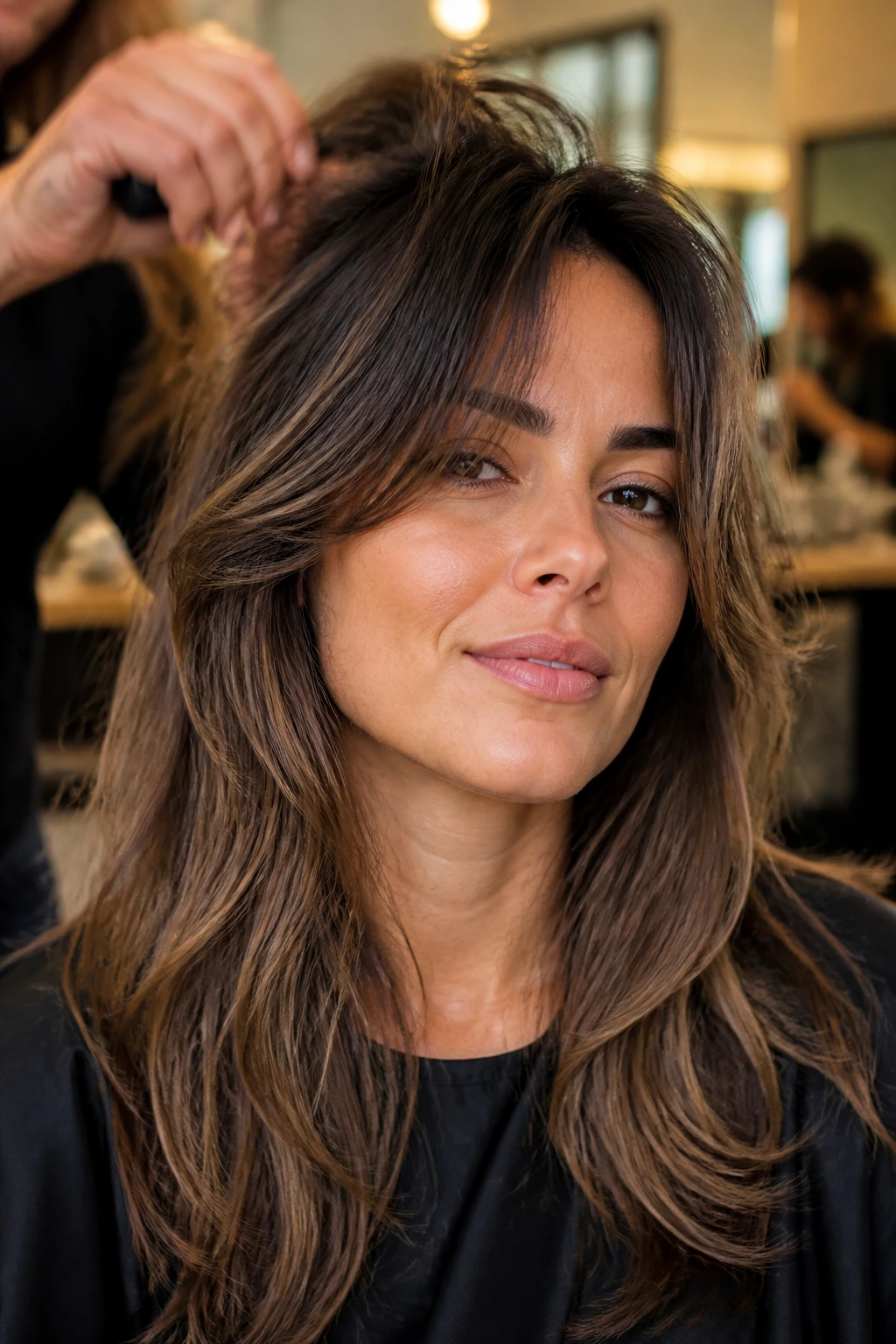
For more volume: Direct the airflow from side to side at the root for the first 20 seconds, then round-brush the fringe into shape. That little cross-current helps lift the bangs off the forehead.
For more softness: Brush the front away from the face, then back toward it, so the bend doesn’t lock into one curve. You want movement, not a hard curl.
For a sharper look: Use a flat iron to create a single subtle bend at the ends of the fringe. Keep the rest smooth. That works best on curtain bangs and long side-swept pieces.
For a lived-in finish: Skip the last pass of the brush and separate the fringe with your fingers. A tiny bit of texture spray at the mids can keep the bangs from looking too polished.
For a square face that feels especially wide: Keep more hair on the sides than in the center. That means a little more length at the temples and cheekbones, which stretches the face visually.
Keeping the Shape Between Trims
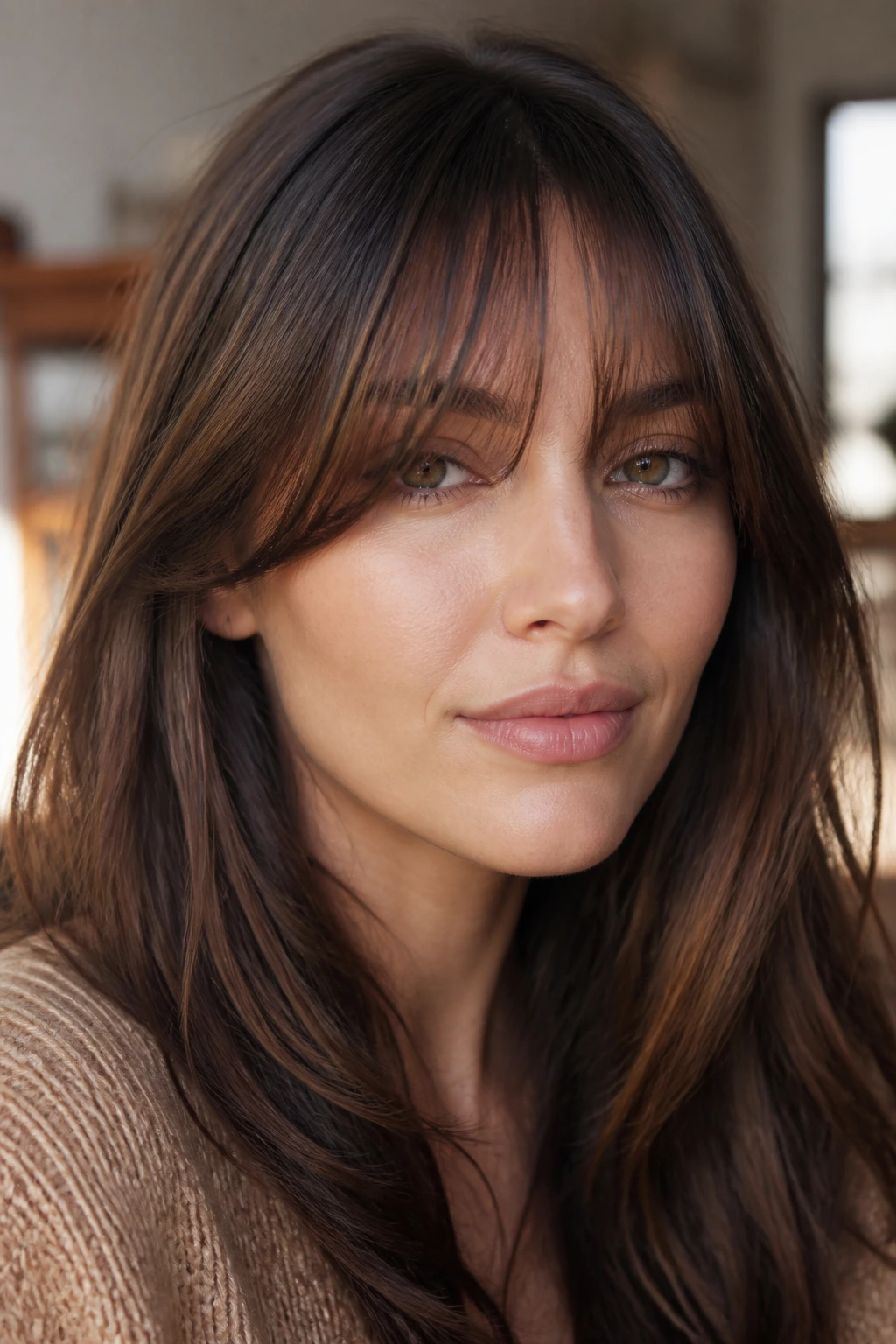
Long bangs are forgiving, but they still need maintenance if you want the shape to stay flattering. Fringe usually needs a trim every 4 to 6 weeks if you’re wearing it actively. If you’re letting it grow out, you can stretch that to 8 to 10 weeks, but the front will start to lose its line before the rest of the cut does.
Wash the bangs more often than the rest of the hair if they get oily at the forehead. That doesn’t mean shampooing the whole head every day. It means the front sometimes needs a quick sink rinse or a little dry shampoo so it doesn’t separate into strings by noon. If you heat-style the fringe daily, use heat protectant every single time. Not once in a while. Every time.
At night, clip the bangs up loosely or sweep them to the side before bed. Sleeping directly on the fringe tends to create a bend in the middle and a weird flat spot at the root. If the hair starts flipping in the morning, dampen the root only and blow-dry it in the direction you want before you touch the ends.
Common Mistakes That Make a Square Face Look Boxy
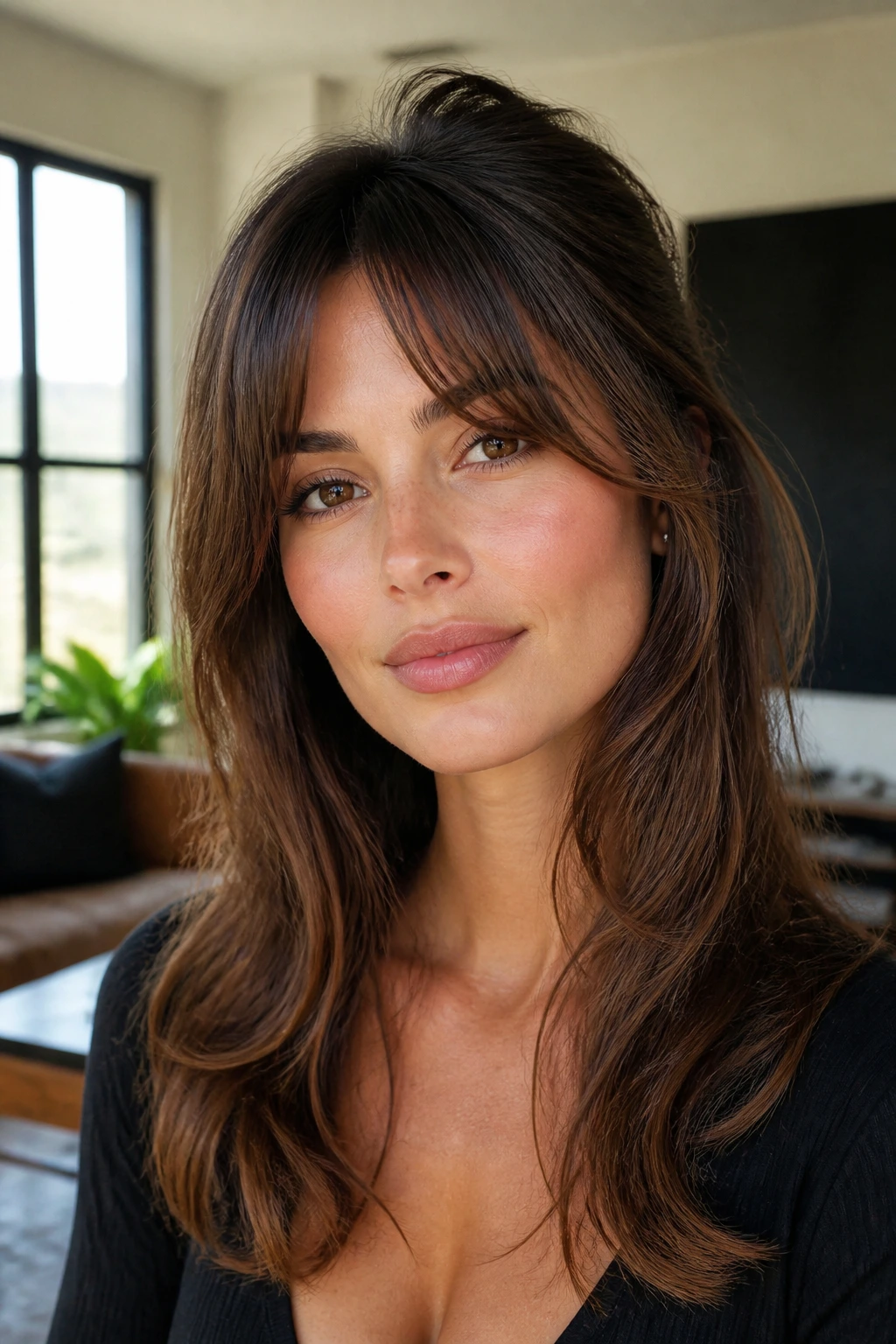
- Cutting the bangs too short: A short fringe can expose the forehead and jaw at the same time, which makes the face feel more squared. Keep the shortest point at the brow or lower.
- Making the edges blunt: A hard line across the forehead fights against the softness you want. Ask for point cutting, slicing, or feathered ends instead.
- Letting the side pieces stop at the jaw: That can land right on the strongest part of the face. Better to go a little longer so the layers taper through the chin or collarbone.
- Over-thinning fine hair: Bangs that are too sparse can disappear once they’re styled, and then the face looks wider. Keep enough density in the center to show shape.
- Ignoring a cowlick: If your fringe naturally splits, a straight-down cut will fight it every morning. Tell the stylist before they cut.
- Styling the bangs into a tight curl every day: Too much bend makes the front look dated and heavy. A soft curve is enough.
Variations for Straight, Wavy, Curly, Thick, and Fine Hair
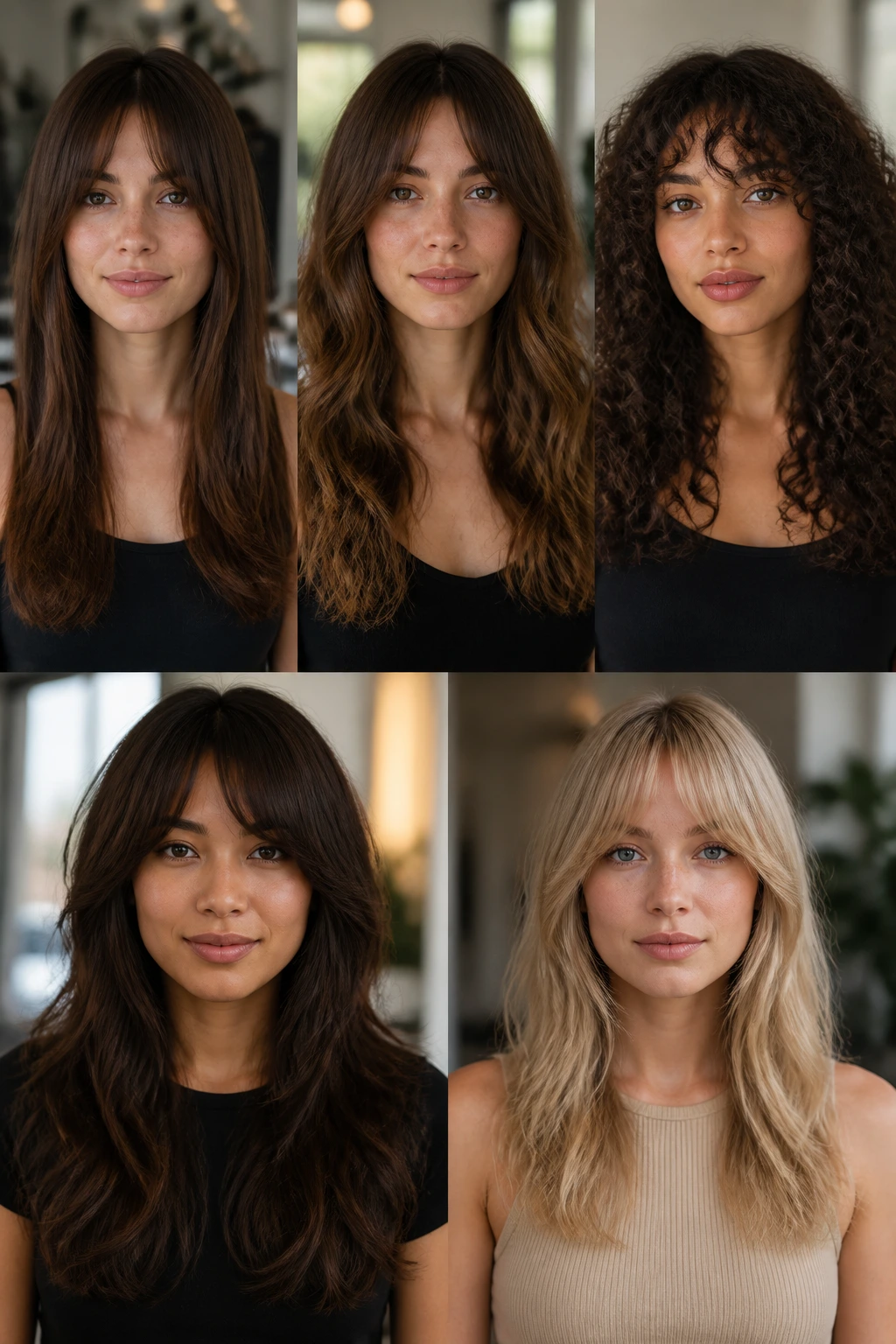
Glass-Hair Curtain:
Best for straight hair that likes a clean finish. Keep the fringe long and the ends soft, then use a round brush just enough to bend the sides away from the face. Too much curl takes away the sleek line.
Beach-Wave Sweep:
Wavy hair looks good with a little disarray in the front. Keep the bangs piecey and let the texture do most of the work. A salt spray can help, but don’t overdo it or the fringe gets crunchy.
Curl-Friendly Fan:
For curls, cut the fringe dry or nearly dry and let the natural shrinkage guide the length. The front pieces should open like a fan, not sit in one straight arc. This keeps the face soft without fighting the curl pattern.
Dense-but-Airy Frame:
Thick hair needs weight removed from the inside, not hacked off the edges. Keep the outline long and the layers soft so the fringe doesn’t land like a solid curtain.
Paper-Light Fringe:
Fine hair needs enough density to show up but not so much that it collapses. A little root volume, a soft blow-dry, and light layering around the face can make this shape last all day.
Grow-Out Split:
If you’re between lengths, let the front pieces separate naturally around the center or side part. The key is to keep the lengths long enough that they can tuck, sweep, and settle without a fight.
Frequently Asked Questions

Are curtain bangs good for square faces?
Yes, as long as they’re long enough to soften the jaw and not cut straight across the forehead. The best versions land around the cheekbone or lower and taper into the sides.
What bang length is most flattering on a square face?
Usually the safest length is somewhere between the brow and cheekbone in the center, with the sides extending toward the mouth or chin. That keeps the front soft and prevents the jaw from becoming the only strong line.
Should square faces avoid blunt bangs?
Not always, but blunt bangs are harder to wear because they can reinforce the horizontal width of the face. If you want a fuller fringe, make sure the temples and side layers are soft, tapered, or feathered.
Do long bangs work with curly hair?
They do, and they can be excellent. The trick is to cut them with the curl pattern in mind and leave enough length for shrinkage so the fringe still lands where you want it after it dries.
How often should I trim long fringe?
Every 4 to 6 weeks if you want it neat, or closer to 8 weeks if you’re letting it grow into layers. The front usually needs attention before the rest of the haircut does.
Will bangs make my face look wider?
They can if they’re too short, too blunt, or too dense at the sides. Long, soft bangs do the opposite because they create diagonal movement and pull the eye down the face.
What if my bangs split in the middle every day?
Work with the split instead of fighting it. A curtain, bottleneck, or off-center fringe usually handles a natural part better than a heavy straight-across cut.
Can I wear this kind of fringe with glasses?
Yes, and the longer versions are often easier than short ones. Keep the shortest point above or just grazing the frame line so the bangs don’t tangle with your glasses every time you blink.
A Fringe With Soft Edges
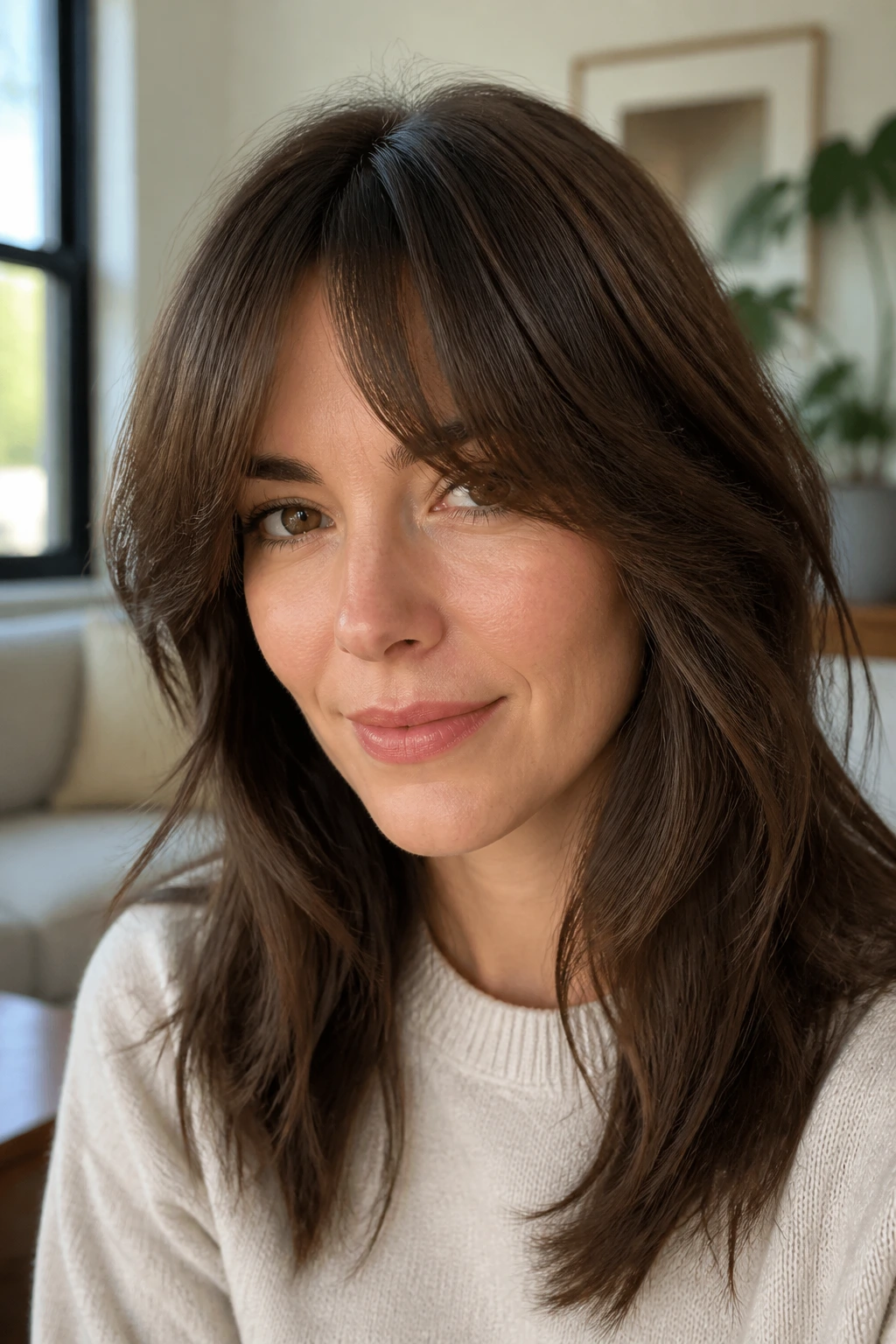
Square faces do not need to be hidden. They need a haircut that understands where the strong lines are and knows how to move around them. Long bangs and soft layers do that better than almost any other combo because they work with the bone structure instead of trying to flatten it.
The best part is how many directions you can take it. You can go polished, shaggy, airy, curled, split, or barely-there. Just keep the line long enough to move and the layers soft enough to blur the corners, and the whole haircut starts to look more graceful without losing shape.
Pick the version that matches your hair texture and your patience level, then give it a few mornings to settle. The first good fringe is usually the one that can live through real life, not the one that only survives a salon mirror.