



Layered hairstyles for long hair with thick hair can do one of two things: they can make all that density swing, bend, and move; or they can turn it into a puffy triangle that eats your shoulders. The difference is rarely the length. It’s where the weight comes out, how high the shortest layers start, and whether the cut respects the way thick hair naturally sits when it dries.
If you’ve ever left the salon with hair that looked light for exactly one blow-dry and then went back to acting like a curtain, you already know the problem. Thick hair has memory. It hangs heavy at the bottom, swells at the sides if the layering is too aggressive, and gets weirdly stubborn when the face-framing pieces are cut too short. You need shape, not chaos.
The best versions keep the ends full, give the front some air, and let the length stay long enough to feel like hair again instead of a pile of disconnected bits. That’s the sweet spot. Not chopped. Not flat. Just enough internal movement to keep the whole thing from feeling like a blanket.
Why These Cuts Keep Thick Hair Moving
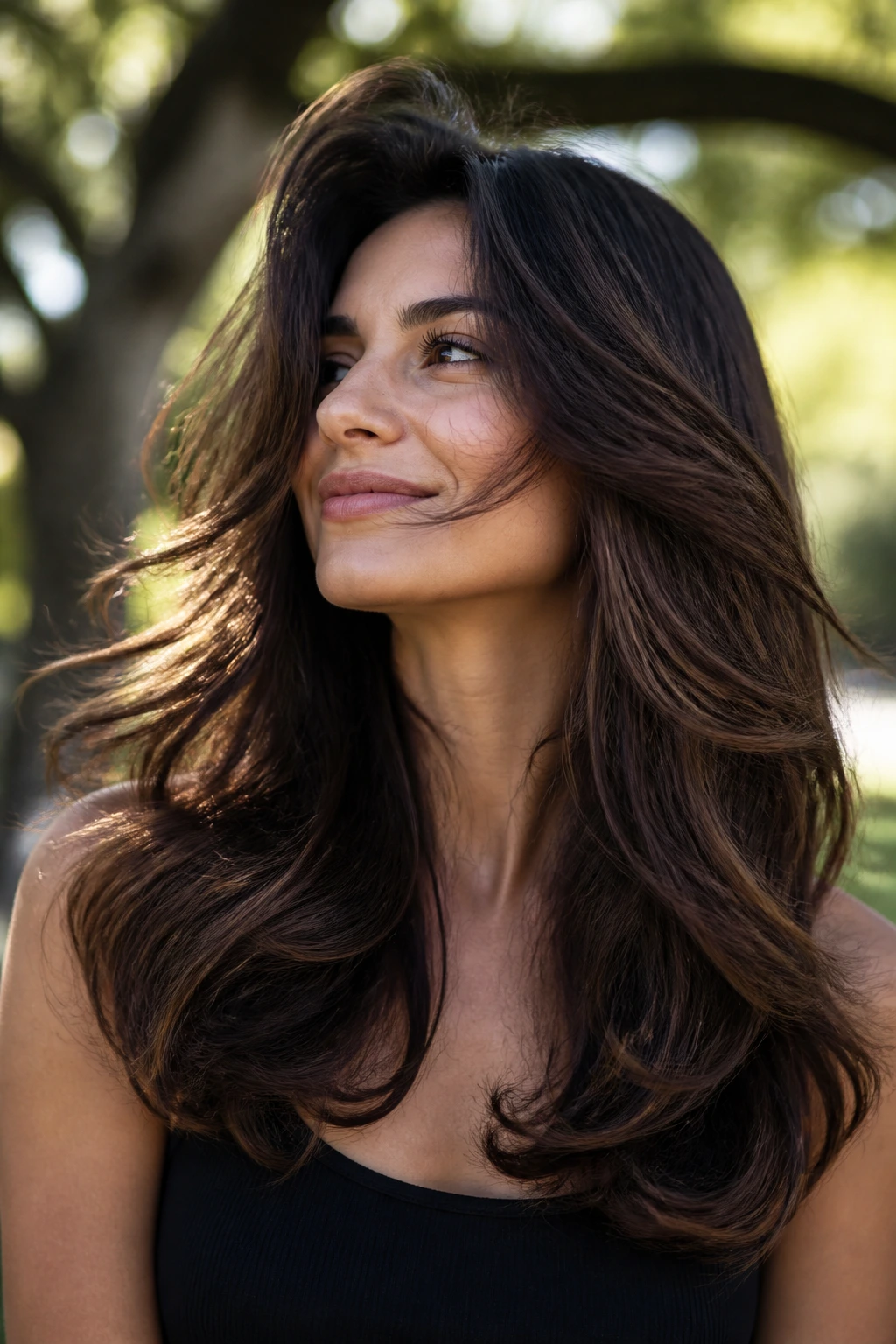
- Bulk Comes Out Where It Matters: These looks remove weight from the interior and the front, so the hair stops sitting in one heavy block.
- The Length Still Looks Expensive: Long hair on thick strands can lose its edge fast; these shapes protect the bottom line so the ends don’t look wispy.
- Face-Framing Does the Heavy Lifting: Cheekbone, jaw, and collarbone pieces open up the face without forcing you into a short cut.
- They Work With Real Life: Some of these styles love a blowout, some look better air-dried, and some are built to survive a claw clip.
- Grow-Out Is Part of the Plan: Good thick-hair layers should still look intentional after a few weeks of growth, not like the haircut was attacked by scissors in the dark.
1. Feathered Layers with Cheekbone Face Framing
Feathered layers are the old-school answer that still earns its keep because they soften thick hair without stealing the length. The cheekbone framing is the part people get wrong. Start too high and the front goes stringy fast; start around the cheekbone and the cut opens the face while the rest of the hair stays full.
This shape is especially good if you round-brush the front away from your face. The movement lands in a clean sweep instead of a hard bend, which matters when your hair has enough density to form its own personality. Ask for the ends to be point-cut lightly, not thinned aggressively. Thick hair usually looks better when the perimeter keeps some muscle.
2. Butterfly Layers with Long Wings
Butterfly layers are built for people who want the feeling of short hair near the front without giving up the long tail in the back. The upper layers are shorter and dramatic, while the lower length stays long and full. On thick hair, that split creates lift fast.
The trick is restraint. If the shorter pieces are cut too high, the style can puff out around the shoulders. When they sit around the collarbone and then fall into longer wings, the whole cut looks softer and easier to wear. It’s a good match for a round brush, a curling wand, or those days when you want the front to do something interesting and the back to stay long enough for a ponytail.
3. U-Shape Layers with a Full Hemline
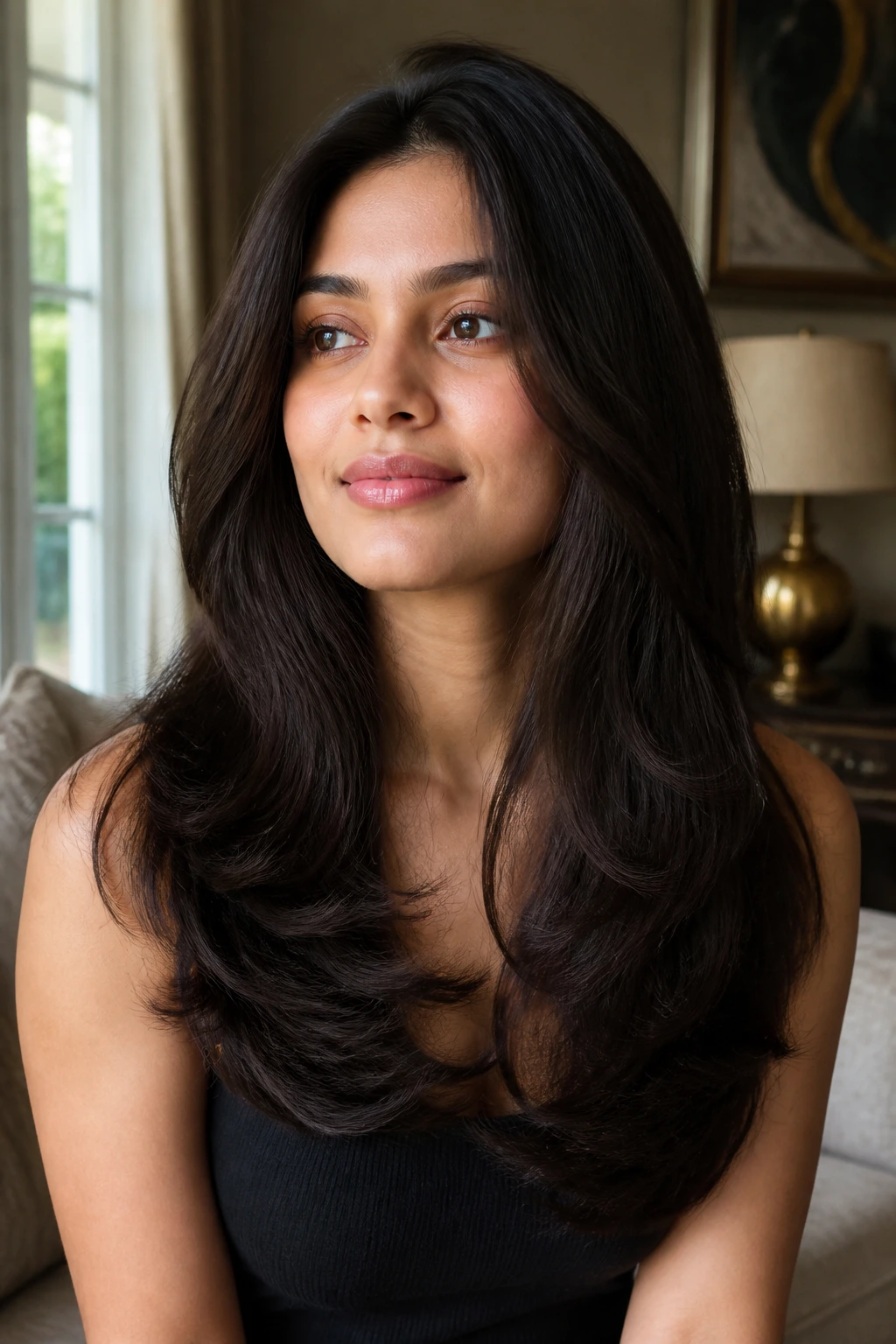
A U-shape keeps the hemline rounded instead of blunt, which sounds subtle until you see how much nicer thick hair falls when it has that soft curve. The center stays a touch longer, the sides taper just enough, and the whole cut reads as plush rather than heavy.
This is one of my favorite options for people who hate the look of sharp corners at the back. It gives you movement without making the ends look skinned down. If your hair is very dense, ask your stylist to keep the bottom line full and remove weight from the middle lengths instead. That’s the move that stops the cut from turning into a triangle at chest level.
4. V-Shape Layers with a Tapered Back
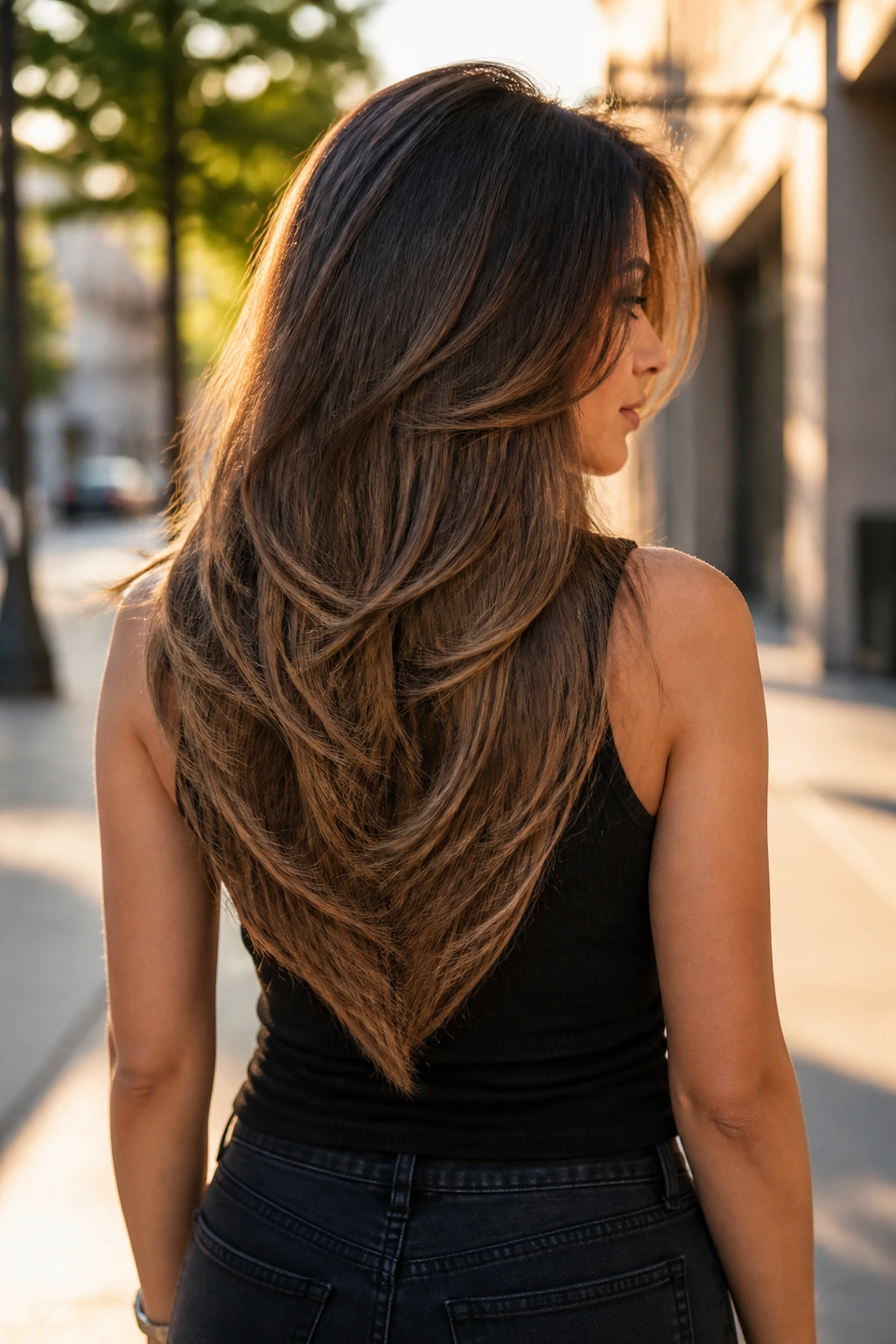
V-shape layers are the dramatic cousin in the family. The back falls into a point, which makes thick long hair look longer and more fluid from behind. If you like wearing your hair down and want the length to feel a little more sculpted, this shape has real presence.
It works best when the taper starts slowly. A hard V on heavy hair can leave the sides looking too light, too fast. A softer one lets the back keep its sweep while the front still gets enough face-framing to avoid that heavy blanket effect. On straight hair, the V reads clean and sleek. On waves, it looks softer and a bit more romantic, which is a nice way of saying it won’t fight the texture you already have.
5. Curtain Bang Layers Starting at the Collarbone
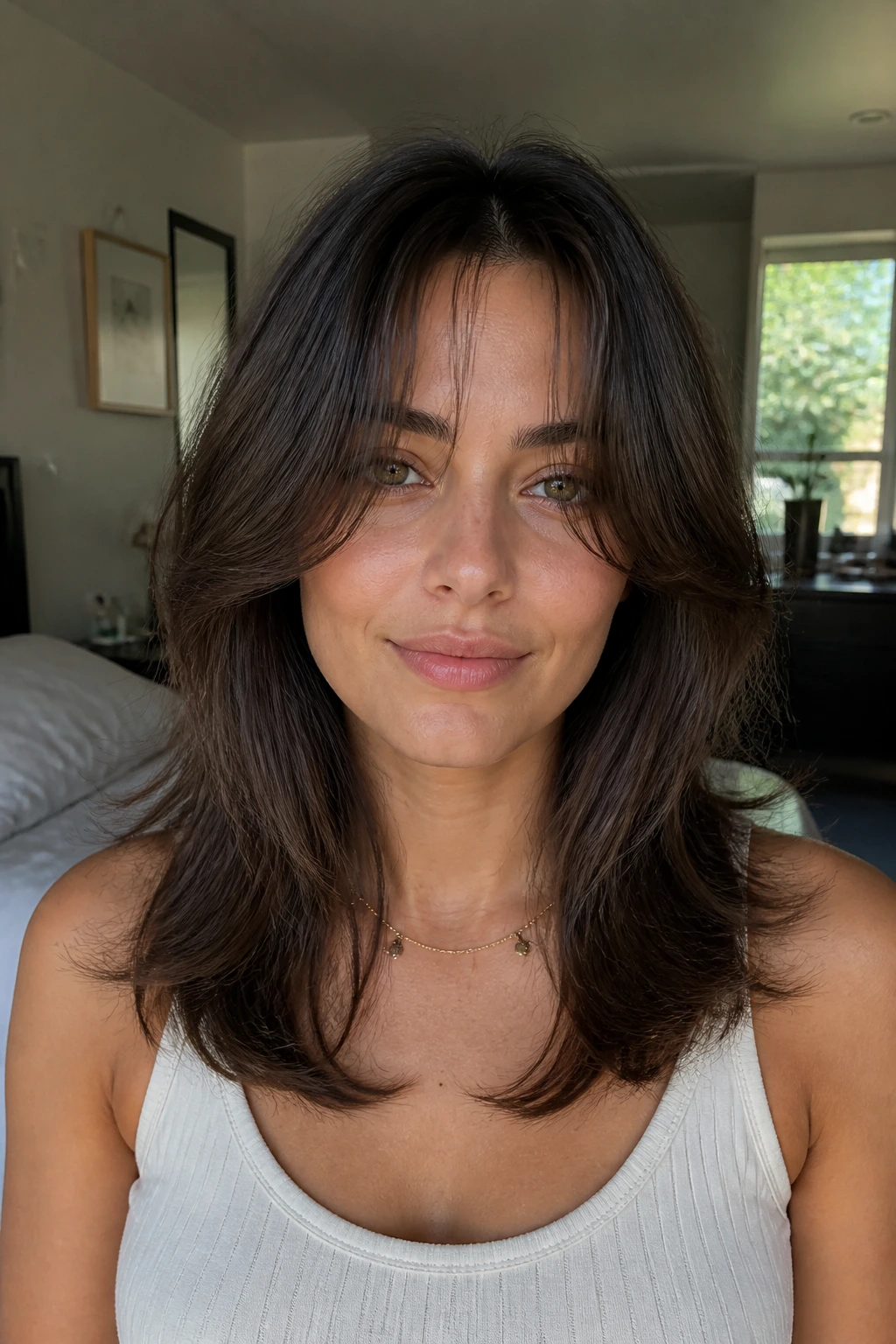
Why do curtain bangs work so well with thick, long hair? Because they create a front shape without demanding a full fringe commitment. The shorter pieces part away from the face, and the longer layer start around the collarbone keeps everything from feeling chopped up.
This is a smart choice if your face tends to disappear behind a wall of hair. Curtain pieces break that wall. They also grow out far more gracefully than blunt bangs, which is no small thing when thick hair grows with enough force to surprise you. Blow them back with a round brush or clip them at the roots while they cool; that little bend is what keeps them from collapsing into the rest of the hair.
6. Invisible Internal Layers for Dense Hair
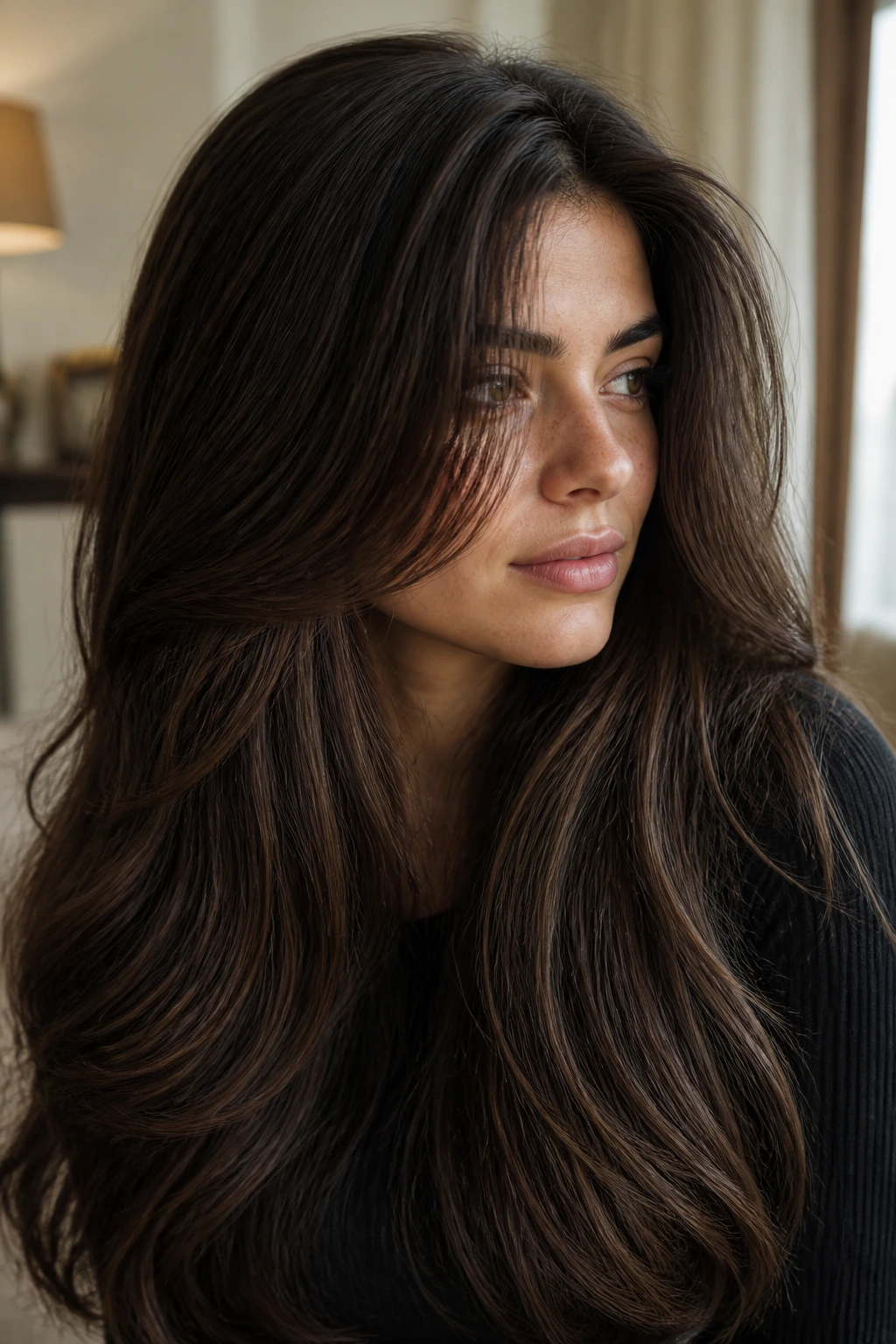
Invisible layers are the quiet overachievers of thick-hair cuts. Nothing about them screams for attention, which is exactly the point. The shape on the outside stays long and smooth, while the inside loses enough weight to stop the hair from sitting like a brick.
This cut is ideal if you want your hair to look polished, not piecey. It’s also the safest place to start if you’re nervous about going too short around the face. Ask for internal graduation, not choppy chunks. The finish should still look like one long hairstyle when it’s down — just a better-behaved one.
7. Long Shag Layers with a Soft Fringe
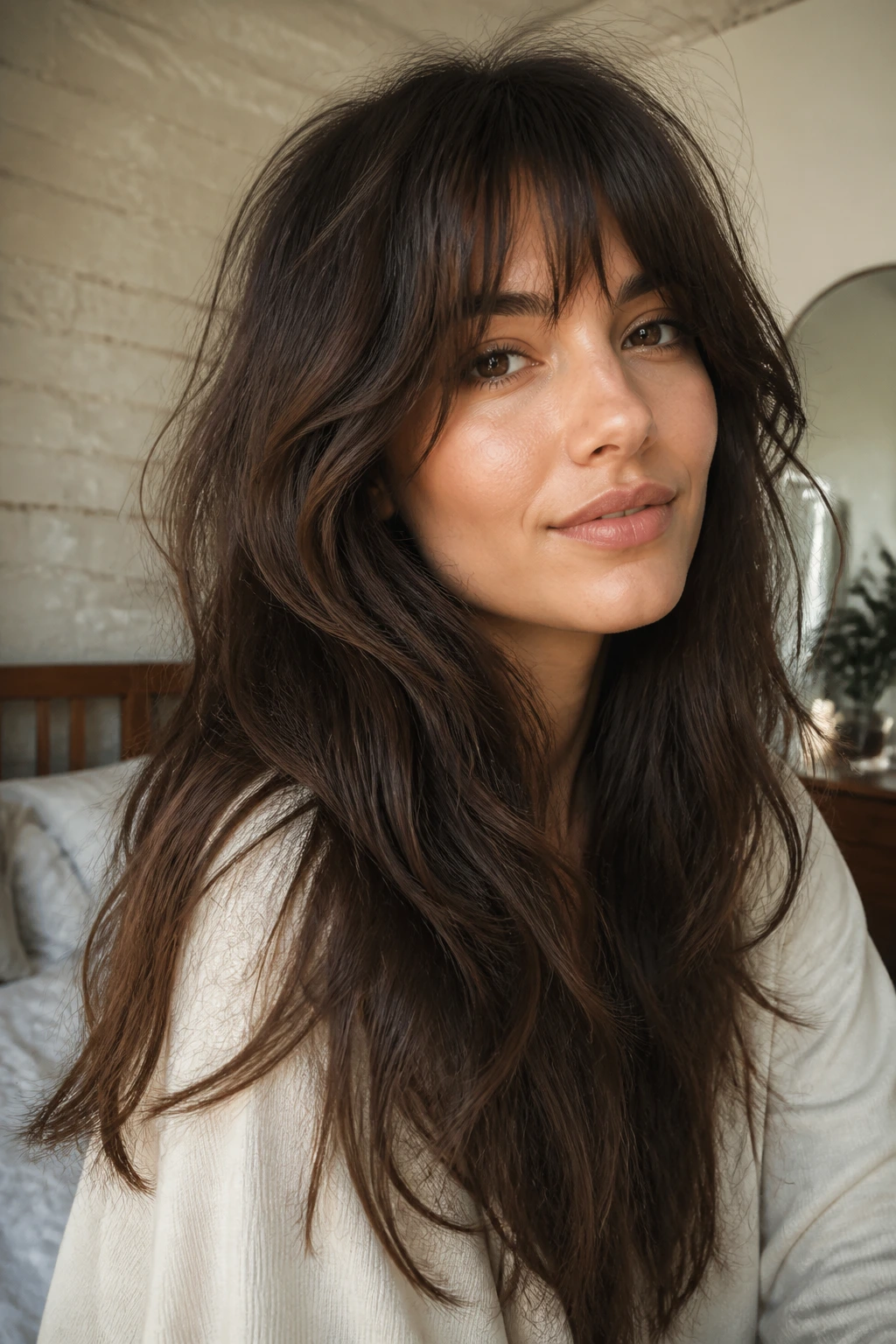
A long shag gives thick hair an edge, but it doesn’t have to go full rock-and-roll to work. When the fringe stays soft and the layers stay long, the cut gets movement without turning into a wild halo. It’s one of the best answers for hair that already has wave or a little bend.
The key is that the layers should feel scattered in a deliberate way. Not random. Thick hair loves a shag when the stylist controls the distribution, especially around the crown and cheekbones. This is the cut that looks especially good with a texture spray and a half-dried air-dry, a little messy in the right places, and that’s the charm.
8. Blunt Bottom with Hidden Layers
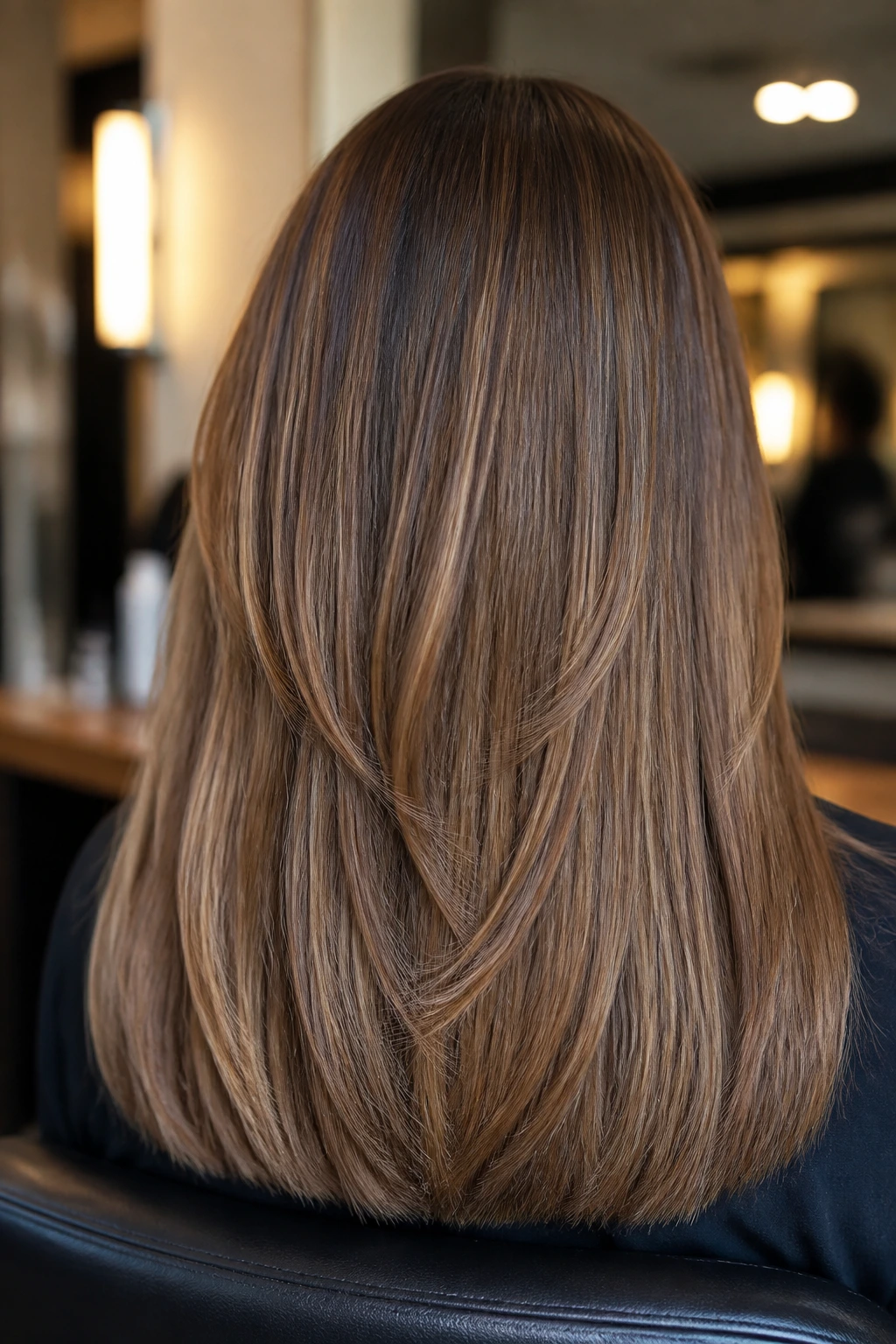
A blunt hemline with hidden layers is a clever compromise if you like seeing weight at the ends but hate the feeling of a solid curtain. The bottom stays clean and full, while the inner lengths lose enough bulk to stop the whole style from expanding sideways.
That contrast is the magic. From the outside, the haircut looks strong and expensive. From the inside, it feels lighter on your neck and shoulders. It’s a sharp choice for thick hair that naturally frizzes at the ends, because the blunt line can make the hair look healthier even when the interior is doing the real work.
9. Waterfall Layers That Cascade Through the Ends
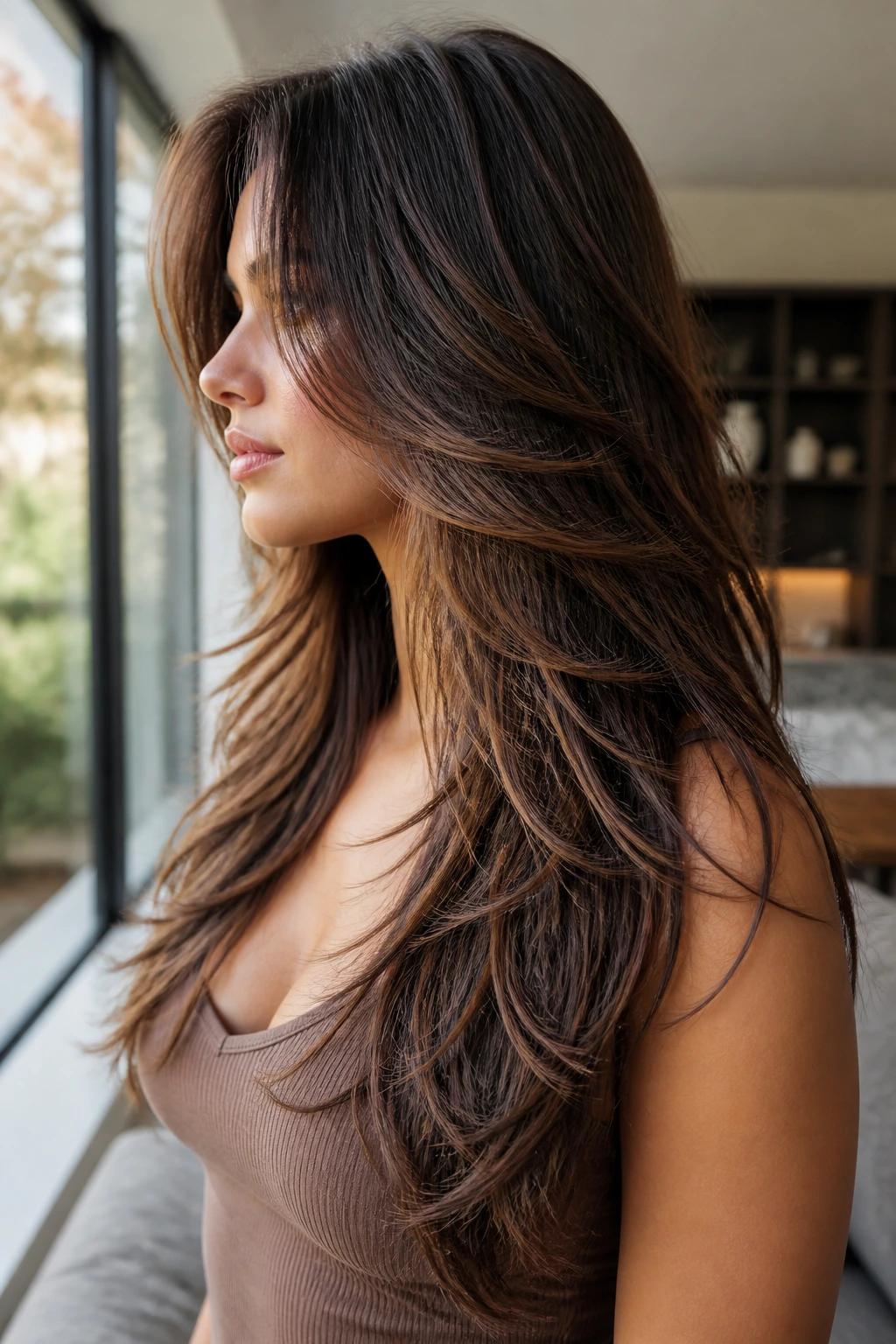
Waterfall layers are all about flow. The shorter pieces drop into longer ones gradually, so the eye moves down the length instead of stopping at a hard step. On thick hair, that cascading shape keeps the style from looking boxy.
This cut loves movement. Blow-dry it with a paddle brush if you want a smoother version, or bend the ends with a large iron if you want the layers to show more. The nice part is that it doesn’t need a lot of product. Too much cream can weigh down the whole idea, and then the waterfall turns into a sleepy puddle. Lightweight mousse or a touch of spray is usually enough.
10. Rounded Layers for a Softer Crown
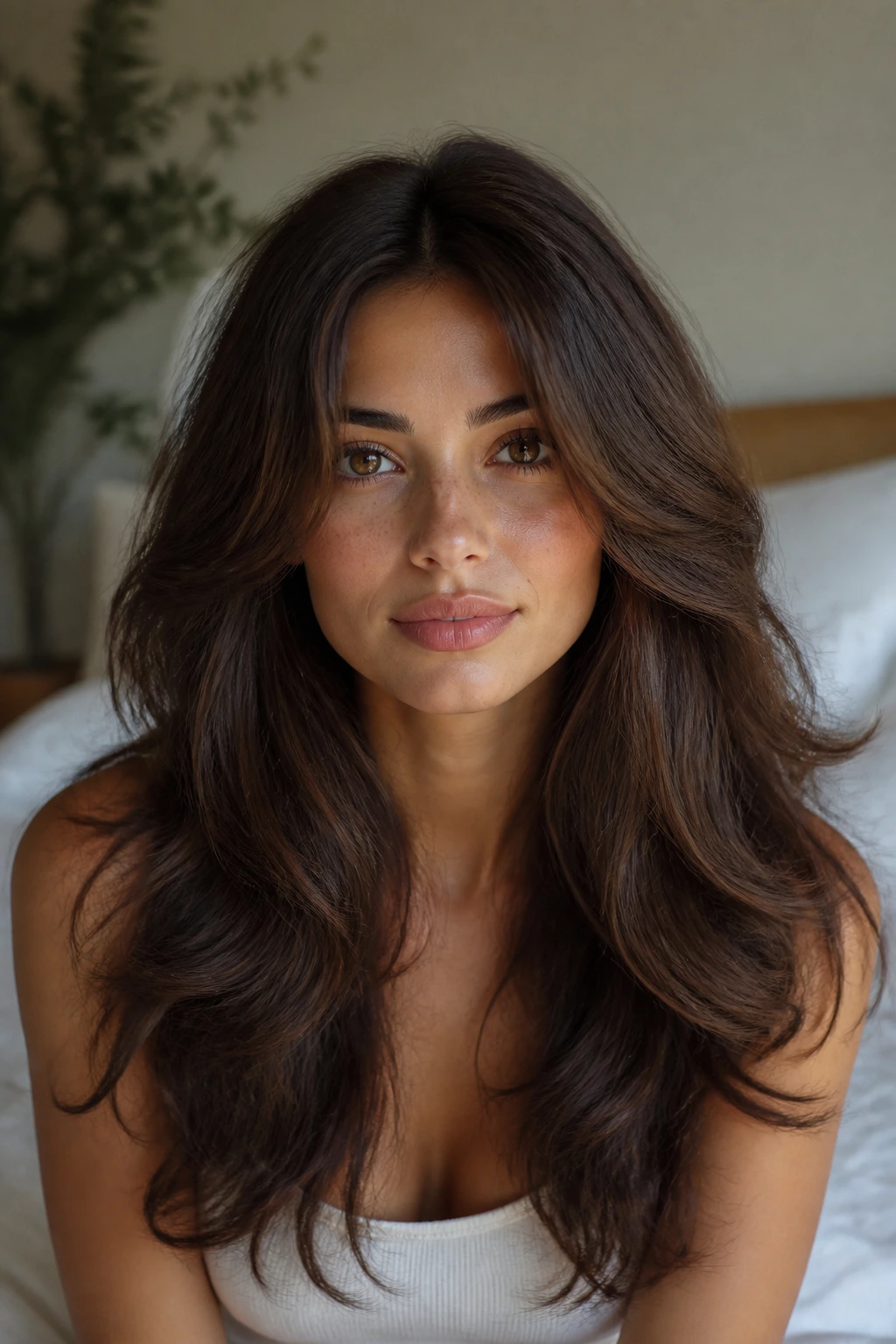
Rounded layers build shape near the top and keep the silhouette from looking flat at the crown. Thick hair can sometimes sit too heavily on top, then puff out at the sides. A rounded cut redirects that weight into a softer dome shape that feels balanced from root to end.
This works especially well if your hair naturally expands when it dries. The rounded outline gives that fullness somewhere to go. It’s a flattering option when you want long hair to feel lush but not wide. Ask your stylist to preserve fullness around the perimeter while lifting the top section just enough to create that curve.
11. Deep Side-Part Layers with Swooping Volume
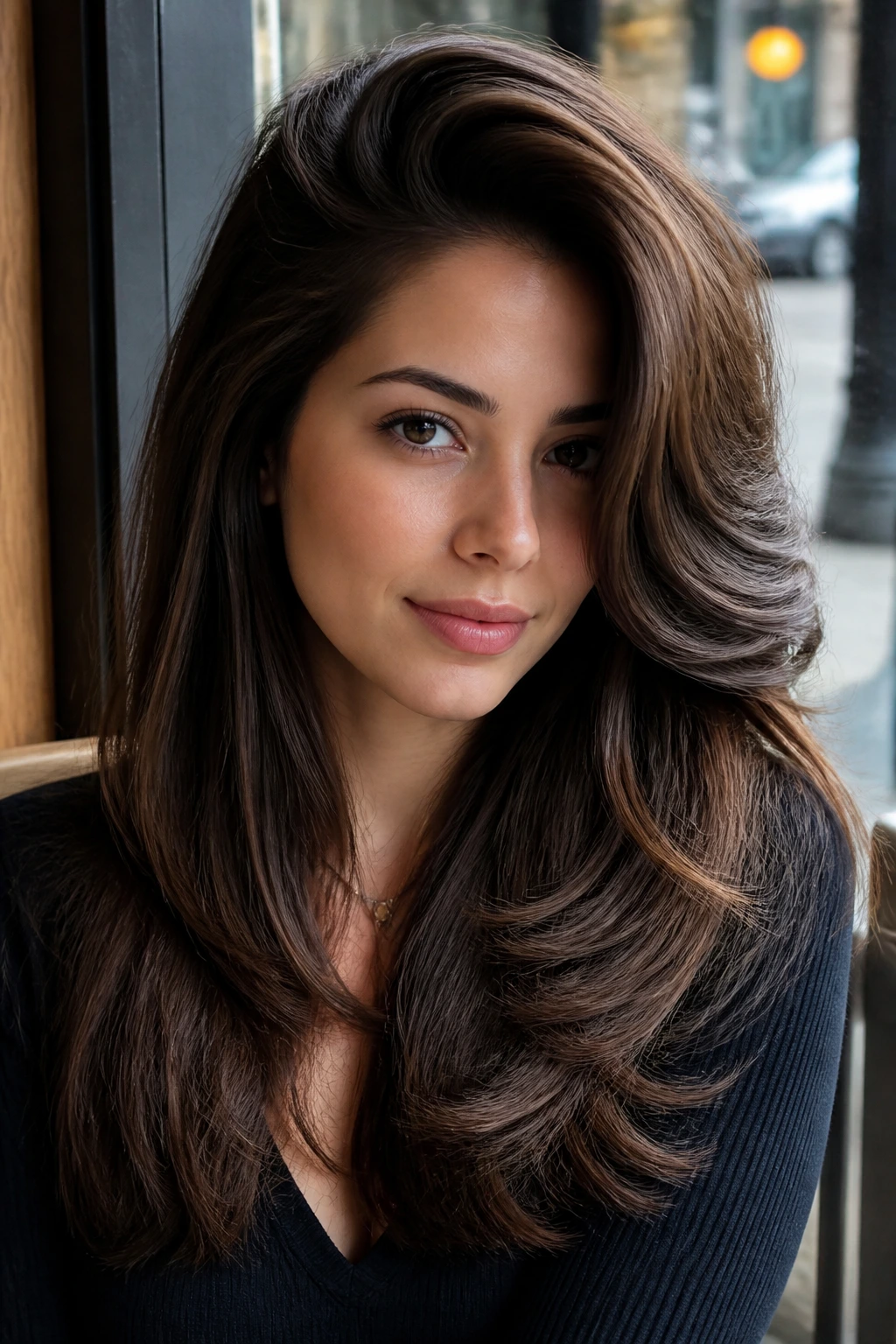
A deep side part can change the entire personality of layered hair. It shifts weight, lifts the roots on one side, and makes thick hair fall in a more dramatic line. If a center part makes your hair look too uniform, this is the cleaner fix.
The layering around a side part should be long and directional. You want pieces that sweep, not slices that stick out. It’s especially nice when your front section is dense and stubborn, because the part itself creates movement before any heat tools get involved. A little root lift spray at the heavier side helps, but the haircut does most of the work.
12. Swoopy Face-Framing Layers
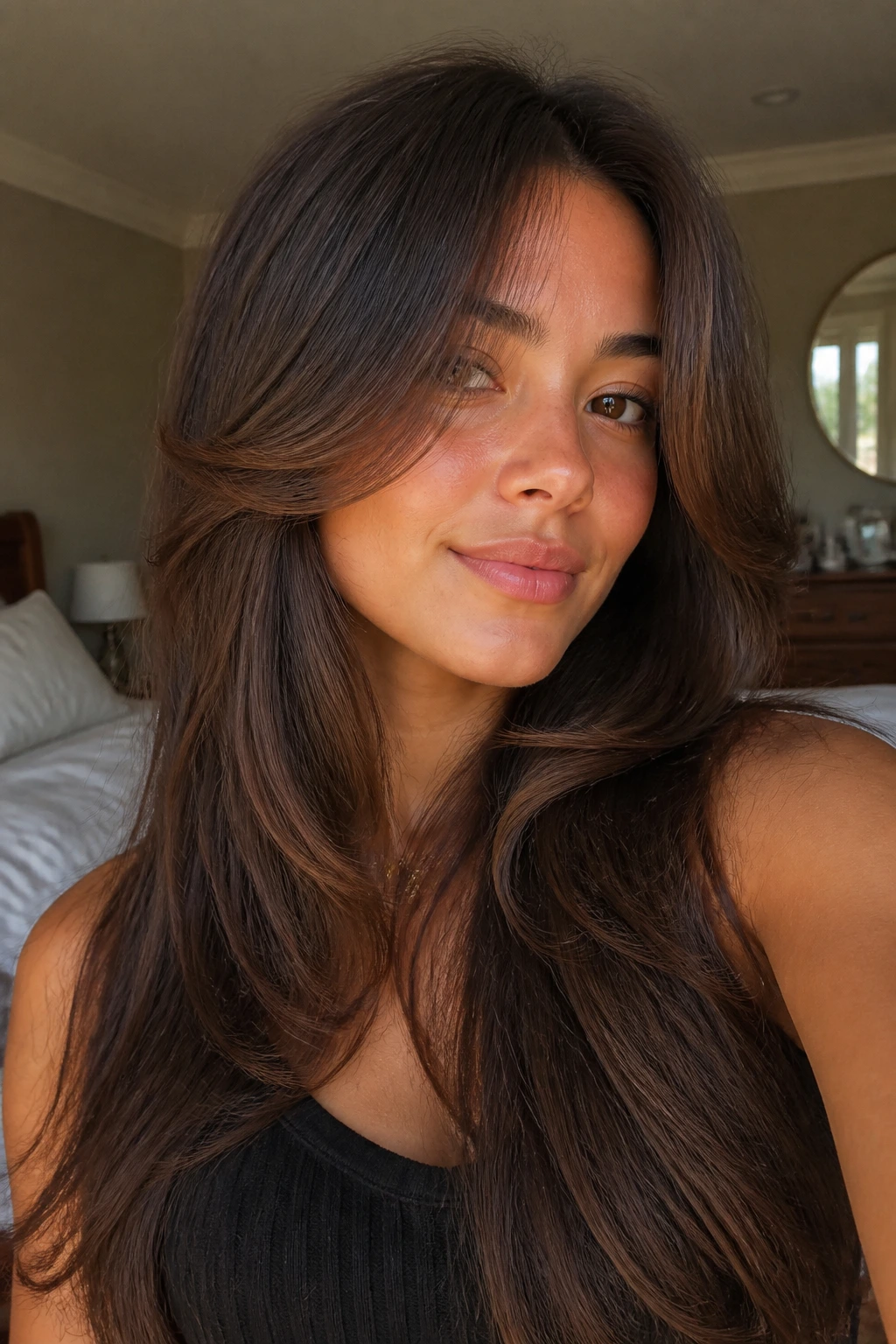
Swoopy layers are the kind that look like they were brushed into place by somebody who knows exactly what they’re doing. The front pieces arc away from the face, usually starting around the jaw or cheekbone, and the rest of the hair keeps a smooth, elongated shape behind them.
This is a blowout-friendly cut, no question. Thick hair with this shape can look polished in about ten minutes if you have the right round brush and a nozzle dryer. The front does the talking, the length stays elegant, and the whole thing feels softer than a blunt cut without drifting into frizz territory.
How to style it
- Blow the front section away from the face with medium tension on a round brush.
- Let the roots cool before touching them.
- Finish with a light serum only on the ends, not the crown.
13. Razor-Cut Airy Layers
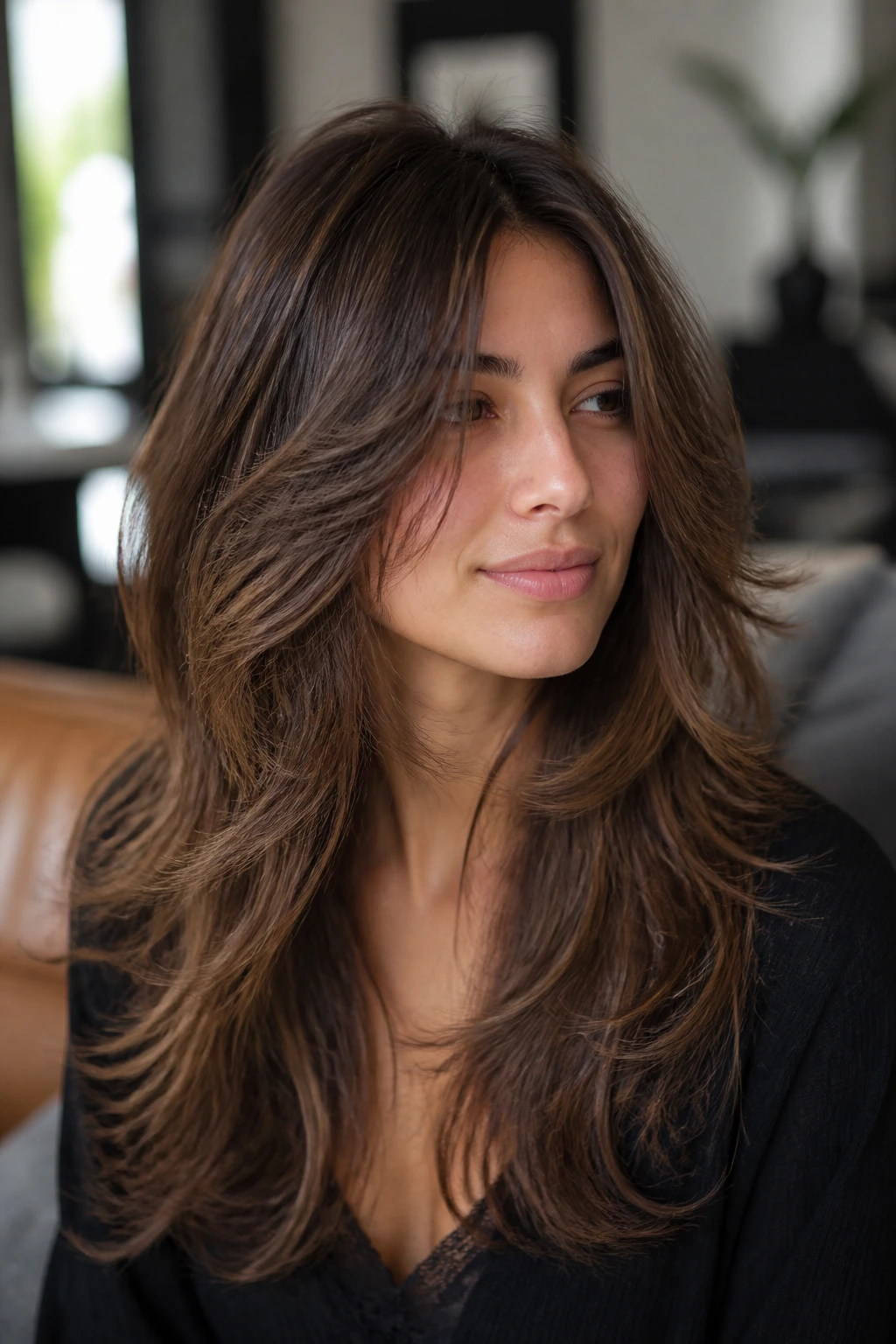
Razor-cut layers can be brilliant on thick hair when the hair is coarse, straight, and tends to sit like it has a job to do. The razor removes weight quickly, which creates a lighter edge and a more broken-up finish.
There’s a catch. Razor work and thick hair need judgment. Too much slicing can rough up the ends and make them frizz before lunch. The cut works best when the razor is used to soften the interior and the face-framing pieces, not shred the whole head into scraps. If your hair is dry already, ask for a careful hand here. This is one of those cuts where the method matters more than the trendy name.
14. Curl-Friendly Long Layers
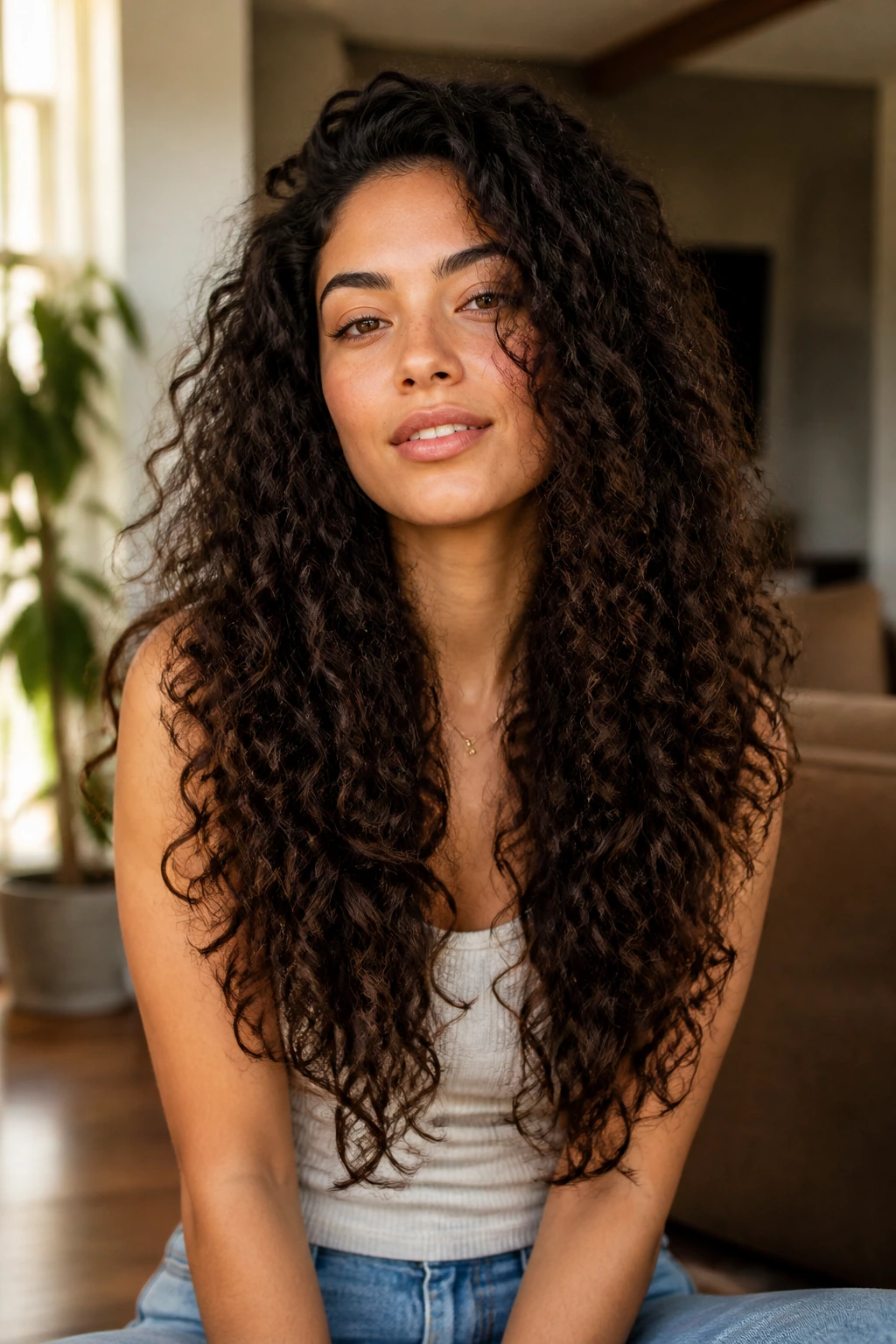
Curly and wavy thick hair needs layers that respect shrinkage, not fight it. A curl-friendly cut gives shape where the curls actually live, which is often higher than people expect. If the layers are too short, the hair can balloon. Too long, and the curls lose their bounce under their own weight.
A dry cut or a curl-by-curl approach is often the safest route. The shape should keep enough length in the lower sections so the hair doesn’t widen at the sides. When done well, the curls stack in a soft cascade instead of a triangle. That’s the whole point: movement with control.
15. Bouncy Blowout Layers
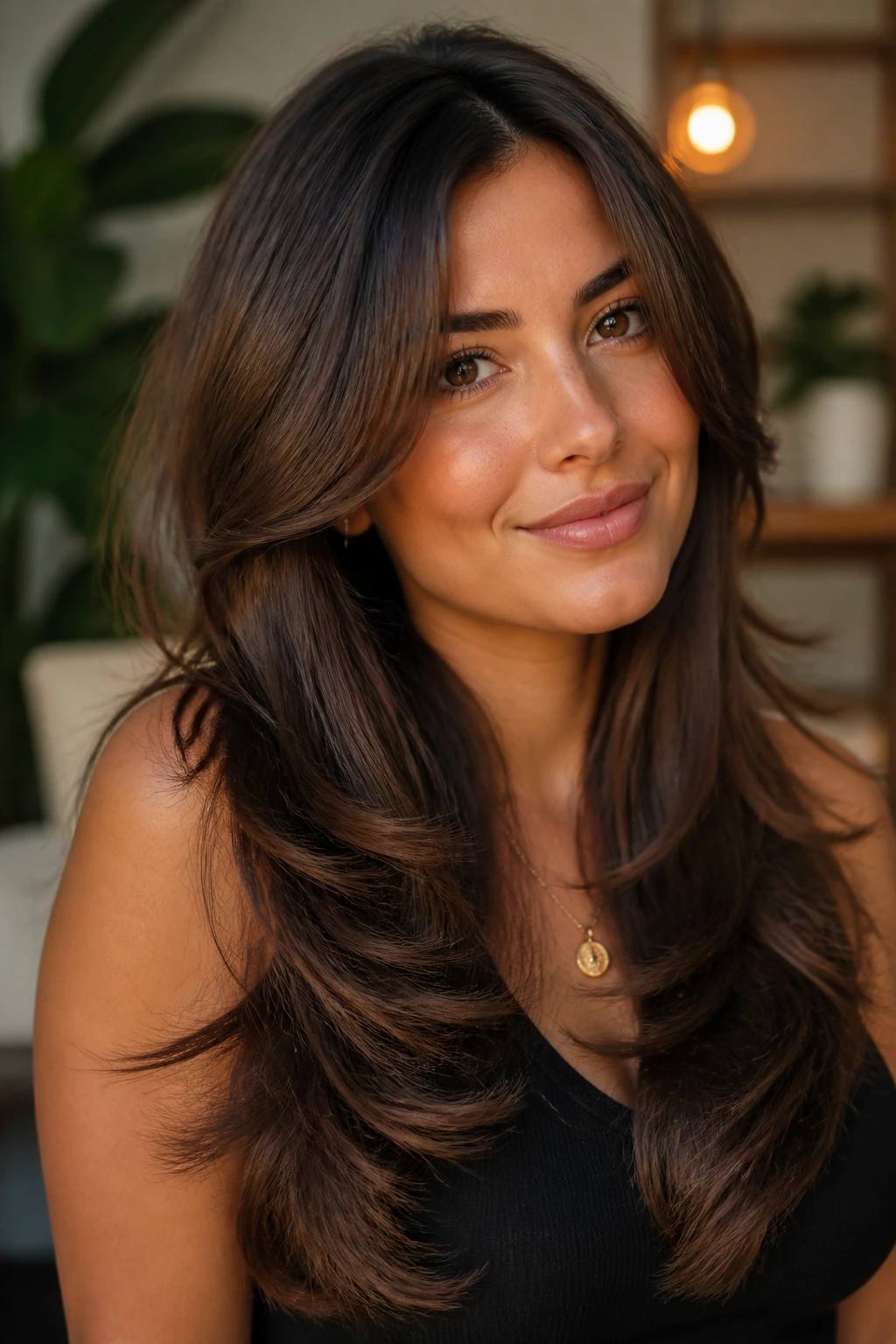
Bouncy blowout layers are for the person who likes hair that swings when they turn their head. The layers are usually longer and more blended, with enough face-framing to catch the brush and enough length to make the ends curve outward.
This cut looks best when the lower half has a little bevel. Not a curl. A bevel. That slight bend at the ends is what gives thick hair that salon-blowout feel instead of a heavy hang. If you air-dry most of the week and only style occasionally, this shape still works, but it shines when you put in the ten extra minutes to round-brush the last four inches.
16. Soft Wolf Cut for Long Thick Hair

The wolf cut gets a bad reputation because people picture it as all edge and no control. A softer version on long thick hair is different. The crown gets a little lift, the sides get some broken-up texture, and the length stays long enough to read as hair you can actually wear.
This is a good pick if you want attitude without losing the bottom length. It’s especially useful on dense wavy hair, where a little choppiness helps the shape breathe. Keep the shortest pieces soft around the face, though. If they’re cut too high, the cut can get too shaggy too fast, and thick hair does not need more visual noise.
17. Tapered Tail Layers for Extra Length
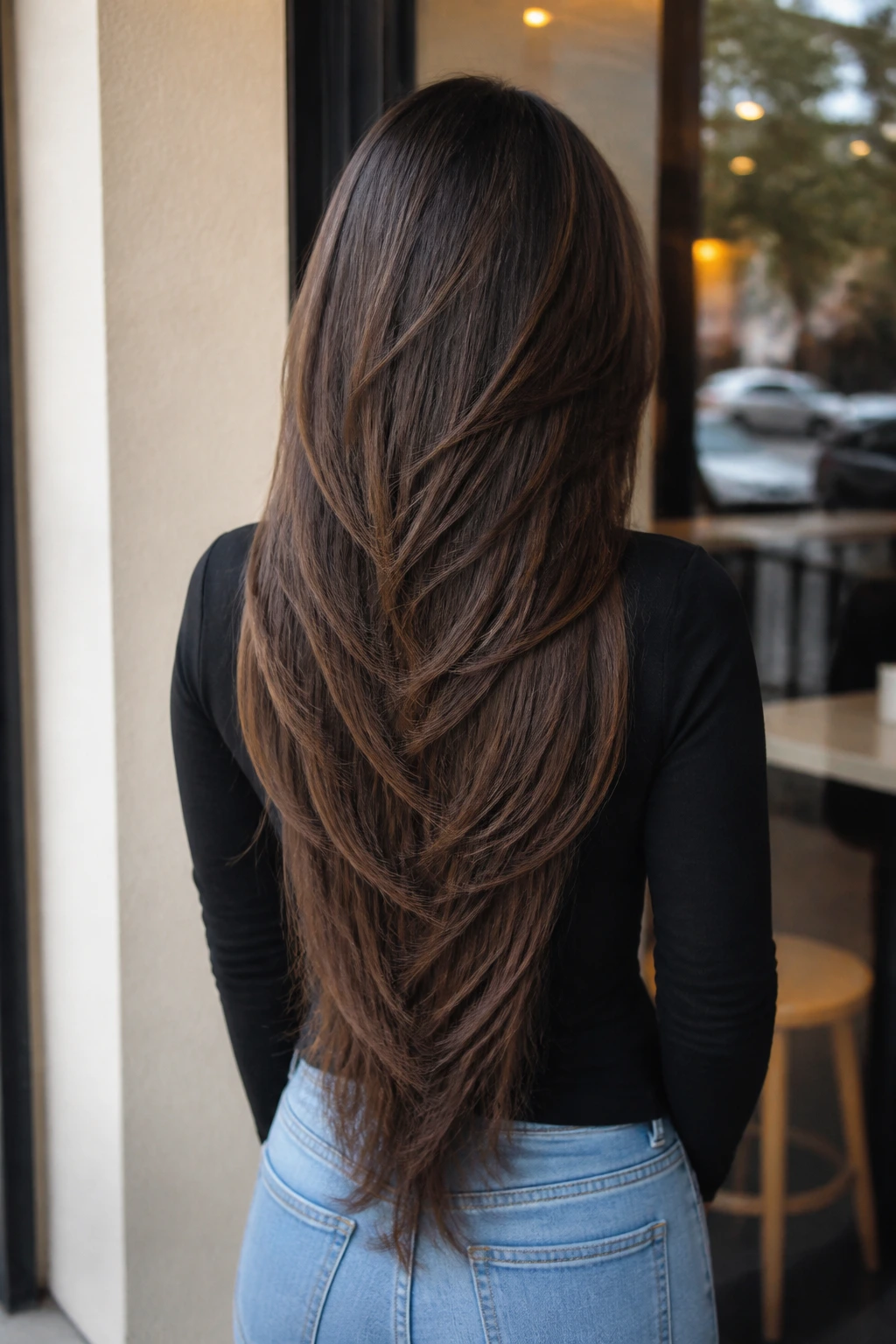
Tapered tail layers keep the bottom long and gradually lighten the shape as it moves upward. Think of it like a long tail that narrows just enough to stop the whole head from feeling broad. It’s a strong option for waist-length hair, or hair that’s close to it and needs discipline.
This is not the cut for someone who wants a lot of visible chunking. It’s for someone who wants the ends to stay full while the length moves. The taper can be almost invisible when the hair is straight, then show up more when you curl it. That flexibility is the appeal. You get a cut that still feels luxurious even when it’s been in a bun twice this week.
18. Half-Up Friendly Layers with Loose Front Pieces
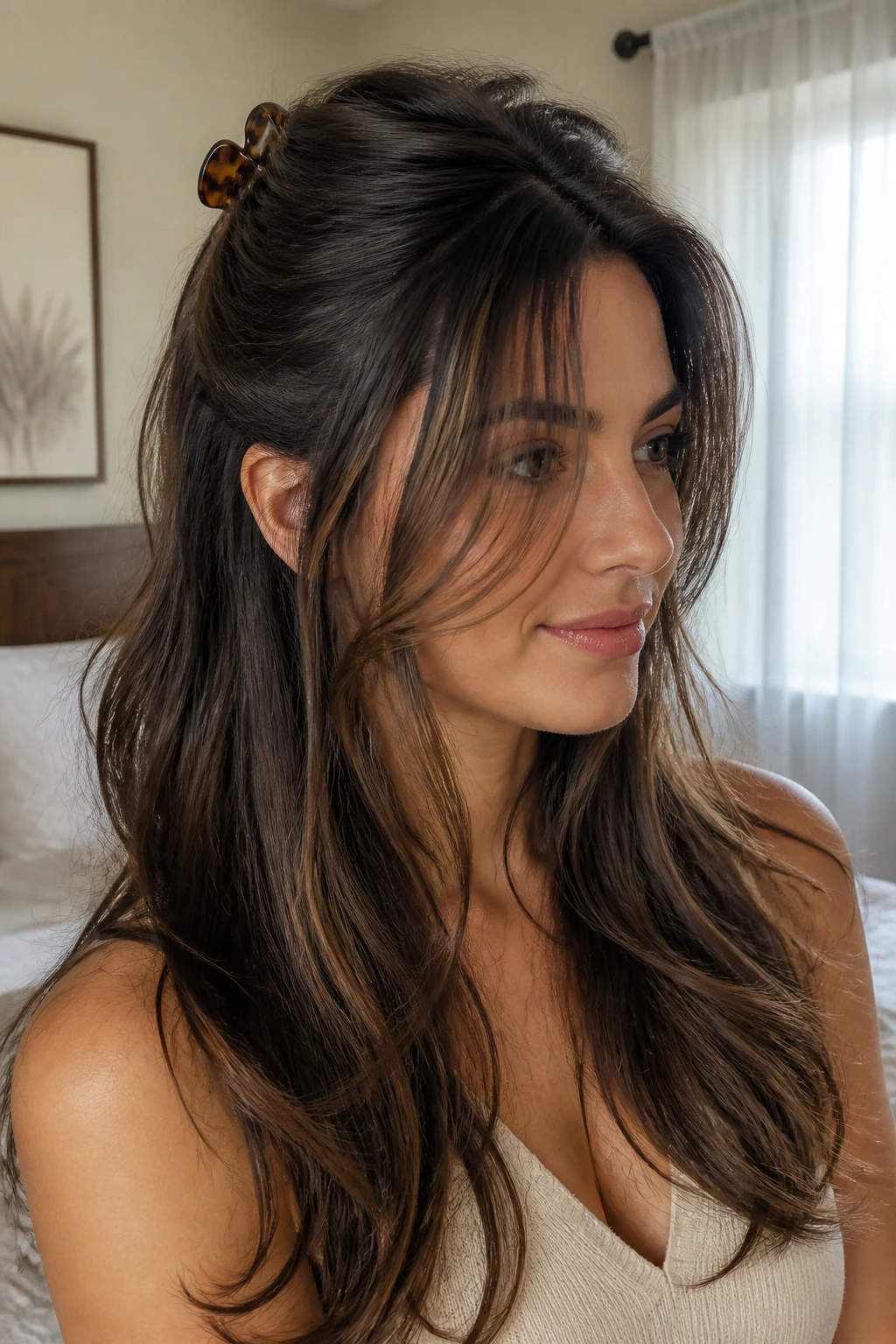
Some layers are built for a down style. These are built for the half-up clip. The front pieces stay long enough to fall around the face even when the top section is pulled back, and the lower layers keep the style from looking like one dense slab in the back.
If you live in claws, clips, or half-up knots, this matters. A good half-up-friendly cut leaves strategic pieces at the temples and jaw, so the hairstyle still looks intentional when you scoop it away from the face. Ask your stylist to think about your everyday updos, not just the version you wear loose on wash day.
19. Crown-Lift Layers for Flat Roots
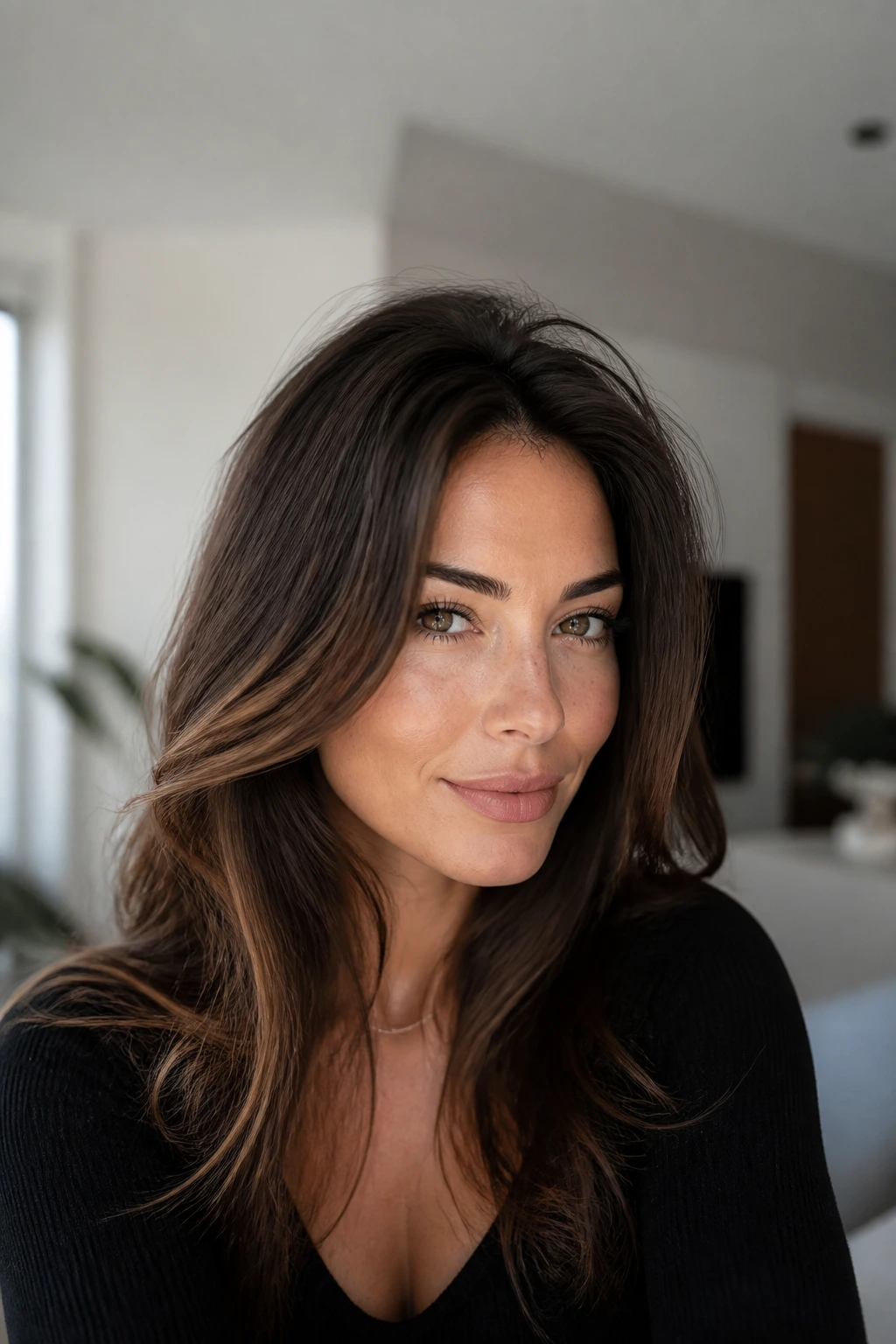
Crown-lift layers are a smart fix when long, thick hair gets heavy on top and flat at the scalp. The change happens high enough to give the root area some air, but not so high that the cut loses its length story.
This is one of those styles you feel more than you see at first. The hair sits a little lighter at the crown, and the whole head shape looks less compressed. Pair it with a root-lifting mousse and a quick blow-dry using the opposite direction method — lift the hair away from its natural fall for the first few seconds, then set it back. Tiny move. Big difference.
20. Money-Piece Layers with Bright Front Sections
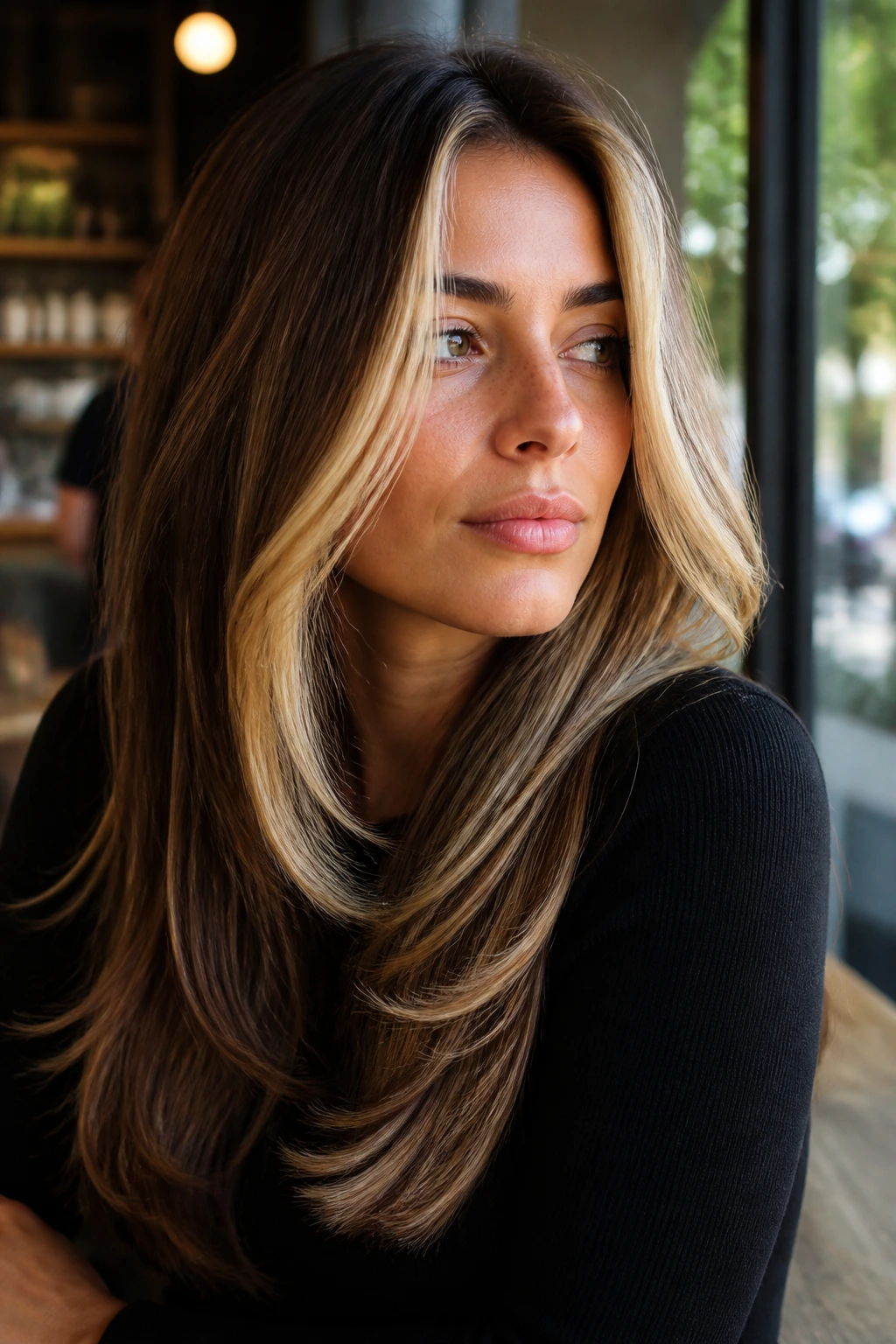
The money piece is the bright, face-framing front section that catches the eye before the rest of the cut does. On thick long hair, it works best when the layers around it are soft and long enough to support the color instead of fighting it.
This style brings attention to the face in a way that darker, all-over lengths sometimes don’t. It’s especially good if you keep your hair mostly straight or in loose waves, because the bright front pieces need a clean line to show up. The layers around them should start low enough to keep the rest of the style full; otherwise the color starts looking disconnected from the haircut, and that’s a mess no toner can fix.
21. Sleek Straight Layers with a Glass Finish
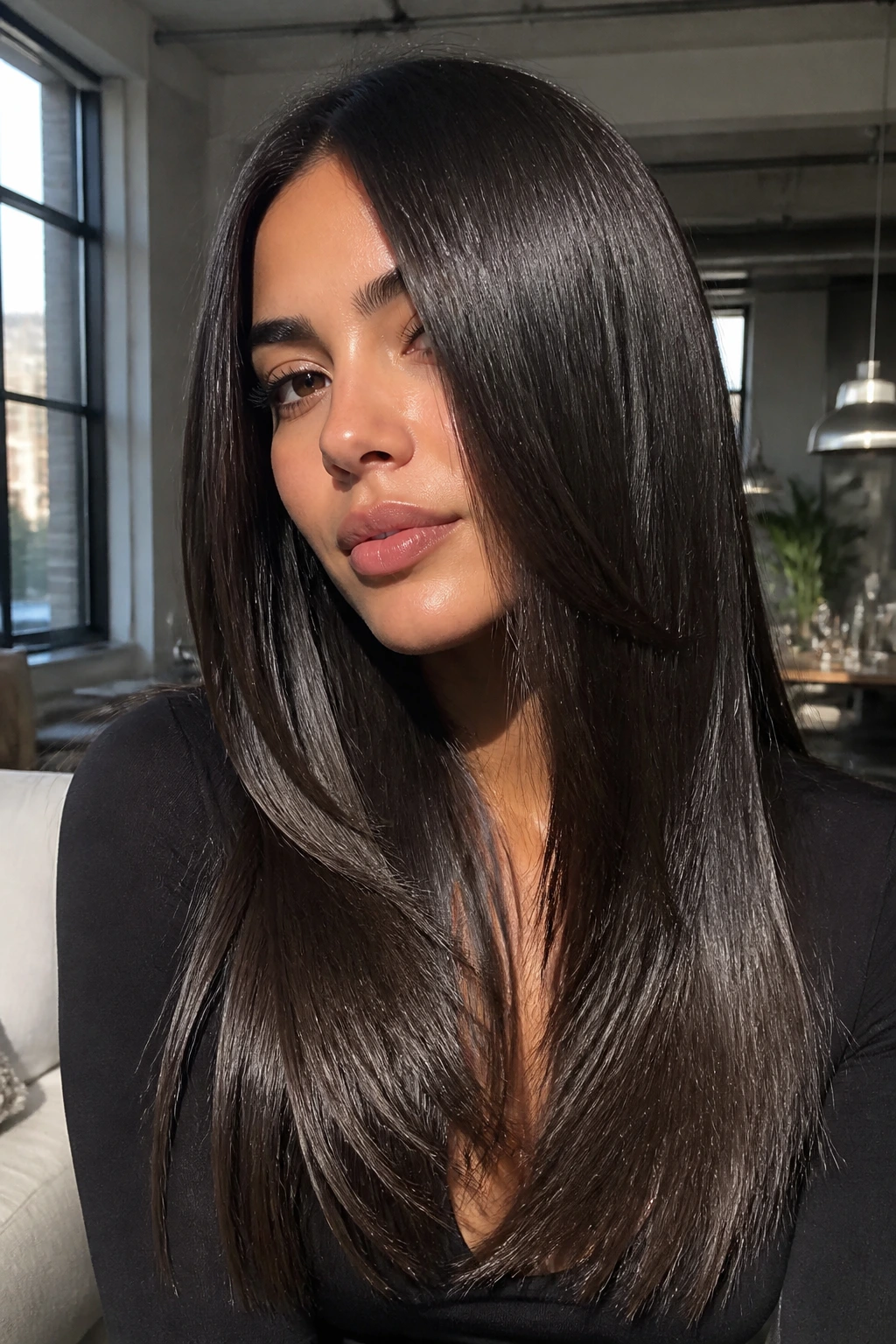
Sleek layers are not boring when they’re cut well. On thick hair, the goal is to let the length stay smooth while the interior layers stop the style from becoming a single heavy sheet. The finish is straight, but the movement is still there if you know where to look.
This cut needs clean edges and careful blending. Too many short pieces will break the glassy effect, and the style loses its point. It’s best for people who wear their hair down a lot and prefer a flat iron over a curling wand. The beauty here is restraint. You see the line, the shine, and a tiny bit of shape through the mids. That’s enough.
Best for
- Thick hair that puffs when it’s cut too short.
- People who want a polished finish without big curls.
- Anyone who likes a middle part and a neat hemline.
22. Mermaid-Length Layers
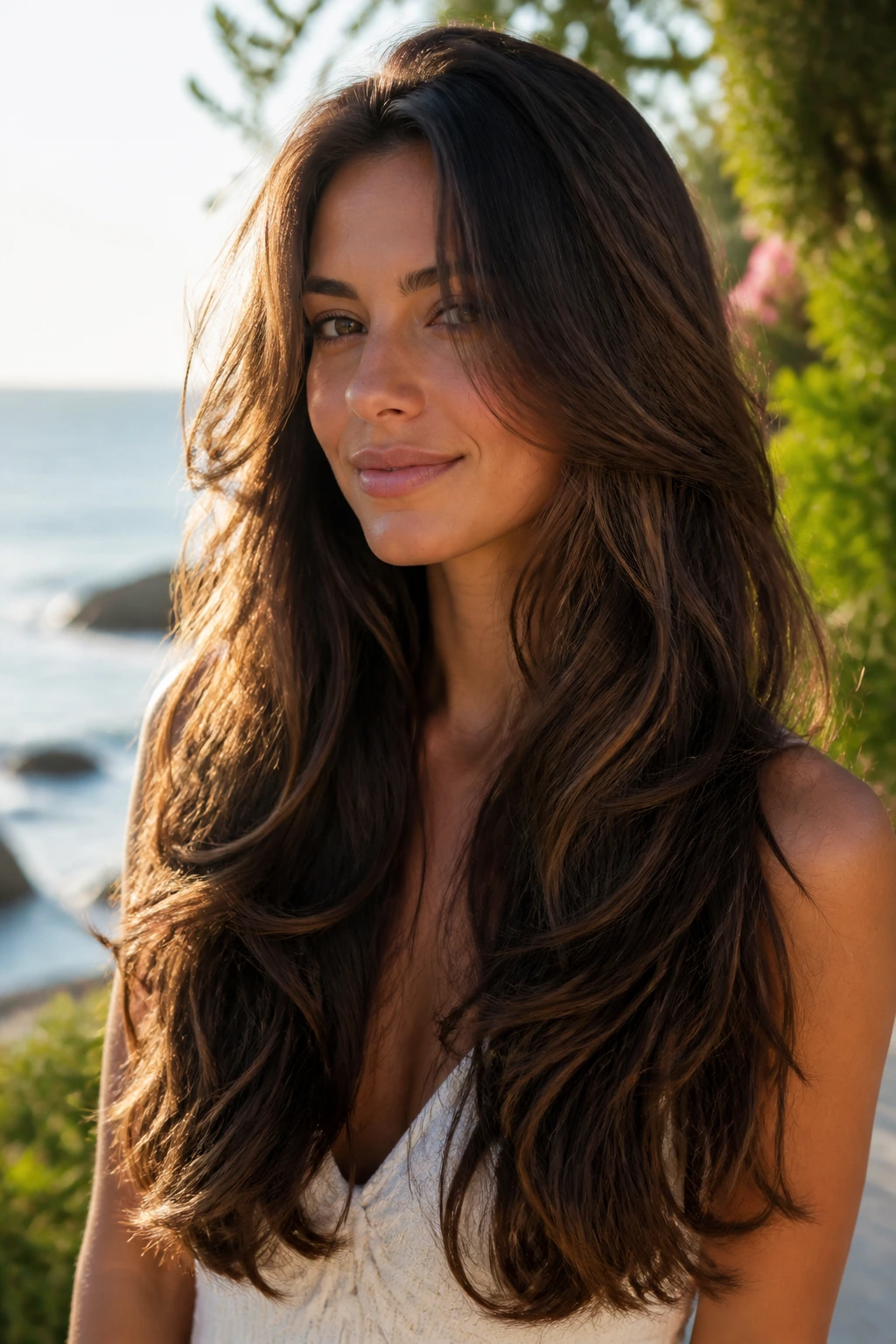
Mermaid layers are for the people who have the length and want it to feel like it belongs there. The layers are long, flowing, and spaced far enough apart that the silhouette stays dramatic instead of broken up. Thick hair can carry this look better than fine hair because it has the body to support all that length.
The danger is over-layering. If the ends get too light, the whole thing starts looking stringy. Keep the bottom heavy and let the movement happen higher up. This cut is gorgeous with waves, but it also has a kind of quiet power when it’s straight and glossy. Long hair should not look tired just because it’s long. This shape fixes that.
23. Air-Dry Texture Layers
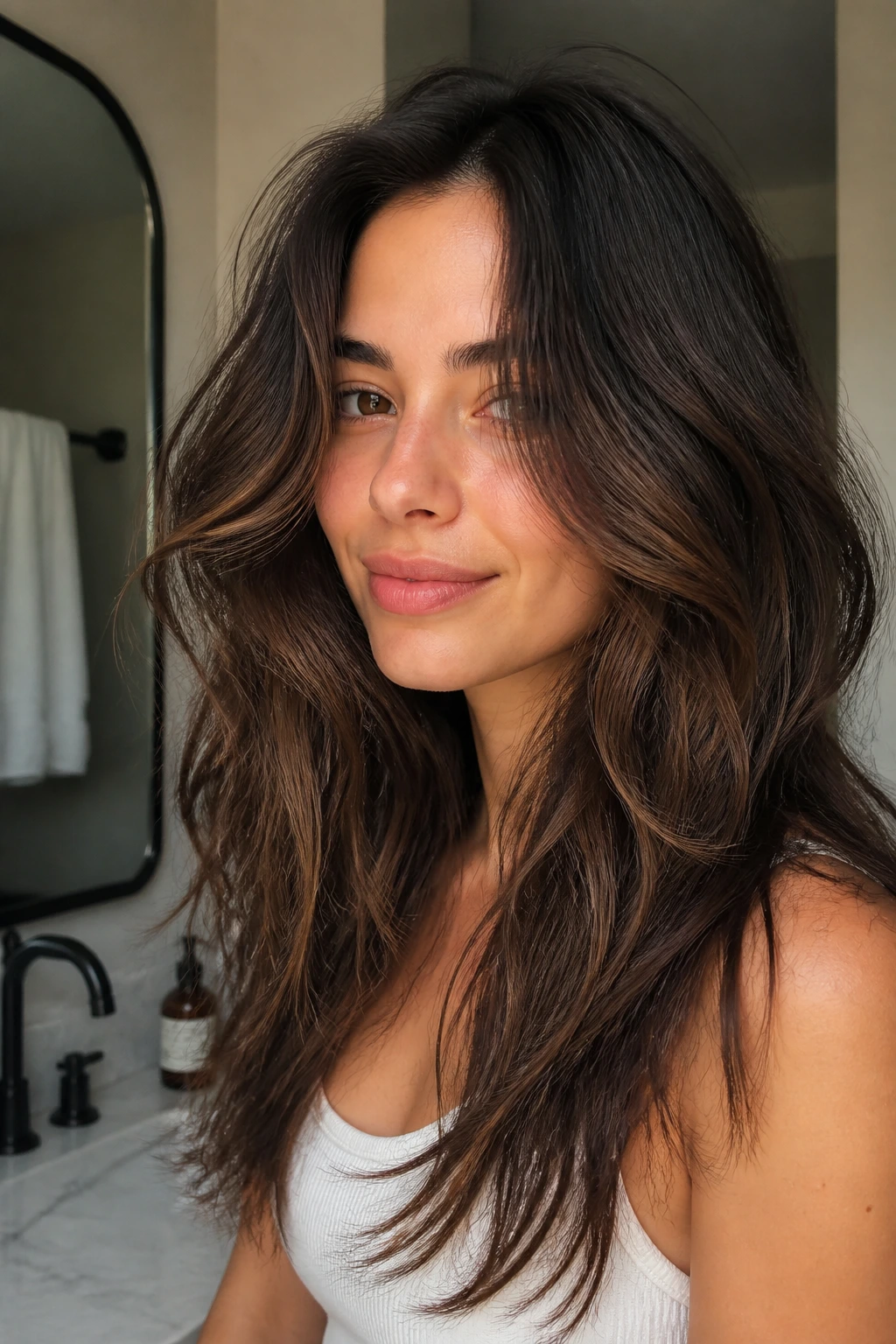
Air-dry layers are for thick hair that wants shape without an hour under a hot tool. The cut should encourage your natural bends, not depend on them looking perfect. That usually means longer face-framing pieces, a softened perimeter, and enough internal movement that the hair falls into place on its own.
This is where a lot of layered cuts fall apart, because people ask for “movement” and get a lot of random short bits instead. Air-dry hair needs clean direction. A light leave-in, a microfiber towel, and a little scrunching go a long way. If your texture is wavy, this is one of the least fussy ways to wear long thick hair without flattening it or roughing it up.
24. Low-Maintenance Grow-Out Layers
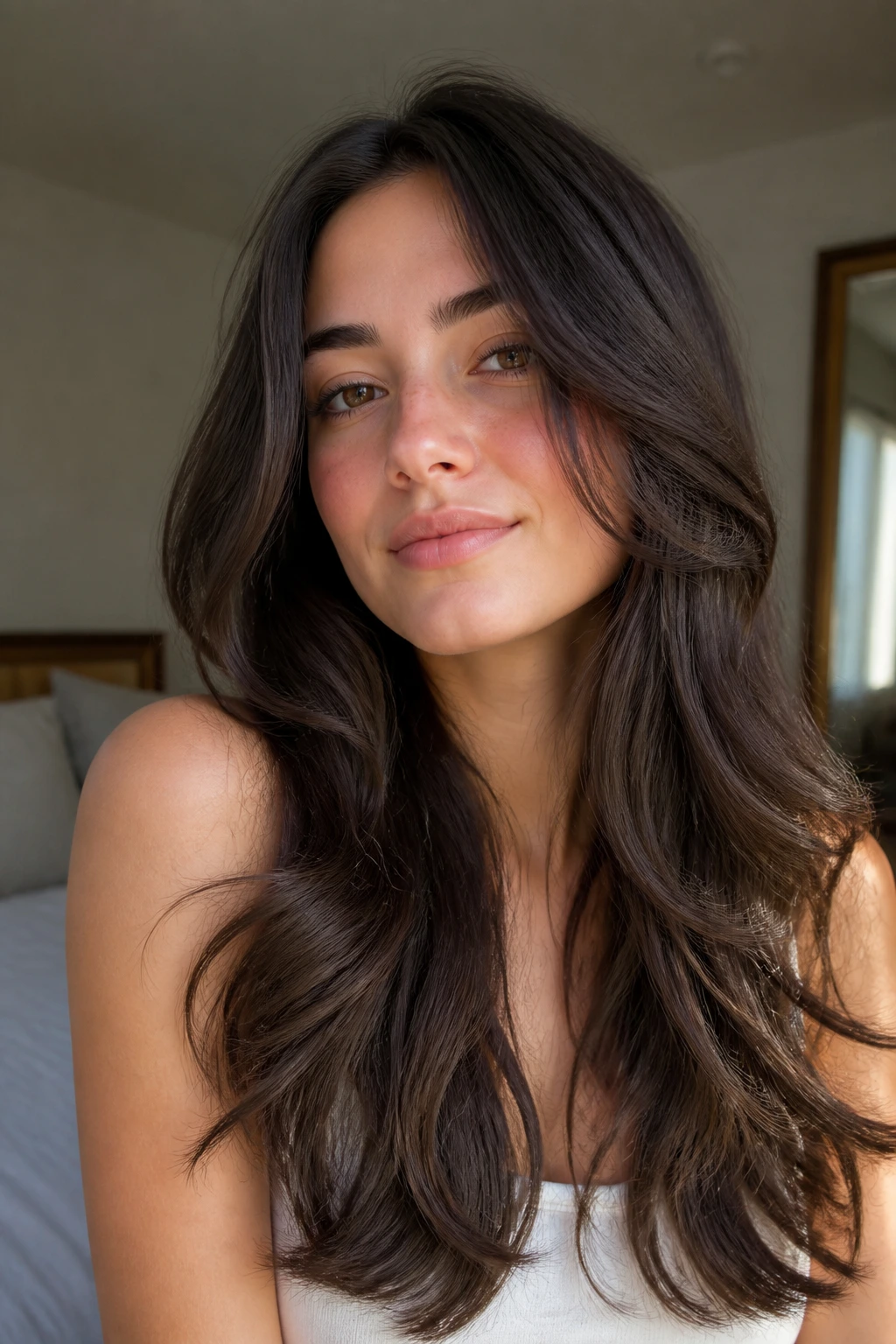
If you hate sitting in a salon chair every few months, build the haircut for the grow-out, not the first two days after the cut. Low-maintenance layers keep the front pieces long enough to blend back into the length as they grow, and they avoid the super-short internal sections that turn weird by week six.
This style is especially useful for thick hair because it keeps the shape from ballooning as the layers get longer. The haircut should still have movement, but the differences between the lengths should be subtle. That way, when the cut softens, it still looks intentional. It’s not the most dramatic option on the list. It may be the smartest one.
25. Balanced Long Layers with Soft Ends
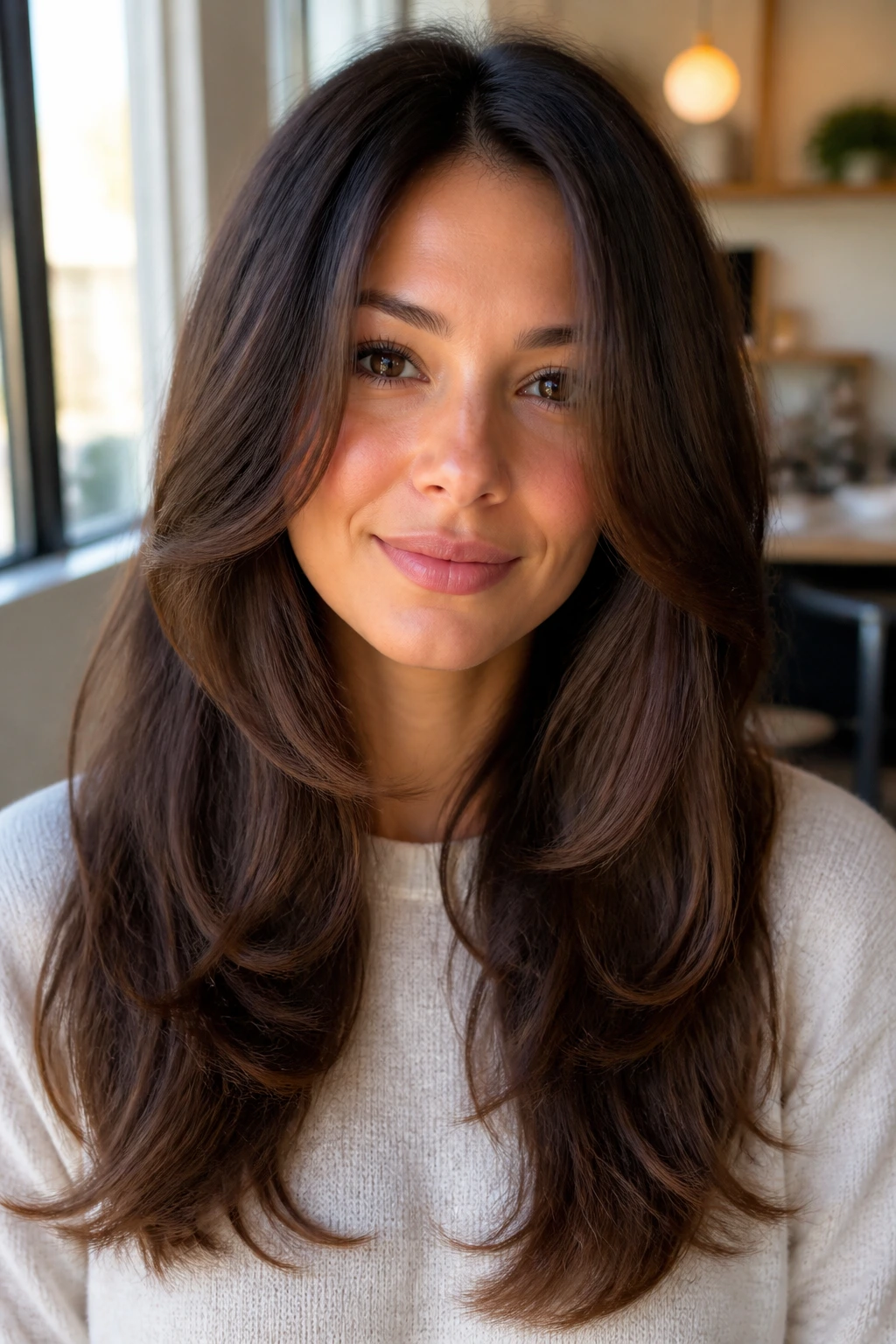
Balanced long layers are the safe answer when you want movement, face framing, and a full-looking bottom without leaning too hard into any one trend. The layers are long enough to blend, short enough to matter, and soft enough to keep thick hair from feeling blunt.
This is the style I’d recommend for someone who knows they want change but doesn’t want drama from the cut itself. The ends stay rounded, the front gets a little opening, and the shape holds up in a braid, a blowout, or a lazy air-dry. If you’re torn between feathered, shaggy, or sleek, this is the middle road that usually behaves.
Why Long Layers Work Better When the Weight Is Removed in the Right Places
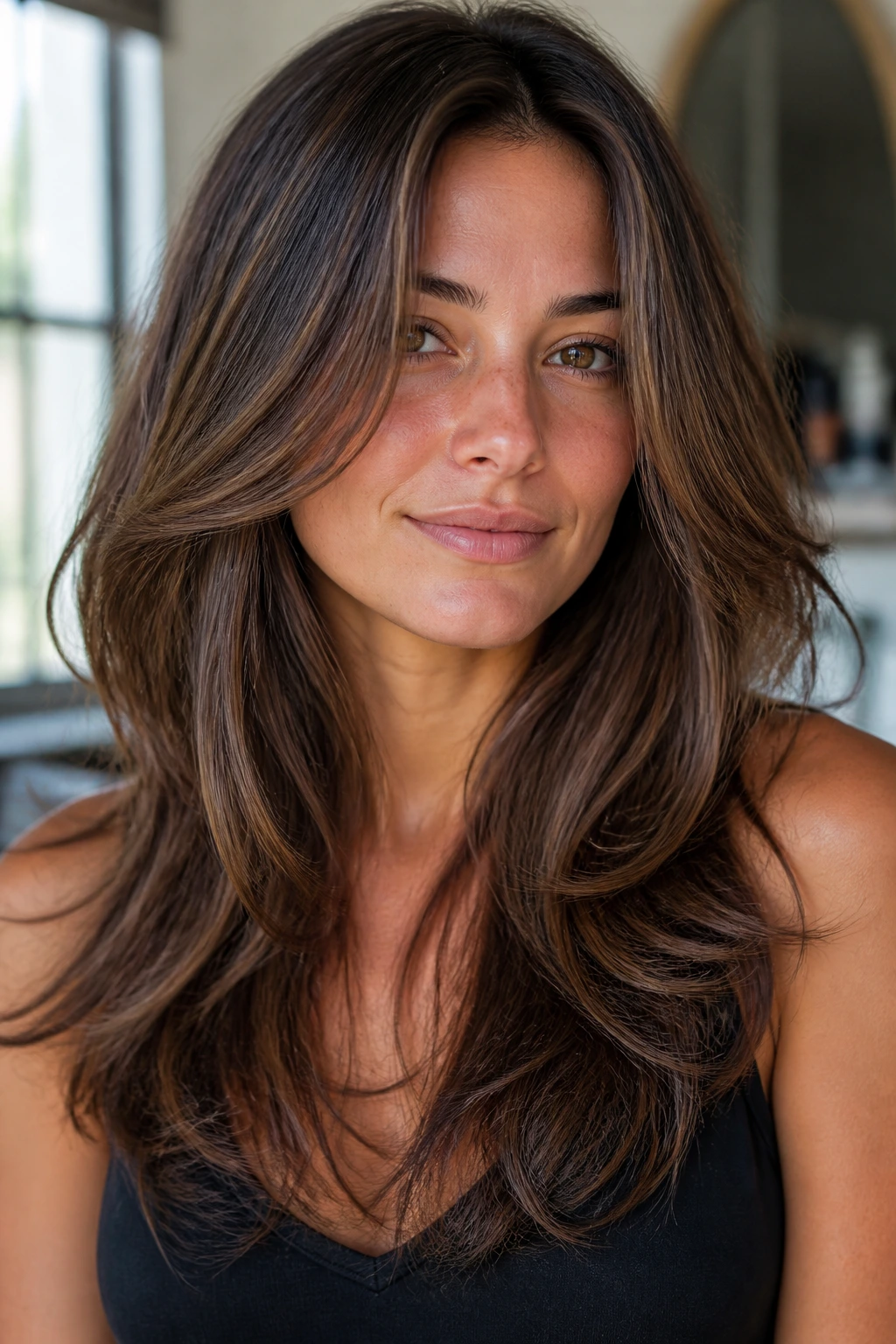
Thick hair does not need to be “fixed.” It needs to be directed.
That’s the part people miss when they sit down and ask for layers as if the word alone solves the problem. Thick long hair usually gets heavy where it hangs past the shoulders, wide where the sides flare out, and flat where the crown gets weighed down by its own density. A good layer map changes those pressure points. It does not just shave off random inches and hope for the best.
The cleanest result usually comes from three places: the front, the interior, and the perimeter. The front opens the face. The interior removes weight so the hair can move. The perimeter decides whether the cut feels full, soft, or sharpened. If any one of those gets overworked, the whole thing gets weird. Too much face framing and you lose the impact. Too much thinning in the interior and the ends start looking ragged. Too much removal at the bottom and the length starts looking thin in photos and in real life, which are not the same thing.
There’s also a practical issue nobody wants to talk about enough: thick hair changes shape when it’s dry. A cut that looks balanced wet can expand out sideways once it’s air-dried or blown out. That’s why the best layered hairstyles for long hair with thick hair leave some mass in the right places. They give the hair somewhere to land.
Essential Styling Tools for Long Layers on Thick Hair
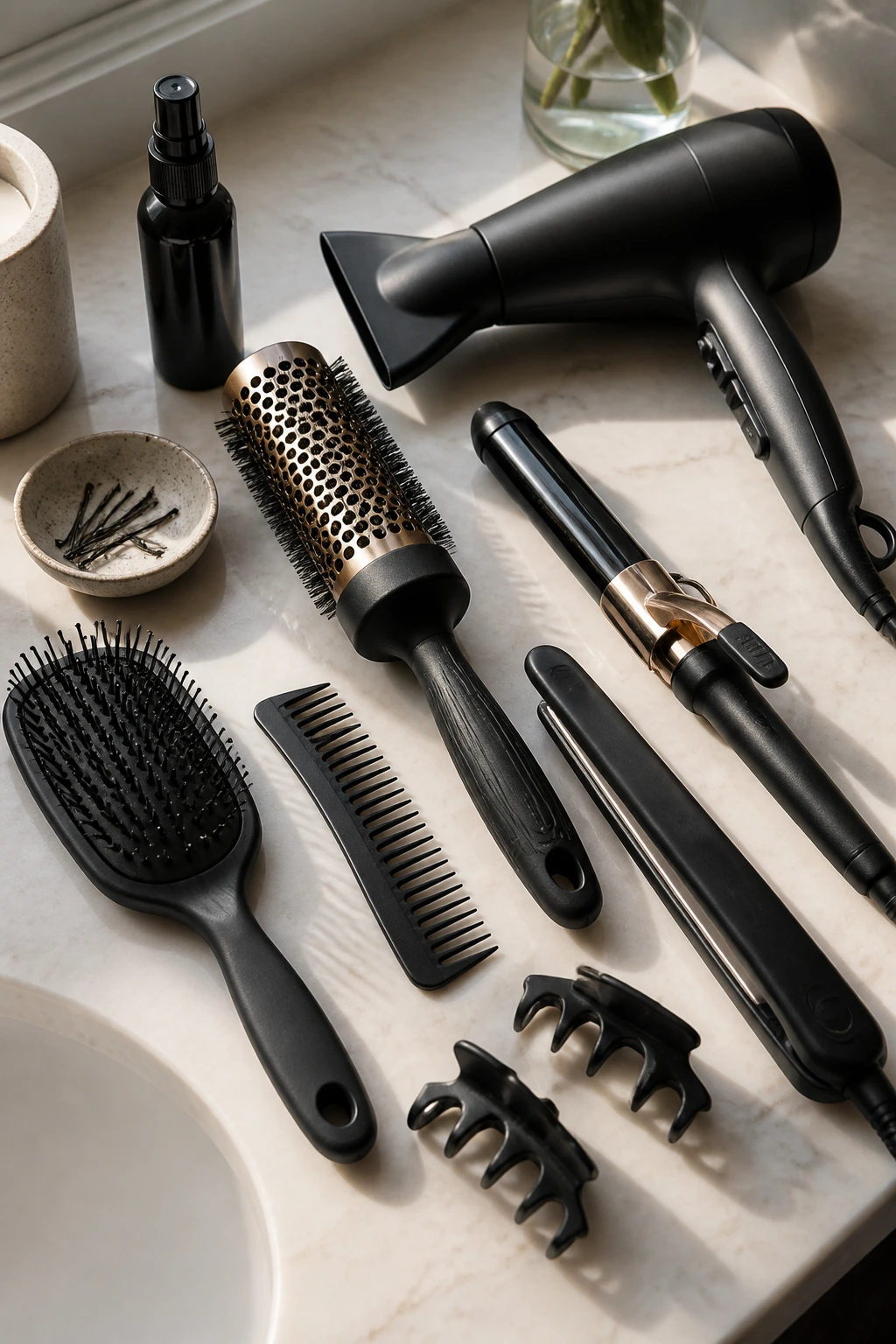
- Blow dryer with a concentrator nozzle — directs airflow so the top doesn’t puff out while you’re smoothing the ends.
- 1.5- to 2-inch round brush — the sweet spot for face-framing pieces and soft bend through thick lengths.
- Paddle brush — useful when you want a sleeker, straighter finish without too much curl.
- Sectioning clips — thick hair gets messy fast if you try to style it all at once.
- Heat protectant spray — a light mist matters, especially on the ends where long layers are oldest and driest.
- Lightweight mousse — gives root lift without turning the hair crunchy.
- Texturizing spray — helps shag, butterfly, and air-dry styles keep separation.
- 1.25-inch curling iron or wand — ideal for showing off the layers without making the hair look overdone.
- Wide-tooth comb — kinder than a brush on wet thick hair, especially if the texture bends or curls.
- Silk scrunchie or claw clip — keeps layers from getting crimped when you’re not styling.
What to Ask for at the Salon, and What to Bring With You
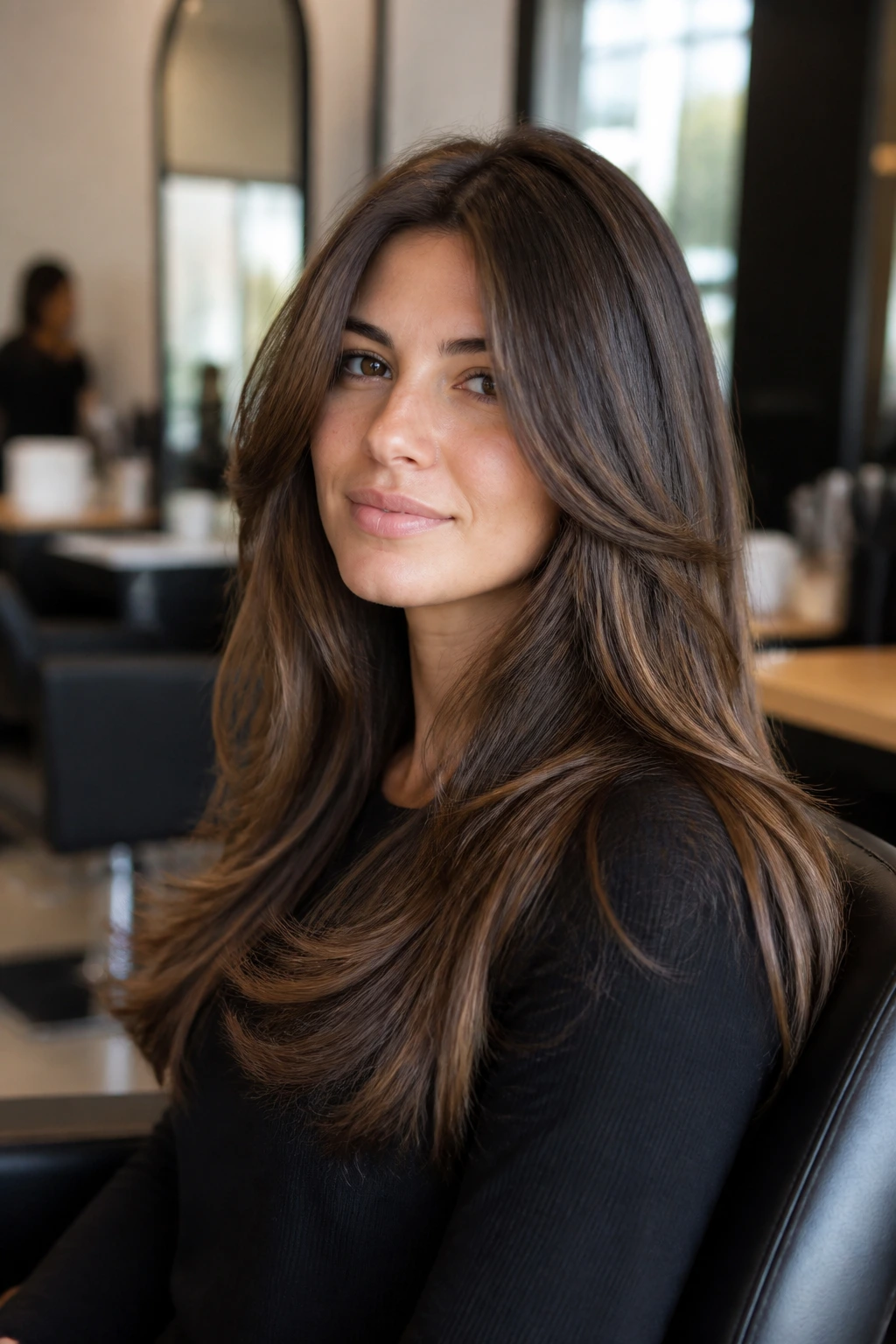
Bring pictures. Two or three. One from the front, one from the side, one that shows the back or the overall outline. Thick hair can look radically different depending on density, wave, and how high the layers start, so a single photo from the front is not enough. And yes, the salon chair is exactly where vague language goes to die.
Say where you want the shortest pieces to land. Cheekbone? Jaw? Collarbone? That one detail changes the whole haircut. If you wear your hair in a middle part most days, say that too, because middle-part layers need to behave differently than side-part layers. If you air-dry four days a week, the stylist needs to know. If you heat-style twice a month, the stylist needs to know that as well. Haircuts are not magic. They are instructions.
One more thing: if your hair is dense at the nape and fluffy at the sides, ask for weight removal in the interior, not a lot of thinning at the bottom. Thick hair often looks best when the perimeter stays solid. That’s the difference between a cut that sways and a cut that frays.
How to Wear These Layers Day to Day
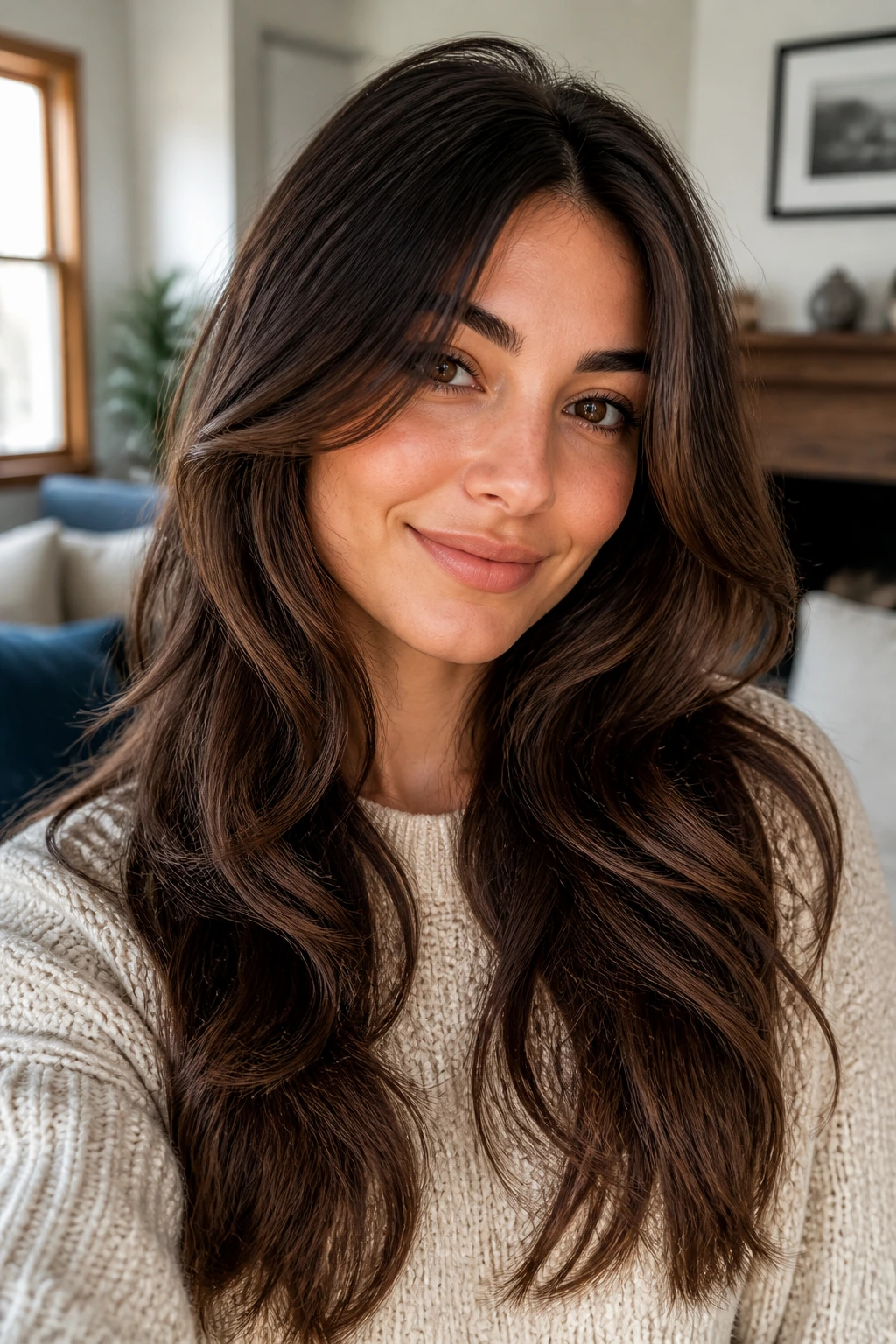
Straight and sleek:
If you like a polished finish, blow-dry with a nozzle and smooth the front with a round brush first. Then run a flat iron only through the mids and ends if needed. The goal is bend, not poker-straight stiffness.
Soft waves:
Use a 1.25-inch iron or wand and leave the very ends out on a few sections. That keeps the hair from turning into one giant curl helmet. Wrap the front pieces away from the face so the layers show instead of disappearing.
Air-dry days:
Scrunch in a small amount of leave-in or mousse, then clip the crown until it’s about 80 percent dry. Thick hair can look huge if you touch it too early. Don’t. Let it settle first.
Updos and half-up styles:
Pull out a slim frame around the face — usually about 1 to 2 inches wide on each side — so the haircut still reads when it’s clipped back. Otherwise all the layers get hidden and you’re left with a lump of hair pretending to be a style.
Accessories:
Claw clips, ribbon ties, and headbands work better on layered thick hair than tiny elastics do. Small ties can create a lumpy ridge at the crown. Bigger accessories distribute the weight more cleanly.
Extra Styling Moves That Make Thick Hair Behave
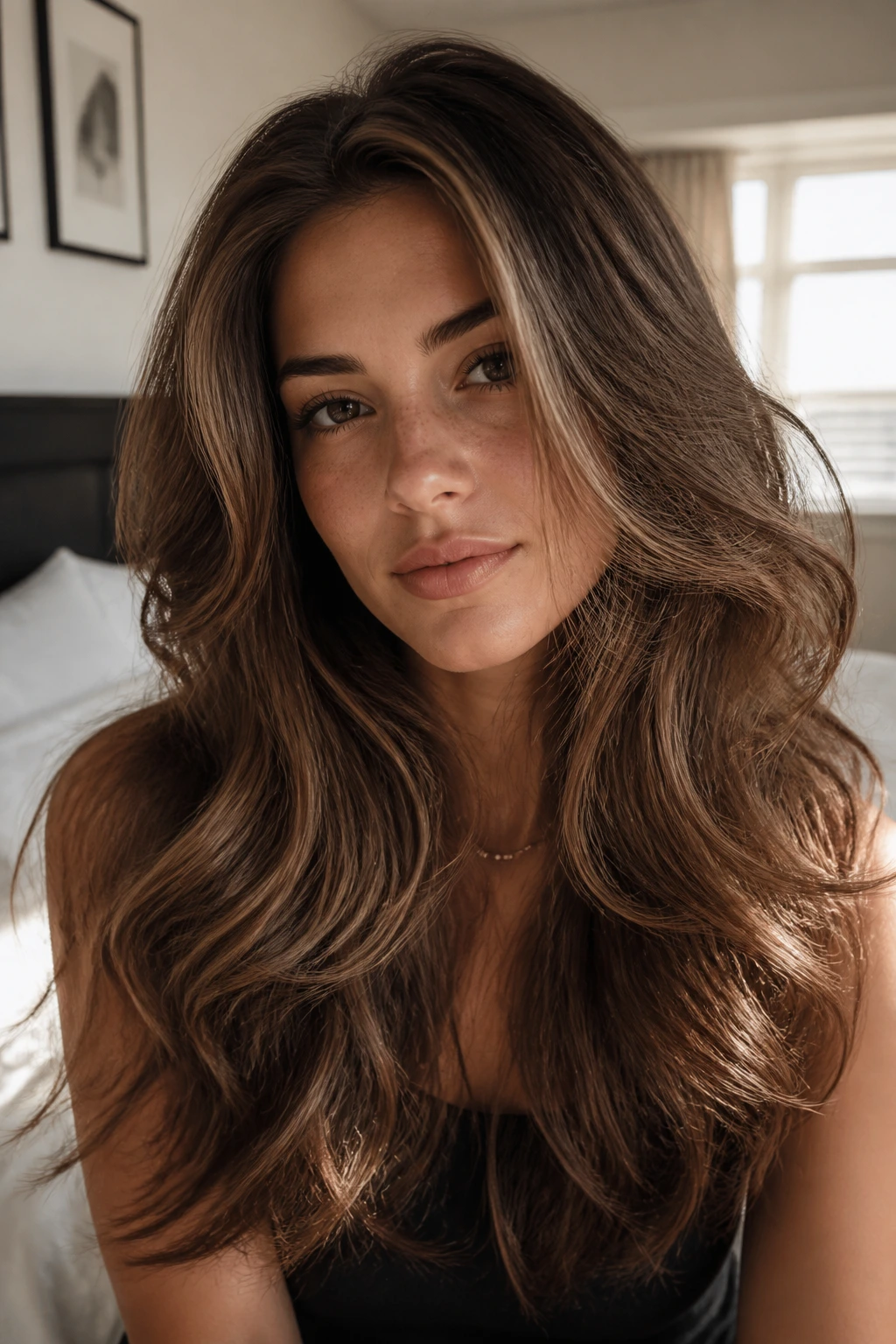
Softening the outline:
If the ends feel too dense, ask for a dusting rather than a major cut. A quarter inch can change the way thick hair swishes. It can also save you from losing all the shape you waited months to grow.
Crown volume:
Flip the part and blow-dry the roots against their natural fall for the first 20 to 30 seconds. That little reset lifts the top without making the style look teased. It’s boring advice, but it works.
Customization:
Coarse hair usually likes a light smoothing cream on the mids and ends. Dense, finer strands usually behave better with mousse and spray. Heavy oils belong only on the last inch or two if the hair gets fluffy fast.
Finish:
A pea-size amount of serum on the ends can make long layers look deliberate instead of dry. Too much and the layers collapse. That’s the part people regret, usually right after they’ve squeezed out too much onto their palms.
Keeping the Shape Between Haircuts
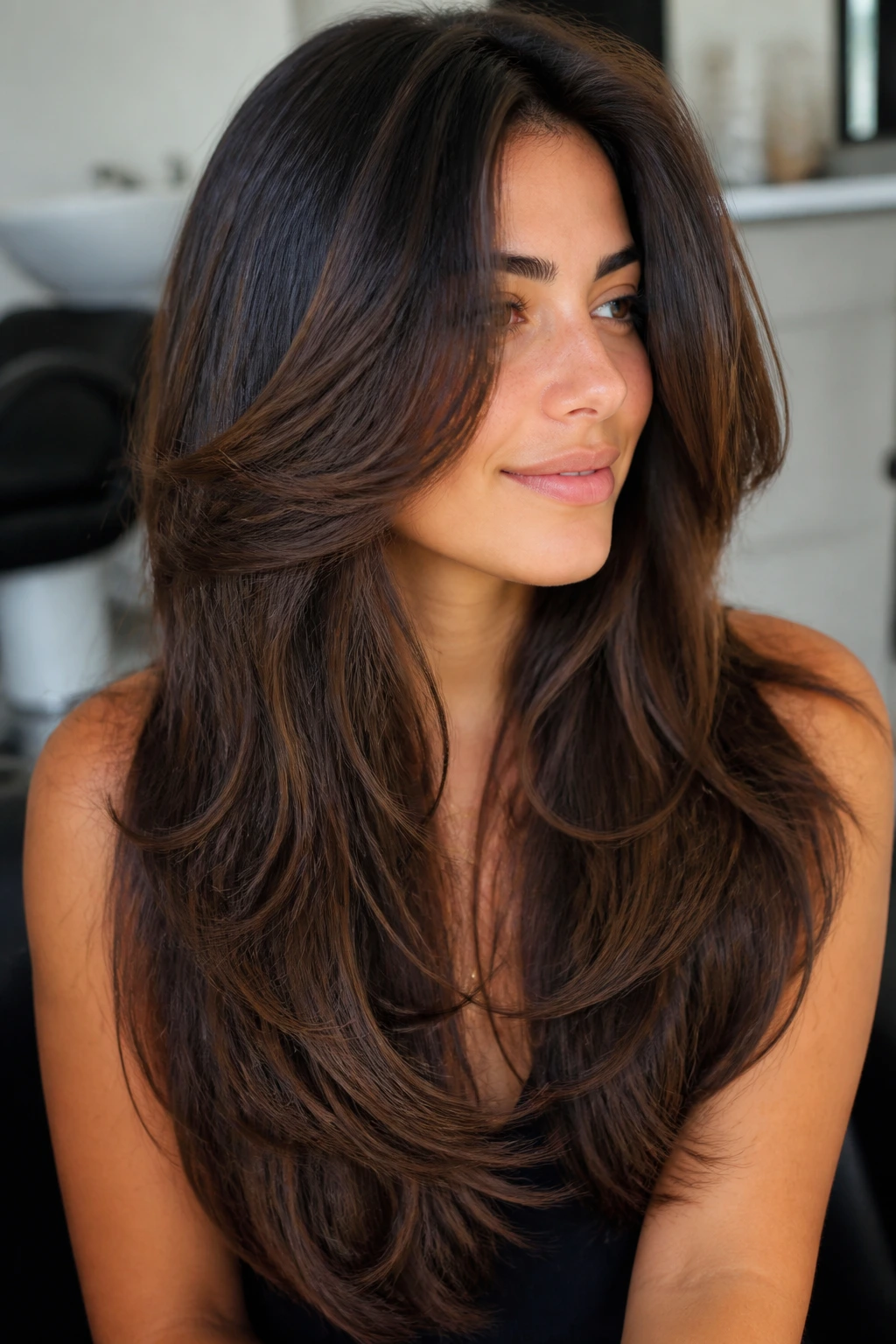
Long thick layers grow out best when you trim before the shape gets angry. For most people, that means a cleanup every 8 to 12 weeks if you want the layers to stay visible and balanced. If you wear a face frame or curtain pieces, those often need attention closer to 6 to 8 weeks because they show grow-out faster than the length does.
Sleep matters more than people admit. Thick layered hair gets mashed at the crown and bent at the front overnight, so a loose braid, a silk scrunchie, or a silk pillowcase helps preserve the shape. You do not need a ritual. You need less friction. That’s the whole game.
On wash days, use clarifying shampoo every few washes if dry shampoo and texture spray start building up and making the layers sit flat. If your ends feel rough, a weekly mask on the mid-lengths and ends usually helps more than piling on oils. And if the hair starts to look wide at the sides, that’s usually your cue that it’s time for a trim, not another round of product.
Variations and Adaptations to Try
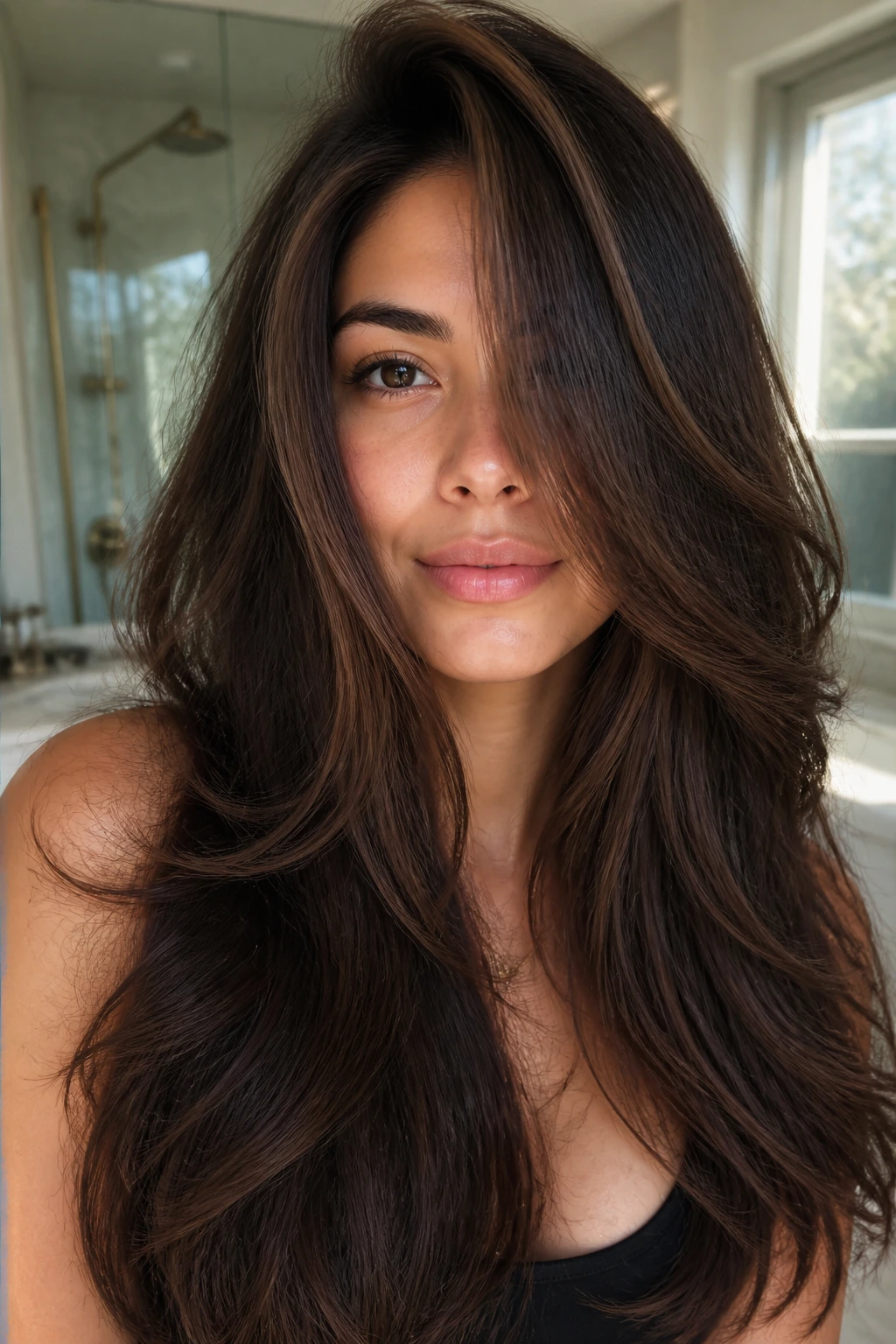
Curly-First Version:
Ask for the layers to be cut with your curl pattern in mind, not stretched wet length. This version keeps the face frame longer and avoids the “triangle after it dries” problem that thick curls can get when the short pieces sit too high.
Blowout-Only Version:
If you mostly style with a round brush, ask for longer feathered layers and a smooth front sweep. The cut should bend elegantly when brushed out, which means the stylist can be a little more generous with internal movement.
Air-Dry Version:
This one keeps the shape softer and the layers less dramatic. It’s best if you want the hair to fall into place with minimal heat and still look intentional after a simple scrunch and leave-in routine.
Glossy Straight Version:
Choose longer layers, a clean hemline, and a subtle face frame. The haircut should support a flat iron or air-dry smooth finish without looking chopped up.
Grow-Out-Friendly Version:
If you hate maintenance, keep the shortest face-framing pieces below the cheekbone and avoid aggressive texture at the ends. The haircut will lose some sharpness as it grows, but the shape should stay readable for longer.
Common Mistakes That Make Thick Hair Look Wider
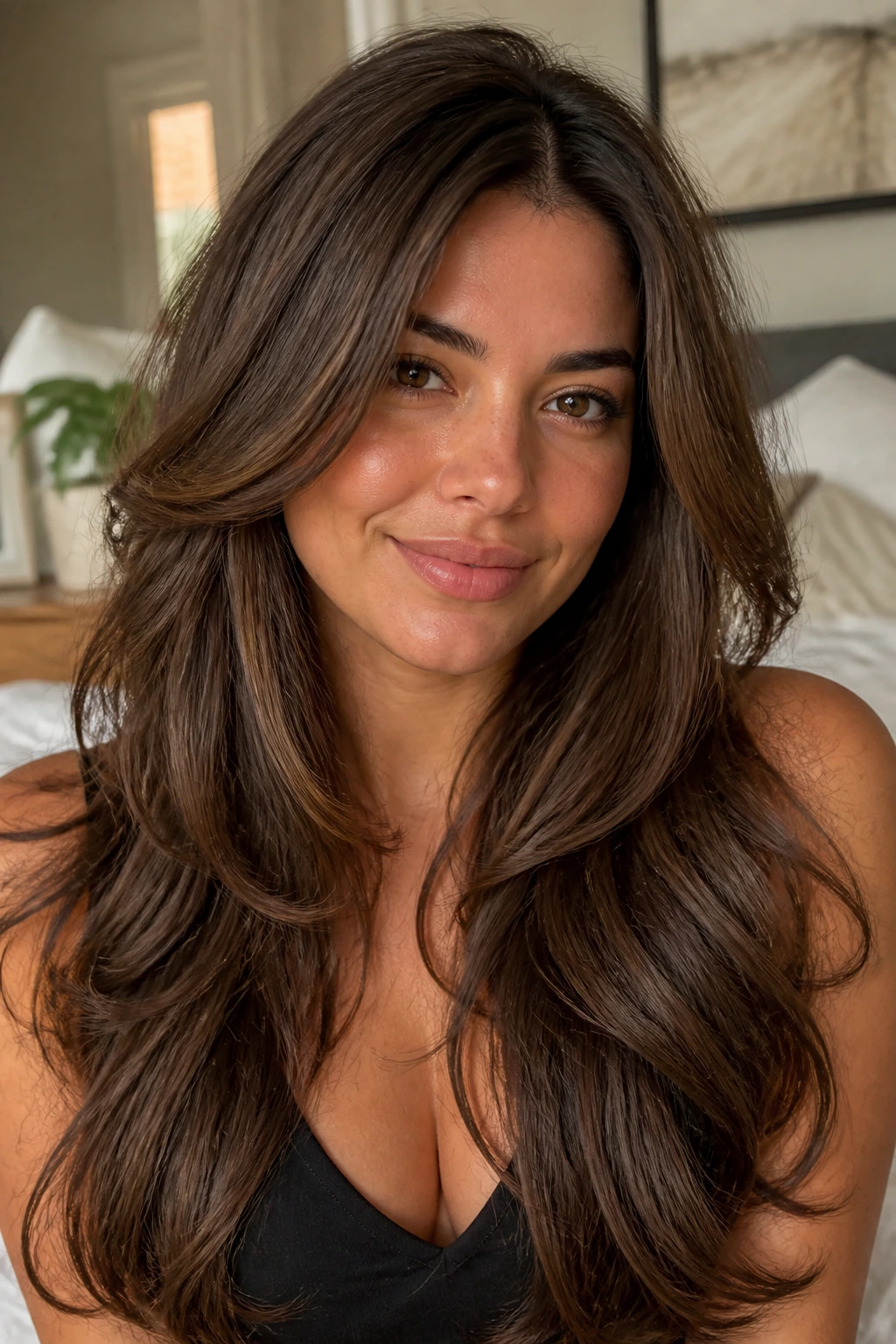
The biggest mistake is starting the layers too high. Thick hair can look lifted and airy in the chair, then turn into a wide fan once it dries. If the shortest pieces start near the temples or above the cheekbone, the sides often puff out more than people expect. The fix is simple: lower the shortest point and keep the interior movement longer.
Another common problem is over-thinning the ends. Some stylists reach for texturizing shears or a razor and keep going until the bottom looks see-through. That reads as frayed, not stylish. Thick hair usually needs a full edge to balance its volume.
There’s also the issue of ignoring the way you actually wear your hair. If you live in clips and buns, front pieces that are too short will fight you every day. If you wear a middle part, a side-part-only cut can fall oddly flat. And if your hair is wavy or curly, wet cutting without shrinkage awareness can leave the face frame sitting far too high once it dries. That one surprises people all the time.
Frequently Asked Questions
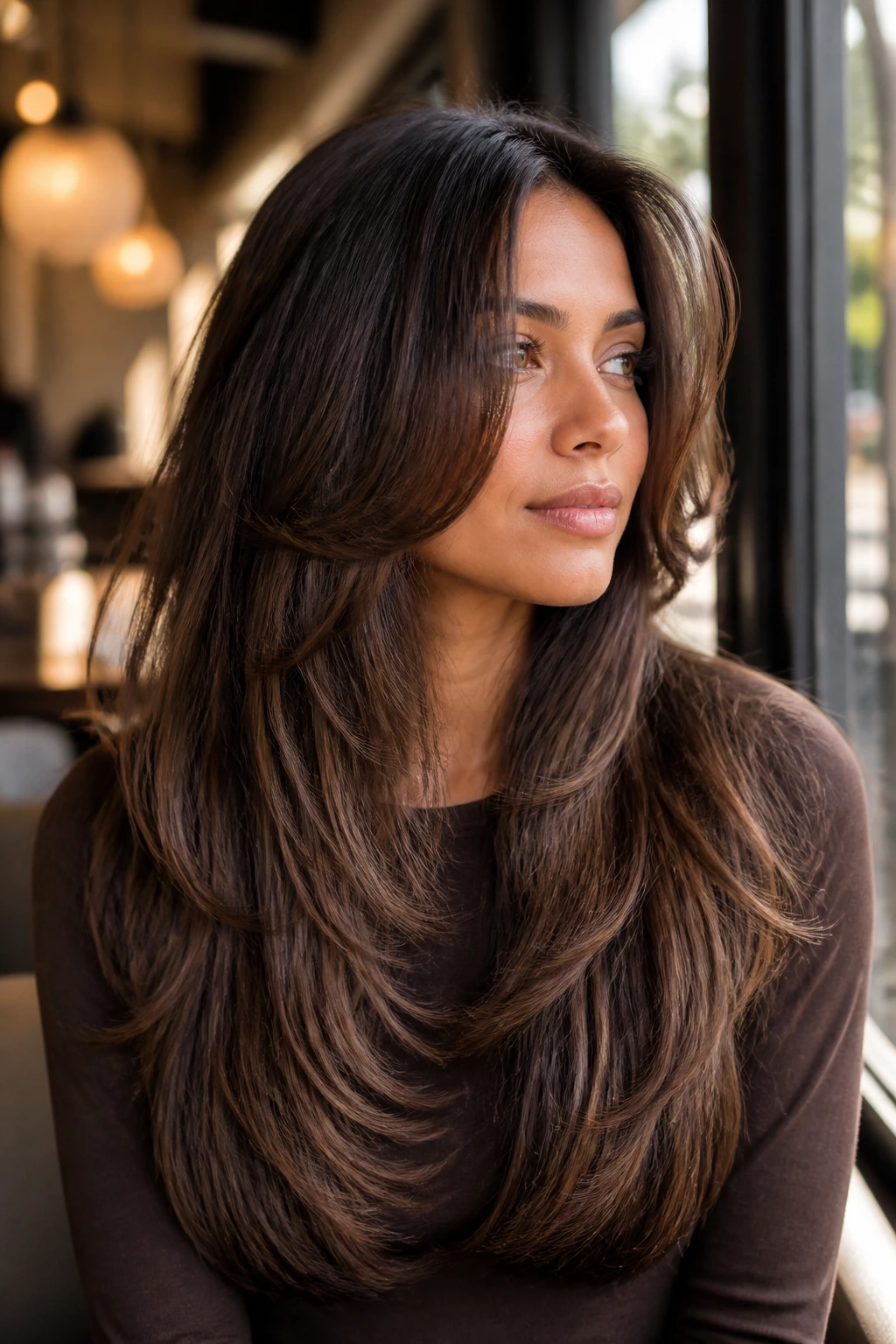
Do layered hairstyles work on very thick long hair?
Yes, but the layers have to be placed with a plan. The goal is to remove weight without destroying the hemline, so thick hair keeps its fullness while gaining movement.
Will layers make thick hair look thinner?
They can, if the cut is too aggressive at the ends. A better approach is to keep the perimeter full and let the interior layers do the work, which reduces bulk without making the hair look sparse.
Where should face-framing layers start?
For most thick long hair, cheekbone, jaw, or collarbone are the safest starting points. Higher than that, and the front can get too wispy or puff out at the sides.
Can I get layers if my hair is curly or wavy?
Absolutely, but the cut should respect shrinkage. Dry cutting or curl-aware layering usually gives a cleaner result because the stylist can see where the curls actually land.
How often do long thick layers need trimming?
Every 8 to 12 weeks is a solid range for keeping the shape tidy. If you have curtain pieces or a pronounced face frame, those may need cleanup a little sooner.
What if my layers puff out at the sides?
That usually means the shortest layers start too high or the ends were thinned too much. Ask for a softer, longer layer map and rely more on interior weight removal than edge texturizing.
Can I still wear my hair up with layers?
Yes, and good layered cuts should actually make updos easier. The trick is leaving enough length around the face so the style still looks intentional when the rest is pulled back.
Is a razor cut a good idea for thick hair?
Sometimes. It can soften coarse, straight thick hair nicely, but on already dry or frizzy strands it can rough up the ends fast. If your hair tends to swell in humidity, ask for a more controlled point cut instead.
The Shape That Makes Thick Hair Feel Lighter
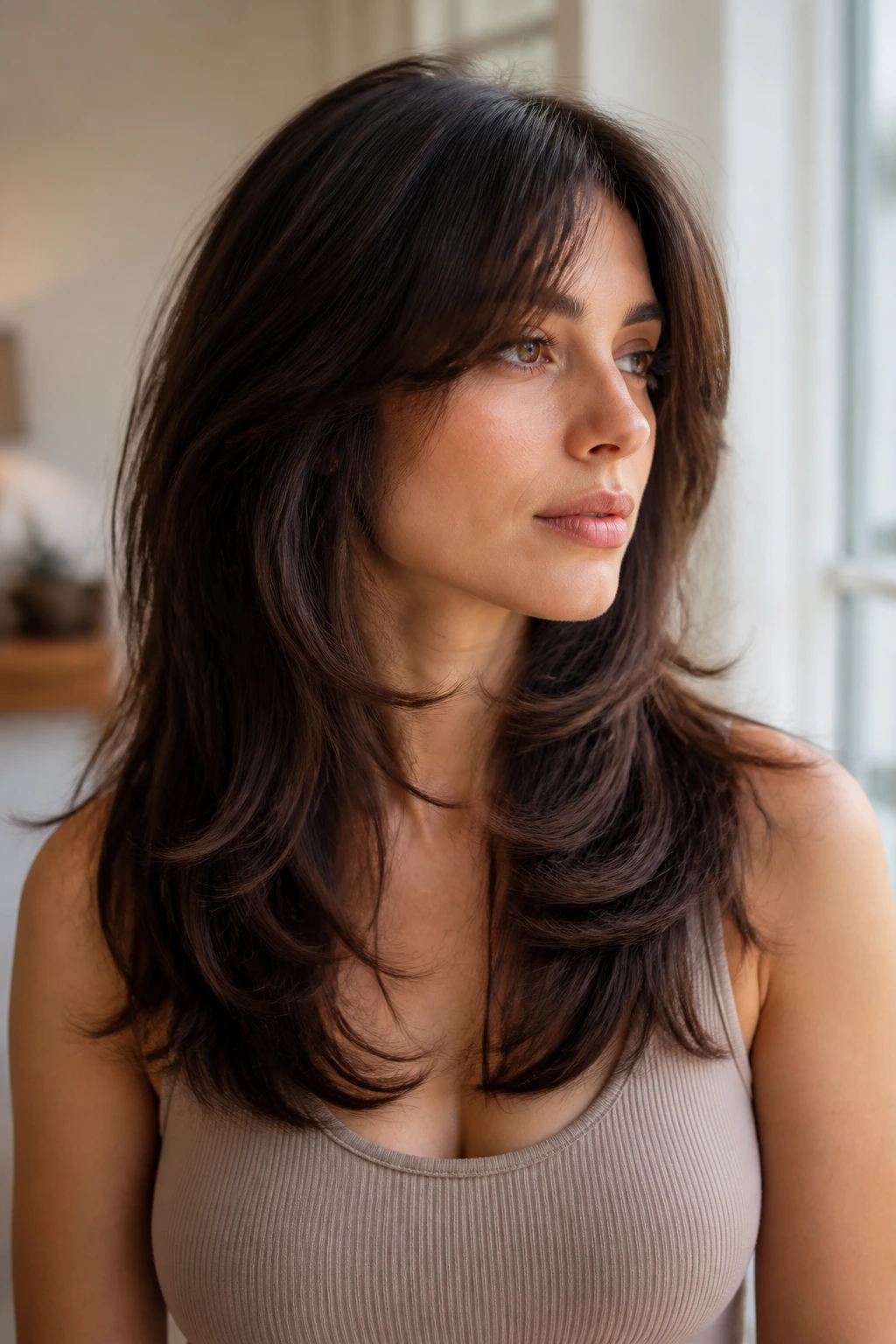
The best layered haircut for thick, long hair is not the one with the most pieces. It’s the one that leaves enough weight where the hair needs it and removes it where the bulk starts working against you. That’s a very different thing, and a much better one.
If you’re saving photos for your next salon visit, save the ones that show the side view too. That’s where thick hair gives itself away. The front may look fine, but the shape from the cheekbone down to the shoulder usually tells the truth.
Pick the layer map that fits how you wear your hair most days, not the one that only looks good in one perfect photo. That’s where the good haircut starts.