



Long bangs for women over 40 with curly hair have a sweet spot that straight hair never quite reaches: they can soften the face, keep the forehead open, and still move like curls instead of sitting there like a stiff curtain. That matters more than people admit. Curly bangs that are cut too short bounce up, split in odd places, or cling to the brow in humid air. The longer versions sidestep a lot of that drama.
There’s also the age piece, which gets discussed in a clumsy way far too often. Hair can get drier at the temple, curl patterns can change a little, and the front section may lose density before the rest of the head does. A longer fringe gives you room to work with those shifts instead of pretending they aren’t there. It also buys you more styling options on the days when the front of your hair has its own opinion.
The styles below are the ones I’d keep on a real shortlist. Some are soft and face-framing. Some are lush and full. Some are barely “bangs” in the old-school sense at all, which is exactly the point. The useful ones are the cuts that look intentional on day one, then still look reasonable on day four when the curls have stretched, frizzed, and settled into real life.
Why These 25 Long Curly Bangs Earn Their Keep
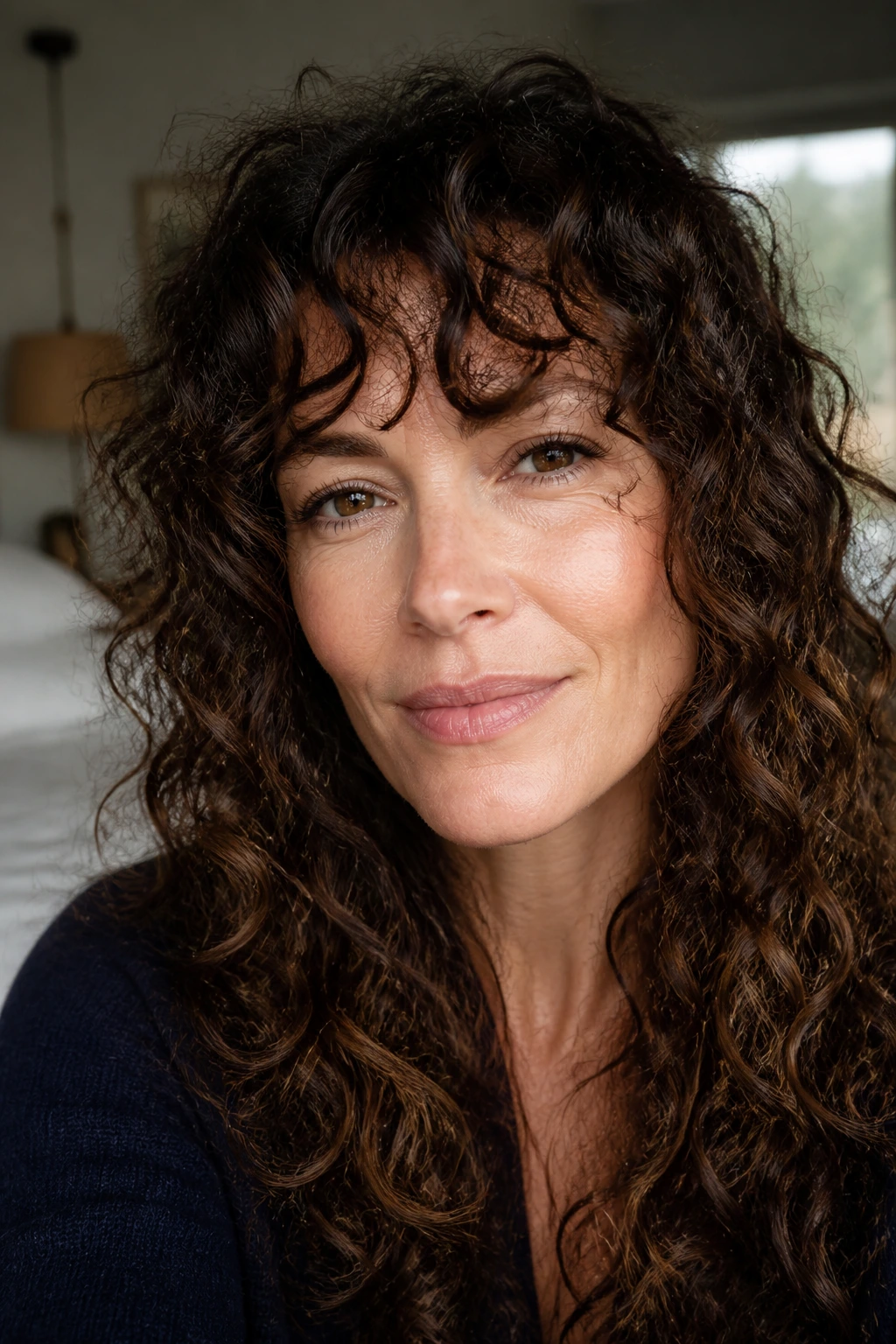
-
They leave room for shrinkage: Curly fringe needs extra length because the curl will spring up after it dries, and the right cut accounts for that before you leave the salon.
-
They soften the face without boxing it in: A long bang can skim the cheekbone, lip, or jaw and still feel open, which is a lot kinder to curls than a blunt straight line.
-
They grow out better: Long fringe can slide into layers instead of turning into a weird in-between stage after two weeks.
-
They play nicely with glasses: A longer front section can clear a frame or sit around it, so you are not fighting your eyewear every morning.
-
They fit changing curl density: If the front of your hair is thinner than the back, longer bangs hide that mismatch instead of exposing it.
-
They work on more than one styling mood: You can wear them airy and loose, or define them with gel and a diffuser when you want more shape.
1. Soft Curtain Bangs That Split at the Cheekbones
Soft curtain bangs are the easiest place to start if you want the face-framing look without a hard cut line. On curly hair, the best version lands around the cheekbones and opens in the middle, so the curl pattern can fall away from the face instead of dropping straight onto it.
Why it works
The split gives the bangs space to move. That sounds small, but it changes everything when your hair has bounce. A center section that is slightly shorter and side pieces that graze the cheekbone let the fringe soften the forehead while still feeling airy.
Ask for them to be cut dry, or at least in the curl’s natural state. Wet curly bangs lie to people. Dry curls tell the truth.
A good curtain bang is also forgiving on a morning when you do not want to do much. A quick mist, a scrunch, and a diffuser pass on low heat usually brings the shape back.
- Best on loose curls, broad foreheads, and layered cuts
- Looks clean with a side tuck behind one ear
- Needs a trim before the center pieces creep into the eyes
Tip: If your curl spring is strong, have the stylist leave the front about half an inch longer than you think you need.
2. Deep Side-Swept Curl Sweep
If your hair already insists on living to one side, stop arguing with it. A deep side-swept curl sweep leans into that natural bias and turns a stubborn part into shape.
The effect is simple and good. One side lifts at the root, the bangs travel across the forehead, and the longer side melts into the rest of the haircut instead of fighting it. It’s a smart option when one temple is flatter than the other or when a straight-across fringe would feel too heavy.
The styling trick is to set the direction while the hair is damp. Clip the front at the root on the heavier side and let the front section dry in the direction you want. Once the pattern sets, it usually stays put better than people expect.
Best for: side parts, cowlicks, and faces that need a little diagonal movement.
Skip if: you want symmetry. This style is happiest when it looks a touch undone.
3. Brow-Grazing Ringlet Fringe
Can curly bangs sit near the brow and still behave? Yes, if they’re cut with room for shrinkage and the curl pattern is springy rather than fluffy. A brow-grazing ringlet fringe gives you that close, expressive look without the bluntness of a straight fringe.
This one is all about precision. Each curl should land in a slightly different place, but the overall line still needs a shape. If the bangs are cut too short, the ringlets jump above the brow and turn cartoonish. Too long, and they disappear into the front layers.
How to style it
Use a small amount of gel or strong mousse on soaking-wet bangs, then separate the clumps with fingertips after they dry. Don’t rake through them with a brush once they’ve set. That just makes the fringe frizzy and breaks the curl groupings that give this look its charm.
- Works best on springy ringlets and medium-density hair
- Needs regular trims every 5 to 7 weeks
- Looks especially good with a lifted root and a side part
A tiny bit of definition is the point here. Not crunch. Definition.
4. Bottleneck Bangs with Loose Face Layers
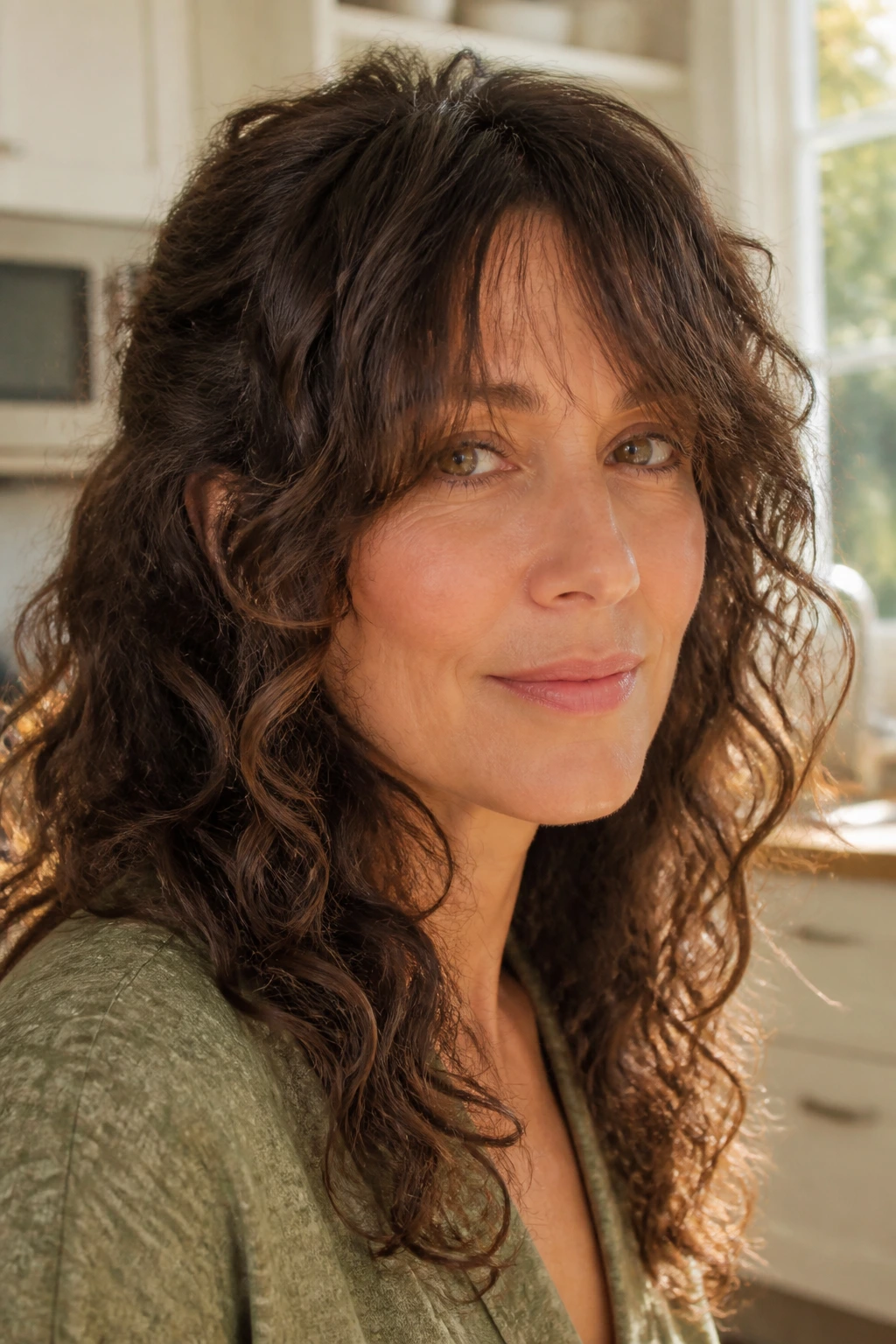
Bottleneck bangs sound fussy, but they’re one of the most useful shapes for curly hair. The center is narrower, the sides widen gently, and the whole thing blends into loose face layers instead of sitting like a separate object on your forehead.
What makes this cut strong is the balance. It gives you the feeling of bangs without the visual weight of a blunt fringe. That matters if your curls are thick, your face is rounder through the cheeks, or you just don’t want the front section to steal the show.
The outer pieces should be long enough to hook around the cheekbone and then fall into the sides of the haircut. If they stop too soon, the style gets boxy. If they go too long, the center loses purpose.
This is one of those shapes that looks especially good in motion. A head turn, a tuck behind the ear, a little breeze. It moves.
5. Curly Shag Fringe with Feathered Ends
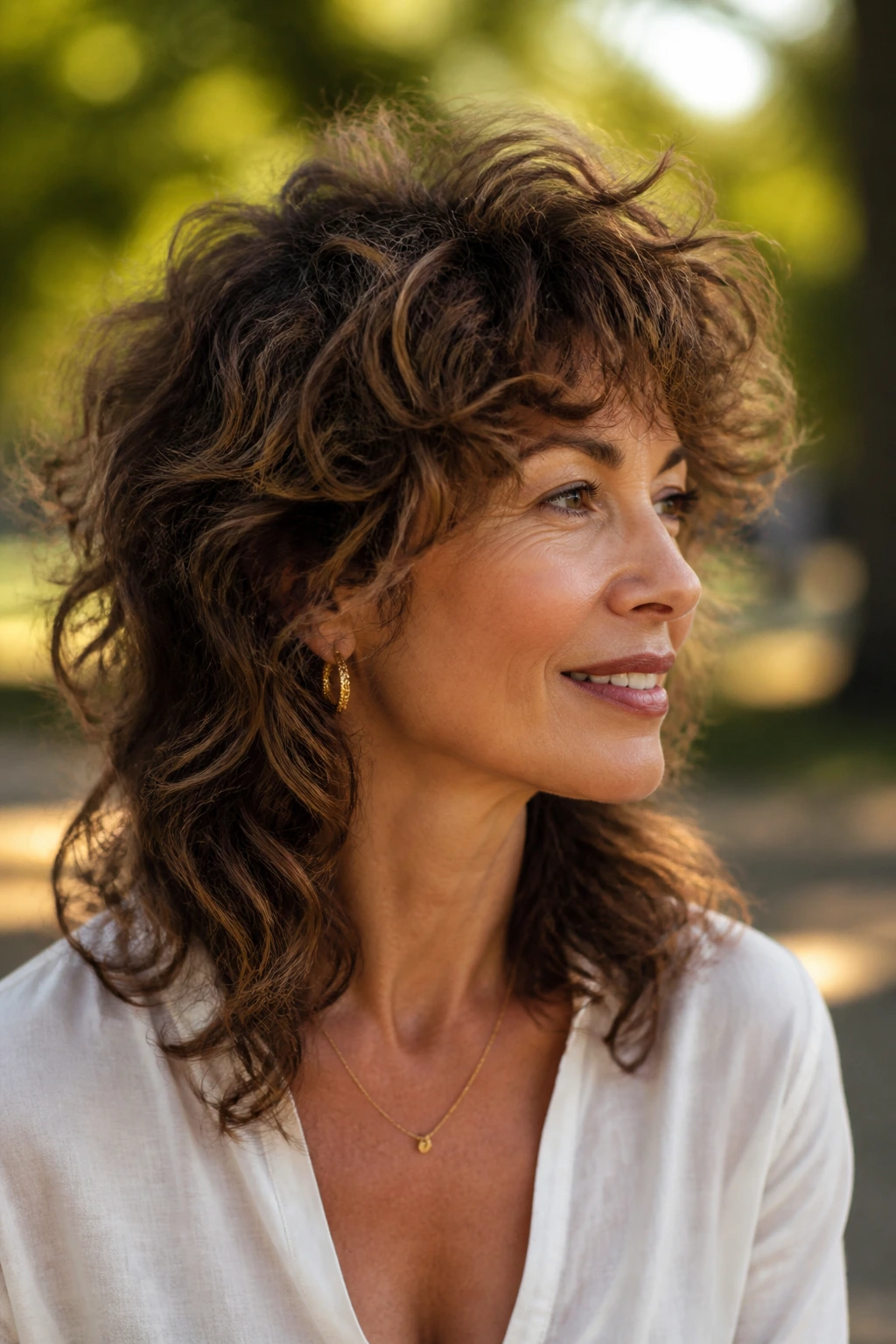
A curly shag fringe is for the woman who likes a little attitude in the haircut and does not mind volume. The fringe is not trying to sit politely across the forehead. It wants to blend into crown layers, hang a little piecey, and make the whole cut feel lived-in.
The feathered ends matter here. They keep the front from looking thick and flat, especially when the rest of the hair has lots of body. A good shag fringe creates lift near the roots and movement through the middle, which is why it works so well on dense curls.
This style is happiest when the haircut around it is layered too. If the bang is shaggy but the rest of the hair is one length, the top can feel disconnected. That mismatch shows up fast.
A little diffused mousse, a little scrunching, and a wide-tooth comb used only where needed. That’s enough. More than that often kills the texture.
6. Wispy Fringe for Fine Curls
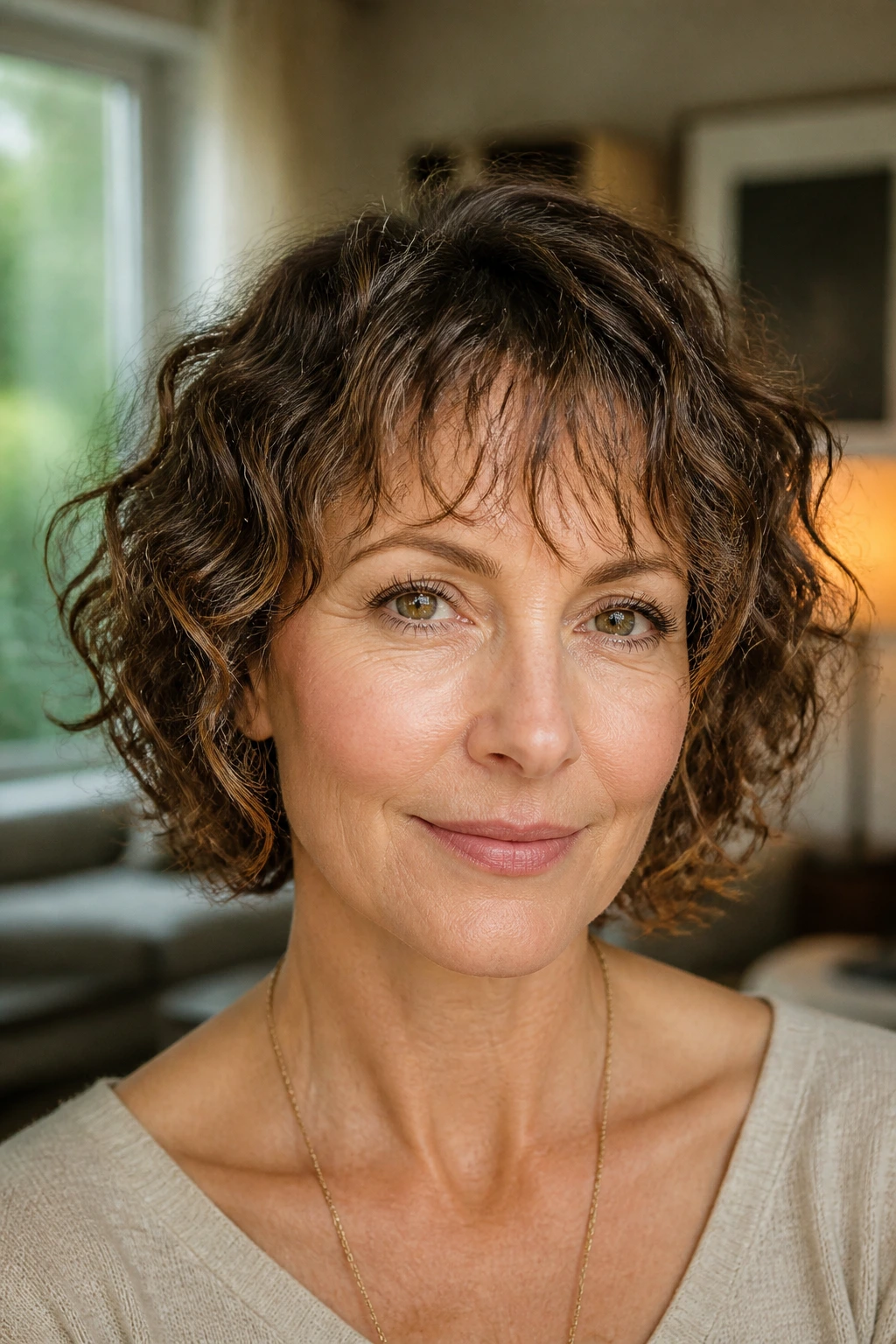
Fine curls need a different kind of bang. Heavy fringe on thin curly hair tends to separate into sad strings or sit too low against the forehead. A wispy fringe solves that by staying light and letting the curl pattern breathe.
The key is restraint. Your stylist should take tiny sections and leave real gaps in density so the fringe doesn’t collect too much weight. That keeps the front from collapsing flat or getting greasy-looking by lunchtime.
A wispy fringe also gives you a softer read around the face, which can be useful if your hairline has become less dense than it used to be. The cut hides that well. Too much layering, though, and it becomes see-through in a bad way.
Use mousse rather than a heavy cream. Cream can make fine curls look damp and droopy. Foam gives you more lift at the root and a cleaner finish through the ends.
7. Rounded Halo Bangs for Thick Curls
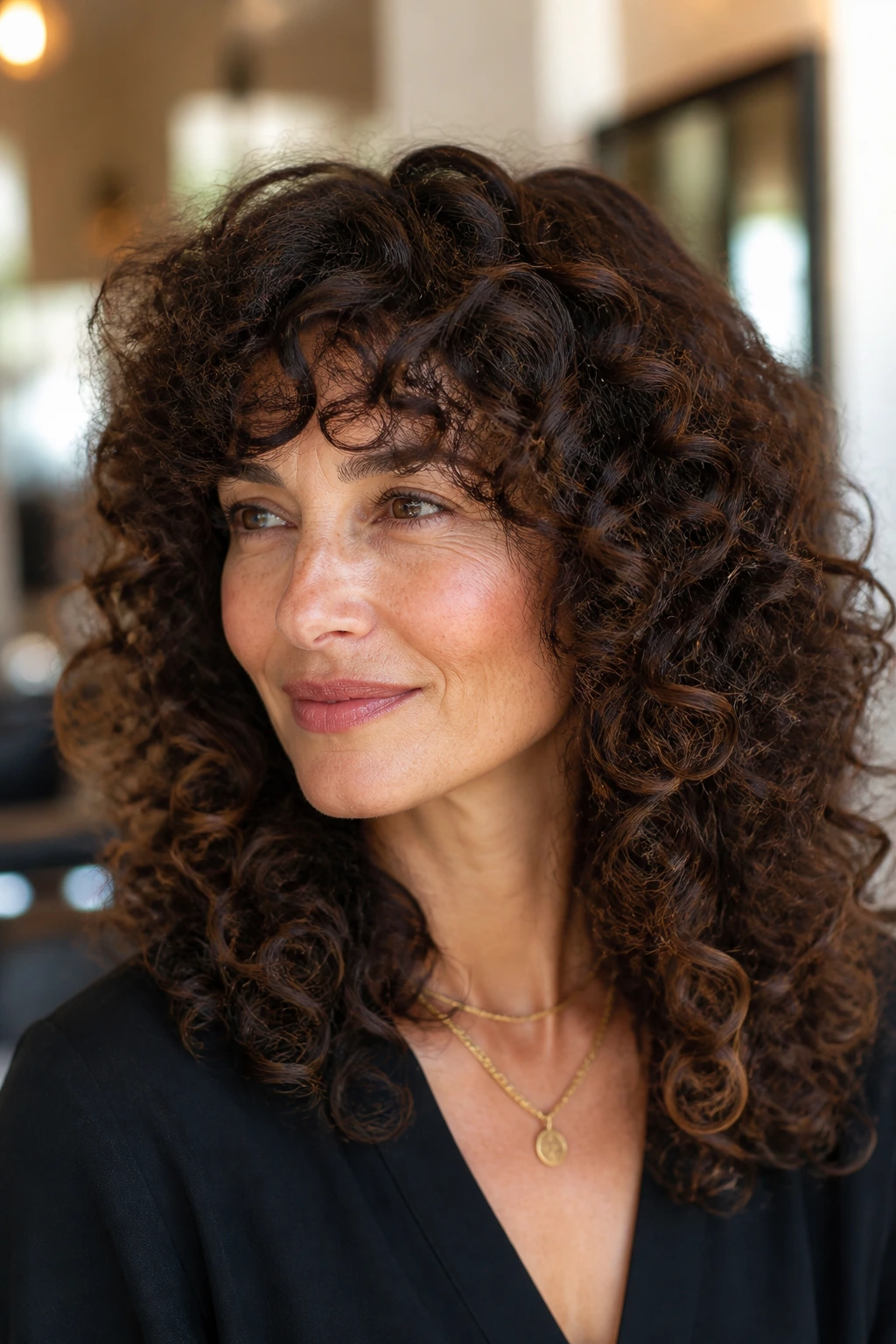
Rounded halo bangs are a bold choice, and they need thickness to work. The shape curves around the forehead instead of falling in a flat rectangle, which makes dense curls look deliberate instead of bulky.
The curve matters because thick curls often need structure more than product. A rounded line keeps the fringe from puffing out in the middle and going narrow at the sides. That shape can make the whole haircut feel more balanced, especially if your hair has a lot of body at the crown.
A square or long face often likes this shape, since the curve shortens the vertical feel at the center of the face. It’s not a hard rule. It’s just how the line behaves in practice.
Keep the ends moisturized, but don’t drown the root area. A thick fringe that starts heavy at the scalp and gets heavier from product is a lot to manage.
8. Lip-Length Spiral Bangs
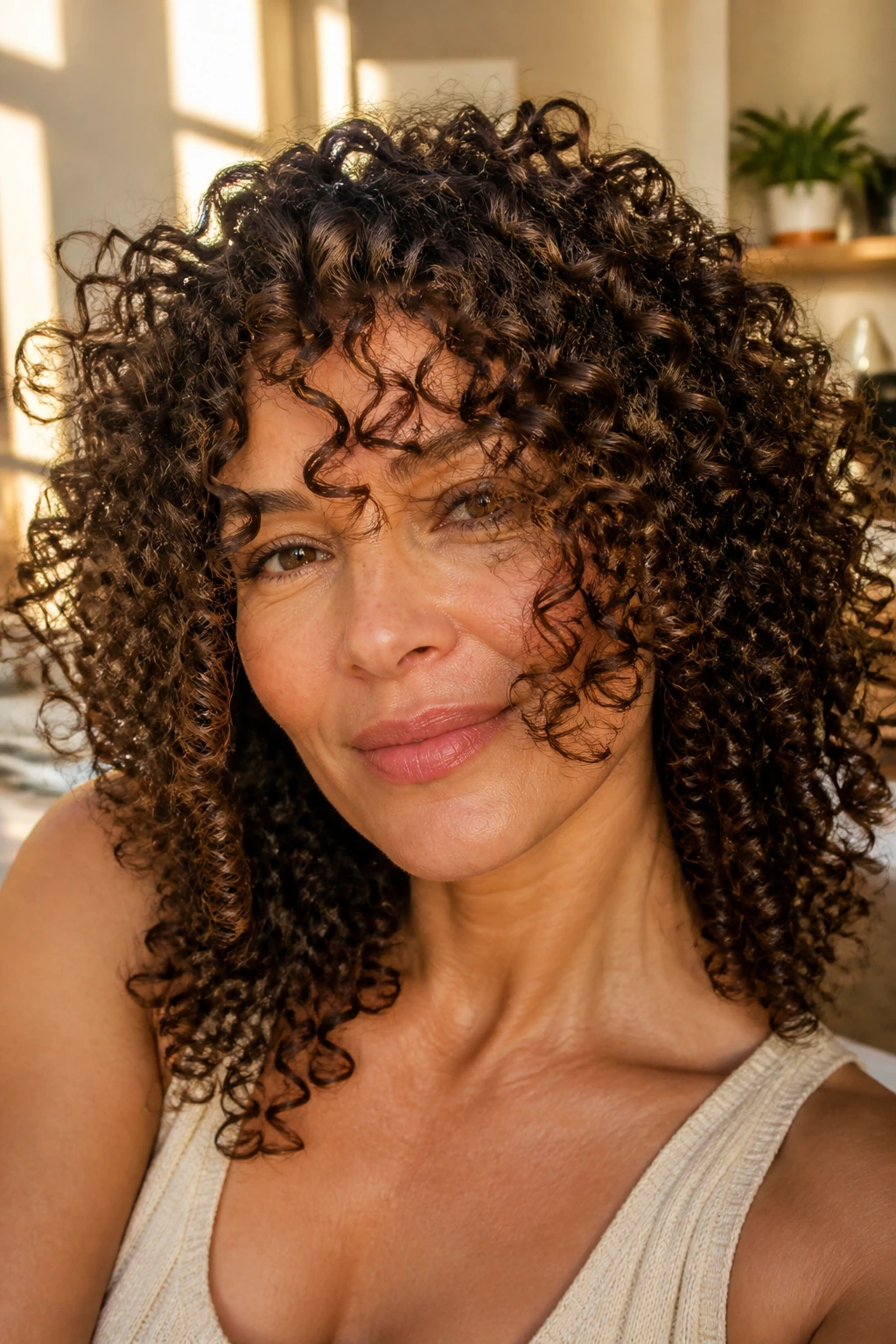
Lip-length spiral bangs are not shy. They land around the upper lip, coil into place, and give you a frame that feels a little more dramatic than a cheekbone sweep.
That extra length is useful because spiral curls shrink in a way that other textures do not. A lip-length front section can dry into a flattering bend without becoming too short to tuck, pin, or split. It also gives you room to separate the pieces if one curl wants to live on its own.
What makes them work
The curls should look intentional, not crowded. If the stylist packs too much hair into the bang zone, the front turns into a heavy block. If the section is too thin, the curl definition disappears and you end up with a floppy fringe.
This style looks especially good with a half-up clip or a loose ponytail. It gives the front a finished shape while leaving the rest of the hair free.
9. Collarbone-Grazing Curtain Fringe
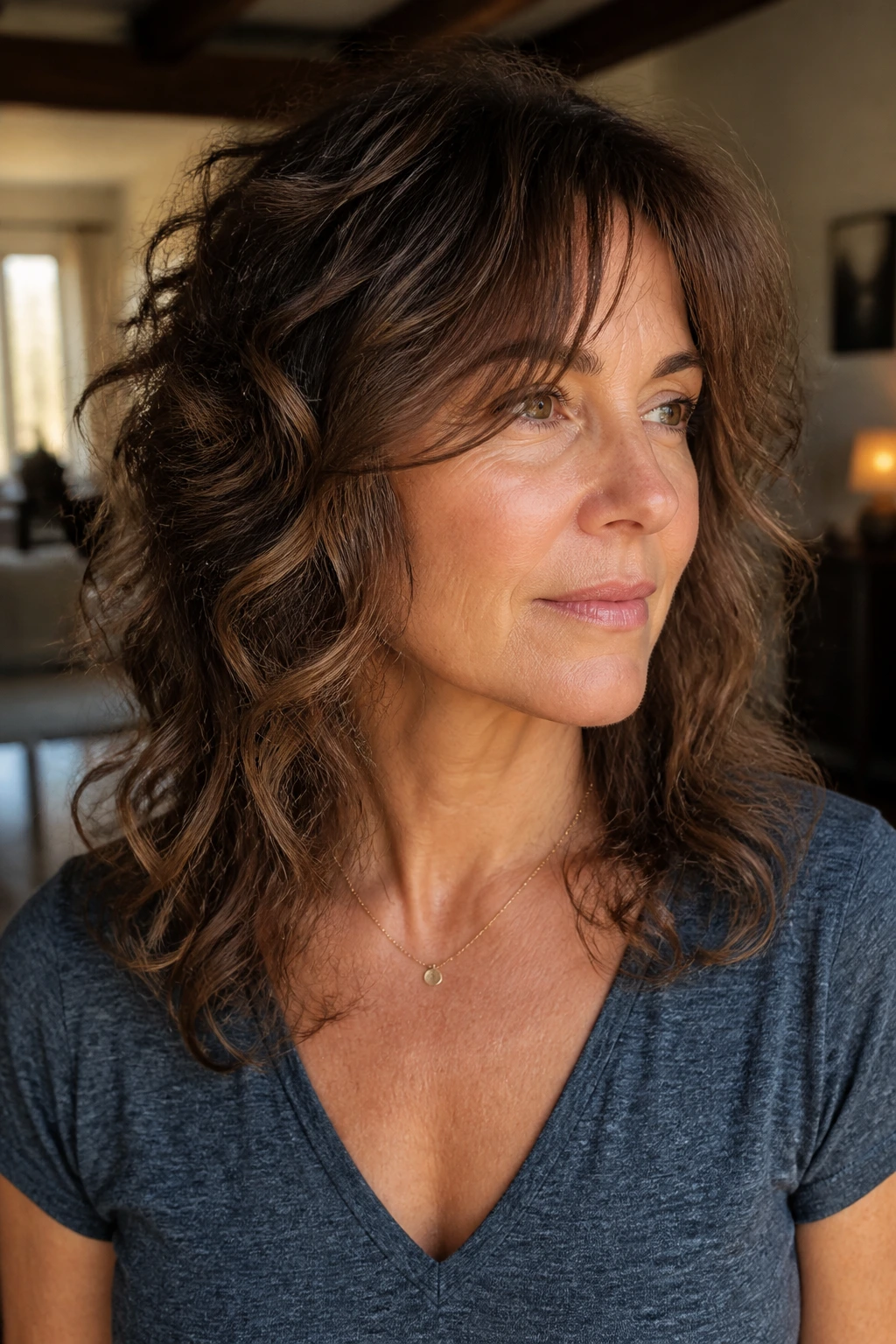
This is the version for people who like the idea of bangs but don’t want to make a big statement about it. Collarbone-grazing curtain fringe is very long, very soft, and very good at blending into the rest of the haircut.
The shape works because the bang is almost a face layer. It falls in a way that lets you wear the hair down, half up, or tucked back without the front pieces looking stranded. On curly hair, that matters. A fringe that can survive a ponytail is worth keeping.
It also suits women who want movement around the face without a lot of styling time. If you air-dry, this length can dry into a soft frame instead of a crisp bang line.
Keep a few shorter pieces near the center and let the outer pieces stay longer. That creates the curtain effect without looking like you forgot to trim the front.
10. Grown-Out Bangs That Blend Into Layers
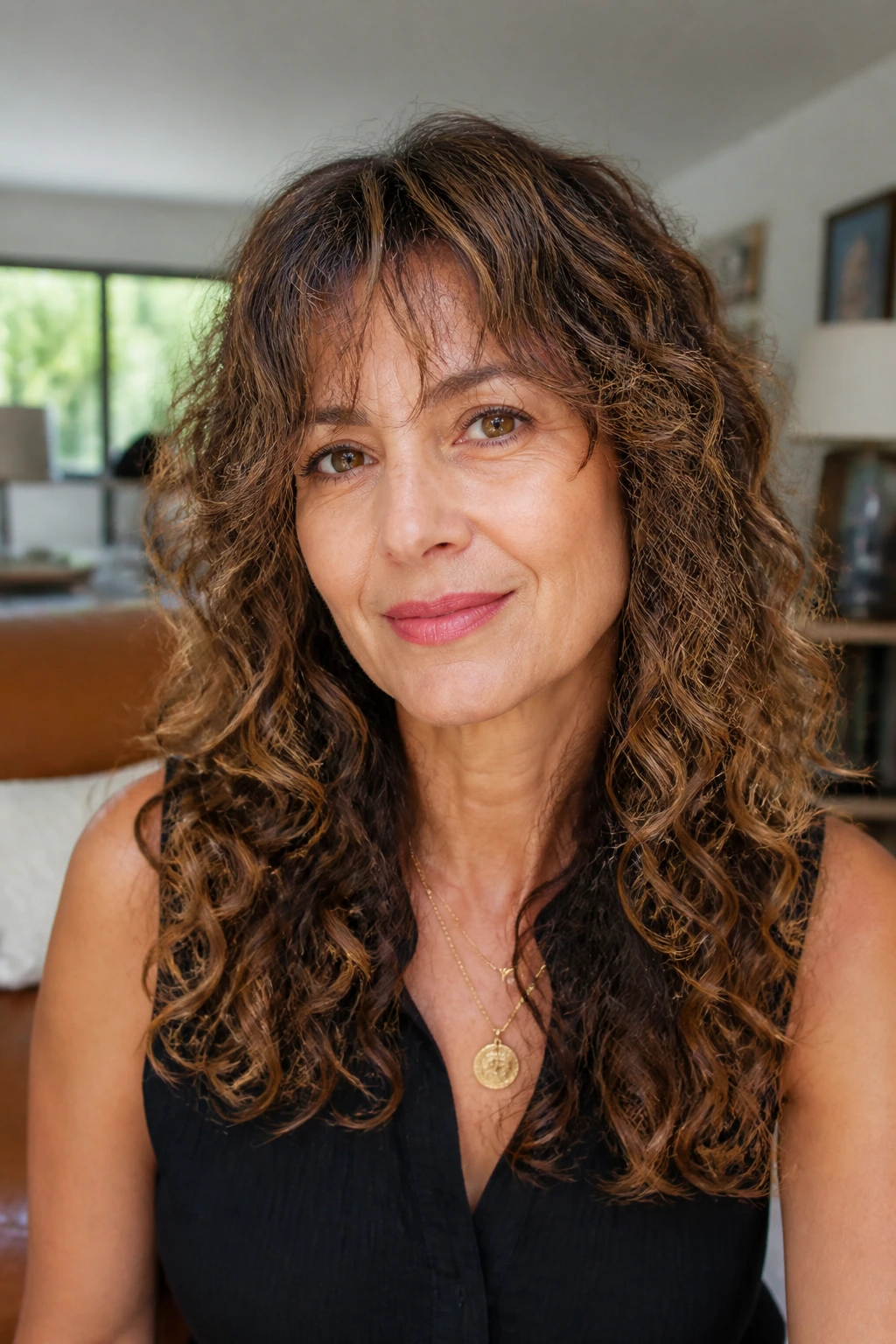
Grown-out bangs are not a failure state. Sometimes they are the best shape on the head. When the fringe is long enough to merge into layers, the hair stops looking like it has a separate front section and starts reading as one fluid cut.
That can be a gift if your hair is curly and the front grows at a different speed than the rest. It also helps if you’re in between salon visits and want a style that doesn’t scream for correction the minute it moves.
The trick is to keep the front pieces shaped enough that the grow-out still looks intentional. A center part or a soft off-center part usually gives this style the right amount of structure.
It’s also one of the few bang looks that can survive a not-so-perfect drying day. It doesn’t need crisp edges. It needs direction.
11. Tapered Side Fringe for Cowlicks
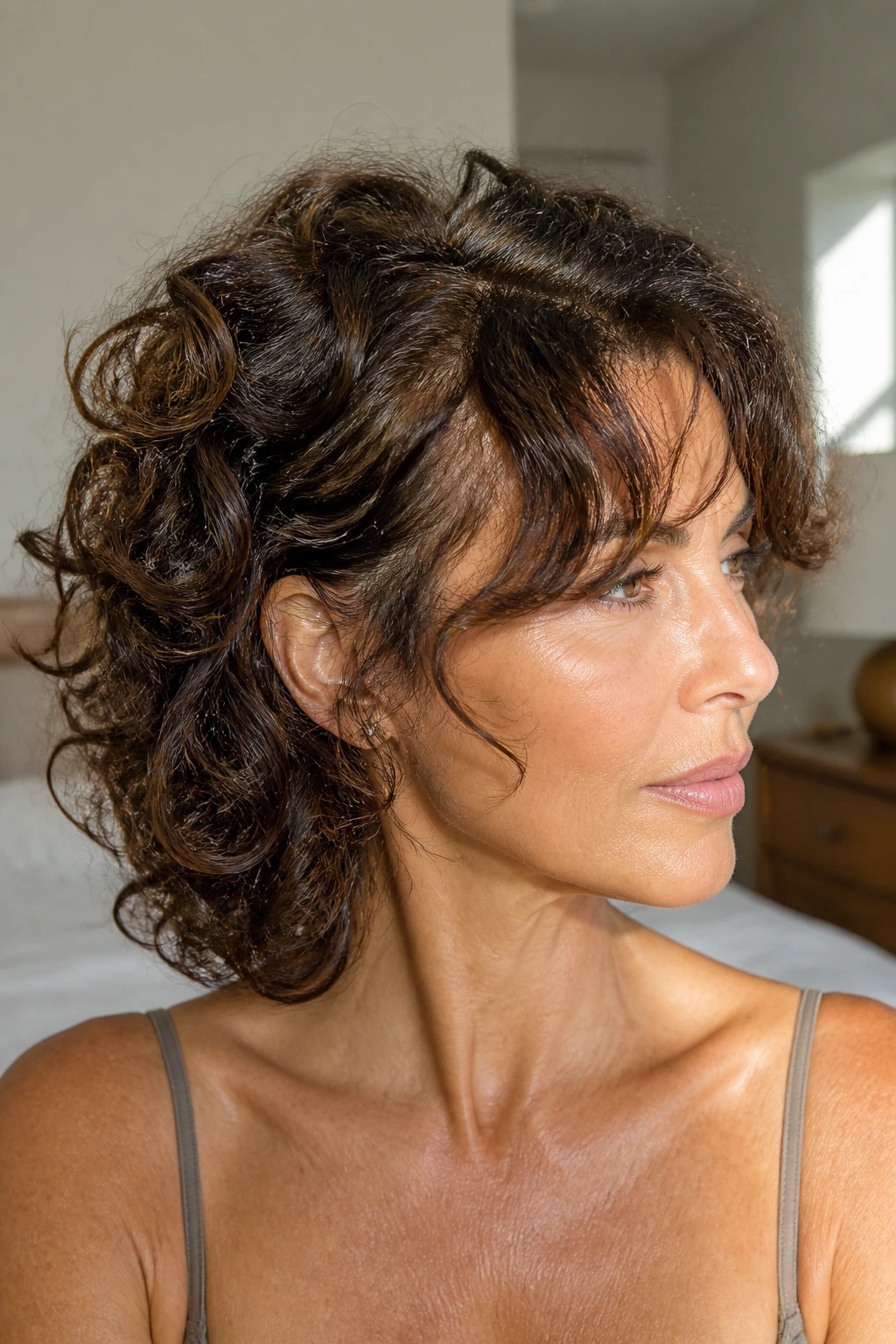
Cowlicks can bully a bad bang cut into submission. Or they can be used. A tapered side fringe works with the swirl at the hairline instead of trying to flatten it into obedience.
The side closest to the cowlick should usually stay a little longer and softer so the hair has somewhere to go. The opposite side can taper into the cheekbone. That creates a diagonal line that feels clean even when the curl pattern is doing its own thing.
Why this shape helps
A side fringe hides the exact spot where most cowlicks like to split apart. It also lets you keep some lift at the root without having the whole front section pop up and away from the head.
If your bangs keep flipping, don’t fight the root with heavy cream. Use a clip while drying, then lift the section with your fingers once it sets. The root is the real problem, not the ends.
12. Piecey French Curl Bangs
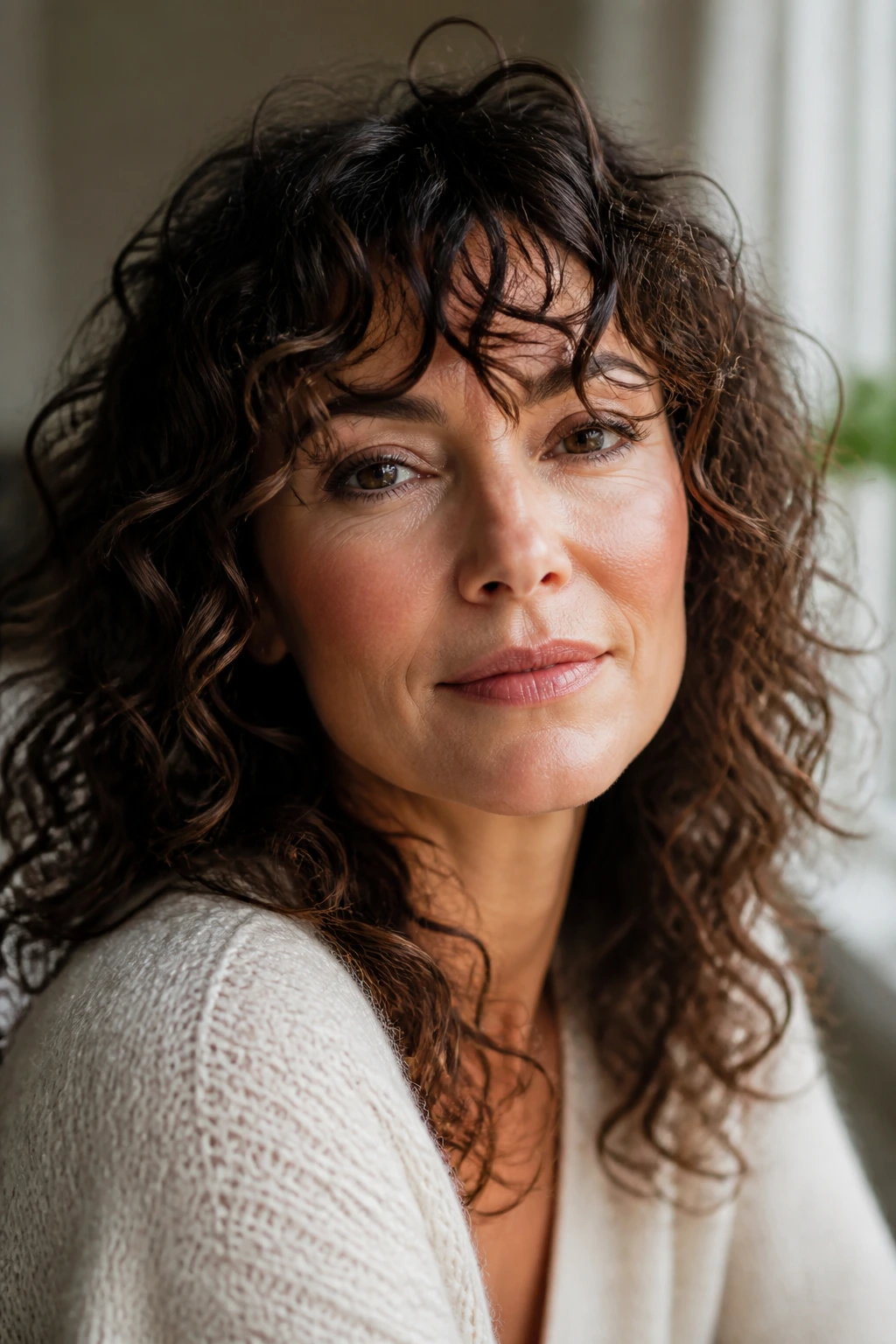
Piecey French curl bangs are all about separation. The curls clump into little groups instead of forming one thick front section, and that gives the style an easy, almost air-dried feel.
The look works especially well on wavy-curly hair that sits between textures. Too much cream and the pieces collapse together. Too little product and the front gets frizzy. The middle ground is where this cut lives.
A little gel goes a long way. Scrunch the front, encourage a few clumps with your fingers, then leave them alone while they dry. The urge to keep touching them is what ruins the shape.
These bangs are useful if you want something that reads casual but still looks considered. They don’t need to be perfect. They do need to be separated enough that the eye can see the curl pattern.
13. Soft Arch Bangs for Longer Faces
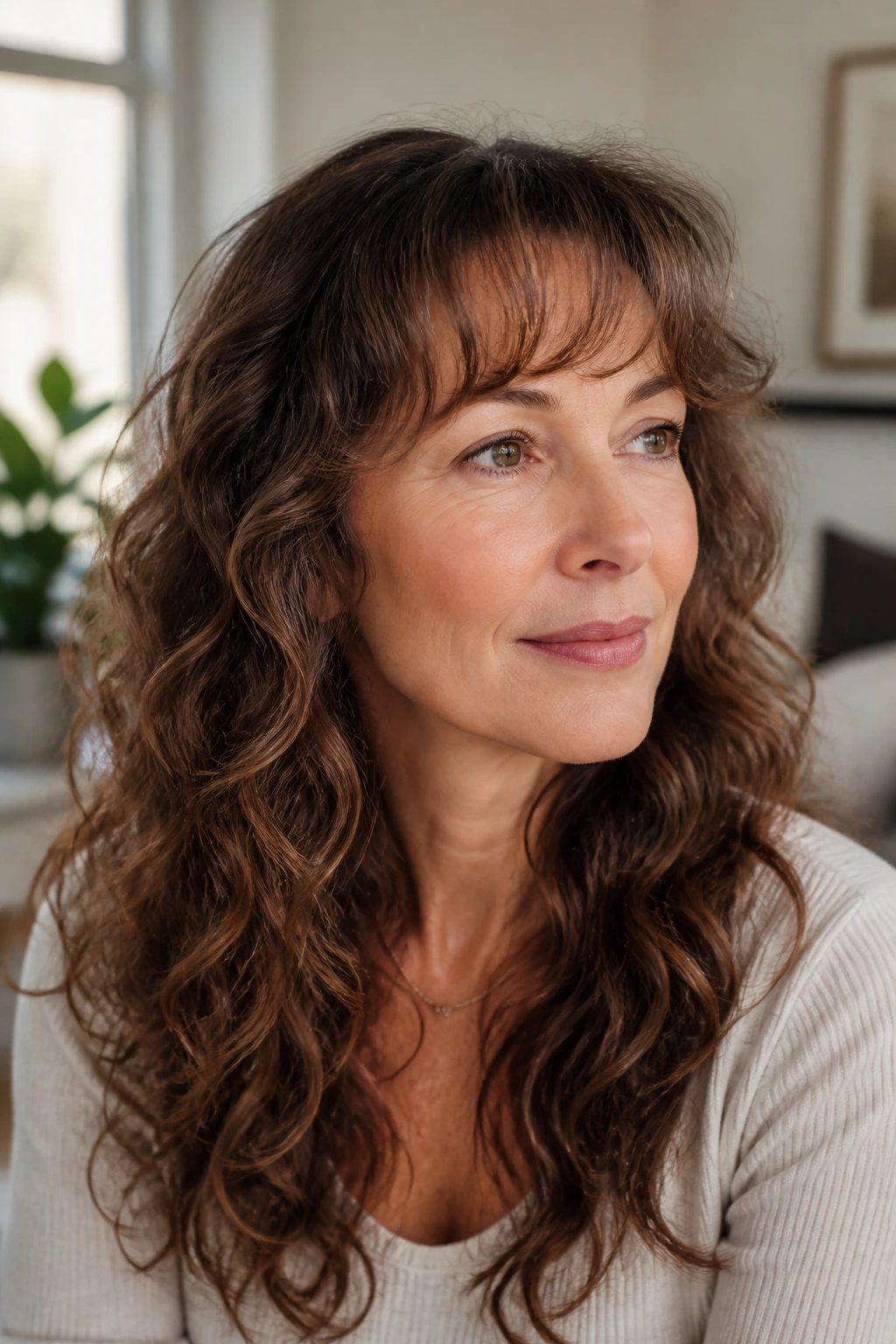
A soft arch is a quieter shape than a straight line. Instead of cutting the fringe flat, the middle floats a touch lower or higher depending on the curve, and that slight bend helps long faces look more balanced.
The arch should never look drawn on. It needs enough softness that the curls can still fall naturally. If the line gets too sharp, the haircut starts looking rigid, which is the opposite of what curly hair wants.
This shape is especially useful when you wear your hair loose most days. A strong arch can give the front just enough structure so the rest of the curls can stay wild. That combination is better than people think.
If your forehead is broader, keep the center slightly fuller. If the face is very long, let the side pieces travel outward a little more. Tiny adjustments matter here.
14. Salt-and-Pepper Face-Framing Fringe
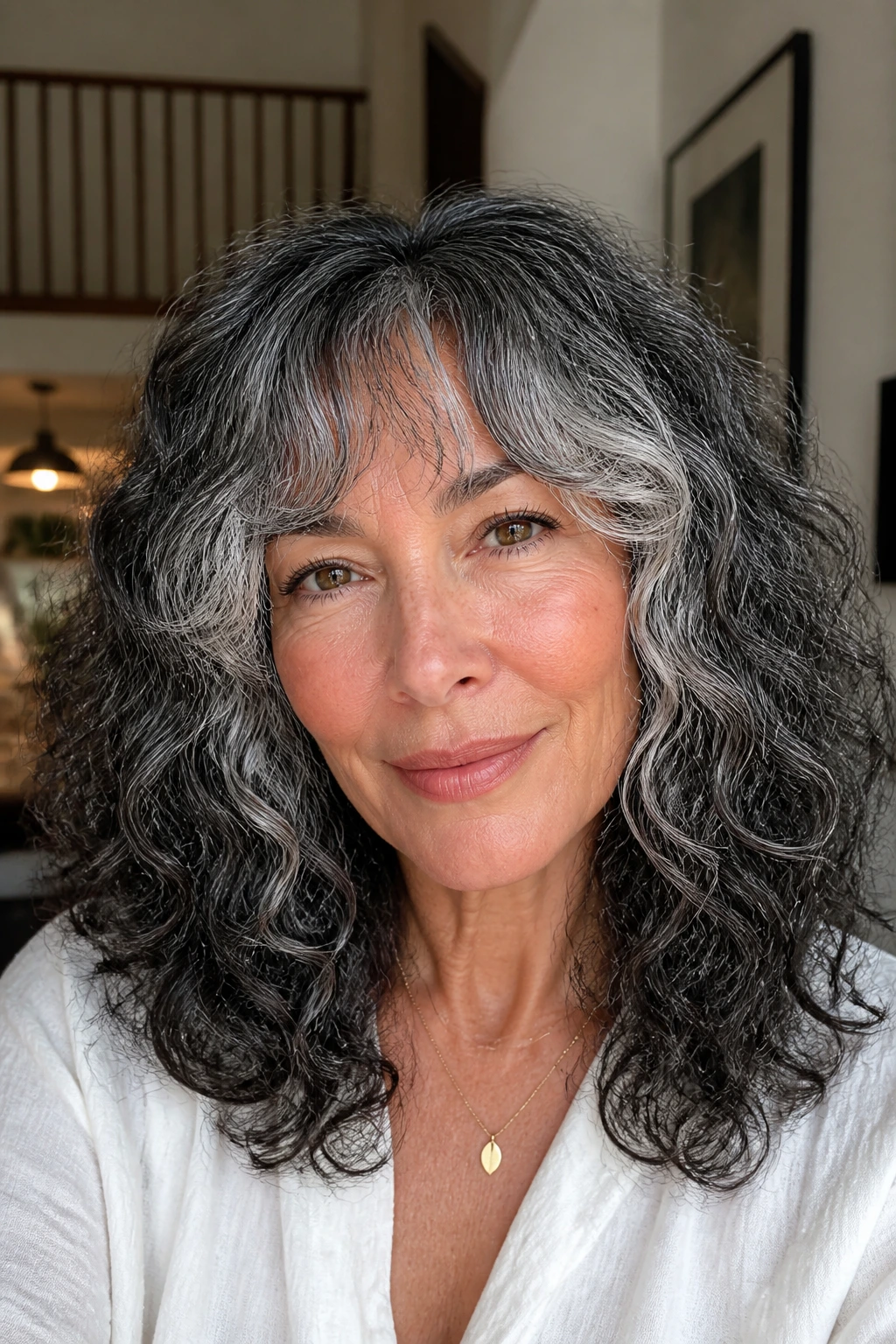
Salt-and-pepper hair has a texture that straight monochrome color never quite matches. The mix of silver, charcoal, and soft gray catches the curl pattern in a way that looks lively even when the haircut is simple.
A face-framing fringe helps the color do its job. The lighter strands near the front pick up light, the darker strands give depth, and the whole thing makes the face look less boxed in. You do not need a lot of styling for this look to read well.
The main caution is dryness. Silver and gray curls can feel rough at the ends, and the bang zone often gets frizz first. Use a light leave-in on the tips, not a heavy butter at the root.
This is one of those styles that looks expensive without trying hard, which I realize is a loaded phrase. What I mean is that the color itself carries a lot of the visual work. The cut just needs to keep up.
15. Air-Dry Fringe That Follows Your Curl Pattern
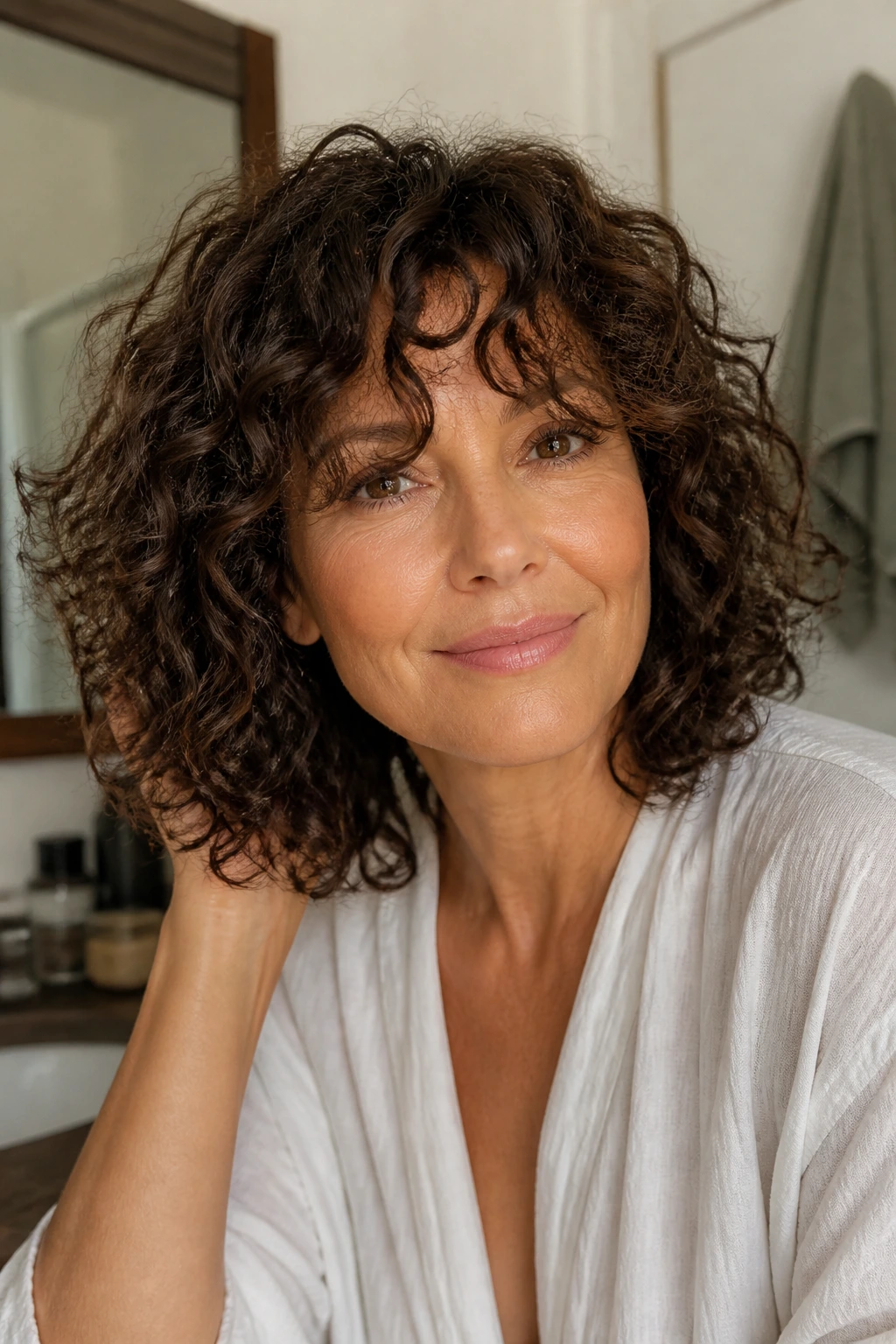
Some bangs are designed for the person who does not want to pull out a diffuser before breakfast. An air-dry fringe that follows your curl pattern keeps the front long enough to settle naturally, with just enough shape that it doesn’t turn into a puff.
The best version is cut in harmony with the curl’s own movement. A stylist who knows curly hair will usually leave the fringe slightly longer through the middle and a touch shorter around the sides so the front can dry into a frame instead of a shelf.
A quick twist or finger coil on the two front pieces can help them behave while the rest of the hair air-dries. After that, leave them alone. Touching air-drying bangs too much usually creates frizz at the exact moment you want definition.
This style is a good choice for hot weather, damp weather, or any week when you would rather not wrestle your hair into submission.
16. High-Volume Fringe for Dense Curls
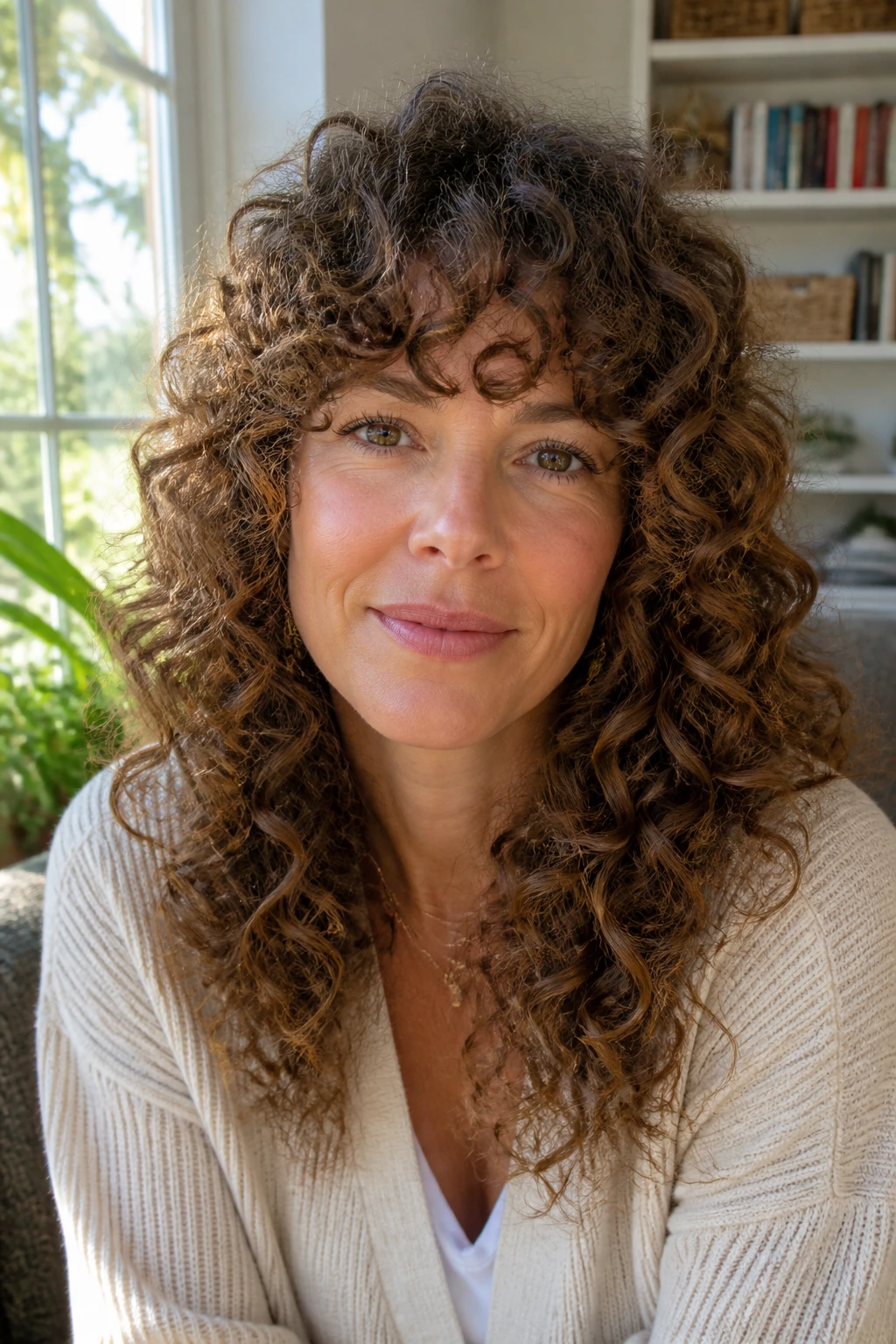
If your hair is dense, thin bangs often look like they’re borrowing hair from the rest of the head. A high-volume fringe fixes that by making the front just as full and plush as the rest of the cut.
The shape should have room at the root and enough internal layering to stop it from sitting like a wall. Dense curls need a little air between the pieces, even when the fringe is full. Otherwise the front can feel heavy and hot.
The good part
This style balances the head. It makes the top of the haircut feel as substantial as the body, which is useful if your curls build bulk through the sides and back.
Use a diffuser on low heat and keep the dryer moving. Hot spots will rough up the curl pattern and make the fringe expand in odd directions. A cool shot at the end helps the shape settle.
17. Glasses-Friendly Bangs That Skim the Frames
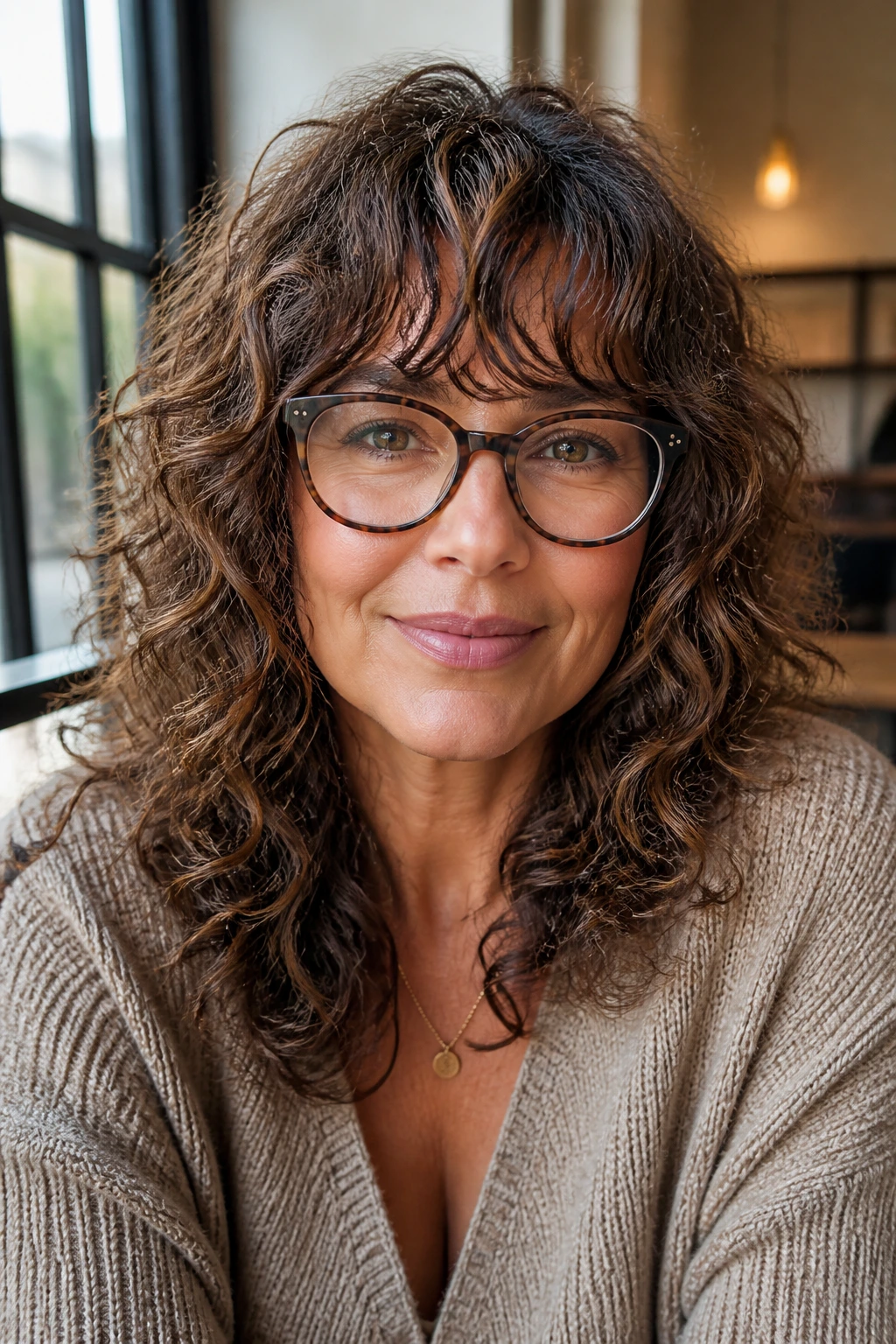
Glasses change everything. A bang that looks fine without frames can become a constant irritation once the temples and bridge enter the picture. A glasses-friendly fringe is cut to skim around the frames instead of landing directly on them.
The safest version keeps the center slightly shorter and the sides longer, so the front can part around the bridge and still sit above the top edge of the lens. That keeps the hair from rubbing against the frame all day.
It also solves a small but real problem: glasses already put visual weight in the middle of the face. The right bang shape should balance that weight, not compete with it.
If you wear frames full time, bring them to the salon. The stylist should see where the front actually lands, not guess. That detail matters more than people think.
18. Chin-Skimming Face-Framing Bangs

Chin-skimming face-framing bangs live in that sweet middle zone where the front is clearly part of the haircut but not obviously “bangs” in the old sense. They soften the jaw, travel along the cheek line, and give curly hair a graceful long front.
This shape is handy when you want movement around the face without opening up a shorter fringe line. It can also make a layered lob or shoulder-length cut feel more finished. There is a reason so many curly cuts use long face pieces now; they’re easier to wear.
The front should be shaped so it bends rather than hangs. If the pieces are cut straight and left too heavy, they lose the softness that makes the whole thing work.
This is a good style if you like to tuck hair behind one ear, wear hoop earrings, or pull the back into a low clip. It stays useful in all three situations.
19. Asymmetrical Curly Bangs
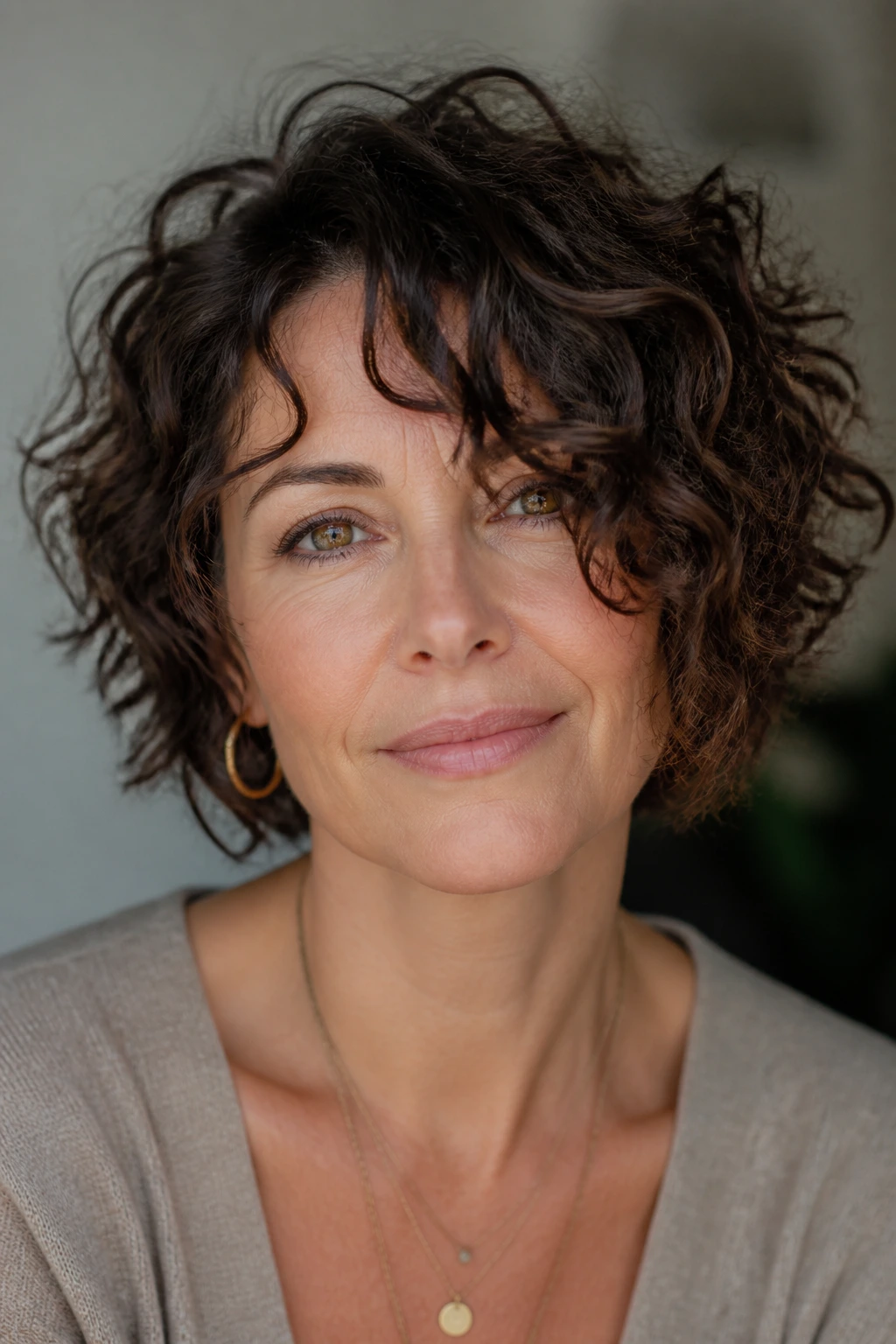
Asymmetry can be a relief. One side slightly shorter than the other gives the front shape without demanding perfect symmetry from curls, which is a losing battle on most heads.
The style is especially flattering when one side of the hairline is stronger than the other or when your part naturally sits off-center. A small difference in length helps the fringe flow in the direction the curls already want to go.
What to watch
Keep the asymmetry subtle. If the gap is too dramatic, the cut starts to look accidental instead of deliberate. A soft difference of an inch or so is usually enough.
This look is better than a perfectly even line if your curl pattern shifts through the day. It hides the drift. That’s one of its best traits.
20. Soft Wolf-Cut Fringe
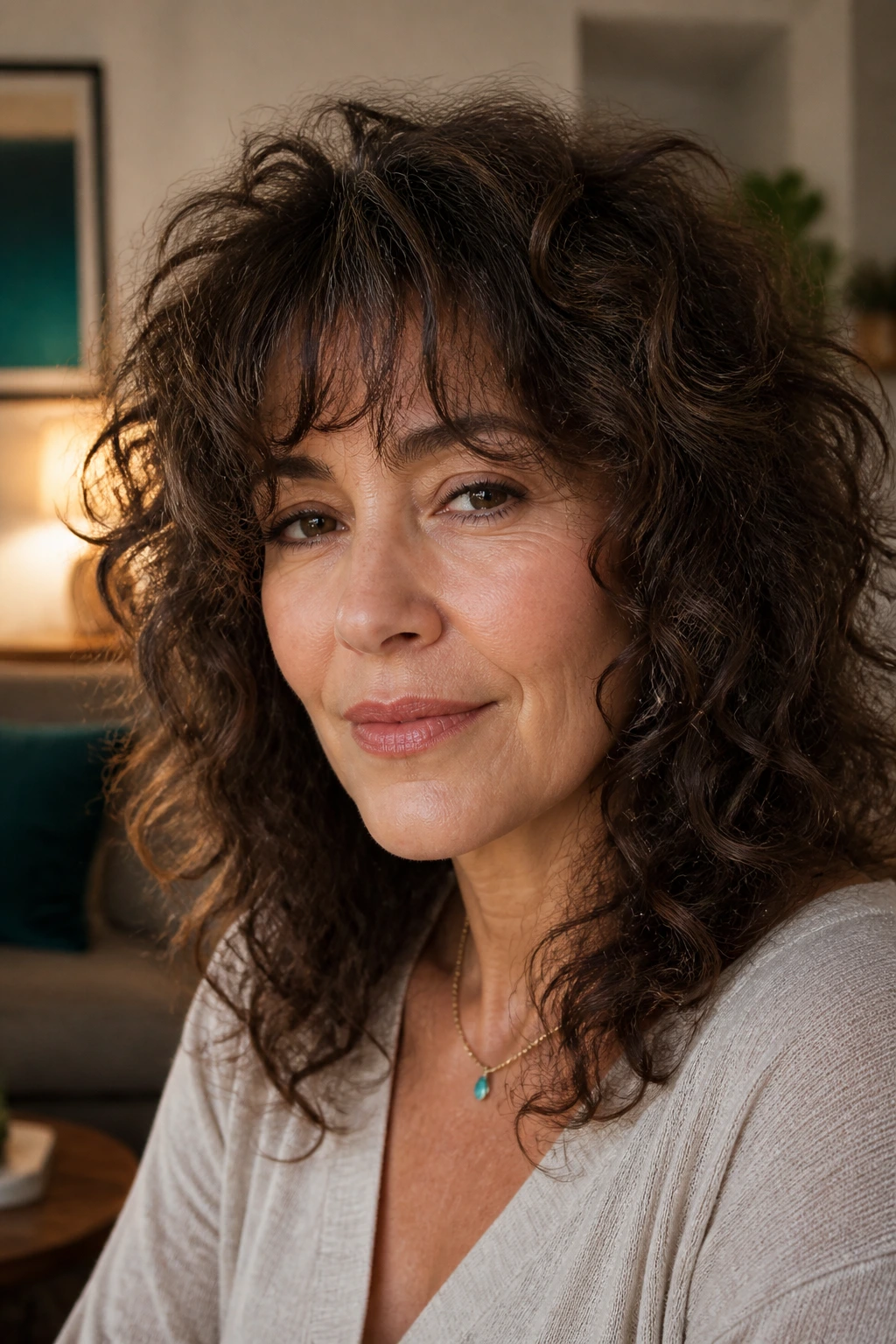
The soft wolf-cut fringe is for people who like body at the crown and a front that doesn’t sit politely. It borrows the shag’s loose movement but keeps a little more edge around the face.
What makes it work on curly hair is the layering. The bangs should feel connected to the crown volume and the side layers, not dropped in as a separate piece. When that connection is there, the whole haircut has a rougher, more modern shape.
It’s also a nice way to handle thick hair that tends to poof at the root. The shape lets the top look styled without making the front too neat.
This is not a low-volume look, and it should not be. If you want sleek, skip it. If you want texture with a little grit, it makes a strong case.
21. Coily Long Bangs with Micro-Shape
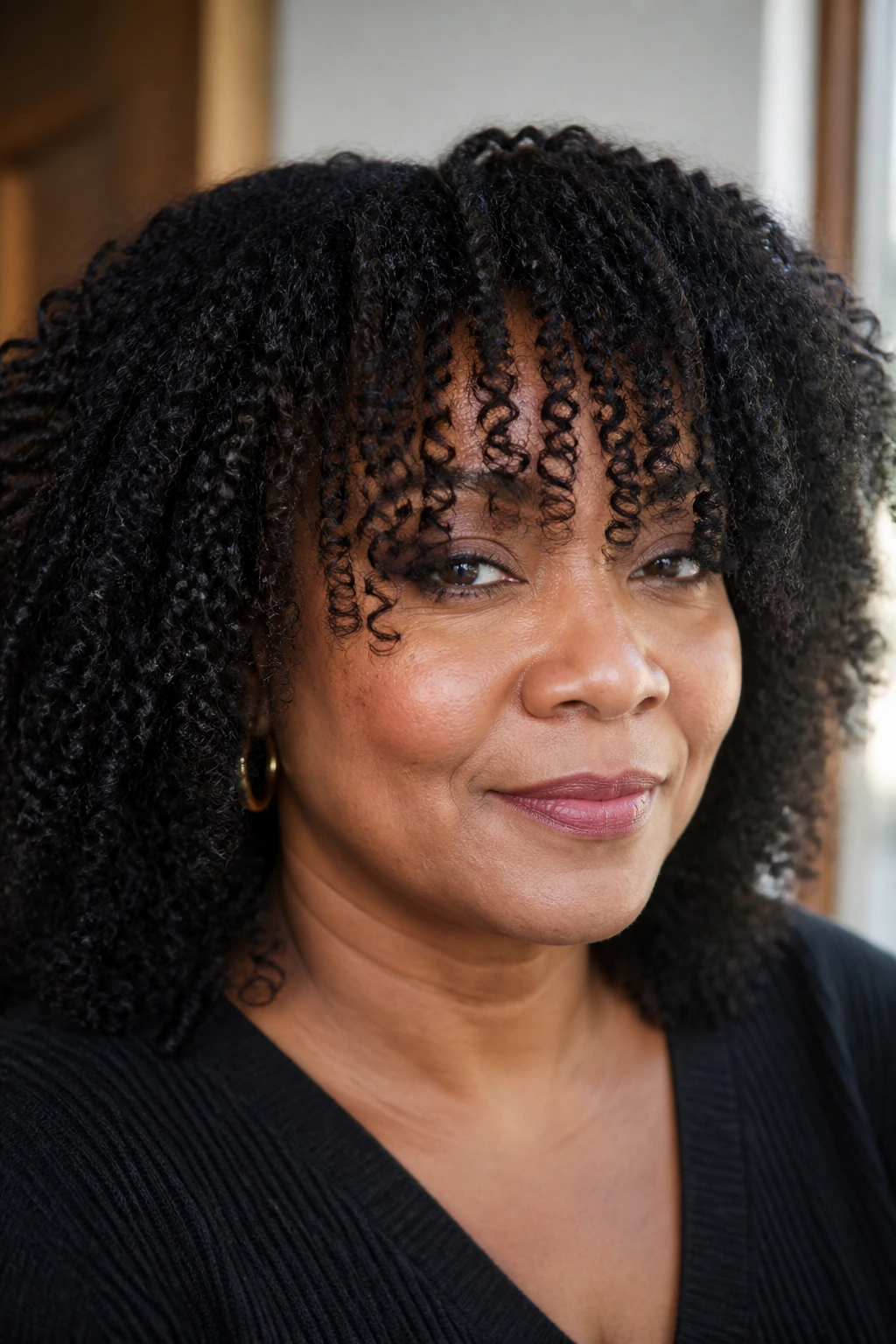
Coily hair needs a different kind of respect. Long bangs on coils should be shaped in small sections, not treated like one soft curtain. The result is a fringe that has real form while still following the natural coil pattern.
A micro-shaped bang uses tiny adjustments to guide where the curls fall. That means less bulk at the wrong spot and more control around the eyes and brow line. It also keeps shrinkage from turning the front into a surprise.
How it reads
The front should look sculpted, not stiff. That’s a thin line, and the right product helps. A curl jelly or strong hold gel can give definition without making the coils crunchy.
This style is one of the easiest ways to keep coily hair expressive without overfussing it. The front can do a lot with not much.
22. Feathered Bangs for Fine or Wavy-Curly Hair
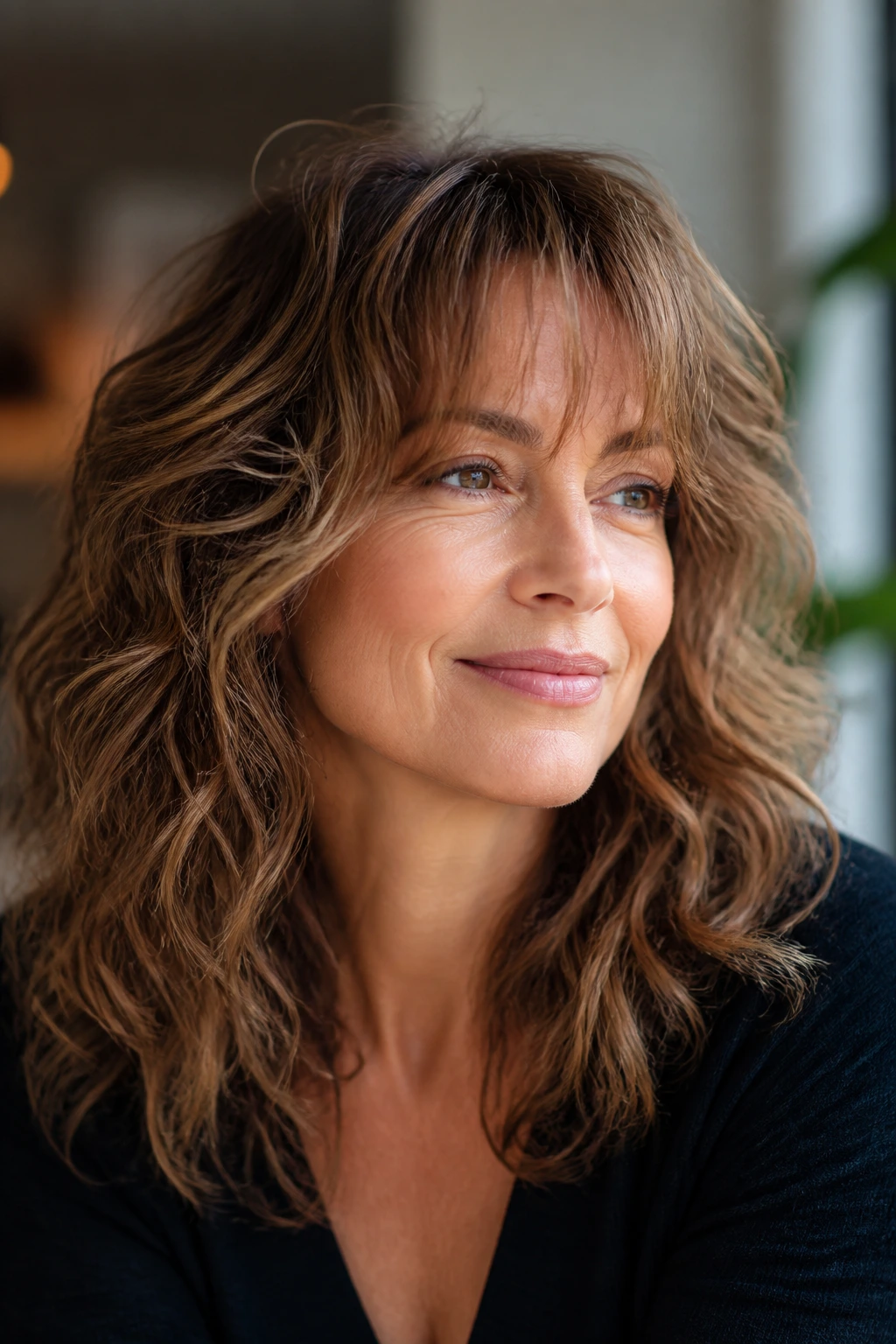
Feathered bangs are the answer when you want softness more than density. On fine or wavy-curly hair, they keep the front light enough that it does not collapse, yet shaped enough that it doesn’t disappear.
The feathering should happen through the ends, not so aggressively through the middle that the bang loses body. A little internal texture gives movement. Too much texture and the fringe becomes stringy.
This style is useful if your hair sits in that in-between zone where it has curl, but not enough to make a heavy bang look full. It is also kinder to women who wear their hair brushed out on some days and curly on others.
Keep product light here. A small foam at the roots, a dab of leave-in on the tips, and done.
23. Silver-White Fringe with a Clean Edge
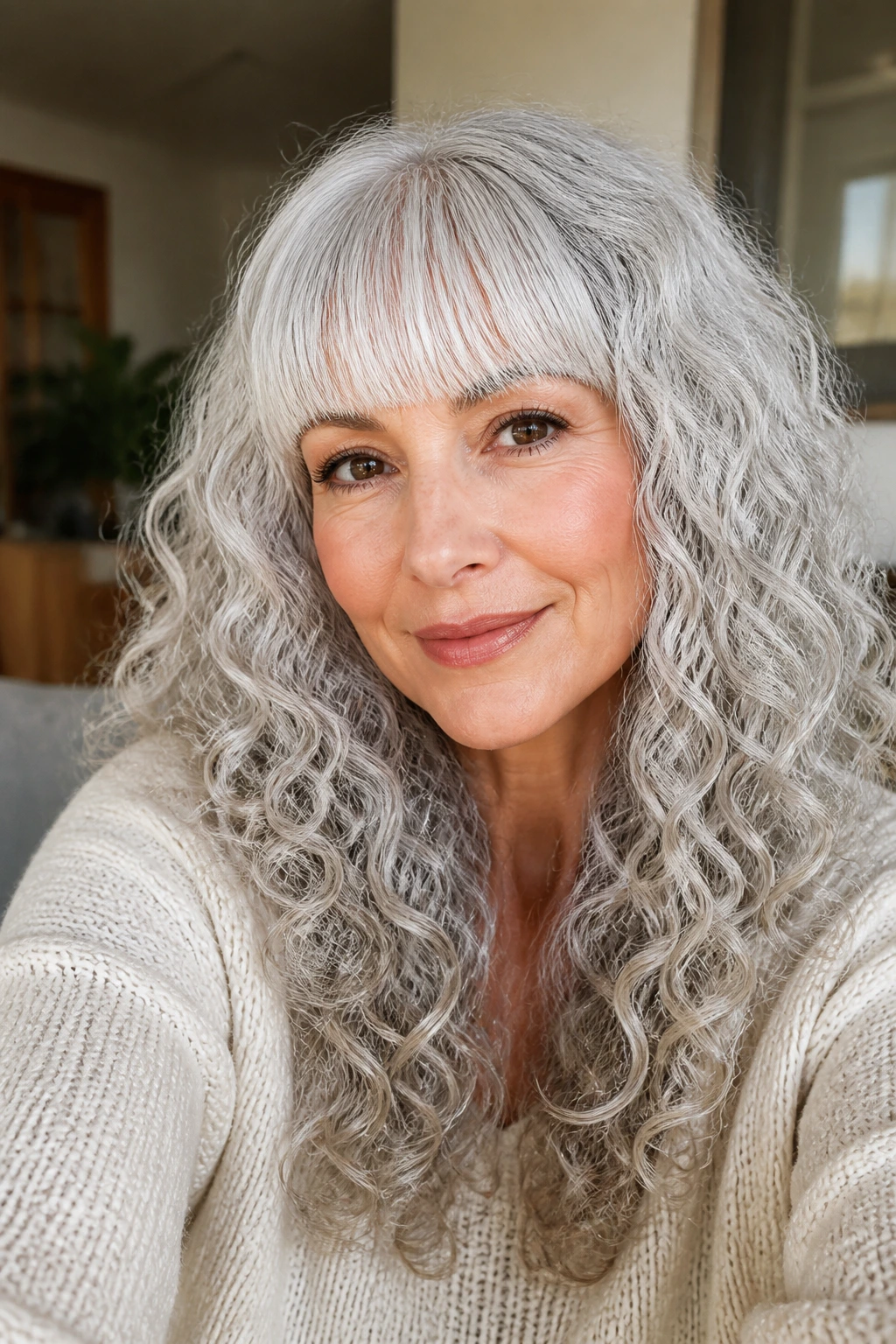
Silver-white curls can look luminous when the shape is clean. A fringe that is long, bright, and softly edged makes the color read on purpose instead of looking like an accidental grow-out.
The cut should avoid frayed ends, because white and silver hair can show roughness fast. A crisp edge around the front gives the hair a polished look, even if the rest of the cut is loose and curly.
Do not overdo purple shampoo on the fringe. That area is often the driest part of the head already, and too much toning can leave it dull. A moisturizing cleanser and a good leave-in usually help more.
This is one of the prettiest long-bang options if you’ve fully embraced gray. The texture and the color do some of the heavy lifting. The fringe just needs to stay tidy.
24. Mid-Length Curtain Bangs for Bobs and Lobs
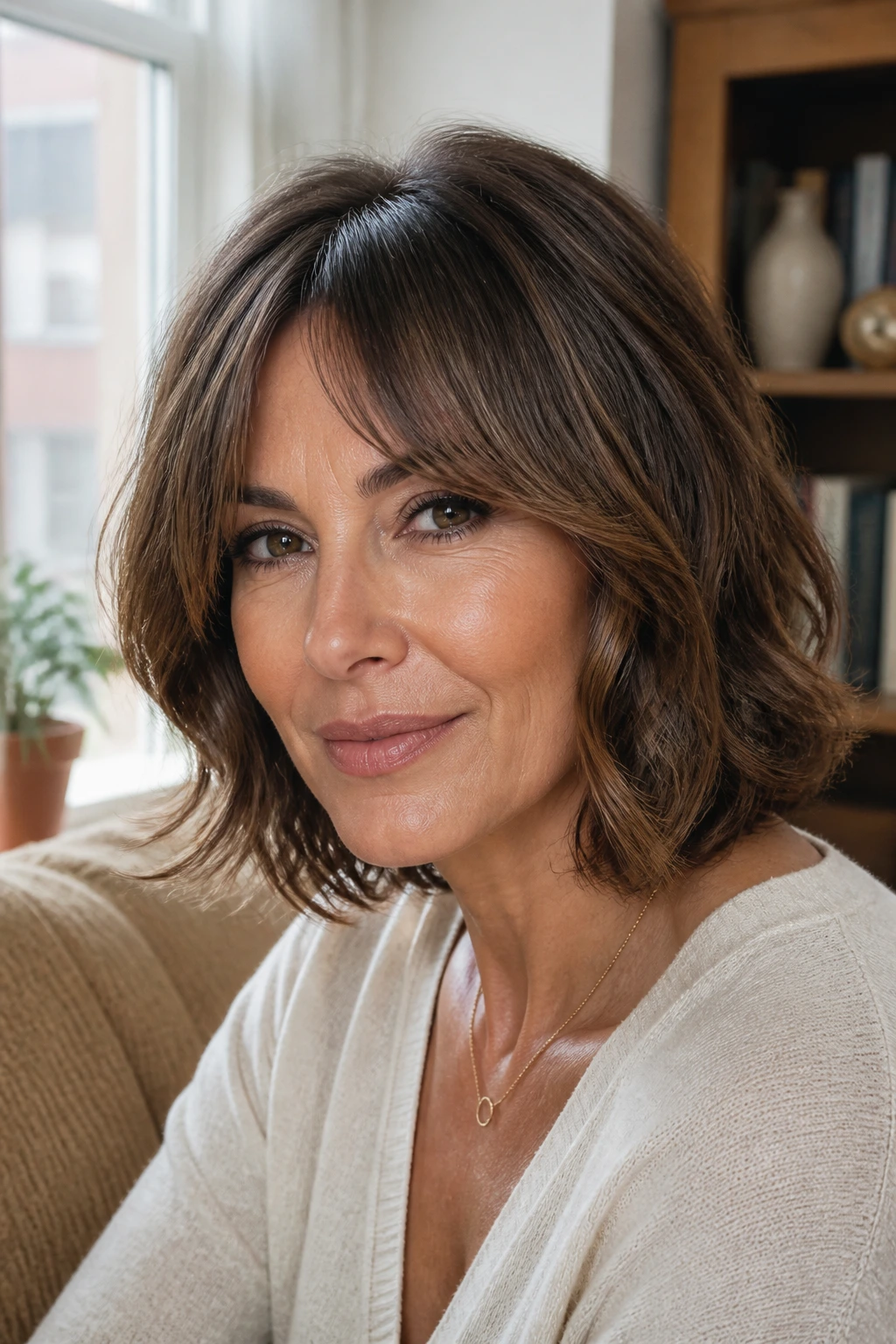
Bobs and lobs need a front section that makes sense with the rest of the line. Mid-length curtain bangs do that better than shorter fringe because they can connect to the perimeter instead of floating above it.
The shape usually falls between the nose and the cheekbone at the shortest point, then travels longer toward the jaw. That gives the cut a clean funnel from forehead to ends. It works especially well if the bob has a little layers through the front.
If you wear a lob and tuck it behind one ear often, this bang shape stays cooperative. It doesn’t get stranded every time you change the part or clip the side back.
This is one of the least fussy choices on the list. It gives shape, keeps movement, and does not demand perfect styling every single morning.
25. No-Drama Long Fringe for Grow-Out Season
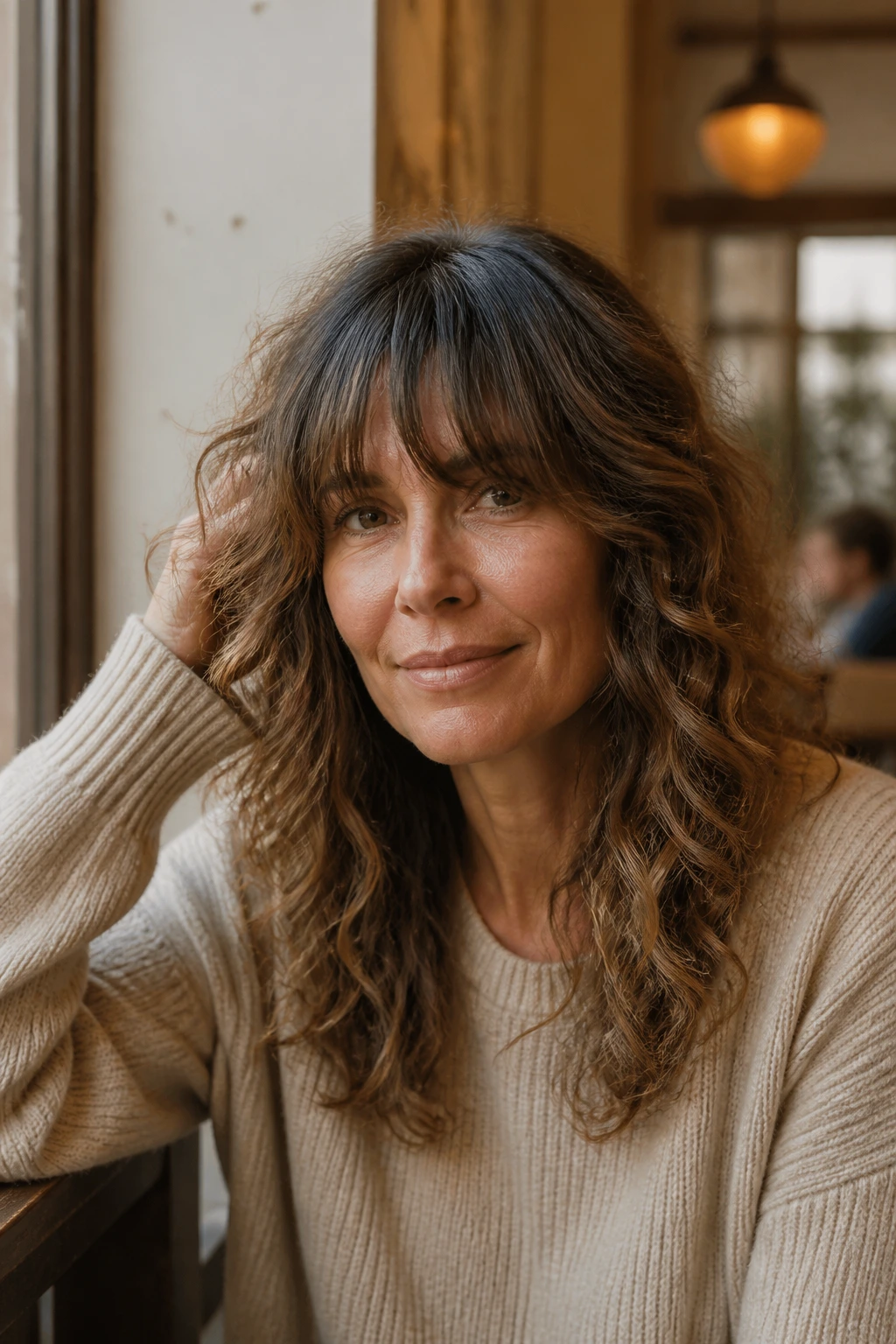
Some bang looks exist for the salon chair. This one exists for the months in between. A no-drama long fringe sits just past the brows, has enough length to split or sweep, and grows into layers without a panic stage.
That makes it perfect if you are moving away from shorter bangs or if you simply don’t want a high-maintenance front section. The cut should still have shape at the cheekbones, though. Otherwise it starts looking like hair that forgot to make a decision.
I like this version because it forgives real life. It can be worn center-parted, off-center, clipped back, or tucked behind glasses. A lot of bang shapes claim flexibility. This one actually has it.
The best part is how well it buys you time. The style gives you room to decide what you want next without looking unfinished in the meantime.
Why Long Bangs and Curly Hair Work So Well Together
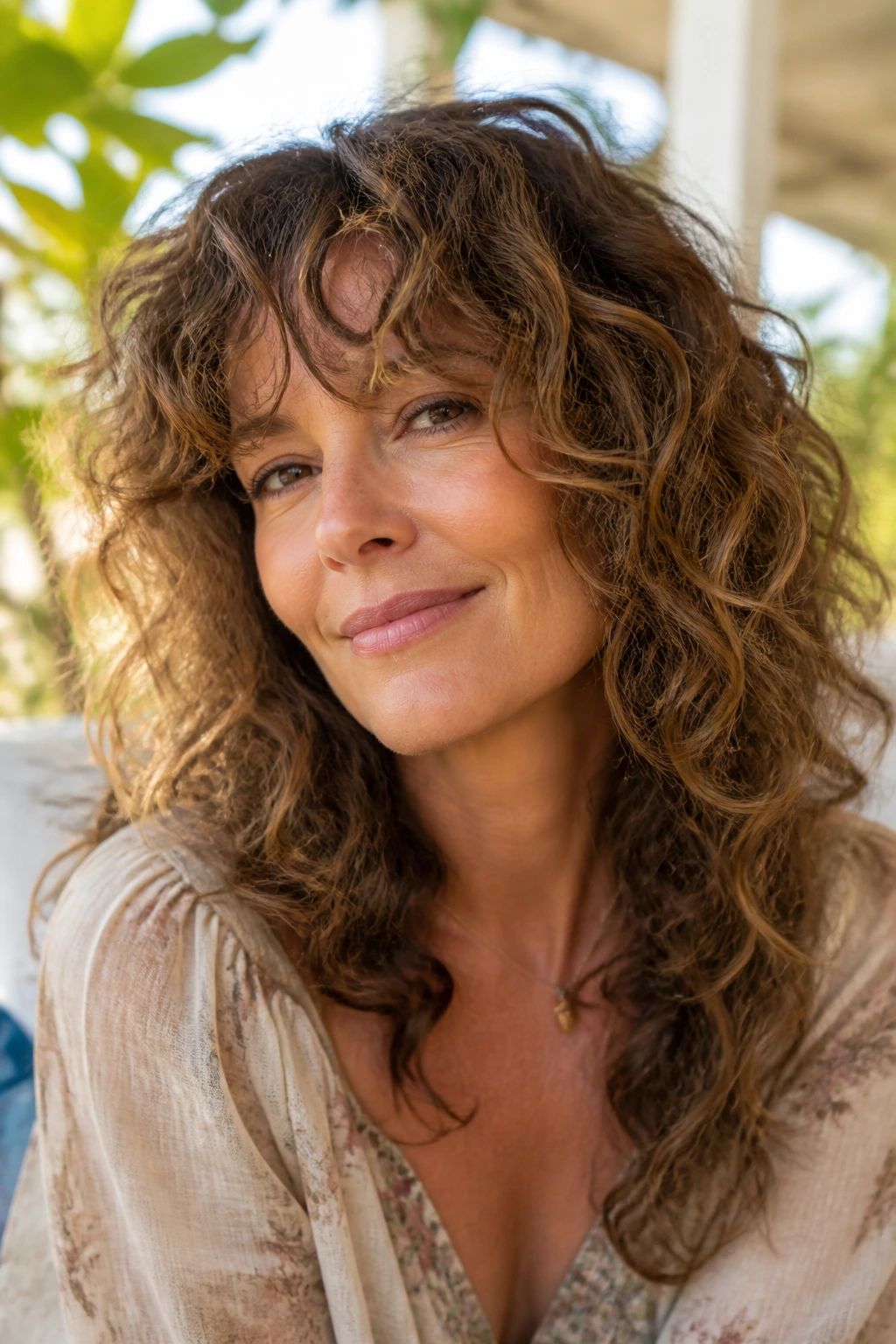
Curly hair does not behave like straight hair, and long bangs respect that instead of fighting it. The extra length gives the curl room to spring up, the fringe line can soften instead of snap into a hard edge, and the front section can blend into the rest of the haircut instead of sitting on top of it like a separate object.
That matters more after 40 than most style chatter admits. The front hairline may be a little finer, the temples may need a softer frame, and the curl pattern can be drier or looser than it was years ago. Long bangs handle those changes with less drama. They don’t expose every tiny shift in density. They give the front room to breathe.
I also like how well long curly bangs work in real daylight. A short fringe can read heavy or fussy fast. A longer one moves. It catches the eye at the cheekbone, not just across the brow, which is a kinder place for the face to be framed.
Essential Tools for Curl-Friendly Bangs
-
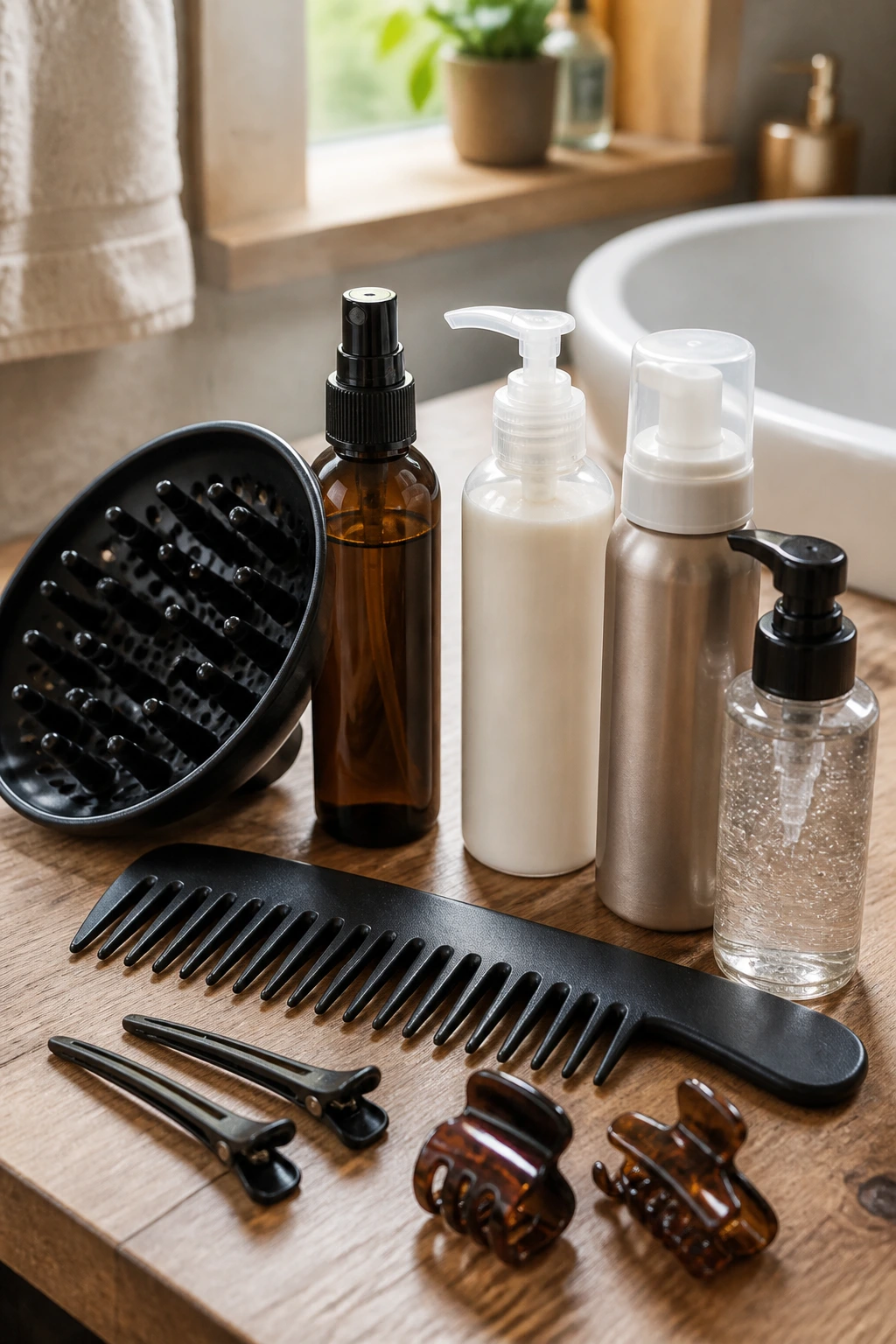
Diffuser attachment: A diffuser gives the bangs lift without blasting the curl pattern flat.
-
Spray bottle with water: A light mist is enough to wake up the front section on day two.
-
Leave-in conditioner: Use a small amount on the bang ends if they feel dry or rough.
-
Light mousse or foam: This helps fine curls and airy bangs keep shape without feeling greasy.
-
Curl gel or jelly: A small amount keeps coily or ringlet bangs defined and helps frizz stay down.
-
Wide-tooth comb: Good for distributing product through the front without breaking the curl clumps.
-
Duckbill or metal clips: Useful for setting the root direction while the bangs dry.
-
Microfiber towel or cotton T-shirt: Better than a regular bath towel, which roughs up the front section fast.
-
Salon mirror photo references: Bring clear photos of curl-friendly fringe shapes you actually like, not flat-ironed versions that won’t translate.
Smart Product and Salon Tips
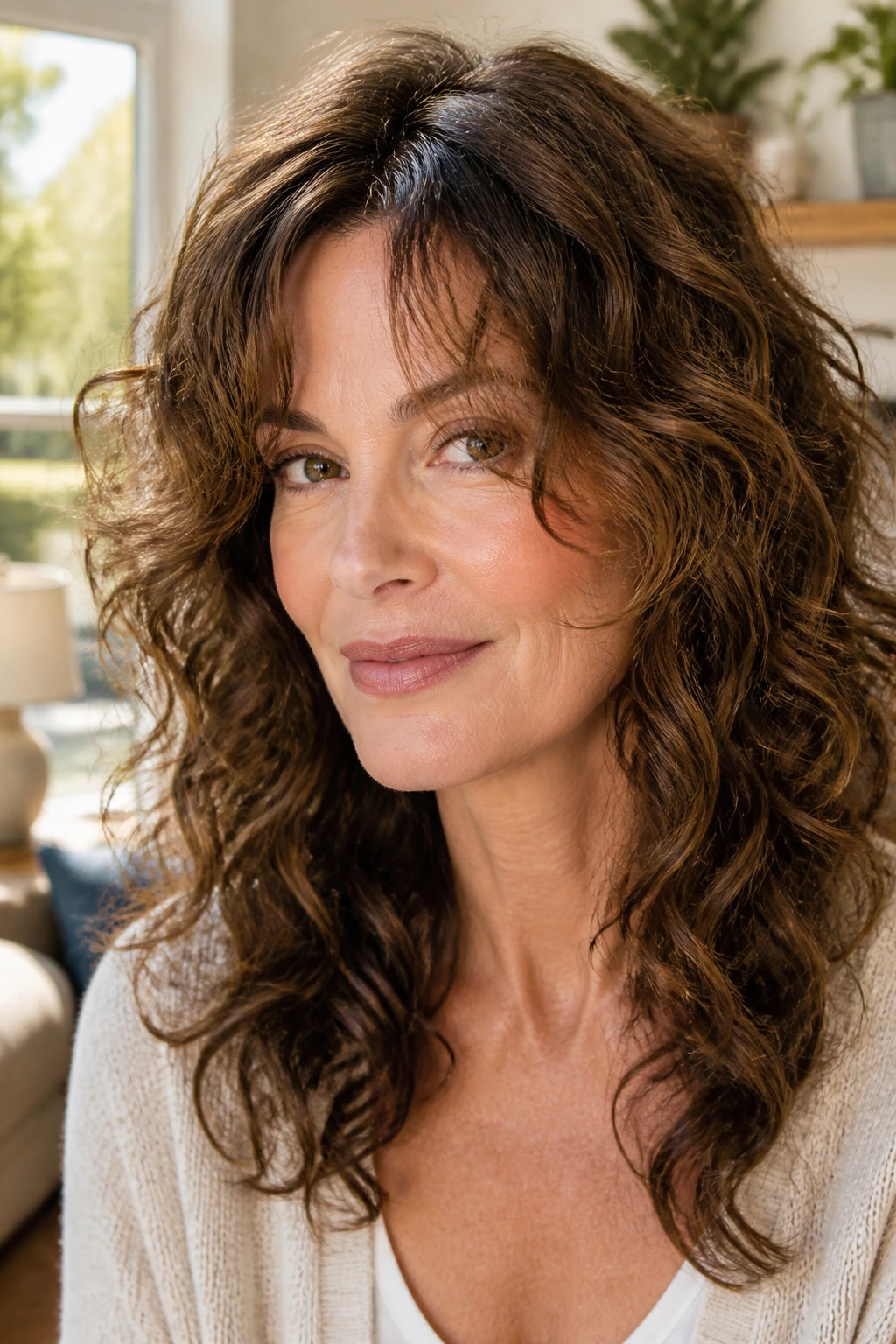
The first thing to ask a stylist is not “Can you cut bangs on curly hair?” It’s whether they cut curly bangs dry or in the curl’s natural state. That’s the difference between a fringe that lands where you want and one that shrinks into a surprise. A good curl cutter usually leaves more length than feels comfortable in the chair. That extra inch is not waste. It is insurance.
Bring your hair the way you actually wear it. If you usually side-part your curls, don’t show up with the front smoothed back. If you use a diffuser at home, say so. If you air-dry and never touch a brush, say that too. The front section should be shaped around the way you live, not around an ideal morning that never happens.
Product choice matters more at the bang line than almost anywhere else. Fine curls usually do better with mousse or foam. Thicker curls often need a light cream under gel. Heavy butters and oils can make the front collapse by lunch, especially if your forehead gets warm or your bangs sit against glasses. And if your fringe dries frizzy before the rest of the hair, the answer is often less product, not more. The front needs control, not a bath.
How to Wear These Bangs Day to Day
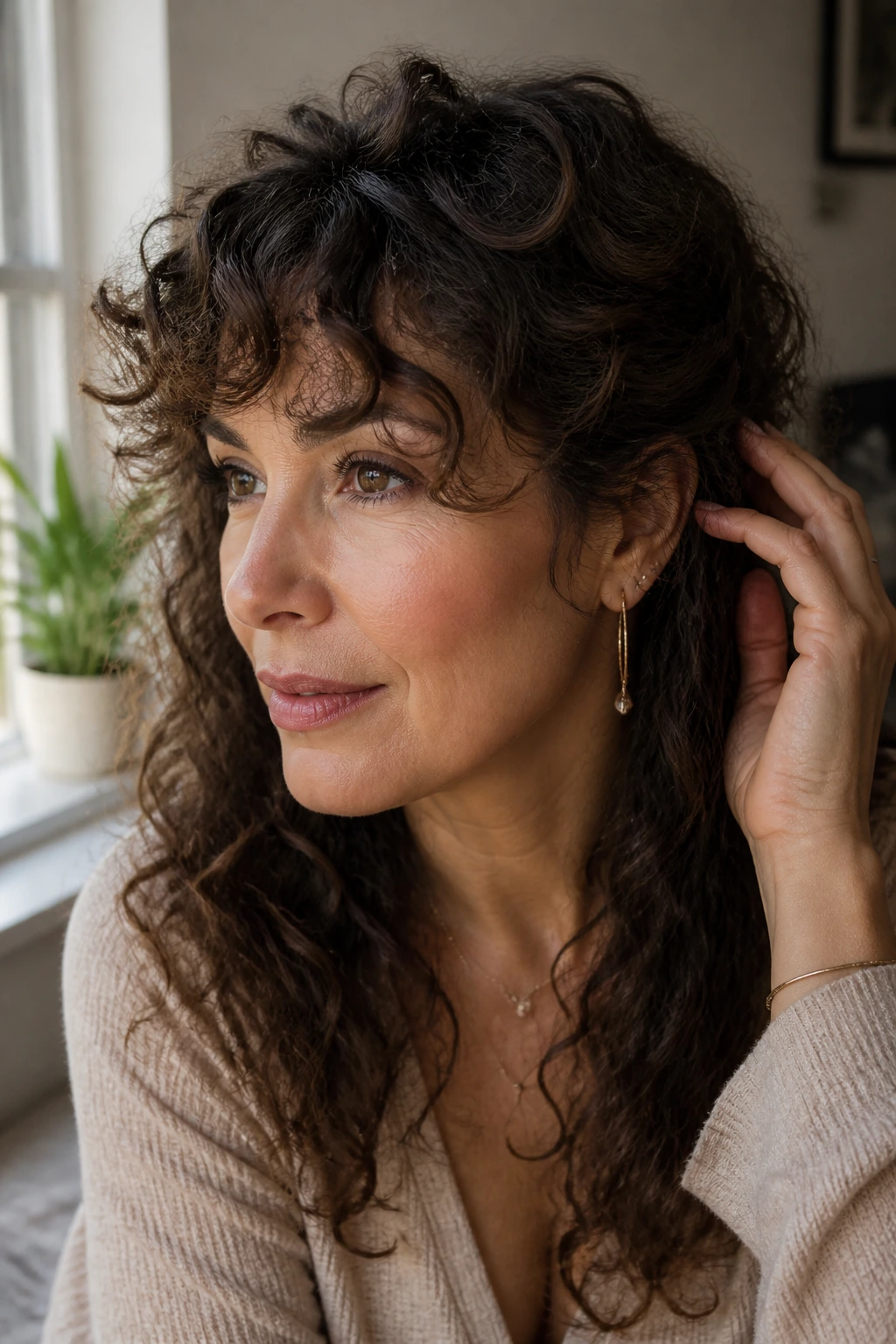
Shape: Let the front land where the cut wants it to land. That might be the cheekbone, the upper lip, or just above the brow. The point is not to force every curl into one line. It’s to give the eye a frame that looks believable when the curls move.
Pairings: Long curly bangs work best with cuts that already have some structure through the sides: lobs, shaggy layers, long layers, or a soft curly bob. They also love a side tuck, a low clip, and a half-up twist. A flat one-length cut can make the bang zone look isolated, so there should be some relationship between the front and the rest of the hair.
Maintenance: The front usually needs more attention than the back. A quick mist in the morning, a finger scrunch, and a few seconds of root lift can be enough. If one side starts flipping, clip it at the root for 5 to 10 minutes while you finish getting dressed. It often settles better than you’d expect.
Finish: Use the least amount of product that still holds the shape. The bang area can get greasy fast, and product buildup shows up there before it shows anywhere else. Clean shape beats shiny heaviness every time.
Extra Styling Tricks That Keep the Fringe Light
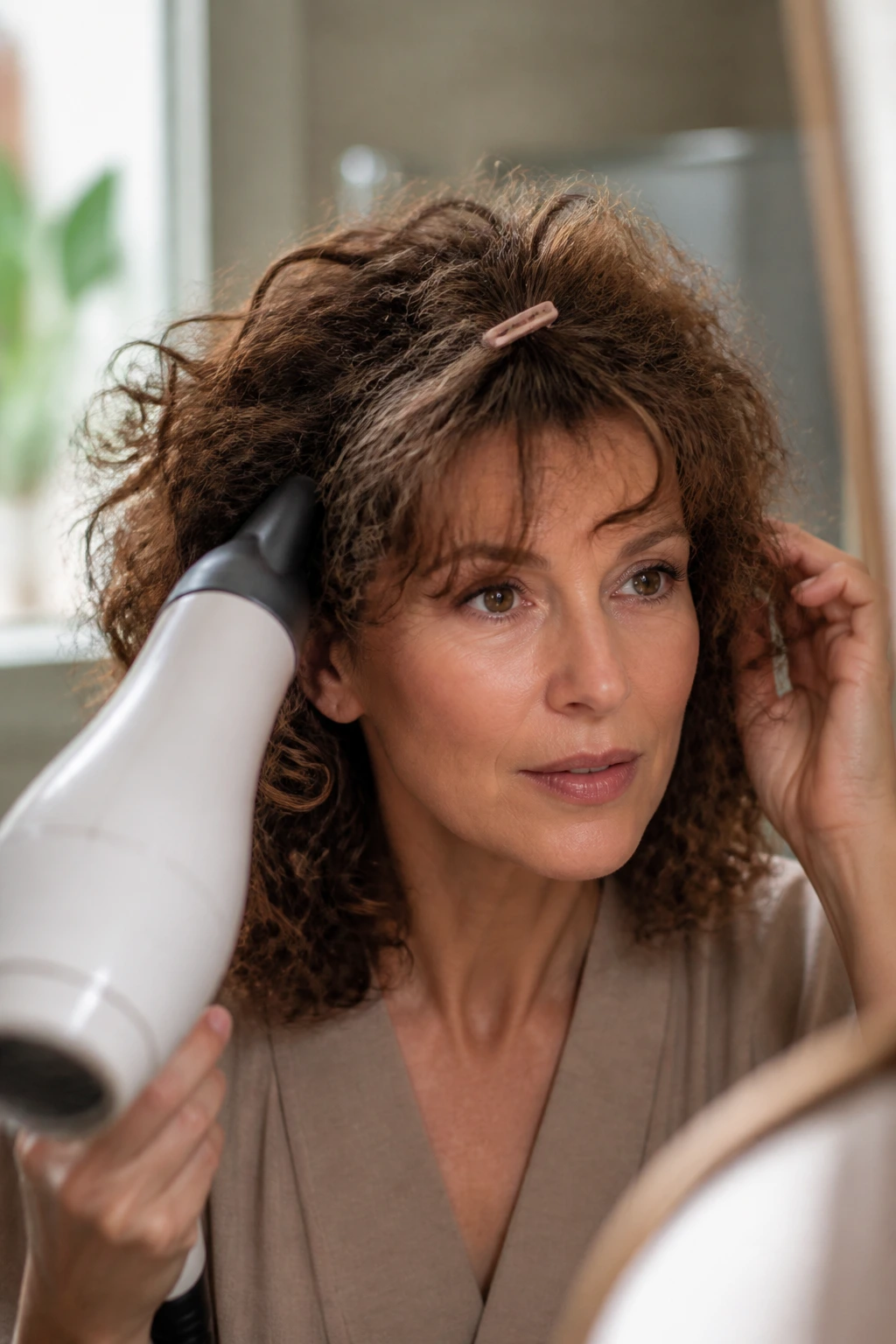
Root Clip Trick: Set a small duckbill clip at the base of the bang section while the hair dries. That little lift keeps the root from collapsing onto the forehead and makes the fringe look fuller without adding more product.
Frizz Control: Put your strongest hold product on the mid-lengths and ends, then keep the root zone lighter. Bangs go frizzy when the front gets overloaded and touched too often.
Refresh Shortcut: On day two, mist the bangs only, scrunch once, and leave them alone for a minute before touching them again. Constant smoothing wipes out the curl grouping you’re trying to keep.
Make-It-Yours: If your face is wider through the cheeks, let the outer bang pieces stay longer. If your forehead is broader, keep a little more fullness through the center. Tiny length changes shift the whole balance.
Common Mistakes That Make Curly Bangs Look Choppy
-
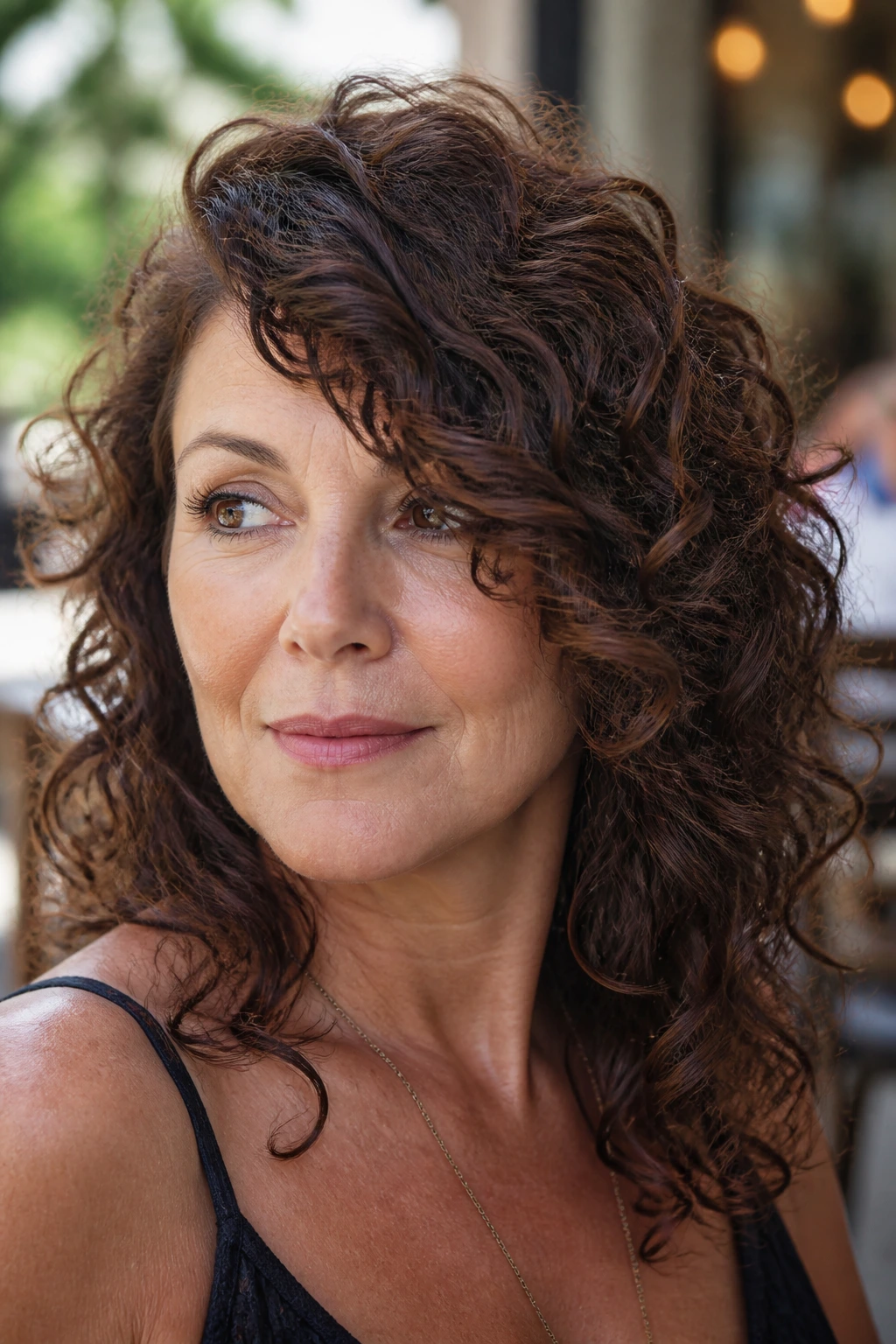
Cutting them too short when wet: Wet curls stretch, then bounce back later. If the bang is cut to eyebrow length while wet, it may finish above the brow and look too abrupt. The fix is simple: cut longer, then refine after the hair dries.
-
Loading the front with heavy cream: Bangs sit against the skin and absorb product faster than the rest of the hair. Heavy cream makes them stringy or greasy by midday. Use mousse or a lighter gel instead, and keep it away from the root.
-
Ignoring the natural part or cowlick: If the fringe fights the way your hair naturally splits, it will keep lifting or separating in the same bad spot. Work with the hairline, not against it. A side-swept or off-center shape often solves the problem.
-
Over-thinning the bang zone: Too much texturizing shears can make curly bangs look sparse and frayed. The front then loses body and starts showing gaps. Ask for movement, not emptiness.
-
Waiting too long between trims: Long bangs are forgiving, but not forever. When they creep into the eyes or turn into a heavy curtain, the whole face loses shape. A quick clean-up every 5 to 8 weeks usually keeps the line where it should be.
-
Treating all curl types the same: Fine curls, thick curls, coils, and loose spirals need different amounts of weight in the front. A one-size-fits-all approach is how people end up with bangs that look good for one hour and strange for the rest of the week.
Variations and Adaptations to Try
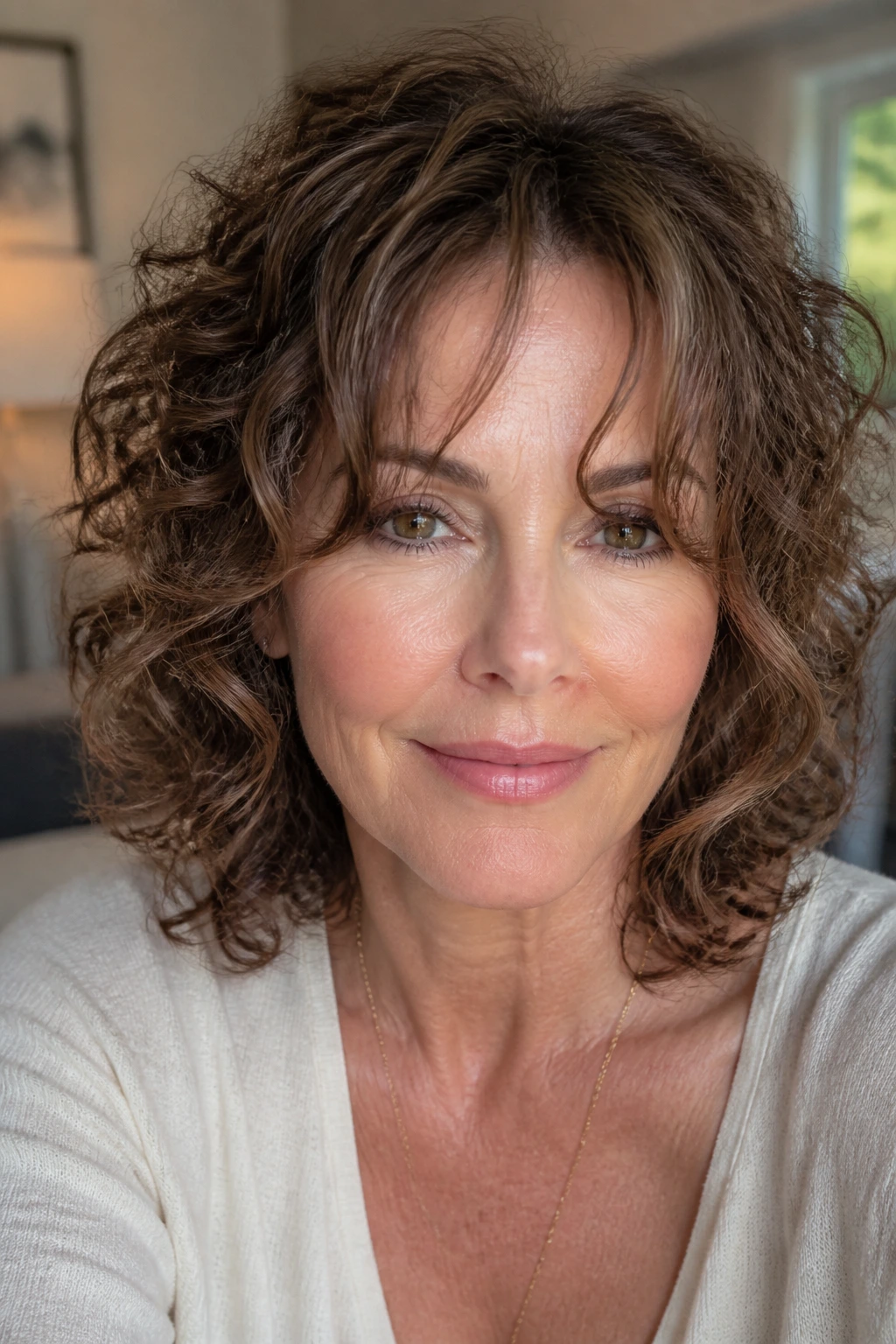
The Office-Day Blowout: Keep the fringe long, add a root clip while drying, and smooth only the very front with a round brush or the tension of your fingers. This version reads a little neater without losing curl texture at the ends.
The Air-Dry Weekend Fringe: Skip the brush, use a small amount of mousse, and let the front dry where it wants to fall. It’s the version to choose when humidity is high or when you don’t want the morning routine to drag on.
The Silver-Blend Frame: Let gray, silver, and darker strands mix through the front without hiding them under heavy toner or strong purple shampoo. The mixed color gives the bangs depth and makes the shape look more alive.
The Coil-Sculpted Front: On tighter textures, use micro-sections and a strong hold gel to define the bangs curl by curl. This keeps the front from ballooning out and gives the shape a clean edge without flattening it.
The Glasses-First Shape: Keep the center slightly shorter and the sides longer so the fringe clears the frame line. It’s one of the easiest ways to keep bangs useful if you wear glasses every day.
Keeping the Fringe in Shape Between Wash Days
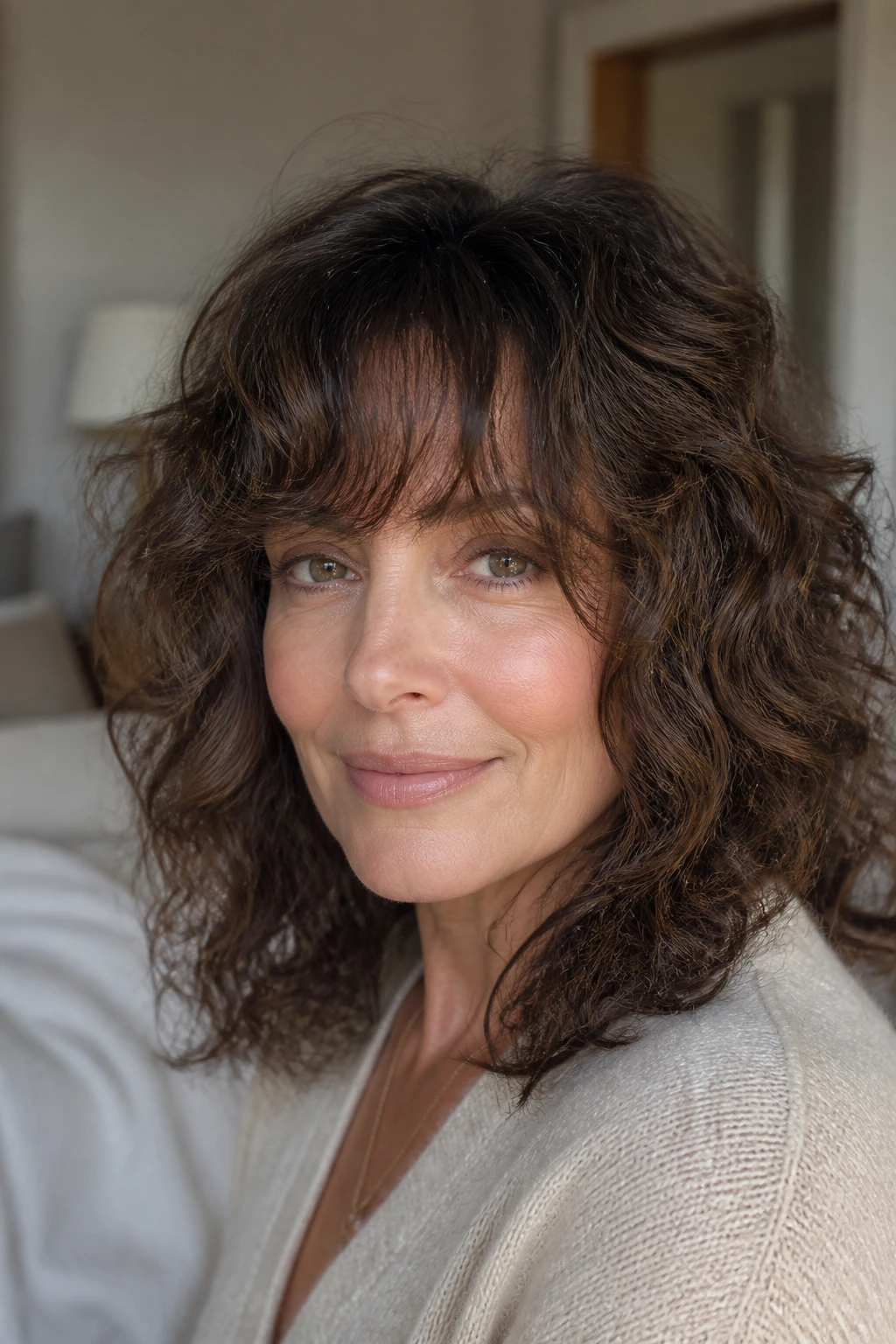
Curly bangs are usually the first part of the haircut to show oil, dryness, or a bad night’s sleep. That means they need a little more maintenance than the back of the head. If the rest of your curls can stretch to day three, the fringe may need a reset on day two.
A trim every 5 to 8 weeks keeps the line from sinking into the eyes. If the front grows fast or your curls spring up sharply, closer to 5 or 6 weeks makes sense. If the shape is intentionally long and blended, you can push that a bit longer, but don’t let it drift so far that the bangs disappear into the sides.
Overnight care matters too. A satin pillowcase helps, and a loose pineapple or clip can keep the front from getting squashed flat. If the fringe dries in a weird bend, rewet just the front section instead of restarting the whole head. That little habit saves time and keeps the curl pattern cleaner.
If the bang area feels heavy, wash that section more often than the rest. A quick front-only refresh at the sink can bring the whole haircut back to life without making the ends of the hair feel stripped. The front is a small section. Treat it like one.
Frequently Asked Questions
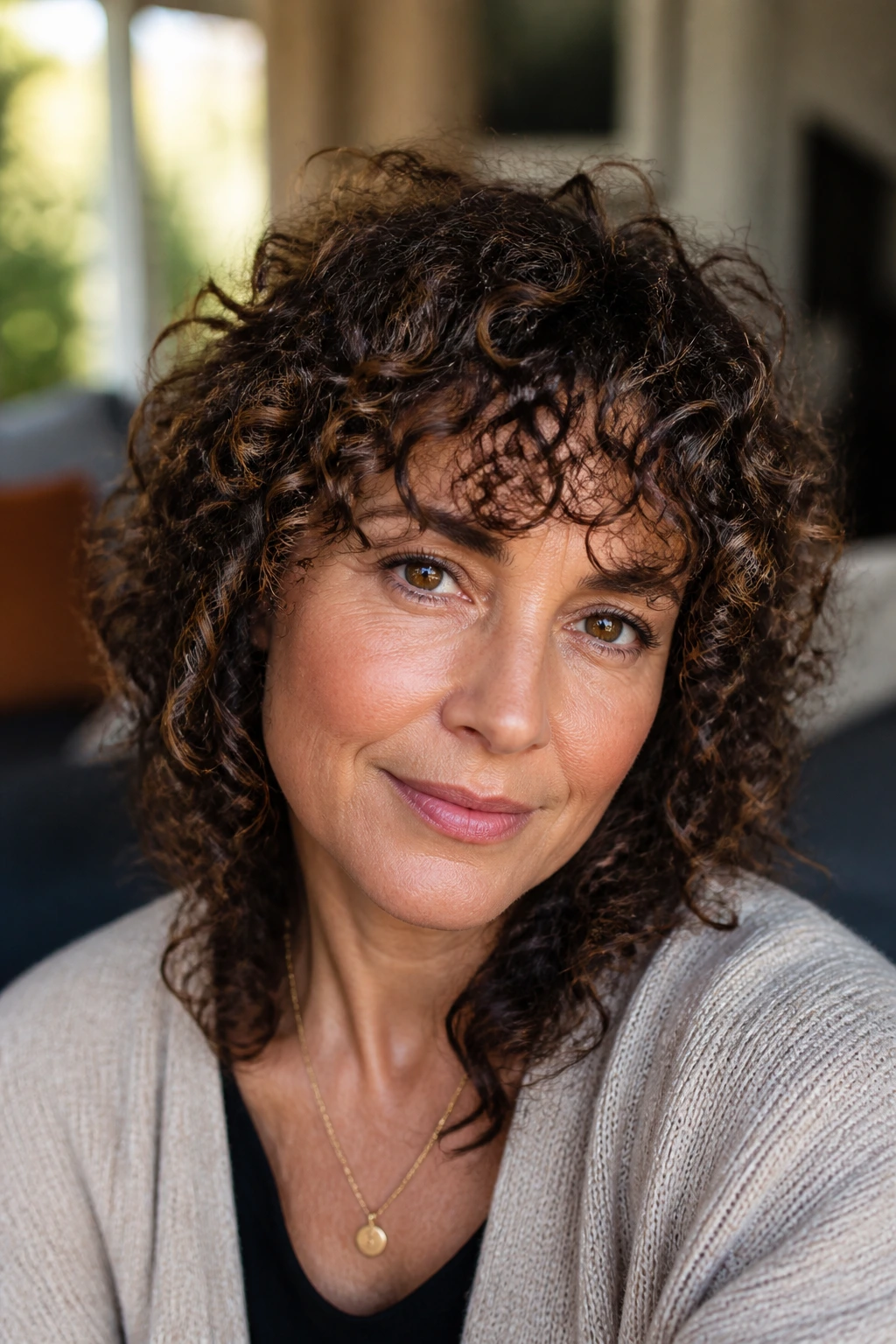
Do long bangs work better on curly hair if they’re cut dry?
Usually, yes. Dry cutting lets the stylist see where the curls actually land once they spring up, which is the part that matters. Wet cutting can work if the stylist knows the curl pattern well and leaves real length for shrinkage.
How long should curly bangs be at the start?
Longer than you think. Most curly fringe needs to start below the final resting point, often by half an inch to an inch depending on how springy the curl is. A curl that looks perfect wet can bounce up hard once it dries.
Can I wear long bangs with glasses?
Absolutely. The trick is to shape the fringe so it clears the frame line or splits around the bridge instead of landing directly on the lenses. Bring your glasses to the salon so the front is cut in real context.
What if my curl pattern is looser in the front than in the back?
That’s common. Ask for a shape that gives the front a little more lift at the root and a touch more weight through the ends so it doesn’t look thin next to the rest of the hair. Long bangs are often better than short ones in this case because they can cover that difference.
How do I stop my bangs from frizzing first?
Use less product at the root, not more. The front usually frizzes because it gets touched, overmoisturized, or dried too roughly. A small amount of mousse or gel on damp hair, then leaving it alone while it dries, helps a lot.
Can I grow out short bangs into one of these longer styles?
Yes, and that’s one of the best reasons to choose a long fringe in the first place. Keep the center pieces shaped enough to blend into face layers, and use side parts or clips while the front grows. The awkward stage is shorter when the end goal is already long.
What face shapes suit long curly bangs best?
Almost all of them, but the shape changes. Round faces often like diagonal or curtain shapes. Longer faces usually do well with a softer arch or fuller center. Square faces often benefit from rounded, cheekbone-skimming pieces.
Should I use a flat iron on curly bangs?
Only if you want a different look for a night out. Daily heat styling on the front section can dry it out faster than the rest of the hair and erase the curl pattern that makes the style work. A diffuser or air-dry approach usually keeps the fringe healthier.
The Fringe That Keeps Its Shape
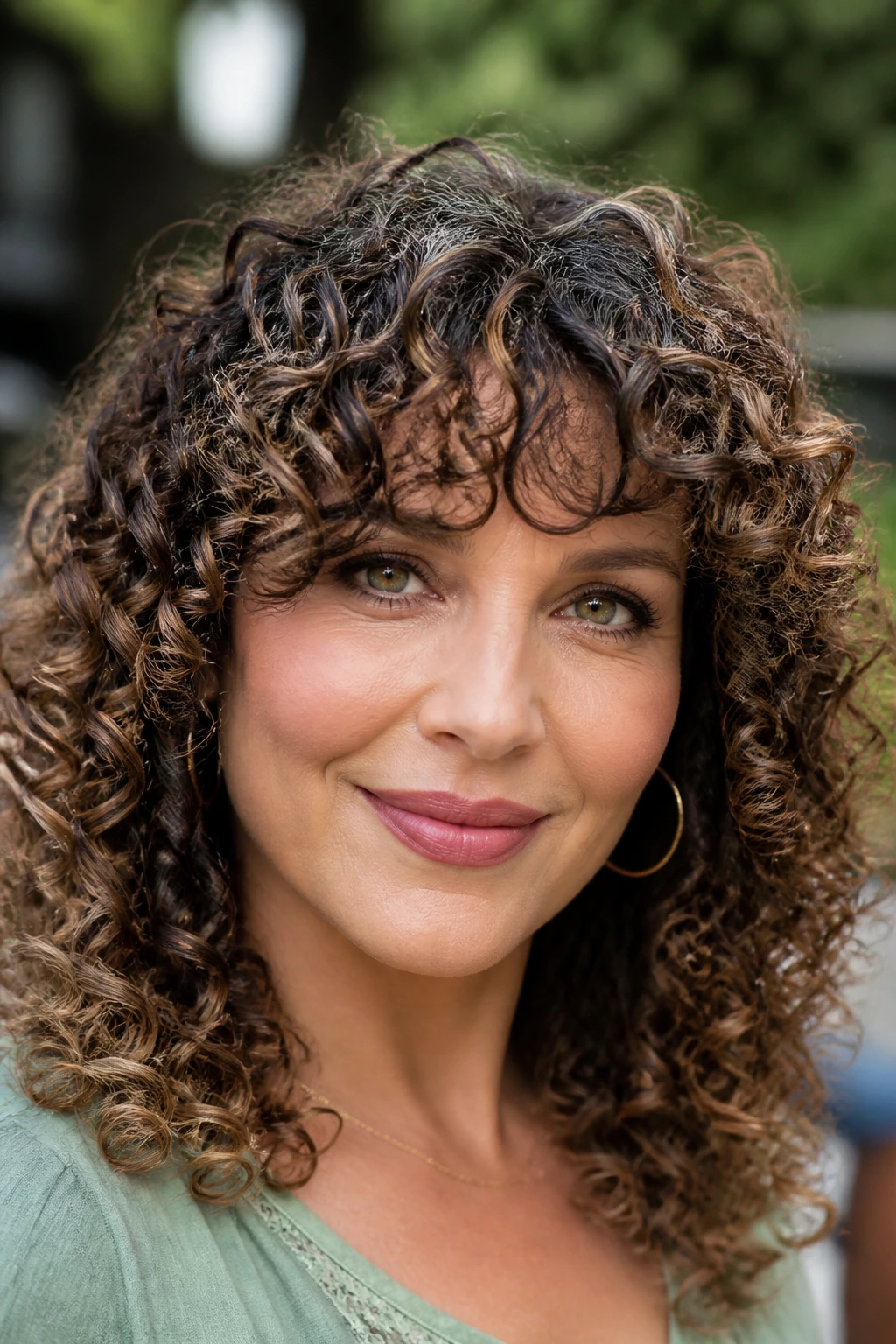
The best long bangs for curly hair are not the ones that pretend curls are straight for the sake of order. They’re the ones that make room for spring, shrinkage, and a little weather-related nonsense without losing shape. That is why the longer versions age so well. They have slack built into them.
If you want the front of your hair to frame the face instead of fight it, keep the length generous, the product light, and the cut tailored to the way your curls actually fall. That combination is what turns a fringe from a salon idea into something you can live with.
And that’s the real test, isn’t it? The bangs should still look good after a rushed morning, a little humidity, and a head turn in bad lighting. Pick the shape that can survive all three.