



Some hair colors look borrowed. Others seem made for deep skin from the first swipe of pigment.
On rich complexions, the right shade does one of two things: it either sinks deep and glossy beside the skin, or it throws a clean flash of contrast that makes your features look sharper, not louder. That’s the sweet spot with hair color ideas for deep skin tones. Go too pale without enough planning and the color can drift away from your face. Stay too flat and matte, and the whole look loses the spark it needed.
Flat color is the enemy here.
The good news is that deep skin can carry a wider range than most people think, as long as the tone has enough depth, shine, or saturation to hold its own. A blue-black bob can look richer than a flat jet black one. A caramel ribbon highlight can look more expensive than a chunky blonde stripe. A plum gloss can read soft and polished instead of theatrical if the base stays anchored in brown.
Why This Collection Feels Different
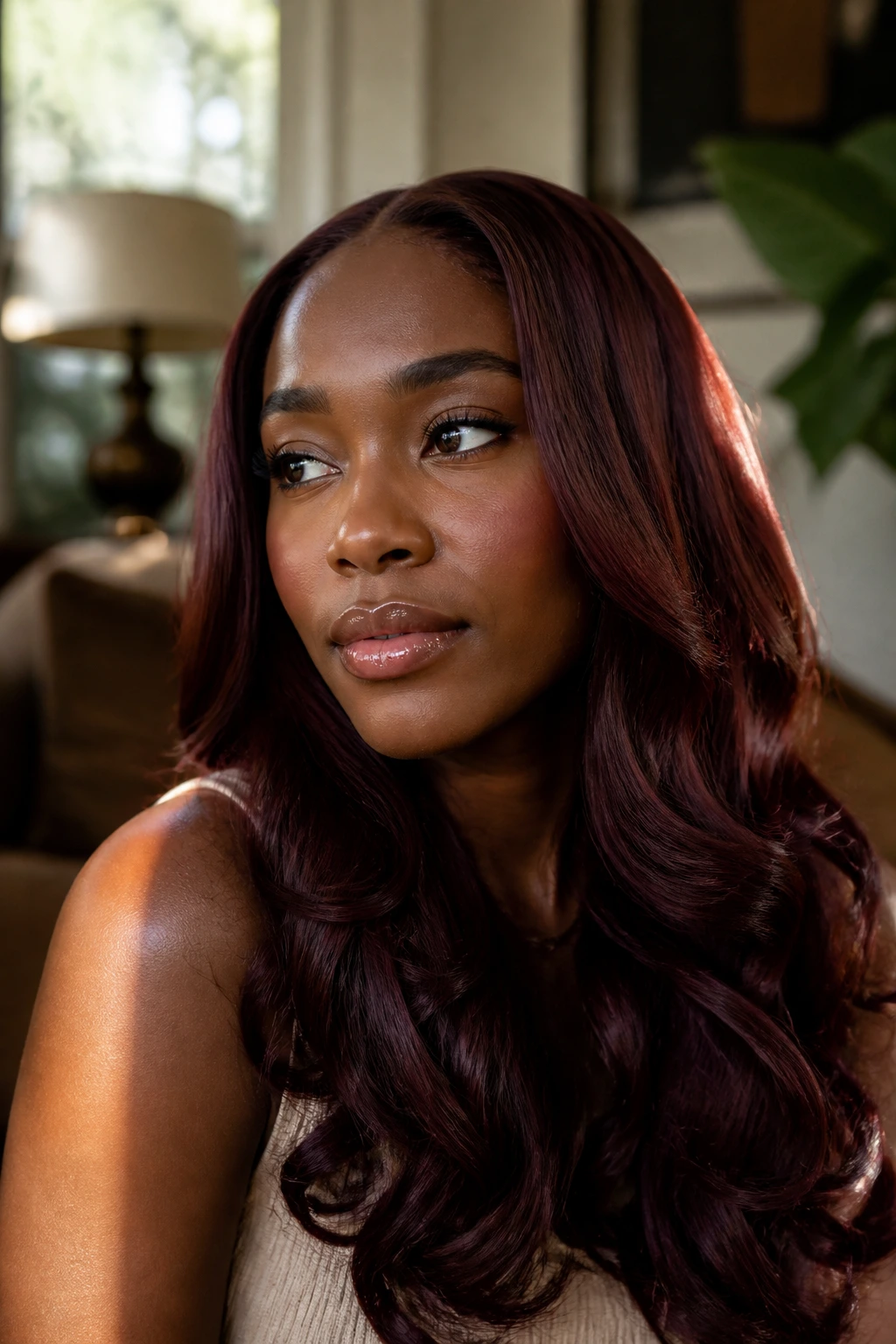
-
Depth First: Every shade here is chosen because it has enough darkness, richness, or pigment to sit beside deep skin instead of fading against it.
-
Undertone Aware: Warm, cool, and neutral complexions each get options that make the skin look intentional, not accidental.
-
Salon-Friendly Options: Some looks need only a gloss or toner; others ask for lift and a more committed color plan.
-
Low to High Drama: You’ll find quiet brunettes, glowing coppers, rich berries, and a few fashion shades that still feel wearable on melanin-rich skin.
-
Placement Matters: A color can look totally different as an all-over gloss, a face frame, a melt, or a peekaboo panel, so these ideas are built around actual wear, not just pretty swatches.
Why Some Shades Work Better on Deep Skin Than Others
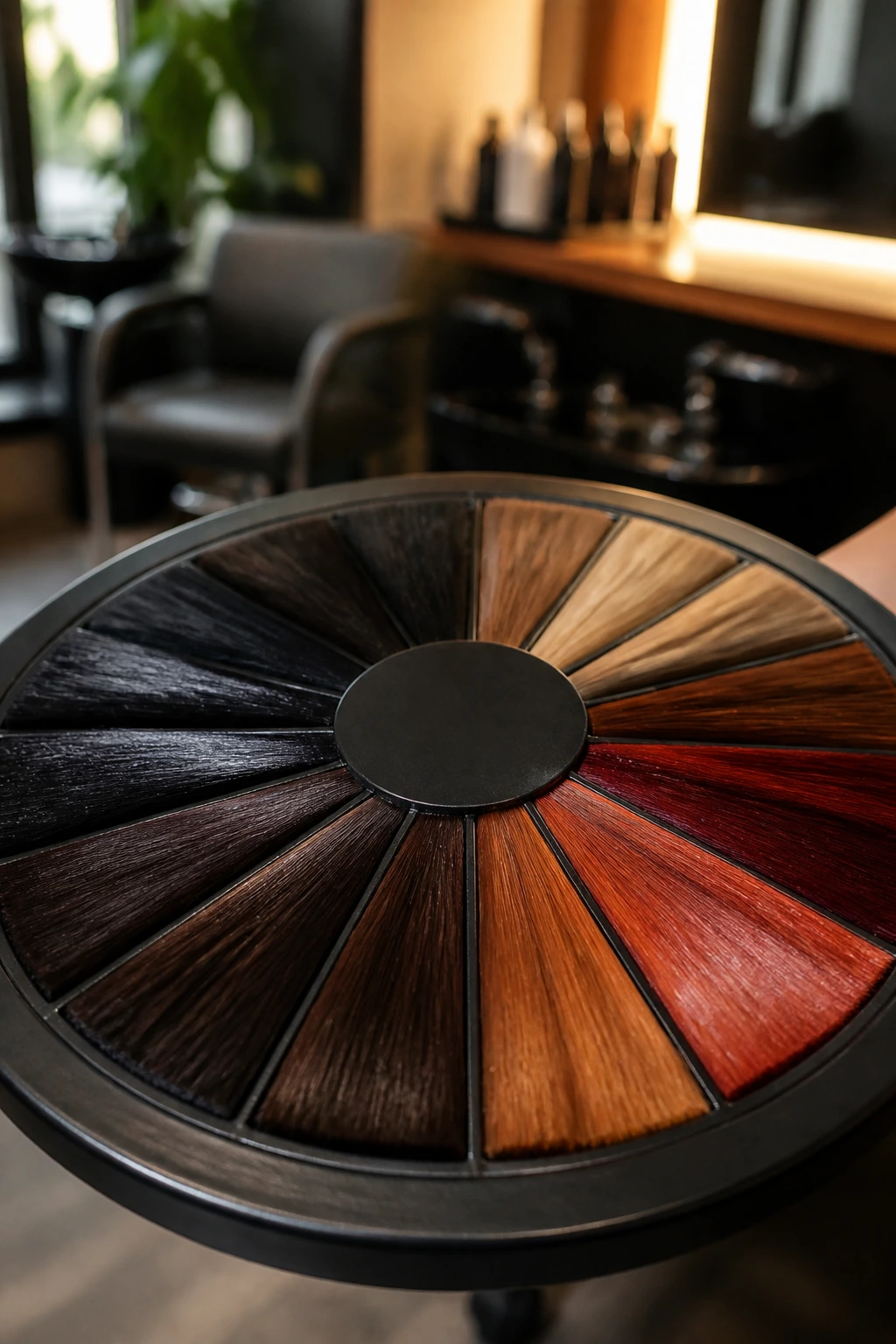
Deep skin does not need to be “matched” with one single shade family. That’s lazy color thinking, and it’s usually how you end up with hair that feels flat or disconnected. What matters more is the relationship between the skin, the base depth, and the tone sitting on top of it.
A level 3 espresso brown, a level 5 chestnut, and a level 7 copper blonde all behave differently, even if they’re all called “warm.” One sits close to the skin and looks sleek. One adds glow. One creates high contrast. None of those is automatically right or wrong.
The easiest way to think about it: rich skin likes either richness or clear contrast. Muddy, pale, dusty shades are the ones that usually struggle. A flat ash blonde can look chalky. A glossy burgundy, a caramel balayage, or a blue-black gloss can look finished almost immediately because the pigment has enough weight to hold its own.
Texture matters too. On curls and coils, color shows up in bends and highlights, not in one flat sheet. That means a gloss, a ribbon highlight, or a shadow root often reads better than a blunt all-over lift. On straight hair, shine becomes the whole game. If the surface looks healthy, the color looks richer. Simple as that.
1. Espresso Brunette With a Mirror Finish
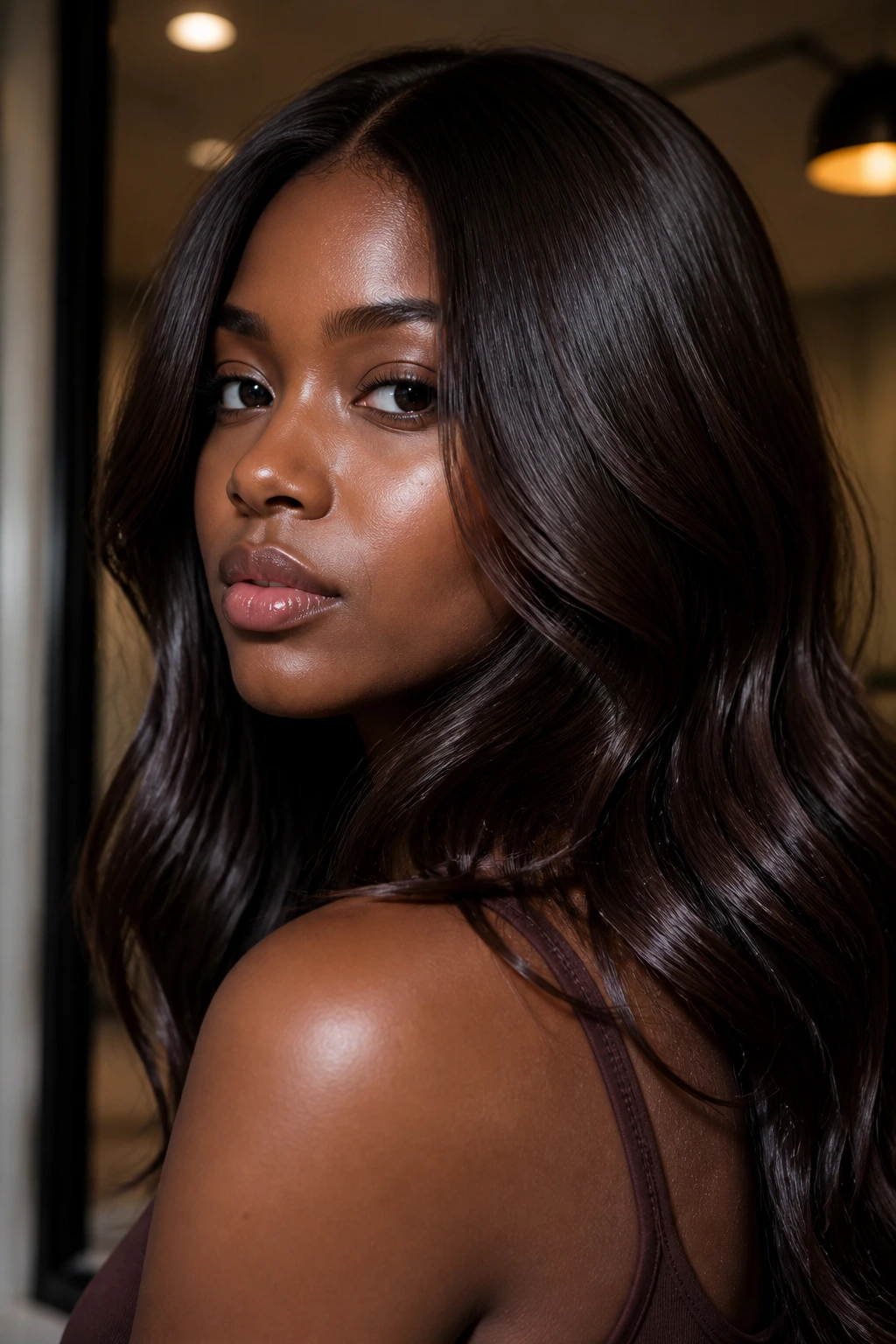
Espresso brunette is the color I reach for when someone wants dark hair with real presence, not the dead-flat black dye that can swallow facial features. It sits just above inky black, which means it gives you depth without turning the hair into one heavy note. On deep skin, that glossy near-black finish looks clean and sharp.
Ask for a neutral or soft-blue brunette gloss if your natural hair already lives near level 2 or 3. That keeps the color from drifting red in sunlight, which is the thing that makes cheap dark dye look muddy after a few washes.
This is one of the easiest shades to wear if you don’t want a maintenance project. A fresh gloss every 6 to 8 weeks keeps the mirror finish alive, and the grow-out stays soft. If your hair has curls, even better. The bends in the strand catch light in a way that makes espresso look almost liquid.
Best for: low upkeep, polished edges, and people who want their hair to look darker without looking painted on.
2. Mocha Melt With Soft Dimension
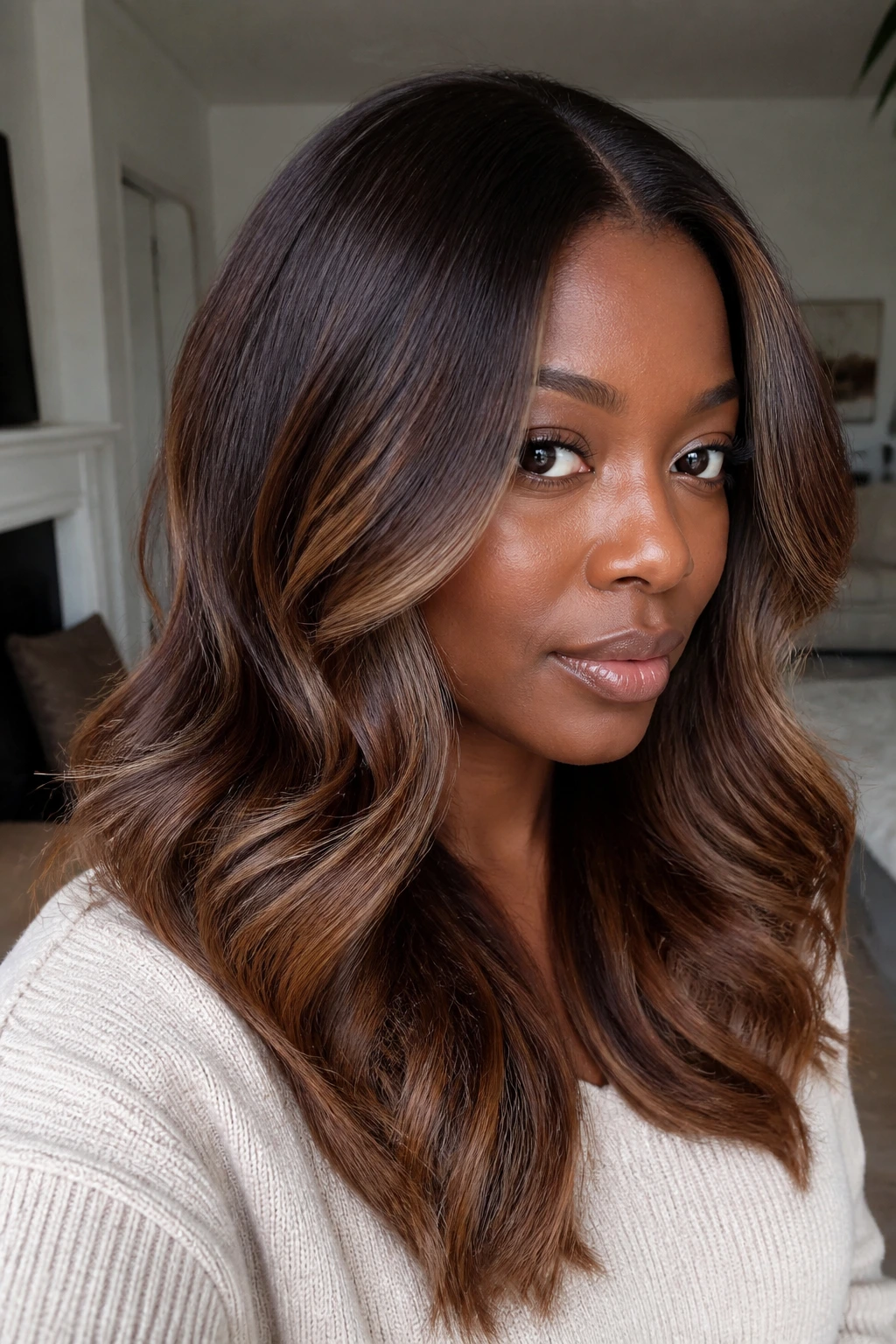
Mocha melt works because it refuses to be one-note. The root stays deep and cool, then the mids shift into a milkier brown, and the ends soften into a warm mocha ribbon. On deep skin, that little shift in tone keeps the hair from disappearing into the face.
What Makes the Melt Work
- Keep the root one or two levels deeper than the mid-lengths.
- Let the lightest pieces stay in the interior and around the face, not everywhere.
- Choose a mocha tone that still has brown in it; pure beige is where things start to look lifeless.
This shade is especially good if your hair is layered or curly, because the dimension shows up when the hair moves. A flat all-over brown can be fine, but a melt has more personality. It also grows out cleaner than chunky highlights, which is a nice bonus when you don’t want the salon chair to run your life.
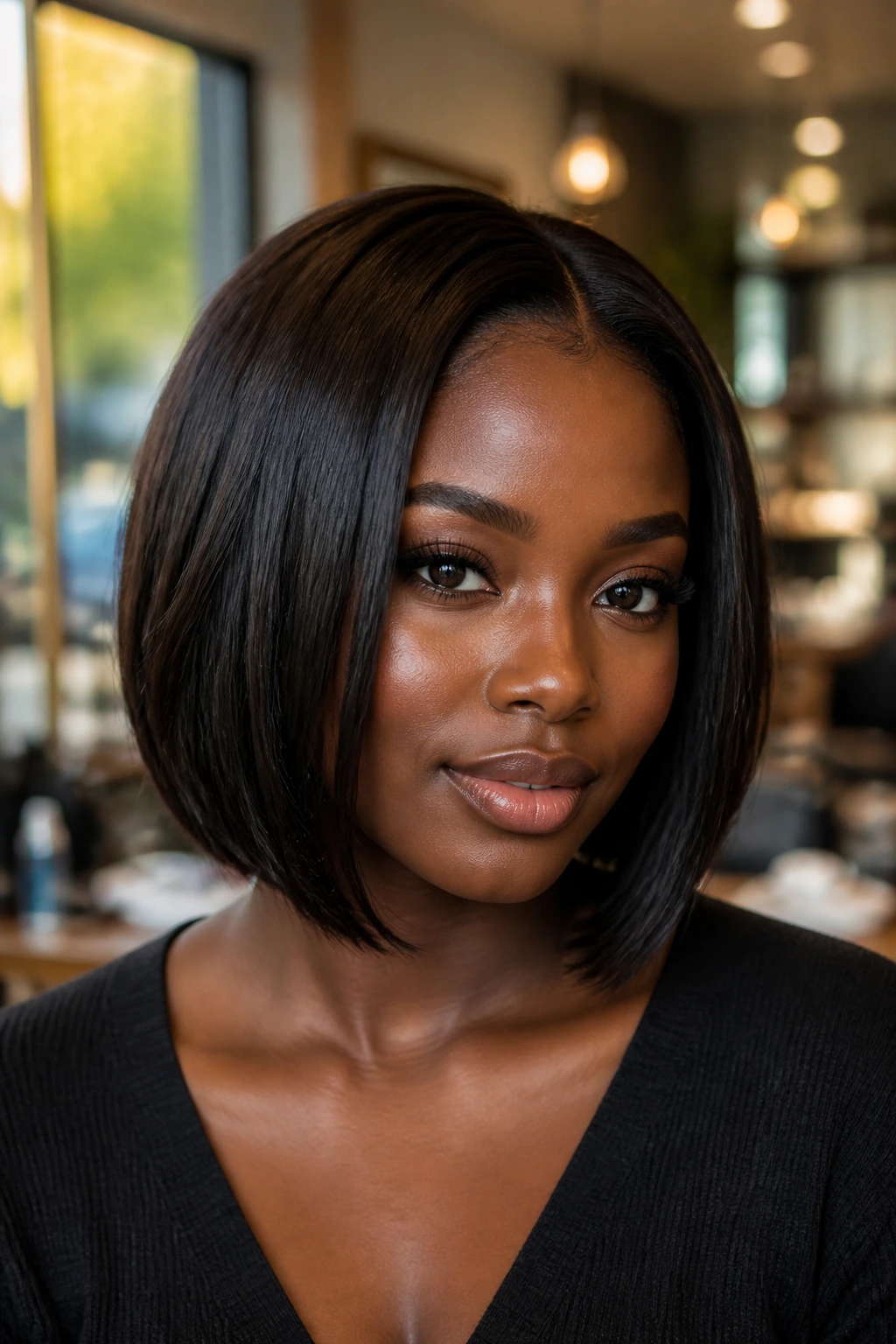
3. Blue-Black Shine That Reads Luxurious
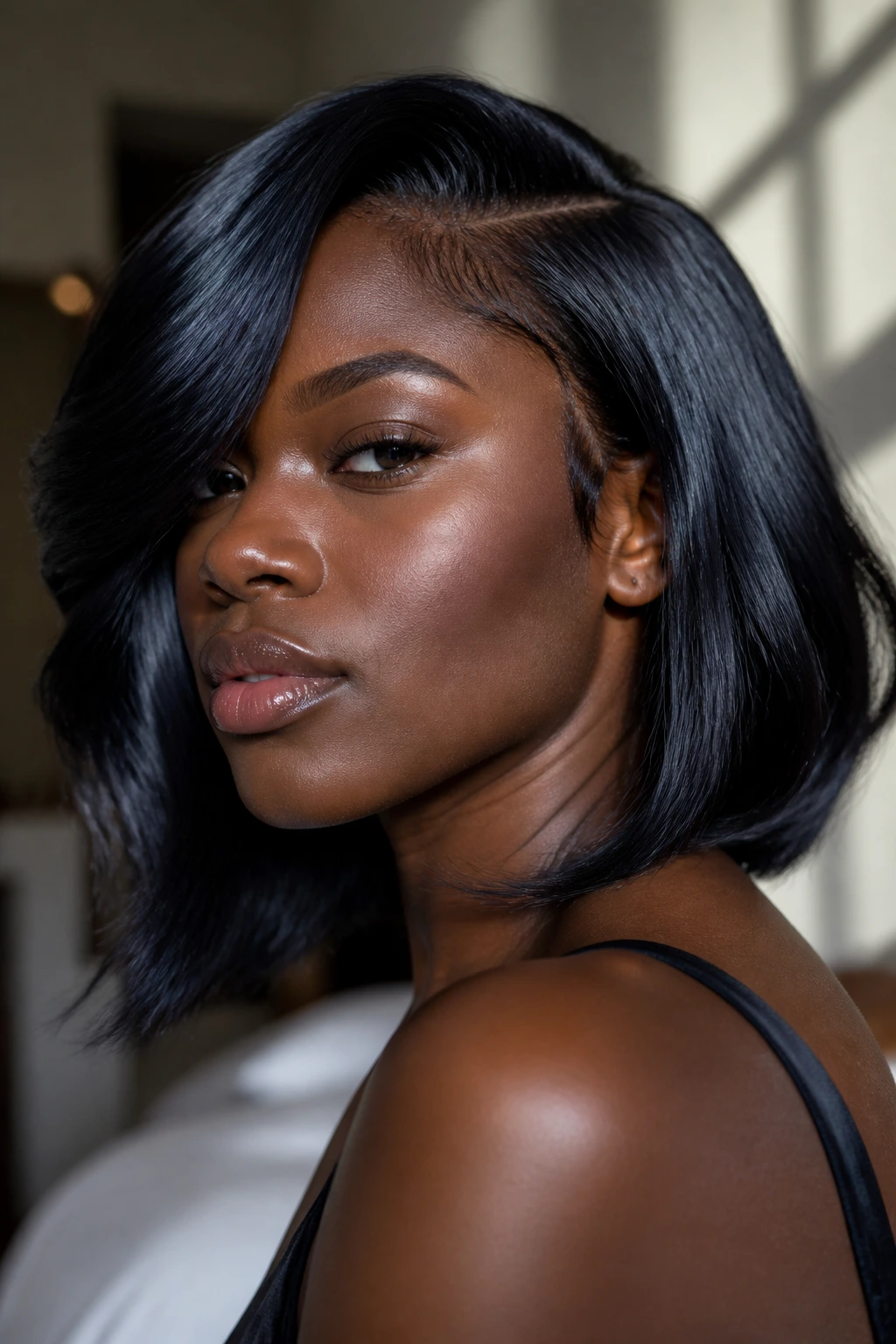
Why does blue-black work so well on deep skin? Because it gives you the depth of black hair with just enough blue reflection to keep it from feeling heavy. The blue isn’t loud. It shows up at the edges, under light, and in the shine when the hair swings.
If you want this shade to look right, the surface has to be smooth. Frizzy ends make blue-black look patchy, and that’s where people get disappointed. A light trim before coloring and a good leave-in afterward make a bigger difference than most people expect.
Blue-black is one of my favorite choices for short cuts, blunt bobs, and high-shine press-outs. It makes lines look crisp. It also plays well with strong brows and gold jewelry, which is a nice practical detail if you like color that works with your whole face instead of competing with it.
4. Blackberry Brown With Berry Undertones
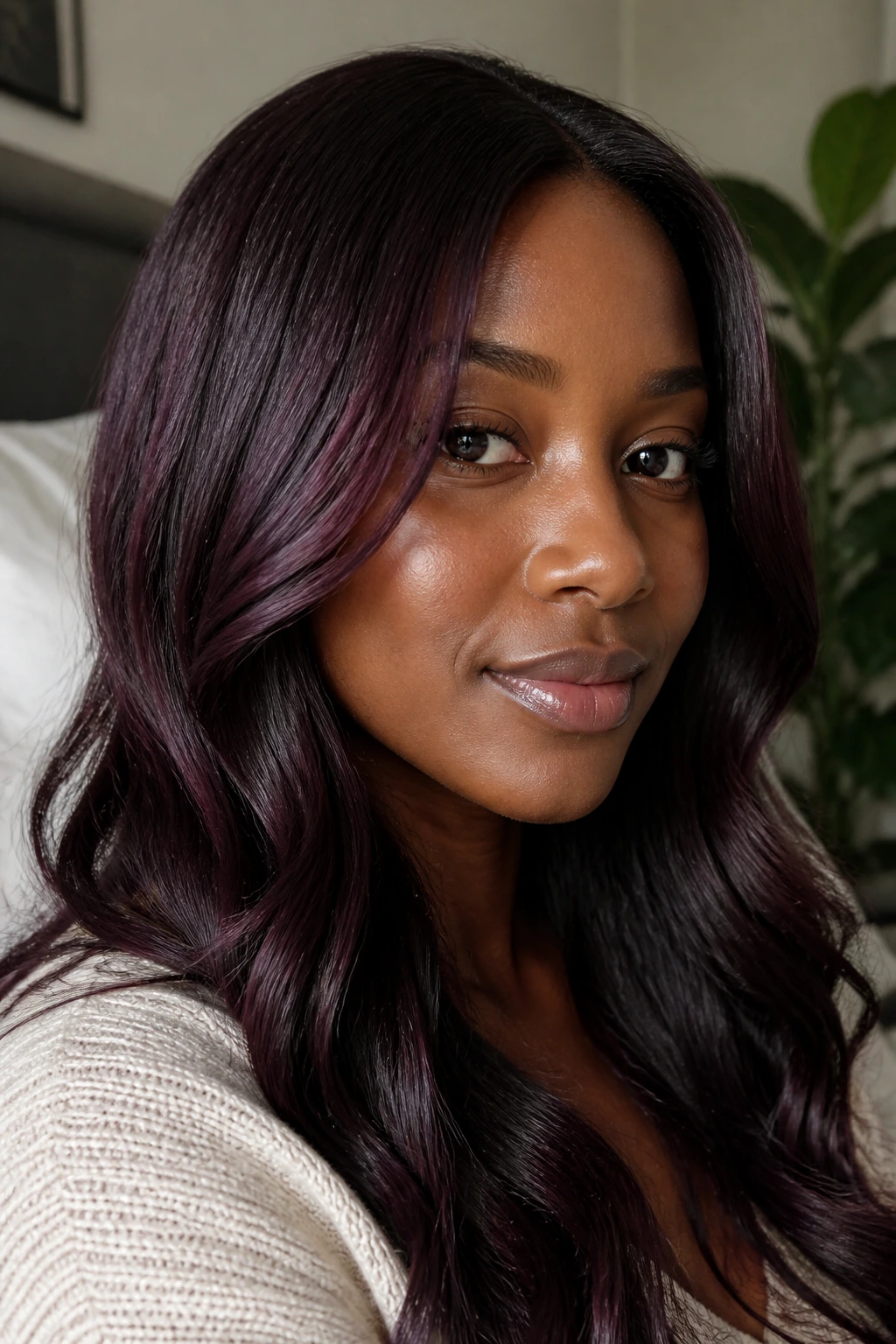
Blackberry brown sits in that sweet spot between brunette and berry, which makes it an easy win if you want something darker than burgundy but softer than full red. Indoors, it reads as rich brown. In daylight, the purple-red note starts to show through.
That dual personality is what makes it so good on deep skin. It doesn’t need to scream to be seen. It just needs enough light to catch the berry tone.
Best Ways to Wear It
- On silk presses, it gives a polished, almost satin finish.
- On curls, the berry undertone shows up in the bends.
- On bob cuts, it looks modern without feeling trendy in a throwaway way.
I like this one for people who want color but hate obvious upkeep. Blackberry brown can be done as a gloss over a dark base, which keeps the grow-out gentle. If your hair leans porous, ask for a slightly cooler version so it doesn’t go red too fast.
5. Mahogany Gloss for Deep, Warm Skin
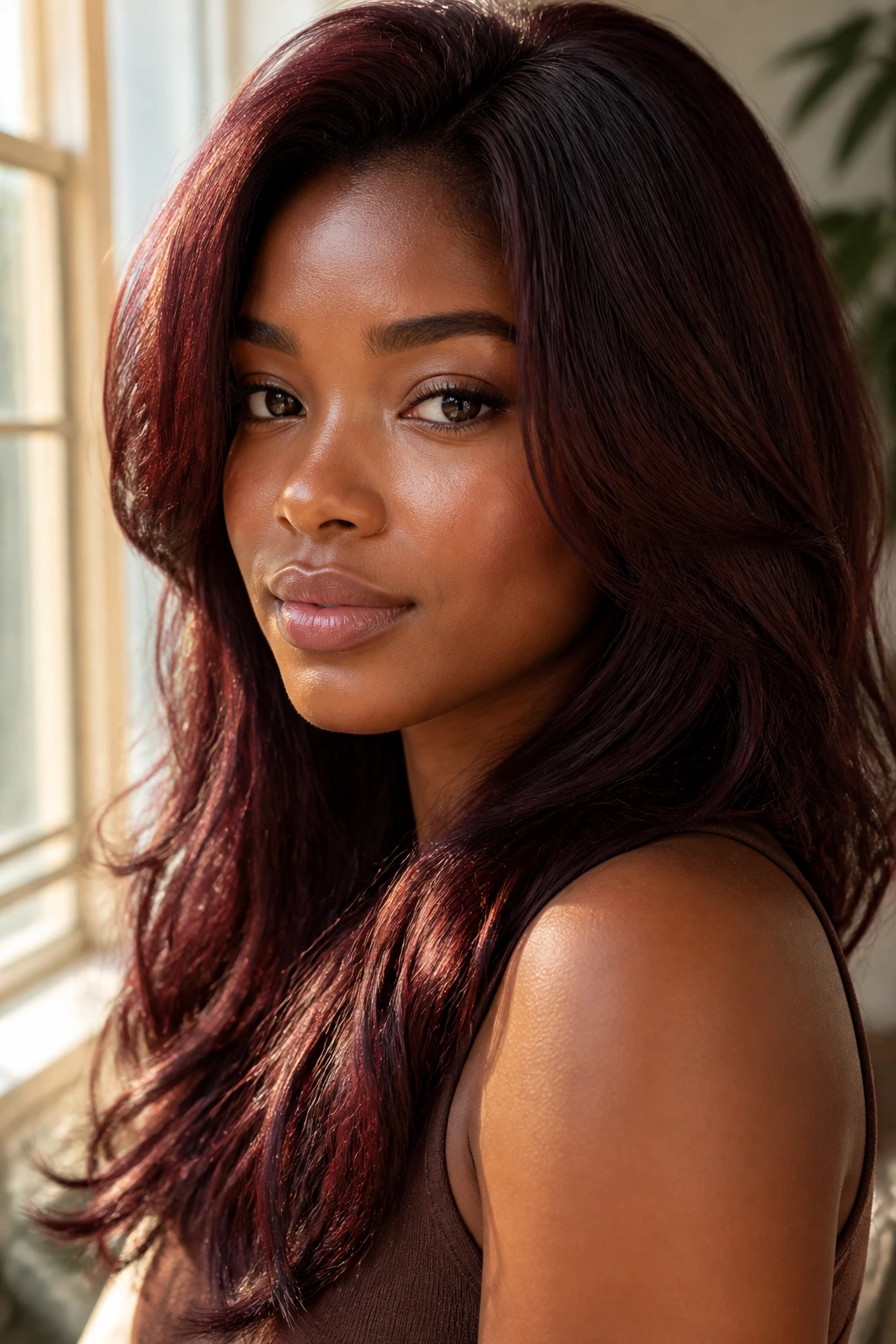
Mahogany is one of those shades that looks calm in the chair and rich in real life. It’s a brown-red, but not in a loud way. The red is tucked under the brown so the whole color feels smooth, not bright. On warm deep skin, it can make the complexion look even more alive.
This is a smart choice if you want something that looks intentional without requiring lightening. A demi-permanent mahogany gloss over dark hair can be enough. You still get color shift, shine, and warmth, but you avoid the dryness that comes with lifting hair too far.
Mahogany is also one of the better reds for coils and textured hair because it doesn’t depend on a lot of pale blonde underneath to work. The shade sits on the surface and glows when the hair moves. That makes it forgiving, and honestly, forgiving color is underrated.
6. Chestnut Cocoa With a Toasted Edge
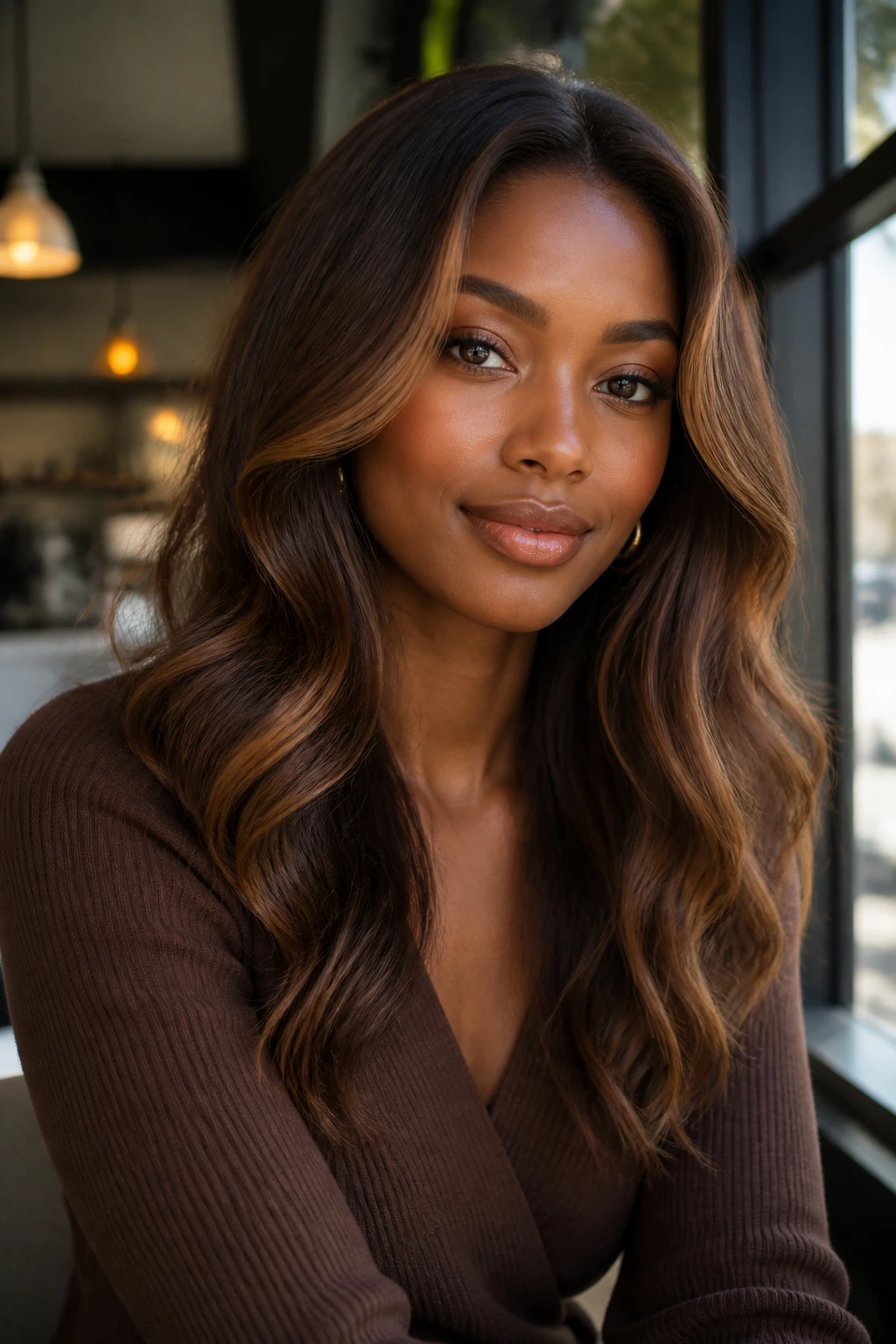
Chestnut cocoa is what happens when brown gets a little warmer, a little softer, and a lot more flattering under sun and indoor light. It has that toasty, rounded feel that keeps deep skin looking balanced. Not pale. Not flat. Balanced.
This shade is especially good if you want to move away from true black without jumping all the way into red territory. The chestnut note brings warmth, while the cocoa base keeps the color grounded. It’s a nice middle ground for people who like natural-looking hair that still feels colored.
A few fine face-framing pieces can make chestnut cocoa read even better. I prefer that approach over big chunky highlights because it keeps the look smooth around the hairline, where you want the most polish. Add a gloss every 6 weeks, and the color keeps its toasted finish instead of turning dull.
7. Cinnamon Brunette With Warm Spice
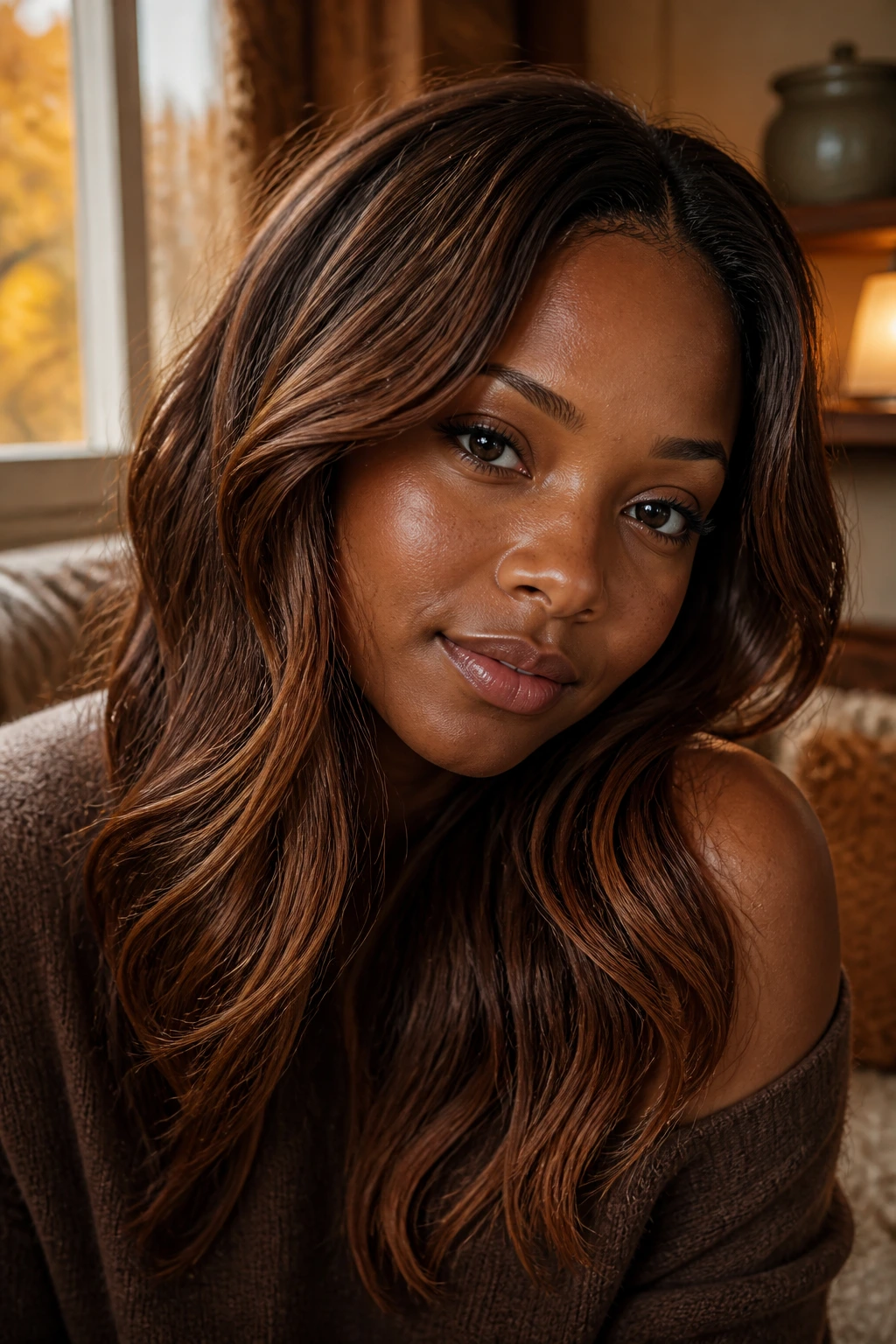
Cinnamon brunette smells like fall, but it wears year-round. The trick is keeping the cinnamon tucked into the mids and ends instead of dragging it all over the root. That way the hair looks warm and dimensional, not orange from the start.
This color is especially pretty on textured hair because the warmer strands catch the bend of curls and waves. You don’t need a lot of lightness for it to show. A subtle lift, or even just a warm gloss on dark brown hair, can be enough to get the spice note.
If your skin leans golden or red, cinnamon brunette gives it something to talk to. If your skin is cooler, the brown base keeps the shade from turning too fiery. It’s one of those colors that can be tailored easily, which makes it more useful than a lot of trendier shades.
8. Maple Brown With Soft Amber Light
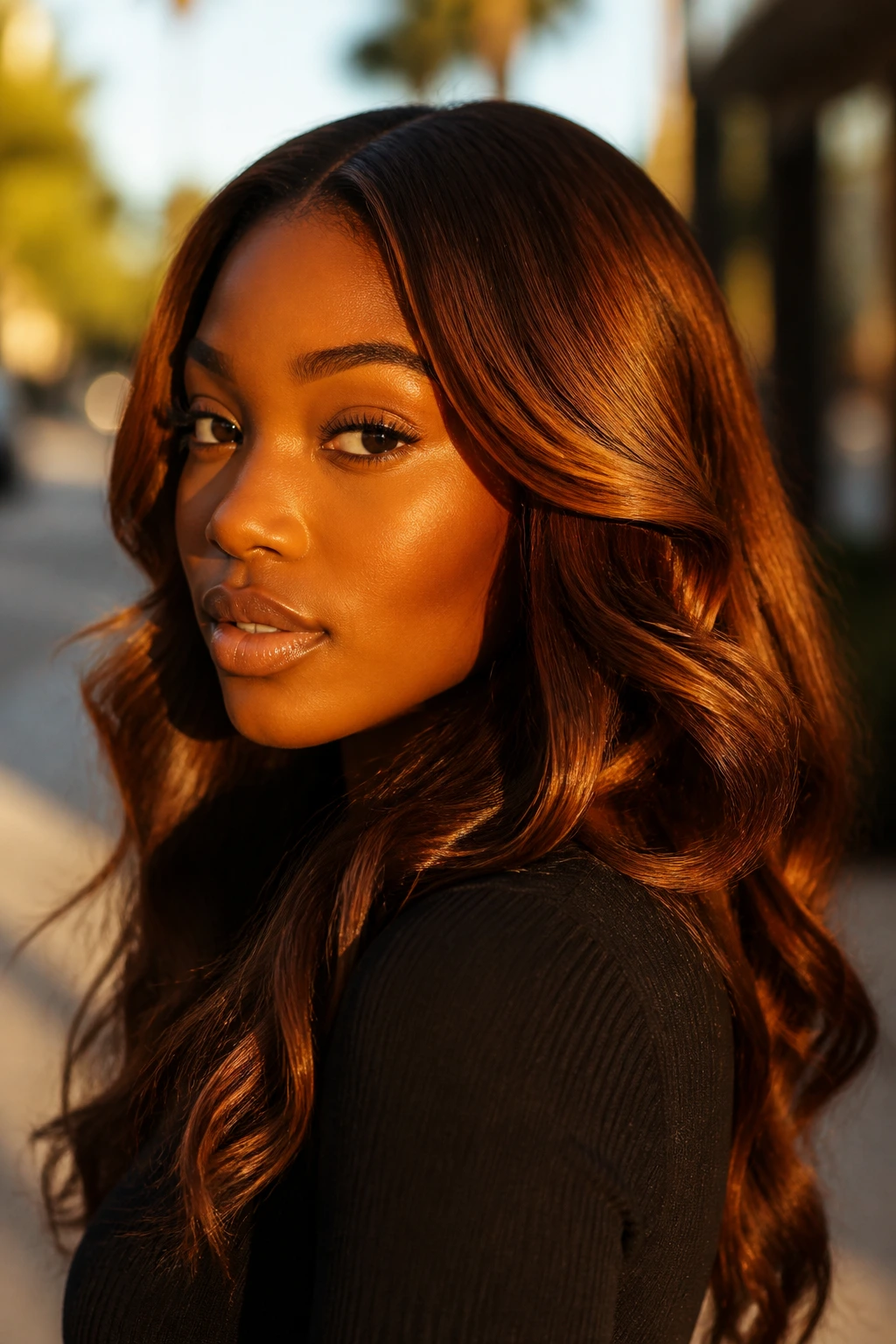
Maple brown is a gentle brown with an amber pull, like syrup on warm toast. It’s richer than light caramel but softer than copper, which is why it works on deep skin without trying too hard. The color has enough warmth to brighten the face, but not so much that it becomes brassy.
A Good Map for Maple Brown
- Ask for a soft amber gloss, not a golden blonde toner.
- Keep the root shadow deep so the color looks anchored.
- Place the warmest pieces near the temples and cheekbone area.
This shade works well on medium to long hair because the amber shifts show up as the hair moves. On shorter cuts, it can still look lovely, but it needs shine. A matte maple brown misses the point.
9. Toffee Balayage Around the Face
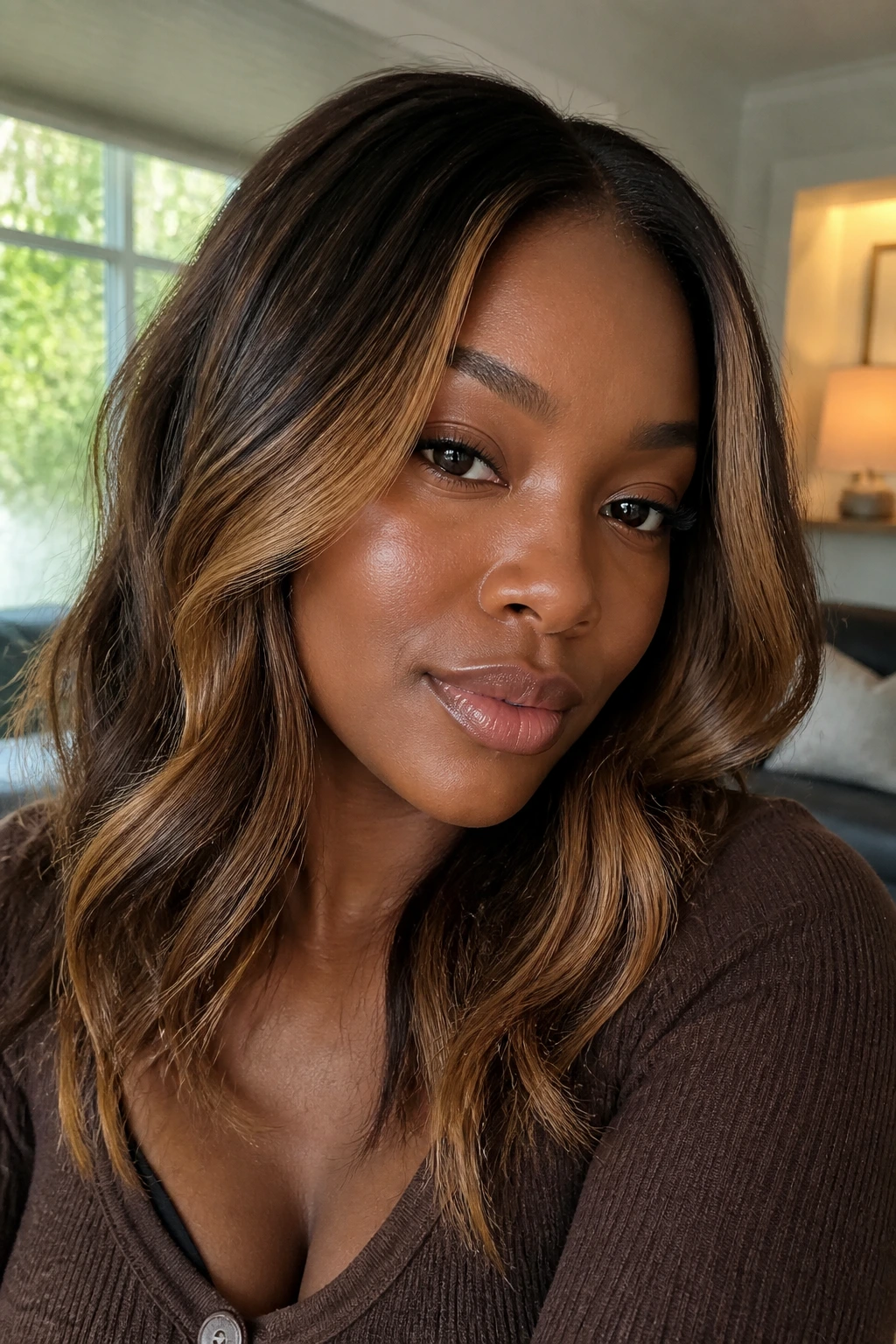
Toffee balayage is one of the easiest ways to brighten deep skin without bleaching the whole head. The toffee pieces sit a few shades lighter than the base, and because they’re painted by hand, they don’t look stripy or stiff. The face ends up framed with warmth, not glare.
What makes this one work is placement. If the lighter pieces start too high, the color can look chunky and disconnected. If they start around the cheekbone or just below, the skin gets the lift without losing the depth that makes the hair look rich in the first place.
How to Wear It
- Works best on layered cuts where the ribbons can move.
- Looks cleaner when the root stays at least two levels darker.
- Grows out softly, which is the whole reason balayage stays popular.
I like toffee balayage for people who want brightness but do not want weekly salon maintenance. It’s one of the better “first color” options on deep skin because it gives you contrast without a dramatic leap.
10. Honey Bronze With Sunlit Ribbons
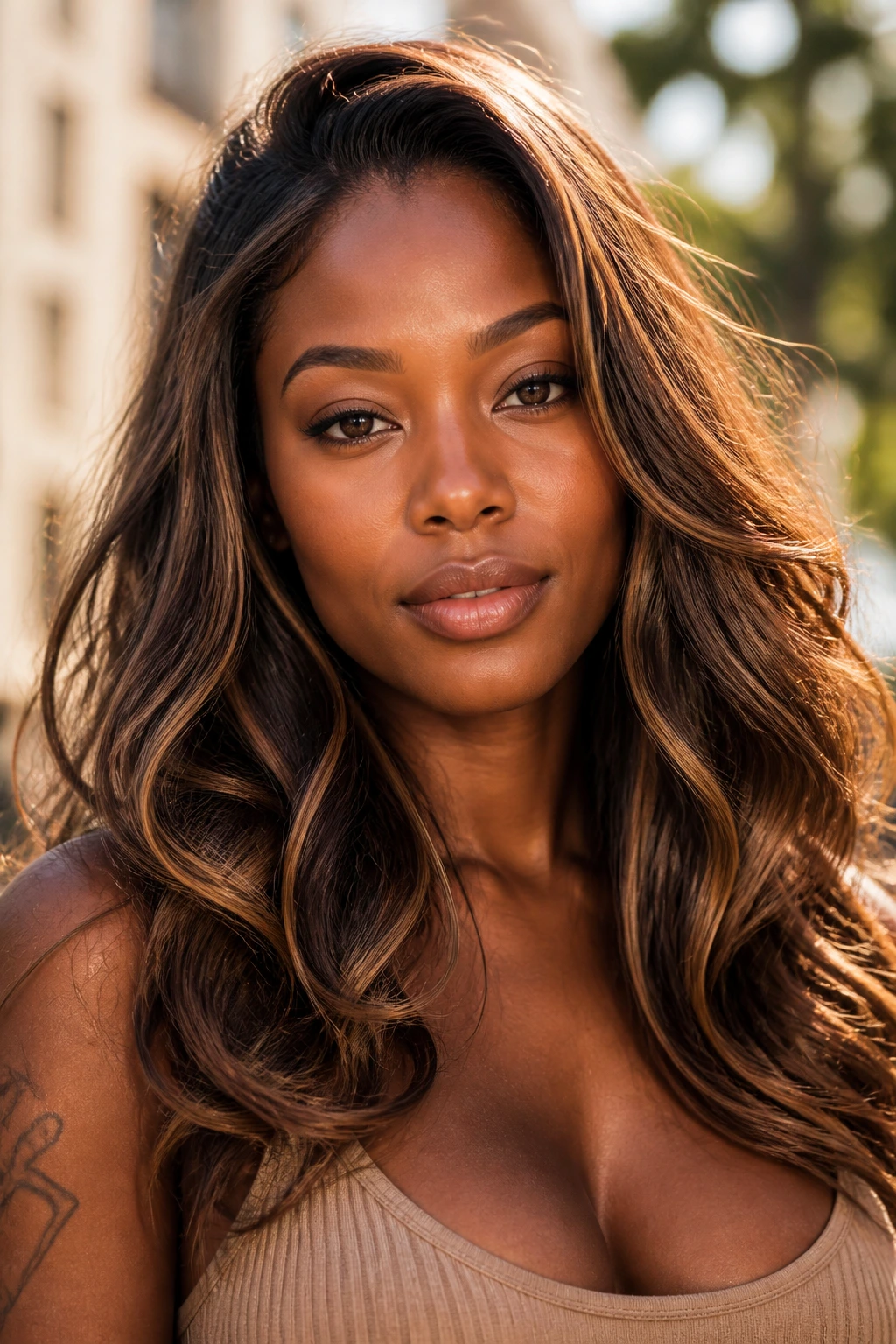
Honey blonde can get slippery on deep skin if it’s too pale or too yellow. Honey bronze is the version that behaves. It keeps the golden warmth, but the bronze base gives it enough weight to sit beside rich skin instead of floating over it.
This shade usually looks best as ribbons, not a solid all-over blonde. A few bronze pieces through the top layers can brighten the face and still keep the overall color believable. That balance matters, especially if your natural base is dark brown or black.
Honey bronze is one of those shades that changes with the light. Indoors, it reads as a warm brown-blonde. Outside, the gold reflects more clearly. If you like hair that shifts without looking fussy, this one does the job.
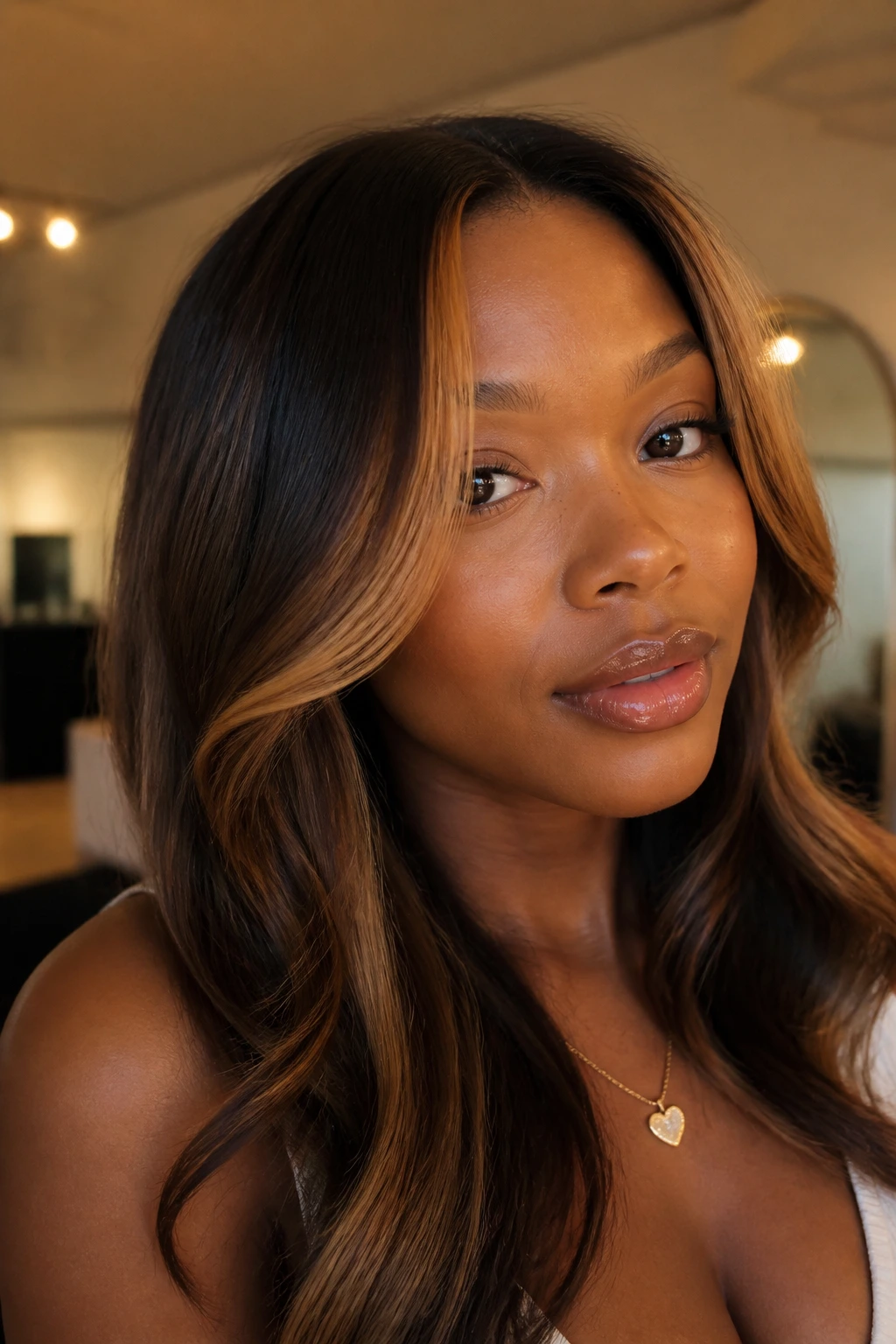
11. Caramel Ribbon Highlights on a Dark Base
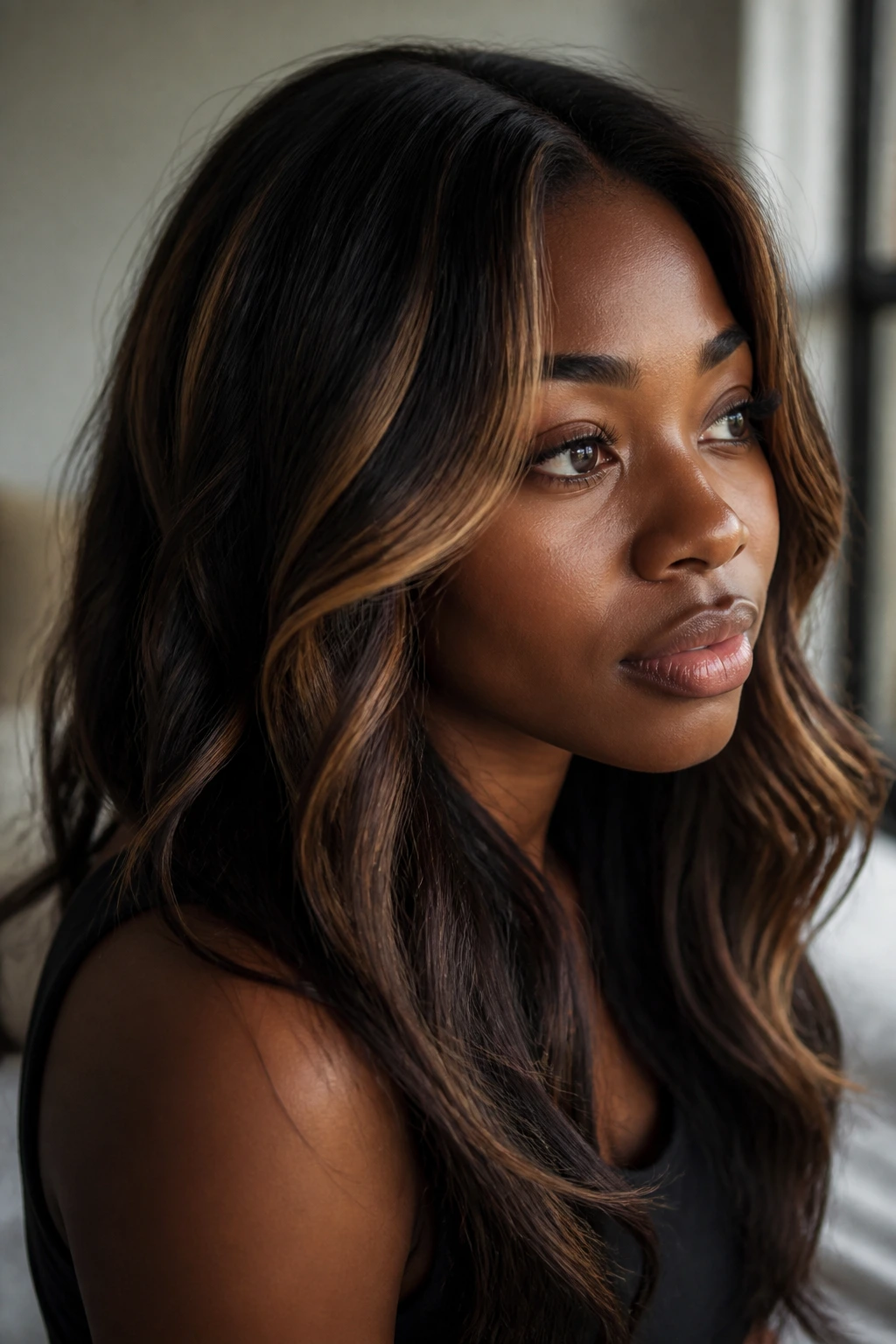
Caramel ribbons are the classic move for a reason: they show up. On deep skin, the warmth adds a soft glow around the face, and because the ribbons sit against a darker base, the contrast stays clean. The color doesn’t need to be thick or chunky to work.
The biggest mistake with caramel is going too light and too wide. Thin ribbons look richer. They move more naturally, and they age better as the roots grow in. Ask for pieces that stay a little deeper near the scalp and get warmer toward the ends.
If your hair is curly, these ribbons can look especially good because each bend of the curl catches a slightly different tone. Straight hair shows the placement more clearly, so the highlights need to be clean and strategic. Either way, caramel is one of the safest brightening options for deep skin.
12. Butterscotch Brunette With Sweet Warmth
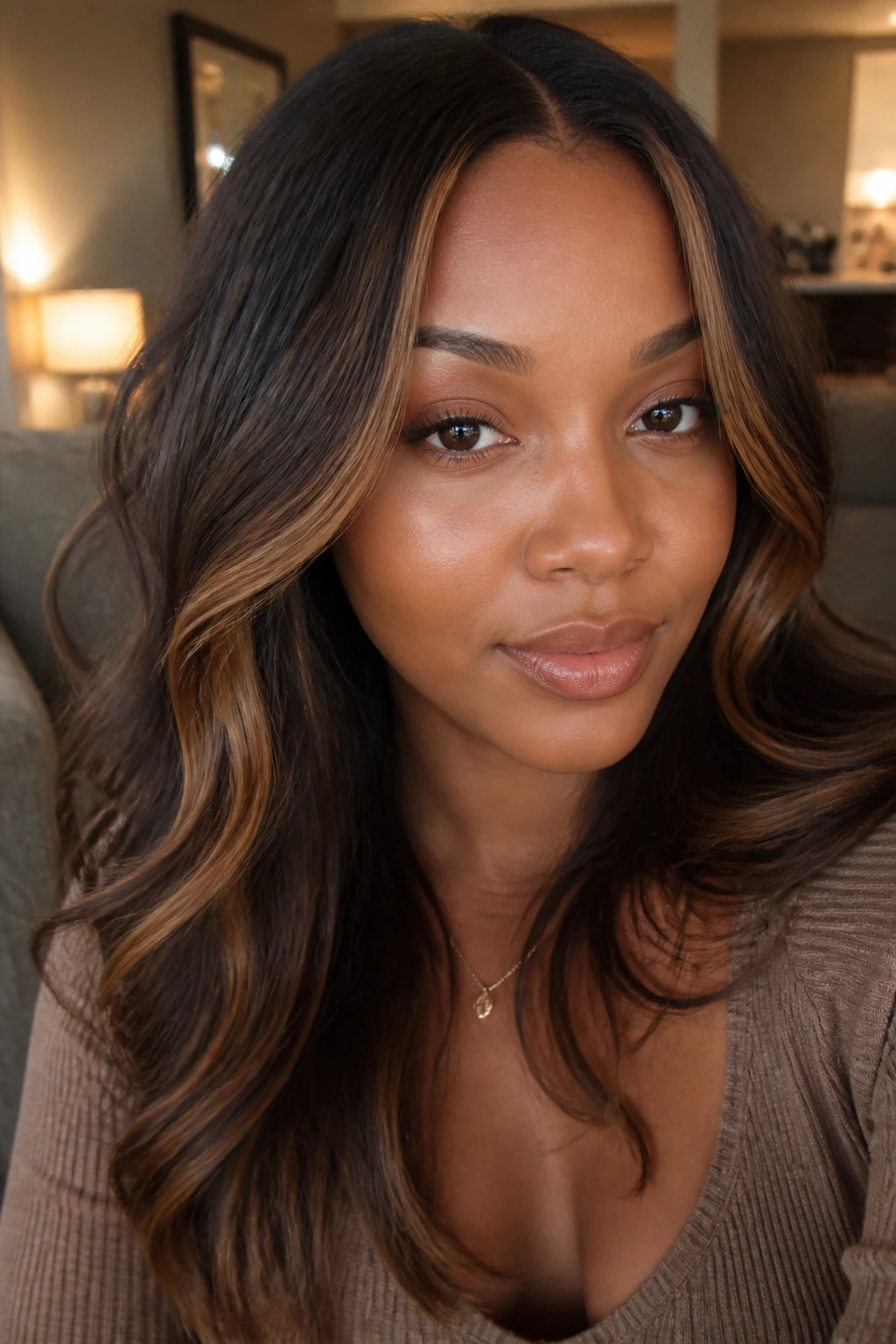
Butterscotch brunette is for the person who likes caramel but wants a little more glow. The shade is warmer, a touch lighter, and best used in controlled pieces rather than sprayed everywhere. That keeps it from tipping into brass.
It works because deep skin can hold warm lightness as long as the base stays dark enough. Butterscotch on a brunette foundation feels soft, almost creamy. On too-light hair, it can look pale and a little nervous. On a dark base, it looks intentional.
My favorite way to wear it is as face-framing panels or a soft melt from root to end. That gives you brightness where you want it most, while the deeper root keeps the color grounded. It’s a good option if you want to look lighter without making the whole head blonde.
13. Bronde Face Framing With a Shadow Root
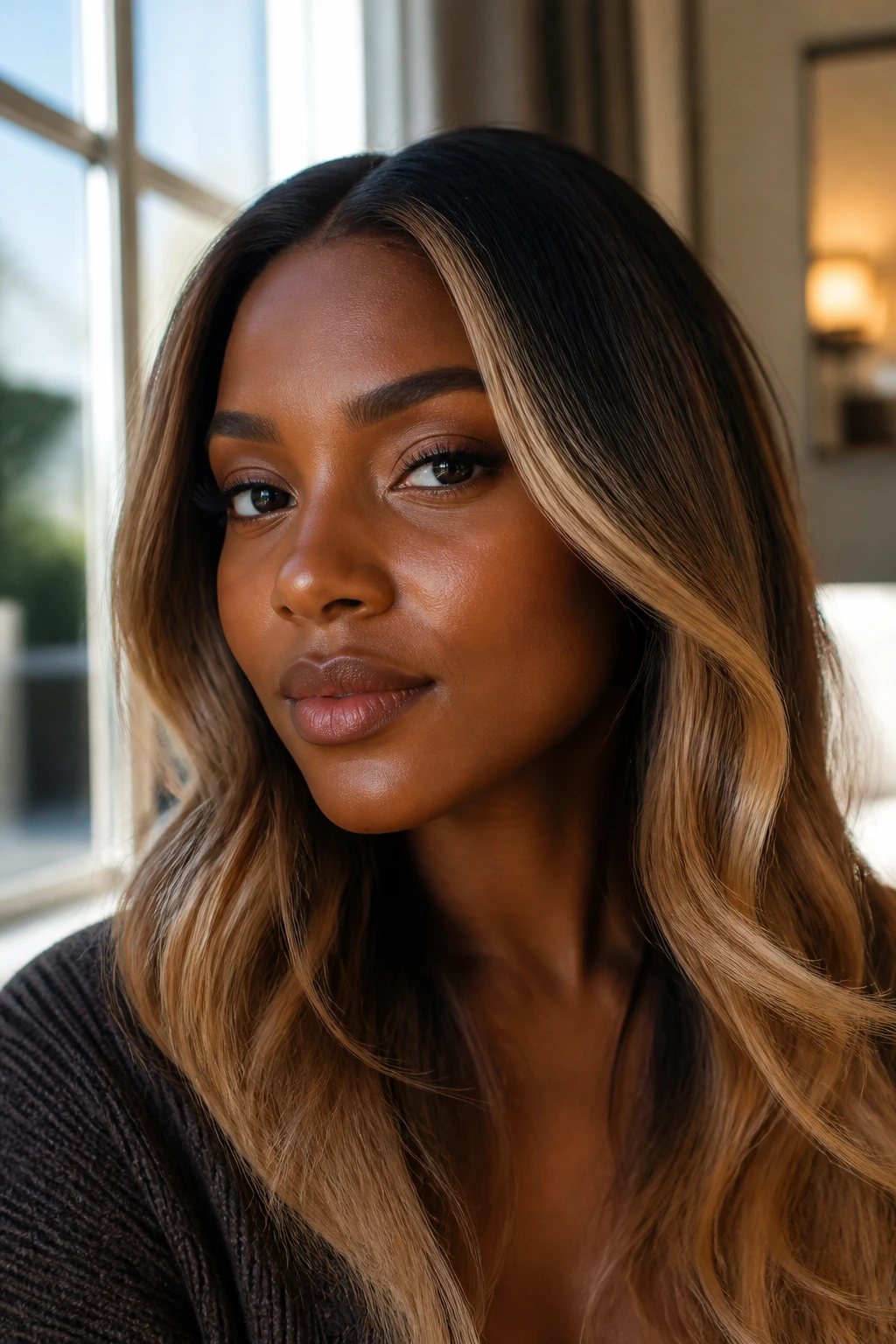
Bronde can be awkward on deep skin if it’s done too pale or too cool. Bronde face framing works because it keeps the root dark and uses the blonde only where it counts: around the face, in the bangs, or through a few surface pieces. The shadow root makes the transition make sense.
Why It Stays Wearable
- The dark root prevents the blonde from looking pasted on.
- Warm beige or honey tones read better than ash.
- A few bright pieces near the front are enough; you do not need the entire head lifted.
This is a smart choice if you like contrast but don’t want a full bleach job. It’s also easier to grow out than an all-over blonde. On deep skin, that matters. You want the blonde to feel like an accent, not a costume.
14. Smoky Taupe Brown for Cool Undertones
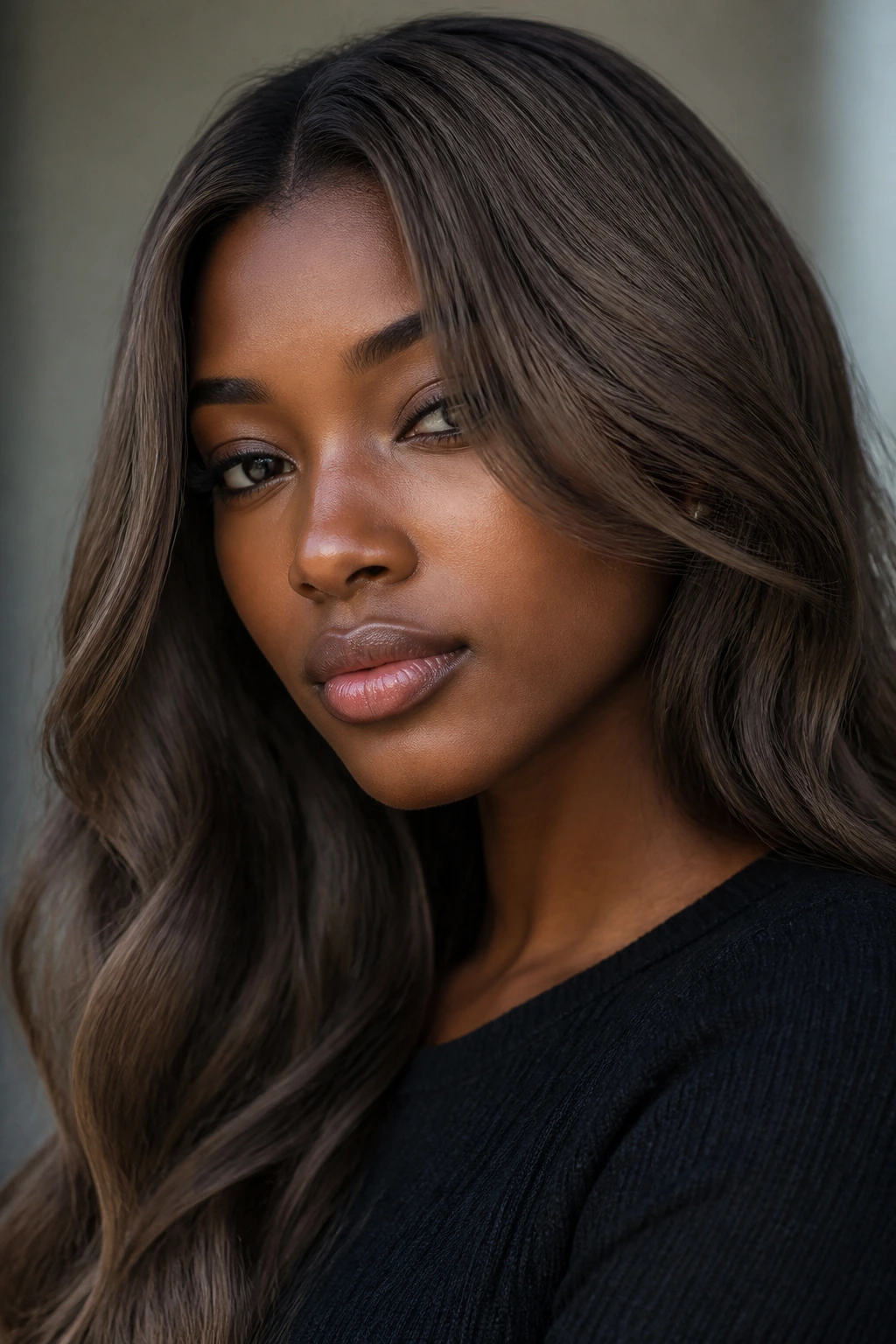
Smoky taupe brown is a cool brown with a soft gray edge, and it’s one of the few cooler shades that can look genuinely chic on deep skin. The key is saturation. If the color goes too pale or too dusty, it loses its shape.
That’s why I like smoky taupe on people with cool or neutral undertones who still want depth. It feels modern without screaming for attention. The color can be stunning on blunt cuts and straight styles because the clean lines show off the cool tone.
The mistake here is going too ashy too fast. Keep some brown in the mix. If the shade looks like mud in the bowl, it will probably look muddy on the head too. Ask your colorist to keep the finish soft, not chalky.
15. Mushroom Brown With Warm Lowlights
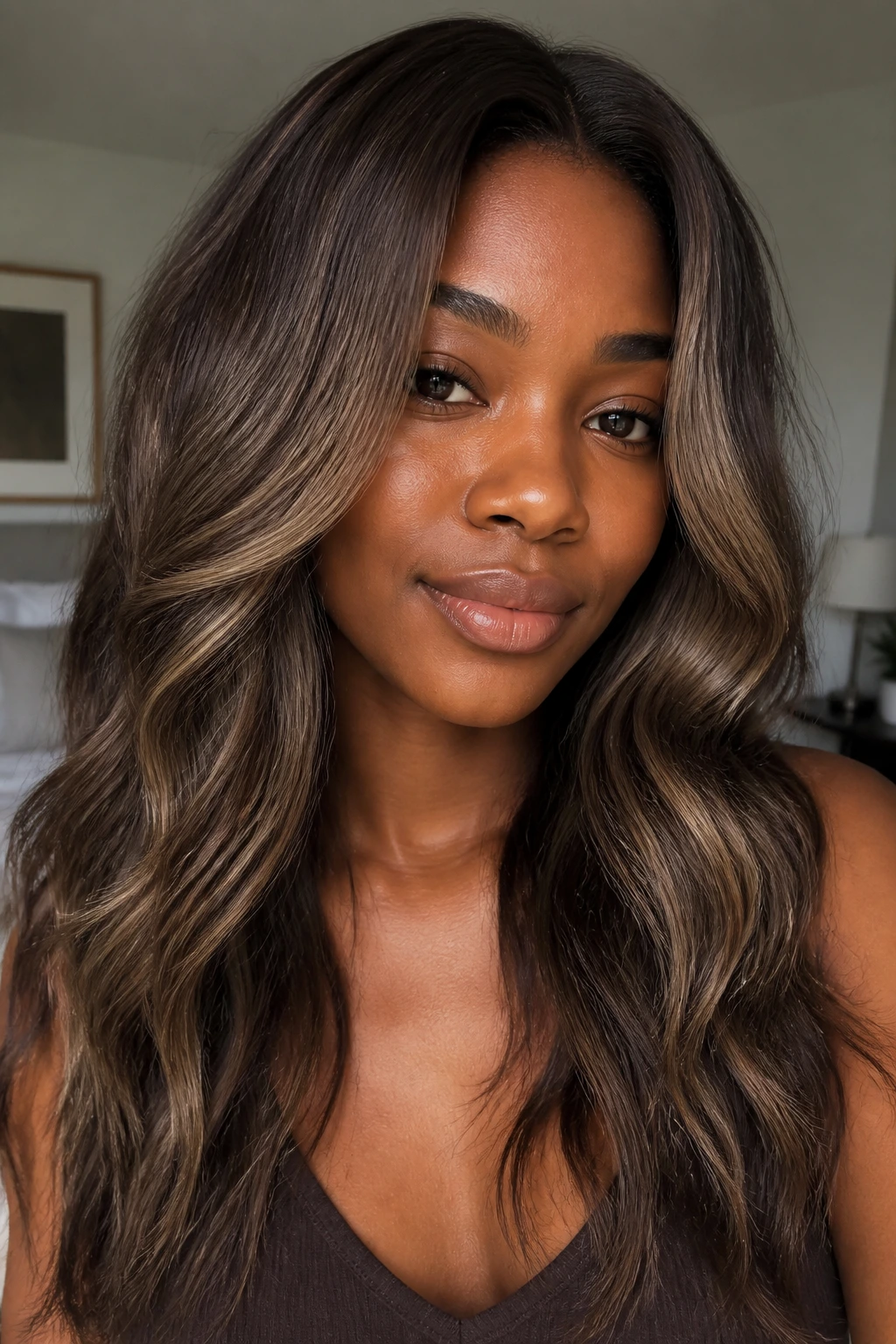
Can a cool brown work on deep skin? Absolutely — if you stop it from going flat. Mushroom brown gets that soft taupe base, then warm lowlights tuck underneath and keep the color from looking gray or washed out. That little bit of warmth is what makes the whole thing work.
This shade is best when you want a muted, sophisticated look rather than a bright one. It reads especially well on people with neutral undertones and medium-deep skin because the color doesn’t fight the complexion. It sits beside it.
If you’re doing this on textured hair, the lowlights show up best when the hair is layered or stretched. On very tight curls, ask for a little more contrast than you think you need. Texture eats pigment. That’s not a flaw. It’s just hair doing hair things.
16. Rose Brown That Stays Soft
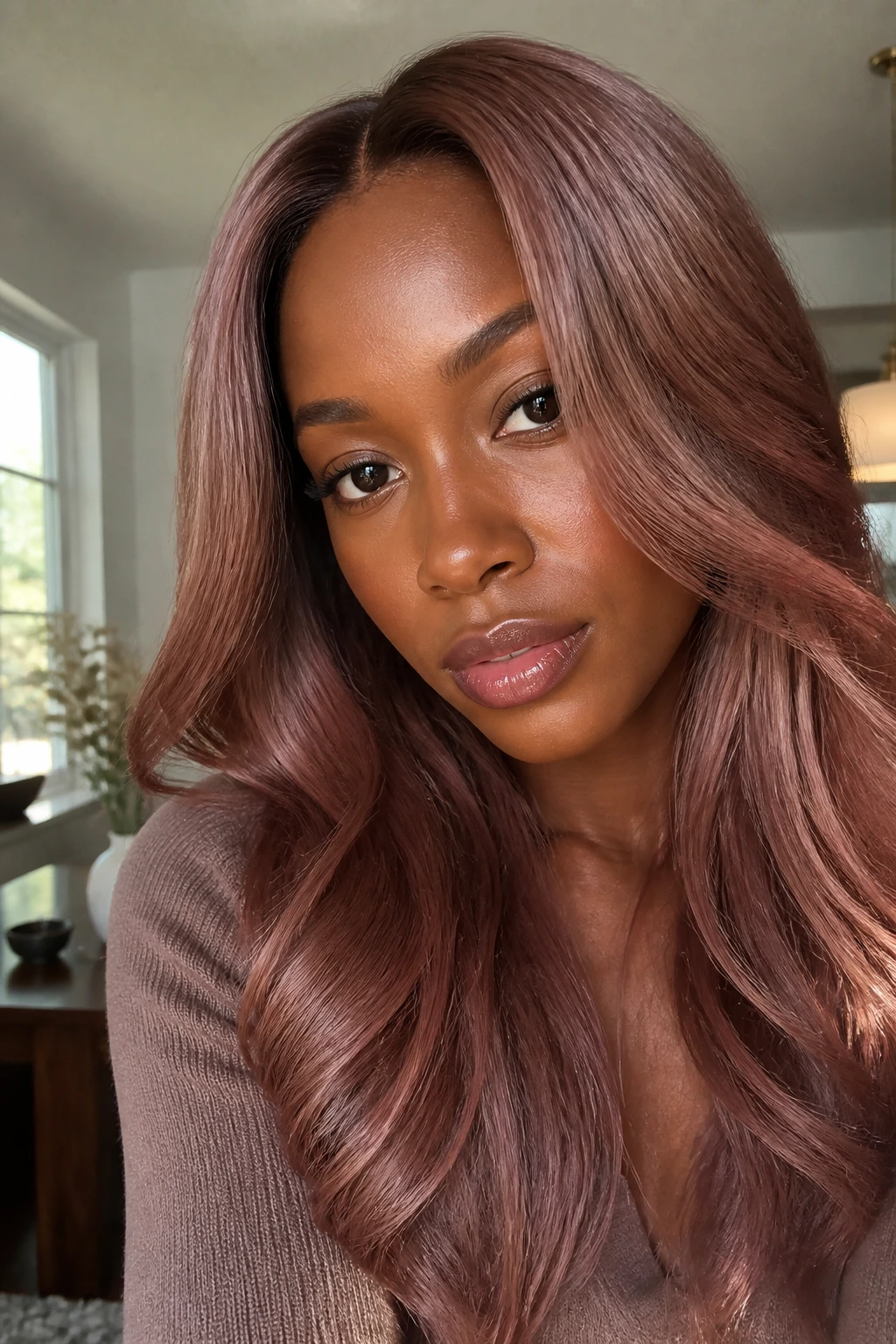
Rose brown is the softest color on this list, and that’s exactly why it works. The pink note stays muted, tucked into a brown base, so it never reads like bubblegum. On deep skin, it comes across as warm, romantic, and a little unexpected.
This shade is especially good if you want color that feels gentler than copper or burgundy. The brown keeps it grounded, while the rose tone gives it a soft flush. It looks lovely in loose curls, layered cuts, and silk presses because the tone shifts instead of sitting still.
A gloss is the best way to wear rose brown if you want low commitment. It fades gracefully into a warm brunette, which is better than watching a pastel go weird. A little shimmer serum on the ends helps too. Rose brown needs shine to stay pretty.
17. Copper Brown With a Low-Key Glow
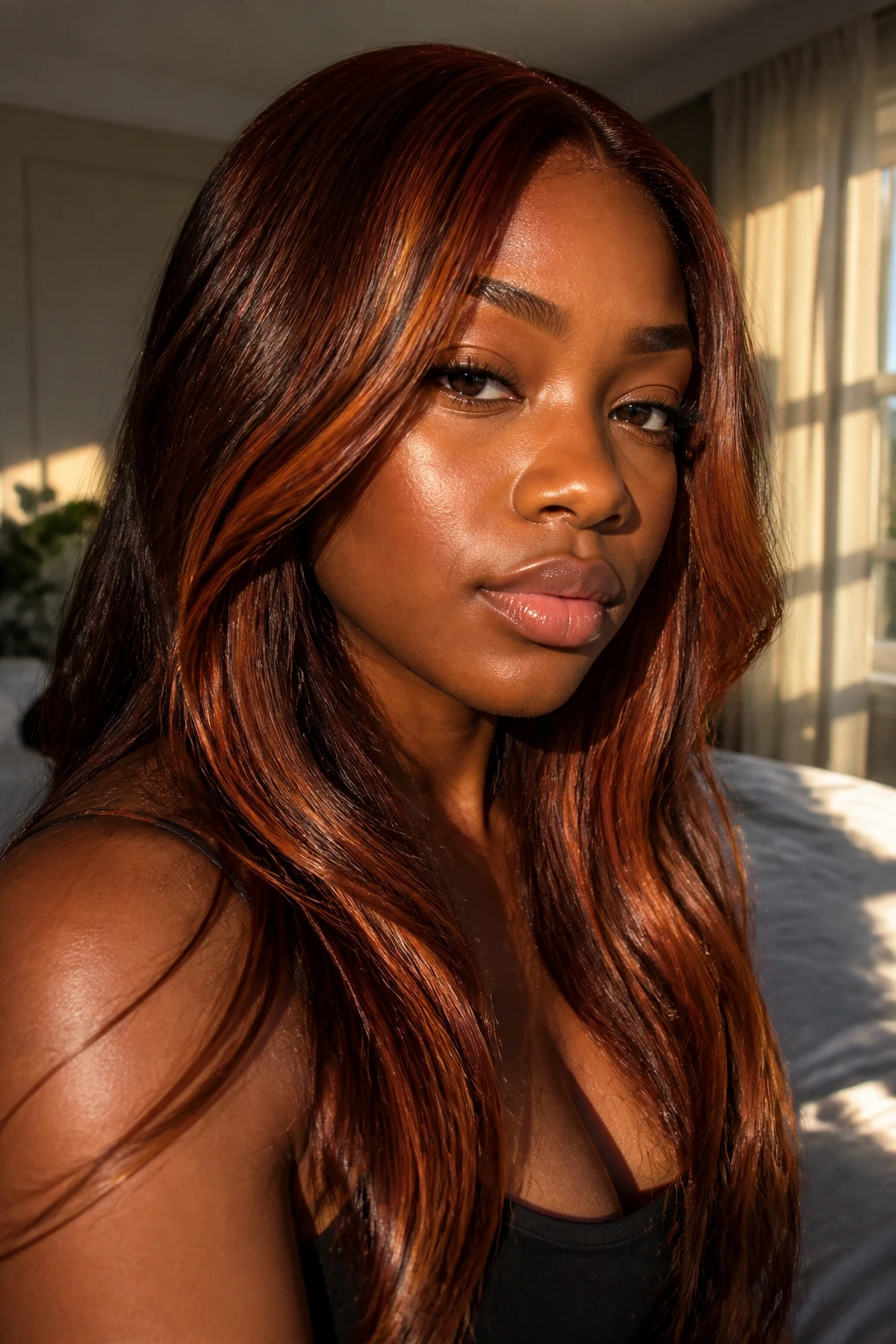
Copper brown is the friendlier version of full copper. It keeps enough brown in the base that the orange-red note doesn’t take over, which makes it easier to wear on deep skin. The result is warm, glowing, and much less high-maintenance than a bright copper.
If you want to try red without going all in, start here. Copper brown works well as a gloss, a demi-permanent shade, or a few painted panels through the mids. It’s one of the best “I changed something, but not everything” colors in the whole list.
What to Ask For
- A brown base with copper reflect, not a bright orange dye.
- Slightly deeper roots if you want softer grow-out.
- Shine treatment after coloring, because copper without shine can look rough fast.
18. Auburn Overlay on Dark Hair
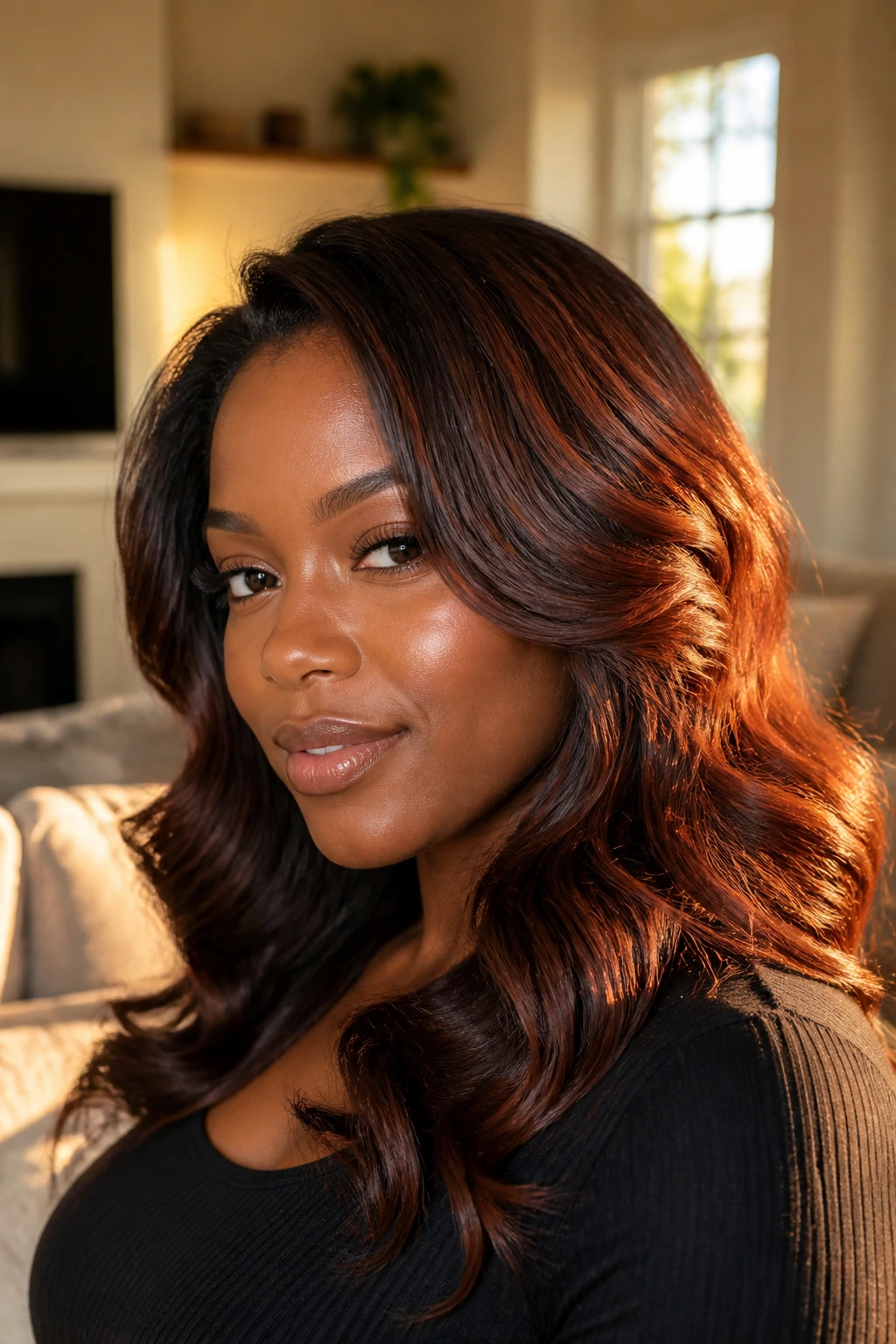
Auburn overlay is one of my favorite quiet color changes for deep skin. It doesn’t replace the brown base; it sits on top of it, giving the hair a red warmth that shows most in sunlight and movement. Indoors, it can look nearly natural. Outside, it wakes up.
This is a particularly good look on curly and coily hair because the overlay catches on the bends of the strand. You get little flashes of red rather than one loud block of color. That keeps it elegant, if you want to call it that without sounding stuffy.
An auburn overlay also makes sense if you’re nervous about red maintenance. The base can stay dark, so when the red fades a little, it still looks intentional. That soft fade is the whole point.
19. Cherry Cola Brown With a Red Underpinning
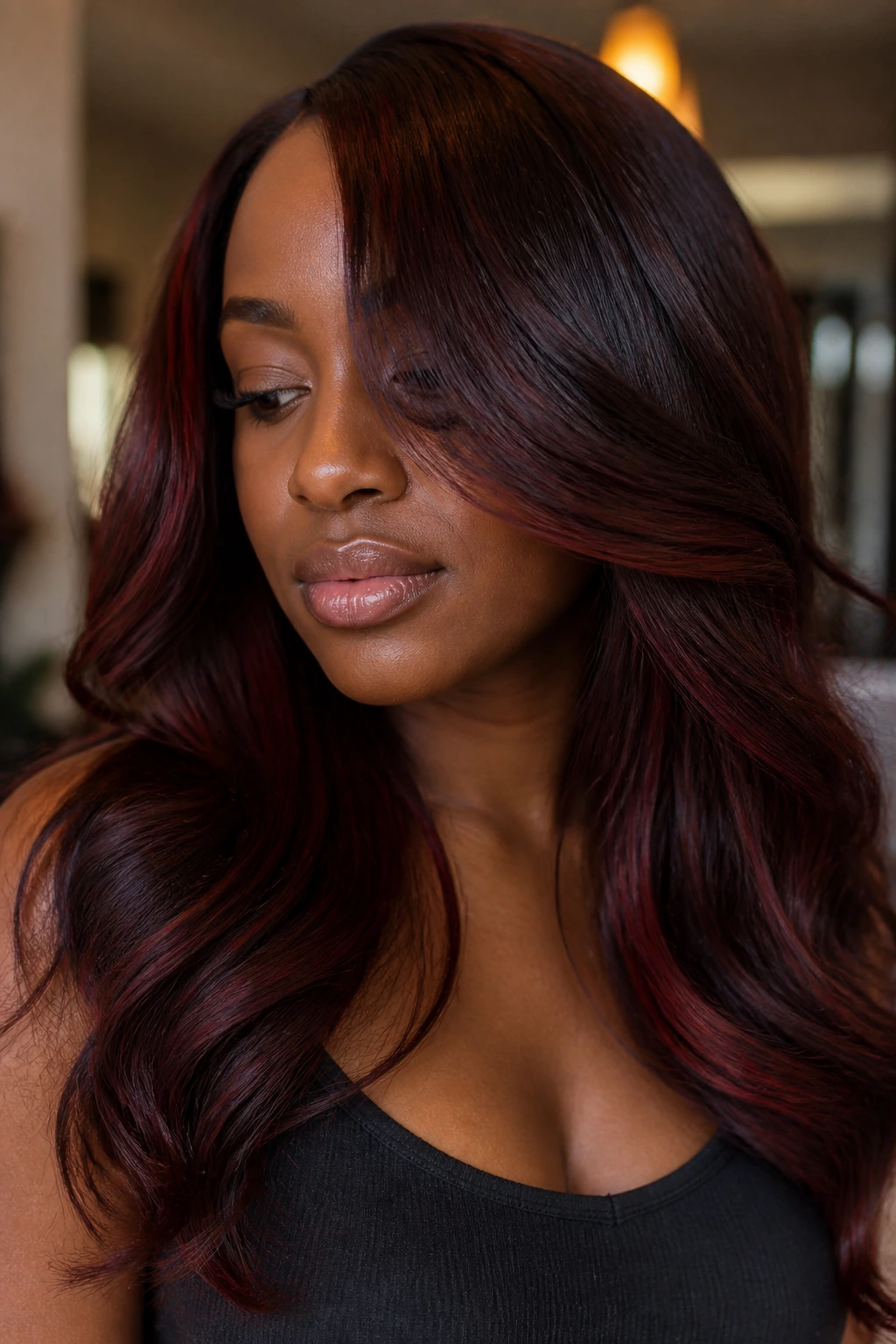
Why does cherry cola keep showing up in salons? Because it’s one of the easiest red-brown shades to wear on deep skin without looking washed out. The brown base anchors the color, and the cherry note gives it movement. It’s a dark soda color in the best possible way.
Why It Works
- The brown base keeps the red from drifting too bright.
- The cherry tone peeks out under light, which is more flattering than a flat red.
- It suits both smooth styles and textured styles, though curls show it faster.
Cherry cola is ideal if you like color that feels rich instead of loud. It fades into a deep mahogany-brown rather than an awkward orange, which is why people keep coming back to it.
20. Burgundy Wine With Deep Violet Notes
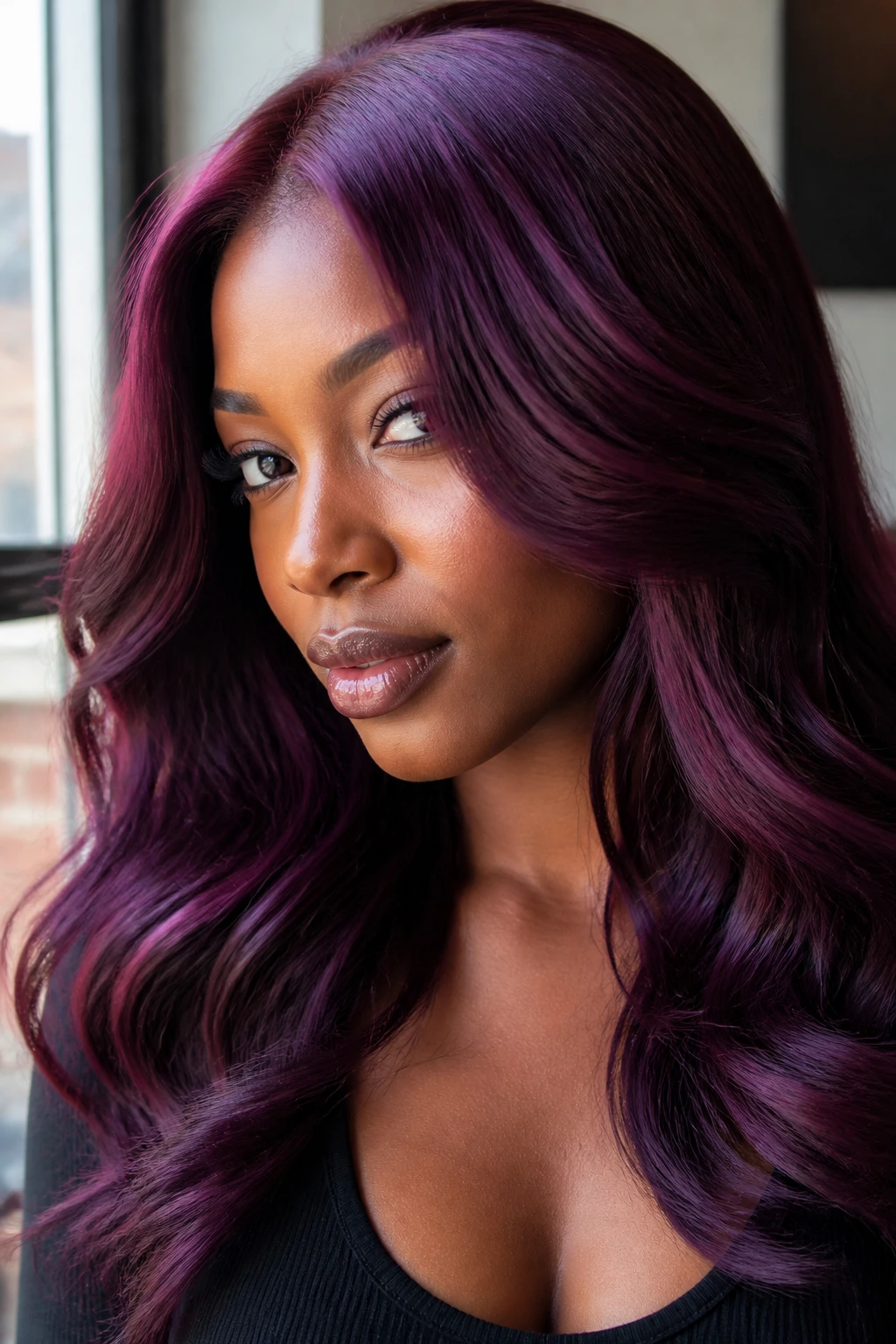
Burgundy wine is deeper and cooler than cherry cola, with just enough violet to keep it from going orange. On deep skin, that cooler red can look luxe in a way brighter reds sometimes don’t. It’s strong without being bright.
This shade is especially nice on people with cool or neutral undertones, but warm undertones can wear it too if the base stays rich. The trick is saturation. Burgundy should look like color, not like faded dye trying to remember what it used to be.
I like burgundy on shoulder-length cuts and longer hair because the movement lets the violet note appear and disappear. It’s one of those shades that looks different in every room. That’s not a flaw. That’s the fun part.
21. Plum Velvet That Stays Rich
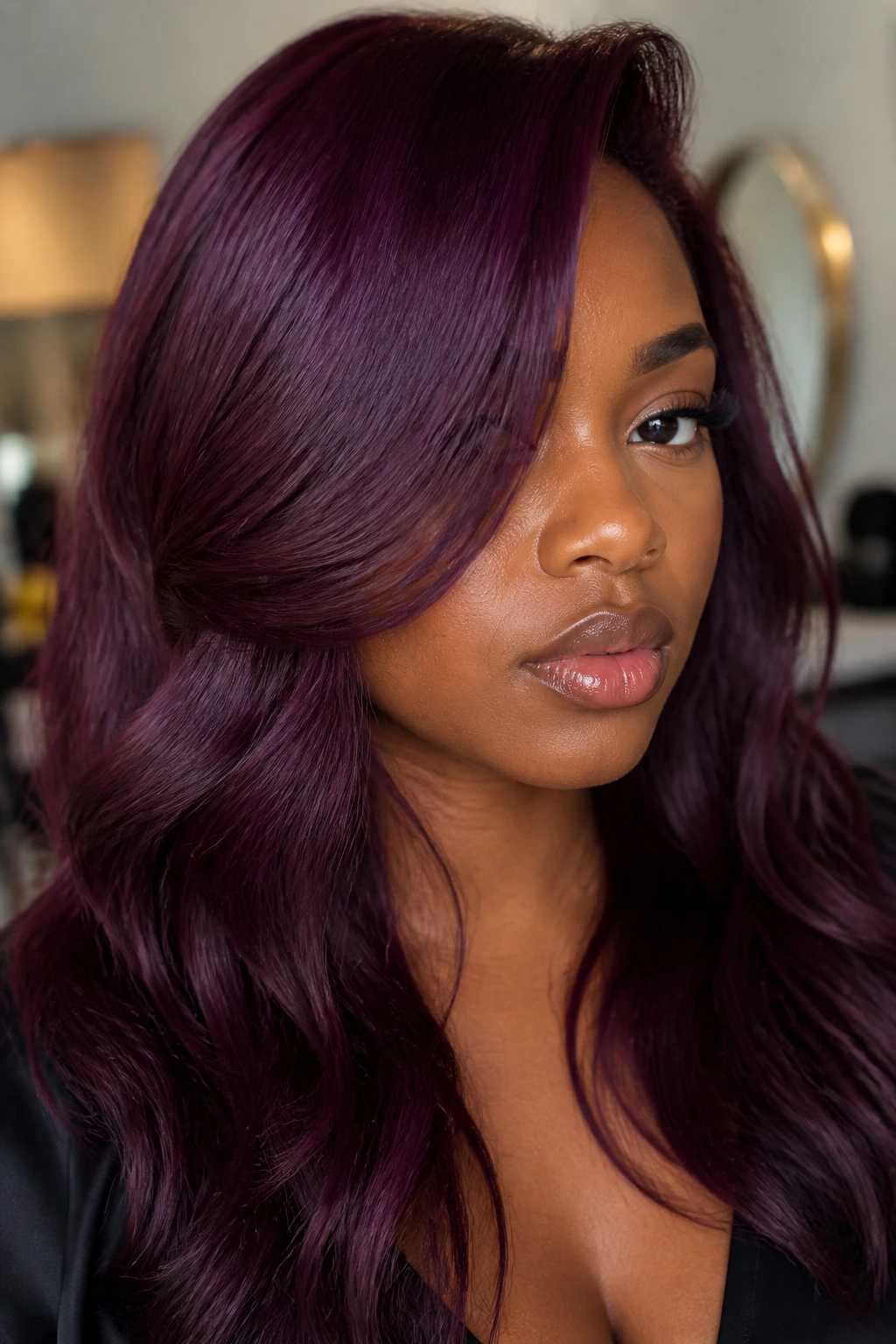
Plum velvet is one of the easiest fashion colors to wear on deep skin because the brown-violet base keeps it grounded. It doesn’t need to be neon to be noticed. In fact, plum is better when it stays deep, saturated, and a little moody.
This is a great choice if you want something outside the usual brunette-red family but still practical. Plum wears well on bobs, curls, and layered cuts. It also ages nicely, which matters if you hate the look of washed-out fantasy color.
Best for
- Neutral to cool undertones.
- People who want color but not bleach-blonde upkeep.
- Anyone who likes shine more than brightness.
A plum gloss is enough for some dark bases. On lighter or pre-lightened hair, it can go richer and more vivid. Either way, keep the finish glossy. Plum without shine can lose all its character.
22. Blackberry Merlot With Cool Depth
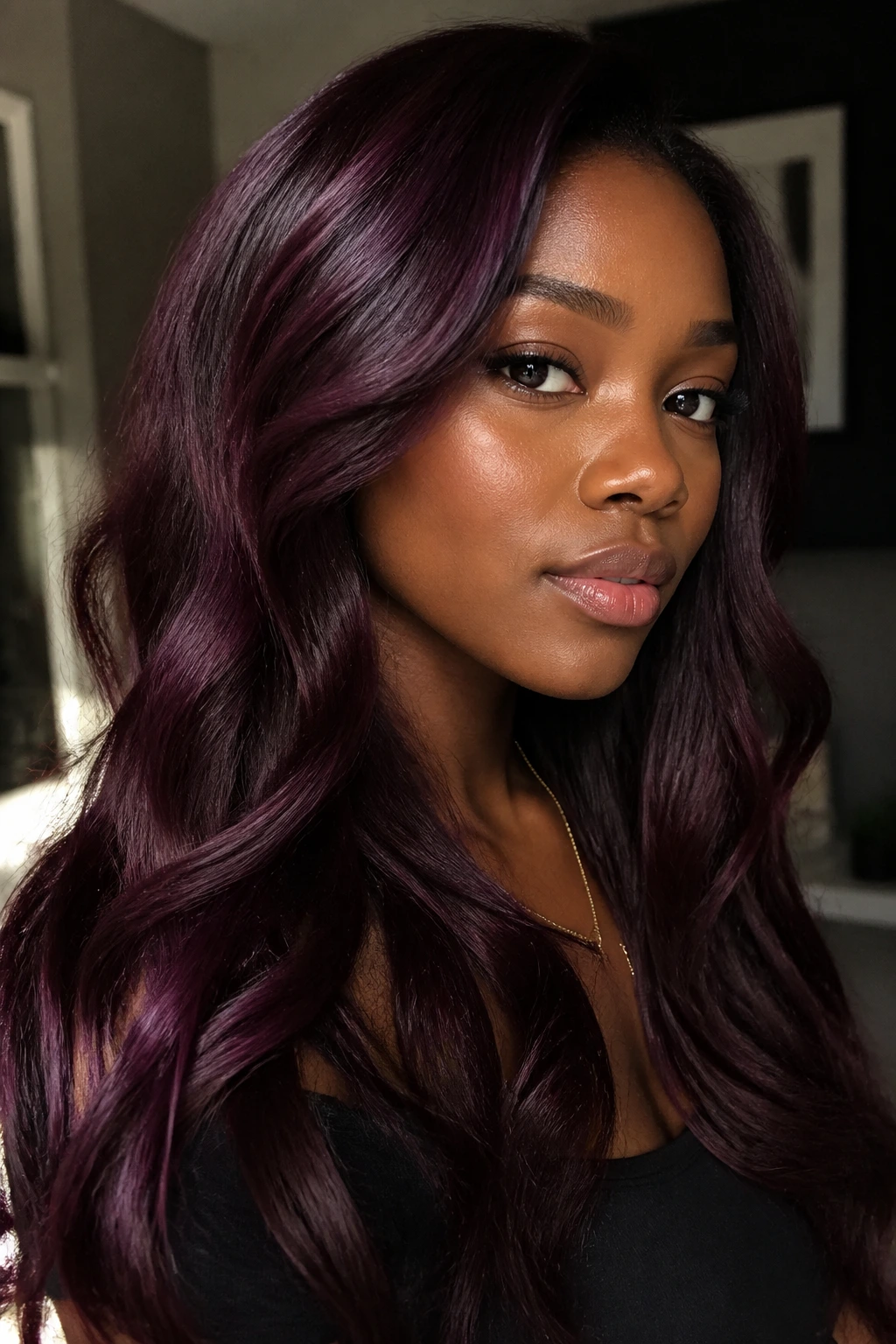
Berry reds can go neon fast, and that’s where blackberry merlot earns its place. The violet undertone reins in the orange and keeps the shade dark enough to feel adult. On deep skin, that depth is what makes it flattering.
This one is especially good if you want a red that lives in the dark family rather than the bright family. It can look almost black in low light, then shift berry-red when you move. That makes it a good choice for people who like a little surprise in their color.
A clear gloss on top helps keep the merlot finish smooth. If your hair pulls warm, ask your colorist to keep the red cool enough that it doesn’t turn copper after a few washes. Tiny adjustment. Big difference.
23. Garnet Red That Holds Its Shape
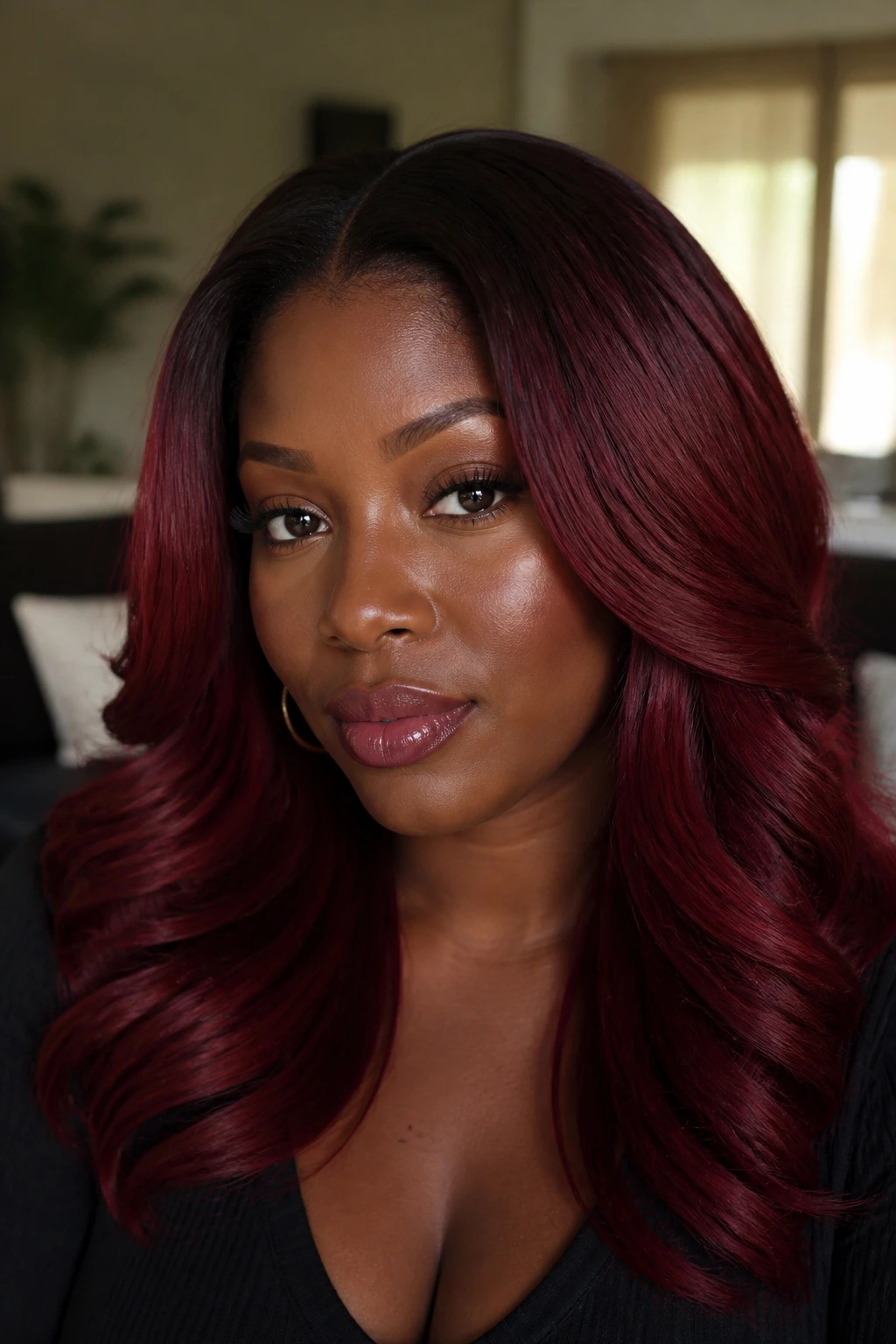
Garnet red has the feel of a jewel, which is exactly why it works on deep skin. It’s saturated and clean, not washed out or pastel. The color has enough depth to stand beside rich skin without making the face look disconnected.
I like garnet best when it’s paired with a dark root or applied as an all-over glossy red-brown. That keeps the shade wearable. A bright red on dark skin can be gorgeous, but only if the red is full and dense enough to hold its shape.
This is one of the better choices if you want a formal-looking red. It works with sleek ponytails, polished curls, and blunt cuts. The color does not need help. It just needs maintenance.
24. Burnt Orange Copper With a Dimensional Finish
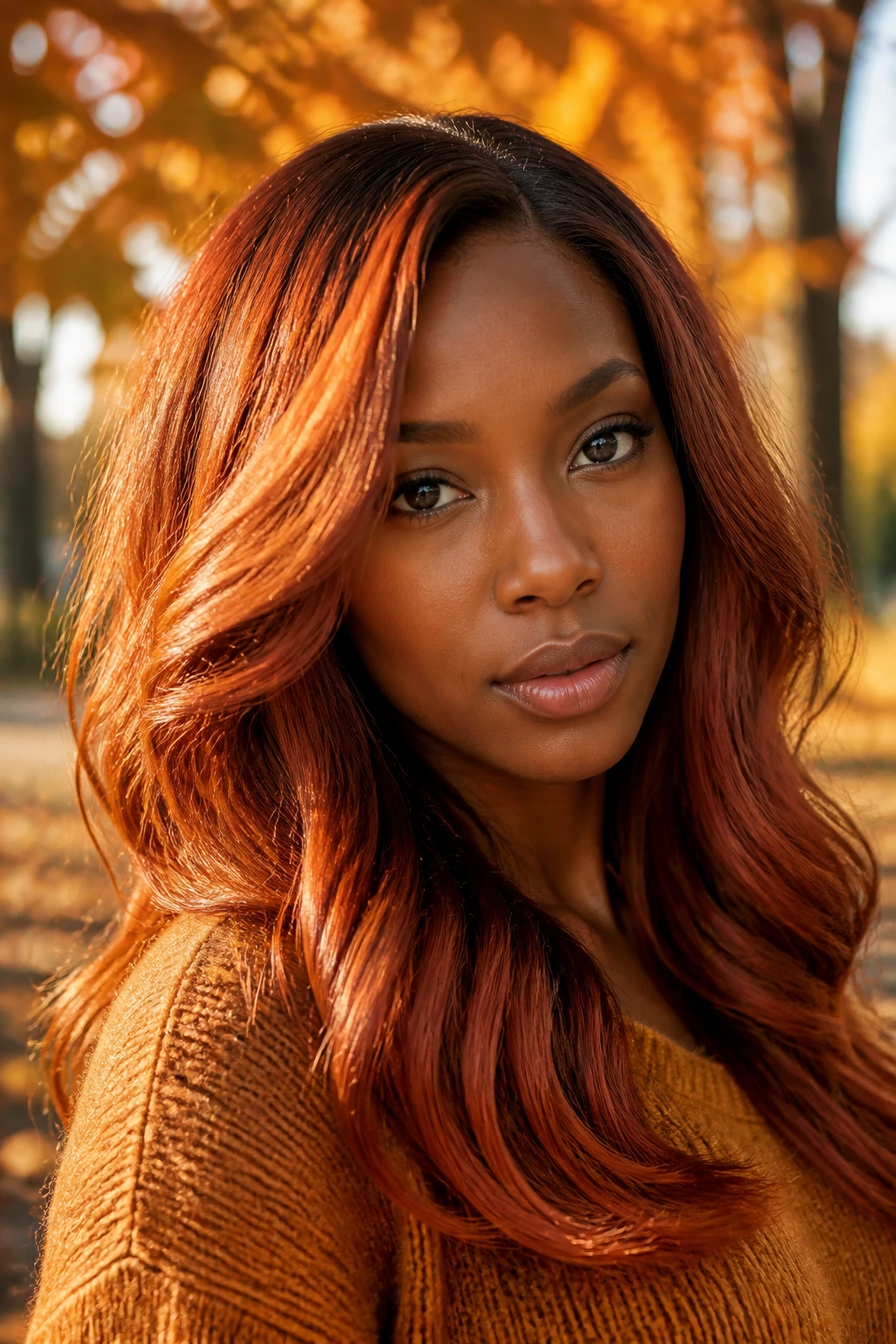
Burnt orange copper is the version of orange that actually makes sense on deep skin. It’s richer, darker, and more dimensional than bright pumpkin tones. That matters. Bright orange can look disconnected. Burnt orange looks like it belongs.
This shade works best as a melt or a set of painted pieces rather than one solid block. Keep some brown in the root and the mids so the orange has somewhere to land. If you go too light, the warmth gets loud fast.
On textured hair, burnt orange copper can look incredible because the coils and curls break up the color and keep it from feeling flat. On straight hair, shine is everything. If the cut is dry, the color will read dry too.
25. Copper Penny for High Shine
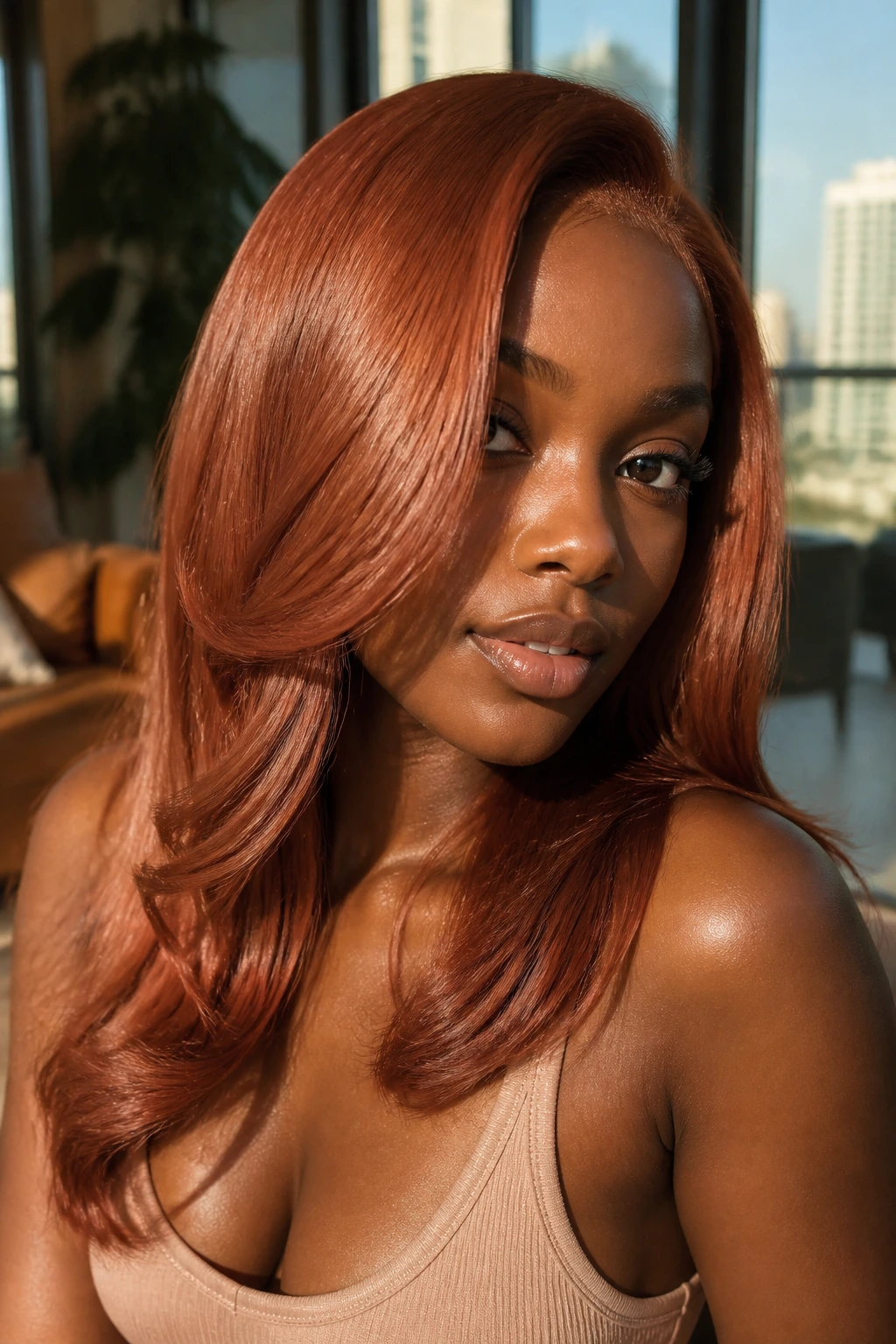
Copper penny is the bold copper people think they want when they say “make it red.” It’s bright, reflective, and not subtle. On deep skin, it can look spectacular, but it needs careful lifting and serious shine to avoid going pumpkin.
A Few Things That Matter Here
- You usually need pre-lightening to a clean level 6 or 7 before copper looks true.
- A bond-building treatment helps because copper often needs more processing.
- Glossing every 4 to 6 weeks keeps the tone from fading flat.
I only recommend copper penny if you’re willing to treat maintenance as part of the look. When it fades, it can turn dull fast. When it’s fresh, though, it’s one of the most eye-catching shades in the whole lineup.
26. Ginger Spice With Brown Roots
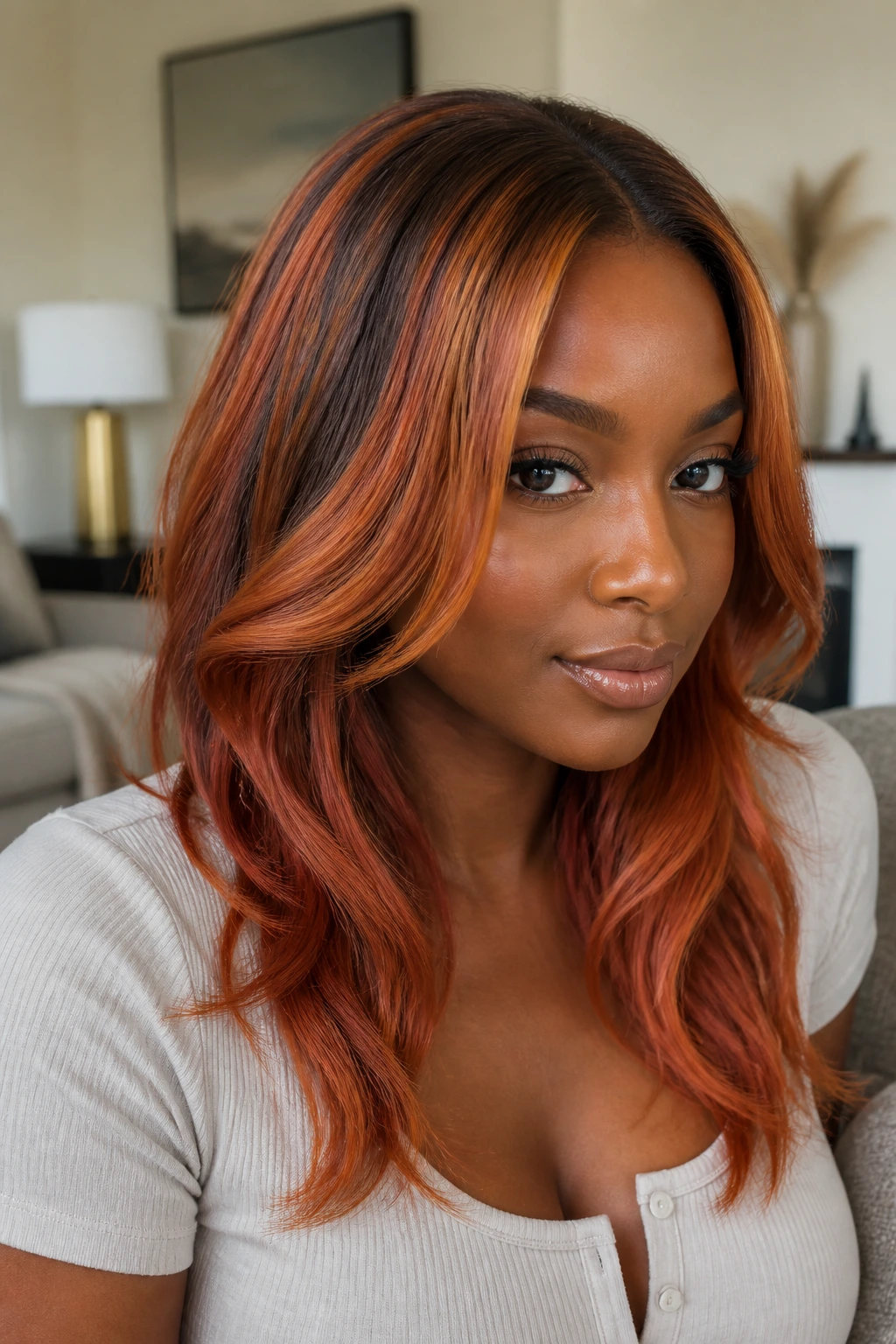
Want ginger without looking like a traffic cone? Keep the roots brown and let the ginger live in the mids and ends. That’s the move. Ginger spice works on deep skin because the brown root keeps it anchored while the orange-gold lightens the hair in a controlled way.
This shade is a little more wearable than full copper penny, and a little warmer than auburn. It sits right in the middle. On curls, it looks lively. On straight hair, it can feel sharper, especially if you keep the ends clean and trimmed.
The best version of ginger spice is not all over. It’s placed. Face-framing pieces, ends, and soft ribbons are usually enough. That way you get the color shift without turning the whole head into one bright block.
27. Sunset Peach Copper on Lightened Ends
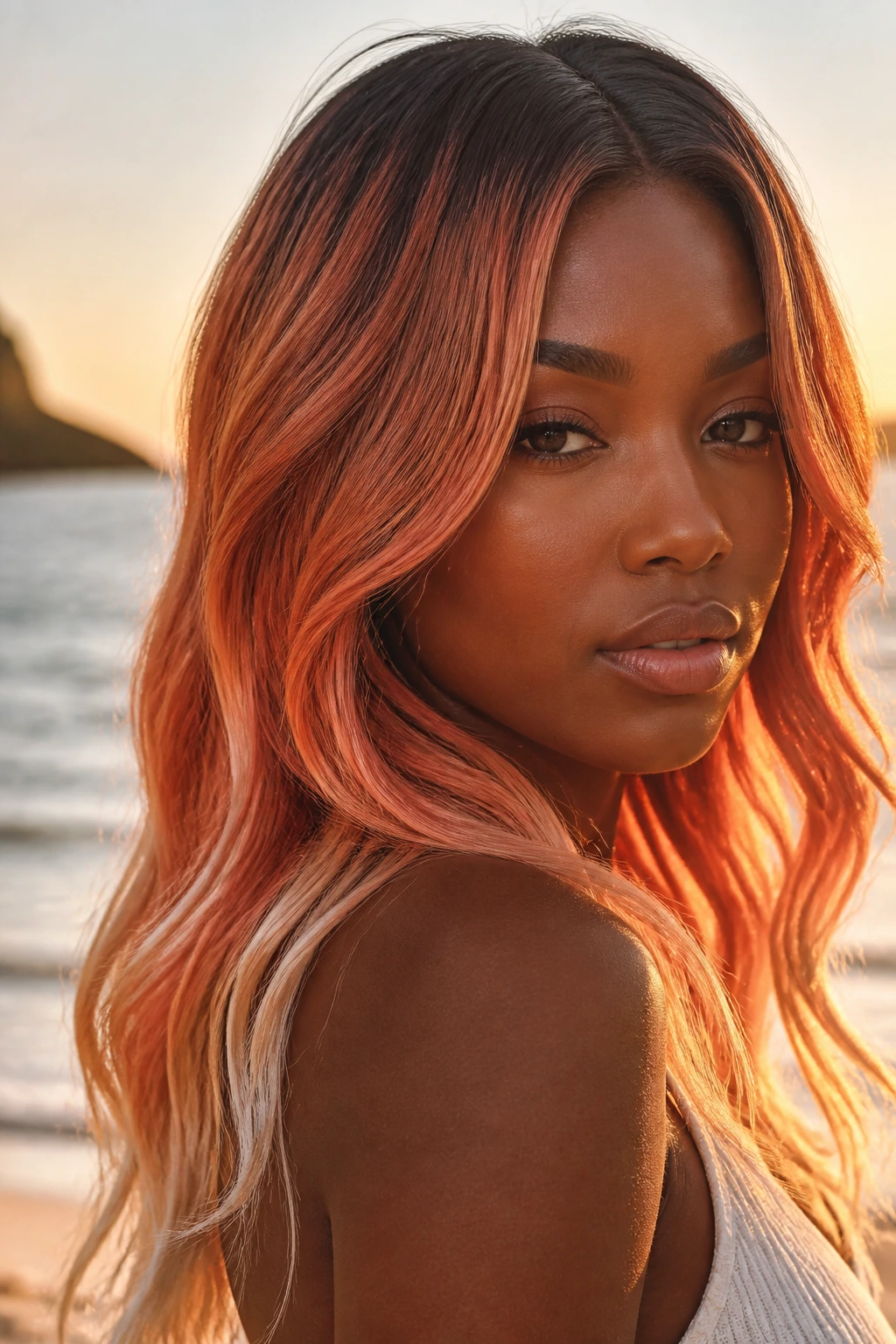
This is for the person who likes copper but wants a little coral in the mix. Sunset peach copper has that warm, almost glowing finish that can look beautiful on deep skin when the roots stay darker and the lighter color is kept to the ends or front pieces.
The reason it works is simple: the dark root gives your eye a place to rest. Without that anchor, peach tones can drift too sweet or too pale. With it, the shade feels intentional and surprisingly easy to wear.
I like this most as a balayage or ombré rather than an all-over color. It gives you movement and keeps the upkeep sane. It’s also a good choice if you already have some lightened hair and want a warmer refresh without going back to blonde.
28. Scarlet Mahogany for a Dark Base
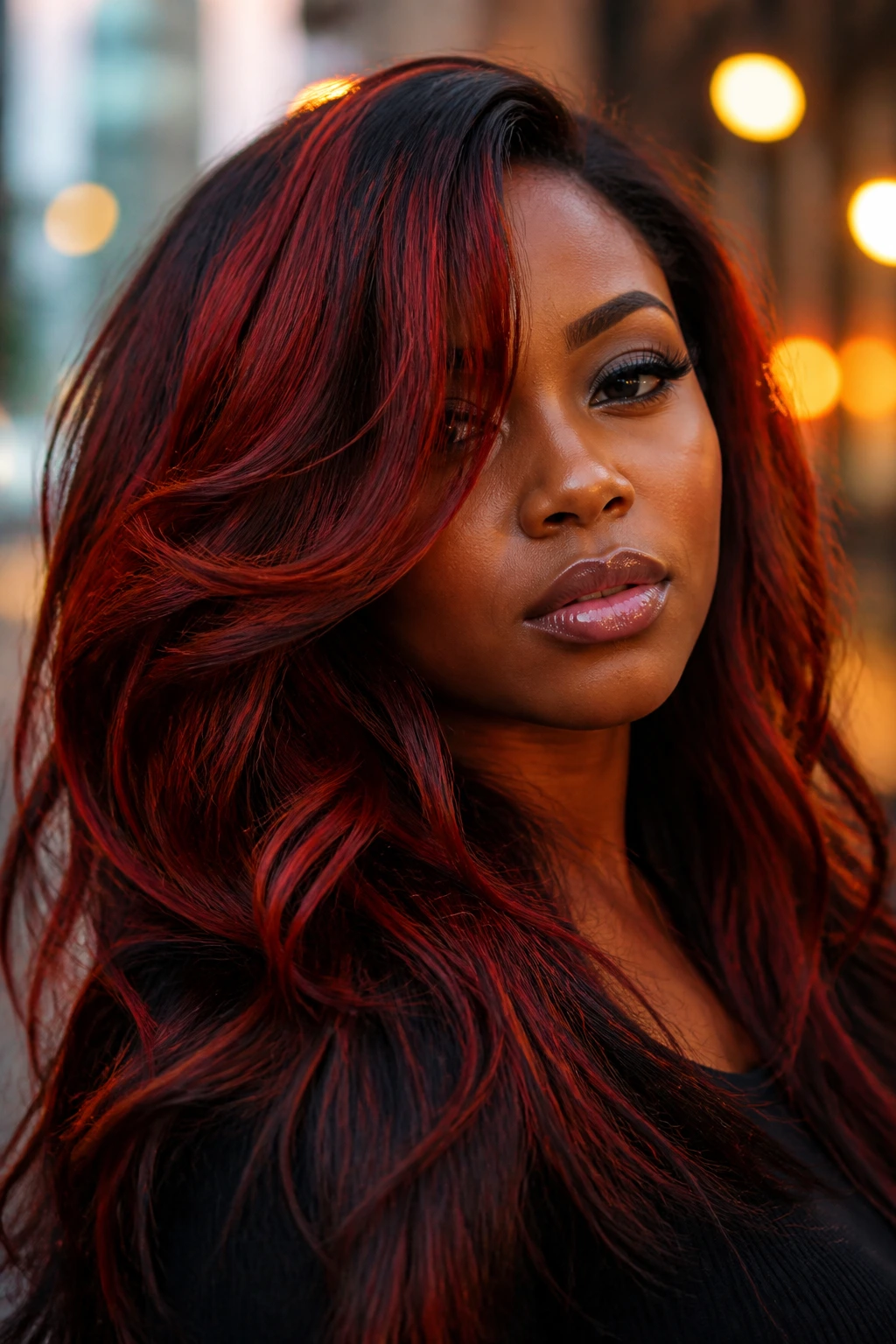
Scarlet mahogany is red for people who are allergic to bright red. The mahogany base keeps the scarlet from looking flat, and the scarlet note gives you a richer flash than standard burgundy. On deep skin, that balance can be gorgeous.
It works especially well when the color is layered rather than painted as one single tone. A darker root, a red-brown middle, and scarlet ends can keep the shade moving. That’s the difference between expensive-looking red and flat red dye.
This is a strong choice if you want something dressy, polished, and a little dramatic. It looks especially good on medium to long hair because the movement lets the different red notes show up. Short cuts can wear it too, but the finish needs to be crisp.
29. Deep Violet With a Velvet Finish
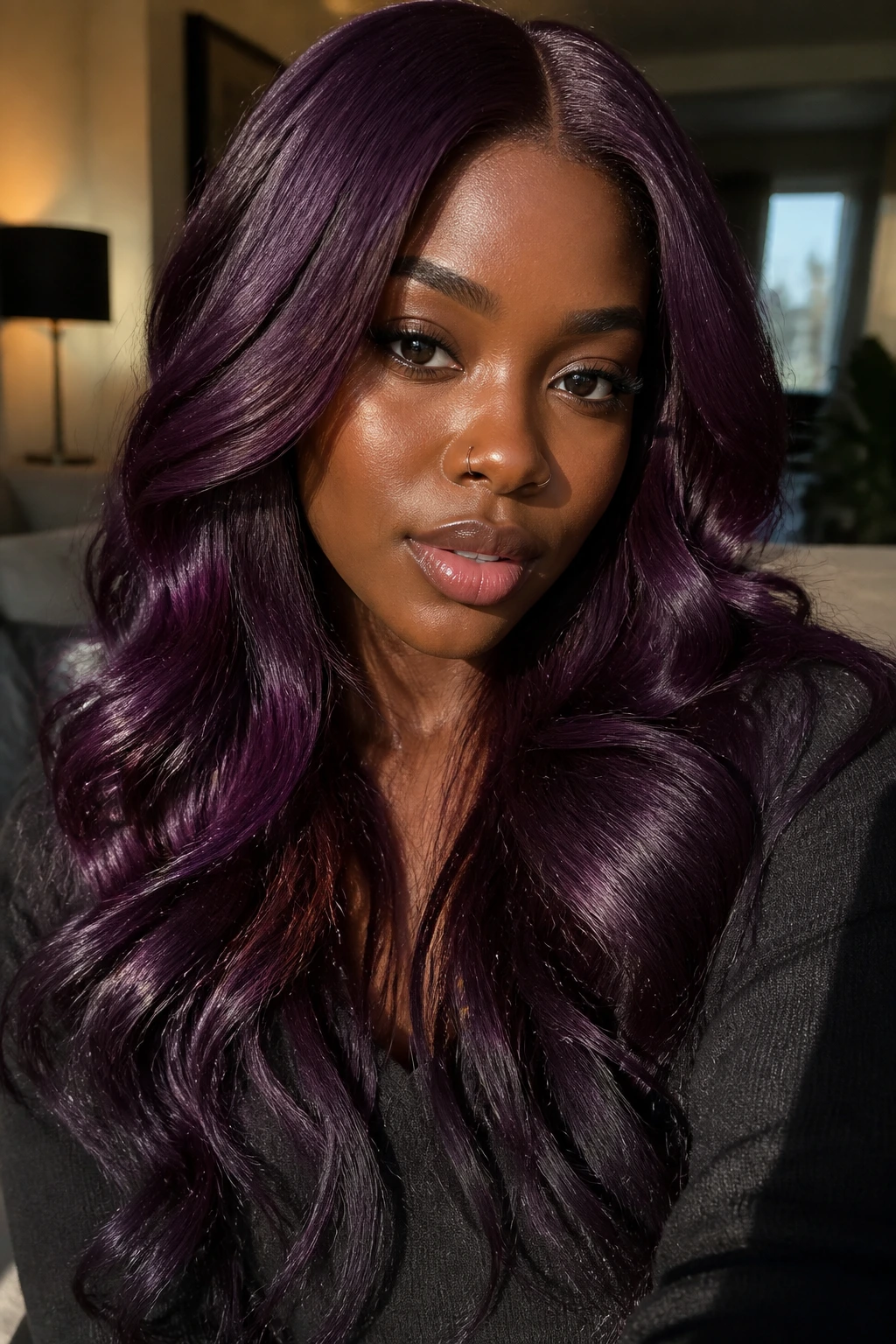
Deep violet sits between jewel-tone and mystery, and that’s why I like it on rich skin. It has enough darkness to feel grounded, but enough color to stand out from the usual brunettes and reds. The best versions look almost velvet in certain light.
What Keeps It Looking Good
- Use a deep plum-violet base, not a pale lavender formula.
- Keep the finish glossy; matte violet loses its richness fast.
- If your hair is porous, tone it gently rather than overloading pigment all at once.
Violet is a smart fashion color for deep skin because it’s saturated enough to read clearly. A washed-out pastel purple usually needs more work. Deep violet, though, can be a shortcut to something interesting without abandoning depth altogether.
30. Cobalt Blue With a Glossy Edge
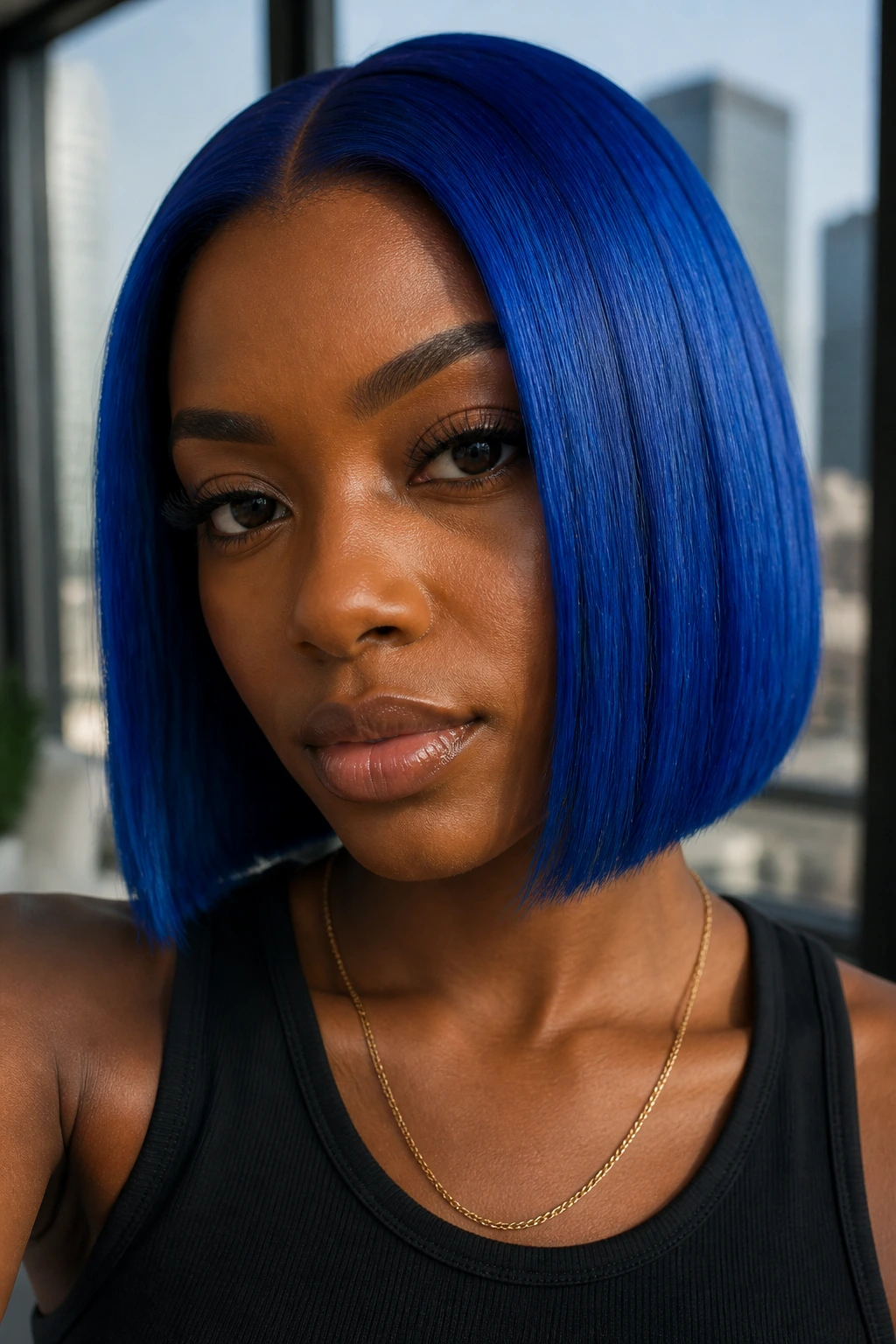
Cobalt blue is bold, but it works on deep skin because the color is saturated enough to keep up with the complexion. The trick is not to let it go pale. Once cobalt turns faded, it can read greenish, and that’s where the magic slips away.
This shade usually wants pre-lightened hair, ideally at a level where the blue can show cleanly. If you try to force cobalt over very dark hair without enough lift, the result will look navy at best and muddy at worst. Better to plan for it.
I like cobalt on blunt cuts, face-framing layers, and underlights. It looks sharp against gold earrings and deep brown skin. That contrast is the whole point. If you want a color that has real edge, cobalt is a strong bet.
31. Teal Dip-Dye on Ends or Braids
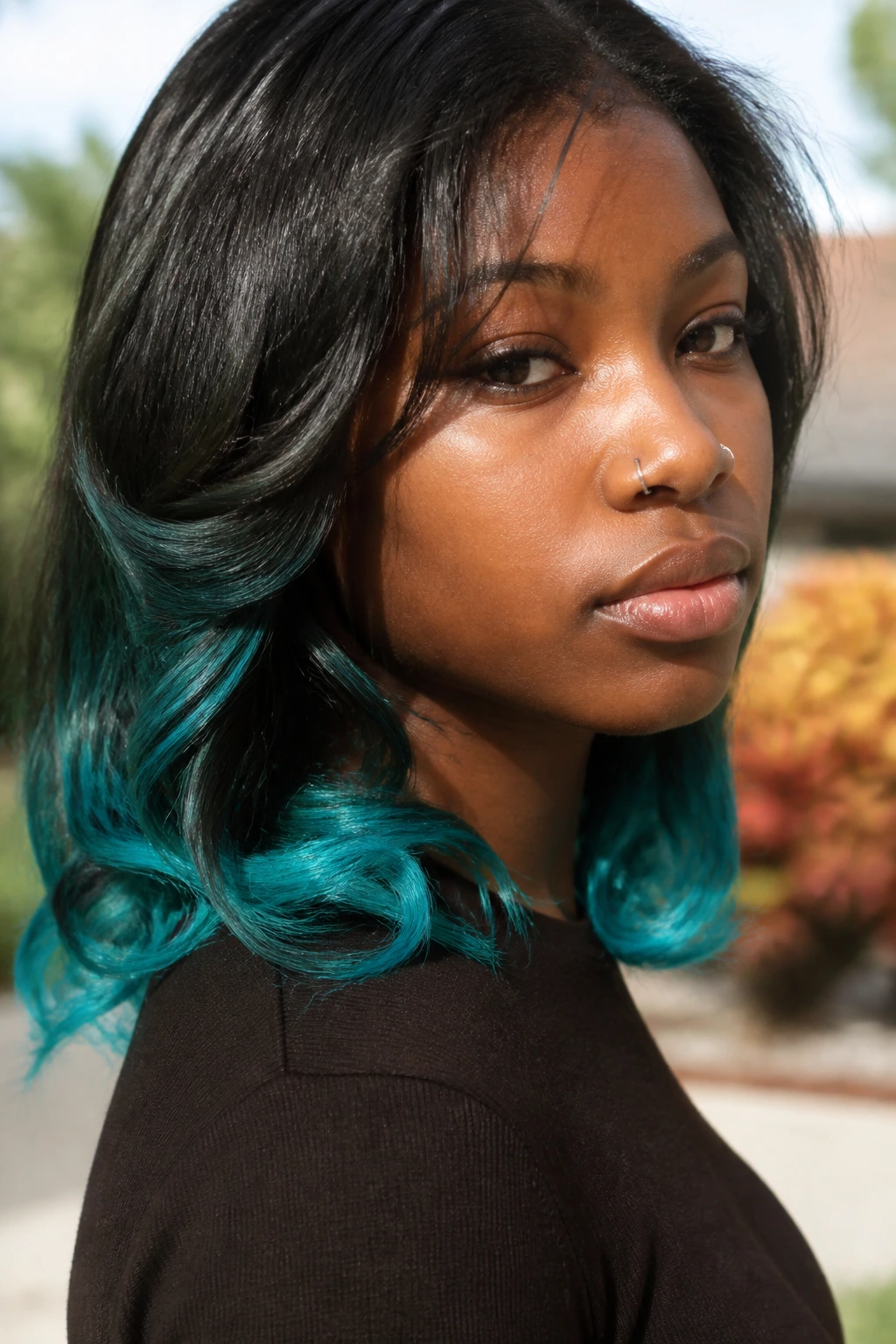
Why does teal work so well on deep skin? Because it sits between blue and green, and both colors like contrast. Teal reads vivid against rich skin without needing a neon-bright base. It’s playful, but not flimsy.
Best Places to Put It
- The ends of curls or twists for a punchy finish.
- Braids or loc extensions if you want the color without touching your natural hair.
- A peekaboo panel under dark layers if you want movement without full commitment.
Teal tends to fade softer than cobalt, which is useful if you don’t want constant re-dyeing. It’s one of the better fashion choices for people who like visible color but still want some flexibility in how often they touch it up.
32. Emerald Streaks Hidden in the Cut
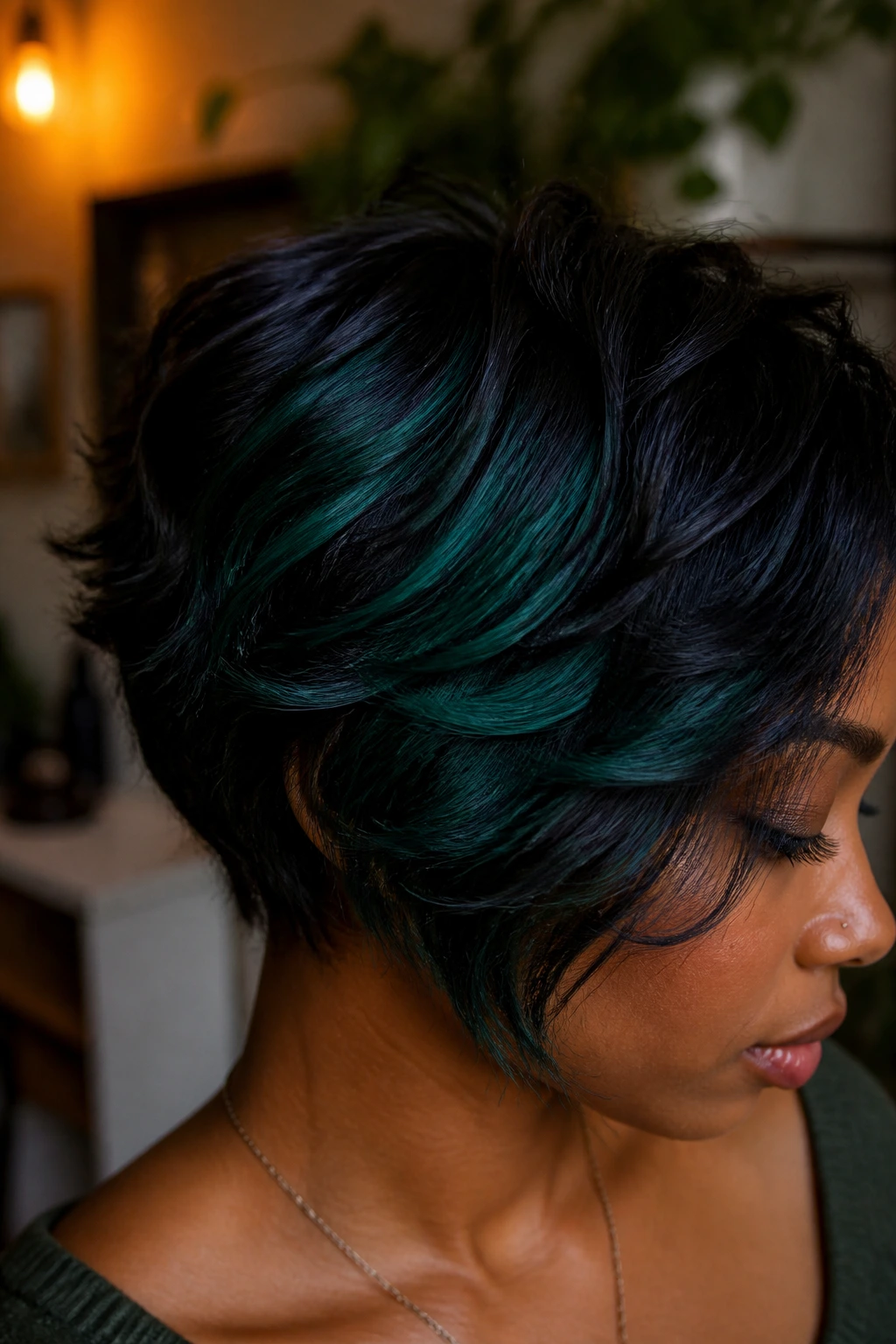
Emerald streaks are for the person who wants people to notice only when the hair moves. The color sits deep and jewel-like, then flashes green under light. On deep skin, that surprise effect works because the base still stays rich.
This shade looks especially good in layers, braids, twists, or hidden panels around the crown. It doesn’t need to cover the whole head to make a point. In fact, too much emerald can be overkill. A few streaks are enough.
If you’re nervous about green, ask for a darker emerald rather than a bright grassy tone. Dark emerald has better staying power and looks more refined. It also fades in a softer direction, which is helpful when you don’t want a harsh grow-out.
33. Sapphire Glow With Navy Depth
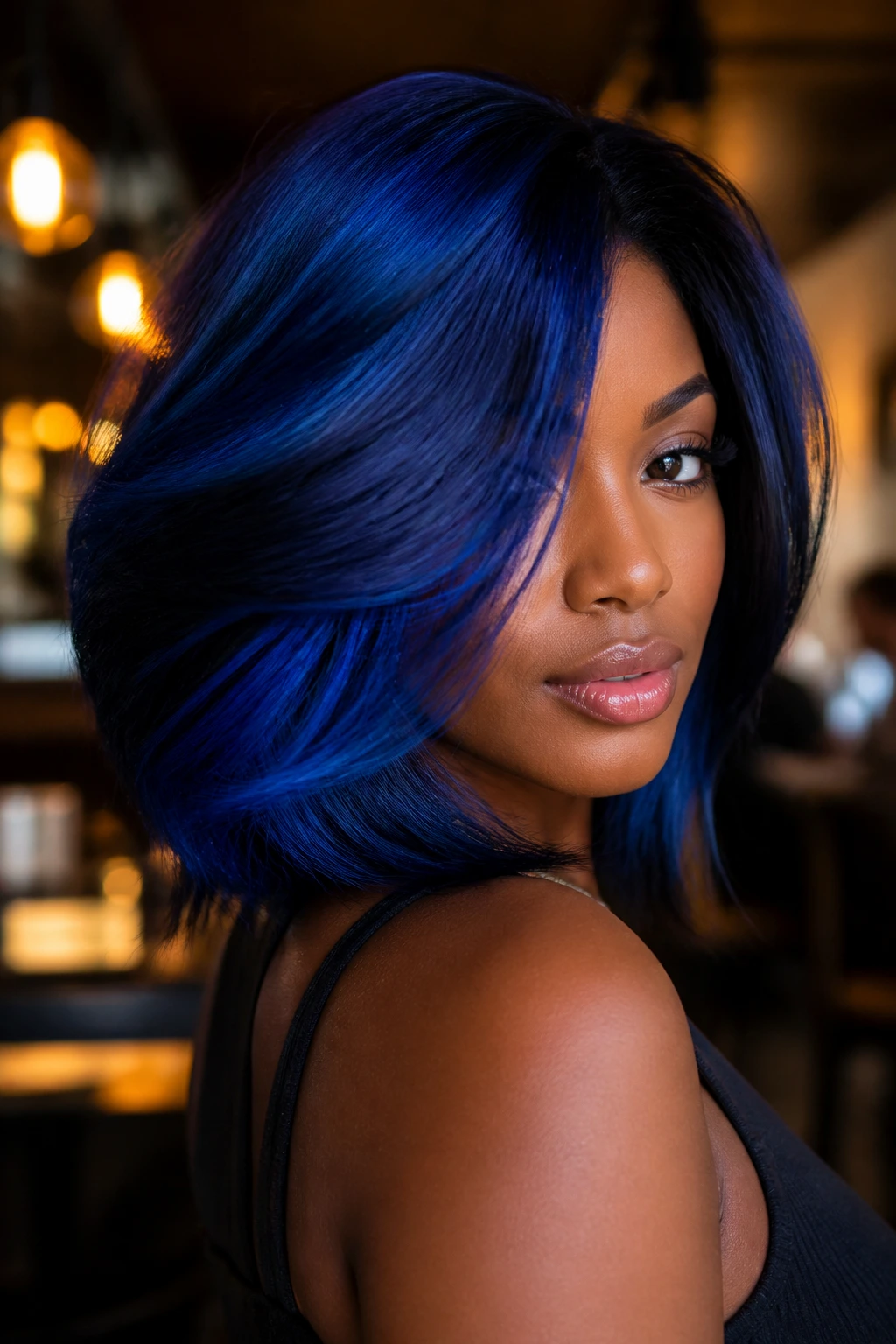
Sapphire glow is the blue color I’d send someone toward if they said, “I want something vivid, but I don’t want it to look childish.” The navy depth keeps the blue serious, while the sapphire note gives it life.
Why It Stays Wearable
- It needs enough lift to show true blue, but not so much that the hair turns washed out.
- The color looks best with a smooth, shiny finish.
- It pairs well with deep skin because the cool tone creates clean contrast without clashing.
This is one of those shades that looks especially good in motion. A static photo can flatten it. Movement brings it alive. If you’re choosing between cobalt and sapphire, sapphire is the softer, more grounded option.
34. Silver Lilac for Cooler Skin Undertones
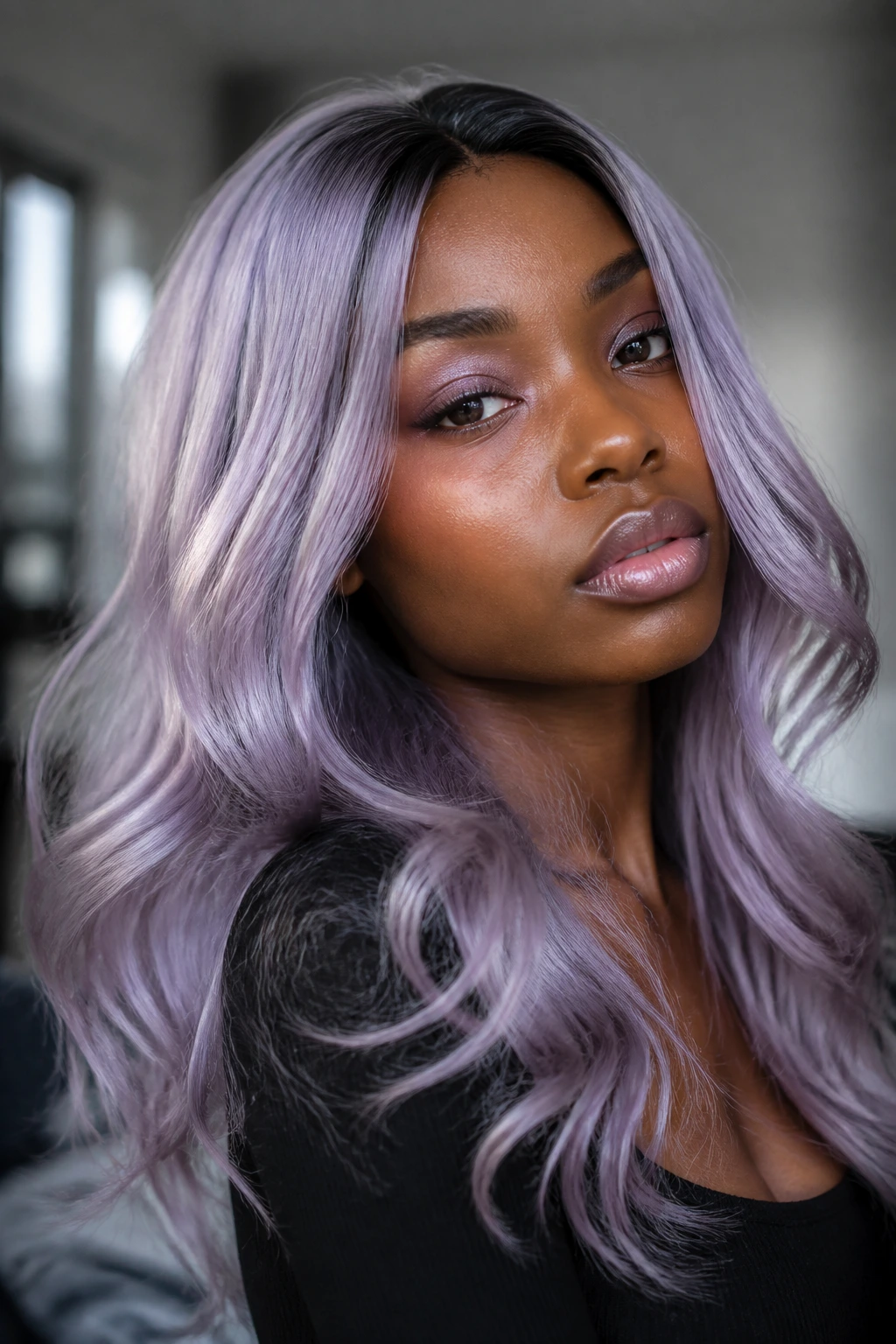
Silver lilac is the hardest color on this list to keep clean, but if you love cooler tones, it can be worth the effort. The silver gives the hair a frosted base, and the lilac keeps it from looking flat or harsh. On deep skin with cool undertones, that mix can be striking.
The catch is upkeep. Silver tones fade quickly, and lilac can shift dusty if the hair is porous. That means toning, deep conditioning, and careful heat use matter more than usual. If you want a low-maintenance color, this is not it.
Still, there’s a reason people chase it. Silver lilac looks modern, soft, and a little unexpected against rich skin. Keep the root shadow deep, and the whole thing feels more believable. Skip the shadow root, and it can start to look detached.
35. Split-Dye Noir and Ruby for Full Drama
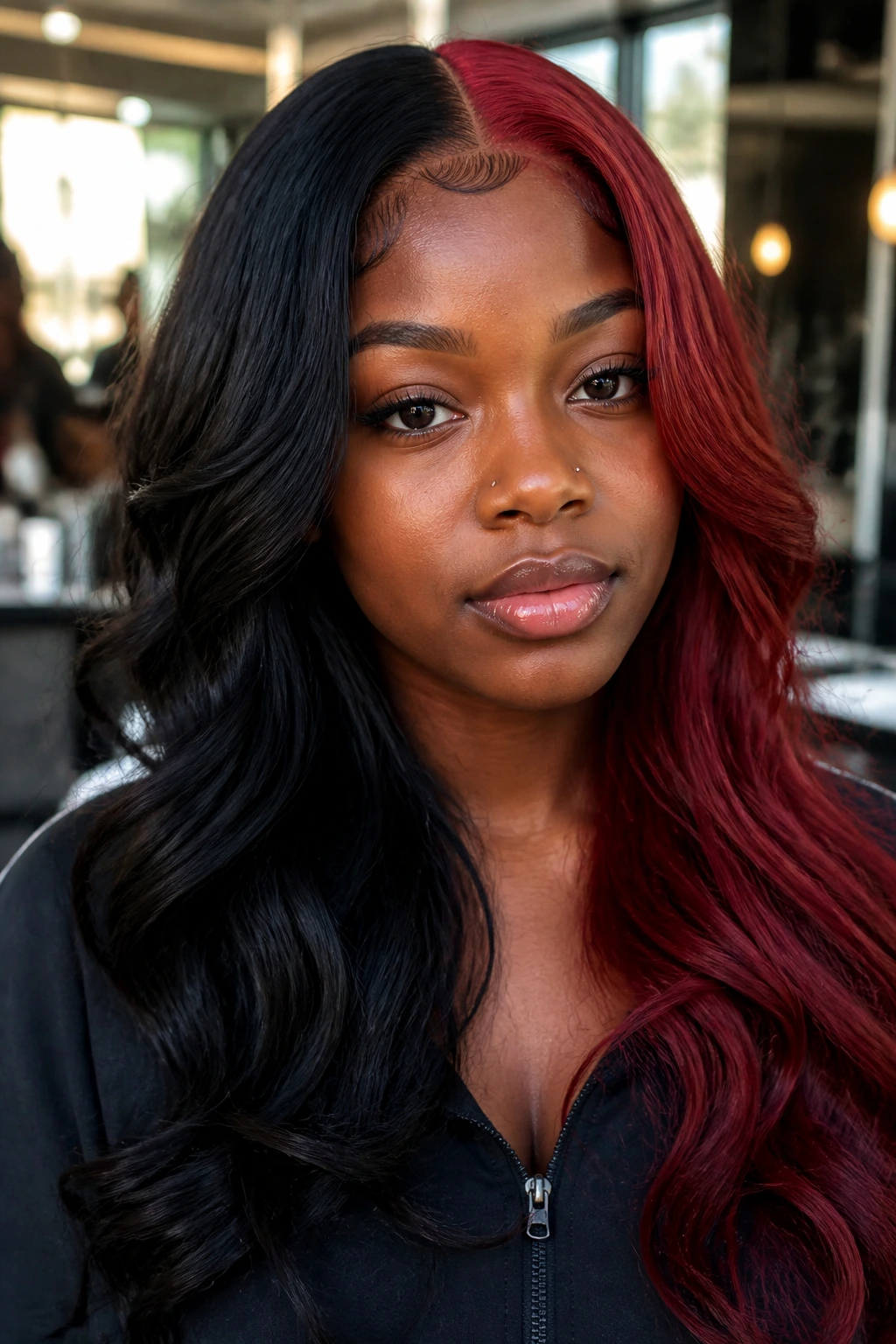
Split-dye noir and ruby is the dramatic option for someone who does not want to choose between depth and fire. One side stays dark and glossy. The other goes ruby red. That sharp divide looks especially strong on deep skin because both sides have enough weight to hold their shape.
This style works best when the part is clean and the lines are deliberate. On a short cut, the split is bold and graphic. On longer hair, it becomes more fluid. Either way, the contrast is the point. You are not trying to blend the two sides into one mushy middle.
It’s a high-impact choice, but it does have practical value: the dark side is low-maintenance, and the ruby side can be refreshed without redoing the whole head. That’s useful if you like color but don’t want every appointment to turn into a long chemistry session.
How to Pick the Right Version at the Salon
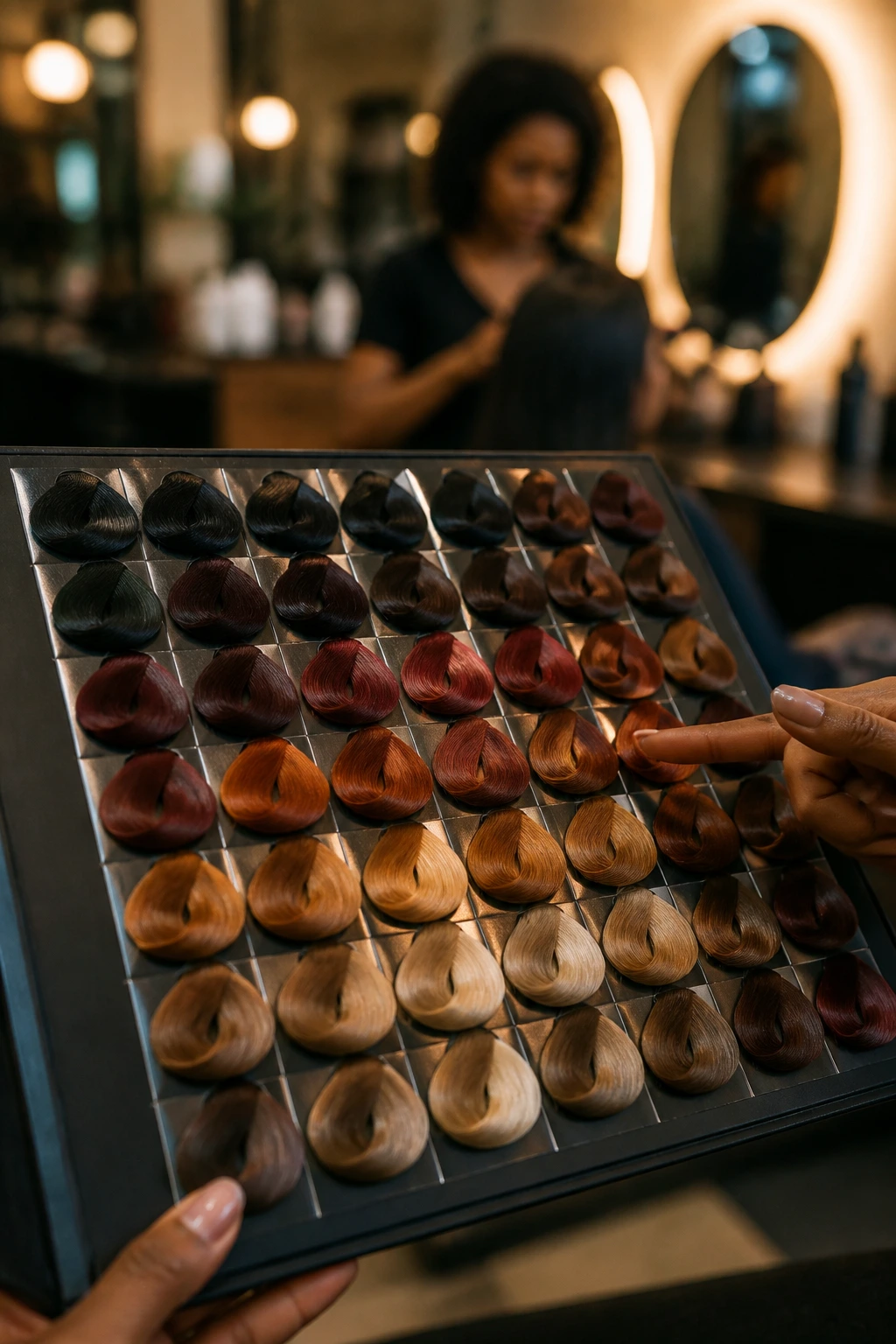
Picking the right shade is less about falling in love with a color name and more about translating the name into a real plan. “Copper” could mean a soft brown-copper glaze or a bright level-7 penny shade. “Brown” could mean espresso, mocha, chestnut, or taupe. The salon chair goes better when you know which version you want.
Undertone: Warm skin usually loves copper, caramel, mahogany, honey bronze, and auburn. Cool skin tends to look best in blue-black, blackberry, plum, burgundy, and smoky taupe. Neutral skin gets the widest lane, but even then, depth and shine matter more than the label.
Lift level: If you want bright copper, cobalt, teal, or silver lilac, expect pre-lightening. If you want espresso, cherry cola, mahogany, or rose brown, a gloss or demi-permanent color may be enough. The more lifted the shade, the more the upkeep climbs.
Placement: All-over color gives you the strongest shift. Balayage softens the grow-out. Face-framing pieces brighten the skin fastest. Peekaboo panels are the safest if you want to test a bold shade without committing to the whole head.
Photo prep: Bring two or three photos in different lighting. One indoors. One outdoors. One on a person whose hair texture is close to yours, if you can find it. That saves a lot of awkward translation later.
Essential Tools and Color-Care Products
-
Color-safe sulfate-free shampoo: Keeps pigment from stripping out too fast, especially on reds, coppers, and fashion shades.
-
Moisturizing conditioner with slip: Helps preserve softness after color, which matters because dry hair makes every shade look duller.
-
Heat protectant spray or cream: Use this before blow-drying, flat-ironing, or curling; high heat is one of the fastest ways to flatten shine.
-
Leave-in conditioner: Especially useful for curls, coils, and high-porosity hair that loses moisture quickly after coloring.
-
Color-depositing conditioner or mask: Pick one that matches your family of color, like red, copper, blue, or purple, to stretch the time between salon visits.
-
Wide-tooth comb: Less breakage when detangling hair that’s already been processed or lightened.
-
Satin bonnet or pillowcase: Helps keep the cuticle smoother overnight so the finish stays shinier by morning.
-
Tint brush and bowl: Handy if you do glosses or root smudges at home; a brush gives you more control than hands alone.
-
Microfiber towel: Better than rough cotton for wet hair, since it cuts down on frizz and breakage after washing.
How to Keep the Shade Glossy Between Visits
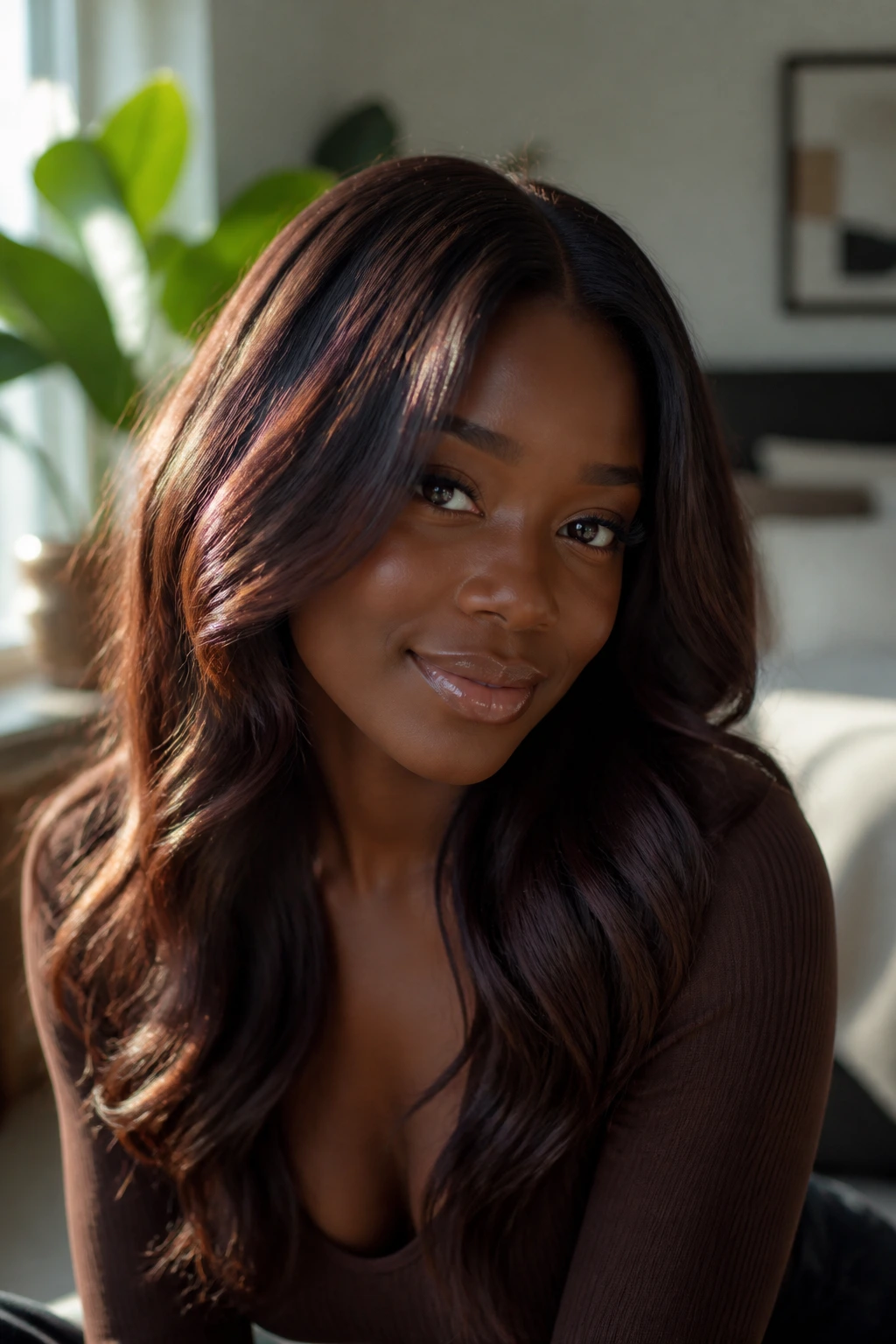
Deep skin tones tend to look best when the hair keeps its shine. That’s not vanity. It’s optical reality. Glossy hair reflects light, and reflected light helps richer shades read richer. Matte, dry, over-washed hair does the opposite.
For dark brunettes, blue-black, mocha, and mahogany, a gloss every 6 to 8 weeks usually keeps the finish polished. For reds, coppers, and burgundy shades, plan closer to 4 to 6 weeks, because red pigment tends to fade faster. Fashion colors like cobalt, teal, emerald, and violet often need touch-ups even sooner if you want the color to stay saturated rather than pastelized.
Wash less often if you can. Two to three times a week is plenty for most colored hair, and tepid water is kinder than hot water. Hot water lifts the cuticle and pulls color out faster. If your hair gets oily at the scalp, use a gentle shampoo there and let the rinse do the rest.
Sun, salt water, chlorine, and high heat all chew through tone. If you’re out in strong sun a lot, a hat or UV spray is not extra. It’s maintenance. And if your color was done with pre-lightening, keep a bond-repair mask in the rotation once a week. Lightened hair needs that support or the ends start looking tired fast.
Common Mistakes That Flatten Deep Skin Tones
-
Choosing the name instead of the level. “Caramel” can mean bright gold or soft brown-gold. If you don’t ask about depth, you may end up with a color that’s too pale or too brassy for your skin. Ask for the level, the tone, and the placement.
-
Going too light too quickly. A pale ash blonde can look disconnected on deep skin if there isn’t enough root shadow or warmth to anchor it. Start with face-framing pieces, ribbons, or a gloss before you jump into full lift.
-
Skipping shine care. Dry hair makes dark colors look dull and bright colors look tired. The fix is simple: leave-in, heat protectant, and a gloss schedule that matches the shade family.
-
Ignoring undertone. A cool ash brown on warm skin can look dusty. A too-yellow blonde on cool skin can look harsh. Match the tone to the undertone, not just the mood board.
-
Forgetting maintenance reality. A bright copper or cobalt blue looks great on day one and demands real upkeep afterward. If you hate touch-ups, choose a brown-based color melt, not a high-lift fantasy shade.
-
Coloring over damaged hair without repair. Porous hair grabs pigment unevenly and fades patchy. A trim and some bond care before coloring can make the result look much better and last longer.
Variations and Lower-Commitment Swaps
Gloss-Only Glow: If you like the idea of mahogany, espresso, cherry cola, or rose brown but don’t want permanent change, ask for a demi-permanent gloss. It adds tone and shine without committing you to a hard line of grow-out. This is the smartest low-risk entry point on the whole list.
Face-Frame First: Want brightness without a full bleach job? Put the color only around the hairline and maybe a few crown pieces. Caramel, honey bronze, copper, and even cobalt can all work in smaller placements if the rest of the hair stays deep.
Balayage Instead of Full Color: Balayage softens the transition between dark roots and lighter mids, which helps the color sit more naturally against deep skin. It’s especially good for toffee, butterscotch, honey bronze, and bronze-brown blends. The grow-out is easier too, which never hurts.
Protective-Style Pop: Braids, locs, wigs, sew-ins, and clip-ins give you a cleaner way to test bold colors like teal, emerald, or ruby. You can keep your natural hair untouched while still getting the visual hit. That’s a very sensible compromise.
Cool-Tone Swap: If copper, honey, or amber feels too warm for your complexion, swap them for plum, blackberry, smoky taupe, or blue-black. The overall effect stays rich, but the color family changes direction. That simple turn can make the whole style look more balanced.
Frequently Asked Questions
Which hair colors look best on deep skin tones with low upkeep?
Espresso brunette, blue-black, mocha melt, mahogany gloss, and cherry cola are the easiest places to start. They grow out softly, don’t need heavy bleaching, and usually look better with a gloss than with a full color correction.
Can deep skin tones wear blonde hair?
Yes, but the best blondes usually have warmth or depth: honey bronze, toffee, caramel, butterscotch, and bronde face-framing pieces. Pale ash blonde can work too, but it needs careful toning and a strong root shadow or it can look disconnected.
Is blue-black better than jet black on rich skin?
I think so, most of the time. Blue-black keeps the color reflective and slightly softer, while flat jet black can look heavy if the finish isn’t glossy. If you love black hair, blue-black usually gives you more movement for the same depth.
What if I want color but I don’t want bleach?
Stay in the brown-red family. Mahogany, auburn overlay, cherry cola, blackberry brown, cinnamon brunette, and some copper-brown glosses can often be done with little or no lift depending on your starting shade. A colorist can tell you how far your natural hair will carry the pigment.
How do I keep red and copper tones from fading too fast?
Wash less often, use tepid water, and keep a color-depositing conditioner in the same color family. Reds and coppers fade faster than brunettes, so a gloss every 4 to 6 weeks helps a lot. Sun protection matters too, especially if your hair is porous.
Will fashion colors like teal or cobalt work on dark hair?
They can, but they usually need pre-lightening first. If you want the color to show true, your hair needs enough lift for the pigment to sit on a pale base. Hidden panels, dip-dye ends, and braids are safer ways to try the look without coloring the whole head.
What’s the best way to choose between warm and cool tones?
Look at your skin in daylight and think about the jewelry you reach for most. If gold looks natural on you, warm shades like copper, honey bronze, and mahogany are a good place to start. If silver feels cleaner, try blue-black, plum, burgundy, or smoky taupe.
How often should I touch up the color?
It depends on the family. Brunettes and blue-black shades can stretch to 6 to 8 weeks with good care. Reds, coppers, and fashion colors usually need more frequent refreshes, especially if your hair is porous or you use hot tools often.
The Shades That Hold Their Own
The best hair color on deep skin is not the loudest one in the room. It’s the one that knows how to sit beside the skin, catch the light, and keep its shape after the first few washes. That might mean a glossy espresso bob, a caramel ribbon around the face, or a ruby split-dye that turns heads the second you move.
Pick the version that fits your upkeep, your texture, and the amount of contrast you actually want. That part matters more than chasing the prettiest swatch on a screen. Start there, and the color stops looking borrowed.