



Fine hair has a way of exposing every blunt mistake. Square faces do the same, only at the jaw. Put them together and a heavy fringe can go flat at the roots, then widen the face right where you don’t want it to. Long bangs solve that in a very specific way: they give the front movement instead of turning it into a shelf.
The sweet spot is usually somewhere between the brow and the cheekbone, with soft ends that can part, tuck, sweep, or bend. That little bit of length matters more than people think. It keeps the fringe looking full on the day it was styled, and it still has enough body to behave when the blow-dry relaxes.
What works best here is not just “bangs, but longer.” It’s diagonal lines, soft edges, and a shape that breaks up the square frame without starving fine hair of density. Some of these cuts are polished. Some are messy in a good way. All of them are built to play nicely with a strong jaw and a lighter texture.
Why These Long Bangs Earn Their Keep
-
They soften hard angles: A square face usually reads widest at the forehead and jaw, so long bangs that sweep diagonally pull the eye away from those corners.
-
They keep fine hair from looking sparse: Longer fringe holds together better than a short, chopped-up bang, especially when the front is point-cut instead of aggressively thinned.
-
They grow out in a useful way: When the trim starts to soften, you can part the bangs, tuck them, or blend them into layers instead of waiting through an awkward stage.
-
They work with a quick blow-dry: Long bangs only need a small round brush, a little root lift, and a cool shot. No elaborate styling circus.
-
They give you options on tired hair days: A center part, a side sweep, or a tuck behind the ear can change the whole front of the haircut without touching the rest.
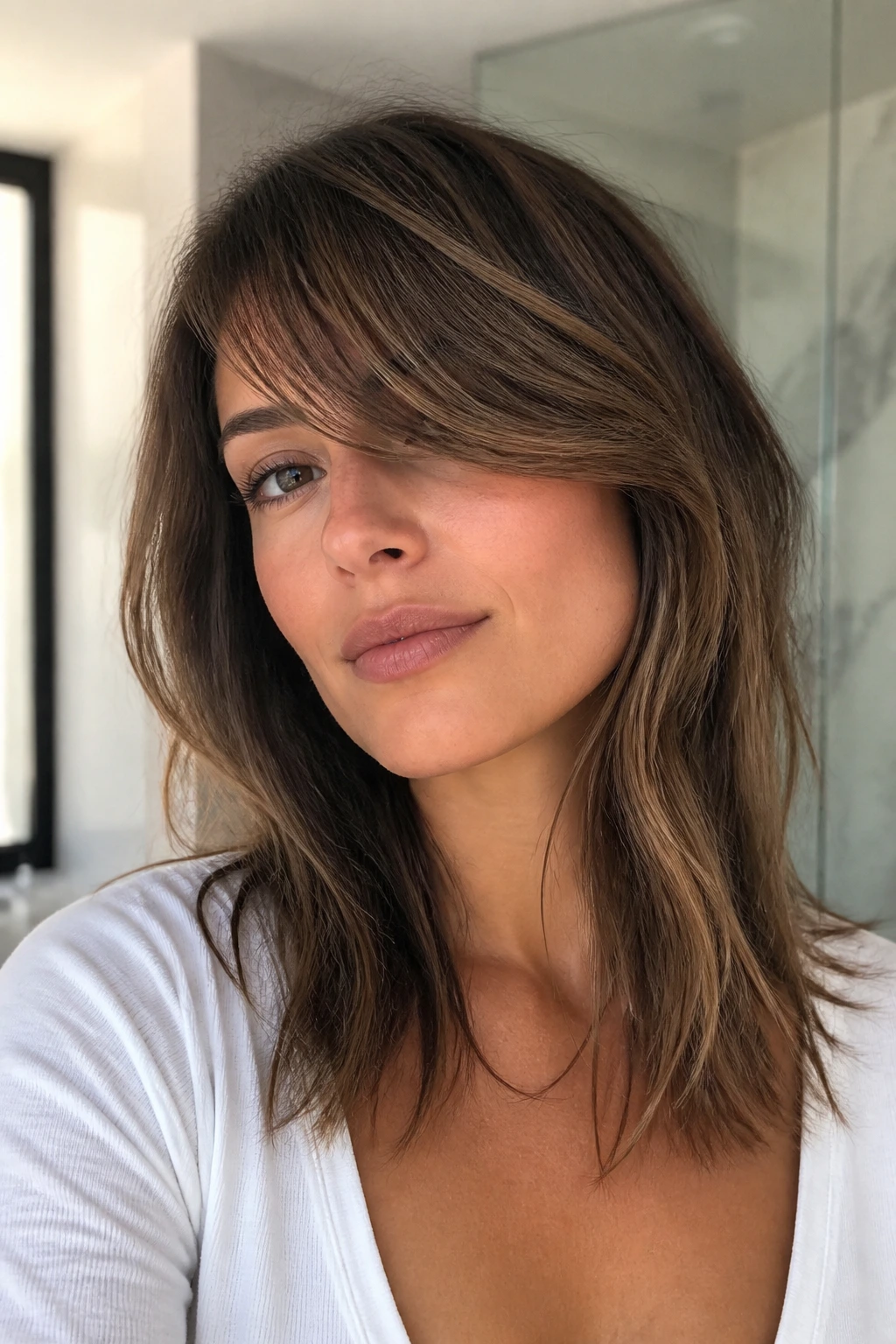
1. Center-Part Curtain Bangs That Hit the Cheekbones
The center part earns its reputation here for a reason. On a square face, it opens the forehead and breaks up the straight line that can make the face feel boxed in, while the longer outer pieces land near the cheekbones and do the softening work.
For fine hair, the trick is keeping enough weight through the middle so the fringe does not split into two wisps by lunch. Ask for the shortest point to sit just below the brows, then let the sides drift to the top of the cheekbone. It’s a small change, but it keeps the hair looking like it has actual substance.
2. Deep Side-Swept Bangs That Cut Across the Forehead
A deep side part is one of those old tricks that still works because it changes the geometry fast. Instead of a horizontal line across the forehead, you get a long diagonal sweep that slims the face and softens the jaw by distraction alone.
This is a good pick if your hair already leans to one side or if you hate fussing with symmetry. Keep the longest end brushing the cheek, not stopping at the jawline. That extra inch or two matters. It lets the bang feel intentional even when the rest of the hair is a little messy.
3. Bottleneck Bangs With a Wispy Center
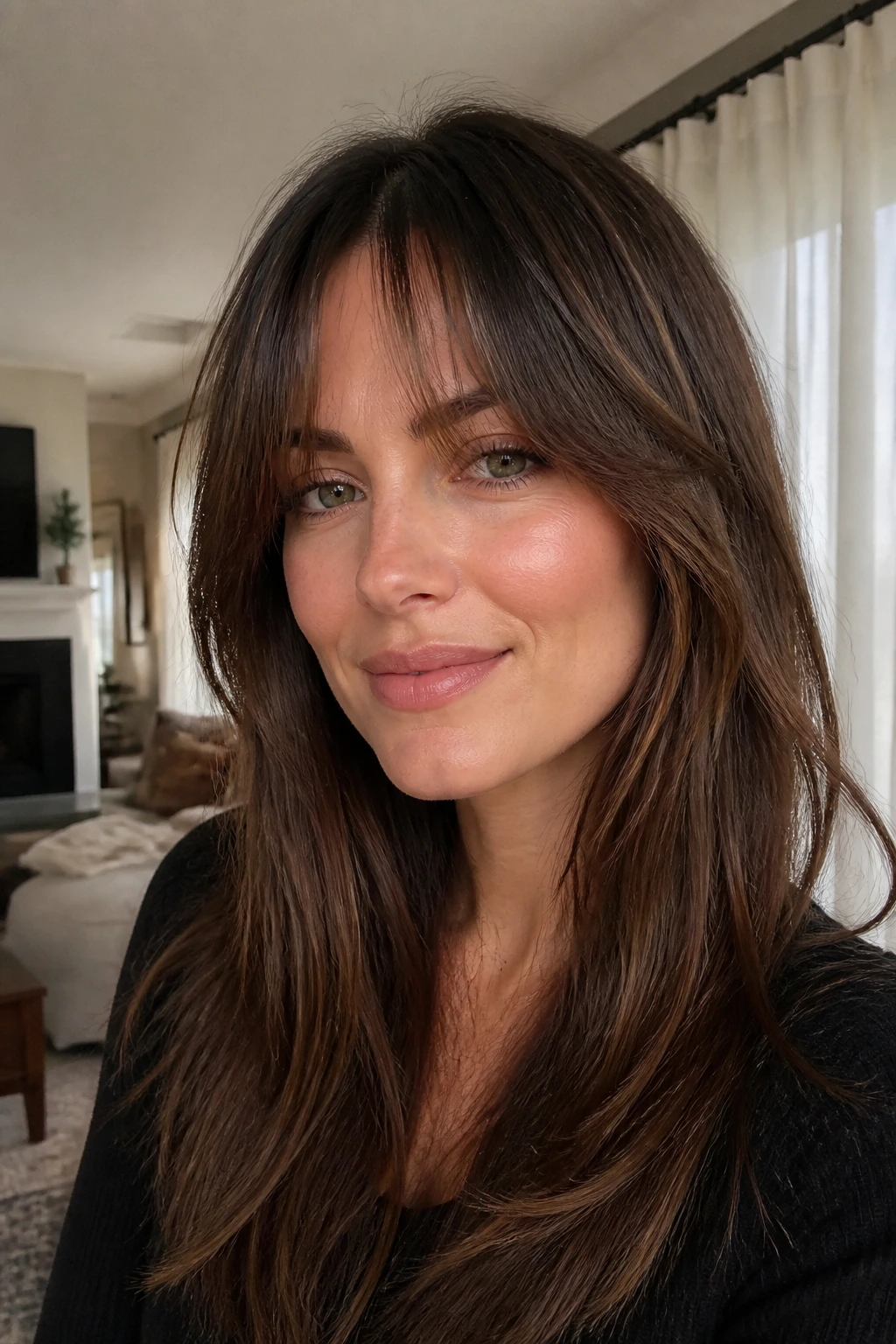
Bottleneck bangs are the quiet overachievers of this whole group. They start a little narrower in the middle, then open out toward the temples, which makes the forehead look less broad without cutting a heavy line across it.
On fine hair, this shape is kinder than a dense full fringe because it keeps the center visible and airy. Ask for point-cut ends, not a razor-thin finish. If the middle is too sparse, the whole thing loses shape fast. If it keeps some density, though, it sits in that sweet spot between soft and present.
4. Feathered Fringe That Opens at the Temples

Feathered bangs are for people who want movement more than they want a strict shape. The hair lifts away from the temples and breaks the straight edge that can make a square face look even boxier. It also keeps the fringe from feeling heavy on fine strands.
This one looks best when the ends are brushed outward with a small round brush, then cooled in place for a few seconds. That little bend at the sides does a lot of visual work. It makes the front look lighter without making it look thin.
5. Choppy Piecey Bangs With a Shag Finish

If your hair has even a hint of natural bend, choppy long bangs can look fantastic. The uneven texture creates the illusion of more body, which is useful when the hair itself is fine and the front needs some grit to stay visible.
The catch is restraint. Too much texturizing and you get gaps. Too little and the fringe falls flat. Ask for soft, separated ends that still connect as a shape, then use a dab of mousse and a rough dry to keep the pieces from clumping together.
6. Grown-Out Curtain Bangs for Low Maintenance
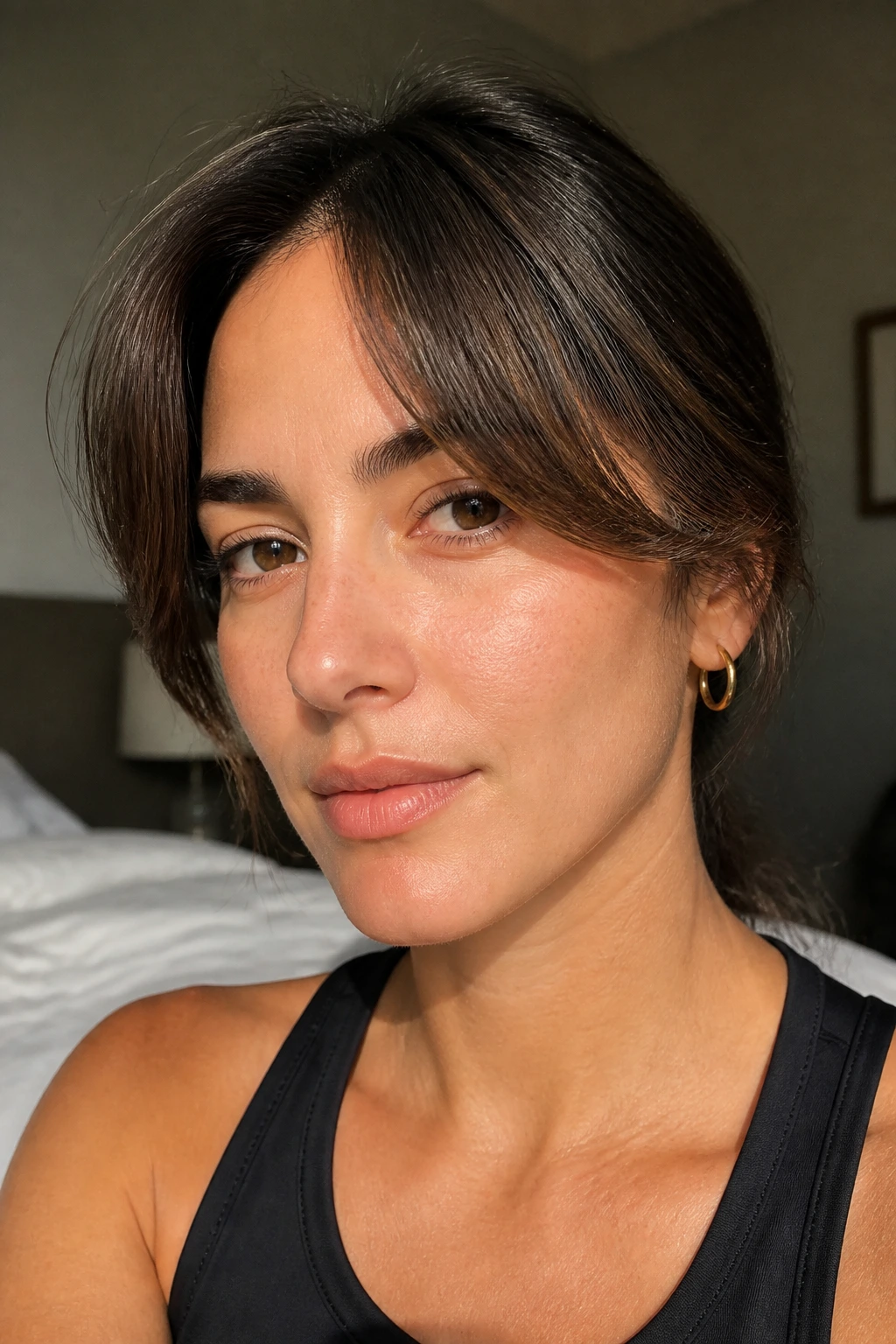
Grown-out curtain bangs are the version I reach for when someone wants softness without a lot of salon upkeep. They’re long enough to tuck behind the ears, split down the middle, or fall forward when you want that face-framing effect.
They also suit square faces because the longer sides skim past the cheeks and jaw instead of stopping right on the line. If your bangs are already growing out, don’t rush to chop them back into something shorter. The longer length is the point. It gives you range.
7. Rounded Long Fringe That Bends Inward
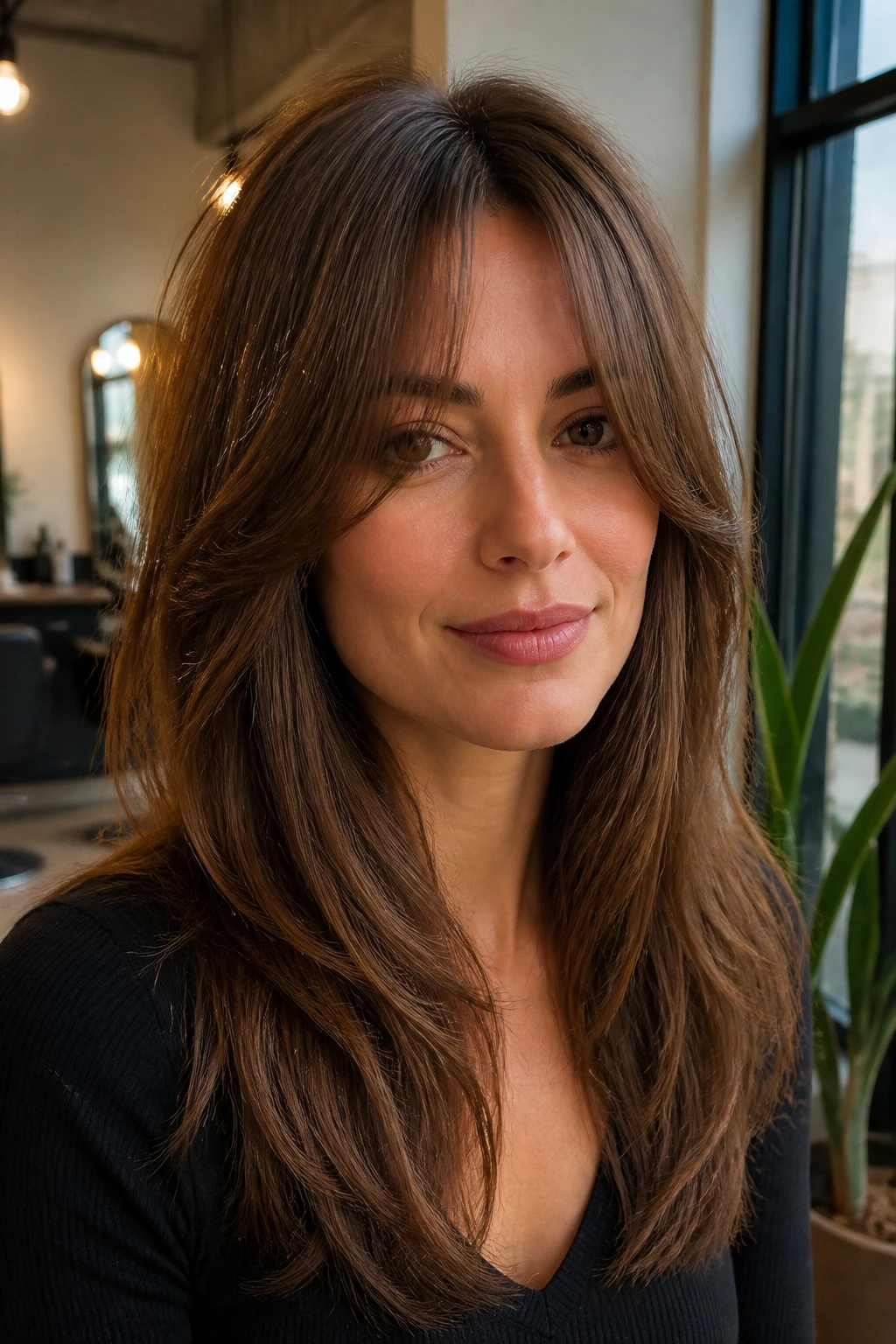
A rounded fringe works when you want the front to feel a little more sculpted. Instead of falling straight down, the bangs curve gently inward toward the face, which softens the strong edges of a square jaw and keeps the whole look from feeling severe.
This shape depends on a decent blow-dry. Use a small round brush and direct the hair inward, not under in a tight curl. You want a bend, not a loop. On fine hair, too much curl at the ends can make the fringe look overworked and tiny.
8. Face-Framing Bangs Blended Into Layers
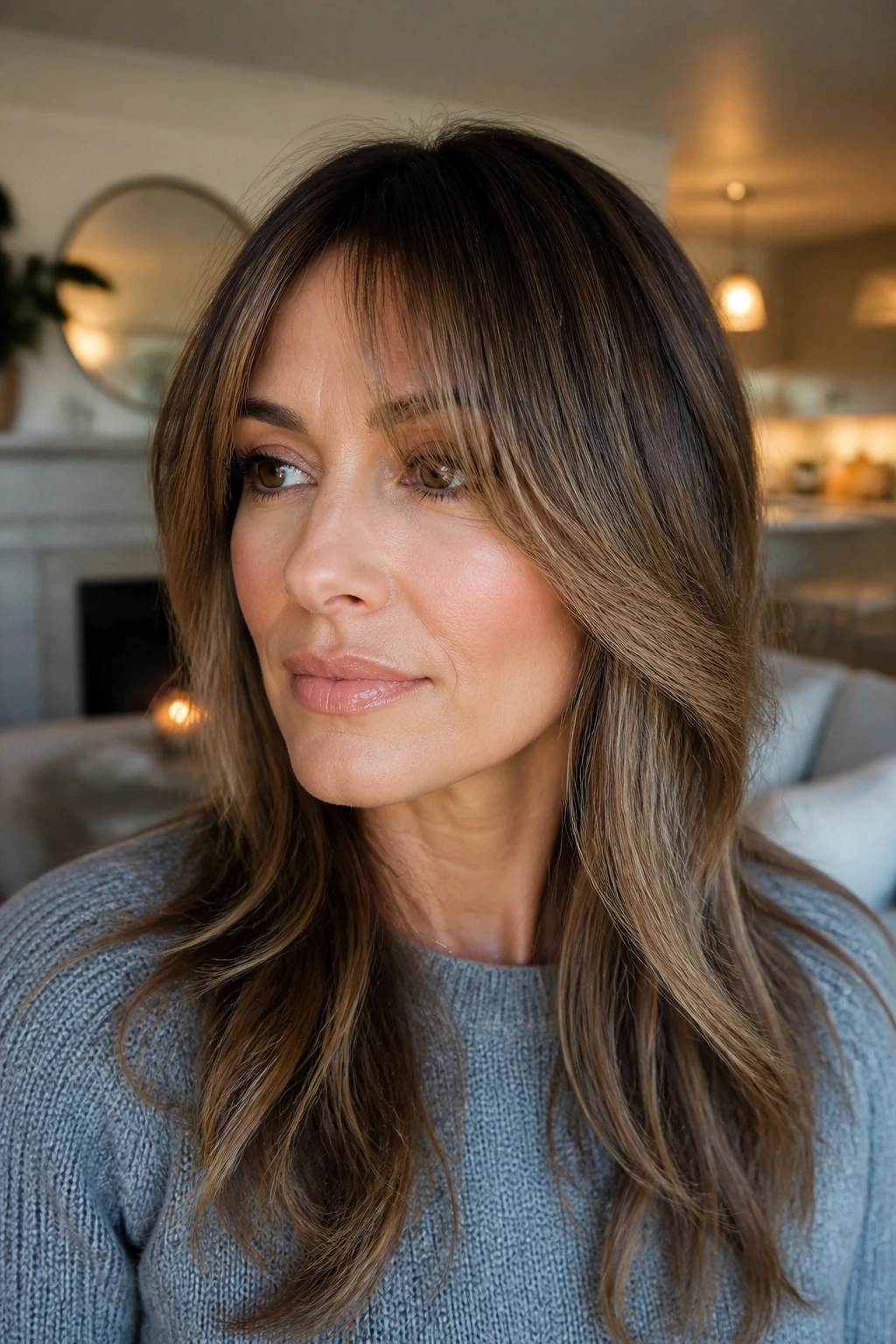
This is the least “bangs” of the bunch, which is exactly why some people love it. The front pieces start softly and blend into the layers around the face, so the hair never hits you with a hard line.
Fine hair tends to behave better with this kind of cut because all the density isn’t concentrated in one tiny section. The style is forgiving on busy mornings, too. If the front goes a little messy, it still looks like part of the haircut instead of an accident.
9. Sweeping Side Bangs With a Collarbone Lob
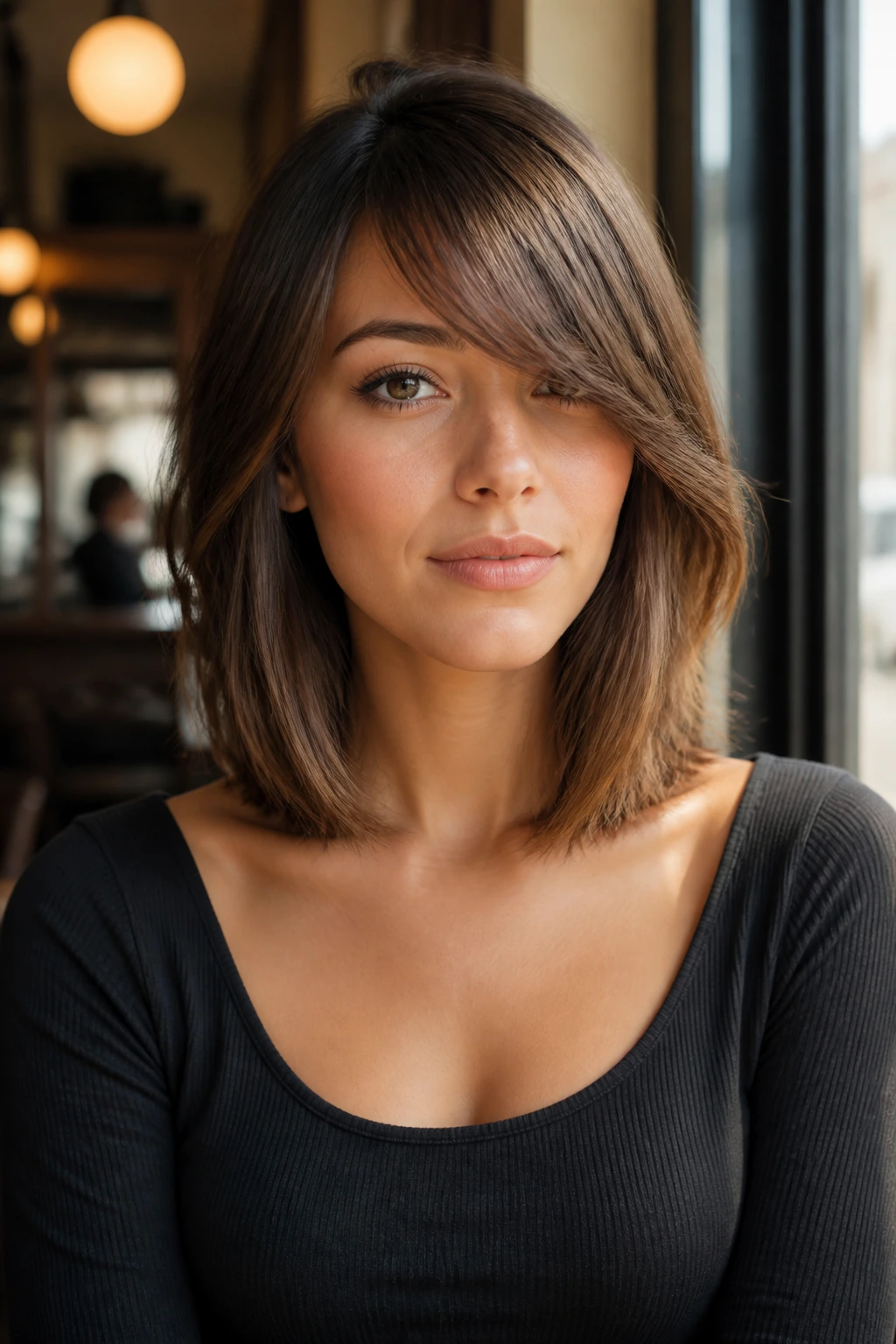
Pairing long side bangs with a collarbone-length lob gives fine hair a better base. The lob keeps the ends from looking wispy, while the bangs break up the square frame and keep the front from feeling blocky.
This combo works especially well if your hair likes a side part already. The bang can sweep across the forehead, skim the cheek, and then blend into the length at the shoulder. It’s a tidy shape, which sounds boring, but on fine hair tidy often reads as fuller.
10. Airy See-Through Bangs at Brow-to-Cheekbone Length
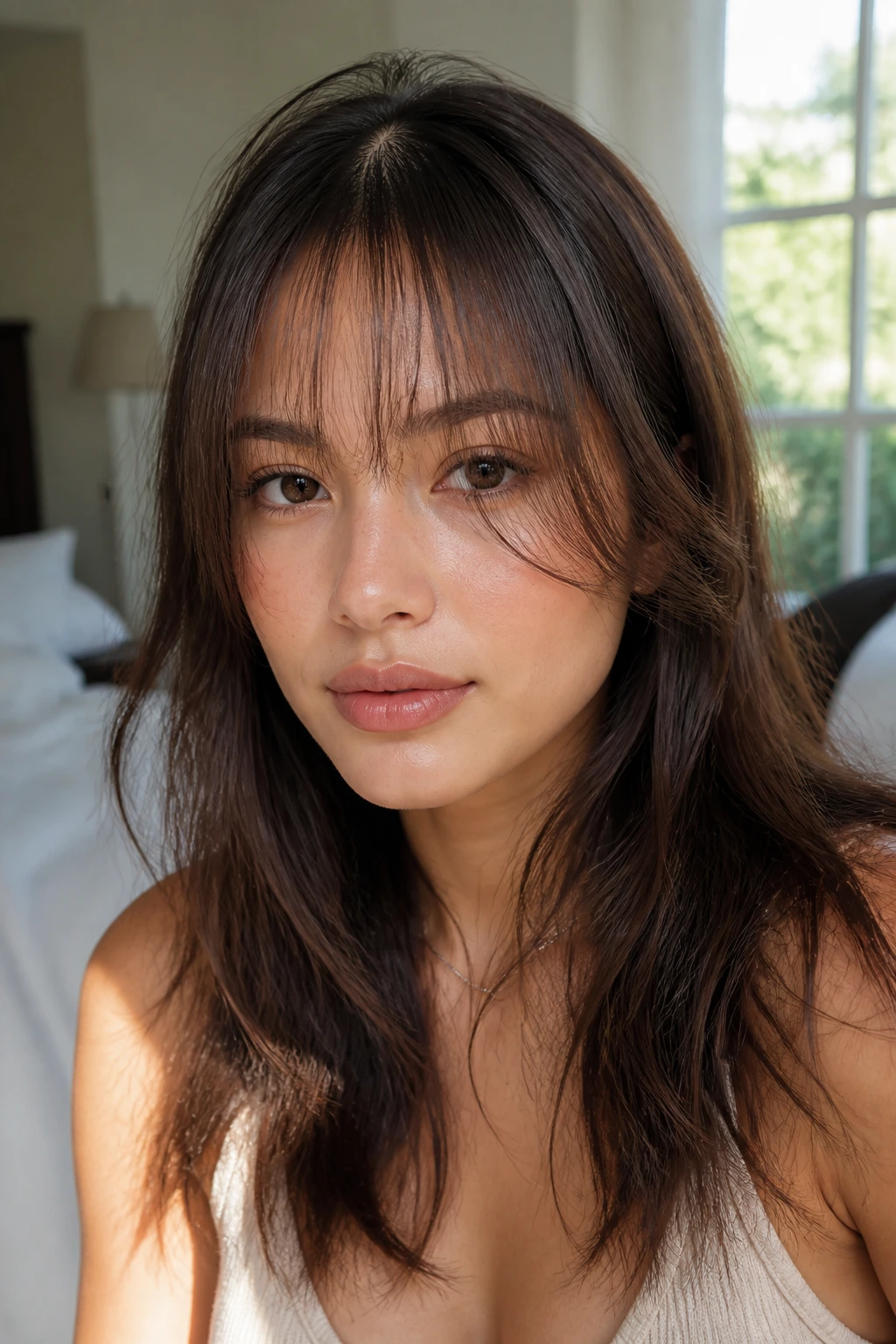
See-through bangs are tricky, because “airy” can slide into “barely there” if the hair is too fine. The useful version leaves enough strands to frame the eyes while still letting the forehead show through.
For a square face, that translucence is the whole appeal. It softens without building a wall of hair across the face. Keep the length long enough to brush the cheekbone, not just the brow, and the effect stays light instead of flimsy.
11. Long Arched Fringe That Softens a Strong Jaw
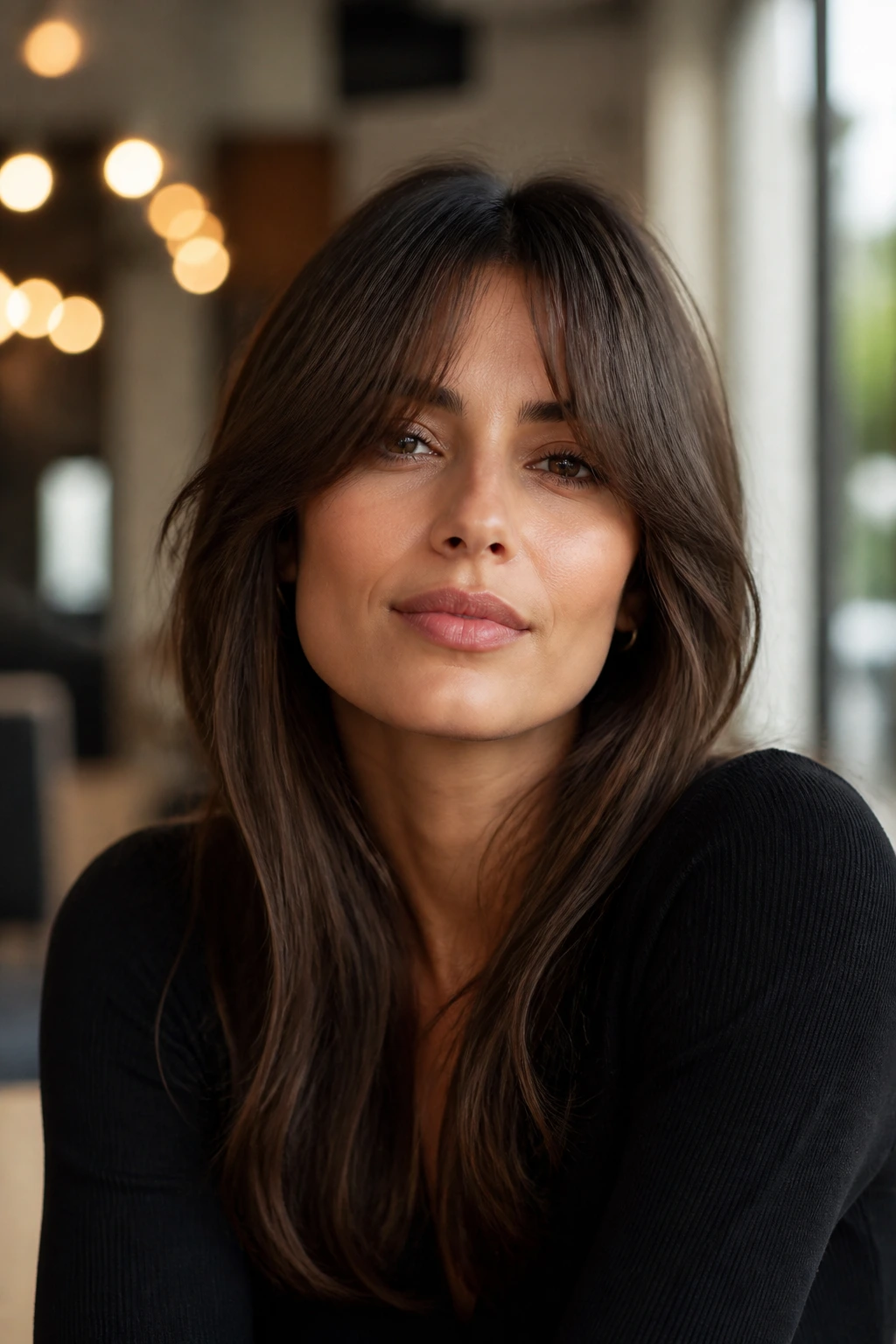
A soft arch across the forehead can be useful when the jaw is the sharpest part of the face. The center sits a little higher, the edges come down longer, and the whole line nudges the eye upward before it drifts down the sides.
That upward pull matters. It takes attention away from the corners of the jaw and gives fine hair a shape that looks deliberate. Don’t ask for a stiff semi-circle. You want a gentle arc, the kind that still moves when you turn your head.
12. Wispy Split Bangs With a Soft Middle Part
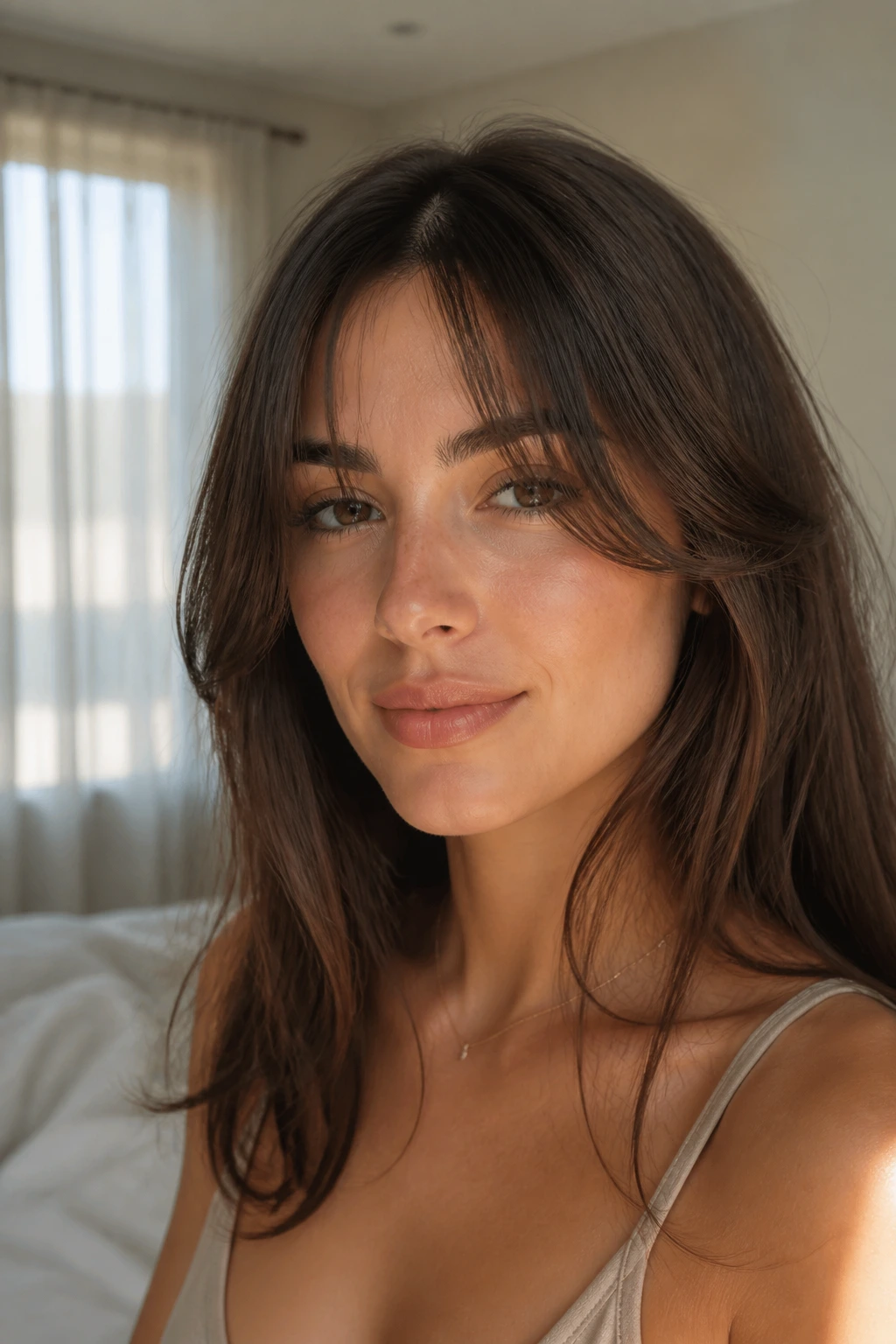
Split bangs are for people whose hair naturally wants to separate anyway. Instead of fighting that pattern, the cut works with it: a soft middle part, wispy front pieces, and side lengths that drift into the cheek area.
On a square face, that split creates a little vertical space in the center while the sides do the smoothing. On fine hair, it keeps the fringe from becoming one solid block. The result looks lighter, but not weak. There’s a difference.
13. Frayed Fringe With Internal Texture
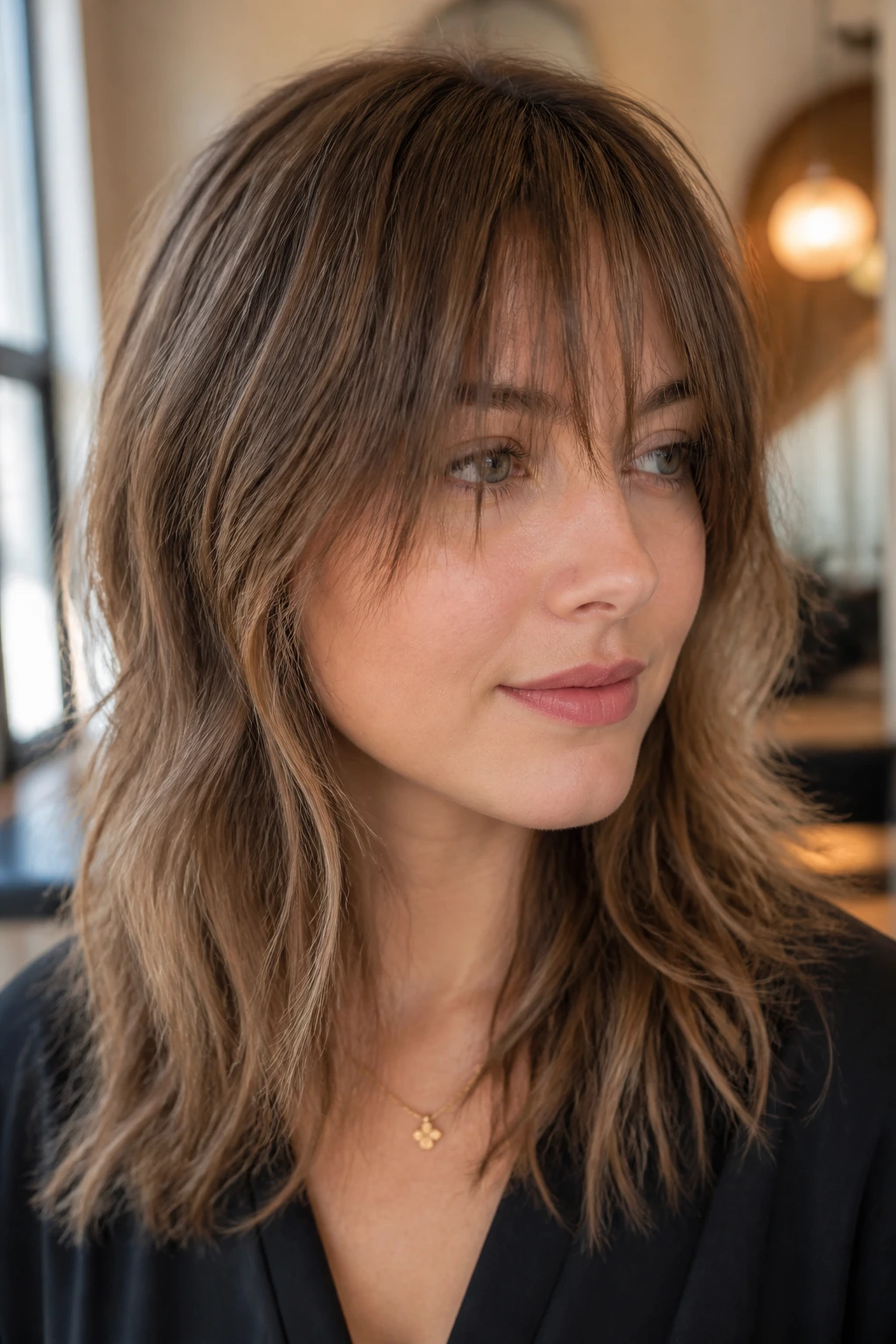
“Frayed” sounds rough, but in hair terms it can be very good when it’s controlled. The ends are point-cut and a little irregular, which keeps the fringe from looking like a helmet. Fine hair needs that kind of movement, or it goes limp and obvious.
The key is internal texture, not a lot of surface thinning. You want the fringe to break up visually without losing its outline. A small amount of lightweight cream at the ends helps the pieces separate without turning them stringy.
14. Side-Parted Bangs With a Tucked-Behind-Ear Finish
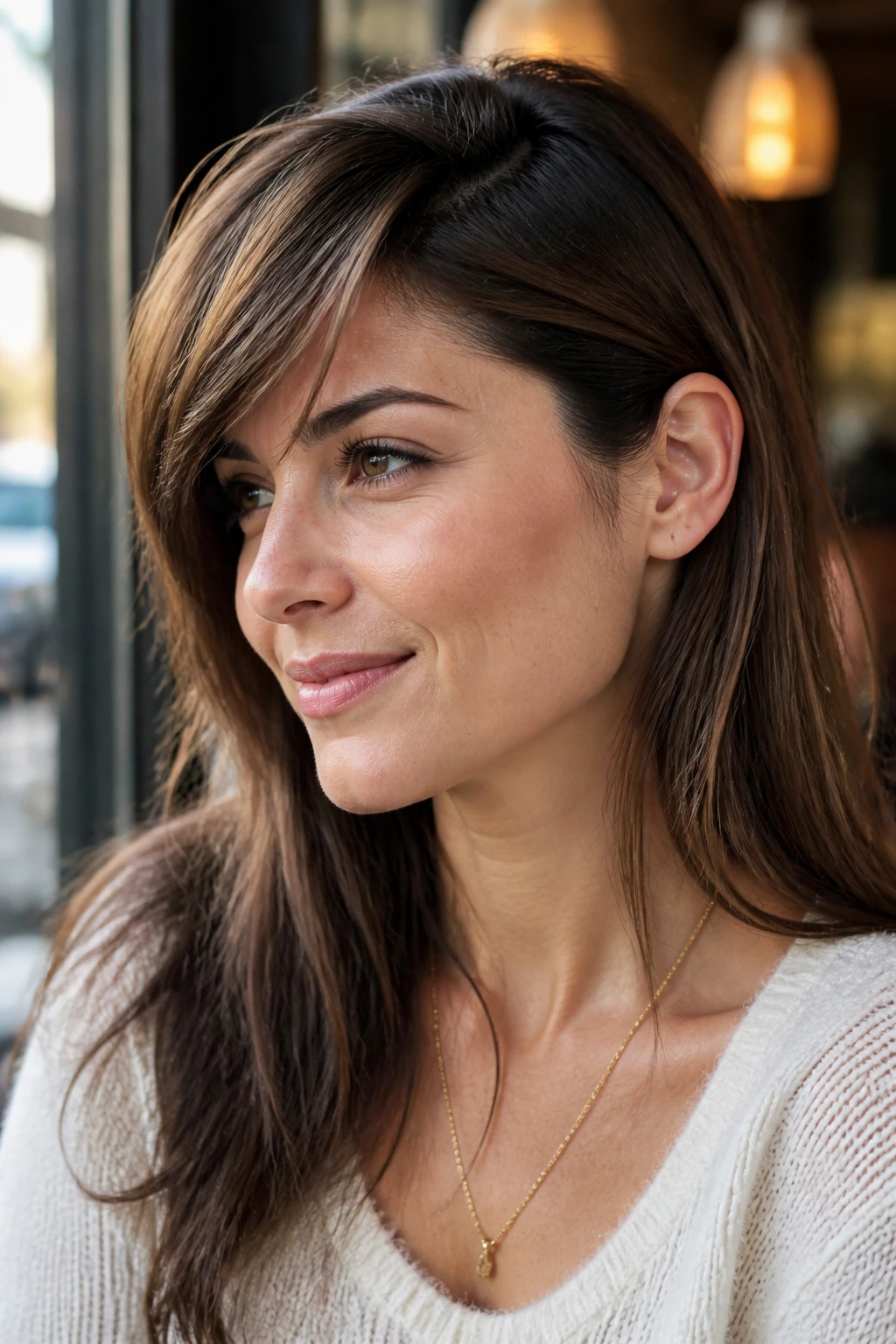
This one is sneaky in the best way. The bangs begin as a side sweep, then the longer side can tuck behind the ear and leave one cheek open. That asymmetry softens a square face faster than people expect.
It’s also practical. If you wear glasses, earrings, or a lot of collar details, this style keeps the front from fighting the rest of your look. Fine hair likes the tuck because it creates a little tension at the root, which gives the front a bit more lift.
15. Long Layered Bangs for a Shag Cut
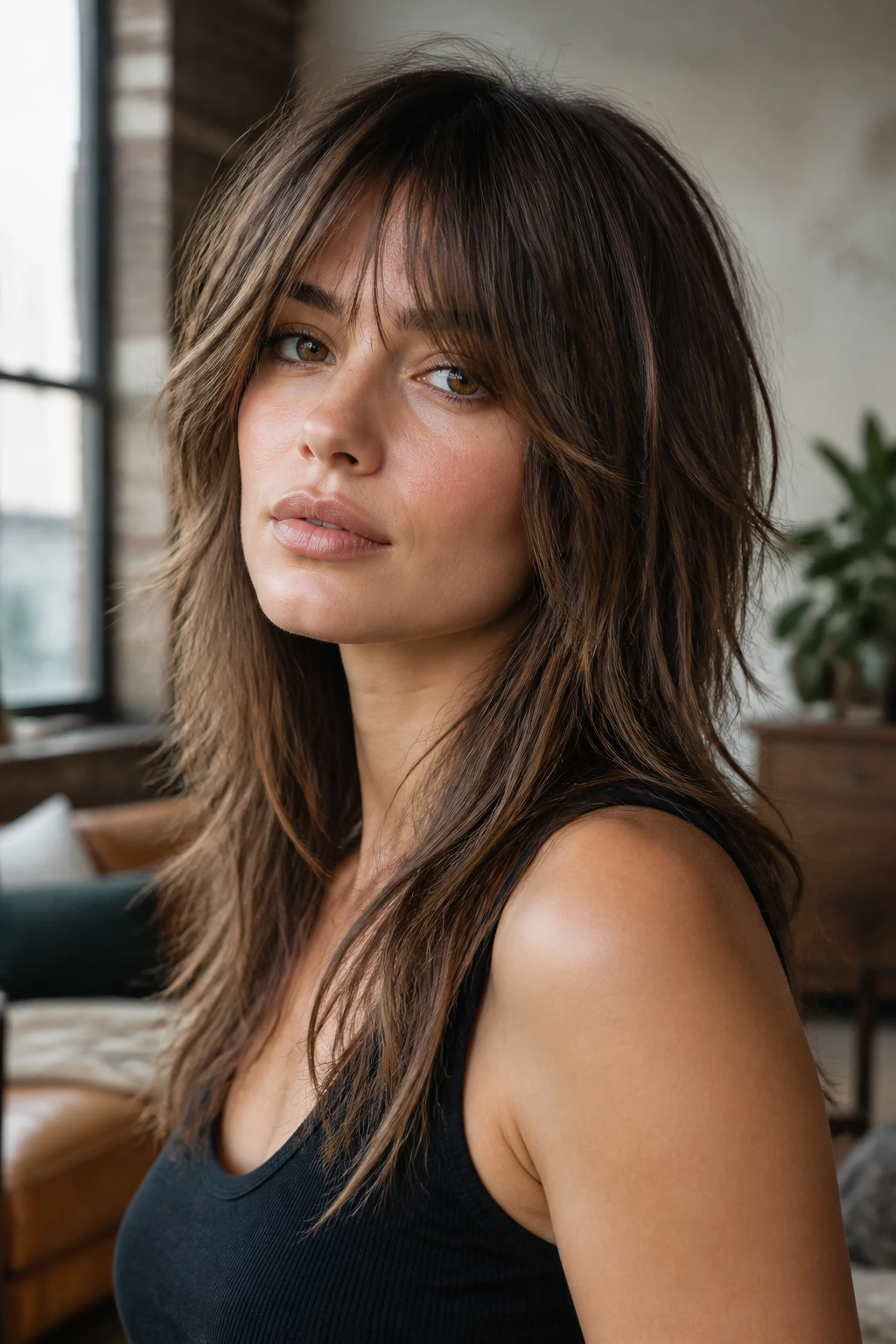
A shag cut gives fine hair movement, but the bangs need to be handled carefully or the whole thing turns airy in a bad way. Long layered bangs keep the fringe connected to the rest of the cut while still giving you that lived-in texture.
Square faces do well with this shape because the layers scatter the eye instead of marching in a straight line across the forehead. Ask to keep the shortest point around the brow and the longer pieces near the cheekbone. Shorter than that, and the fringe starts eating into the density.
16. Blowout Bangs With a Smooth C-Shape
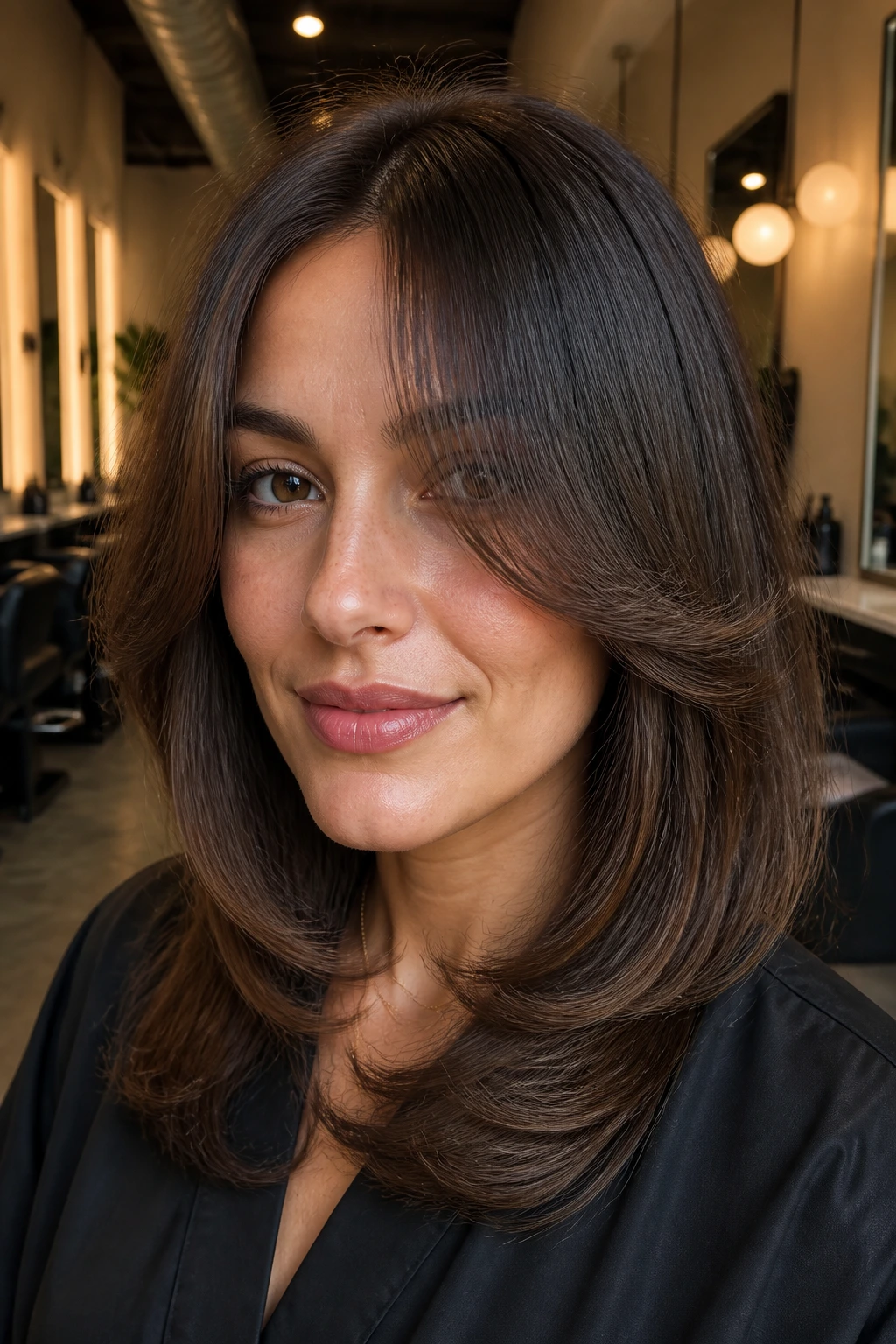
If you love a polished front, this is the one that gives it. Blowout bangs bend in a smooth C-shape around the face, which is especially flattering on square features because the curve cancels some of the angularity.
This style depends on technique more than cut alone. Use a 1- to 1.5-inch round brush, lift the root first, then curve the ends inward and cool them before letting go. That cool-down step matters. Skip it and the bend falls out much faster.
17. Piecey Bottleneck Bangs for Extra Lift

This is the bottle-neck idea with more separation and a little more attitude. The center stays light, the sides open gradually, and the whole fringe is broken into pieces that can be pinched apart for lift.
It works well when fine hair collapses by midday. A little dry shampoo at the roots and a finger-combed finish help the pieces stay visible instead of merging into one flat strip. If you like hair that looks soft but not precious, this is a strong option.
18. Long Bangs With Invisible Layers Through the Ends
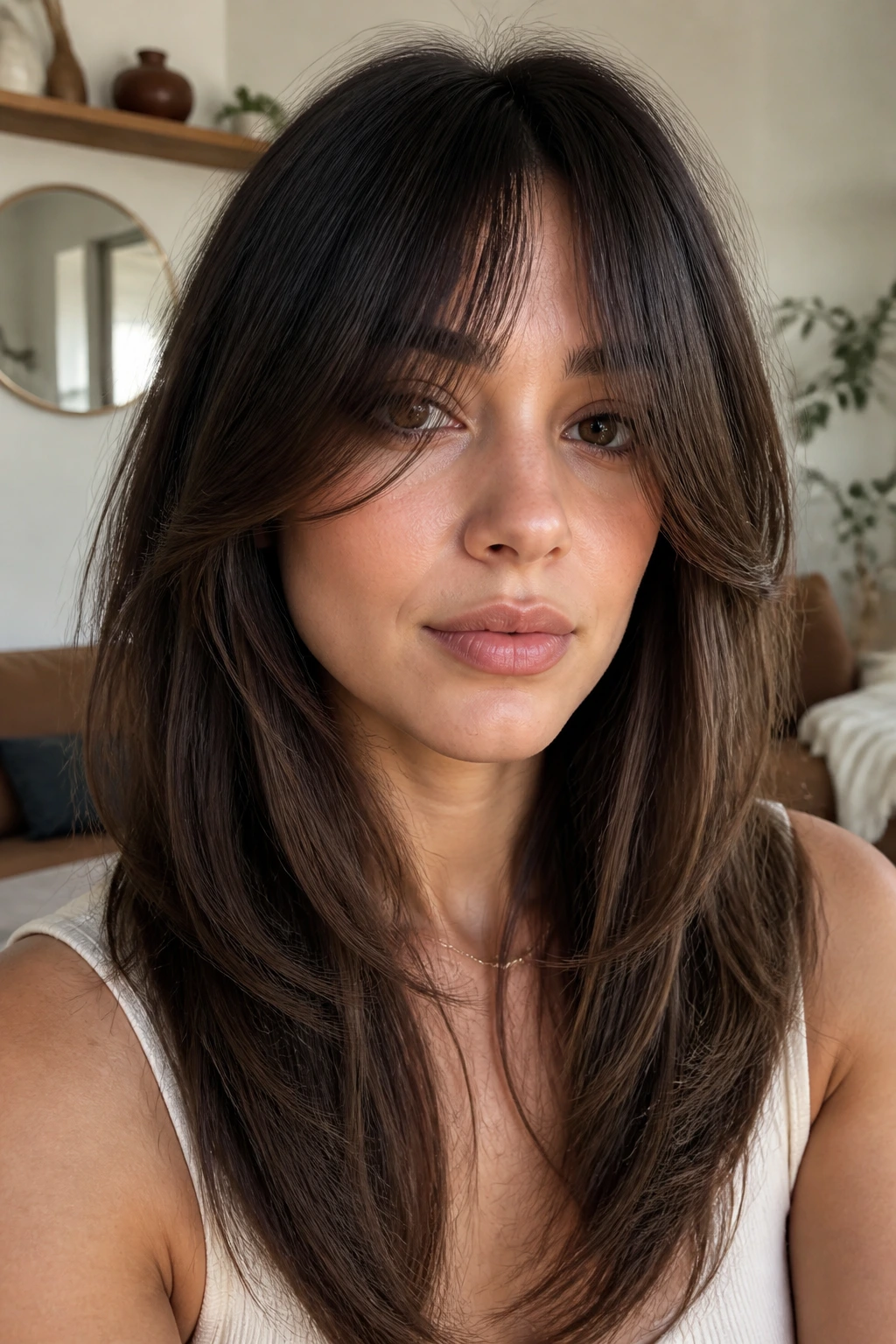
Invisible layers are a nice trick for fine hair because they remove bulk without making the fringe look chopped up. The ends stay smooth, but the weight shifts enough that the bangs move instead of hanging like a curtain.
That movement is what flatters a square face. The fringe bends around the facial structure instead of sitting on top of it. Ask for soft internal layering only. If the stylist starts taking too much out of the ends, the front can go see-through in a hurry.
19. Soft Swoop Bangs That Curve Across the Forehead
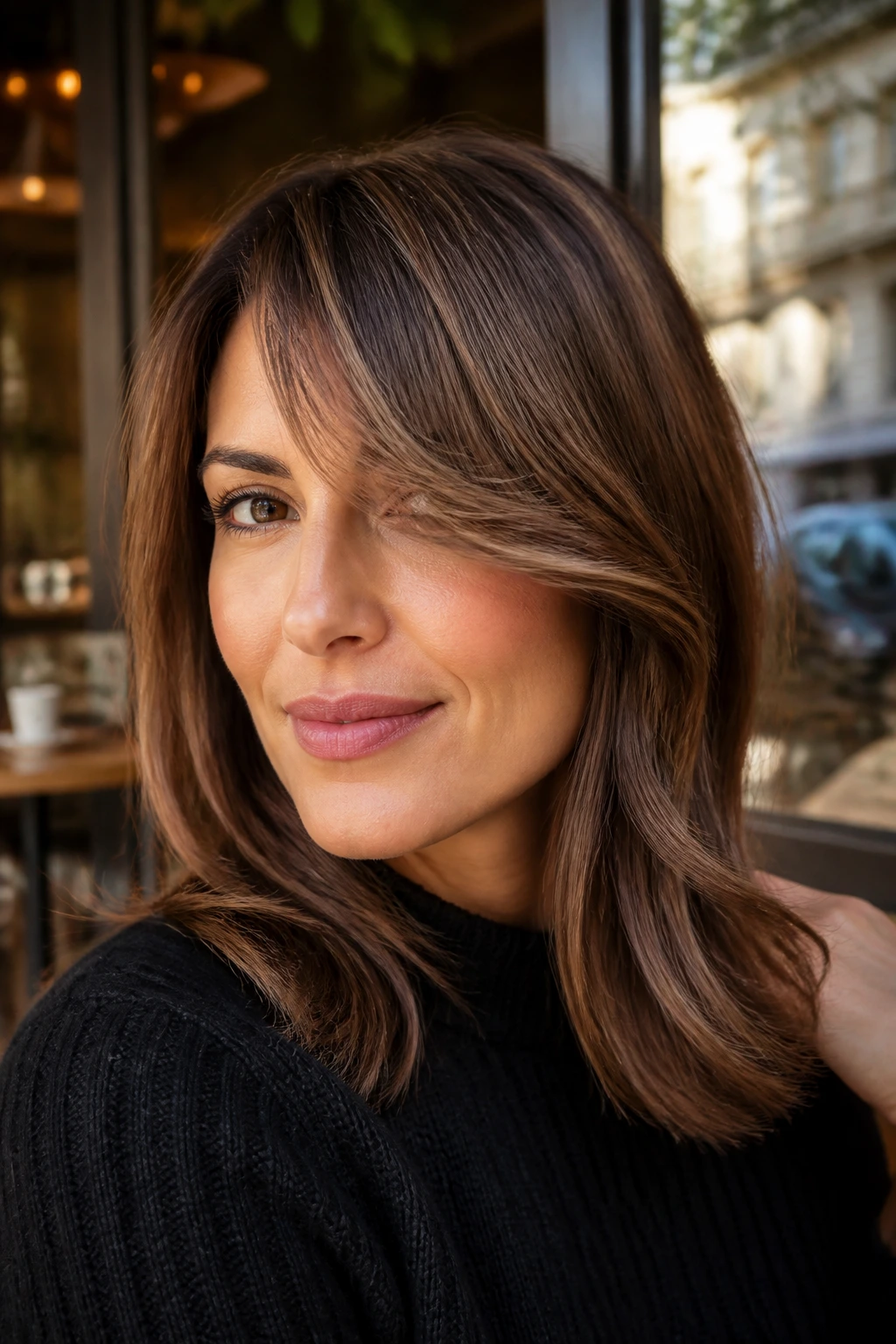
A soft swoop is basically a long side-sweep with a little more romance. The front glides across the forehead and lands near the opposite cheekbone, which creates a diagonal line that breaks up the strong width of a square face.
It’s a good choice if your hair already falls forward with a bit of bend. You won’t have to force it into a new direction every morning. A small brush, a quick blast of heat, and a clip while it cools are usually enough.
20. Razor-Cut Fringe for Fine Hair Movement
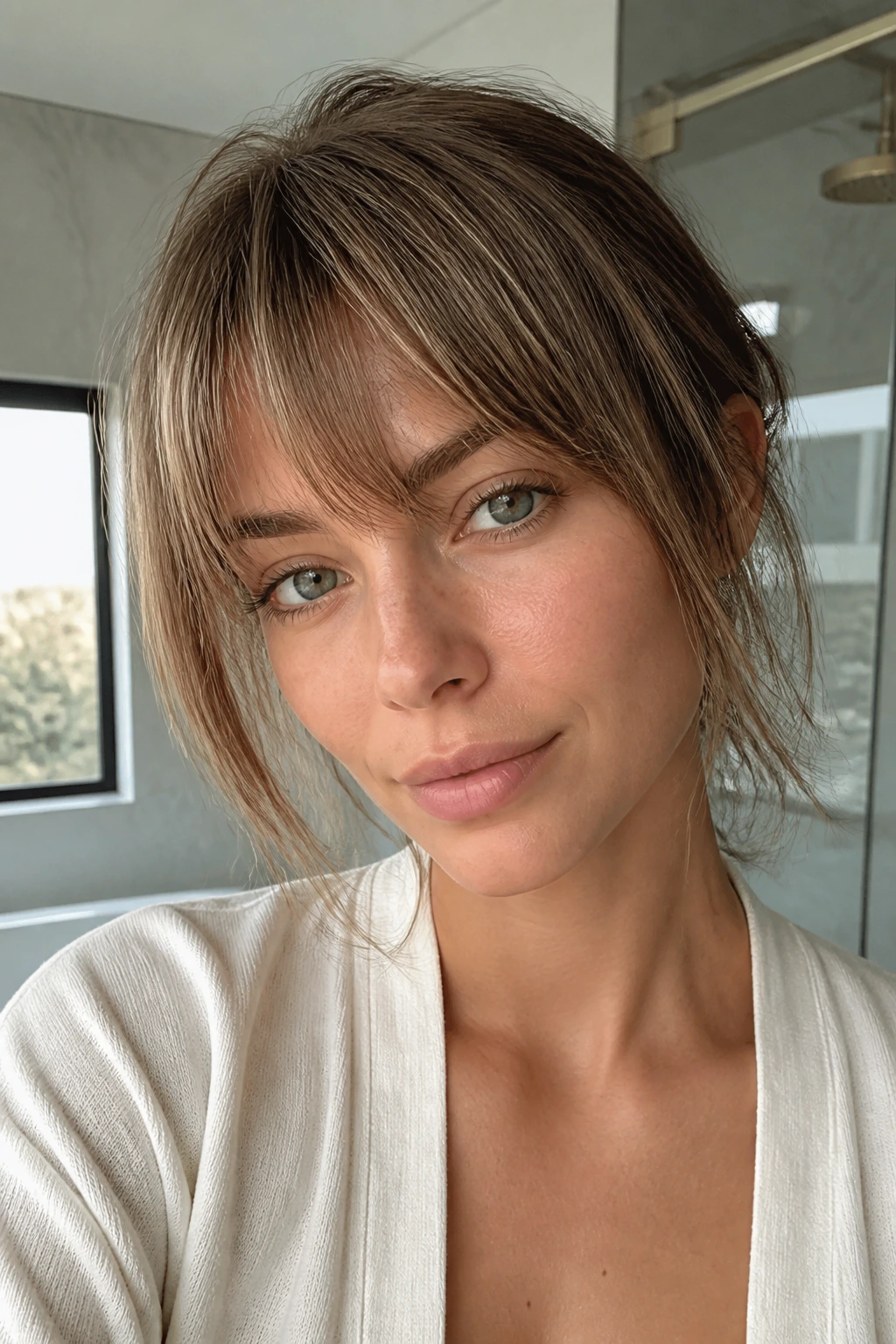
Razor cutting can be lovely on the right hair, but I would not hand it to every fine-hair client without a warning. Used lightly, it creates soft, mobile ends that move instead of sitting stiffly. Used too heavily, it can leave the fringe looking frayed and patchy.
If you choose this route, keep the shape long and the texture controlled. It works best when the hair has some natural body and when you’re willing to style it with a little cream or mousse. On very fine, very straight hair, the result can disappear faster than you expect.
21. Long Bangs With a Slight Angle Toward the Jaw

This is one of the smartest shapes for a square face. The fringe doesn’t stop at the widest point of the jaw; it angles a little forward, which pulls the eye down and away from the corners.
That tiny diagonal shift changes the whole profile. Fine hair also benefits because the front pieces can stay longer and fuller instead of getting whittled down to nothing. If your face feels widest at the jawline, this cut is worth asking about.
22. Curtain Bangs Paired With a Collarbone Cut

Some cuts are about the haircut around the bangs, not the bangs alone. A collarbone-length cut gives fine hair a cleaner edge, and curtain bangs soften the front so the length doesn’t look boxy.
This pairing is a good antidote to the triangle effect. Fine hair can puff out at the sides if the layers are too short; keeping the overall shape at the collarbone keeps the silhouette grounded. The curtain fringe then does the face-softening without stealing all the weight from the front.
23. Side-Swept Fringe With Root Lift
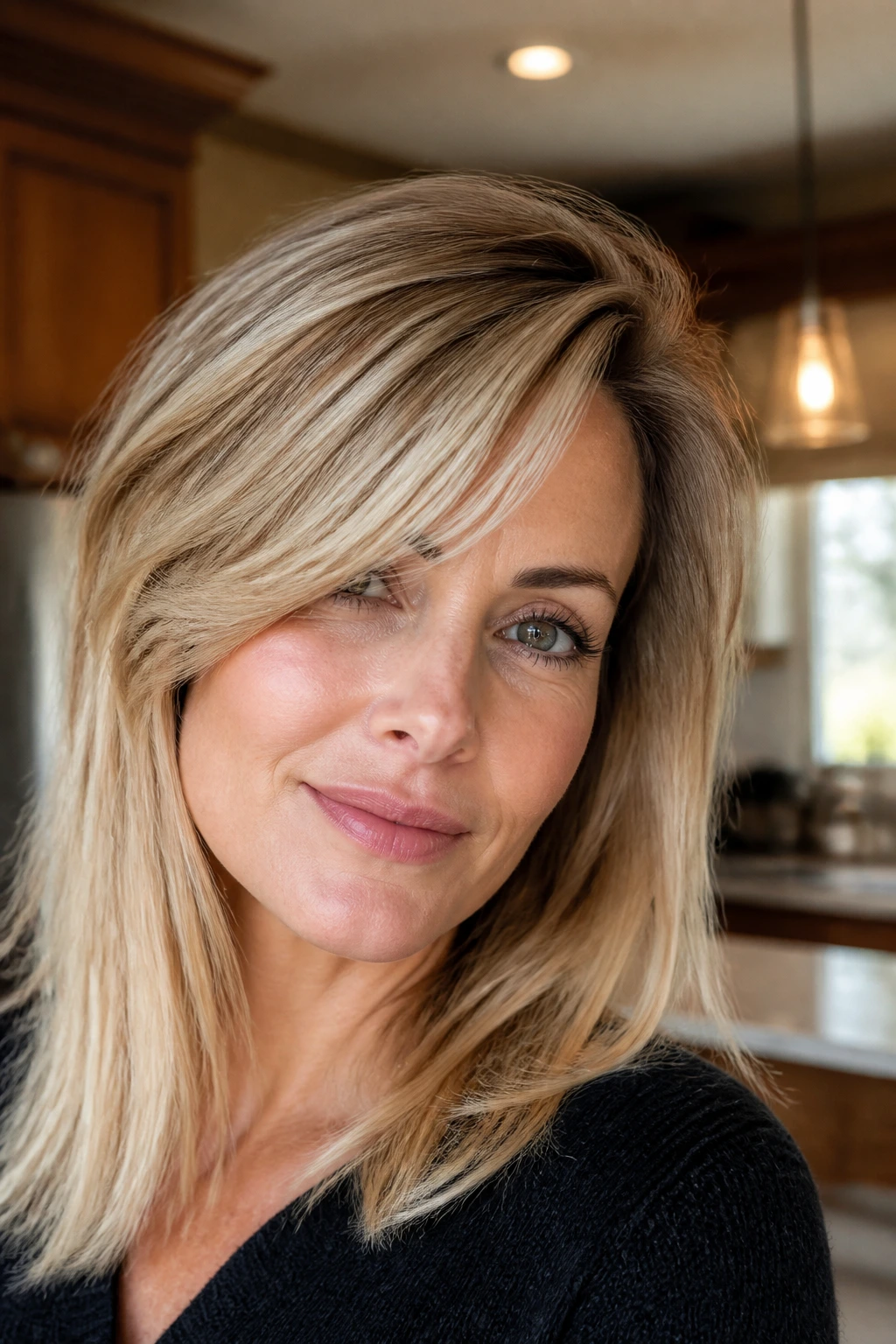
Root lift is the difference between a side-swept fringe that floats and one that sticks to the forehead. On fine hair, that lift gives the style some air, which makes the face look less compressed.
The easiest way to get it is old-school and effective: blow-dry the fringe in the opposite direction for a few seconds, clip it up while it cools, then sweep it back. It’s not fancy. It works. The side-swept line is especially good on square faces because it cuts across the forehead and softens the upper width.
24. Long Fringe With Textured Ends and No Heavy Line
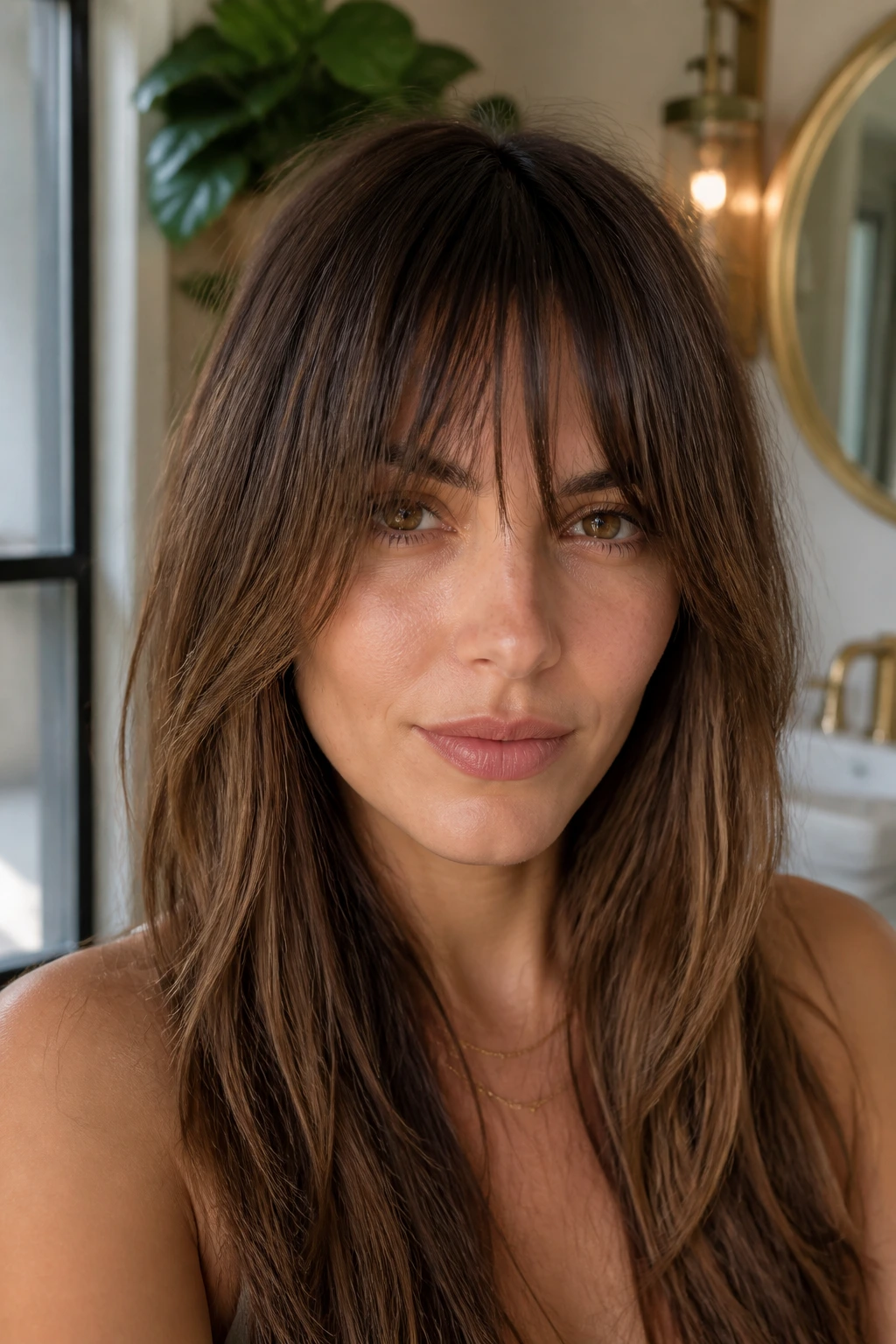
A clean line at the front can be the wrong choice when hair is fine. Textured ends break up that line so the bangs don’t look like a flat strip pasted across the forehead.
This version still needs density in the middle, though. Don’t let the stylist thin it to the point where it starts looking see-through under bright light. Ask for texture only at the very ends and around the edges of the face. The shape should still read as bangs, not leftover pieces.
25. Barely-There Face-Framing Bangs for a Square Face

This is the gentlest option if you want softness without a full commitment to fringe. The front pieces begin near the brow, then taper into face-framing layers that skim the cheek and jaw, which helps a square face look a little less rigid.
It’s a good match for fine hair because there’s no dense block to support. The haircut stays light, and the grow-out is easy. If you’re nervous about bangs but want the face-softening effect, this is the version I’d point to first.
Why Long Bangs for Fine Hair and Square Faces Work Better Than a Blunt Fringe
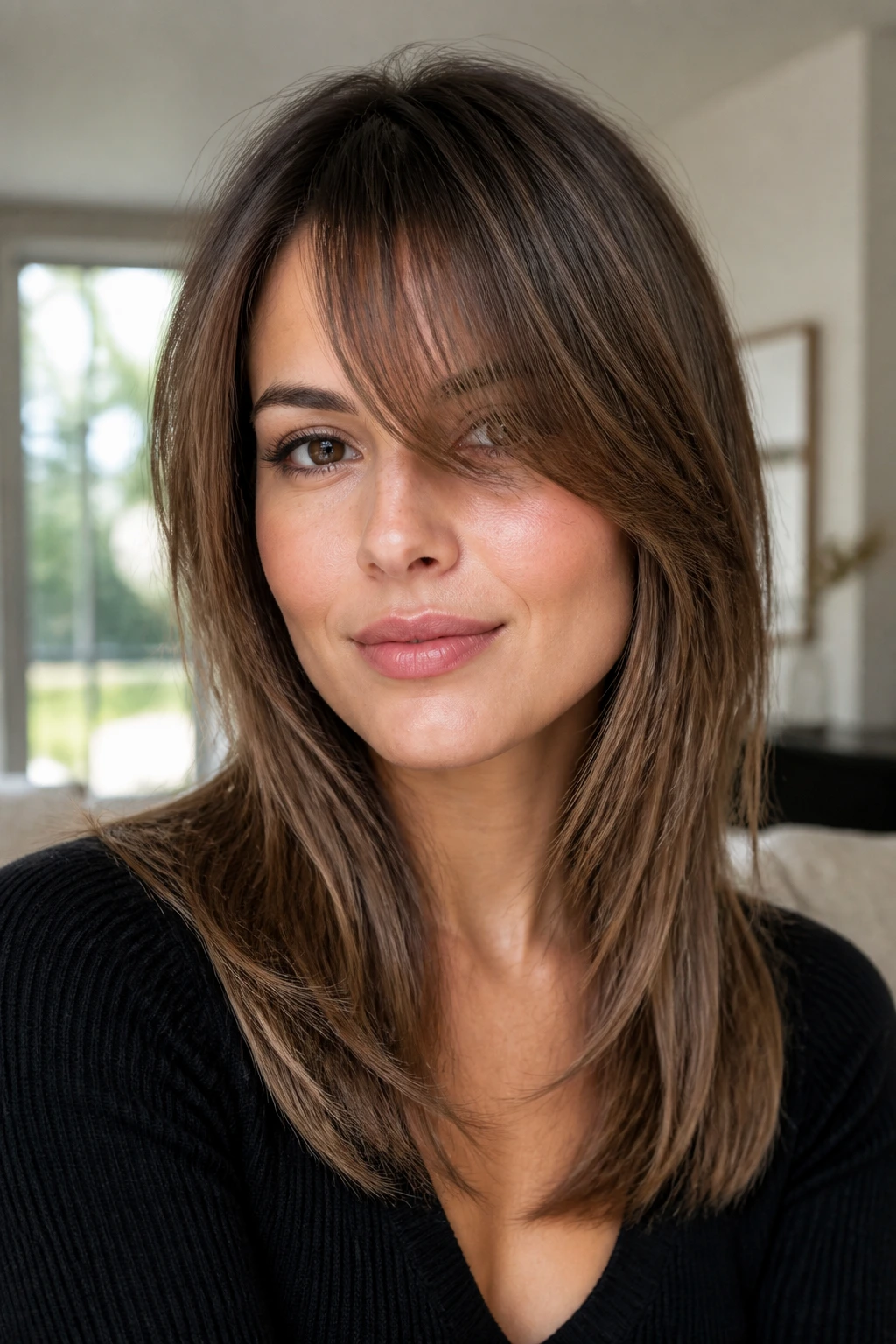
A blunt fringe can look chic, but on fine hair it often demands more density than the hair wants to give. Once the ends start separating, you can see every little gap, and on a square face the hard horizontal line can make the forehead feel wider instead of softer. Long bangs avoid that trap by giving the front movement before they give it structure.
The better shapes do two jobs at once. They keep enough weight through the center so the fringe still looks full, and they let the ends move toward the cheekbones or jawline so the face doesn’t read as one big square. That’s the part many people miss: the cut is not only about the bangs themselves, but about where the eye lands when the hair moves.
The square-face part
Square faces usually have a strong jaw, a broad forehead, or both. Diagonal bangs break that symmetry, which is why side-swept shapes and curtain bangs keep showing up here. They interrupt the straight lines without hiding the face.
The fine-hair part
Fine hair needs density preserved, not chopped into oblivion. A long fringe holds together better because it has enough length to show volume, especially if the stylist uses point cutting instead of heavy thinning shears.
The length that matters
The useful zone is usually between the brow and the cheekbone, with side pieces allowed to reach lower. That gap gives you softness, movement, and enough hair to style without fighting your own texture every morning.
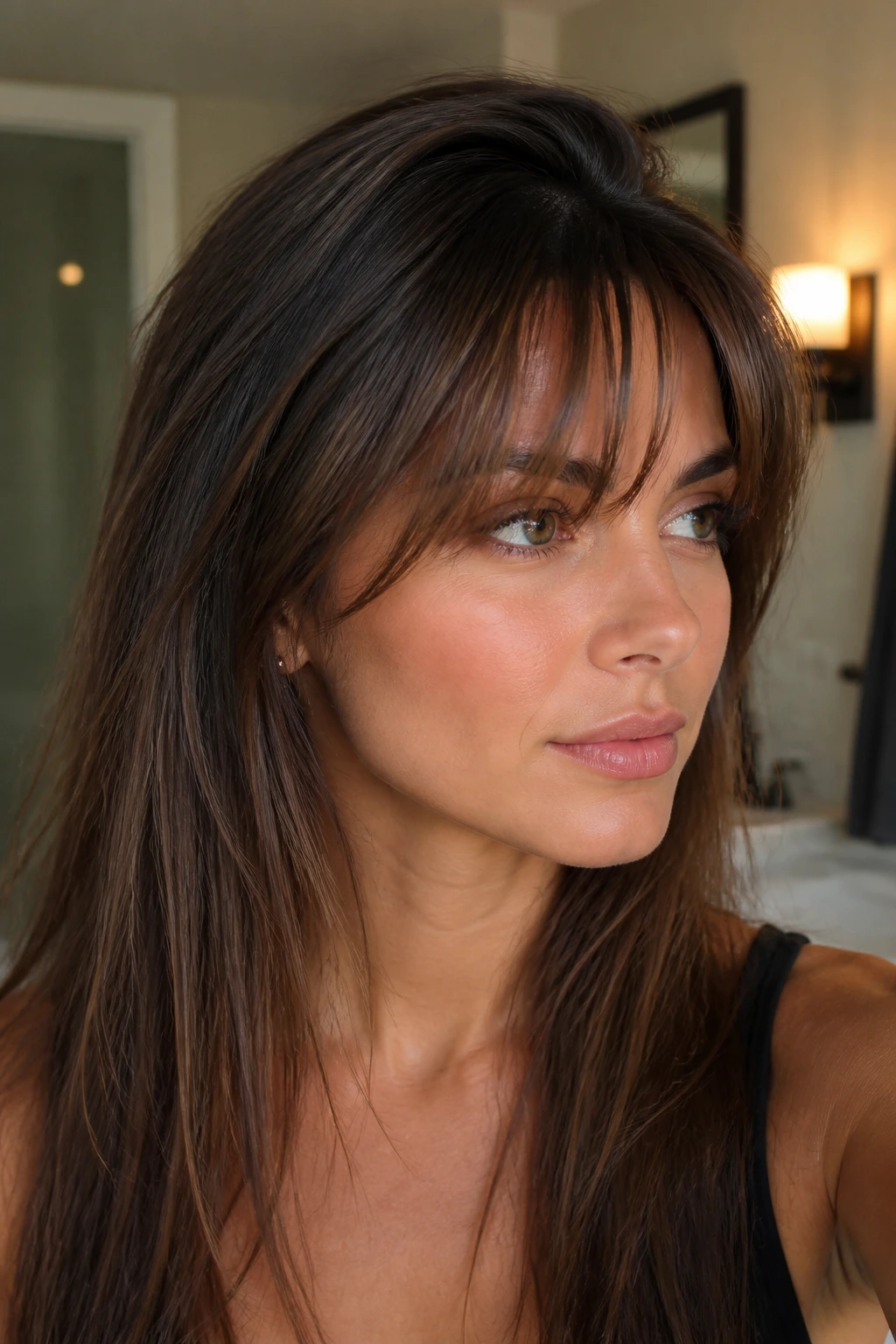
What Helps These Bangs Behave
-
1- to 1.5-inch round brush: Small enough to control the front without creating a giant bend that flips weirdly at the ends.
-
Blow dryer with a nozzle attachment: The nozzle lets you push the fringe side to side and keep the root from collapsing.
-
Duckbill clips or small clips: Useful for setting lift while the bangs cool, which is where the shape often locks in.
-
Lightweight mousse or root lift spray: Adds memory without making fine hair feel sticky or coated.
-
Dry shampoo: Best used at the roots on day two, especially if your forehead tends to oil up the front faster than the rest.
-
Fine-tooth comb: Helps separate the fringe into clean sections before drying so it doesn’t dry in one flat sheet.
-
Heat protectant mist: Fine hair burns and breaks more easily than people assume, so keep this in the routine even if the blow-dry feels quick.
-
Mini flat iron, optional: Handy for a stubborn bend or a single side piece, but not necessary if your blow-dry is good.
How to Style the Front Without Flattening It
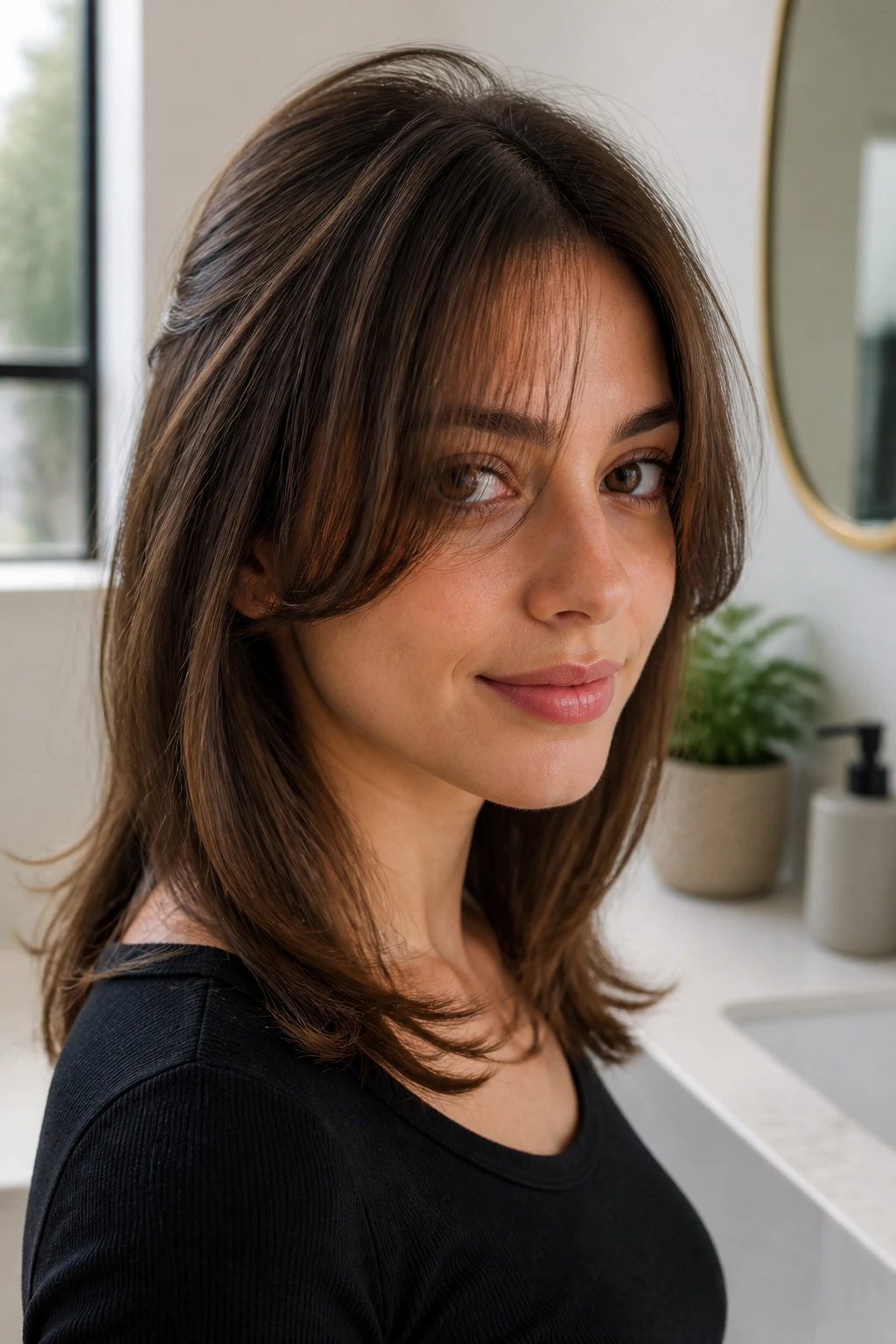
Start with hair that is damp, not dripping. Fine bangs that are too wet take forever to dry, and by the time they do, they’ve usually settled into the wrong direction. Work in a pea-sized amount of mousse or root spray right at the base, then comb it through with your fingers or a fine-tooth comb.
Blow-dry the roots first. Pull the fringe from side to side for the first 20 to 30 seconds, aiming the airflow at the roots rather than the ends. That little back-and-forth motion gives the front lift and keeps it from clinging to the forehead. If the hair wants to split dead center, clip the heavier side up while you work the lighter side.
Set the curve before you let it go. Wrap the bangs around a small round brush, or press them against a velcro roller if that’s easier, and let them cool for a minute or two. Cooling matters more than most people think. Heat shapes the hair, but the cooling stage locks it in.
Use very little product at the end. One drop of serum or a tiny touch of cream on the last inch is enough. Put it near the roots and fine bangs collapse; put it on the ends only and the fringe looks smoother without getting greasy.
Common Mistakes That Make the Cut Look Boxy or Sparse

-
Cutting the fringe too blunt: A hard line across the forehead can make a square face look wider and fine hair look thinner at the edges. Ask for softness at the ends and a longer side sweep.
-
Over-thinning with razors or shears: Too much removal leaves see-through gaps that show up under bright light. Keep the center fuller and let the texture live at the perimeter.
-
Stopping the bangs at the jawline: That lands the eye right on the part of the face you were trying to soften. Longer pieces that reach the cheekbone or move past it work better.
-
Loading up on heavy oils or creams: The front clumps fast and separates into greasy strands. Fine hair usually needs less product than people think, not more.
-
Letting the bangs air-dry in one direction: Once the bend sets wrong, the whole front can feel crooked. A quick blow-dry from side to side is usually worth the extra minute.
Smart Variations and Alternatives to Try
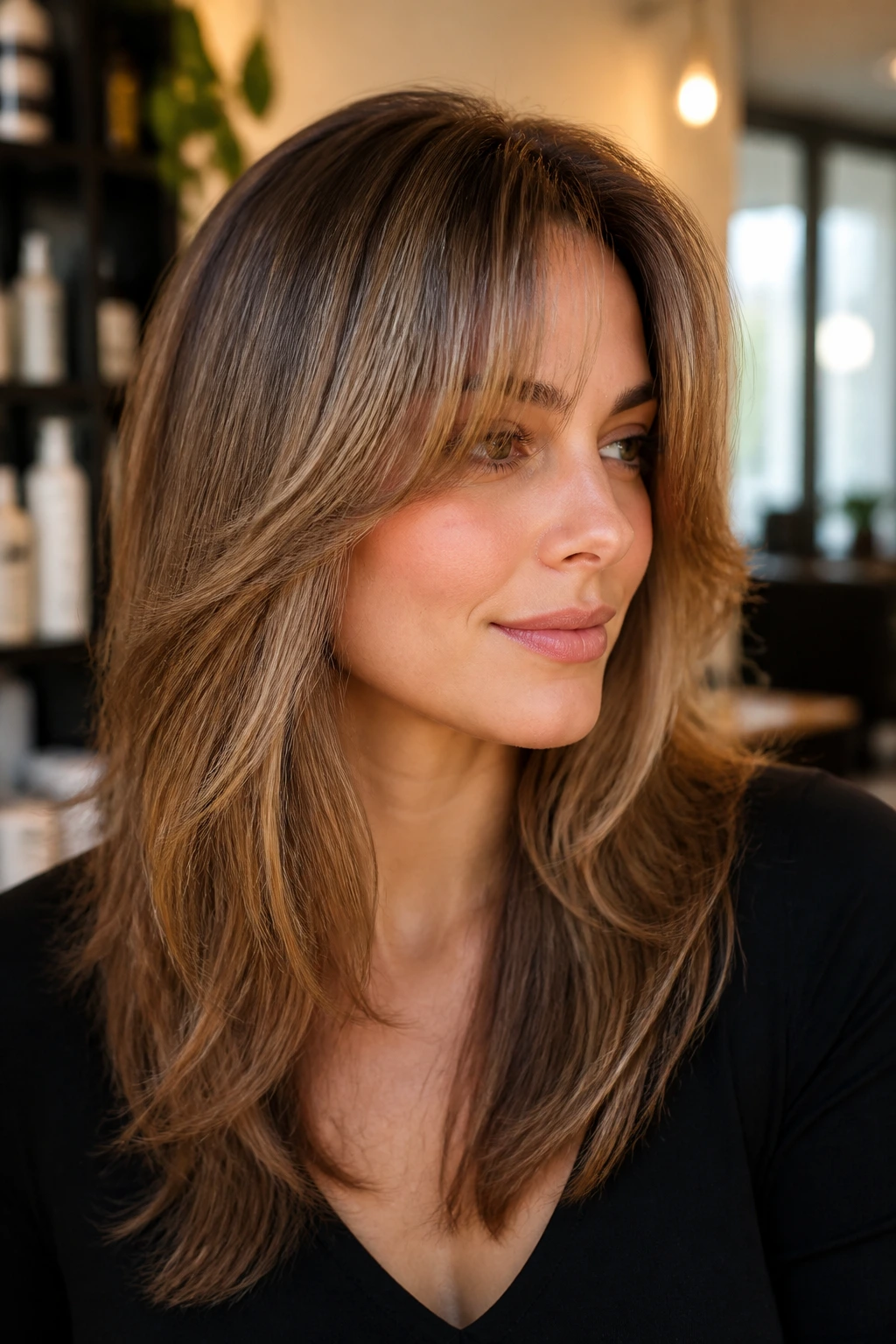
The Soft Curtain. This is the calmest version: a center part, cheekbone-skimming sides, and enough length to tuck when needed. It suits square faces that want softness without a visible cut line.
The Side-Sweep Shield. A deeper side part and a longer sweep across the forehead create a stronger diagonal. Pick this if your jaw is the feature you want to blur a little.
The Shag Pairing. Here the bangs blend into a shag cut, which gives fine hair more movement on top. It works best if your hair has a little bend or wave, because the texture helps the fringe stay alive.
The Blowout Frame. This is the polished option. The bangs are styled into a smooth curve with a round brush and a cool shot, so the front sits neatly without looking stiff.
The Almost-Bang. Face-framing layers start near the forehead and taper into the cheek. It gives you the look of bangs without the daily commitment, and the grow-out is painless.
Keeping Long Bangs for Fine Hair and Square Faces Fresh Between Trims
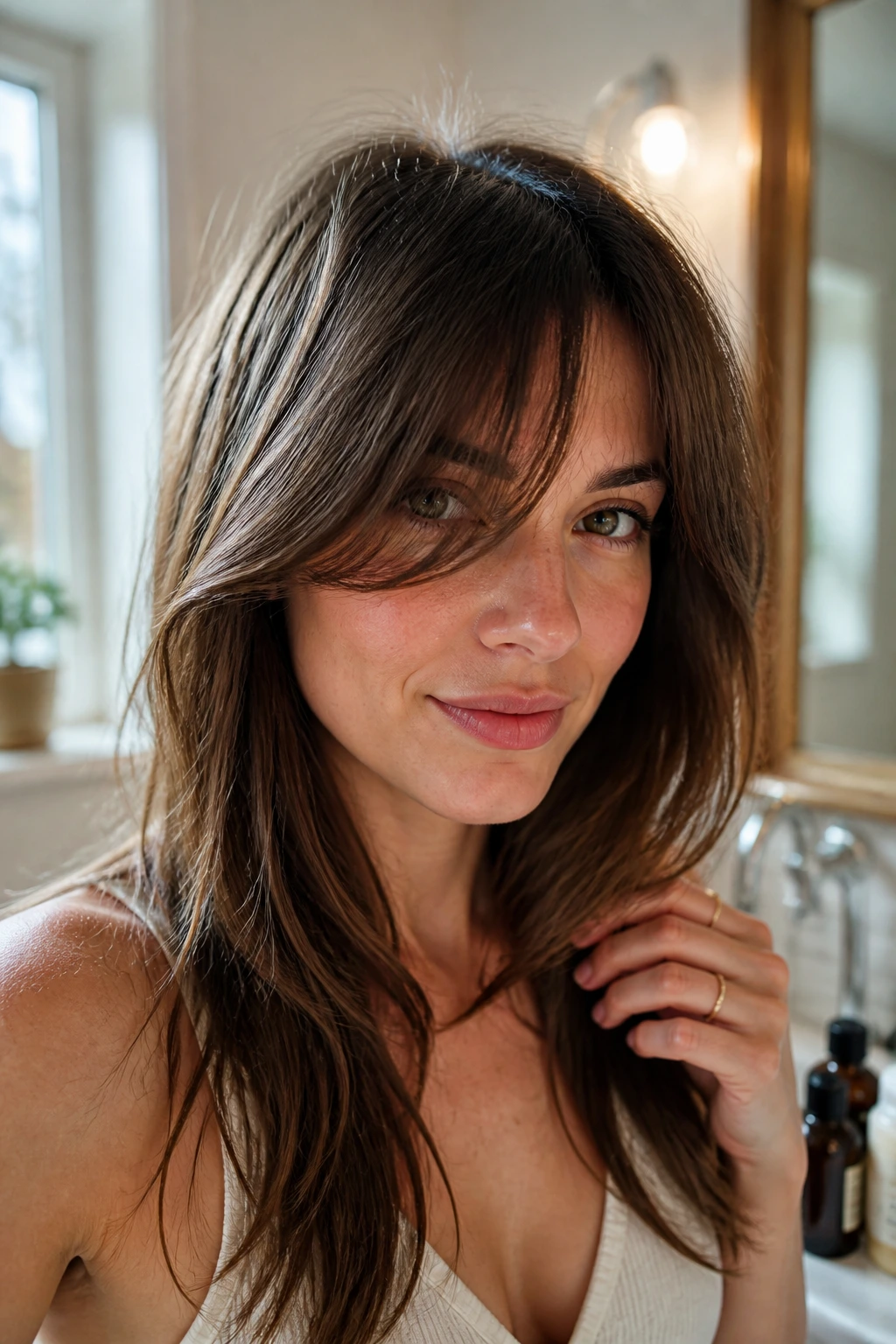
Fine hair tends to show oil at the hairline before the rest of the head needs washing, so the fringe usually needs its own small routine. On wash days, style the bangs first while they’re still damp. If you let the rest of the hair dry and come back to the front later, you’ll usually get a flatter result.
A small dusting trim every 6 to 8 weeks keeps the shape from drifting into your eyes. If the rest of your haircut grows faster than the fringe, ask for a tiny face-framing cleanup in between rather than a full reshaping. That keeps the line soft without forcing a whole new cut.
Dry shampoo helps on the second day, but use it at the roots only. Spraying the ends tends to leave a chalky haze that makes fine hair look even thinner. If the front starts to kink overnight, clip the bangs loosely to one side before bed or reset them with a quick blast of warm air in the morning. Do not go to sleep with them damp unless you enjoy fighting a weird bend before coffee.
Frequently Asked Questions About Long Bangs
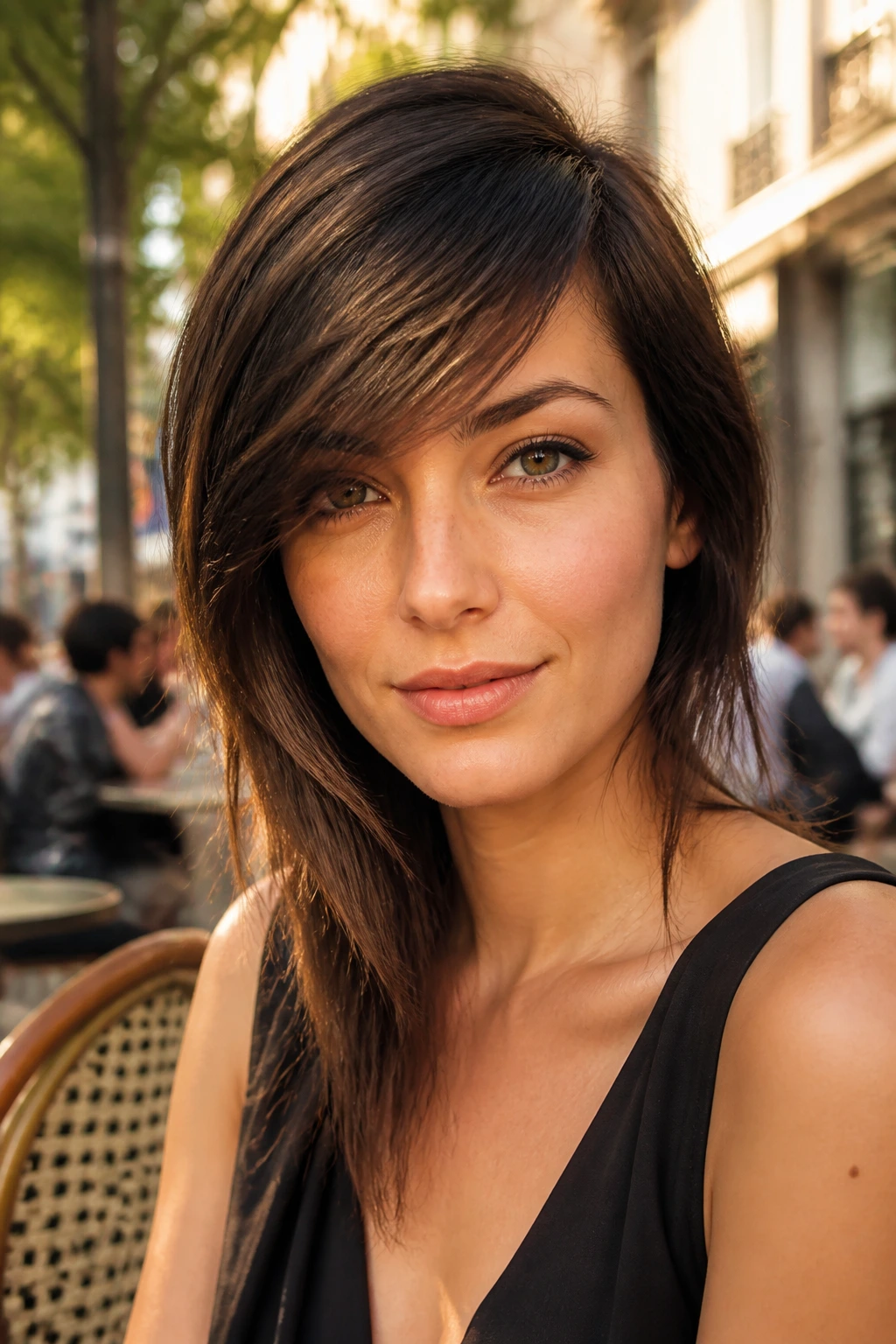
Will long bangs make a square face look wider?
Not when they’re cut with movement. The styles that work best use diagonal lines, soft curtains, or cheekbone-length sides that break up the width instead of adding to it.
Are curtain bangs or side-swept bangs better for fine hair?
Curtain bangs give you more flexibility, while side-swept bangs often give a little more lift at the root. If your hair falls flat fast, the side-sweep can hold shape better; if you want easier grow-out, curtains usually win.
How short should the shortest part be?
For most fine-hair cuts, somewhere around the brows or just below them is safer than anything shorter. Going too short can make the fringe look sparse and can expose the forehead in a way that feels harsher on a square face.
Can I get long bangs if my hair is pin-straight?
Yes, but keep the texture soft and the density intact. Straight fine hair does best with a shape that preserves weight through the middle and a blow-dry that adds a little bend at the sides.
What if my bangs split down the center on their own?
That usually means the hair wants a curtain or bottleneck shape. Don’t fight it too hard. Train the direction with a clip and a quick blow-dry, then let the natural split guide the style.
How often should I trim long bangs?
Most people need a small cleanup every 6 to 8 weeks. Fine hair grows into the eyes faster than it seems, and once the fringe gets too long, the balance between softness and shape starts to disappear.
Can I wear glasses with long bangs?
Absolutely. Long bangs often work better with frames than short blunt fringes because they can clear the top of the glasses or tuck gently around them. The key is keeping the longest pieces long enough to avoid crowding the frames.
What if I hate styling my bangs every morning?
Choose something that blends into the haircut instead of a dense fringe. Face-framing layers or soft curtain bangs are the easiest options because they still look decent when the blow-dry is imperfect.
A Softer Frame Up Front
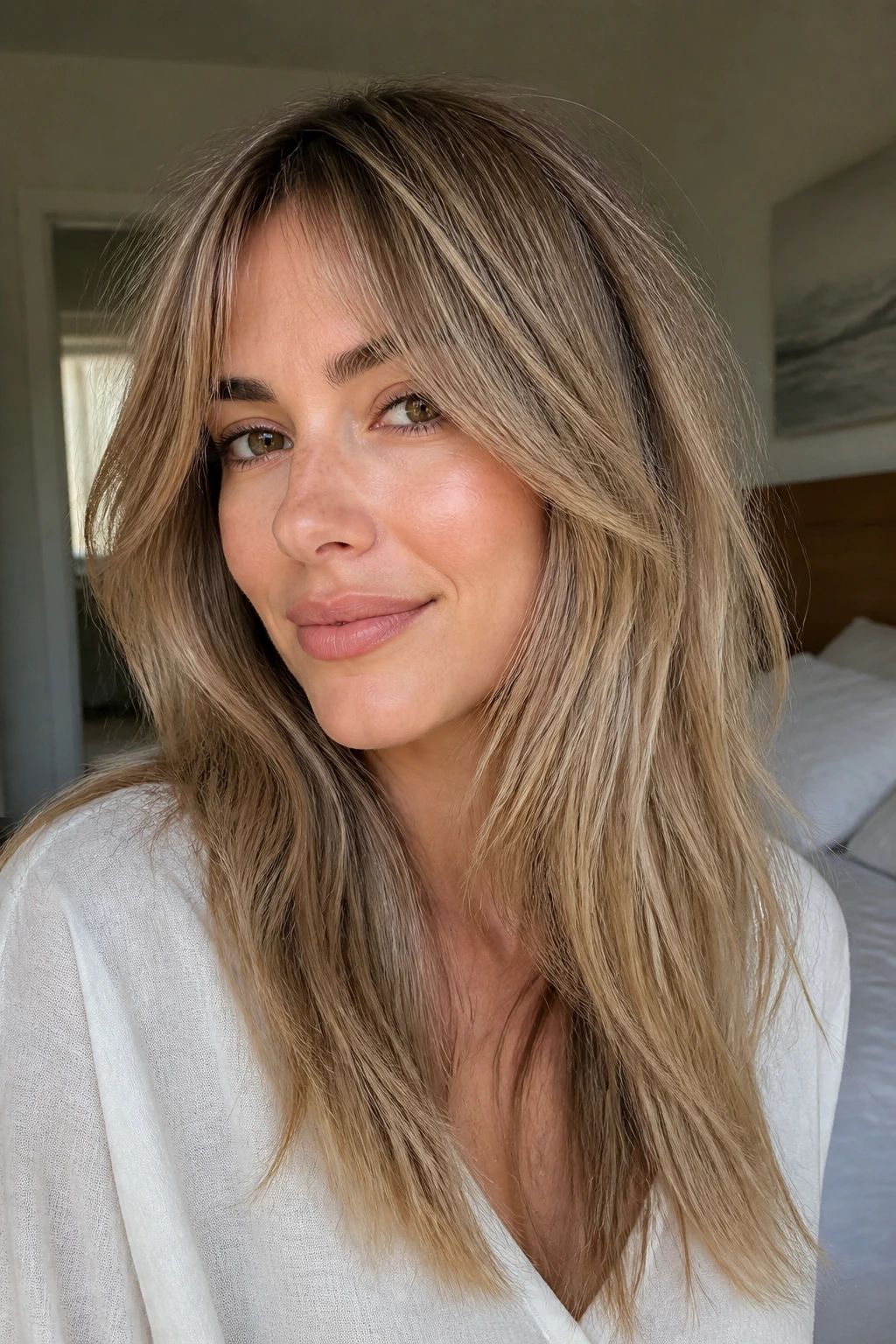
The best long bangs for fine hair and square faces do not try to hide the face. They soften it. That’s a different goal, and it leads to better hair choices. You want a front shape that bends, moves, and keeps enough density to survive a real day, not just a salon mirror.
If you take one thing from all of this, make it the length. The shortest point, the side sweep, and the way the ends graze the cheekbone matter more than a trendy name on a mood board. Bring a photo, sure. But bring a sense of how much styling you’ll actually do, too. That’s the detail that keeps the fringe looking like a choice.