



A round face does not need camouflage. It needs direction.
That’s the whole trick with layered haircuts for round faces: you’re not trying to erase the shape, you’re steering the eye. A good cut makes the face feel longer, the cheeks feel less boxed in, and the whole outline feel a little more lifted. The wrong cut does the opposite. A blunt line that lands right at the widest part of the face can make everything look wider, even when the hair itself is expensive, shiny, and freshly blown out.
I’ve always thought the best round-face cuts are the ones with a bit of movement in the right places. Not chaos. Not random thinning. Actual shape. The shortest pieces should work with the cheekbone or below it, the crown needs a touch of height, and the ends should not flare out like a bell around the jaw. That’s the geometry behind the flattering versions, whether the hair is pin-straight, wavy, thick, fine, or full of curl.
The good news is that round faces have more room to play than people think. Short cuts can work. Long cuts can work. Bangs can work. The details matter more than the length. And once you know which layered haircuts for round faces create that clean vertical line instead of a wide horizontal one, the whole salon conversation gets a lot easier.
Why These Layered Haircuts Work So Well on Round Faces
-
They pull the eye downward: The best versions use collarbone length, tapered ends, or longer front pieces so the face reads a little longer instead of wider.
-
They break up the circle: Face-framing layers that start at or below the cheekbone interrupt the soft round outline without making the cut look severe.
-
They add height where it helps: A bit of lift at the crown changes everything on a round face. It keeps the haircut from spreading sideways.
-
They work with texture instead of against it: Thick hair gets bulk removed, fine hair gets movement, and curls get shape that follows the jaw instead of swelling around it.
-
They grow out better than blunt shapes: Softer layers and diagonal front pieces still look deliberate when the appointment starts getting old.
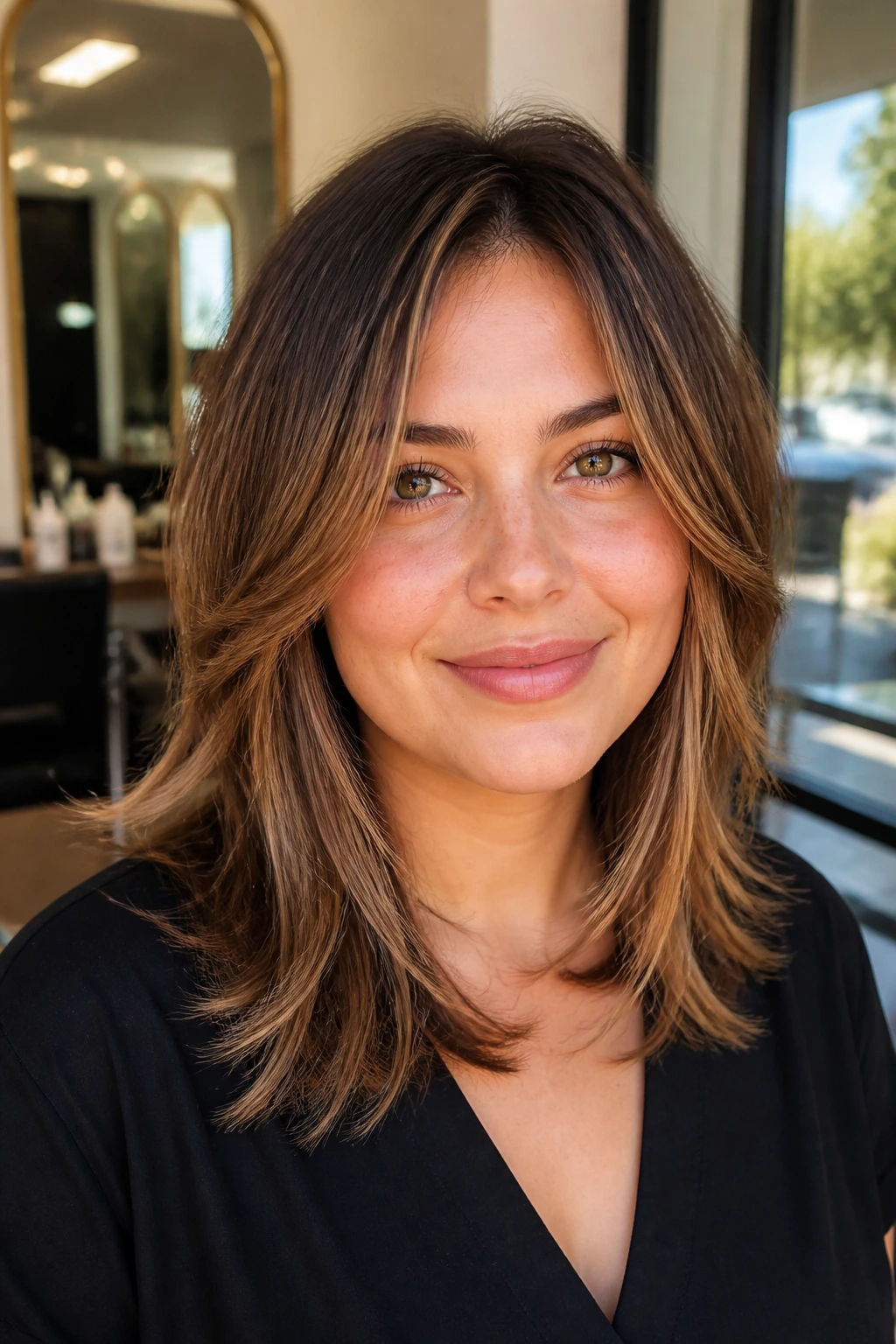
1. Collarbone Layers with an Off-Center Part
A collarbone cut with long layers is the safest place to start if you want shape without drama. The front pieces skim the collarbone, the back keeps enough length to swing, and the off-center part shifts the whole look just enough to make the face feel longer. It’s one of those cuts that doesn’t scream for attention, which is exactly why it works so hard.
The key is where the shortest layer lands. Ask for the front to begin below the cheekbone, not at the apple of the cheek. That little adjustment keeps the cut from adding width in the middle of the face. On straight hair, it looks sleek and clean. On wavy hair, the layers fall into a soft bend that frames the jaw instead of sitting on it.
What to ask for: long face-framing pieces, a soft off-center part, and movement that starts below the cheek.
Best for: medium to thick hair that needs shape without losing length.
Style note: a 1.25-inch curling iron or a round brush gives the front pieces that slight bend away from the face.
2. Curtain Bangs with Shoulder-Skimming Layers

Curtain bangs have earned their place because they split the face right down the middle and then move outward like little side wings. On a round face, that matters. The center gap opens the forehead, and the longer sides draw attention toward the cheekbones instead of sitting on top of them.
This version works best when the curtain fringe is cut to graze the cheekbone or lower. Too short, and the bangs start to widen the face. Too heavy, and you lose the lightness that makes the whole thing feel modern. I like them paired with shoulder-skimming layers because the length gives the bangs a place to land. No awkward hovering. No helmet effect.
If your hair has a natural wave, this cut is especially easy to live with. If it’s straight, the fringe needs a quick round-brush pass so the ends turn away from the cheeks. That little curve does more than most people realize.
3. The Butterfly Cut with Long Ends
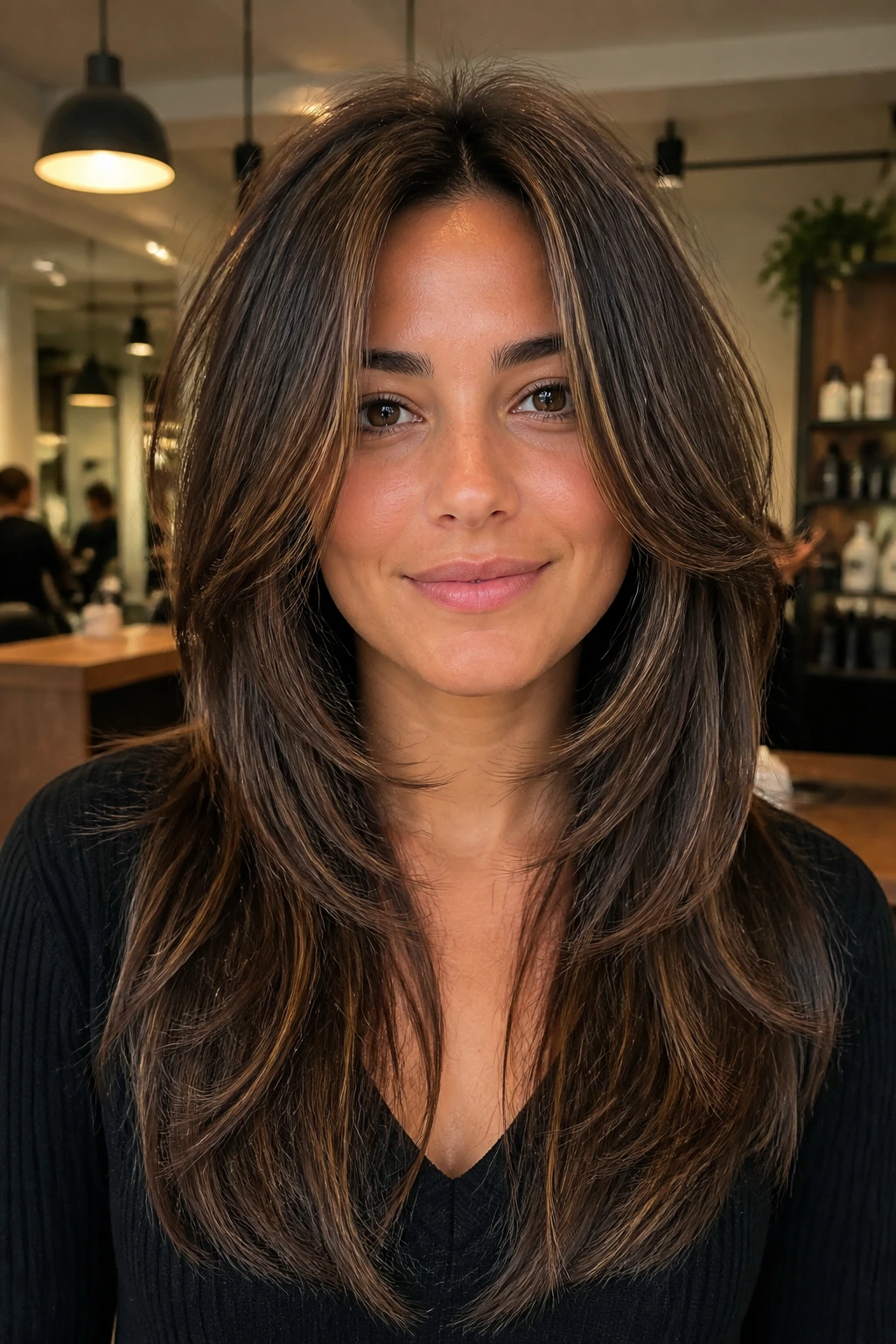
The butterfly cut is one of the few layered styles that gives you a dramatic shape without sacrificing the feeling of length. The top layers sit shorter and lighter, often around the chin to collarbone zone, while the bottom length stays long and full. On a round face, that split is useful because it creates movement high on the head and keeps the bottom section from looking flat and heavy.
What I like here is the airiness around the crown. It gives the face a vertical lift. Not a huge one. Just enough to stop the haircut from spreading across the cheeks like a blanket. The long bottom layer keeps the whole thing polished, which matters if you don’t want a shag or wolf cut to take over your head.
This cut can flop if the top layers are cut too short on fine hair. On thicker hair, though, it’s a sweet spot. Ask for the shortest pieces to begin around the cheekbone or slightly below, then let the longer layers blend into the chest-length ends.
4. A Soft Shag with Cheekbone Pieces

A shag can be a gift for round faces, but only if the layers are placed with some restraint. The point is not to make the hair explode sideways. The point is to create little bits of movement that skim the cheekbones and jaw, then fall away from the face instead of sitting on it.
The softened shag works especially well on wavy hair. It takes the natural bend and turns it into shape, which means less fighting and fewer styling tools. Keep the face-framing pieces longer than a classic rock-and-roll shag would. A few wispy strands at the cheekbone are fine. A thick fringe that stops right at the cheeks is not.
This is one of my favorite options for someone who wants a layered haircut for a round face but hates the look of overdone blowouts. A little mousse, a diffuser, and some finger scrunching are usually enough. It should look lived-in, not styled to death.
5. The Textured Lob with Piecey Ends
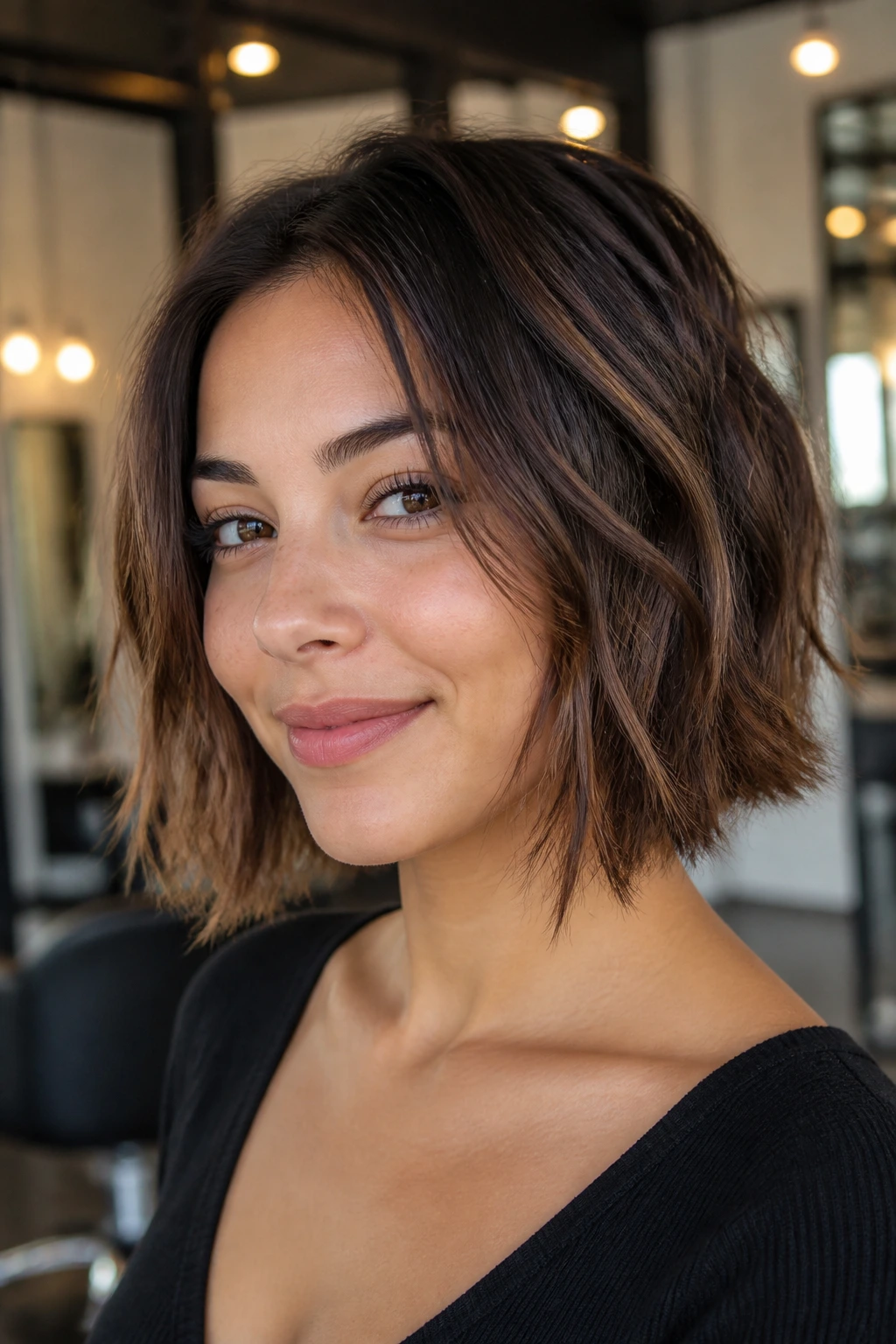
The layered lob is still popular for a reason: it sits in that sweet spot between too short and too long. On a round face, the length matters. A lob that ends a touch below the jaw gives the face room to narrow before the hair stops. That’s the whole game.
Piecey ends keep the cut from feeling blunt. I prefer a lob with internal layers rather than chunky surface layers, because the shape stays clean while the ends get movement. You want the hair to bend, not puff. On straight hair, flat-iron bends at the mid-lengths make the whole style look deliberate. On wavy hair, the natural texture usually does half the job for you.
This cut is for people who want low fuss but not zero style. It reads neat when straight, relaxed when air-dried, and it grows out without turning into a box. That’s more valuable than people admit.
6. C-Shape Face-Framing Layers
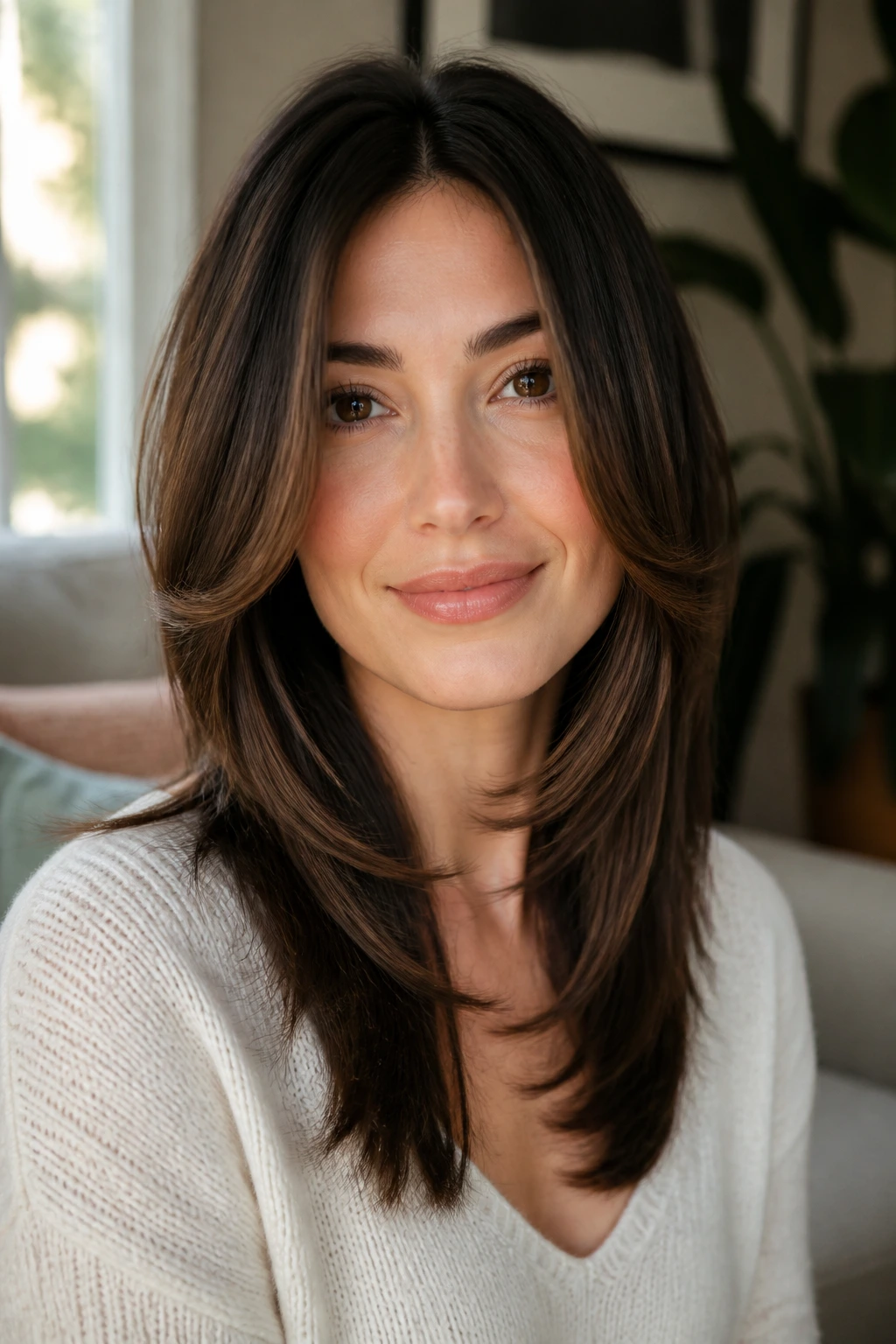
C-shape layers are one of the most flattering tricks for round faces because they create a curve that wraps in front of the cheek and then falls away below the chin. The line looks almost contour-like, but without that carved, overstyled feeling. The haircut does the work quietly.
The shortest point should usually hit around the cheekbone, then arc down through the jaw and into the collarbone. That long curve is what keeps the face from looking widest right where the hair begins. If you want to be very specific at the salon, ask for a soft C that hugs the front and stays airy through the sides.
This shape works best when the hair has some swing. Pin-straight hair can handle it, but a slight bend gives it life. Thick hair especially benefits from this cut because it removes the triangle effect and creates a front frame that feels intentional instead of heavy.
7. U-Cut Layers for Thick Hair
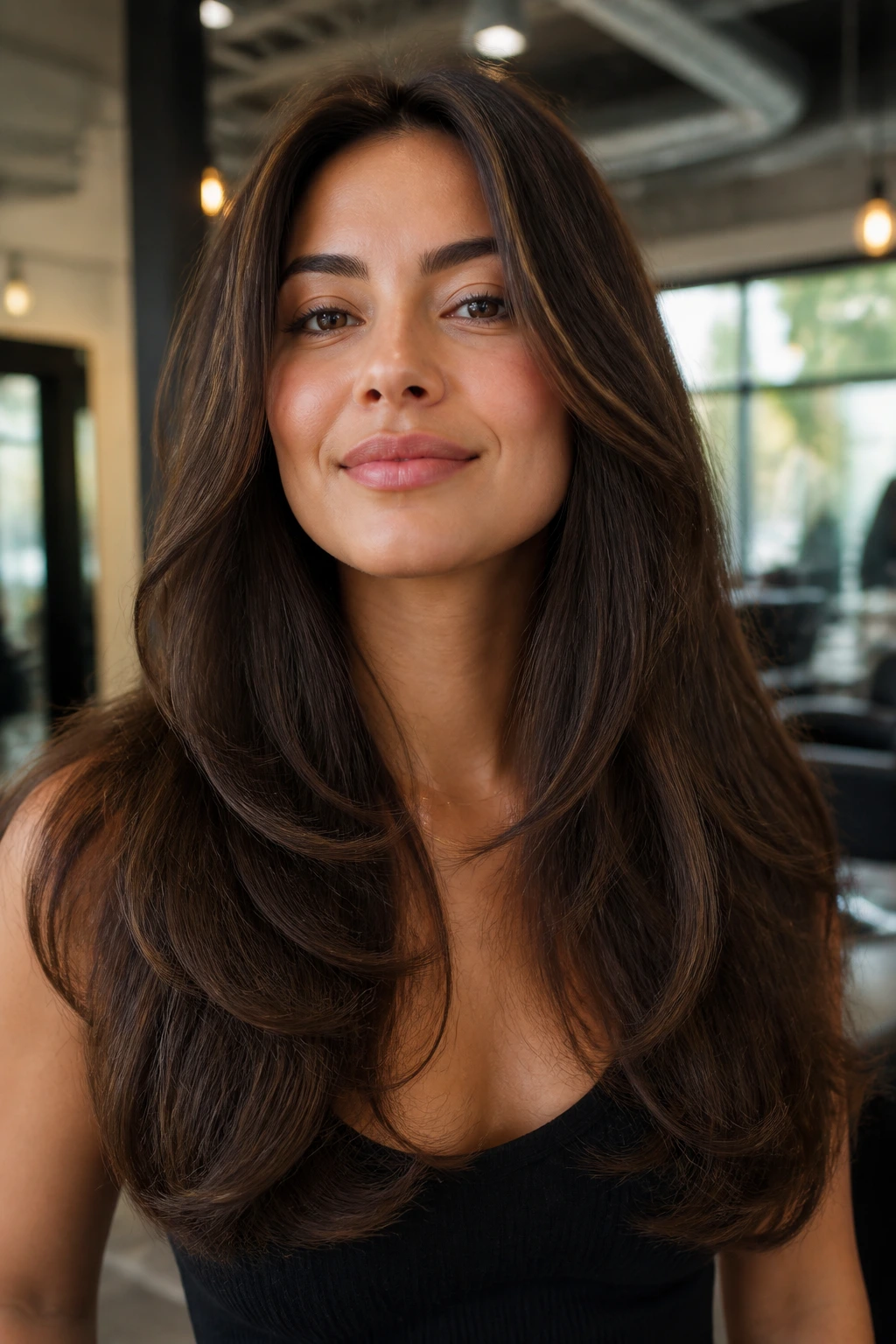
Thick hair on a round face can go one of two ways: elegant and controlled, or wide and puffy. The U-cut lives in the first category. The perimeter curves gently instead of stopping in a hard line, and internal layers take weight out from the middle and back without chopping the ends into pieces.
That matters. A round face already has soft curves, so the hair should not make another wide line at cheek level. The U shape keeps the silhouette long, while the internal layering stops the ends from building into a helmet. I like this cut on dense hair that takes forever to dry, because a good U cut can cut down the bulk without making the style look thin.
It does need a stylist who understands restraint. If the layers are too short, the hair springs outward. If they’re too timid, the shape stays thick in all the wrong spots. Ask for movement below the cheekbone and weight removal that does not touch the very ends too hard.
8. A Soft Wolf Cut with Longer Fringe
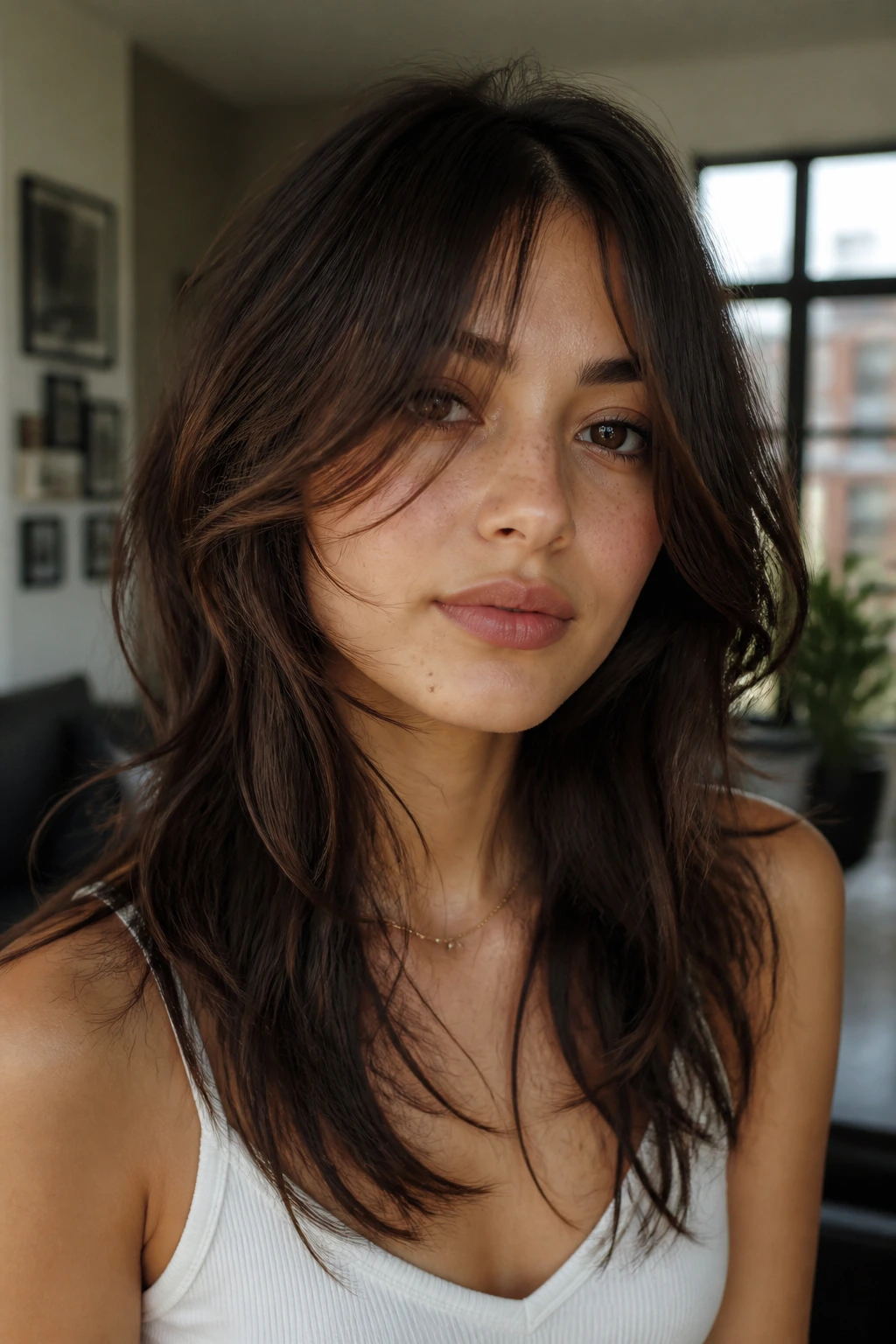
The wolf cut gets a bad reputation when it’s taken too far. The exaggerated version can widen the sides and make round faces look puffier than they are. The softer version is the one worth keeping. It uses a longer fringe, a touch of crown volume, and layered lengths that stay below the cheeks.
On wavy or slightly curly hair, this cut has a lot of personality. The top gets lift, the sides get texture, and the ends taper enough to avoid a big round shape. The trick is not to make the fringe too short or too full. Leave the front pieces long enough to skim the cheek and jaw, then let the rest of the cut carry the attitude.
This is not the haircut for someone who wants a polished, smooth blowout every day. It looks best a little undone. A salt spray, a diffuser, and a quick scrunch are often enough. If you like hair that has edge but still gives the face a longer outline, this one delivers.
9. A Textured Pixie with Height on Top
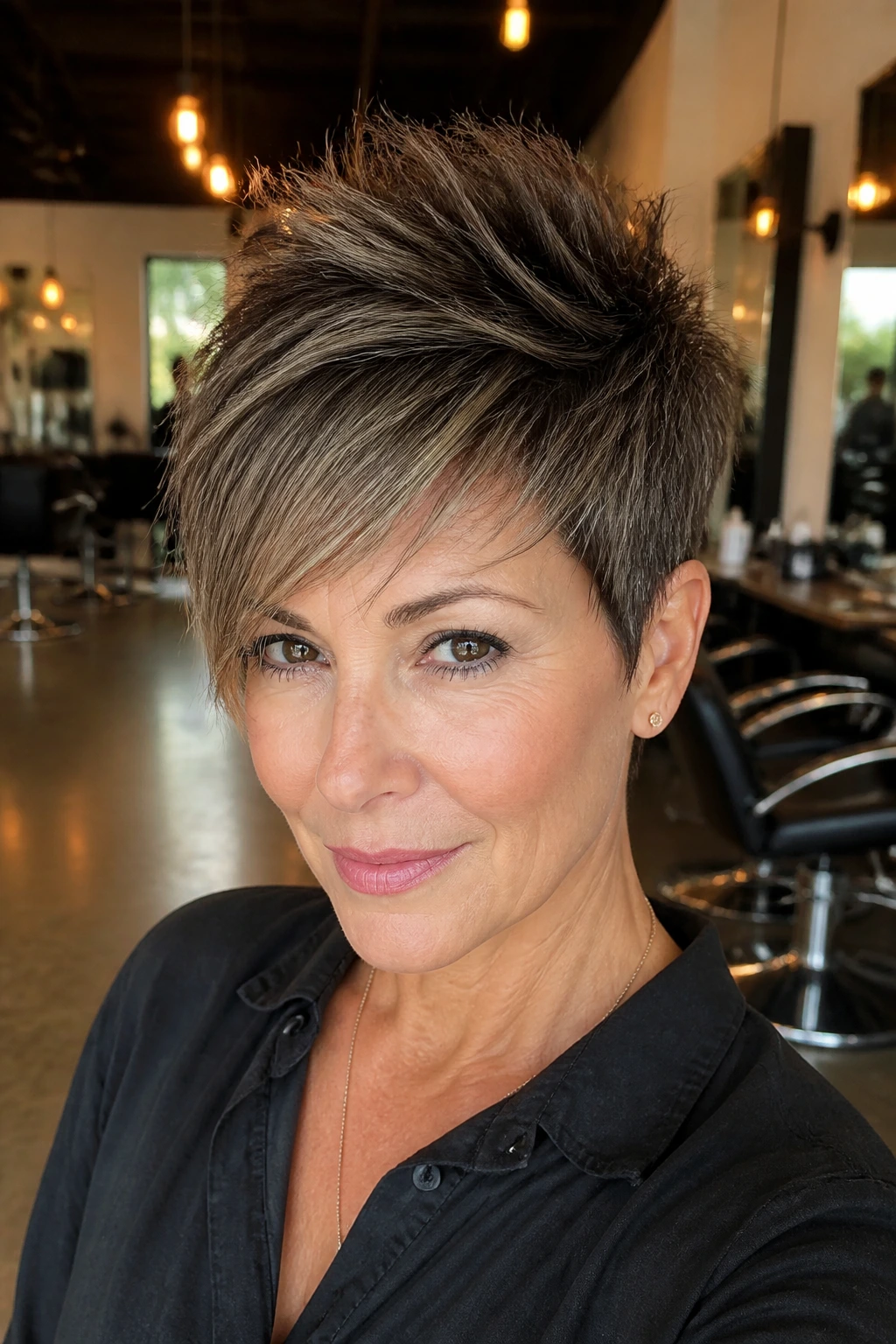
Yes, a short cut can flatter a round face. In fact, a short cut with the right balance can flatter it more than a long one that’s cut badly. The textured pixie works because it keeps the sides close while building height at the top, which stretches the face visually instead of widening it.
The fringe matters here. Keep it slightly longer and side-swept rather than blunt and straight across. That diagonal line is your friend. It breaks up the circle and keeps the cut from looking too symmetrical. If the top is too flat, the whole shape loses its lift. If the sides are too fluffy, the face gets boxed in again.
This style is sharp, practical, and a little brave. It needs regular trims to stay crisp, but the daily styling is quick. A pea-sized dab of paste, a few seconds with your fingers, and you’re done. Not everyone wants that kind of short crop, but round faces absolutely can wear it.
10. Shoulder-Length Layers with Side-Swept Bangs
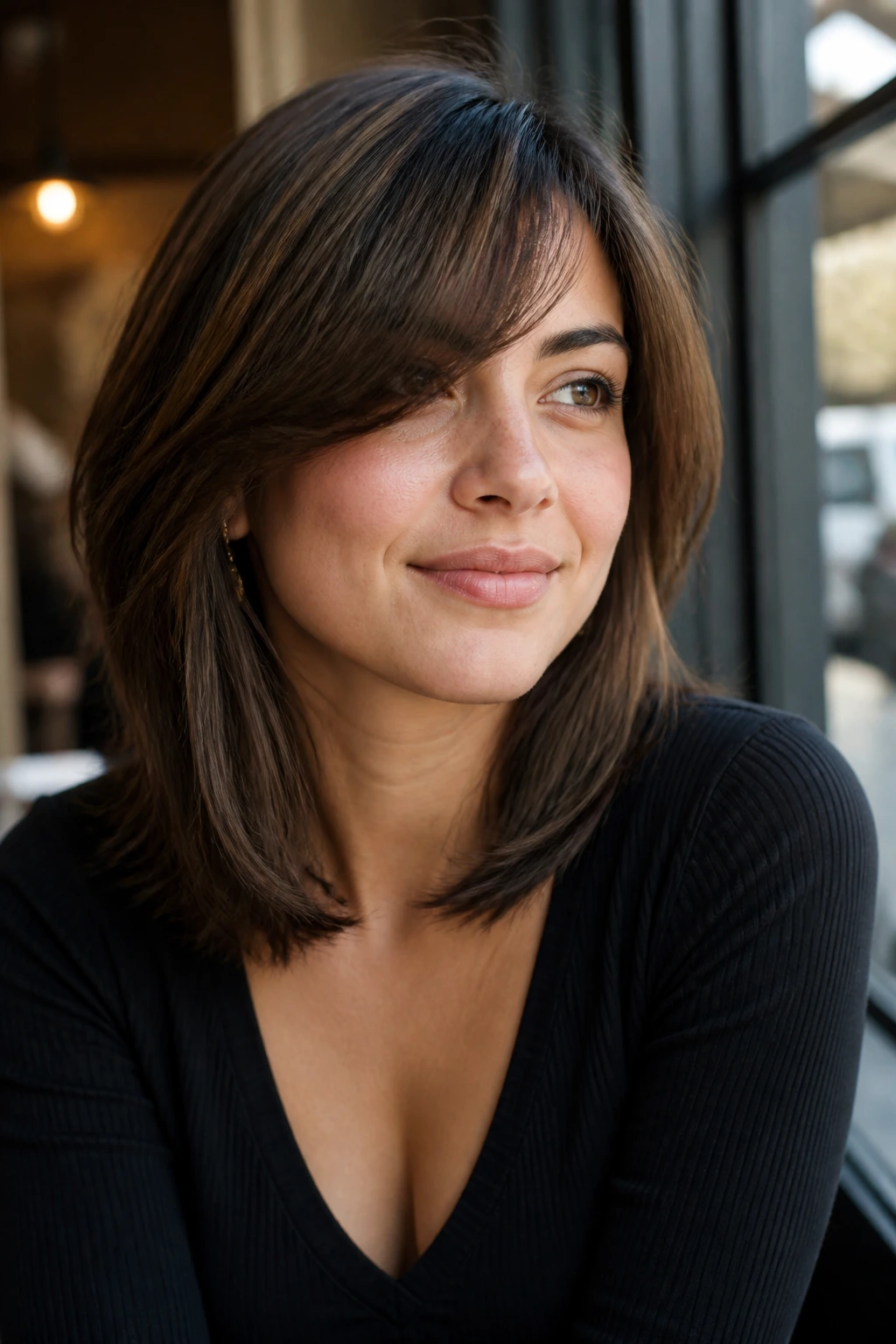
A shoulder-length cut with side-swept bangs is the quiet overachiever in this whole group. It doesn’t rely on drama. It relies on angle. The side-swept fringe cuts across the forehead diagonally, and that line pulls the eye outward and upward instead of straight across the cheeks.
The layers should start around the collarbone or just above it, with the bangs sweeping from a deeper side part. That combination keeps the front soft while the length stays long enough to narrow the face. It’s a nice choice if you want bangs but don’t want to commit to a full fringe every morning.
This shape works especially well if your hair has some natural bend. If it’s straight, a quick blow-dry with a medium round brush is enough to move the bang away from the face. If you wear glasses, this cut can be very good because the side sweep leaves room instead of crowding the frame.
11. Waterfall Layers on Straight Hair
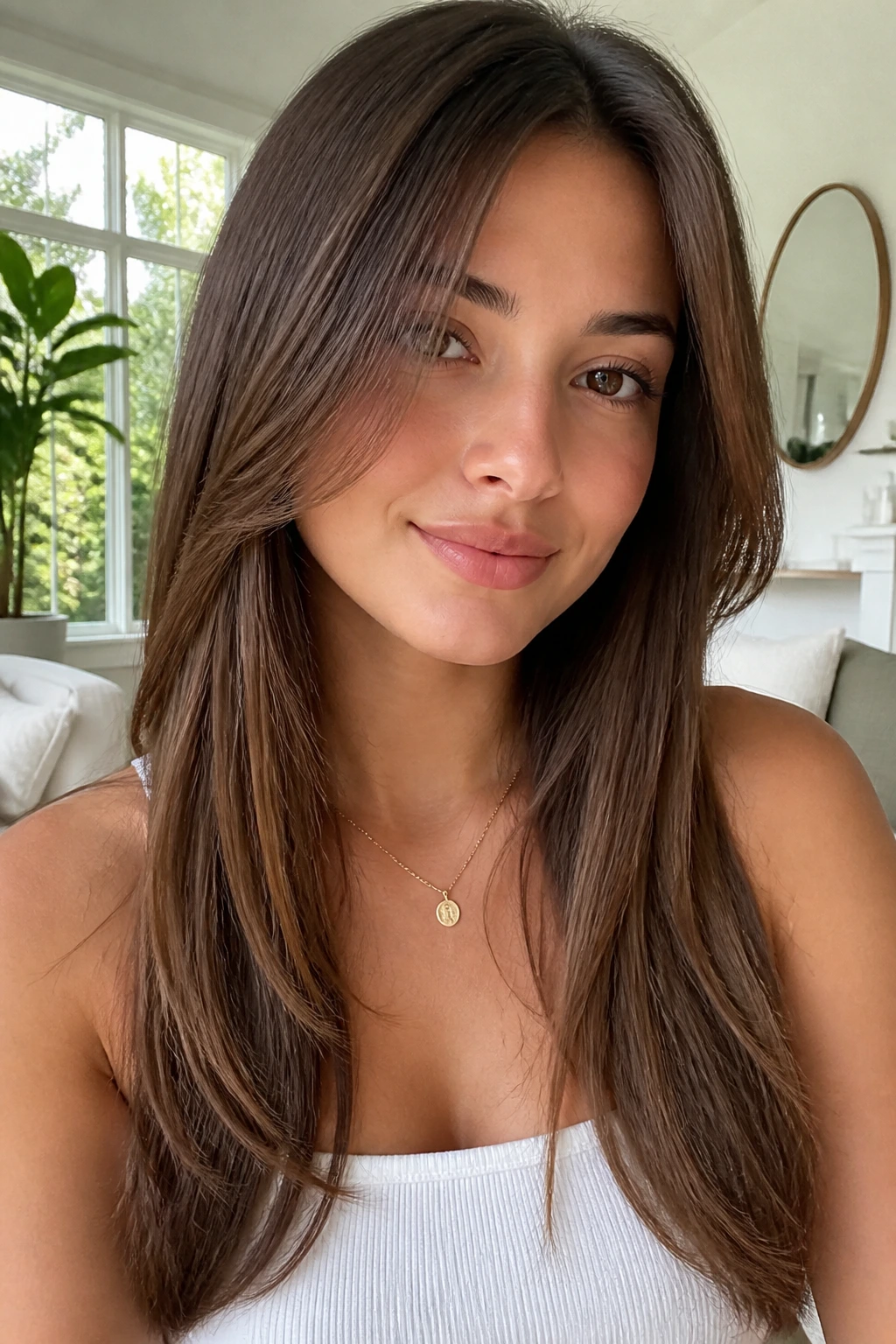
Waterfall layers are all about flow. The layers are long and connected, so the hair falls in a gradual sweep rather than in obvious steps. On straight hair, that makes a round face look longer because the lines slide down the head instead of blooming outward at one fixed point.
I like this cut when someone wants movement but refuses to look “layered” in the obvious sense. The best version keeps the shortest face-framing piece below the chin and lets the rest cascade cleanly. No chunky disconnects. No over-textured ends. The effect should be polished, almost liquid.
Straight hair often needs help staying from looking too flat, though, so a little crown lift matters. A root mousse and a blow-dry with the nozzle pointed upward at the roots can give enough height to prevent the cut from clinging to the head. That small lift changes the face shape more than people expect.
12. Invisible Layers for Mid-Length Hair

Invisible layers are for anyone who likes the idea of movement but hates the look of obvious chopping. The layers live inside the haircut, so the perimeter stays smooth while the internal shape gets lighter. On a round face, that lets the hair move without adding width at the sides.
This is one of the most wearable options in the whole list because it looks neat on day one and still looks decent when you’re three days out from a wash. The front can be kept longer and soft, and the face-framing pieces can start below the cheekbone without calling attention to themselves. It’s especially smart for someone with medium-density hair that tends to puff up if it’s over-layered.
There’s a practical upside too: invisible layers are easier to grow out. You don’t get a hard shelf line. You get shape that drifts, which is a lot kinder to busy people and imperfect schedules.
13. A Clavicle Cut with a Deep Side Part
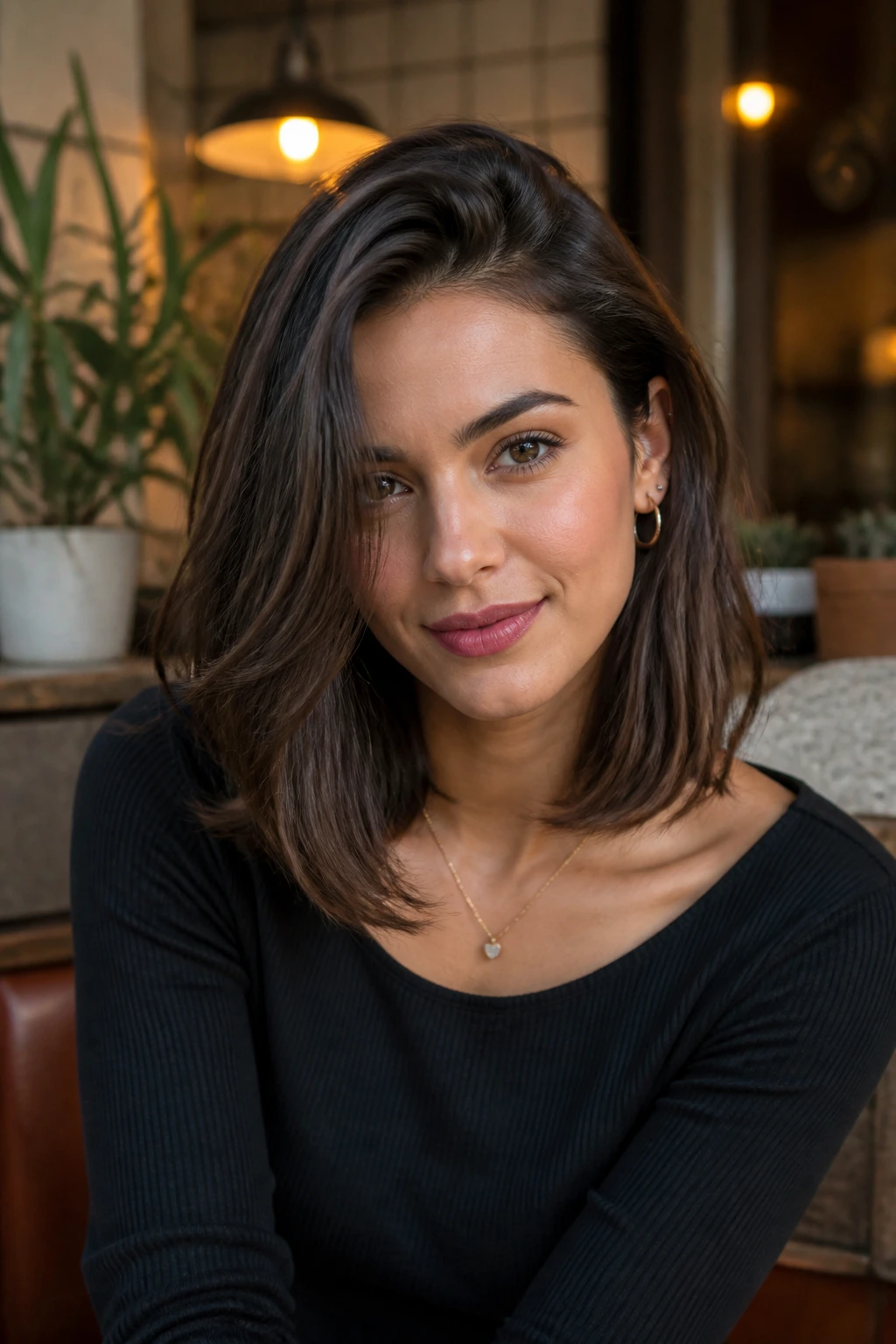
A deep side part changes a round face fast. It creates asymmetry, shifts the hair’s weight, and lets one side drape a little longer than the other. Pair that with a clavicle-length cut and you get a shape that feels longer, leaner, and more deliberate.
The face-framing layers can stay subtle here. They don’t need to shout. What matters is the angle the part creates and the way the front lengths skim past the widest part of the cheeks. I like this cut on hair that has some natural volume because the side part can work with lift instead of fighting it.
The style reads clean and polished, especially if you tuck one side behind the ear. That tiny move opens the jawline and makes the cut feel less heavy. It’s a small detail, but small details are most of the battle with round faces.
14. Rounded Layers for Dense, Thick Hair
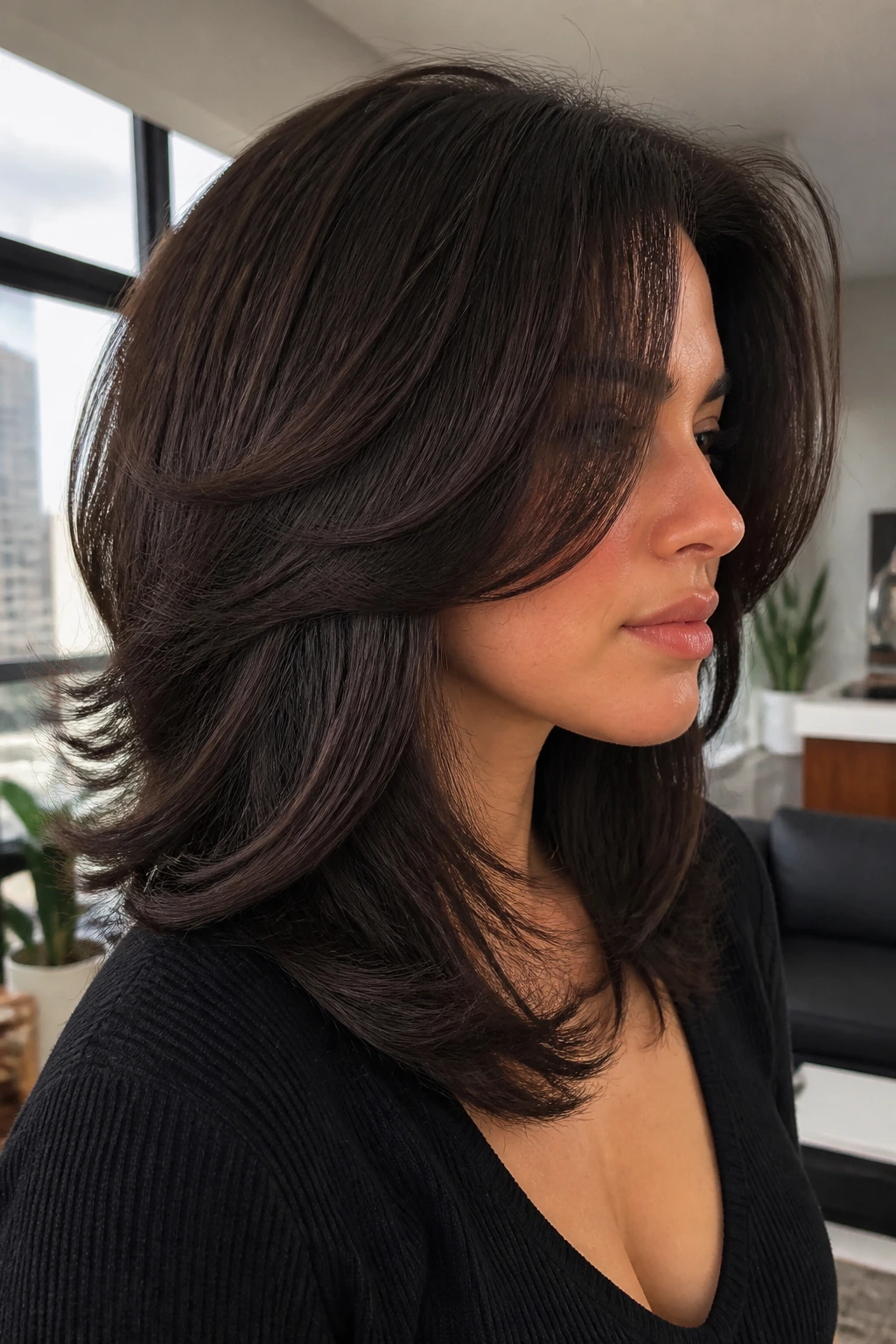
Dense hair wants shape, not punishment. Rounded layers remove the bulk where thick hair tends to balloon, but they keep the outline soft so the cut does not end up looking jagged. On a round face, that matters because the hair should slim the sides, not puff them.
What I like here is the controlled curve around the head. The back and sides are shaped so the hair sits closer to the head, while the front stays long enough to skim the cheeks. That keeps the silhouette from getting wide at jaw level. It also makes blow-drying easier, which anybody with thick hair will appreciate.
Do not let a stylist over-thin this kind of cut with aggressive razor work. The ends can go stringy fast, and stringy ends are not the same thing as movement. You want controlled weight removal, not empty space. Big difference.
15. Razor Layers for Fine Hair
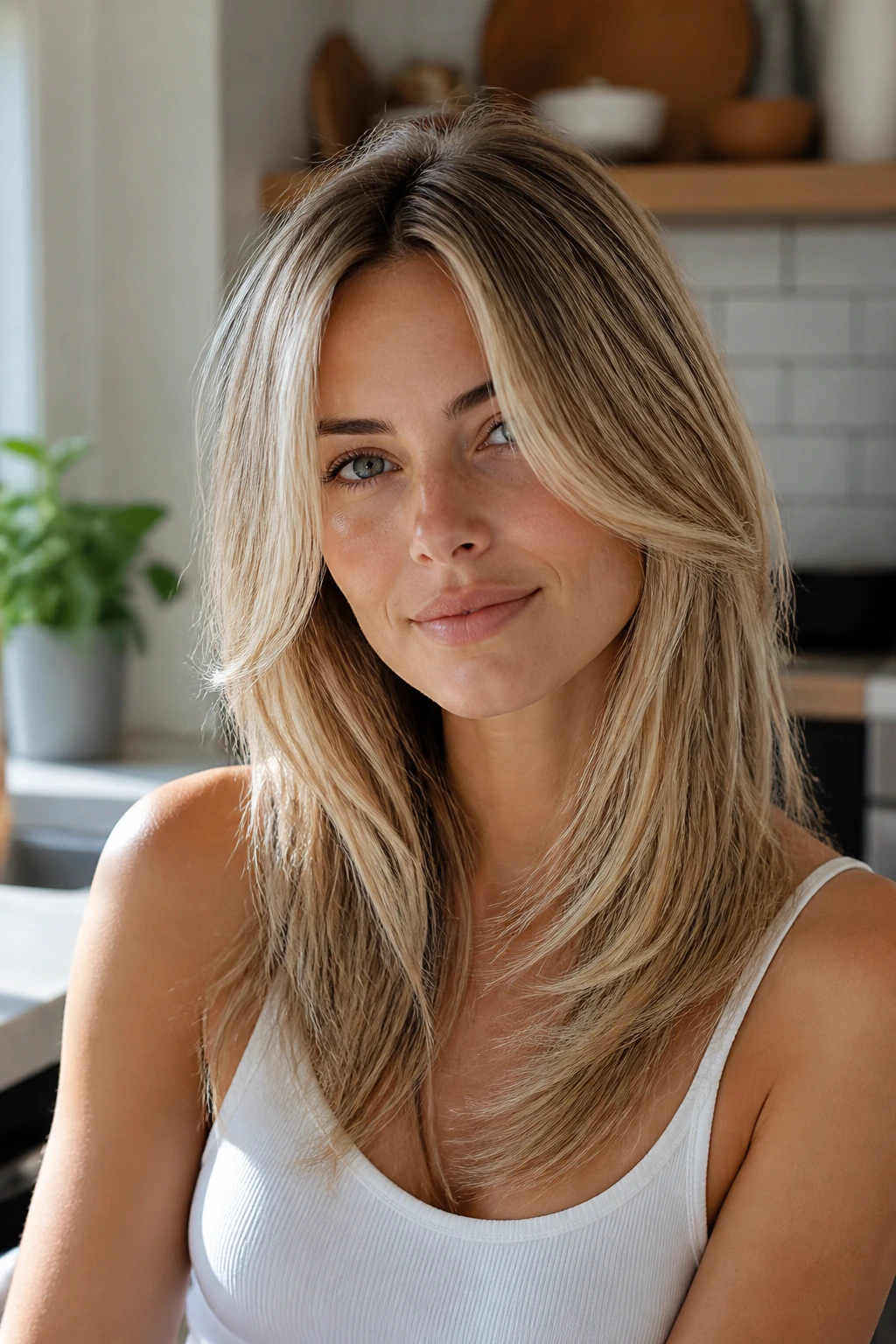
Fine hair can look limp if the cut is too blunt, but it can also look ragged if the layering gets overdone. Razor layers sit in the middle. They soften the ends, create a little air, and keep the haircut from clinging flat to the scalp. On a round face, that extra lift helps the face feel a little longer.
The catch is that razor cutting needs a careful hand. If the hair is already fragile, dry, or prone to split ends, the ends can fray faster than you want. So this is less about chopping more and more about removing just enough weight to let the hair move. The front pieces should still stay long enough to steer away from the cheeks.
This cut is at its best with a bit of texture spray or mousse and a soft bend through the mid-lengths. Fine hair loves movement, but it doesn’t love being over-styled into submission. Keep it loose. Keep it light.
16. Curly Layers Cut Dry for Shape
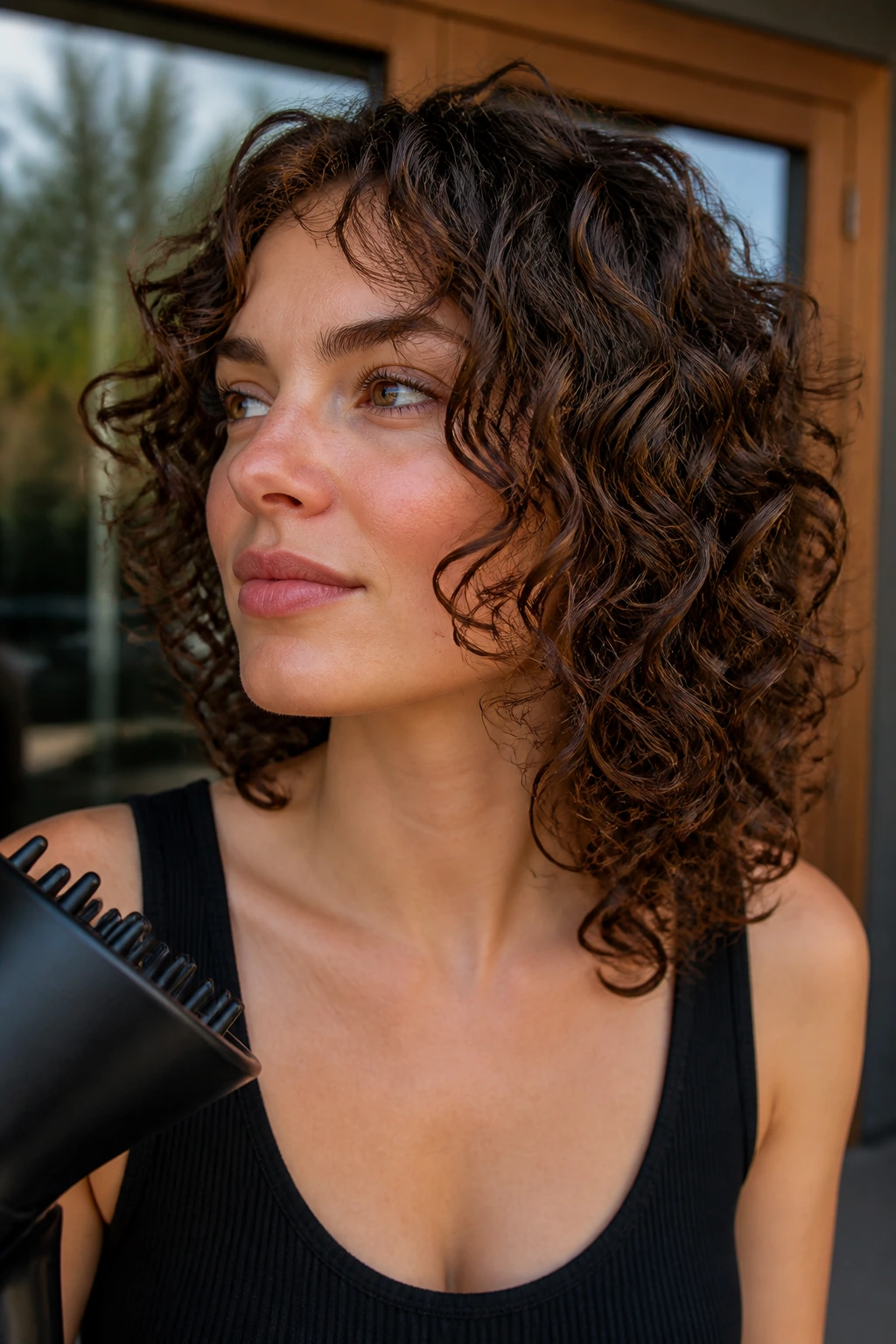
Curly hair changes the rules a little, because what you see when it’s wet is never what you get when it’s dry. That’s why dry cutting is so useful. It lets the stylist see how each curl sits on the face, where it springs, and where it needs room. For round faces, that control matters a lot.
The shortest face-framing curls should usually start below the cheekbone so the spring of the curl doesn’t widen the face. The layers should build shape, not a triangle. If the haircut is too short around the sides, the curls puff outward and the face gets boxed in. The better version lets the curls fall in arcs that soften the jaw and collarbone.
This style needs moisture, definition, and a diffuser if you want the shape to hold. Brush it dry and you’ll lose the whole map. Leave the curls alone, and the haircut does what it’s supposed to do.
17. An Asymmetrical Layered Bob
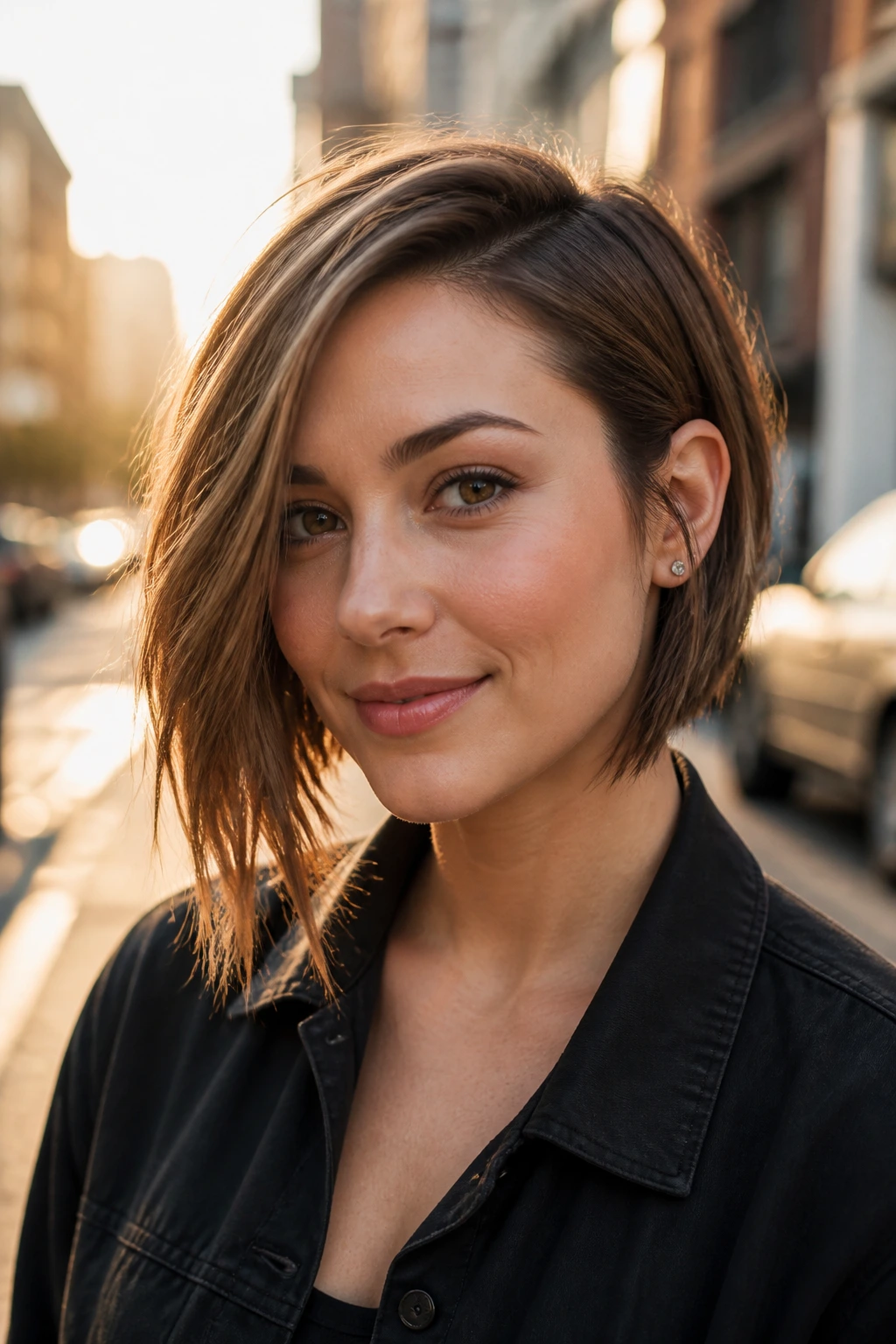
The asymmetrical bob is a clever move for round faces because symmetry can sometimes make the face look even rounder. A slight difference in length breaks that circle immediately. One side sits a little longer, the line slants downward, and the whole shape feels more angular.
You do not want the shorter side to stop at the jaw. That’s where the problem starts. Keep the shortest side below the jawline, and let the longer side skim toward the collarbone if you can. Add soft internal layers so the cut still moves. Without them, the bob can look too stiff.
This is a nice choice if you like a haircut that feels modern without being fussy. It looks sharp tucked behind one ear and even better with a little bend through the ends. The asymmetry does the slimming work for you.
18. Feathered 70s Layers
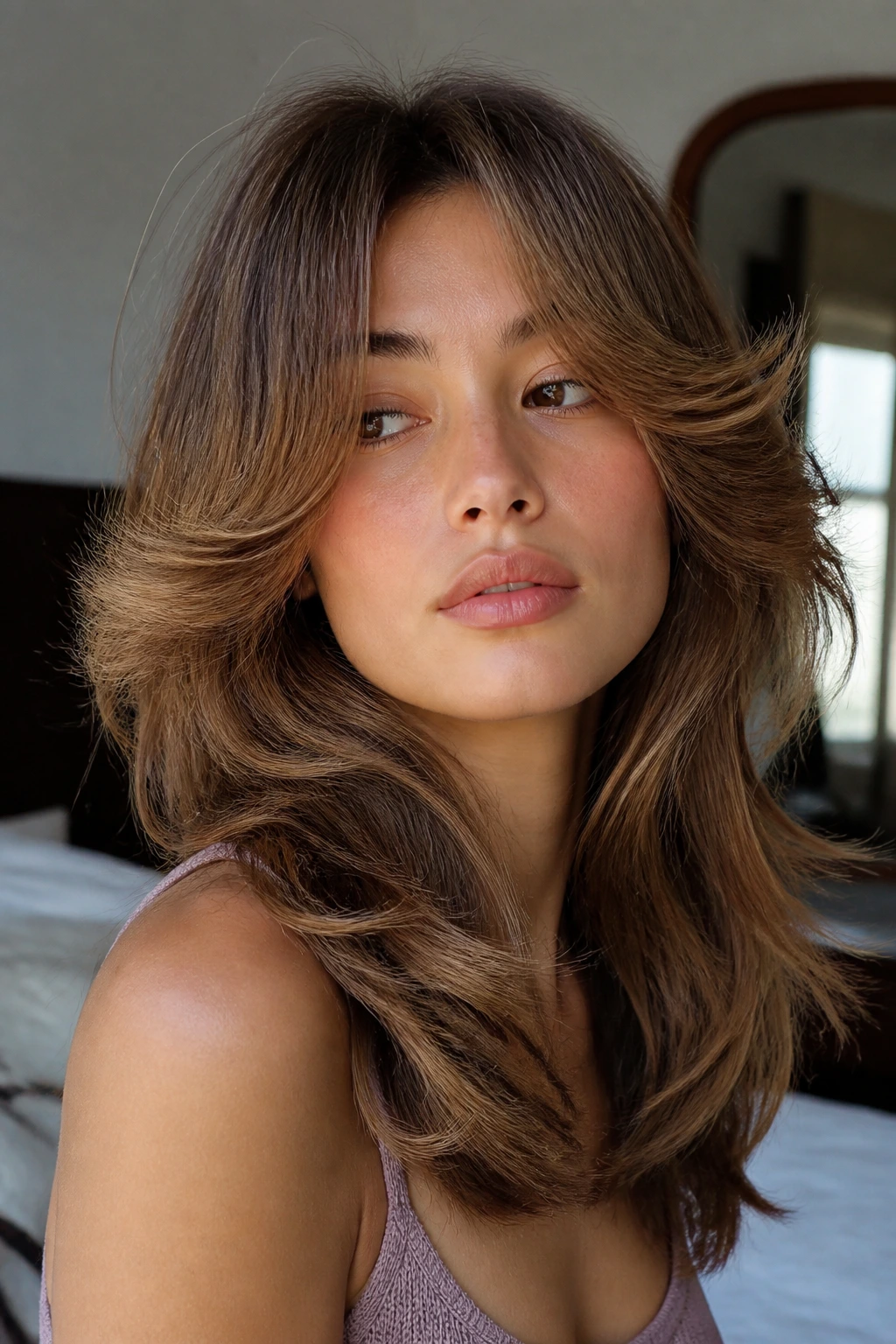
Feathered layers are back because they do something very specific: they let the hair turn away from the face instead of hanging as one heavy curtain. On a round face, that feathered motion creates lift and direction. It feels light around the cheeks and soft around the neck.
I prefer this on medium to thick hair, where the layers have enough body to hold the feathered shape. The front can be cut into a long fringe or a curtain-like sweep, then brushed away from the cheeks with a round brush. It gives a little retro drama, but not the hard-edged kind.
This cut can look too fluffy if the layers are cut too high. Keep the shortest pieces below the cheekbone, and keep the finish airy rather than blown out to the moon. The goal is movement, not volume for its own sake.
19. A Modern Mullet with a Soft Face Frame
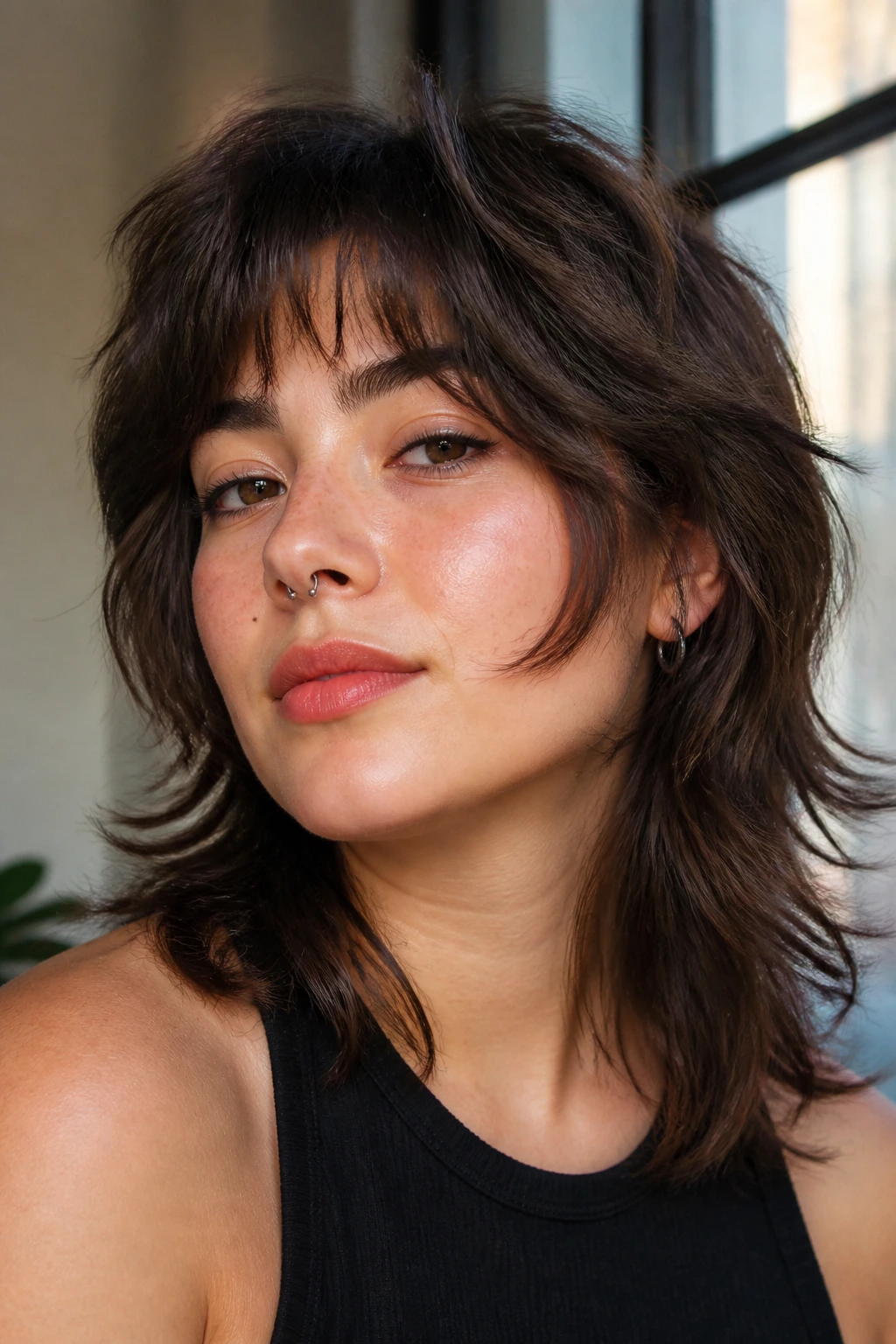
A modern mullet can work on a round face, but only if it’s softened and balanced. The crown gets shorter, the nape stays longer, and the front pieces stay long enough to break the width around the cheeks. That front frame is the part that keeps it flattering instead of cartoonish.
The best version uses texture, not sharp separation. You want the top and back to talk to each other. The face frame should sweep past the widest part of the face and not stop right on it. This is one of those cuts that looks much better in motion than it does on a salon floor mirror.
It suits people who like a little edge and don’t mind styling product. A matte paste, a diffuser, or a quick bend with a small iron can bring the shape to life. If you want something safer, move on. If you want character, this one has it.
20. Long V-Cut with Tapered Ends
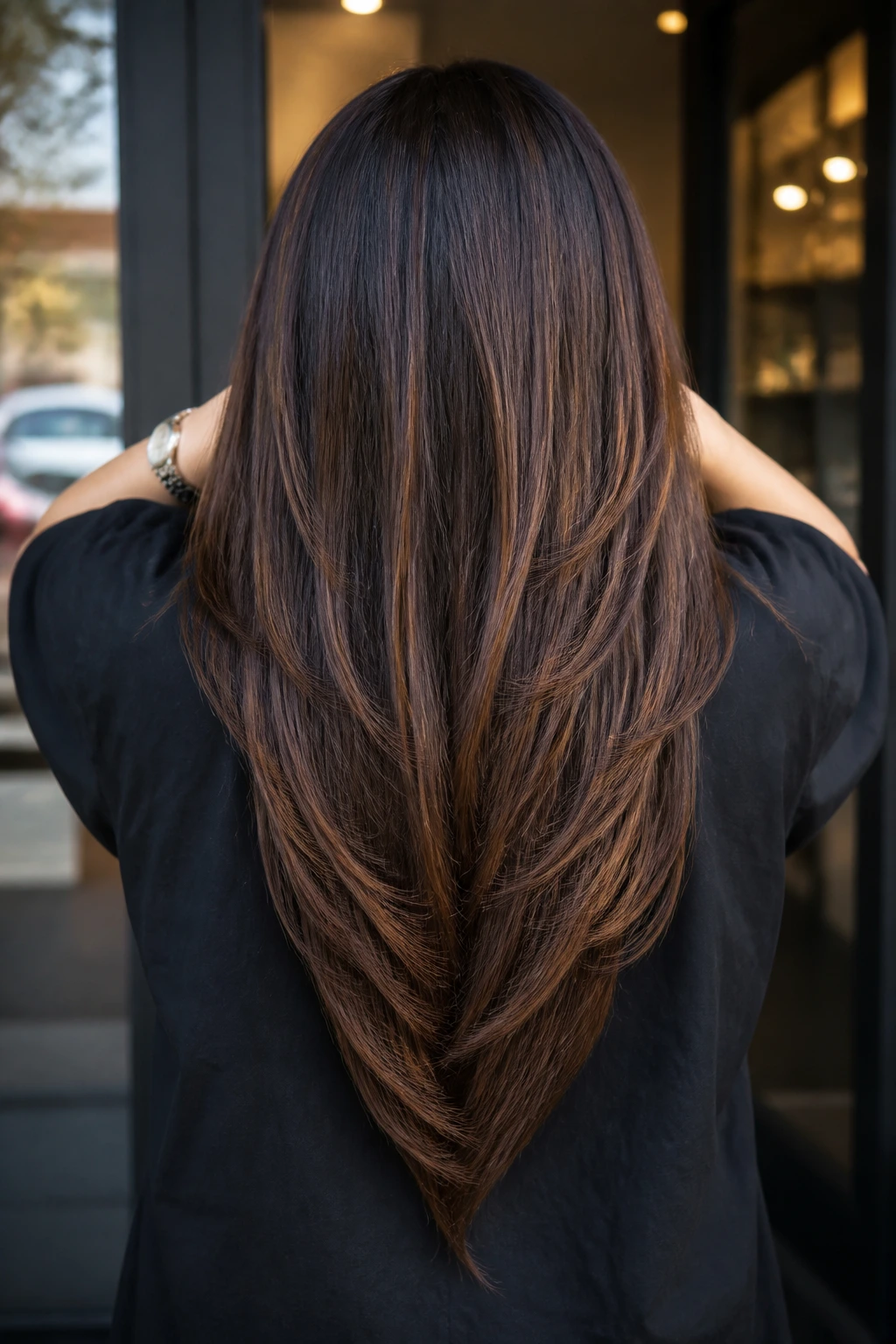
A long V-cut keeps the length, but it narrows the silhouette by tapering the ends into a point. On a round face, that taper is useful because it creates a visible downward line. The eye follows the hair past the cheeks and toward the center of the back instead of reading the width all around the face.
The front layers should still be planned carefully. If they start too high, they can widen the face even with the V shape in back. Ask for longer face-framing pieces that begin below the cheekbone and blend gradually into the tapered length. That keeps the cut soft rather than sharp.
This is a good match for very long hair that feels heavy at the bottom. The V removes that blocky feeling and adds shape without stealing the length people are attached to. Honestly, if you like long hair but hate the triangle look, this is one of the strongest fixes.
21. A Layered Crop with Tucked Sides
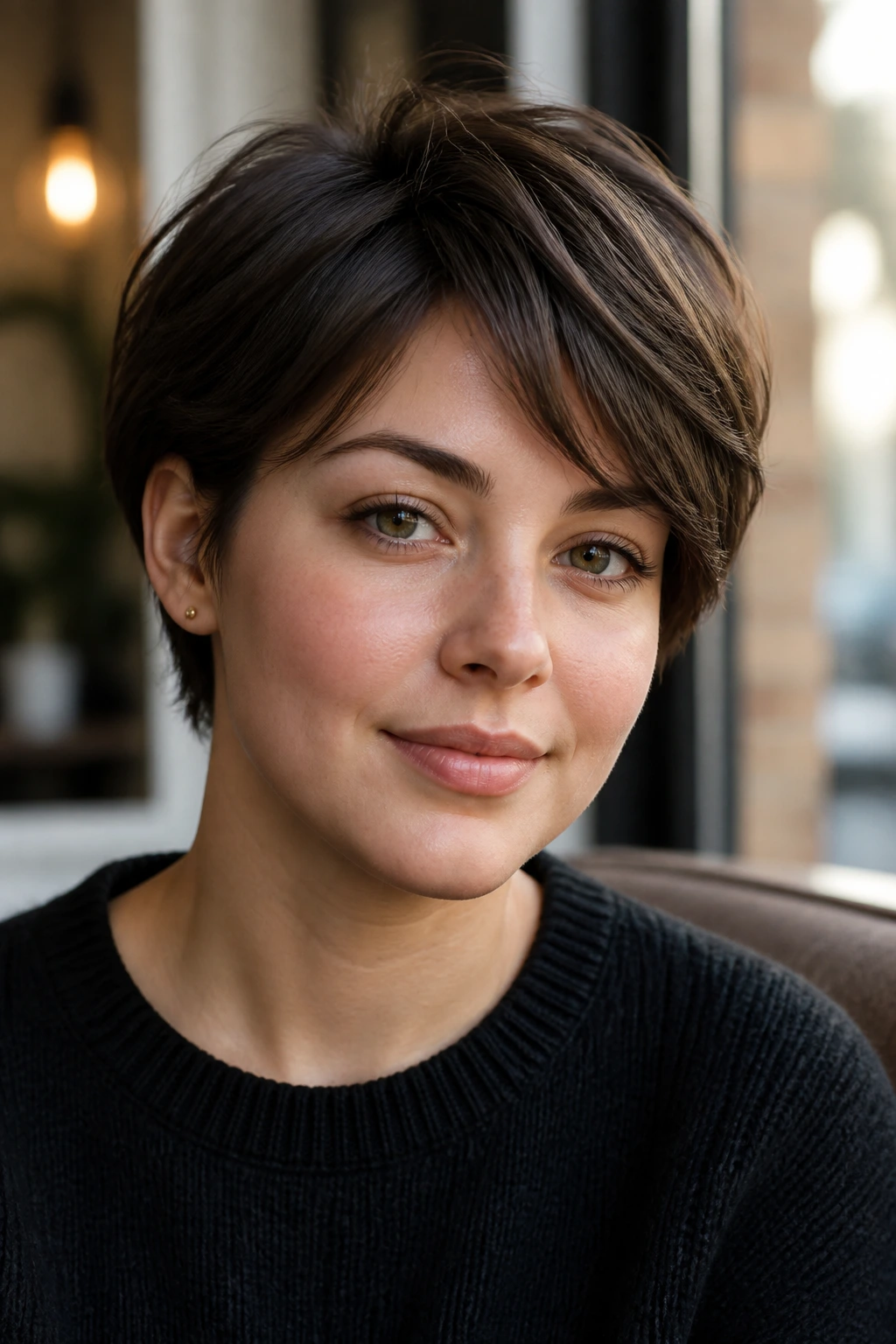
Short hair on a round face can be fantastic when the sides stay close and the top keeps a bit of lift. The layered crop does exactly that. The sides tuck in, the top has texture, and the face gets a little more vertical space because the hair isn’t ballooning outward at the ears.
This cut needs precision. Too much width near the temples and the face gets wider. Too little length on top and the whole style goes flat. The sweet spot is a crop that can be finger-styled in a few seconds, then tucked behind the ears or left loose with a bit of paste. It’s especially good if you wear earrings or glasses and want the haircut to frame those instead of competing with them.
It’s not a shy cut. It’s clean, sharp, and a little cool. But it doesn’t have to look severe.
22. Sleek Midi Cut with a Long Curtain Fringe
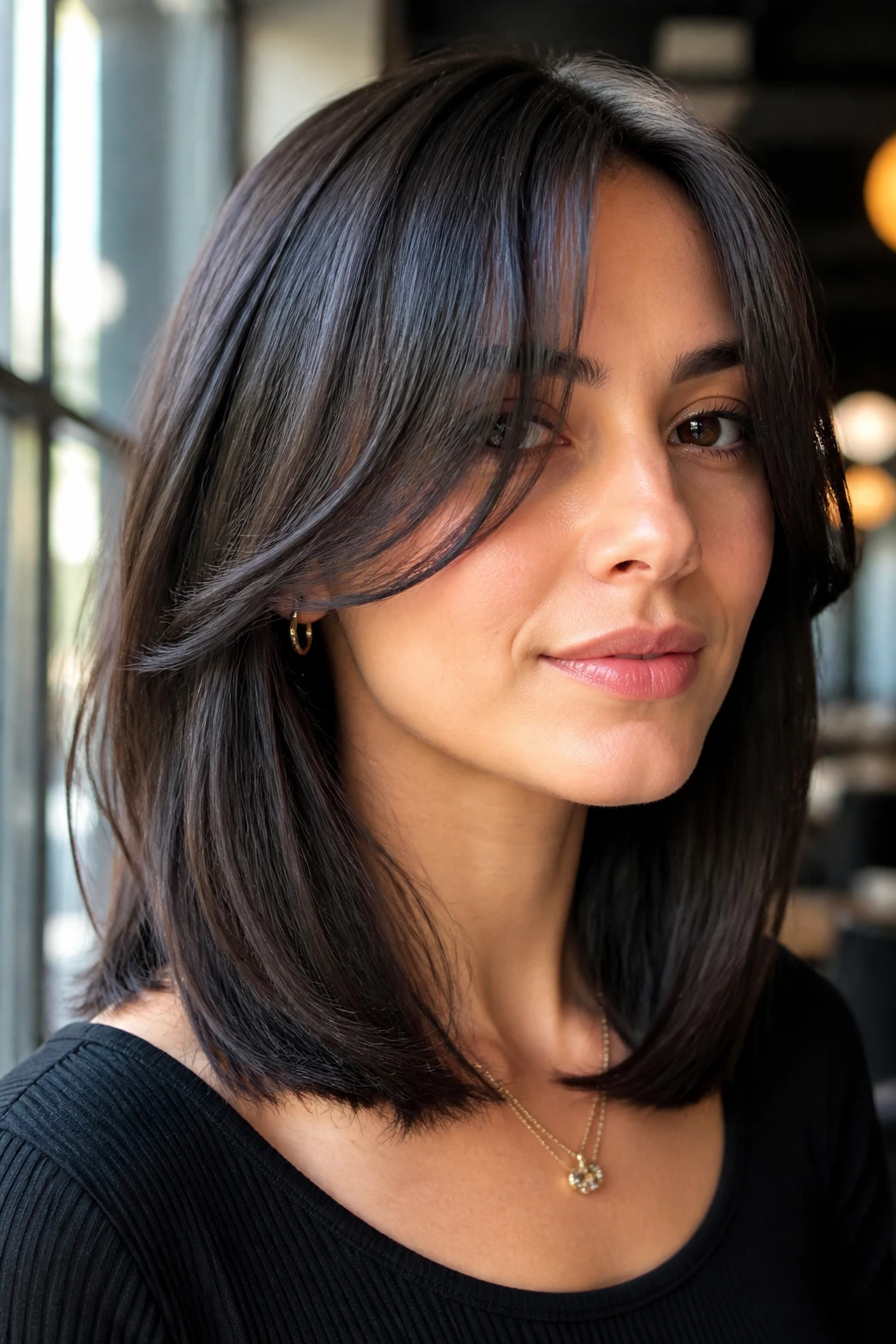
The sleek midi is the version I’d hand to someone who wants one haircut to do a lot of jobs. It hits around the collarbone or just below, keeps the line smooth, and adds a long curtain fringe that opens the center of the face. The shape reads polished without feeling rigid.
What makes it work on a round face is the balance between softness and direction. The fringe parts away from the center, the sides stay long enough to narrow the cheeks, and the ends are clean enough to avoid extra width. It’s one of the most forgiving options for straight or lightly wavy hair because it still looks finished even when you don’t fuss much with it.
If you like your hair to look expensive without looking overworked, this is a strong place to land. It can be worn sleek, bent, or tucked back, and the shape still holds.
Why Layering Changes the Shape of a Round Face

Layering is not magic. It’s shape control.
A round face has soft curves and similar width and length, so the haircut has to add a little structure where the face needs it most. That usually means two things: keep the hair from flaring at cheek level, and give the crown a little height. Those two moves alone can make a face look longer without turning it into something it isn’t.
Stretching the Eye Line
The eye naturally follows lines. A long front layer, a side sweep, or a collarbone finish gives the face somewhere to go. A blunt bob that stops at the cheeks gives the eye a place to stop. That’s why the best layered haircuts for round faces often look softer in motion than they do in photos.
Keeping Weight Off the Sides
Thick or wavy hair loves to spread out sideways. Fine hair can do it too, just in a flatter way. Layers placed with care remove that side spread and keep the silhouette from getting boxy. If you’ve ever left the salon with hair that sat like a little mushroom around your face, you already know why this matters.
Why Texture Matters More Than People Think
Straight hair shows every line. Curly hair changes size as it dries. Wavy hair sits in the middle and can go sleek or fluffy depending on the cut. That’s why the same layered cut can look sharp on one person and wide on another. The face shape is only half the story. The texture finishes the sentence.
Hair Tools That Make These Cuts Easier
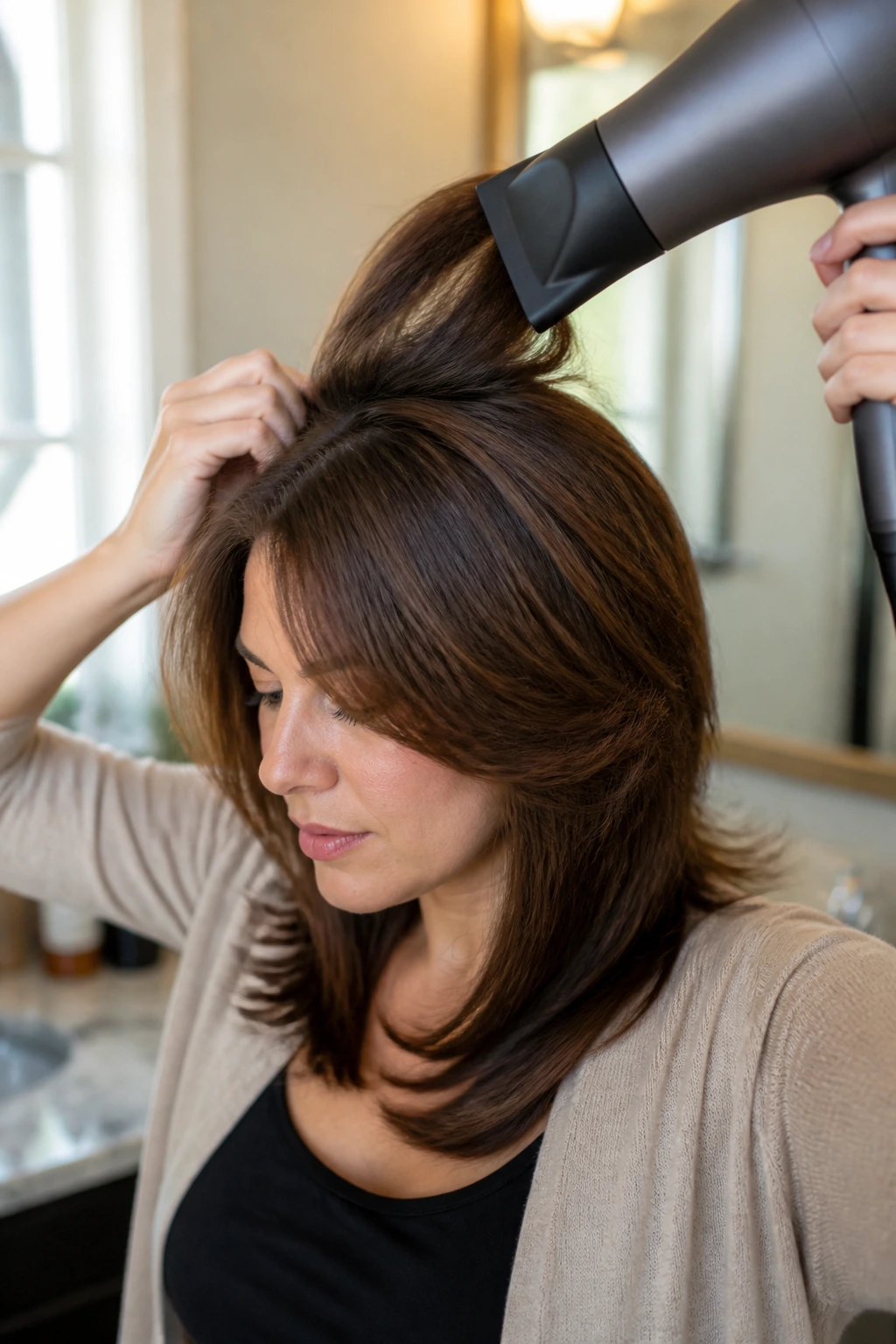
- Blow dryer with a nozzle: The nozzle helps point airflow at the roots and front pieces so the hair dries in the direction you want.
- Medium round brush: This is the workhorse for lifting the crown and bending front layers away from the cheeks.
- 1.25-inch curling iron or wand: Big enough to shape layers, not so small that you end up with tight ringlets where you wanted movement.
- Flat iron: Useful for a soft bend on lobs, mides, and sleek midi cuts.
- Heat protectant spray: Put it on before any hot tool. Skipping this on layered ends is how people get dry, broken-looking pieces fast.
- Volumizing mousse: Best at the roots on damp hair when you want lift without crunch.
- Texturizing spray: Good for piecey ends, shaggy cuts, and second-day hair that needs shape back.
- Lightweight serum: Use a tiny amount on the mids and ends, not the roots, or the whole cut will collapse.
- Diffuser: A must for curls and helpful for waves that need shape without a lot of frizz.
- Sectioning clips and a tail comb: These make face-framing layers and parts cleaner, which matters more than people think.
What to Tell Your Stylist Before the First Snip
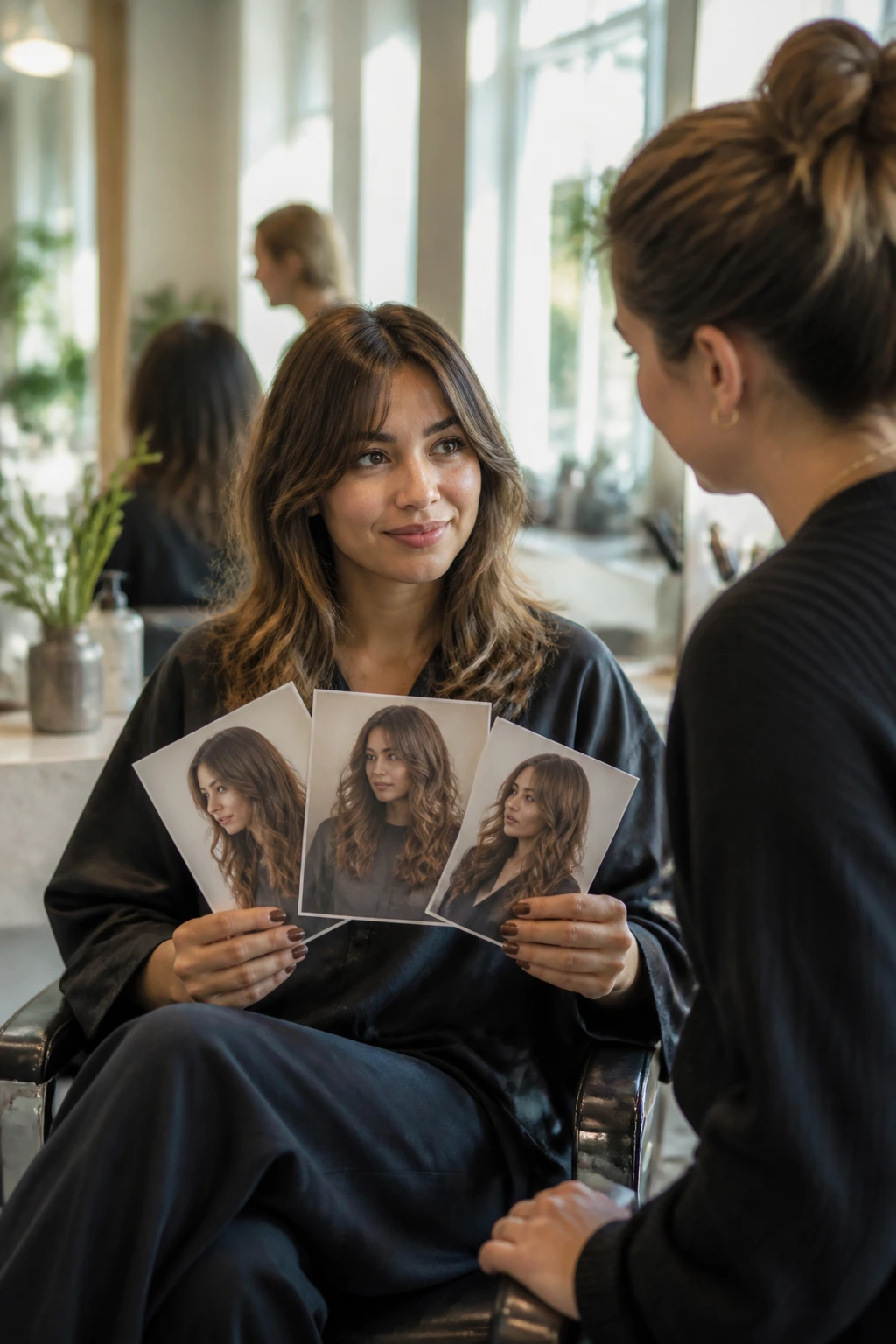
Bring pictures, but bring the right kind.
One photo of the cut is not enough, because hair photos hide a thousand decisions. Bring one image for the overall shape, one for the fringe or front pieces, and one that shows texture similar to yours. A chin-length shag on pin-straight hair is not the same thing as a chin-length shag on wavy hair. That sounds obvious, yet it gets ignored all the time.
Name the shortest point you want
If you have a round face and want face-framing layers, point to the spot where the shortest piece should land. Cheekbone? Below the cheekbone? At the corner of the mouth? Say it out loud. That one detail steers the whole haircut.
Be honest about your routine
If you air-dry 90 percent of the time, say that. If you blow-dry every morning, say that too. A haircut that only looks good with a salon-level blowout is not a practical haircut for most people. A good stylist can adjust the layering so the shape still works on lazy days.
Mention density, not just length
Fine hair and thick hair need different treatment. Fine hair usually wants softer, longer layers that do not strip too much weight. Thick hair can handle stronger interior layering, but the ends still need enough length to avoid puffing at the sides. Round face, yes. Texture, absolutely.
Ask how it will grow out
That question saves regret. A face-framing shape that keeps its lines for ten weeks is a different beast from a cut that gets shapeless after five. If you hate frequent trims, ask for softer layers and a perimeter that stays clean as it grows.
How to Style These Cuts Day to Day

There are really three jobs here: lift the crown, steer the front pieces, and keep the ends from widening the face.
Blowout Shape
Start with a root-lifting mousse on damp hair. Direct the dryer upward at the crown and away from the face at the front. Use a round brush or your fingers to bend the front layers outward so they skim the cheeks instead of sitting on them. Finish with a cool shot so the shape holds.
Air-Dry Shape
Air-drying works fine if the cut is done well. Scrunch waves lightly with a soft cream or mousse, then clip the crown for 10 to 15 minutes if you need height. For curtain bangs or face-framing layers, twist the front pieces away from the cheeks while they’re damp so they dry in the right direction.
Quick Refresh on Day Two
You do not need a full wash every time the shape goes soft. Mist the front pieces lightly, re-bend them with a brush or flat iron, and use a small amount of dry shampoo at the roots. If the ends look fuzzy, a half-drop of serum is enough. More than that and the whole cut starts to slump.
One Detail That Changes Everything
A part that sits a half-inch off center often flatters a round face more than a dead-center part. It sounds tiny. It isn’t.
Small Styling Tweaks That Change the Shape
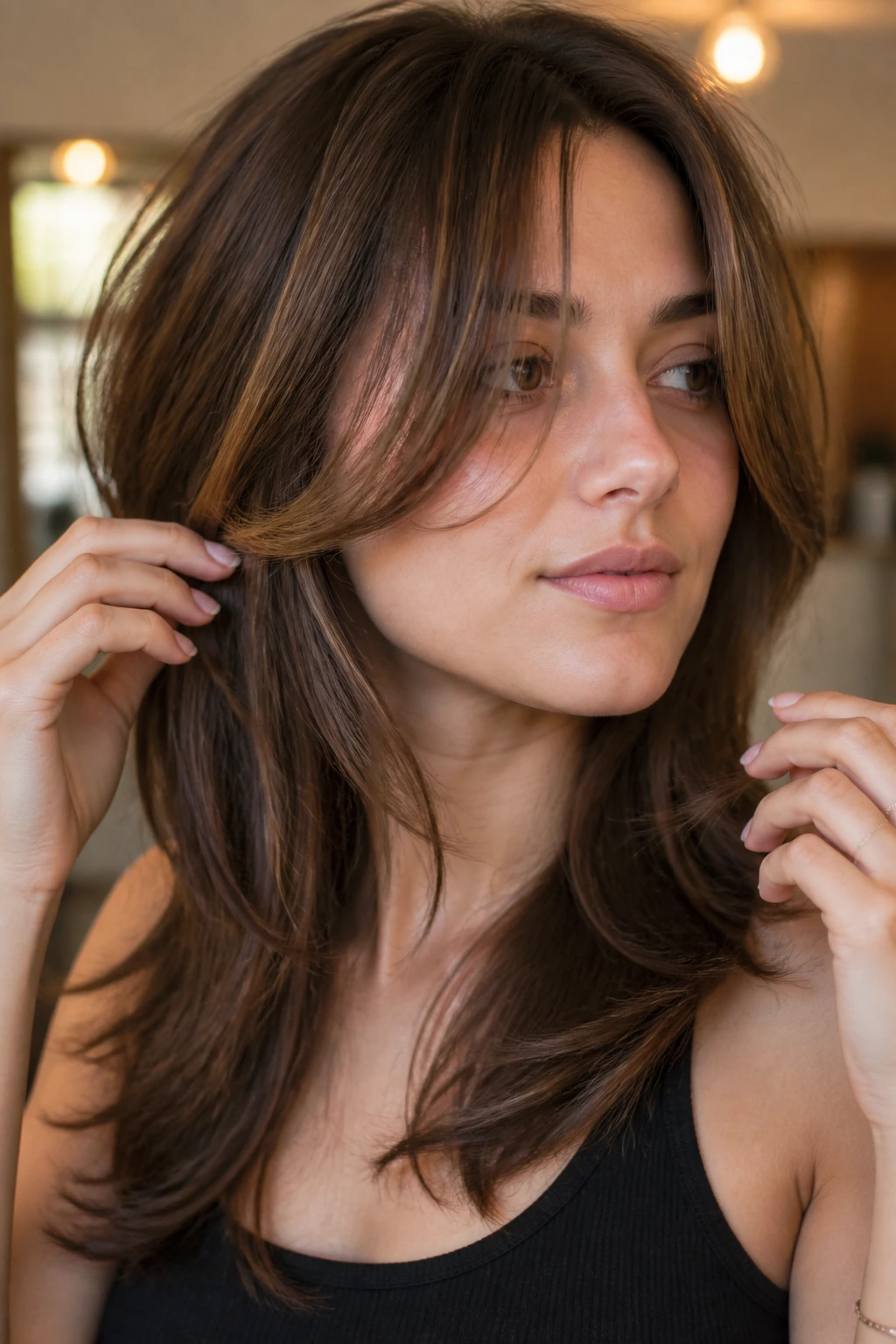
Volume Boost: Lift the hair at the crown with mousse or root spray before you dry it. That lift creates length through the center of the face, which helps more than piling volume at the sides.
Texture Boost: Use a large barrel iron or a flat iron to add one soft bend in the front layers, not a full curl. The goal is a curve that opens away from the cheeks.
Softness Boost: If the haircut feels harsh, run a tiny amount of lightweight cream through the ends and stop before the root area. The front should move. The root should not turn greasy.
Make-It-Yours: If you like a cleaner look, keep the layers longer and the fringe softer. If you like edge, choose a shag, wolf cut, or asymmetrical bob with a little more attitude. If you want almost no daily styling, pick invisible layers or a long midi shape and let the cut do the work.
Keeping the Cut in Shape Between Trims

Layered cuts for round faces need a little maintenance, but not an absurd amount. Short crops and bobs usually need a trim every 6 to 8 weeks if you want the shape to stay crisp. Longer layers can stretch to 8 to 12 weeks, especially if the front pieces are soft and blended. Once the ends start flipping in the wrong direction or the face-framing pieces drop into the cheeks, the shape is telling you it’s time.
Overnight care matters too. A silk pillowcase helps keep the front pieces from getting crushed, and a loose braid or loose twist can keep longer layers from tangling. If you have curls, a loose pineapple or a satin bonnet keeps the crown from flattening into a weird bulge on one side.
Day two and day three hair often benefits from less product, not more. Dry shampoo at the roots works better than piling serum through the mids. If you used a strong blowout on wash day, refresh only the front frame and the crown. The ends usually need the least attention.
If you’re growing the cut out, ask for dusting and shape maintenance instead of a full reshaping. That keeps the layers from turning into an accidental mullet or a triangle. Grow-out works best when the perimeter stays controlled.
Mistakes That Make Layers Fight a Round Face
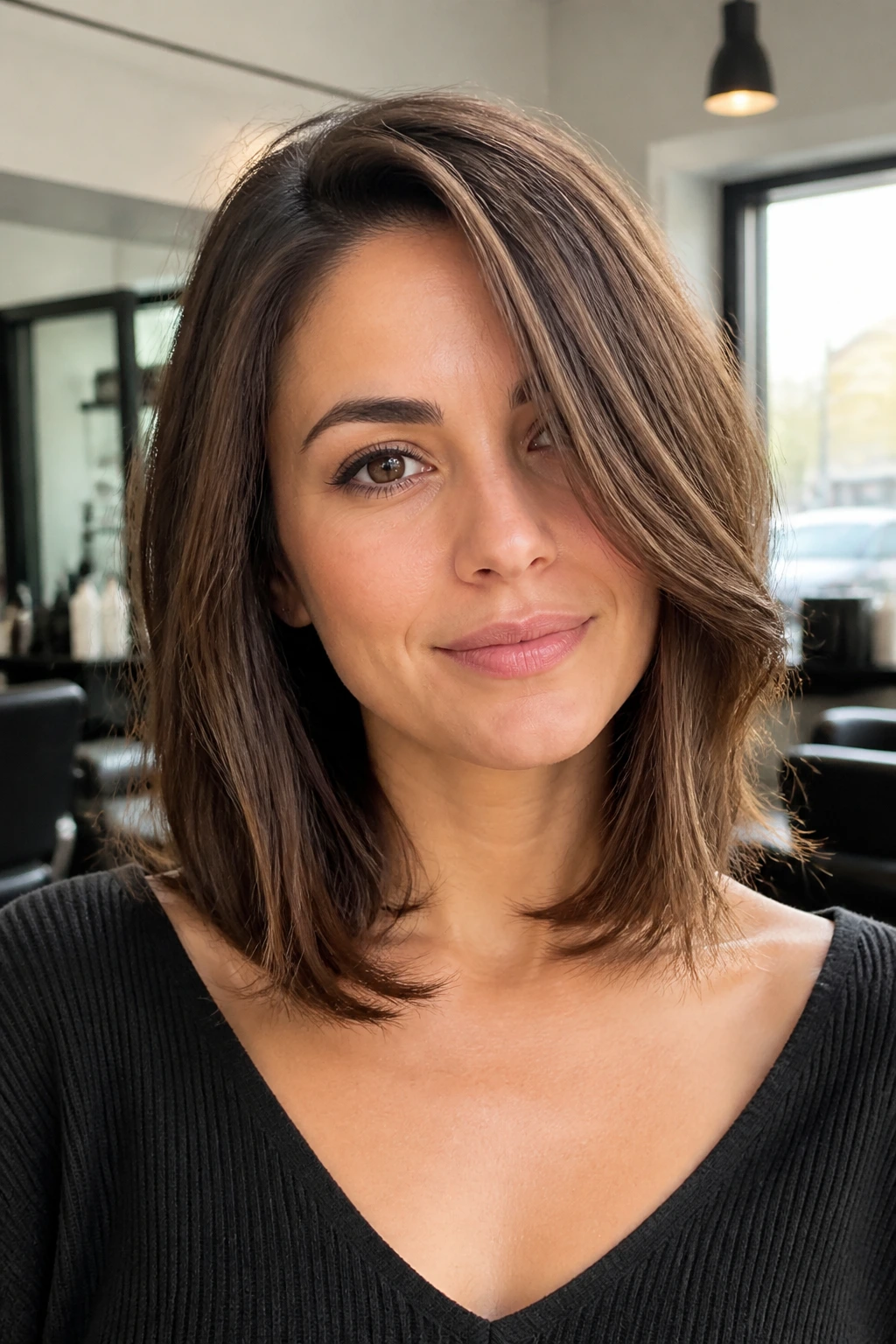
The biggest mistake is putting the shortest layer right at cheek level and calling it face-framing. That’s not framing. That’s widening. If the front pieces stop where the face is already fullest, the haircut sits there and repeats the circle.
Another common problem is going too blunt with bangs. Heavy, straight-across bangs can shorten the face and make the cheeks feel broader, especially when the fringe sits high on the forehead. A softer curtain bang, a side sweep, or a longer fringe usually does the job better.
Over-thinning thick hair is another one. The cut can look great for an hour and then puff out like a bell later in the day. The fix is controlled weight removal, not a bunch of random slicing at the ends.
Fine hair has its own trap: too many short layers. The ends start to look wispy and tired, and the haircut loses body. Long internal layers usually work better because they keep the hair looking full while still giving it movement.
And then there’s the center part with zero crown lift. That can make a round face feel wider, not because a center part is forbidden, but because a flat center part with no height creates a straight vertical drop that doesn’t help the cheeks at all. A little root lift, a little side drift, and the whole thing changes.
Questions People Ask Before They Chop
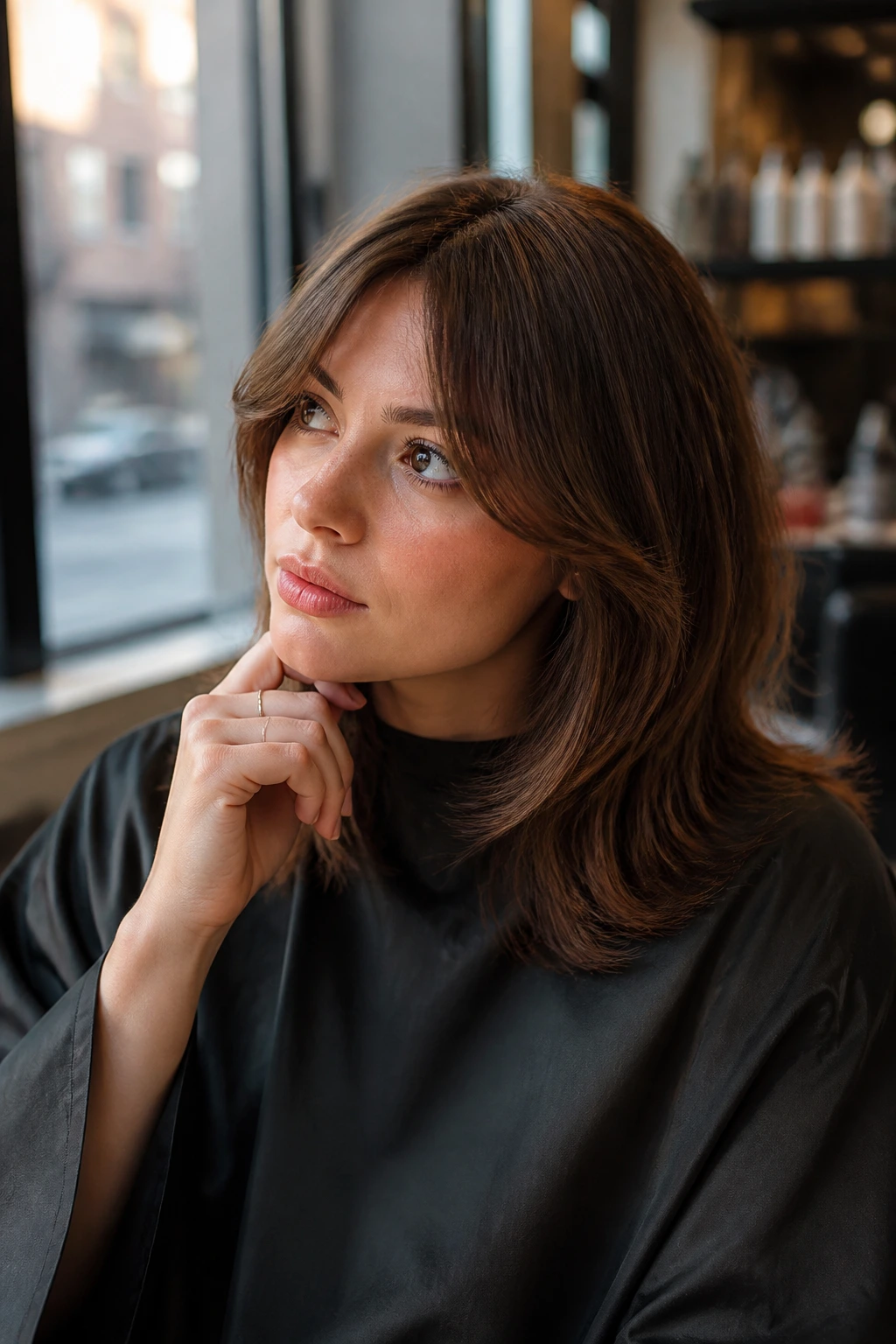
Are layers good for round faces with fine hair?
Yes, but keep them long and soft. Fine hair usually looks better with invisible layers or a light lob than with a heavily chopped shag, because too many short pieces can make the ends disappear.
Do curtain bangs make a round face look wider?
Not when they’re cut correctly. The middle split opens the face, and the longer sides should start below the cheekbone so they pull the eye downward instead of sitting on the cheeks.
Can a round face wear a short haircut?
Absolutely. A textured pixie, layered crop, or asymmetrical bob can work very well if the top has lift and the sides stay close enough not to widen the head.
What length is most flattering if I want to play it safe?
Collarbone to clavicle length is the easy answer. It gives the face room to narrow before the hair stops, and it leaves enough length for face-framing layers to move.
Should I avoid center parts completely?
No, but a dead-flat center part is rarely the best choice on its own. If you like it, add crown lift or a soft bend through the front pieces so the part doesn’t make the face feel wider.
What if my hair is thick and frizzy?
Go for controlled layering, not aggressive thinning. Rounded layers, a U shape, or a long V-cut often manage the bulk better than a short choppy cut that puffs out by lunchtime.
How do I stop layers from looking choppy on straight hair?
Ask for longer layers and smoother blending. Straight hair shows every line, so the transition between lengths needs to be soft or the cut starts to look sliced up.
What should I do if my haircut makes my face look wider than expected?
Add a little height at the crown, move the part slightly off center, and keep the front pieces longer than the widest part of the cheeks. If the shortest layer is too high, the only real fix is a small reshaping.
The Cuts That Keep the Shape Moving
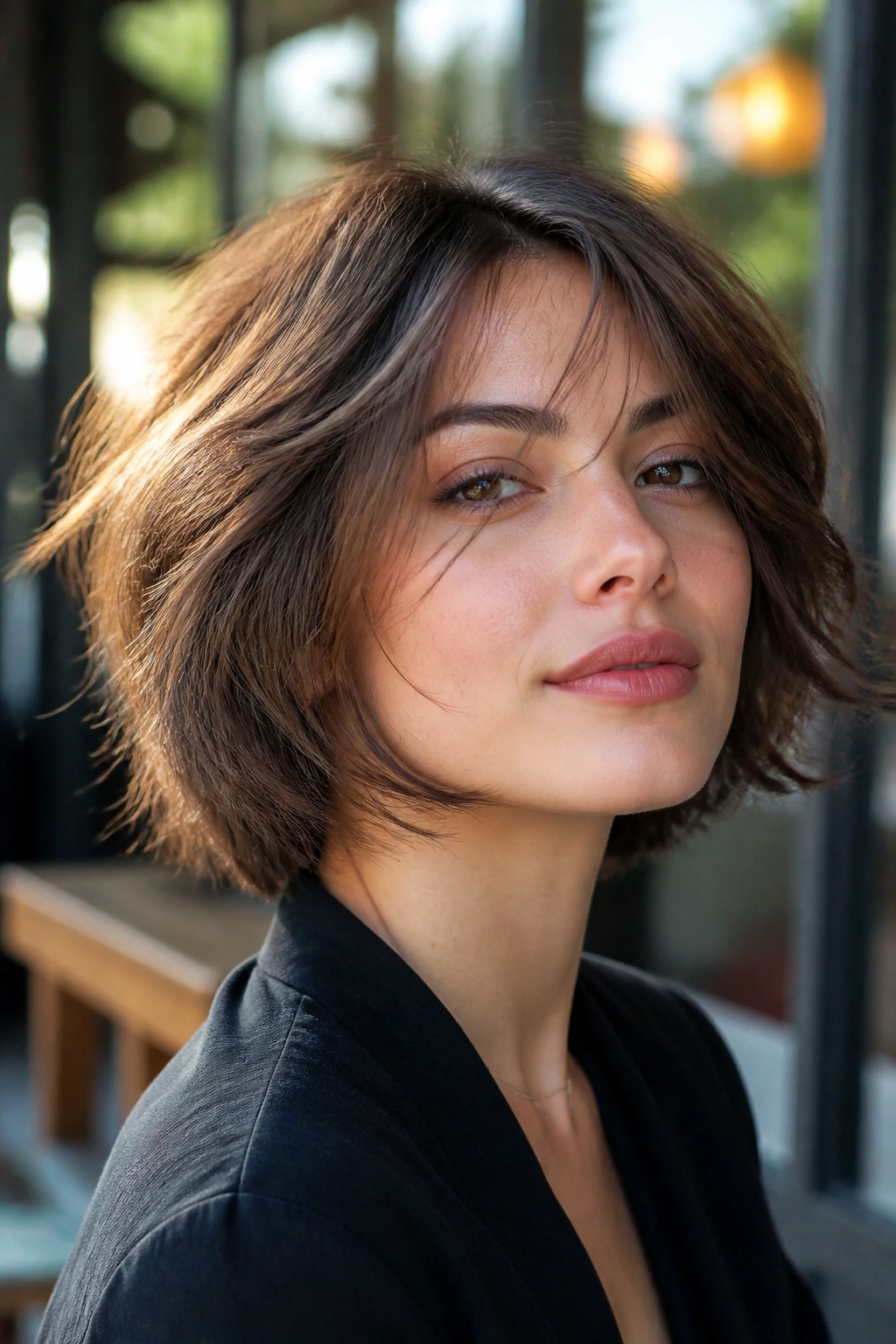
The best layered haircuts for round faces do the same quiet job in different ways: they stretch the eye line, keep fullness off the cheeks, and give the haircut a bit of lift where it counts. Some do it with curtain bangs. Some do it with a deep part. Some do it by leaving the ends long and tapered so the face has room to breathe.
That’s why I’d rather see a haircut built around your texture than a haircut chasing a trend label. The right one can be sleek, shaggy, short, long, soft, or sharp. The wrong one can make even expensive hair look oddly wide.
If you’re taking one thing from this list, make it this: ask where the shortest front pieces will land before anyone picks up the scissors. That single question sorts the flattering cuts from the frustrating ones. And once you know that answer, the rest of the salon conversation gets much easier.