



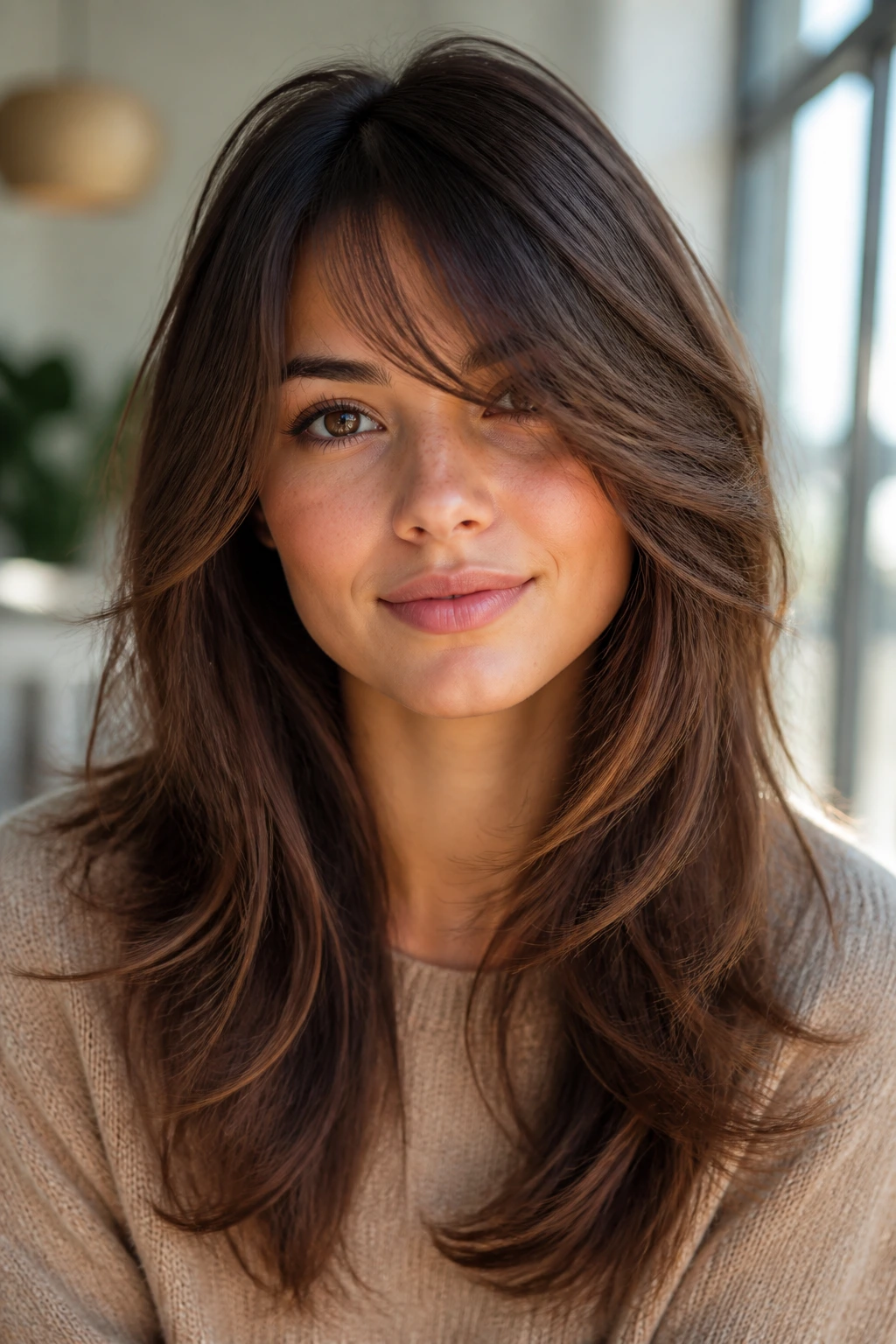
Long swoopy layers for round faces with side-swept bangs work because they do one very specific thing well: they break up the face’s width with movement that runs diagonally, not horizontally. A blunt line at cheek level can make the widest part of the face feel even wider. A layer that starts near the cheekbone and falls toward the collarbone does the opposite. It pulls the eye down, then keeps it moving.
The part people miss is placement. A lot of “long layers” are cut too high, or the side fringe is left too full and too short, and the whole shape ends up sitting right on the cheeks like a shelf. That’s not the look here. The sweet spot is softer and lower — usually somewhere around the cheekbone, jawline, or a little below — with bangs that sweep into the layers instead of stopping abruptly.
Texture changes the game, too. Fine hair needs movement without looking thin at the ends. Thick hair needs weight removed in the right places so the sides don’t puff out. Curly hair needs longer face-framing pieces so the bend can live without springing up into a balloon. The good versions all understand the same trick, though: they make the face look longer without making the haircut look stiff.
Why These Cuts Keep the Face Open and Long
-
Diagonal movement does the heavy lifting: A side-swept bang and a swoopy layer send the eye from forehead to jaw instead of letting it sit across the cheeks.
-
Length below the cheekbone matters: The best versions usually start around the cheekbone or lower, which keeps the widest part of the face from becoming the focus.
-
The fringe softens, it doesn’t block: Side bangs should land like a ribbon across the forehead, not a thick curtain that cuts the face in half.
-
They work with real hair, not just blowout hair: A good long layered cut still looks like itself after air-drying, clipping, or a five-minute round-brush pass.
-
They grow out better than blunt fringe: As the bangs lengthen, they blend into face-framing layers instead of turning into a problem you want to hide under a clip.
-
They suit more than one texture: Straight hair, waves, curls, and coarse hair can all wear this shape if the layers are placed with the texture in mind.
How to Choose the Version That Fits Your Hair Texture
Hair texture decides whether a swoopy cut looks airy or lumpy. Fine hair usually does best with longer layers and a softer bang, because too many short layers can make the ends look stringy by week two. Thick hair needs a different kind of discipline. The cut has to remove bulk inside the shape, not carve the perimeter to pieces.
Straight hair is its own animal. It shows every line. If the layers are too short around the cheeks, the cut can look like two shelves. Keep the front pieces longer, and make the side sweep do the work. Wavy hair has more freedom, but it also needs honesty. If a wave pattern is strong around the face, the layer has to leave room for it to bend without kicking out.
Curly hair can absolutely wear this look. It just needs more length than people think. A curl springs upward, so a face frame that looks “long enough” when wet can end up way too short when dry. Ask for the shortest face-framing piece to live well below the cheekbone, then let the rest of the layers follow the curl pattern instead of fighting it.
Density matters as much as texture. A round face with heavy, dense hair can handle more interior thinning and still keep the perimeter full. A round face with fine density should keep more weight at the ends so the cut doesn’t collapse flat. That’s the part most quick consultations skip, and it’s why two people can bring in the same photo and walk out with very different hair.
What to Tell Your Stylist So the Layers Land in the Right Place
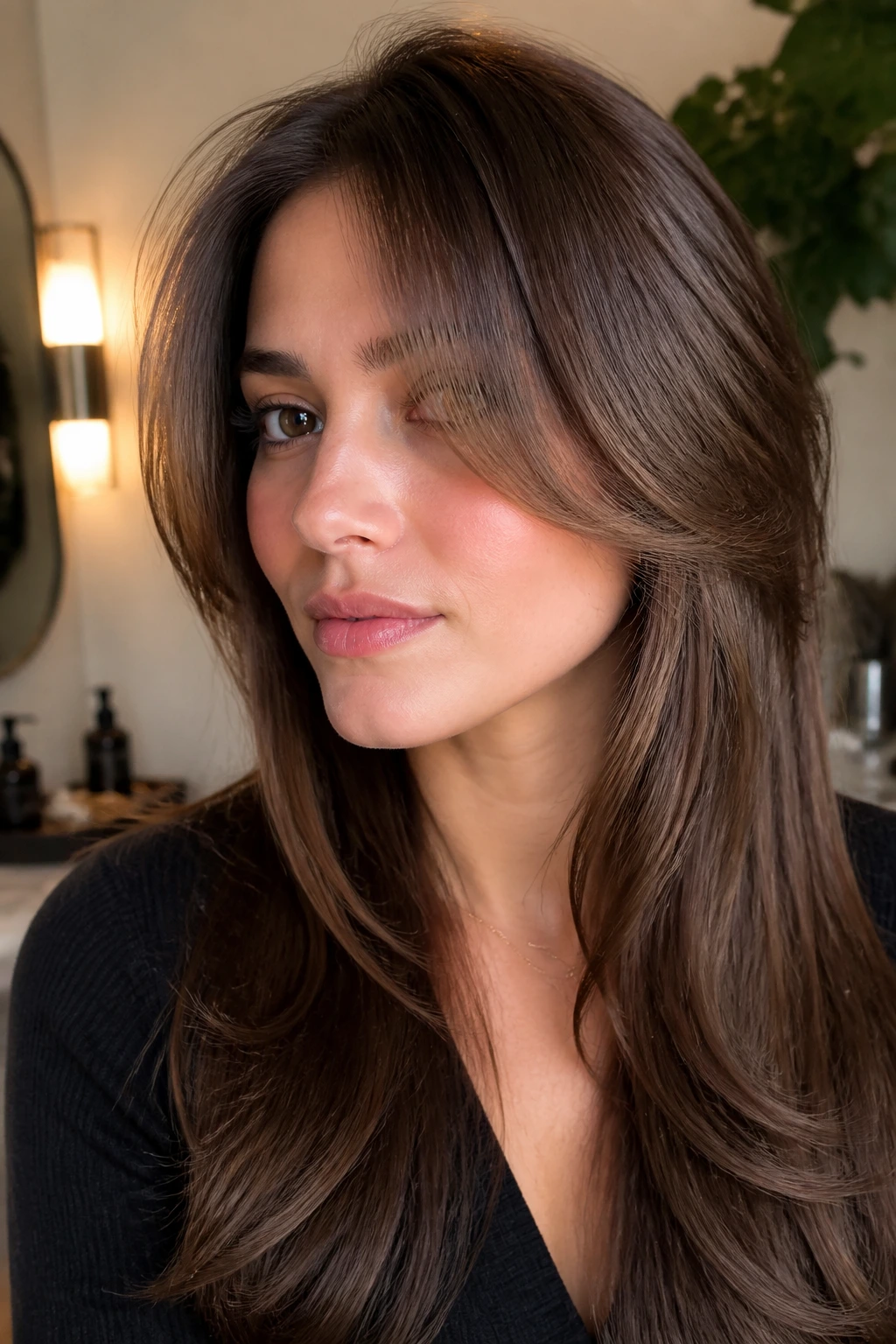
Start with the face frame, not the bangs. Tell the stylist where you want the shortest front piece to sit when the hair is dry — cheekbone, upper jaw, or just below the jawline are very different choices. If your face is round, I’d avoid asking for the shortest piece to land right at the widest part of the cheek unless you want the haircut to read fuller there.
Then talk about the fringe in terms of sweep and movement. Say you want a side-swept bang that starts from a side part and blends into the front layers, not a chunky bang that sits by itself. The best versions usually have a shorter interior edge near the part and a longer outer edge that can tuck or fall toward the temple.
A few phrases help a lot:
- “Keep the first face-framing layer below my cheekbone.”
- “I want the fringe to sweep, not sit straight across.”
- “Remove bulk inside the shape, but keep the perimeter long.”
- “Leave enough length to tuck one side behind my ear.”
- “I want movement that still looks good air-dried.”
Bring photos, but bring ones with your texture. A polished salon blowout can lie to you. Better to show your stylist a cut on hair that falls like yours does.
1. Cheekbone-Starting Blowout Layers
The cleanest version of this whole look starts at the cheekbone and keeps going. The shortest front piece brushes the upper cheek, then bends softly toward the jaw so the face gets a vertical line instead of a wide one. It’s polished, but not stiff. The hair moves when you turn your head.
Why It Works
The cheekbone is a smart starting point because it sits above the widest part of most round faces. That means the layers frame the face without sitting right on top of the fullness. Side-swept bangs finish the job by drawing a soft diagonal across the forehead, especially when they’re blown back and away from the face.
Quick Details
- Keep the shortest face-framing piece about 1 to 2 inches below the outer edge of the cheekbone.
- Ask for soft ends, not heavy, blunt chunks.
- Style with a large round brush and lift the front away from the face.
- Best on medium to thick hair that can hold a bend.
Best tip: Pin the bang section to one side while it cools. That little pause matters more than people think.
2. Collarbone-Skimming Swoop with Side Fringe
If you want the safest bet in the lineup, this is the one I’d hand over first. The collarbone gives the layers a long runway, and the side fringe keeps the front from feeling plain. It’s the kind of cut that looks expensive on a good day and still behaves on a rushed one.
The collarbone length keeps the shape from ballooning around the cheeks. That alone helps a round face. Add a side-swept bang that lands just under the eyebrow at the shortest point, and the whole cut reads longer and lighter. It’s a good choice if you like to wear your hair down most of the time and don’t want your face frame stealing the show.
It also grows out well. When the fringe gets a little longer, it slides right into the front layers instead of turning into an awkward, half-cut piece. That’s the real appeal here. You buy yourself time between salon visits.
3. Feathered Layers with a Deep Side Part
Feathering is not the same thing as thinning. Done well, it softens the edge of the haircut so the hair flips and fans instead of hanging in one blunt block. On a round face, that kind of movement is worth a lot more than extra length alone.
What Makes It Different
A deep side part gives the haircut an instant diagonal line, and diagonal lines are your friend here. The side-swept bang becomes part of the shape, not an add-on. I like this version on straight to wavy hair because the feathering shows up clearly, especially after a quick blow-dry with a round brush.
How to Wear It
Blow-dry the front opposite the part first, then sweep it back across the forehead once it cools. That creates a bend that lasts longer than brushing it flat and hoping for the best. If your hair gets limp at the root, a little mousse at the crown gives the part some lift without making it crunchy.
4. Long Rachel-Style Layers, Reworked for a Round Face
There’s a reason this shape keeps showing up in some form. The classic layered blowout has a lot going for it — volume through the crown, movement through the mid-lengths, and soft ends that don’t sit like a block. The trick is making it a little longer and a little looser than the old-school version.
For a round face, the front pieces should not cut off at the chin in a harsh way. Let them taper from the cheekbone toward the chest. The side-swept bangs should feel like a soft opening, not a separate section stuck onto the haircut. I prefer this look when the hair has enough density to hold a rounded shape, because it gives the blowout something to bounce against.
A one-inch or 1.25-inch curling iron can help if your hair is stubbornly straight. Wrap the front away from the face for a few seconds, then brush it out. You want a bend, not a ringlet. That detail changes the whole feel.
5. Wispy Side Bangs with a U-Shaped Hem
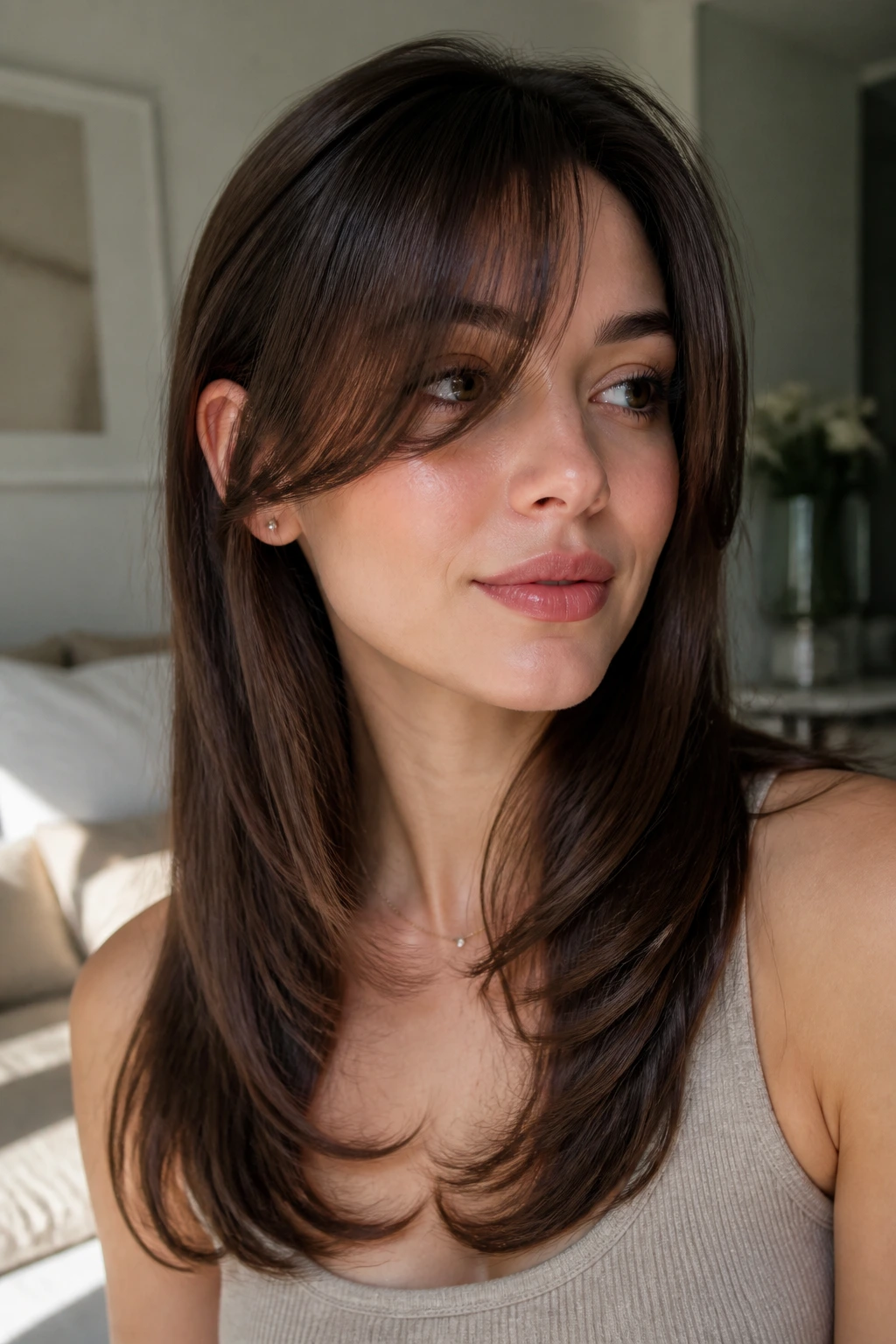
This is the quiet one in the group. The ends fall in a soft U, which means the center sits slightly shorter and the sides sweep longer. That shape is sneaky-good on a round face because it lowers the visual edge of the cut without making the length feel heavy.
The wispy side bangs matter here. They should move like a veil, not a thick strip. If the fringe gets too sparse, though, it disappears. I like enough density to show a soft line when the hair is tucked behind the ear, but not so much that the forehead feels boxed in.
This version is smart for people who want softness without obvious layering. The haircut looks polished even when the styling is minimal. A touch of smoothing cream, a rough dry, and a bend through the front often does enough.
6. Face-Framing Layers with a Long Side Sweep
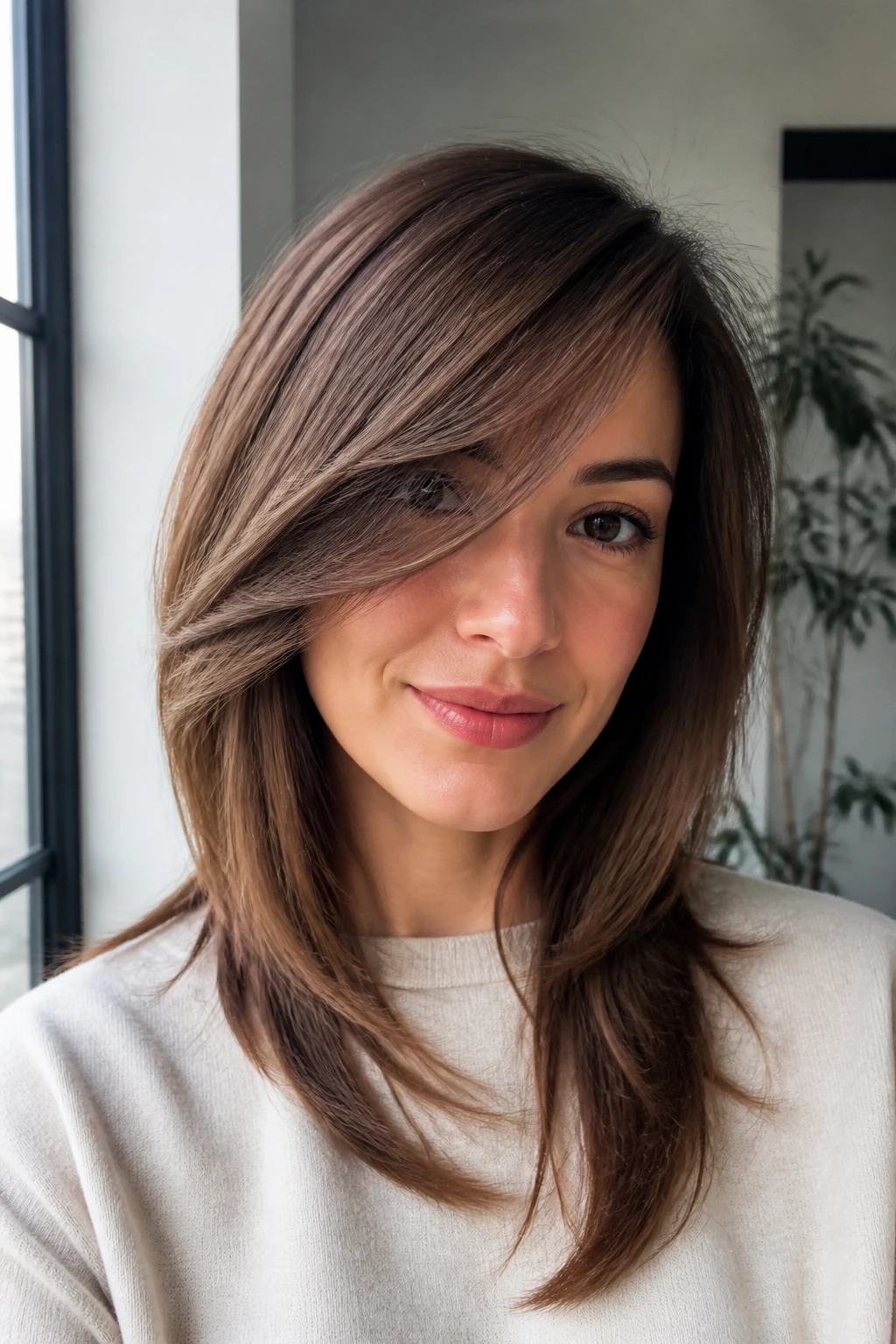
This is the cousin of curtain bangs, but not their twin. Curtain-style pieces split from the middle; side-swept pieces commit to one side and keep the face open on the other. That little asymmetry matters on a round face because it breaks up the symmetry that can make the face appear wider.
The longest front layer should graze the jaw or upper neck, then melt into the rest of the cut. You want the sweep to feel like a gesture, not a barrier. I like this cut on people who tuck one side behind the ear a lot. It gives you a built-in shape every time you do it.
It’s also a forgiving haircut for grow-out. When the bangs get longer, they don’t suddenly become awkward; they just turn into more face-framing motion. That’s the kind of grow-out I’ll take over a high-maintenance fringe any day.
7. Full Blowout Layers for Thick Hair
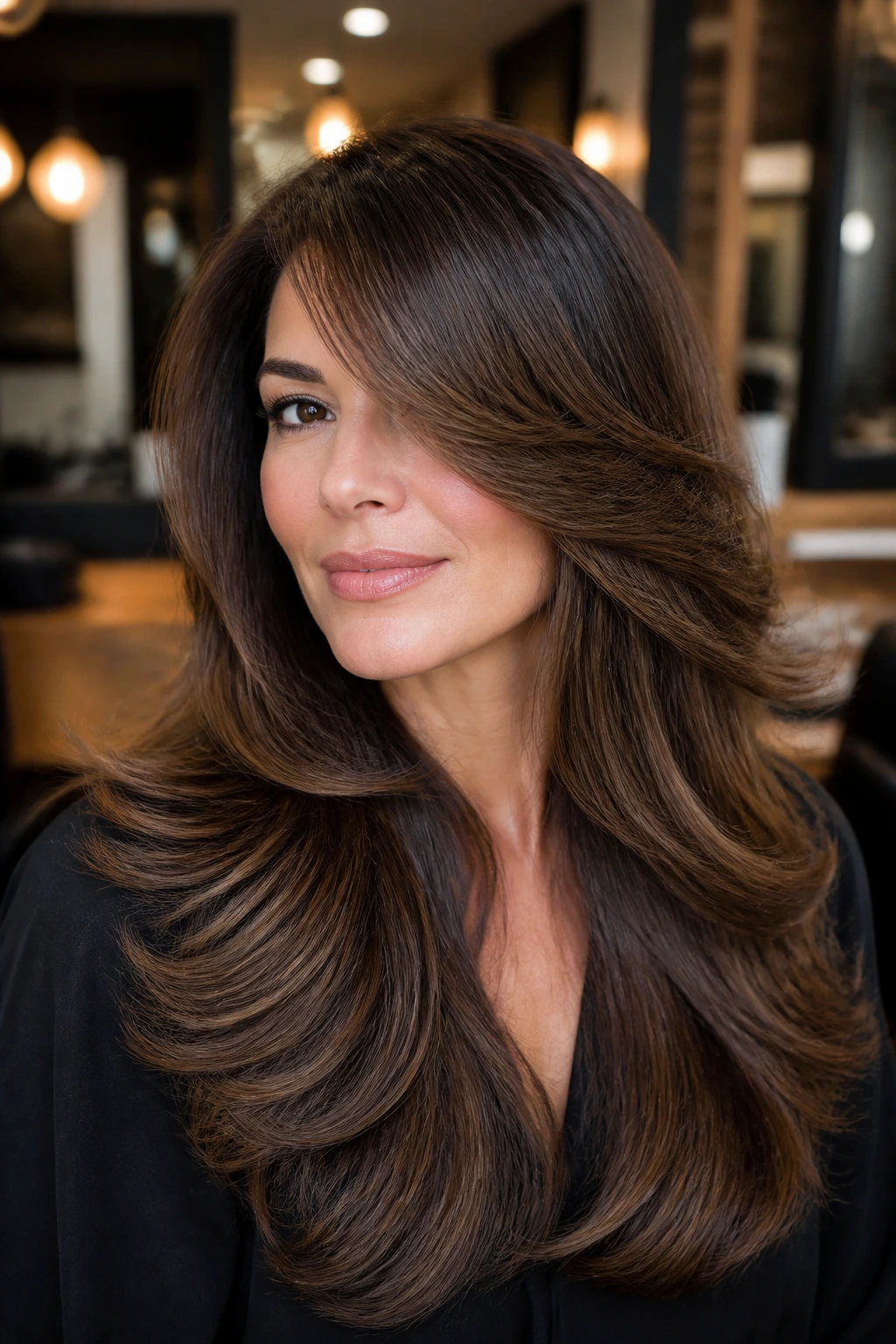
Thick hair can wear swoopy layers beautifully, but only if the bulk is handled in the right places. Too much width at the sides makes a round face look rounder. The answer is not to slash the hair to bits. It’s to take weight out from underneath and leave the top layers smooth.
A good thick-hair version has lift at the crown, controlled movement through the sides, and a side-swept bang that doesn’t collapse under its own weight. Ask for internal debulking or slide cutting through the mid-lengths if your stylist uses those techniques well. The surface should stay polished. The inside can be lighter.
- Keep the front pieces long enough to fold past the cheek.
- Remove weight underneath, not at the perimeter.
- Use a large round brush or hot rollers for the finish.
- Skip heavy waxes; they flatten thick hair fast.
The result should feel swingy, not puffy. Big difference.
8. Airy Layers for Fine Hair
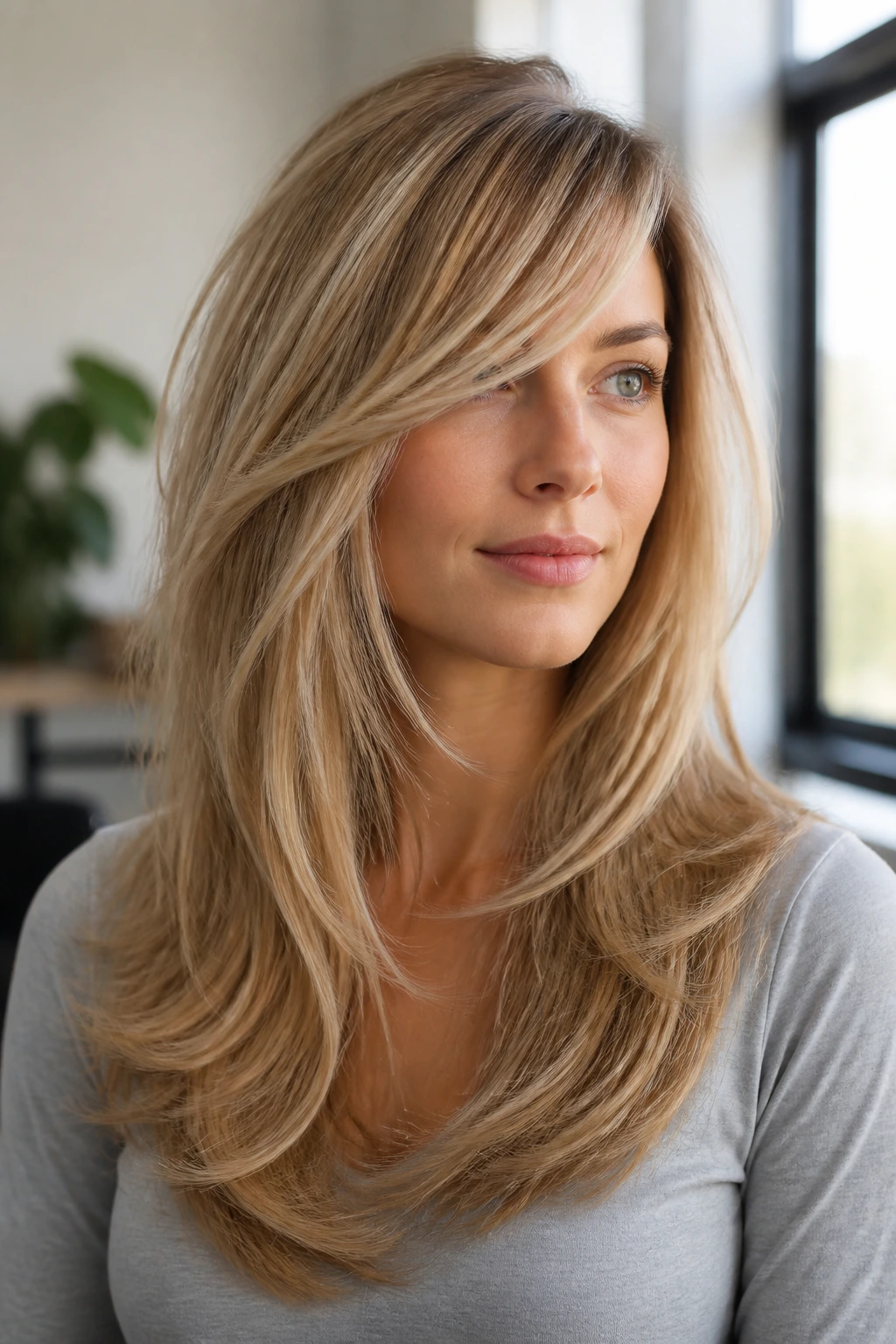
Fine hair gets cheated by bad layering all the time. Someone cuts too much off the front, then the ends look see-through and the side fringe falls flat by noon. The right version keeps the layers long enough to preserve fullness while still giving the cut some lift.
The best move is usually a soft face frame with a side-swept bang that starts a little farther back than you’d expect. That keeps the front from looking too thin around the forehead. If the layers are too short, fine hair can separate into wisps in a way that feels unfinished. If they’re long and delicate, the shape stays airy but still has a body line.
A light mousse at the roots and a small round brush are usually enough. Don’t overload the hair with oil. Fine hair can’t hide much. Give it a little lift, then stop.
9. Shag-Inflected Layers with a Soft Edge
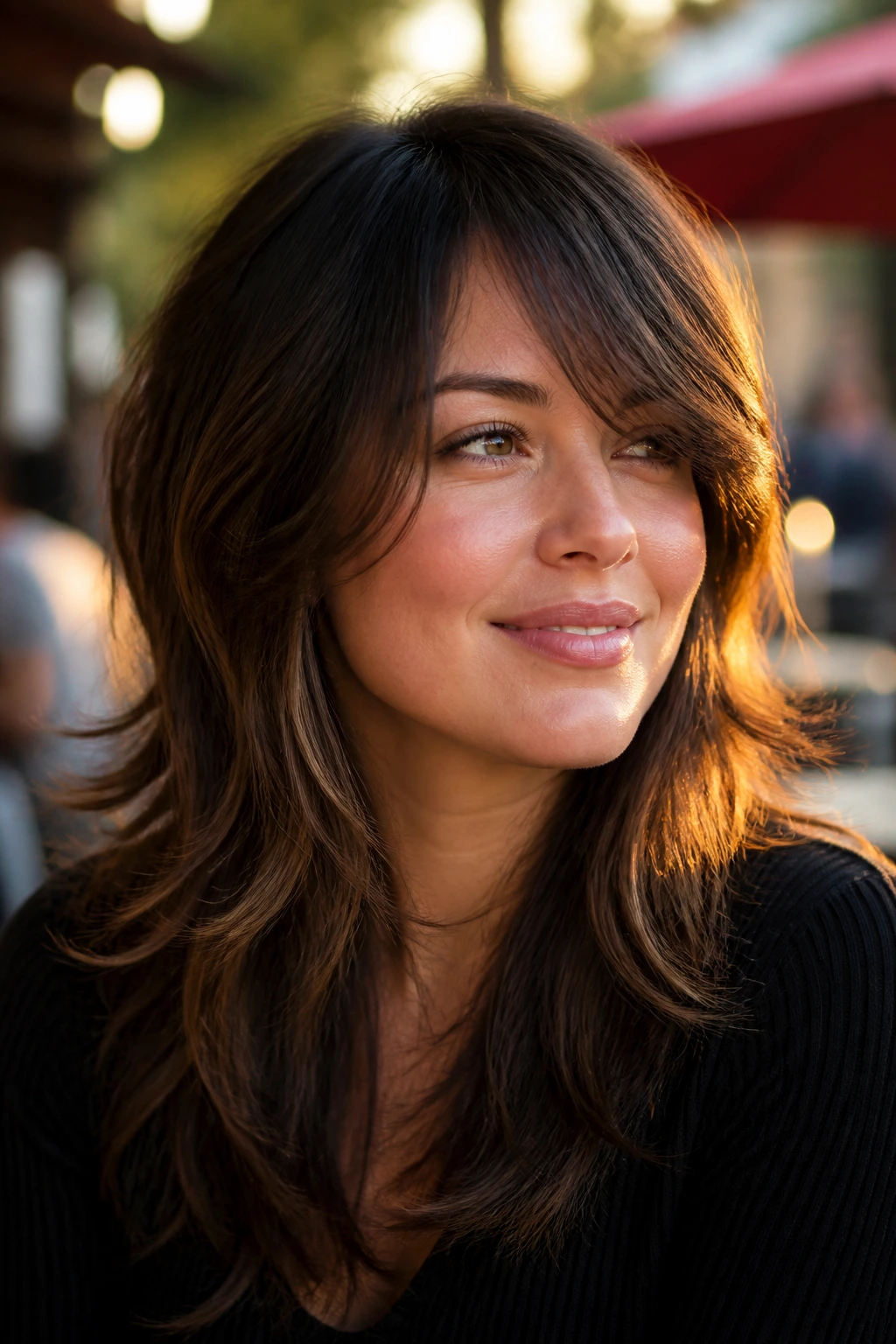
This is for someone who wants a little attitude without going full shag. The crown gets some movement, the layers around the face are loose, and the side-swept bangs soften the whole thing so it doesn’t land too hard on a round face. It’s relaxed, not messy.
What makes it work is restraint. The layers can be textured, yes, but they shouldn’t begin too high on the head. A round face already has soft curves; if you build all the volume at the widest point, the haircut starts pushing outward instead of downward. Keep the top airy and the front pieces longer.
A touch of texture spray on dry hair helps this version. Scrunch the ends, then separate the front pieces with your fingers. Don’t comb it to death. The shape lives in those uneven bends.
10. Wavy Layers with a Chin-Grazing Bang Sweep
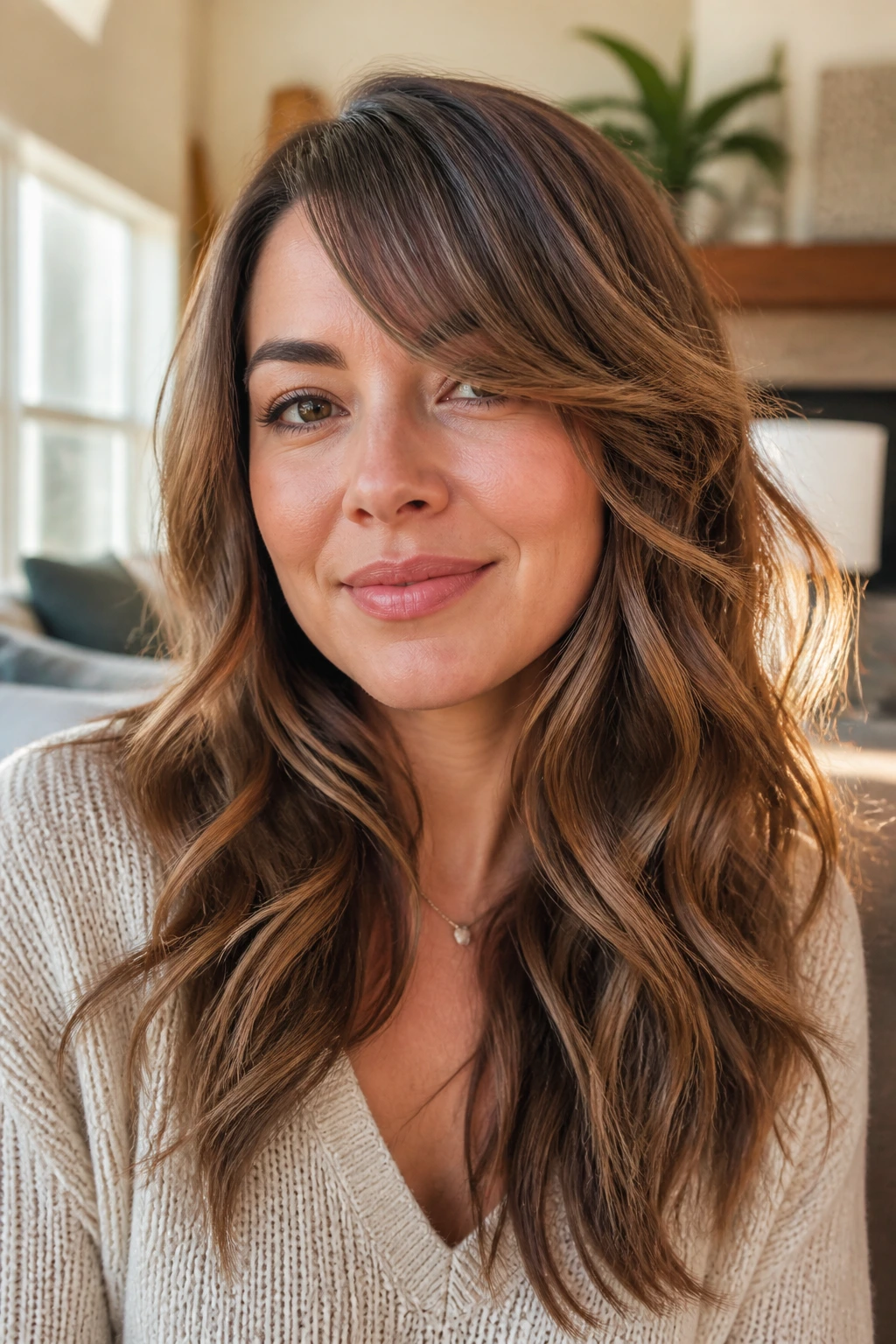
Waves can either help this haircut or fight it. The difference is usually length. If the shortest bang sits too high, the wave will spring up and steal space from the forehead. If it grazes the chin or upper jaw on the sides, the movement looks intentional.
Why Wavy Hair Likes This Shape
The side sweep follows the wave pattern instead of interrupting it. That matters. A wave that is allowed to bend across the face creates a soft diagonal line, which reads longer and less wide on a round face. A little sea-salt spray or curl cream goes a long way here, but don’t overdo it or the front pieces can get sticky and flat.
How to Style It
Diffuse until about 80 percent dry, then let the front settle into the direction of the part. If you want more polish, wrap just the bang section around a medium barrel iron for five to eight seconds and let it cool before touching it. That one move cleans up the face frame without erasing the wave.
11. Sleek Straight Layers with Side-Swept Fringe
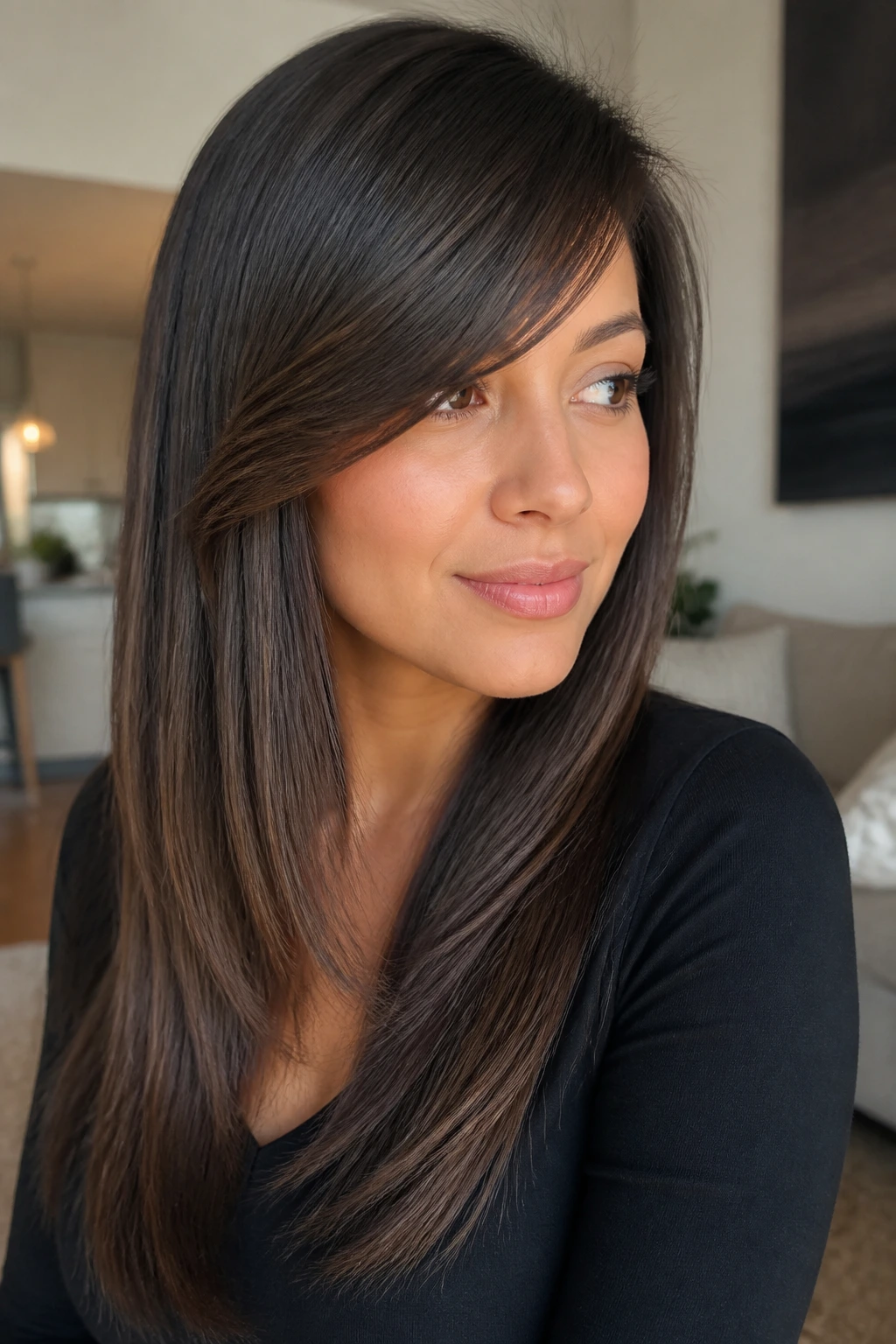
Straight hair can look sharp in a good way or flat in a bad way. For a round face, the safe path is long, sleek layers with enough angle in front to create motion. You do not want a blunt line sitting right at the widest part of the cheeks. You want a line that bends.
A side-swept fringe helps because it breaks the forehead shape without chopping it into a hard rectangle. The best styling trick is simple: blow the bangs across the forehead first, then sweep them back with a brush as they cool. That leaves a soft curve instead of a stiff flip.
This cut looks especially good when the ends are polished and the front is a little piecey. Too much smoothness can make it feel helmet-like. A small amount of serum on the last two inches is enough. Keep the roots light.
12. Curly Layered Shape with a Long Sweep
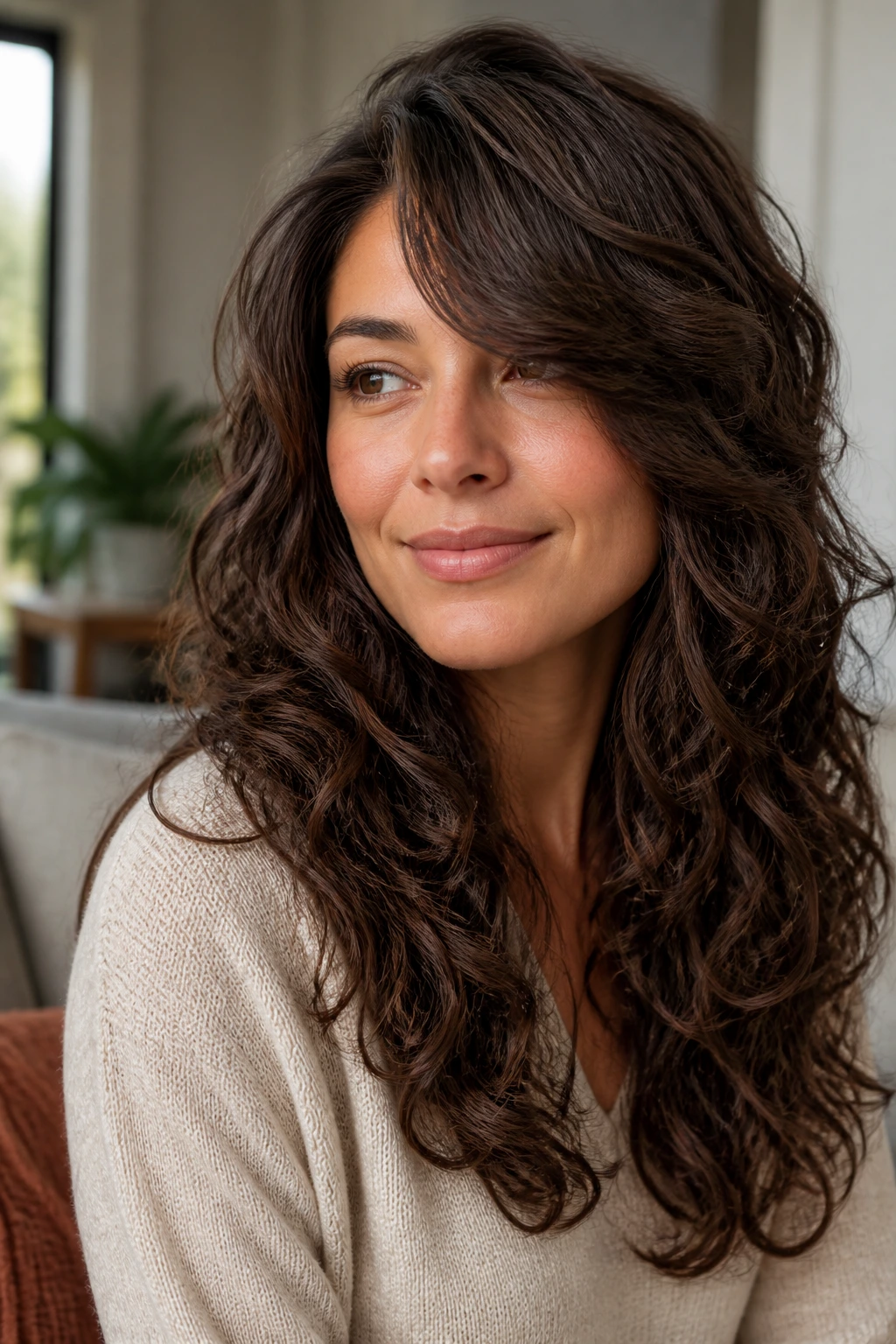
Curly hair needs a little more patience, and it rewards the trouble. The front pieces should be cut longer than you think, because curls rise once they dry. A side-swept bang that looks almost too long when wet often lands in the right place once it springs up.
What works here is allowing the curls to frame the face without sitting right on the cheeks. The layers should support the curl pattern, not chop it up. If the cut is too short in front, the curl will expand outward and widen the face. Longer face-framing pieces keep the shape elegant and soft.
I like this version best when the stylist cuts either dry or partially dry, so the curl pattern is visible. That’s especially useful around the bang area. You want the sweep to fall, not bounce into a little triangle.
13. Angled Front Layers That Carve the Cheeks
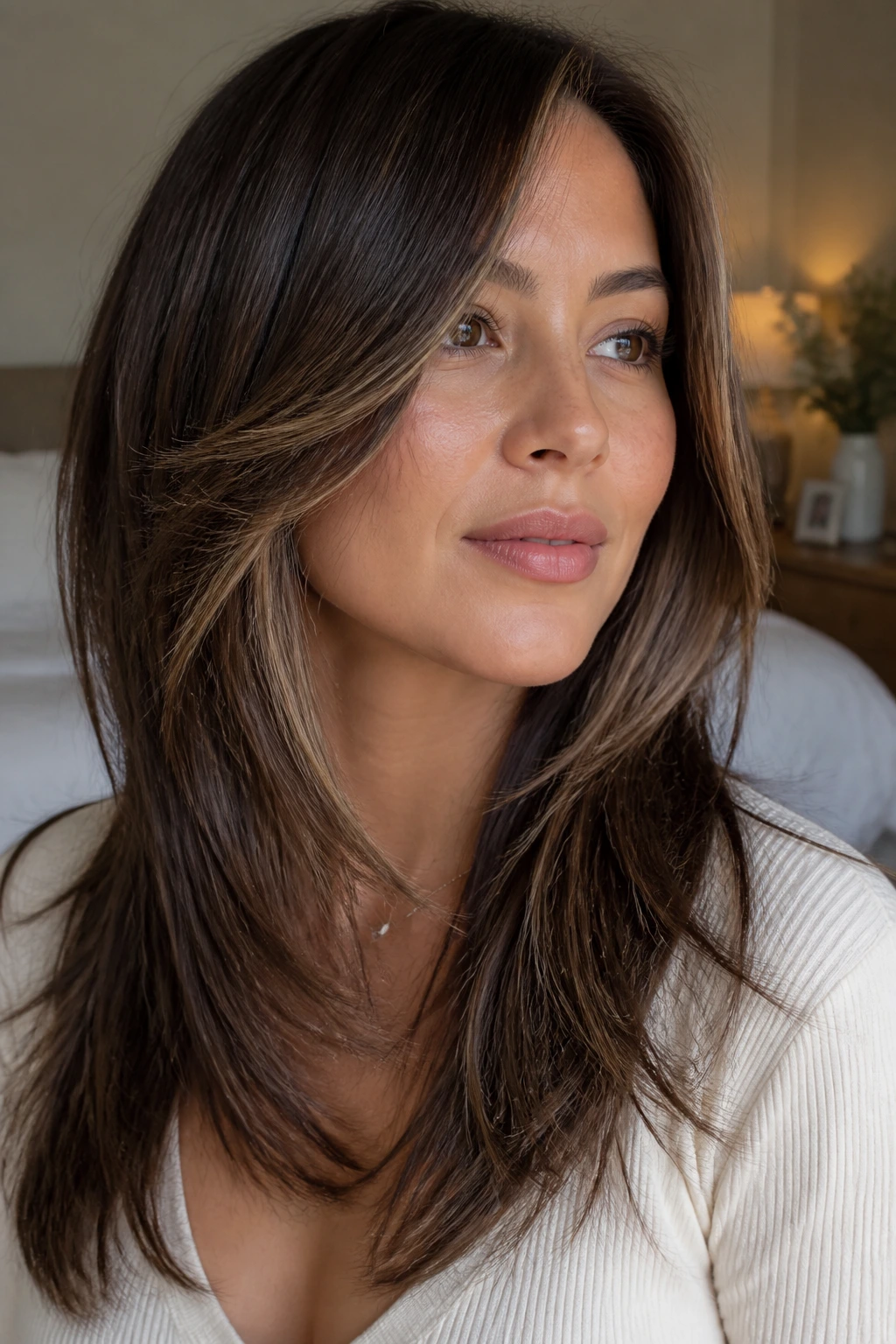
This one is all about geometry. The front layers angle from a shorter point near the part down toward the jaw, which creates a line that cuts across the fullness of the face in a good way. It’s one of the strongest choices if your cheeks are the part you want to soften visually.
The Line to Ask For
Tell your stylist you want the front to start higher near the part and drop lower as it moves toward the side of the face. That creates a diagonal that looks deliberate, not accidental. If you wear your hair tucked on one side, this shape gets even better because the tucked side gives the haircut a little asymmetry.
A few hair types do especially well here:
- Medium-density hair that can hold the angle.
- Wavy hair that bends into the front pieces.
- Thick hair if the inside gets enough weight removed.
The cleanest result comes from smooth blow-drying, then a small bend at the ends. Not a curl. Just a bend.
14. Piecey Ends and a Long Side Sweep
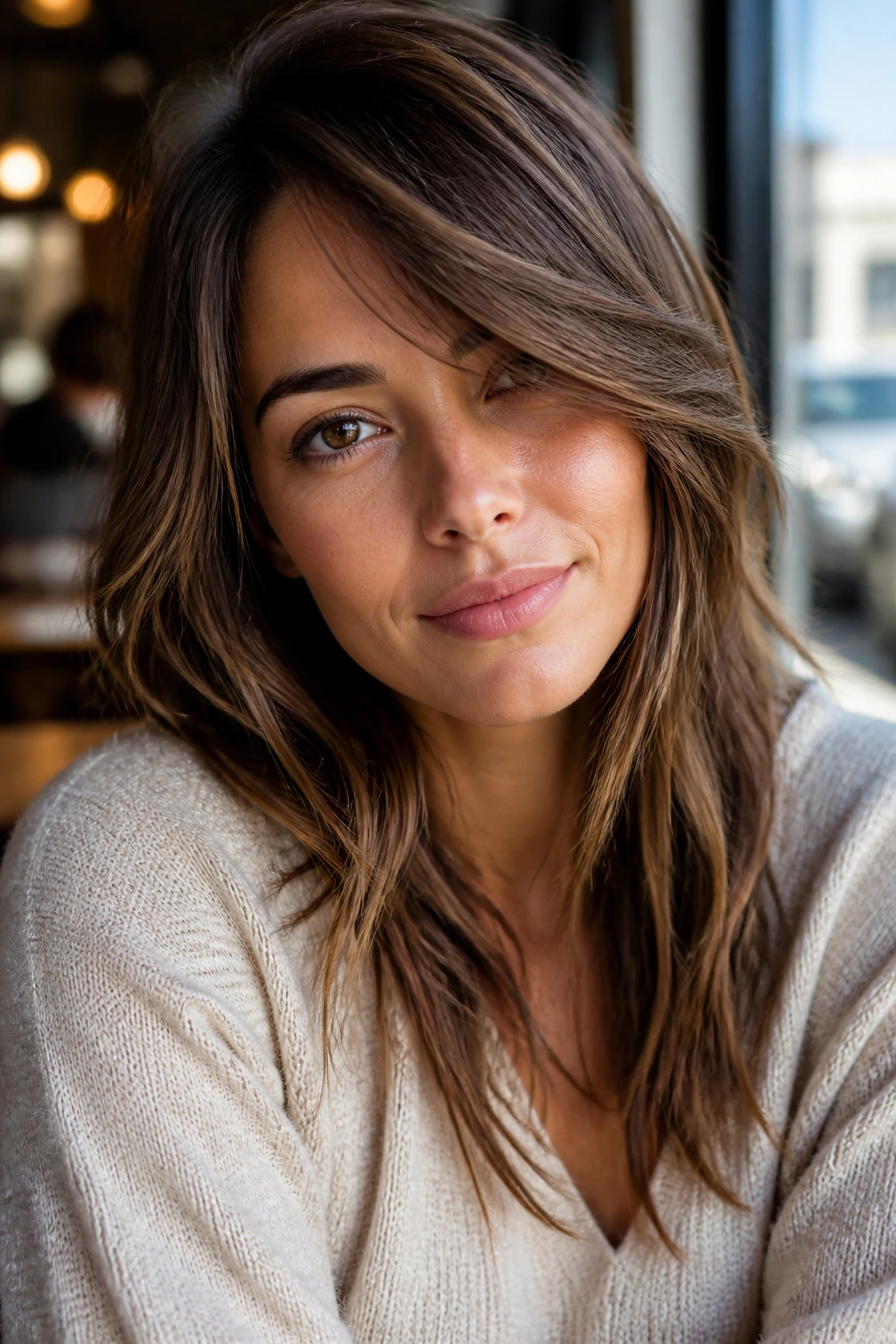
Piecey ends are not about looking undone. They’re about letting the eye see movement instead of one heavy line. On a round face, that matters because separated ends make the haircut feel longer and lighter through the bottom half.
This version is especially good if you prefer a lived-in look. The side-swept bangs can be a little irregular, and the front layers can break into soft sections instead of one smooth ribbon. A point-cut finish helps. So does a tiny bit of texture cream worked just through the ends — not the whole head, or you’ll get grease at the roots and separation in the wrong place.
It’s a nice choice for people who hate overstyling. Let the hair dry naturally, twist a few front pieces around your fingers, and move on. The haircut does not need a perfect blowout to make sense.
15. Invisible Layers with a Smooth Finish
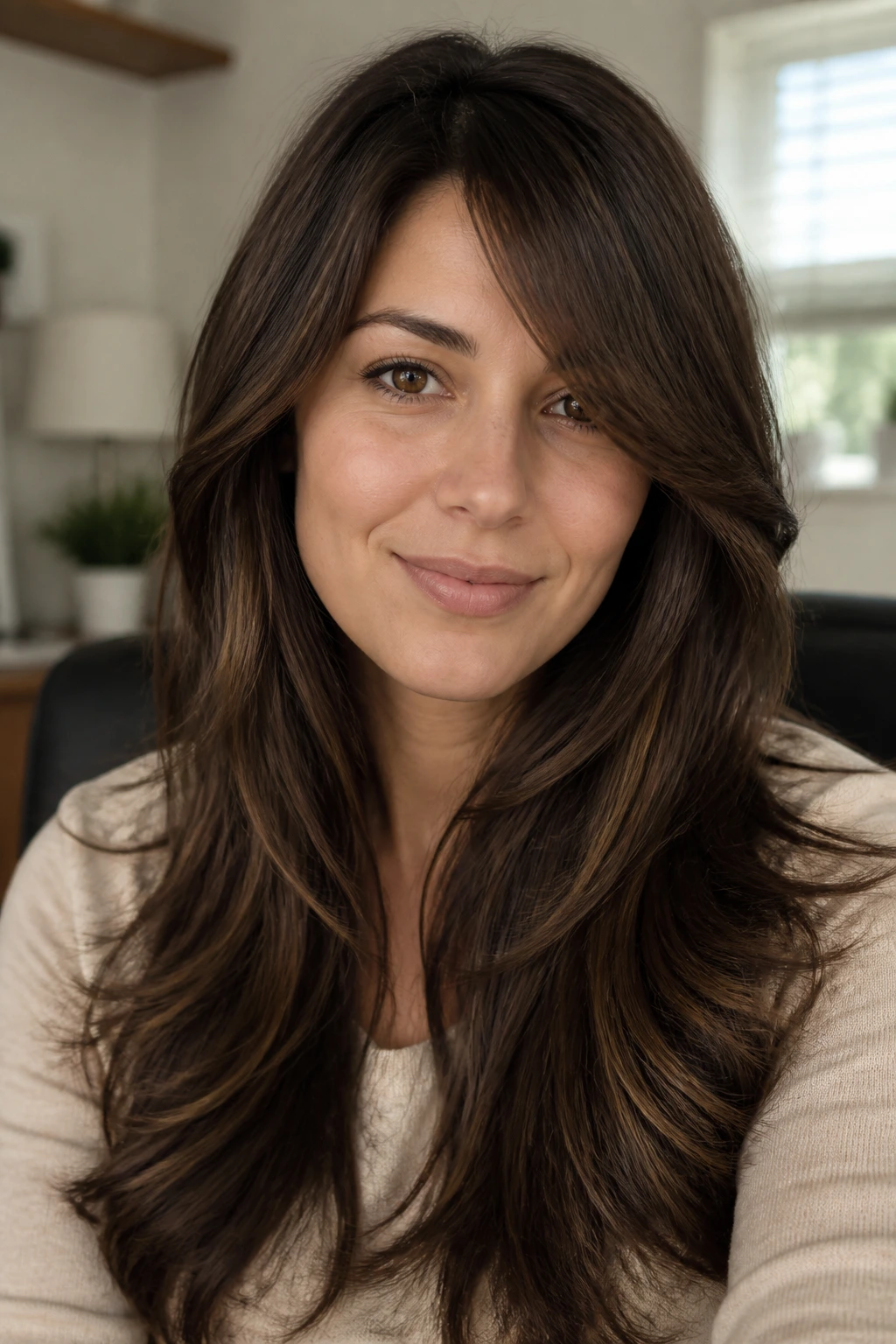
Invisible layers are the stealth move in this whole set. You keep the outline long and clean, then remove weight from the inside so the hair moves without announcing every layer line. On a round face, that’s useful if you want length and softness without obvious chopping.
The side-swept bangs are soft here, almost blending into the rest of the front. I like this on people who wear polished clothes, work in a setting that dislikes messy hair, or just want a cut that looks expensive without drawing attention to itself. The outline stays calm. The movement lives underneath.
This version is especially nice on medium-density hair with a natural bend. Blow it smooth, curve the front away from the face, and stop before it gets too curled. The point is swing, not drama.
16. High-Lift Blowout with Tucked Bangs
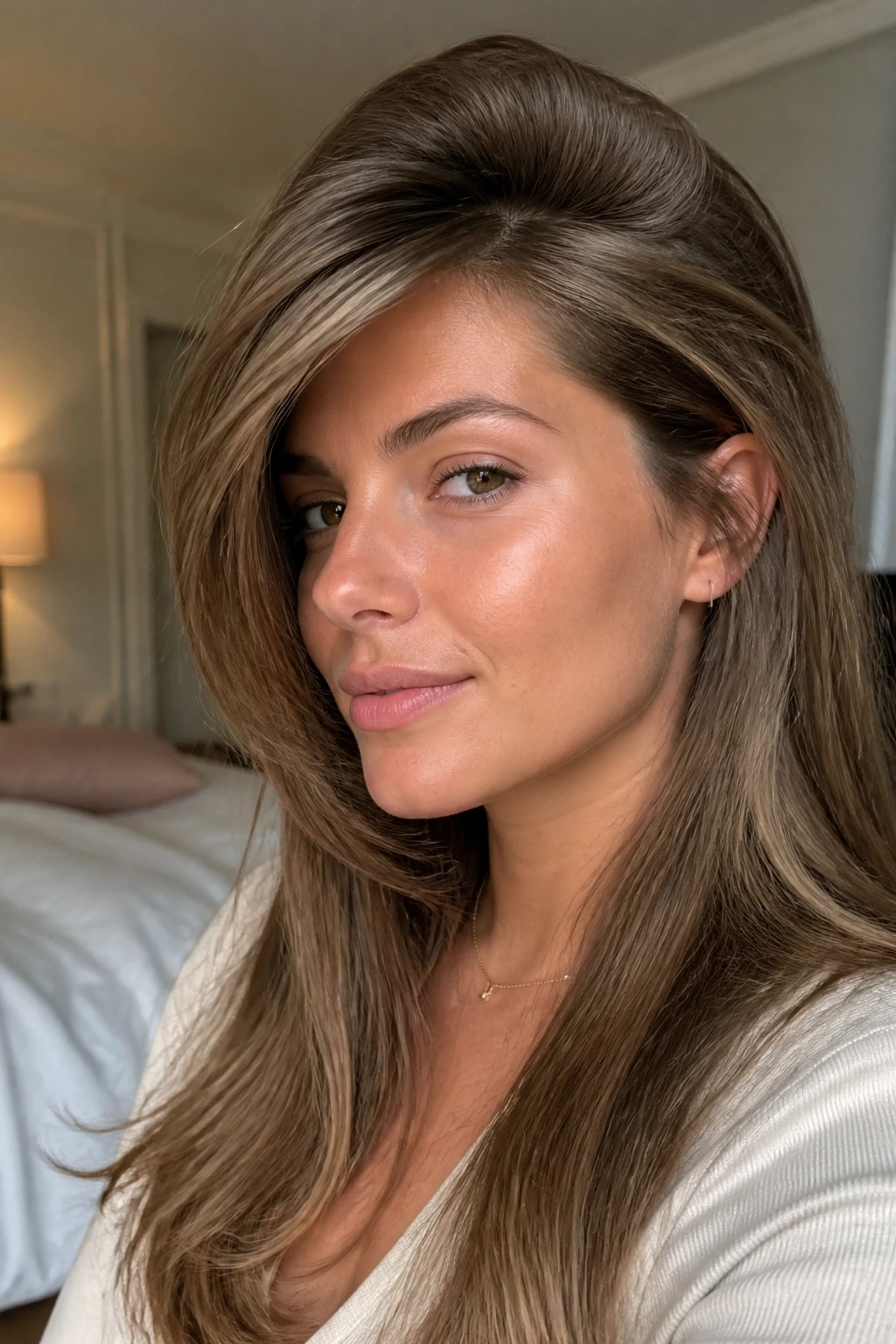
If you like a little glamour, this is where it shows up. The crown gets lift, the side bangs sweep across the forehead, and one side gets tucked behind the ear to open the face even more. The result is clean, lifted, and very good at keeping a round face from looking boxed in.
The lift has to come from the roots, not just the ends. A root mousse or light volumizing spray helps before drying, then a large round brush gives the front the bend it needs. Tucking one side behind the ear is not an afterthought here; it’s part of the shape. It exposes the jawline and keeps the haircut from sitting too evenly on both cheeks.
I’d reach for this version when you want the kind of hair that looks better after a little time in it. The front settles, the bang softens, and the whole thing feels lived rather than overdone.
17. Low-Maintenance Air-Dry Layers
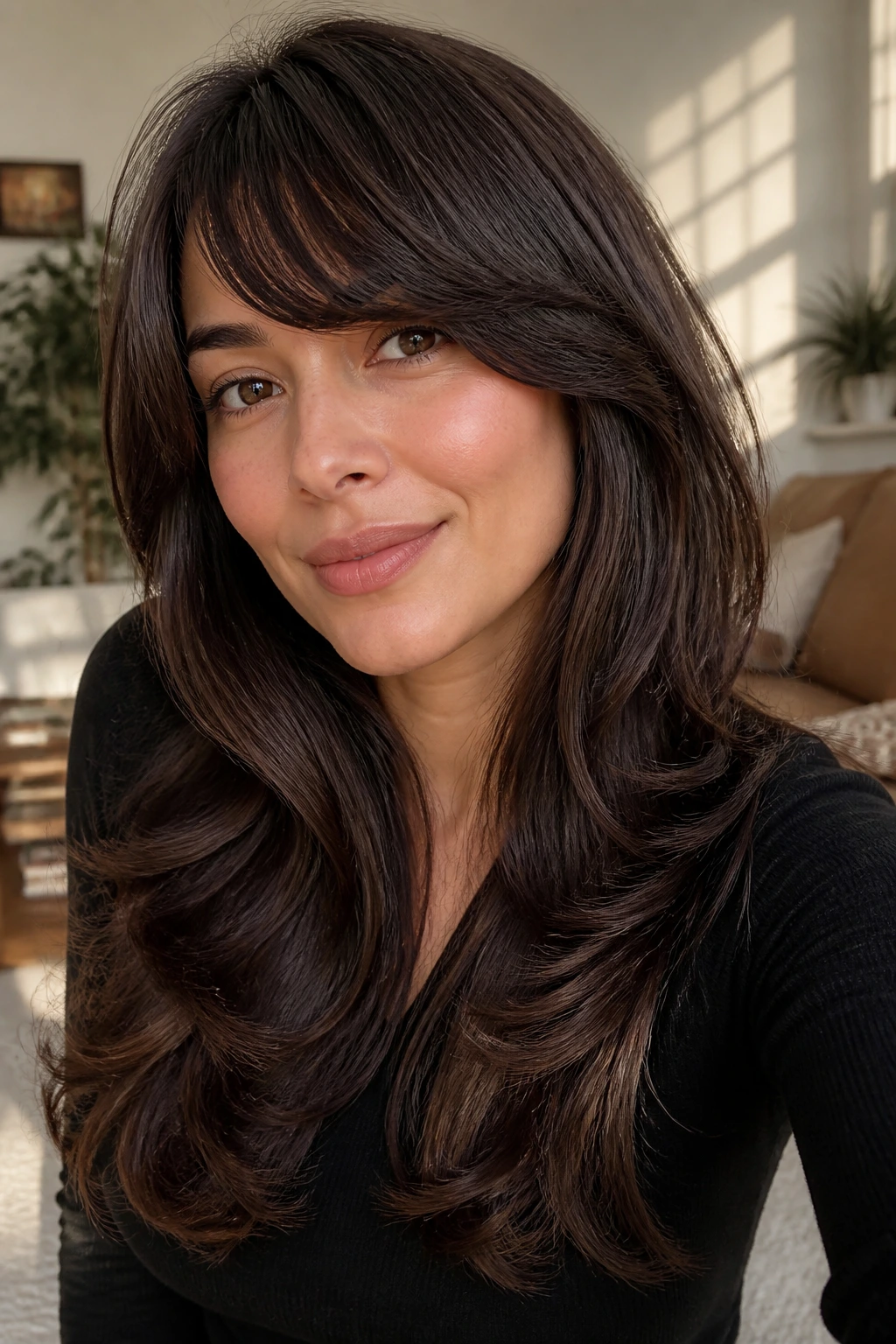
Some people want the swoop without the ceremony. Fair enough. This is the version for that. The layers stay long, the side fringe is soft, and the cut relies on your natural bend instead of a brush and a hot tool every morning.
The key is not to over-layer the front. Air-dried hair needs enough weight to fall in the right direction. If you remove too much, the ends stick out and the side sweep frizzes away. A round face usually looks better when the front pieces keep some length and slide down the face instead of bouncing off it.
Work in a leave-in cream or lightweight curl lotion, then twist the bang section once while damp and let it fall. That’s usually enough to give it a bend. Cheap trick. Works.
18. Polished U-Shape Cut with Sweeping Bangs
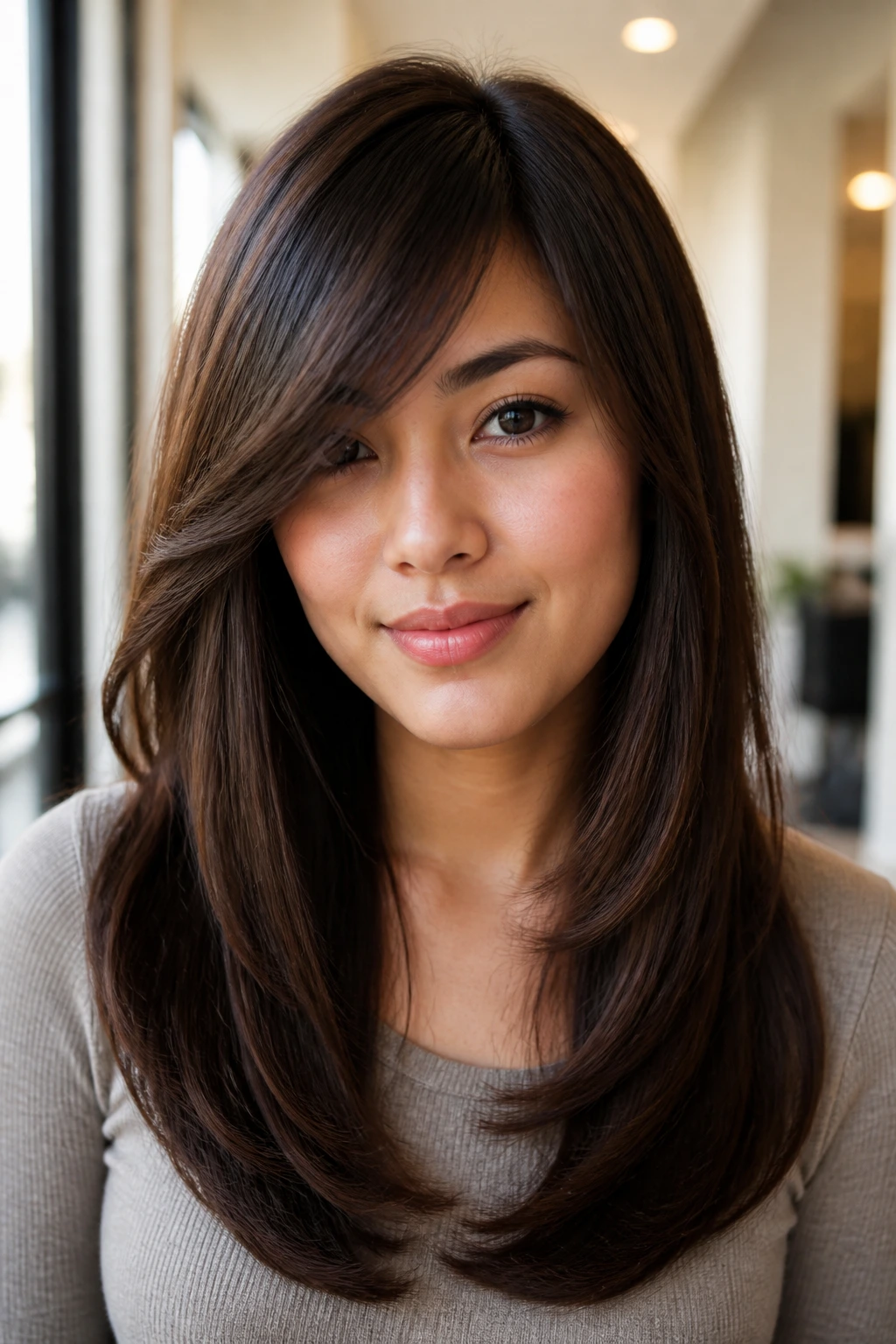
A U-shaped hem is one of the smartest long-shape choices for a round face because it keeps the center from feeling blunt and the sides from flaring out. The haircut moves inward, then downward. That subtle curve makes the length feel longer than a flat bottom edge does.
The side-swept bangs keep the front from looking too uniform. They introduce a soft diagonal while the U-shape holds the lower edge in check. I like this on straight or slightly wavy hair where the clean outline can really show. The result is neat, but not severe.
If you want the haircut to look tidy in a ponytail, this one also plays well. The front pieces still fall out and frame the face, which is half the point. A good long layered cut should do something nice even when half of it is tied back.
19. Internal Layers for Heavy, Straight Hair
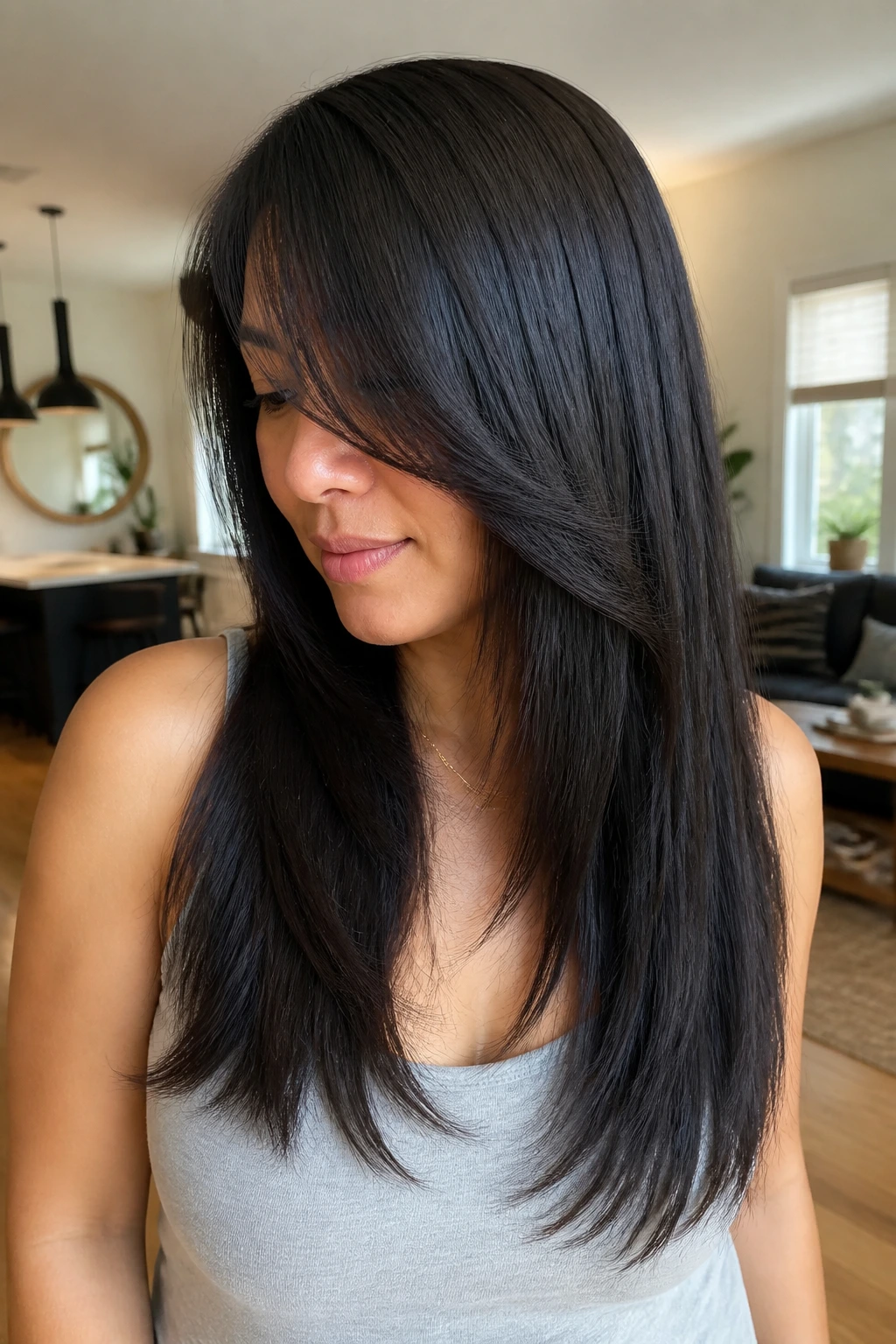
Heavy straight hair can flatten a round face fast if the bottom edge turns into one dense block. Internal layers fix that without shredding the outside line. The surface stays smooth; the inside gets lighter.
This is one of the few cases where hidden cutting matters more than visible layers. The stylist removes weight where the hair swells, usually through the mid-lengths and underlayers, then leaves enough length to keep the shape elegant. The side-swept bang should be long enough to merge into the front, not sit like a separate section.
A flat iron is optional here, but only if you use it lightly. The goal is a swingy finish with controlled movement, not poker-straight stiffness. A little bend at the ends often looks better than a dead-straight line.
20. Shoulder-to-Chest Swoop with Lived-In Waves

This is the version I’d call the everyday sweet spot. The hair lands somewhere between the shoulder and chest, which gives the face enough room to look longer without dragging the style into heavy, long-hair territory. The side-swept bangs break up the forehead, and the waves keep the length from feeling plain.
It’s a strong choice if you want movement you can actually live with. The cut looks good when it’s freshly done, but it also looks decent when it’s been slept on and revived with a quick mist of water. The waves can be loose, not perfect. That’s part of the charm.
The front should still be controlled. If the side pieces start too high, the cut widens at the cheeks. Keep the shortest piece lower, and let the wave finish the rest.
21. Deep Side-Part Layers for Glasses Wearers
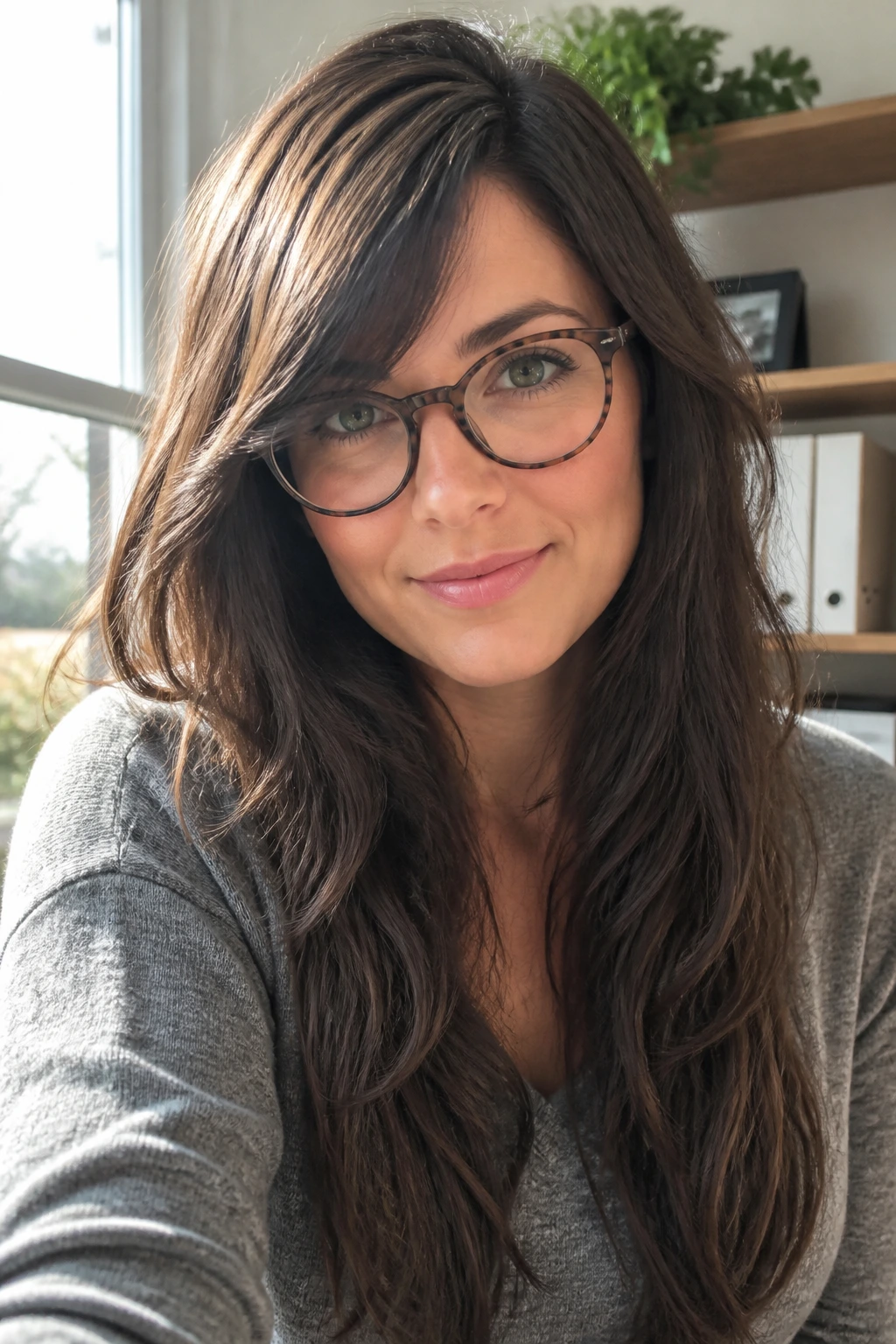
Glasses change the whole conversation. A fringe that sits too low can fight the frames, and a front layer that lands right on the arms of the glasses gets annoying fast. The answer is a deep side part with long, sweepy bangs that clear the frame line and keep the eyes open.
The shortest point of the bang should usually stop above or beside the brow, but not so short that it sticks straight out. It needs room to curve. Side layers can start just below the cheekbone and drift down toward the jaw, which keeps the face from looking crowded around the nose and cheek area.
If you wear glasses every day, test the haircut with them on. That sounds obvious, and yet people skip it constantly. The haircut has to work with the frame line in real life, not just in the mirror at the salon.
22. Growing-Out Bangs with Face-Framing Layers
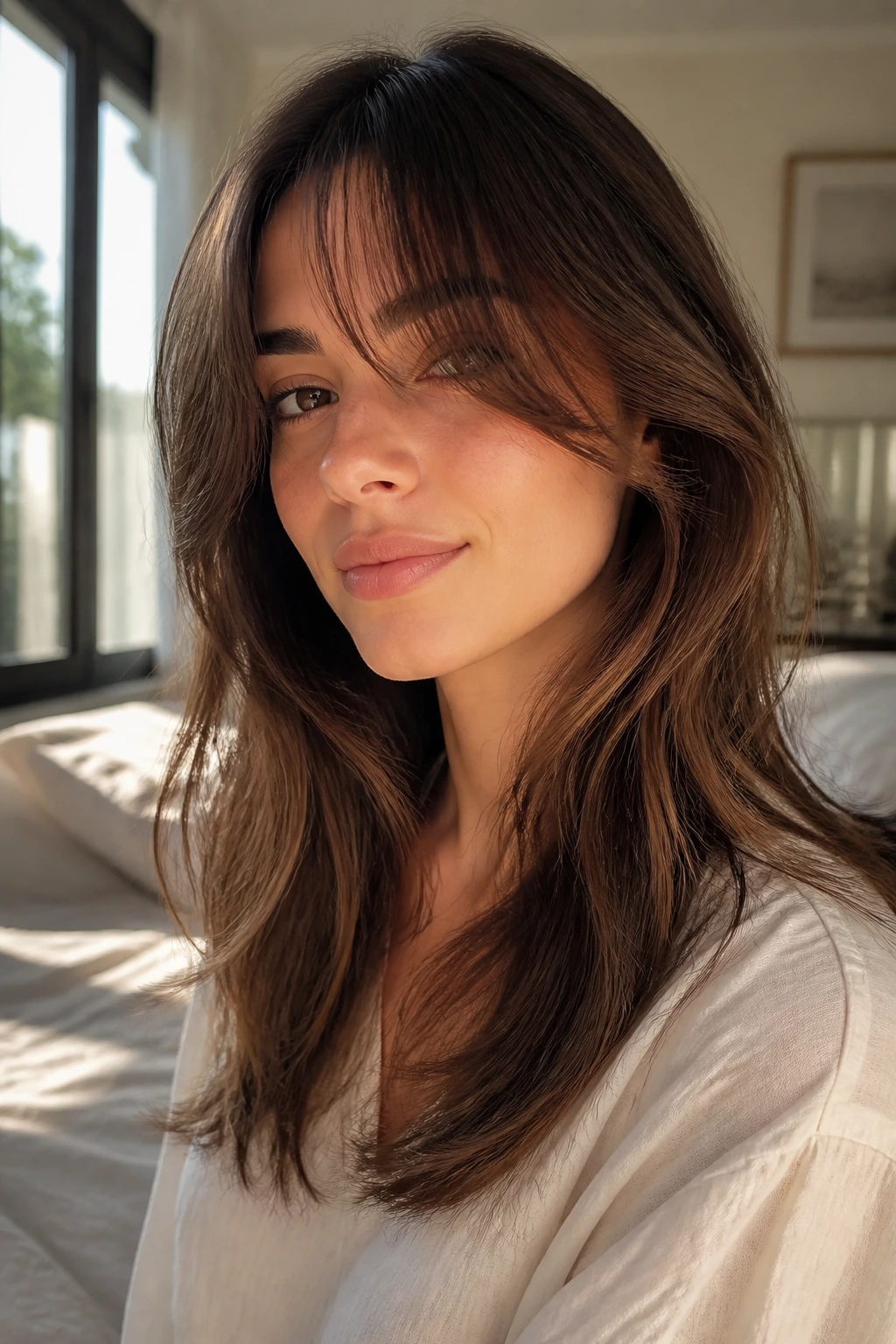
This is the practical one. Maybe you’ve had bangs and you’re tired of fighting them. Maybe you want to start side-swept fringe but keep the option to move on later. Either way, this version buys you flexibility.
The bang area is cut so it can sit as a side sweep now and blend into face-framing layers later. That means no hard shelf, no too-short center section, and no abrupt line around the forehead. The shortest piece should still reach a place where it can tuck or bend; the longest piece should already know how to join the rest of the haircut.
It’s a smart choice if you hate feeling trapped by your own haircut. As it grows, it turns into more layers instead of a problem. That’s a better long-term relationship with bangs than most people realize.
The Styling Moves That Make the Swoop Happen
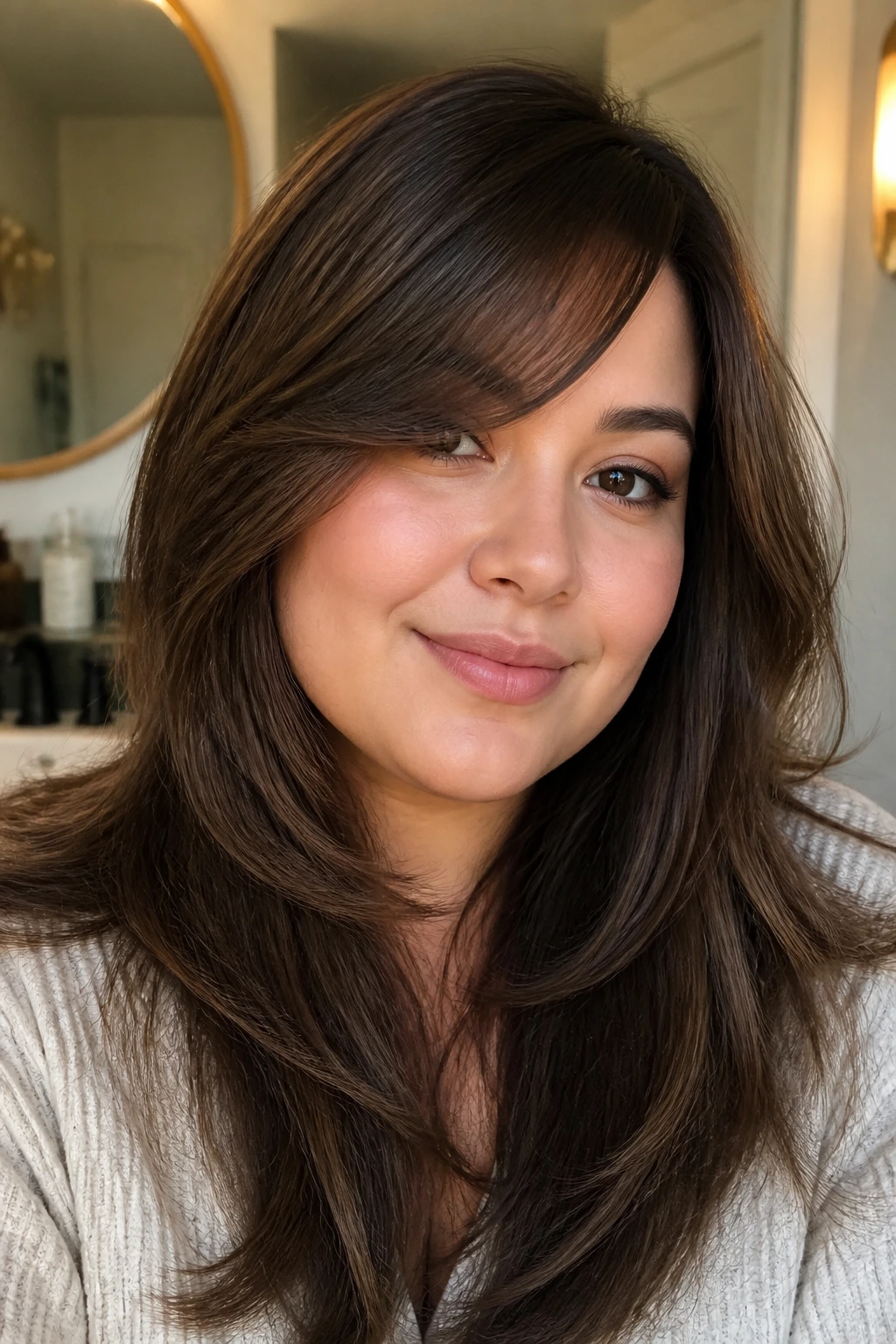
Blow the front in the opposite direction first. That’s the move most people skip. Dry the bang section away from your part, then sweep it back into place while it cools. The root keeps the bend, and the front stops lying flat against the forehead.
Use a round brush, but don’t curl the ends into a sausage. You want a soft C-shape, not a hard roll. A 1.25-inch brush works well for most lengths. Smaller brushes can make the front too round and too short-looking, which is not what a round face needs.
Pin or clip the front while it cools. Five minutes is enough. Sometimes less. Heat shapes hair, but cooling locks the shape in, and that matters when the layers need to sweep instead of collapse.
Choose your product by density, not by trend. Fine hair usually wants mousse or root lift. Thick hair prefers a lighter cream at the ends and nothing heavy near the crown. Curly hair often likes a touch of leave-in and a diffuser. One bottle does not fit all.
Common Mistakes That Make the Face Look Wider
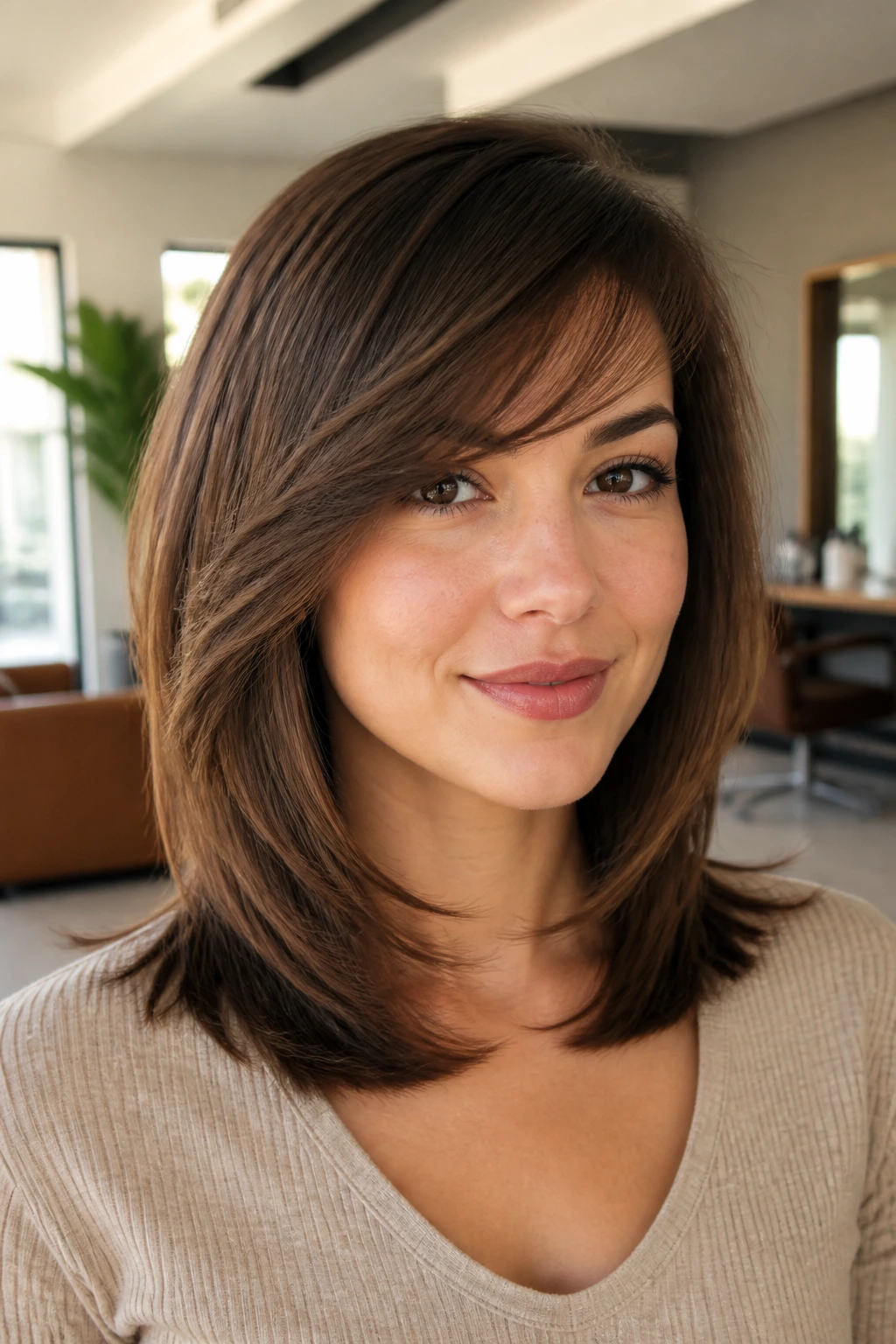
Cutting the shortest layer too high. If the face frame starts near the cheekbone and then sits right on the fullest part of the cheek, the haircut can visually widen the face. The fix is simple: move the shortest point lower, usually toward the upper jaw or below the cheekbone.
Making the side fringe too blunt. A heavy bang line across the forehead can flatten the whole shape. If you need more coverage, keep the fringe soft and angled instead of thick and straight.
Blowing the hair straight down. Straight-down drying pulls the layers into a curtain. That sounds harmless until you realize it removes the diagonal line you wanted in the first place. Blow the front away from the face and let it settle.
Thinning the ends too much. Over-thinned hair loses shape fast and can stick out at the sides. Keep enough weight at the perimeter so the cut still hangs in a clean line.
Ignoring the crown. A little lift at the crown helps lengthen the face. Flat roots can drag the whole style down, even if the layers are in the right place.
Variations and Alternatives to Try
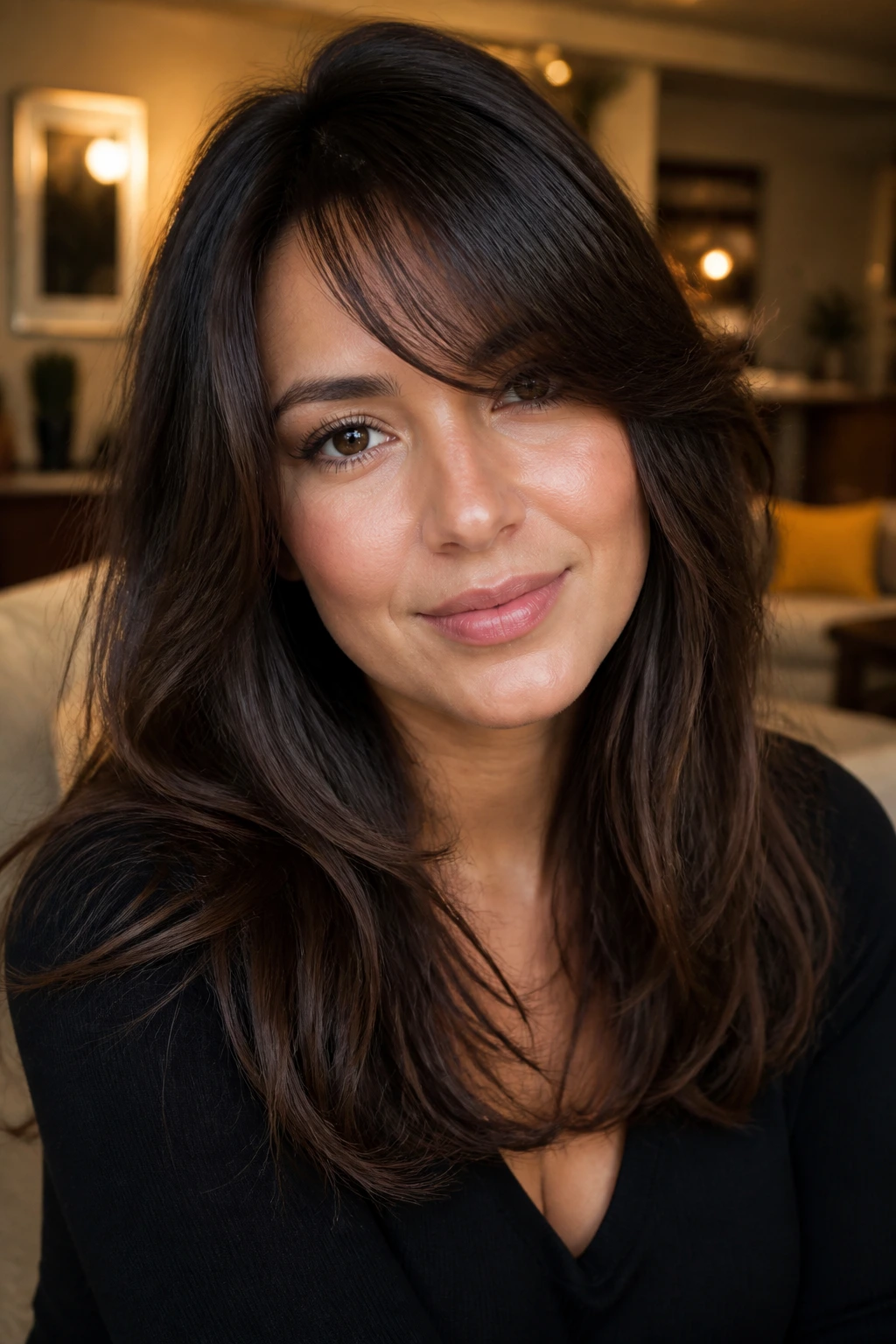
Soft Curtain-to-Side Sweep Hybrid: If you like the idea of curtain bangs but want less upkeep, ask for a bang that parts slightly off-center and sweeps more to one side. It gives you the open forehead of a curtain fringe with the easier grow-out of a side-swept bang.
Curly Spiral Frame: For curly hair, keep the face-framing pieces long enough that they curl into a soft loop rather than a puff. This version works best when the shortest layer sits below the cheekbone and the curl pattern is cut in its natural state.
Smooth Glassy Finish: If your hair is naturally straight, keep the layers subtle and the ends polished. This version looks strongest when the front sweep is bent just at the ends, not curled through the whole strand.
Thick-Hair Relief Cut: Dense hair sometimes needs more internal weight removal and fewer visible layers. The shape stays clean, but the head stops feeling like a triangle by midday.
Air-Dry Wave Version: For low-heat styling, keep the layers long and the fringe soft. The haircut should fall into a bend on its own after a little leave-in cream and scrunching.
Essential Tools for These Cuts
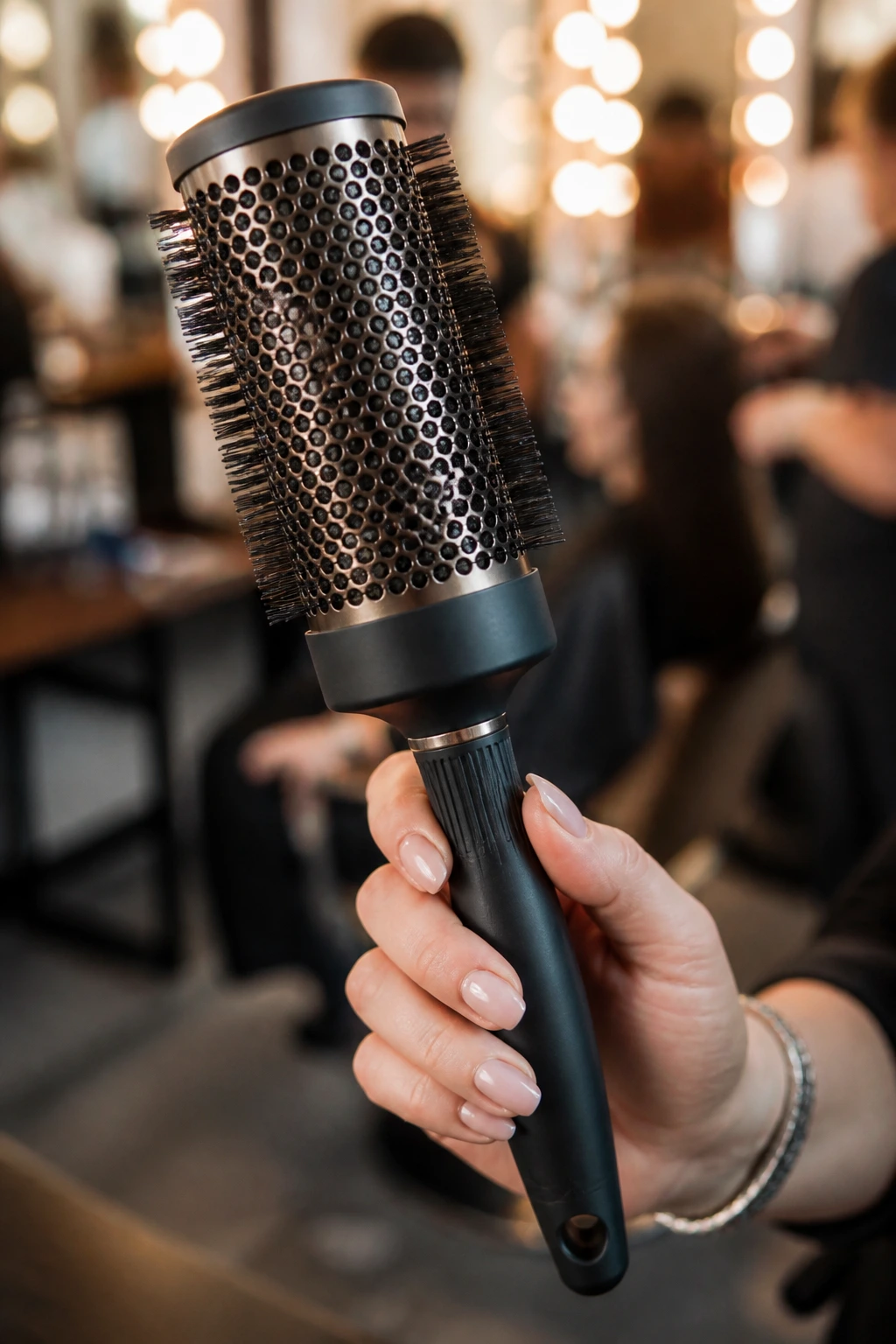
- Large round brush: Best for giving the front that soft bend away from the face.
- Blow dryer with a nozzle: The nozzle directs airflow and keeps the bang section from flying every which way.
- Root-lift mousse or spray: Useful when the crown sits flat and needs a bit of height.
- Heat protectant: Helps if you use a brush, iron, or rollers more than once a week.
- 1 to 1.25-inch curling iron or flat iron: Good for smoothing the front into a loose swoop.
- Clips or duckbill clips: Handy for pinning the bang section while it cools.
- Lightweight smoothing cream: Keeps the ends soft without making the hair greasy.
- Dry shampoo: Useful at the crown so the top doesn’t collapse into the cheeks by day two.
- Wide-tooth comb: Better than a fine comb for curly or wave-prone hair.
Trims, Refreshes, and Nighttime Care
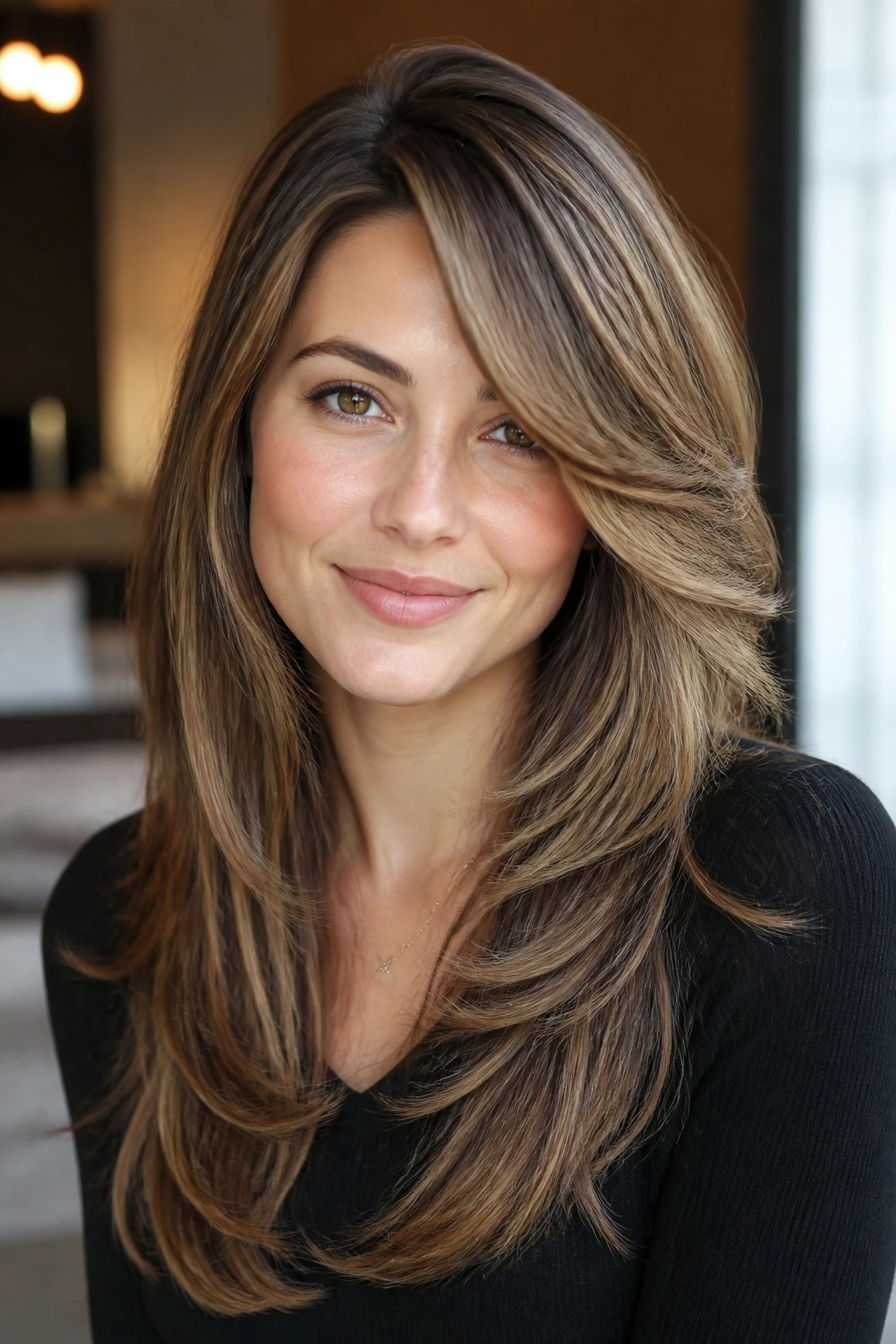
Side-swept bangs are the first part of this haircut to go mushy. That’s normal. They grow fast, and they lose the clean diagonal line before the rest of the cut looks old. A fringe trim every 3 to 5 weeks keeps the sweep in the right place. If you’re growing them out, stretch that a bit, but don’t let them fall into your eyes and then blame the haircut.
The longer layers usually need a salon refresh every 8 to 12 weeks, depending on how fast your hair grows and how much shape you want to keep. Thick, layered hair can often go a little longer if the outline stays healthy. Fine hair usually wants cleaner maintenance because split ends show up faster.
At night, a loose clip at the front or a soft silk scrunchie can stop the bang from kinking into a weird fold. Sleep on a silk or satin pillowcase if your hair tangles easily. It won’t magically fix everything, but it does reduce that rough, puffy finish you get after rubbing against cotton.
If the front looks flat in the morning, mist it lightly with water, re-sweep it with your fingers, and hit only the roots with a blow dryer for a minute or two. You do not need a full restyle every day. Usually, the front needs encouragement, not reinvention.
Questions Readers Ask Before They Book
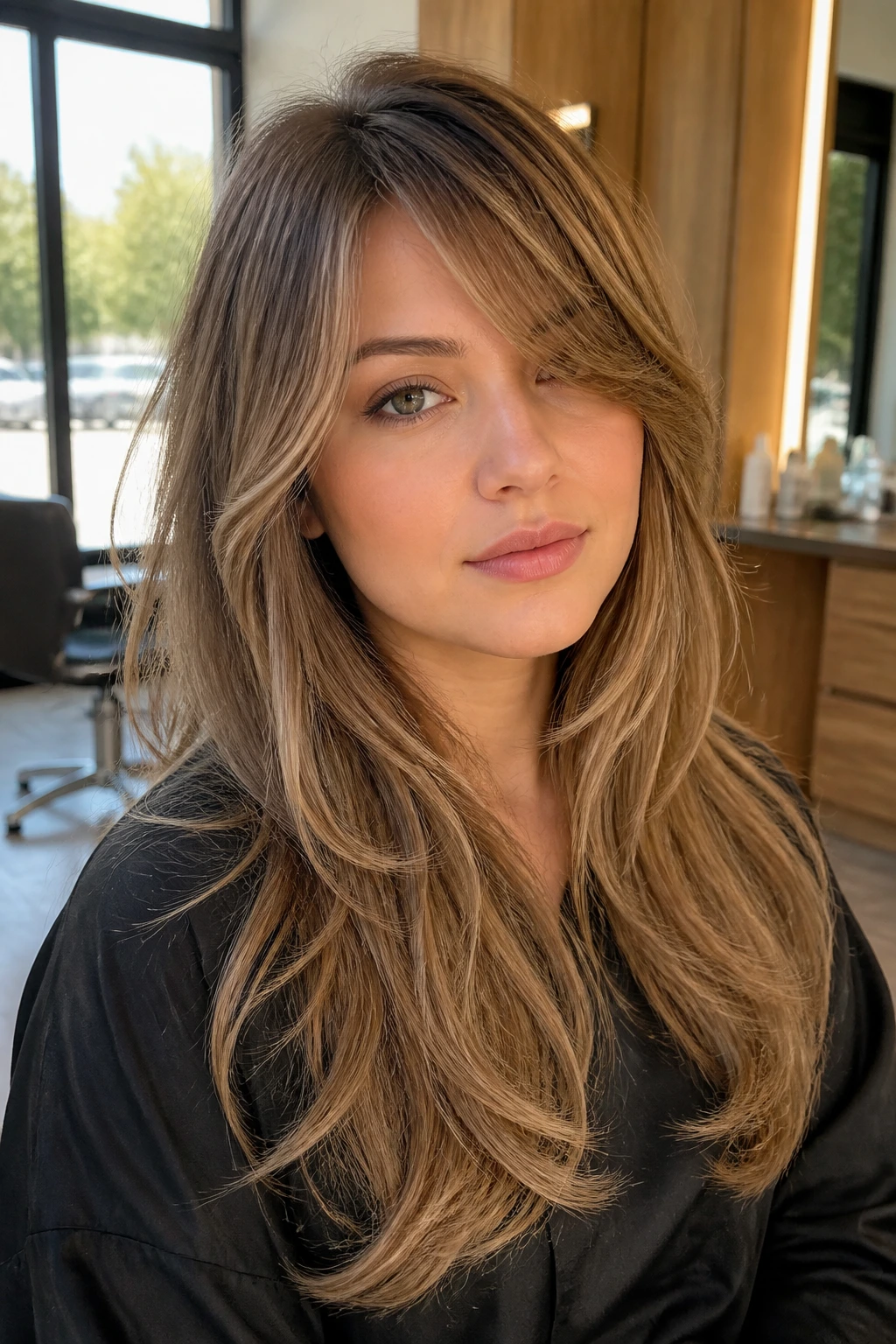
Will long swoopy layers make a round face look thinner?
If the shortest front pieces start below the widest part of the cheeks and the bangs sweep diagonally, yes, the face usually reads longer and softer. The effect comes from line direction, not from losing a huge amount of length.
Where should the shortest layer hit?
For most round faces, somewhere between the cheekbone and upper jaw is the safest zone. Too high can widen the face; too low can flatten the front if the rest of the cut has no movement.
Can I wear this cut with fine hair?
Yes, but keep the layers long and the fringe light. Fine hair usually hates heavy thinning and short interior layers because they make the ends look wispy too soon.
What if I wear glasses every day?
Ask for a side sweep that clears the frame line and test the shape with your glasses on before you leave the chair. The bang should move around the frame, not sit on top of it.
How often will I need to style it?
A blow-dry version usually takes about 8 to 15 minutes once you know what you’re doing. An air-dry version can get away with much less, but the front may need a quick refresh if the part dries the wrong way.
Can curly hair work with side-swept bangs?
Absolutely. The trick is length. Curly bangs need more room to spring up, so the shortest piece should be cut longer than a straight-hair version.
What if my hair flips out at the ends?
That usually means the layers are too short for your texture or the ends need a better bend during styling. A round brush or a quick pass with a larger curling iron can settle the shape, but a trim may be the real fix.
Is a deep side part necessary?
Not always, but it helps. A slight off-center part can be enough if your hair resists deep parts or you have a cowlick that fights back.
The Shape I’d Ask For First
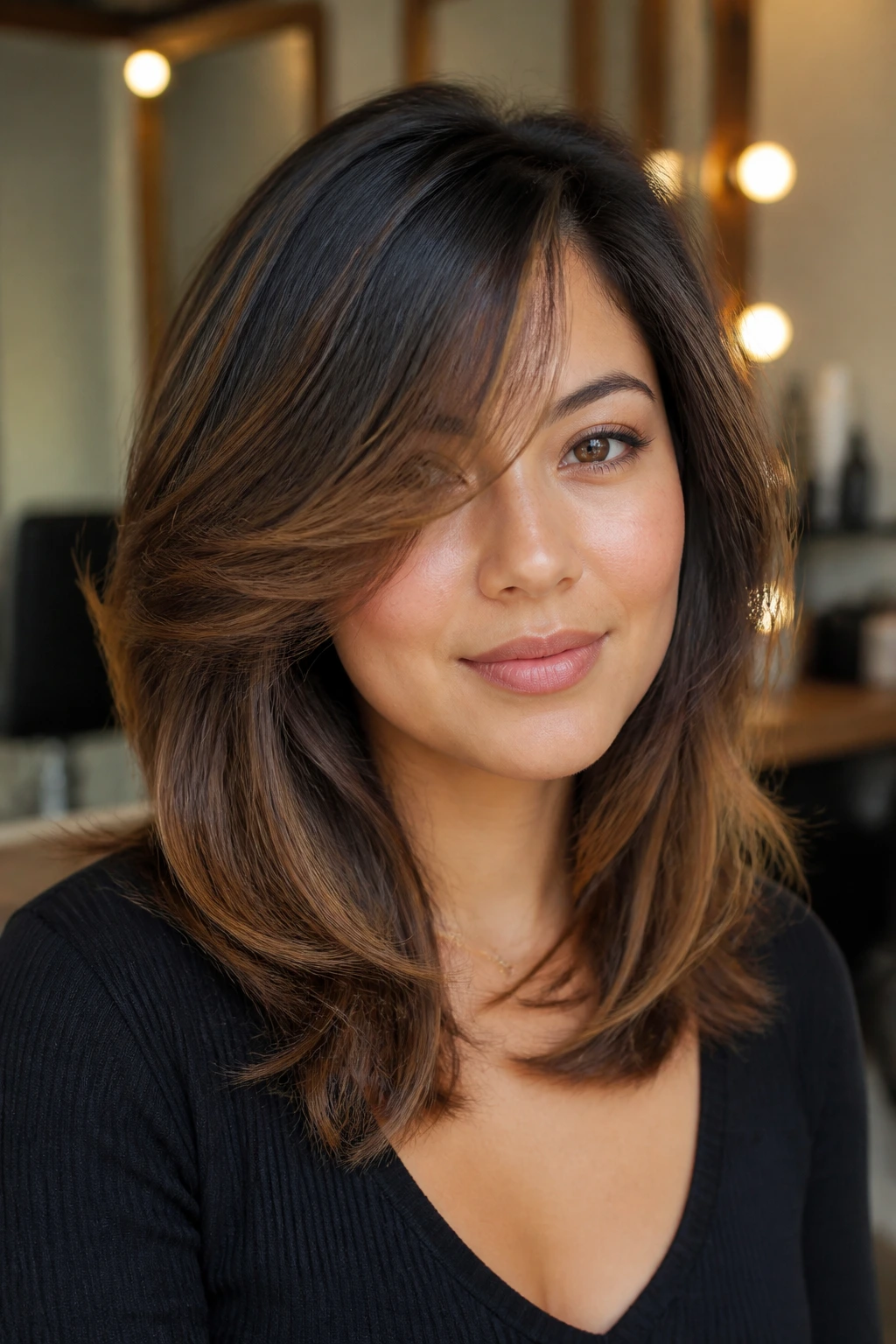
If I were sending someone to the salon with a round face and a wish for softer angles, I’d start with the collarbone-skiming, side-swept version that keeps the front layers below the cheekbone. That shape is forgiving. It gives you room to style, room to grow out, and room to adjust if your hair turns out thicker, flatter, or wavier than you expected.
The best part is that this whole family of cuts doesn’t rely on one trick. The diagonal fringe, the long front frame, the careful placement of layers — they all work together. Miss one piece and the haircut gets wider. Get the pieces talking to each other and the face opens up fast.
Ask for the movement, not the gimmick. The good versions of long swoopy layers with side-swept bangs don’t shout. They just keep falling in the right direction, and that’s usually enough.