



Thick hair loves to behave like it has opinions. Left blunt and heavy, it can swing into a wide triangle by lunchtime. Add the wrong layers and it goes fluffy at the top, stringy at the ends, and weirdly heavier where you wanted movement most. Long choppy layers for thick hair with beachy waves solve that problem in a way I’ve always liked: they keep the length, break up the bulk, and give the hair enough bend to look lived-in instead of staged.
The trick is not “more layers” in some vague, salon-poster way. It’s the right layers, placed in the right spots, with the right amount of weight removed. Thick hair needs strategy. A few carefully cut face-framing pieces can wake up the whole cut. Too many short layers near the crown, though, and you end up with a halo of puff. That’s the line you’re trying to walk.
Beachy waves change the whole equation. They soften the edges, blur any hard cutting line, and let choppy texture look intentional rather than hacked up. The best versions have movement near the cheekbones and collarbones, then a little more solidity through the lower length so the style still feels full. That contrast is what makes these cuts worth wearing, and the best part is that the same idea can look polished, casual, or a little undone depending on how you style it.
Why This Collection Is Worth Your Attention
-
Thick hair stops fighting the shape: These cuts remove weight where the bulk builds up, so the hair bends instead of ballooning out at the sides.
-
The length stays on purpose: You get movement and texture without losing the long silhouette that thick-haired people usually want to keep.
-
Beachy waves hide a lot of hard work: A 1-inch bend and a rough finger-comb make choppy layers look softer, which is useful when the cut has more structure underneath than the eye first sees.
-
Face framing does the heavy lifting: A few well-placed pieces around the cheekbones, jaw, or collarbone can change the whole mood of the cut faster than adding more layers everywhere.
-
These styles grow out better than blunt shapes: Thick hair can go fuzzy fast, and layered movement tends to stay wearable longer between trims.
-
You can dial the texture up or down: Air-dried waves, diffuser bends, or a curling wand all work here, which matters when one styling method feels like too much effort.
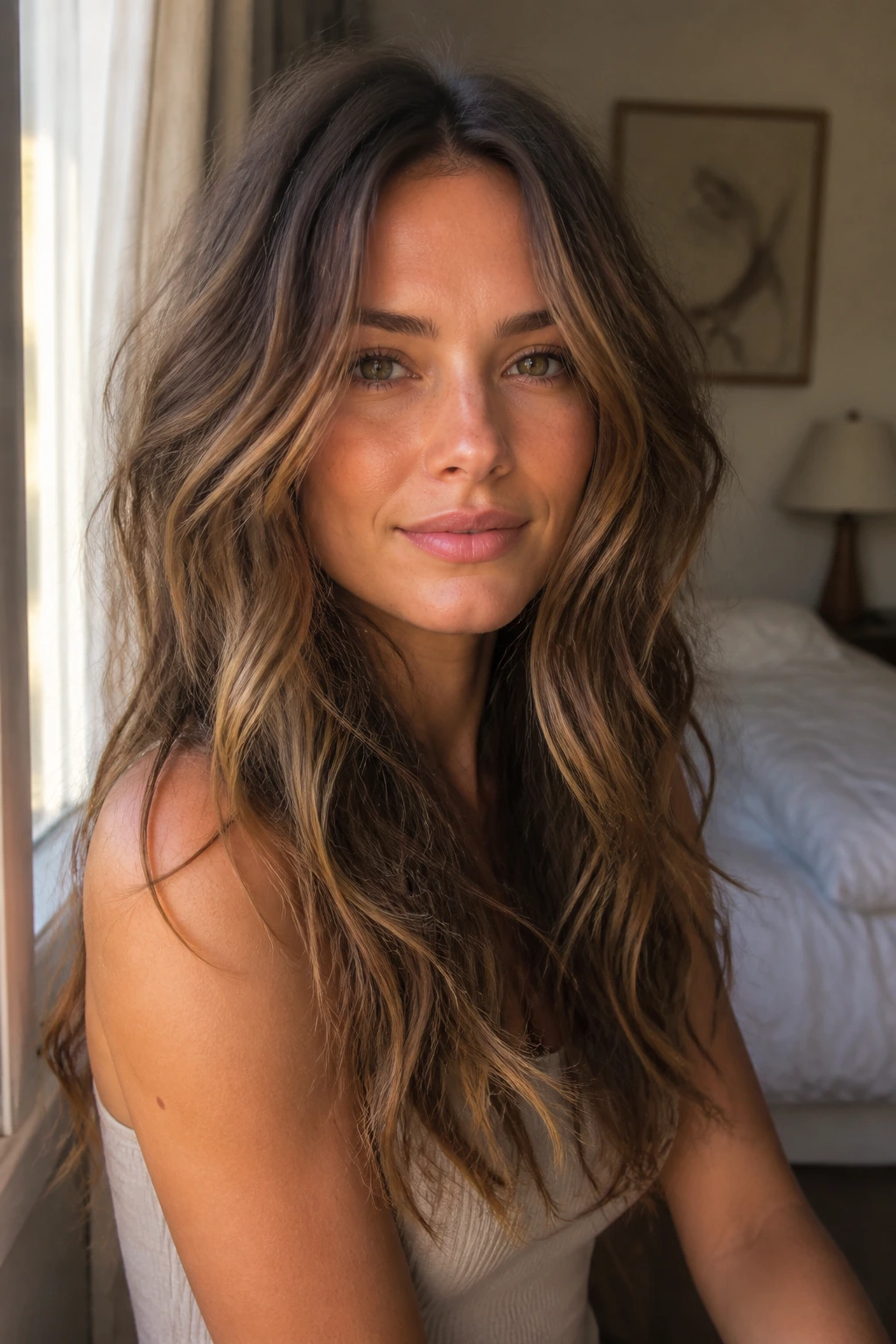
1. Soft Face-Framing Layers That Start at the Cheekbones
This is the easiest place to begin if you want movement without a dramatic haircut. The shortest pieces sit around the cheekbones and melt into longer lengths, so the front opens up without making the ends look sparse. On thick hair, that little bit of lift near the face keeps everything from sitting like one heavy sheet.
Why it works
Cheekbone-starting layers give the eye a clear line to follow, which makes dense hair feel lighter even when the bulk is still there. The beachy wave pattern softens the transition, so the layers look blended rather than carved. I like this version for people who want an obvious change that still plays nicely with ponytails and half-up styles.
A 1-inch wand with alternate curl directions keeps the face frame from looking too uniform. Leave the last inch or so straighter. That small detail makes the whole cut feel more relaxed.
2. Curtain Bangs with Long Choppy Movement
Curtain bangs can be a blessing on thick hair when they’re cut with a light hand. The middle stays a little shorter, the sides sweep down into the cheekbones, and the rest of the hair falls in long choppy layers that keep the front from feeling flat or heavy. The result has enough softness to frame the face but enough length to tuck behind the ears.
How to wear it
The bangs should sit loose, not helmet-straight. A quick bend with a round brush or a medium curling iron is usually enough. If your hair is coarse, blow-dry the fringe first and let the rest air-dry with a wave cream so the front doesn’t overreact and puff up.
This shape works because it breaks the visual weight at the top of the face. Thick hair often needs that release. Otherwise the whole cut drags downward, and the style starts looking more heavy than full.
3. Razor-Textured Ends with Broken Waves
Razor cutting has a very specific personality on thick hair. Done well, it shaves just enough from the ends to make the perimeter move when you turn your head. Done badly, it frays the hair and leaves the ends looking thirsty. I’m picky about this one. It needs a stylist who knows where to stop.
What makes it different
The best razor-textured version keeps the body through the mids and only loosens the final shape. That means you still get that long silhouette, but the last few inches swing instead of sitting like a board. Beachy waves make the texture read as piecey, which is exactly the point.
If your hair is very coarse, ask for light razor work only at the bottom and point-cutting around the face. Too much blade work on coarse strands can leave the ends fuzzy faster than you want.
4. U-Shaped Layers for a Clean Back View
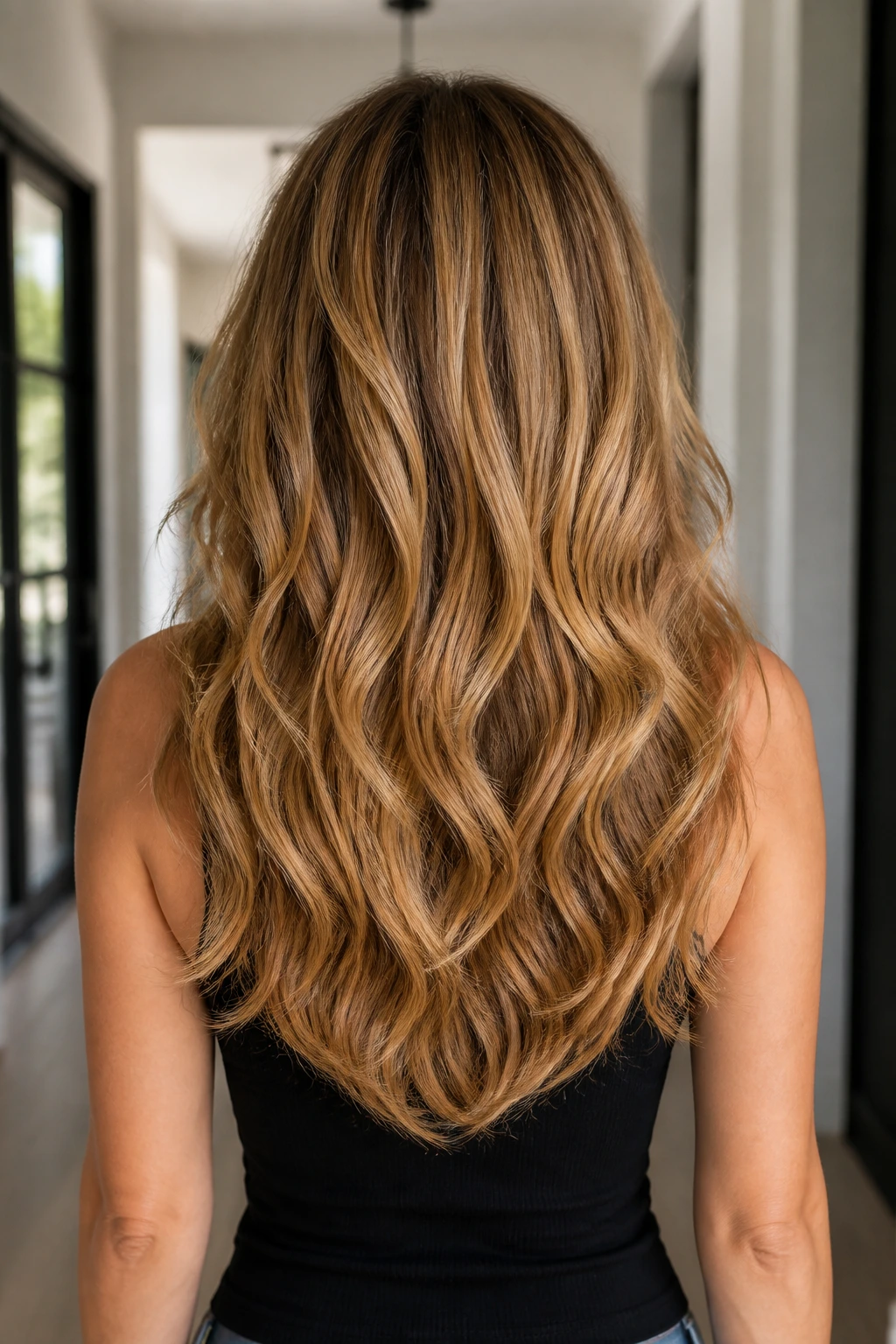
A U-shape keeps the outer length rounded rather than square, which is useful when thick hair tends to build a bulky block at the back. The layers inside the shape still move, but the bottom edge feels neat. It’s a smart compromise if you like your hair long and want to see the shape from behind, not just in profile.
A small but useful detail
The U-shape softens the visual mass at the nape and lower back, where dense hair can look especially wide. Add beachy waves and the whole cut reads fuller in a nicer way: not ballooned, just lived-in. I’d choose this over a flat one-length cut nine times out of ten on thick hair.
This one is good if you wear your hair down a lot. The curve in the back keeps it from looking heavy around the hemline, even when the waves start to relax.
5. Invisible Internal Layers for Dense Hair
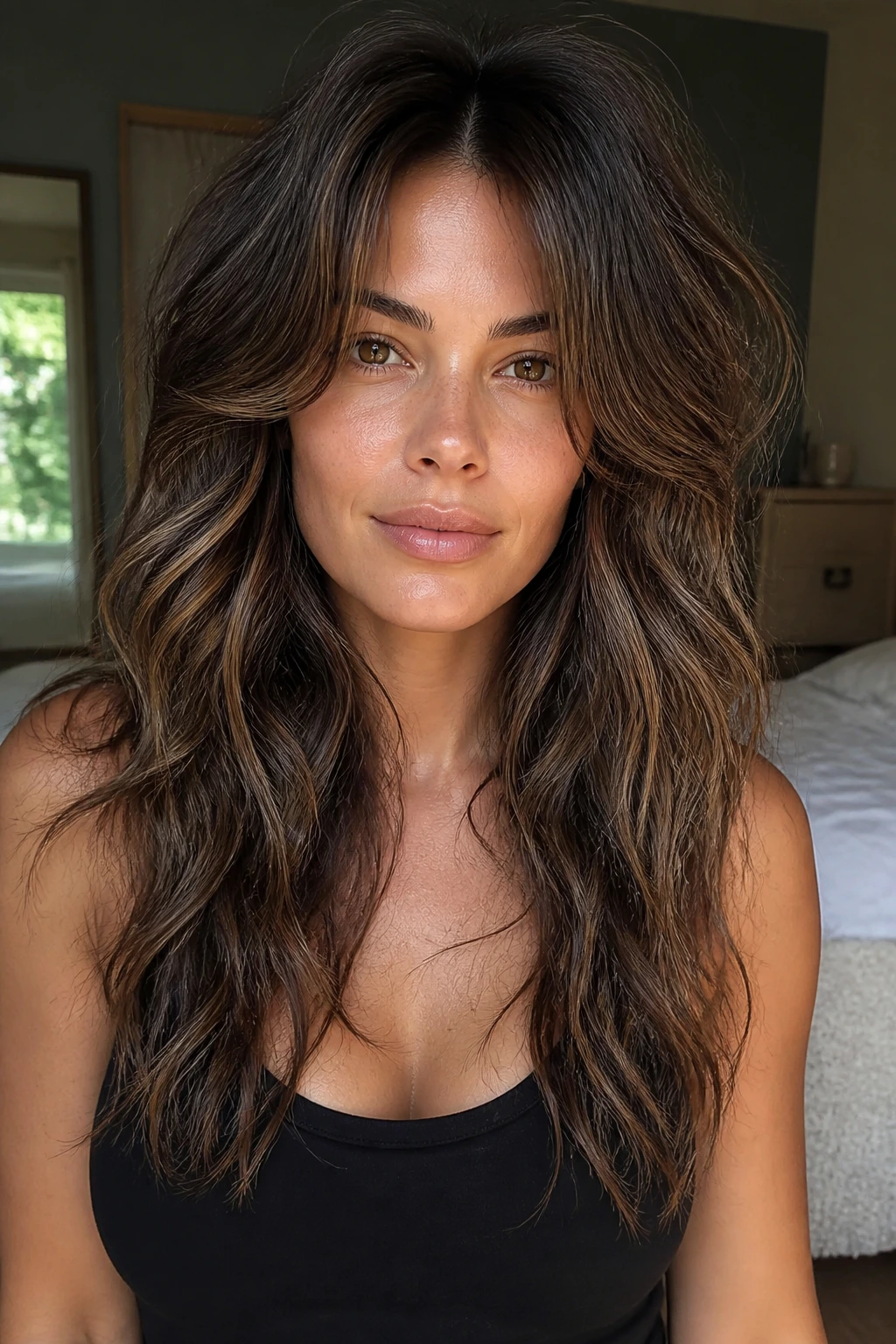
Invisible layers are the quietest trick in the box. The outer surface keeps a fairly solid look, but the interior gets thinned and shaped so the hair can collapse a little instead of standing out from the head. On thick hair, that means less bulk at the mids and a more graceful fall through the lengths.
Why I like this cut
It gives you movement without announcing itself. From the front, the hair still looks rich and full. Turn sideways, and you notice it moves more easily because the weight has been redistributed. That matters if you want beachy waves that don’t puff into a triangle after an hour.
This is also one of the better choices if you’re nervous about layers. The change is there, but it isn’t shouty. Ask for interior shaping and a soft face frame, not a chopped-up crown.
6. V-Cut Layers That Narrow the Back
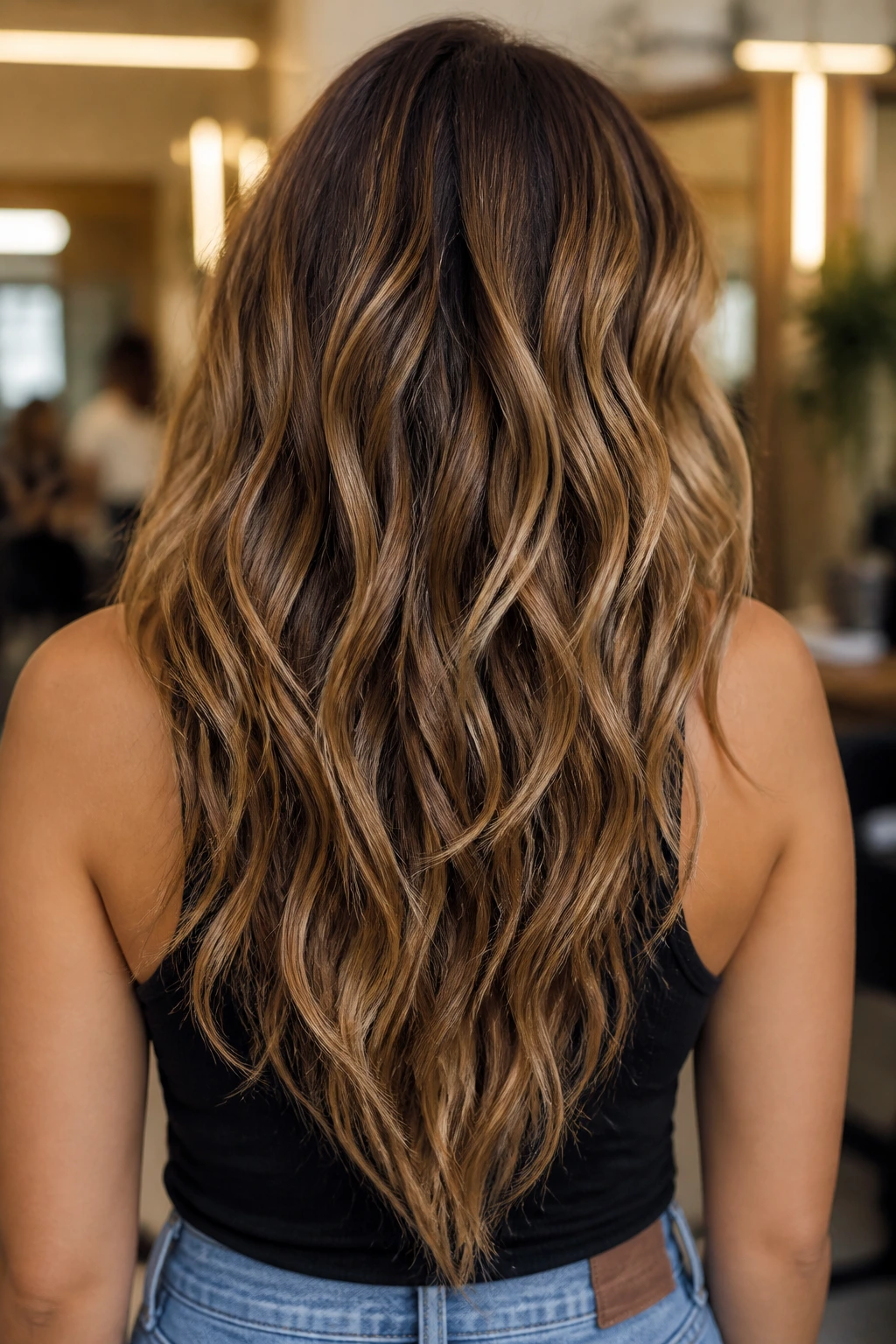
A V-cut draws the hair inward toward the center line, which can make thick hair feel less wide through the bottom. The long point at the back keeps length dramatic, while the side sections taper down a little faster. Add waves, and the shape gets movement without losing that long, dramatic fall.
Best for
This works especially well if your hair tends to fan out when it’s straight. The V-shape gives the ends a direction, and the waves keep the line from looking too sharp. It’s not the softest option in the group, but it’s one of the most effective when you want the back to look slimmer.
The caveat? Keep the point subtle. A deep V on thick hair can go old-fashioned fast if the layers aren’t soft enough. I’d rather see a gentle taper than a severe tail.
7. Side-Swept Face Framing with Long Ends
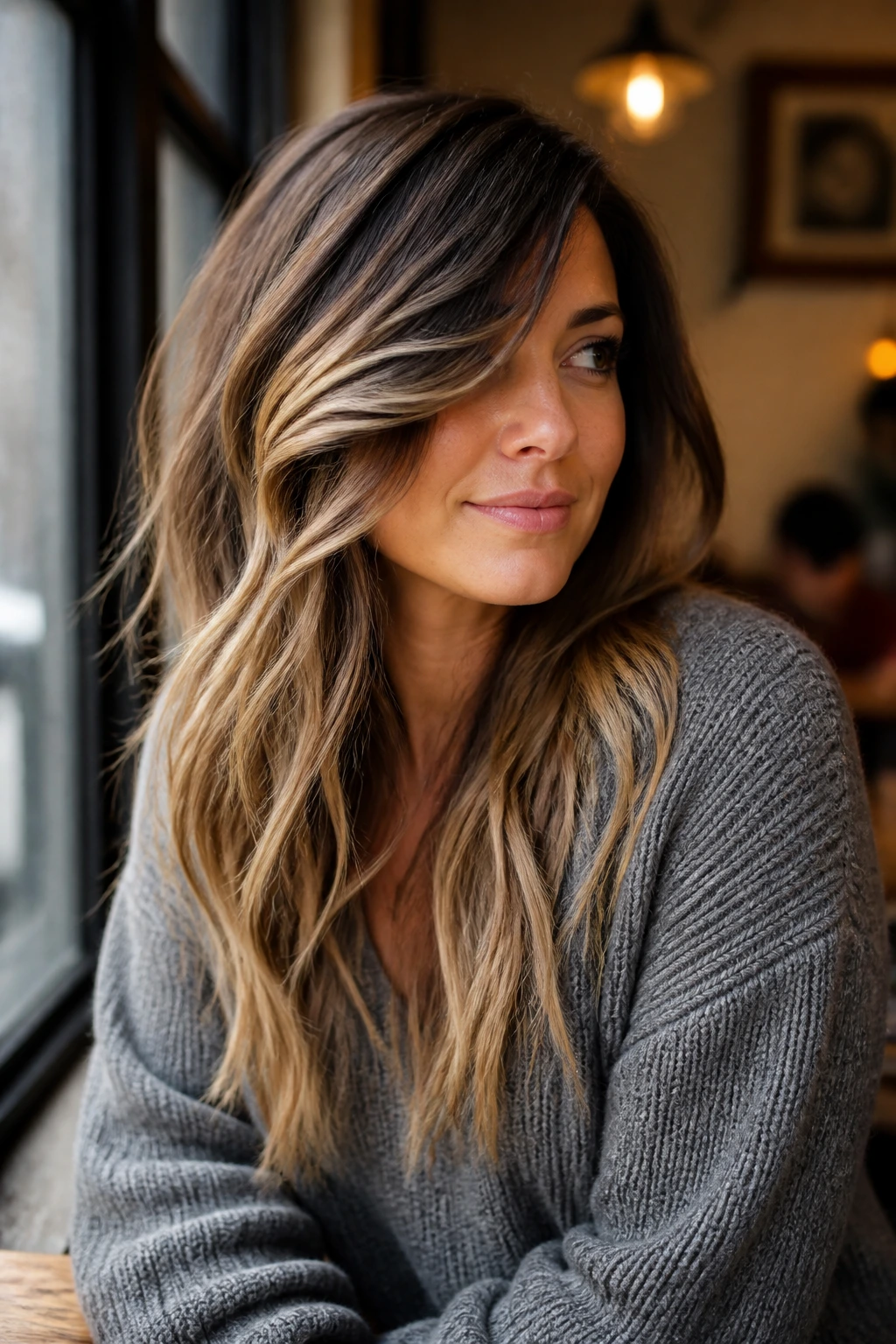
A deep side sweep changes the whole balance of thick hair. It shifts volume away from the center and gives one side more lift, which makes the face frame feel asymmetric in a good way. The long ends keep the style grounded so it doesn’t turn into a too-short layered crop.
What it looks like in real life
This cut has a little swagger to it. The waves fall across the forehead and cheek on one side, while the other side opens up the face more cleanly. It’s especially nice if your hair has a natural bend already, because you’re working with the movement instead of fighting it.
For styling, tuck one side behind the ear and let the other side fall forward. That tiny shift creates shape without more product. Sometimes that’s all thick hair needs.
8. Shag-Inspired Long Layers with Crown Lift
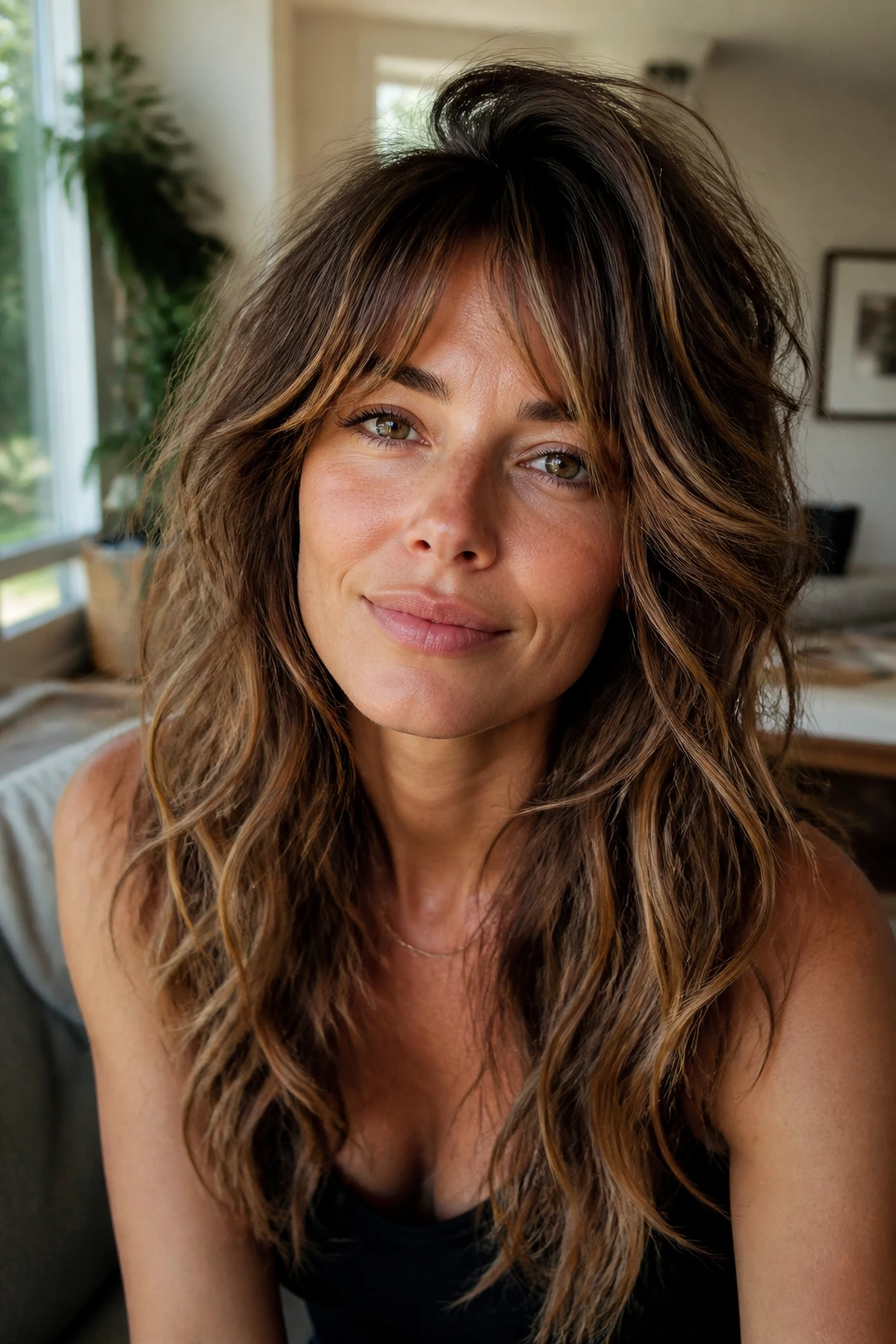
This is the version for people who want movement to show up all over, not just at the perimeter. The crown gets a bit more lift, the mids get broken up, and the ends stay long enough to keep the cut from turning into a true shag. It has personality. It also has rules. Skip the heavy oil at the roots or you’ll flatten the lift right out.
Why it works on thick hair
A little crown layering stops the top from sitting like a lid. That’s a common issue with dense hair: the lower half gets all the attention, and the top looks heavy by comparison. Beachy waves make the height feel casual instead of puffy, which is the sweet spot.
This cut suits someone who doesn’t mind a bit of styling. It looks best when the wave pattern is loose, a little irregular, and separated at the ends.
9. Beach Waves with Blunt-Looking Ends
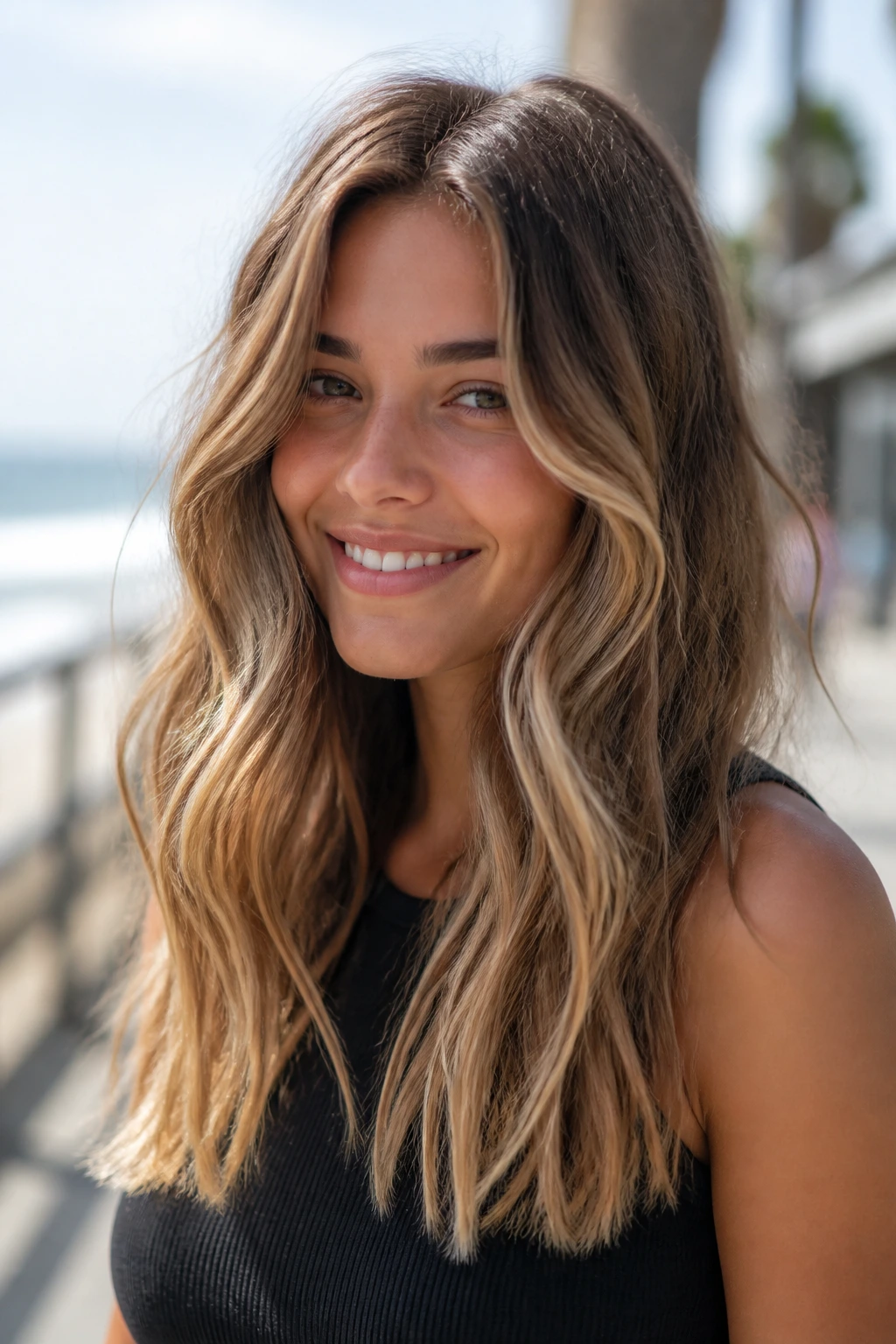
This is a smart illusion. The hair is layered underneath, but the perimeter is kept full enough that the ends still look thick when the waves fall apart. It’s ideal if you love fullness and don’t want the last few inches to look wispy.
The key move
Keep the bottom line stronger, then add long choppy movement above it. That way the texture lives in the body of the hair, not all at the edge. When you curl, leave the ends straighter for a slightly blunt finish. That contrast makes thick hair look expensive in the practical sense: full, healthy, and not over-cut.
I like this on hair that gets frizzy at the ends. Too much slicing can make those pieces fray. A cleaner edge fixes that.
10. Mid-Length to Long Hybrid Layers
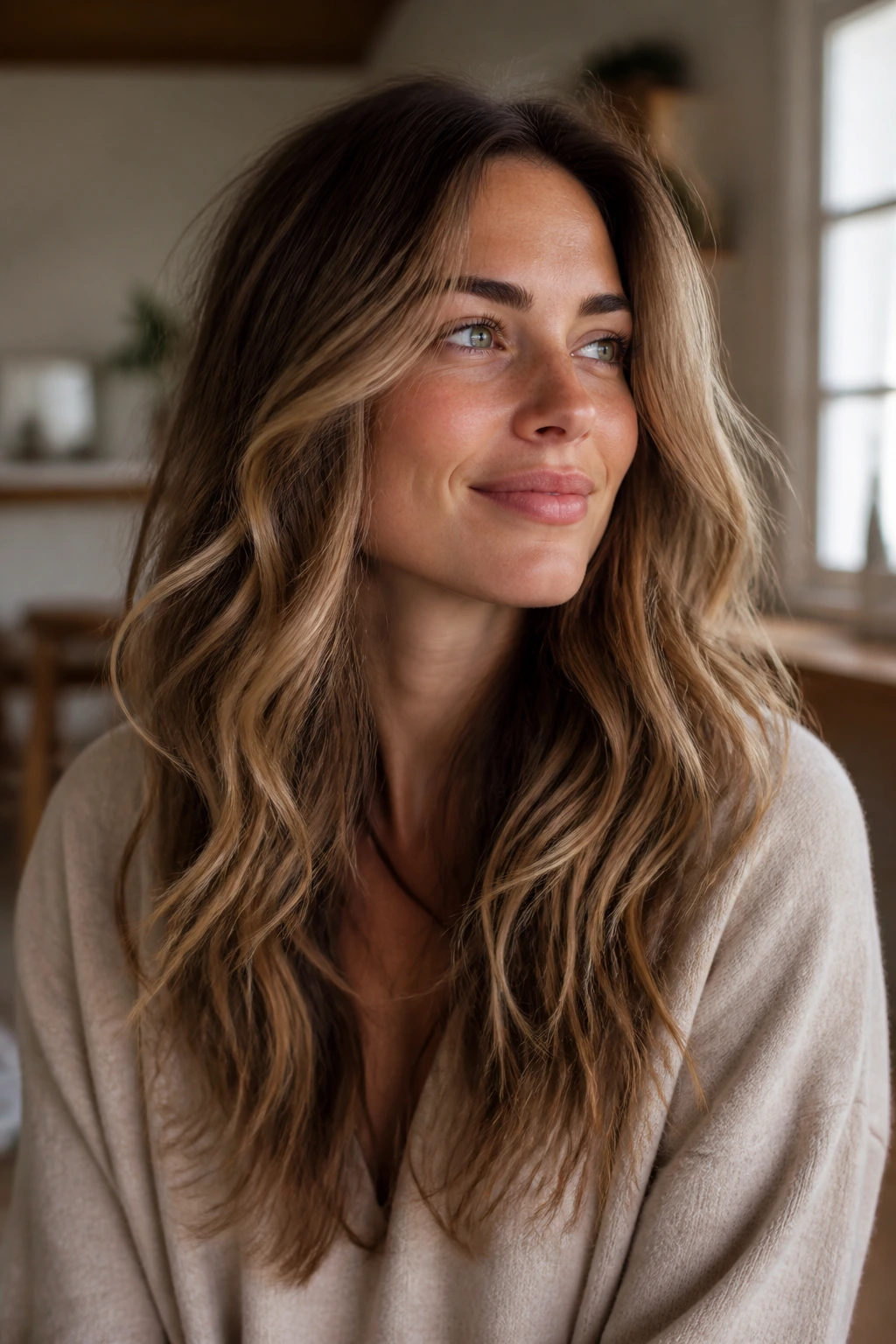
Some people don’t want a cut that screams “long layers.” They want the hair to still feel like one mass, just one that moves better. This hybrid does that by keeping the shortest layers modest and letting the length do most of the visual work. It’s controlled choppiness, not chaos.
How to think about it
The haircut behaves like a long style from the front and a slightly shorter style from the sides, which is handy if you wear your hair both down and curled. The beachy wave adds the missing softness and keeps the cut from feeling too square. Thick hair benefits from this kind of restraint.
Ask for movement through the lower half, not stacks of short pieces near the top. That’s where people often get too aggressive and lose the shape.
11. Deep Side Part with Sweepy Layers
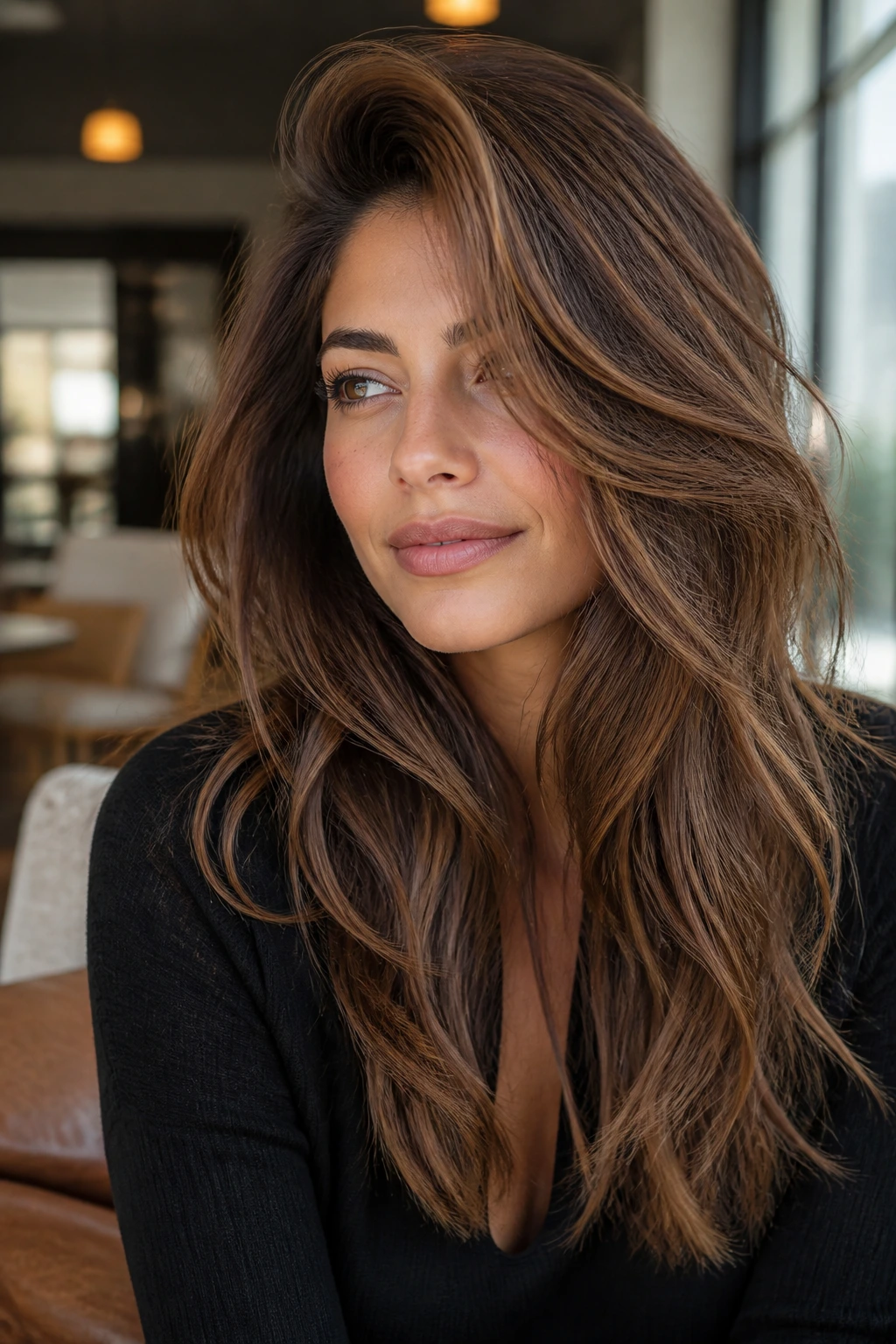
A deep side part can make thick hair look instantly more directional. The waves fall in a broad arc, the face frame picks up drama, and the layers are easier to see because the hair isn’t dividing itself in the middle and sitting there politely. This one has a little more attitude.
How to wear it
Start with damp roots and a bit of mousse, then blow-dry the part into place before adding any wave. If you wait until the hair is fully dry, the part often drifts and the volume spreads in the wrong places. Thick hair usually respects early direction better than late correction.
It’s a good style if your hair tends to flatten at the crown. The side part gives the root area a break and lets the waves fall with more movement on one side.
12. Bottleneck Fringe with Loose Ends
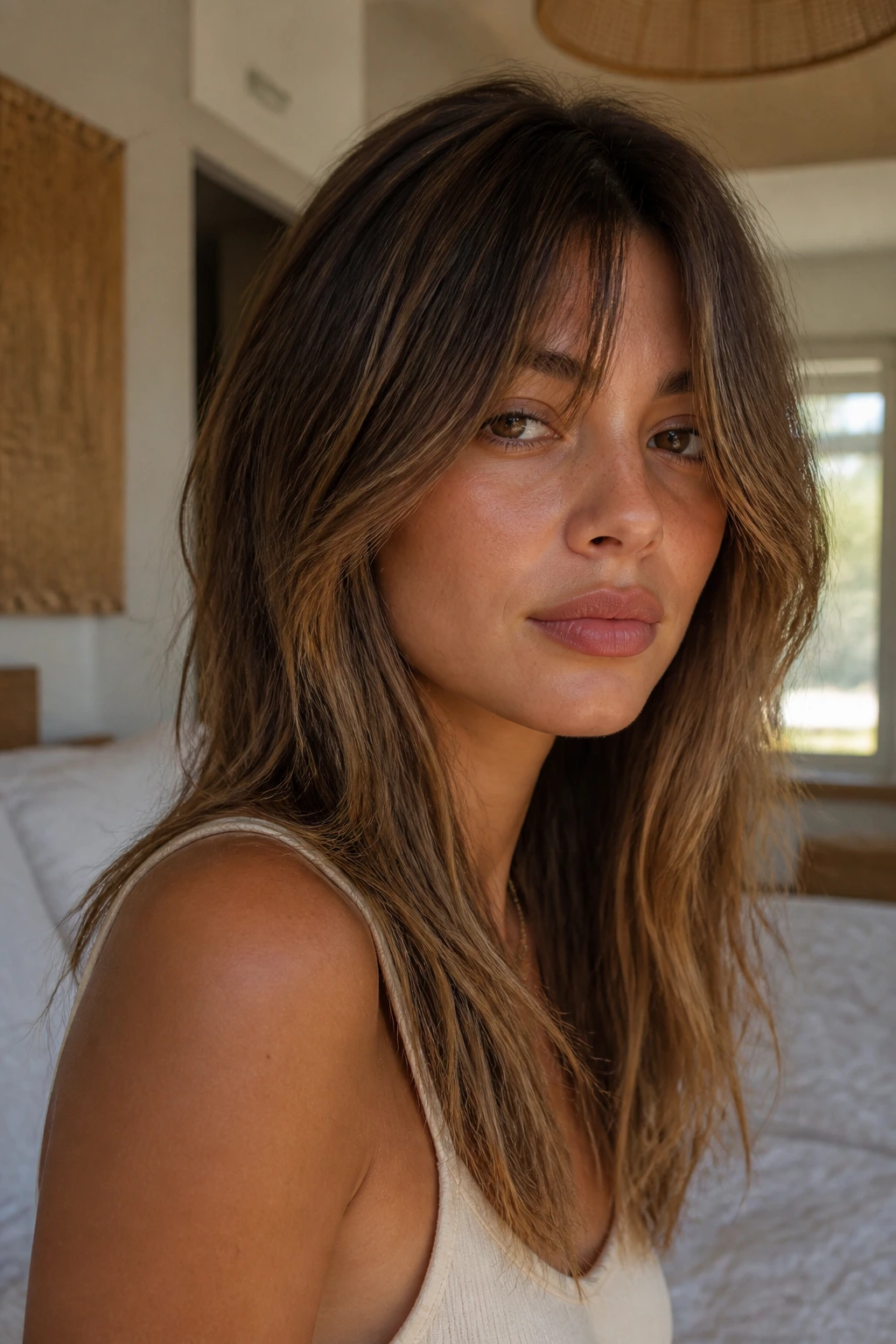
The bottleneck fringe is shorter in the center and longer near the temples, which gives thick hair a softer version of bangs. Paired with long choppy layers, it frames the eyes without turning the front into a heavy curtain. The whole cut feels more current than blunt fringe, but it still has enough shape to matter.
What to watch for
The fringe should blend into the face frame, not sit as a separate piece. That blending is what keeps the style from looking disconnected. On thick hair, a disconnected fringe can look like it belongs to another haircut.
Let the fringe dry first, then wave the rest. If you try to style everything at once, the front often gets too fluffy. Nobody needs that kind of surprise.
13. Long Choppy Layers with a Rounded Back
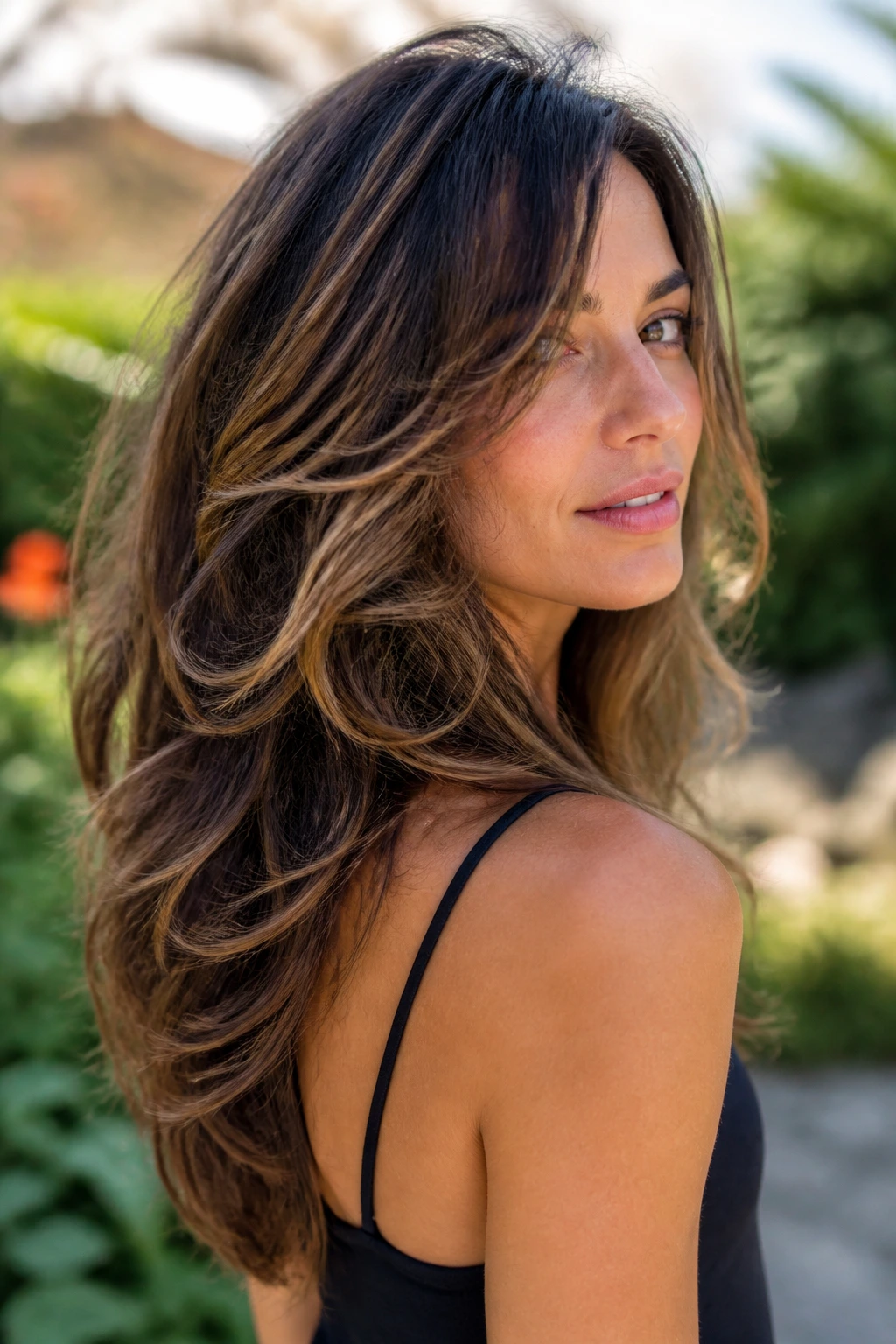
A rounded back softens the silhouette in a way that thick hair usually appreciates. Instead of a straight edge that sits wide, the hair curves gently inward. The layers inside create movement, but the perimeter stays broad enough to feel full.
Why this shape lasts
Rounded shapes tend to grow out gracefully. A blunt line can start looking choppy in the wrong way after a few weeks, while a rounded finish still looks intentional as the hair gets a little longer. That’s practical, and I’m all for practical when the hair is dense enough to need constant attention.
This cut is especially nice with loose waves that are brushed out just a bit. You want the back to move as a sheet, not collapse into separate curls.
14. Piecey Layers for Naturally Wavy Thick Hair
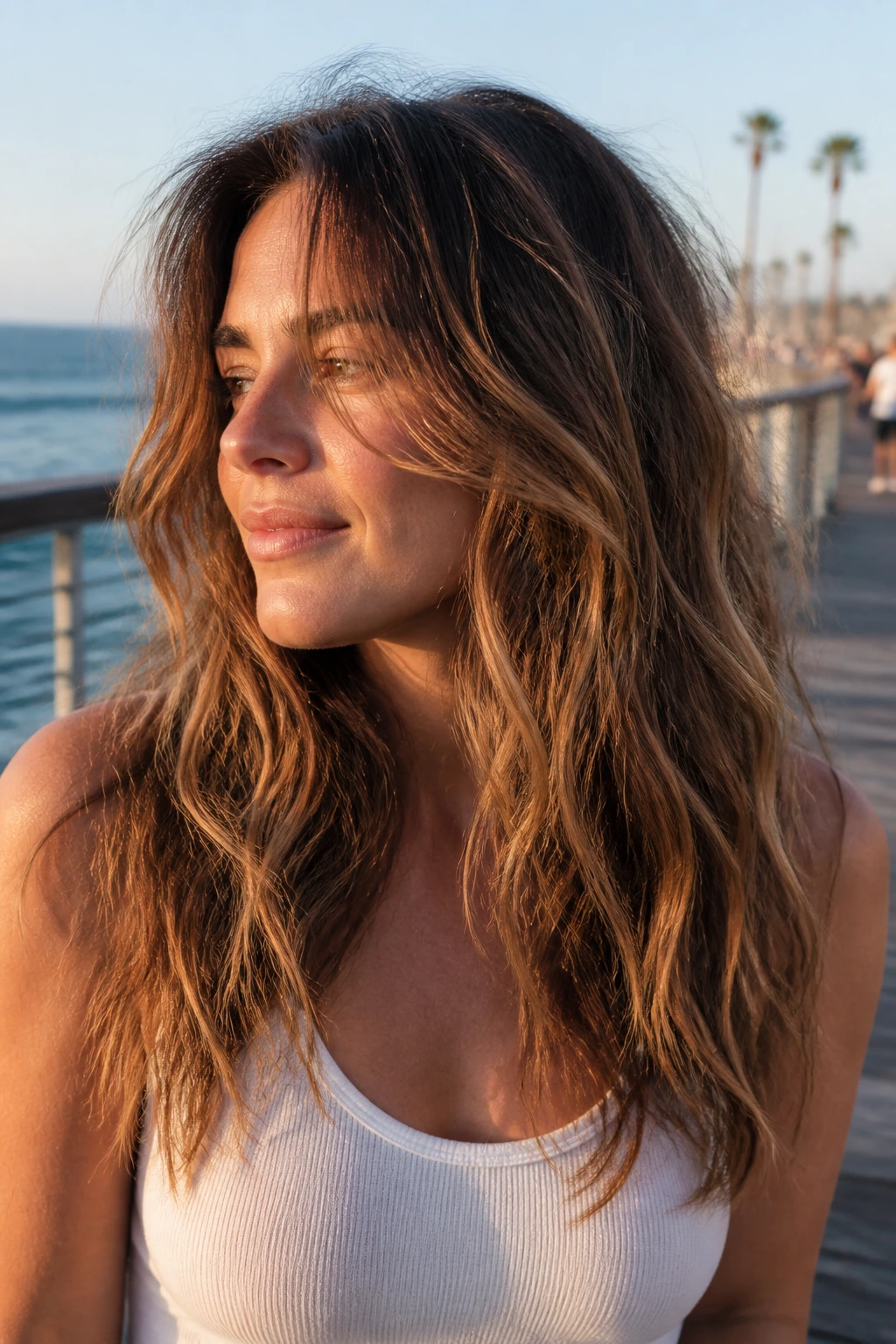
If your hair already bends on its own, don’t fight it with a cut that’s too tidy. Piecey layers let your natural wave pattern do the work, while the layers separate the thicker sections so they don’t collect into one big mass. The result looks easy, though the haircut is doing a fair amount behind the scenes.
A quick note
Natural wave plus thick density can go from nice to bulky in a heartbeat. Piecey layers keep the wave pattern visible. That’s the entire job.
The styling sweet spot is a light mousse or wave cream on damp hair, then either a diffuser or a rough dry with your hands. Heavy cream is a trap here. It can make the pieces clump in a flat, greasy way.
15. Airy Layers for Heavy, Coarse Hair
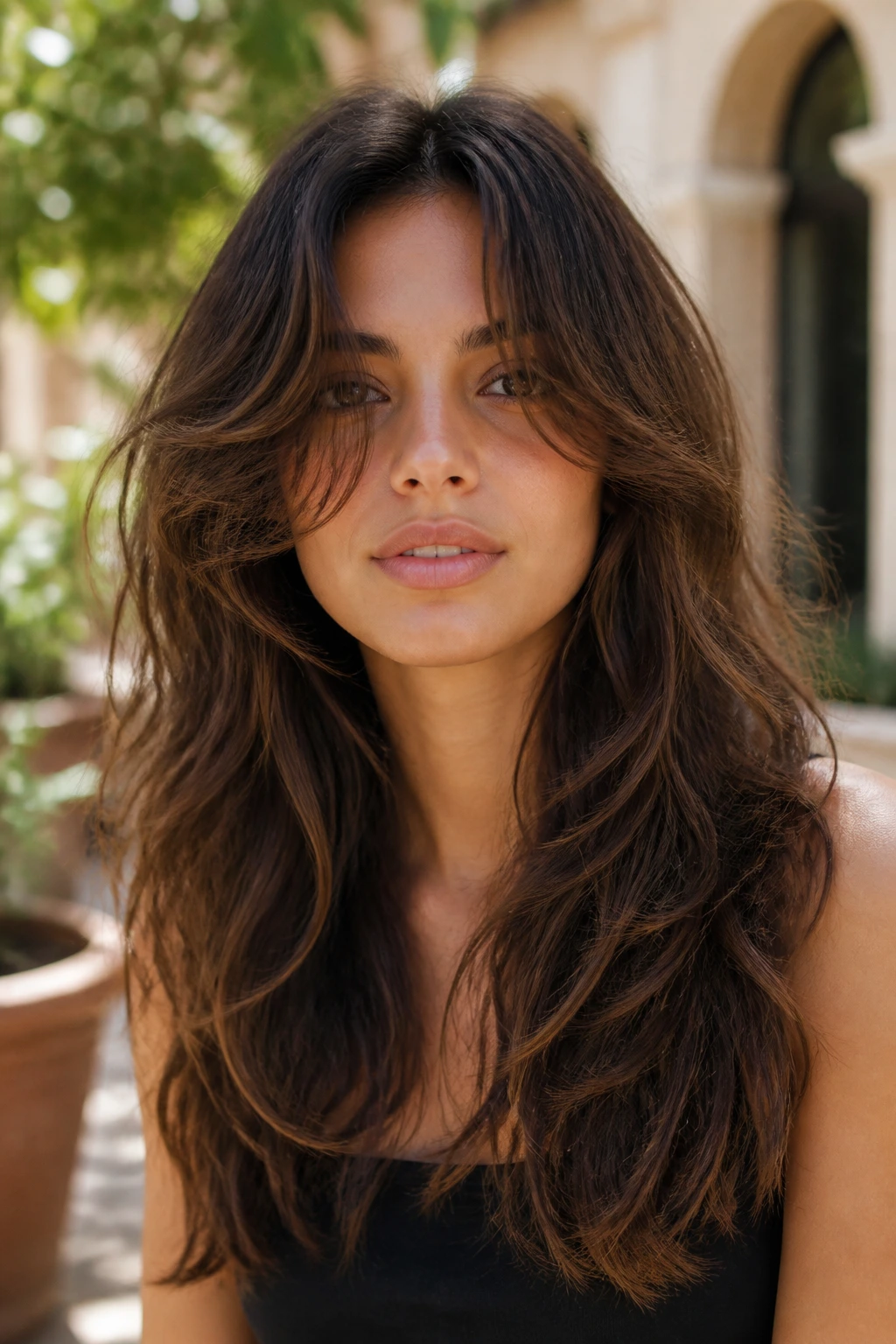
Heavy, coarse hair needs a different kind of shaping than soft, dense hair. The strands themselves have more body, so the cut has to make room for movement without leaving the ends ragged. Airy layers remove the visual weight while keeping enough substance for the style to hold its own.
Why it matters
Coarse hair often resists curling iron waves a little more than finer textures do. That’s why a layered cut helps so much: it gives the wave pattern something to live in. If the cut is too blunt, the hair acts like one big block. If it’s too chopped, it frizzes out at the first sign of humidity.
I’d ask for soft internal layering and a controlled face frame. Keep the lower length healthy. That’s the part everyone sees first anyway.
16. Disconnected Front Layers with Solid Length
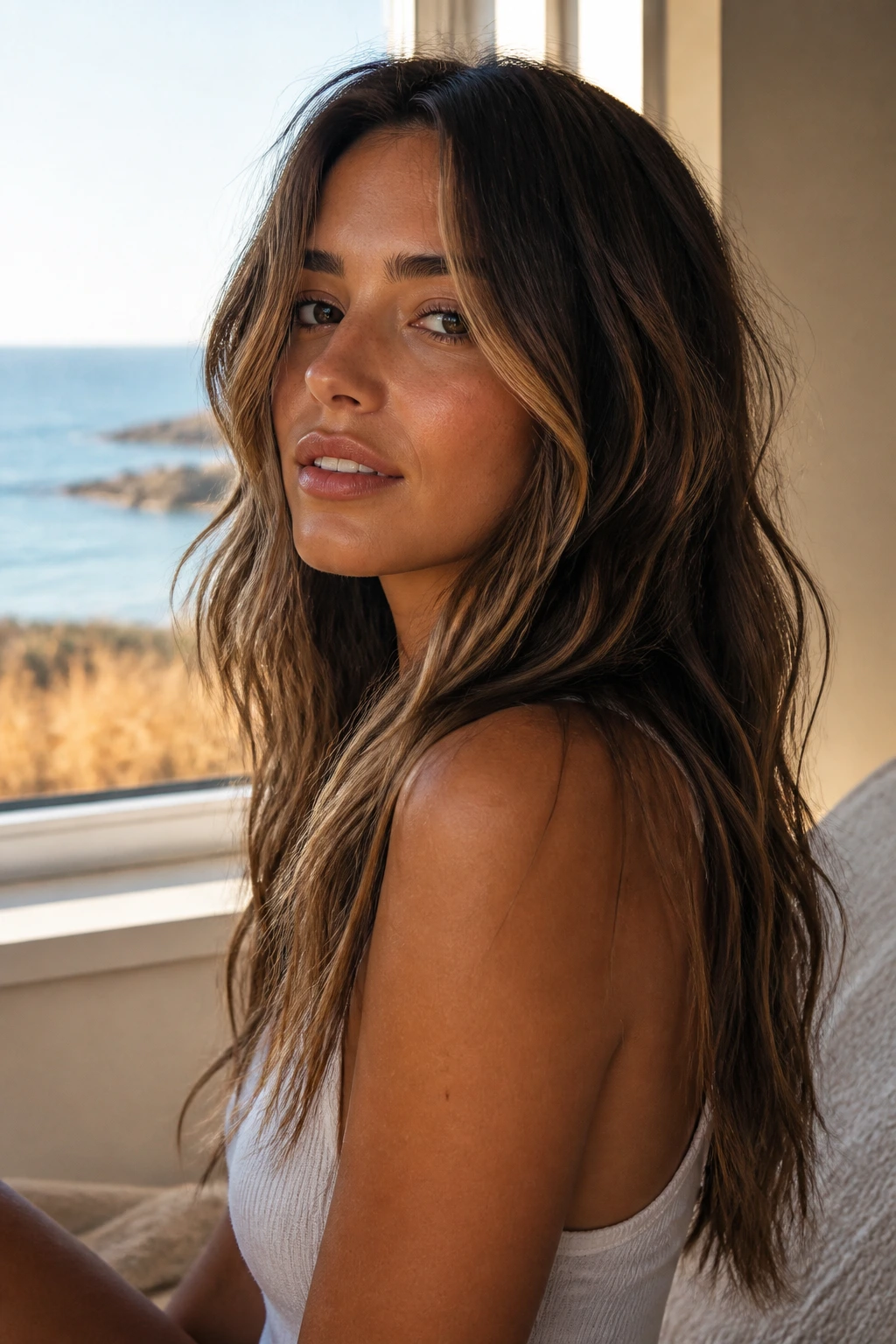
This is for people who want the front to move more than the back. The disconnected pieces around the face are shorter and more noticeable, while the length behind them stays fuller and more solid. It creates a little swing where the eye lands first.
Who it suits
It works well on thick hair that feels too heavy around the face but still needs the drama of long hair through the back. The beachy wave helps those front sections sit lightly instead of hanging in one chunky piece. You get framing without a full layer overhaul.
This is one of those cuts that can look very different depending on parting. Middle part, and the front pieces read soft. Side part, and they become more sculptural.
17. Subtle Wolf-Cut Influence, Kept Long
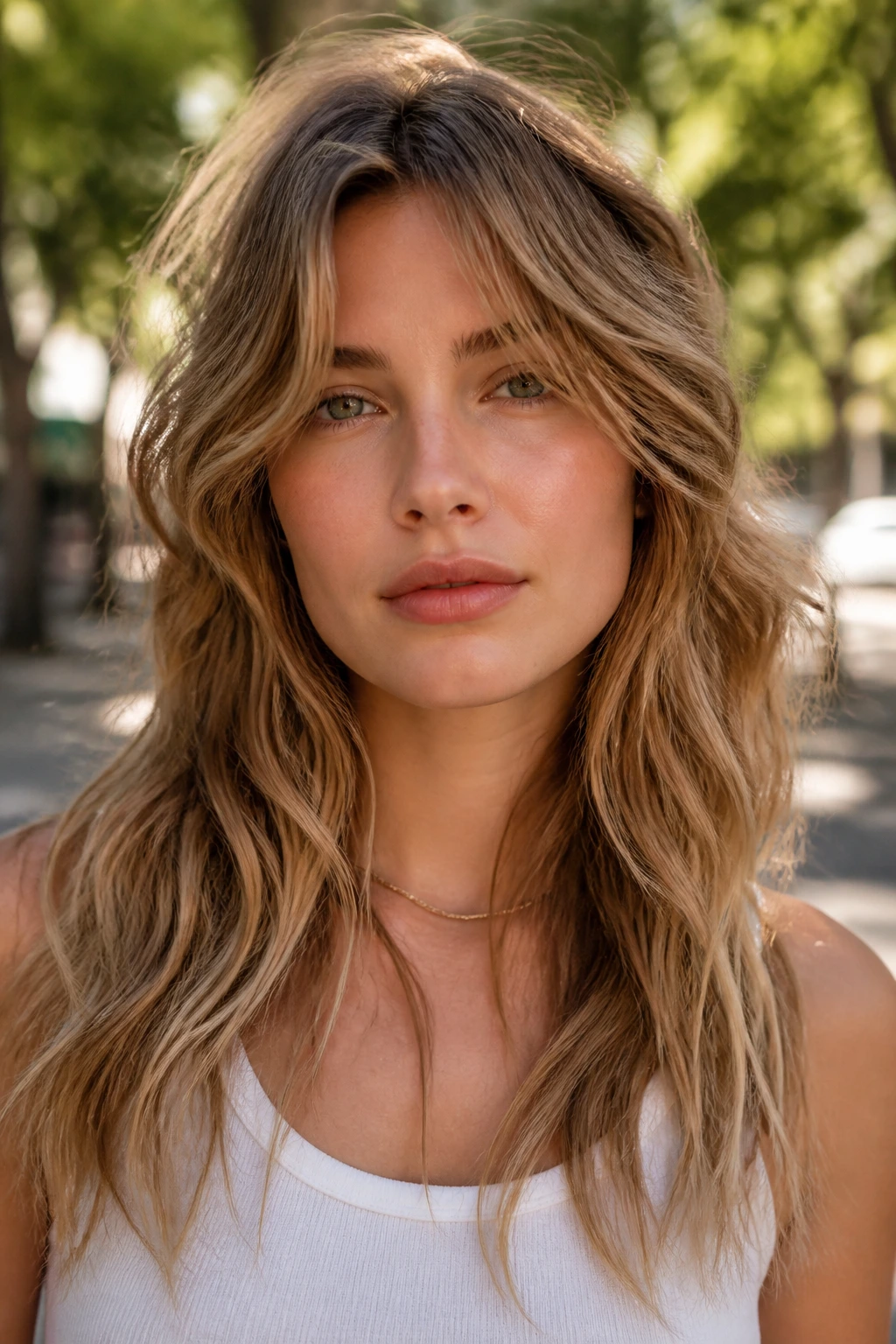
A true wolf cut can get wild on thick hair. A long version with subtle wolf-cut influence is more wearable: a bit of crown lift, some broken layers around the cheekbones, and long ends that keep the shape from going too short or too shaggy. It has edge, but not chaos.
The balance point
The crown should rise just enough to stop the top from lying flat against the head. Then the lower sections can stay long and soft. Add beachy waves, and the texture looks lived-in instead of overworked.
This version suits people who like a little attitude in their haircut. It’s not precious. It’s also not something I’d recommend if you want a sleek, polished finish every day.
18. Soft S-Curve Waves with Broken Ends
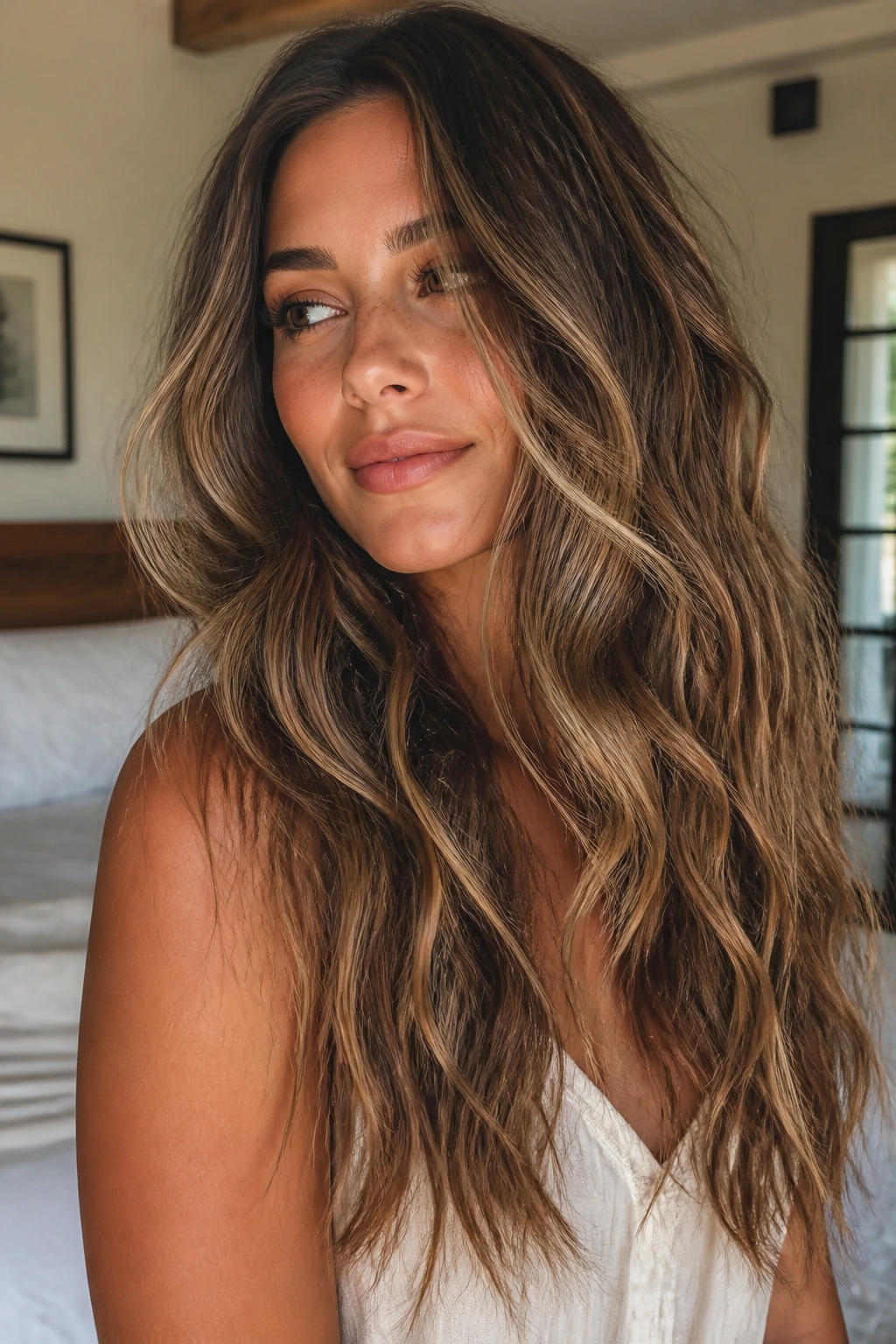
S-curves are underrated on thick hair. They don’t turn into full curls, so they keep the look long and relaxed. The broken ends stop the wave pattern from feeling too perfect, which matters because beachy waves should look a little irregular. That’s the whole point.
How to get the feel
Use larger sections—about 1½ inches wide—when you wrap hair around the iron. Then brush or rake through only once the hair has cooled. The wave should look more like a bend than a curl.
This style is good when your layers are already doing enough on their own. The wave pattern becomes more about shaping than about creating texture from scratch.
19. Long Layers with High-Definition Texture Spray
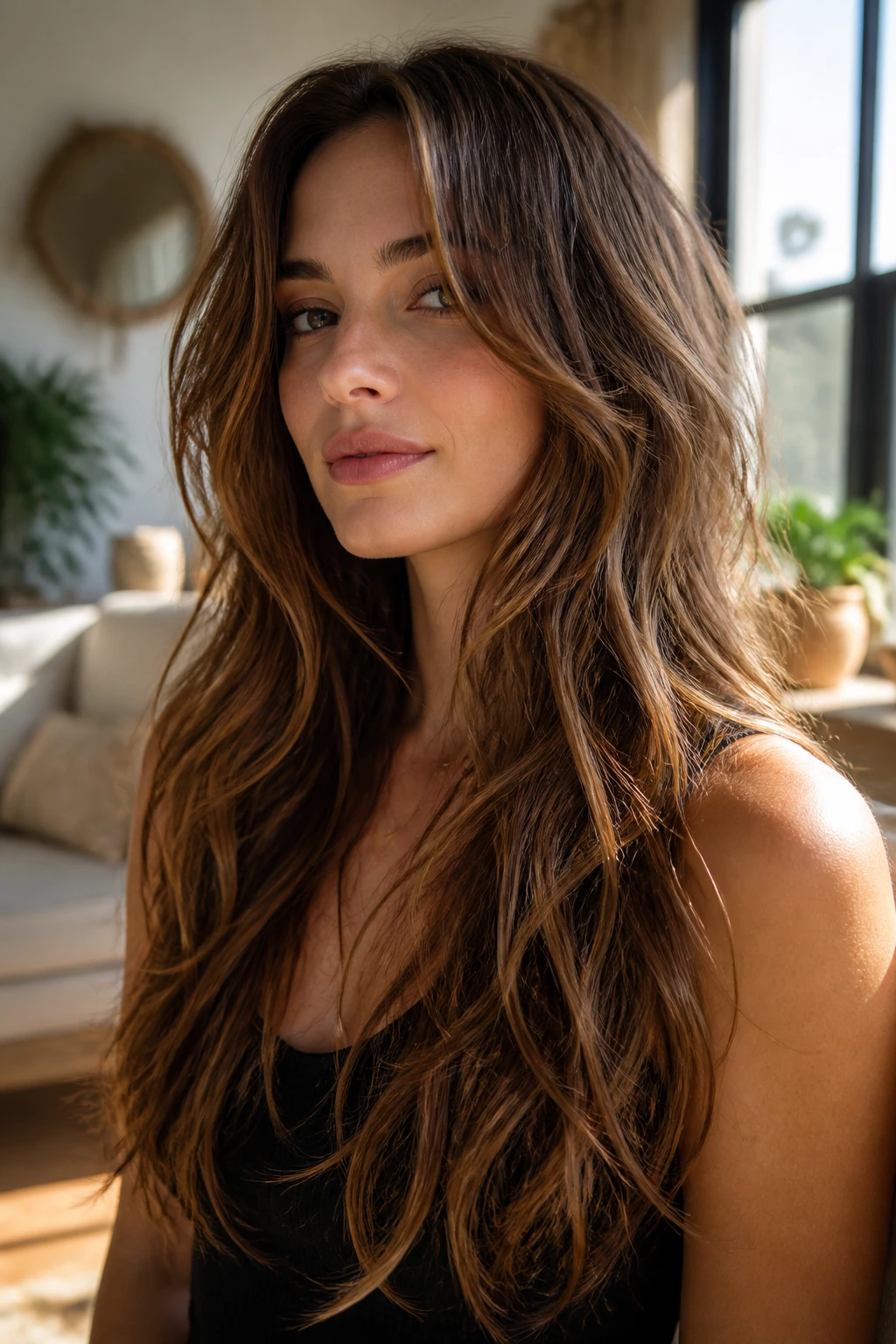
Texture spray can make layered thick hair look more separated and piecey without making it crunchy. This cut leans into that. The layers are cut to show movement, then the finish sharpens the ends just enough to keep the shape visible all day.
The honest part
Texture spray is useful, but too much of it turns thick hair dull and gritty. A few misted passes through the mids and ends are usually enough. Work it in with your hands, not a brush.
I like this style when the hair has a lot of density and tends to blur into one wide shape. The spray helps the layers stay visible instead of collapsing into each other.
20. Layered Cut That Keeps the Ends Thick
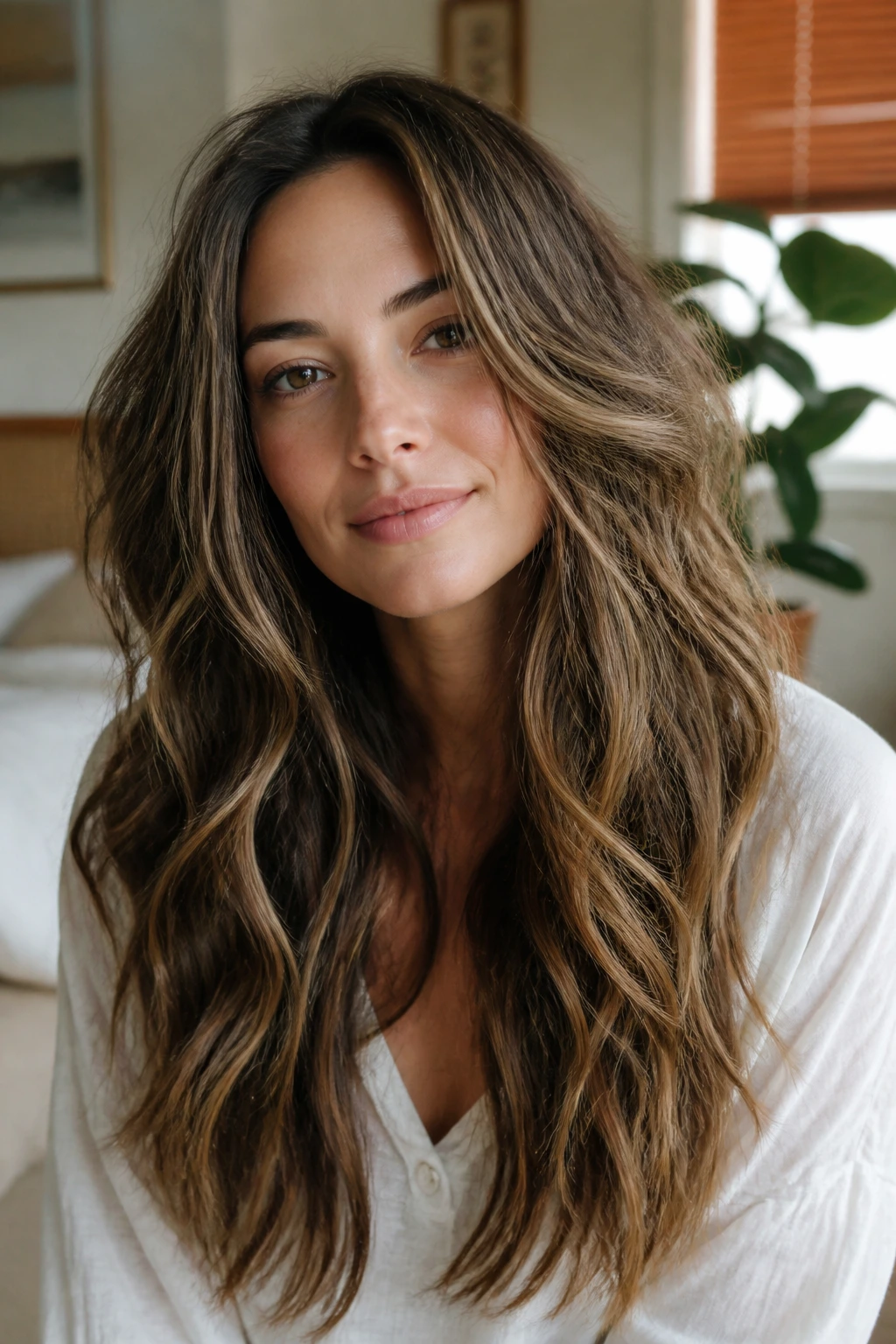
This is for people who are nervous about losing fullness. The layers stay long, the ends stay heavy, and the choppy movement happens mostly through the mid-lengths. That gives you a more forgiving grow-out and a shape that still feels substantial.
Why it’s smart
Thick hair does not need to be thinned to look lighter. It needs to be redistributed. This cut does that without overcutting the perimeter. The beachy wave adds softness, so the result feels textured instead of dense.
If your hair has a tendency to split at the ends, this is a good choice because you’re not overworking the bottom. The shape stays healthy-looking longer.
21. Face-Framing Layers Cut Below the Chin
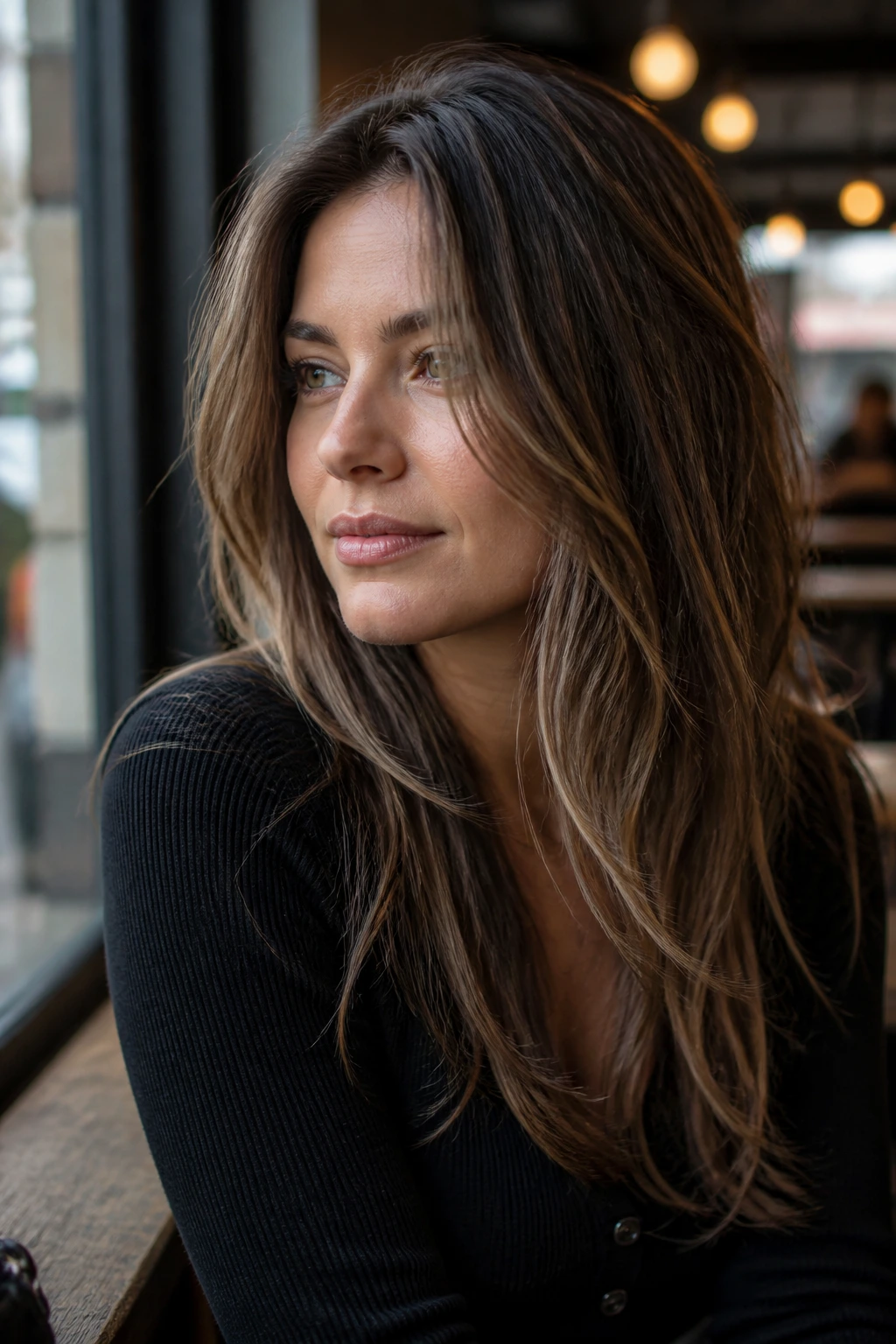
Cutting the face frame below the chin gives the style more sweep and less choppiness right around the jaw. That can be flattering on thick hair because it doesn’t crowd the face. The waves bend those longer pieces inward and outward in a softer way.
Best for
This version is especially good if you don’t want bangs but still want some sculpting near the front. The longer face frame can blend into a side part or tuck behind the ear without feeling awkward.
It also keeps maintenance easy. Short face-framing pieces need more attention. These don’t.
22. Drop Layers That Fall Around the Shoulders
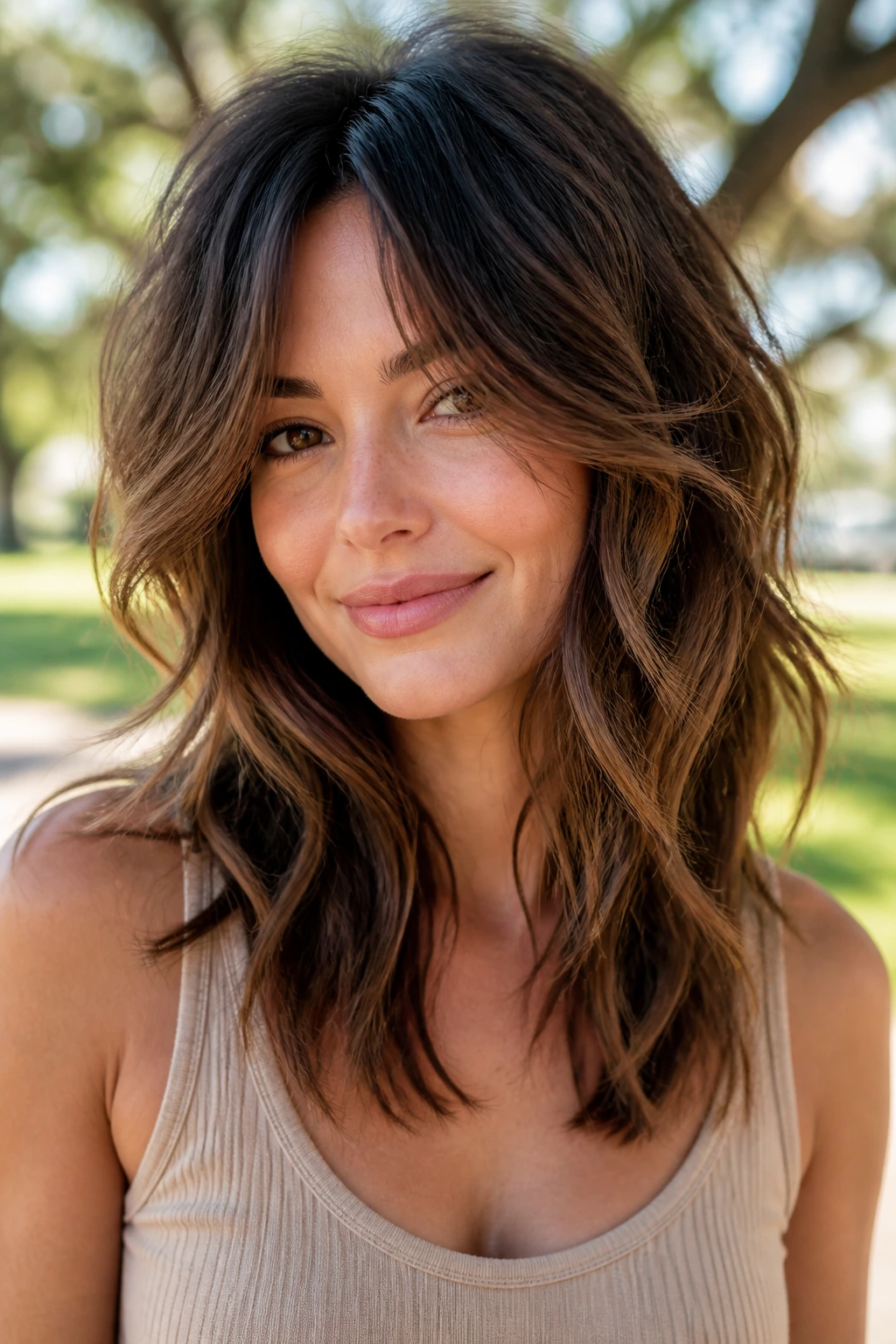
Drop layers create a gradual shift in length, so the hair doesn’t suddenly lose weight all at once. On thick hair, that makes a difference. The hair falls more naturally around the shoulders, and the beachy wave helps the layers separate in a relaxed way.
A practical benefit
This cut looks good even when you don’t style it much. The shoulder area gets enough movement to keep the shape from looking stiff, and the lower lengths remain thick enough to feel finished. It’s a nice choice for anyone who lives in a ponytail half the week and wants the down style to still behave.
The shoulder line is where thick hair often gets heavy. These layers make that zone less stubborn.
23. Long Choppy Layers with a Glossy Finish
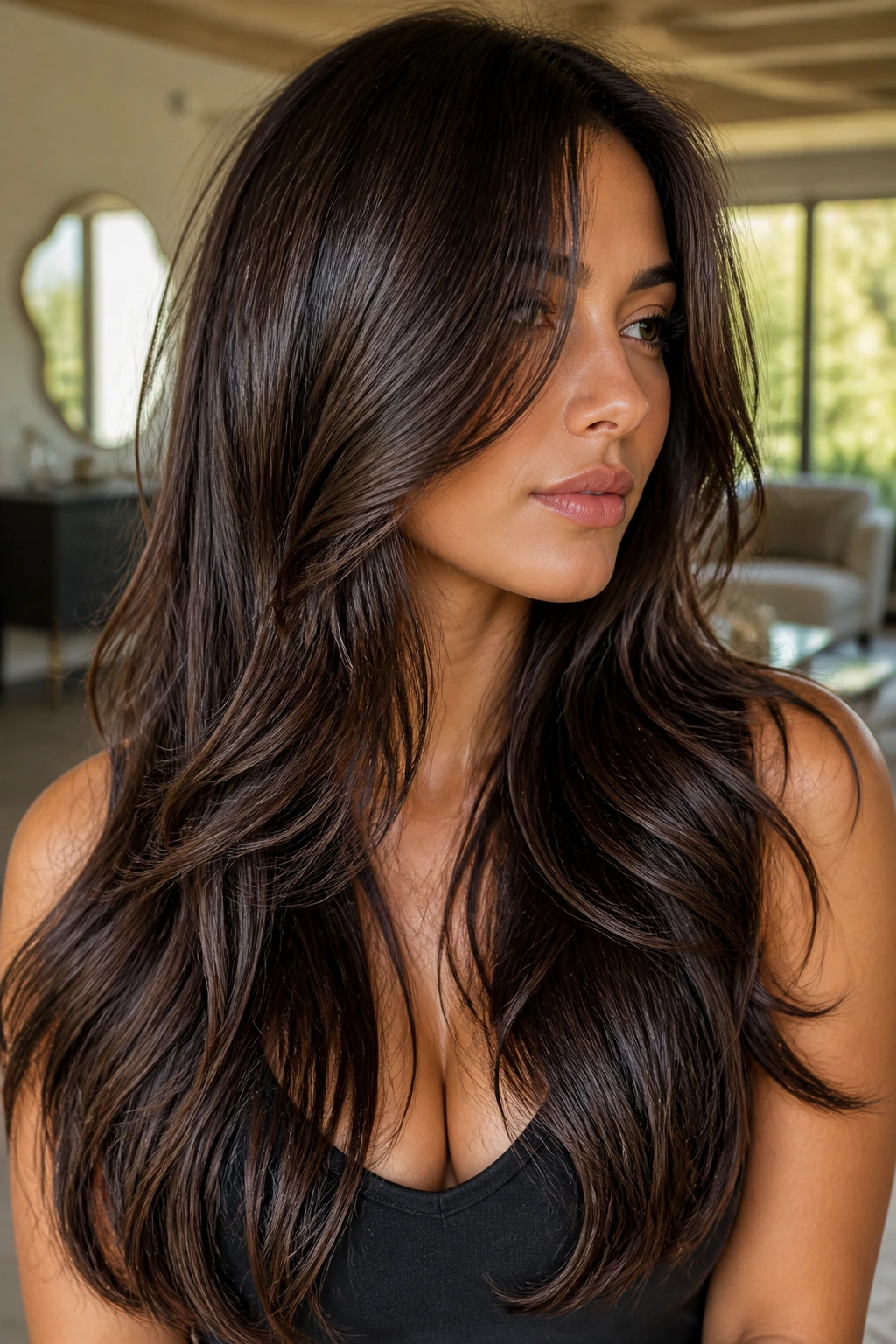
Not every beachy wave has to look dry and matte. A glossy finish gives layered thick hair a richer look, especially if the cut has clean face framing and a healthy perimeter. It reads a little more polished, though still soft.
How to keep it from going flat
Use a lightweight shine cream only on the lower half of the hair, never at the roots. Then wave in loose bends and break them up with your fingers. Too much product kills the shape fast.
This version is good if your thick hair already has good condition and you want the layers to look deliberate. Shine makes the cut look expensive in the most literal way: healthy ends, smooth surface, no fuzz.
24. Minimal Layers, Maximum Movement
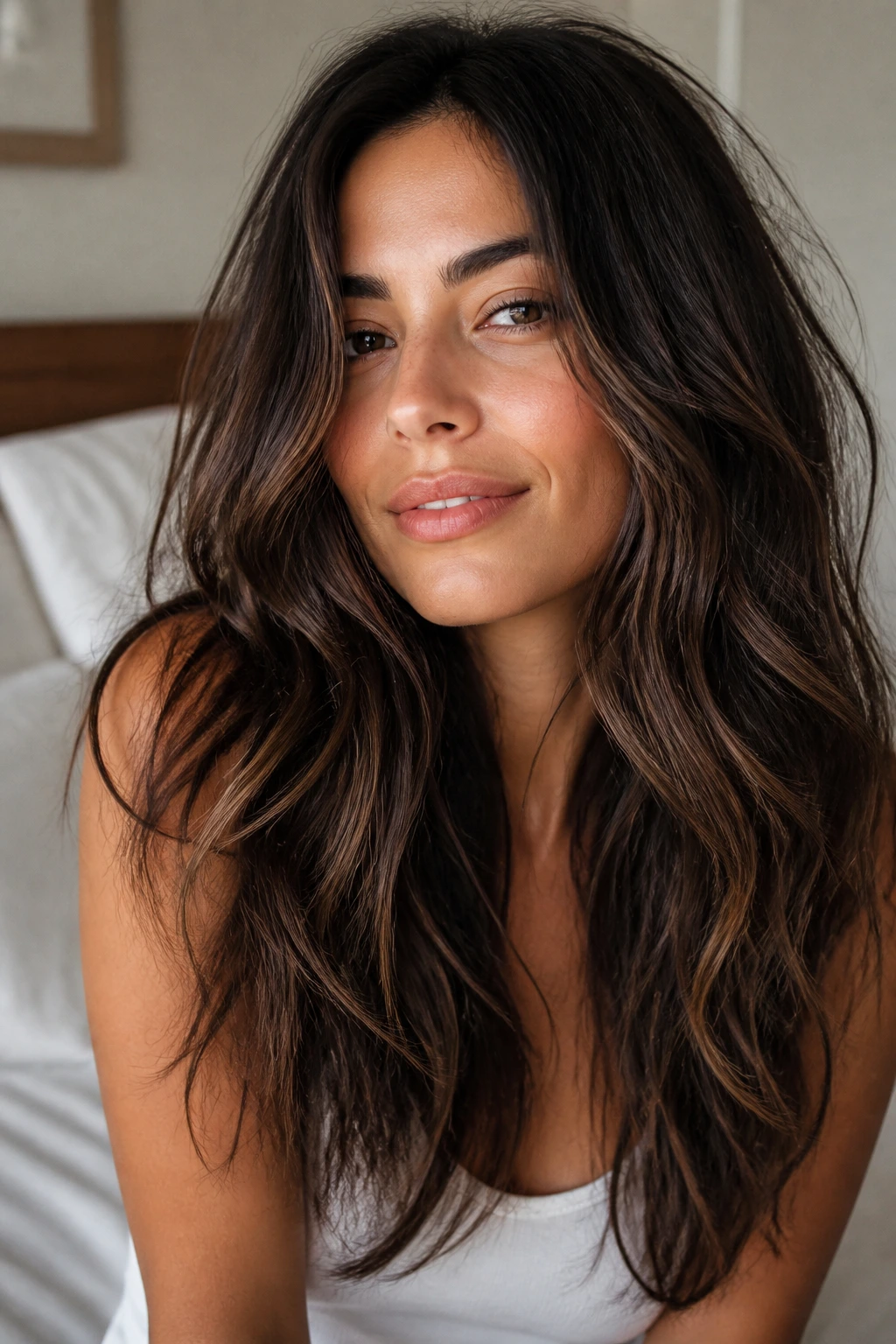
Some thick-haired people want the least amount of visible layering possible. Fair enough. This cut keeps the layers minimal and relies on smart placement plus beachy styling to create movement. The hair still has body, but it doesn’t look chopped to bits.
Why choose this one
It’s the safest option if you’re wary of scissors. The cut changes the shape enough to improve movement, yet the overall outline remains calm. Once waved, the layers show up as soft shifts instead of obvious steps.
I’d recommend this if you wear your hair straight half the time. Minimal layers are easier to smooth out on days when you want a sleeker look.
25. The Salon-Customized Version for Thick Hair
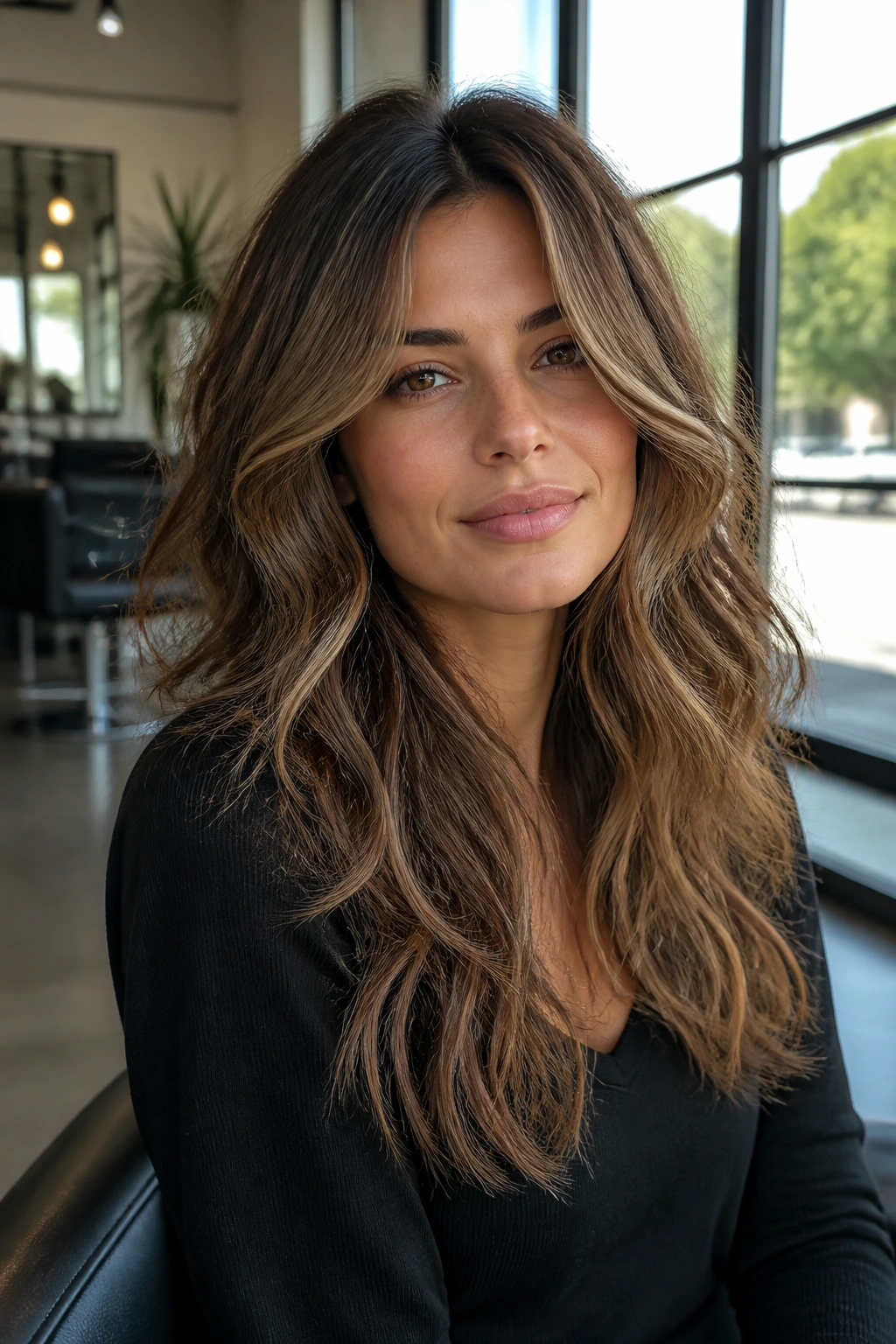
This isn’t one haircut so much as a smarter way to ask for the one that fits your head. Thick hair varies a lot. Density, strand width, wave pattern, growth direction, and even your cowlicks matter. A truly good layered cut takes all of that into account instead of copying the same diagram onto every head.
What to ask for
Bring photos, but also say what you do not want: too much lift at the crown, thin ends, or a face frame that starts above the cheekbone. Ask the stylist where they plan to remove weight and how they’ll keep the perimeter full enough for beachy waves. That conversation matters more than the exact haircut name.
This is the version I trust most. It treats the haircut as a shape problem, not a trend problem.
Why Thick Hair Needs the Right Kind of Layering
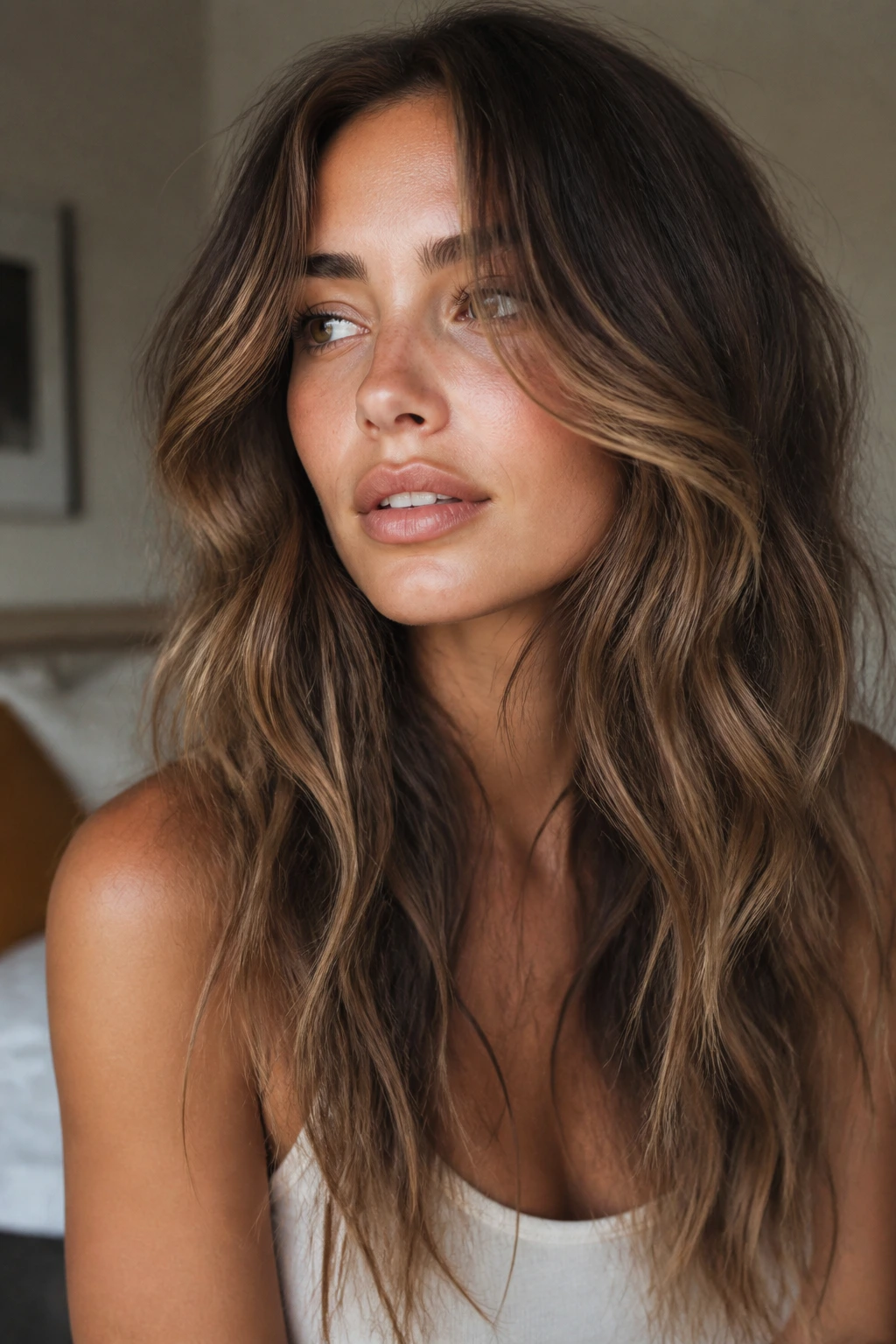
Thick hair is not one thing. Some heads have dense strands that pack closely together. Others have coarse strands that feel bigger in the hand. Then there’s the wave pattern, which can swing from nearly straight to frizzy bends to full-on wave once humidity gets involved. A cut that ignores those differences is usually the cut that looks bulky or puffy after the first wash.
The reason long choppy layers work is simple: they move weight around instead of removing it everywhere. You want enough internal shaping to let the hair collapse a little, but not so much that the ends look wispy. That’s the balance. The best layers on thick hair are often the ones you barely notice individually, because the overall shape feels easier, lighter, and less square.
Beachy waves help because they blur the haircut’s seams. A layer that might look abrupt when the hair is straight can look soft and natural once it’s bent. That’s why this combination shows up so often on thick hair that needs a little control but not a total loss of length.
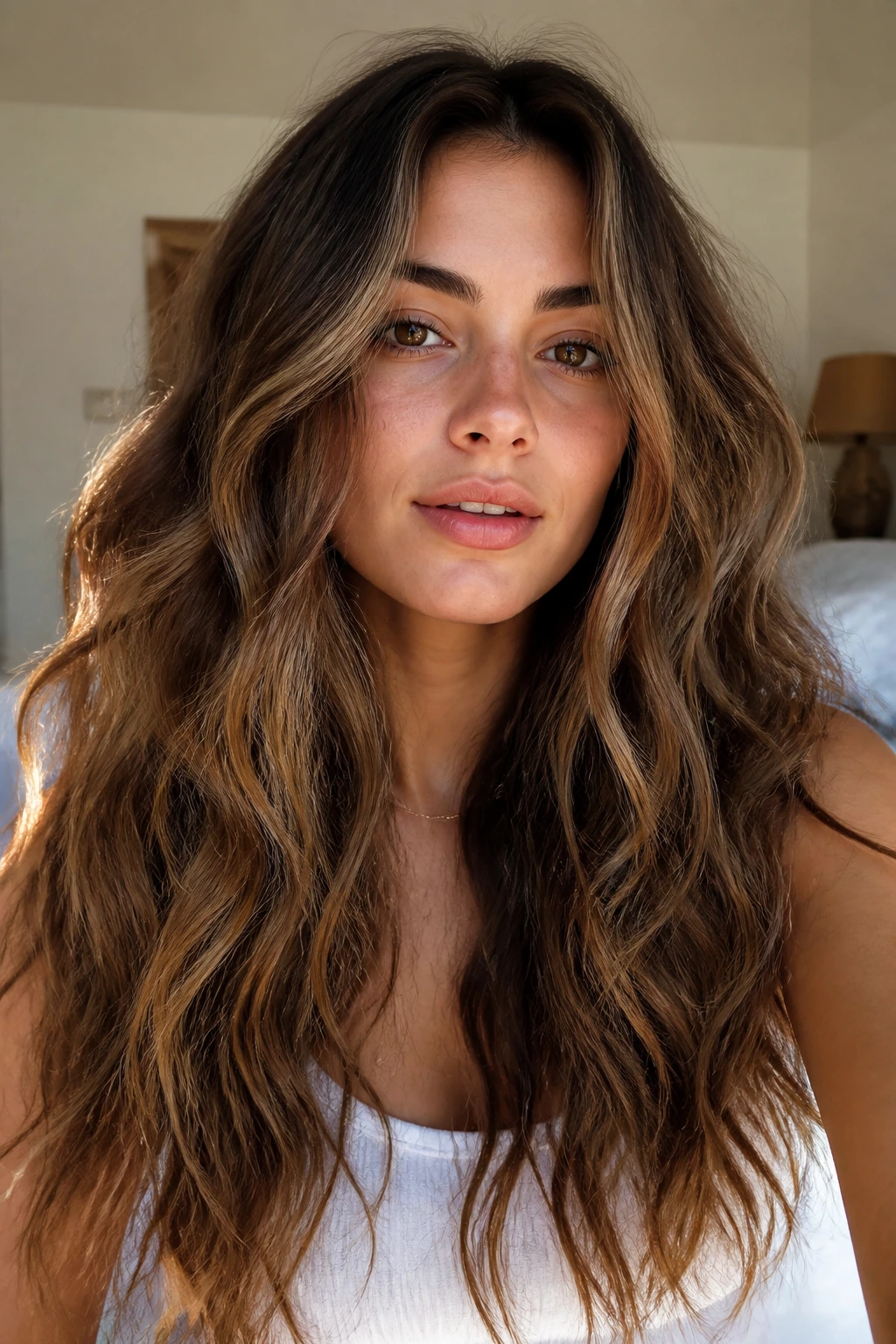
Essential Tools for Beachy Waves on Thick Hair
-
Heat protectant spray: Use this on damp or dry hair before any hot tool; thick hair can hide heat damage for a while, then split at the ends all at once.
-
1-inch curling wand or iron: The most useful size for loose, beachy bends that don’t turn into tight curls.
-
1¼-inch curling iron: Better if your hair is very dense or long and you want softer, larger waves with less ringlet energy.
-
Blow dryer with a nozzle: Directs the airflow and helps the face frame and crown sit in the right direction before styling.
-
Diffuser attachment: Handy for natural wave patterns; it keeps air from blasting the cut into frizz.
-
Tail comb: Useful for clean parting and for lifting sections when you want more root control.
-
Sectioning clips: Thick hair needs sectioning. Trying to curl it all at once is a bad afternoon.
-
Wide-tooth comb or fingers: For breaking waves apart after they cool without turning them into fluff.
-
Texturizing spray: Adds separation at the mids and ends; use it sparingly so the hair doesn’t go dusty.
-
Lightweight oil or serum: Best on the ends only, especially if your hair is dry or porous.
How to Ask for Long Choppy Layers at the Salon
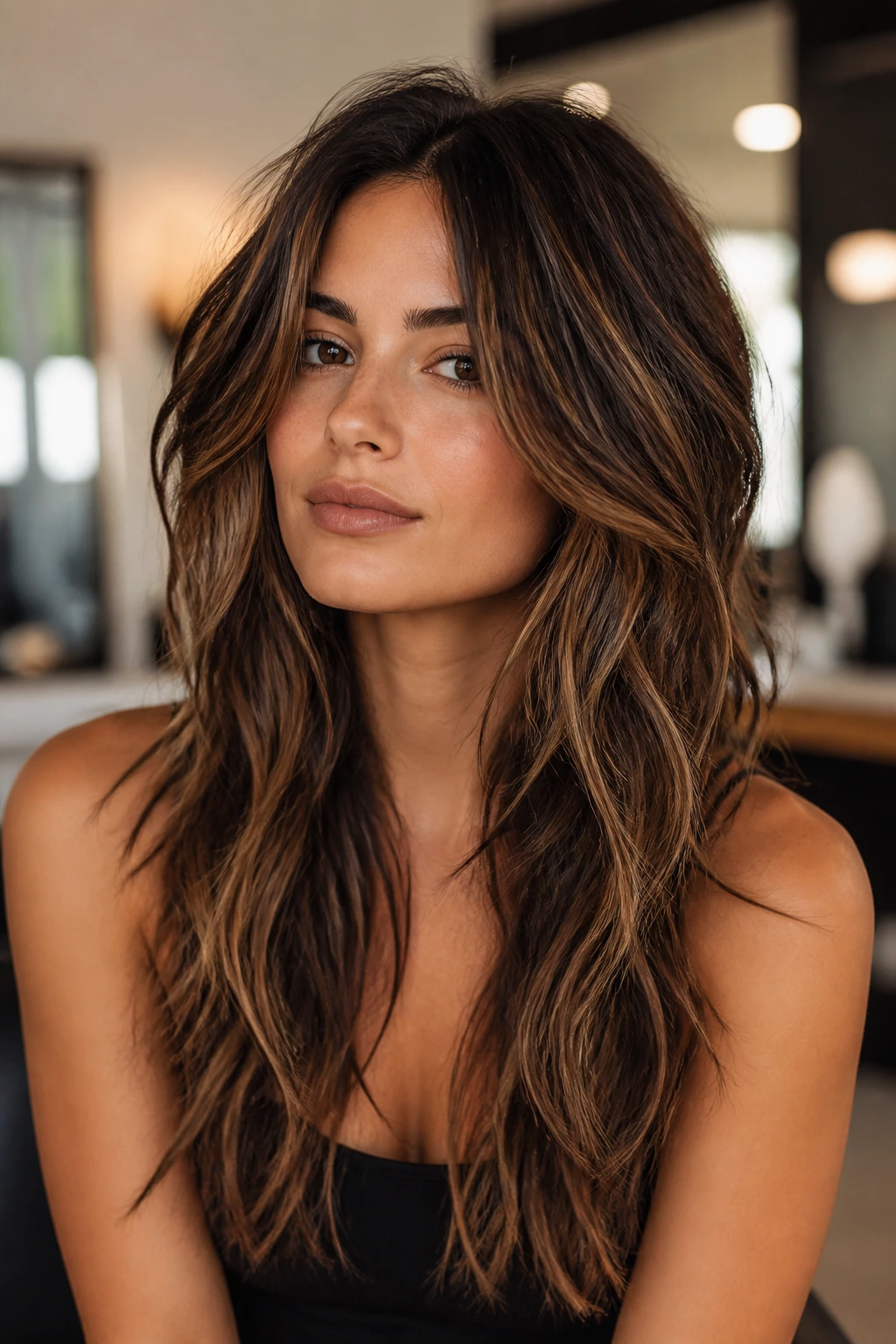
Start with the shape, not the trend words. Tell the stylist you want to keep the length, remove bulk, and preserve enough density at the ends for beachy waves. That’s the useful part. “Lots of layers” is too vague, and on thick hair vague usually means trouble.
Bring 2 or 3 photos, but point out what you like in each one. Maybe it’s the face frame in one photo, the rounded back in another, and the softness at the ends in a third. Most good stylists work better with those ingredients than with a single picture that doesn’t match your own hair texture.
Say where you want the shortest pieces to start. Cheekbone, jaw, chin, collarbone. That one detail changes everything. Also ask whether the stylist plans to point-cut, slide-cut, or use another weight-removal method, because thick hair often needs the right tool in the right zone. If your hair is wavy, ask for a dry check around the face before they commit to the shortest layer. Wet hair lies. Wavy hair lies even more.
Styling Long Choppy Layers Without Turning Them Puffy
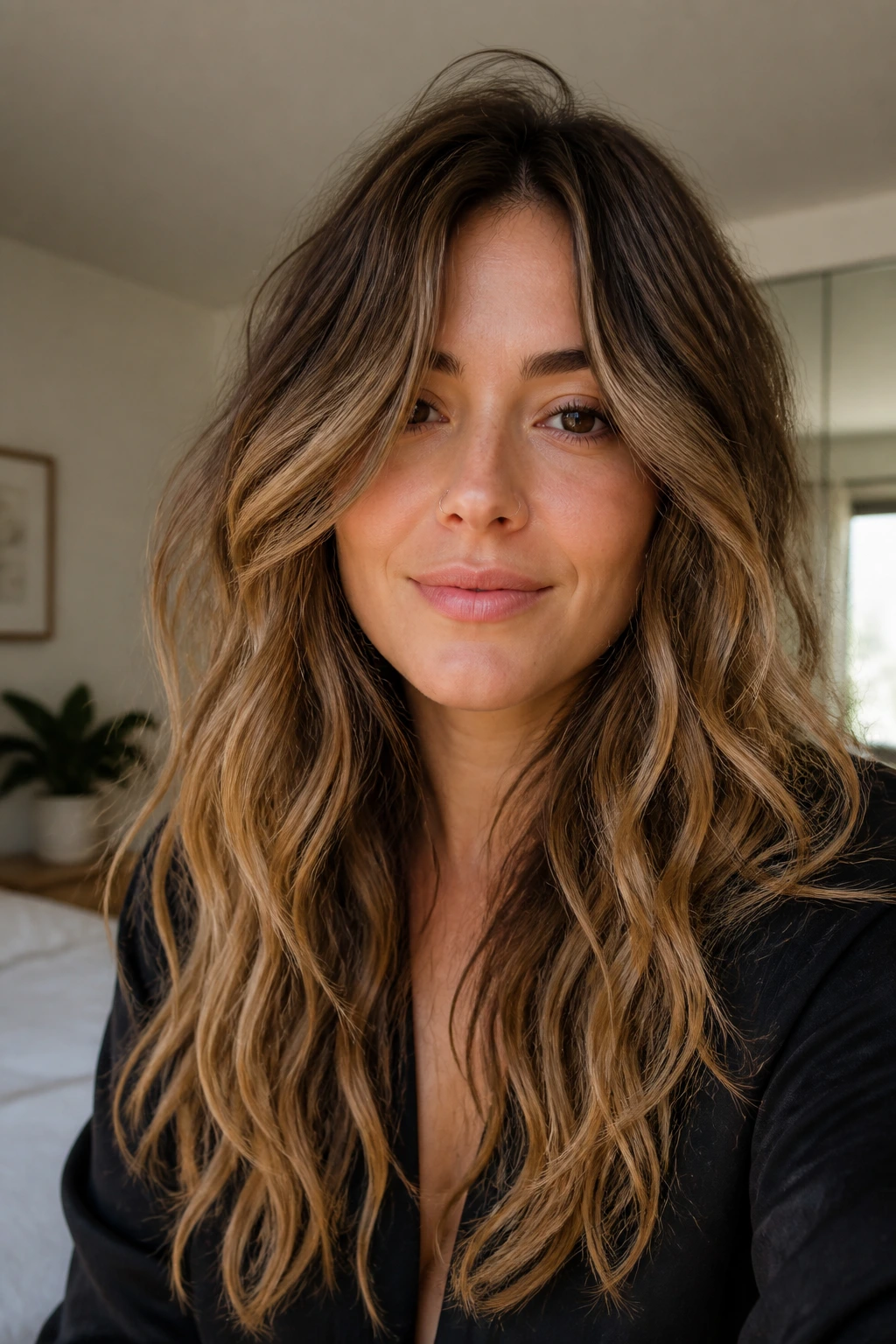
The best styling move is usually the least dramatic one. Start with a light mousse or root spray on damp hair, then rough-dry the roots until they’re about 80 percent dry. That keeps the crown from collapsing and gives the layers some lift without turning the whole head into a cloud.
For the waves, use medium sections and alternate direction away from the face and toward the face. Leave the ends out on a few pieces. Don’t curl every strand the same way unless you want a very neat, less beachy look. The unevenness matters. It’s what makes the layers separate in a believable way instead of locking into one giant wave pattern.
Cool the hair fully before you rake through it. That part gets skipped all the time, and then people wonder why their waves fall out in fifteen minutes. They were never set in the first place. A clip for a minute or two, or even just patience, makes a difference.
Common Mistakes That Make Thick Hair Look Bigger, Not Better
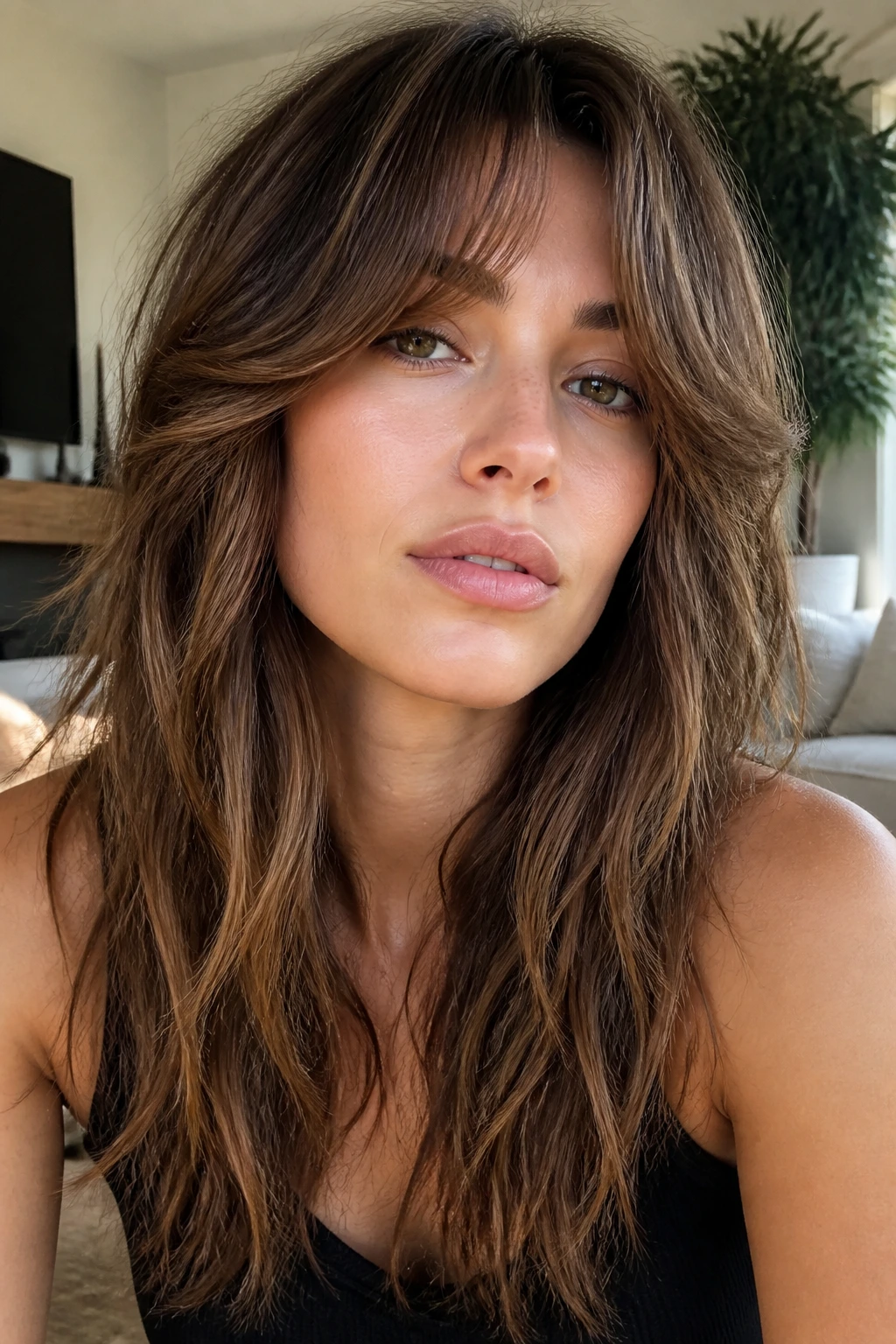
The biggest mistake is over-layering the crown. Thick hair already has volume up top, and if the shortest layers sit too high, the head starts to look wide and fluffy. The fix is simple: keep crown layers controlled and put more of the movement through the mids and face frame.
Another problem is making the ends too thin. Some people ask for a lot of weight removal and then wonder why the cut feels stringy. On thick hair, the ends need enough substance to hold the shape after waves are brushed out. If the bottom looks see-through, the haircut has gone too far.
Heavy products can ruin the whole thing. Thick hair does not need a thick cream at the roots. It needs a light hand. Put richer products only on the ends, and use mousse or a spray at the root if you need control.
The last issue I see constantly is uniform curling. If every section bends the same direction, the cut can look too styled and too round. Beachy waves need some irregularity. Alternate the wrap direction, leave a few ends straight, and break up the pattern once it cools.
Additional Tips and Texture Boosters
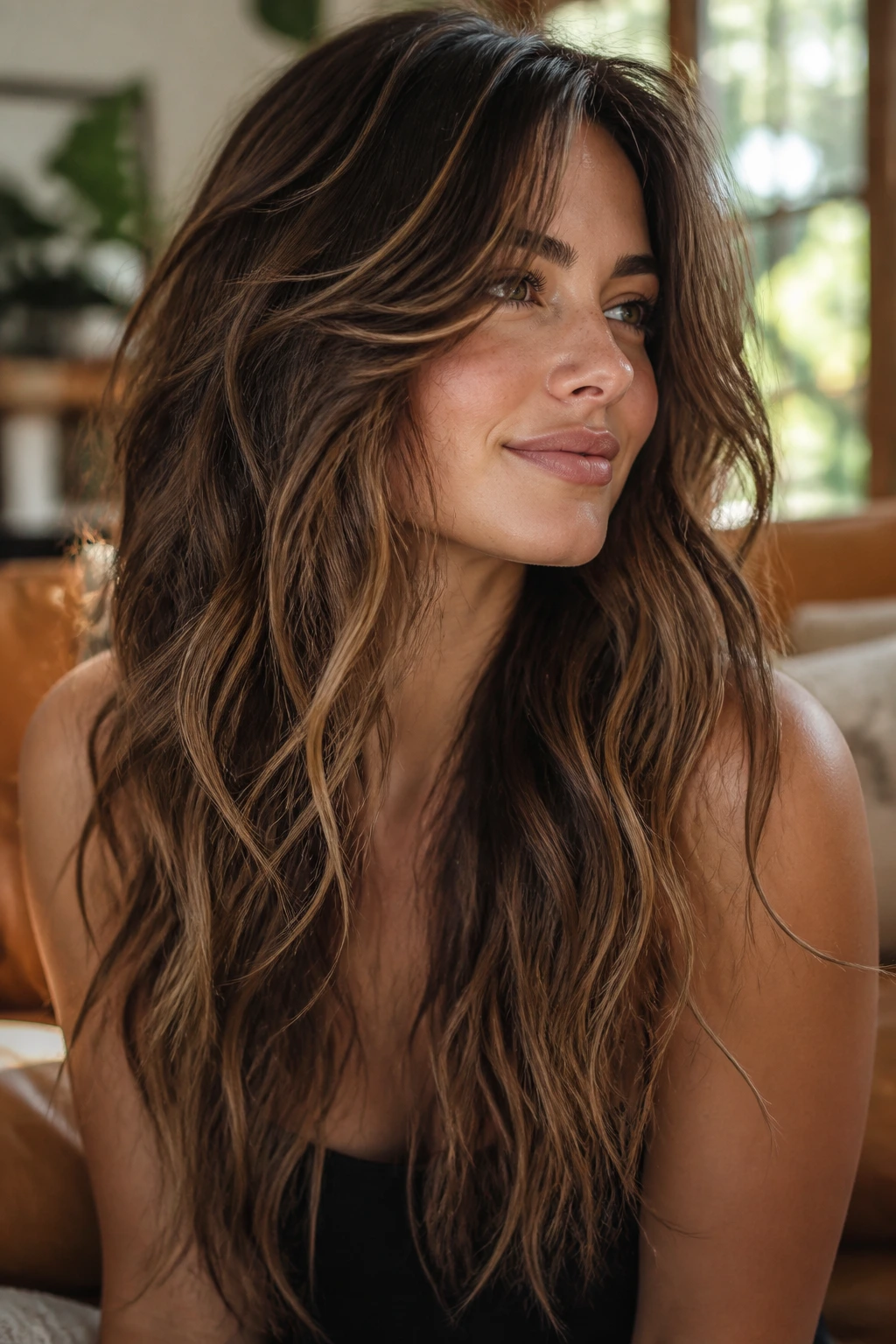
Texture Boost: Add a pinch of texturizing spray to the mids only after the waves are fully cool. Spray from about 8 to 10 inches away so you get separation, not grit.
Customization: If your face frame feels too heavy, tuck one side behind the ear and add a small bend around the cheekbone. That tiny change opens the cut without another haircut.
Humidity Shield: Thick hair in damp air needs restraint. Use a lightweight anti-frizz cream on the ends and keep the root products airy, or the whole style can swell.
Make-It-Yours: If you like a sleeker look, brush the waves out once and stop there. If you like a rougher finish, scrunch the lower half with dry hands and let the hair keep a little mess.
Best-Fit Finish: Gloss spray on the lower third can make choppy layers look richer and help the beachy texture read as deliberate instead of rough.
Maintenance and Grow-Out That Keep the Shape Moving
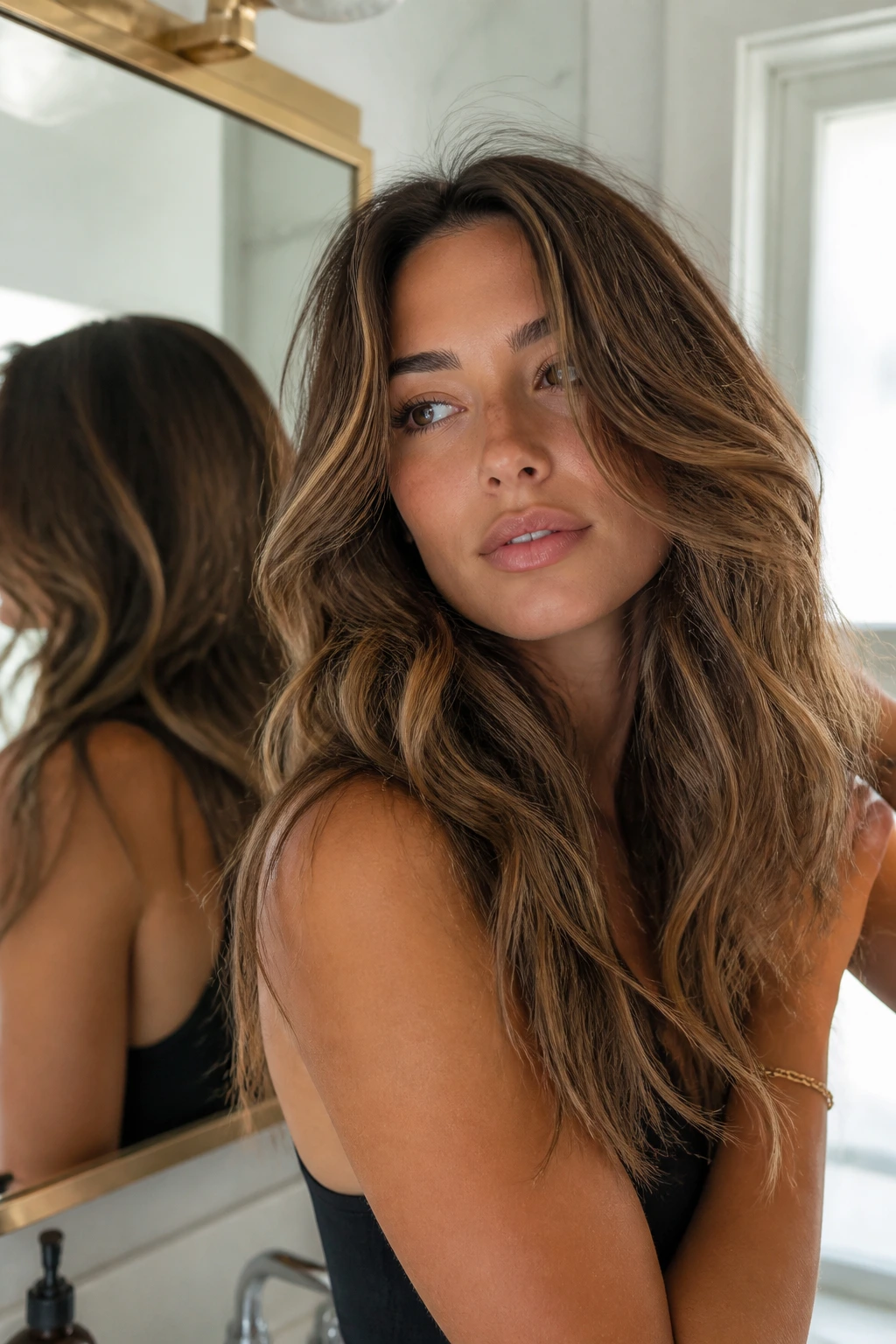
Thick hair grows out with force. You can feel it. The layers fill back in faster than you expect, and the bulk starts rebuilding around the jaw, shoulders, and lower back. That’s why a trim every 8 to 12 weeks usually makes sense if you want the choppy movement to stay visible. If you wait too long, the face frame can disappear into the rest of the hair.
Between appointments, the shape stays better if you refresh the ends before every wash day. A quick detangle, a little leave-in on the lower half, and a clean part at the crown go a long way. If your hair puffs after sleeping, mist the mids with water, twist a few sections around your fingers, and hit the roots with low heat for a minute. No drama.
This style also benefits from a lighter wash schedule if your scalp allows it. Overwashing can strip the mids and make the ends frizzier, which blurs the layers. On the flip side, too much buildup can weigh down the movement. If the waves look stuck to the head, it’s usually product, not the cut.
Frequently Asked Questions About Long Choppy Layers for Thick Hair
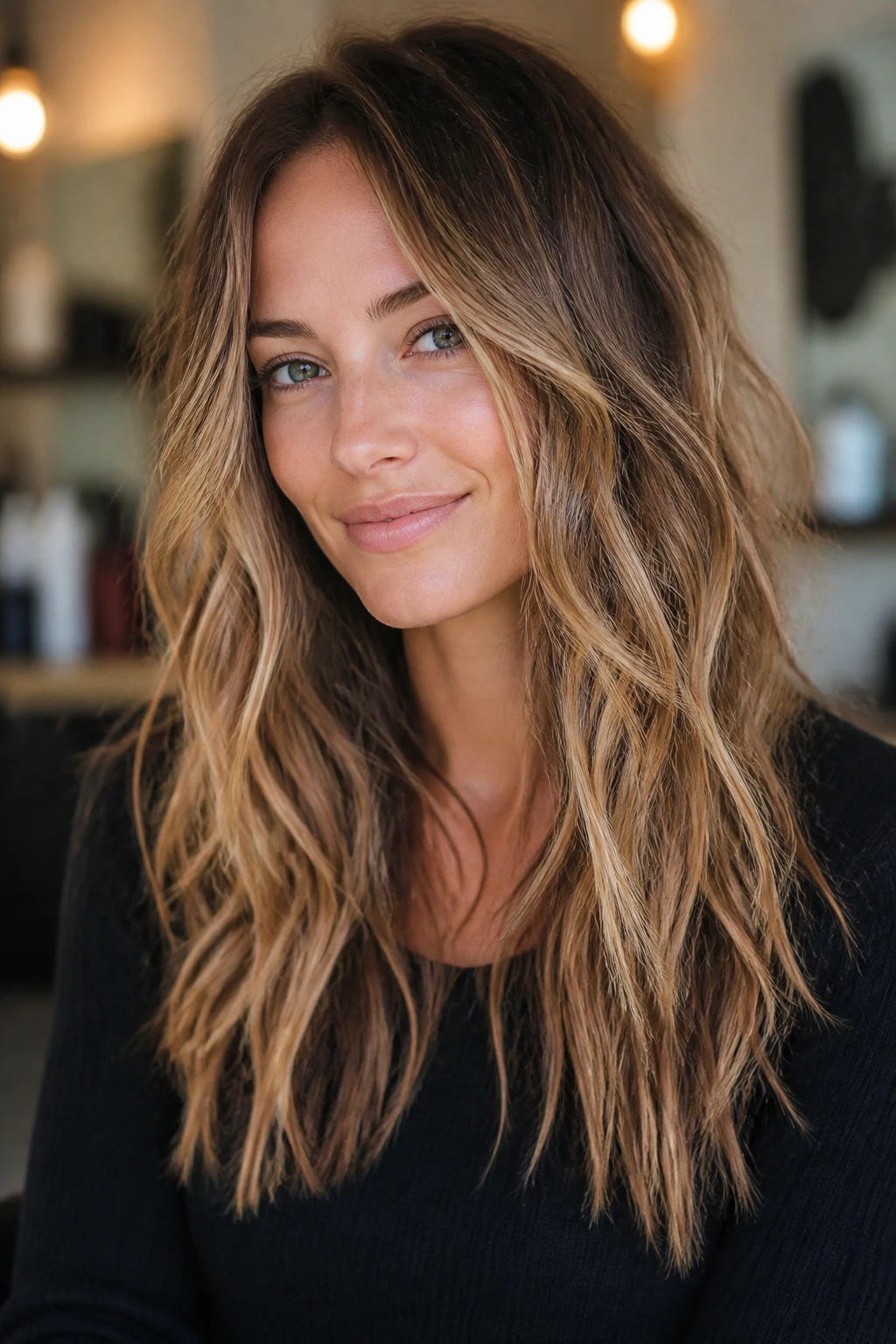
Will layers make thick hair look thinner?
Not if they’re cut with the right goal. Good layering removes bulk and creates movement without draining the ends, so the hair looks lighter but still full. The bad version is over-thinning, which leaves the ends wispy and the shape uneven.
Can thick hair still look polished with beachy waves?
Absolutely. Keep the wave pattern loose and the ends healthy, and the style can look clean rather than messy. A gloss spray or a light serum on the lower third helps the finish read smoother.
Should the shortest layers start near my chin or my cheekbones?
That depends on your face and how much framing you want. Cheekbone layers are softer and more open; chin layers give more swing and can help balance a stronger jaw. If your hair is very dense, a stylist may stagger the front in between those points.
Do choppy layers work on straight thick hair?
Yes, but the style relies more on heat styling or a bend from the blow-dryer. Straight thick hair can make the cut look heavier, so a little texture helps show the layers. Without it, the shape may hide inside the length.
How do I stop beachy waves from turning into a puffball?
Use less product at the roots, let the hair cool fully before touching it, and curl in sections that are large enough to bend rather than shrink. Also, don’t over-layer the crown. That’s where the puff starts.
Is a V-cut or U-cut better for thick hair?
A U-cut usually feels softer and more forgiving, while a V-cut narrows the back more aggressively. If your hair is very wide or heavy through the ends, a subtle V can help. If you want something easier to grow out, the U-shape is safer.
How often should I trim these layers?
Most thick hair looks best with a trim every 8 to 12 weeks, depending on how fast it grows and how much the shape fills back in. If the face frame starts blending into the rest of the hair, it’s probably time.
Can I air-dry this style and still get the shape?
Yes, especially if your hair already has a wave to it. Scrunch in a light wave cream or mousse, part the hair where you want it, and twist a few face-framing sections while it dries. If your hair is straighter, you’ll likely need some heat on a few pieces to show the layers.
The Shape That Keeps Thick Hair Moving
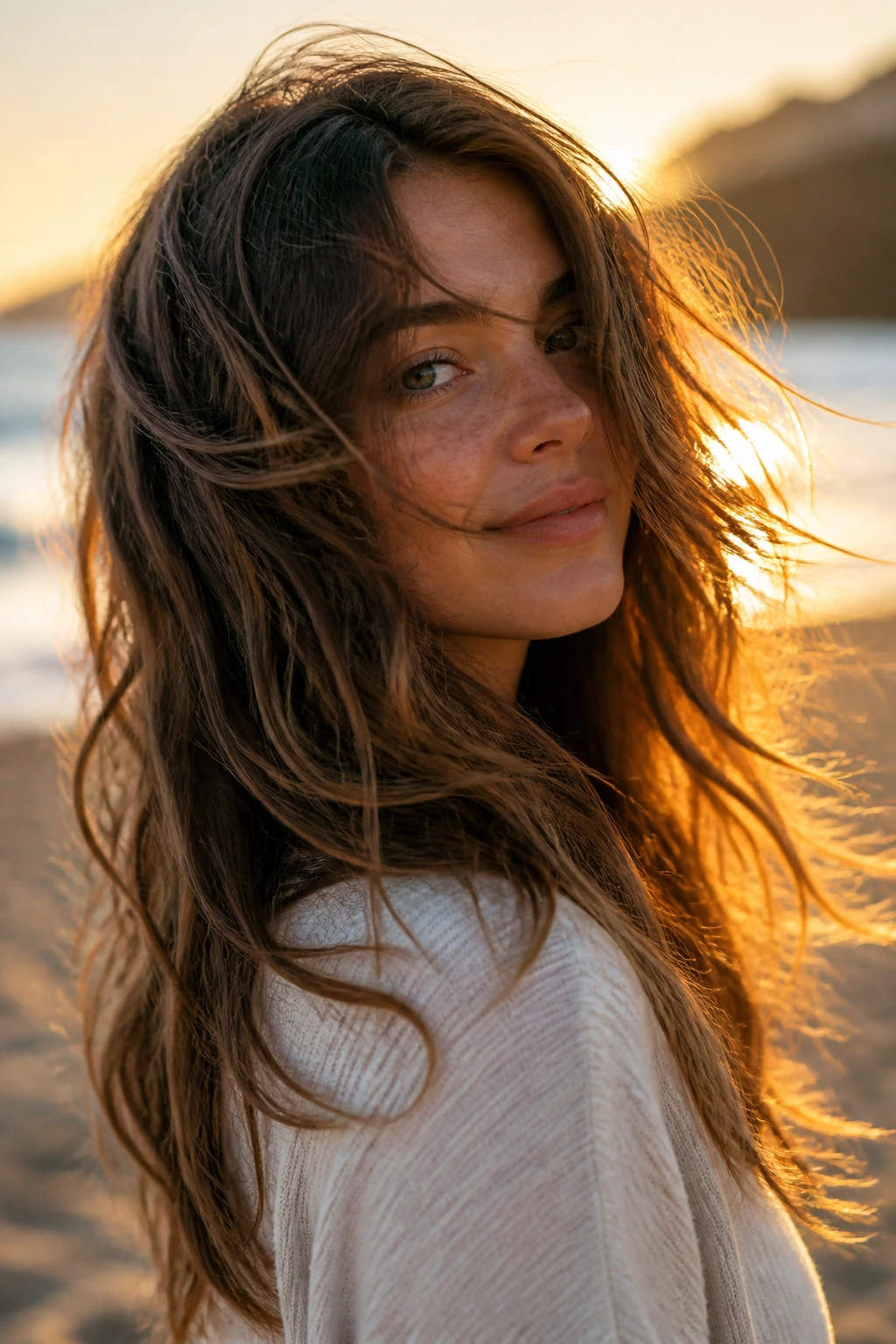
The best thing about long choppy layers on thick hair is that they solve a real problem instead of just adding more visual noise. The hair feels lighter at the mids, softer around the face, and easier to wear with that loose beachy bend people keep trying to fake with too much product. When the cut is right, you don’t have to force the movement. It shows up on its own.
That’s what makes this style worth keeping in your back pocket. It gives thick hair direction without shrinking it, texture without chaos, and length without that heavy, flat curtain effect. If you want the haircut to keep its shape between salon visits, choose the version that matches your density, your wave pattern, and how much time you actually want to spend styling it. Then let the layers do their job.