



Thick hair at medium length can look expensive in the best way — until the weight starts collecting at the ends and the whole shape turns boxy by lunch. That is where medium layered hairstyles for thick hair earn their keep. The right layers take bulk out of the middle, let the front pieces move, and keep the outline from sitting there like a heavy curtain.
The trick is not “more layers.” It’s better-placed layers. A cut that starts too high can puff at the crown and leave the bottom stringy. A cut that waits too long to add shape can leave you with a blunt rectangle that takes forever to dry and still looks stubbornly flat around the face. Thick hair is generous, but it’s also exacting. It shows every bad line.
What works best is a cut that respects density instead of fighting it. You want enough structure to stop the triangle effect, enough length to keep the hair from springing up too short, and enough face-framing to make the whole thing feel lighter without losing the good part — the fullness. That balance is the whole game, and a good layered cut makes it look easy.
Why These 28 Cuts Work So Well on Thick Hair
-
They remove weight where thick hair gets stuck: Dense hair can sit like a solid block through the mid-lengths, so these cuts use layers to break up that heavy line without making the ends look ragged.
-
They keep the face from disappearing: Face-framing pieces starting at the cheekbone, chin, or collarbone open the front of the haircut, which matters when your hair naturally wants to cover everything.
-
They still dry into a shape: Medium layers give hair a built-in bend. You are not stuck rebuilding the whole cut every morning.
-
They grow out with fewer ugly stages: A smart layered cut can stretch longer between salon visits because the shape softens instead of collapsing.
-
They work with blowouts or air-drying: Some of these styles look polished with a round brush. Others look even better with a little texture and no hot tools at all.
-
They let thick hair feel lighter without looking thin: That is the sweet spot. You keep the body, lose the bulk, and the hair stops shouting for attention.
1. Butterfly Layers with Curtain Bangs
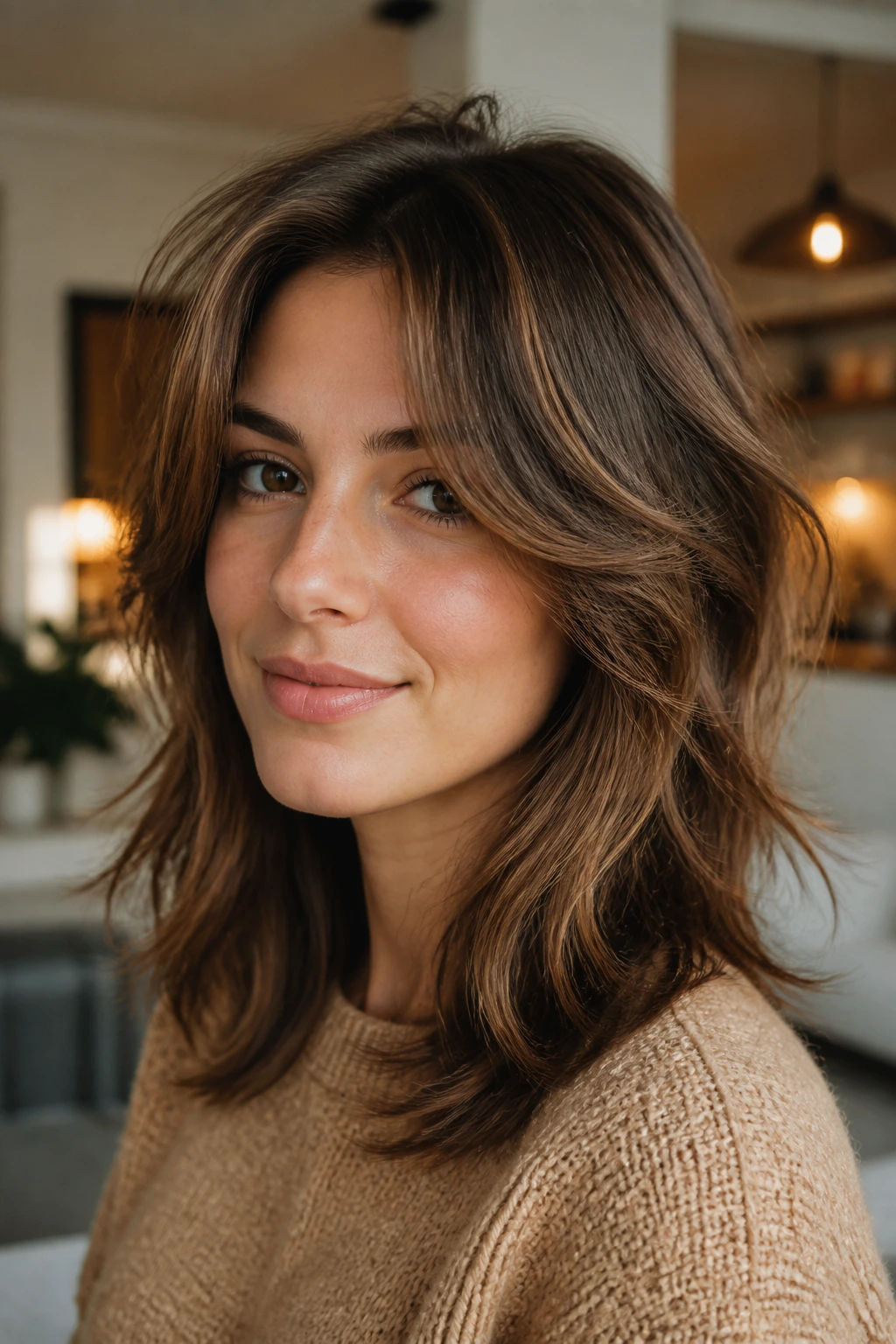
Butterfly layers are the cut I reach for when thick hair needs movement at the front but still has to keep enough weight to fall nicely. The shortest pieces sit around the cheekbone and jaw, then the longer lengths keep going down toward the collarbone. The result feels airy around the face and fuller through the ends, which is exactly what medium-length thick hair usually wants.
Why It Works
The curtain bangs matter here because they pull the eye inward and make the haircut look lighter without taking much length off the sides. Thick hair can carry a fringe without looking sparse, and the center split keeps the bangs from turning into one heavy block.
Ask for the shortest face frame to hit around the top of the cheekbone, then keep the rest blended so the layers melt into the length. If you like a blowout, this cut gives you that soft, lifted shape around the eyes and cheekbones in about 10 minutes with a round brush.
2. Soft U-Shape with Long Internal Layers
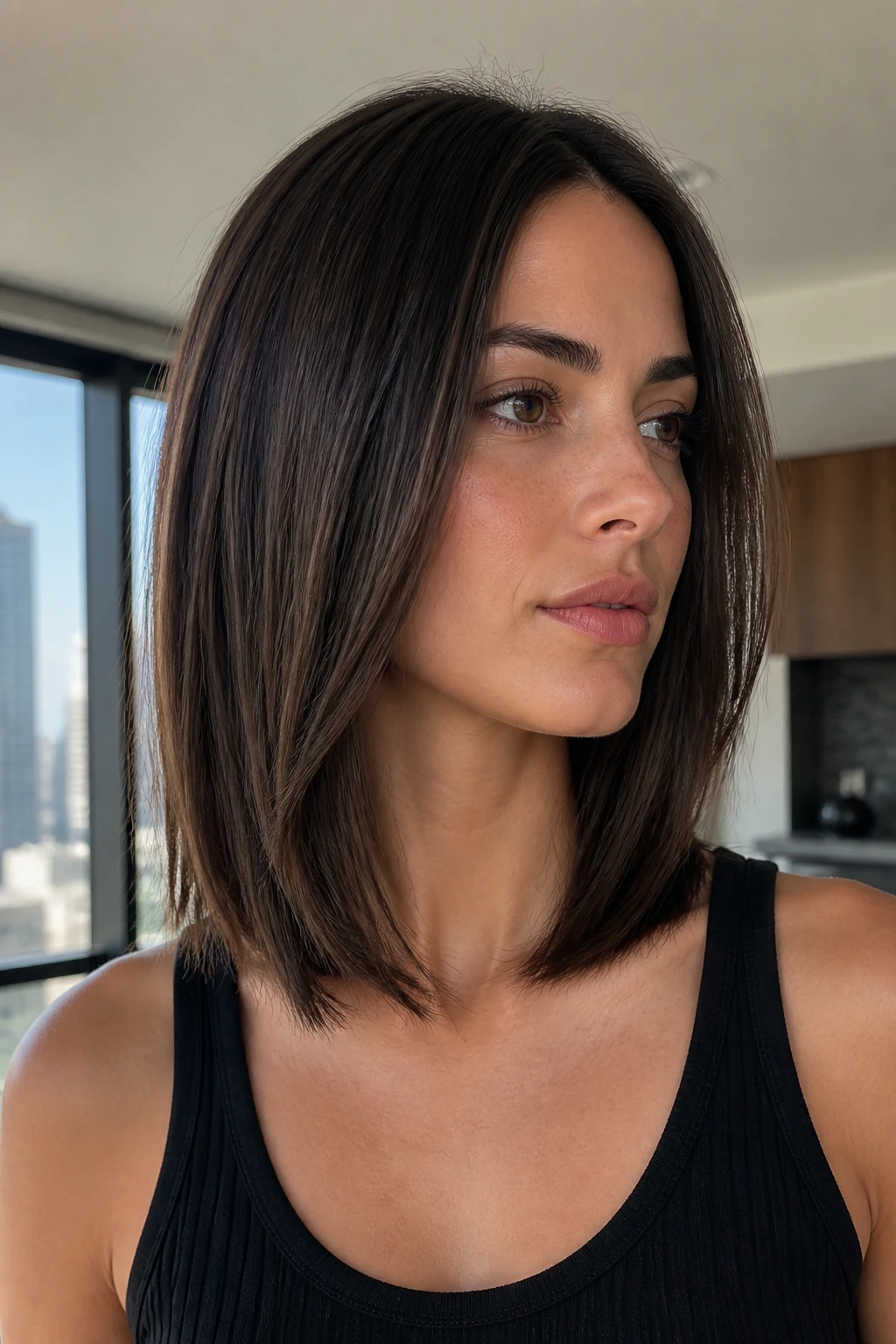
A soft U-shape is one of the most underrated options for thick hair because it keeps the bottom line gentle instead of blunt. From the front, it looks relaxed and smooth. From the back, the hair curves into a shallow U, which keeps the silhouette from feeling boxy.
What Makes It Feel Different
The real work happens inside the cut. Long internal layers remove bulk under the surface, so the top section still looks full while the underneath stops pushing the whole shape outward. That matters if your hair tends to balloon at the sides.
This is a smart choice if you like wearing your hair down and hate seeing your ends kick out in random directions. It’s polished without being stiff, and it grows out in a civilized way — always a good sign.
3. The Modern Shag with Airy Crown Volume
Why does a shag work so well on thick hair? Because thick hair already has the volume a shag is trying to fake. The cut just gives that volume a better shape and keeps it from sitting in one dense block.
This version stays medium, not mullet-y. The top is softly layered for lift, the sides are a little choppier, and the ends stay lived-in instead of perfectly tidy. It’s best when you want movement you can see even on a day when you barely touch your hair.
Styling Note
A pea-sized amount of mousse at the roots and a rough dry with your fingers is often enough. If you want more definition, bend the front pieces with a 1-inch iron and leave the crown alone. That little bit of restraint keeps the cut from looking overworked.
4. Collarbone Lob with Invisible Layers
The collarbone lob is for the person who wants the easiest answer in the room. It’s long enough to pull back, short enough to feel fresh, and layered in a way that most people won’t spot immediately — which is the point.
Invisible layers sit inside the shape rather than shouting from the top. Thick hair gets the weight removed where it needs it, but the outside line stays smooth and clean. That makes this cut ideal if your office life, school life, or just plain taste leans more sleek than shaggy.
If you want hair that can swing between polished and casual without looking like two different people, this is a strong bet. The cut behaves. That’s rare.
5. Face-Framing Layers That Start at the Cheekbone
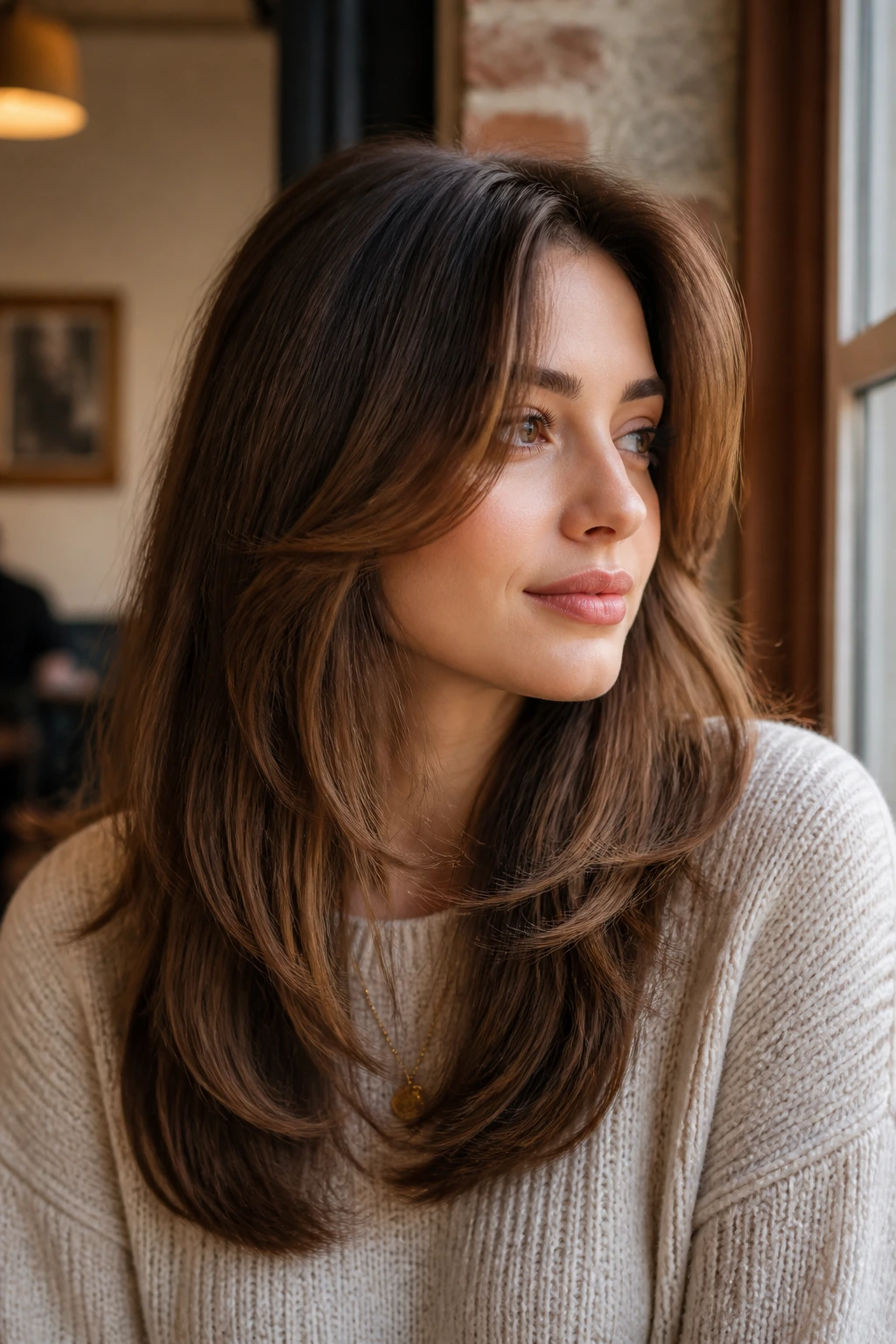
These are the layers that make a face wake up. Starting the front pieces at the cheekbone gives thick hair a visible break around the eyes and cheeks, which matters if the rest of the hair is dense enough to dominate your features.
The cut is simple, but the effect is not. You keep most of the length through the back and sides, while the front drops a few inches shorter and curves toward the chin. It feels softer immediately, even if the rest of the hair stays full and substantial.
Best for…
- Round faces that want more vertical shape.
- Square faces that need a softer front edge.
- Thick, straight hair that tends to sit flat around the face.
- Wavy hair that needs a little direction without heavy styling.
6. Rounded Blowout Layers
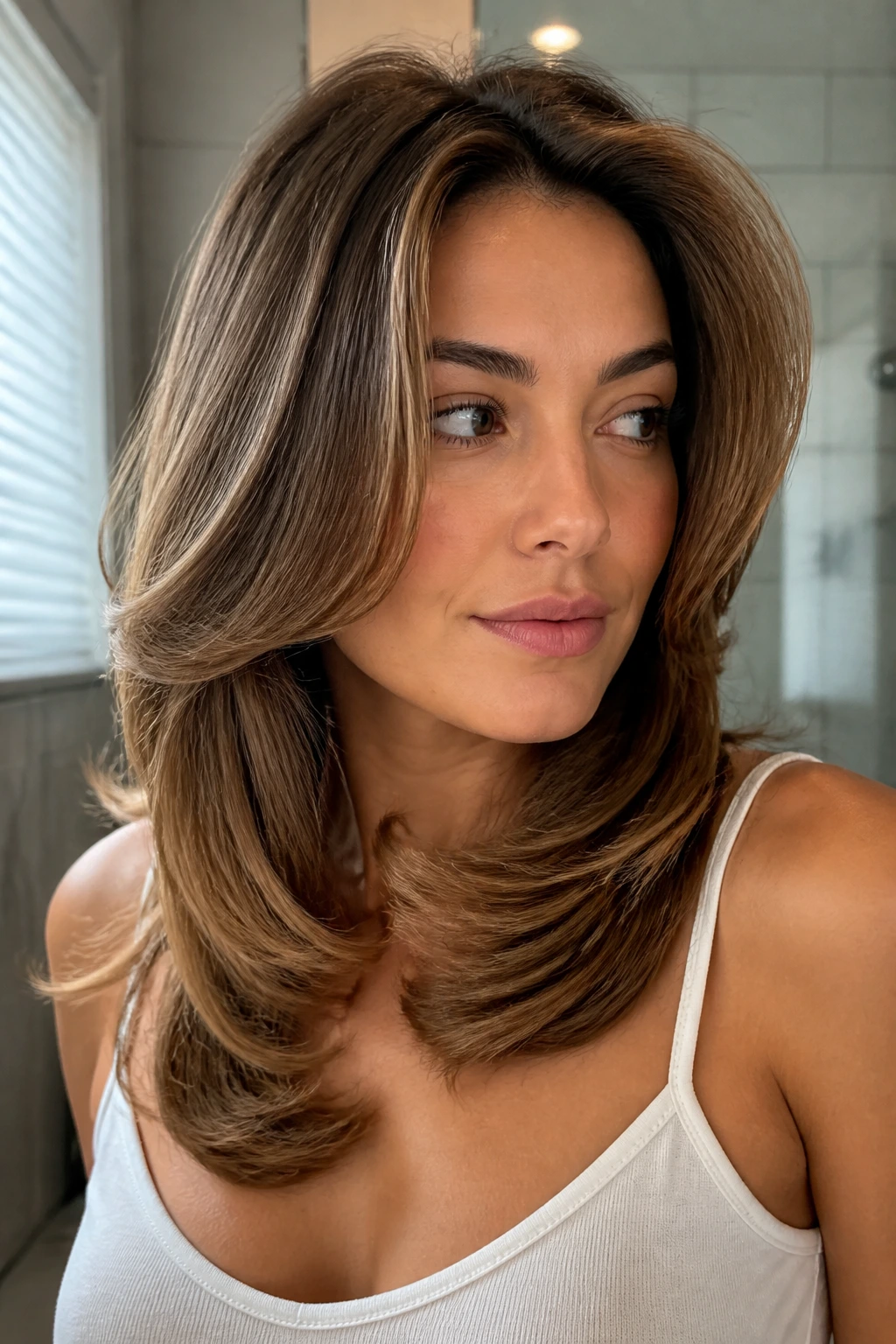
This is the haircut that makes a round brush feel worth the trouble. The layers are shaped to follow the curve of the head, so when you blow-dry with tension, the hair turns under instead of flaring out at the ends.
Medium thick hair takes beautifully to this because the density supports the shape. You get swing at the ends, lift at the crown, and a face frame that doesn’t droop by noon. Use a 2.5-inch round brush for the top sections and a 2-inch brush around the face if you want more bend.
It’s glamorous, but not fussy. The cut does a lot of the talking.
7. Wavy Midi with Razored Ends
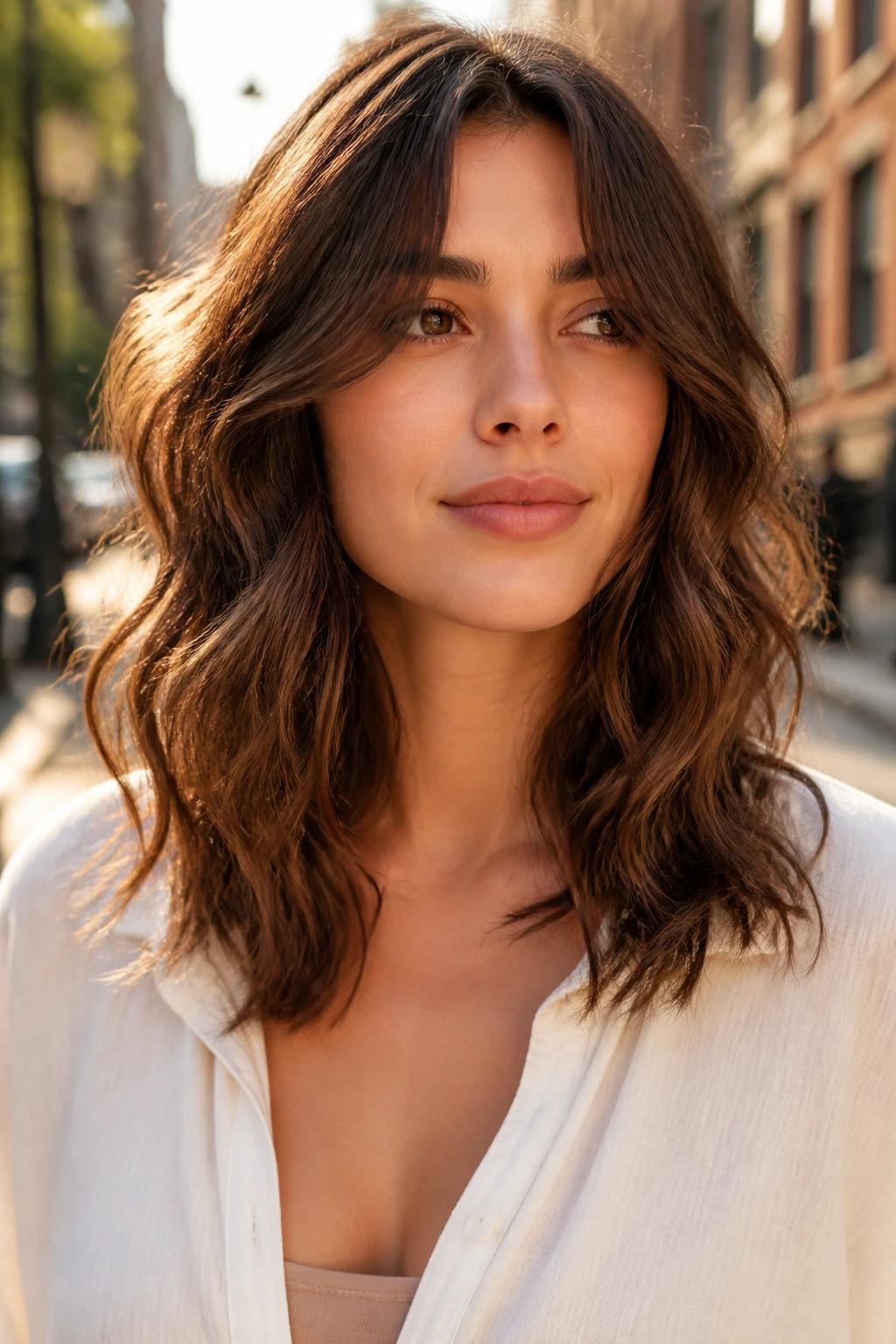
If your thick hair already has a wave pattern, a razored midi can be a smart move — if the stylist uses the razor with some restraint. You want the ends softened, not thinned into frizz. A good razor cut should make the ends look airy, not see-through.
This style is for people who like a little lived-in edge. The wave can fall naturally, and the layered shape keeps the whole head from turning into a triangle. It’s especially good when you want your hair to look cool with minimal polish and no one-inch-perfect curl uniformity.
Use a light cream through damp hair, then scrunch and air-dry or diffuse. Heavy oils will drag it down fast.
8. Side-Part Layered Lob
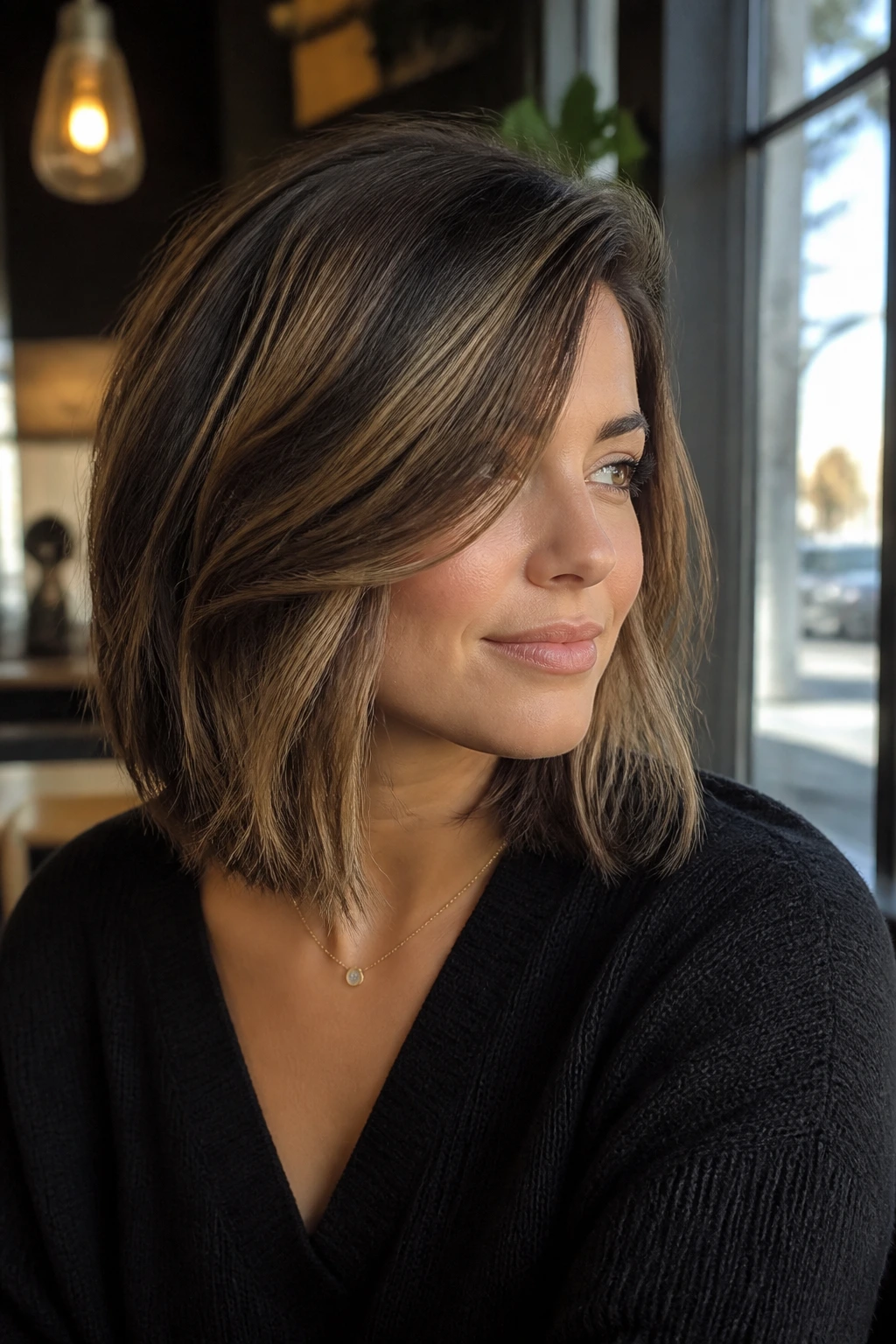
A side part changes everything on thick hair. It shifts the volume, gives one side a little lift, and makes medium layers look more deliberate instead of symmetrical and heavy.
This layered lob is a nice answer if center parts make your hair sit too flat on top. The longer front section swings across the forehead, while the shorter side gets a touch of lift from the part itself. The shape looks fuller at the crown and softer around the jaw, which is useful if your hair has a lot of width through the sides.
The cut feels especially good on straight and softly wavy textures. No drama. Just shape.
9. Bottleneck Bangs and Feathered Layers
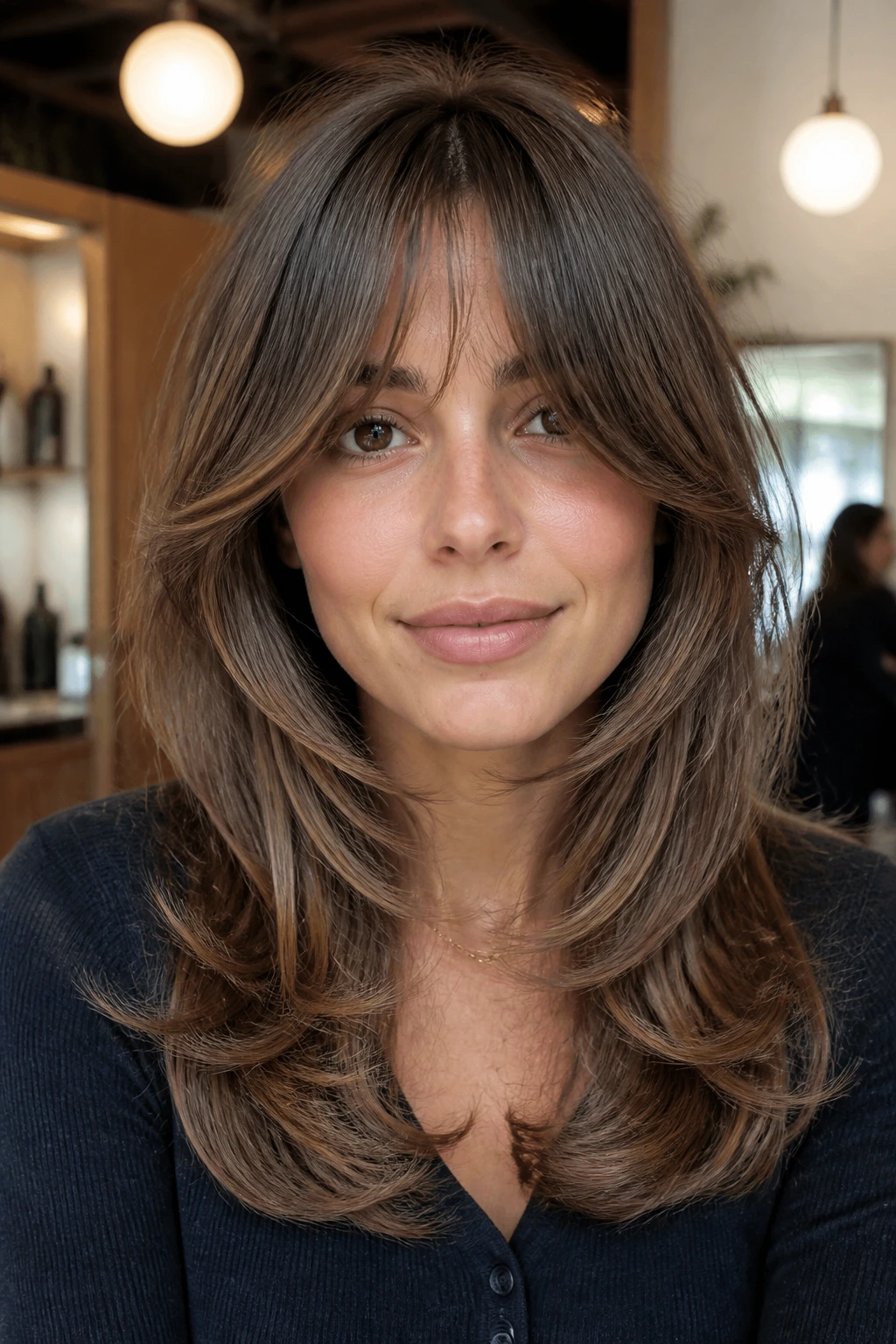
Bottleneck bangs are narrower at the center and broader at the sides, which gives thick hair a fringe that feels tailored instead of heavy. Add feathered layers through the rest of the cut, and the whole look gets a lighter, more face-focused finish.
This is one of those styles that needs a skilled hand. The bangs should connect to the front layers without looking chopped off from the rest of the haircut. If they’re too dense, they can overwhelm the eyes. If they’re too thin, they disappear into the hair.
The payoff is worth it. The fringe softens the forehead, the layers keep the length from feeling static, and the whole thing has that slightly French, slightly undone feel that thick hair wears well.
10. Flipped-Out Medium Layers
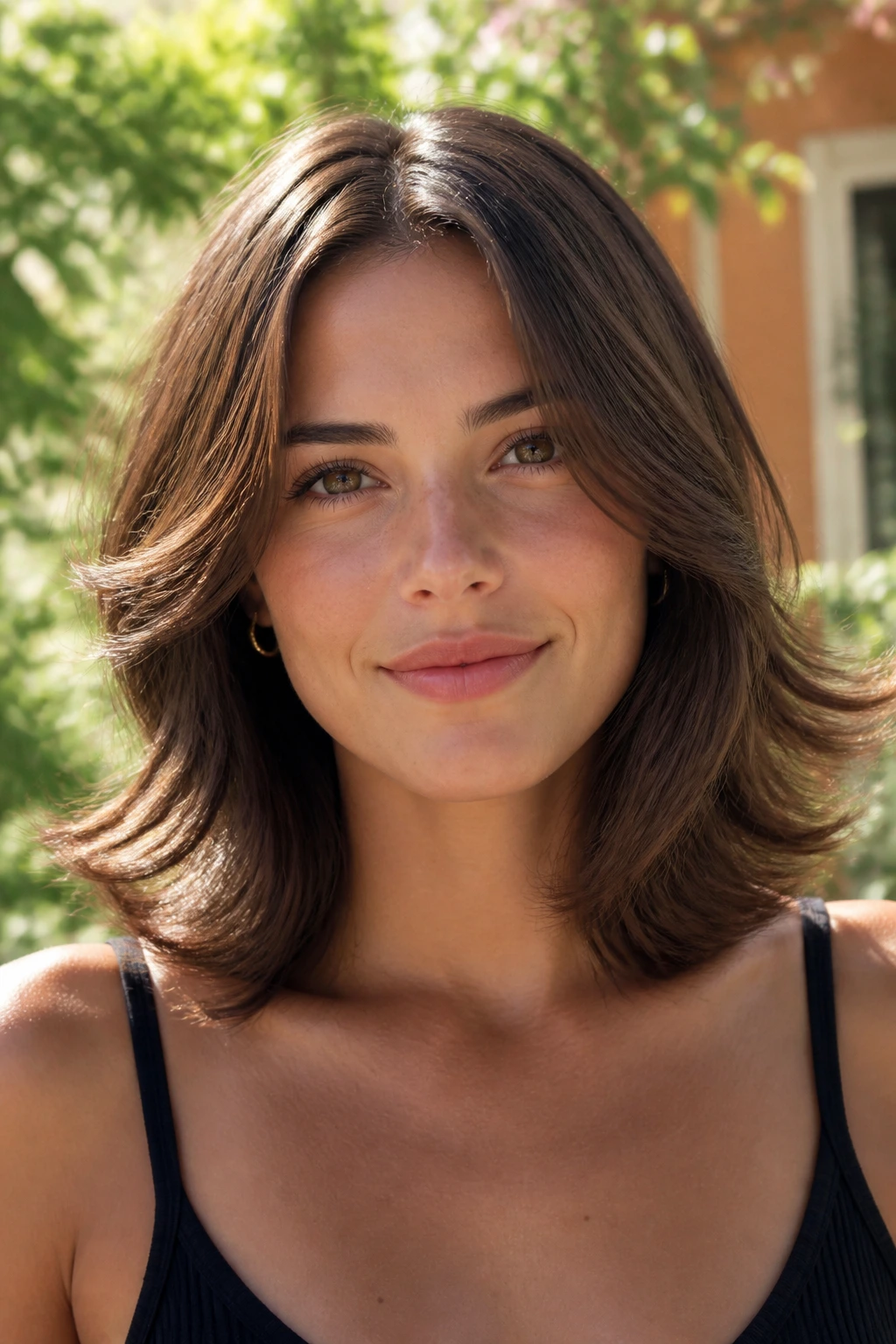
There’s a reason flipped ends keep coming back. On thick hair, they stop the haircut from sitting straight down like a sheet. A little flip creates movement at the bottom line, and the layers above it keep the shape from getting boxy.
This cut works best when the ends are blunt enough to hold a curve but soft enough to move. A medium iron or a flat iron with a gentle wrist turn is enough to make the flip. Don’t overdo it. Two or three passes through the front pieces usually look better than curling every inch.
It has a retro edge without reading costume-y. That’s the line to stay on.
11. Curly Layered Cut for Thick Ringlets
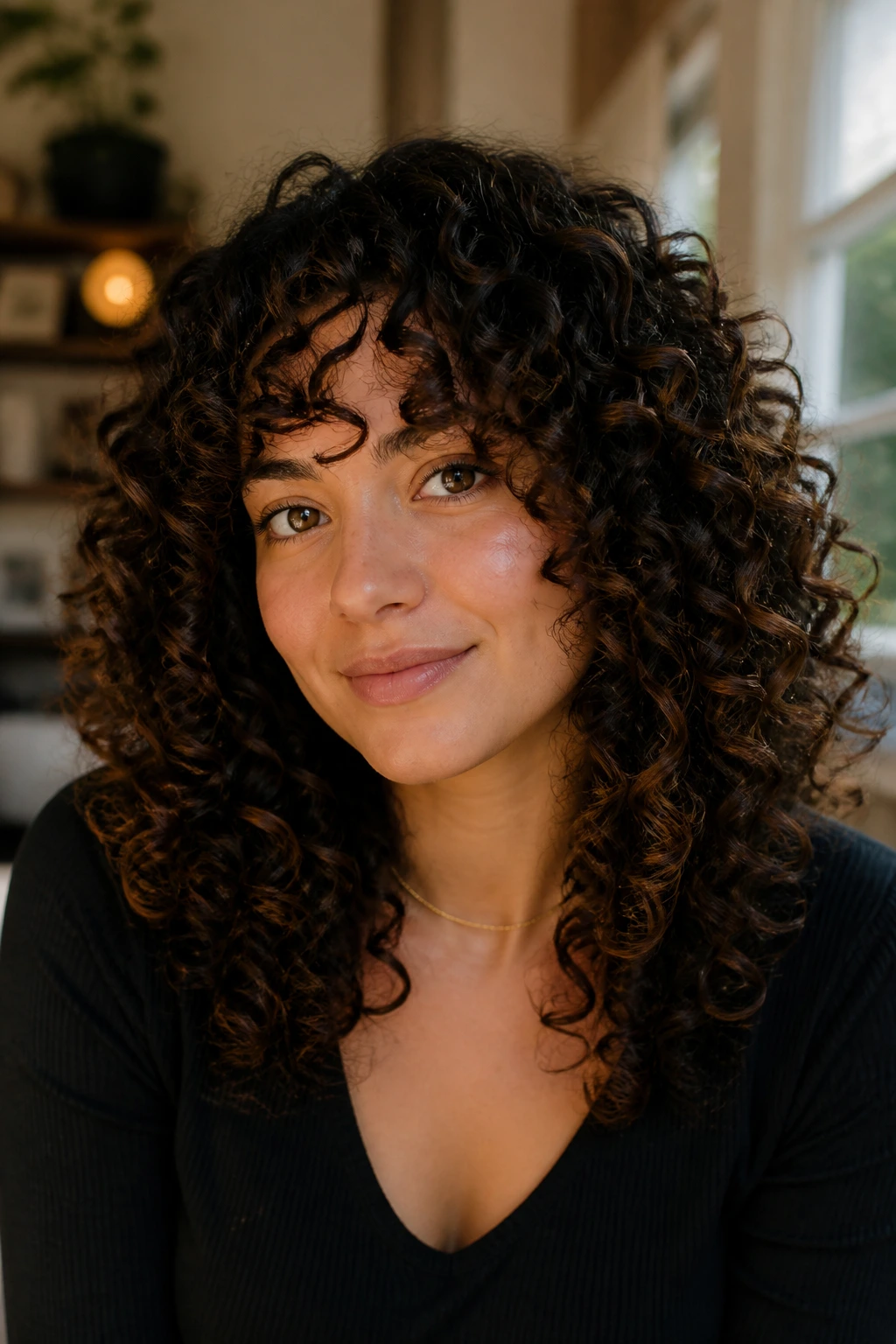
Curly thick hair needs layers that respect shrinkage. A good medium cut for ringlets should remove weight without destroying the curl clumps that make the texture look lively in the first place.
This style works best when the cut is shaped around the curl pattern instead of against it. That may mean a dry cut, or at least a stylist who knows how the curls spring up once they’re dry. The face frame should sit long enough to avoid the dreaded triangle, and the back should keep enough length to stop the top from puffing out too much.
A curl cream and a diffuser are your friends here. So is patience. Thick curls take shape, not shortcuts.
12. Money-Piece Layers with Bright Front Sections
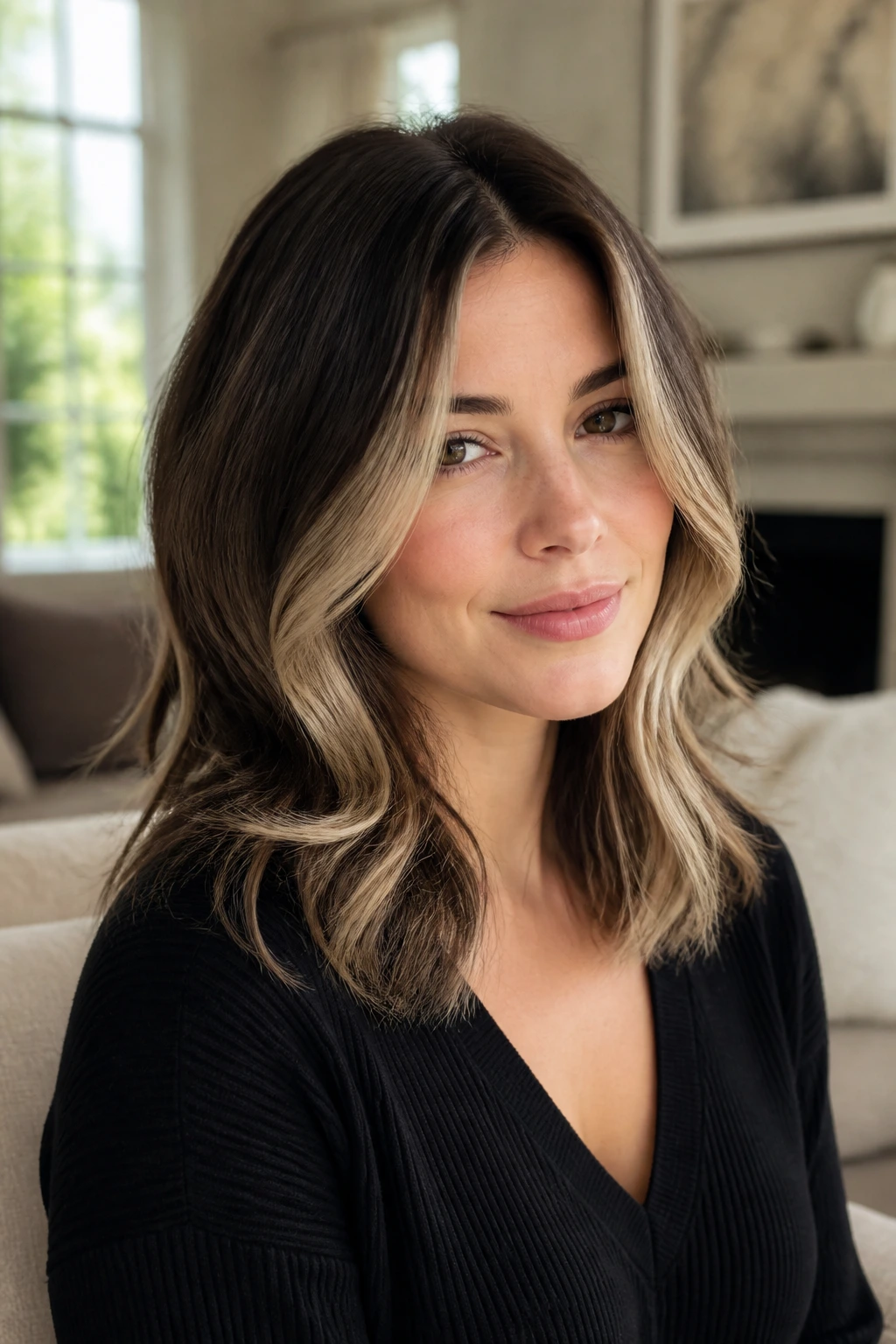
Bright front pieces change the whole read of a layered haircut. They pull attention to the face frame and make the layers visible even when the rest of the hair is a little understated.
This style is not about chunky highlights screaming from across the room. The better version has lighter ribbons right around the front and then soft, blended color through the rest of the medium layers. On thick hair, that contrast can make a heavy cut feel lighter and more dimensional.
There is a catch: the brighter front pieces need maintenance. If you hate salon touch-ups, keep the contrast softer. A subtle face frame still gives you the same lift with less upkeep.
13. The Wolf Cut Lite for Thick Hair
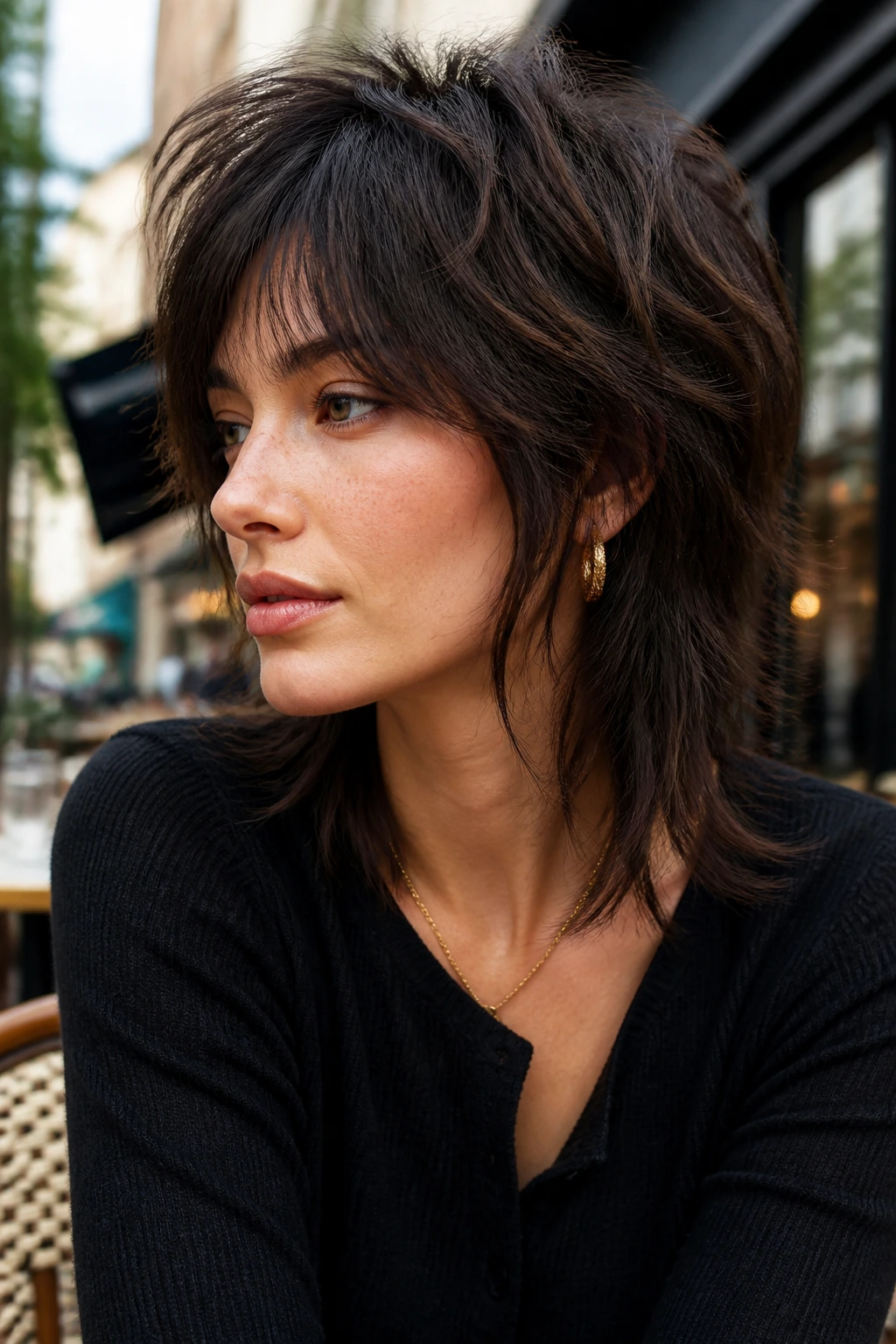
A full wolf cut can be a lot. The lite version keeps the choppy energy but tones down the extremes so medium thick hair still has a wear-it-everywhere shape.
The top stays a little shorter, the layers are broken up for movement, and the ends remain soft enough to fall instead of sticking out. It’s the right fit if you like texture, but not chaos. Thick hair gives the cut enough body that it doesn’t need to be overdone.
A matte texturizing spray works better than a heavy cream here. You want separation, not grease. And if the hair starts to look too fluffy at the crown, a quick pass with a flat iron on the top layer usually settles it down.
14. Smooth Center-Part Layers
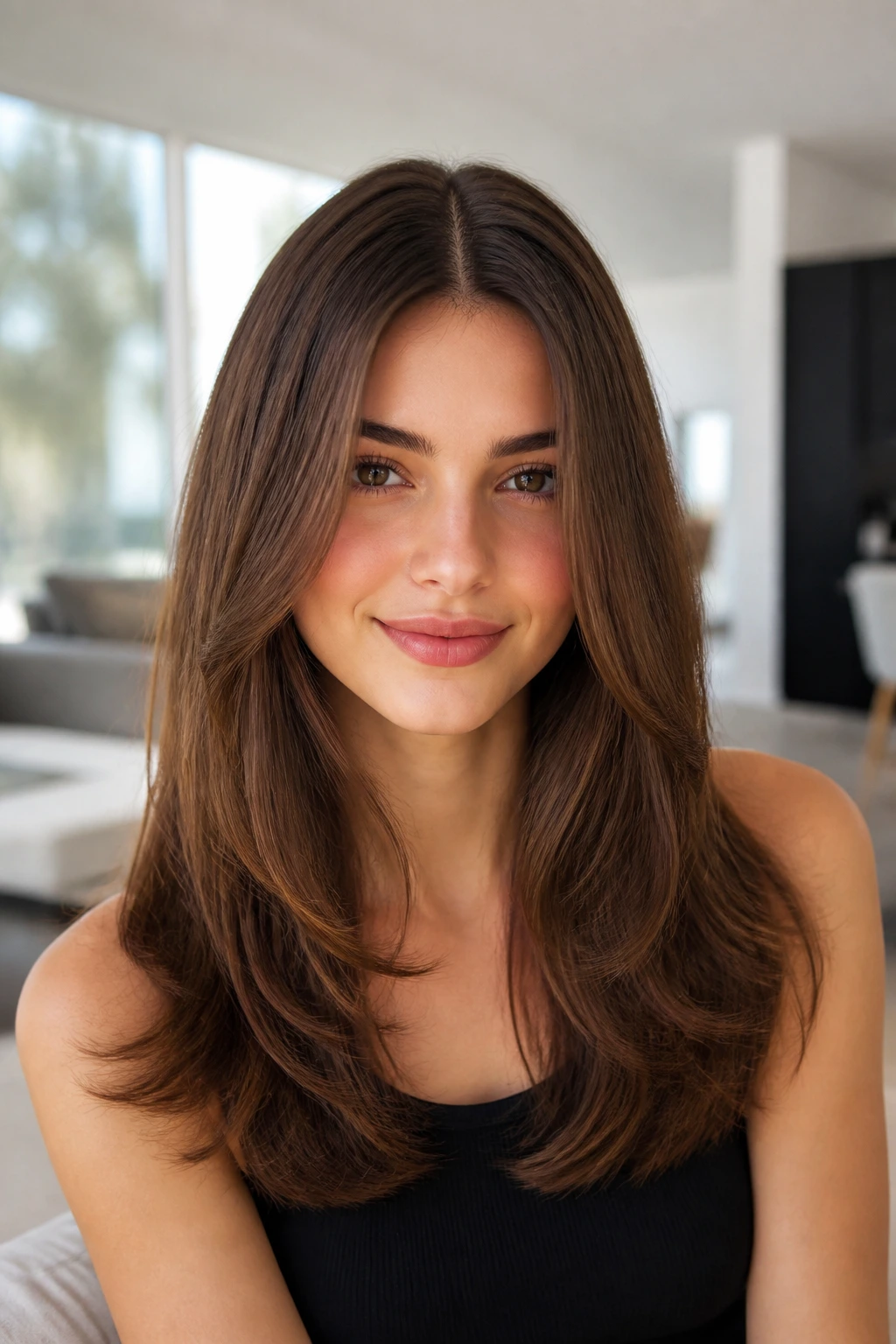
A center part on thick hair can be gorgeous when the cut is balanced. The key is clean layering that releases weight evenly on both sides so the hair doesn’t part in the middle and fall like two heavy curtains.
This style is for people who like symmetry and a smoother finish. The front layers should start low enough to frame the jaw, while the mid-lengths carry the shape through the shoulders. It’s especially strong on straight hair or softly waved hair that you want to keep under control.
A smoothing cream from ears down is enough. Leave the roots light, or the whole thing goes limp.
15. Air-Dry Layers with Soft Ends
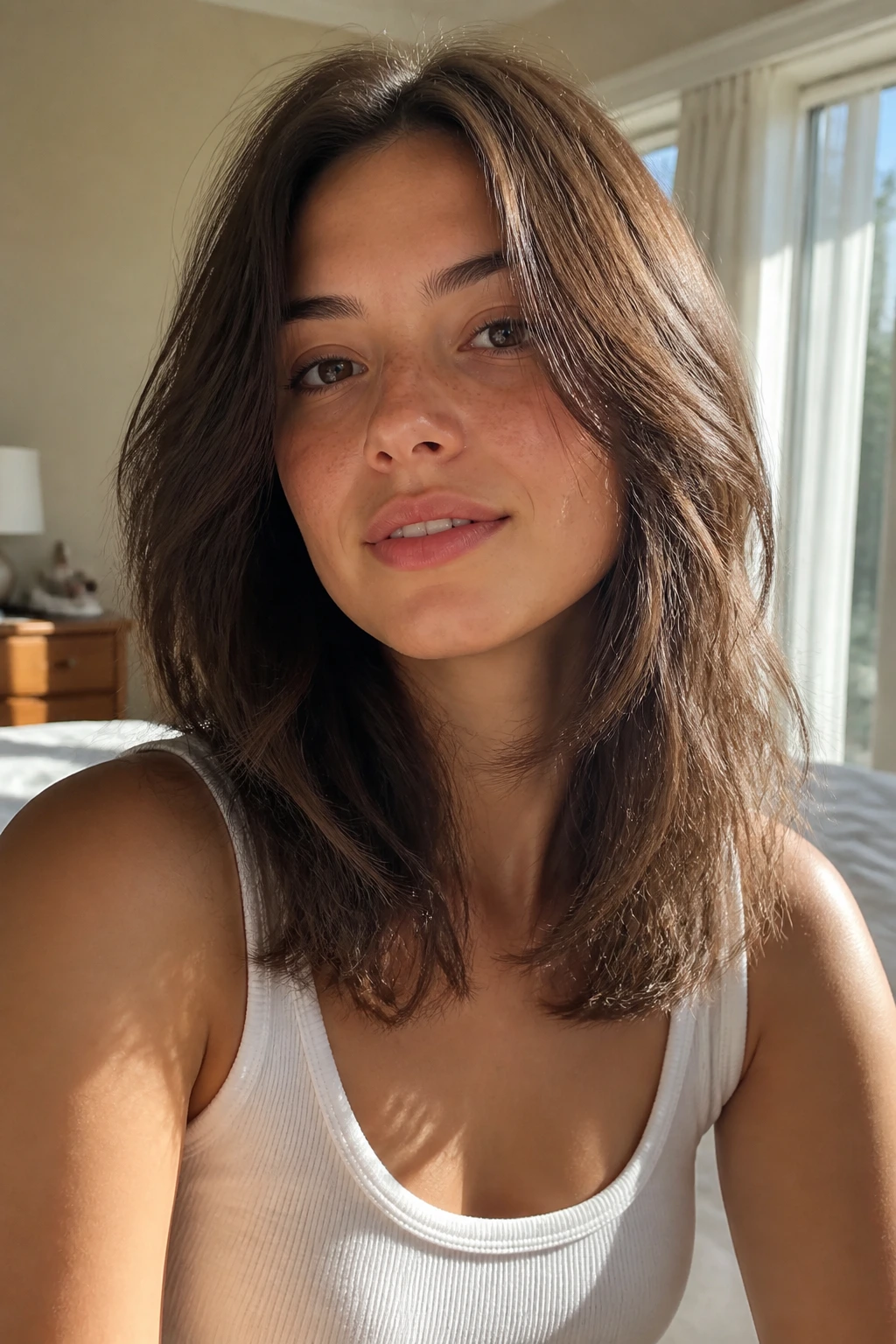
Some cuts demand a round brush. This one doesn’t. Air-dry layers for thick hair should be placed so the hair falls into shape on its own, with soft ends that don’t need constant fixing.
The best versions of this cut avoid too much thinning at the top and keep the face frame long enough to look deliberate when dry. Thick wavy hair often does well with this because the layers break up bulk and let the wave pattern do the rest. Straight hair can wear it too, but the ends need a little smoothing cream or leave-in.
If you hate heat tools, this is the haircut to ask about. It behaves on its own terms.
16. Deep Side-Part Glam Layers
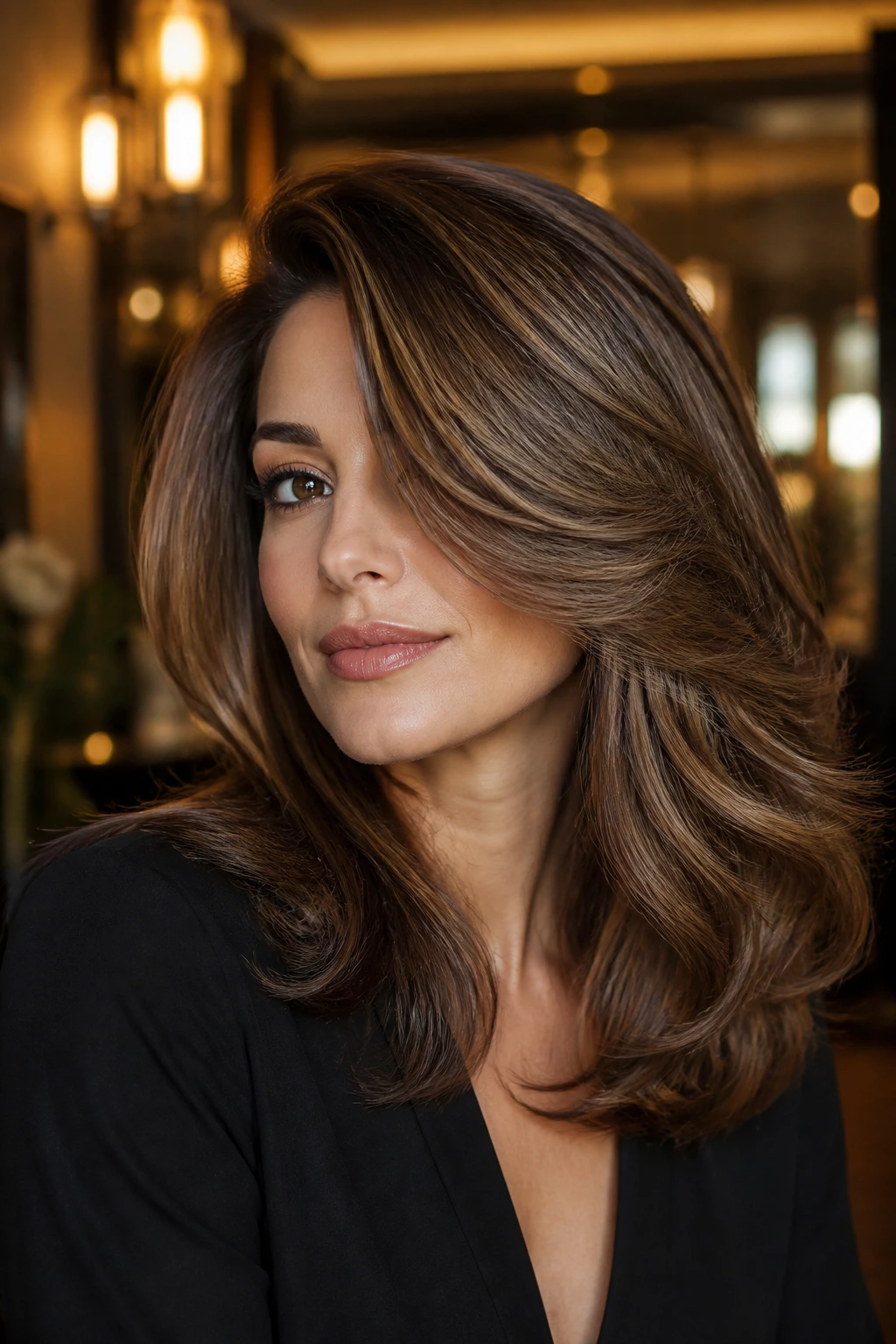
A deep side part gives thick hair instant lift, and glamour is mostly about that first inch of lift at the crown. Add medium layers that sweep away from the face, and the whole style starts looking more expensive than it has any right to.
This is a polished cut with a little drama. The front section should be long enough to skim the cheekbone, then tumble back into the rest of the layers. It’s especially good for nights out, dressier events, or any day when you want your hair to look intentionally done.
Big barrel waves fit here better than tight curls. The movement should be soft, not springy.
17. Choppy Midi with Piecey Ends
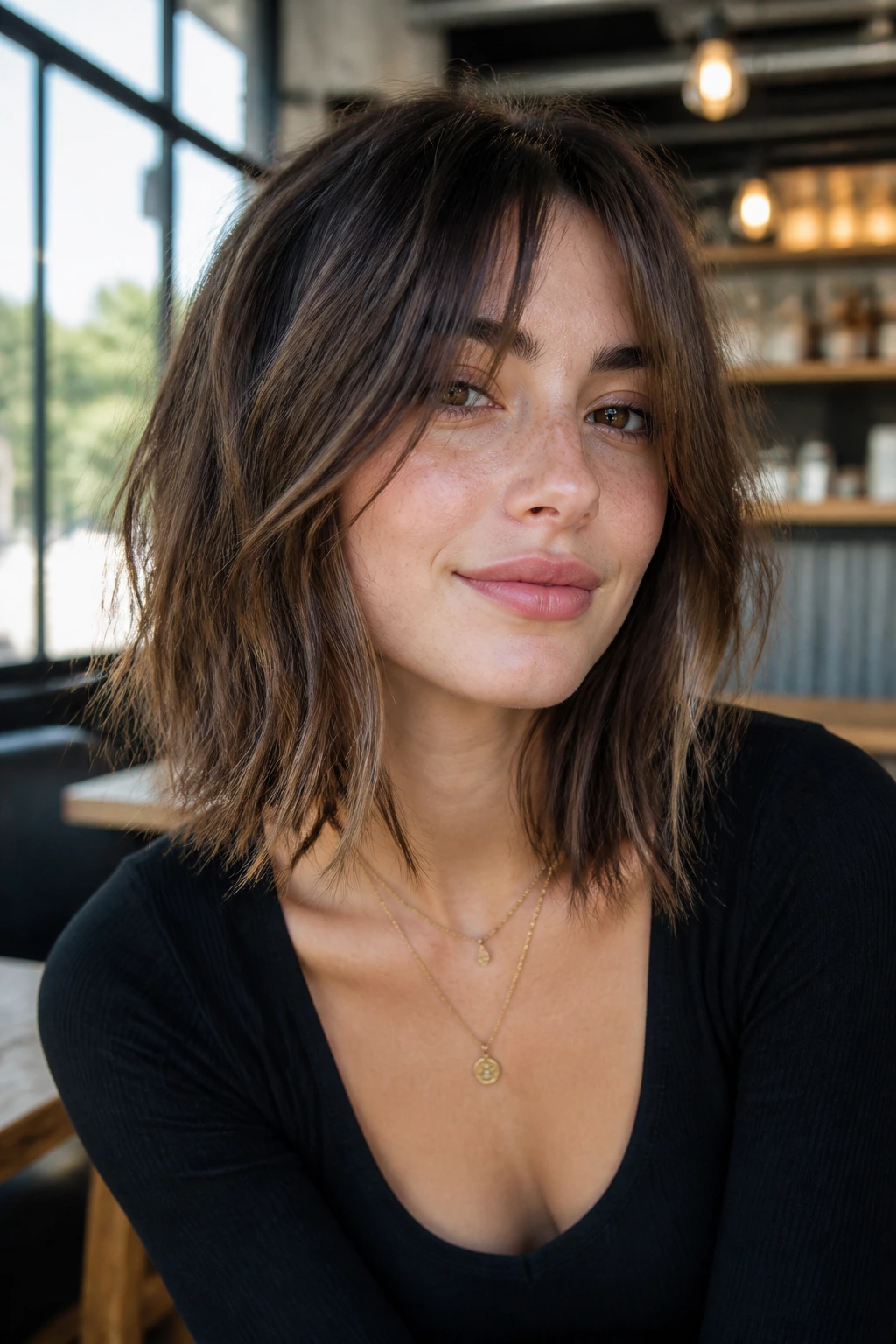
This cut is for the person who likes texture you can separate with your fingers. The layers are shorter and more visible than in a sleek lob, but the overall length still stays medium and wearable.
Piecey ends work well on thick hair because they interrupt the heaviness that builds at the bottom. The trick is to keep the haircut uneven in a controlled way — enough to create motion, not so much that it looks hacked up. A texture spray through the mid-lengths gives the shape a little grit.
It’s not the most polished option here. It is one of the easiest to wear if you like hair that looks better after a few hours than it does right after styling.
18. Soft Fringe with Shoulder-Skimming Layers
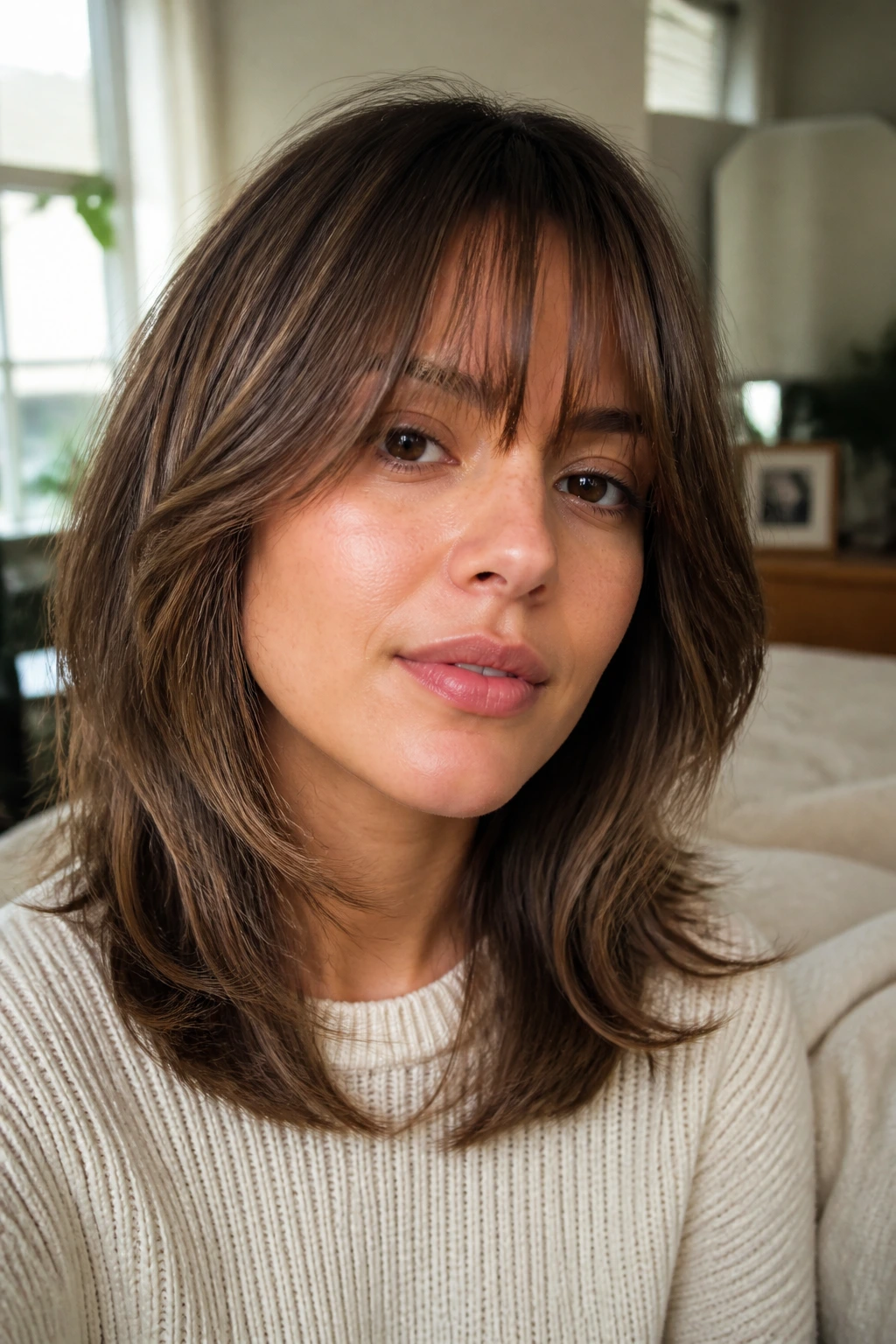
A soft fringe changes the mood of medium thick hair fast. It puts a little weight at the front, then the shoulder-skimming layers keep the rest of the cut from feeling too heavy or too short.
This is a good answer if curtain bangs feel too open and blunt bangs feel too much. The fringe should stay wispy enough to blend, and the layers should arc around the shoulders rather than pile on top of them. Thick hair can carry this balance well because the density gives the fringe enough presence.
It’s a forgiving cut if you like to wear your hair tucked behind one ear. The fringe stays in the picture even when the rest of the hair moves around.
19. Curved Layers That Tuck In at the Jaw
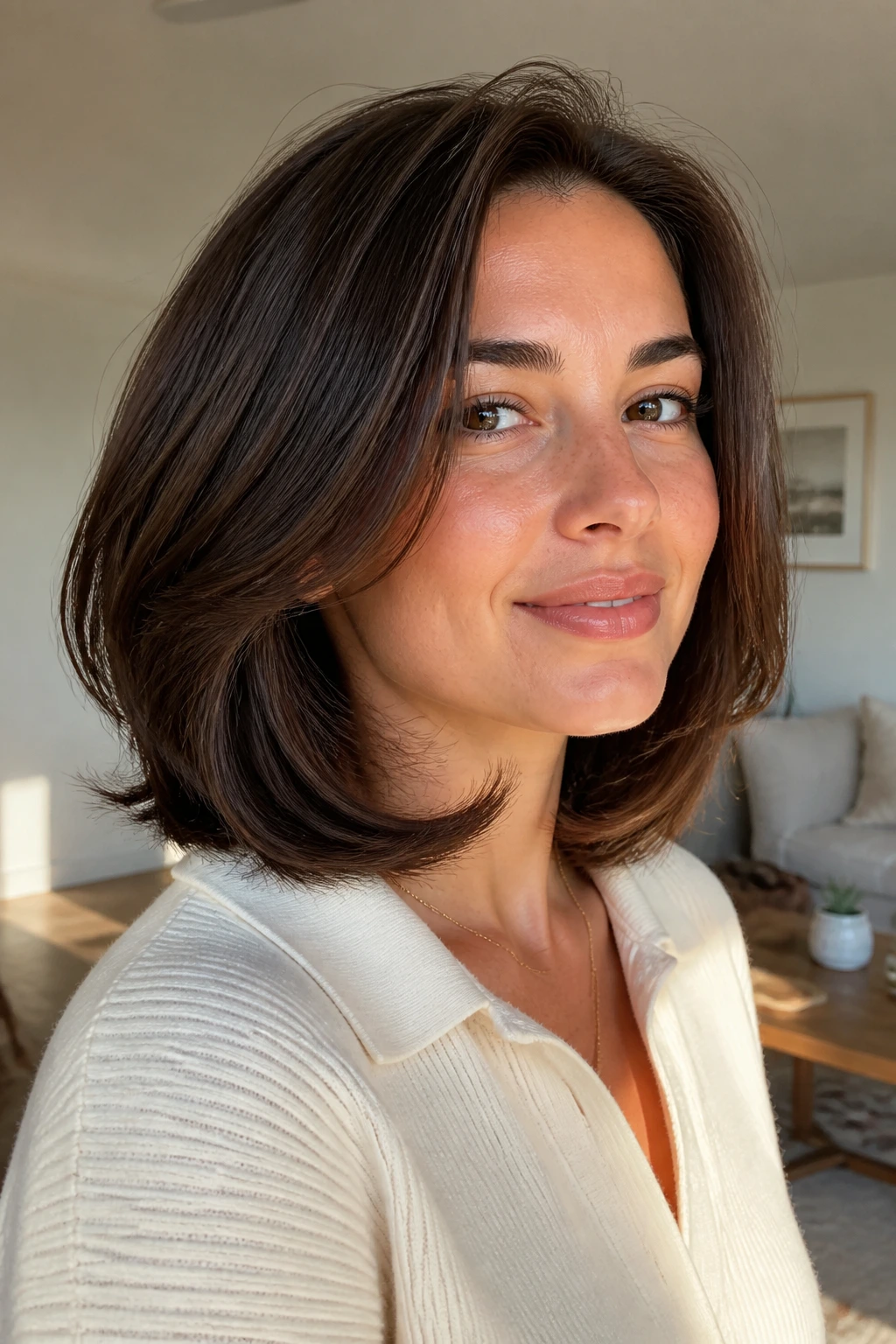
Curved layers are one of the nicest ways to soften thick hair without stripping it down. The idea is simple: the ends bend inward slightly, which keeps the outline tidy and stops the haircut from flaring out at the sides.
The jawline is the key here. If the front pieces hit just below it and curve inward, the face frame feels clean and flattering. This style is especially useful for thick hair that has a blunt, strong shape and needs a little bending to look less severe.
A medium round brush or a blow-dry brush does most of the work. You do not need a huge styling routine to make this one behave.
20. Sleek Layers with a Slight A-Line
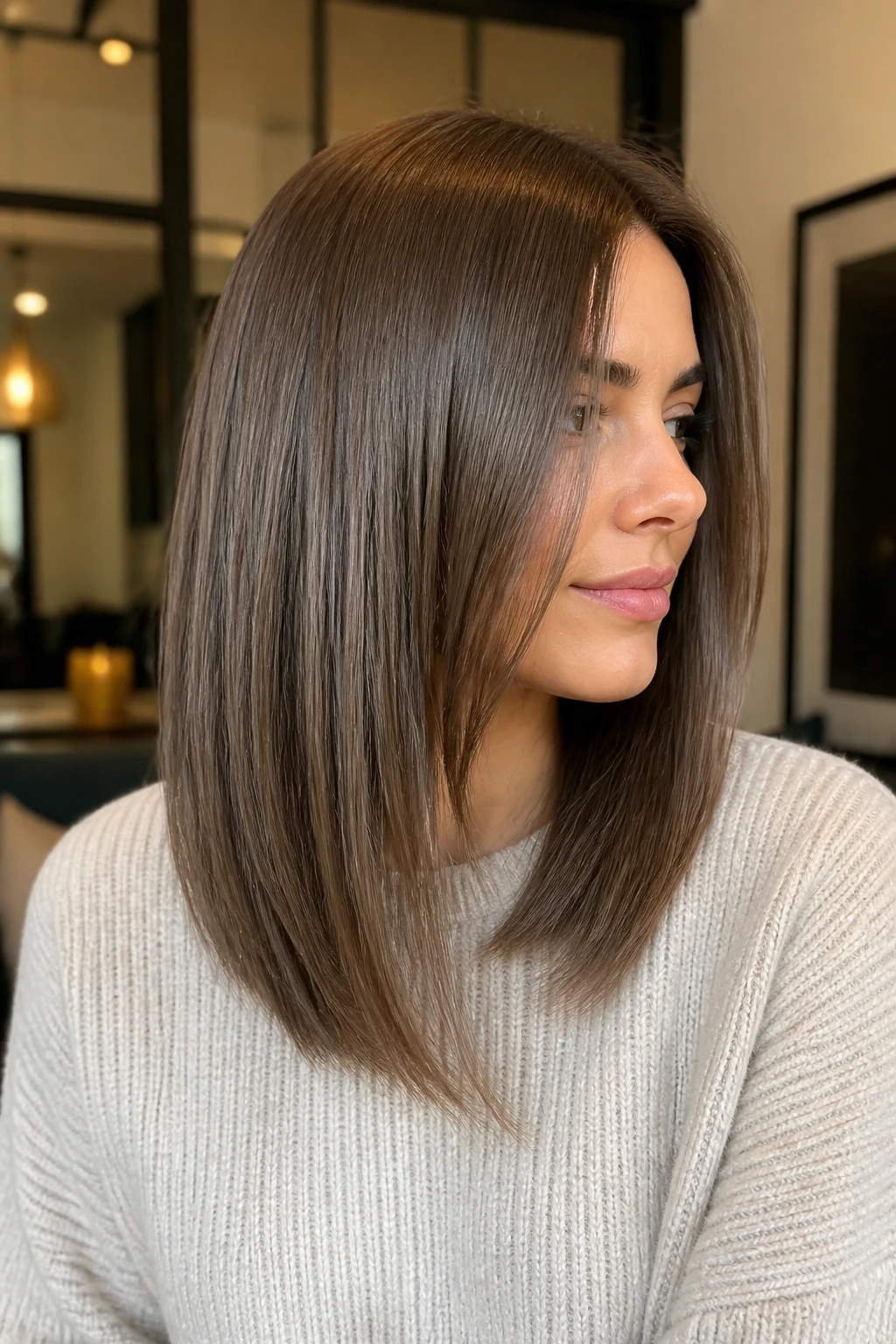
If you like your hair straight and neat, a slight A-line keeps the shape from feeling too stiff. The front sits a touch longer than the back, which gives the haircut movement without shouting about it.
This is a good cut for thick hair because the angle helps the hair fall forward instead of puffing outward around the neck. The layers inside the shape keep the middle from becoming bulky, but the outer line stays smooth. That outer line matters. It’s what gives the style its polish.
Use a flat iron only where the bend needs calming. If you iron every strand flat, the cut can lose the reason it was layered in the first place.
21. Volume-Boosted Layers with Root Lift
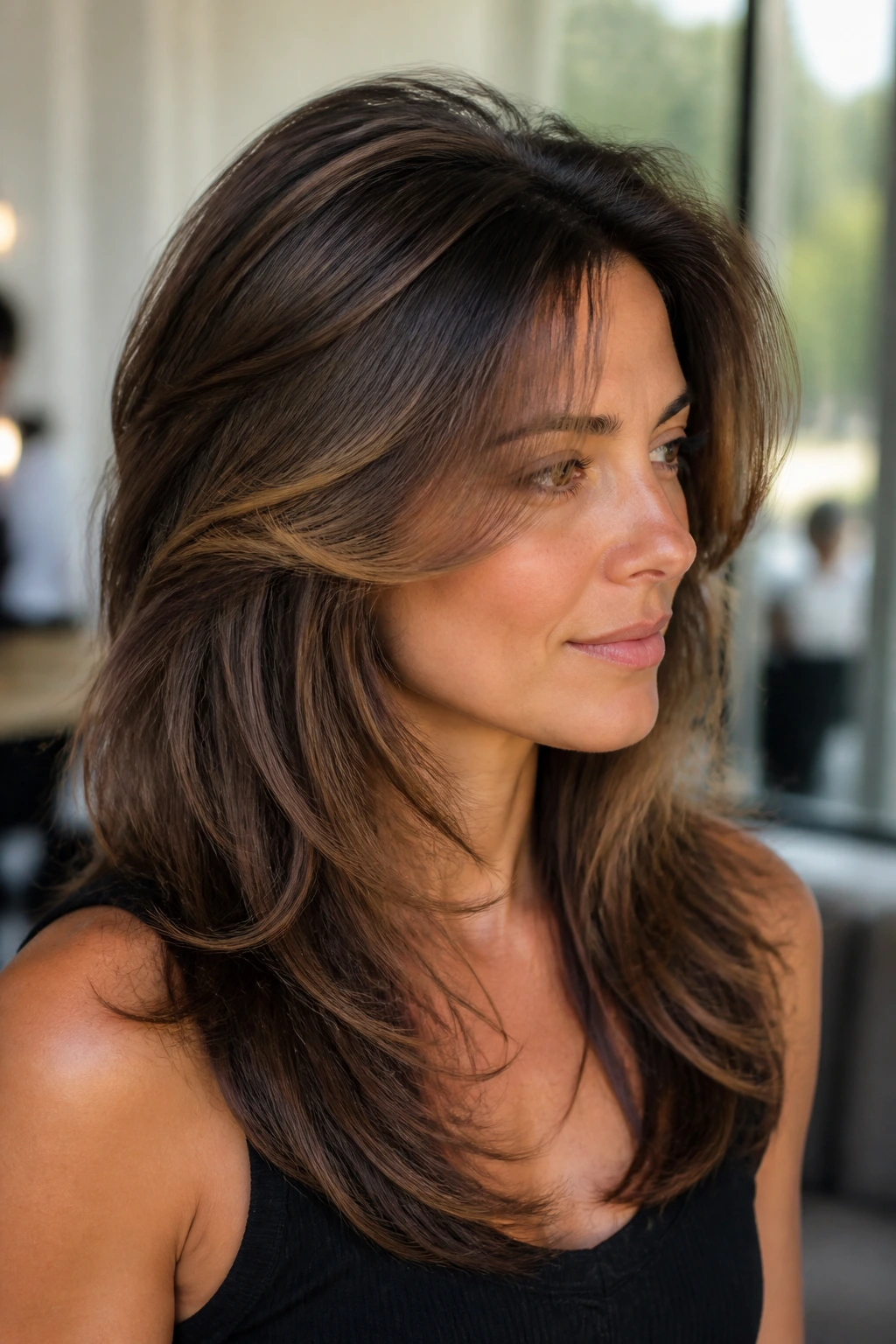
Some thick hair has body, but not at the crown where it counts. This cut fixes that by building volume in the right place — not through extra hair, but through smart layering and styling at the root.
Ask for layers that are shorter around the crown and longer through the lower half so the top can lift without the ends becoming sparse. A root-lift spray at the base, then a blow-dry with the hair lifted up and away from the scalp, gives the cut the air it needs.
This works especially well if your hair falls flat by midday. A good crown lift changes the whole silhouette. The cut looks lighter, even if the density is still there.
22. Textured Lob with Grown-Out Ends
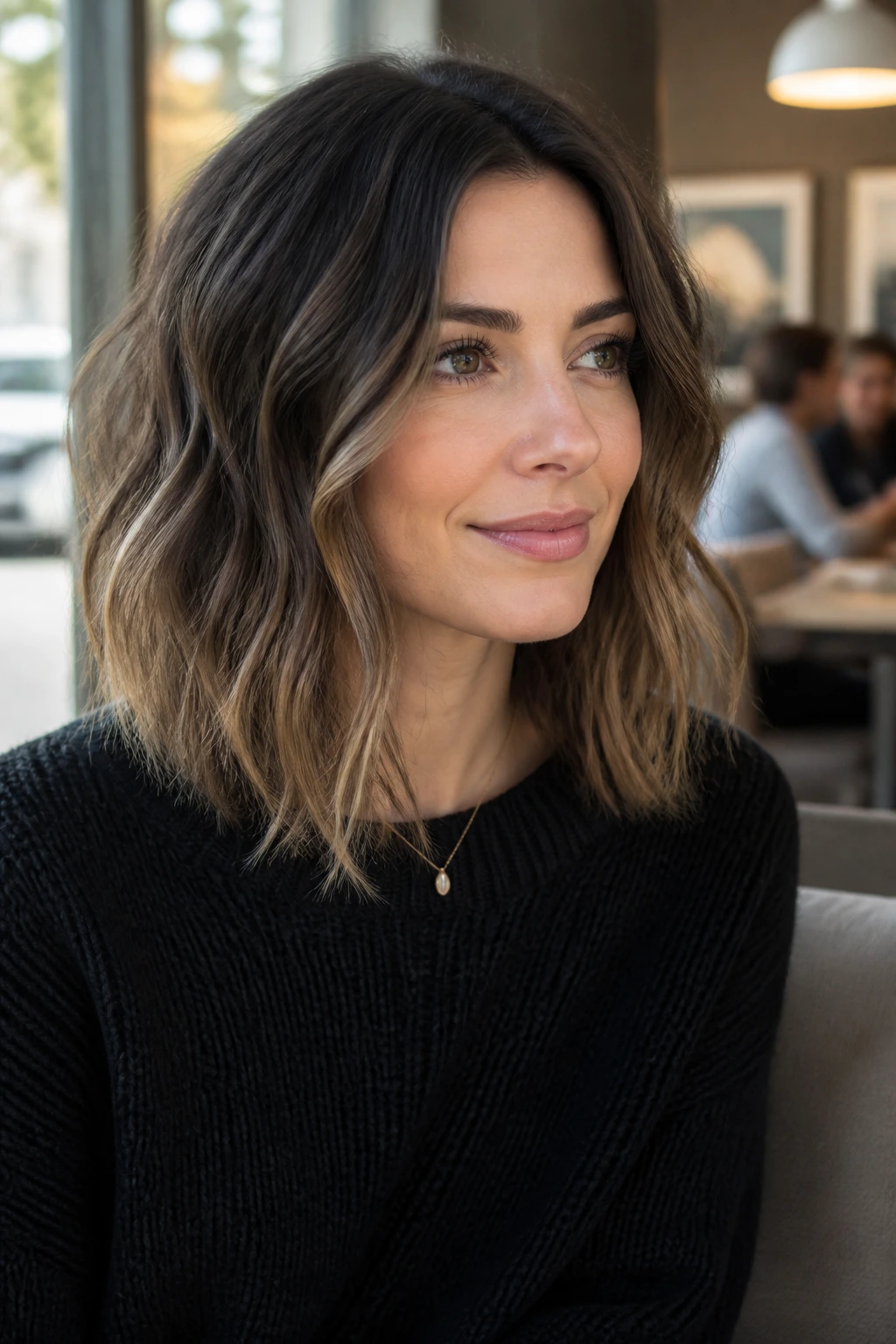
This one has a relaxed feel that thick hair wears well. The ends are intentionally soft, maybe a little irregular, which keeps the shape from looking too blunt or too precious.
A grown-out textured lob is ideal if you don’t want to be in the salon every four weeks. It looks good when it has a little lived-in bend, and it still holds together when you throw it in a clip. That makes it one of the best middle-ground cuts on the list.
You can style it with a quick wave and a brush-through, or let it dry naturally and add texture spray only at the ends. Easy. No drama.
23. Low-Maintenance Long Front Layers
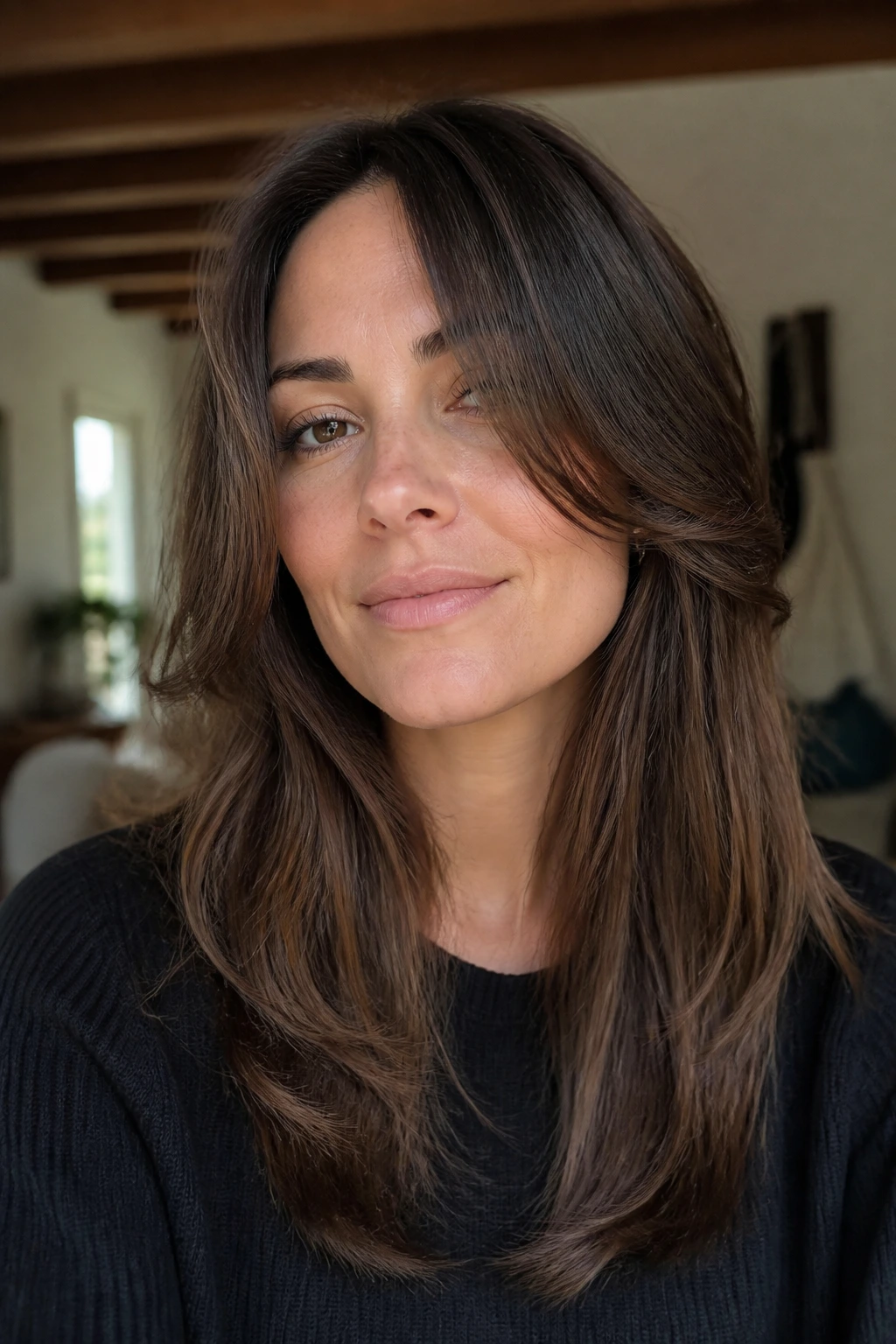
Long front layers are for people who want face-framing without a full haircut overhaul. The front pieces are the star here, and the rest of the length stays mostly intact.
This works beautifully on thick hair because the haircut doesn’t rely on heavy styling. The long layers shape the cheeks and jaw, while the back keeps its fullness. It’s a nice compromise if you want to keep the hair reading medium without constantly re-cutting the whole head.
You also get a forgiving grow-out. The layers stay useful for months instead of turning weird after a few weeks. That alone makes this one worth a look.
24. Big-Barrel Wave Layers
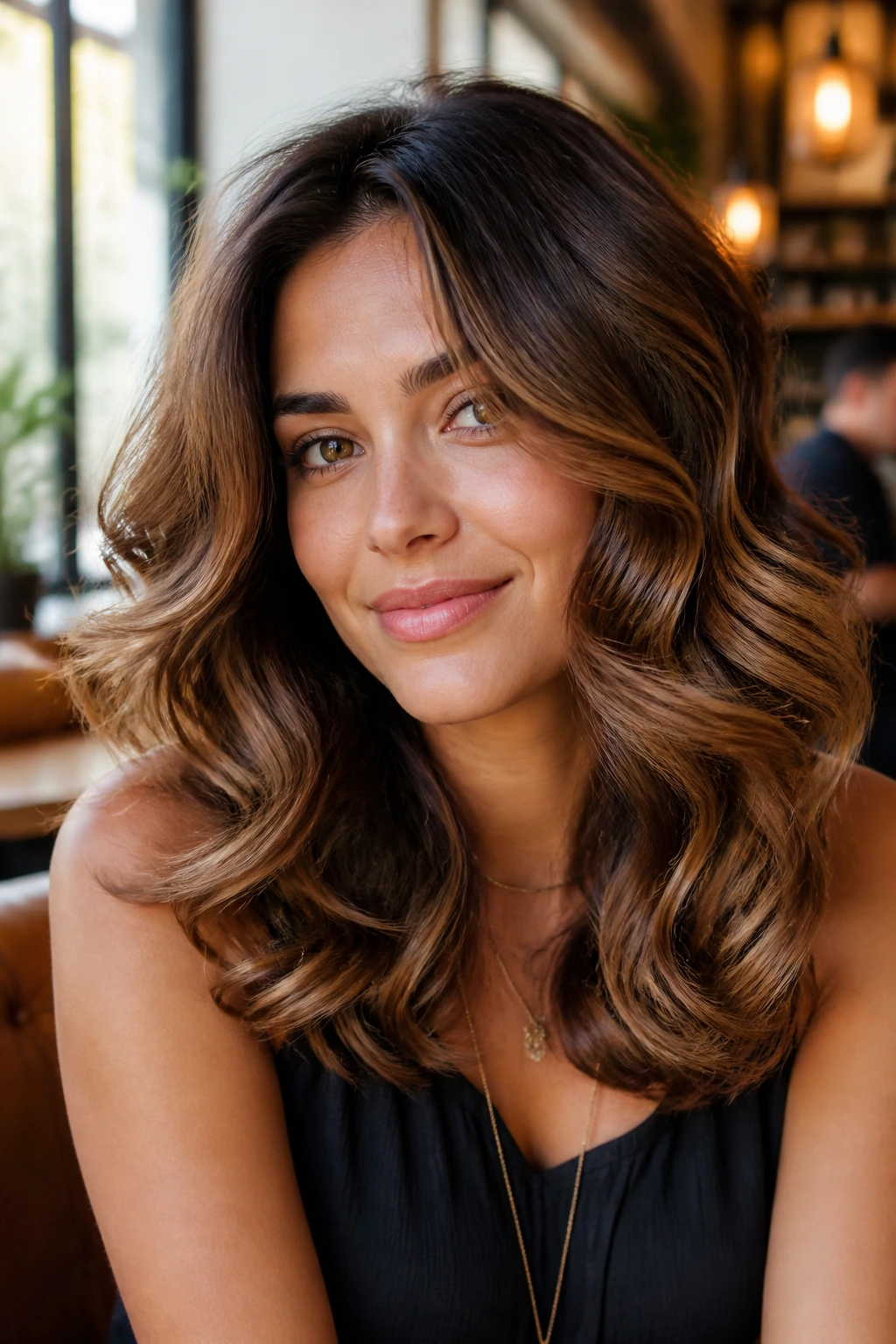
Big-barrel waves are where medium layers start looking expensive in a very specific way. The waves are loose and wide, not tight and fussy, so the thickness of the hair becomes part of the appeal instead of something to manage.
A 1.5-inch or 1.75-inch iron usually gives the best bend on medium thick hair. Wrap sections away from the face, leave the ends out if you want a more casual finish, and brush the waves through once they cool. The layering shows up as movement rather than sharp lines.
This is one of the nicest looks for events, dinners, or days when you want the haircut to do a little showing off. Fair enough. It earned it.
25. Soft V-Shape Layers
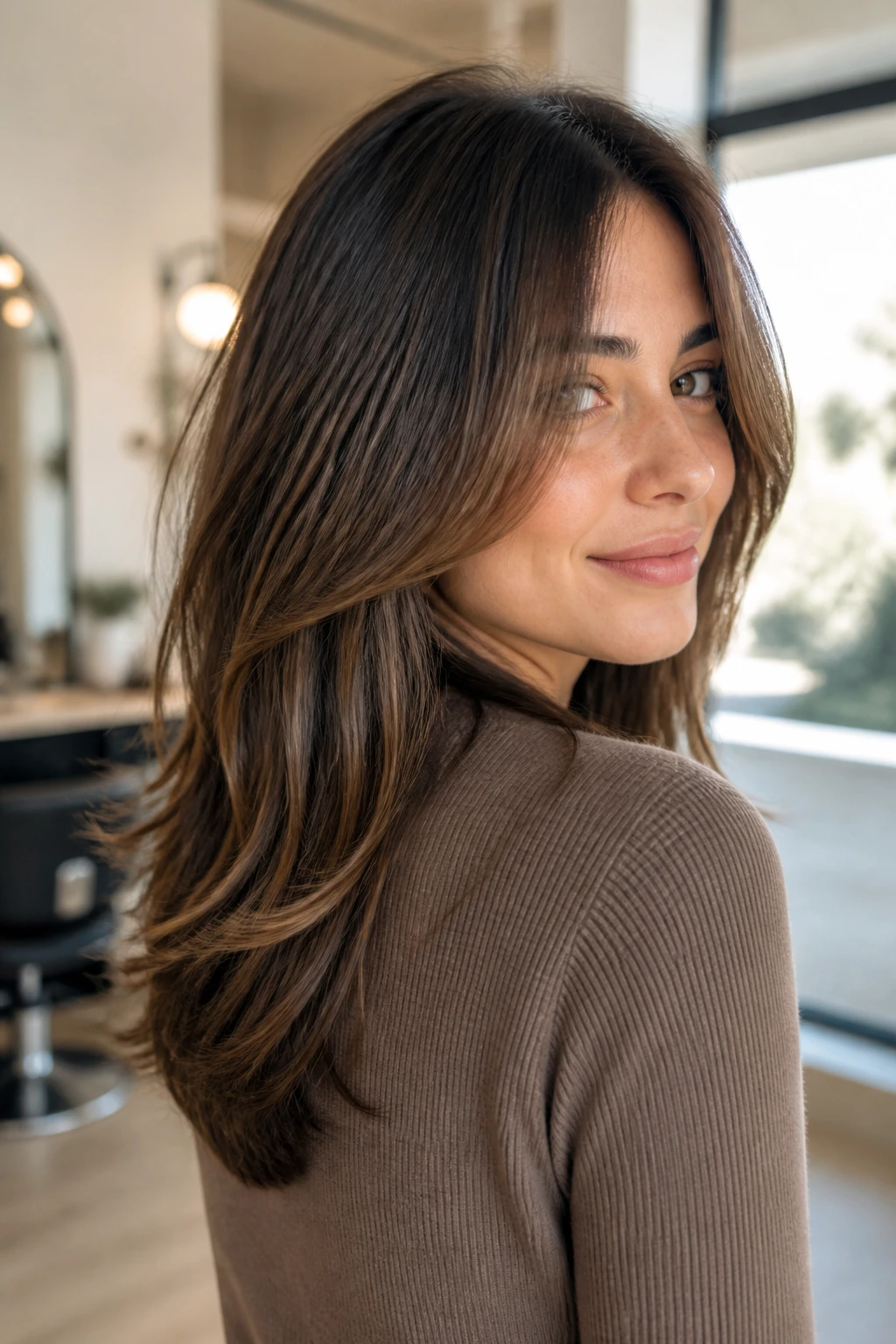
A soft V-shape gives thick hair a little edge in the back without making the whole cut look angular. The back falls to a gentle point, while the front layers keep the face from getting buried.
This shape is useful if your hair feels too round or too square when it’s all one length. The V pulls the eye down, which can make thick medium hair feel longer and leaner. It also creates more movement when the hair sways, especially if you wear it down often.
Keep the point soft, though. Too sharp, and it starts to look dated. Gentle is better.
26. Razor-Textured Layers for Dense Hair
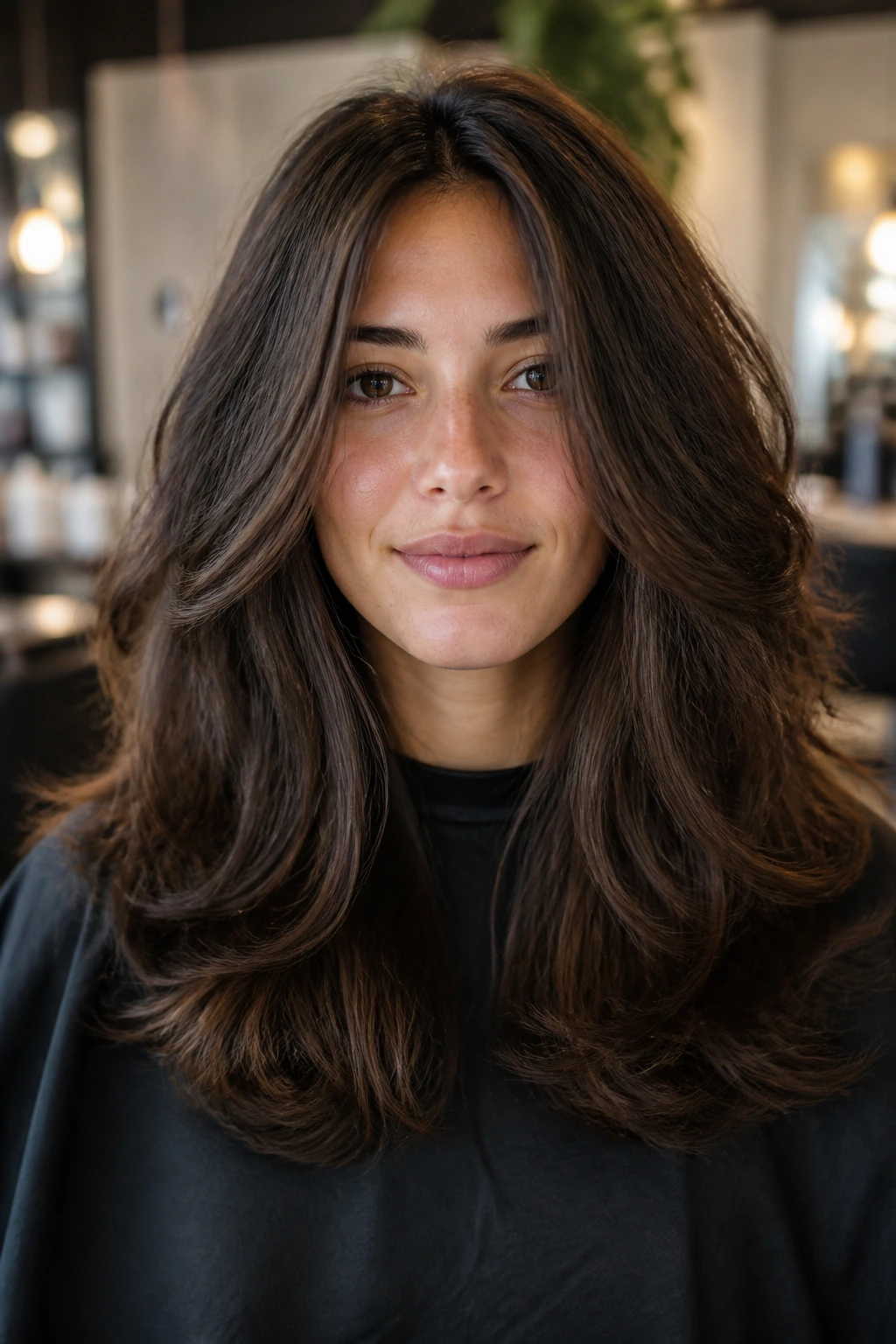
Dense hair can handle a razor better than people think, but only when the stylist uses it to soften the line, not shred the ends. This cut is for hair so full that it almost needs breathing room.
Razor-textured layers give the medium cut a lighter finish and stop the bottom from feeling like a wall. The best version still leaves enough weight in the ends to keep the hair from frizzing out the minute humidity shows up. That’s the line to watch.
If your hair is naturally coarse, ask for the razor work mostly through the interior and front pieces. Too much through the perimeter can leave the hair fuzzy.
27. Tapered Layers with a Polished Finish
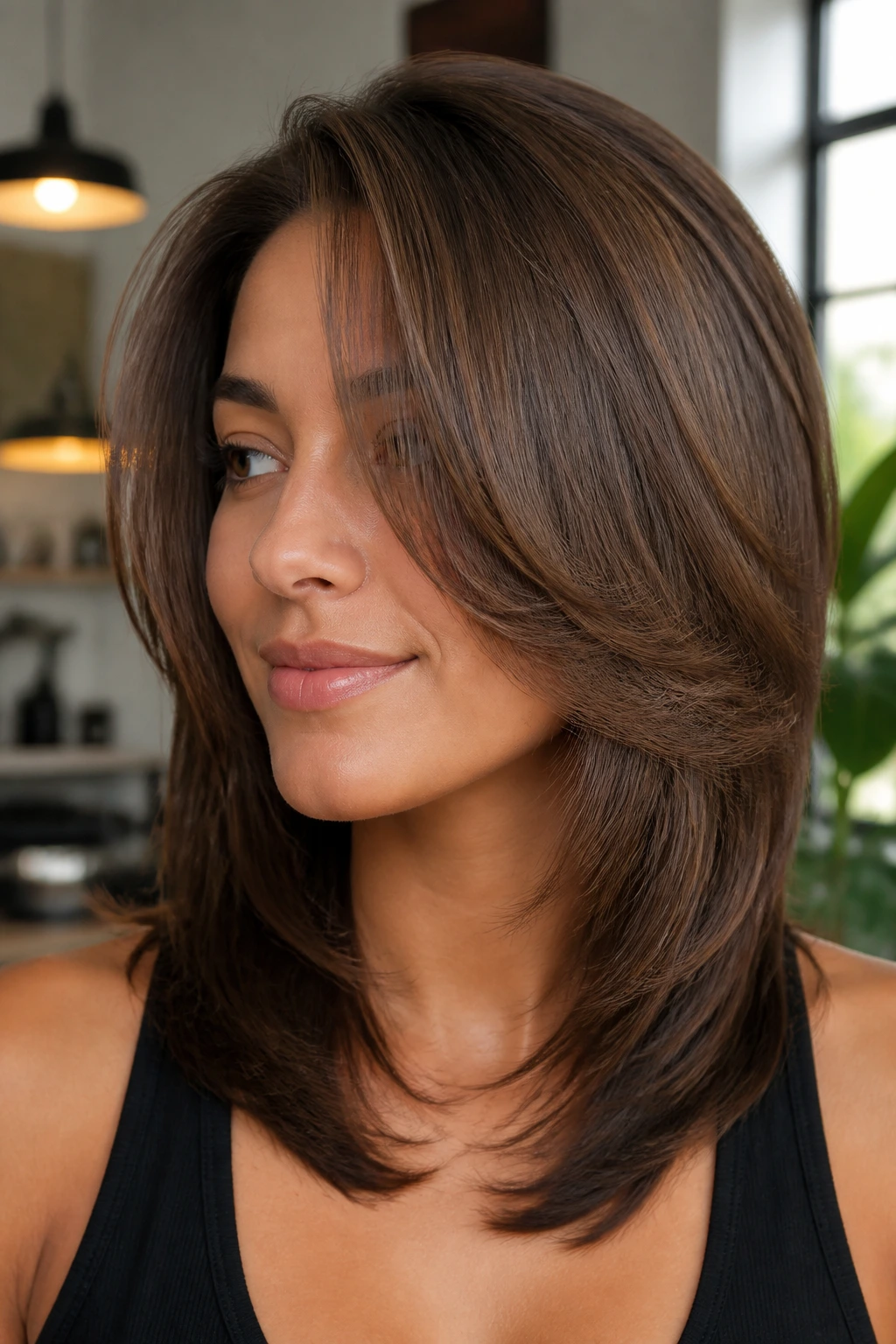
Tapered layers create a neat, gradual change from top to bottom, which is exactly why they work on thick hair that tends to sit heavy. The cut narrows slightly as it moves down, so the outline feels controlled instead of bulky.
This is a cleaner, more tailored version of layered hair. It’s especially good if you want something that looks finished even when you only do a quick blow-dry. The shape sits close to the head through the top and opens gently at the ends.
A smoothing brush or paddle brush works better than rough drying here. The point is not volume everywhere. The point is shape.
28. Layered Mid-Length Cut with Extra Face Frame
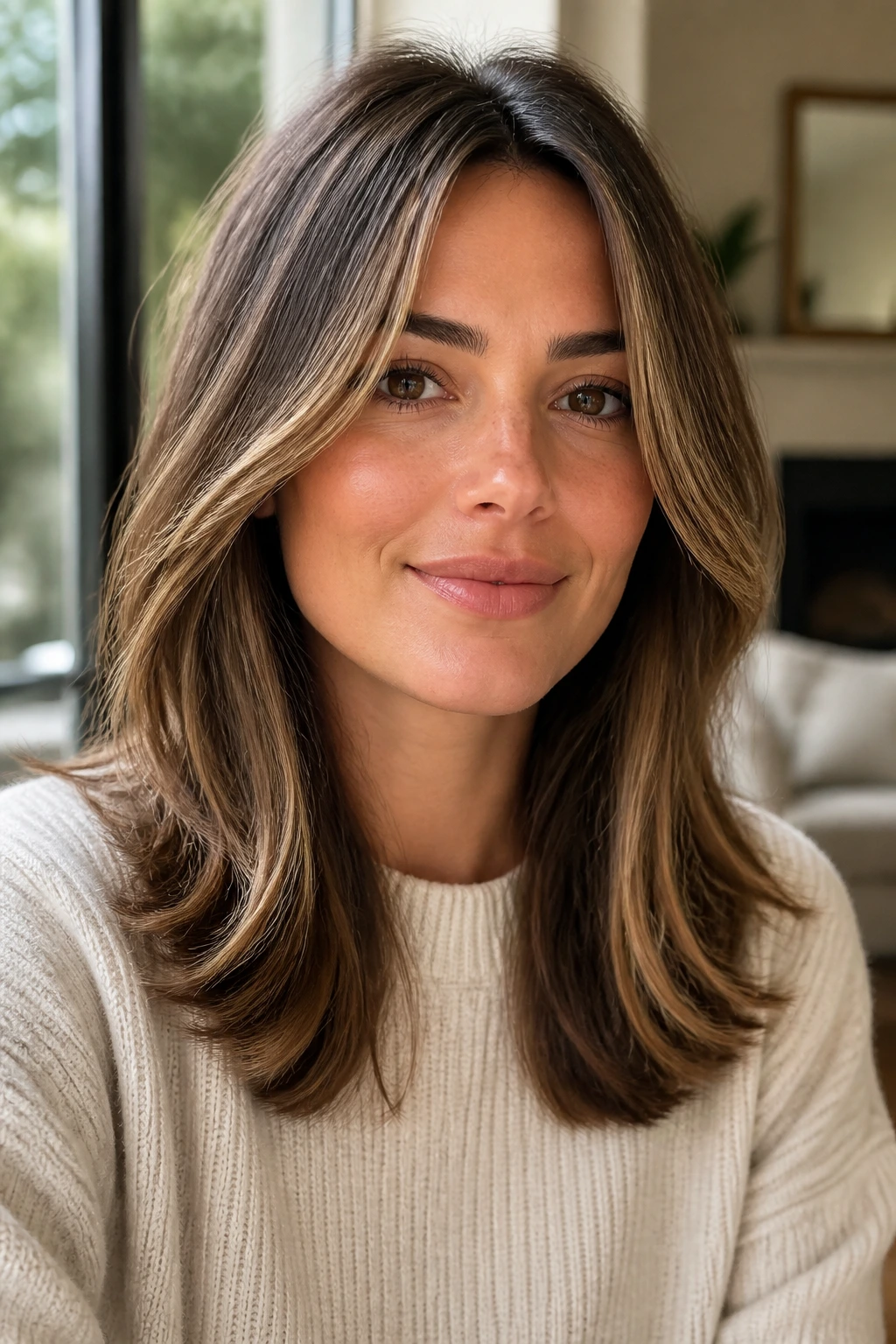
If you want the safest all-around option, this is it. The mid-length stays practical, the layers keep the bulk under control, and the extra face frame makes the haircut feel updated without pushing it into any one style lane.
It’s the kind of cut that works on straight hair, wavy hair, and a lot of thick curl patterns once the front is shaped correctly. The face frame should open the cheeks and jaw, while the back keeps enough length to hold the medium silhouette. I like this option for people who want to wear their hair up half the time and down the rest.
It is not the flashiest cut here. It may be the one you end up wearing the longest.
Why Medium Layers Change the Shape of Thick Hair
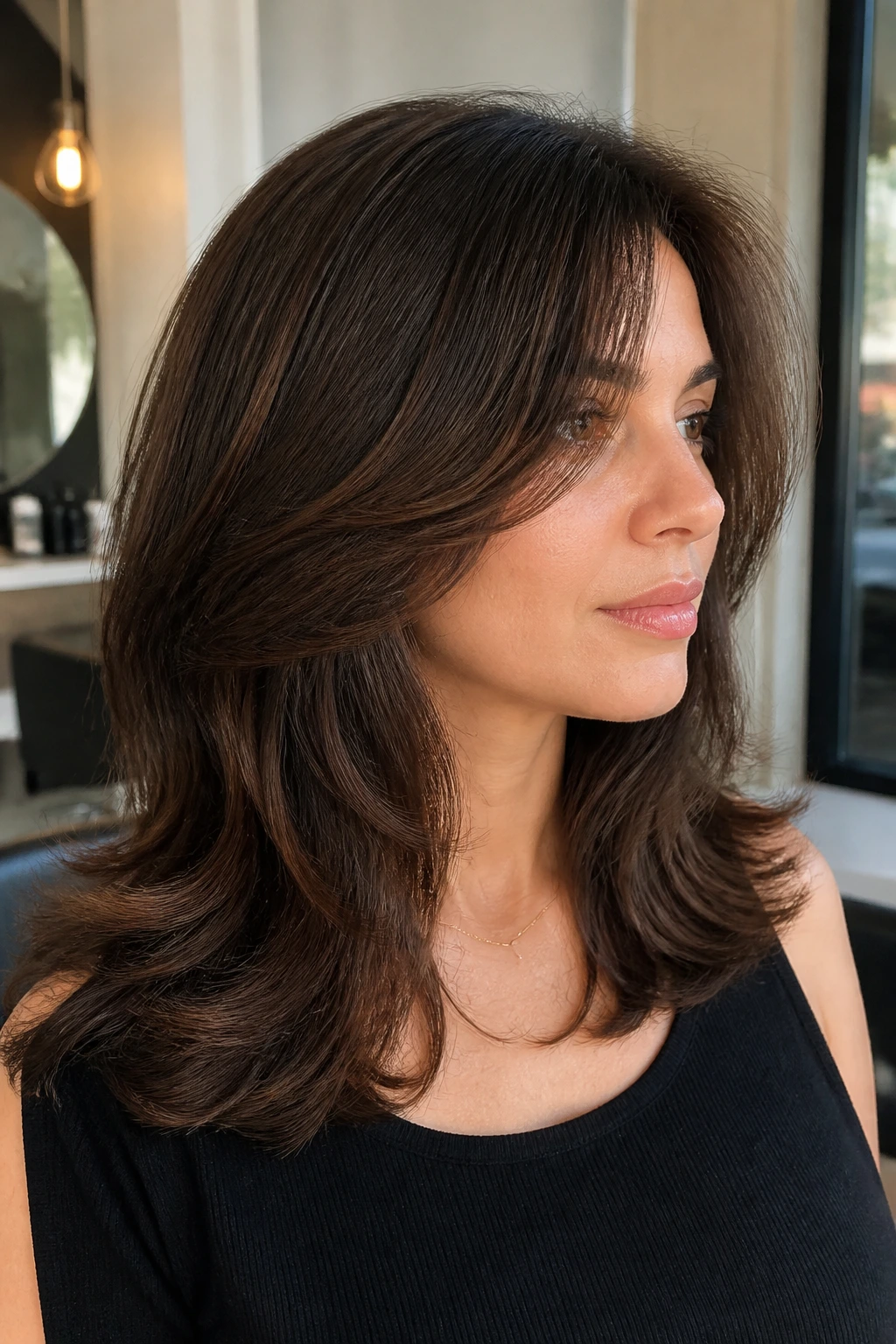
Thick hair has a habit of exaggerating whatever shape you give it. A blunt cut can look strong for about five minutes, then it starts to read as heavy. A few smart layers change that fast because they redistribute weight through the haircut instead of leaving all the density parked at the bottom.
Medium length is the sweet spot because it gives the hair enough room to move without getting so short that it puffs up. Go too short, and thick hair can expand outward. Go too long, and the ends can feel dragged down and heavy. Medium layers sit in that middle lane where the cut still has body, but the body is shaped.
The best layered cuts for thick hair usually do two things at once: they remove bulk from the interior and they create a visible face frame. That combo matters. If you only thin the inside, the outside can still look blocky. If you only cut the front, the rest of the hair keeps acting like a weighted blanket.
And yes, over-thinning is a real problem. A lot of people try to solve heaviness by taking too much out with thinning shears. The result is often frizzier ends and a cut that looks bigger, not lighter. Smart layering is cleaner than that.
The Tools and Products That Actually Earn Counter Space
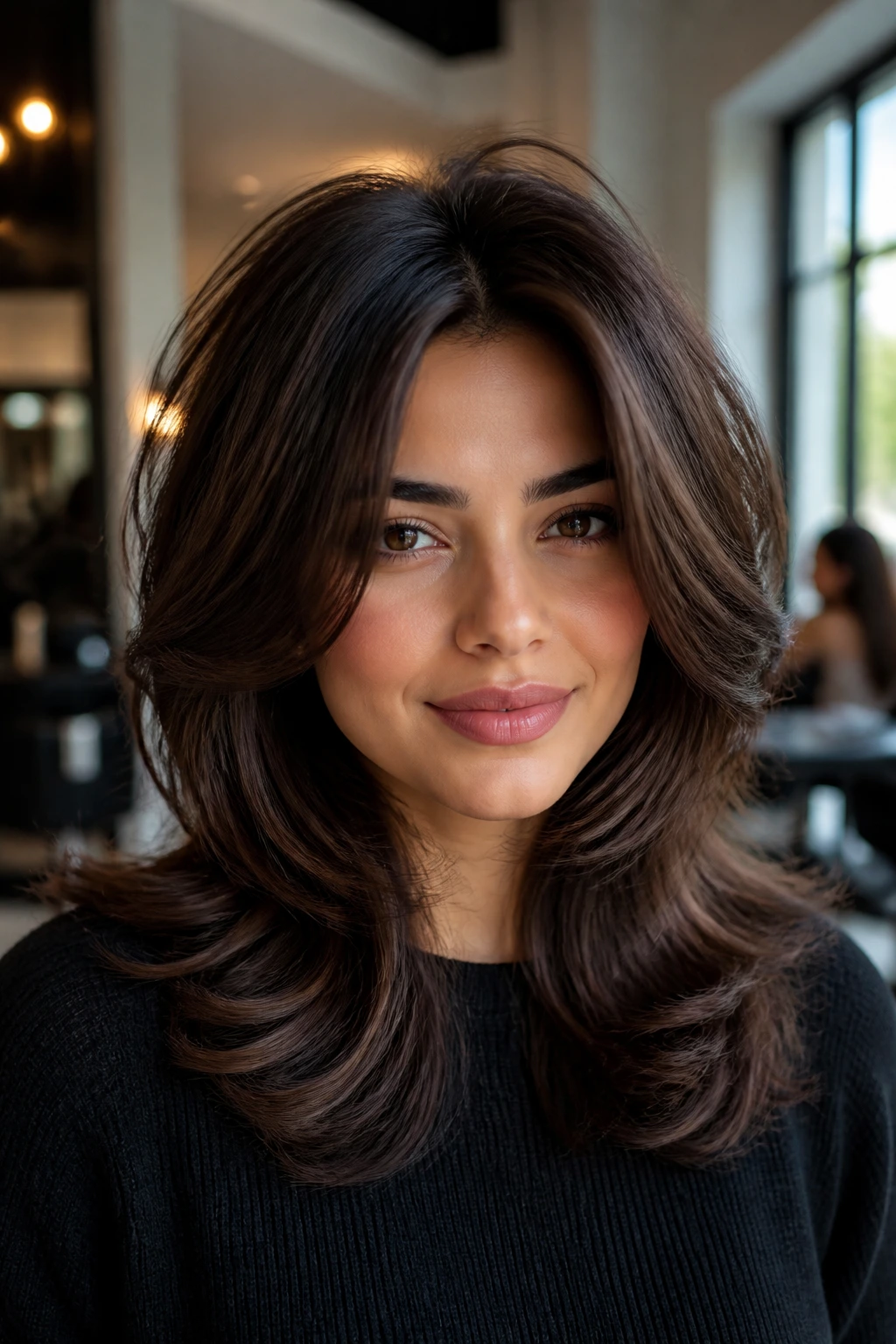
You do not need a bathroom shelf packed with half-used bottles to wear medium layered hair well. You need a small set of tools that match the shape of the cut.
-
Blow dryer with a concentrator nozzle: This keeps the airflow directed downward, which helps thick hair lie smoother and makes the layers look clean instead of fluffy.
-
2.5-inch round brush: Great for the rounded blowout, butterfly layers, and soft inward bends at the jaw.
-
1.25-inch curling iron or wand: This size gives medium hair a bend that looks natural, not cramped.
-
Sectioning clips: Thick hair needs to be divided into real sections or you end up blowing around the top while the underneath stays damp.
-
Heat protectant spray: Use it before any hot tool, especially if the layers sit around the face and get the most heat.
-
Light mousse or root-lift foam: Best at the crown and roots when you want the cut to lift instead of collapse.
-
Dry shampoo: Useful on day two or day three when the roots need a little grit and the front pieces need revival.
-
Smoothing cream or serum: Keep it from the mid-lengths down. Thick hair often needs control at the ends, not on the scalp.
-
Wide-tooth comb: Better than a small brush for detangling thick hair when it’s damp.
-
Silk or satin pillowcase: Not glamorous, but it cuts down on frizz and keeps the face frame from being crushed overnight.
How to Ask for the Cut at the Salon
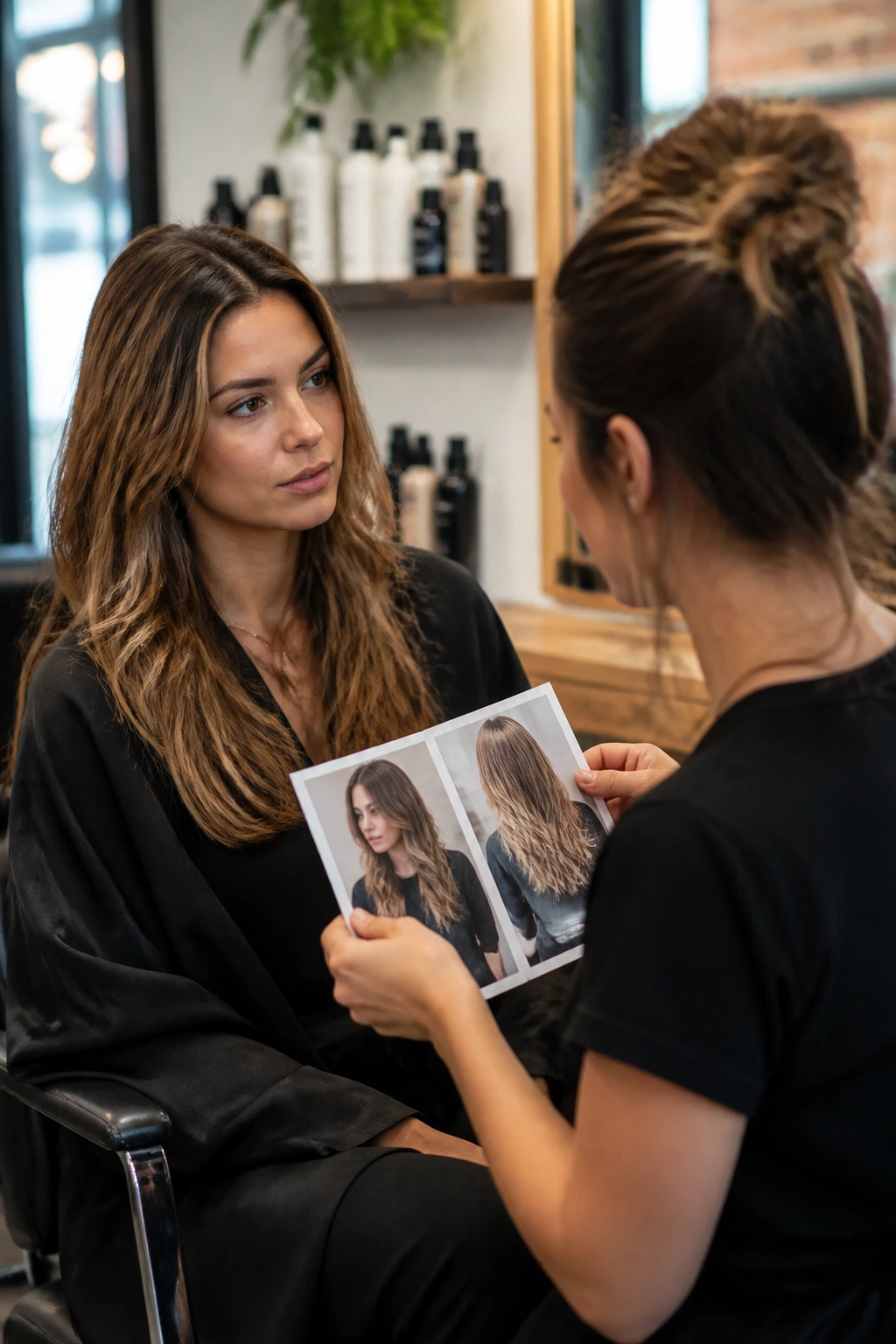
A good haircut starts with a good conversation, and thick hair needs one that is annoyingly specific. “Some layers” is not enough. The stylist needs to know where the weight is sitting, how you dry your hair, and whether you want movement or just less bulk.
Bring the Right Photos
Bring at least two photos: one for the overall shape and one for the front view. Thick hair can make the same haircut look very different from one head to another, so show the stylist the placement you care about. If you love the curtain bangs in one photo but hate the volume at the crown, say that out loud.
Name the Weight Line
Use plain words like “My hair gets heavy at the collarbone” or “The bottom spreads out too much.” That tells the stylist where to remove weight. If you say “I want the ends lighter,” ask whether that means internal layering, point cutting, or subtle texturizing. Those are not the same thing.
Be Honest About Styling
If you air-dry most days, do not leave with a cut that only looks good after a 30-minute blowout. If you want a round-brush finish, say so. If you wear a middle part because you’re not changing it, say that too. The part affects the way thick layers fall more than most people realize.
Talk About Grow-Out
This part saves regret. If you want a cut that still behaves after six to eight weeks, ask for softer transitions and fewer abrupt steps. If you are fine with regular salon visits, you can ask for sharper layers or more obvious texture.
How to Wear Them Without Fighting the Cut
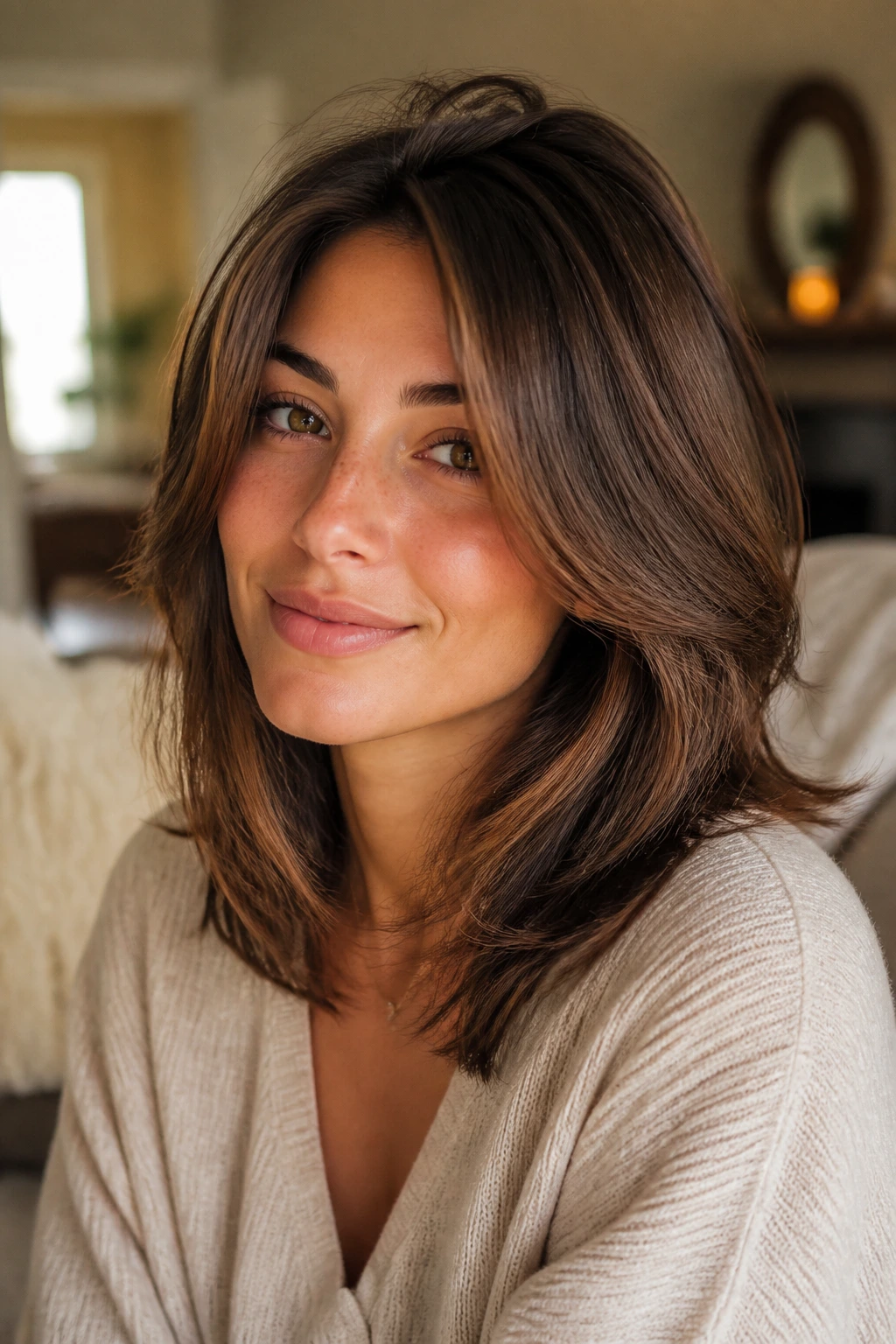
Everyday Finish: For work, school, or running around, the cleanest looks are the collarbone lob, the soft U-shape, and the tapered layers. They don’t need much more than a round brush at the front and a quick pass through the ends.
Dress-Up Finish: If you want the hair to read a little more done, the butterfly layers, deep side-part glam layers, and big-barrel wave styles give the strongest return. A small amount of root lift and a soft bend through the front pieces usually do the trick.
Best Necklines and Accessories: Medium layered hair looks especially good with scoop necks, V-necks, and open collars because the face frame has room to show up. Earrings matter too. Hoops and drops tend to echo the movement in the haircut better than tiny studs, which can disappear under all that hair.
Face-Frame Balance: If your face is round or full, leave the front pieces a little longer and let them fall past the cheekbone. If your face is narrow, shorter face-framing layers can give the cut more fullness around the front. The hair should frame you, not sit there competing with your jawline.
Small Styling Moves That Make the Layers Pop
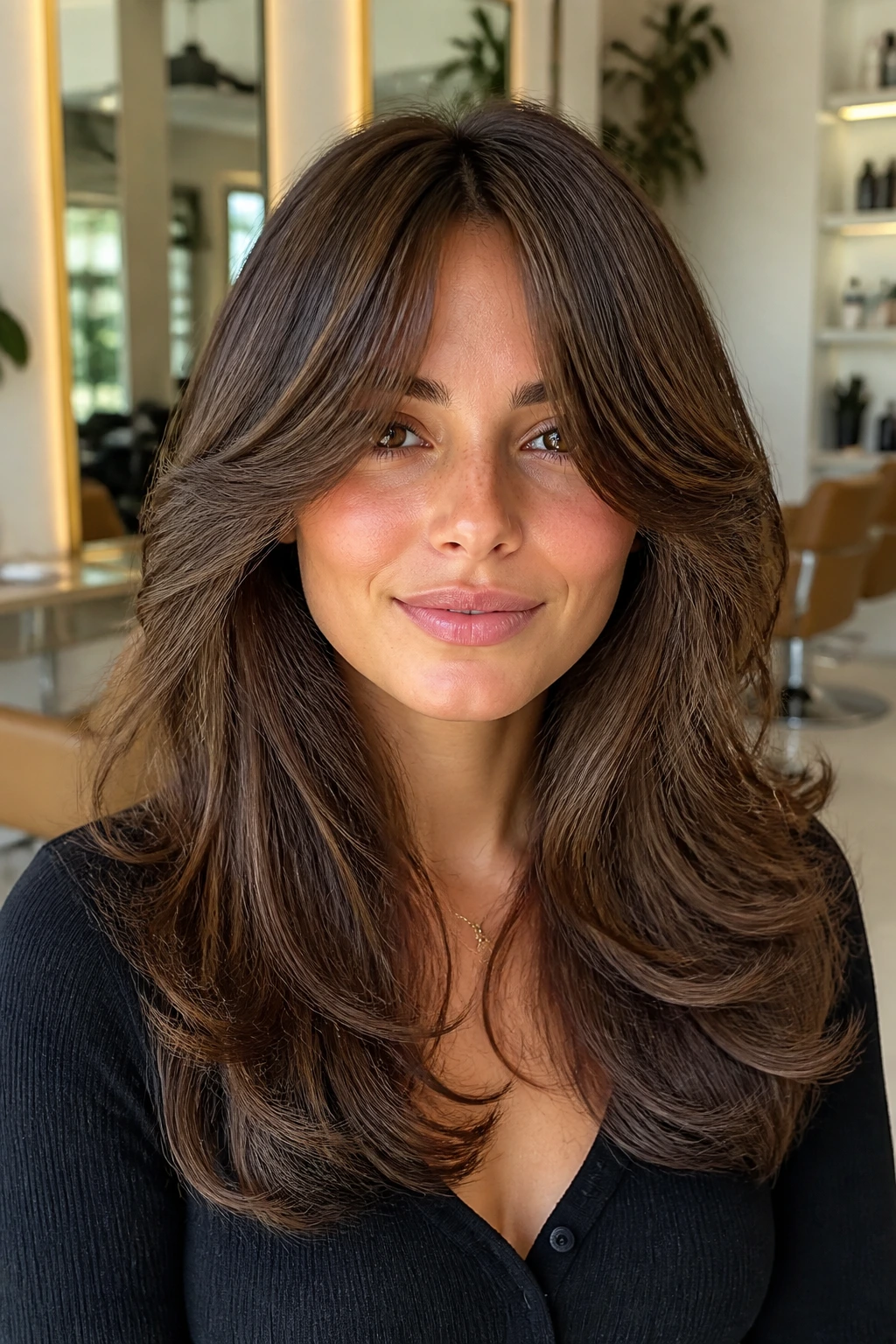
The difference between “nice haircut” and “that haircut works” is usually tiny. Thick hair needs one or two smart moves, not a full production.
Root Lift: Dry the roots first, lifting the crown with your fingers or a brush so the layers do not settle flat before the rest of the hair is dry. That one habit changes the whole shape, especially on dense hair.
End Bend: A slight inward bend at the ends keeps medium layers from flaring out in a triangle. Use a round brush, a flat iron, or even a big roller at the end of the blow-dry if that’s easier.
Face-Frame Direction: Push the front layers away from the face while they cool. Thick hair remembers shape better when it cools in the position you want.
Finish Spray: A light texture spray at the mid-lengths adds separation to choppy or shaggy styles. A smoothing mist at the ends is better for the sleeker cuts. Do not blast the roots with oily shine spray unless you want them flat.
Keeping the Cut Fresh Between Washes
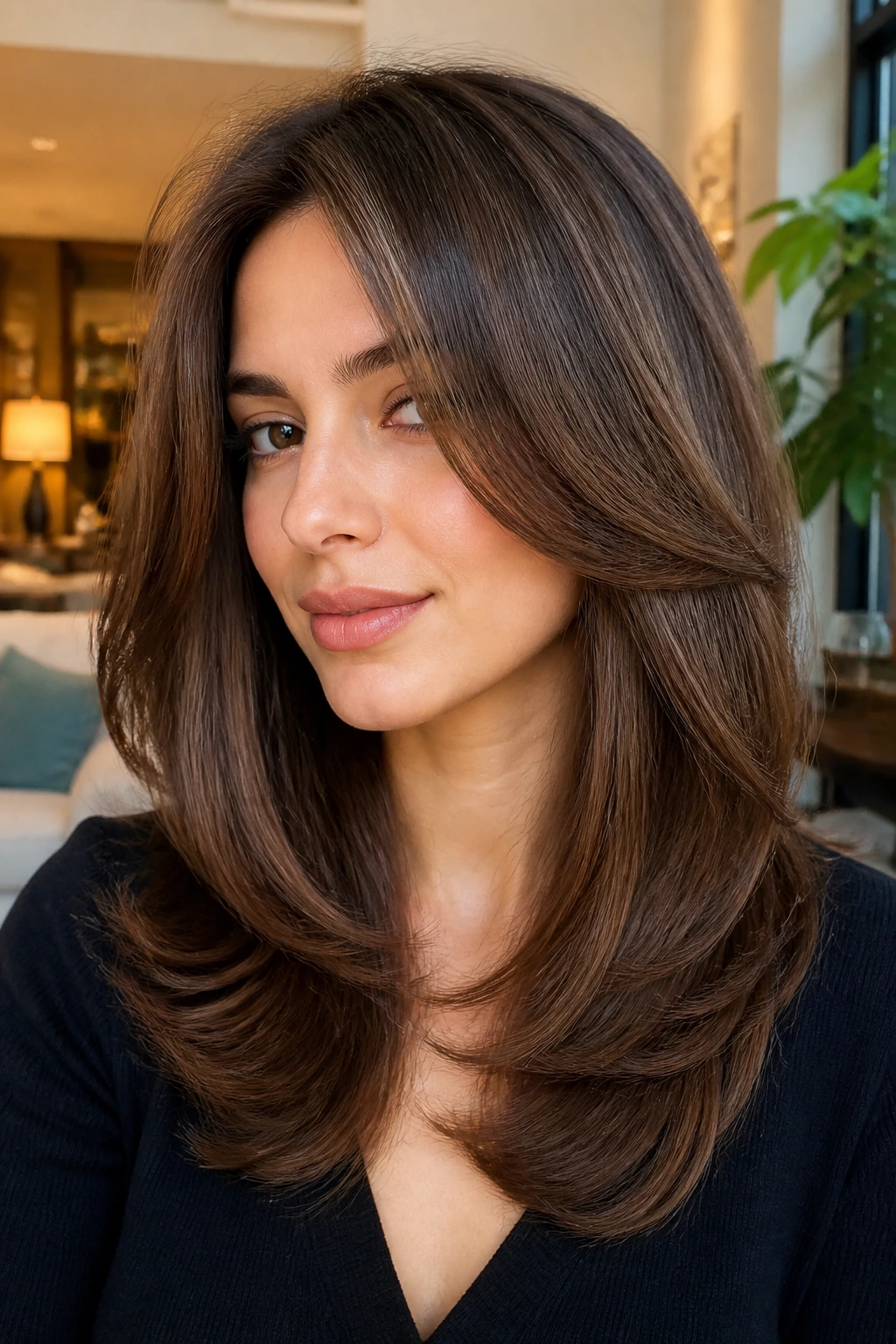
Thick layered hair usually looks best on day one, but that does not mean you should wash it every day. In fact, most of these cuts settle in better on day two, once the roots have a little grit and the layers stop acting too freshly dried.
At night, use a loose clip or a silk scrunchie and keep the length from getting smashed under your head. A satin pillowcase helps even more. If the cut is curly or wavy, a loose pineapple at the top of the head can preserve the curl pattern without flattening the face frame.
Day two is for dry shampoo at the roots and a little re-bending at the front pieces. Day three is where you decide whether the style still has enough structure to keep going. A few passes with a blow-dry brush, or 2-3 quick wraps around a curling iron, usually revive the face frame fast.
If your style starts to lose shape around the six- to ten-week mark, that’s normal. Thick hair shows a grown-out layer line faster than fine hair does. Keep the trims moving, especially if the front pieces are carrying the whole look.
Variations and Adaptations Worth Trying
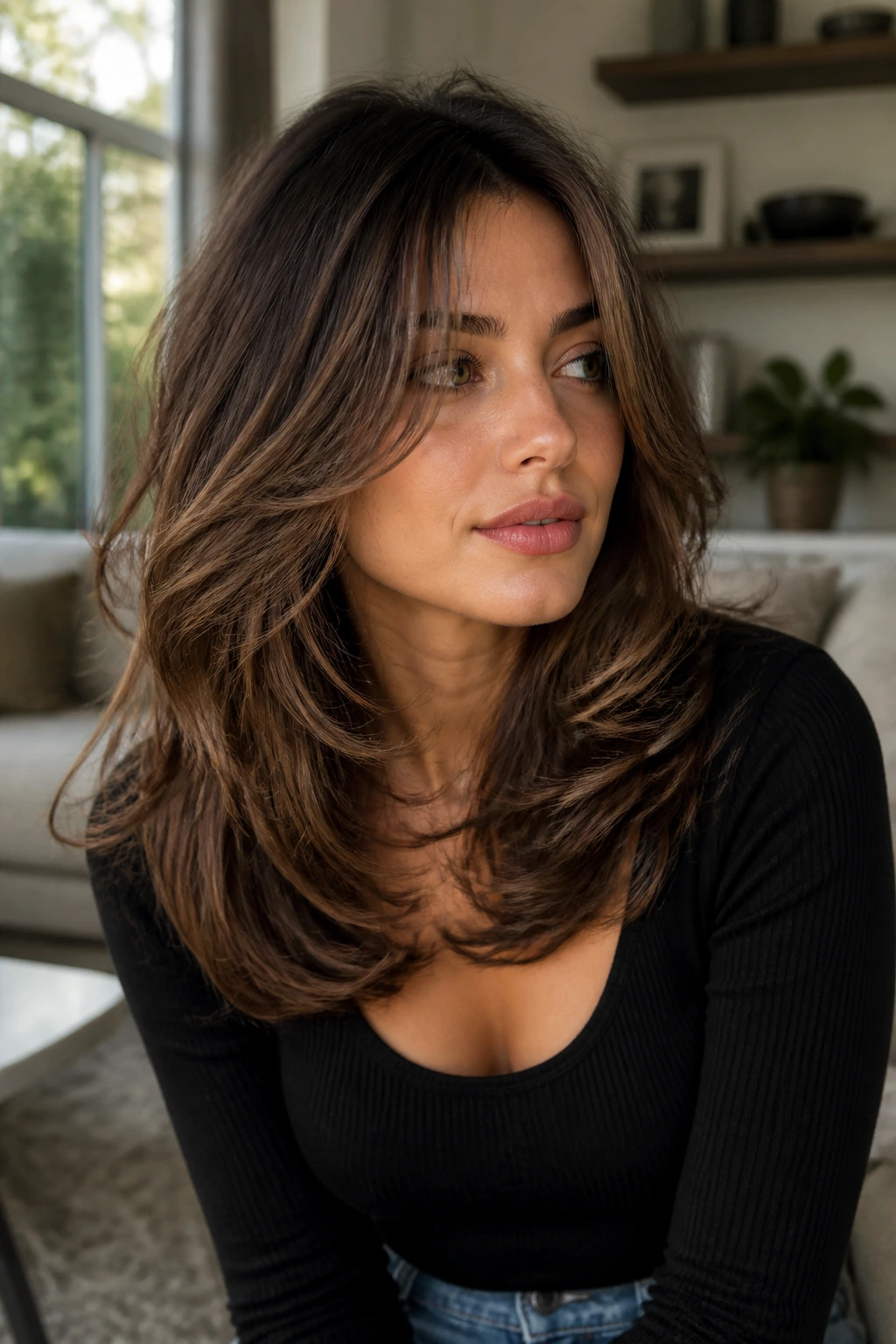
Curly-Friendly Carve-Out: If your thick hair is curly, ask for longer interior layers and a face frame that respects shrinkage. This version keeps the curl clumps big and avoids the puffed-out triangle that happens when curly hair is cut too short in the wrong places.
Fine-Hair-Friendly Version: If your hair is thick but the strands themselves are fine, skip aggressive thinning and stick with long, soft layers. You want movement, not see-through ends. A little volume mousse can do the rest.
Blunt-Edge Version: This version keeps a stronger perimeter with subtle internal layers only. It works when you want your hair to read polished and dense, not airy. I like this on medium thick hair that looks best when it has a strong outline.
Air-Dry Version: Choose longer layers, soft face-framing pieces, and no hard graduation around the crown. This keeps the cut from puffing up while still letting your natural texture do the job.
Big-Event Blowout Version: Add more visible face-framing and round the layers around the front and shoulders. The result looks fuller, shinier, and more styled, especially with a 1.25-inch iron or hot rollers.
Low-Maintenance Grow-Out Version: Keep the layers longer and the transitions softer. This one is built for people who want the cut to stay useful even after it starts growing out, not just for the first three weeks.
Common Mistakes That Make Thick Hair Look Heavy
-
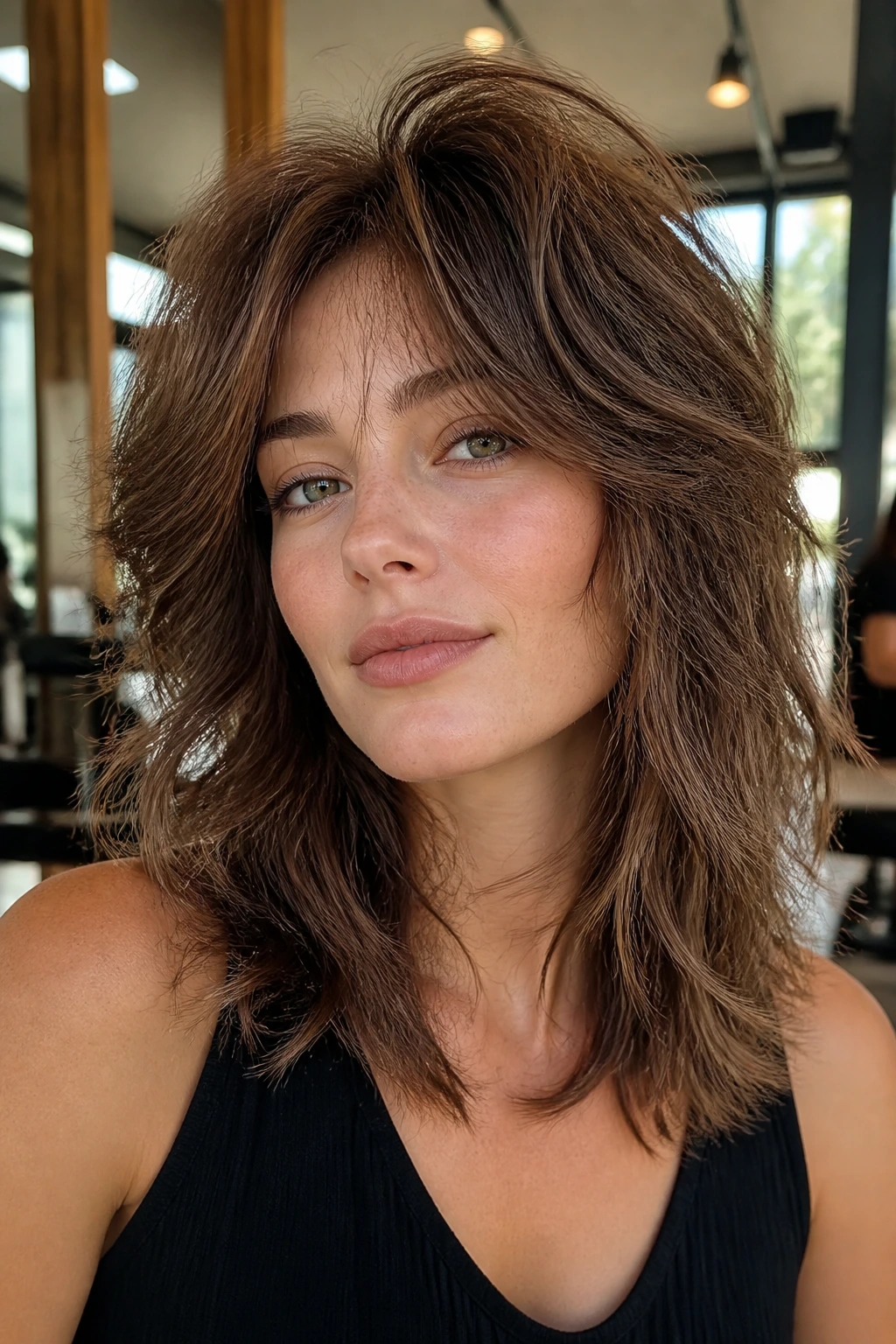
Starting the layers too high: Short layers at the crown can make thick hair puff out at the top and leave the bottom hanging limp. Ask for lower placement if you want movement without the mushroom effect.
-
Overusing thinning shears: Too much thinning can leave the ends fuzzy and uneven. If your stylist wants to remove bulk, ask where and how much before the scissors come out.
-
Using too much oil near the roots: Thick hair does not need heavy shine products at the scalp. That usually flattens the crown and makes the haircut lose its shape before noon.
-
Curling every section the same way: Uniform curls can make thick layered hair look rounder and bigger than necessary. Alternate directions or leave the ends out on some sections so the layers read as movement, not helmet hair.
-
Skipping the face frame: If the front stays too long and heavy, the whole haircut can still feel dense even when the back is layered. The front pieces are not decoration. They do real work.
Questions People Ask Before They Cut
Will layers make thick hair look thinner?
Not if they’re cut well. Smart layers remove bulk and create movement, but they should not leave the ends wispy or see-through. The goal is shape, not less hair.
What layer length works best on medium thick hair?
That depends on the texture and how much styling you want to do. For a safer cut, layers that begin around the chin or collarbone usually keep enough weight while still opening up the face.
Are curtain bangs a bad idea for thick hair?
Not at all. Thick hair can carry curtain bangs better than fine hair because there’s enough density for the fringe to hold its shape. The trick is blending them into the side layers so they don’t sit like a separate piece.
How often should I trim medium layered hair?
Most thick layered cuts look best with trims every 8 to 10 weeks. If you have curly hair or a very soft grow-out, you may be able to stretch a little longer, but the face frame usually needs attention first.
Should I ask for thinning shears?
Only if the stylist uses them selectively. They can help remove interior bulk, but overuse creates frizz and weak ends, especially on coarse hair. Point cutting or internal layering is often the cleaner answer.
Can I air-dry a layered cut like this?
Yes, if the layers are placed with air-drying in mind. Use a leave-in or light cream, scrunch if you have waves, and keep the crown from drying completely flat against the scalp.
What if my layers keep flipping out at the ends?
That usually means the ends are too blunt for the shape you want or the cut was styled too straight. A soft inward bend with a brush or iron usually fixes it, and a subtle bevel in the haircut helps too.
Is a middle part or side part better for thick layers?
A middle part gives symmetry and works well on balanced faces. A side part adds lift and can stop the top from collapsing if your hair is heavy or stubborn on one side.
Can thick hair handle a shag or wolf cut without looking messy?
Yes, if the version is toned down. Medium thick hair has enough structure for texture, but the layers need control at the ends and enough softness around the face so the cut reads stylish instead of chaotic.
The Cut That Still Makes Sense Next Month
A good layered haircut on thick hair should do more than look nice on the day you leave the salon. It should still make sense after you sleep on it, air-dry it, clip it up, or forget to style it for two mornings in a row. That is the real test.
The best medium layered styles do one thing very well: they give thick hair shape without taking away the thing that makes thick hair worth having in the first place. Keep the face frame thoughtful, keep the weight line under control, and the cut will keep doing its job long after the blowout has gone soft.