



Long hair can turn into one heavy sheet fast. Add beachy waves, and the difference between soft movement and a puffy triangle at the ends is usually only a few inches of layering. That’s why layered wavy hairstyles for long hair with beachy waves matter so much: the cut does half the styling before you even pick up a curling iron.
The best versions don’t chase volume everywhere. They keep enough weight in the length so the hair still feels long, then carve out shape around the cheekbones, jawline, and collarbone so the front doesn’t drag the whole look down. If you’ve ever curled long hair only to watch it collapse into one tired bend by lunch, you already know the issue.
And the fix is not one haircut. It’s a whole menu of shapes. Some are feathered and airy, some are glossy and polished, some lean shaggy and piecey, and some barely touch the length at all. The trick is choosing the version that works with your density, your face shape, and how much time you want to spend with a round brush.
Why These Layered Beach Waves Keep Long Hair Moving
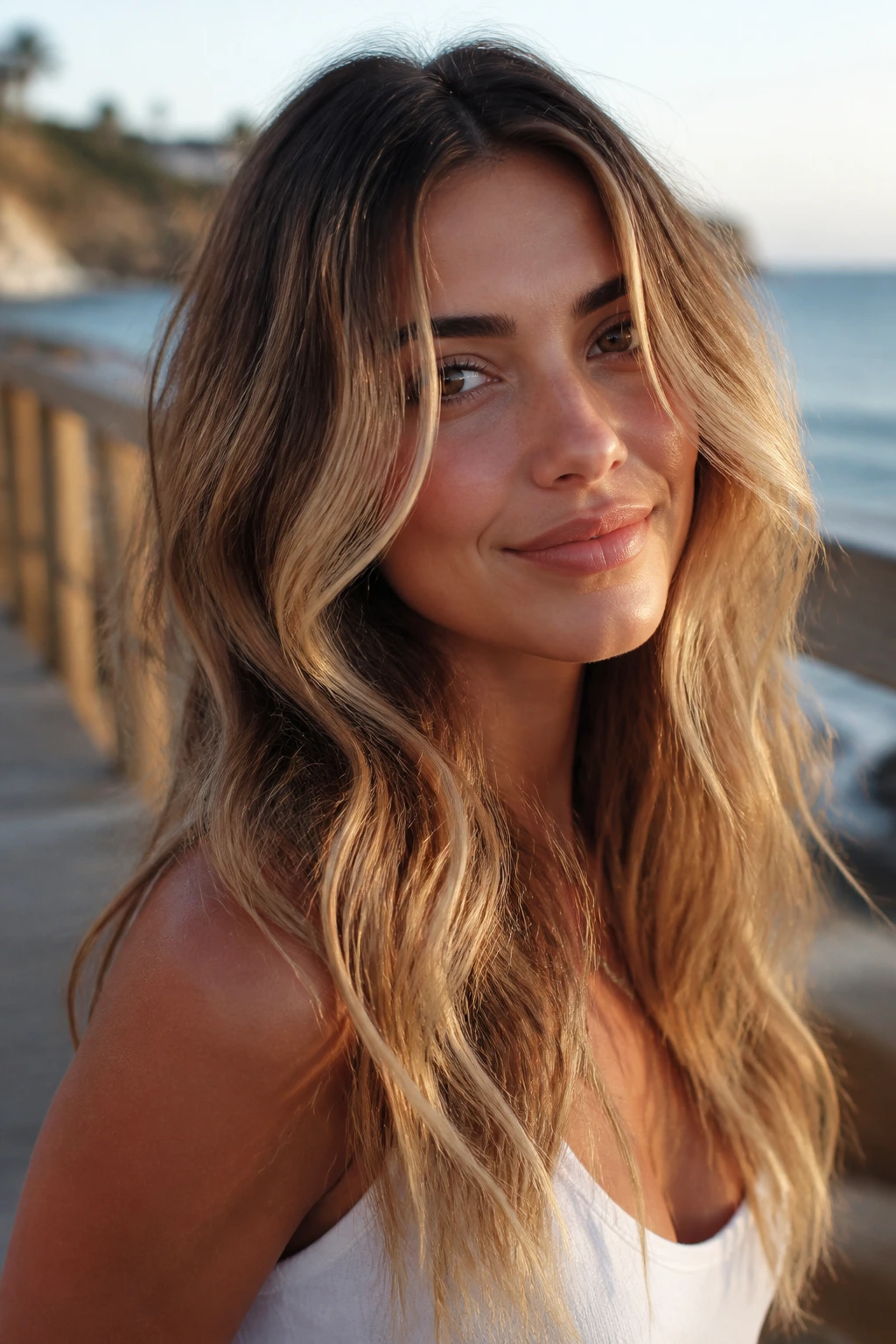
Face-framing layers change the whole read of the cut.
When the shortest pieces land around the cheekbone or lip line, the eye goes there first. That keeps long hair from feeling like one uninterrupted column.
Beachy waves like texture, not perfection.
A slightly uneven bend hides small differences in length and makes layered hair look more lived-in. A pin-straight finish can expose every cut line; a loose wave forgives a lot.
Long hair needs shape at the top, not only the bottom.
If all the movement sits at the hemline, the crown goes flat and the ends look thin. Layers placed higher up bring air into the silhouette.
They work with busy mornings.
Second-day waves often look better than fresh curls because the pattern loosens into something softer. A little dry shampoo at the roots and a quick finger-twist at the front usually does the job.
They’re easy to personalize.
A middle part, side part, curtain fringe, or money piece changes the mood without changing the whole cut. That’s part of the appeal here.
1. Feathered Layers with a Center Part
Feathered layers are the old reliable of long wavy hair, but only when they’re cut with restraint. The shortest pieces should graze the collarbone or sit a touch below it, which keeps the ends from looking ragged once you add loose bends.
I like this shape for hair that needs movement without losing its length story. Use a 1¼-inch curling iron, wrap away from the face in alternating directions, and leave the last inch or two out. Then brush the curls out with your fingers or a wide-tooth comb. You get that soft, wind-tossed finish without turning the whole head into a halo of frizz.
2. Butterfly Cut with Floating Face-Framing Pieces
The butterfly cut is what happens when long hair wants volume at the top but refuses to give up the bottom length. Shorter layers sit around the cheeks and collarbone, while the rest stays long enough to keep the silhouette dramatic.
This cut works because it gives you a built-in lift near the crown. Blow-dry the front sections with a round brush, then bend the ends loosely with a wand. The contrast is the point. If your hair tends to feel heavy by midday, this shape keeps the top half from collapsing while the lower layers still swing.
3. U-Shaped Ends with Soft Wave Bends
A U-shaped cut is one of those details people miss until they see it from the back. Instead of a blunt line, the hem dips gently in the center, which makes long hair feel fuller and more finished once the waves start moving.
That rounded edge also keeps beachy waves from getting boxy. I’d choose this if you like a classic center part and want the back to look plush without obvious shag layers. Keep the bend soft near the face and a little straighter through the lower third. That balance keeps the wave pattern from looking overworked.
4. V-Cut Layers for Extra Length Drama
A V-cut gives the hair a sharper point at the back, and I mean that in a good way. The length stays visible, but the layers carve out motion so the whole style doesn’t sag into one flat sheet.
This one shines on thick hair because it removes weight without chopping away the drama. It’s also a smart pick if you wear your hair down a lot and want the ends to feel lighter when they move. Use bigger sections when you wave it; tight curls fight the shape and make the V line look choppy instead of clean.
5. Curtain Bangs with Long Rippled Ends
Curtain bangs do the heavy lifting around the face, which means the rest of the hair can stay softer and looser. The bang area should open at the center and sweep back toward the cheekbones, not fall straight down like a block.
The rest of the hair can stay in long beach waves with a loose S-bend. That combo is useful when you want some structure near the forehead but don’t want full fringe maintenance. Dry the bangs first, always. If they dry crooked, the whole style feels off before you’ve even touched the rest.
6. Bright Money Pieces and Loose Waves
This is the style for anyone who wants the front of the haircut to do something noticeable. A lighter face-framing section pulls the eye upward and makes the layers look deeper than they are.
The trick is not to curl those front pieces too hard. Leave them a little straighter at the ends, then bend the mid-lengths away from the face. That keeps the money piece from turning into a ringlet and makes the color placement feel intentional. A few soft waves through the crown finish the look without stealing the focus from the front.
7. Razor Shag with Piecey Texture
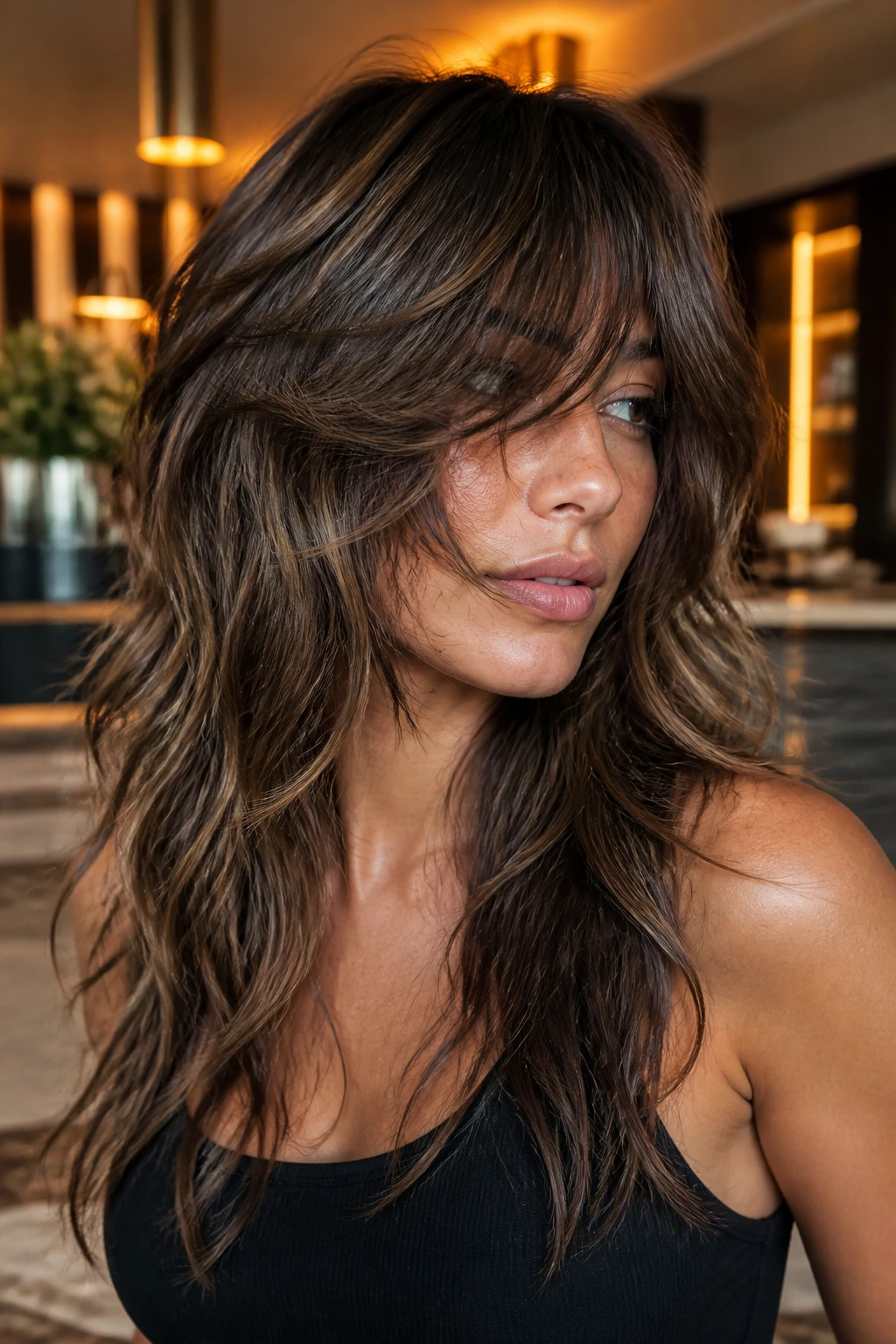
A razor shag on long hair can go wrong fast if the layers are too short. Keep the structure long, then ask for piecey ends and interior texture instead of aggressive chopping.
The payoff is movement that feels loose rather than polished. A bit of texturizing spray at the mid-lengths gives the layer edges enough separation to show up, especially if your hair is naturally wavy. This style is for the person who likes hair that moves when she turns her head. It’s a little messy. That’s the point.
8. Invisible Layers for Thick Hair
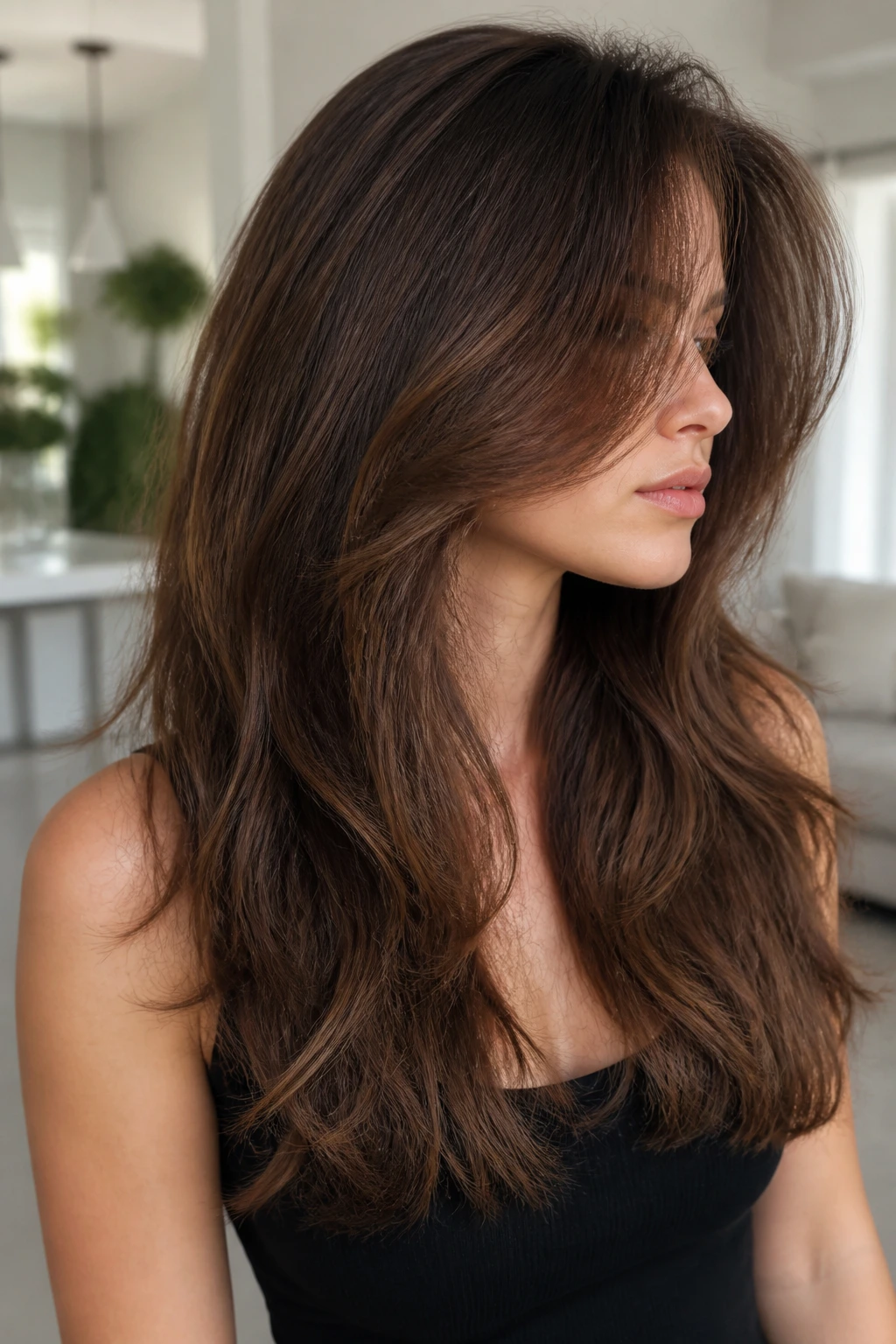
Invisible layers are the answer when your hair is dense and you want the wave pattern to sit without ballooning at the sides. The layers live inside the haircut, not on the surface, so the ends still look full.
This is the cut I’d pick for someone who loves long hair but hates the triangle shape thick hair can form after a bad blow-dry. Ask for internal weight removal, then keep the top layer long enough to cover the shorter bits underneath. Once you wave it, the whole head falls better. Less bulk. More swing.
9. Deep Side Part with Sweeping Volume
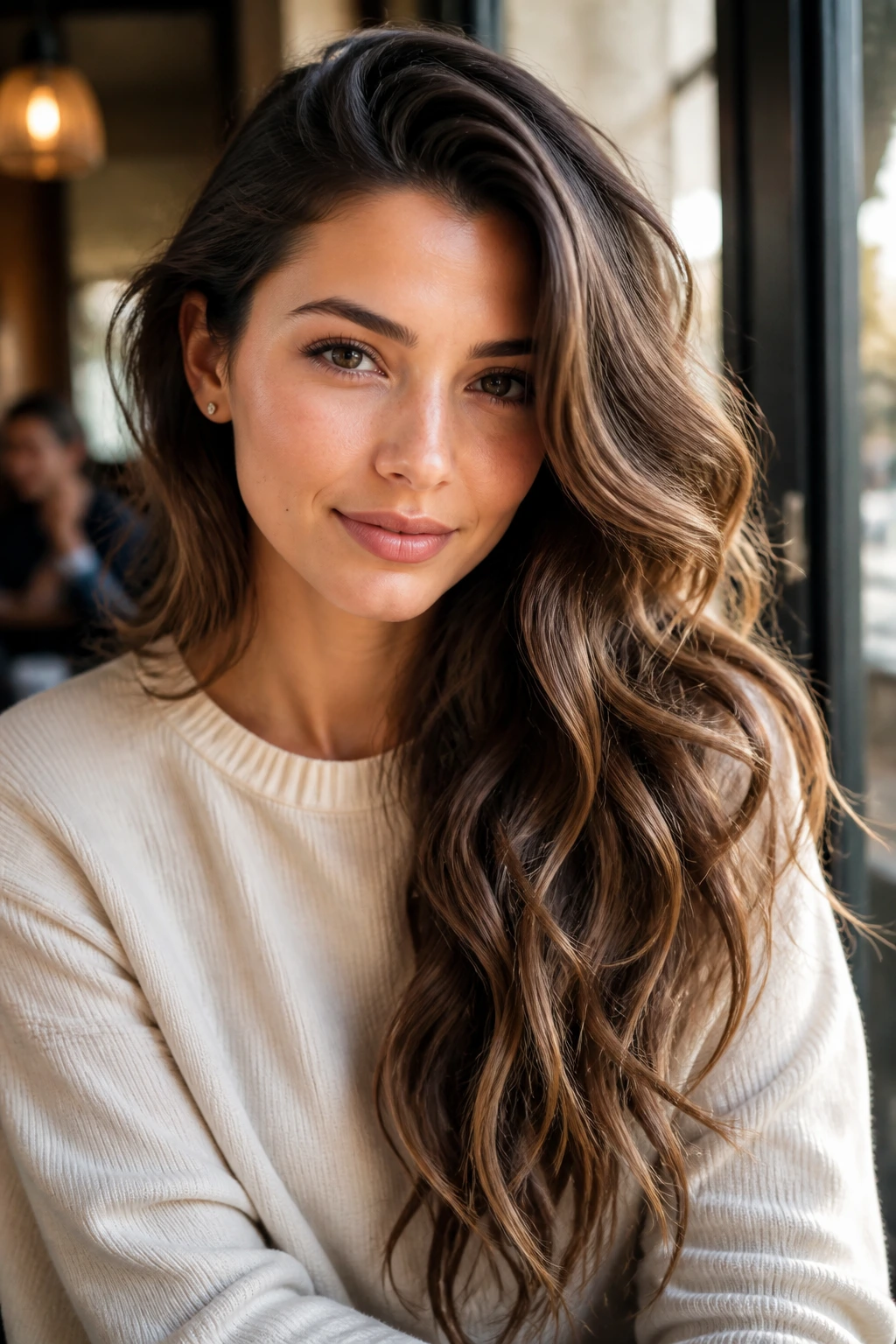
A deep side part changes the whole mood of layered waves. One side gets more root lift, the other falls into a smoother curtain, and suddenly the haircut has some asymmetry to it.
That asymmetry matters if your hair goes flat around the part line. Flip the part to the heavier side after blow-drying, mist the roots with a flexible spray, and let the waves fall over one shoulder. It’s one of the easiest ways to make long hair look dressed up without changing the cut at all.
10. Air-Dried Waves with Soft Internal Layers
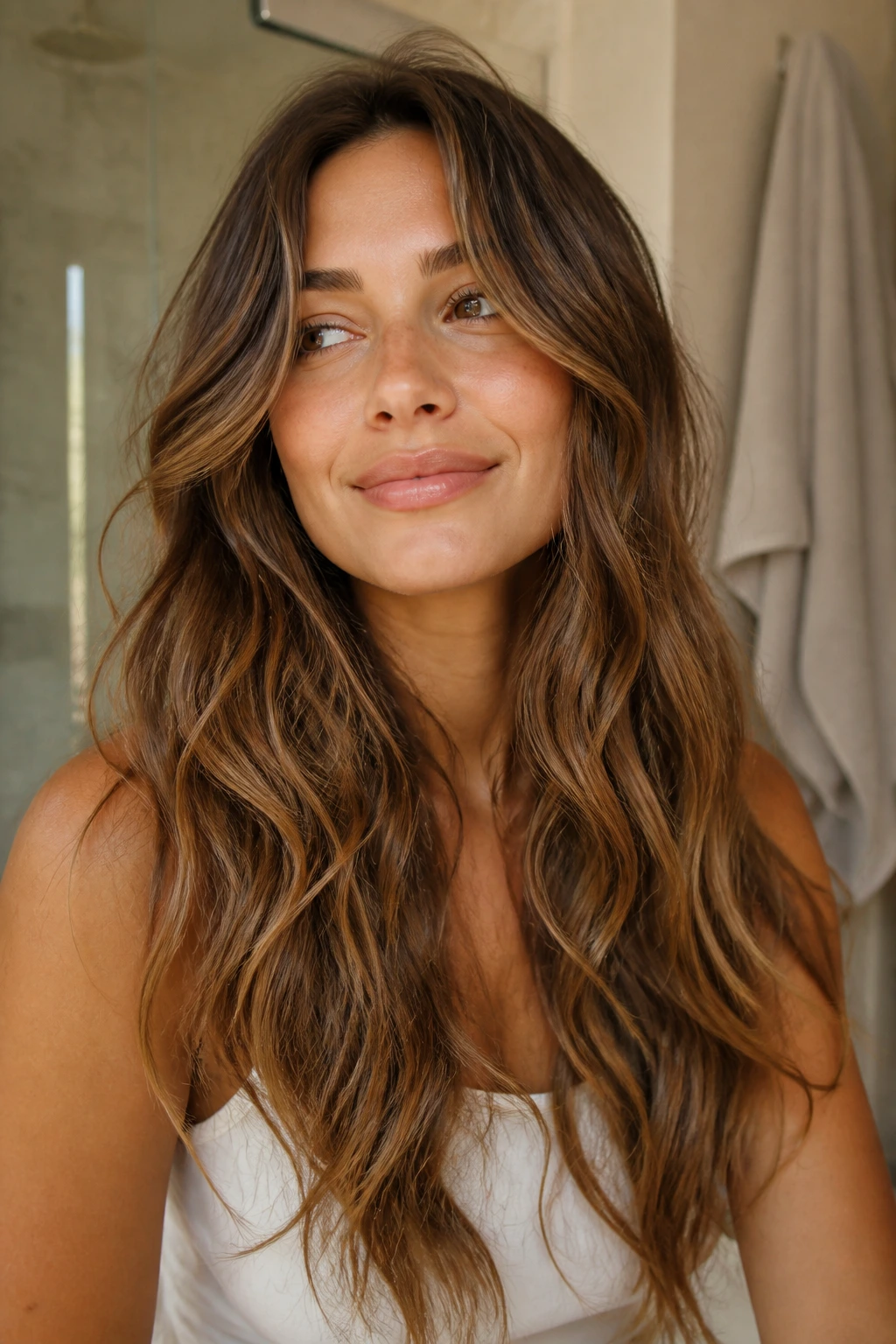
Air-dried layers are for people who don’t want to stand around with a hot tool for half an hour. The haircut does more of the work, so the wave pattern needs less coaxing.
A leave-in cream, a small squeeze of mousse, and a microfiber towel are the whole story here. Scrunch the hair upward, then leave it alone until it’s fully dry. Don’t keep touching it. The internal layers help the waves separate naturally instead of drying into one big wedge. A bit of frizz at the surface is fine. Too much polish can make this style look stiff.
11. Half-Up Twist with Floating Sides
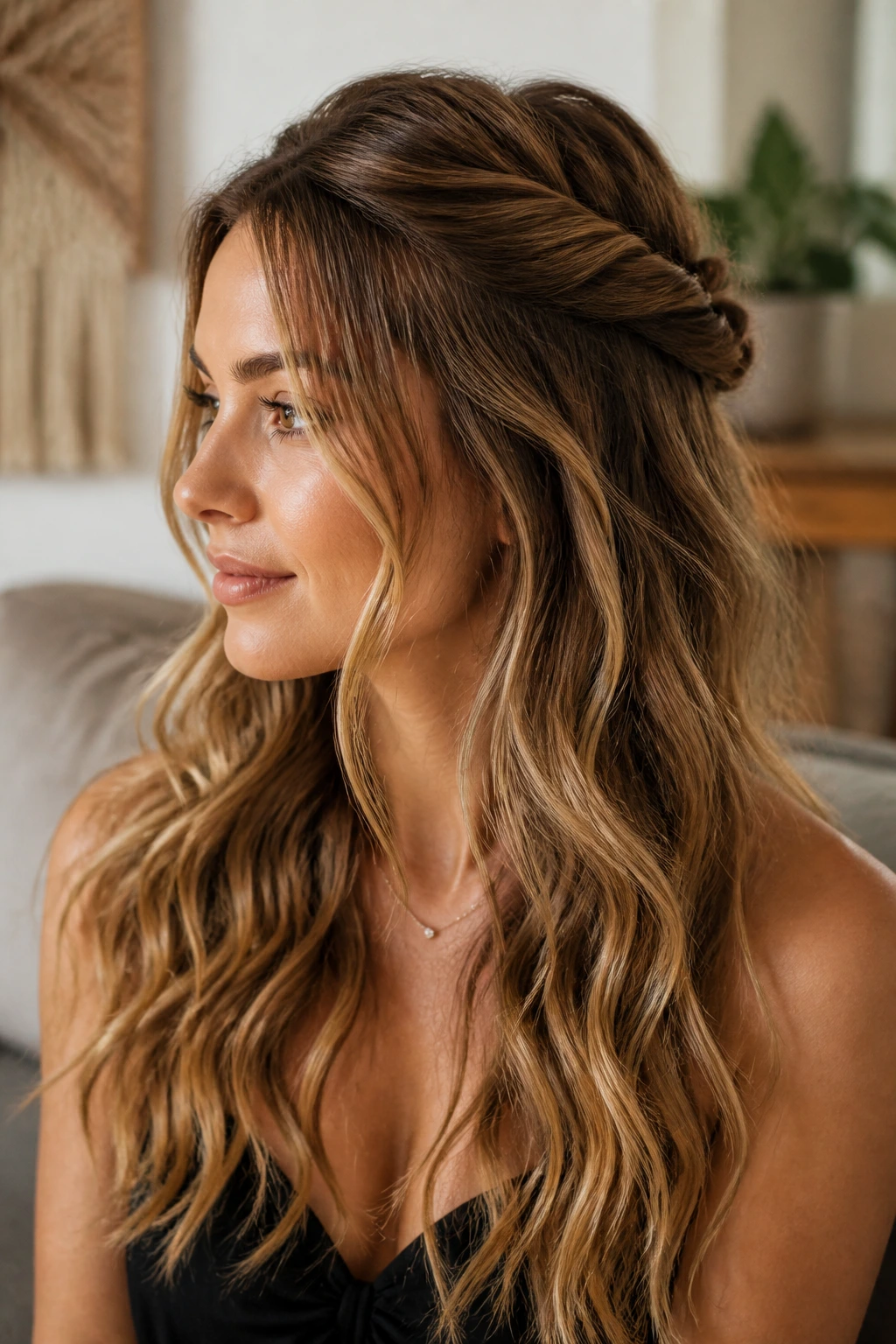
A half-up twist is a good way to show off long layers without hiding them in a ponytail. Pull only the crown section back, twist it loosely, and leave the face-framing pieces out so they can curl around the jaw.
This works especially well on second-day waves. The texture already has grip, so the twist holds better than it does on freshly washed hair. A small claw clip looks softer than a tight elastic, and it lets the ends of the twist stay a little undone. The result reads relaxed, not rushed.
12. Braided Crown Waves with Loose Ends
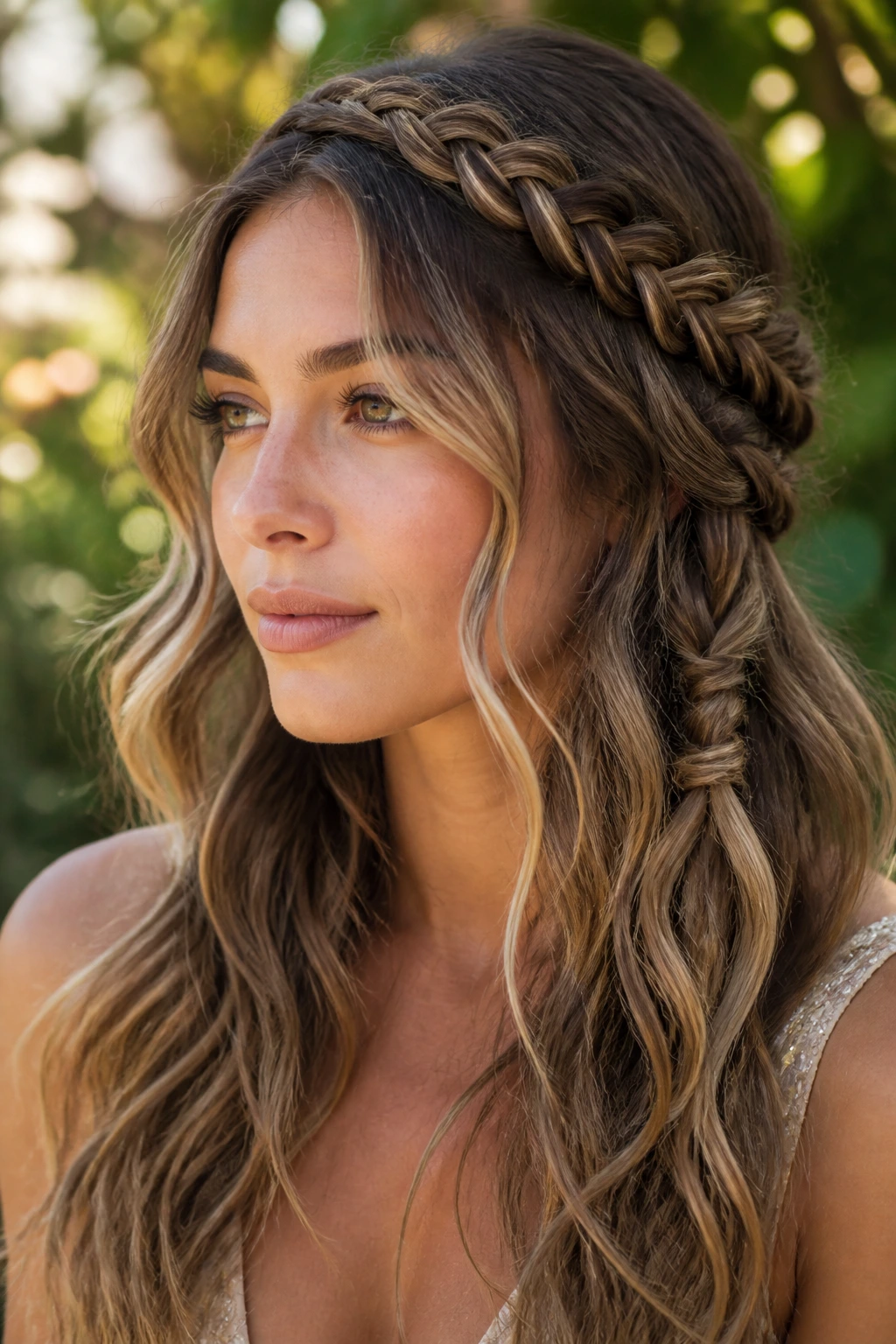
Braids and beach waves are cousins. Put them together and you get a style that feels a little boho without needing a lot of teasing or hairspray.
The key is keeping the braids loose. Tight braids fight the layered shape and flatten the top. A soft crown braid or side braid gives the front sections a job to do while the remaining lengths keep their wave pattern. I’d use this for warm-weather events, long errands, or any day when you want hair off your face but don’t want a stiff updo.
13. Low Ponytail with Wavy Tail Ends
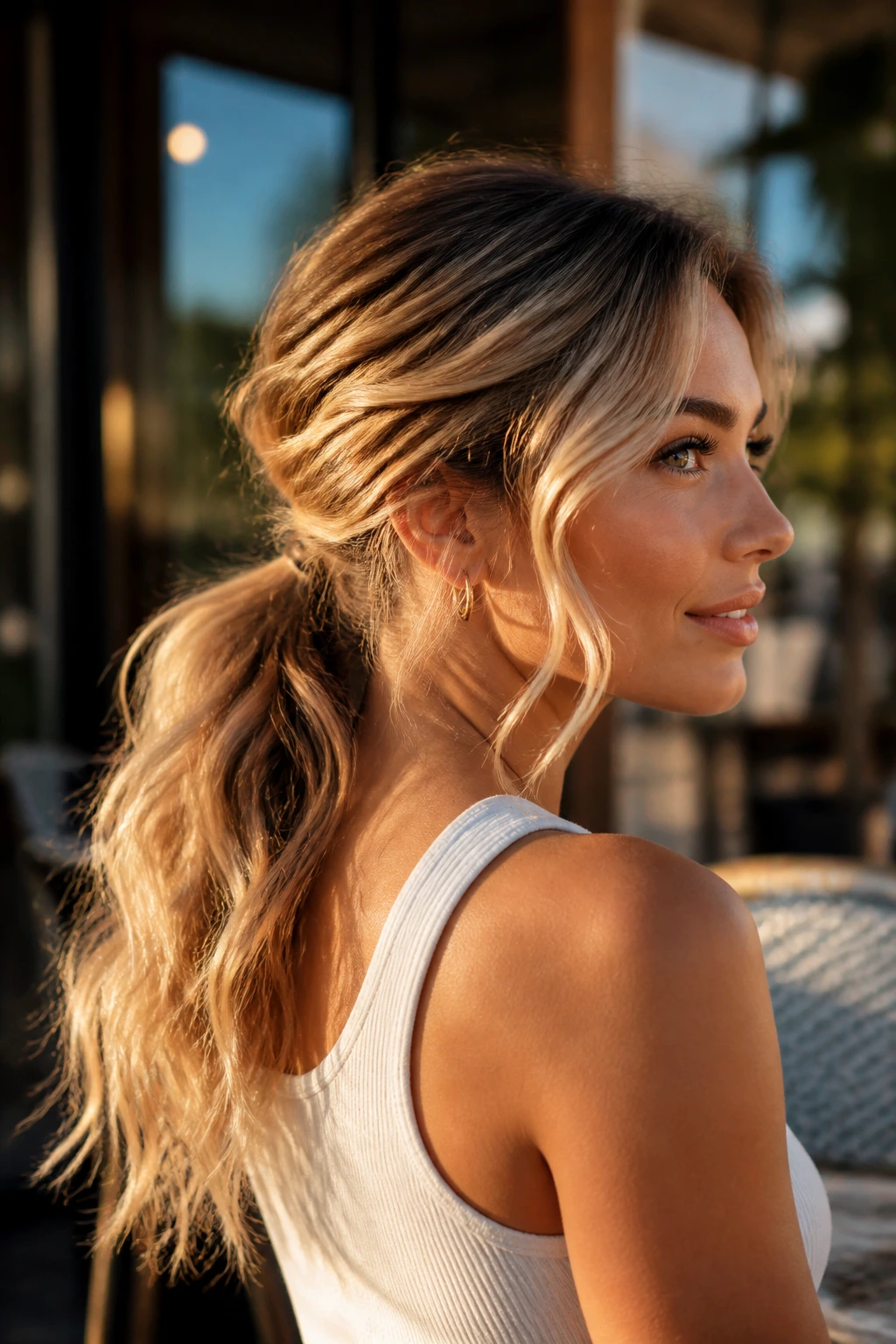
A low ponytail sounds plain until you add layers. Then the front pieces can fall around the temples, the crown stays a little puffed, and the tail itself keeps texture instead of hanging dead straight.
Use a soft tie or ribbon and leave out the shortest front layers. That little mess around the face is what keeps it from feeling school-photo formal. If your hair is thick, this is one of the easiest ways to control it without crushing the wave pattern. It’s clean, but not severe.
14. Chin-Skimming Front Pieces with S-Waves
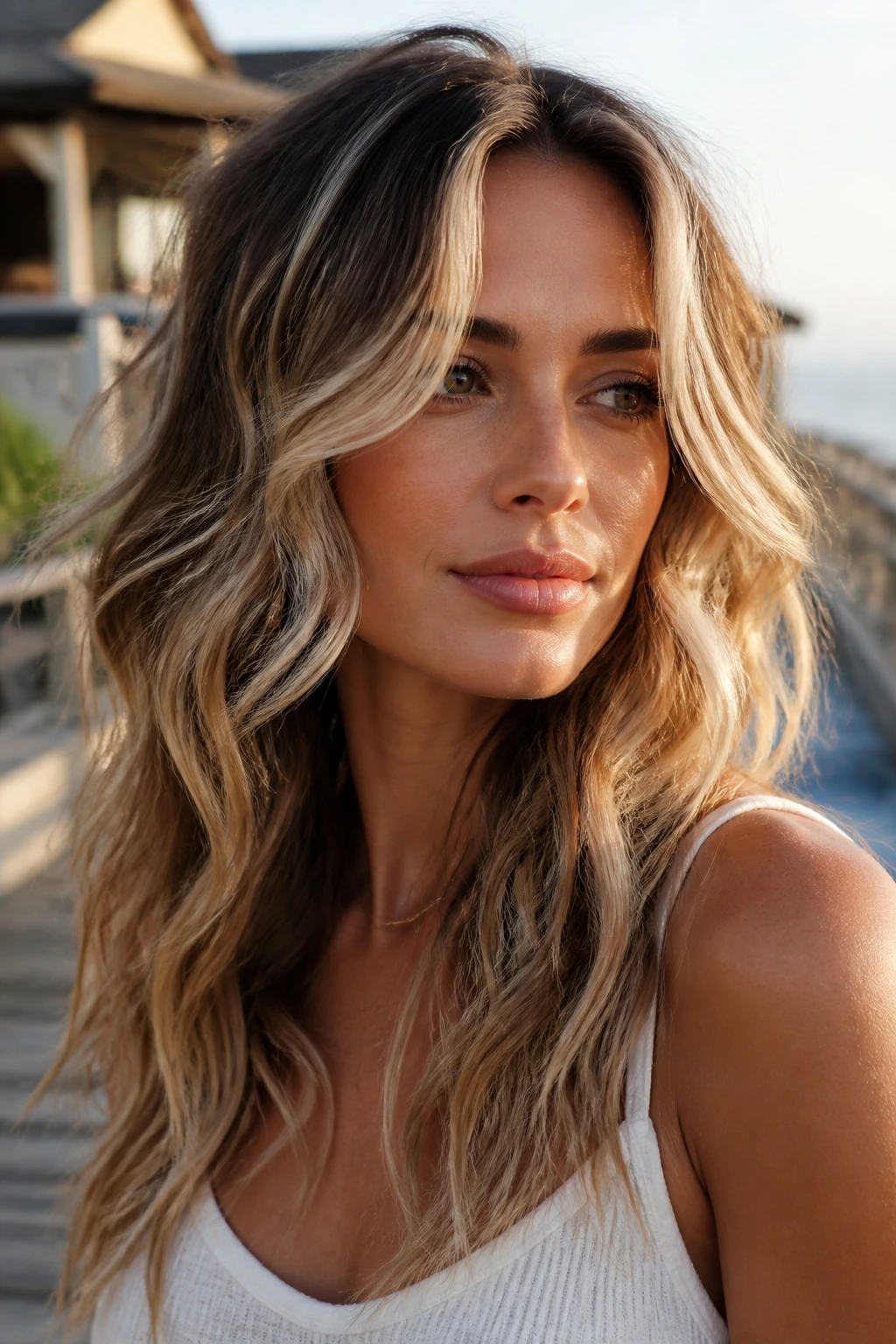
Front pieces that hit around the chin can do a lot for rounder faces or anyone who wants more shape around the jaw. They cut across the face line in a way that makes the whole haircut feel more tailored.
Keep the wave soft and S-shaped rather than curled. Too much bend around the chin can widen the face instead of framing it. I like this with long layers that start around the shoulders, because the front gets its own shape while the rest of the hair stays loose and airy. It’s a very specific balance. Worth it.
15. Bottleneck Bangs with Long Layers
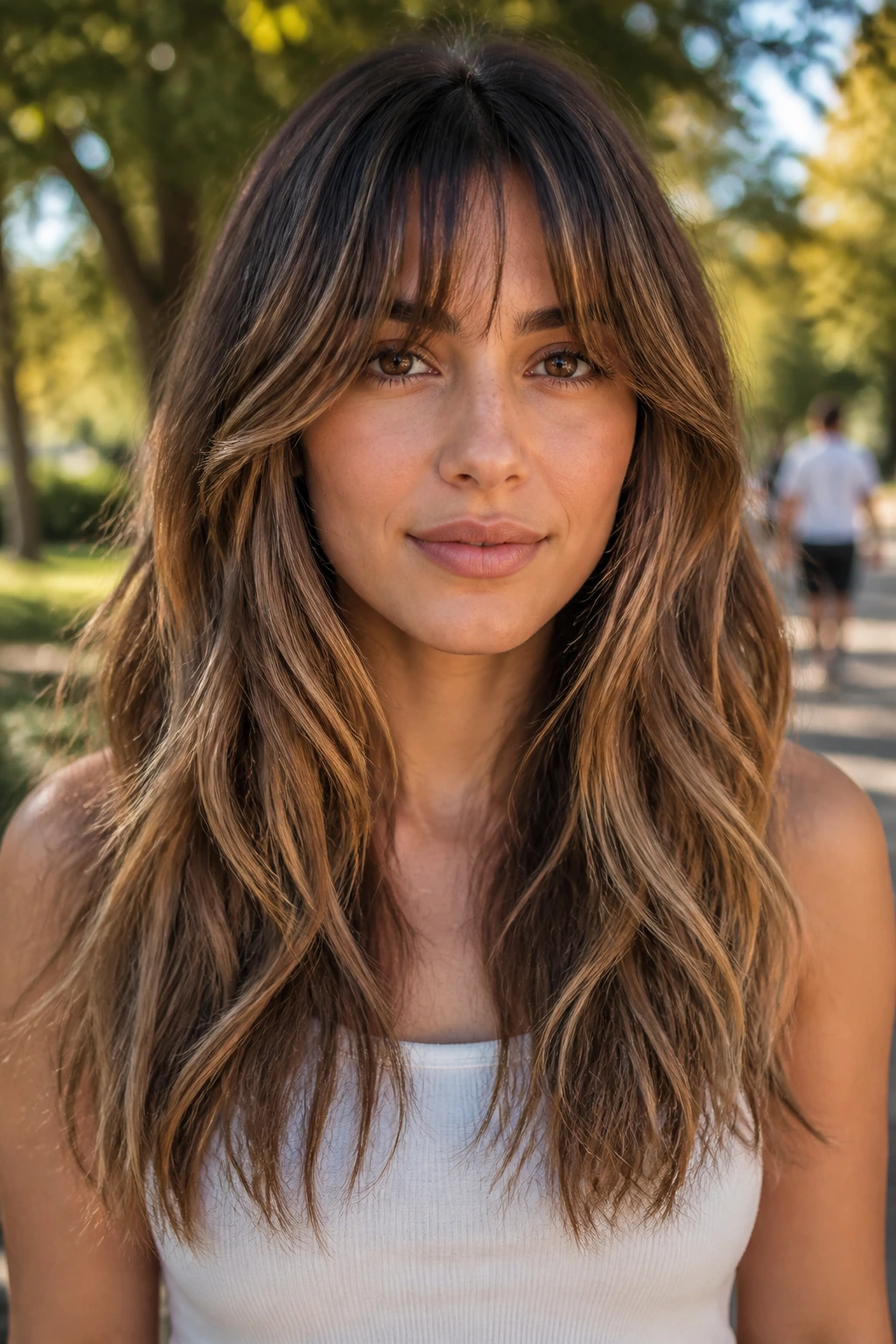
Bottleneck bangs are the softer cousin of full fringe. They start narrower at the center and open out at the sides, which keeps the forehead covered without taking over the face.
On long layered hair, they blend nicely into beachy waves because the transition point is gentle. The bangs can be styled with a round brush, while the lengths get a loose bend from mid-shaft down. If curtain bangs feel too broad for your face, this is the cleaner, slightly more refined option. It still feels soft. It just has a little more direction.
16. Balayage Waves with Cascading Movement
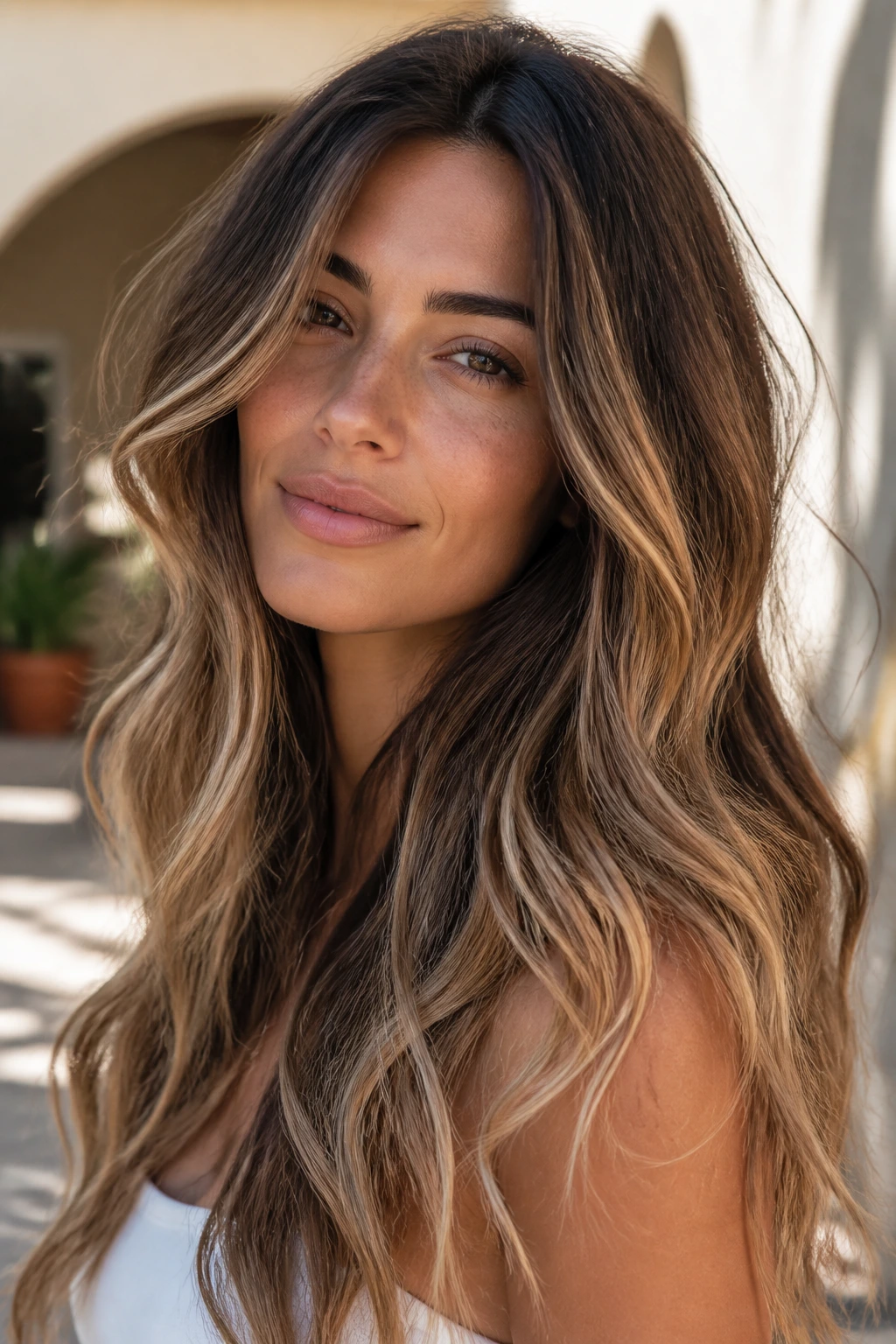
Color changes the way layers read. A few lighter pieces placed through the front and around the surface make every bend in the wave pattern easier to see.
Balayage works especially well on long layered hair because the color can follow the movement of the cut. Darker roots, lighter mids, and softly painted ends keep the style from looking like one flat block. If you like your beach waves to show up in low light, this is the version that does it. The dimension carries the shape.
17. Flipped-Out Ends with Soft Layers
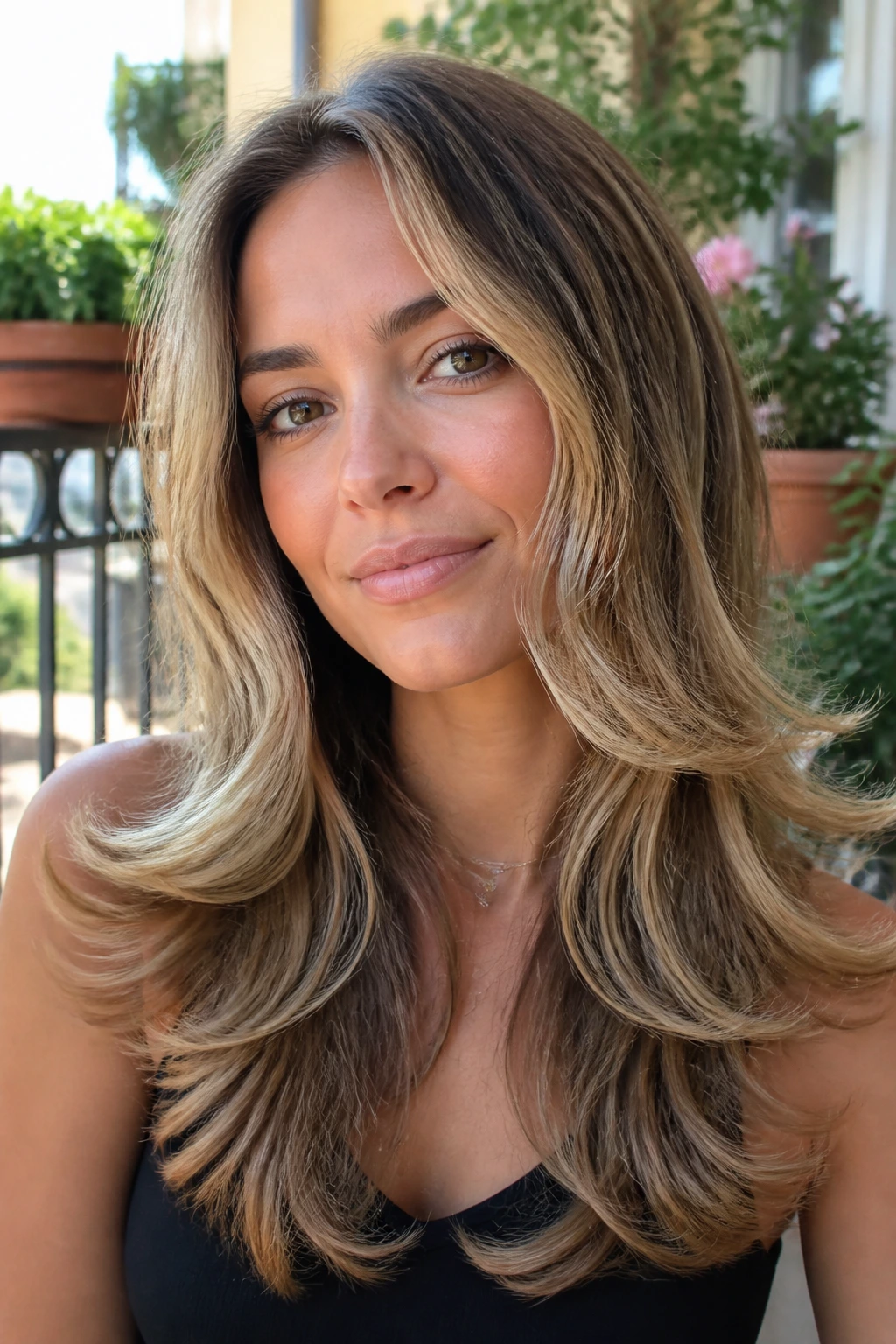
Flipped-out ends give long layers a little retro bounce, and I mean that in a very specific, not-costume way. The bottom inch or two turns outward while the middle of the hair stays wavey and soft.
This works best when the layers are long and blended, not choppy. Use a flat iron or round brush to flick only the ends, then leave the rest of the wave pattern loose. It’s a nice fix if your hair tends to droop at the bottom and needs a bit of lift. Keep the flip subtle. Too much, and it stops looking like modern beach hair.
18. Ultra-Long U-Cut with Whisper Waves
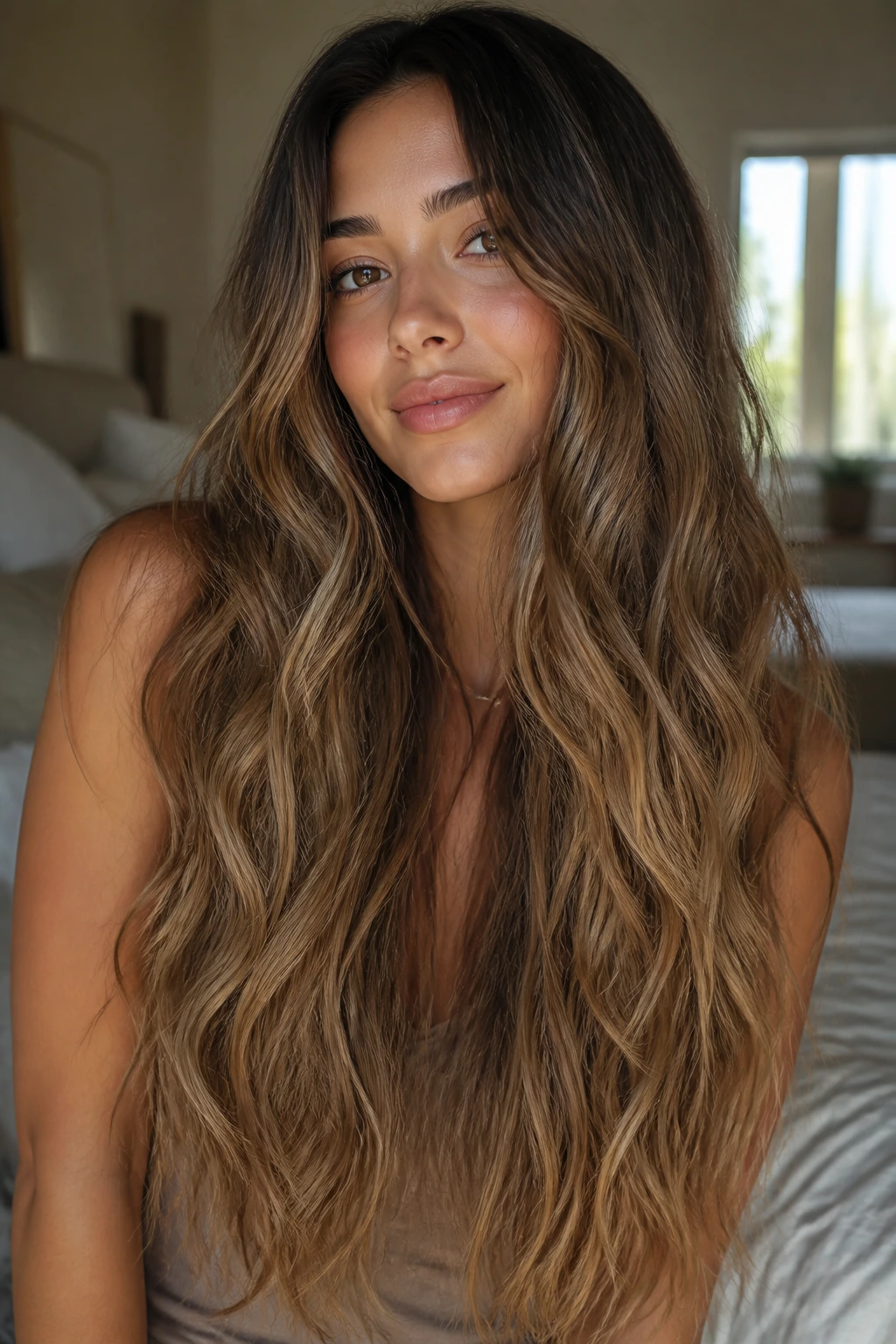
Some people do not want their length touched. Fair. An ultra-long U-cut keeps the perimeter feeling full while barely shifting the overall length, which makes it a smart compromise.
The wave pattern here should stay whisper-soft. One or two bends through each section is enough. The shape comes from the cut line and the gentle movement, not from a strong curl. This is a good option for fine hair that still needs the illusion of thickness. It keeps the ends from looking sparse without forcing a layered look that might be too busy.
19. Big Barrel Waves with Layered Lift
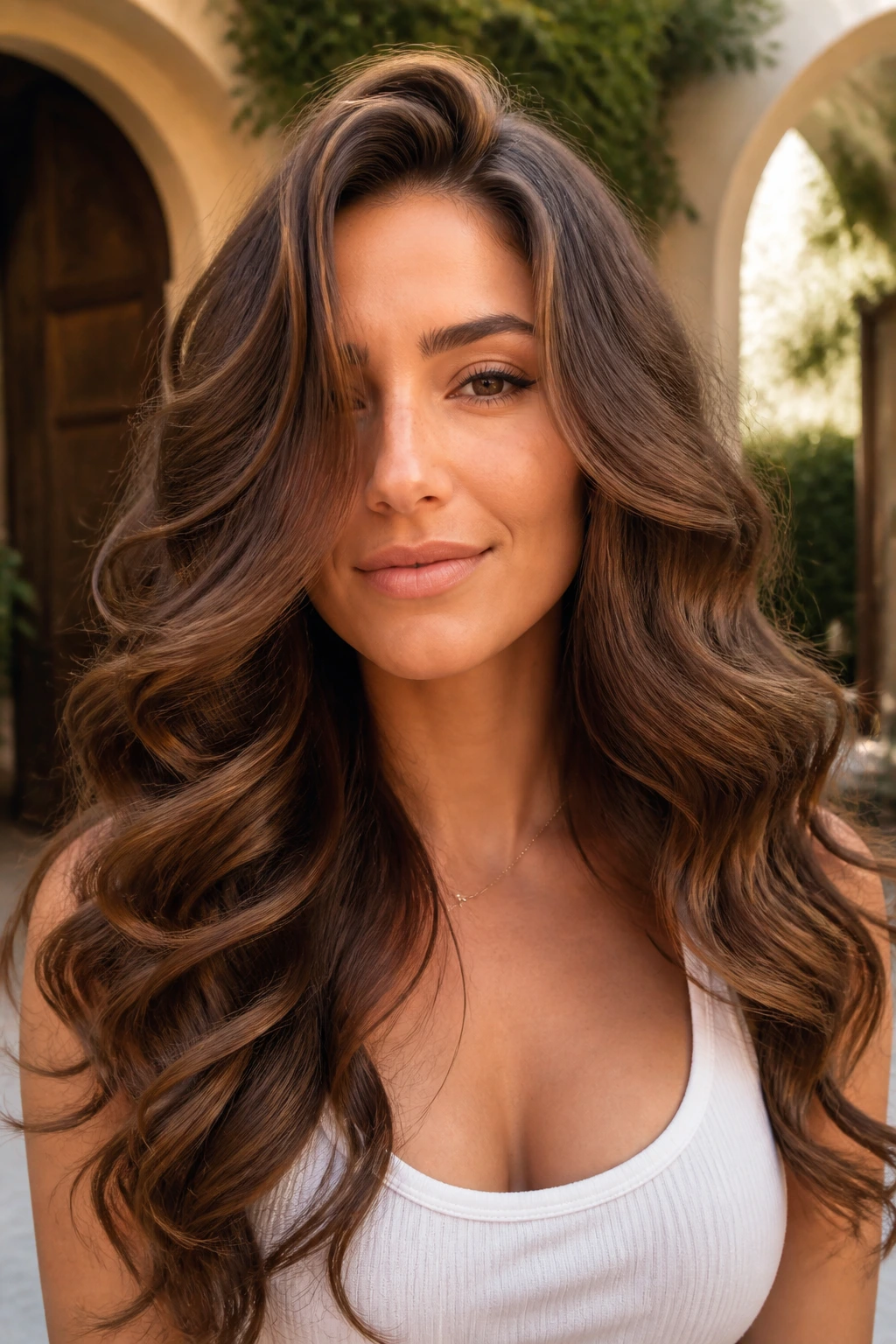
Big barrel waves are what I reach for when long hair needs a little more presence. A 1½-inch wand creates a slower bend, which keeps the layers from turning into corkscrews.
Clip each curl while it cools if you want the shape to last longer. That cooling step matters more than people think. Once you release the clips, brush the wave out just enough so it falls into large, glossy sections. The layered lift shows up at the sides and around the shoulders, which is where long hair usually starts to drag.
20. Waterfall Braid with Beachy Length
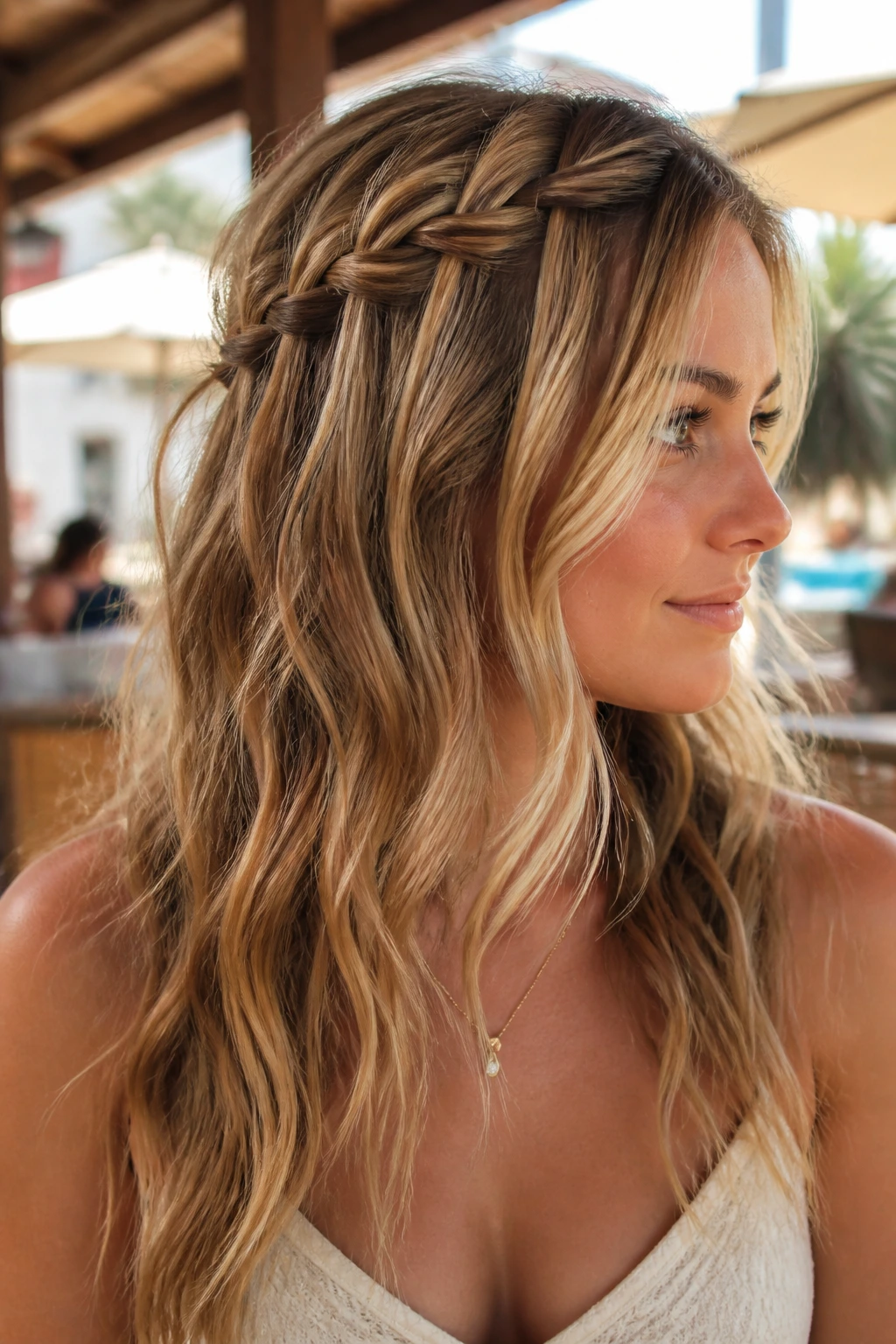
A waterfall braid is one of the easiest ways to dress up layered hair without hiding the waves. The braid sits at the top, then drops little sections through, which lets the loose pieces keep moving.
This is useful for events, but it also solves the problem of long face-framing layers slipping out of place. Keep the braid loose and start it slightly behind the hairline so it doesn’t pull too hard on the front. The rest of the length can stay in beach waves. It looks detailed, but the actual work is light.
21. Center-Part Minimal Layers with Cheekbone Framing
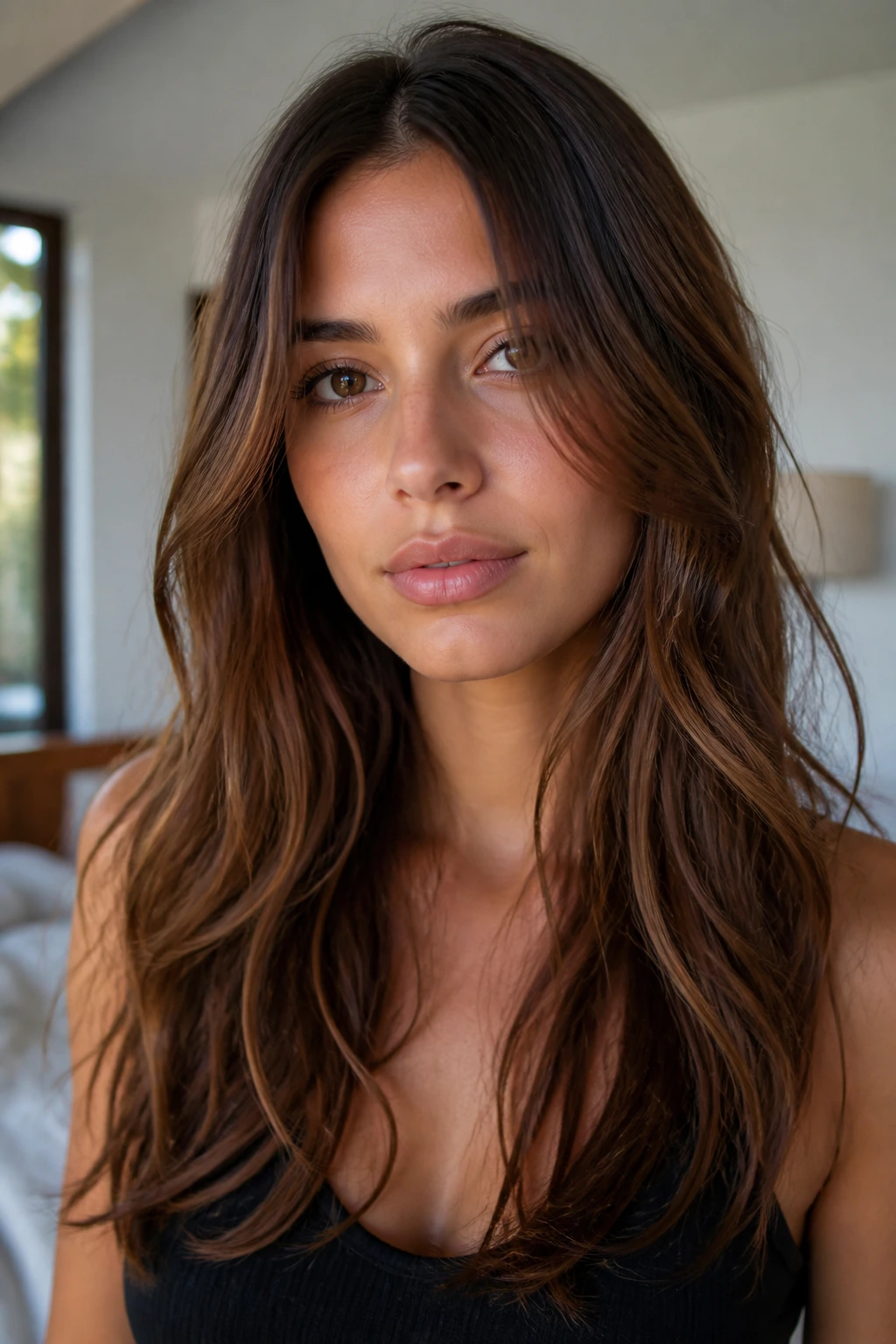
Not every layered cut needs to scream for attention. Sometimes the smartest move is a clean middle part, minimal layering, and just enough face-framing to break up the length.
This style suits hair that is already straight-to-wavy and doesn’t want a lot of rough texture. A gentle bend at the ends, a little movement around the cheekbones, and a smooth crown are enough. It’s the calm option in the lineup. No heavy shagging, no obvious disconnection. Just long hair with shape where it counts.
22. Side-Swept Glam Waves
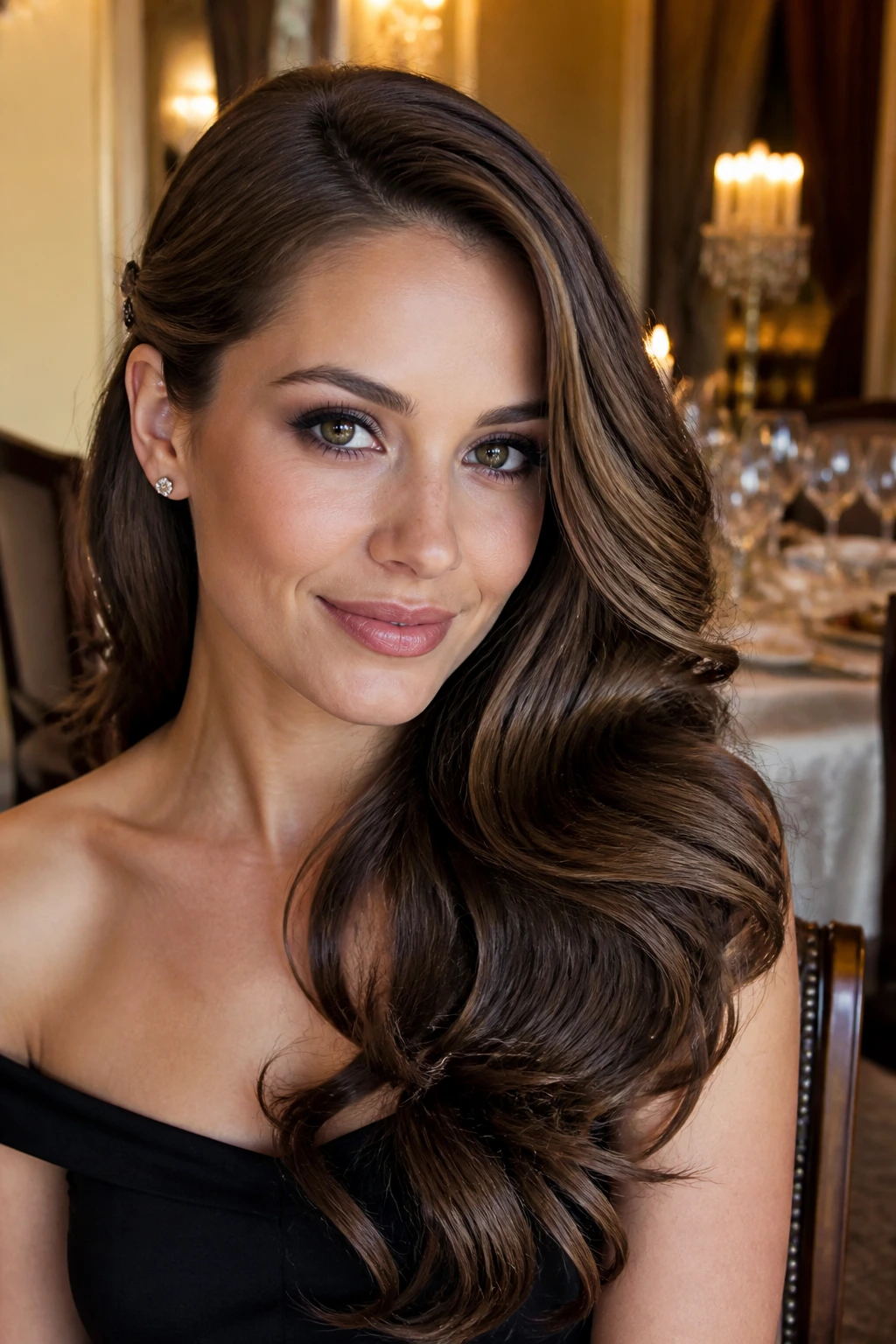
A side-swept wave is the dressier cousin of the everyday beach look. One side opens the face, the other side gets more volume, and the layers create that soft sweep over the shoulder.
This is the style I’d pick for a formal dinner or a polished event where you still want hair that feels loose. Use a side part, curl away from the face, then tuck one side behind the ear and pin it low if needed. A little shine spray on the top layer helps the surface look smooth without flattening the bend.
23. Root-Lift Layers for Fine Hair
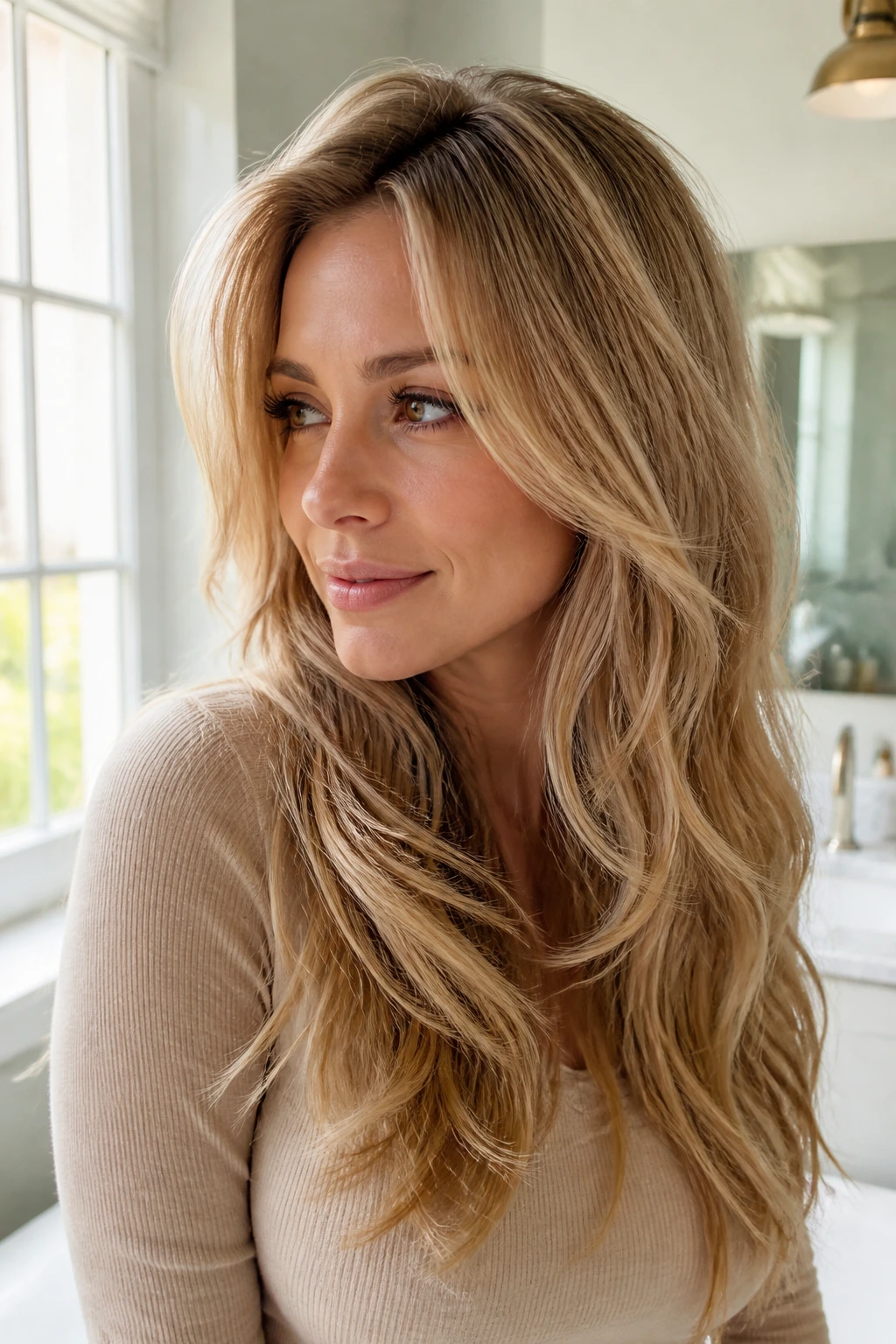
Fine hair needs a different strategy. It doesn’t need a million short layers; it needs lift near the roots and enough shape through the mids to keep the ends from looking skinny.
Ask for long layers that start lower, then style with mousse at the crown and a round brush at the roots. A few soft waves through the mid-lengths create volume without turning the ends fuzzy. Dry shampoo at the part line gives the style grip. This one is about structure, not fluff.
24. Messy Knot with Loose Tendrils
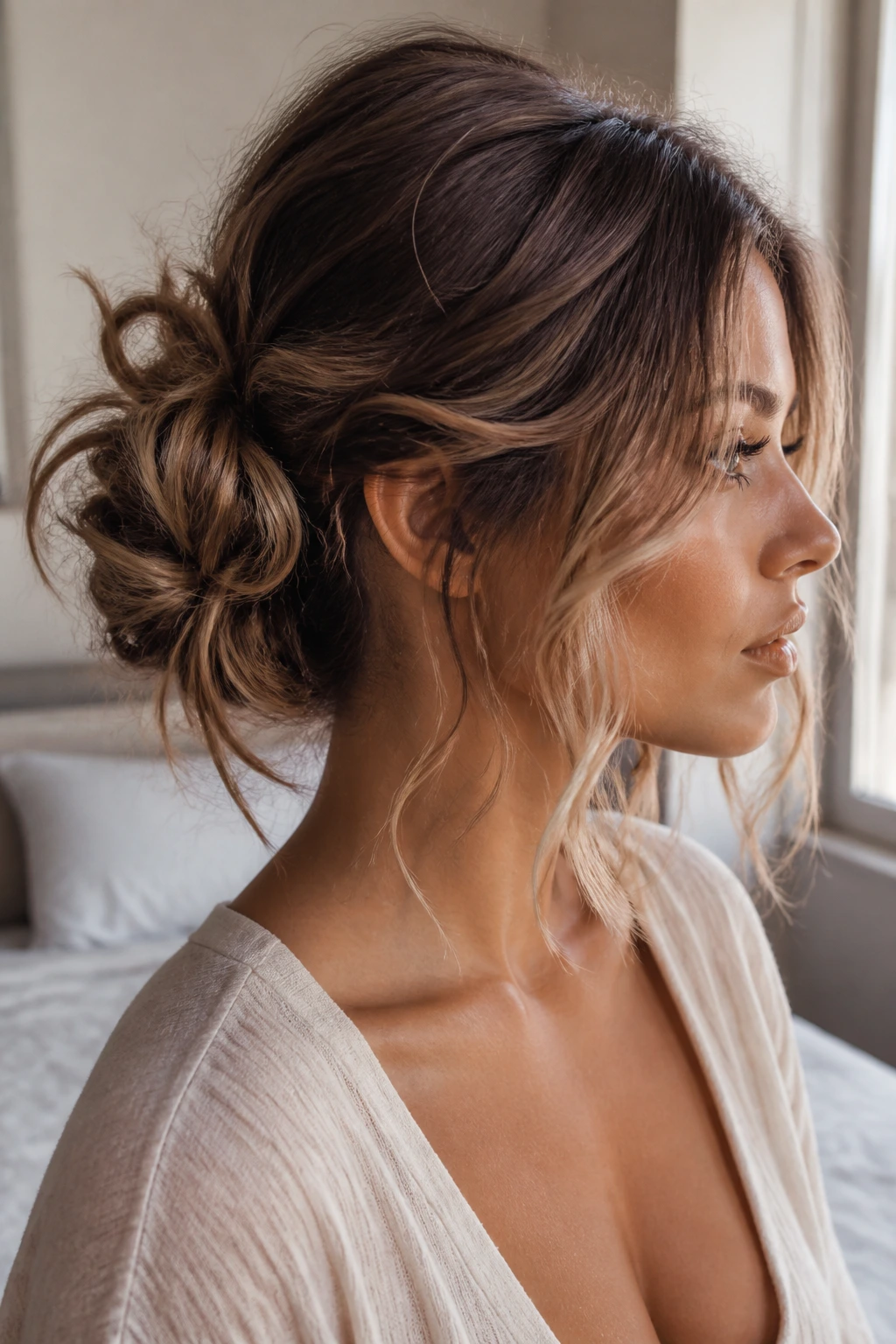
A messy knot sounds casual because it is. But on layered wavy hair, it works hard in the background: the shorter pieces escape around the face, the longer ends tuck into the bun, and the texture keeps everything from feeling tight.
I like this when second- or third-day waves are still decent but not worth wearing down. Leave two or three front tendrils out, twist the knot low at the back of the head, and pin it loosely. The result is a softer updo that still shows off the layered cut. It’s the kind of style you can fix with one mirror and one bobby pin.
25. Glossy Seamless Waves with Long Ends
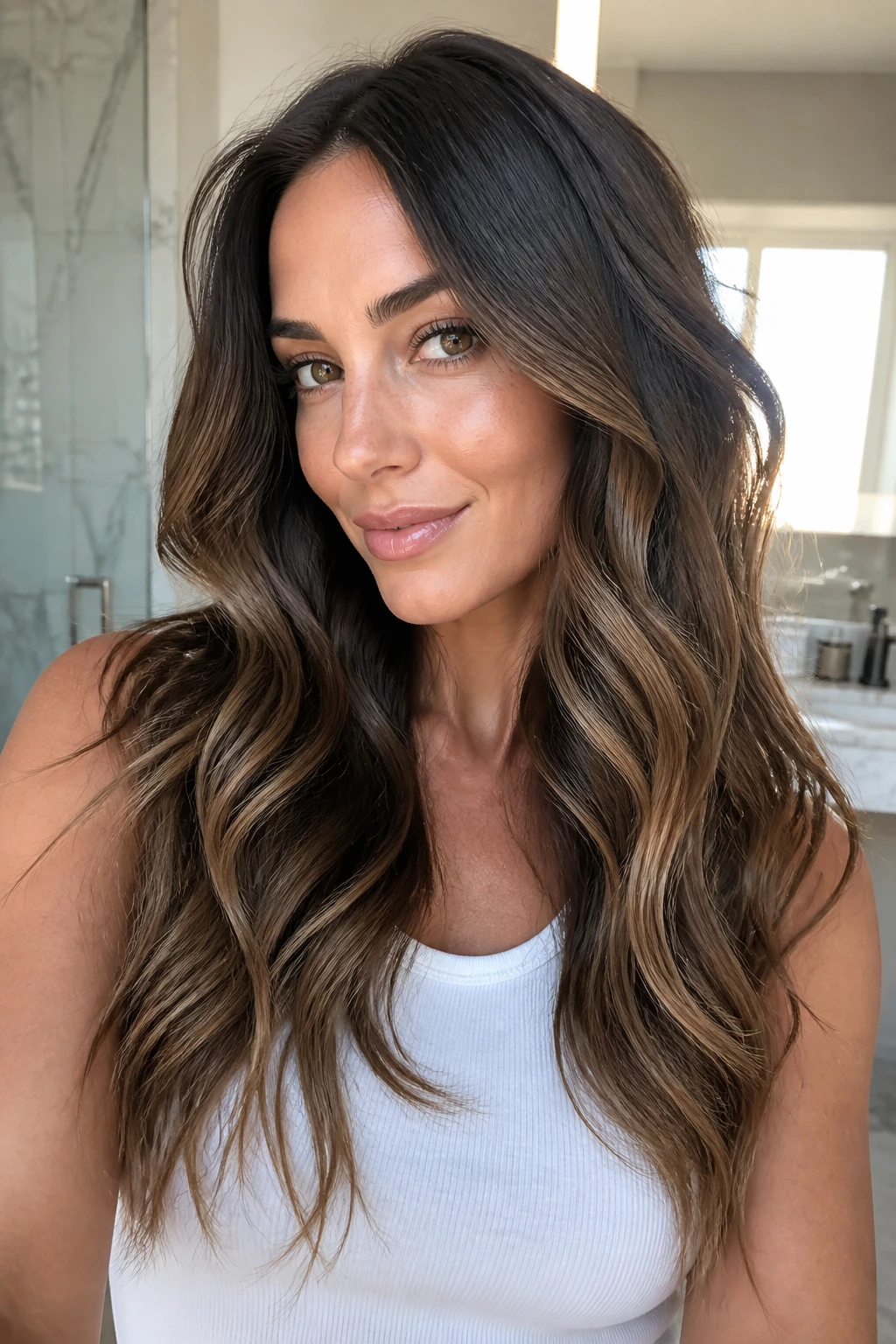
This is the polished finish people ask for when they want beach waves, but smoother. The layers are blended so the wave pattern looks continuous from root to tip, not broken into separate sections.
Use medium-sized sections, alternate the curl direction, and brush the hair out once it’s fully cool. Finish with a pea-sized drop of serum on the lower half only. Not the roots. The idea is sheen and flow, not oil. When it’s done right, the whole style feels soft, clean, and long without looking stiff.
How to Ask for the Cut Without Losing the Length You Love
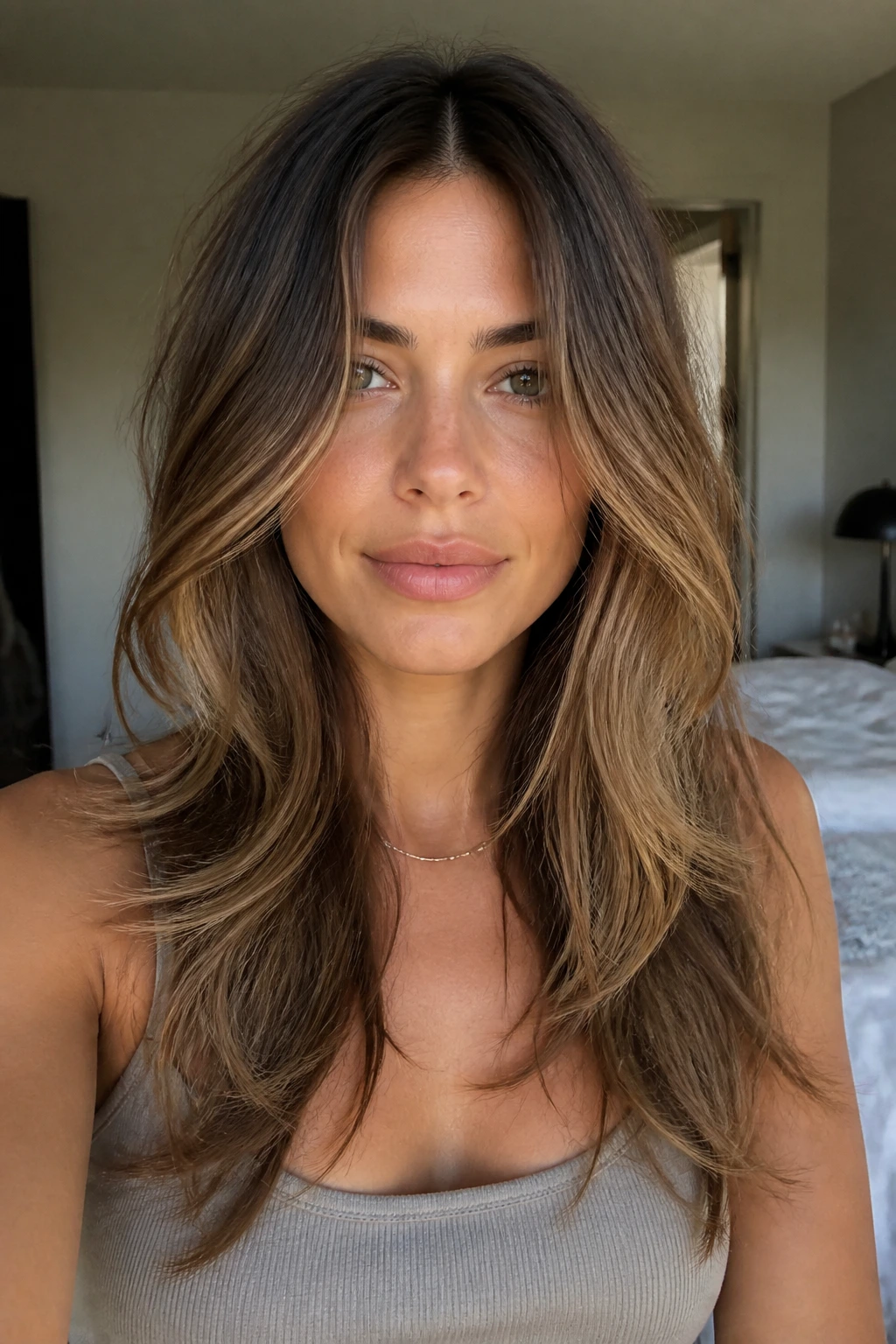
A salon consult gets easier when you stop asking for “layers” and start naming where they should sit. Say where you part your hair, how often you wear it up, and whether you want the front pieces to hit the cheekbone, lip, or collarbone. That gives the stylist a map instead of a guess.
Bring one photo for the shape and another for the texture. Those are not always the same thing. A photo of the cut tells the stylist how the layers fall; a photo of the finish tells them how smooth or piecey you want the ends to look. If your hair is thick, ask them to remove bulk inside the cut. If it’s fine, ask for long, blended layers so the ends keep their body.
One line helps more than people expect: “I want movement, but I want to keep the hemline full.” That tells a good stylist exactly what not to overdo.
Say the length in plain words
If the front pieces should hit your cheekbones, say that. If you want the shortest layers to start around the collarbone, say that too. “Somewhere around here” is how good intentions get turned into a haircut you didn’t mean to ask for.
Essential Tools for These Looks
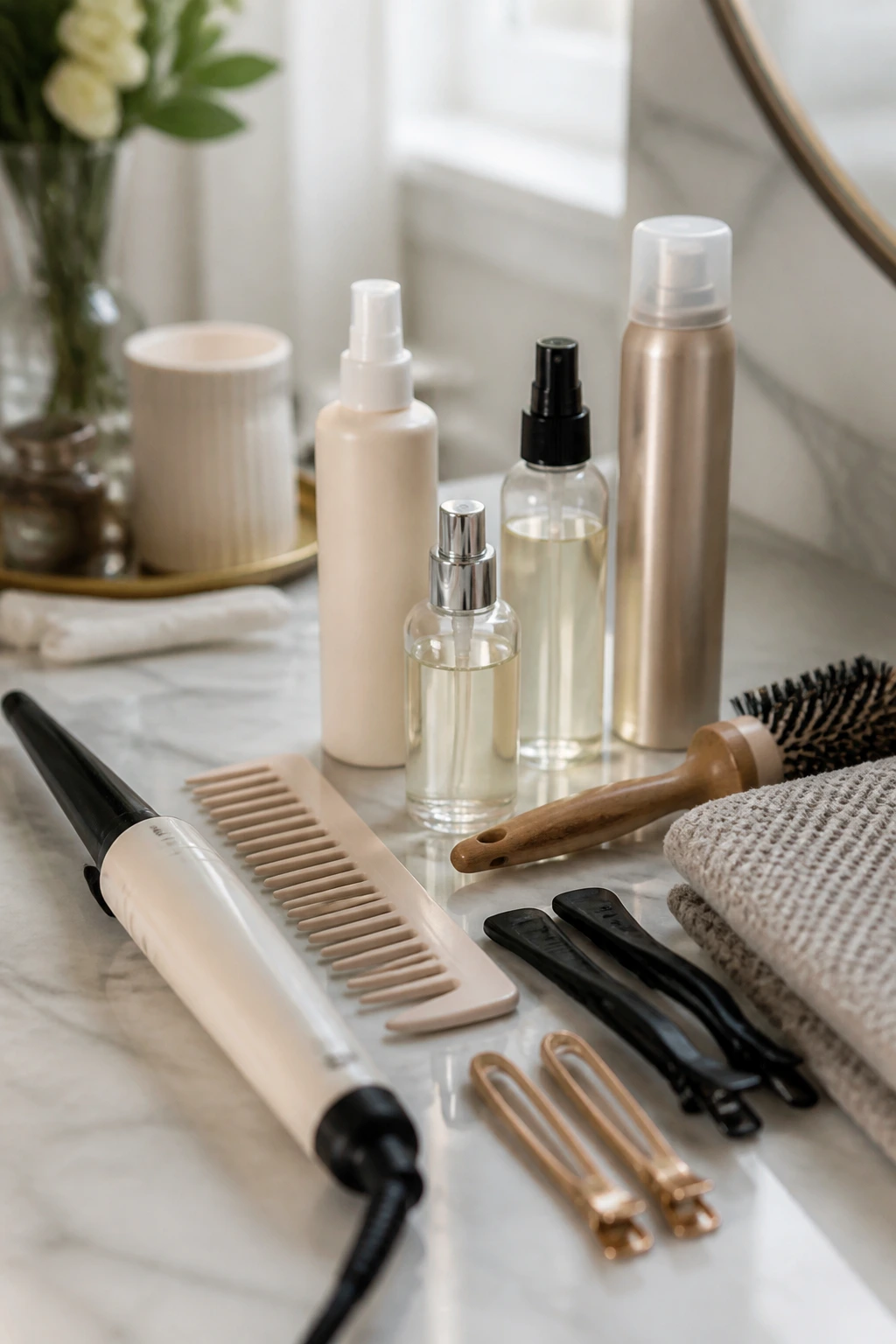
- 1-inch and 1¼-inch curling wands — The smaller barrel gives tighter bends for shorter front pieces; the larger one keeps long hair soft and loose.
- Heat protectant spray — Use it before every hot-tool pass, especially on the ends where layered hair tends to dry out first.
- Wide-tooth comb — It breaks up curls without turning them frizzy.
- Sectioning clips — Clean sections make the wave pattern more even, and they save time.
- Round brush — Useful for lifting curtain bangs, face-framing pieces, and root volume.
- Texturizing spray — Adds grip to the mids and helps waves hold their shape after brushing.
- Light serum or shine cream — A tiny amount on the ends keeps the hair from looking dry or fuzzy.
- Dry shampoo — Best for the crown and part line on day two or three.
- Microfiber towel or T-shirt — Better than a rough bath towel if you air-dry waves.
- Duckbill clips or root clips — Handy for setting volume at the crown while hair cools.
Smart Product and Heat-Setting Tips
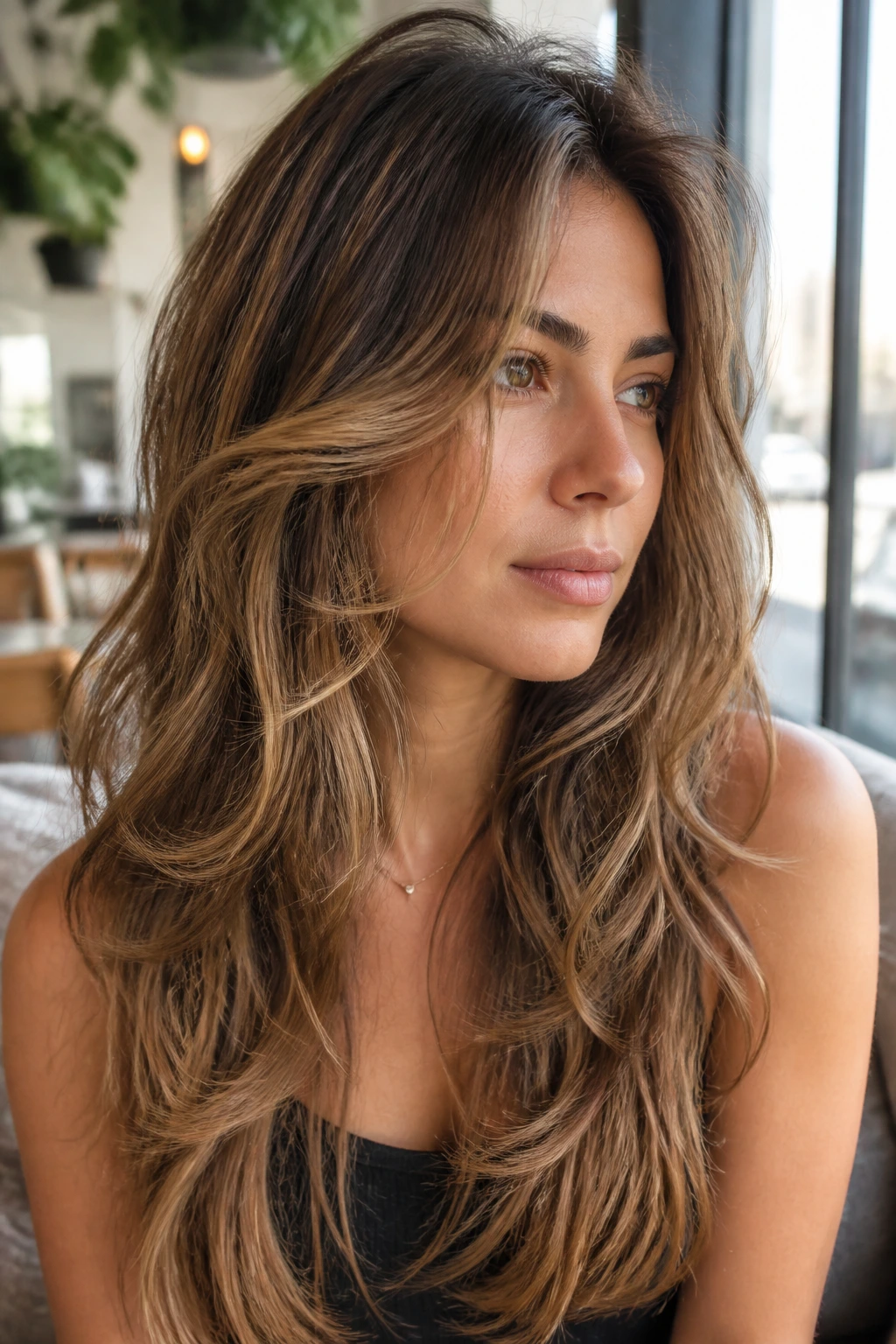
The product stack should match the finish you want, not the trendiest bottle on the shelf. If your waves fall out fast, start with mousse at the roots and a light texture spray through the mids. If your hair frizzes the second it dries, use a creamier leave-in and keep the finishing spray flexible instead of crunchy.
Heat setting matters more than people admit. Curling iron sections that are too wide won’t hold on long hair, because the heat never reaches the center. About 1 to 1½ inches is the sweet spot. Wrap the hair, hold it long enough for the outer layer to warm through, then let it cool fully before you touch it. That cooling time is where the shape hardens.
And please don’t brush hot curls right away. They’ll fall flat and look fuzzy at the same time, which is a strange little disaster. Let the wave cool, then separate it with fingers or a wide comb. If you want a smoother finish, use a boar-bristle brush only after the hair is fully cool.
How to Wear These Waves So They Read Intentional
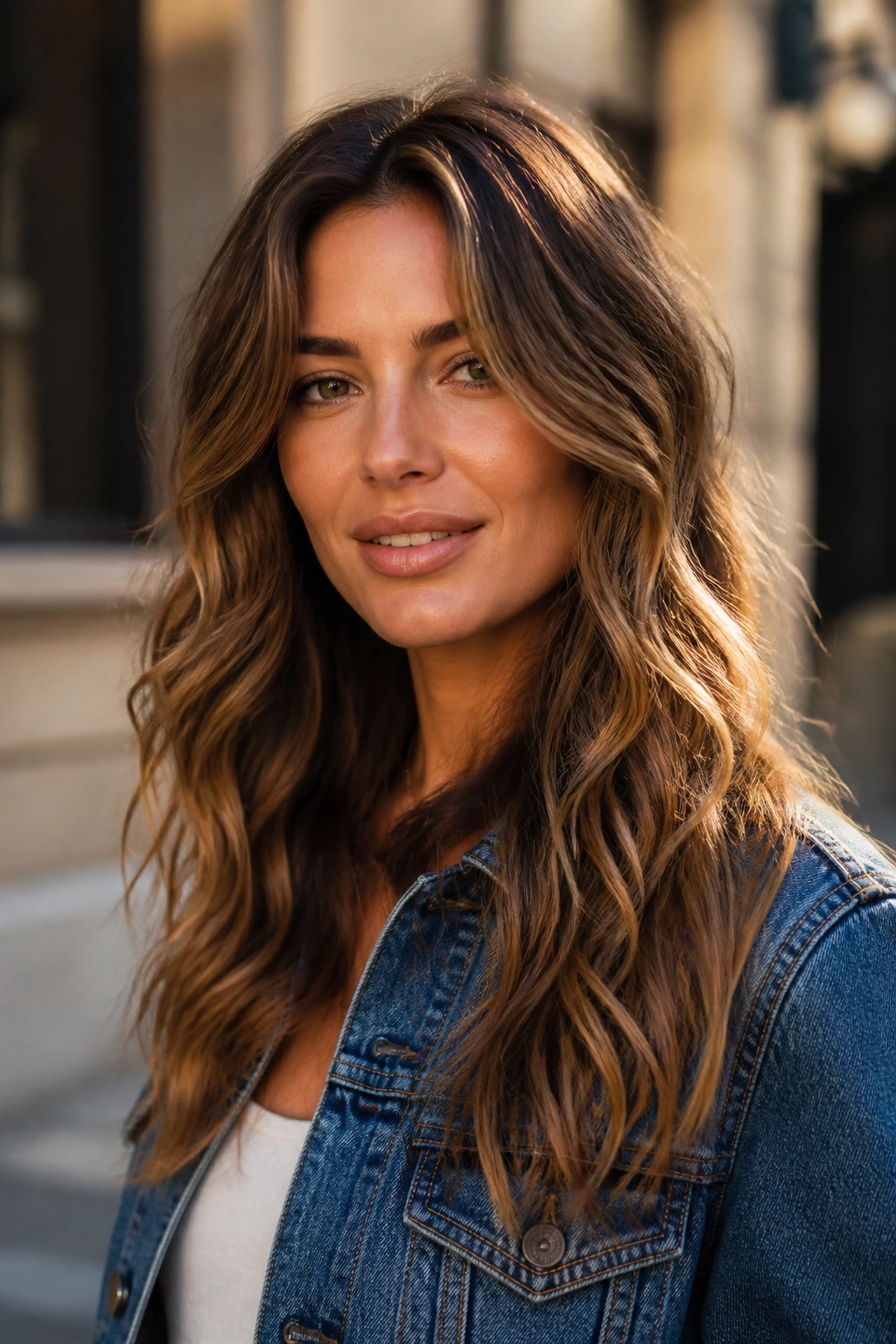
Everyday:
The softer cuts — feathered layers, invisible layers, center-part minimal layers — are easiest to wear loose with a denim jacket, a clean tee, or a button-down. They don’t need accessories to make sense.
Dressier moments:
Side-swept glam waves, big barrel waves, and glossy seamless waves hold up better when the rest of the outfit is simple. The hair already does enough work. A low bun or tucked side keeps the neckline open.
Accessories:
Claw clips, pearl pins, silk ribbons, and slim headbands all play well with layered lengths. The trick is to place them where they don’t crush the face-framing pieces. Leave the shortest front layers out whenever you can.
Best parting choice:
Middle parts sharpen the look. Side parts soften it. If your hair sits flat at the crown, a side part often gives the style more body without extra product.
Extra Styling Tricks That Make the Cut Look Better
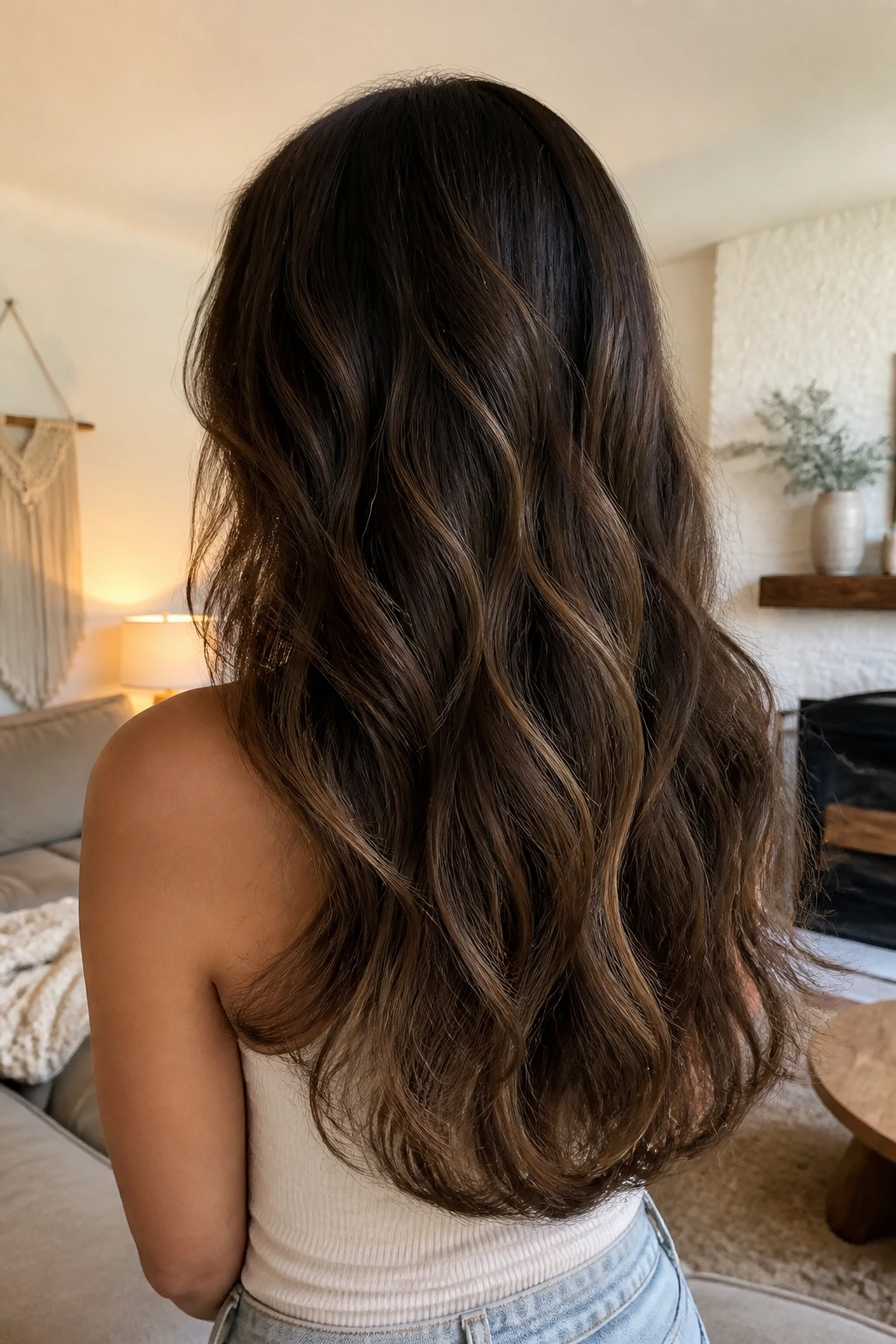
Texture Booster:
A salt spray or dry texturizer on damp hair adds a little grit before the blow-dry. Use a light hand. Too much and the ends feel rough.
Smooth Finish:
If you want the wave to look cleaner, put a pea-sized bit of serum only on the bottom half of the hair. The top stays airy; the ends get polished.
Quick Refresh:
On the second day, mist the front sections with water, twist them around your fingers, and hit the crown with dry shampoo. You do not need to re-curl the whole head.
Make-It-Yours:
Straight hair can lean more polished with a flat-iron bend. Wavy hair can lean more undone with air-drying and a scrunching cream. Thick hair usually needs more internal layering, while fine hair usually looks better with longer, softer layers.
Common Mistakes That Flatten the Shape
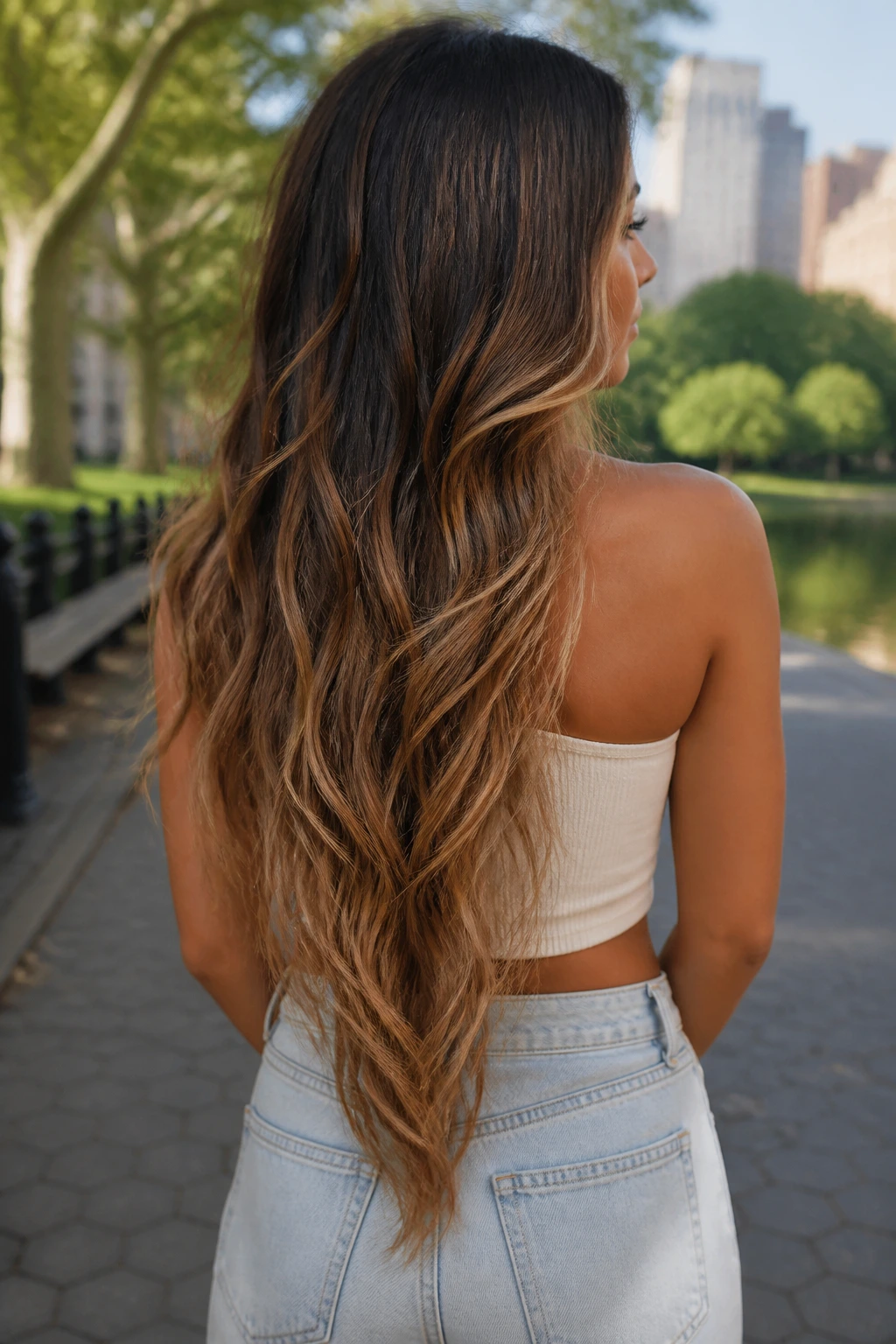
Cutting too many short layers at once.
The hair starts to puff around the cheeks and lose its long-line shape. Fix it by keeping the front pieces long enough to blend, not chop.
Curling every section in the same direction.
You end up with a stack of uniform curls instead of soft waves. Alternate direction, and leave the last inch or two straighter on some pieces.
Using too much product at the root.
Roots coated with heavy cream or oil go limp fast. Keep rich products on the ends and use lightweight mousse or spray near the scalp.
Skipping the cool-down time.
Hot waves fall apart because they never set. Clip them while they cool, or at least wait before brushing them out.
Ignoring your natural part.
A style that fights your part line will collapse by the afternoon. Work with the part you actually wear most days, then shift it only when you want more volume.
Variations and Adaptations to Try
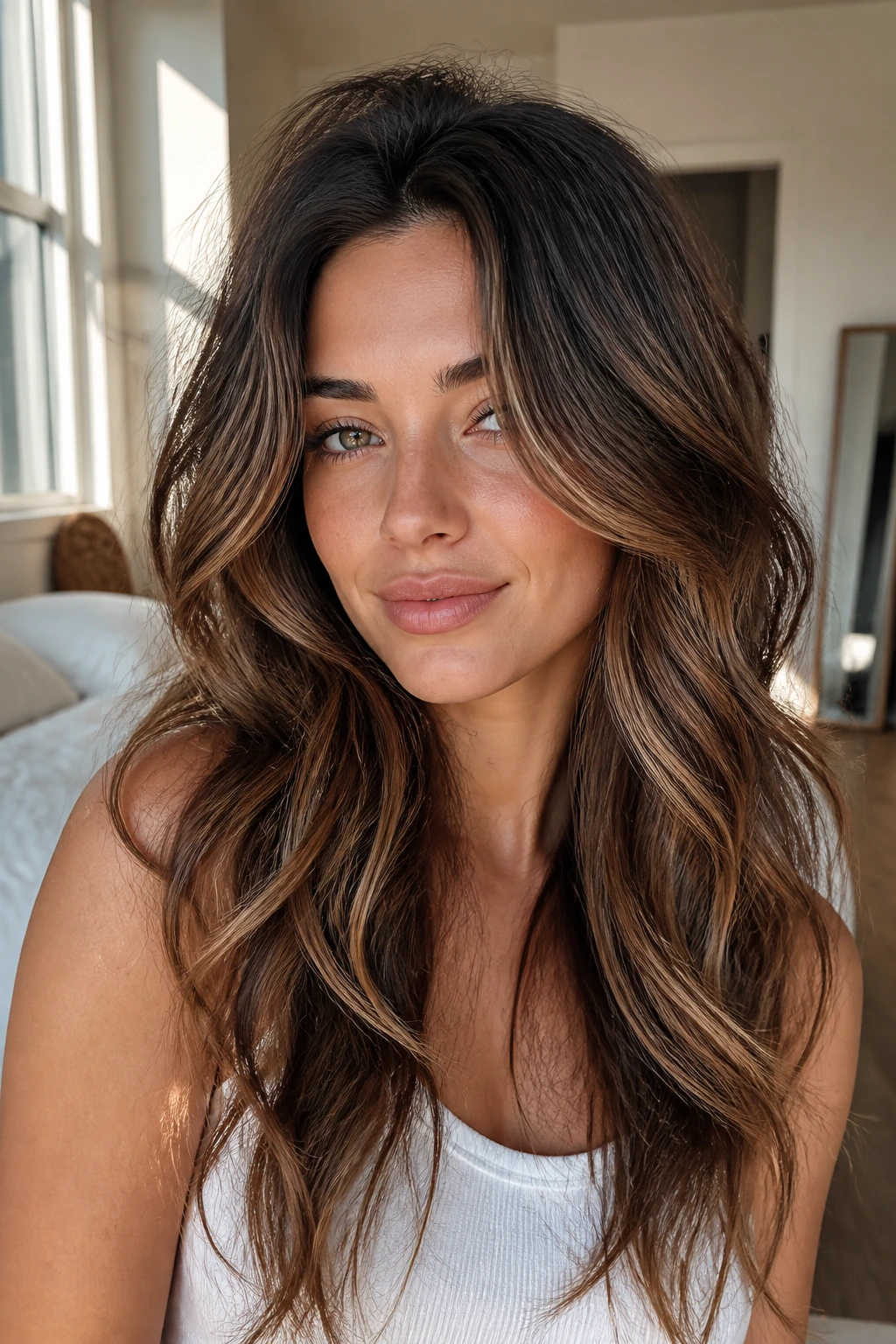
For Fine Hair, Try the Lifted Veil
Keep the layers long and blended, then focus on root volume and a soft bend through the mids. Heavy texturizing will make fine hair look sparse, so stick with mousse and a light spray.
For Thick Hair, Try the Weight-Release Shape
Ask for internal layers, a U-cut, or a butterfly outline that removes bulk without hacking the perimeter. Thick hair looks best when the bottom still feels full.
For Naturally Wavy Hair, Try the Air-Dry Set
A leave-in cream and a little scrunching can do more than a curling iron ever will. Let the natural pattern show through, then refine only the front sections.
For Straight Hair, Try the Brush-Out Bend
Create the wave with a wand or flat iron, let it cool, then brush it into softer ribbons. Straight hair often needs a little extra shaping, but the result can look clean and smooth.
For Long Faces, Try the Side Sweep
A deep side part and chin-skimming front pieces widen the look of the face a bit. Keep the wave loose around the cheek area so the style doesn’t drag everything downward.
For Round Faces, Try the Cheekbone Frame
Layers that hit around the cheekbones or collarbone help pull the eye vertically. Avoid too much volume right at the sides of the face.
Maintenance, Refreshing, and Sleeping on It
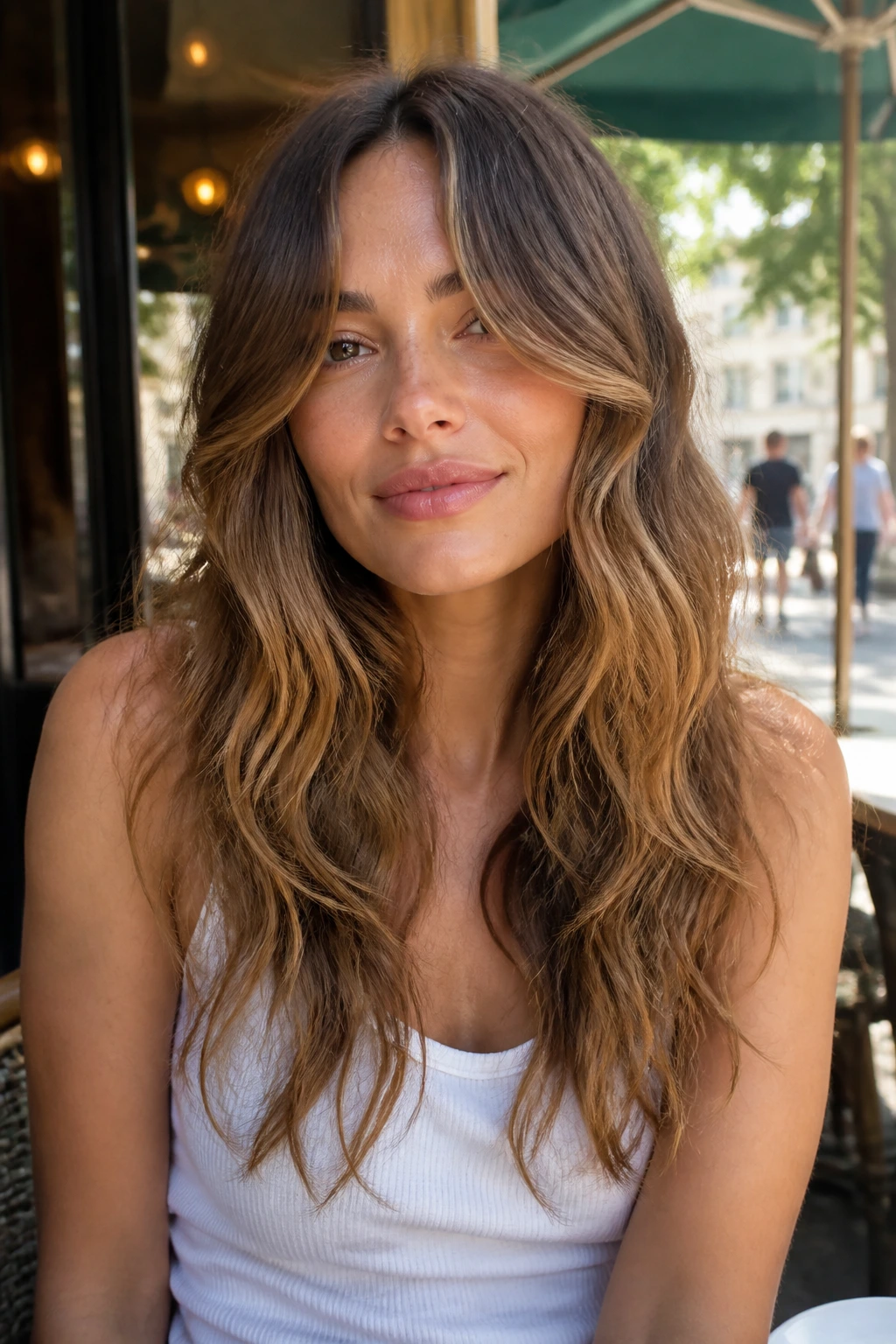
Long layered waves keep their shape longer when the ends are trimmed on a steady schedule. For most people, that means every 8 to 12 weeks if the layers are part of the look. If you wait too long, the front pieces lose their shape first, and the whole style starts to feel vague.
Sleeping on the style is easier than people think. A loose braid, a silk scrunchie, or a low pineapple keeps the wave from getting smashed. If you sleep with hair fully loose, the middle sections crease and the front pieces frizz faster. Silk pillowcases help, but they do not replace a good sleep setup.
Refreshing is mostly about restraint. Mist the hair lightly, twist the face-framing pieces back into shape, and use dry shampoo where the scalp looks shiny. The goal is not to make day-three hair look brand new. It’s to make it look intentional enough that nobody asks when you last washed it.
Frequently Asked Questions
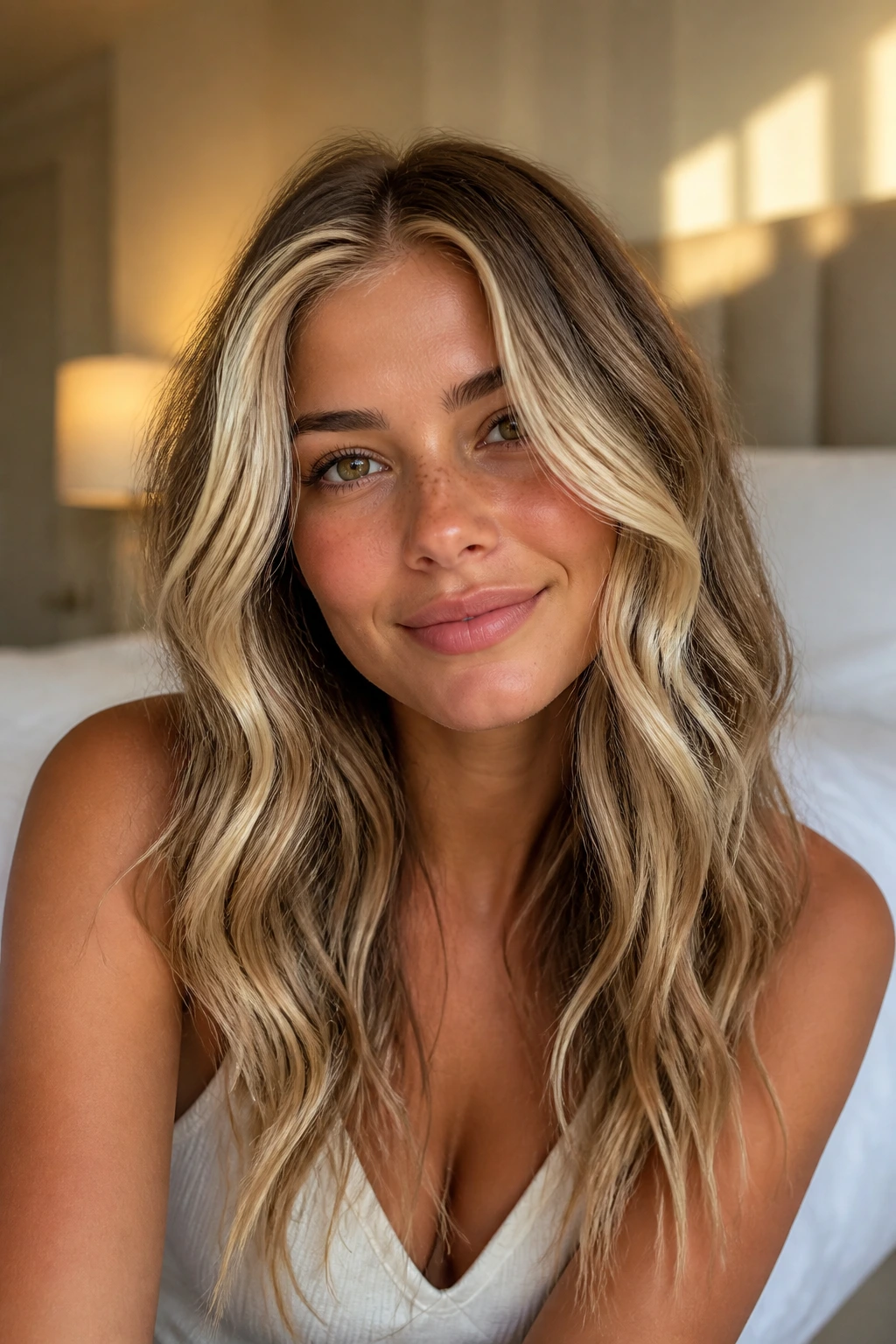
How do I ask for layered beach waves at the salon?
Give the stylist your part, your usual styling habit, and where you want the front pieces to land. Say whether you want more movement, more fullness, or more face framing, because those three things push the cut in different directions.
What layer shape works best for thick long hair?
Internal layers, butterfly shapes, and U-cuts usually work well because they remove bulk without making the ends look thin. Thick hair needs room to move, but it still needs weight at the bottom so it doesn’t puff out.
Can I get beachy waves without heat?
Yes. Twist damp sections, braid loose plaits, or use foam rollers and let the hair dry fully before taking them out. The wave will look softer than a hot-tool curl, which is often the point.
Do curtain bangs work with long layered waves?
They do, as long as you’re willing to style the fringe separately. Curtain bangs help frame the face and blend into the layers, but they need a quick round-brush pass or they’ll split in odd places.
Why do my waves fall flat so fast?
Usually the sections were too big, the hair never cooled, or the root area had too much heavy product. Smaller sections, better cooling, and lighter products near the scalp fix most of that.
What if my hair is fine and long — will layers make it thinner?
They can if the layers are cut too high. Ask for long, soft layers and keep the shape blended so the ends still look full. Fine hair usually needs lift, not a choppy outline.
How often should I refresh the style between washes?
Usually one light refresh on day two and another on day three is enough. After that, the hair often benefits from a full wash or a reset with heat-free wave styling.
Can I wear these styles up without losing the wave pattern?
Yes, but use loose styles: low ponytails, half-up clips, soft knots, or braided crowns. Tight elastics flatten the layers and create dents that are annoying to smooth out later.
The Shape That Keeps Long Hair Moving
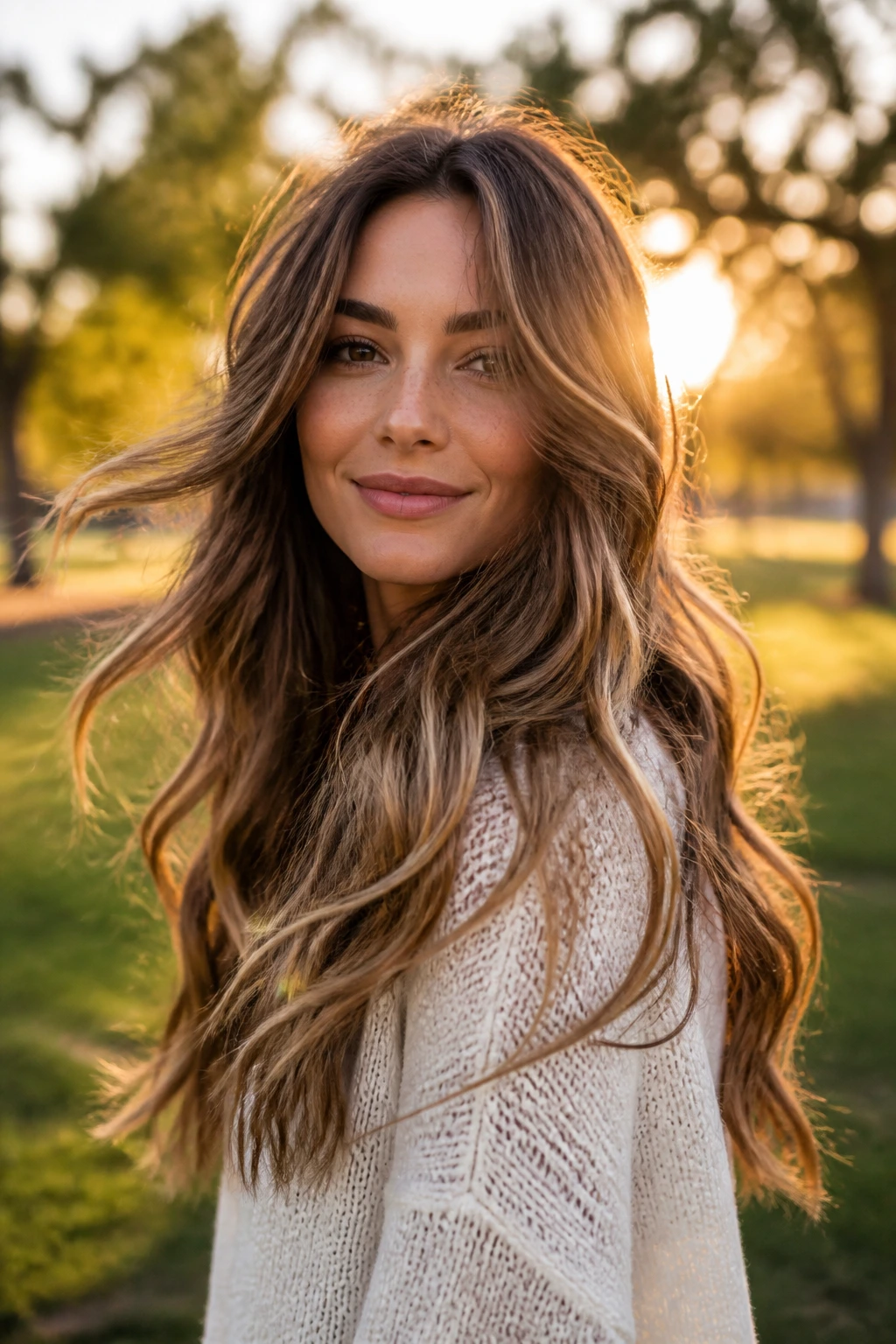
Long layered waves work because they solve the same problem in a dozen different ways. Some cuts add lift, some remove bulk, and some just give the front pieces enough shape to keep the whole style from feeling heavy. That’s the part I like most: you can keep the length and still let the hair move.
If your long hair has been sitting flat or hanging in one blunt sheet, the answer is probably not more curl. It’s a better shape under the wave. Pick the version that matches your density and your routine, then let the cut do some of the work for you.