



A French bob can look razor-sharp on a round face, but thick hair changes the whole conversation. Too much width at the cheekbones and you get a soft halo instead of a shape. Too much blunt bulk and the cut sits there like a cap. Get the geometry right, though, and the result is hard to beat: a clean line, a little swing at the ends, and enough structure to make the face read a touch longer.
That’s the part people miss when they ask for this cut by name and stop there. A French bob is not one haircut. It’s a family of bob shapes, fringe choices, and weight-placement tricks. On thick hair, the difference between “chic” and “puffy” can be a quarter inch of length, a hidden interior layer, or the way the stylist removes bulk below the occipital bone instead of shredding the perimeter into mush. Small choices. Big payoff.
Round faces need angles. Thick hair needs control. Put those two facts together and the best French bob ideas start to look less like inspo-board fluff and more like smart design. The styles below lean on chin length, cheekbone breaks, soft corners, and controlled movement so the cut sits cleanly instead of flaring outward the minute you bend forward or tuck one side behind your ear.
Why This Collection Is Worth Your Scroll

- Face Lengthening: These versions use jaw-skimming lines, side parts, or longer front corners to make a round face read a little more vertical without looking severe.
- Thick-Hair Friendly: Several options rely on internal debulking and beveled ends, which keeps dense hair from ballooning at the sides.
- Styling Flexibility: Some cuts want a round-brush blowout, others look best with a rough dry and a bit of bend, so you’re not locked into one routine.
- Bangs That Actually Help: Fringe choices here are doing real work—breaking up width at the forehead, softening the top line, or pulling attention to the eyes.
- Low-Fuss Grow-Outs: A few of these styles keep their shape for weeks because the outline is clean even when the interior starts getting a little shaggy.
- Salon Conversation Friendly: Each style gives you a clearer way to talk to your stylist than saying, “something French but not too short.”
Why French Bobs and Thick Hair Work So Well Together

A thick head of hair gives a French bob something fine hair can’t always provide: visible shape. The cut has enough density to hold a blunt edge, enough body to create that soft bend at the bottom, and enough substance to avoid looking stringy on day two. But the density has to be managed. No one wants a triangle.
Round faces do best when the eye is encouraged to travel up and down, not straight across. That means length that kisses the jaw or sits a little below it, corners that aren’t too round, and some kind of break in the horizontal line—bangs, a side part, or a longer front piece. If the shortest point lands exactly at the cheekbone and the width is left untouched, the face can look wider. If the perimeter is kept blunt and the inside is handled with restraint, the whole cut starts doing its job.
And yes, that restraint matters. Thick hair does not need to be destroyed with aggressive thinning shears. It needs weight removed in the right places. Usually that means the hidden interior, the nape, or the lower back section—not the ends, which are the part that sells the haircut.
1. The Blunt Jawline French Bob
A clean, blunt French bob that skims the jaw is the classic answer for round faces, and it earns the title honestly. The line is crisp, the shape is tidy, and thick hair gives it enough structure to sit there with intention instead of collapsing into fluff. If you want a cut that looks polished even when you’ve done very little to it, this is the one.
Why It Works
The blunt perimeter creates a strong edge, which matters when your hair density wants to expand outward. Hitting the jawline—or just a hair below it—keeps the cut from landing at the widest part of the cheek. That tiny shift changes the whole silhouette.
What to Ask For
- Length: Jawline to ½ inch below the jaw.
- Finish: Blunt perimeter, no over-layering at the ends.
- Bulk control: Internal debulking only if your hair is very dense.
Best styling move: Blow-dry with a nozzle pointed downward, then bend the last inch under with a 1-inch round brush so the edge stays clean, not boxy.
2. The Micro-Bang French Bob
Short fringe, sharp line, instant attitude. Micro bangs can be a smart move on a round face because they pull the eye upward and leave the jawline clear. On thick hair, they also stop the whole cut from feeling bottom-heavy, which is a common problem with shorter bobs.
The trick is balance. If the bangs are too dense, they sit like a shelf and drag the face wider. If they’re cut with a little separation—still short, but not helmet-thick—they give the cut air. I like this version when the hair has a bit of natural bend, because the fringe doesn’t need to be stick-straight to work.
This one is not for someone who hates trims. Micro bangs grow out fast, and on thick hair they can swell if they’re left to wander. But when they’re kept neat, the look is crisp, almost graphic, and it makes a round face feel more sculpted than softer fringes do.
3. The Curtain Fringe French Bob

Ever notice how curtain bangs seem to do half the face-framing work for you? On a French bob, they split the difference between softness and shape. The center opens up the forehead, while the longer sides fall toward the cheekbones and skim past the widest point of the face.
That matters on thick hair, because you can leave the bob itself a little cleaner and let the fringe do the shaping. The result is less bulk around the jaw and more motion around the eyes. It reads relaxed, not precious.
How to Wear It
- Keep the curtain pieces long enough to hit the top of the cheekbones.
- Ask for the fringe to be connected softly, not chopped off in a hard line.
- Use a medium round brush to flip the pieces away from the face while drying.
My take: This is one of the easiest French bob variations to live with if you like a little softness but don’t want the haircut to puff out.
4. The Deep Side-Part French Bob

A deep side part is a sneaky little trick, and I mean that in the best way. It shifts volume to one side, interrupts the symmetry of a round face, and gives thick hair a more deliberate shape. The cut itself can stay fairly simple. The part does the heavy lifting.
This style works especially well if your hair wants to expand evenly on both sides when it dries. By pushing everything off-center, you create lift at the roots and a visual line that travels diagonally across the face. Diagonals are your friend here. Always have been.
If you wear glasses, this version can be especially good because the side part keeps the fringe out of the frame line and prevents the whole face from getting boxed in.
5. The Textured-Ends French Bob

This is the cut for someone who likes a little movement at the ends but doesn’t want the whole bob shredded into layers. The texture lives at the perimeter—soft point-cutting, a bit of slide cutting, maybe a whisper of razor work on the last half-inch if the hair can take it.
On thick hair, textured ends keep the bob from feeling like a solid brick. On a round face, the slight irregularity breaks up the horizontal line just enough to make the cut look lighter around the cheeks. The result is less “helmet” and more “lived-in shape.”
What to Watch
- Ask for texture only at the ends, not through the whole head.
- Keep the line blunt enough that the shape still reads as a bob.
- Air-dry a little for the pieces to separate on their own.
Good sign: The ends should move. They should not fray.
6. The Hidden-Layer French Bob
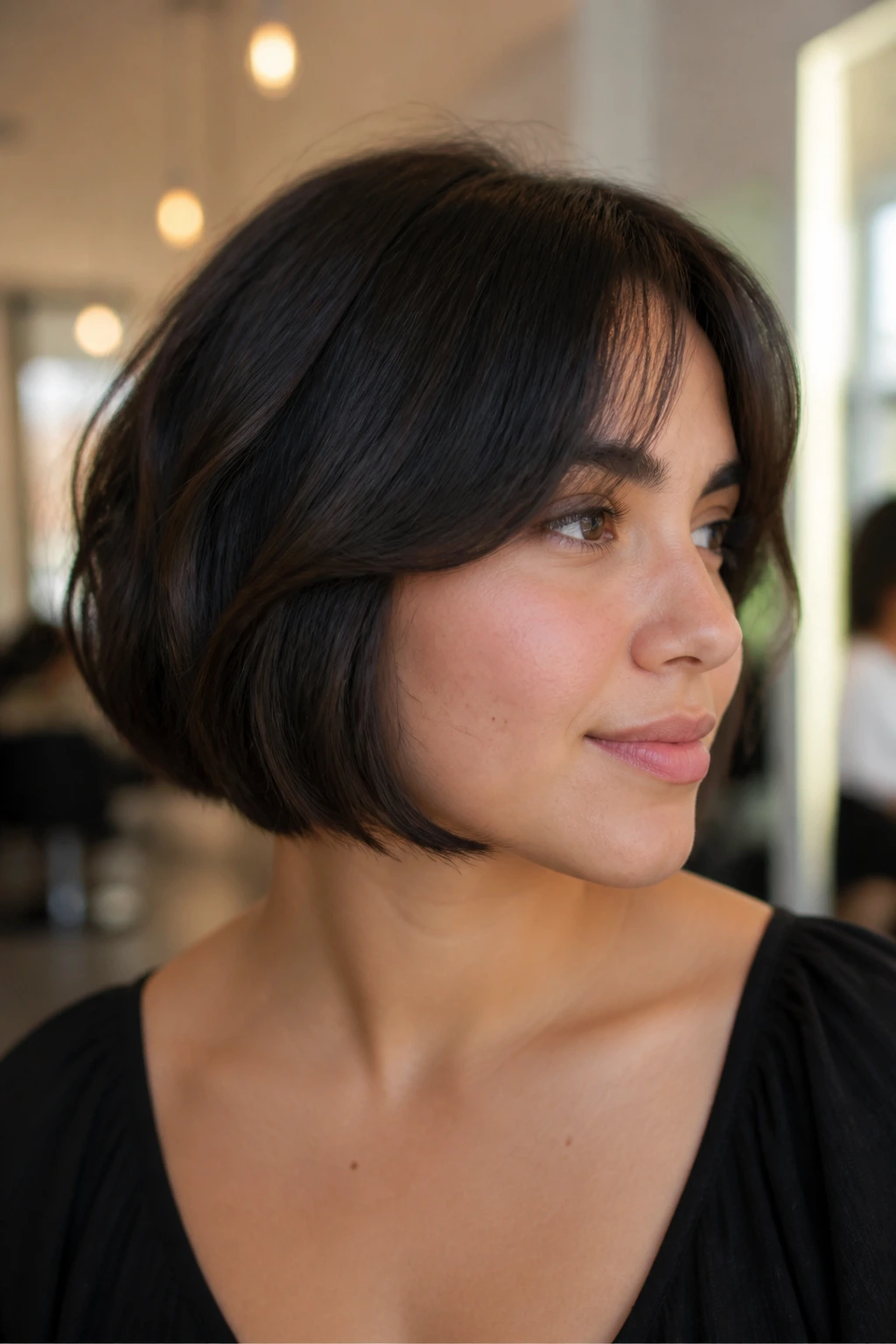
Some thick hair needs layers. Some absolutely does not. The hidden-layer bob is for the people in the middle: you need weight removed, but you hate seeing stair-steps in the mirror. So the stylist keeps the exterior line clean and takes out bulk underneath.
That’s a smart move for round faces because the outline stays controlled. The silhouette doesn’t balloon, and the face doesn’t get swallowed by too much hair. You still get enough bend for the cut to feel soft, but the real work is happening where nobody can see it.
This is one of my favorites when someone says, “I want a bob, but my hair gets huge.” Exactly. That’s the problem this cut is built to solve.
7. The Air-Dry French Bob

If your hair has any natural wave at all, an air-dry French bob can look better than a polished blowout. The shape stays a little loose, the ends get that imperfect swing, and the cut feels lighter around a round face because the texture breaks up the outline.
The important part is prep. Thick hair needs product before it dries, not after. A light mousse at the roots and a cream or spray through the mid-lengths keeps the wave from expanding into a triangle. Scrunch once, maybe twice, then leave it alone. Touching it every ten minutes is how people accidentally turn a nice bob into a fuzzy one.
Use this version if you like hair that feels casual but not sloppy. It has a nice, slightly undone finish that suits thick strands better than overly styled curls do.
8. The Beveled-In French Bob
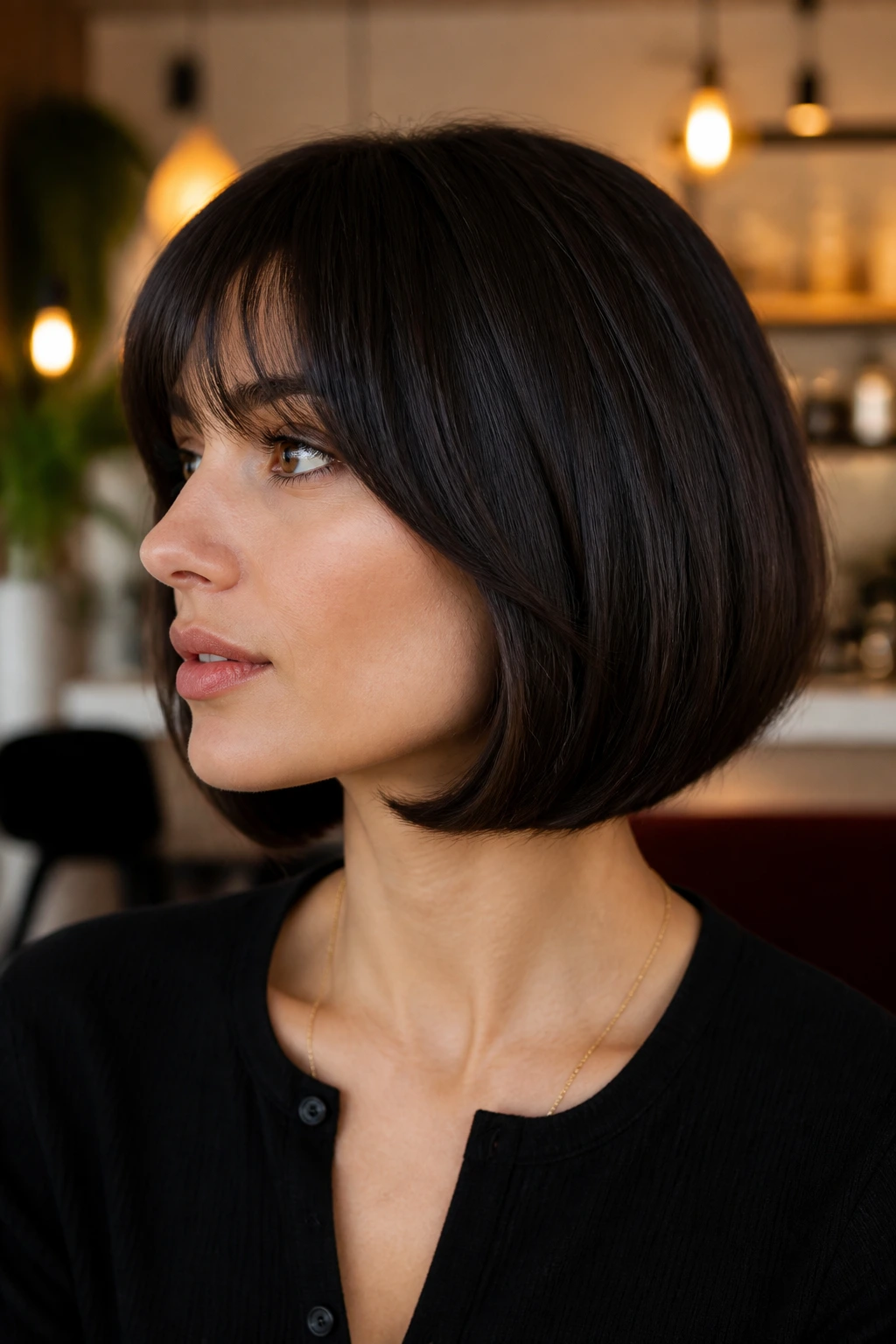
A beveled bob turns inward at the ends instead of hanging straight. That inward curve matters more than people think. On round faces, it tucks the visual line closer to the jaw instead of pushing outward. On thick hair, it reins in the bottom edge so the cut doesn’t sit like a wide shelf.
The shape is built with a round brush or a flat brush plus a quick bend under at the ends. The perimeter should still look blunt from the front, but the side view gets a soft curve. That little bit of control keeps the haircut polished even when the rest of the hair has some movement.
This is one of the better choices if you prefer a neat finish and don’t want to spend your life trying to “mess it up” on purpose.
9. The Piecey Fringe French Bob
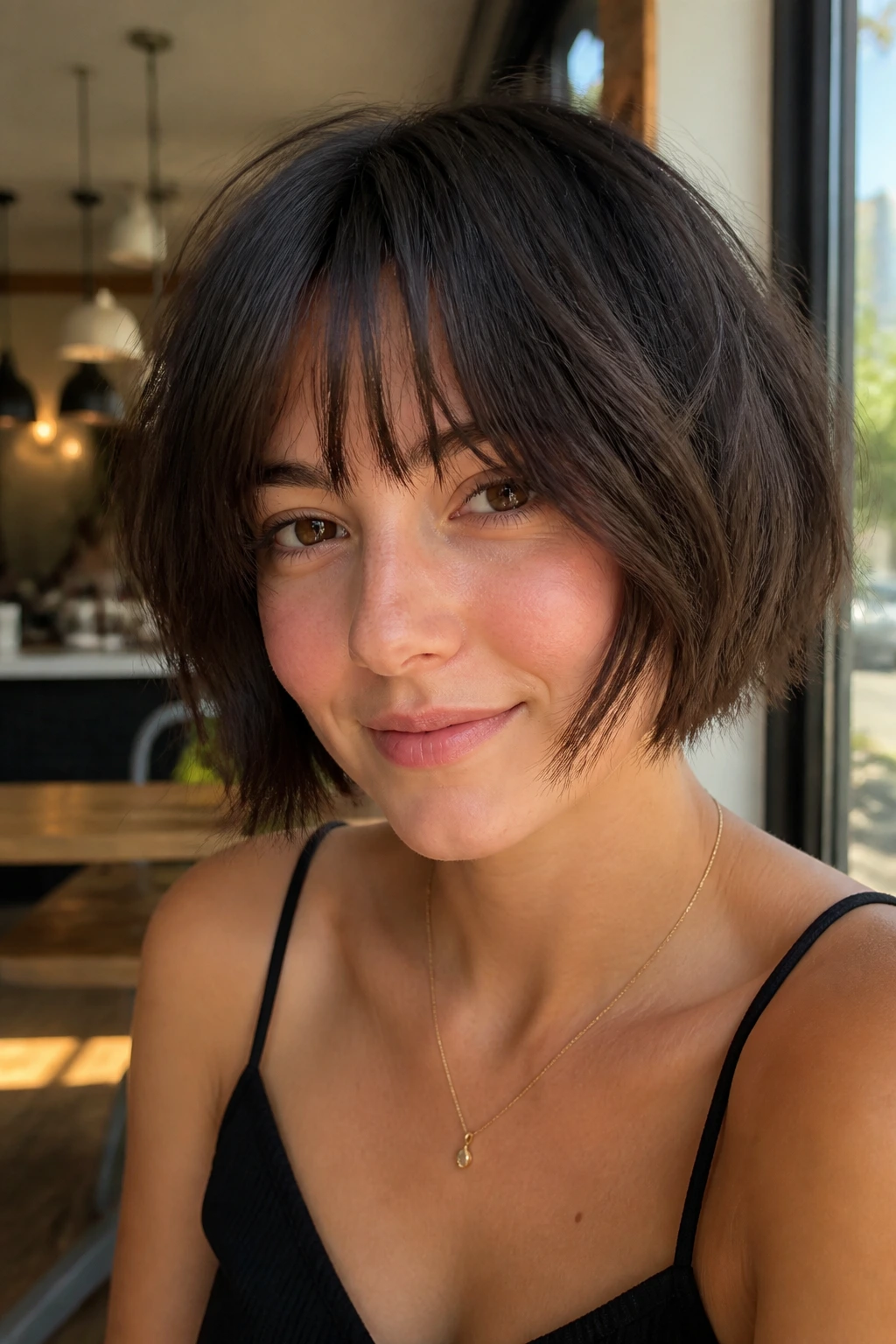
A piecey fringe can save a bob from feeling too heavy around the face. Instead of a dense wall of bangs, you get separated front pieces that land around the eyebrows and cheekbones. That separation matters on a round face because it keeps the forehead from getting boxed in.
Thick hair benefits here, too, because the fringe can be cut with enough density to look full while still being broken up for movement. I’d rather see a fringe with a little gap and shape than a solid curtain that needs daily battle. Much easier to live with.
Styling Notes
- Blow the fringe forward first, then split it with your fingers while it’s still warm.
- Use a tiny amount of styling cream—too much and the pieces clump in a bad way.
- If your forehead is short, keep the fringe slightly longer at the temples.
10. The Longer French Bob

A longer French bob sits somewhere between the jaw and the collarbone, and that extra length can be a relief on very thick hair. It still gives the clean, Paris-inspired outline, but there’s more room for the hair to settle without expanding into the sides of the face.
For round faces, this is a smart compromise. The extra length helps draw the eye downward, while the front can still be angled enough to avoid that blunt width at cheek level. You don’t lose the bob identity. You just stretch it a bit.
This is also a friendly version if you’re nervous about going chin-short right away. It grows out gracefully, and if your hair has a mind of its own, that matters.
11. The Rounded C-Shape French Bob
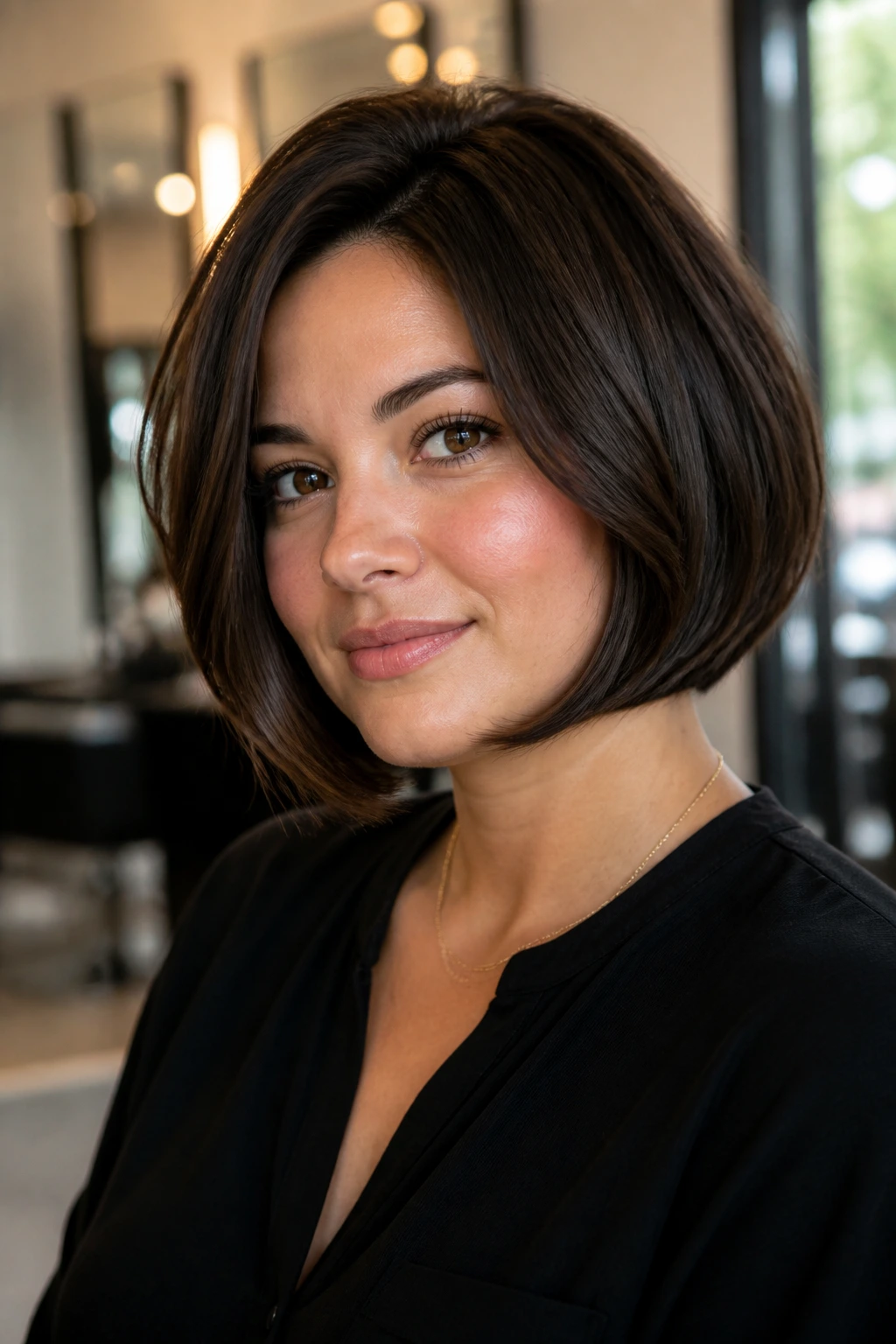
A C-shape bob curves in softly around the face, with the front a touch longer than the back. The shape is subtle, but it changes how thick hair sits against the cheeks. Instead of a straight wall, you get a curve that narrows the visual width near the jaw.
On a round face, that curved front piece is useful because it avoids hitting the cheeks with a hard horizontal line. The style still keeps the French bob’s crispness, but the outline is gentler. It’s especially good if you like a little softness around the face and don’t want anything too severe.
Ask for the front corners to be left long enough to sweep toward the chin. Short front pieces can widen the face. Long ones can drag. There’s a narrow middle lane here, and that’s where this cut lives.
12. The Ear-Tuck French Bob

A bob that can be tucked behind the ear without losing its shape is practical in a way that matters. Thick hair often springs back with too much force, but if the cut is balanced right, the tucked side sits close while the other side keeps its line. That asymmetry is flattering on round faces because it breaks up the width.
This version works best when the hair is slightly longer in front and cleanly tapered at the nape. You want enough length to tuck, not so much that the ear tuck collapses the entire shape. If the hair billows at the side after tucking, the cut is too wide or too blunt in the wrong spot.
Honestly, I like this one because it looks polished without much effort. But the cut has to be precise.
13. The Wispy-Bang French Bob

Wispy bangs are a nice answer if full fringe feels too heavy. They soften the forehead, break up the top third of the face, and let a round face breathe a bit more. Because they’re lighter, they also keep thick hair from looking overloaded right at the front.
The danger is going too sparse. Wispy does not mean thin to the point of see-through. You still want enough hair in the fringe to make it intentional, just with separation and softness at the edges. The best version falls somewhere between a bang and a face-framing veil.
This is a good pick if your hairline is strong or your forehead is a bit short. It gives shape without eating up too much face.
14. The Asymmetrical French Bob

A slight asymmetry can be doing more than a straight line ever will. One side a half inch longer, a front corner pulled a touch forward, or a side part that sends more weight to one temple all help a round face look a little leaner.
On thick hair, asymmetry keeps the shape from feeling blocky. It gives the eye a path to follow, and that path is the whole point. The bob still looks like a bob. It just refuses to sit there politely.
Keep the difference subtle. A dramatic asymmetrical cut can start to look dated fast, especially on dense hair that already has strong volume. A small shift is enough.
15. The Razor-Soft French Bob

Razor cutting can make thick hair behave like it has less mass, but it needs a careful hand. Used on the ends, it softens the perimeter and gives a little flick to the shape. Used everywhere, it can make the cut fray and puff.
That’s why this version works best when the stylist limits the razor to the last inch or so. The idea is movement, not destruction. On a round face, the softened edge prevents the bob from forming that strong, wide shelf that can happen with dense straight hair.
If your strands are coarse or dry, ask for shears instead of a razor. A soft end doesn’t have to mean a shaved end.
16. The Root-Lift Side-Part Bob
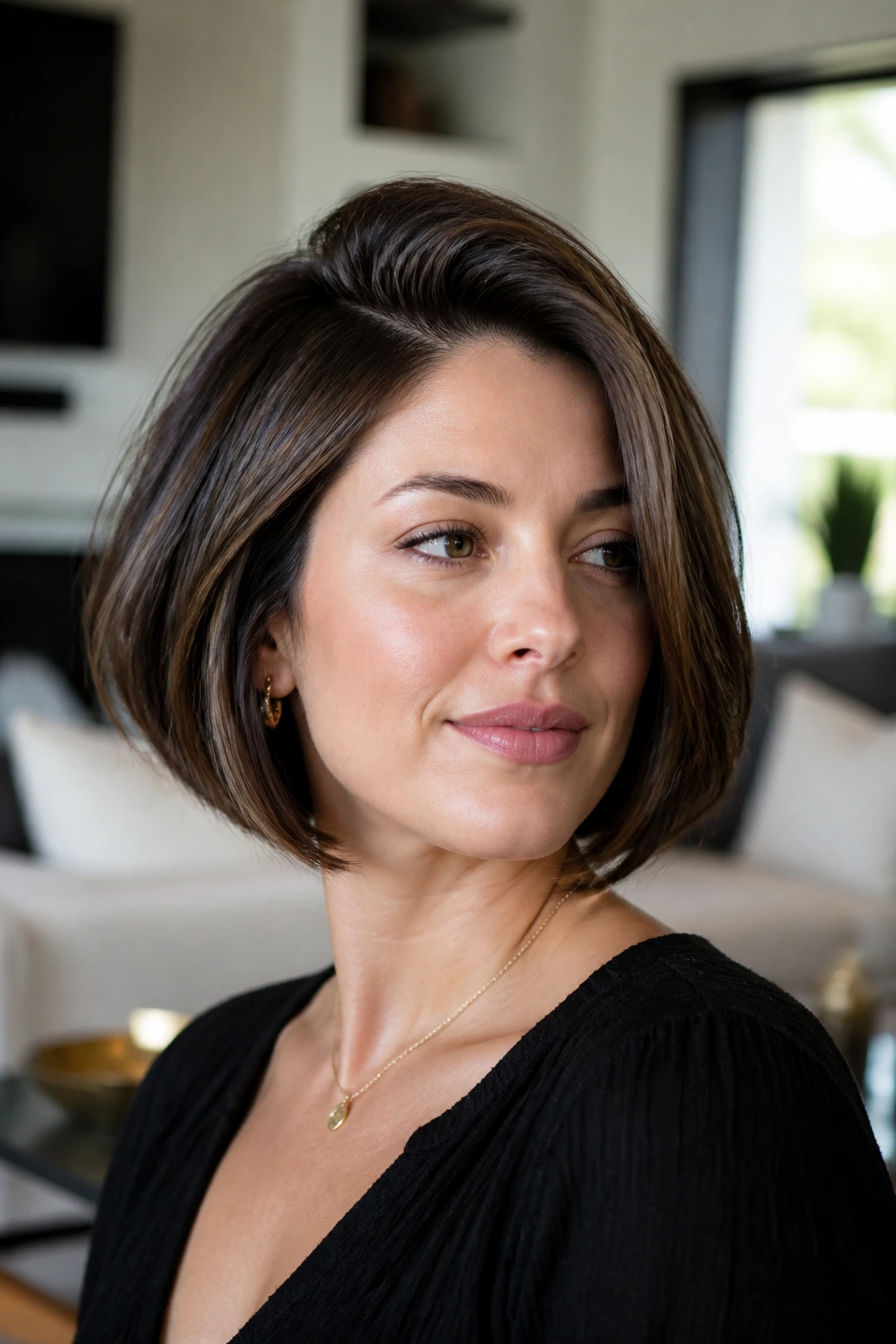
This is the cousin of the deep side-part bob, but with a stronger focus on volume at the crown. The roots are lifted with mousse or a round-brush set, then the hair is pushed into a side part so the height sits where the eye wants it. Vertical volume helps a round face more than side volume does.
Thick hair can hold this shape well, which is half the reason it works. The lift stays up instead of flattening in an hour. The rest of the cut can be relatively simple, provided the front corners are left long enough to keep the face from feeling boxed in.
A little root lift goes a long way. Too much and it starts looking like a pageant blowout, which is not the goal here.
17. The Debulked Thick-Hair French Bob

When someone says their thick hair “won’t do a bob,” what they often mean is the cut is carrying too much internal weight. A debulked French bob fixes that by removing mass from inside the shape rather than carving the perimeter away.
That gives you a cleaner outline and less expansion at the sides. The face reads narrower, the neck looks longer, and the bob falls with a calmer swing. This is the version I’d hand to anyone whose hair dries into a mushroom if left alone.
The phrase to use with a stylist is simple: keep the outline blunt, remove bulk inside. That one sentence can save you from a very bad haircut.
18. The Messy Bedhead French Bob

A messy French bob isn’t an excuse to do nothing. It’s a haircut that is designed to look better with a little piecey separation and rough texture. On thick hair, that can be a blessing, because the natural density gives the style body without too much styling.
For round faces, the messiness helps break up symmetry. The trick is to keep the bottom shape controlled even when the top looks lived-in. If everything is shaggy, the face can disappear. If the outline stays tidy, the mess reads as intentional.
Use a salt spray or a light mousse, scrunch, and stop before the hair gets crunchy. Crunch is the enemy. Always.
19. The Curved-Under French Bob
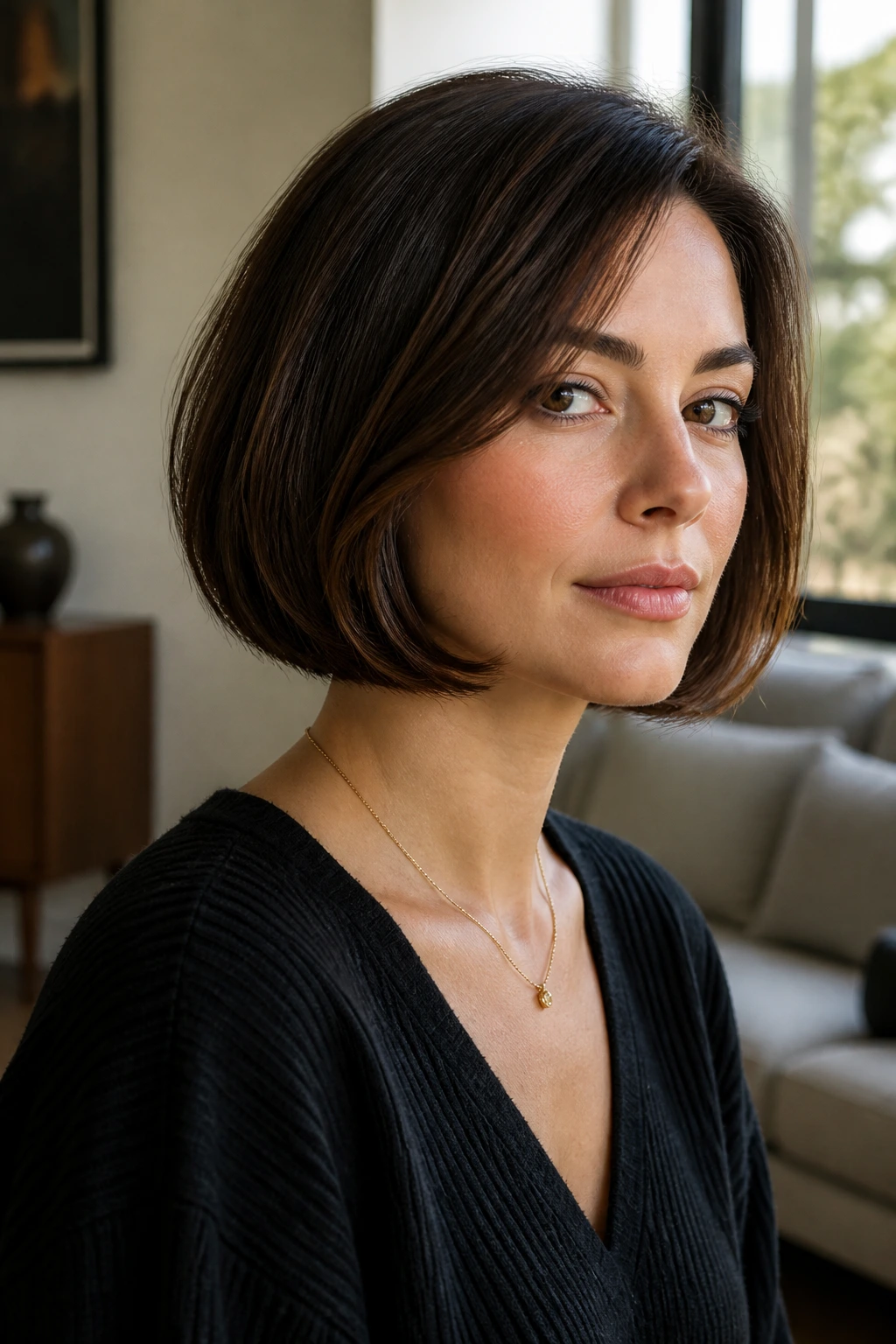
This one has a soft inward bend that hugs the jaw and chin area. It’s a subtle shape, but on a round face that subtlety matters. The curve narrows the silhouette without making the cut feel severe or heavy.
Thick hair likes this because the bend gives the ends a place to go. Instead of kicking out at the sides, the hair folds inward and stays close to the neckline. The result is neat, tidy, and a little bit old-school in the best way.
If you’re the kind of person who likes a blow-dry that still looks decent on day two, this one is worth a hard look.
20. The Polished Blowout French Bob
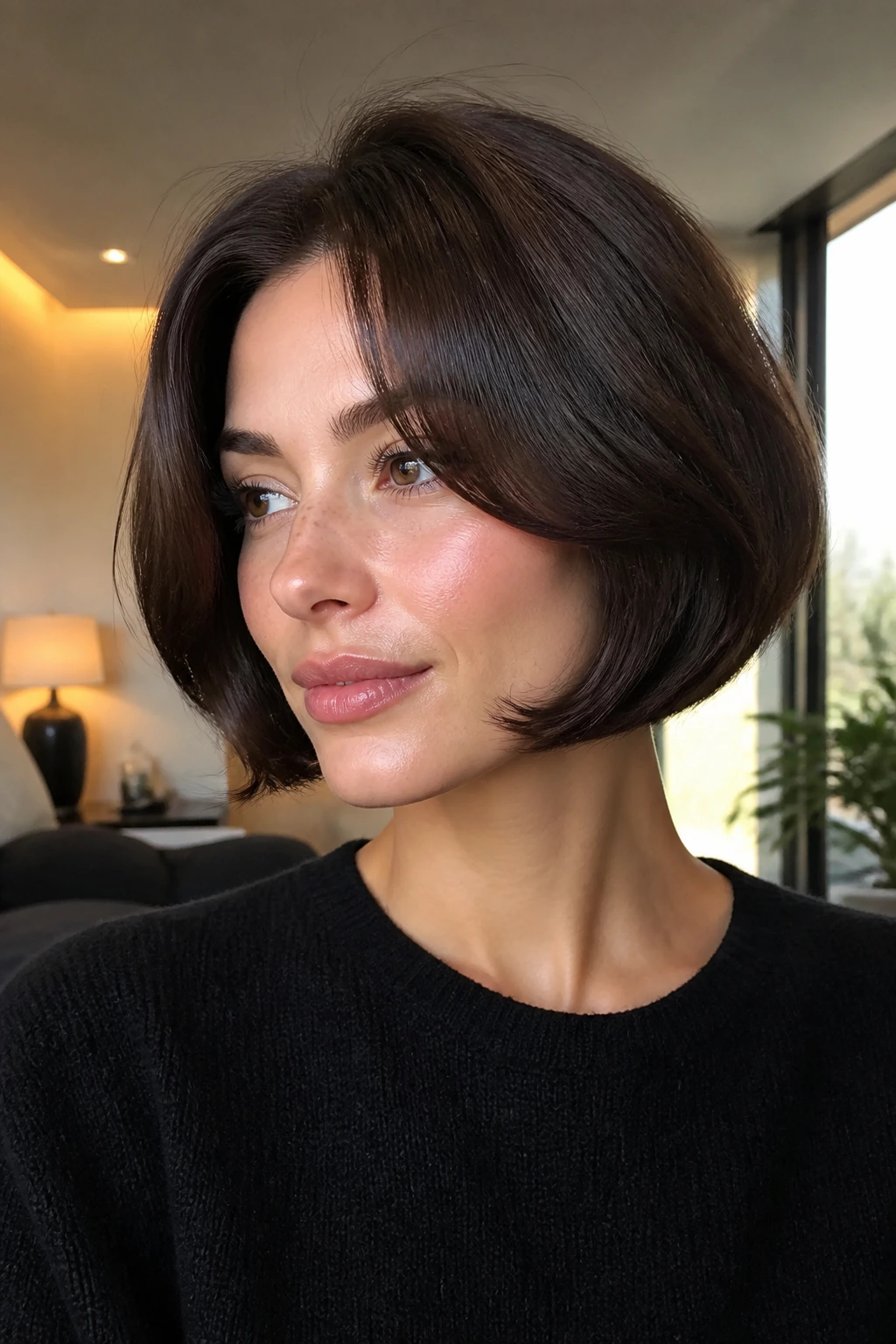
A polished blowout bob is the glossy, controlled version of the French bob. The roots lift a little, the ends sweep under, and the whole cut has movement without looking messy. Thick hair can hold this shape all day if it’s cut correctly and dried with tension.
Round faces benefit because the blowout creates height at the crown and a cleaner line along the cheeks. The hair doesn’t sit as a single block. It moves. That movement is what keeps the style from feeling too heavy.
If you like a salon finish that still feels wearable, this is the lane. It does need effort, though. No pretending otherwise.
21. The Hidden-Undercut French Bob
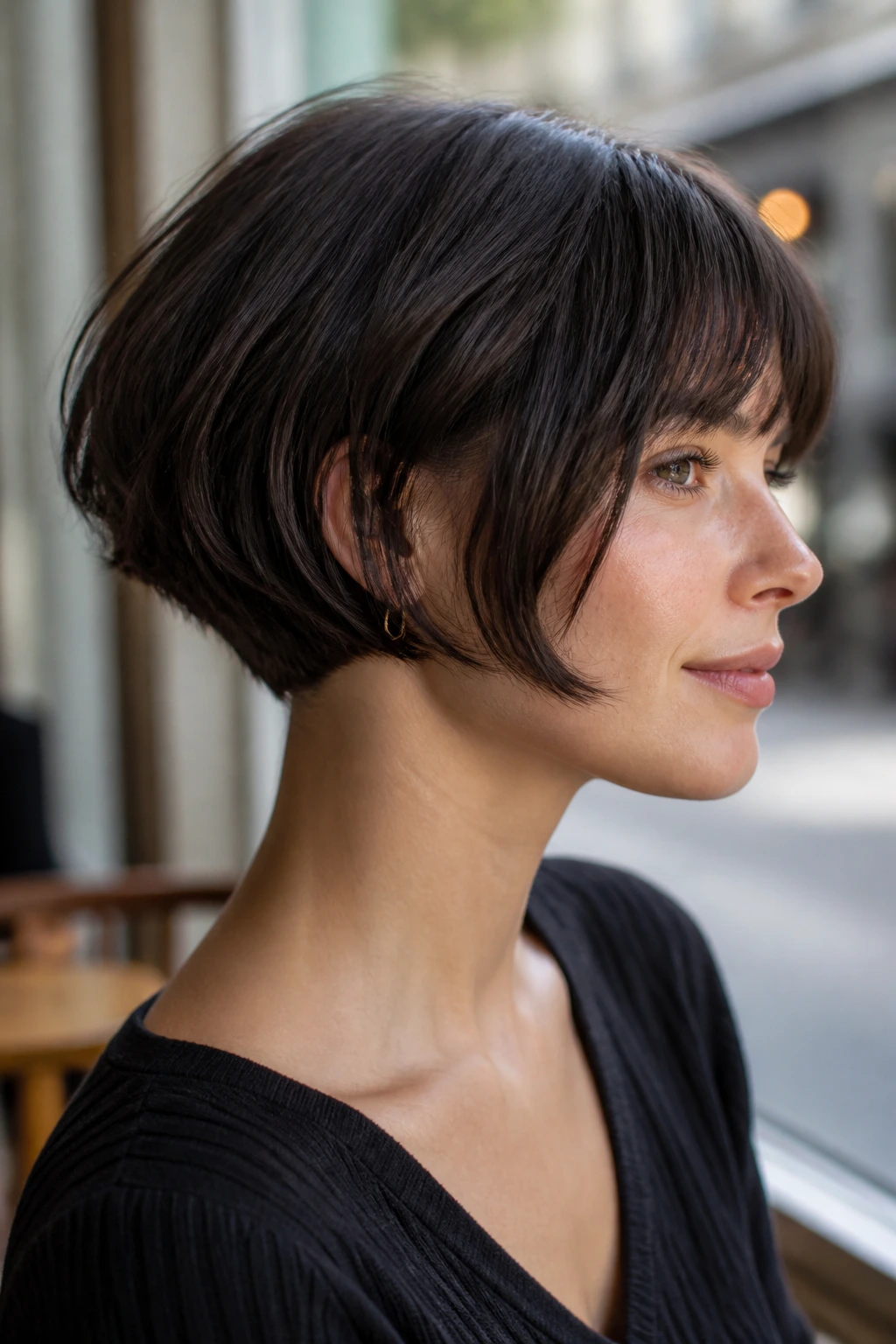
A hidden undercut is the nuclear option for very dense hair. The top layer keeps the bob’s shape, while the underlayer at the nape or lower back is trimmed shorter to remove some of the bulk that causes the cut to puff out. You do not see much of it, but you feel the difference.
On a round face, the payoff is a cleaner outline and less width through the lower half of the head. The bob sits closer to the neck, which can make the whole silhouette look more tailored. It’s especially useful if your hair is so thick that even a well-cut blunt bob feels heavy after two hours.
This is not a casual decision, though. It’s best when the density is the real problem, not when someone just wants a lighter-looking bob.
22. The Graduated Collarbone French Bob
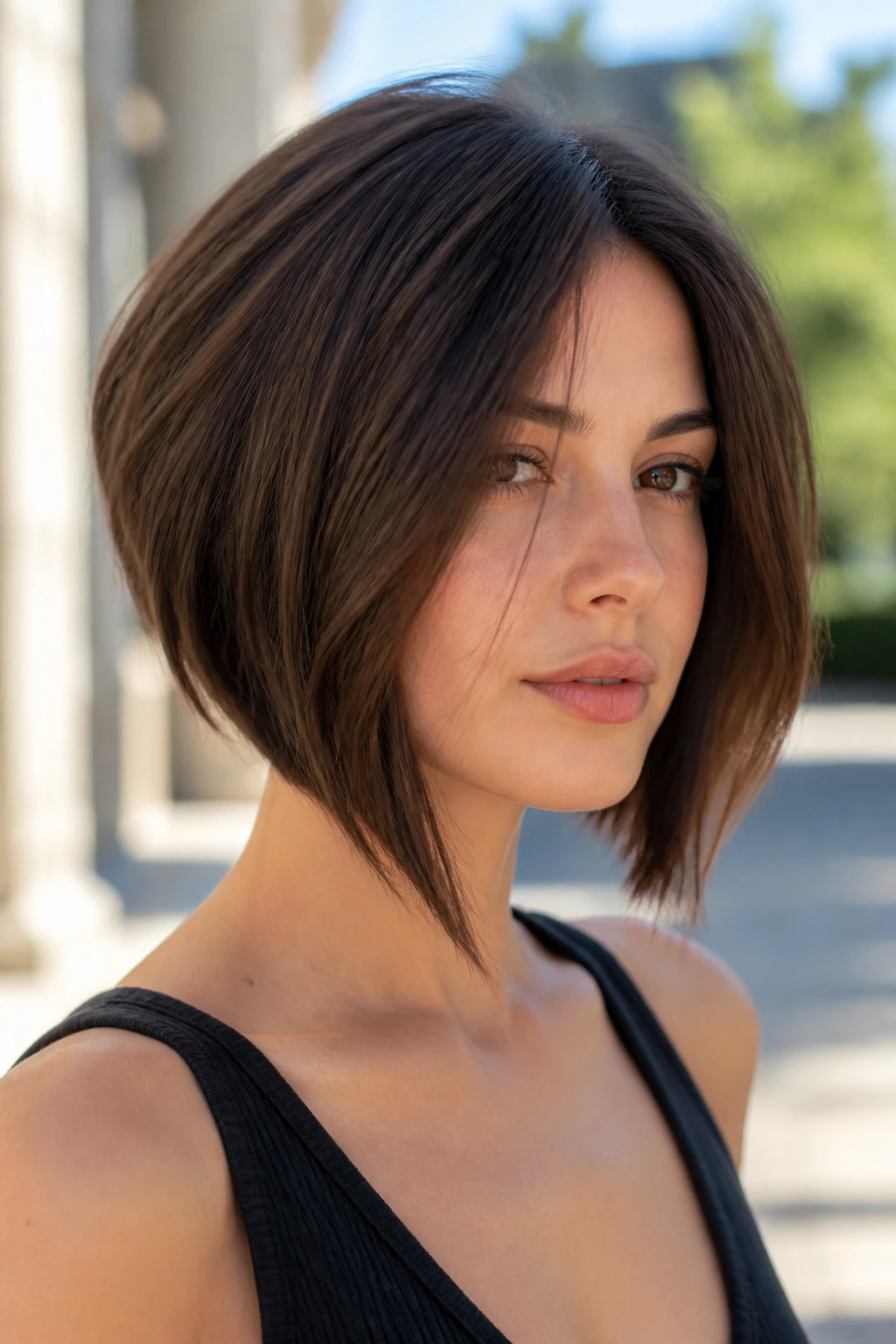
A graduated collarbone version gives you the French bob feeling with a bit more room to breathe. The back sits slightly shorter, the front is left longer, and the whole cut slopes just enough to keep thick hair from stacking up at the sides of a round face.
I like this version for people who want the bob shape but don’t want to commit to chin length. It still frames the face, still works with a fringe if you want one, and still benefits from the bluntness at the ends. The added length makes it easier to tuck, wave, or straighten without the style losing its lines.
If you’re growing out a shorter bob, this is the transition shape that doesn’t look like an awkward in-between. It actually looks planned.
How to Ask for a French Bob That Flatters a Round Face
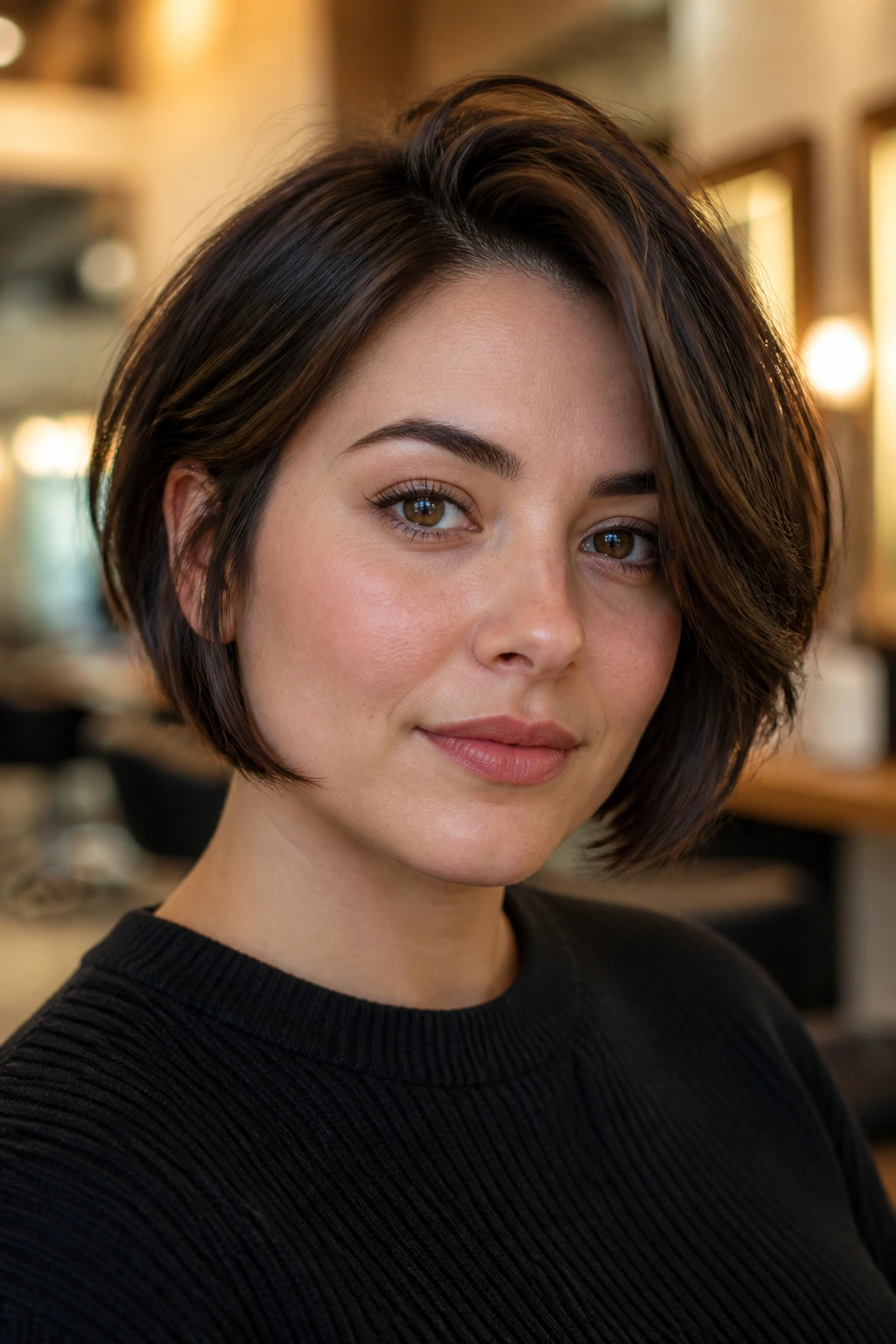
A good haircut starts with language that sounds annoying because it’s precise. Tell your stylist where you want the shortest point to sit relative to your jaw, not just “short.” Say whether you want the front to be longer than the back. Mention your hair density, because thick hair needs a different plan than hair that falls flat.
Bring at least two photos, and make sure they show the same kind of hair as yours. A French bob on fine hair can lie to you about how it will behave on dense hair. What looks airy in a picture may sit much heavier in real life. That’s not a failure of the cut; it’s just gravity being rude.
If your face is round, ask for one of three things: a jawline-skimming length, a side part, or a fringe that breaks the forehead line. You do not need all three, but you usually need at least one. And if your hair is thick, ask where the stylist plans to remove bulk. If they say “everywhere,” push back.
Styling French Bobs at Home Without Fighting Your Hair

A thick French bob behaves best when you give it a little direction right after washing. Start with a root product if you want lift, or a smoothing cream if the ends puff out first. Then dry the hair in sections, aiming the dryer nozzle downward so the cuticle lies flatter and the perimeter stays smoother.
A round brush is useful, but not mandatory on every style. For the blunt or beveled versions, a paddle brush plus a quick bend under at the ends can be enough. For the piecey or air-dry versions, fingers and a light diffuser do more good than a hard blowout.
The mistake people make is overworking the shape. Thick hair gets frizzy when it’s pulled, brushed, and reheated for too long. Dry it with a plan. Stop when the ends are seated and the roots have lift. That’s usually the sweet spot.
Tools That Keep the Shape Clean
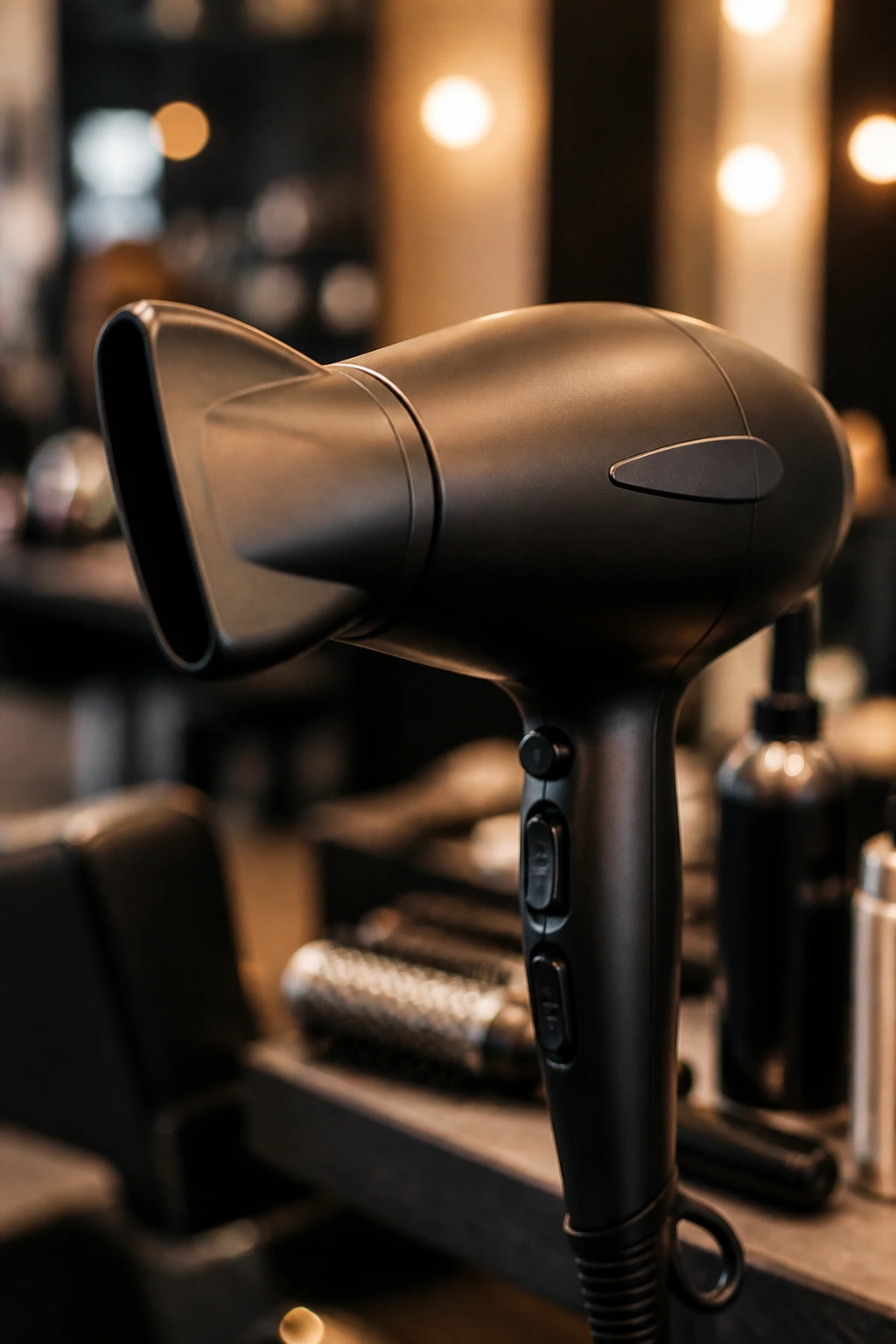
- A blow dryer with a nozzle attachment: Directs the air so the bob dries smooth instead of wide.
- 1-inch or 1.25-inch round brush: Best for curling the ends under or building a soft bend.
- Paddle brush: Good for straightening the perimeter without creating too much bounce.
- Heat protectant spray: Keeps thick hair from getting rough and puffy at the ends.
- Light mousse or root foam: Helps the crown stay lifted, especially on side-part styles.
- Texturizing spray: Useful for the piecey, messy, or air-dry versions when you want separation.
- Duckbill clips: Handy for setting the fringe or controlling sections while blow-drying.
- Flat iron: Optional, but useful for the polished and asymmetrical versions.
Common Mistakes That Ruin the Shape

The biggest mistake is cutting the bob too short at the widest part of the face. That usually means the shortest line lands right around the cheeks, where the roundness is already strongest. The fix is boring but effective: keep the perimeter at the jaw or just below it, and leave a bit more length in the front.
Another classic error is thinning thick hair all over. The ends start looking wispy, the shape loses its edge, and the bob puffs out in weird places. Ask for bulk removal inside the cut, not at the perimeter. Those are not the same thing.
Dense fringe can also backfire. If the bangs are too heavy, the whole cut feels top-loaded and boxy. Lighten them, separate them, or lengthen them toward the temples.
And then there’s the styling trap: too much oil. Thick hair at chin length only needs a drop or two through the ends. Anything more turns the bob limp at the bottom and fuzzy at the sides. Bad trade.
Variations and Adaptations to Try

Soft Curly French Bob: If your hair bends naturally, keep the perimeter slightly longer and let the curls sit between the jaw and collarbone. This version needs less brush work and more shape discipline when cutting.
Glasses-Friendly Bob: Leave the front corners a touch longer and keep the fringe light so the frames don’t compete with the haircut. A center-pressed fringe can crowd the face fast; longer side fringe usually solves it.
Low-Maintenance Air-Dry Bob: Ask for a blunt outline with soft internal debulking, then style with mousse and a diffuser only when you want to. This version grows out neatly and doesn’t need perfect blow-drying.
Sleek Office Bob: Keep the ends beveled, the part deep or slightly off-center, and the fringe controlled. It’s a good choice if you want the cut to look tidy under a blazer, not beachy.
Grow-Out Bob: If you’re nervous about the chop, leave the front at or just below the collarbone and taper the back slightly shorter. It still reads as a French bob, but the grow-out is calmer and less awkward.
Maintenance Between Cuts and Day-Two Refreshes

Thick hair and short bobs need regular trims if you want the line to stay crisp. Plan on a shape cleanup every 6 to 8 weeks. If you wear bangs, especially micro or piecey fringe, those often want attention every 2 to 3 weeks, even if the rest of the cut can wait.
Day two is often where this haircut proves its worth. A mist of water at the ends, a touch of mousse at the roots, and a quick round-brush refresh can bring the shape back without a full wash. If the bob gets puffy overnight, sleep on a silk pillowcase or loosely wrap the hair so the bend doesn’t get crushed.
For thick hair, dry shampoo is useful only at the roots. Do not pile it through the ends unless you want a dusty texture that makes the bob look older than it is. The point is to preserve movement, not turn the hair matte from root to tip.
Frequently Asked Questions
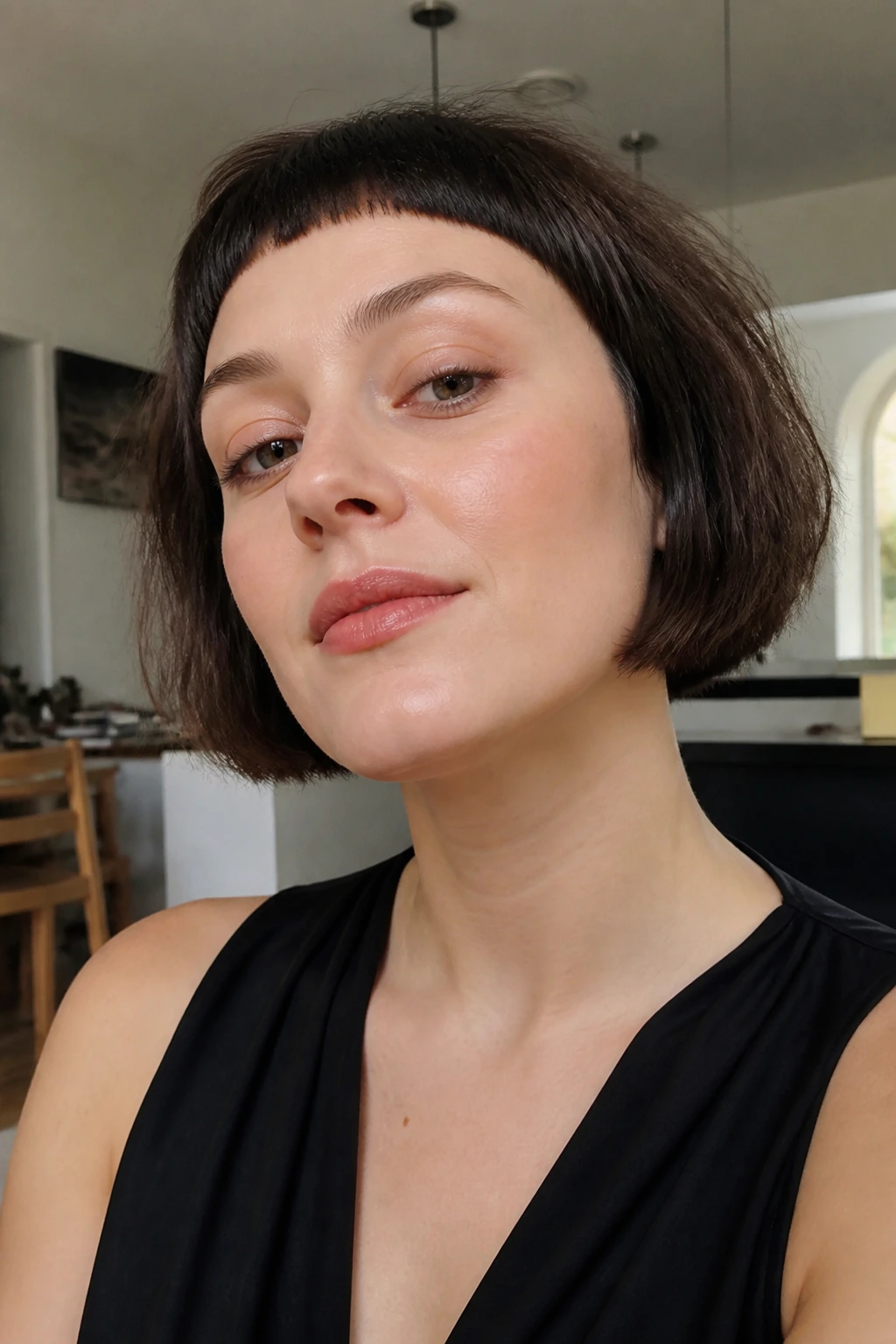
Will a French bob make a round face look wider?
It can, if the cut ends at the cheekbones and the sides are left too full. A better version lands at the jaw or slightly below and uses a side part, fringe, or longer front corners to break the width.
How short should thick hair be for a French bob?
Jawline length is the safest starting point. If your hair is extremely dense, a slightly longer version that reaches just below the chin or collarbone can sit cleaner and be easier to manage.
Do I need bangs with a French bob?
No, but some kind of front detail usually helps on a round face. That can be micro bangs, curtain fringe, or even a deep side part that shifts the visual weight off the center line.
Can thick hair handle a blunt bob without looking boxy?
Yes, if the interior is handled properly. The perimeter should stay blunt, but the hidden bulk has to come out somewhere, usually underneath or near the nape.
What if my hair is wavy or curly?
Leave the cut a little longer than you would for straight hair, because curls spring up after drying. Ask for a shape that works with your curl pattern instead of a perfectly straight outline that disappears once the hair moves.
How do I stop the sides from puffing out?
That usually comes down to the cut, not the product. Ask for internal debulking, keep the ends blunt, and dry the hair with the nozzle pointed downward so the outer layer lays flatter.
Is a French bob hard to style every day?
The polished versions need a blow-dry. The messier or air-dry versions can be much easier, especially if your hair already has texture. Choose the finish that matches your actual morning routine, not the one you wish you had.
Will this cut work if I wear my hair up sometimes?
Yes, but the shorter the bob, the more you’ll rely on mini clips, half-up sections, or tucked sides. If you need a full ponytail most days, a longer French bob or graduated collarbone version is the safer bet.
The Shape That Stays Sharp
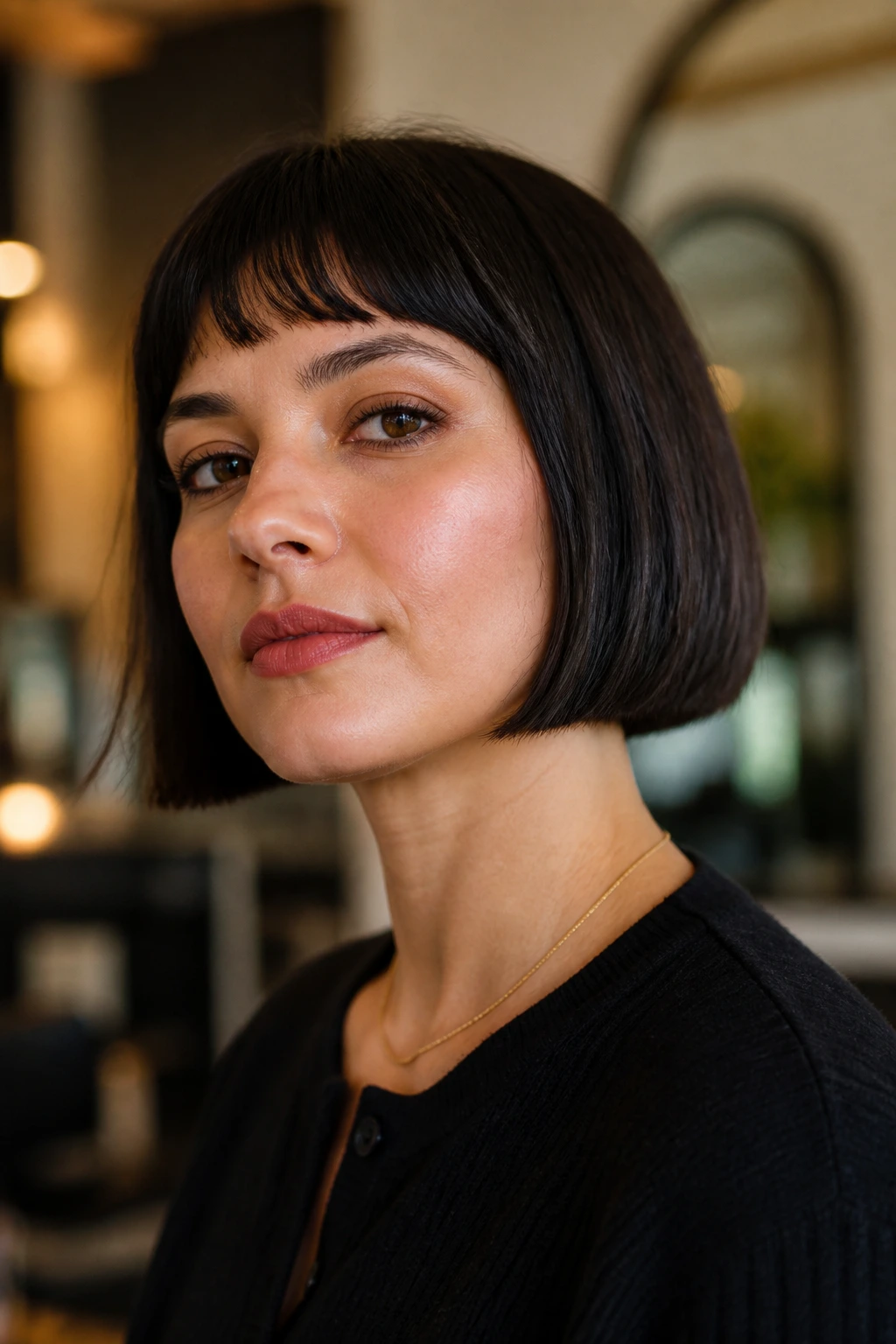
A French bob only looks simple when it’s been cut with care. On a round face, the difference between flattering and fussy comes down to where the line sits and how the fringe behaves. On thick hair, the difference comes down to weight: where it stays, where it’s removed, and how the ends are treated.
That’s why these cuts matter. They’re not just versions of the same haircut with different styling photos. They solve different problems. One slims the face with a side part. One hides bulk. One gives the bob a softer curve. One lets natural texture do the work. Pick the one that matches your hair, not the one that looks easiest on someone with a different density and face shape.
If you take one thing from all this, let it be this: a good French bob should make your hair feel lighter without making the shape weaker. Get that balance right, and the cut keeps paying you back every time you walk past a mirror.