



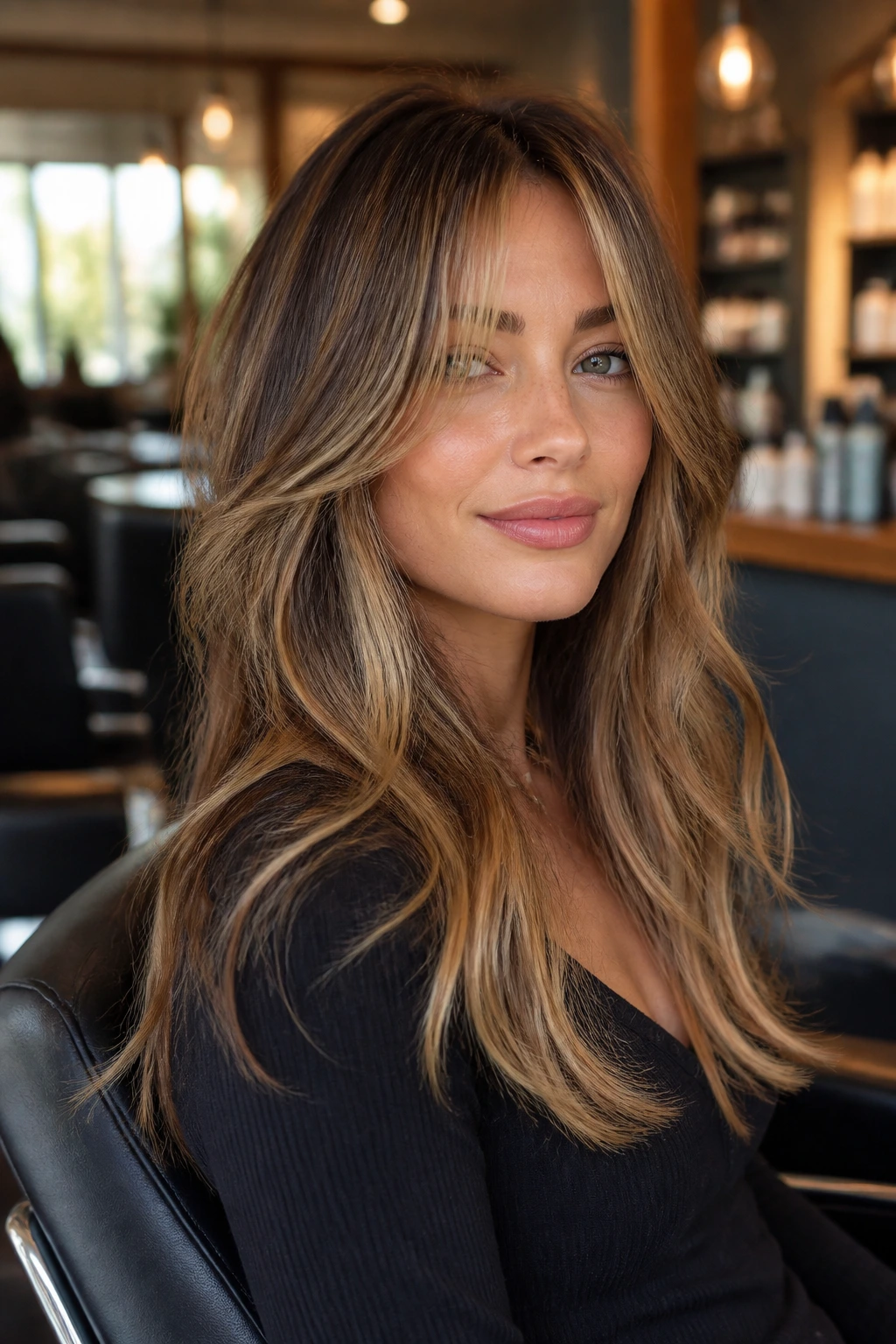
Long bangs for long faces with money piece highlights are the haircut version of moving the furniture in a room — the whole shape changes without losing the things you liked in the first place. The bangs break up the vertical stretch. The lighter front pieces pull the eye sideways. Put those two moves together and a long face stops reading as one tall column and starts looking broader at the cheekbones, softer at the forehead, and a lot more deliberate.
That part matters more than most people expect. A long face does not need more height at the crown or a tiny fringe that disappears into the rest of the hair. It usually needs a horizontal line somewhere near the brows, plus a little brightness at the temples or cheekbones so the eye has somewhere to land. That is the quiet logic behind a good money piece: not just light, but placement.
There are plenty of ways to make the formula work. Some women need a soft curtain bang that can grow out without drama. Others want a side-swept fringe that moves with a deep part. Some need density, some need air, and some need a front highlight that is barely lighter than the base color because the cut is doing most of the work. The nice thing is that the shape can be tailored without turning the whole haircut into a project.
Why These Looks Earn a Save
-
They shorten the face without a blunt chop: A bang that lands around the brow, bridge of the nose, or cheekbone interrupts the long line before it reaches the chin.
-
They widen the frame where it counts: Money piece highlights at the temples and cheekbones pull attention outward, which helps a narrow face read a little broader.
-
They keep length on the ends: You still get ponytail length, braid length, and movement through the back. No need to sacrifice the whole haircut.
-
They work with your texture instead of fighting it: Straight hair, waves, curls, and coils all handle long bangs differently, but the proportion trick stays the same.
-
They can look subtle or bold: A soft beige front ribbon and a bright blonde panel do different things visually, but both can balance a long face if the placement is right.
-
They grow out better than a short fringe: Curtain shapes, feathered fringe, and layered face-framing pieces soften into the rest of the haircut instead of turning into a hard line you resent for six weeks.
1. Soft Curtain Bangs With a Sand-Blonde Money Piece
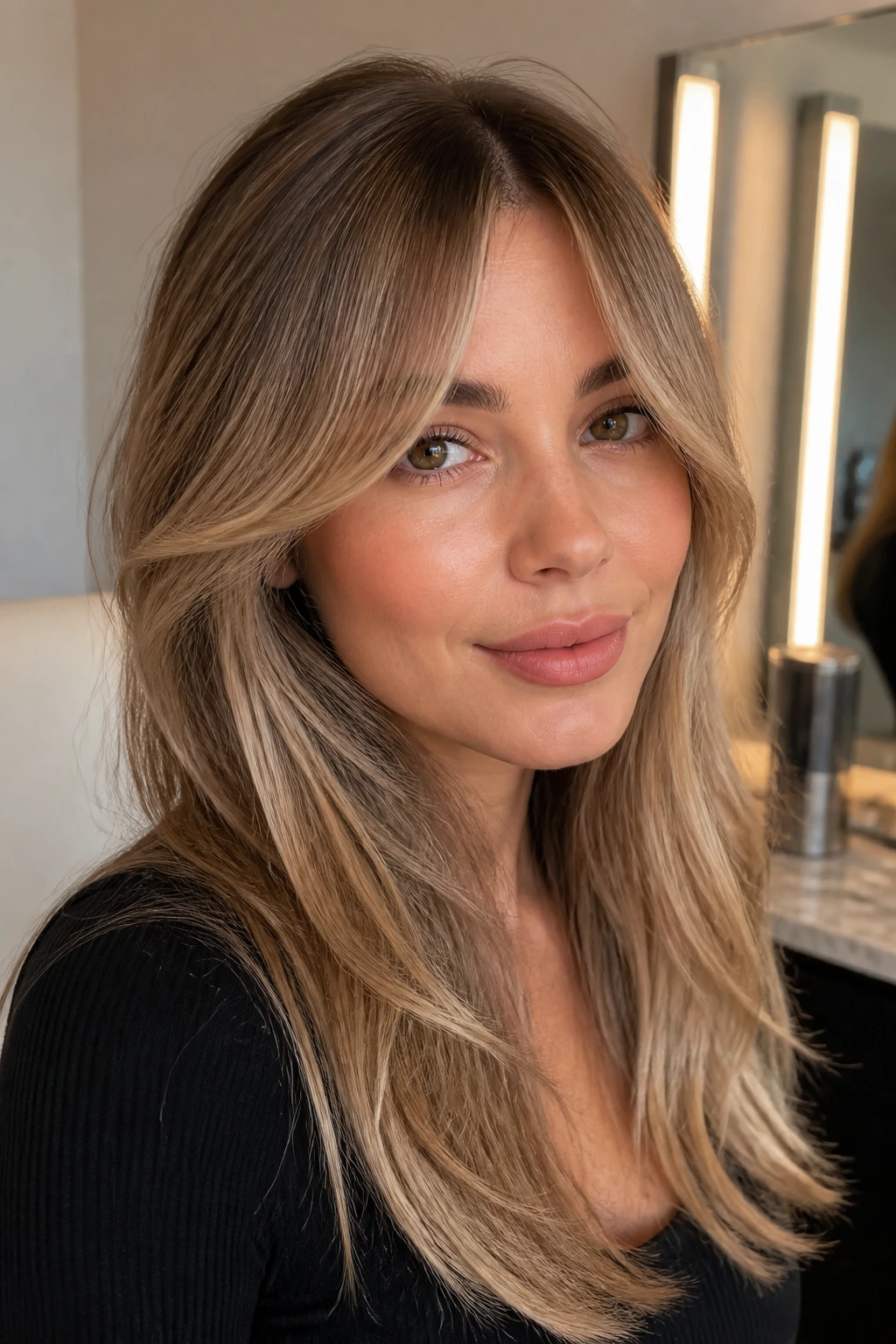
Soft curtain bangs are the safest place to start if you want shape without feeling trapped by the cut. The center opens just enough to show the forehead, while the sides drop toward the cheekbones and make the face read wider across the middle. Pair that with a sand-blonde money piece and you get brightness that looks expensive in the low-key way — not stripey, not frozen, just lifted.
Why It Works on a Long Face
The shortest point should land around the brow or just above the nose bridge. Any shorter and the bang can start exposing too much forehead again. Keep the outer edges longer so they skim the cheekbone instead of curling up near the temples.
- Best for medium to thick straight or wavy hair
- Ask for face-framing pieces that begin at the cheekbone
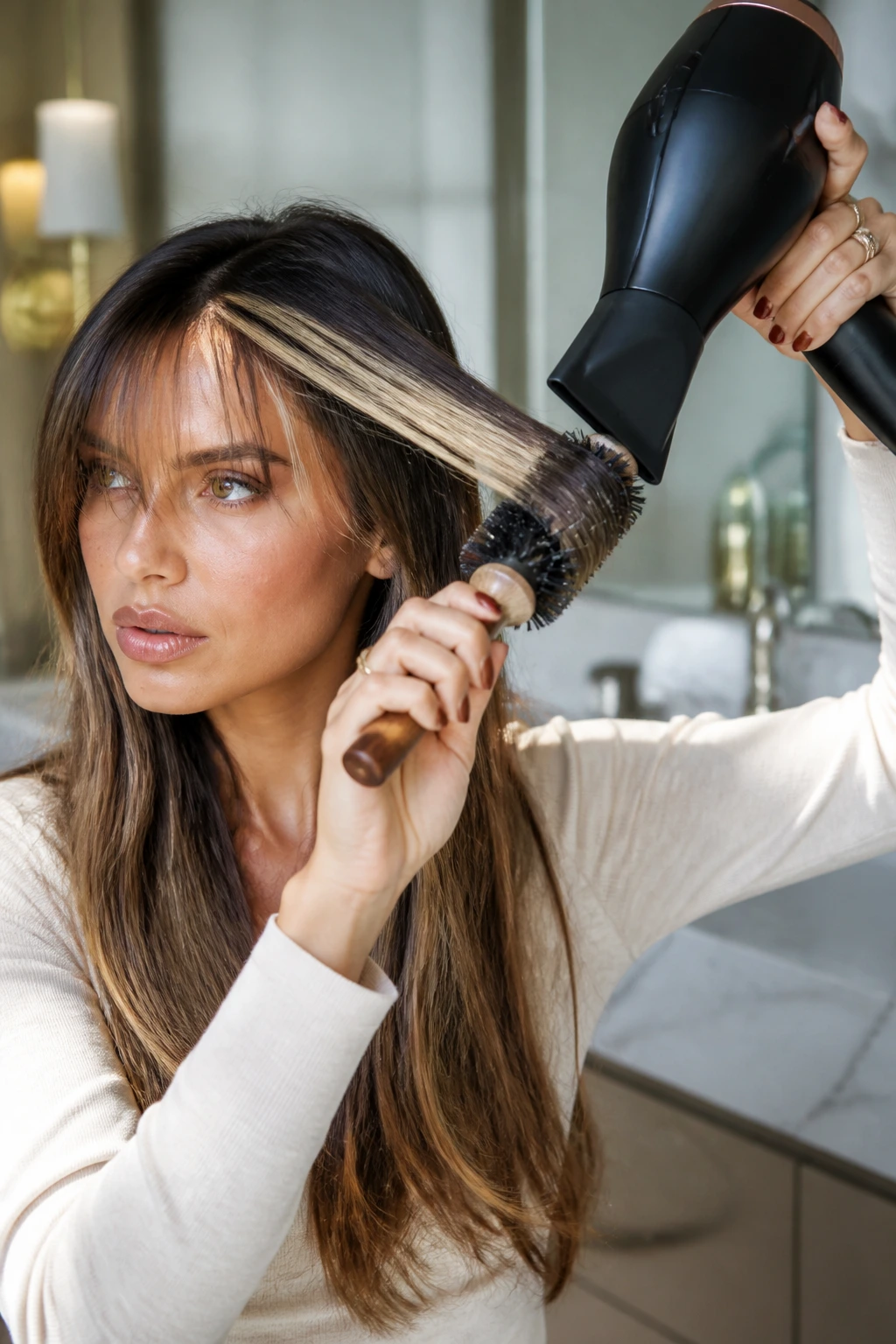
- Style with a 1.25-inch round brush and a bend away from the face
Pro tip: If your part is center-heavy, blow-dry the bangs side to side first, then finish with a round brush. That tiny back-and-forth motion keeps the root from splitting too neatly.
2. Bottleneck Bangs That Open at the Cheekbones
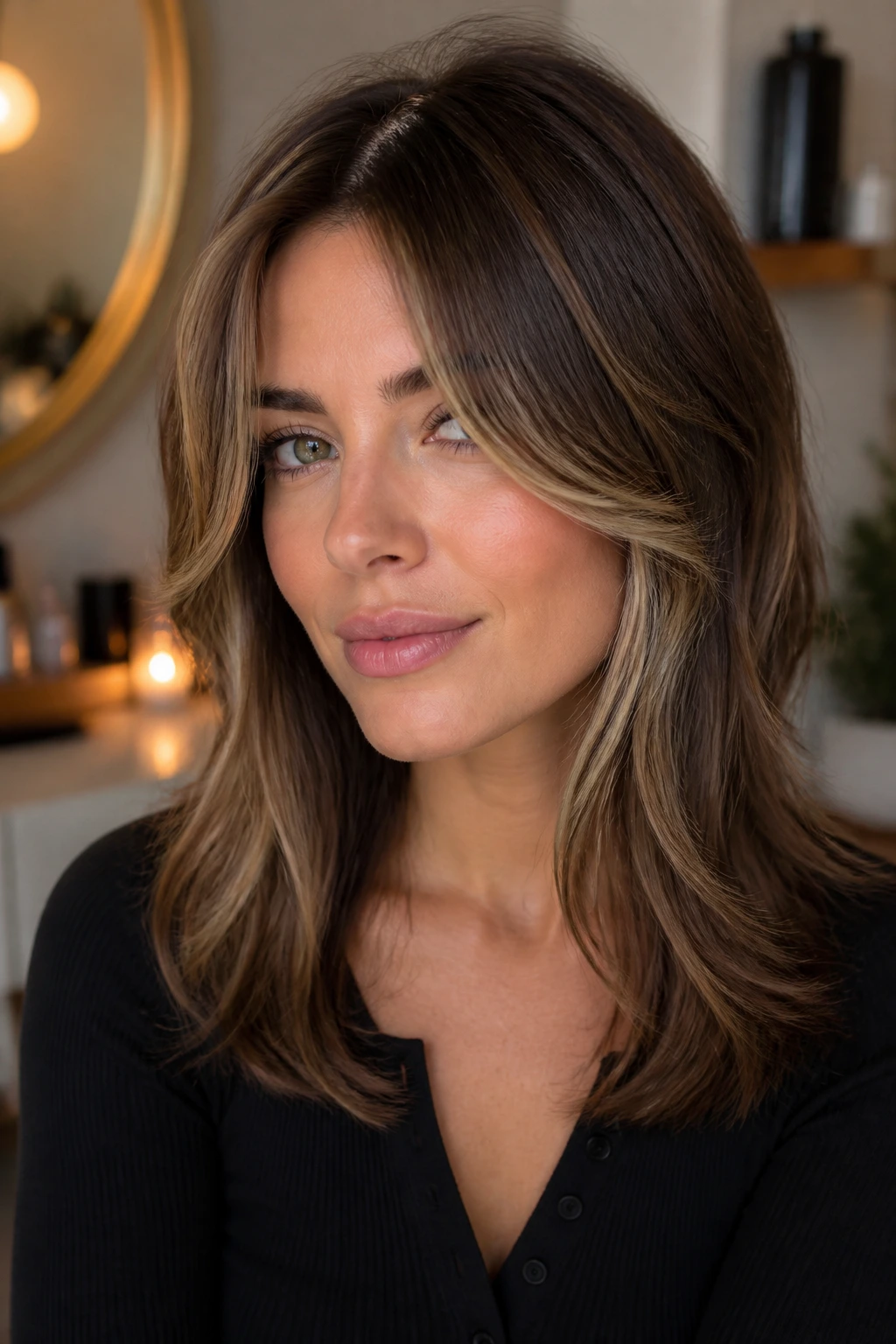
Bottleneck bangs are one of my favorites for long faces because they do two jobs at once. The center is a touch shorter, and the sides stretch longer, which creates a narrow opening at the forehead and more width lower down. The result feels deliberate, not fussy.
What matters here is the taper. If the center is cut too short, the face gets longer. If the sides are too light and wispy, the whole thing loses shape. Keep the money piece soft and blended through the first two inches from the hairline, then brighten the ends a little more near the cheekbones so the eye drops outward instead of staying up high.
Styling Note
Use a small round brush or velcro rollers while the bangs are still warm. Let them cool in that curved shape. That little step makes a bigger difference than most people think.
3. Side-Swept Fringe With Caramel Front Ribbons
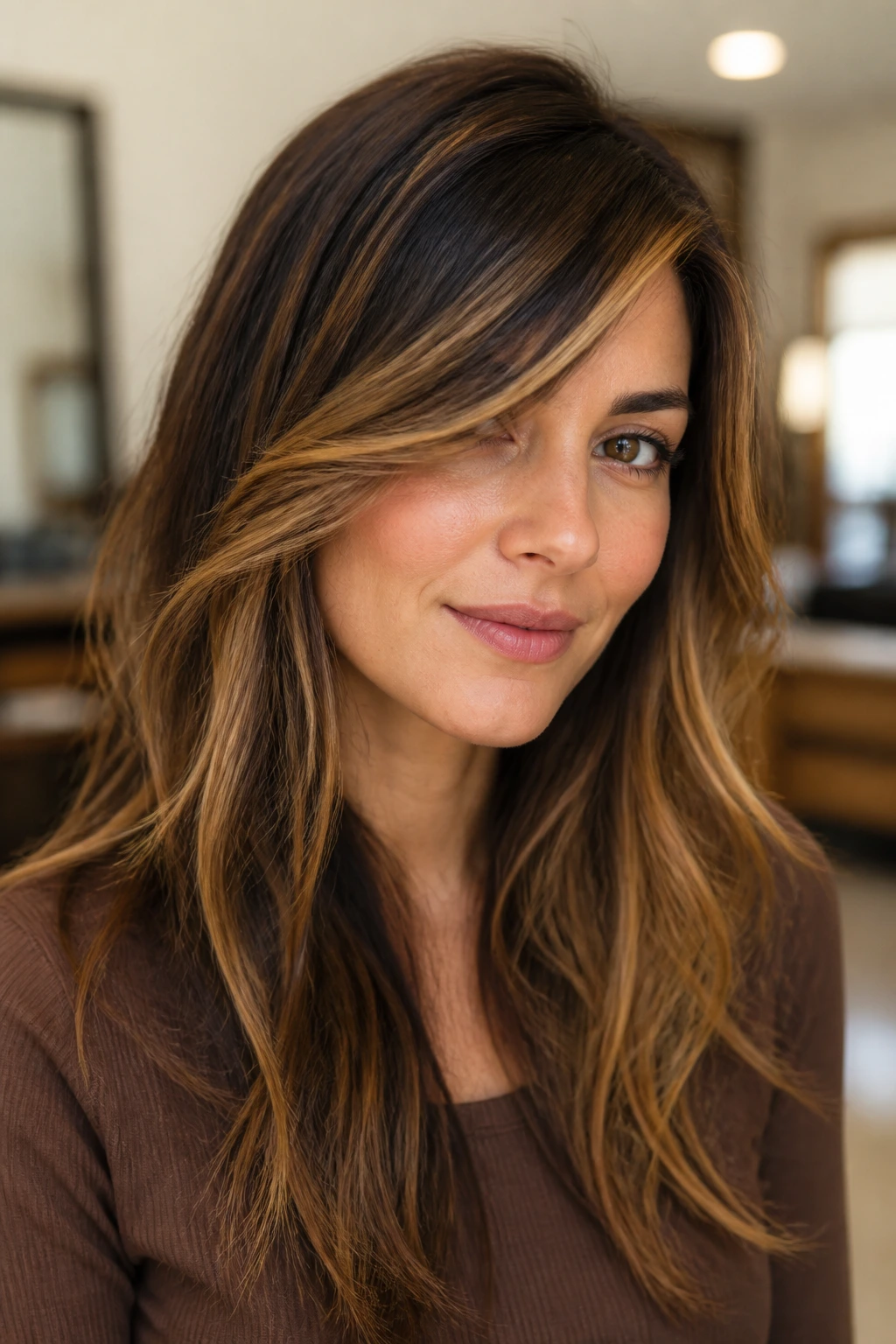
A side-swept fringe is the old reliable for anyone who hates anything that feels too centered on the forehead. On a long face, that diagonal line is the whole point. It breaks symmetry, cuts across the length of the face, and makes the eye travel from one side to the other instead of straight down.
Caramel money piece highlights work especially well if your base is medium brown or dark blonde. They add warmth at the front, which keeps the fringe from looking flat under indoor light. I prefer this look when the highlight follows the sweep of the bang rather than sitting in chunky strips. Chunky at the front tends to look dated fast.
Best for: fine to medium hair, especially if you naturally part on one side.
Ask for: a long side fringe that starts near the temple and falls toward the cheekbone, not a short swoop that stops above the eyebrow.
4. Long Shag Bangs With Choppy Face Frame
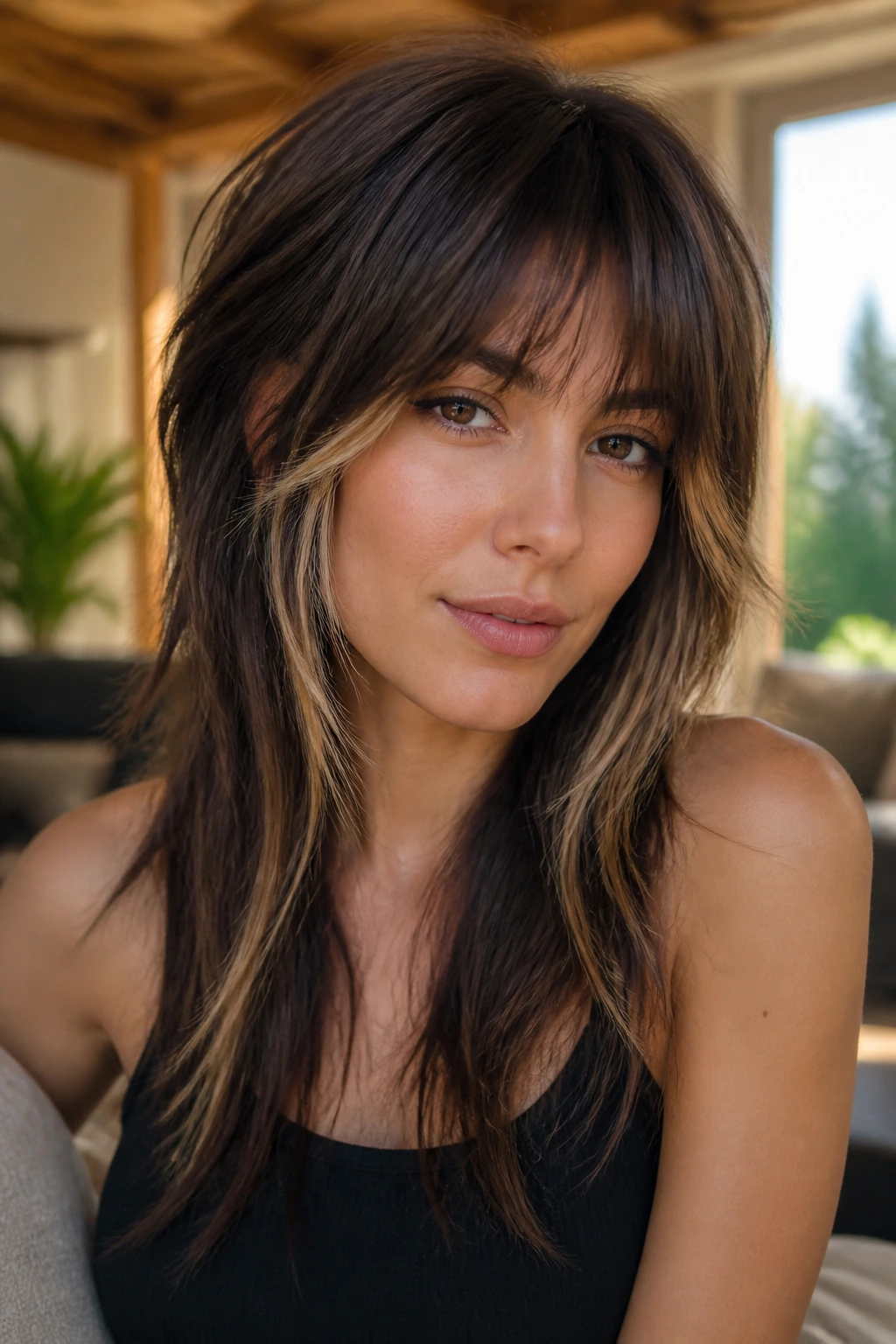
If you like movement, a long shag gives you a lot of it. The fringe blends into layers around the temples and jaw, which adds width without making the haircut look heavy. On a long face, that texture matters. Flat, straight hair can drag the eye down; shag layers interrupt that slide.
The money piece here should look painted, not placed. Thin ribbons around the front hairline and temple area keep the cut from turning into a block of light. This is the version I’d choose for thick hair that needs some air taken out of it. It also behaves well when you air-dry with a light cream and a little scrunching.
What to Ask For
Ask your stylist to keep the longest front pieces around cheekbone length and to avoid over-thinning the bangs themselves. You want the fringe piecey, not see-through.
5. Brow-Skimming Blunt Fringe With Soft Ends
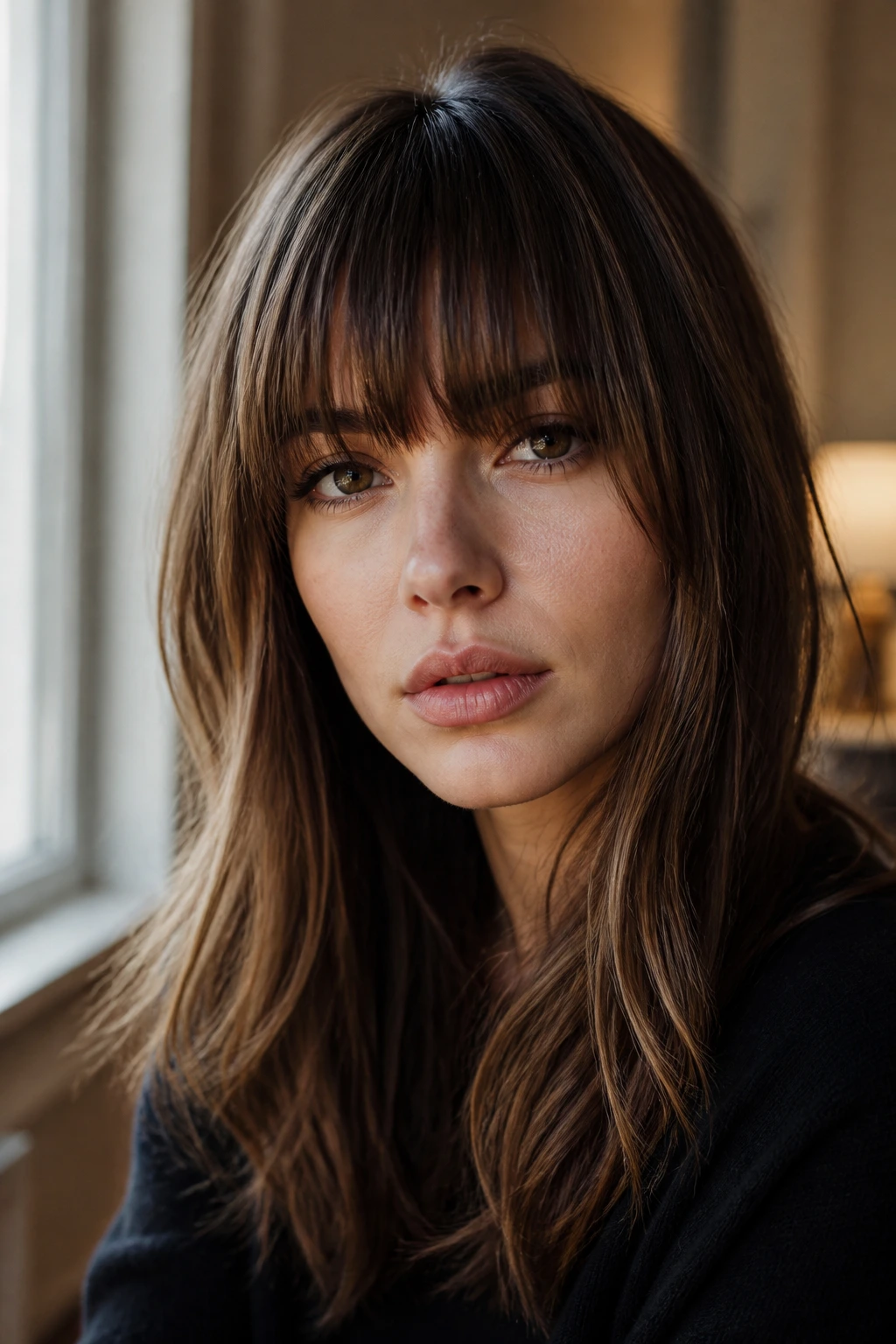
This is the boldest option in the group, and it can look fantastic on a long face if the edges are softened. A blunt fringe gives you that crisp horizontal line across the forehead, which is exactly the kind of visual break a long face can use. The catch is that the line should feel controlled, not heavy or boxy.
I would not pair this with a dramatic, chunky money piece unless you really want the hair to shout first and talk later. A subtler highlight — maybe one to two shades lighter than the base — does the job better. It brightens the front without exaggerating the forehead area.
Keep the length at the brow, not above it. And keep the ends softly texturized so the fringe moves a little when you blink or turn your head. Dead-straight, hard-edged blunt bangs can feel severe fast.
6. Feathered 70s Bangs With Honey Balayage
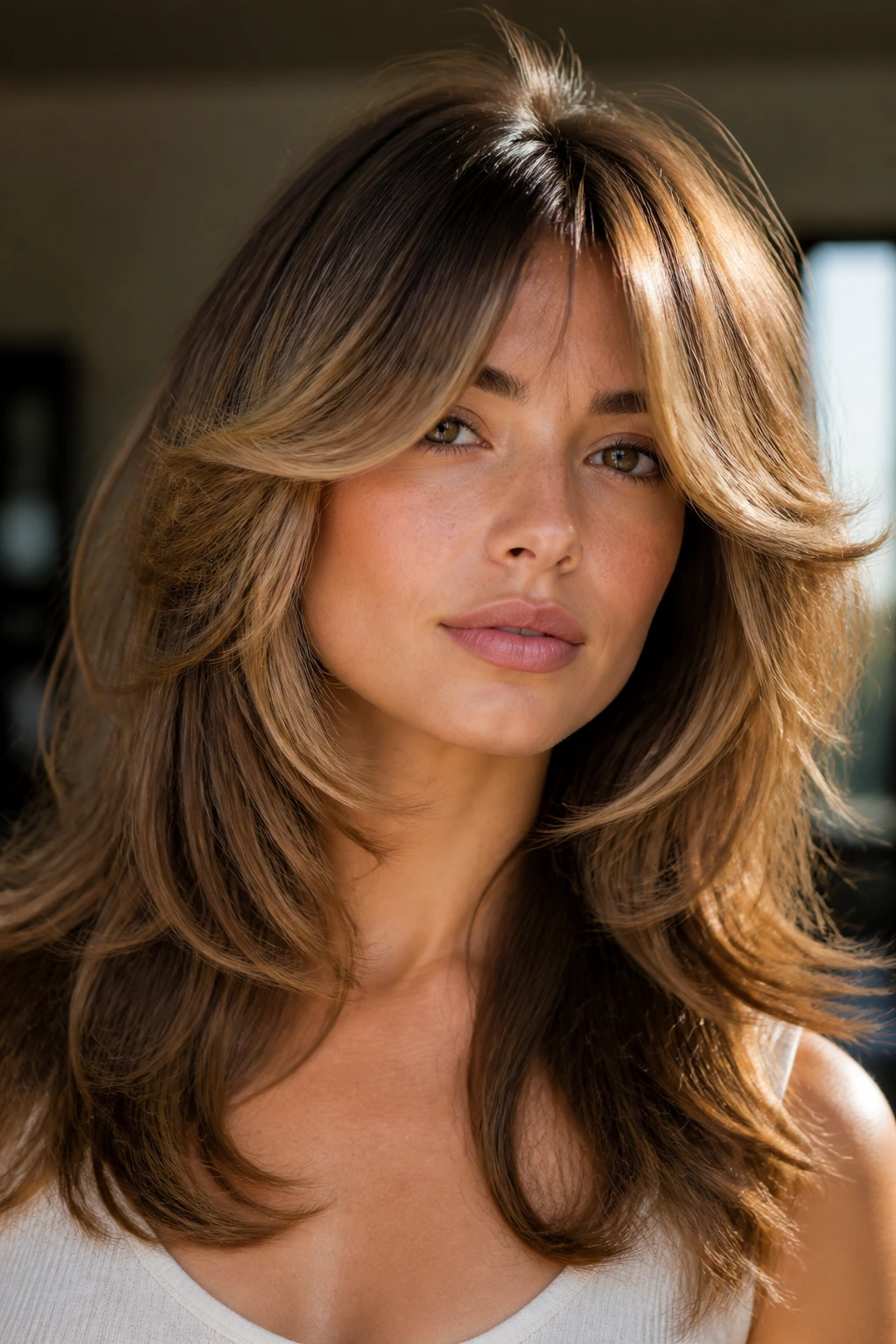
Feathered bangs are all about air. They fan outward from the forehead, which gives a long face some welcome width through the top half of the cut. Done right, they have a soft flip at the ends and a little lift at the root, which keeps the whole thing from sticking to the face.
Honey balayage around the front pieces warms up the skin and makes the haircut feel lived-in instead of overbuilt. This look is especially good if you like a blowout finish and want the bangs to blend into the rest of the length. It looks a little glamorous. Not loud. Just enough.
How I’d Style It
Use a medium round brush, roll the fringe forward first, then sweep the outer edges away from the face. That shape makes the face feel broader through the cheek area, which is exactly where long faces usually benefit from a little help.
7. Wispy See-Through Bangs With Soft Face Framing
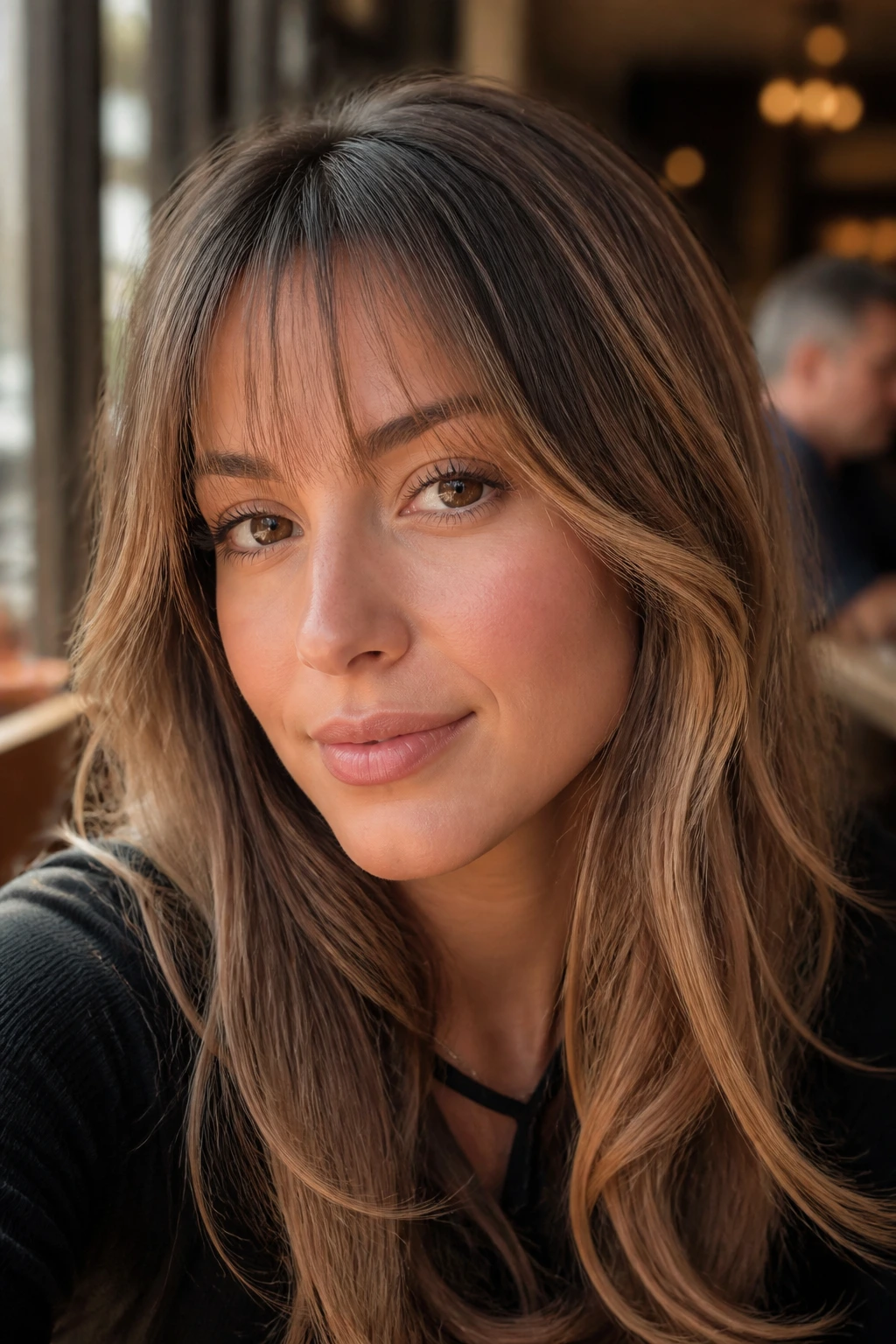
Wispy bangs are tricky because they can be too thin if the stylist gets timid. But on a long face, a carefully cut see-through fringe can be a smart move when you want forehead coverage without a heavy slab of hair. The point is not to hide the face. The point is to interrupt its length.
Keep the money piece understated here. If the front panels are too bright or too thick, the fringe can start to look disconnected from the rest of the haircut. A soft beige or light caramel ribbon is enough. On fine hair, I like this version because it creates movement without needing much bulk.
Best for Fine Hair
A light mist of volumizing spray at the roots before blow-drying keeps the bangs from collapsing into the forehead. If the hair separates too much, it stops looking like a fringe and starts looking like random wisps. Nobody wants that.
8. Asymmetrical Fringe With a Deep Side Part
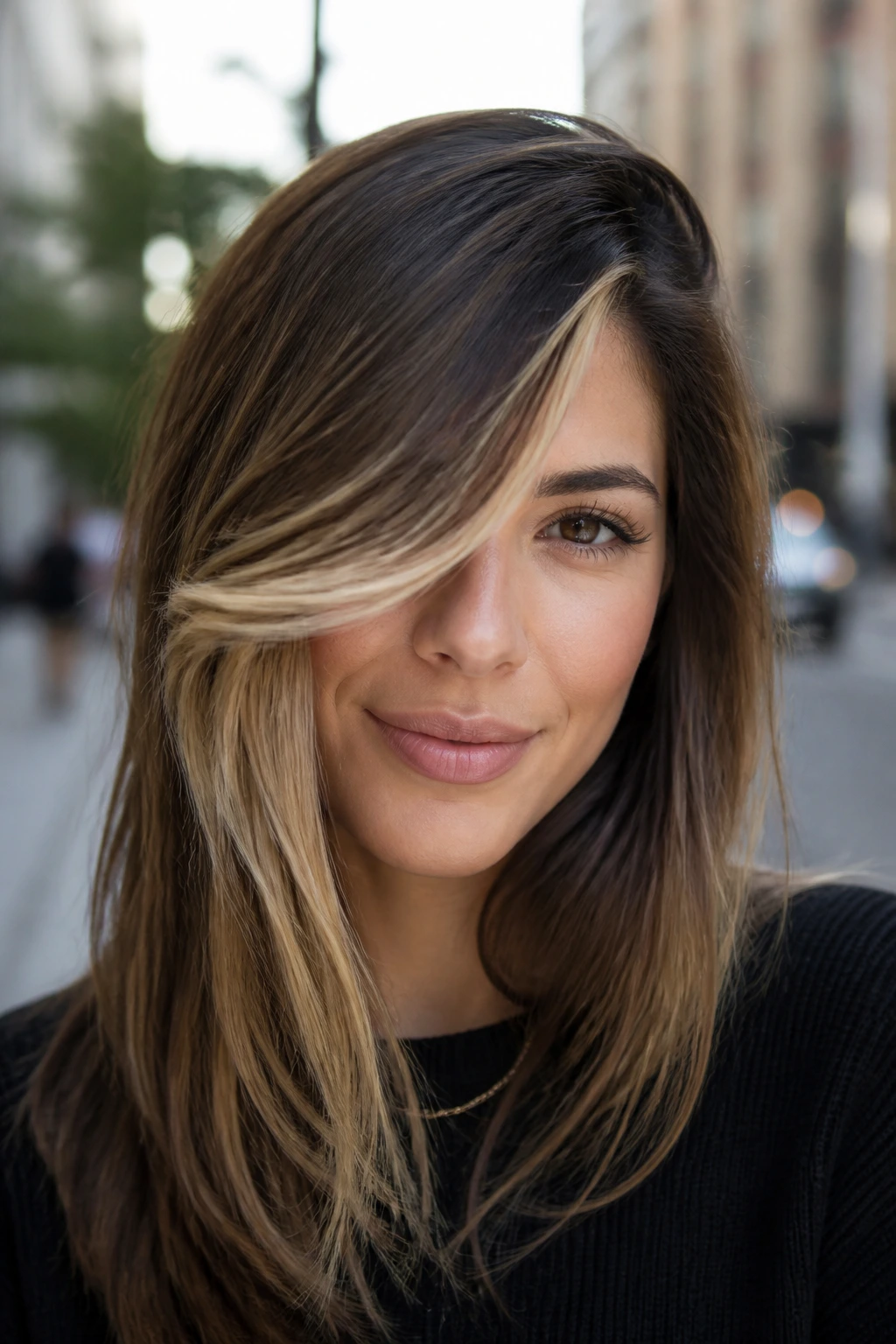
An asymmetrical fringe is one of the easiest ways to break up a long face without going full curtain bang. One side sits heavier, the other recedes, and the whole shape creates a diagonal line across the forehead. That diagonal does exactly what you want: it shortens the face visually and adds movement where the eye needs it.
This style shines when the money piece is slightly brighter on the heavier side. The contrast gives the sweep more definition. It also keeps the face from looking narrow at the front, which can happen when the cut is sleek and the color is too quiet.
If you already wear a deep side part, this is probably the most natural-feeling option on the list. It looks less “new haircut,” more “my hair finally makes sense.”
9. Curved Bangs That Follow the Brow Line
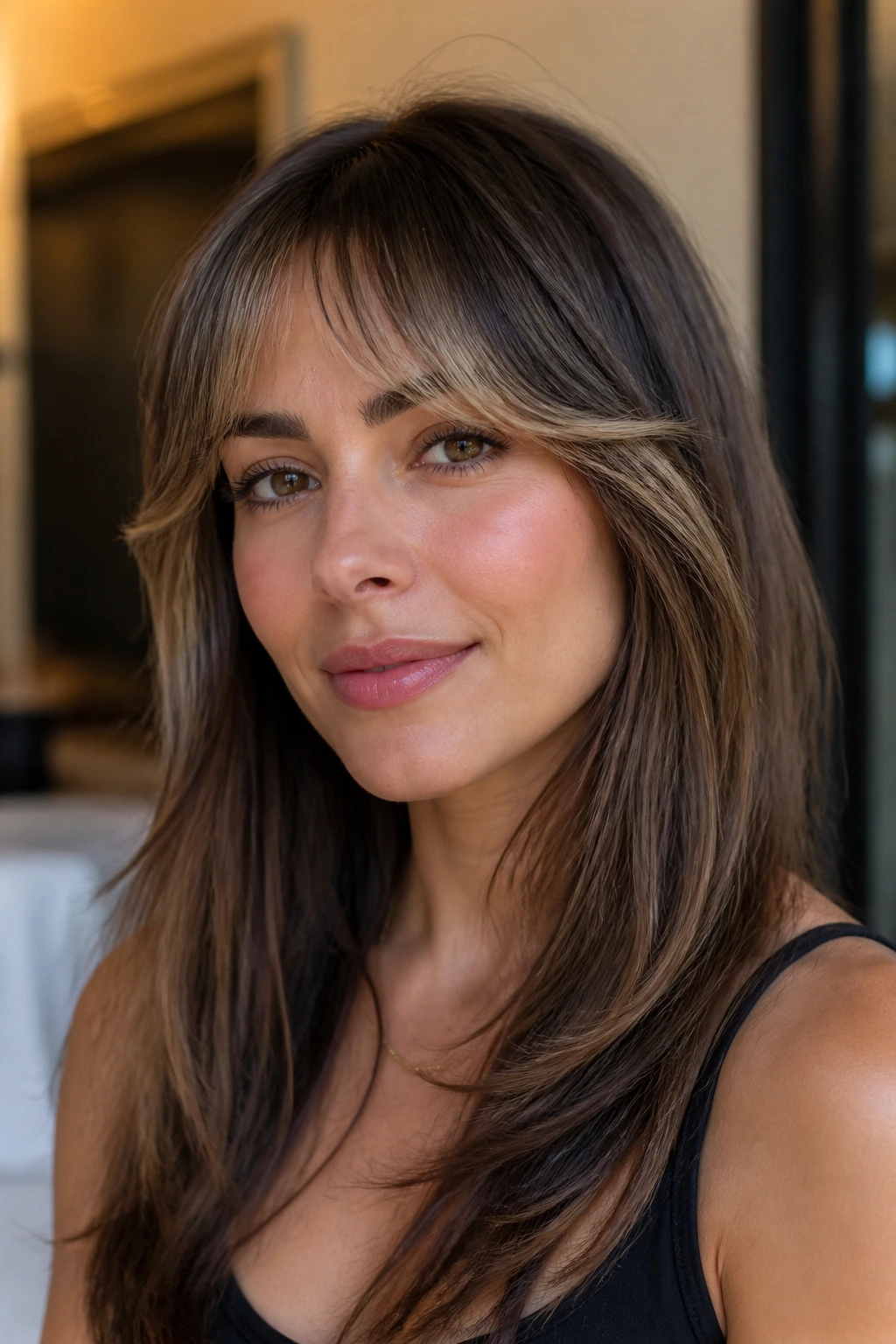
Curved bangs are underrated. The shape arcs gently across the forehead, then drops a little lower at the edges, so the face gets a soft frame instead of a hard curtain. On a long face, that little curve helps widen the upper third without making the haircut feel blunt.
The money piece should follow the same arc. Start it closer to the part, then let it brighten around the brow and temple rather than the root line alone. The wrong way to do this is to put the light too high and too narrow. That just emphasizes the length you were trying to soften.
The One Thing to Watch
If your bangs are too rounded in the center and too short at the sides, the face can look taller again. Keep the outer corners long enough to brush the cheekbone.
10. Long Blended Bangs on a Layered Blowout
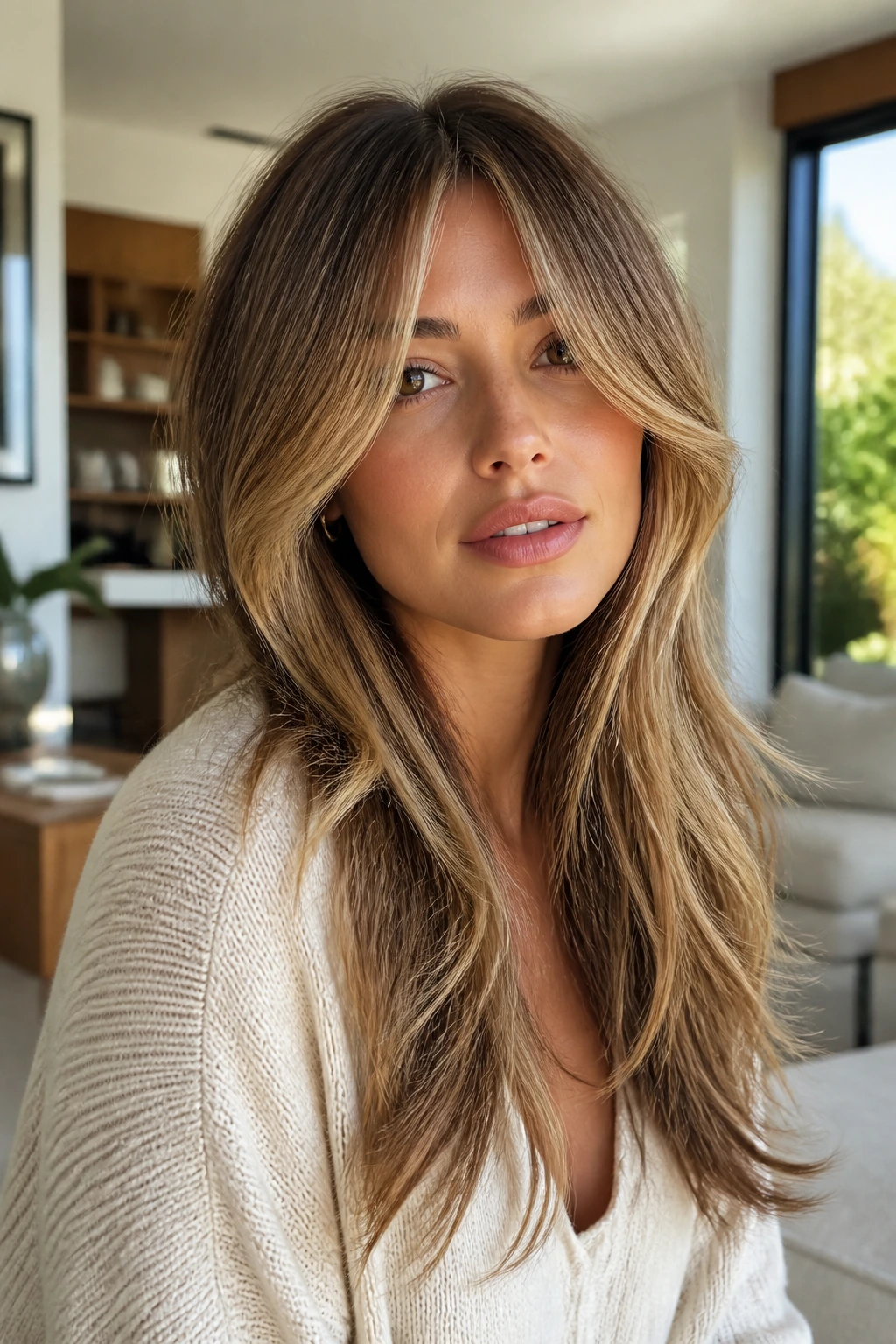
This is the version for someone who wants bangs but does not want to announce them every morning. The fringe stays long, blends into the front layers, and behaves more like a framing veil than a separate section. Long faces love this if the face-frame starts around the cheekbone and the blowout builds width at the sides.
The money piece should live inside that blowout, not sit on top of it. When the front panels are woven into the layers, the color looks natural and the cut reads as soft movement instead of a stripe. This is one of the better choices for medium-density hair that falls flat when it’s too heavily layered.
I’d call it the least dramatic option with the biggest payoff. That is not a bad thing.
11. French-Girl Fringe Grown Long and Piecey
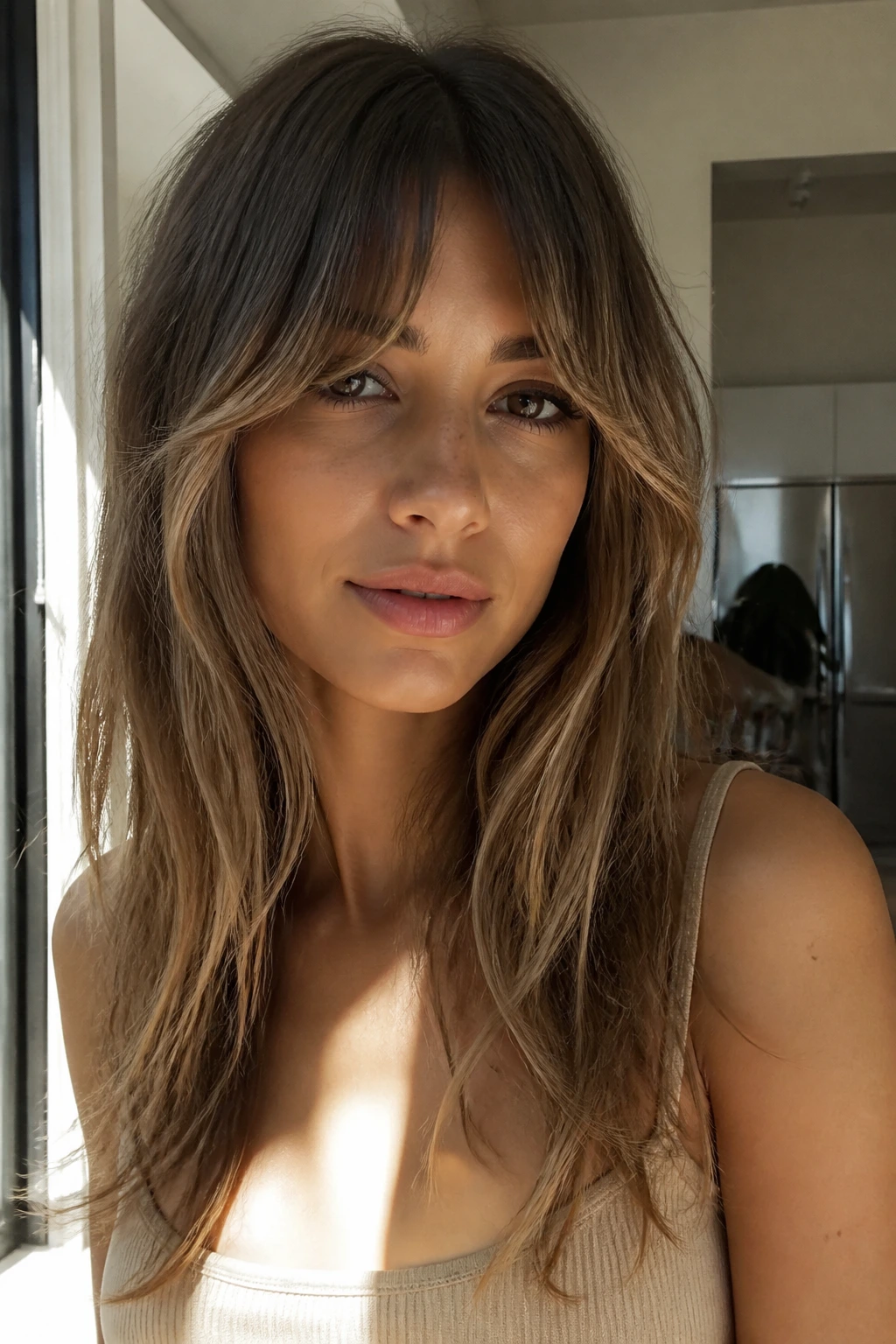
French-girl fringe gets copied badly all the time. The good version is long enough to skim the brows, piecey enough to move, and loose enough to avoid that helmet-like shape. On a long face, it works because the broken texture creates a horizontal line without feeling stiff.
The money piece should be gentle and a touch warmer than the base. Think soft beige, muted gold, or a lived-in caramel, not a harsh platinum block. The front should look a little imperfect. That is part of the appeal.
How to Wear It
Finger-comb with a tiny bit of styling cream and avoid over-brushing it to death. If every strand sits in the same place, you lose the softness that makes this fringe flattering.
12. Curly Curtain Bangs With Lightened Spirals
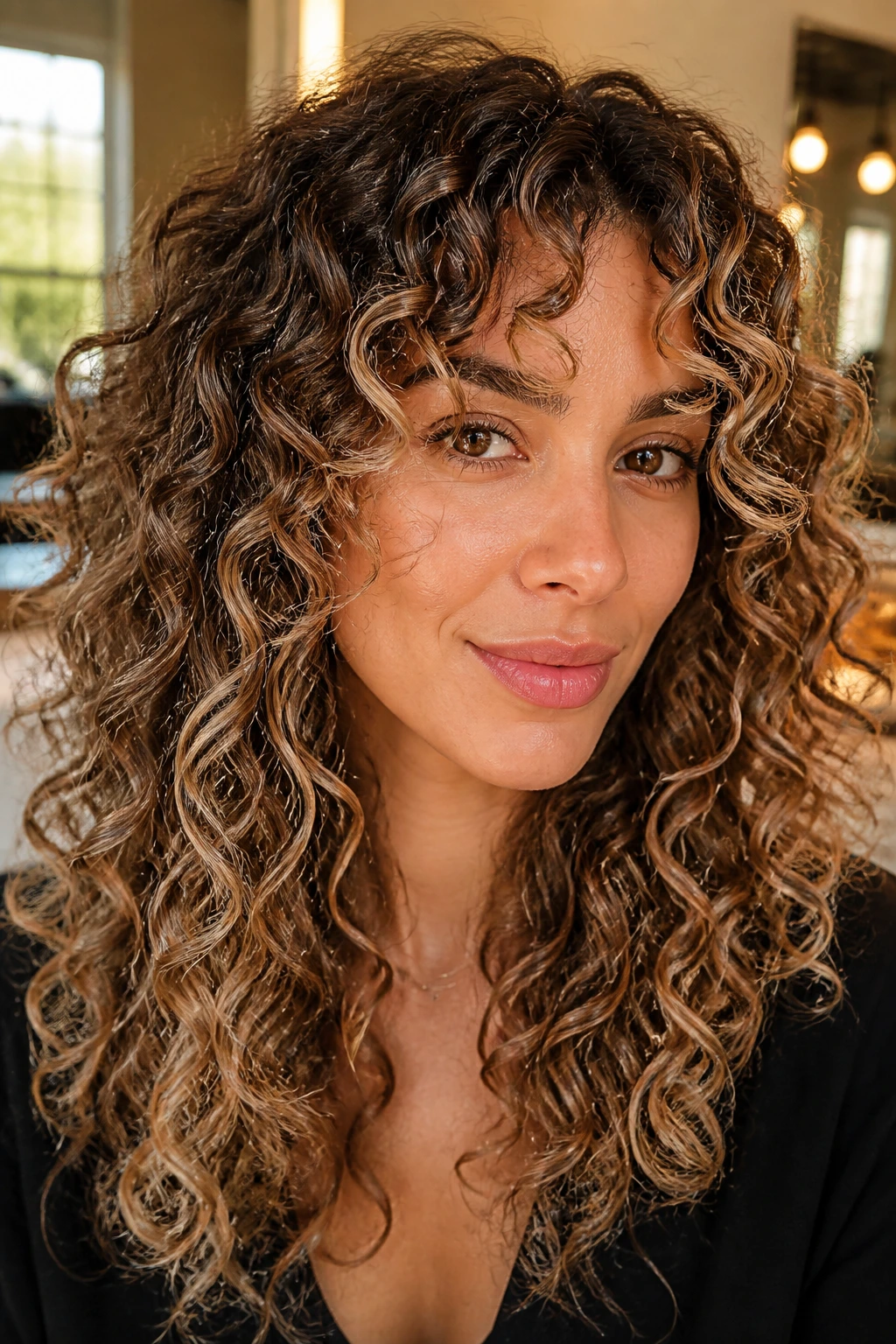
Curly bangs need to be cut with shrinkage in mind, and that matters even more on a long face. A curl that looks mid-cheekbone when wet may spring up two inches once it dries. That means the shortest point should stay long enough to settle around the brow or lower forehead, not bounce up into the middle of the face.
Lightened spirals around the front work well because they pull the eye outward in a curved shape. The highlight should sit where the curls naturally want to fall, usually one or two curls in from the hairline. Too much light at the root can make the forehead look larger, and that is the opposite of the goal.
Strong opinion: curly fringe looks best when it is cut dry or nearly dry. Guessing at curl length when the hair is stretched flat is a gamble I would not take.
13. Wolf-Cut Bangs With Bright Face Pieces
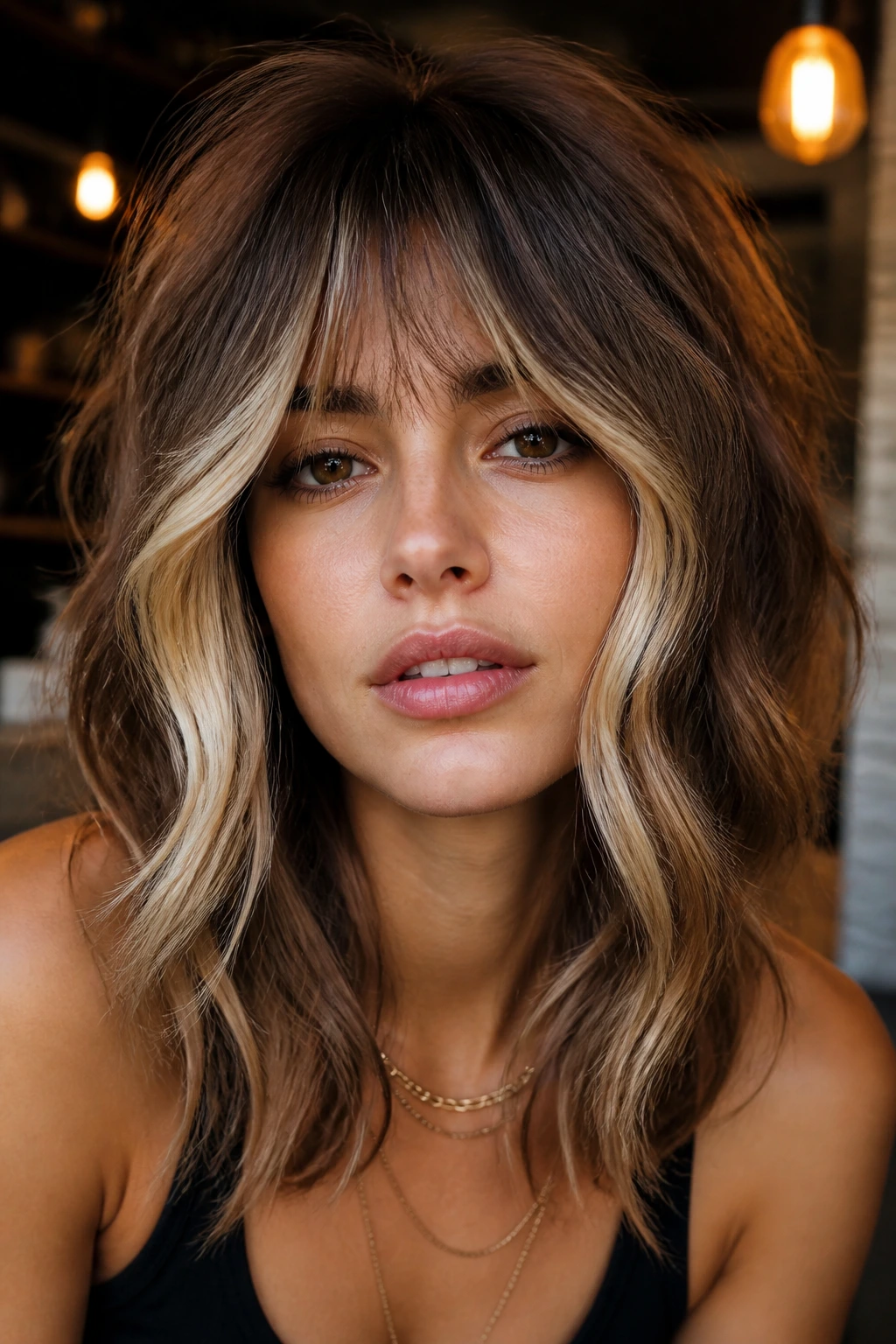
If you like edge, this one has it. The wolf-cut bang is piecey, a little rough around the edges, and built to sit with volume at the crown and movement around the face. For a long face, the trick is to keep the front pieces wide enough to hit the cheekbones so the overall silhouette doesn’t just go tall and narrow.
Bright face pieces give the cut more dimension, especially on dark hair. I’d keep the light concentrated in the front third of the haircut, then blend it backward in thin ribbons. That keeps the style alive without turning the whole head into a highlight map.
This is not the softest choice here. It is, however, one of the most flattering for someone who wants a strong shape and does not mind a little texture chaos.
14. Rounded Fringe With Mocha Money Pieces
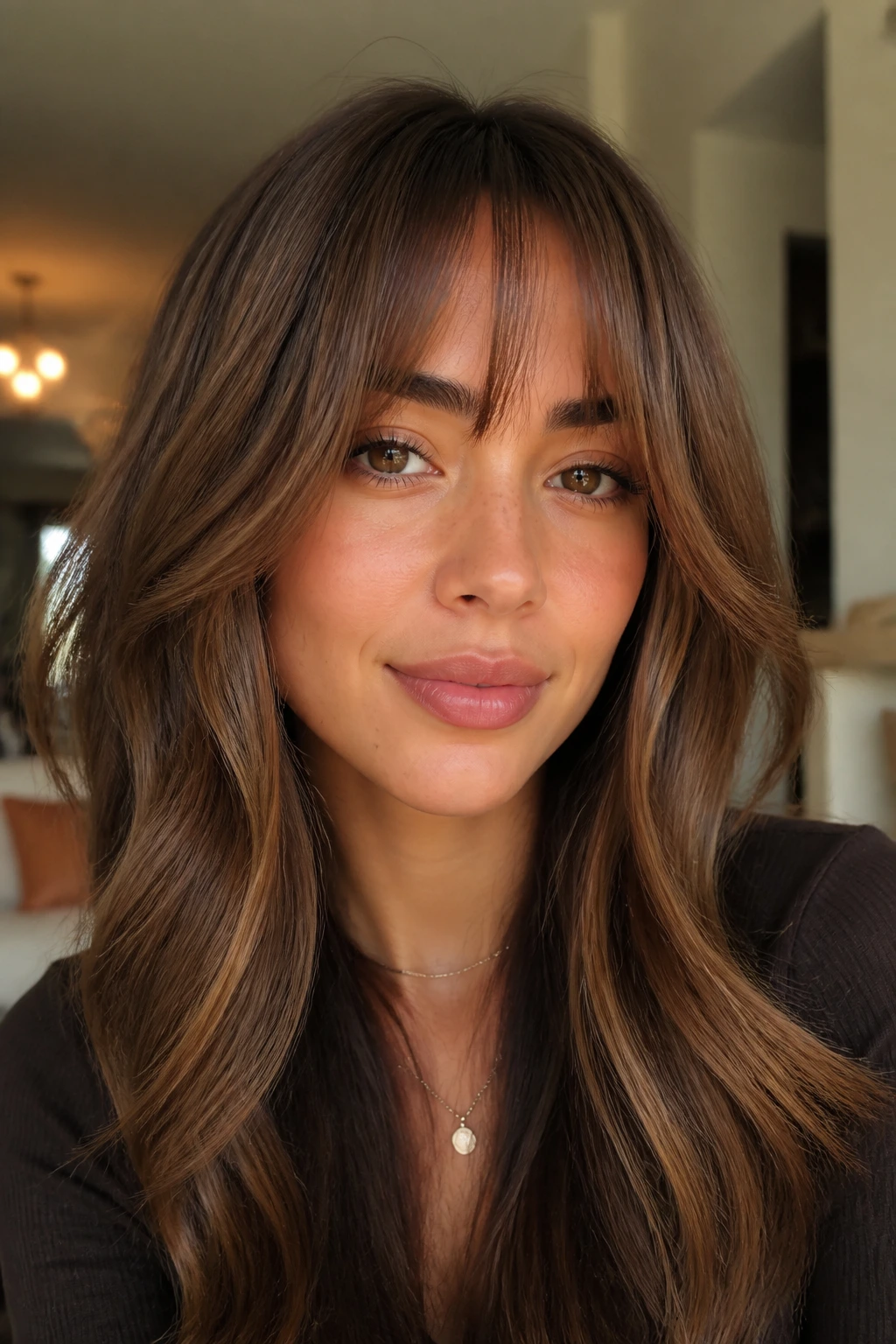
Rounded fringe is a sweet spot for thick or coarse hair because it carries enough weight to hold its shape. The center sits a little lower, the sides curve away, and the effect is gentle but clear. On a long face, that curve adds width where straight hair often adds none.
Mocha money pieces are a smart pick if you do not want bright blonde at the front. The warmth softens the face and keeps the haircut grounded. I like this especially on deep brunettes because the face-frame reads as polished instead of obvious.
Best Styling Move
A smooth blow-dry brush works better than a tiny round brush here. You want the fringe to bend, not curl under too sharply. The shape should feel like a crescent, not a semicircle.
15. Long Bangs Swept Across the Forehead
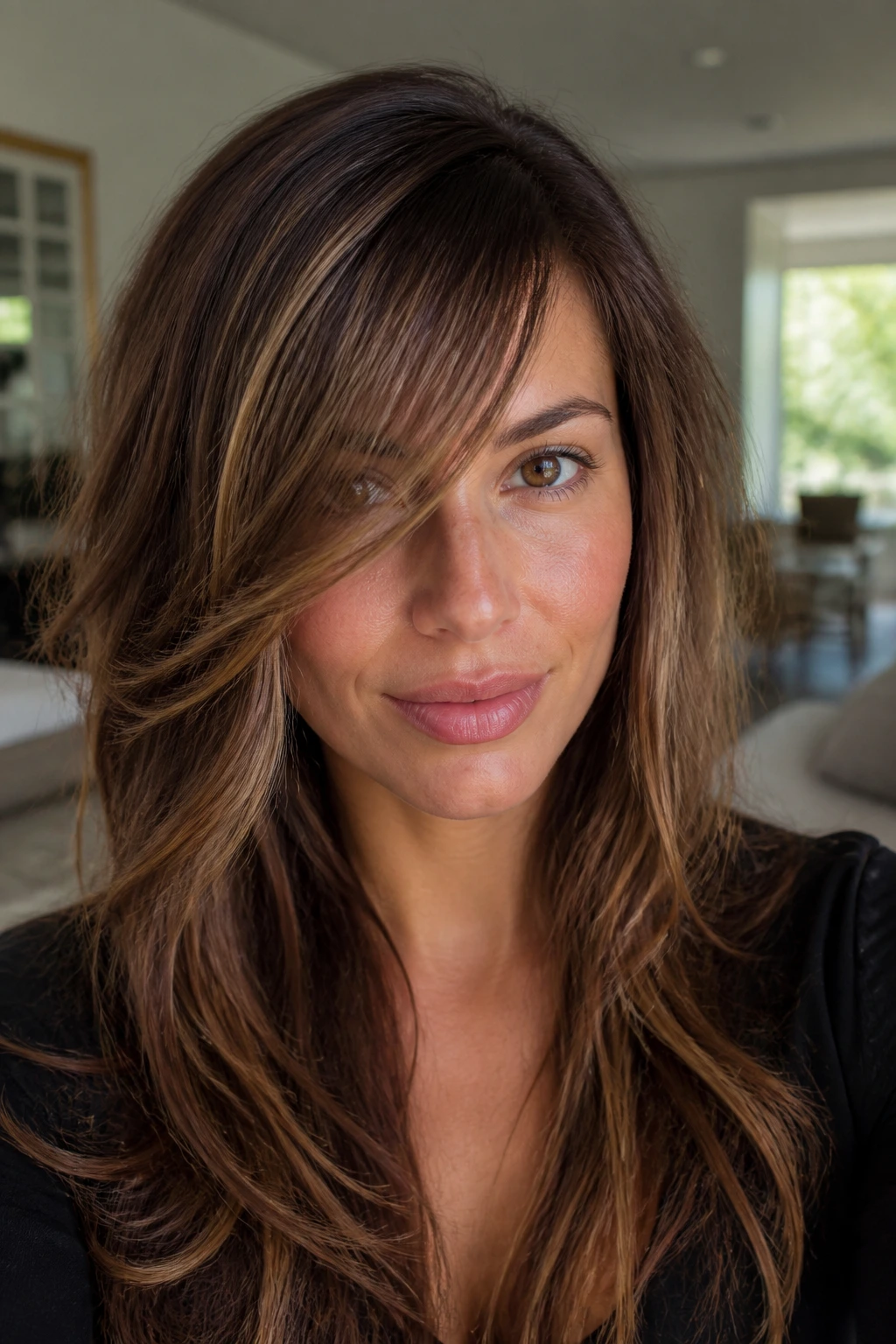
This is the dramatic diagonal option. The bangs sweep across the forehead in one long curve, which creates a strong line from temple to temple and pulls attention sideways. On a long face, that diagonal can be a lifesaver if you want to keep your hair fairly long and still make the front look intentional.
The money piece should sit under the sweep and peek through when the hair moves. That little flash of light near the eye line is what keeps the style from feeling flat. It also lets the haircut shift from daytime to evening without much effort.
I like this best on straight or thick wavy hair because the fringe needs enough weight to stay where it’s put. Fine hair can do it, but it usually needs more root support.
16. Soft Crescent Bangs on Thick Hair
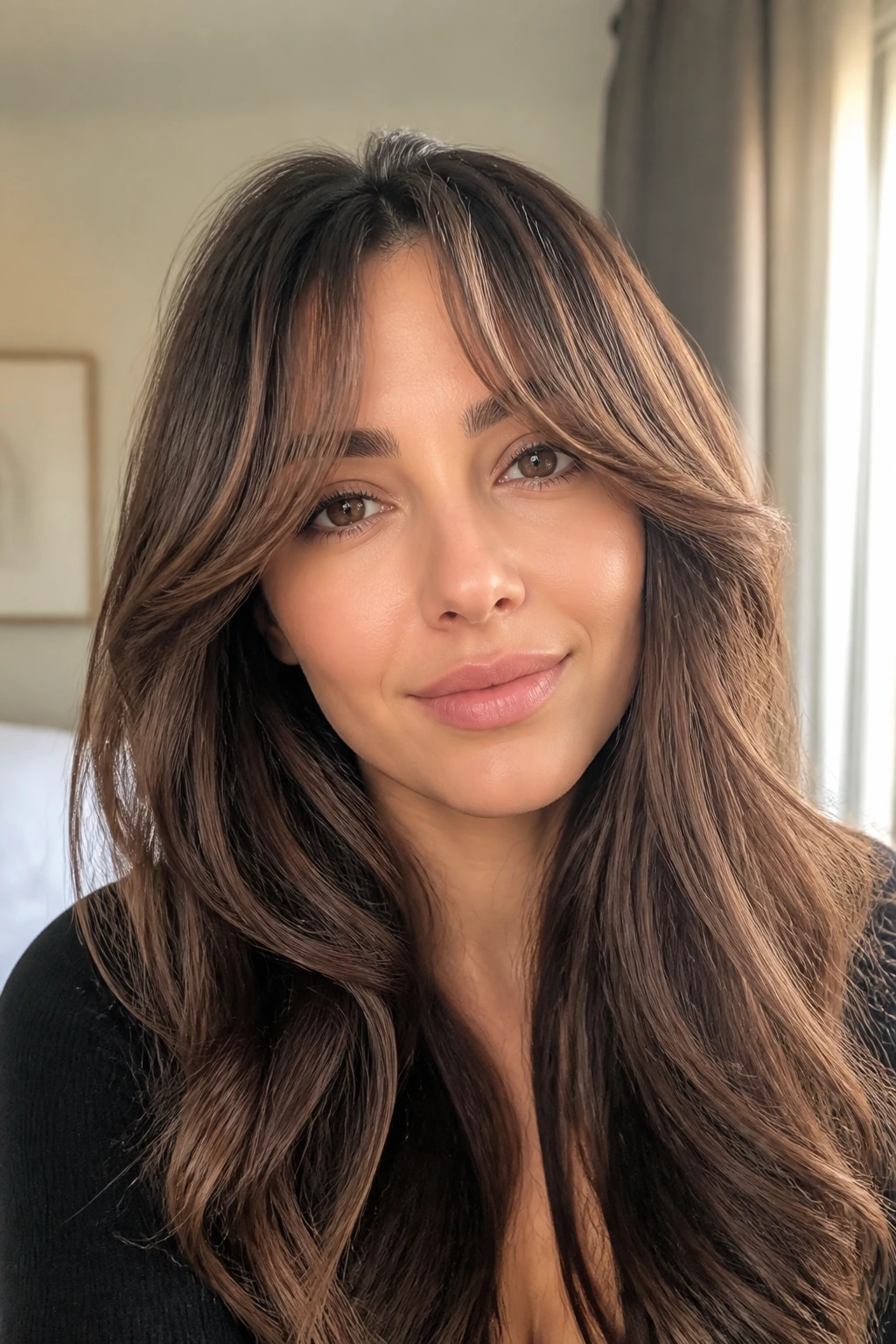
Thick hair can handle a crescent bang better than most textures because the hair has the density to hold the shape. The middle lands lower, the sides stretch toward the cheekbones, and the whole effect balances a long face by adding width across the upper half.
This version loves a money piece that is blended, not blocky. A soft lift of color around the temples and front layers keeps the fringe from looking like one dark curtain. If the front is too dark, the face can look longer. If it’s too bright, the highlight starts yelling before the cut gets a chance to work.
My Favorite Detail
Ask for interior texturizing rather than thinning the outer line. That way the fringe stays full at the edges and does not go fuzzy after the first shampoo.
17. Airy Bangs for Fine Hair
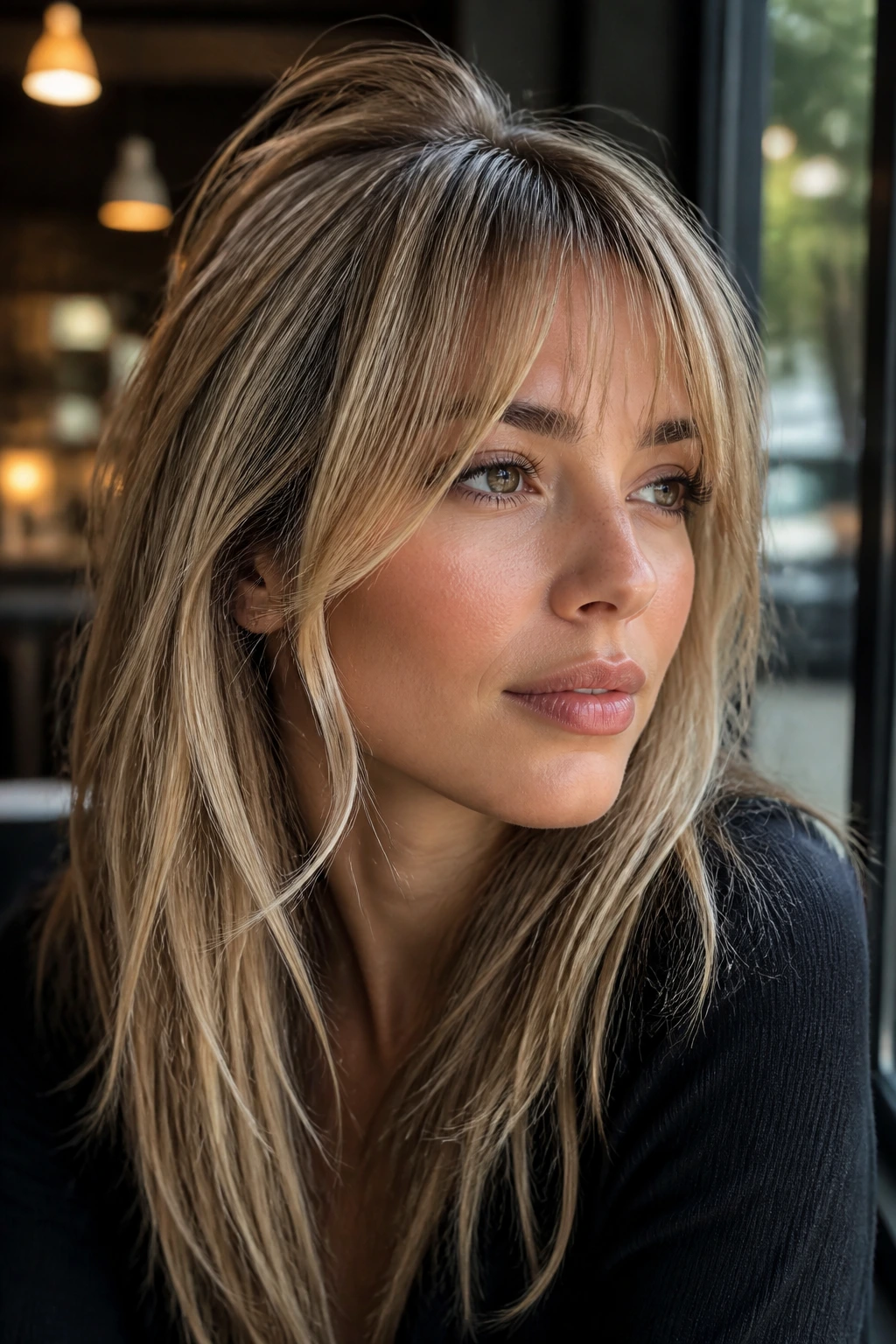
Fine hair does not need a heavy fringe to help a long face. It needs lift, shape, and enough separation to create a line across the forehead without looking sparse. Airy bangs can do that if they’re cut with a little fullness in the center and styled with root support.
The money piece should stay delicate here. Too much contrast can make fine hair look stringy, especially at the front where every strand shows. One or two shades lighter than the base is enough, and it should fade into the front layers instead of stopping in a hard strip.
Use a light mousse at the root and a quick blast from the blow dryer before the bangs dry flat. That little window is everything.
18. Choppy Bangs With Dimensional Brunette Highlights
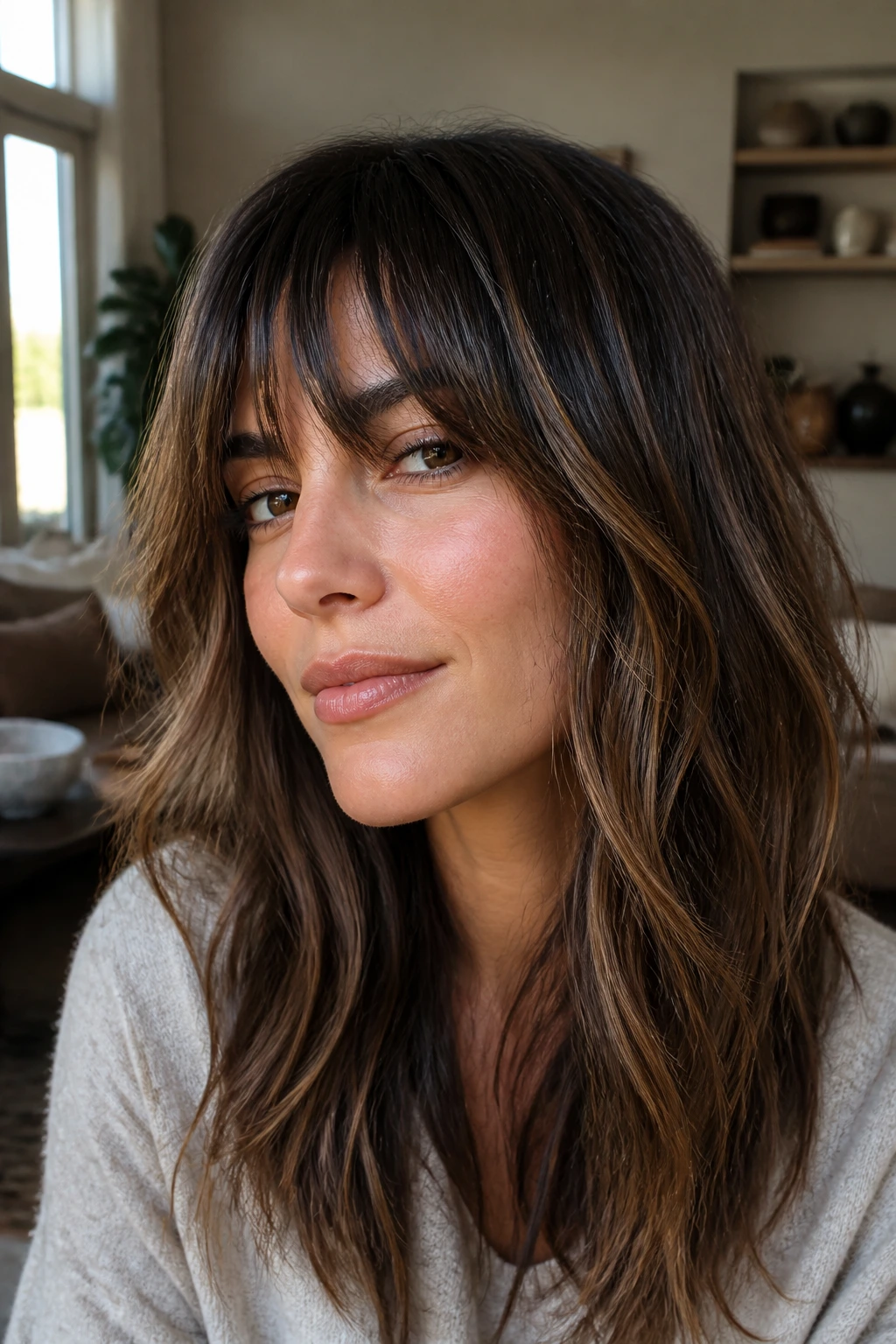
Choppy bangs are built for movement. They do not sit in one perfect line, and that slight irregularity is useful on a long face because it keeps the eye from sliding straight down the center. The texture creates a little visual interruption, which is exactly what the face shape wants.
Dimensional brunette highlights — chestnut, toffee, soft cinnamon — make the front feel richer without making it lighter in a high-contrast way. This is a strong option if you want the haircut to look expensive in a low-key, everyday sense. Not shiny-hair-commercial shiny. Real hair shiny.
The best part is how forgiving it is. If a strand goes one way and the next strand goes another, the style still works.
19. Chin-Opening Layers With Cheekbone Money Pieces
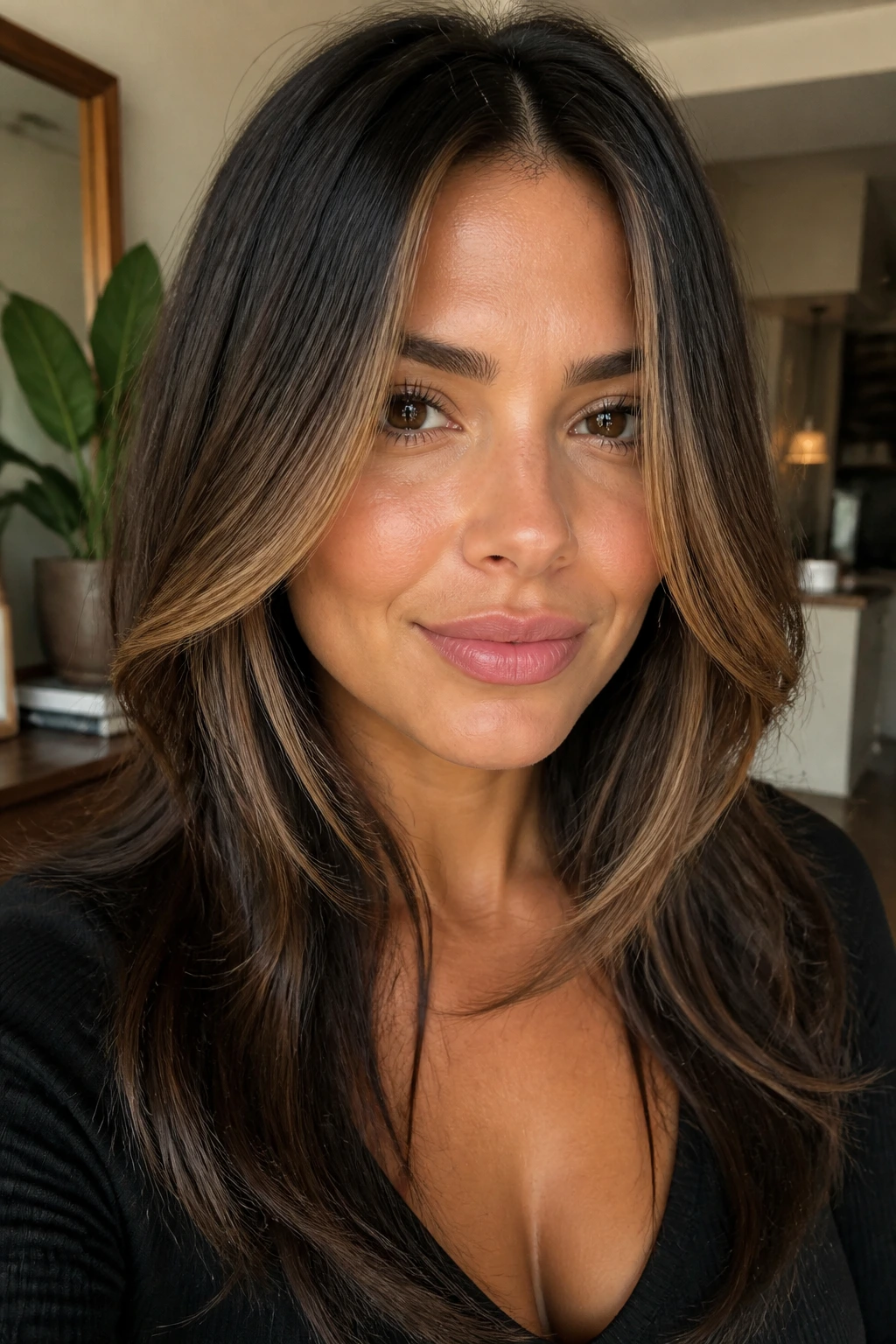
This version leans more toward face-framing than fringe, but it still counts because the front pieces act like long bangs that open around the lower face. On a long face, the benefit is obvious: the hair adds width near the cheekbones and chin instead of stacking everything at the top.
Cheekbone money pieces are the whole point here. They draw the eye to the widest part of the face frame and stop the length from taking over. I’d use this option if you hate the feeling of hair sitting in your eyes but still want a front shape that feels deliberate.
It grows out beautifully, too. The bangs turn into front layers instead of a problem to solve.
20. Glossy Straight Bangs With Subtle Beige Front Lights
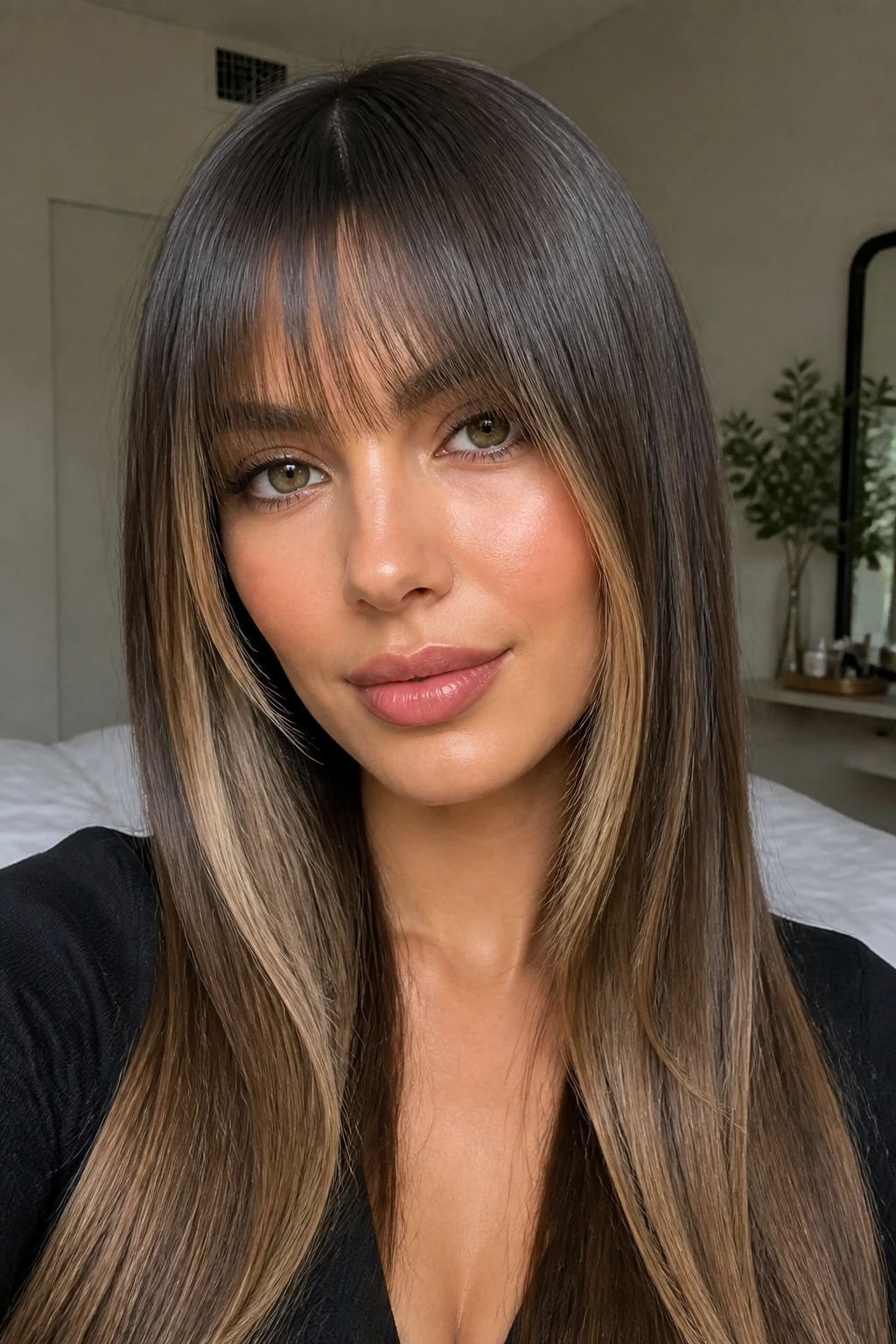
Straight bangs can work on a long face, but the polish has to be exact. The line should hit near the brows, the sides should soften slightly toward the temples, and the whole finish should stay sleek. If the fringe is too short, the forehead looks longer. If it’s too blunt and heavy, the face can feel boxed in.
That is where the beige front lights help. They soften the front edge without turning it into a high-contrast statement. I like this best on straight hair that already falls smoothly and can handle a precise blow-dry.
Style Cue
Use a flat brush or a paddle brush for the main shape, then bend only the ends of the fringe under with a round brush or straightener. You want smooth, not pin-straight and hard.
21. Long Bangs on Wavy Hair With a Center Part
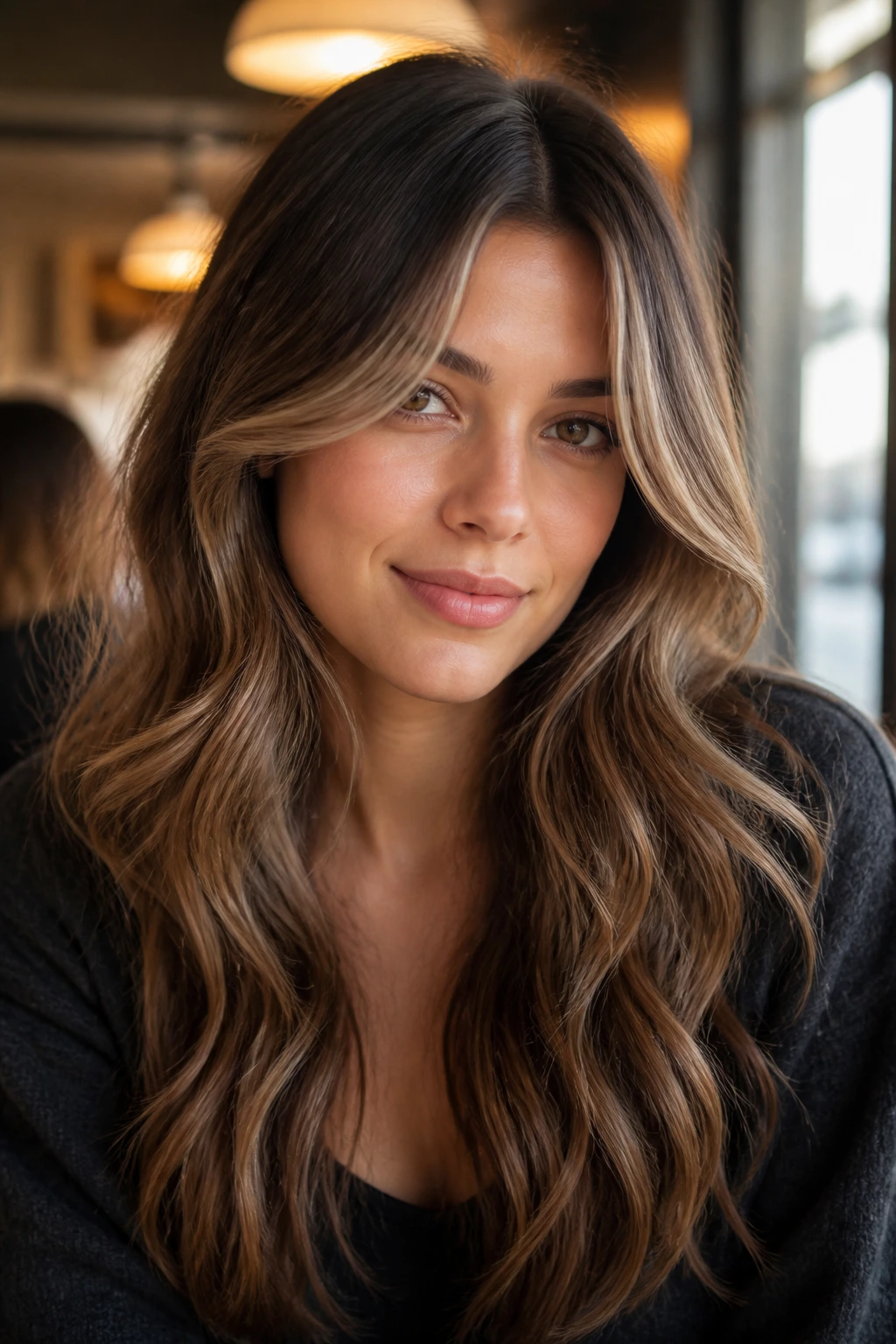
A center part can be tricky on a long face, but wavy hair gives it some help. The waves create width on both sides of the face, and the long bangs keep the forehead from reading too tall. If the front pieces are cut to fall around the cheekbone and cheek-jaw area, the whole shape feels balanced instead of narrow.
Money piece highlights should follow the wave pattern. That means soft brightness that moves with the hair, not one bright block plastered at the root. The front looks more natural when the light bends with the texture.
This is the laid-back option for someone who wants to air-dry and still look like they thought about their hair.
22. Heavy Curtain Bangs on Dense Hair
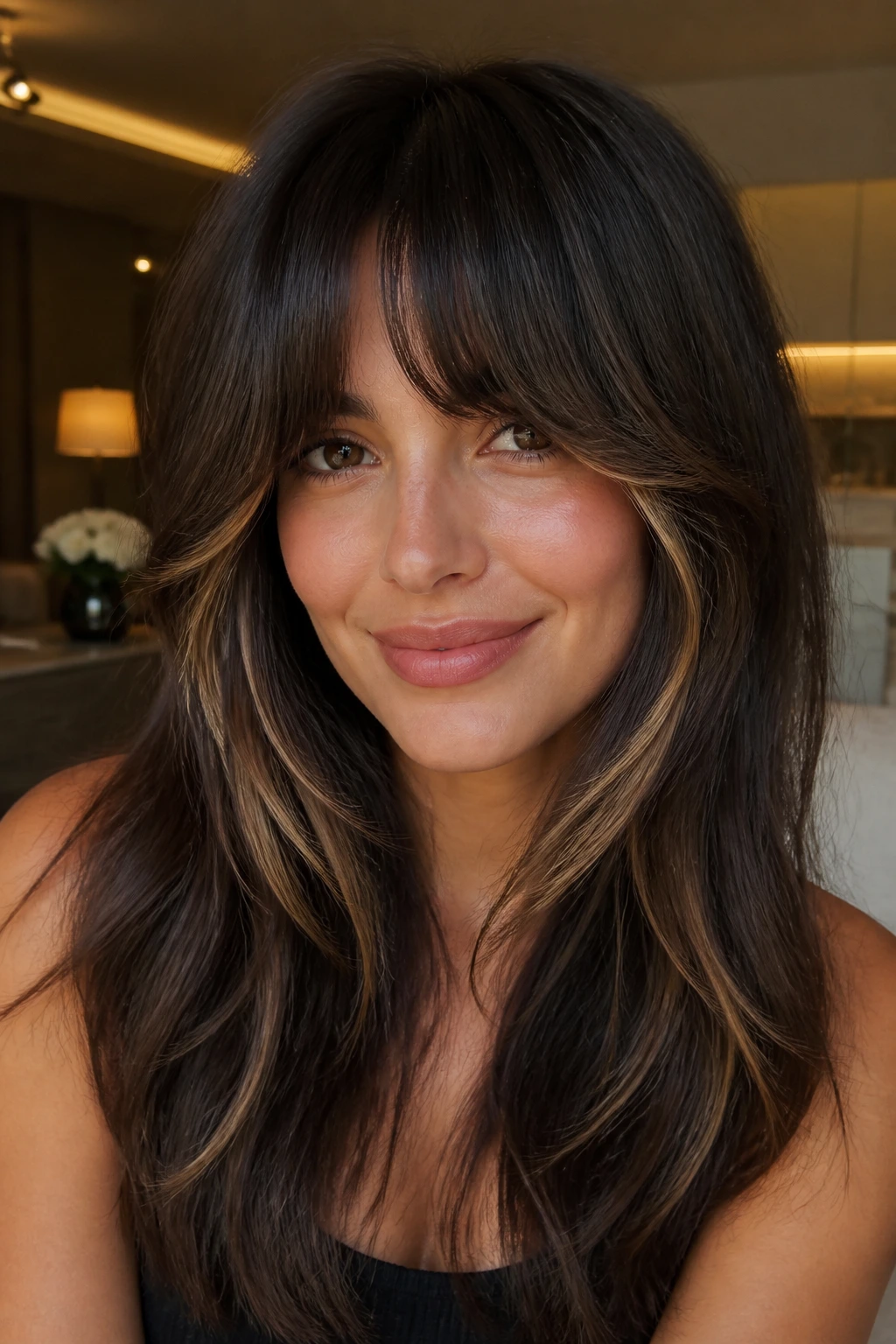
Dense hair can handle a heavier curtain bang, and long faces often benefit from the extra weight. A thicker fringe creates a strong horizontal line across the forehead, while the side pieces fall longer and widen the face near the temples. Done well, it looks lush instead of bulky.
The money piece can be a little bolder here because the fringe has enough substance to carry it. I like a soft blonde or warm caramel panel that starts at the part and blends down through the cheekbone area. The trick is keeping the color bright enough to frame, but not so bright that it steals attention from the cut.
If your hair tends to puff at the roots, this style needs a little discipline with the blow dryer. Worth it.
23. Mixed-Length Fringe With Copper Money Piece
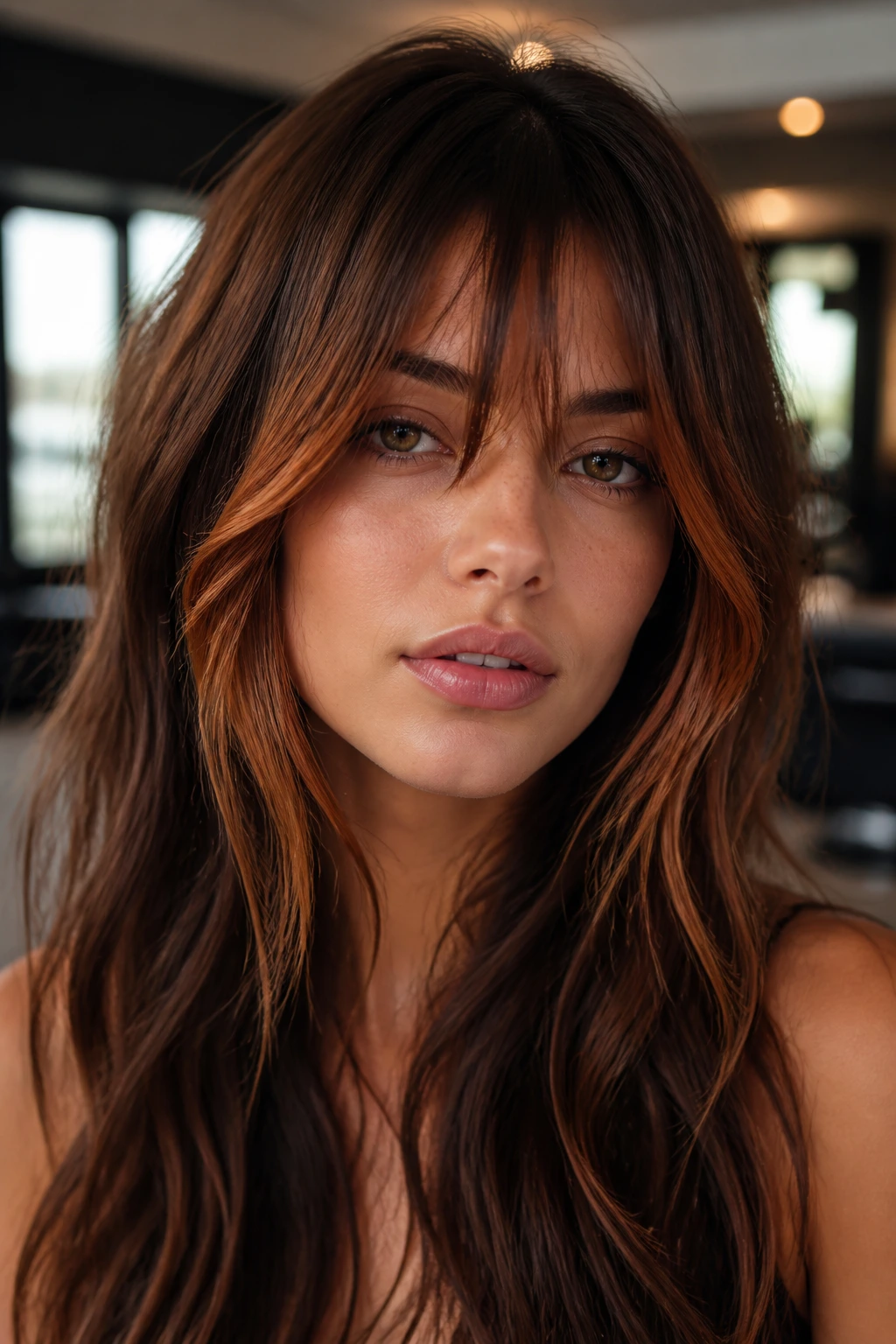
Mixed-length fringe has a more casual, almost editorial feel. The pieces do not all land at the same point, which makes the front move in a less predictable way. On a long face, that unpredictability is useful because it breaks the long vertical line without adding a heavy block of hair across the forehead.
Copper money pieces are a strong choice if you want warmth and a little drama. The color makes the face look alive, especially under natural light, and the warmer tone softens sharp features. I would choose this on brunette or auburn hair first, because the copper reads richer there than it does on cooler blondes.
Best Match
If your features are fine and your face is long, this option gives you movement without dragging the hair downward. The unevenness is the point.
24. Face-Framing Butterfly Layers With Fringe
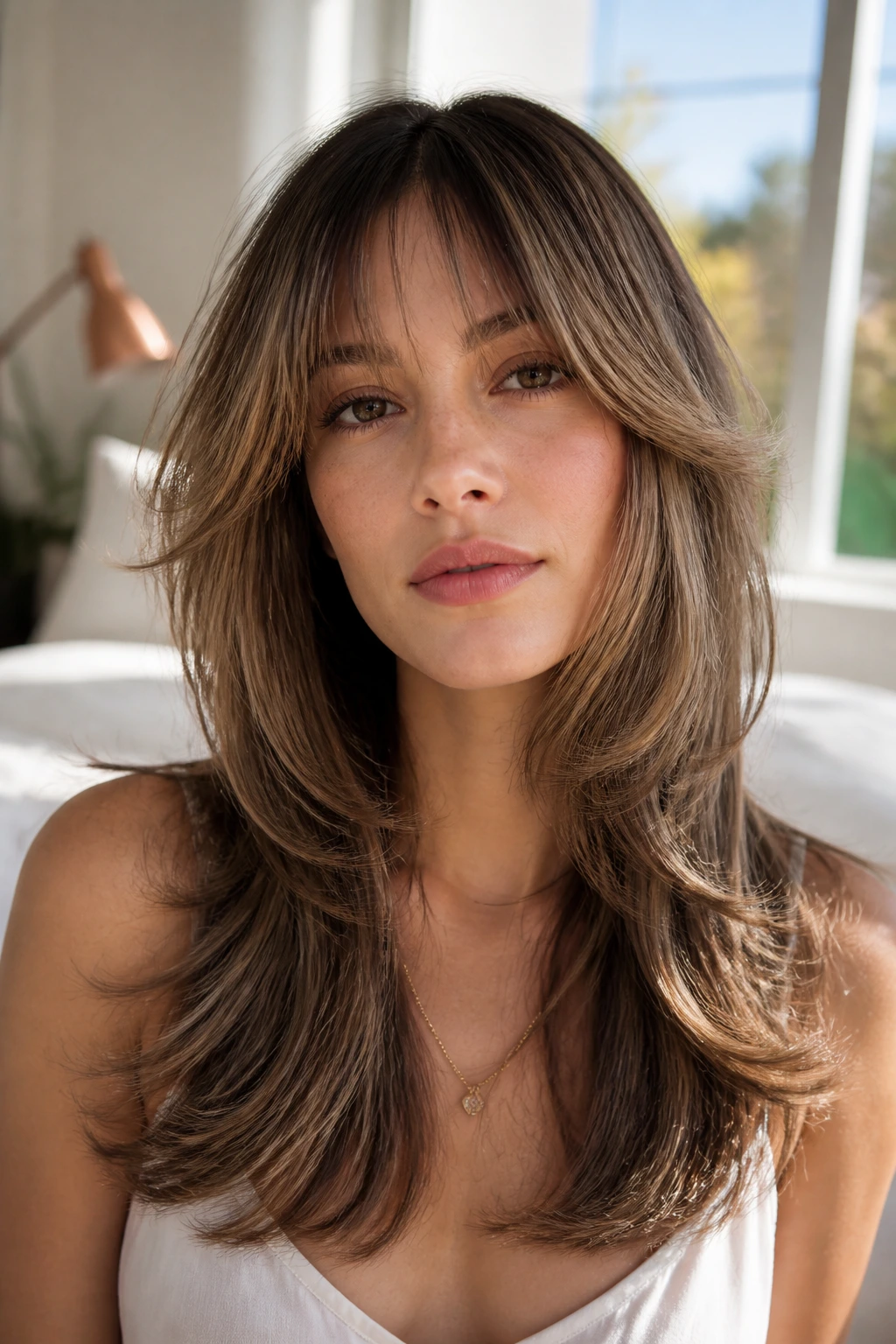
Butterfly layers are built around motion near the face and length through the back. That combination is useful on a long face because it gives width around the cheekbones while preserving the length people usually want to keep. Add a fringe that blends into those front layers and you get a shape that feels full but not heavy.
The money piece should connect the top and bottom of the face frame. A light ribbon around the brow, another around the cheekbone, and softer brightness through the layer ends creates a smooth vertical flow with some side width. That may sound fussy, but on hair, placement is everything.
This is one of the best choices if you like a blowout and want your bangs to disappear into the haircut in a good way.
25. Glam Blowout Bangs With Bright Front Streaks
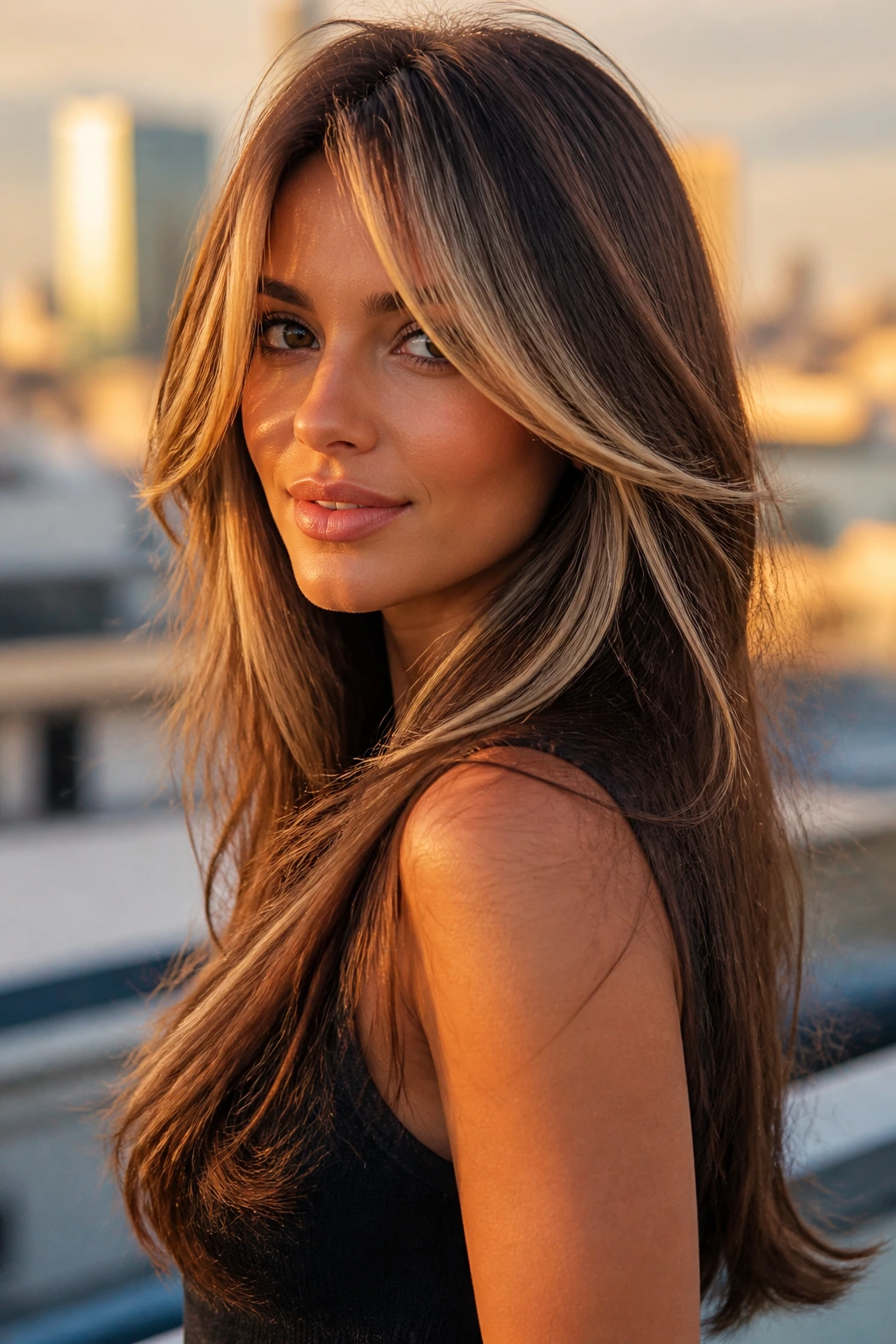
If you want the most polished version of the whole group, this is it. The bangs are long enough to sweep, the front layers are shaped to hold volume, and the money piece is bright enough to flash when the hair moves. On a long face, the blowout silhouette adds width where it matters and keeps the forehead from feeling endless.
Bright front streaks work here because the styling is doing so much of the visual work. The big round brush, the lifted root, the curved ends — all of it builds shape. The color simply sharpens the edges.
This is the version I’d pick for a night out, a photoshoot, or any day when you want your hair to look like it knows exactly what it is doing.
Why Long Bangs and Money Pieces Work So Well on Long Faces
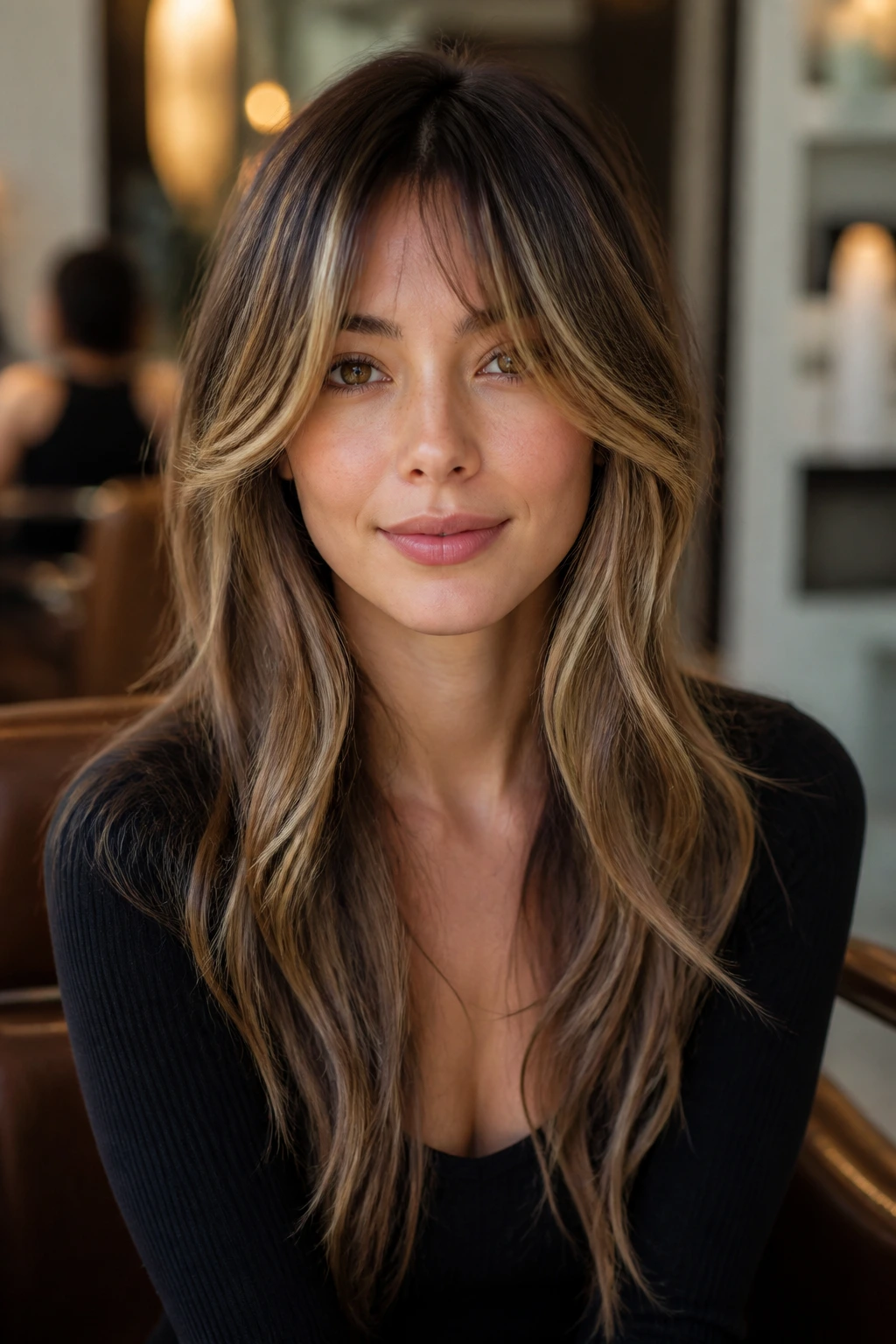
The shape logic is simple once you see it. A long face usually benefits from a haircut that adds width across the forehead, temples, or cheekbones, because those are the spots that interrupt the vertical line. Long bangs do that without chopping off the whole front section. Money piece highlights do the rest by pulling the eye sideways, especially when they sit at the front panels rather than deep in the crown.
The mistake people make is assuming that any fringe will help. Not true. A bang cut too high can expose more forehead. A money piece placed too far back can add brightness where you do not need it. A great result depends on balance — the cut and the color have to work together, or you just end up with hair that feels busy but not better.
The nicest thing about this combo is how adjustable it is. You can go soft, bold, warm, cool, straight, curved, shaggy, or sleek. The face shape stays the same. The framing changes.
Tools That Make Bangs Behave
-
Blow dryer with a narrow nozzle: It directs the air so the fringe does not split or frizz before you finish shaping it.
-
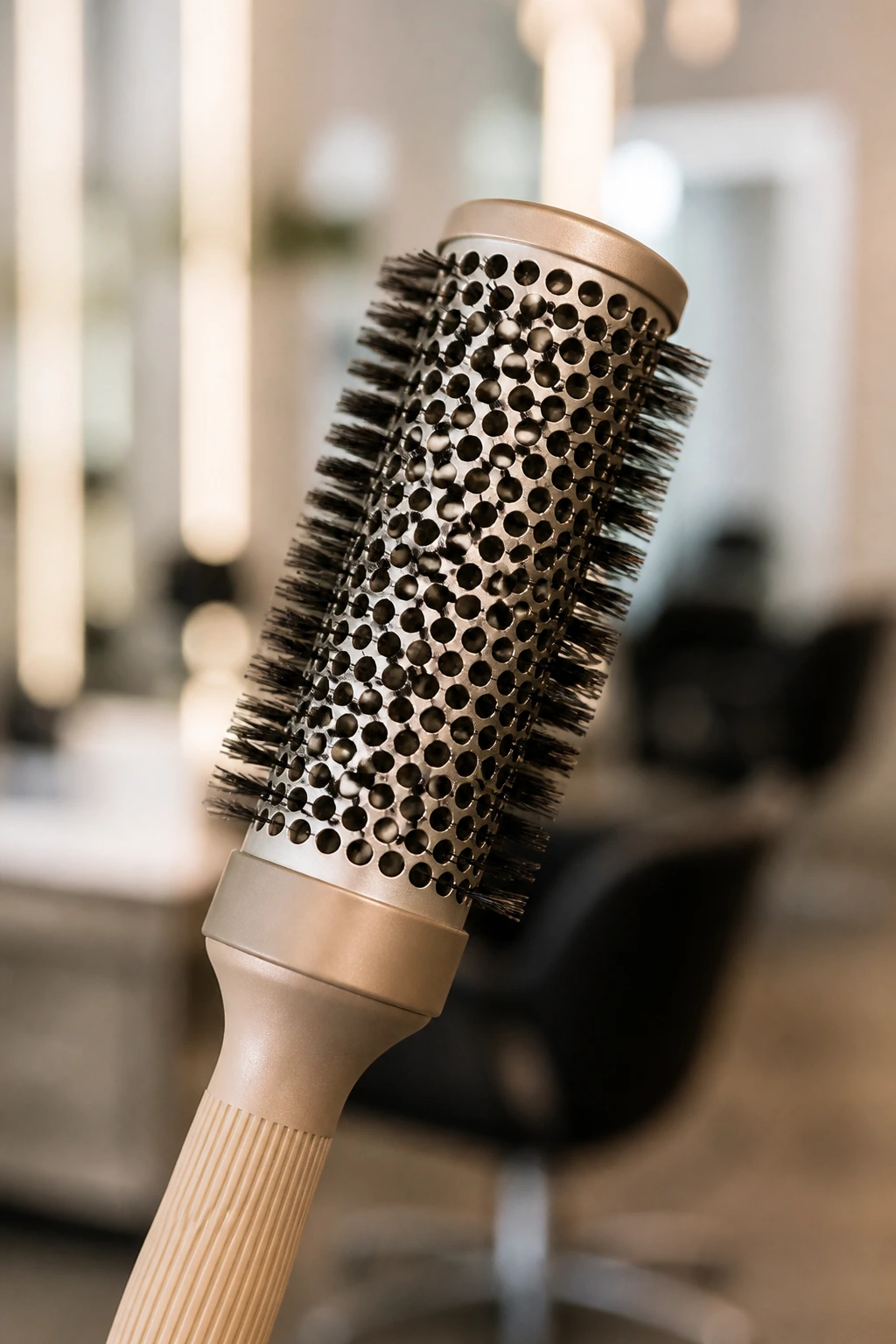
1-inch to 1.25-inch round brush: This size gives long bangs a bend without turning them into curls.
-
Tail comb: Helpful for clean parting and for lifting the root at the front before you dry.
-
Sectioning clips: They keep the rest of the hair out of the way while you shape the bang and the money piece.
-
Heat protectant spray: Use it before any flat iron or round-brush work, especially if the front pieces get styled daily.
-
Light mousse or root lift spray: Good for fine hair and for keeping curtain bangs from collapsing.
-
Texturizing spray: Best on shaggy, choppy, or piecey fringe; use a little, not half the bottle.
-
Flat iron: Useful for soft bends, especially on side-swept or asymmetrical bangs that need direction.
-
Velcro rollers: Optional, but they help bangs and front layers cool in a lifted shape after blow-drying.
-
Shine serum: A drop on the ends of the front pieces keeps money piece highlights from looking dry or frayed.
How to Talk Through the Cut at the Salon
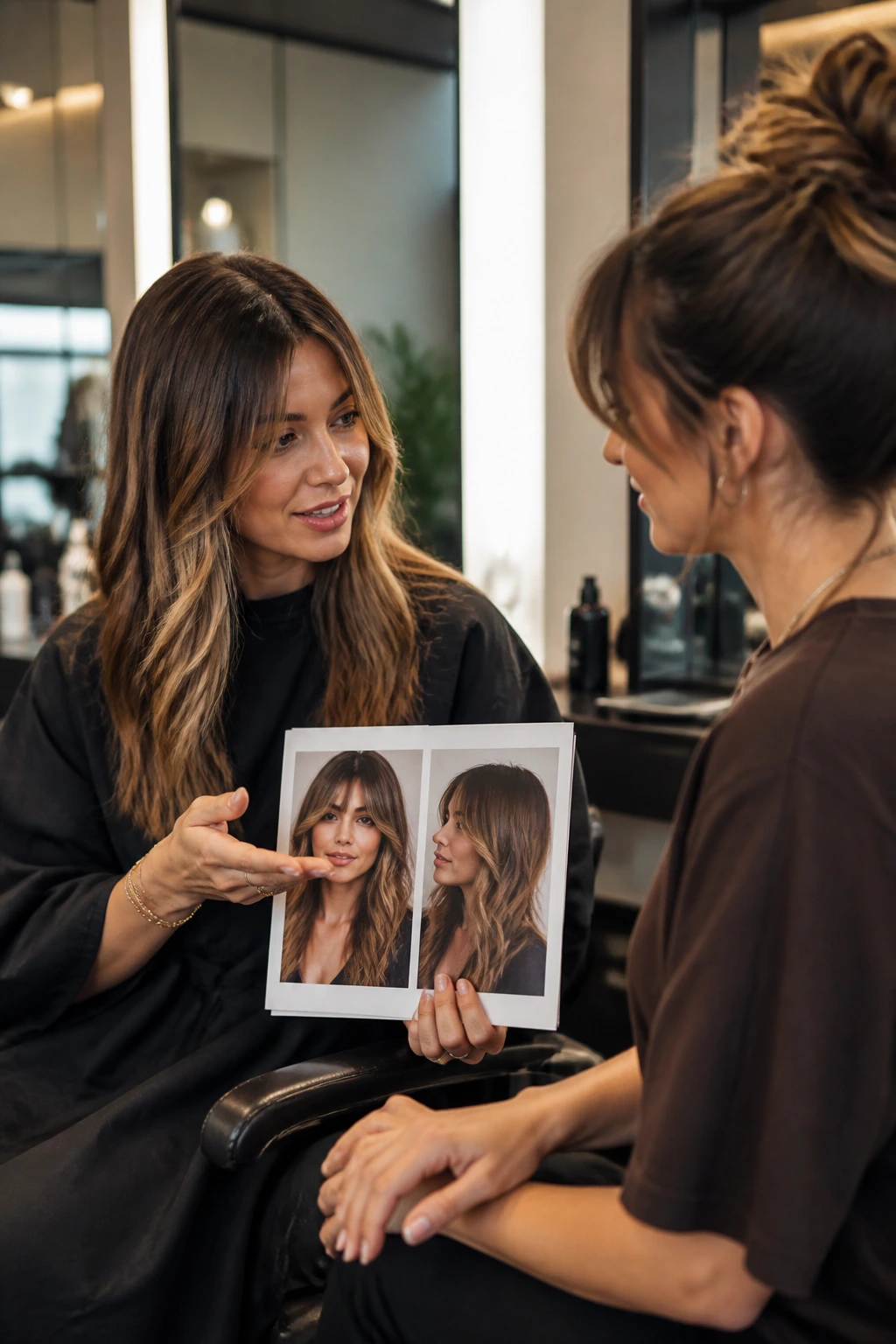
Bring photos, but bring the right kind. One photo should show the bang shape you want. Another should show the color placement, because a curtain fringe and a money piece can be mixed in a dozen ways, and the wrong interpretation is where bad haircuts begin. Point to the length you want in the photo. Do not just say “long bangs” and hope the stylist reads your mind.
Tell them where your part lives, where your cowlick pushes, and whether you blow-dry every morning or let your hair air-dry. That changes everything. A fringe that looks perfect on a round-brush blowout can fall apart on someone who sleeps on wet hair and leaves the house ten minutes later.
Ask for the lightening to sit where the face gets wider — usually around the temples and cheekbones — not just up at the hairline. If your face is especially narrow, ask for a softer fade rather than a hard streak. And if you are nervous, start a touch longer. Bangs can always be shortened. Too short is where the annoyance lives.
How to Wear These Bangs Day to Day
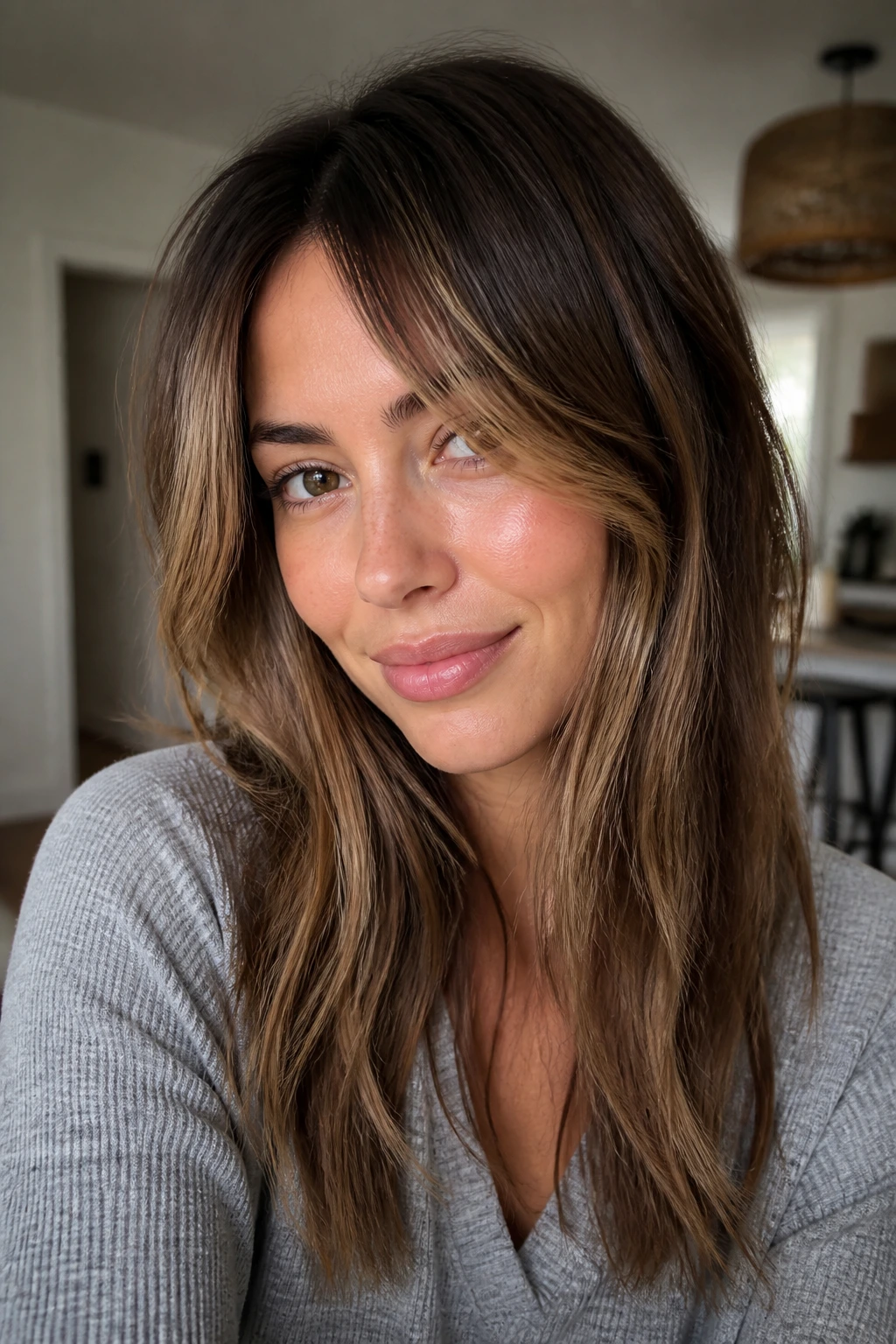
Soft and casual: Let the fringe air-dry with a little mousse, then finger-comb it into place. Curtain bangs, wispy fringe, and long blended bangs live best here because they do not need perfect symmetry to look right.
Polished and glossy: Blow-dry the front pieces with a round brush and let them cool before touching them again. That cool-down step locks the bend in place and keeps the money piece from looking flat. Heavy curtain bangs and straight fringe do especially well with this finish.
Texture-forward: Use a flat iron to make one or two soft bends through the front sections, then shake them loose with texturizing spray. This works best for shaggy cuts, mixed-length fringe, and side-swept styles.
Color-forward: If the money piece is the star, keep the rest of the style simple. A smooth blowout and a clean part let the front panels do their work without fighting flyaways.
Extra Styling Moves That Change the Mood
Root Lift: Blow-dry the bang area in the opposite direction of your part for the first 20 to 30 seconds. It gives the front a little push without making it stiff.
Color Balance: If your money piece is very bright, keep the fringe shape softer so the haircut does not feel top-heavy. If the color is subtle, you can afford a sharper bang line.
Face-Opening Finish: Direct the outer edges of the bangs toward the cheekbones rather than straight down. That tiny angle widens the face in a way a center plunge never will.
Softness Control: A pea-sized amount of lightweight cream on the ends keeps the bangs from fraying. Use less than you think. Bangs weigh themselves down fast.
Care Between Cuts and Wash Days
Long bangs need a little more babysitting than the rest of the haircut. If you wear a blunt or heavy fringe, plan on a trim every 3 to 4 weeks. Curtain bangs, side-swept bangs, and blended fringe can usually stretch to 6 to 8 weeks before they start losing shape. Face-framing money pieces need color glossing or toner refreshes roughly every 6 to 10 weeks if you want the brightness to stay clean.
The front dries and gets oily faster than the rest of the hair, which is rude but true. On wash days, dry the bangs first so they do not sit on the forehead and curl in odd directions. A quick blast with the dryer and a round brush beats trying to fix them after the rest of the hair is already done.
At night, clip the fringe back loosely or pin it in a soft bend if you know it flattens easily. A silk pillowcase helps too. It does not solve everything, but it cuts down on those weird dents that make the front pieces look like they lost a fight with the mattress.
If the money piece starts going brassy, use the right toning shampoo sparingly — purple for blonde, blue for brunettes — and keep it off the rest of the hair if the ends are already dry. One wash every one to two weeks is usually enough. Too much toning makes the front look flat and dull.
Variations and Adaptations to Try
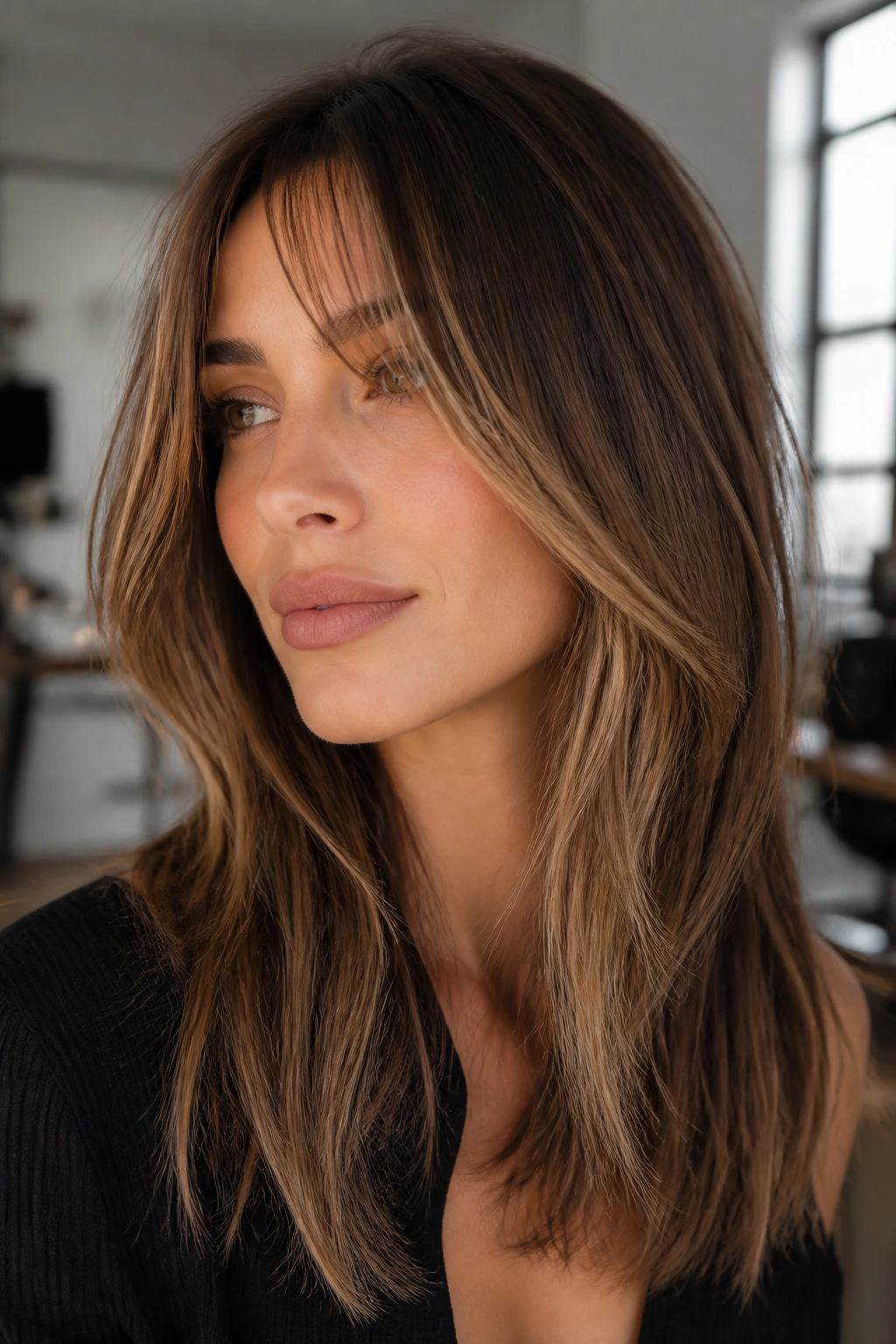
Barely-There Frame: Keep the fringe long and sparse, with the shortest point just grazing the brow. This is the best path if you want to test bangs without committing to a heavy shape.
High-Contrast Ribbon: Make the money piece one or two levels lighter than the rest of the hair and keep the bands of light narrow. This gives a sharper face frame and works well on darker bases.
Curl-Friendly Lift: Cut the bangs a touch longer than you think you need, then shape them dry so the curl can spring up naturally. This avoids the too-short problem that curly fringe gets so often.
Thick-Hair Sweep: Leave the outer edges of the bang long and remove weight only inside the section. That keeps the fringe from puffing while still giving you a strong front line.
Low-Key Grow-Out Plan: Start with curtain bangs and cheekbone money pieces, then let the fringe blend into layers over time. This is the calmest route if you hate awkward regrowth.
Warm Glow Update: Swap blonde or beige highlights for caramel, honey, copper, or apricot around the face. Warm tones soften long features and look especially good on brunette and redhead bases.
Common Mistakes That Make the Look Miss the Mark
-
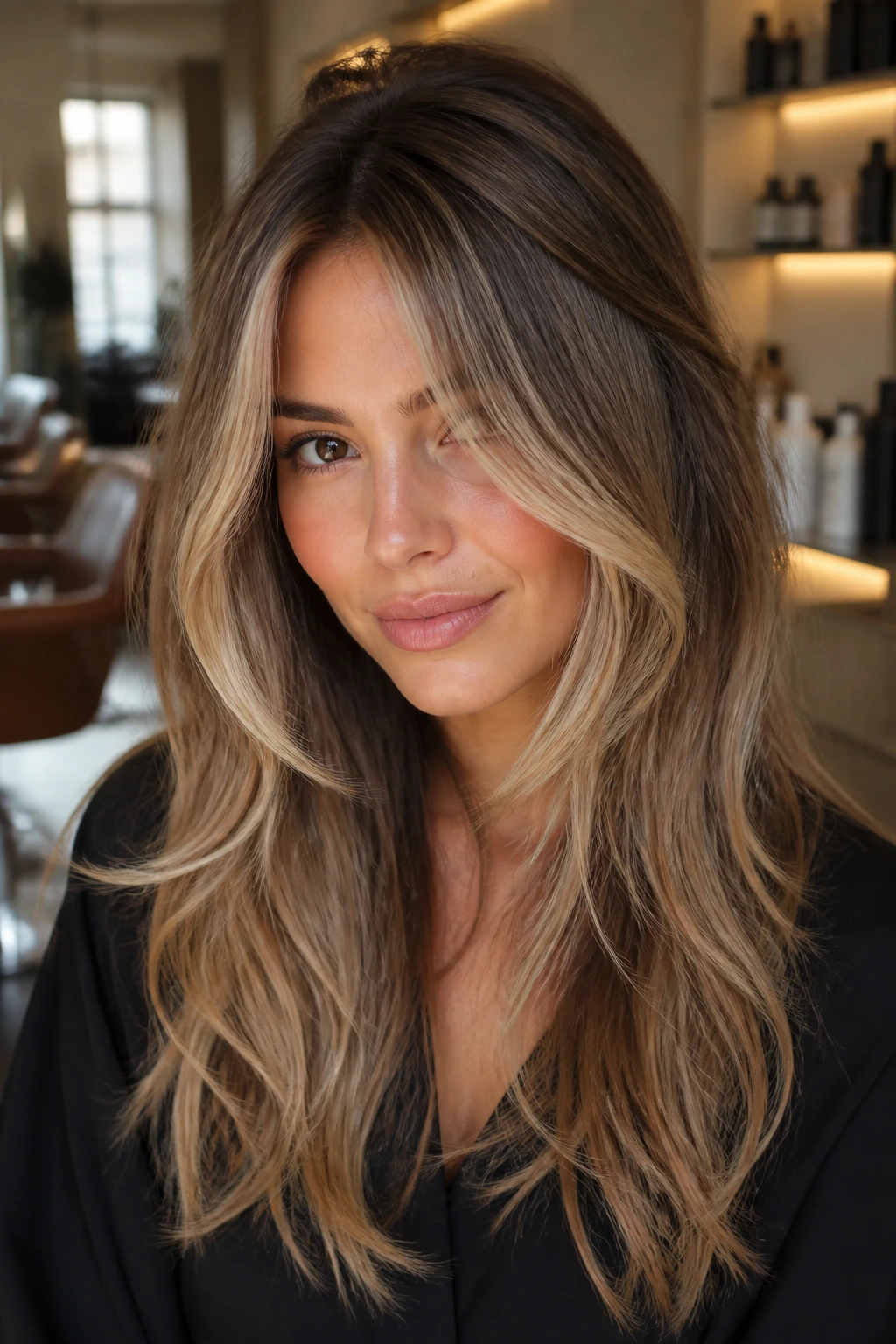
Cutting the bangs too short: A fringe that sits well above the brow can drag attention back to the forehead and make a long face feel even longer. Ask for the first cut a little longer than you think you need.
-
Placing the money piece too high: Bright front panels at the root can widen the forehead in the wrong way. The color should start high enough to frame, but low enough to feel connected to the cheekbones.
-
Over-thinning the fringe: Too much texturizing leaves the bang see-through and separated. On a long face, that can make the haircut look unfinished instead of airy.
-
Ignoring the part and cowlick: A bang cut against your natural growth pattern will split, flip, or fall into your eyes all day. Tell your stylist how the hair wants to move before the scissors come out.
-
Styling everything straight down: Long bangs need some directional shape. If you pull the front flat against the face every morning, you lose the width that makes the cut flattering.
Questions People Ask Before They Cut the Bangs
Are curtain bangs the safest choice for a long face?
Usually, yes. Curtain bangs give you the most flexibility because they can be worn center-parted, softly swept, or tucked behind the ears while still framing the cheekbones.
How light should the money piece be?
One to two shades lighter than your base is enough for a soft effect. If you want a bolder frame, you can go brighter, but the front should still blend into the haircut instead of sitting on top of it.
Can blunt bangs work on a long face?
They can, but the length matters. Keep them near the brows and soften the edges a little so the fringe shortens the face without making the haircut feel harsh.
What if my hair is fine and flat?
Choose a lighter fringe like curtain bangs, wispy bangs, or a blended side sweep. You’ll also need root lift at the front — otherwise the bangs will collapse and the whole shape loses its job.
What if my hair is curly?
Cut the bangs with curl shrinkage in mind and keep them longer than a straight-haired person would. A dry curl cut or nearly dry shaping session is worth asking for.
How often do these bangs need trimming?
Heavy fringe needs a trim every 3 to 4 weeks. Curtain and blended bangs can usually go 6 to 8 weeks, sometimes a little longer if you like the grown-out look.
Do money pieces have to be blonde?
No. Caramel, honey, copper, beige, and soft chestnut can all work. The best choice depends on your base color and how much contrast you want near the face.
Can I grow them out without an awkward stage?
Curtain bangs, side-swept fringe, and long blended layers grow out the cleanest. If you start with a soft shape instead of a hard blunt line, the transition feels much easier.
The Shape That Does the Heavy Lifting
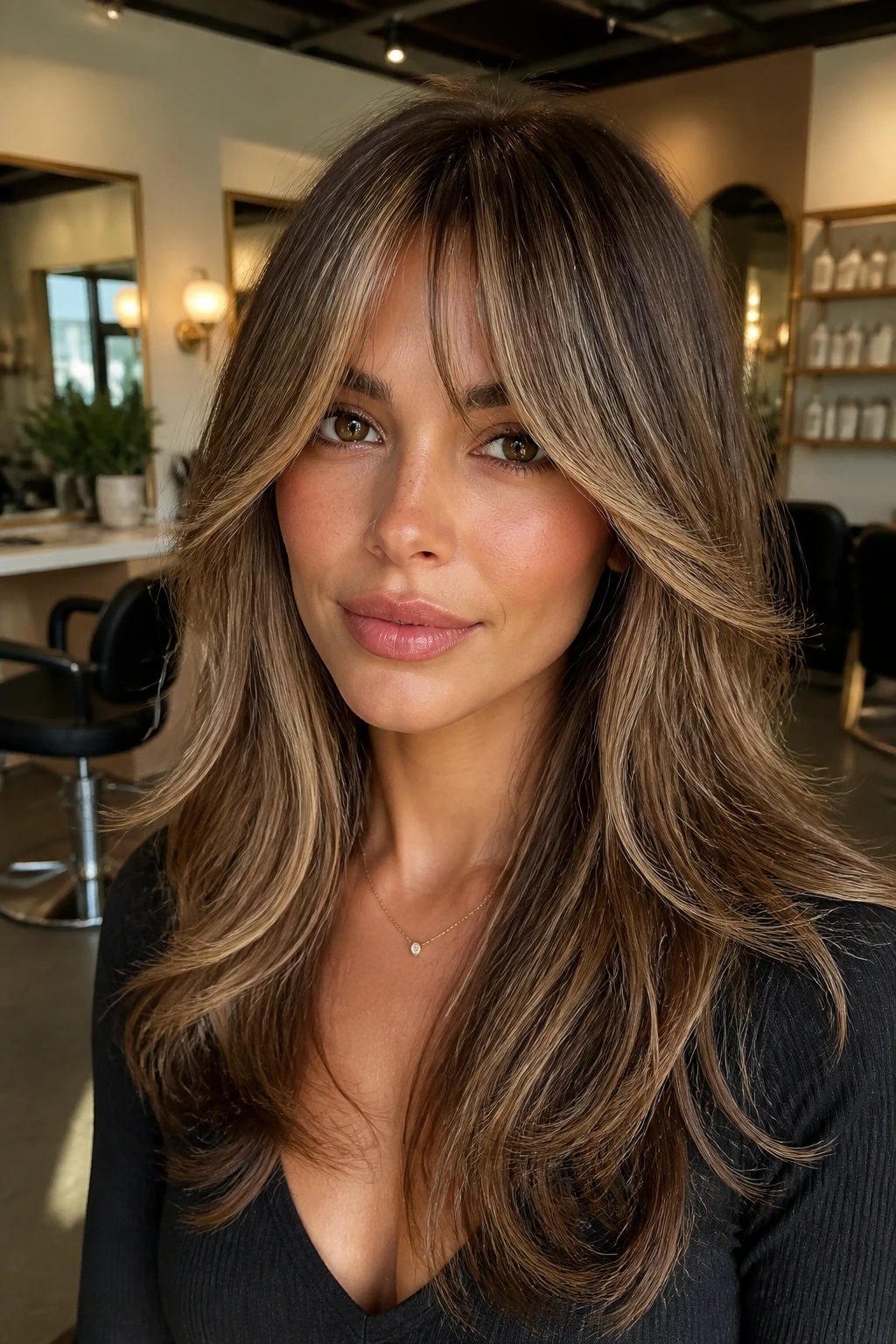
A long face does not need hair to hide it. It needs hair to frame it in the right places, and that usually means the forehead, temples, and cheekbones. Long bangs do the first part. Money piece highlights do the second. Together, they give you shape without sacrificing the length you probably wanted to keep.
The best version is the one that matches how you actually wear your hair. If you blow-dry every morning, you can handle a sharper fringe. If you air-dry and move on with your life, pick something softer and more forgiving. Either way, the goal is the same: a front that breaks the vertical line and a highlight placement that widens the face where it matters.
If you go to the salon with that idea in mind, the rest gets much easier. The cut stops being a gamble and starts doing the work for you, which is exactly what a good fringe should do.