



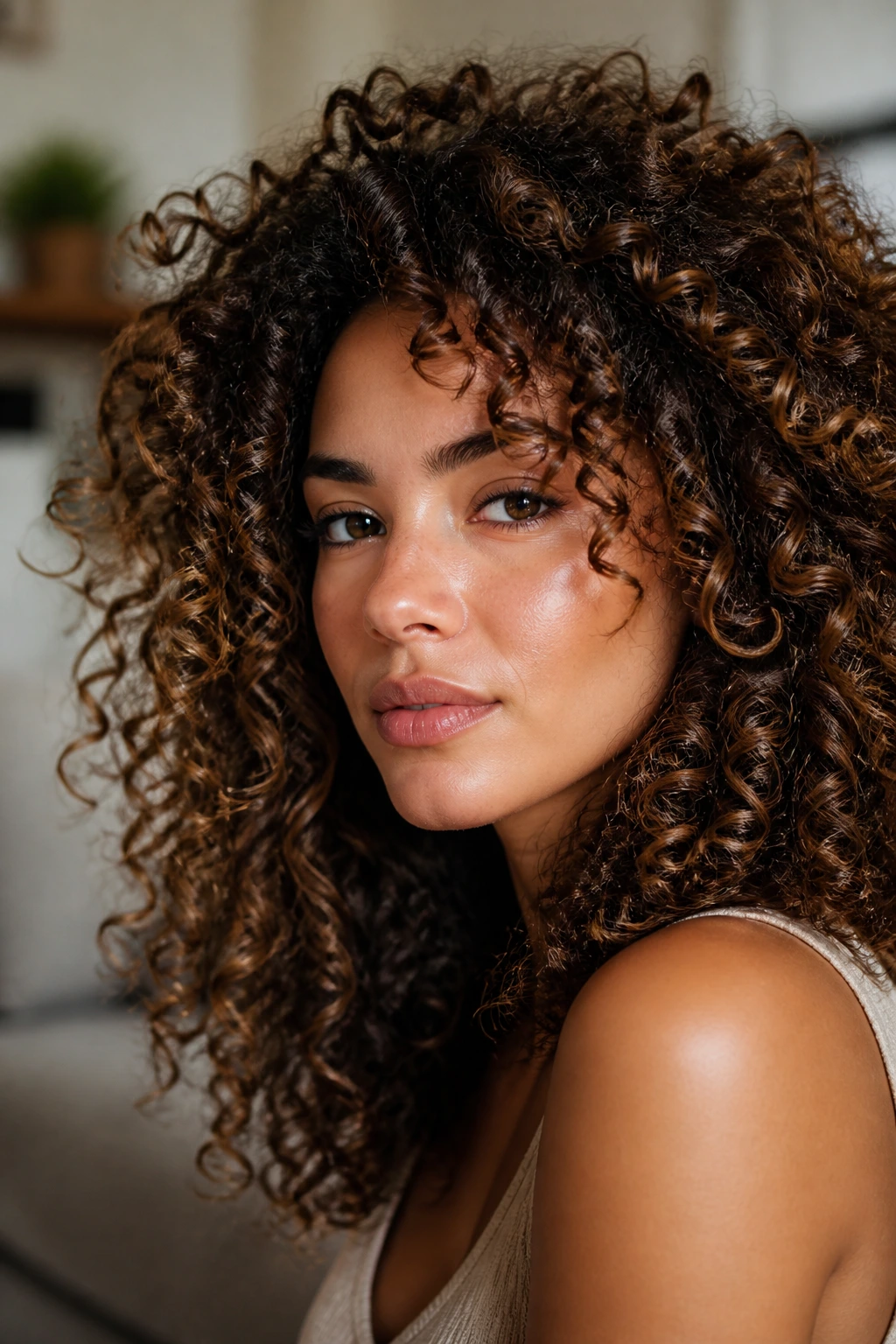
Curly hair does not need to be flattened to look polished. The styles that hold up best in humidity usually work with the curl pattern, not against it, and that is exactly why frizz free hairstyles for curly hair with lowlights feel so practical. The darker strands give the eye something to follow, so a little halo at the crown reads as texture instead of chaos.
Lowlights are doing more than adding color. They build shadow under the curl canopy, make coils look denser, and stop the whole head from reading as one big fuzzy shape when the weather gets rude. I like that they do not shout the way chunky highlights can. A good lowlight placement sits under the top layer, peeks through on movement, and makes the curl pattern look richer without turning stripy.
That is the sweet spot here: shape, depth, and enough hold to keep the style from collapsing by lunchtime. Some of these looks are slicker, some are softer, and a few are gloriously structured. All of them give curly hair room to breathe while keeping the frizz where it belongs — mostly out of sight.
Why This Collection Earns Its Keep
-
The lowlights do part of the styling work. A few deeper ribbons break up the outer halo so your curls look finished even when they’re not perfectly obedient.
-
You’re not stuck with one vibe. There are polished buns, easy puffs, braid-forward looks, and loose shapes here, so you can match your hair’s mood instead of forcing one template.
-
They stretch a wash day. Several of these styles hold their shape with a satin bonnet, a light mist of water, and a touch of leave-in the next morning.
-
They flatter density instead of fighting it. Thick curls, fine curls, and everything between can use the extra shadow from lowlights to look fuller or more sculpted.
-
They work in real weather. Humidity, wind, a long commute, or a jacket hood can all mess with curls; these styles are built with that in mind.
1. Side-Part Wash-and-Go With Shadow Ribbons
A deep side part is one of the easiest ways to make curly hair look intentional without overworking it. The part gives the style a clean line, and the lowlights beneath the top layer create those darker ribbons that stop frizz from reading like volume gone wrong.
Why It Works:
The shape is simple, which is the point. A wash-and-go with a side part lets the curl pattern stay loose while the darker strands make the clumps look more defined, especially around the crown where fuzz shows first. If you use a medium-hold gel on soaking-wet hair and diffuse on low heat for 8 to 12 minutes, the top stays smoother than if you air-dry and poke at it all afternoon.
What You Need:
- Curl cream, light to medium hold
- Strong-hold gel with a soft cast
- Wide-tooth comb for the part
- Diffuser if you want faster drying
Pro Tip: Clip the roots on the heavy side while it dries. That tiny bit of lift keeps the part from going flat and lets the lowlights show instead of disappearing under one heavy section.
2. Pineapple Puff With Soft Edges
This is the style for the day your curls still have life, but your crown needs a break. The pineapple puts the bulk high and loose, which keeps the ends from getting crushed, and the lowlights peek through the puff like depth instead of random shadow.
Why It Works:
A pineapple works because the stretch in the elastic preserves curl shape while keeping the front and sides away from your face. With lowlights woven through the mid-lengths, the puff looks fuller without needing teasing or heavy products. Keep the elastic loose enough that it doesn’t leave a dent, then smooth the perimeter with a tiny bit of edge control or gel.
Best For:
Second-day curls, medium to long lengths, and mornings when you want your hair off your neck without giving up your texture.
Watch Out For:
If you pull the pineapple too tight, the crown gets a ridge and the curls at the front can frizz faster. A satin scrunchie is the safe choice here.
3. Low Curly Bun With a Face-Framing Drop
A low bun is boring only when people do it badly. Done right, it looks sharp, grown-up, and a little expensive in the best sense — mostly because the lowlights make the bun read like a sculpted knot instead of a puff of color.
Why It Works:
The bun gathers the most unruly part of the hair at the nape, where frizz is easier to tame. Leaving two face-framing curls out softens the line and keeps the style from feeling too stern. A touch of styling cream around the hairline and two crossed bobby pins at the base usually do more than a whole can of hairspray.
What to Ask For in the Color:
If you’re booking lowlights for this kind of style, ask for softer placement around the lower layers and nape. That gives the bun depth when the hair is swept up and keeps the perimeter from looking flat.
One Smart Move:
Mist the loose curls with water and scrunch before pinning them in place. They’ll keep their shape longer and won’t stick out like dry springs.
4. Half-Up Twist Crown
This one sits in the middle ground, which is why I like it so much. You get control at the crown and movement everywhere else, and the lowlights make the twisted sections look braided even when they’re just a simple two-strand twist.
Why It Works:
The half-up twist pulls the most visible frizz-prone area away from the face while leaving enough curl volume to keep the style soft. It also shows lowlight placement beautifully, because the twists create little arcs of color that catch the eye without feeling fussy. Use small snag-free elastics or pins, then smooth the section before you twist so the top doesn’t puff up.
How to Style It:
Take two front sections, twist them back toward the crown, and pin them just behind the ears. Let the rest fall loose. That’s it. A narrow part down the center or a deep side part both work, but the part has to be clean.
Best For:
Medium-length curls that need polish for work, dinner, or anything where you want to look like you planned ahead.
5. High Curly Ponytail With a Wrapped Base
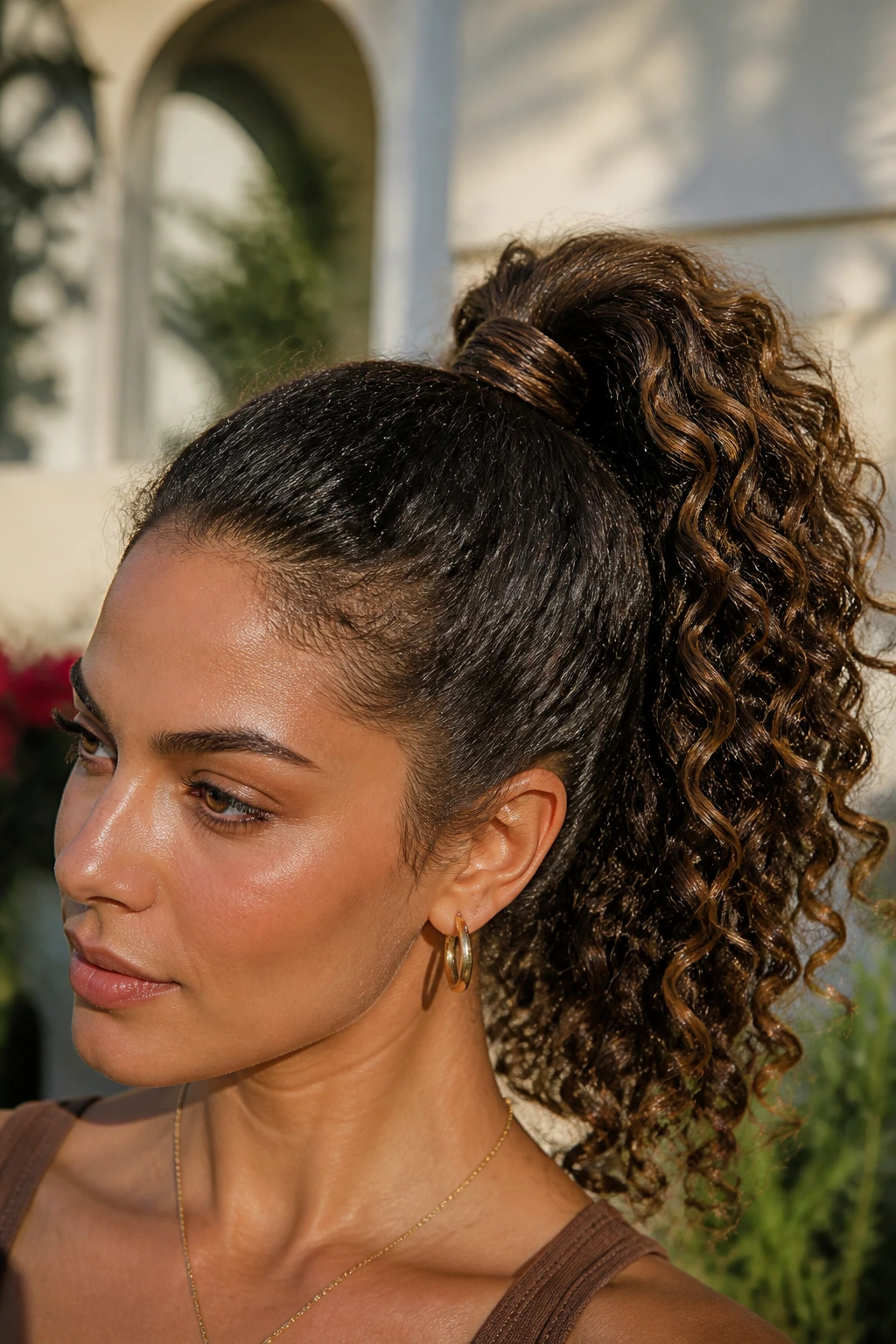
A high ponytail gives curly hair instant lift, and lowlights keep the length from turning into one flat curtain. The color variation makes the ponytail look thicker than it is, especially if your curls are fine and need all the help they can get.
Why It Works:
The height pulls the shape upward, so the face opens up and the crown gets a little drama. Wrapping a small section of hair around the elastic hides the obvious ponytail band, and the lowlight ribbons keep the tail from looking one-note. If your curls are heavy, anchor the base with two bobby pins crossed under the elastic. Don’t skip that.
Quick Direction:
Smooth the top with a boar bristle brush or soft edge brush, gather the hair at the crown, secure it, then wrap a narrow strand around the base. Finish by fluffing the ponytail with your fingers rather than a comb.
What Goes Wrong:
A ponytail that sits too low loses the lift, and one pulled too hard can flatten the curl pattern for days. High, loose, and pinned in place beats tight every time.
6. Halo Braid Over Loose Curls
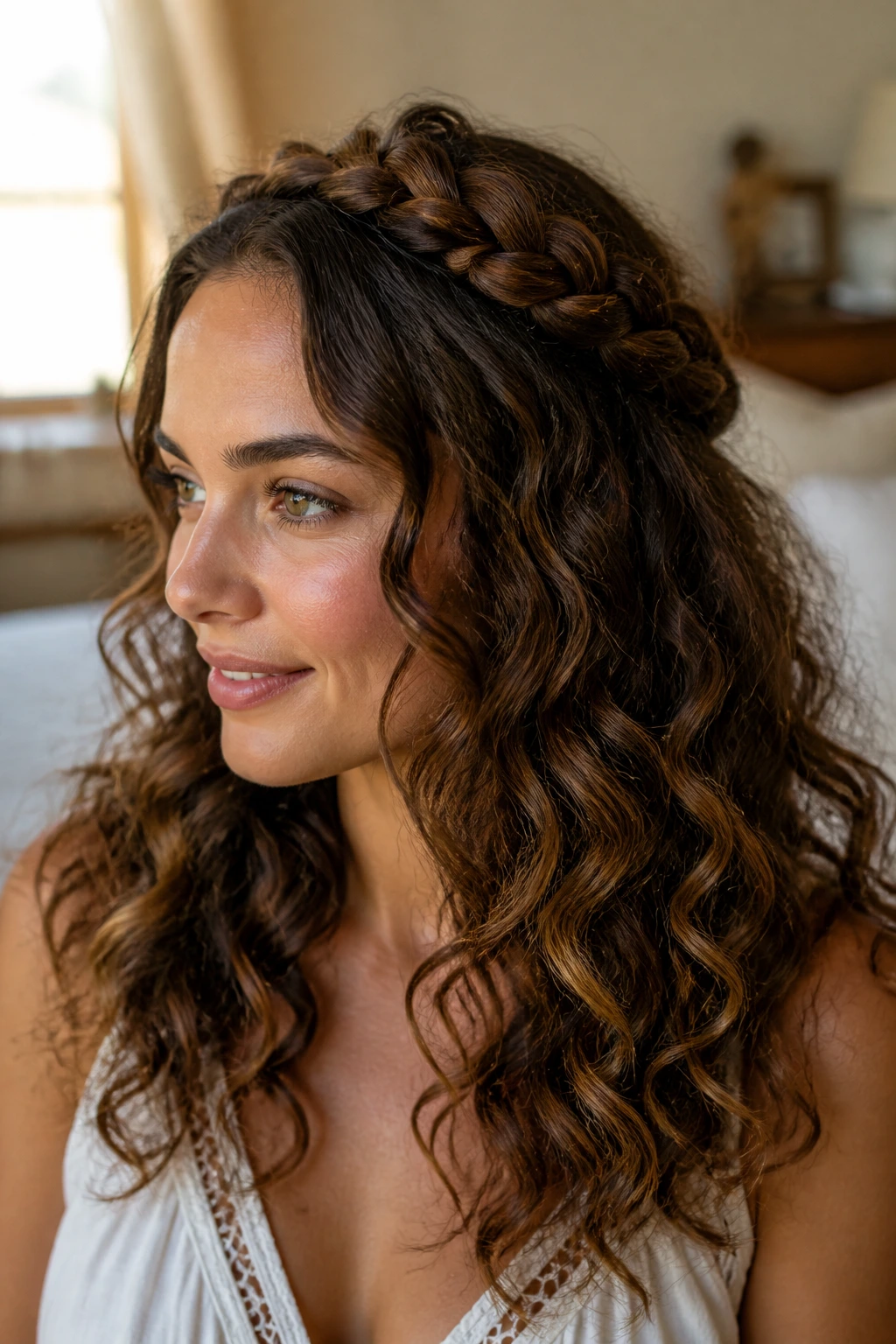
A halo braid is the kind of style that looks more difficult than it is, which is always a good trade. The braid keeps the hairline tidy, while the loose curls underneath show off the lowlights in a way that feels soft rather than staged.
Why It Works:
The braid acts like a frame. It controls frizz around the edges, where curls usually puff first, and it gives the lowlights a path to follow around the head. The loose curls underneath stay visible, so the style still moves when you walk. Keep the braid snug enough to stay in place, but not so tight that it creates dents or a sore scalp by hour three.
Best When:
You want something that survives a long day, a windy sidewalk, or a full schedule without a midafternoon repair mission.
Small Detail That Matters:
Use a little gel or styling cream on the sections before you braid. Dry strands slip and fray; lightly coated ones behave.
7. Deep Side-Swept Clip Set
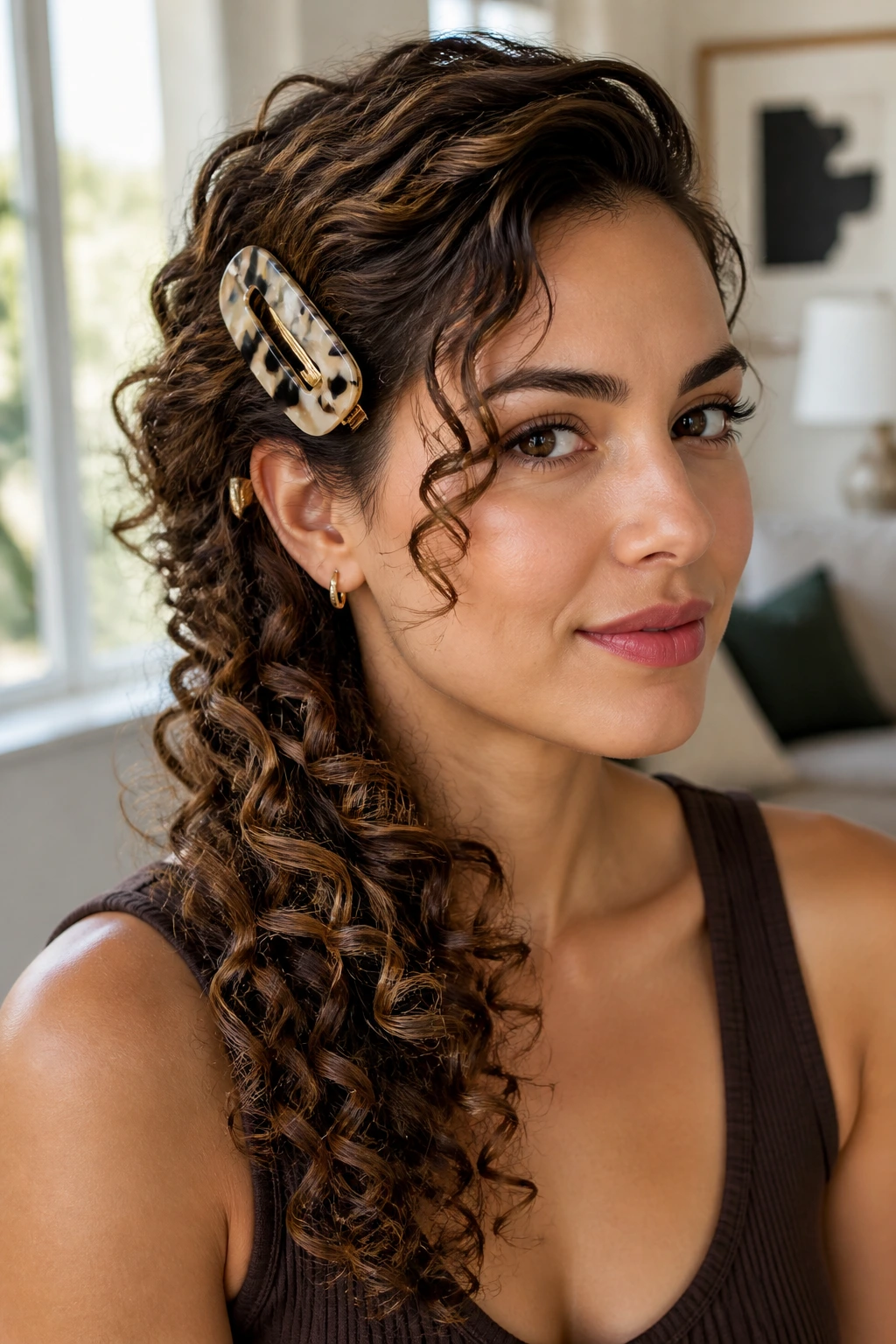
Sometimes one bold direction is enough. Sweeping all the curls to one shoulder gives the lowlights a place to show off, and a few well-placed clips keep the front from unraveling into a fuzzy curtain.
Why It Works:
The asymmetry takes pressure off the entire head. Instead of trying to make every curl behave, you give the eye one strong line, and the darker strands create contrast in the cascade. This is one of the easiest styles to wear after day one because the curl clumps have already settled.
How I’d Wear It:
Use one strong decorative clip near the temple and a second smaller pin behind the ear if the side keeps slipping. Skip heavy oil on the length; it can make the curls stringy and flatten the lowlight dimension.
Best For:
Medium to long hair, especially layered curls that already want to fall forward on one side.
8. Claw-Clip French Twist
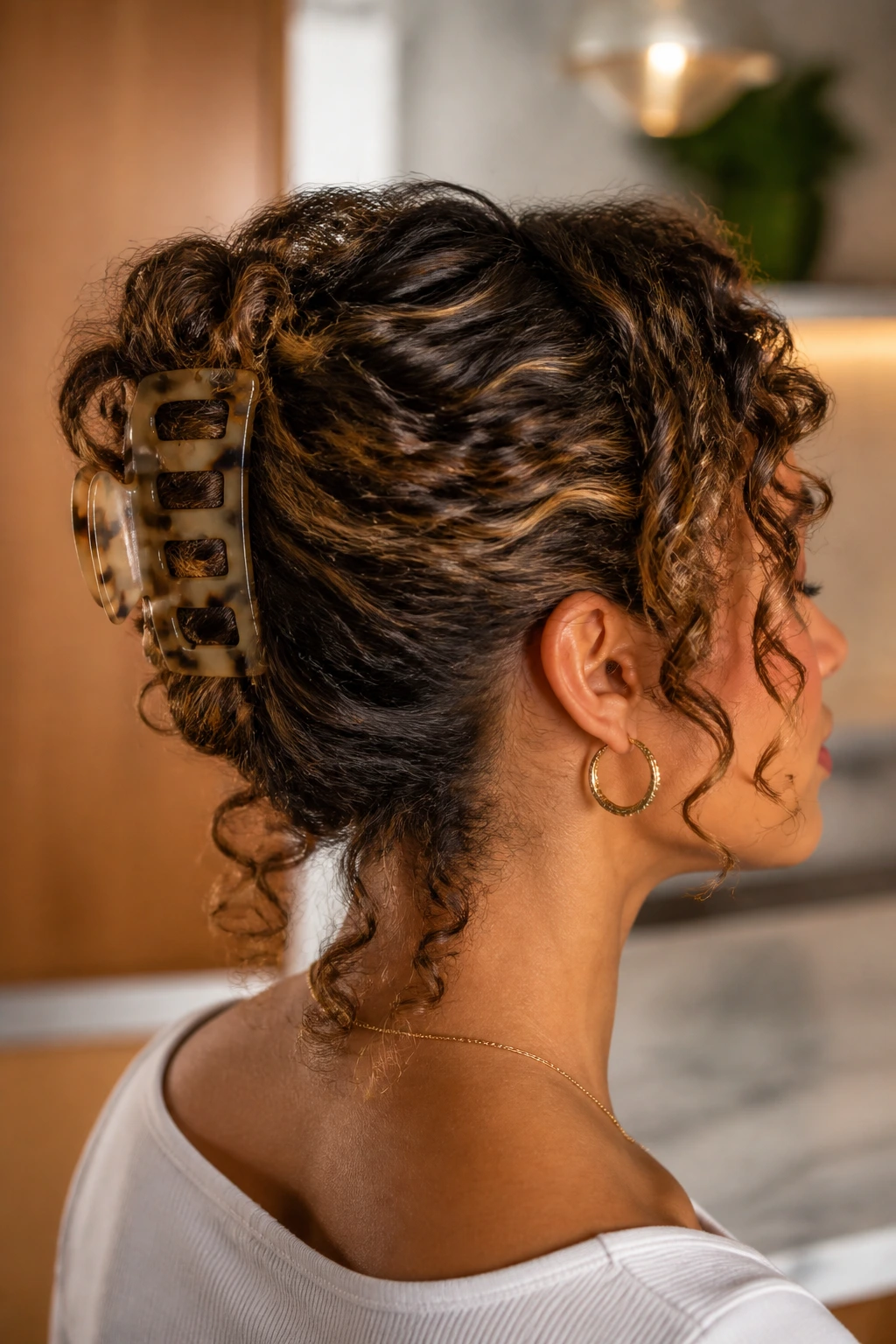
A claw-clip twist can look lazy or chic. The difference is the shape at the back and whether the ends are allowed to spill on purpose. With lowlights, this style has enough movement that it doesn’t feel stiff.
Why It Works:
The twist lifts the curls off the neck and concentrates the frizz into one controlled roll. The darker color underneath adds shape to the fold, so even a casual clip-up looks built rather than accidental. Use a large claw clip with teeth that grip, not a flimsy decorative one that slides out at lunch.
What You Need:
- Large claw clip
- A couple of bobby pins
- Light smoothing cream
- Optional: curl-refresh spray for the loose ends
One Good Trick:
Twist the hair upward, tuck the ends in once, then clip. If your hair is thick, pin the sides first so the clip isn’t trying to do all the work.
9. Braided Front, Free-Length Back
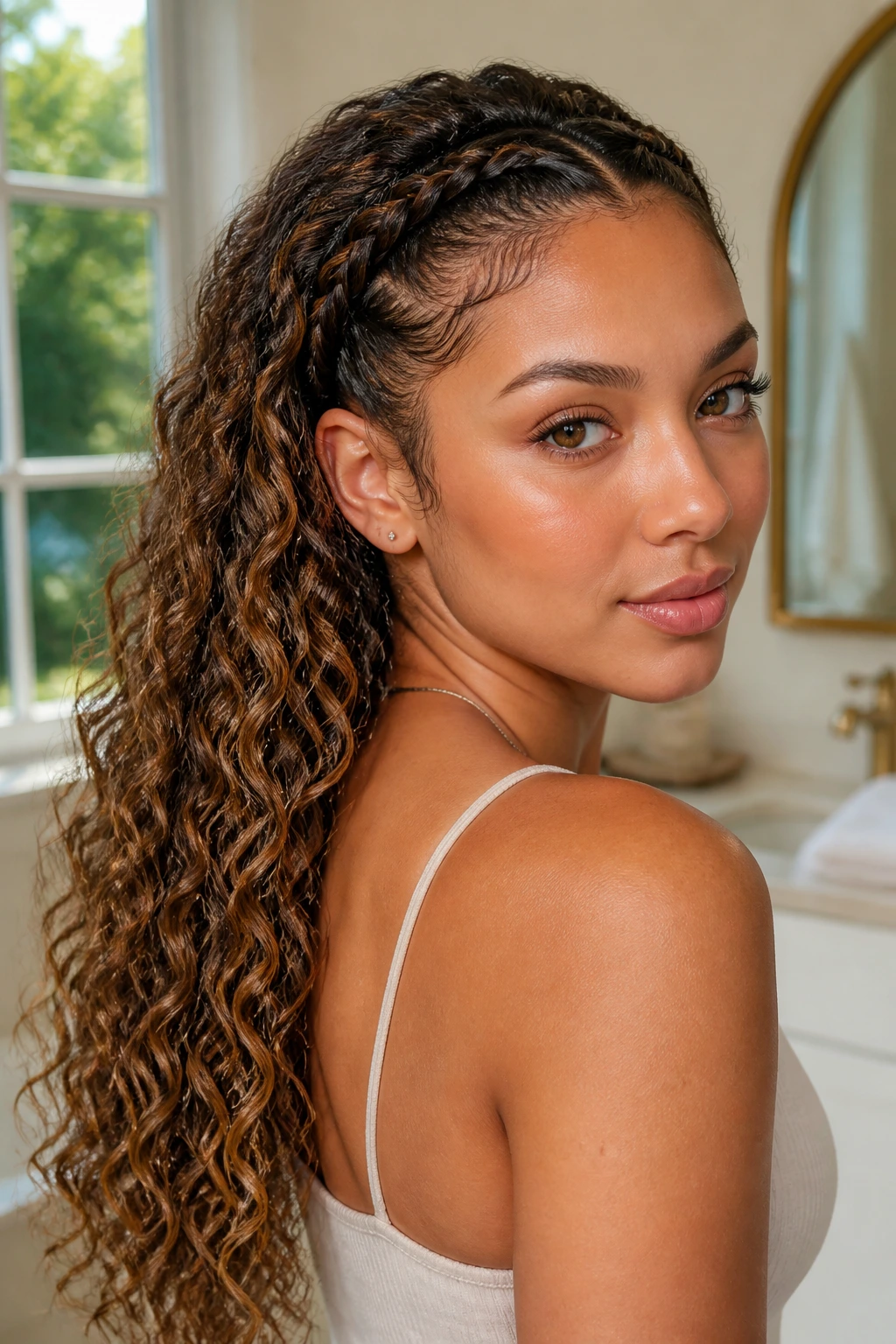
This is a useful style when the front section is the first place to frizz and the back still looks decent. A single braid or two small braids along the hairline keep the face tidy, while the loose curls at the back show off the lowlights in long, moving ribbons.
Why It Works:
The braid handles the parts of the head most exposed to wind and humidity. The back gets to stay curly, which means you keep the shape and the color contrast. Lowlights are especially nice here because they stop the back from looking like one solid mass when the braid pulls the front away.
Best For:
Busy days, layered cuts, and curl patterns that frizz first around the temples and part line.
Pro Tip:
Braid on hair that’s about 80 percent dry, not bone dry. Slight moisture makes the braid neater and helps it settle without puffing out by midday.
10. Double Mini Space Buns
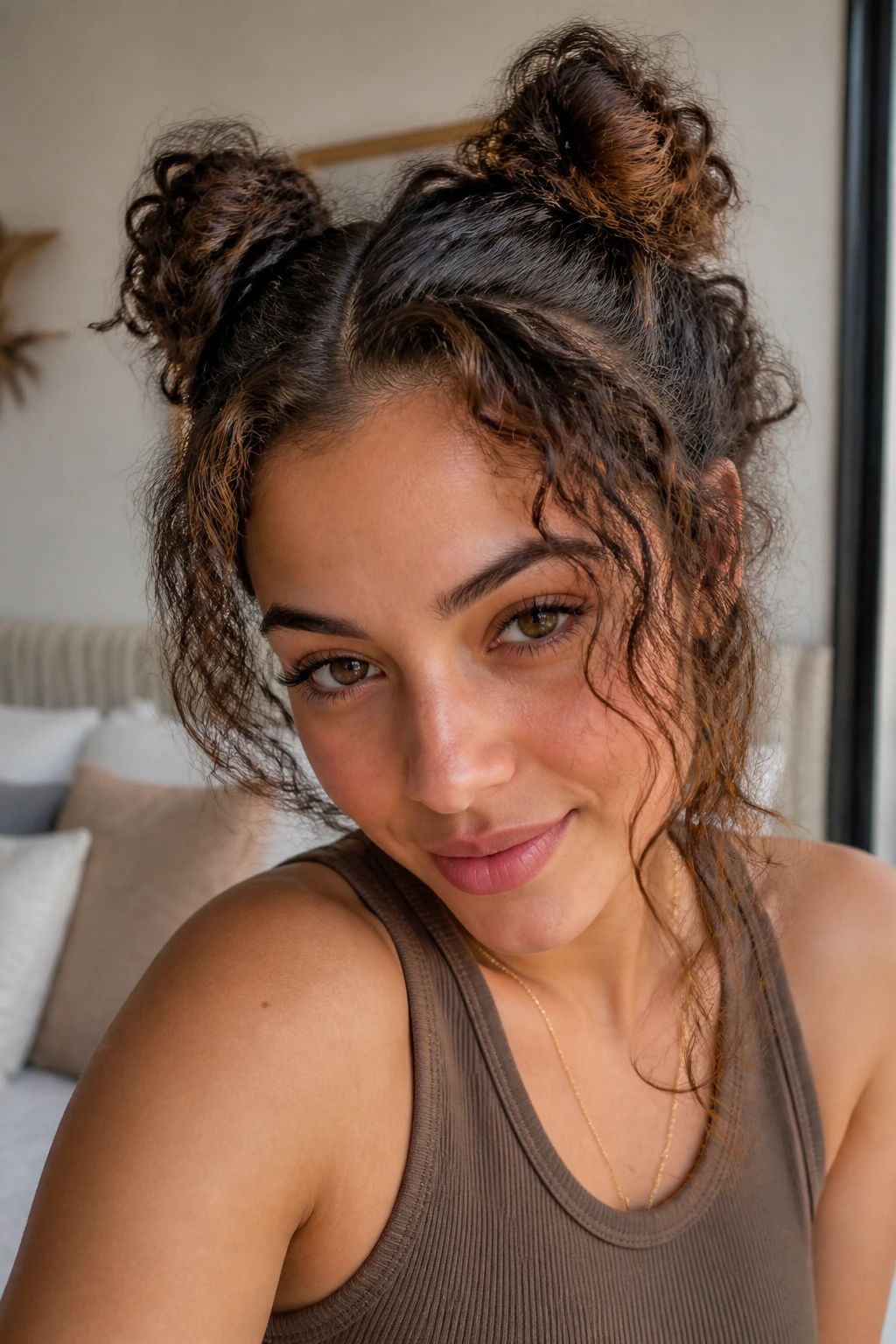
Space buns are playful, but they also have real usefulness. They gather the hair into two manageable shapes, which cuts down on the “my curls are trying to escape in every direction” problem, and the lowlights make each bun look textured instead of cartoonish.
Why It Works:
Splitting the hair into two sections reduces bulk, which matters if you have thick curls or a lot of shrinkage. The lowlights stop the buns from reading as one dark blob because the curls and color variations catch the light in little patches. Keep the buns loose enough to preserve curl shape and skip the temptation to smooth everything slick.
Best For:
Short-to-medium curly hair, especially if you want something playful that still keeps the ends under control.
Common Slip-Up:
People often make the buns too low and too tight. That kills the fun shape and makes the scalp feel strained. Higher and softer is the better move.
11. Twisted Curl-Out
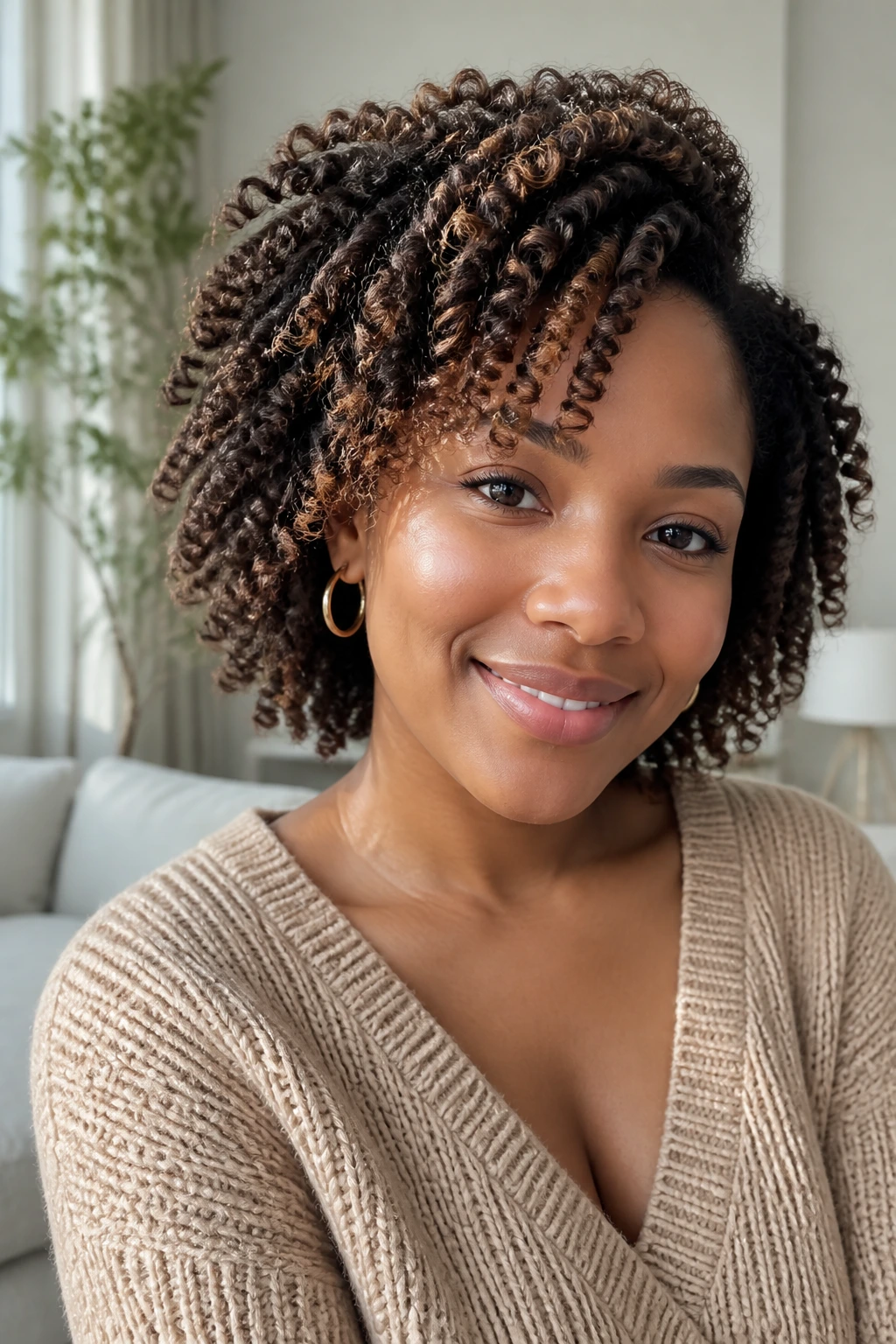
A twist-out is one of those styles that rewards patience. The payoff is clean curl definition, and lowlights make the twist pattern easy to see even when a little halo starts forming around the edges.
Why It Works:
The twist sets the curl shape while the product dries, so the final result has more structure than a plain air-dried style. That structure matters when you want frizz minimized rather than chased around all day. Use a cream and gel combo, twist in medium-sized sections, and let everything dry fully before taking it down. Damp twist-outs frizz faster, and that’s just how the hair behaves.
Best For:
Medium to coarse curls that hold shape well and people who do not mind a longer set-up for a cleaner finish.
One Hard-Won Tip:
Separate the twists with oiled fingertips, not a comb. Rough separation steals definition and makes the lowlights look muddy instead of dimensional.
12. Flat-Twist Halo Updo
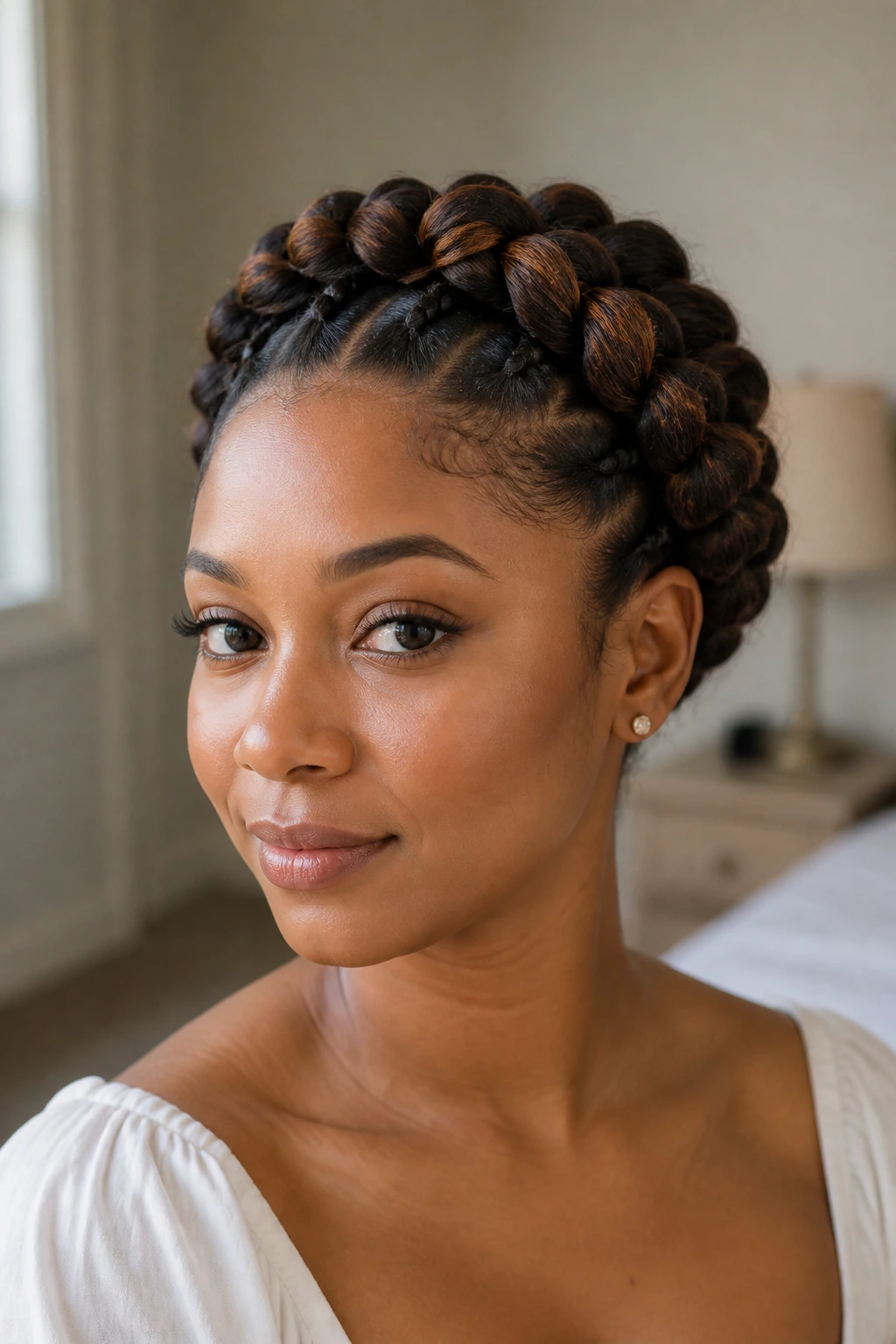
Flat twists are a workhorse style. They keep the perimeter neat, protect the hairline, and give the lowlights a subtle woven effect that looks polished even on a tired morning.
Why It Works:
Instead of fighting the whole head, you guide the curls into a controlled shape close to the scalp. That lowers the chance of frizz at the edges, where humidity usually wins first. The halo layout also keeps the style symmetrical, which helps lowlights look intentional rather than random.
What to Use:
A rat-tail comb for clean sections, styling cream for slip, and small pins to tuck the ends. If your hair is very dense, work in four quadrants instead of trying to force one giant flat twist around the head.
Best For:
Protective styling, longer wear, and days when you want the front of your hair off your face without sacrificing curl texture entirely.
13. Tucked Faux Bob
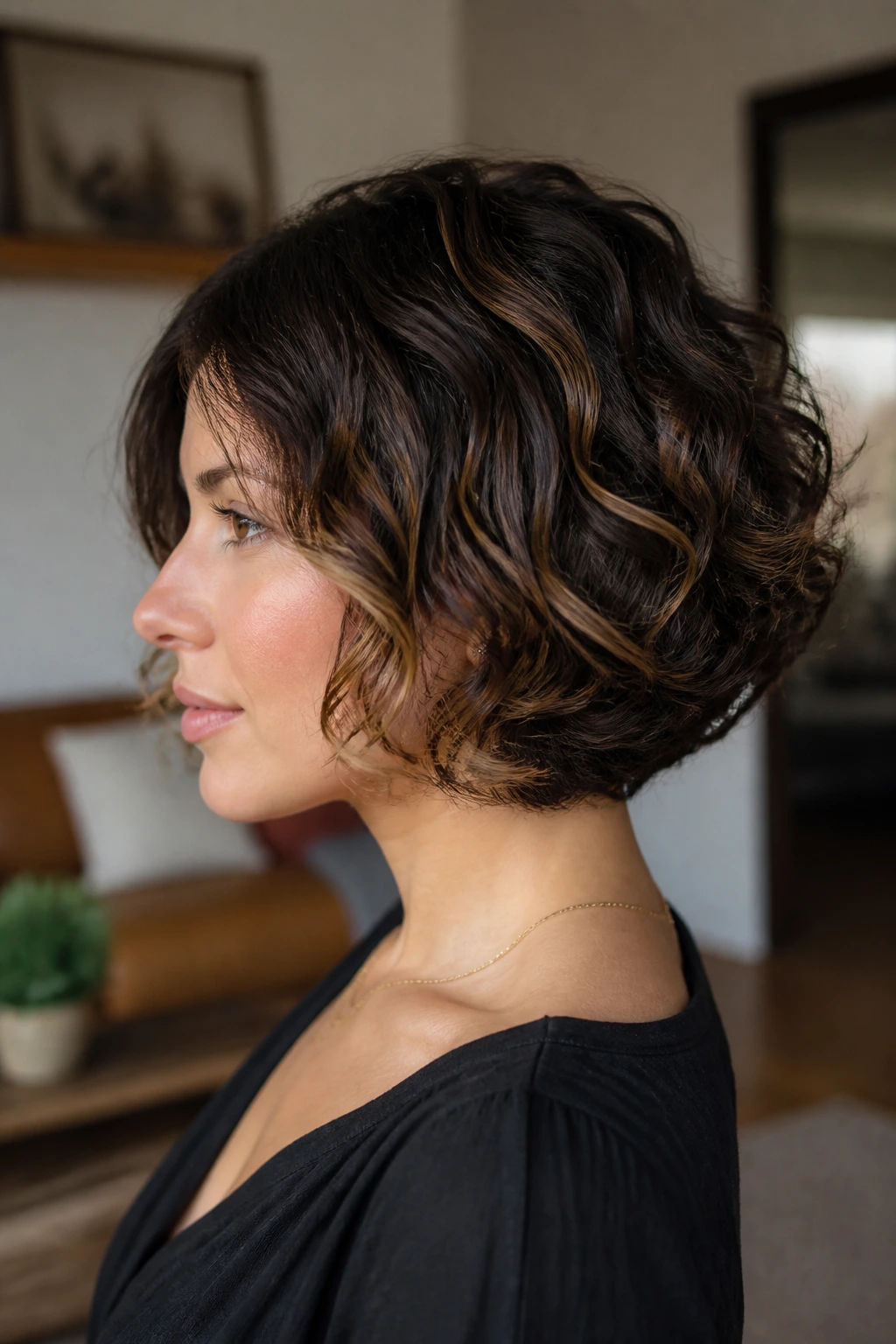
A faux bob has a little bit of theater to it, and I mean that as a compliment. It’s sleek at the nape, soft around the face, and the lowlights make the tucked length look like a cropped cut with real depth.
Why It Works:
The hair is pinned under itself, so the ends stay protected and the visible surface looks smooth. That smooth surface is where lowlights shine, because the darker pieces create the impression of layers and movement even though the length is hidden. Use a handful of strong bobby pins, then check the back with a mirror. Loose pins are the reason faux bobs fall apart before dinner.
Best For:
Formal events, photo days, or any time you want your curls to look shorter without actually cutting them.
Watch For:
If the roots are too puffy, the style can look lopsided. A little smoothing cream at the crown solves more than people think.
14. Bubble Ponytail on Curly Length
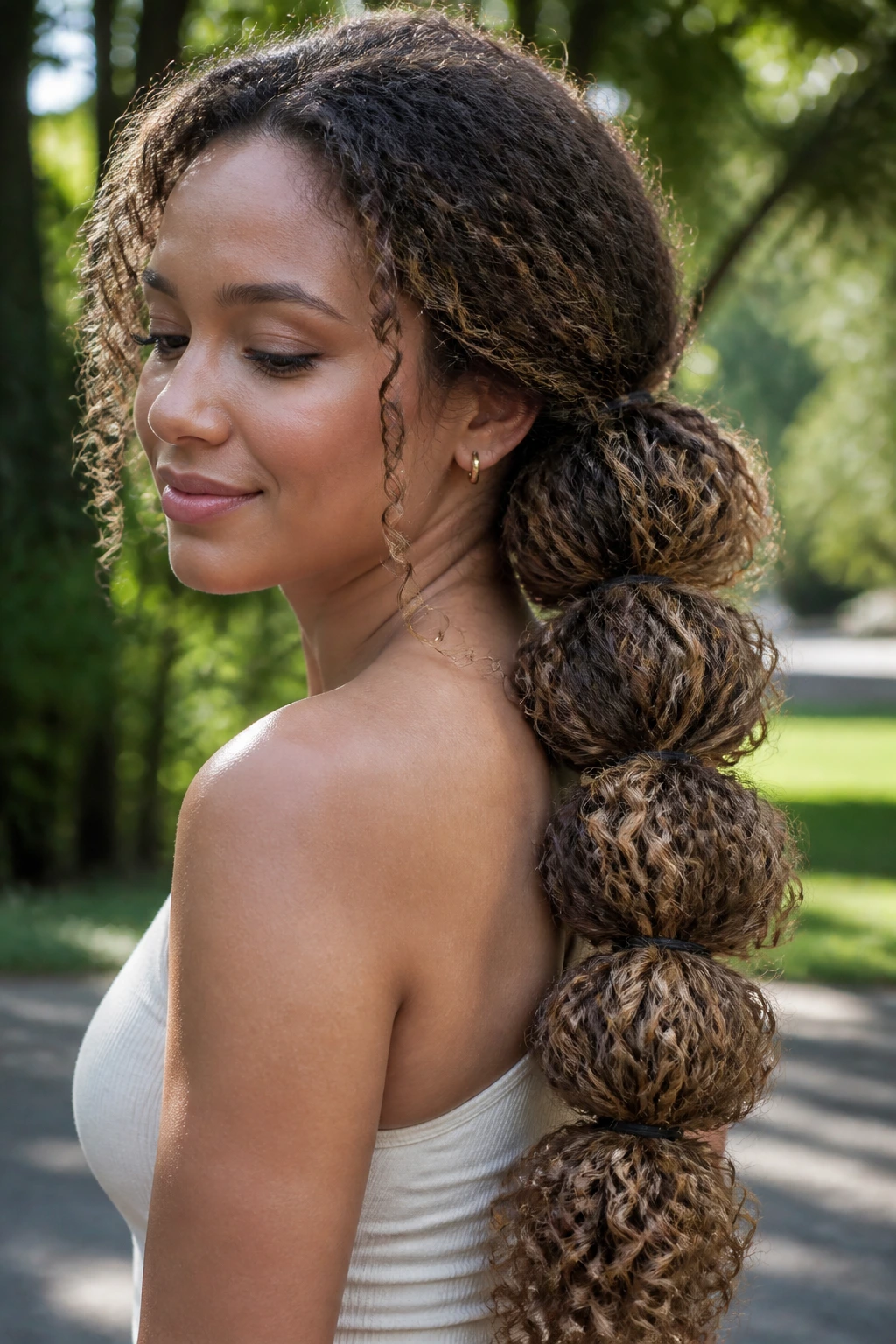
Bubble ponytails can go goofy fast, so the trick is keeping the bubbles round and the parts between them neat. Curly hair with lowlights gives the bubbles dimension, which makes the whole style look fuller and less costume-y.
Why It Works:
The elastics break the length into sections, and each section becomes a small shape with its own movement. Lowlights help define those sections because the darker strands show where one bubble ends and the next begins. Use clear or snag-free elastics every 2 to 3 inches, then gently pull each section into a soft puff.
Quick Direction:
Start with a ponytail, secure the tail at intervals, then tug each bubble out a little with your fingers. Don’t try to make them identical. Real hair won’t cooperate that neatly, and the style looks better when it doesn’t.
Best For:
Long curls that need something fun but still tidy enough for a long day.
15. Wet-Look Defined Curls
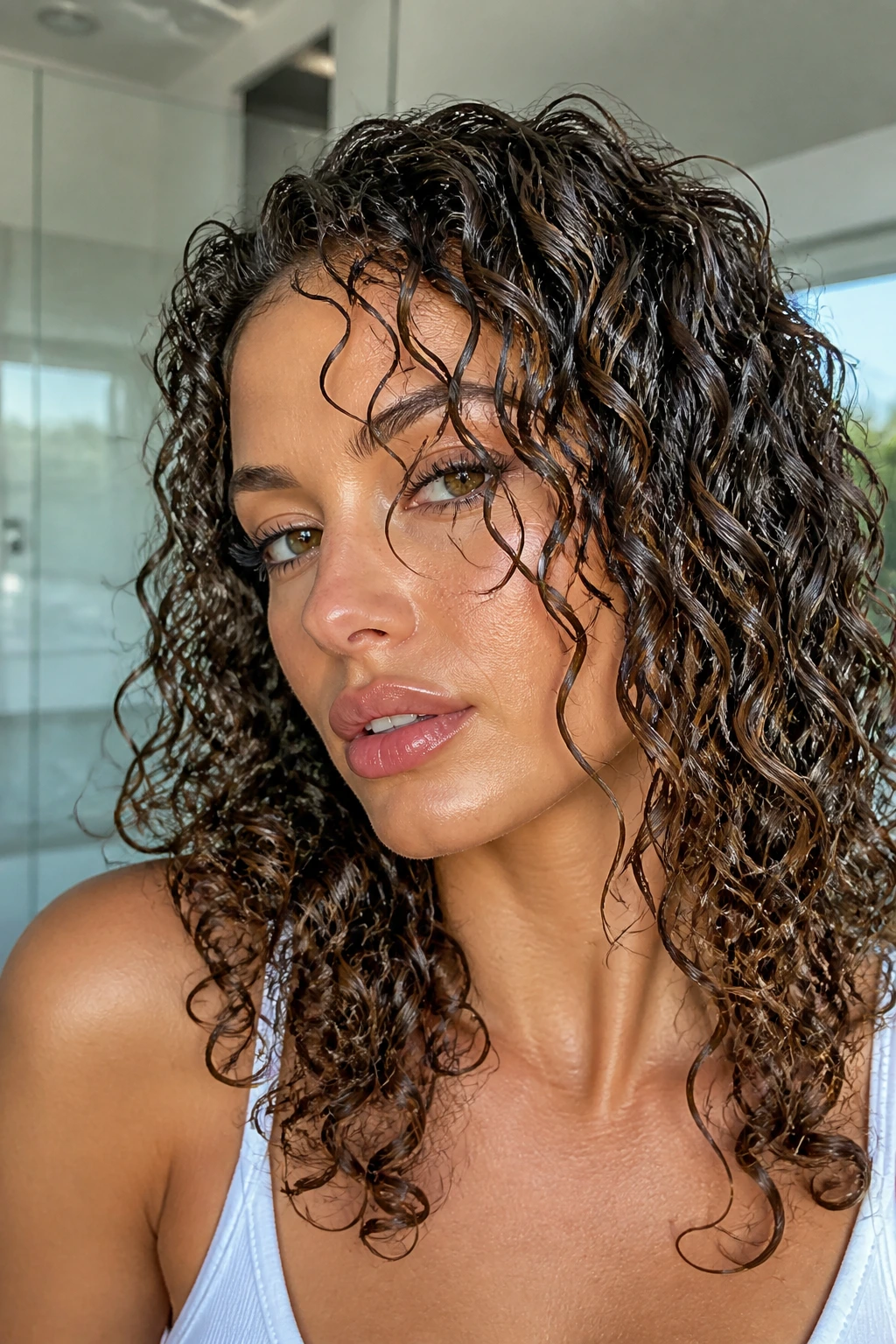
This is the slickest look in the bunch, and it asks for commitment. The payoff is sharp definition, strong shine, and lowlights that read like glossy ribbon under the curl pattern.
Why It Works:
Wet-look curls rely on a firm cast from gel, so the curl clumps set before frizz has a chance to wander in. Lowlights add depth under that shine, which makes the hair look rich instead of flat. The key is resisting the urge to touch the curls while they dry. Seriously. Once you break the cast too early, the halo comes back faster than you’d expect.
Best For:
Short to medium curls, humid weather, or nights when you want the hair to look deliberately sculpted.
Pro Tip:
Apply gel in sections while the hair is still damp enough to clump, then diffuse on low or let it air-dry fully. If you need more shine, use a pea-sized amount of lightweight serum on the ends only.
16. Headband Tuck and Roll
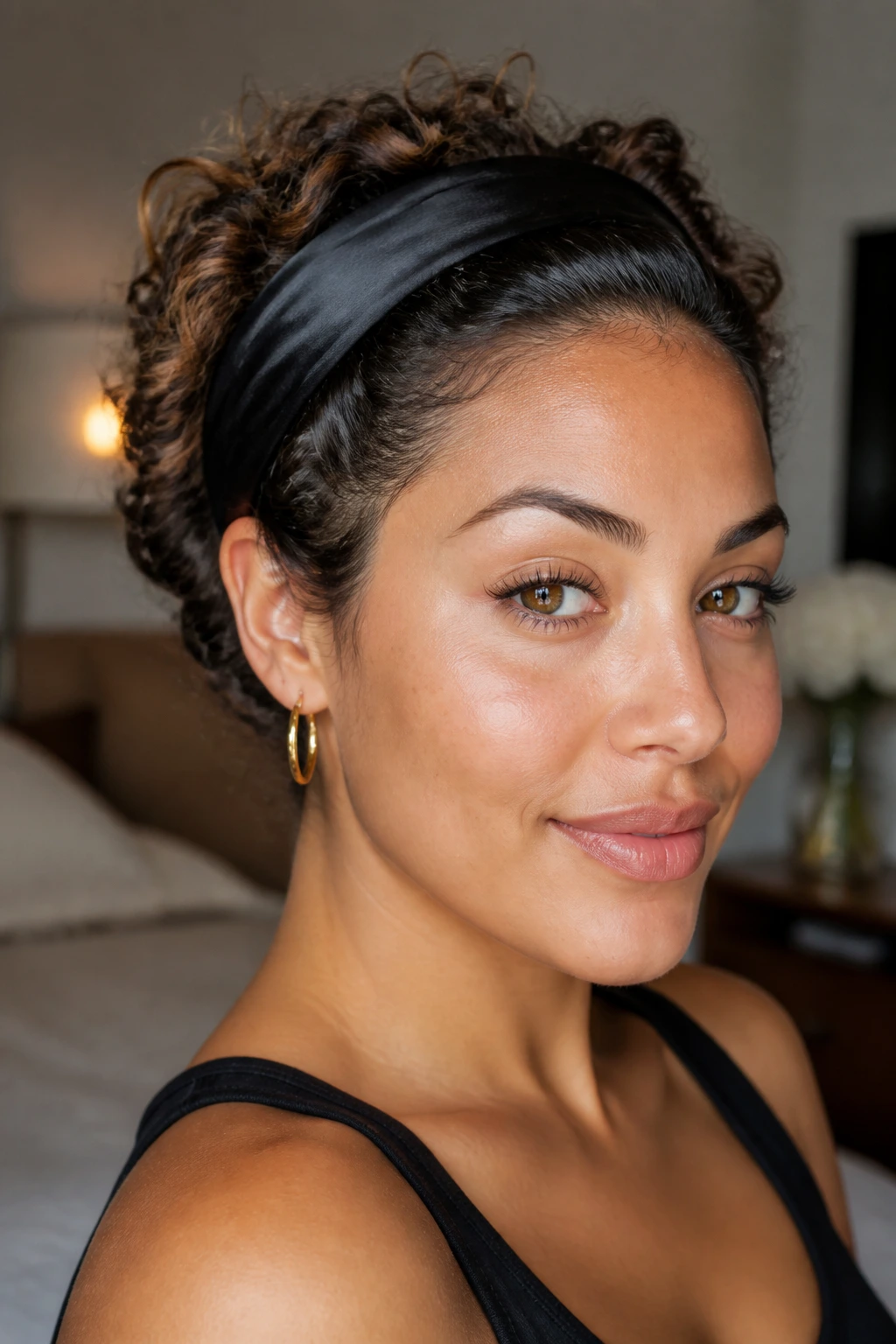
A wide headband changes the whole mood of curly hair. It smooths the front, tucks the perimeter, and leaves enough curl at the back to keep the style from feeling over-processed.
Why It Works:
The band gives the hairline a clean edge, which is where frizz tends to announce itself first. If you choose a satin-lined headband or one with enough stretch to sit flat, the curls around the face stay smoother and the lowlights peek out from under the tuck like shadows under a curtain. This is one of the best options for shorter curls that don’t reach a ponytail cleanly.
How to Wear It:
Put the band on after the hair is mostly dry, not when it’s still soaking. Then tuck the front sections upward and back in small pieces. Piling everything in at once creates bulk you’ll fight for the rest of the day.
Best For:
Busy mornings, travel, and hair lengths that sit between a bob and a lob.
17. Low Pony With a Braided Base
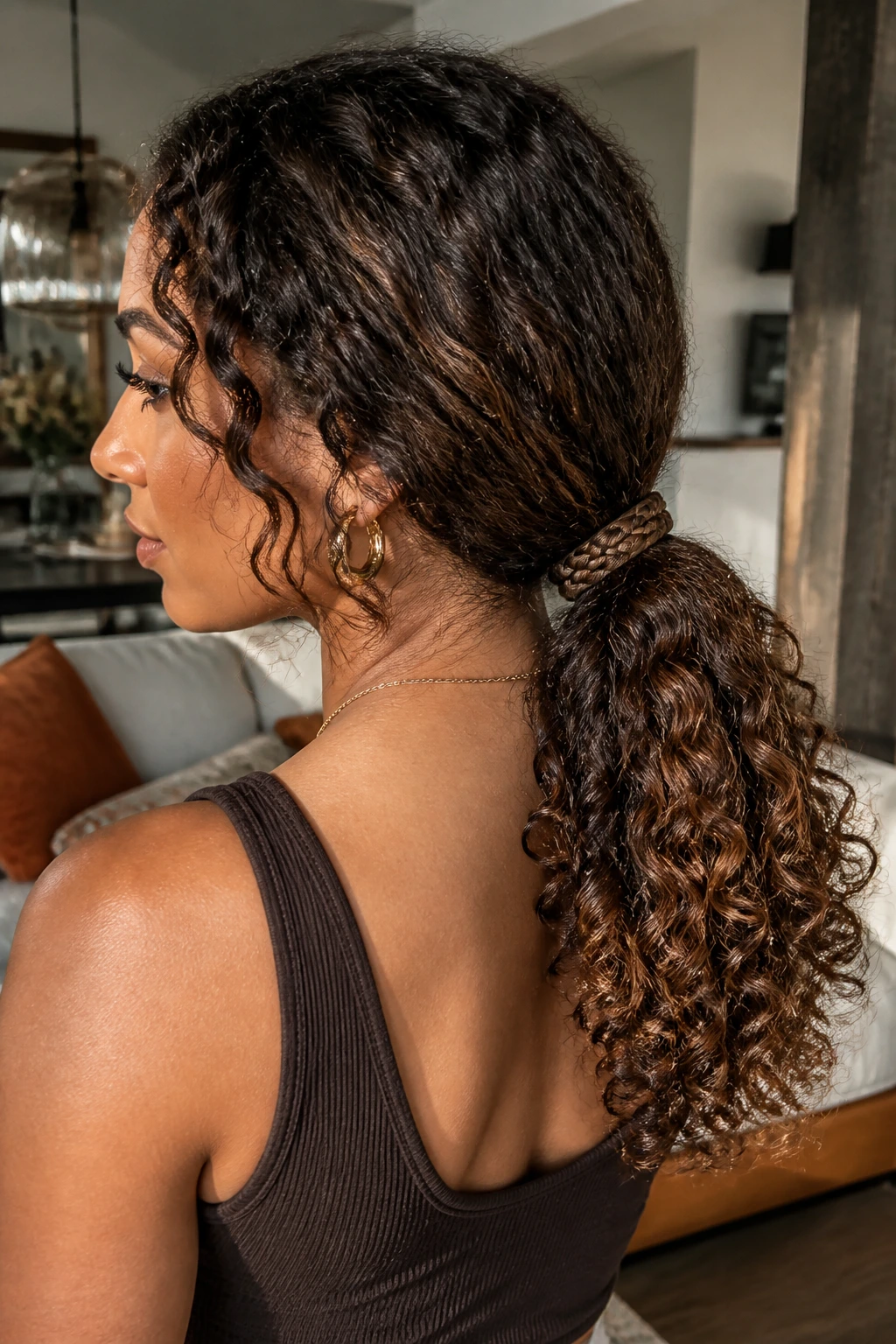
A low ponytail can look plain. Add a braid around the base, and suddenly it has structure. Lowlights give the braid and tail enough contrast that the shape reads clean even if the curls are starting to lose steam.
Why It Works:
The low placement keeps the profile neat, which is useful when you want something sleek but not severe. Wrapping a small braid or twisted strand around the elastic hides the band and stops the style from looking unfinished. A smoothing cream at the crown and a light mist of hairspray over the surface keep the flyaways under control without freezing the hair.
Best For:
Work days, dinners, interviews, and any situation where you want hair off the neck but still curly at the ends.
One Detail People Miss:
Secure the ponytail first, then braid or wrap the base. If you braid the hair before the pony is tight, the whole thing loosens halfway through the day.
18. Bantu Knot Set
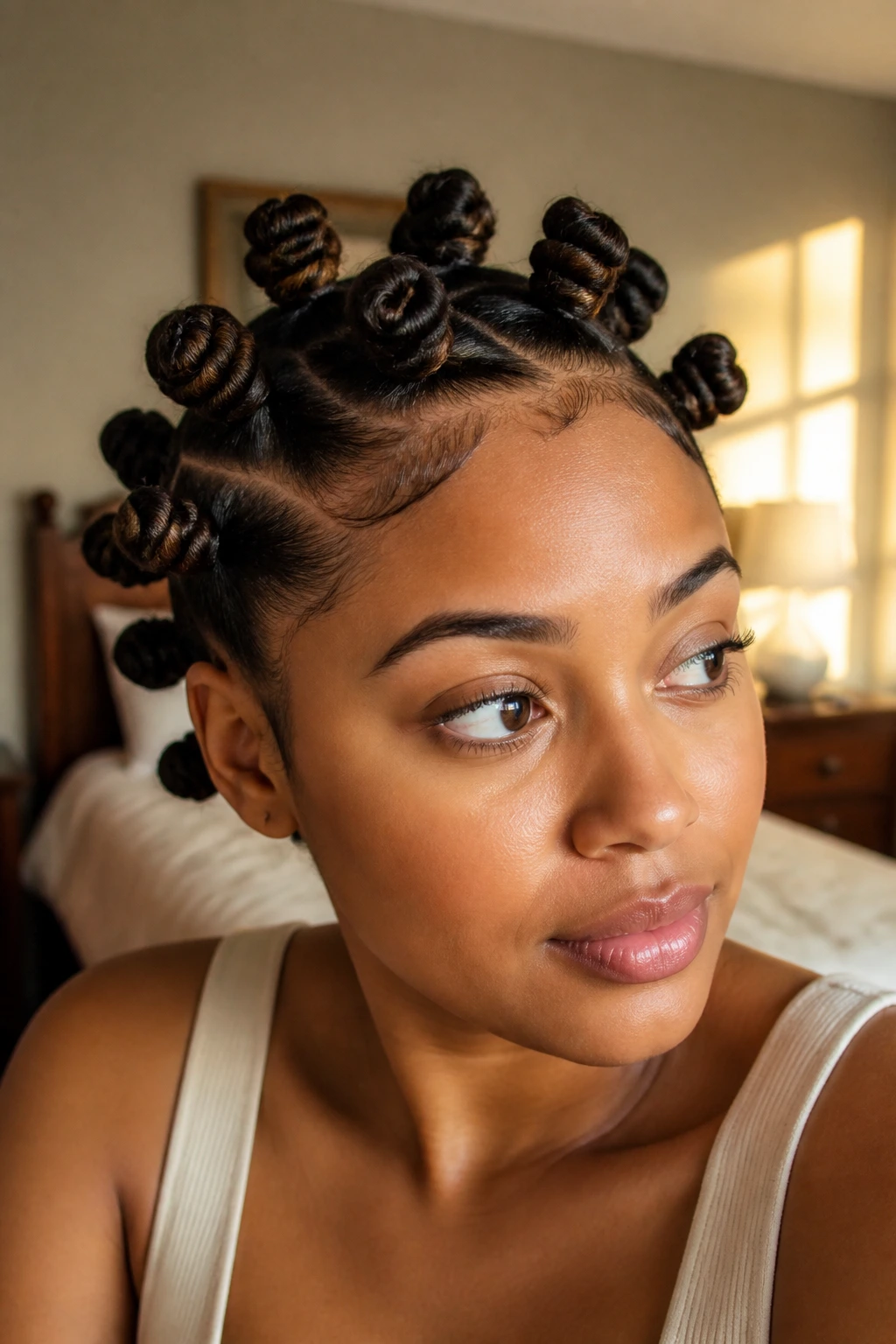
Bantu knots are one of the few styles that can be both protective and striking. The lowlights matter here because each knot becomes its own little shape, and the color variation keeps the whole head from looking like one uniform cluster.
Why It Works:
The hair is sectioned, twisted, and wound into knots, which keeps the ends tucked away and reduces friction. That matters for frizz control. If you wear them overnight, the style also preserves a more defined curl pattern for the next day when you take them down. Use gel on each section so the coils stay crisp and the knots hold.
Best For:
Tighter curl patterns, coily hair, and people who like styles that protect the ends rather than expose them.
Watch For:
Knots that are too large tend to loosen at the base. Small, secure sections hold better and look cleaner.
19. Curly Mohawk Puff
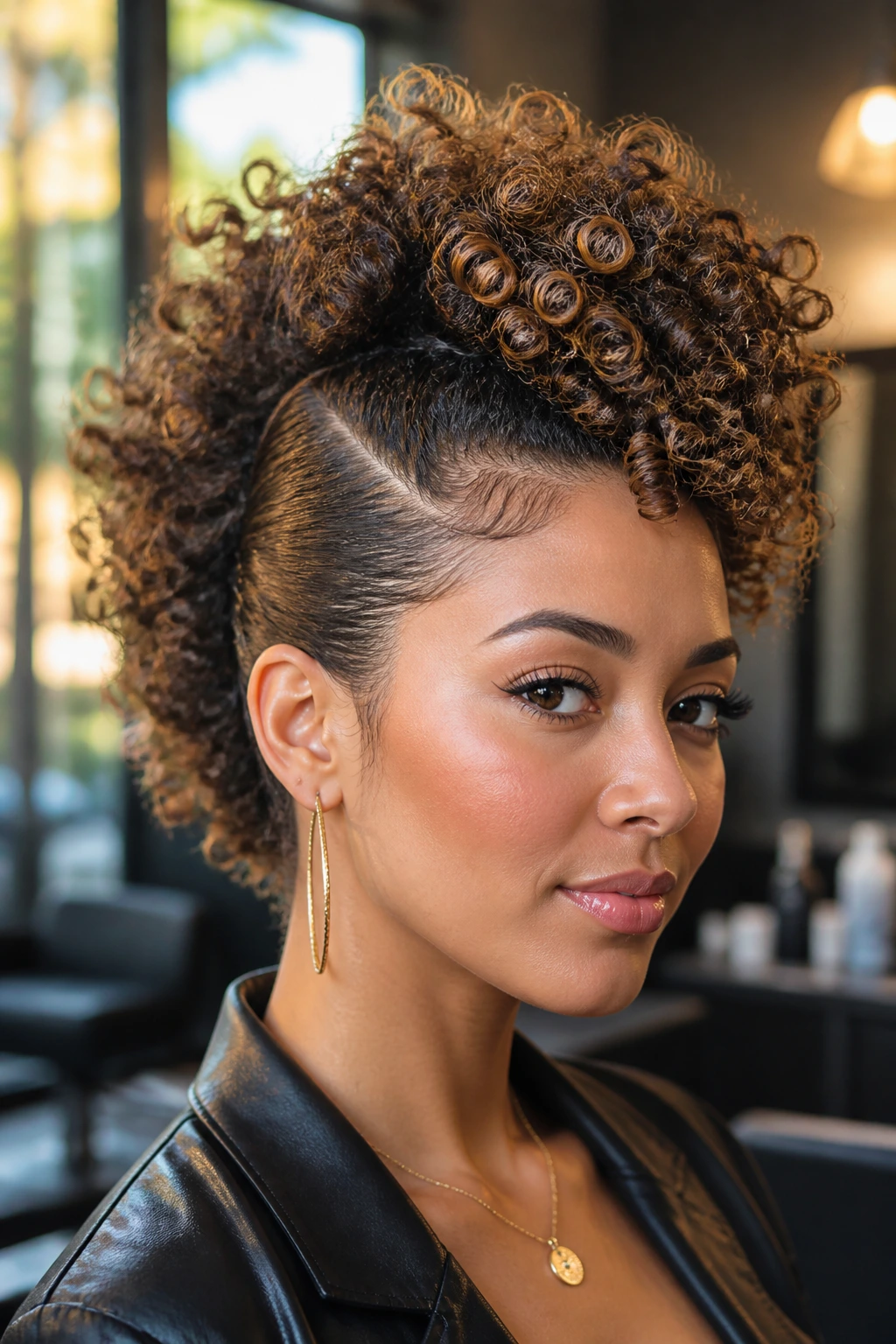
The curly mohawk puff has a little attitude, and it earns it. The sides are smoothed or pinned tight, the center stays full, and the lowlights on the ridge make the whole shape look carved instead of accidental.
Why It Works:
This is pure contrast. The sleek sides control frizz where it’s most visible, and the center puff gives you volume without losing the curl pattern. Lowlights help the center ridge show off depth, which is useful if your hair is dense and you want the style to look deliberate rather than simply big. A touch of gel on the sides and a satin scrunchie at the back usually do the job.
Best For:
Longer curls, strong texture, and anyone who likes a statement style that still feels wearable.
Small Warning:
If the sides are too tight, they can look severe and create little ridges when you sleep on them. Smooth, not pulled to the edge of pain, is the better choice.
20. Scarf-Wrapped Pineapple
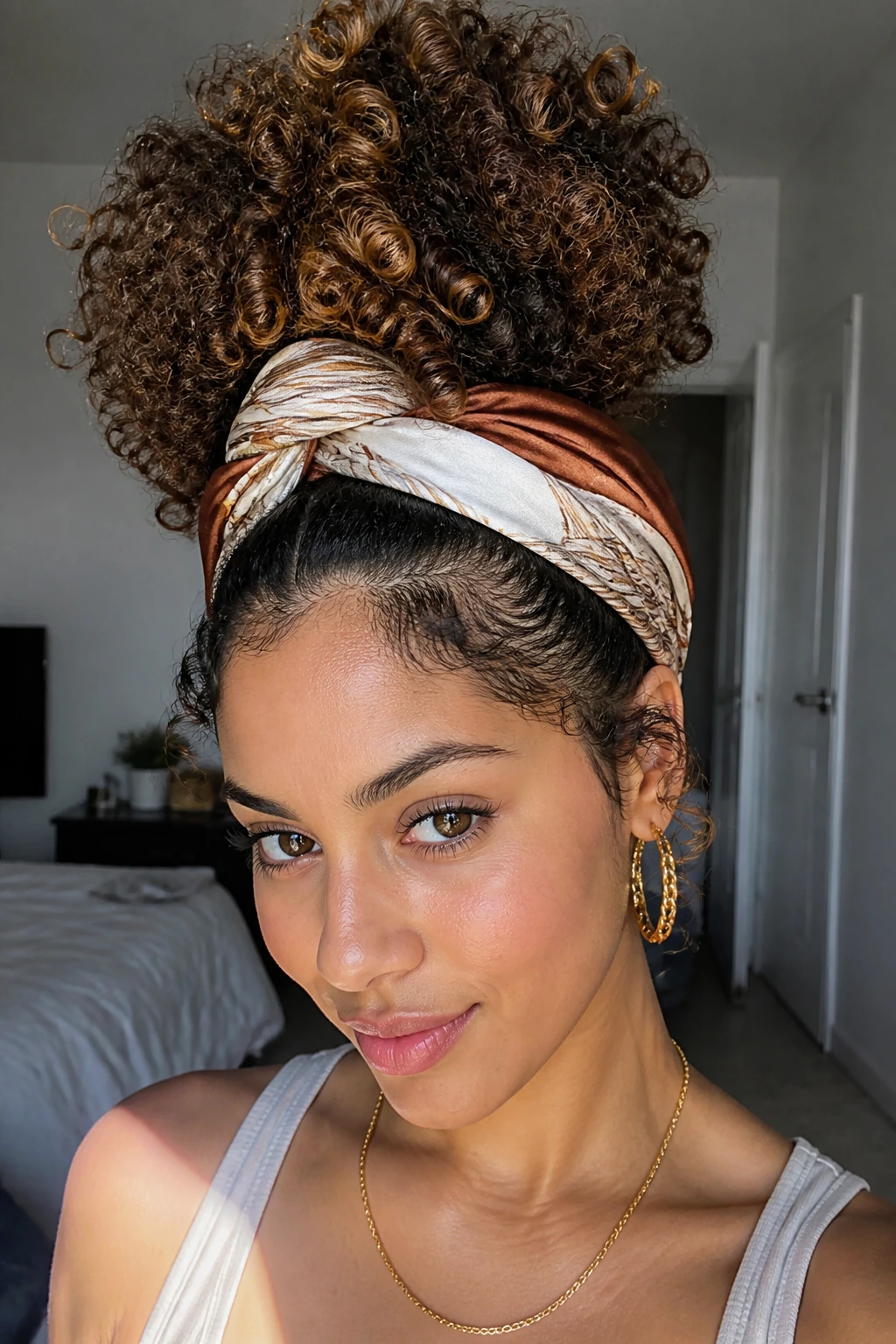
This is the pineapple’s more polished cousin. The scarf protects the hairline, controls the top, and adds a finished frame that makes the lowlights at the edges look intentional.
Why It Works:
A silk or satin scarf reduces friction around the front, which is exactly where curls frizz first after a long day. Because the hair stays gathered high, the curl length keeps its spring, and the lowlights peek through the puff and around the temple area. Tie the scarf low enough to sit flat, not high enough to create a ridge across the forehead.
Best For:
Second- or third-day curls, overnight preservation, and warm days when you want your hair secured without losing all the shape.
One Good Habit:
Fold the scarf so the smooth side sits against the hairline. Rough fabric there defeats the whole point.
21. Mini Twists Into a Low Bun
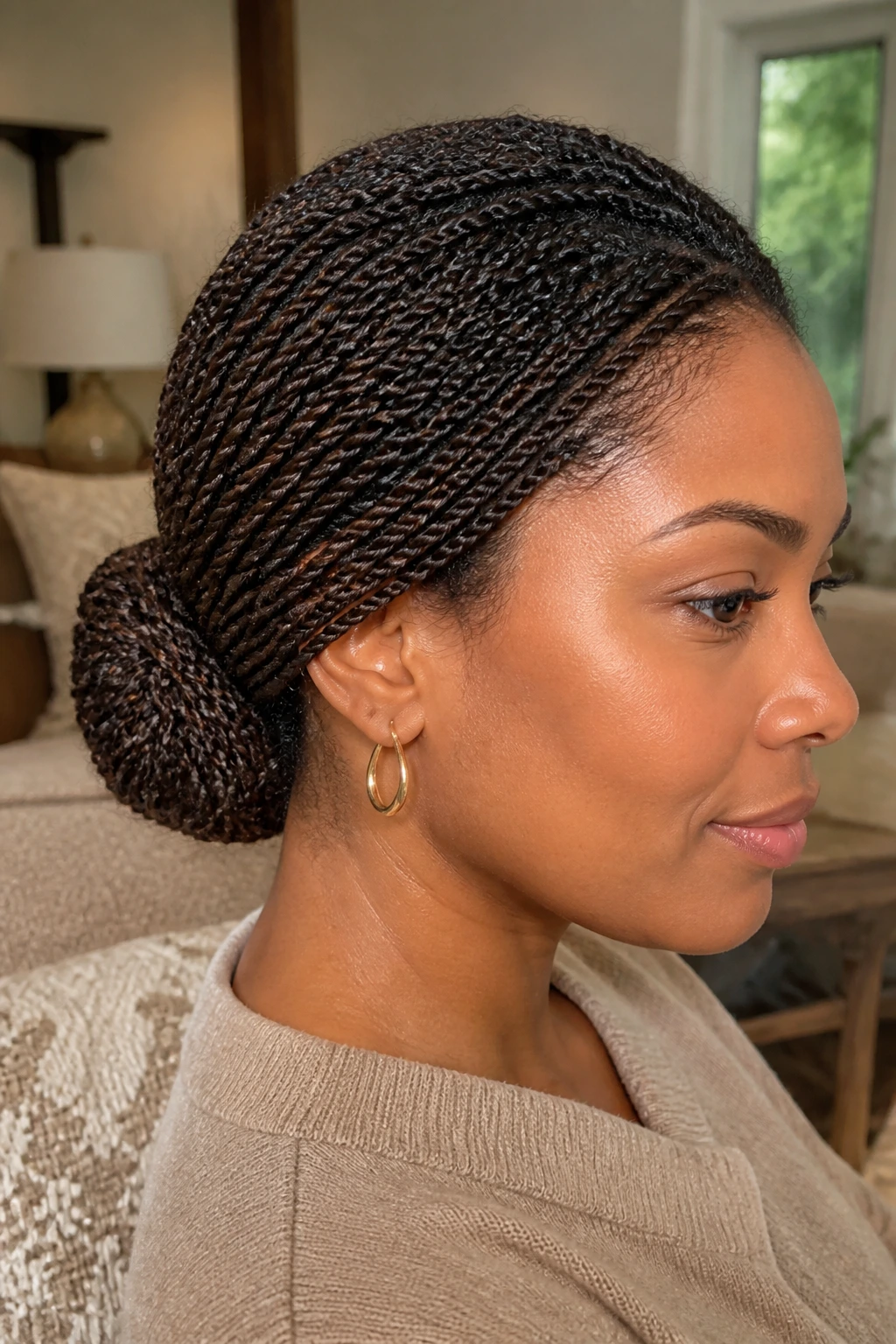
Mini twists are one of those styles that can carry a whole week if you treat them well. Gathered into a low bun, they become cleaner and more formal, and the lowlights add subtle depth to every twist.
Why It Works:
The twist pattern keeps the hair stretched and protected, which cuts down on everyday frizz and makes the bun easier to shape. Because the strands are already separated, the darker lowlight pieces show movement in a quiet way instead of disappearing into one dark knot. A few bobby pins under the bun keep the weight from pulling the style down.
Best For:
Protective styling, dense hair, and anyone who wants the same base style to work for errands and a more dressed-up setting.
Pro Tip:
Twists that are too loose at the roots can puff up fast. Snug at the scalp, soft at the ends. That balance matters more than people think.
22. Flexi-Rod Crown With Pinned Front
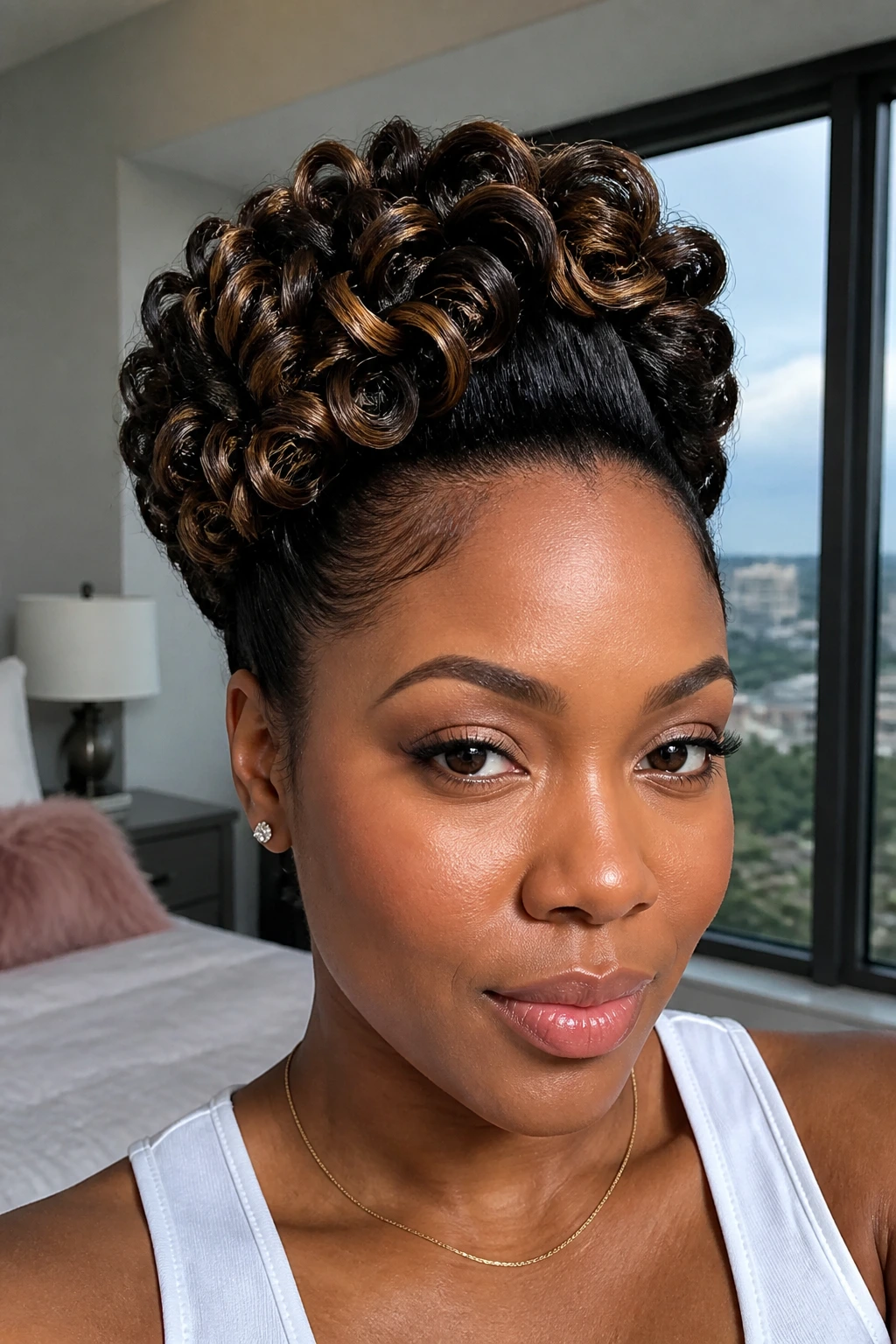
This one takes a little more time, and the result has the kind of clean shape that makes the effort worth it. The front gets pinned back smoothly, while the curled ends from the flexi rods add structured spirals that show the lowlights beautifully.
Why It Works:
Flexi rods create a more uniform curl, which is useful when you want the finish to look controlled instead of airy. The pinned front keeps the hairline sleek, and the darker strands in the set show off the spiral shape instead of getting lost. Rod size matters here: smaller rods give tighter curls, larger rods give a softer finish.
Best For:
Formal styles, photo days, and medium-to-long hair that can hold a set overnight or under a hood dryer.
Watch For:
Do not take the rods out early. Damp roots will frizz the moment they’re exposed, and then the whole front starts to puff.
23. Sleek Low Chignon With Tendrils
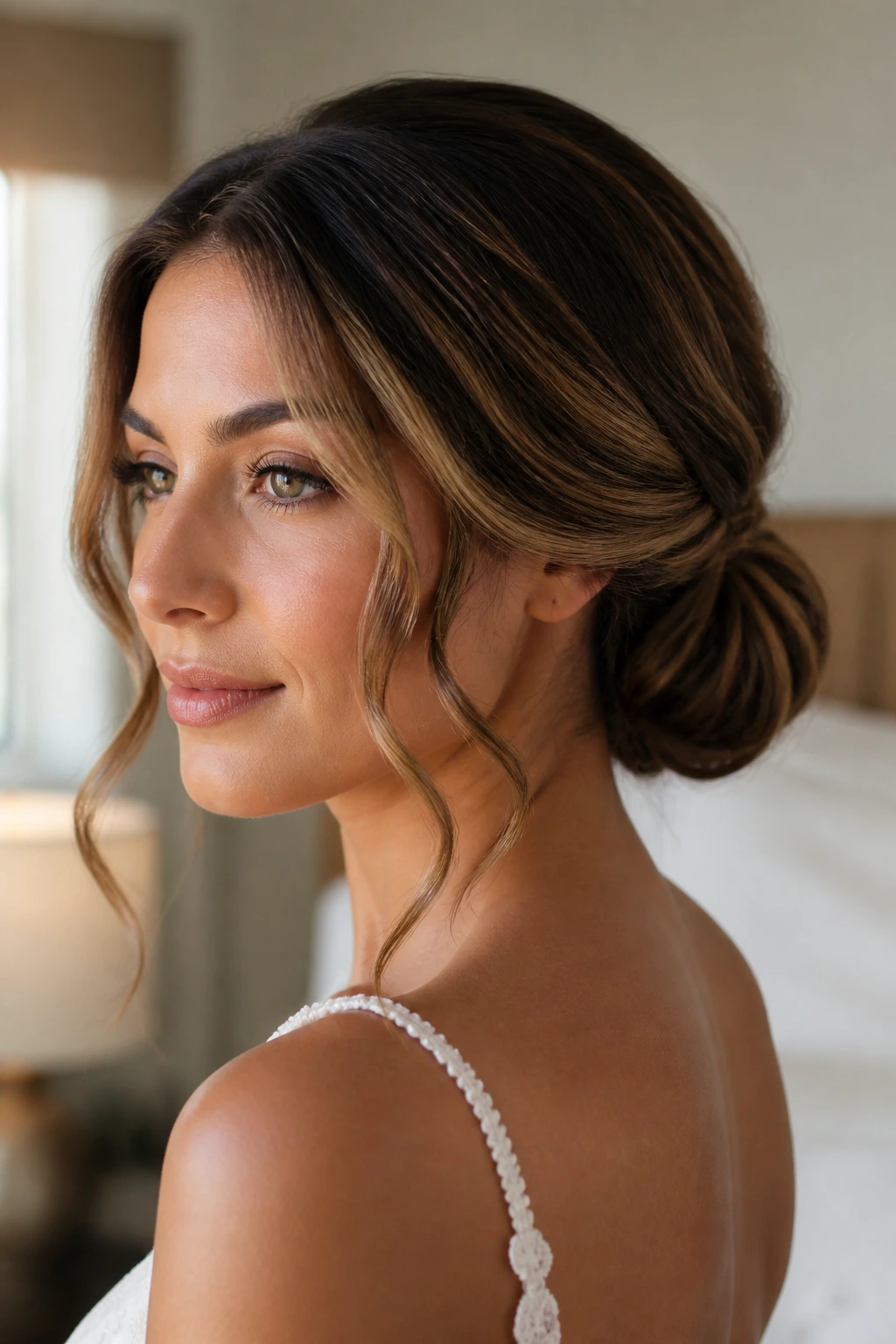
A low chignon is one of the best answers for hair that needs to look controlled without losing curl life completely. The smooth knot sits at the nape, and a few tendrils around the face keep it from feeling severe. Lowlights give the knot depth, so it doesn’t disappear into the back of the head.
Why It Works:
The style uses structure at the base and softness at the face. That contrast is what keeps it interesting. A little styling gel on a brush smooths the top, and pinning the knot in a slightly irregular shape keeps it from looking like a helmet. That’s the mistake most people make — too neat, too flat, too perfect.
Best For:
Weddings, dinners, or polished days when you want a low-maintenance silhouette with a finished edge.
One Detail:
Leave the tendrils curly, not brushed out. Brushed tendrils turn frizzy in half a day and lose the point of the style.
24. Side Clip Cascade
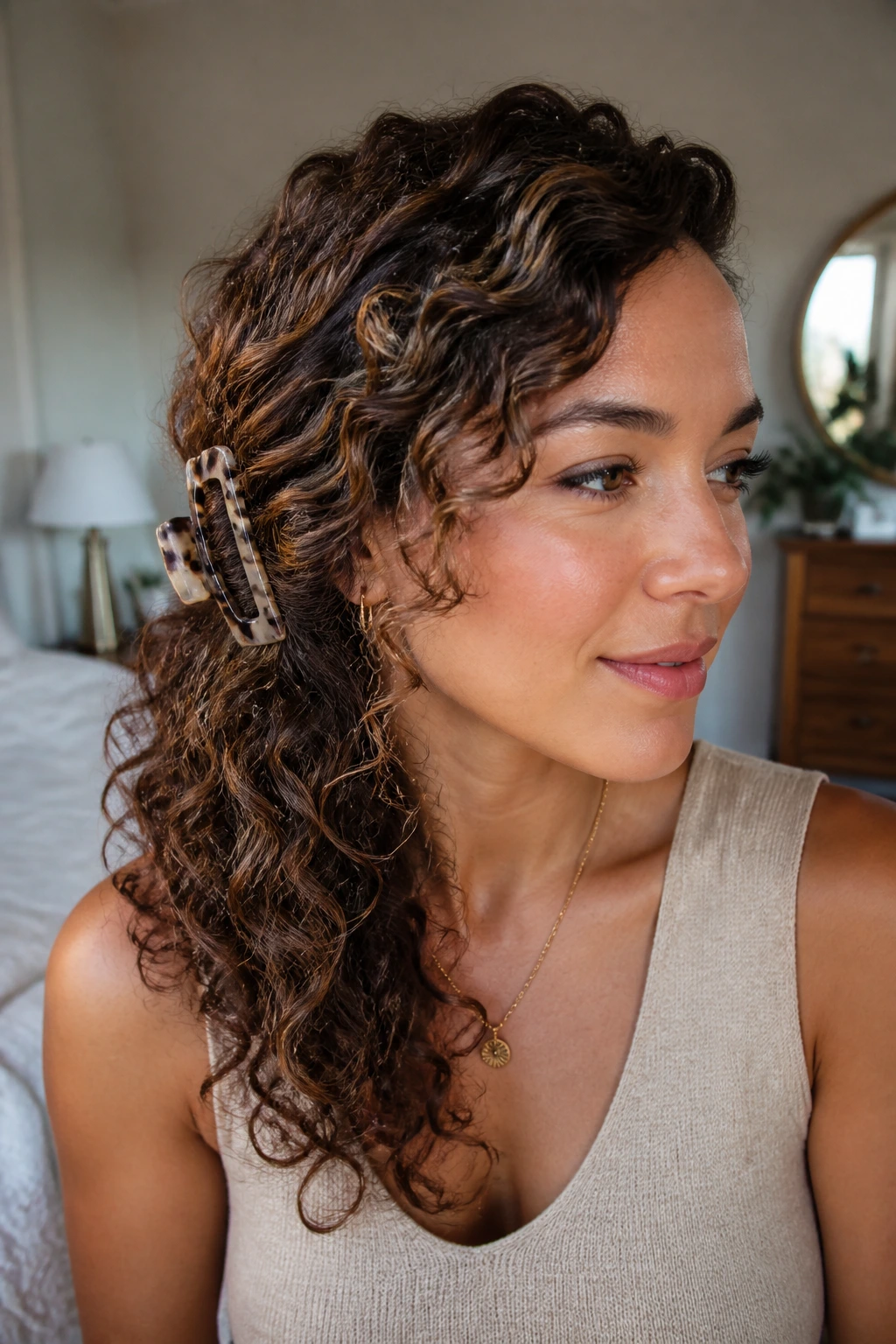
A single dramatic clip can do more than a whole rack of accessories. Pulling the hair to one side and securing it with a strong barrette lets the curls fall in a cascade, and the lowlights give that fall a visible ribbon of depth.
Why It Works:
The clip creates an anchor point, which keeps the style from drifting apart. The hair on the exposed side shows off the color more clearly, especially if the lowlights sit around the mid-lengths and ends. Use one strong clip rather than several tiny ones; the style needs one clean point of control, not a clutter of hardware.
Best For:
Shoulder-length and longer curls, date nights, or any time you want something easy that still looks deliberately styled.
Pro Tip:
Tuck the section behind the ear first, then clip. It keeps the side from puffing out around the temple, which is where the frizz usually starts.
25. Crowned Puff With Pin Curl Ends
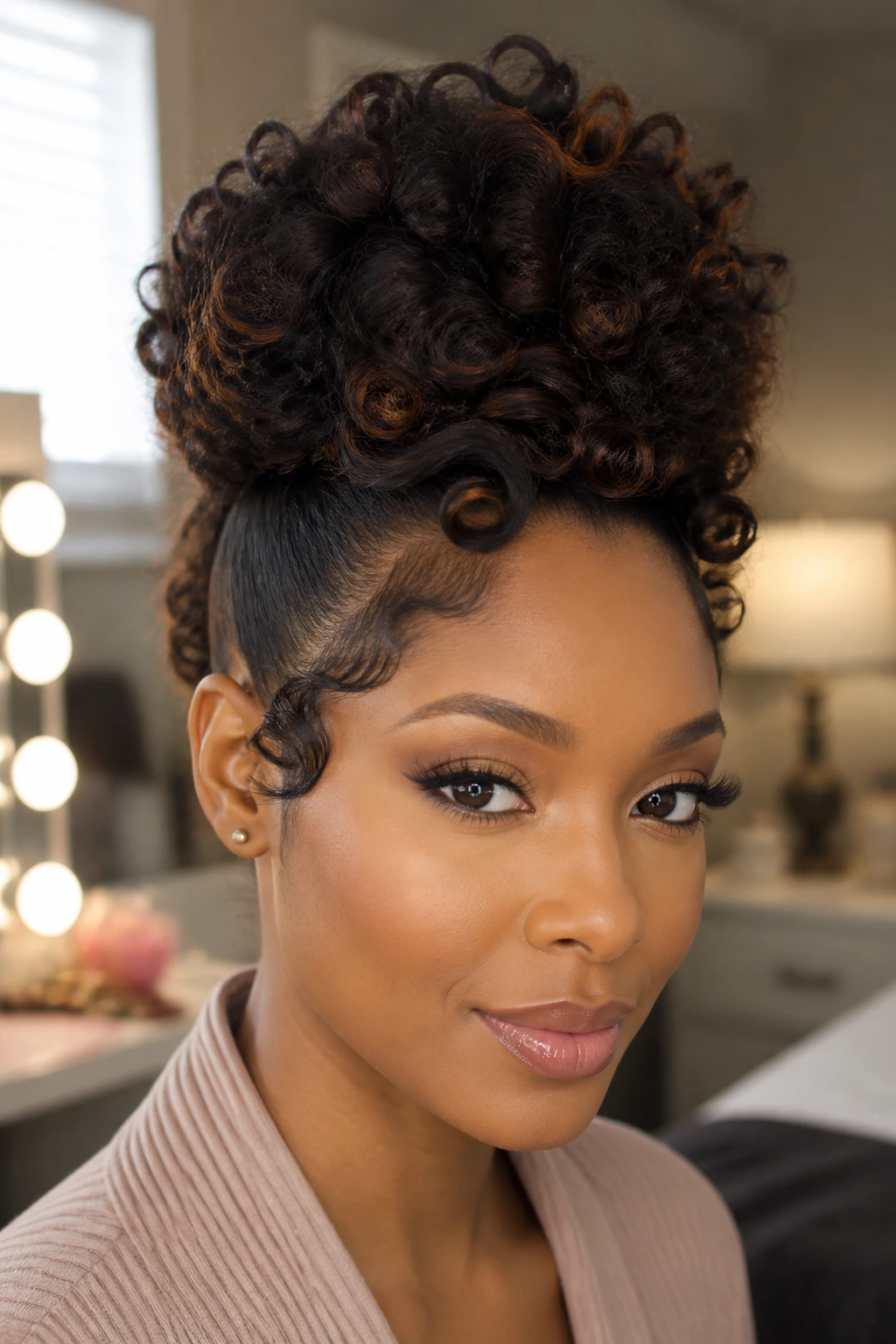
The crowned puff is a good final answer because it gives curls height, shape, and a little drama without overcomplicating the finish. Pin-curling or tucking the ends around the puff makes the silhouette look intentional, and the lowlights give the crown a richer, darker outline.
Why It Works:
The puff lifts the curl pattern away from the face and neck, which keeps the hair from being pressed flat by jackets, collars, or a long day at a desk. Lowlight placement around the crown and upper sides adds shadow, so the round shape reads as full instead of fuzzy. If your hair is dense, use a wide satin scrunchie and a few hidden pins to support the base.
Best For:
Coils, dense curls, and anyone who likes volume but wants the edges to stay under control.
Best Move:
Use a tiny amount of oil on the fingertips only, just on the ends you’re pinning. Too much product near the crown makes the puff collapse faster than you’d like.
Why Lowlights Make Curly Hair Look Cleaner, Not Flatter
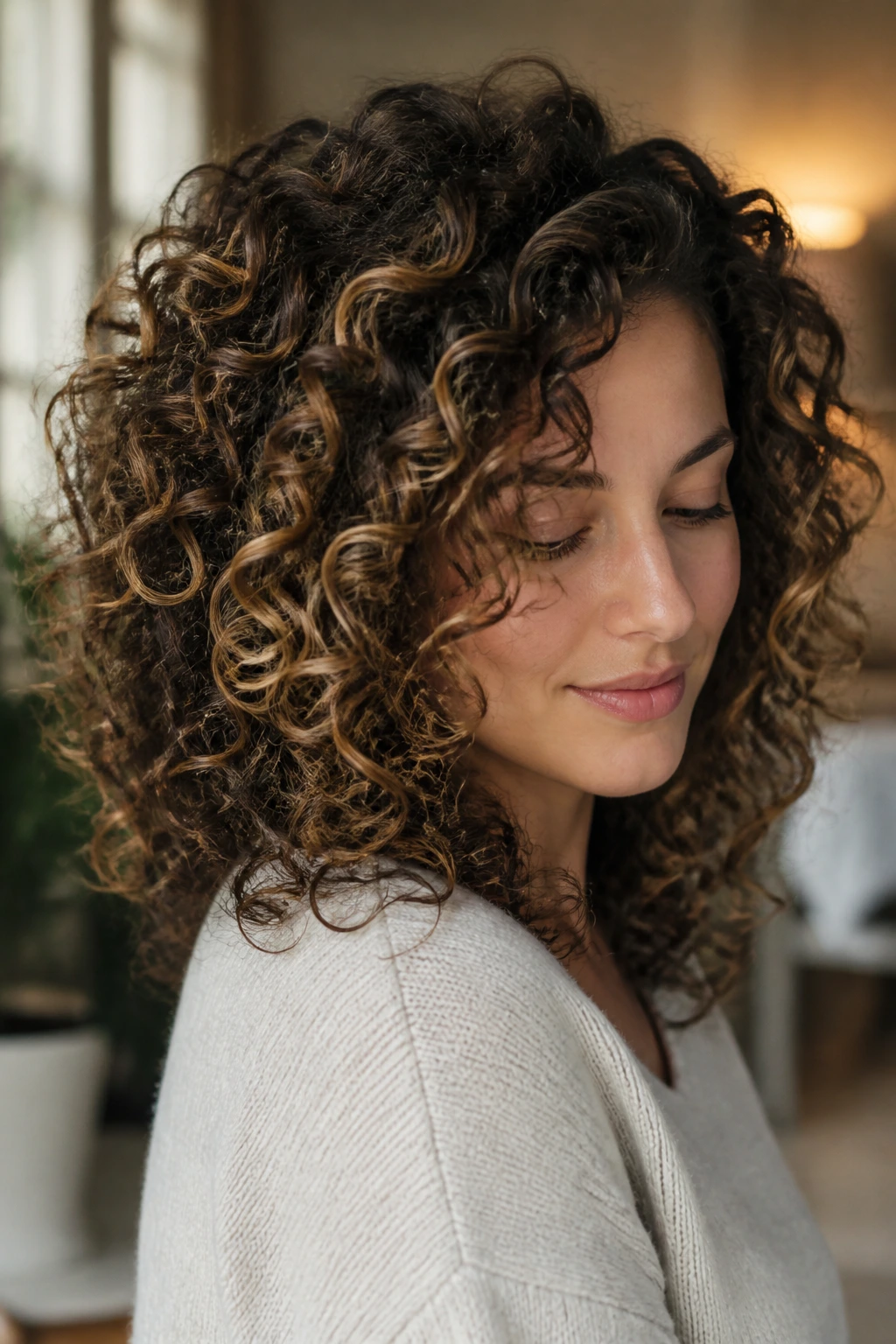
Curly hair already has texture built in. The job of lowlights is not to hide that texture, but to make the shape easier to read from a few feet away. A curl that’s all one shade can look airy in a nice way, but when the weather gets wet or the humidity creeps up, the whole head can blur into a soft halo. Deeper strands give the eye contrast, and contrast is what turns a puff into a puff, a braid into a braid, and a bun into an actual shape.
There’s also a practical side people miss. Lowlights can disguise the little rough areas that happen at the outer layer of the curl, especially near the crown and temple. That does not mean the hair is suddenly immune to frizz. It means the frizz has less visual power, which is a different thing.
I also like lowlights because they don’t fight shrinkage. They sit inside the curl pattern and show up as movement when the hair sways. That’s a better look than trying to iron curls into submission, and it lasts longer because you are working with the hair’s natural bend instead of trying to bully it into straightness.
Essential Tools for These Looks
-
Wide-tooth comb: Best for detangling wet curls without ripping apart clumps that need to stay intact.
-
Rat-tail comb: Useful for clean parts, sectioning twists, and creating those straight lines that make a style look finished.
-
Curl cream or leave-in conditioner: Gives slip and softness before gel goes on; choose one that does not leave the hair greasy.
-
Strong-hold gel or mousse: The hold keeps the surface smoother, especially around the hairline and crown where frizz shows first.
-
Satin scrunchies: They protect the curl pattern better than tight elastics and leave fewer dents in ponytails and puffs.
-
Bobby pins: The plain kind, not the wavy decorative ones, are best for securing buns, faux bobs, and tucked styles.
-
Large claw clip: Handy for twist-ups and French twists; pick one with sturdy teeth if your hair is thick.
-
Diffuser attachment: Helps set curl shape faster and reduces the temptation to touch the hair while it dries.
-
Microfiber towel or cotton T-shirt: Better for scrunching out water than a regular bath towel, which roughs up the cuticle.
-
Satin bonnet or pillowcase: Keeps the style from getting smashed overnight and saves you from waking up with a fuzzy crown.
Smart Color and Product Choices for Curly Hair With Lowlights
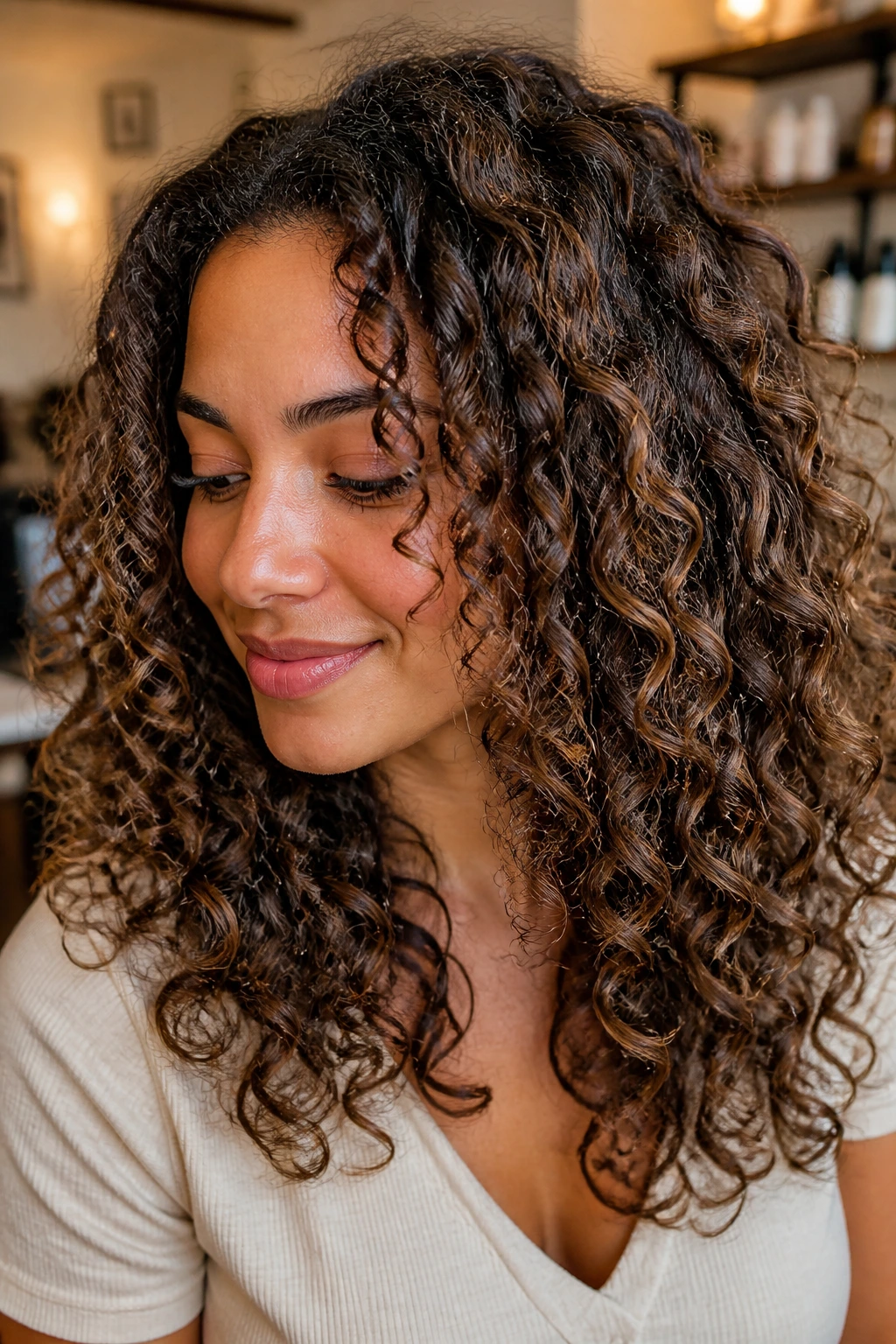
Lowlights look best when they are a little softer than people expect. One to two shades deeper than your base is usually enough to create shadow without turning the curls into striped bands. If you have tight curls or coils, chunky lowlights can break up the pattern too aggressively. On looser curls, a slightly broader ribbon can work, but the placement still needs to sit under the top layer so the color appears when the hair moves, not as a loud stripe sitting on the surface.
Product choice matters just as much. Fine curls usually behave better with mousse plus gel, because heavy cream can make them slump before they dry. Coarser curls often need leave-in and a stronger gel to keep the outside smoother. If your hair hates humidity, look for stylers that mention anti-frizz or humidity control and avoid slathering on a lot of oil before the set. Oil can seal in shine, but too much makes the surface slick without adding hold.
A small color note: ash browns, mocha tones, soft auburns, and espresso lowlights all behave a little differently against curly texture. Warm shades bring out golden dimension. Cooler shades look sharper and more shadowy. Neither is wrong. The better choice is the one that suits your skin tone and how visible you want the contrast to be when the hair is puffed, pinned, or stretched.
How to Wear These Looks Without Fighting Your Hair
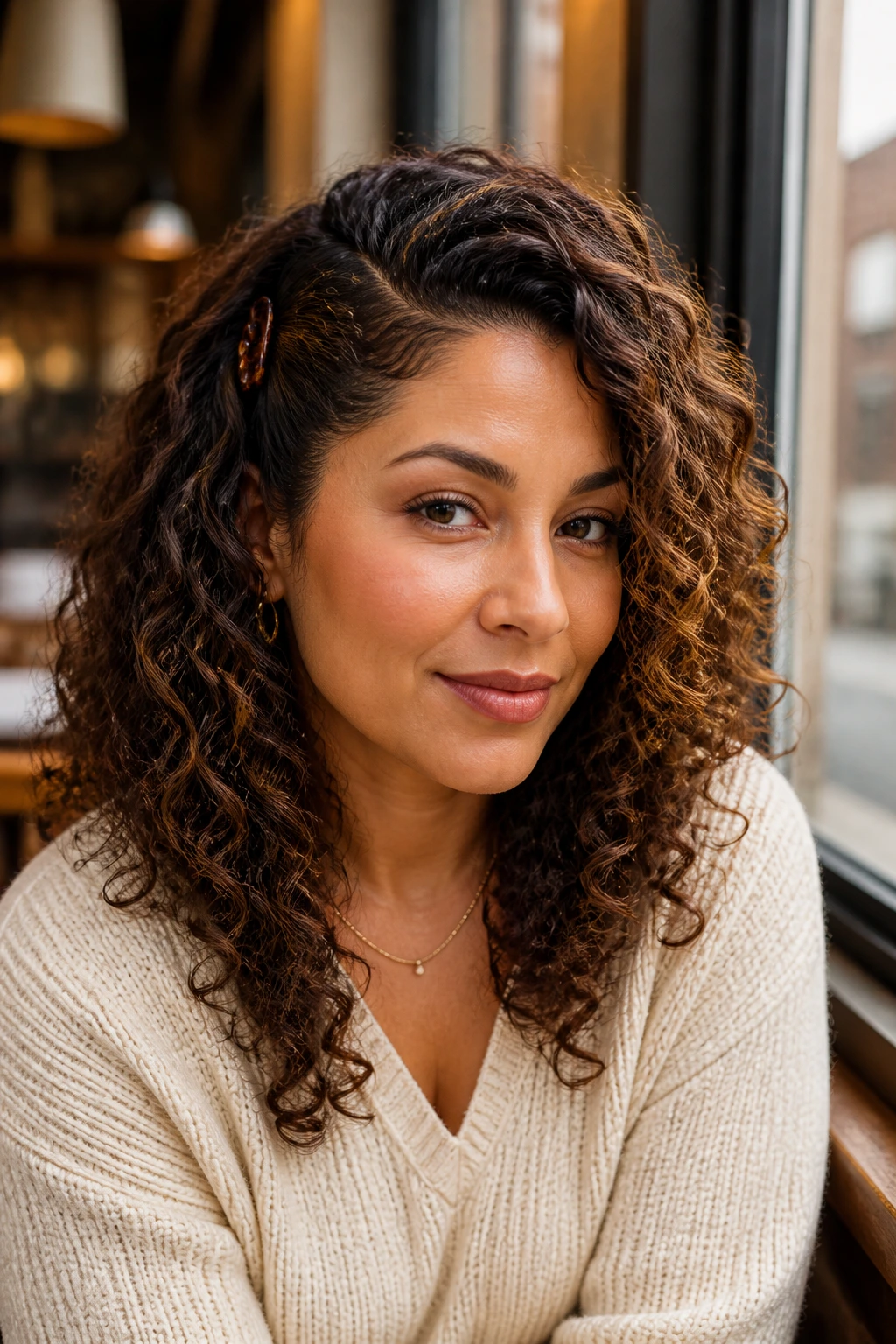
Presentation:
Choose one visible focal point and let the rest support it. A side part, a wrapped bun base, a braid at the hairline, or a clipped side sweep gives the eye a place to land, which makes the whole style feel intentional. If every part of the head is trying to be the star, the curls lose shape fast.
Accessories:
Use one strong accessory and stop there. A satin scarf, a large claw clip, a clean barrette, or a pair of simple pins usually looks better than stacking three or four accents on top of each other. Curly hair already brings enough texture. It does not need a costume department.
Best Pairings:
These styles sit well with hoop earrings, collarbones, jackets that don’t rub the nape, and necklines that leave the shape visible. A low bun looks clean with a crisp shirt. A puff or side cascade looks better when the neckline is open enough that the hair can move.
Occasion:
If the day is active, choose a style that anchors at the nape or crown, like a low pony, pineapple, or claw-clip twist. If the day is about sitting still and looking polished, the faux bob, chignon, or flexi-rod crown earns its keep. Matching the style to the amount of movement in your day saves a lot of repair work.
Extra Styling Moves That Buy You More Hold
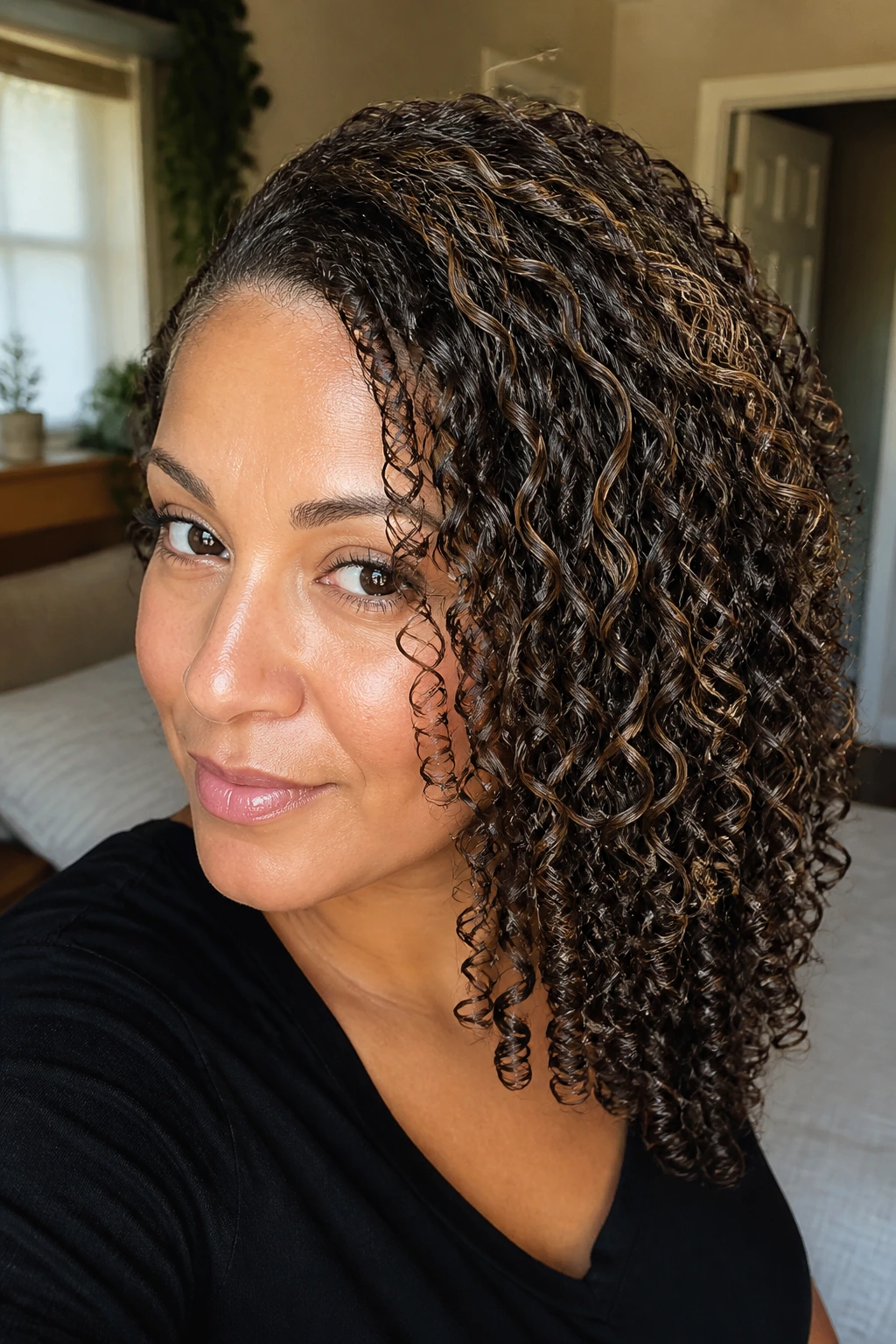
Frizz Control:
Put product on soaking-wet hair when you want the cuticle to lie flatter, then stop touching it once the cast starts to form. That tiny rule does more than almost anything else. A wet surface plus a hold product gives you cleaner clumps, and cleaner clumps show lowlights better.
Shape Boost:
Clip roots while they dry if you want lift at the crown, and use pins to force a shape only where you need it. A style gets frizzy when the whole head is overhandled; a style stays neat when you guide just the problem areas. That is why a half-up or side-swept look often survives better than a fully loose style.
Color Boost:
If the lowlights feel hidden, change the part. Seriously. A deep side part exposes more of the darker ribbons and makes the curl pattern look less flat. That is a free trick, and I never understand why people skip it.
Make-It-Yours:
Short hair can use clips, bands, and braid accents to fake length and shape. Long hair can do buns, crowns, and wrapped ponytails without losing the lowlight dimension. Fine curls need lighter products and a little root lift. Thick curls need pins, sectioning, and a stronger hold.
Nighttime Care, Refreshing, and Between-Wash Maintenance
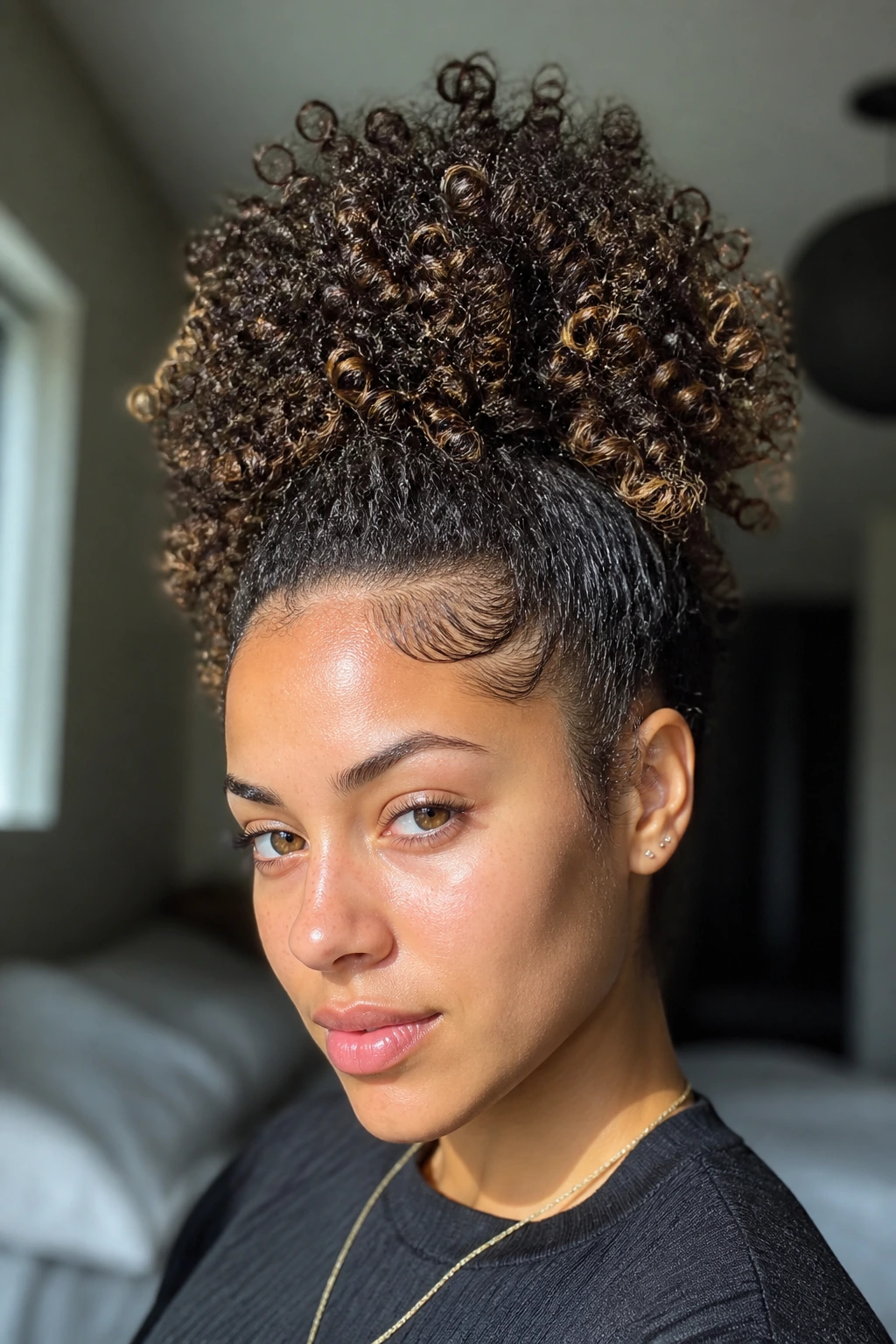
Most of these styles hold best for 2 to 4 days if you sleep on a satin pillowcase or wear a bonnet. Tighter protective styles like mini twists, Bantu knots, and flat twists can often stretch longer, sometimes 5 to 7 days, if the scalp stays comfortable and you’re only refreshing the visible surface. Loose styles such as wash-and-gos and side-swept curls usually need a little morning work by day two.
Refresh with a light mist of water, then add a pea-sized amount of leave-in or curl cream to the driest areas only. Scrunch the ends, smooth the top with damp palms, and leave the rest alone. If a bun or ponytail has lost shape, don’t drown it in water; that just drags the whole style down. A quick mist at the perimeter and a new pin arrangement is usually enough.
For overnight care, pineapple the curls loosely or wrap the hair in a satin scarf if the style has a smooth front. Keep metal clips and rough elastics out of the hair while you sleep. If you wear a style with pinned sections, put the pins where they won’t press into your scalp, because a sore scalp makes people rip the style apart early. That’s how good hair days get ruined before breakfast.
Variations and Adaptations for Different Curl Types
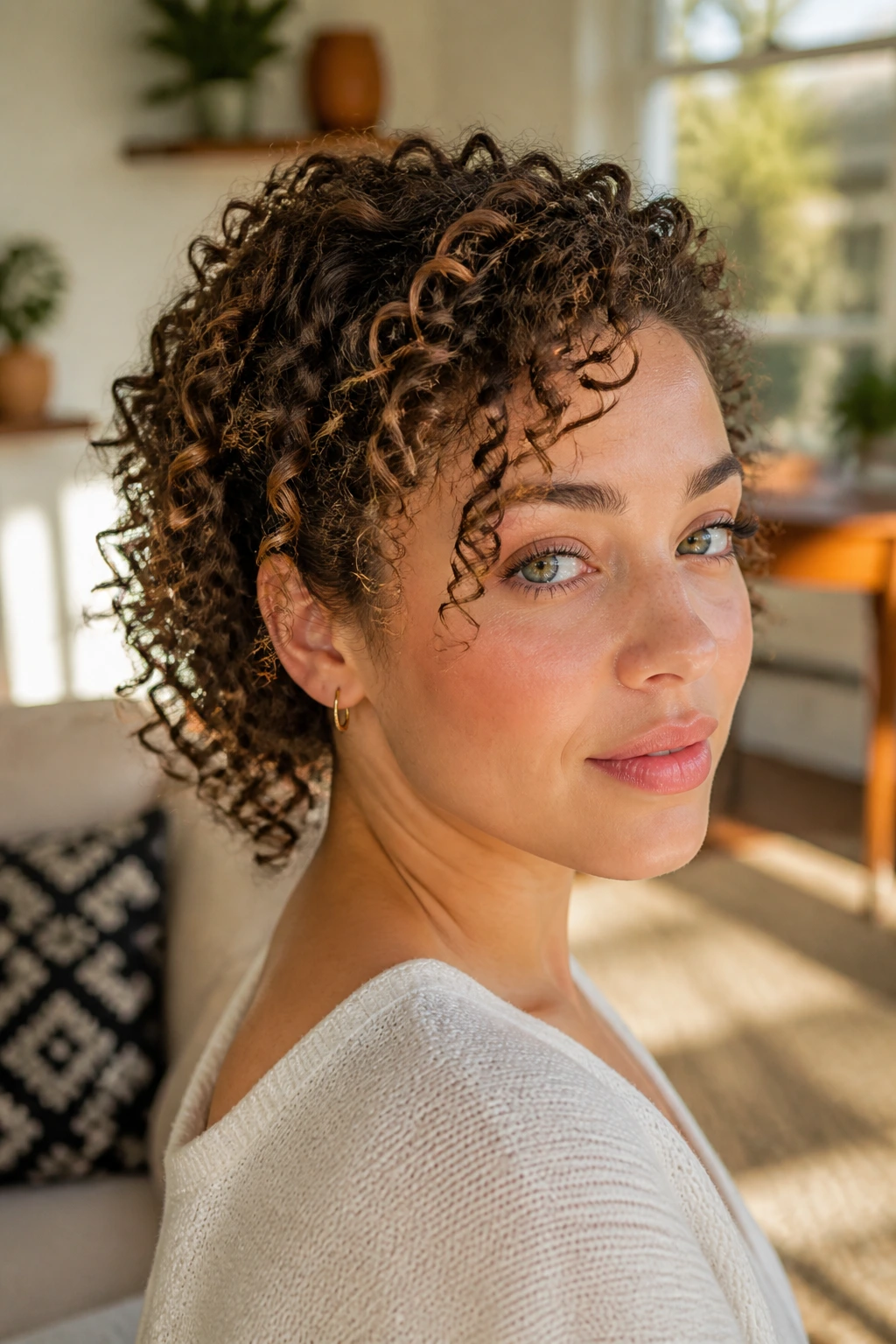
Fine-Curl Soft Hold:
Fine curls usually need a lighter mousse and a small amount of gel, not a heavy cream load. Styles like the side-part wash-and-go, side clip cascade, and bubble ponytail work especially well because they keep the shape visible without crushing the curl.
Thick-Coil Protective Version:
Dense hair likes braids, flat twists, mini twists, and low buns with extra pins. The lowlights show off the layered texture beautifully, but the sections need to be small enough that the style lies flat where it should.
Humidity Shield Edit:
If your hair puffs up at the first sign of damp weather, choose styles with controlled edges: low pony, halo braid, chignon, or tucked faux bob. Use a styler with stronger hold and keep the oil at the ends, not the roots.
Short-Length Remix:
A curly bob or lob can still wear a side part, headband tuck, half-up twist crown, and claw-clip twist. The trick is not forcing length that isn’t there. Short curls look better when the accessory becomes part of the shape.
Color Shift Version:
Soft caramel lowlights read warmer and brighter, while espresso or cool mocha tones make the curl pattern look sharper and more shadowed. If your curls are tight and dense, a softer contrast usually looks richer. If your curls are loose, you can get away with a little more contrast.
Common Mistakes That Make Frizz Show Up
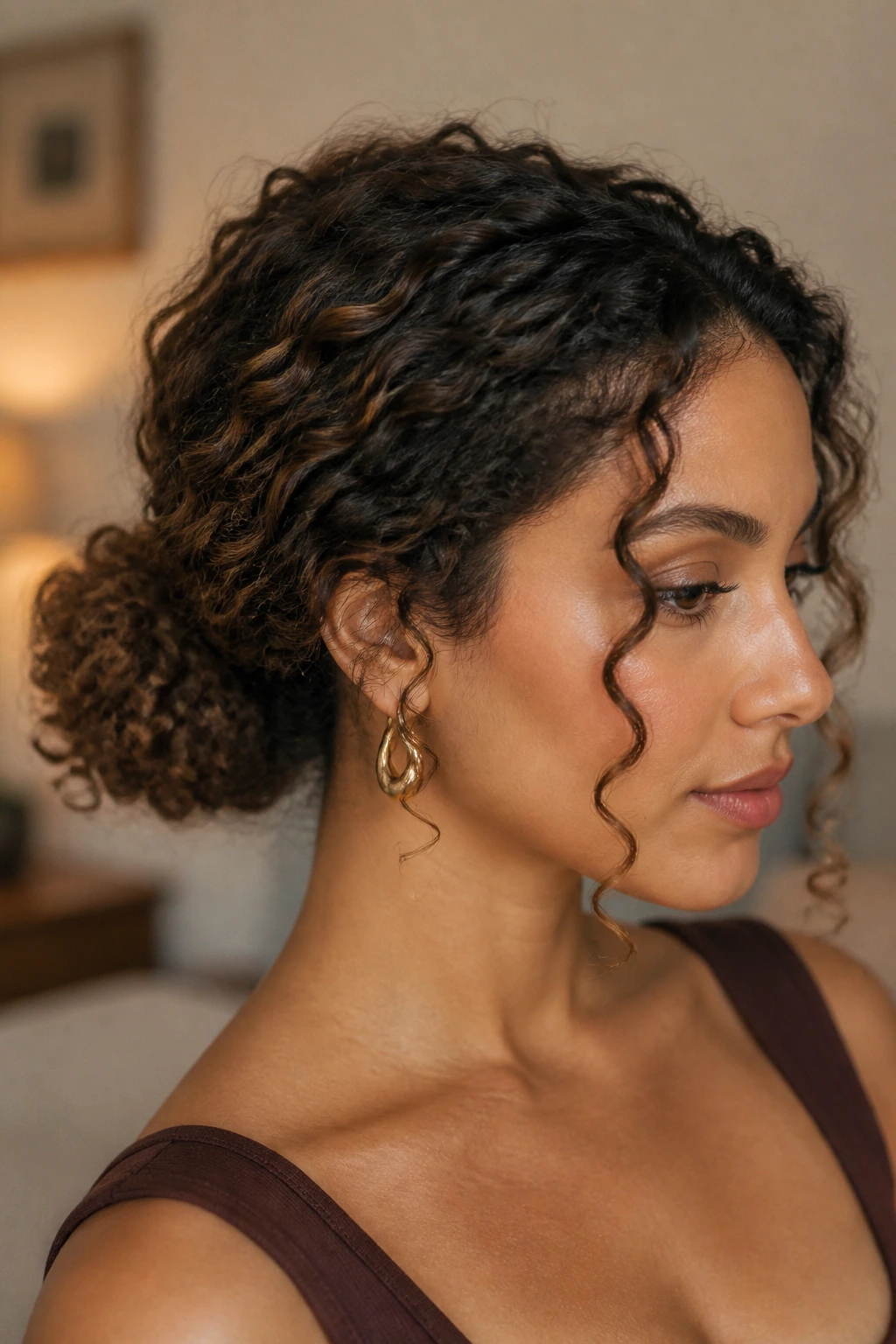
The first mistake is over-darkening the lowlights. When the color is too deep or placed in chunky ribbons, the curls can look striped instead of dimensional. Ask for softer, narrower placement that sits inside the curl pattern rather than sitting on top of it.
The second mistake is pulling styles too tight at the hairline. Tight ponytails, buns, and braids can smooth the front for an hour, then leave dents, puff, and tension afterward. Use enough hold to keep the shape, not enough to tug the scalp.
The third mistake is putting heavy oil on top of a weak style. Oil can make curls shiny, but it cannot replace hold. If the hair is already fluffy, oil often makes it slide apart faster. Start with cream or gel, then use a tiny bit of oil at the very ends if you need it.
The fourth mistake is touching the hair while it dries. That’s the fastest way to turn defined curls into a halo. Once the cast forms, leave it alone until the hair is fully dry, then break it up gently with clean hands.
The fifth mistake is ignoring the sleep step. Cotton pillowcases rough up the hair and wreck the perimeter. Satin or silk is not a luxury here. It is maintenance.
Questions People Ask Before Booking Lowlights or Styling
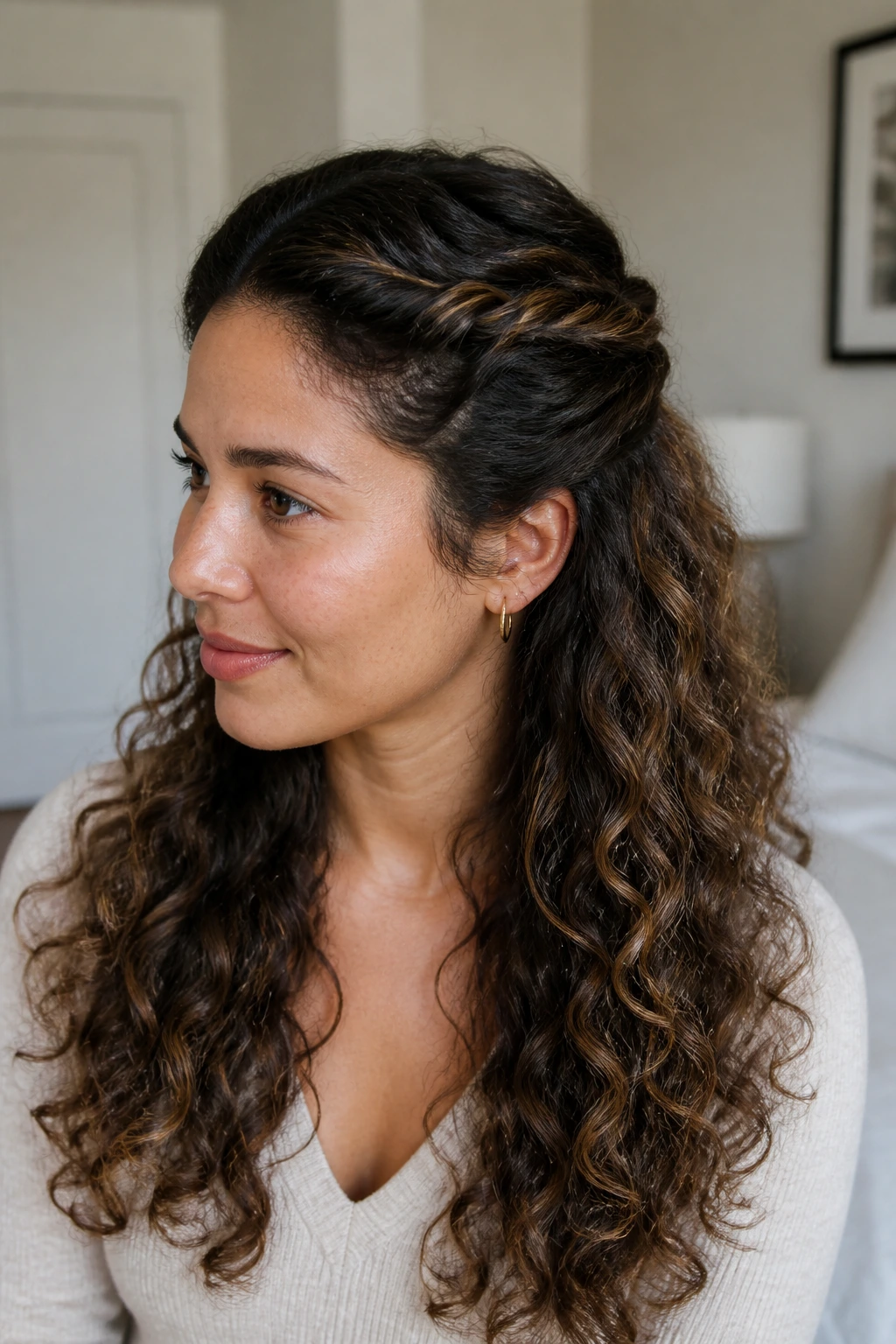
Will lowlights make curly hair look thinner?
Not if they’re placed well. Soft, deeper strands usually make curls look denser because they create shadow and break up the outline of the hair. Thick, stripey placement can do the opposite, which is why subtle wins here.
Can I wear these styles on day-two or day-three curls?
Yes, and some of them actually look better once the curls have settled. The pineapple puff, side-swept clip set, low pony, and claw-clip twist are especially forgiving on older curl definition.
Should I use gel or mousse for frizz-free curly styles?
Mousse works well for fine curls that need body, while gel is better when you want a stronger cast and smoother surface. A lot of people end up using both: mousse for lift, gel for hold.
How do I keep the crown from puffing up?
Clip the roots while they dry, part the hair cleanly, and avoid touching the top once it starts to set. If the crown still frizzes, use a tiny bit of styling cream on damp fingertips and smooth only that section.
What if my curls frizz at the ends first?
Then the ends need more protection than the top. Try a low bun, faux bob, mini twists, or a pinned chignon so the fragile ends are tucked away instead of rubbing against clothes and seat backs.
Do these styles work on short curly hair?
Absolutely, but the best ones are the half-up twist crown, headband tuck, side clip cascade, and small claw-clip twist. Short curls look best when the style respects the length instead of trying to fake a long ponytail.
How often should I refresh the lowlights or color?
That depends on how fast your hair grows and how visible the contrast is at the roots, but most people keep the shape looking good by refreshing the color around the regrowth area when the contrast starts to feel obvious. The style itself can be refreshed more often than the color.
What if my hair slips out of clips and pins?
Use stronger teeth, add texture with a little product first, and anchor the style with crossed pins instead of one pin alone. Slippery curls usually need grip, not more force.
A Better Shape for Curls
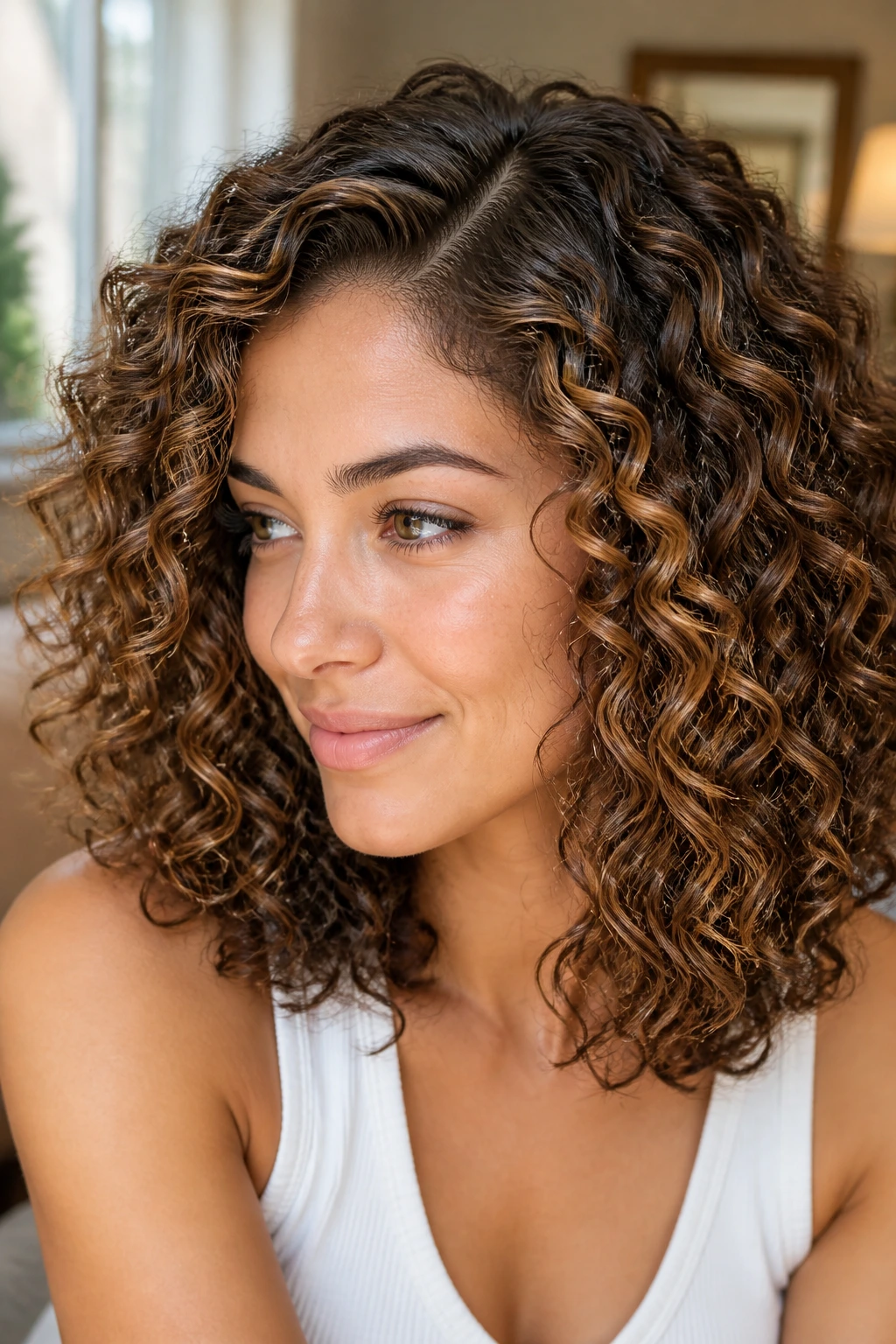
The best thing about curly hair with lowlights is that the color and the texture do not have to compete. When the shape is good, the darker strands make the hair look richer. When the shape is simple, the lowlights do the visual heavy lifting. That is the part I keep coming back to, because it’s practical and it looks good in real life, not just in a photo.
Pick the style that matches your length, your density, and how much time you want to spend with pins in your hand. A clean side part, a neat bun, a braid at the hairline, or a puff with one strong accessory can carry a whole day if the foundation is right. The details matter, but not in a fussy way.
Start with the shape your curls already want, then let the lowlights sharpen the outline. That’s the move that keeps the hair looking finished when the weather isn’t helping.