



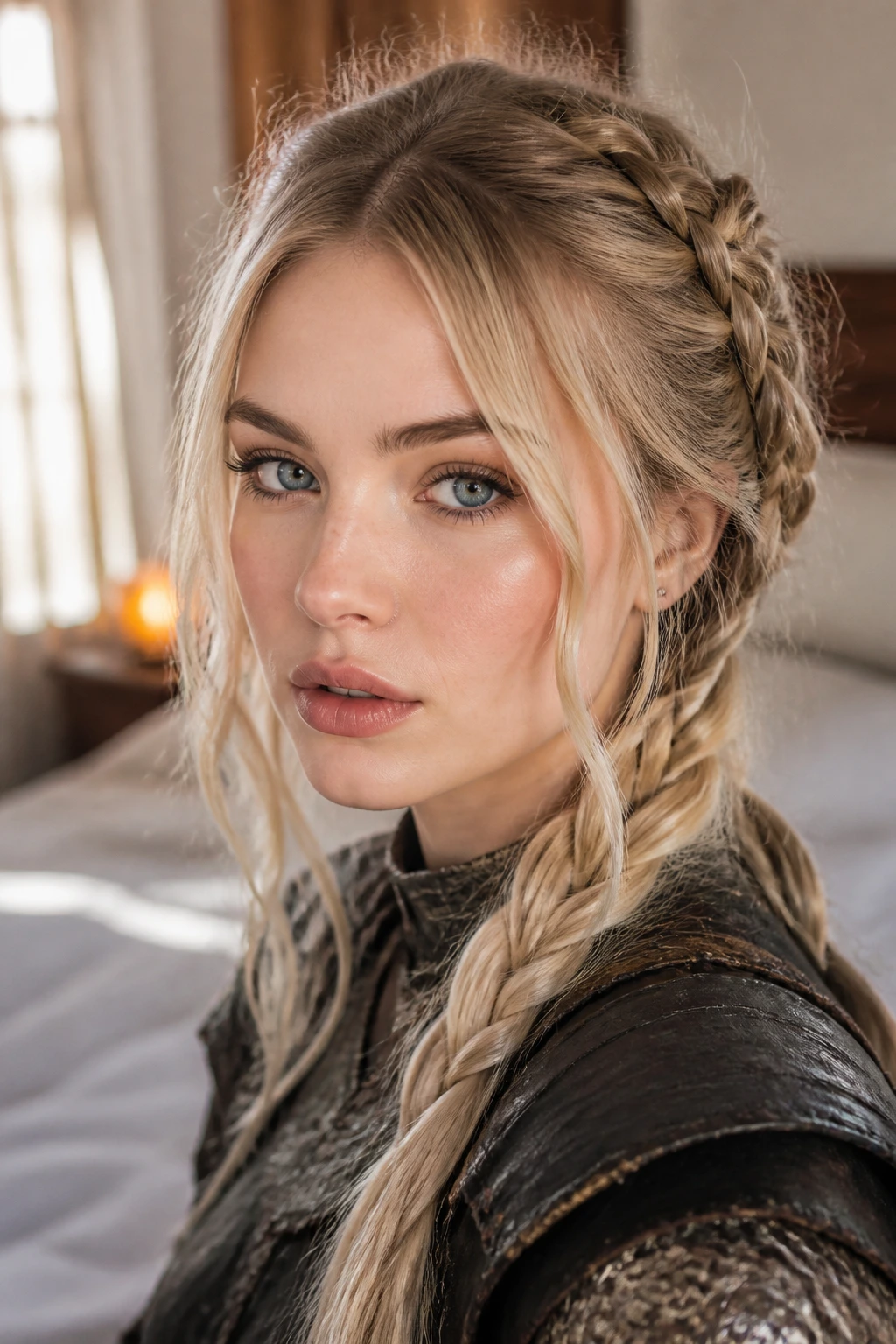
A flat platinum can make fair skin look even paler than it is. Add a little root shadow, a braid with some real shape, and a bend through the ends, and the whole face wakes up. That’s the trick with warrior blonde hairstyles for fair skin: the blonde doesn’t have to shout. It needs structure.
The best versions of this look are less “costume warrior” and more carved. Think Dutch braids that sit up off the scalp, low knots with a few loose pieces around the face, rope twists, fishtails, bubble braids, and textured waves that keep the color from turning into one pale sheet. On fair skin, that extra depth matters. It keeps brows visible, gives the cheeks some contrast, and stops the hair from swallowing the face.
I like these styles because they do two jobs at once. They make blonde hair look intentional, and they give fair skin a frame. If the shade is too white and the styling is too soft, the whole thing goes limp fast. Get the tone and the shape working together, though, and even a simple braid starts to feel like armor.
Why These Warrior Blonde Looks Work on Fair Skin
-
Built-In Contrast: A soft shadow root or a few darker lowlights keep pale blonde from blending into fair skin and flattening the whole face.
-
Braids Add Structure: Dutch braids, fishtails, and rope twists create visible lines, which gives the hair more backbone than loose waves alone.
-
Texture Helps Fine Hair: A little grit from dry shampoo or texturizing spray makes lighter hair easier to pin, braid, and sculpt.
-
Face-Framing Matters: Leaving a few wisps or curtain pieces around the temples keeps very light blonde from erasing the eye area.
-
Easy to Scale Up or Down: Most of these looks can be tightened for a sharper finish or loosened for a softer one, depending on how dramatic you want the result to feel.
-
Fair Skin Gets More Dimension: Pearl, champagne, ash-beige, and smoky blonde shades add light without turning the face ghostly, which is the problem with one-note platinum.
How Fair Skin Changes the Blonde Conversation
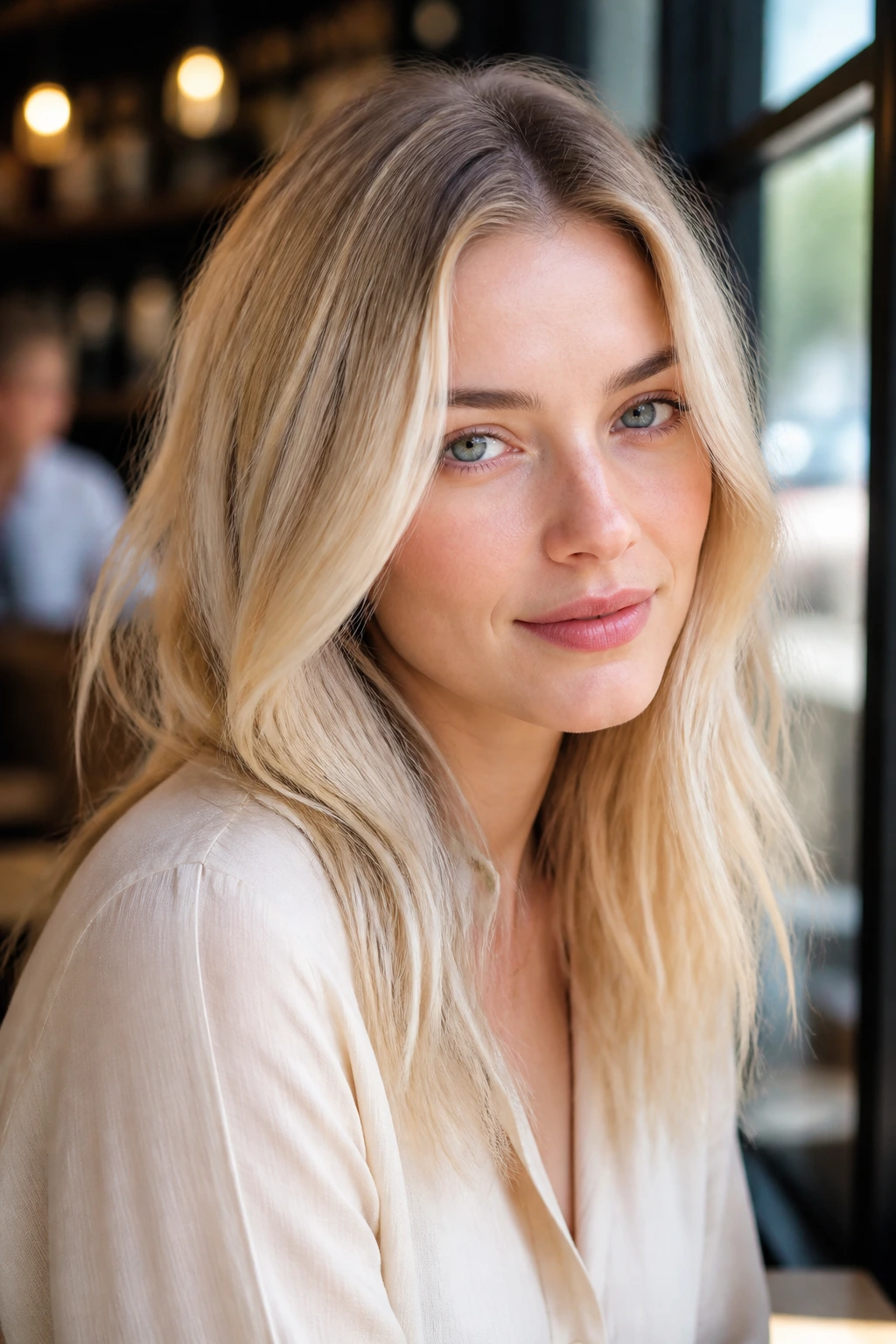
Fair skin is not one thing, and that’s where a lot of blonde advice goes wrong. Some fair complexions lean pink, some look porcelain, some have a quiet golden cast that only shows in daylight. The shade sitting on your head needs to play with that, not fight it.
A flat white blonde can make rosy skin look flushed and cool skin look washed out. A pearl blonde with a soft beige root does something better. It gives the face a little border, the way a matte frame makes a bright painting easier to see. That border can be tiny. Sometimes a level-two root shadow is enough.
The part people miss
Brows and lashes matter here. If they’re naturally light, a harsh icy blonde can erase them from a few feet away. If you keep some warmth or depth near the roots, the whole style reads stronger. Not darker. Stronger.
That’s why warrior blonde on fair skin usually looks best when the color is doing a bit of quiet work. Root shadow. Ribboned highlights. Soft lowlights under the braid. The hair should still glow, but it shouldn’t look like it was lifted in a single, blunt pass.
The Warrior Shapes That Give Blonde Hair Backbone
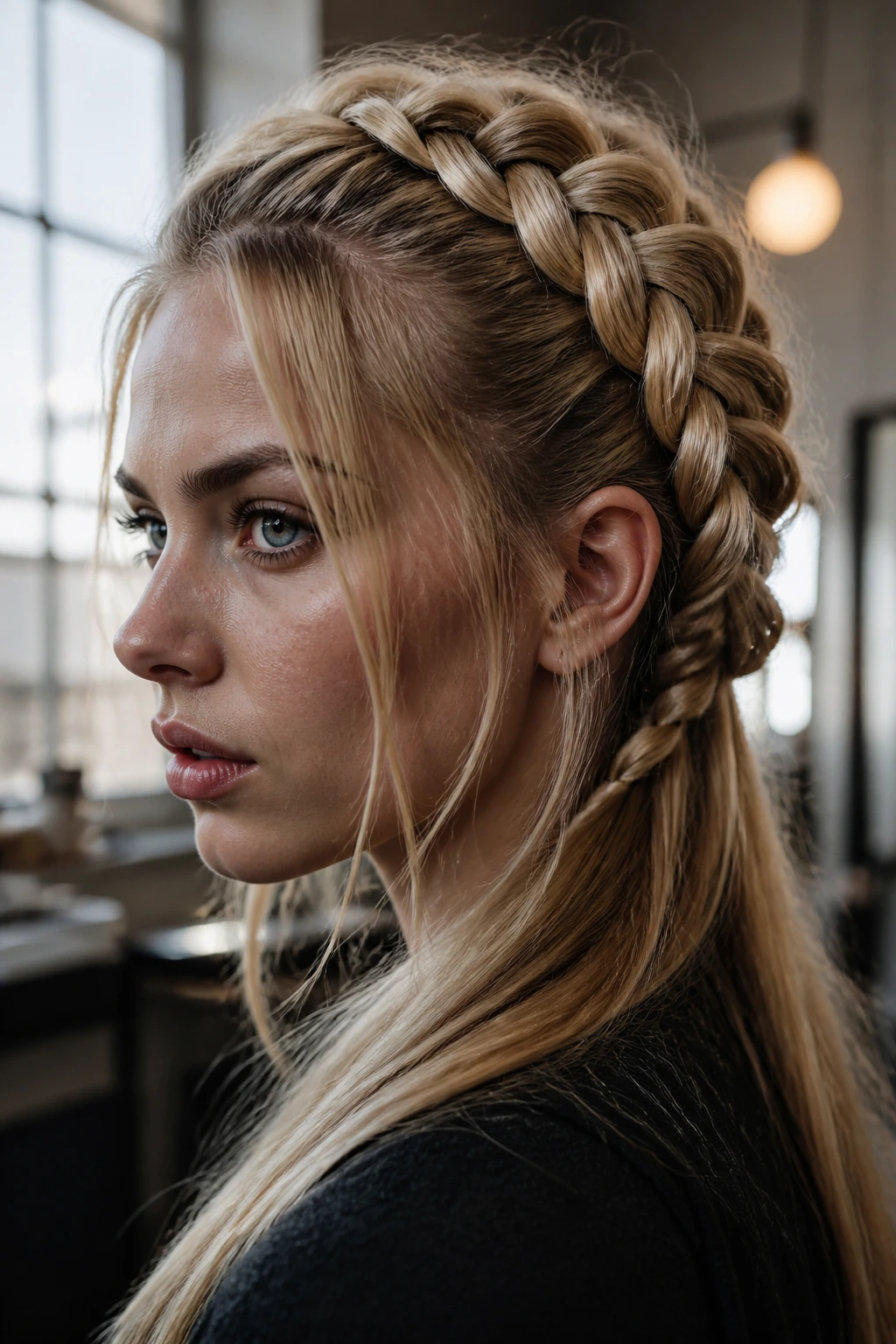
The word “warrior” gets thrown around a lot, and half the time it just means “there’s a braid involved.” That’s too lazy for hair. What actually makes the style read as strong is the line of the shape.
Dutch braids sit up off the scalp and carve in depth. Rope twists feel tighter and cleaner than soft braids. Low buns carry weight at the nape instead of ballooning at the crown. Even loose waves can fit the idea if they have a rough, broken texture rather than a polished curl.
I also think placement matters more than people admit. A braid that starts high on the head has a different mood than one tucked low behind the ear. A ponytail wrapped at the base looks deliberate. A half-up knot with face-framing pieces feels lighter. Same blonde. Very different message.
Texture is the quiet weapon
If the hair is too smooth, the style slips into prom territory. A little lived-in texture keeps it grounded. That can come from day-two hair, a salt spray mist, or a quick bend through the mid-lengths with a flat iron. The goal is movement with edges, not a fuzzy mess.
Picking the Right Blonde Shade Without Going Flat
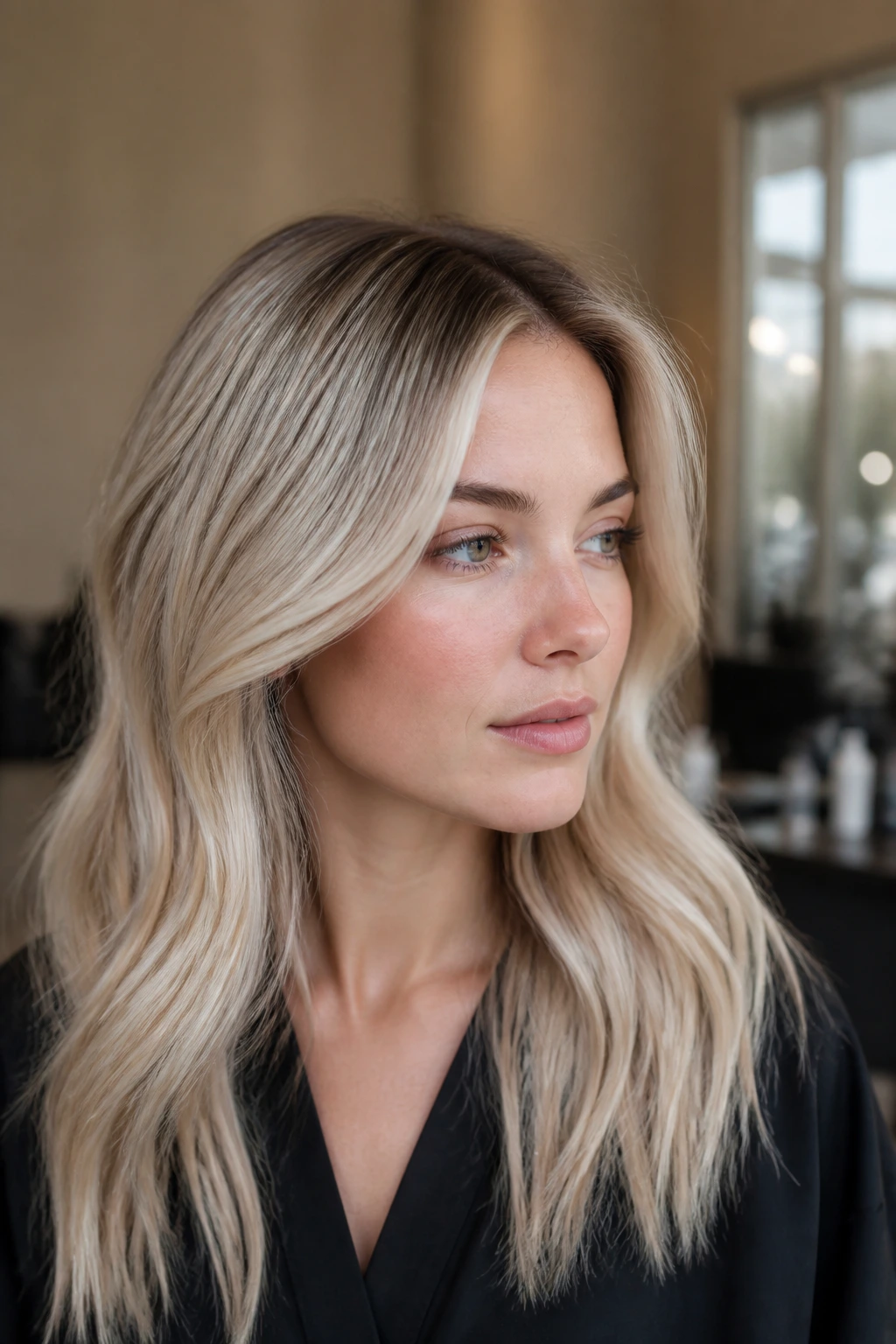
On fair skin, the blonde itself needs as much thought as the braid or bun. I’d reach for pearl, champagne, ash-beige, smoky beige, or a butter tone with a root that’s just a shade or two deeper than the mids. Those shades keep the face from looking drained under indoor light.
If your skin is cool, lean into pearl or icy champagne with a smoky root. If your skin runs pink, stay away from the whitest ends near the face unless there’s some beige or beige-gold threaded through the mid-lengths. If your skin has a warmer cast, champagne and soft honey-blonde can look cleaner than a blue-white blonde ever will.
My blunt opinion
Flat platinum is the hardest blonde to wear on fair skin. It can work, sure. But it needs brows, lashes, and makeup doing some heavy lifting, and most days that’s more work than it’s worth. A blonde with depth gives you more room to breathe.
1. Root-Shadow Dutch Braid Crown
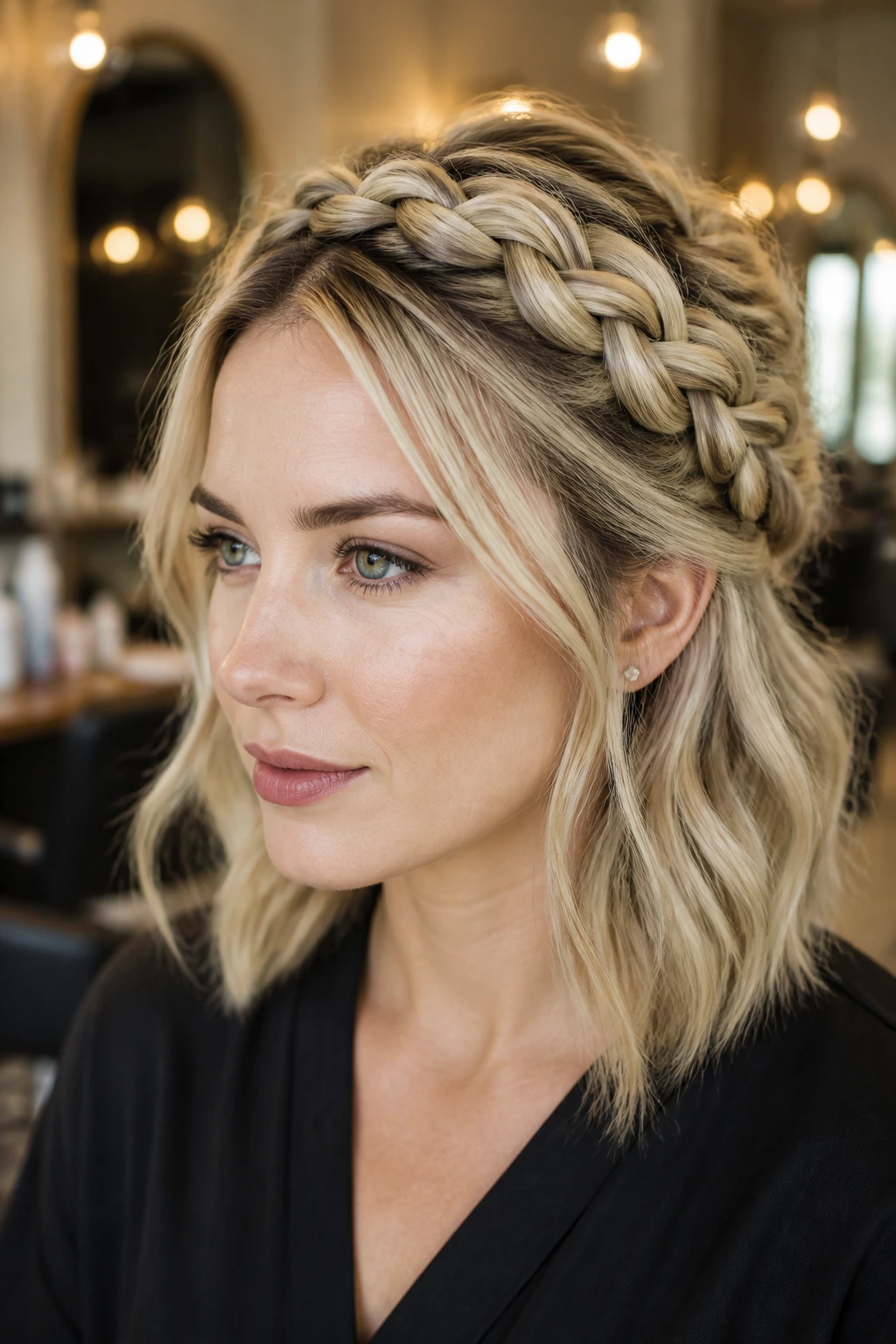
A Dutch braid crown earns its keep when the color underneath has some depth. On fair skin, a root shadow that’s one or two levels deeper than the mids keeps the braid from disappearing into the scalp and gives the whole style a carved, almost armored look.
Why it flatters fair skin
The braid sits high enough to frame the face, but the shadow at the roots stops the blonde from blending into the skin line. Leave two thin pieces around the temples, about half an inch wide, and the face keeps its shape instead of getting swallowed by the braid.
- Best shade: Pearl blonde with beige roots
- Best hair length: Shoulder length or longer
- Best texture: Slightly gritty, not freshly silky
Pro tip: braid on hair that’s fully dry and lightly misted with texturizing spray. If the hair is slippery, the crown will sag by lunchtime.
2. Champagne Blonde Half-Up Fishtail
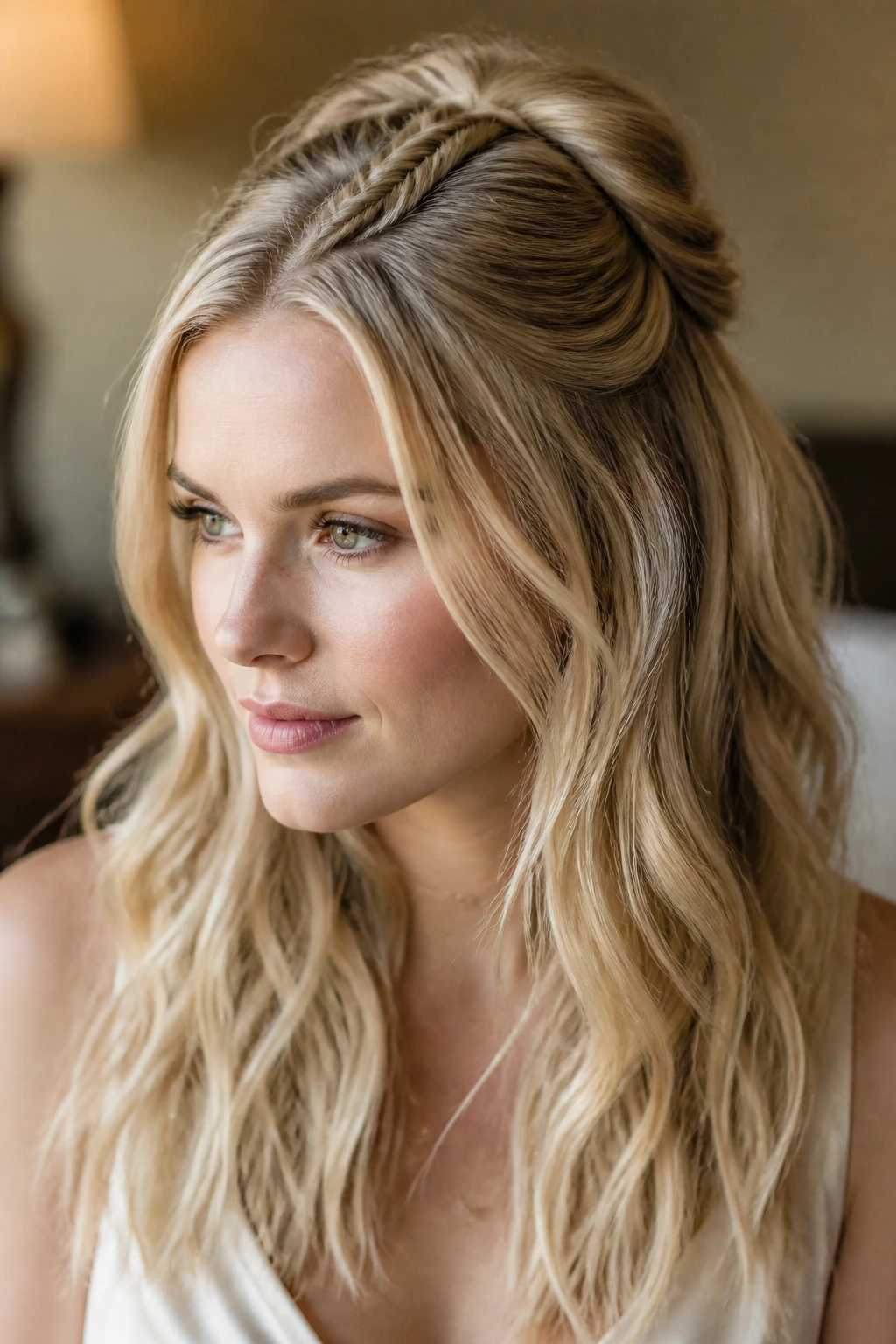
This is the version I reach for when someone wants drama without putting all the hair up. The champagne blonde color gives fair skin a soft glow, and the fishtail pattern breaks the shine into little ribboned pieces instead of one solid sheet.
The half-up shape also keeps the look friendly. It lifts the face, but it doesn’t pull everything tight. That matters on fair skin, where too much tension at the hairline can make the forehead read larger than it is. Let the ends stay loose and a little messy. That’s the part that keeps it from feeling precious.
If your skin leans very cool, keep the champagne muted and go lighter on the golden tones. If your undertone is neutral, a little warmth in the blonde keeps the color from looking icy against the cheeks.
3. Textured High Pony with Braided Wrap
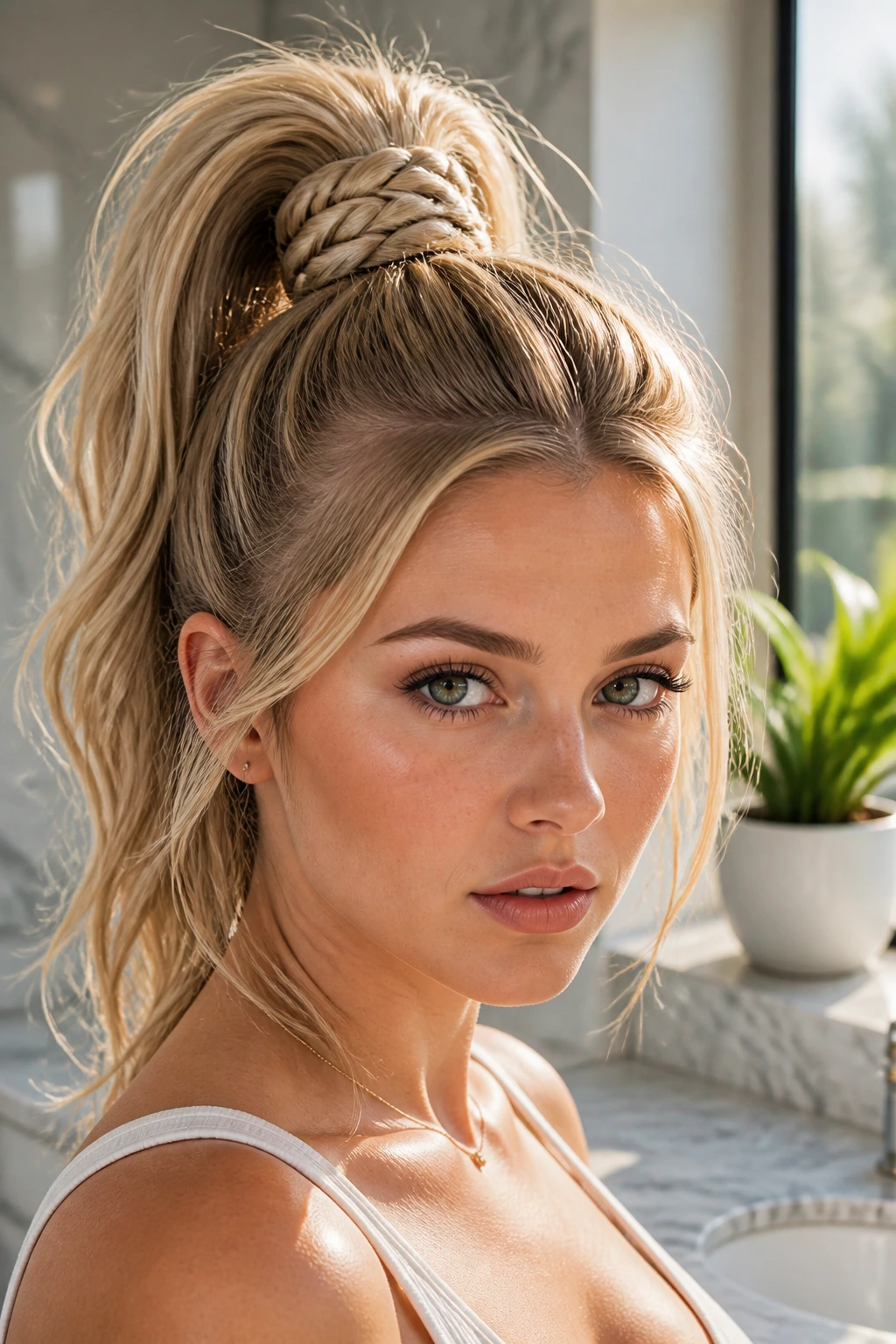
Want height without making your head look taller than it is? This is the answer. A high pony gives the face lift, and the braided wrap at the base keeps it from looking like a plain gym pony that got dressed up in a hurry.
What makes it work
The braid around the elastic draws the eye to the center of the style, not the forehead. That’s useful on fair skin because it keeps the whole look balanced. A little backcombing at the crown helps, but don’t turn it into a helmet. You want lift, not rigidity.
On blondes with fine hair, a pony like this can feel fuller than it actually is because the braid adds a second line of texture. On thicker hair, keep the pony a touch looser so it doesn’t pull too hard at the temple area.
Quick cue: if you can slide a fingertip under the pony at the base, the tension is about right. If your scalp feels tight, it’s too much.
4. Loose Viking Pigtail Braids
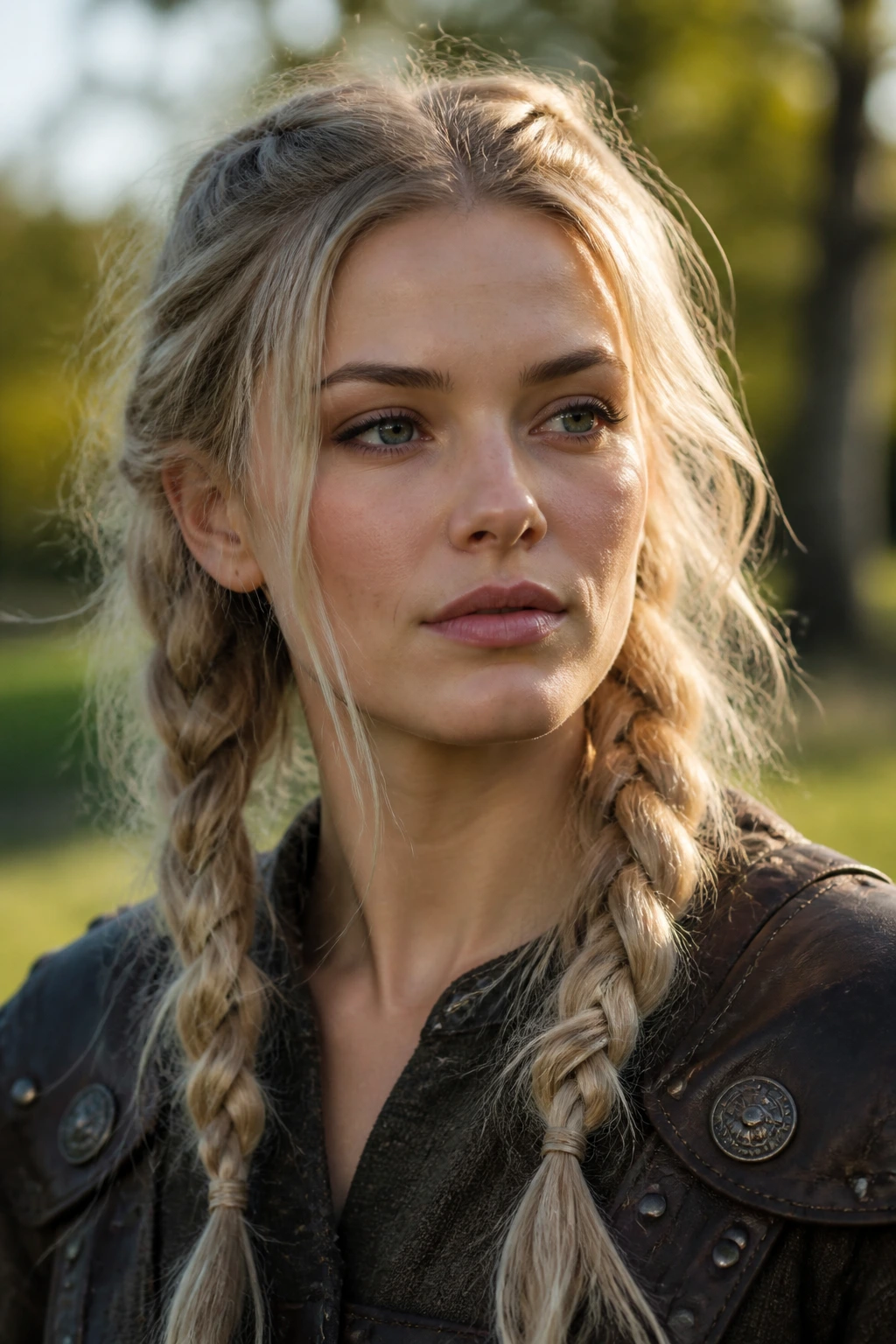
Pull this together on second-day hair and it suddenly looks deliberate. That’s the whole charm. The two braids have enough roughness to feel strong, but when you tug them outward after braiding, they soften just enough for fair skin.
The best version uses a center part, loose tension, and a bit of beige or ash dimension through the lengths. Very pale blondes can go chalky here if the braids are too neat. A few flyaways are not a problem. They make the style feel lived in, which is exactly the point.
I like this more on medium to long hair than on tiny layered cuts. The braids need enough length to hang with some weight, or the whole thing puffs out in a way that fights the face.
5. Bubble Braid Ponytail with Beige Blonde
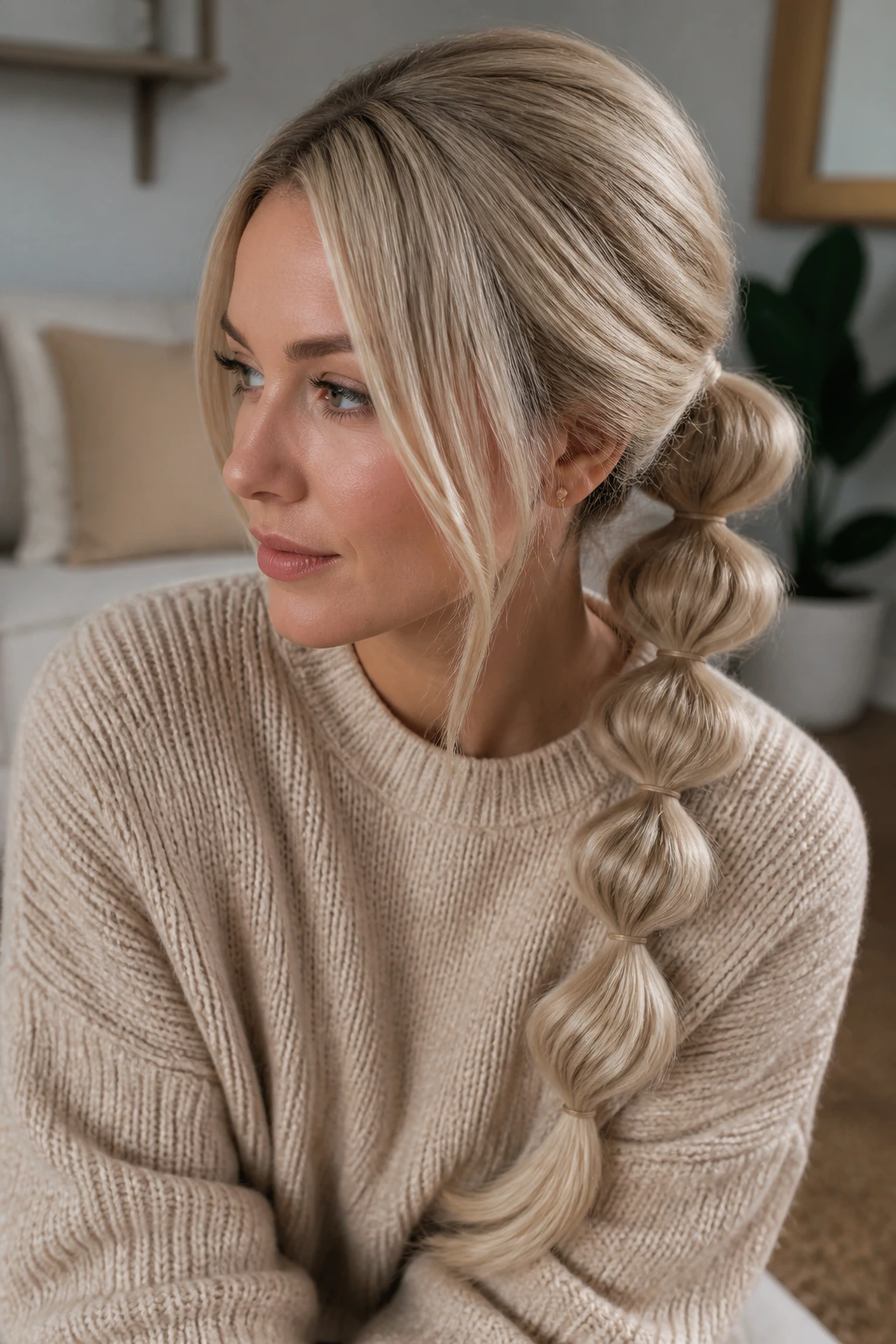
A bubble braid ponytail has an almost armored rhythm to it. The little elastic-segmented sections create shape without requiring a perfect braid, and beige blonde keeps the style from looking hard on fair skin.
This one is especially useful if your hair is slippery or freshly blown out. The bubbles give you visual structure even when the strands themselves don’t want to grip. Space the clear elastics about 2 to 3 inches apart, then gently tug each section until it rounds out. Not too much. If you over-pull, it starts to look stretched and flat.
A soft side part can make this easier to wear on very fair skin because it gives the face a little asymmetry. Clean center parts can work too, but they read sharper.
6. Side-Swept Fishtail Over One Shoulder
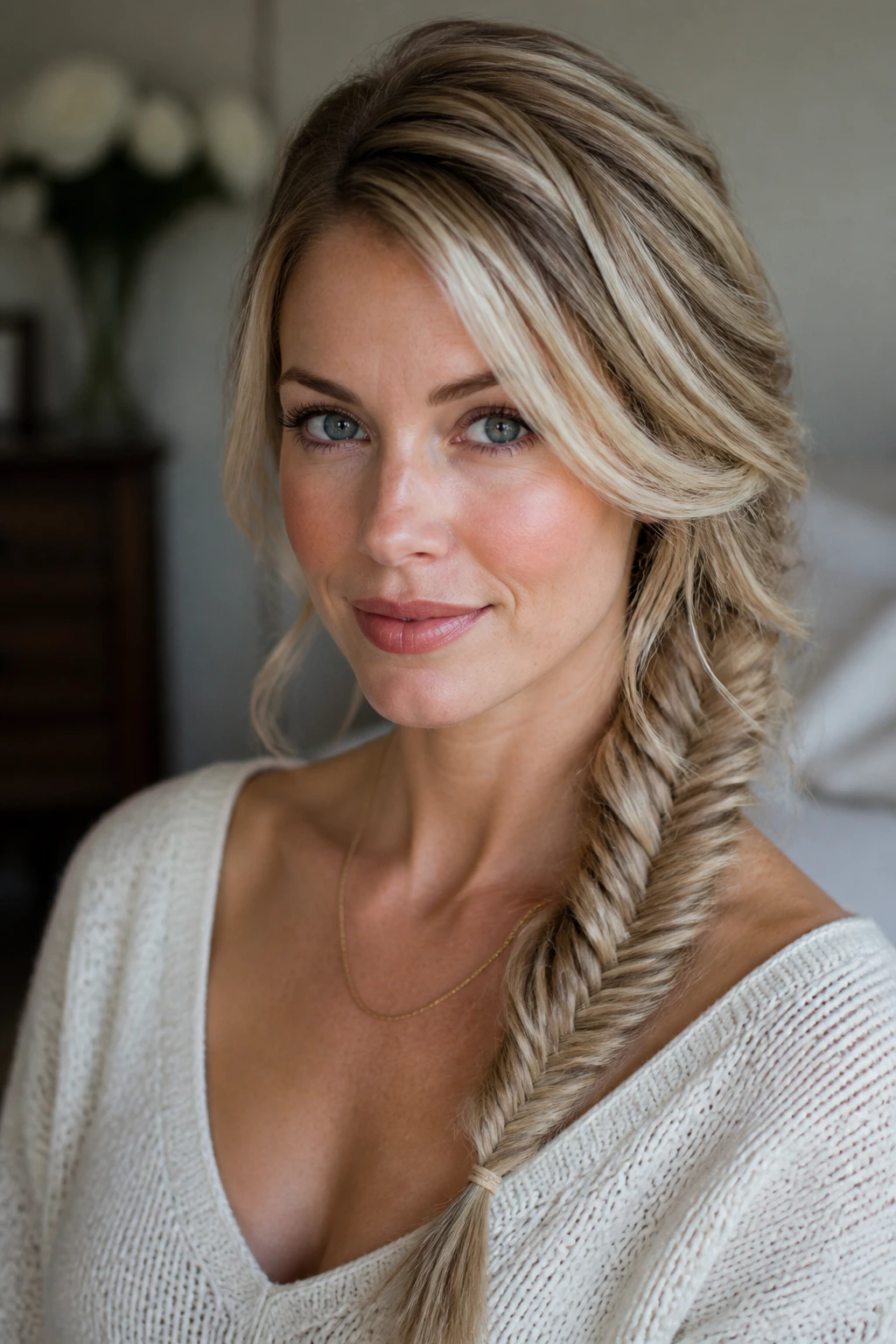
Unlike a plain side braid, a fishtail shows the ribboning in the blonde. That matters when you’re working with fair skin and a light color palette, because the alternating strands catch the eye without needing extra accessories.
The side placement is doing a lot of work here. It gives softness to the face while keeping the shape strong along the shoulder line. If your blonde has ash-beige lowlights, this is where they really show up, especially in indoor light where the braid shadows itself.
Best use case
This is the one I’d pick for an outfit with a wide neckline or a simple sweater. It keeps the hair in view without making the look bulky around the face. A light mist of flexible hairspray is enough. You don’t want shellacked ends.
7. Double Dutch Braids into a Low Bun
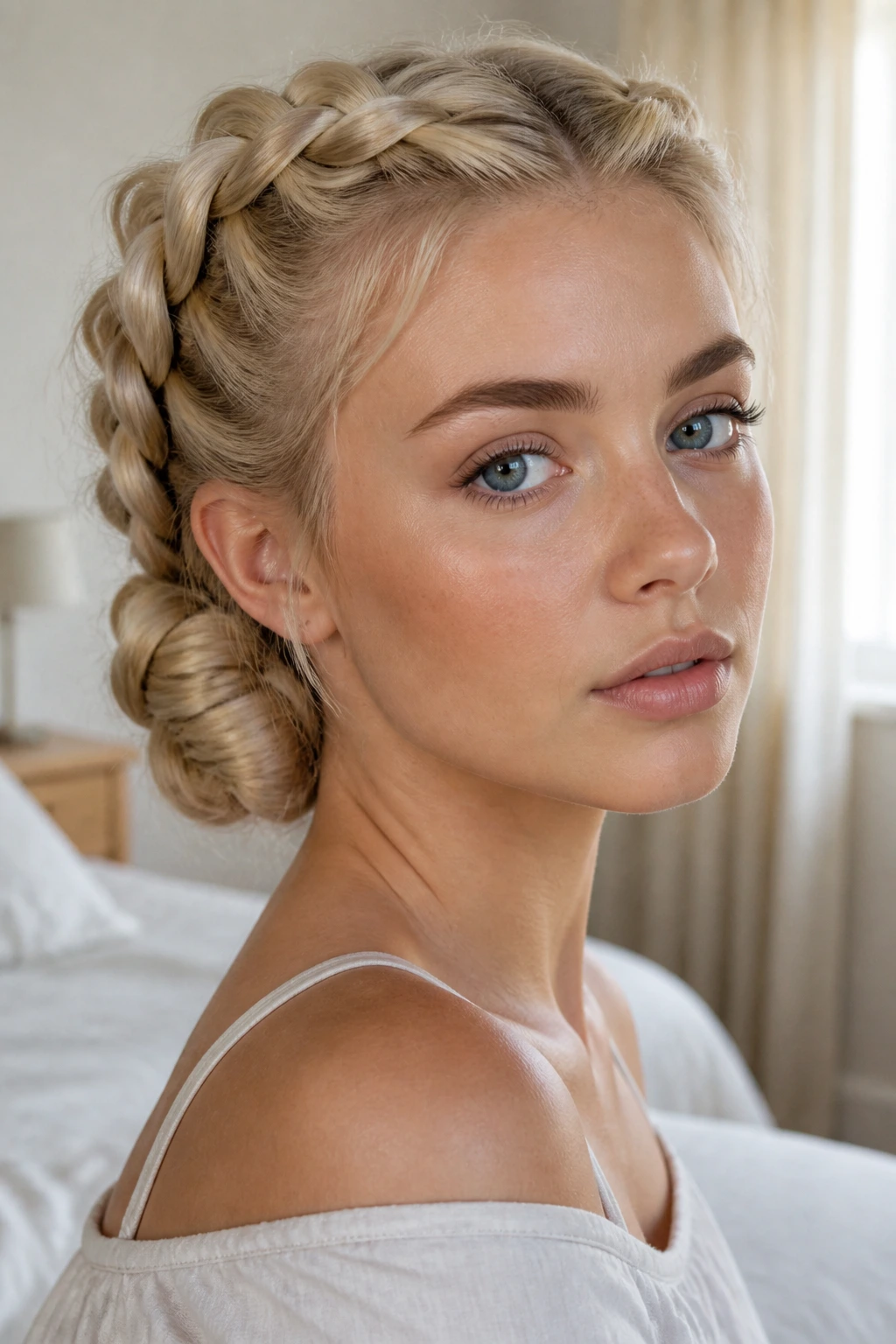
This style has a cleaner, more grounded feel than loose pigtail braids. The braids start at the temples, track back close to the head, and meet at the nape where they get twisted into a bun. It reads practical first, polished second, and that order works.
On fair skin, the key is not to pull the braid lines too tight. A little softness around the hairline keeps the braid from exposing too much scalp, which can make light blonde hair look thinner than it is. If your hair is very pale, leave a few fine strands loose at the nape so the bun doesn’t look hard-edged.
Small detail, big payoff
Wrap one braid around the base of the bun and pin the ends underneath. That hides the elastic and gives the bun a denser shape. It’s a tiny trick, but it stops the style from looking like two braids got shoved into a knot at the last second.
8. Icy Champagne Beach Waves
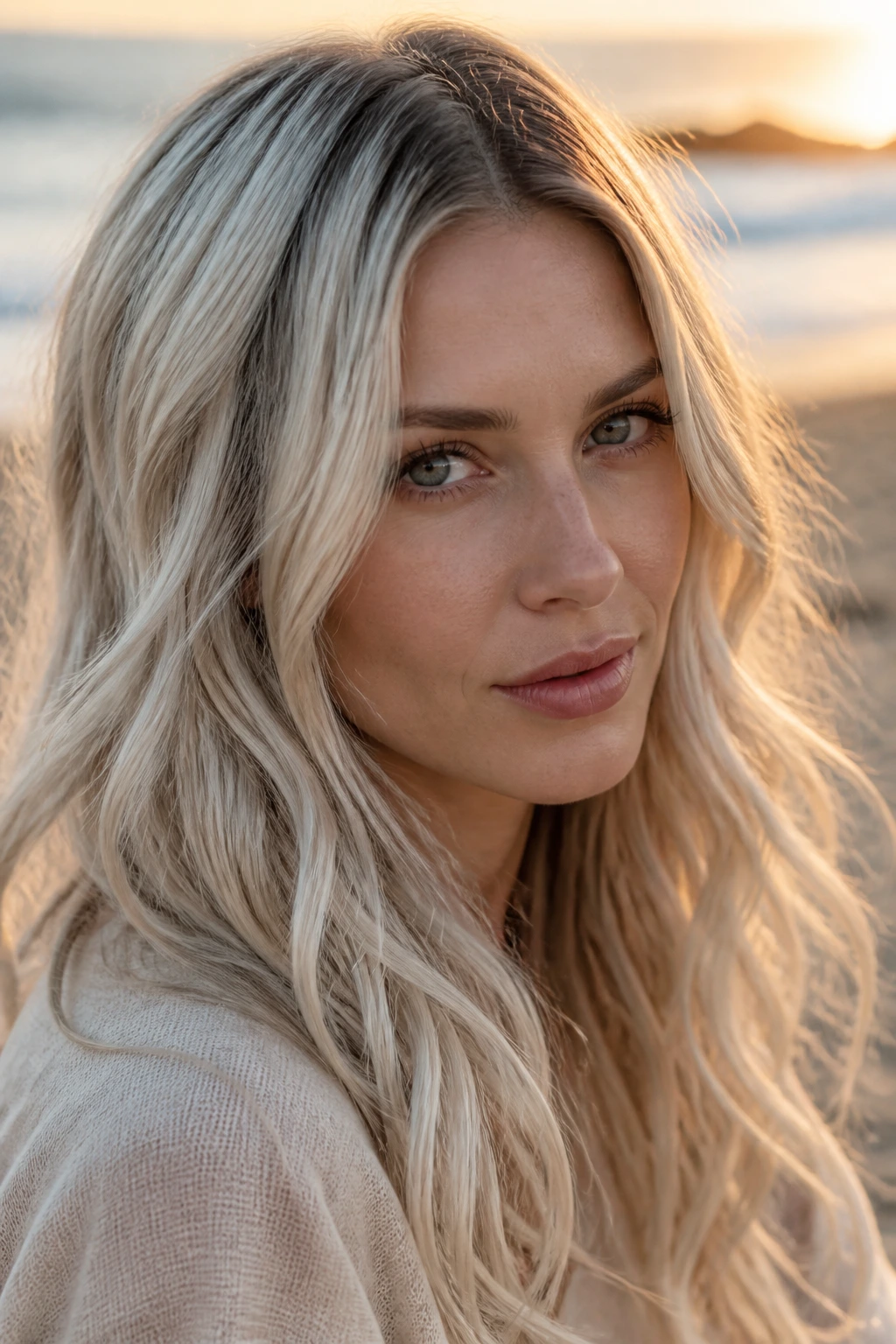
A warrior look does not have to be braided. Sometimes the strength comes from shape and tone alone. Icy champagne waves on fair skin can look stunning when the root is softened and the waves are broken, not ringleted.
What saves this from looking washed out is texture. A blunt, shiny wave on very pale skin can feel flat. A wave with bend and movement gives the blonde some shadow lines, which keeps the color from disappearing. I’d use a 1.25-inch iron or overnight bends, then rake the waves apart with fingers instead of a brush.
If your complexion is pink, add a slightly beige gloss to the mids. If you’re cool-toned, keep the blonde more pearl than gold. The difference is subtle. Your face will know.
9. Twisted Half Crown on Long Layers
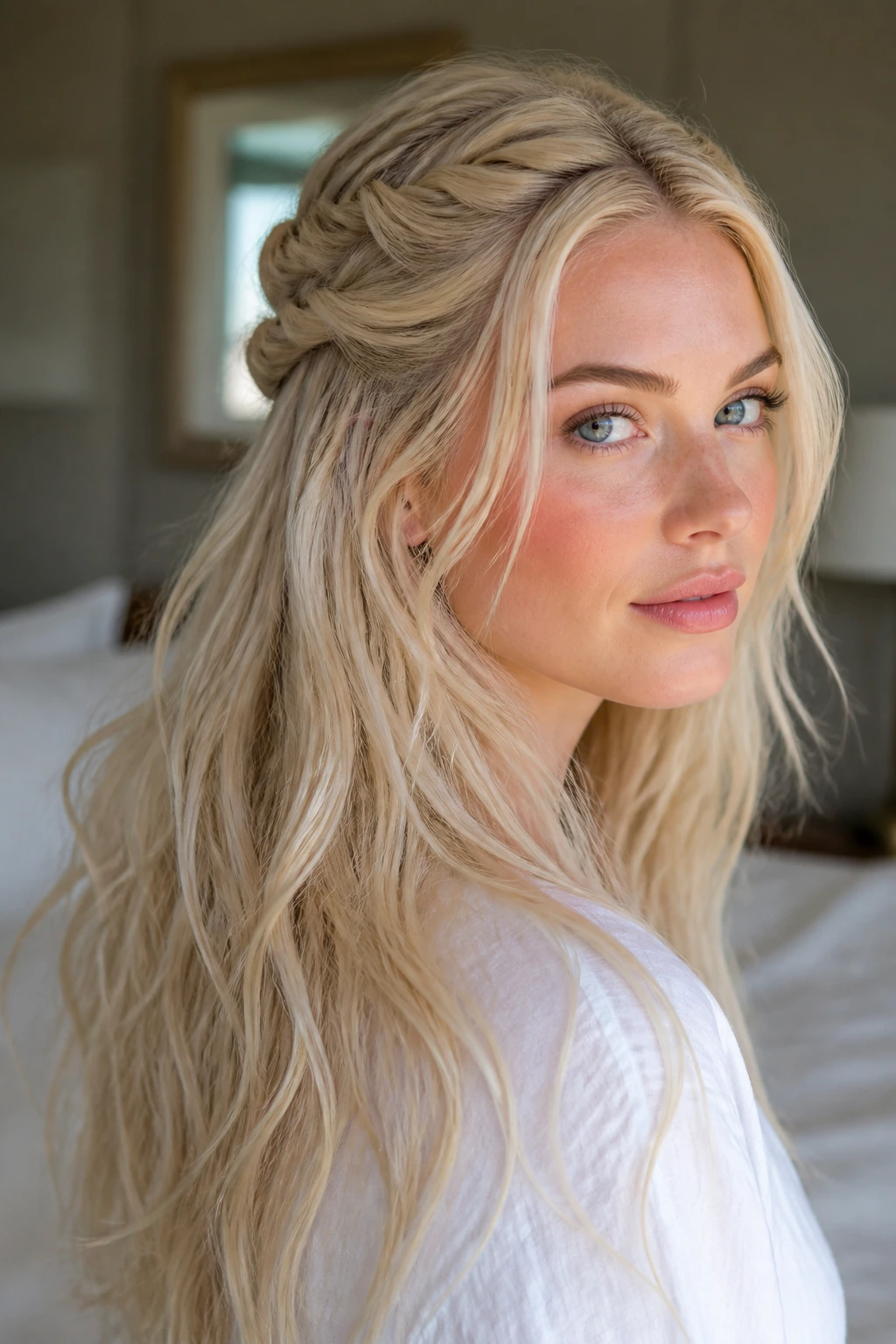
This is the style that looks like hair armor but leaves the length visible. Two twists start above the ears, meet near the crown, and hold the hair back without hiding the blonde. On fair skin, that open face framing is the whole point.
Long layers help here because the twisted sections can sit cleanly without collapsing into a lump. If the ends are too blunt, the twists can look stiff. If they’re too thinned out, the style loses body. Somewhere in the middle is the sweet spot.
I like leaving the rest of the hair in loose, slightly bent waves. Straight lengths can make the twist feel disconnected from the rest of the style. A little movement ties the whole thing together.
10. Rope Braid Low Ponytail
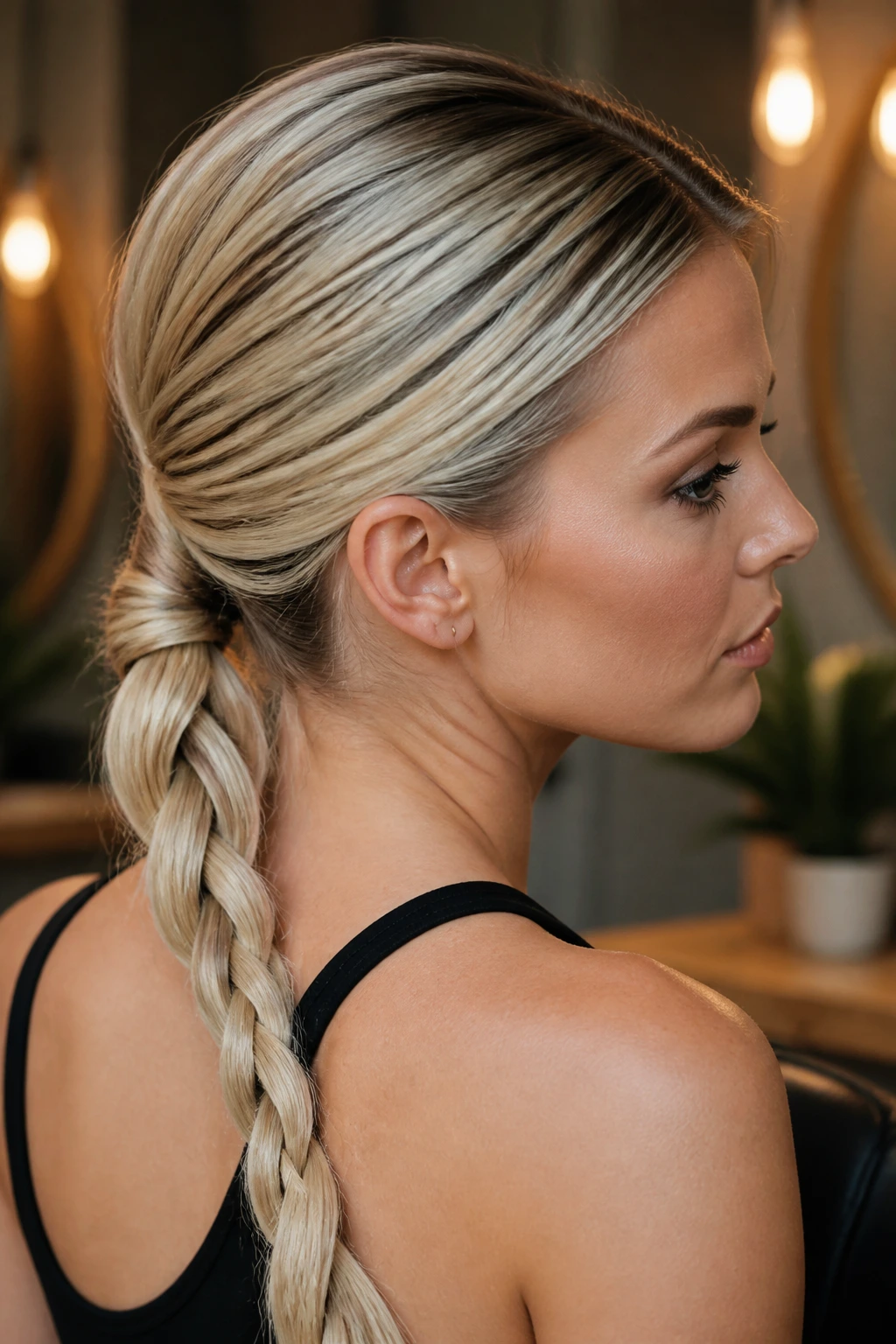
A rope braid reads sleeker than a fishtail and less romantic than a loose three-strand braid. That makes it a good fit if you want the warrior idea without going soft around the edges.
The method is simple: gather the hair into a low pony, split it into two sections, twist each section in the same direction, then wrap them around each other in the opposite direction. The result is tight-looking and compact, which looks especially clean on fair skin when the blonde has a smoky root.
Good for:
- Thick hair that needs control
- Fine hair that needs a firmer shape
- Blondes with visible tonal ribbons
Pro tip: if the ponytail wants to unravel, mist your hands with hairspray before twisting. It gives just enough grip without making the finish crispy.
11. Messy Top Knot with Face-Framing Braids
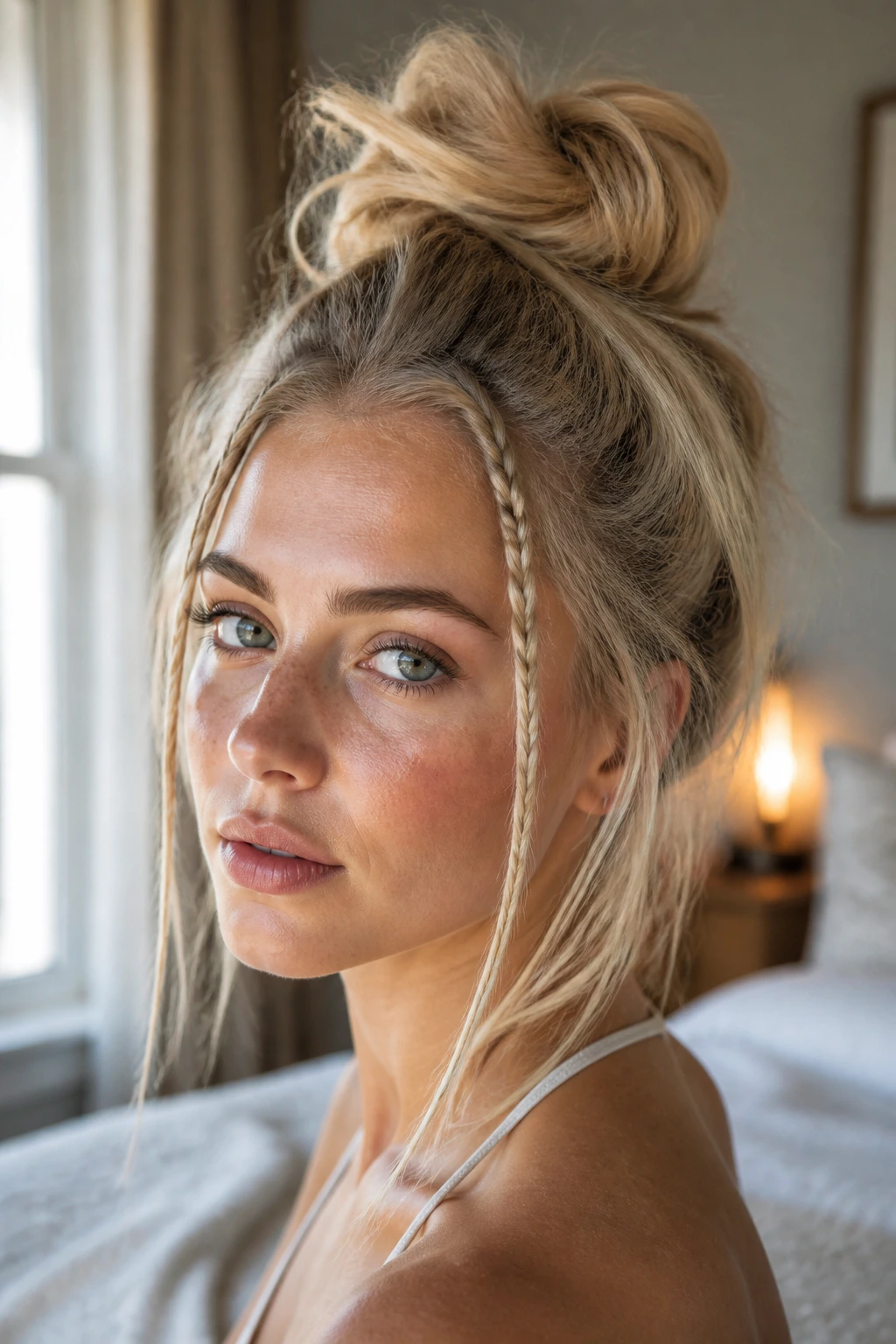
This is the one I’d call the easiest strong look on the list. The knot gives height, the tiny braids at the temples bring in structure, and the loose pieces around the cheeks keep fair skin from looking too exposed.
The trick is restraint. Make the knot messy, but not random. You want the bun to feel pinned into shape, not exploded. A matte texture powder at the roots helps, especially if the hair is newly washed and wants to slip.
Why it works on fair skin
All that lifted hair opens space around the face, which lets the skin read as part of the look instead of the thing the blonde is fighting against. If your brows are light, leave the face-framing pieces just a touch darker at the root. That little shadow matters.
12. Braided Mohawk with Platinum Panels
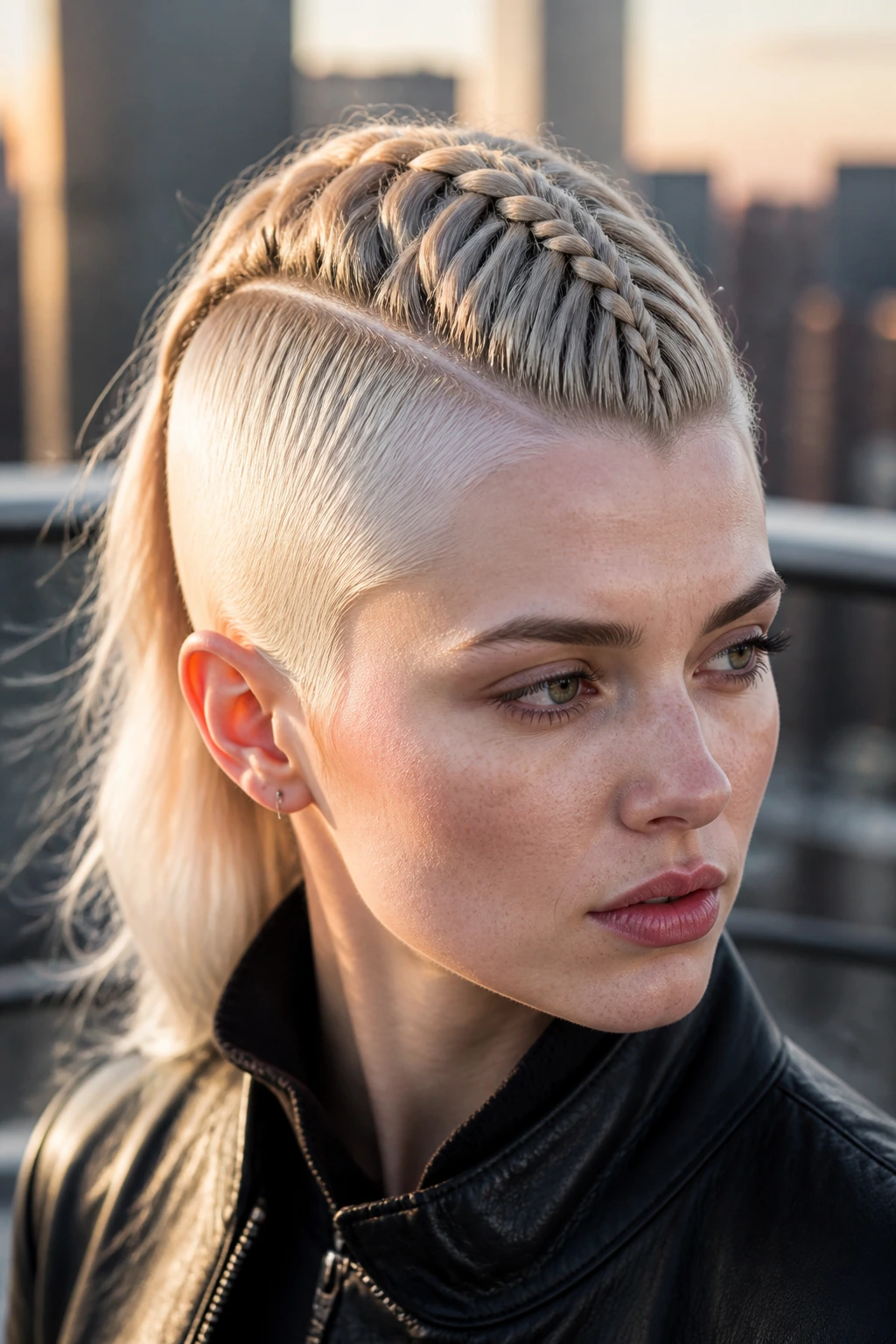
If you want sharper edges, this is where to go. A braided mohawk makes a stronger line than a crown braid, and the platinum panels on either side turn the whole thing into a deliberate shape instead of a soft updo.
This style needs some confidence because it shows the architecture of the head. That’s not a bad thing. On fair skin, a very cool platinum can look clean here as long as there’s enough depth in the braid itself. Without that depth, the style can go flat and almost paper-white.
I’d keep the braid line narrow if the hair is fine and widen it if the hair is dense. The mohawk effect should feel centered, not bulky. A little shine spray on the panels near the braid is enough. Don’t glaze the whole head.
13. Side Braid with Curtain Bangs
A side braid with curtain bangs is softer than the more aggressive braided looks, but it still holds the warrior mood because the braid stays visible and the bangs break up the forehead. That combination is gold on fair skin.
What to watch for
The braid should sit low enough to skim the collarbone or shoulder. If it sits too high, the face can look unbalanced. Keep the braid loose and pull only the outer edges wide enough to show the color variation. A few beige ribbons through the lengths make the pattern pop without shouting.
Curtain bangs are doing a lot here. They keep the front soft, which helps if your hairline is very light or your eyebrows are sparse. I’d rather see a few smart strands around the face than a slick, severe braid every time.
14. Smoky Root Lob with Bends
Shorter hair can carry warrior blonde just fine. A lob with a smoky root and loose bends has enough edge to feel strong, especially when the color isn’t a single flat tone from root to tip.
The bends matter because they create line and movement in a length that can otherwise fall against the head. Use a flat iron or 1-inch wand to make alternating bends through the ends, then shake them out with your fingers. You’re after texture, not curl.
Fair skin benefits from this shape because the jawline stays visible. A piecey lob lets the eyes and brows stay in focus. If the blonde is too bright, though, ask for a root shadow or a beige gloss through the mids. A lob with a hard white finish can look harsh around the face.
15. Crown Braid into Low Chignon
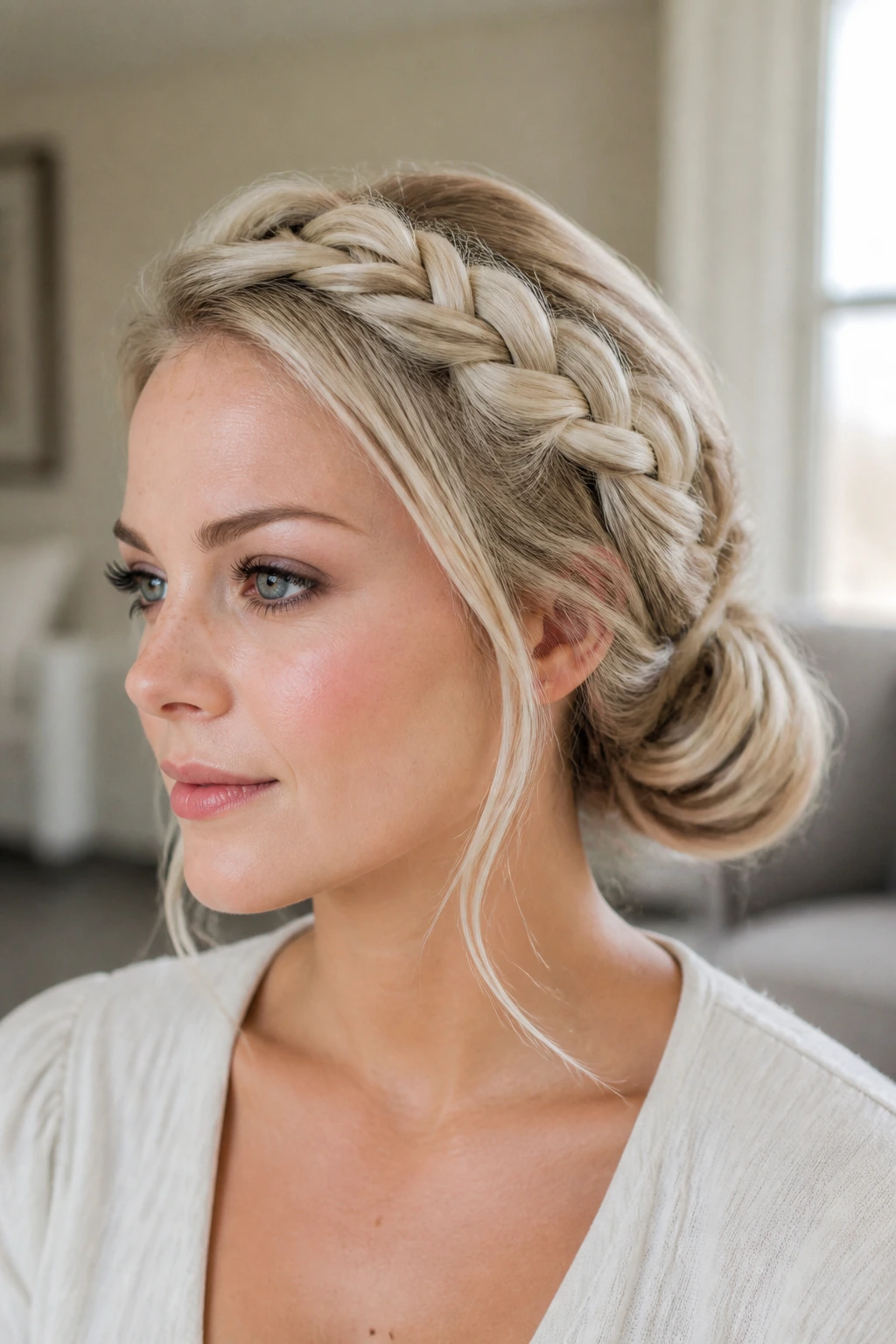
Need something that survives a long day and still looks tidy at the end? This is the one. The crown braid makes a clean line across the head, and the low chignon keeps the weight tucked into the nape where it belongs.
This style is strongest when the braid begins slightly off-center and sweeps across the hairline. That little shift gives movement and keeps it from looking like a school recital updo. On fair skin, a soft pearl blonde with a deeper root works especially well because the braid line shows up clearly in the crown area.
Small warning
Don’t make the chignon too tiny if your hair is thick. A pinched little knot looks busy. A fuller bun, even a loose one, reads more balanced.
16. Half-Up Knot with Tousled Ends
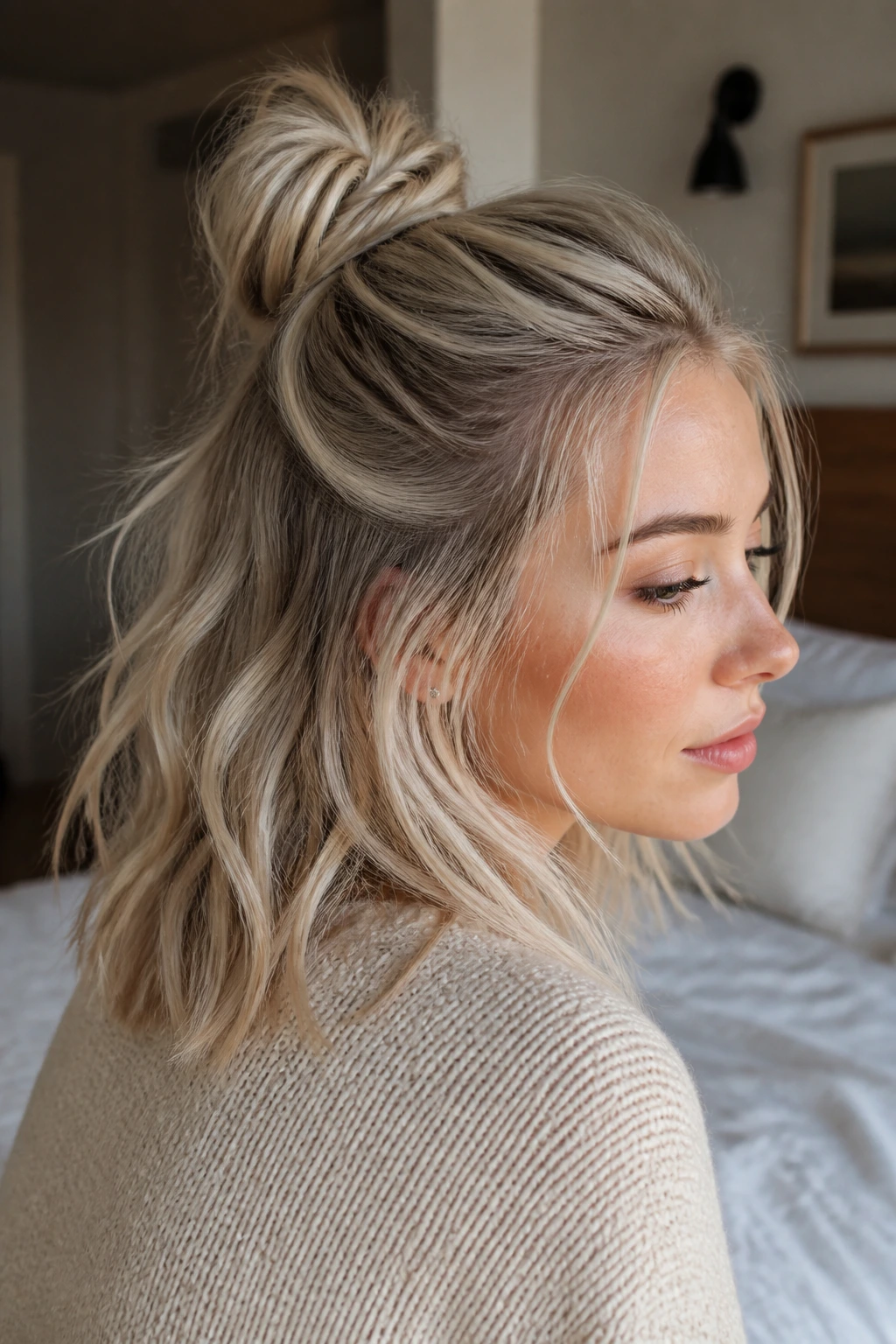
This is the fast version of the warrior blonde mood. A half-up knot takes the hair off the face, but it leaves the lengths hanging so the blonde still moves. On fair skin, that balance keeps the style from looking severe.
The knot should sit just above the occipital bone, not up at the top like a cheer style. Leave the ends tousled rather than polished. A little bend at the ends makes the whole thing feel lived in. If your blonde is very light, a root smudge helps this look a lot because the top half can otherwise disappear into the skin.
I reach for this when I want something that looks intentional in five minutes. It’s not fussy. That’s why it works.
17. Waterfall Braid with Ash Blonde Ribboning
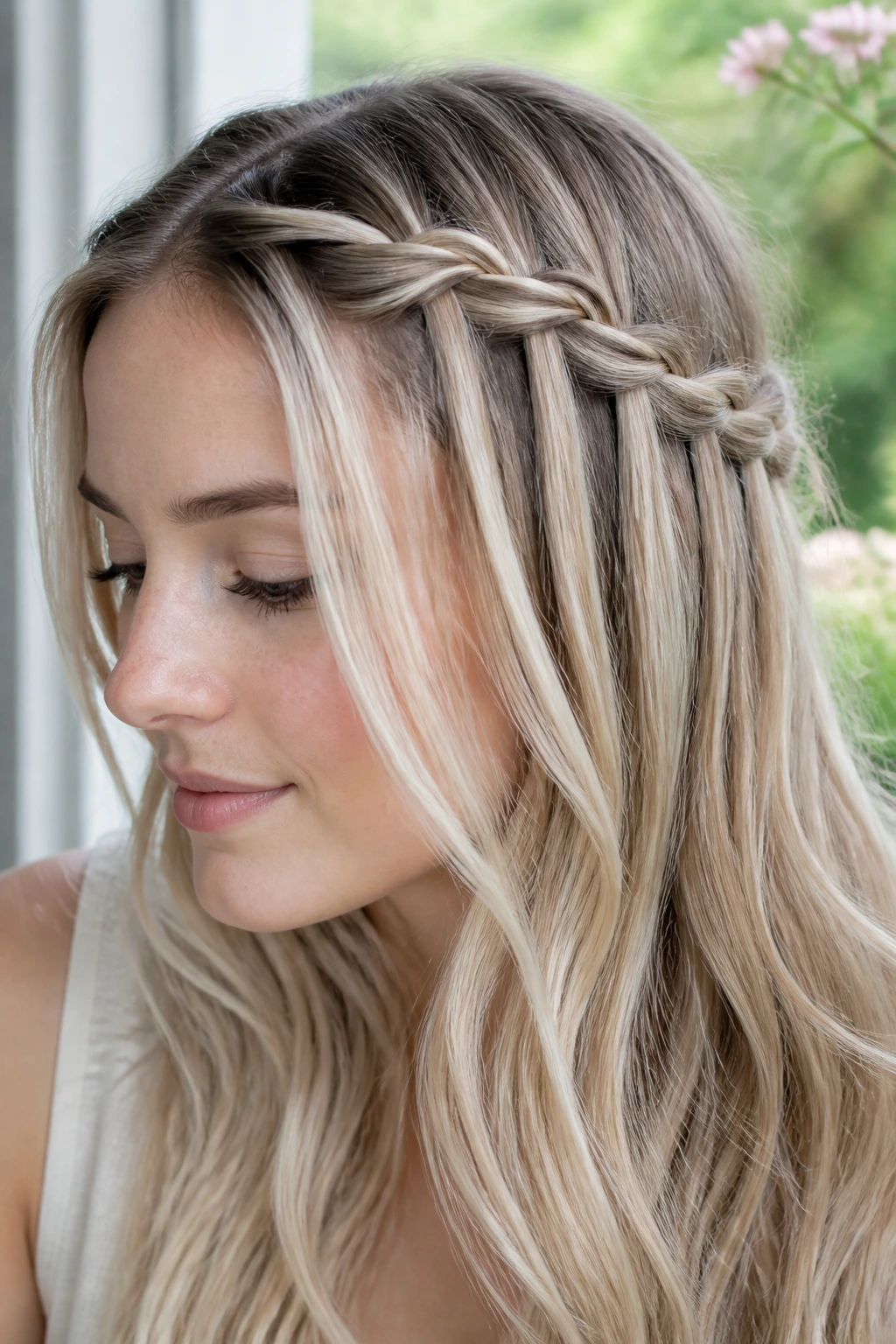
A waterfall braid shows off color in motion, which is why ash blonde ribboning looks so good here. The dropped sections fall through the braid like little streaks of light and shadow, and fair skin benefits from that movement.
This is more delicate than some of the harsher warrior styles, but it still has structure. The braid keeps the front organized while the loose lengths soften the rest. If your hair is very pale, the ash tones keep the braid from turning too bright around the cheekbones.
Best if you like:
- Long hair with layered ends
- Soft but visible braid detail
- A style that shows off tonal highlights
It does take a little patience to pin cleanly, but the finish is worth it.
18. Low Bubble Pigtails
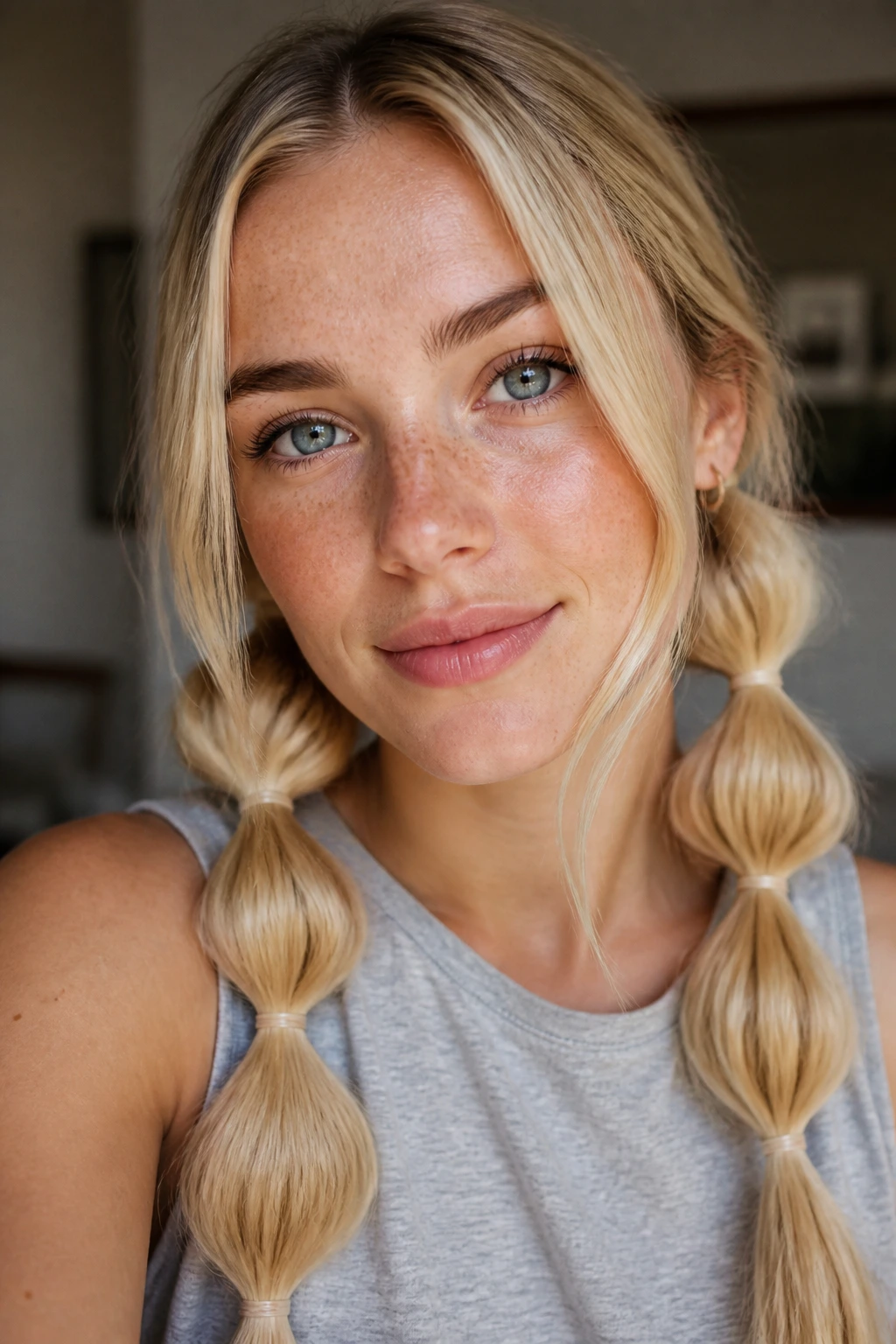
Low bubble pigtails have a sharper, younger energy than a single ponytail, but they stay grounded when you keep them low and sleek at the roots. On fair skin, that low placement adds shadow under the jaw, which helps the blonde read stronger.
The bubbles are the point. Each elastic creates a little segment of volume, and those segments echo the segmented feel of armor. Use clear elastics or ones that match your blonde as closely as possible. If the elastics show too much, the whole thing starts to look busy.
I prefer this on straight or lightly waved hair. Extremely curly hair can make the bubbles uneven unless you smooth the lengths first. A light shine spray on the top section keeps the finish clean.
19. Braided Bun with Sculpted Nape
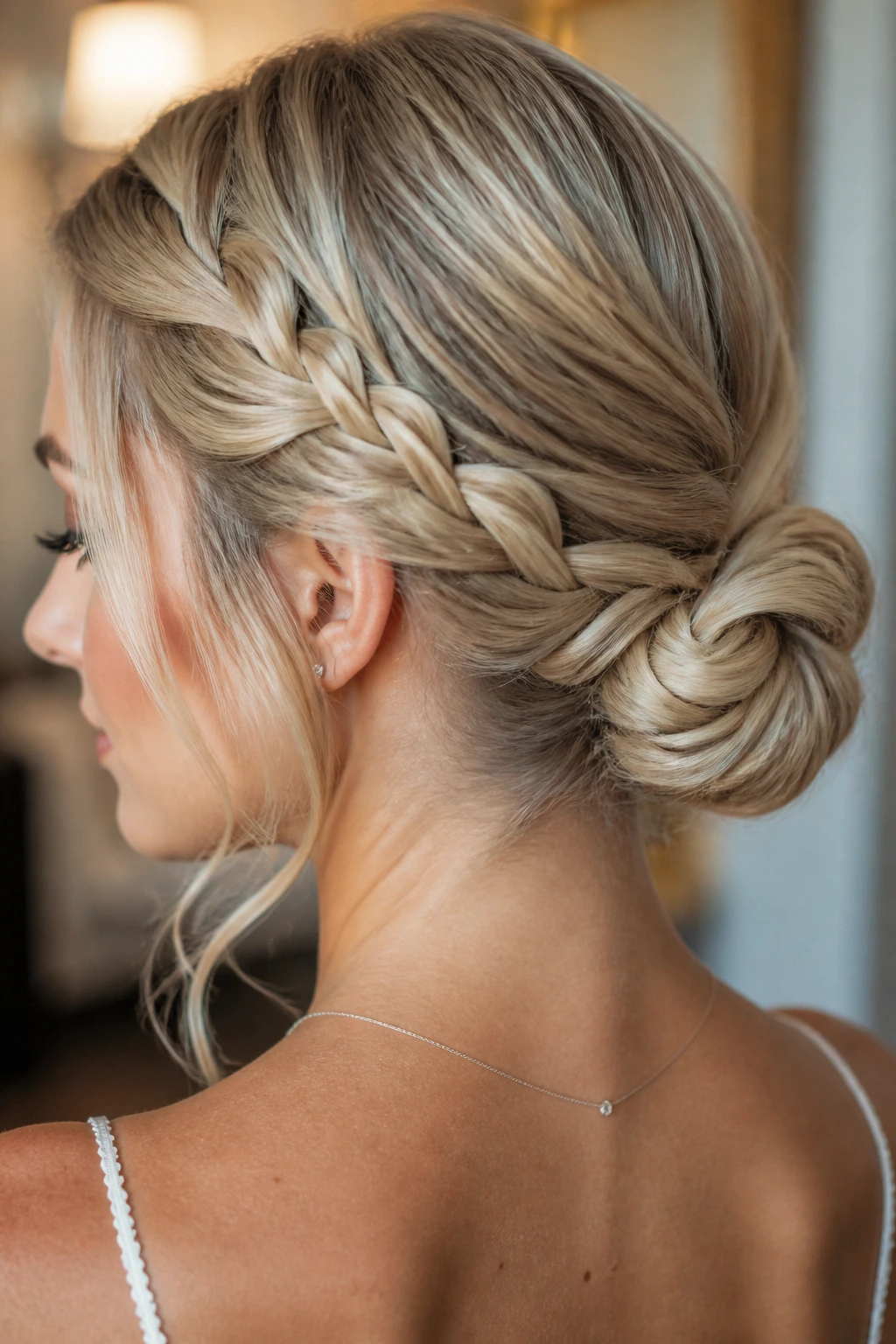
This is one of the more grounded styles in the group. The braid feeds into a bun at the nape, which gives the whole shape a solid base. On fair skin, that lower placement keeps the look from feeling too top-heavy.
A braided bun is also kind to hair that needs to be secured for hours. The braid gives the bun something to hold onto, so you’re not relying on pins alone. If your hair is fine, tease the ponytail a little before wrapping it. If it’s thick, keep the braid tighter and the bun wider.
The sculpted nape matters. That’s where the style reads strong rather than soft. A few pinched pieces around the ears are fine, but the center should stay neat.
20. Dutch Pigtails with Soft Ends
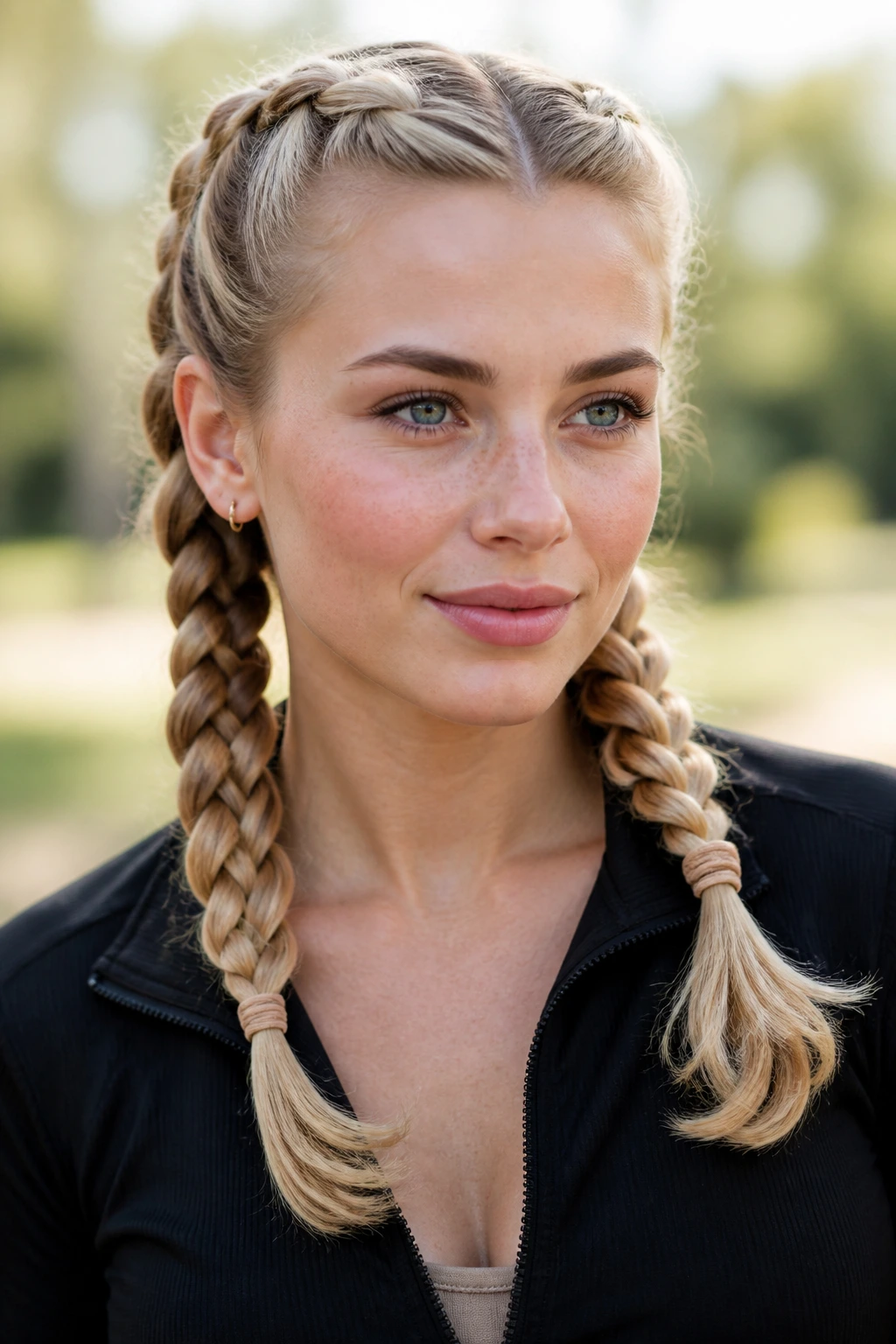
Two Dutch braids can look childish if they’re too tight and too neat. Leave the ends soft and the part clean, and they become one of the strongest looks on the list.
On fair skin, this style works especially well with beige blonde or pearl blonde because the raised braid lines show clearly without needing heavy contrast. Pull the braids apart gently once they’re secured. You want width, not a fuzzy mess. The clean scalp line at the part gives the style its shape, while the loose ends keep it from looking severe.
This is a good one for active days, but I’d also wear it with a sharp jacket or plain knit. It has enough edge to hold up against simple clothes.
21. Wide Loose Braid with Face-Framing Pieces
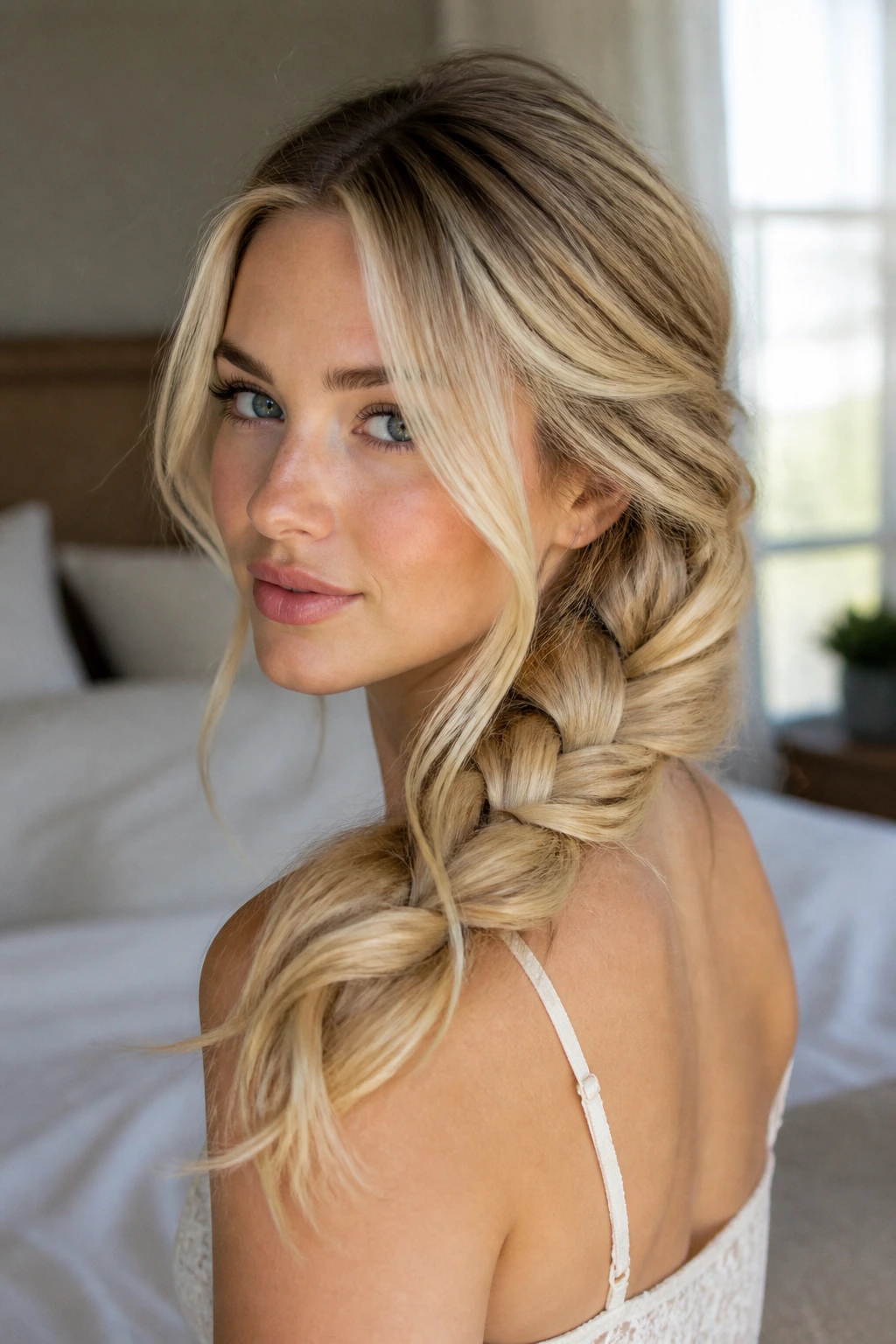
What if you want the easiest strong-looking braid possible? This is it. A simple three-strand braid, pulled wide with your fingers, can look richer than a more complicated style if the color has depth and the front pieces are left soft.
The braid should sit low and broad across the back or over one shoulder. That wide shape gives the blonde something to catch on. On fair skin, the loose face-framing pieces are not just decoration. They keep the forehead and cheeks from looking too bare, which matters more when the hair is pale.
My rule here
If the braid looks too tidy, tug it wider. If it starts looking frayed, stop. The sweet spot is broad and visible, not shredded apart.
22. Sleek Mid-Pony with Flipped Ends
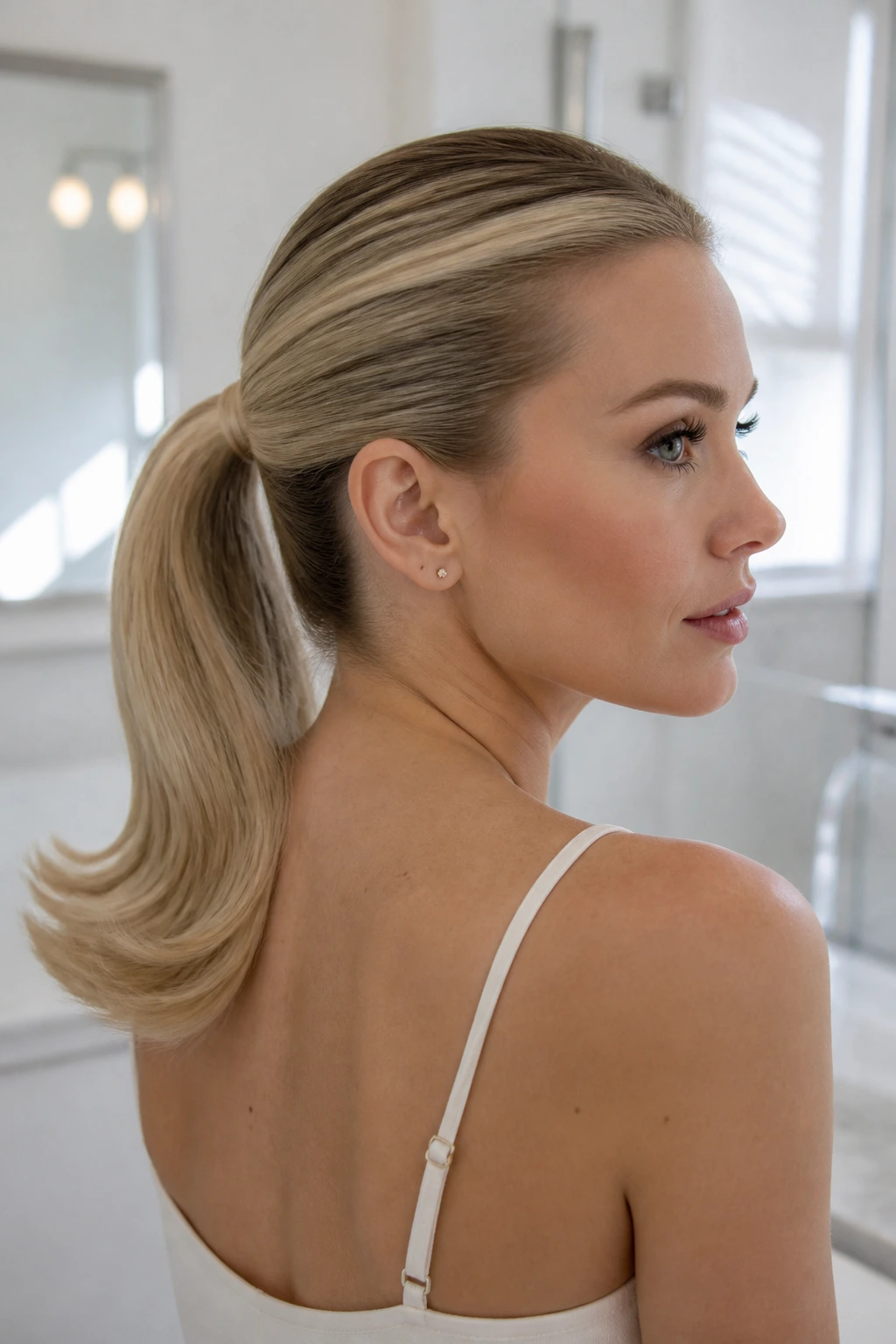
A mid-ponytail with flipped ends is more controlled than the other pony looks here, and that control is the point. The sleek root line and the flipped finish give the style a sharp profile without making it hard-looking.
Fair skin handles this better when the blonde has some shadow at the roots. A full-on pale blonde pulled straight back can be a little severe around the temples. The shadow root softens that and gives the pony a cleaner edge. The flipped ends stop the length from hanging dead.
This is a good option if your style leans minimal but you still want some movement. Wrap the elastic with a strand of hair if you want it to feel finished without using a clip.
23. Halo Braid with Smoky Lowlights
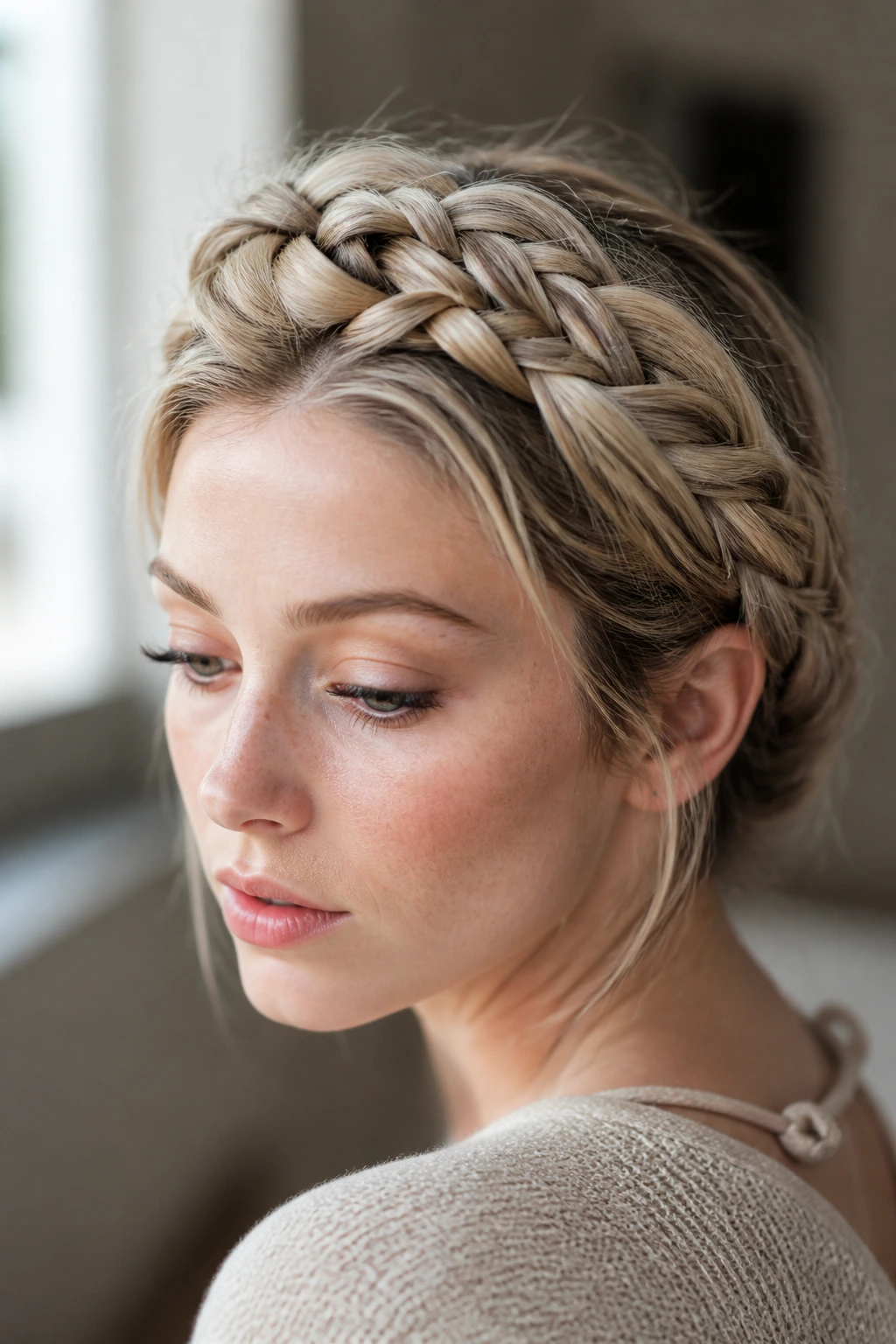
A halo braid sits close to the head and gives a kind of woven frame around the face. On fair skin, smoky lowlights underneath the braid are what keep it from becoming one pale ring.
The lowlights do more than look pretty. They create depth where the braid overlaps itself, especially around the temples and ears. That keeps the shape visible in indoor light, which is where a lot of light blondes fall flat. If the hair is fine, pancake the braid only slightly. Too much pulling and the halo loses definition.
This style has a softer mood than some of the others, but it still feels strong because the braid encircles the head. There’s a reason that shape keeps showing up in old styling references. It simply works.
24. Side-Parted Waves with Micro Braids
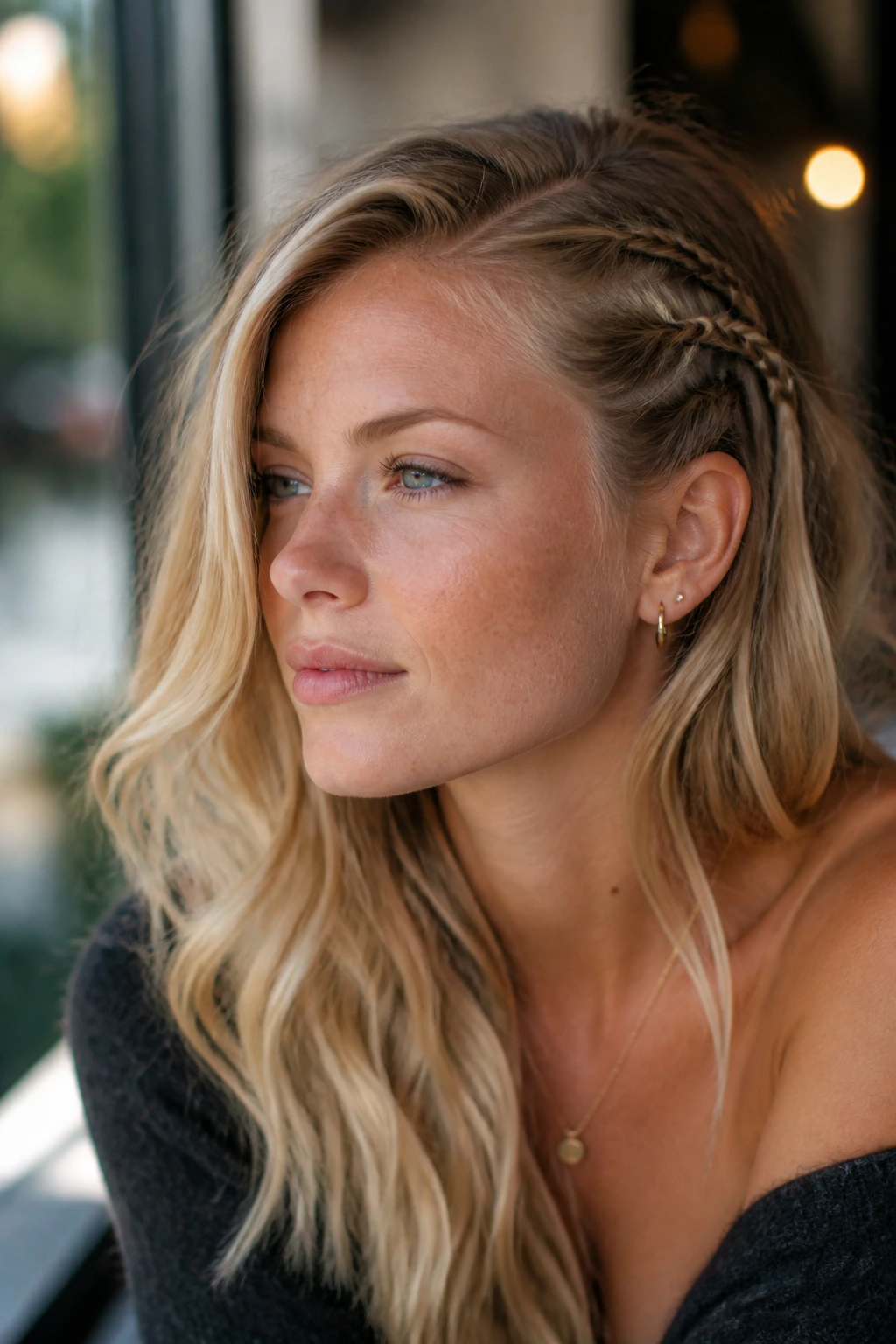
If you love loose hair but want a little edge, add one or two micro braids near the part and temple. That tiny braid detail changes the whole mood. On fair skin, it breaks up a broad field of blonde and gives the face some structure.
The waves should stay loose. You’re not trying to build a full glam curl pattern here. A few micro braids, no thicker than a pencil, are enough. Put them near the face where they’ll be visible, then let the rest of the hair move.
Good for when:
- You want to keep your length down
- You don’t want a full updo
- Your blonde has several tones and needs detail to show
This is one of the least demanding looks on the list, and that’s part of its charm.
25. Rope-Twist Half-Up Pony
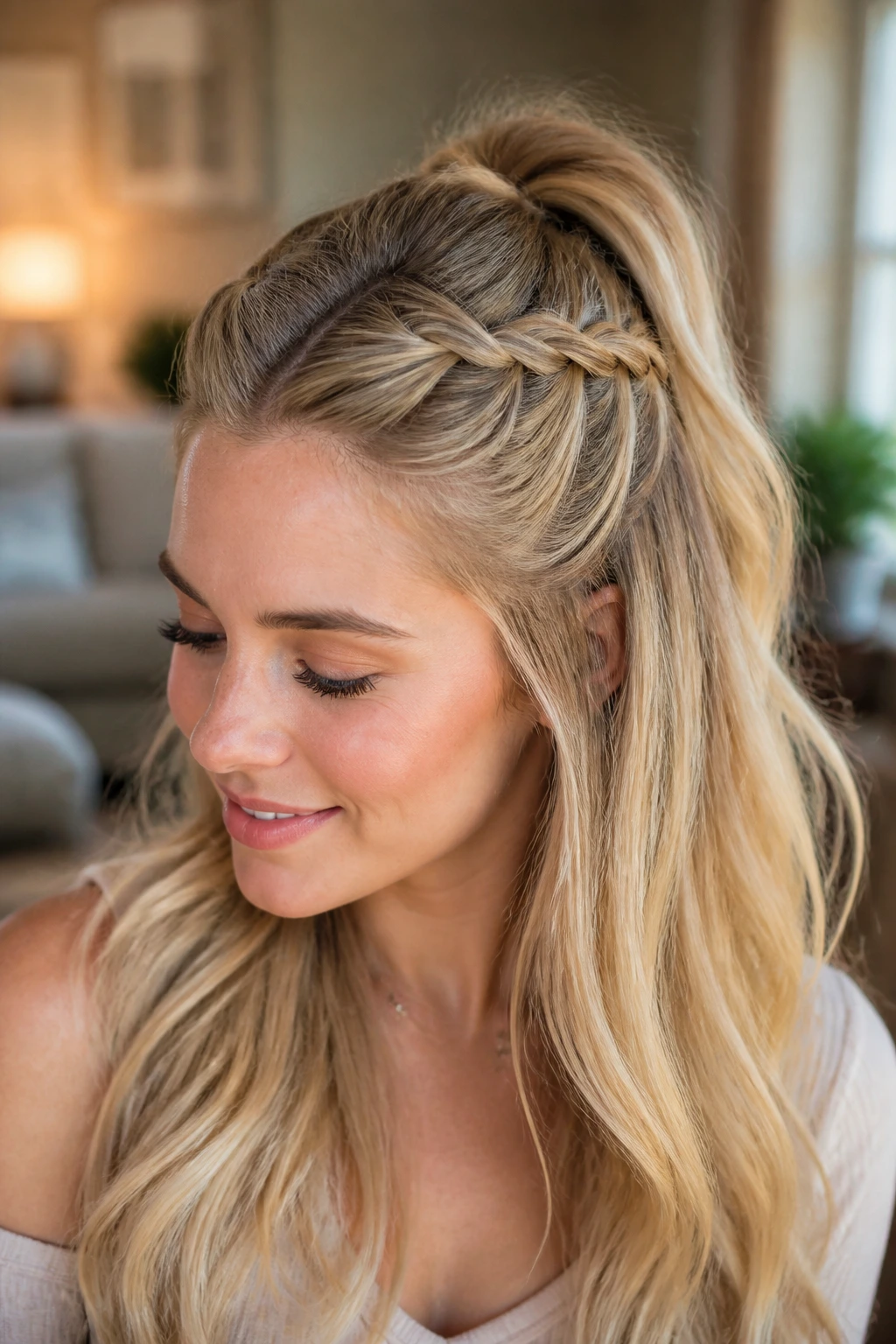
Two rope twists from the temples, gathered into a half-up pony, give you all the control of an updo without hiding the length. It’s a solid choice for fair skin because the lifted top keeps the blonde off the face, and the loose back section adds warmth around the shoulders.
The twist shape looks cleaner than a braid in some hair textures, especially if your strands are very fine or very smooth. It’s fast, too. Twist, pin, gather, done. A little texture spray at the roots helps the twists hold, and the pony can stay loose so the style doesn’t feel pinned to death.
If your blonde is cool and icy, this is one of the nicer ways to wear it because the half-up shape keeps the color from taking over the whole face.
26. Low Knot with Braided Crown
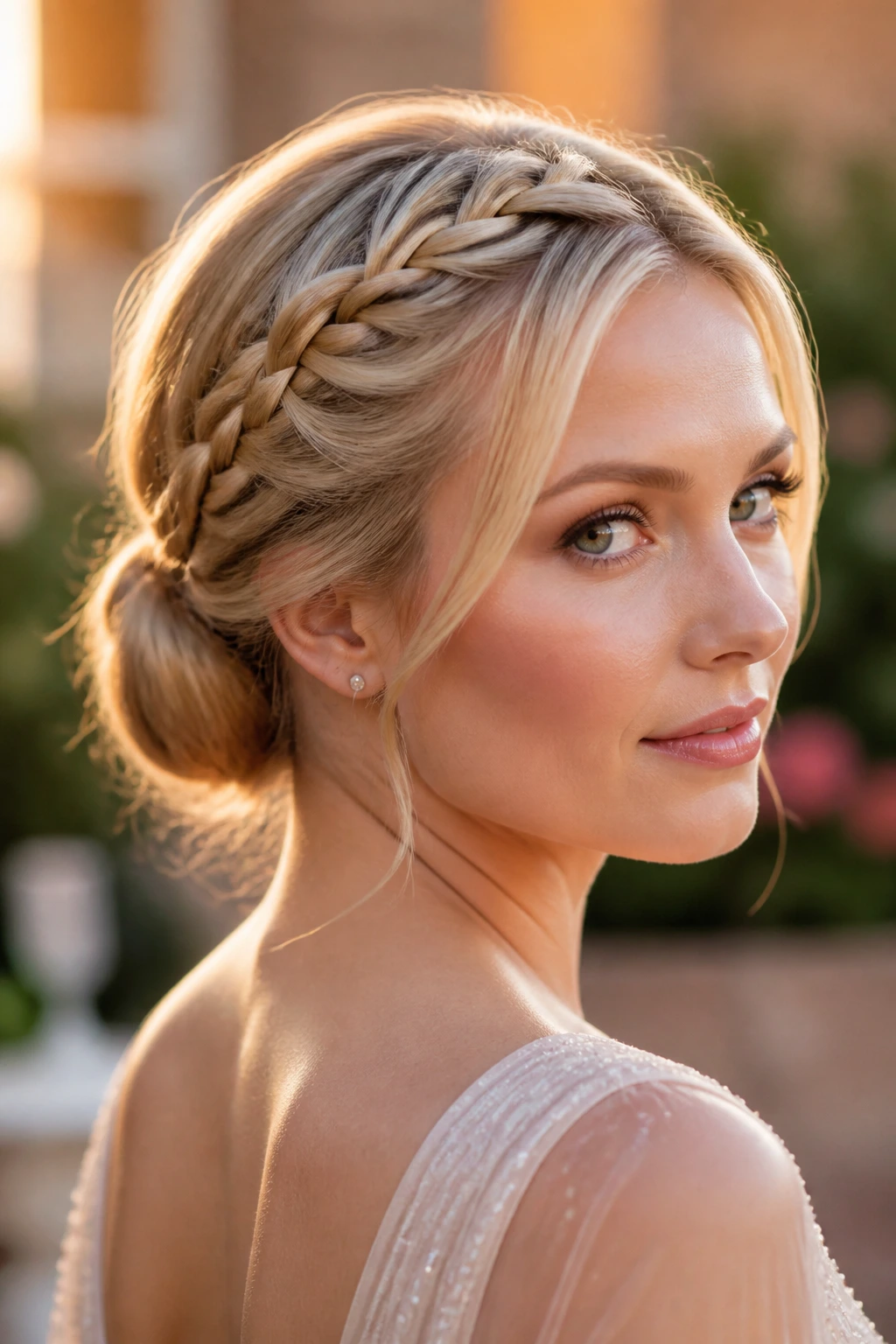
This is the understated one, and I mean that in a good way. The braided crown gives the eye something to follow, and the low knot keeps the whole style anchored.
On fair skin, this works best when the blonde has a soft shadow root or some beige lowlight at the back. That depth lets the braid read as an actual line instead of a pale blur. The knot itself should stay smooth enough to look deliberate, but not so tight that it feels severe.
I’d wear this when you want the hair to behave. It’s tidy, but there’s enough detail to keep it from feeling plain.
27. Fishtail Pony with Ribbon Ties
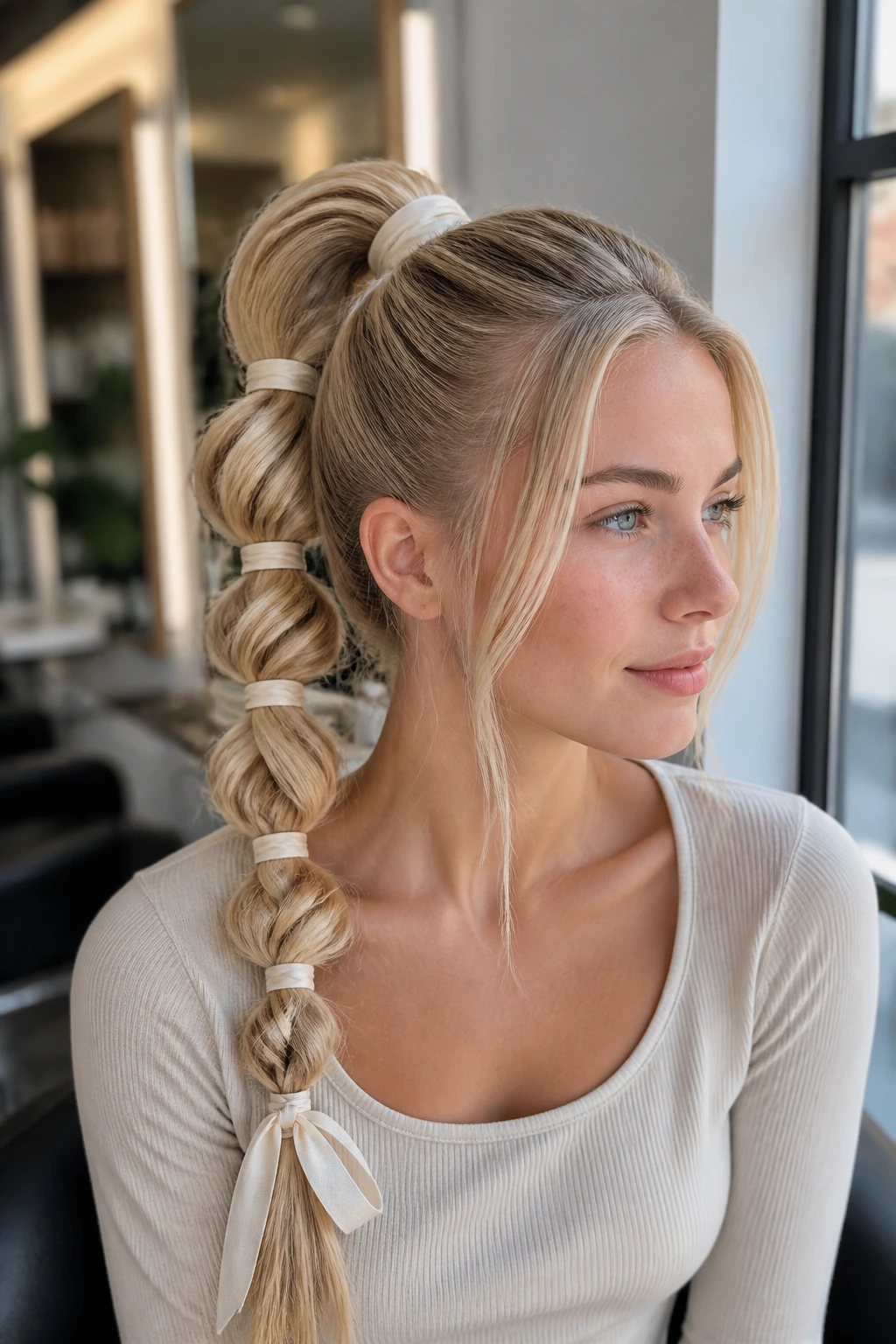
Want the length visible but not boring? The fishtail pony with ribbon ties fixes that fast. The fishtail texture gives the blonde visible pattern, and the ribbon ties break the length into sections that feel intentional.
This one looks especially good with pearl blonde or champagne blonde on fair skin because the color has enough softness to balance the structure. A center part makes the whole thing feel cleaner. If your face is very narrow, a slightly off-center part can soften the line just a bit.
Tiny detail, big effect
Match the ribbon to your clothes or keep it close to the blonde tone. A harsh contrast ribbon can overwhelm the hair if the blonde is very pale.
28. Blonde Pixie with Undercut and Temple Braid
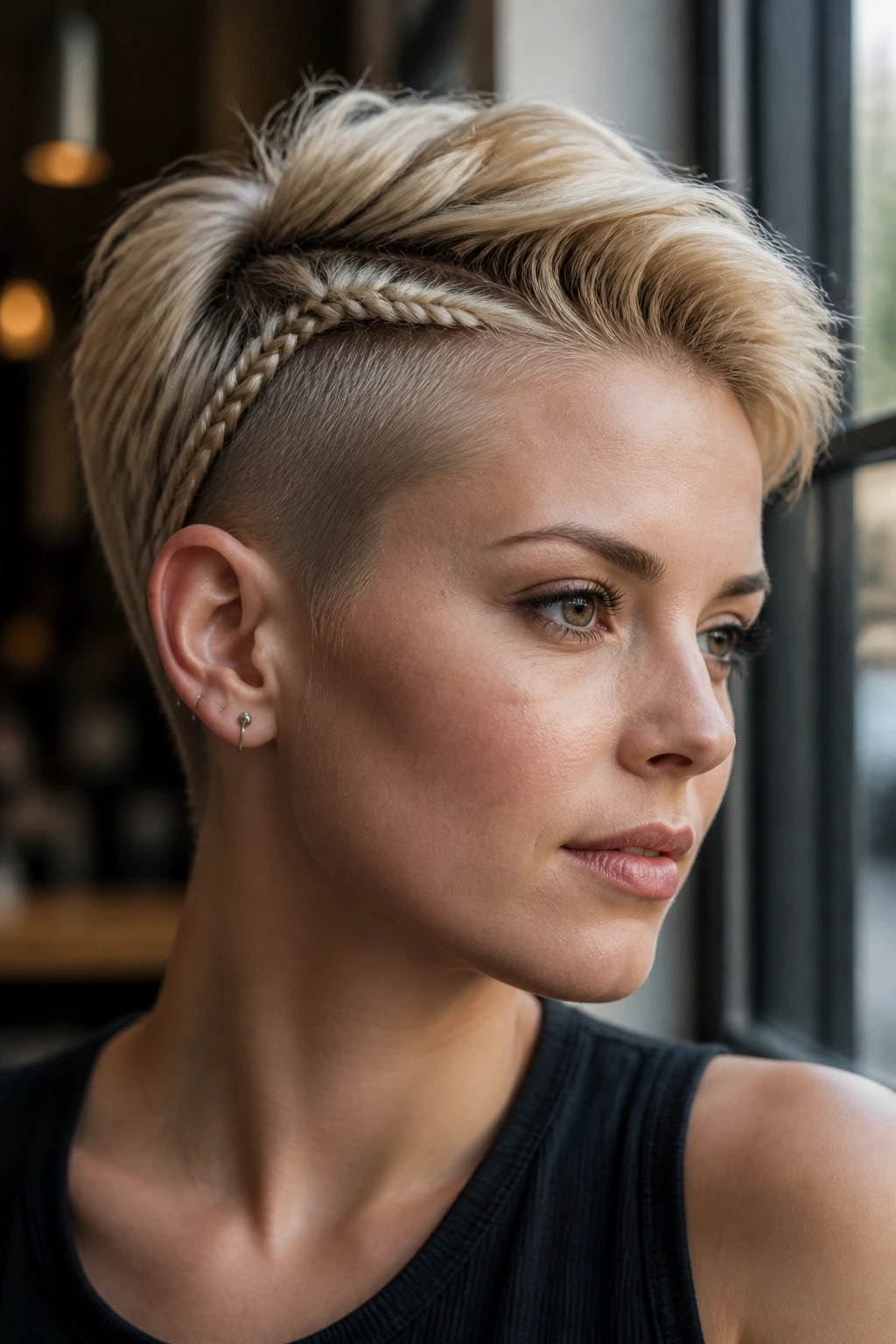
Short hair can still carry a warrior mood. A pixie with an undercut and a small temple braid gives the style edge without asking for length you don’t have.
The braid can be tiny, even just one narrow Dutch braid near the hairline. The point is the line it creates. On fair skin, short hair makes the brows, eyes, and cheekbones show up more clearly, which is useful when the blonde is light. A little pomade at the ends keeps the shape from fraying.
I like this because it doesn’t try to pretend short hair is long hair. It uses the cut itself as the statement. That’s cleaner.
29. Shoulder-Grazing Shag with Warrior Texture
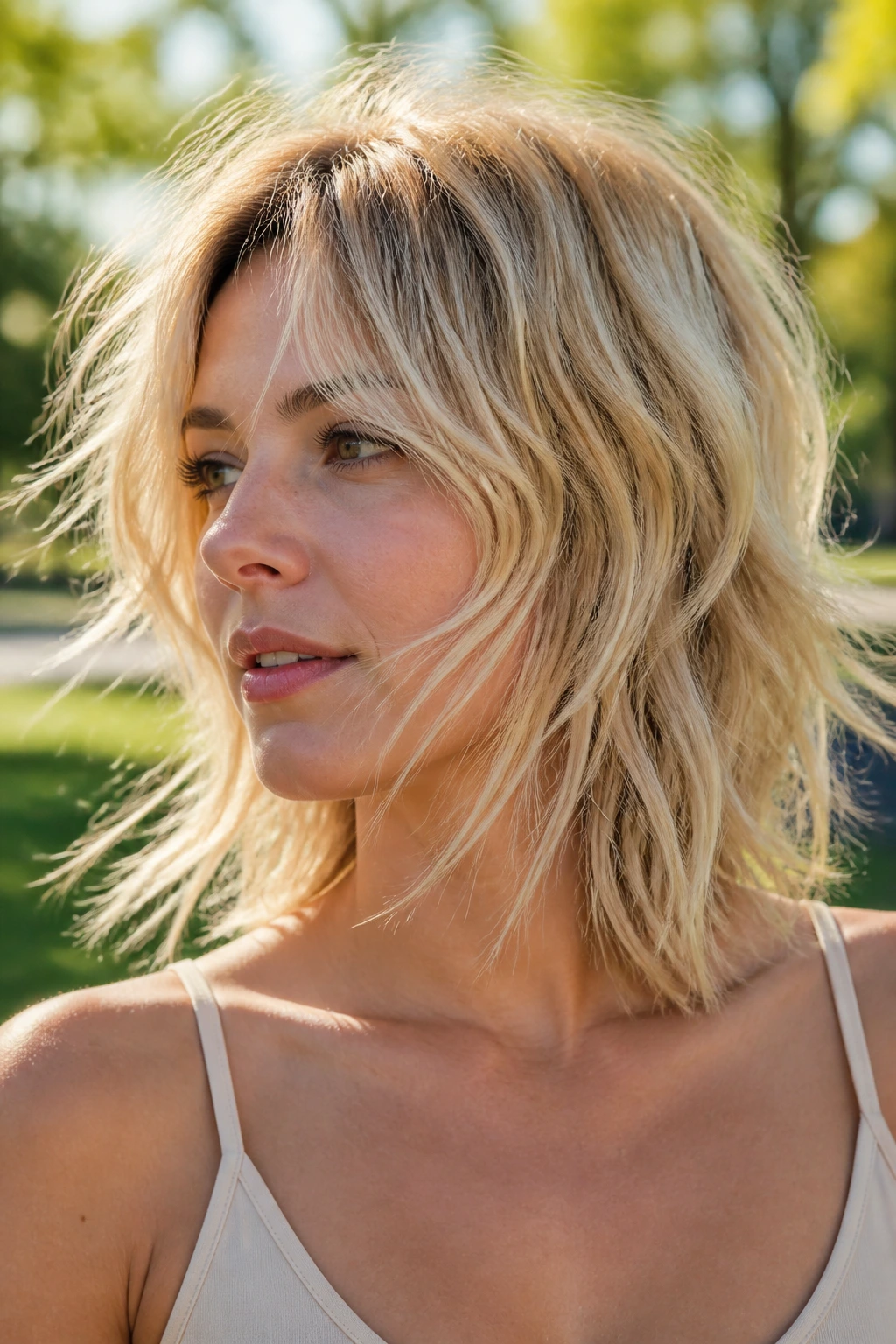
A shag cut is one of the easiest ways to give fair skin some movement without relying on tight braids or sculpted updos. The broken ends, airy layers, and visible blonde ribbons make the whole thing feel active.
This style is strong because it never sits flat for long. The layers lift away from the face, and the lighter pieces catch around the cheekbones. If the blonde is too bright, a beige or smoky toner keeps the texture from getting noisy. Too much white around a shag can make the layers blur together.
Best if you want:
- Movement without a lot of pinning
- A cut that works with natural texture
- Blonde that looks dimensional in daylight and indoors
It’s one of the easier looks to live with. That matters.
30. Braided Headband on Layered Blonde Hair
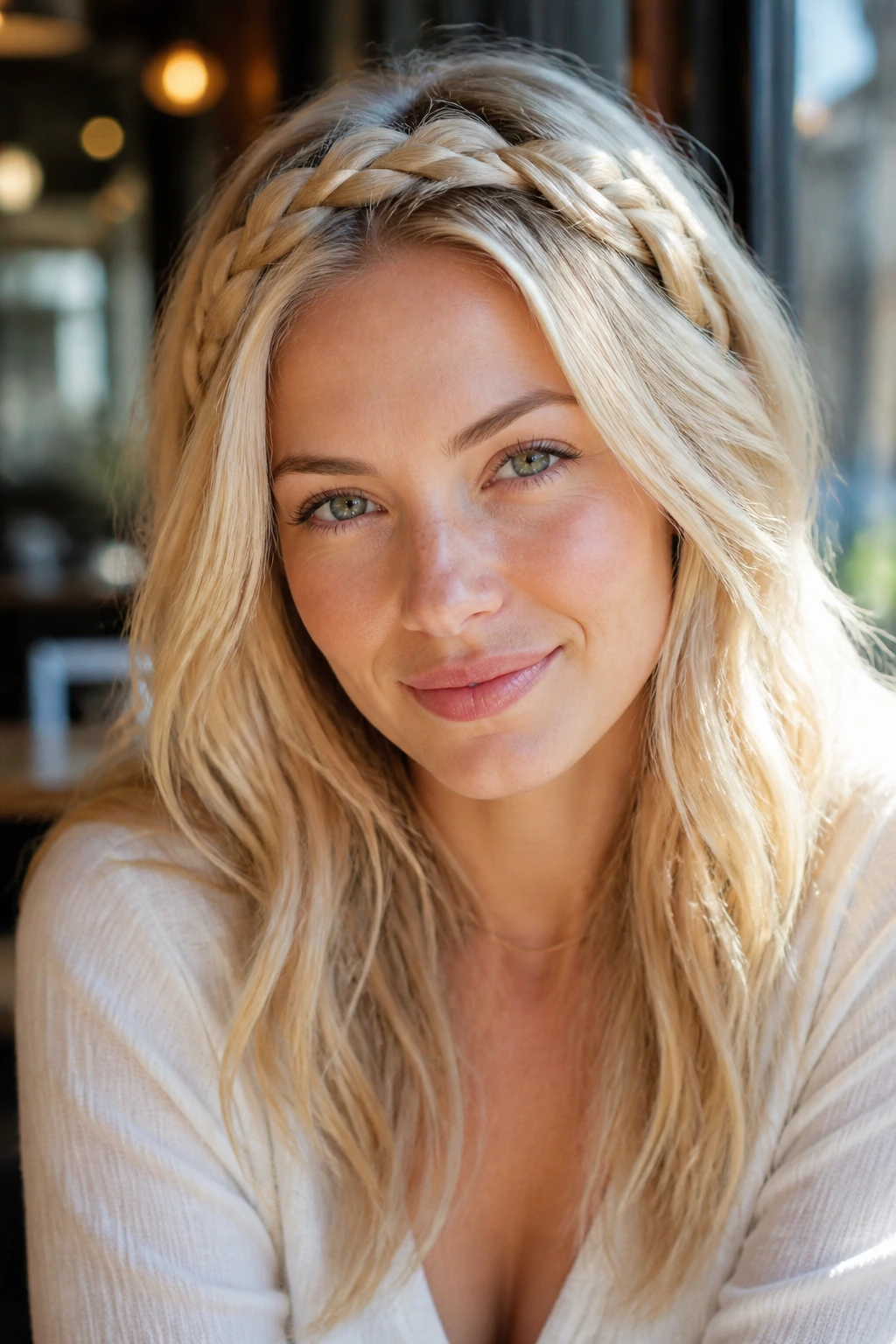
This is the easiest piece if you do not have time for a full style. A braid pinned across the front acts like a headband, keeps the face open, and lets the rest of the hair stay loose.
On fair skin, a braided headband is smart because it adds a visible line right where the eye needs it most. If the roots are a touch deeper than the mids, even better. The braid shows up against the skin, and the lighter lengths underneath stay soft. Layered hair helps because the ends around the face can move while the braid holds the front in place.
I’d choose this on days when you want the warrior idea with almost no fuss. It’s practical, and it still looks like you thought about it.
Styling Moves That Make the Shape Last
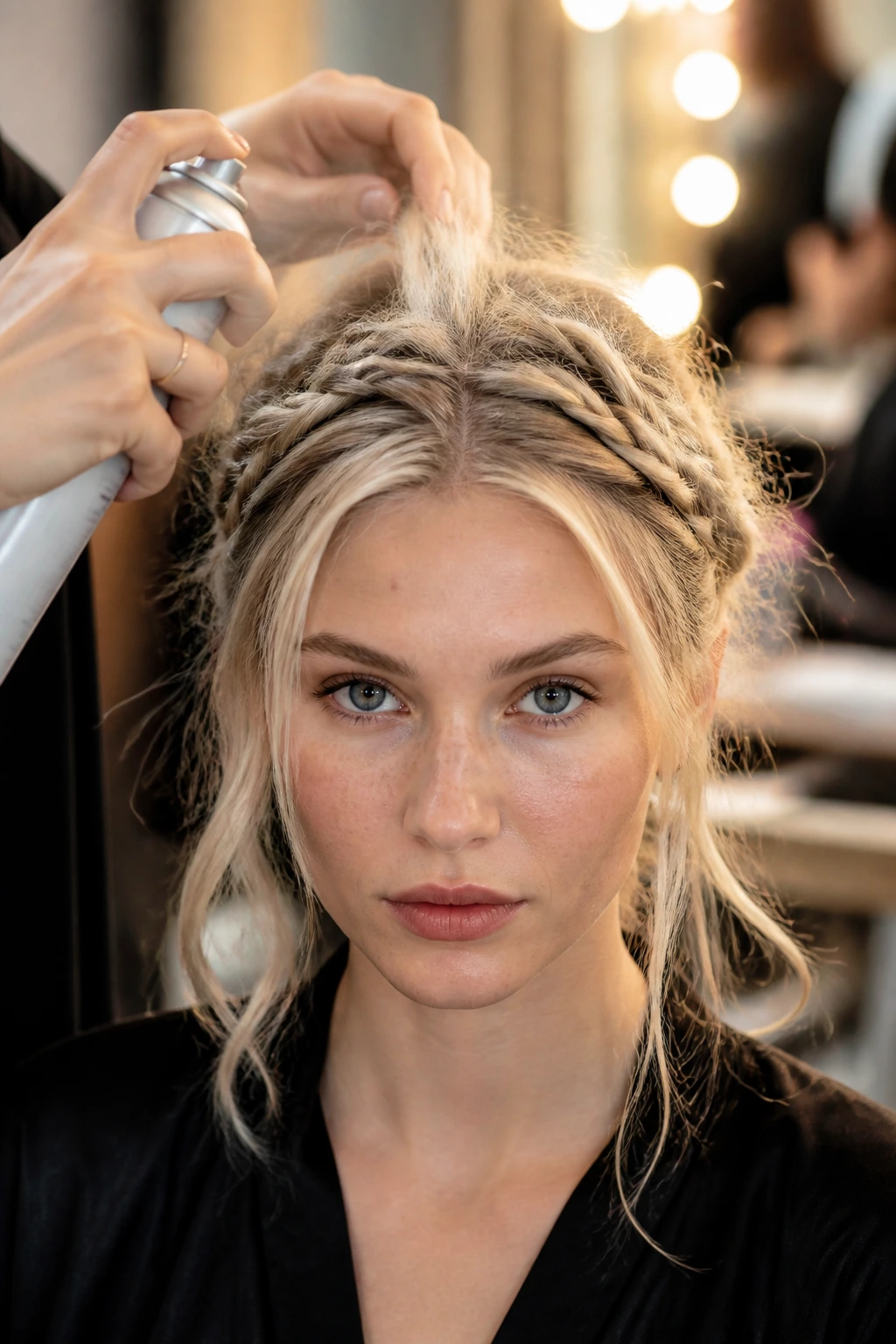
The styles themselves matter, but the little prep moves decide whether they hold past lunch. A small amount of dry shampoo at the roots gives fine blonde hair the grip it needs for braids and twists. Texturizing spray does the same thing for medium hair, especially if it has been freshly washed and feels too soft to stay put.
Blow-dry the roots first if your hair collapses fast. You do not need a salon blowout. You just need the root area to dry with a bit of lift so the braid or pony doesn’t sink flat against the head. A quick cool shot at the crown helps more than people expect.
For fair skin, I also like to leave a few strands around the face slightly softer than the rest of the style. Too much tension around the hairline can make very light blonde feel severe. That little looseness keeps the look wearable.
Essential Tools for These Looks
-
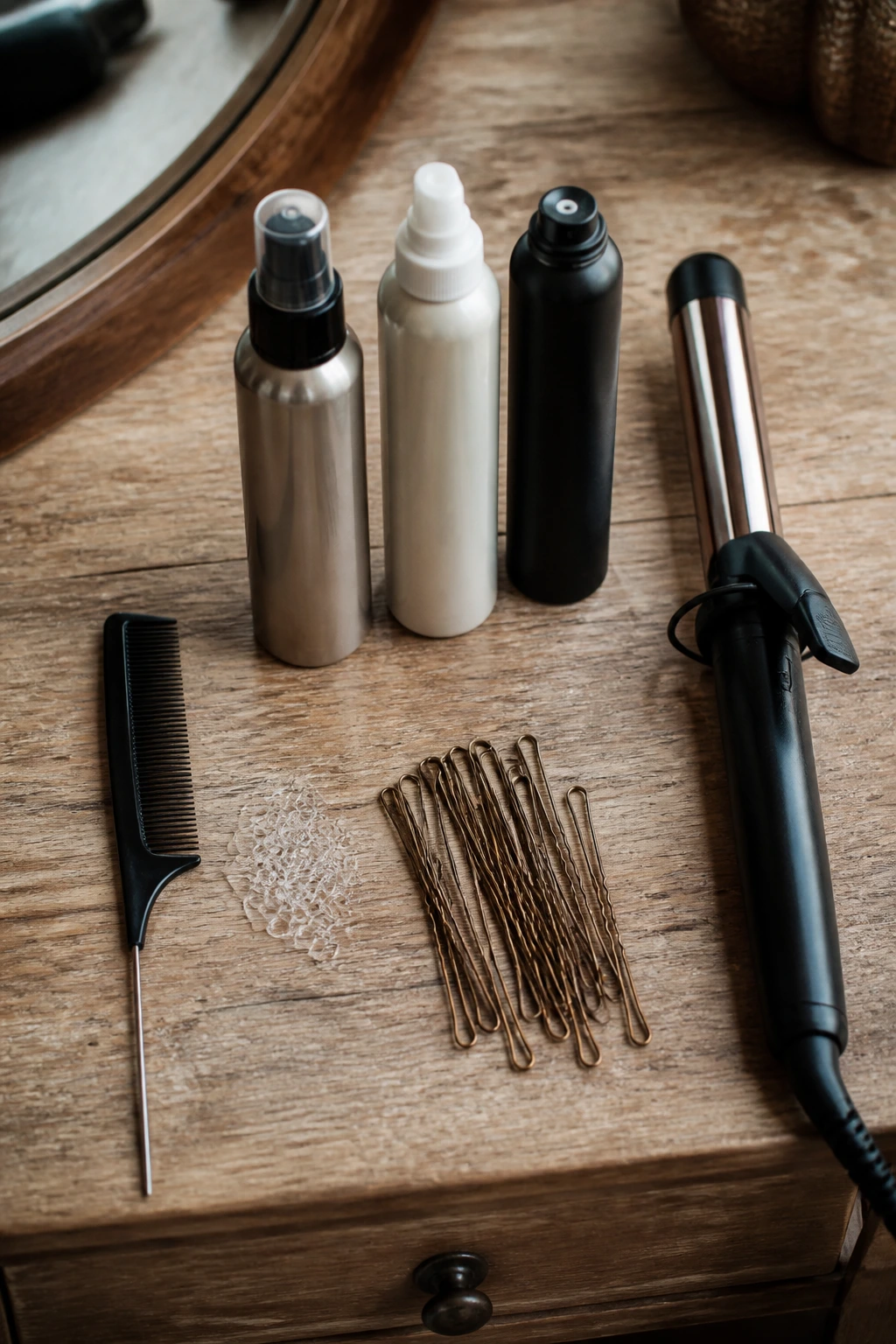
Rat-tail comb: Useful for clean parts, sectioning braids, and keeping the crown from getting messy before you start.
-
Small clear elastics: Best for bubble braids, half-up styles, and low ponytails where you don’t want the ties to show.
-
Bobby pins in your hair color: They disappear better than black pins and hold twists, buns, and crown braids in place.
-
Texturizing spray: Adds grip to soft blonde hair so braids and twists don’t slide apart.
-
Dry shampoo: Gives the roots a bit of body and keeps second-day styles from looking oily.
-
1-inch or 1.25-inch curling iron: Handy for bending the ends of lobs, ponytails, and loose waves.
-
Light-hold hairspray: Keeps flyaways calm without turning the style crunchy.
-
Mirror with good side view: Braids and crown styles look fine from the front and wrong from the side if the sectioning is off.
Smart Shade Choices and Product Picks
Cool fair skin
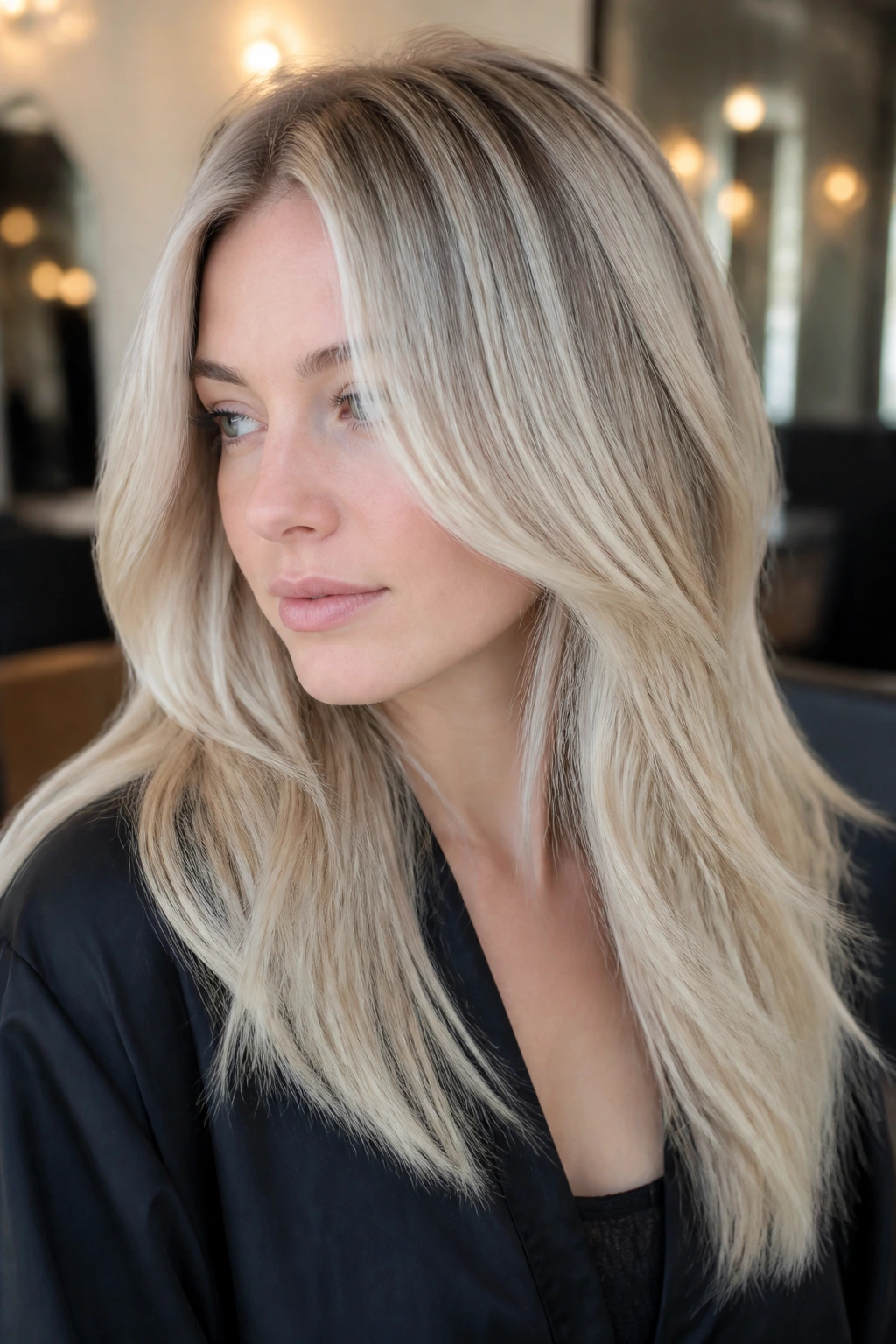
Pearl blonde, icy champagne, and ash-beige shades tend to sit well on cool fair skin because they don’t fight the pink or blue notes in the complexion. A slightly smoky root keeps the color from looking blinding around the forehead. If your brows are light, this is where a clear brow gel or soft tint can help the whole face stay defined.
Warm or rosy fair skin
Champagne, beige blonde, soft honey, and butter-blonde all bring a little warmth without tipping orange. I’d avoid a bleach-white finish around the face here unless there’s some beige gloss through the mids. That bit of warmth keeps the skin from looking flushed.
Products that help the shape and color
A beige or neutral gloss is more useful than people think. It keeps the blonde reflective without adding that harsh, over-processed cast. Purple shampoo has its place, but using it too often can make pale blonde look dull and chalky, especially on fair skin. Save it for when brassiness actually shows.
How to Wear These Styles in Real Life
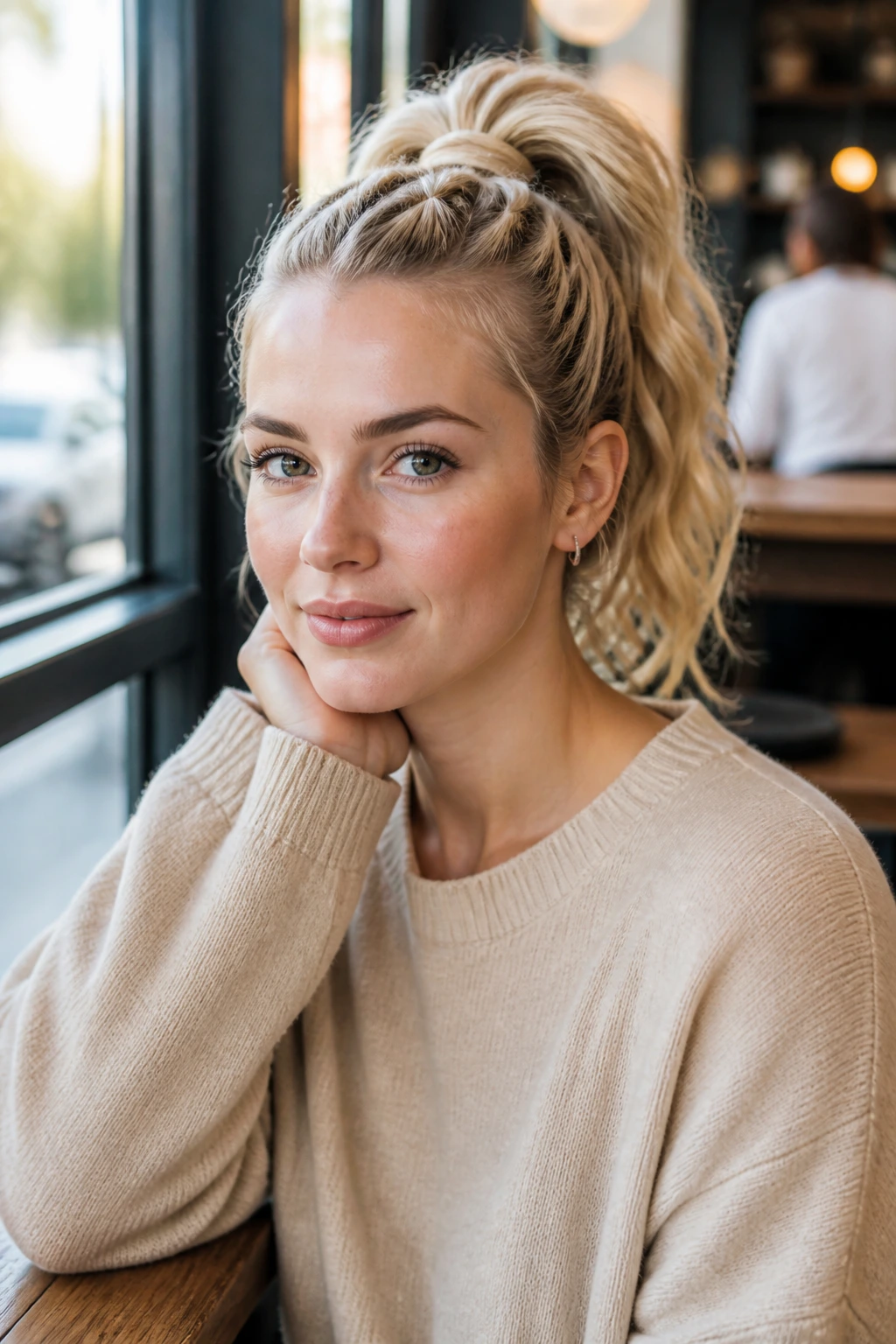
Presentation: Put the braid, pony, or knot where your face needs the most balance. Higher at the crown softens a flat profile. Lower at the nape gives cleaner lines and makes the blonde feel grounded.
Pair It With: Simple earrings, a strong collar, or a plain neckline usually beats busy accessories. These styles already do enough. Let the hair be the detail, not the whole costume.
Scale: Fine hair needs slimmer braids and a little teasing at the roots. Thick hair needs wider sections and fewer pins spread farther apart so the style doesn’t balloon.
Finish: Decide how neat you want it before you start. If the look is meant to feel sharp, keep the part clean and the braid tight. If you want softness, pull a few face pieces and loosen the edges only at the very end.
Extra Touches That Make the Blonde Pop
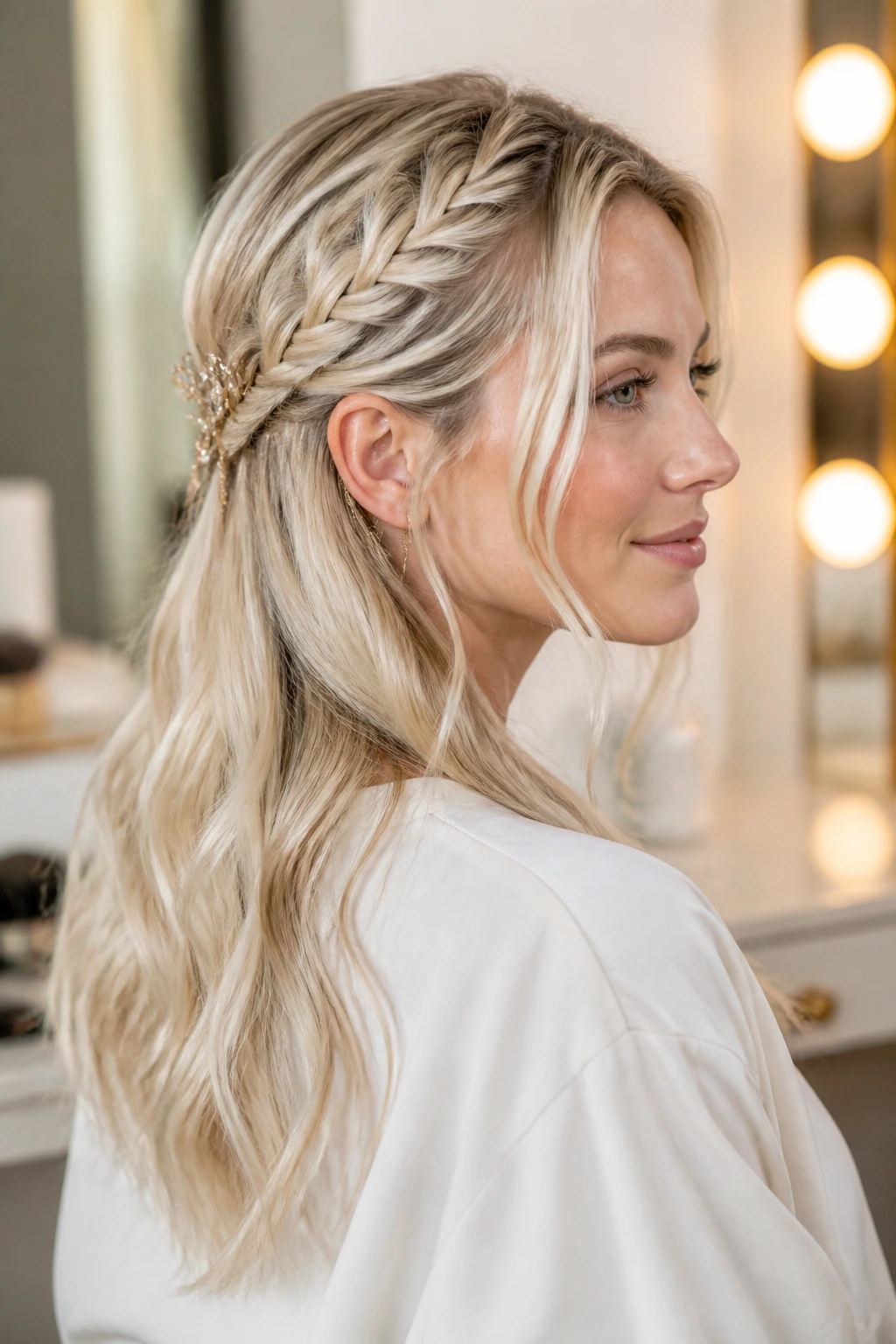
Tone Enhancement: A gloss that leans pearl, beige, or champagne can keep fair skin from looking washed out. If the blonde is too white, the whole style loses warmth around the face.
Texture Boost: A single pass of texturizing spray at the roots and mid-lengths gives braids and ponytails enough grip to hold their shape. Use more than that and the hair starts to feel dusty.
Customization: Add braid cuffs, a narrow ribbon, or a metal pin if you want the style to feel more armored. Silver usually reads cleaner on cool fair skin, while soft gold suits warmer fair complexions.
Make-It-Yours: If you wear bangs, leave them loose and let the braid do the work. If your hair is very long, keep the ends slightly undone. If it’s short, focus on one strong line instead of trying to force a full updo.
Overnight Care, Wash-Day Planning, and Refreshing
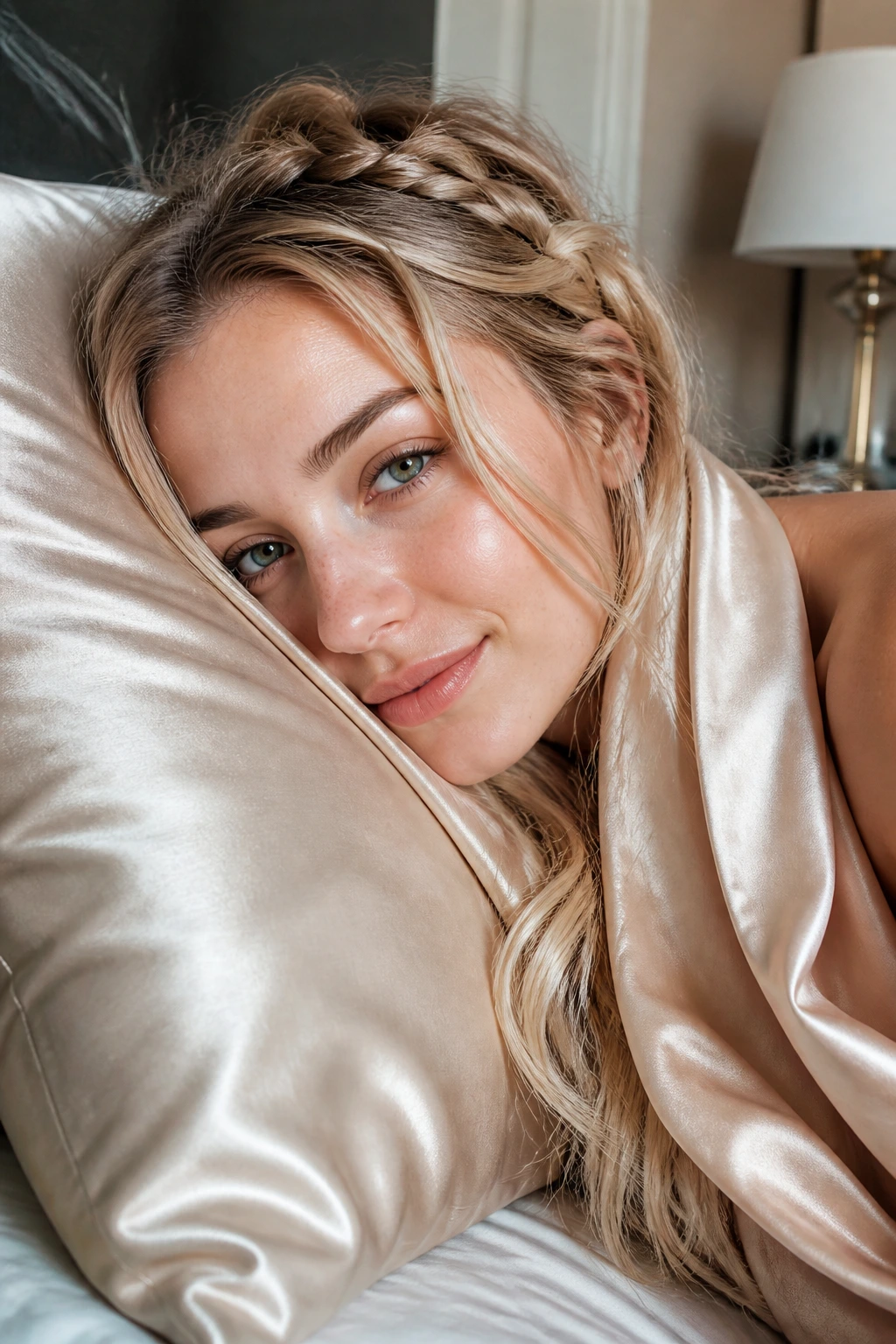
Braids and buns usually hold best on dry hair that’s already had one day to lose its slip. If you want the style to last into the next day, sleep on a silk pillowcase or wrap the hair in a silk scarf. That small move stops the blonde lengths from getting frayed at the ends.
Loose waves can usually survive one to two days with a little refresh. Braided styles often stretch to two days, sometimes three if the pins are secure and the hair was prepped with texture spray. A soft ponytail or half-up knot can usually be revived with dry shampoo at the roots and a quick bend through the front pieces.
If a braid goes flat overnight, do not start over unless the sectioning fell apart. Pull the outer edges gently, shake the roots with fingertips, and re-pin only where it collapsed. Most of the time, that’s enough.
Variations and Adaptations for Different Hair Types
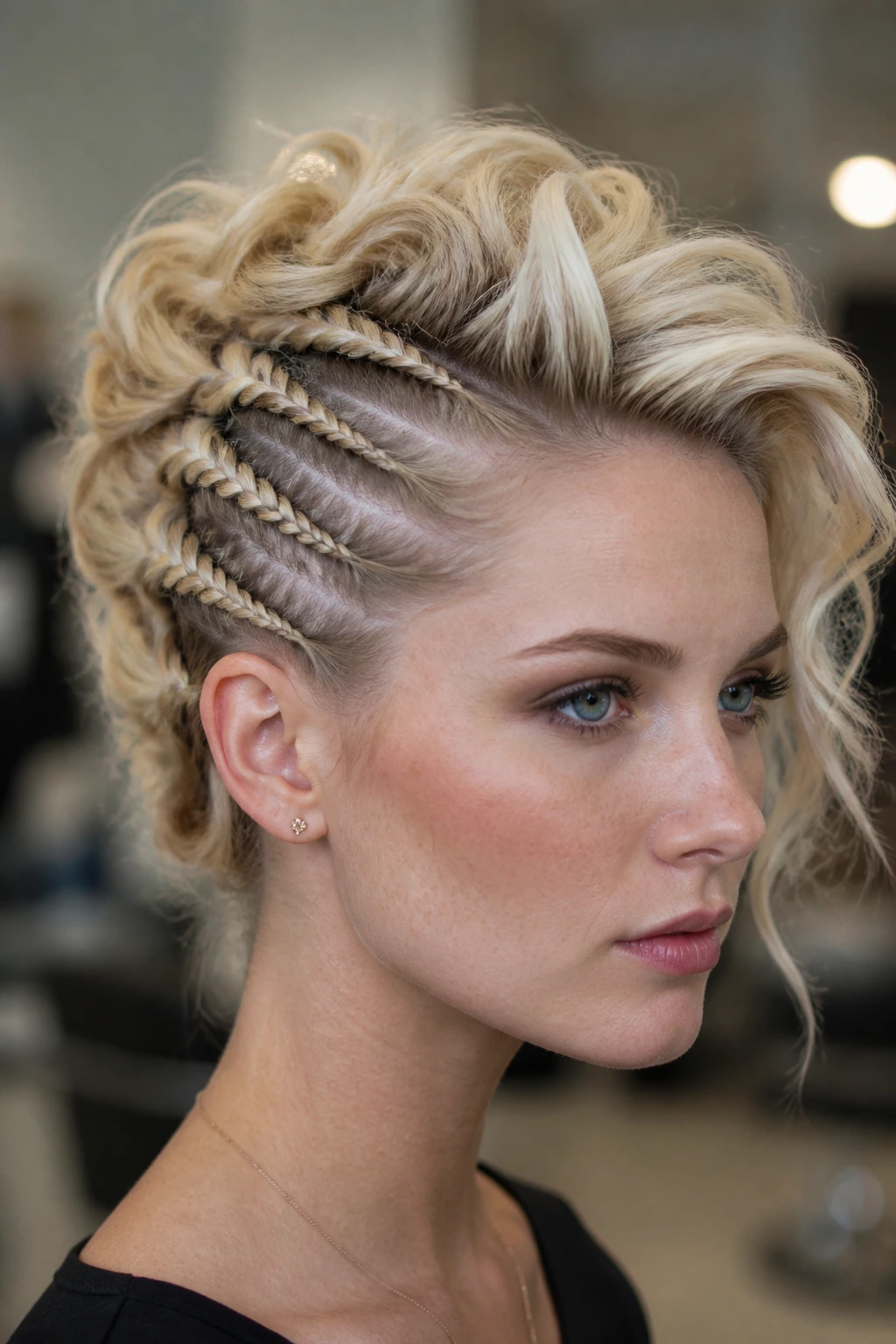
Fine-Hair Armor: Use smaller sections, a stronger root spray, and a little teasing at the crown. Fine blonde hair collapses quickly, so a tighter Dutch braid or low knot usually lasts better than a loose wave.
Thick-Hair Shield Wall: Go wider with the sections and keep the braid tension even. Thick hair looks best when the shape is big enough to match the density; tiny braids tend to get lost.
Curly Blonde Version: Keep the curls in the lengths and braid only the front or crown. That preserves the natural texture and stops the style from turning frizzy.
Short-Cut Version: Focus on temple braids, braided headbands, or sculpted pixie pieces. The “warrior” feeling comes from the line, not the length.
Warm-Blonde Version: Ask for champagne, soft honey, or beige-gold tones with a little depth at the roots. These shades keep fair skin from reading too cool or flat.
Cool-Blonde Version: Pearl, ash, and smoky blonde shades do the work here. Pair them with a shadow root so the color still has shape under indoor light.
Common Mistakes That Flatten Fair Skin
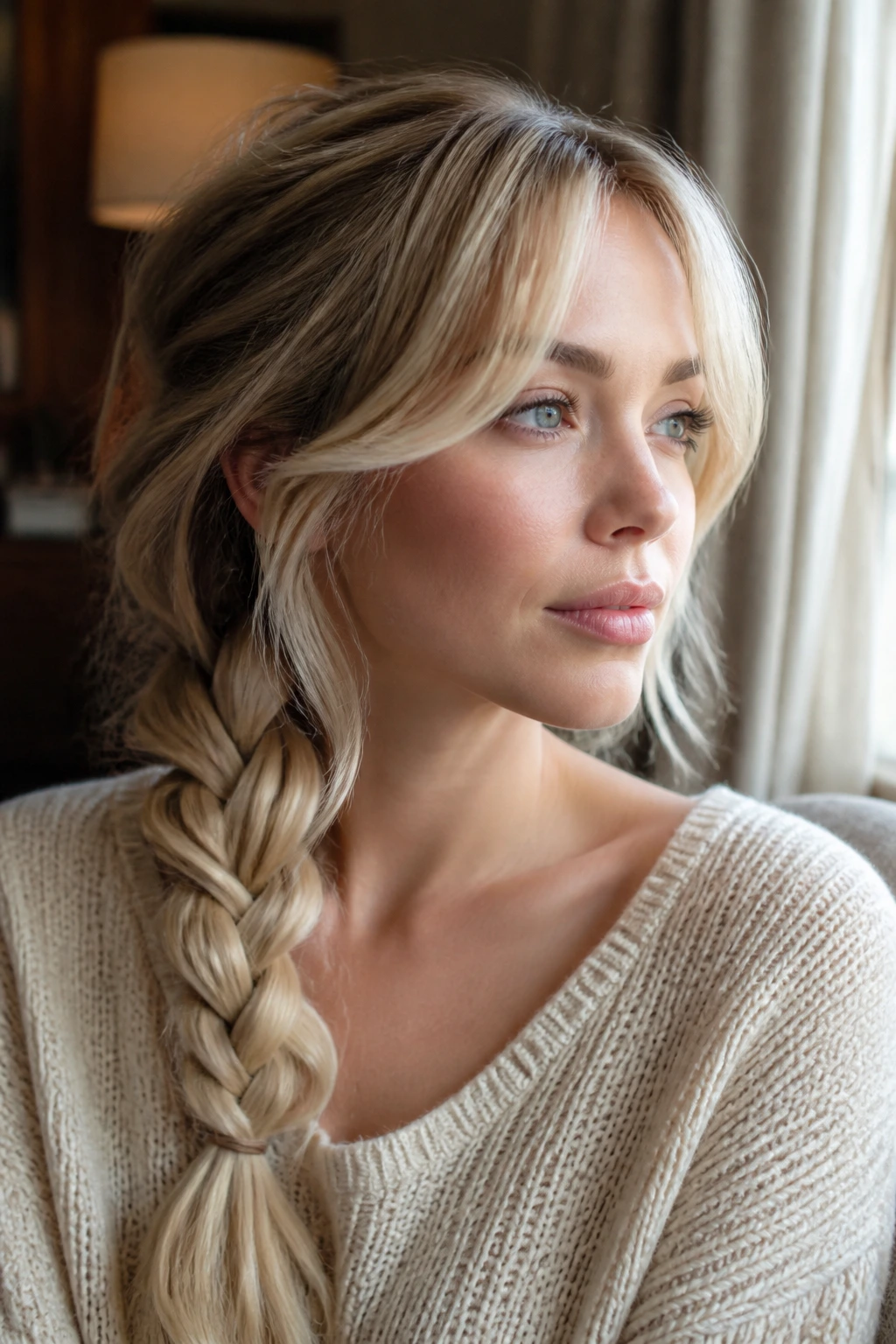
The biggest mistake is going too white all over. A single-process platinum can look striking in the salon chair and flat as paper at home. The fix is simple: leave some root depth, or at least a softer gloss through the mids.
Another one is pulling braids too tight. Tight braids expose scalp, and on fair skin that can make the contrast feel harsh instead of clean. Keep the tension firm enough to hold, loose enough to let the braid breathe.
Skipping texture product is a quiet mistake that costs you the whole day. Blonde hair, especially lighter and finer hair, can slip out of braids and buns faster than you expect. A little dry shampoo or spray at the roots gives the style something to grab.
Purple shampoo can also be overdone. Used too often, it can leave pale blonde looking dull or slightly violet under the wrong light. Use it only when brassiness shows, and follow with a moisturizing conditioner so the tone stays clear instead of chalky.
Frequently Asked Questions
What blonde shade looks best on very fair skin?
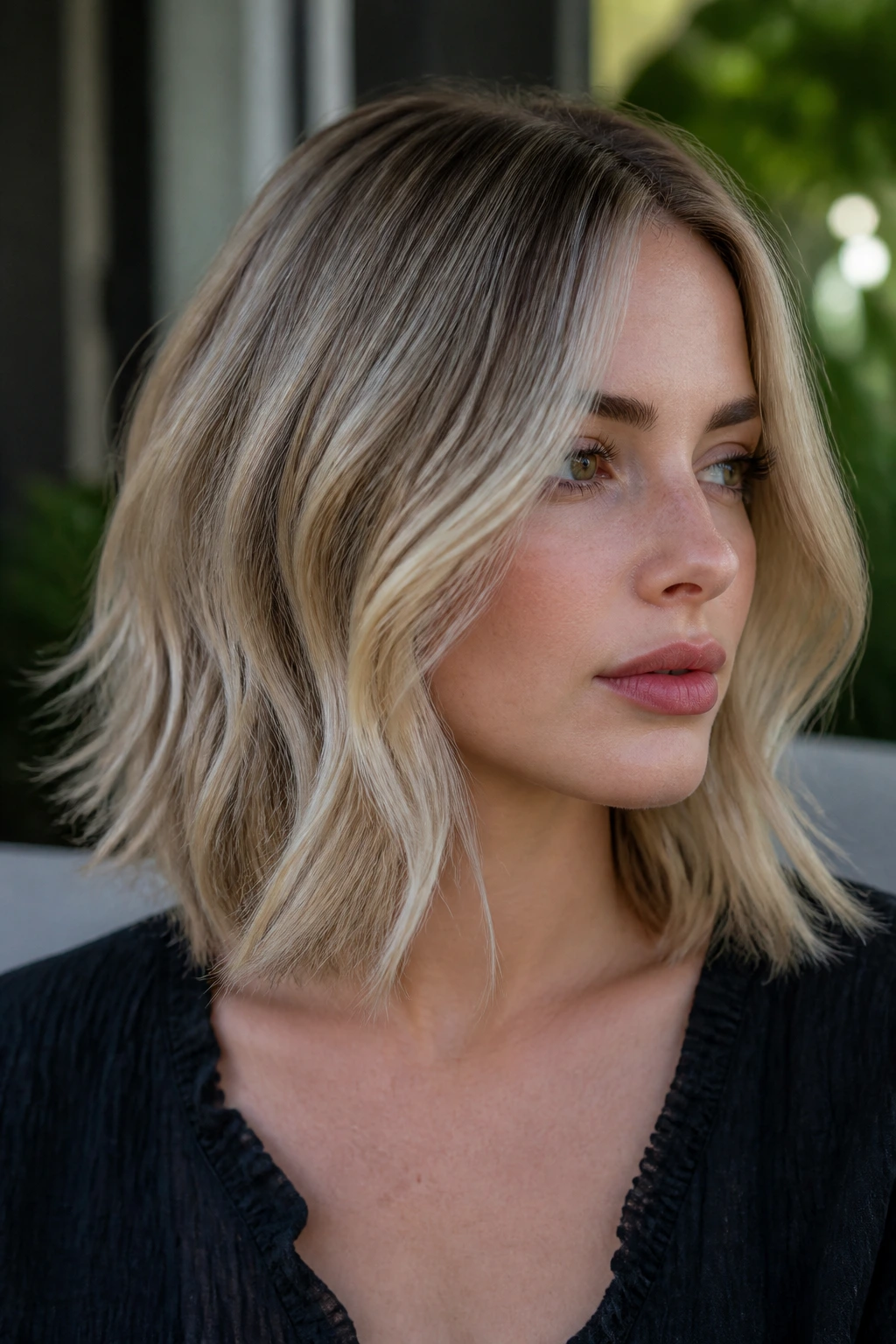
Pearl, champagne, ash-beige, and soft beige blonde are the safest places to start. They give fair skin some contrast without making the face look drained. If your brows and lashes are light too, a tiny shadow root helps more than a brighter blonde ever will.
Do warrior blonde hairstyles work on thin hair?
Yes, but you need to be strategic. Braids that are too loose can disappear, so use texturizing spray and choose styles like Dutch braids, bubble ponytails, or low knots that create shape with less hair mass.
Can I wear these styles if my hair is shoulder length?
Absolutely. The lob, the side braid, the half-up knot, the low pony, and the braided headband all work well on shoulder-length hair. You may need more pins than someone with long hair, but the shape can still read clearly.
How do I keep platinum from looking harsh on fair skin?
Keep some depth at the root, and don’t let the front pieces go dead white if your skin is very pink. A pearl or beige gloss softens the finish, and a little face-framing hair keeps the color from overwhelming your features.
Are braids better than waves for this look?
Braids give more structure, which is why they lean more “warrior.” Waves are softer and can still work if the texture is broken and the color has some shadow. If you want edge, choose a braid; if you want softness with shape, use waves plus one braid detail.
What if my hair is naturally dark but I want this vibe?
You can still get it. The style matters as much as the shade. Ask for a blonde that has a shadow root and ribbons of lighter pieces instead of taking everything to one pale level. That gives you dimension without a harsh grow-out line.
Can I wear these styles with bangs?
Yes, and bangs can help a lot on fair skin. Curtain bangs, soft fringe, or even a few loose face pieces keep the hair from pulling too far back and make the blonde look less severe around the forehead.
How do I stop the style from falling apart by midday?
Prep the roots with texture spray or dry shampoo, braid on fully dry hair, and pin in the direction the hair naturally wants to lie. If the hair is too soft or too freshly washed, it slips. That’s usually the whole problem.
The Look That Holds Its Shape
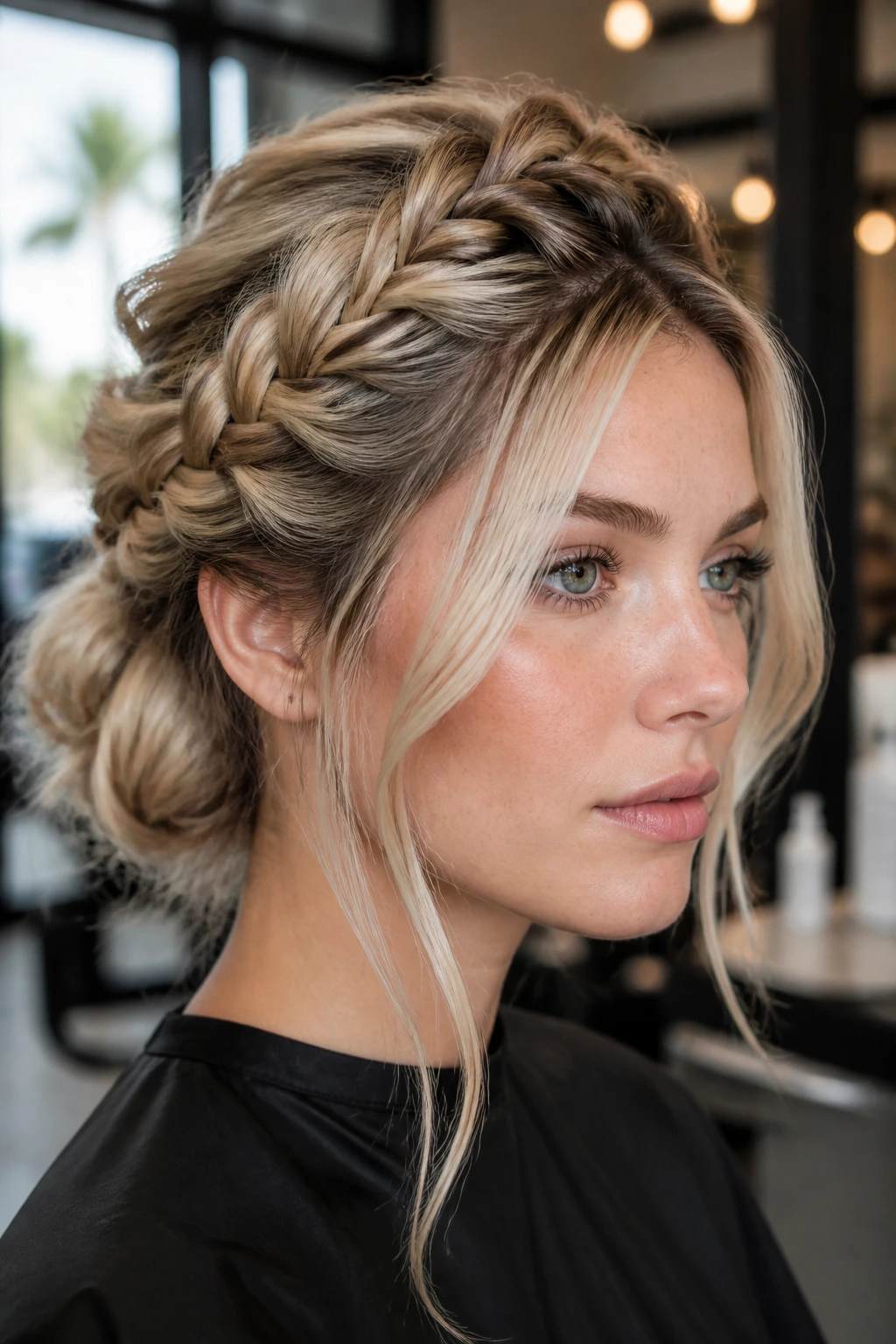
Warrior blonde on fair skin works when the color has some depth and the styling has some spine. One without the other falls flat. A good braid, a smart root shadow, and a few loose face pieces can do more for pale skin than the palest platinum ever could on its own.
I’d start with the styles that match your hair’s natural behavior instead of fighting it. If your hair grips well, go for braids and buns. If it slips, lean into texture, half-up shapes, and ponytails with wrapped bases. The best version is the one that still looks sharp after you’ve worn it through a real day.