



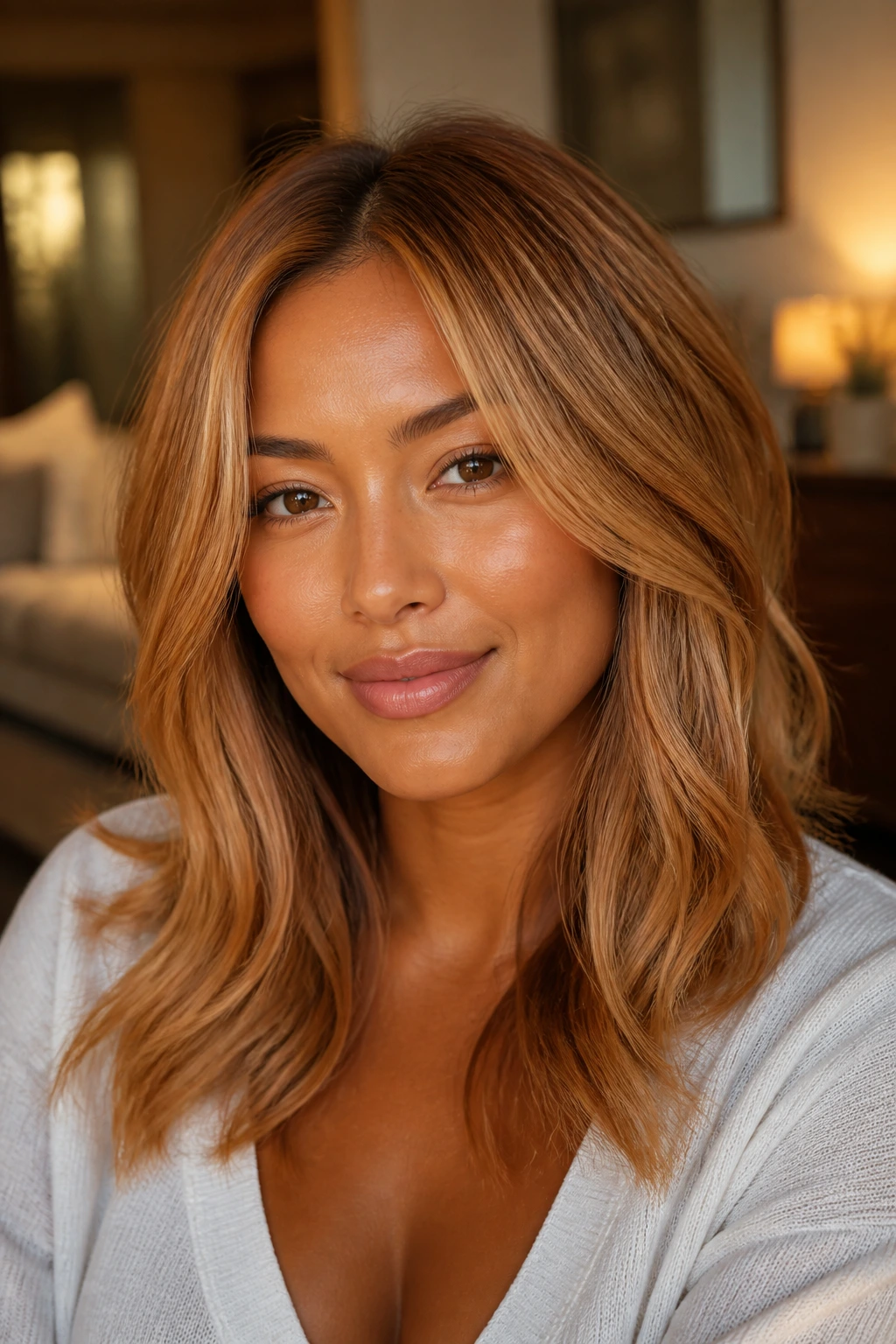
Tan skin can make light copper blonde look richer than almost any other blonde family. When the tone stays warm enough, the color doesn’t fight the complexion; it echoes it. That’s the trick. A soft copper-gold or apricot reflect can make warm skin look cleaner and brighter, while a washed-out ash blonde can leave the face looking a little tired, a little flat, and a lot less alive.
The problem is that copper is a demanding color. Too orange, and it screams. Too beige, and the whole point disappears. The sweet spot sits in that narrow band between strawberry blonde and true copper: sun-warmed, glossy, dimensional, and light enough to read blonde at a glance. On tan skin, that band is gold.
What makes these light copper blonde hair color ideas for tan skin worth caring about is how adjustable they are. You can go soft with a beige base and a sheer apricot glaze, or bolder with a copper money piece and brighter ends. You can lean peach, honey, rose gold, amber, or caramel, depending on how much contrast you want and how much maintenance you’re willing to tolerate. The best versions don’t look dyed. They look like the hair spent a week in warm daylight and came back with better taste.
Why This Collection Works So Well for Tan Skin
-
Warmth that mirrors the complexion: Tan skin usually carries golden, olive, or neutral-warm undertones, and these shades repeat that warmth instead of trying to erase it.
-
Blonde without the glare: Light copper blonde gives you brightness, but the copper softens the sharpness that icy blonde can create against deeper skin.
-
Flexible upkeep: Some of these looks need nothing more than a gloss every few weeks; others use a root shadow or balayage placement so regrowth doesn’t look harsh.
-
Dimension first, flat color second: The best copper-blonde looks use ribbons, face-framing pieces, and lowlights to keep the color moving in daylight.
-
Works on short, long, straight, and curly hair: The tone does the heavy lifting here, which means the same family of shades can look polished on a bob or loose on coils.
-
Easy to personalize: You can push these looks peachier, honey-rich, or more amber depending on how warm your skin runs.
Why Light Copper Blonde Flatters Tan Skin So Easily
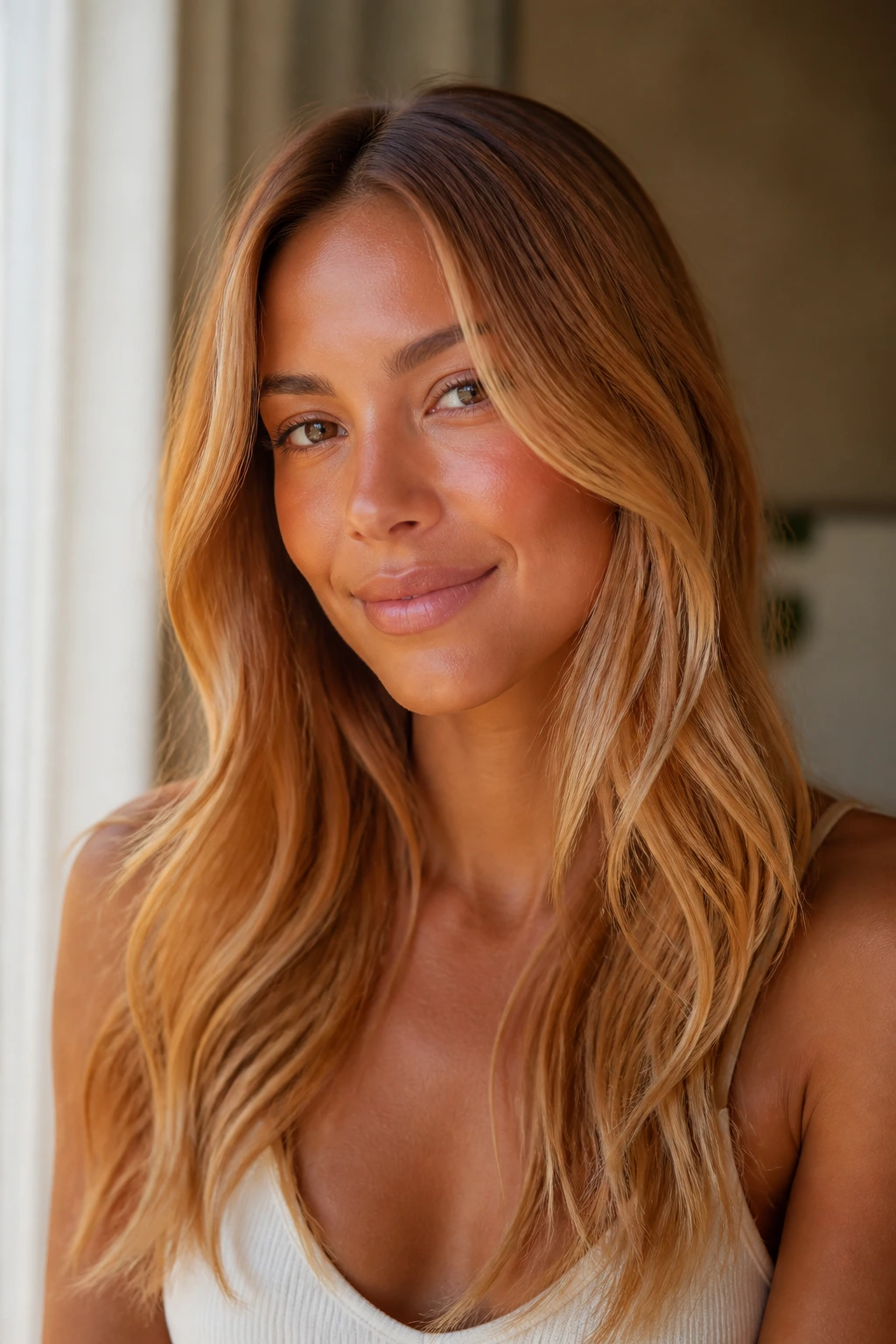
Tan skin gives copper something to play against. On very pale skin, copper can take over the room. On tan skin, it behaves more like a filter — the kind that makes the whole face look a touch sunnier without turning it orange. That’s why a level 7 to 9 blonde with copper-gold reflect often reads better here than a stark platinum or a cool beige.
Warm undertones and warm reflect
A complexion with yellow, gold, or olive notes tends to look strongest beside color that carries the same family of warmth. Apricot, honey, amber, and peach all sit in that lane. They don’t need to shout. They just need enough copper in the formula to keep the blonde from drifting too pale or too ashy.
The level matters more than the label
“Copper blonde” can mean a lot of things. A level 8 apricot blonde is a different animal from a level 6 copper brunette with blonde ends. On tan skin, I usually like the lighter end of the spectrum when the goal is brightness, and the deeper end when the goal is polish. Go too light and the face can lose contrast. Go too dark and the copper starts reading brown.
Dimension keeps it believable
One flat color block can feel wig-like fast. Ribbons, foils, balayage, and root melts keep the finish soft. The hair moves. The shade changes in sunlight, under restaurant bulbs, in your car mirror. That movement is what makes these shades feel expensive instead of painted on.
How to Talk to a Colorist Without Guessing
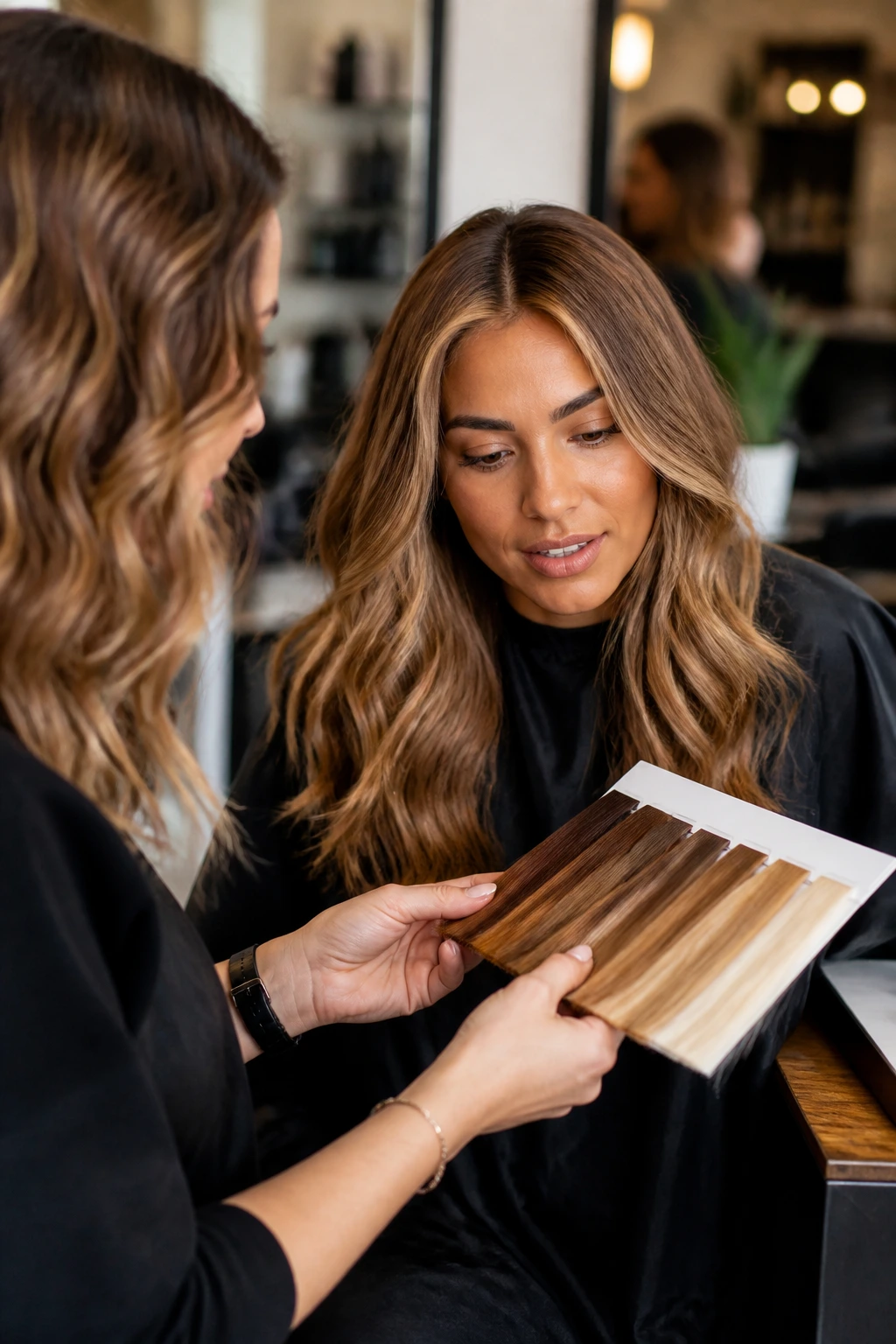
Ask in level language. That sounds nerdy, but it saves you from a bad appointment. “Light copper blonde” by itself is vague; “level 8 blonde with copper-gold reflect and a soft root shadow” is usable. If you want something softer, say apricot or peach. If you want something richer, say amber or honey copper.
Bring two or three photos, not fifteen. Choose images where the lighting is honest and the color isn’t filtered to death. Then point out what you like in each one: the root depth, the brightness around the face, the amount of orange, the shine level. That tells the stylist more than “I want this vibe” ever will.
If your base is dark brown, ask whether the look needs foils, balayage, or a two-step lightening plan. If your hair is already blonde, ask for a gloss or demi-permanent formula that nudges warmth up without overprocessing the ends. That one detail changes everything.
1. Apricot Copper Melt
Apricot copper is one of the easiest places to start if you want warmth without going full fire truck. The tone lands somewhere between peach and soft orange, which means it flatters tan skin without making the face look ruddy. It has that glazed, sun-baked finish that makes hair look soft even when it’s freshly done.
What to ask for
- A level 8 beige-blonde base
- Apricot or peach-copper gloss through the midlengths and ends
- A root shadow one shade deeper for softness
This one works especially well when you want the color to look expensive in daylight and quiet indoors. The apricot reflect keeps the blonde from feeling chalky. It’s gentle. Not boring. Just controlled.
2. Honey Copper Balayage
Honey copper balayage gives you the comfort of honey blonde with a little copper heat running through it. The result is warmer than a standard caramel balayage, but not so warm that it turns brassy after the first few washes. On tan skin, it adds glow where the light hits and leaves the base intact enough to avoid a heavy, all-over dye job.
If you’re the sort of person who wants color that grows out without a weekly apology, this is a smart move. Ask for hand-painted copper ribbons concentrated on the surface and around the face, with deeper honey at the base. The best versions look like they’ve been touched by late afternoon sun, not a box of dye.
3. Strawberry Bronde Glow
Strawberry bronde sits in that useful middle ground where brunette and blonde stop arguing. You keep depth at the root, then let a strawberry-copper veil brighten the top layer and ends. On tan skin, that soft redness wakes everything up without asking the complexion to change lanes.
Why it works
The brunette base stops the color from getting too airy. The strawberry note keeps it from reading plain brown. You get movement, warmth, and enough depth that the color still looks good when the light is low.
This is a nice choice if your natural hair is already medium brown and you want a subtle shift first. It’s also one of the easier ways to test copper before going brighter. Low drama. Good payoff.
4. Peach Champagne Highlights
Peach champagne is the quieter cousin in the family, and that’s not a knock. Some people want copper; some want the whisper of copper. This look uses champagne blonde as the backbone, then threads in peach warmth so the finish flatters tan skin without becoming orange or pink.
It’s a good fit when you like airy, reflective hair that still has a warm pulse underneath. Ask for fine highlights rather than chunky pieces, especially if your skin has neutral-warm undertones. The result should feel polished and light, not striped. Straight hair shows the shimmer cleanly. Waves make the peach tone show up in little flashes.
5. Copper Money Piece
A copper money piece does exactly what the name suggests: it spends all the visual attention near the face. That makes it one of the easiest light copper blonde hair color ideas for tan skin if you want impact without committing to an all-over transformation. The front panels can be brighter copper blonde, while the rest stays honey, beige, or soft brunette.
This is the color for someone who wants people to notice the change before they understand it. Put the warmth around the eyes and cheekbones, and the skin looks more awake. It’s also easier to maintain than a full-head bright blonde because you only need to keep the front pieces lifted and glossy.
6. Golden Apricot Bob
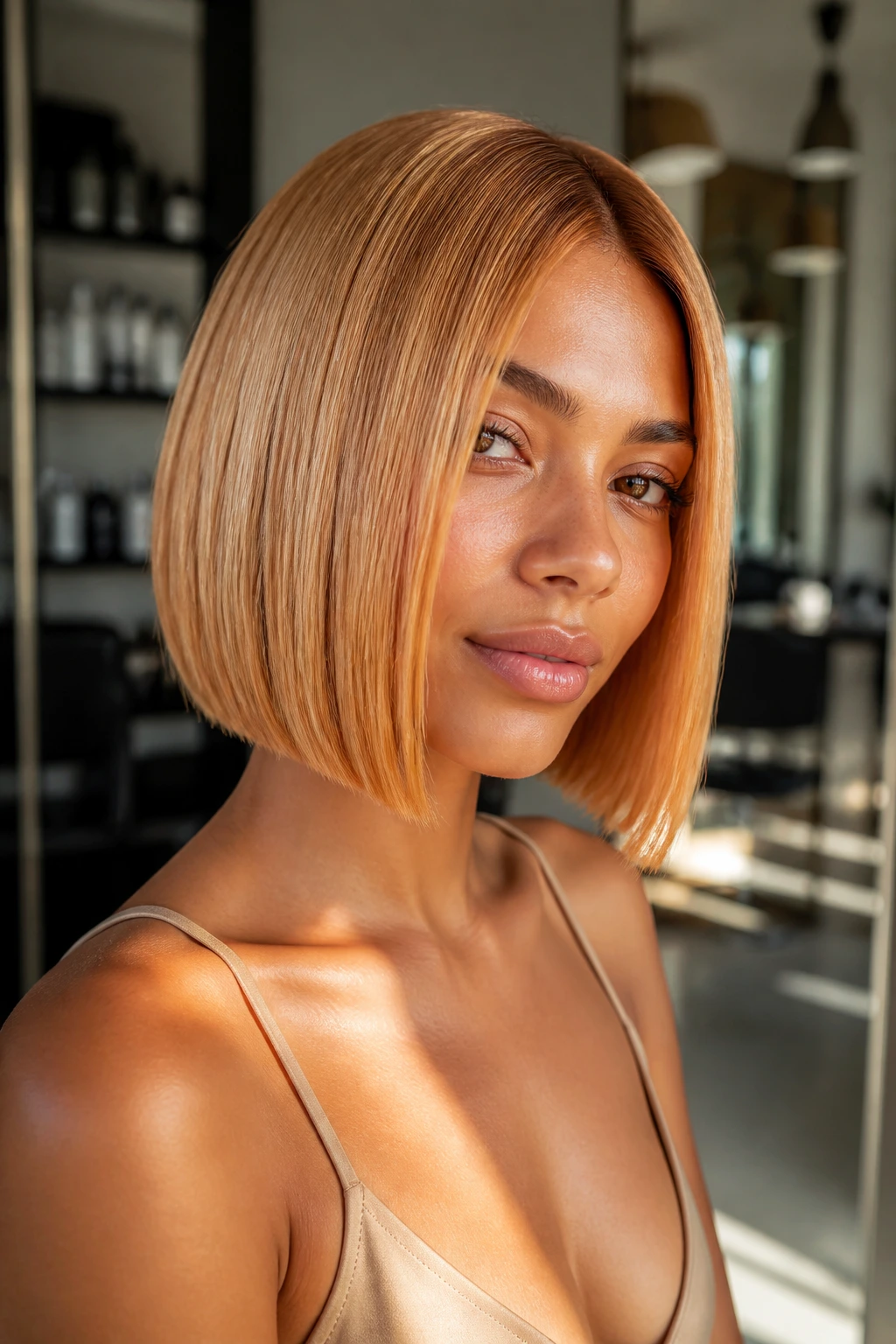
A bob changes the whole mood of copper blonde. Shorter hair concentrates the shine, so even a gentle apricot-gold formula can look vivid and expensive. On tan skin, a golden apricot bob reads clean, crisp, and a little retro in the best way.
Best on
- Blunt bobs that show off the line
- Airy French bobs with a soft bend
- Sleek styles tucked behind the ear
The color doesn’t need much help. A gloss every few weeks keeps it from dulling, and a slight root shadow prevents the shape from looking too helmet-like. If your hair is fine, this is one of the better options in the whole list because the warmth makes the cut look fuller.
7. Rose Gold Copper Waves
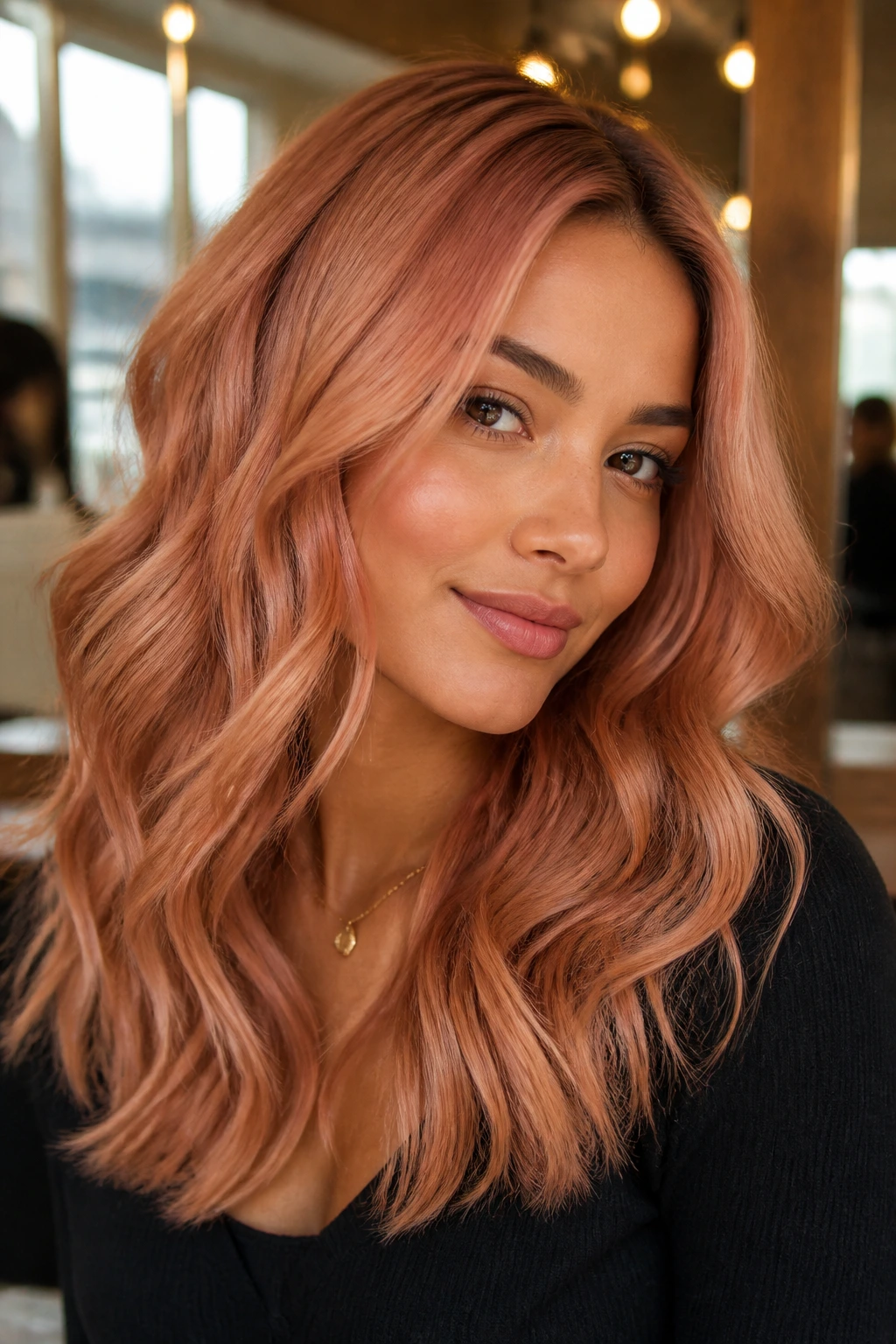
Rose gold copper is for people who like warmth with a hint of blush. The pink note softens the orange side of copper, which can be useful on tan skin if your undertones lean golden but you still want something a little playful. Waves are the right styling move here; the bends catch the rose reflect and keep the whole thing from flattening out.
I’d avoid making this too pink. The prettiest versions stay mostly copper, with just enough rose to cool the fire down by a notch. Think glazed pomegranate more than bubble gum. That balance matters.
8. Cinnamon Blonde Ribbon Highlights
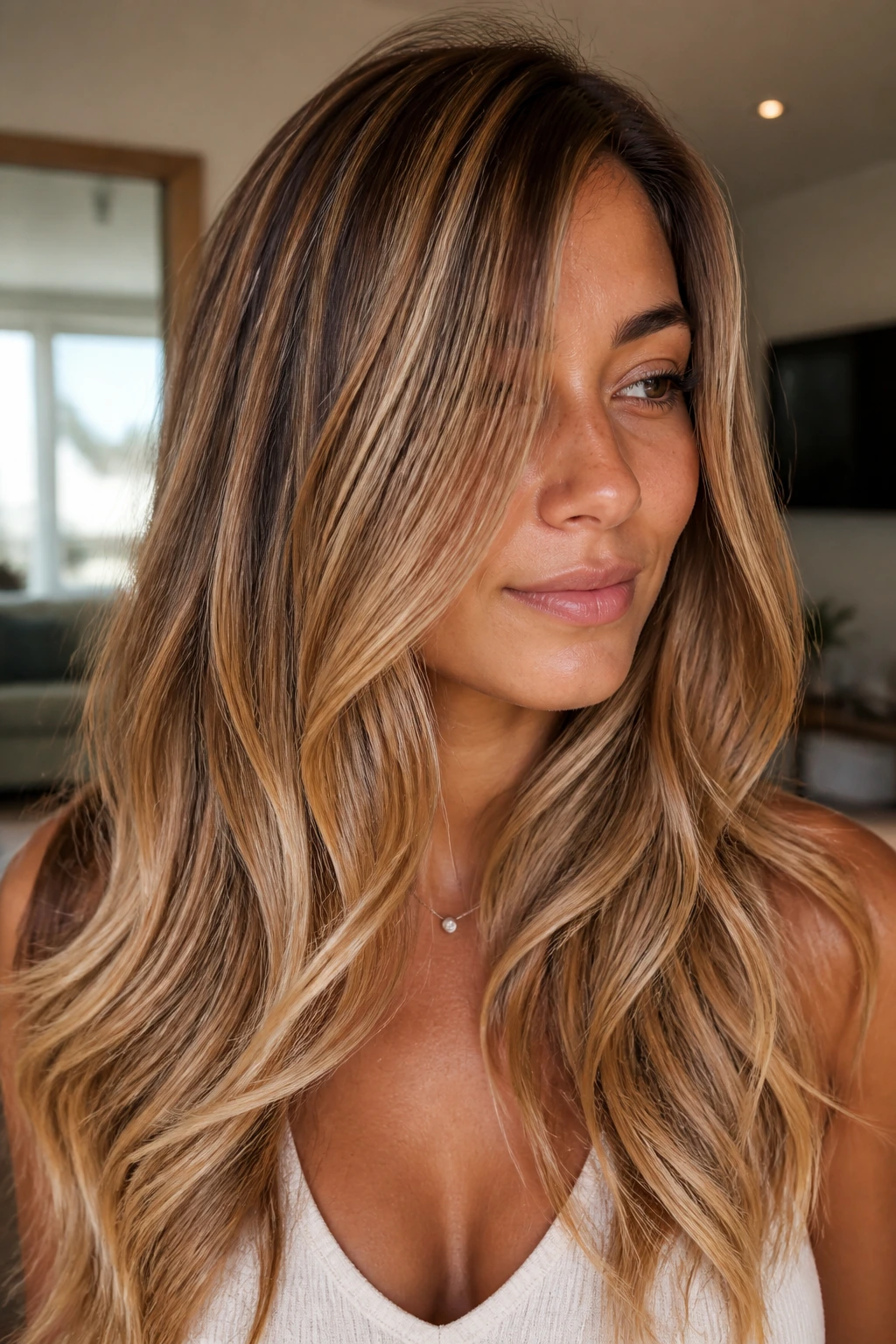
Cinnamon blonde uses narrow ribbons of warm copper against a blonde base, and that ribbon placement is what makes it shine on tan skin. The warmth looks dimensional instead of blocky. You can place it through long layers, curls, or a soft shag, and it keeps moving.
What to watch for
The cinnamon note should read spicy, not muddy. If the base is too dark, the “blonde” disappears. If the highlights are too chunky, the style starts to look striped. Fine weaving gives you the best result here.
It’s one of my favorites for people who like hair that looks richer the second they tilt their head. Little details. Big difference.
9. Buttery Copper Root Melt
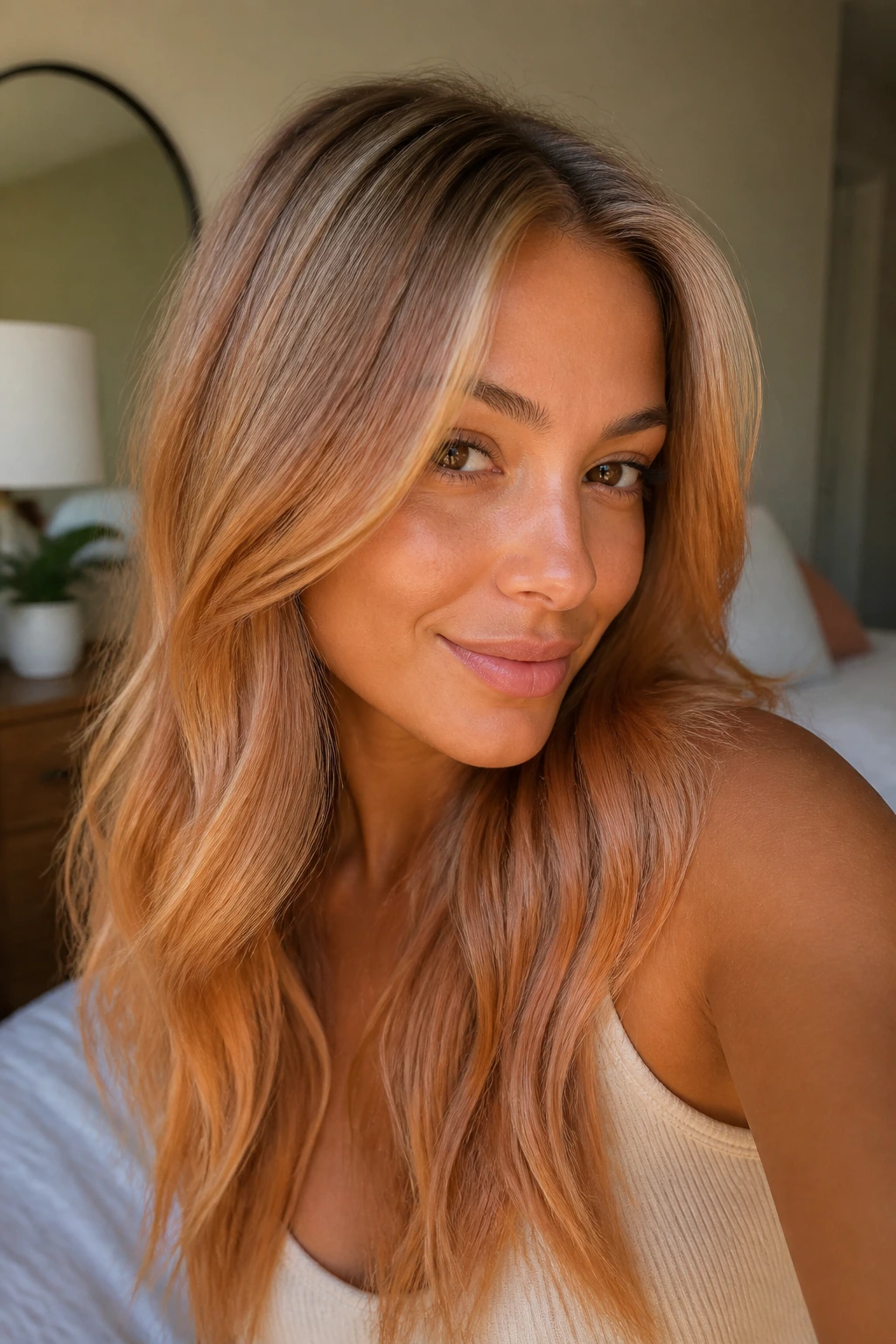
A buttery copper root melt is what happens when the blonde side gets a creamy upgrade and the root stays deeper for contrast. Tan skin likes this because the color doesn’t start and stop in harsh bands. It fades in a soft slope from root to midlength to end, which is easier on the eyes and easier on the maintenance schedule.
Ask for a deeper beige root, not a dark brown one. Then let the copper live mostly in the mids and ends, where it can catch light. The butter note stops the copper from looking sharp; the root shadow keeps regrowth from shouting the minute it shows.
10. Bronzed Copper Lob
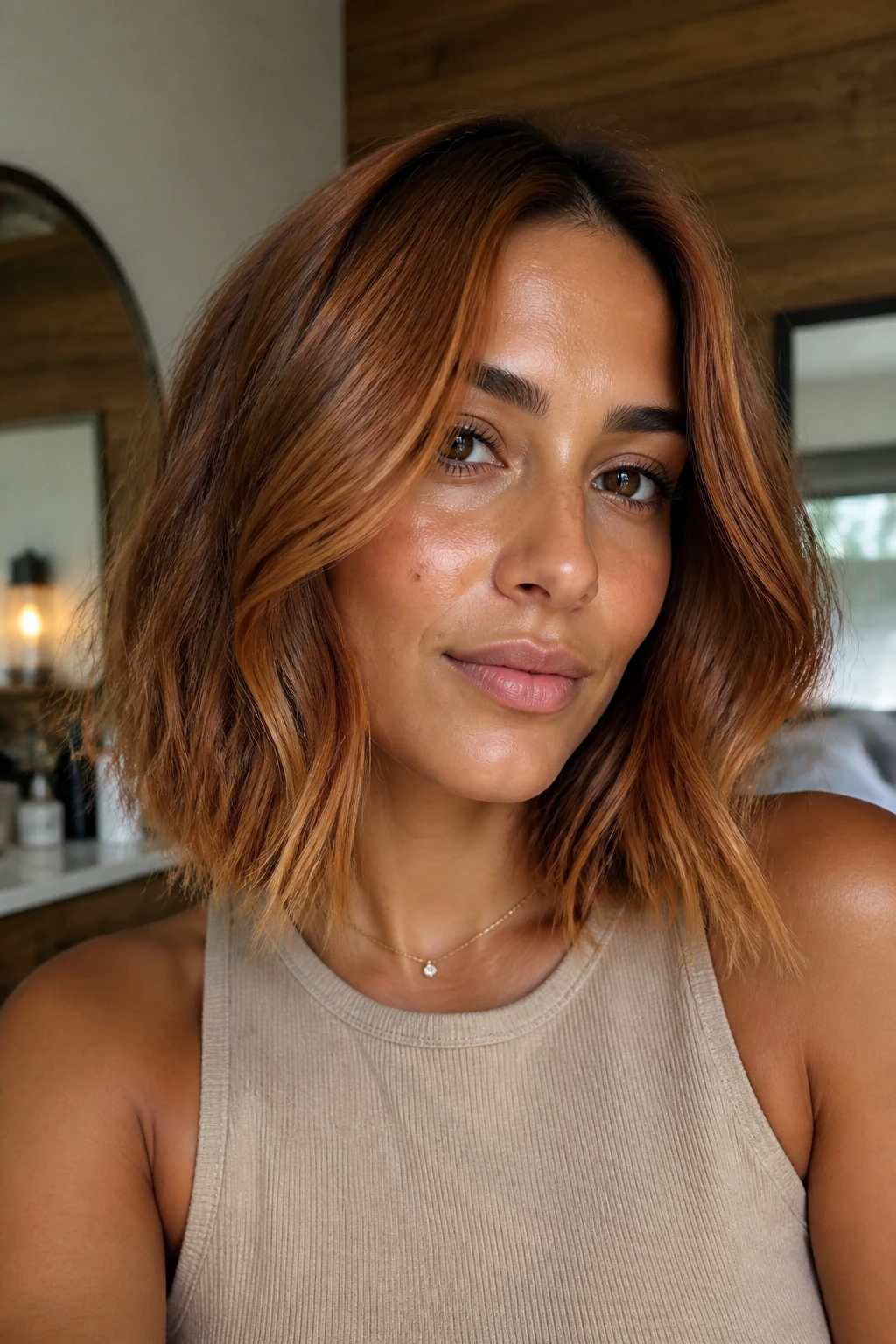
A lob gives copper room to breathe. The bronzed version is especially good on tan skin because bronze adds a little brown depth to the blonde, which keeps the whole look grounded. It’s warmer than a neutral blondish lob and less orange than a true copper.
This is the kind of shade that works if you want polish more than drama. It pairs well with straight blowouts, big curls, and that slightly undone wave people never seem to manage by accident. You know the one. The color does a lot of the work.
11. Amber Face-Framing Highlights
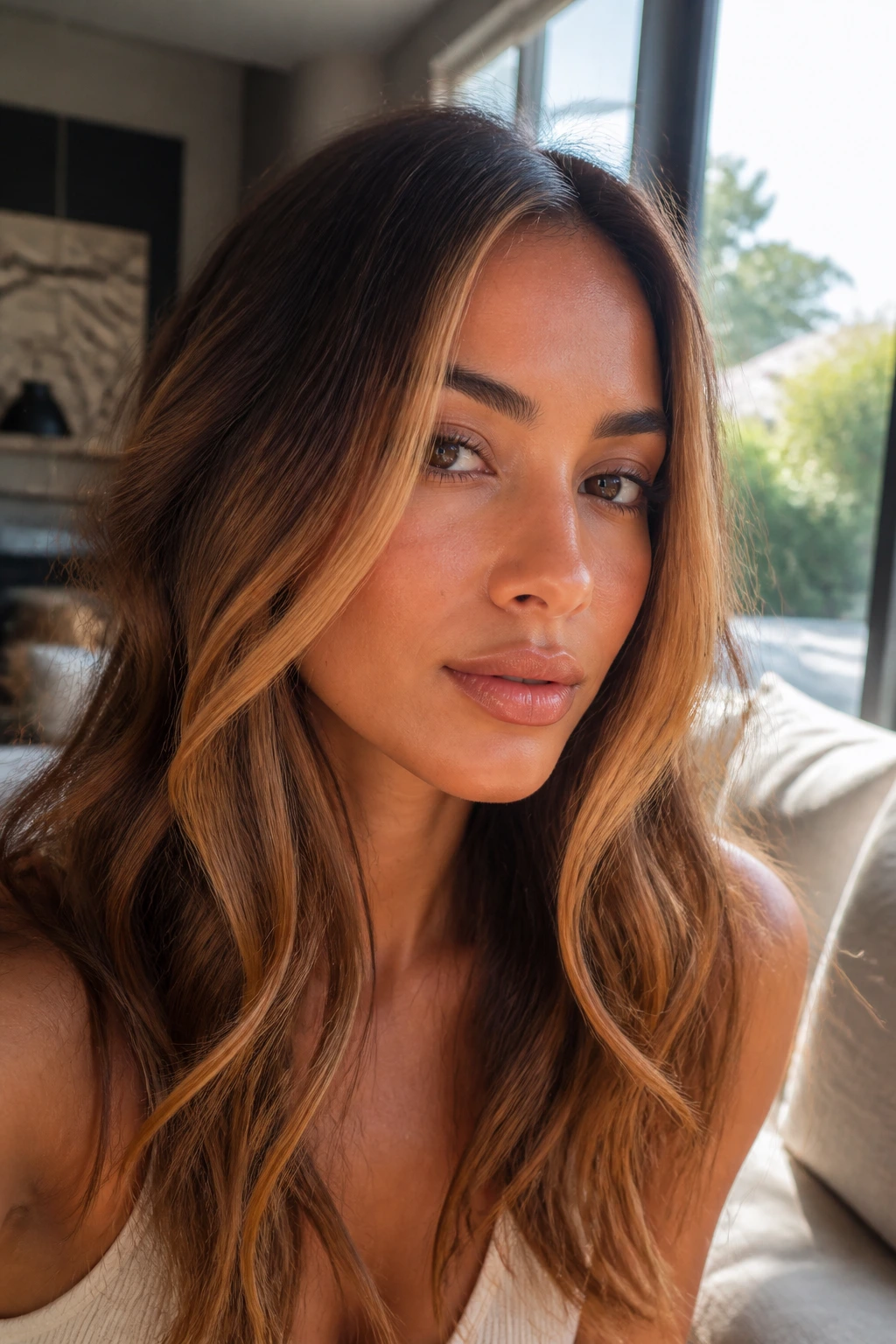
Amber face-framing pieces are one of the smartest ways to use copper if you don’t want to change everything. The brighter amber goes around the eyes, temples, and cheekbones, while the rest of the hair stays softer and lower contrast. That placement matters on tan skin because it pulls warmth forward without flooding the whole head.
You can keep the base dark blonde, light brown, or soft caramel. Just make sure the front pieces are lifted enough to read amber in daylight. A weak front panel gets lost. A good one makes the face look sharper in two seconds.
12. Soft Copper Foilyage
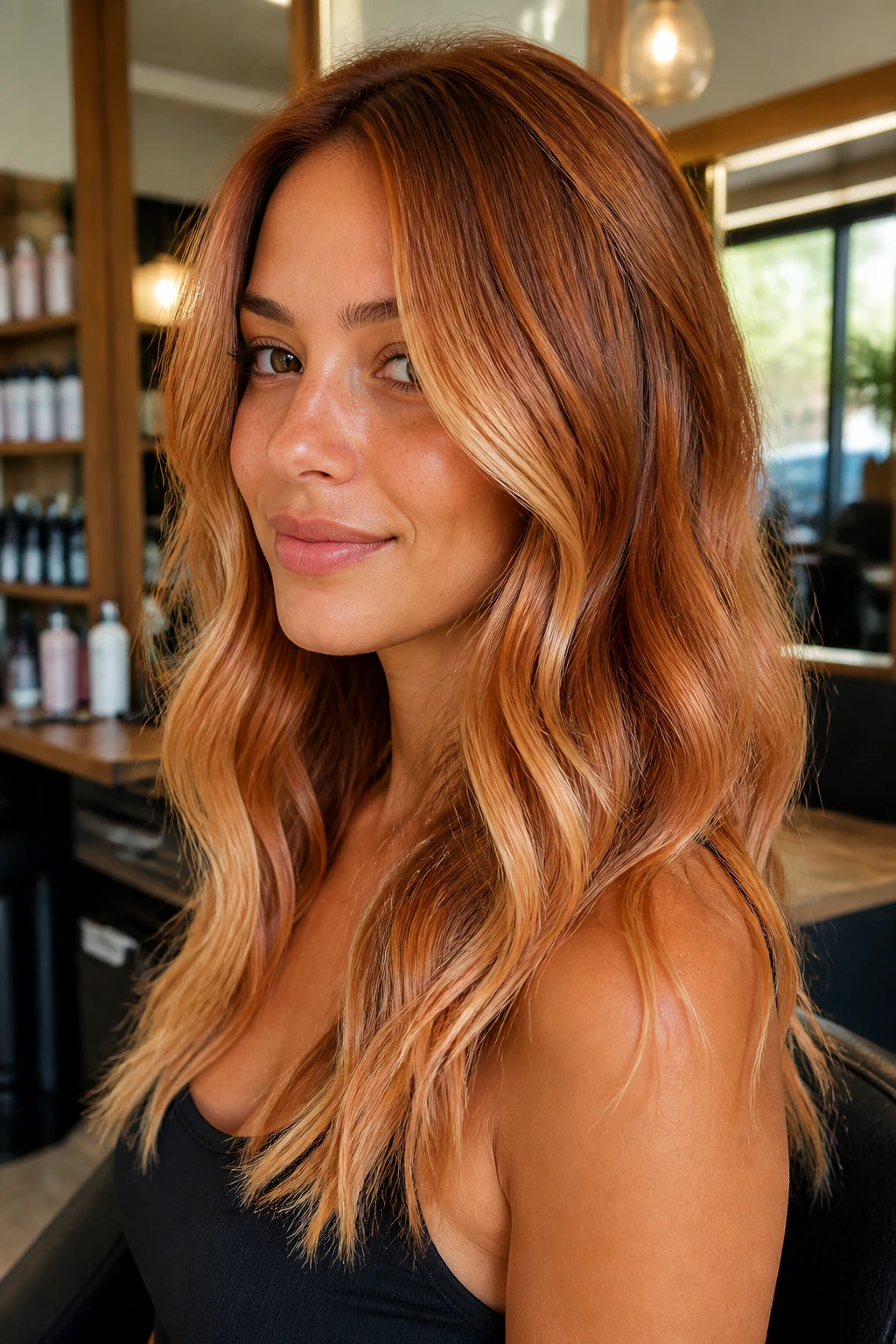
Foilyage gives you the softness of balayage with a little more lift, and that helps if your base is stubborn or dark. The copper-blonde pieces can be brighter at the ends and more diffused near the crown, which keeps the finish light without being thin-looking. On tan skin, that contrast is flattering because it adds shape.
Salon shorthand
- Ask for foils at the crown and hairline
- Keep the ends brighter than the mids
- Blend with a copper gloss, not an ash toner
I like this look for people with medium or thick hair because the light pieces don’t disappear into the texture. The technique creates enough movement that the color feels alive even on a simple ponytail day.
13. Sandalwood Copper Bob
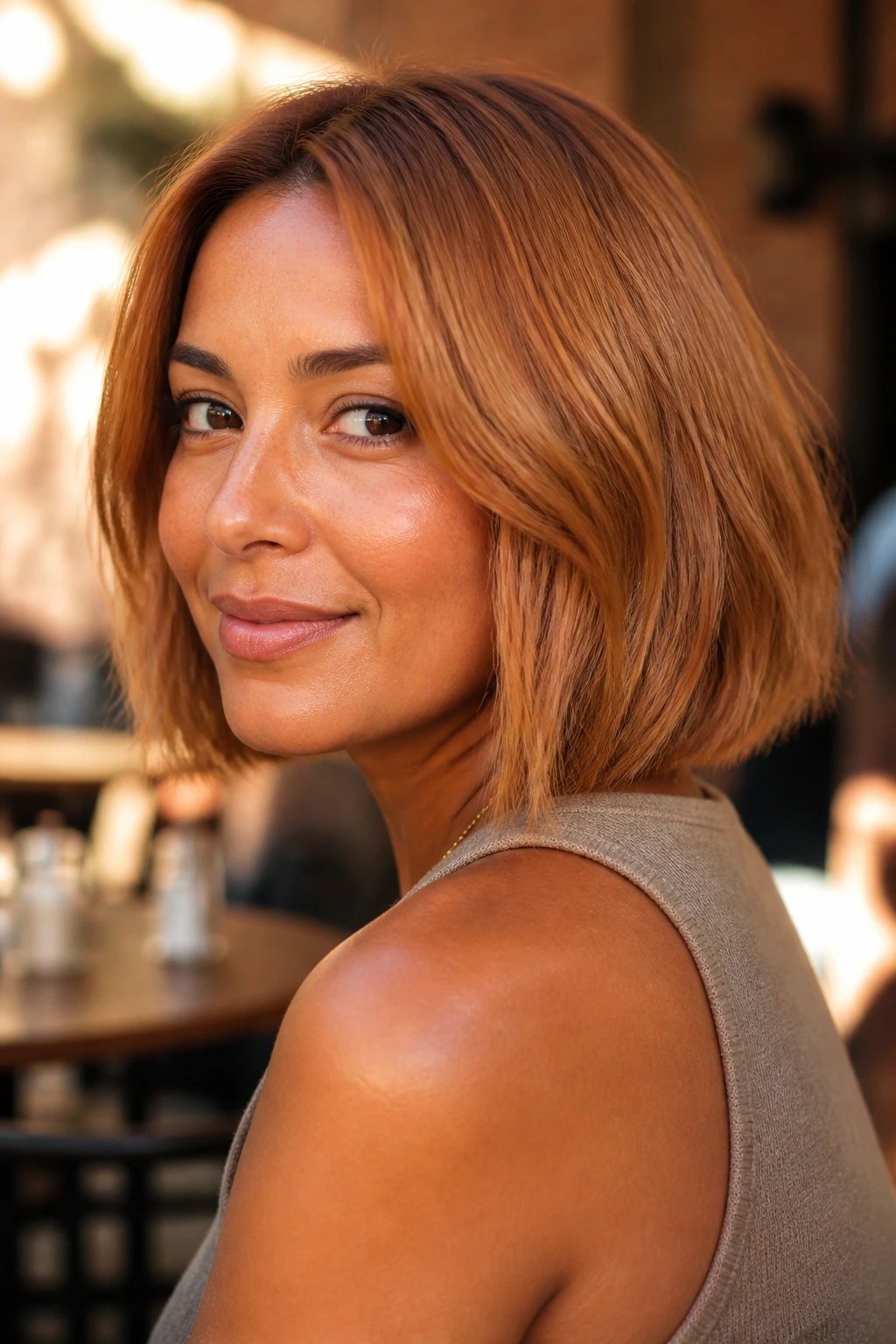
Sandalwood copper is a muted, earthy version of light copper blonde. It leans a little brown, a little beige, a little warm wood grain. On tan skin, that softness can be gorgeous because it avoids the shiny-orange problem and keeps the complexion looking calm.
The bob shape helps. Shorter hair makes the subtle color read on purpose rather than accidental. If you’ve ever worried that copper would be too loud on you, this is the gentler answer. It’s one of those shades that looks expensive because it knows when to stop.
14. Toasted Peach Blonde
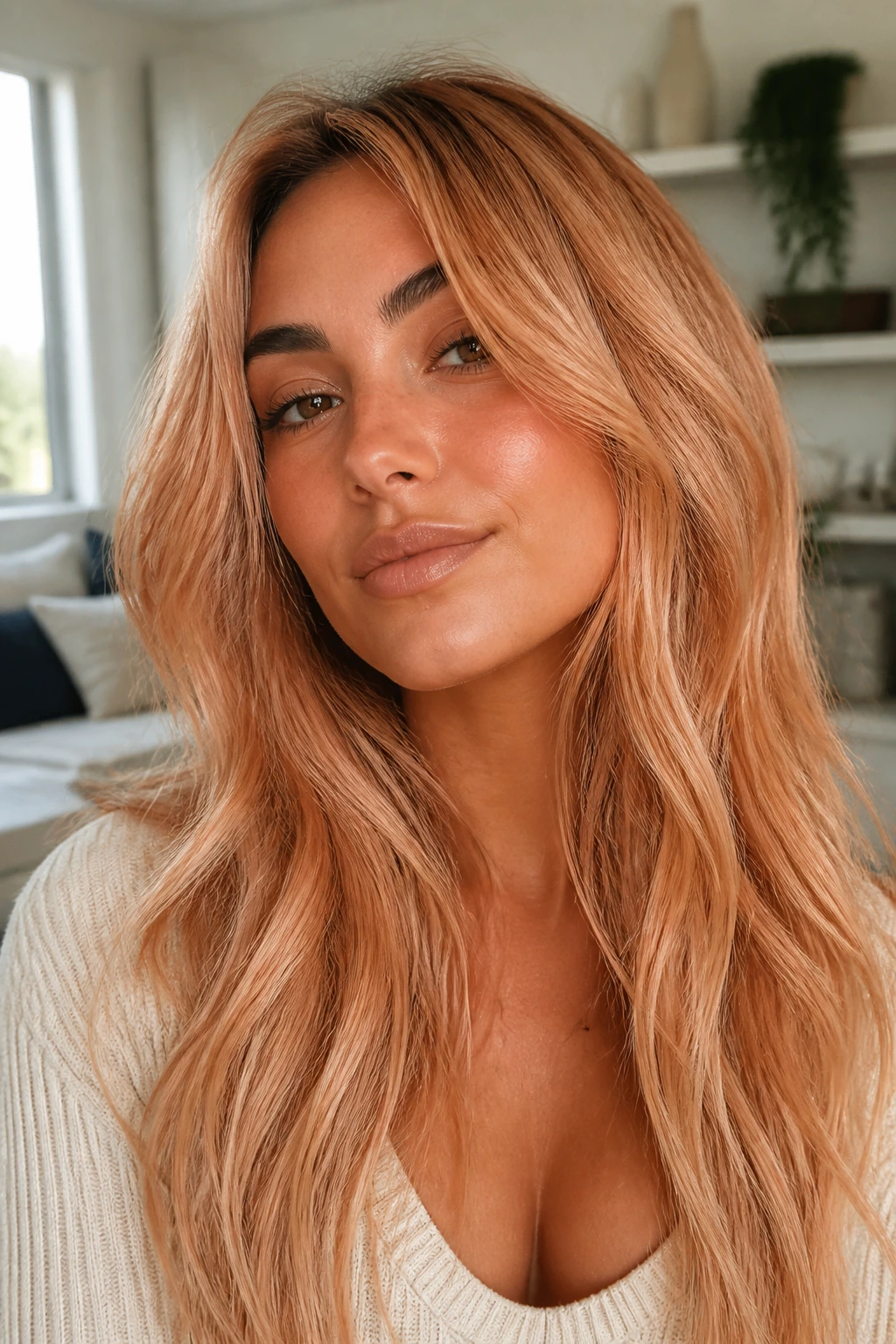
Toasted peach blonde is what happens when peach gets a little more depth and a little less sweetness. That makes it useful for tan skin, especially if your undertones are neutral and you don’t want the hair to scream “warm” from across the room. The toasted note gives the blonde some backbone.
This one works on long waves and shoulder-length cuts alike, but I especially like it on finer hair. The peach warmth makes the hair look fuller, and the toasted blonde keeps it from slipping into baby-pink territory. No one wants that surprise.
15. Brûlée Copper Layers
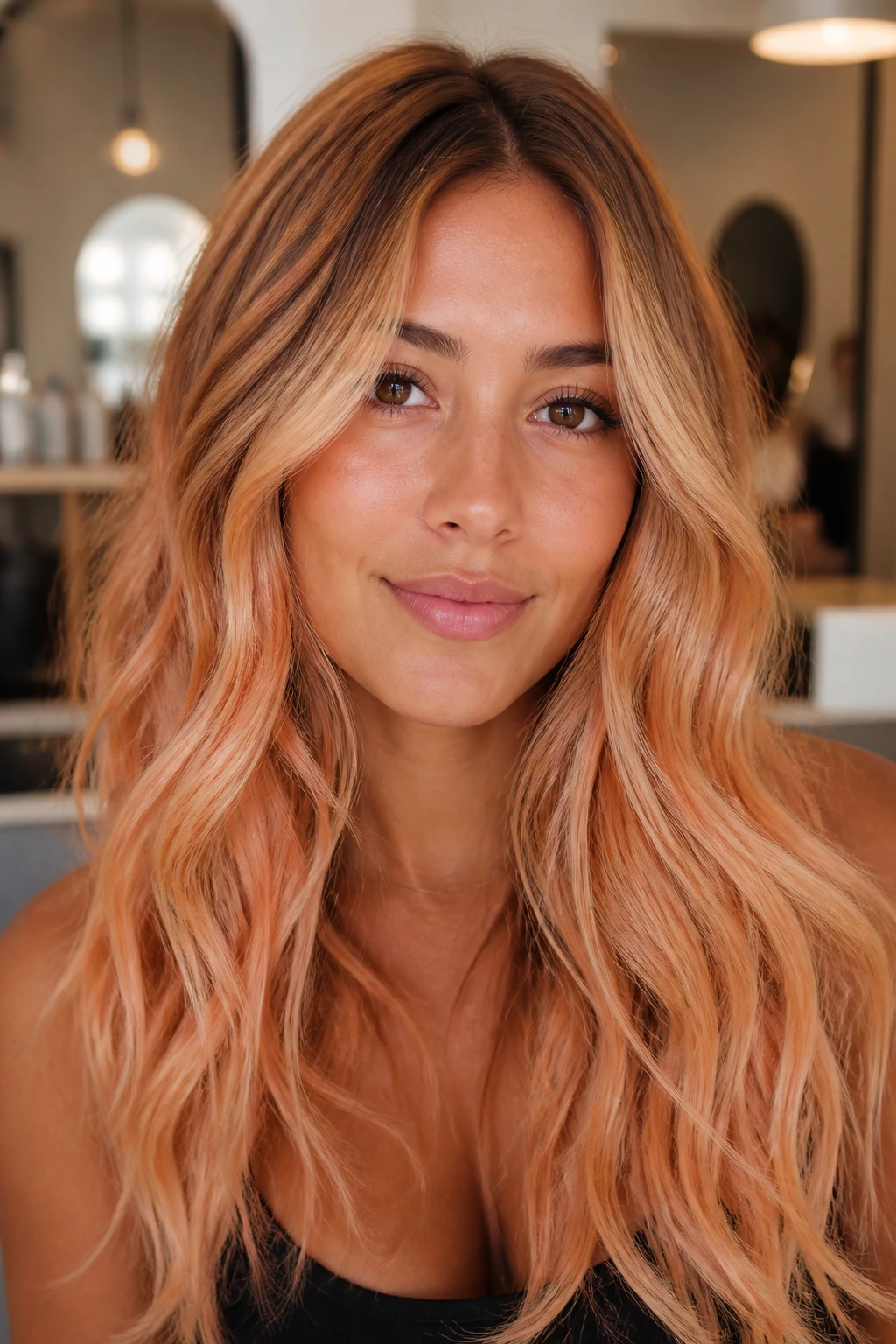
Brûlée copper layers bring caramelized depth to the ends and a softer glaze through the top layers. The name fits. There’s a browned-sugar feel to it, which is exactly why it looks so good on tan skin. The warmth feels natural, not forced.
Ask your colorist for a deeper root and lighter ends with a copper glaze over the whole thing. Layers help the different tones show up. Without them, you lose that baked-sugar movement that makes this shade interesting in the first place. It’s a grown-up version of copper blonde. Not stiff. Just richer.
16. Warm Beige Copper
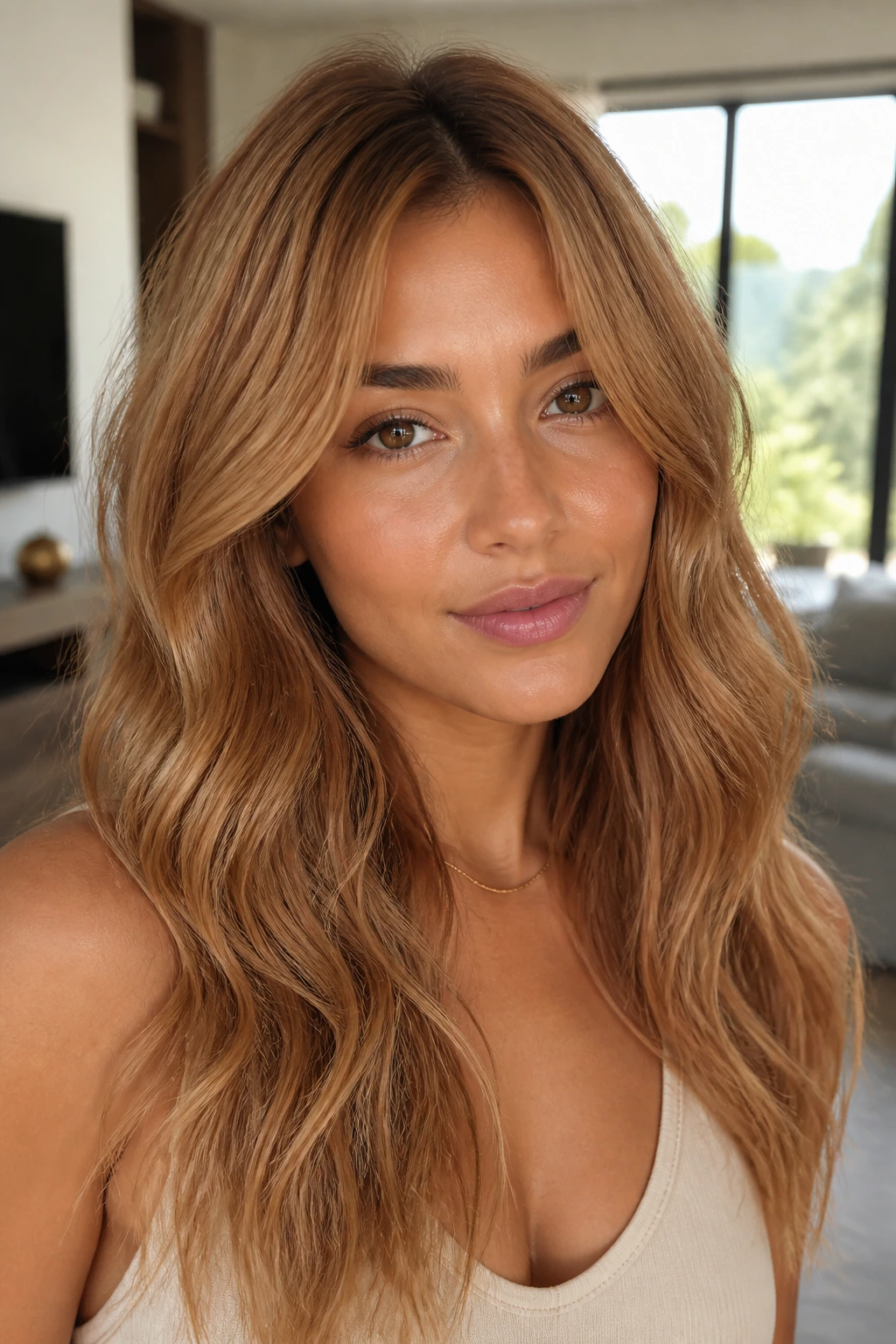
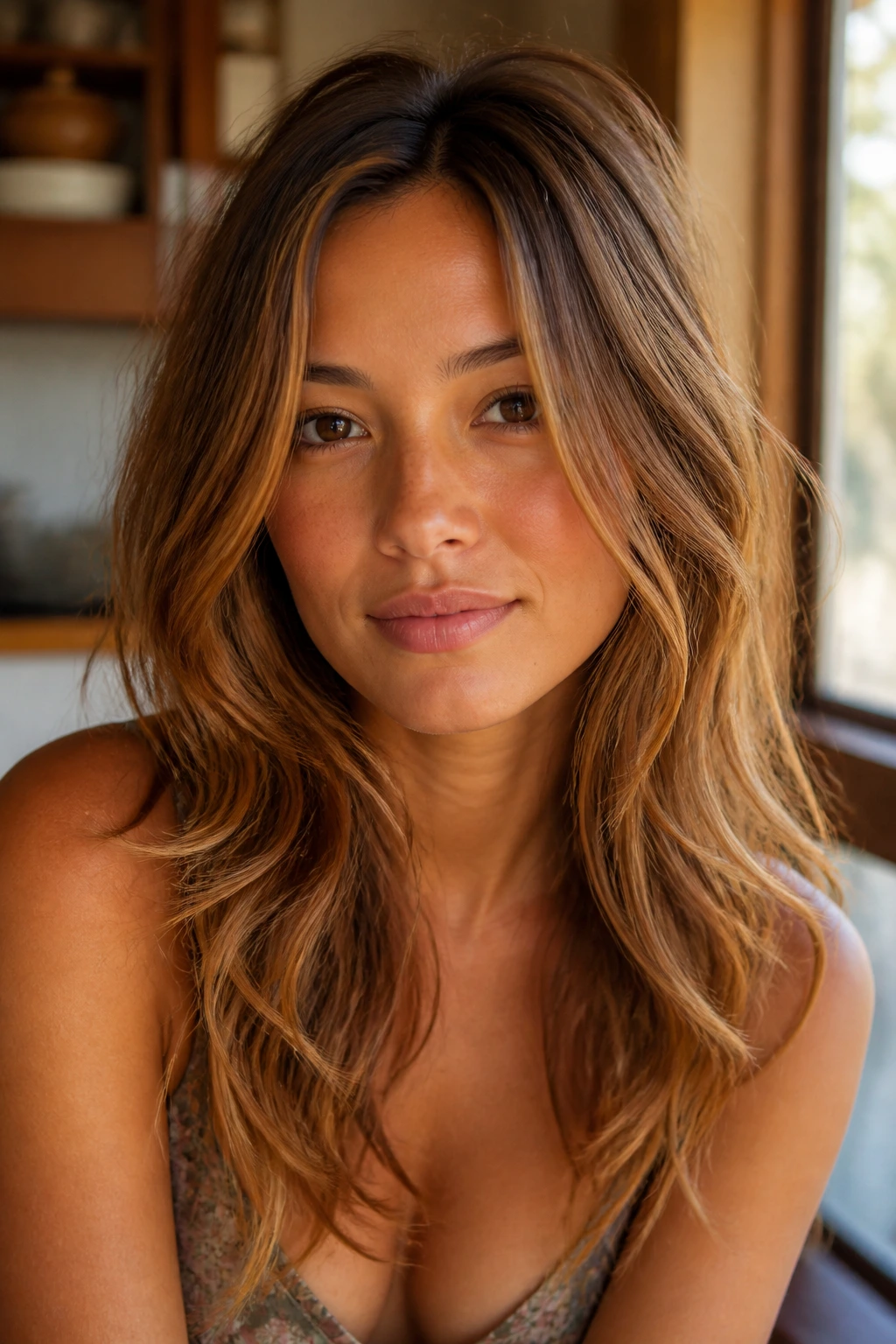
Warm beige copper is the diplomat in the group. It doesn’t pick a fight with tan skin; it meets it halfway. Beige keeps the color soft and wearable, while the copper stop it from looking flat or dusty. That balance is useful if you need the hair to read polished in office light and warmer outdoors.
This is a smart option if your skin has olive undertones. Too much orange can read exaggerated there. Beige copper keeps the warmth but dials the volume down. It’s subtle in a way that still feels intentional.
17. Copper-Tinted Caramel Balayage
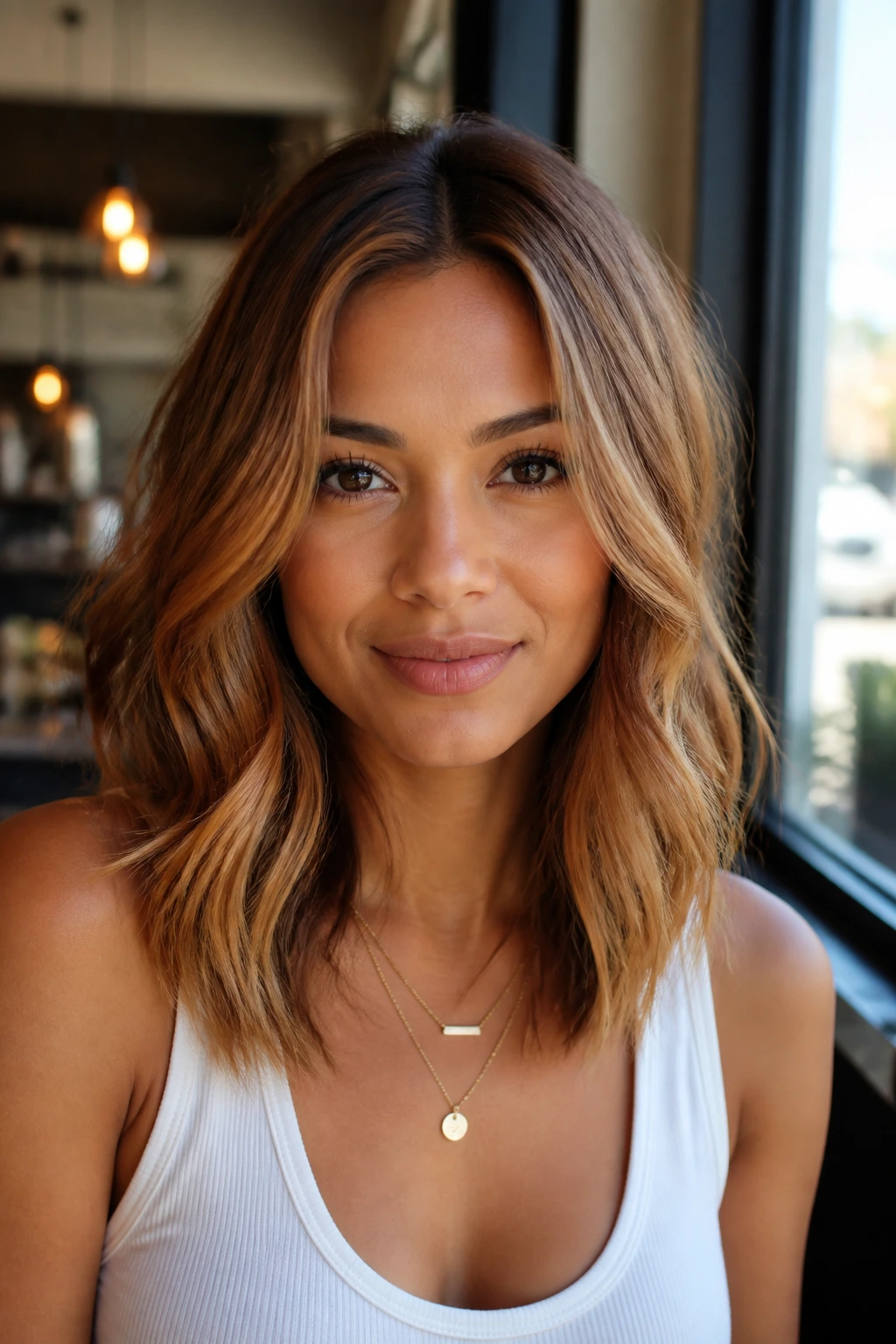
Copper-tinted caramel balayage is the shade I’d hand to someone who says, “I want warmth, but I still need my hair to look like my hair.” The caramel gives depth; the copper tint gives life. Together they make tan skin look even sun-kissed, which sounds cheesy until you see it in a mirror.
The beauty here is that the copper isn’t forced into every strand. It shows up in the painted pieces and the gloss. That makes the color easier to maintain and easier to grow out. If you’re nervous about going too red, this is a safer lane than full copper.
18. Sunset Strawberry Layers
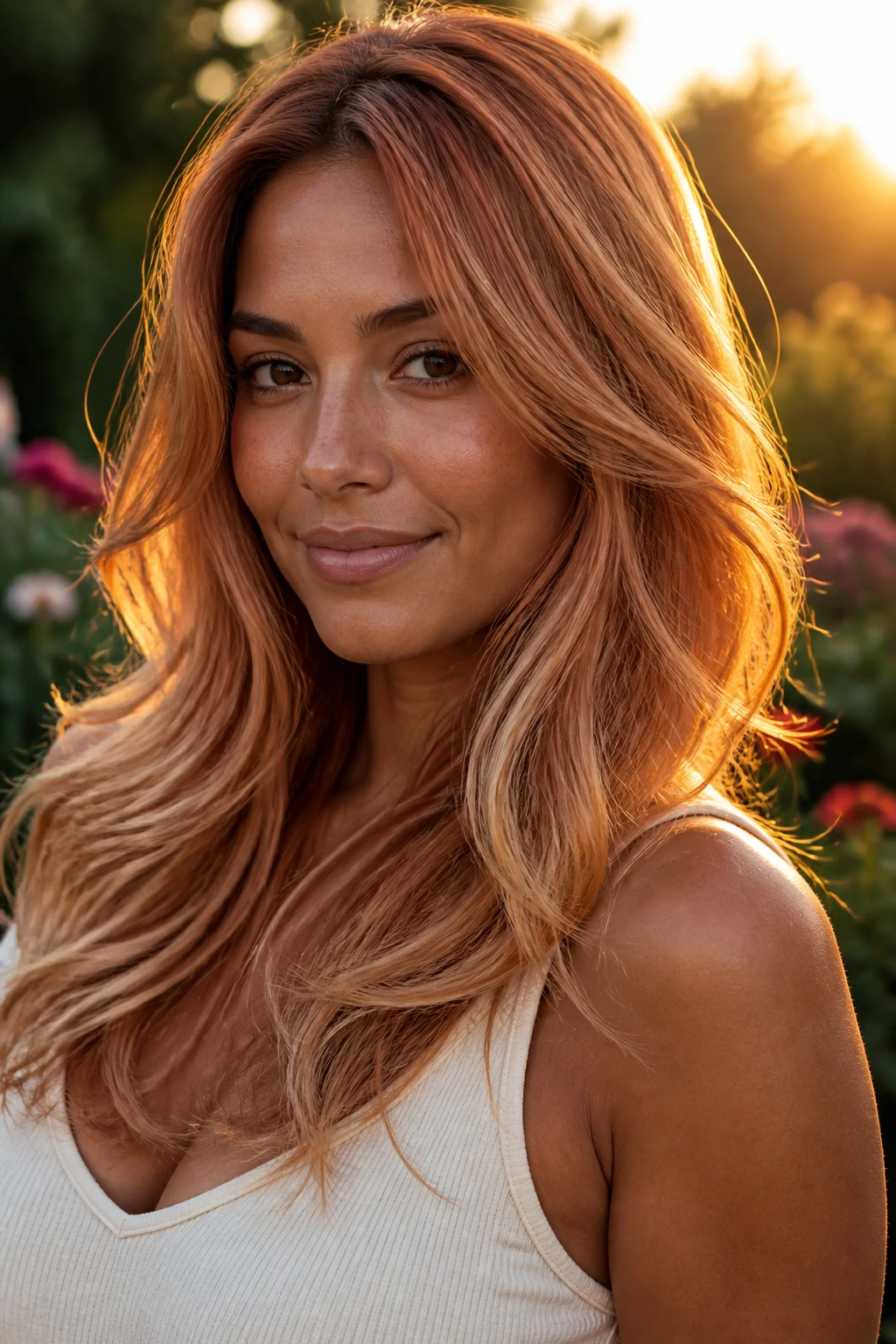
Sunset strawberry layers feel brighter and a little more playful than bronde. The strawberry note gives you warmth, while the layered cut keeps the color from sitting like one solid block. On tan skin, this can be the look that reads soft from a distance and richer up close.
I’d keep the base slightly deeper so the strawberry doesn’t wander into pastel territory. Bright ends plus deeper mids usually work better than an all-over wash of light color. The layers do the rest. A little movement goes a long way here.
19. Sunkissed Ginger Blonde
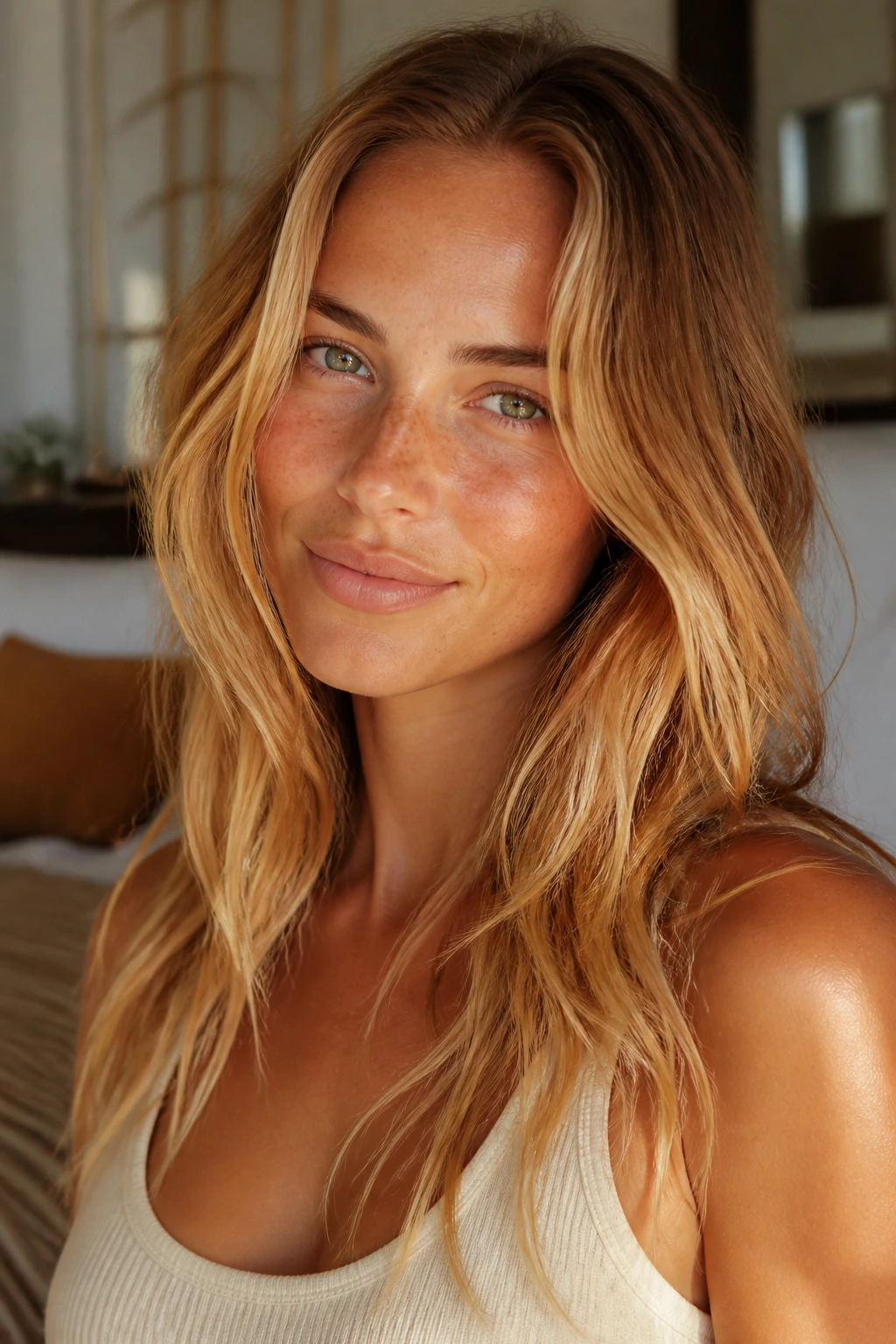
Sunkissed ginger blonde leans a touch more vivid, and that’s the point. Ginger adds a spicy edge, but when it’s mixed into blonde instead of sitting alone, the result stays wearable. Tan skin handles this well because the warmth is mirrored rather than minimized.
How to wear it
Loose waves make the copper-gold shifts show up. A sleek blowout makes the ginger read cleaner. If your wardrobe already leans camel, cream, rust, or olive, this shade slots in fast.
This one is best for people who don’t mind a little attention. It’s not shy. But it’s still blonde enough to stay in the family.
20. Sun Tea Copper Curls
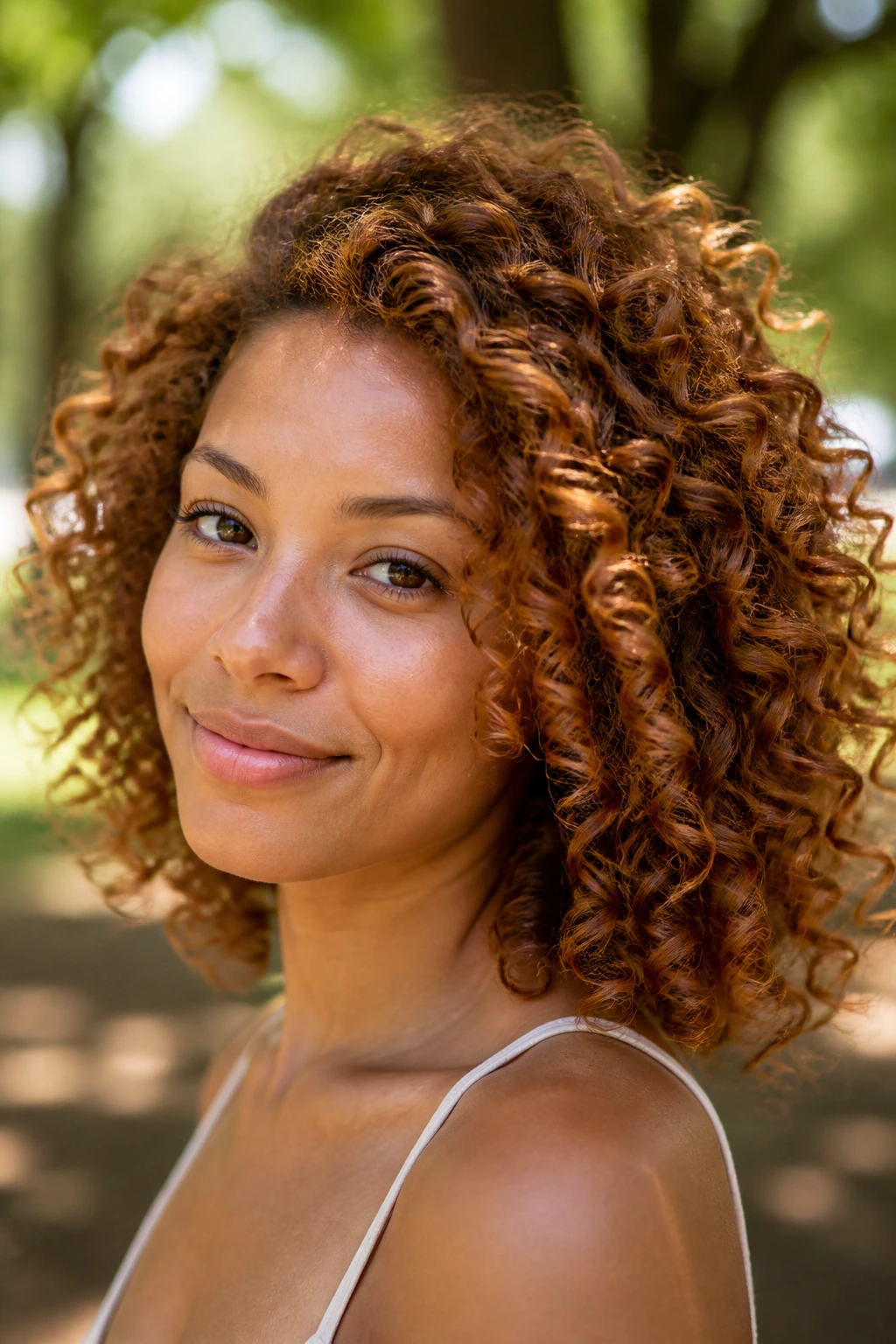
Curly hair loves this family of color when the placement respects the shape. Sun tea copper curls use a warmer amber-copper glaze on curls so the ringlets catch different tones as they move. Tan skin benefits from that contrast because the warmth shows up in the curl pattern, not just the surface.
The trick is to avoid flooding the curls with one flat color. You want ribbons and glaze, not a single orange sheet. On textured hair, that difference is huge. The color should follow the curl, not sit on top of it.
21. Vanilla Copper Gloss
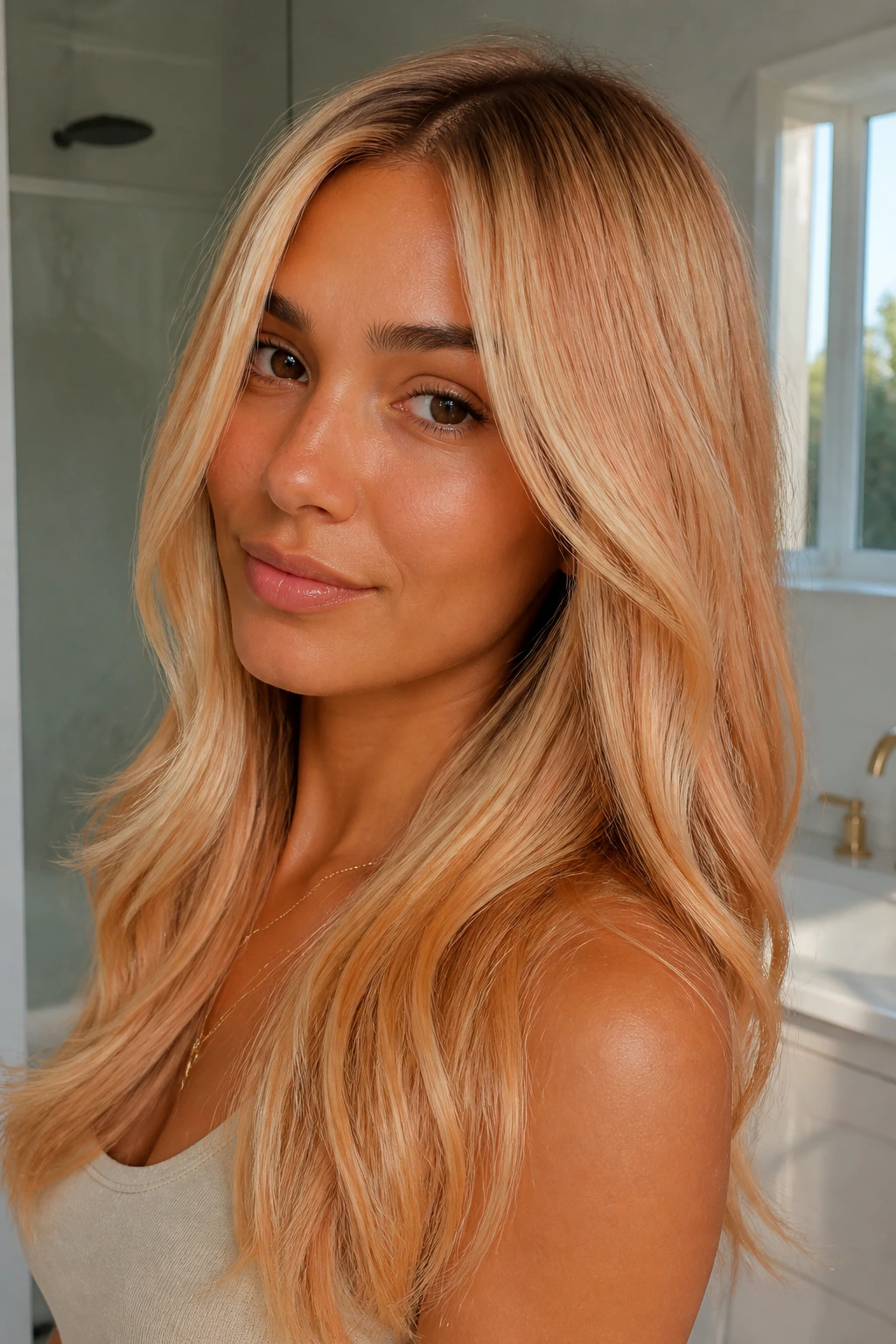
Vanilla copper gloss is probably the softest of the bunch. It starts with a creamy blonde base, then adds just enough copper to warm the whole head. On tan skin, that prevents the hair from looking pale or chalky without pushing it into orange territory.
This is a strong pick if you already have blonde hair and just want it to feel more alive. A gloss can shift the tone without the commitment of a full dye service. The result should feel smooth, reflective, and a little buttery. If the hair looks flat, the gloss wasn’t warm enough.
22. Maple Copper Lob
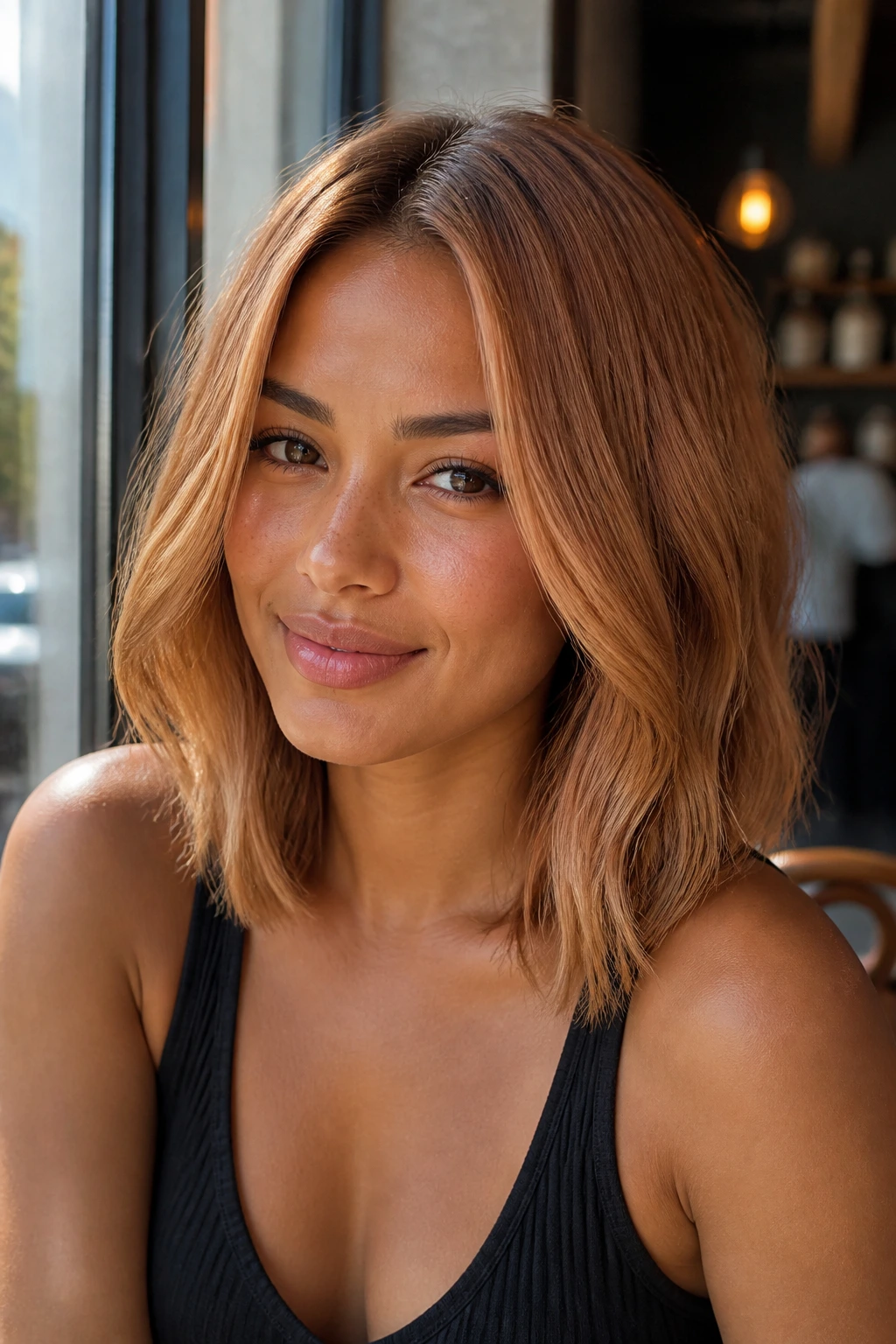
Maple copper gives you amber depth with a light blonde edge. It’s richer than honey and less peachy than apricot, which makes it useful for tan skin that leans more neutral or olive. On a lob, the tone looks polished and easy to wear.
The maple note keeps the finish from getting too sweet. That’s what I like about it. Some copper-blonde shades can feel sugary. This one feels rooted. It works especially well with a center part and soft bend, because the shape gives the color room to slide from one shade to the next.
23. Coral Copper Pixie
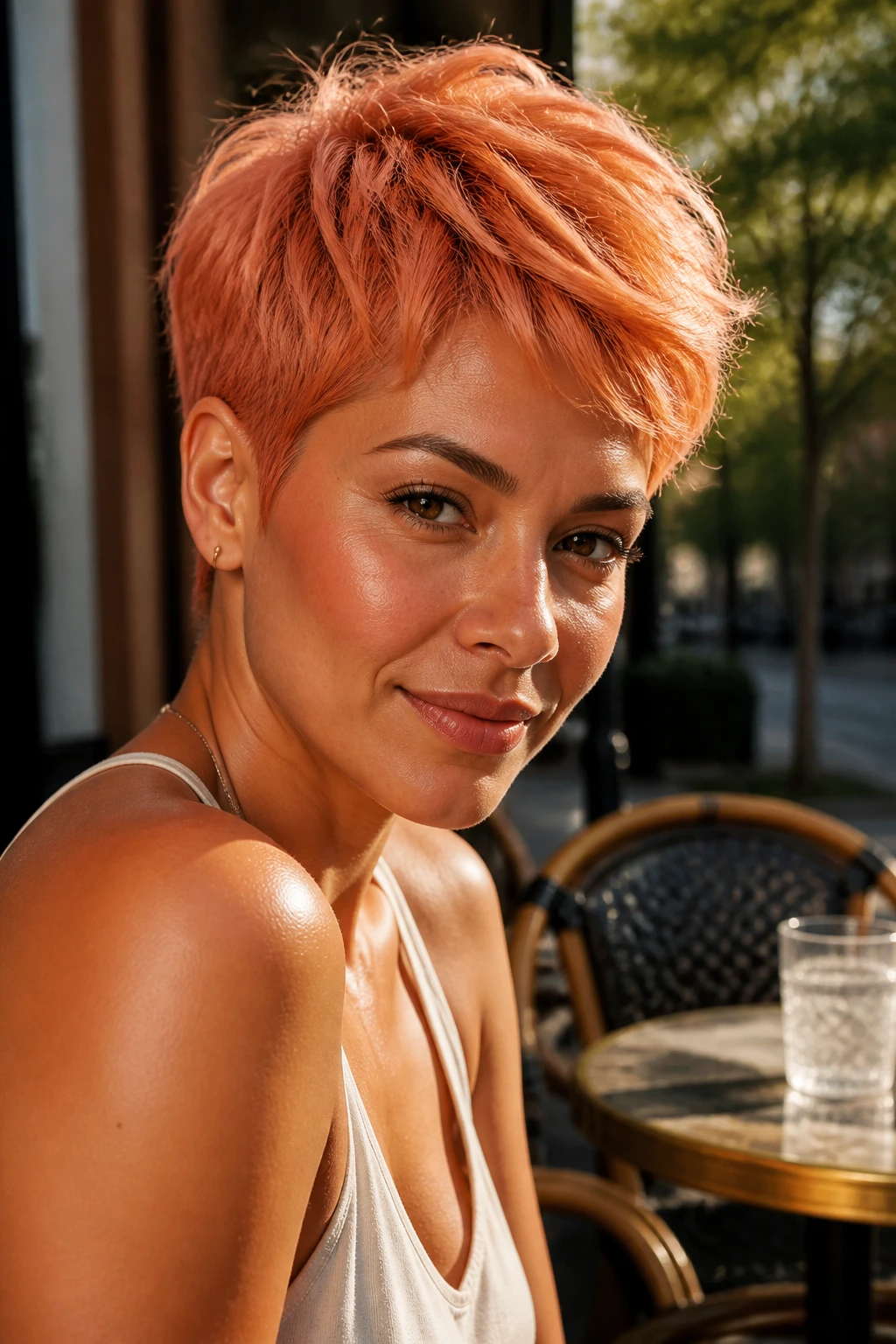
Short hair is where coral copper gets to have some fun. A pixie leaves less surface area for the color to hide in, so the coral-copper reflect shows quickly. On tan skin, that can be lively and sharp in a good way, especially if the cut has texture on top.
Keep the roots a touch deeper so the cut doesn’t lose shape. A little contrast around the crown helps the pixie look deliberate, not washed out. This is a bolder pick, no question. But on the right complexion, it’s one of the most memorable looks in the whole list.
24. Caramel-Apricot Shag
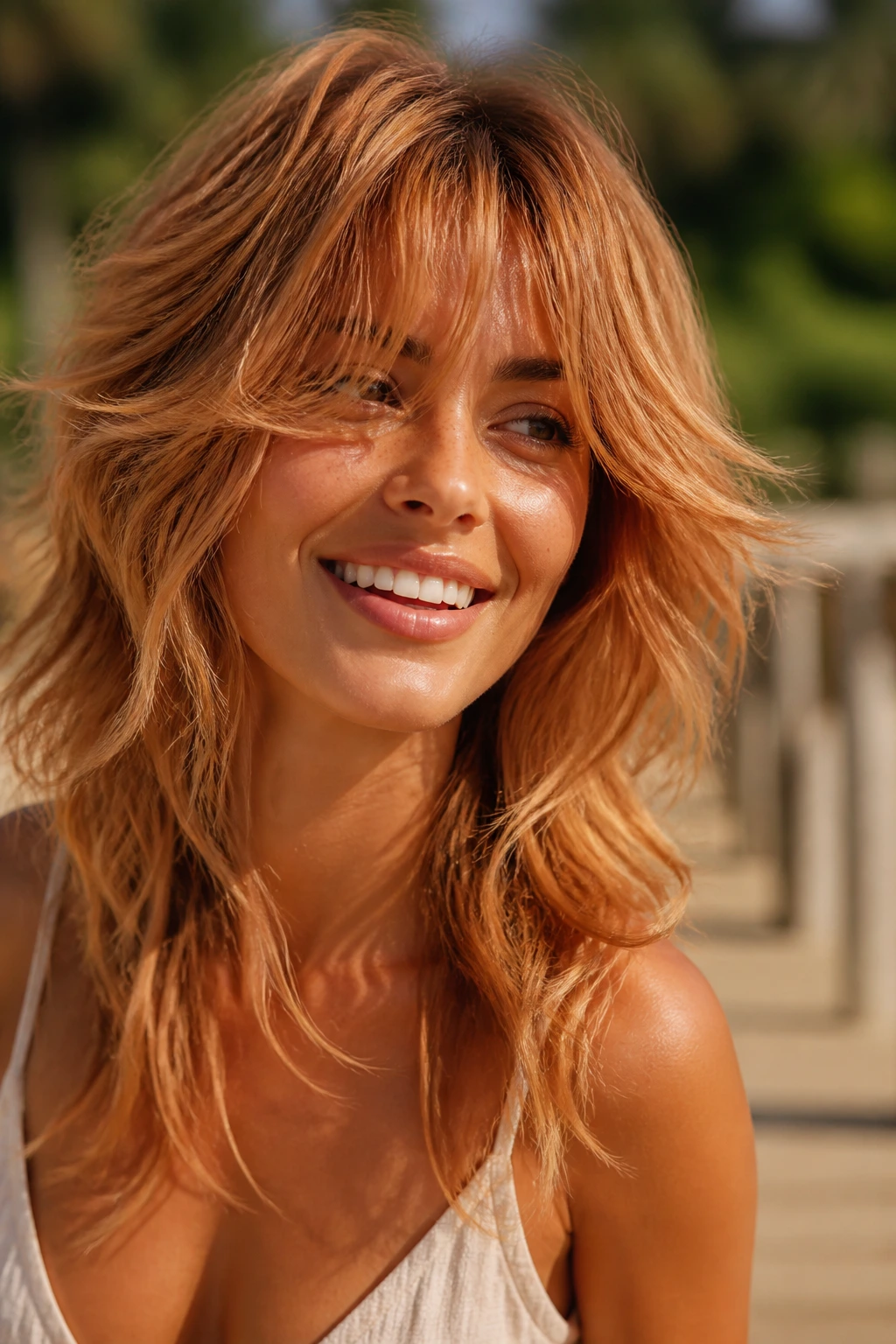
A shag loves dimension, and caramel-apricot is built for that. The movement in the cut makes the warm tones flicker instead of sitting still, which is exactly why it flatters tan skin so well. The apricot keeps the caramel from getting dull. The caramel keeps the apricot from going too bright.
If you like texture, this is a strong choice. It works on wavy hair especially well, and it’s forgiving when you air-dry with a little leave-in and scrunching. The color doesn’t need perfection. It needs motion.
25. Honeyed Copper Curtain Layers
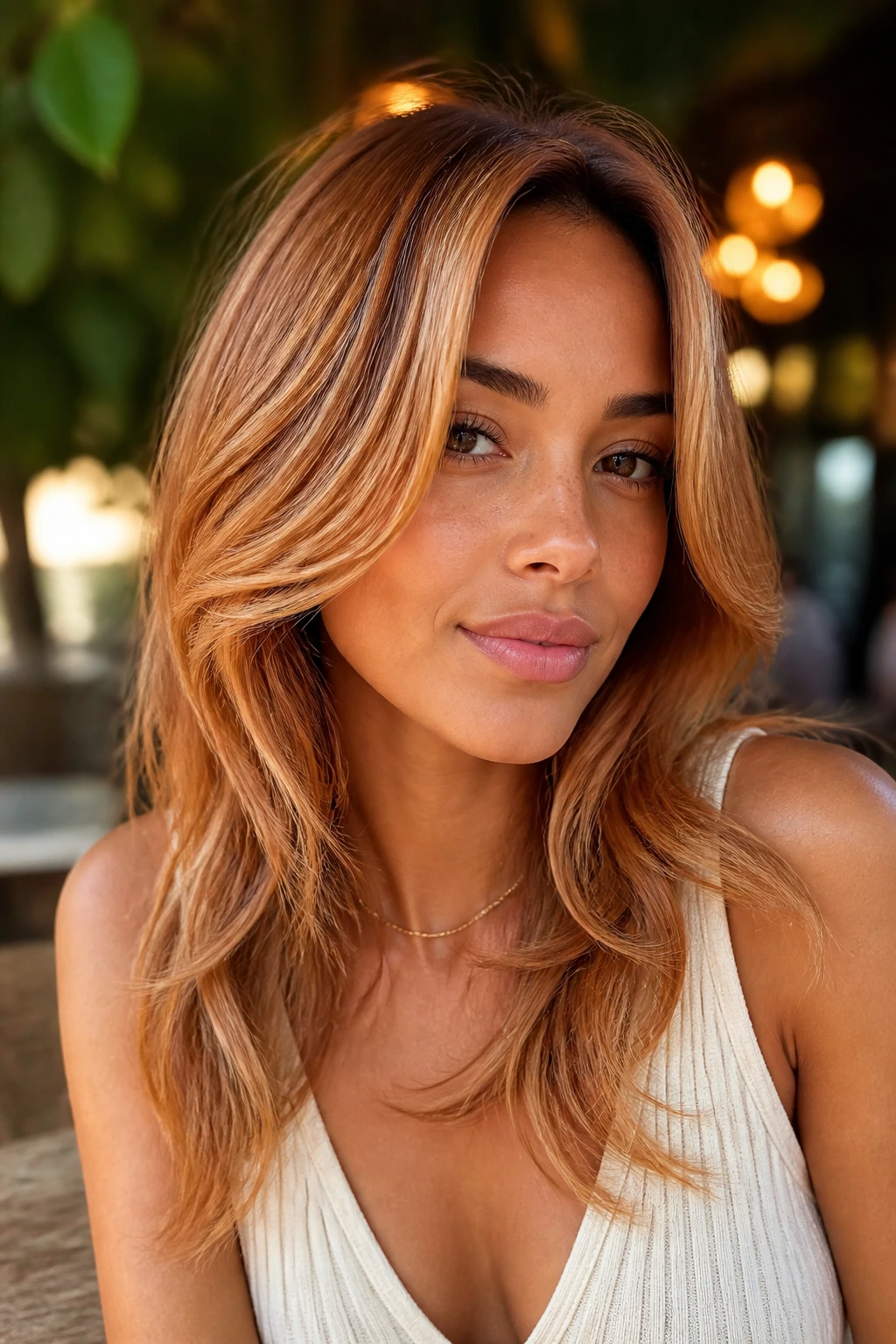
Honeyed copper curtain layers close the list for a reason: they’re easy to wear, and they know where to put the brightness. Curtain pieces frame the face, honey keeps the blonde soft, and the copper note gives tan skin the warmth it likes without overshooting into brassy territory.
This is the shade I’d point to if someone asked for a color that feels flattering from every angle. The layers let the tone move. The curtain fringe or face frame keeps the eye line lifted. If you want one copper-blonde idea that plays well with almost everything, this is it.
How to Ask for the Right Copper Level
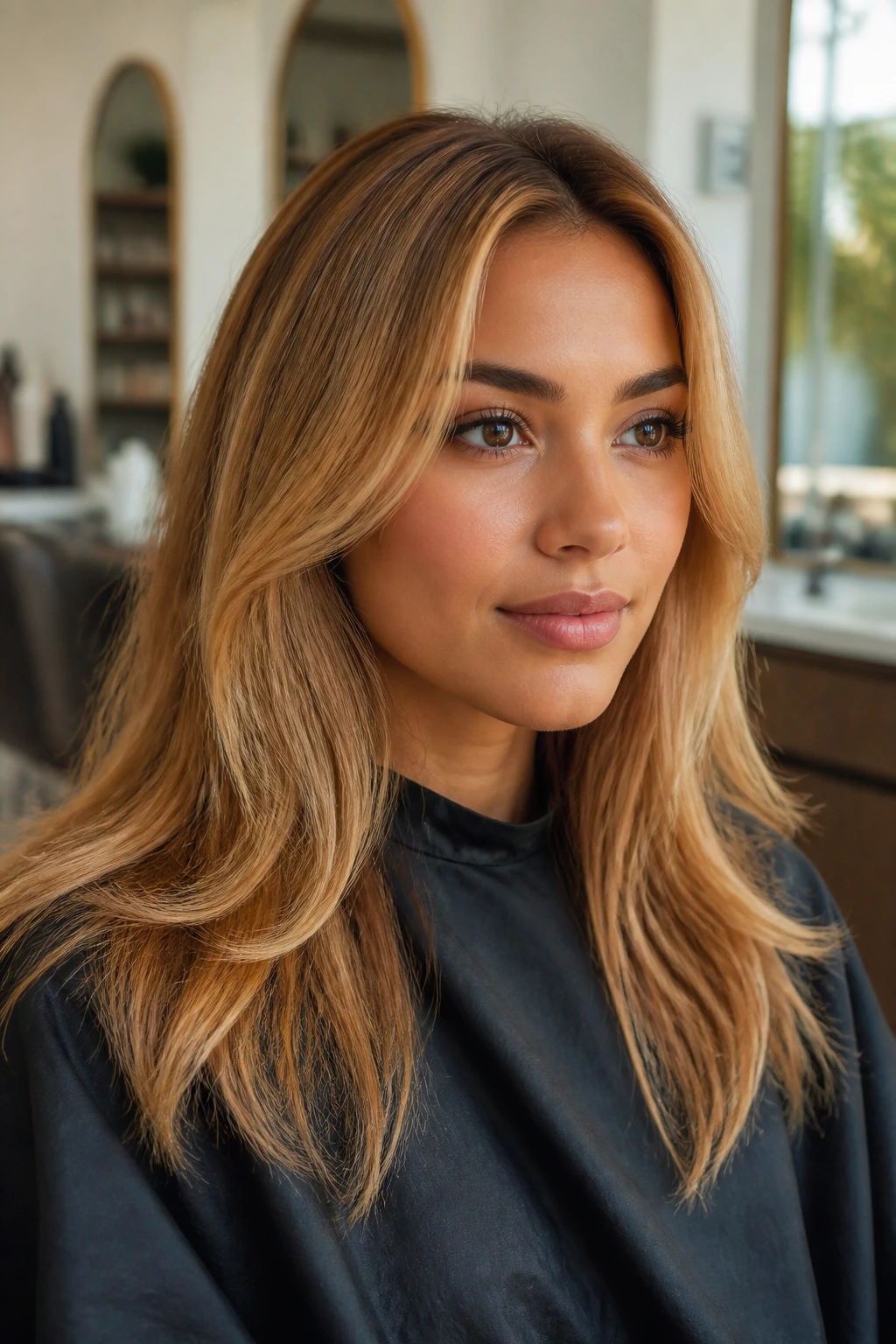
A lot of copper disappointment comes from language, not color theory. People ask for “light copper blonde” and get something too orange, too flat, or too dark because the stylist had to guess. That’s avoidable. Ask for a level 8 or 9 blonde with copper-gold reflect if you want brightness. Ask for level 7 with a root shadow if you want more depth and less upkeep.
Say what you do not want, too. “Not strawberry-pink.” “Not dark auburn.” “Not ashy.” Those negatives help narrow the target. If your natural hair is dark, ask whether the look needs foils, balayage, or a lift-and-tone appointment rather than a one-step color. On darker bases, that detail matters more than the brand name of the dye.
Essential Equipment for Keeping These Shades Fresh
-
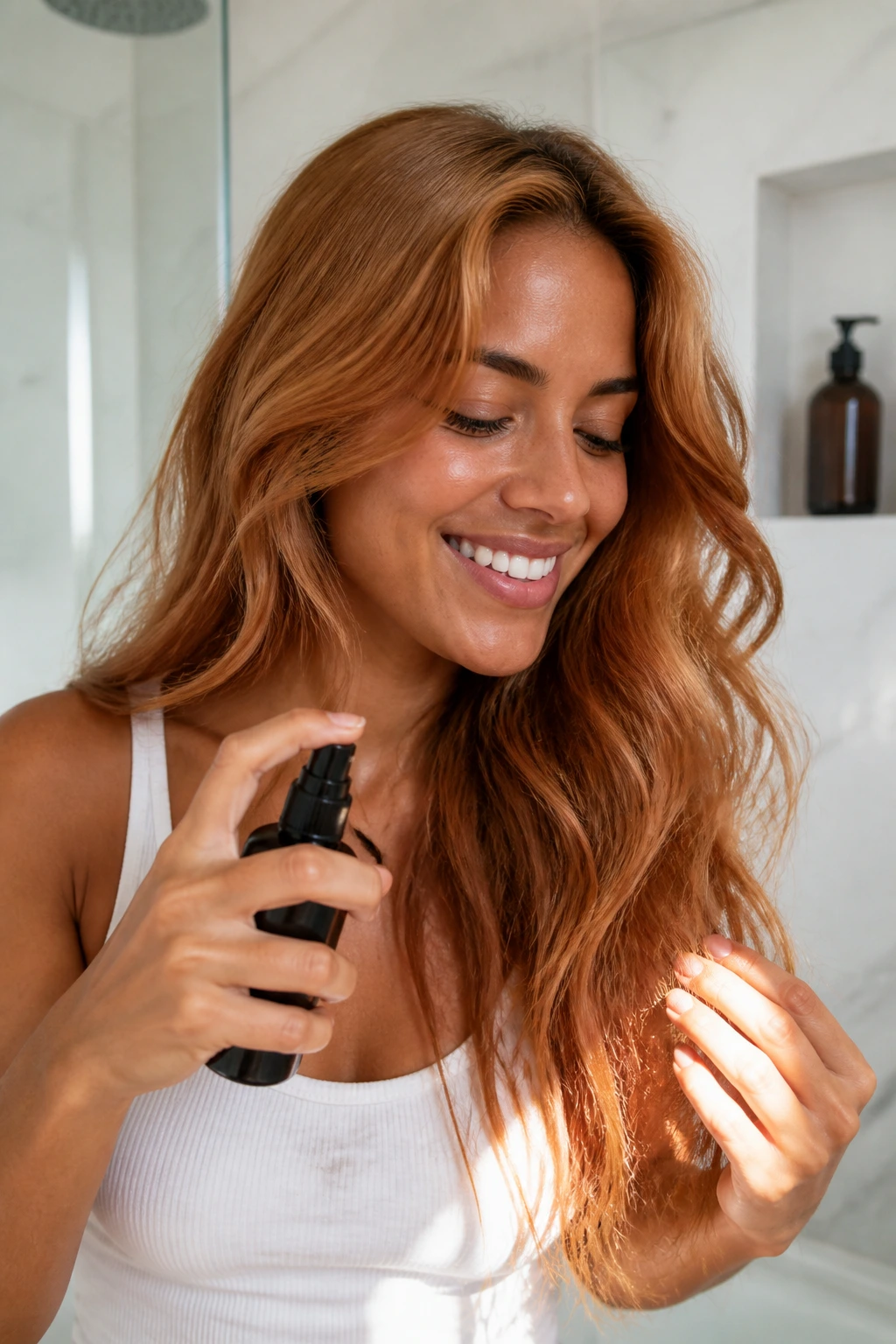
Sulfate-free shampoo: Helps the copper stay on the hair longer and keeps the blonde from drying out.
-
Color-depositing conditioner or mask: Useful for topping up warmth between appointments, especially if your hair fades fast.
-
Heat protectant spray: Copper tones lose shine fast when you fry the cuticle with a hot tool.
-
Bond-building treatment: Handy if you lighten your hair often or go from brunette to blonde in more than one session.
-
Wide-tooth comb: Safer on wet hair than a brush, especially if you’re wearing highlights or foilyage.
-
Microfiber towel or old T-shirt: Cuts down on rough friction that can make color look dull.
-
Gloss or toner with copper reflect: A salon refresh or at-home color glaze keeps the warm tone from going muddy.
-
Hand mirror and good daylight: Indoor bathroom lighting lies. Daylight tells the truth.
Smart Shopping and Shade Selection Tips
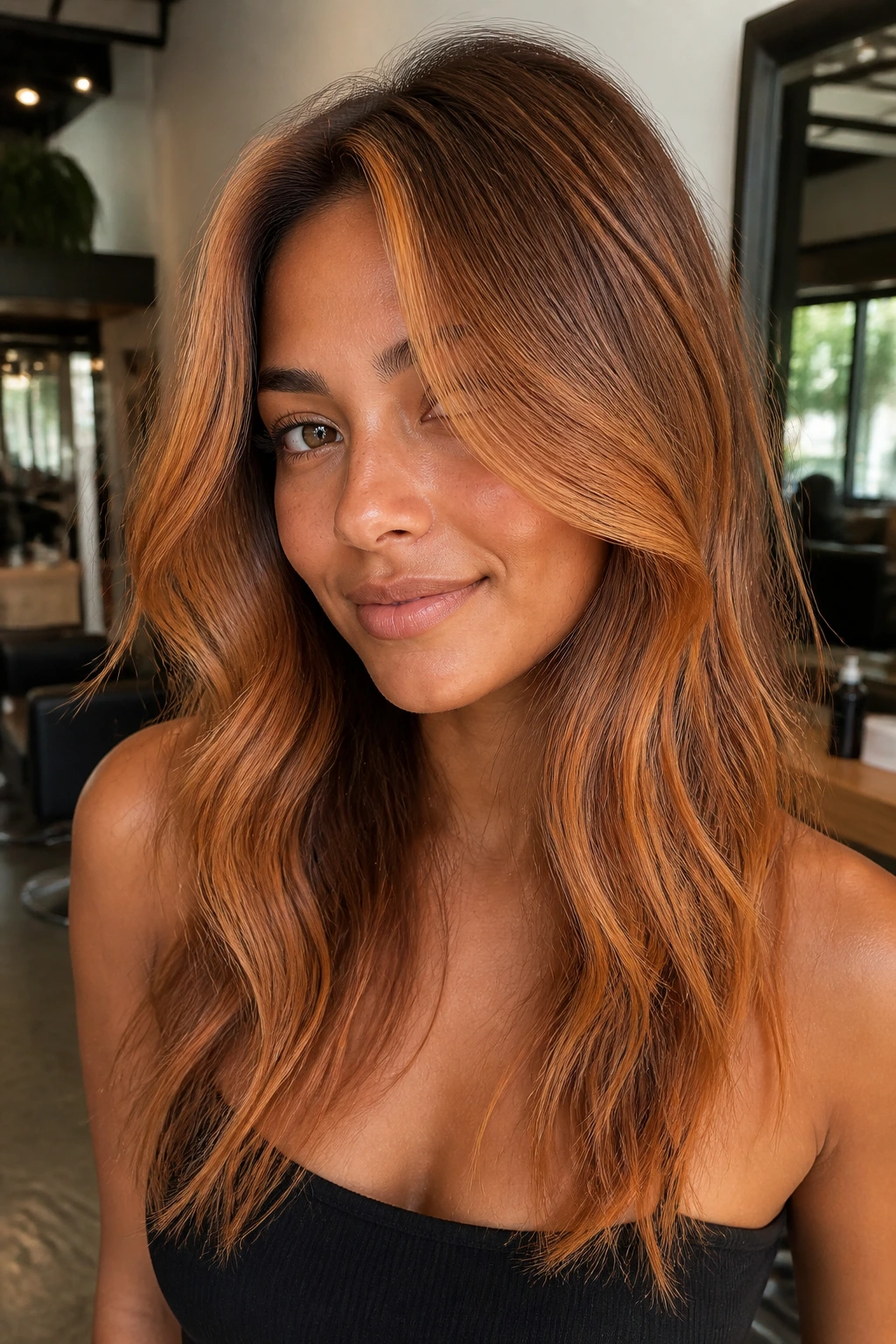
Shop for the undertone first, not the celebrity name of the shade. If your skin is golden, peach, or honey-warm, look for apricot, amber, honey copper, or rose gold copper. If your skin leans olive, beige copper, bronzed copper, or caramel-apricot usually sit better than a bright orange tone. Neutral-warm skin can wear a wider range, but it still benefits from a little softness at the root.
If you’re buying at-home color, check whether the formula is permanent, demi-permanent, or a gloss. Permanent color is useful when you need lift or gray coverage. Demi-permanent color deposits warmth with less commitment. A gloss is the least dramatic route and often the best one for blondes who only need tone, not a full color overhaul.
Hard water can fight copper. So can heavy purple shampoo. That’s worth saying plainly. Purple shampoo is great when you need to cancel yellow, but copper-blonde hair usually needs warmth preserved, not erased. Use it sparingly, if at all, and lean on a copper-friendly mask or a gentle gloss instead.
How to Wear These Shades
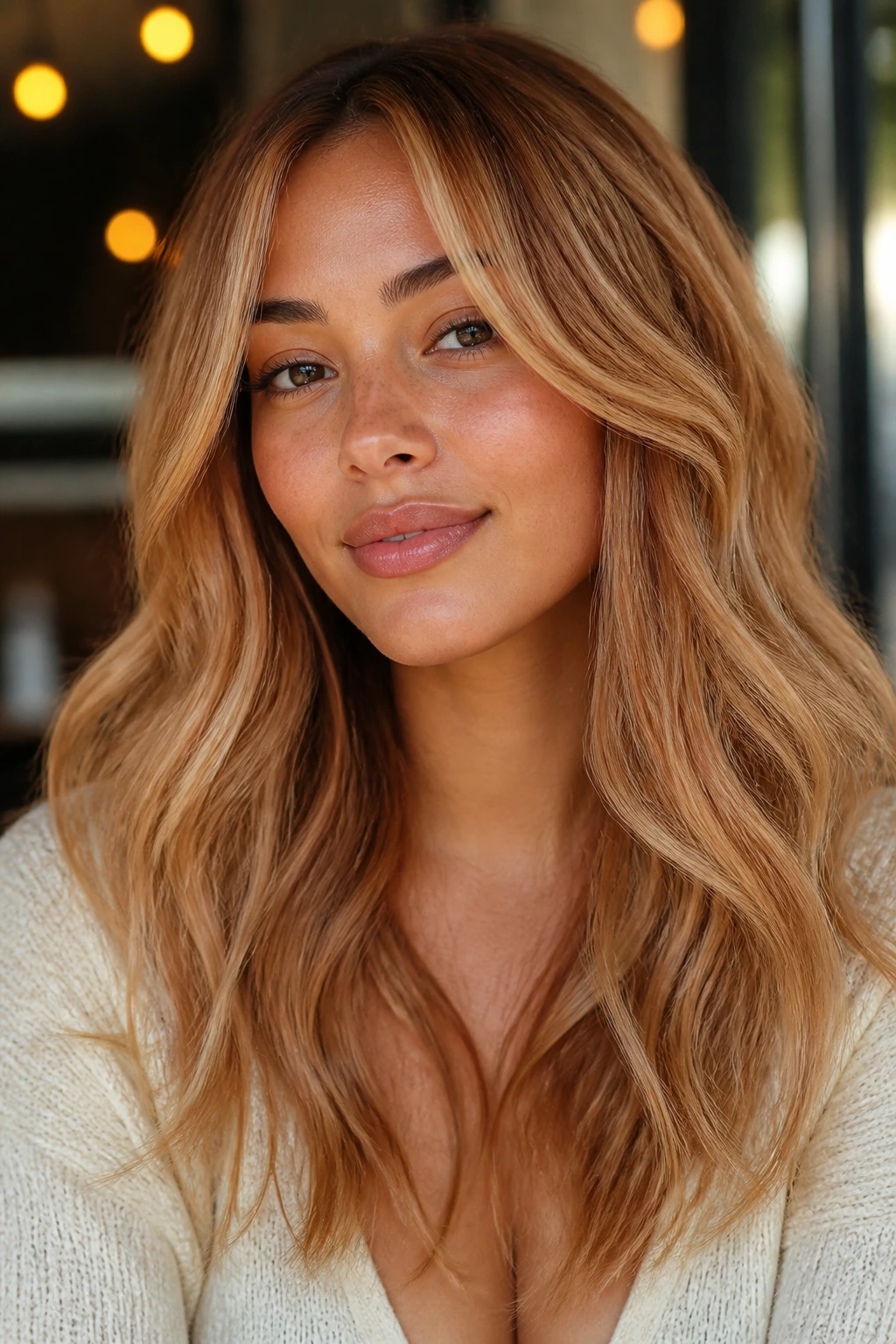
Presentation: Loose waves show ribboned copper, while a smooth blowout makes the gloss read cleaner and a little more polished. If the cut has bangs, tuck one side back and let the front pieces do the talking.
Accompaniments: Cream, camel, rust, olive, and deep brown clothing usually make these shades look richer. Peach blush, brown mascara, and gold jewelry keep the whole face in the same warm family. Harsh cool-toned makeup can make the hair feel disconnected.
Portions: For a softer look, keep the copper near the face and on the outer layer only. For a stronger change, ask for more saturation through the midlengths and ends. On tan skin, a little brightness goes farther than people expect.
Beverage Pairing: Warm lighting. Seriously. Golden-hour sunlight, soft indoor bulbs, and neutral mirrors flatter copper far more than icy bathroom fluorescents. The shade can look two levels different depending on the light, and that’s not an exaggeration.
Additional Tips and Color Boosters
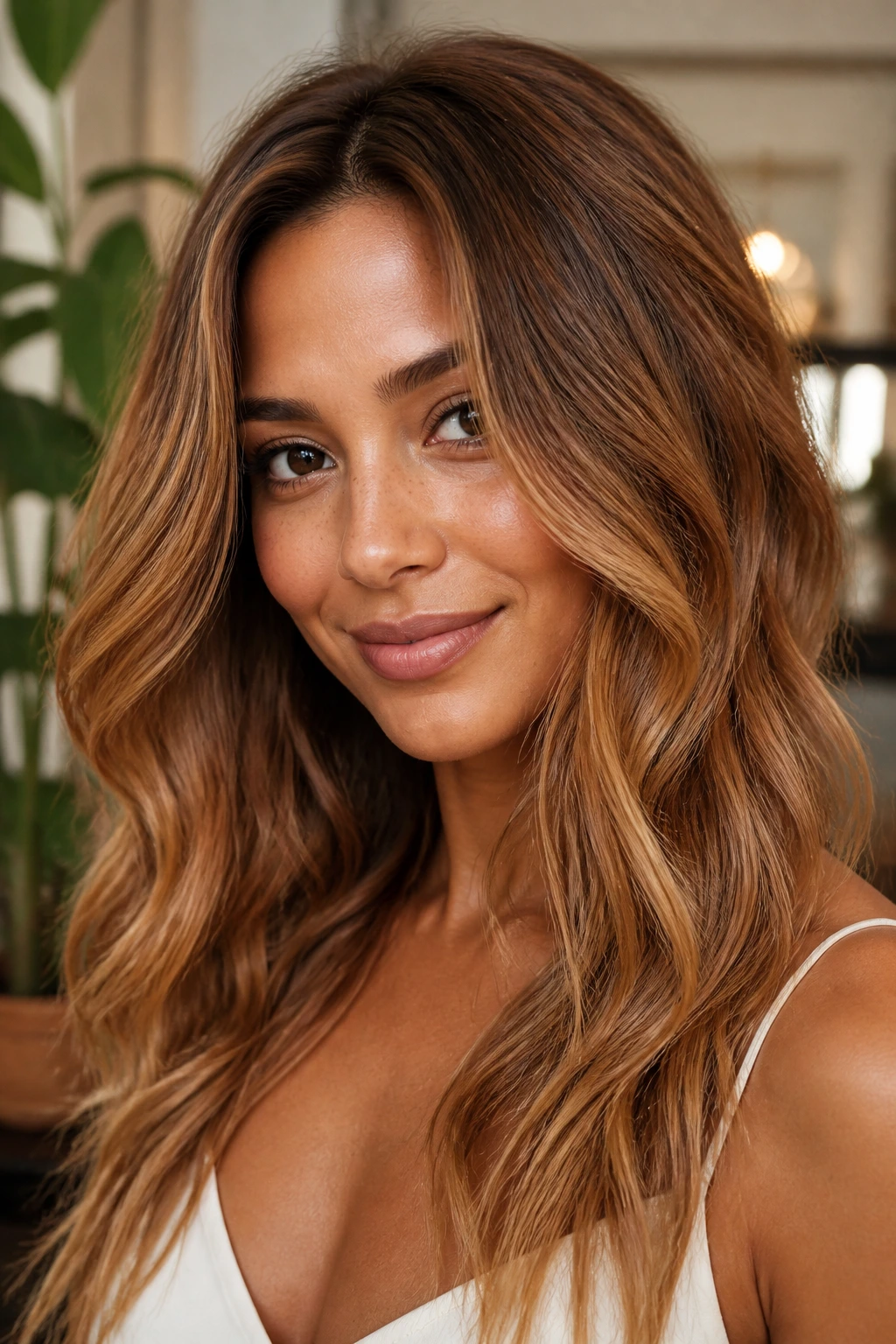
Tone Enhancement: A copper-depositing mask every 2 to 3 weeks keeps the warmth alive between salon visits. If your hair fades peachy, choose a slightly deeper gloss rather than piling on more orange.
Customization: Add a root shadow for depth, brighten the face frame for contrast, or weave in beige lowlights if you want the copper to feel softer. Small placement changes do more than people think.
Styling: Soft waves show the different reflects best. Straight hair gives you a smoother, cleaner finish. Curls turn the color into little flashes of amber and apricot.
Make-It-Yours: Fine hair usually looks best with partial placement or a gloss, because too much lightening can make it look wispy. Thick hair can carry bolder panels and deeper saturation without losing movement.
Keeping the Tone Fresh Between Visits
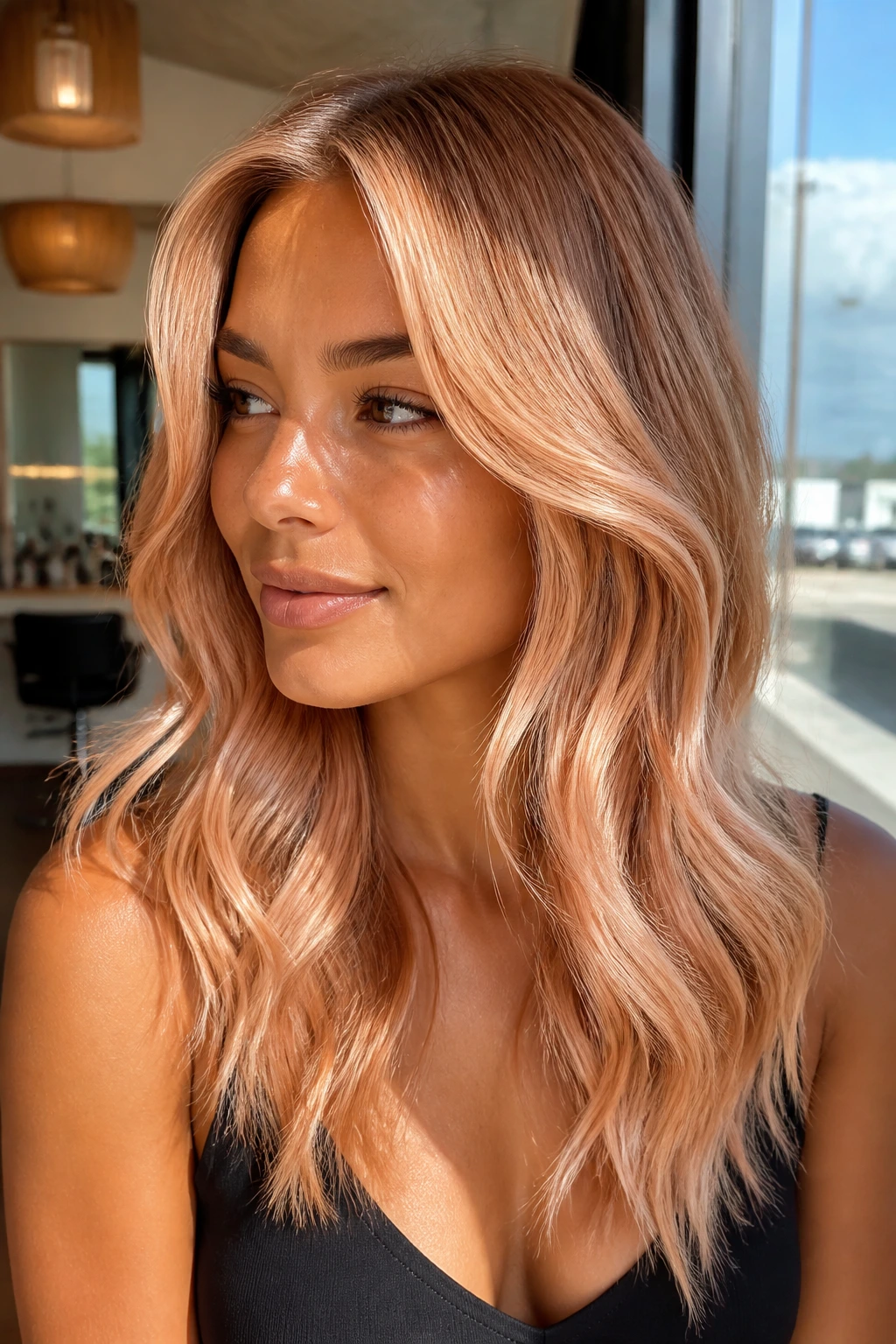
Light copper blonde usually looks best when you respect the wash schedule. Washing two or three times a week is plenty for most people, and lukewarm water beats hot water every time. Hot water opens the cuticle and lets the warm pigment slip out faster. The first 48 to 72 hours after a color appointment matter too; if your stylist tells you to wait before shampooing, listen.
Glosses and demi-permanent tones tend to hold around 6 to 10 weeks, depending on porosity, water quality, and how often you heat-style. Permanent color lasts longer at the root, but the copper reflect still fades faster than the blonde itself. That’s why a refresh gloss every 4 to 6 weeks can make the color look cared for instead of tired.
If you swim, use a leave-in conditioner or a swim cap. Chlorine and copper are not friends. If your water runs hard, a shower filter can make a real difference, and that’s one of those unglamorous fixes that works better than another bottle of purple shampoo.
Variations and Adaptations to Try
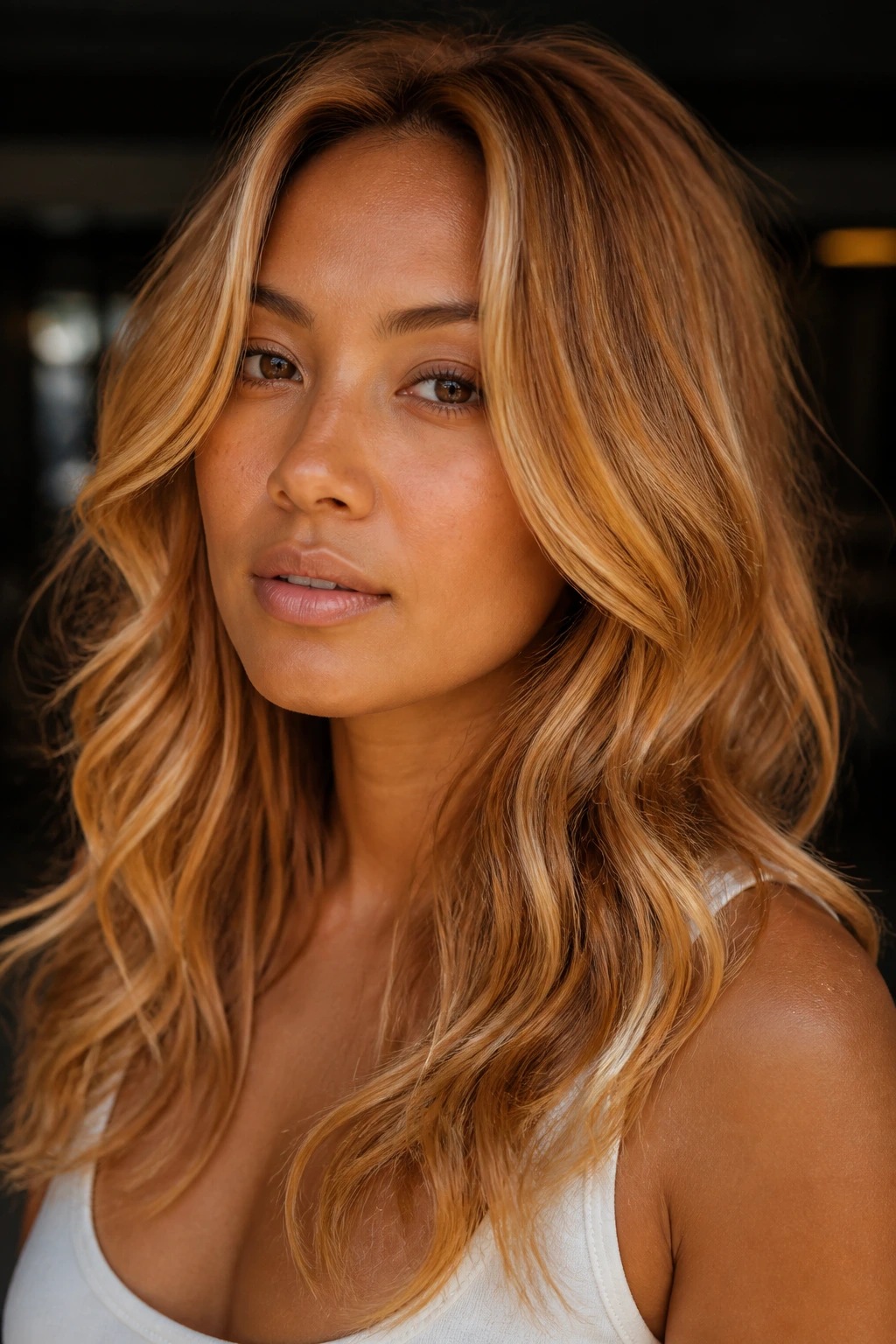
Gloss-Only Copper Refresh: Best if your hair is already blonde and you only want a warmer finish. A sheer apricot or copper gloss adds softness without a big commitment, and it fades more gracefully than a heavy permanent formula.
Rooted Balayage Copper: This version keeps the root deeper and lets the warmth live in the mids and ends. It’s a good choice if you hate obvious grow-out or if your base color is naturally deeper brown.
Curly Ribbon Copper: Instead of coloring every curl the same way, place copper ribbons through the curl pattern so the movement does the work. The result looks lively without turning into one flat orange mass.
Olive-Skin Beige Copper: If your tan skin leans olive, this adaptation keeps the copper more muted with beige and bronze notes. It avoids the clash that bright orange can create and usually feels more expensive in daylight.
Short-Cut Coral Copper: Pixies, bixies, and cropped bobs can take a brighter coral-copper tone because the cut limits how much color you’re asking the eye to process at once. The smaller shape can handle more drama.
Caramelized Dimensional Copper: This one layers caramel lowlights under lighter apricot highlights. It’s for people who want dimension first and copper second, which is often the smartest place to start if you’re cautious.
Common Mistakes to Avoid
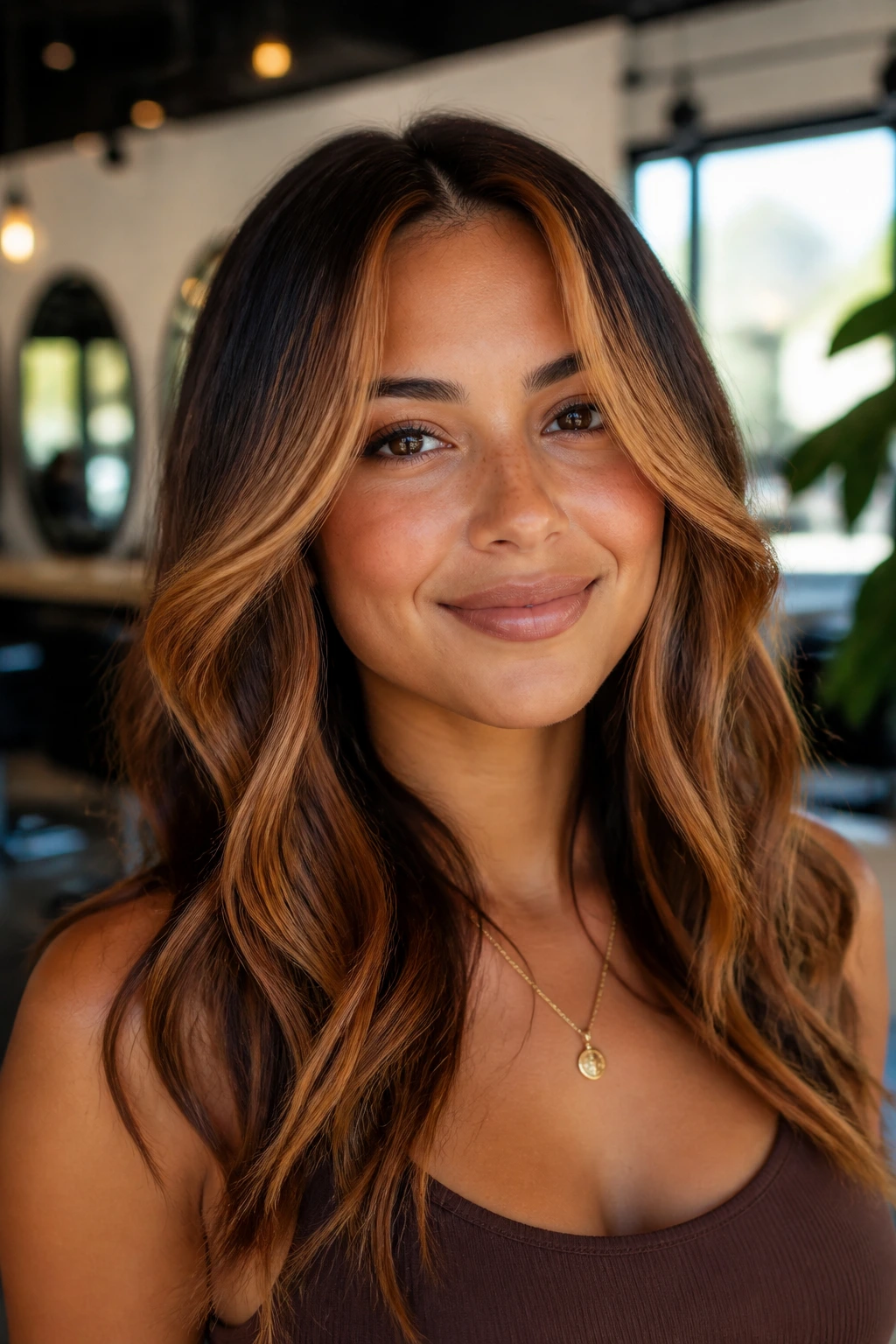
Choosing a copper that’s too orange: On tan skin, a loud orange can overwhelm the complexion instead of flattering it. Ask for apricot, amber, or honey-copper language if you want warmth with more control.
Overusing ash shampoo: Purple and blue shampoos can dull copper in a hurry. Use them only when the blonde starts to turn yellow, and switch back to color-safe, sulfate-free care right after.
Going too light too fast: If your natural hair is dark, jumping straight to pale blonde often leaves the copper thin and fragile. A two-step lightening plan usually looks better and keeps the hair in one piece.
Ignoring root depth: An all-over light copper can look flat near the scalp. A soft root shadow gives the shade shape and keeps regrowth from shouting.
Skipping gloss maintenance: Copper fades quicker than most people expect, especially with sun, heat, and hard water. A gloss refresh keeps the warmth in the sweet spot instead of letting it go brassy or muddy.
Questions People Ask Before They Go Copper
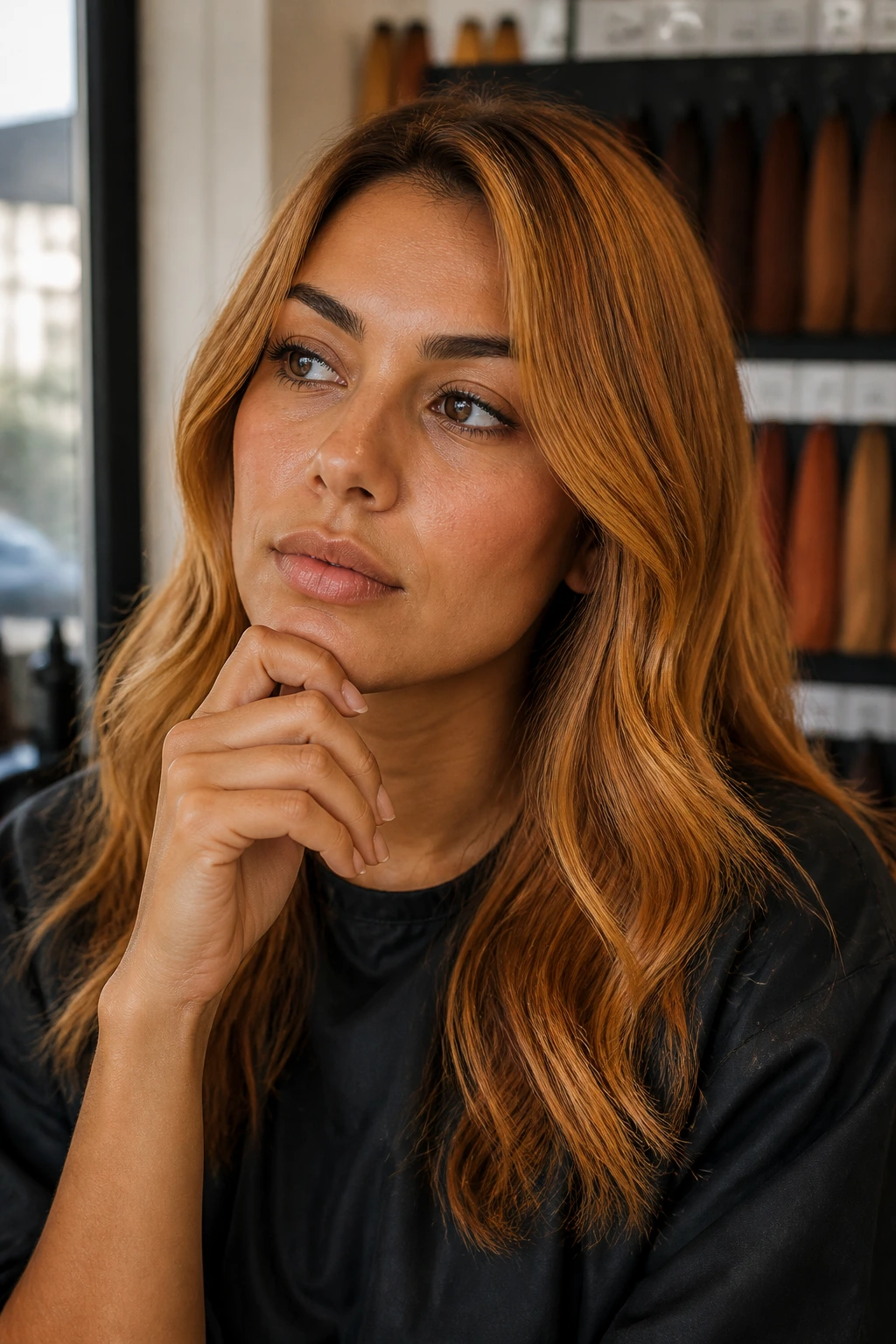
Will light copper blonde work on tan skin with olive undertones?
Yes, but the tone usually needs to be a little muted. Beige copper, bronzed copper, and caramel-apricot tend to flatter olive undertones better than a bright orange copper that can look too loud.
Do I need bleach to get light copper blonde?
Sometimes, yes. If your hair is already blonde or light brown, a gloss or demi-permanent color may be enough. Dark brown hair usually needs lightening first, because copper on a dark base reads more brunette than blonde.
What level should I ask for at the salon?
A level 8 is often the sweet spot for a soft copper blonde, while level 9 gives you a lighter, airier result. Level 7 feels richer and deeper. The right one depends on how bright you want the finish to look against your skin.
How often will I need a touch-up?
Root regrowth can show in 4 to 8 weeks, depending on your natural shade and how fast your hair grows. The tone itself may need a gloss refresh every 4 to 6 weeks if you want the copper to stay crisp.
Can I wear copper blonde if my hair is curly or coily?
Absolutely. In fact, curls can make the color look better because the twists catch different tones. The main thing is to keep the placement dimensional so the hair doesn’t end up one flat block of color.
What if my hair pulls too orange after coloring?
That usually means the formula was too warm or too strong for the starting base. A beige glaze, a slightly deeper root shadow, or a salon toner can soften it. Don’t panic and pile on purple shampoo; that can overcorrect and leave the hair dull.
Which makeup colors work best with these shades?
Peach blush, terracotta lipstick, warm browns, and gold highlighter tend to look clean with copper-blonde hair on tan skin. Cool gray makeup can work, but it often sits apart from the warmth in the hair.
Is this color high maintenance?
It can be if you go very light and very bright. Softer apricot, honey, and beige copper looks are easier to live with, especially when paired with a root shadow or balayage placement.
Hold the Warmth, Not the Brass
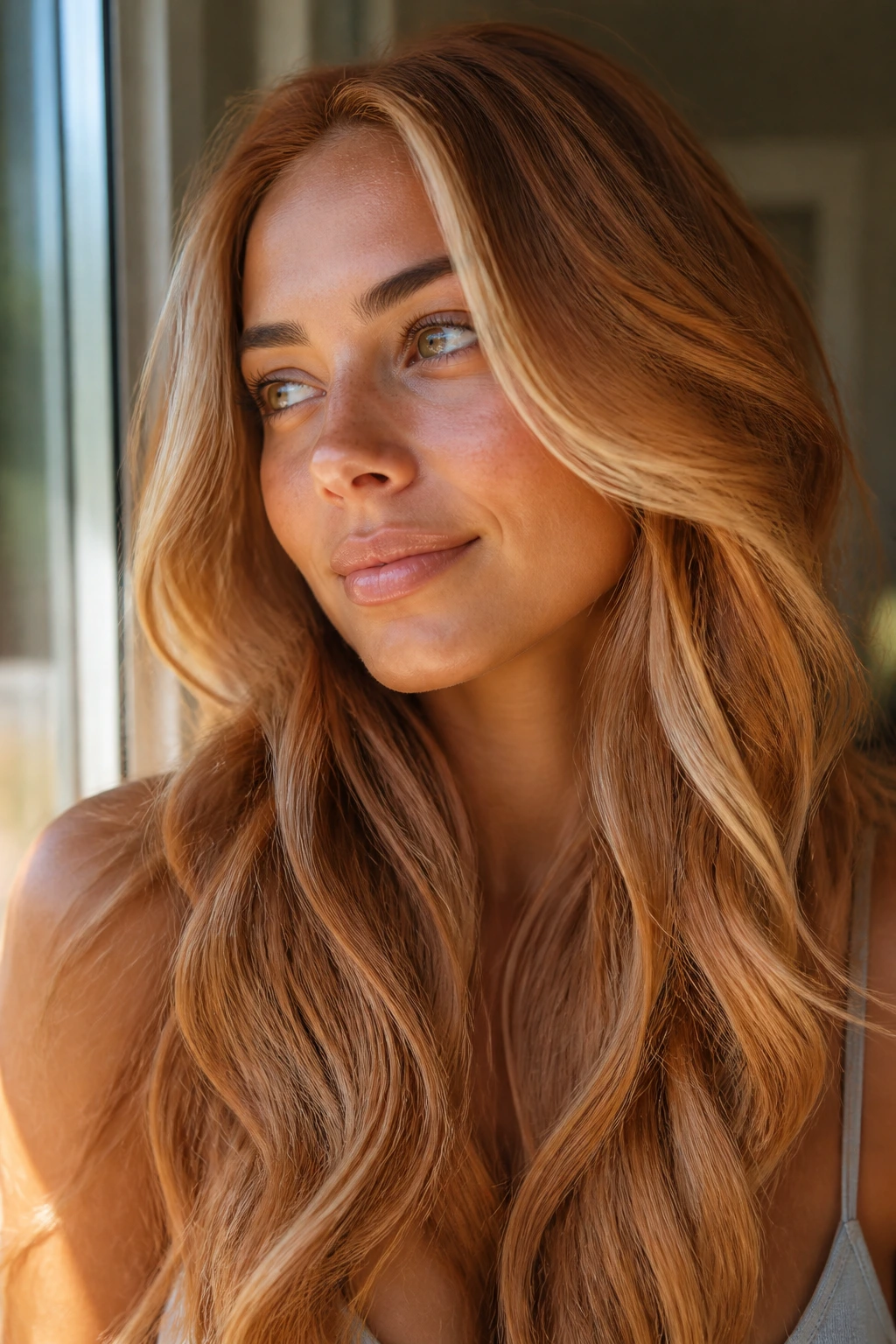
The best light copper blonde hair color ideas for tan skin don’t fight the complexion. They borrow from it. That’s why apricot, honey, amber, and bronze versions tend to look richer than icy blondes ever will on warm skin — they keep the glow where it belongs and stop the hair from shouting over the face.
If you remember one thing, make it this: dimension beats flatness. A soft root, a glossy finish, and a copper note that sits in the right level range will do more than any dramatic overhaul. Bring that swatch, ask for that depth, and let the warmth do its work without getting loud.