



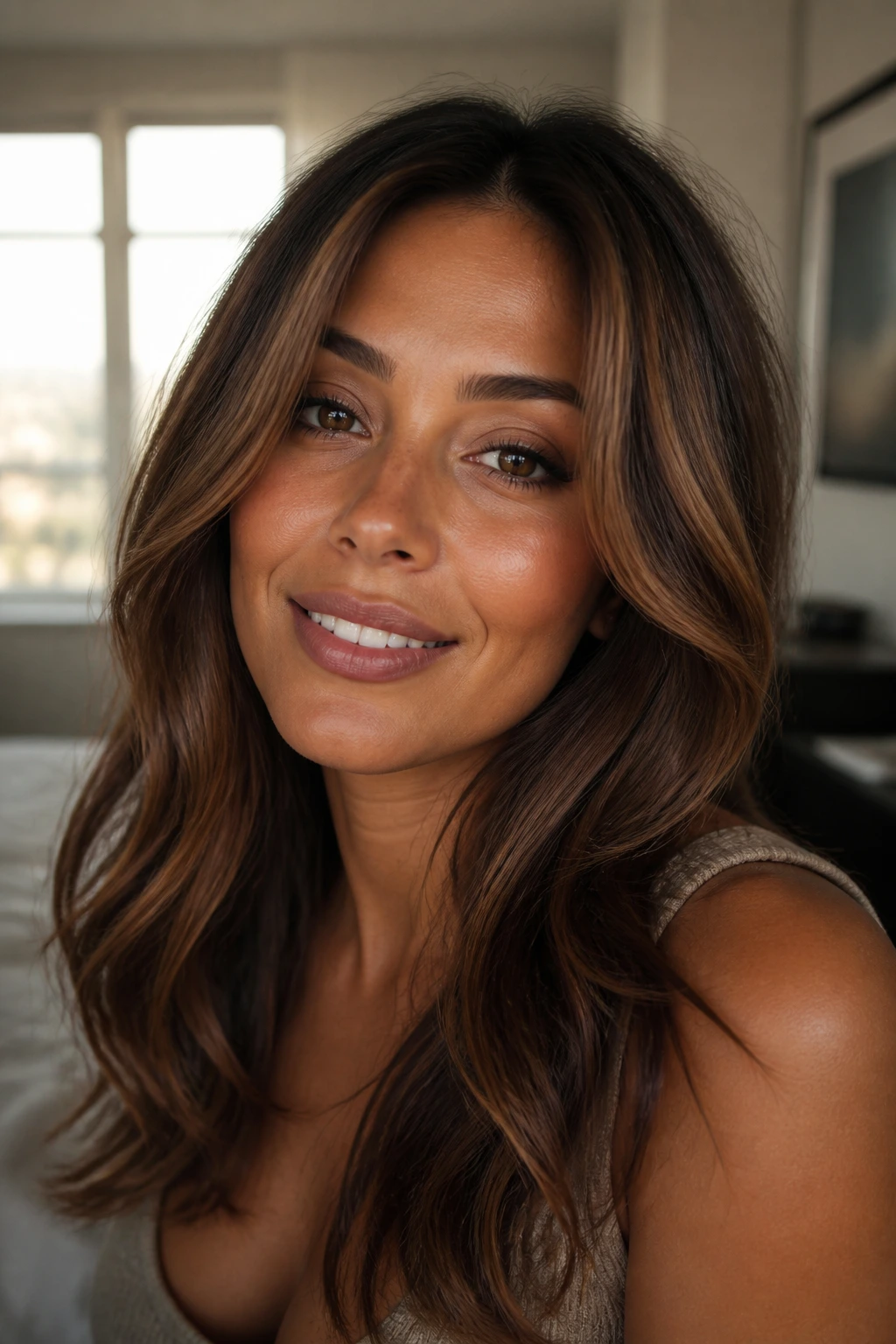
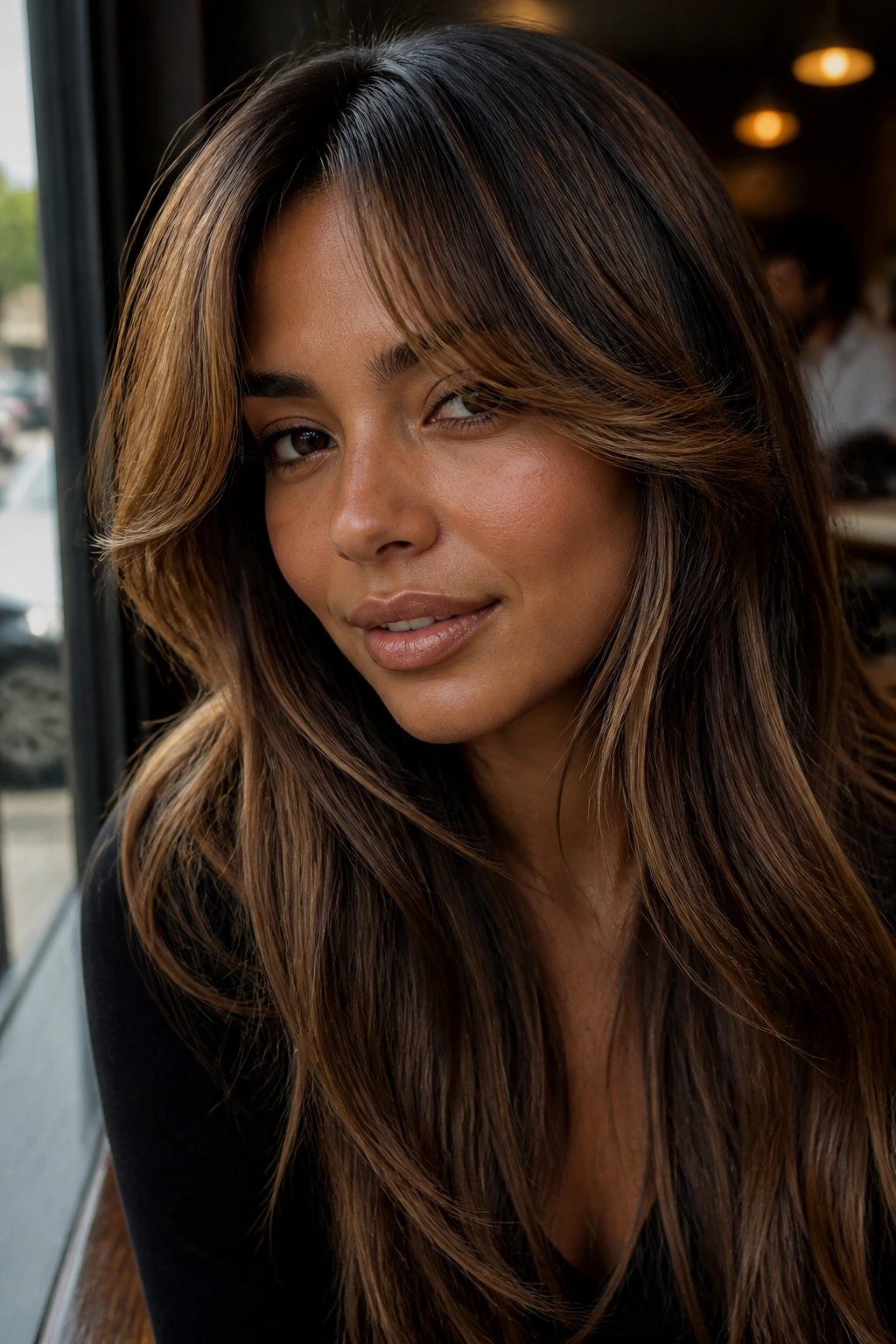
Tan skin and dark caramel brown hair color have a useful kind of chemistry. The shade brings warmth to the face without tipping into neon copper, and the darker base keeps the whole look grounded instead of frosted or washed out. When it’s done well, the color sits somewhere between toasted sugar and melted cocoa — glossy, rich, and just bright enough to wake up the skin around it.
The tricky part is that caramel can go wrong fast. Too orange, and it starts fighting the undertone in your skin. Too light, and it loses the depth that makes dark caramel brown so flattering in the first place. My favorite versions are the ones that keep a brown backbone under the lighter pieces, because that’s what gives the color its shape in real light, not just under salon bulbs.
Tan skin isn’t one single thing, either. Warm tan skin, neutral tan skin, and olive tan skin all play a little differently with caramel tones. Some look best with beige-gold ribbons. Some need a whisper of mahogany or ash to keep the warmth clean. The shade ideas below are built around that reality — not a fantasy version of caramel that only looks good in a filter.
Why These Dark Caramel Browns Feel So Good on Tan Skin
-
They echo your skin’s warmth without copying it exactly. That small difference matters; it keeps the face from looking flat and lets the color read as glow, not glare.
-
The darker base gives the caramel something to sit on. A level 4 or 5 brown root makes the lighter ribbons look deliberate, which is why these shades usually age better than one-note light brown.
-
You can tune the warmth up or down. Beige caramel, gold caramel, cinnamon caramel, and mahogany caramel all live in the same family, but they do different things on tan skin.
-
They work across hair textures. Straight hair shows the ribbons as clean lines, wavy hair turns them into soft streaks, and curly hair gives the color a broken-up, dimensional look that feels expensive rather than loud.
-
They’re easier to grow out than all-over light brown. Root melts, balayage, and contour pieces can stretch several weeks longer before they look tired.
-
Small placement changes make a big visual difference. A few pieces around the cheekbones can brighten the whole face, while a deeper underside can keep long hair from looking too pale at the ends.
1. Espresso Root Melt with Caramel Veils
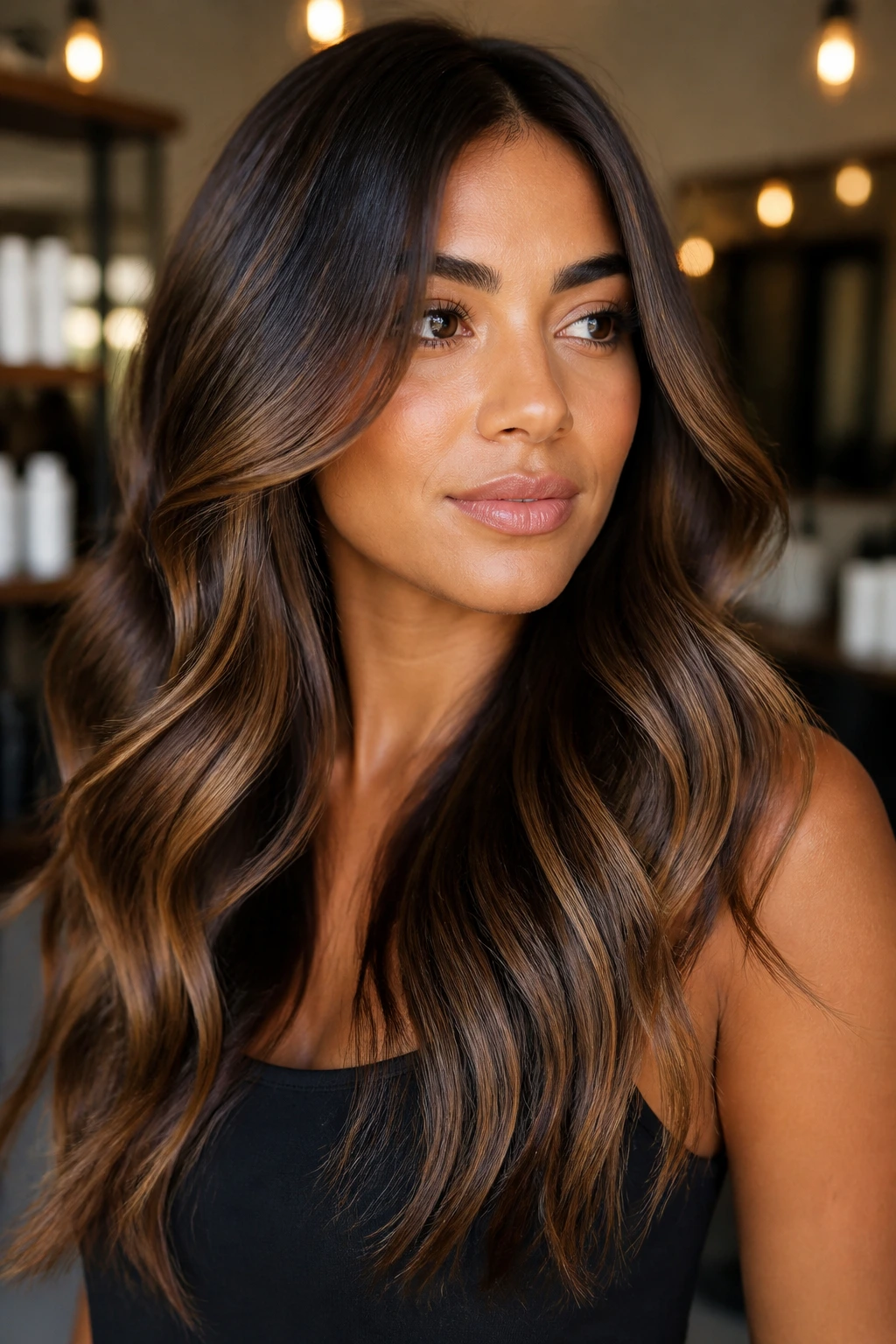
This is the shade I recommend first when someone wants dark caramel brown hair color for tan skin but doesn’t want a dramatic upkeep schedule. The espresso root keeps the crown deep and glossy, while the caramel veils are thin enough to catch light only when the hair moves. It’s subtle, but not shy. That matters.
Why It Works:
The darker root gives the face a clean frame, and the caramel pieces sit just a level or two lighter so they never float away from the base. On tan skin, that contrast reads polished instead of stark. Ask for a level 4 espresso root fading into level 6 caramel ribbons, not a chunky highlight pattern. The result should look soft in a braid and richer in a blowout.
Quick details worth asking for:
- Thin veils around the hairline
- A soft root shadow from the first inch
- Caramel toned beige-gold, not orange-gold
- Best on medium to long layers
One-line tip: Keep the highlights finer at the top and slightly wider through the ends. That keeps the crown believable.
2. Dark Chocolate Balayage with Warm Caramel Ends
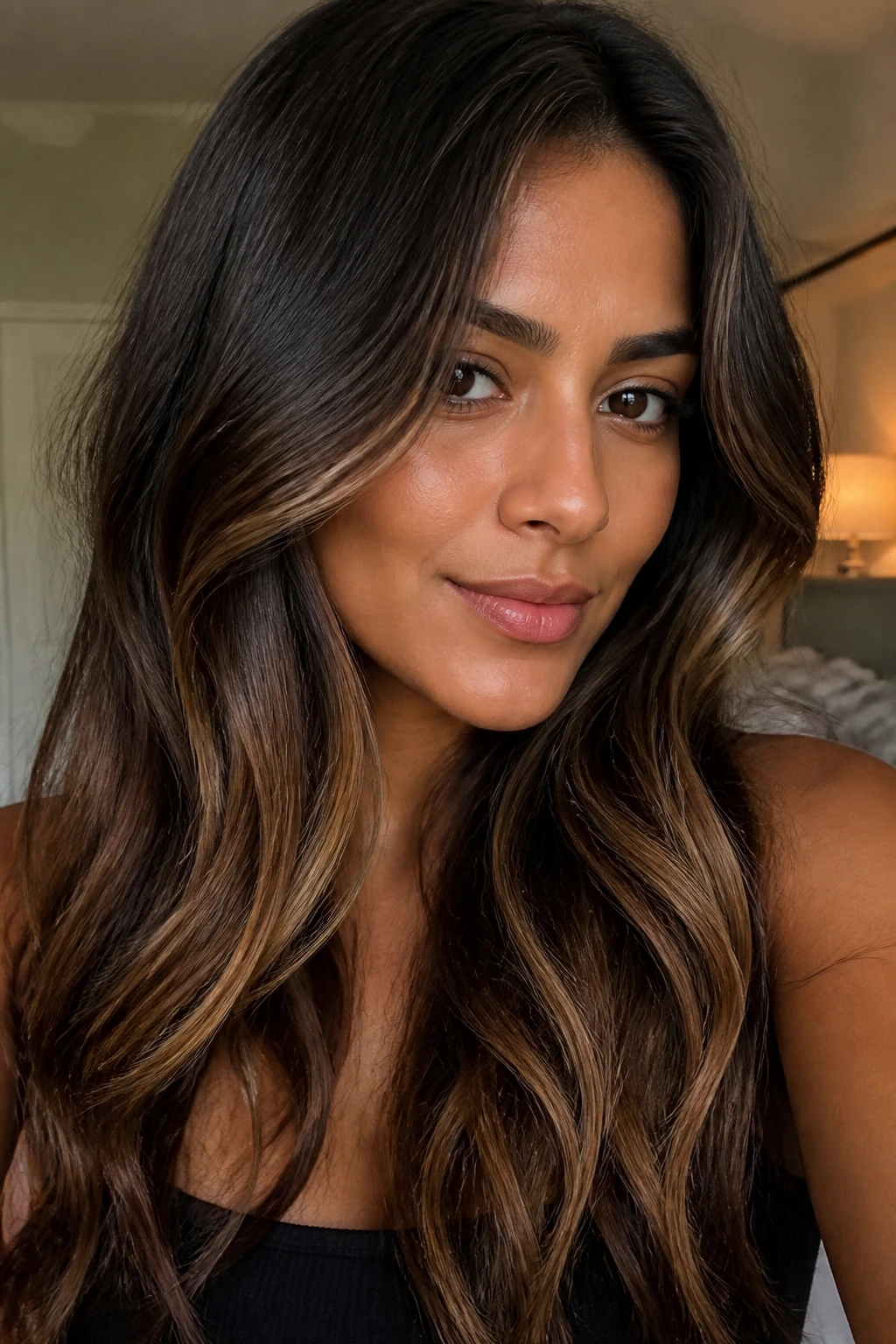
Why does this one work so well on tan skin? Because it doesn’t try to brighten the whole head at once. The dark chocolate base stays in charge, and the warm caramel shows up mostly where the hair would naturally lighten first — around the ends and the outer bends.
Why It Works on Tan Skin
Tan skin often looks best when the color changes gradually instead of jumping straight from brown to blonde. This look gives you that soft shift. The warm ends add movement, but the chocolate base keeps the color from going flat against the skin. If you wear your hair in loose waves, the ends almost look dipped in syrup.
How to Ask for It
Tell your colorist you want low-contrast balayage with caramel ends that stop well short of blonde. A good version should look grown-in from day one, not stripey. If your hair is fine, ask for fewer pieces with more spacing. Fine strands can get flimsy fast if the lightening is too dense.
3. Face-Framing Caramel Money Pieces
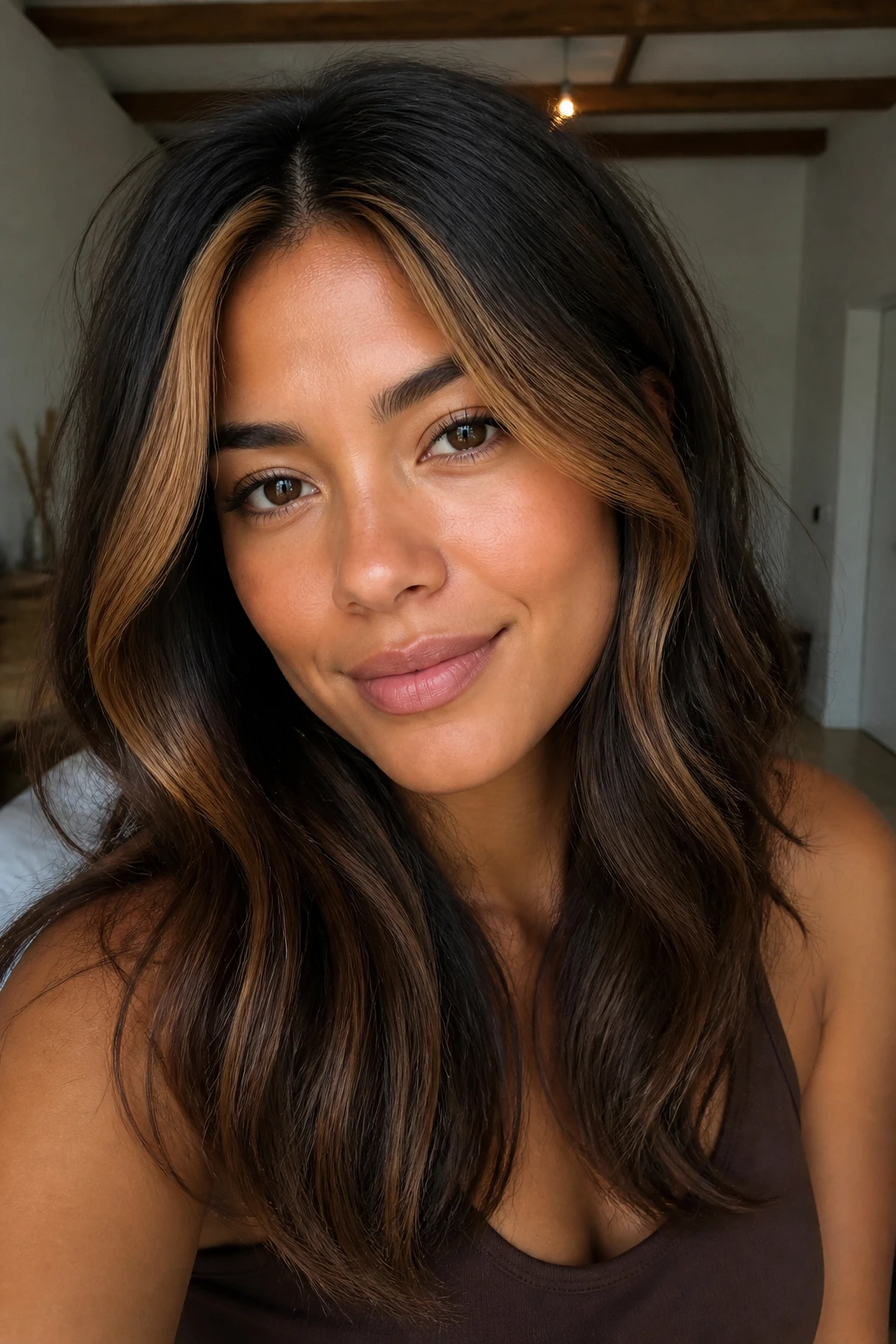
If you want the fastest payoff with the least commitment, start here. Face-framing caramel money pieces can change the whole mood of a cut without turning the rest of the hair lighter, and on tan skin they create a clean bright edge around the cheeks and jaw.
Why It Works:
The contrast sits exactly where people look first. A few caramel strips near the part and temples can make a ponytail look intentional and make layered hair look styled even when it’s not. I like this option for anyone who wants to test caramel before going all in.
A little warning: the face pieces should not be too thick. Thick money pieces can read early-2000s in a way that fights the softness tan skin usually brings. Keep them blended at the root and a little brighter through the mid-lengths.
Best for:
- Lob cuts
- Curtain bangs
- Round or oval faces
- People who wear their hair up a lot
4. Cinnamon Caramel Gloss on a Level 5 Brown
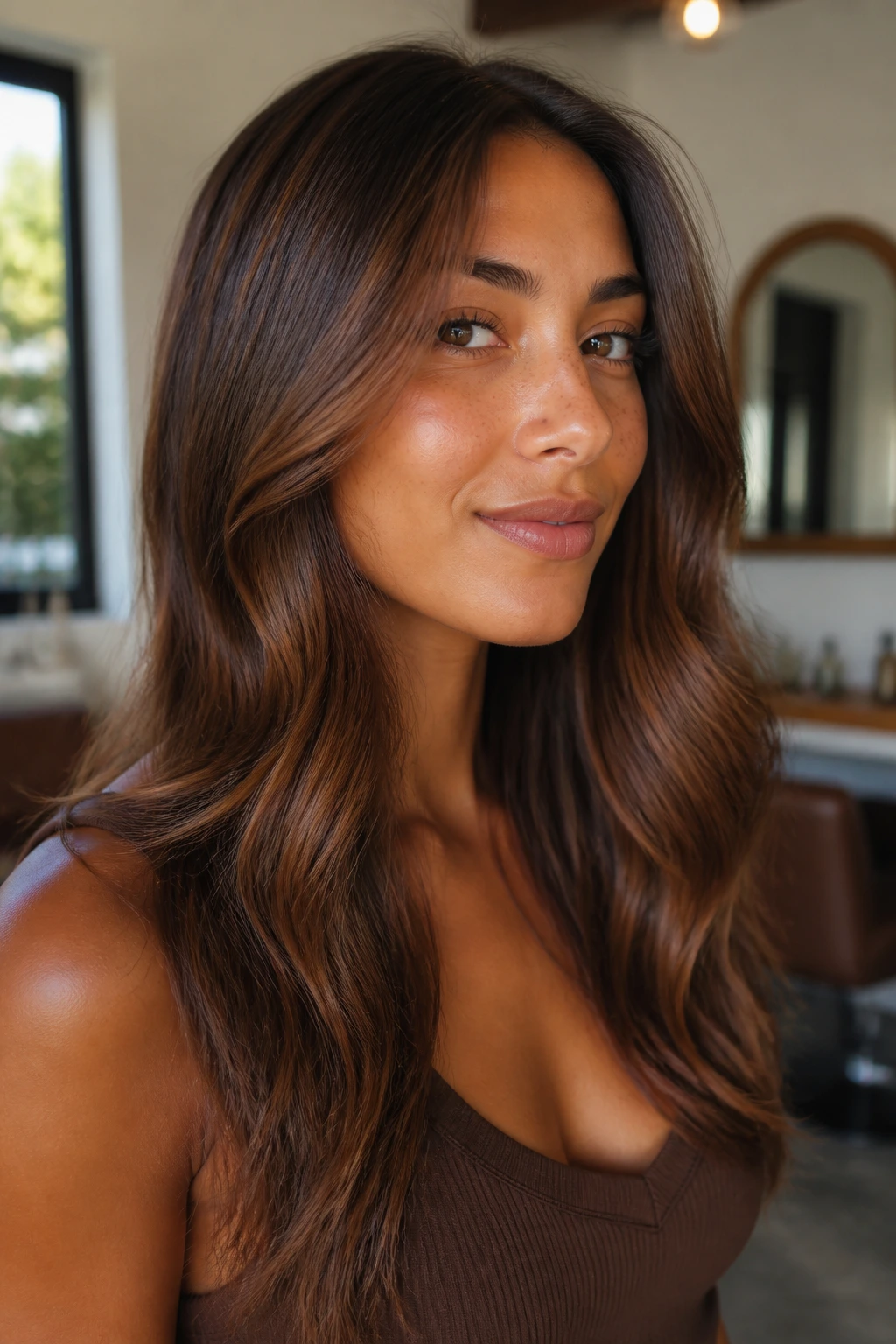
This one is for the person who wants warmth, shine, and not much drama. A cinnamon caramel gloss over a level 5 brown base gives tan skin a gentle warmth that feels almost lit from within, but without the commitment of full highlights.
The magic is in the gloss. Not the fantasy word — the actual salon gloss. A demi-permanent glaze can push the brown base toward cinnamon, amber, or beige-caramel for a few weeks without opening the hair the way permanent lightening does. That makes it a smart first step if your hair has been through a lot.
It’s also one of the easiest shades to maintain. The color fades softly, and when it does, it usually loses shine before it loses tone. That’s a nice trade.
5. Mocha Brown with Butterscotch Peekaboo Ribbons
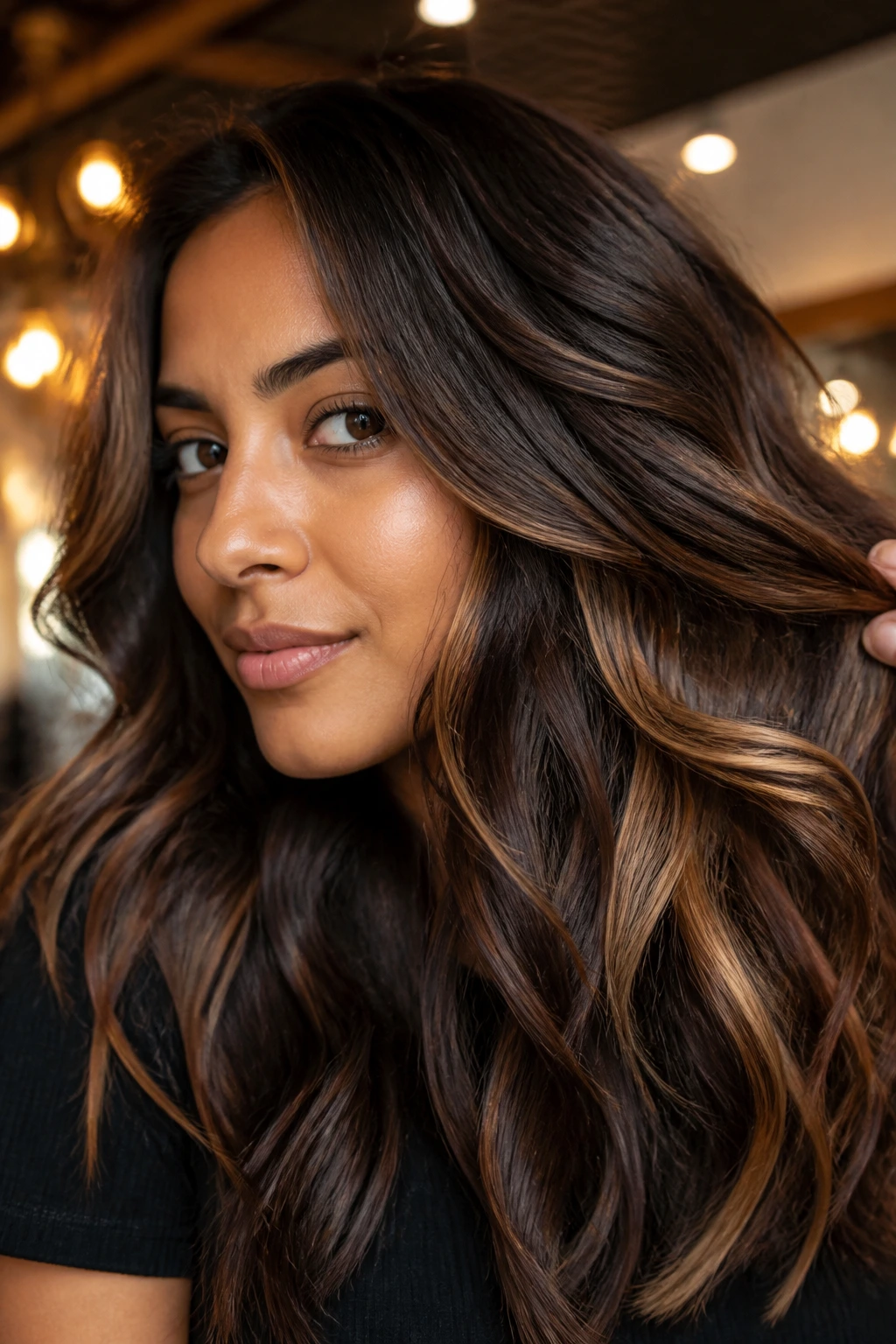
This is the shade I’d hand to someone who likes a little secret in their color. From the outside, the hair reads like a deep mocha brown. Then you move it, and the butterscotch ribbons appear underneath. It’s playful, but not noisy.
What Makes It Different
Peekaboo placement keeps the brightest caramel tucked inside the hair, which is a smart move if you want dimension without a lot of visible upkeep at the root. Tan skin can carry the contrast beautifully because the warm ribbons peek through instead of sitting on top like a block of color.
Best Use Case
- Curly and wavy hair, where the ribbons show in motion
- Short layers, when you want color but don’t want a heavy highlight panel
- People who work in conservative settings and still want personality in their hair
The butterscotch shade should stay soft and golden, not orange. If it turns too warm, the hidden placement will still save it, but the colorist should tone it down before that becomes a problem.
6. Toasted Almond Sombré on Long Layers
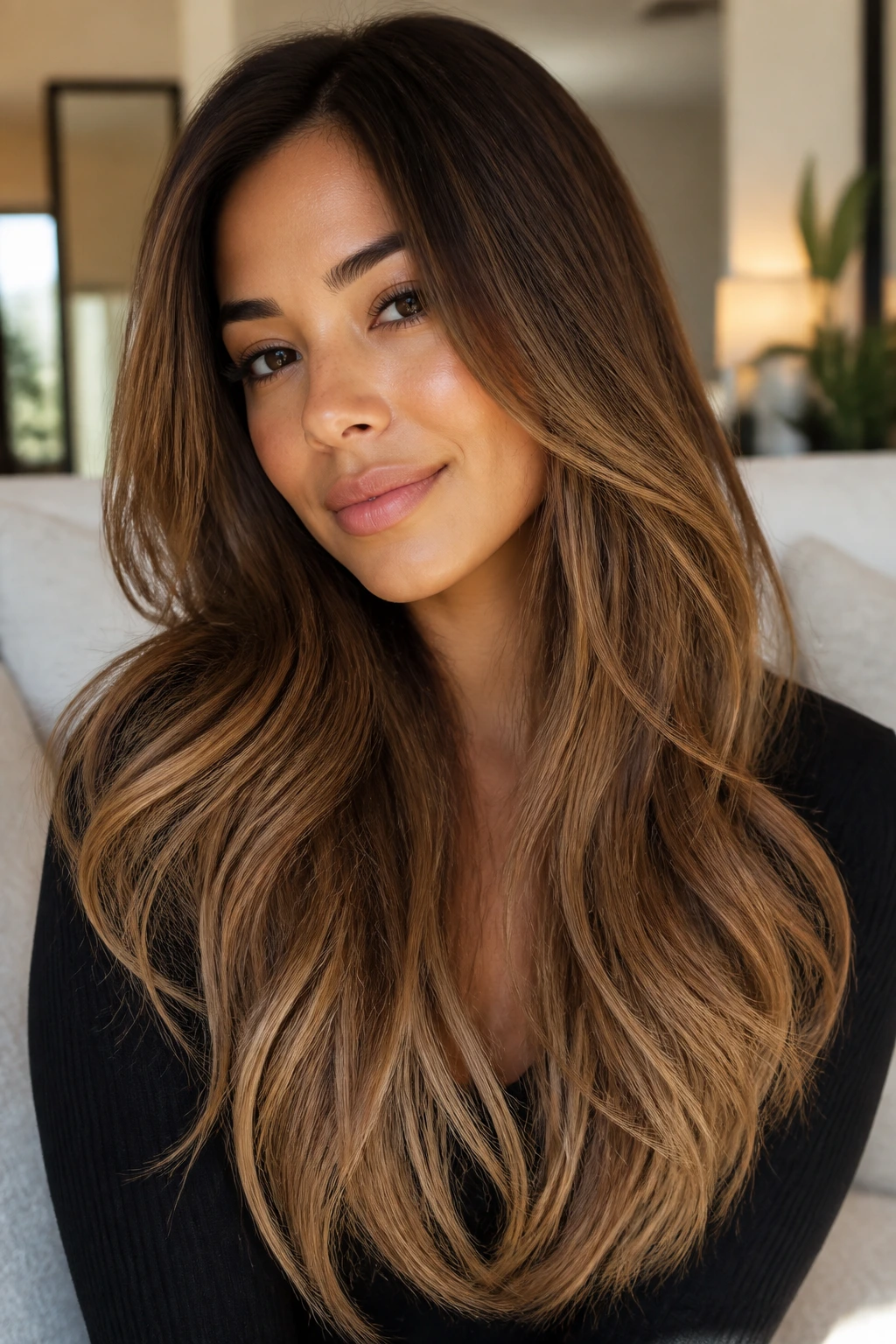
Sombré is just a softer ombré, and that softness is the whole reason it belongs on tan skin. The transition from deep brown roots to toasted almond ends is gradual enough to look expensive, not obvious. I like this one best on hair with a few long layers, because the layers help the fade look airy instead of heavy.
Long hair can handle more gradient than short hair. That’s the simple truth. On a long cut, the darker top and lighter bottom create a vertical line that lengthens the face and keeps tan skin from looking overly red or sallow under a warm brown.
If you want this version to stay modern, keep the almond tone more beige than gold. Beige gives the finish a cleaner edge.
7. Bronzed Caramel Waves with Shadow Roots
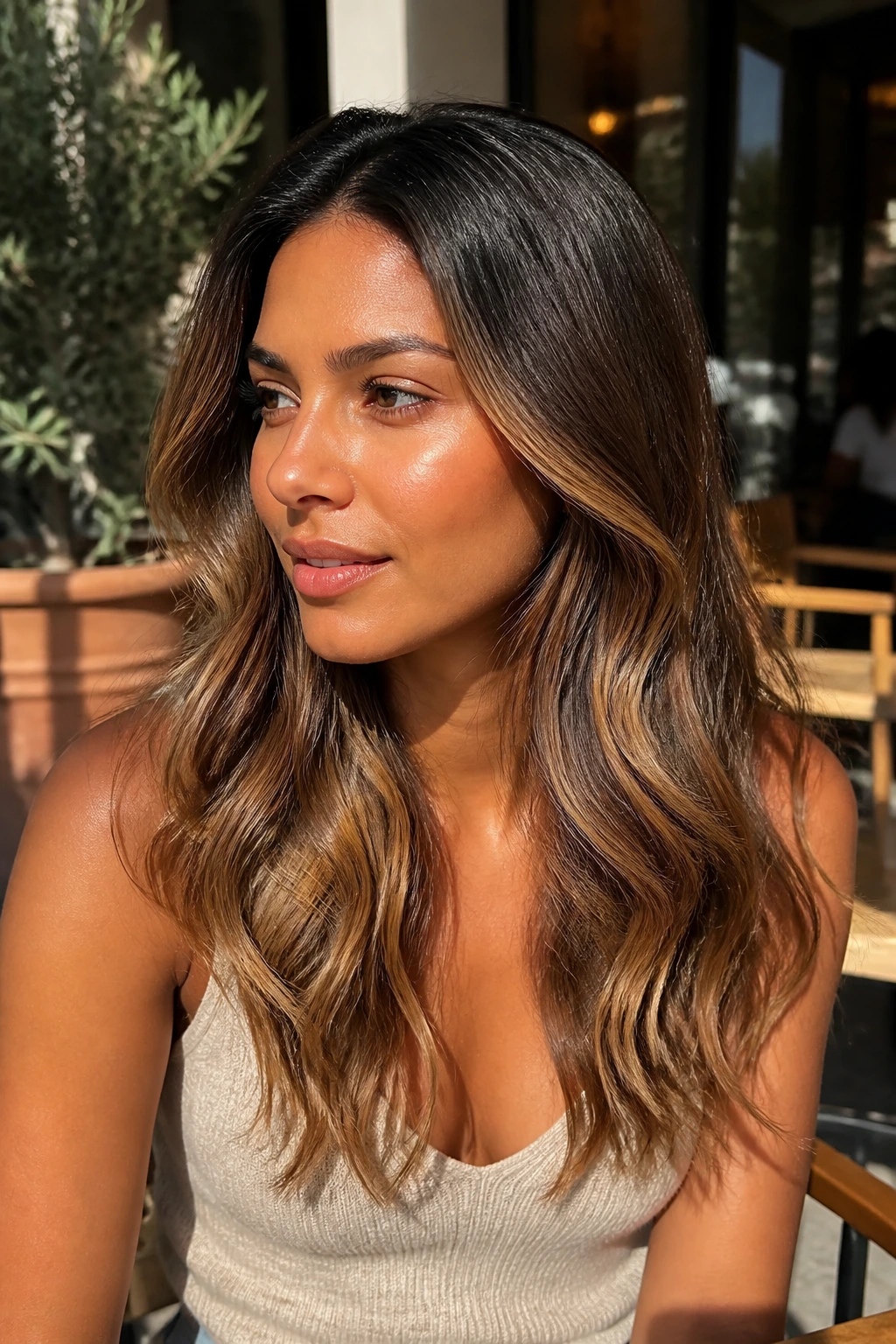
Why does this combo work so often? Because the shadow root keeps the top quiet, and the bronzed caramel shows up in the waves where the light naturally lands. On tan skin, that creates a warm halo effect without making the whole head look lightened to the same degree.
How It Wears
This shade shines in loose, imperfect waves. Straight hair can wear it too, but the color reads softer when there’s a bend through the mid-lengths and ends. A 1-inch curling iron or a big round brush blowout will show the ribbons better than pin-straight styling.
Ask for:
- A soft root shadow that starts at the scalp line
- Bronzed caramel pieces through the outer layer
- Thinner placement at the crown, wider at the ends
- A gloss finish so the brown and caramel read as one family
It’s a good fit if you like warmth but don’t want the lighter pieces to dominate.
8. Mahogany Brown with Caramel Glow
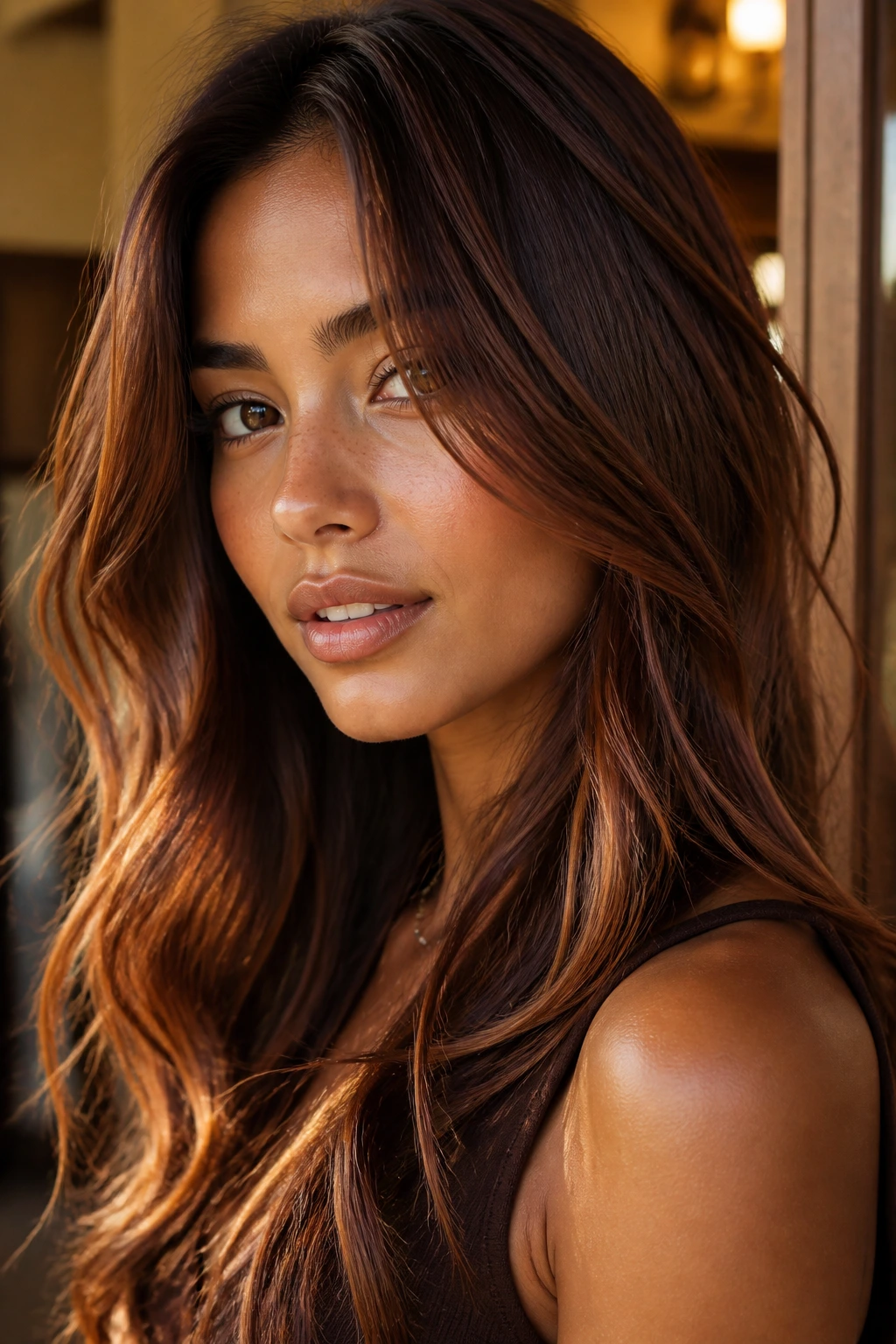
Mahogany can be a smart move on tan skin, especially if your skin has olive or golden undertones. The red-brown base adds richness, and the caramel glow keeps it from feeling too heavy or too wine-dark.
This is one of those shades that looks different in every kind of light. Indoors, it reads like a deep brunette with warmth at the edges. Outside, the caramel catches the sun and the mahogany underneath prevents it from drifting into plain orange. That balance is the whole point.
If you wear gold jewelry or deep lipstick shades, this color plays well with them. It also looks strong on layered cuts, where the red-brown base can show through between the lighter pieces.
9. Chestnut Brown with Micro-Babylights
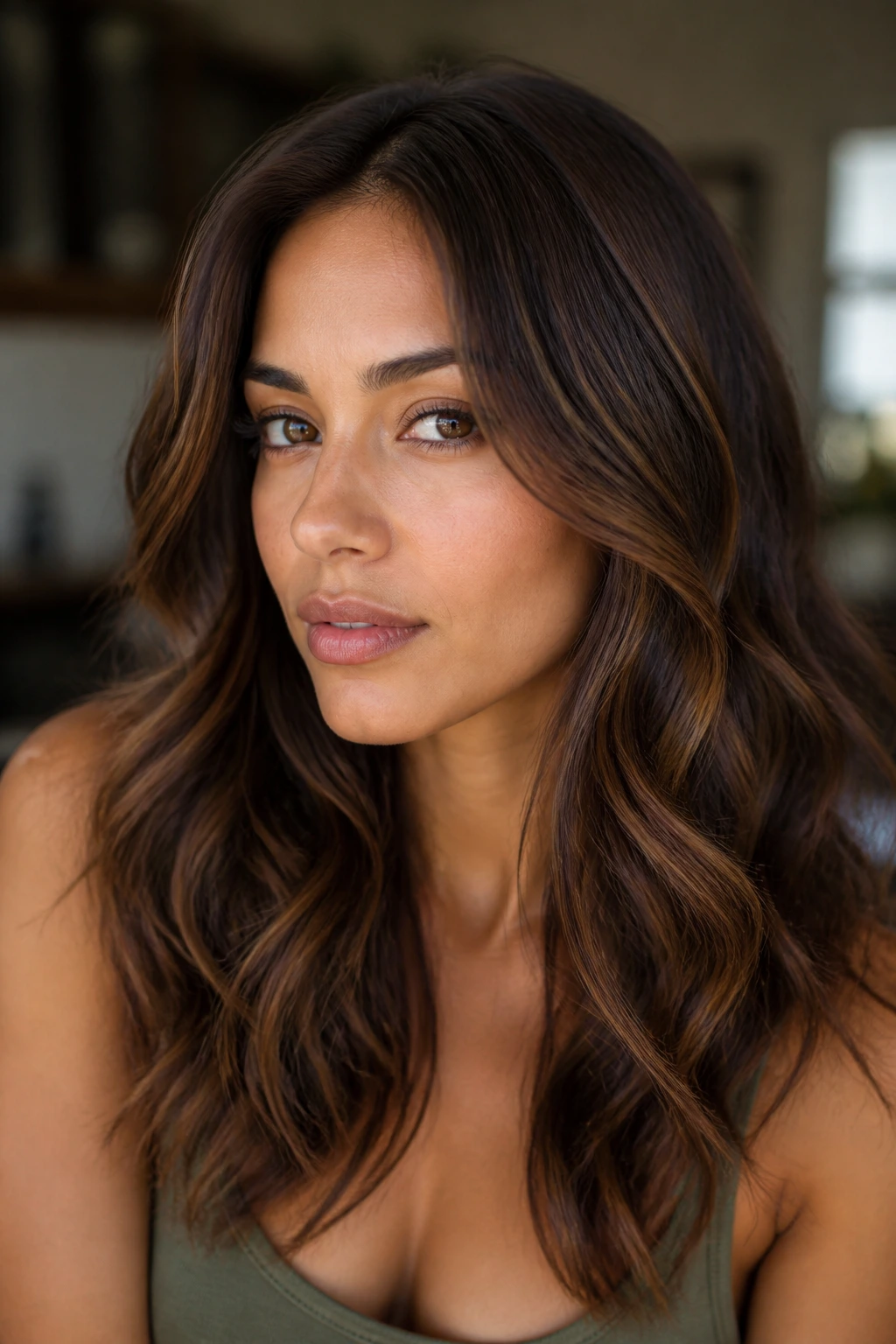
Tiny highlights are underrated. Really underrated. Micro-babylights give you the movement of caramel without obvious streaks, and on tan skin that softness is often more flattering than a bigger highlight pattern.
The chestnut base keeps everything grounded, while the micro-babylights lift just enough around the part, temples, and outer layers to stop the color from feeling one-note. I like this shade for people who have a lot of hair but don’t want to spend half their life maintaining it.
A few tiny details matter here: keep the highlights close in tone to the base, ask for a soft beige-caramel rather than yellow-gold, and avoid packing them too tightly. Spacing is what makes this look natural.
10. Dark Caramel Lob with Glossy Ends
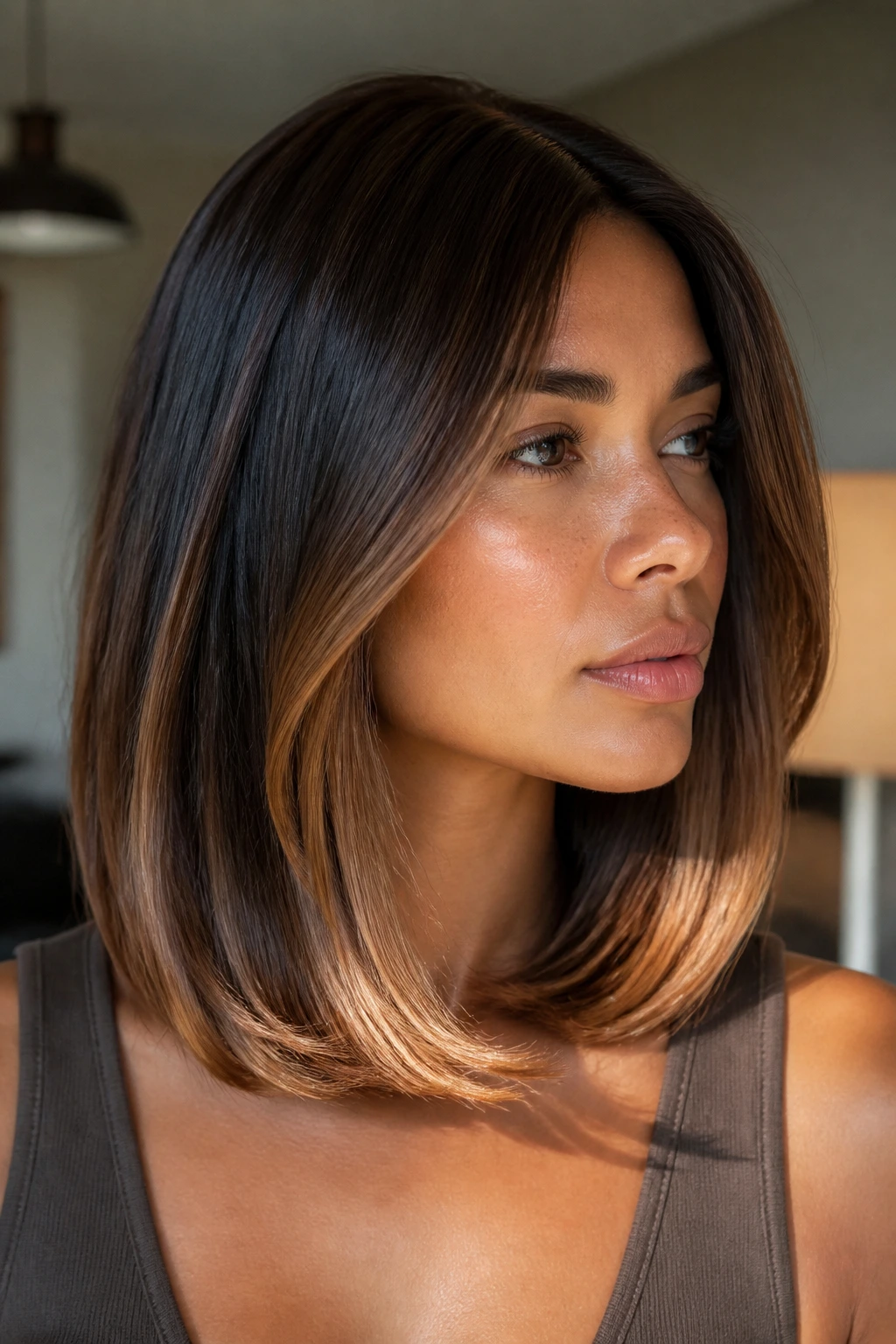
A lob and dark caramel brown hair color are an easy pair because the cut gives the shade shape before the color even starts talking. On tan skin, the glossy ends keep the whole look from feeling too heavy near the face.
This version is less about dramatic contrast and more about finish. The ends should look polished, almost lacquered, with a slightly warmer caramel tone than the root. If the cut is blunt, the color needs to stay soft. If the lob has texture, the caramel can be a little more visible.
The best part? It photographs well from the side because the ends catch light as the head turns. And no, you don’t need ultra-light pieces to get that effect. A well-toned caramel gloss on the lower half can do more than people expect.
11. Maple Caramel Melt for Warm Tan Skin
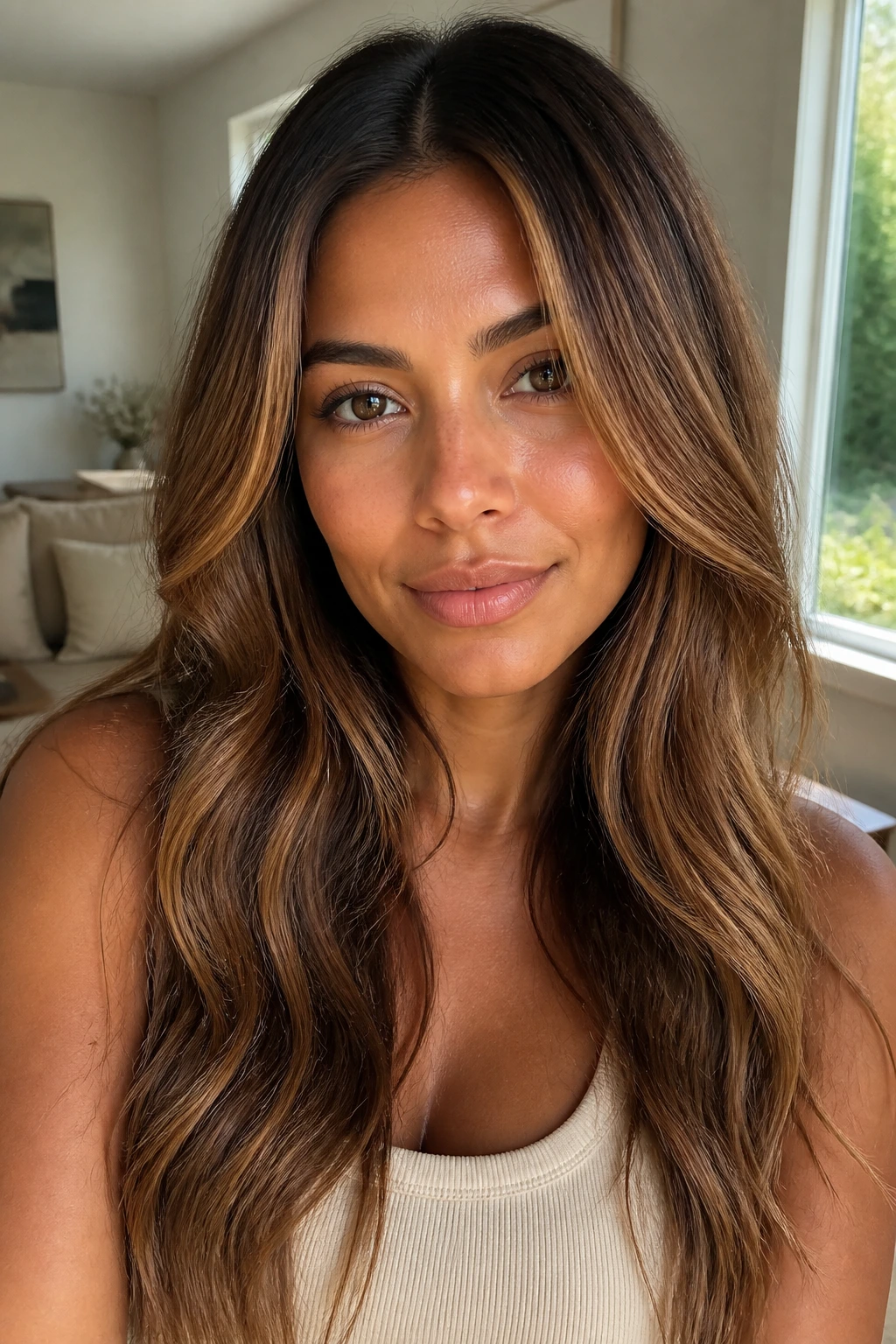
Maple caramel is a sweeter, richer version of caramel — more syrup than candy, less yellow than gold. On warm tan skin, it adds glow without making the face look washed out.
Why I like it: the maple tone has enough brown in it to stay believable next to deeper skin, but enough warmth to keep the color from disappearing. That balance is hard to fake with box dye. It usually needs a root melt, a softened mid-tone, and a slightly lighter end zone so the whole thing breathes.
This one is especially good if you wear your hair in a middle part. The symmetry of the part and the gradual glow of the color play very nicely together.
One practical note: ask for a gloss or glaze every 6 to 8 weeks. Maple tones fade fast if you wash with hot water and a harsh shampoo.
12. Cocoa Brown with Sunkissed Panels
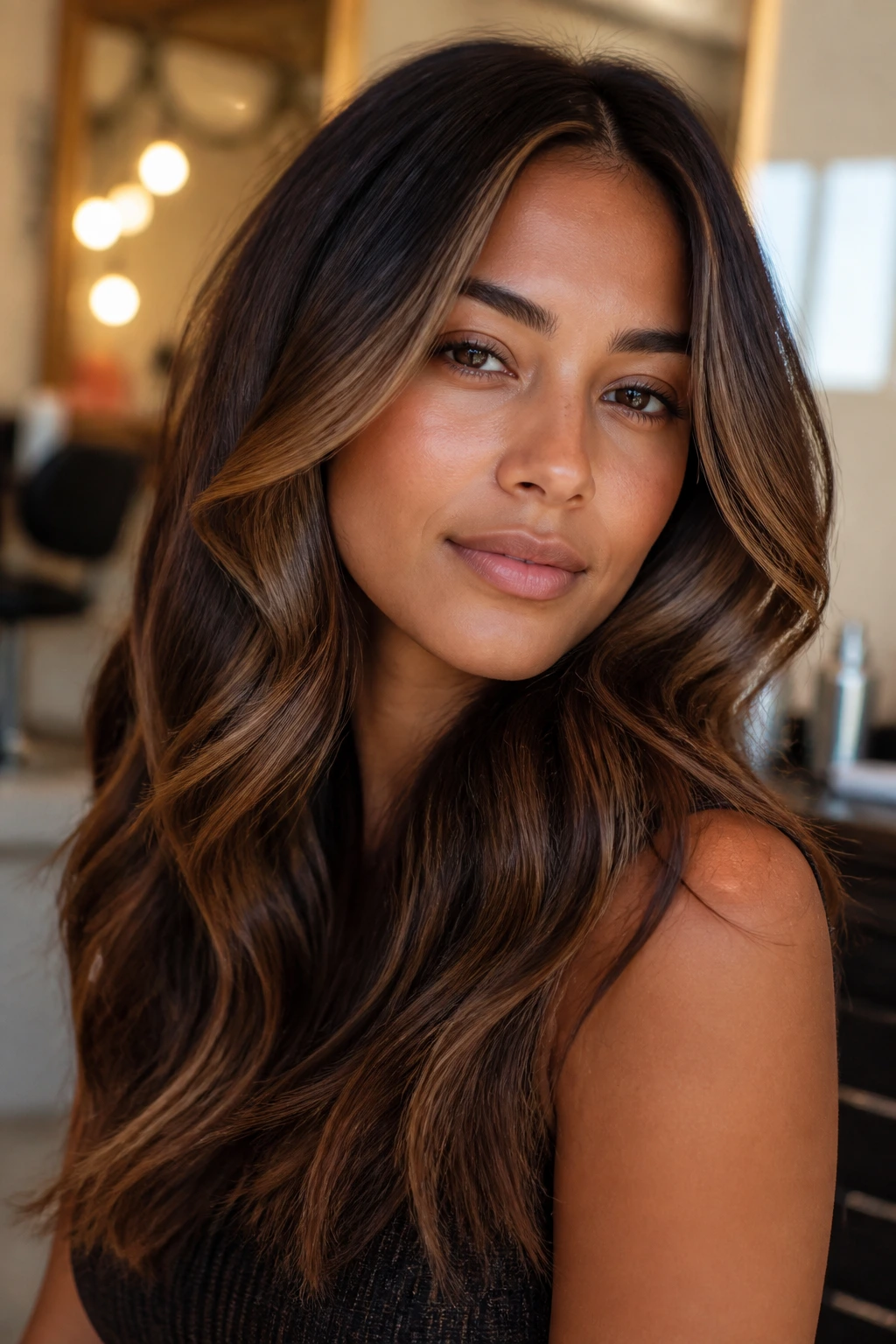
Can a warm caramel idea still work if you want the hair to stay mostly dark? Absolutely. Cocoa brown with sunkissed panels is proof. The base stays rich and cool enough to feel grounded, while a few caramel panels brighten the outer layer and the lower front pieces.
This works especially well when the panels are placed where the hair moves: near the cheekbones, at the ends of layered cuts, and through the front third of long hair. The color never has to be loud to be visible.
How to Use It
- Choose panels that are only 1–2 shades lighter than your base
- Keep the brightest sections under the top layer if you want a softer look
- Let the stylist tone the panels beige-gold, not yellow-gold
- Best on hair that gets styled with bends, not tight curls
The whole effect should feel like sunlight, not stripes.
13. Caramel Contour Highlights
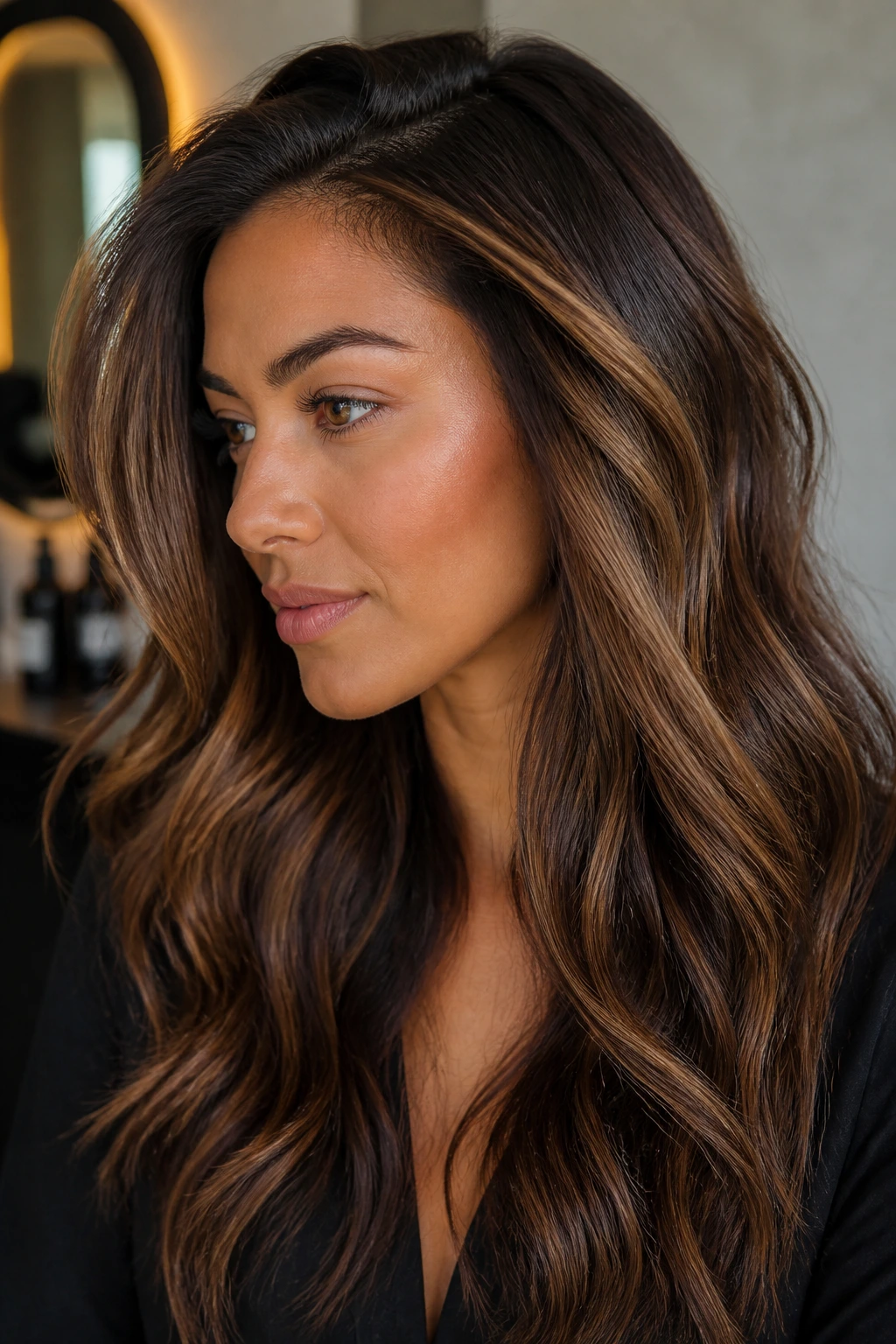
This is the hair-color version of contouring, and yes, the name makes sense when you see it on tan skin. The lighter caramel pieces sit exactly where light would naturally hit the face: temples, cheekbones, jawline, and just behind the front hairline.
That placement can sharpen a cut, brighten the face, and keep dark brown hair from swallowing your features. It’s especially useful if your hair is thick or if your natural color is very deep. Without those contour pieces, dark hair can sometimes sit too close to the skin tone and flatten the shape of the face.
The trick is restraint. Contour highlights should look strategic, not decorative. A few well-placed pieces do more than ten random stripes.
14. Walnut Brown with Ribbon Lights
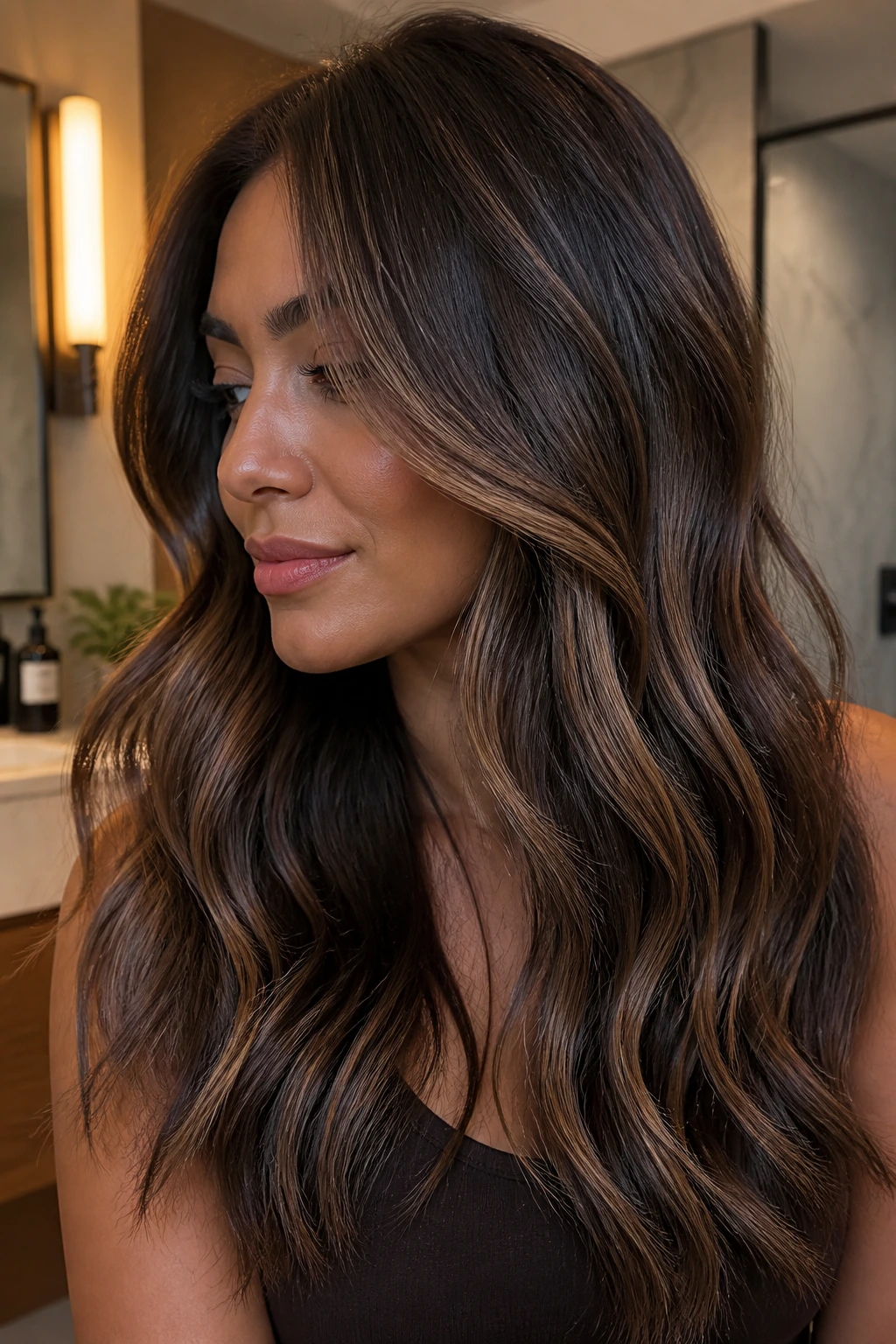
Walnut brown is one of my favorite bases for caramel because it has enough depth to keep the light ribbons clean. The result feels soft and dimensional, not blondish. On tan skin, that matters.
Ribbon lights are thinner than classic highlights and wider than micro-babylights. They have a little more visibility, but they still move like real hair instead of salon foils. When the ribbons are caramel rather than honey, the overall look stays elegant and grounded.
This is a shade that tends to age well between appointments. Even when the toner softens, the walnut base keeps the color from turning flat. If you want a brunette that feels expensive without being precious, this one belongs high on your list.
15. Toffee-Cocoa Sombré
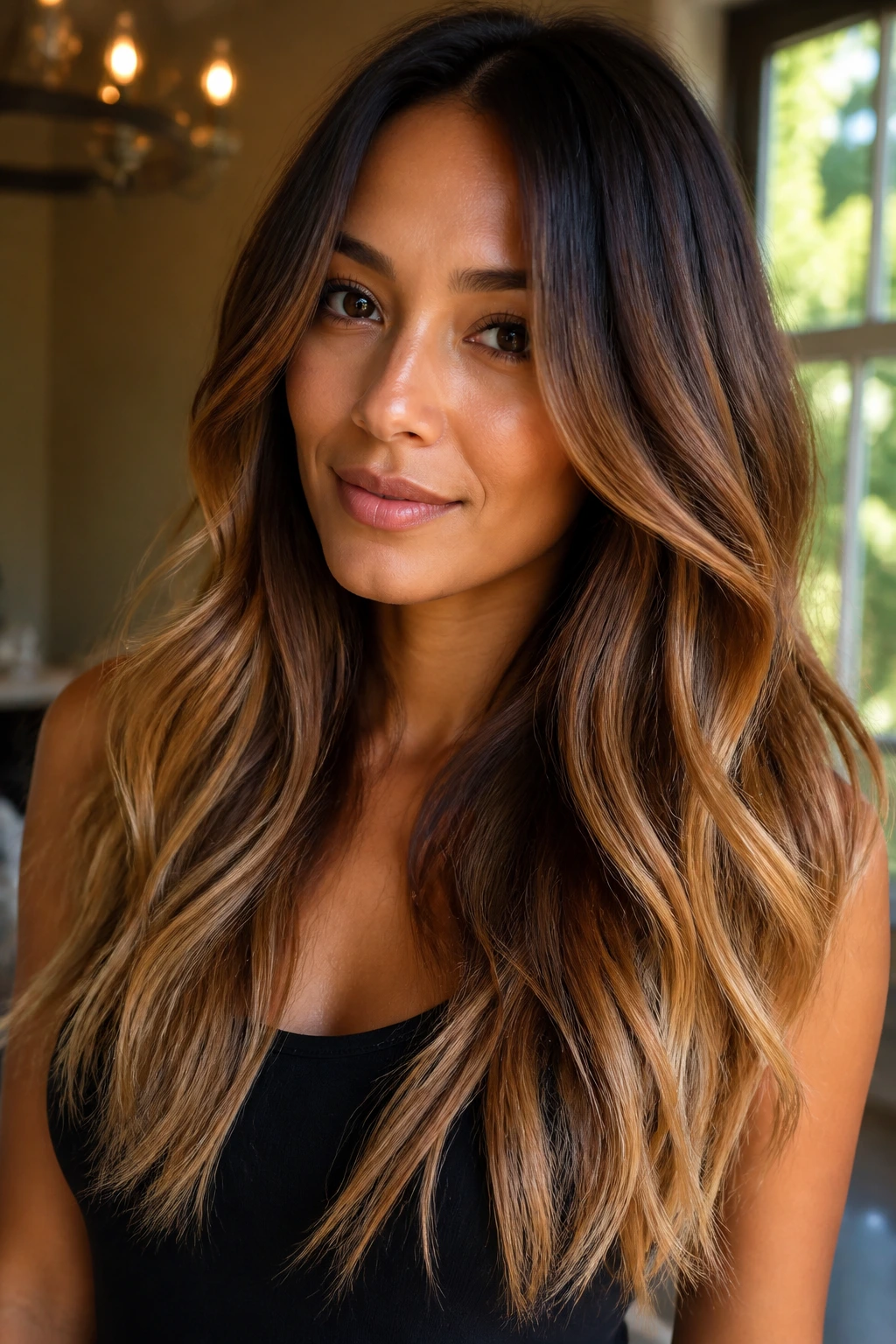
Toffee-cocoa is all about contrast that stays within the brunette family. The cocoa base keeps the roots deep and cool enough, while the toffee ends warm up just enough to flatter tan skin without swinging into orange.
What makes sombré useful here is the long fade. Rather than a hard split between dark and light, the color shifts slowly over several inches. That gives the hair a smoother silhouette, especially on long cuts or layered blowouts.
I’d recommend this version for people who want caramel but are nervous about highlights around the face. The lightness lives lower and softer, so it’s easier to wear on an everyday basis.
16. Smoky Caramel Brunette with Cool Edges
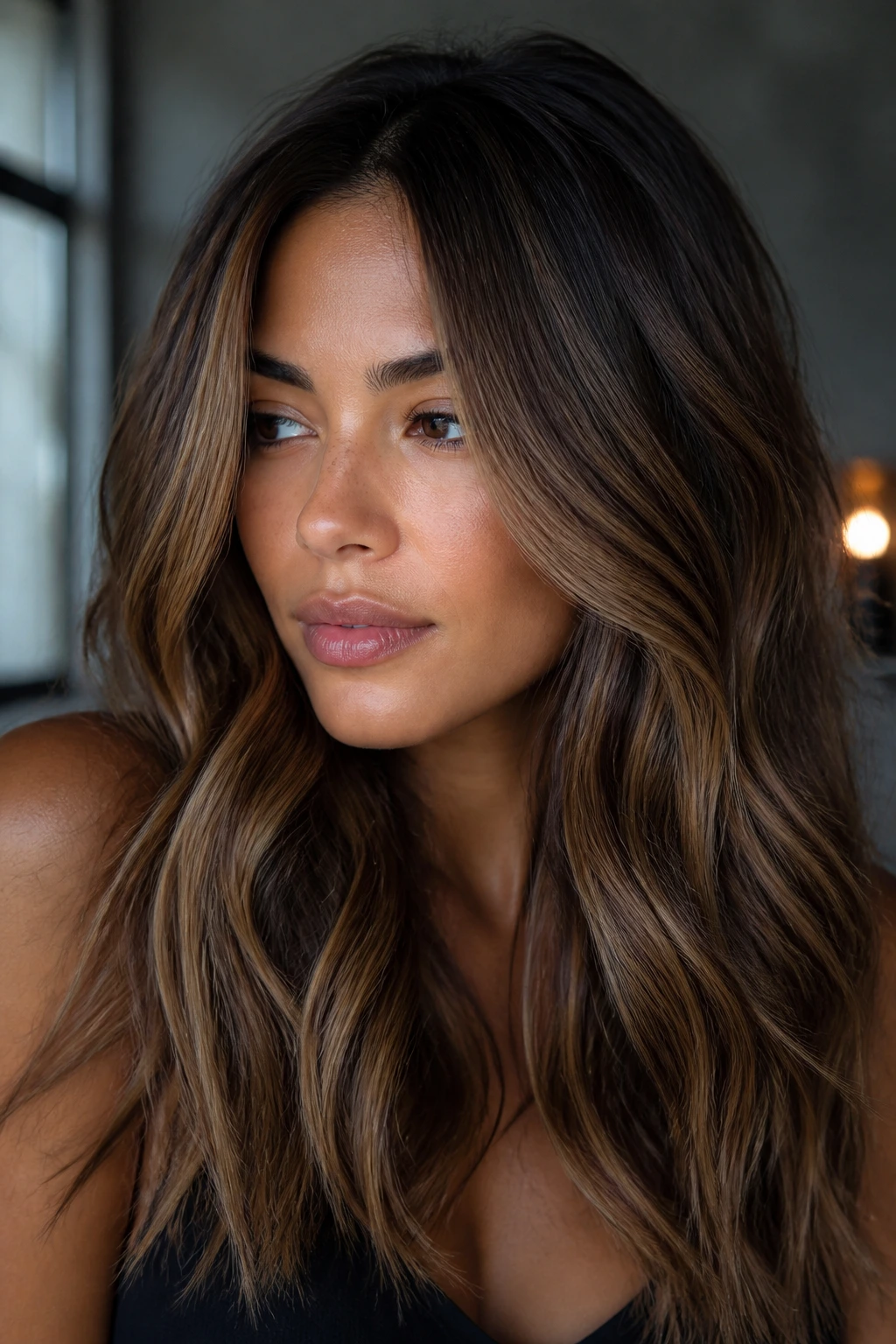
This is the caramel shade I reach for when tan skin has a little olive or neutral gray in it. Too much gold can fight that undertone. A smoky caramel brunette keeps the warmth, but tones it down with cooler edges so the color doesn’t veer brassy.
Why It Works:
The smoke in the formula acts like a softener. It keeps the caramel from reading yellow in bright light and gives the hair a more muted, velvety finish. On tan skin, that can look cleaner than a very golden brunette, especially if your skin tans olive in the sun.
A cool edge also makes this shade easier to wear with smoky makeup, silver jewelry, and darker clothing. It’s a more understated caramel, and honestly, that’s a good thing here.
17. Curly Caramel Foilyage
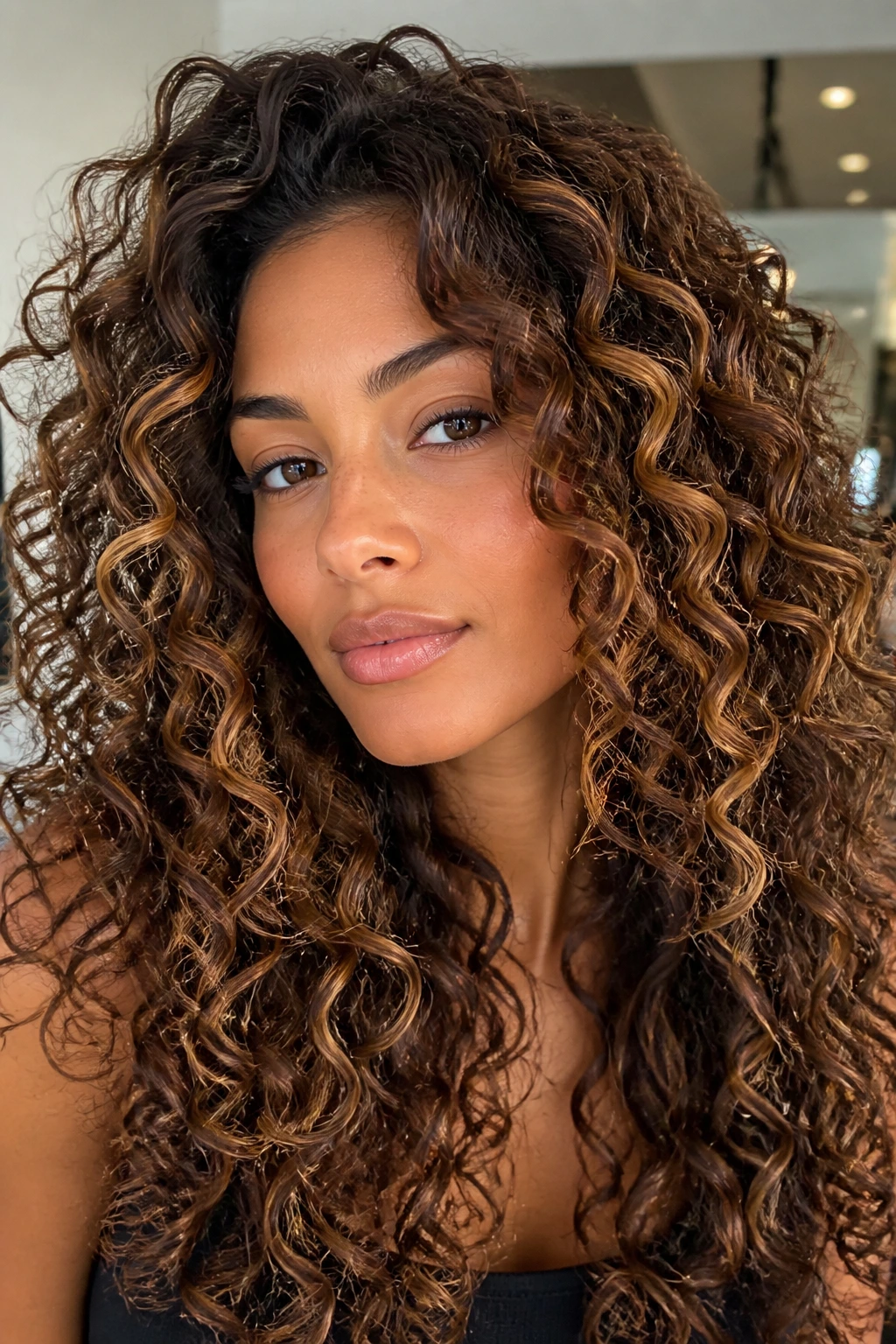
Does curly hair need the same caramel placement as straight hair? Not even close. Curly caramel foilyage works because the color is placed to show through the curl pattern, not sit on top of it.
Why It’s Worth Considering
Foilyage gives a little more lift than open-air balayage, which helps the caramel stay visible once the curls shrink and coil. On tan skin, those lighter pieces pop beautifully because the curl pattern breaks them into smaller flashes instead of one big strip.
What to Ask For
Ask for:
- Thin, strategically placed lightening through the outer layer
- A caramel tone that stays beige-gold or toasted gold
- Extra attention around the face and top crown
- A gloss to keep the curls from looking dry
Curly hair can handle this shade, but it needs moisture. Dry curls make caramel look dusty. Hydrated curls make it look plush.
18. Burnt Sugar Brown with Soft Dimension
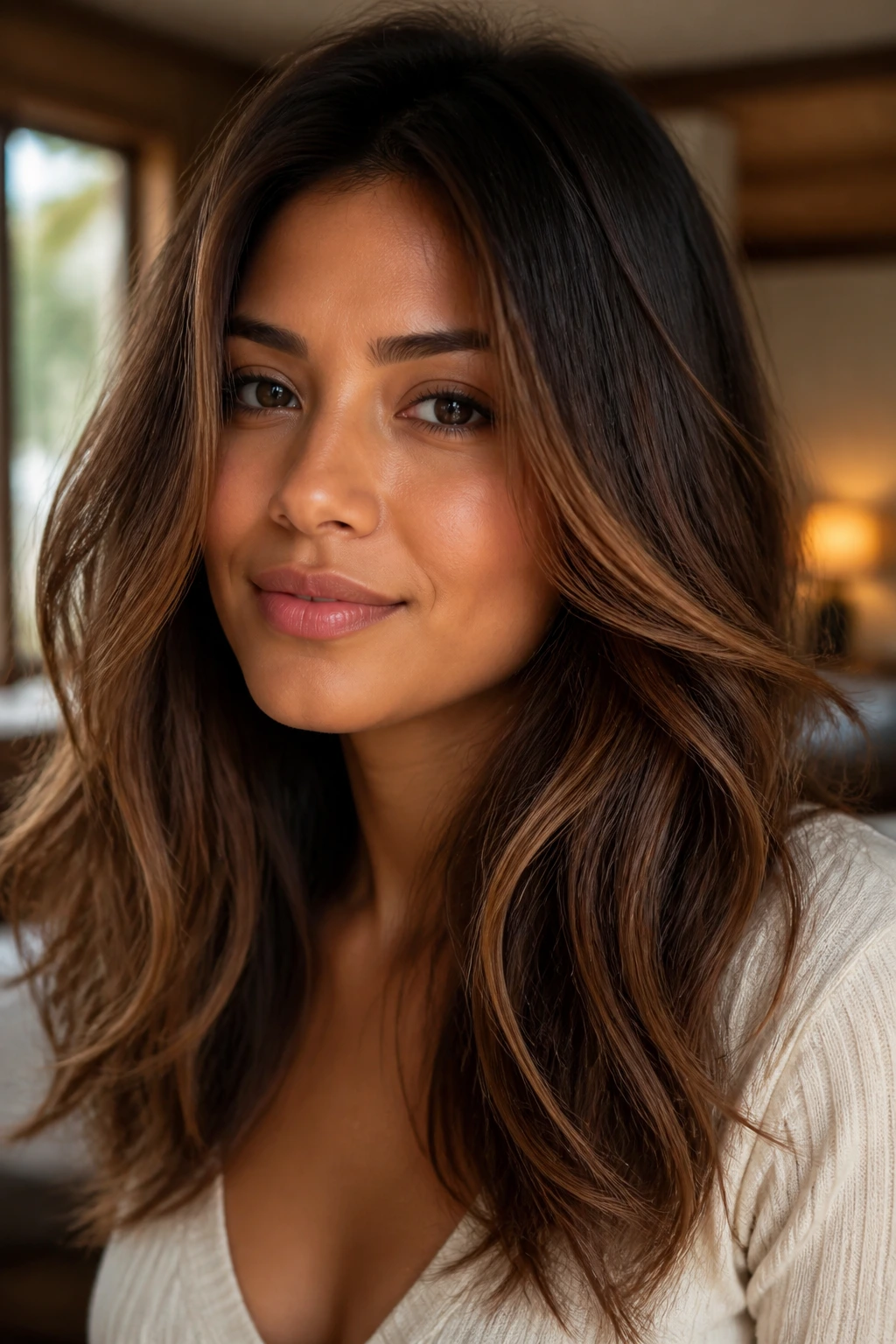
Burnt sugar sounds dramatic, but the best versions are more restrained than the name suggests. Think dark brown with caramel that has a slightly toasted edge, almost like the color of sugar after it’s just started to darken in a pan.
That toasted note matters on tan skin. It keeps the warmth grounded and makes the color feel rich rather than yellow. I like this shade on medium-density hair because the dimension shows best when the pieces can separate a little.
If your hair is cut in layers, the movement will do half the work. If it’s one length, ask for softer internal layers or face-framing pieces so the caramel doesn’t sit like a block on the surface.
19. Dark Caramel Pixie with Piecey Highlights
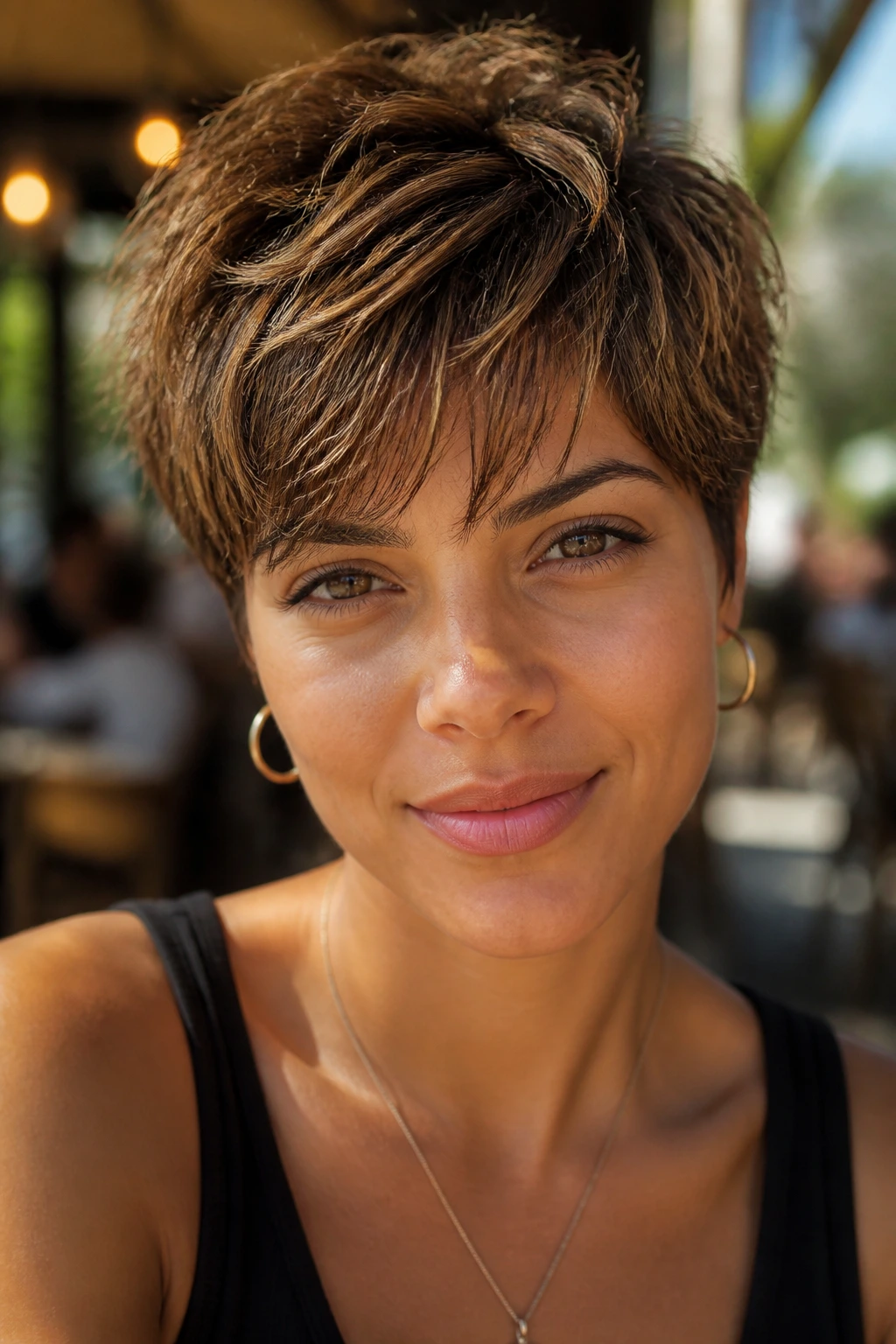
Short hair can absolutely wear caramel, and a pixie is a good place to prove it. A dark caramel pixie with piecey highlights brings shape to the cut and keeps the brown from looking like a single, flat cap of color.
The highlights should be narrow and irregular. That piecey finish gives the pixie movement, especially at the crown and fringe. On tan skin, the caramel reads lively without making the whole cut look overprocessed.
This shade is also easier to style than people assume. A dab of matte cream or lightweight pomade can separate the pieces and make the contrast visible. Too much product will clog the texture, though, so keep it light.
20. Copper-Kissed Caramel Brown
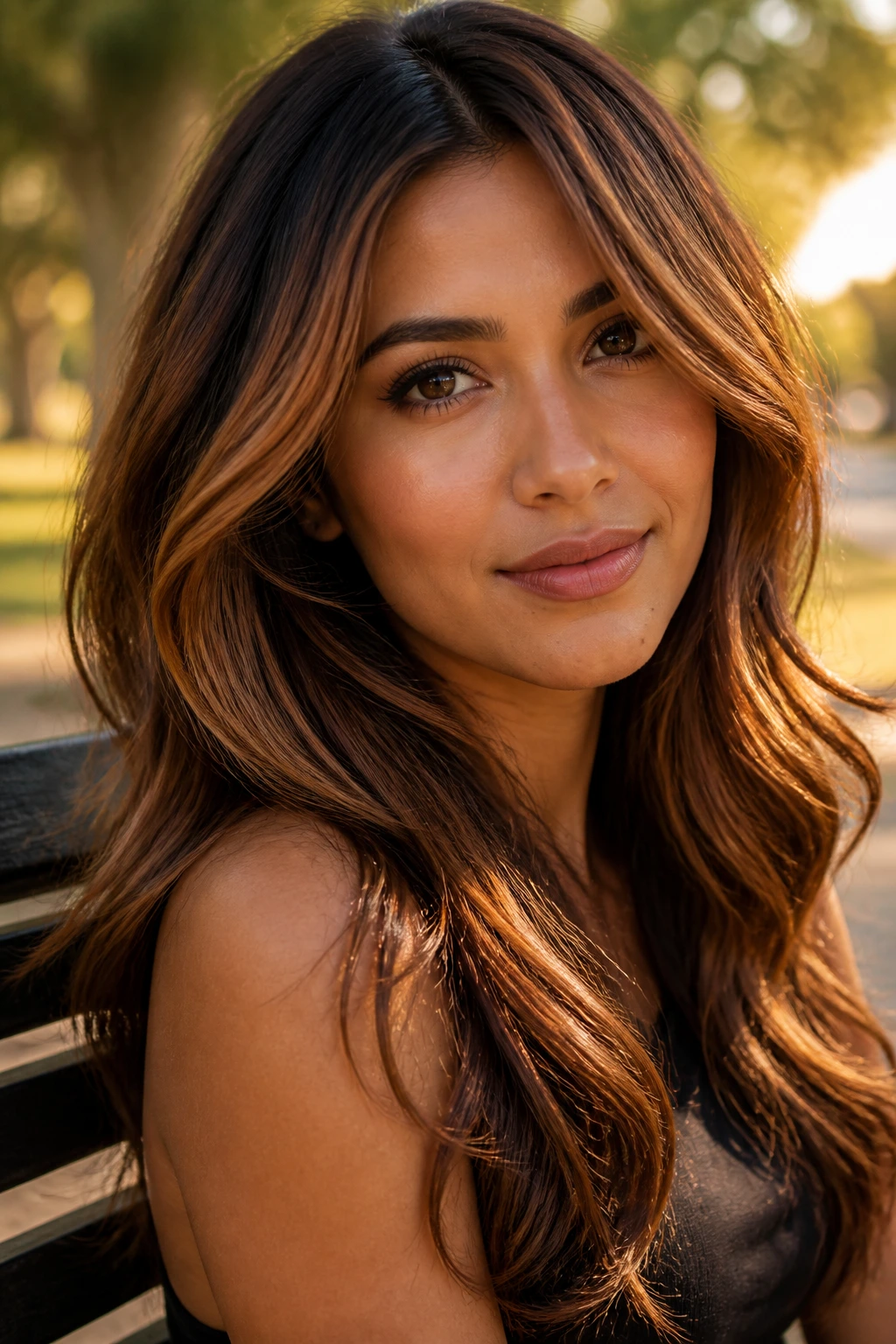
A touch of copper can be beautiful on tan skin. A touch. The key is that the copper should kiss the caramel, not take over the whole head.
Why It Works
Warm tan skin can carry copper when it’s blended into a brown base. The result feels energizing and sunlit, especially on layered cuts or wavy textures. If the copper goes too red or too orange, though, the whole shade can start competing with the skin rather than flattering it.
Best For
- Warm or golden tan skin
- People who wear warm makeup tones
- Fall-out-of-the-chair color lovers who still want brunette depth
I’d keep the base dark and the copper mostly in the ribbons, not the roots. That keeps the overall effect caramel first, copper second.
21. Reverse Balayage with Caramel Depth
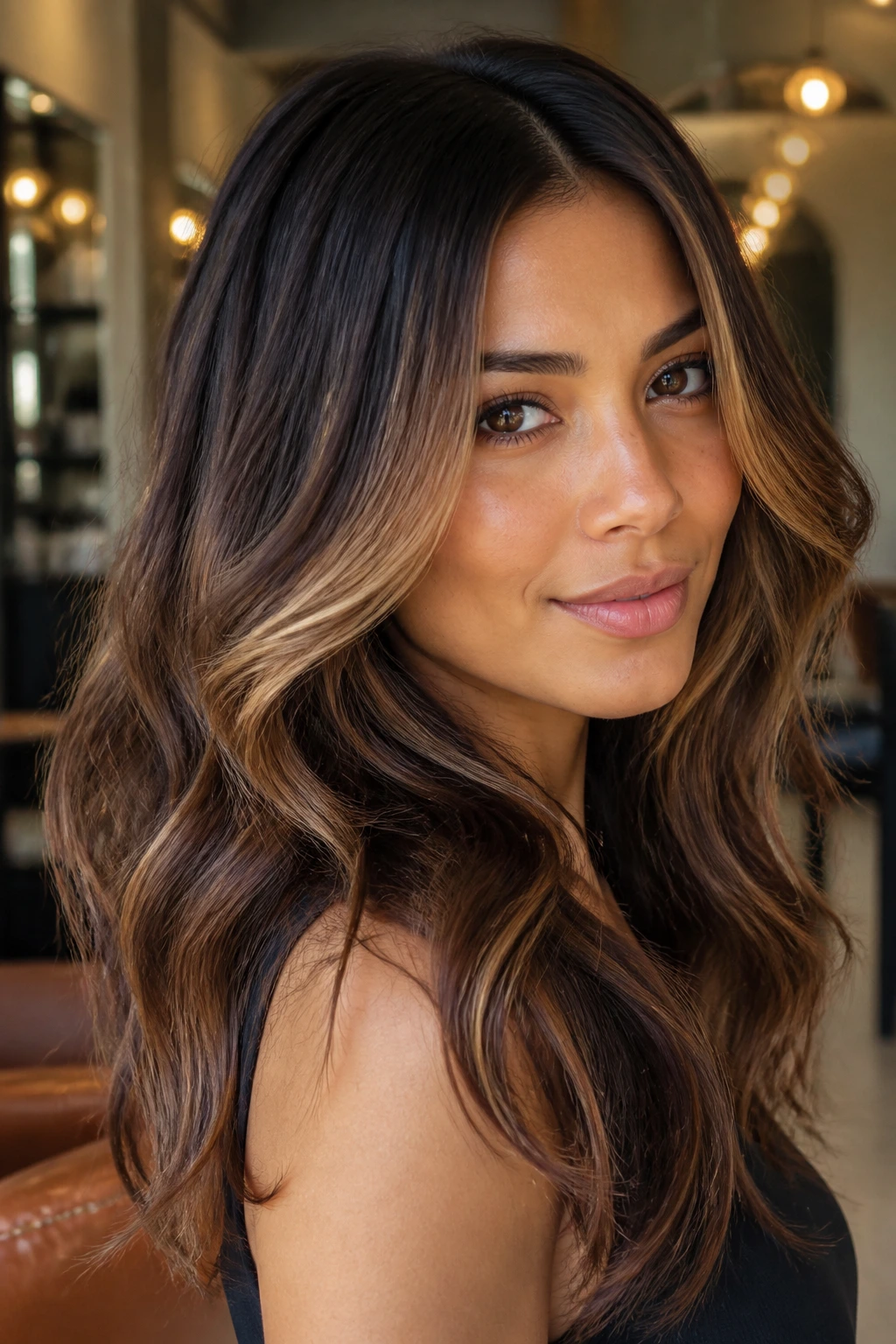
This is the one to choose if your hair is already light and you want to bring it back toward brunette without losing dimension. Reverse balayage adds darker lowlights and caramel depth so the color looks richer, not stripped down.
For tan skin, this can be a relief. A lot of light hair against tan skin starts looking too pale or too harsh. Reverse balayage solves that by rebuilding the brown base and letting the caramel sit inside it instead of on top of it.
The best version has movement through the mid-lengths and ends, with a few brighter pieces left near the face. That keeps the style from feeling like a total reset.
22. Curtain Bangs and Caramel Sweep
Can curtain bangs change the way caramel reads? Completely. They give the lighter pieces a place to land right at the face, which makes the shade feel more intentional and less spread out.
Why This Pairing Works
Curtain bangs split the attention across the forehead and cheekbones, so the caramel sweep doesn’t need to do all the work on the lengths. On tan skin, that means the face gets brightened in a controlled way. You see the color before you see the technique.
Best Styling Note
Blow the bangs forward, then curve them away from the face with a round brush or large velcro roller. That slight bend lets the caramel sit softly against the skin instead of hanging in a straight line. A little root lift here helps a lot.
If you already have face-framing layers, this is an easy way to turn them into a feature instead of background noise.
23. Deep Mocha Shag with Caramel Ribbons
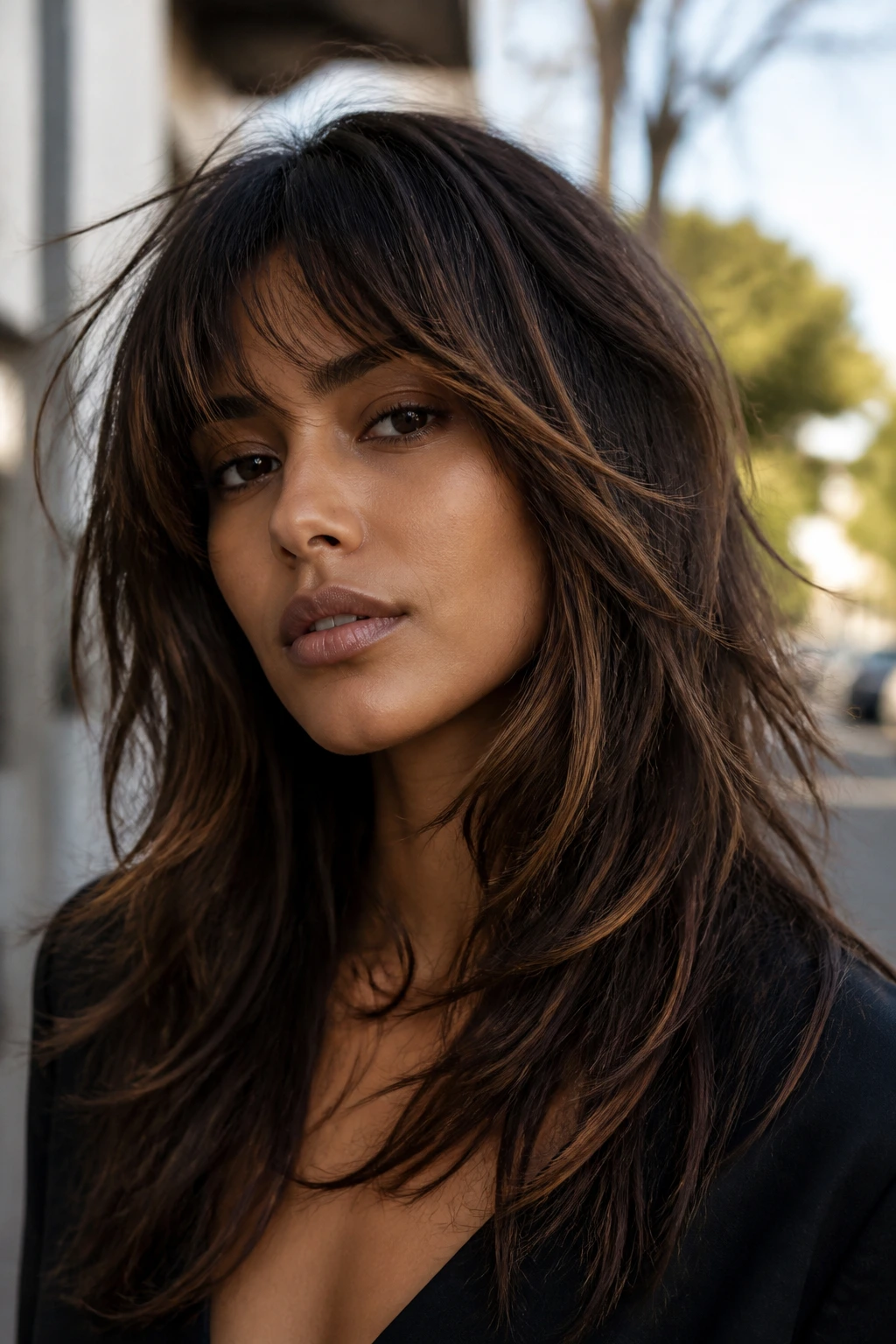
A shag loves movement, which is why caramel ribbons look so good in it. The choppy layers break the color into small pieces, and the deep mocha base keeps the whole cut from looking too busy.
This one works best when the ribbons are thin and staggered through the top layers. Tan skin can take the contrast because the shag already has attitude; the color just supports the shape. If you add curtain fringe or wispy bangs, the caramel has another place to show up.
I’d avoid making the ribbons too uniform. A shag wants irregularity. That’s the point.
24. Satin Brunette with a High-Gloss Caramel Finish
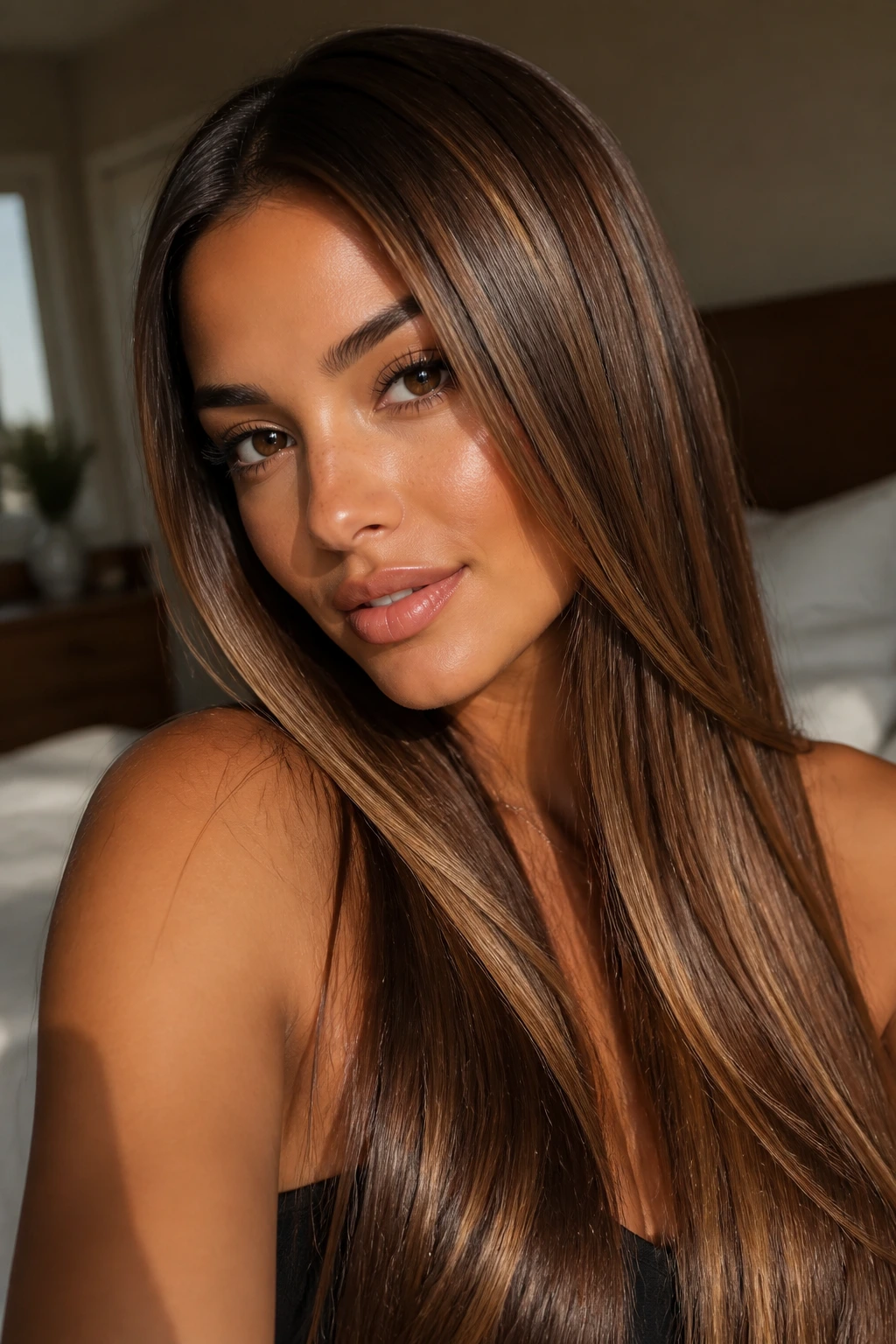
Some shades need more shine than lightness. Satin brunette is one of them. The color stays firmly in brunette territory, but the high-gloss caramel finish gives it that smooth, reflective surface that tan skin tends to love.
The gloss matters because it keeps the caramel from drying out visually. If the finish is dull, the shade can read dusty. If it’s satin-smooth, the brown and caramel tones merge into one rich surface that moves nicely under indoor light and daylight alike.
This is a smart choice for straight hair, blunt cuts, or anyone who prefers a neater silhouette. It doesn’t rely on beach waves to make sense.
25. Rich Caramel Brown Melt with Espresso Underlayers
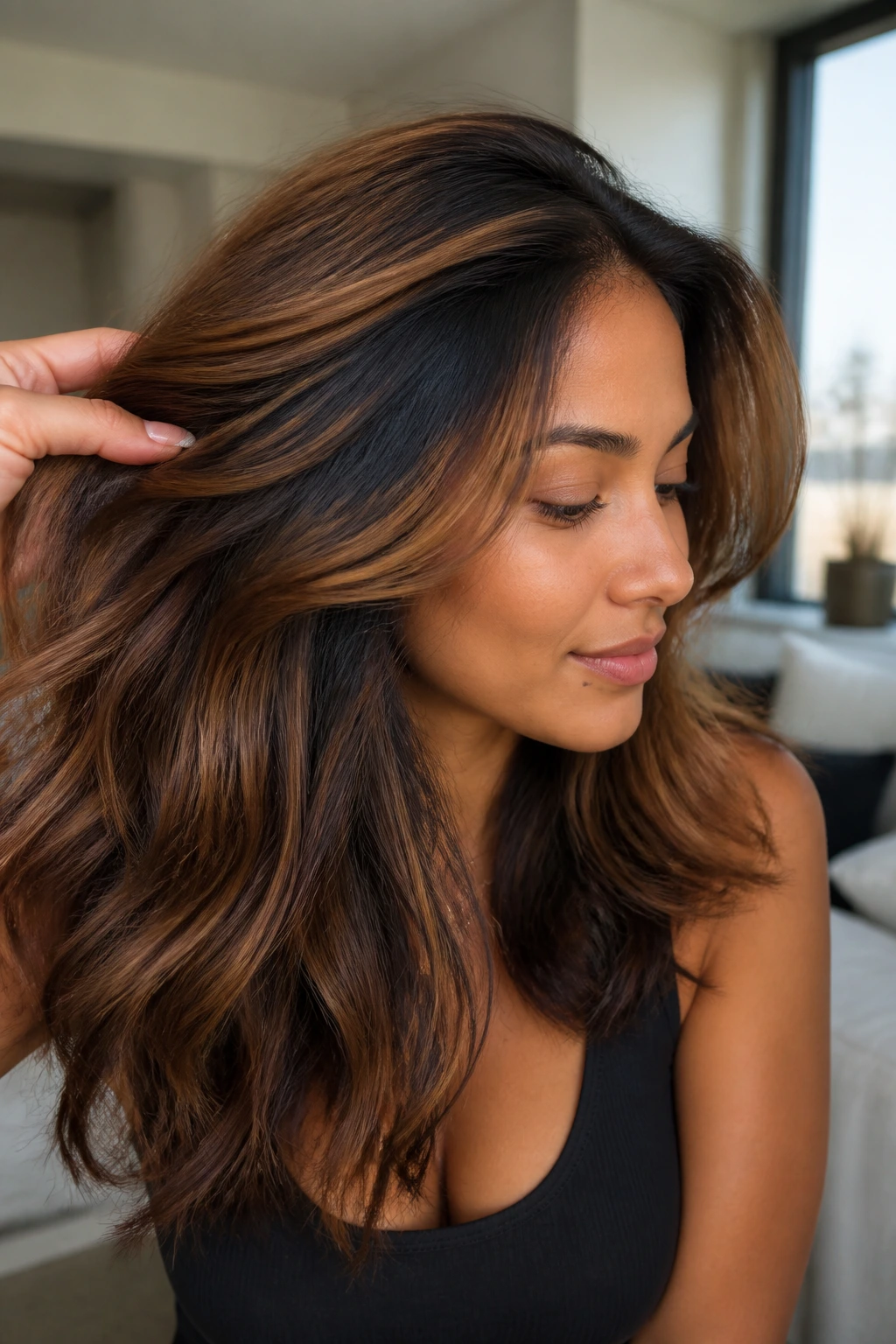
This is the version I’d save for last because it may be the most balanced of the bunch. The espresso underlayers keep the hair grounded, and the rich caramel melt on top gives tan skin warmth without flooding the whole head with brightness.
What makes it work is the layering. You see the caramel first, then the espresso underneath reminds you the color still has depth. That keeps the shade from going flat as it grows out. It also makes thick hair look less bulky, because the darker underlayers create a little visual air.
If you want one dark caramel brown hair color for tan skin that can live through workdays, dressy nights, and messy buns without looking off, this is probably the one I’d point to first.
Why Dark Caramel Brown Works Better When It Moves
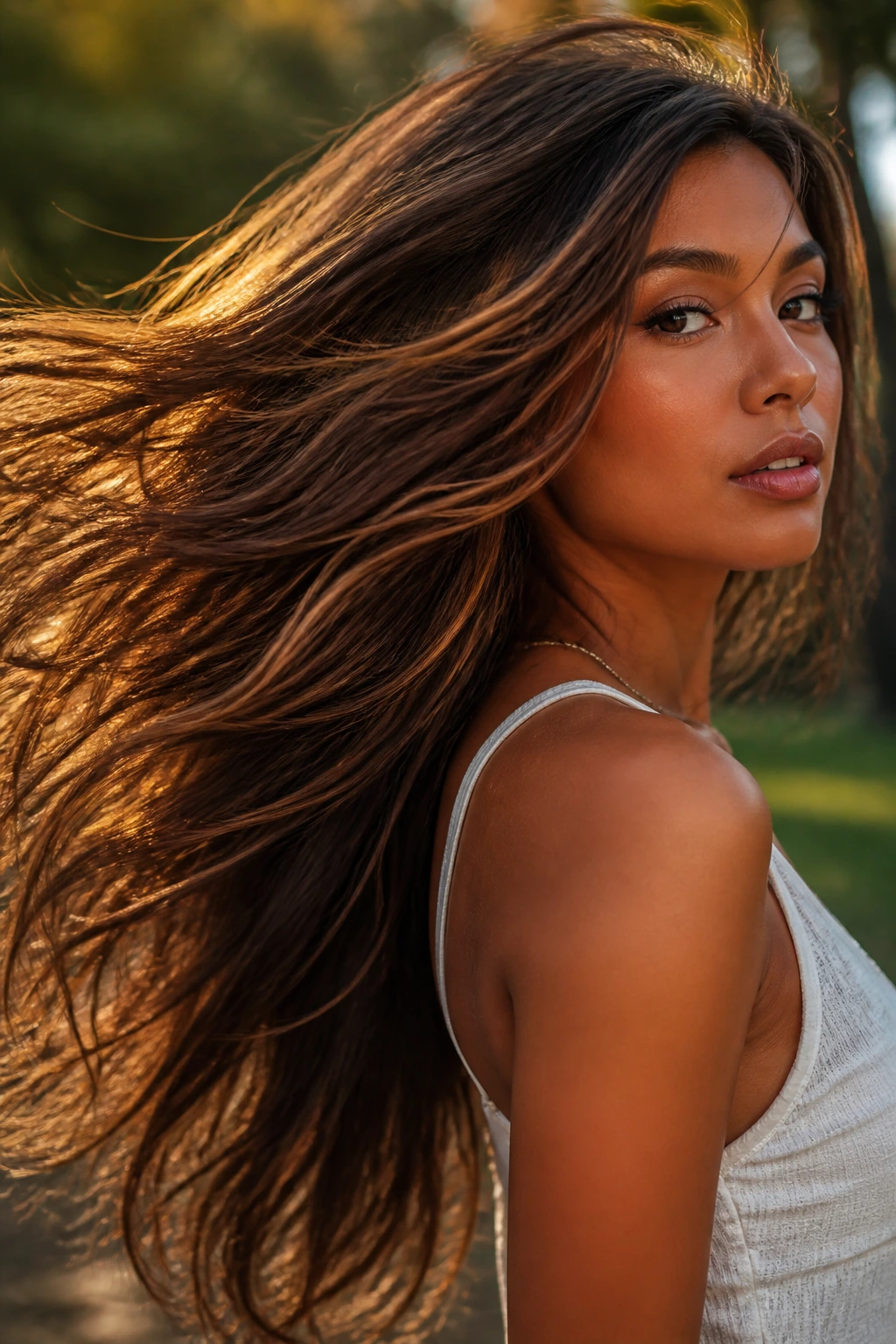
Dark caramel brown is at its best when it has dimension. Flat color can be fine if you want something low-drama, but on tan skin it can also read dense or slightly muddy if the tone isn’t tuned carefully. Movement fixes that. Balayage, root melts, lowlights, glosses, and contour pieces all give the color a place to breathe.
The other thing movement does is keep the hair from looking too matched to the skin. That sounds strange, but it’s a real issue. If the brown is too close to your exact skin depth and warmth, the face can lose definition. A slightly deeper root or a slightly lighter ribbon creates the contrast the eye needs.
I’ve always preferred caramel shades that are built like a good sandwich: one layer for depth, one layer for warmth, one layer to make the whole thing readable in daylight. Too many salon photos ignore that middle layer. That’s where the color gets its shape.
Tools and Products That Make These Shades Easier to Live With
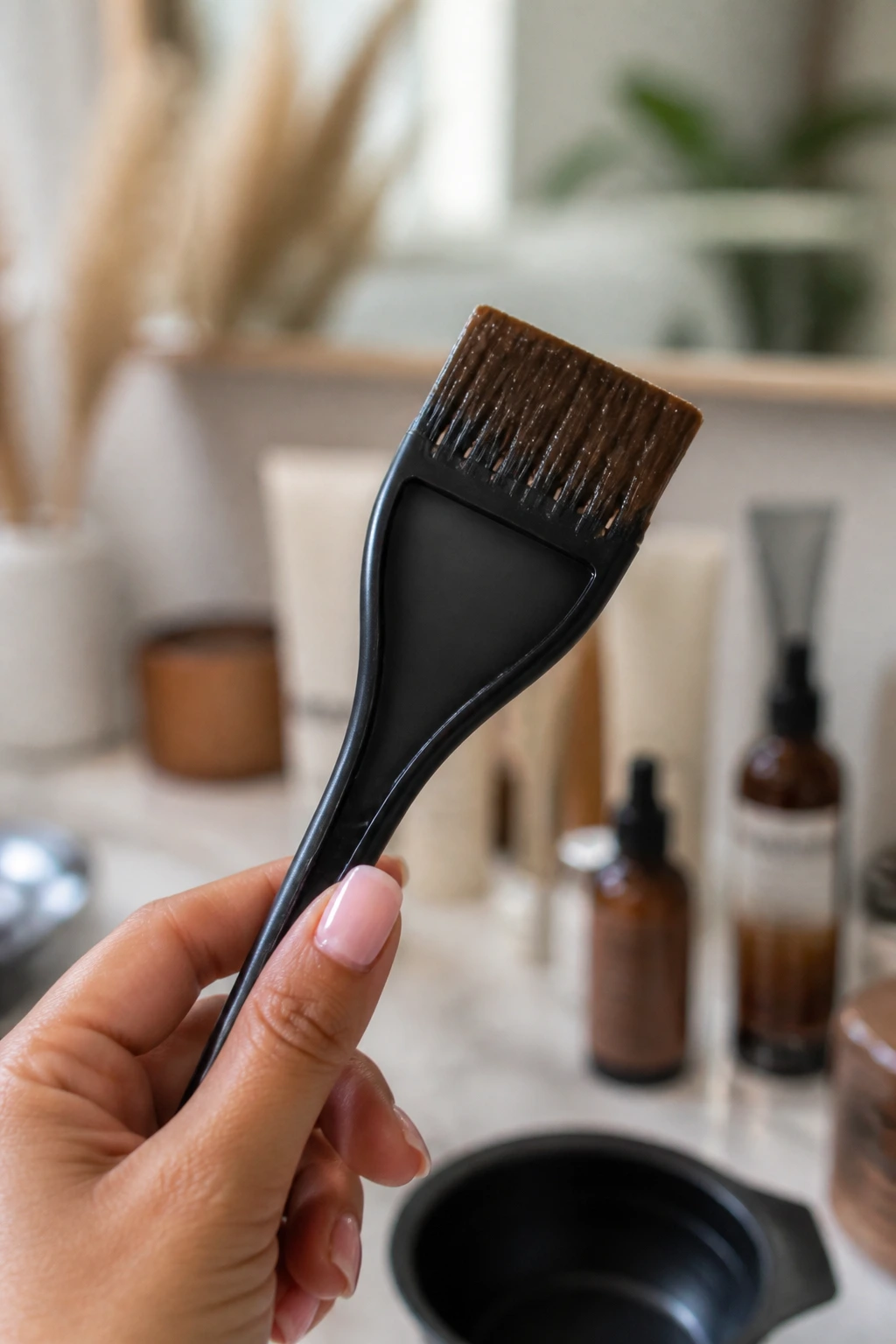
- Tint brush and mixing bowl: Useful if you’re doing a gloss, root smudge, or color-depositing mask at home.
- Sectioning clips: Keep balayage sections organized and prevent missed spots around the crown and nape.
- Color-safe shampoo: A sulfate-free formula helps the caramel tone last longer and keeps the brown from going dull.
- Moisturizing conditioner: Caramel shows dryness quickly, especially on highlighted ends.
- Deep-conditioning mask: Use once a week if your hair has been lightened or heat-styled often.
- Wide-tooth comb: Better than a fine comb for distributing conditioner or gloss through curls and waves.
- Heat protectant spray: Necessary if you use curling irons, flat irons, or hot brushes.
- Shine spray or light serum: Helps satin brunette and gloss-heavy caramel colors keep that reflective finish.
- Color-depositing mask or gloss: Handy for refreshing warm caramel tones between salon visits.
- Hand mirror and daylight window: Natural light tells the truth about undertones. Bathroom bulbs do not.
Picking the Right Dark Caramel Brown for Tan Skin
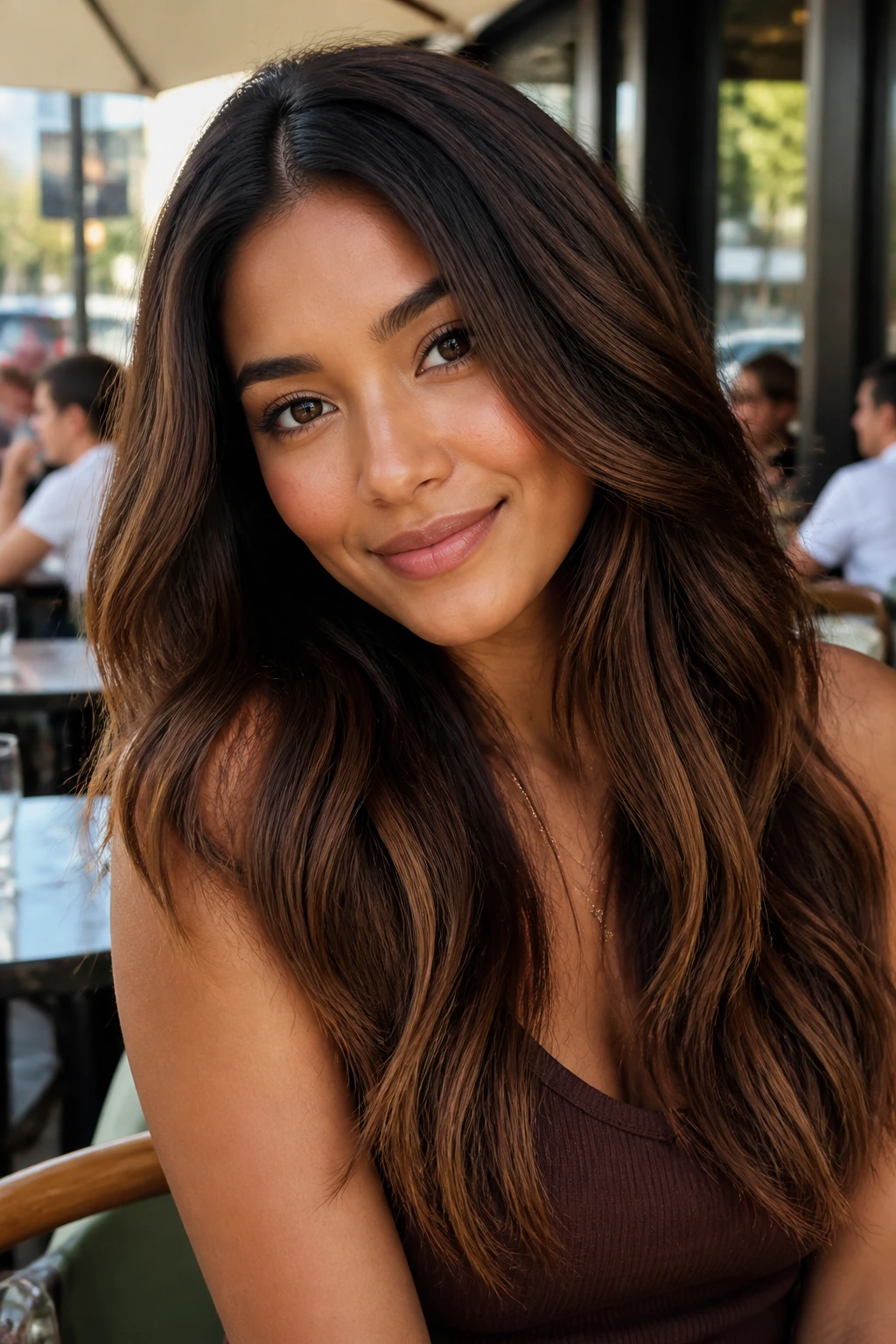
The easiest mistake is thinking all tan skin wants the same caramel. It doesn’t. Warm tan skin usually likes gold, maple, cinnamon, and toasted brown tones. Neutral tan skin can wear almost anything in this family, as long as the pieces aren’t too bright. Olive tan skin often needs a little beige, smoky brown, or mahogany so the warmth doesn’t turn greenish or brassy.
Salon language helps here. Ask for level 4 to 6 brown depth with caramel placed where the light naturally lands. That one phrase is more useful than asking for “caramel brown” by itself, because the name alone leaves too much room for interpretation. One stylist’s caramel is another stylist’s orange.
Bring reference photos from more than one angle. A front shot can hide a patchy placement pattern, and a side shot can show whether the ends are too light. If your hair is already colored, tell the stylist what’s underneath. Previous red dye, box brown, or old highlights all change how caramel takes.
If you’re choosing between two shades, pick the one with the deeper root. Tan skin usually looks cleaner with depth near the scalp and warmth through the ends. That’s where the eye finds contrast.
How to Wear These Shades So They Actually Show Up
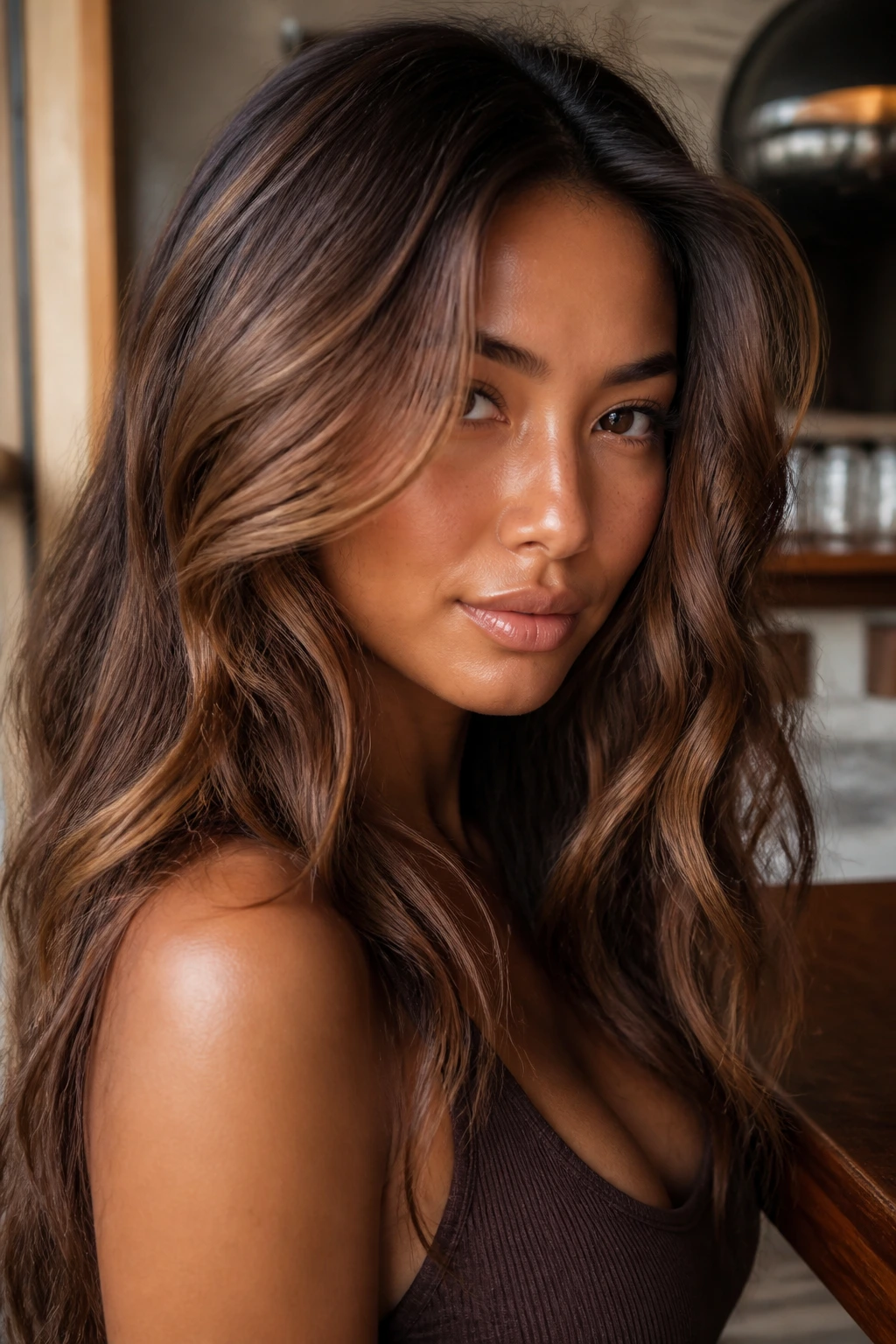
Presentation:
Loose waves, a smooth blowout, or even a blunt finish will show dark caramel brown differently. Waves exaggerate dimension; straight styling shows off the gloss and the ribboning. If you want the caramel to look richer, a soft bend at the mid-lengths does more than a curled-under end ever will.
Accompaniments:
Gold hoops, warm blush, bronze eye makeup, cream sweaters, camel coats, and deep green clothing all play nicely with caramel brunette. If your skin leans olive, add a little beige or taupe in the clothing so the warmth doesn’t feel too loud.
Portions:
Think about how much caramel you want to carry. A few money pieces give a quick face-brightening effect. Half-head balayage gives you movement with lower upkeep. Full-head dimension is for people who want the color visible even in a bun.
Accessory Pairing:
Sunglasses, clips, headbands, and claw clips all change how the caramel reads because they move the eye. A gold clip near face-framing highlights can make the whole style look more deliberate in five seconds. Small trick. Big payoff.
Extra Shine, Extra Dimension: The Small Tweaks That Make Caramel Browns Pop
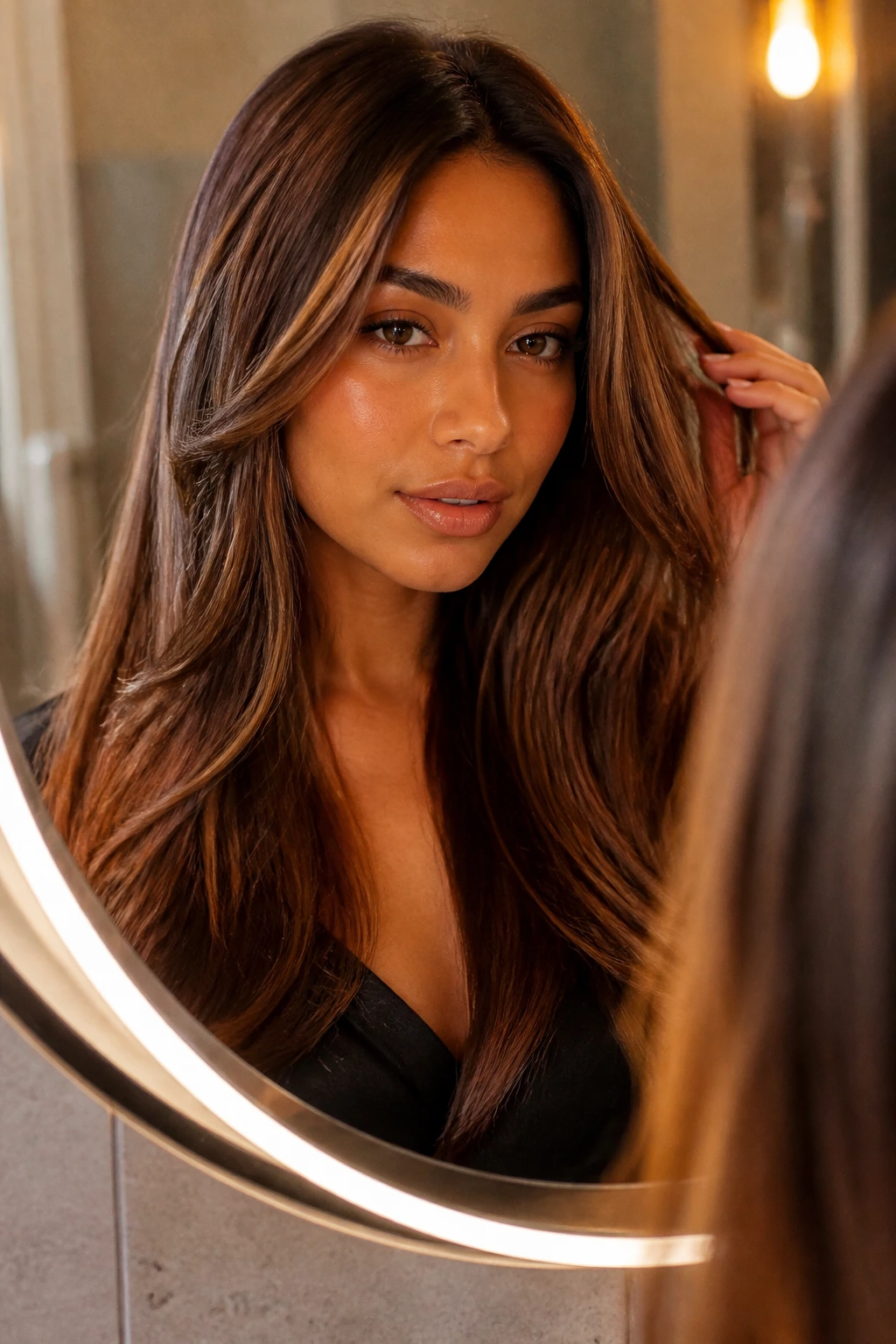
Gloss Boost:
A clear or beige gloss every 6 to 8 weeks keeps the caramel from drying out visually. It’s the easiest way to stop the color from drifting toward flat brown.
Placement Trick:
Ask for the brightest pieces near the temples, cheekbones, and outermost layers. That placement flatters tan skin because it mimics where sunlight would hit naturally.
Tone Safety:
If the shade starts going orange, swap one wash a week for a blue-toning shampoo or conditioner made for brunette brass. Purple shampoo is not always the answer for brown hair; blue usually handles orange better.
Make-It-Yours:
Straight hair can handle wider caramel ribbons. Curly and coily hair usually looks better with thinner, more frequent pieces, because the curl pattern breaks up the color and stops it from looking blocky.
Quick upgrade:
Ask for a shadow root even if you want a bright finish. It gives the color depth and makes grow-out less annoying.
What Goes Wrong When Caramel Brown Misses the Mark
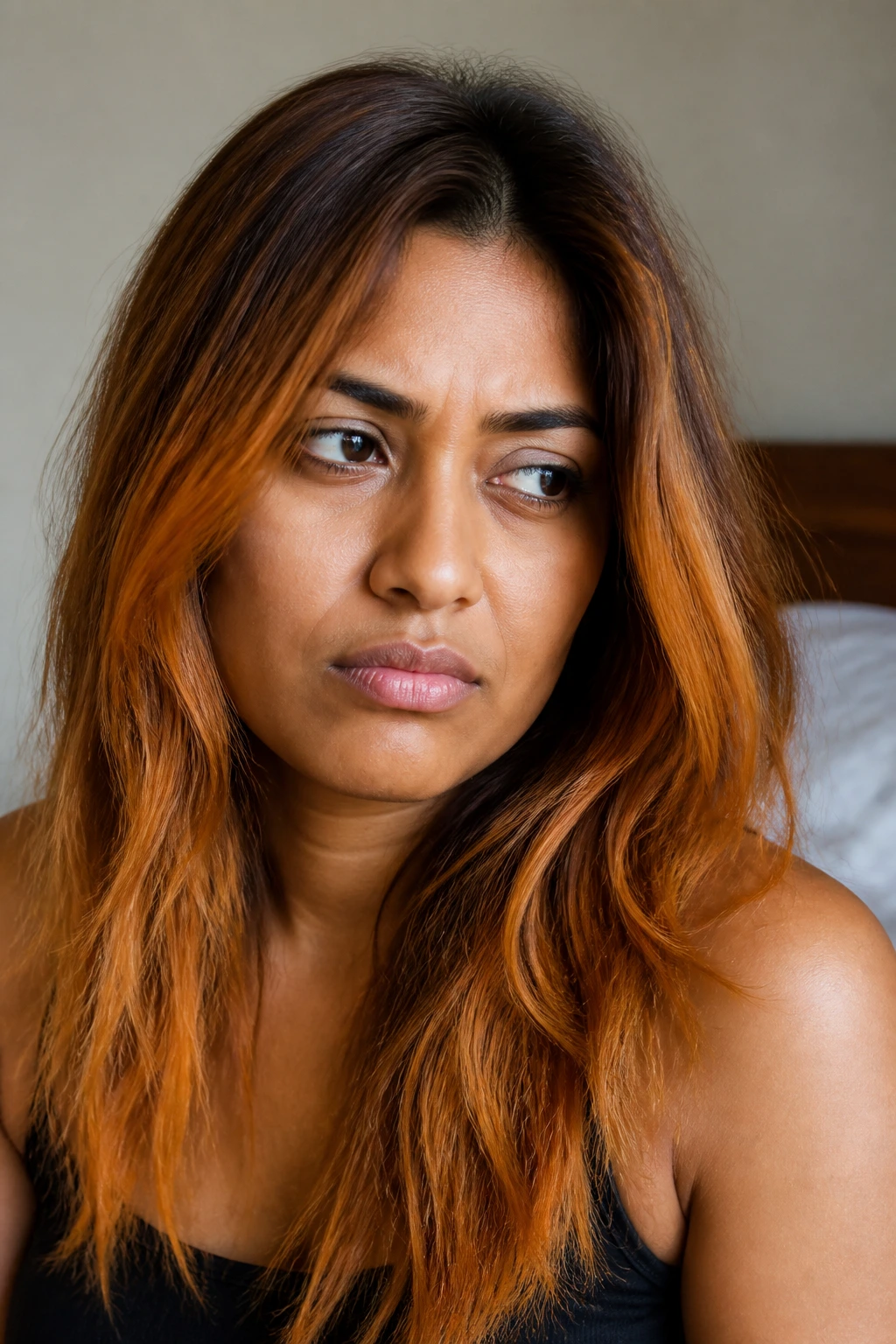
The most common mistake is going too orange. On tan skin, orange doesn’t look like warmth; it looks like the color is arguing with the face. The fix is a caramel that leans beige, gold, or cinnamon instead of copper-heavy orange.
Another problem is chunky placement. Thick highlights can look striped, especially on straight hair. If you can see every foil line from across the room, the placement is too bold for this shade family. Softer, thinner pieces usually wear better.
People also choose caramel that’s too light for the base. That creates a jump that can look disconnected, especially as the roots grow out. Keep the lift within a couple of levels of your natural brown unless you’re deliberately going for high contrast.
Dry ends are a sneaky one. Lightened brown hair can look dull fast if the cuticle gets rough. That’s why glosses, masks, and heat protectant matter more here than in a single-process brunette.
And then there’s maintenance denial. A caramel shade that needs toning every 6 weeks will not magically stay perfect for 4 months. If you want low upkeep, build the color around balayage and deeper roots. If you want bright ribbons, accept that the upkeep is part of the deal.
Easy Swaps for Different Tan Skin Tones and Hair Types
Warm Glow Swap:
If your tan skin leans golden, choose maple, honey-caramel, or cinnamon caramel. These shades pick up your warmth without making the face look red.
Olive Balance Swap:
If your tan skin has an olive cast, reach for smoky caramel, mocha, or caramel with beige undertones. A little coolness keeps the warmth from going brassy.
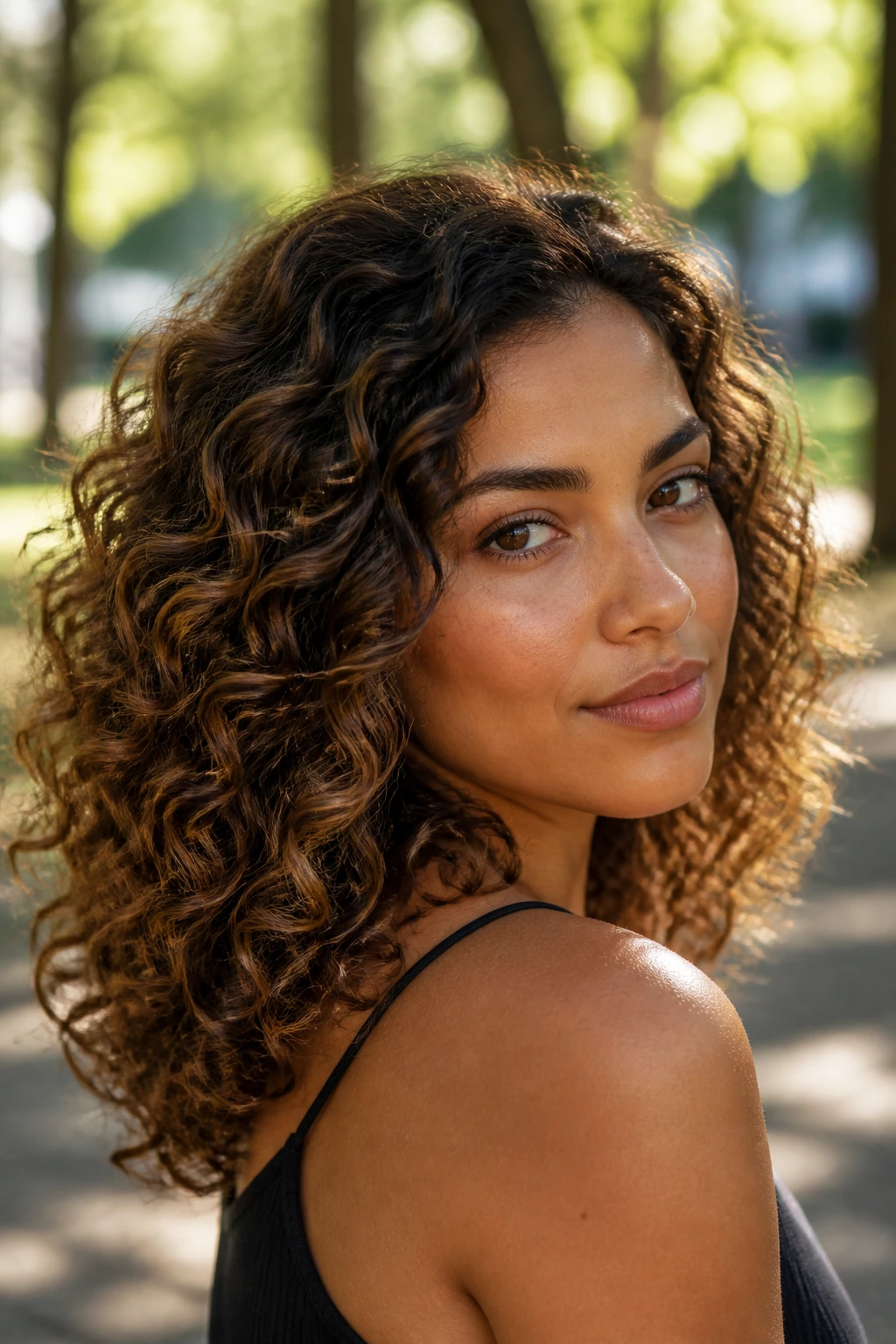
Curly Hair Swap:
For curls and coils, use thinner ribbon placement and a richer base. Heavy lightening can break up the curl pattern in a way that looks patchy instead of dimensional.
Short Cut Swap:
Pixies, bobs, and lobs usually work best with visible face-framing pieces or narrow ribbons. Too much all-over lightening can blur the cut.
Low-Maintenance Swap:
If you don’t want frequent salon visits, choose a root melt, reverse balayage, or deeper babylights. The grow-out stays softer, and the color keeps its shape longer.
Questions People Ask Before They Pick Dark Caramel Brown
Will dark caramel brown look too warm on tan skin?
Only if the caramel is pushed too orange or too gold. Tan skin usually handles warmth well, but the shade should still have enough brown depth to keep it looking rich rather than brassy.
Is balayage or all-over color better for this look?
Balayage is easier to grow out and usually looks softer on tan skin because the depth stays near the root. All-over color can work if you want a more uniform brunette finish, but it needs glossing to stay dimensional.
Can I get this color if my hair is already very dark?
Yes, but it may need lightening first if you want the caramel pieces to show. A gloss-only service can warm up very dark hair, but it won’t create lighter caramel ribbons without lift.
What if my skin tone is tan but leans cool instead of warm?
Choose smoky caramel, beige caramel, or a brown with a neutral ash edge. That keeps the hair flattering without turning orange against the skin.
How often will I need a toner or gloss?
Most caramel brunettes benefit from a refresh every 4 to 8 weeks, depending on wash frequency and how much sun or heat styling they get. Gloss fades first, shine second, then tone.
Does this shade work on curly hair?
Yes, and it can look especially good because curls break the color into small flashes. Just ask for thinner ribbons and good moisture care so the caramel doesn’t dry out the curl pattern.
Can I do this at home?
A simple gloss or color-depositing mask can work at home if your hair is already in the right brown range. Full balayage, root melts, or major lightening are safer in a salon because the undertones matter too much for guesswork.
What haircut shows caramel brown best?
Layered cuts, curtain bangs, lobs, shags, and long layers all show movement well. A one-length cut can still wear the color, but it usually needs more intentional placement near the face.
A Caramel Brown That Keeps Its Shape
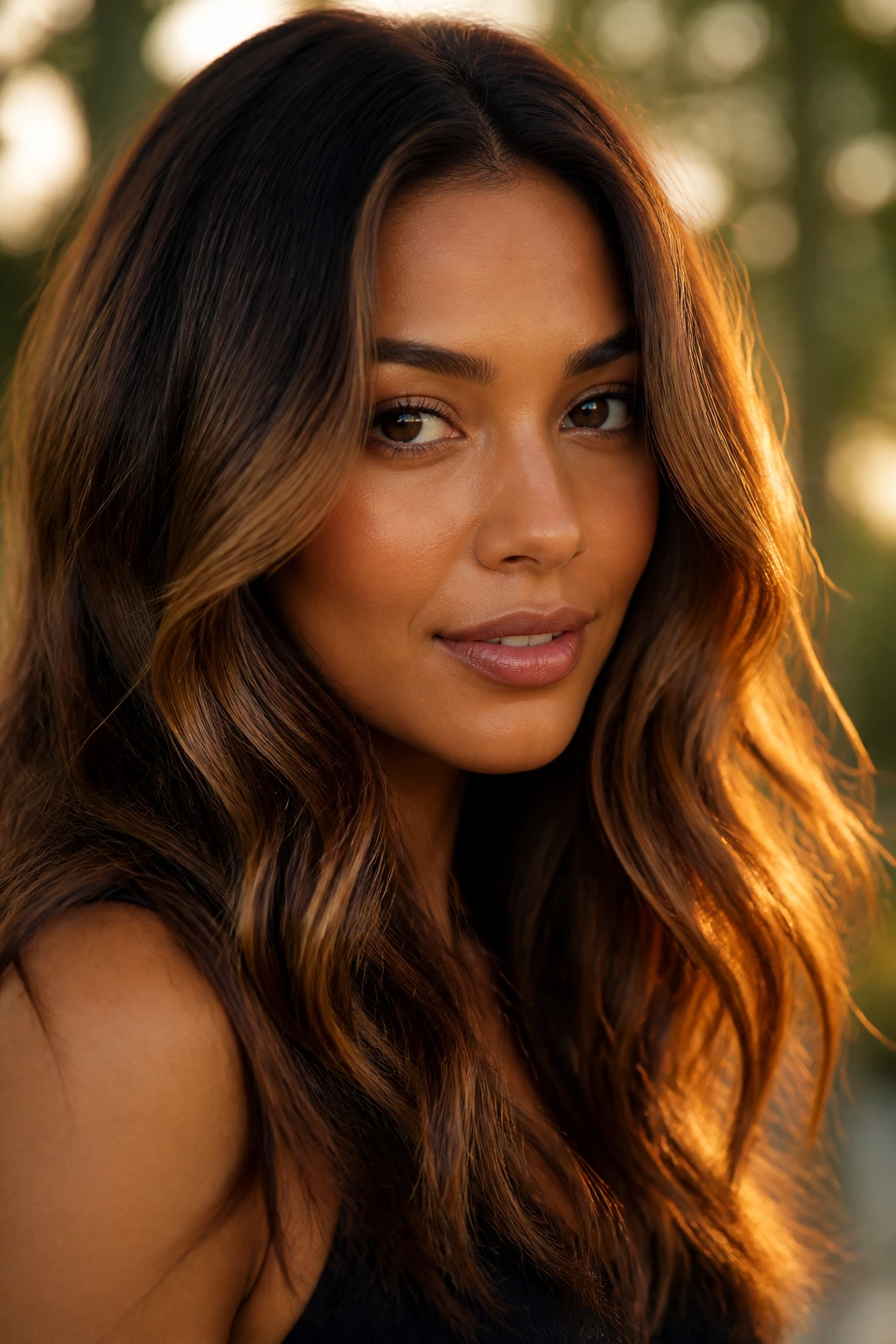
Dark caramel brown hair color for tan skin works because it knows how to keep its depth. The shade never has to shout. It just needs the right mix of warmth, contrast, and placement so the skin looks clearer and the hair looks richer from every angle.
My honest favorite versions are the ones with a deeper root and caramel that leans toasted instead of yellow. Those shades stay believable when the light changes, and they usually grow out with less panic at the salon mirror. That’s worth something.
Bring one photo that shows the depth you want, one that shows the brightness you want, and one that proves the tone is right. That trio tells a colorist more than a vague request ever will.