



Dark blonde hair color ideas for tan skin work best when they don’t fight the face. That sounds obvious until you sit in a chair with a dozen reference photos and realize half of them are too pale, too yellow, or too smoky to do you any favors. The sweet spot is usually a level 6 or 7 blonde — deep enough to keep some richness at the root, light enough to catch the light around the cheekbones, and warm or neutral enough to make tan skin look alive instead of washed out.
Tan skin is a moving target, which is exactly why this shade family is so useful. Some tan complexions lean golden and love honey, caramel, and maple. Others skew olive and look sharper in beige, mushroom, or smoky sand. A few sit in that middle ground where both warm and cool tones can work, provided the color has enough depth and dimension. Flat blonde is where things go wrong. A dark blonde with a little root shadow, a beige gloss, or a ribbon of honey can look deliberate in a way pale blonde often doesn’t.
And that’s the fun of it. Dark blonde gives you room to play without pretending your hair is naturally sun-bleached to the marrow. Some looks below are soft and creamy. Some are smoky. Some lean golden and glossy. A few are a little moodier, which I love on tan skin because the contrast keeps the color from disappearing into the face. Start with undertone, keep an eye on how much contrast you want, and the rest gets easier fast.
Why These Shades Earn Their Spot on Tan Skin
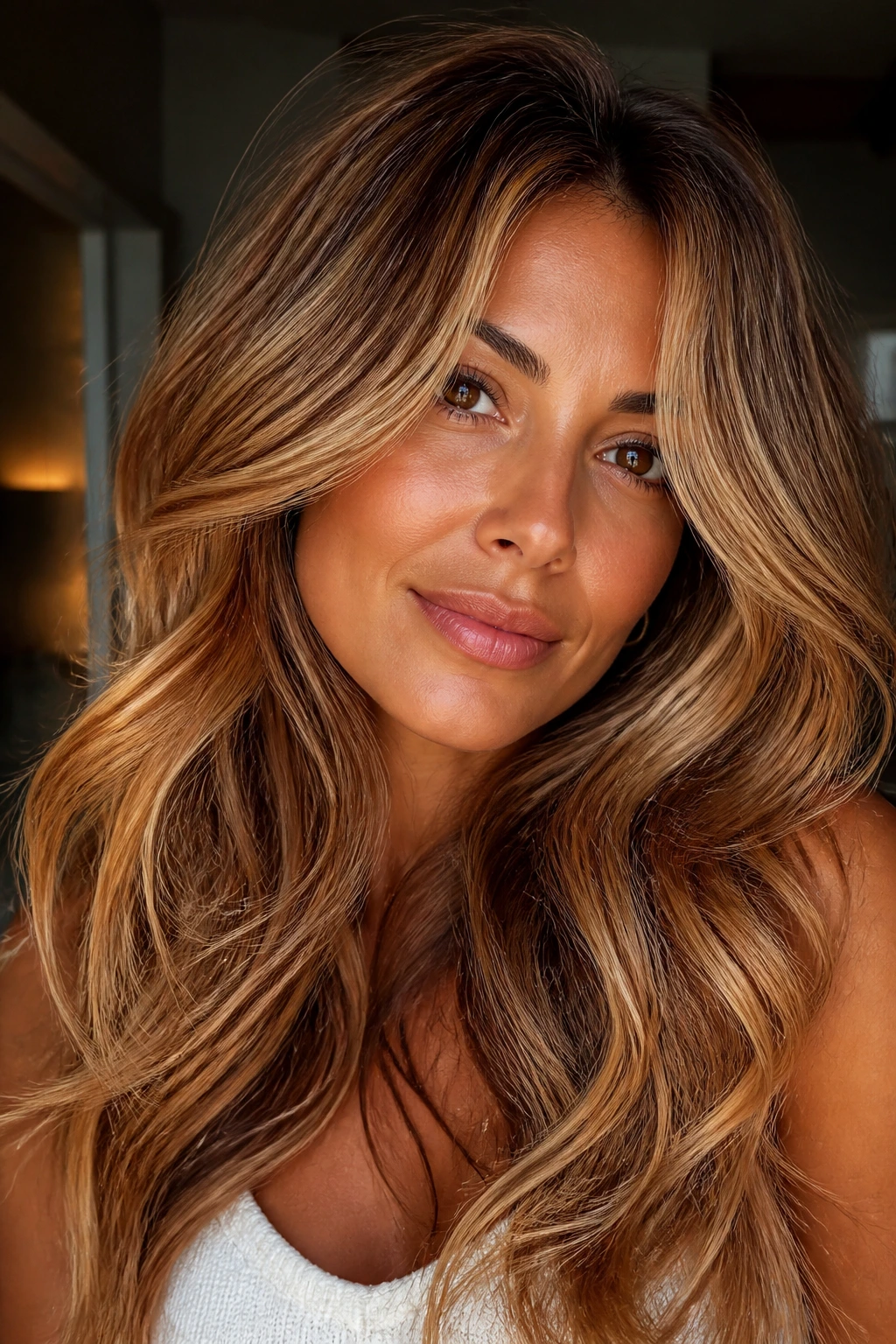
-
Warmth without brass: Honey, caramel, maple, and soft copper all carry enough gold to wake up tan skin, but they stop short of that orange, overprocessed look that cheapens the finish.
-
Depth keeps the hair from floating away from the face: A level 6 or 7 root gives the color weight, which matters when your skin already has natural warmth and a little color in it.
-
Dimension does more work than the name on the bottle: Ribbons, babylights, root shadow, and lowlights create movement; one flat blonde sheet can read too yellow, too beige, or too dull.
-
Neutral shades are the quiet fix for olive or mixed undertones: Beige, mushroom, sand, and almond tones don’t shout, and that’s exactly why they’re useful on tan skin that leans olive or neutral.
-
These shades grow out better than pale blondes: Keeping some darkness near the root means fewer hard lines and fewer emergency touch-ups every few weeks.
-
They leave room for makeup and jewelry: Gold hoops, bronze shadow, peach blush, terracotta lipstick — all of it sits more naturally next to a dark blonde that has depth instead of brightness for brightness’ sake.
1. Honeyed Dark Blonde
Honeyed dark blonde is the shade I’d hand to someone with tan skin and warm undertones without overthinking it. It has that soft golden glow that makes the skin look a little more awake, especially around the forehead and cheekbones, where flat color can sometimes settle into the background.
What to ask for
Ask for a level 6 or 7 base with honey ribbons and a beige-gold gloss. That little bit of beige keeps the honey from going orange, which is the difference between polished and overly warm.
A loose wave or a soft blowout shows this shade at its best. Straight hair can make it look calmer and more neutral, which is fine if that’s what you want, but the movement is where the honey earns its keep.
Why it flatters tan skin
Honey sits close to the natural warmth found in many tan complexions. The color doesn’t try to cancel the skin tone; it echoes it. That’s why the result feels easy instead of forced.
If your tan skin leans peach or golden, this one is hard to beat. It also plays nicely with bronzer, warm blush, and gold jewelry, which helps the whole look feel connected rather than pieced together.
2. Beige Dark Blonde
Beige dark blonde is the shade for someone who likes light hair but does not want it shouting from across the room. It’s softer than honey, cooler than caramel, and a little more modern-looking on tan skin that already has enough warmth built in.
The cleanest version of beige
The trick is to keep the beige from drifting gray. A neutral beige gloss over a level 6 or 7 blonde works better than pure ash, because ash can make tan skin look sallow if there isn’t enough warmth underneath.
This shade has a quiet, cashmere feel to it. Not fluffy. Not sweet. Just smooth. On tan skin, that restraint looks good because it lets the skin carry the color story instead of competing with it.
Best if your undertone is mixed
If your skin can’t decide whether it’s golden, neutral, or slightly olive, beige blonde is a safe landing spot. It doesn’t lock you into one side of the color wheel, and that flexibility matters more than people think.
A middle part and soft bends make beige look more expensive. A choppy cut can make it feel a little edgier, which is useful if you don’t want the shade to read too soft.
3. Caramel Ribbon Dark Blonde
Caramel ribbon dark blonde is what happens when you stop trying to make every strand the same color. The darker base keeps the hair grounded, and the caramel pieces move through it like warm light over a woven fabric. It’s a good choice if your hair is thick, wavy, or naturally a little textured.
Why the ribbon placement matters
Caramel works best when it’s painted in slim, irregular ribbons rather than chunky stripes. You want contrast, not zebra hair. On tan skin, those ribbons give the face a brighter edge without turning the whole head light.
What makes it feel balanced
The root should stay a half-step deeper than the mid-lengths. That shadow keeps the caramel from taking over. If the whole head gets lifted evenly, the color can lose that rich brunette-to-blonde effect that makes caramel so flattering.
This is also one of the better choices if you like your color to look dimensional even when you throw it into a clip or a loose knot. The ribbons still show through.
4. Mushroom Dark Blonde
Mushroom dark blonde has a smoky, taupe-heavy finish that looks especially good on tan skin with olive undertones. It’s not silver. It’s not beige. It sits in that in-between space where the blonde feels cooler, but not cold.
Quick facts that matter
- Works best with a level 6 root and cool taupe mid-lengths.
- Needs a little beige in the gloss so it doesn’t turn muddy.
- Looks cleaner on skin that leans olive or neutral than on very golden skin.
Mushroom shades can go flat if the colorist removes too much warmth. That’s the part people miss. A little depth at the root and a little softness in the mids keep it from looking like wet cement, which is the last thing anyone wants near tan skin.
I like mushroom dark blonde on shoulder-length cuts and blunt ends. The shape gives the color room to look intentional. On long layers, it can drift too soft unless you add a few brighter pieces around the face.
5. Bronde Melt
Bronde melt is the easy answer when you want brown and blonde to stop arguing with each other. It’s darker than a standard blonde, lighter than a brunette, and smoother than either one on its own. Tan skin tends to like that middle lane because the face still has contrast.
Why it reads expensive without trying
The best bronde melts don’t have hard lines. The root stays deep, the mid-lengths soften into caramel or beige, and the ends brighten just a little. The result looks lived-in instead of freshly processed, which is the whole point.
This is one of my favorite choices for someone who wants low-maintenance color but doesn’t want to give up brightness. You get the lightness around the face and the crowns of the waves, but the deeper base means grow-out is kinder.
Who should choose it
If your natural hair is dark blonde, light brown, or medium brown, bronde is a very logical move. It also works if you wear tan skin with a lot of warm makeup and don’t want the hair to go too pale next to bronzer.
6. Golden Ash Dark Blonde
Golden ash dark blonde sounds like a contradiction, and that’s why it works. The ash keeps the warmth from turning brassy, and the gold keeps the ash from looking chalky. On tan skin, especially neutral tan skin, that balance can be excellent.
Why the mix matters
Pure ash on tan skin can sometimes drain the face. Pure gold can slide into orange if the hair starts at a darker brunette base. Golden ash gives you the calm of cool tones with a little reflective warmth on top.
Ask for a neutral base with ash-beige lowlights and a soft golden glaze on the ends. That phrasing sounds fussy, but it keeps the color from tipping too far in either direction.
A sleek blowout suits this shade better than tight curls. The reason is simple: the tonal shift shows up more clearly when the hair falls in longer lines.
7. Toasted Wheat Blonde
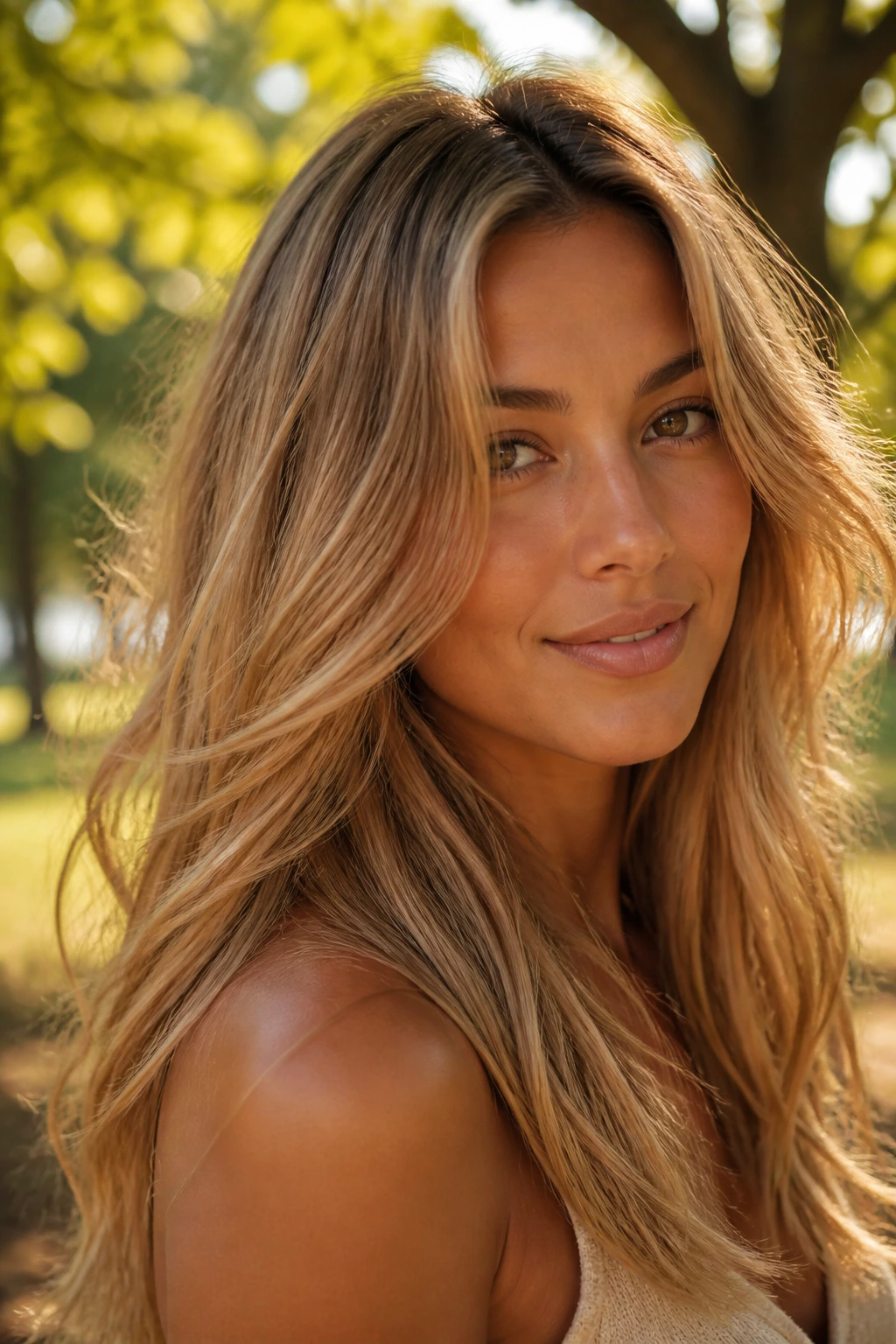
Toasted wheat blonde has an earthy, grainy softness that reads natural in a way a lot of blondes don’t. It’s not sweet like honey, and it’s not smoky like mushroom. It feels like warm beige with a slightly darker, bread-like depth — which sounds odd until you see it next to tan skin.
Why it feels so wearable
The warmth is there, but it’s muted. That makes it useful if you want a blonde that looks believable without looking flat. The darker base keeps the color from floating, and the wheat tone keeps the ends from getting too yellow.
I’d especially point this one at people who wear gold jewelry, camel clothes, and earthy makeup. The shade likes those companions. It doesn’t need extra drama.
Best placement
Toasted wheat works well with long layers, curtain bangs, or a shaggy lob. The cut helps the shade move, and movement is where this tone looks best. If the hair is too blunt and heavy, the color can feel heavier than it should.
8. Rooted Champagne Blonde
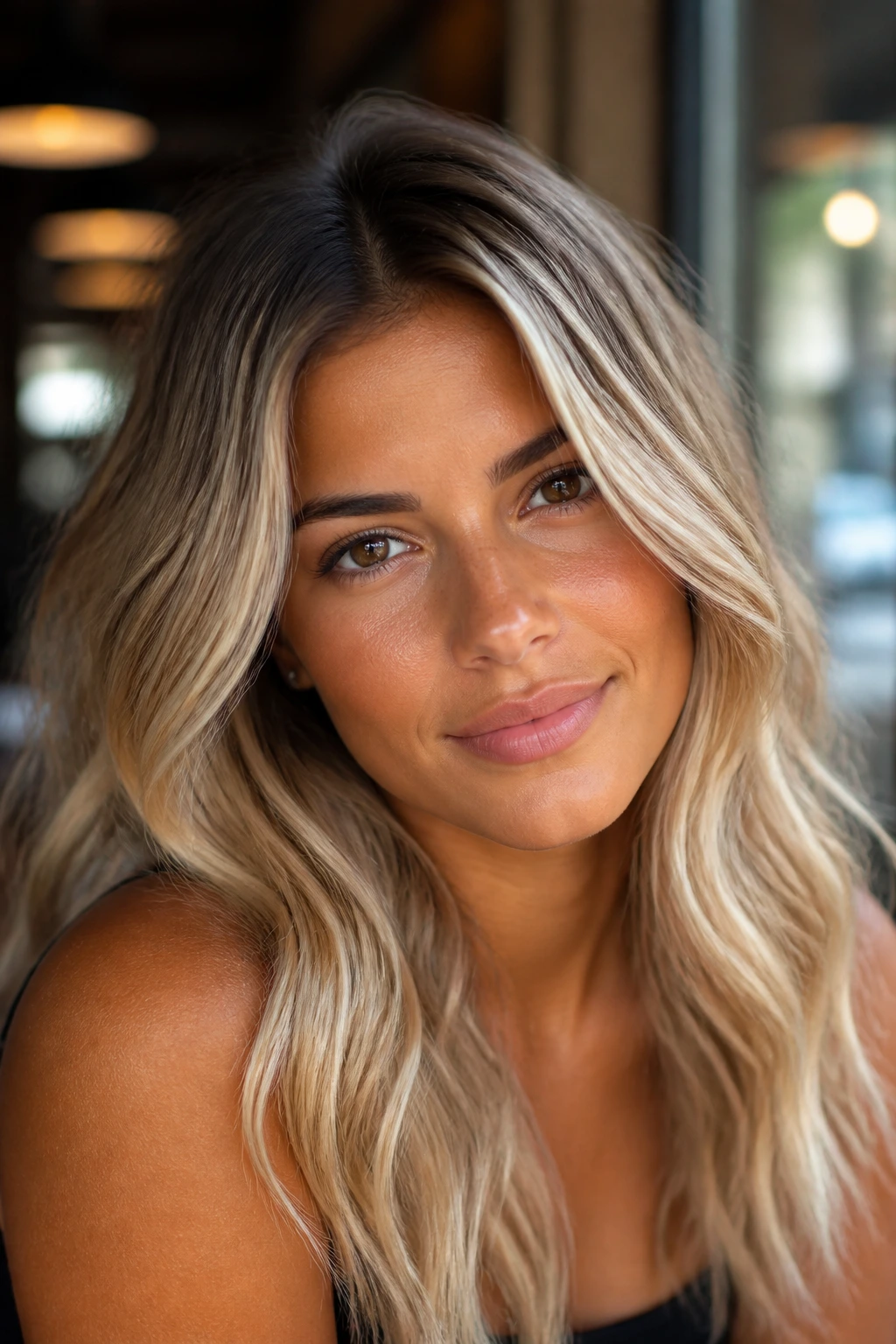
Rooted champagne blonde is for people who like a little sparkle but don’t want the full-on brightness of a pale blonde. On tan skin, the darker root is doing half the work. It stops champagne from looking too fragile and keeps the face from getting washed out.
Why the root shadow matters
Champagne on its own can go too light if the hair is already lifted enough. A rooted version keeps the crown dark enough to frame tan skin, then lets the mids and ends carry that pale beige shimmer.
This is a good choice for curls and waves because champagne catches the light in little flashes. On straight hair, it looks sleeker and a bit more polished. Either way, the root shadow keeps the grow-out softer.
A small caution
If your skin is very warm, go easy on the icy parts. Champagne should read creamy, not frosty. Too much coolness near the face can make the skin look more yellow than it really is.
9. Buttery Dark Blonde
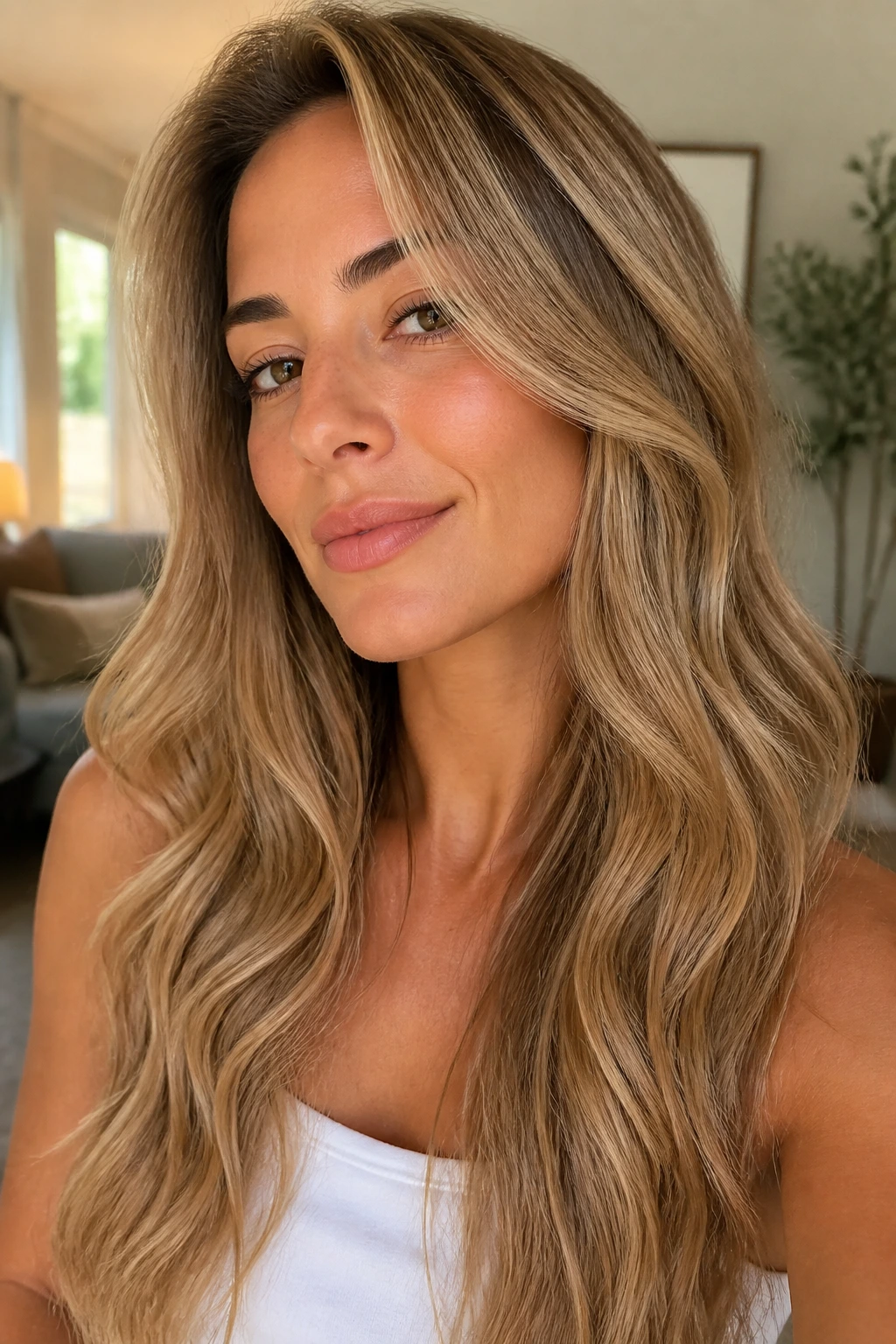
Buttery dark blonde is creamy, soft, and a little lush in the right light. It works on tan skin that has warmth in the cheeks or a golden cast in the neck and shoulders. The whole point is to feel rich, not neon.
H3: Why it works on tan skin
The butter tone sits between yellow and beige, which gives it a softness that pure gold sometimes misses. That keeps the hair from looking brassy while still giving the face enough brightness.
A lot of people go too light with buttery shades. Don’t. Keep a deeper root and a few lowlights underneath so the hair doesn’t turn into a single yellow sheet. That depth is what makes the shade feel expensive rather than flat.
I like this one with a soft off-center part and loose bends. It has a little old-school glamour without becoming fussy.
10. Sunlit Chestnut Blonde
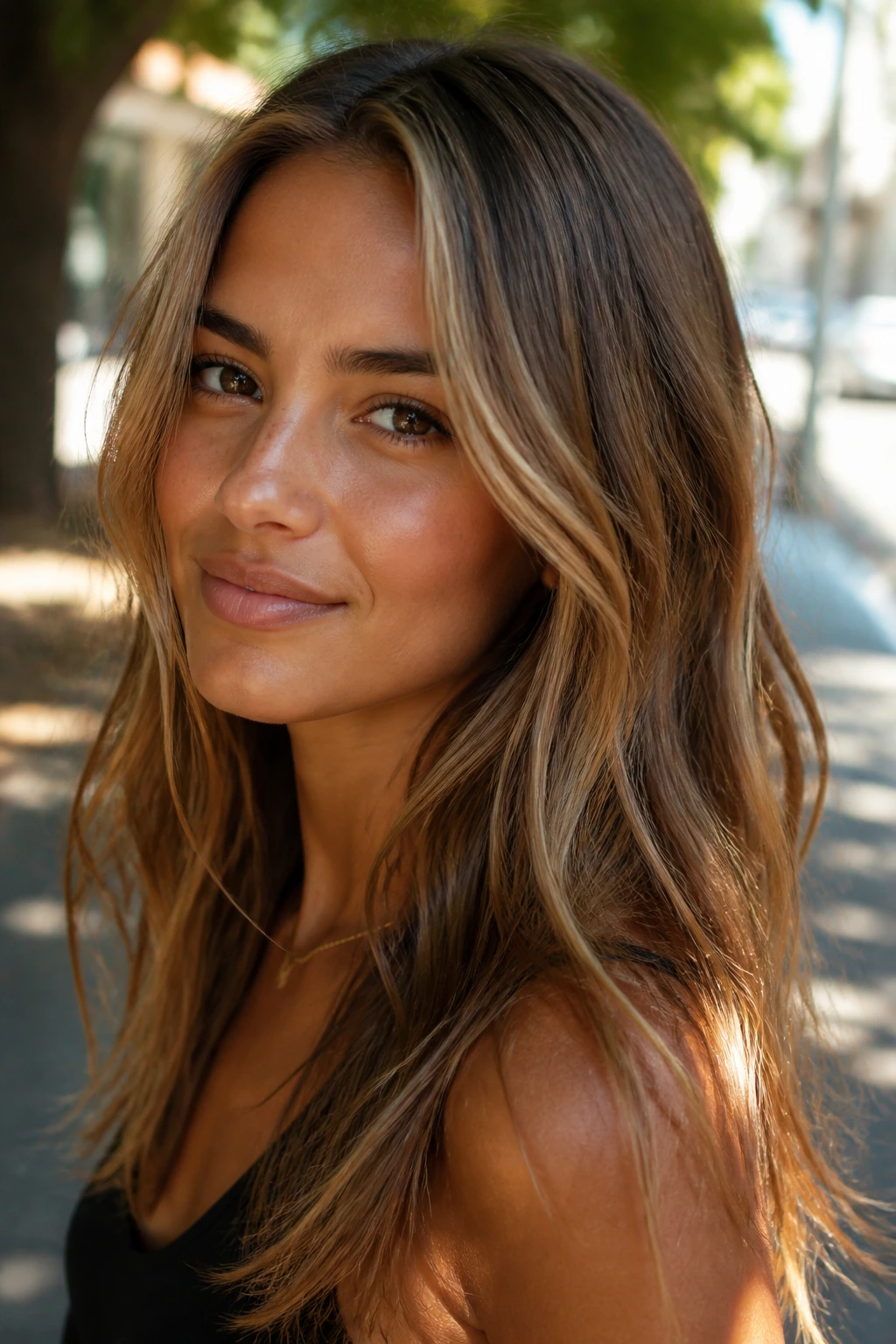
Sunlit chestnut blonde is for people who want the hair to stay brown at first glance and blonde only when the light catches it. That’s a very good strategy on deeper tan skin. You keep the richness, but the lighter threads still give movement.
Why this shade earns attention
Chestnut gives the color a warm, nutty base. The blonde comes in as thin threads, not a full takeover. That means the overall look stays grounded, which is exactly what makes it flattering.
It’s also forgiving on thicker hair, because the darker pieces keep the shape from looking too airy or washed out. If your hair is naturally dense, this shade keeps the finish polished instead of fuzzy.
Best use case
If you’ve never been blonde and do not want the commitment of a bright lift, start here. It gives you the feeling of lightness without making you feel like you’ve left your own hair behind.
11. Sandy Dark Blonde
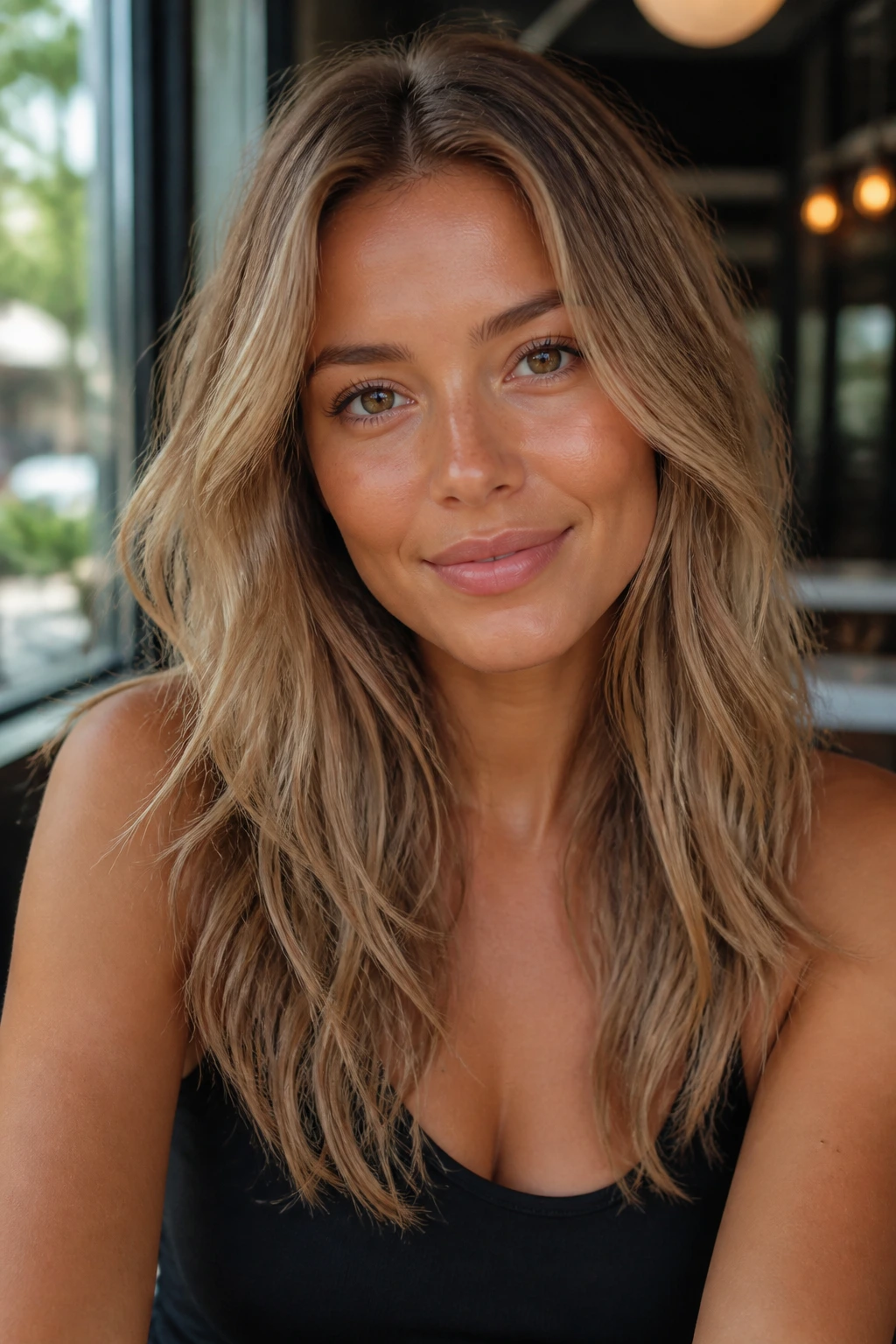
Sandy dark blonde is the color you choose when you want something neutral enough to work with most makeup, but not so cool that it turns rigid. On tan skin, sand tones can be a little underrated. They don’t scream for attention, and that’s precisely why they age well.
The shade looks best when it’s kept between beige and soft brown. If it goes too pale, the whole thing loses its grounding. If it stays too brown, it stops reading blonde. The middle is where the sweet spot lives.
I’d call this the easiest “I want blonde but not blonde-blonde” choice in the whole group. It’s calm. It’s clean. It doesn’t require the rest of your look to work overtime.
12. Smoky Beige Balayage
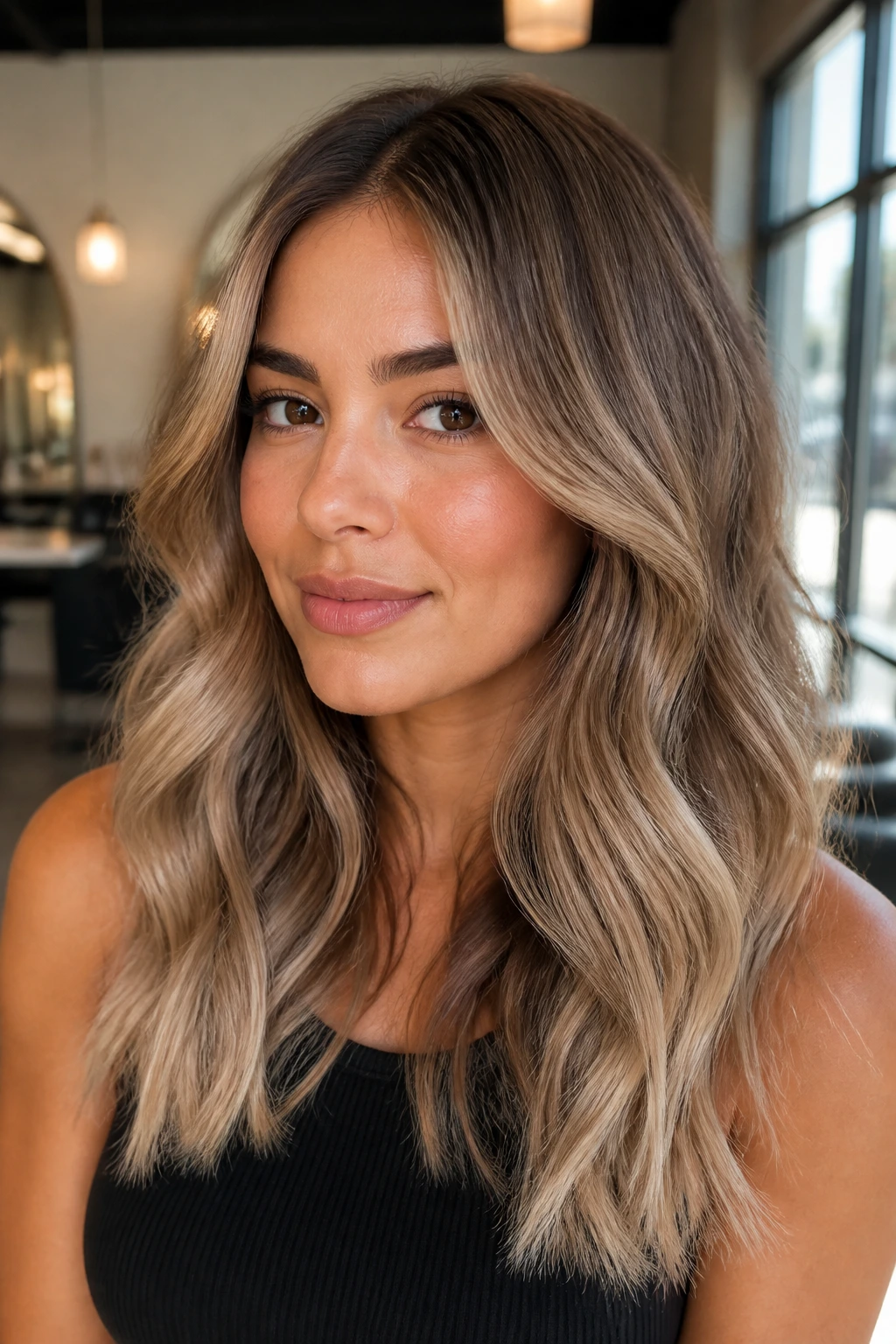
Smoky beige balayage has a softer, hand-painted feel than a full foil job, and that loose placement matters on tan skin. The beige keeps things light, the smoke keeps the tone from getting sugary, and the balayage technique avoids that obvious stripe line that can make blonding look dated.
What makes it different
Balayage lets the color stay deeper near the root and more diffused through the mids. That diffusion is what keeps tan skin from being overpowered. You get light, but it arrives in a blur instead of a block.
This is one of those shades that benefits from a curl or a wave, because the hand-painted pieces show up with more shape. Straight, flat hair can still wear it, but the smoky dimension becomes more subtle.
When to choose it
If you like your blondes understated and you hate obvious regrowth lines, smoky beige balayage is worth serious thought. It keeps the color soft even after it’s grown a little.
13. Maple Glaze Blonde
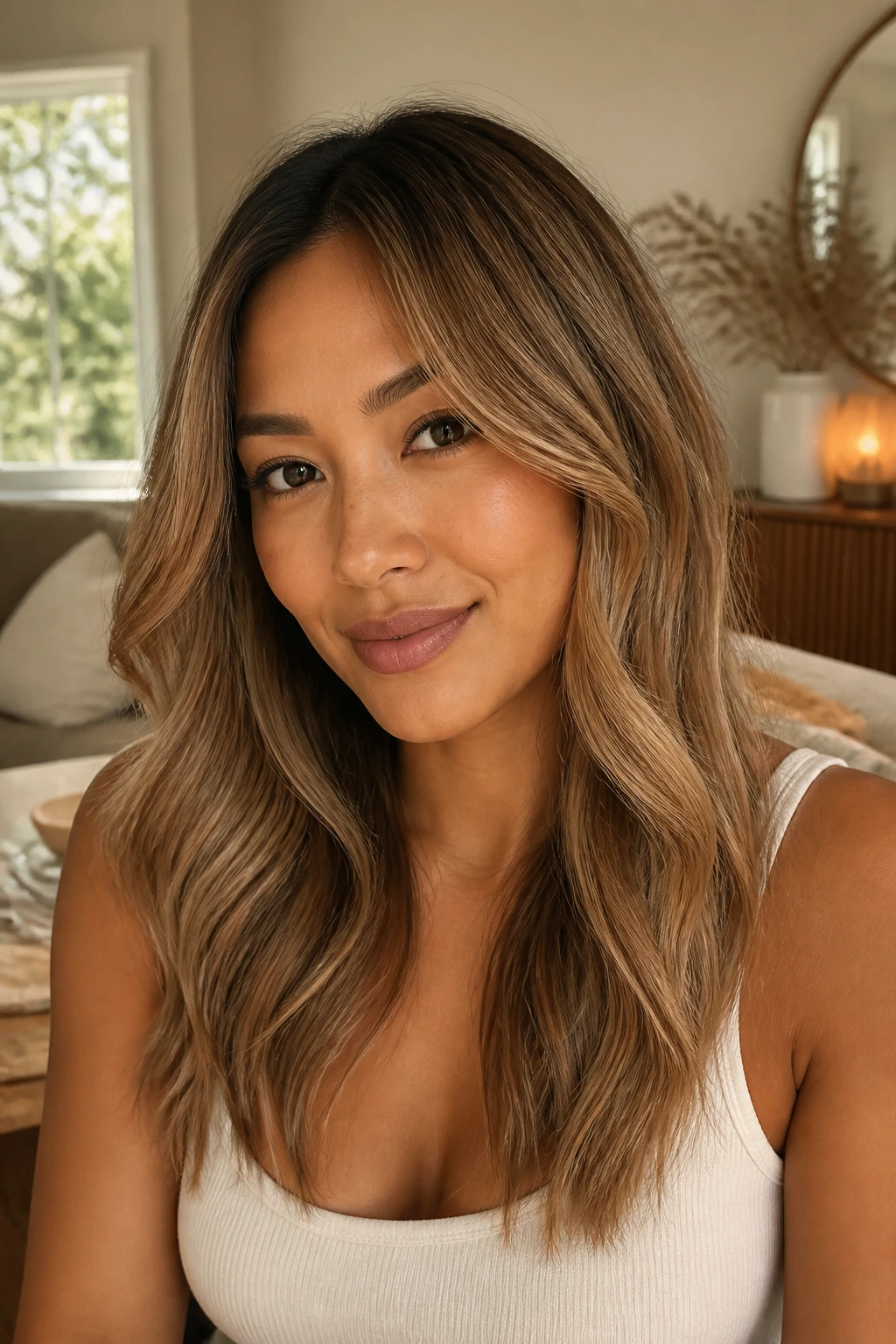
Maple glaze blonde has a warm, syrupy depth that sits well on tan skin with golden undertones. It’s richer than honey and a touch deeper than caramel, which gives it a more autumn-brown feel without becoming brunette.
Why I like it
The glaze is the point. The color should look as if it has been brushed with warmth rather than bleached into brightness. That’s a better match for tan skin, because the glow stays near the complexion instead of sitting apart from it.
A level 6 base with maple-toned mid-lengths keeps the whole shade grounded. The ends can be a little lighter, but not so much that they pop away from the rest of the hair.
This shade works especially well when you wear warm neutrals — cream, rust, olive, camel. It ties the whole palette together without much effort.
14. Honey-Butter Face Frame
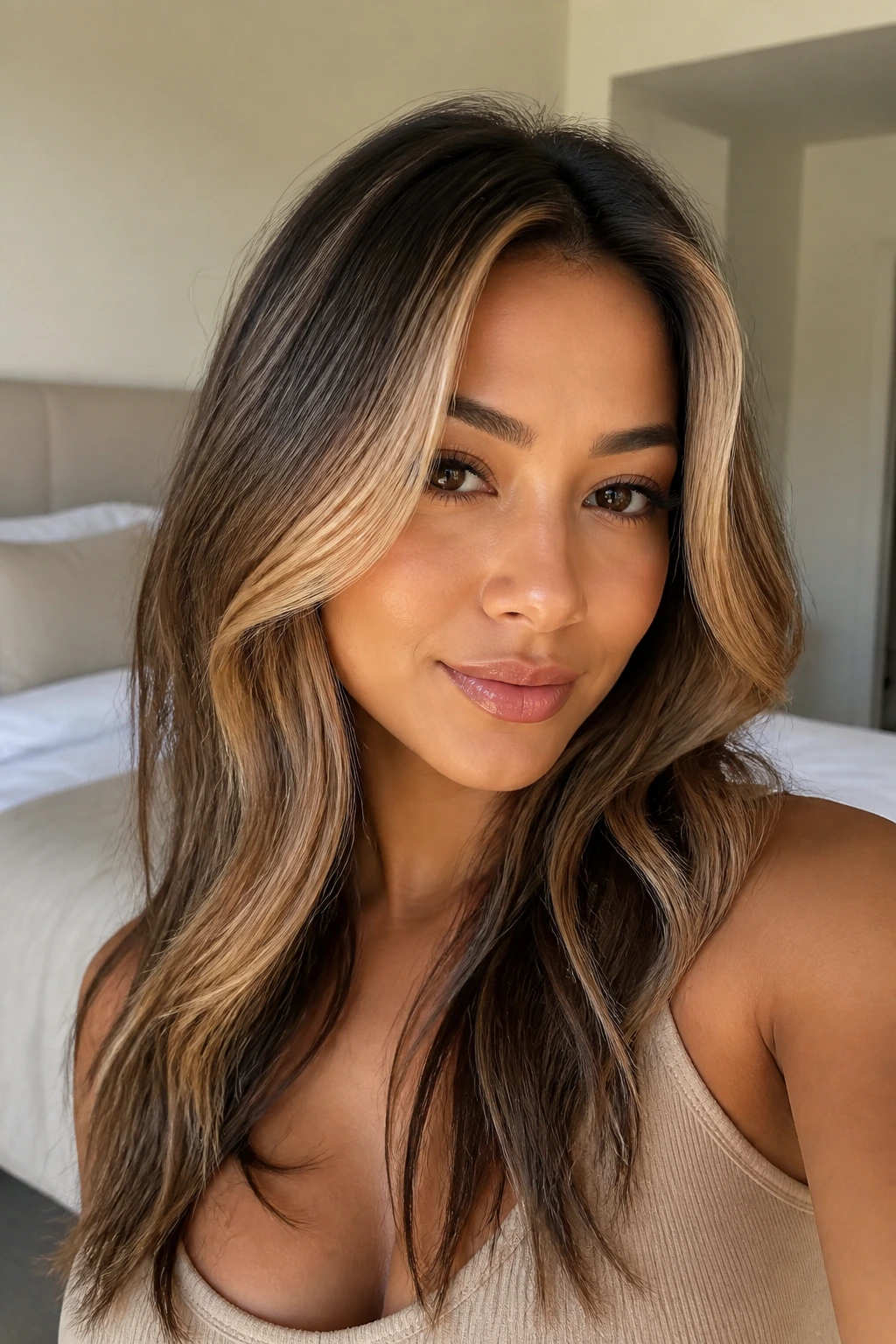
Honey-butter face frame is the shade for someone who wants the fastest payoff with the least overall lightening. The front pieces get the brightness; the rest of the hair stays darker and calmer. On tan skin, that contrast can lift the face immediately.
Why it’s such a smart move
The face frame draws the eye right where you want it. A couple of foils around the cheekbone and hairline can make tan skin look more luminous without requiring a full blonding session.
It’s also easier to live with if you’re undecided about going lighter. You can test the waters without committing every inch of your hair to the same tone.
Best if you like visible change
This is the one I’d point to if you say, “I want people to notice, but I don’t want to become high-maintenance overnight.” That’s a real request. This shade answers it cleanly.
15. Cool Sand Dark Blonde
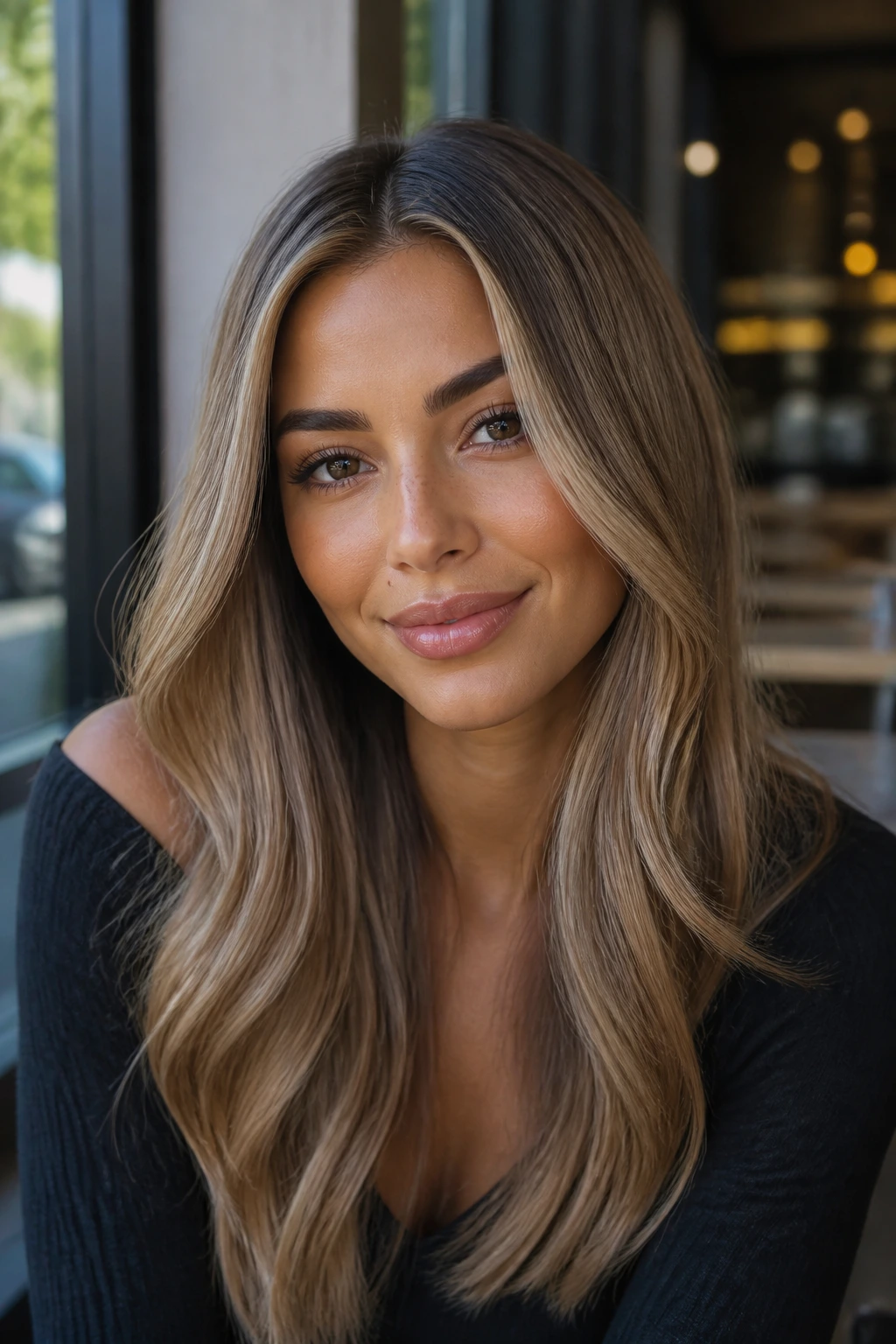
Cool sand dark blonde sits between beige and taupe, with just enough chill to keep the color from running warm. That makes it useful on tan skin that has olive in it or on people who wear a lot of warm makeup and want the hair to calm things down.
The danger with cool sand is overdoing the ash. Too much and the face looks dry. The fix is easy: keep a hint of warmth in the gloss and leave some natural depth at the root.
This shade looks especially good in sleek styles. A low bun, a polished blowout, or long waves with a center part all let the cooler tone breathe.
16. Cinnamon-Toast Blonde
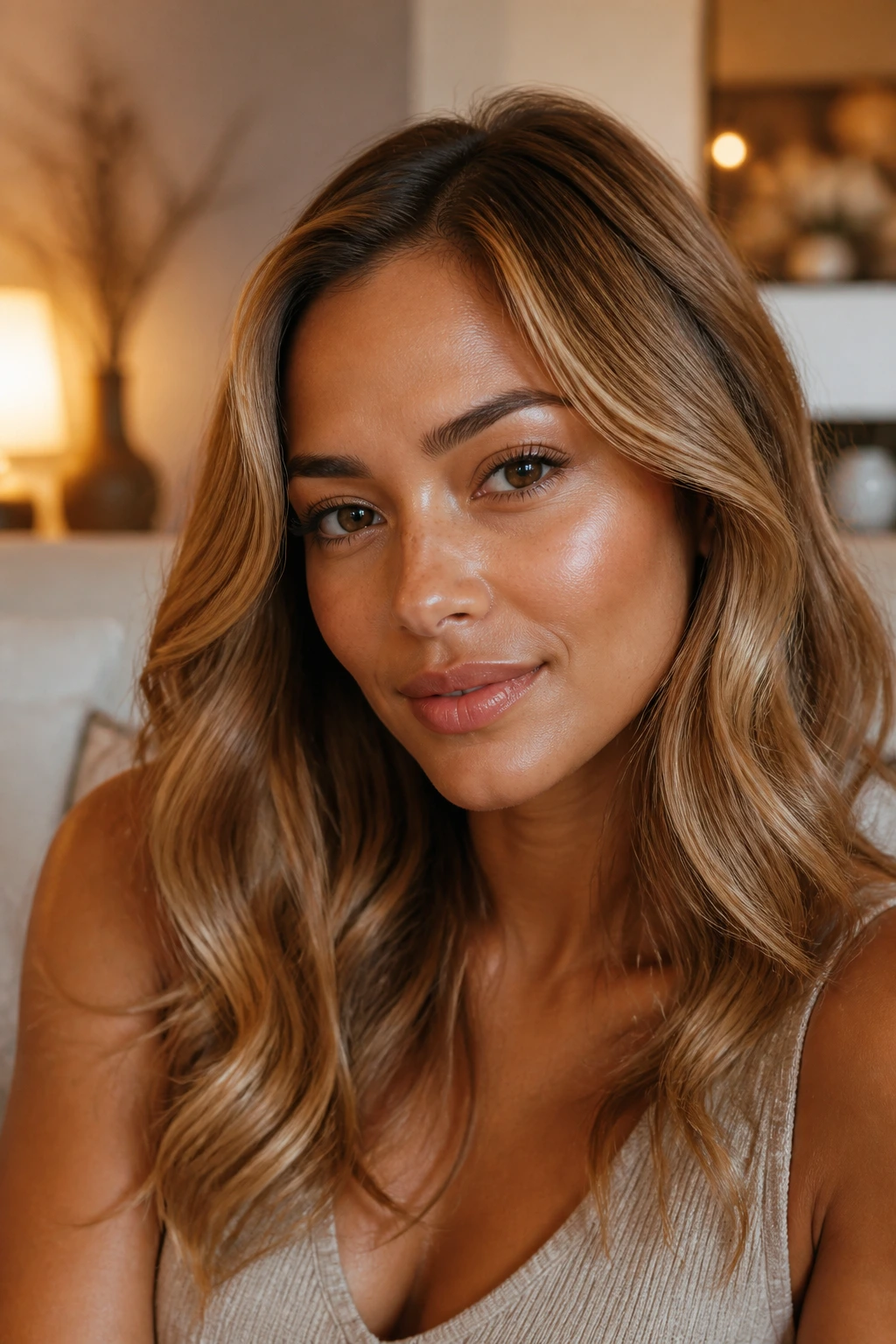
Cinnamon-toast blonde has a warm spice note that tan skin can take beautifully. It isn’t copper-heavy, and it isn’t straight-up auburn. Think brown sugar, toasted bread, and a little glow around the hairline.
Why it stands out
The warmth here feels familiar rather than loud. That’s useful if your skin already carries warmth and you don’t want the hair to start competing with your cheeks or lips.
It also works well when you want the hair to look richer from across the room. The cinnamon tone gives the blonde a darker, cozier look that feels more grounded than pale caramel.
Best pairings
Peach blush, bronze liner, and a neutral nude lip all sit well next to this shade. Keep the brows a little soft rather than very dark, or the contrast can become too sharp.
17. Almond Milk Blonde
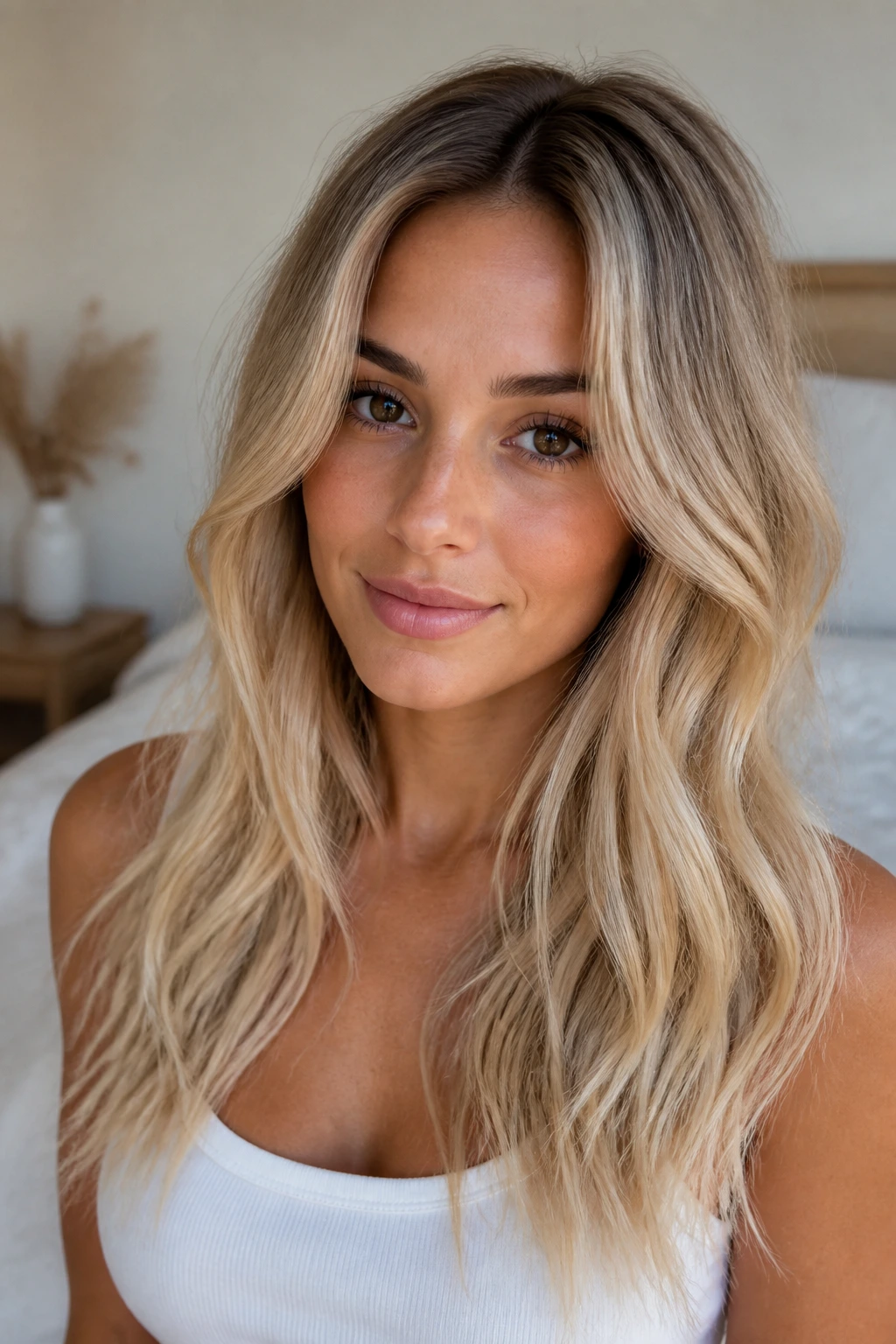
Almond milk blonde is creamy, muted, and a little airy. It’s a good choice for tan skin that wants softness more than drama. The tone sits between beige and pale neutral, but it needs depth underneath or it can fade into the complexion.
The trick
Keep the root shadow visible. If the whole head gets lifted too far, the almond tone can look washed out. The darker base gives it shape and keeps the hair from disappearing against the skin.
Quick visual cue
This shade looks best when it reads like a soft cloud of beige rather than a bright blonde. That subtlety is the entire point. If you like hair that whispers instead of shouts, this is your lane.
18. Pearled Dark Blonde
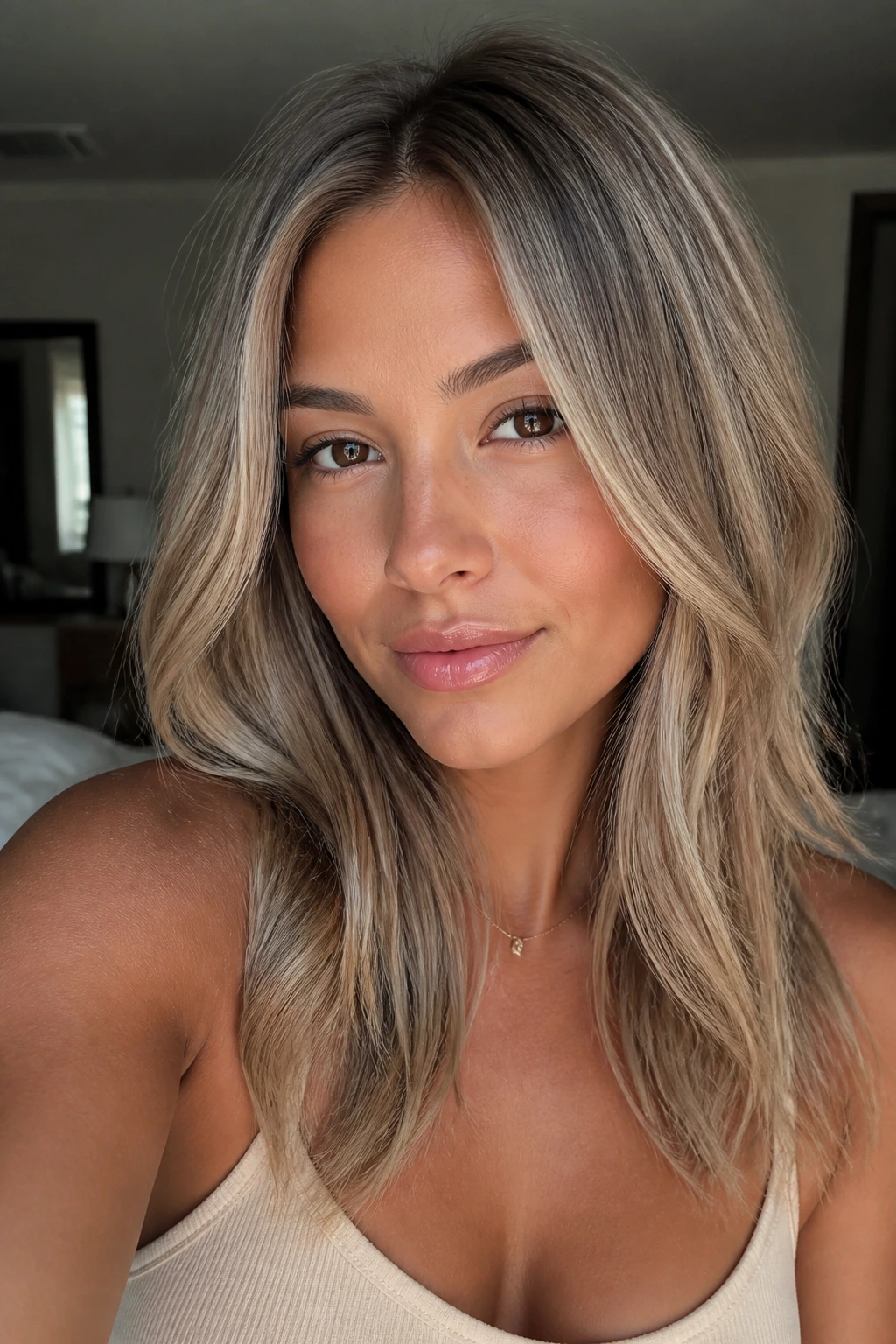
Pearled dark blonde is a little more luminous than beige and a little cooler than honey. On the right tan skin, especially if the undertone is neutral or slightly rosy, it can make the hair look glossy and finely finished.
Why it needs balance
Pearl can go flat if it’s the only note in the hair. The color needs some beige or soft gold underneath so it doesn’t turn chalky. Tan skin usually helps here because there’s enough warmth in the face to offset the cooler sheen.
I’d keep this one away from heavy saturation around the roots. A deeper root and more reflective mids keep the look delicate in a good way.
Who it suits
If your skin holds up next to silver jewelry as easily as gold, pearled dark blonde is worth a look. It gives you a slightly cooler finish without freezing the whole face.
19. Bronzed Beige Ombre
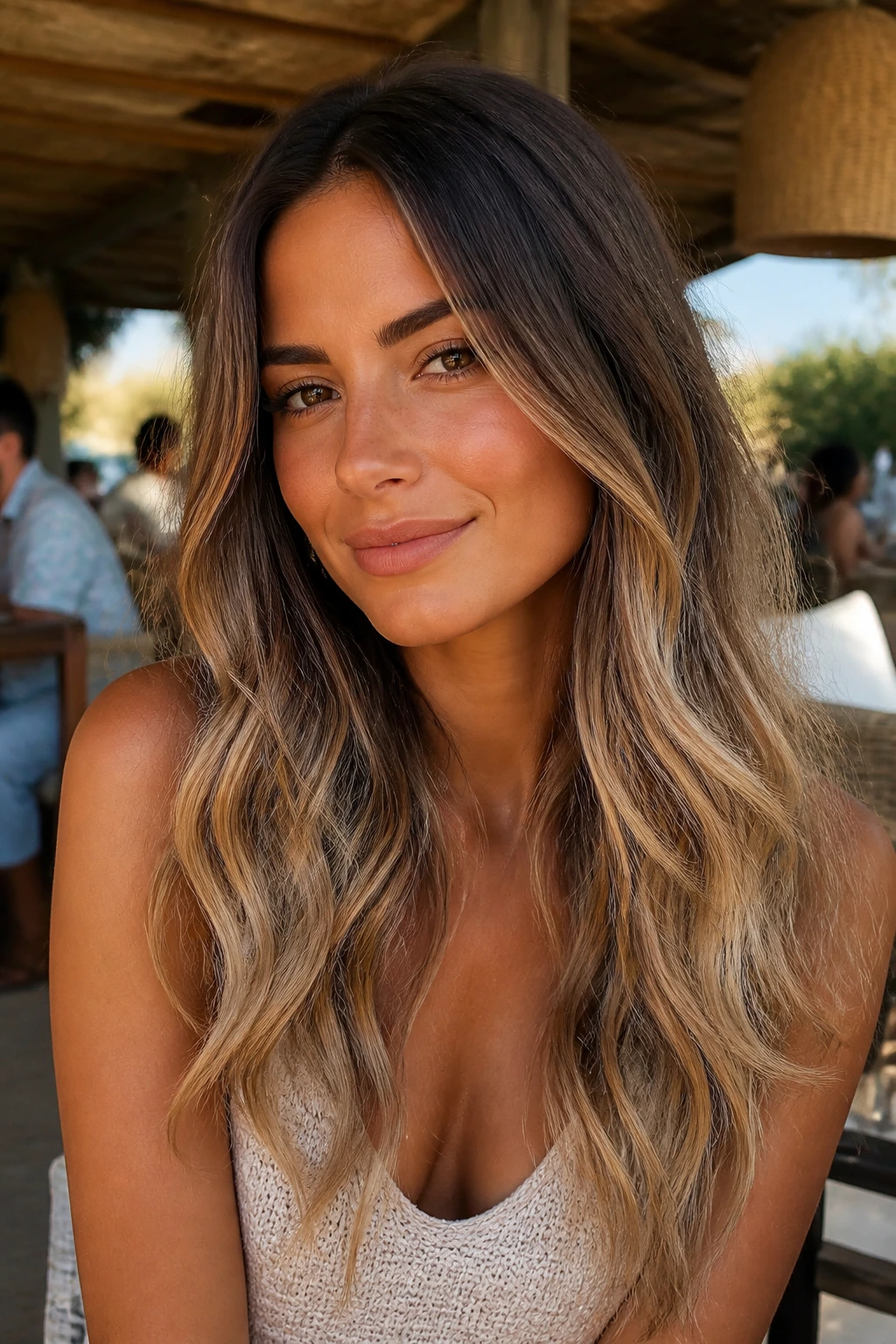
Bronzed beige ombre is a color story that starts dark and ends in a softer beige-bronze fade. The ombre placement matters because it keeps the lightness away from the root and focuses it where tan skin can use a little lift — around the lower lengths and ends.
That gradient gives the hair a worn-in, sun-faded feel without looking careless. The bronze keeps the blonde from getting too pale. The beige keeps the bronze from going orange. You need both.
This is one of the better options for medium-length hair, because the transition has room to stretch. On very short hair, the ombre can feel abrupt. On very long hair, it can look gorgeous if the fade is gradual enough.
20. Walnut Blonde
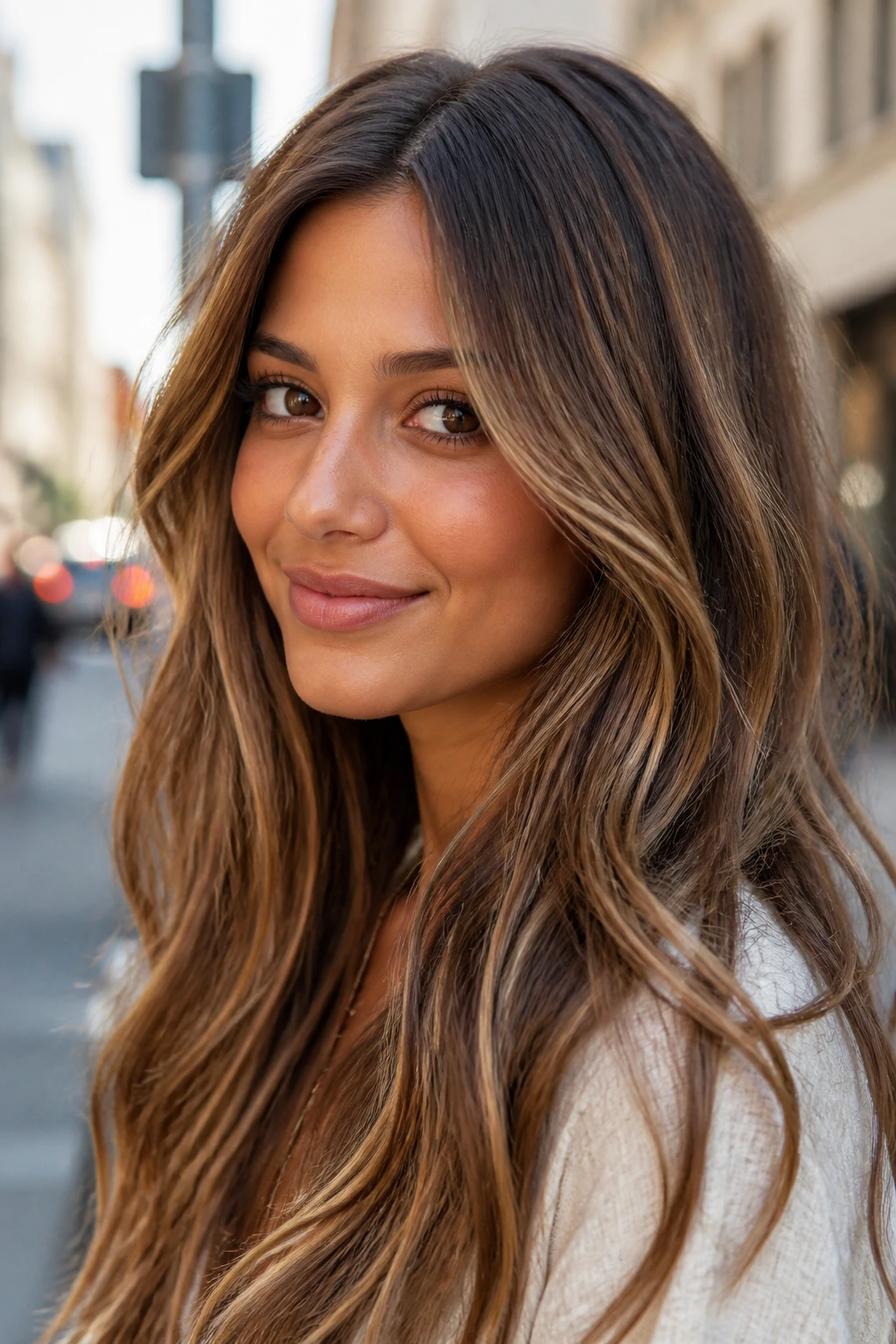
Walnut blonde is richer and browner than a lot of blondes people usually reach for, and that’s what makes it useful on deeper tan skin. The walnut base gives the shade weight; the blonde pieces keep it from sitting too dark.
Why it works
If you like your hair to stay on the brunette side of blonde, walnut is a good compromise. It reads expensive in a very quiet way. Not flashy. Not pale. Just well-balanced.
The blonde threads should stay subtle and slightly warm. Too much cool contrast can make the color seem patchy. A soft caramel or beige ribbon does the job better.
Good match for texture
Walnut blonde looks especially good on thick hair because the darker base helps hold the shape. If the hair is very fine, keep the lighter pieces fine too; otherwise the contrast can get busy.
21. Soft Copper Blonde
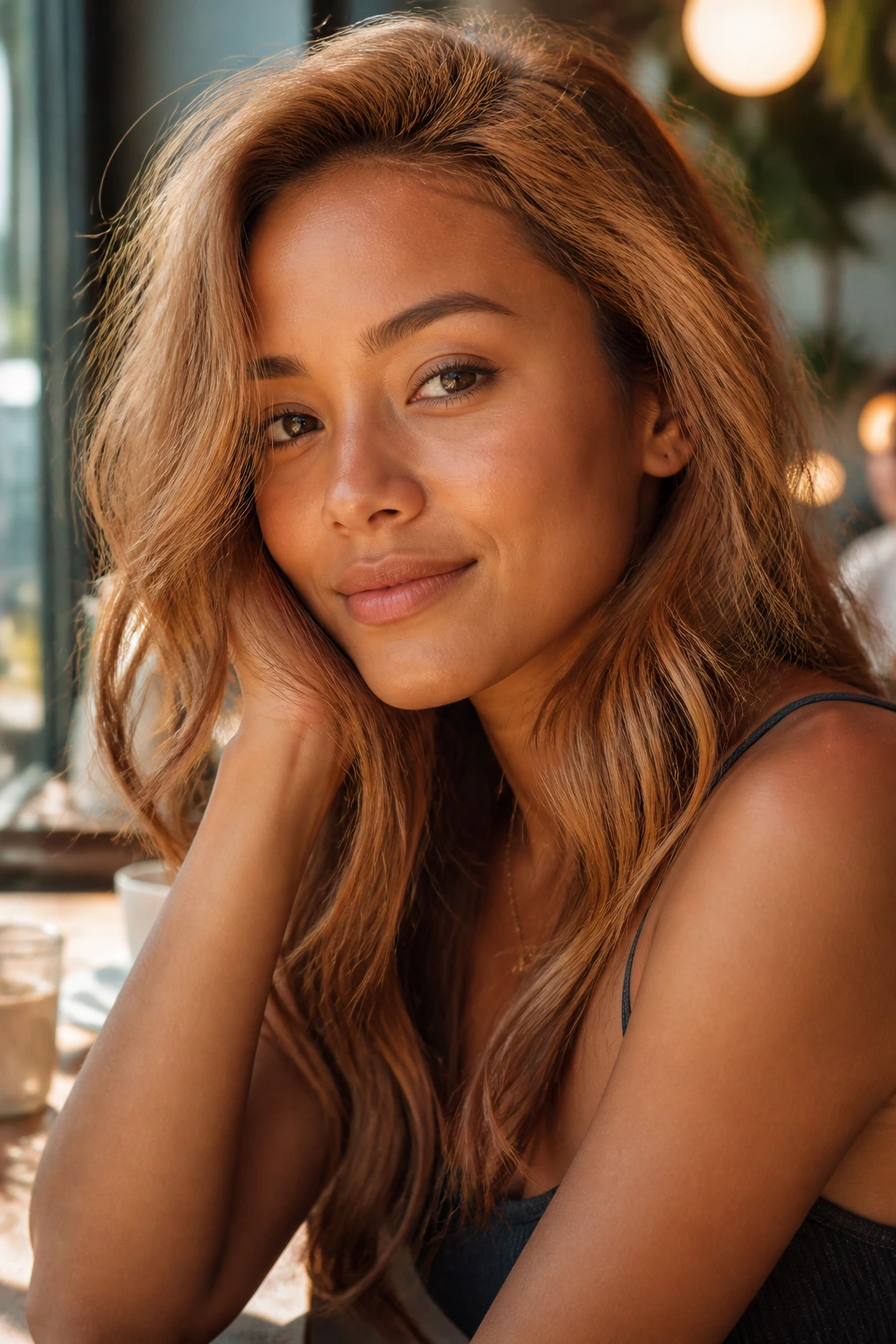
Soft copper blonde is where tan skin can have a little fun without making a hard jump into red. The copper should whisper, not shout. Think of it as a warm glaze over dark blonde, not a full copper transformation.
What makes it usable
Copper adds life to tan skin that looks a bit dull in ash or beige. The warmth brings back color in the face. The key is restraint. You want the copper to sit inside the blonde, not swallow it.
A gloss is often enough here if the base is already light enough. If the hair is darker, a gentle copper-beige lift through the mids works better than trying to make the whole head read red-blonde at once.
Best if you want warmth with edge
This shade is for someone who likes warm metals, warm makeup, and a little more personality in the hair. It is not shy.
22. Sunkissed Butter Blonde
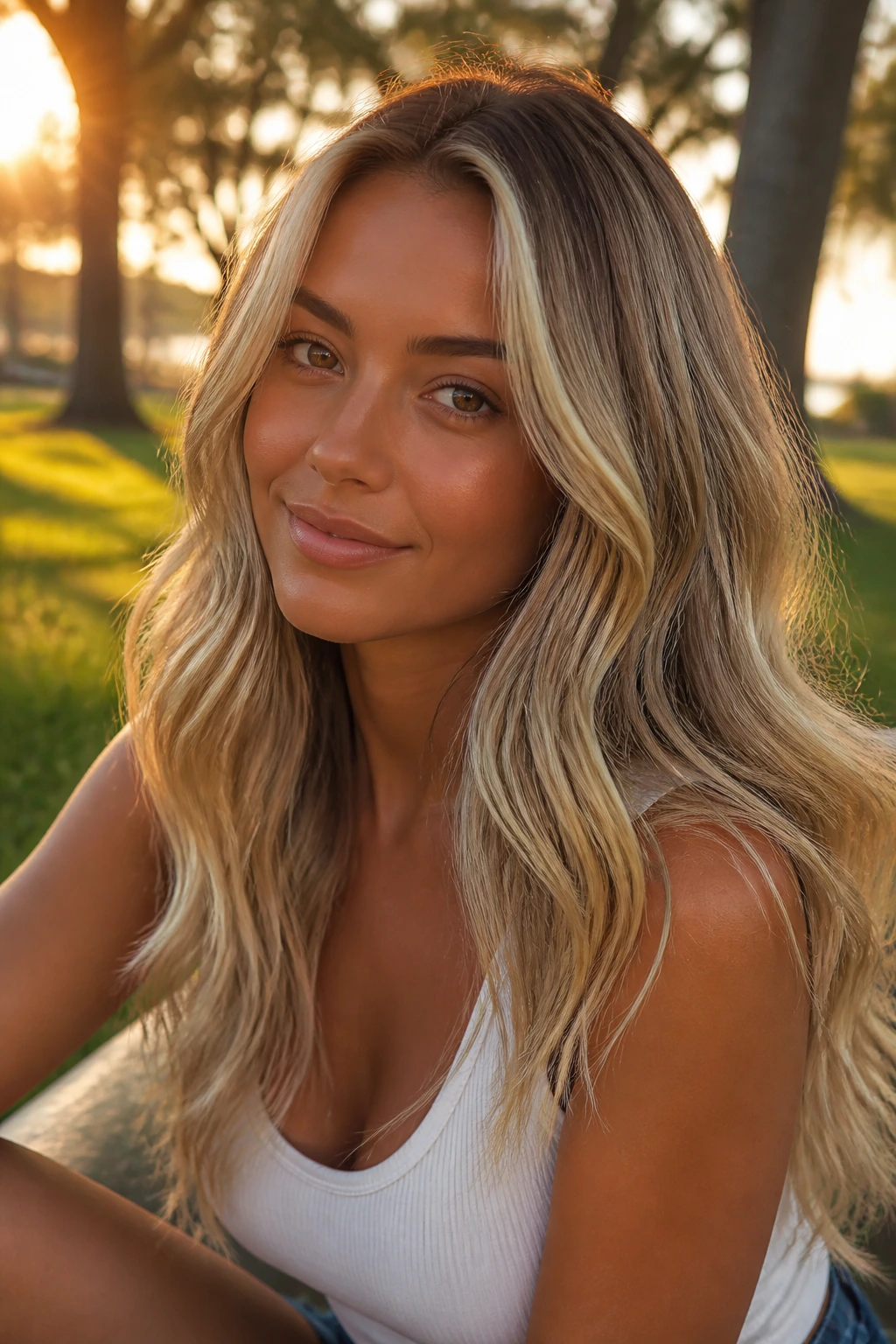
Sunkissed butter blonde has more brightness than the other buttery shades, but it still belongs in the dark blonde family because the root stays grounded. On tan skin, that matters. The color looks sunlit rather than bleached.
The best version leaves a visible base and places the lightness mostly through the top layers and face frame. That way the hair catches light without going hollow. Flat all-over butter blonde can get too yellow. This one avoids that by keeping movement in the tone.
I’d choose it if your hair naturally lifts well and you like a lighter finish without paying for it in obvious maintenance. The grow-out is softer than it looks, which is a nice surprise.
23. Dimensional Dark Blonde with Babylights
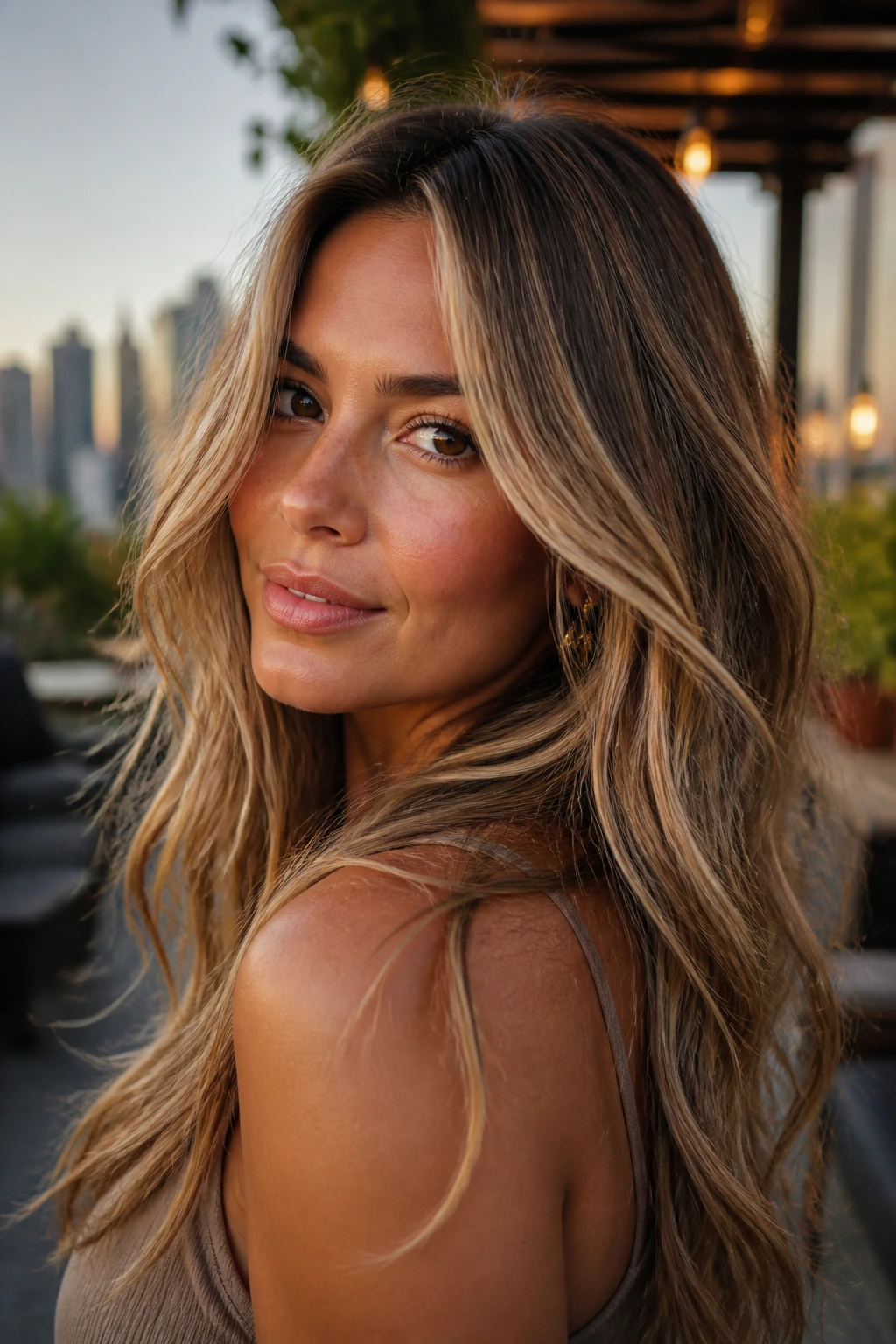
Dimensional dark blonde with babylights is less about one color and more about the way the color is built. Tiny foils, fine ribbons, and a darker base create a layered finish that tan skin usually handles well because the hair never becomes one flat field of light.
Why it stays polished
Babylights add fine brightness without harsh stripes. That tiny scale matters. On tan skin, small shifts in tone look more natural than giant blocks of blonde.
This is a strong pick if your hair is straight or fine, because the micro-dimension keeps the hair from looking thin. It also works on curly or wavy textures when you want the lightness to peek through instead of announce itself.
What to ask for
Ask for a dark blonde base with ultra-fine babylights around the face, crown, and upper mids. That keeps the color balanced and prevents the blonde from collecting only at the ends.
24. Iced Honey Blonde
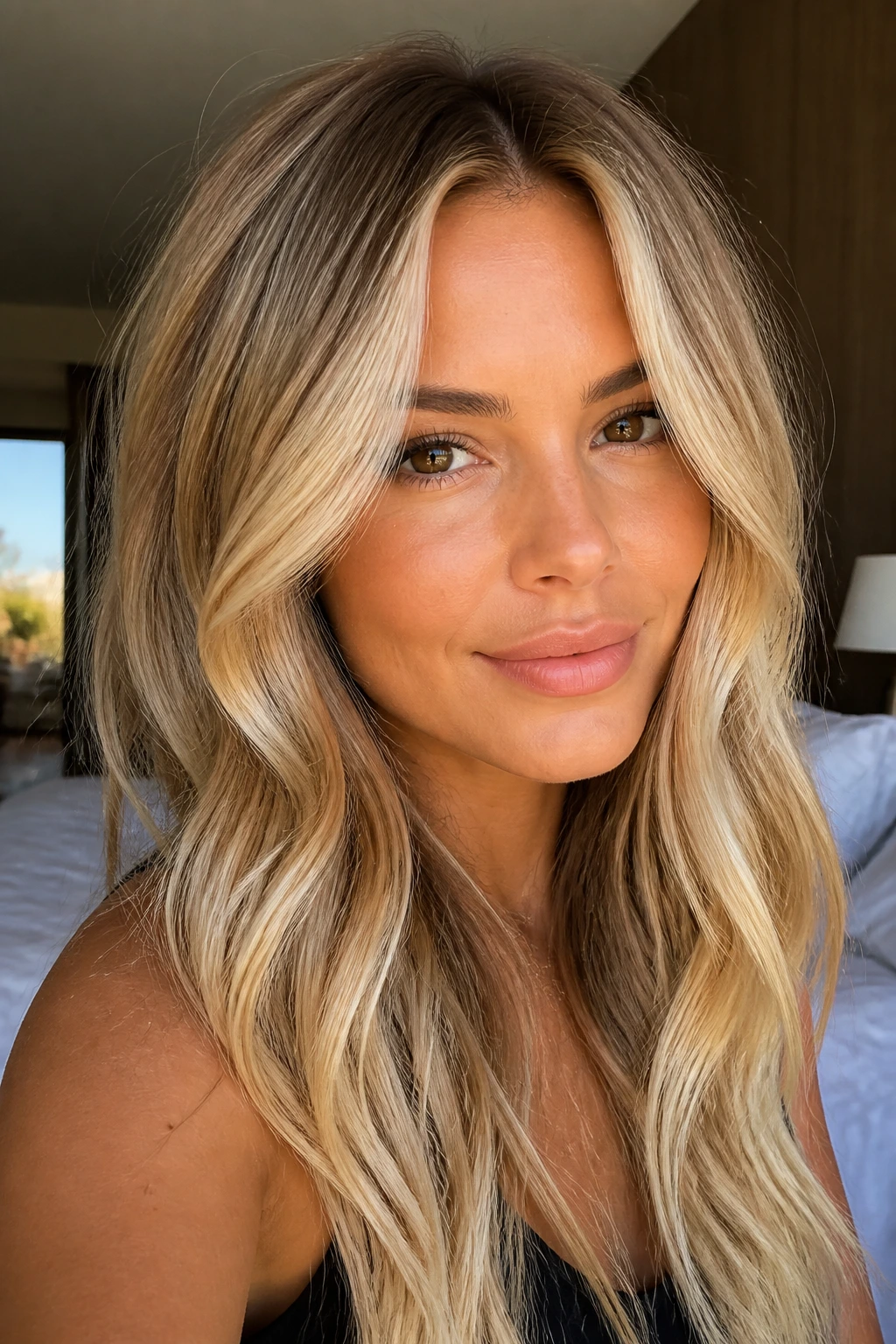
Iced honey blonde is for tan skin that can carry a little coolness without losing warmth. It sounds contradictory, and again, that’s the point. The honey keeps the shade friendly. The ice gives it a sharper finish.
If you’ve tried warm blonde and felt it made your skin look too golden, this is the shade to test. Keep the icy note subtle. The hair should still look wearable, not frosted.
A beige root shadow helps a lot here. Without it, the coolness can slide too far and leave the face looking oddly flat. With it, the blonde feels sharper and more modern.
25. Cocoa-Infused Bronde
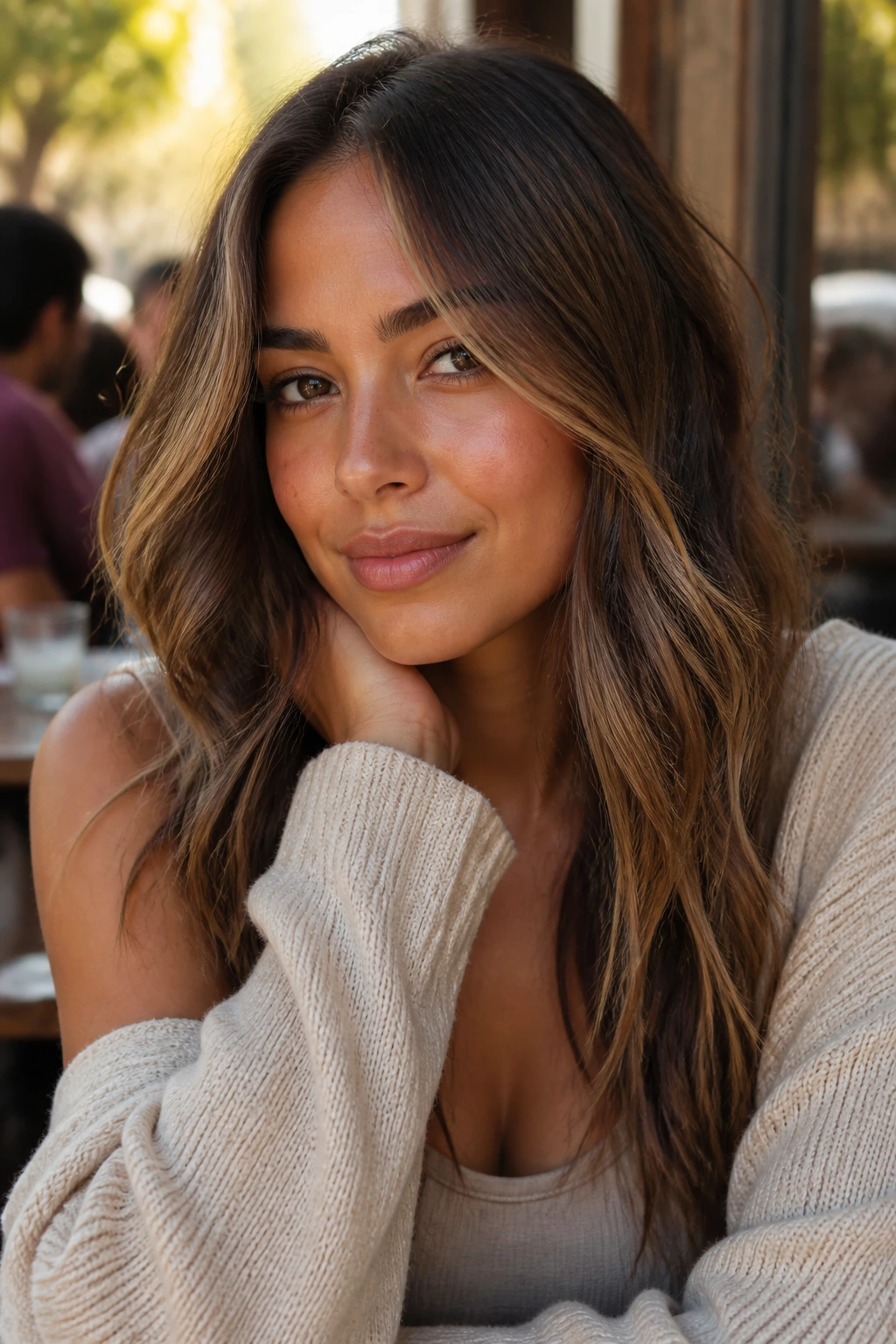
Cocoa-infused bronde is a deeper, moodier cousin of classic bronde. The cocoa gives the base a richer brown cast, and the blonde pieces stay thin and deliberate. That contrast is especially flattering on deeper tan skin or anyone who wants the hair to feel grounded.
Why this one works hard
The darker base keeps the face framed. The blonde bits keep the hair from sinking into the head. You get movement without losing substance. That’s a good trade.
This shade also handles grow-out nicely. Because the base remains strong, the regrowth line is softer and less obvious. If you don’t want your color screaming for attention every four weeks, cocoa-infused bronde makes sense.
Best with
Loose waves, a side part, and a glossy finish. The shine helps the cocoa read rich instead of dull.
26. Vanilla Latte Blonde
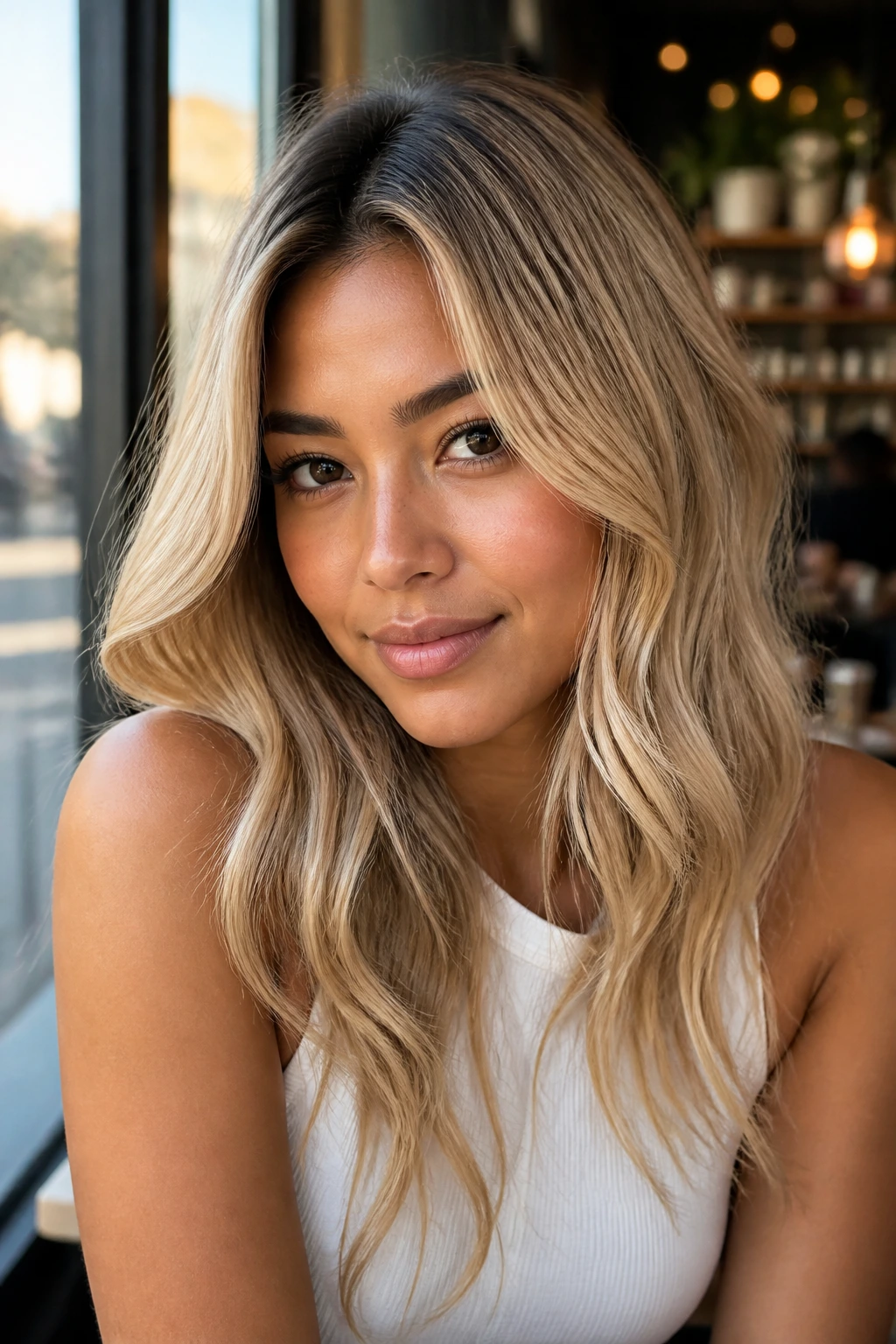
Vanilla latte blonde has a creamy, coffee-and-milk softness that looks clean on tan skin with neutral undertones. It isn’t too warm, and it isn’t too cold. That middle ground makes it easier to wear with a wide range of makeup looks.
The key is keeping the latte base visible. If the blonde is pushed too light, the whole thing starts to look frothy and weak. A bit of shadow around the root and underneath the top layers gives the shade body.
This is one of the easiest “soft blonde” choices for people who want their hair to feel pretty without turning bright. It does not need a lot of drama to work.
27. Golden Mocha Blonde
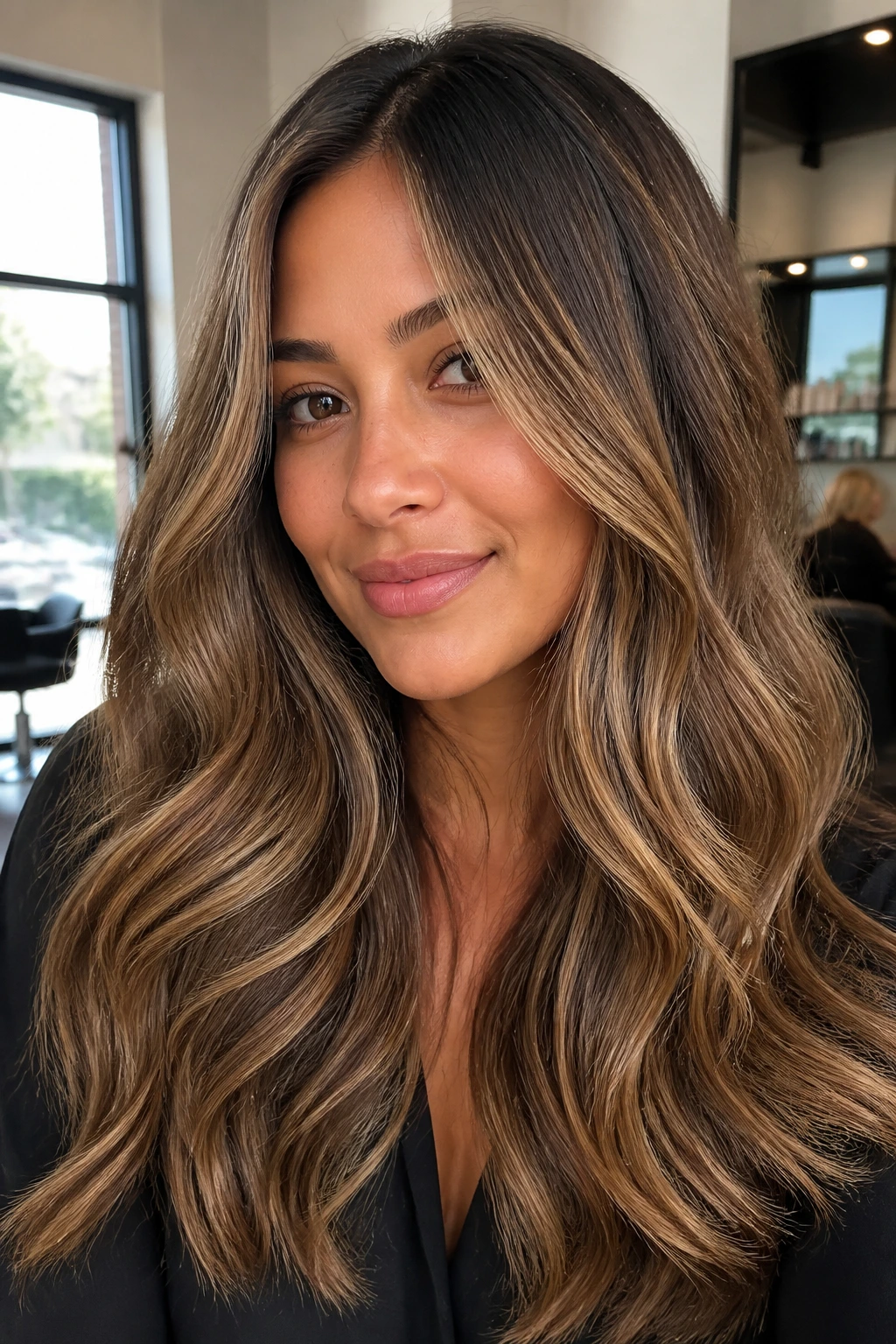
Golden mocha blonde keeps the depth of brunette hair but adds a golden pull through the lengths. On tan skin, that combination is strong because the warmth sits on top of a darker foundation. The hair feels intentional, not accidental.
Why it lands well
Mocha gives you the depth. Gold gives you the light. Together, they keep the shade from veering into either washed-out blonde or heavy brown. That balance is the whole appeal.
If your hair is naturally dark and you’re nervous about blonding, this is one of the safest directions to explore. The color still looks substantial at the root, which helps tan skin keep its natural richness.
Small styling note
A gloss finish matters here. Matte mocha can look flat; glossy mocha looks expensive. Same color. Different mood.
28. Low-Maintenance Rooted Dark Blonde
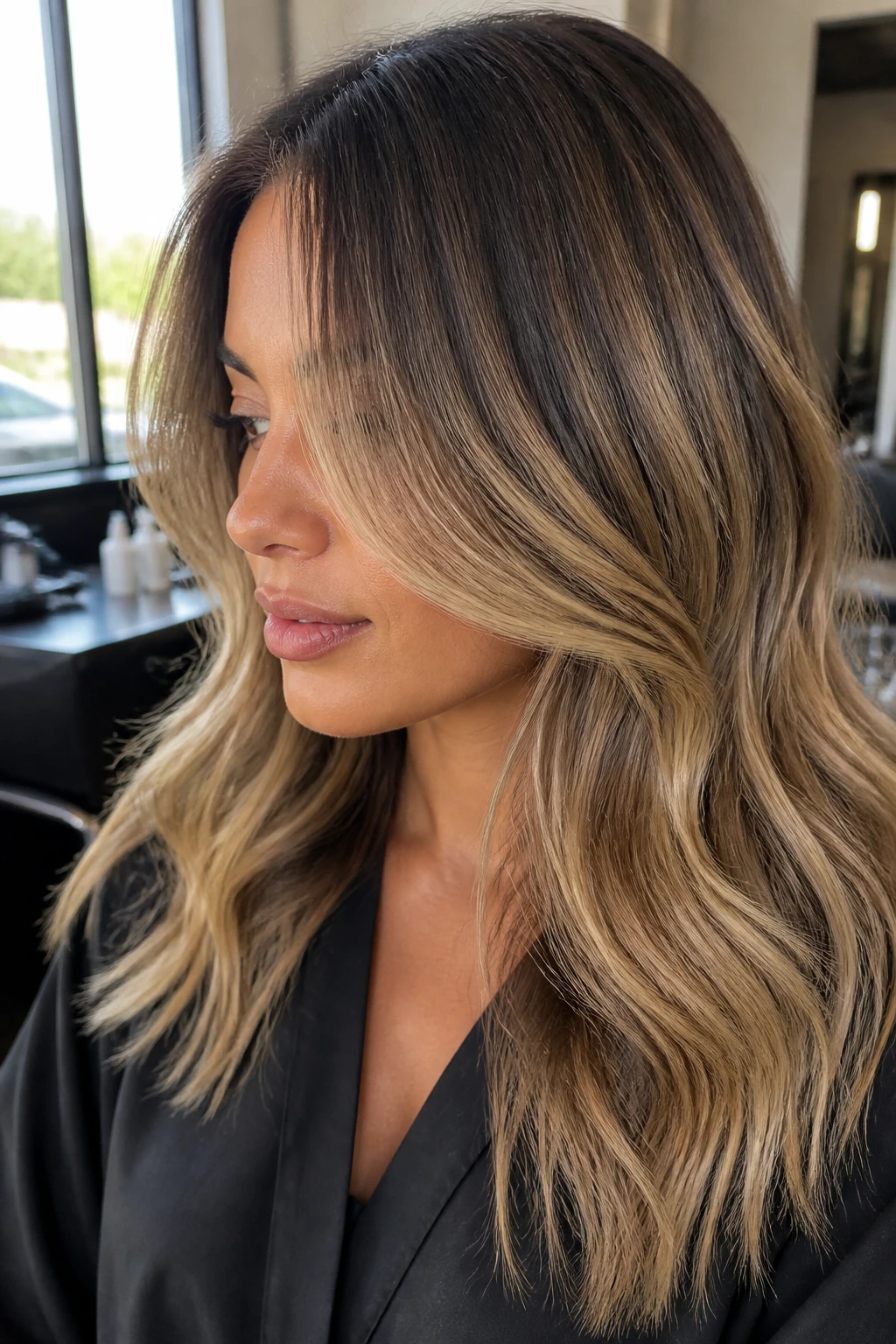
Low-maintenance rooted dark blonde is less a trend than a sane choice. Keep the root a level darker, soften the transition through the mids, and let the ends pick up the light. That structure makes tan skin look framed instead of overexposed.
Why it deserves the last spot
Not every good hair color needs a dramatic transformation. Sometimes the best answer is a dark blonde that grows out gracefully and doesn’t demand constant salon visits. This one does that better than most.
It also gives you room to shift later. Want it warmer? Add a honey gloss. Want it cooler? Add beige or mushroom. Because the base stays rooted, you can adjust the tone without rebuilding the whole head.
If I were choosing one shade for someone who wants to look put-together with the least maintenance, I’d start here. It leaves the most breathing room.
Why Dark Blonde and Tan Skin Work So Well Together
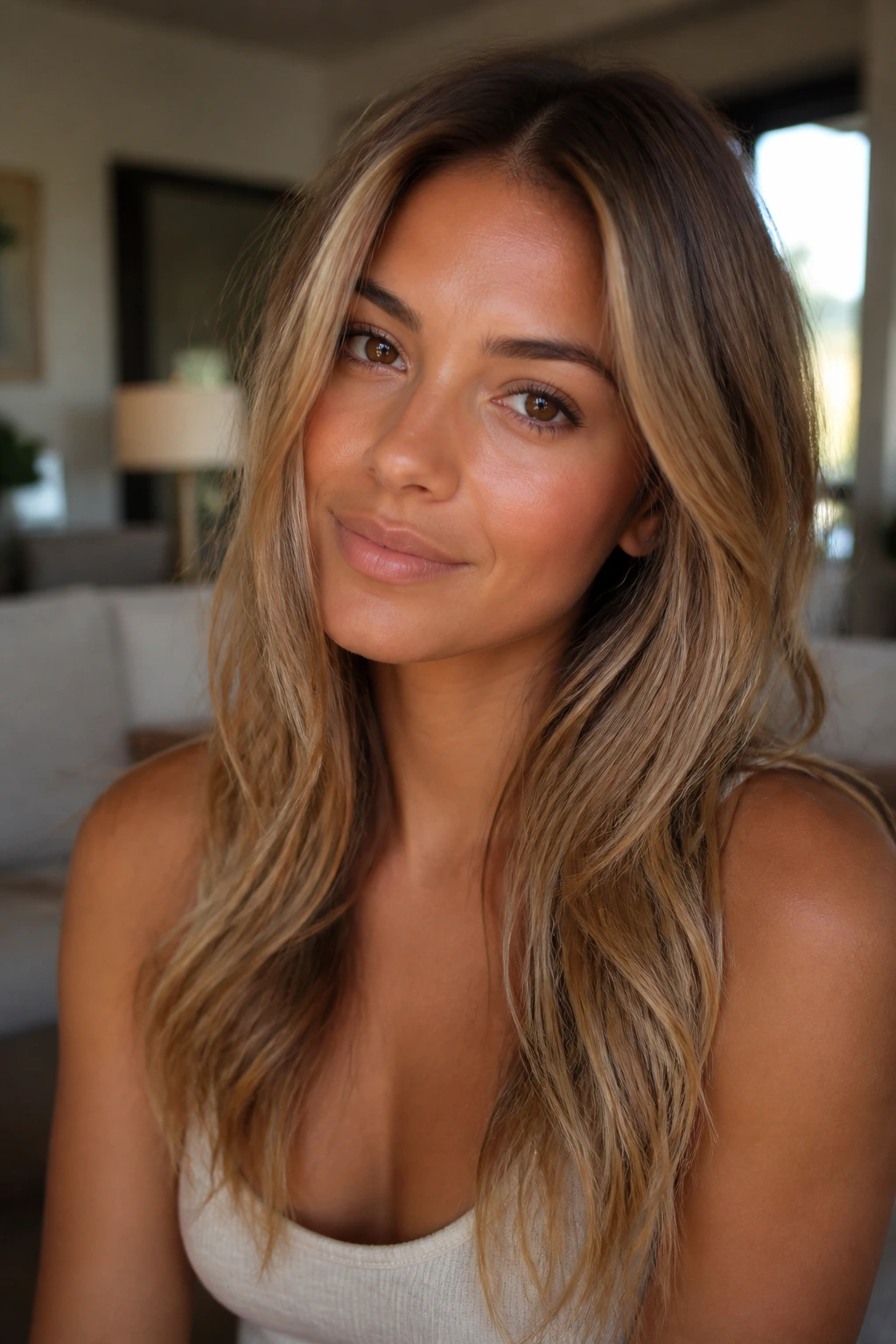
Dark blonde works on tan skin because it leaves room for contrast. That’s the quiet part people miss. Tan skin already carries color, so the hair does not need to be loud to show up. It needs balance. A level 6 or 7 base, a little shadow at the root, and a tone that leans warm, beige, or smoky in the right places usually does more than a brighter blonde ever could.
The other reason this range works is that it gives you choices inside the same family. Honey flatters warmth. Beige steadies mixed undertones. Mushroom calms olive skin. Bronde and rooted looks keep maintenance human. That flexibility matters, because tan skin is not one thing, and the hair color should not pretend otherwise.
If you’re staring at inspo photos and everything feels either too yellow or too flat, the fix is usually not “go lighter.” It’s “go deeper at the root and more precise with the tone.” That one shift changes almost everything.
Essential Tools for Choosing and Protecting the Shade
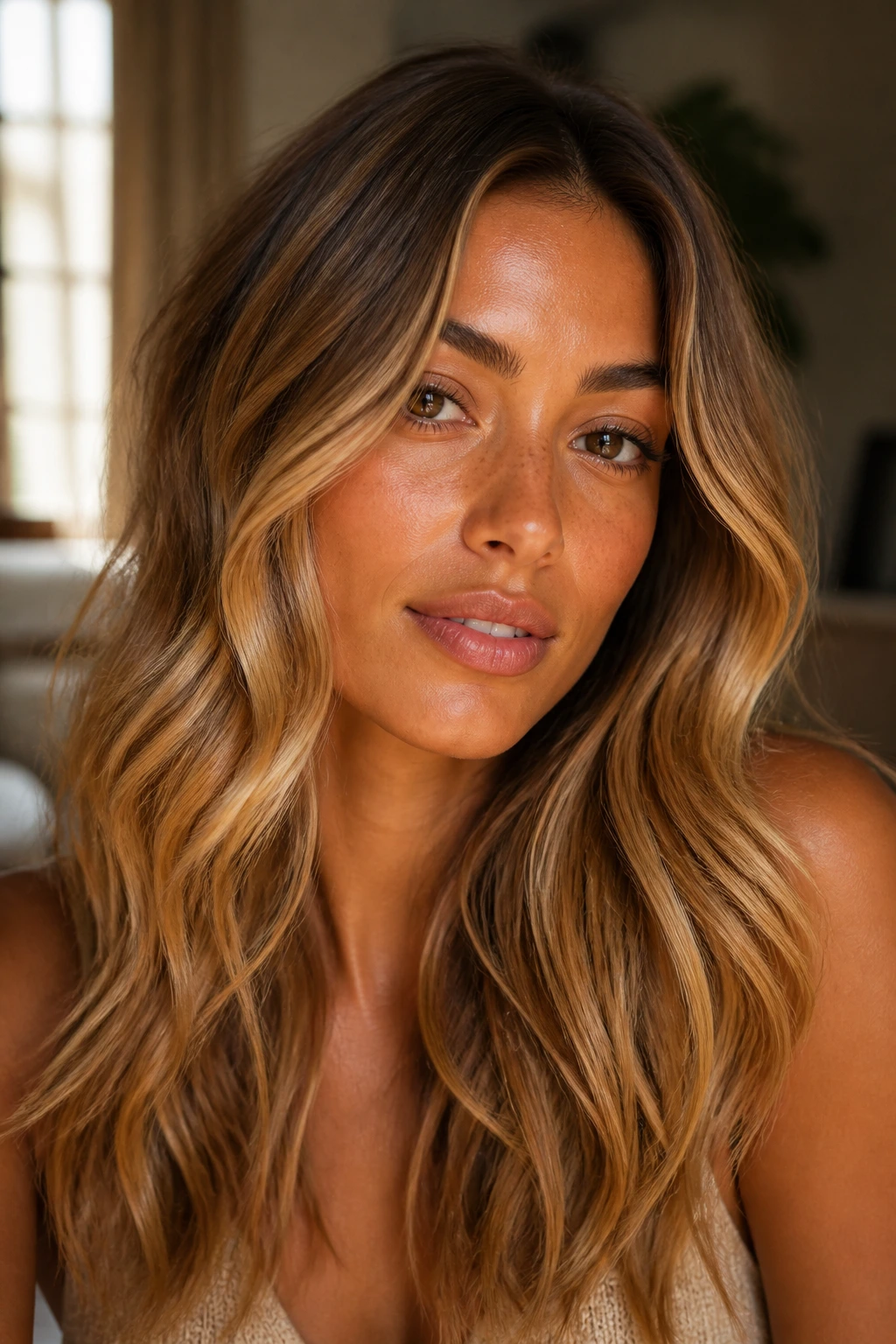
-
Level chart or salon swatch ring: Helps you judge whether a photo is really level 6, 7, or 8 instead of guessing by name alone.
-
Two or three daylight photos of your current hair: Natural light shows brass, ash, and root depth more honestly than bathroom lighting ever will.
-
Reference photos in both indoor and outdoor light: A shade that looks beige outside may look much warmer under lamps, and you want to know that before you book.
-
Color-safe, sulfate-free shampoo: Keeps beige, honey, and caramel tones from fading too fast between appointments.
-
Purple shampoo: Useful for ash, mushroom, and cool sand shades, but it should be used carefully; too much can dull the finish.
-
Blue shampoo: Better for orange brass on darker brunette lifts than purple shampoo is. Different problem, different fix.
-
Deep conditioning mask: Dark blonde often needs moisture to keep shine, especially if bleach was involved.
-
Heat protectant spray: Essential if you straighten or curl often. Heat burns out tone faster than most people realize.
-
Wide-tooth comb and sectioning clips: Helpful when you’re detangling wet hair or keeping gloss or mask distributed evenly.
-
Microfiber towel: Cuts frizz and helps keep the cuticle smoother after washing, which matters when the color is relying on shine.
-
Shower filter, if your water runs hard: Hard water can push blonde tones brassy or dull faster than you’d expect.
Smart Shade Shopping and Salon Notes
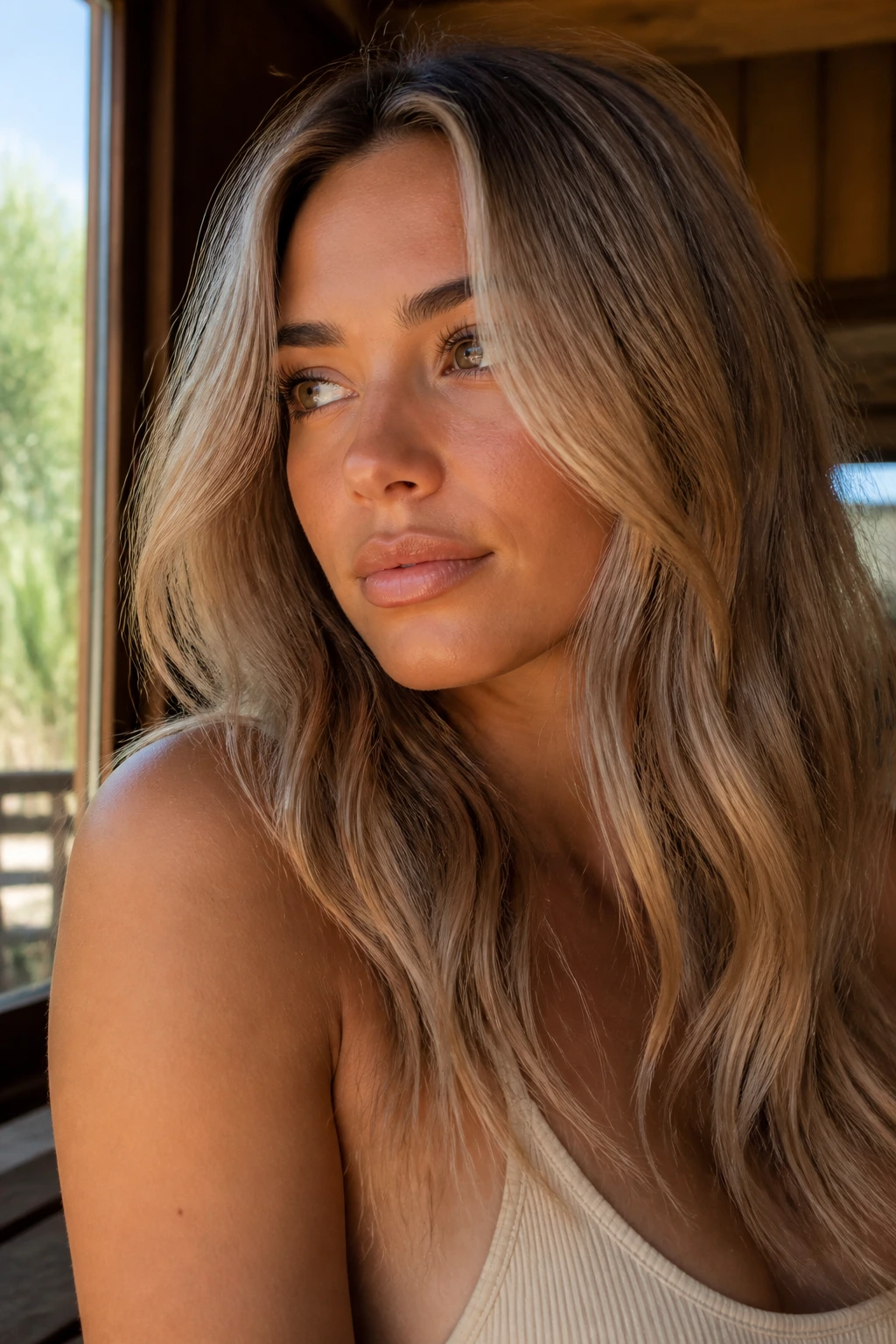
The best salon consults start with tone, not brand names or random celebrity photos. Tell the stylist whether your tan skin leans golden, olive, peach, or neutral. That one detail changes the formula more than the haircut does. A honey blonde on golden skin and a mushroom beige on olive skin are both “dark blonde,” but they won’t land the same way.
Bring photos that show the color in daylight. If the image is filtered, taken indoors under warm bulbs, or edited to look glossy and creamy, say so. Colorists can work from the idea, but they need to know what’s real and what’s lighting. I’d also bring a second photo that shows the placement you want — balayage, babylights, money piece, root melt, or all-over gloss.
Ask about maintenance before you commit. Some of these shades are low-fuss because the root stays dark. Others need a gloss every 4 to 6 weeks to keep the beige from going flat or the honey from turning brassy. If you know that upfront, you won’t be shocked when the color looks beautiful on day one and a little tired by week eight.
How to Wear Dark Blonde on Tan Skin
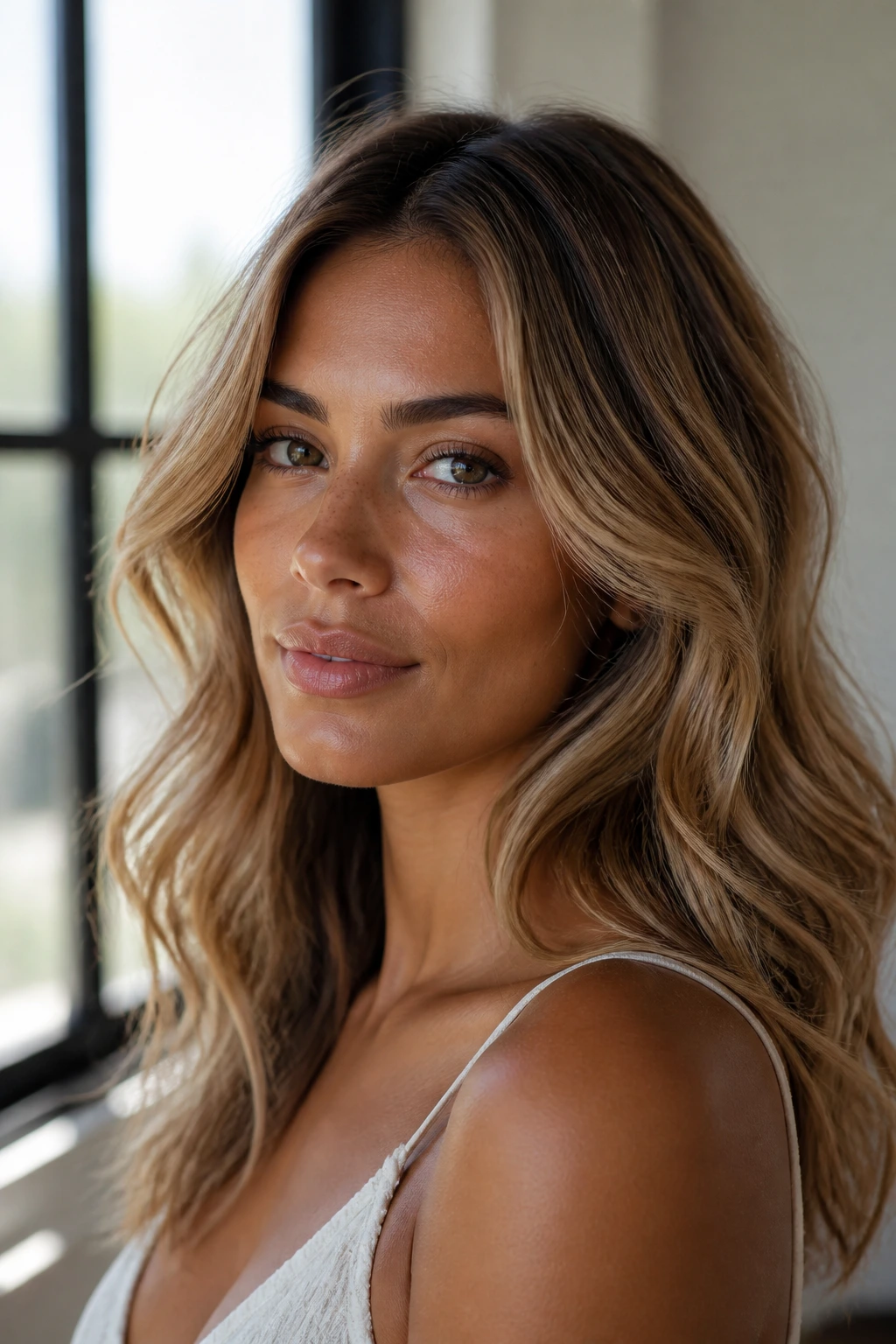
Styling: Loose waves, soft curls, and a clean blowout show off dimension better than stick-straight hair with no movement. If the color has ribbons or babylights, bend them with a 1-inch iron or a round brush so they catch the light in different places.
Makeup Pairing: Peach blush, bronze shadow, terracotta lips, and warm neutral liner usually sit well with honey, caramel, and maple tones. Beige, mushroom, and cool sand shades tend to look sharper with taupe lids, soft pink blush, and a muted nude lip.
Wardrobe Colors: Cream, camel, olive, rust, chocolate, navy, and black all play nicely with dark blonde on tan skin. What tends to flatten the whole look is a color that’s almost the same tone as the hair. Too much beige next to beige can make the face disappear.
Light Check: Always judge the shade in daylight before you decide it’s too warm or too cool. Bathroom bulbs can lie in both directions. Honey can look orange. Ash can look green. Daylight tells the truth.
Additional Tips and Color Boosters
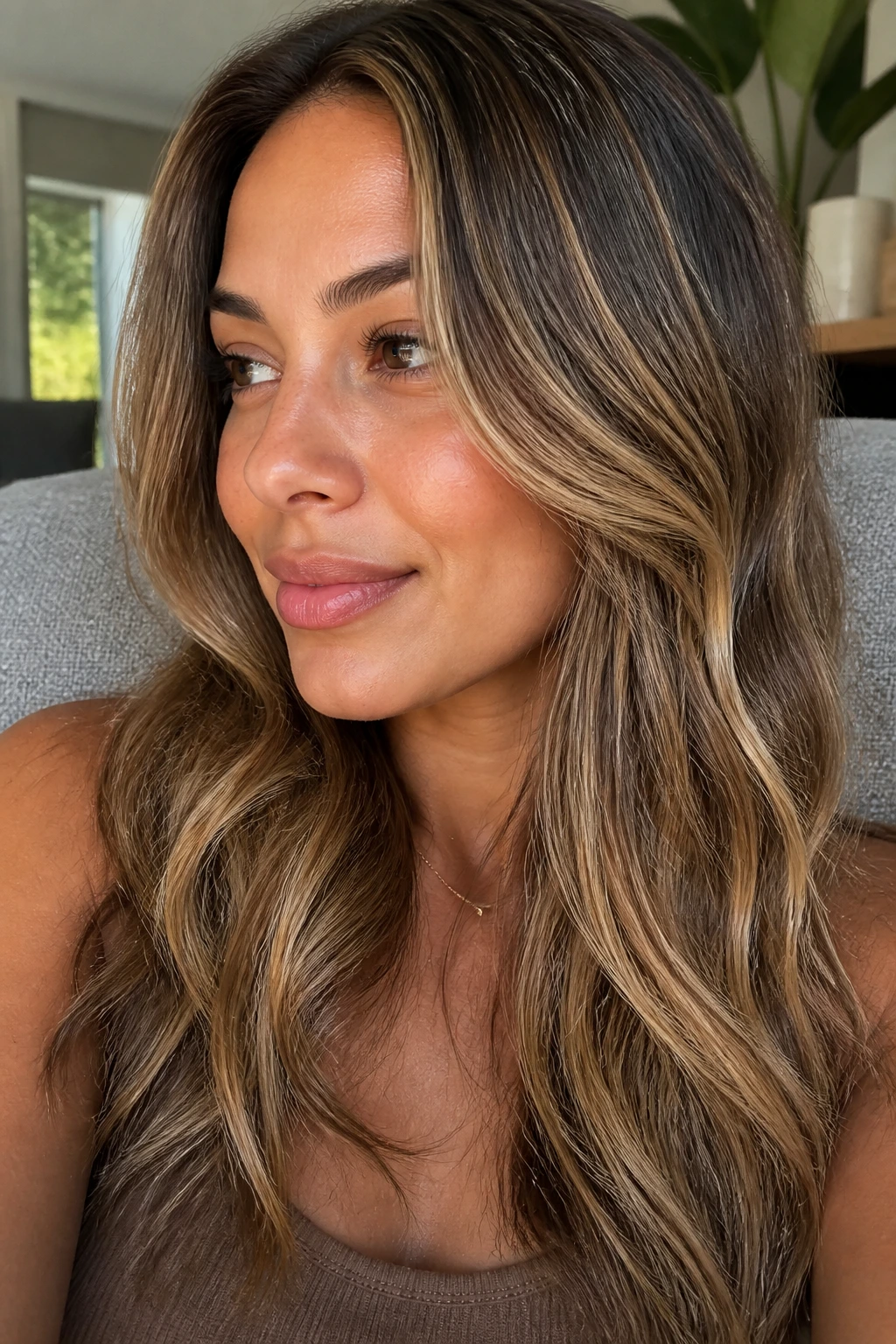
Flavor Enhancement: A beige or honey gloss is the easiest way to keep dark blonde from going flat. The gloss doesn’t need to be dramatic; it just needs to refresh the tone so the mids don’t look dusty.
Customization: If you want more lift, ask for brightness around the face and keep the back half darker. If you want less contrast, soften the root shadow and keep the highlights finer. Small changes make a big difference here.
Serving Suggestions: Yes, hair gets “served” too, and the finish matters. A little shine spray on the mids, a few face-framing bends, and a cleaner part can change the whole mood of the color. Skip heavy oil at the roots; it can make the blonde look tired by noon.
Make-It-Yours: Warm tan skin usually likes honey, caramel, maple, and soft copper. Olive tan skin tends to look cleaner in beige, mushroom, sandy taupe, or smoky bronde. Neutral tan skin can move between both camps as long as the root depth stays honest.
Keeping the Tone Fresh Between Appointments
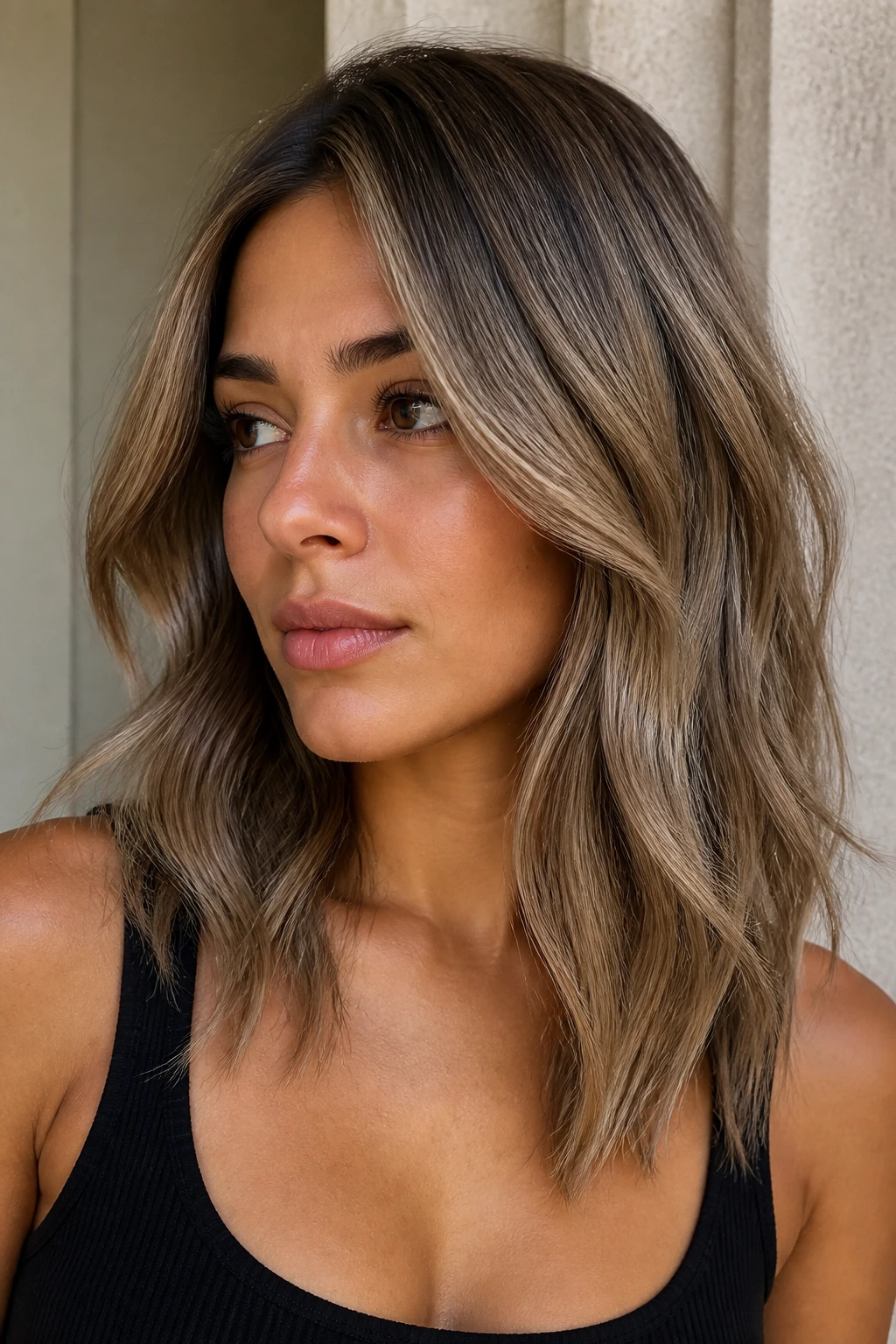
Dark blonde ages better than pale blonde, but it still needs a little care. Most rooted blondes hold their shape for 6 to 10 weeks before the tone starts to drift, and a gloss every 4 to 6 weeks can keep beige, honey, or champagne from turning tired. If you’re wearing a cooler shade like mushroom or cool sand, a purple shampoo once every 1 to 2 weeks is usually enough. More than that, and the hair can start looking dull instead of refined.
Heat styling is the other thing that sneaks up on color. A flat iron or curling wand on dry hair can chew through shine faster than a shampoo will. Use protectant every time, keep the tool below scorching heat, and let the hair cool before brushing it out. That cooling step matters. It sets the bend and keeps the color reflection cleaner.
If your shade has a balayage or root melt, you can usually stretch appointments longer than with a full-head blonde. If the look depends on a bright face frame, the front pieces may need a refresh sooner because that’s where the eye goes first. Front sections fade in your mirror before the rest of the hair does.
Variations and Adaptations to Try
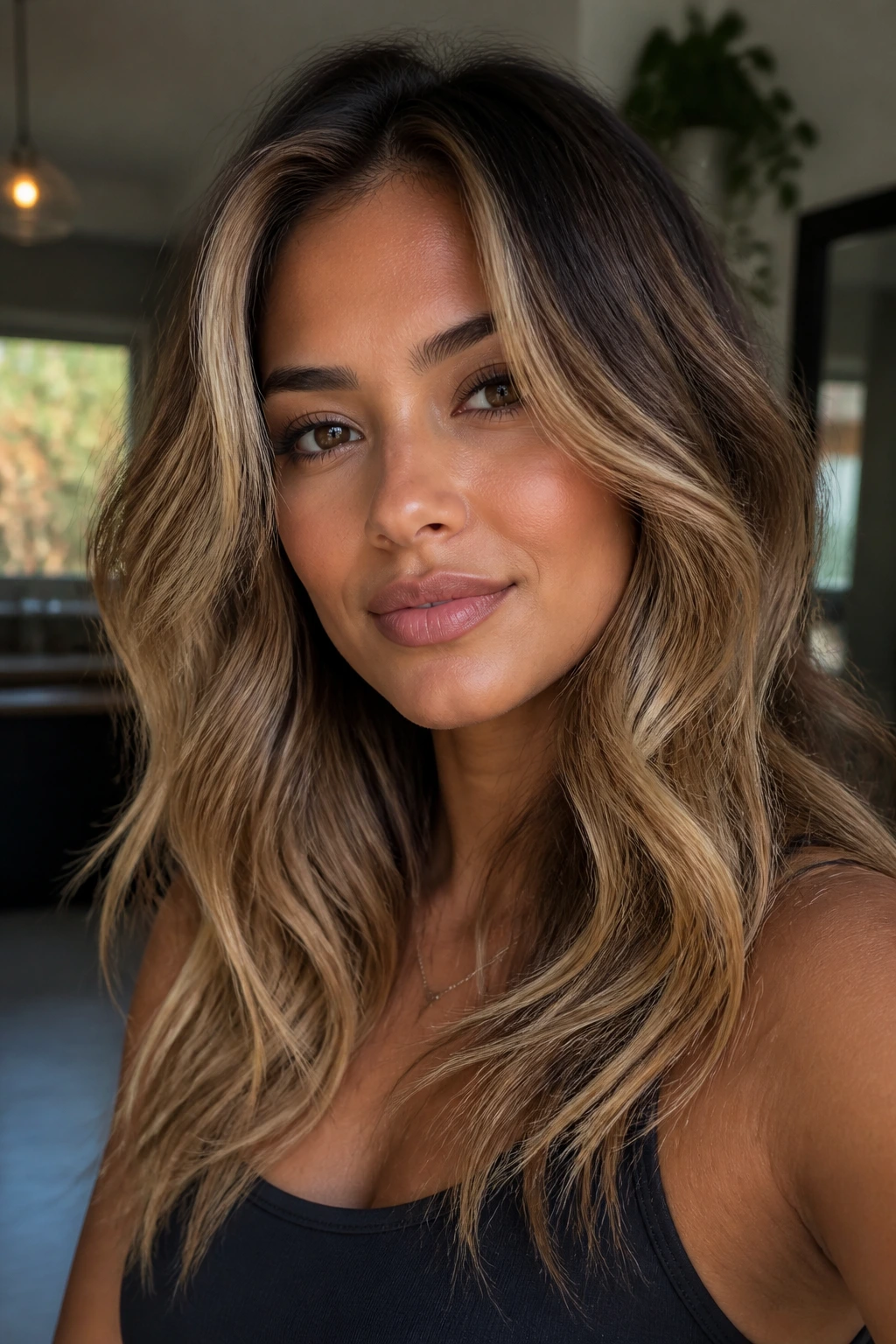
Bronde Bloom: This version leans deeper at the root and brighter through the face frame, which gives tan skin a lifted look without making the whole head light. It’s a solid choice if you want something softer than full blonde but brighter than brunette.
Smoky Sand Shift: Keep the base neutral and push the mids toward sand, beige, and a little taupe. This one fits olive tan skin especially well because the smoky note calms the warmth instead of competing with it.
Honey Brûlée Melt: Start with a brownish root, then melt into honey and caramel through the mids. The finish has more glow than a classic bronde, and it works well if your tan skin has a golden cast.
Copper Drizzle Finish: Add a faint copper glaze over a dark blonde base. The copper should be subtle enough to catch light, not dominate the hair. This is a nice option if beige shades leave your skin looking flat.
Rooted Dimensional Grow-Out: Keep the root a half-step deeper and place fine blonde pieces through the crown and face frame. It’s the lowest-maintenance direction in the group, and it still looks finished when the color starts to grow.
Common Mistakes That Make Tan Skin Look Dull
-
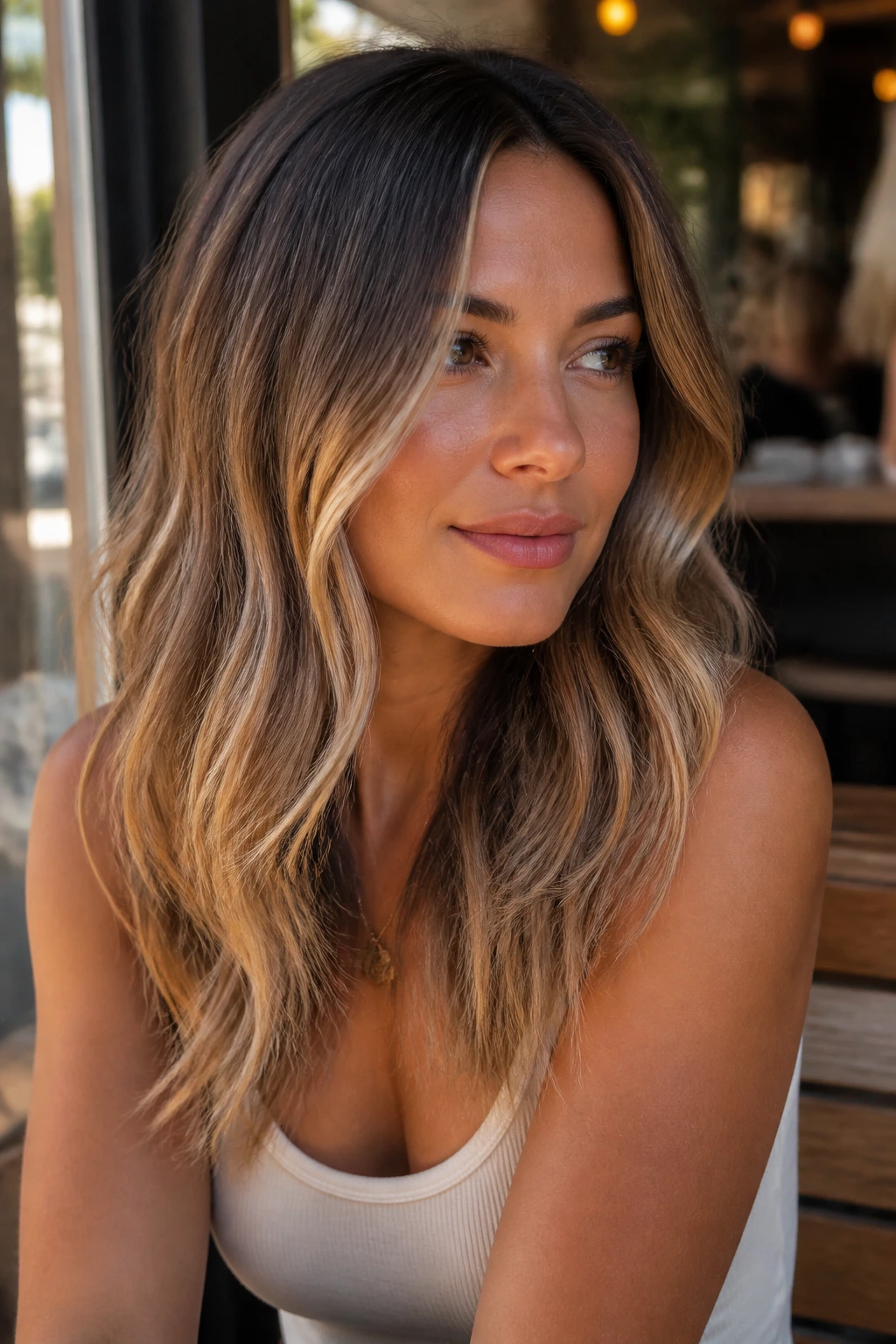
Going too light too fast: When the blonde jumps several levels lighter than the skin’s natural depth, the face can look disconnected from the hair. The fix is a level 6 or 7 base with controlled brightness, not a pale all-over lift.
-
Choosing ash without any warmth: Pure ash can make tan skin look tired or even a little green in bad light. If you want a cool shade, keep beige or gold in the gloss so the tone still feels alive.
-
Using purple shampoo like it’s conditioner: Purple shampoo is useful, but too much of it can leave dark blonde looking gray, chalky, or uneven. Use it sparingly and always follow with a moisture mask if the hair feels rough.
-
Skipping the root shadow: A flat, rootless blonde often looks harsher on tan skin than a rooted one. Shadow at the crown keeps the face framed and the grow-out softer.
-
Ignoring the undertone of your makeup: If your hair is cool but your makeup is all warm gold, the whole look can feel split down the middle. Match the family of tones, or at least soften the mismatch with neutral blush and brows.
-
Trusting filtered photos too much: Filters can make beige look champagne, honey look caramel, and mushroom look like ash. Check the inspo in daylight before you hand it to a stylist.
Frequently Asked Questions
What level is dark blonde, exactly?
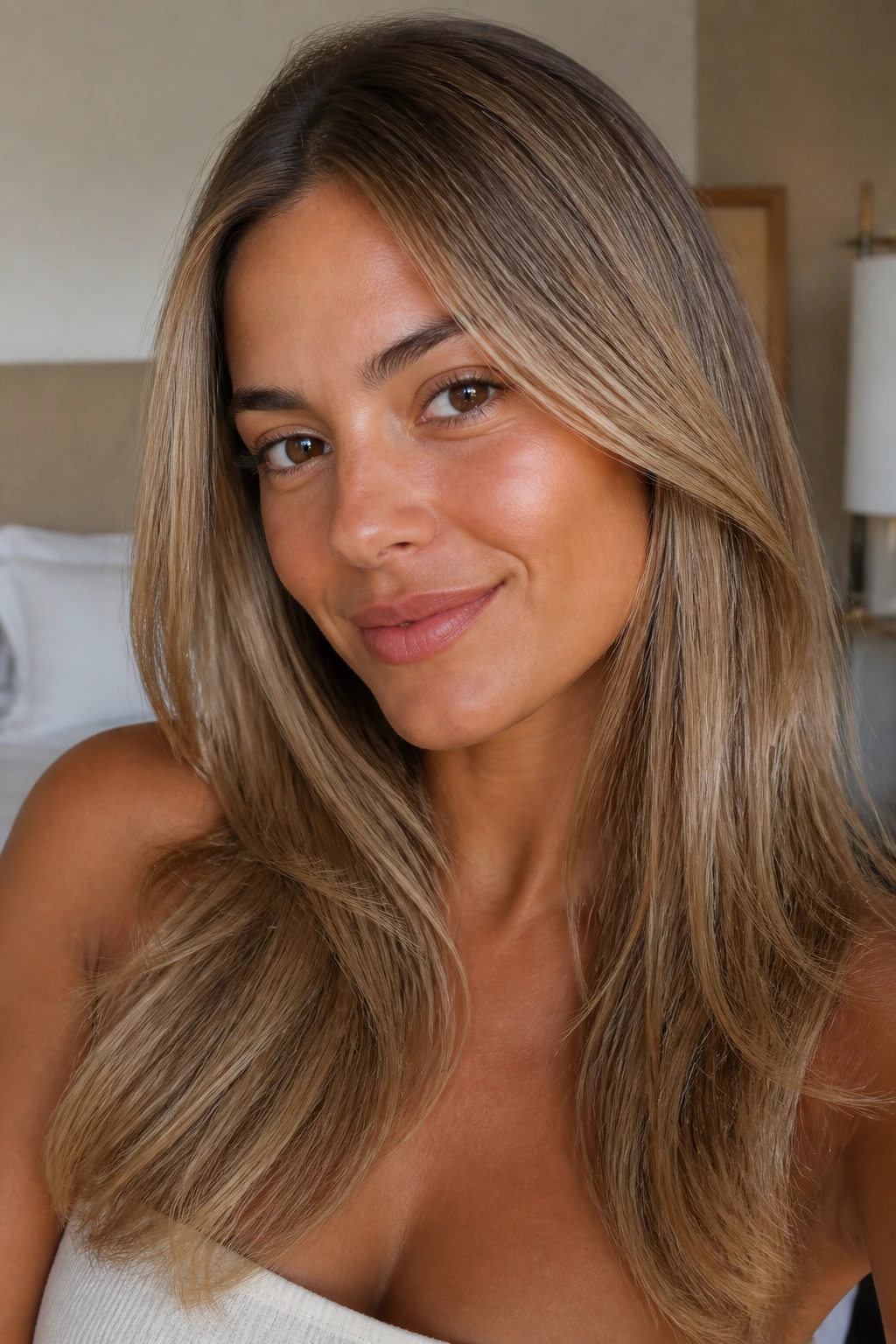
Most color charts place dark blonde around a level 6 or 7, sometimes drifting toward a soft level 8 depending on the light source and toner. That’s why it sits between brunette and classic blonde instead of living fully in either camp.
Can tan skin wear ash blonde?
Yes, but pure ash is usually too severe. Tan skin does better with ash that has beige, sand, or a touch of gold blended in so the color doesn’t look dry or gray.
Is bronde better than blonde for tan skin?
Often, yes, if you want lower upkeep or more softness around the face. Bronde keeps some brown depth in the mix, which helps the hair frame tan skin instead of sitting apart from it.
How often should dark blonde be glossed?
Every 4 to 6 weeks is a solid range if you want to keep the tone clean. Honey, beige, and champagne shades fade into brass or flatness first, so the gloss does a lot of quiet work.
Can I get dark blonde without bleach?
Sometimes, if your starting color is already light brown or dark blonde. If your natural hair is much darker, bleach or high-lift color is usually needed to reach a true blonde tone without muddy results.
What if the blonde looks too yellow on my tan skin?
A beige or violet-based gloss usually fixes that, but the formula has to match the problem. Yellow brass needs purple or beige correction; orange brass often needs blue-based correction. Don’t keep piling on purple if the real issue is warmth at a deeper level.
Which dark blonde shade is lowest maintenance?
Rooted dark blonde, bronde melt, and cocoa-infused bronde tend to grow out best because they keep a visible base. The more contrast you build only around the face and mids, the less obvious regrowth becomes.
What if my tan skin is olive and most blondes look too warm?
Try mushroom, cool sand, smoky beige balayage, or a beige blonde with soft taupe lowlights. Olive skin usually needs a cooler or more muted blonde so the color doesn’t pull too yellow next to the face.
The Shades That Keep Tan Skin Looking Alive
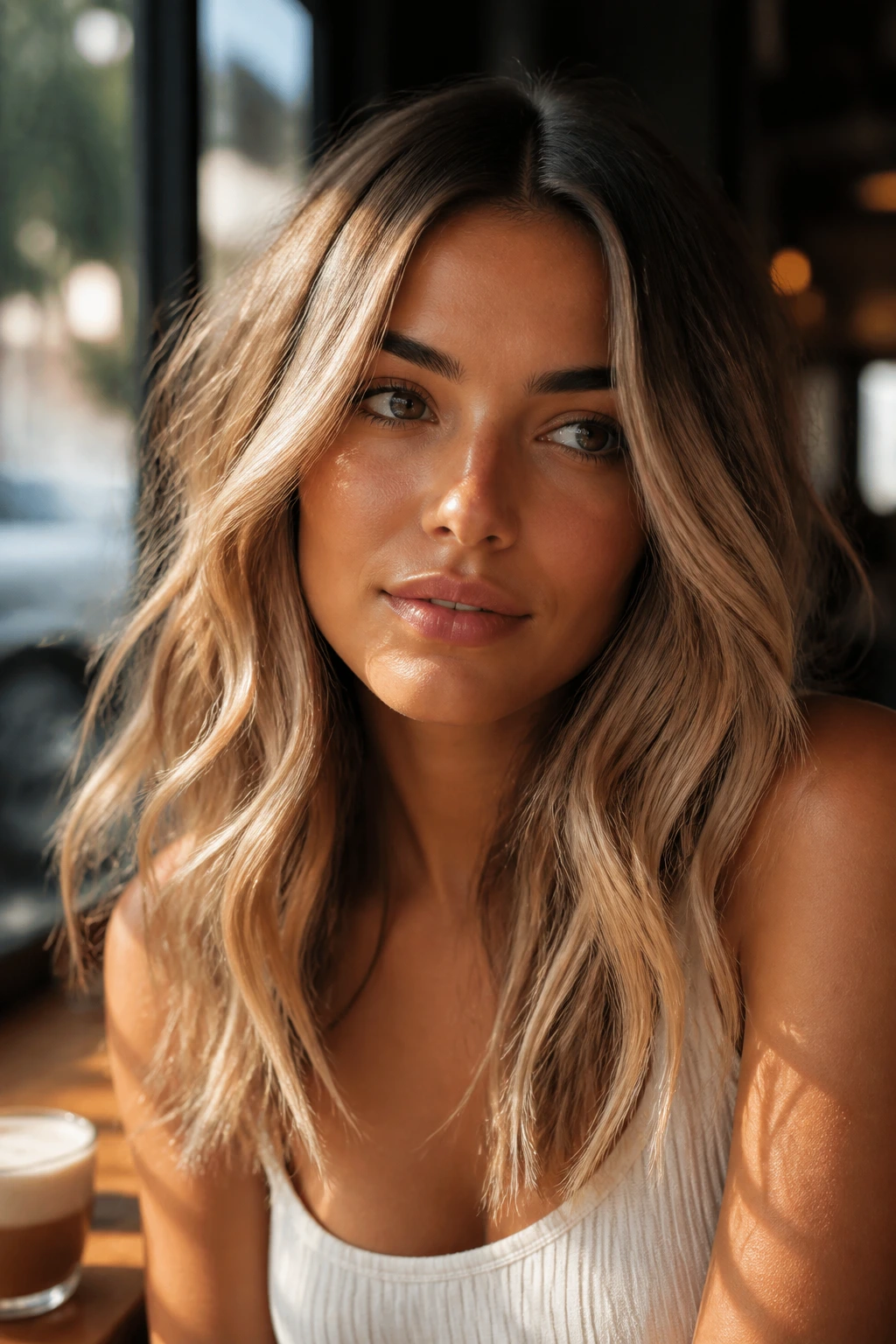
The best dark blonde choices for tan skin are the ones that keep depth where it matters and brightness where it helps. That usually means a rooted base, some dimension through the mids, and a tone that respects your undertone instead of trying to overwrite it. Honey and caramel do the warm work. Beige and mushroom calm things down. Bronde and rooted looks keep the whole thing practical.
If you’re choosing between shades, start with the part you want the hair to play: brightener, softener, or low-maintenance middle ground. That single decision trims the list fast. And once the undertone is right, dark blonde on tan skin has a way of looking like it was meant to be there all along.