



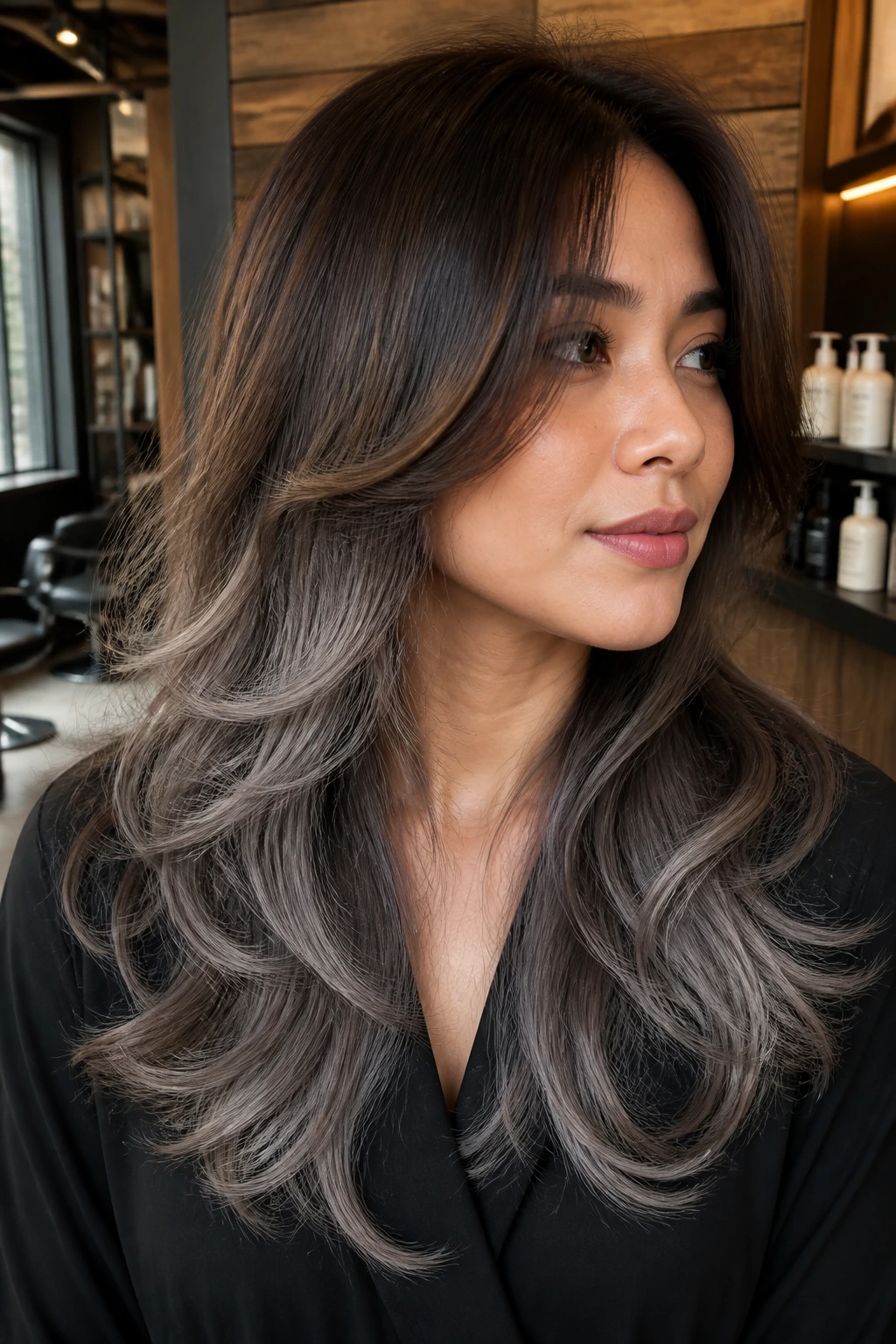
Brown to grey hairstyles for dark hair work best when the grey is treated like smoke, not paint. That’s the big difference people miss. On espresso, chestnut, and blue-black bases, a flat silver overlay can look harsh in daylight, while a brown-to-grey fade with a root shadow and cool toner looks softer, more expensive, and a lot more believable on real hair that moves.
Dark hair gives this color story a head start. The brown anchor keeps the style grounded, and the grey pieces catch light where your hair naturally bends: around the face, along the ends, through curls, under braids, at the crown when you flip your part. That contrast is the whole point. Done well, it looks like depth. Done badly, it looks like one stripe too many and a toner that quit halfway through the job.
The trick is placement, not just color. A blunt bob needs a different grey map than a shag. Curly hair wants ribboned ribbons, not blocky streaks. Long hair can carry a slow fade from mocha to graphite without feeling busy. And if your hair is very dark, you do not need to chase pure silver everywhere — a smoky ash, mushroom grey, pewter, or charcoal finish usually reads better and wears longer.
Why These Brown-to-Grey Looks Work So Well on Dark Hair
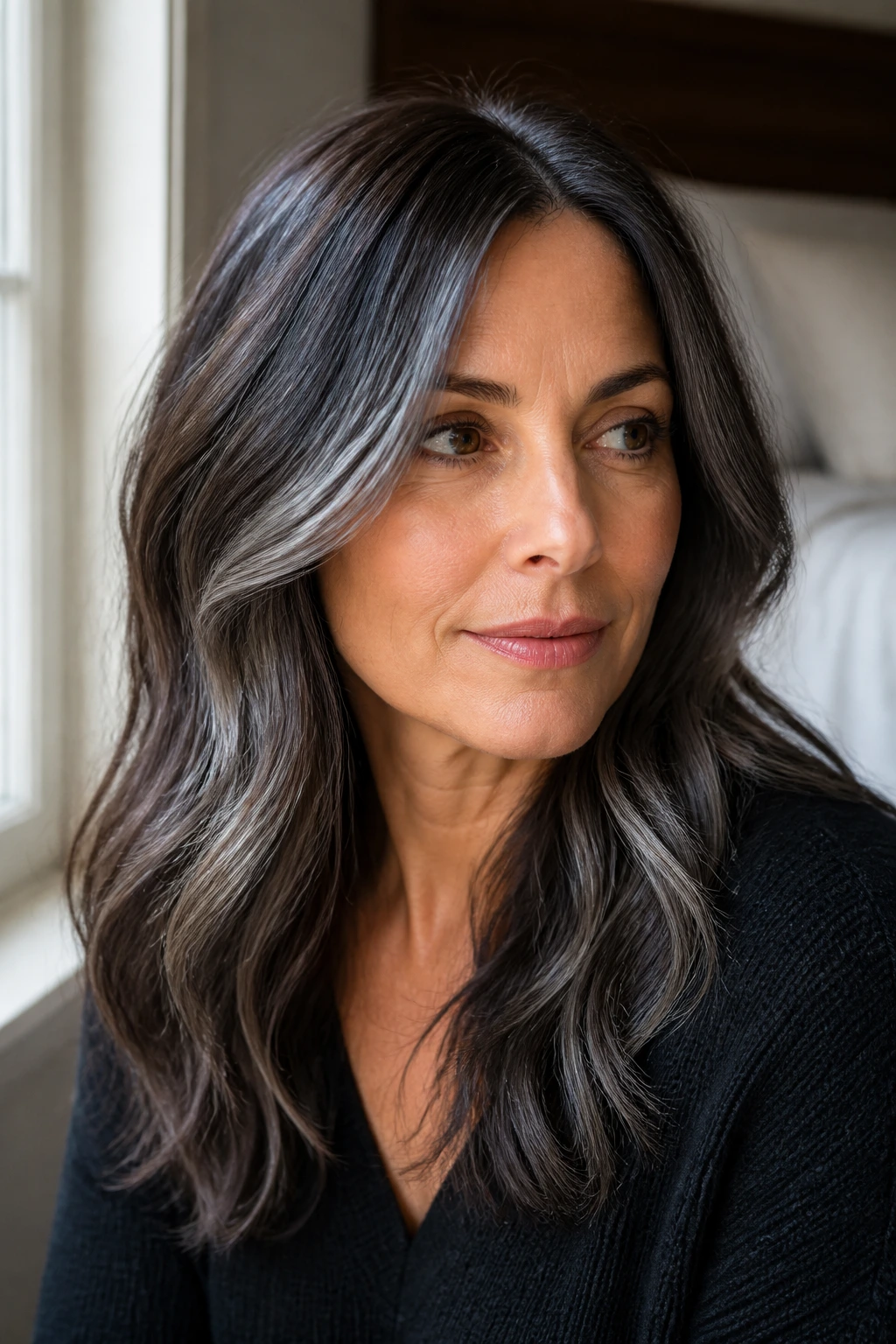
Built for dark bases: Every style here assumes you’re starting with brunette or near-black hair, so the grey reads as a deliberate contrast instead of a washed-out afterthought.
Root shadow helps: A deeper root keeps the grow-out from turning into a hard line two weeks after your appointment. That matters more than people admit.
Placement changes everything: Grey in a shag, grey in a sleek bob, and grey in a braid all behave differently once the hair moves. The cut decides how the color shows up.
Cool, not chalky: The best versions lean smoky, pewter, slate, or silver-beige. Flat white-grey on dark hair can look stripy; a softer tone usually looks richer.
Low to high drama: You can keep this subtle with face-framing pieces or push it hard with dip-dyed ends and full graphite panels. Same theme, very different mood.
1. Smoky Brown-to-Grey Balayage Lob
A lob gives brown-to-grey balayage room to breathe. The length sits right where the color can show at the collarbone and along the ends, which makes the fade look intentional instead of crowded. On dark hair, I like this cut because it doesn’t need heavy saturation; just a few cool ribbons through the mid-lengths and a smoky toner on the ends does most of the work.
Why It Lands So Well
Balayage is the softest entry point if you’re nervous about grey. The hand-painted pieces avoid that chunky stripe effect, and the lob’s blunt-but-not-too-short shape keeps the blend clean. Ask for brown roots, lifted mid-lengths, and a grey-beige gloss over the lightest pieces so the transition doesn’t turn brassy.
What to Ask For
- Keep the root area at least 1 to 2 inches deeper.
- Let the lightest pieces sit around the face and the outer layer.
- Finish with a toner that reads smoky, not icy white.
- Style with loose bends; straight iron hair shows every color seam.
Best For
This one works for straight, wavy, and slightly thick hair that needs movement without a lot of layers. It’s polished enough for work, but the grey comes alive when the ends flip and separate.
2. Espresso Root Melt with Silver Ends
This is the look for someone who wants contrast and doesn’t mind a little drama. The roots stay almost espresso-dark, then the color melts through mocha and ash brown before landing in silver ends that feel sharp and deliberate. On dark hair, that deep root keeps the style from looking like a wig line at the scalp.
The best version is not silver everywhere. That gets loud fast. Keep the top two-thirds grounded in brown, then let the last few inches turn steel-grey or pearl-grey, especially if your cut is blunt. I like this on long hair because the fade has room to show.
If your hair is coarse, ask for a bond-building lightener and a gloss afterward. Those silver ends need shine or they can look dry, and dry silver is where a lot of brunettes get into trouble.
3. Soft Waves with Ash Grey Face-Framing Pieces
Face-framing pieces are the easiest way to test grey without committing your whole head. On dark hair, a few ash-grey ribbons around the cheekbones and jawline soften the face and make the rest of the brown look richer by contrast. Add loose waves, and the placement starts to feel almost natural.
This style is smart because the lightest color sits where people actually look first. The front does the talking; the back stays calmer. That means less maintenance and fewer awkward moments when the grow-out starts creeping in near the crown.
I’d keep the waves wide and soft, not beach-crunchy. Grey tones show better when the hair has a smooth bend. If your colorist uses a toner that leans too blue, the front can go dull, so I’d ask for ash with a touch of beige rather than flat steel.
4. Curly Shag with Pewter Ribbons
Curly hair loves dimension, and a shag gives grey room to break up the shape instead of sitting in a solid block. Pewter ribbons through the curls create these little flashes of cool light that show when the curls separate. It’s one of the few grey looks that actually gets better on day two.
The shag cut matters here. Those layers keep the lighter pieces from disappearing inside the bulk, which is a real problem on dark, dense curls. I’d avoid placing all the grey on the surface. Thread it through the interior layers too, or the top can look too decorated and the rest can feel left out.
A curl cream with a soft hold works better than a crunchy gel for this look. Grey tones and hard-stiff curls can make the whole style feel dated. You want movement. You want a little mess.
5. Blunt Bob with Charcoal Underlights
A blunt bob with charcoal underlights is for someone who likes a cleaner silhouette. The outer layer stays brown and smooth, while the hidden panels underneath shift into charcoal or graphite. When the hair swings, the grey peeks out. When it’s still, the cut looks controlled.
This is one of my favorites for darker hair because it avoids the “highlight helmet” effect. The underlights give depth without forcing the whole head into a high-contrast situation. It also works well if you wear your hair tucked behind one ear or clipped back at the sides.
Keep the bob around chin to jaw length if you want the grey to show at the nape. Shorter than that, and the underlayer can disappear. Longer, and the shape loses its edge.
6. Mushroom Brown Layered Cut with Steel Fade
Mushroom brown is one of the best bridges between brunette and grey because it already lives in that cool, earthy lane. Put it on a layered cut and the whole style starts to feel blended instead of dyed. A steel-grey fade at the ends pushes it a little further without losing softness.
I like this on medium-long hair that needs movement around the shoulders. The layers help the grey catch light at different levels, which makes the color look richer than a single flat sheet. If your natural hair has warm red undertones, ask the colorist to neutralize warmth first, or the grey can slide muddy.
This style is the quiet one in the group. Not boring. Quiet. And that’s a useful thing when you want grey to look like a design choice, not a costume.
7. Pixie Cut with Slate Crown
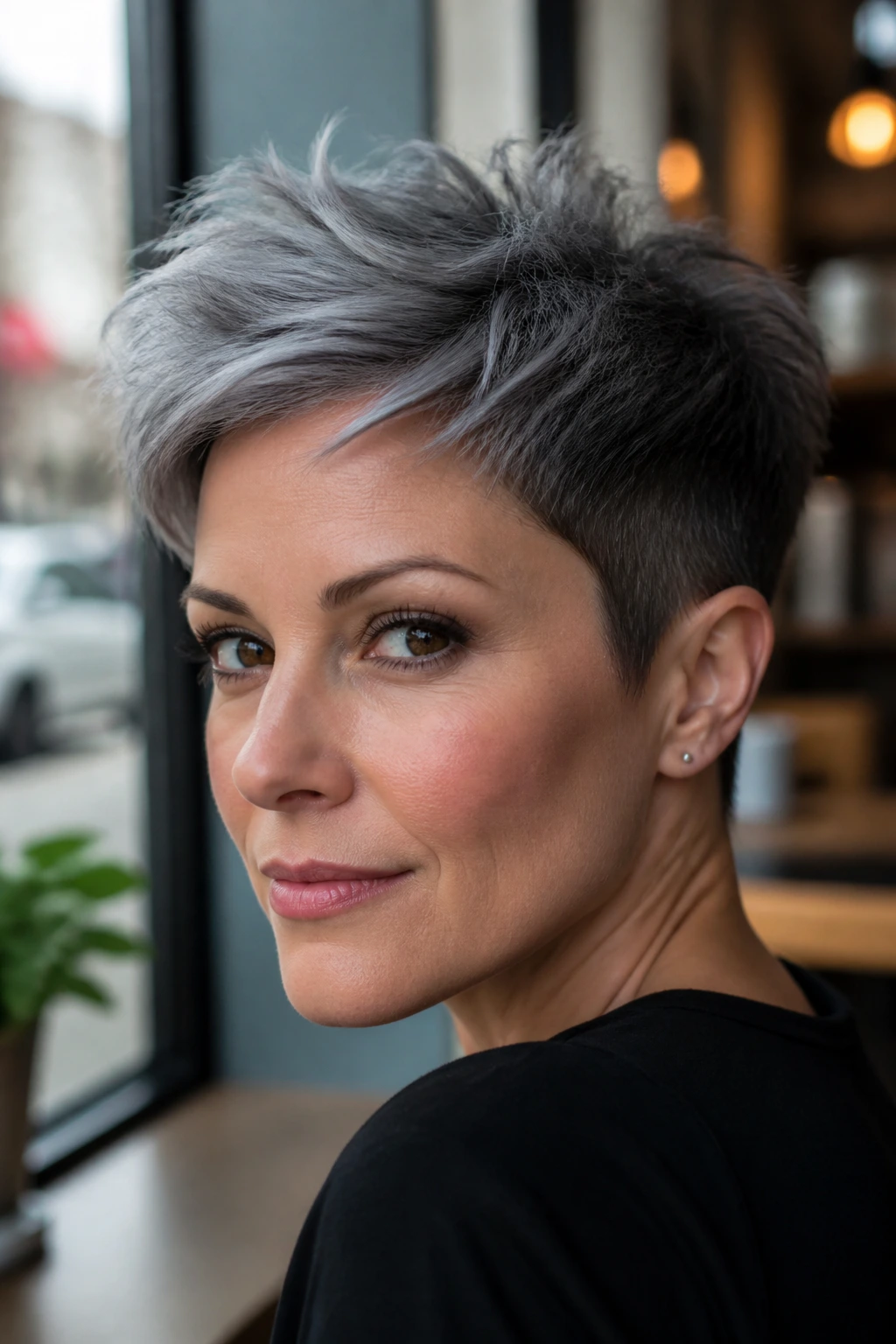
A pixie changes the whole grey conversation because the color sits close to the face and neck. With a slate crown and brown sides, the top gets a cool, edgy lift while the darker perimeter keeps the cut from floating away. It’s sharp without being severe.
This works best when the top is textured, not helmet-smooth. A little separation lets the grey read in small shifts instead of one solid patch. If the hair is very dark, keep the sides and nape deeper so the top has somewhere to land.
Short hair exposes bad toning fast. If the grey leans green or flat, everyone sees it. So I’d ask for a beige-grey toner rather than an over-ash finish if your skin has warmth in it.
8. Braided Crown with Silver Accent Strands
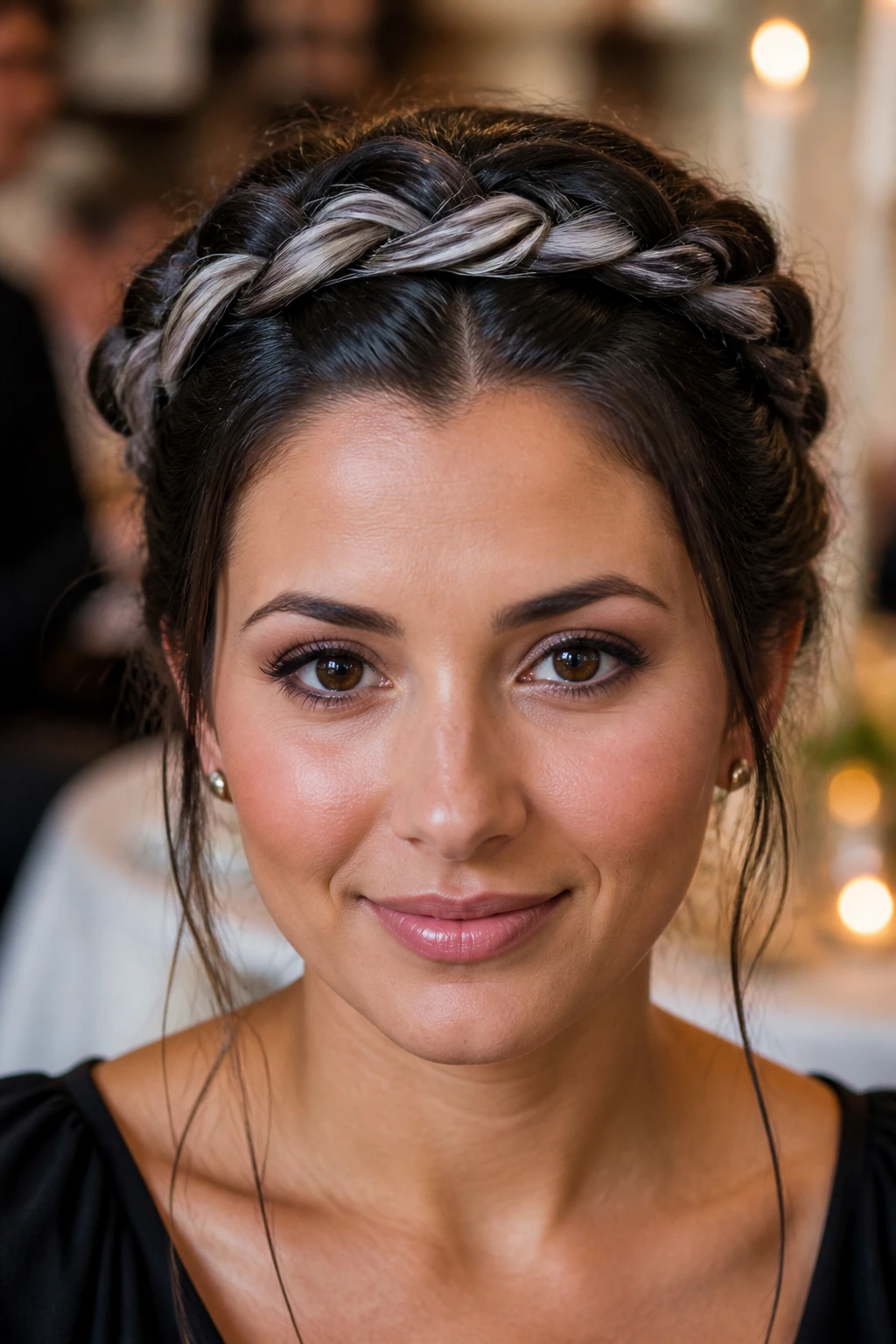
Braids are where grey becomes graphic. A braided crown with silver accent strands turns the color into a pattern instead of a wash, and that’s useful if you want a formal look with a little edge. On dark hair, the contrast between brown sections and silver strands makes every twist more visible.
The key is not overloading the braid. Too many light pieces and the design gets messy. A few silver accent strands around the front and through one side of the braid are enough. I’d keep the underside darker so the braid has depth when it wraps around the head.
This is a nice event style too, because the grey flashes under indoor light and then cools down outside. Different mood. Same braid.
9. High Ponytail with Smoke Grey Lengths
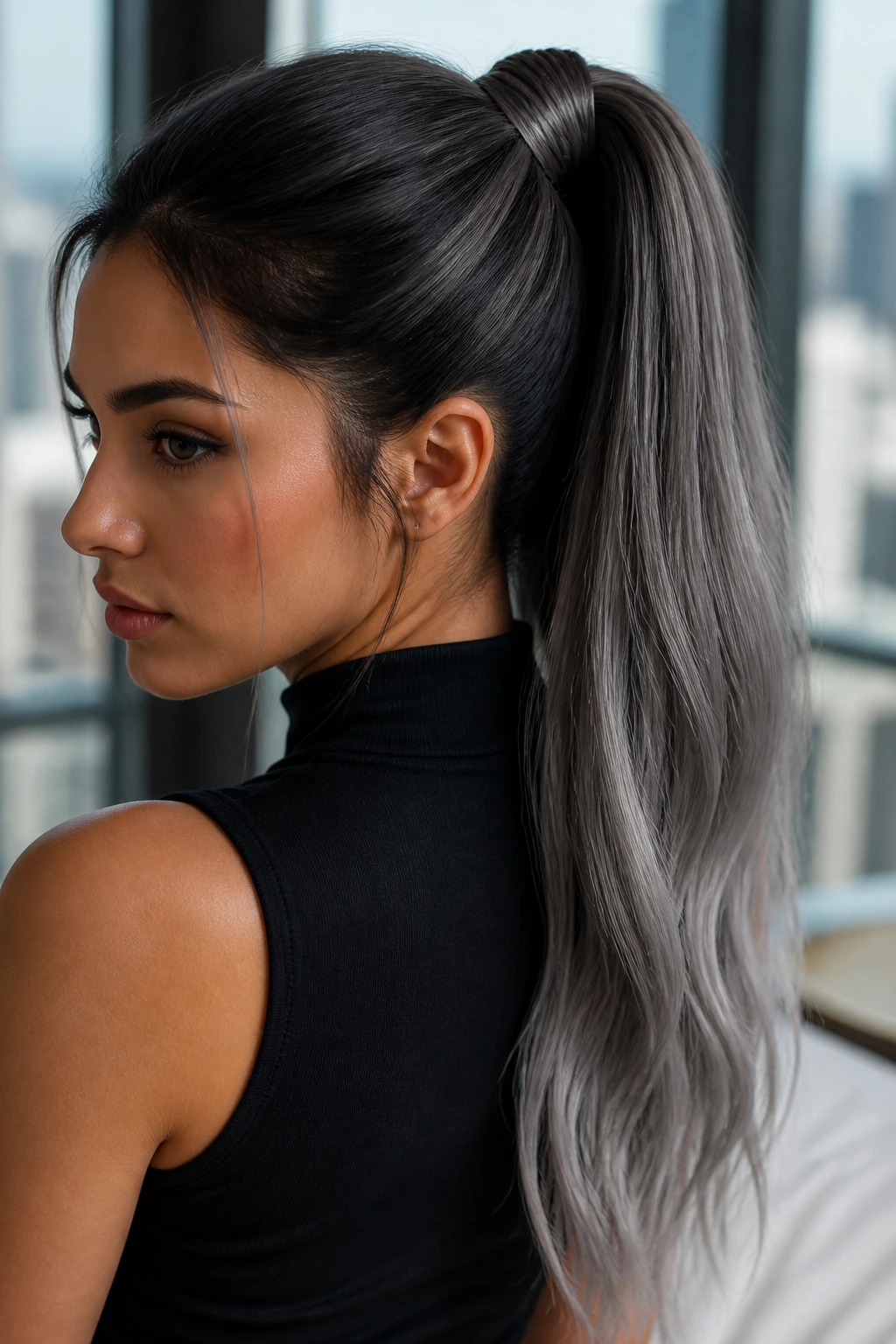
A high ponytail gives brown-to-grey color a clean vertical line. Dark roots at the base, smoke-grey through the length, and a wrapped strand around the elastic — that’s the whole picture. It’s simple, but it reads polished because the color shift is obvious and tidy.
This works especially well if the ends are slightly layered. The lighter tips move when the pony swings, which keeps the look from feeling stiff. If you have very dark hair, ask for a gradual lift through the ponytail length so the grey doesn’t start too abruptly near the middle.
I like this for people who wear their hair up a lot. The ponytail turns the color into a feature instead of something that disappears when you’re busy.
10. Curtain Bangs with Frosted Money Piece
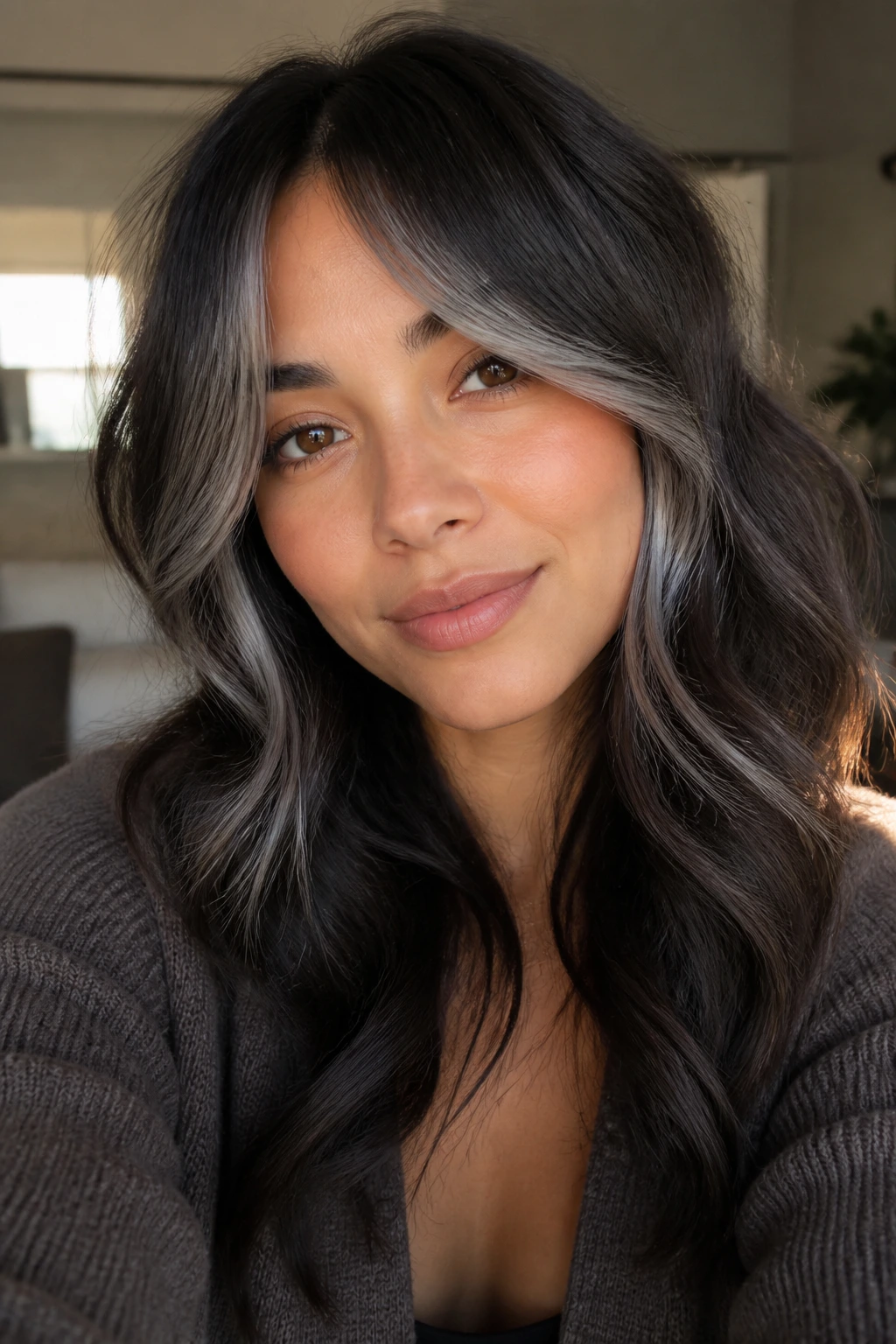
Curtain bangs can save a grey look that feels too heavy around the face. Frosted money pieces on both sides of the part break up dark hair immediately, and the bangs create a soft frame that makes the grey read airy instead of chunky. The whole effect is lighter, almost lifted.
The trick is to keep the bang area the lightest part, not the entire front section. You want a soft glow near the eyes and cheekbones, not a white strip sitting on top of deep brown. A grey-beige gloss does that job better than a stark silver toner.
If your forehead is broad or your face is long, this style adds width without needing a blunt fringe. That’s a nice side benefit, and it’s one of the reasons curtain bangs keep showing up in good grey color work.
11. Feathered Mid-Length Cut with Taupe Lowlights
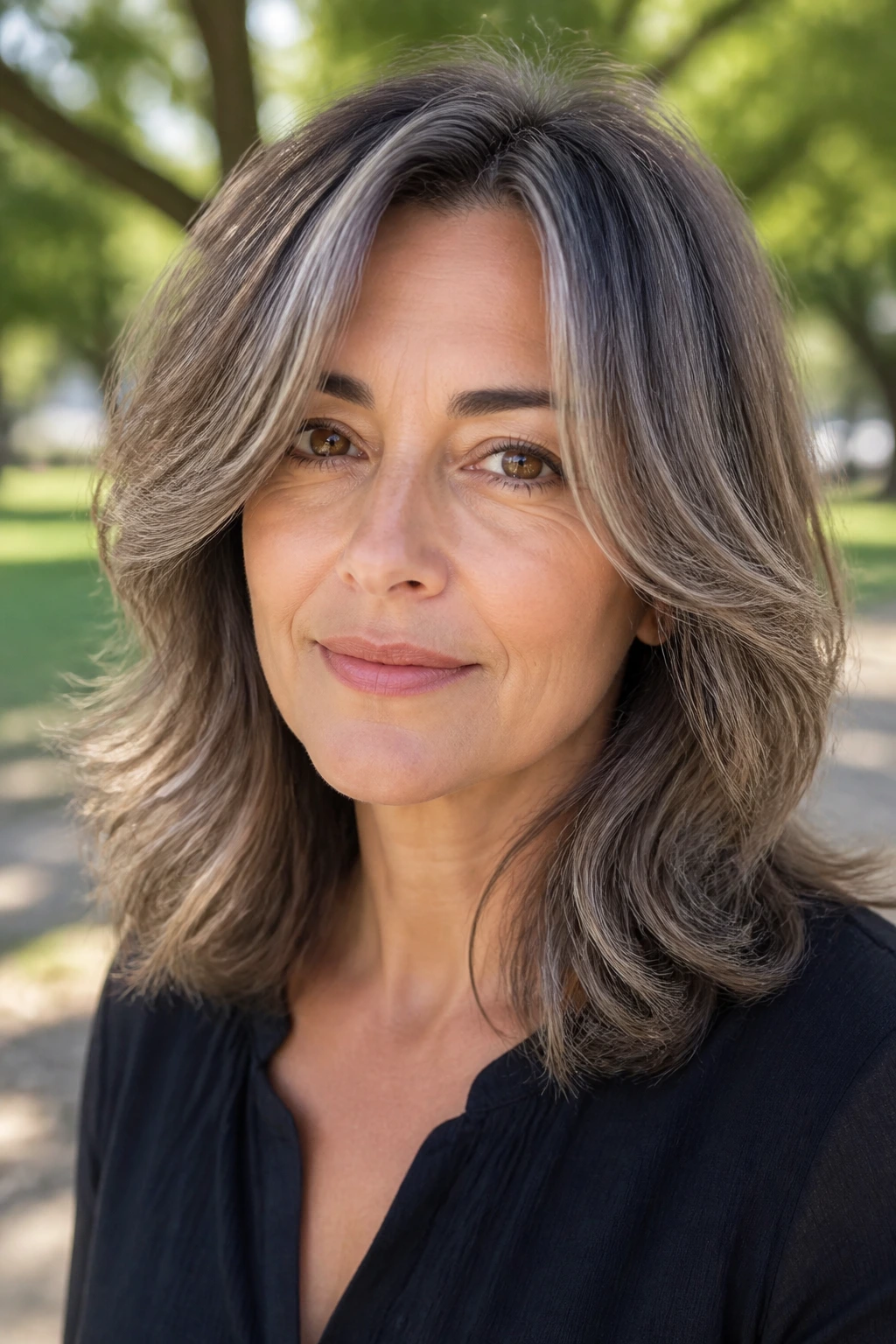
Taupe lowlights don’t get enough credit. Everybody chases highlights, then wonders why the hair looks flat after the toner settles. A feathered mid-length cut with taupe lowlights and grey-tipped pieces gives dark hair that softer, more layered depth.
The feathering matters because it keeps the movement light around the shoulders. Grey ends alone can look like dip-dye; grey ends with lowlights and feathering look blended. If your base is almost black, this is one of the more wearable options because the taupe acts like a bridge shade.
I’d keep the layers around the face a little shorter so the lighter pieces don’t disappear in the back. The style works, but only when the cut supports the color.
12. Wolf Cut with Brown Roots and Silver Ends
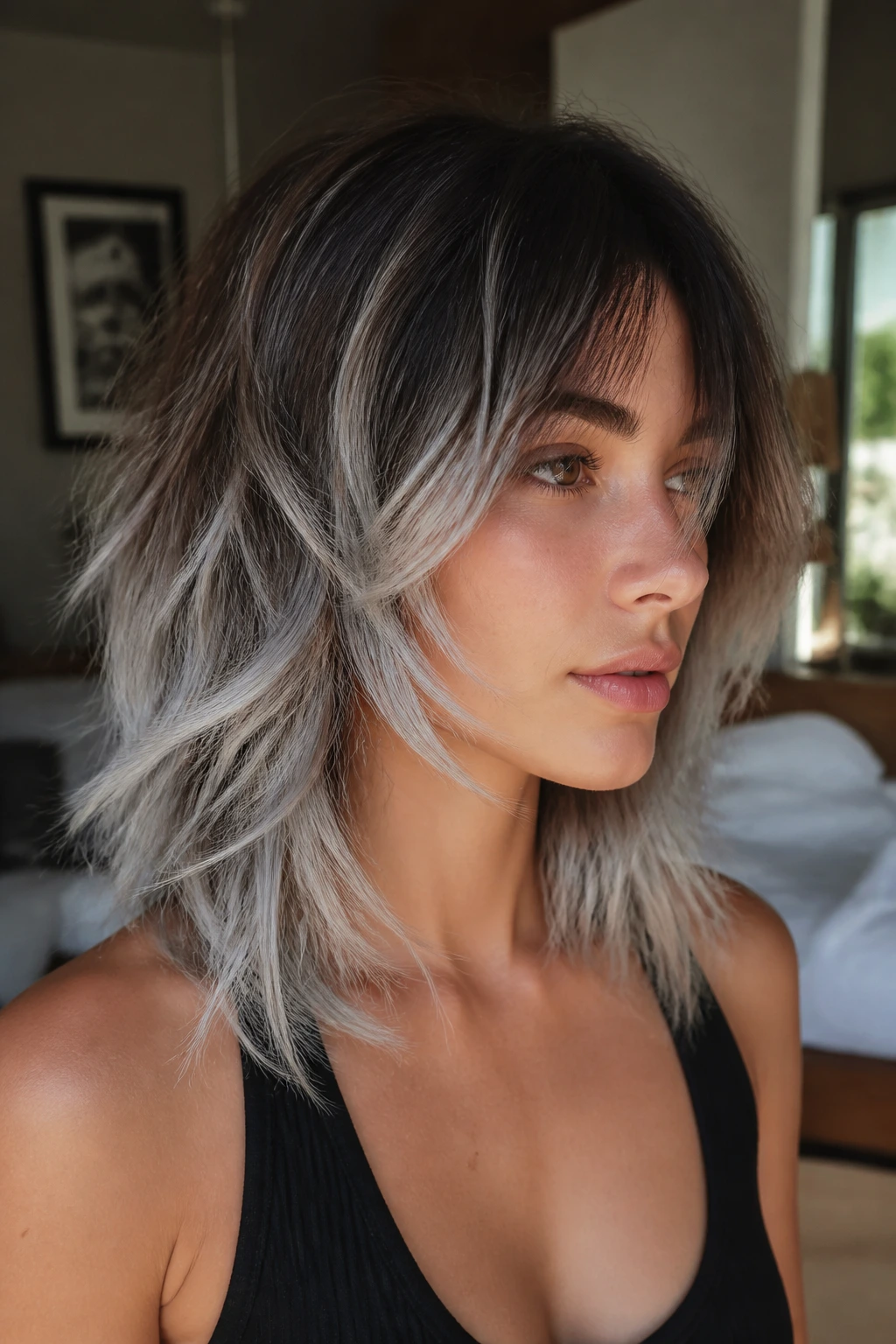
The wolf cut is basically built for this kind of color story. It has enough texture that the grey ends don’t sit flat, and the shaggy layers let dark roots stay visible, which is half the charm. Brown roots, smoky mids, silver ends — done.
This one looks best when the grey is irregular, not uniform. The little roughness is the point. If every strand is the same shade, the cut loses that wild, broken-up shape that makes a wolf cut interesting.
I’d avoid making the ends too pale if your hair is thick. The more volume you have, the more a sharp silver finish can overwhelm the cut. A graphite or pewter finish usually feels more balanced.
13. Glossy Blowout with Graphite Ribbon Highlights
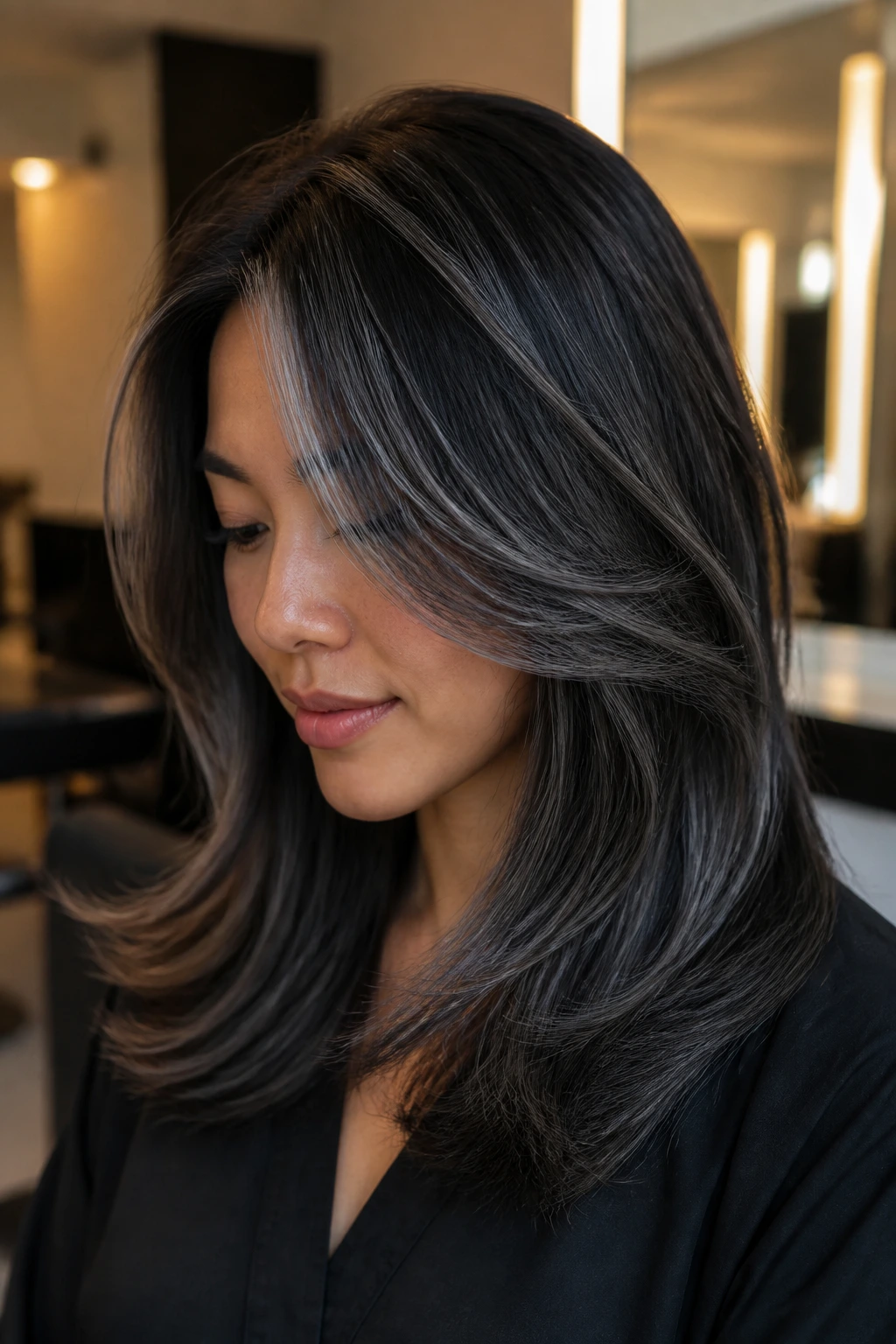
A blowout changes how grey behaves. On smooth, rounded hair, graphite ribbon highlights show as soft stripes that follow the curve of the brush. On dark hair, that kind of polished finish feels expensive without needing a heavy lightening job.
This is not the place for chunky foils. Keep the ribbons fine and place them where the brush hits: around the front, the outer layer, and a little through the crown. Then finish with a shine spray or lightweight serum so the graphite tones reflect instead of sinking into the hair.
If you like a cleaner, salon-smooth look, this is the version to choose. It’s less edgy than the wolf cut or shag, but the color reads very clear on a blowout.
14. Asymmetrical Bob with Gunmetal Panels
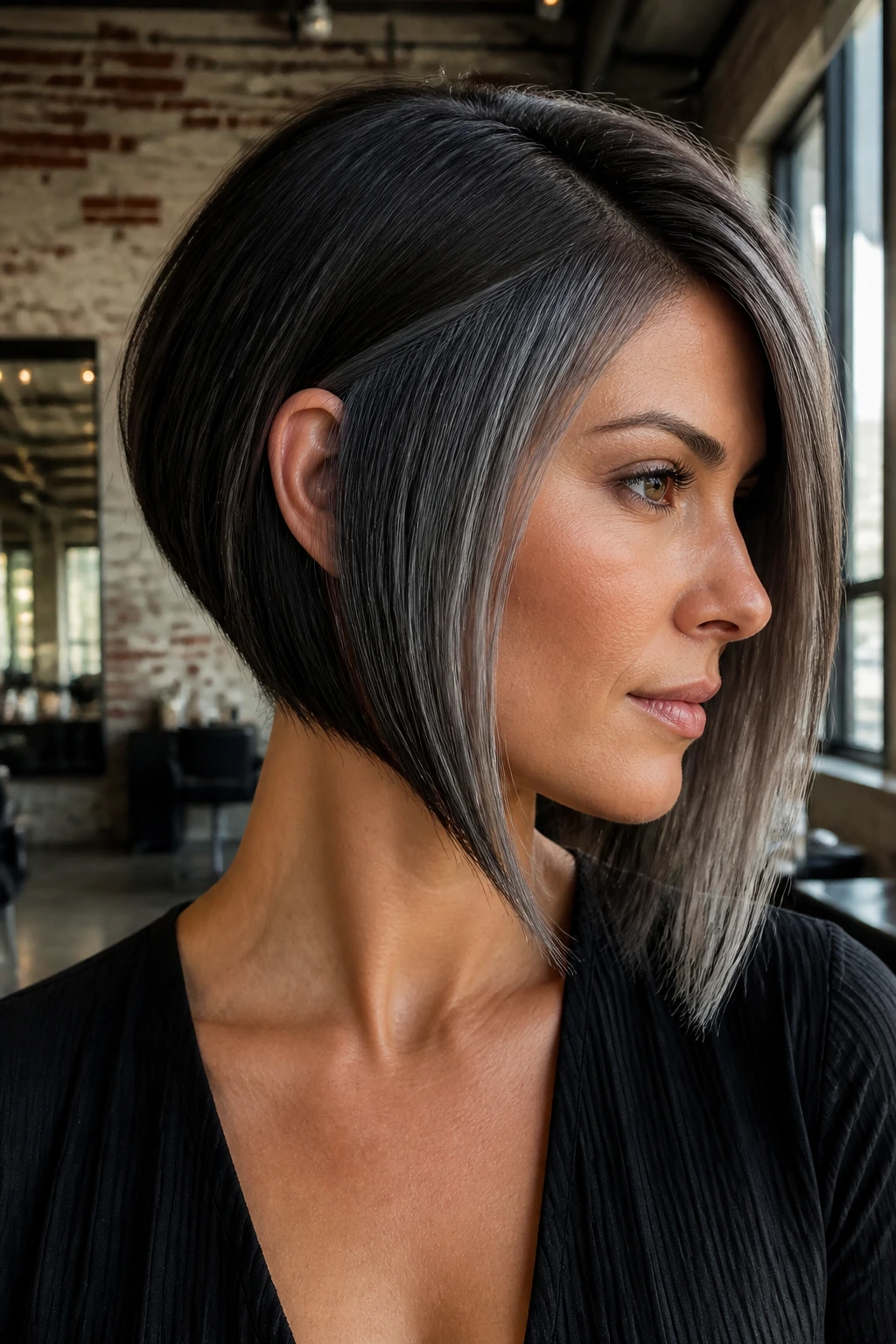
An asymmetrical bob already has attitude. Add gunmetal panels, and the haircut starts to feel sculpted. One side stays darker, the other catches the grey more aggressively, and that asymmetry gives the whole style motion even when it’s not moving.
This is a very good choice for people who like sharp lines and don’t want the grey to drift into softness. Gunmetal sits between silver and charcoal, which keeps it from looking too icy against dark hair. The asymmetrical cut also gives the colorist a reason to place light pieces strategically instead of everywhere at once.
I’d keep the part deep or side-swept. Center parts can make asymmetry feel accidental. A side part makes it look designed.
15. Half-Up Twist with Peekaboo Grey Underside
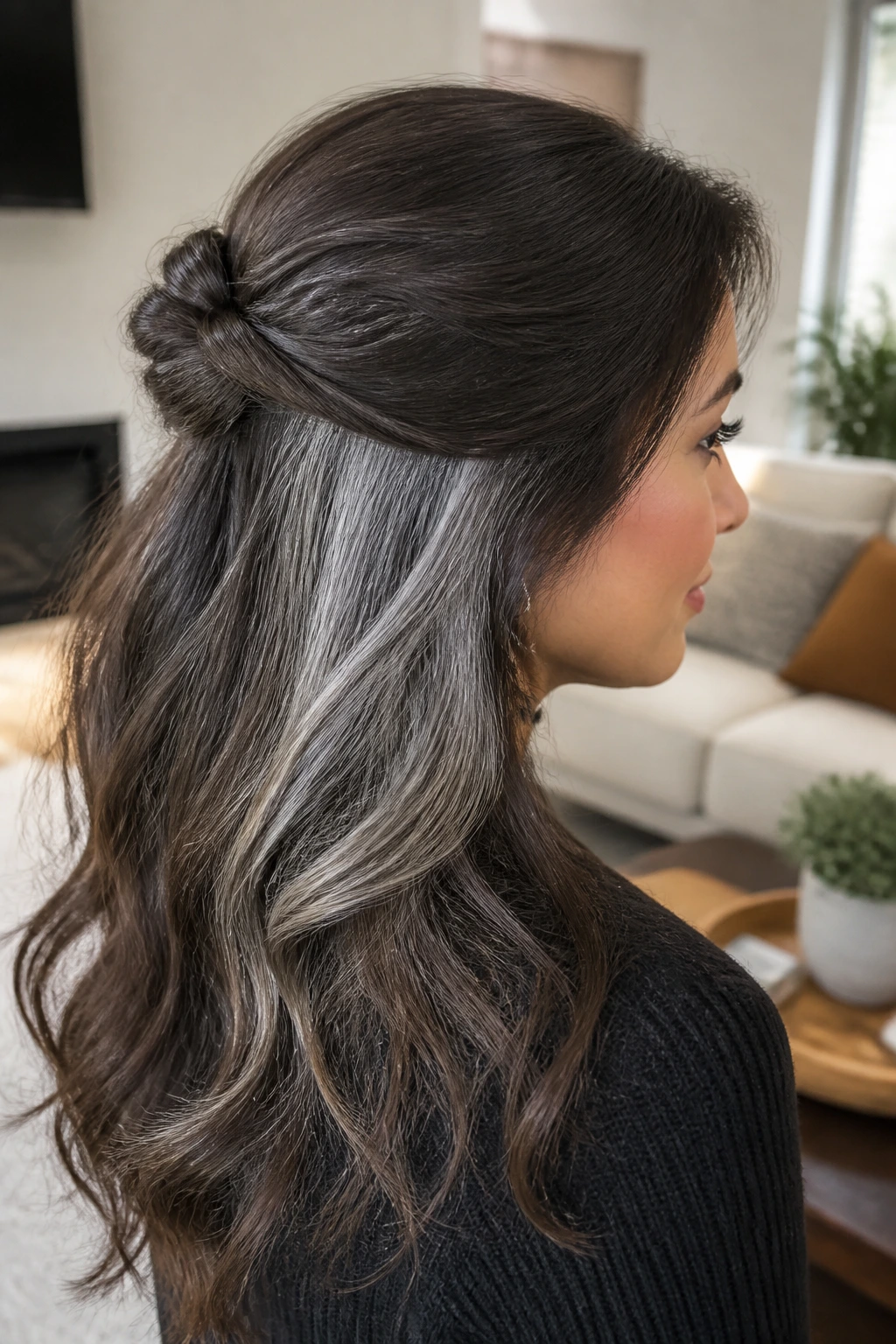
Peekaboo grey is for people who want the color to feel a little secretive. The top layer stays brown, the underside shifts into cool grey, and when you twist the top half up, the hidden color shows through. It’s the least obvious look here — until it isn’t.
This works especially well on medium to long hair because there’s enough depth for the hidden panels to matter. If the hair is too short, the underside won’t have room to hide and reveal itself properly. I’d keep the grey cool but not pale white, since the whole point is contrast, not shoutiness.
It’s also a good option if you work somewhere conservative and still want a bit of fun in the style. The grey only shows when you want it to.
16. Straight Midi with Pearl Grey Streaks
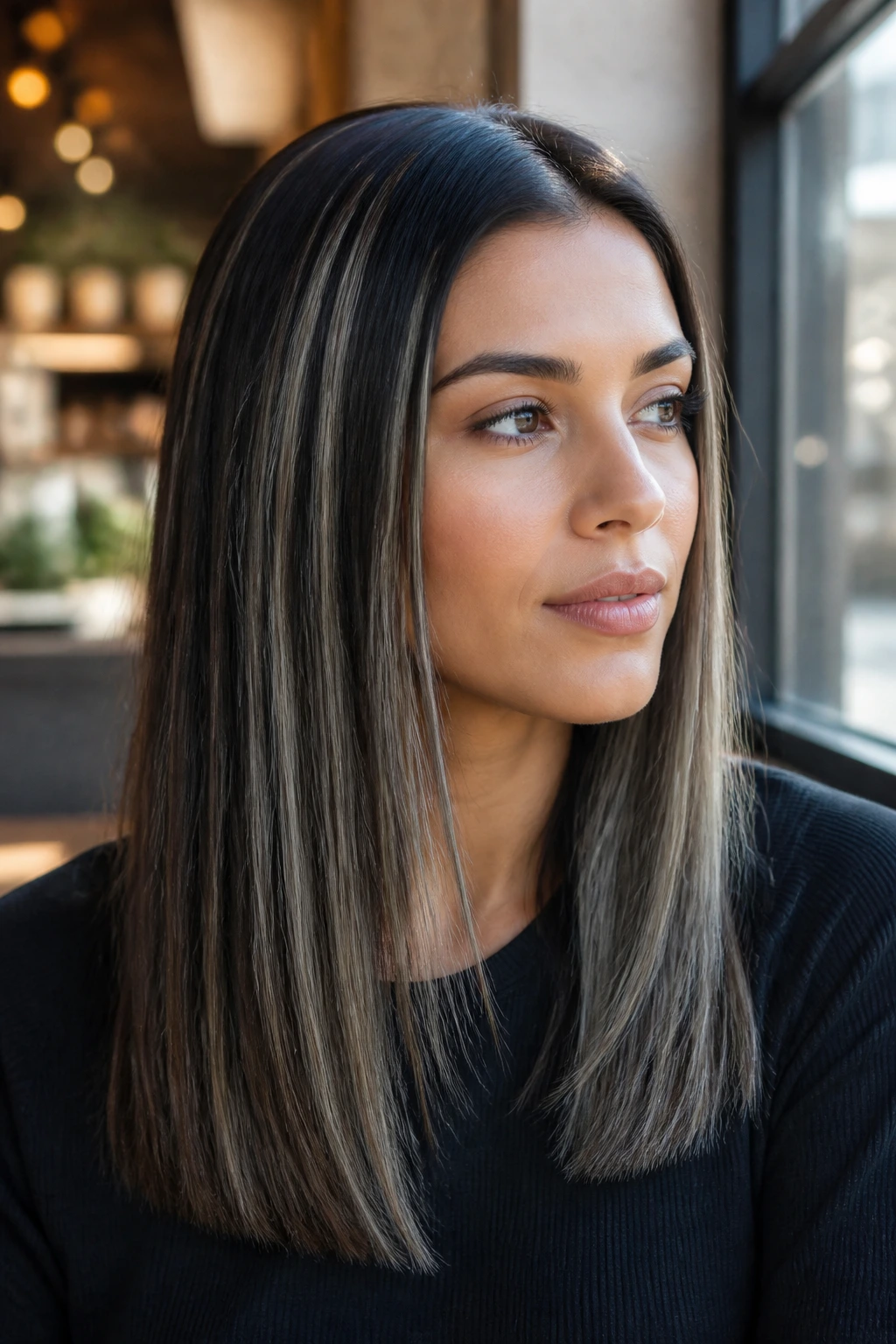
Straight hair makes grey easier to read, which is useful when you want the color to look crisp. Pearl grey streaks on a midi cut create long vertical lines through dark hair, and because the length sits around the chest or collarbone, the streaks feel sleek rather than overdone.
The pearl tone is softer than silver and a touch warmer than steel, which helps if your brown base has neutral undertones. I like this look best when the streaks are thin and spaced out. Too many, and the whole head becomes one cold sheet.
If you wear glasses or bold earrings, this style is a strong fit. The clean hairline gives the accessories room to show.
17. Face-Framing Layers with Frosted Brown Fade
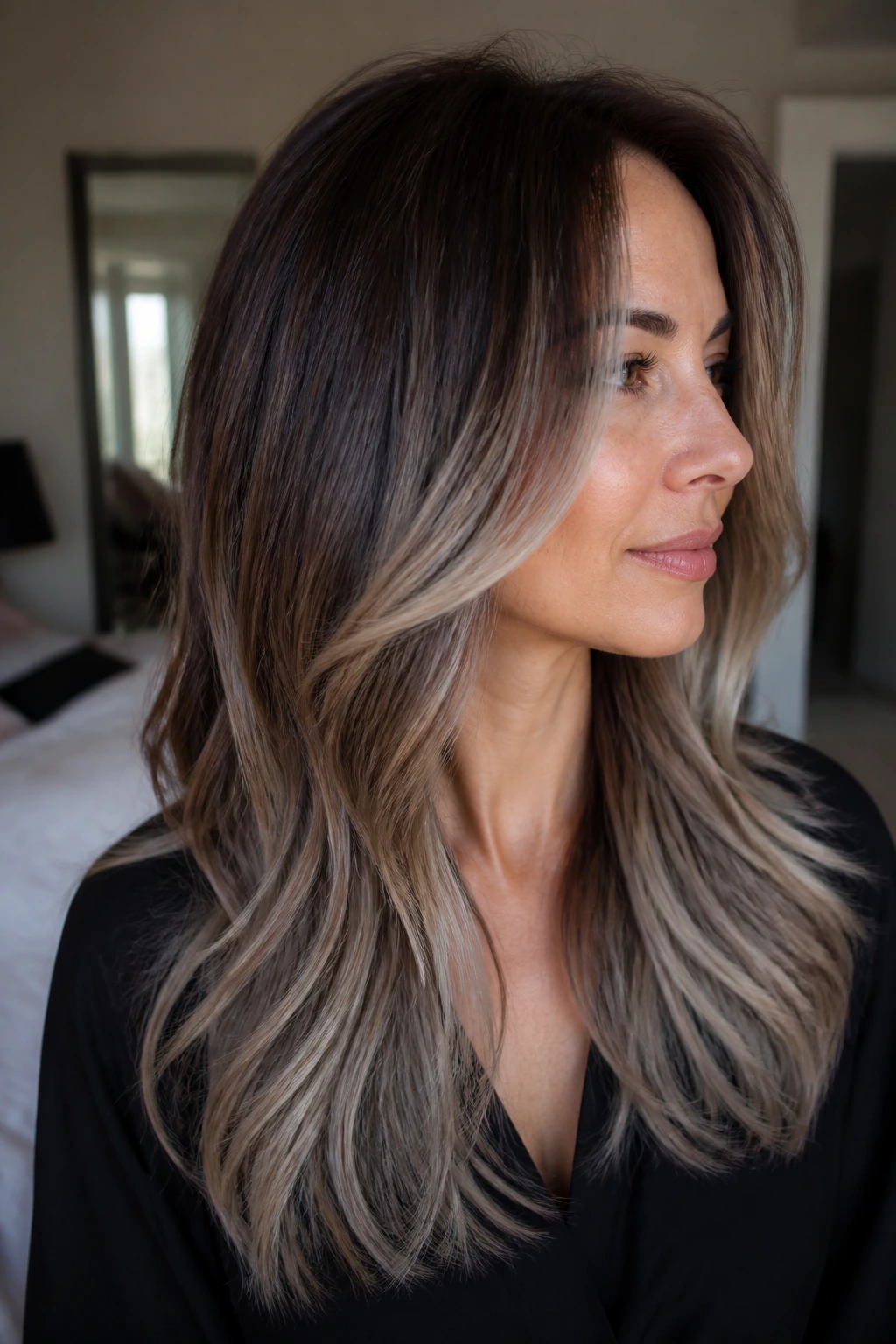
A frosted brown fade is what I reach for when someone says, “I want grey, but I still want to look like myself.” The brown at the crown stays rich, the face-framing layers lighten first, and the grey fade arrives quietly through the lower lengths. It’s soft, but not weak.
This style is especially flattering when the layers start at the cheekbone or chin. That placement pulls attention toward the face and makes the grey feel like part of the haircut, not an add-on. If your hair is dark and thick, keep the fade gradual; abrupt lifts tend to show more than they should.
The result is one of those looks that photographs differently in different light. Inside, it can look brunette. Outside, the grey moves forward. That’s a nice trick.
18. Tapered Cut with Smoky Underlayers
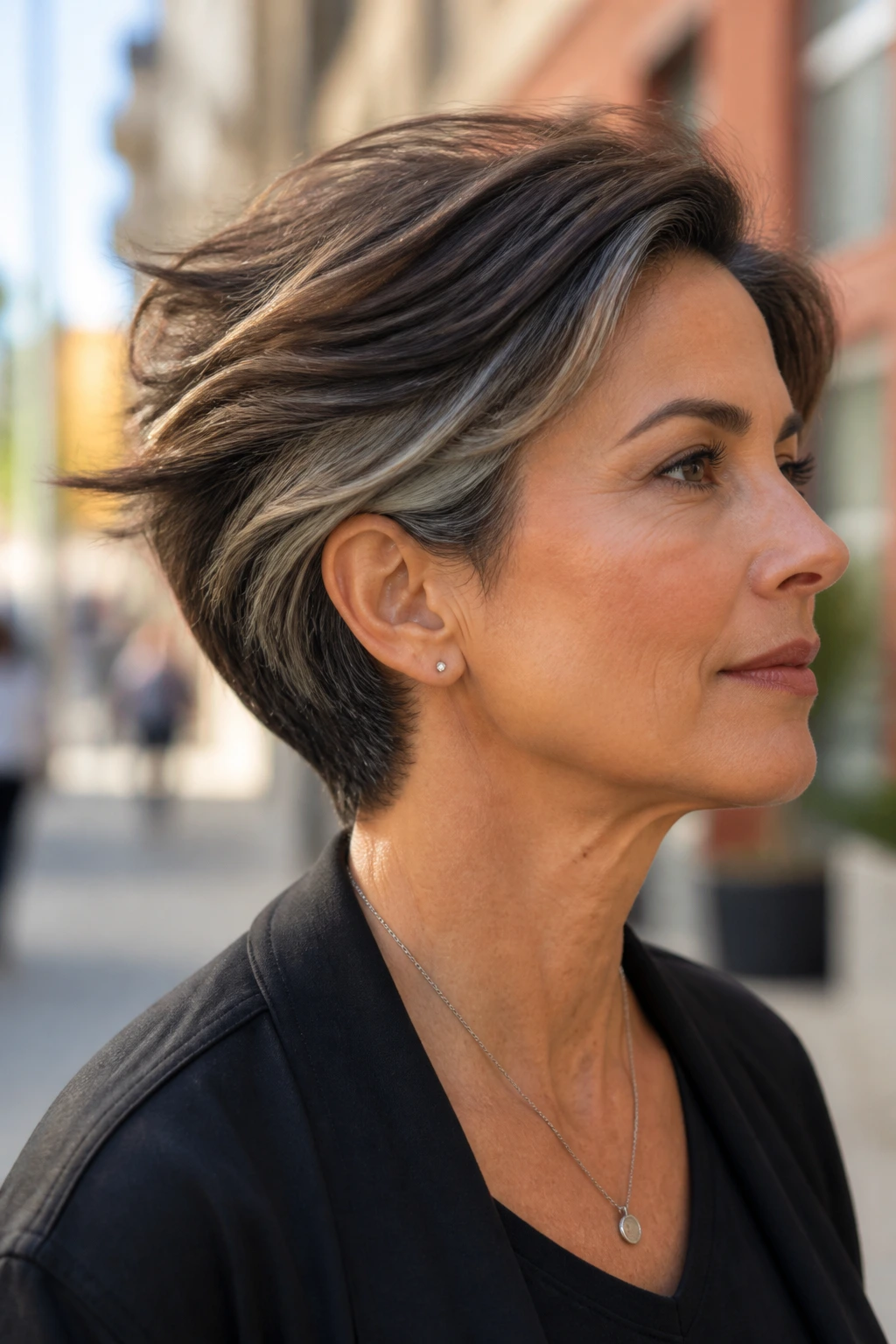
Tapered cuts have shape built in, which makes them ideal for smoky underlayers. The top stays brown and close, while the lower sections shift into grey that shows when the hair moves or the wind hits it. It’s subtle from the front and smarter from the side.
I like this on people who want dimension without a lot of length. The taper keeps the silhouette neat, and the smoky underlayers stop it from feeling too plain. If the top is too light, the whole look flattens out, so depth at the crown is important.
This one is good for active wearers too. You can style it fast, let it air-dry a bit messy, and the grey still reads well.
19. Loose Waves with Mushroom Balayage
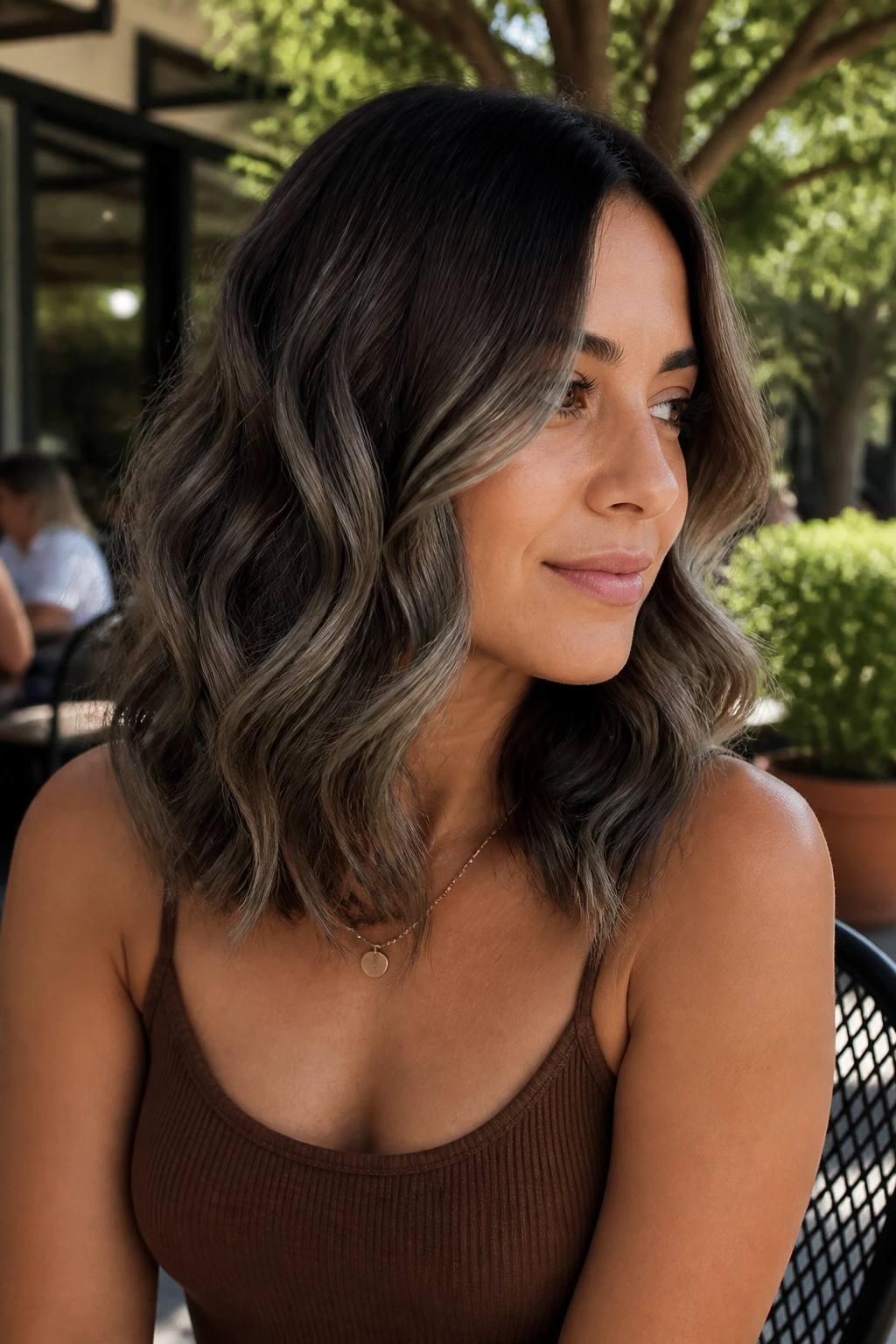
Mushroom balayage on loose waves has one of the best brown-to-grey transitions because the shade itself already lives in that cool, muted middle ground. It’s not trying to be silver. It’s trying to be dimensional. That’s a smarter goal on dark hair.
The waves help the balayage break up into bands of light and shadow, which keeps the color from looking one-note. If the hair is heavily layered, even better. The lighter ends can sit on different planes, so the grey changes as the hair turns.
I’d choose this if you want something that feels easy to wear without looking basic. It’s one of the least fussy options on the list, and that’s not a bad thing.
20. Deep Side Part with Silver Veil Highlights
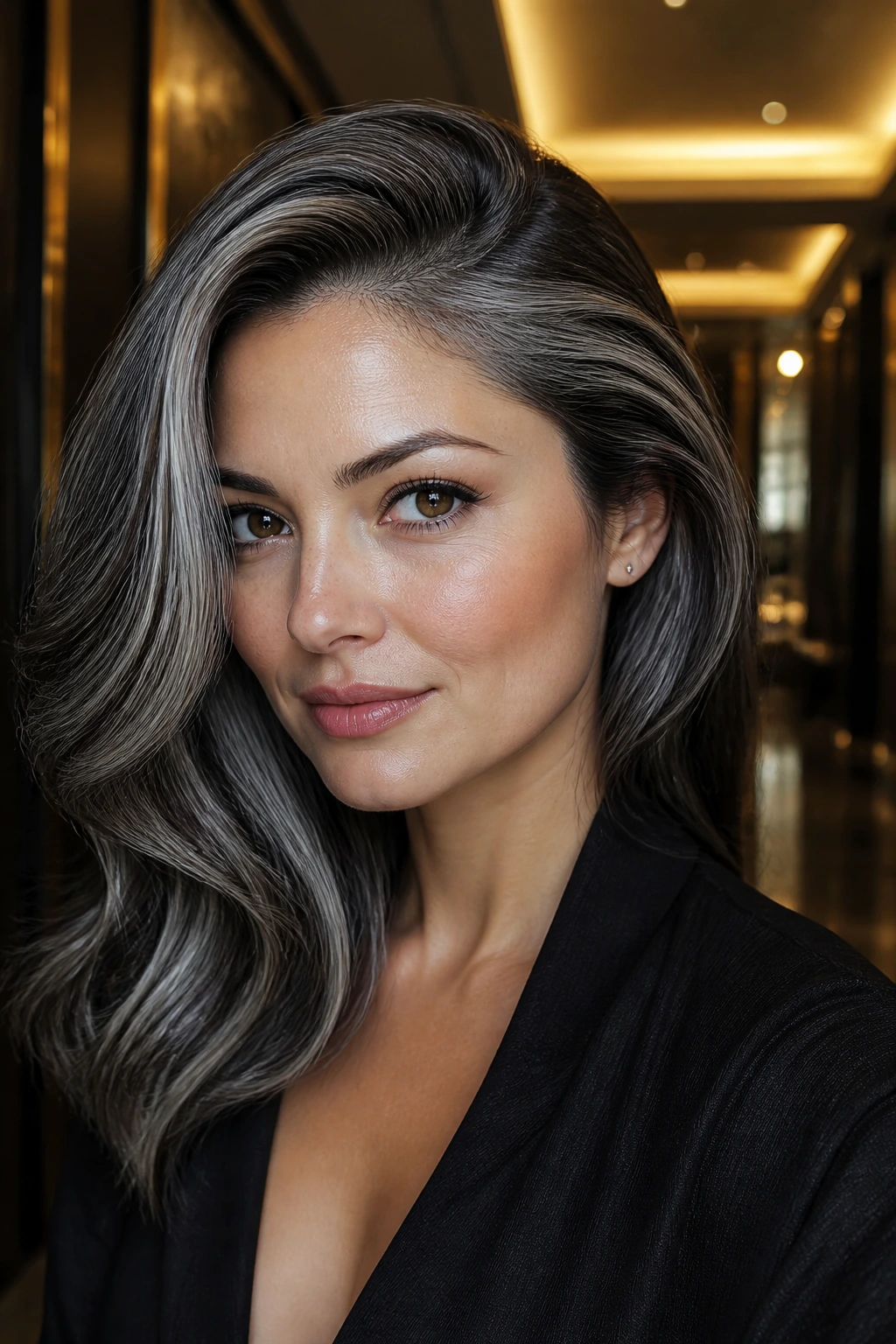
A deep side part can change the whole personality of grey highlights. Silver veil pieces draped over one side of dark hair create a soft curtain of light, and the heavy part gives the style weight. The look is elegant in a sharp, almost old-Hollywood way, but with a cooler finish.
This works beautifully on straight or lightly waved hair. The veil-like placement needs the strands to sit together, not explode into a lot of texture. If the hair is very curly, the effect becomes more scattered and less controlled.
I’d keep the roots dark and the silver fine. A deep side part already gives drama; the highlights only need to support it.
21. Braided Ponytail with Ash-Tipped Lengths
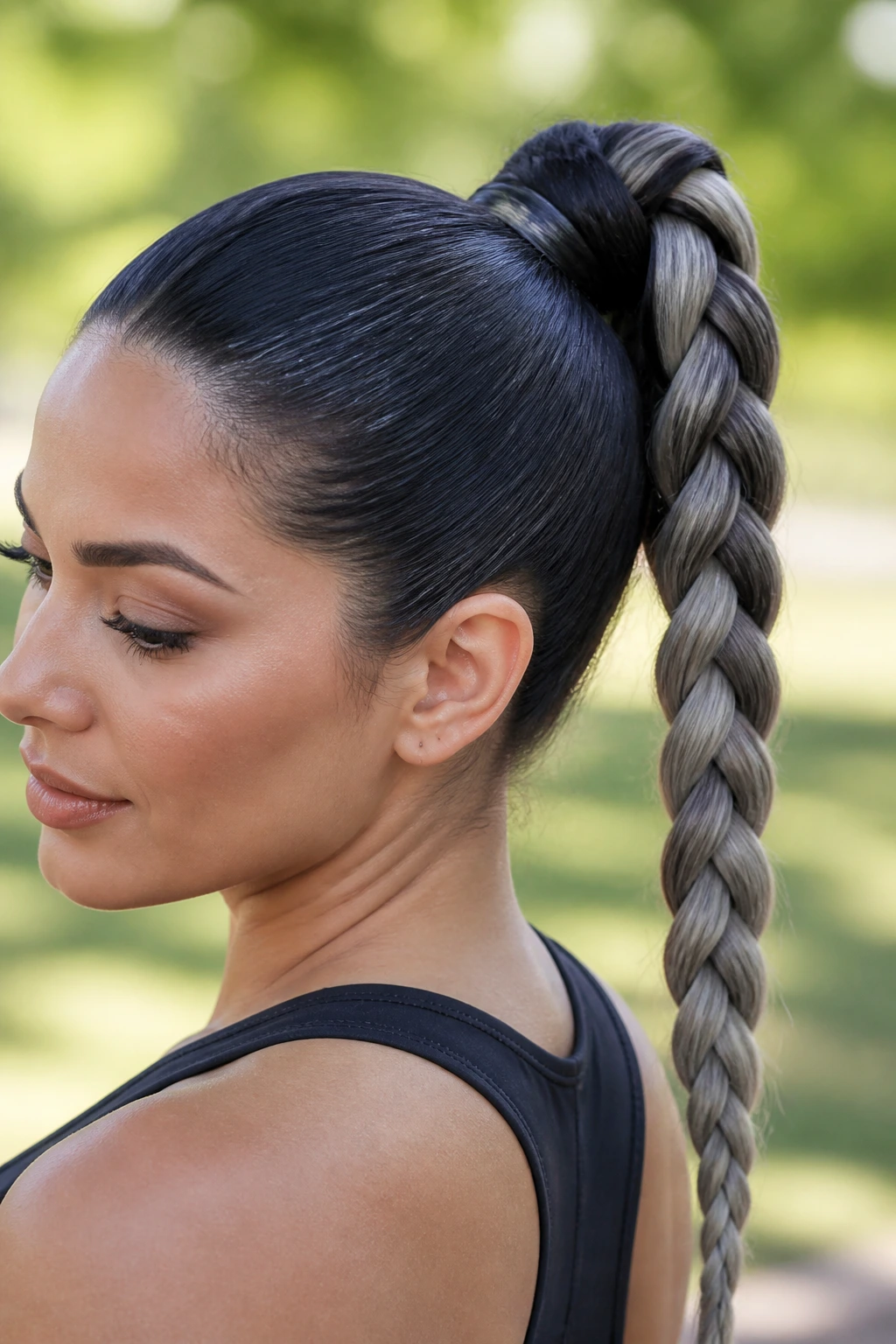
Braided ponytails are useful because they turn grey into a pattern. Ash-tipped lengths disappear and reappear as the braid crosses over itself, which makes the color look more intricate than it is. On dark hair, that flicker of grey through the plait is the whole appeal.
This style works especially well when the braid starts at a darker root and the lighter ends are concentrated near the tail. You can keep the top clean and let the tips do the work. If the hair is layered, secure the shorter pieces with a little styling cream before braiding, or they’ll stick out and muddy the shape.
It’s practical, sure, but it’s not plain. There’s a lot of visual payoff for a style that still survives a long day.
22. Choppy Collarbone Cut with Iron Grey Ends
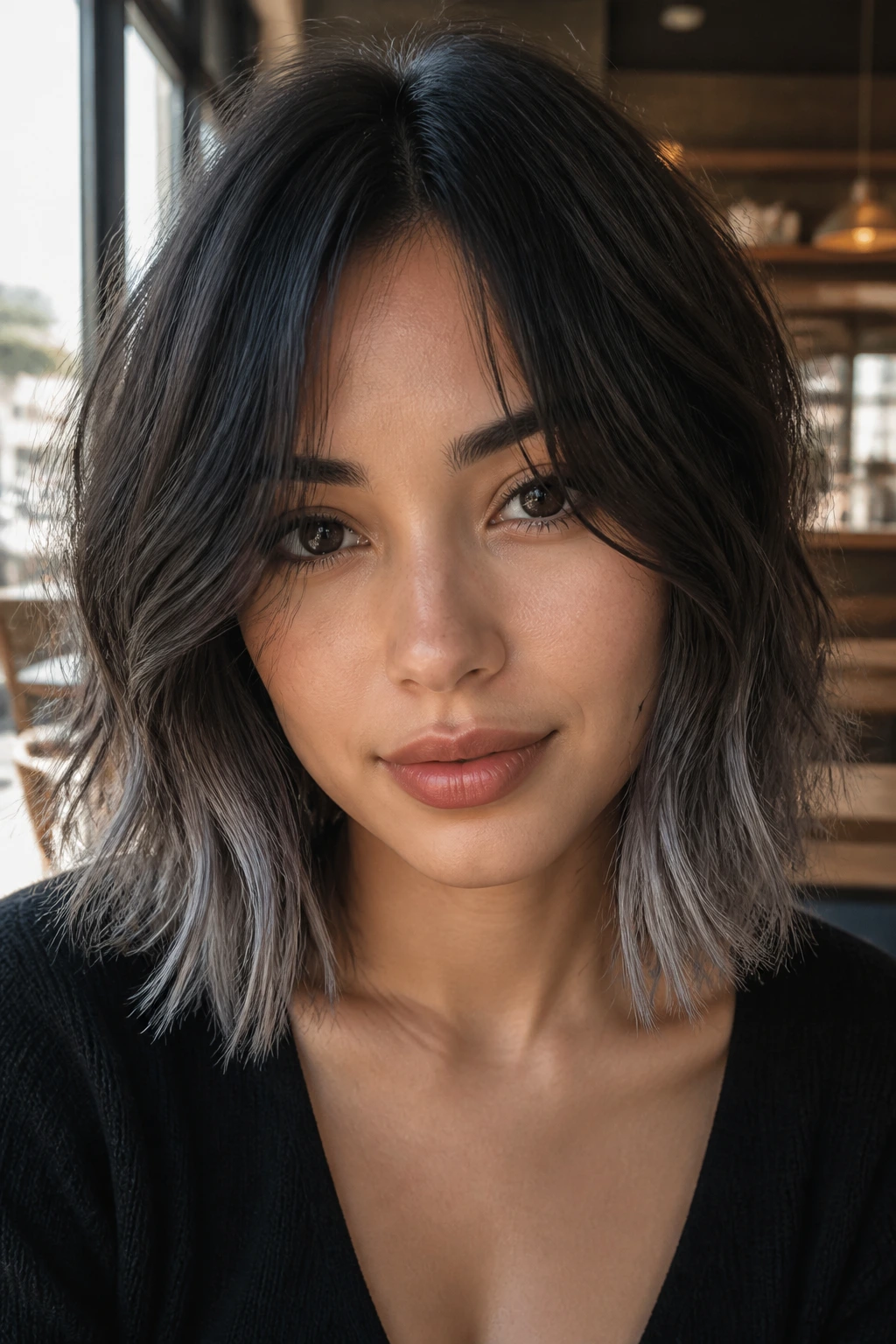
A collarbone cut with choppy ends gives grey a rougher edge. Iron grey at the tips feels tougher than pearl or mushroom tones, and the choppiness keeps the cut from looking too polished. That mix is useful if you want the color to read modern without going icy.
The cut should have movement in the last 2 to 3 inches. That’s where the grey does its best work. If the ends are blunt and thick, the iron tone can look heavy; if they’re lightly shattered, the color starts to shift and flicker as you move.
I like this for thick hair that needs the ends lightened visually. The grey takes some of the density out without cutting off much length.
23. Soft Mullet with Cocoa and Slate Contrast
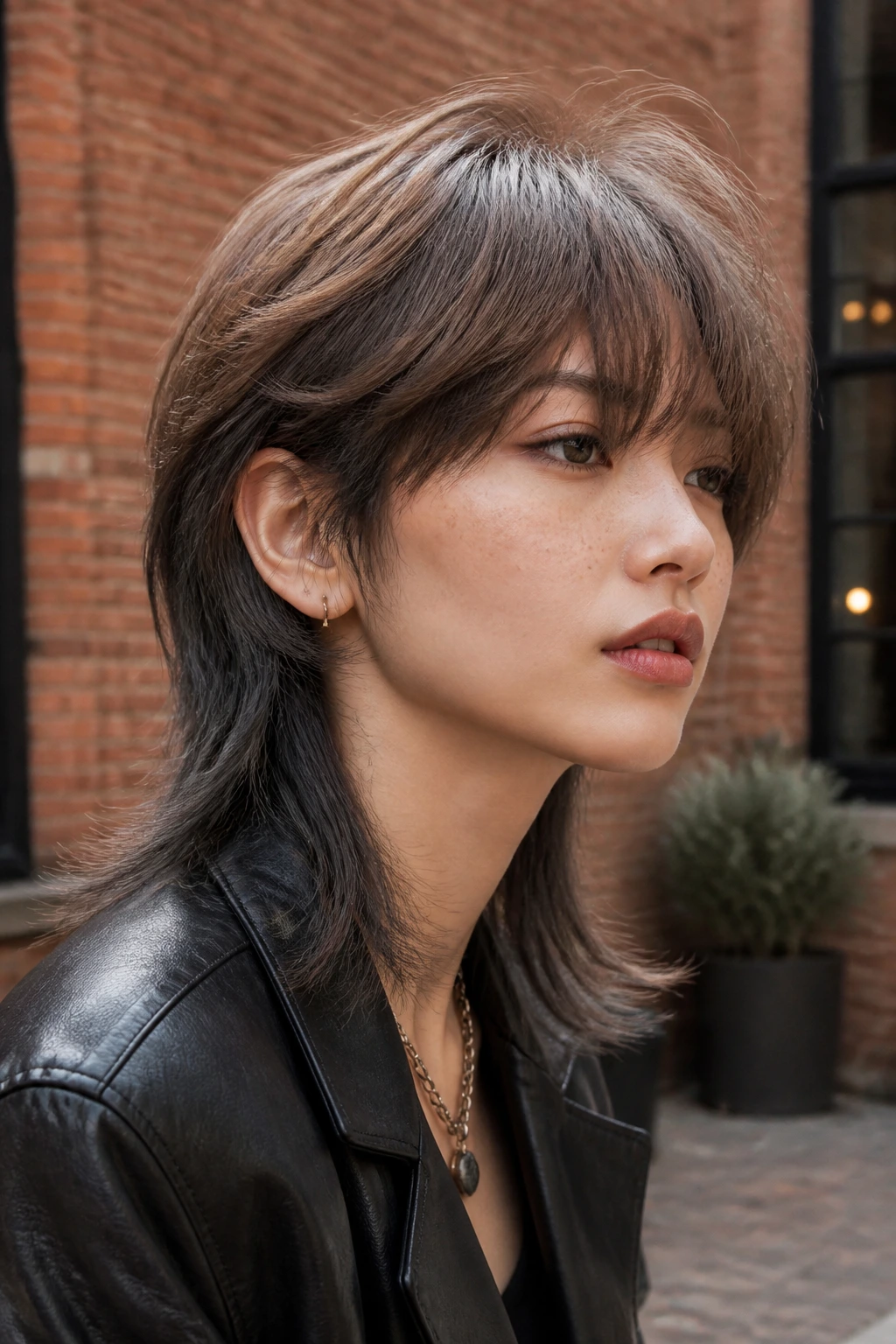
A soft mullet sounds bold, but the soft version is more wearable than people think. Cocoa brown in the front and around the crown keeps the shape anchored, while slate grey through the back layers gives the cut that elongated, slightly rebellious finish. It’s not trying to be sweet.
This is a good style if you like texture and want something with edge around the neckline. The grey back sections move a lot, so they should be toned carefully; too much blue and the back turns flat. A smoky slate finish is better than a harsh metallic one.
It’s also one of the more flattering options for people who want to lengthen the neck visually. The back layer does that work without asking much of the rest of the style.
24. Sleek Layers with Charcoal Dip-Dye
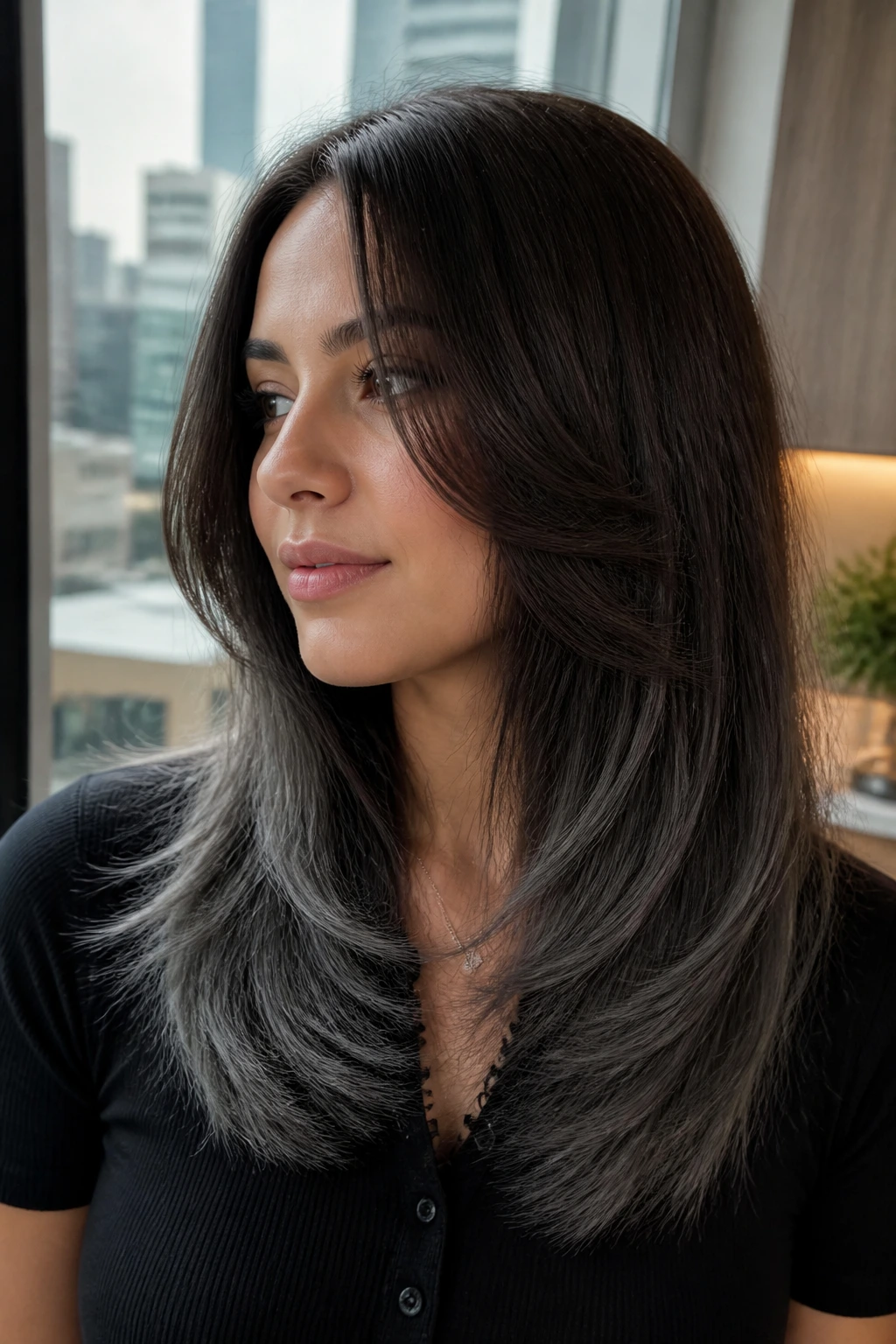
Dip-dye gets a bad rap when it’s too abrupt. But charcoal dip-dye on sleek layers, especially dark brown hair, can look clean if the transition is softened across a few inches. The point is to let the ends feel heavier and cooler while the top stays glossy and grounded.
I’d keep the dip line low, around the last quarter of the hair. Anything higher and it starts reading like a costume. Sleek styling helps because the straight finish shows the gradient clearly, and the layers stop the ends from forming one dark block.
This is the bolder option for someone who wants the grey to announce itself from across the room. No apology needed.
25. Twisted Updo with Grey Accent Strands
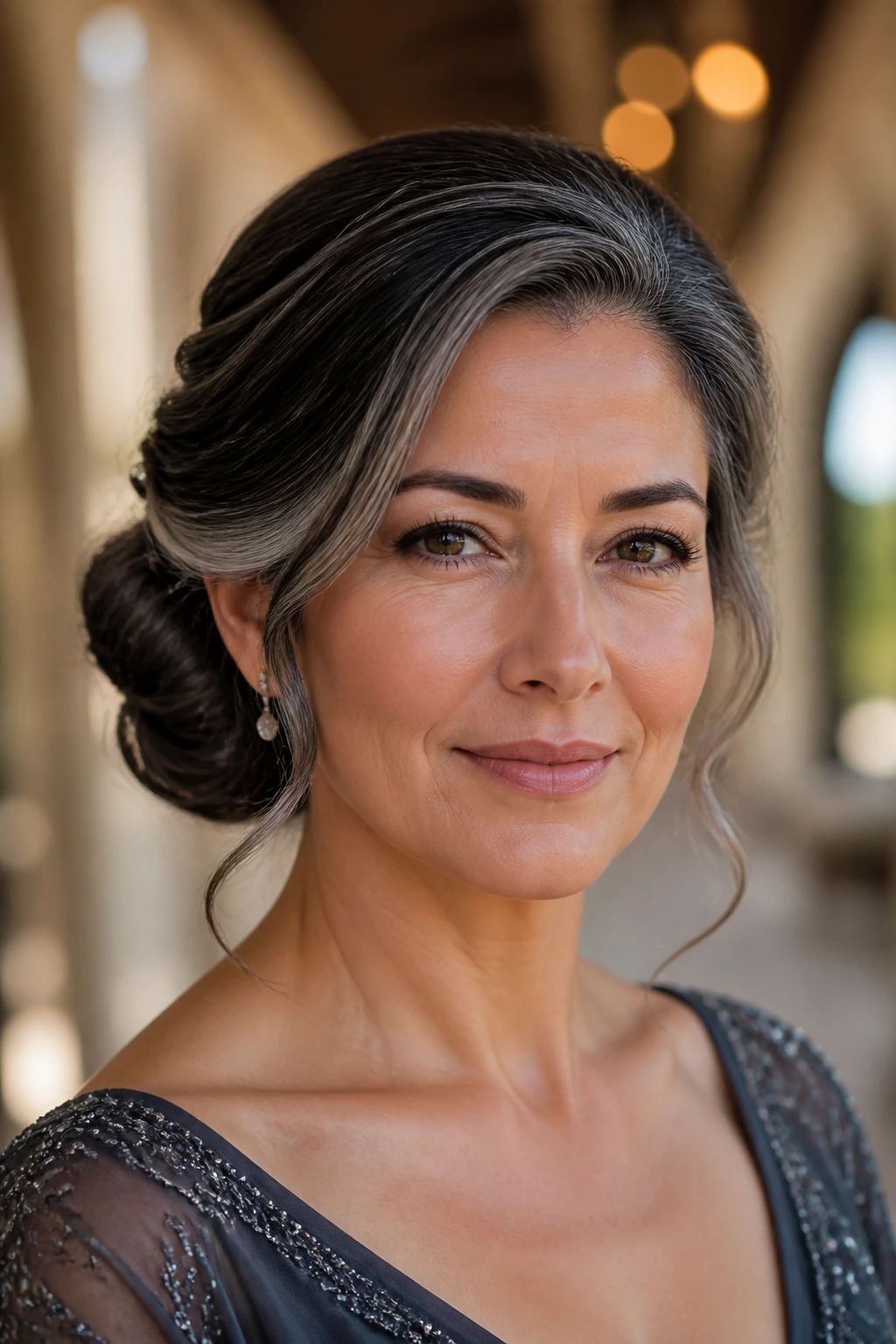
An updo is where grey can feel quietly expensive. Twist the hair into a low bun or rolled shape, then leave a few grey accent strands around the face and temples. The contrast against the brown base makes the twist pattern stand out, and the cooler pieces break up the darkness in a flattering way.
This works best when the grey pieces are placed intentionally, not everywhere. You want a frame, not a storm. If the hair is heavily highlighted, the updo can lose its shape; the accent-strand approach keeps the profile clean.
I like this for weddings, dinners, or any time you want the color to look deliberate without needing a lot of styling time.
26. Long Sleek Layers with Smoke Ends
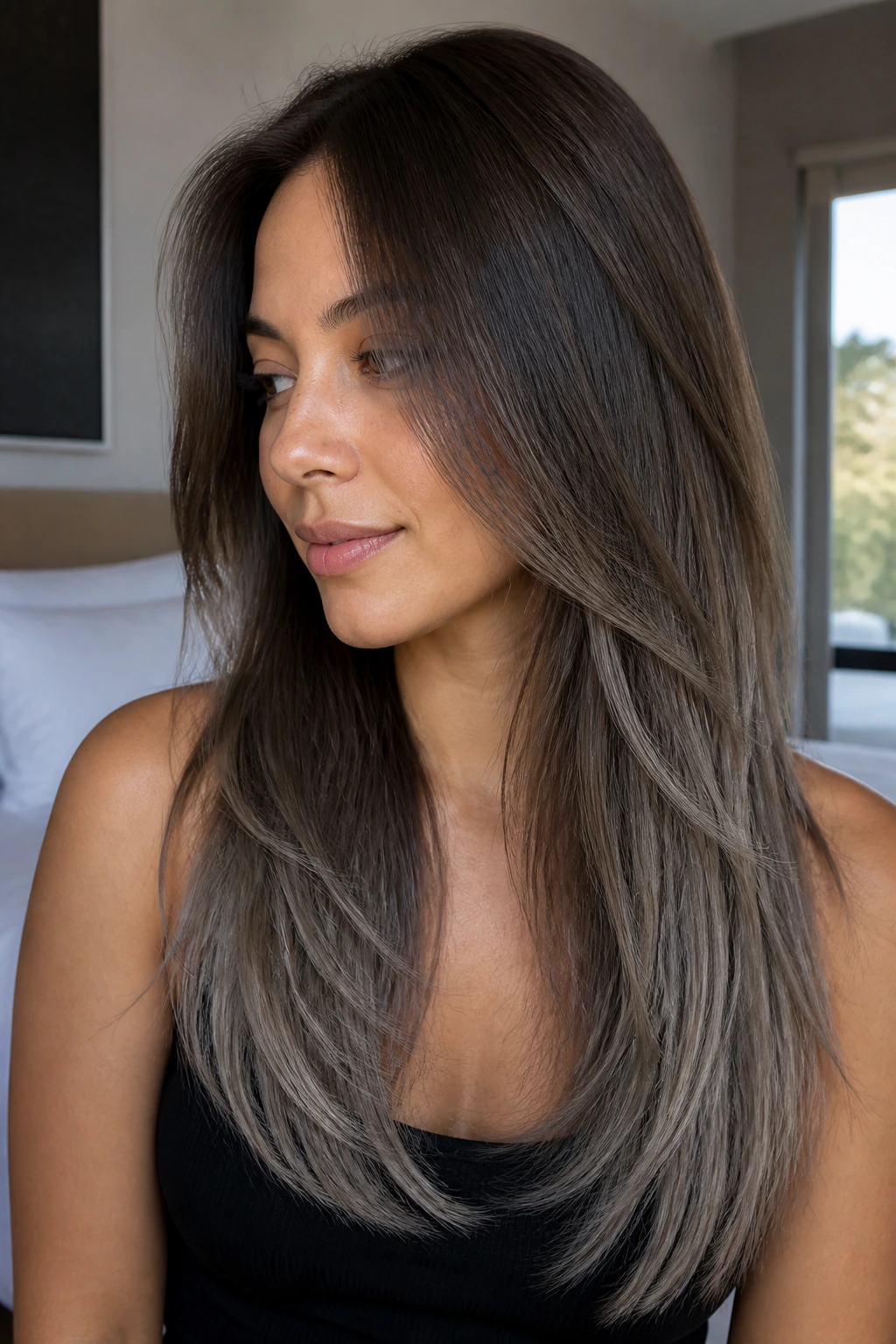
Long sleek layers give the smoke-toned ends plenty of room to taper out. The color should darken at the root, stay brown through the mid-lengths, and then fade into a soft smoky grey near the ends. That long gradient feels elegant on hair that is naturally straight or can be blown smooth.
The layers matter because they keep the ends from looking too thick and heavy once they turn grey. If the hair is all one length, the smoke finish can look blunt in a way that works against the softness of the color. A few long layers solve that.
This is one of the more grown-up looks in the set. Not older. Grown-up. There’s a difference.
27. Bouncy Collarbone Cut with Brown-to-Silver Transition
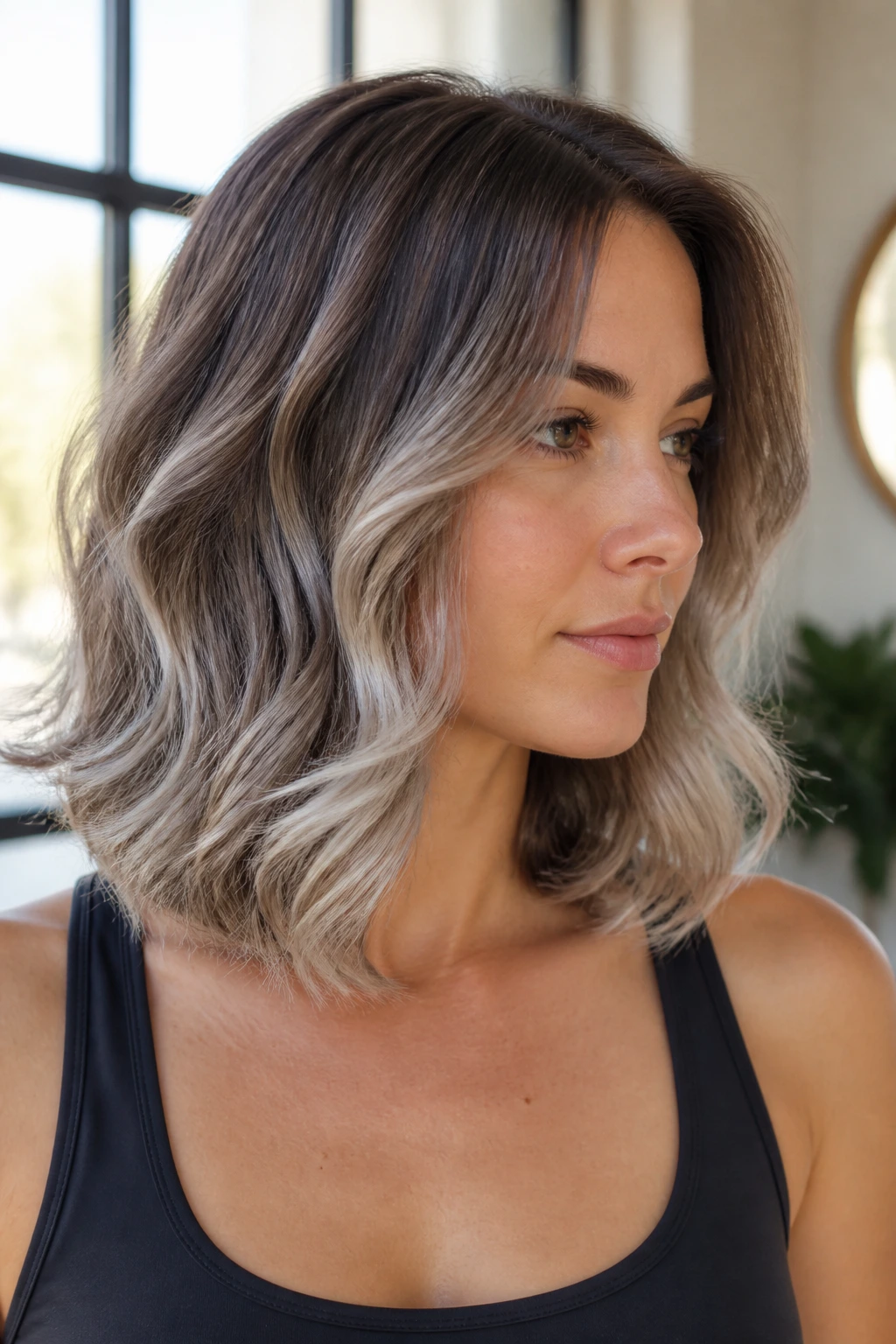
Bouncy collarbone cuts have enough movement to show a transition, but not so much length that the color gets lost. Brown at the roots, silver through the outer bend, and just a hint of ash near the face gives the style lift. It feels fresh when the hair is curled under or away from the face.
The bounce is the point. A dead-straight collarbone cut won’t make this color story work as well, because the transition needs that little curve to show. If your hair tends to fall flat, a round brush or a large-barrel iron helps the silver pieces catch light in a soft way.
I’d choose this if you want a middle ground between subtle and bold. It’s not shy, but it’s not screaming either.
28. Natural Texture with Salt-and-Pepper Blended Panels
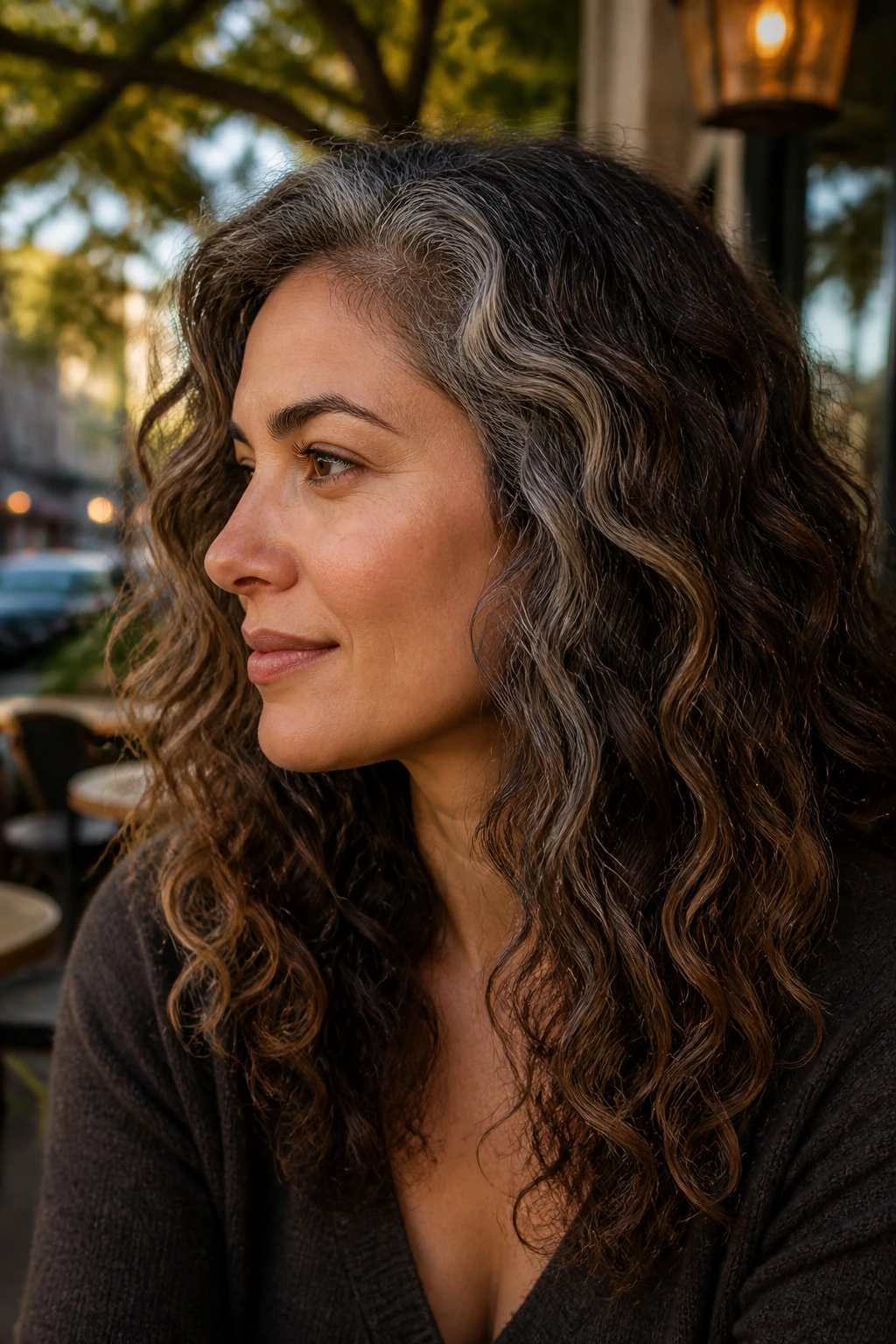
Salt-and-pepper hair has become its own design language, and on dark hair, that blended panel approach can look richer than a full grey transformation. Let the natural texture do the work, then place cool brown and grey panels where the curl or wave already separates. The result feels lived-in instead of forced.
This is the most forgiving option if your natural hair is already peppered with silver or if you’re blending regrowth. It also makes the grow-out story easier, because the line between dyed and natural hair isn’t trying to be invisible. It’s part of the style.
I like this look when the goal is depth, not perfection. Hair that has a little variation in it always moves better than hair that has been colored into a single flat shade.
Why the Brown-to-Grey Blend Works Better Than a Flat Silver on Dark Hair
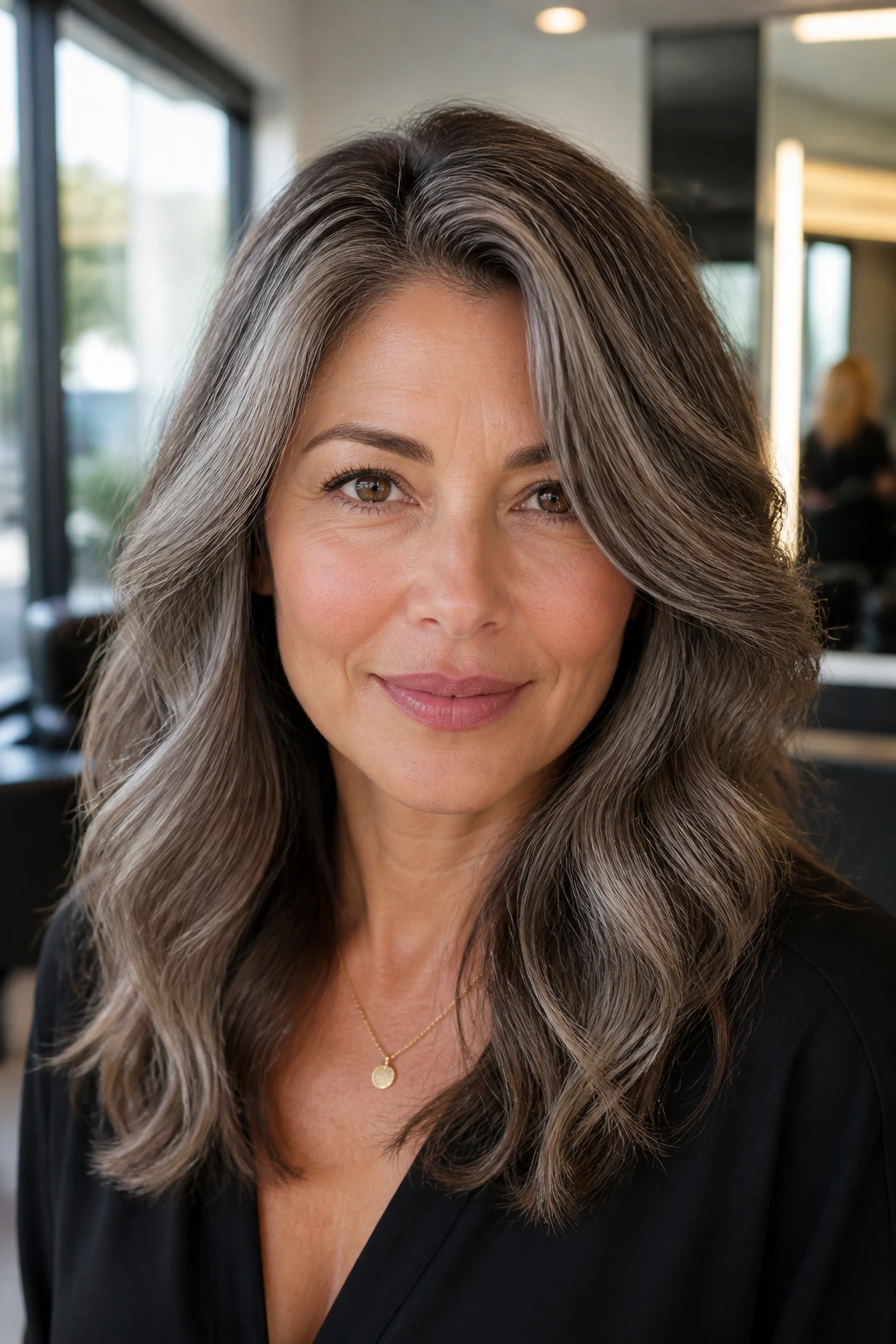
Flat silver on dark hair sounds dramatic, but it can be unforgiving. The problem is contrast: if the lift is too abrupt or the tone is too icy, the color sits on top of the hair instead of sinking into it. Brown-to-grey blends solve that by keeping a darker anchor at the root and a softer bridge through the mid-lengths.
That bridge shade matters. Mocha, mushroom, ash brown, taupe, and smoky beige all help the grey land more naturally. They also give the colorist room to correct warmth. Dark hair almost always pulls orange or red when lightened, and grey toner is basically the cleanup crew for that situation.
There’s also a practical reason the blend wins. Grow-out looks calmer. Roots don’t scream. The style can survive a few weeks longer between appointments without looking sloppy. That’s a real advantage, not a marketing line.
Tools, Products, and Salon Terms That Actually Help
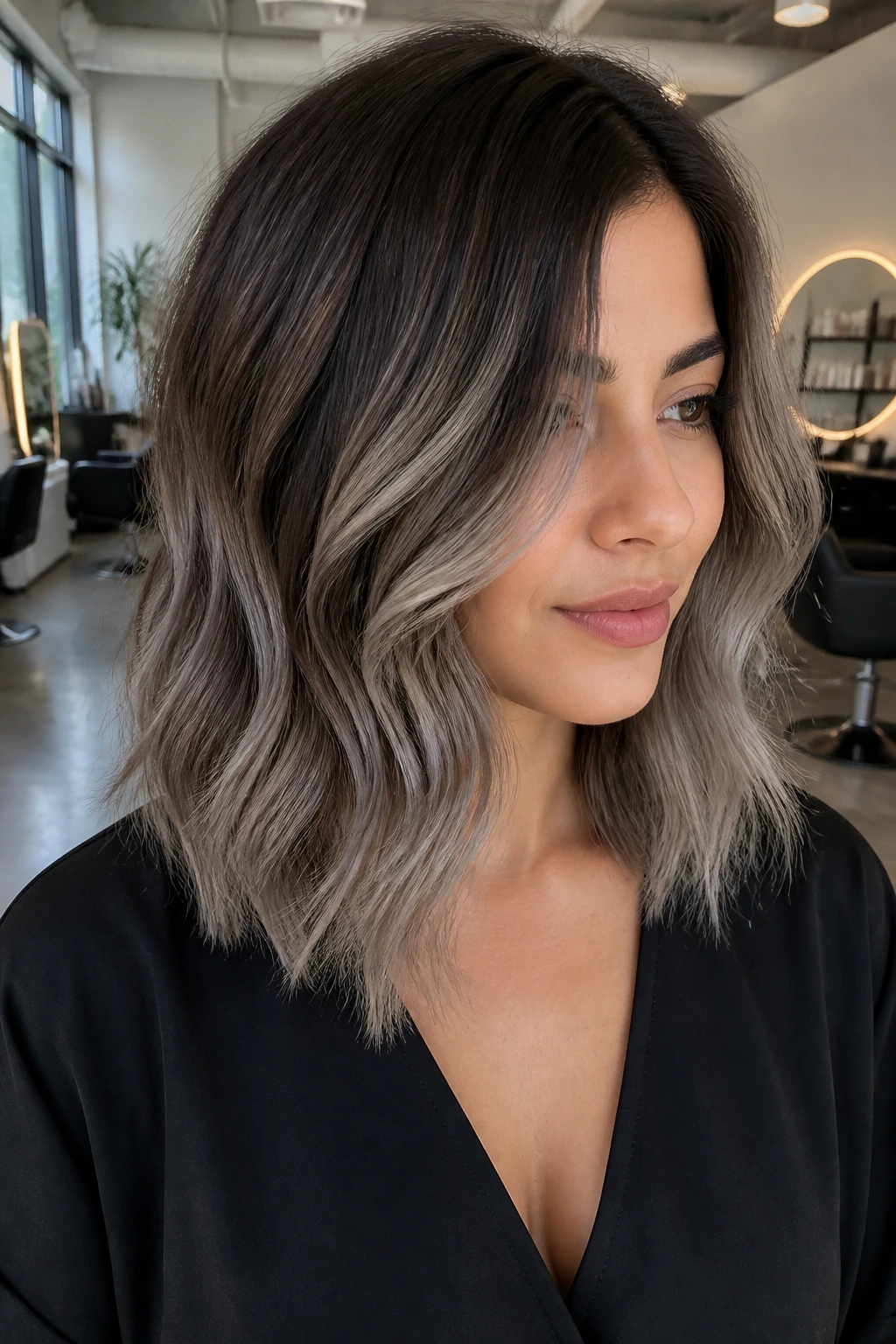
You do not need a whole beauty store to pull off these looks, but a few things make a huge difference.
- Tail comb: Lets you section for toning, parting, or placing face-framing pieces with precision.
- Color brush and bowl: Useful if you’re doing root touch-ups, glosses, or applying semi-permanent smoke tones.
- Clips with a strong grip: Hold thick dark hair in neat sections so the color stays where it should.
- Purple shampoo: Helps keep lighter grey pieces from going yellow, but use it sparingly so the hair does not look dull.
- Blue shampoo: Better for brunettes whose lifted pieces pull orange instead of yellow.
- Bond-builder treatment: Worth it if you’re lightening dark hair; it helps keep the hair from feeling brittle after processing.
- Heat protectant spray: Non-negotiable if you’re blow-drying or flat-ironing the finished color.
- Color-safe, sulfate-free shampoo: Keeps tone from washing out too fast.
- Microfiber towel or old T-shirt: Cuts down on frizz, which matters a lot when grey pieces need to stay smooth.
- Wide-tooth comb: Easier on highlighted hair than a fine brush, especially when the ends are dry.
Salon terms that help: root melt, balayage, money piece, gloss, toner, level 8 or 9 lift, and shadow root. Those words are specific enough to get you past the vague “I want something grey-ish” stage.
How to Choose the Right Placement on Dark Hair
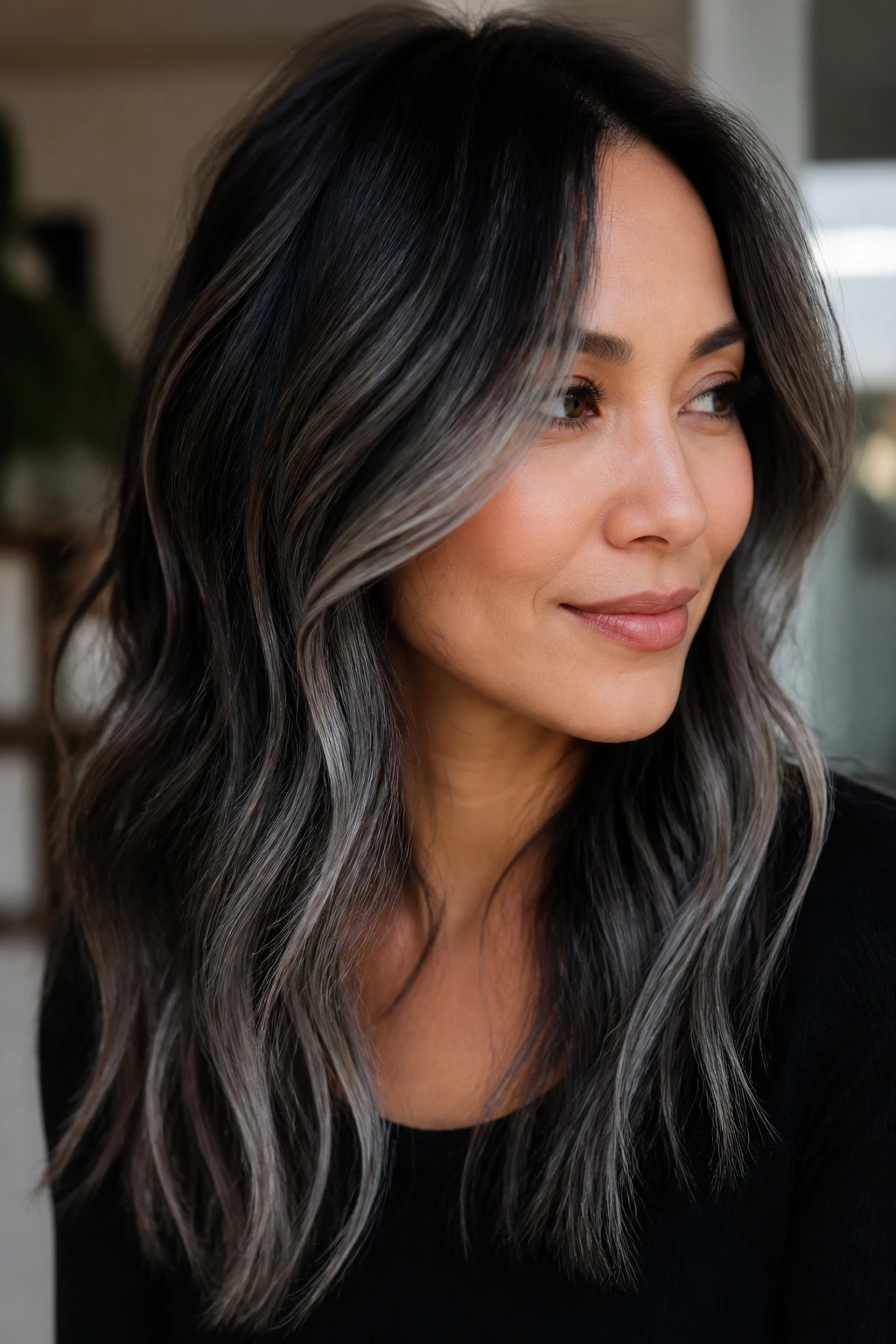
The same grey color can look soft, sharp, or messy depending on where it sits. On dark hair, placement matters almost more than tone.
If you want the look to feel gentle, keep the grey around the face, ends, or hidden interior layers. That gives you movement without lighting up the whole head. If you want drama, put the lightest pieces in the top layer or through a blunt edge where the contrast shows immediately.
Your haircut should guide the placement. Bobs need cleaner lines. Shags need scattered ribbons. Curls want threaded lightness through the curl pattern. Long hair can handle a true fade, while short hair usually looks better with concentrated pieces and stronger roots.
Face shape matters too, even if people pretend it doesn’t. A side part and light front pieces can soften a square jaw. Curtain bangs and a money piece can shorten a long face a little. A dark root with grey ends can draw the eye downward, which helps balance volume at the crown.
How to Wear the Color So It Feels Like You
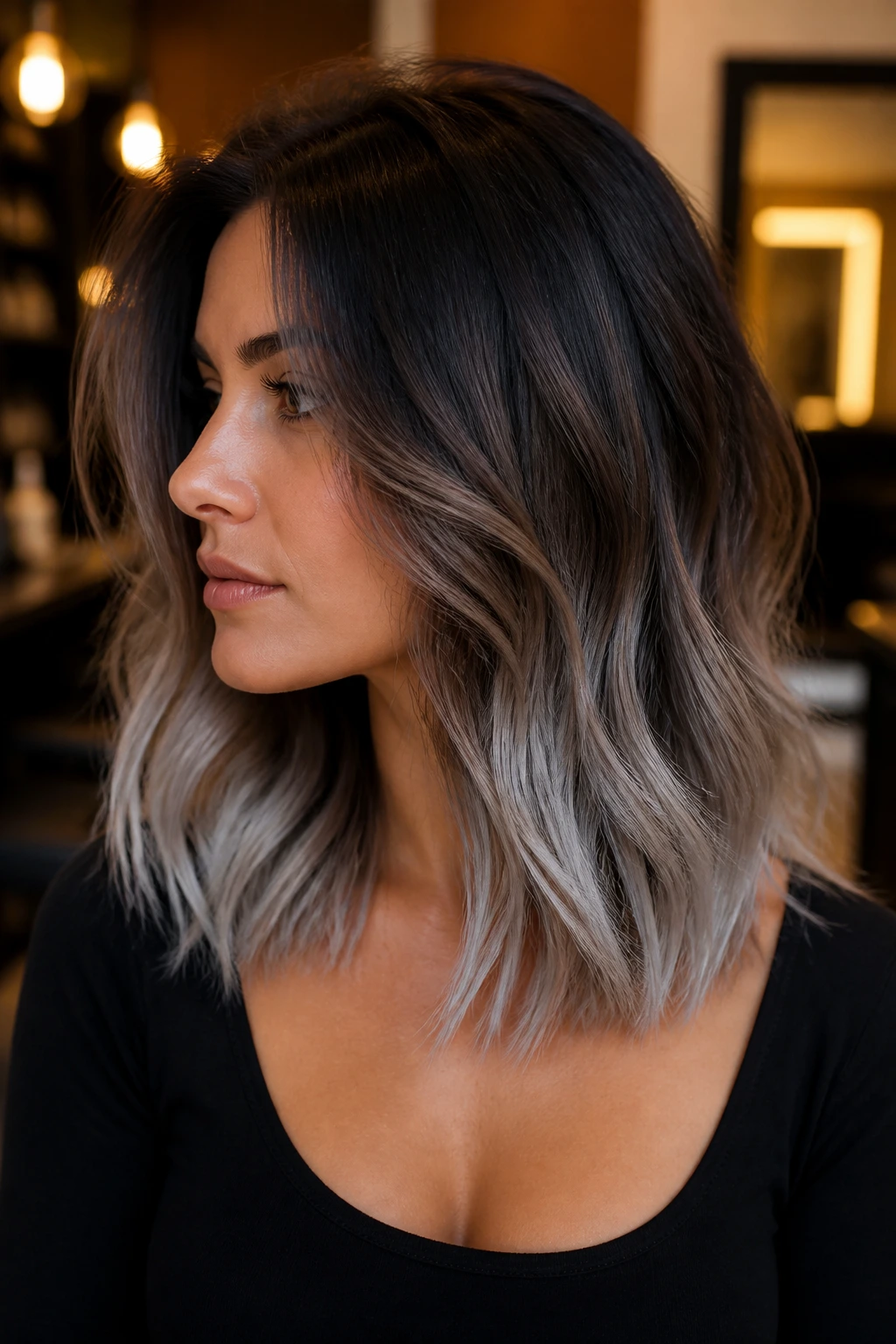
Finish: Keep the texture honest. Sleek styles make the grey look sharper, while waves and curls make it softer and more blended.
Best pairings: These colors look strongest with cuts that show movement — lobs, shags, collarbone cuts, pixies, and layered long hair. Flat one-length styles can handle the look, but they need cleaner placement.
Density: Thick dark hair benefits from lighter panels and underlayers because they reduce the visual heaviness. Fine hair usually looks better with finer streaks and a root shadow so the hair doesn’t look sparse.
Mood: If you want edgy, lean into charcoal, gunmetal, and iron-grey ends. If you want softer, choose mushroom, pearl, or ash-beige blends.
Smart Shopping and Color Choices That Save You Trouble
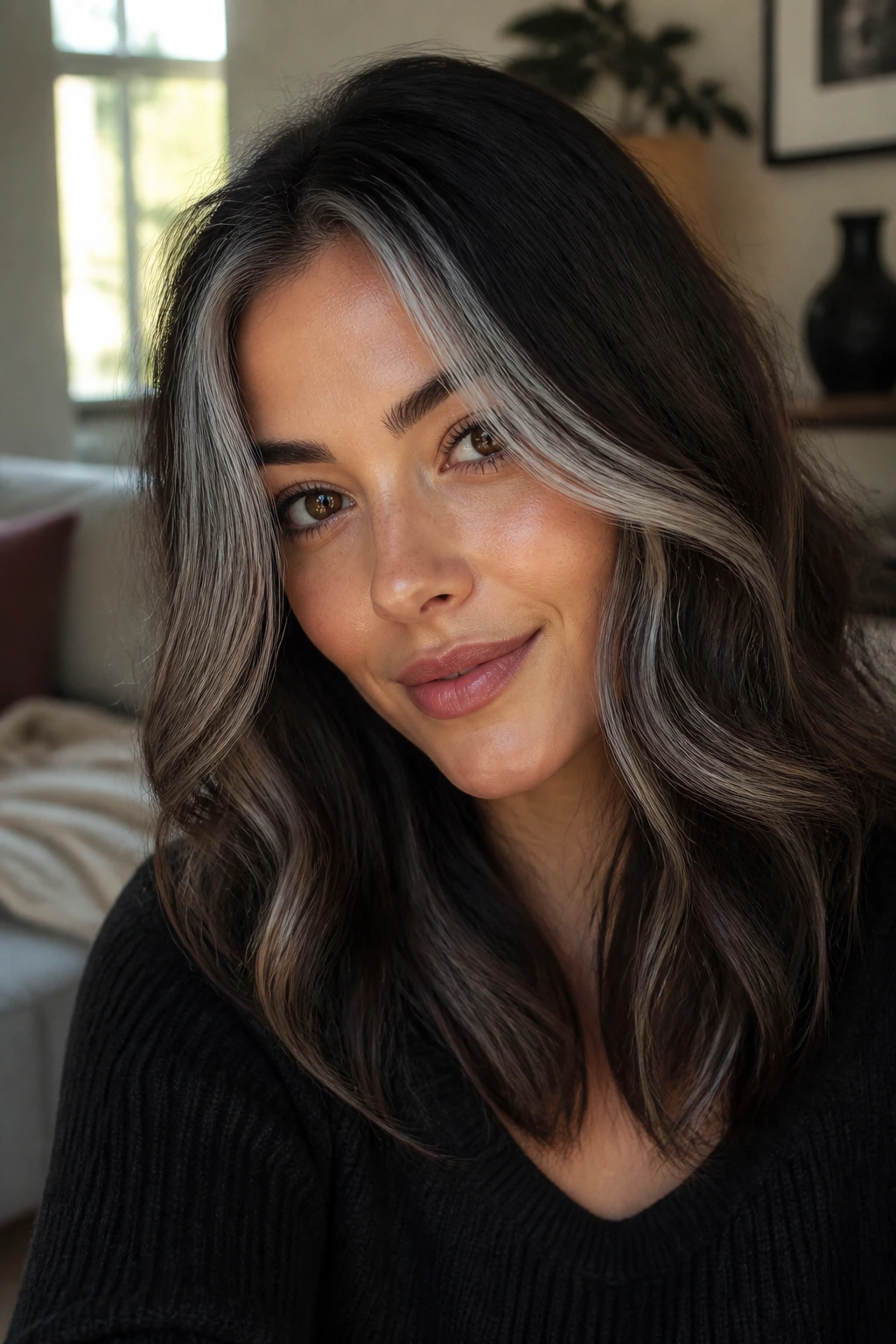
Dark hair is unforgiving when you choose the wrong grey tone. Anything too pale can look chalky. Anything too warm can slide muddy. I’d keep your shopping list focused on tones that live in the cool brown family: ash brown, mushroom brown, pewter, slate, silver-beige, and charcoal.
If you’re coloring at home, look for semi-permanent or demi-permanent glosses that say they work on pre-lightened hair. Grey usually does not show on dark hair without lift. That is not a flaw in the product. That’s just how pigment works. You need enough lightness underneath for the shade to sit on top.
For salon appointments, bring photos that show both the front and the back of the look. A single picture of a model with perfect curls can be misleading. What matters is where the light pieces sit at the part line, near the face, and through the ends. If you can, pick photos with your own hair texture, or close to it. That saves a lot of back-and-forth.
Practical Tips for Getting the Most From Brown-to-Grey Hair
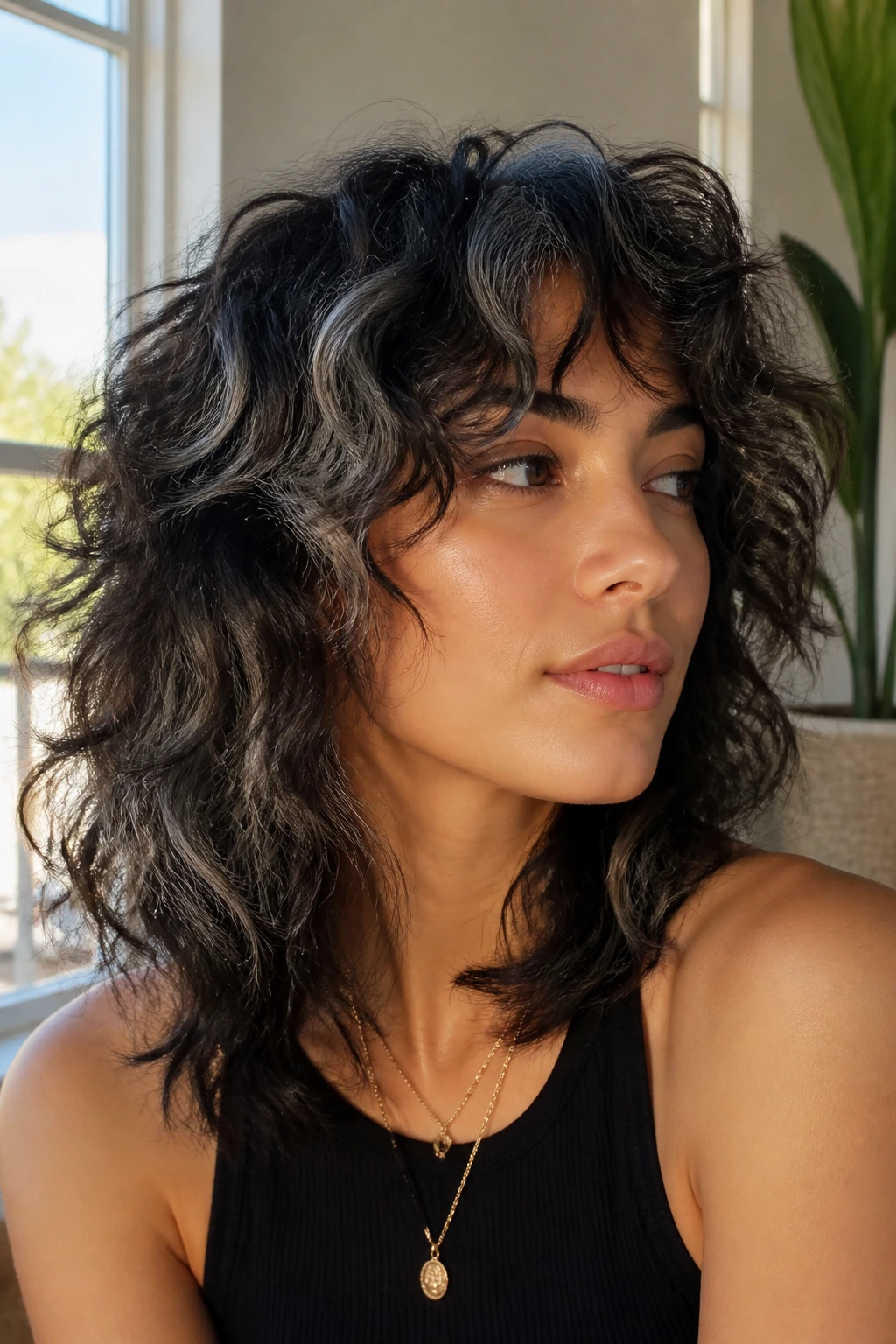
Tone Boost: Ask for a gloss between major appointments. A 10-minute toner refresh can keep grey from drifting yellow or dull.
Depth Control: Leave some brown untouched near the roots and underlayers. Full-head lightening on dark hair is expensive in time, drying to the hair, and usually more maintenance than most people want.
Texture Matters: Grey shows up better when the hair has movement. A flat iron can be useful, but a soft bend or loose wave usually gives the color more life.
Face-Frame First: If you’re unsure, start with the front sections. You’ll know fast whether the cooler shade suits your skin tone without committing the entire head.
Heat Discipline: Grey and silver tones fade fast under high heat. Keep your iron at the lower end that still shapes your hair, and always use protectant.
Common Mistakes That Make Brown-to-Grey Hair Look Flat
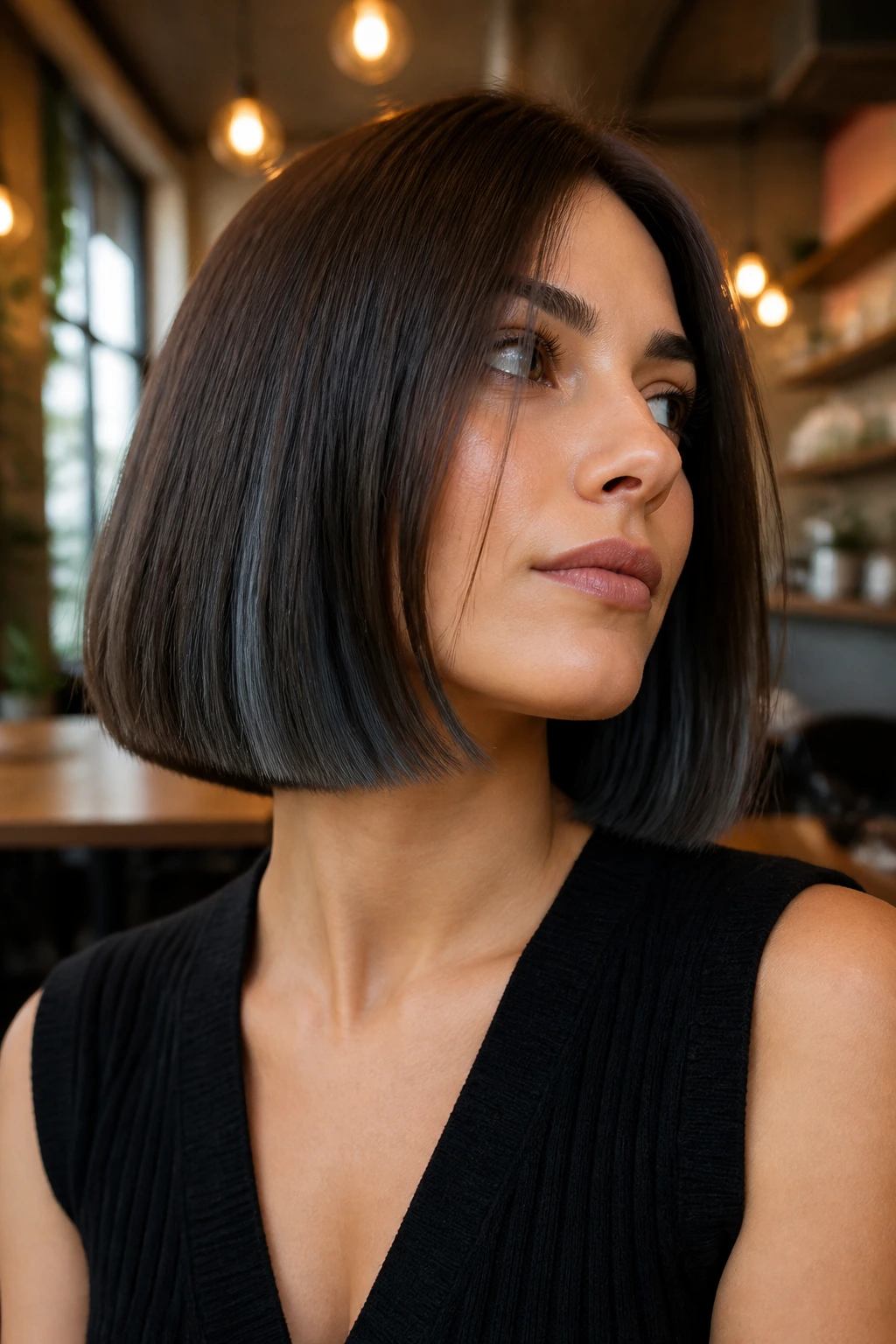
Going too pale too fast: Dark hair often pulls warm during lightening, and if you don’t respect that step, the grey ends up patchy or beige in the wrong way. Lift in stages and tone after the warm pigment is out.
Skipping the root shadow: A hard line at the scalp makes grey look disconnected from the hair. A deeper root melt keeps the color believable and buys you more grow-out time.
Choosing one flat grey shade for every section: Hair with movement needs different depths. If every strand is the same silver, the style loses the dimension that makes this color work.
Using purple shampoo too often: It can dull the shine and leave blonde-grey pieces looking dusty. Once a week is usually enough unless your hair pulls yellow fast.
Ignoring the haircut: Grey placement on a blunt bob is not the same as on a shag or pixie. If the cut and color fight each other, the style feels off even if the tone is technically good.
Overheating the hair after coloring: Flat irons, hot blow-dryers, and daily curling can fade the cooler pieces fast. The color doesn’t need babying, but it does need restraint.
Variations and Alternatives to Try
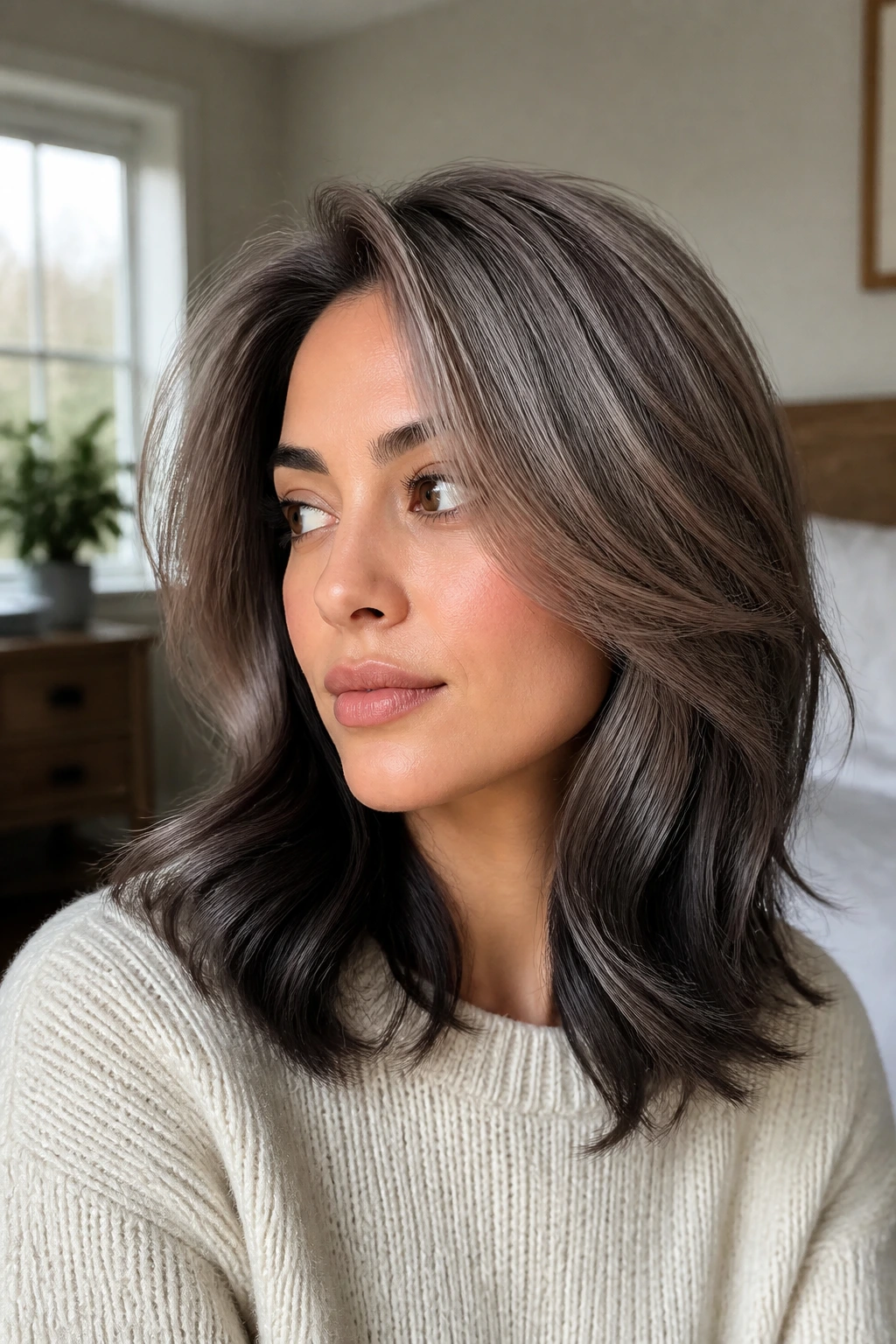
Soft Ash Melt: Keep the grey very understated and let the brown do most of the work. This suits people who want the cooler tone to whisper instead of announce itself.
High-Contrast Charcoal Dip: Push the ends darker and cooler for a sharper finish. Best for blunt cuts, straight styling, and anyone who likes an obvious color break.
Mushroom Brunette Fade: Lean into beige-brown and taupe instead of bright silver. It’s the most wearable route for dark hair that still wants a grey-leaning finish.
Silver Ribbon Highlights: Use fine, scattered silver pieces instead of full sections. This works well on curls, waves, and layered cuts where the texture can carry the variation.
Smoke-and-Pewter Underlayers: Hide the lightest pieces underneath and keep the top darker. Great if you want the color to show only when you move, tie your hair up, or tuck it behind your ears.
Upkeep, Glossing, and Touch-Up Timing
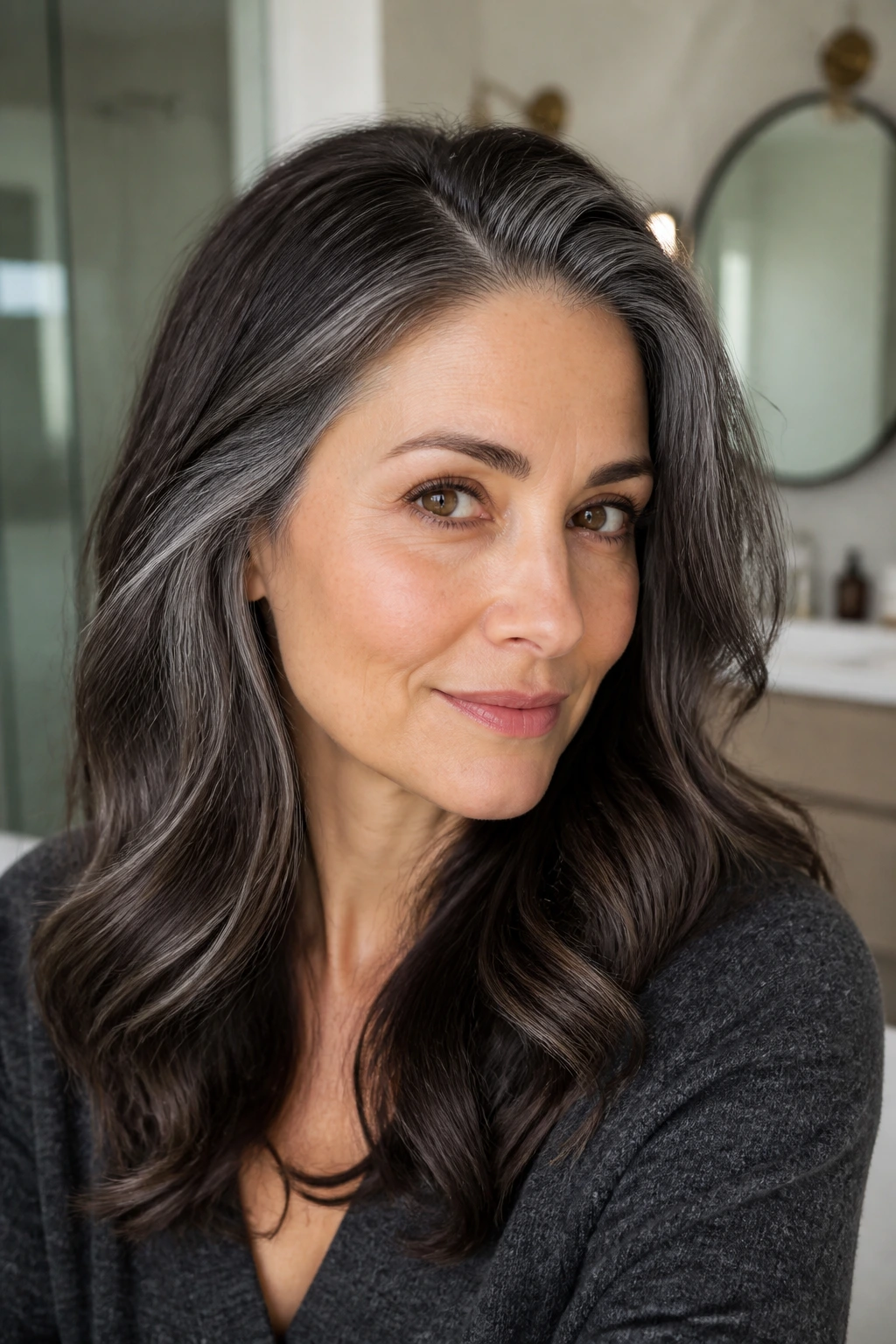
Grey tones on dark hair usually need a little upkeep if you want them crisp. Most people can stretch root touch-ups to about 6 to 8 weeks when a shadow root is in place. If the look is more high-contrast, you may want a gloss or toner refresh every 4 to 6 weeks so the grey doesn’t slide yellow or flat.
Wash less often if you can. Two to three shampoos a week is kinder to the tone than daily washing, especially if the grey pieces are lightened. Use cool or lukewarm water, because hot water strips color faster and roughs up the cuticle. A sulfate-free shampoo helps, but the water temperature matters almost as much.
Heat styling needs a plan. If you blow-dry, use a heat protectant every time. If you curl or flat-iron, keep the tool at the lowest setting that gives shape, and do not run the iron over the same section three or four times. That’s how grey ends start looking dry and tired.
Deep-condition every 1 to 2 weeks if the hair has been pre-lightened. A bond treatment once a week can help too, especially if your hair is fine or prone to snapping at the ends. Grey tone looks much better on hair that still has movement.
Frequently Asked Questions
Can dark hair really go grey without looking streaky?
Yes, but the grey needs a softer bridge shade underneath it. Brown, mushroom, ash, and taupe tones help the grey blend into dark hair instead of sitting on top like a separate layer.
Do I have to bleach dark hair for these looks?
For true grey, usually yes — at least on the pieces that need to read silver. If you skip lightening, the color will mostly show as a subtle tint or gloss, not the smoky grey people expect.
Which brown shades work best under grey?
Cool browns work best: espresso, mocha, mushroom, ash brown, and taupe. Warm chestnut or copper-heavy brown can fight the grey and make it look muddy.
Will grey hair color fade fast on dark hair?
It can, especially if the hair was lightened a lot first. Purple shampoo, cool water, and regular glossing slow that down, but silver and smoke tones usually need refreshes more often than darker brunettes.
What if my grey turns yellow or greenish?
Yellow usually means the toner has faded and the hair needs a refresh. Green can happen when ash toner is overdone or layered over the wrong base; a salon gloss usually fixes it faster than piling on more purple shampoo.
Can curly hair pull off brown-to-grey styles?
Absolutely. Curly hair often looks better with grey than straight hair because the curl pattern breaks up the color and keeps it from feeling harsh. Ribboned highlights and soft lowlights usually work better than heavy blocks.
How short can the haircut be and still show the transition?
A pixie or short bob can show it well, but the placement has to be cleaner. Short hair gives you less room for a fade, so the grey needs to sit exactly where the cut creates movement.
What’s the easiest low-maintenance option here?
A rooted balayage lob or layered brown-to-mushroom fade is probably the calmest route. Both let the grow-out soften naturally, which saves you from constant toner appointments.
The Shade Shift That Actually Looks Good
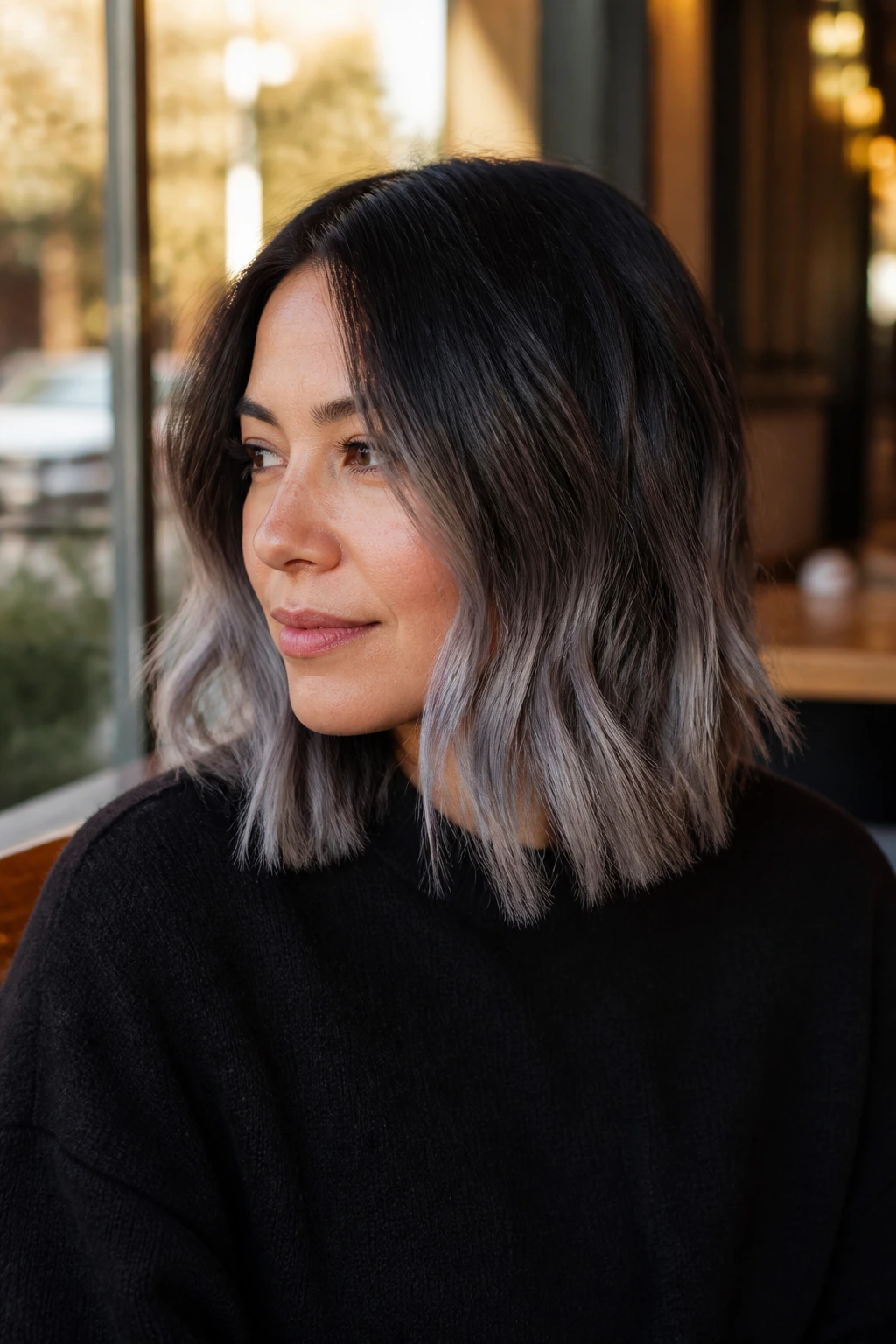
Brown to grey on dark hair works when the color respects the base instead of fighting it. That’s the part most people miss. A strong root, a controlled lift, and the right cool bridge shade can make grey look soft, modern, and wearable instead of harsh or over-processed.
If I had to pick the safest starting points, I’d choose the smoky balayage lob, the mushroom brown layered cut, or the face-framing grey money piece. Those three give you movement, depth, and enough grow-out grace to live with the color for a while. And if you want more edge later, you can always push the ends cooler, add ribbons, or go sharper with charcoal panels.
The real win here is that grey does not have to look like one big commitment. It can be a strip, a fade, an underside surprise, a braid detail, a blunt-end statement, or a soft veil around the face. That flexibility is why this color family keeps working on dark hair — and why it’s worth getting the placement right the first time.