



Dark brown lowlights can rescue a brunette that has gone a little too flat, a little too striped, or just a little too loud. On cool skin tones, they do something even better than adding depth: they make the hair look denser and the face look calmer, because the right brown sits in the smoky, ash side of the palette instead of throwing gold, copper, or rust back at your skin.
That part matters more than most people think. Cool skin can be fair and pink, medium with a rose cast, or deep with blue-red undertones, but the same rule keeps showing up in the chair: if the brown is too warm, it can make the cheeks look flushed and the hair look brassy. If the brown leans espresso, mushroom, slate, cocoa, or blue-brown, the whole look usually settles down.
Placement does half the work, maybe more. A few thin ribbons under the top layer can make fine hair look fuller. Wider painted panels can keep curls from swallowing the color. And on straight hair, a handful of thoughtful sections near the part can do more than a hundred scattered foils that never quite connect. That is the real game here — not just picking a brown, but picking the right kind of dark brown for the way your hair actually moves.
Why These Shades Work on Cool Skin
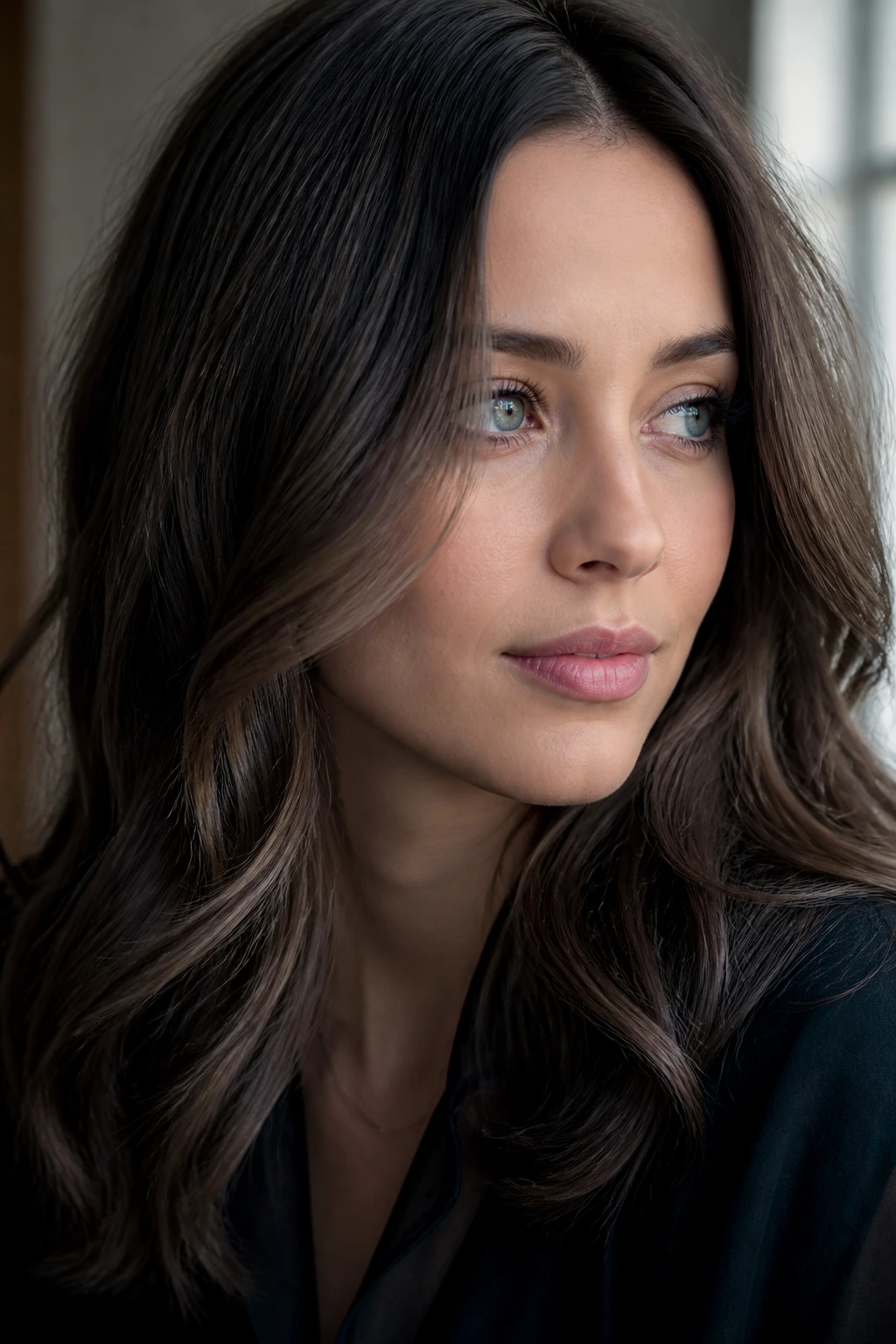
Ash keeps the face from fighting the hair: Browns with a smoky or blue base sit beside cool skin instead of bouncing warm tones back at it, which keeps the complexion from looking extra pink.
Depth adds shape, not heaviness: Dark brown lowlights carve out layers, bends, and ends so the haircut looks deliberate instead of washed out.
Cool shades age softly as they fade: When espresso, mushroom, or slate lowlights soften over time, they usually blur into the base more cleanly than coppery browns do.
Placement changes the whole mood: A few pieces under the crown read subtle; a few pieces at the face frame read sharper and more styled.
Highlights look cleaner next to lowlights: If your hair already has light pieces, dark brown strands make the lighter ones look brighter without you adding more blonde.
One thing I always tell people: the shade name on the box matters less than the undertone underneath it. “Dark brown” can mean ten different things. For cool skin, you want the version that looks like wet bark, smoked cocoa, or a café au lait that got a little more serious.
And yes, the haircut matters too. A blunt bob, a long layered wave, a shag, a coily cut — each one needs its own kind of shadow.
1. Smoky Espresso Veils Through a Medium Brunette Base
Smoky espresso is the safest place to start if you want depth without drama. It sits one or two levels deeper than a medium brunette base, so the hair gets fuller-looking right away, but it never crosses into that flat, ink-dark territory that can swallow movement.
Where to put it
Use thin veils through the crown and side panels, then tuck a few pieces under the top layer near the nape. That gives you shadow where the hair falls apart and keeps the front from reading too heavy.
- Best for: level 5 to 6 brunettes with cool or neutral skin
- Placement: crown, sides, and underneath the top layer
- Watch for: any red cast in the formula; it will show fast in daylight
Pro tip: ask for the espresso pieces to be slightly softer around the hairline than at the back. That tiny shift keeps the face from looking boxed in.
2. Mushroom Brown Ribbons on a Shoulder-Length Lob
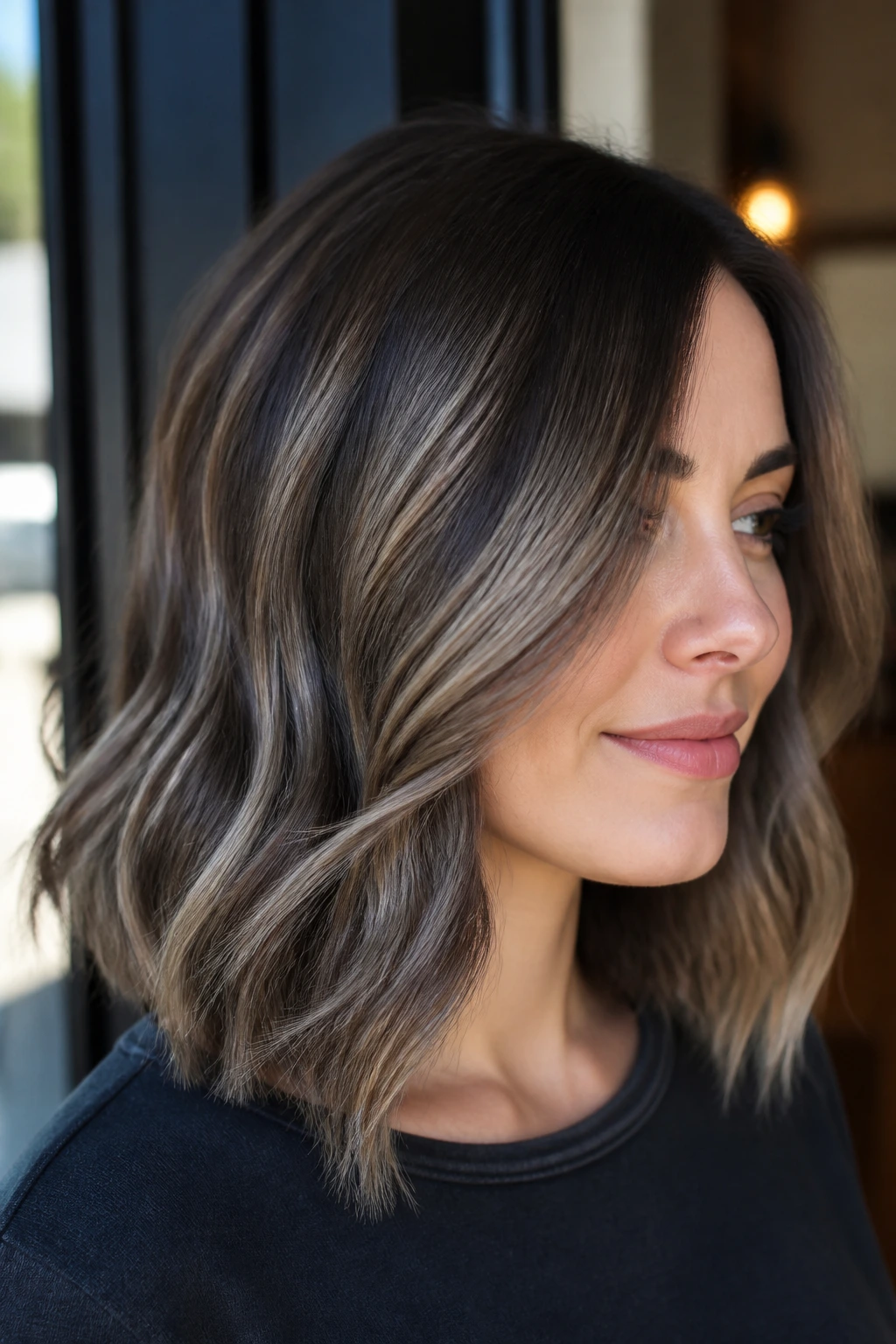
A lob can eat color if the pieces are too fine. Mushroom brown solves that because it has that greige, ash-heavy feel that reads clean on cool skin and still shows up on a shoulder-length cut.
The effect is a little soft-focus, but not blurry. The darker ribbons sit between the bends of the hair, so when the lob flips at the ends, you get that nice separation that makes the cut look more expensive than it is.
If your hair tends to puff out at the shoulders, mushroom lowlights help calm the width. If it falls flat, they give the illusion of more body through the mid-lengths. Either way, avoid a warm beige formula here. Beige sounds safe, but in the wrong light it can slide toward gold.
3. Ash Chocolate Lowlights That Blur Early Grays
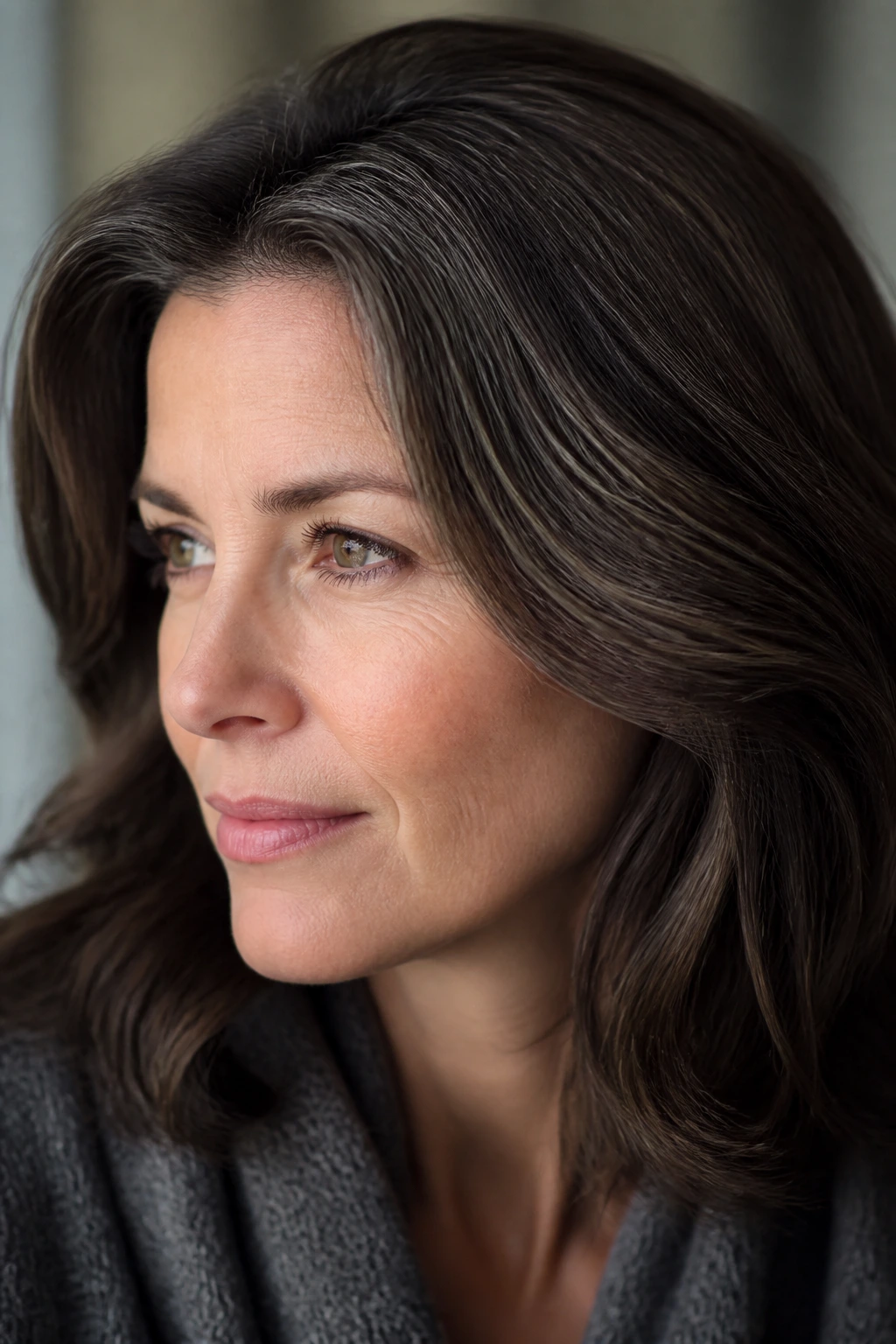
Ash chocolate is one of my favorite shades for gray blending because it doesn’t try to cover every silver thread. It sits beside the gray and lets the two tones work together, which reads softer than full coverage and grows out with less of a hard line.
What makes it work
The brown has to stay cool. If it picks up too much red, the gray strands can turn muddy instead of dimensional. A demi-permanent ash chocolate formula usually behaves better than a rich permanent brown for this job, especially if the hair is already porous.
- Best for: brunettes who are seeing scattered grays at the part or temples
- Placement: narrow sections around the part and crown, with a few wider pieces underneath
- Finish: a clear gloss or cool toner after processing
Gray hair can be stubborn. It can also be beautiful when it’s not overpowered.
4. Graphite Brown Panels for Straight, Sleek Hair
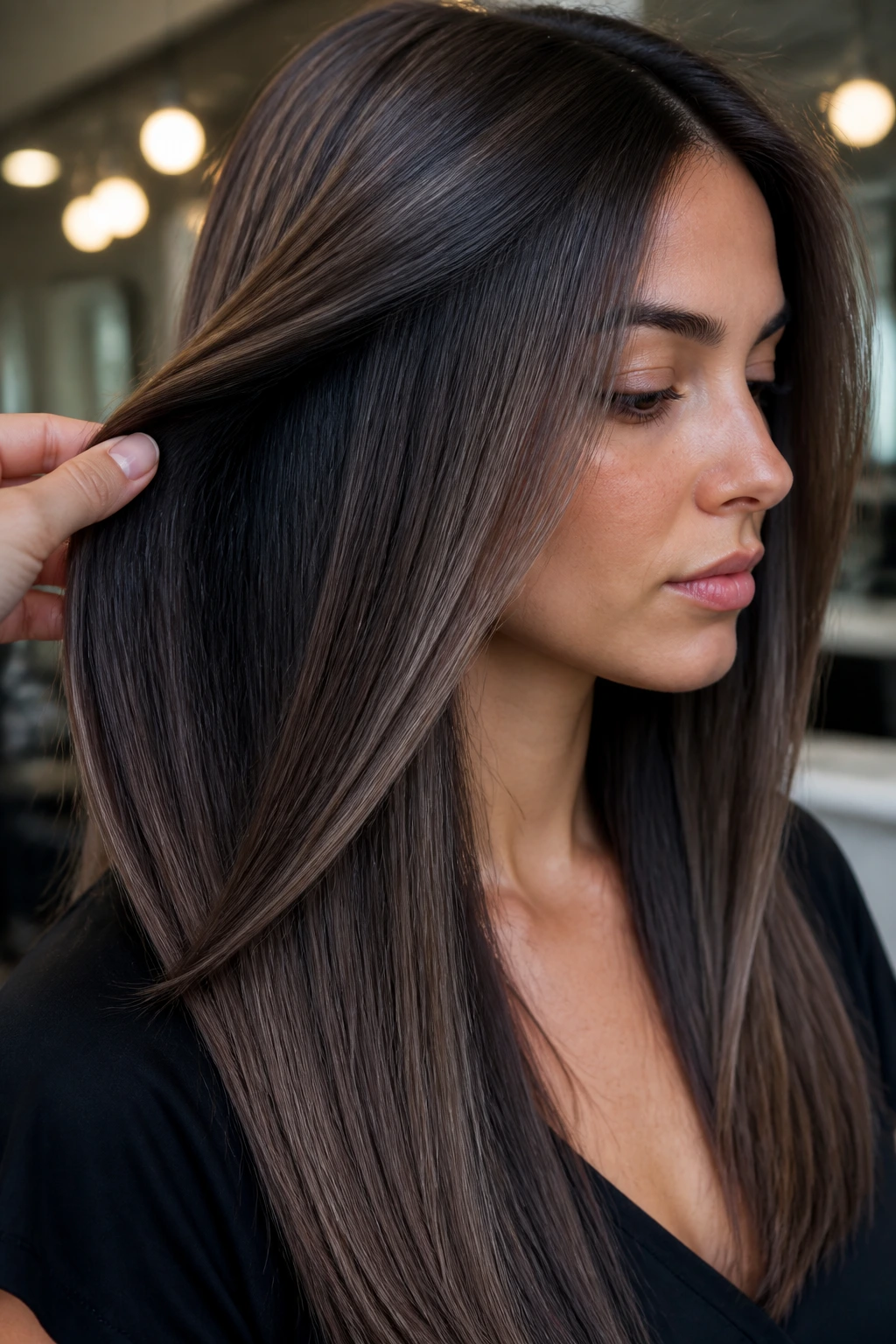
Straight hair shows every line. Every one. So if the placement is sloppy, you notice it immediately. Graphite brown panels give a sleek cut a little shadow and a little tension, which keeps it from looking like one solid block under bright light.
The trick is to use panels, not confetti. On pin-straight hair, tiny scattered pieces can look noisy. Longer, cleaner slices placed just under the top layer look intentional and make the shine on the surface stand out more.
How to keep it sharp
- Place the darkest pieces under the visible top sheet of hair.
- Follow the shape of the cut, especially if there’s a center part.
- Keep the front panels a touch softer if your skin leans very fair and cool.
Graphite brown is especially good when the haircut has a blunt edge. The contrast makes the line look crisp, not harsh.
5. Cool Mocha Depth at the Ends of Long Layers
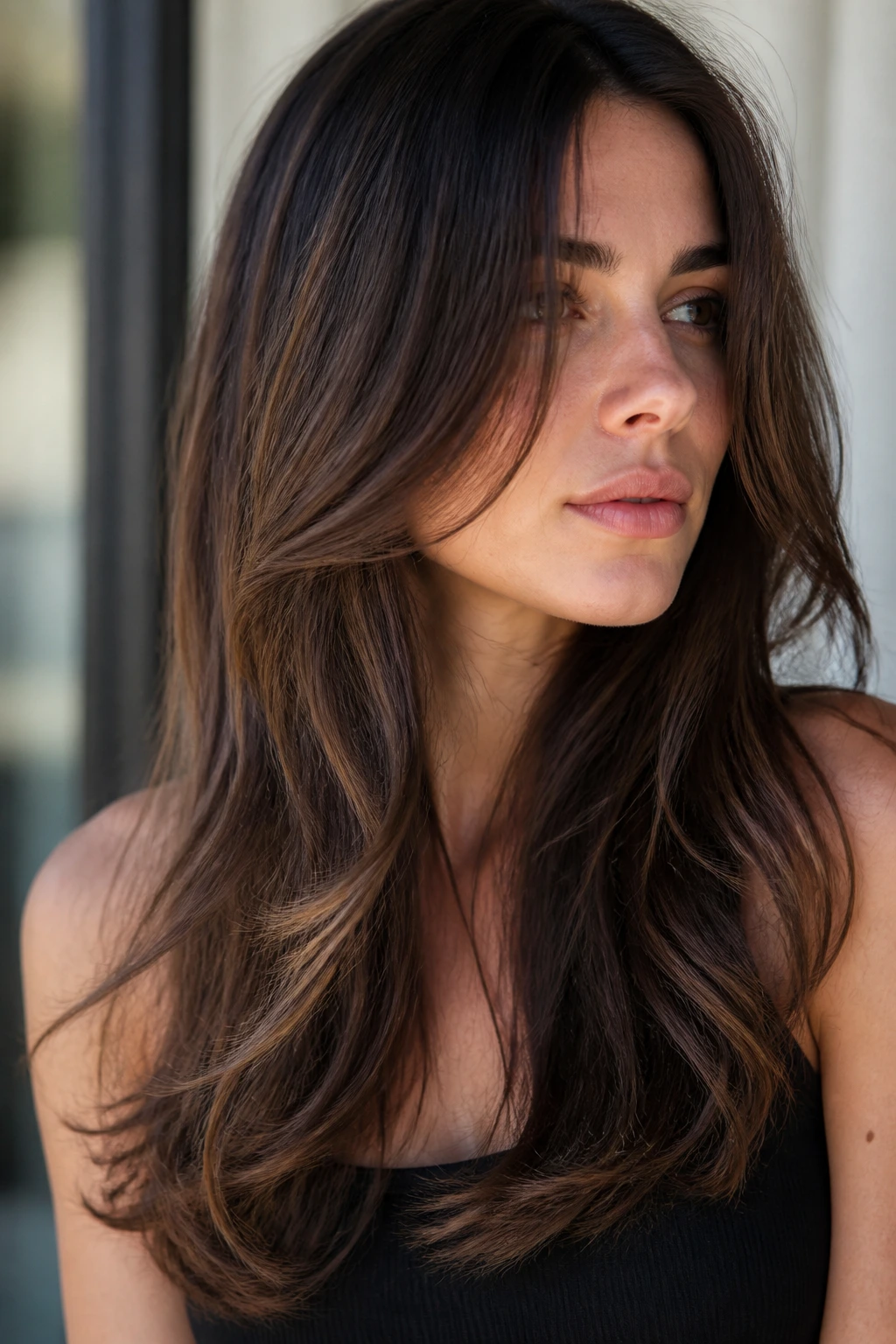
Long layers can go stringy at the ends if the color is all the same value from root to tip. Cool mocha lowlights at the lower third of the hair give those ends more weight, which is handy if your hair is fine or if the layers are very soft.
This is not a warm mocha. Not even close. You want the cooler, darker version that feels closer to roasted cocoa with a gray cast. On cool skin tones, that keeps the overall look balanced instead of coppery.
A little depth at the ends also makes the hair swing better. When the light catches the mid-lengths and the bottom third drops a shade darker, the movement reads cleaner. It’s a small adjustment, but it changes the way the whole haircut sits.
6. Blue-Black Underlights for High-Contrast Cool Skin
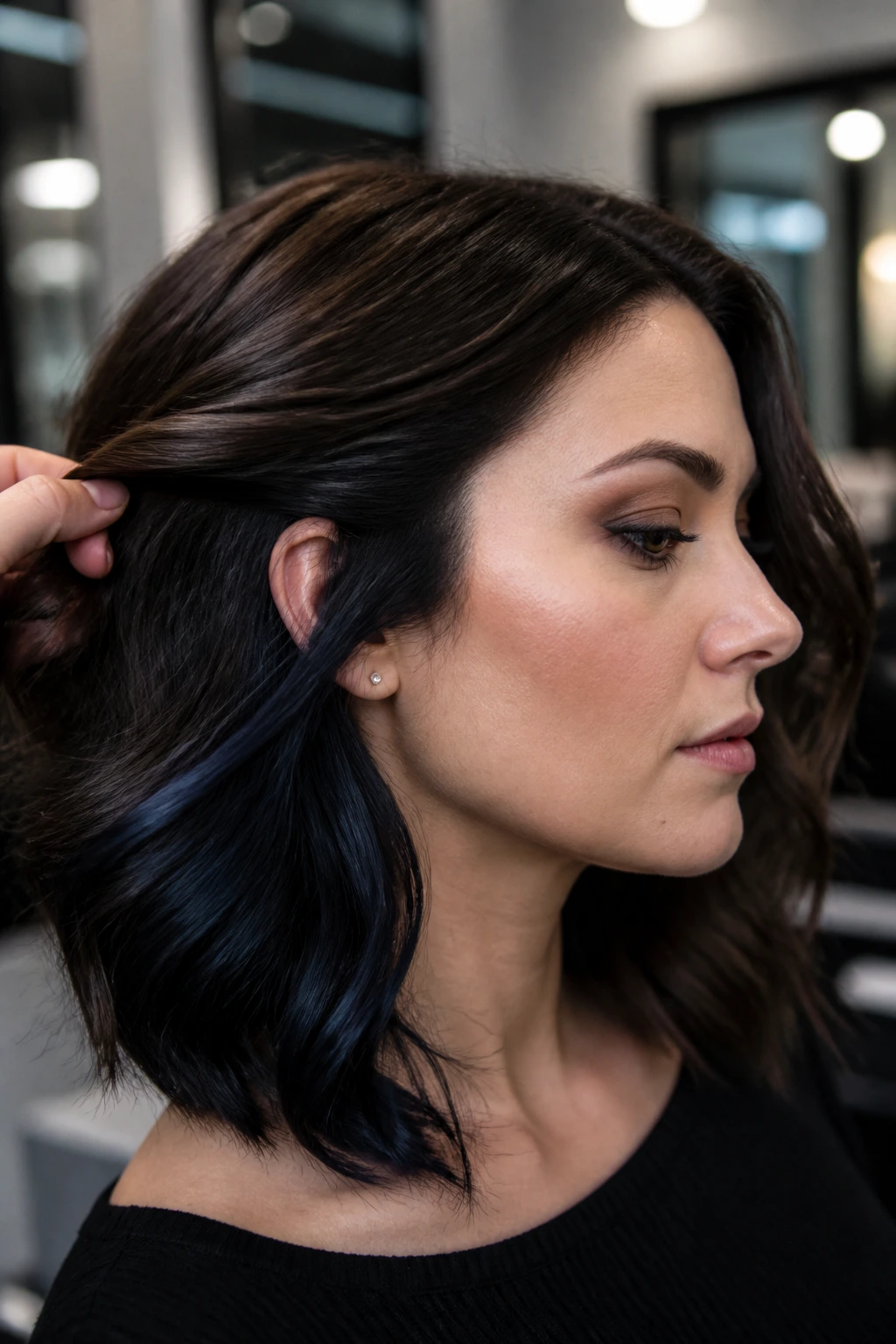
Blue-black underlights are for the brunette who wants something sharper. They work best when the hair is already dark and the skin has a strong cool cast — think porcelain, rosy ivory, or deep skin with blue undertones.
This isn’t a subtle choice. It’s a peek-through shadow that lives underneath the top layer, so it only shows when the hair moves, flips, or gets tucked behind the ear. That makes it dramatic without taking over the whole head.
Best use case: dark hair, dark brows, and a cool complexion that can carry a little edge.
Keep these pieces away from the very front if you want to avoid a heavy frame. Around the nape and under the crown, though, blue-black has a sharp, glossy look that can be hard to beat.
7. Walnut Smoke Around the Face
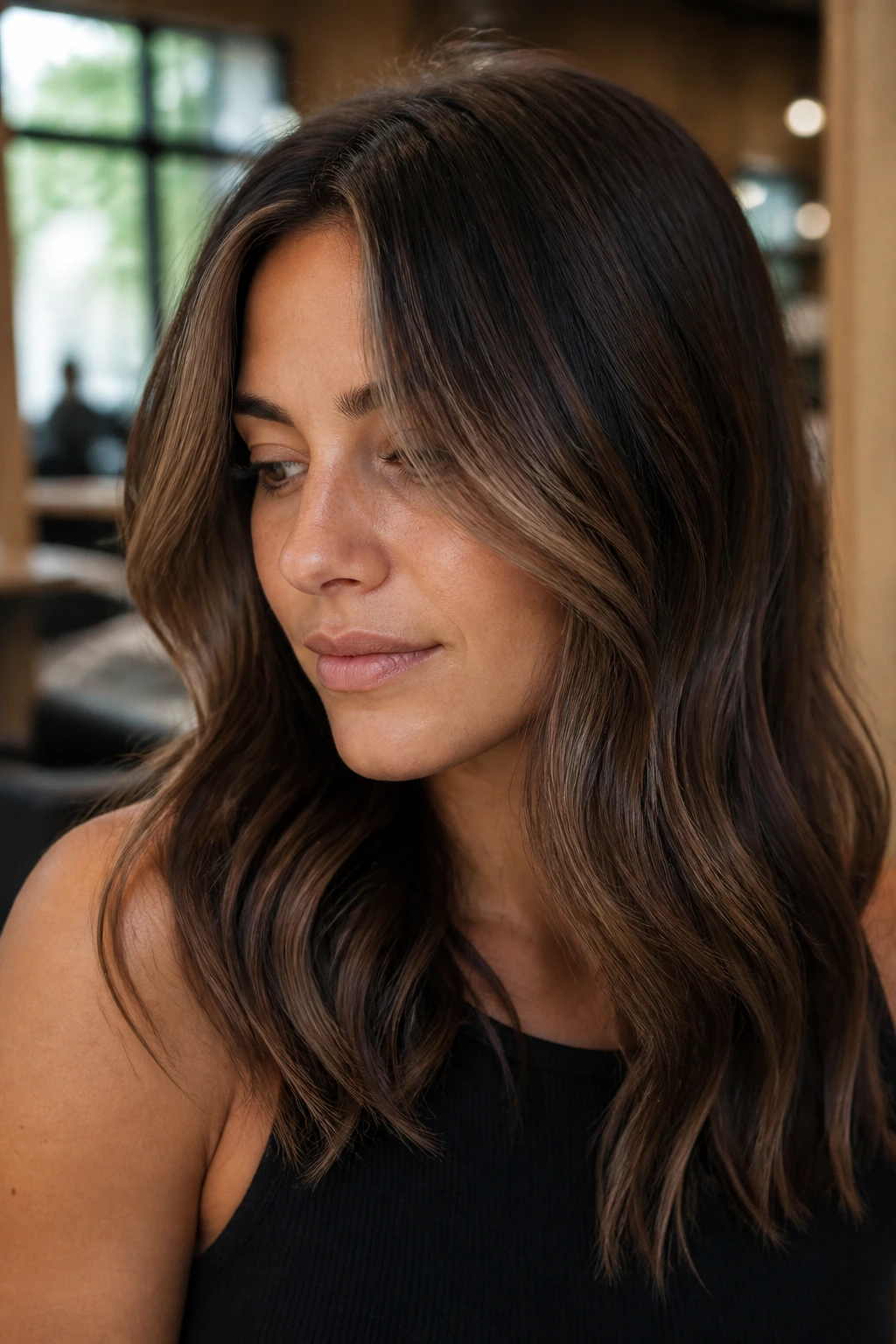
How do you soften the front of a haircut without turning warm? Walnut smoke. It’s one of the most useful dark brown lowlight choices for cool skin because it gives the face shape, but it doesn’t throw orange back at the cheeks.
Best placement for walnut smoke
- Start the first panels just off the part, not right on the hairline.
- Let the pieces fall at cheekbone length or just below.
- Keep the width narrow if your skin is very fair; widen it if your hair is thick.
The color should read like dark walnut with the warmth dialed down. On waves, it creates a nice shadow around the face. On straighter hair, it makes the cut look more purposeful and less one-note.
My take: this is the shade I’d choose for someone who wants to look like they made a choice, not like they “did something.”
8. Dimensional Sable Lowlights on Wavy Hair
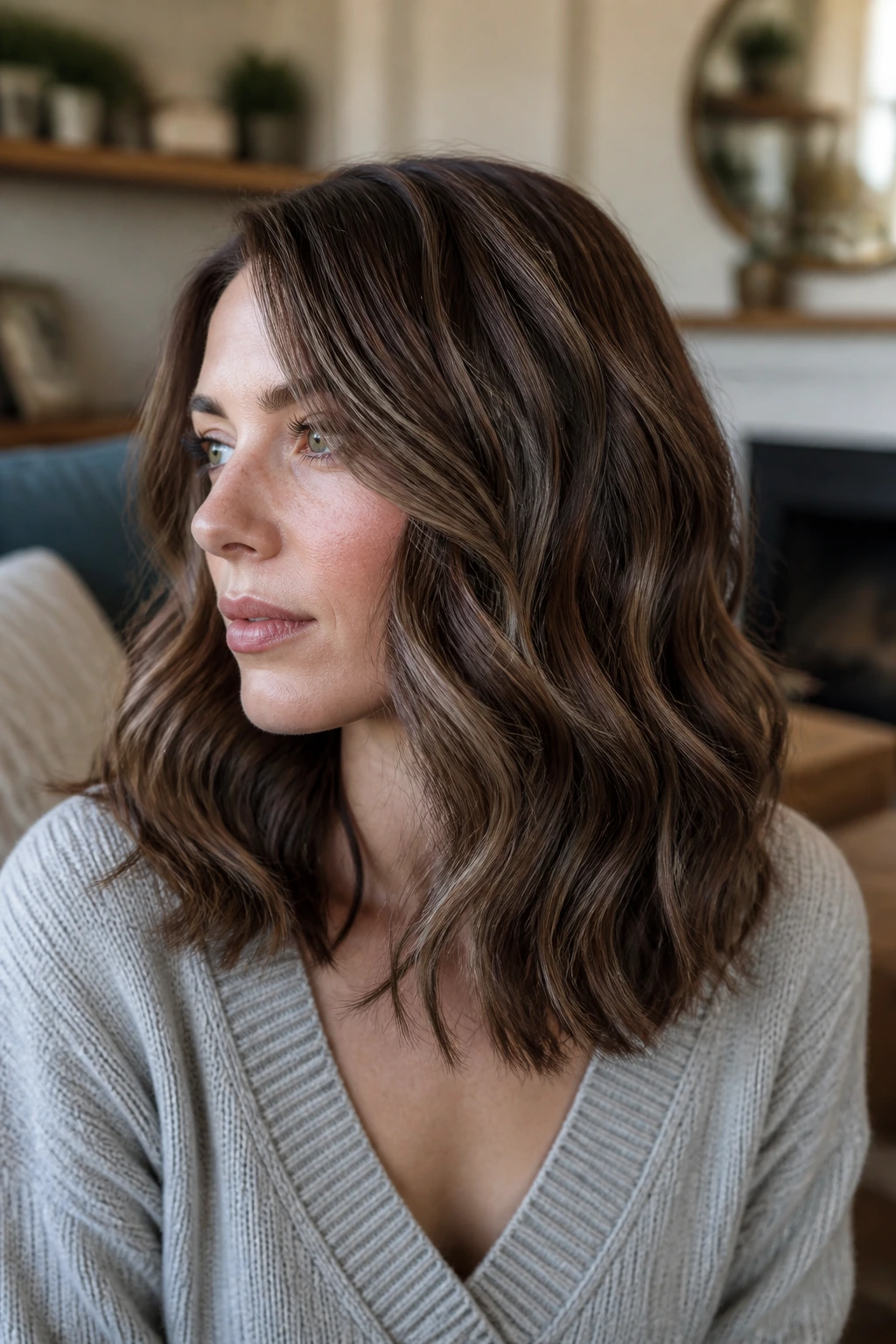
Wavy hair is generous with color. It catches light, bends it, and throws it back in different places, so sable lowlights can look more expensive here than on almost any other texture. The key is to alternate the widths of the pieces instead of painting every section the same.
A few wider ribbons underneath a few finer ones give the waves someplace to break. If every strand is the same depth, the hair can turn into a dark blanket. If the placement changes with the bend of the wave, the color looks layered and alive.
Sable brown sits in that cool-neutral zone that flatters cool skin without turning harsh. It’s darker than mocha, softer than espresso, and a little less severe than graphite. That middle ground is useful.
9. Soft Cocoa Shadowing for Fine Hair
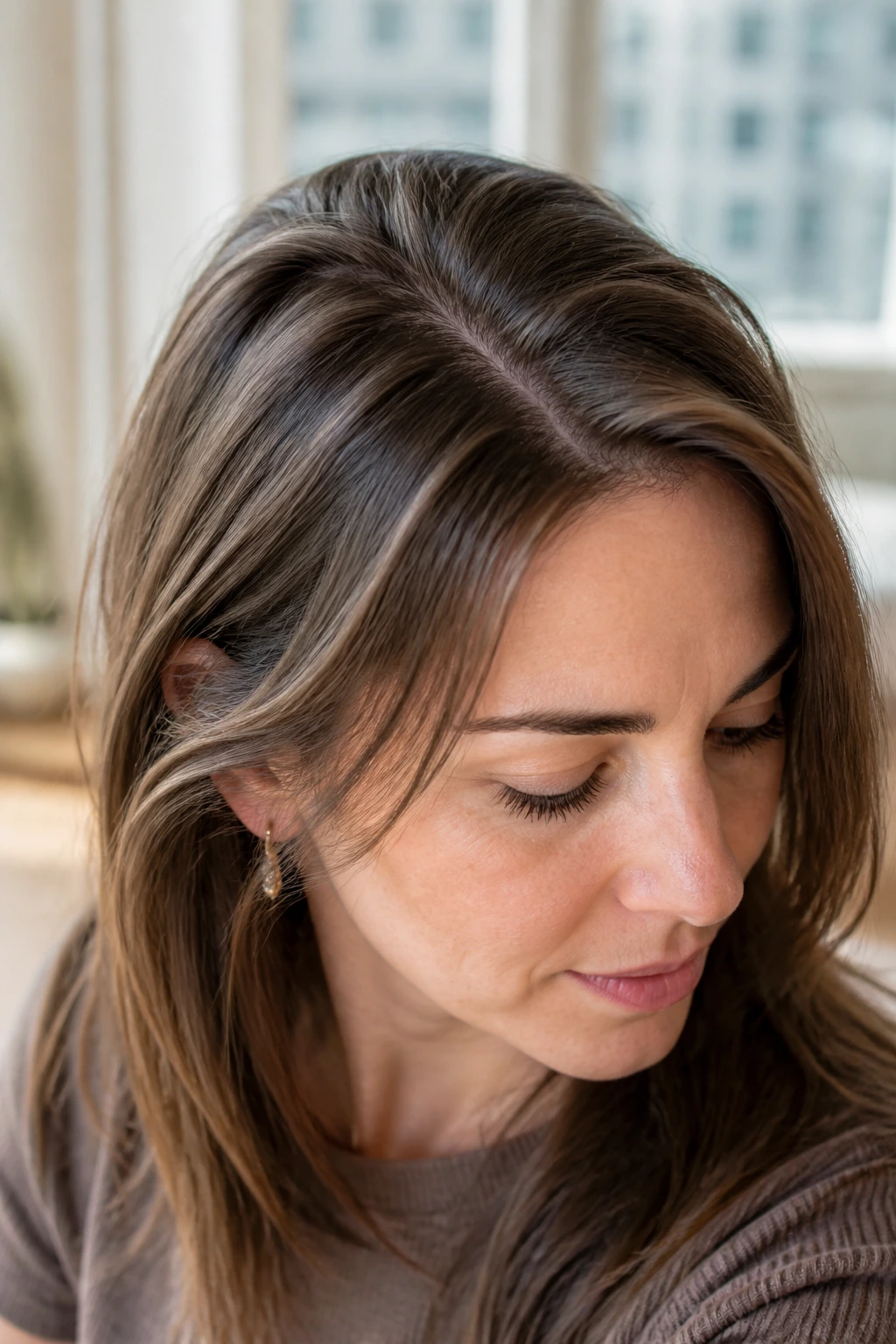
Fine hair needs a light touch. Too many lowlights can make it look thinner, not fuller, which is exactly the opposite of what you want. Soft cocoa shadowing fixes that by adding just enough darker color to create the illusion of density.
The placement should be sparse and smart. Think a few pieces at the crown, a few near the part, and a couple tucked underneath so the hair doesn’t look transparent when it moves. The cocoa tone should stay cool, almost like dark chocolate dusted with ash.
If you wear your hair in a ponytail often, this is a good shade family because it gives the collected hair more shape. The pony doesn’t look like one flat rope. It looks layered, even when it’s pulled back.
10. Slate Brown Accents in a Blunt Bob
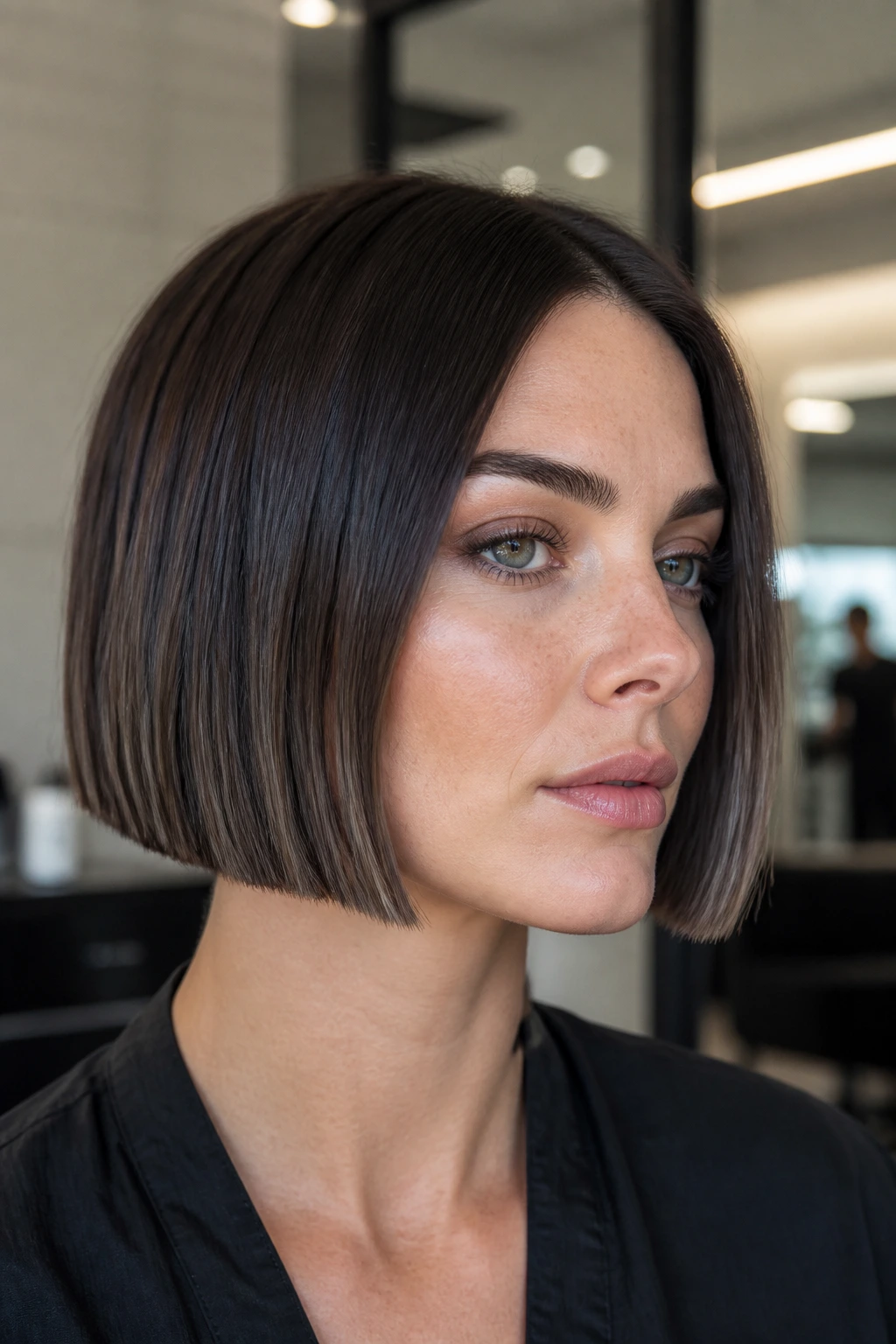
A blunt bob needs shadow or it can look too solid. Slate brown accents give the cut just enough movement to keep the edge from feeling heavy, especially if the hair is straight and cut right at the jaw.
Why slate brown works here
The cool gray-brown tone makes the line look cleaner. It doesn’t compete with the geometry of the bob; it supports it. That matters a lot on cool skin tones, because a warm brown would pull focus in the wrong direction.
Use the slate pieces beneath the top surface and near the nape first. If you want a little more visible texture, let a few pieces peek through around the side part. Don’t overdo the front.
A blunt bob should still look sharp. The color just needs to help it breathe.
11. Cold Brew Lowlights for Thick Curly Hair
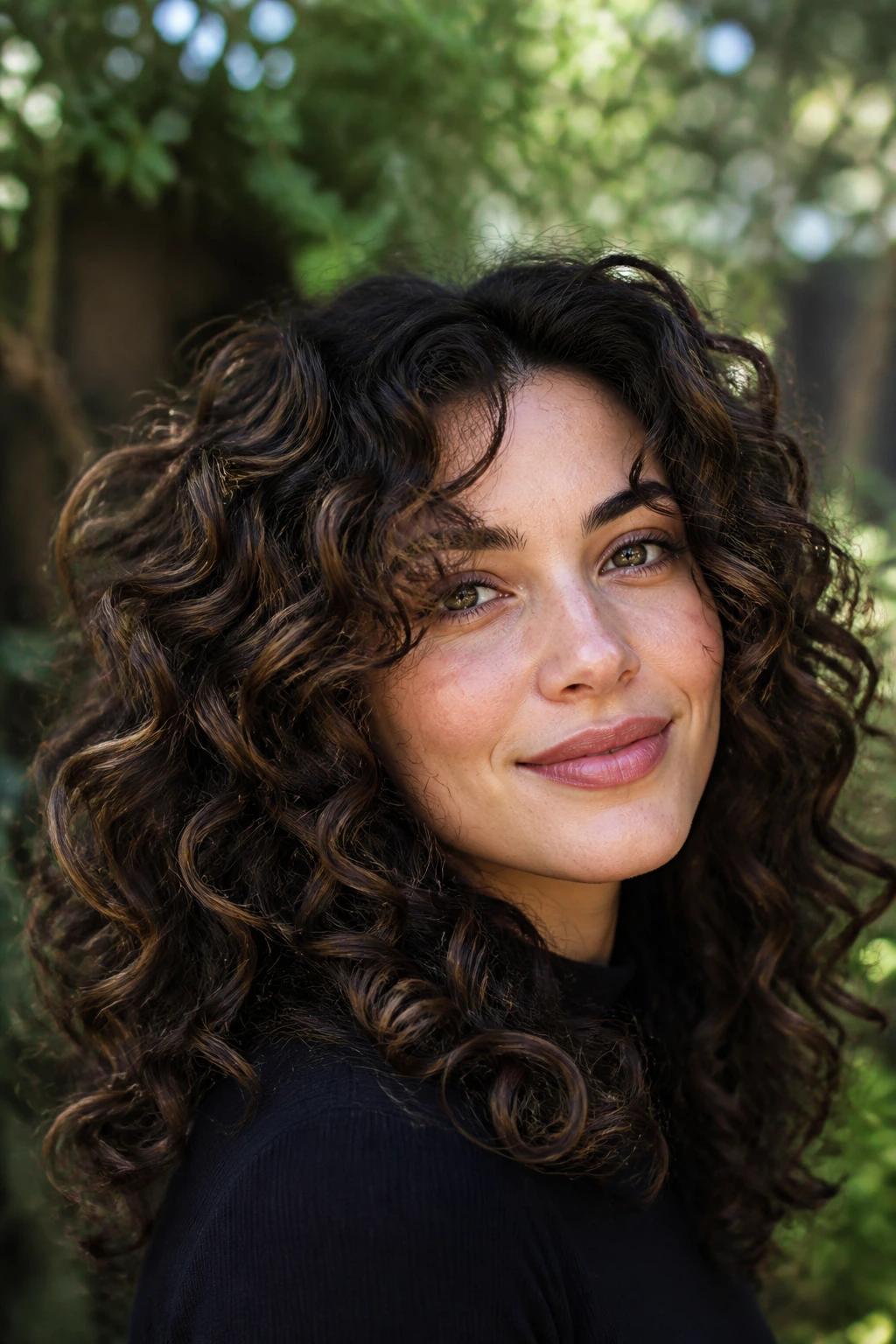
Thick curls usually need more contrast than people think. The curl pattern hides color, so tiny lowlights disappear unless they’re placed with a little confidence. Cold brew brown gives the curls depth without turning them muddy.
Paint wider ribbons on the outer bends of the curl pattern, then tuck some darker pieces underneath where the hair gets bulky. That gives the silhouette more shape from the outside in. If you only color the visible surface, the effect disappears once the curls shrink.
Cool skin tones do well with this because cold brew sits in the muted brown family, not the orange-brown family. That keeps the color rich and the complexion steady.
12. Mink Brown Underpainting for a Soft Grow-Out
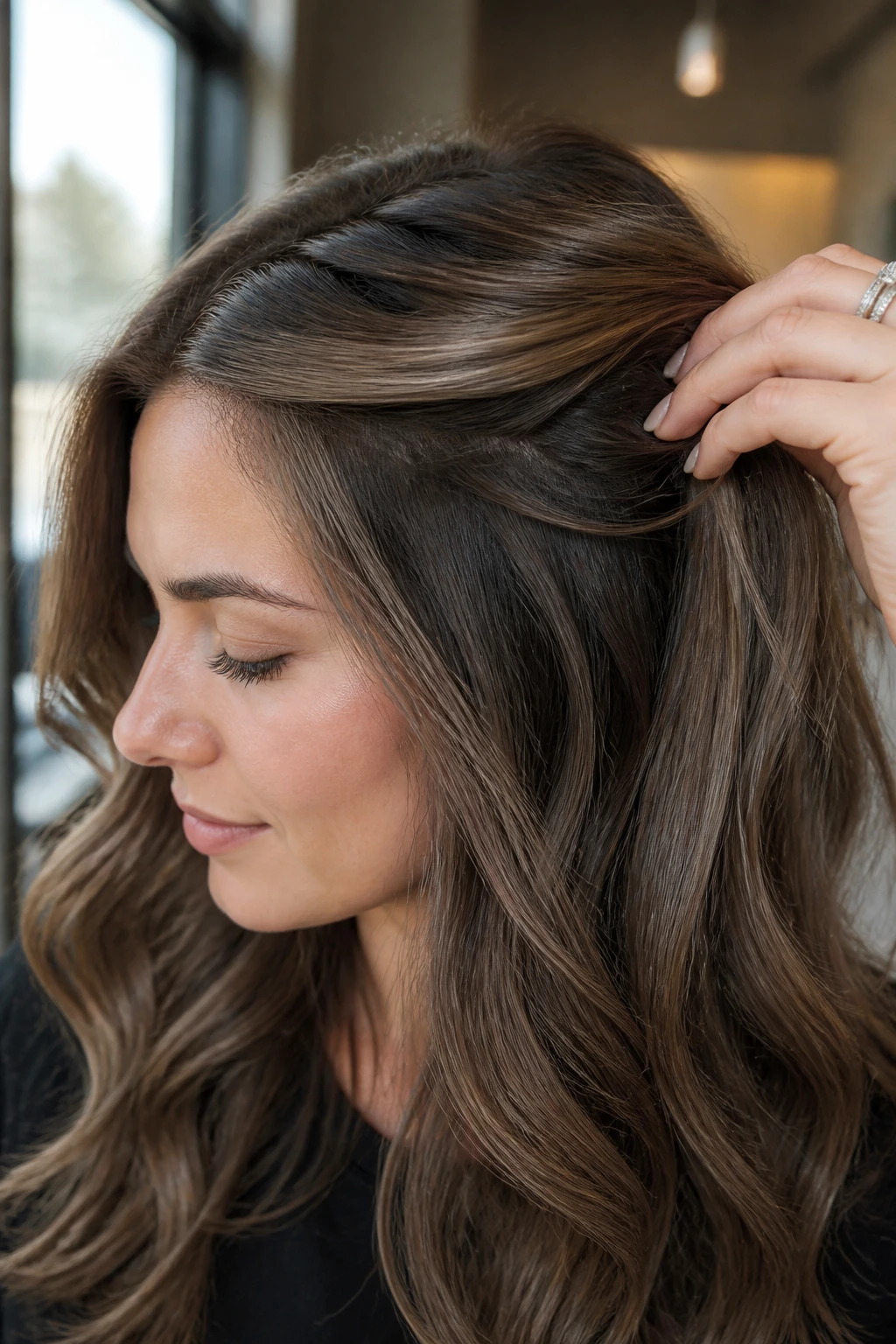
Underpainting is one of those salon tricks people usually notice only after they see it moving. The darker mink brown lives beneath the top layer, so the roots and grow-out line stay quieter than they would with all-over placement.
That makes it a strong option if you don’t want to chase every inch of regrowth. The top layer stays a little lighter and brighter, while the underlayer adds depth and keeps the cut from looking airy at the ends.
Mink brown works especially well on cool skin because it’s muted. No copper. No cinnamon. Just a soft, cool-leaning brown that disappears and reappears as the hair shifts.
If you wear half-up styles a lot, this one has a nice payoff. The hidden depth shows up right where the hair is pinned back.
13. Ashy Brunette Contour Along Curtain Bangs
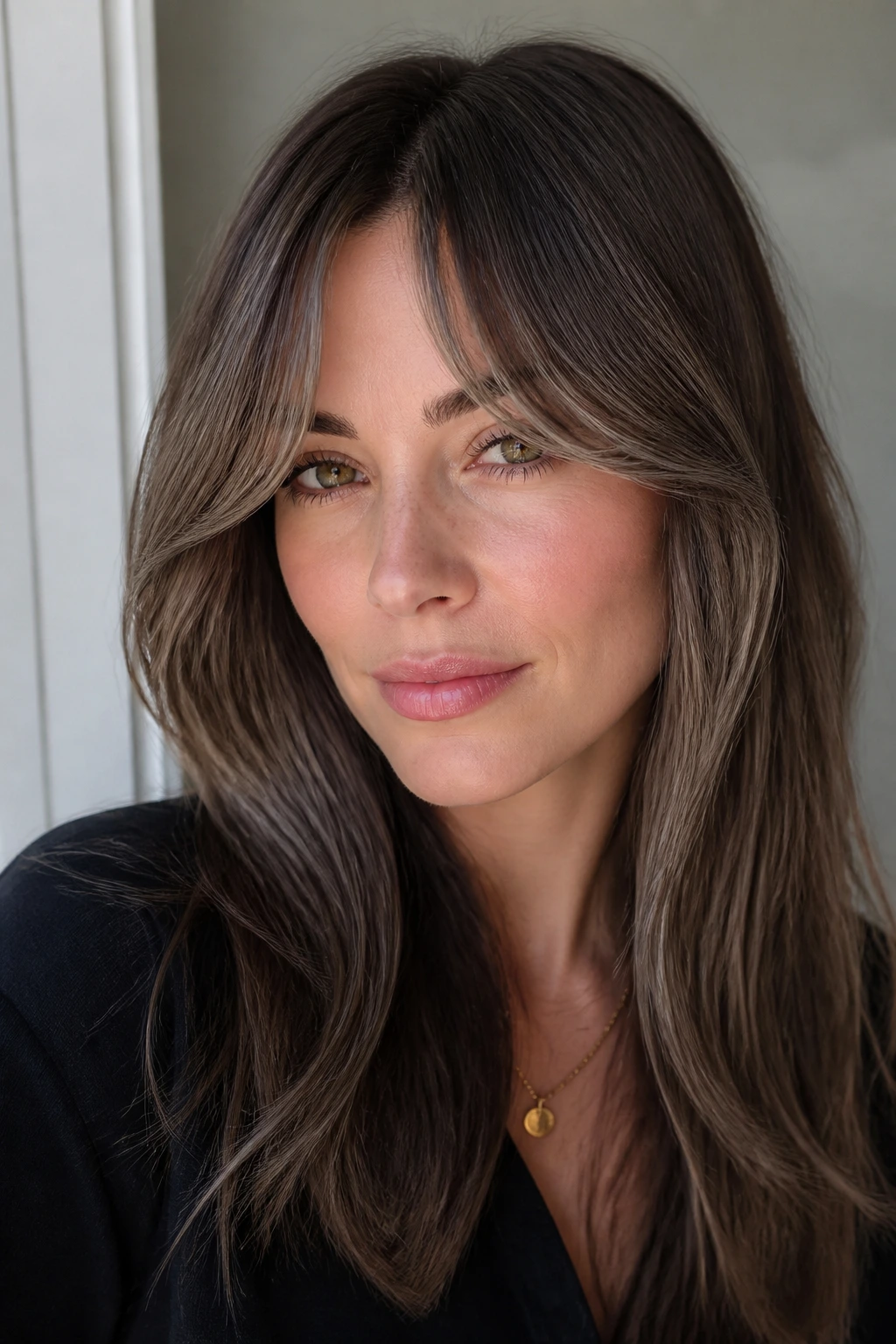
Curtain bangs are one of the easiest places to get lowlights wrong. Put the color too dark, and the fringe looks chopped off. Put it too warm, and the whole front starts to glow orange in daylight. Ashy brunette contour solves both problems.
Keep the front soft, not heavy
A narrow panel on each side of the part is usually enough. The lowlight should sit just off the face and melt through the length of the bang, not sit like a stripe at the root. That keeps the movement in the fringe.
The ashy tone helps cool skin look balanced, especially if your cheeks flush easily. It adds framing without making the bangs feel like a curtain in the blunt sense. And yes, there is a difference.
14. Dark Roast Ribbons Through a Balayage Base
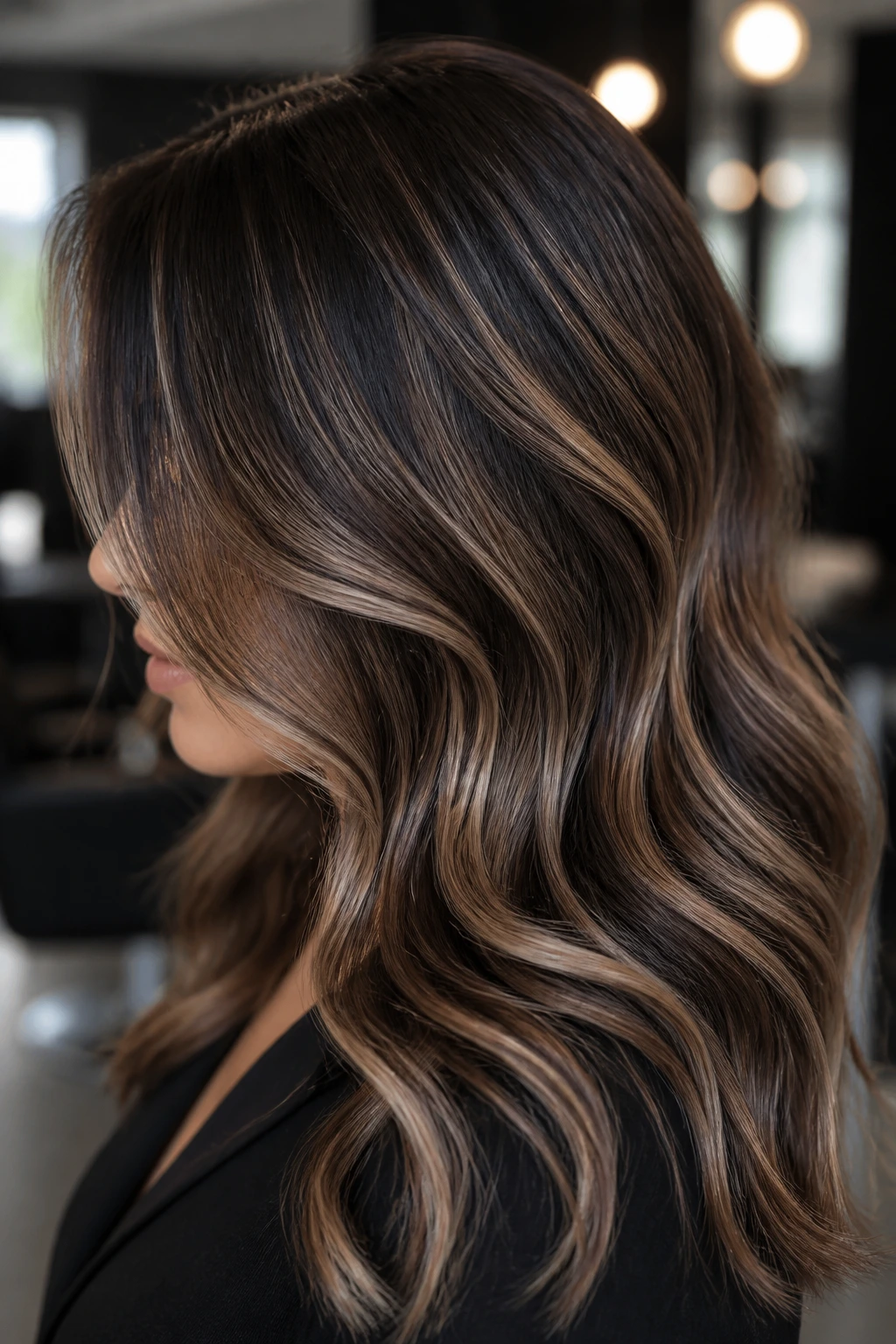
If your hair already has balayage, dark roast ribbons are the fastest way to bring the dimension back to life. Bright blonde pieces can start to feel disconnected after a while; the darker brown stitches them together again.
This is one of the few times where I’d say contrast is the point. The dark roast pieces should fall between the lighter ones, not on top of them. That spacing keeps the hair from looking striped and makes the blonde look cleaner by comparison.
Cool skin tones usually handle this well when the brown is ash-based. If you go too warm, the darker ribbons can pull the whole balayage toward brass. Keep the roast dark, not reddish.
15. Cool Cacao Ends That Keep the Mid-Lengths Bright
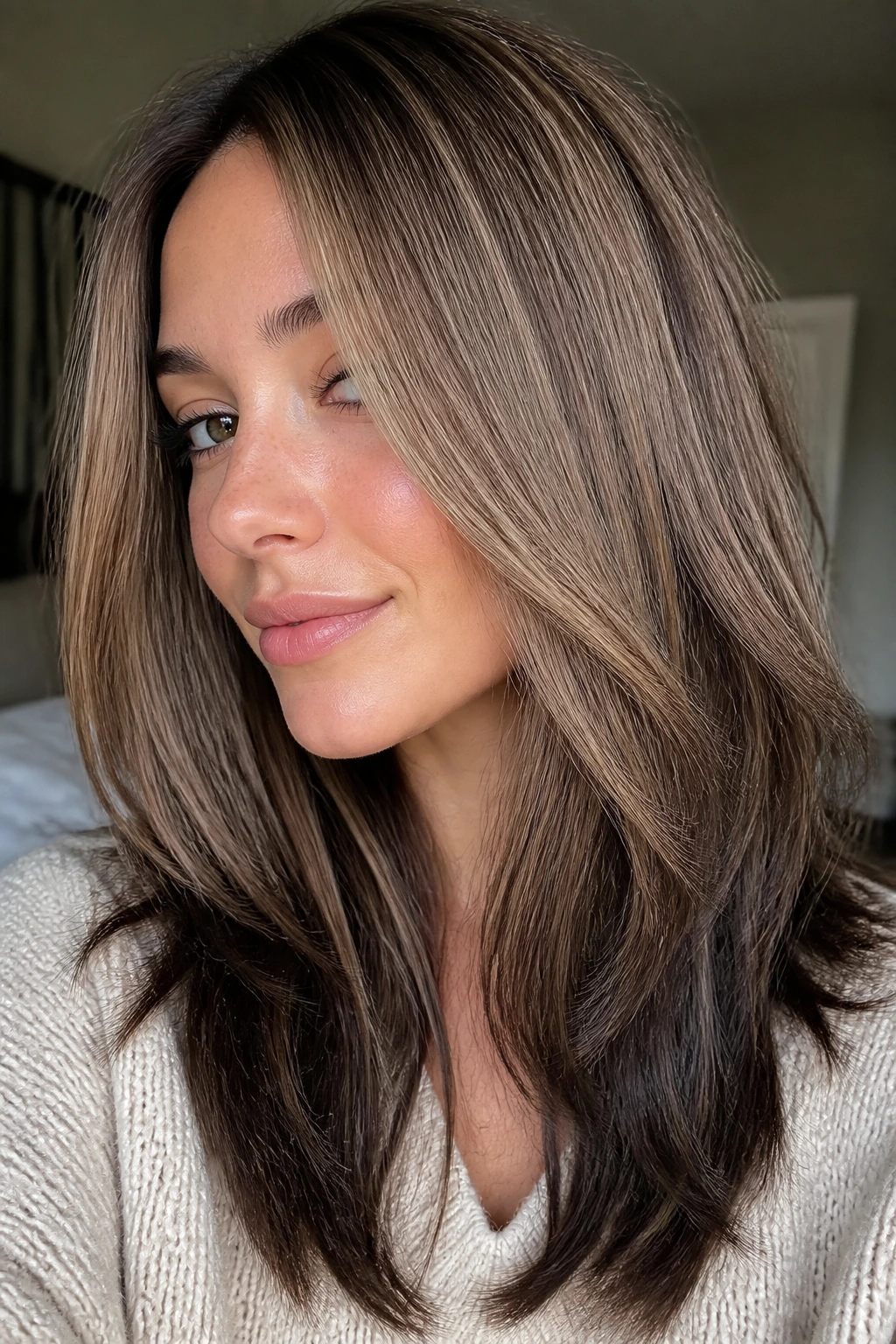
Dark ends are not for everyone, but they can be excellent on long hair that looks wispy or hollow at the bottom. Cool cacao ends give the cut more weight, which can make layers look fuller and more finished.
The important part is restraint. Leave the mid-lengths a shade lighter so the hair still has a sense of movement. If everything goes dark all at once, you lose the point. But if the ends deepen just enough, the haircut feels grounded.
This works well on cool skin tones because cacao can be very muted and smooth. It reads rich, not warm, and that distinction matters more than people realize.
16. Smoked Mocha Lowlights for Warmth-Free Dimension
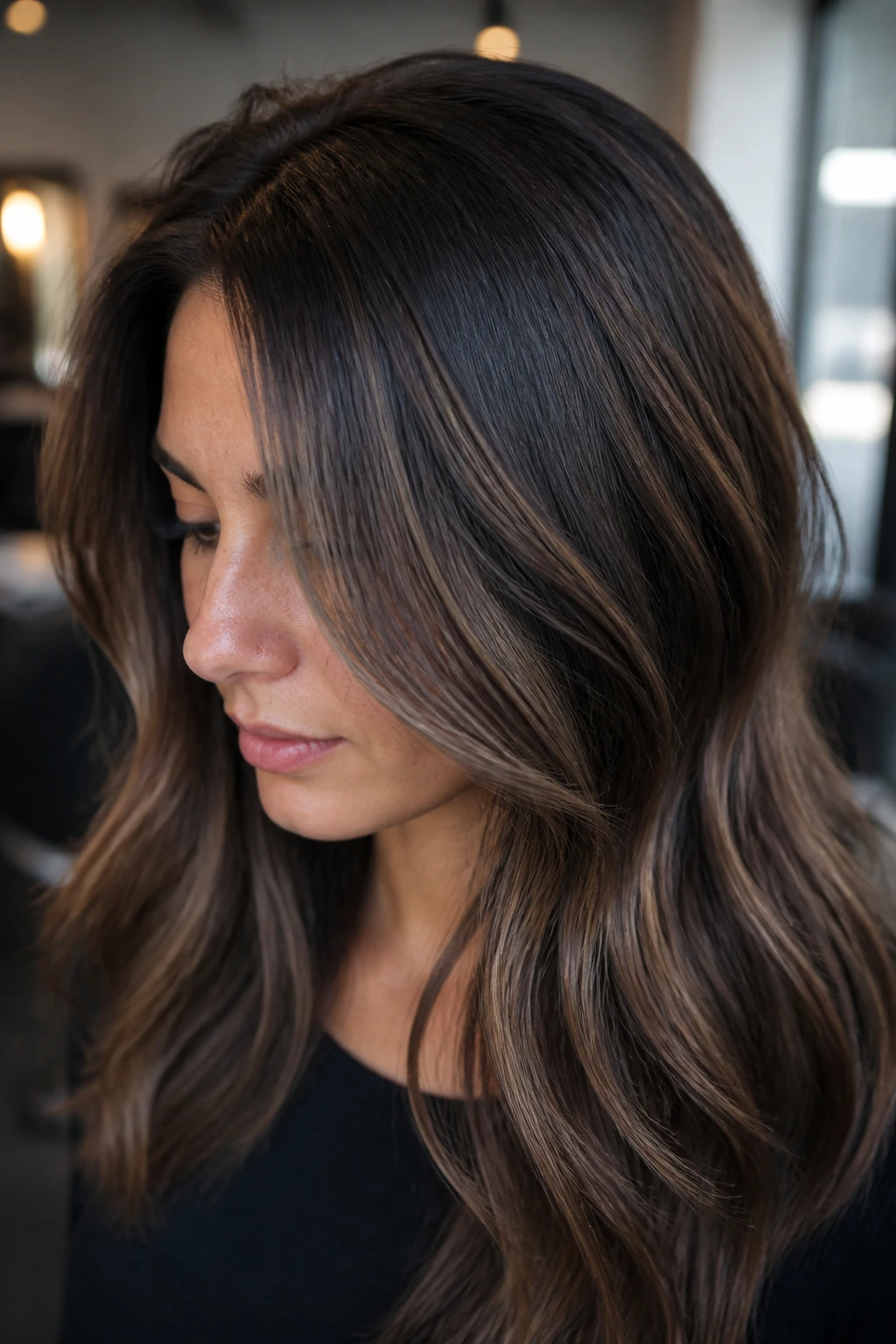
Why do smoked mocha lowlights work so often? Because they sit in the middle of the brown family and don’t shout. That makes them easy to wear, especially if you want something that just makes the hair look more structured.
They’re a strong choice when the base color is already cool or neutral and you only want depth through the interior. The placement can be broad or narrow depending on texture, but the tone should stay smoky enough that it never starts edging toward milk chocolate.
How to use it
A stylist can place smoked mocha through the crown, the sides, or the lower half of the hair, depending on where the cut needs support. On cool skin, I’d keep the front a touch softer and let the darker pieces live deeper in the shape.
It’s understated. Not boring.
17. Deep Umber Streaks for Natural Black Hair
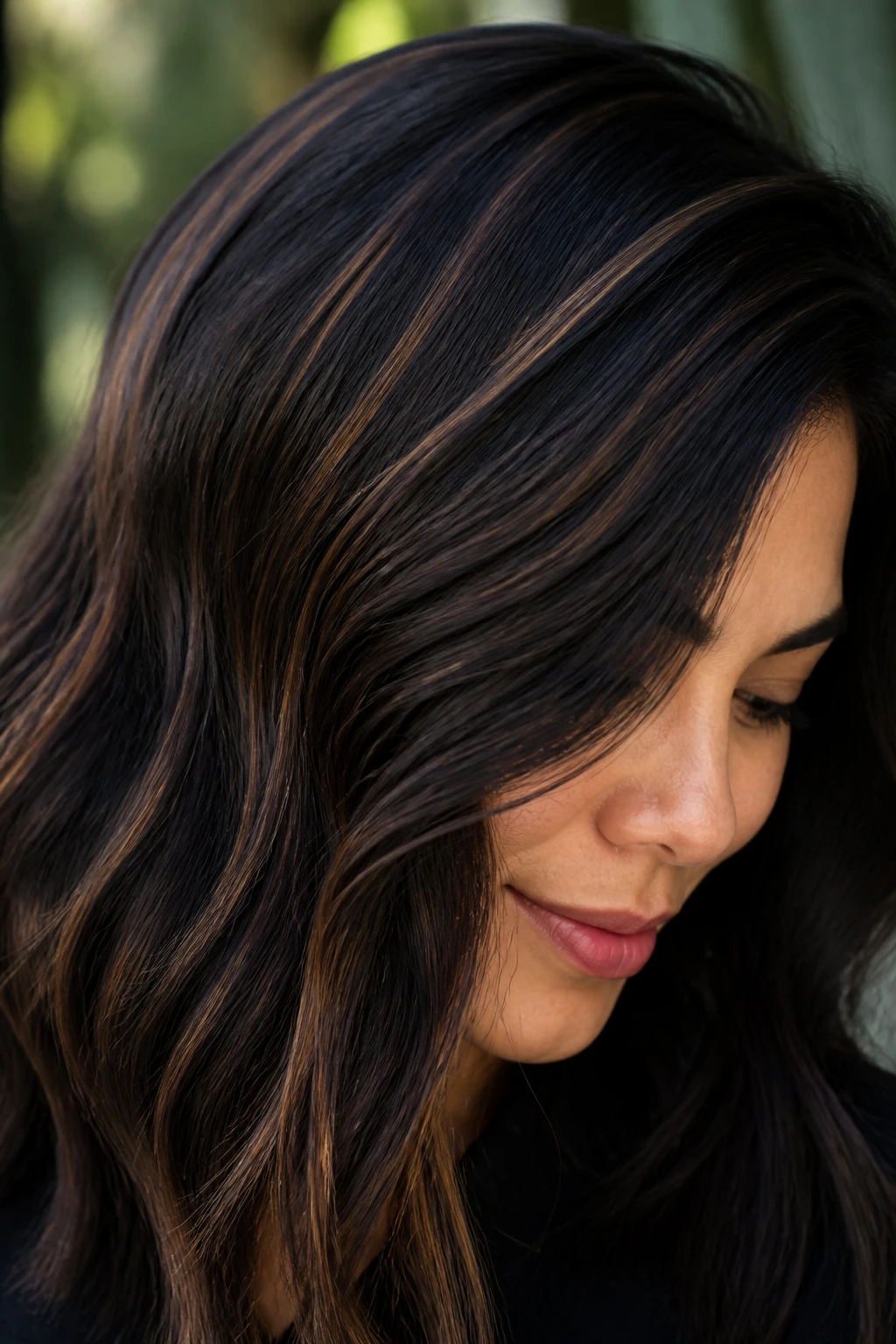
Natural black hair can hold dark brown lowlights better than almost anything else, but the shade needs to be deliberate. Deep umber is a good fit because it shows as brown in bright light and nearly black in shadow, which gives the hair movement without breaking the overall darkness.
That matters on cool skin tones, especially if you have deep or medium-deep undertones. A warm brown can look coppery against black hair fast. Umber stays cooler and blends more cleanly.
The streaks should be wider than you might expect. On very dark hair, tiny sections often disappear. A few thicker ribbons placed where the light hits — around the crown, sides, and underneath the outer layer — show up much better.
18. Mushroom Melt on Long, Airy Layers
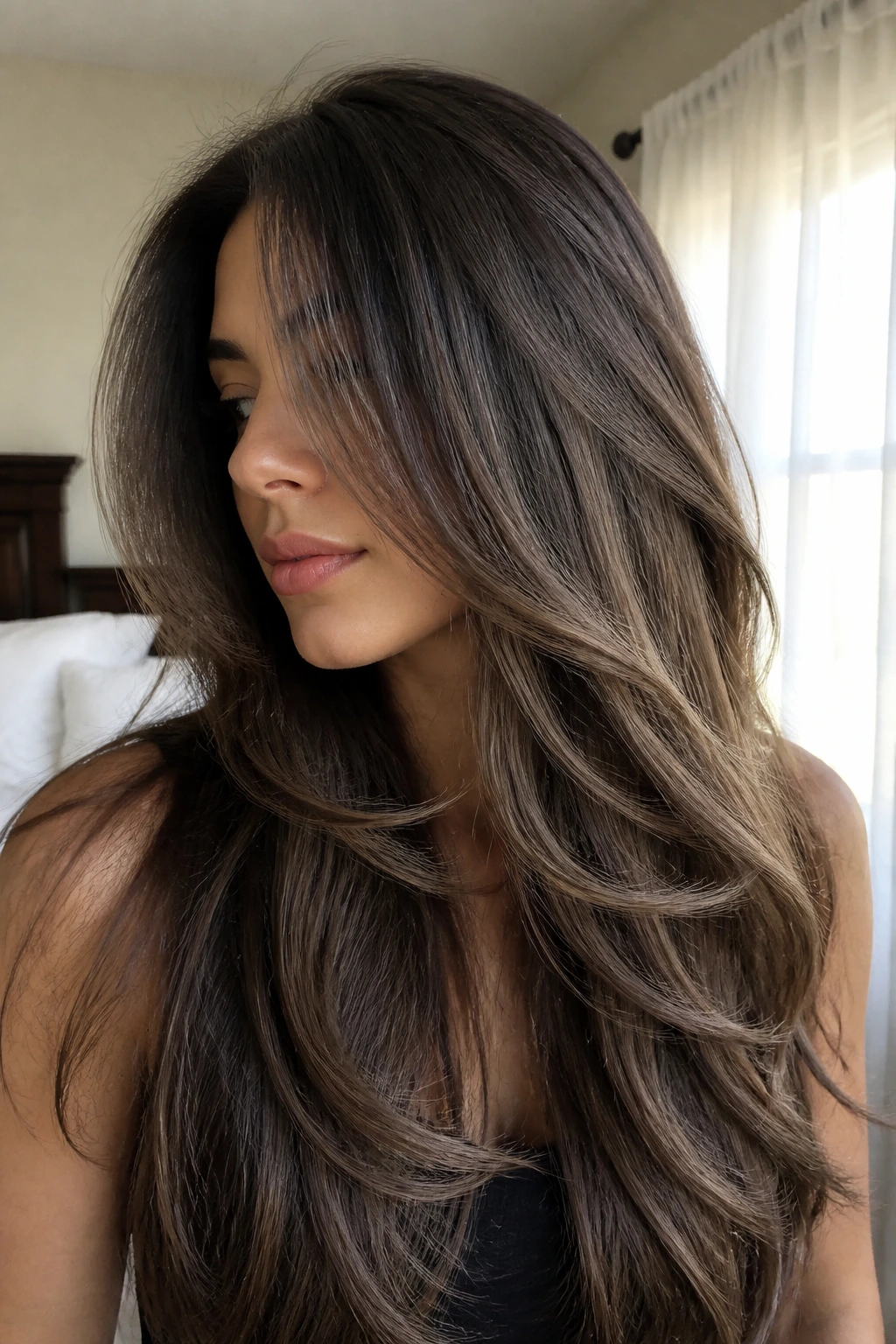
Long layers need a color melt that respects the movement of the cut. Mushroom lowlights do that because they shift the color from root to ends in a way that feels soft, not patchy.
The idea here is not to create a stripe of dark brown. It’s to slide the darker shade through the interior so the layers seem to rise and fall as the hair moves. On cool skin, the mushroom base keeps the color from turning warm under window light.
This is a nice option if you wear your hair loose most days. The layers catch the smoky brown in different places, and the whole style gets a little more depth without feeling heavy.
19. Espresso Peekaboos Under a Layered Crop
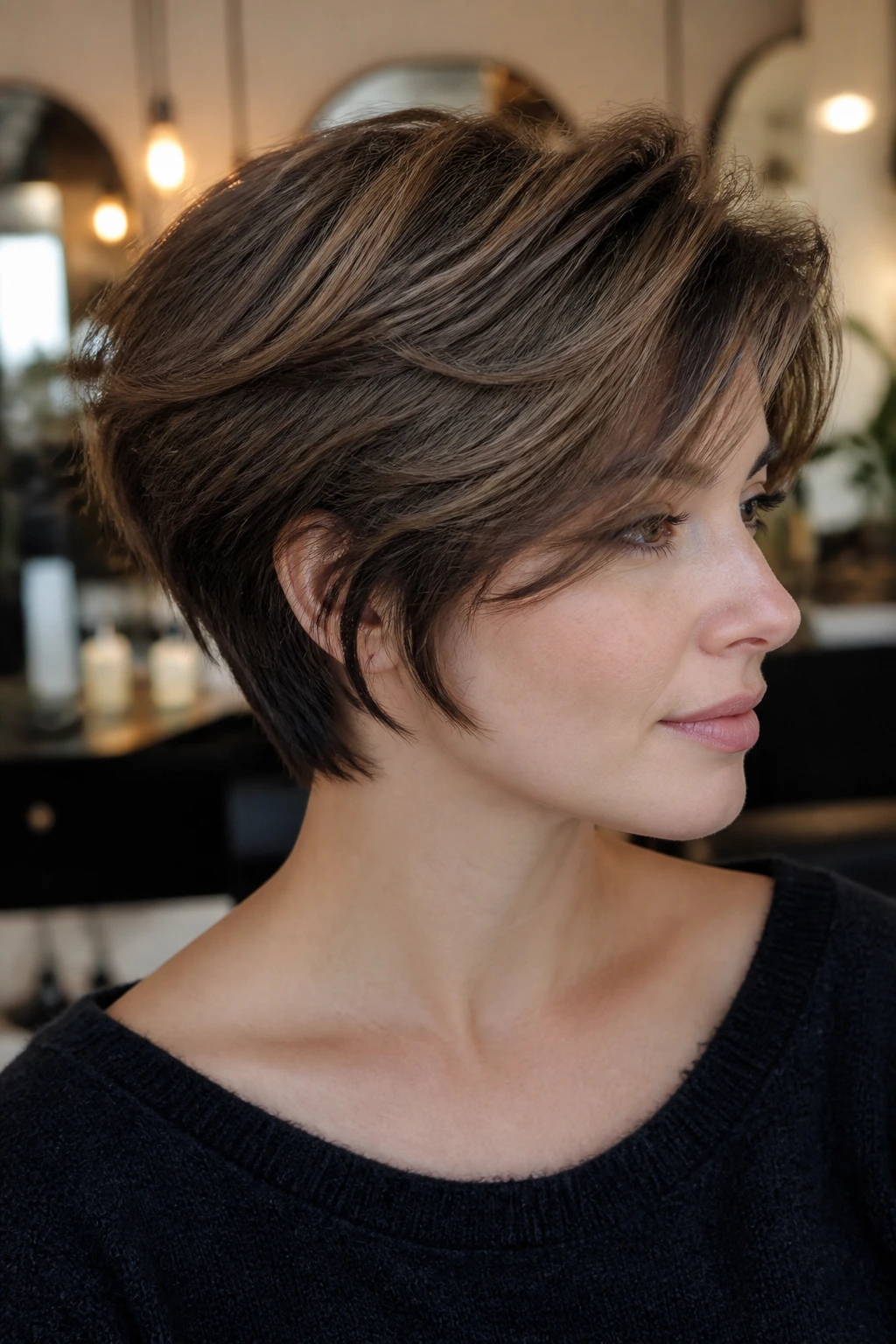
A short crop can get boring fast if every piece is the same depth. Espresso peekaboos fix that by hiding darker sections underneath the top layer, where they create movement only when the hair shifts.
Best cut shapes for this idea
- Shaggy pixie-bobs
- Layered crops with a bit of length at the crown
- Short cuts with a tucked nape
The peekaboo placement keeps the color from taking over the front of the face, which is useful on cool skin tones that don’t need extra shadow near the cheeks. Espresso is dark enough to show, but not so dark that it eats the texture.
This is one of the more playful options in the bunch. You catch it when the hair moves. That’s half the fun.
20. Smoky Walnut Money Pieces for Cool Faces
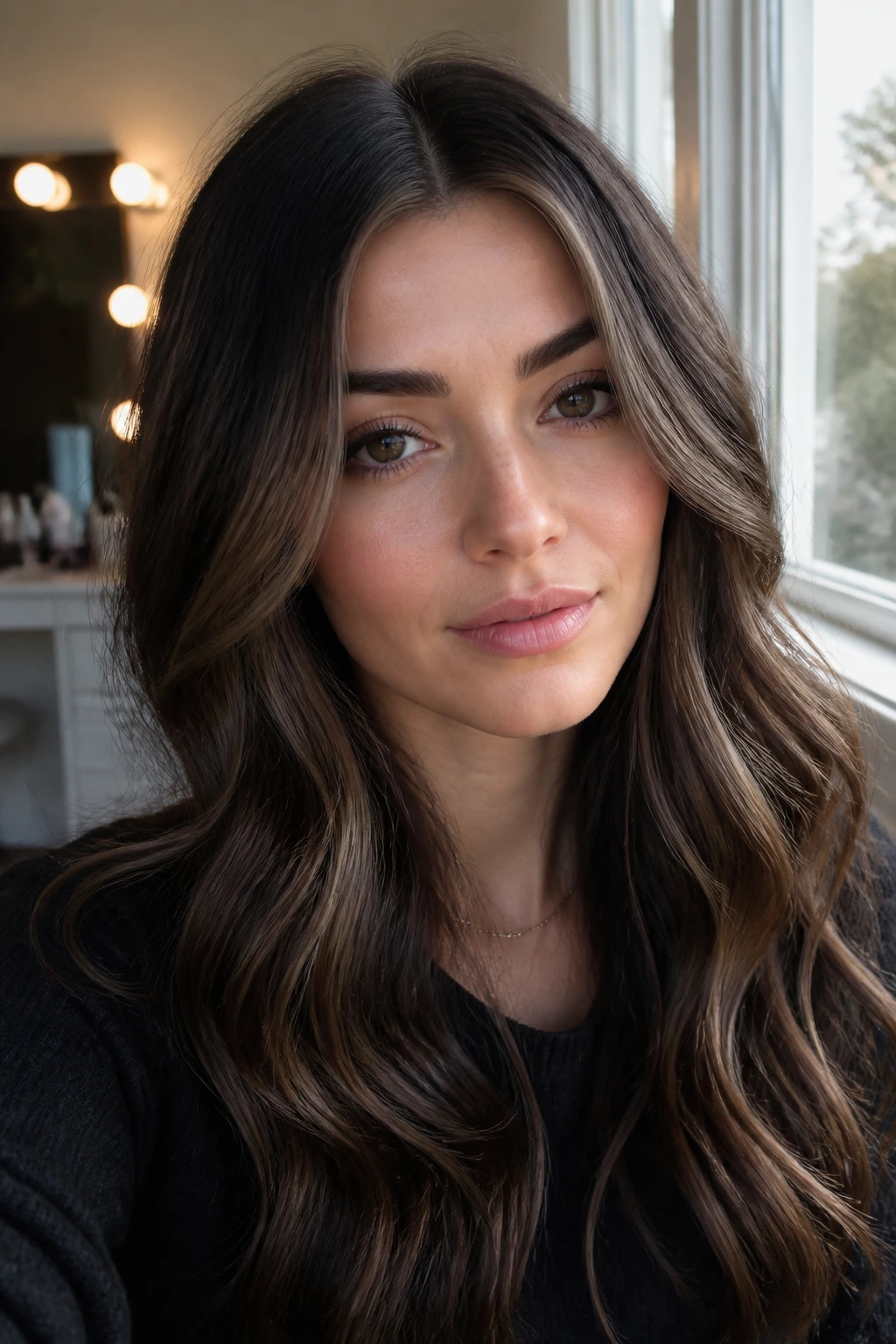
A lot of people want brightness around the face, and I get it. But a cool-toned brunette can also use a darker frame — one that softens the edge and gives the face more shape. Smoky walnut money pieces do exactly that.
The trick is to keep the front panels cool and narrow. Too much darkness right at the temples can drag the face down. A softer walnut lowlight, placed just outside the hairline and blended into the rest of the color, gives a quiet frame instead.
This works especially well if your natural hair has a little lightness around the face that feels too stark. The walnut pieces calm it down and make the haircut look intentional.
21. Charcoal Brown Depth in a Chin-Length Cut
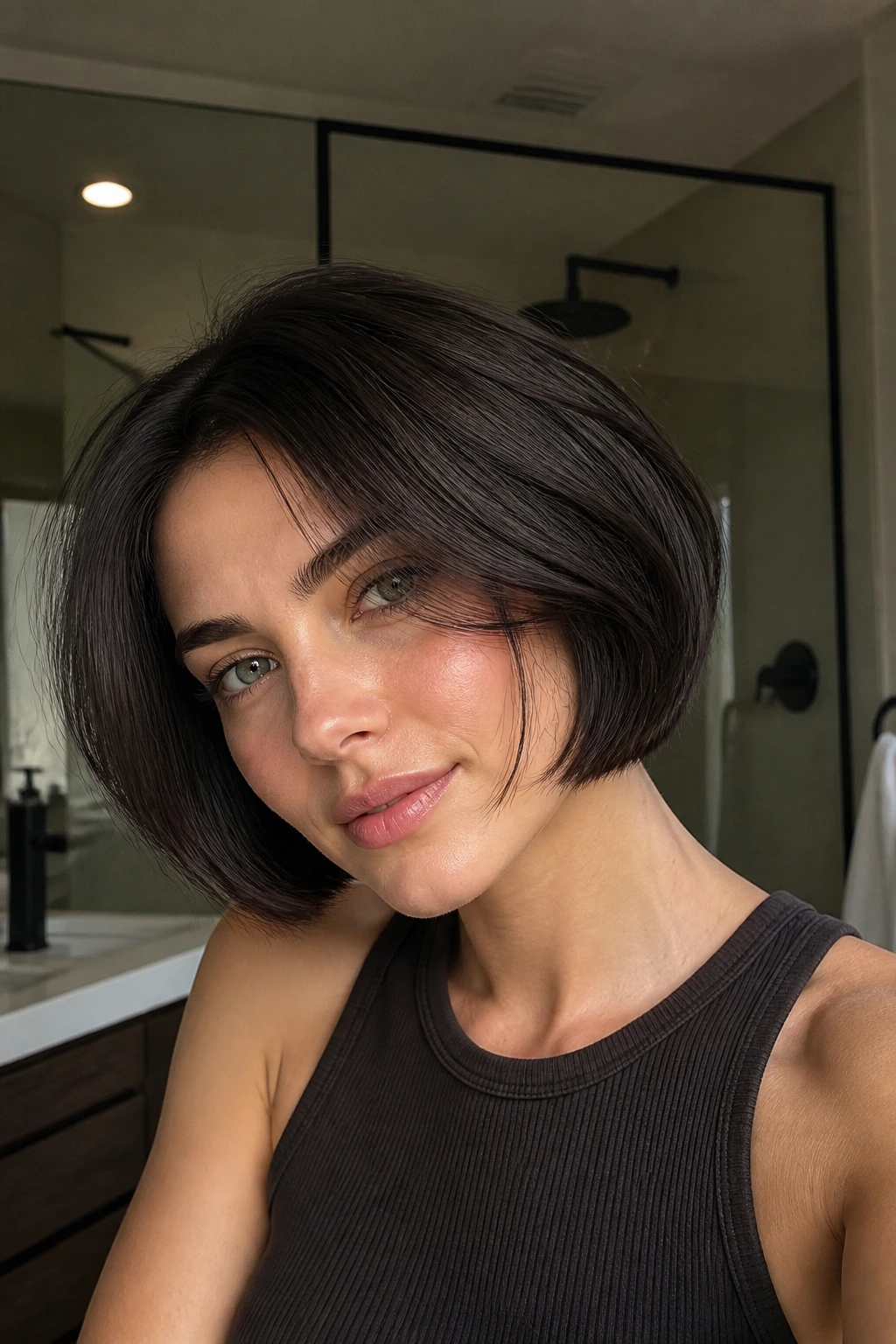
A chin-length cut can look almost sculptural with the right lowlights. Charcoal brown gives it that effect. It deepens the underside of the shape and keeps the top from reading too puffy or too round.
The placement should follow the cut line. Put the darkest pieces close to the nape and underneath the curve of the bob, then soften the front so the face still gets some light. If the hair is very fine, this can make the cut look denser. If it’s thick, it can take some of the bulk out visually.
Cool skin tones usually like charcoal because it feels clean and sharp, not ruddy. It’s a straight-ahead brown, only cooler.
22. Ash Brown Lowlights on Silver-Blend Brunettes
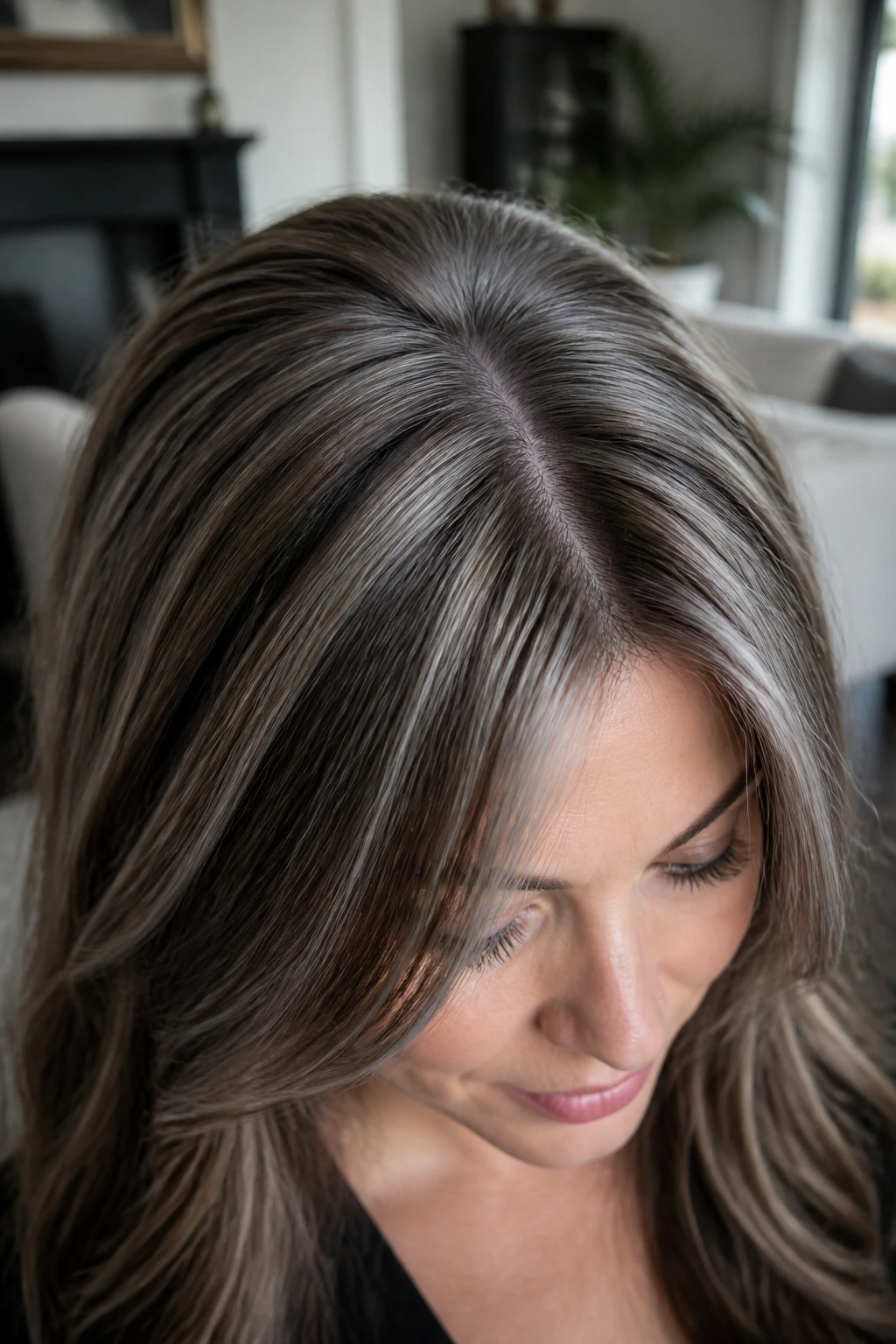
If your brunette is in that in-between stage where silver is coming through but you’re not ready to go full gray, ash brown lowlights are a smart bridge. They connect the two colors so the transition feels deliberate instead of accidental.
Why this blend works
The ash tone keeps the silver from flashing too starkly against the brown. It softens the part line and lets the grays sit beside the darker strands instead of fighting them. On cool skin, that matters because the whole color story stays in the same temperature family.
- Placement: around the part, temples, and crown
- Tone: level 4 to 5 ash brown
- Finish: cool gloss every few weeks if the hair is porous
This is one of the most practical lowlight options for people who want less upkeep and more honesty from their color.
23. Satin Sable Ribbons for Thick Hair
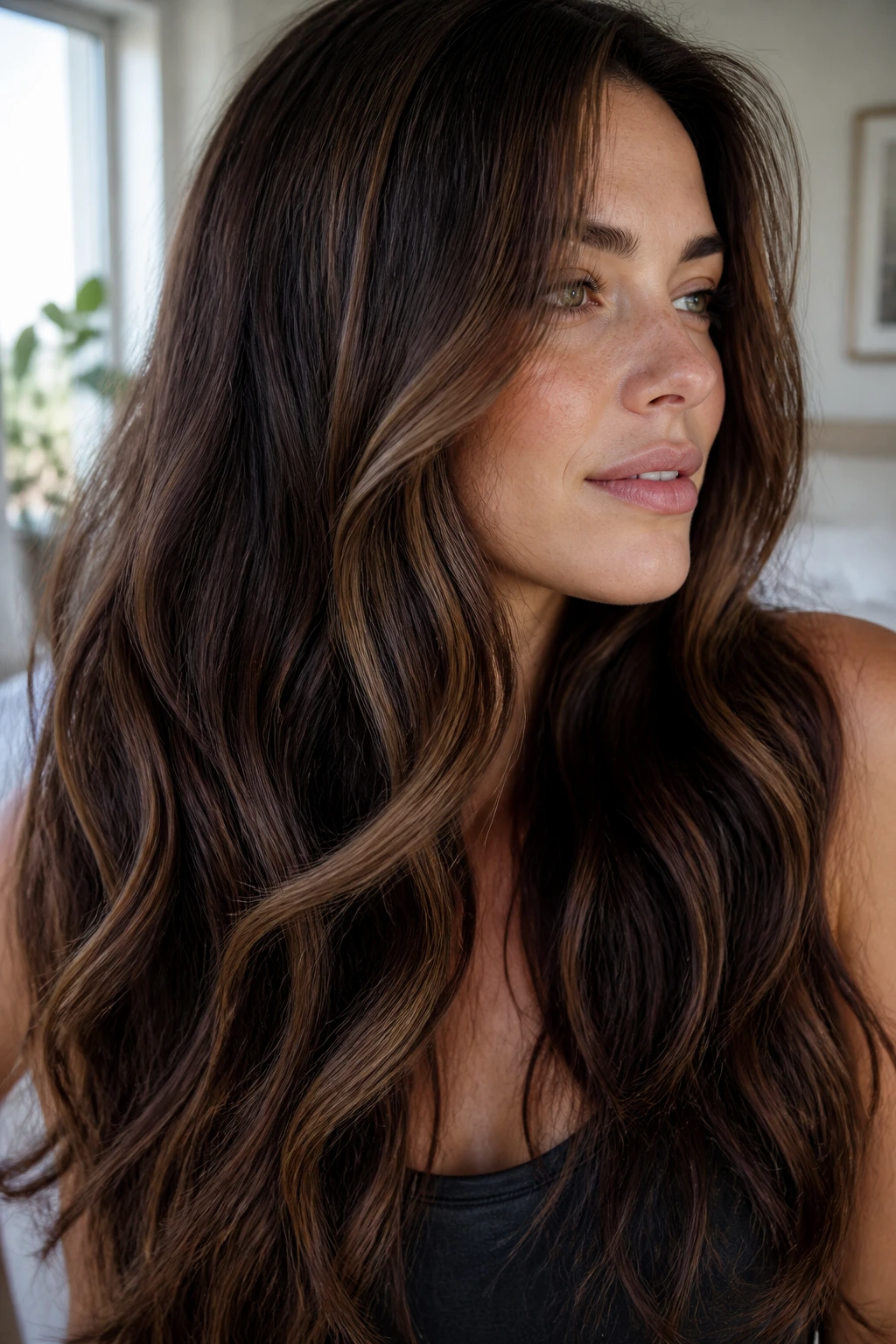
Thick hair can carry satin sable ribbons with ease, and that’s the reason this shade works so well. The larger surface area lets the color show instead of vanishing into the mass of the hair.
The sable tone should be cool and smooth, like dark fabric rather than dark mud. If the formula gets too warm, thick hair will expose it fast. With the right tone, though, the ribbons create shine and separation in all the right places.
This style is especially good on blowouts. The hair swings, the ribbons show, and the shape gets a little more polish without needing much product.
24. Cool Cocoa Shadow Root With Dark Brown Ends
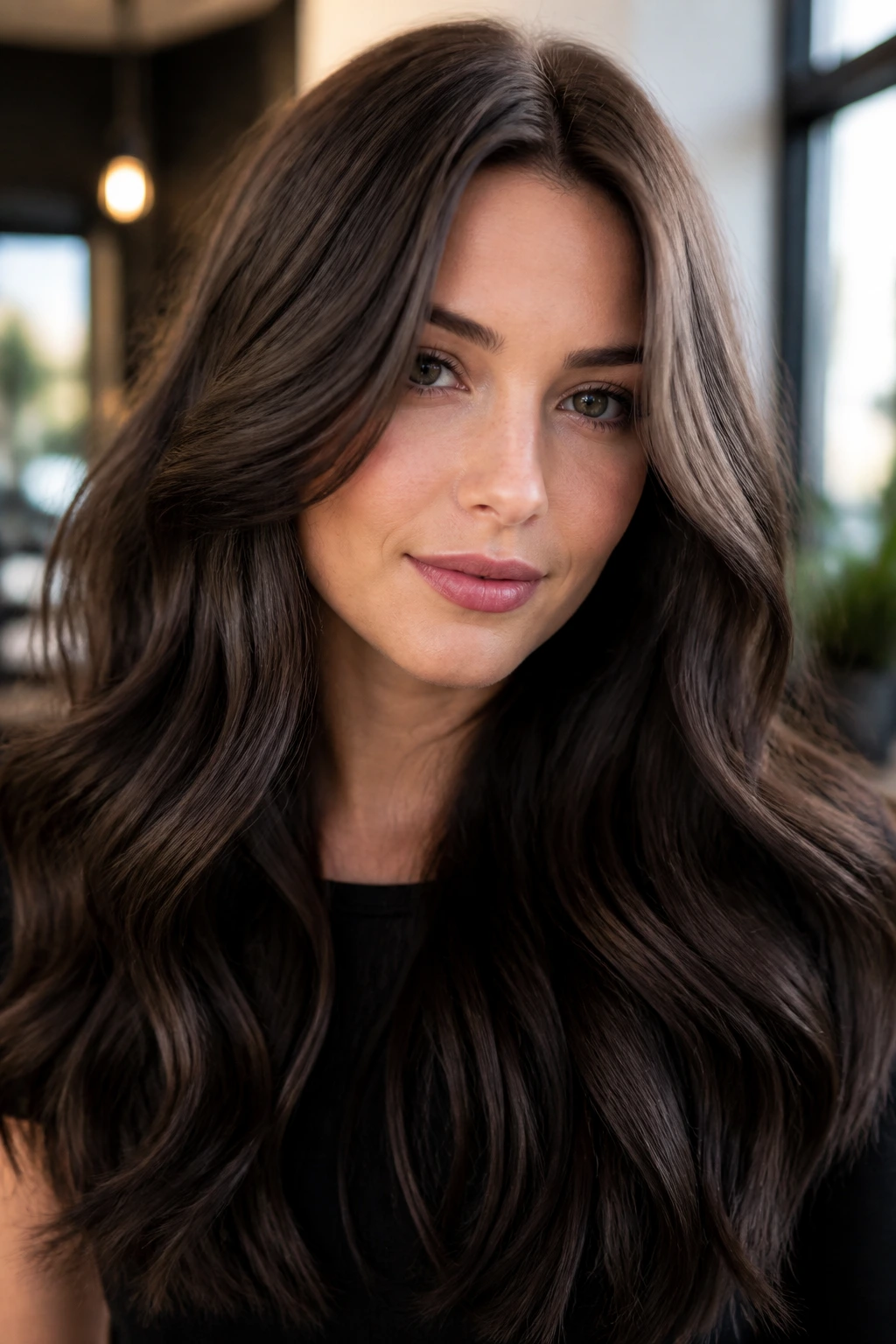
A shadow root usually means a softer grow-out, but it can also be used to make lowlights feel less obvious. Cool cocoa at the root blending into dark brown ends gives the hair a gradual shift that flatters cool skin and keeps maintenance easy.
The root area should stay soft, not banded. The ends can go a touch deeper if the goal is to make the hair look richer and less airy. This is useful on hair that was lightened before and now feels a bit disconnected from the scalp.
If you like wearing your hair up, this approach helps. The color change is gradual, so the ponytail and bun still look smooth instead of striped.
25. Graphite Mocha Pieces for Short, Choppy Cuts
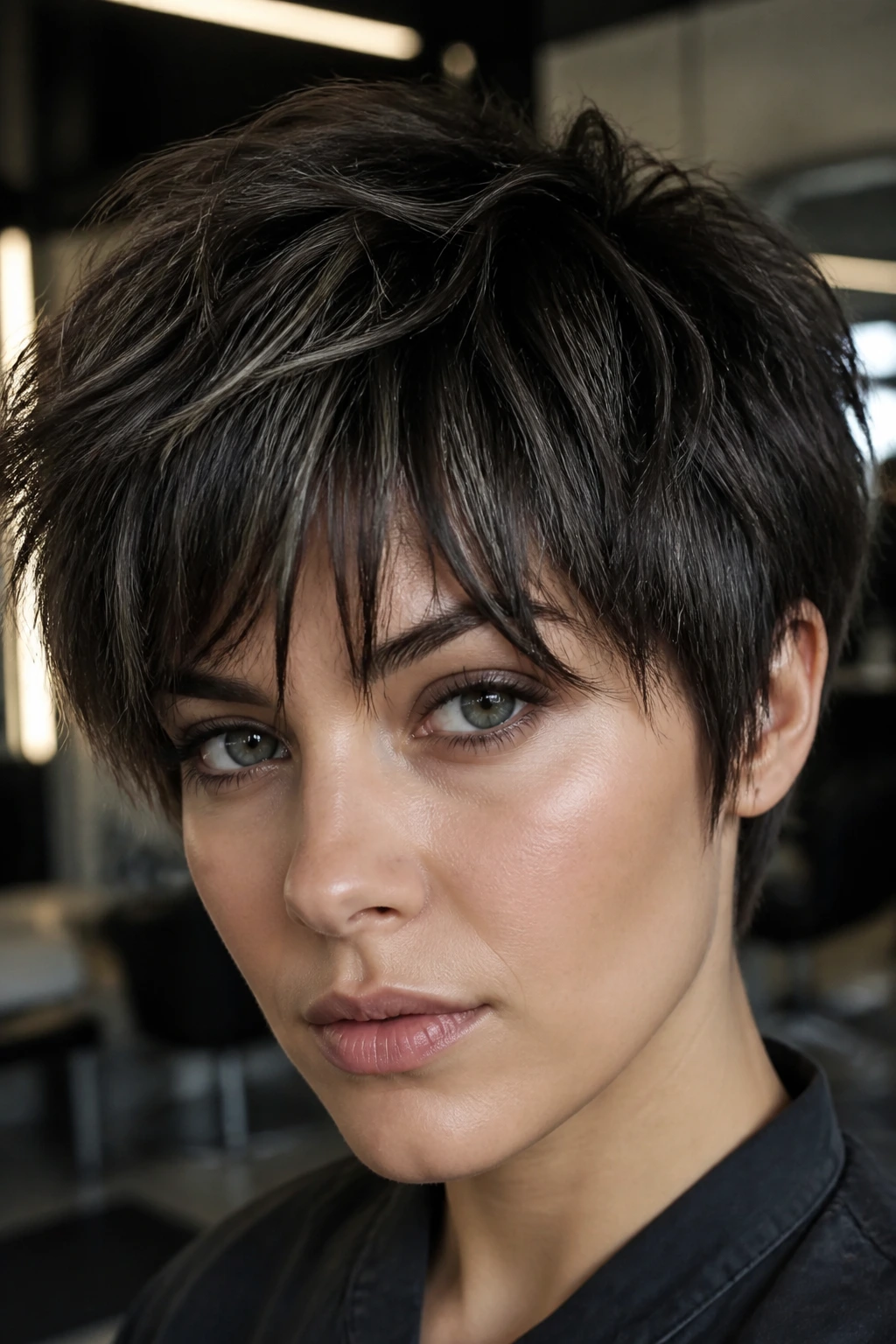
Short, choppy cuts need color that can keep up with the texture. Graphite mocha pieces do that because they sit in the smoky brown family but still give enough contrast to show the choppiness.
What to watch for
The placement has to follow the cut, not fight it. Put the darker pieces where the hair naturally sticks out or bends — near the crown, through the fringe, around the ears. If you paint every section evenly, the shape gets lost.
This is a good option for cool skin because graphite mocha stays neutral-cool instead of sliding warm. It also works well if you like a low-key edge rather than a soft, blended result.
Short cuts are unforgiving. This shade gives them a little attitude.
26. Dimensional Cool Brunette Melt on Coiled Hair
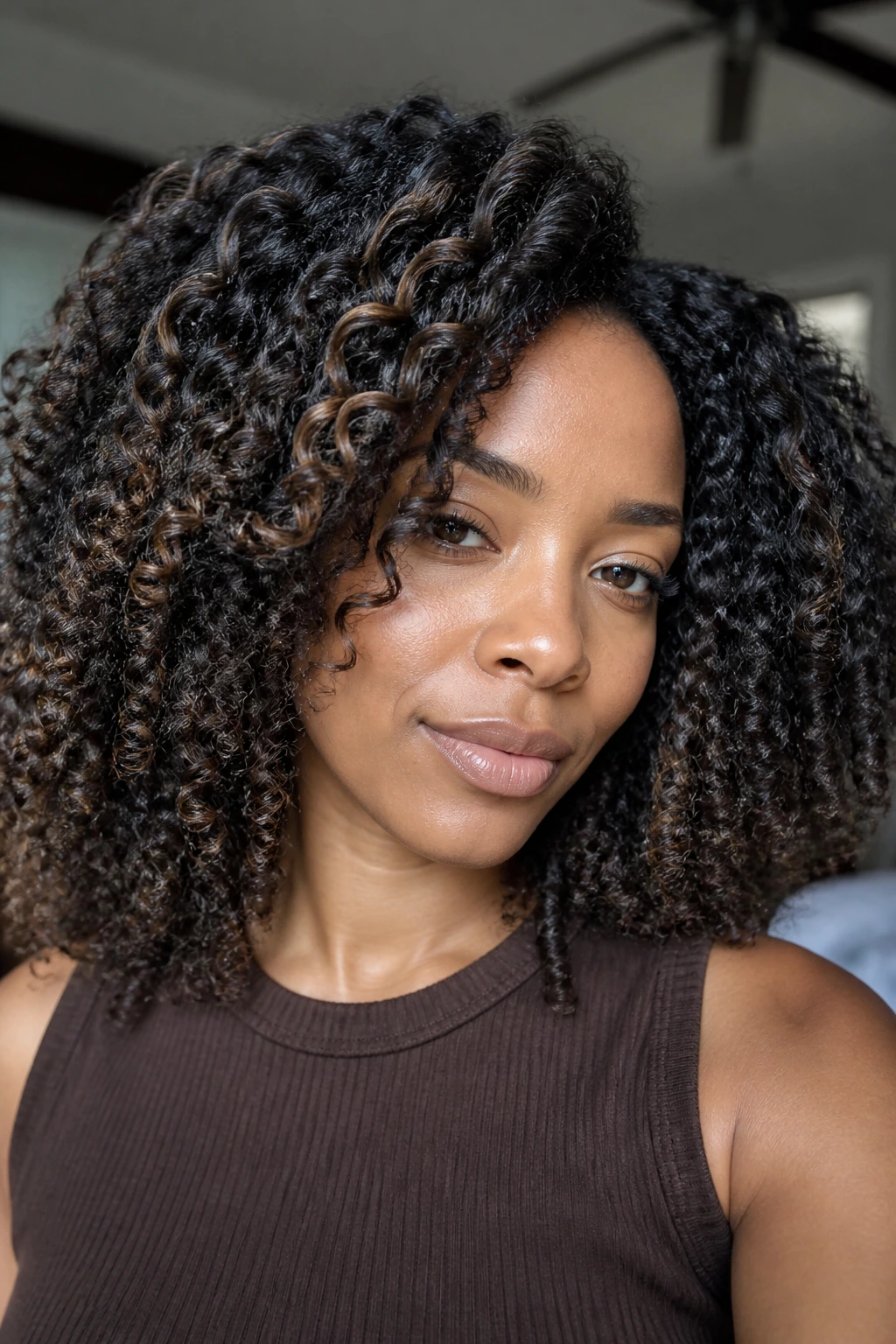
Coiled hair needs lowlights that can survive shrinkage. That means wider sections, a little more depth, and a formula that won’t dry the hair out after processing. A dimensional cool brunette melt does that job better than tiny scattered pieces.
The darker shades should live where the coils separate naturally — not just on the surface, but in the interior layers too. That way, when the hair coils up, the darker bits still peek through. The effect is softer than stripey color and stronger than a single-tone brown.
Cool skin tones pair well with this because the brown remains muted. If the shade starts to warm up too much, the coils can look dull rather than rich.
27. Midnight Brown Veils for Glossy Straight Hair
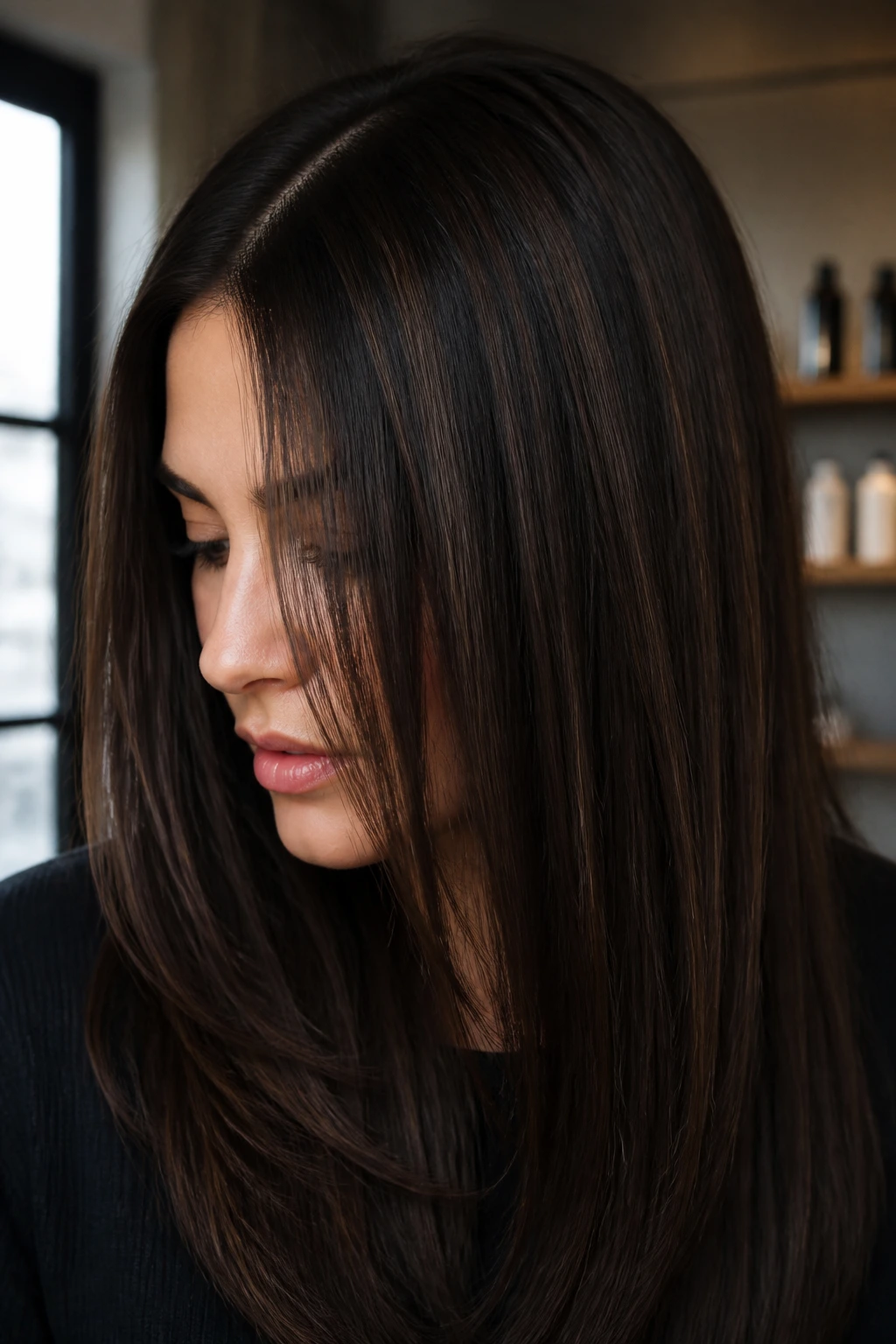
Straight hair with a high shine can handle darker veils better than most textures. Midnight brown lowlights sit under the surface and give the hair a glassy, layered look when the light moves across it.
The smartest placement is usually around the part, beneath the top sheet of hair, and a few veils at the back where the cut loses body. That keeps the shine on top while the depth underneath stops the style from flattening out.
On cool skin tones, midnight brown feels clean and polished. Not warm. Not red. Just dark enough to create contrast and let the face stand out.
28. Soft Slate Lowlights to Finish a Neutral Brunette
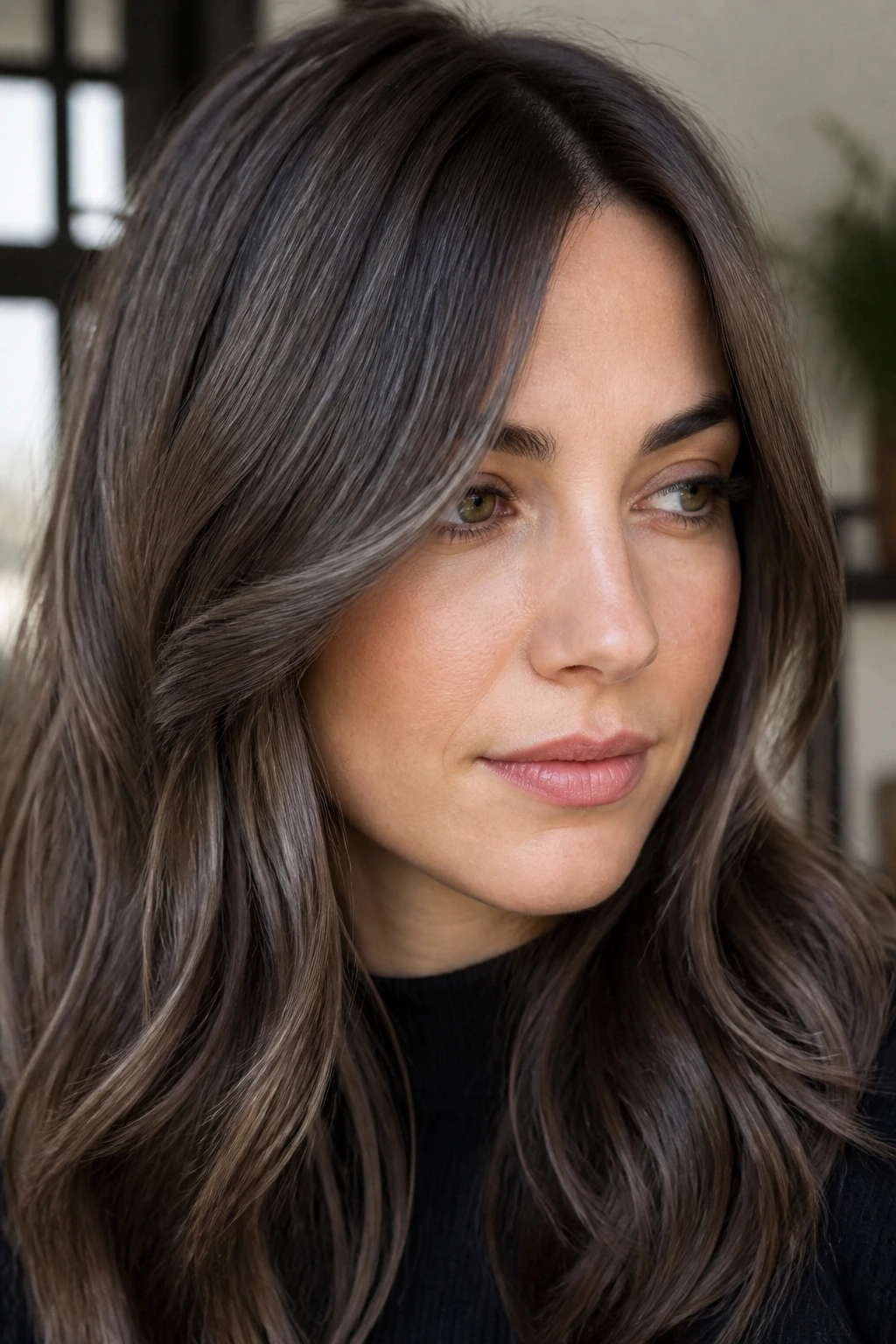
Soft slate is the closest thing to a universal cool brunette lowlight. It works when the base is neither too light nor too dark, and when the goal is simply more shape, more shadow, and less sameness.
This shade is especially useful if you’re not chasing a dramatic shift. A few slate pieces around the temples, crown, and nape can change how the whole haircut reads. The movement looks a little cleaner, the part line looks softer, and the color has room to breathe.
If your skin tone is cool but not icy, soft slate tends to land well. It gives enough edge to matter and enough restraint to stay wearable.
What Dark Brown Lowlights Really Change on Cool Skin
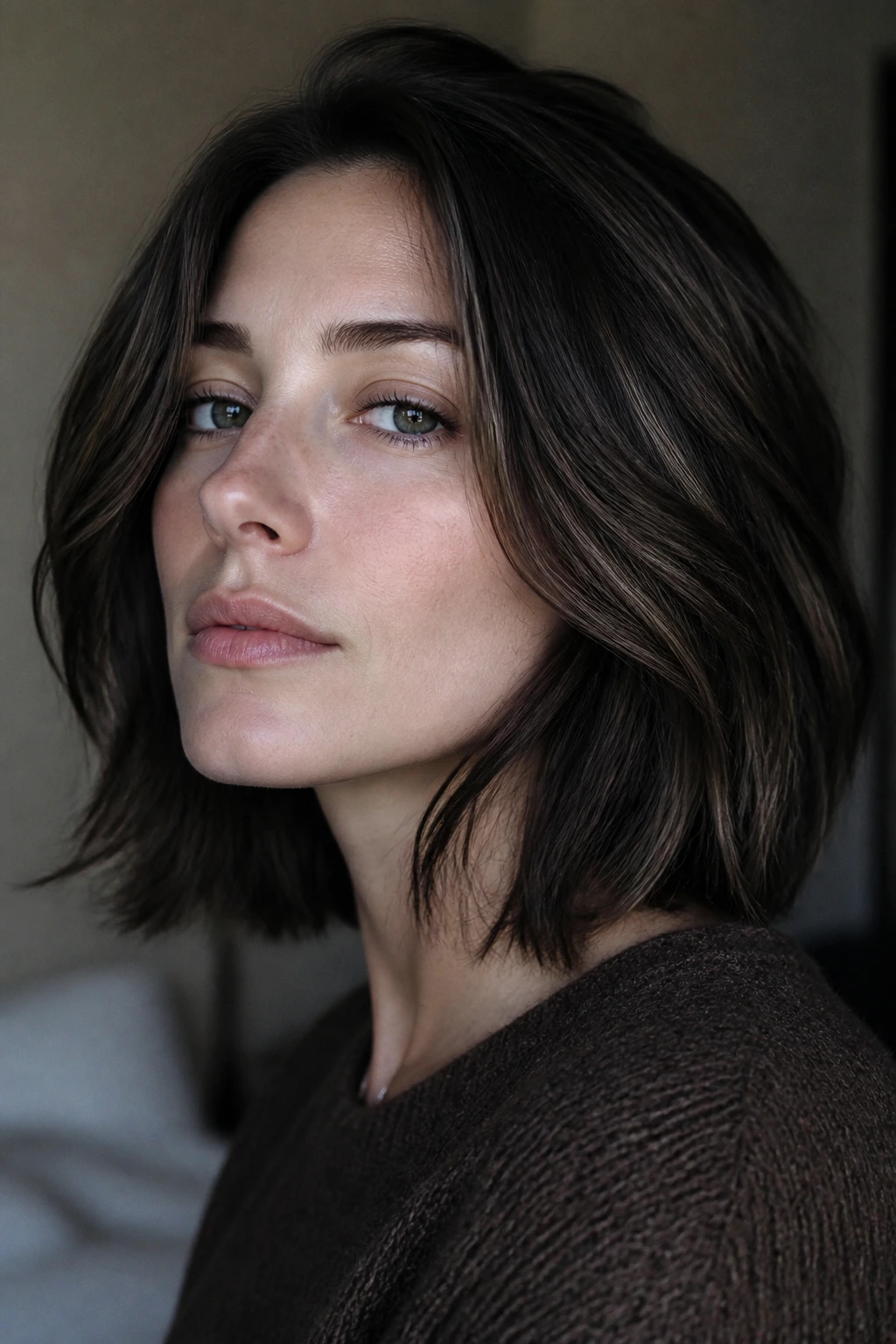
Dark brown lowlights do three jobs at once: they add depth, they quiet brass, and they make the haircut look like it has bones. That last part is the one people miss. Hair with no shadow can look shiny for about ten seconds, then it starts reading thin, especially in flat lighting. A cool brown lowlight brings back the contrast that lets the cut hold its shape.
Cool skin tones usually need browns that live on the ash, smoky, or blue-brown side. If the brown drifts warm, the skin can look pinker and the hair can look orange by comparison. That doesn’t mean warm browns are bad in general. It means they’re the wrong tool here.
Why the shade family matters
An espresso or mushroom tone behaves differently from a chestnut or caramel brown because the undertone stays cooler as it fades. That gives you a softer grow-out and a cleaner look between salon visits. On cool skin, that difference shows up around the jawline and the eyes faster than people expect.
Why placement matters just as much
A single lowlight formula can read three different ways depending on where it lands. Underlayers add fullness. Front panels frame the face. Crown pieces break up a wide part and stop the hair from turning into one dark sheet.
What cool skin usually doesn’t need
Warm coppery browns. Golden mocha. Anything that looks like it borrowed too much from red. Those shades can be pretty on the right person, but they’re not the ones that make cool skin feel calm and balanced.
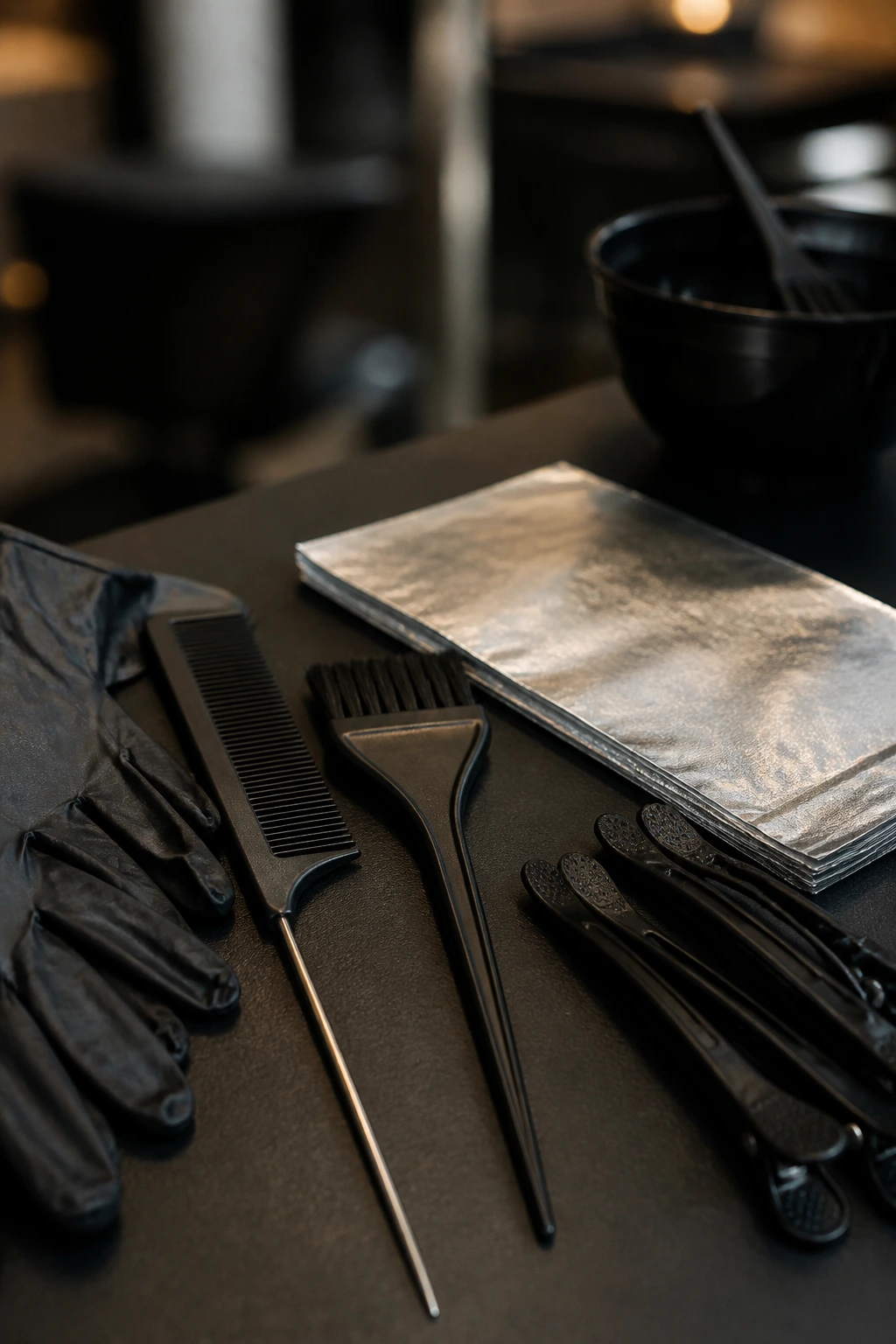
Essential Tools for These Lowlights
-
Tail comb with a pointed end: The clean partings matter more than people think, especially for thin panels and face-framing sections.
-
Tint brush and color bowl: A narrow brush gives better control on small placements than a big color brush that dumps product everywhere.
-
Foils or meche strips: Use these to keep the lowlights separated while they process, especially if you’re working around highlights or lighter ends.
-
Sectioning clips: Good clips save you from redoing your parting every five minutes. Cheap clips slip when the hair gets damp.
-
Color gloves: Dark brown pigment stains fast. Your hands do not need to look like a walnut shell for the next two days.
-
Demi-permanent brown formula: For most lowlight work, a demi color in ash, espresso, mushroom, or mocha families gives a softer result than a hard permanent brown.
-
Developer matched to the formula: Follow the brand instructions. Lowlight work usually needs a gentler setup than lightening does, and that’s on purpose.
-
Clarifying shampoo and color-safe shampoo: Clarifying is for the pre-service reset. Color-safe shampoo is for aftercare, because hard-water buildup can flatten cool browns fast.
-
Swatch chart or color ring: Shade names lie. Swatches don’t. If you color hair for a living, this earns its spot on the counter.
Choosing the Right Brown Without Guessing
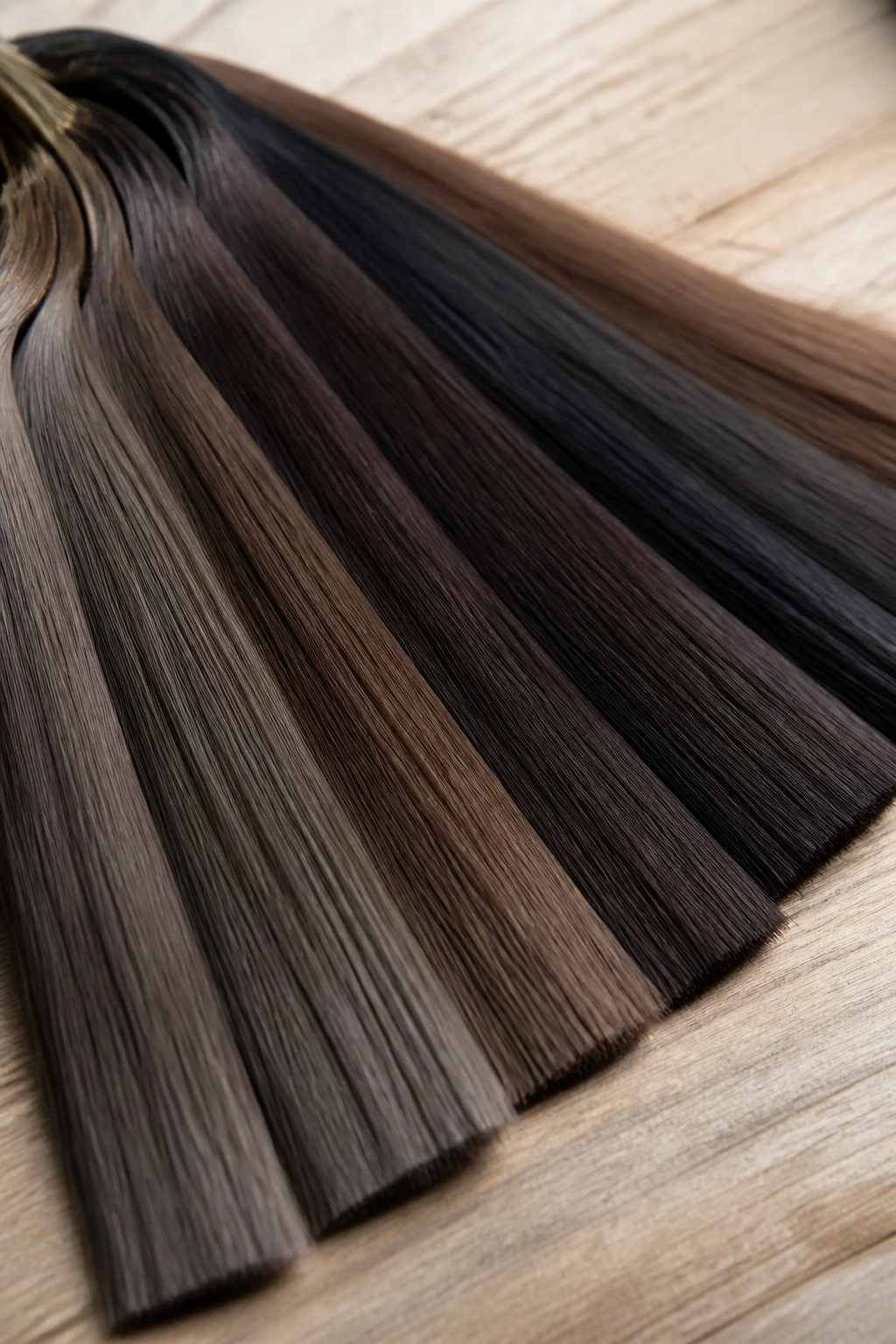
The easiest way to choose the right dark brown lowlight is to stop thinking in vague names and start thinking in undertones. Ask whether the brown leans ash, smoke, cocoa, espresso, mushroom, or blue-brown. Those are the families that tend to flatter cool skin. If the formula sounds like chestnut, cinnamon, amber, copper, or caramel, I’d be suspicious.
A good rule: pick a lowlight that is one to two levels deeper than the base if you want softness, and two to three levels deeper if you want clear contrast. On very fair cool skin, the front pieces often look better when they’re slightly softer than the underlayer. On deep cool skin, a stronger contrast can look rich instead of harsh.
Bring photos, but bring the right kind. Look for images taken in daylight, not in warm bathroom lighting or edited salon mirrors. Those pictures hide warmth and make brown look cooler than it is.
If your hair has been lightened before, do a strand test. Porous ends can grab dark pigment fast and go muddy. That’s not a personality flaw. It’s chemistry.
How to Wear the Dimension Without Losing Shine
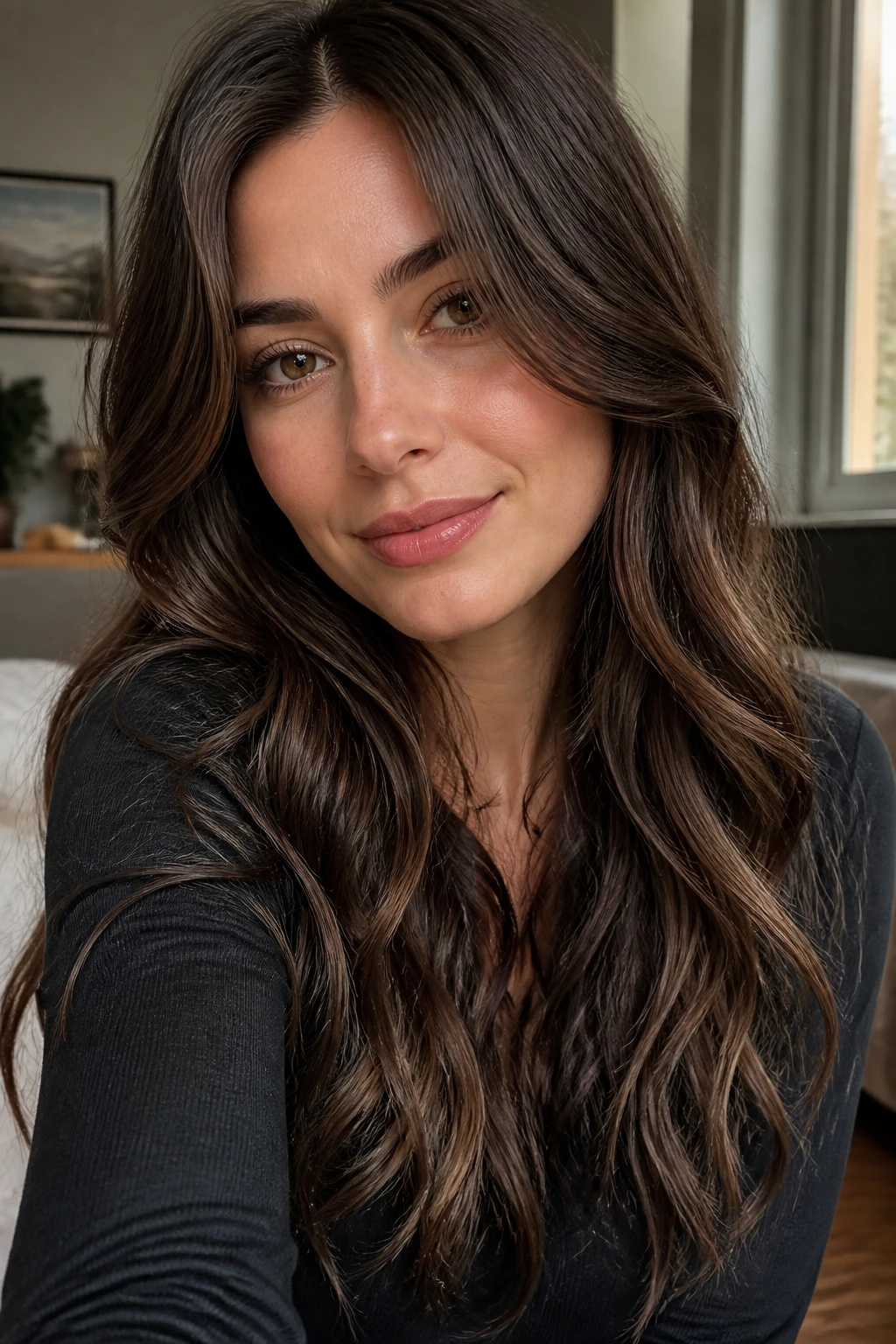
Placement: Keep the darkest pieces under the visible top layer when you want a subtle result, and move them closer to the face only when you want more contour.
Styling: Loose bends, soft blowouts, and tucked-behind-the-ear styles show dark brown lowlights better than poker-straight hair with no movement. If you flat iron everything bone straight, the color can disappear.
Maintenance: Use a color-safe shampoo, wash in cooler water, and avoid overdoing clarifying formulas unless you’re removing buildup. Cool browns look dull fast when the cuticle is rough.
Pro move: If the hair is fine, place the lowlights around the crown and part before anywhere else. If the hair is thick or curly, go deeper in the interior so the depth shows when the hair shifts.
Finish: A clear or cool gloss after lowlighting can give the color that wet, polished look people spend a lot of time chasing with styling cream.
Mistakes That Turn a Cool Brunette Muddy
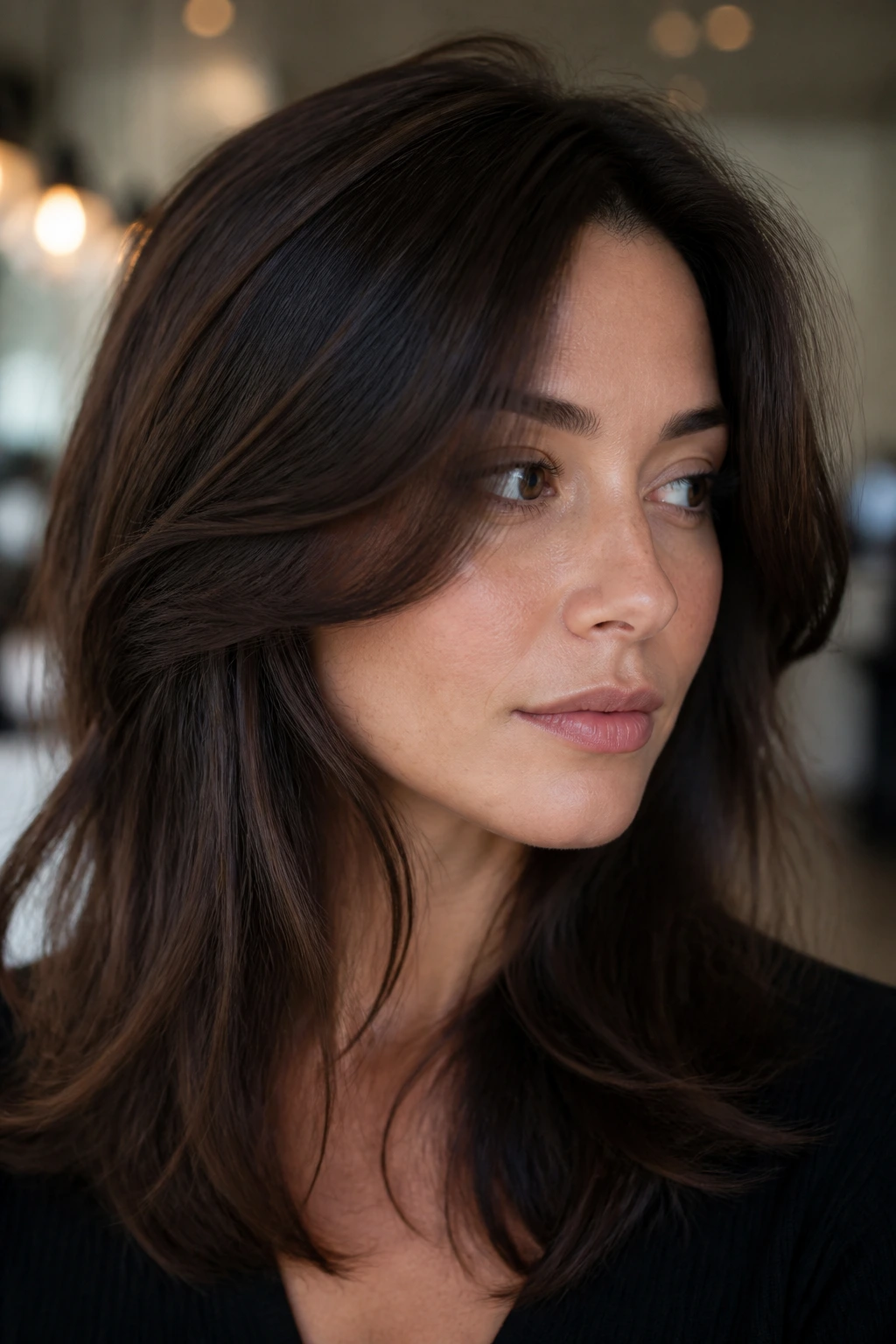
Choosing a brown with hidden warmth: This is the classic trap. The hair looks fine in the chair, then turns orange in daylight. Fix it by asking for ash, smoke, or blue-based brown, not warm chestnut.
Painting too many wide pieces near the front: That can make the face look boxed in, especially on cool skin that already leans pink. Keep the front softer and let the darker pieces live more in the interior.
Making every section the same size: Uniform placement can read stripey. Vary the width of the panels so the color follows the haircut instead of fighting it.
Ignoring porosity: Lightened ends grab pigment hard. If the hair is porous, process the ends for less time or use a gentler formula so the brown doesn’t go muddy.
Going too dark on fine hair: A very deep brown can make fine strands look sparse if the contrast is too sharp. In that case, stay one shade softer and build the shadow gradually.
Fresh Ways to Adapt the Shade Map
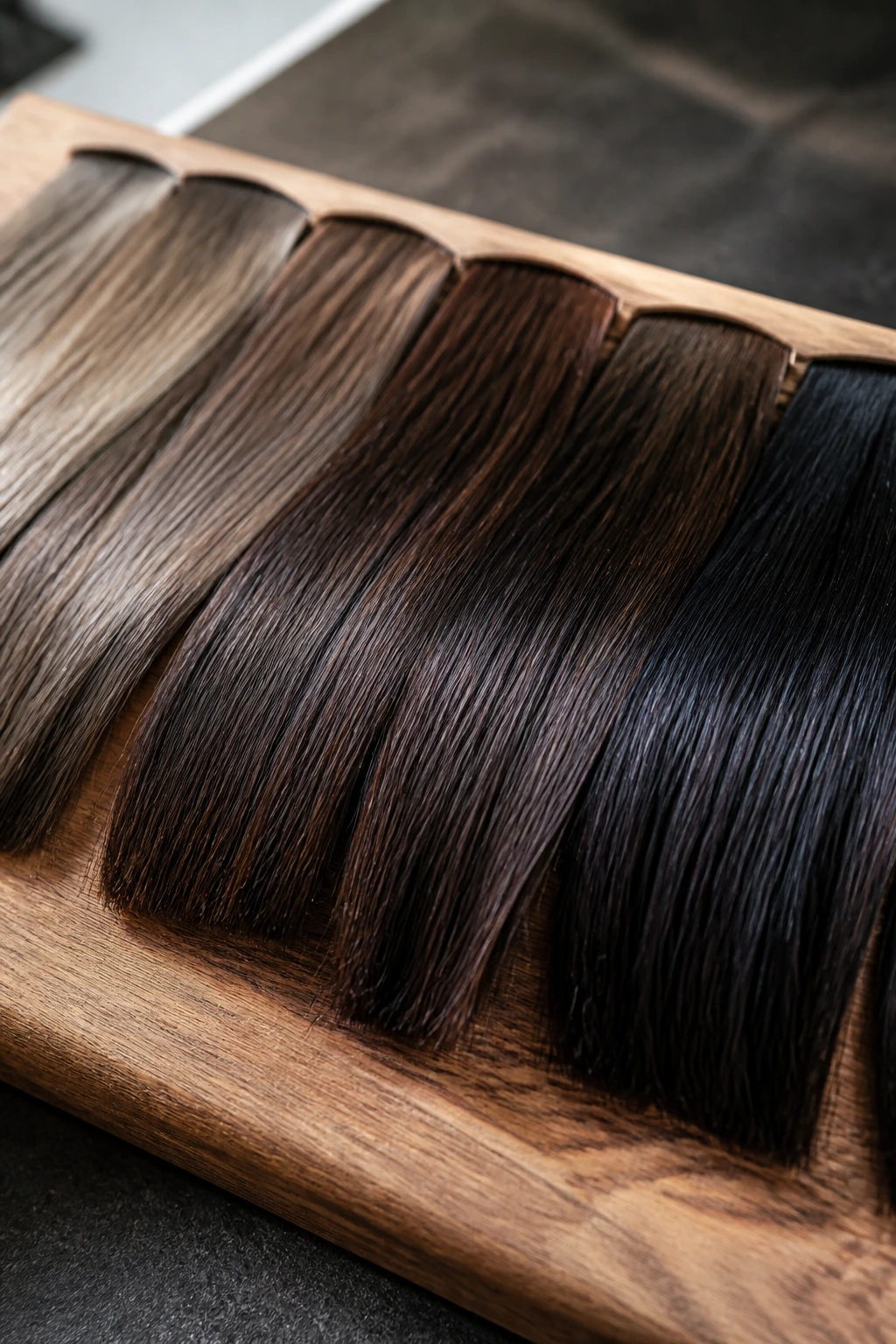
Barely-There Smoke: If you want the smallest change possible, keep the lowlights to a few micro-panels around the part and crown. This is the version for people who want more shape, not more drama.
High-Contrast Cool Brunette: Use espresso, graphite, and a touch of blue-black underlayers for a sharper, darker result. It suits cool skin with stronger contrast between hair, eyes, and complexion.
Gray-Blend Ash Mix: Pair ash brown lowlights with scattered silver leave-outs to soften early grays. The finish looks intentional, not like you tried to erase everything.
Curly Halo Placement: On curls, place the darker pieces in wider ribbons around the outer curve of the head and deeper inside the crown. The shape shows better after shrinkage.
Short-Cut Edge Work: On pixies, bobs, and crops, keep the lowlights tighter around the nape, fringe, and crown. Short hair needs placement that follows the cut line, or the texture gets lost.
Keeping the Color Rich Between Appointments
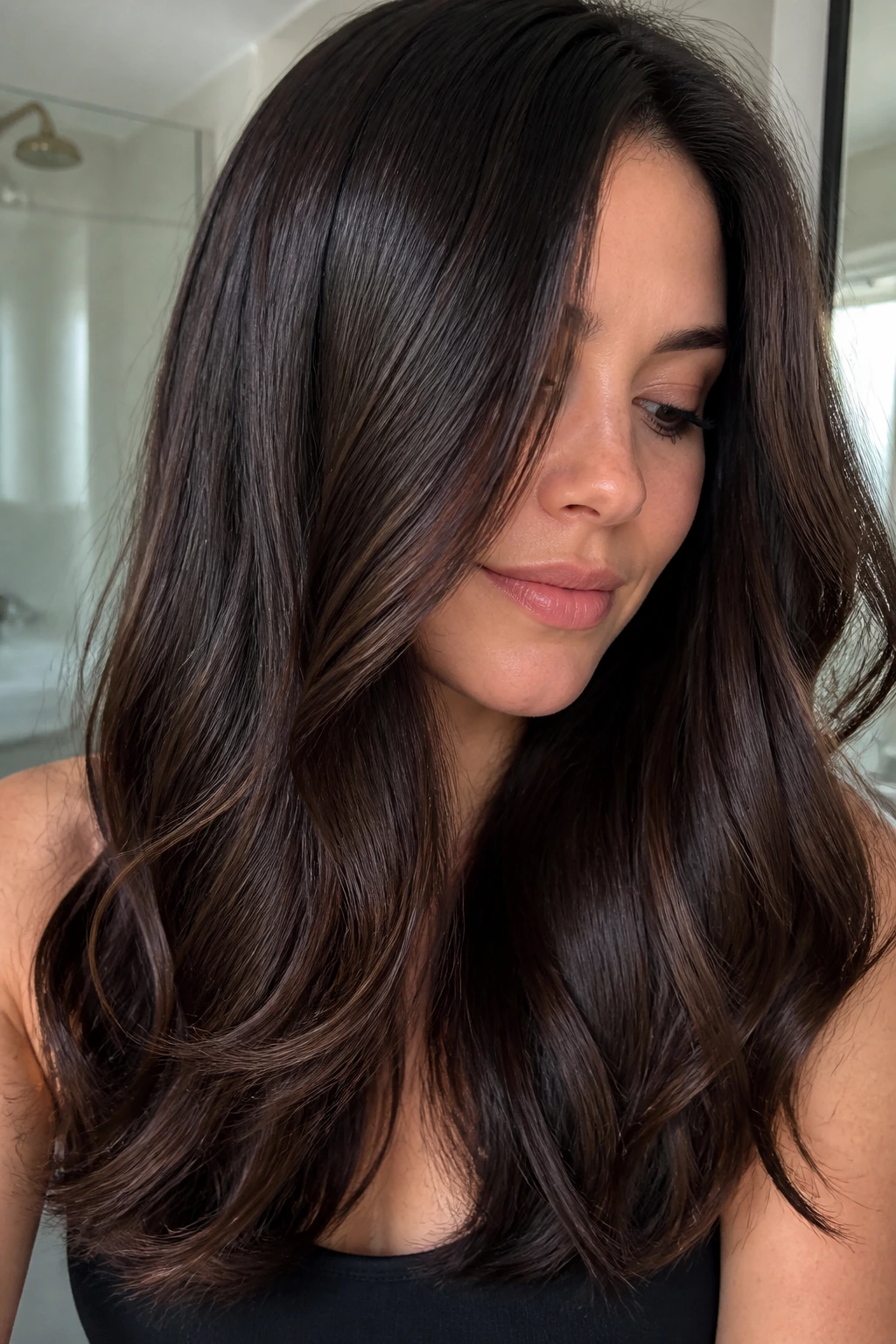
Dark brown lowlights do not need babying the way pastel shades do, but they still need some care. Wash too hot and the cuticle opens. Use a harsh shampoo and the cool tone can drift dull or warm. Let buildup sit on the hair for weeks and the whole thing loses that smoky finish.
In the first 48 hours after coloring, skip a shampoo if your stylist used a demi-permanent formula and told you to wait. After that, wash two or three times a week if you can. Cooler water helps the brown stay clear, and color-safe shampoo helps the tone keep its shape.
A gloss or toning treatment every 4 to 8 weeks can keep ash and espresso shades from fading into beige. If your hair is porous, the ends may need more conditioning than the roots. A weekly mask with a light, non-waxy finish usually helps more than a heavy cream that sits on top.
If you heat-style often, use a protectant and keep the iron around 300°F to 350°F. Higher heat can dull dark brown pigment faster than people expect.
Questions People Ask Before Booking
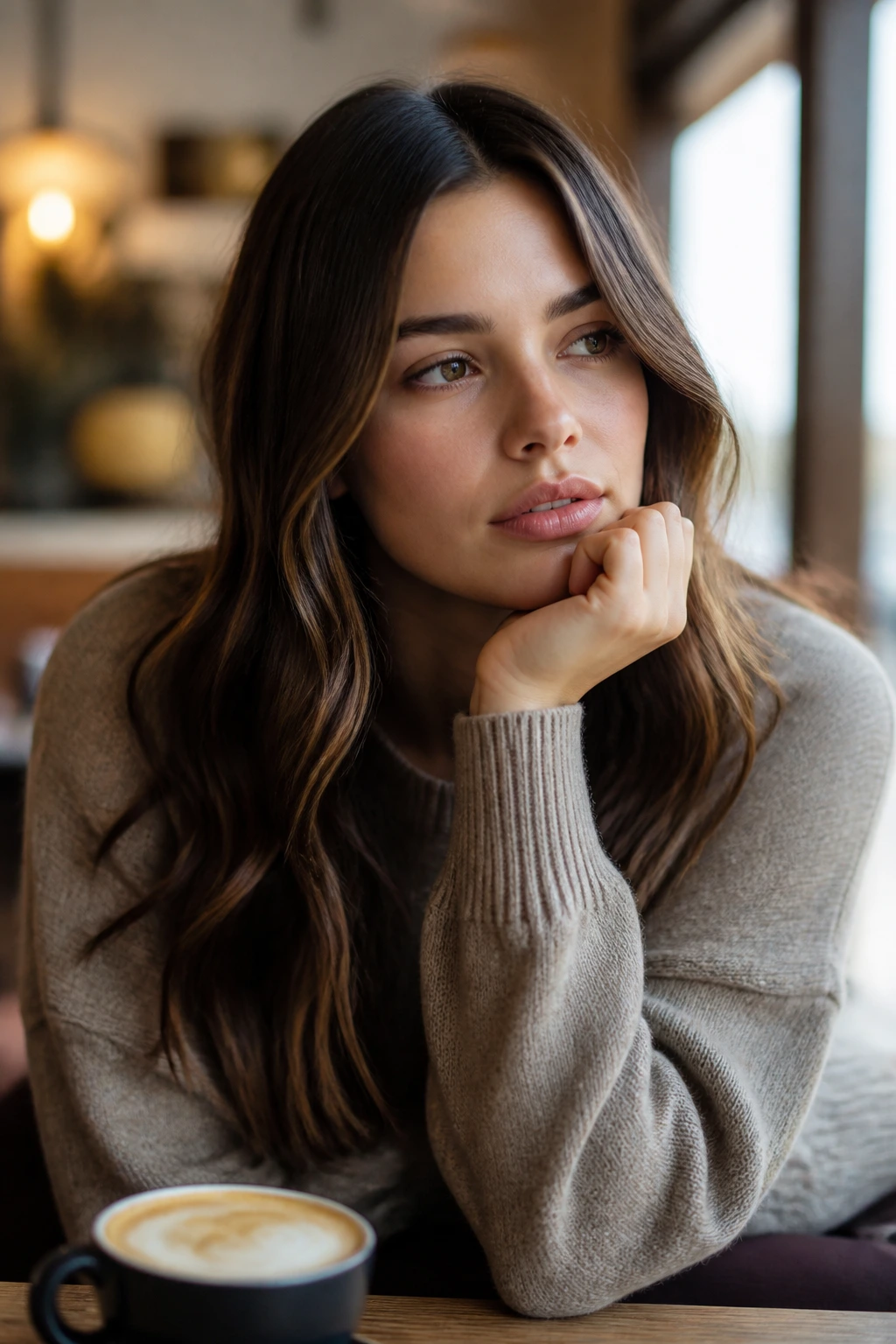
Will dark brown lowlights work on light brown hair?
Yes, if the shade stays cool and the placement is soft. On light brown hair, a few espresso or mushroom pieces can add shape without making the head look darker overall.
What dark brown shades look best on cool skin tones?
Ash brown, espresso, mushroom, slate, cool mocha, graphite, and blue-brown shades are the safest starting points. Anything with obvious copper, gold, or cinnamon usually pulls the look warm.
Do lowlights make fine hair look thinner?
They can, if the sections are too wide or too dark. Fine hair usually does better with fewer pieces and a softer brown one step deeper than the base.
Can I add lowlights to hair that already has highlights?
Absolutely, and that’s often where lowlights help the most. They break up the brightness, keep the blonde from feeling stripey, and make the whole color look more balanced.
How often do dark brown lowlights need refreshing?
Most people refresh them every 6 to 10 weeks, depending on how fast the hair fades and how dramatic the contrast is. A demi formula tends to soften before it looks rooty, which is part of the appeal.
What if the lowlights come out too warm?
A cool gloss or toner can usually pull the shade back into the ash family. If the warmth is baked into the formula, the next service should be adjusted toward mushroom, espresso, or blue-brown.
Can dark brown lowlights work on black hair?
Yes, but they’ll read best in sunlight or movement. On black hair, choose umber, espresso, or deep cocoa so the difference shows without looking reddish.
Do they suit short hair, or are they better on long layers?
They work on both, but short hair needs more careful placement. On crops and bobs, the lowlights should follow the cut line so the texture stays visible and clean.
A Cooler Brunette That Holds Its Shape
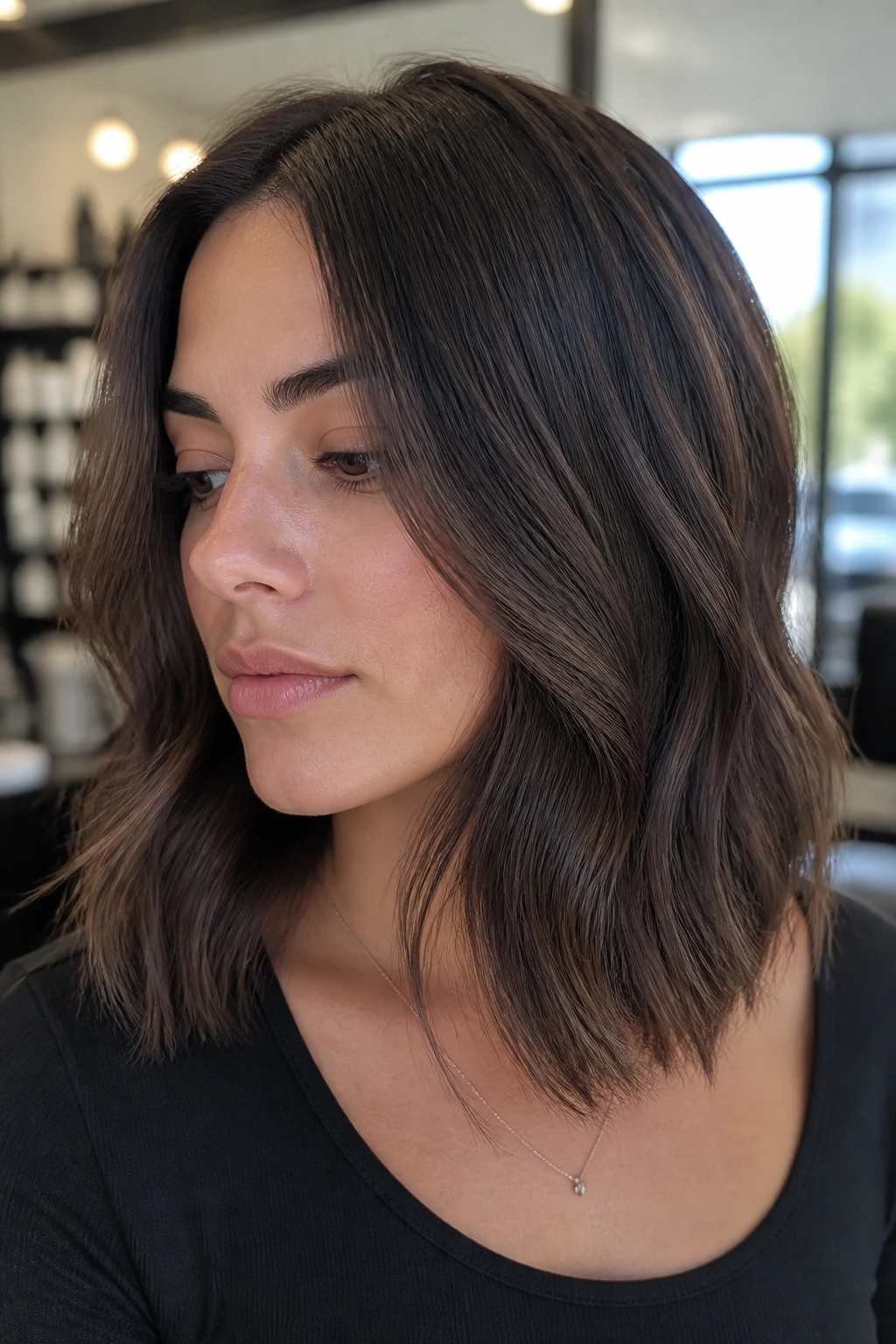
The nicest thing about dark brown lowlights is that they don’t need to shout to do the job. On cool skin tones, the right smoky brown can clean up brass, sharpen the haircut, and make even ordinary hair look more considered. That’s a lot of work for one color family.
If your brunette has been feeling too light, too warm, or too flat, one of these cooler shade directions is usually the fix. Keep the undertone ash, keep the placement thoughtful, and let the shadows do their part. The next time you sit in the chair, ask for depth that looks smoked, not warmed — your skin will thank you.