



Thick hair can swallow color if the highlights are too chunky. Babylights solve that problem in a very particular way: they slip in fine, threadlike brightness that shows up when the hair moves, not only when it’s perfectly still under a bathroom light. On dense hair, that matters. A lot.
The difference is easy to miss in a photo and impossible to miss in real life. Babylights soften the surface, break up the heavy curtain effect, and make layers look lighter without making the ends look wispy or fried. I’m partial to that kind of restraint. Thick hair already has the volume; it needs shape, direction, and a little sparkle in the right places.
The hairstyles below lean into that idea from every angle. Some are sharp and polished. Some are loose and lived-in. Some are the kind you wear to make a blazer look less severe, and some are pure “I meant to look this effortless” energy. What they all share is one thing: the babylights have room to show off instead of getting buried under weight.
Why These Hairstyles Work So Well With Thick Hair
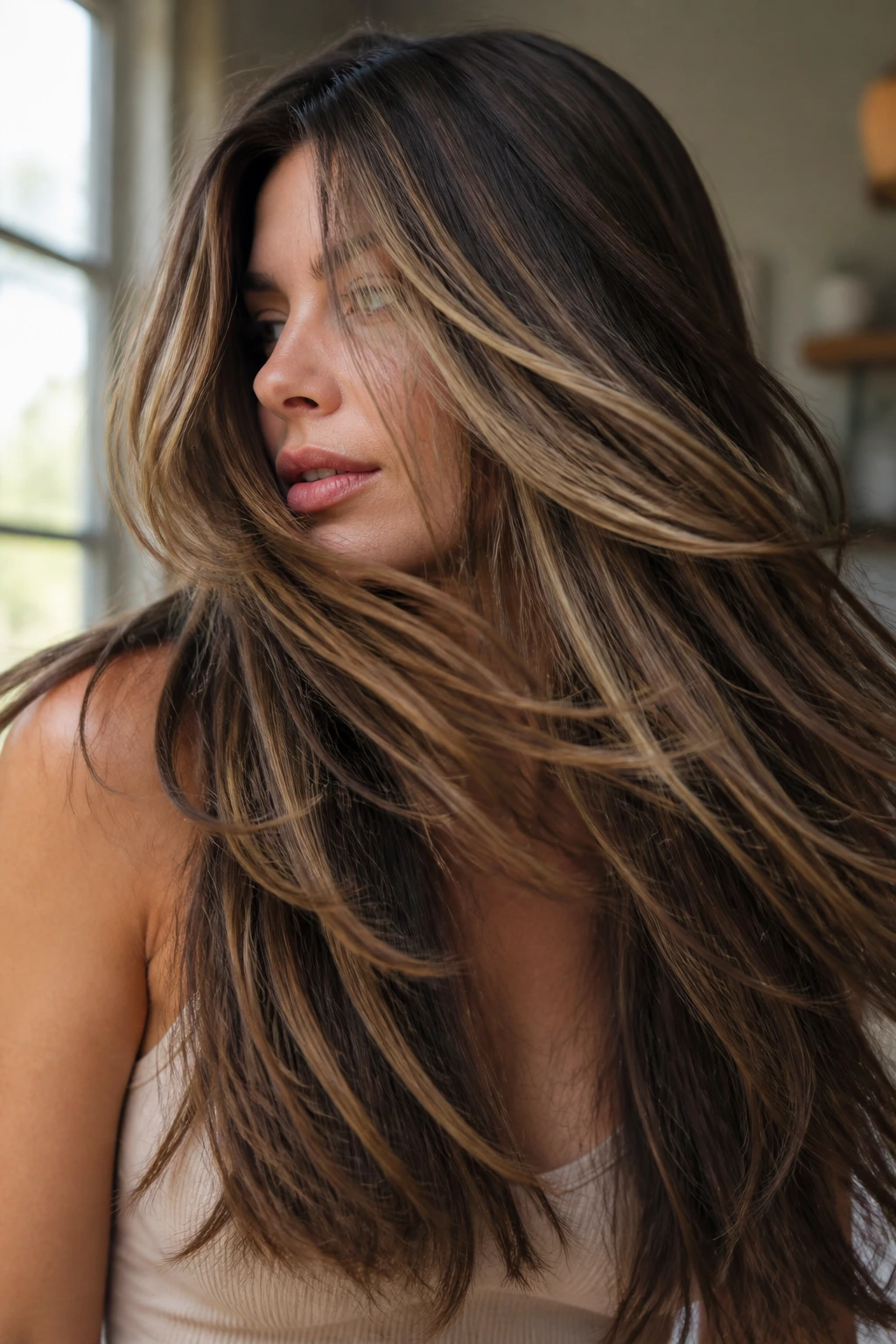
Movement shows up faster: Thick hair can hold a lot of shape, but it can also sit like a sheet. Fine babylights break that up so the cut looks lighter every time you turn your head.
The grow-out is softer: Micro-highlight placement blurs regrowth better than chunky streaks, which is a blessing when your hair needs more time and product to lighten evenly.
You get shape without losing density: The right style trims bulk where it matters — around the jaw, crown, or ends — while keeping the body that makes thick hair so useful.
Heat styling behaves better: Babylights catch curves from a round brush, wave iron, or flat iron bend more clearly, so a simple style reads finished instead of flat.
The color still makes sense up close: On thick hair, a few carefully placed light pieces at the face and outer layer can do more than a full-head brightening job that disappears once the hair settles.
1. Blunt Lob With Face-Framing Babylights
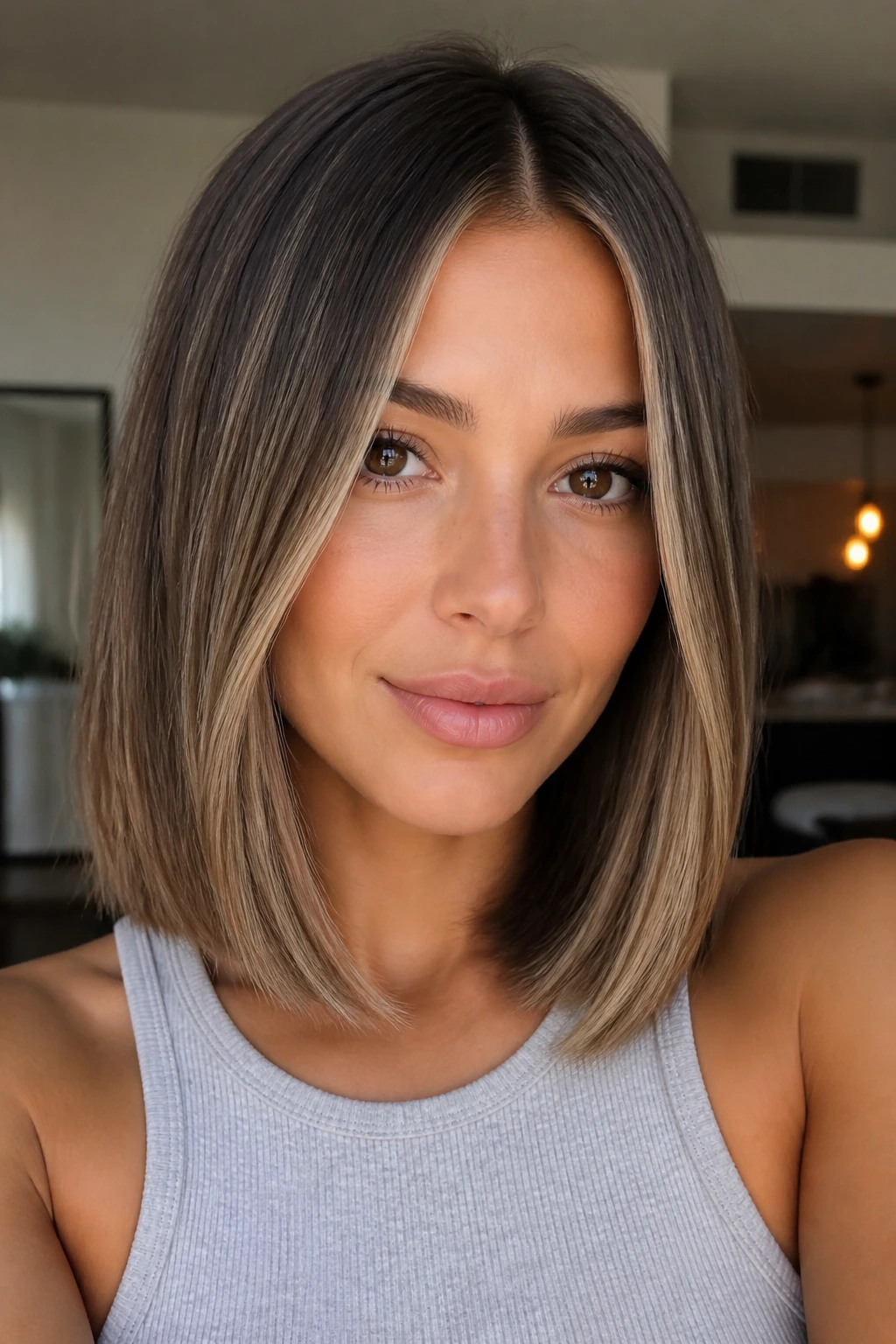
A blunt lob on thick hair can look expensive in the plainest, best way. The cut gives you a clean line at the collarbone or just above it, and the babylights keep that solid shape from reading heavy. Around the face, I like the lightest pieces to start just off the part and drift toward the cheekbone. That tiny shift matters.
Why It Works
The blunt edge takes control of the thickness, while the babylights stop the style from feeling like one dark block. It’s the contrast that sells it. If your ends tend to puff out, a lob keeps them contained and the fine light pieces add lift without making the perimeter thin.
- Keep the line at collarbone length or slightly shorter.
- Ask for babylights that sit mostly on the top layer and around the front.
- Use a flat iron only on the last inch of the ends if you want a straighter finish.
- A center part makes the highlights look modern; a deep part makes the face-framing pieces pop.
Best for: thick straight, wavy, or softly curly hair that needs shape fast.
2. Long Butterfly Layers With Ribboned Light
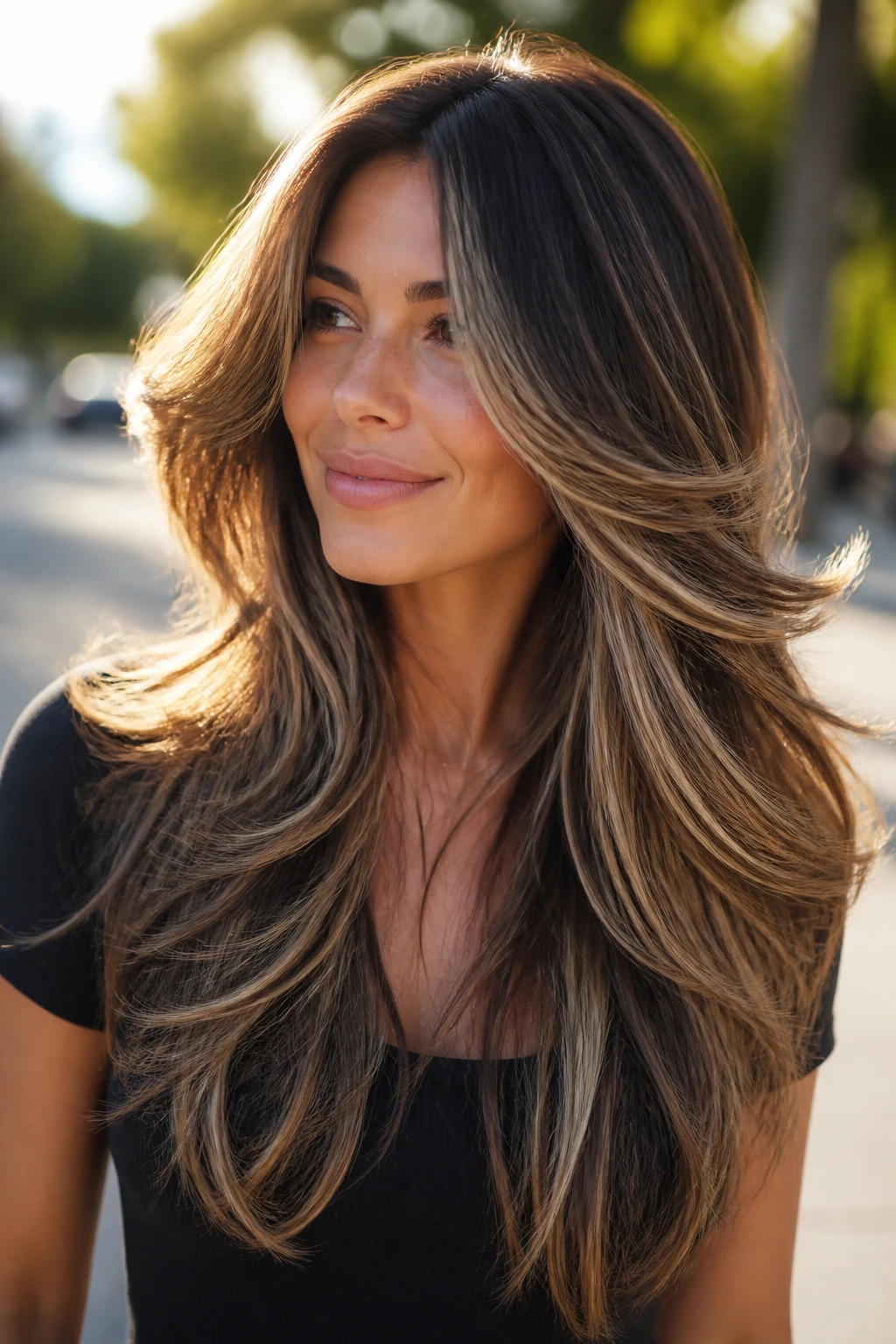
Butterfly layers are one of the few long cuts that can handle serious density without turning into a helmet. The short upper layers lift the crown, the longer layers keep the length, and babylights woven through both levels create the look of ribbons moving through the hair. You see the light most clearly when the hair swings, which is exactly the point.
The cut works because it gives thick hair a reason to move. Babylights on the upper crown and along the longest pieces stop the style from looking top-heavy. If your hair is coarse, ask for internal debulking too; butterfly layers look best when the inside is lighter than it appears from the outside.
3. Curtain Bangs and Soft Wave Ends
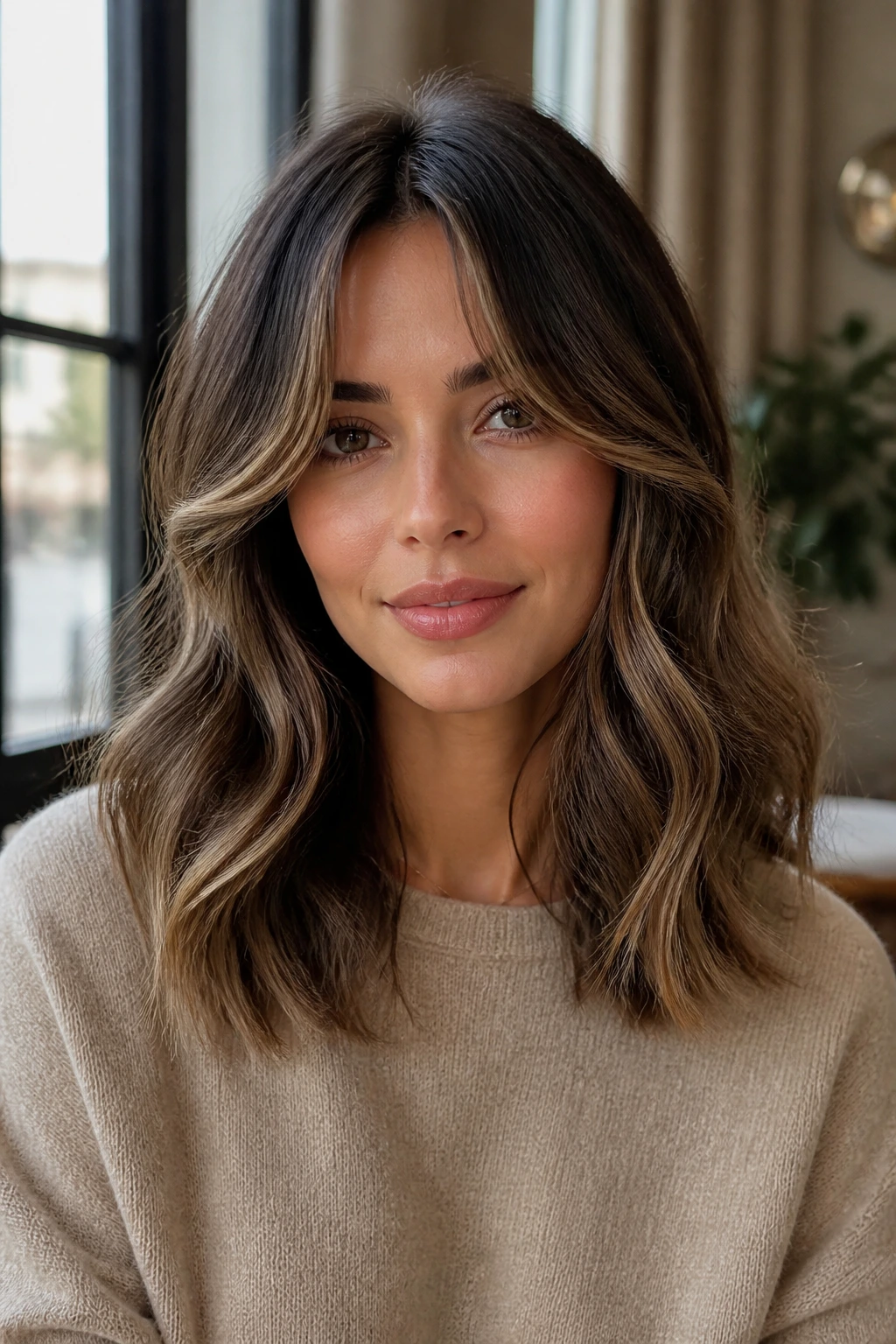
Do curtain bangs look better on thick hair? They do when they’re cut with enough space to split cleanly in the middle. Heavy fringe across thick hair can feel like a wool blanket on your forehead. Curtain bangs, though, open the face and let the babylights at the front move into the rest of the style.
Keep the wave pattern loose. The goal is bend, not curl ringlets. A 1-inch iron or a round brush gives the bangs enough lift at the root, then the babylights around the temples take over and soften the whole frame. If your hair gets bulky near the cheekbones, this style reins that in without looking severe.
How to style it
- Blow-dry the bangs forward first, then part them and sweep them away from the face.
- Bend the mid-lengths in alternating directions so the waves don’t stack into one thick ridge.
- Finish with a light mist, not a heavy spray; thick hair holds more than you think.
4. Polished High Ponytail With a Lighted Crown
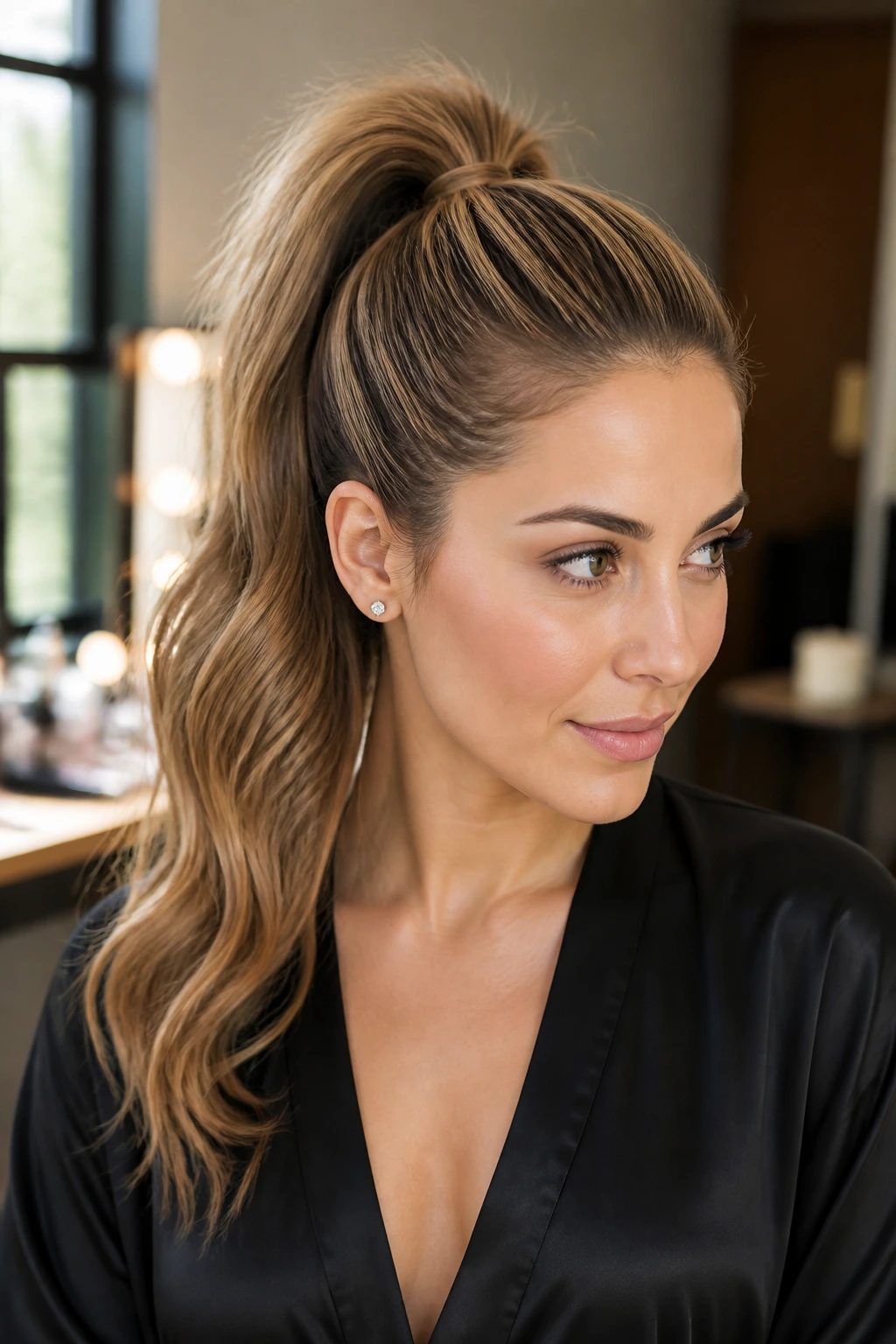
A high ponytail on thick hair can either look sleek or look like a gymnastics warm-up. Babylights change that fast. When the crown and the wrapped ponytail base have fine light pieces, the style reads intentional instead of blunt, and the wrapped elastic hides the practical part. I prefer this look with a little softness around the hairline and a glossy tail that stays full.
The key is keeping the top smooth without flattening it to the scalp. Thick hair has enough mass to create lift on its own, so you do not need to backcomb the crown like it’s 2008. A soft brush, a little root spray, and a firm elastic do the job. If the tail is long, curl only the last third so the babylights catch at the bend.
5. Half-Up Twist With Loose Length
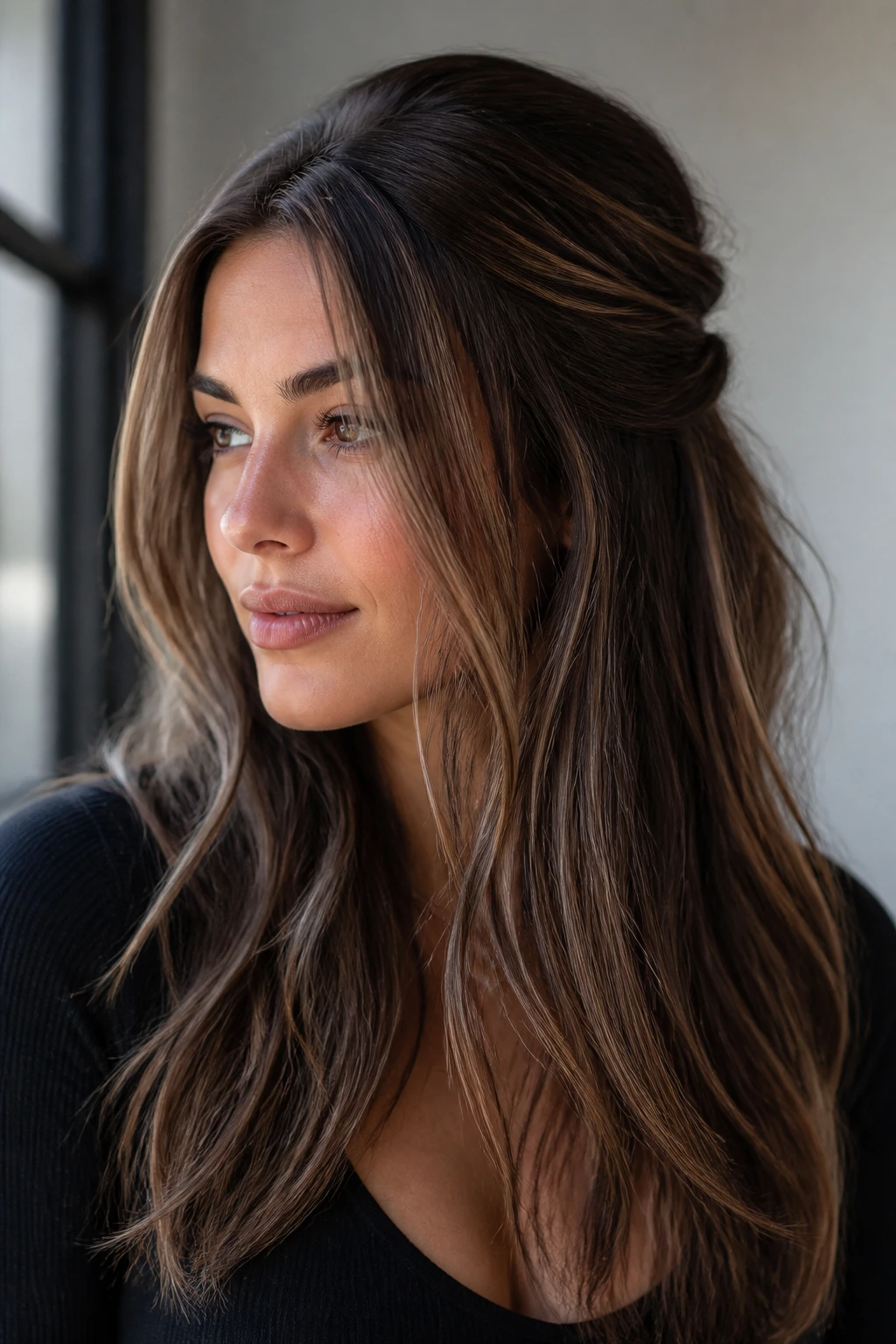
Half-up twists are one of those styles that make thick hair behave without asking it to become something else. You pin back just enough to clear the face and crown, then leave the rest down so the babylights can scatter through the lengths. The contrast is the whole story: smooth through the top, airy through the bottom.
This works especially well when the babylights cluster around the front sections and the outer curve of the hair. When those pieces twist back, the lighter strands show from both sides, almost like a woven ribbon. It’s a small detail. It changes everything.
6. Airy Shag With Lived-In Babylights
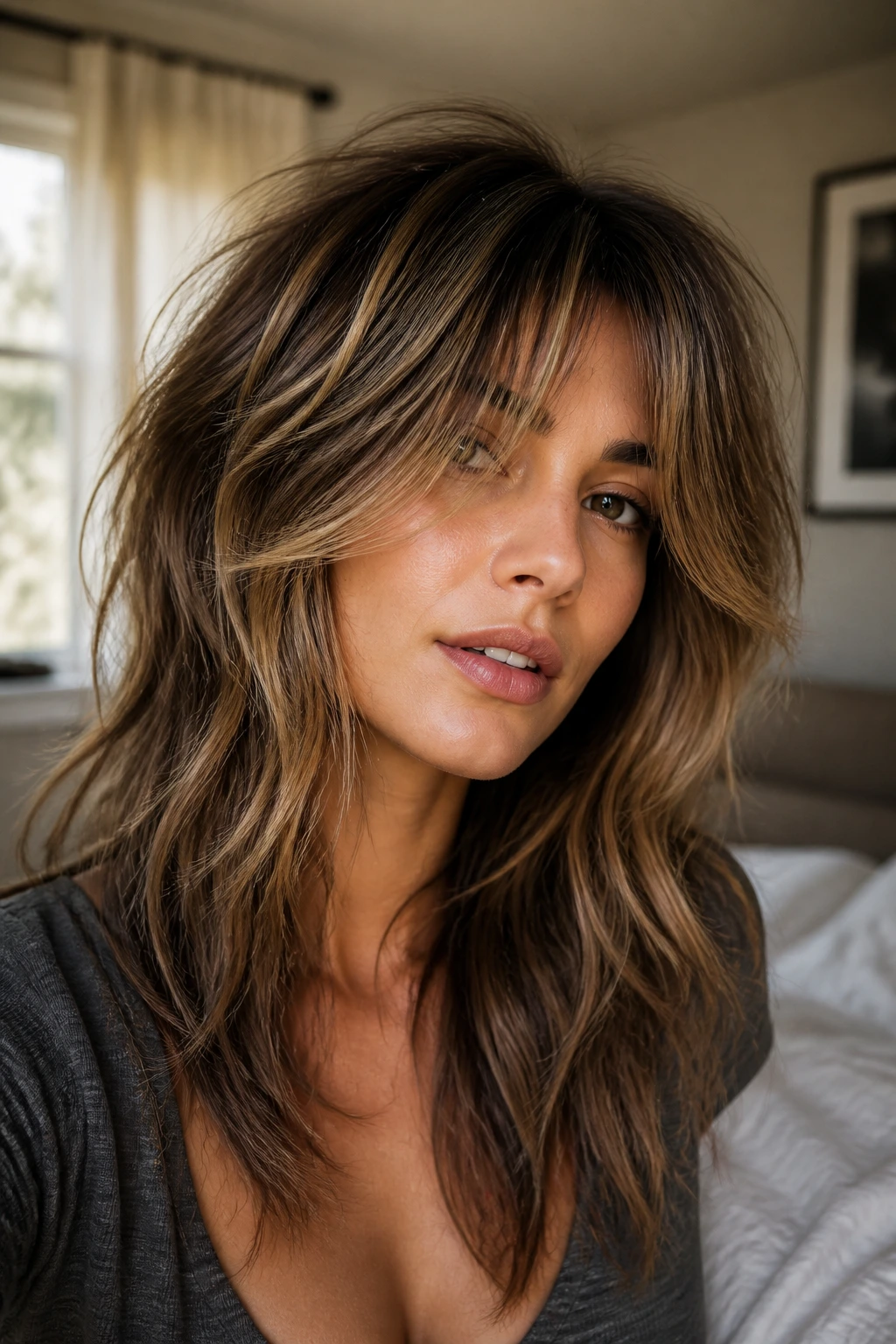
A shag needs attitude, but on thick hair it also needs restraint. Too much layer and it turns fuzzy. Too little and it collapses into a round block. The sweet spot is a shag with jagged internal layers and babylights placed so they break up the movement instead of shouting from every inch.
I like this cut because it gives thick hair a little wildness without making you fight for shape every morning. The babylights should live in the visible top layers, around the crown, and through the longer face pieces. Keep the toner soft — beige, neutral, or cool brown depending on your base — because a harsh tone makes the shag look louder than it should.
7. Chin-Length French Bob
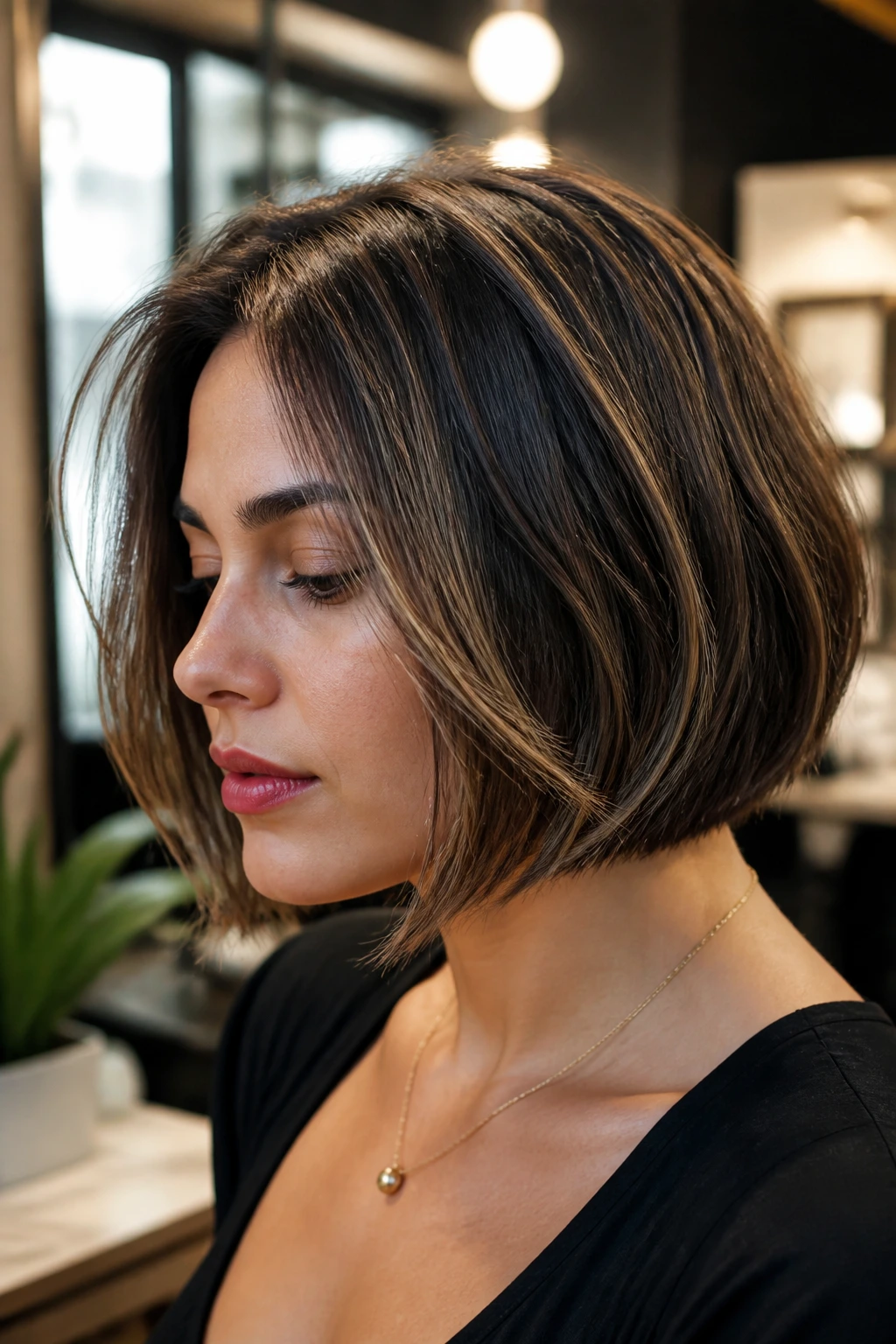
A chin-length bob on thick hair can be stubborn in the best way. It has a blunt confidence that doesn’t beg for attention. Babylights keep that confidence from turning boxy. A few fine highlights around the perimeter and through the crown give the cut a lighter edge, which is especially useful if your hair naturally puffs outward.
This is not a “just air-dry and hope” haircut. It needs a quick bend under with a round brush or a one-pass flat iron tuck at the ends. If the hair is extra dense, have the interior slightly thinned so the line sits clean. Short hair shows every decision. No hiding.
8. Bouncy Blowout Layers
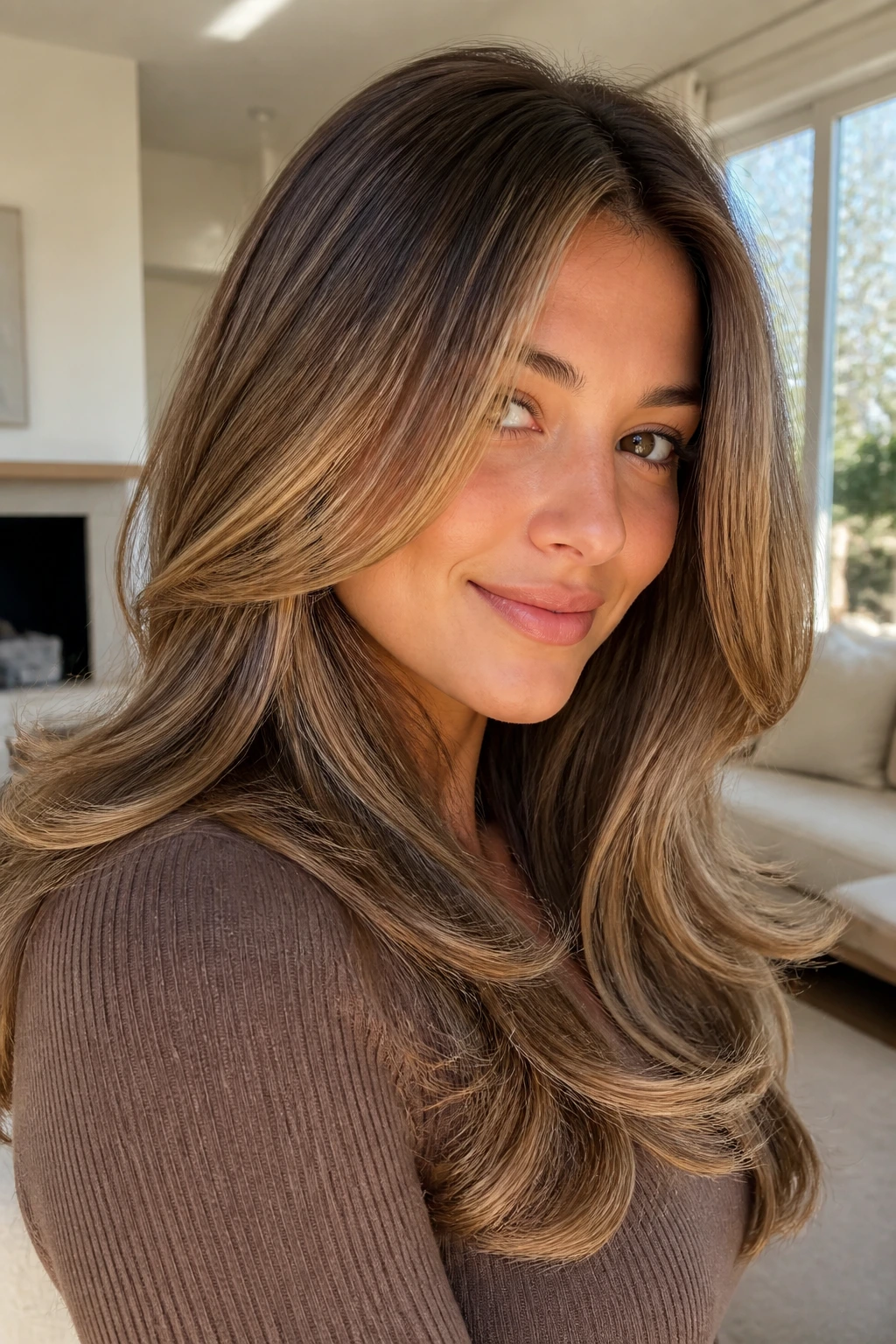
If you want thick hair to look expensive without making it look fake, a layered blowout with babylights does the job. The layers create lift, the brushwork bends the ends under or out, and the fine light pieces make the movement visible from across the room. That’s the magic here. The style looks soft, but it has structure.
What makes it different
The highlight placement should follow the shape of the blowout, not fight it. Put the brightest pieces where the hair bends around the round brush — around the mid-lengths, the face frame, and the top layer near the crown. If everything is bright from root to tip, the blowout can look loud. A softer map of light reads more expensive and wears better the second day.
9. Long U-Cut With Soft Bends
Why does the U-cut keep showing up on thick-hair mood boards? Because it takes the weight off the back without making the length look chopped. The curve at the hemline gives the hair a gentle sweep, and babylights layered through the outer sheet make that curve easy to see. It’s understated in the useful sense, not the boring one.
I’d choose this when you want length but hate the drag of a straight, heavy edge. The face pieces can stay brighter, the back can stay a shade deeper, and the whole thing still feels connected. Soft bends with a 1.25-inch iron keep the line visible. Straight, iron-flat ends make the U shape disappear.
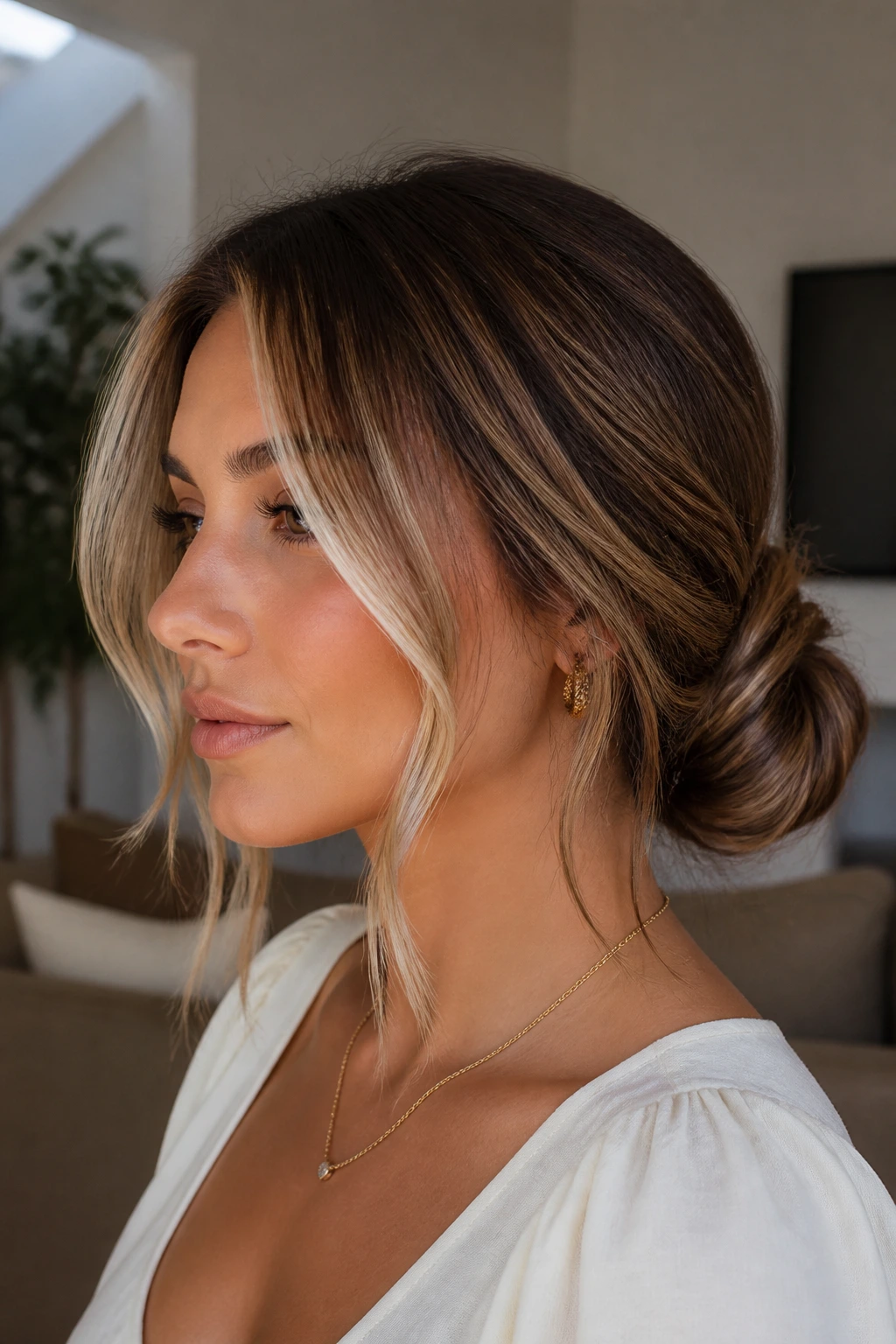
10. Low Chignon With Bright Face Pieces
A low chignon on thick hair can be gorgeous, but only if the hair is controlled first. Babylights help because they keep the bun from looking like one solid knot. The lighter face pieces soften the front, and the wrapped bun shows subtle dimension instead of a dark lump at the nape.
This is the kind of style that looks polished at a meeting and still works for dinner if you loosen one twist near the ear. I like a slightly imperfect finish here — not messy, just lived in. Thick hair holds pins well, which makes the chignon more secure than people expect. Use that to your advantage and keep the front smooth.
11. Braided Crown With Fine Dimension
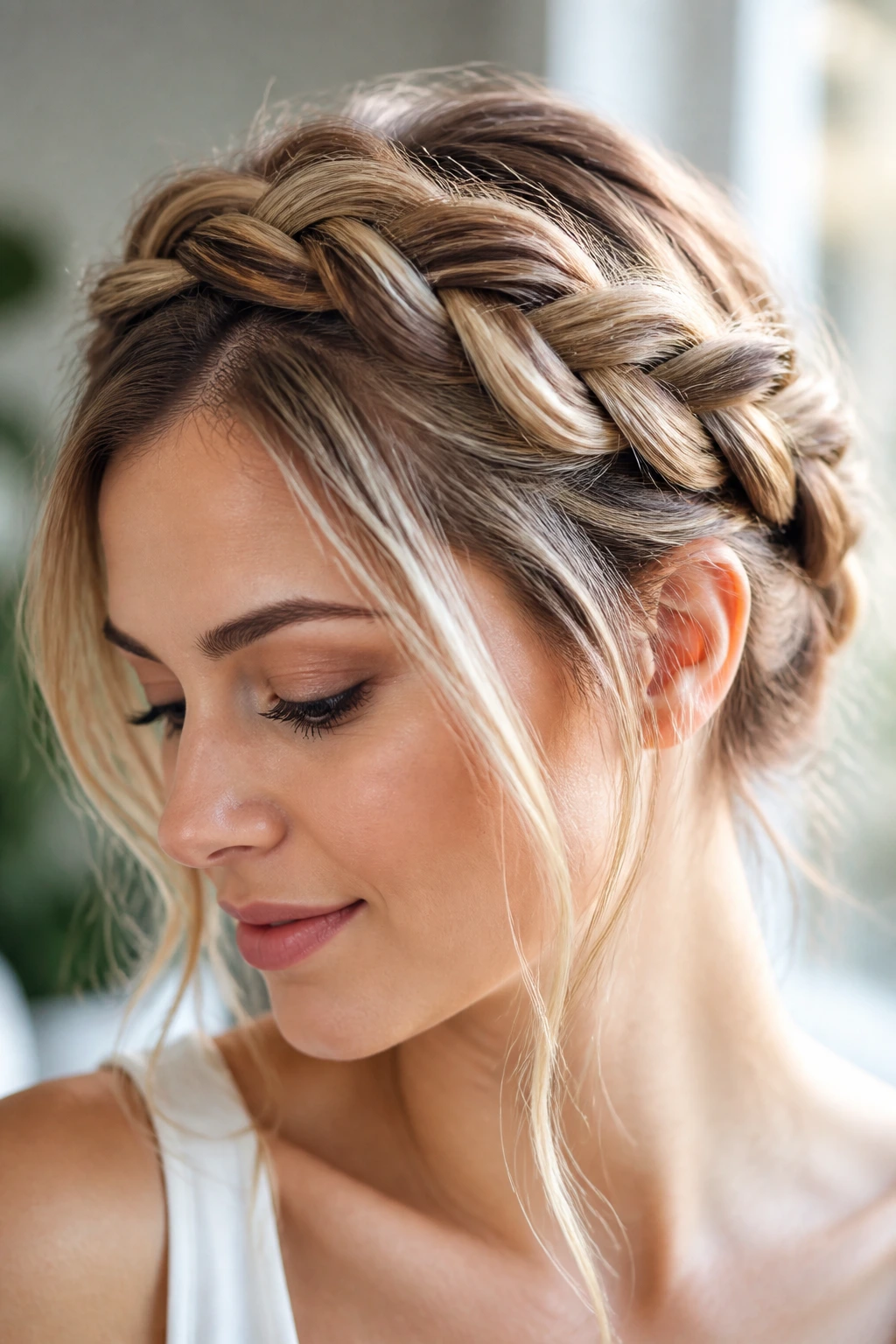
A braided crown can flatten on thick hair if the braid is too tight and the color is too even. Babylights solve both problems. They give the braid visible pattern, and they stop the style from reading like one solid rope across the head. The braid itself should be soft enough that the woven sections puff a little.
Pull the braid outward after it’s pinned. Not a lot. Just enough to widen the weave and let the lighter strands show. If the babylights are placed mostly on the upper layer and around the temples, the crown catches light every time you shift your head. That’s where this style earns its keep.
12. Side-Swept Old-Hollywood Waves
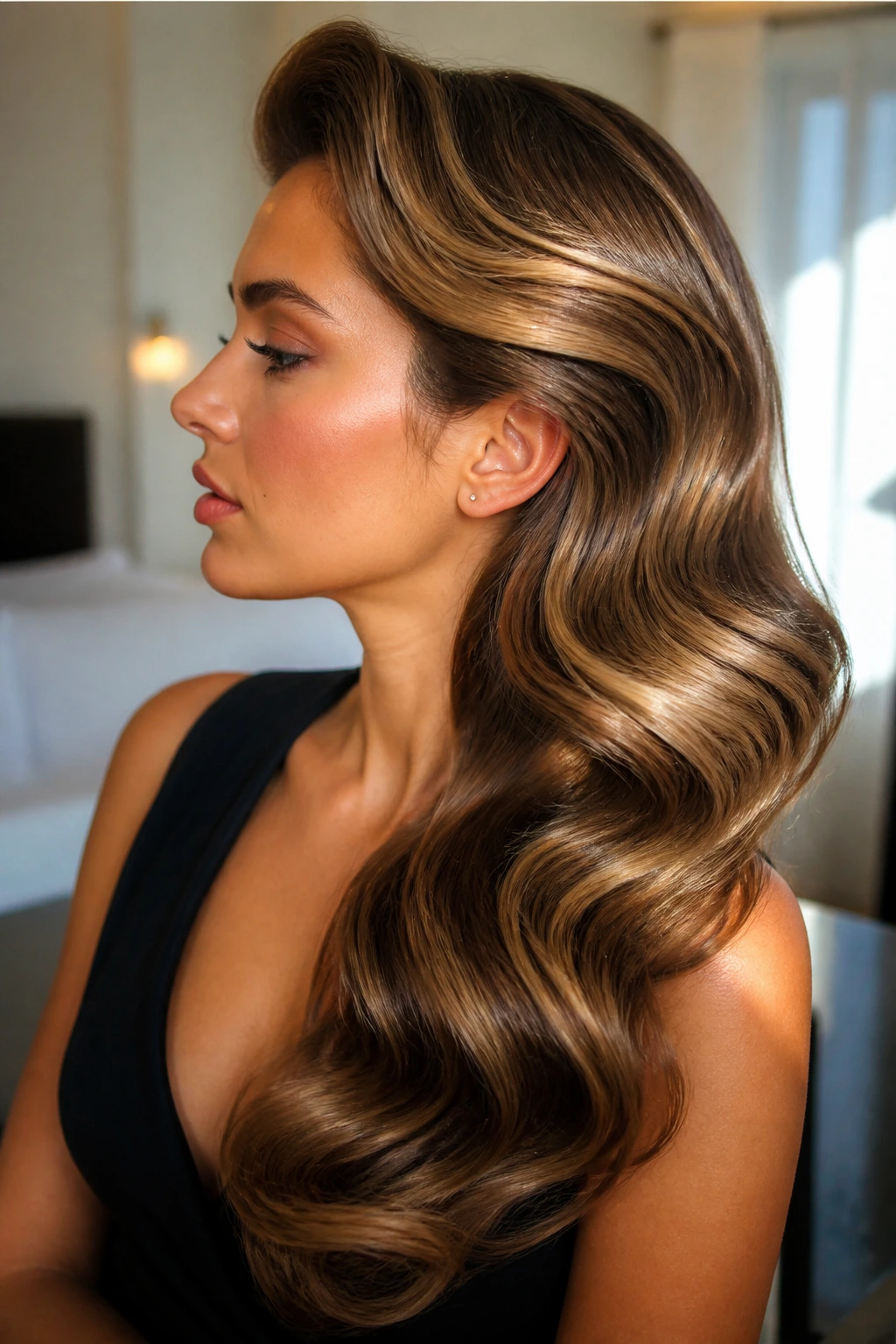
Thick hair loves old-Hollywood waves because the style uses density as a feature. The side part gives you an anchor, the waves stack in a clean direction, and babylights laid through the outer curve of each wave create the shine line that makes the style read finished. This is one of the better options when you want drama without height.
Keep the wave pattern consistent. Alternate directions too much and thick hair starts to look bulky. A 1.25-inch iron and a firm clip-set cool-down help the shape last. The babylights should be brightest at the surface, not buried underneath. Otherwise the curves disappear the moment the hair settles.
13. Claw-Clip Twist
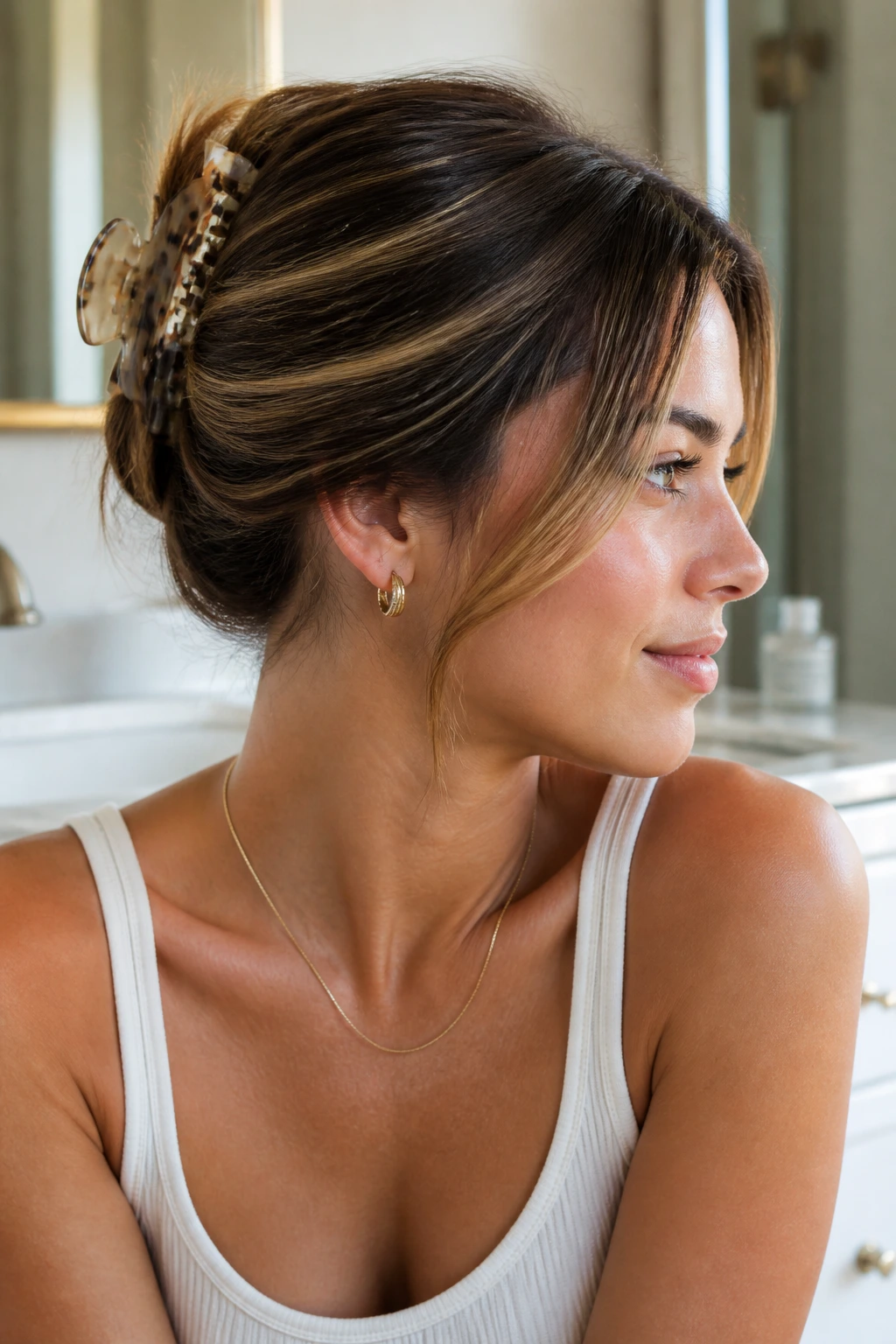
The claw-clip twist is the lazy-girl style that still needs good hair to look right. On thick hair, that means a twist with enough internal shape to hold itself up, plus babylights that live around the top layer so the clip doesn’t swallow the detail. I like this look when the front sections are left loose and tucked behind the ears.
The charm is in the contrast. The clip lifts the mass, the twist makes the ends disappear, and the babylights peek through the rolled section like thin lines of silk. Use a matte or tortoiseshell clip if your hair is very shiny; the texture keeps the whole thing from feeling too slick.
14. Flipped-Out 90s Layers
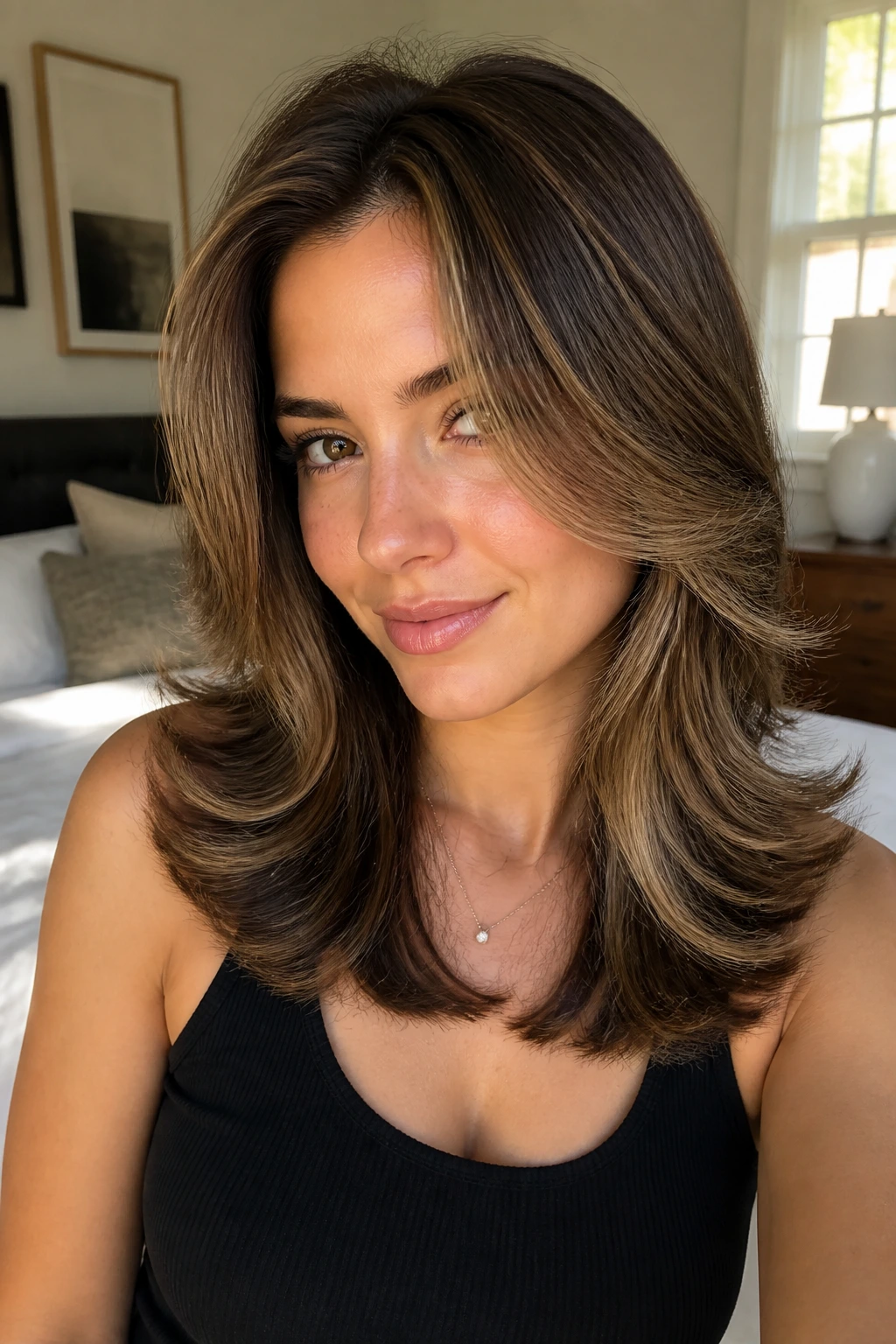
You either love the flipped-out ends or you’re lying. On thick hair, the style works because the layers already have enough weight to hold the flip, and babylights at the perimeter make the movement visible instead of heavy. The finish is playful, a little sharp, and much better than a straight-out blowout when you want the ends to do something.
A round brush or flat iron can build the flip. I prefer a flat iron for control on coarse hair; it gives you a cleaner bend at the ends and less puff at the sides. Keep the root area smooth. The color should brighten around the lower layers so the flip looks deliberate from every angle.
15. Modern Mullet
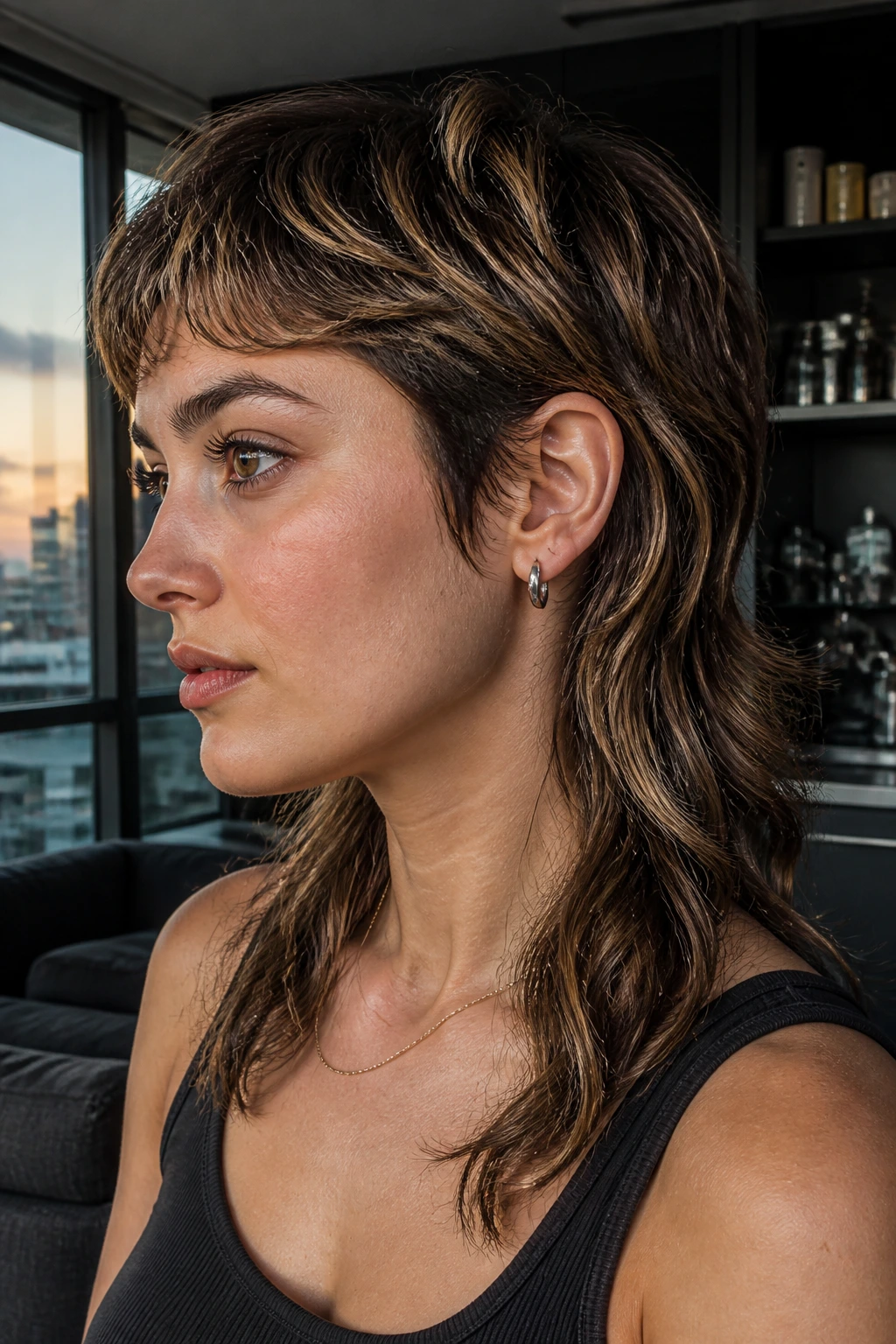
A modern mullet on thick hair is not a joke cut when it’s done well. It’s a shape cut — short enough in front and on top to create lift, long enough in back to keep the drama. Babylights make the transition smoother, especially if they’re placed through the crown, temple, and tail sections in a broken, piecey pattern.
This style likes personality. A perfect, uniform finish kills it. Rough-dry the roots, bend the front pieces, and let the back keep a little softness. If your hair is very heavy, ask for interior removal near the nape so the back doesn’t balloon. The babylights should look scattered, not striped.
16. Bubble Ponytail
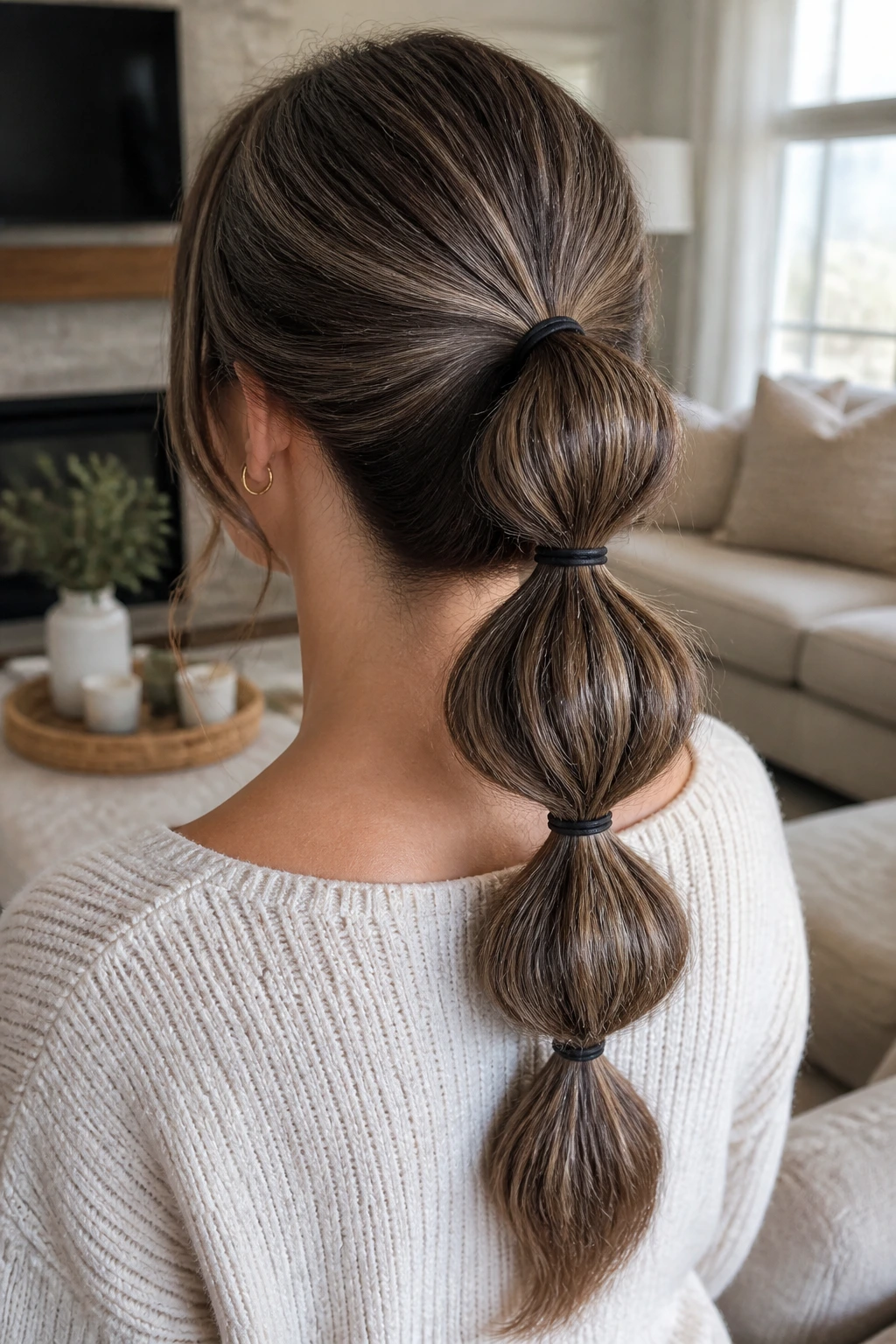
A bubble ponytail is one of the easiest ways to make thick hair look styled instead of just tied back. Each elastic creates a little pocket of shape, and the babylights catch on the rounded sections, which is why this style works so well on dense hair. It’s almost engineered to show texture.
Keep the bubbles even or slightly graduating toward the end. If the first section at the crown is too tight, the whole style goes severe. I like a soft brushing of shine spray on the outer surface and a few wrapped strands around the elastics. The highlights look cleaner when the bands themselves disappear.
17. Loose Dutch Braids
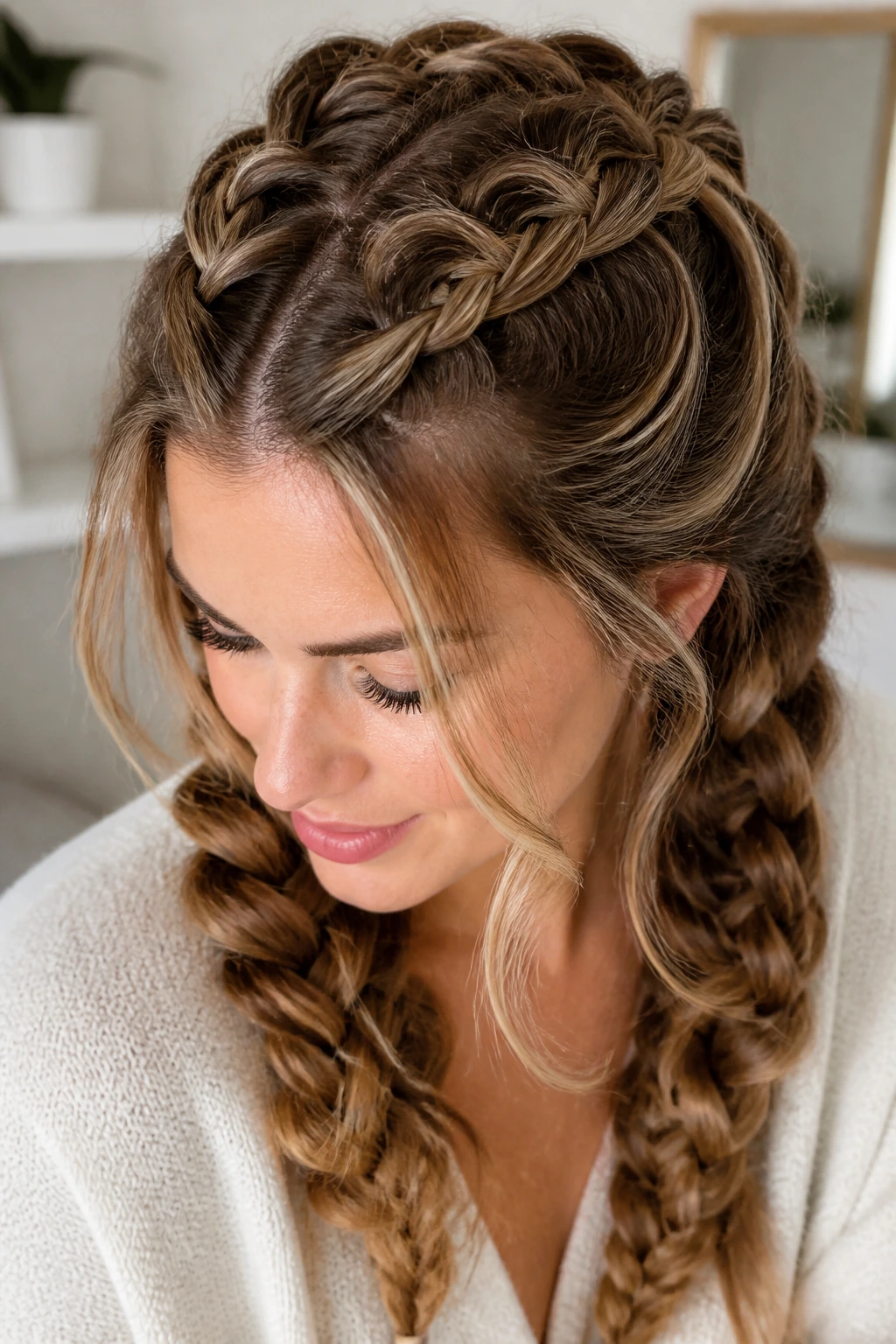
Loose Dutch braids on thick hair are practical, sure, but they’re also one of the clearest ways to show babylight placement. The braid itself lifts above the scalp, which makes the lighter strands stand out in relief. If the babylights sit near the part and through the top outer layer, the braid reads like a woven pattern instead of a heavy rope.
The braid should not be tight enough to flatten the crown. That’s the mistake. Leave a little give at the edges, then pancake the braid gently once it’s secured. Thick hair gives you more structure to play with, so use it. A dull braid on dense hair feels wasted.
18. Space Buns With Soft Front Pieces
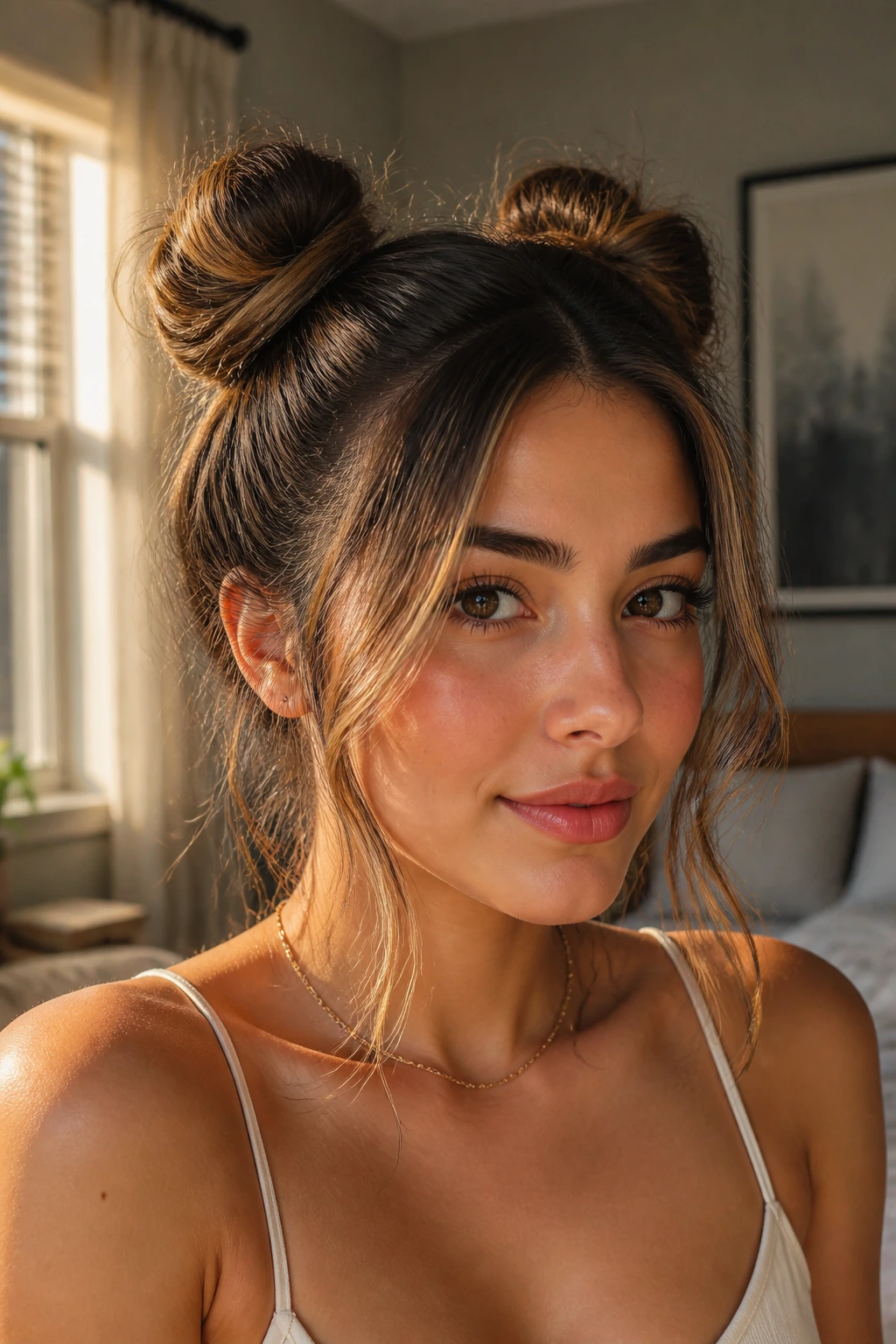
Space buns can look costume-ish fast, so thick hair needs a cleaner version. Keep the buns small enough that they don’t overpower the head, and let the babylights show mostly in the front pieces and the outer loops of each bun. That keeps the style playful without tipping into cartoon territory.
This is a good pick when you want something offbeat but not fussy. Two buns, a middle part, and a few face-framing strands do the work. If your hair is very long, tuck the ends discreetly so the buns stay compact. The light pieces give the style movement that plain dark hair often lacks.
19. Deep Side-Part Curls
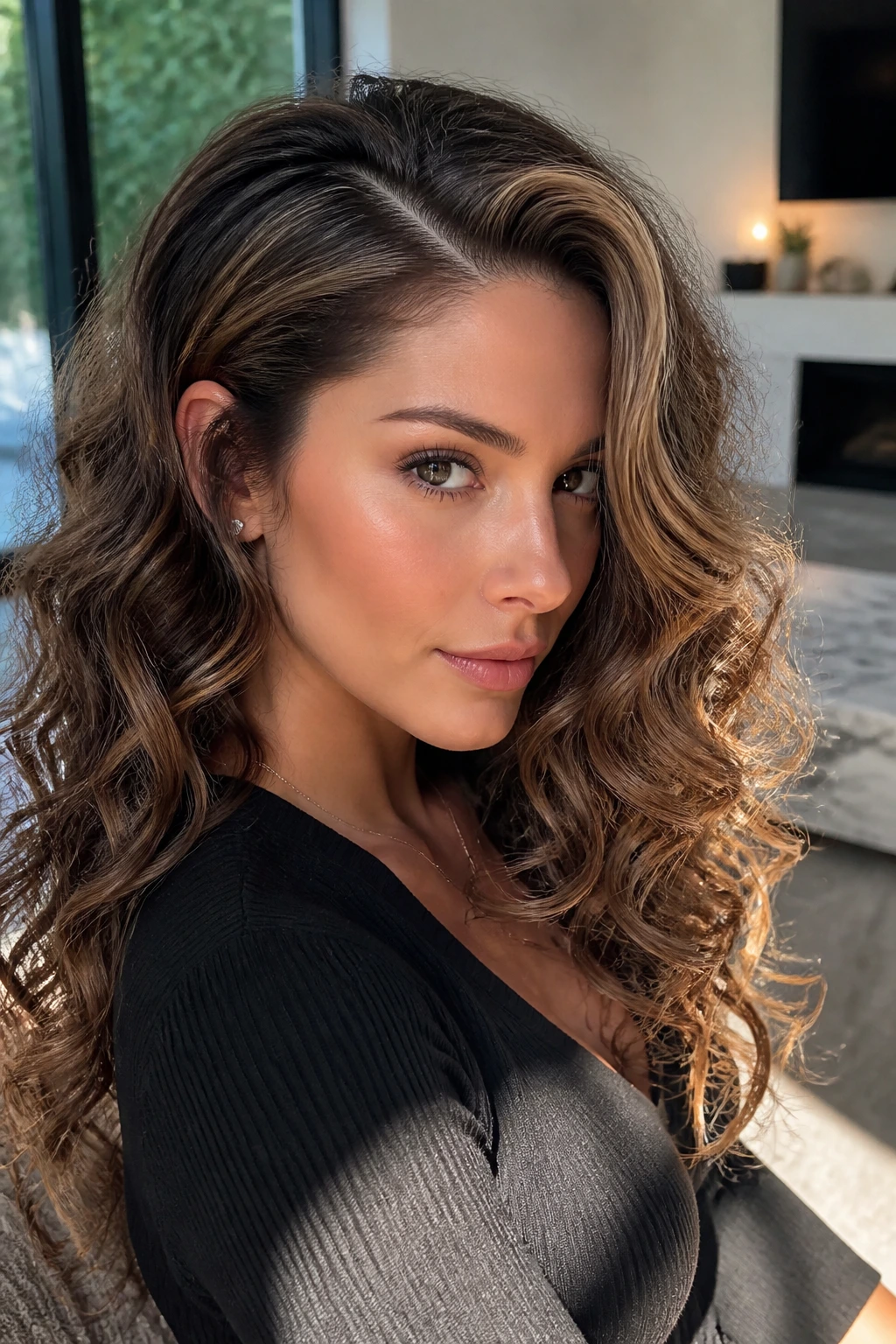
A deep side part does a lot of heavy lifting on thick hair. It pulls the weight to one side, gives the roots a natural lift at the opposite temple, and lets the babylights show along the line where the hair falls. Add curls and you get a face frame that feels full but not puffy.
This one is good when you want a glamorous finish without a huge amount of styling. Curl away from the face on the heavy side, then let the lighter front pieces catch the curve at the cheekbone. The deeper part makes the babylights look richer because the contrast has room to breathe.
20. Sleek Center-Part Straight Style
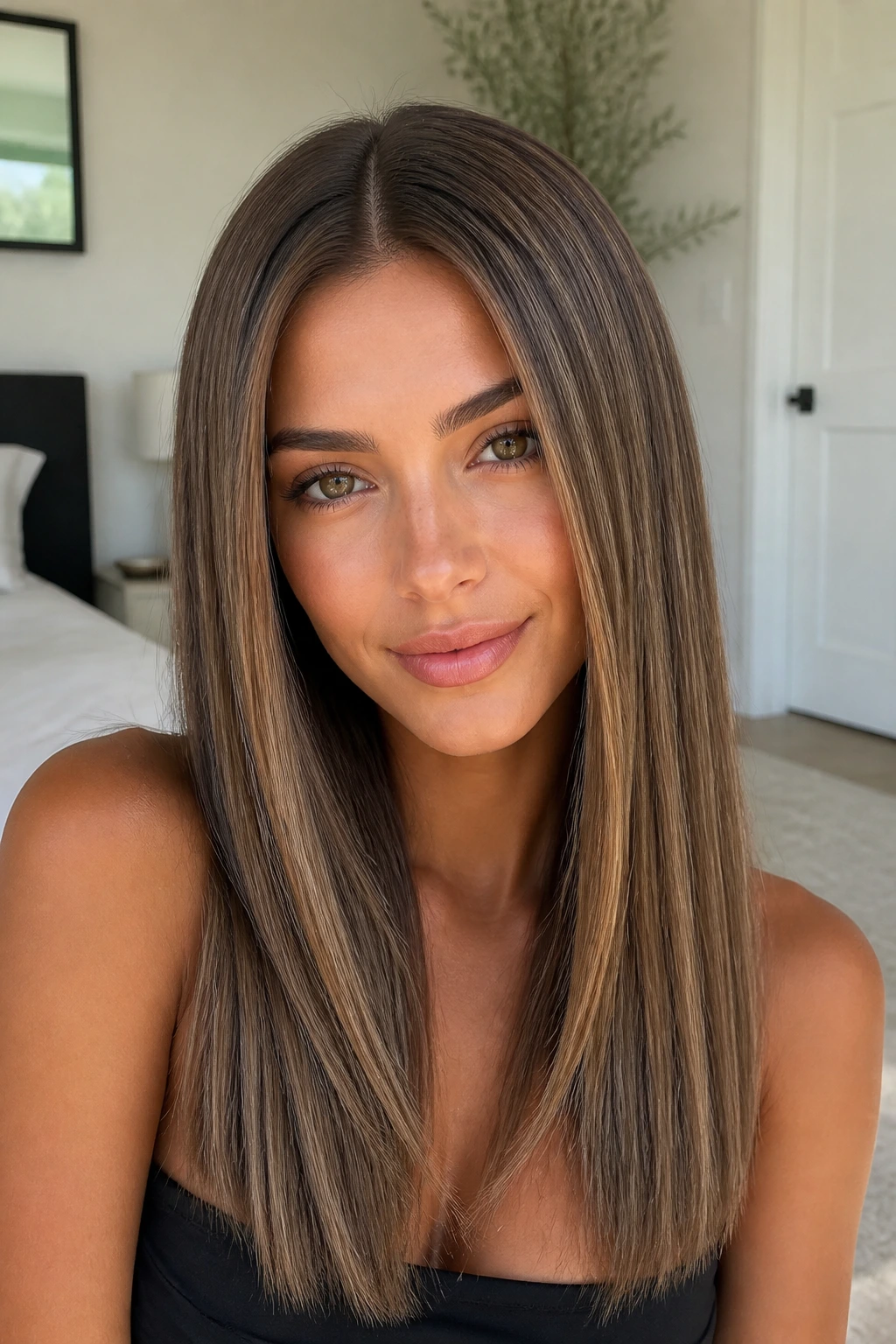
Can thick hair go sleek without looking flat? Absolutely, if the cut is clean and the babylights are fine enough to show through the surface. A center part gives the style balance, while the straight finish makes the light pieces look like thin threads running through the length. It’s crisp. Almost sharp.
The trick is not to over-oil the mids. Thick hair can absorb a lot, and too much serum turns this look heavy within an hour. Work with a heat protectant that smooths, then press the hair in small sections so the ends line up. The babylights should stay visible even when the style is polished close to the head.
21. Wavy Wolf Cut
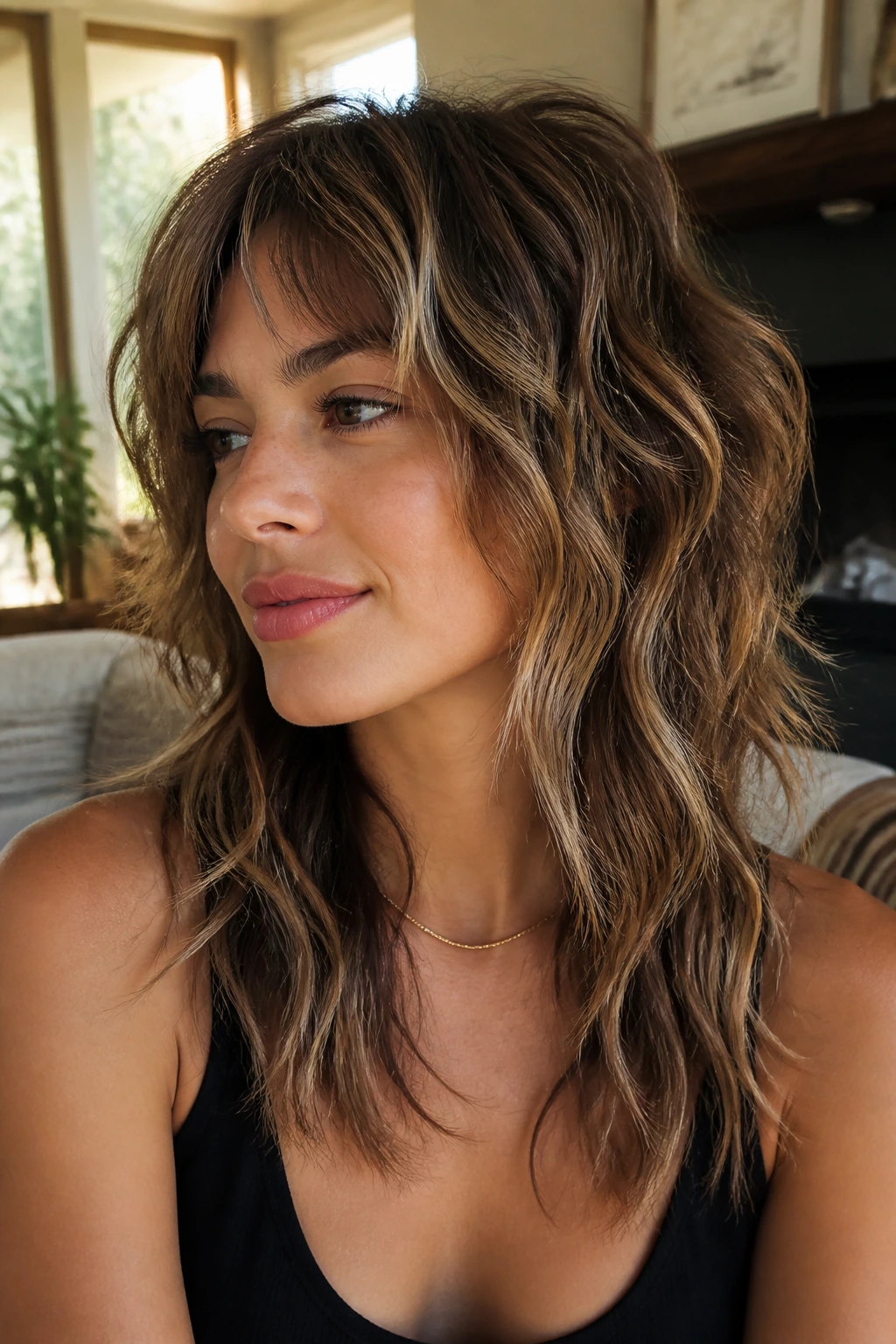
The wolf cut is still around because it gives thick hair somewhere to go. Shorter layers at the top, longer movement through the bottom, and babylights that scatter through the jagged shape create a style that looks deliberate even when it’s a little messy. That’s a rare thing.
I like this cut when the hair has natural wave or a little bend to it. Straight hair can wear it, but the shape needs more styling. The babylights should be broken up, not painted in stripes. Think scattered brightness through the crown, temples, and outer lengths so the layers don’t blur together.
22. Layered V-Cut With Beach Bends
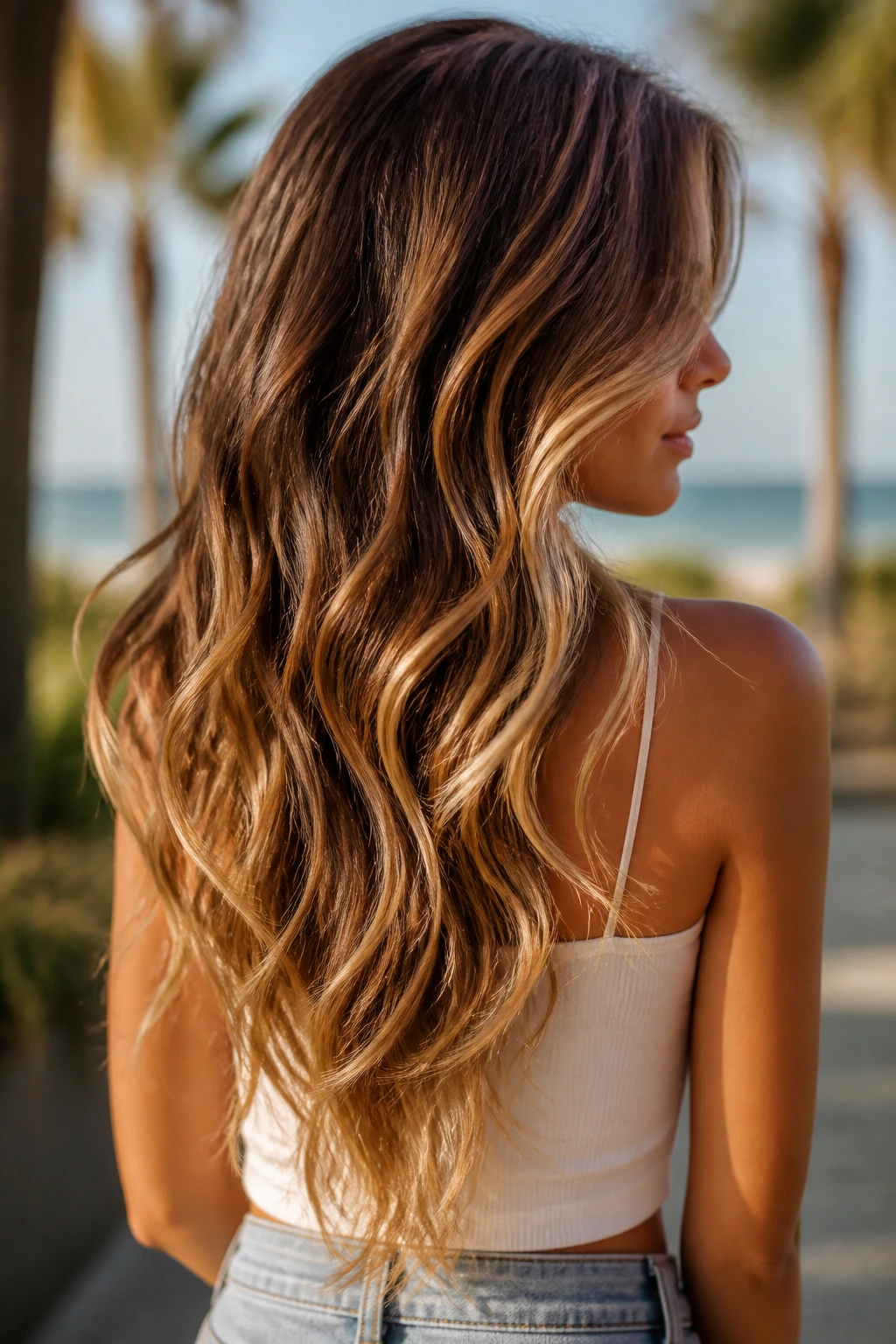
The V-cut gives thick hair a point at the back, which sounds small until you see how much lighter it makes the entire silhouette. Babylights follow that shape well when they’re angled through the mid-lengths and ends, because they echo the movement of the cut instead of sitting on top of it. With soft beach bends, the whole style opens up.
This is the long-hair answer for people who want length and shape in the same sentence. The V keeps the back from feeling blunt, and the babylights keep the longer pieces from disappearing into a solid curtain. If you wear your hair down often, this is a strong one. The line is there, but it doesn’t shout.
Why Babylights Give Thick Hair Better Shape Than Chunky Highlights
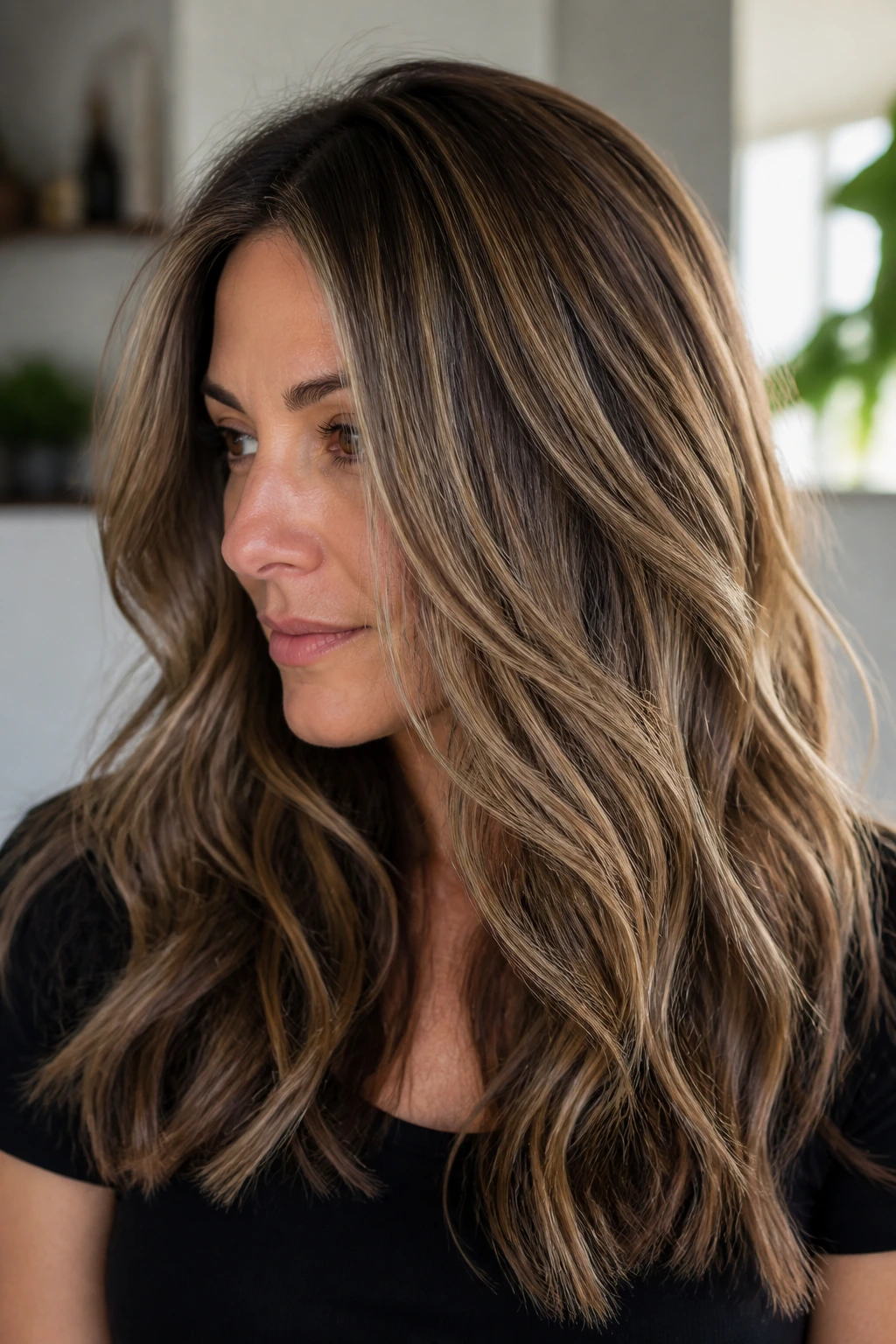
Chunky highlights can look fine on thick hair for about ten minutes. Then the density starts eating them alive. Fine babylights behave better because they’re closer together, less stripy, and easier to scatter through layers, braids, ponytails, and waves without turning into obvious blocks of color.
The best placement is not always even placement. That’s the part a lot of people miss. Thick hair needs more brightness near the surface and around the face, with deeper pieces underneath so the style still has depth. If every layer is equally light, the cut can look flat even when the hair is full.
Where babylights matter most
- Crown and part line: keeps the top from looking like a single dark sheet.
- Temples and cheekbones: gives the face frame a lift.
- Outer lengths: makes curls, flips, and bends easier to read.
- Lower interior: leaves enough depth so the style doesn’t go transparent.
The Tools That Keep These Styles Smooth and Bright
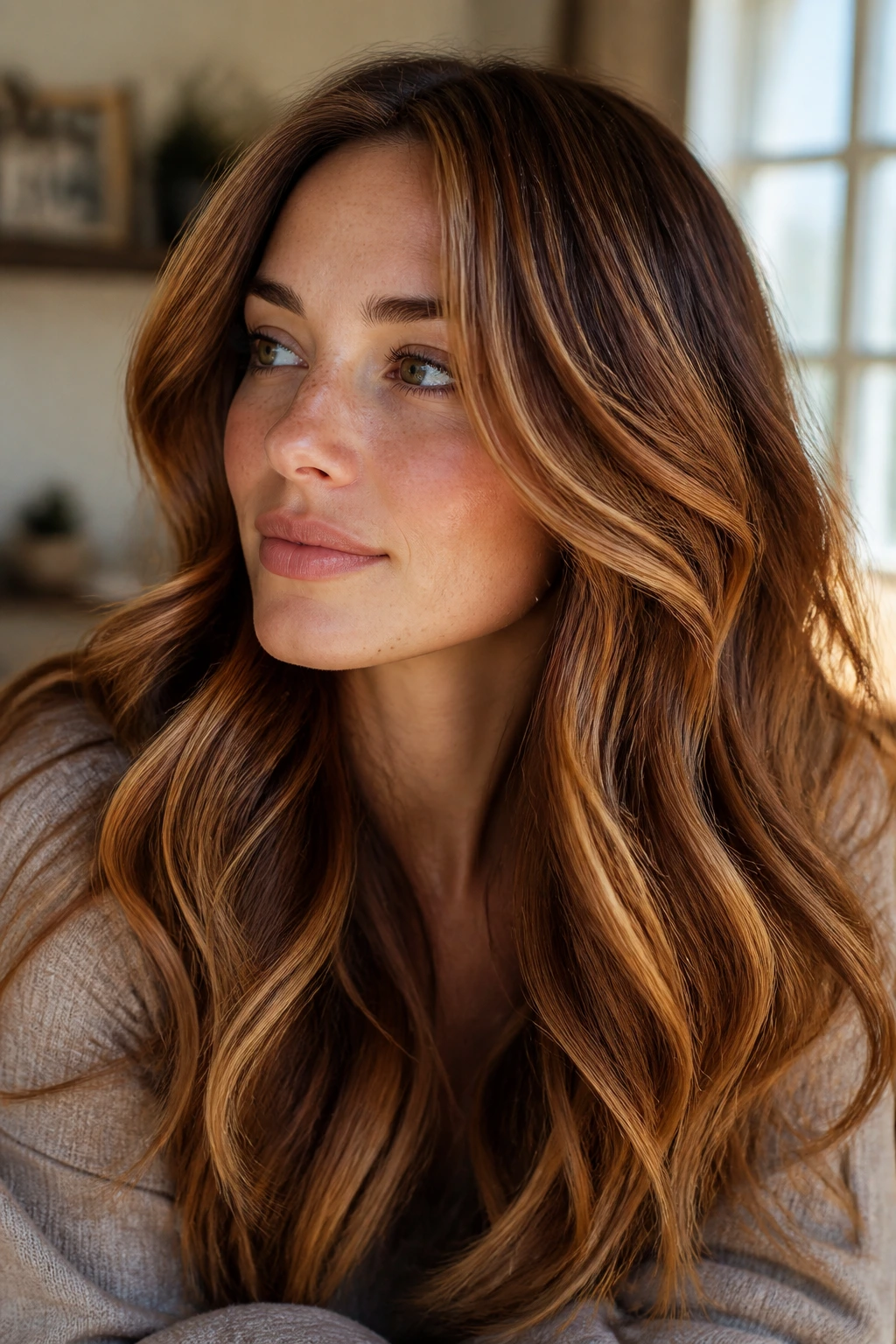
Thick hair is not hard to style, but it is unforgiving when you use the wrong tools. A flimsy brush or weak clips will make the whole process annoying fast. Better tools save time and stop you from overworking the hair, which matters even more when babylights are involved because too much heat dulls the fine dimension.
- Tail comb: clean parts and neat sectioning make babylights show better.
- Sectioning clips: thick hair needs more than two clips; use at least four.
- 1-inch wand or iron: best for soft bends, waves, and face-framing pieces.
- 1.25-inch round brush: ideal for blowouts and polished ends.
- Blow dryer with nozzle: directs the airflow so the cuticle lies smoother.
- Heat protectant: use it every time; babylights show damage faster than darker roots.
- Lightweight shine serum: apply from the mids down, never at the scalp.
- Sulfate-free shampoo: keeps bright pieces from looking rough and stripped.
- Silk pillowcase or bonnet: helps waves last and cuts down on morning frizz.
What to Ask for at the Salon Before You Style
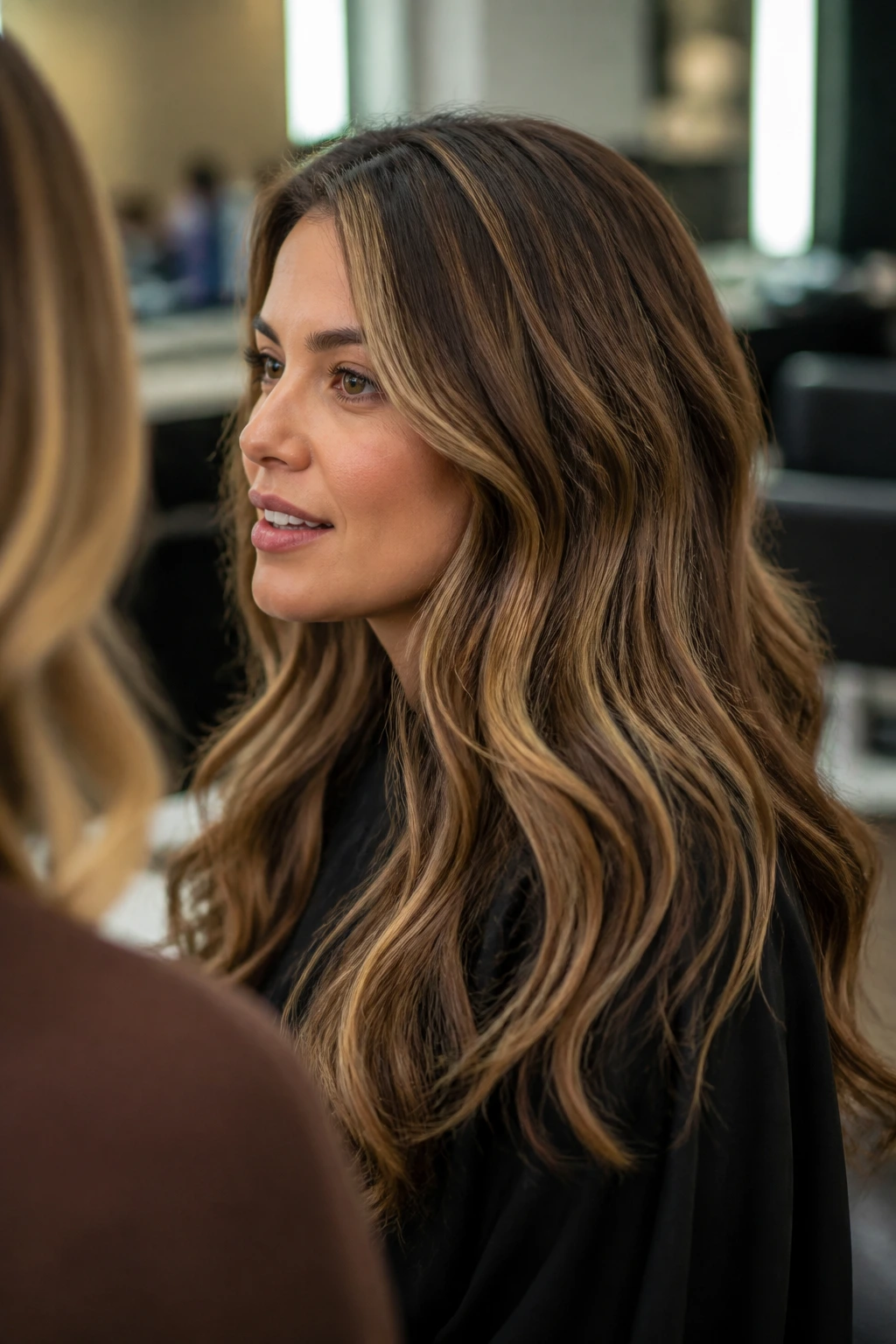
Thick hair and babylights need a plan before the scissors or foils touch the head. If you just say “lighten it up,” you may get broad pieces that disappear under the density. I’d ask for micro-weave babylights — very fine sections, often no wider than 1/8 inch — and then decide where the brightness needs to live based on your cut.
Ask your colorist to keep some depth underneath. That isn’t a compromise; it’s how the hair keeps dimension. You can also request a soft money piece around the front if your face frame needs more light than the rest of the head. On thick hair, a little extra brightness near the front often looks better than spreading it everywhere.
Smart choices before you book
- Bring photos of styles with hair density close to yours, not just the same cut.
- Ask whether your hair needs internal debulking before color.
- If your base is dark, plan for more than one lightening session if you want a pale result.
- Decide whether you want cool beige, warm honey, or neutral brown-blonde toner before you sit down.
- Mention how often you heat-style; that changes how light the babylights should go.
How to Wear These Looks Without Losing the Detail
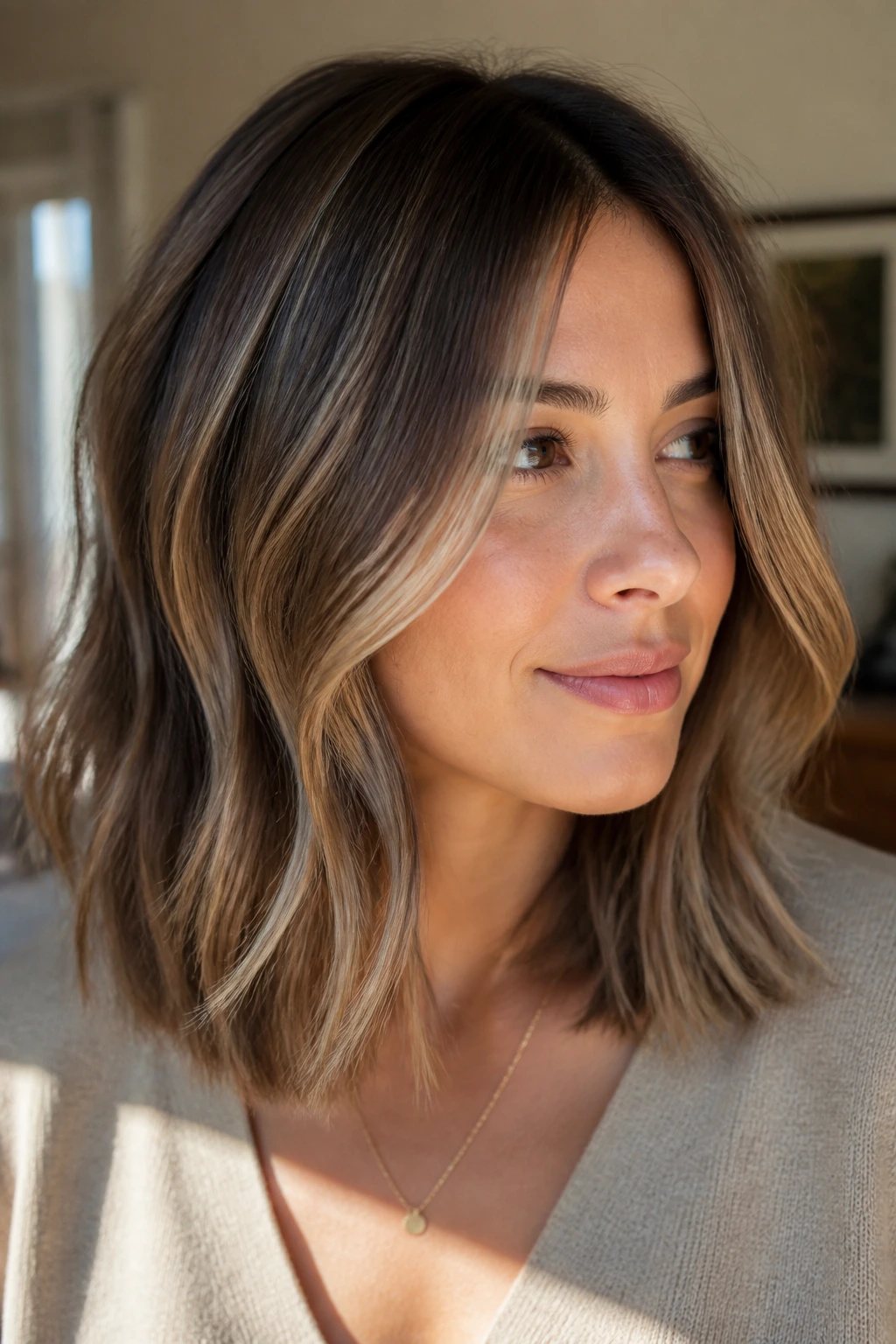
Presentation: Keep the outer layer smooth enough that the babylights can catch the light, but do not iron every strand into submission. Thick hair looks best when the shape is controlled and the ends still move.
Accompaniments: Hoop earrings, a clean neckline, and simple collars all help the hair take center stage. If the style is a ponytail or bob, tuck one side behind the ear so the light pieces around the face do some work.
Portions: Shoulder-length to chest-length cuts show babylights easily, but longer thick hair can wear them too if the layer pattern isn’t too heavy. Shorter cuts need finer placement, while very long cuts need more depth underneath so the color doesn’t vanish.
Beverage Pairing: Think of this as the getting-ready drink question if you want one — coffee for a sleek blowout morning, cold water for a heat-styling marathon, and a proper glass of anything when the pins are finally in place.
Smart Tips for More Lift, Less Puff
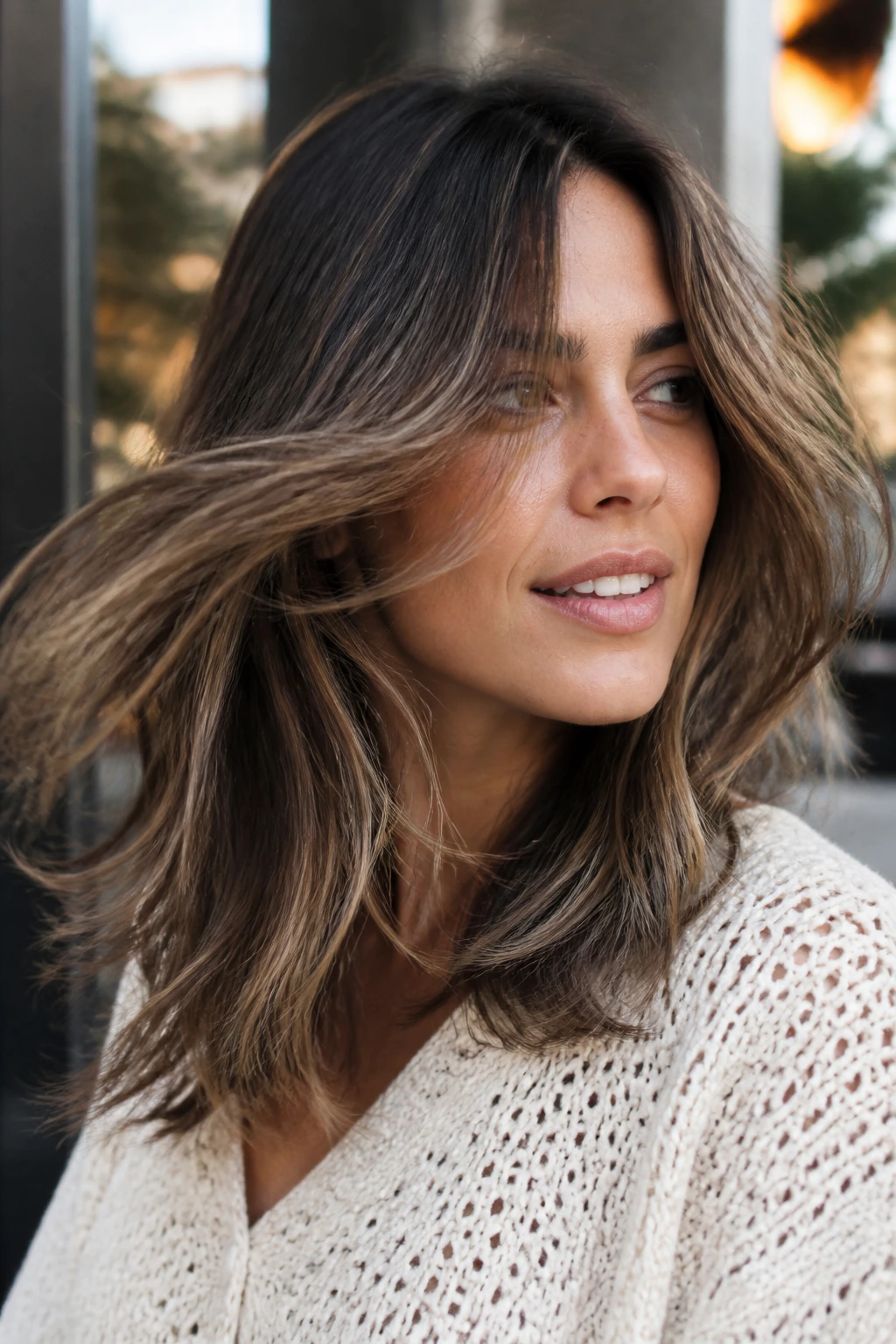
Brightness Boost: Put the lightest babylights where thick hair bends — around the face, the part, and the outer curve of layers. That gives the style movement without making the whole head pale.
Texture Control: If your hair frizzes easily, mist a light cream or leave-in through the mids and keep oil off the roots. Thick hair tends to drink product faster than people expect, so start small.
Accessory Move: A single clip, barrette, or silk scarf can change the whole mood of a style without hiding the babylights. I prefer simple clips with clean lines; overly fussy pieces compete with the color.
Make-It-Yours: For curly hair, keep the babylights a touch brighter because curls diffuse color. For straight hair, stay a shade deeper so the fine pieces read as movement instead of stripes. For coarse hair, ask for a softer toner and a little more internal layering.
Common Mistakes That Flatten Thick Hair
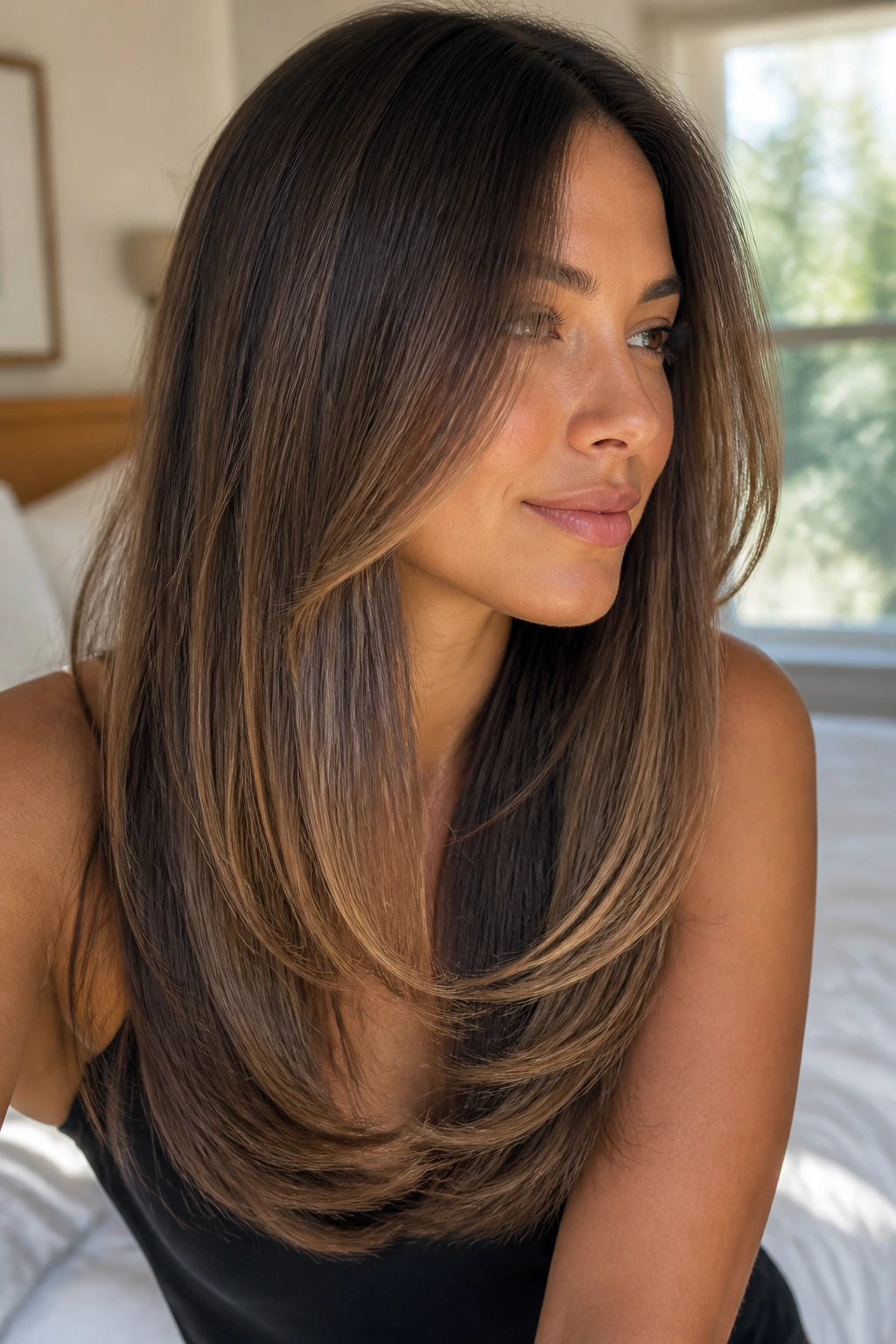
Using highlights that are too wide: Thick hair eats chunky color for breakfast. The result looks striped or patchy once the hair settles, especially in braids and ponytails. Fine babylights avoid that.
Over-layering the cut: Too many short layers can make thick hair spread out instead of moving. You end up with puff at the sides and no shape at the ends. Ask for shape removal where the bulk actually sits, not random choppiness.
Going too glossy at the roots: Heavy oils near the scalp make the babylights disappear and flatten the crown. Keep shine products from the mids down, where the light belongs.
Curling every section the same direction: That creates one thick wave wall instead of movement. Alternate directions or leave the ends straighter so the style has breathing room.
Skipping toner maintenance: Babylights can drift brassy faster than people expect, especially on porous ends. A gloss or toner refresh every few weeks keeps the fine pieces from looking muddy.
Variations and Adaptations to Try
Honey Ribbon Finish: Warm the babylights a notch if your base color is deep brown and your skin tone likes gold. Honey pieces around the face and crown make thick hair look softer without losing contrast.
Cool Beige Lift: If you want a cleaner, ashier read, keep the toner beige and slightly cool. It works especially well on blunt cuts and sleek styles, where harsh warmth can make the line feel heavier.
Shadowed Brunette Dimension: Leave more depth at the roots and underlayers, then brighten only the outer layers and face frame. Thick hair holds this version beautifully because the contrast is visible even when the hair is tied back.
Soft Copper Glow: Copper babylights can be gorgeous on thick hair with red or warm brown base tones. Keep the ribbons fine, though; broad copper panels can become louder than the cut.
Low-Commitment Gloss Change: If you don’t want a full color shift, keep the babylights you already have and just rotate in a clear or tinted gloss. That freshens the shine line and makes the styles above look more deliberate with almost no visual overhaul.
Keeping Babylights Fresh Between Appointments
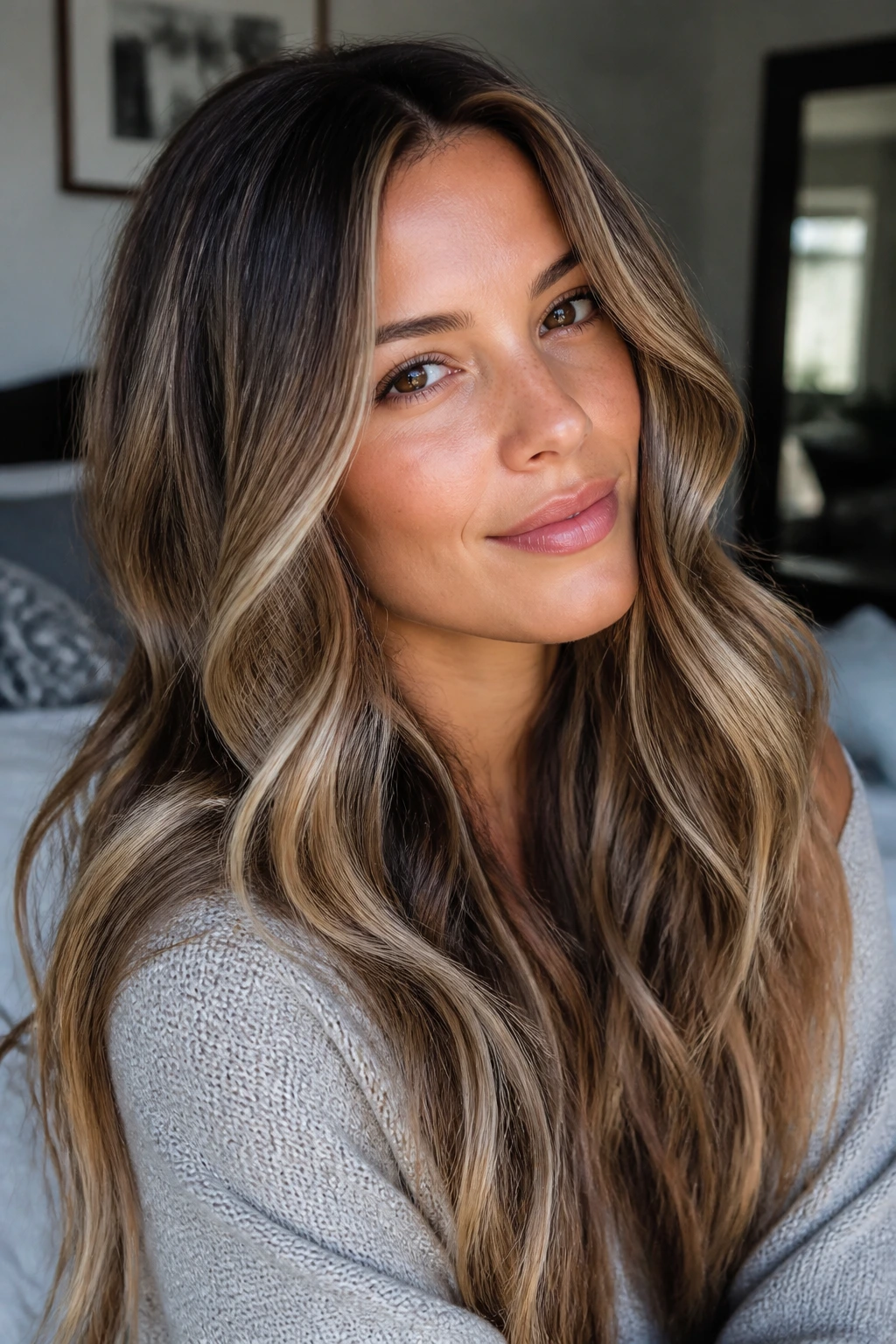
Thick hair usually hides wear longer than fine hair, but babylights show dullness fast when product builds up or heat styling gets sloppy. I’d wash thick highlighted hair two to four times a week, depending on scalp oil and how much styling product you use. More than that can strip the lighter pieces. Less than that, and dry shampoo starts living in the cuticle.
Use cooler water on the final rinse. It helps the outer layer lay flatter, which makes the babylights look cleaner. A once-weekly mask on the mids and ends is enough for most hair; don’t smear rich conditioner at the roots or you’ll erase the lift you worked for.
Refresh schedule that actually holds up
- Gloss or toner: every 4-8 weeks if the highlights drift warm.
- Salon retouch: every 8-12 weeks for a crisp, bright look; every 12-16 weeks if you like softer grow-out.
- Heat refresh: re-bend waves or ends with a low-heat pass rather than rewashing every time.
- Overnight care: loose braid, loose bun, or silk wrap to keep the shape without crimping the babylights.
Questions People Ask Most
Do babylights make thick hair look thinner?
Not when they’re placed well. They break up bulk on the surface, but the cut still carries the volume underneath, so the hair looks lighter and more shaped rather than sparse.
Which haircut shows babylights best on thick hair?
Cuts with movement — lob, butterfly layers, shag, U-cut, and curtain bangs — tend to show the color best because the light pieces can travel through the shape. A very one-length style can still work, but the babylights need more careful placement near the face and crown.
Can thick hair handle babylights if it’s curly?
Yes, and curls often make the light look richer because the color wraps around the bend of the strand. The trick is to keep the highlights fine and ask for placement that follows the curl pattern instead of fighting it.
How often should I touch up babylights on thick hair?
If you like a crisp salon-fresh look, plan on 8-12 weeks. If you prefer softer grow-out, you can stretch that longer, especially when the base and toner are close to your natural shade.
What if my thick hair is coarse and frizzy?
Then the cut matters as much as the color. Ask for internal debulking and keep the babylights a little deeper in tone so they don’t make the texture look dry; coarse hair can be beautiful with babylights, but it punishes over-lightening.
Are babylights better than balayage for thick hair?
Babylights are finer and more precise, so they’re better when you want a soft, woven effect. Balayage can still work, but on very dense hair it often needs babylight pieces layered in to keep the color from looking broad or painted on.
How do I keep the style from puffing up in humidity?
Use a light anti-humidity cream on the mids and ends, then keep the crown smoother than you think you need. Thick hair expands fast in damp air, and the babylights look sharper when the top stays controlled.
Can I wear these styles without heat?
Some of them, yes. Braids, twists, claw-clip styles, bubble ponytails, and loose buns are easiest to wear heat-free; just prep with a smoothing leave-in so the babylights don’t get hidden under frizz.
The Looks That Keep Thick Hair Moving
Thick hair does best when the cut, the color, and the styling all agree with one another. Babylights are the thread that ties the whole thing together. They make a blunt lob feel lighter, a shag feel more deliberate, and a long wave feel like it has depth instead of weight.
The styles that last are the ones that let density work for you. Keep the placement fine. Keep the shape clean where it needs to be. Leave a little softness at the edges, because that’s where babylights look their best and where thick hair finally stops fighting the mirror.