



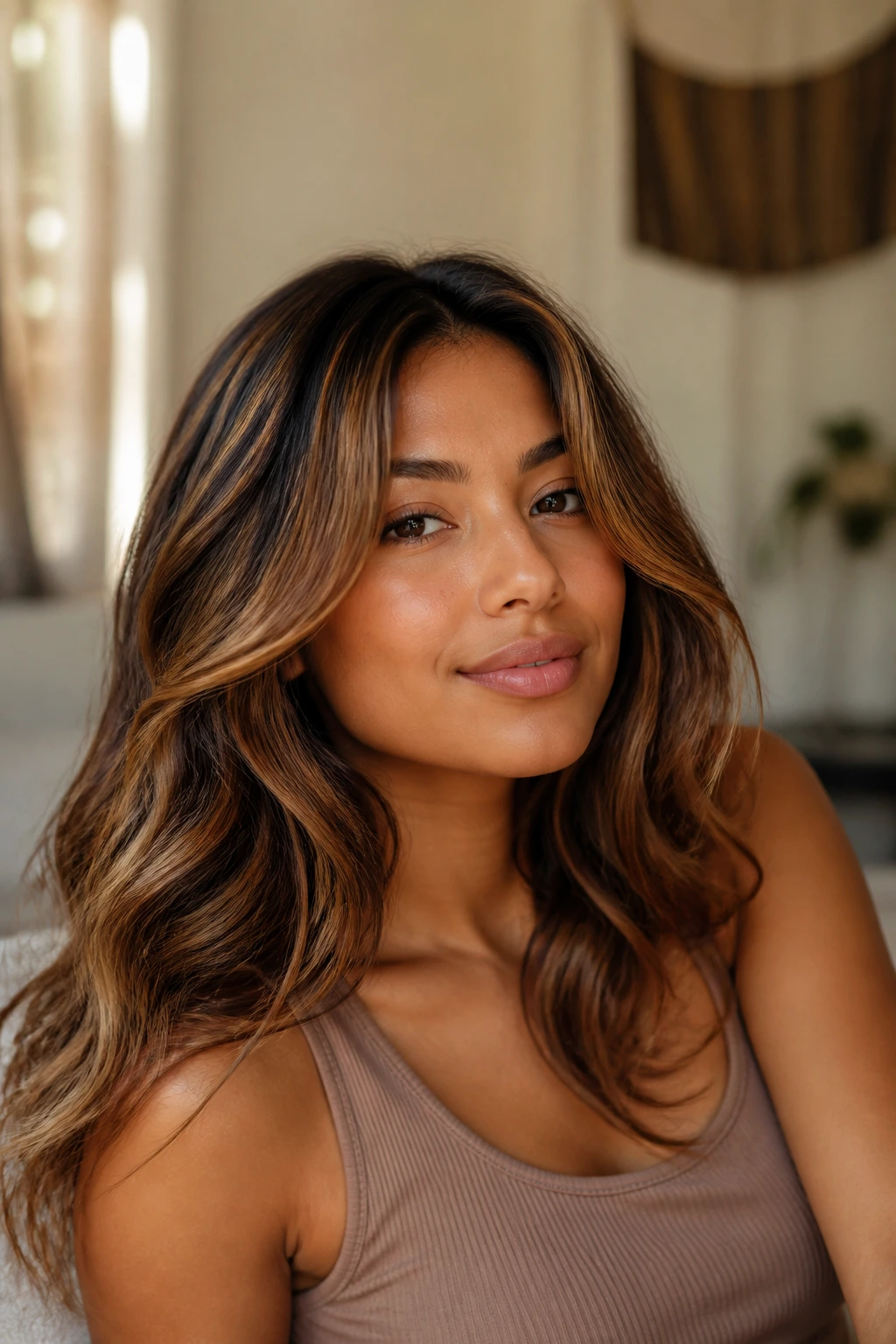
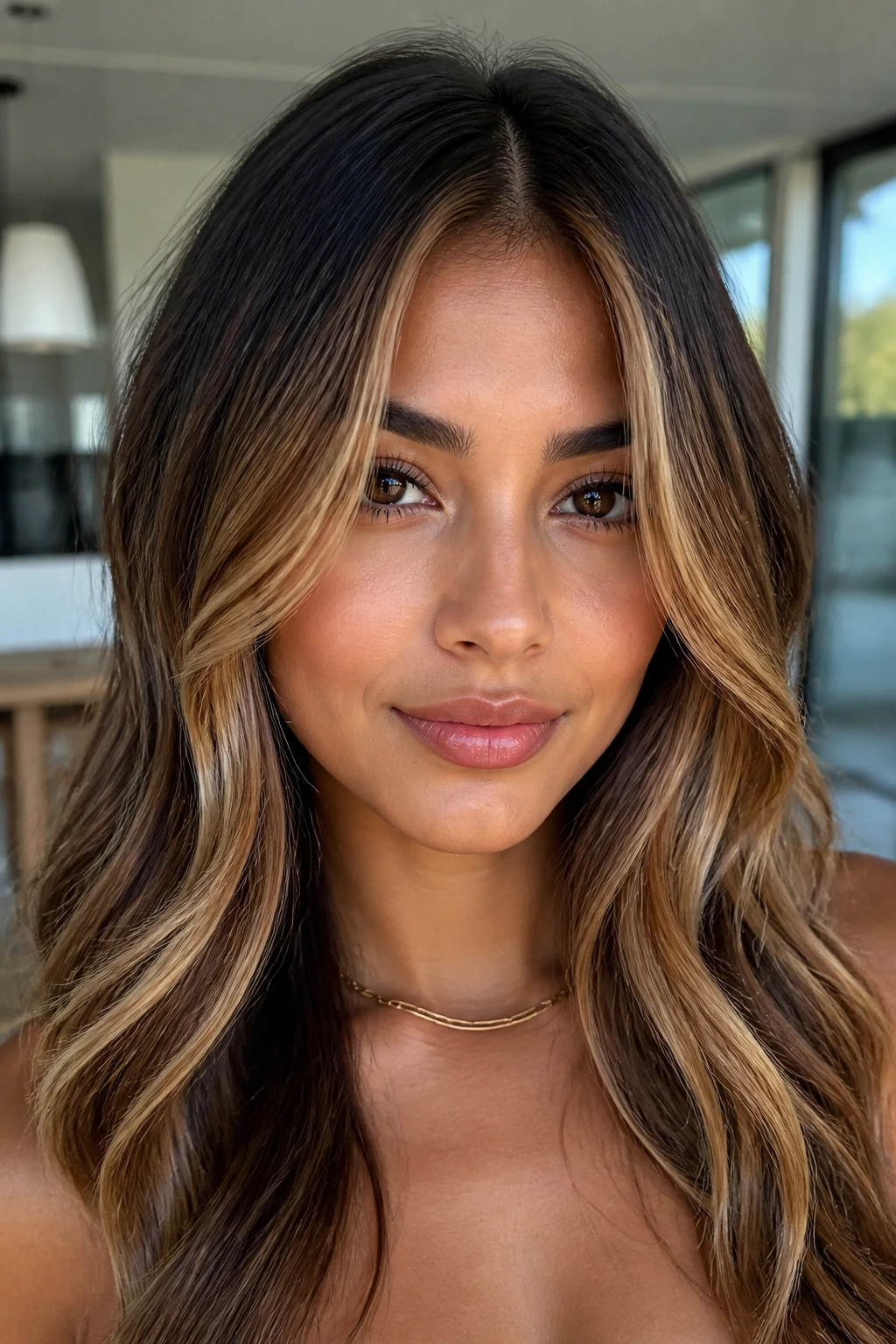
Golden brown highlights for medium skin tones can go sideways fast. Push the gold too yellow and the hair starts to look cooked; keep it too muted and the whole thing sinks into a flat, dusty brown. The sweet spot lives between caramel and honey, where the light catches without turning stripy, and where medium skin gets a little extra warmth instead of fighting the color.
That balance is why this shade family keeps hanging around salons. Medium skin has enough depth to hold richer dimension, so these highlights don’t need to scream to be noticed. A few well-placed ribbons near the face, a softened balayage through the mids, or a glossed foil blend through the ends can change the whole mood of the hair. Not louder. Just better lit.
And placement matters more than people think. A golden-brown tone can look expensive in one section and orange in another, depending on whether it sits over porous ends, natural regrowth, or a face-framing layer that keeps hitting daylight. The difference between “rich brunette” and “why does this look brassy?” is usually a careful lift level, a sane toner, and the discipline to leave some dark pieces alone.
Why These Shades Look So Good on Medium Skin
-
Warmth without sunburn: Golden brown sits close to the undertones many medium skin tones already carry, so the hair reflects warmth back instead of making the face look washed out.
-
Easy to dial up or down: You can stop at honey-brown, move into caramel, or lean toward amber without jumping into full blonde territory.
-
Placement does half the work: A few face-framing foils can brighten the complexion more than a full head of brighter pieces, which is why this color family is so flexible.
-
Texture changes everything: Waves, curls, and straight hair each catch golden brown in a different way, so the same formula can look soft, glossy, or bold depending on the cut.
-
Grow-out is kinder: Balayage, root shadows, and soft ribboning keep the line between natural hair and highlighted hair from turning into a hard shelf.
1. Honey Ribbon Balayage
Honey ribbon balayage is the version I reach for when someone wants movement more than drama. The pieces are painted in broad, fluid sweeps through the mids and ends, so the color never looks like a stack of stripes. On medium skin, that honey-gold tone tends to read warm and healthy instead of pale or chalky.
Why It Works on Medium Skin
The trick is contrast, but not too much of it. If the base is a medium brunette, keep the ribbons one to two levels lighter and stay in the caramel-to-honey lane. That keeps the face from looking harsh under indoor light, where overly pale highlights can suddenly feel loud.
Best For
- Long waves that can show off the paint strokes
- Medium skin with warm or neutral undertones
- Anyone who wants a salon finish that grows out softly
One thing to ask for: keep the brightest pieces around the cheekbone and collarbone area. That gives the hair shape even when it’s tied back.
2. Caramel Face-Framing Pieces
Caramel face-framing pieces do one job and do it well: they wake up the front of the face in about ten seconds. These are the lighter strands that sit near the temples, cheekbones, and first few layers, and they matter more than people expect. A medium skin tone can handle the warmth here because the caramel stays rich instead of icy.
The key is not to overlighten these sections. Ask for a shade that looks like warm caramel on a spoon, not a pale blonde stripe. If your skin leans olive, a slightly deeper caramel usually looks cleaner than a yellow-gold version. On round or square faces, keeping the pieces soft and blended around the cheek area can slim the outline a bit without looking obvious.
This style also plays well with both center and side parts. Shift the part, and the whole front changes shape. Easy. That’s why stylists love it.
3. Toffee Babylights
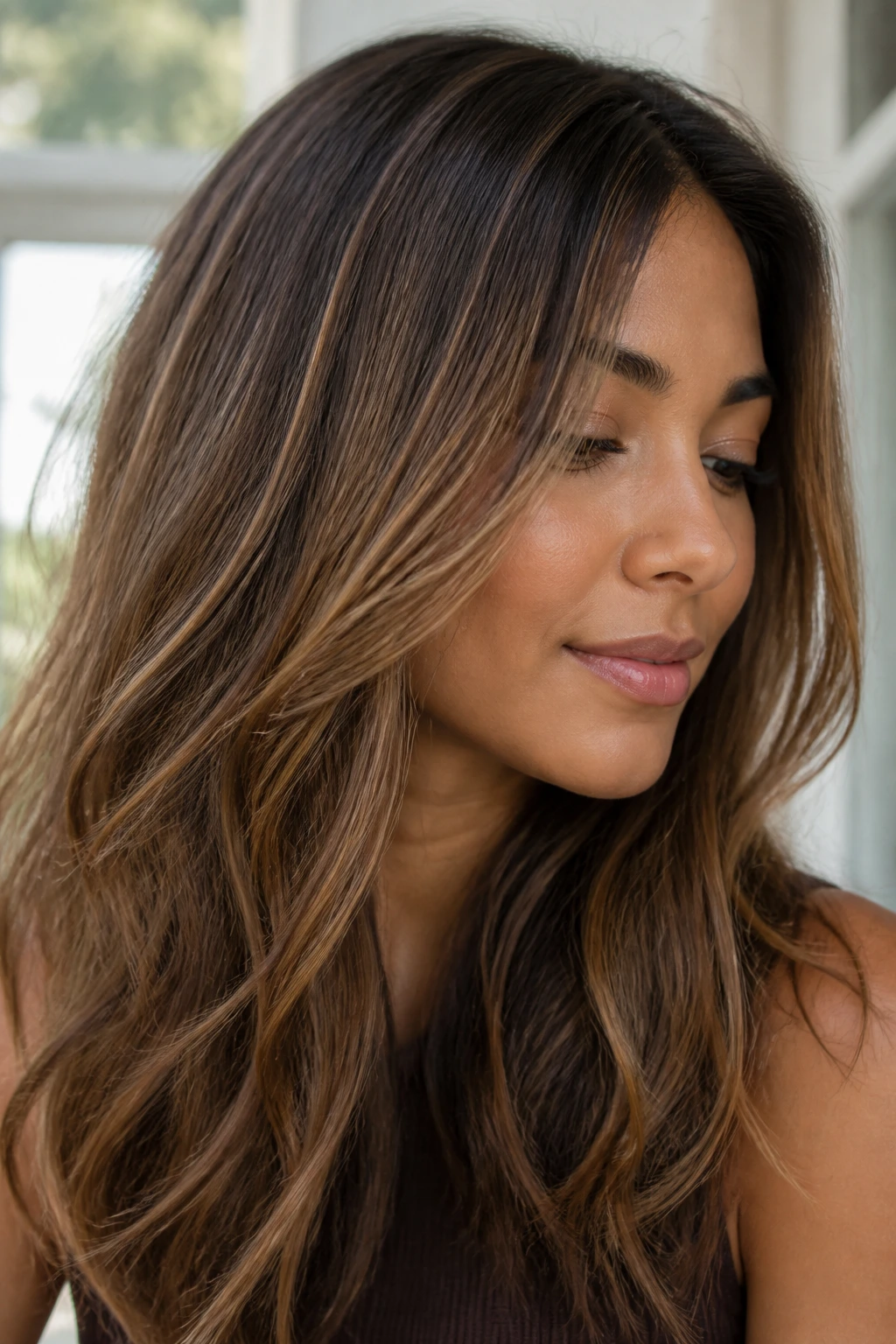
Toffee babylights are tiny, fine highlights woven close together so the hair looks naturally brighter instead of obviously colored. If your hair is medium brown, this is the shade family that gives you that soft “my hair just happened to catch the light” effect without making the base look broken up.
What Makes It Different
Babylights are thin enough to disappear into the base when you’re not standing near a window, which is exactly why they work so well on medium skin. The subtle contrast keeps the face from going flat, and the toffee tone adds depth that ash-brown highlights can miss completely.
They’re especially good on finer hair. Chunky highlights can start to look like gaps on delicate strands, but babylights blur that line. If you want the color to last longer between appointments, keep the roots slightly deeper and let the lighter pieces live mostly through the mids. That way, regrowth doesn’t look like a hard line.
4. Butterscotch Ombre Ends
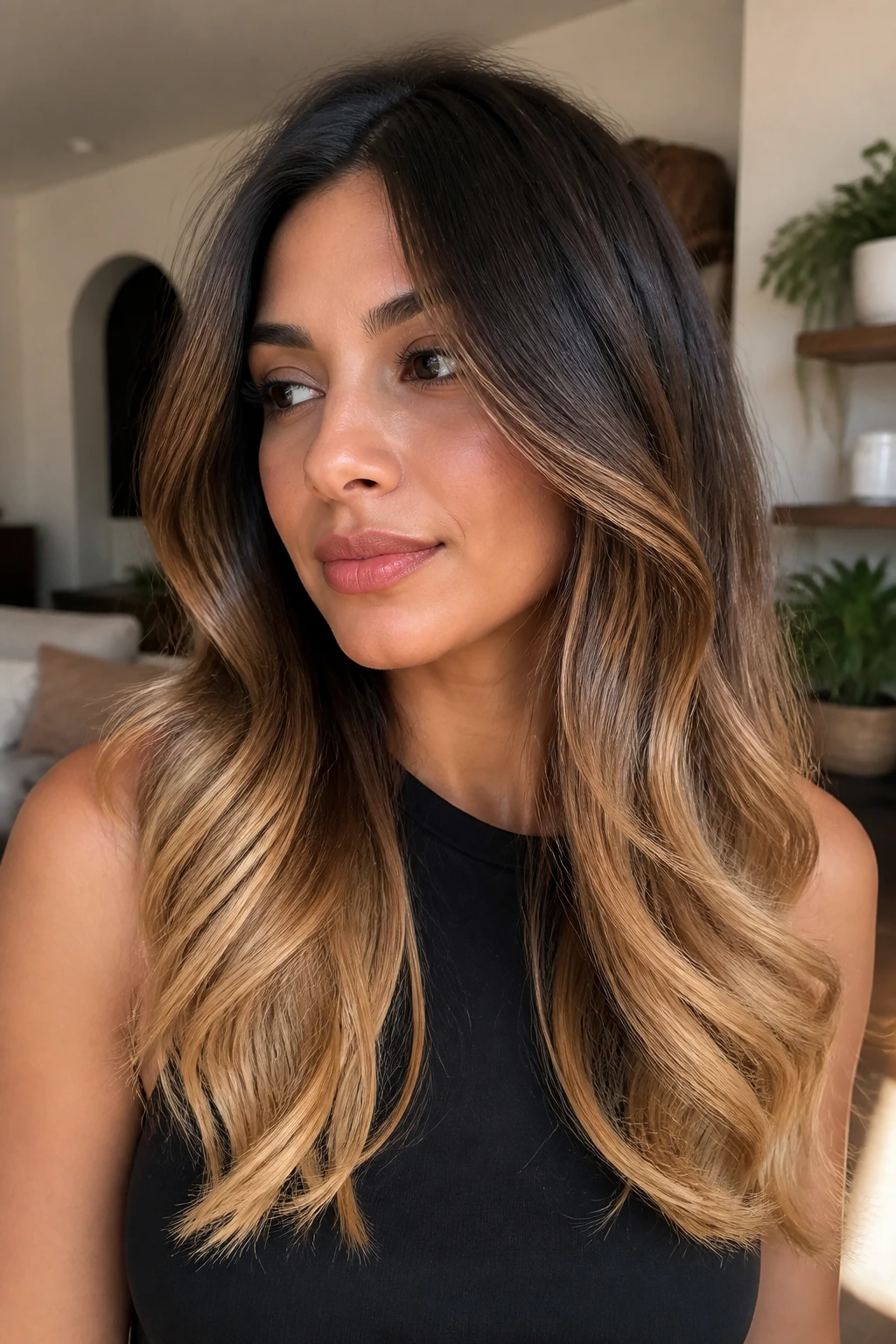
Butterscotch ombré ends are for the person who likes the idea of highlights but doesn’t want brightness all over the head. The root stays darker, the mids melt through warm brown, and the ends finish in a buttery gold-brown that catches light at the bottom of the hair. It’s a slower reveal. Better for longer hair than a blunt cut, honestly.
A medium skin tone benefits here because the warmth sits farther from the face, where it can feel less intense. That makes the color easier to wear if your undertone shifts between golden and neutral depending on lighting. It also buys you time. When the roots grow, the shape still reads intentional.
The only catch is porosity. If the ends are damaged, they can pull too light and skip straight into orange-gold. A smart colorist will check the ends first and stay a shade deeper there if the hair has been lightened before.
5. Chestnut Foil Highlights
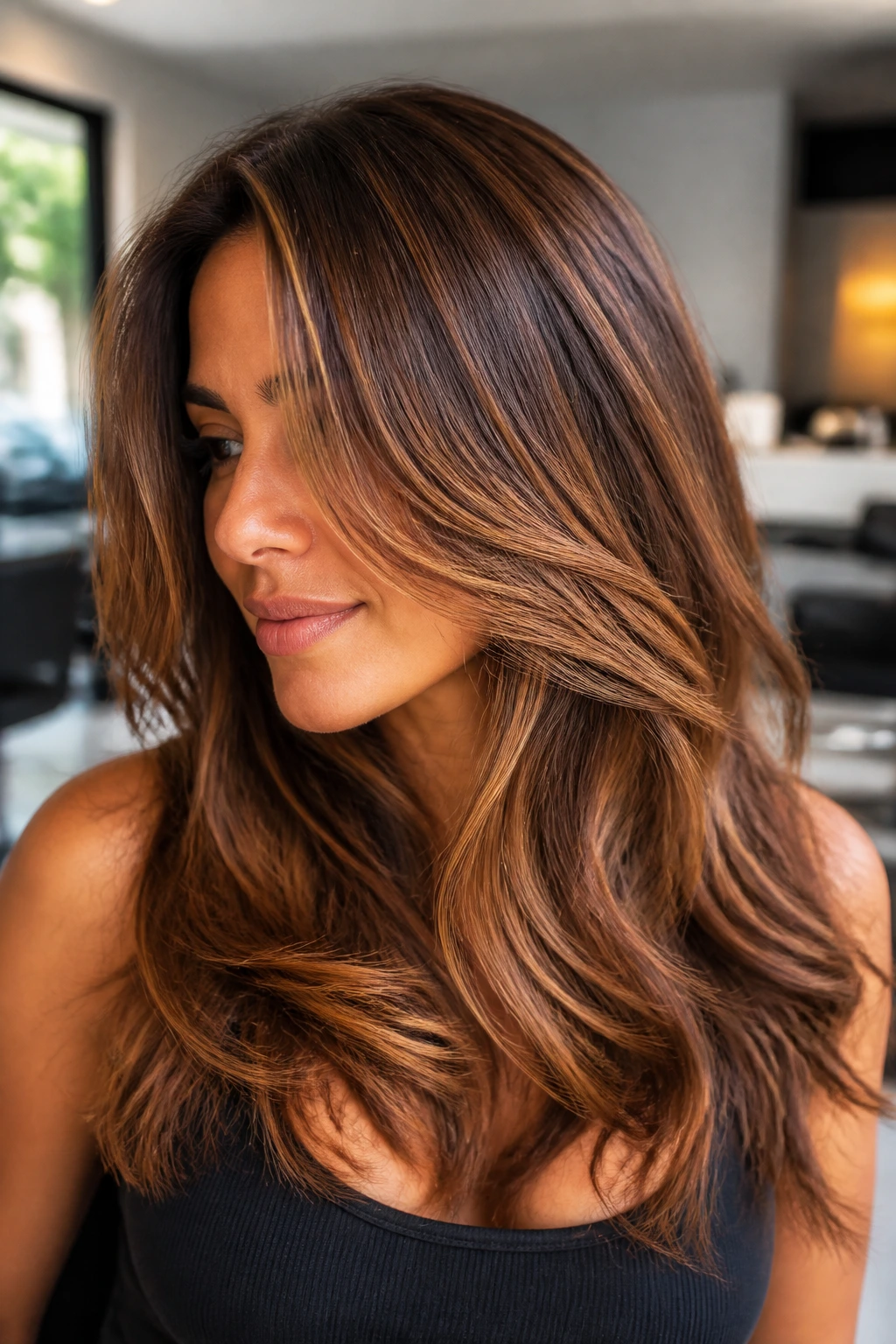
Chestnut foil highlights have a cleaner, more polished look than freehand balayage. The foil gives the stylist more control, which matters when you want golden brown dimension without losing the depth that keeps medium skin looking rich. These highlights usually show up as warm chestnut threads placed through the crown and sides.
What To Watch For
Too much foil spacing can make the hair look striped. Too little, and the dimension disappears. The sweet spot is a controlled scatter of warm pieces that break up the base just enough to add shine and movement. On straight hair, this style looks crisp. On loose waves, it softens and picks up a little glow around the face.
I like this one for people who wear their hair smooth more often than not. A blowout makes the chestnut and gold tones line up in a neat, polished way. If you want visible contrast but hate chunky highlights, this is one of the safer bets.
6. Bronze Teasy Lights
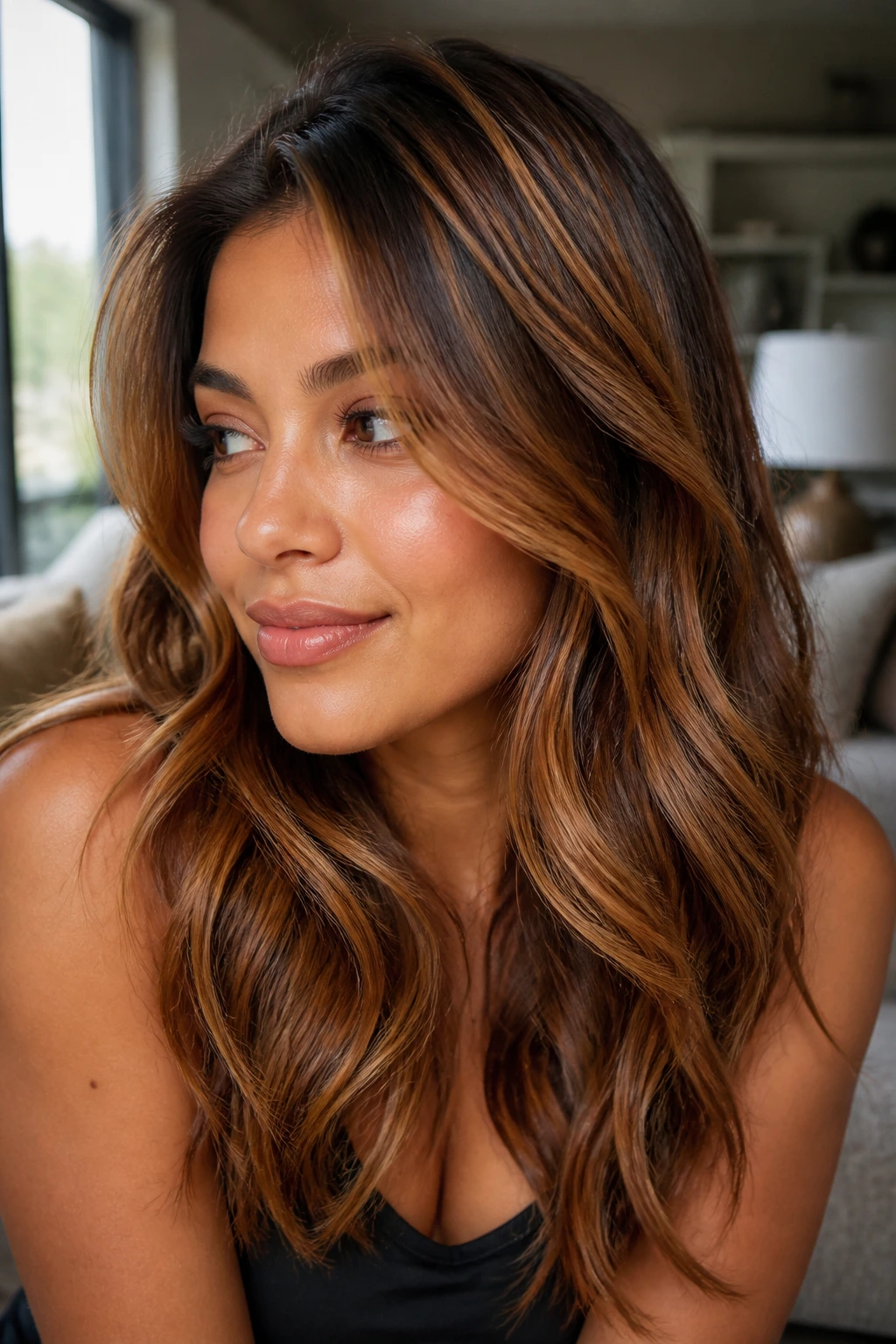
Bronze teasy lights use backcombing at the root before the lightener goes on, which softens the transition from dark root to lighter midsection. The result is less harsh and a lot more wearable on medium skin than high-contrast blonde strips. Bronze in this context means warm, earthy, and a little metallic in the best way.
The technique matters because it diffuses the highlight line. Instead of a blunt start, the lighter pieces fade in gradually. That’s useful if you have thick hair or darker medium-brown hair that needs a bit more lift to show the gold. It’s also kind to grow-out. The root line stays blurred for weeks.
If your hair tends to puff at the crown, teasy lights can help the color sit deeper near the root and brighter through the mid-lengths, which keeps the top from looking puffy and pale.
7. Amber Peekaboo Panels
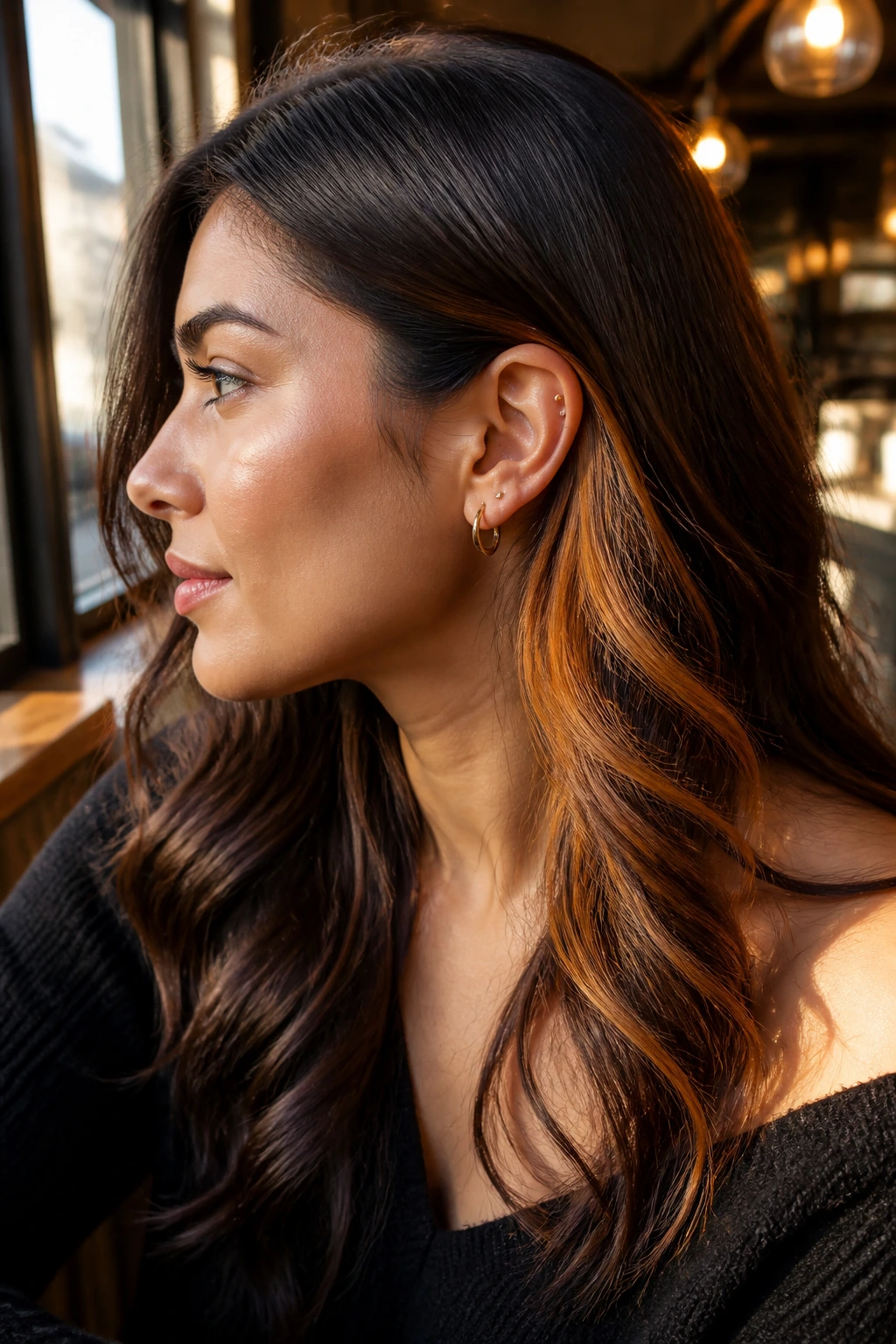
Amber peekaboo panels are hidden streaks tucked under the top layer, and they’re a lot more fun than they sound. When the hair moves or gets tucked behind the ear, the amber shows through like a flash of candlelight. Medium skin can wear this warmth easily because the visible pieces are controlled and deliberate.
A Good Fit If You Want Surprise, Not Noise
This style is especially useful if you work in a setting where bright highlights feel like too much. The top layer can stay mostly brown, while the underside carries the color. That means you get dimension in a ponytail, braid, or blowout without committing to a full head of lightened strands.
Amber works best when it stays in the golden-brown range, not copper-orange. Ask for a glaze after the lightening if the lift comes up too yellow. The goal is a warm amber glow, not a traffic cone in the underlayer.
8. Cinnamon Contour Highlights
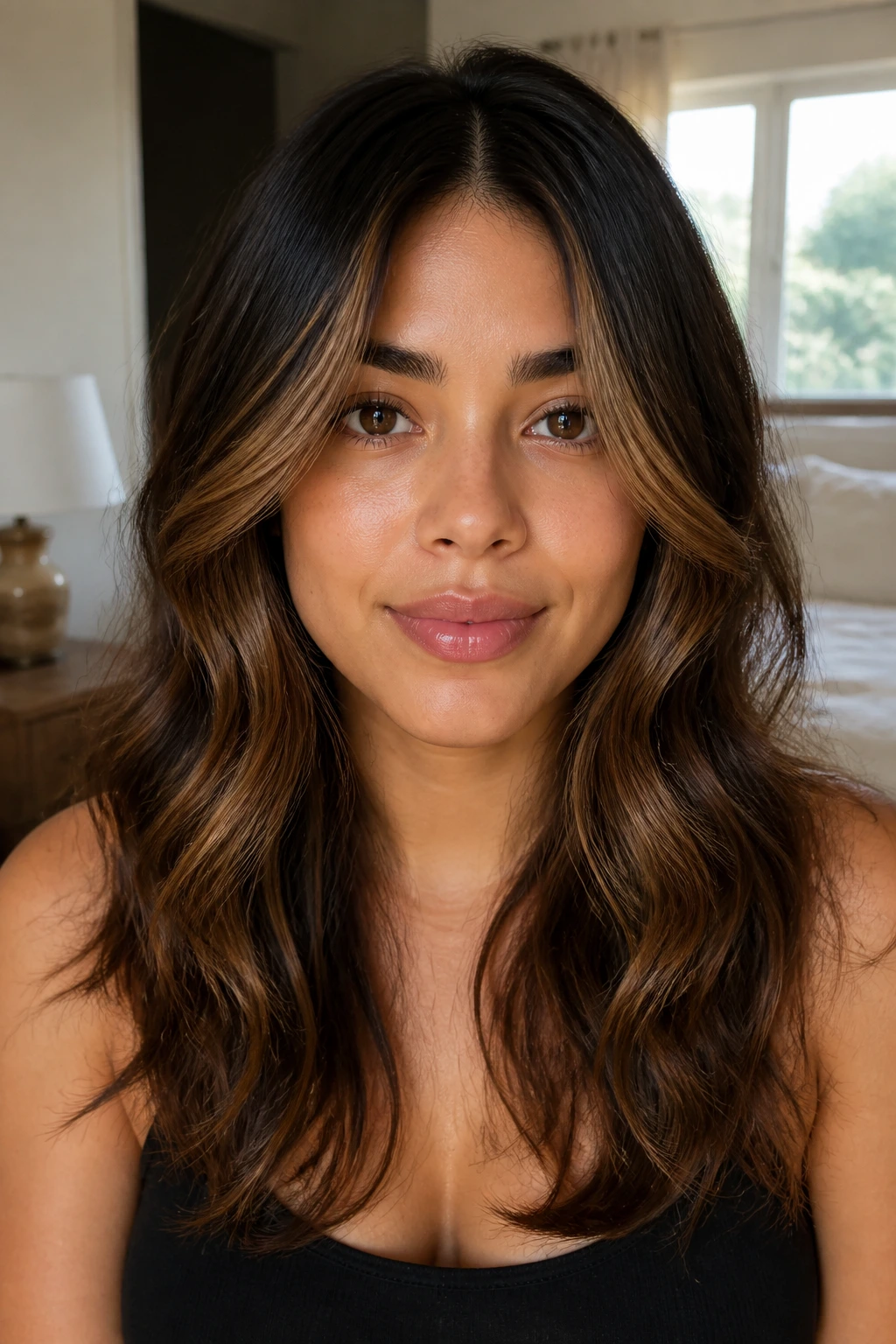
Cinnamon contour highlights are placed to follow the shape of the face, usually around the temples, cheekbones, and the first few inches of the front layers. Think of them as hair contouring, but less gimmicky and much more practical. They warm the face without making the whole head brighter.
That matters on medium skin because the color sits where people look first. A cinnamon-brown ribbon near the cheek can make the complexion look a little richer and more awake, especially if your undertone leans peach or golden. I like this approach when someone says, “I want something visible, but I still need my hair to look like my hair.”
If the cut has layers, these highlights can also make the movement read better. Every time the front pieces bend, the cinnamon shows up, then disappears again. Very satisfying. Very effective.
9. Maple Melt Balayage
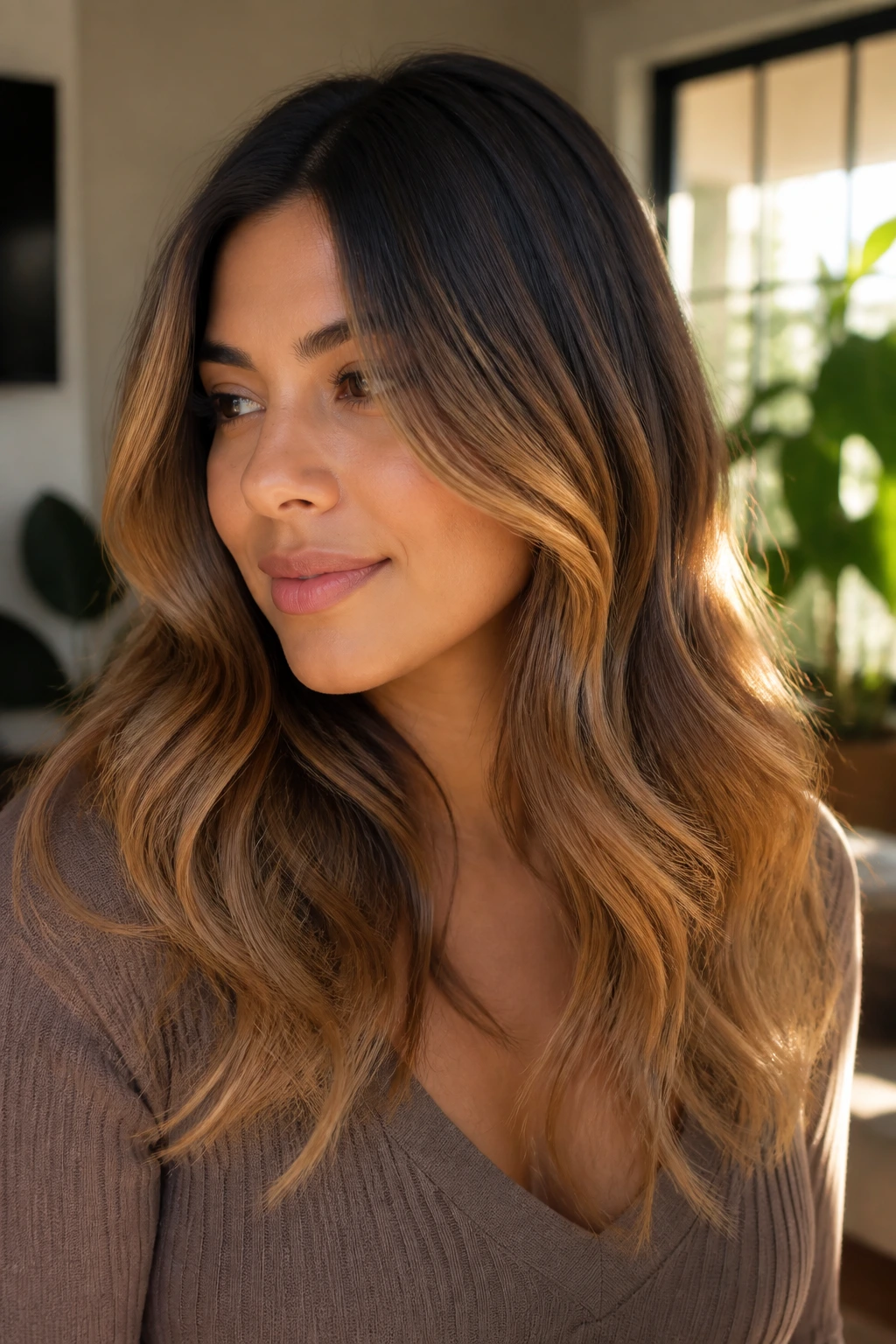
Maple melt balayage is one of those blends that looks expensive because the transition is so smooth. The root stays deeper, the mids soften into warm brown, and the ends drift into maple-gold with no obvious line. It’s the kind of color that looks like it grew there, not like it was painted on one section at a time.
Why I’d Pick It
Medium skin usually handles this melt well because the warmth is spread across several levels instead of concentrated in one bright spot. That keeps the face from looking patchy. If your base is already a medium brunette, the whole service can stay inside the brunette family and still make a real difference.
This one also ages nicely. Even when the color starts to fade, it fades in layers, not in chunks. The only thing I’d caution is to avoid a toner that’s too beige-gray. You want maple, not mud.
10. Latte Swirl Foils
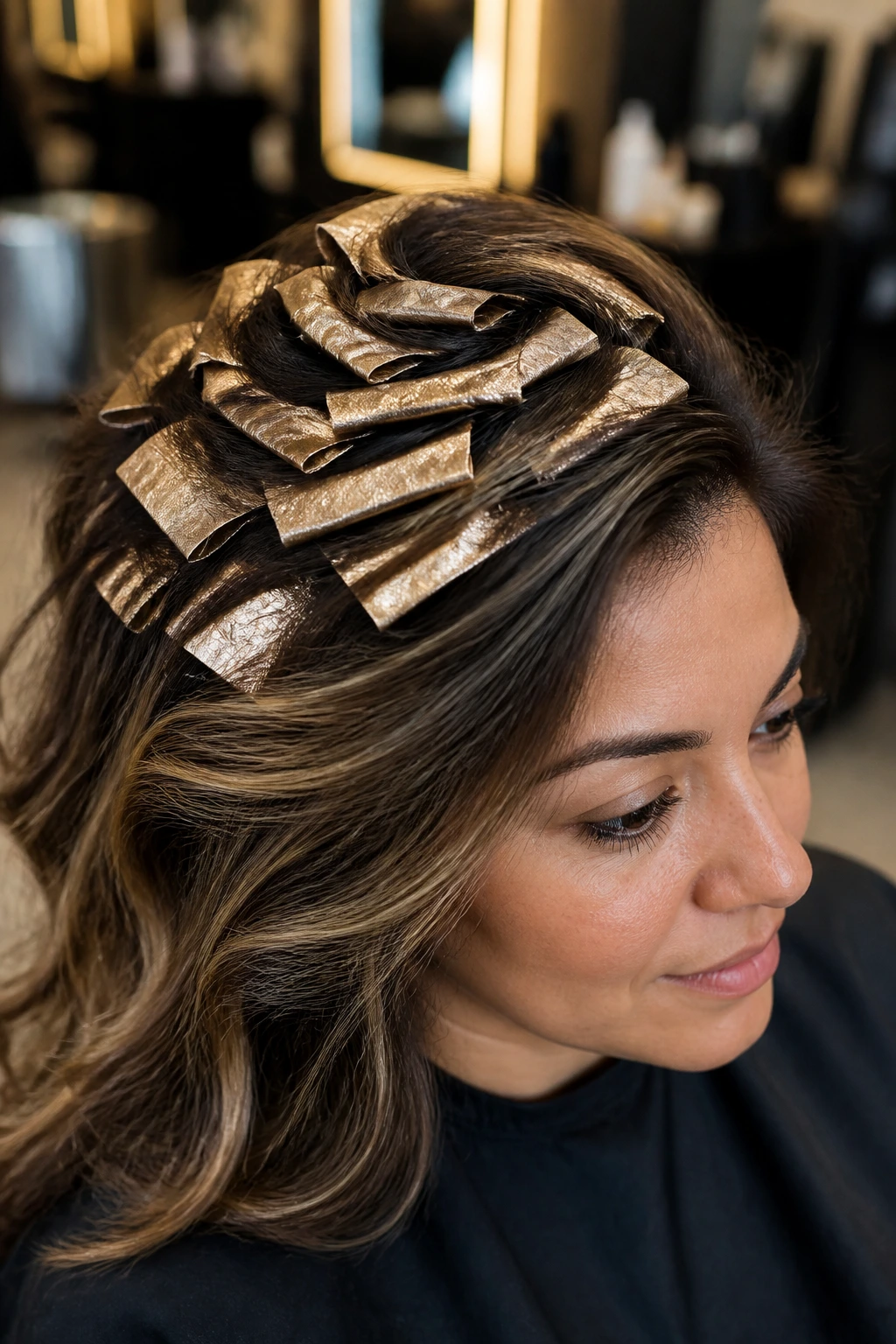
Latte swirl foils mix creamy brown and golden-brown pieces in a way that feels layered rather than flat. The foil pattern usually alternates brightness, so you get little shifts in tone every time the hair moves. It’s a smart choice for medium skin because the cooler brown keeps the gold from getting loud.
The name fits the effect. The hair should look stirred, not striped. If the natural base is medium to dark brown, this technique can keep depth at the root while still giving the mids enough lift to catch daylight. It’s also a nice option when someone wants “dimension” but doesn’t want a huge color story attached to it.
On a straight blow-dry, the swirls read tidy and refined. On curls, they can look richer, almost like different tones of tea and caramel stacked together.
11. Golden Auburn Accents
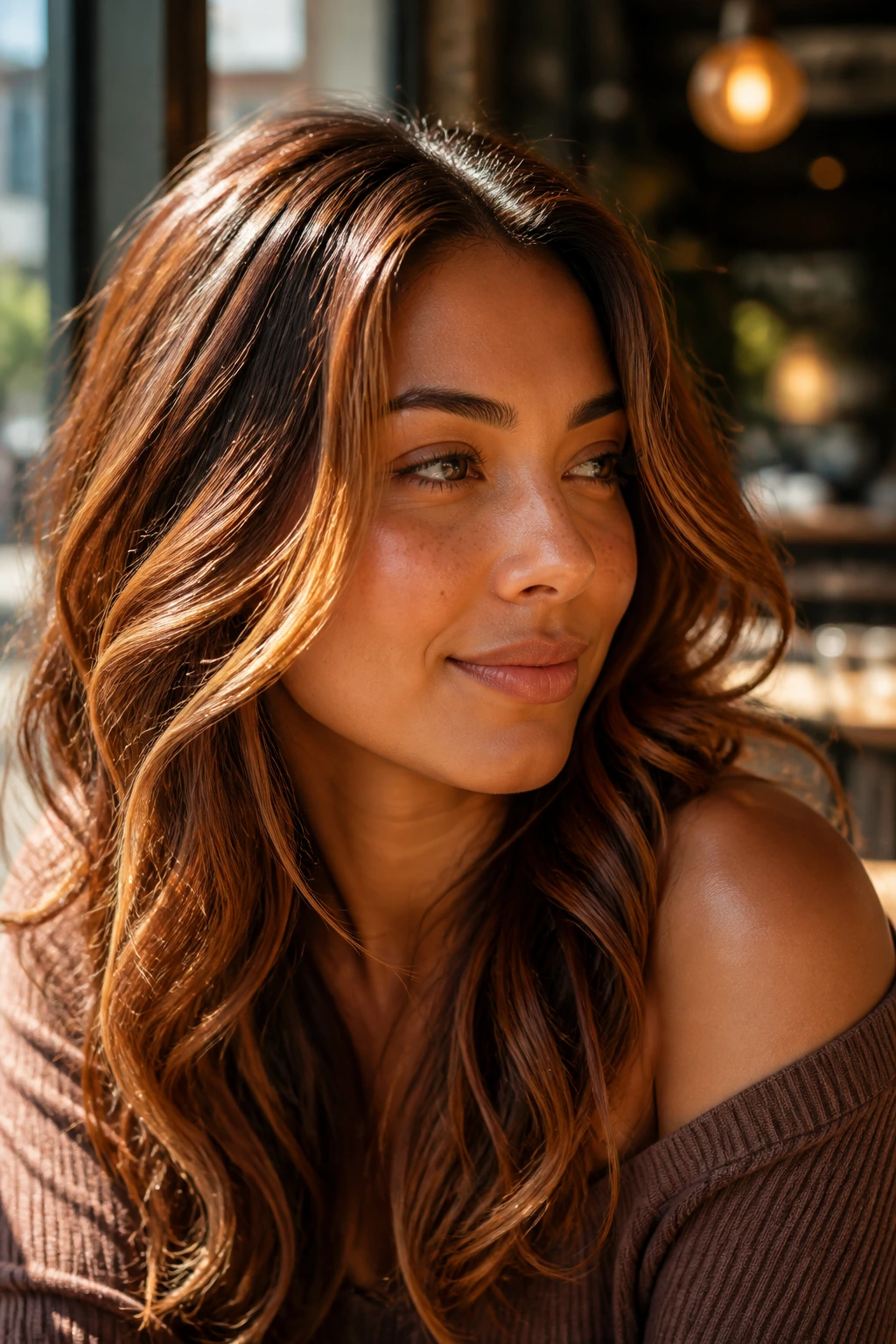
Golden auburn accents lean a touch red, which is exactly why they deserve a spot here. Medium skin with warm or golden undertones can carry that tiny bit of auburn without the hair turning coppery in a bad way. The red warmth makes brown highlights look deeper and more expensive.
If your skin gets a little sallow against flat brown hair, auburn can fix that fast. The trick is moderation. You want the highlight to stay rooted in gold-brown with just enough red to keep it from going flat. A gloss can do a lot of that work after the lightening.
I prefer this look on layered cuts because the auburn catches the edges of the layers and gives the whole cut more motion. It’s a good middle road between brunette and redhead, and it doesn’t ask for the maintenance that full copper usually does.
12. Mocha and Honey Dimension
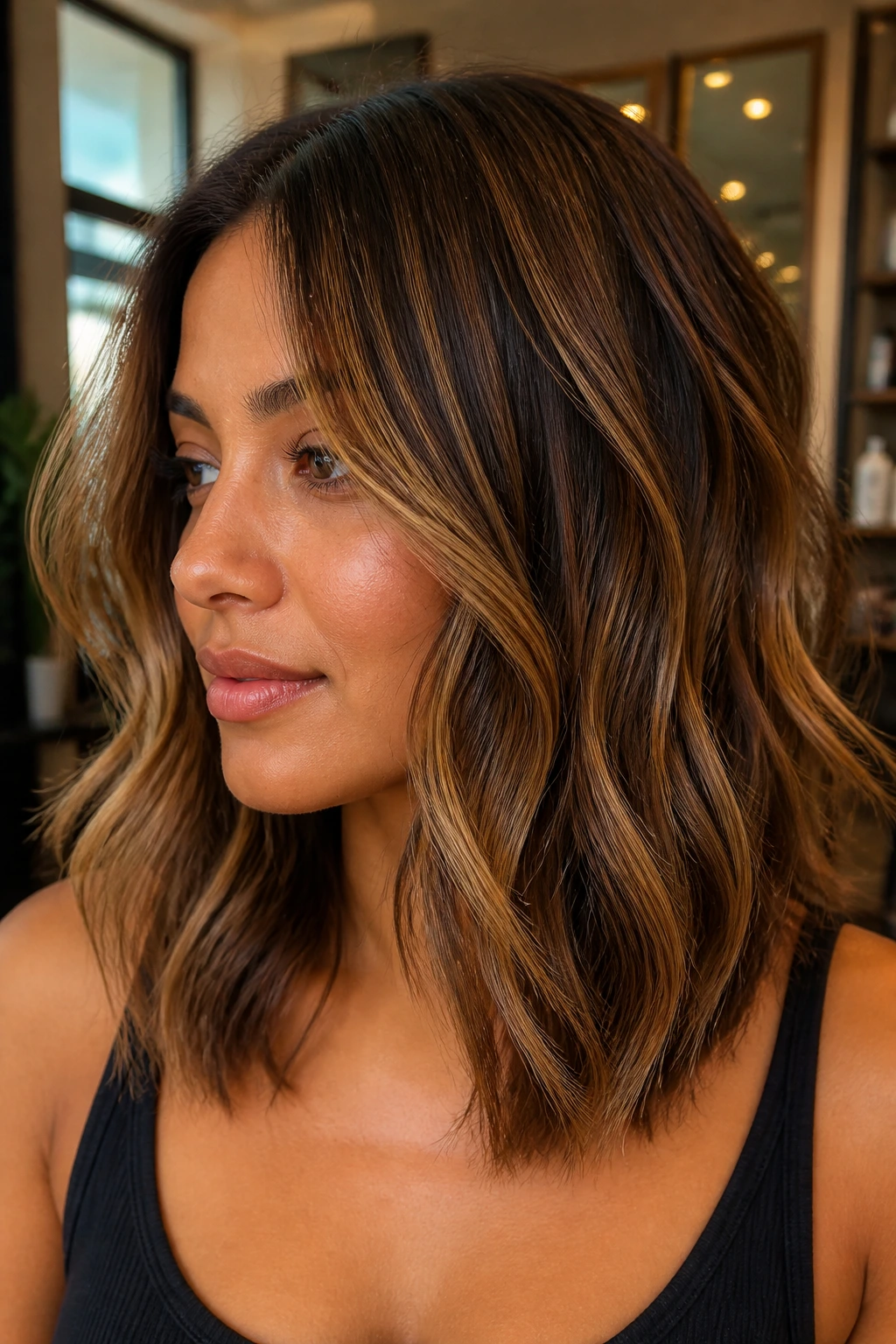
Mocha and honey dimension is what I recommend when hair needs depth and lift at the same time. Instead of trying to brighten every strand, the colorist keeps some deeper mocha pieces in place and threads honey highlights between them. That contrast is what gives the hair shape.
On medium skin, this mix works because the honey pieces brighten the face while the mocha keeps the overall tone from drifting too light. It’s also a better choice for thick hair than a uniform highlight job. Thick hair can swallow subtle color. Dimension helps the eye read movement.
When It Pays Off
If your hair tends to look like one large brown sheet in photos, this solves the problem without forcing you into blonde territory. The lowlights matter here as much as the highlights. I’d call this the most balanced option in the whole list for anyone who wants richness first and brightness second.
13. Almond Butter Surface Painting
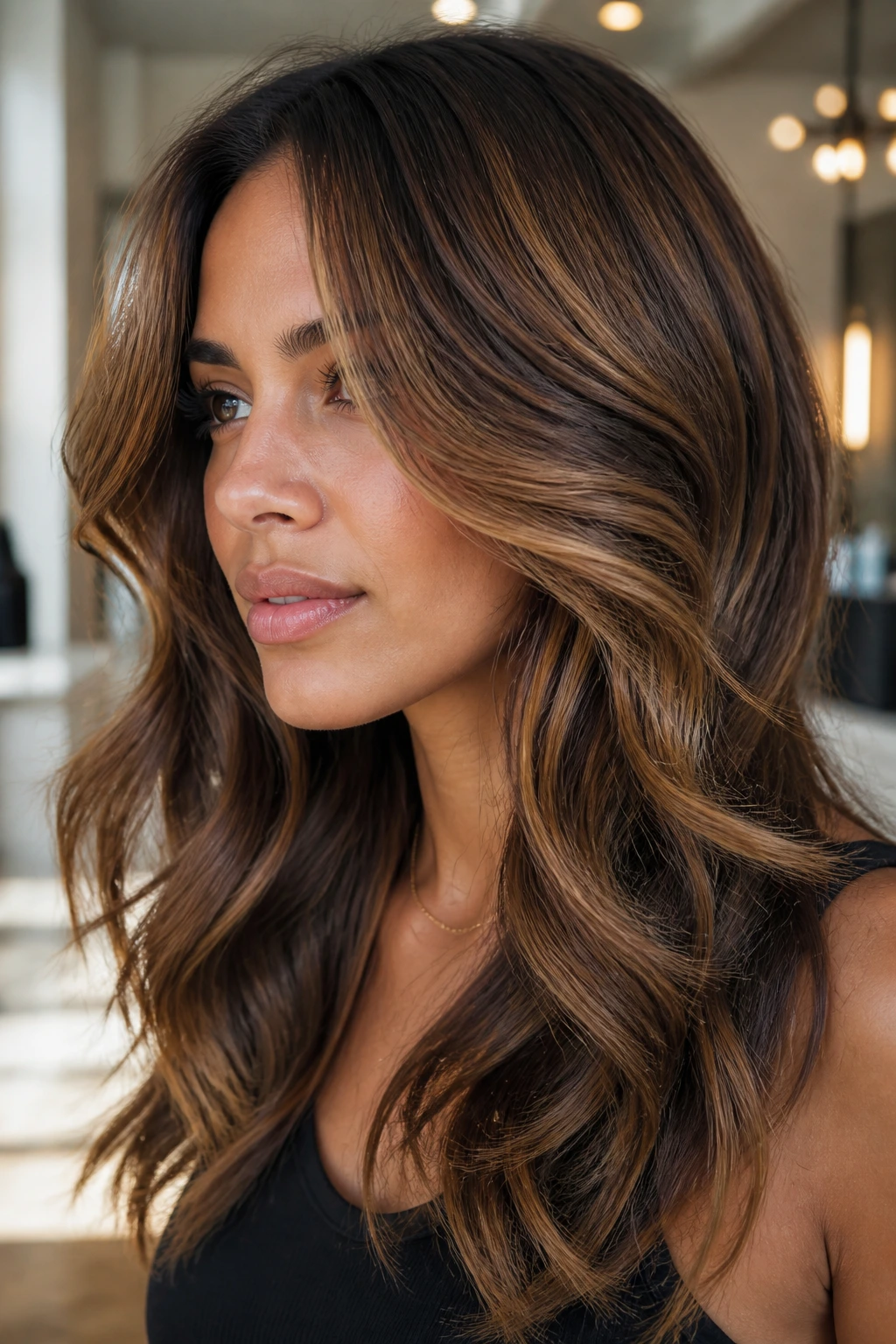
Almond butter surface painting keeps the lightness mostly on the top layers and outer curves of the hair. It’s hand-painted, so the stylist decides where the sun would naturally hit: around the crown, on the sides, and along the ends that move first. The result is soft and believable.
Medium skin usually likes this because the color sits on top of the brunette base rather than cutting through it. That means the face still sees plenty of depth, which helps the skin look even. On wavy hair, the effect is especially good. Every bend in the wave catches a little gold.
This is the style for someone who likes a clean, polished look without obvious foil marks. It’s gentle. That sounds boring until you see how much shine it gives.
14. Sunlit Bob Highlights
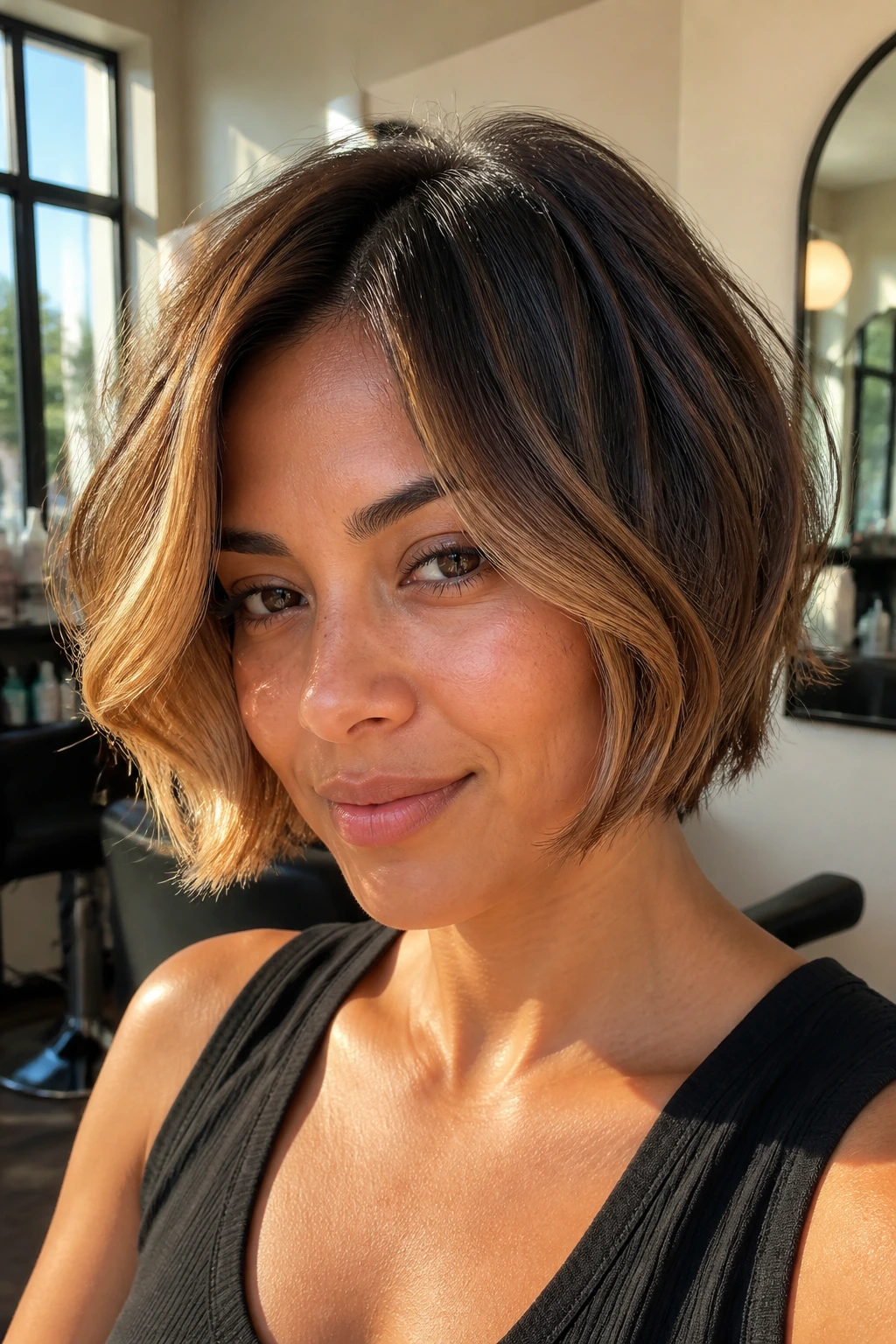
A bob needs a different highlight plan than long hair. There just isn’t enough length for broad ribbons to spread out, so the color has to work harder in a smaller area. Sunlit bob highlights do that by concentrating warm gold-brown pieces around the top layers, the front corners, and the ends that graze the jaw.
The effect on medium skin is strong because the brightness sits near the face and moves with the cut. When the bob swings, the highlights do too. That makes the style look lively instead of heavy. If your hair is straight, the pieces can be placed a bit more precisely. If it’s wavy, softer painting keeps it from looking too blocky.
Short hair can handle bolder placement than people think. You just need fewer pieces, not weaker ones.
15. Curly Tawny Ribbons
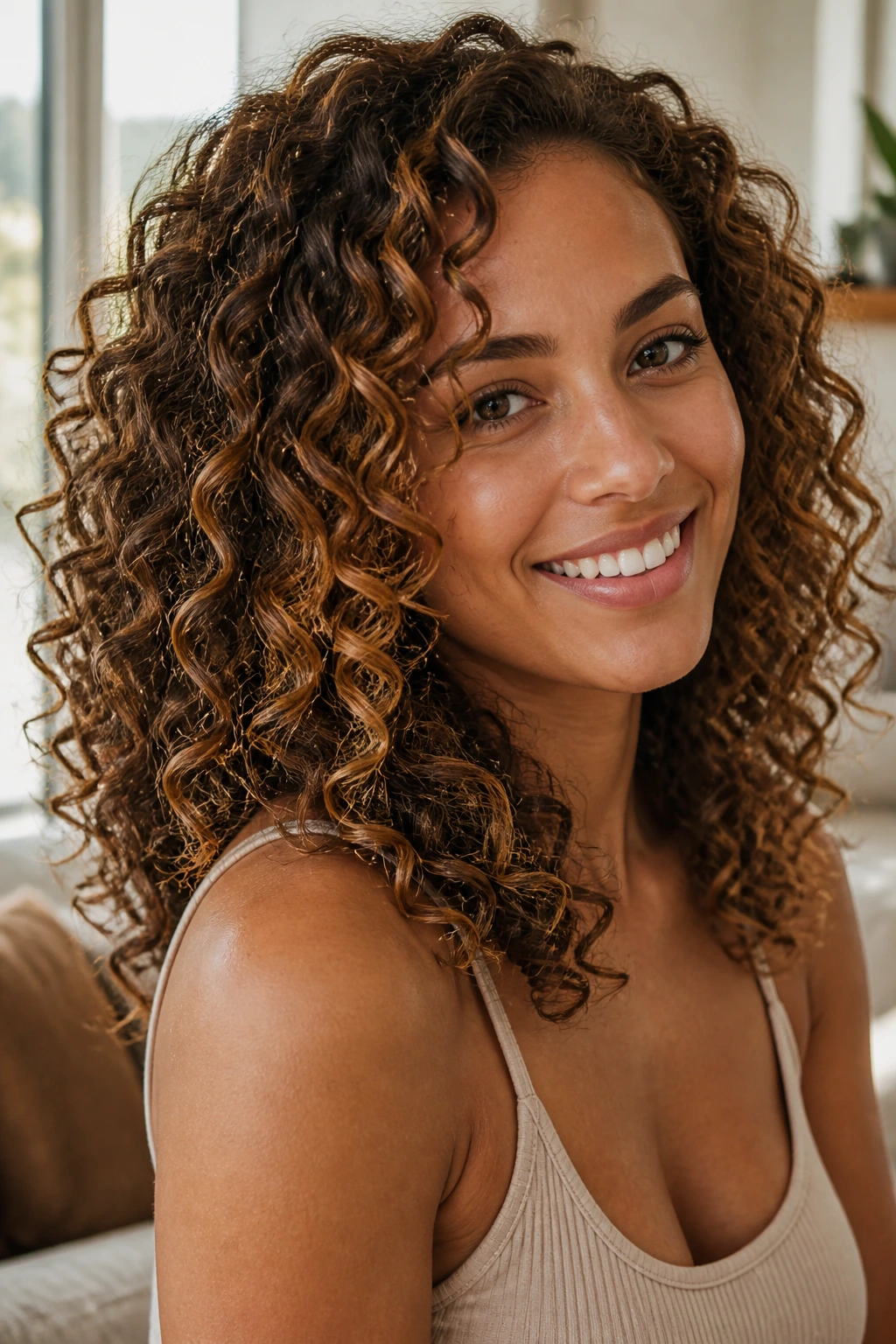
Curly hair changes the whole highlight game. One foil can show up in three different places once the curl springs back, so tawny ribbons need to be placed with the curl pattern in mind. The warmer brown-gold tone gives curls extra definition without turning them into a patchwork of light and dark.
On medium skin, that tawny warmth tends to echo the face nicely. Curls already create natural shadows, so a golden brown ribbon can sit in the lighter sections and make the pattern read cleaner. The best version of this look keeps the roots deeper and lets the lightness sit through the bends and outer arcs of the curl.
I’m picky about this one. If the highlights are too thick, curls lose their shape. Thin, well-placed ribbons are the whole point.
16. Espresso Base with Gold Veil
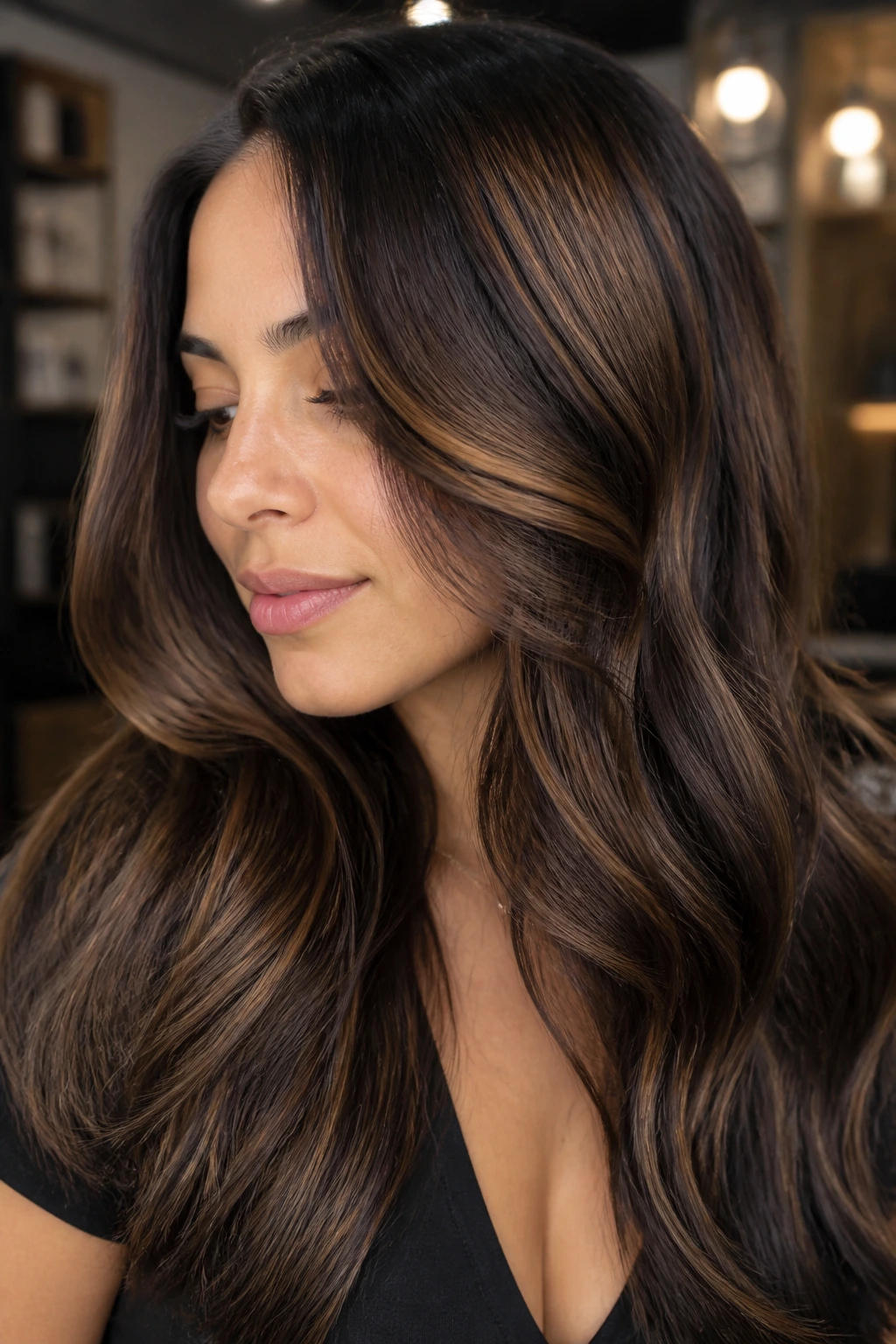
Espresso base with a gold veil is the high-contrast option for people who like a darker root and a whisper of shine over the top. The base stays espresso or deep brown, while a delicate layer of gold-brown pieces sits through the upper sections. It’s dramatic, but in a controlled way.
This works on medium skin because the deep base gives the skin somewhere to land. The gold doesn’t need to carry the whole look. It just catches light in small flashes. If you’ve ever looked at a brunette and thought, “I want that to feel richer, not lighter,” this is the direction I’d point you.
Small Detail, Big Difference
Keep the highlights narrow. Too much gold and the veil stops looking elegant. The hair should still read as brunette from across the room. Up close, though, you get the little flickers that make people lean in.
17. Gilded Curtain Bang Accents
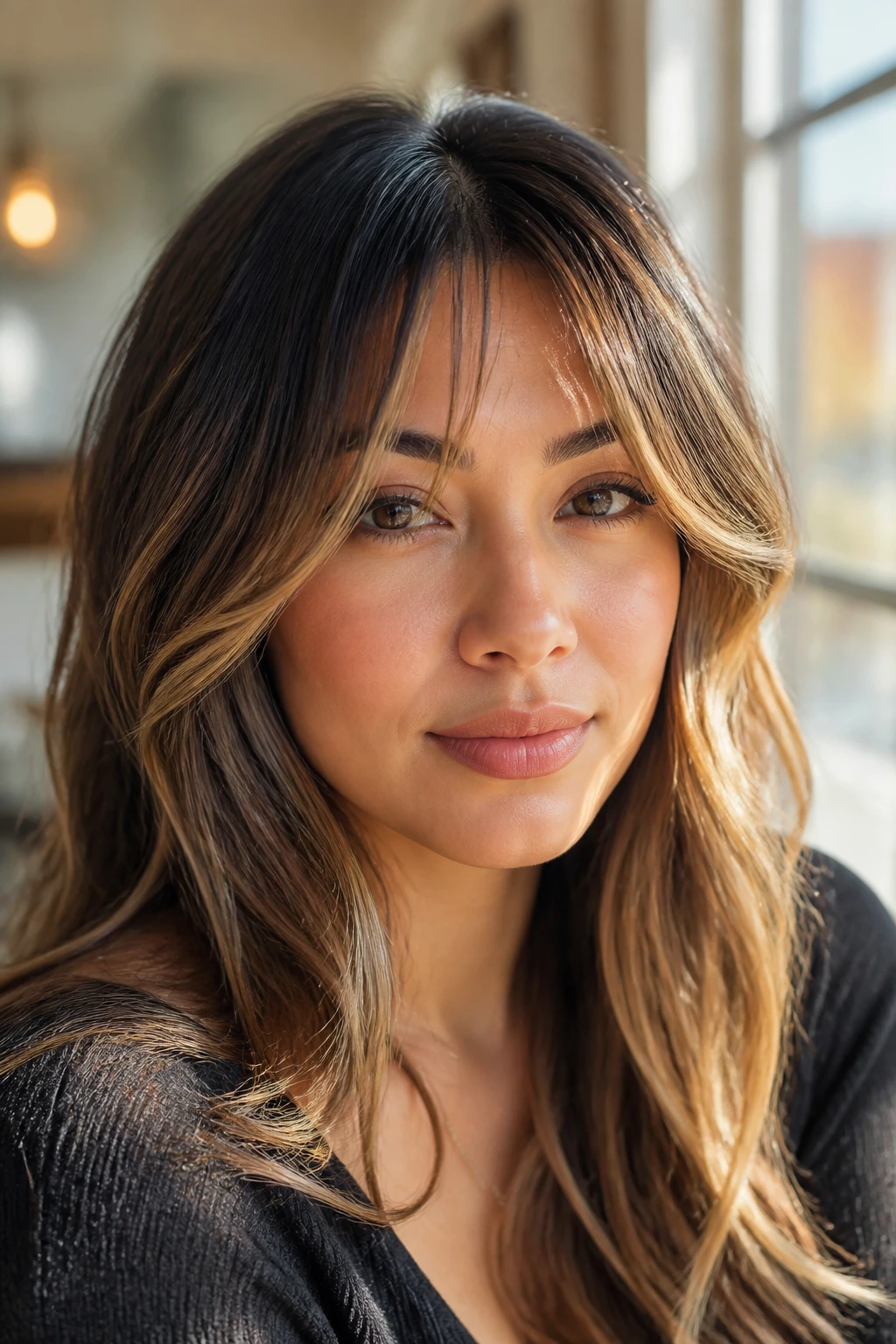
Curtain bangs are already a frame, so they deserve their own color story. Gilded curtain bang accents place the warmest highlights right through the fringe and the first face-framing layers, where the color can shift the whole expression of the cut. Medium skin gets a nice lift here because the brightness sits exactly where the eye lands.
The good version of this style is soft at the root and brighter through the bends. Too much light at the scalp looks harsh. Too little at the ends doesn’t show up once the bangs are styled. You want a gold-brown that bends with the fringe instead of sitting on top of it.
This is one of the few highlight placements that can make a haircut feel newer without changing the length. Useful. Cheap, too, compared with a full reshaping cut.
18. Hazelnut Halo Highlights
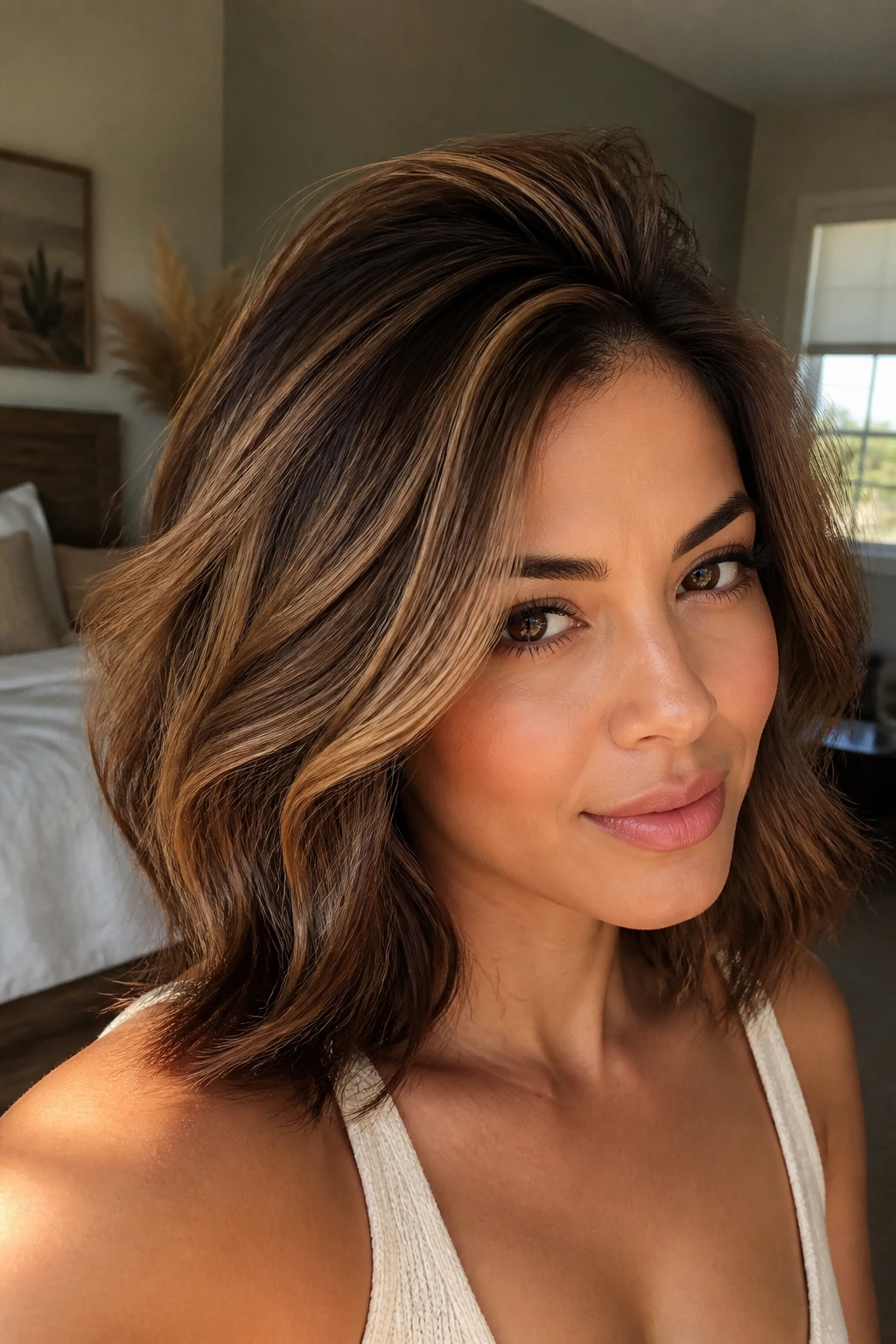
Hazelnut halo highlights brighten the crown and topmost layers so the hair looks lifted from above. Instead of spreading brightness everywhere, the color sits where natural light would hit the head first. That creates a halo effect, especially on medium-length cuts with a little volume at the roots.
For medium skin, the hazelnut tone keeps the color warm enough to feel grounded. A pale blonde halo would read too sharp against many medium complexions, but hazelnut stays in the brunette family. It’s a smart move if you wear your hair up a lot, because the top still looks finished even in a clip or bun.
A side part can make this style even better. The extra lift at the crown shifts the eye upward and gives the whole haircut a more open shape.
19. Biscotti Gloss Balayage
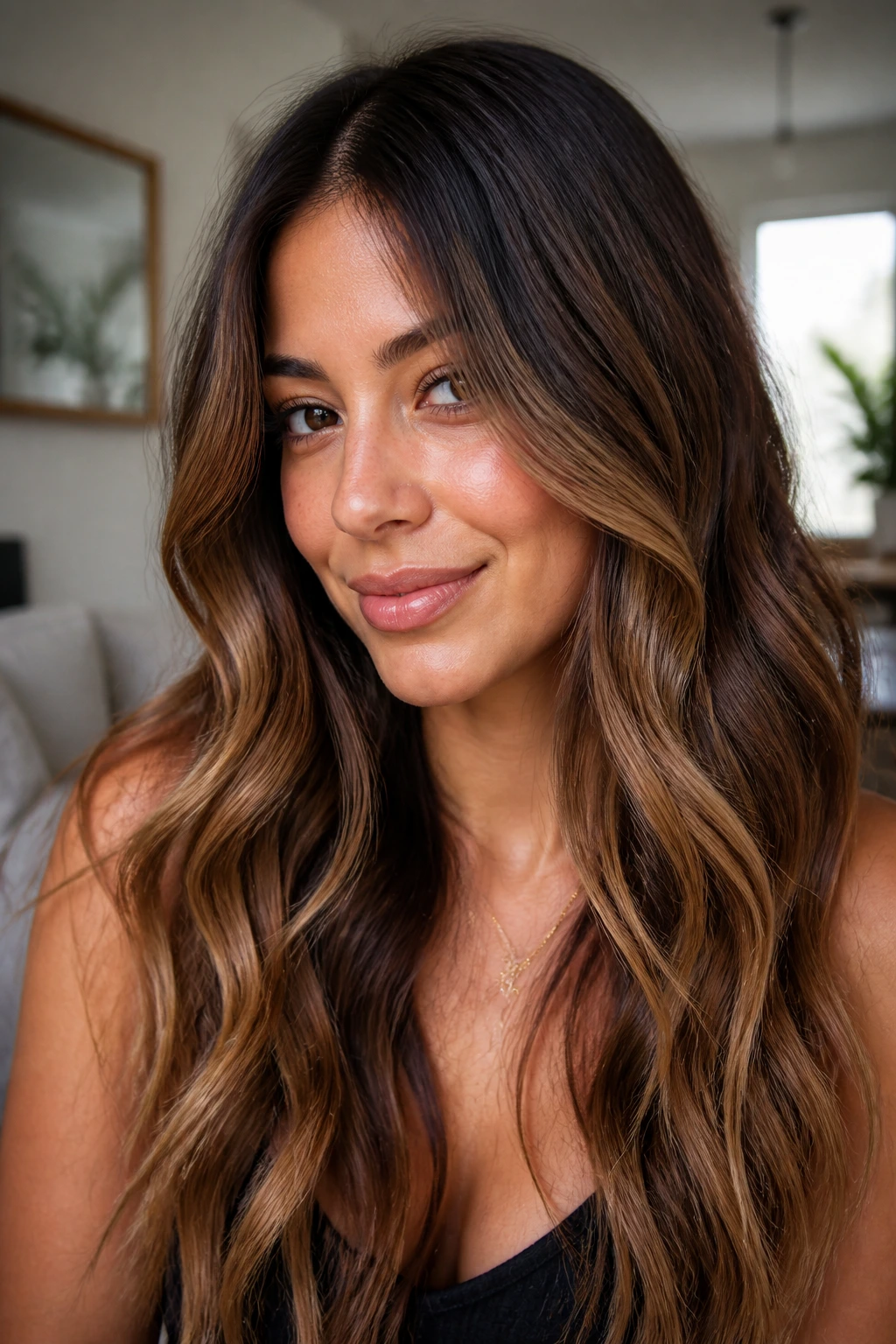
Biscotti gloss balayage is for people who want their brunette to look polished, not flashy. The balayage gives the shape, then the gloss softens the tone into a nutty, golden-brown finish that sits somewhere between cookie dough and toasted almond. It’s warm, but it doesn’t shout.
That restraint is exactly why it suits medium skin so well. The color doesn’t fight the face; it sits next to it and makes the skin look a little more even. If your hair has been through a few coloring rounds, a gloss like this can pull the whole thing back together and make the lengths look smoother.
I’d recommend it for people who like their hair to read expensive in daylight and calm indoors. Not loud. Just finished.
20. Rooted Caramel Lob
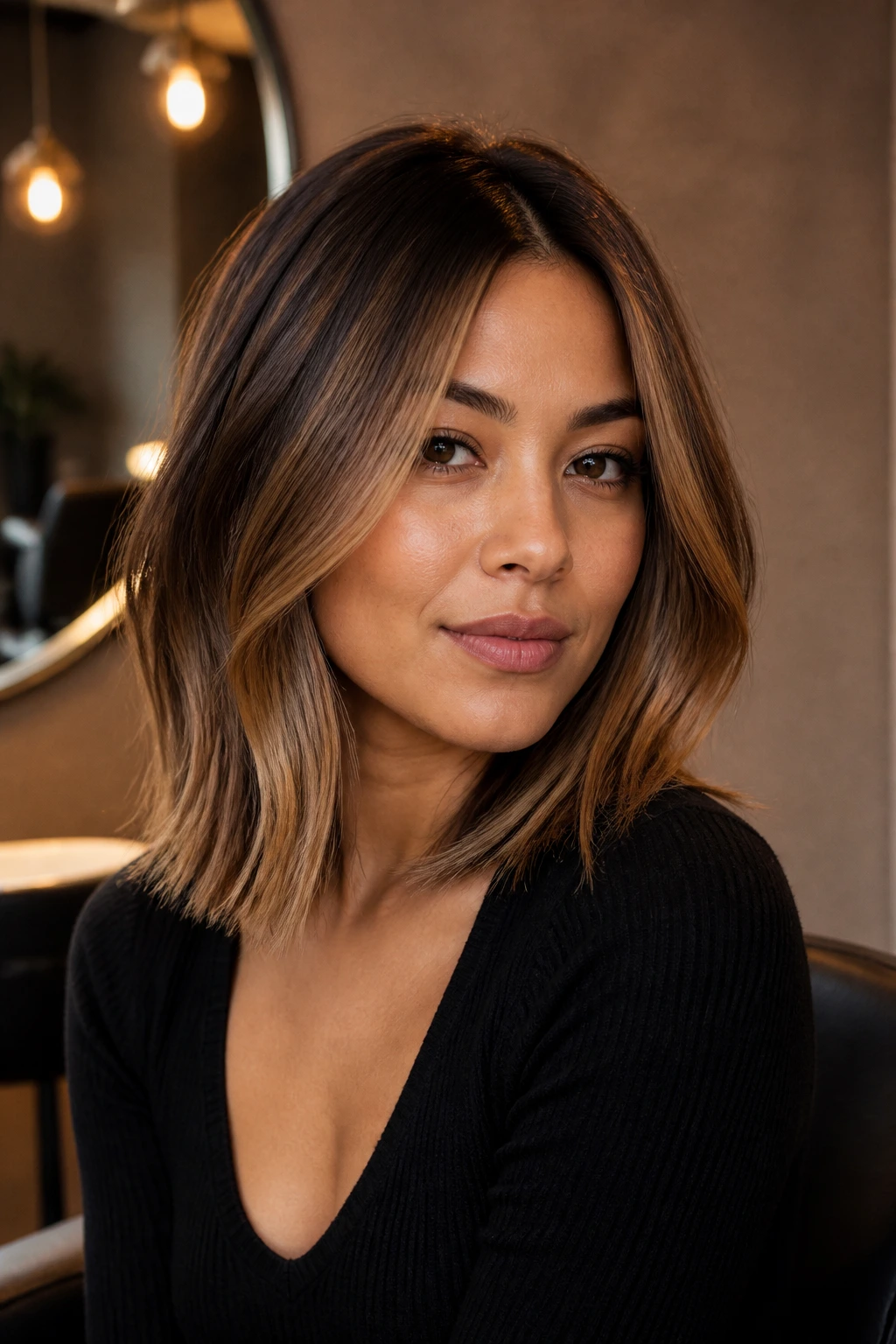
A rooted caramel lob keeps the top deeper and lets the caramel live through the mid-lengths and ends. On a lob, that rooted shape matters, because there isn’t much length to hide a bad line. The shadow root gives the color a little depth, and the caramel pieces keep the cut from feeling heavy around the shoulders.
Medium skin tends to like this because the warmth starts lower, near the jaw and collarbone, rather than flooding the whole face. That gives a nice brightening effect without the upkeep of a full all-over lighter brown. If you wear your hair straight, the contrast looks sleek. If you add a wave, the caramel catches in the bends and the cut looks fuller.
This is one of the safest options if you want a visible change with a manageable grow-out.
21. Sable and Amber Micro-Highlights
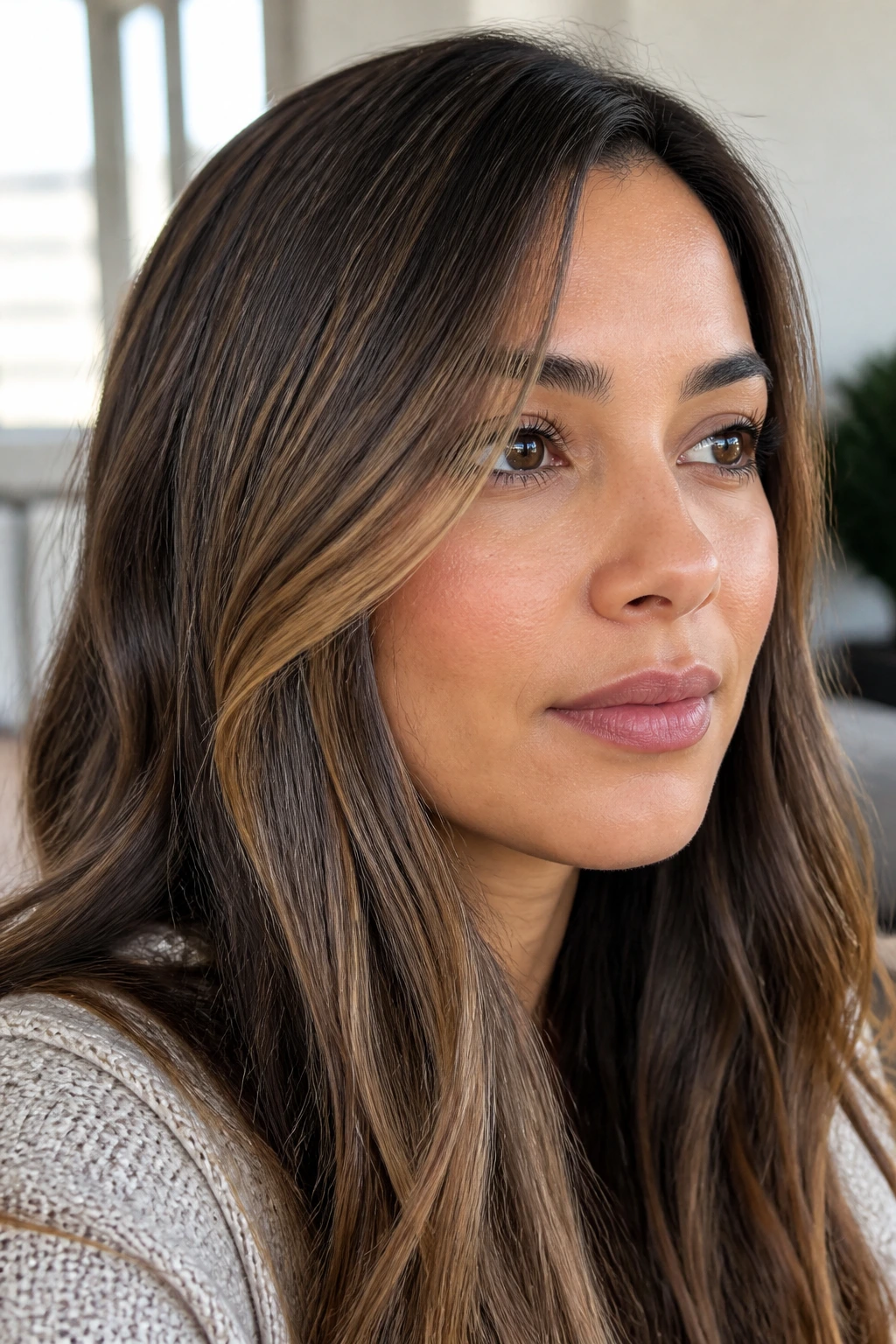
Sable and amber micro-highlights are tiny, almost woven-in pieces that create an expensive-brunette look. The goal isn’t obvious streaks. It’s shimmer. The sable base keeps the hair deep, while the amber threads give just enough warmth to keep medium skin looking lively.
This one takes patience in the chair. Lots of small sections. Lots of detail. But the payoff is hair that seems to change in different light without looking obviously colored. I like it for people who are cautious with highlights or who need a conservative office-friendly look.
The color reads especially well on straight hair, where the tiny pieces can line up and give a quiet sheen. On waves, the shimmer turns softer and more romantic. Either way, it’s one of the least fussy looks in the set.
22. Cocoa Chunky Panels
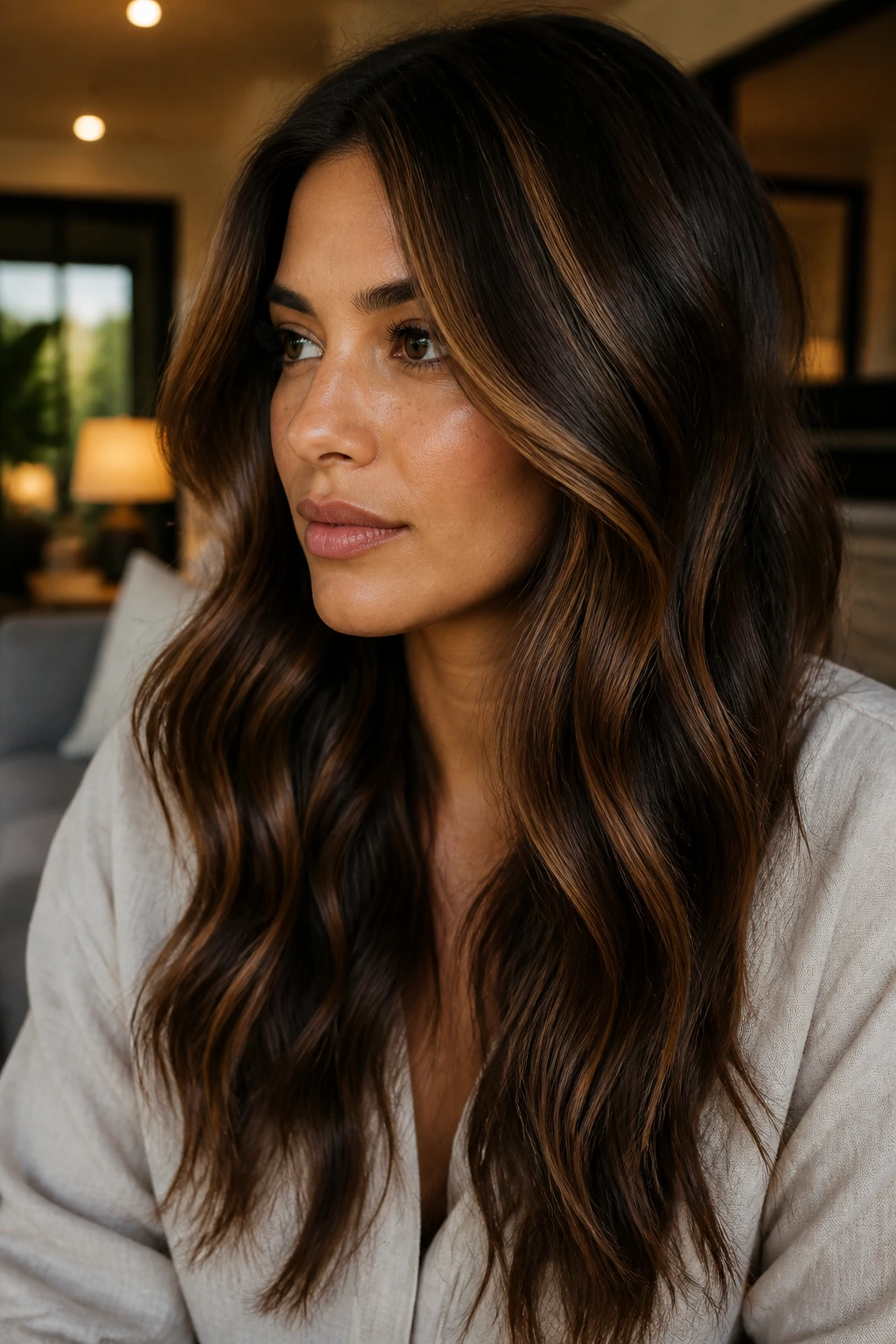
Chunky highlights are back in a smarter form, and cocoa panels are the brunette-friendly version. The pieces are wider and more visible, but the tone stays in the cocoa-to-golden-brown range so the look doesn’t veer into blonde territory. On medium skin, that warmth keeps the boldness wearable.
The Retro Angle
This style has more attitude than the softer options above. The contrast is deliberate. You can see the placement, and that’s the point. If you like a blown-out look, the panels give the hair shape and a little nostalgia without becoming costume-y.
I’d be careful with the panel width. Too broad and the color starts to look blocky. Keep some deep cocoa sections between the lighter panels, and the whole head feels richer. This is the option for someone who wants people to notice the color from across the room.
23. Walnut Money Piece
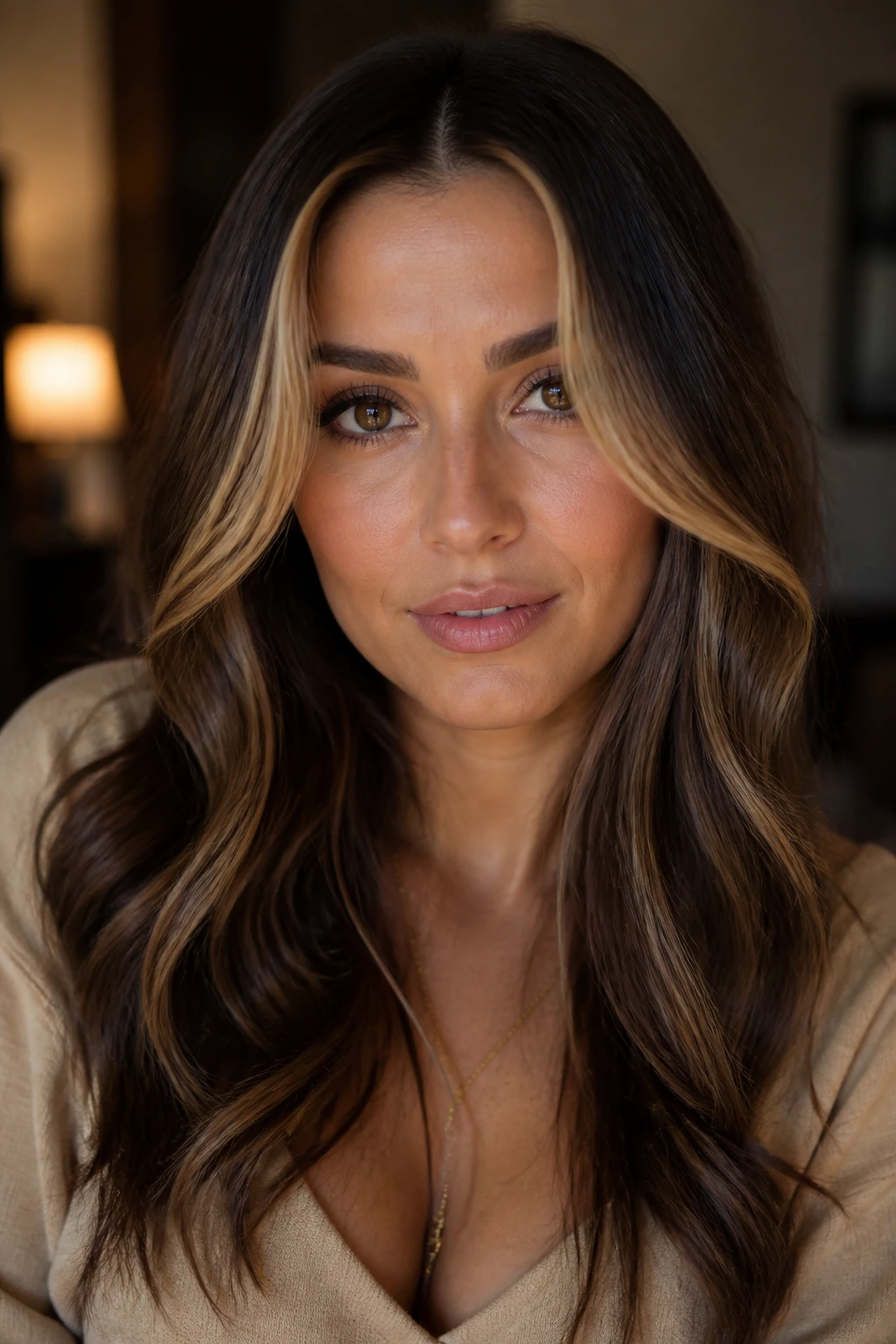
A walnut money piece is the stronger, deeper cousin of the caramel face frame. The front sections are lifted enough to brighten the face, but the tone stays in a walnut-brown lane with warm gold on top. That keeps the money piece from looking too pale against medium skin.
This is a smart move if your hair is already pretty dark and you want visible change without opening up the entire head. The money piece gives you the payoff up front. The rest of the hair can stay deeper and quieter. On oval and square faces, this placement can soften the angles without making the color feel soft in a boring way.
If the front pieces are toned well, they should look expensive in a ponytail and even better when tucked behind the ears. Tiny detail. Big payoff.
24. Toasted Brown to Honey Melt
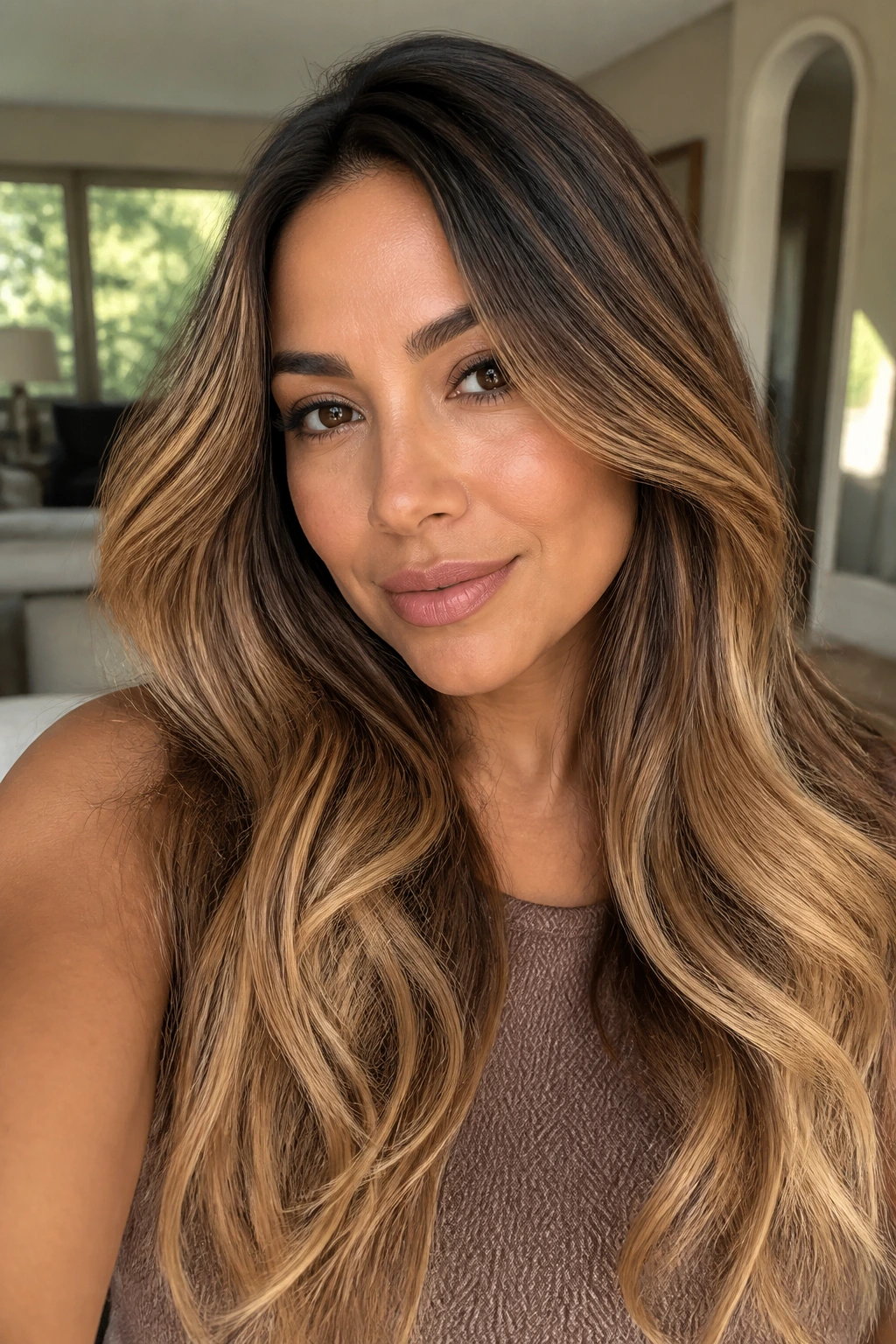
Toasted brown to honey melt is the brighter end of the spectrum for this article. The base starts as a warm brunette, then the color lifts gradually toward honey at the ends. It’s noticeable. Still brunette, though, which keeps it friendly for medium skin tones that can handle brightness but don’t want a blonde overhaul.
This style depends on a clean gradient. If the transition is too abrupt, it looks like two separate colors. If it’s too soft, the lightness disappears. The melt should feel like a slow shift in toast color, from the crust to the center. That’s the best way I can describe it, and maybe the most useful one.
I like this for long hair and layered cuts because the gradient has room to stretch. Shorter cuts can use the idea, but they lose some of the visual payoff.
25. Amber-Glaze Full-Head Foil Blend
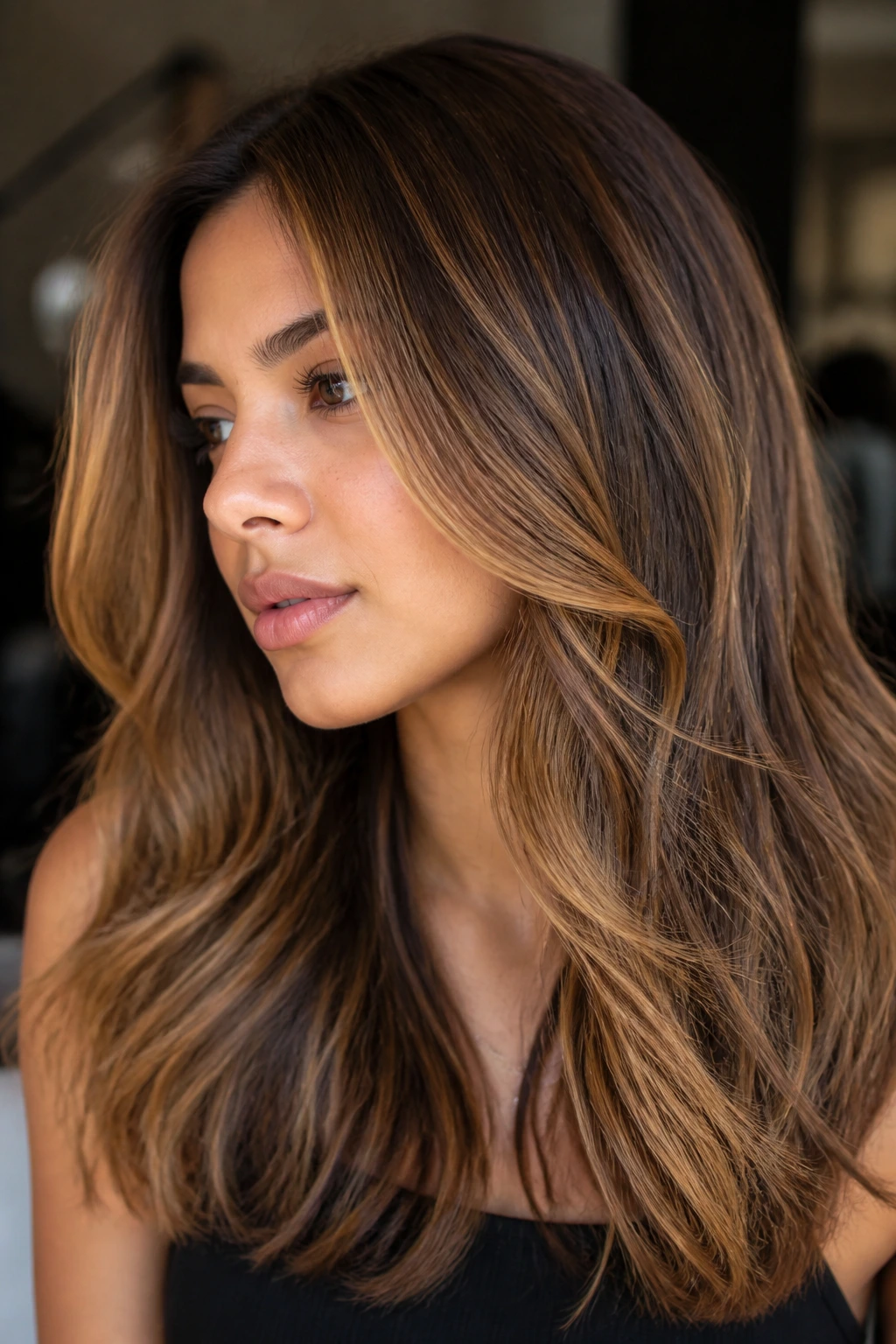
Amber-glaze full-head foil blend is the most complete color change in the set, but it still stays firmly in the golden-brown family. Foils are used across the head, so the brightness is more evenly distributed than with balayage or face-framing only. The amber glaze at the end pulls the color together and keeps it warm.
Medium skin can carry this because the tone remains earthy. It’s not trying to be blonde. It’s trying to be glossy, bright, and rich all at once. If your natural base is dense or very dark, this can be the option that finally shows dimension in every section of the hair instead of only the top layer.
It does ask for more upkeep than the softer looks. That’s the tradeoff. But if you want a full, sunlit brunette with a clear golden finish, this is the one that delivers the most visible shift.
Why Golden Brown Coloring Reads So Well on Medium Skin
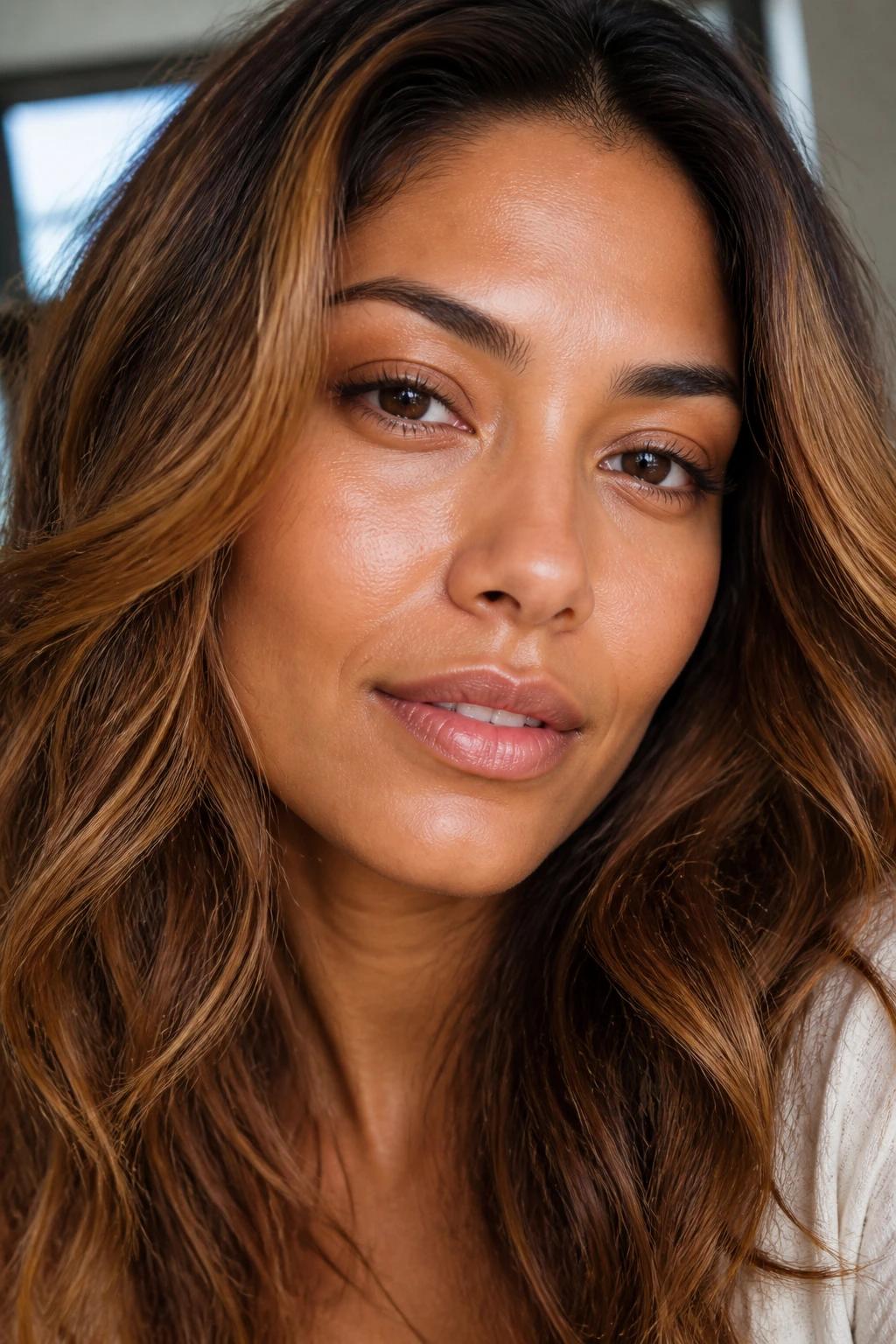
Medium skin has a wider comfort zone than people sometimes assume. Warm gold, soft caramel, amber, bronze, and chestnut all sit close enough to the skin’s natural depth that they don’t create a hard clash. The result is usually less about “lightening” and more about bringing back shape.
That’s the piece many color jobs miss. If the highlight is too pale, the hair can pull focus away from the face. If the shade stays in the golden-brown family, it tends to make the complexion look calmer and more even. A good colorist is always watching for that balance under both salon lights and daylight.
The Undertone Rule That Saves Bad Color Jobs
Warm or golden undertones usually love caramel and honey. Neutral skin can handle a wider range, but it still looks best when the color stays rich. Olive undertones often need the gold softened a little so it doesn’t go yellow. Peachy medium skin can take more warmth around the face without looking off.
That’s the whole game: place warmth where it helps, not everywhere just because it’s pretty in a bowl.
Tools You’ll Want for Clean Golden Brown Highlighting
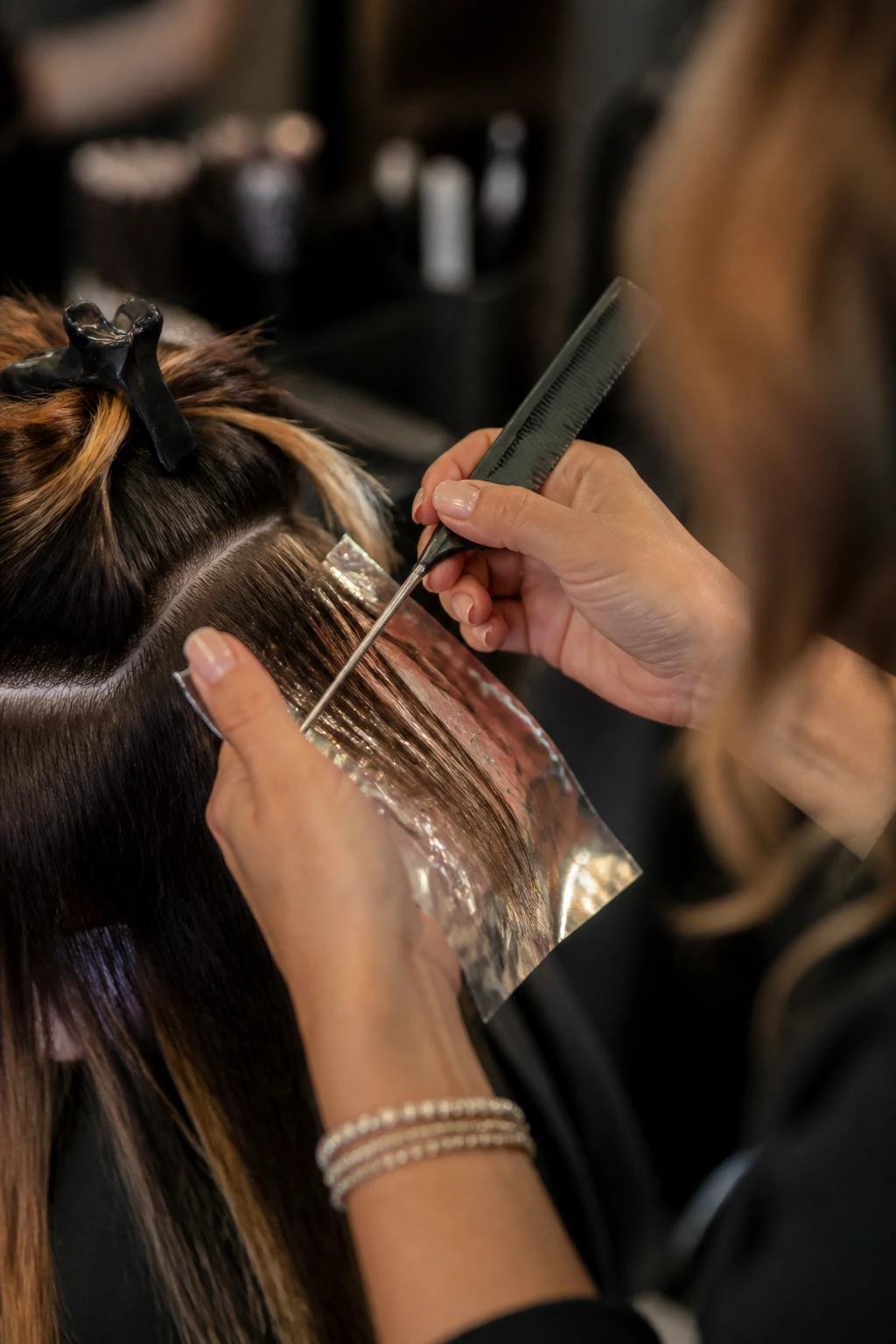
- Tail comb: Helps section hair cleanly so foils or balayage pieces stay where they’re supposed to.
- Color bowl and brush: Needed for applying lightener, gloss, or toner with control rather than blobs.
- Foils or meche sheets: Useful for foil highlights, babylights, and any placement that needs more lift.
- Sectioning clips: Keep the hair organized; cheap clips are fine if they hold without slipping.
- Gloves: Non-negotiable if you’re handling color at home.
- Balayage board or paddle: Optional, but it helps keep hand-painted pieces smooth and even.
- Wide-tooth comb: Gentle detangling after washing so the highlighted strands don’t snag.
- Color-safe shampoo and conditioner: These keep the warm brown tones from fading too fast.
- Heat protectant spray: Necessary if you flat-iron or curl the hair after coloring.
- Gloss or demi-permanent toner: This is the step that makes golden brown look polished instead of raw.
Choosing the Right Shade Without Guessing
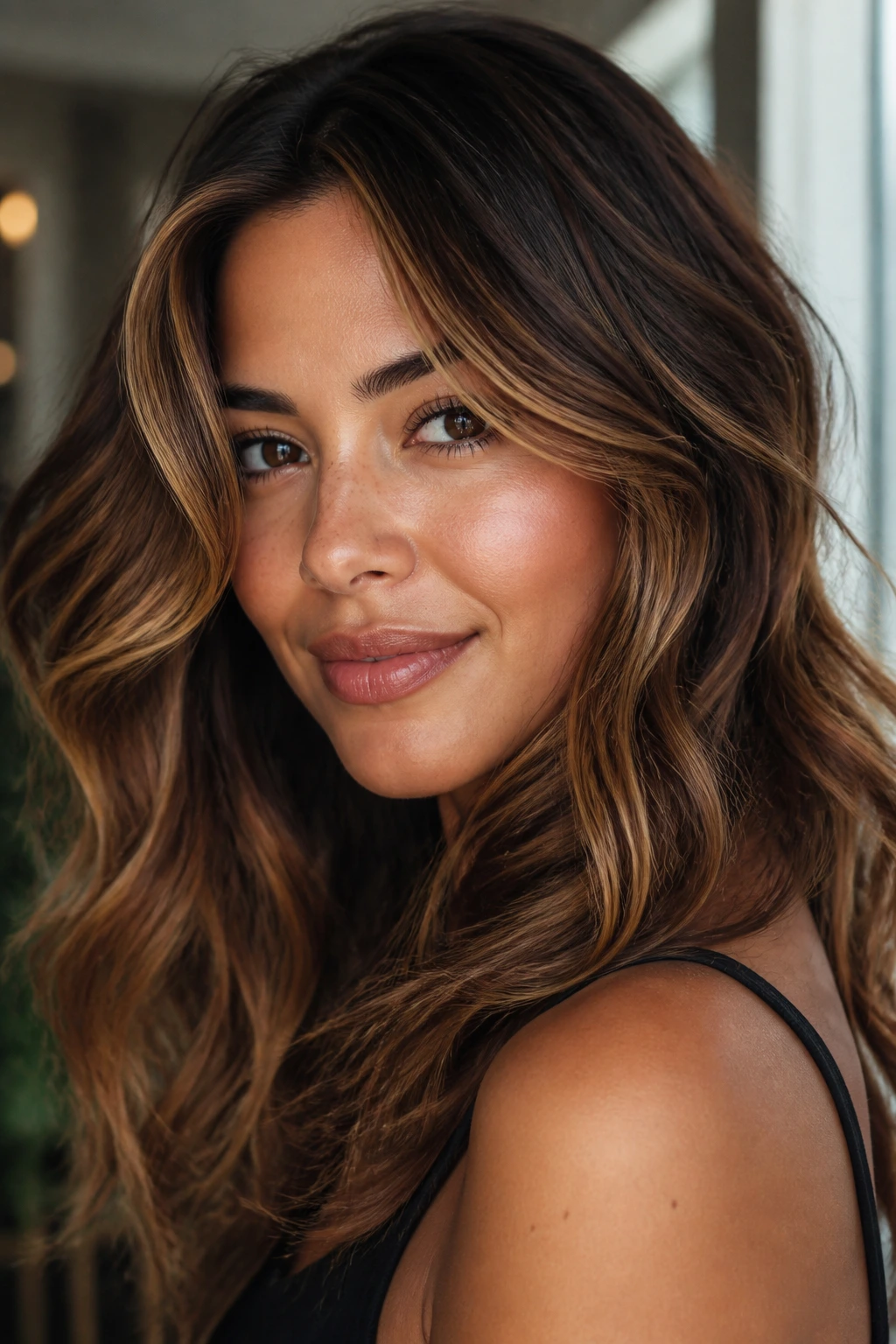
The easiest mistake is falling in love with a picture and forgetting the base color underneath it. A model with a level 6 brunette base can wear one kind of golden brown; a medium brunette with previous dye history may need something different. Start with your natural level, then decide how much lift you can actually carry without the hair going too porous.
Match the Warmth to the Skin, Not the Trend
If your medium skin leans golden or peachy, caramel and honey usually sit well. If your undertone is olive, softer gold or neutral-caramel can look cleaner than bright yellow-gold. If you’re somewhere in the middle, chestnut, toffee, and hazelnut are usually the safest bridge shades.
Be Honest About Hair History
Hair that’s been colored before often lifts unevenly. The ends may grab lightener faster than the roots, and old box dye can leave a muddy core that won’t behave the same way the rest of the hair does. Bring that up before the first foil goes in. It changes the plan.
Ask for Level References
Colorists speak in levels for a reason. If you want a noticeable brunette-to-golden-brown shift, you’re often looking at a few pieces around level 7 or 8, not an all-over blonde lift. That range keeps the result warm and wearable on medium skin instead of brittle and over-light.
How to Wear Golden Brown Highlights So They Show Up
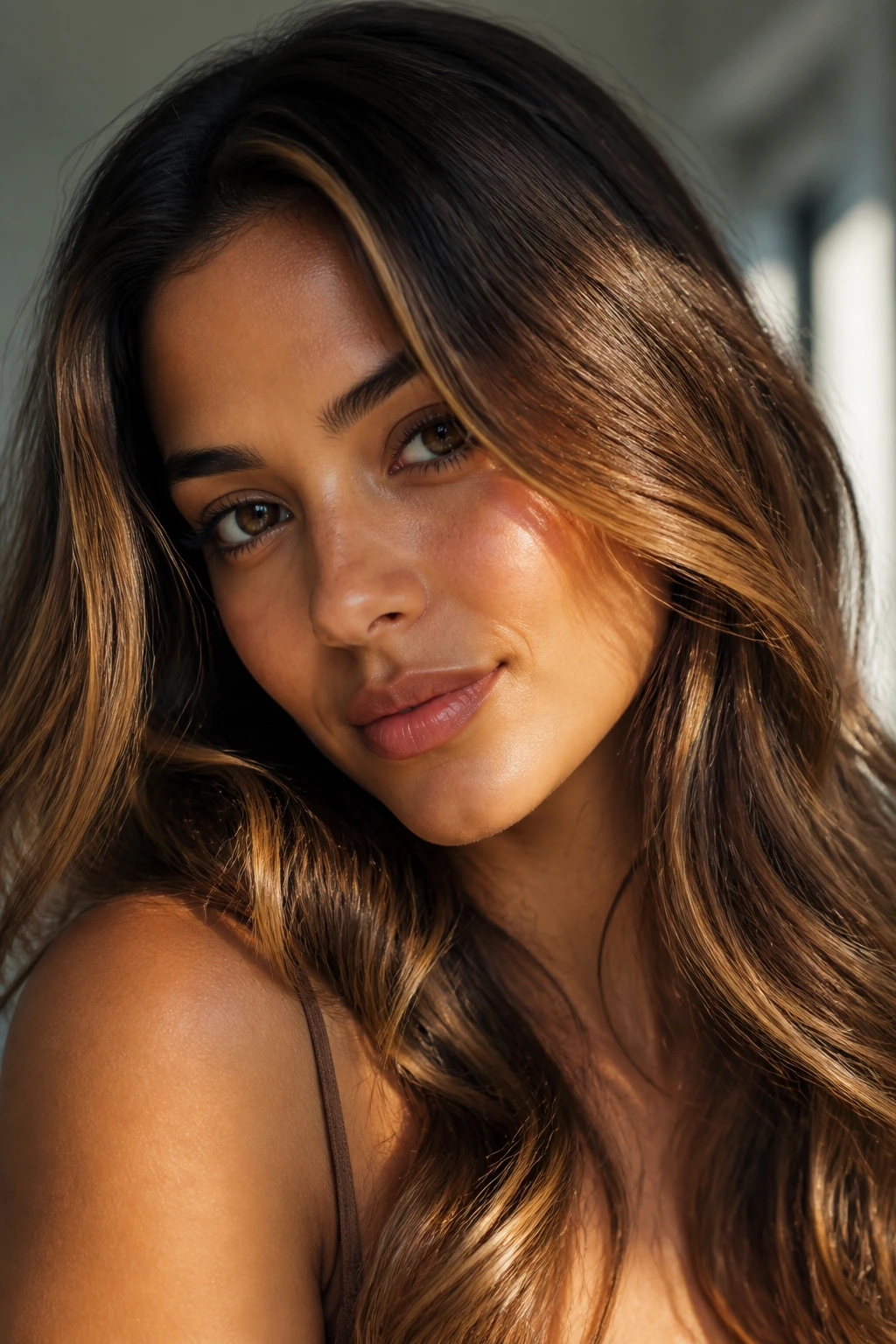
Presentation: Loose waves, a soft blowout, or even a bend from a flat iron will show the ribbons better than pin-straight, flattened hair. If you like a sleek look, ask for more precise foil placement so the dimension still reads cleanly.
Accompaniments: Cream, camel, olive, rust, and deep brown clothing usually make these tones look richer. Gold jewelry works well, especially if the highlights are honey, amber, or caramel rather than neutral beige.
Portions: Face-framing pieces alone give a small shift, partial highlights add a balanced lift, and full-head foil blends create the biggest contrast. If you want to stay low-maintenance, ask for brightness concentrated around the front third of the head and through the visible outer layers.
Finish: A light gloss or shine serum on the mids and ends helps the color read smooth. Keep the product off the roots unless your hair is dry there; greasy roots make warm highlights look dull fast.
Extra Ways to Make the Color Look Richer
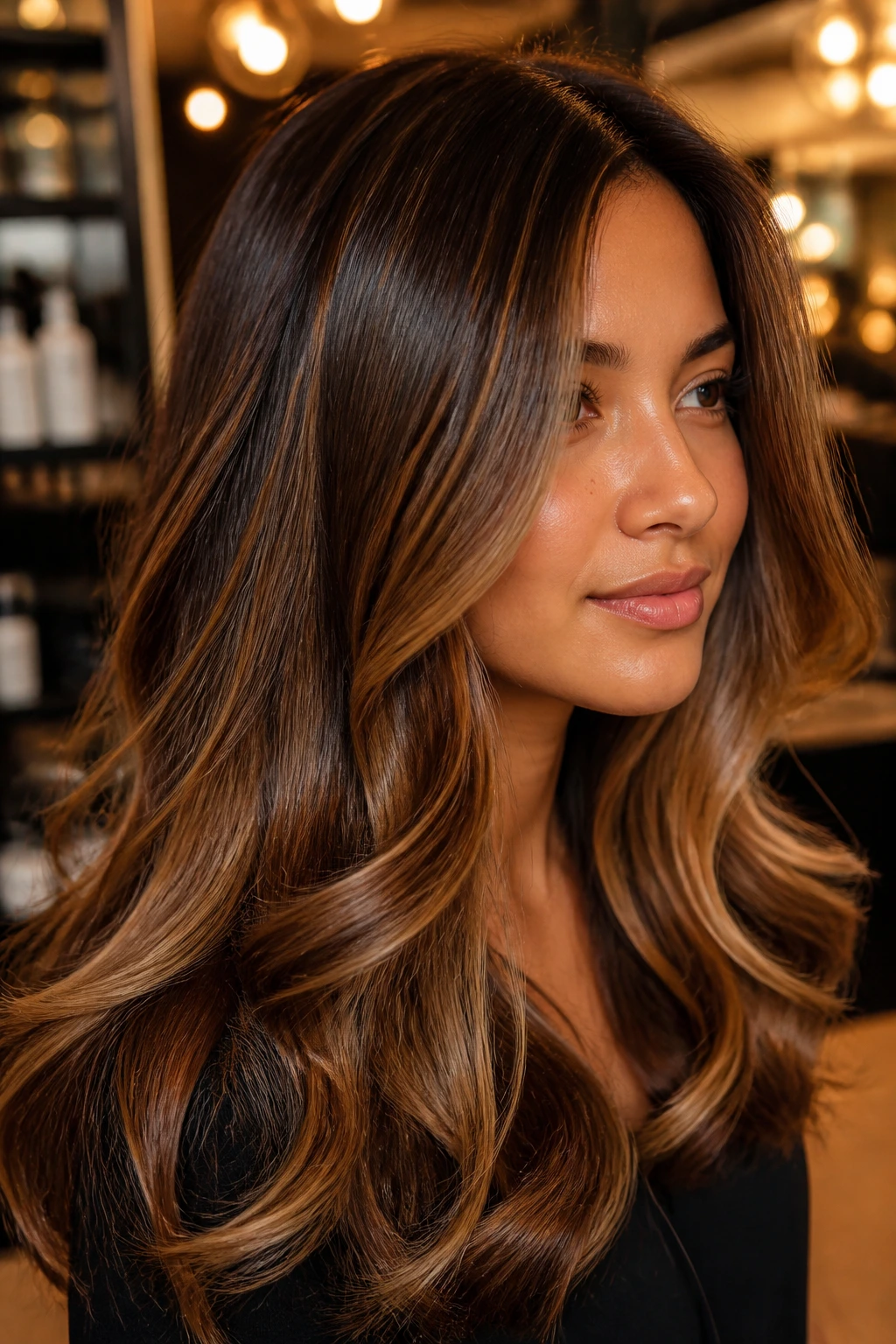
Gloss Boost: A clear or beige-gold gloss after highlighting can soften rough edges and make the brown-gold tones look more even. I like this step more than people think they will.
Customization: Add one or two deeper lowlights if your hair is thick or all one shade. That little bit of depth keeps the highlights from floating on top like disconnected stripes.
Serving Suggestions: For day-to-day wear, a side part can make face-framing pieces feel softer, while a middle part sharpens the symmetry and shows off balance. Loose curls also break up any highlight line that feels too tidy.
Make-It-Yours: If you have curls, keep the highlight pattern following the curl group rather than scattering it randomly. If your hair is fine, go smaller and finer with the pieces. If you’re low-maintenance, keep the root deeper and let the warmth live through the mids and ends.
Caring for the Color So It Doesn’t Fade Weird
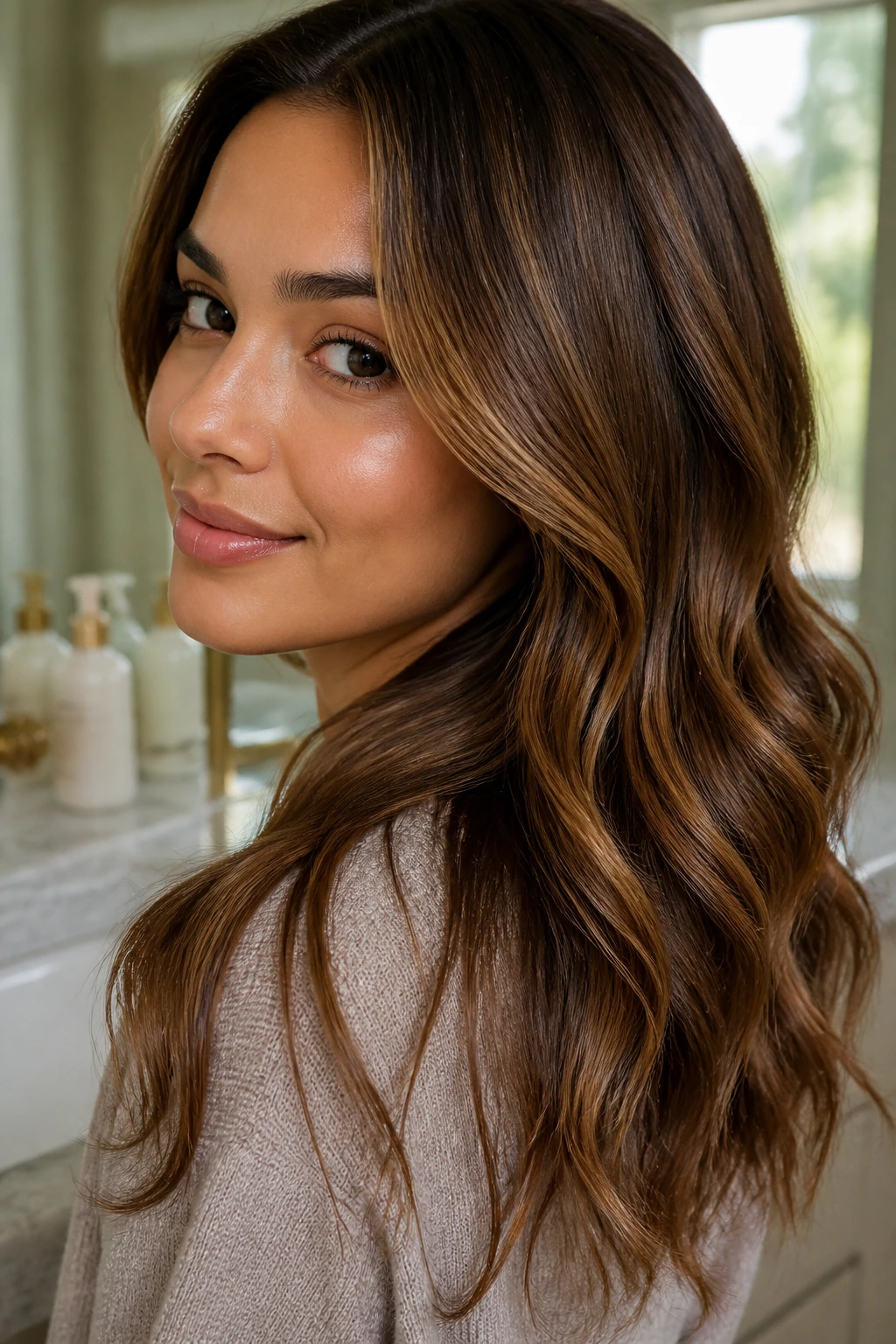
Golden brown tends to age better than brighter blonde, but it still needs a little discipline. Wash less often if you can stand it. Two or three shampoos a week is plenty for most highlighted brunettes, and cooler water helps keep the gloss from fading out too fast. Hot water is rough on warm tones. It strips the shine right off.
A toning gloss every 4 to 8 weeks keeps the highlights from turning flat or too yellow. That timeline depends on porosity, sun exposure, and how much heat you use. If your ends are porous, they may need refreshing sooner than the roots. And yes, that’s annoying. It’s also normal.
If you heat-style often, use a protectant every time. Not sometimes. Every time. Golden brown hair can look soft and dimensional with a little heat, but repeated hot-tool use is one of the fastest ways to dull the gloss and fry the ends. Sleep on a silk pillowcase if you’re trying to keep the finish smooth between washes. It helps more than the marketing copy would have you believe.
Common Mistakes to Avoid
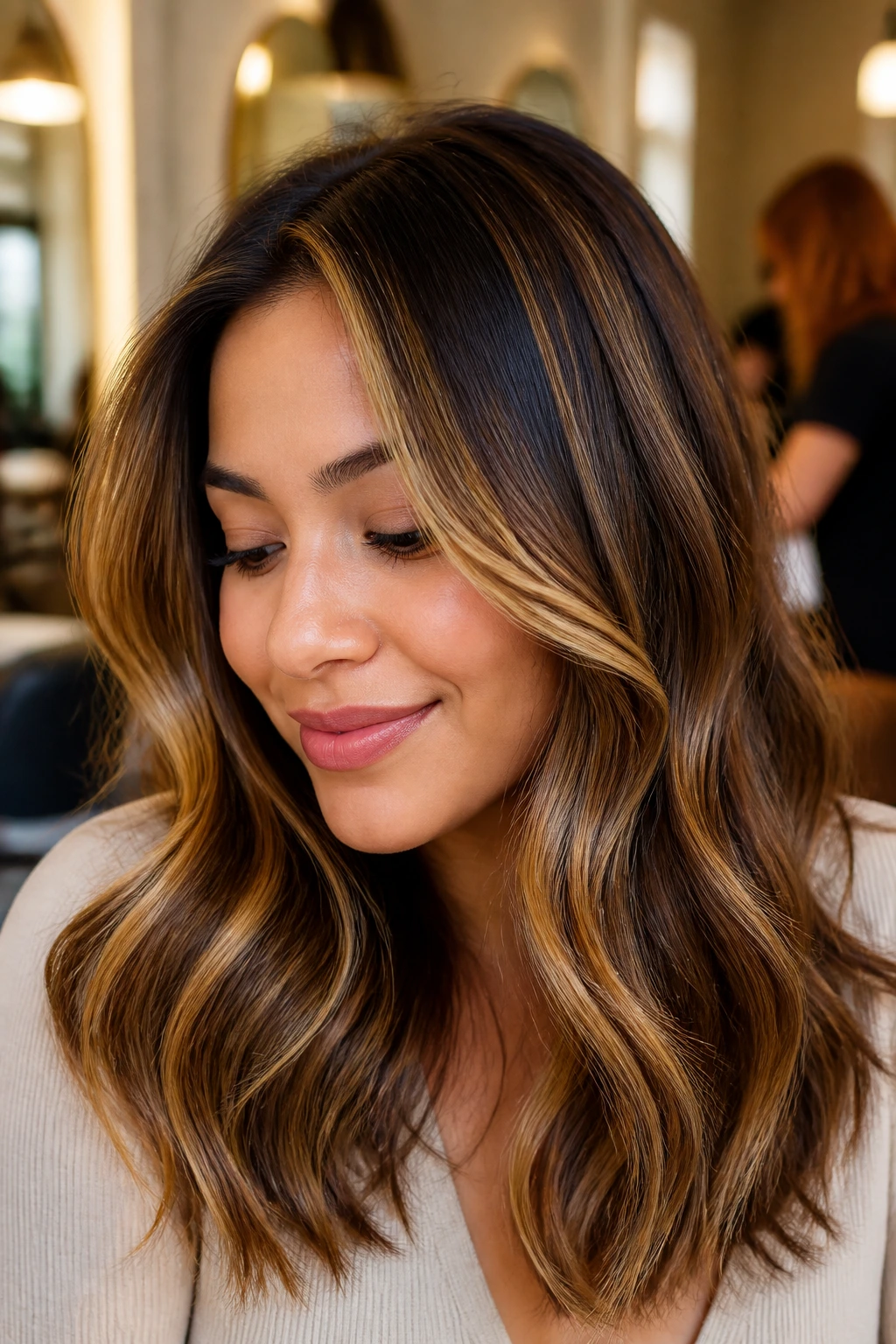
The first mistake is going too pale. Medium skin can hold brightness, sure, but if the highlight jumps too far toward blonde, the contrast starts to fight the face. The fix is simple: stay in the honey, caramel, amber, and chestnut range unless your natural base and hair condition can truly handle more lift.
The second mistake is leaving all the brightness in one zone. A money piece without any balance in the mids can feel disconnected. Same with light ends and a dead root. Ask for a plan that connects the front, crown, and ends so the color moves as one shape.
Skipping a gloss is another one. Raw lightener often looks louder and flatter than the finished color you thought you booked. A toner or demi gloss softens the tone and gives the brown-gold its polish. Without it, the hair can read too yellow or too dry.
Too much purple shampoo is a sneaky problem. It can dull the warmth you paid for. Use it only if the blonde pieces are drifting too yellow, and don’t leave it on long enough to flatten the golden tone completely.
Variations Worth Trying
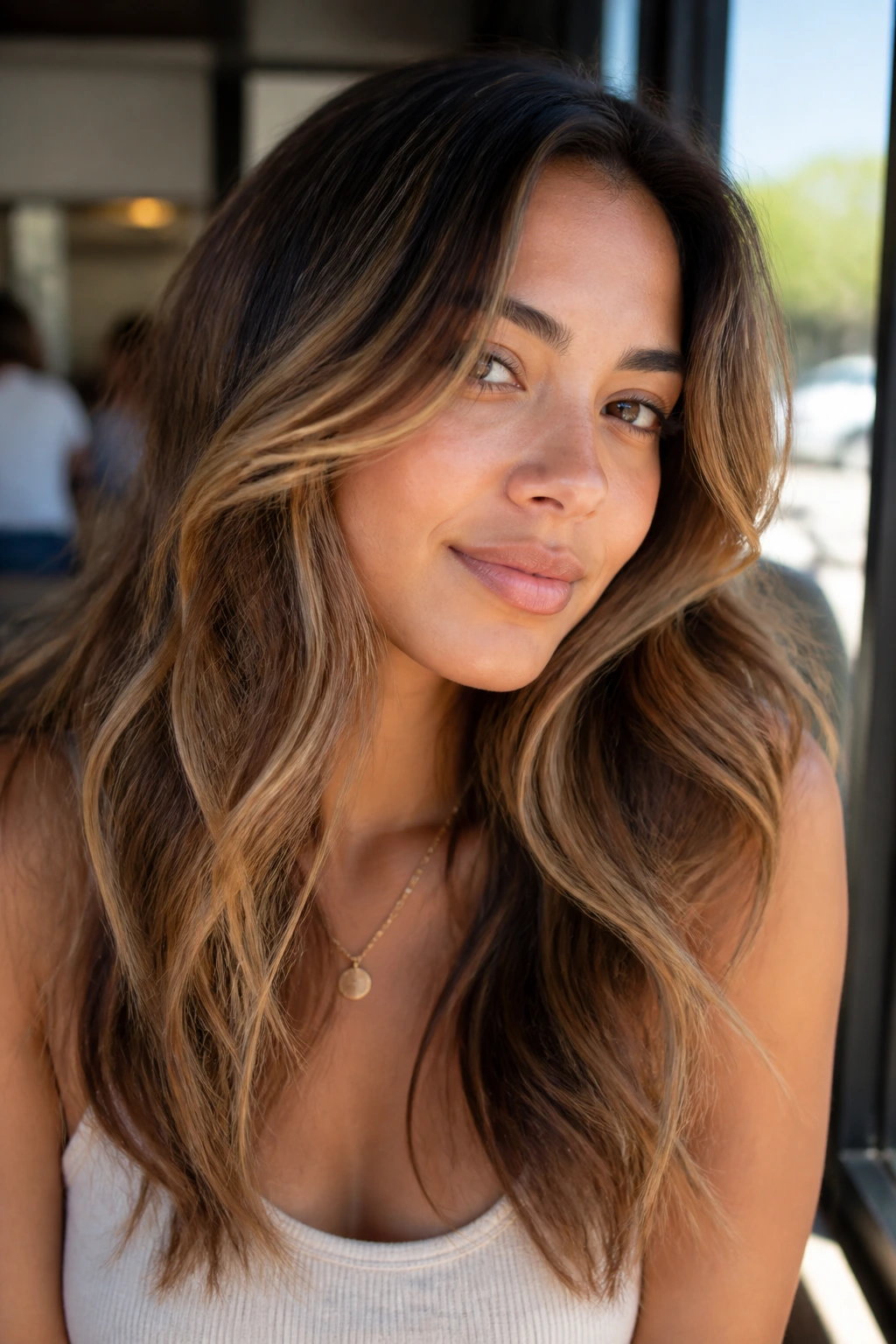
Warm Honey Melt: Go softer on the contrast and let the warm honey live mostly through the mids and ends. This is the easiest variation if you want subtle brightness with almost no visual shock.
Olive-Safe Caramel Blend: Keep the gold a little deeper and more caramel than yellow. Medium skin with olive undertones usually wears this version better because it avoids the brass trap.
Chunky Retro Brunette: Use wider highlight panels and a stronger face frame for a more obvious look. It’s bolder, more fashion-forward, and less shy about contrast.
Curly Ribbon Map: Ask the colorist to place highlights where the curls naturally separate. The result is cleaner definition and less of that random zebra effect curlies hate.
Low-Maintenance Root Shadow: Keep the root deeper and make the highlights start lower. This is the one for people who want the color to look good three months later, not just the day they leave the chair.
Frequently Asked Questions
Will golden brown highlights turn orange on medium skin?
Not if the tone is controlled and the lift is done cleanly. Orange usually shows up when hair is lightened too far without enough toner, or when previous color in the hair reacts badly to the process. A warm gloss can steer the result back into caramel territory.
Are these shades better than ash blonde for olive medium skin?
Often, yes. Ash blonde can drain the skin if the contrast is too cool. Softer gold-brown tones usually sit closer to olive undertones and look richer around the face.
How often should I refresh the tone?
Most golden brown highlights look best with a gloss every 4 to 8 weeks, depending on how fast they fade and how often you wash. If the hair starts looking dull before it looks faded, the gloss is probably the first thing to bring back.
Can I get this look on dark brown or black hair?
Yes, but the plan changes. Darker hair usually needs more careful lifting and may do better with face-framing pieces, balayage, or soft foil ribbons rather than a full brightening job. The hair’s condition decides how far you can push it.
Do these highlights work on curly hair?
They do, but the placement has to follow the curl pattern. Curly hair benefits from thin ribbons and strategic placement around the bends, not random streaks that ignore how the hair actually moves.
What if my highlights come out too yellow?
That usually means the toner was too weak or washed out too fast. A salon gloss can correct it, and at home a color-safe blue or purple product may help, but use it sparingly. Too much can flatten the warmth you wanted in the first place.
Balayage or foils — which is better for me?
Balayage is softer and easier to grow out, while foils give more lift and cleaner brightness. If you want a subtle transition, balayage tends to win. If you want a more visible golden shift, foils usually give the stronger result.
Will golden brown highlights work if my roots are gray?
Yes, but you may want a root-smudge or shadow root so the grow-out looks blended instead of abrupt. Gray roots can actually make warm highlights look fresher, as long as the transition is handled well.
The Color That Grows Out With You
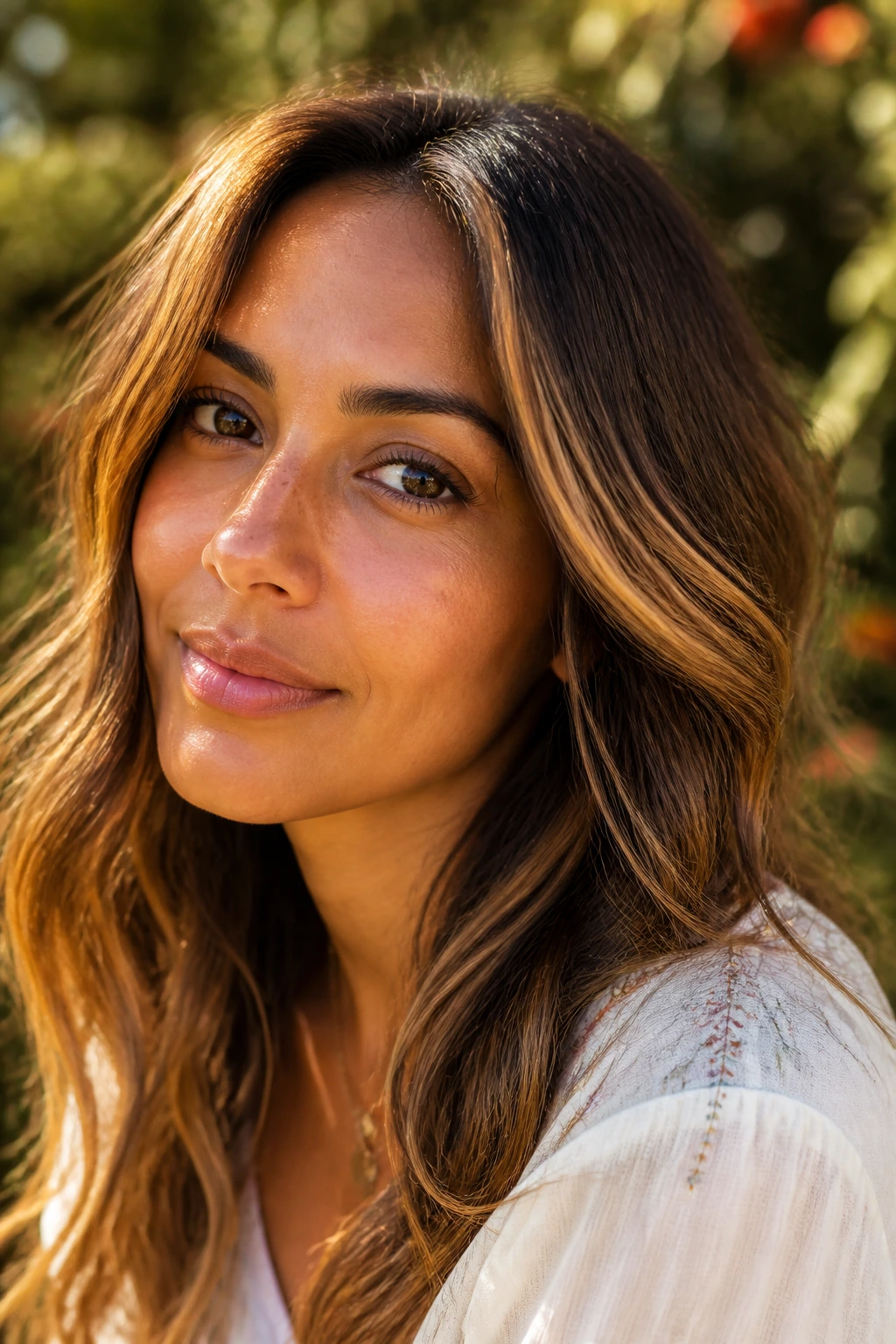
Golden brown highlights have staying power because they do not rely on shock value. They work by adding warmth where medium skin already has room for it, and that makes the hair look fuller, softer, and more alive without forcing a blonde transformation.
The best versions are the ones that respect the base shade, the undertone, and the cut. If you keep those three pieces in mind, the color tends to do what you wanted all along: give the hair shape, keep the face bright, and still look like it belongs there a few weeks later.