



Dark caramel can look smoky and expensive on cool skin, or it can tip straight into brass. That gap is smaller than most salon menus make it sound, and it’s why the same color can look polished on one brunette and a little orange on another. The trick is not brightness. It’s undertone.
The versions that work best on cool undertones usually sit somewhere between cocoa, beige, and muted toffee — never honey, never penny-copper, and never that loud golden stripe that screams for attention from across the room. On the right base, dark caramel highlights add movement to the hair without fighting the face. The color lands as depth with a glow, not as a warm wash that flattens everything around it.
That’s the part people miss. Placement matters almost as much as tone. A few ribbons around the cheekbones can make cool skin look clearer and eyes look sharper, while the same shade scattered too close to the roots can read muddy if the haircut doesn’t support it. Fine hair needs a different pattern than dense curls. A blunt bob wants a different rhythm than long layers. And if you have pink or blue undertones, the best caramel is usually the one that looks a half-step cooler in the bowl than you thought you wanted.
Why This Set of Dark Caramel Looks Works So Well on Cool Skin
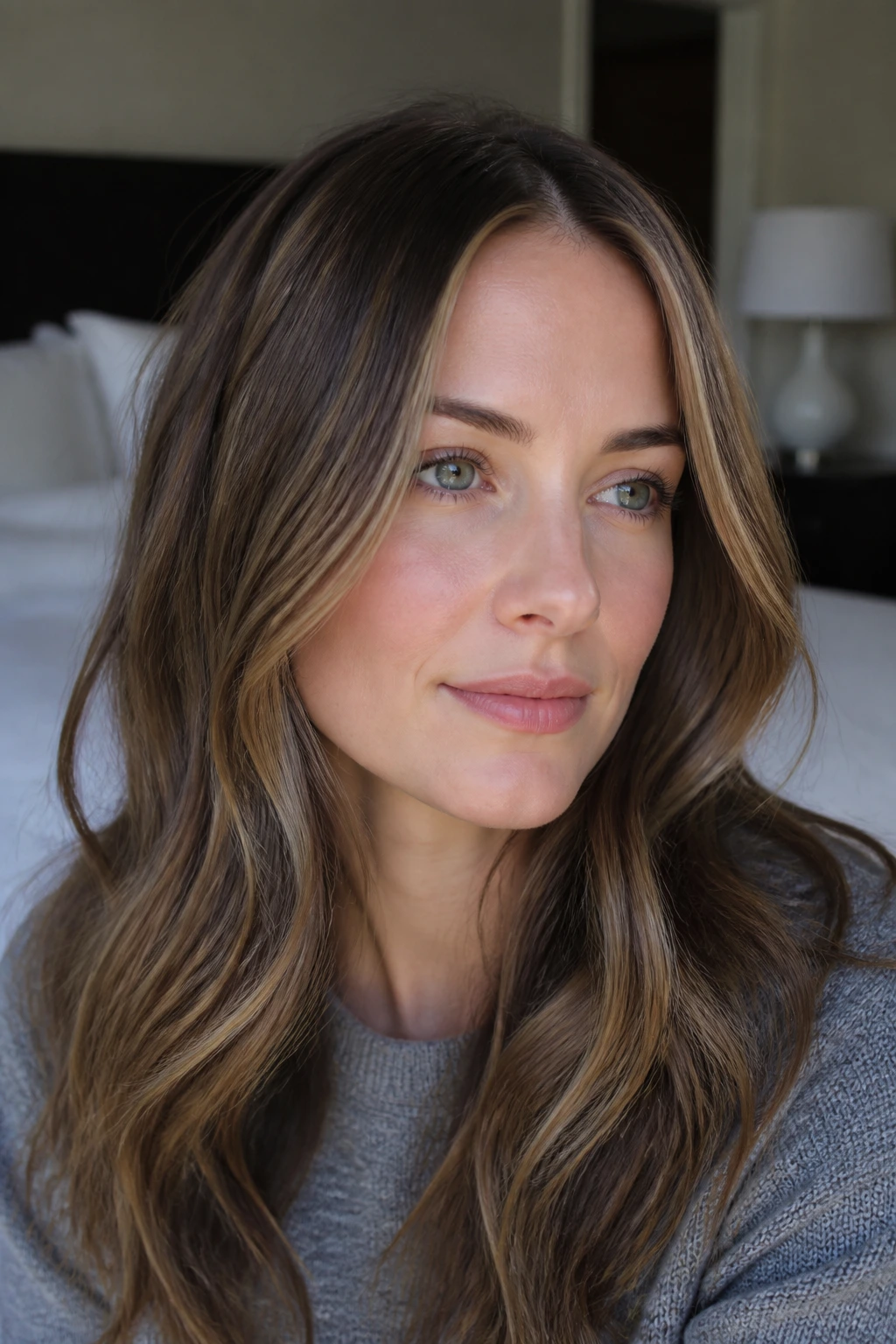
-
Muted warmth wins: These looks keep the caramel in the beige-ash family, which gives you softness without the orange cast that can sit harshly on cool undertones.
-
Placement does the heavy lifting: Some styles hug the face, some stay under the top layer, and some live only in the ends — that spread changes how the color reads in daylight.
-
Different bases get different treatment: A level 4 brunette, a level 6 brunette, and a pre-lightened canvas do not need the same caramel recipe, and this set makes room for that.
-
Low-maintenance options are included: Shadow roots, reverse balayage, and peekaboo panels buy you more time between salon visits, which matters once highlights start growing out.
-
There’s room for subtle or bold: You can keep the contrast soft enough for an office chair or push it high enough that the color still shows when the hair is curled and tucked behind one ear.
1. Smoky Balayage Through a Dark Chocolate Base
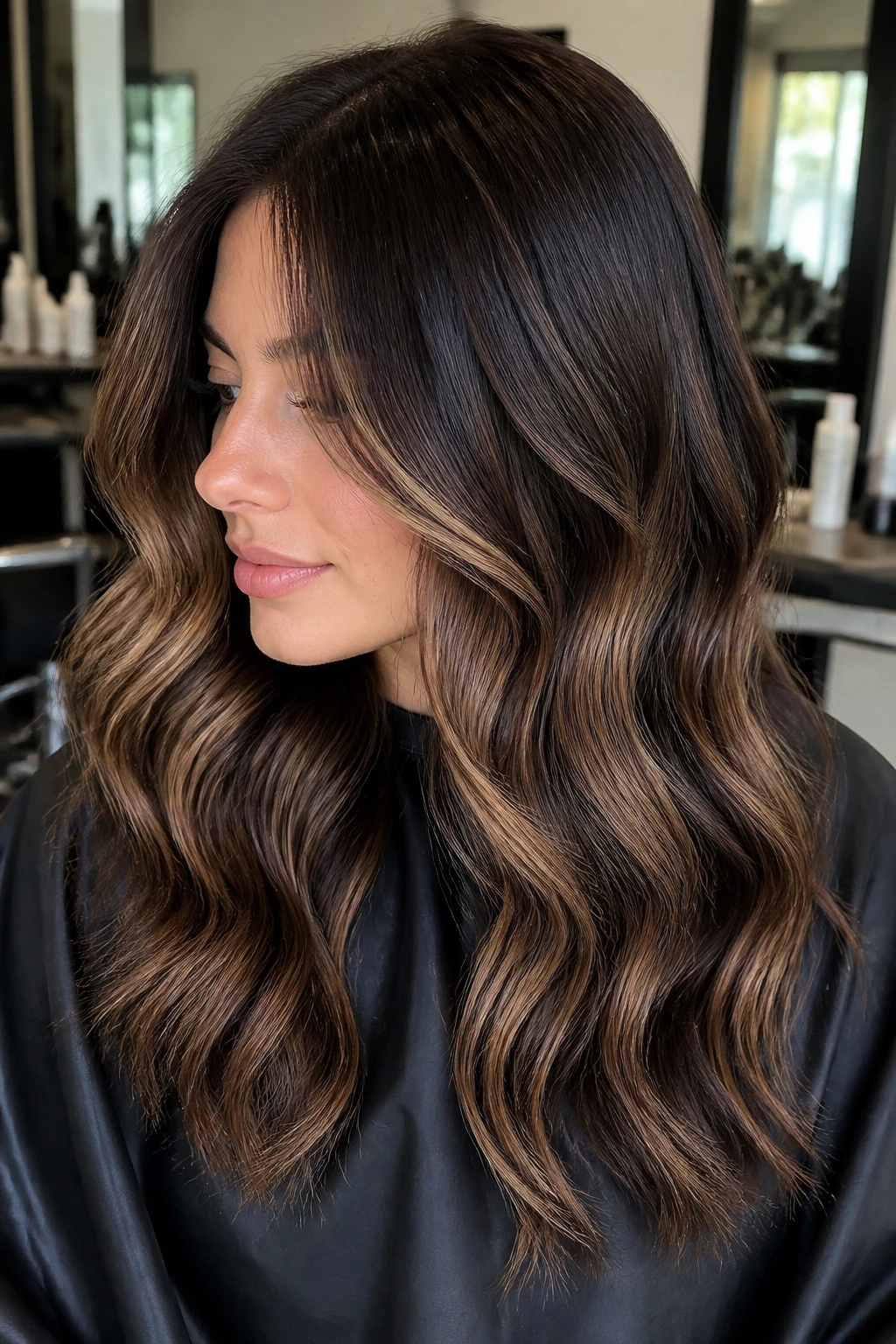
This is the look I reach for when someone wants dimension but does not want to look “highlighted” in the old-school stripe sense. The caramel sits in smoky ribbons over a dark chocolate base, so the eye reads movement first and light second. On cool skin, that darker backdrop is what keeps the warmth from getting too sweet.
Why it works
The base stays deep, usually around a level 4 or 5, while the painted pieces lift to a muted level 6 or 7. That small jump matters. You get contrast, but the hair still looks like one color family instead of four different shades fighting each other.
It’s especially useful if your skin leans pink in daylight. The darker root and midsection act like a frame, so the caramel only flashes when the hair moves. Ask for a beige or neutral glaze at the end, not a gold toner.
Best on
- Long layers
- Medium-thick hair
- Naturally brunette bases that already lean cool or neutral
A center part with soft bends shows this best. Straight, glassy hair can make the ribbons feel more graphic, which is not a bad thing — it just changes the mood.
2. Curtain-Bang Caramel Ribbons
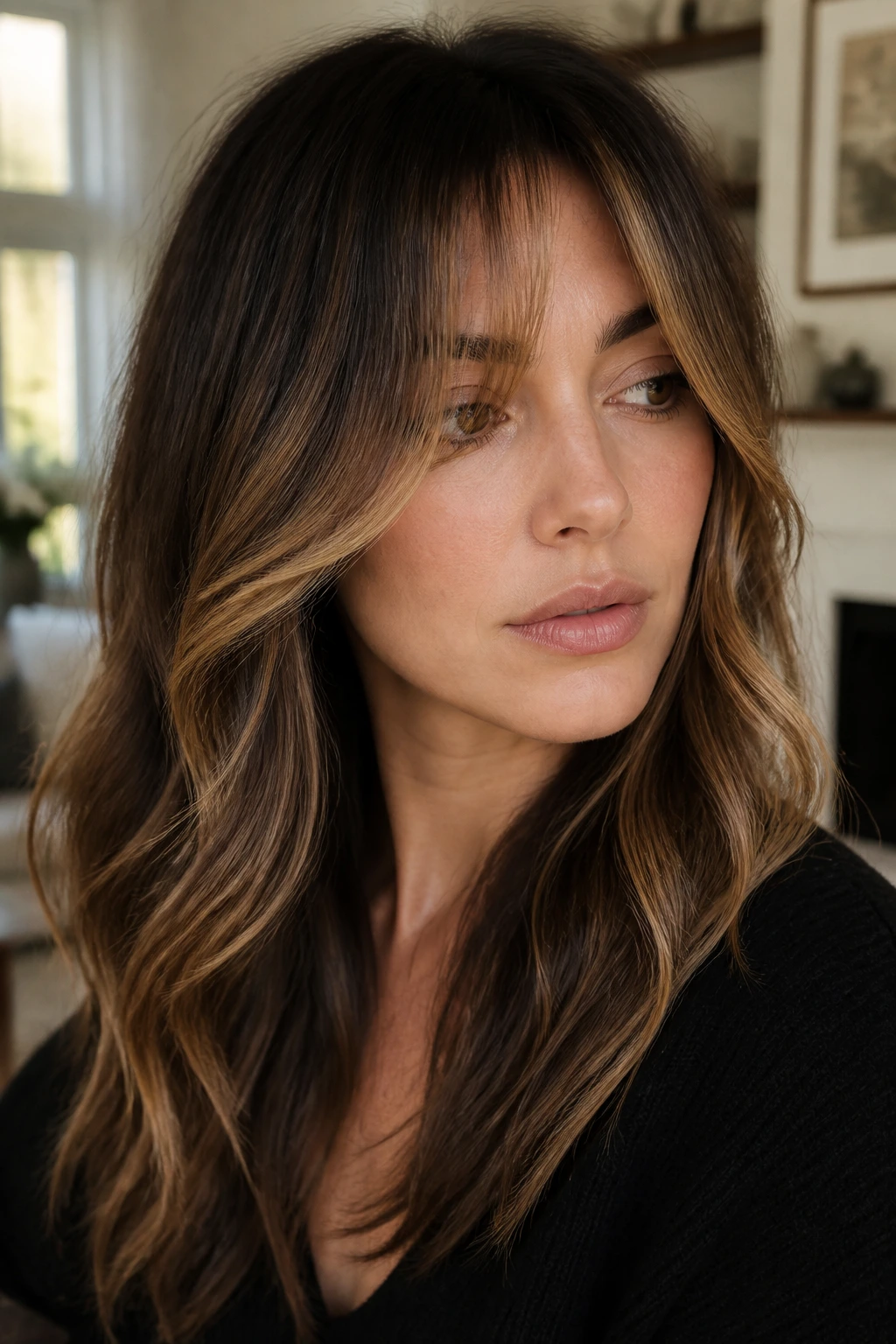
Curtain bangs make caramel behave differently. The pieces that start at the cheekbone and sweep into the bang line pull attention right where cool skin often benefits most: around the eyes and upper face. Done well, it looks soft. Done badly, it looks like a face stripe that never quite blends.
What makes it different
The highlight starts a little deeper at the root and gets lighter as it moves through the bang and front layer. That gradient matters because the shortest pieces sit closest to the skin. If those front bits go too golden, they can make cool undertones look flushed in a way that feels accidental.
I like this with shoulder-length hair and a loose blowout. The bangs catch the light first, and the caramel shows up in the bend, not as a harsh line.
Bring photos where the front pieces are clearly visible. A vague “caramel face frame” request can turn into money-piece brightness fast.
3. Mushroom Brown Melt with Caramel Veils
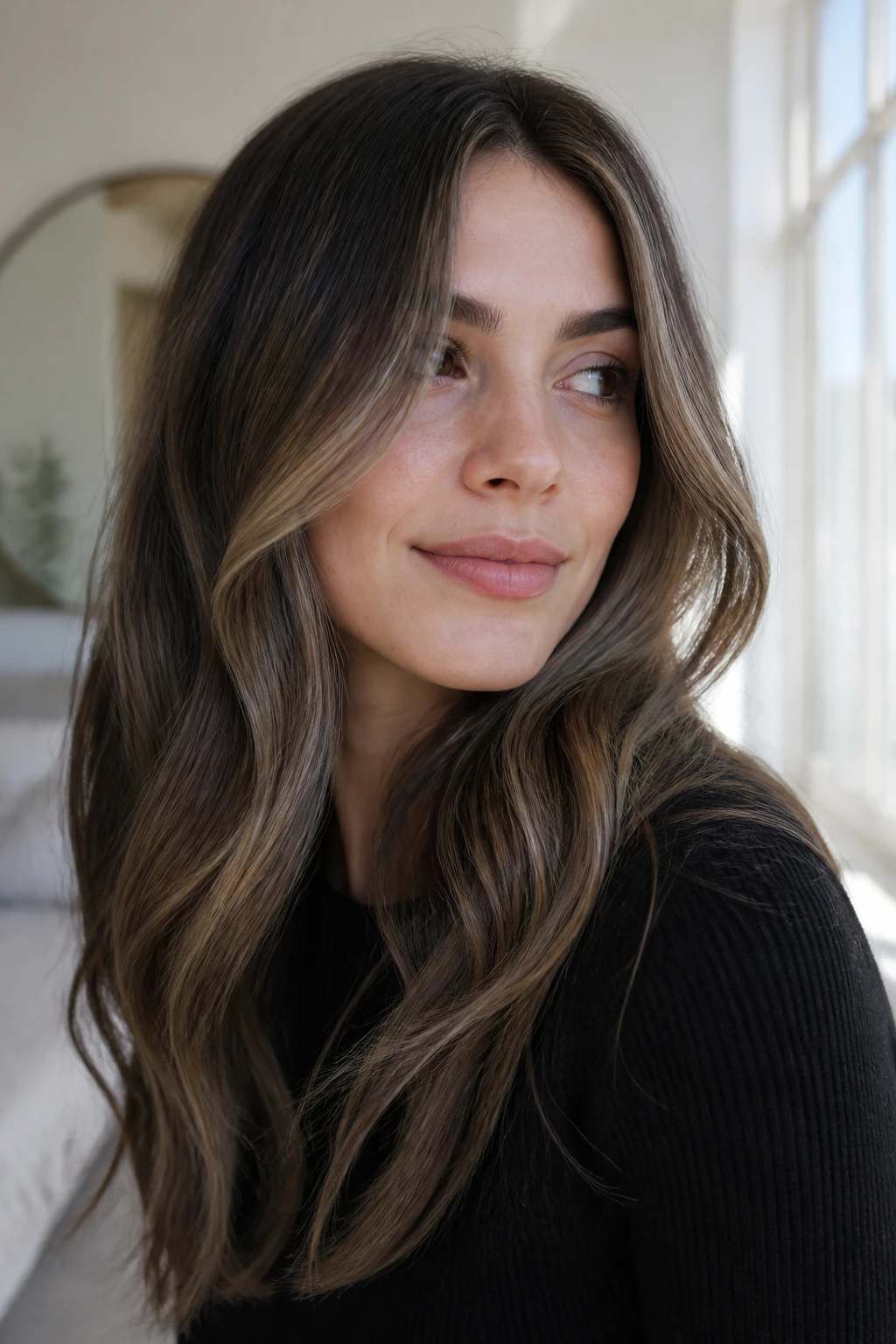
If your idea of caramel usually runs too warm, this is the smarter version. Mushroom brown gives you that cool, earthy base, then thin caramel veils ride over the top like mist rather than streaks. The result is muted and polished without looking flat.
Why cool skin likes it
The mushroom tone keeps the warmth under control. Instead of bright gold, the highlight sits in a beige-taupe zone that plays nicely with blue or pink undertones. It’s one of those rare color choices that looks intentional in fluorescent light and even better near a window.
The maintenance is easier than a louder highlight pattern too, because the color shift is softer as it grows. You can go 8 to 10 weeks before it starts looking obvious.
How to ask for it
Say you want a cool brunette base with thin caramel pieces that are toned down, not brightened up. That wording helps. Colorists hear “caramel” and sometimes reach for warmth first. Mushroom brown keeps everybody honest.
4. Reverse Balayage for Grown-Out Depth
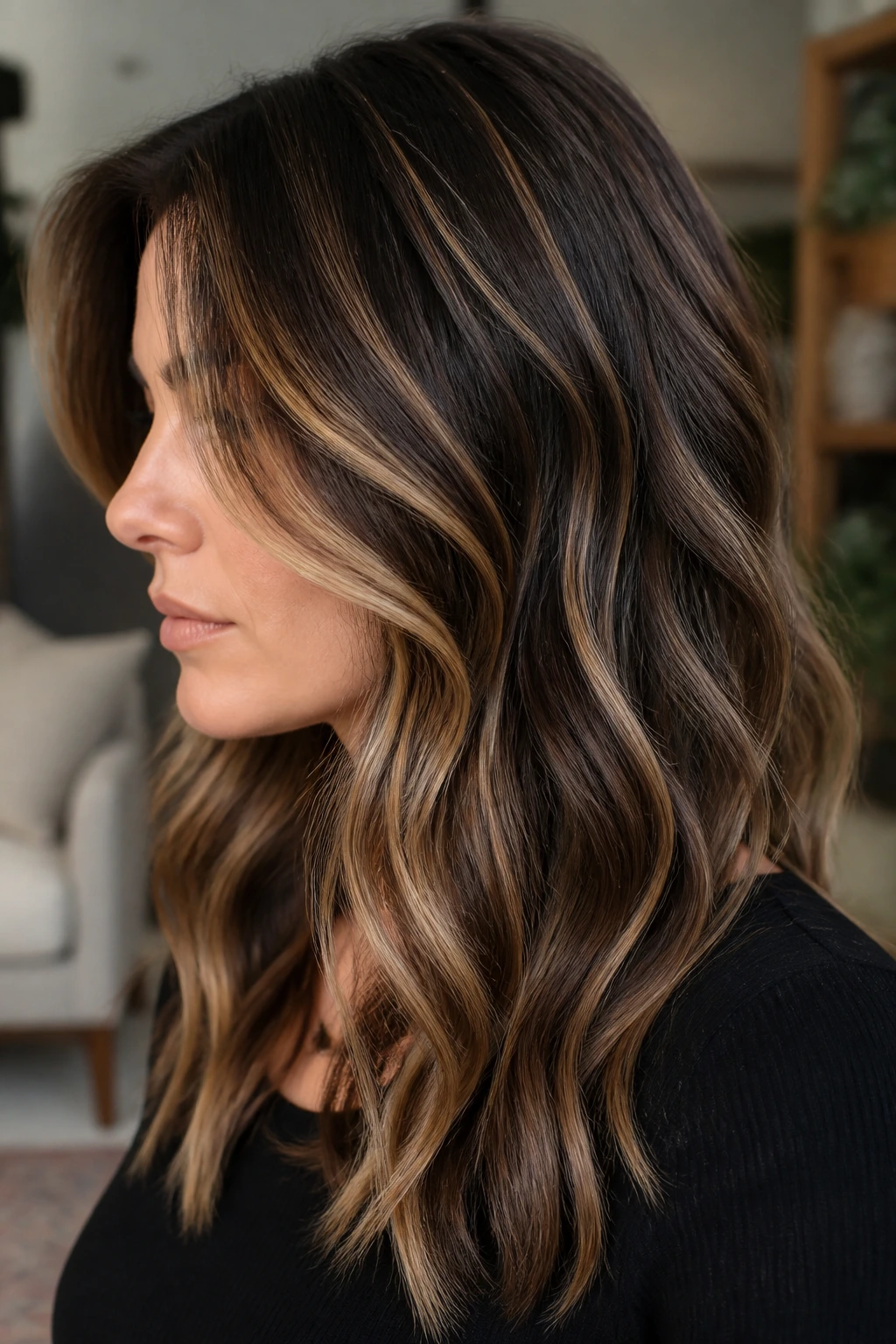
Reverse balayage is for the brunette who has too much lightness already and wants to pull the hair back toward depth without going all the way dark again. It works well on cool skin because the added lowlights stop the overall look from drifting honey-colored. You’re basically restoring shadow so the caramel has something to sit against.
The nicest part is the grow-out. There’s no hard line. The darker ribbons blend into whatever light pieces are already there, so the finish looks lived-in from day one.
This is the one to choose if your hair has been highlighted a few times and now feels a little too bright for your face. A cool brunette base with caramel lowlights will calm that down fast. Ask for ash brown or neutral lowlights, then let the caramel stay only where movement already exists.
5. Face-Framing Money Piece in Beige Caramel
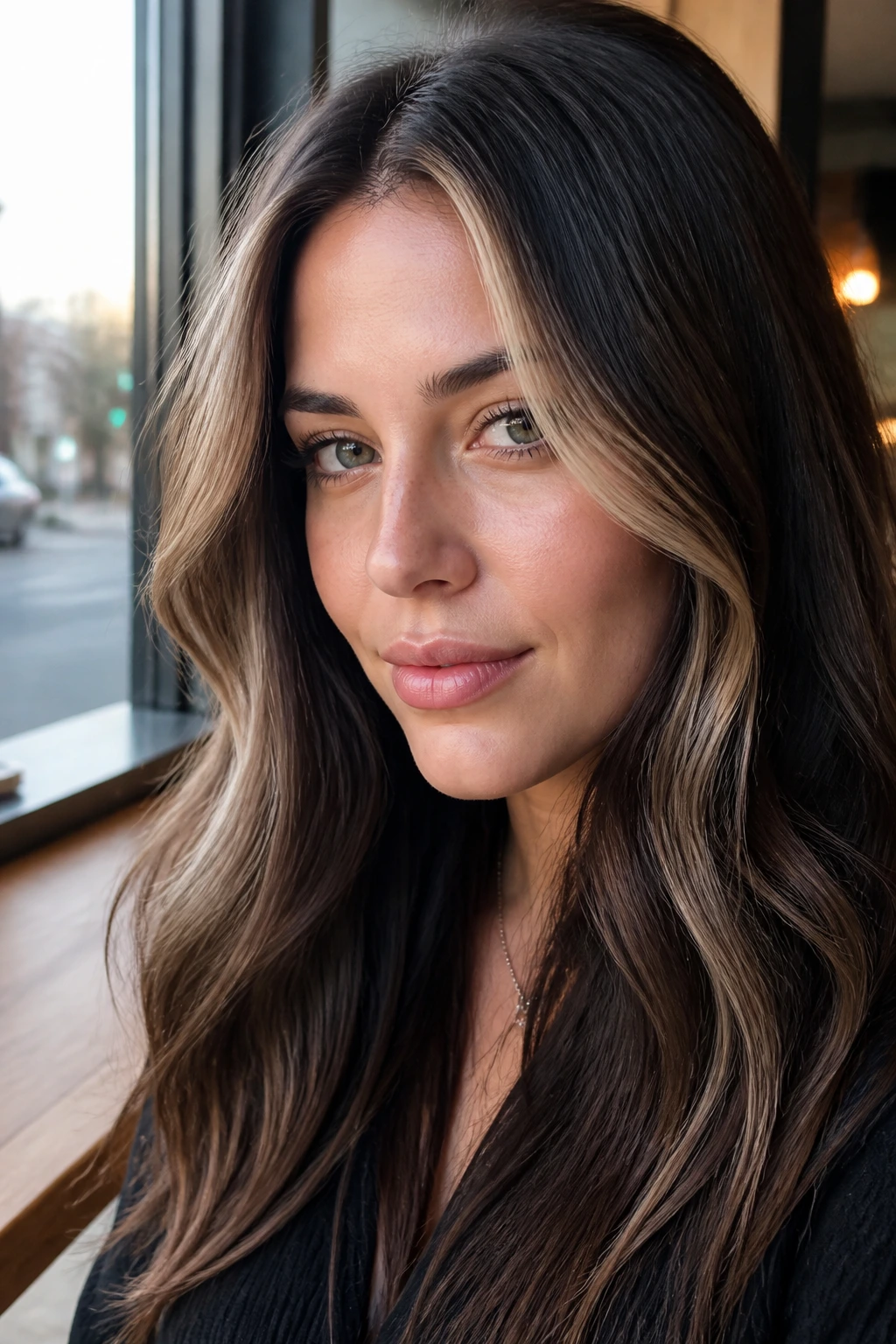
A money piece can go wrong fast, but when it’s beige and not buttery, it’s one of the strongest moves for cool skin. The brightness sits right around the face, usually from the hairline to the cheekbone, which makes the skin look cleaner and the eyes more awake. The trick is keeping the tone muted enough that it reads as light, not as yellow.
I prefer this on dark brunette hair with a middle part and shoulder-length layers. The contrast looks deliberate, not chunky. If the rest of the hair stays deeper, the money piece can be just vivid enough to matter without taking over the whole head.
Watch the contrast
If your base is very dark, don’t jump too light here. A level 7 beige-caramel strip usually does more for cool skin than a level 8 gold one. That extra depth around the face keeps the highlight from turning loud under indoor lights.
6. Blunt Lob with Cool Caramel Strokes
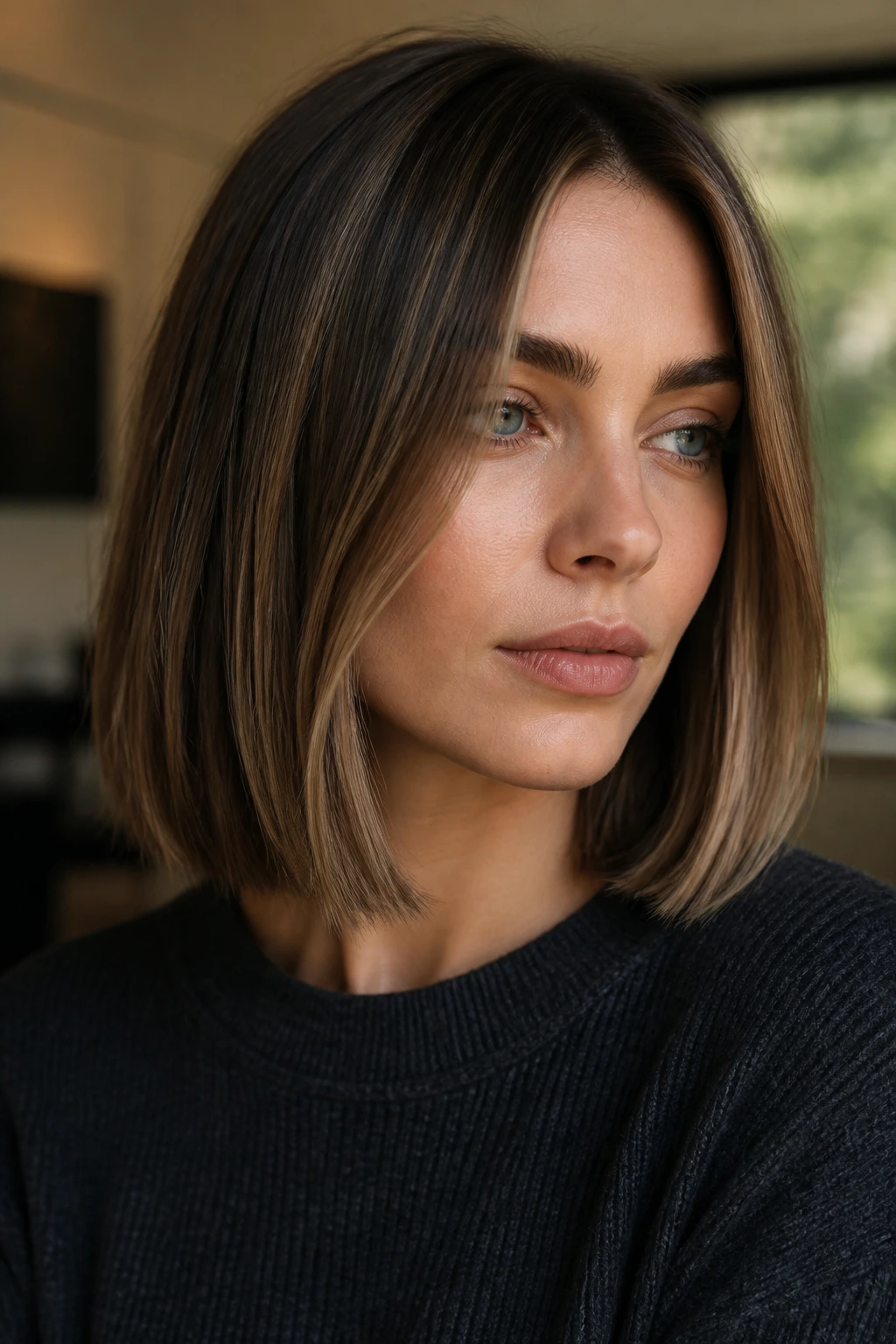
A blunt lob and caramel highlights have a good tension between them. The haircut is clean and graphic; the color softens it. On cool skin, the result can feel chic in the plainest, best way — no fuss, just a little movement where the hair would otherwise sit like one heavy block.
The strokes should be placed with intention, not evenly spaced like a barcode. A few around the face, a few tucked under the top layer, and a couple through the ends are usually enough. The blunt line at the bottom makes the highlights look richer because every lighter piece has a hard edge to play against.
This one is especially good if you wear your hair straight or with a loose bend. Too many curls can hide the structure. Keep the glaze beige or ash-beige, and skip anything labeled golden, honey, or copper.
7. Fine Babylights for a Soft Glow
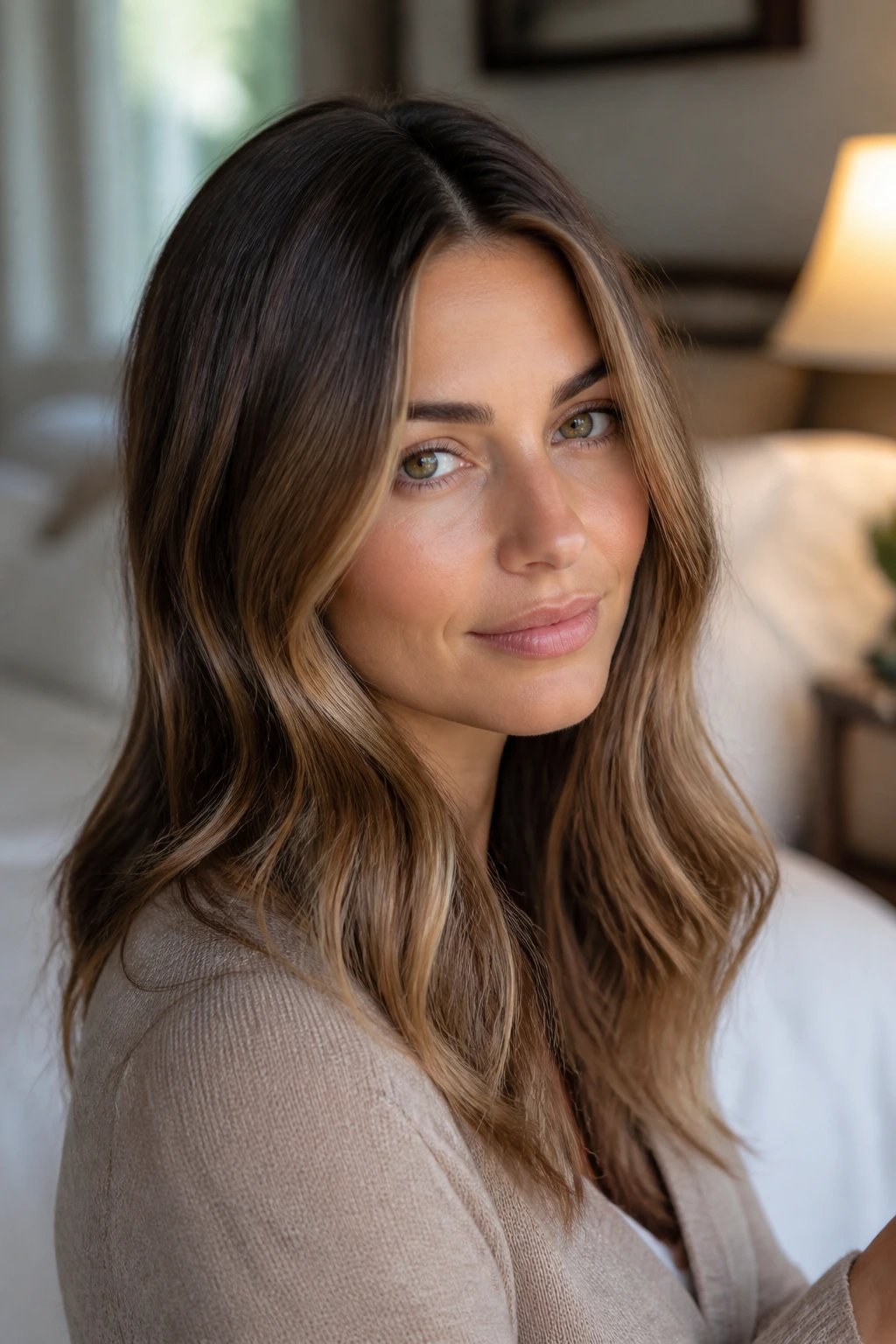
Babylights are the quietest way to do dark caramel on cool skin, and they’re often the smartest. The strands are so fine that the color reads like a soft sheen instead of separate pieces. You get brightness without the obvious foil pattern, which is useful if you want the hair to look expensive rather than highlighted.
Why it suits finer hair
Fine hair can get stripy quickly if the foils are too chunky. Babylights avoid that problem by spreading the lightness across tiny sections. The visual effect is closer to a fabric weave than a streak.
This is the look that tends to make cool skin seem more even-toned, because the light is broken up. Ask for a neutral caramel glaze over level 6 or 7 baby-fine pieces. If the highlight is too warm, every thread announces itself.
It also grows out beautifully. You can wear it longer between appointments because the line of demarcation stays soft.
8. Caramel Contour Highlights Around the Crown
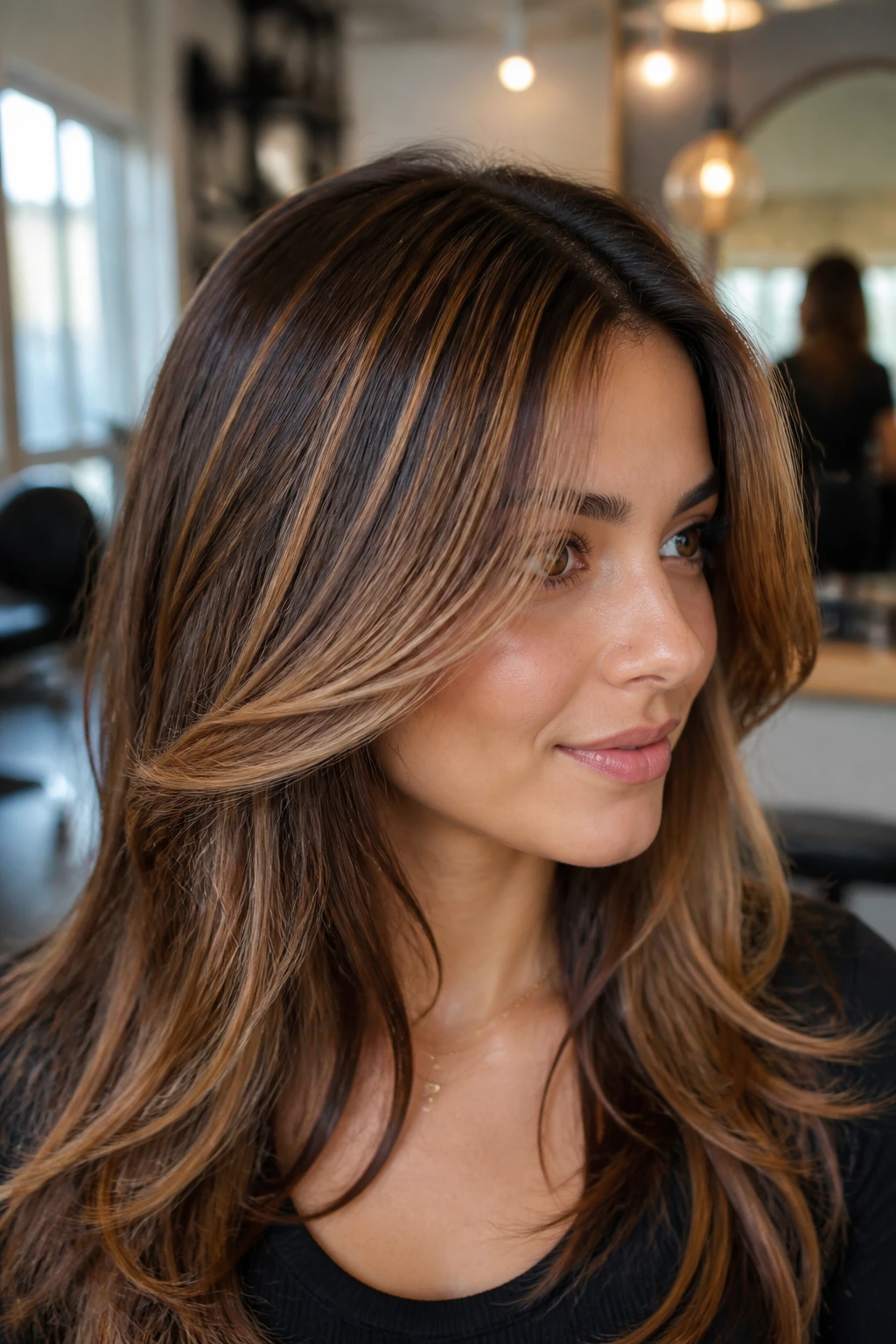
Contour highlights are about shaping, not just coloring. The brightest caramel pieces sit where the eye naturally lands — around the crown, temple, and upper cheek area — so the hair gives the face a little lift. On cool skin, this is useful because the lightness can bring warmth without making the whole head look warm.
I like this most on layered cuts. The raised pieces catch the light as the head moves, and the darker underneath keeps everything grounded. It’s a nice answer if you want dimension that shows from the front and from the side.
Think of it as makeup for the hair, but subtler. You’re not outlining every section. You’re steering the eye.
9. Peekaboo Underlights Beneath Dark Layers
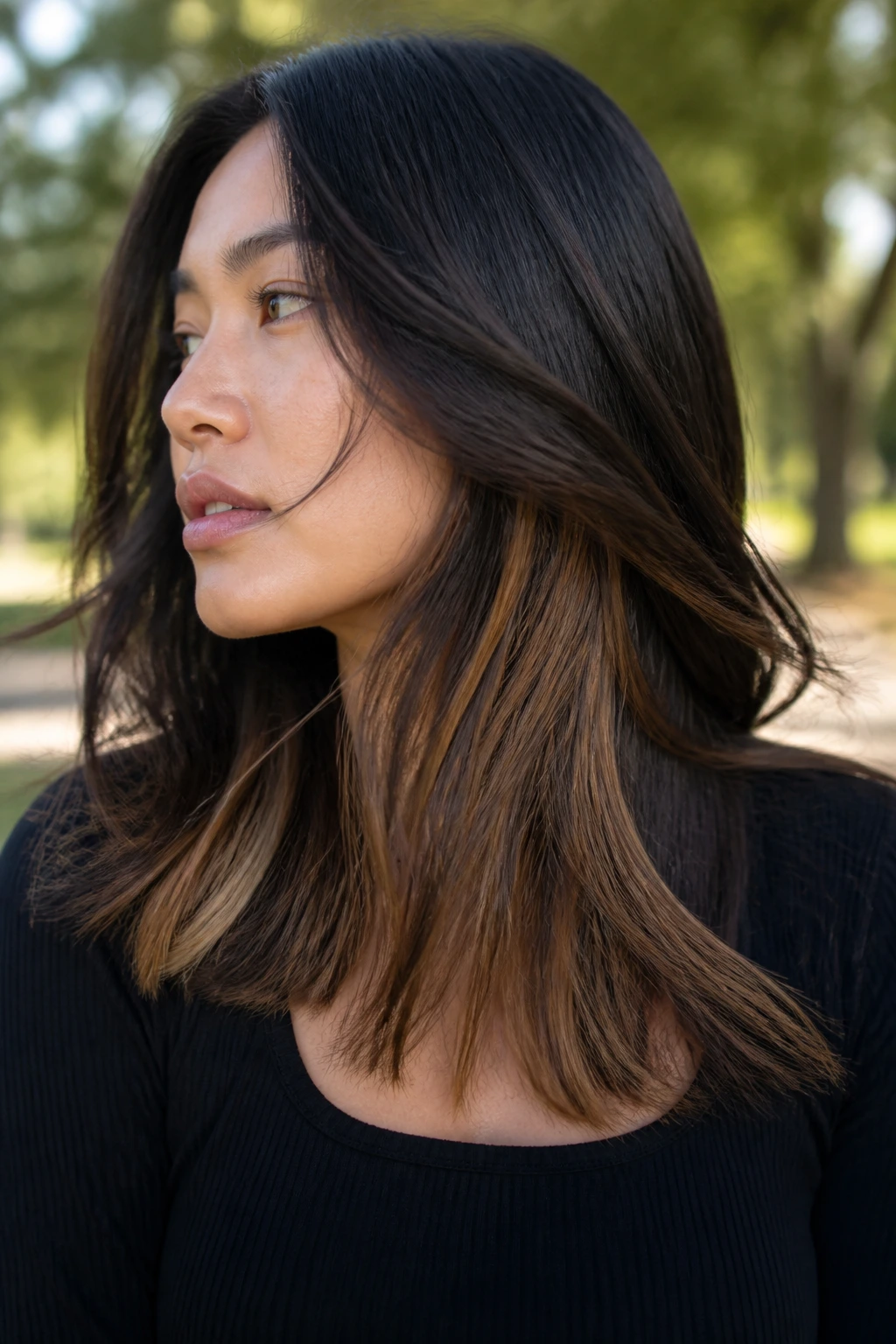
Peekaboo caramel underlights are for people who want depth in daylight and a little surprise when the hair moves. The darker top layer protects cool skin from too much face-framing warmth, while the caramel underneath flashes through the mid-lengths and ends. It’s a good compromise if you like color but don’t want it sitting right on the surface all the time.
The best part? The grow-out is forgiving. Since the lightness lives below the top sheet of hair, regrowth doesn’t scream at you. This works well with ponytails, half-up styles, and shoulder-length layers that swing.
If your hair is very straight, the underlights show more in motion than at rest. Curly or wavy hair reveals them in a softer, broken pattern. Either way, ask for a beige-caramel tone, not anything shiny or gold.
10. Long-Layer Foilayage with Ribboned Ends
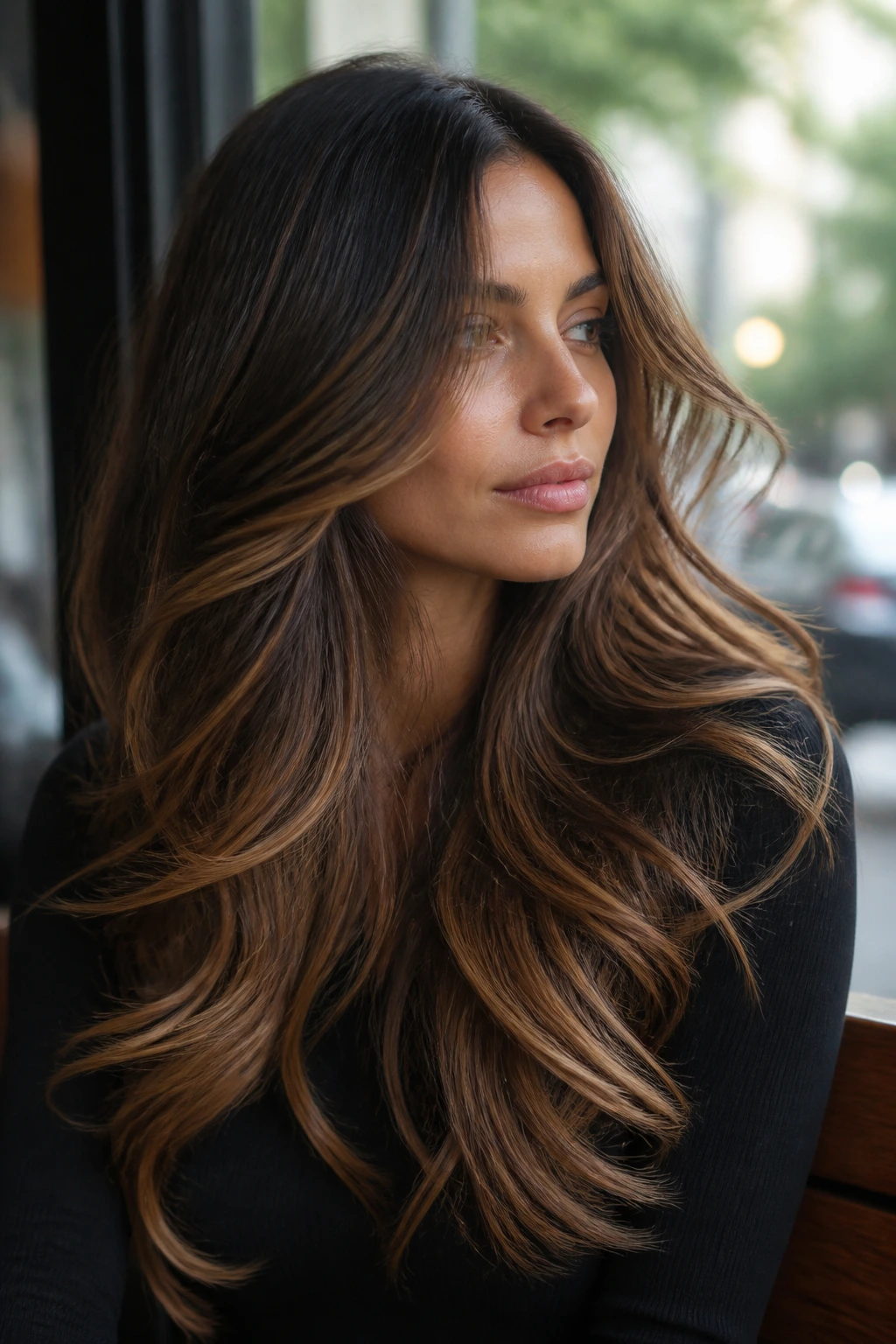
Foilayage gives you the painted look of balayage with a little more lift, which is handy if your hair is dark and resistant. The caramel ends feel lighter than the root area, but the transition stays soft. On cool skin, the benefit is simple: you can have visible brightness without a hard blonde jump.
How it reads
Long layers let the ribbons fall in overlapping sheets, so the color shows in movement rather than as a block. It’s one of the most flattering ways to make thick hair look lighter without losing the weight that keeps it from puffing out.
Ask your colorist to keep the root shadow deep and the tone beige. That depth near the scalp matters. If the root and face frame are too bright, the look loses the smoky effect that makes it work so well on cool undertones.
11. Caramel Dimension on Curly Hair
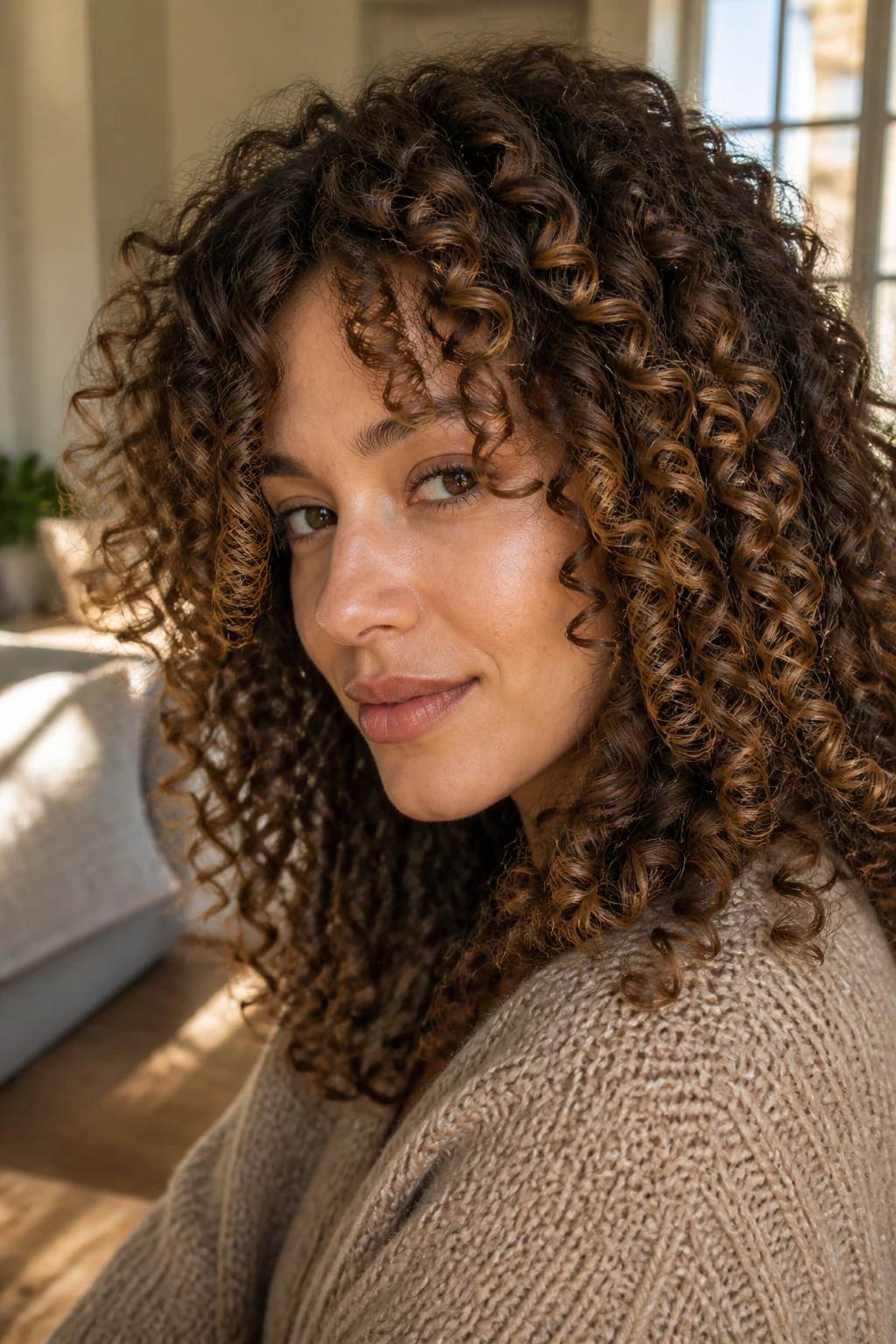
Curls can handle more contrast than people assume, but the highlight placement has to follow the curl pattern. Dark caramel highlights on curls should sit on the raised parts of the curl, not just along a straight section of hair that disappears once the curl springs back. That’s why this look can feel gorgeous or messy depending on the hand doing the placement.
The best versions keep the caramel slightly muted. A warm blonde stripe on cool skin can look disconnected once the curls dry. Beige-caramel ribbons, especially when painted a bit deeper in the interior and lighter toward the outer bends, give the hair movement without blowing out the natural pattern.
I also like this with diffused drying. Air-dried curls can sometimes hide the dimension, while a diffuser opens the shape enough that the highlights show in little flashes.
12. Espresso Base with Thin Caramel Weave
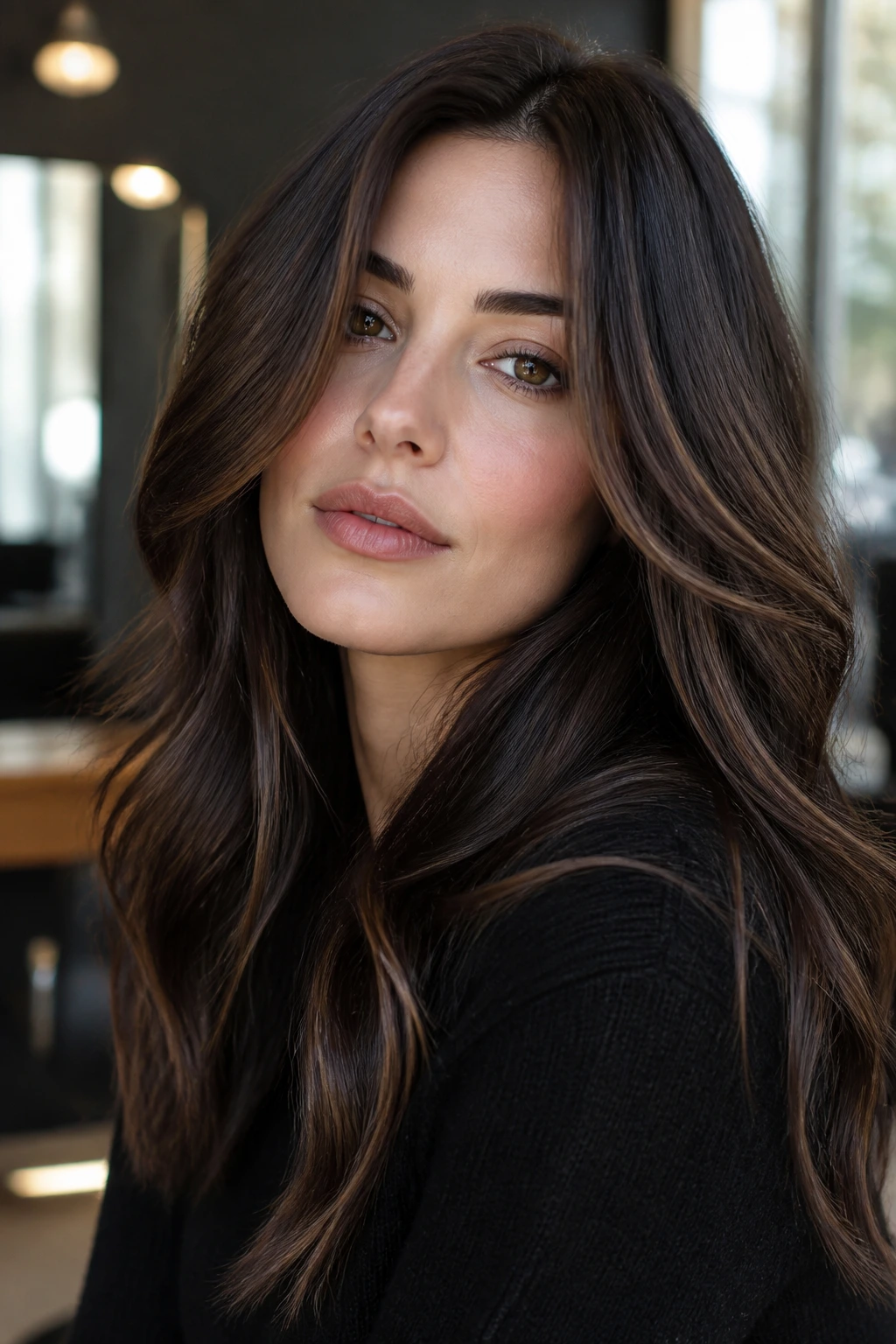
This is for the person who likes subtlety but gets bored if the hair looks totally one-note. Espresso brown on its own can be elegant, but a thin weave of caramel changes the whole surface. The contrast is small enough to stay cool-friendly, yet the hair stops reading as one flat block.
The appeal is in the spacing
Thin weaves work because the eye blends them from a distance. Up close, you see detail. From across the room, you just see a glossy brunette with motion. That’s a good trade.
Cool skin often looks better with this kind of restraint. Too much warmth near the face can drag the complexion toward red. Thin, evenly broken caramel strands keep the effect softer, especially if the glaze leans beige-brown.
This is one of the easiest looks to maintain. Because the contrast is low, the grow-out is polite.
13. Soft Ombré from Root Shadow to Caramel Ends
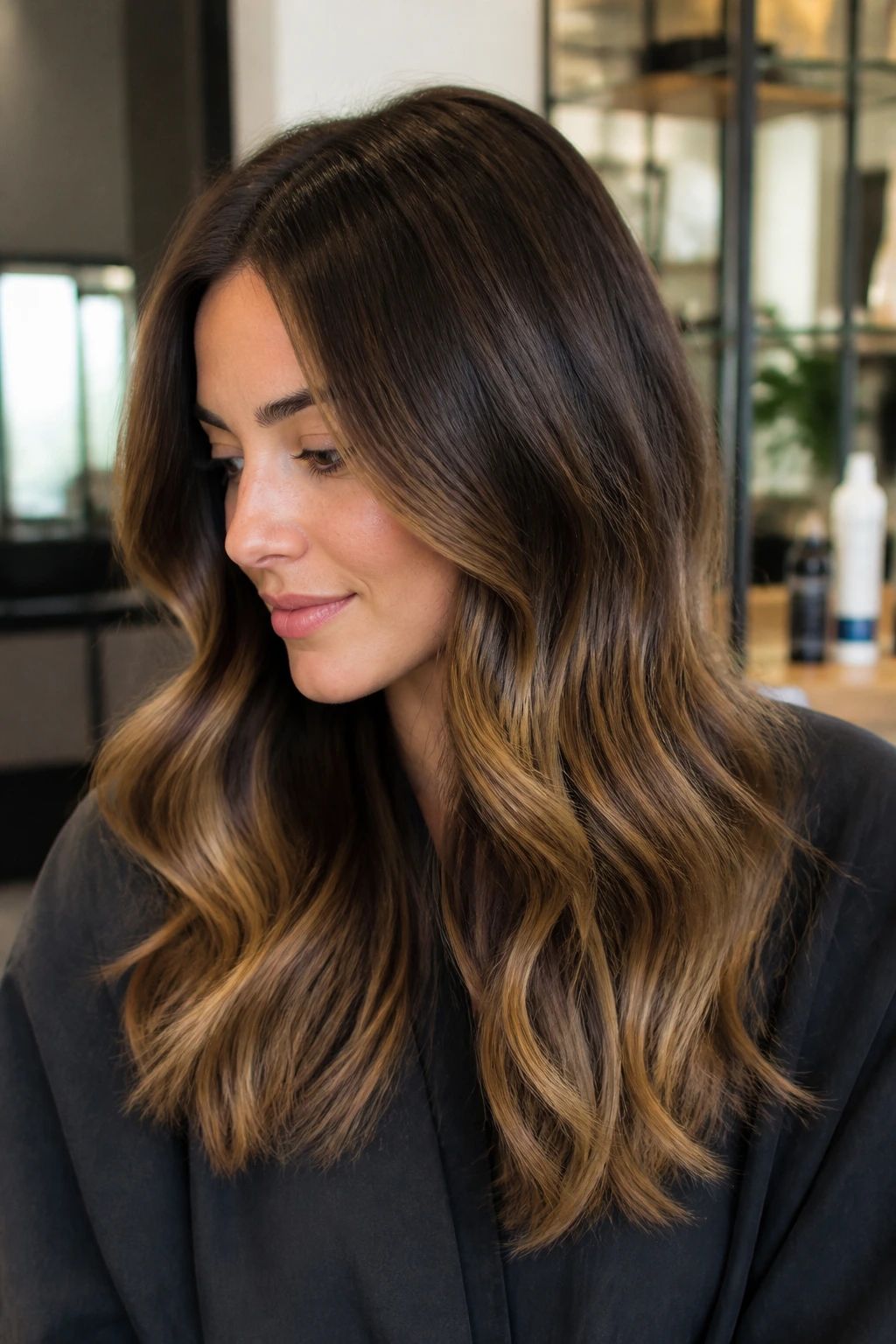
A soft ombré is not a dramatic dip-dye situation. The color slides gradually from dark root to darker caramel ends, with no hard shelf line in the middle. That slow fade is one of the friendliest shapes for cool skin because the root shadow stays near your natural brunette depth while the ends carry the light.
This works best when the middle of the hair is still fairly deep. If the transition is too fast, the caramel can feel disconnected. But with a slow fade, the ends look sun-kissed in a muted way, almost as if the light has been sitting on the hair for a while.
It’s also practical. The root line is forgiving, and the ends can be refreshed with glossing instead of a full highlight service every time.
14. Micro-Highlights for Fine Brunettes
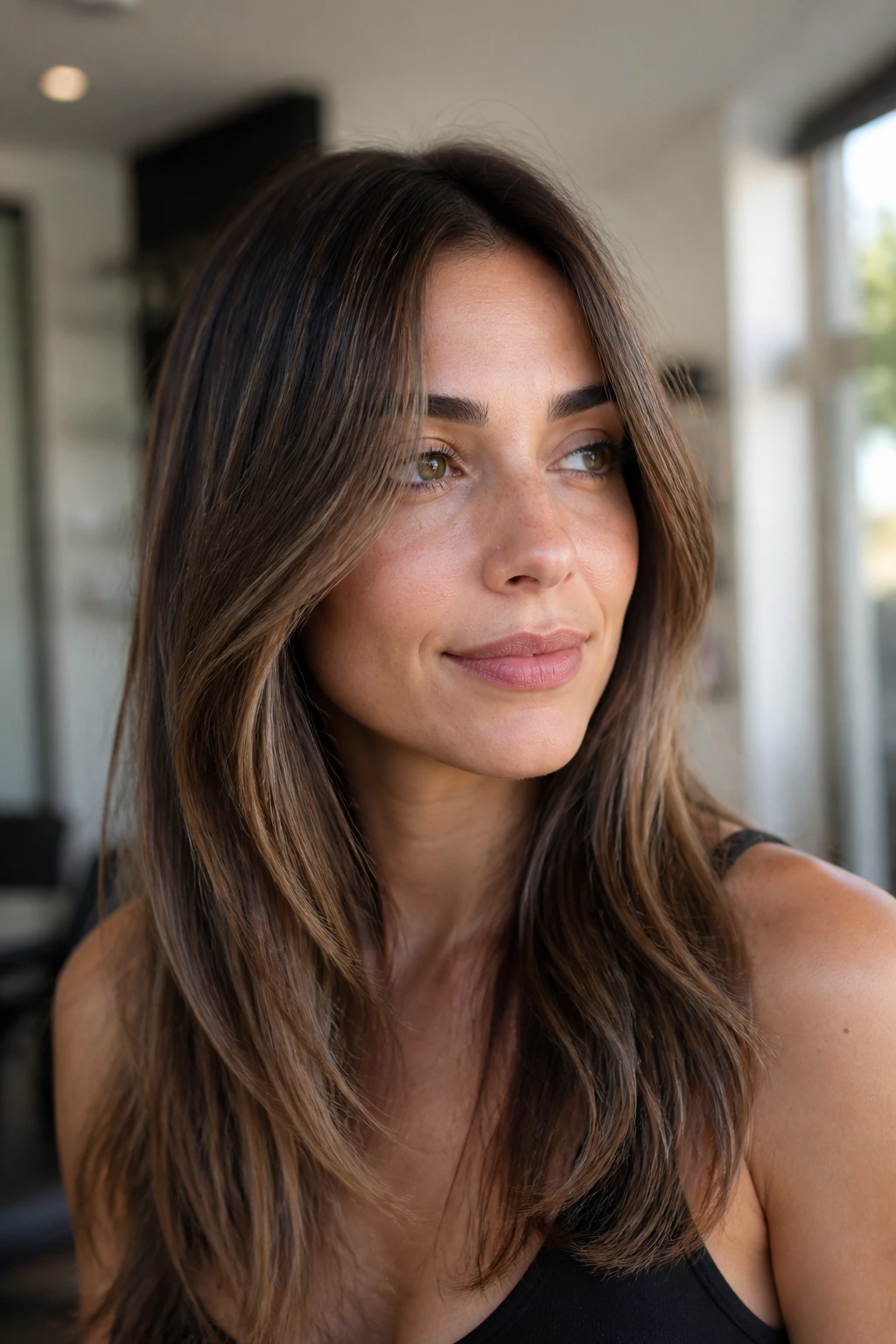
Micro-highlights are the little sibling of babylights. They’re even thinner, and on fine brunette hair they can add more density than contrast. That matters for cool skin, because the overall look stays soft and airy instead of chopped up by obvious streaks.
The best micro-highlights are barely brighter than the base at first glance. Then you move, and the whole head seems to shimmer. That slight shift in tone is often enough to make the skin read clearer without drawing attention to the color itself.
If your hair tends to get flat at the roots, this pattern can help build the illusion of volume. Keep the lightness around the top third and the face frame, then let the ends stay a touch deeper.
15. Chunkier Statement Foils on Thick Hair
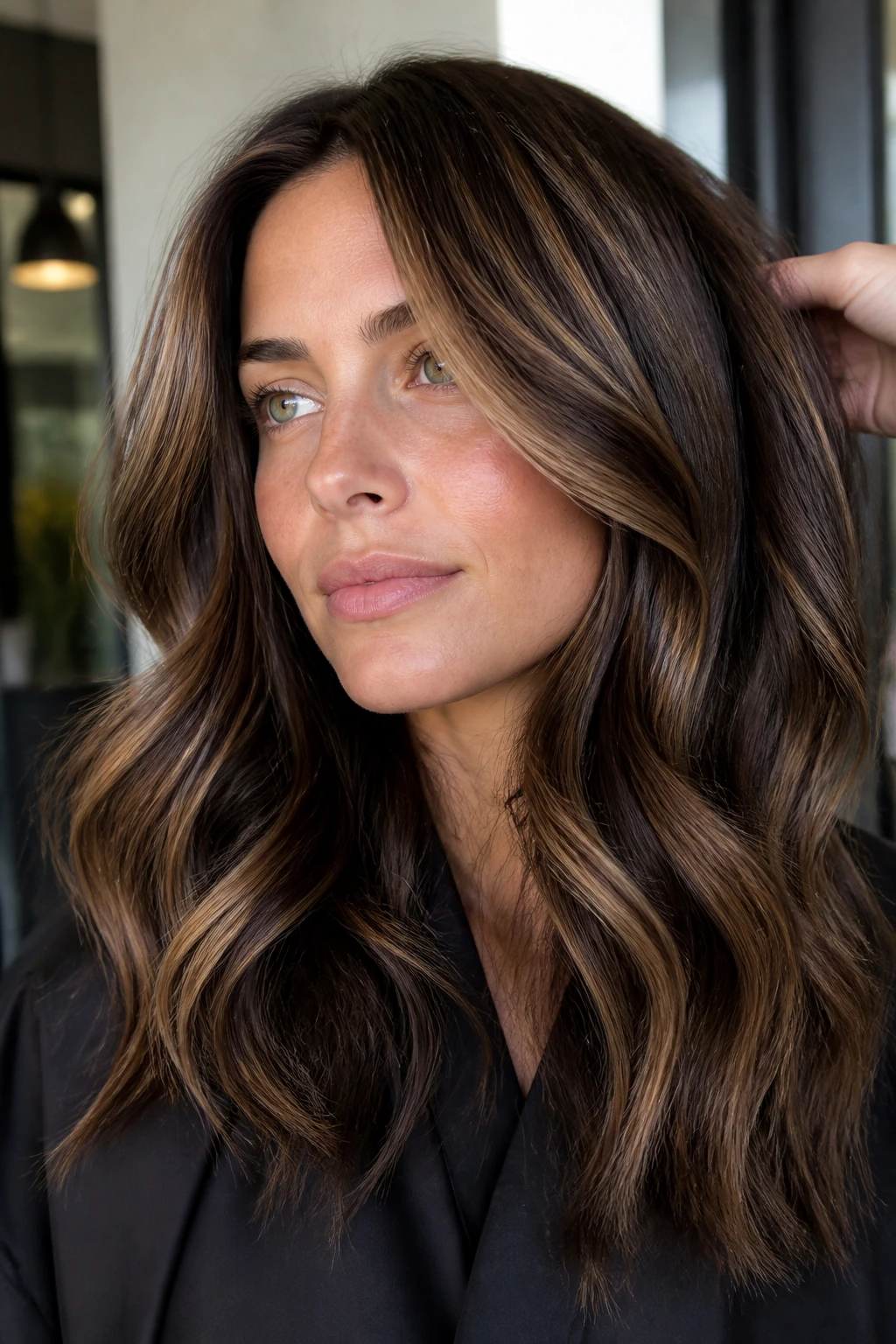
Not every cool-toned brunette wants whisper-thin dimension. Thick hair can carry chunkier caramel foils, and when the tone stays muted, they look deliberate rather than dated. The key is keeping the pieces separated enough that the hair still breathes.
This is the version I’d choose if you like seeing your highlights from the back of the room. The contrast is stronger, which means the cut matters. Layers or a strong perimeter line keep the look from turning into a blanket of color.
For cool skin, the danger is orange warmth in the lighter ribbons. Ask for dark caramel, beige blonde, or ash-caramel panels — not honey. The whole look should still sit in brunette territory, just with more light cutting through it.
16. Deep Side-Part Caramel Drama
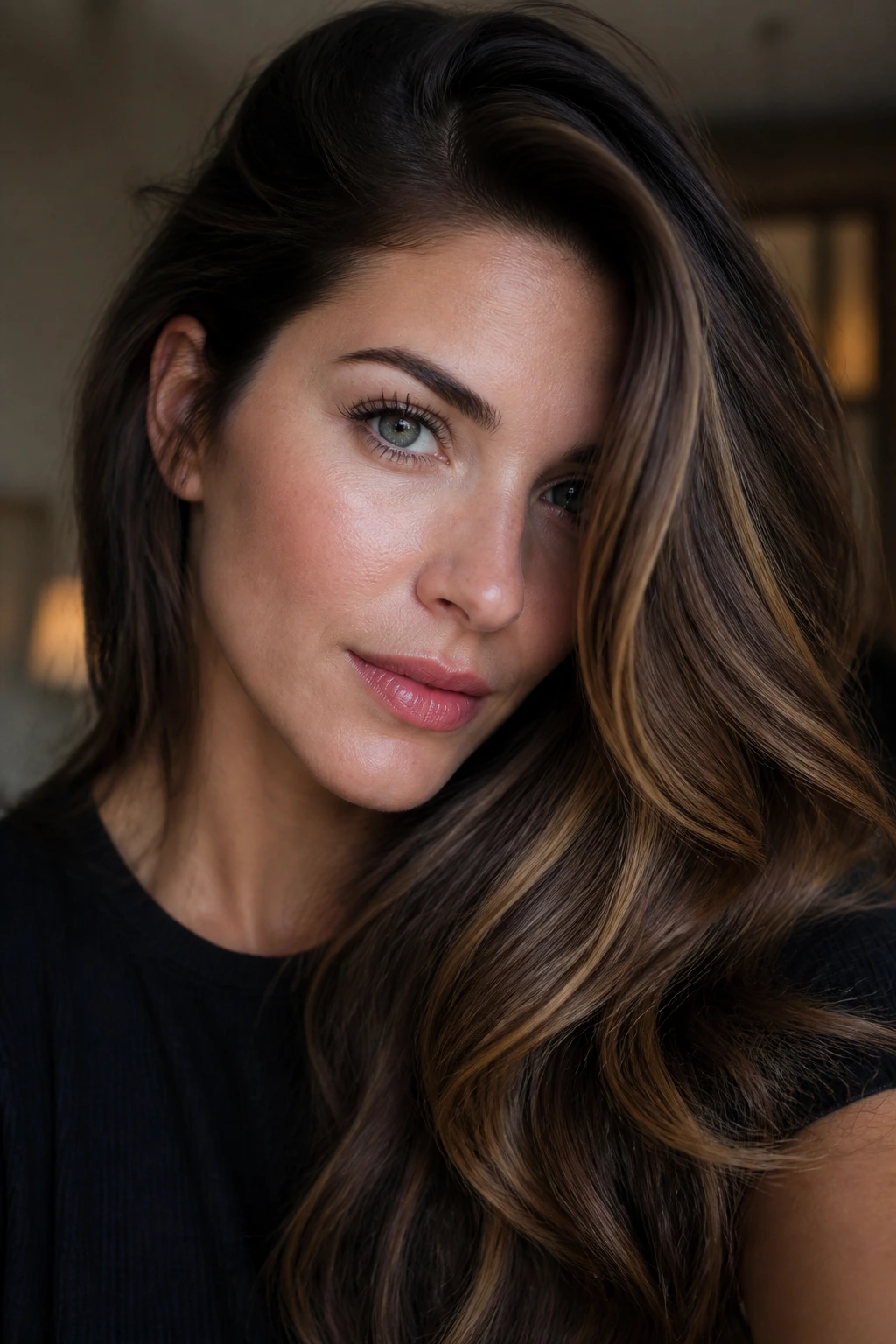
A deep side part changes where the eye goes, and that can make dark caramel highlights look far more dramatic without adding more color. One side holds more shadow; the other side catches more light. Cool skin tends to like that asymmetry because the brighter side can be kept away from areas that flush easily.
This is one of the most underrated tricks in the whole bunch. The haircut can stay the same. The color only needs enough movement to show when the part shifts. A side part, especially on wavy or curly hair, gives the caramel a cleaner stage.
If you want more polish, place the brighter ribbons on the heavier side of the part and leave the opposite side slightly deeper. The contrast feels expensive, not noisy.
17. Underlayer Caramel Lights for Hair That Lives in a Bun
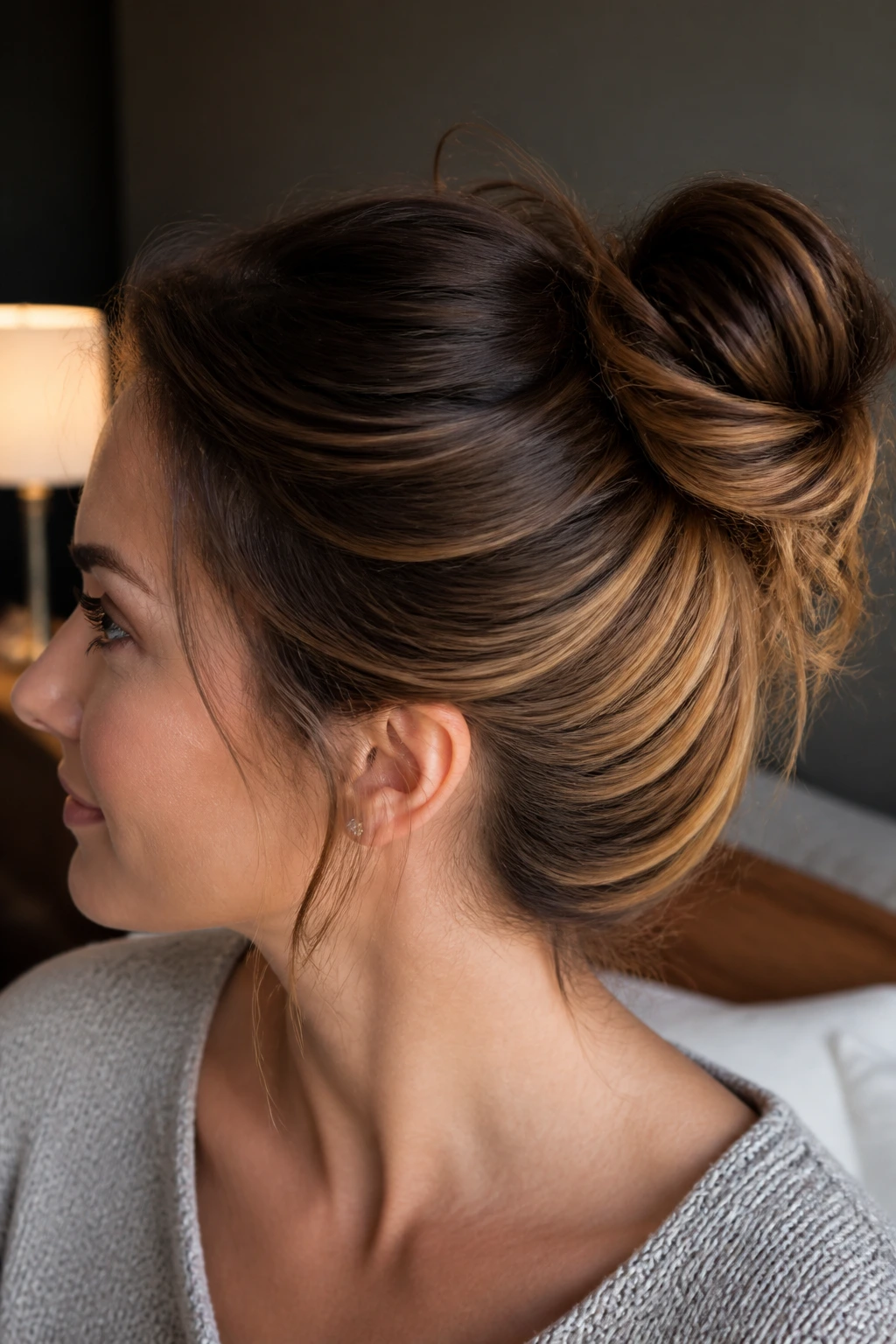
Some hair practically lives tied up. Underlayer highlights are the answer. The caramel sits beneath the top layer, so the color comes forward when the hair is in a knot, a claw clip, or a low twist. That makes it a nice choice for cool skin if you only want brightness when you choose to show it.
It’s a clever placement because the top layer still protects your overall tone from going too warm. A top sheet of deeper brunette hair keeps the face calm, while the underlayer gives you movement when you pull the hair back.
This works best if you like changing your look without changing your whole maintenance routine. One day the color is hidden. The next day it’s doing all the work.
18. Gray-Blending Caramel for First Silvers
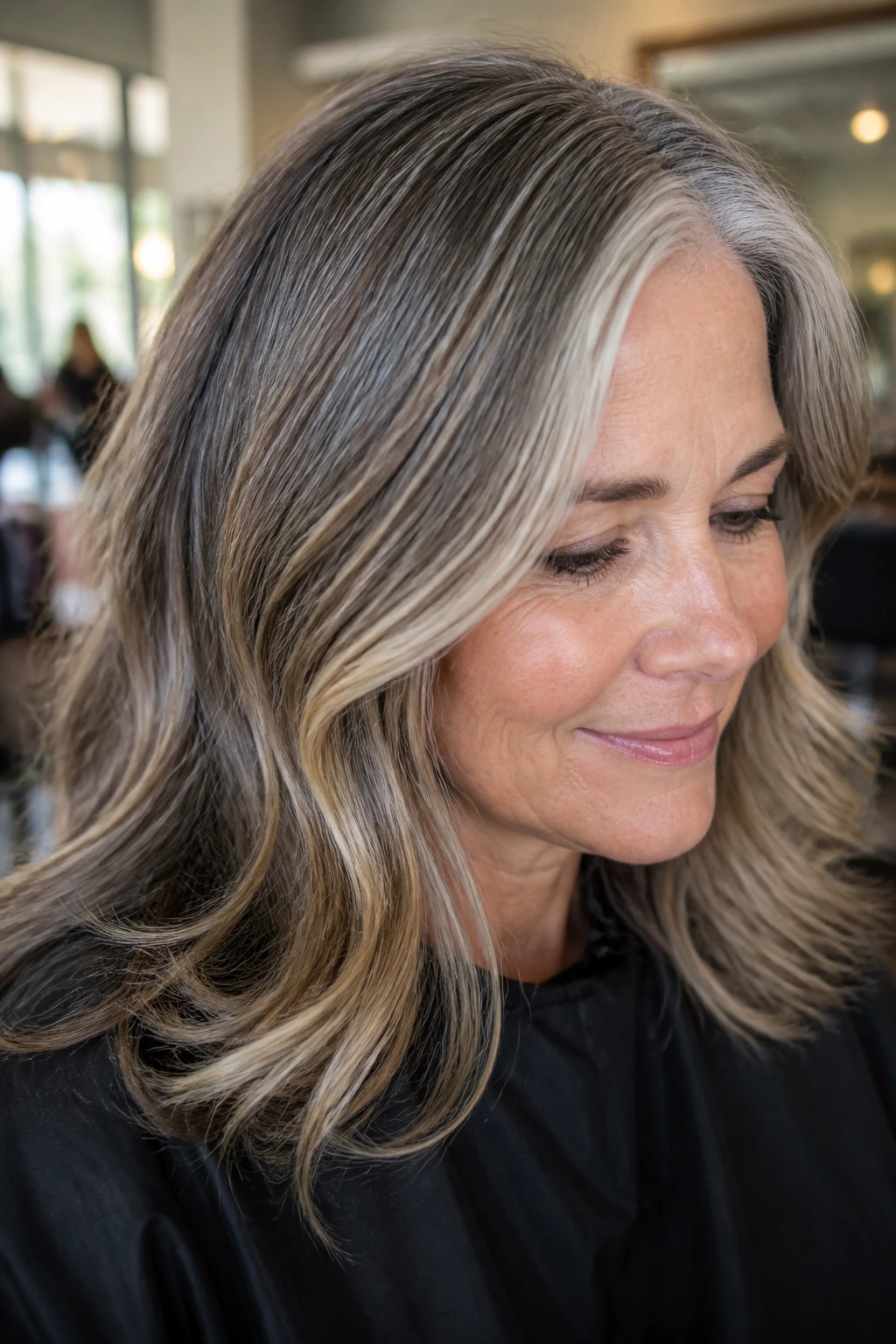
First silvers can be awkward to color around, especially if you want dimension and not coverage. Dark caramel highlights help because they break up the transition between gray and brunette without forcing the silver to disappear. On cool skin, the result often looks fresher than a solid all-over brown.
The trick is not to go too light near the gray strands. A beige caramel that sits one or two levels above the base can soften the contrast and make the grow-out far less visible. If the hair is mostly natural at the root, this becomes one of the most forgiving color strategies around.
A gloss afterward is useful here. It keeps the brown pieces reflective and stops the light strands from shouting yellow.
19. Cool Caramel Highlights on a Pixie Cut
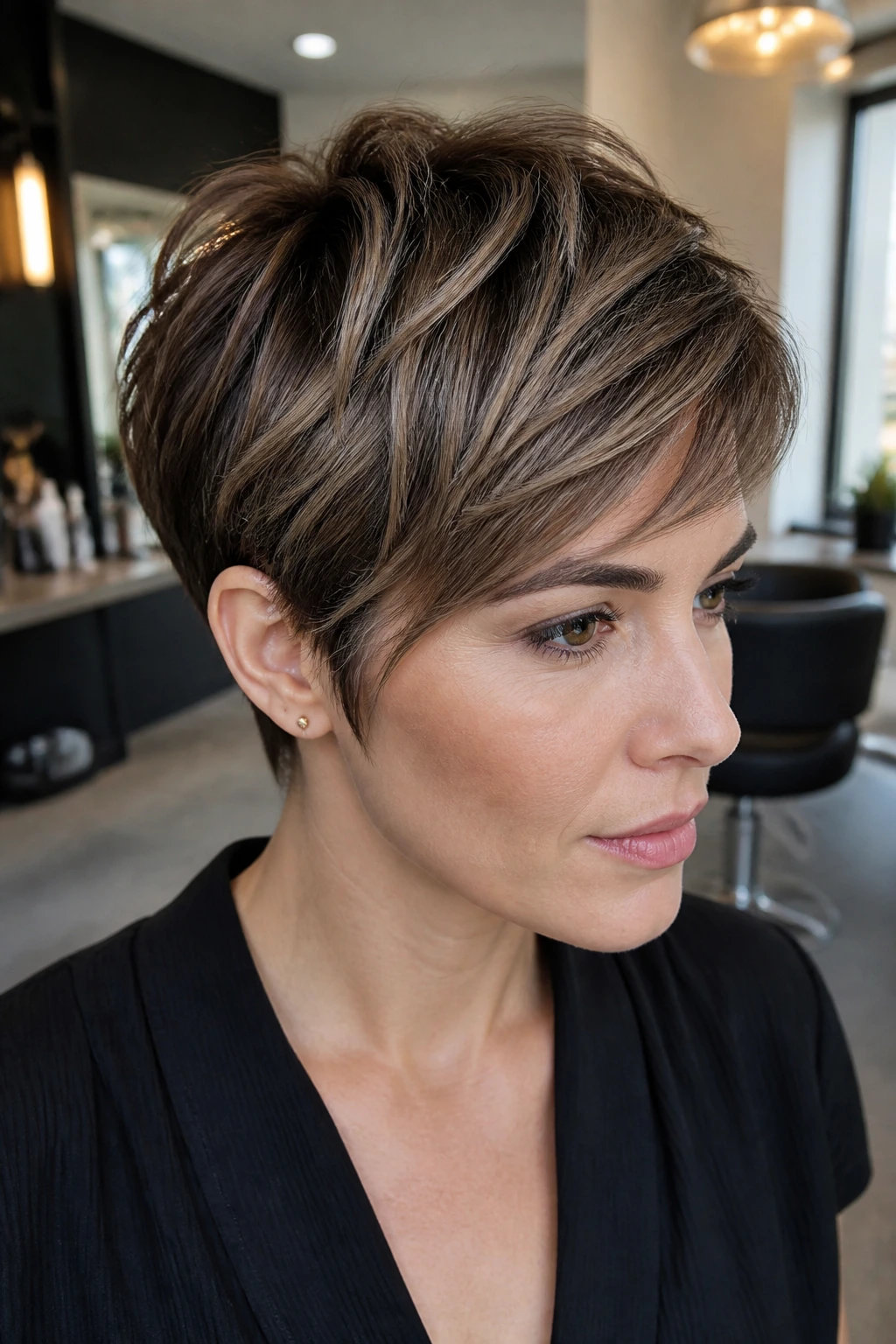
Short hair can take caramel, but the placement has to be cleaner. On a pixie, cool caramel should be used to show texture: the fringe, the crown, the sideburn area, and the ends that flick out when the hair is rough-dried. That’s enough. Anything more starts to look busy.
The advantage on cool skin is that the brightness is close to the face, so the right tone can bring a clean, crisp edge to the whole cut. A soft beige-caramel on a pixie reads modern because the cut itself does the heavy visual work.
Keep the root shadow intact. On very short hair, if the lightness starts at the scalp, the whole look can turn patchy fast. Let the dark base stay visible between the brighter pieces.
20. Collarbone Cut with Scattered Caramel
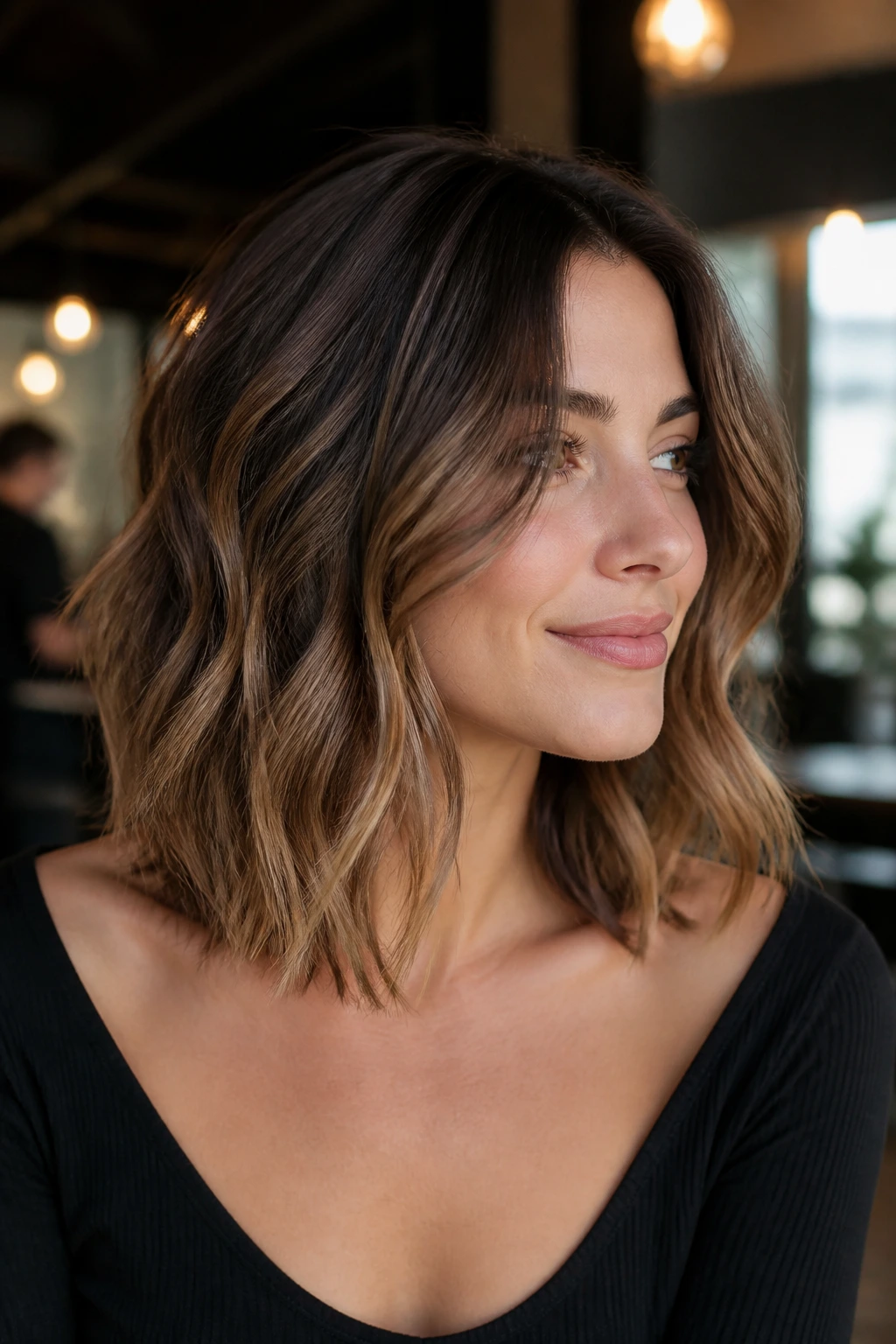
A collarbone cut sits in a sweet spot. It’s long enough to move, short enough to show every highlight line. Scattered caramel works here because the cut usually has enough shape at the ends to keep the light pieces from disappearing into the mass of hair.
I like this style with a loose bend, not a tight curl. The bends let the highlights flash in uneven places, which makes the color feel natural. On cool skin, that irregularity helps the caramel avoid looking too polished or too warm.
If the haircut is blunt at the bottom, keep the lightness slightly higher through the sides and front. If it’s layered, you can scatter the caramel more freely.
21. Straight Hair with Graphic Caramel Panels
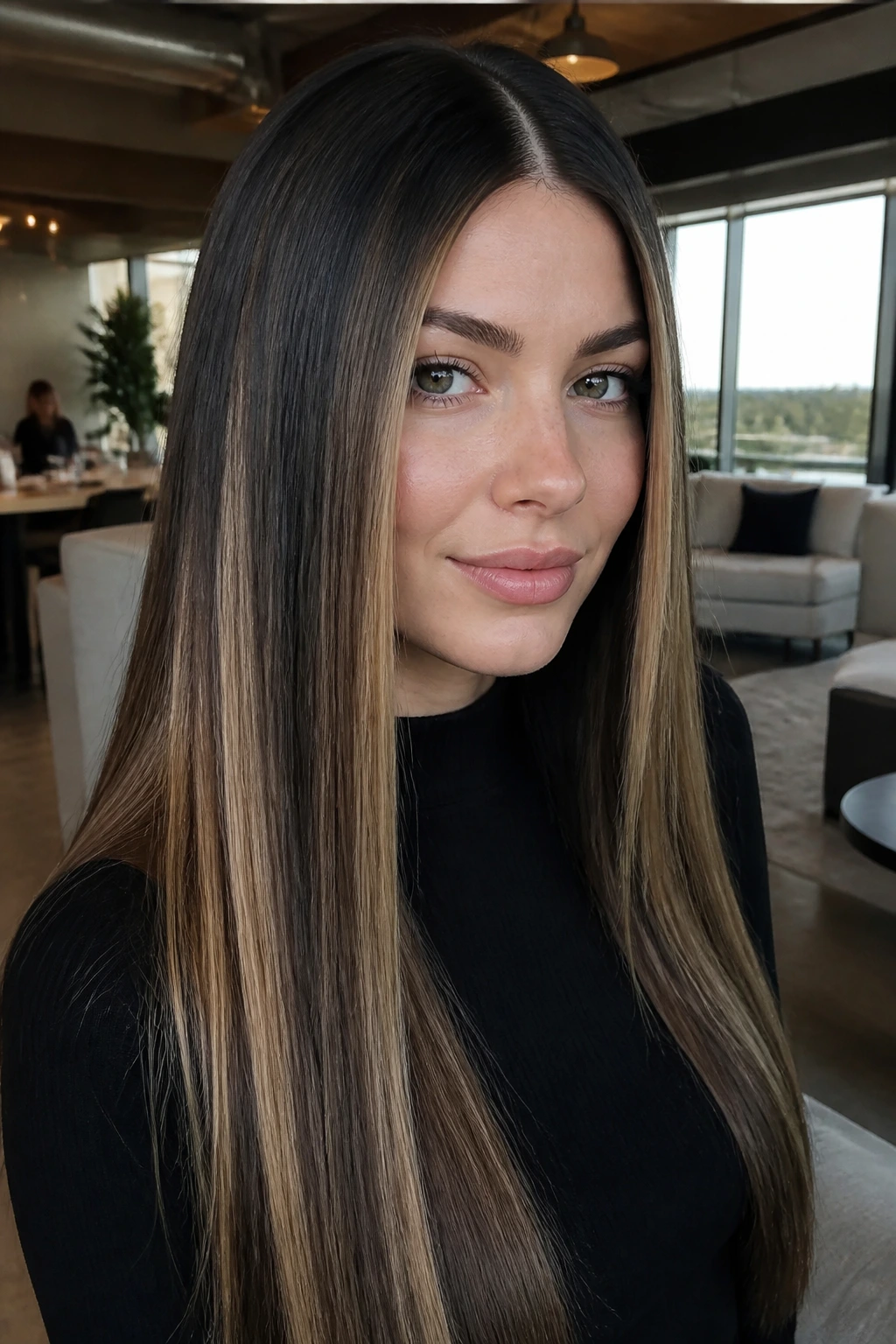
Straight hair shows every decision you make, which is why graphic panels can look so sharp on cool skin. The caramel sits in wider sections, usually placed with clean spacing rather than blended to the point of invisibility. The result is more deliberate and a little more editorial.
The danger is obvious: too much gold and the whole thing turns loud. Keep the tone beige or ash-caramel, and let the panels stay a little darker at the roots. Straight hair has nowhere to hide, so the placement has to earn its keep.
I like this when someone wants dimension that still reads controlled. A center part and a smooth blowout make the panels look even cleaner.
22. Wavy Chestnut-Caramel Dimension
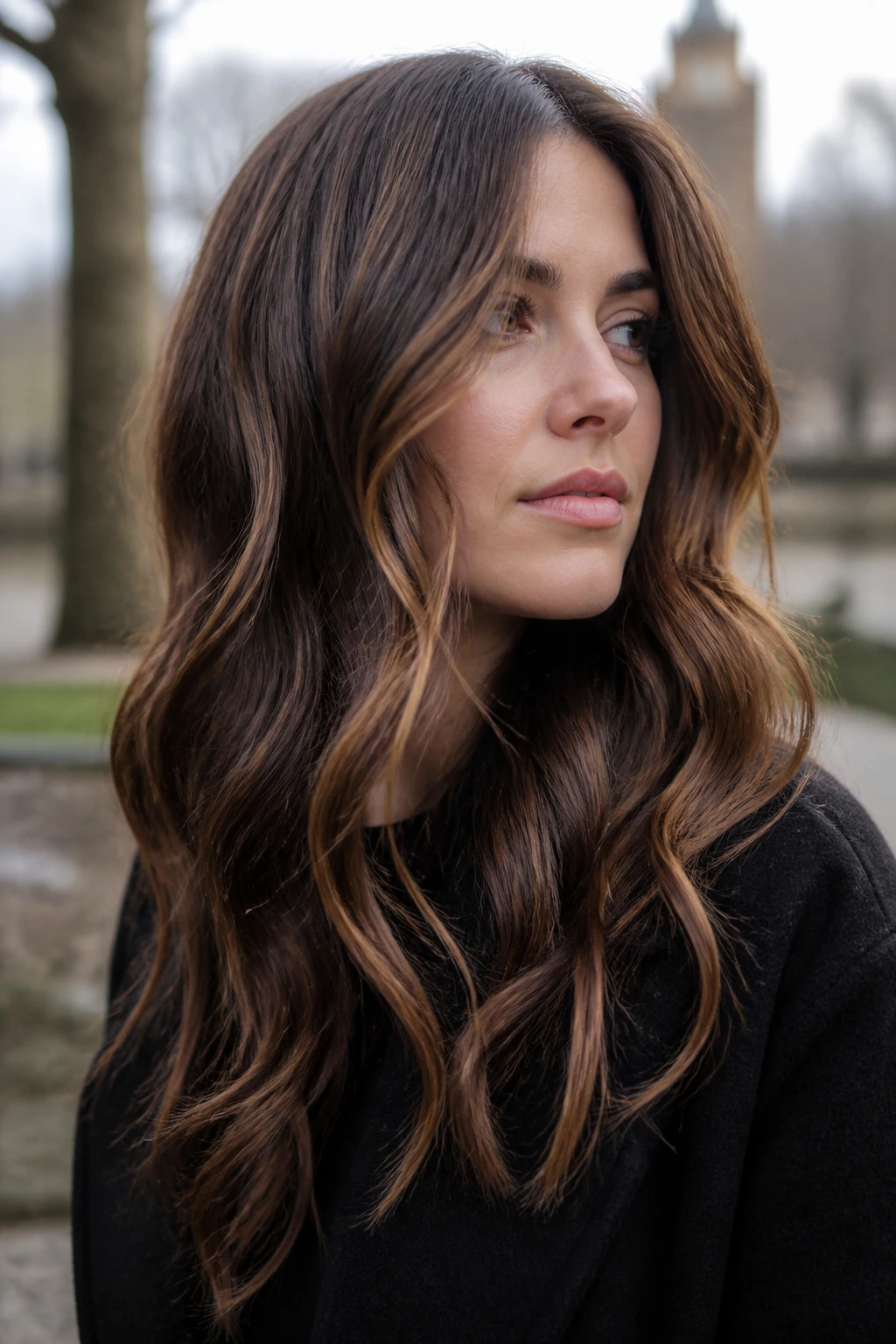
Waves are where dark caramel can look easiest and most convincing. The bend breaks up the color into little flashes, which makes chestnut and caramel sit together without one dominating the other. On cool skin, that broken pattern keeps the warmth soft.
This is one of the more forgiving looks if you’re nervous about commitment. The waves distribute the color. Even if one ribbon is a touch brighter than you planned, it gets diluted by the movement of the hair.
Chestnut is the key word here. It keeps the palette brown rather than golden. If you want this to flatter cool undertones, ask for caramel that looks like it belongs in dark chocolate, not in toasted sugar.
23. Low-Contrast Caramel for Conservative Settings
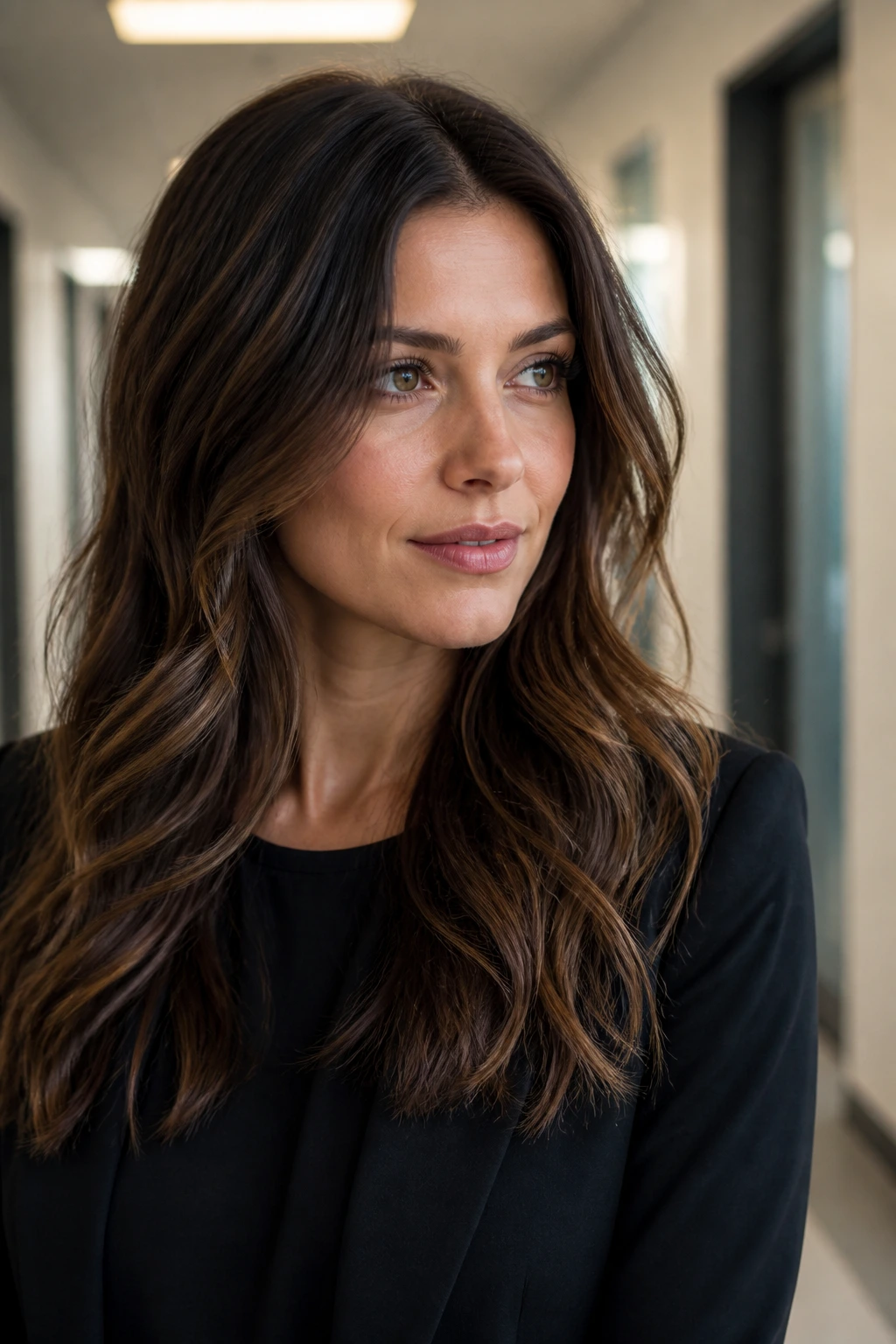
There’s a real place for subtlety. Low-contrast caramel keeps the hair looking brunette first, highlighted second. That makes it a smart choice if you want dimension that won’t look loud in a conservative office or a setting where big color changes are out of place.
The look usually uses a small spread of fine ribbons and a root area that stays close to the natural base. On cool skin, that restraint is useful because it keeps the warmth from taking over the face. You still get movement, just not a lot of drama.
This is the style I’d send to anyone who says, “I want people to notice my hair, not my highlights.” Good instinct. That’s exactly how this one behaves.
24. High-Contrast Caramel for High-Impact Dimension
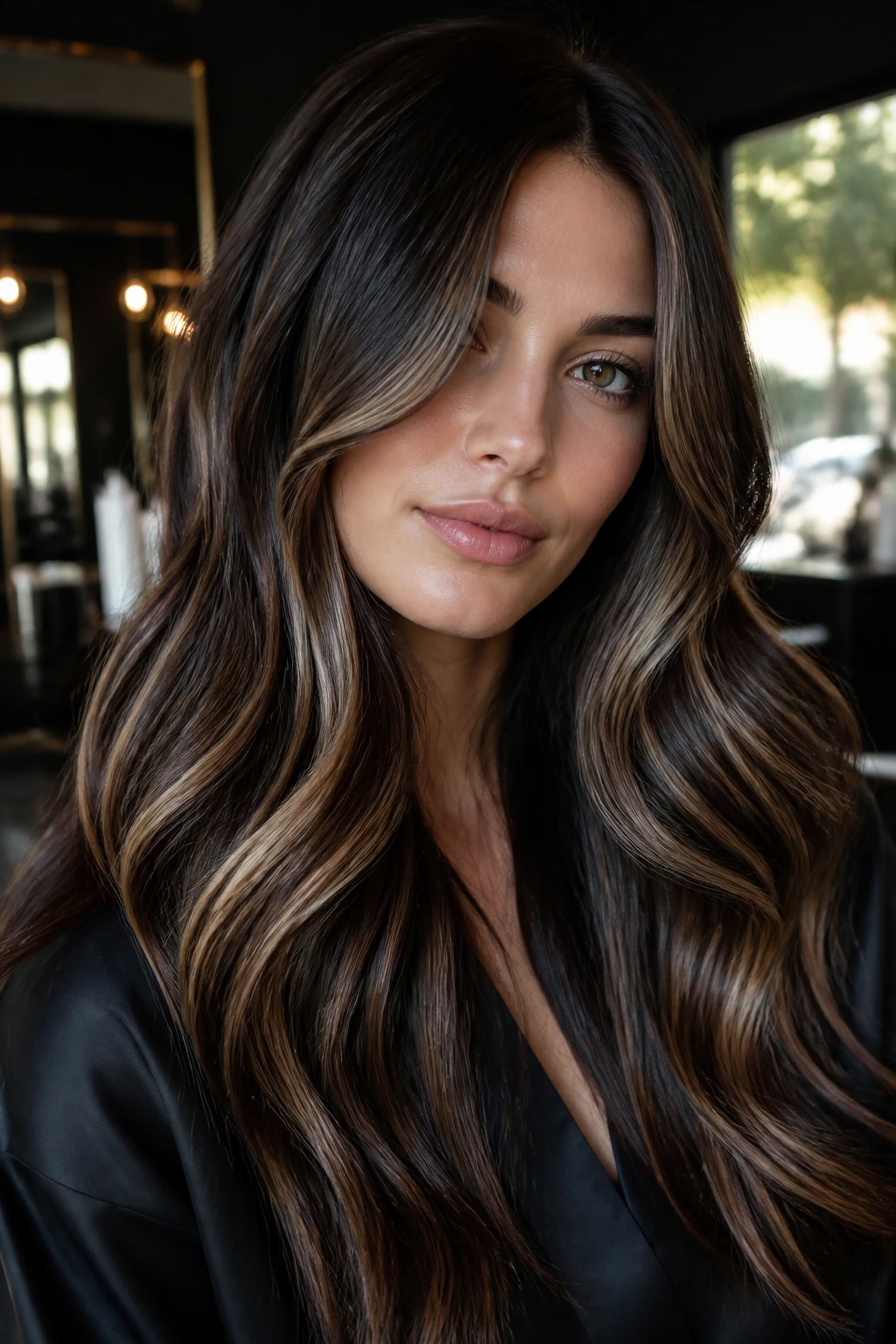
High contrast is not the enemy of cool skin. Bad tone is. If you want the hair to look bolder, you can absolutely do that — the trick is keeping the caramel deep enough to stay brown and muted enough to avoid the pumpkin lane.
This version uses stronger spacing between the lighter pieces and the base. The eye sees a bigger jump, so the haircut should have shape. Layers, texture, and movement help the color look intentional instead of random.
I like this on people who wear a lot of black, charcoal, navy, or cool neutrals. The hair becomes part of the outfit rather than fighting it. Ask for a caramel that leans beige-brown, then keep the finish glossy, not shiny-gold.
25. Shadow-Root Caramel Melt for the Softest Grow-Out
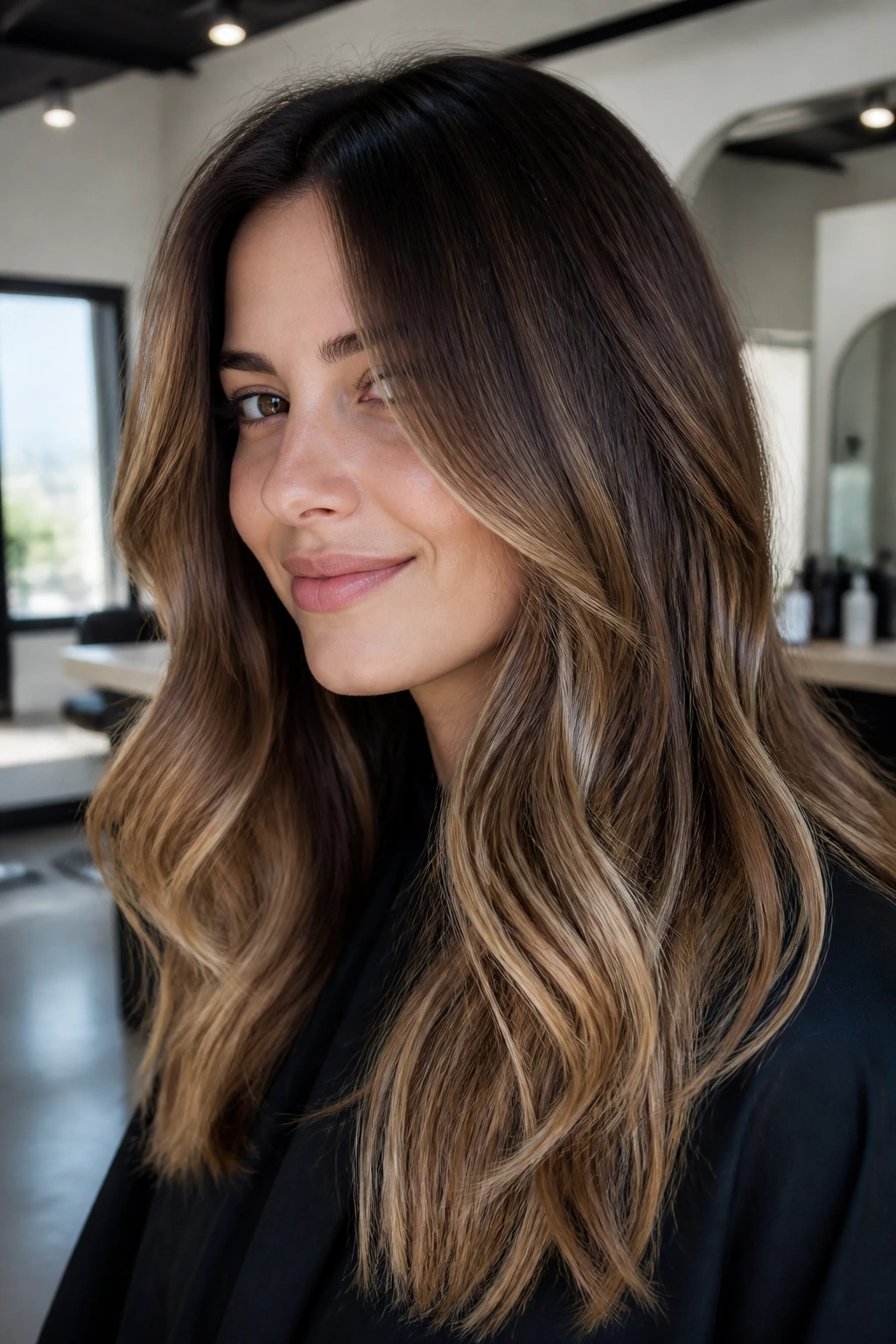
This is the gentlest finish of the whole bunch. The shadow root stays deep, the caramel melts through the mid-lengths, and the ends land lighter without a sharp line anywhere. On cool skin, that soft transition is usually the safest bet if you want warmth without the face turning ruddy.
It’s also the most forgiving for maintenance. As the roots grow, the look only gets softer. That’s useful if you do not want to sit in a salon every few weeks chasing the same tone.
If you choose only one thing from this list, make it this: the root should stay cooler and deeper than the ends. That single move is what keeps dark caramel from wandering into orange territory.
Why Dark Caramel Highlights Read So Well on Cool Skin Tones
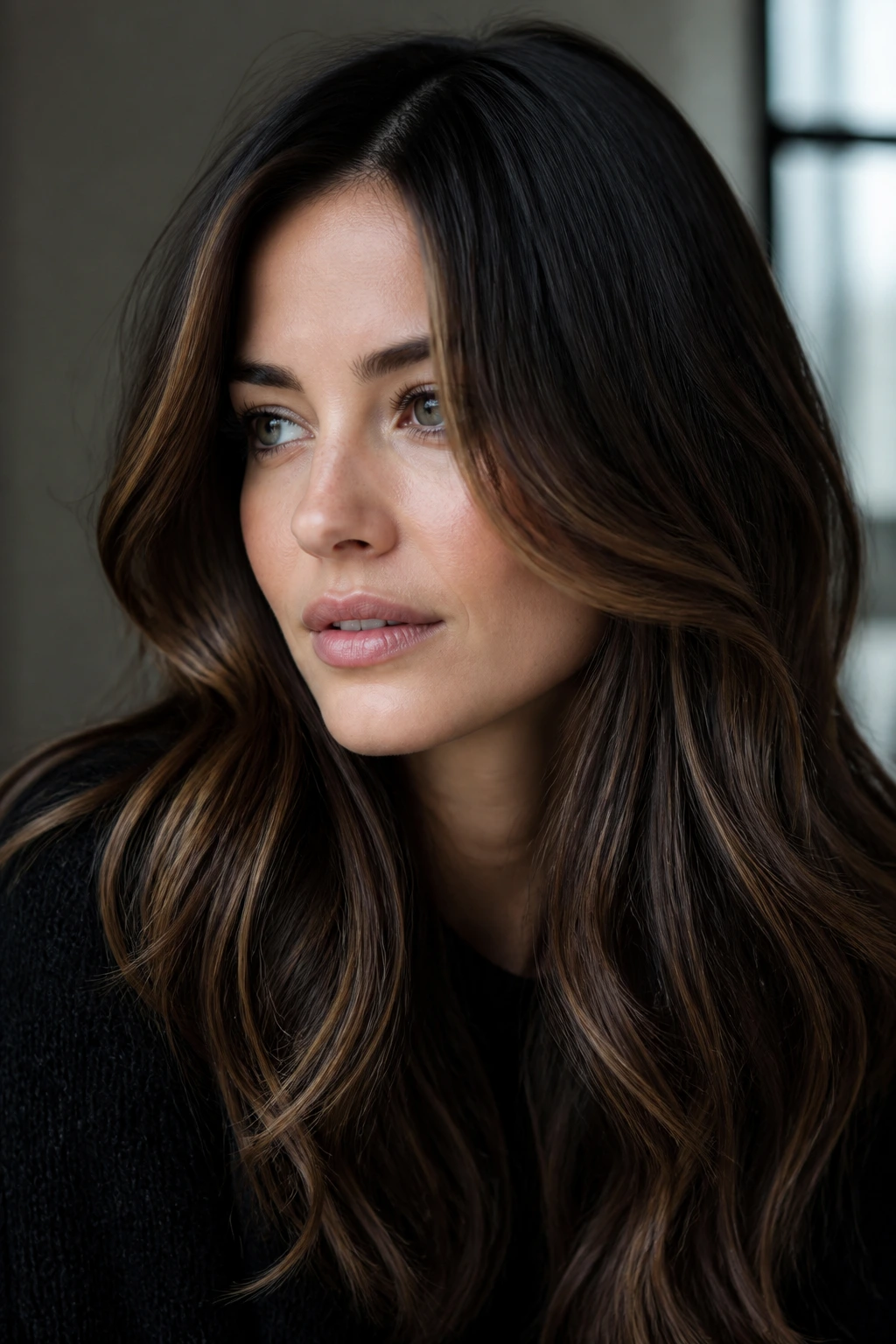
The reason these shades work is simple: cool skin usually likes controlled warmth, not open heat. Dark caramel gives you just enough warmth to make brunette hair feel alive, but it keeps a brown backbone under the lighter pieces. That brown backbone is what stops the skin from looking washed out or ruddy.
A lot of the magic lives in undertone words. Beige, ash-beige, mushroom, smoky, neutral caramel — those are the language you want. Honey, copper, amber, gold-on-gold — those are the words that usually drift too warm if your face already leans pink or blue. The same level of lift can look completely different once the toner goes on.
Placement matters just as much. Highlights that are tucked under layers or blended into a shadow root tend to flatter cool undertones better than all-over brightness, because the dark spaces give the eye somewhere to rest. Without that contrast, the whole head can start looking brighter than the skin wants it to be.
What to Tell Your Colorist Before the Foils Go In
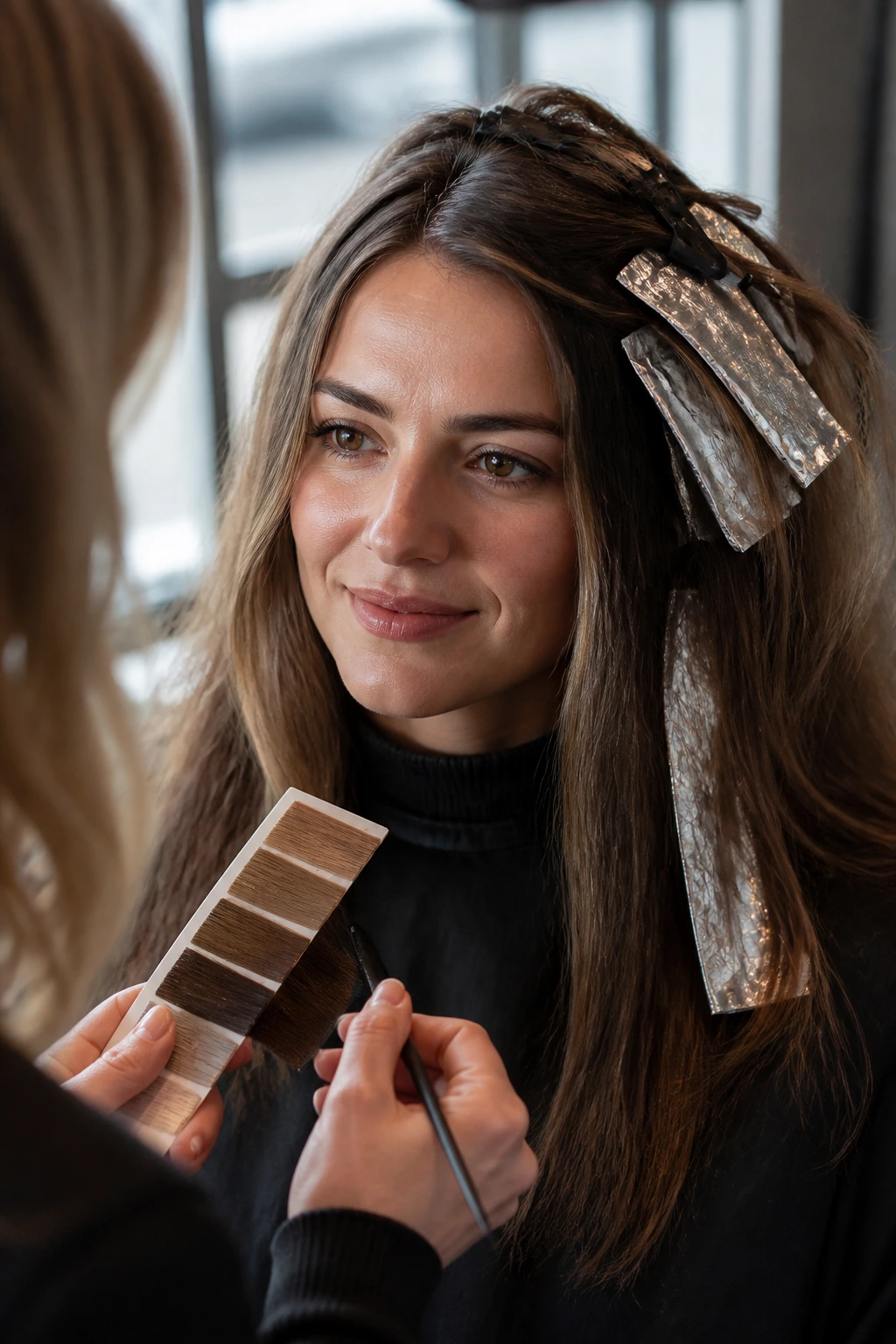
“Caramel” is one of those salon words that means five different things in five different chairs. If you want the cool-skin version, be specific. Say you want dark caramel highlights that read beige-brown, not golden. Then add whether you want low contrast, a soft money piece, or a stronger ribbon pattern.
Bring photos in daylight. Indoor salon lighting can make a warm color look cooler than it really is. A picture shot near a window will save you from a lot of guessing, and it gives your colorist a better read on how the highlight sits against your face.
If your hair is dark, ask about lift level before anything else. A lot of these looks sit around level 6 or 7, sometimes level 8 before toner. That sounds technical, but it matters because going too light too fast is the fastest route to brass. You can always brighten later. Pulling warmth back out is more annoying.
How to Wear Dark Caramel Highlights So They Read Cool, Not Copper
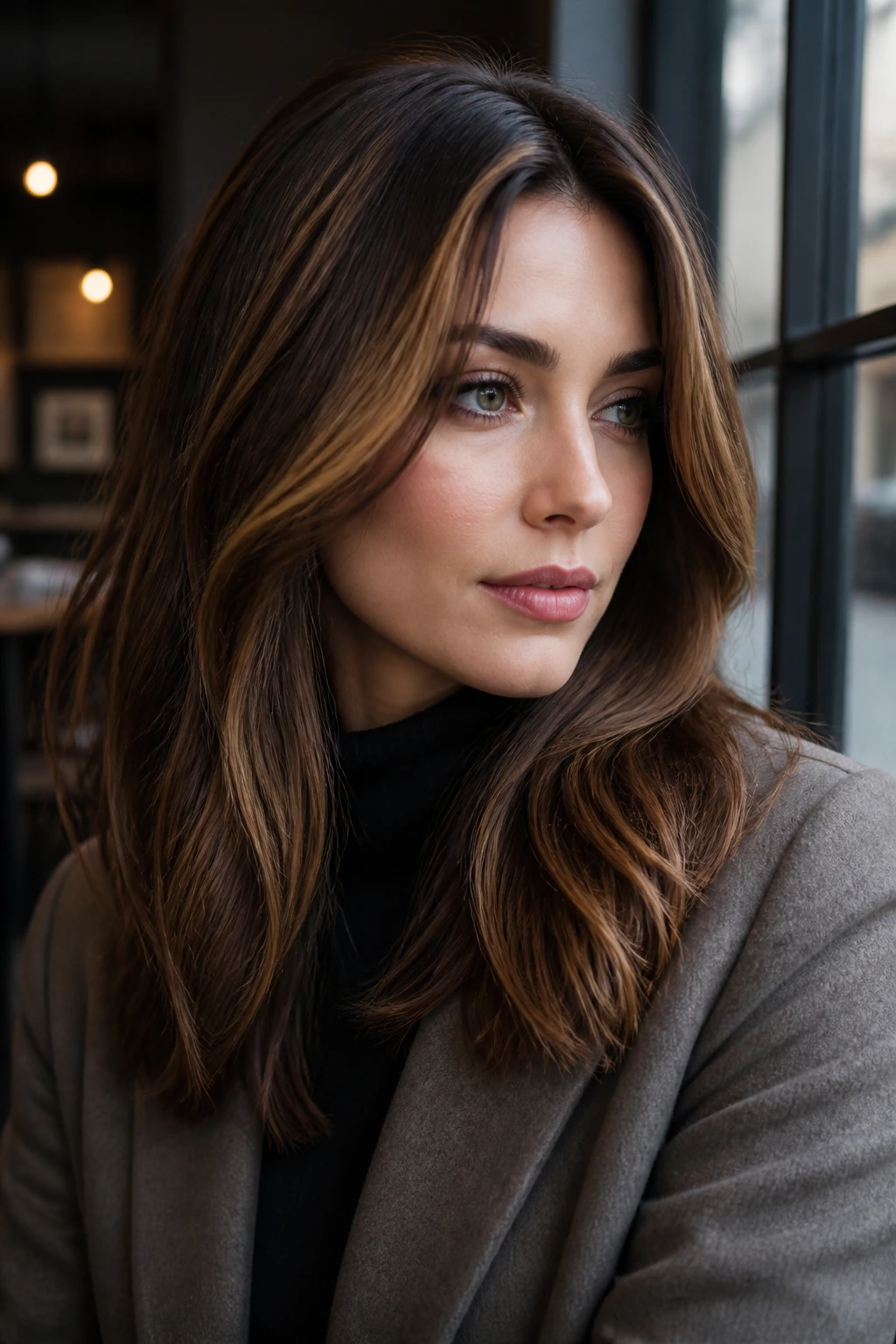
Presentation: Keep the brightest pieces near the face, crown, or outer bend of the hair, where they show in movement instead of sitting on the scalp like a stripe. A center part makes the color look cleaner; a deep side part makes it feel more dramatic.
Accompaniments: Curtain bangs, loose waves, a blunt lob, soft layers, and textured pixies all make dark caramel read better. Sleek, pin-straight hair can work too, but it shows every line, so the placement has to be deliberate.
Portions: If you want a small change, ask for fine babylights or a few face-framing foils. If you want the color to show from across the room, ask for foilayage or a stronger panel pattern through the mid-lengths and ends.
Beverage Pairing: Cool-toned makeup and wardrobe choices matter here more than people think. Plum blush, taupe eyeshadow, a cool nude lip, charcoal knits, black tees, and silver jewelry all help the caramel look balanced instead of warm-heavy.
Tools and Products That Make Maintenance Easier
-
Blue-violet shampoo: Useful when the caramel starts drifting yellow-orange; use it once every 1 to 2 weeks, not daily.
-
Color-safe sulfate-free shampoo: Keeps the toner from slipping out too fast and helps the brunette base stay glossy.
-
Deep conditioning mask: Lightened brown hair needs moisture, especially on the ends where caramel pieces tend to live.
-
Heat protectant spray: Non-negotiable if you blow-dry or curl the hair; heat is one of the quickest ways to make caramel look dull.
-
Wide-tooth comb: Helps detangle without tearing the lighter sections, which can feel drier than the base.
-
Sectioning clips: Very useful for at-home masking, blowouts, and stretching out wash days without rough handling.
-
Microfiber towel or soft cotton T-shirt: Reduces frizz, which helps the highlight pattern stay visible instead of fuzzing out.
-
Salon gloss or toning conditioner: Great for keeping beige and ash-caramel from wandering into bright gold between appointments.
How to Choose the Right Depth Before You Sit in the Chair
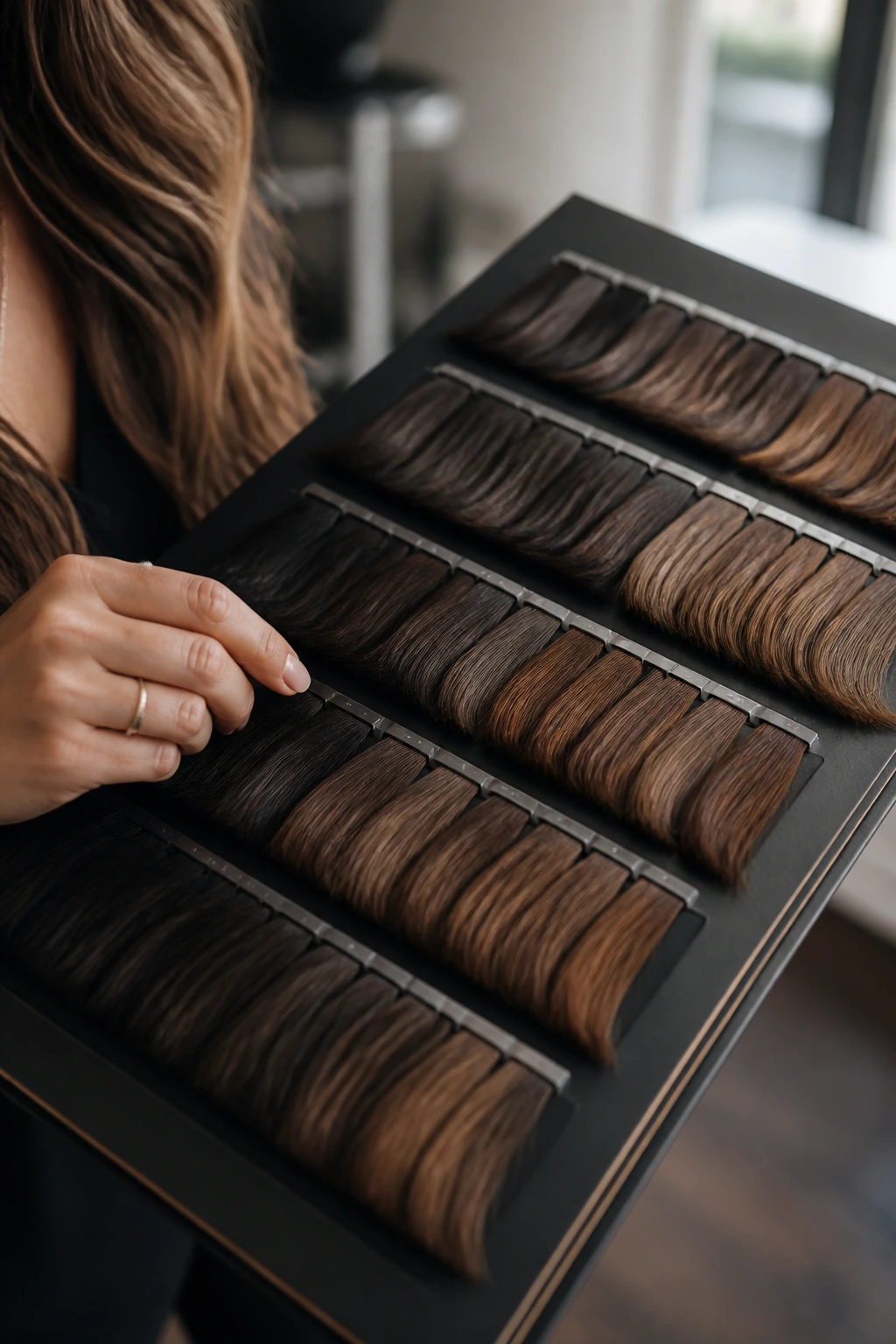
The best caramel for cool skin is usually darker than people expect. A level 6 or 7 caramel on a brunette base often looks richer and more flattering than a light level 8 piece that starts shouting gold. If your natural hair is very dark, staying close to brunette with just a few lifted ribbons usually looks cleaner than trying to go too light all at once.
Think about contrast, not just color. If your style is sleek and blunt, you can handle cleaner lines and slightly bolder pieces. If your hair is curly or heavily layered, softer blending usually wins because the movement does the work for you. And if your skin flushes easily, keep the brightest caramel away from the parts that sit closest to the cheeks.
A neutral or ash glaze after lightening is the quiet hero here. It sounds boring. It isn’t. It’s the thing that keeps the caramel from turning like a burner knob.
Common Mistakes That Push Caramel Into Brass
The first mistake is asking for “caramel” and stopping there. That word can mean beige, gold, amber, or copper depending on who hears it. If you want cool-skin-friendly results, name the undertone you do want: beige, smoky, mushroom, or ash-caramel.
Another one is lifting too high. When brown hair gets pushed too light, the warmth underneath starts showing through, and that’s where the orange cast comes from. A lower lift with a good toner usually looks richer than trying to force a blonde result onto brunette hair.
Dense placement can cause trouble too. Too many light pieces around the face can make cool skin look red or blotchy in some light. Keep a little shadow near the roots and through the underlayers so the caramel has somewhere to sit.
And please do not skip maintenance. A highlight that was toned beautifully on day one can go gold in a few washes if the shampoo is too harsh or the water is hard. That is not a colorist problem. It’s an aftercare problem.
Variations and Alternatives to Try
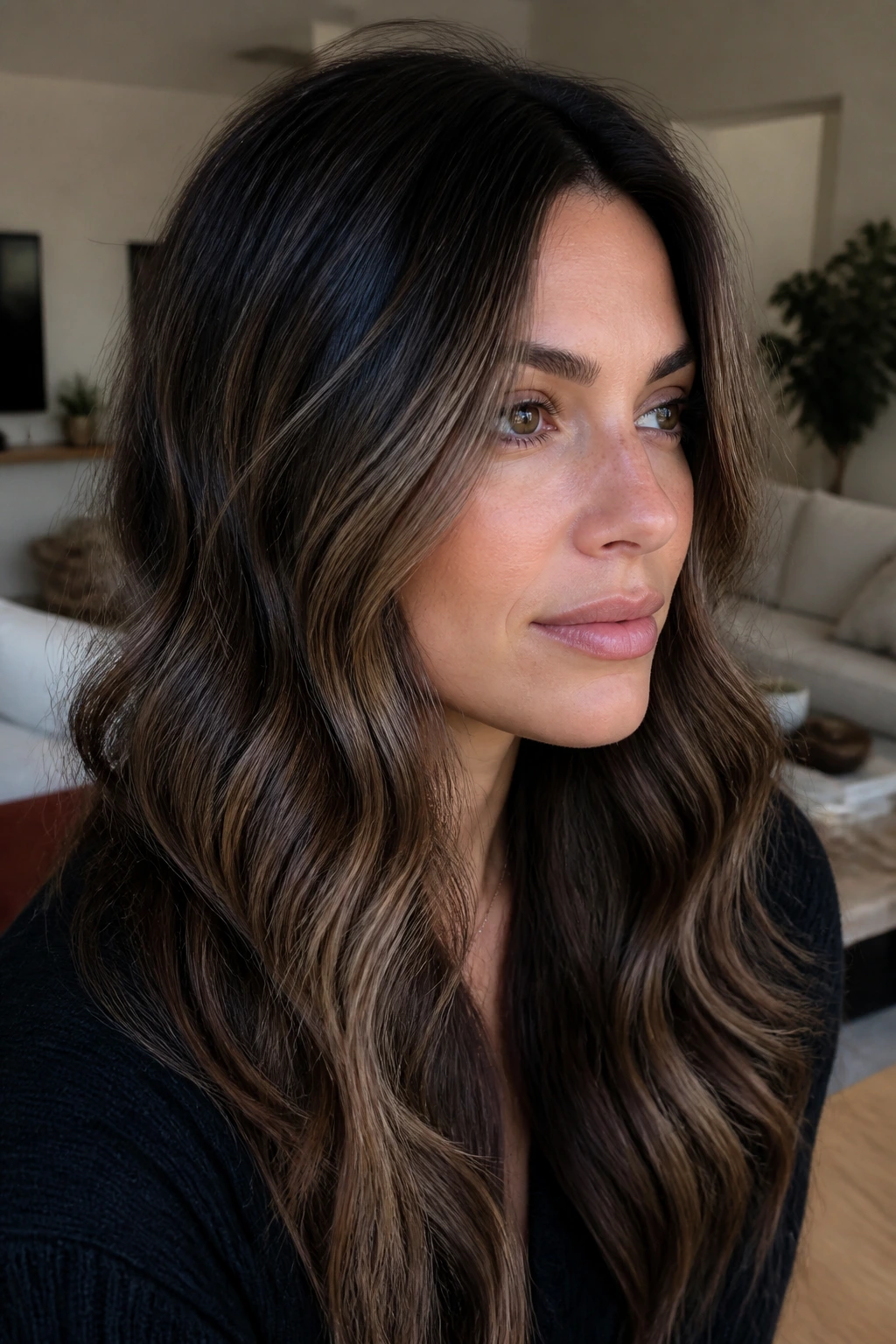
Ash-Drenched Caramel: This version leans cooler and moodier, with a stronger ash glaze over the lifted pieces. It’s the right move if you love brunette depth and only want a faint glow.
Beige Money Piece Blend: Keep the front brighter but tone it to a soft beige so it frames the face without turning yellow. This is the most flattering choice for people who want obvious light near the eyes and zero copper.
Curly Halo Ribbons: On curls, place the caramel around the outside ring of the curl pattern so the color shows when the hair expands. The halo effect gives dimension without flattening the curl shape.
Soft Shadow-Root Melt: Use this when you want a softer grow-out and less upkeep. The root stays deep, the mid-lengths carry the caramel, and the ends stay the brightest part of the hair.
Low-Contrast Brunette Breakup: This is the subtle version for people who hate obvious highlights. It uses thin ribbons and a color match close to the base, so the hair looks richer rather than lighter.
Keeping Dark Caramel Cool Between Appointments
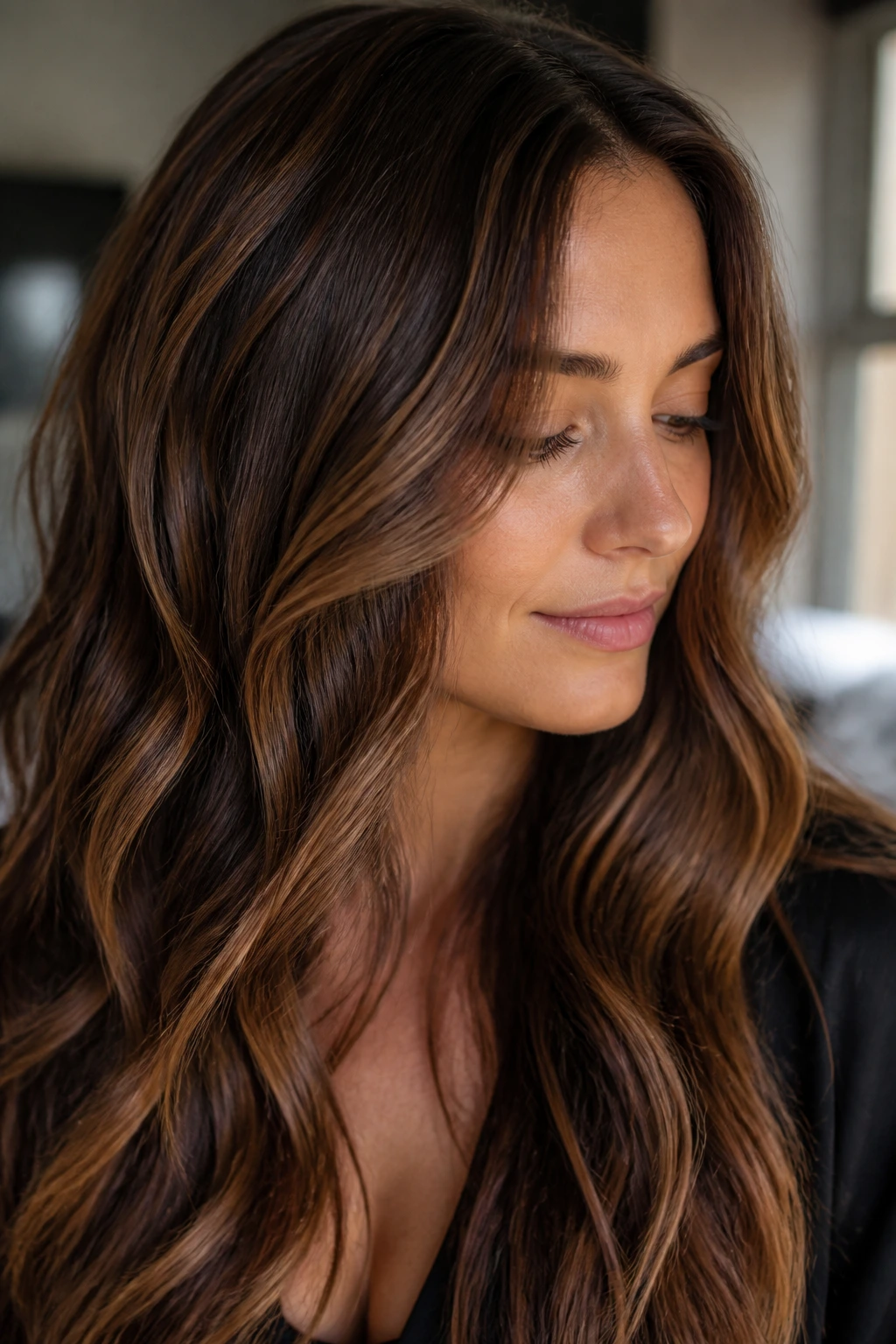
Caramel hair usually needs a little help after it leaves the salon. I’d treat the first 2 weeks after coloring with care: lukewarm water, sulfate-free shampoo, and no extra heat unless you need it. Hot showers pull tone out fast, and that’s when the caramel starts tipping yellow.
Most people do well with a toning product every 1 to 2 weeks. On brunette hair, blue shampoo is usually more useful than purple if the problem is orange cast, while a violet gloss helps when the ends start looking yellow. Use it sparingly and watch the hair in daylight, not bathroom bulbs.
A salon gloss every 4 to 8 weeks keeps the darker pieces shiny and the caramel from getting loud. If you wear a lot of waves or curls, you may be able to stretch that longer because the movement hides grow-out. Straight hair shows everything, so it usually asks for a little more upkeep.
Frequently Asked Questions
Will dark caramel highlights work if my skin turns pink easily?
Yes, as long as the caramel is muted. Beige, smoky, and ash-caramel pieces usually flatter pink undertones better than gold or copper, especially when the root stays deeper.
How do I keep caramel from looking orange after a few washes?
Use color-safe shampoo, avoid very hot water, and refresh with a blue or beige-toning product when the hair starts to warm up. A salon gloss also helps reset the tone before it gets too bright.
Can cool skin wear a warm caramel at all?
It can, but the warmth needs to be controlled. A little golden-brown softness near the ends is usually fine; large coppery pieces around the face are where the trouble starts.
Is balayage better than foils for this color?
Balayage usually gives a softer, more blended result, while foils give more lift and clearer contrast. If your hair is dark and resistant, a hybrid like foilayage often gives the best of both.
What haircut flatters dark caramel highlights most?
Layers, curtain bangs, bobs with a clean edge, and shoulder-length cuts all show dimension well. The right cut depends on whether you want the color to look soft, graphic, or face-framing.
How often will I need a touch-up?
A root refresh or gloss usually lands around 6 to 10 weeks, depending on how bold the placement is and how fast your hair grows. Subtle babylights and shadow-root melts can stretch longer than face-framing money pieces.
Can I ask for this if my hair is almost black?
Yes, but the process may take more than one appointment if you want the caramel to show clearly. Staying in the dark caramel family is usually smarter than pushing all the way into blonde territory on the first visit.
What if my highlights feel too bright after the first wash?
That usually means the toner has softened and the underlying lift is showing more. A beige gloss or toning conditioner can pull the brightness back down without redoing the whole head.
A Shade That Stays Soft
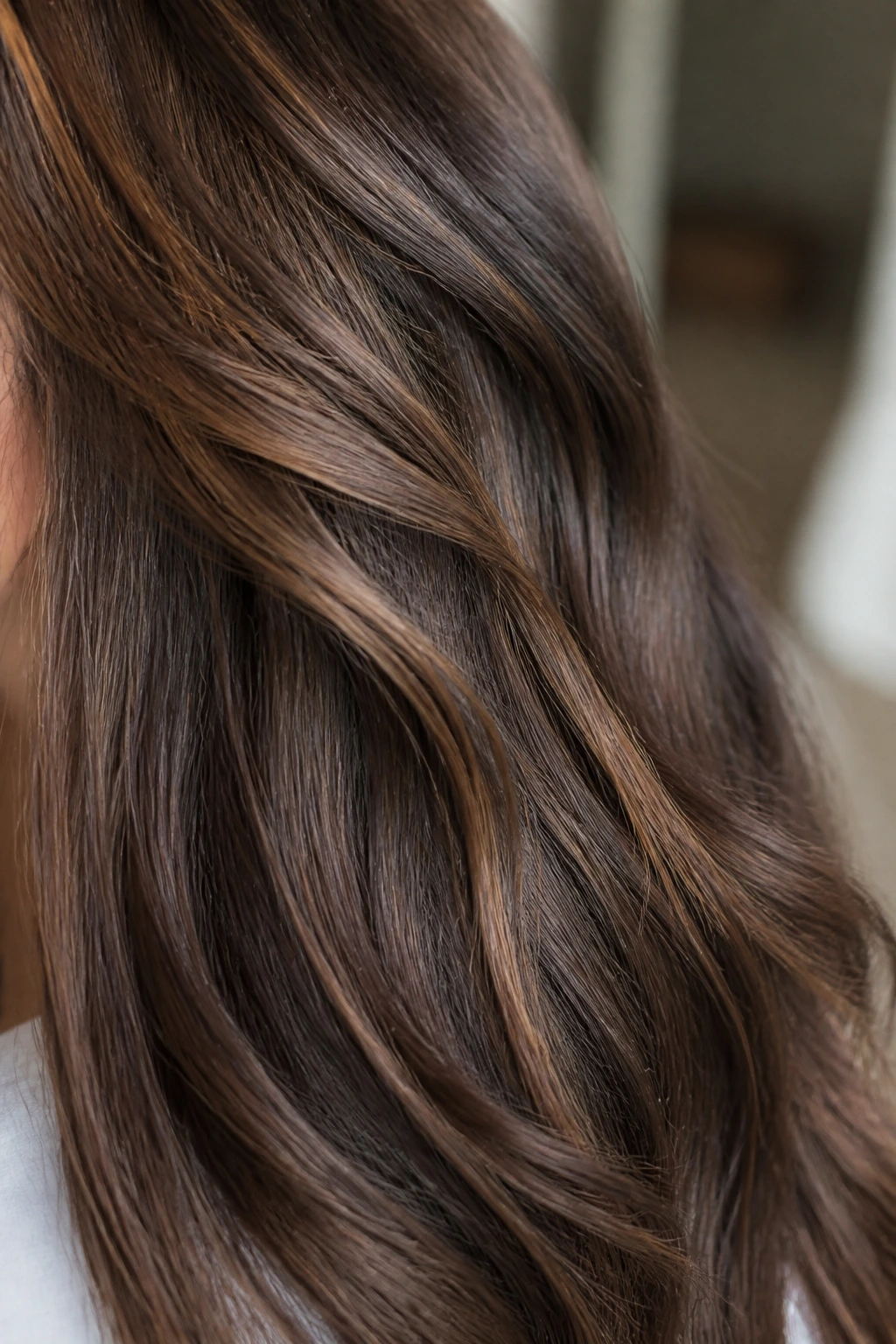
Dark caramel highlights earn their keep when they stay brown enough to support cool skin instead of warming it into trouble. That’s the whole game. Good placement, muted tone, and a little shadow at the root do more than any flashy bright piece ever will.
If you’re choosing between several options, start with the one that fits your haircut and maintenance tolerance, not the one that sounds most dramatic in a salon mirror. The right caramel should make the hair look richer the second it moves, and calmer the second it settles. That’s the sweet spot worth chasing.