



Fine hair and a heart-shaped face can make a lob look either balanced or a little off in a way you feel before you can name it. Too much layering, and the ends go see-through. Too little, and the whole cut sits flat at the crown while the forehead takes over the room.
The sweet spot is usually not dramatic. It’s a collarbone-grazing shape with layers that start low enough to keep weight, but high enough to give the front some bend and air. On this face shape, the best lob does a small but useful job: it softens a wider upper face, gives the jawline something to compete with, and keeps fine strands from collapsing into one thin sheet by lunchtime.
That’s why these layered lobs work so well together. Some lean sleek. Some use fringe. Some depend on a side part, a bevel, or a very careful bit of texture. None of them asks fine hair to do the impossible. They just place the weight in the right places.
Why These Layered Lobs Earn Their Spot

Fine strands need a perimeter with weight. If the ends are thinned out too much, the haircut starts to look wispy at the exact point where you want the most visual density.
Heart-shaped faces need softness low and forward. The forehead already has presence, so the best front pieces land near the cheekbone, jaw, or collarbone instead of puffing out at the temples.
Movement is useful, but only when it stays controlled. A little bend or interior layering gives lift. Too much slicing around the crown makes the top look busy and the bottom look sparse.
Most of these cuts grow out cleanly. That matters more than people admit. A lob that still behaves six weeks later saves you from living at the salon.
Styling stays flexible. Smooth blowout, loose wave, tuck behind one ear, air-dry bend — these shapes can do more than one thing without losing their line.
1. Collarbone Lob With Cheekbone Layers
This is the one I reach for when someone wants movement without sacrificing the feeling of “having hair.” The length hits the collarbone, which gives fine strands enough weight to hang well, and the first layers begin around the cheekbone so the face gets a soft frame instead of a hard corner.
What makes it work
The cheekbone layer does the balancing act here. It draws the eye away from the widest part of the forehead and lets the jawline feel a little fuller, which is exactly the kind of visual correction a heart-shaped face usually likes. On fine hair, the length itself is half the trick.
If the layers start too high, the cut can get stringy. If they start too low, the front looks heavy and the shape loses lift. This version lands in the middle and stays there.
Best for: straight or slightly wavy fine hair that needs body but not a lot of chop.
Ask for this: a collarbone length, soft face-framing layers starting near the cheekbone, and a blunt-enough hem that the ends still look full.
Styling note: wrap the front pieces away from the face with a 1.25-inch round brush or curling iron for a loose bend, not a curl.
Pro tip: Keep the ends blunt. The whole cut depends on the bottom line staying solid.
2. Curtain-Bang Layered Lob
Curtain bangs can rescue a heart-shaped face when they’re cut with restraint. The right version opens the forehead instead of fighting it, and the layers beneath them keep the whole shape moving instead of dropping into a heavy rectangle.
The key is length. You want the shortest part of the fringe to sit below the brows, then taper down to the cheekbone or even the jaw so the bangs blend into the rest of the cut. When they’re too short, they widen the upper face. When they’re long and soft, they bring everything down to a more even plane.
A fine-haired version should never feel dense at the fringe line. The bangs should separate a little when dry. That piecey finish is what keeps them from looking like a curtain panel.
3. Invisible-Layer Blunt Lob
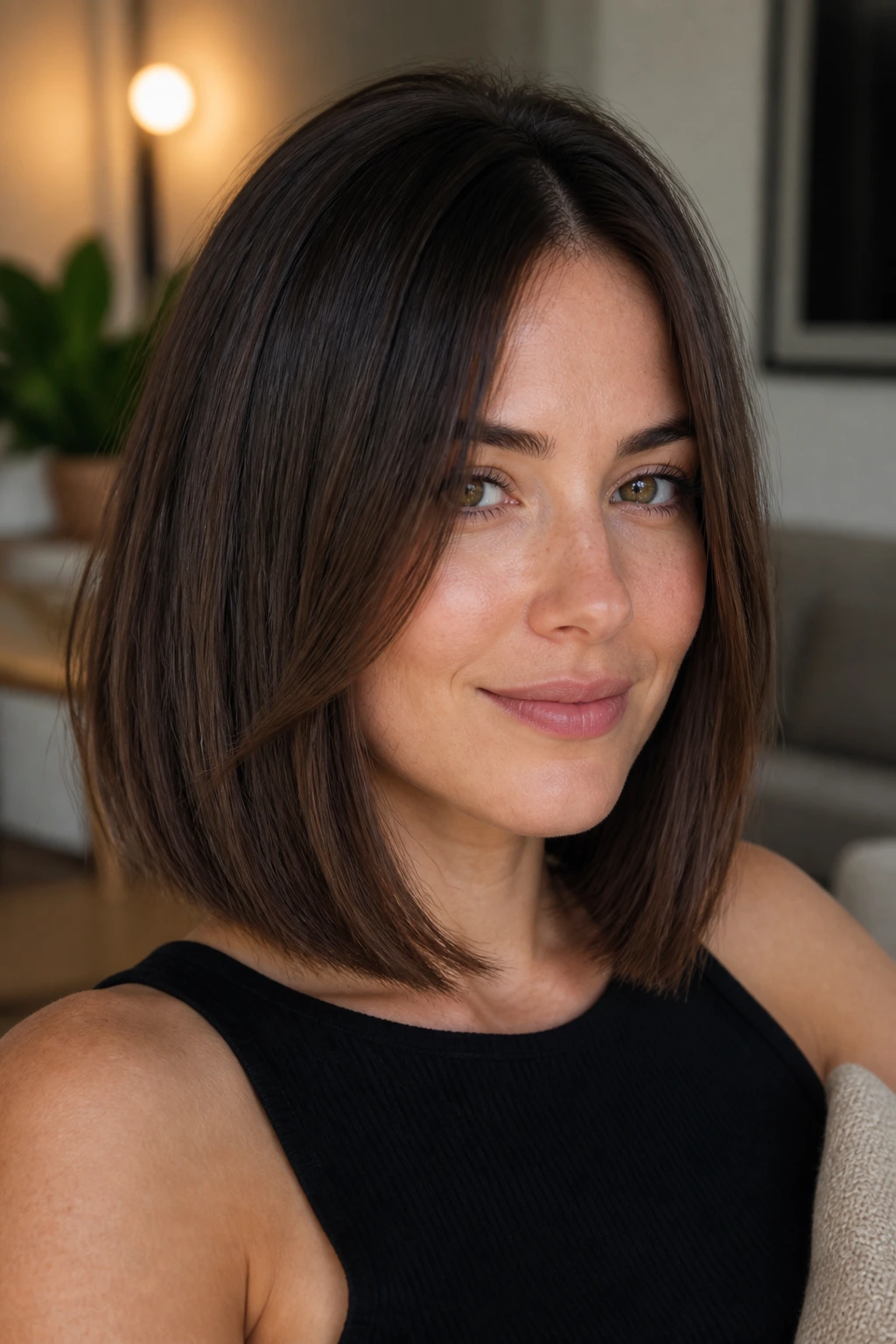
Can a layered lob still look thick? Yes — if the layers are hidden inside the shape instead of carved into the surface. That’s what makes this version so useful for very fine hair.
The outer line stays blunt, which makes the ends look fuller than they are. Inside that shell, the stylist removes just enough weight to stop the hair from hanging like a single sheet. On a heart-shaped face, that blunt outline also helps the lower half of the face feel a little wider and more grounded.
How to wear it
Blow it smooth with a medium round brush if you want a polished finish. Or leave a slight bend through the mid-lengths and keep the hem straight. Both work.
This cut is a little boring from a distance. That’s the point. Up close, it has movement; from across the room, it still reads as full.
4. Razor-Soft Layered Lob With Airy Ends
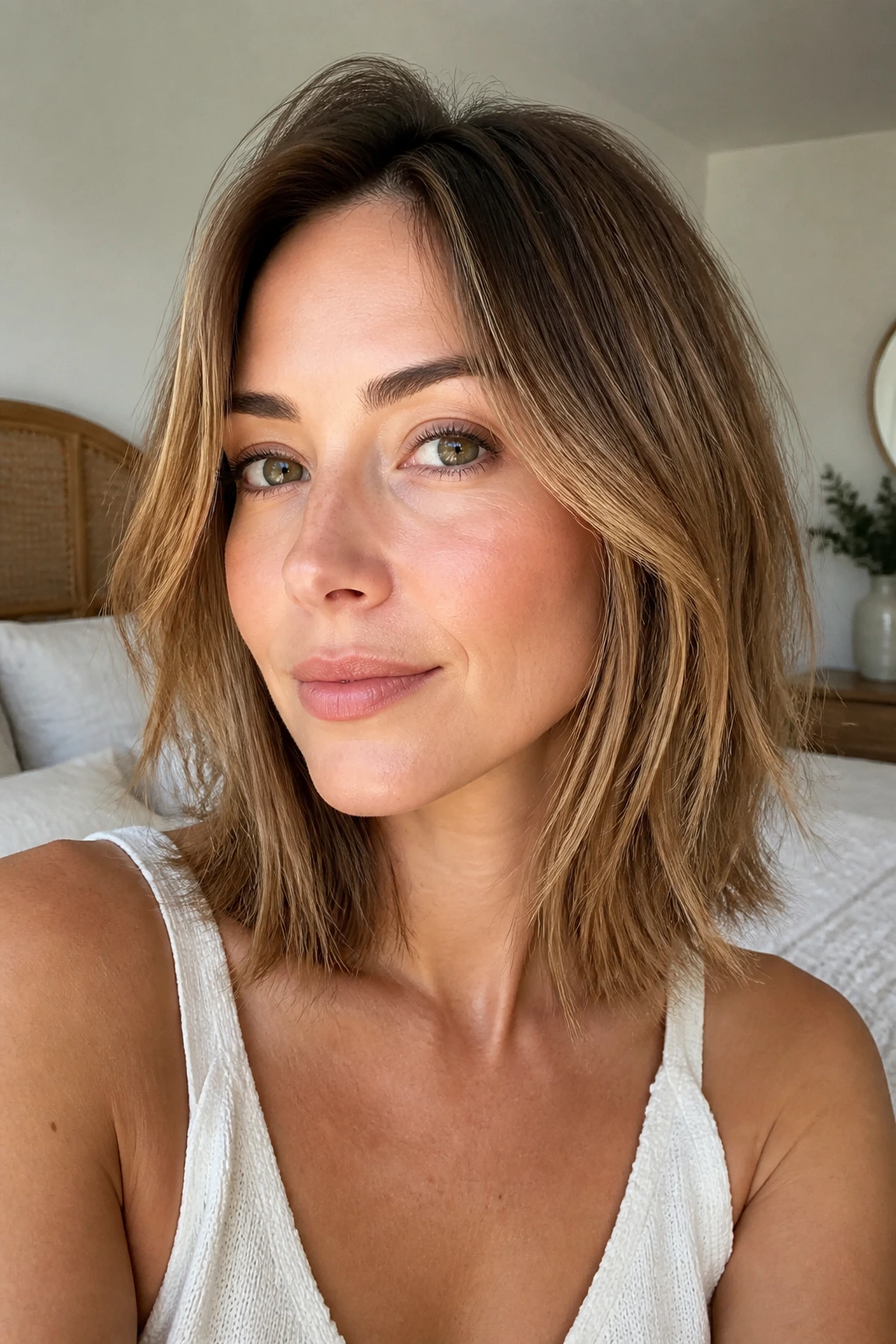
Someone with fine hair often thinks “textured” means “more texture.” Not always. Sometimes the better move is to soften the ends just enough so the haircut doesn’t feel blocky.
A light razor touch can make the ends float instead of sit like a shelf, but it has to be controlled. The hair should not be shredded. The line should still hold. On a heart-shaped face, the airy finish helps the cut fall around the jaw instead of flaring at the forehead.
- Best on: straight to softly wavy fine hair.
- Ask for: razoring only through the lower inch or two, not through the crown.
- Avoid: heavy slide-cutting near the top, which can make the crown collapse.
This is one of those cuts that looks expensive when it moves. At rest, it should still look clean.
5. Side-Part Lob With a Built-In Flip
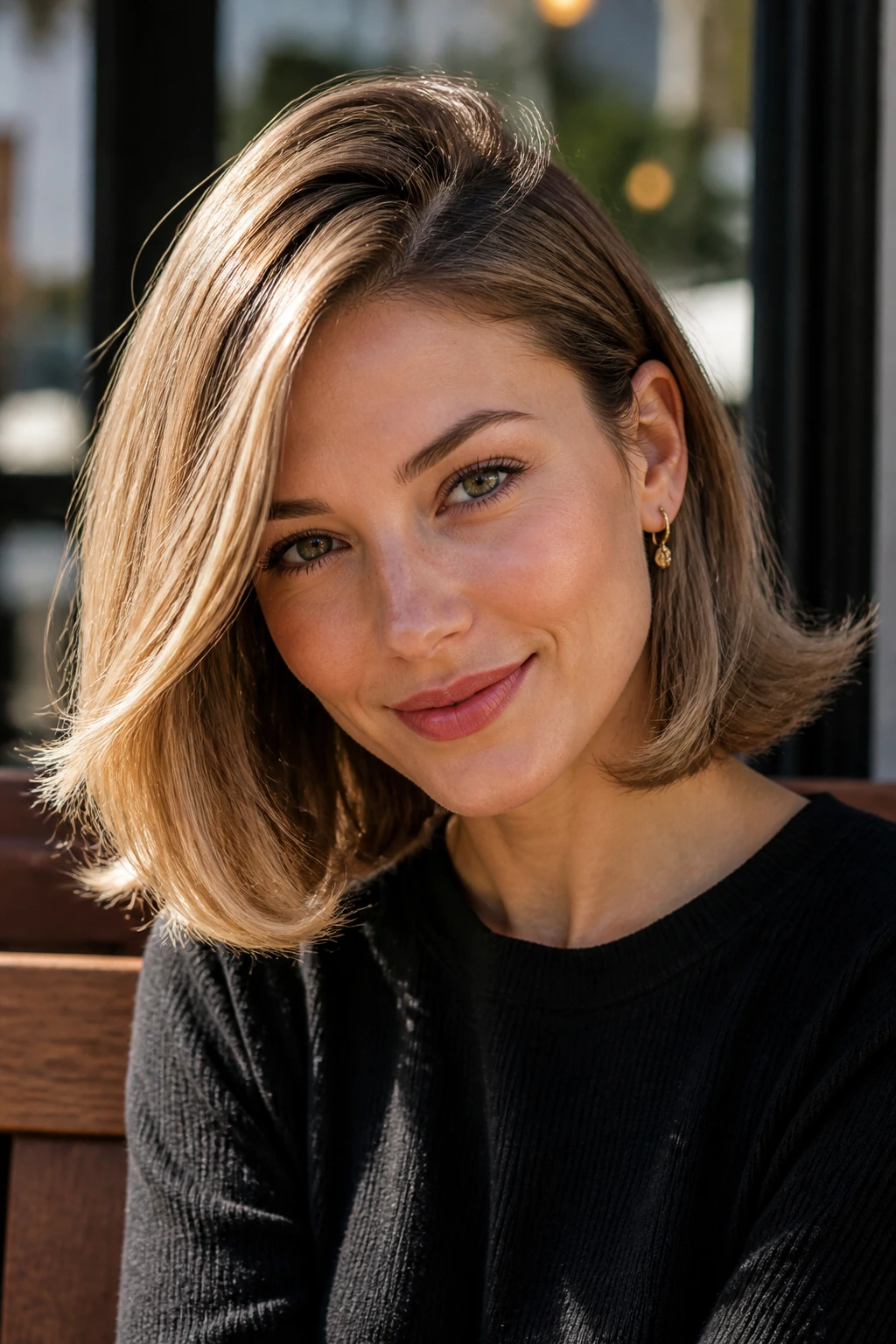
The side part does a lot of work here, and I mean that literally. It gives the root a push, shifts the eye line away from the forehead, and lets one side of the lob lift a little higher than the other.
Unlike a center-part lob, which can sometimes expose the widest part of a heart-shaped face, this one breaks up the symmetry in a way that feels flattering rather than fussy. Fine hair gets a small boost at the root, and the longer side pieces add width right where the face can use it.
The best version has a soft flip at the ends, not a dramatic swoop. Too much flip starts to feel dated. A little bend, especially around the jaw, is enough.
6. Rounded Lob With Beveled Ends
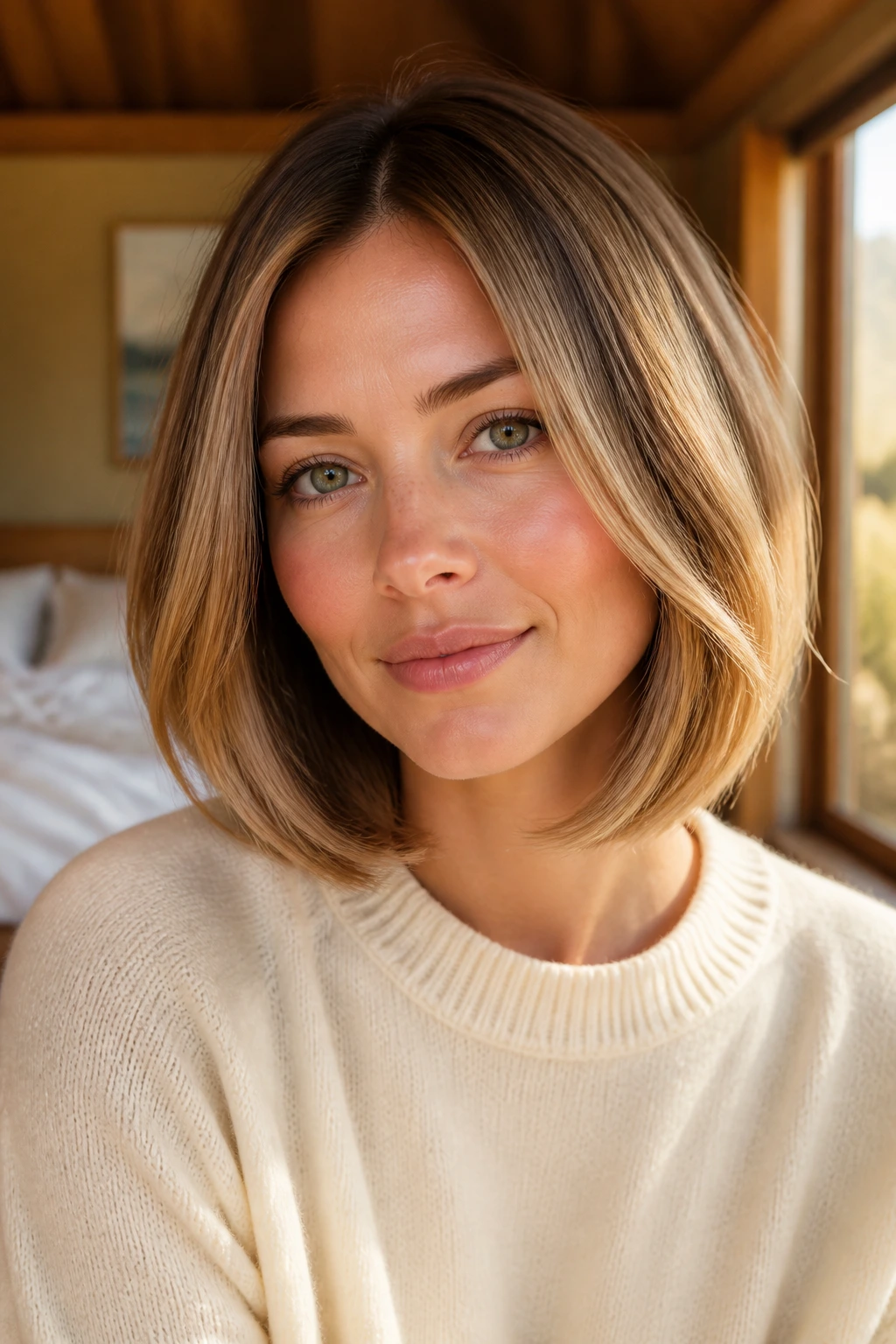
This is the polished one. The roundness is subtle, but it changes everything. The perimeter curves under just enough to make the lower face feel softer, and the beveled ends keep the cut from looking square.
On straight fine hair, a rounded lob can be a lifesaver because it creates shape without asking for a lot of density at the very tips. The curve does the visual lifting. The hair itself doesn’t have to be thick to look finished.
A large round brush or a medium roller set helps here. So does a clean, shallow side part. Keep the bevel near the ends, not high through the mid-lengths, or the whole thing can puff out.
7. Bottleneck Fringe Layered Lob
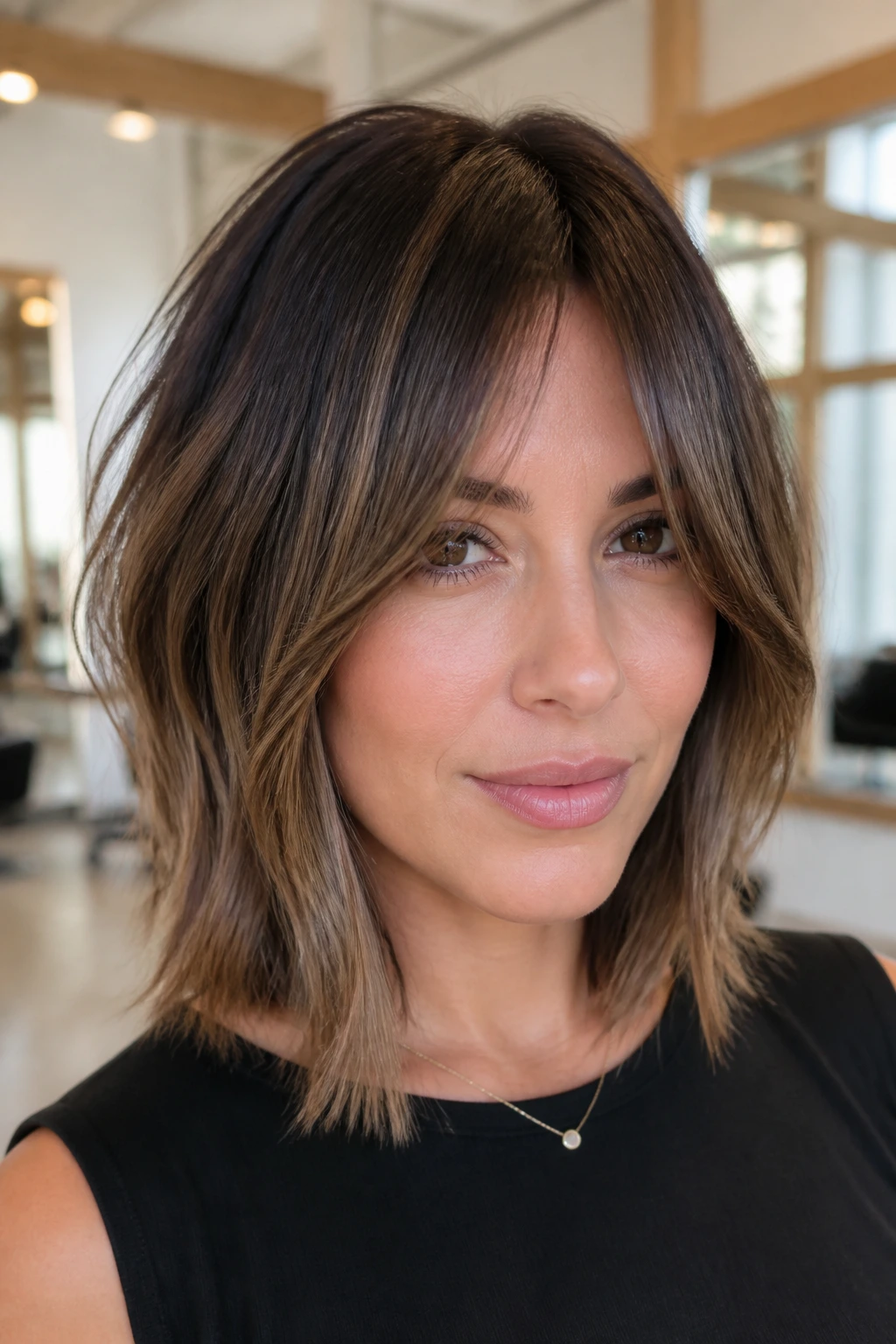
Bottleneck fringe is a smarter choice than blunt bangs for this face shape. It starts narrower in the center, then opens wider at the sides, which keeps the forehead from looking boxed in while still softening the upper face.
The fringe blends into cheek-skimming layers instead of stopping abruptly. That matters with fine hair, because abrupt lines can look sparse fast. You want the front to melt into the rest of the cut so the eye reads one shape, not three separate pieces.
What to ask for at the salon
Ask for a longer bottleneck fringe that lands between eyebrow and cheekbone length, plus lob layers that begin below the cheekbone. Keep the hem blunt enough to hold density.
That combination keeps the forehead from dominating and gives the style a little modern edge without making the hair look thinner.
8. Shattered Lob With Piecey Waves
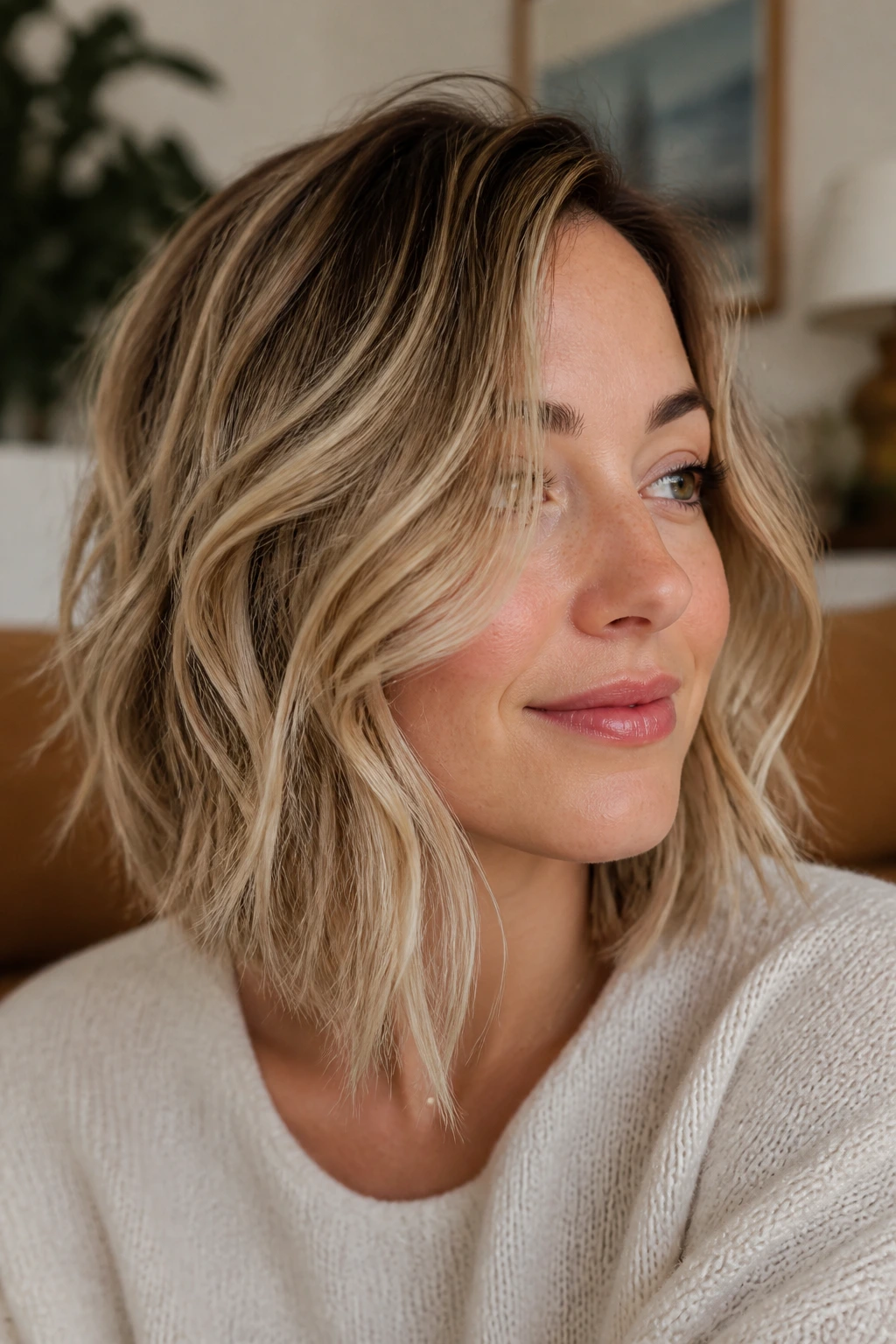
This is the most deliberately undone option in the group, and it works because the pieces are kept long enough to stay readable. The waves are broken up, not frosted. There’s a difference.
A shattered lob can make fine hair look like it has more movement, especially when the texture is concentrated from the mid-lengths down. For a heart-shaped face, the piecey ends help widen the lower half just a touch, which brings the shape into better proportion.
The danger is overdoing it. If the layers are too short or the wave pattern is too tight, the hair starts to look airy in a bad way. Use a 1-inch iron, leave the last inch out, and brush the finished wave lightly so it separates instead of clumping.
9. Off-Center Part Layered Lob
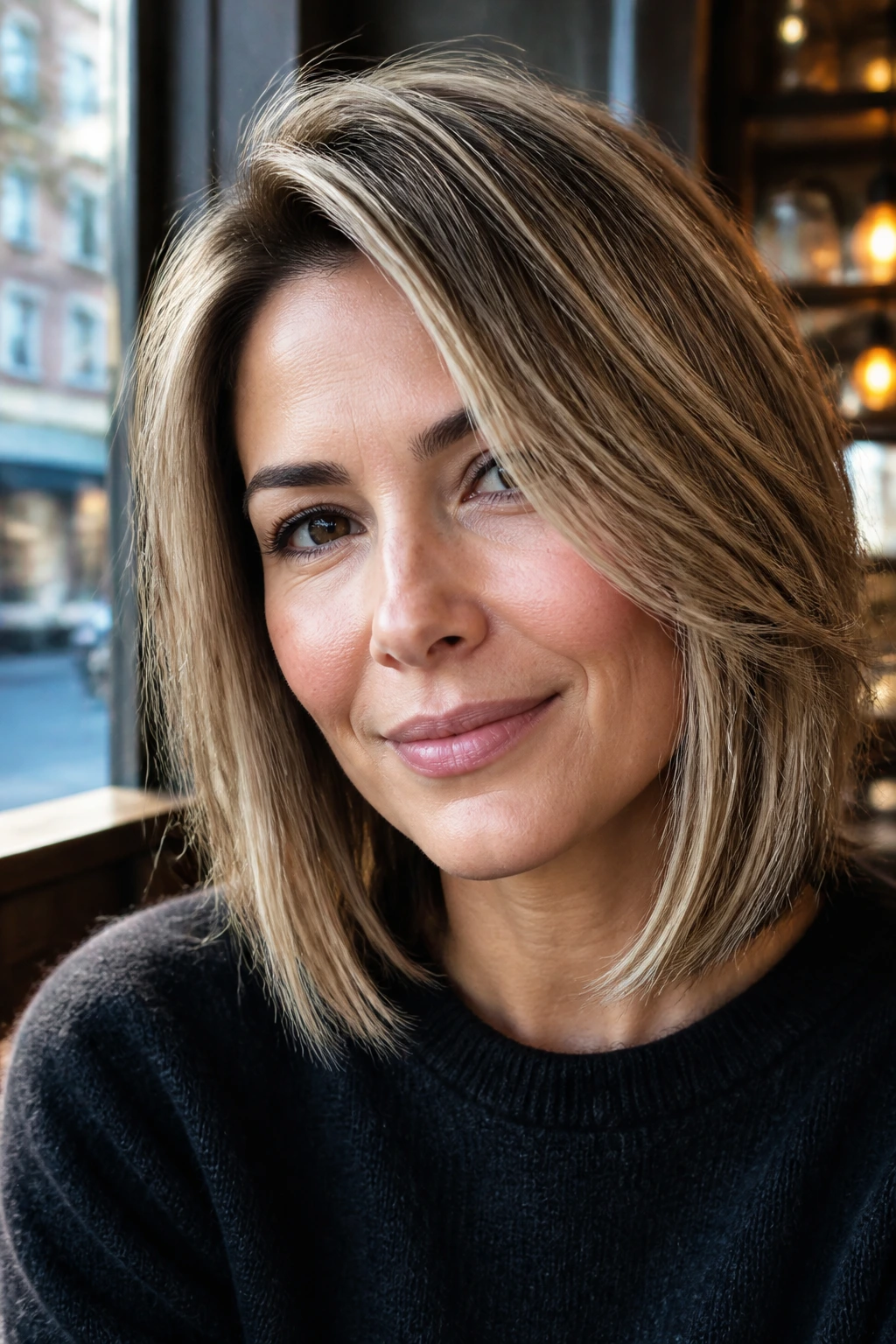
Why choose an off-center part instead of a full side part? Because it gives you the lift without the drama. A slight shift off the middle creates a soft diagonal line across the face, and that diagonal is good at breaking up width at the forehead.
It also helps fine hair stay flatter in the right places. The roots get a little bend on the fuller side, but the part doesn’t have to be deep enough to create an obvious collapse on the other side. That makes this one easier to wear day to day.
The cut itself should stay fairly controlled: layers around the front, a stable hem, and enough length to let the ends turn under or out depending on your mood. It’s low-key, which is precisely why it works.
10. Feathered Lob With Long Side-Swept Bangs
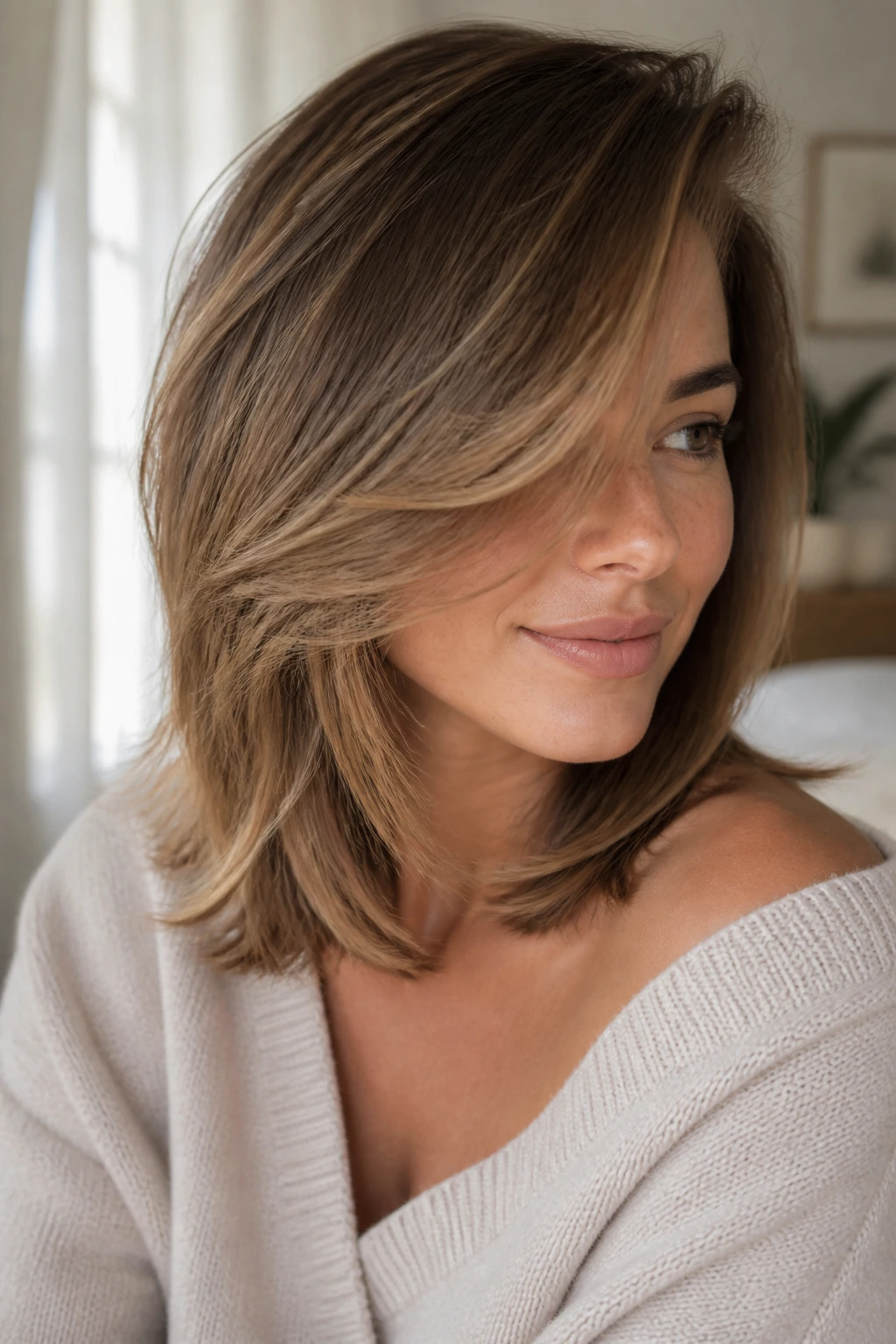
Feathering can go wrong fast on fine hair. Done well, though, it gives the front a soft, swinging shape that keeps the cut from feeling heavy around the face.
The long side-swept bangs do the face-shaping work. They skim over the forehead and land near the cheekbone, where they help widen the lower half of a heart-shaped face. The feathering around them should be gentle — enough to move, not enough to shred.
Styling it without losing density
Use a small amount of mousse at the roots, then direct the bangs away from the face with a vent brush. Once the hair cools, tuck one side behind the ear and leave the other loose.
The ear tuck matters more than it sounds. It creates asymmetry, and asymmetry is one of the easiest ways to make fine hair look intentional instead of flat.
11. U-Shaped Clavicut Lob
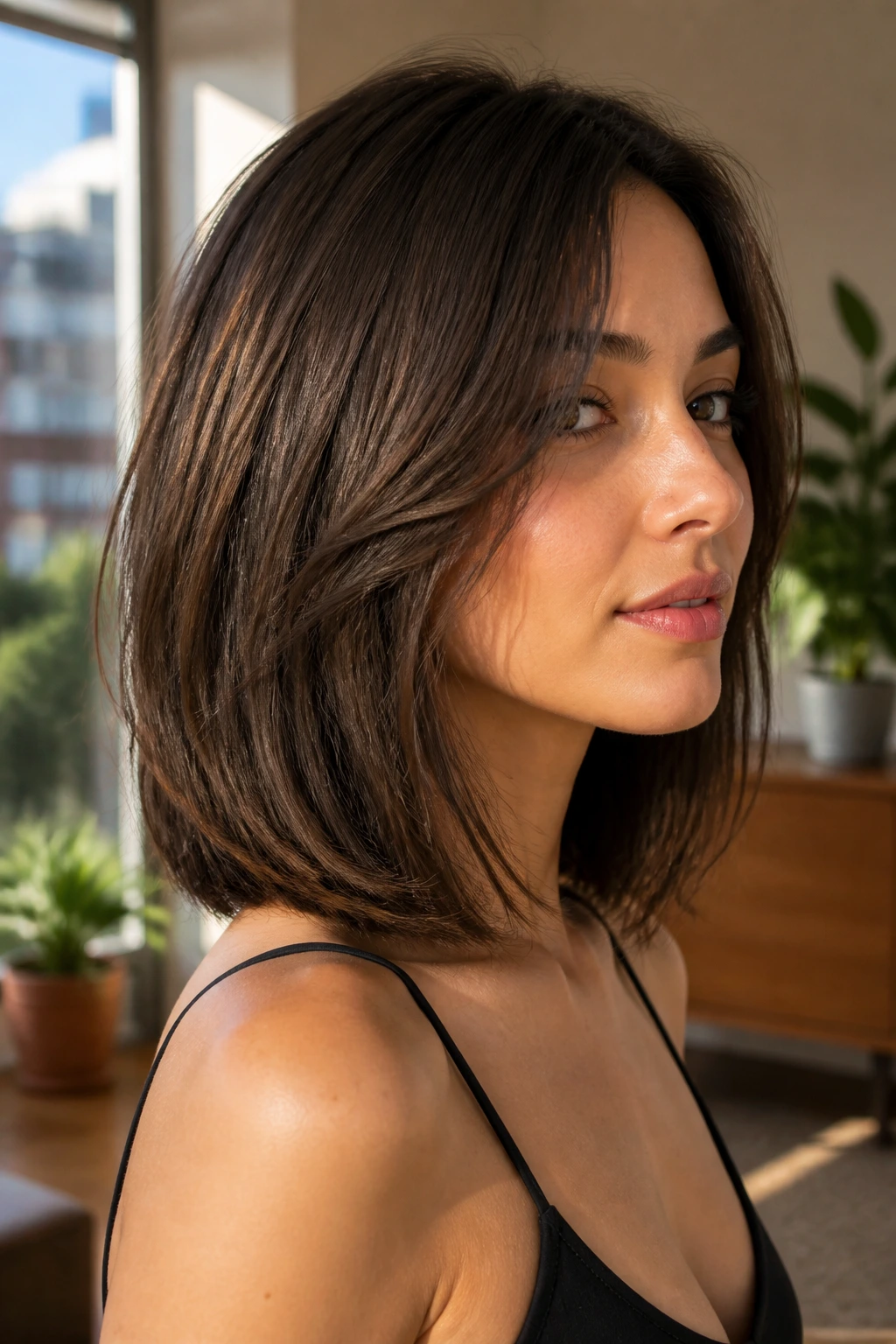
A U-shaped lob keeps a little extra length in the middle and softens toward the sides. That subtle curve works well on fine hair because it preserves the feeling of density at the back while still letting the front pieces taper around the face.
For heart-shaped faces, the U shape has a quiet advantage: it avoids that hard horizontal line right at the jaw. The cut moves downward instead of cutting straight across, which can make the face feel less top-heavy.
This is a good choice if you want your hair to look fuller from behind. The center holds weight. The sides stay light enough to swing.
12. Sliced-End Lob With Soft Texture
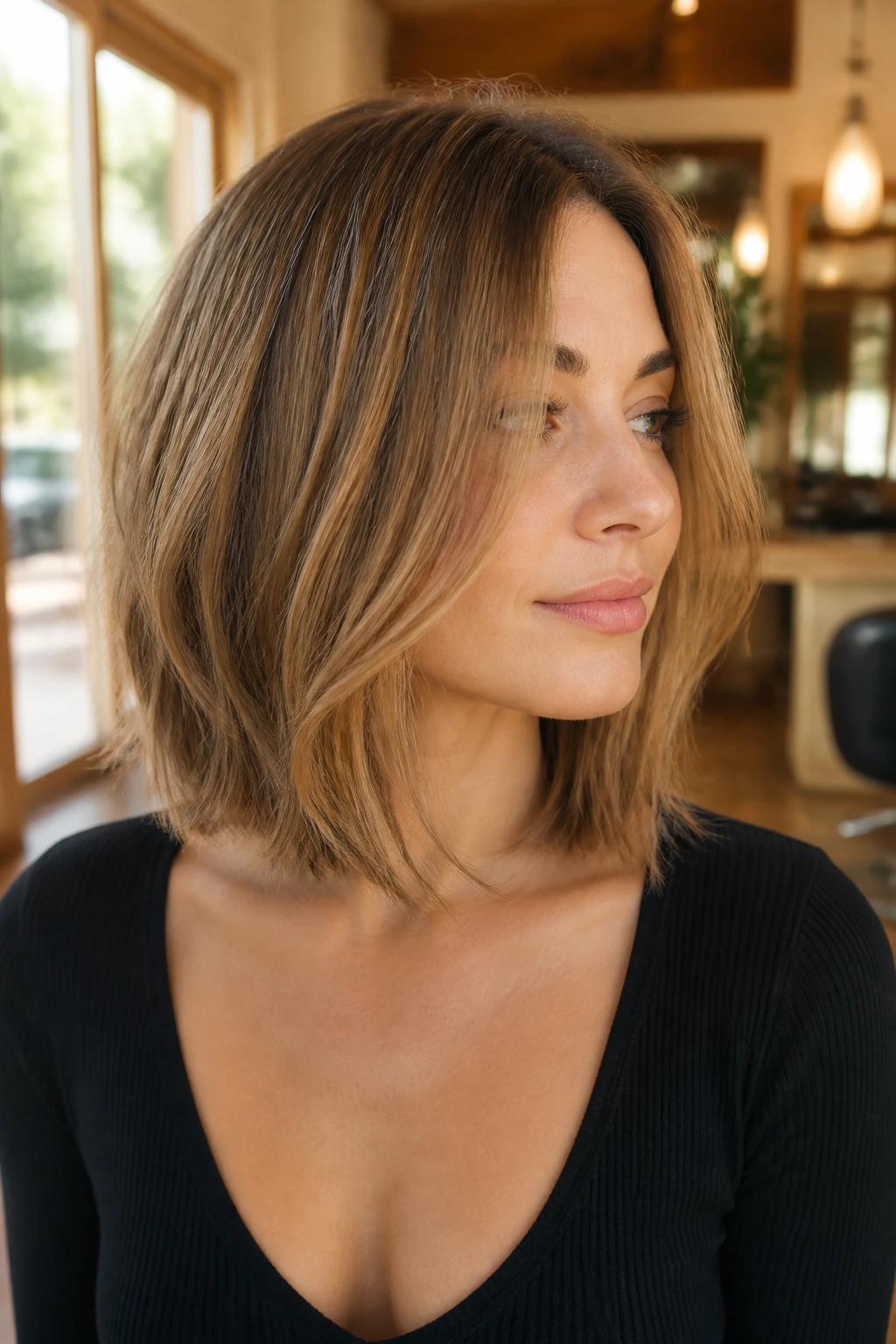
Sliced ends are not the same thing as shredded ends. Good slicing is controlled and subtle, especially on fine hair. It removes just enough bulk to stop the hem from looking boxy while keeping the bottom line soft.
That matters when you’re trying to flatter a heart-shaped face. A sliced-end lob can drape around the jaw and collarbone with a little movement, but it still needs a solid base so the hair doesn’t disappear at the ends.
Keep the texture soft. A loose bend with a flat iron is enough. If you add too much roughness, the cut loses the clean outline that makes it wearable.
13. Soft Shag Lob With Long Fringe
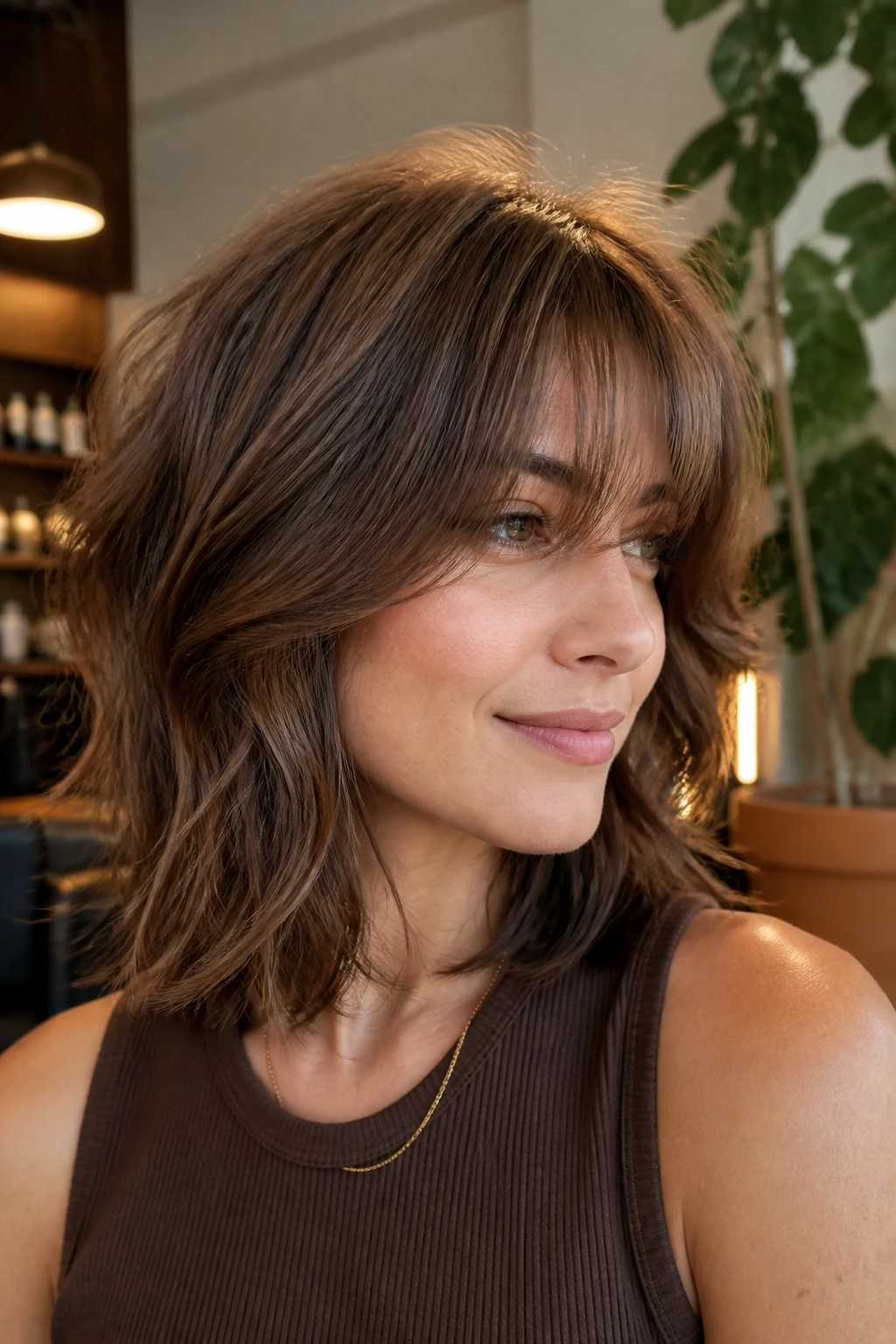
A soft shag is not a license to do everything at once. On fine hair, it should be a lob first and a shag second. The layers stay long, the fringe stays light, and the ends keep their weight.
The long fringe is what makes this version work on a heart-shaped face. It cuts the width of the forehead without boxing it in. And because the layering sits lower, the style gets movement around the jaw instead of puffing near the temples.
The safe version
Ask your stylist for a shag-inspired lob, not a classic shag. That usually means less layering at the crown and more motion through the lower half. It’s a small distinction, but it keeps the hair from turning airy in the wrong places.
14. Deep Side-Part Lob You Can Tuck Behind One Ear
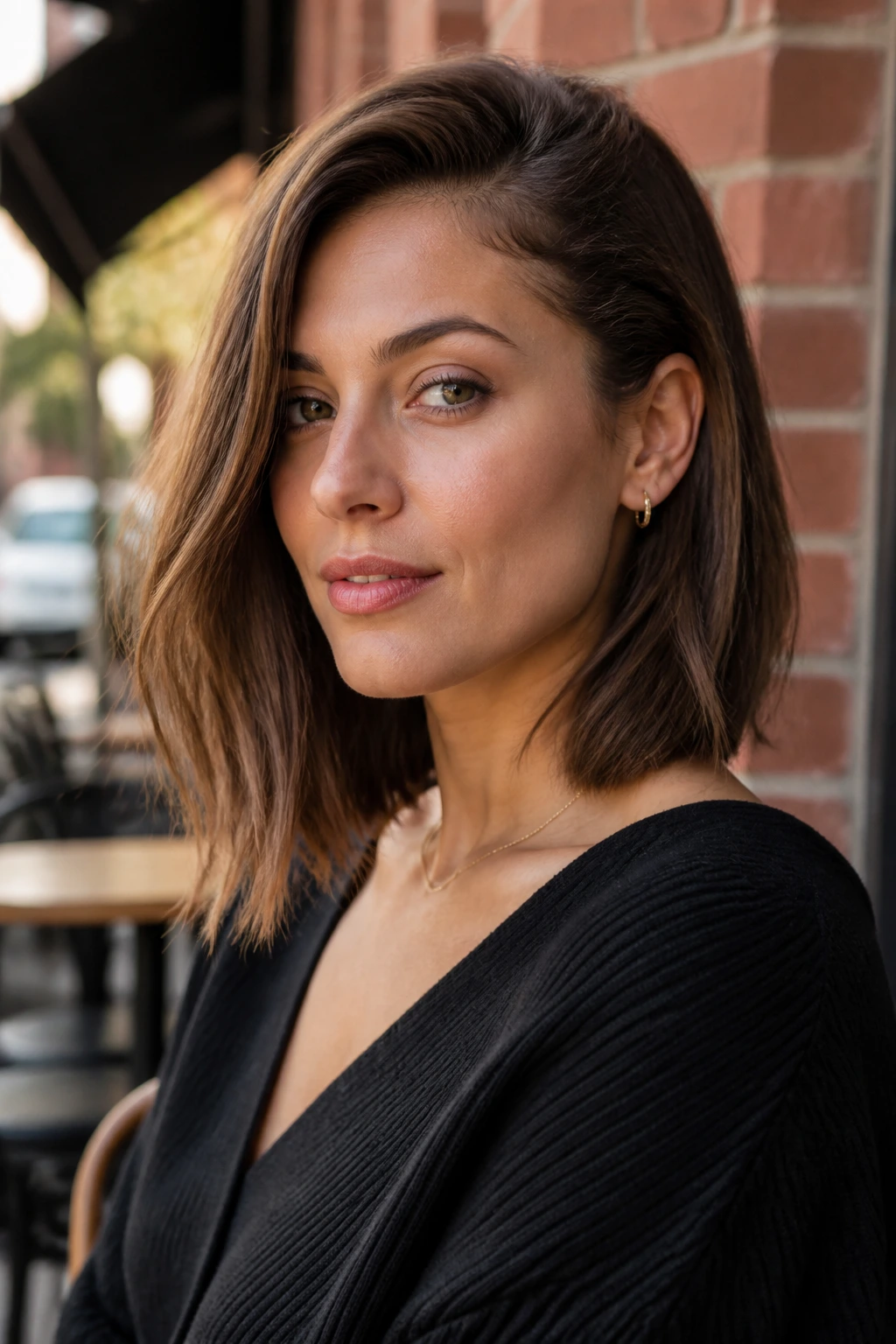
This one has a little attitude, and that’s useful. A deep side part lifts the roots on one side, while the tucked side exposes the cheekbone and jawline. For a heart-shaped face, that exposure can balance a fuller forehead without making the cut look harsh.
Fine hair benefits from the asymmetry. One side gets body; the other side gets shape. And because the tucked side stays close to the head, the whole look feels cleaner than it sounds on paper.
The trick is to keep the length just below the chin or collarbone. Too short and the tuck looks severe. Too long and the asymmetry gets lost.
15. Brushed-Out Wave Lob
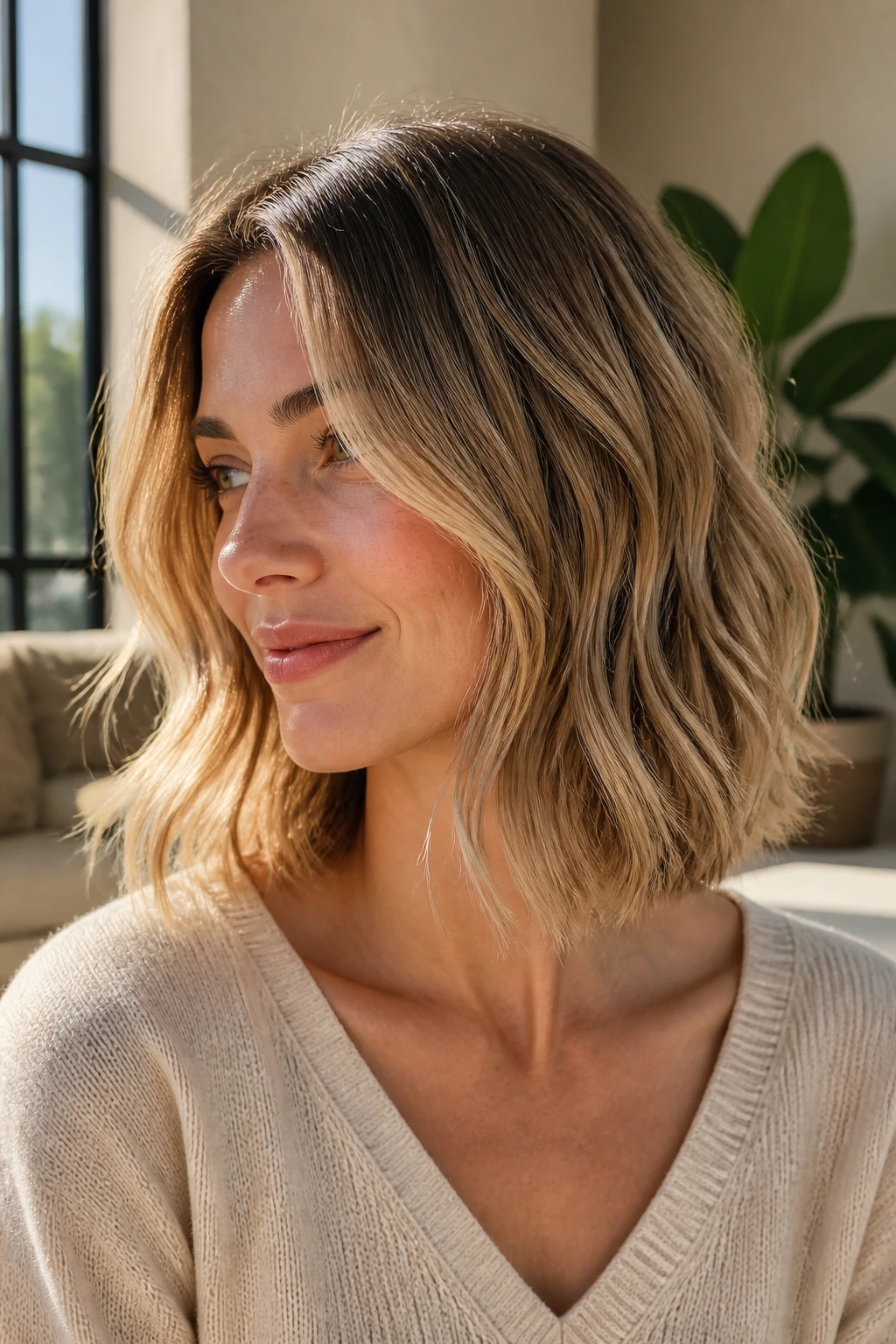
Why does a brushed-out wave often look better on fine hair than a tight curl? Because it spreads the shape wider and lower. That helps a heart-shaped face by creating more visual fullness around the jaw instead of all the volume living near the temples.
Start with a loose wave made on a 1.25-inch iron, let it cool completely, then brush it out with a boar-bristle brush or your fingers. The wave should soften into a bend, not vanish. If it disappears, you brushed too hard or curled too loosely.
How to get the softness
Use a lightweight texture spray only on the mid-lengths and ends. Skip the crown unless it needs a little grip.
The finished effect is relaxed, but not sloppy. That distinction matters.
16. Subtle Inverted Lob
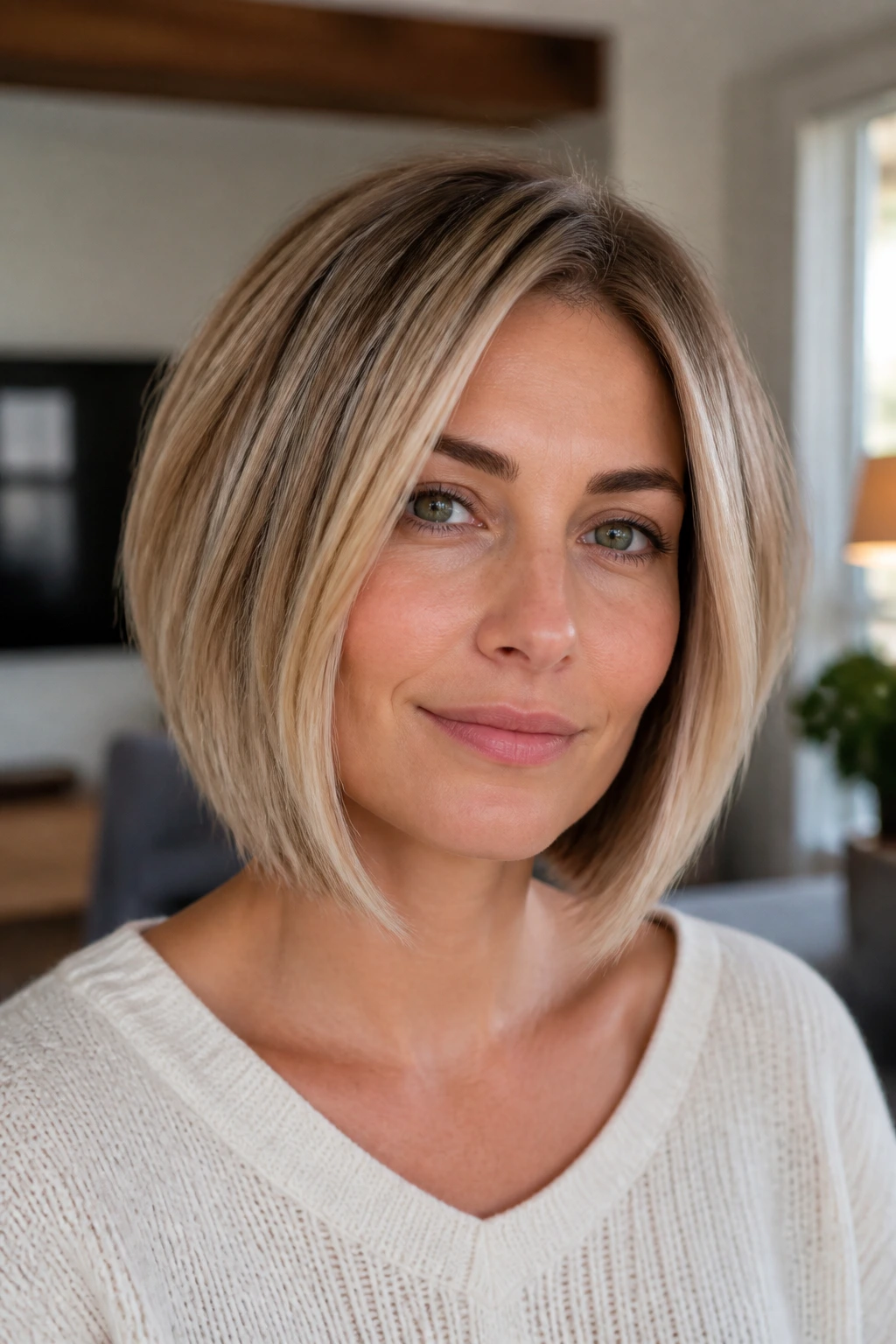
A subtle inversion gives you the lift of a shorter back without turning the haircut into a stacked bob. For fine hair, that small lift can make the crown look less flat while the front pieces still frame the face.
The front should be longer only by a small margin. Think soft angle, not sharp slope. On a heart-shaped face, that gentle forward movement keeps attention near the jaw and collarbone, which is where this shape usually likes it best.
If the angle is too steep, the cut starts to feel dated and the front can drag the eye downward too much. Keep it mild. That’s the whole point.
17. Hidden-Underlayer Lob
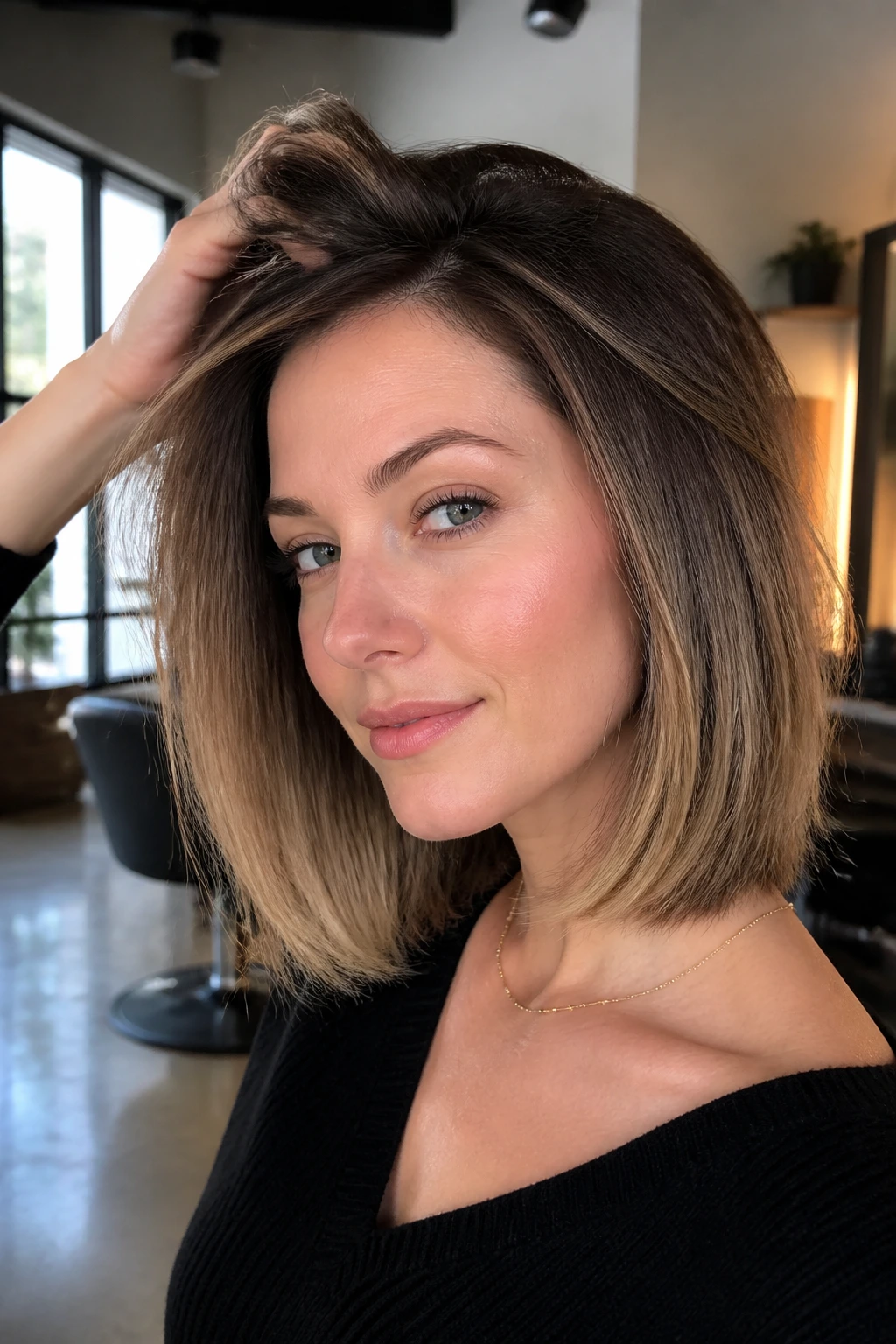
This is the quiet cousin of the heavily textured lob. The surface stays smooth, but the underneath gets enough internal layering to let the hair move and settle better.
That makes it a smart choice for very straight fine hair, especially if you hate the look of chopped ends. The outer line looks full, which is helpful because thin hair often reads better when the edge is crisp.
The face-flattering part comes from the way it drapes. The front can still bend toward the jawline, but the overall silhouette remains calm. If you want polish more than edge, this is one of the safest bets.
18. Air-Dried Bend Lob
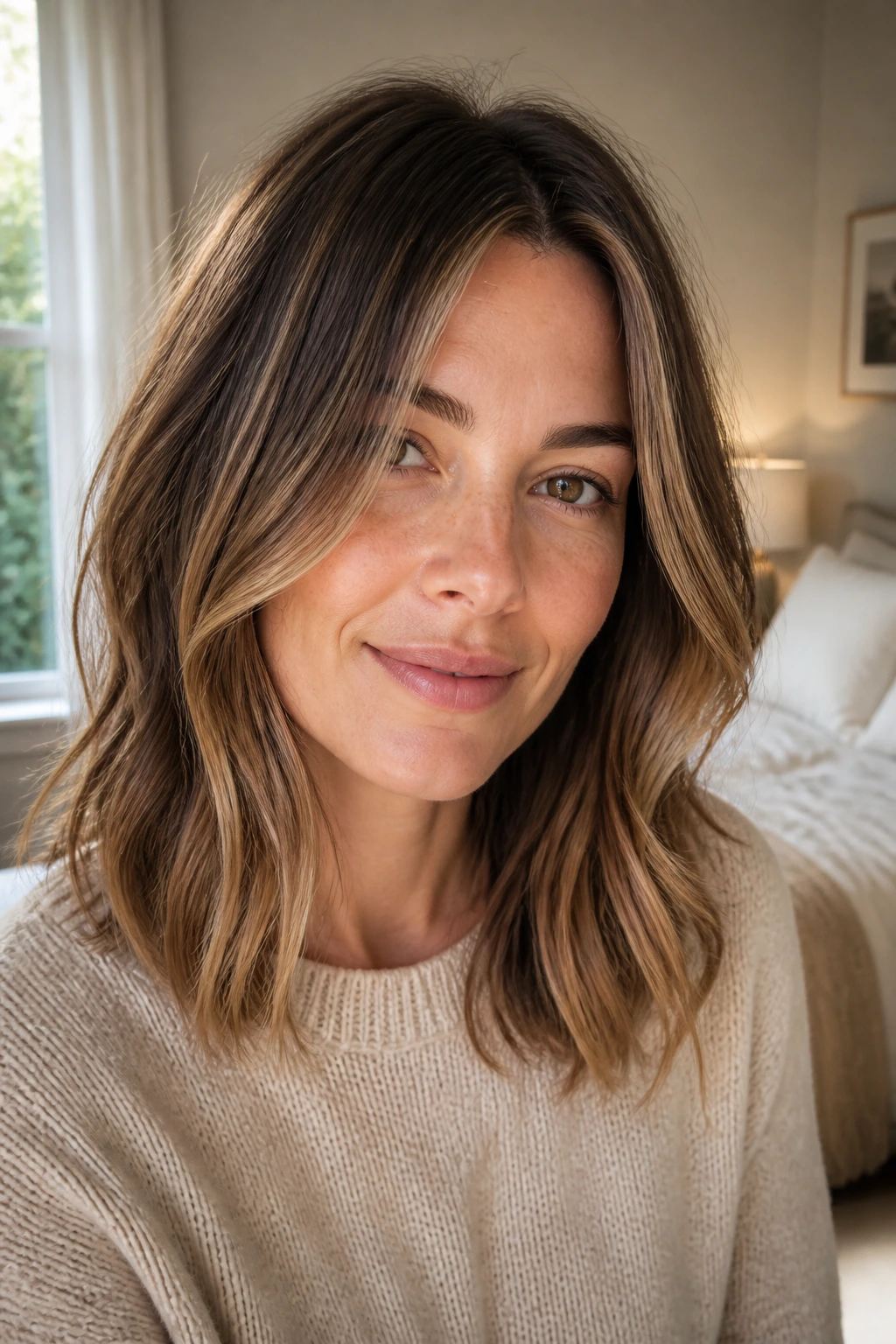
If your hair has even a little wave, this version is worth paying attention to. The haircut is built to work with a natural bend instead of against it, so you don’t have to force a perfect blowout to make it look alive.
The layers should be long and soft, with the shortest pieces living below the cheekbone. That keeps the crown from frizzing up into a halo and leaves the lower half of the hair with enough shape to matter. On a heart-shaped face, the bend at the ends gives the jaw a little more visual width.
A small amount of leave-in cream and a light mousse at the roots are enough. Too much product makes fine hair droop faster than the cut can save it.
19. Glossy Blowout Lob
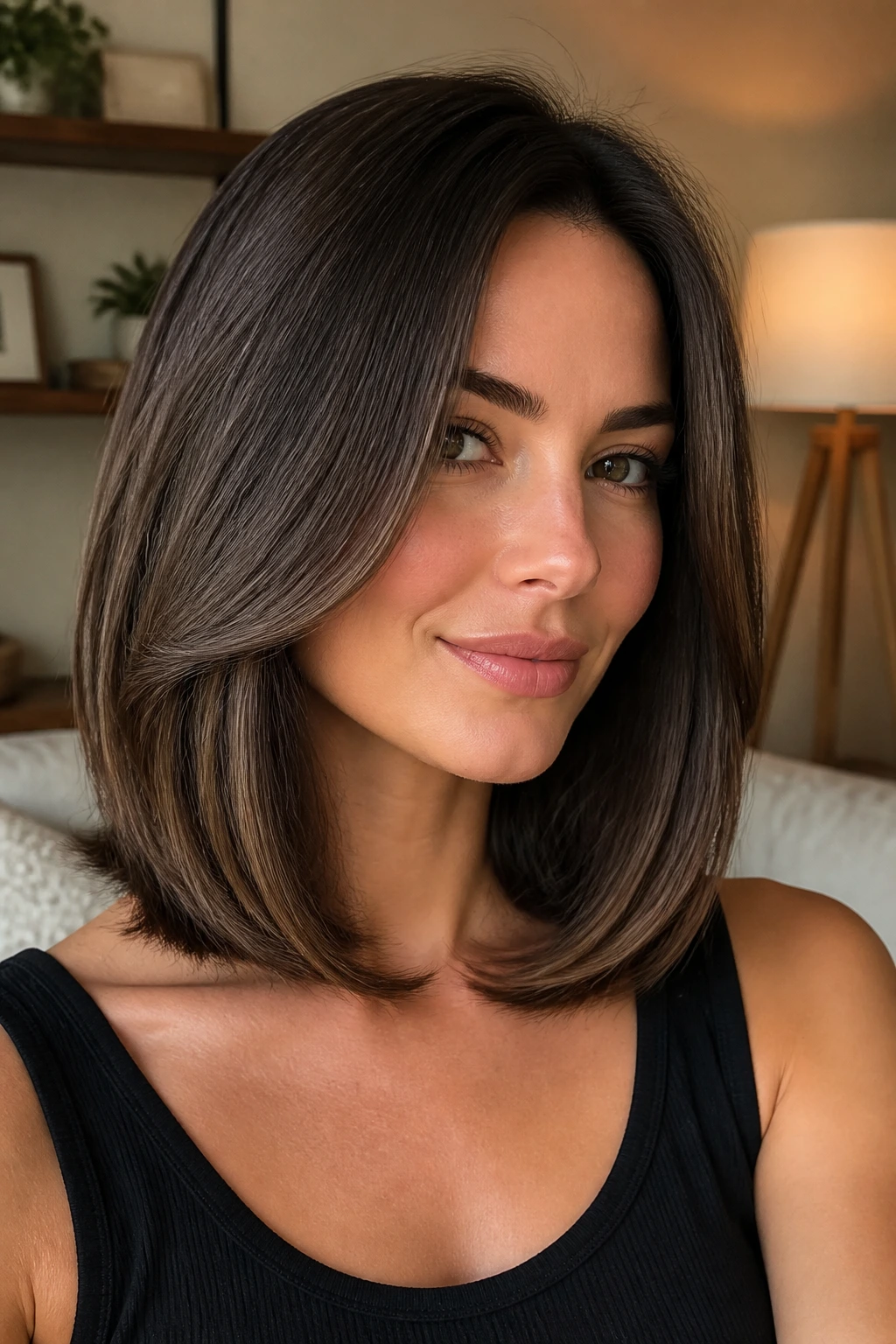
This is the version that looks almost too neat, then wins you over when you see it move. The round-brush finish shows off the layers without making them choppy, and the gloss makes fine hair look denser because the light hits one continuous surface.
It works well on heart-shaped faces because the front pieces can turn away from the face just enough to soften the forehead while still settling near the jaw. The clean finish keeps everything looking expensive without trying too hard. And yes, I mean that in the plain sense of the word, not the fake-magazine sense.
What to use
A heat protectant, a medium round brush, and a blow dryer with a concentrator nozzle. That’s enough. The rest is patience while the hair cools in the shape you set.
20. Wispy Fringe Lob

Wispy fringe is tricky. Too much wispy, and you get scraps. Too little, and the fringe becomes a blunt band that fights the face shape. The right version is light and separated, with enough length to skim the forehead and taper into the side layers.
That makes it useful for heart-shaped faces, especially if the goal is to soften the upper third without hiding it. Fine hair usually handles this fringe well because the lighter density keeps it from getting heavy or sticky at the brow line.
The safest version lands a little below the brows and opens at the temples. If the fringe ends abruptly, it can make the forehead look wider. Let it taper.
21. Angled Lob With a Gentle Forward Sweep
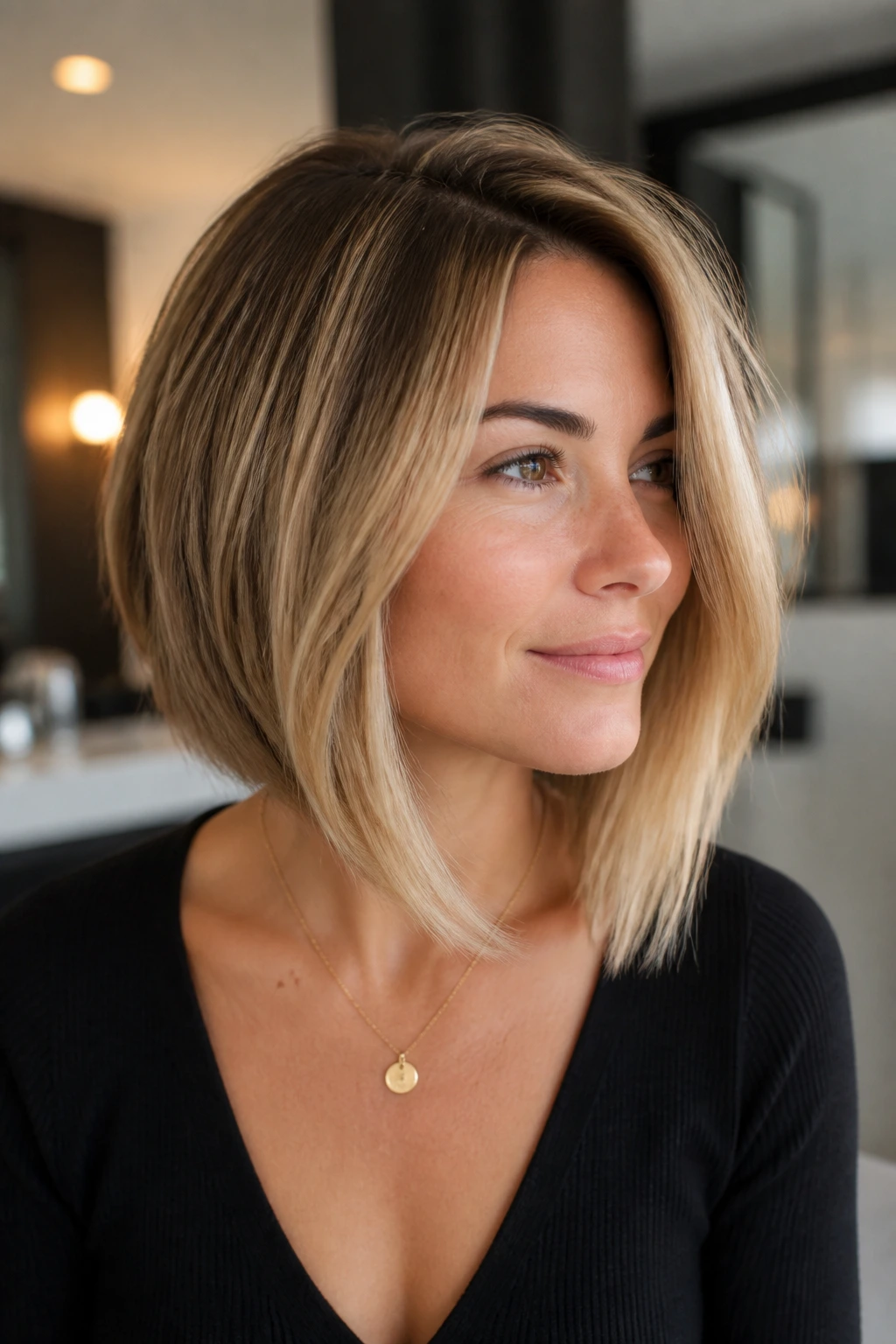
A gentle angle from back to front can make fine hair look like it has more shape than it actually does. The front pieces sweep forward toward the collarbone, which gives the cut a longer line and helps a heart-shaped face feel less top-heavy.
This is not the sharp, dramatic angle you see on old salon posters. It’s softer than that. The back is just a little shorter, enough to create lift at the nape and keep the outline from collapsing.
If you wear your hair straight, this cut has a crisp edge. If you add a bend, it turns a little softer and more modern. Either way, the angle should feel natural, not obvious.
22. Rooted Dimensional Lob
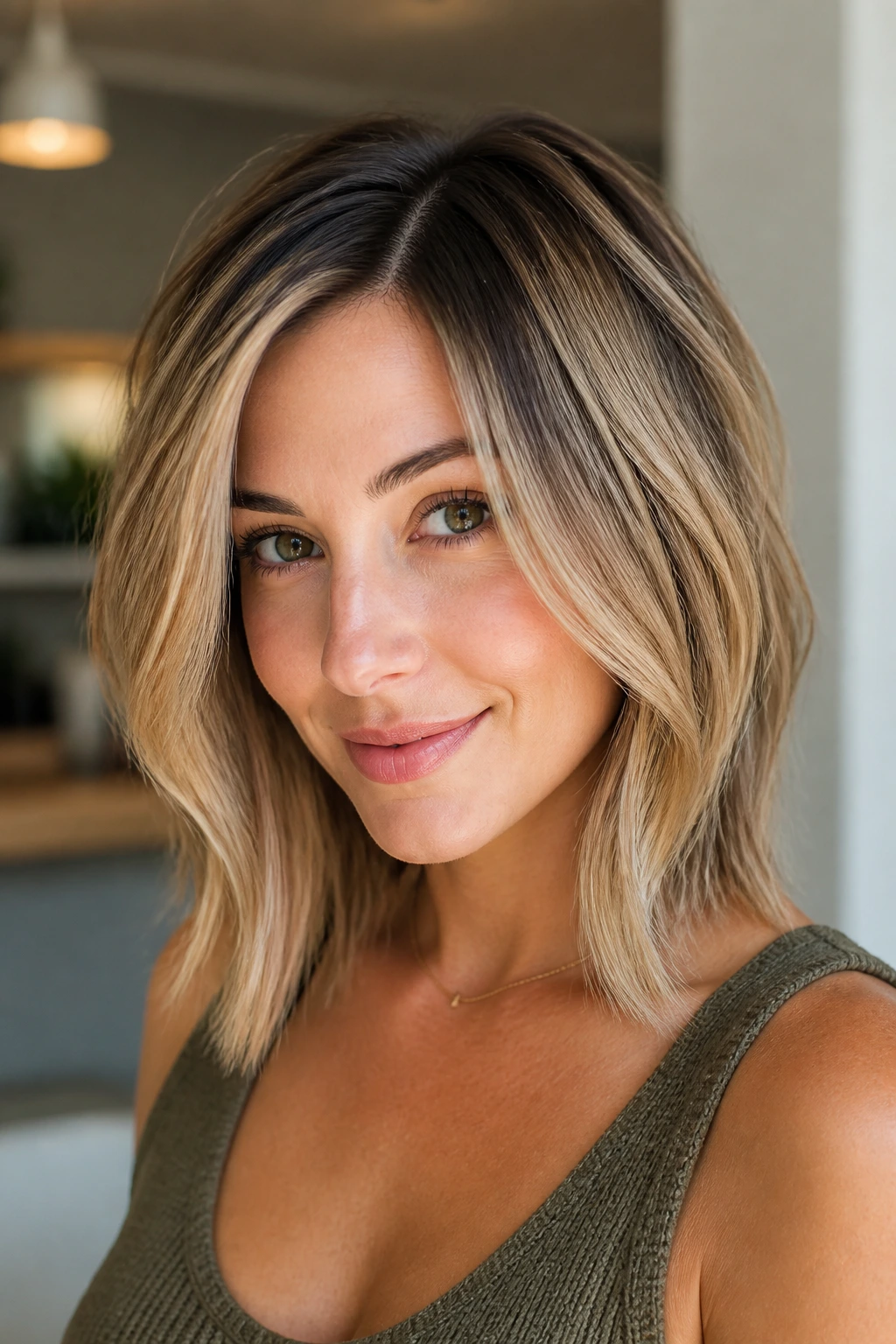
Color matters here, and I’m saying that because some haircuts need help from the hair itself. A rooted dimensional lob uses darker depth near the scalp and lighter ribbons through the mid-lengths so fine strands look fuller without adding bulk.
The cut should stay soft and layered, but the color makes the layers visible in a better way. On heart-shaped faces, the lighter pieces around the jaw and collarbone pull the eye downward, which is exactly where you want it.
Best color pairing
Low contrast works better than chunky highlights. A soft root shadow, a few ribbons around the face, and some light ends are enough. Too much contrast can make fine hair look thinner instead of fuller.
23. Sleek Tucked Lob With Soft Movement
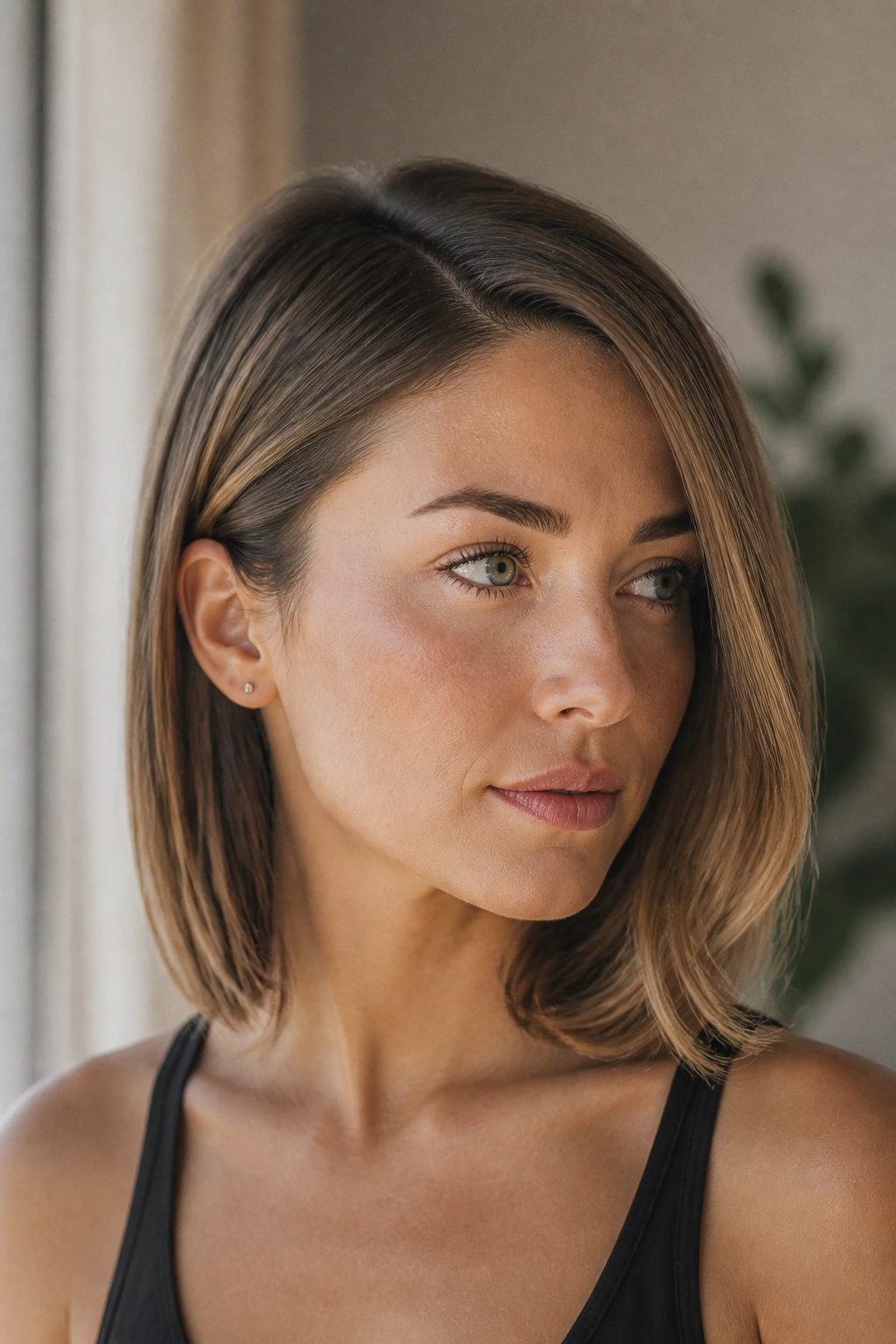
This one is for people who like hair that looks deliberate. One side gets tucked behind the ear, the other side keeps a soft bend, and the whole cut feels cleaner because the face is framed without being covered.
A heart-shaped face benefits from that exposed cheekbone. The tuck also creates a little height at the opposite side, which balances the forehead without making the cut feel heavy. Fine hair likes the simplicity. There’s not much competing with the shape.
The ends should still move. If they’re too straight and rigid, the style can go flat and severe. A slight bend at the bottom keeps it human.
24. Tapered Face-Frame Lob
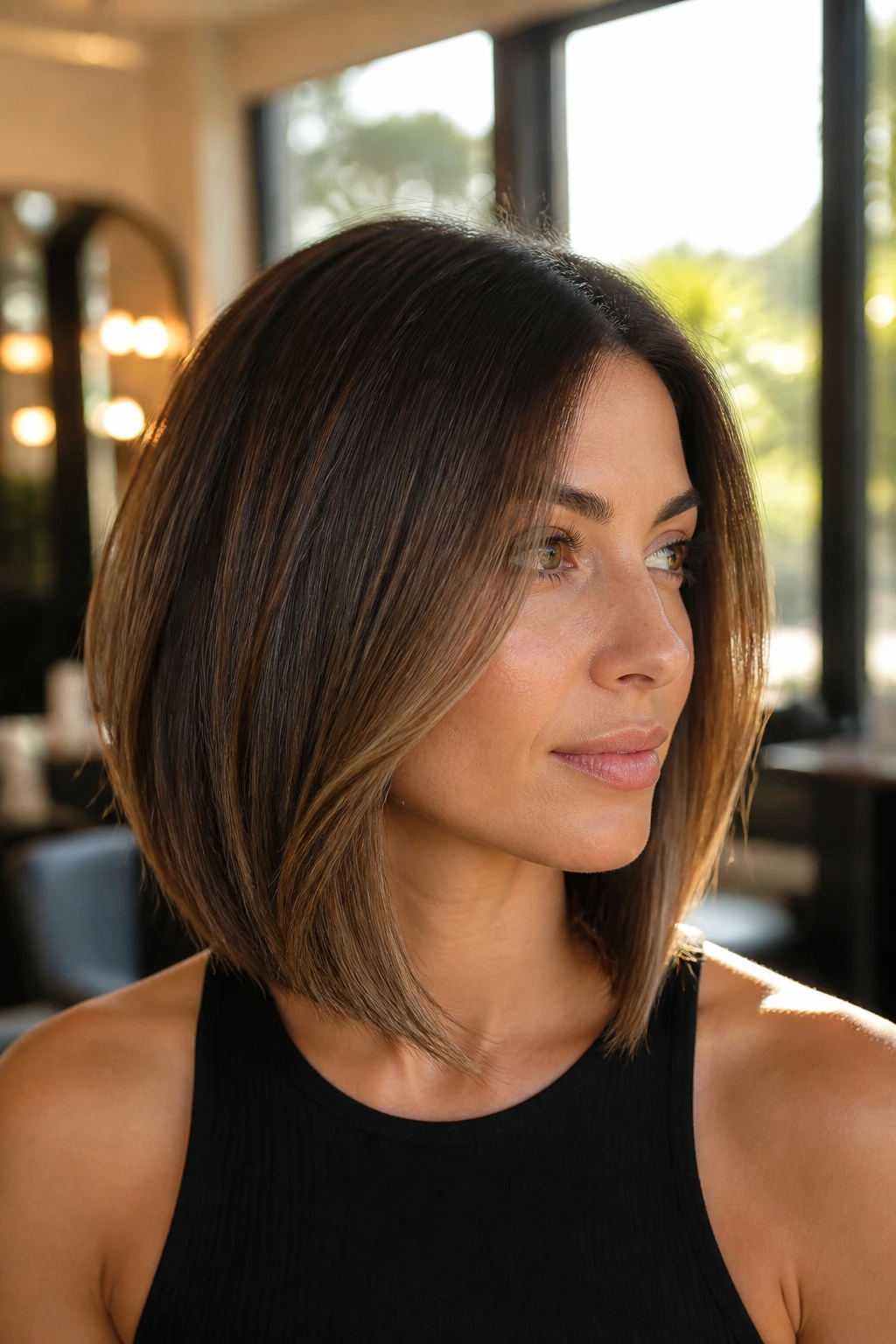
This version leans on taper more than layering. The front pieces begin around the cheekbone and ease down toward the collarbone, creating a long diagonal that softens the upper face and makes the jaw feel wider by comparison.
It’s a good option if you want face-framing without fringe. Some people don’t want bangs. Fair enough. This gives you a similar balancing effect without committing to a forehead cover.
The taper should be subtle enough that the cut still reads as a lob, not a long layered haircut. Keep the base clean. That keeps fine hair from drifting into thinness.
25. Soft S-Curve Lob
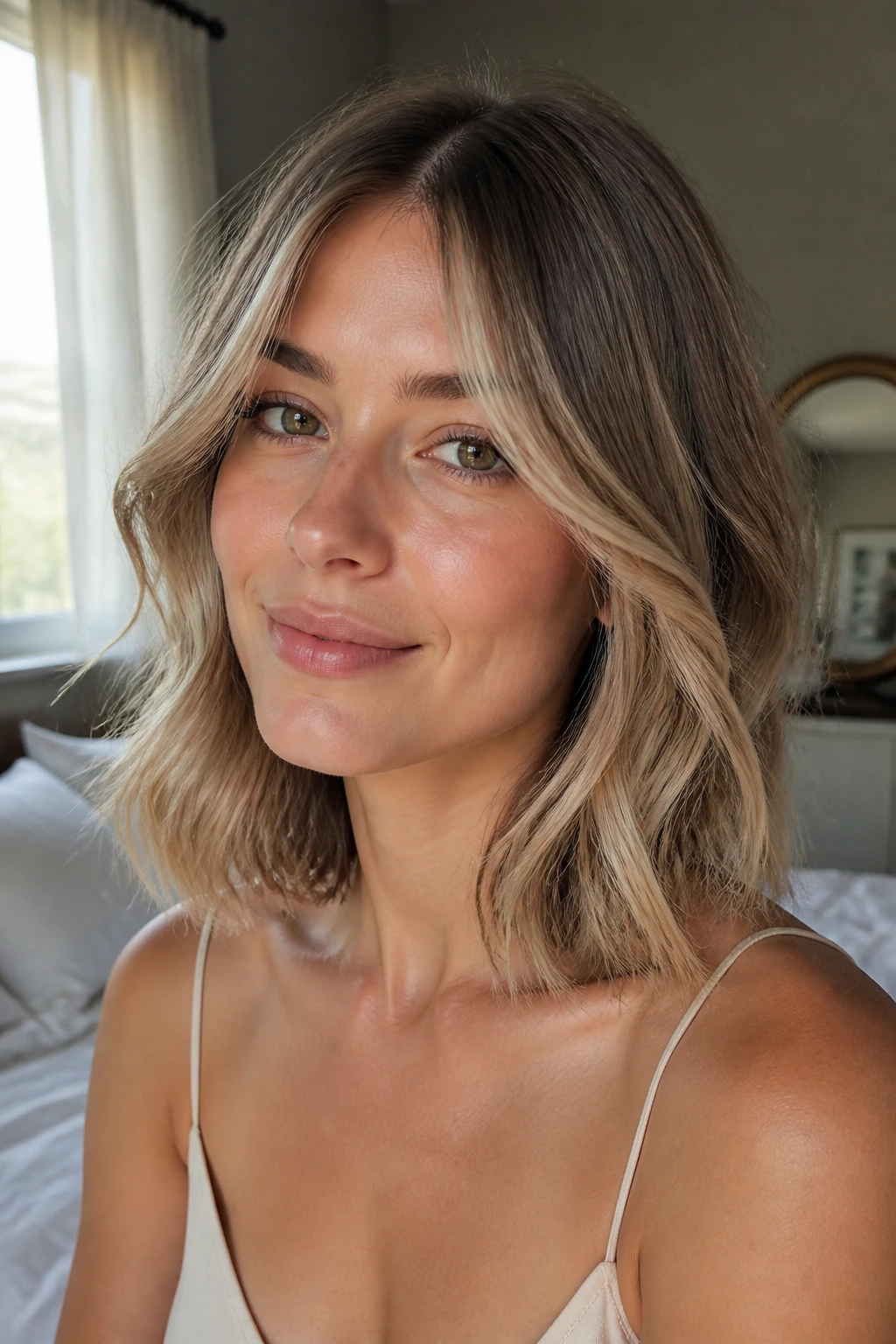
If you want movement without loose curls, the S-curve is the one to know. The hair bends away from the face, then back toward it, creating a soft line that gives fine strands shape without making them look overly styled.
On a heart-shaped face, the curve helps because it widens the lower half just enough while still keeping the forehead soft. It’s gentle. That’s the word. Not cute, not edgy, not dramatic. Just controlled movement that does its job.
How to wear it
Use a flat iron or curling iron to create alternating bends through the mid-lengths, then soften them with your fingers. The hair should look touched, not curled. If the bend gets too uniform, the whole thing goes stiff.
Why Layer Placement Changes the Whole Lob
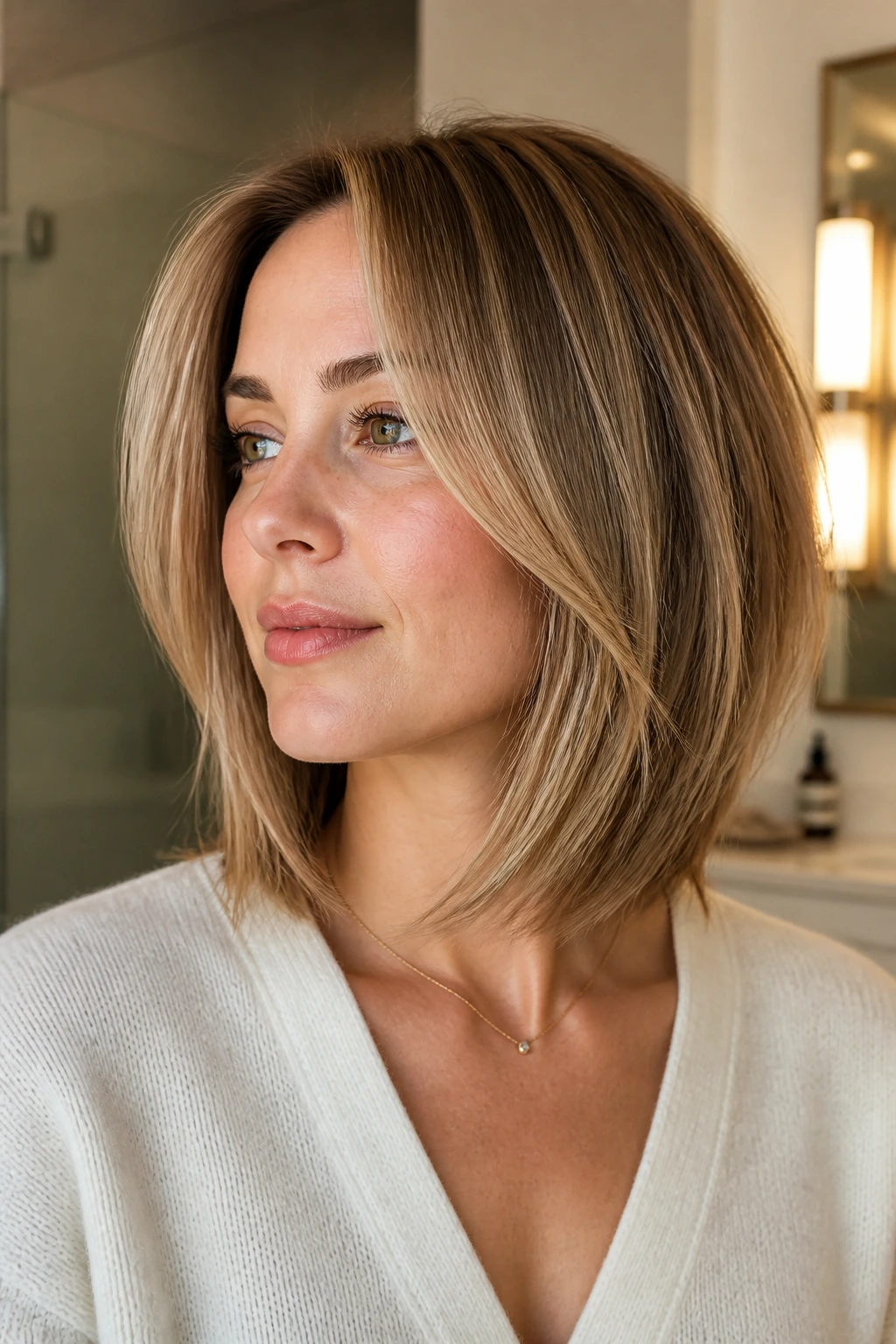
A layered lob on fine hair lives or dies by one thing: where the first layer starts. Too high, and the top of the head gets airy while the ends lose the thickness they needed in the first place. Too low, and the cut can hang like one long curtain with no shape at all.
For heart-shaped faces, the other measurement matters just as much. The front pieces should usually start around the cheekbone or lower. That creates a soft diagonal line that moves the eye toward the jaw, which keeps the forehead from feeling like the loudest feature in the room.
Where the first layer should start
Below the cheekbone is the safest range for most fine-haired clients. That gives the cut motion without turning the crown into flyaway territory.
Why the perimeter needs weight
The hem of the haircut is what makes the hair look like it has substance. A blunt-enough line at the bottom usually reads as thicker, even if the strands themselves are fine.
What to avoid near the crown
Too much texturizing at the top. Too much lifting around the temples. Too many short pieces that don’t have enough length to lie flat. Those are the shortcuts that make a lob look tired two hours after a blow-dry.
Essential Tools for Styling These Lobs
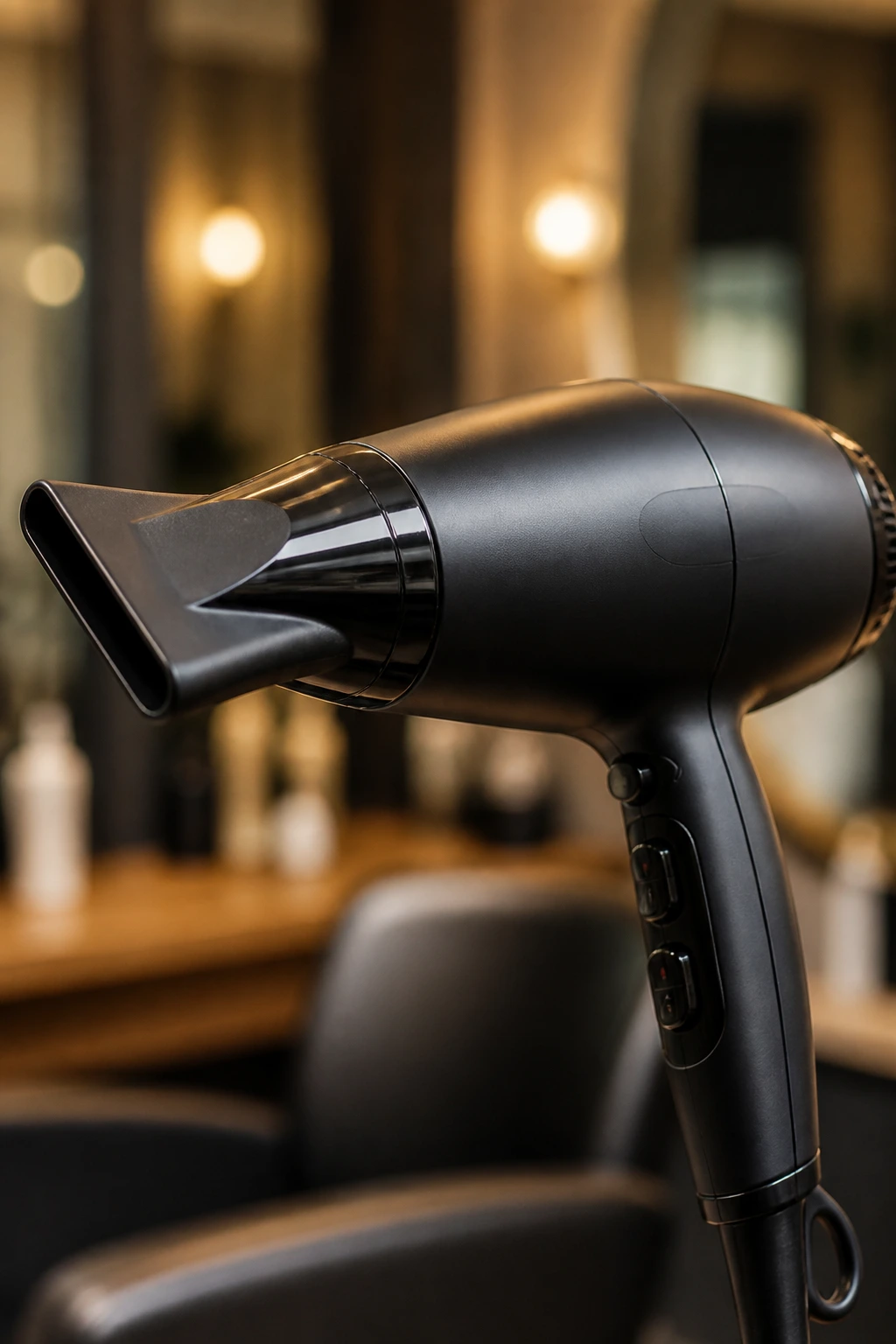
-
Blow dryer with a concentrator nozzle — Helps direct the airflow and keeps the top from puffing out in random directions.
-
1-inch and 1.25-inch curling irons — The smaller barrel gives a tighter bend; the larger one makes the softer wave and S-curve shapes.
-
Medium round brush — This is the workhorse for collarbone flips, beveled ends, and gentle root lift.
-
Flat iron with smooth plates — Useful for the sleeker cuts, tucked styles, and soft bends through the mid-lengths.
-
Lightweight mousse — Adds body at the roots without making fine hair feel sticky or stiff.
-
Heat protectant spray — Non-negotiable if you’re using hot tools. Fine hair burns fast.
-
Dry shampoo — Saves the crown on day two or three when roots start to lose grip.
-
Texture spray or dry finishing spray — Best for piecey waves and shattered lobs, but use a light hand.
-
Sectioning clips — Not glamorous. Very useful. They keep the top layer out of the way while you shape the bottom.
How to Style a Layered Lob So It Keeps Its Shape
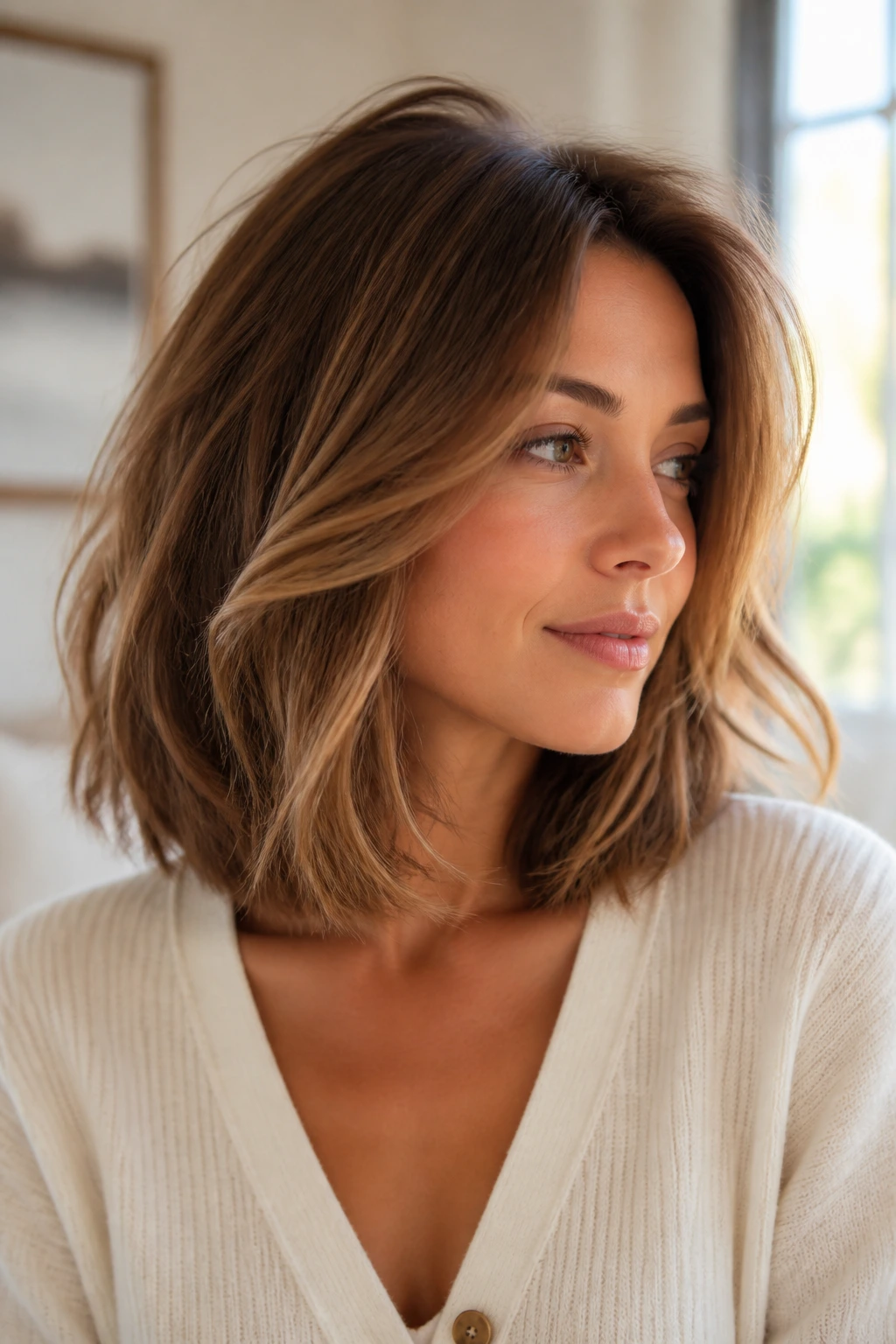
The best styling rule for fine hair is simple: build lift at the roots first, then decide how much movement the ends need. If you curl the ends before the crown has any support, the whole haircut can sink by noon. Give the top something to hold on to.
Start with the roots
Work a small amount of mousse or root spray into damp hair, then blow-dry the roots in the opposite direction of the part for the first few minutes. That tiny push matters. It keeps the style from lying flat right away.
Pick one kind of bend
Not every layered lob needs beach waves. Some look better with a polished bevel. Some want just a flip at the ends. If you stack curls, bends, and waves all together, fine hair starts to look busy instead of fuller.
Let the hair cool in shape
This part gets skipped all the time. It shouldn’t. Whether you’re using a round brush or iron, let each section cool before you touch it again. Cooling locks in the bend and keeps the style from falling apart too fast.
Refresh on day two
A mist of dry shampoo at the roots and a quick bend through the front pieces can reset the whole haircut. You do not need to re-style everything. Usually the front and crown are enough.
Common Mistakes That Make a Lob Look Thin or Top-Heavy
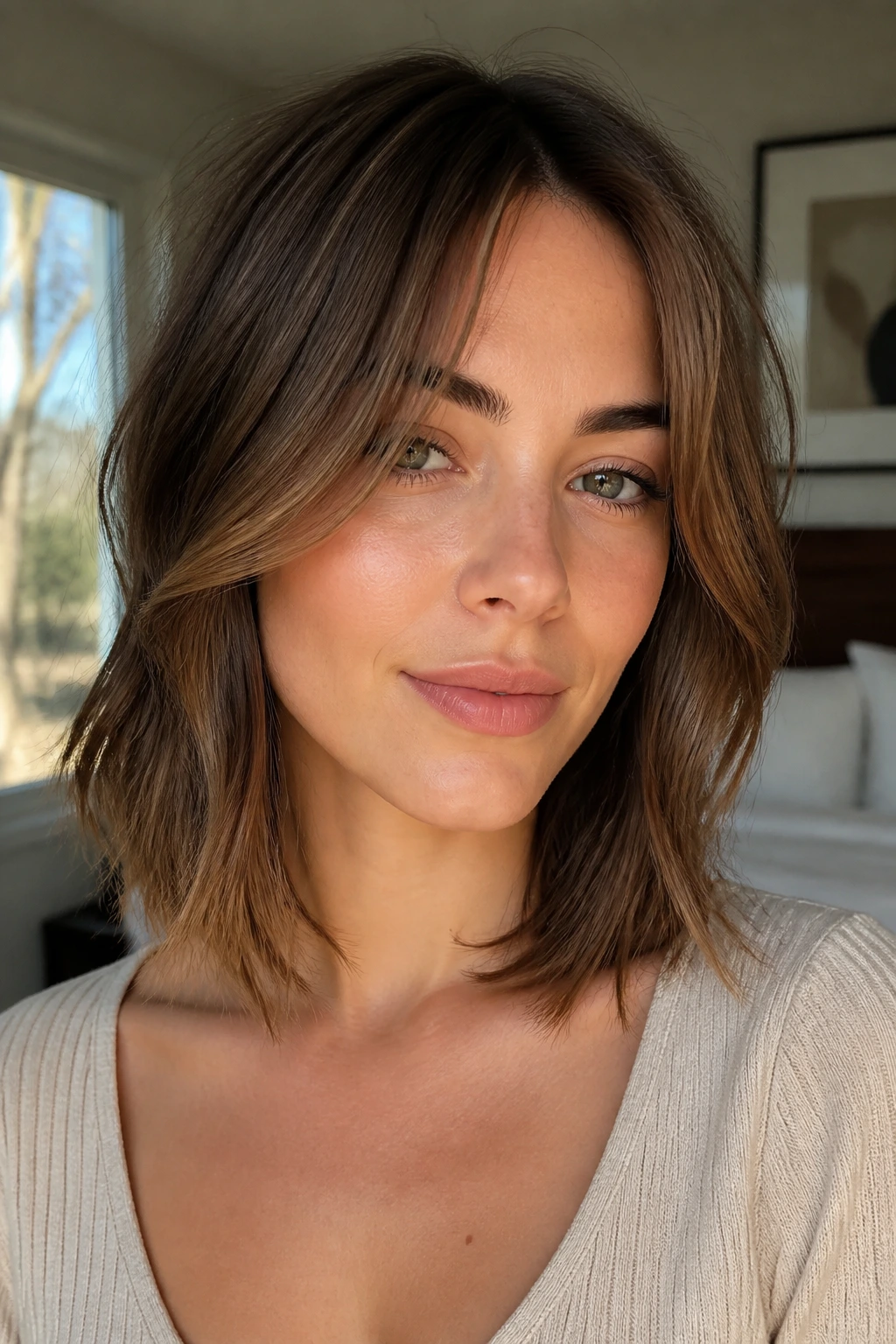
-
Layering too high at the crown — The symptom is a fluffy top and see-through ends. The fix is to keep the first layer lower, usually around the cheekbone or below.
-
Thinning the perimeter too much — If the ends look stringy in natural light, the hem has been over-cut. Ask for a cleaner baseline next time.
-
Choosing a fringe that’s too heavy — Thick bangs can make a heart-shaped face look more top-heavy. A lighter fringe or longer curtain shape usually balances better.
-
Skipping root lift entirely — Fine hair needs some push at the scalp. Without it, even a good cut can collapse by lunch.
-
Overusing texture spray — When the hair feels rough and dry but still looks flat, you’ve added more grit than support. A little goes a long way.
-
Putting all the shape in the ends — Big curls at the bottom and nothing at the crown just drag the haircut downward. Keep the movement spread through the mid-lengths and front.
Variations and Adjustments to Try
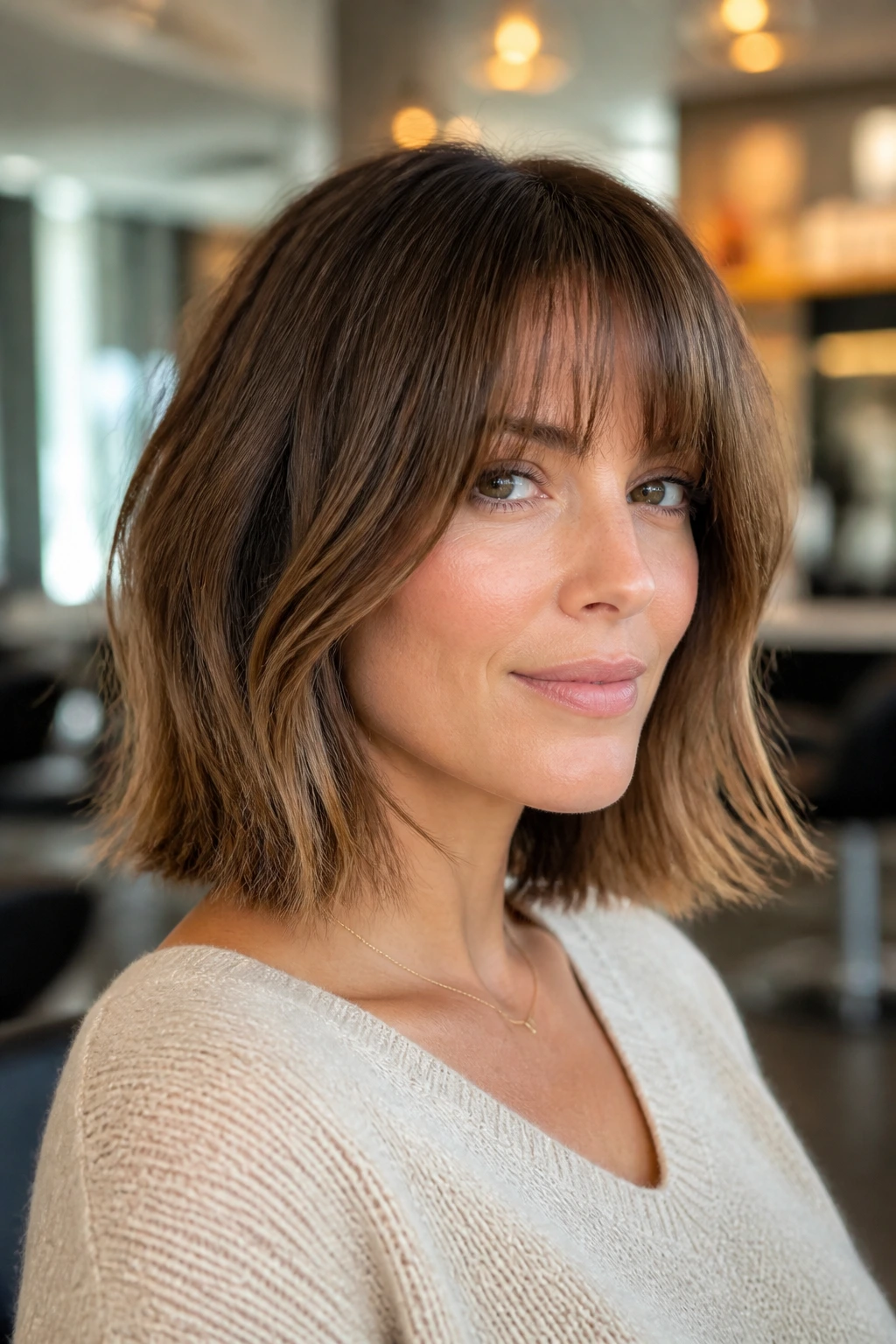
The Softer Fringe Swap
If full curtain bangs feel like too much, ask for longer face-framing pieces that just graze the cheekbone. You get the same forehead-softening effect without committing to a true fringe.
The Air-Dry Version
Keep the layers long and the perimeter blunt enough that the haircut still looks tidy when you skip heat. A little leave-in cream and a scrunch at the ends are enough for most wavy fine hair.
The Extra-Lift Version
If your roots go flat fast, request a subtle inverted shape with slightly shorter back layers. Pair it with mousse at the crown and a round brush at the nape for a touch more lift.
The Sleeker Version
Ask for hidden layers, a clean hem, and a soft bend only at the front. This is the one for people who want the haircut to look polished, not piecey.
The Wavier Version
If your hair holds a bend well, go for soft shattered layers and a brushed-out wave finish. The movement helps the face framing do its job, and the lower width can be flattering on a heart-shaped face.
The Low-Maintenance Version
Keep the cut at collarbone length with minimal internal layering. That way the shape still looks full on its own, even when you air-dry and leave the brush on the counter.
Keeping the Shape Fresh Between Salon Visits
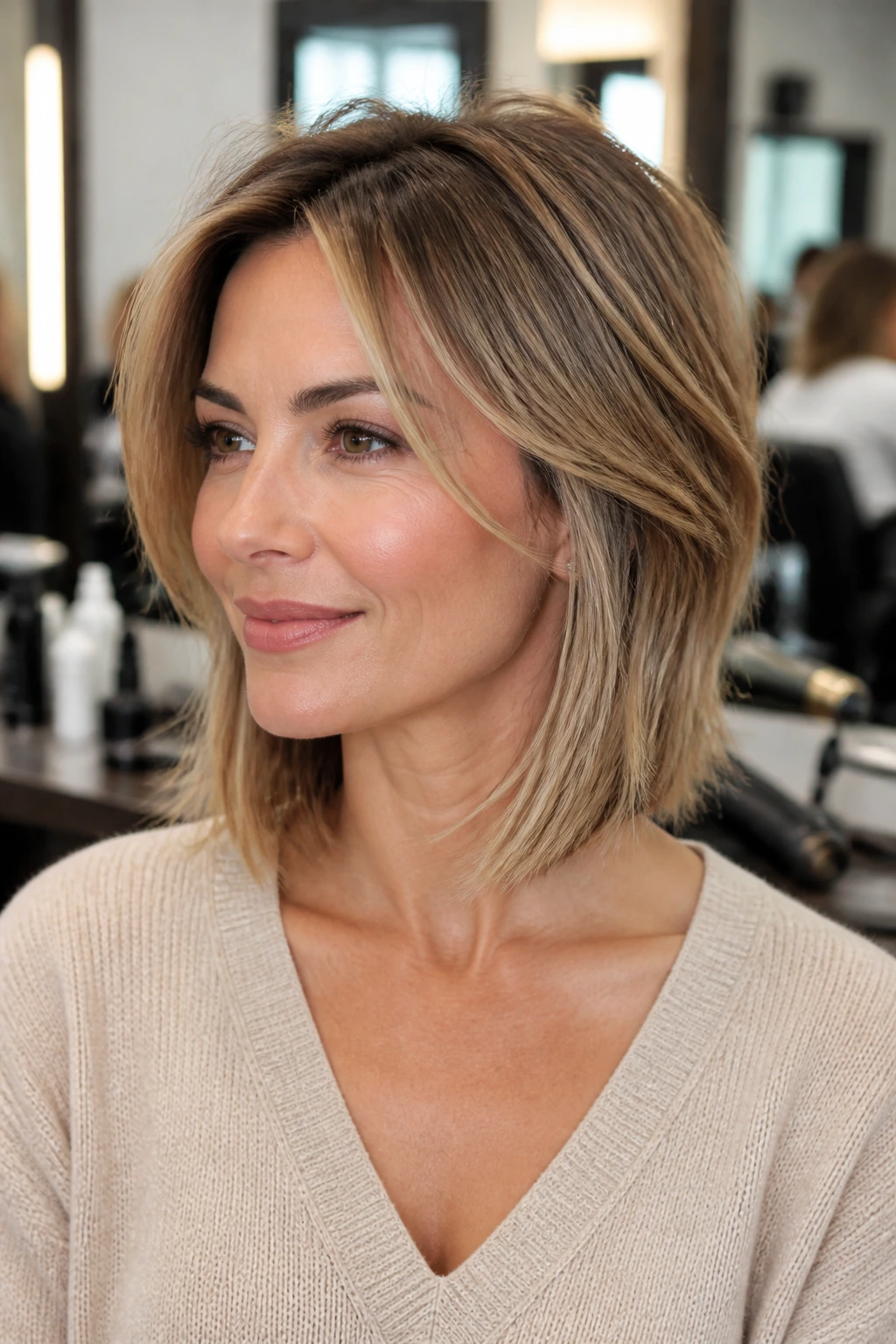
A layered lob can go stale in a very specific way: the front pieces fall into the jaw, the crown gets a little too flat, and the hem starts looking uneven instead of crisp. That’s normal. It just means the cut needs a trim or a reset, not a whole new identity.
Plan on trimming every 6 to 8 weeks if you wear bangs or a lot of face-framing layers. If you’re keeping the cut cleaner and more blunt, 8 to 10 weeks is usually enough. Fine hair shows split ends fast, and once the ends fray, the whole shape looks thinner.
Wash rhythm matters too. Fine strands often need more root cleansing than dense hair, because the scalp oils travel down faster. If your lob starts sticking to your head on day two, a dry shampoo at the roots and a quick round-brush lift around the front usually fixes it. If product builds up, use a clarifying shampoo about every 2 to 4 weeks so the hair doesn’t get dull and limp.
Sleeping habits matter more than people think. A loose clip, a silk scrunchie, or simply tucking the ends over a pillow can save the front shape from getting crushed overnight. Tight ponytails leave a dent right where you want movement. Not ideal.
Frequently Asked Questions

What length is best for fine hair and a heart-shaped face?
Collarbone to just below the shoulders is usually the safest zone. That gives the hair enough weight to look full while still letting the front pieces soften the jawline and cheekbones.
Are layers bad for fine hair?
Not when they’re placed carefully. Short, high layers can make fine hair look sparse, but longer internal layers or soft face-framing pieces can add movement without stripping away density.
Should heart-shaped faces avoid center parts?
Not automatically, but a strict center part can expose the widest part of the forehead if the rest of the cut is too flat. A soft off-center part usually gives more balance.
Do curtain bangs work on fine hair?
Yes, as long as they’re kept long and light. A heavy curtain fringe can sit on the face in an awkward way, while a softer version blends into the lob and opens the forehead gently.
What if my hair is pin-straight and won’t hold waves?
Choose a cleaner cut with invisible layers, a blunt hem, and maybe a slight bevel at the ends. Then focus styling effort on root lift and a soft bend at the front instead of forcing a full wave pattern.
How often should I trim a layered lob?
Every 6 to 10 weeks, depending on how much fringe or face-framing you have. The more layered and face-shaped the cut is, the faster it will need a cleanup.
Can I make this cut look thicker without teasing it?
Yes. Use a root mousse, keep the perimeter blunt, and avoid over-thinning the ends. A root shadow color or a few subtle highlights can also make fine hair look denser.
Which version is easiest to style in the morning?
The invisible-layer blunt lob and the softly angled lob usually need the least effort. They hold their shape even when you only rough-dry the roots and add a quick bend to the front pieces.
The Lob That Holds Up

The best layered lob for fine hair and a heart-shaped face is the one that keeps its weight where the hair needs it and its softness where the face needs it. That sounds simple. It isn’t always simple in the chair. A few inches higher or lower can change the whole read of the haircut.
Bring photos, yes. But also bring a clear sentence: you want movement around the jaw and cheekbone, not a cut that eats the density out of the ends. That one detail is doing a lot of the work here.
And once you find the right version, it tends to stay useful for a long time. It grows out without turning rude. It styles a dozen different ways. It makes fine hair look like it meant to be there.