



Thick hair and a pixie cut can get along beautifully — if the cut respects the amount of hair sitting on your head. A blunt crop on dense hair has a bad habit of puffing out at the temples, stacking weight at the crown, and turning the back of the head into a little triangle you never asked for. The softer versions avoid that. They use feathered edges, gentle tapering, and just enough length in the right places to keep the shape light.
That’s why soft pixie cuts for women over 50 with thick hair make so much sense. The hair is already doing plenty on its own. You do not need a haircut that fights it. You need one that redirects the bulk, opens up the face, and leaves you with movement instead of a shelf.
The best part is that “soft” does not mean timid. It can mean airy bangs, a lifted crown, a neat nape, or a little sweep across one eye. It can also mean silver hair that shows off every line of the cut, or coarse hair that finally gets a shape instead of a helmet. There’s room here for polish, edge, and a bit of ease — which is usually what people actually want anyway.
Why These Soft Pixie Cuts Work So Well
- They tame bulk without flattening the hair: Thick hair needs weight removed in the crown, around the ears, and at the nape, not just hacked shorter everywhere.
- They keep the face in the frame: Side-swept fringe, temple softness, and a little length at the hairline stop the cut from feeling severe.
- They grow out more gracefully: A soft pixie keeps looking intentional for several weeks because the edges are already blended, not blunt.
- They make silver and salt-and-pepper strands look richer: Shorter lengths show off contrast and texture instead of hiding it under a heavy curtain.
- They’re easier to style than they look: A little mousse, a quick blow-dry, and a fingertip of paste are often enough.
- They let you choose your comfort level: You can go shorter at the nape, longer at the fringe, or keep more length around the ears if you like a bit of coverage.
1. Feathered Crown Pixie
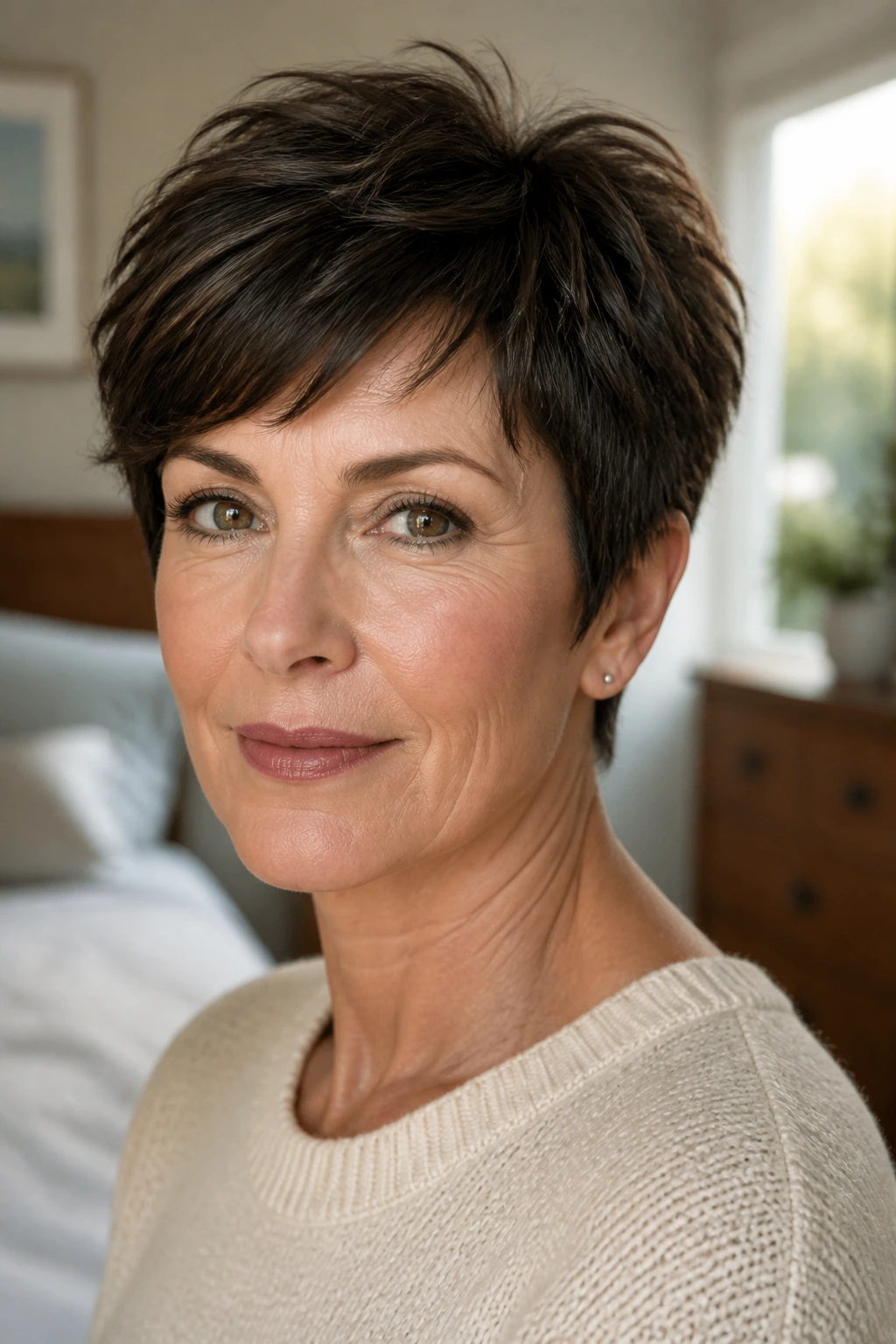
This is the cut I’d hand to someone whose thick hair wants to sit up and make a scene. The crown is layered just enough to lift, but the ends are feathered so the top doesn’t feel bulky or stiff. Around the ears and nape, the shape stays close enough to the head to keep the silhouette neat.
What makes it especially good after 50 is that it gives height without shouting for attention. The lift happens at the crown, not in the wrong places. If you wear glasses, this shape tends to behave nicely because it leaves the side area clean while still keeping a little softness around the face.
Why It Flatters Thick Hair
Thick hair has a lot of internal support, which means it can hold shape all day — but only if the shape is cut into it on purpose. Ask for point-cut ends on the top layers and a soft taper at the nape. A blunt line on dense hair can feel like a shelf. Feathering breaks that up.
- Keep the crown about 2 to 3 inches long so it can lift instead of sticking straight up.
- Let the sides sit closer to 1 to 1½ inches to remove bulk where it usually puffs.
- Use a small round brush or your fingers to direct the top upward while blow-drying.
Best for: oval, heart, and longer face shapes.
Skip it if: you want almost no styling at all. This one likes a little attention.
2. Side-Swept Fringe Pixie
Need one cut that softens the forehead and still leaves room for thickness? This is it. The fringe falls diagonally across the face in a way that breaks up the width at the front, and the rest of the pixie stays short enough to keep the hair from building too much volume at the sides.
The side-swept piece matters more than people think. On thick hair, a blunt front can feel heavy fast. A diagonal fringe moves the eye, which is useful if you want a little camouflage around the forehead, temple area, or a strong brow line. It also looks good on days when you do not feel like fighting your hair with a brush.
I like this one when the client wants softness first and drama second. It’s tidy, but not severe. There’s room to tuck part of it behind one ear and let the rest fall where it wants.
3. Tapered Nape Pixie
The back of the neck is where thick hair often tells on itself. Leave too much weight there and the whole cut can feel square. A tapered nape fixes that by carving the back close to the head, then letting the top and fringe carry the softness.
That taper does a lot of work. It makes the neck look longer, keeps collars from messing with the haircut, and gives the style a cleaner finish when you’re wearing a scarf or high neckline. If your hair tends to feel hot or bulky in the back, this is one of the smartest choices on the list.
What to Ask For
- A short, clean nape that hugs the neckline.
- A top that stays slightly longer so the cut does not read as clipped too tight.
- Soft blending behind the ears instead of a hard step.
This is one of those haircuts that looks expensive when it’s cut well. Not because it’s fussy. Because the proportions are right.
4. Rounded Soft Crop
A rounded crop is what happens when you want a pixie, but you do not want hard corners. The outline curves gently around the head, which is a smart move for thick hair that likes to spring outward. Instead of fighting the density, the cut uses it to make a smooth shape.
The softness comes from the perimeter. Nothing is chopped into a blunt wall. The sides stay cushioned, the crown is controlled, and the whole thing reads as polished without feeling frozen. If you wear your hair air-dried most days, this cut can be kinder than a more piecey pixie because the rounded shape keeps it from going lopsided.
It’s also a good match for women who do not want a lot of obvious layering. Some people like seeing every strand separated. Others prefer a softer mass of hair with movement hidden inside it. I’m firmly in the second camp for this cut.
5. Long-Top Pixie with Crown Lift
Need height without helmet hair? Keep the top longer and let the crown do the lifting. This version leaves enough length on top for a bit of sweep or bend, while the sides and back stay shorter so the shape does not balloon out.
The trick here is not letting the top turn into a flat cap. Ask the stylist for internal layering, not just surface length. That way the crown can rise without dragging the rest of the style into a heavy block. Thick hair often benefits from this because it naturally wants to sit dense; a longer top gives it somewhere to go.
How to Style It
Dry the roots first. Focus your dryer at the crown, lifting sections with a small brush or your fingertips. Once the hair is about 80 percent dry, stop overworking it. A pea-sized dab of paste is enough to separate the top without making it look greasy.
This cut is especially good if you like a little height near the front. It gives the face a lifted shape without needing a full blowout every morning.
6. Asymmetrical Sweep Pixie
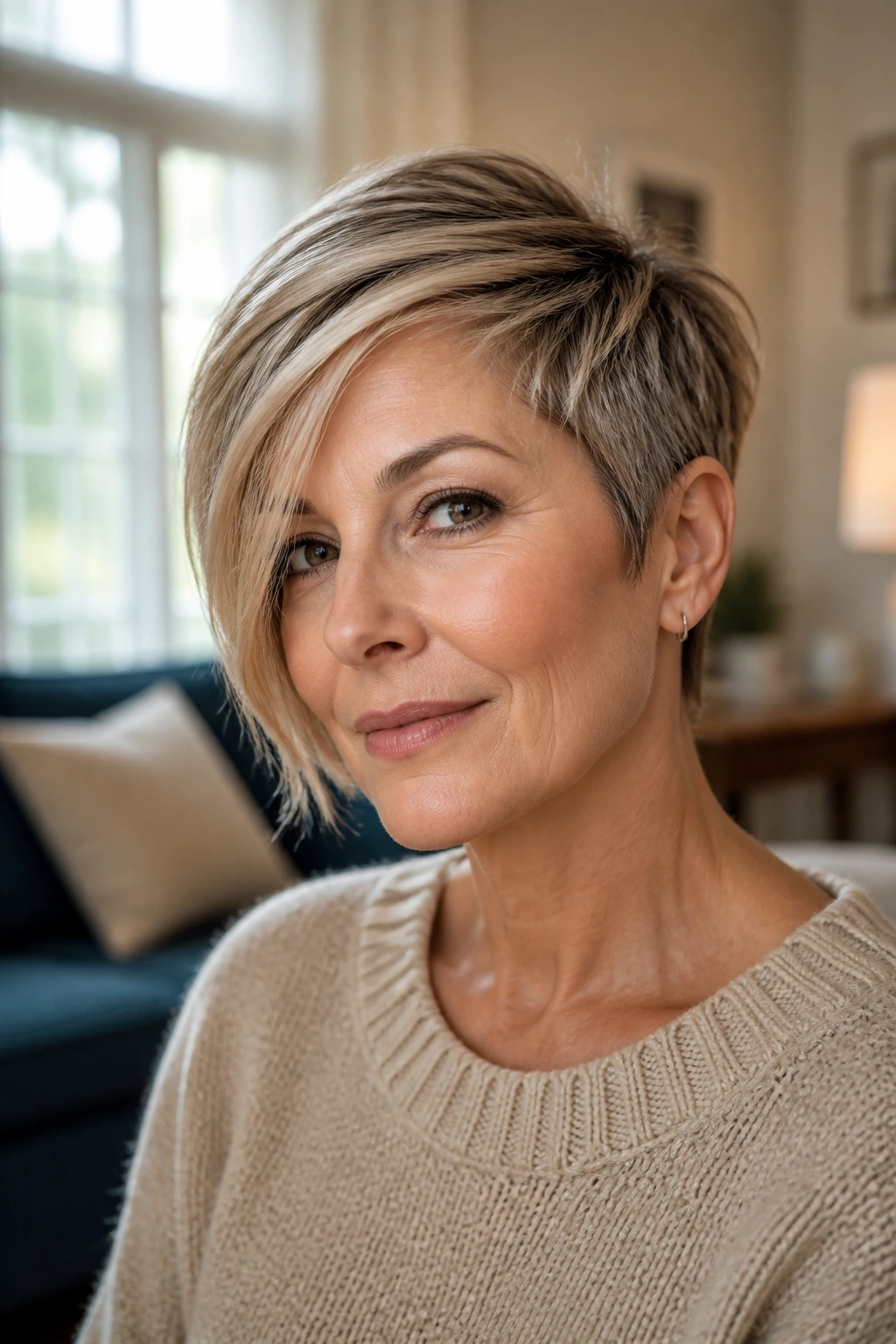
One side a touch longer. That’s all it takes to change the whole mood. An asymmetrical pixie softens thick hair by breaking the symmetry, which is useful when your hair naturally pushes out at both sides and starts to feel boxy.
The longer side gives you a point of interest near the cheekbone, while the shorter side keeps the silhouette close and controlled. If your face is square or your jawline feels strong, this can be a very flattering way to soften the outline without losing edge. It also gives you styling options: tuck the longer side back, sweep it down, or let it drape across one eye.
I like this cut when someone wants a little attitude but still needs the haircut to behave at work or under glasses. It has personality. It just isn’t loud about it.
7. Curly-Air Pixie
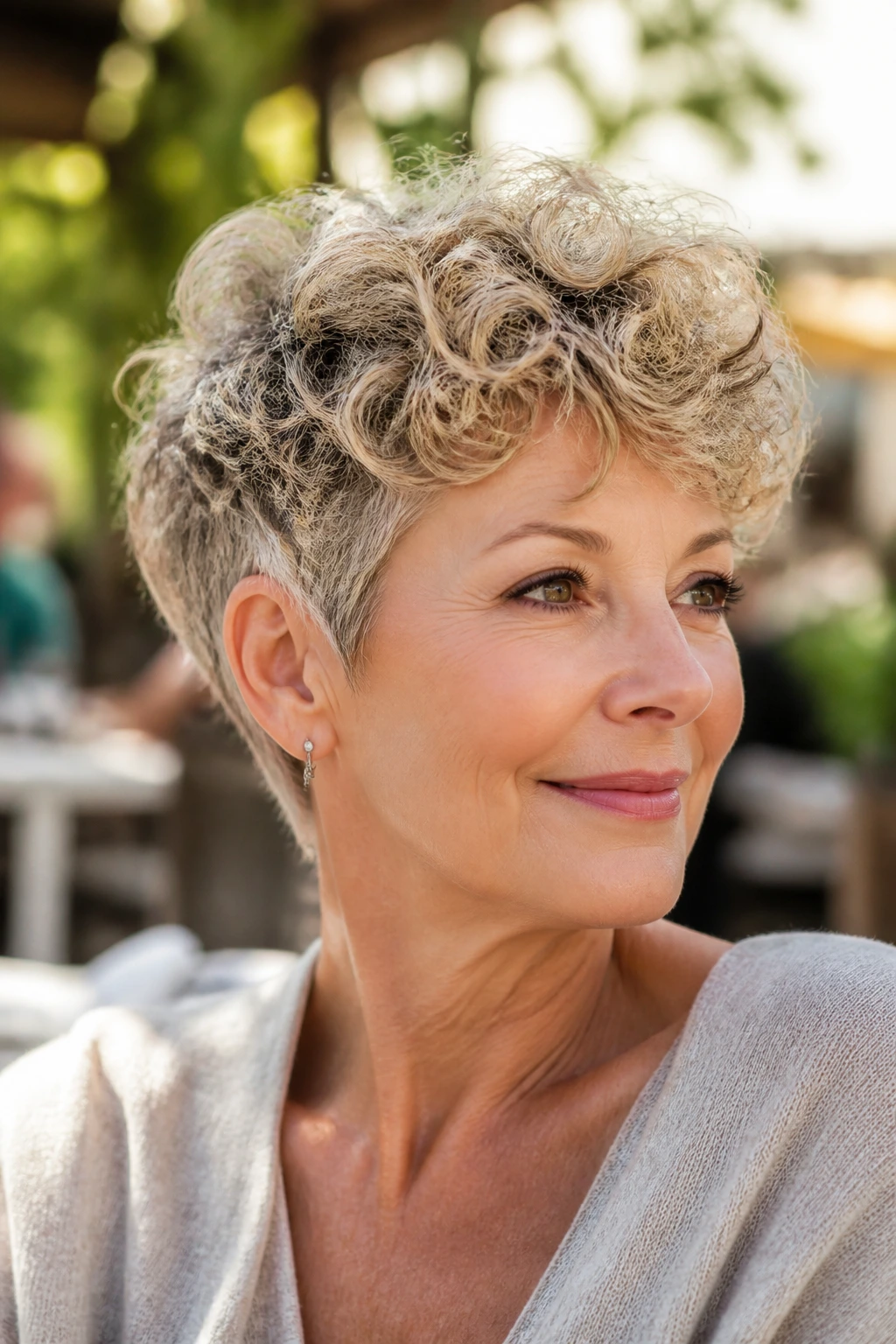
When thick hair has a wave or curl pattern, forcing it into a flat, straight pixie is a waste of good texture. A curly-air pixie lets the curls do the heavy lifting while the cut removes bulk where the hair would otherwise mushroom out. The result is light, springy, and far less fussy than people expect.
The important part is the shape of the layers. You want enough length on top for the curls to spring, but not so much that the crown collapses into a heavy pile. Around the sides, the cut should stay shaped, not over-thinned. Curls need room and restraint at the same time. That’s the balance.
A diffuser helps here. So does leaving the hair a little damp and scrunching in a light cream rather than loading on product. Thick curly pixies look best when they move, not when they’ve been lacquered into place.
8. Wispy Temple Pixie
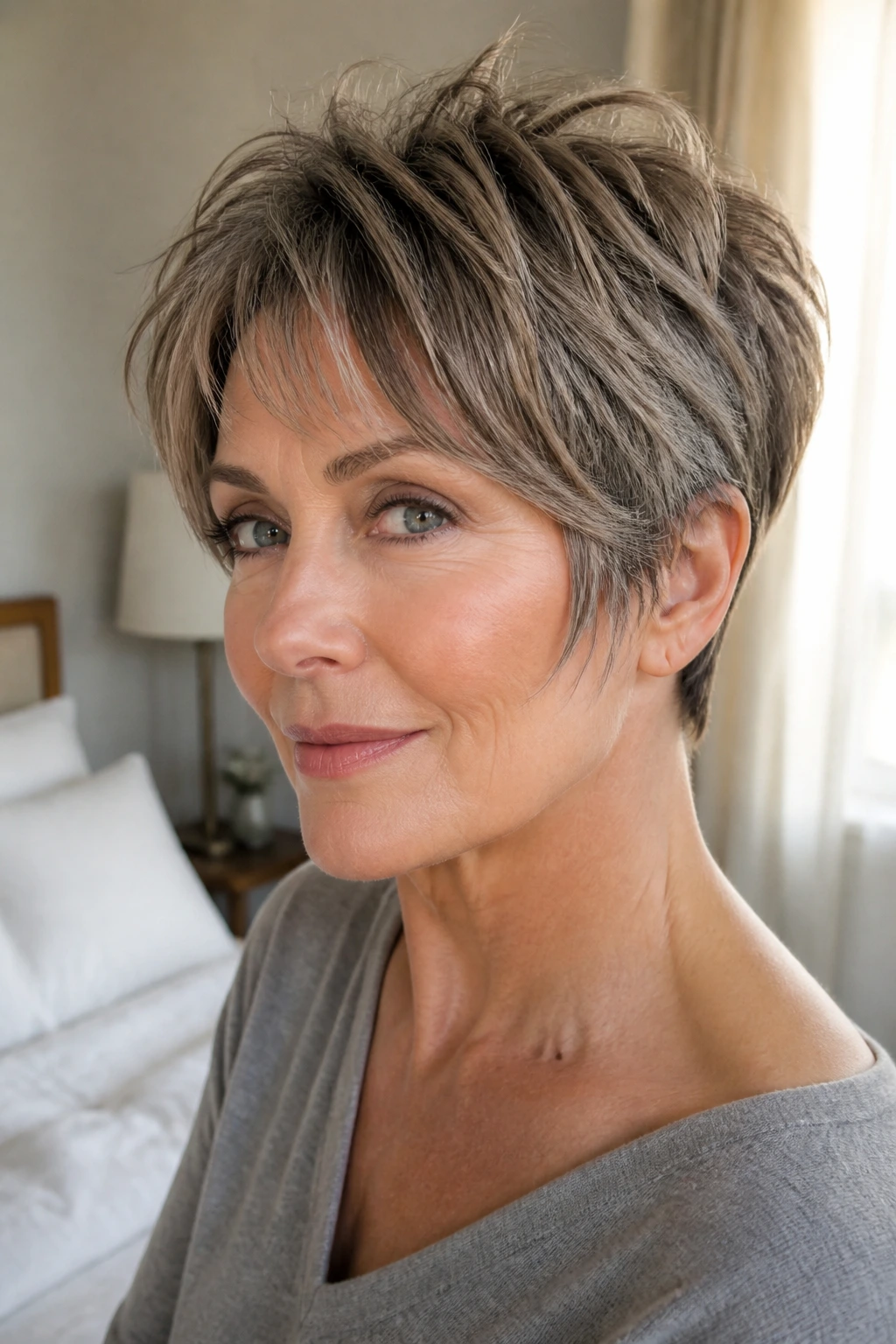
The temple area is where thick pixies often go wrong. You get bulk there, and suddenly the face looks wider than it is. A wispy temple pixie fixes that by carving soft pieces around the temples and keeping the side profile from getting boxy.
What I like most about this cut is the way it frames the eyes. It does not hide the face. It lets the features breathe while still giving enough coverage that the haircut feels gentle. If you wear glasses, the temple softness helps the frames and the hair share space instead of fighting for it.
This is also a nice option for square or heart-shaped faces. The wispy side pieces soften hard edges, and the top can still keep enough lift to stop the style from collapsing. Tiny detail. Big difference.
9. French Pixie with Soft Bangs
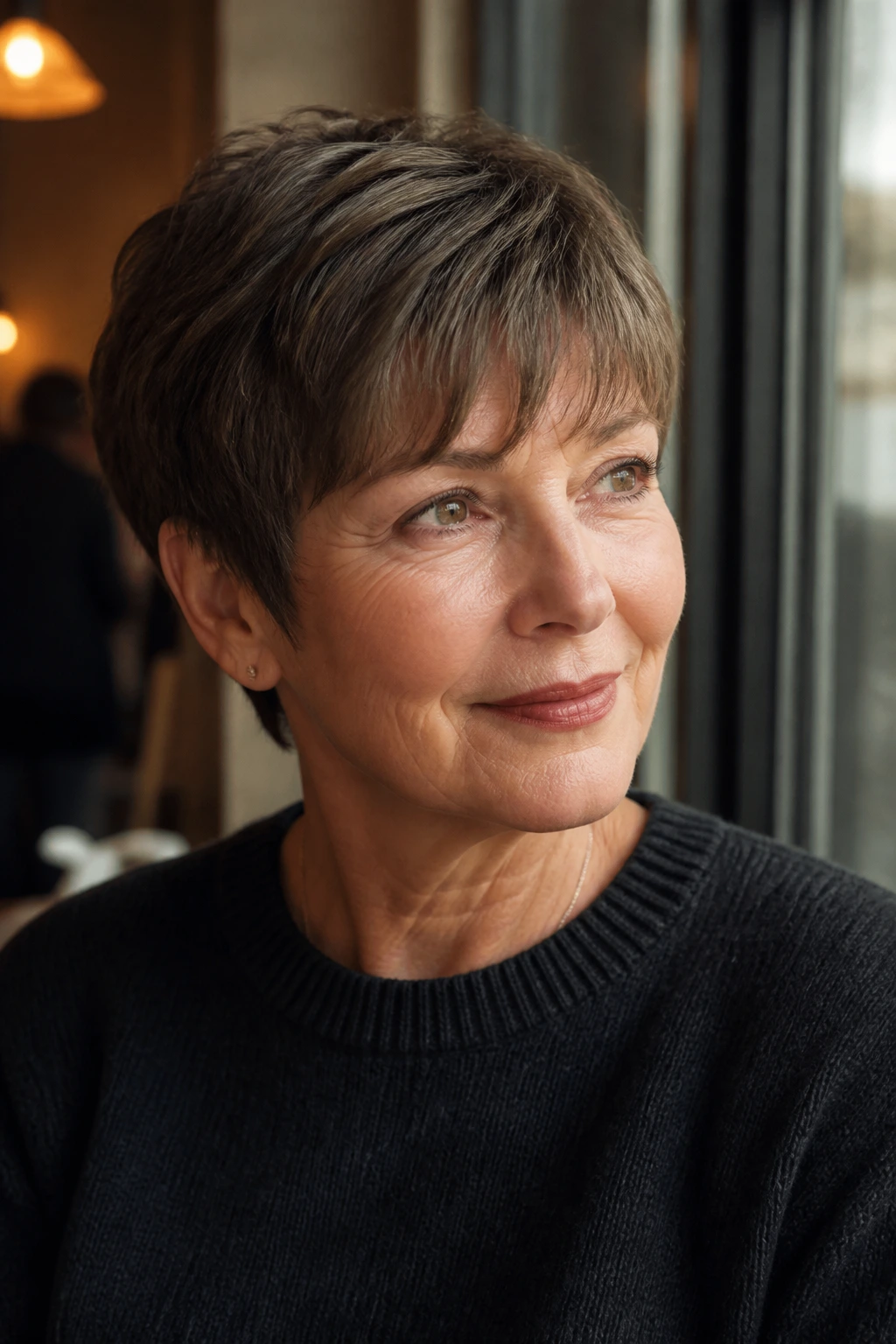
A French-inspired pixie usually has a little more shape through the front, and that front is where the personality lives. The bangs are soft, not blunt. They skim the brow line or sit just above it, and they melt into the sides instead of stopping like a wall.
That softness matters on thick hair. If the fringe is too heavy, you spend all day pushing it aside. If it’s too short and sharp, the cut can feel harsh. The sweet spot is a fringe that can be pushed to one side, separated with fingertips, or left messy enough to look easy.
Small Details That Make It Work
- Keep the fringe light enough to move.
- Let the sides taper gently into the ear area.
- Add a touch of texture cream to the ends, not the roots.
This one has a relaxed, grown-up feel that works well with natural silver or warm brunette tones. It is tidy, but not stiff. That’s the whole point.
10. Brushed-Forward Pixie
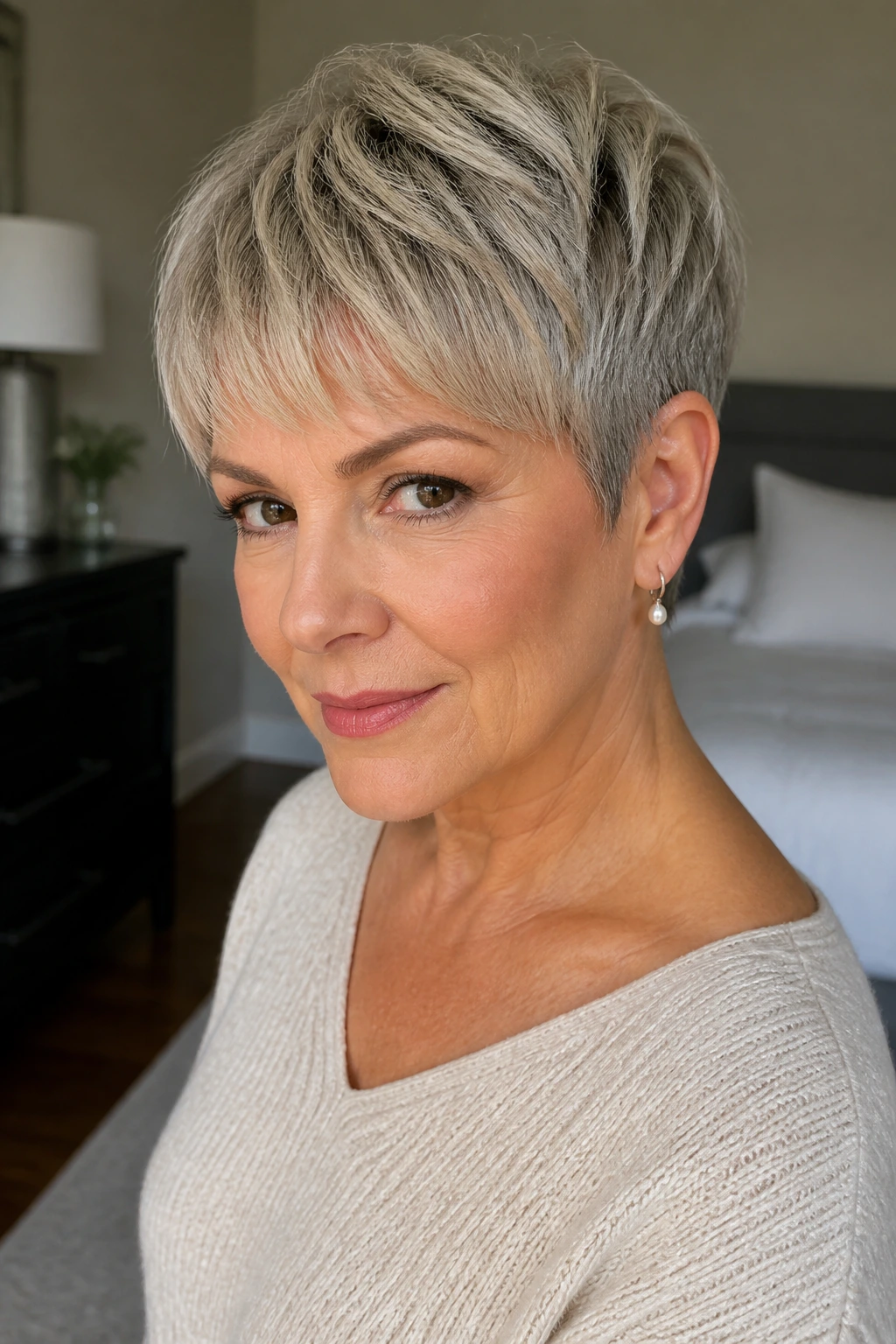
Not every pixie needs height. Some of the best ones move forward, especially when thick hair has a cowlick at the crown or a high forehead you’d rather soften. A brushed-forward pixie directs the top toward the face, which makes the style feel deliberate and helps control volume where it usually escapes.
This is a good choice if your hair wants to stand up or split open at the crown. Bringing the top forward gives it a job. It also means the haircut can look fuller without looking puffy, which is a useful distinction on dense hair. The front can be piecey and a little tousled, or smoother and more polished depending on how you finish it.
Use a vent brush or your fingers to coax the hair forward while drying. A strong hold product is not the answer here. You want bend, not crunch.
11. Pixie Bob Hybrid
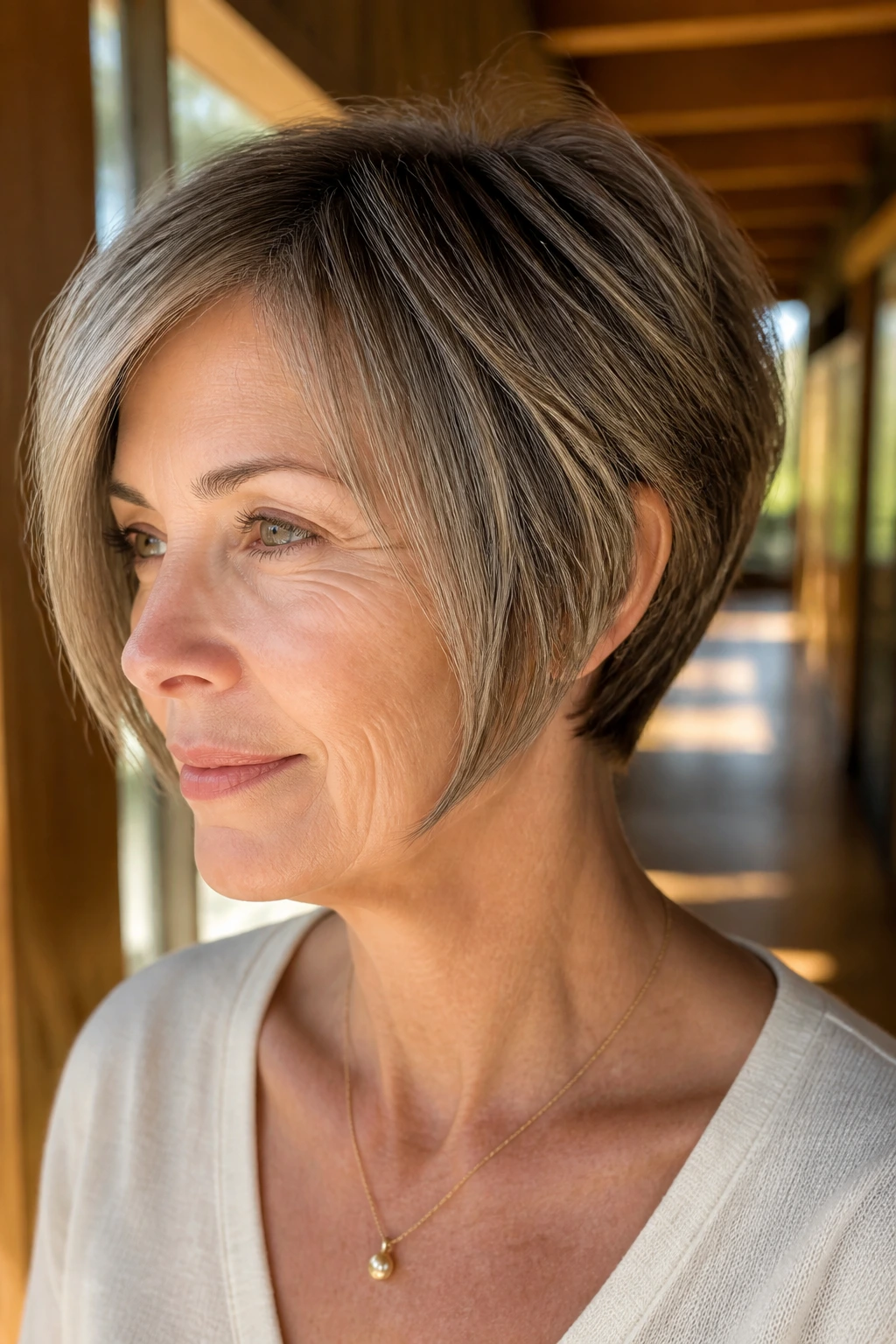
If you like the idea of a pixie but do not want to give up the feel of a short bob, this hybrid sits in the middle and does a good job of staying flattering on thick hair. The nape is trimmed up, but the sides and front keep enough length to brush the jawline.
That extra length makes the cut feel less abrupt. It also gives thick hair more room to settle, which matters if your hair has a lot of body or a natural wave. A pixie bob hybrid is usually easier to grow out than a very short crop, and it gives you more options for tucking and parting.
This is often the cut people choose when they are nervous about going too short. Good instinct. A hybrid lets you test the pixie waters without sacrificing the soft line around the face.
12. Tapered Undercut Pixie
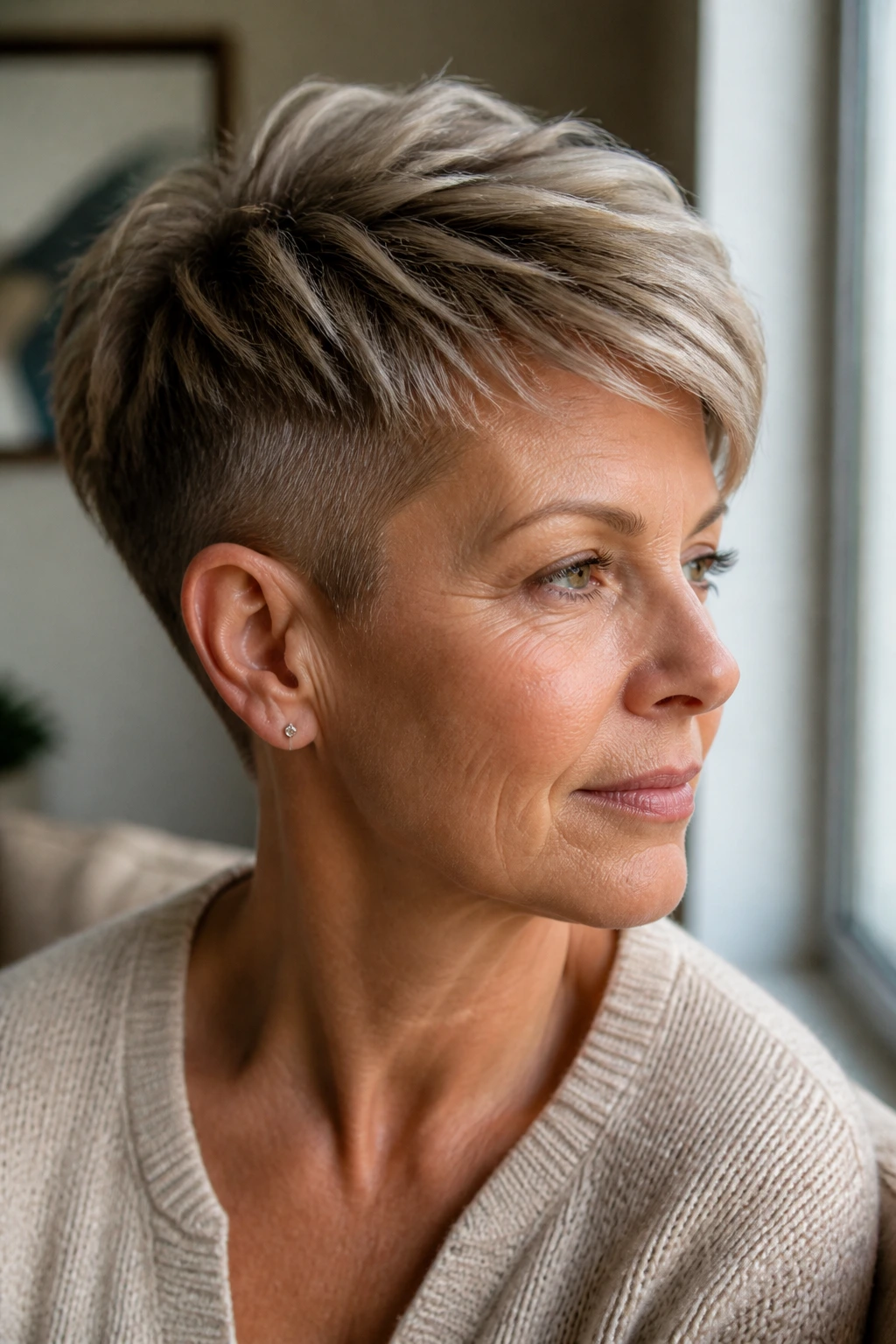
An undercut is not always a rebellion. On thick hair, it can be the most sensible thing in the chair. By removing bulk underneath the top layer — especially behind the ears and at the lower back — you get a pixie that lies flatter, feels lighter, and takes less time to dry.
The catch is that the top still has to look soft. If the upper layers are too short or too blunt, the undercut can make the whole style feel harsh. So the top should stay feathered, with enough length to cover the shorter sections and keep the shape smooth.
This version is especially useful if your hair is coarse or grows like a hedge. It keeps the hidden bulk under control, which is often where the fatigue starts. You feel it on your shoulders, in your blow-dry time, and in the way the nape sticks out under a collar.
13. Grown-Out Soft Pixie
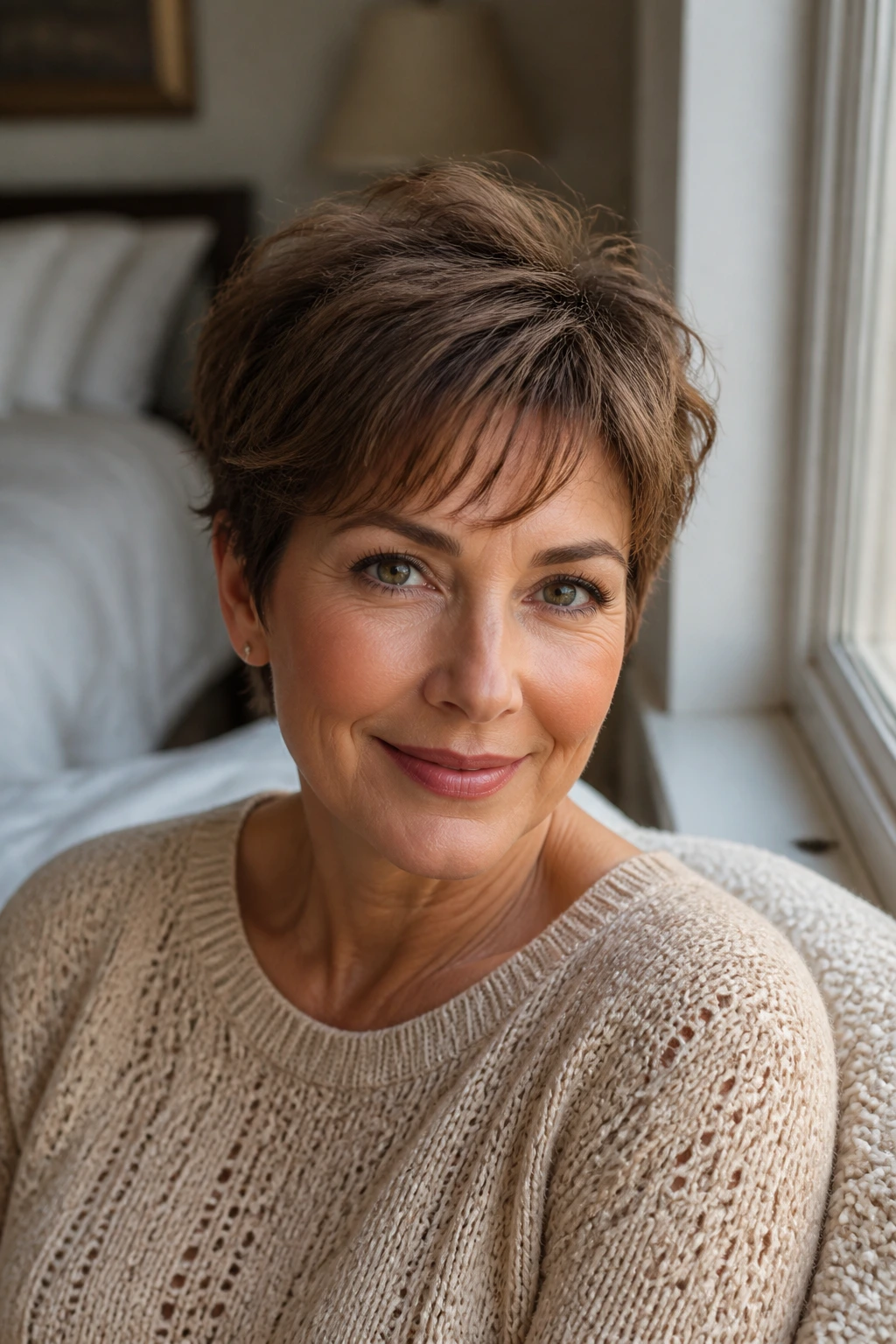
The prettiest grown-out pixies usually look planned, not accidental. This one keeps enough length through the fringe and crown that it still reads as a pixie several weeks after the trim, even when the sides begin to relax a little.
That is a big deal for thick hair. Dense hair can lose its shape in a hurry if the cut is too sharp to start with. A grown-out soft pixie gives the hair room to change without turning shaggy in a bad way. It slides toward a short layered crop, which means you can stretch the appointment a little without the haircut going off the rails.
I like this cut for someone who wants low maintenance but does not want the hair to look “done” every morning. It has a forgiving shape. That’s the real luxury.
14. Razor-Feathered Pixie
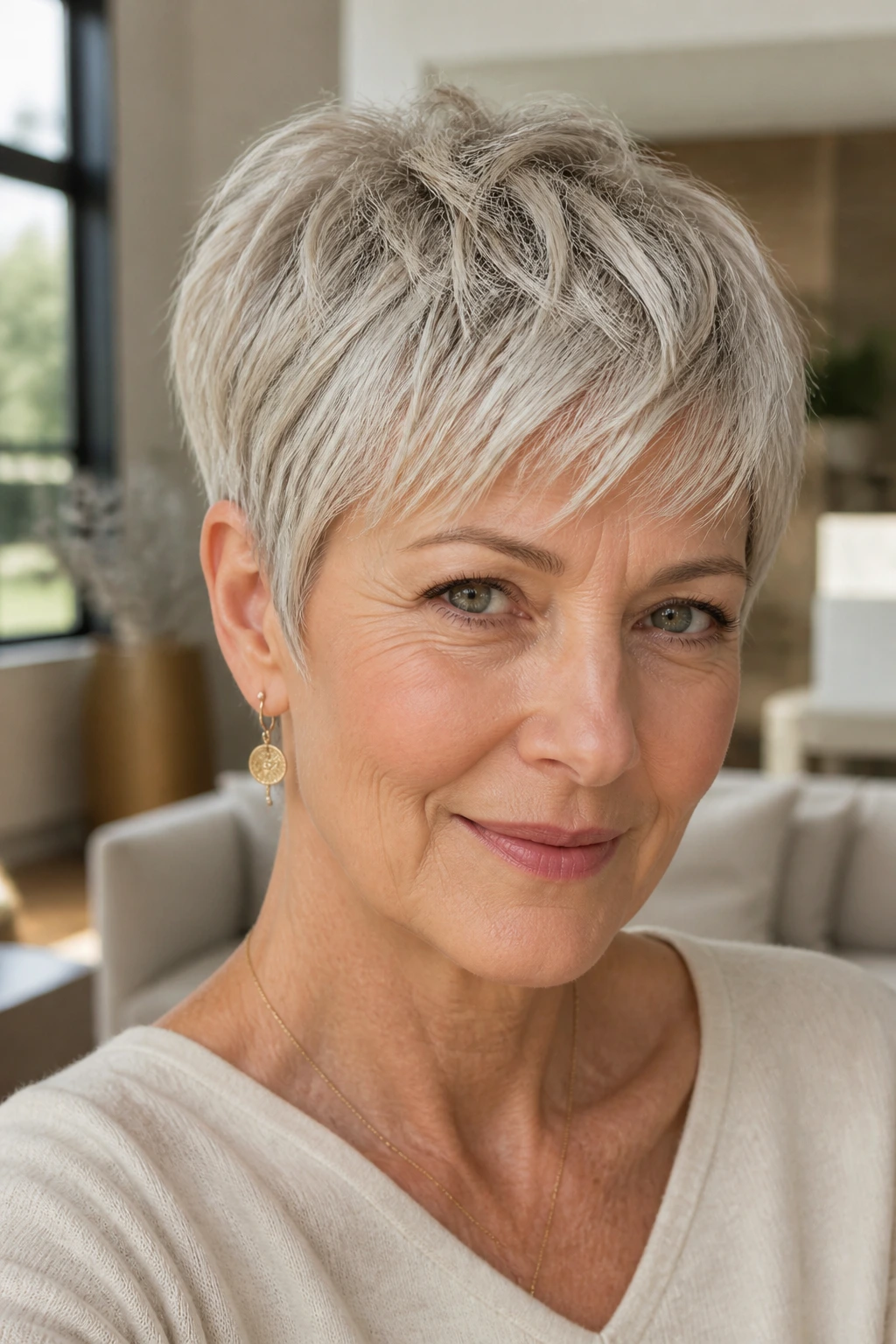
A razor can be a lovely tool on thick hair — when the hair texture is right for it. On straight to softly wavy hair, razor-feathered ends can remove that blunt, chunky look and give the cut a lighter edge. The ends move better. The whole style feels less packed.
But here’s the part too many people skip: if your hair is very coarse or frizzes at the ends, a razor can make the perimeter look fuzzy. In that case, point-cutting is safer. Ask the stylist to judge the hair texture in the chair, not in theory. Hair tells you pretty quickly whether it likes the razor or not.
Good Fit / Bad Fit
- Good fit: thick, straight, or slightly wavy hair that behaves well at the ends.
- Bad fit: very coarse hair that expands when cut too thin.
- Best move: ask for a soft perimeter, not a shredded one.
This is one of those cuts that looks light because the edges are broken up. It should feel airy, not hacked.
15. Sideburn-Softened Crop
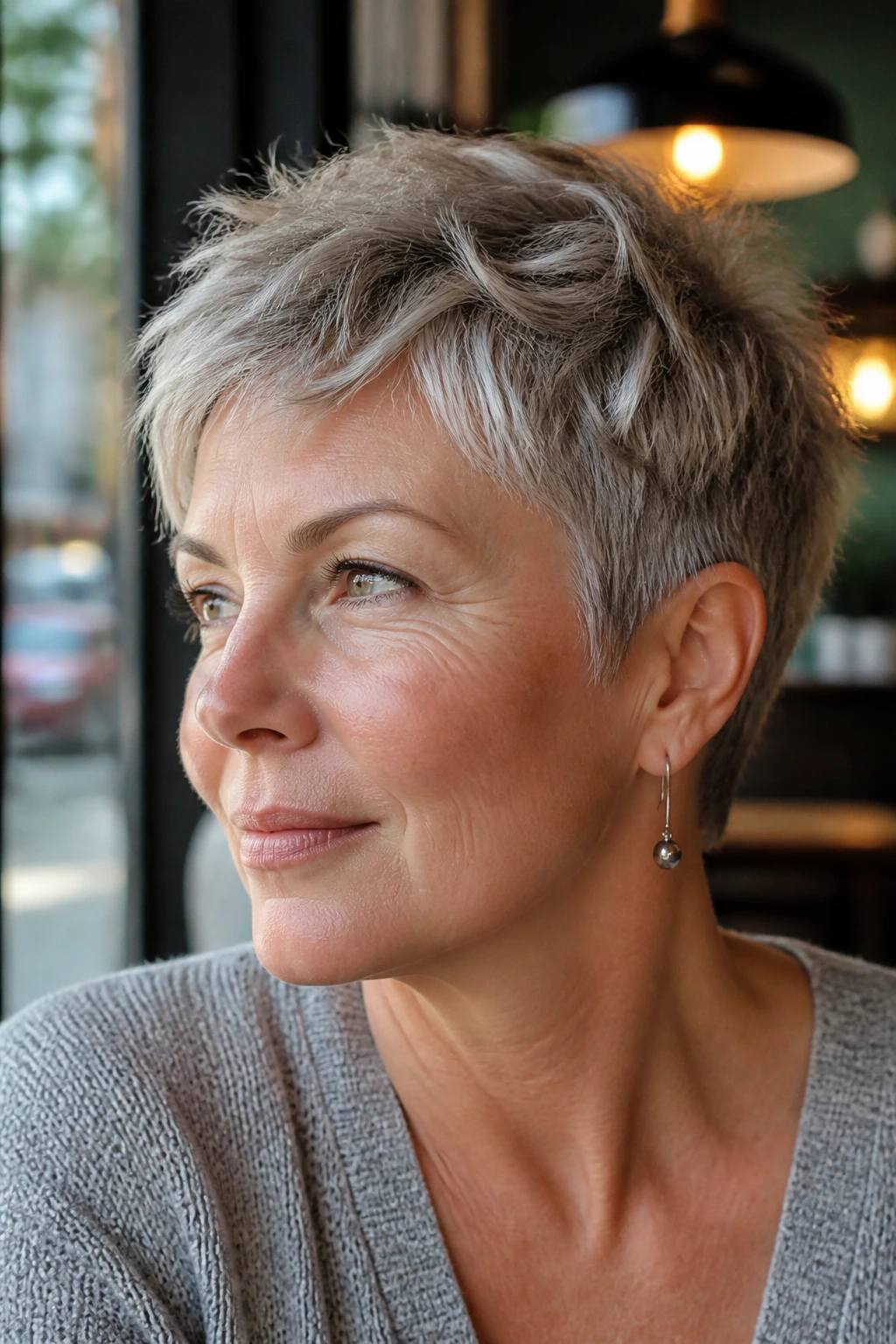
Sideburns matter more than people admit. Leave them too blunt and the haircut can look chopped off. Keep them soft and tapered, and suddenly the whole crop feels more graceful. That small strip of hair near the ear helps the pixie transition into the face instead of ending abruptly.
This is a very good idea if your cheeks are full, your jawline is strong, or you like the look of a bit of softness beside the ears. It also plays well with earrings, because the ear area doesn’t get swallowed by a block of hair. The sideburns should taper, not just stop.
The visual effect is subtle. The practical effect is not. A soft sideburn buys you balance, which is exactly what thick hair needs when it gets short.
16. Silver Glow Pixie
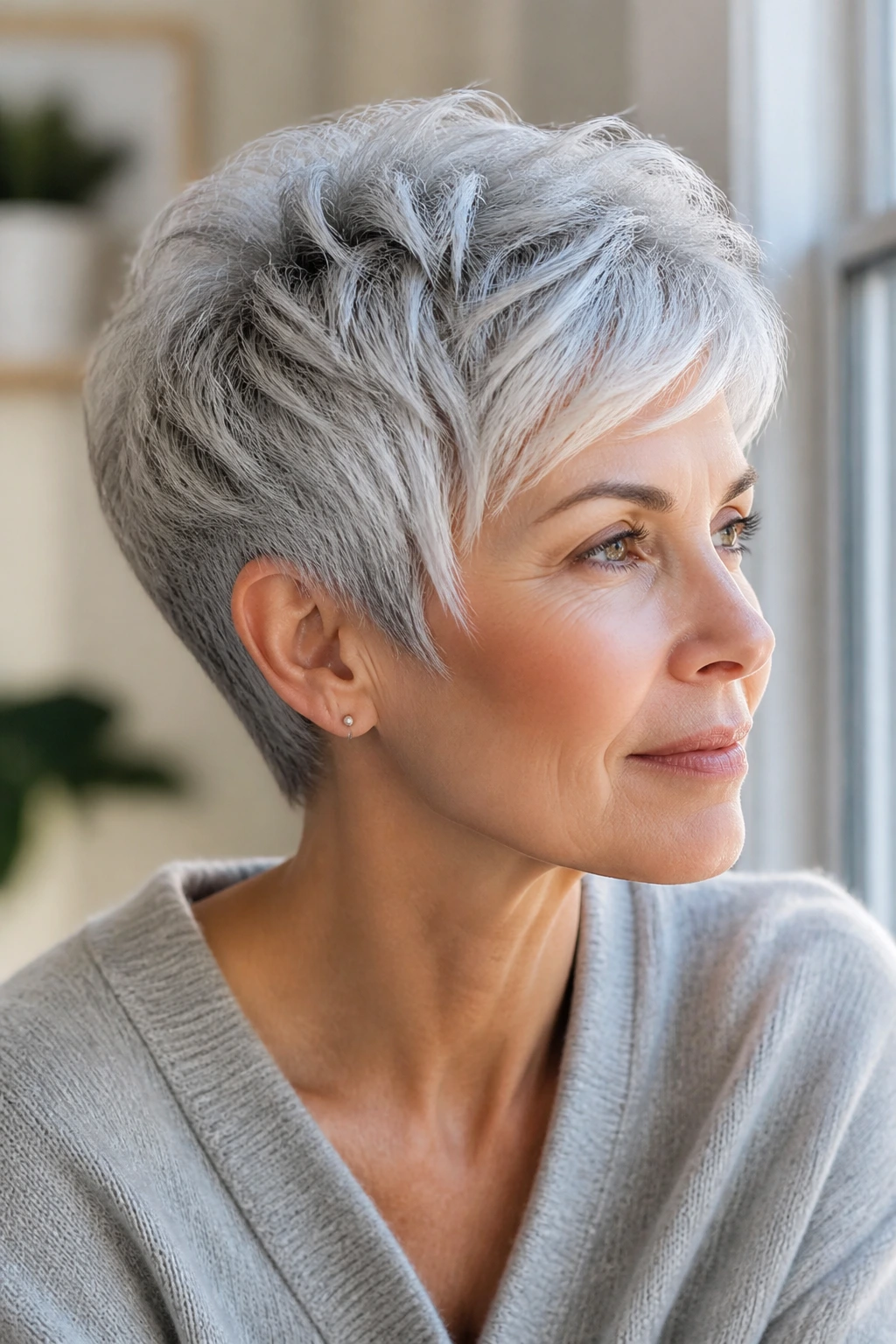
Gray and silver hair can look especially rich in a pixie because the shorter length shows off the different tones running through the strands. A silver glow pixie uses that to its advantage. The cut is soft enough to keep the hair from feeling severe, but structured enough that the bright pieces around the crown and temples do their work.
This is one of my favorites for women who are leaning into natural color. A pixie can make silver hair look crisp instead of limp, and thick hair gives the color a little depth because the strands catch light in layers. If the cut is too blunt, the shine can disappear into one big shape. If it’s feathered, the dimension shows up.
Ask for gentle layering around the top and a softer edge around the face. The goal is to let the color breathe.
17. Choppy Textured Pixie
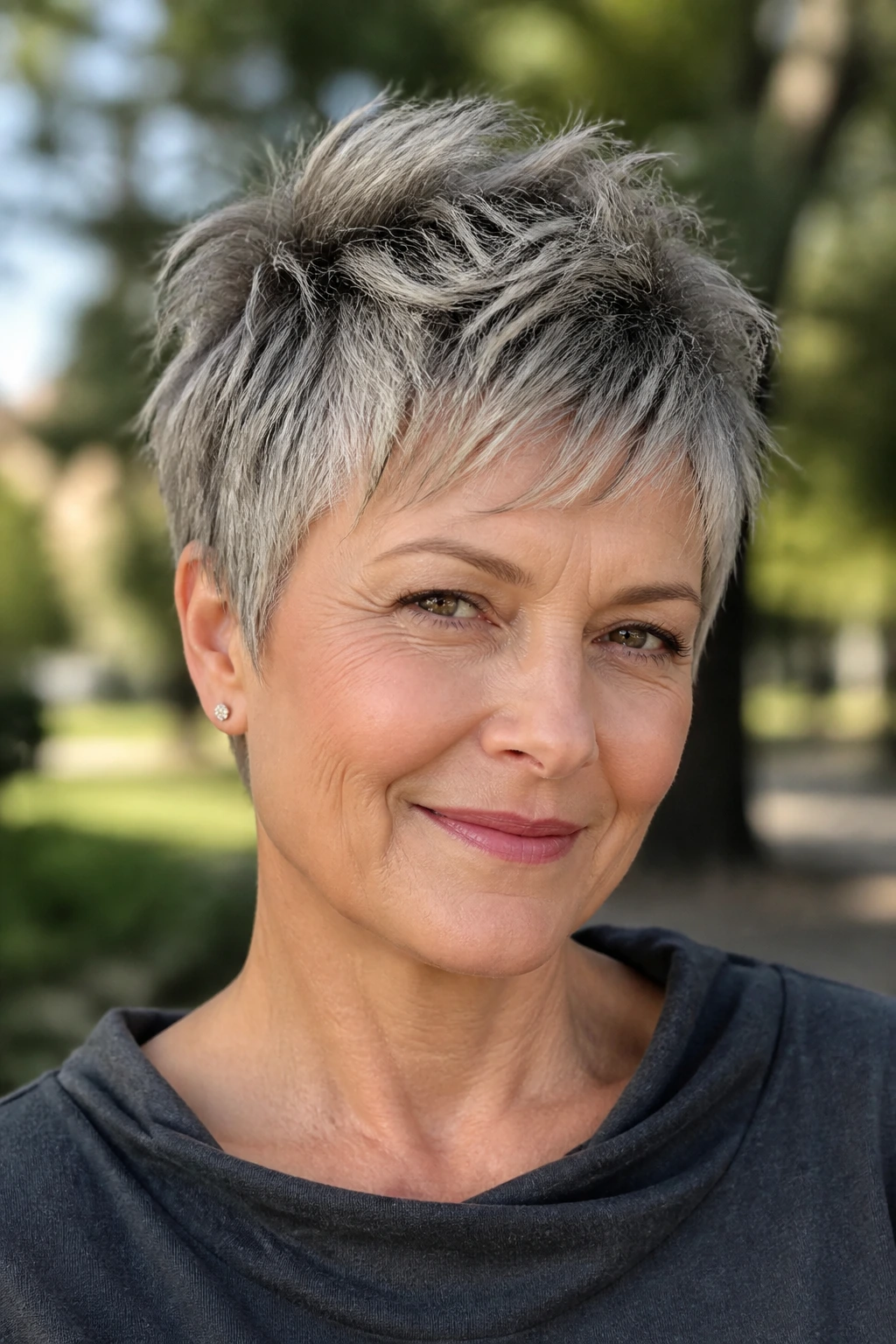
What if you want movement, not polish? Then a choppy textured pixie makes more sense than a smooth one. The layers are deliberately uneven, which keeps thick hair from settling into a single block and gives the style a bit of lift at the ends.
This cut depends on restraint, though. You want choppy, not shredded. The difference shows up in the tips: sharp, broken little pieces are fine; see-through ends are not. A matte paste or texturizing cream is usually enough to separate the strands without making them stiff.
The Shape to Watch For
- Texture should live mostly on the top and upper sides.
- The nape should stay cleaner than the crown.
- A little pieceiness around the fringe keeps the cut from going too neat.
This one suits someone who likes a casual finish and does not mind that the hair looks a little different every day. That’s the charm.
18. Ear-Tucked Elegant Pixie
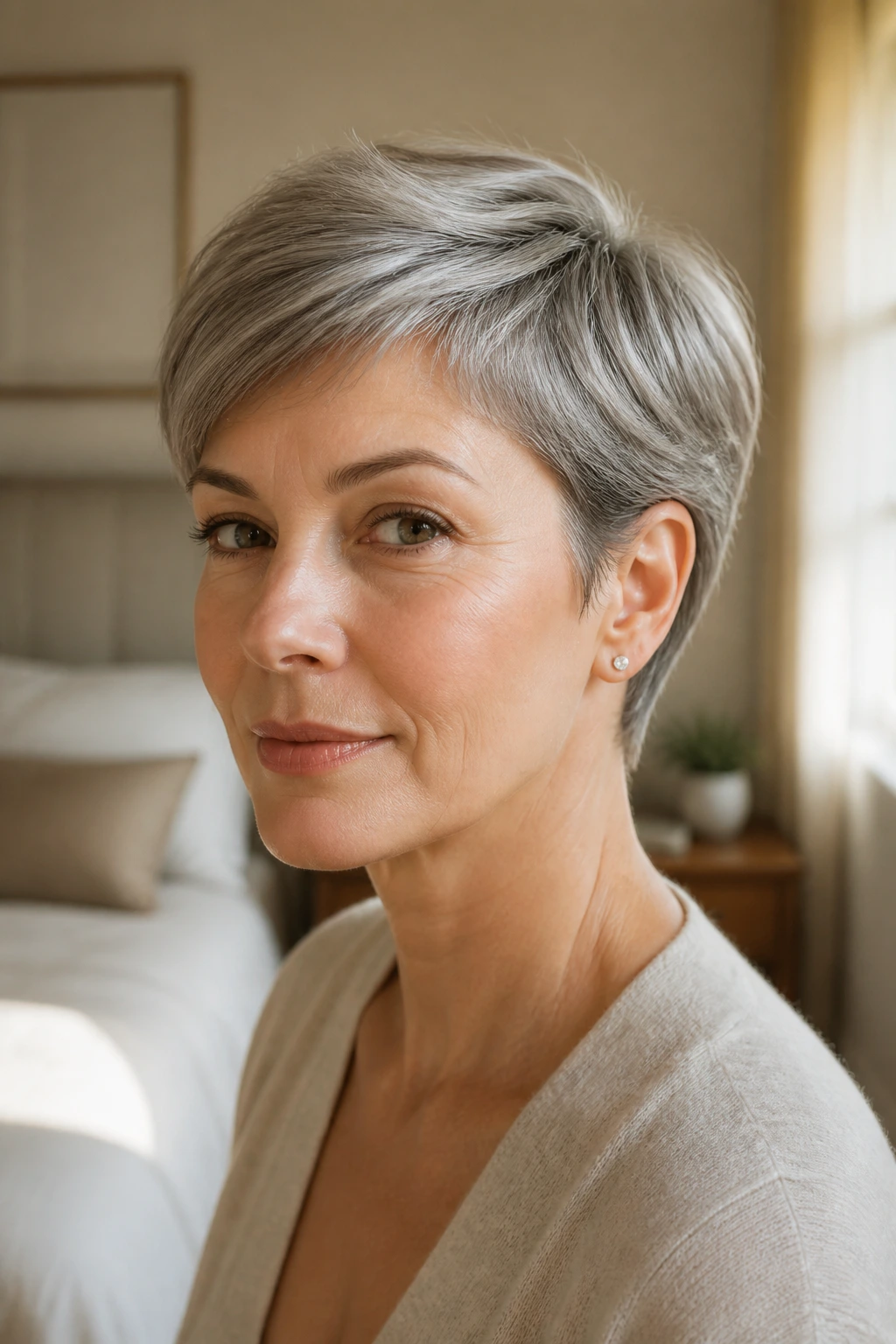
A pixie that can tuck neatly behind the ears has a different kind of usefulness. It gives you control. It lets you change the face of the haircut in seconds, and it keeps thick hair from overwhelming the sides when you want a cleaner look.
The lines should be soft enough to tuck without a fight. Too much bulk around the ear and the tuck feels forced. Too little length and you lose the option entirely. The sweet spot is a side length that brushes the ear, then bends there naturally.
I like this shape for women who wear earrings often or want a haircut that can go from casual to dressed up without a styling battle. Pull one side back, leave the other loose, and it looks intentional every time.
19. Volume-On-Top Pixie
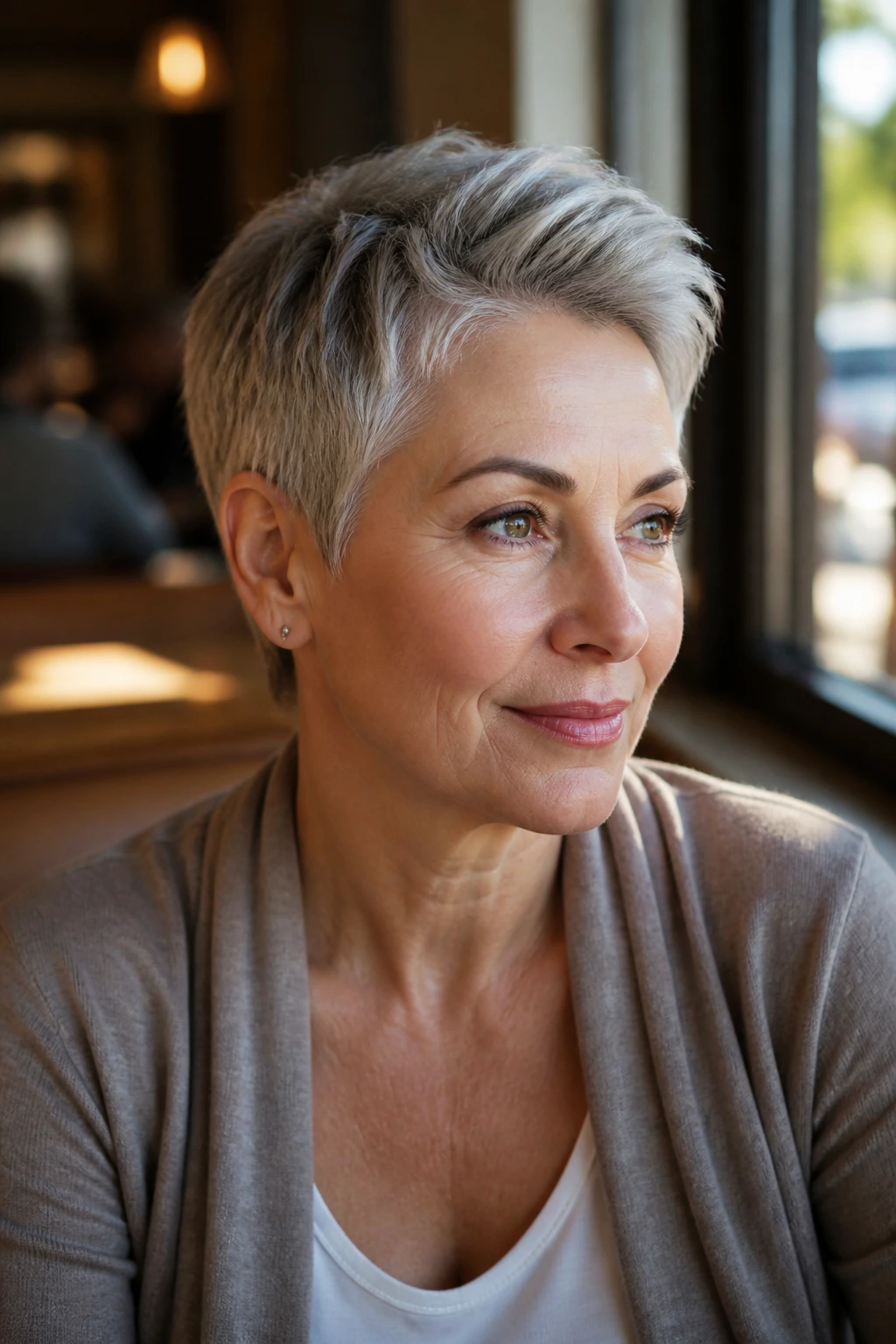
People often think volume is a goal everywhere. It isn’t. On thick hair, volume needs a location. Put it on top, and the haircut looks lifted. Put it at the sides, and you get width. Big difference.
This pixie keeps the sides close and lets the crown rise just enough to lengthen the face. It’s especially useful on round faces or on anyone who wants the haircut to create a little more vertical line. The top can be brushed upward or slightly back, depending on how much height you like.
If the crown is dense, this shape gives that density a job without turning the cut into a mushroom. That is the whole trick. Shape the height, don’t scatter it.
20. Micro Fringe Pixie

A micro fringe is a bold choice, but it can be stunning on thick hair when the rest of the cut is soft. The fringe sits short — often just above the brow — and creates a sharp little frame for the eyes. Because the cut is so short up front, the rest of the pixie has to stay feathered and relaxed so the whole thing doesn’t feel stern.
This style is not about hiding the face. It’s about opening it up. It works especially well if you have strong brows, good cheekbones, or silver hair that makes the short fringe look crisp. Thick hair helps here because the fringe holds its shape without collapsing.
Good Reasons to Consider It
- It keeps the forehead clear.
- It draws the eye upward.
- It pairs well with soft side layers.
You do need regular trims. A micro fringe grows into a different haircut fast.
21. Layered Crown-Movement Pixie
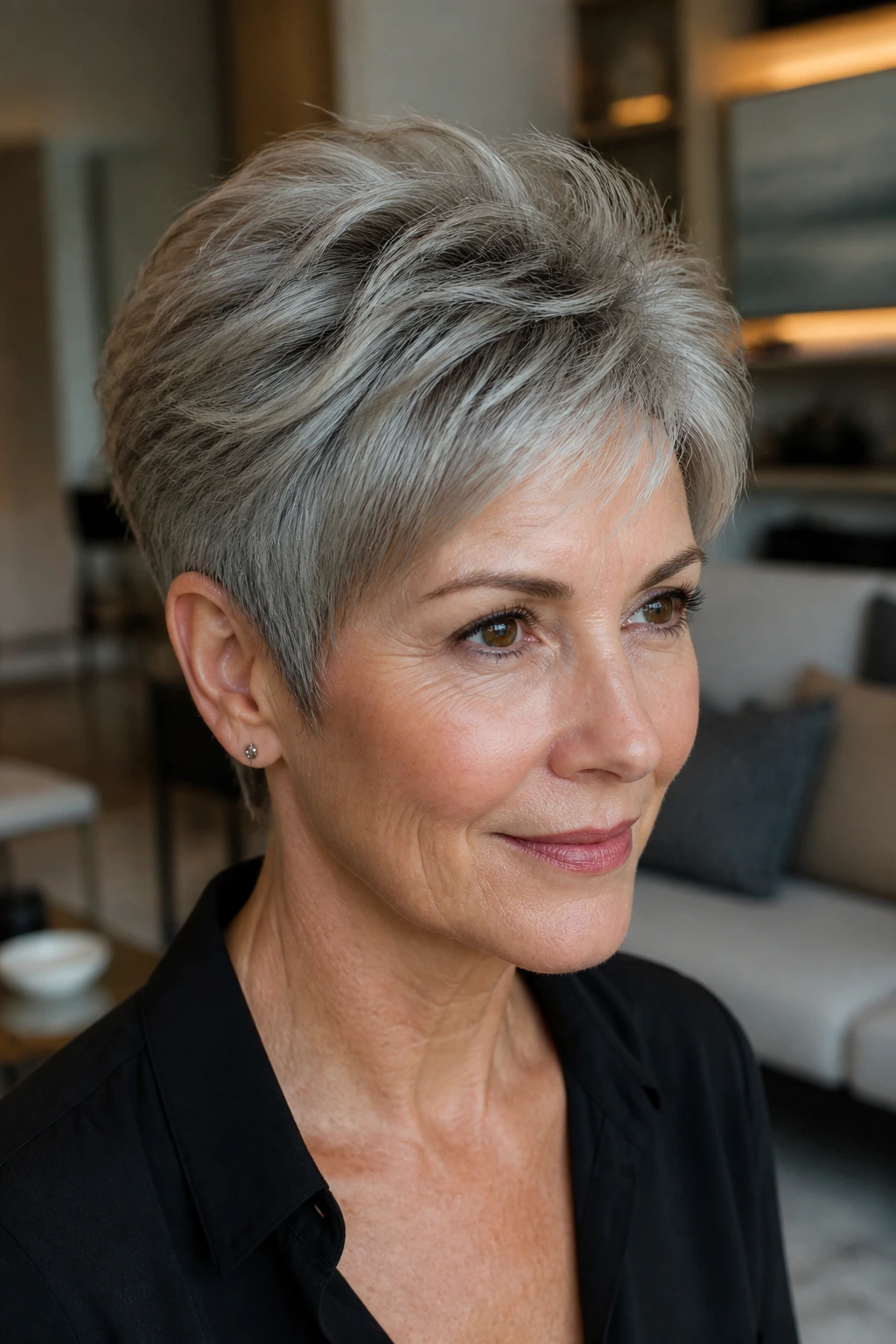
This is the cut for people who want movement at the top more than they want a fully cropped shape. The crown carries several light layers, and those layers bend when you dry them, which helps thick hair avoid the dreaded flat-top-with-bulk-at-the-sides problem.
The rest of the cut should stay controlled. Not stiff. Controlled. That distinction matters. You want the crown to breathe while the nape and sides stay neat enough that the style still reads as a pixie. It’s a smart balance for women who like a little lift but do not want a messy finish.
I’d call this one quietly flattering. It does not ask for attention, but it gives the face a nice upward line and keeps heavy hair from sitting like a cap.
22. Soft Sweep Pixie with Tapered Ends
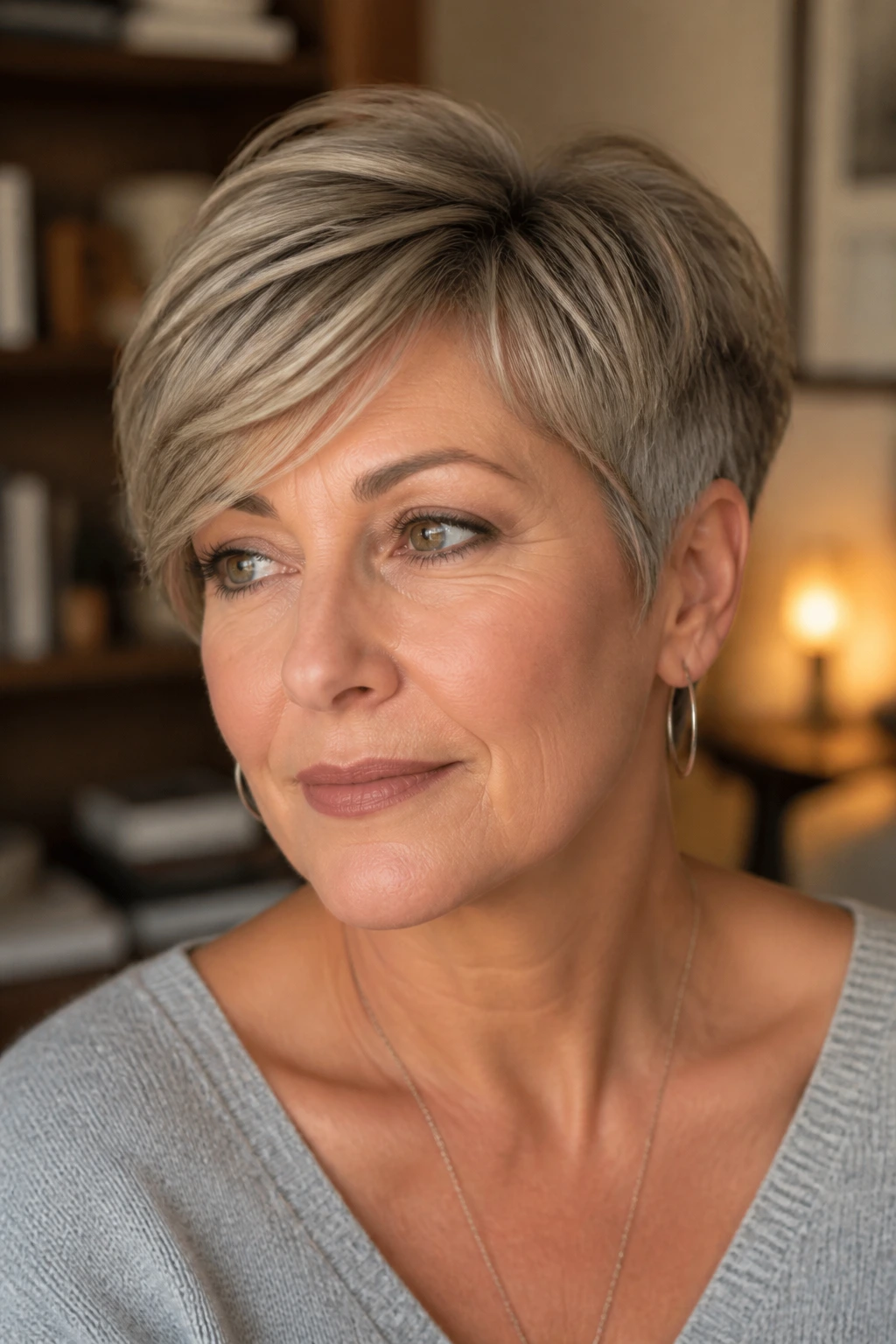
The soft sweep pixie is the final stop on the short-hair train, and it’s a good one. The top is long enough to sweep to one side, the fringe stays soft, and the ends taper away instead of sitting bluntly at the hairline. On thick hair, that taper keeps the style from feeling too dense around the face.
This cut is especially kind during the grow-out phase. It can move from pixie toward short crop without looking awkward halfway through. If you’re coming from longer hair, that matters. Nobody wants a haircut that looks lovely on day one and strange three weeks later.
The best version has a little bend, a little softness at the temples, and just enough neck coverage to keep the outline gentle. It is neat. It is not severe. That’s why it lasts.
Why Thick Hair Loves a Soft Pixie Shape
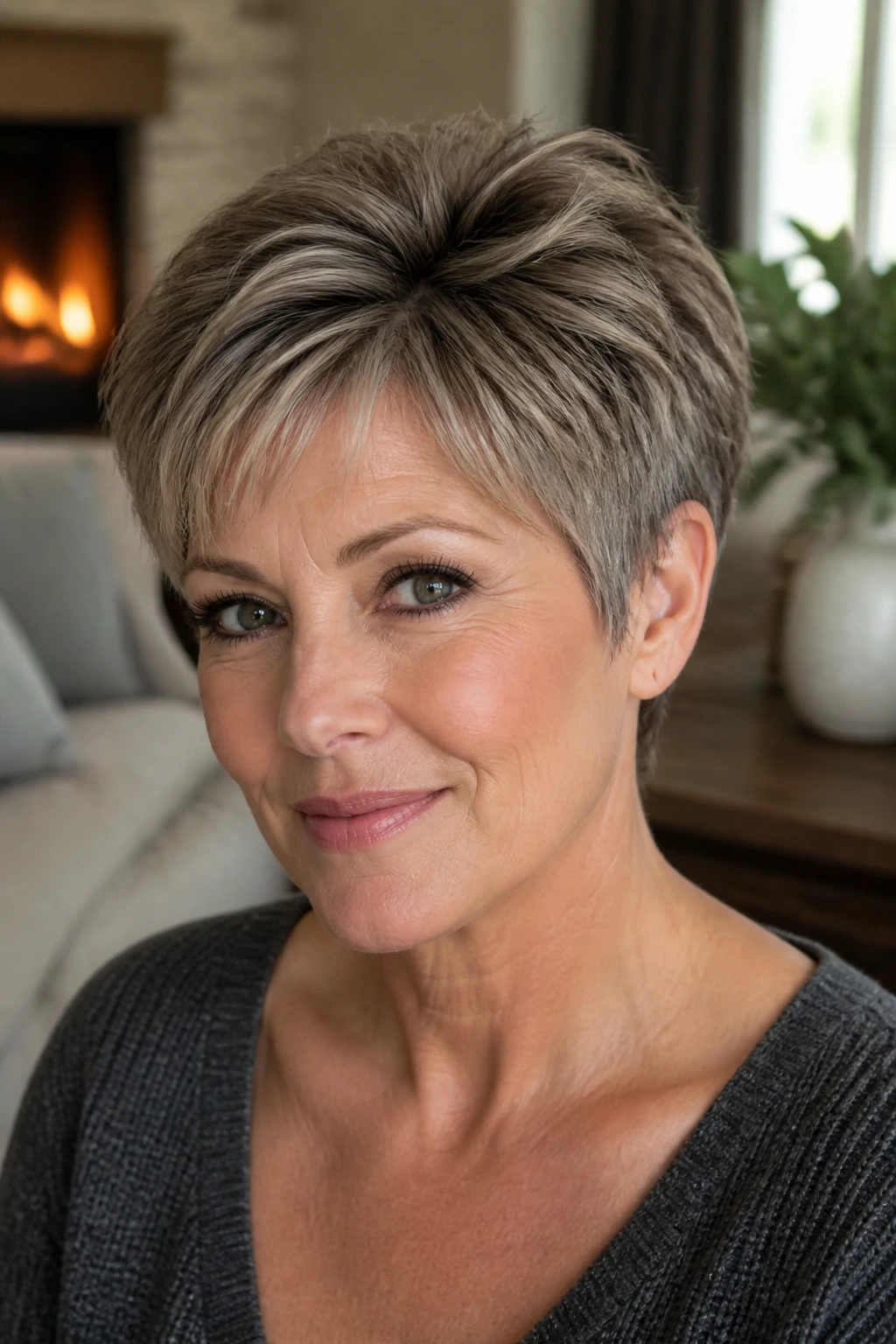
Thick hair is a blessing until it isn’t. Left unshaped, it can stack up at the crown, flare at the sides, and turn the nape into a solid block. A soft pixie cuts through that by redistributing weight instead of simply reducing length. That’s the real difference.
The best versions use internal layers, point-cut ends, and a little graduation at the nape so the haircut bends instead of bulking. I would rather see a shape with a little air in it than one that feels carved into one hard piece. Thick hair has its own attitude; the cut should guide it, not crush it.
Gray and silver strands often show this even better. Shorter layers reveal the contrast between bright and dim strands, which gives the haircut depth. If the cut is soft around the fringe and temples, the face reads lighter too. That is not magic. It is just smart proportion.
How to Ask for This Cut at the Salon
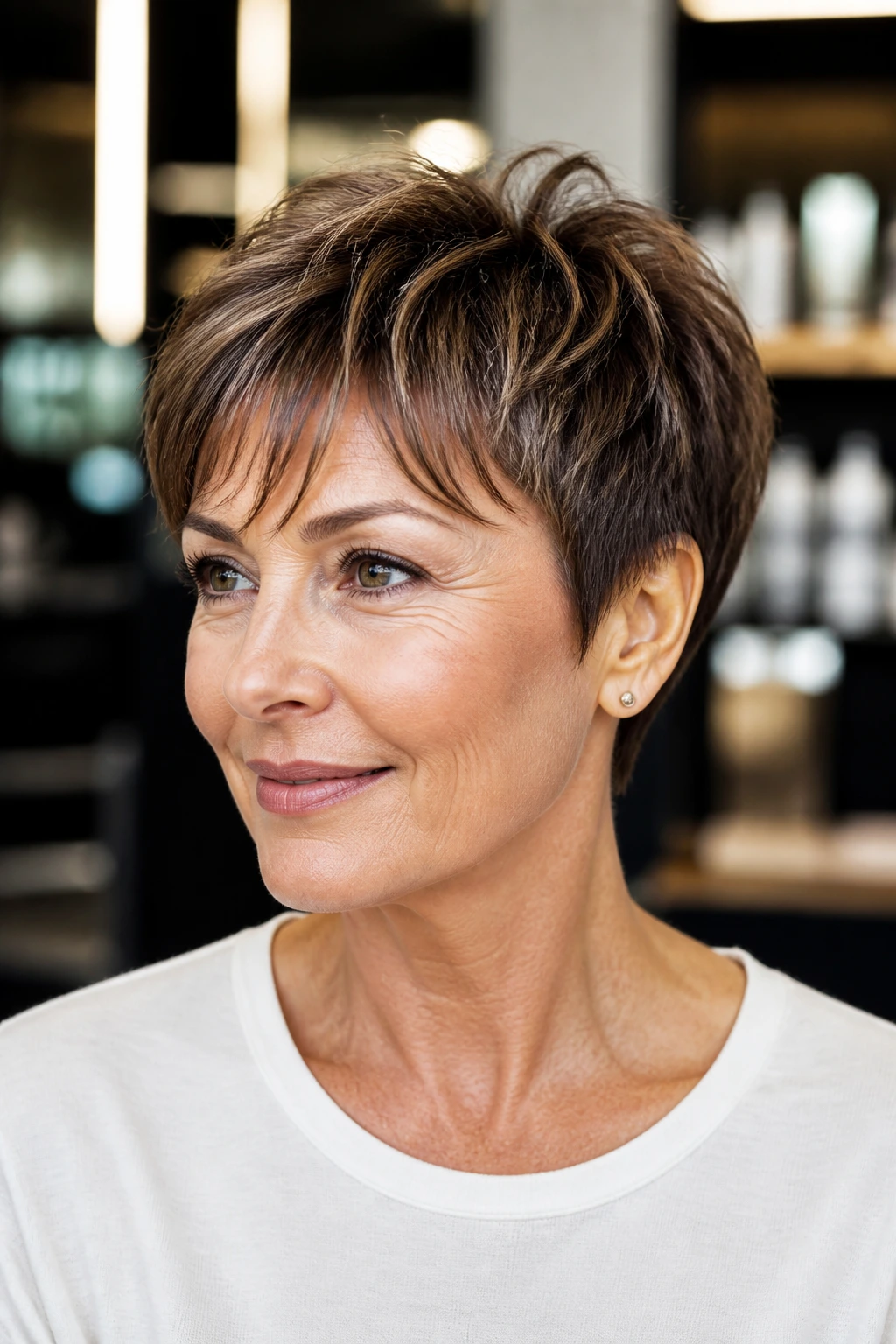
Words matter here. “Shorter on the sides” is too vague, and “just make it cute” leaves too much room for guesswork. Bring a couple of photos, then point out what you like in each one: the fringe length, the nape shape, the amount of crown lift, the softness around the ears.
Say where your hair gives you trouble. Mention the cowlick at the crown, the bulk behind the ears, the way the nape grows out, or the fact that your fringe splits on its own. Those details help a stylist decide where to remove weight and where to leave length. Thick hair is not one-note. It has pockets of density, and those pockets matter.
A useful phrase is: “I want softness, not a blunt edge, and I need the bulk removed where the hair naturally puffs.” That tells the stylist what to fix without locking them into one exact picture. If you like movement, say so. If you want more face-framing, say that too.
Tools and Products That Keep the Shape Soft
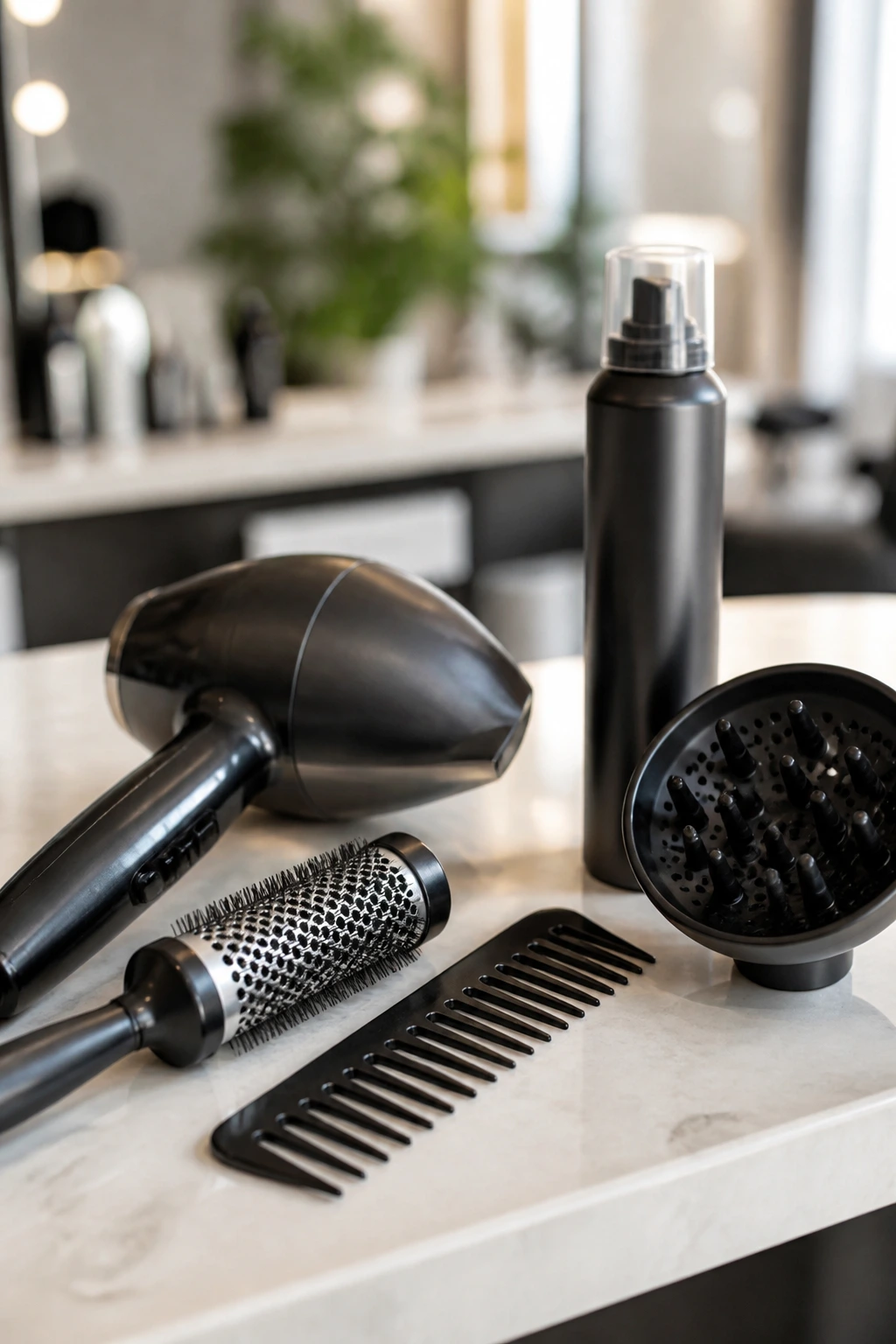
A short thick-hair cut behaves better when the tools match the cut. You do not need a giant arsenal. You need a few things that actually do something.
- Blow dryer with a concentrator nozzle: Focuses air at the roots so the crown lifts instead of frizzing.
- Small round brush, 1 to 1½ inches: Helps bend the fringe and top layers without over-stretching them.
- Vent brush: Good for quick drying when you want speed over polish.
- Wide-tooth comb: Useful for wavy or curly versions of the cut and for distributing product without clumping.
- Lightweight mousse: Adds body near the roots without the sticky feel of heavy gels.
- Root-lifting spray: Best at the crown and front hairline, where thick hair tends to collapse.
- Texture cream or matte paste: Gives the ends a piecey finish; start with a pea-sized amount.
- Flexible-hold hairspray: Keeps movement in place without turning the hair helmet-hard.
- Diffuser: Worth it if your thick hair is wavy or curly and you want the shape to stay soft.
Daily Styling Tricks That Add Lift Without Puff
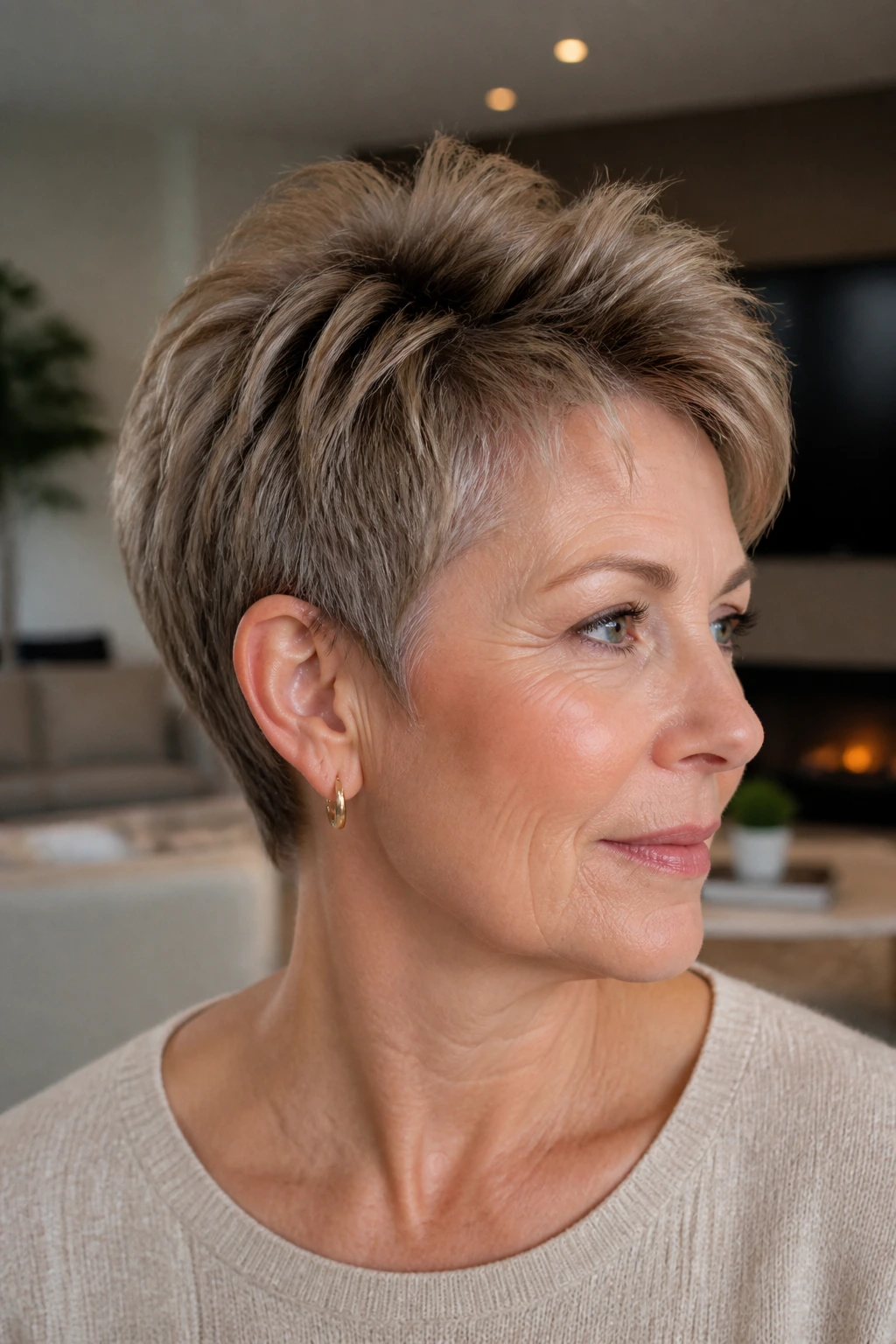
The best pixies on thick hair are not built by piling on product. They’re built by drying in the right direction, using just enough hold, and stopping before the hair starts to swell. That’s the part people usually miss.
Start at the roots. Aim the dryer at the crown and front hairline first, and lift the roots with your fingers or a small brush. Thirty seconds of focused root drying can do more than five minutes of random blow-drying.
Use product where the shape needs support. Mousse at the roots, paste only on the ends, and almost nothing in the middle lengths. Thick hair can handle product, but it punishes overuse by looking heavy and separated.
Change the part if the cut feels flat. A slight side part often wakes up a pixie faster than more styling. If your hair has a cowlick, dry it in the opposite direction for a minute, then guide it back. That small trick helps the root lie the way you want.
Do not chase perfect symmetry. A soft pixie looks better with a bit of lift on one side, a tucked ear, or a fringe that breaks slightly at the brow. Too even can look stiff. A little mess is the point.
Common Mistakes That Make Thick Pixies Look Heavy
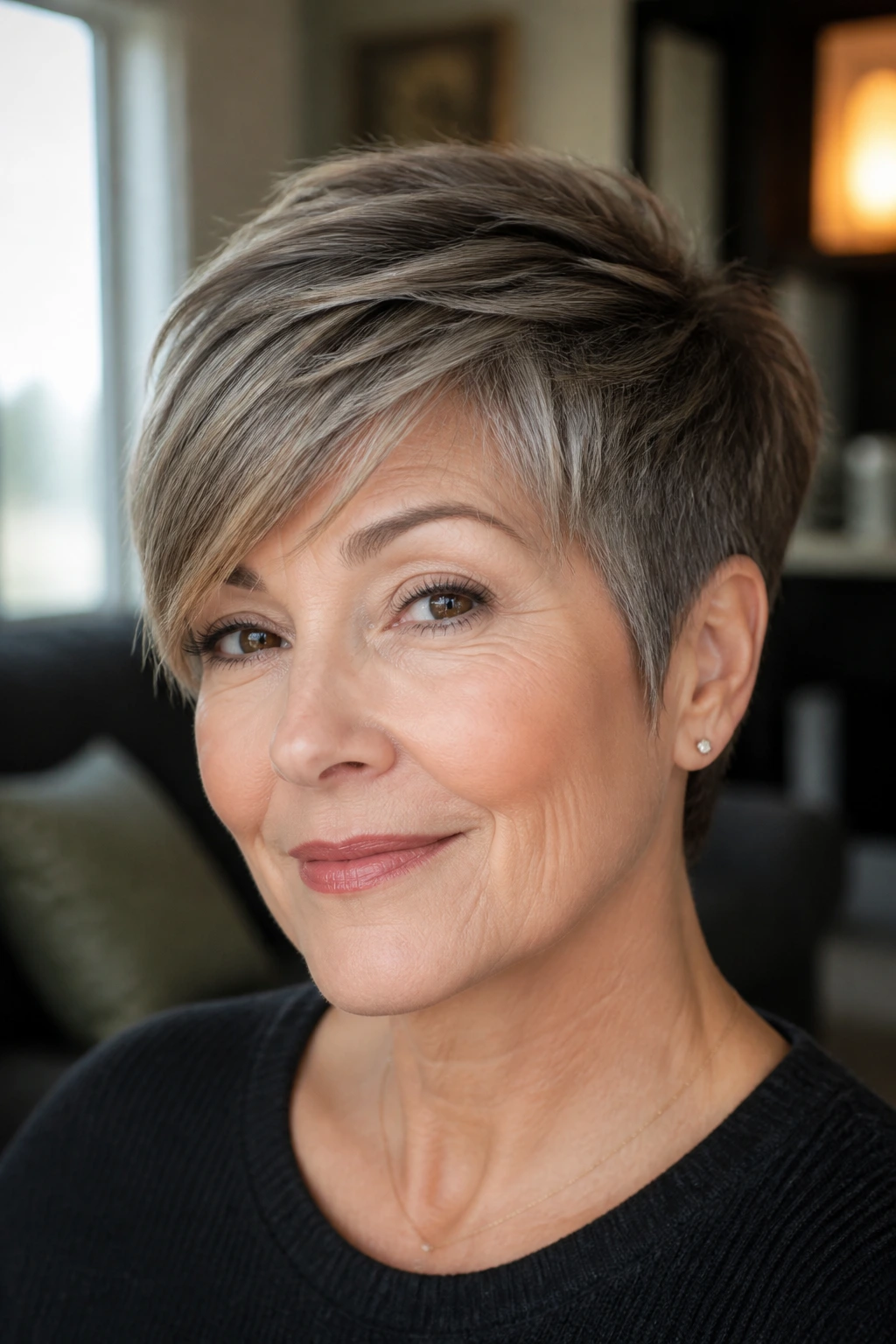
The first mistake is leaving too much bulk at the sides. Thick hair can hide that mistake for about ten minutes, then the shape swells and the face disappears. The fix is simple: keep the sides and temple area cleaner than you think you need.
Another problem is going too blunt at the fringe. A hard line across thick hair can feel boxy fast, especially on the forehead. Ask for soft point-cutting or a diagonal sweep instead, unless you truly want a sharp micro fringe.
Overloading the hair with wax is another one. You end up with separated, greasy-looking ends and a flat crown. Start with less product than feels safe. If you need more, add a touch more on the fingertips, not a full second scoop.
Skipping trims is where many pixies fall apart. Thick hair grows back with attitude. Once the nape and sideburns lose their shape, the whole cut looks heavier than it is. A trim every 4 to 6 weeks keeps the outline honest.
And yes, thinning shears can be overdone. Use them in the wrong place and the hair can puff or frizz instead of softening. A good cut removes weight where it belongs. It does not shred the whole head and hope for the best.
Ways to Make the Cut More Personal
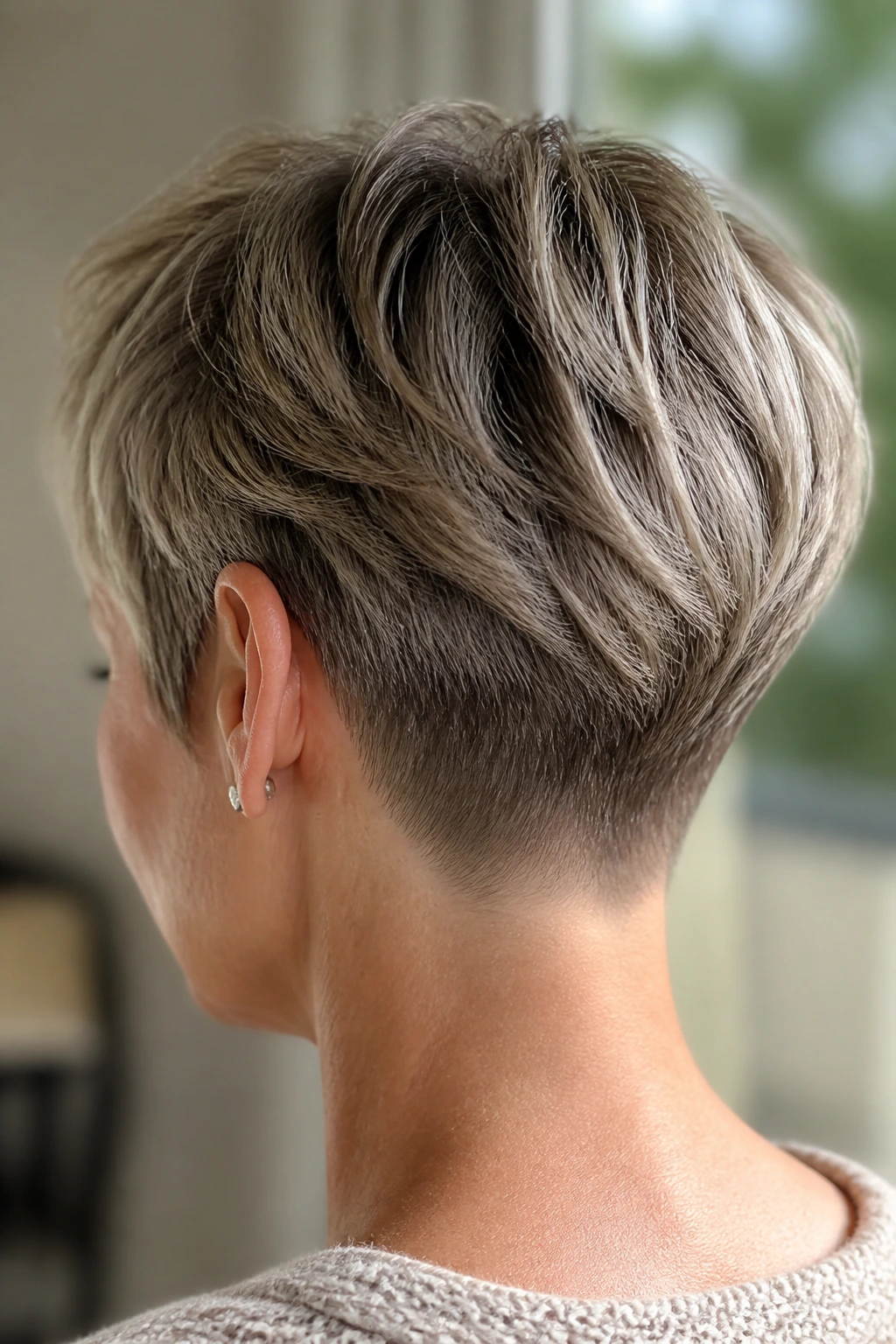
Soft Silver Frame: Leave a little more length around the temples and fringe so gray or silver pieces sit in view instead of disappearing into the shape. This is a nice move if you want the color to show without requiring much styling.
Glasses-Friendly Pixie: Keep the sides neat and the fringe light so the haircut does not compete with the frames. A tiny bit of length above the ear helps the style sit cleanly when glasses are on all day.
Low-Fuss Grow-Out Pixie: Ask for a longer fringe and a nape that is tapered, not shaved. That gives the haircut a softer grow-out line, which is useful if you prefer longer gaps between trims.
Curly-First Pixie: Leave enough length for curl spring at the top and use a diffuser instead of trying to smooth the hair flat. The cut should support the curl pattern, not fight it into submission.
Face-Frame Softener: Keep the longest pieces near the cheekbone, especially if you want to soften a stronger jaw or a narrower forehead. It changes the mood of the haircut without turning it into a bob.
Keeping the Shape Between Salon Visits
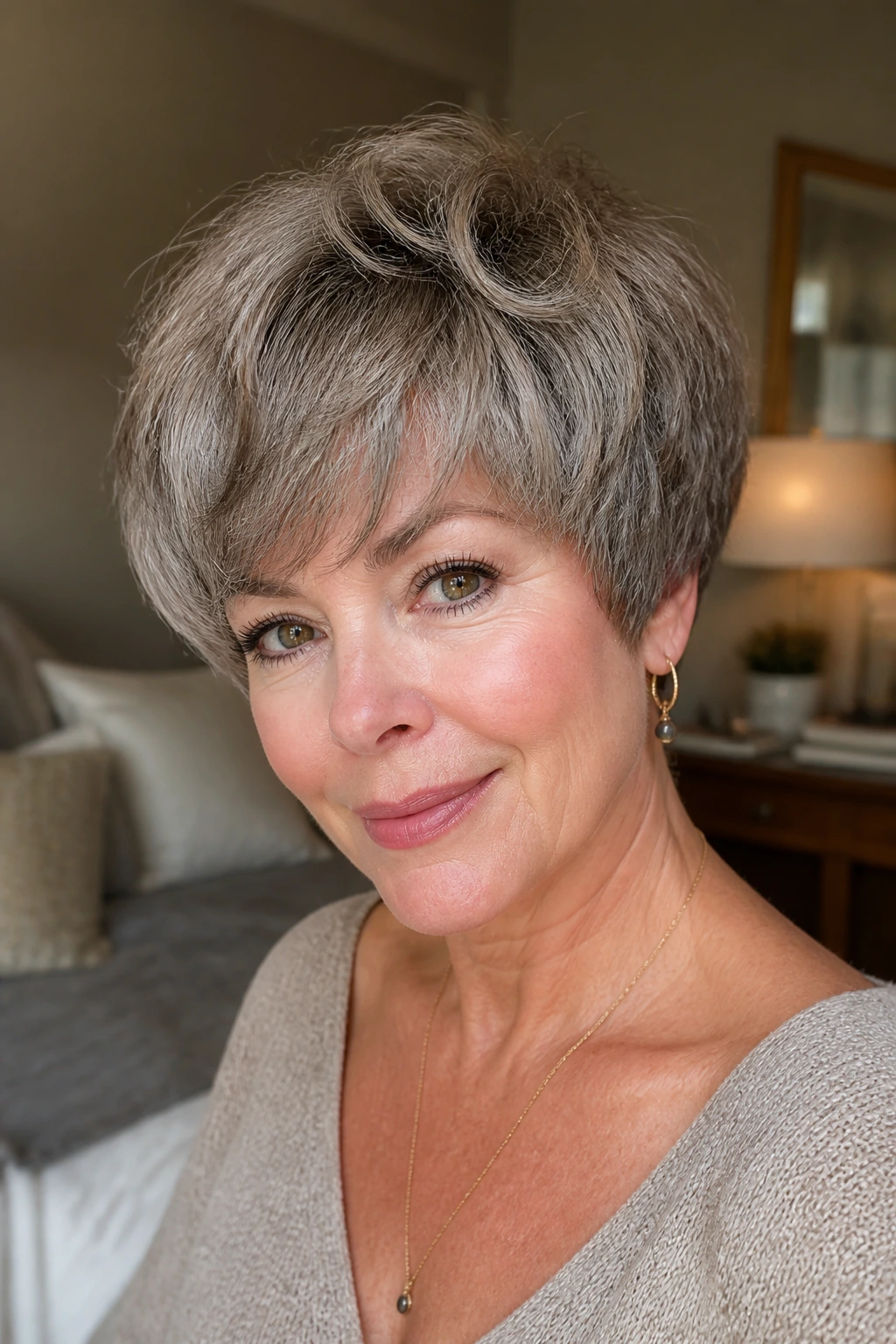
Pixies do not need daily rescue, but they do need maintenance. On thick hair, the shape usually starts to blur first at the nape, the temple area, and around the ears. If those zones get fuzzy, the whole haircut starts to feel larger.
Plan on a trim every 4 to 6 weeks if you want the shape to stay crisp. If you like a little grow-out, you can stretch it a bit longer, but the fringe and nape should still be checked regularly. A quick cleanup around the neckline can make the haircut feel fresh again without changing the whole style.
Product buildup matters too. If you use paste, cream, or mousse every day, wash the hair well enough to reset it. A clarifying shampoo once every couple of weeks is often enough for short thick hair that picks up residue fast. And if you sleep on your pixie without smoothing the crown, it can wake up with a kink that takes longer to fix than it should.
Frequently Asked Questions
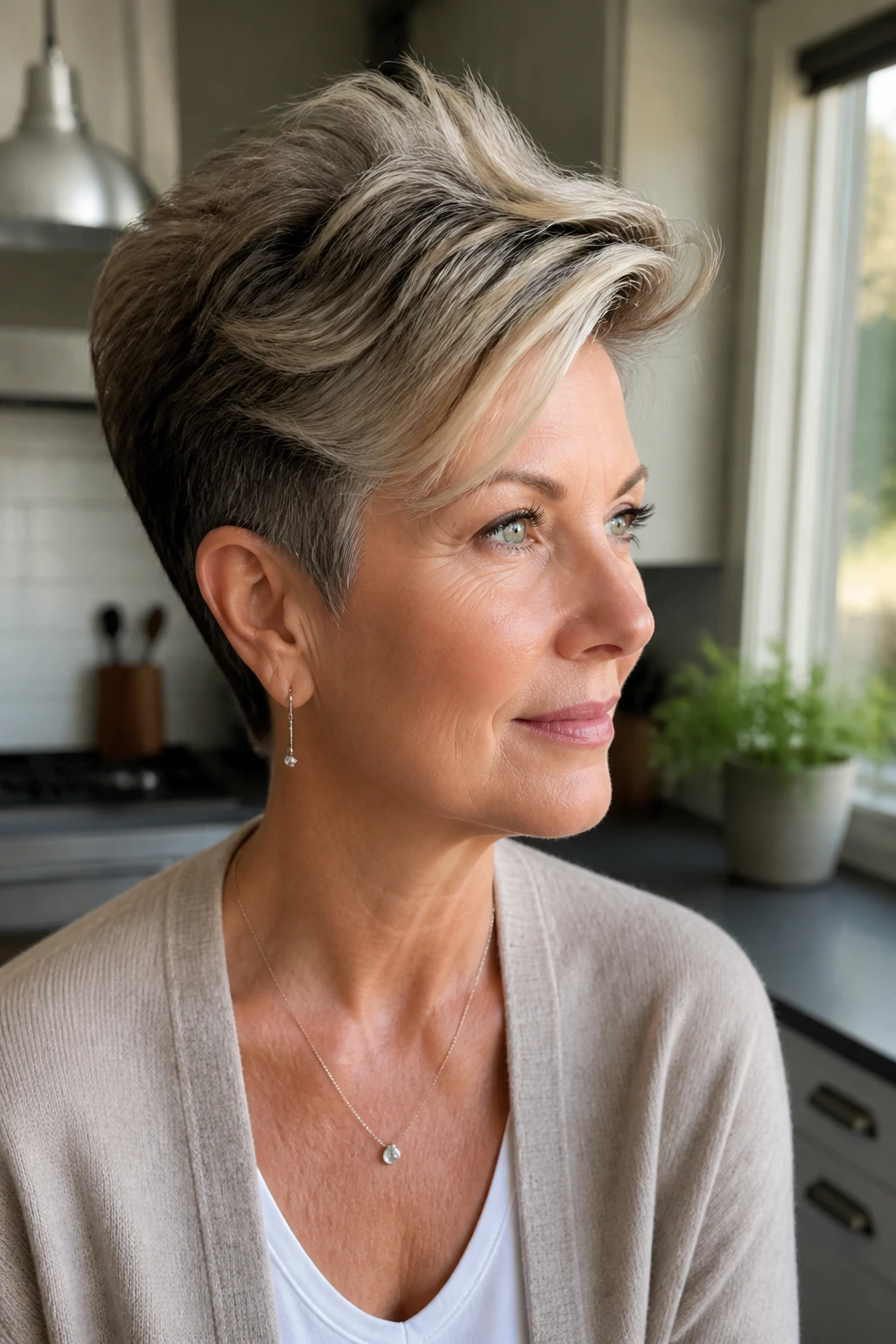
Will a pixie cut make thick hair look puffy?
It can, if the cut is blunt or the bulk is left in the wrong places. A soft pixie avoids that by tapering the nape, cleaning up the temples, and leaving enough layering at the crown to keep the shape controlled.
What should I tell my stylist if I want softness instead of a harsh crop?
Say you want feathered ends, a soft fringe, and less bulk around the ears and crown. That wording helps the stylist avoid a blocky outline and focus on movement instead.
Can I wear a pixie if I have a round face?
Yes, but the shape matters. Ask for height at the crown, cleaner sides, and some diagonal movement in the fringe so the haircut adds length instead of width.
What if my hair sticks up at the crown?
That usually means the crown needs better direction, not less length everywhere. Dry the roots forward or to the side first, then guide them where you want them to settle.
How often should thick hair in a pixie be trimmed?
Most thick pixies look best with a trim every 4 to 6 weeks. The nape and sideburns show growth first, so even a small cleanup can make a big difference.
Can curly or wavy thick hair handle these cuts?
Absolutely. The trick is to leave enough length for the curl pattern to form and to avoid over-thinning the ends. A diffuser and light cream usually work better than heavy gel.
Is a short fringe a bad idea with thick hair?
Not at all, but it needs softness. A micro fringe or baby fringe can look sharp and stylish, but it needs regular trims and careful texturizing so it doesn’t turn into a blunt strip.
What if I want a cut that grows out gracefully?
Choose a pixie with a longer fringe, soft nape tapering, and rounded sides instead of hard edges. Those details let the haircut drift into a short crop without looking sloppy.
The Cut That Keeps Its Shape
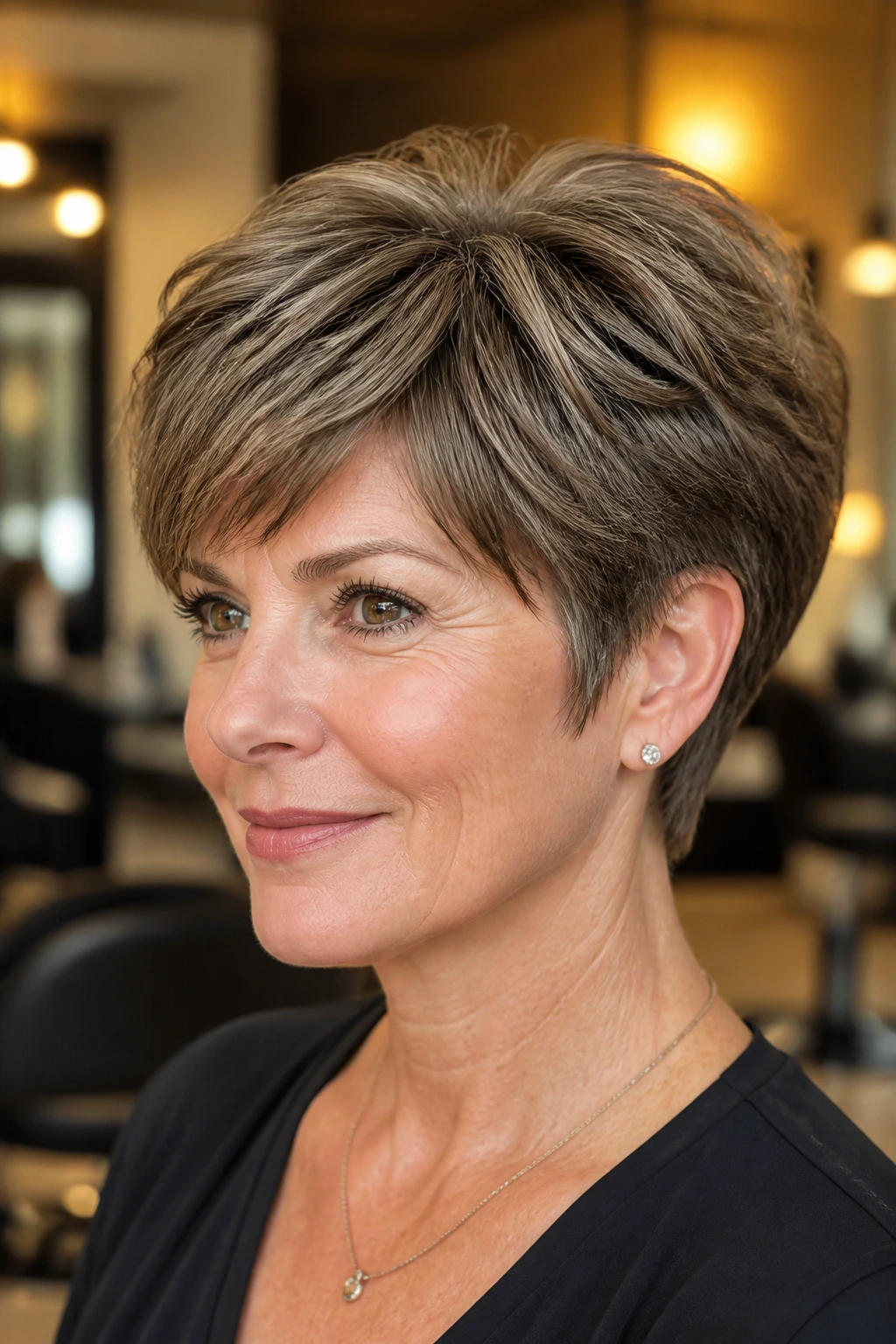
A soft pixie on thick hair works because it respects the material. It does not pretend thick hair is fine, and it does not try to flatten it into obedience. It trims the bulk, keeps the face visible, and leaves enough movement that the haircut still feels alive a few weeks after the salon visit.
That’s the version worth asking for. Not the most severe one. Not the tiniest one. The one with a clean nape, a touch of lift, and enough softness around the fringe and ears to make the whole thing look like it belongs on your head, not just in a photo.
If you’re ready to cut the weight without losing the shape, start with the version that matches your hair’s real habits — not the one that looks toughest in the chair.